California history · trains

Sacramento’s Ghostly Cathedrals

I like to think of Sacramento as a railroad town. Though it’s the capital of California and a thoroughly modern city of over a half-million residents, it owes much of its success to its location as the western terminus of the first transcontinental railroad (and, of course, its proximity to the Sierra foothills during the Gold Rush). Founded in 1850, Sacramento was the headquarters of the Central Pacific Railroad, which in 1863 began laying track from what is today Old Sacramento toward Promentory Point, Utah, where it connected with the Union Pacific’s tracks.
The Central Pacific (which later became the Southern Pacific) centered most of its locomotive-building and repair operations just north of downtown, on a reclaimed swamp that was formerly called China Slough. Buildings were erected starting in the 1860s, and they eventually became a sprawling complex that employed tens of thousands of workers. It would remain a major part of Sacramento’s industrial landscape until the late 1990s (!), when new owners of the railroad consolidated operations elsewhere and shut down the Sacramento shops.
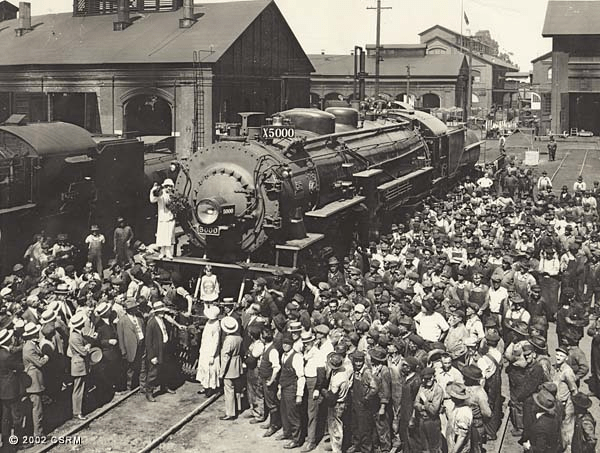
Celebrating the first of a new class of locomotive at the Shops in 1925. Some of the shops buildings are in the background.

Now, here’s the intriguing part: While so many of Sacramento’s historic sites have been razed (I’m looking at you, Alhambra Theater), a number of the Central Pacific shop buildings are still standing–even a couple of the ones that date back to the mid-to-late 19th century. And not only are they still standing, but they look very much as they did for much of the 150-year history. What’s more, they’re once again being used to work on vintage railroad equipment. (More on this in a moment.) There’s something reassuring about knowing that these pieces of Sacramento–and US–history are still with us, tangible reminders of an ancient but formative past of iron and steam, standing in the shadow of Interstate 5 and just a short distance from the dubious modernity of the Emerald City Building and Golden 1 Center.
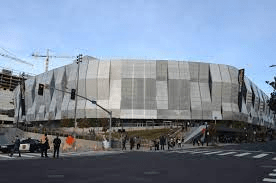
Unlikely to be standing–or missed–150 years from now.

The reason I mention all this is because I had the rare opportunity to tour the Shops this morning, guided by the doughty docents of the California State Railroad Museum (CSRM). For it turns out that one of the historic shop buildings (the Boiler Shop) is now owned by CSRM, and a second (the Erecting Shop) (insert middle-aged male joke here) is being leased by CSRM with an option to buy. The CSRM uses these buildings to store and service locomotives and other equipment in their collection. The number of employees working in the shops today can be counted on one hand, but the legacy nonetheless continues.

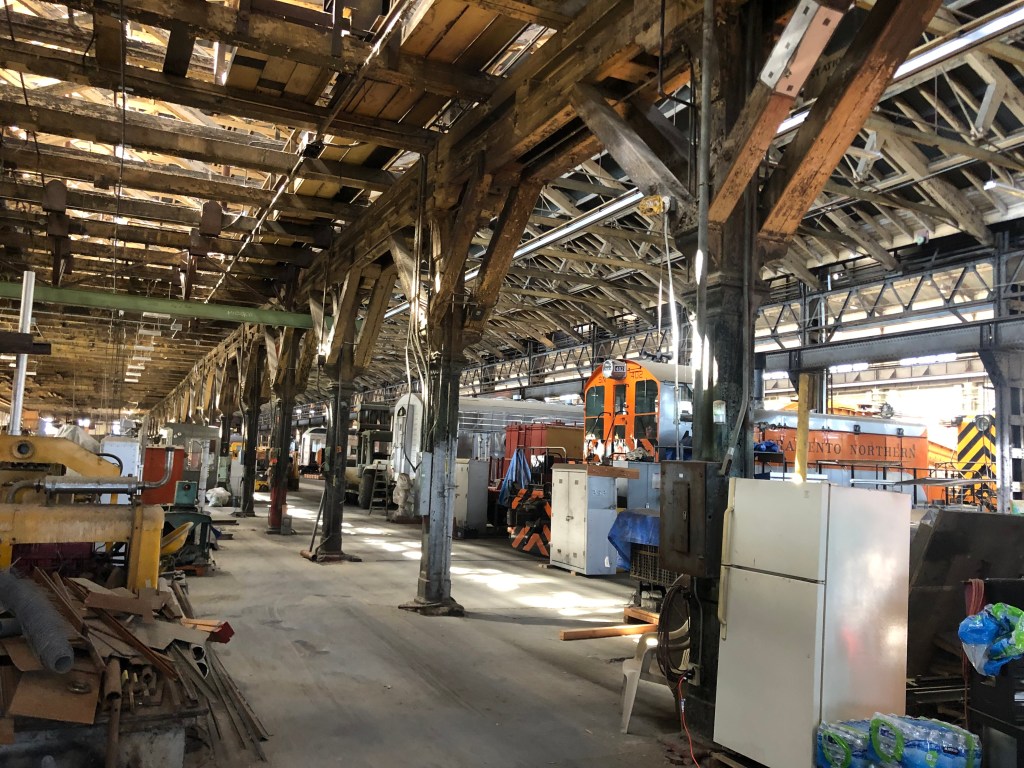
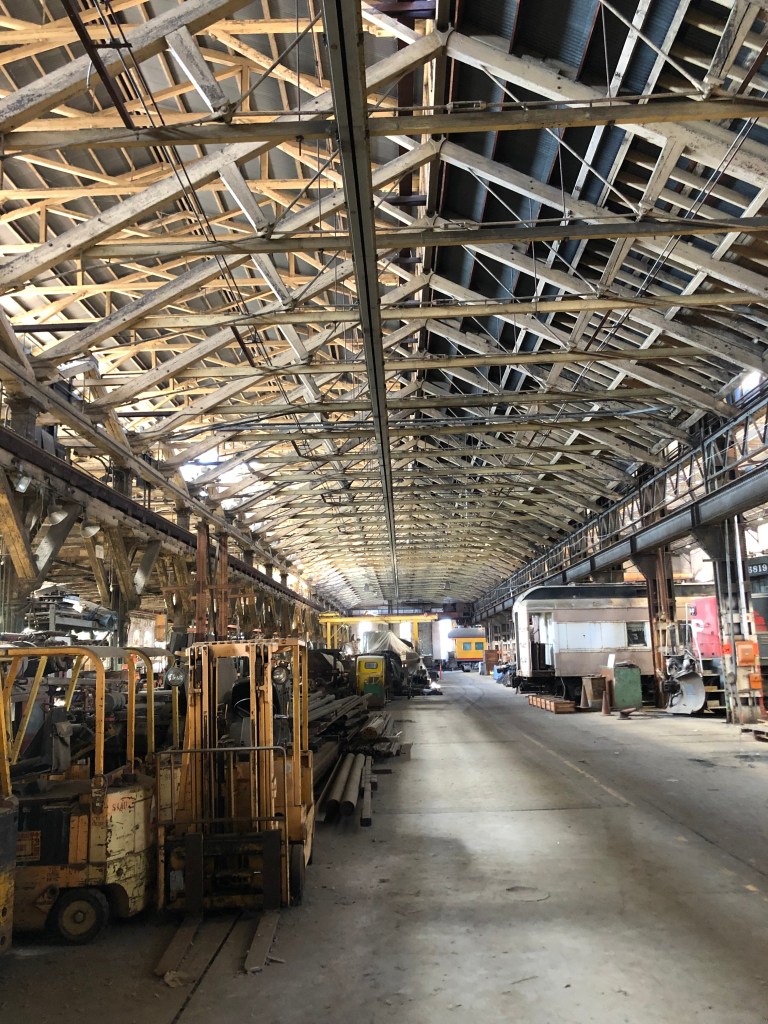
Now, there are three things I want to emphasize about the Shops. First, these are cavernous spaces, sometimes metaphorically called “cathedrals” in honor of their high ceilings, majestic architecture, and sacred purpose (I made that last one up).
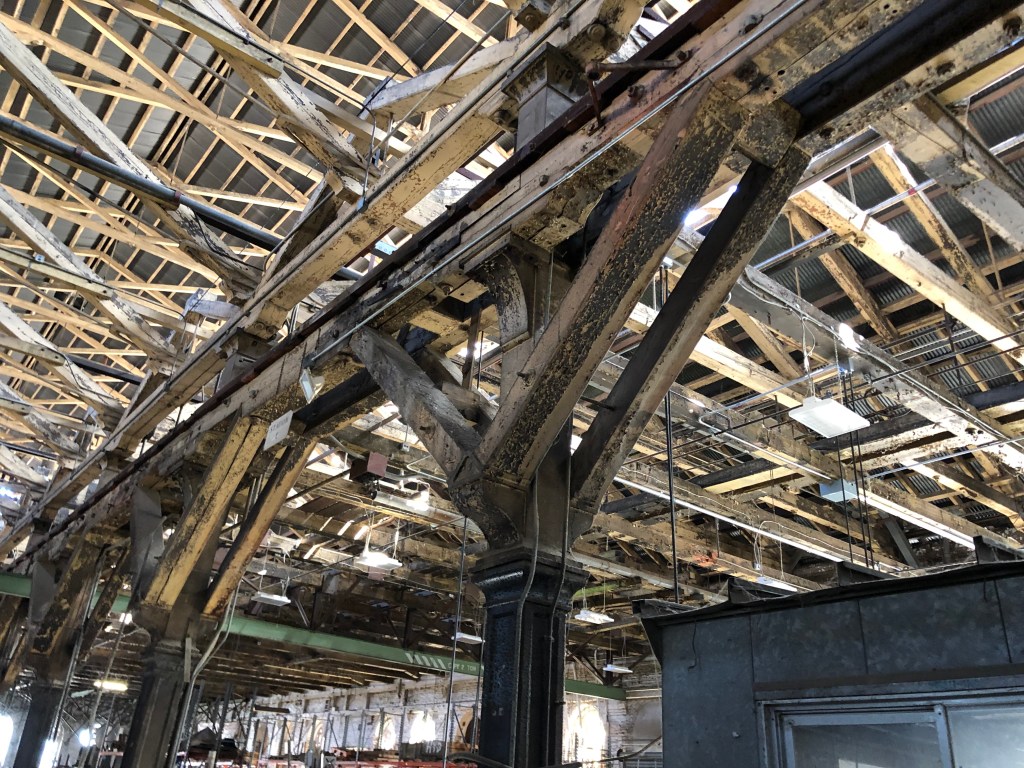
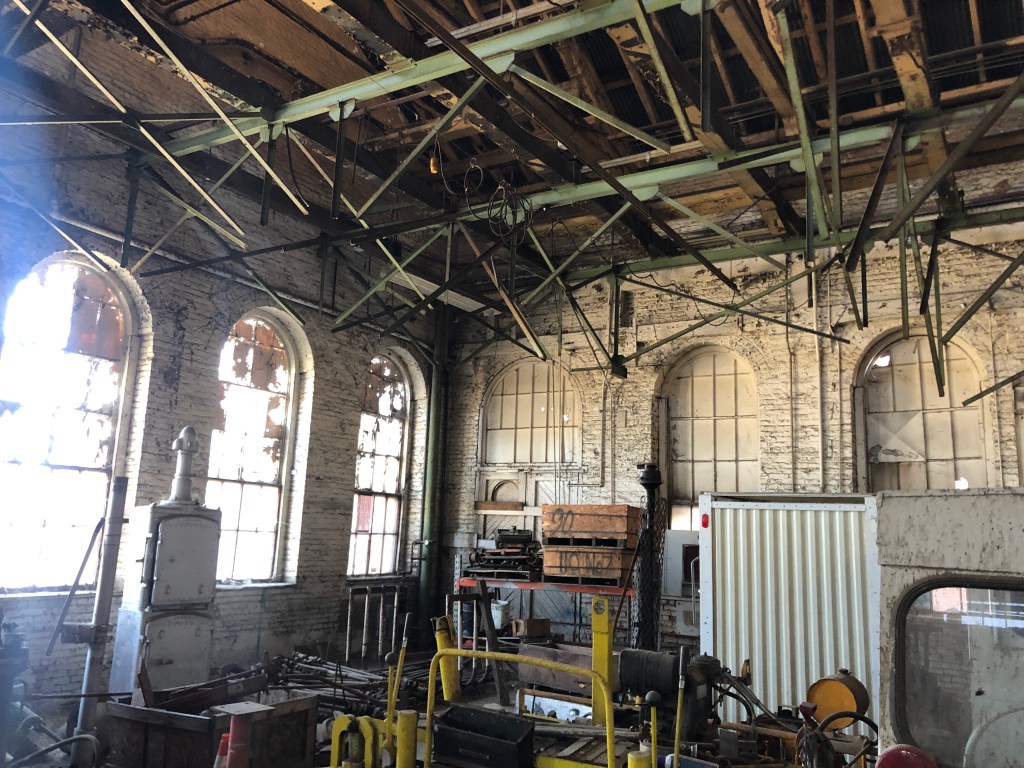
Inside the Boiler Shop
Showing its age, but still…
Still a working space.
Doesn’t it make you want to genuflect?

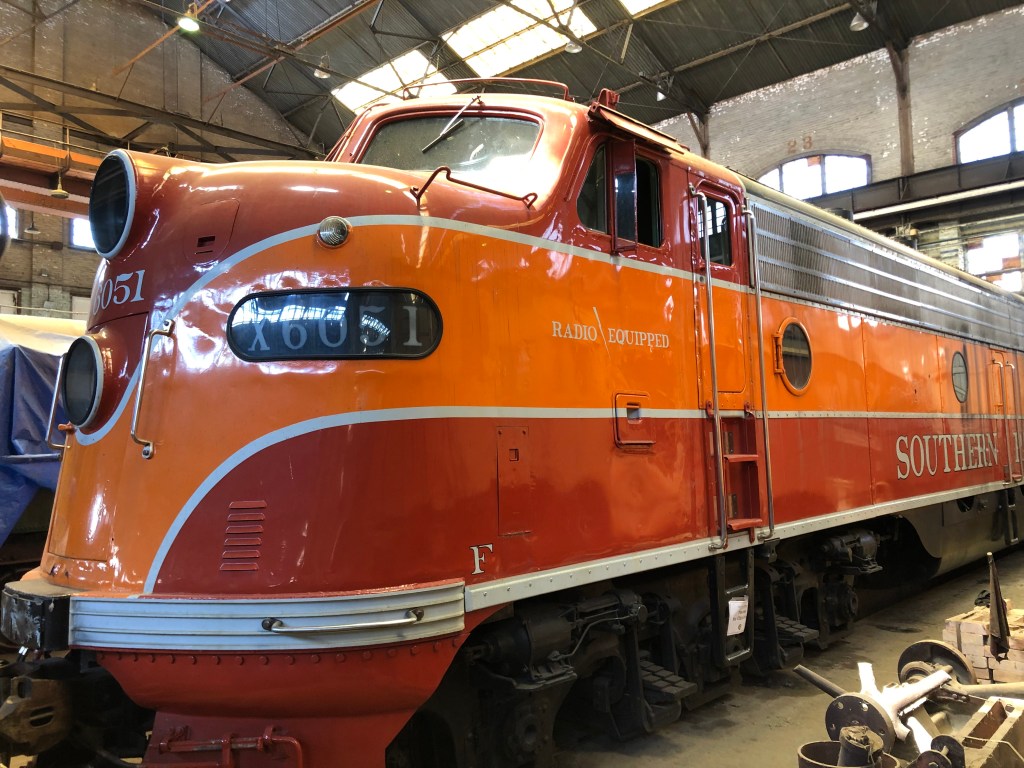
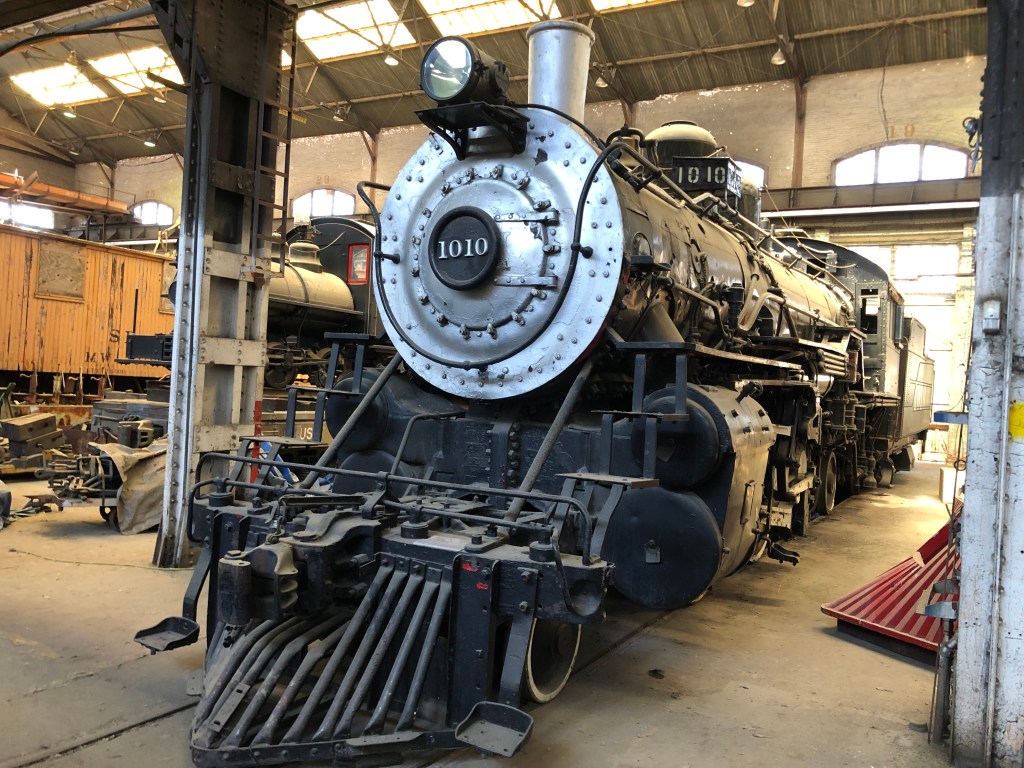
Second, the CSRM has filled much of the space with locomotives and other rolling stock from its extensive collection. These are not currently on display for the general public (though they sometimes find their way into the main CSRM museum building). But the CSRM receives many donations for which it’s not yet ready to restore and display, so they find their way here.
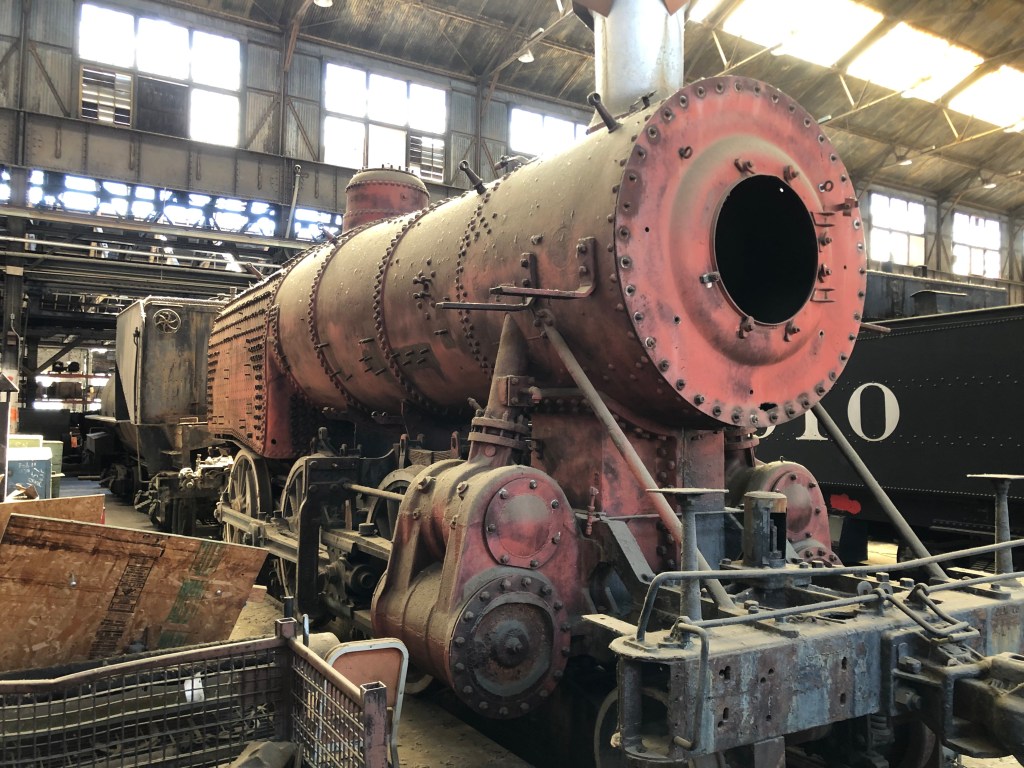
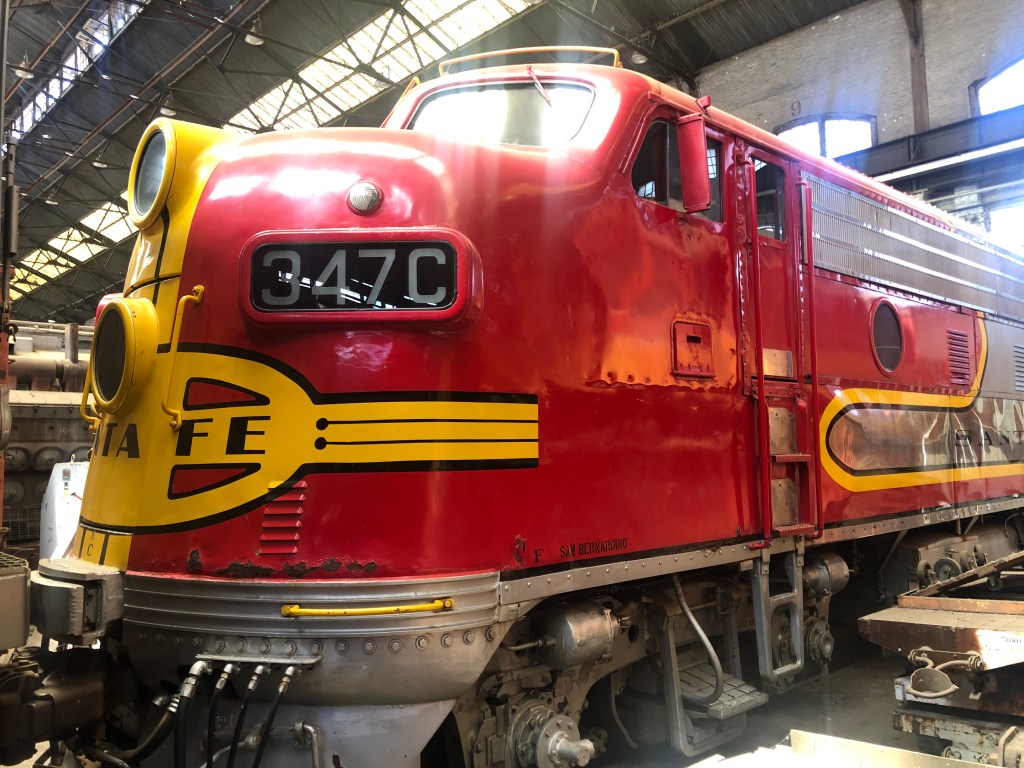
Steam loco, a work in progress.
She’s a beauty.
The “Daylight” paint scheme is always a crowd pleaser.
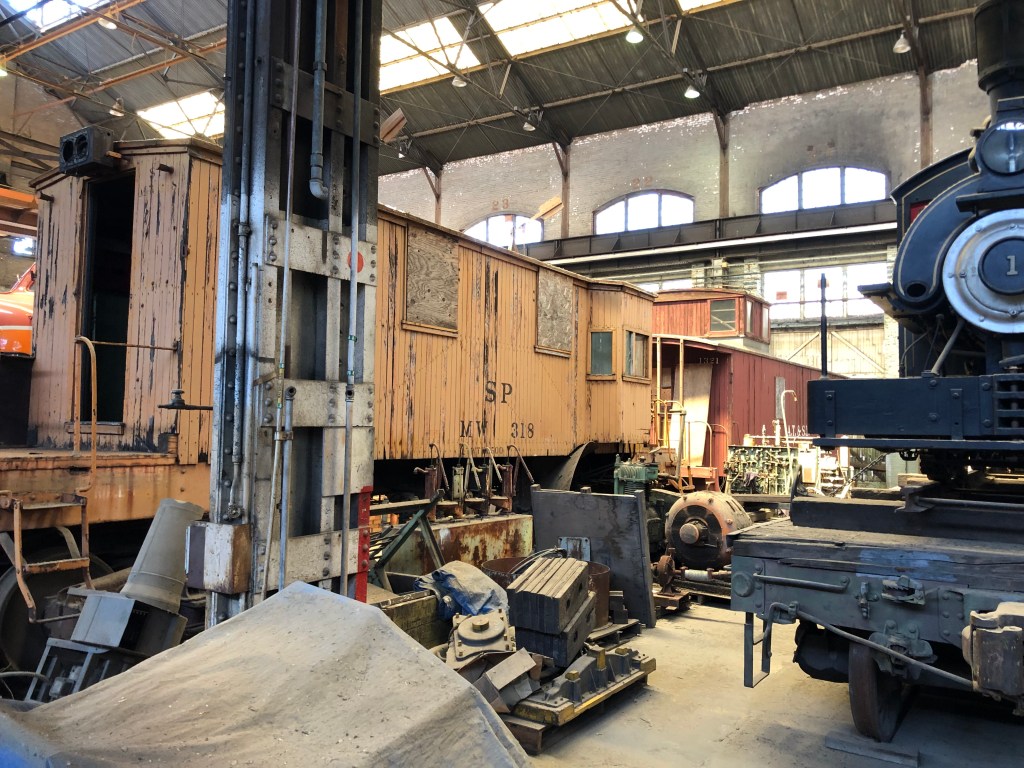
The CSRM has acquired a number of wood-constructed cars, which understandably don’t weather the years very well.
Record-breaker from 1905. Read the story here.

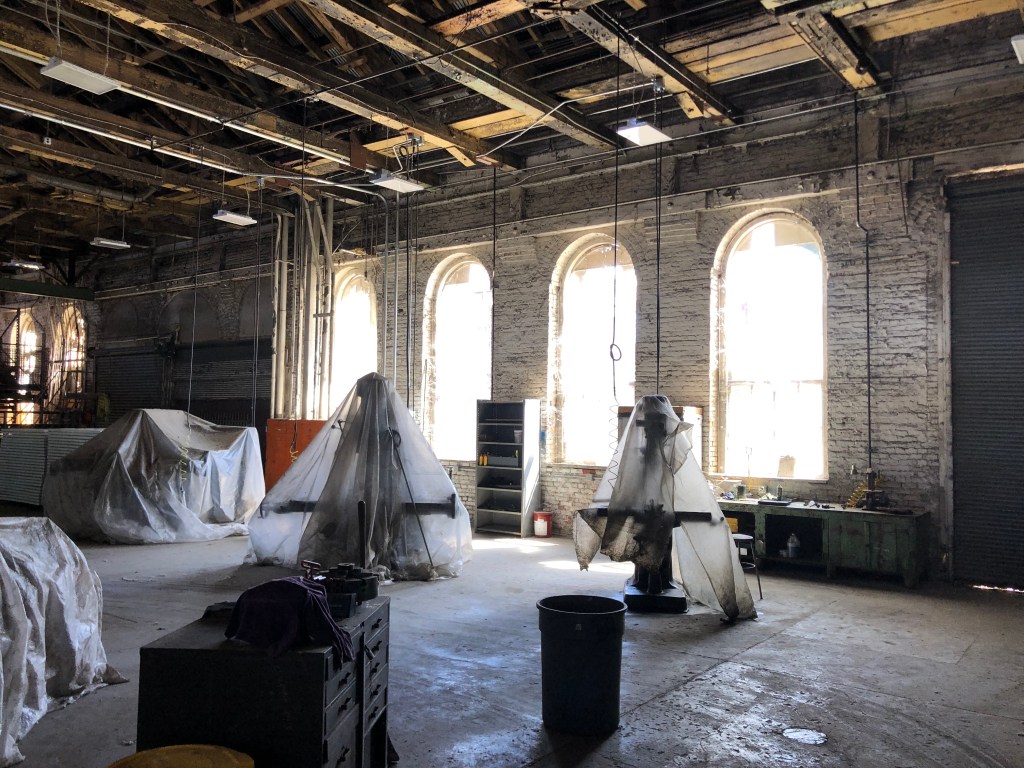
Third, the shops harbor a number of artifacts that really don’t fit neatly into any category, and as such will probably never be part of a museum display. But it’s electrifying to be able to simply walk past them.
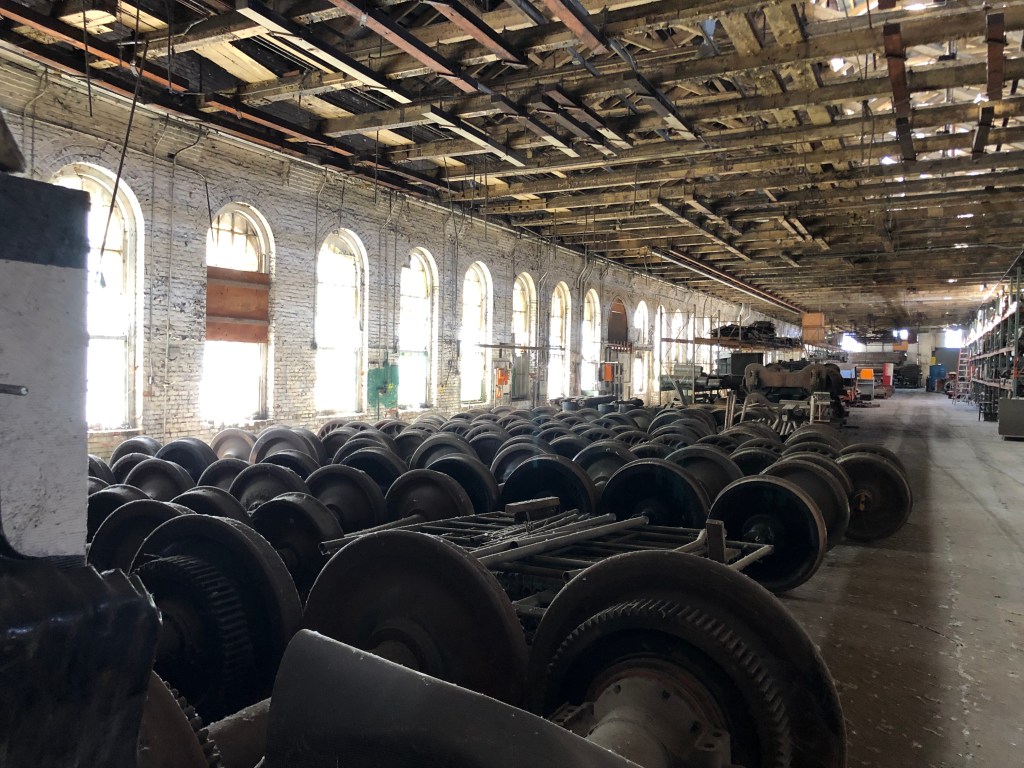
Flanged railroad wheels, as if they were Lionel model parts stored in a hobby shop.
Lathes, drill presses, and other shop tools, dressed like ghostly furniture in a haunted house.
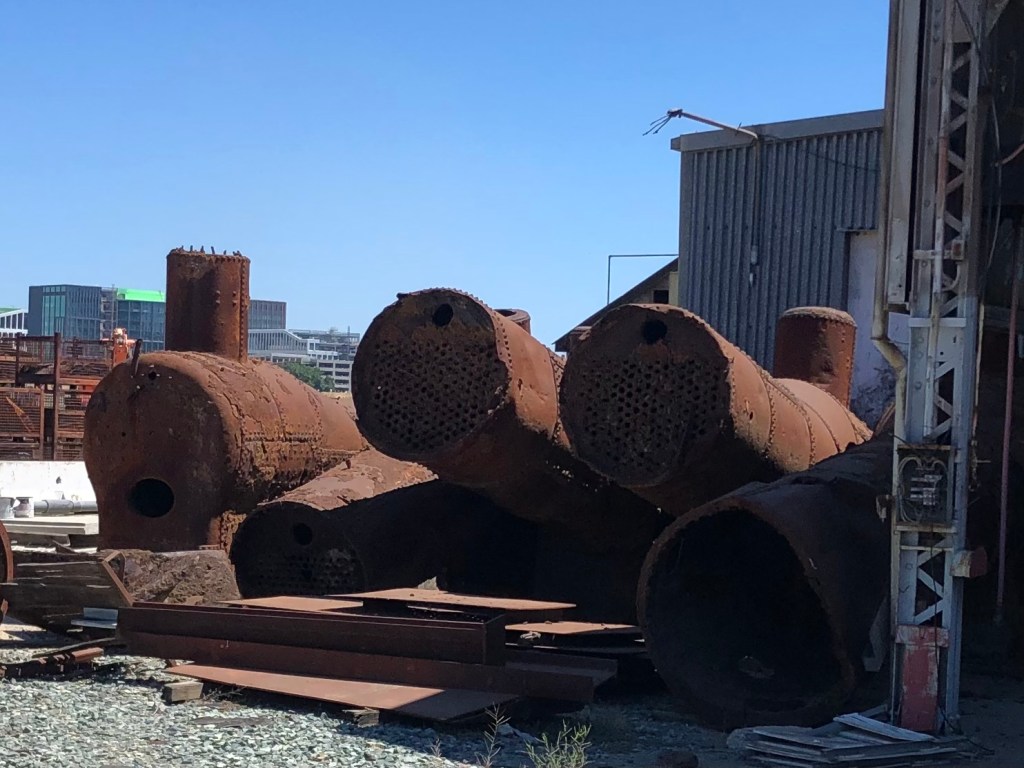
Old locomotive boilers that were excavated from the (former) China Slough, as part of EPA remediation efforts.
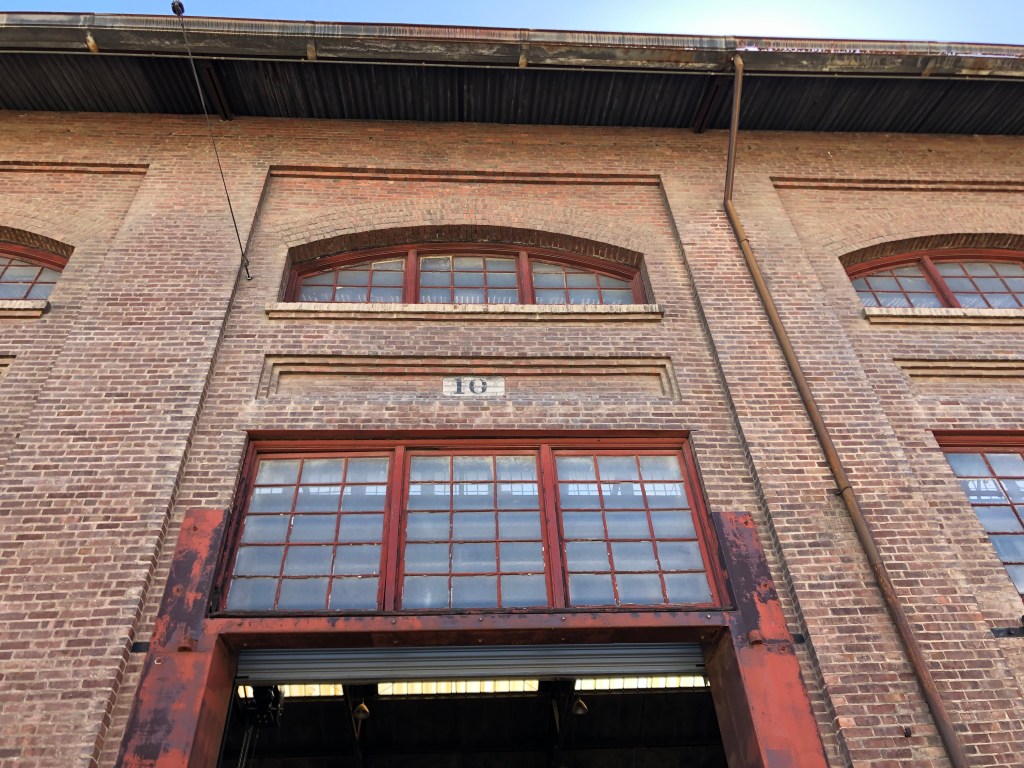
One of the many doors into the erecting shop. A classic example of fin de siecle architecture.

In conclusion, I feel compelled to say “God bless the CSRM and the city of Sacramento” for preserving this hallowed ground from a critical stage of our history. It’s difficult to articulate just how unique and important this property is. I strongly encourage you to visit the CSRM and walk the block or two from the museum to also view the outside of the Shops from the Amtrak platform at the Sacramento Depot. (The Depot itself will be the worthy subject of a subsequent blog.) For the moment, the Shops are not open to the general public. But if you’re willing to become a docent of the CSRM (as I have just done), you’ll get your own guided tour. That’s worth the price of admission. Trust me.
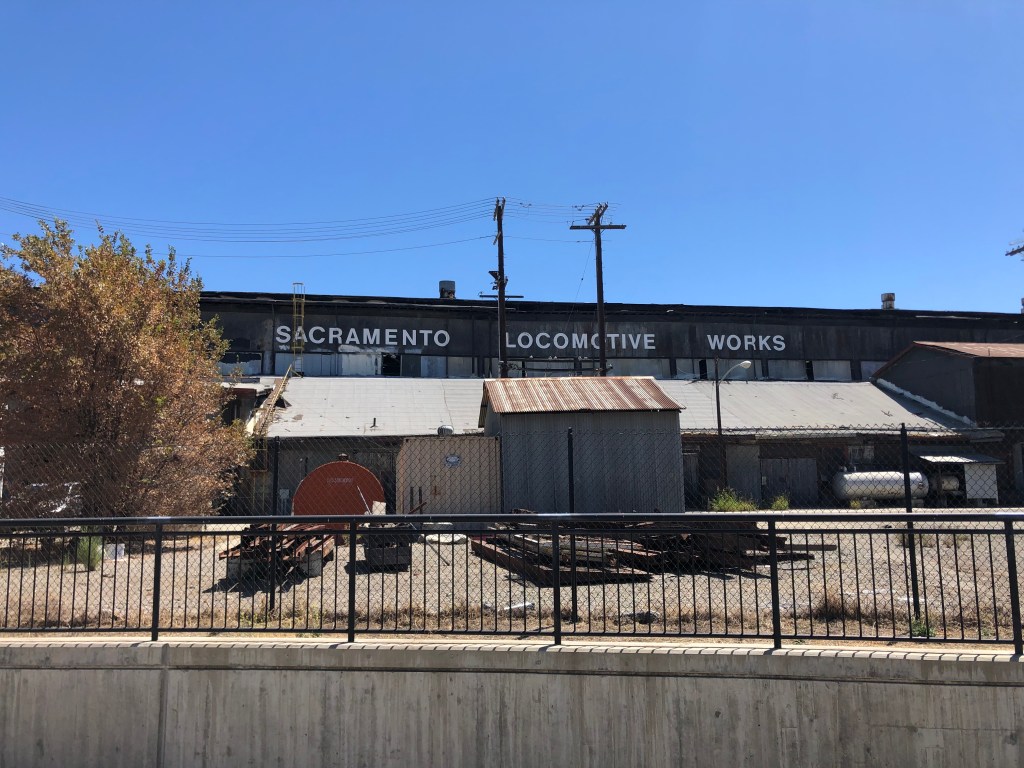
Railroad Remnant
California history · Cars

The Postman Cometh

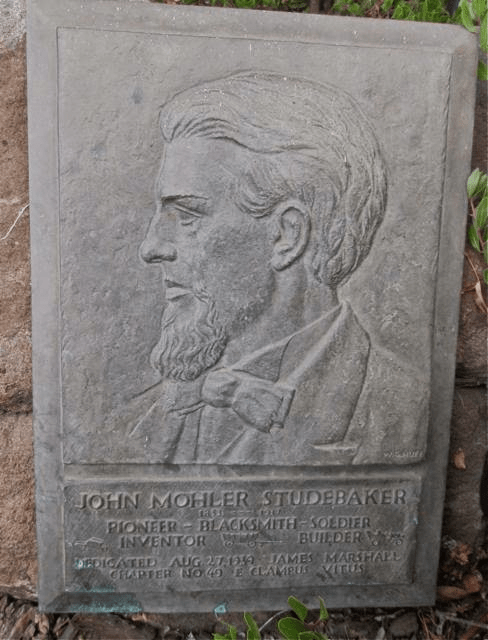
This morning a little after 6 am I took out the Speedmaster to downtown Placerville (pop: 11,000). There I got a cup of coffee and took a seat at the site of the old blacksmith shop where John M. Studebaker built wheelbarrows over a century ago. There’s a marker in the courtyard of the Bagel Works commemorating this fact.

John Studebaker was not the reason for my visit, but it’s worth recalling his connection to Placerville and the California Gold Rush. He was born in Pennsylvania and came out to California as a young man seeking his fortune in the gold fields. It didn’t take him long to realize the real path to riches lay not in mining for gold but in selling supplies to the gold miners. So he began building wheelbarrows right where I was drinking my coffee, and eventually amassed enough money to launch what would become one of the country’s largest, longest-lived, and most successful independent automobile manufacturers: The Studebaker Corporation. This is probably a good time for a brief clip of my friend Bill’s 1941 Studebaker Commander, which is still moving under its own power after 81 years. It’s a goal I hope to achieve myself in 20 years.

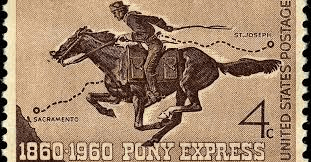
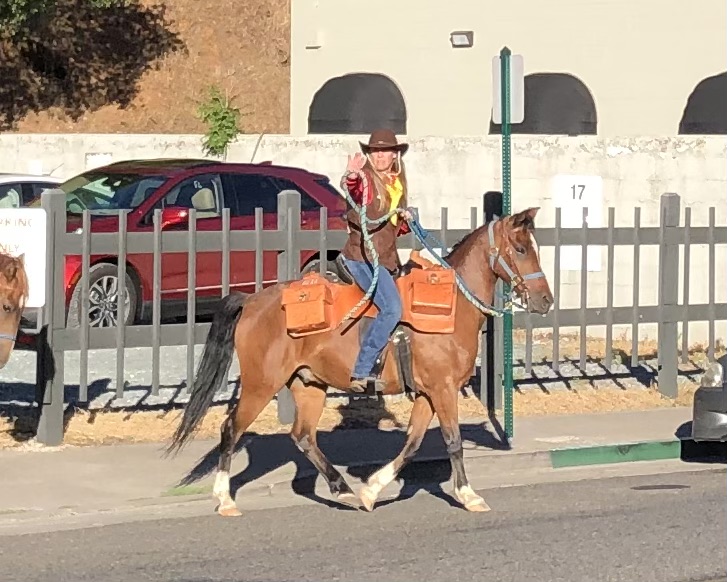
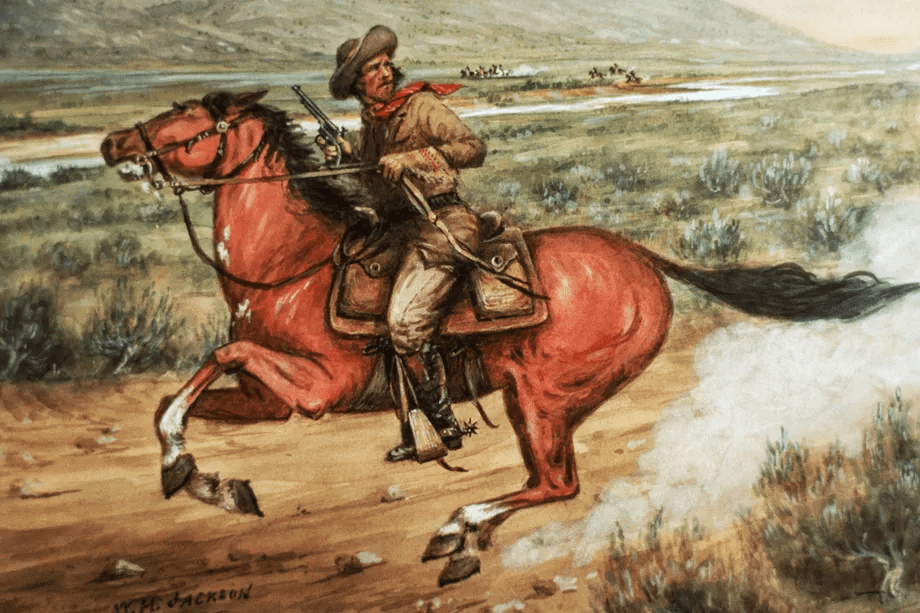
But back to this morning: I sat there with my coffee, waiting for the mail to be delivered. And this wasn’t just any mail delivery: This was a special delivery by the Pony Express. The Pony Express, you’ll remember, was created right about the same time that John Studebaker was building his wheelbarrows. The Pony Express carried US Mail from St. Joseph, MO to Sacramento on horseback, in only 10 days. It covered a route of 190 ten-mile segments, with fresh horses being supplied at each segment, and riders being changed about every 10 segments. (Some of the old Pony Express stations are still standing; I’ve been to a few of them in my travels, including the Pony Express Cafe in Eureka, Nevada, as I discussed briefly here.)

The Pony Express only lasted about a year and a half (from the spring of 1860 to the fall of 1861). It went bankrupt a month or two after the first transcontinental telegraph was established. But the Pony Express remains a romantic (or romanticized) part of the Old West.

So what does any of this have to do with this morning? Well, it seems that the good folks at the National Pony Express Association annually re-create the Pony Express ride–24 hours per day for 10 days. This morning the rider was scheduled to be coming through downtown Placerville a little before 7 am. When I got there, a small number of people were milling about, as though they were waiting for the world’s smallest parade. Seriously, this was not a well-attended event, but perhaps that’s because anyone living in this general area would probably opt instead to be present for the final moments, when the rider comes into Old Sacramento this afternoon.

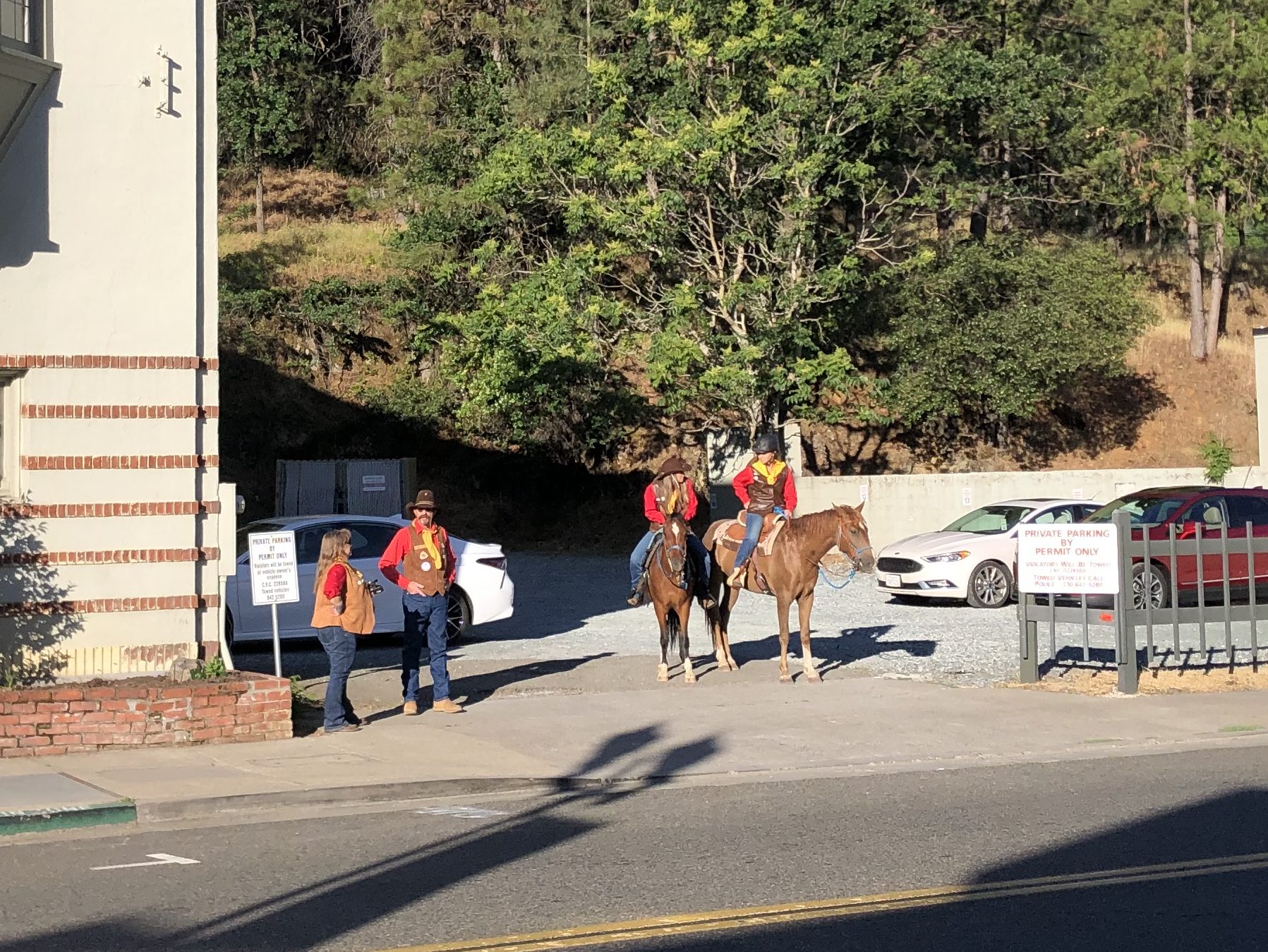
Waiting for the mail to arrive

Most of the people were wearing distinctive red shirts and leather vests–the uniform of the National Pony Express Association. But I also spotted a few civilians such as myself. The mood wasn’t exactly raucous, but clearly these hardy souls shared an interest in history and/or horses. Adding to the mood was the backdrop of 19th-century buildings on Placerville’s Main Street.

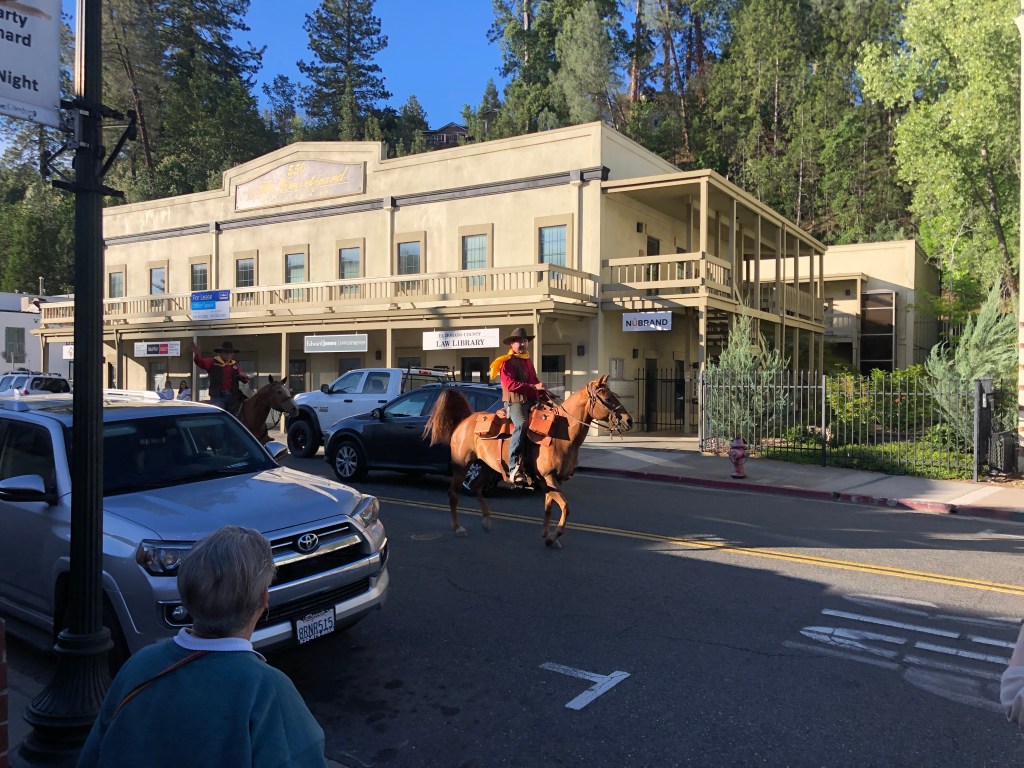
And then suddenly, without warning, the mailman arrived.

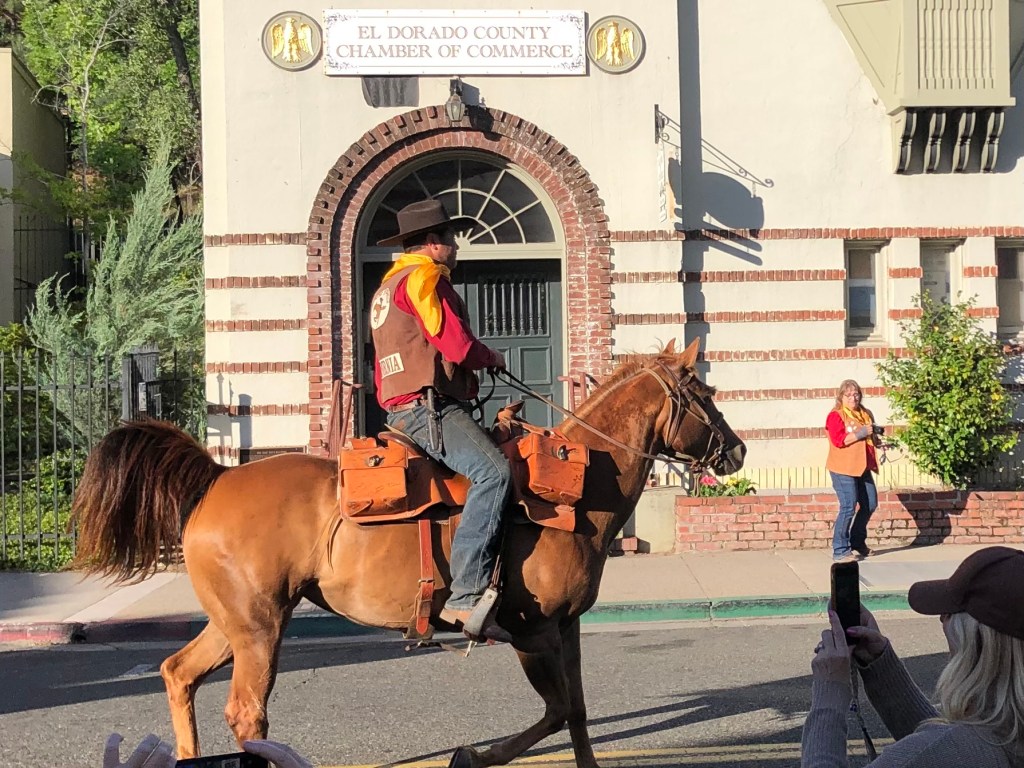
Then the mail bag (“mochila”) was transferred to a waiting rider, and the mail was back on its way. It was all over in less than a minute.

Neither sleet nor snow nor traffic laws….

There’s something compelling, in this age of texting, email, and on-demand media access, to see old-timey, flesh-and-blood communication mechanisms at work. I certainly would not argue that the Pony Express was superior to modern communications; heck, it wasn’t even superior to the telegraph. But it does represent a spirit and energy that seems to be in short supply these days. And that’s why this afternoon I’m going to be raising a pint to the young men who rode for the Pony Express.

Cars · cemeteries · Road trips · trains

Bonus Features

There were a number of photos from my Route 2 trip that didn’t make it into the blog. I’m including some of them here, as a bonus feature. Enjoy!

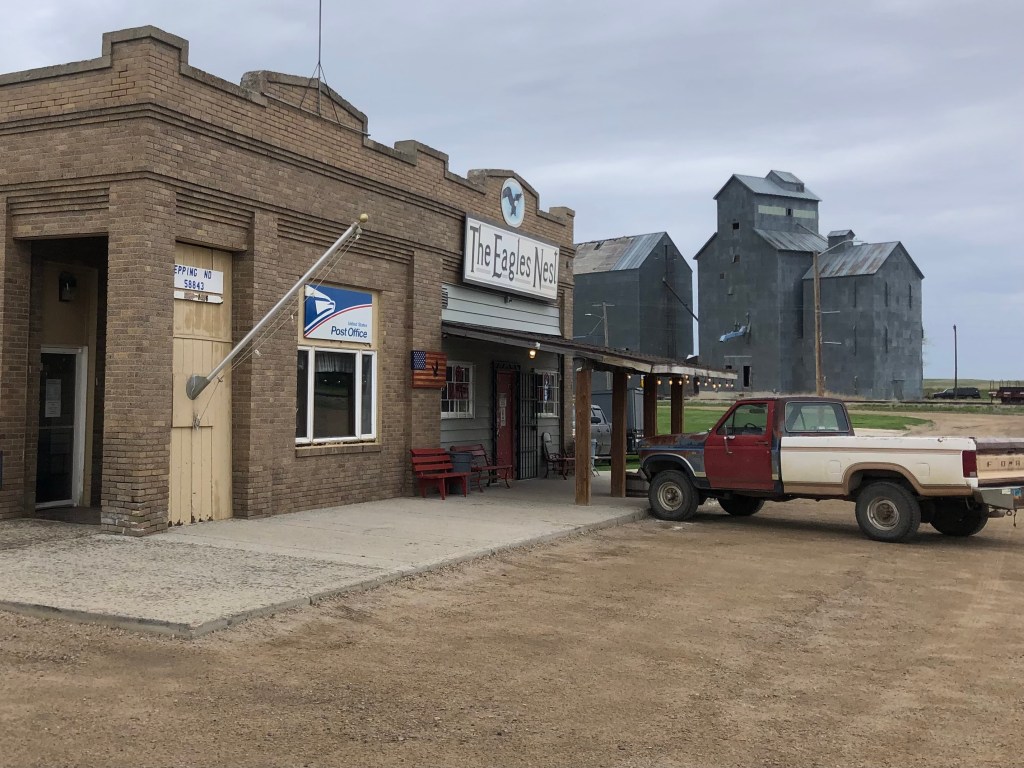
Epping, ND (pop: 100). Practically a ghost town, the only businesses showing any signs of life were the post office and the bar…which are in the same building.
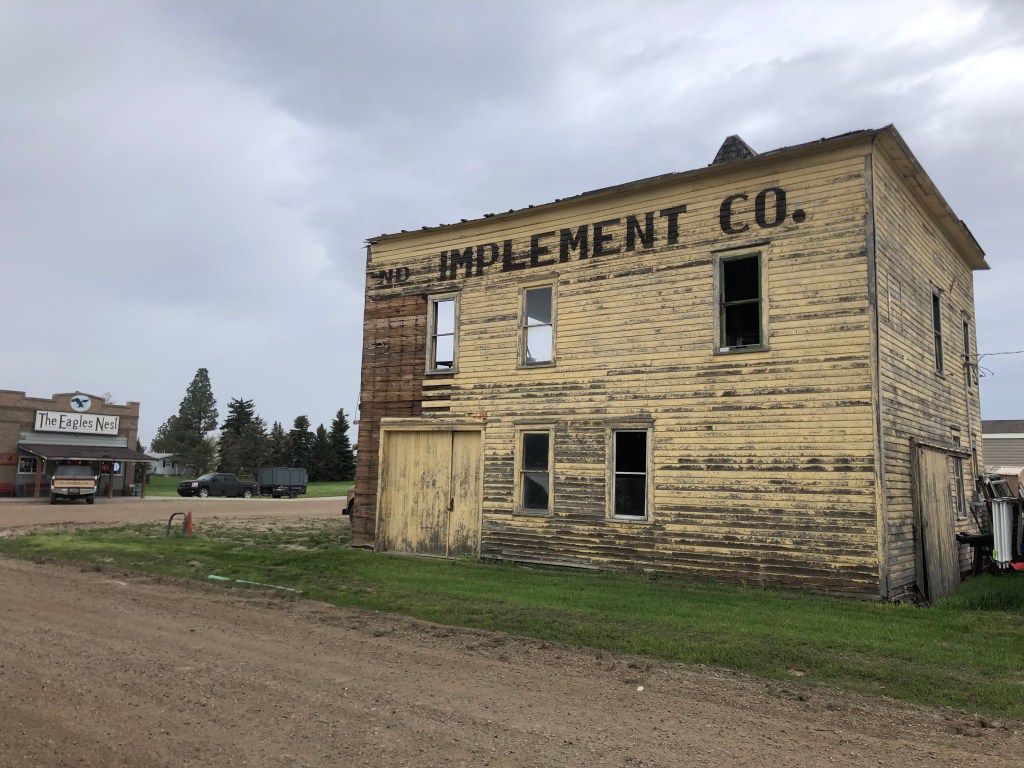
Another Epping builidng.
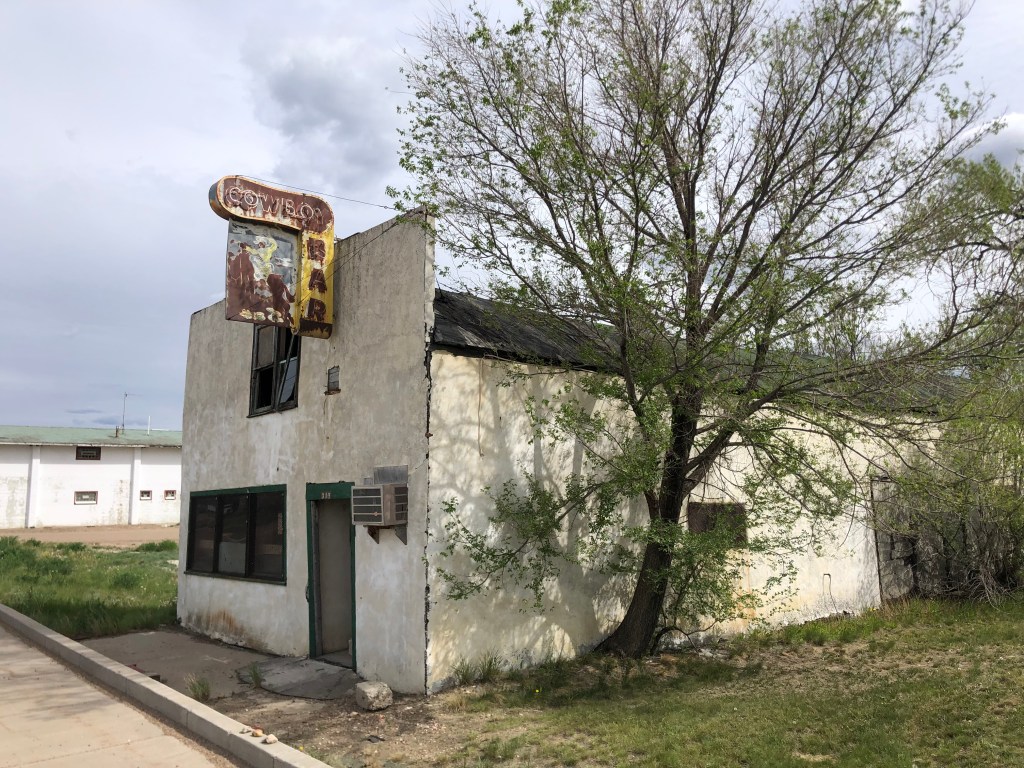
Speaking of bars: here’s one that’s getting a little long in the tooth, in Dodson, MT (pop: 125).
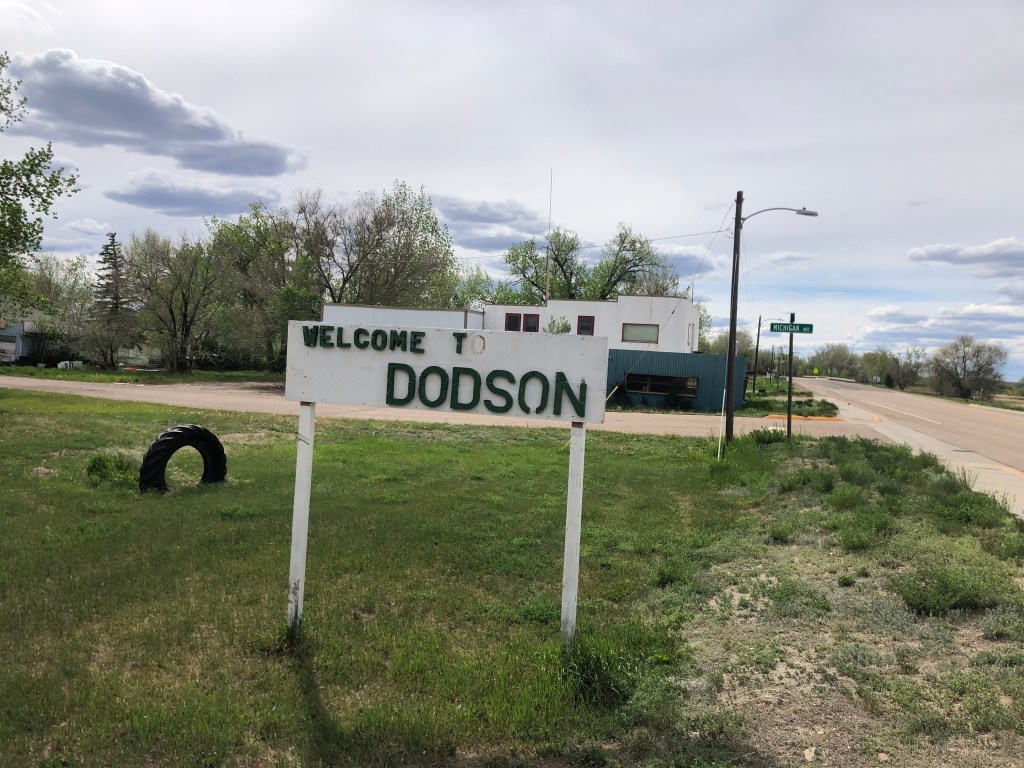
The Welcome Wagon went all out.
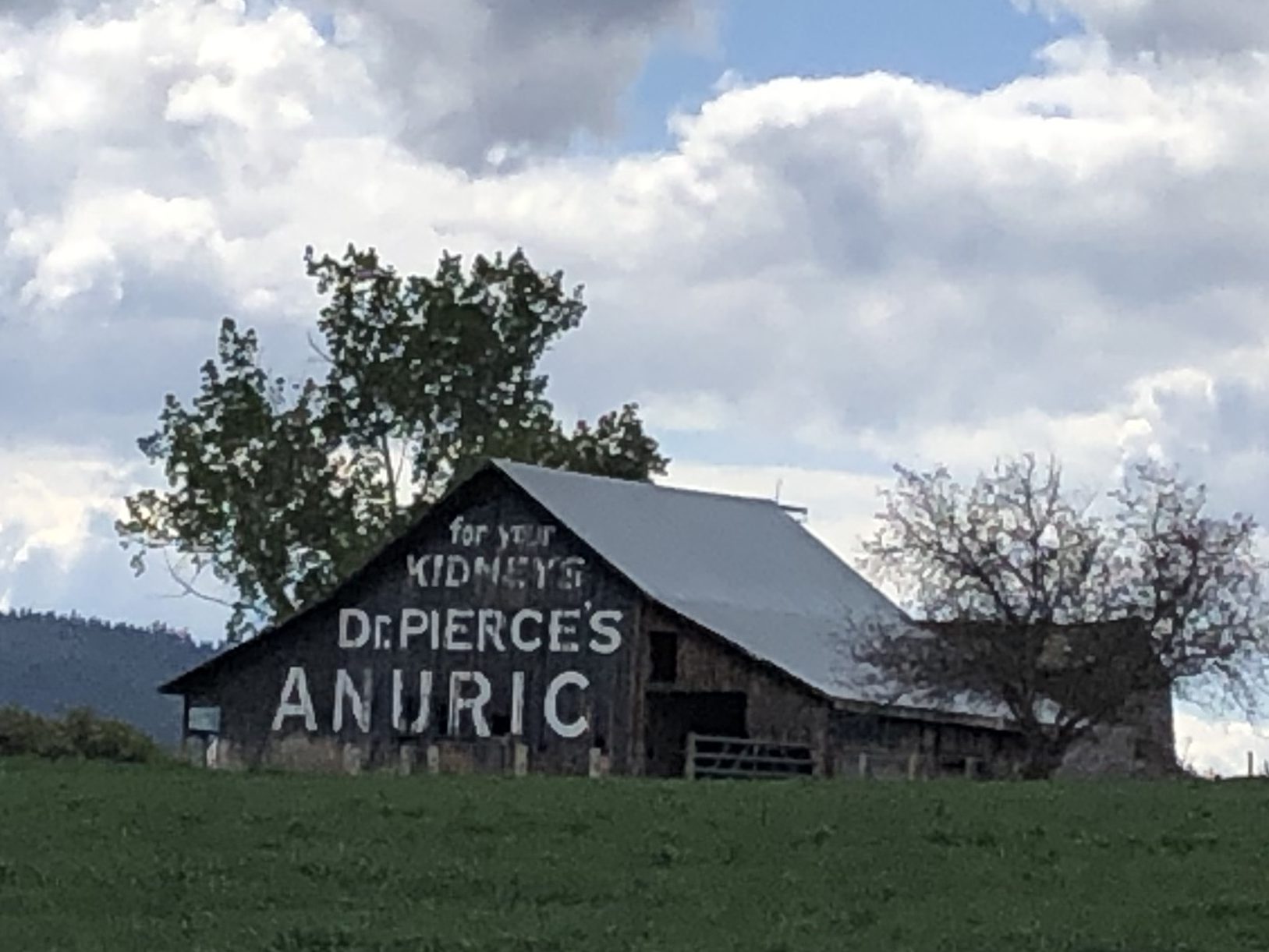
Barn near Waterville, WA, built in 1906. Dr. Pierce’s concoctions were well-known quack medicines.
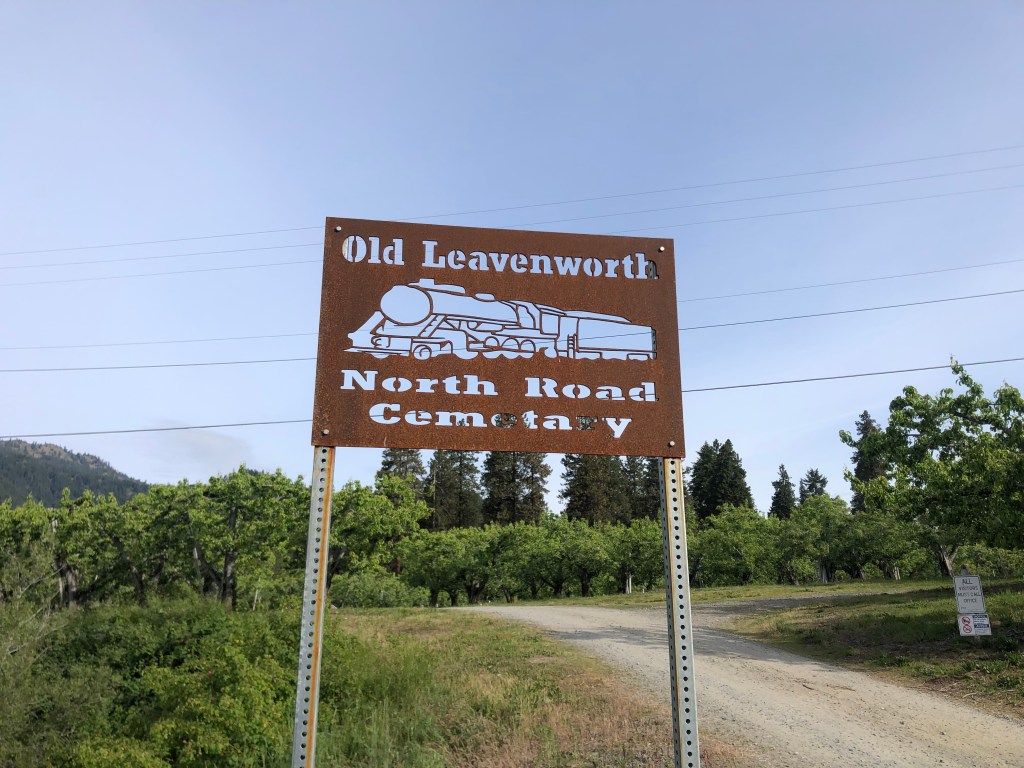
Cool, cut-metal sign at cemetery in Leavenworth, WA (the Bavarian town). This is one of the few signs that wasn’t all tarted up in faux-German script.
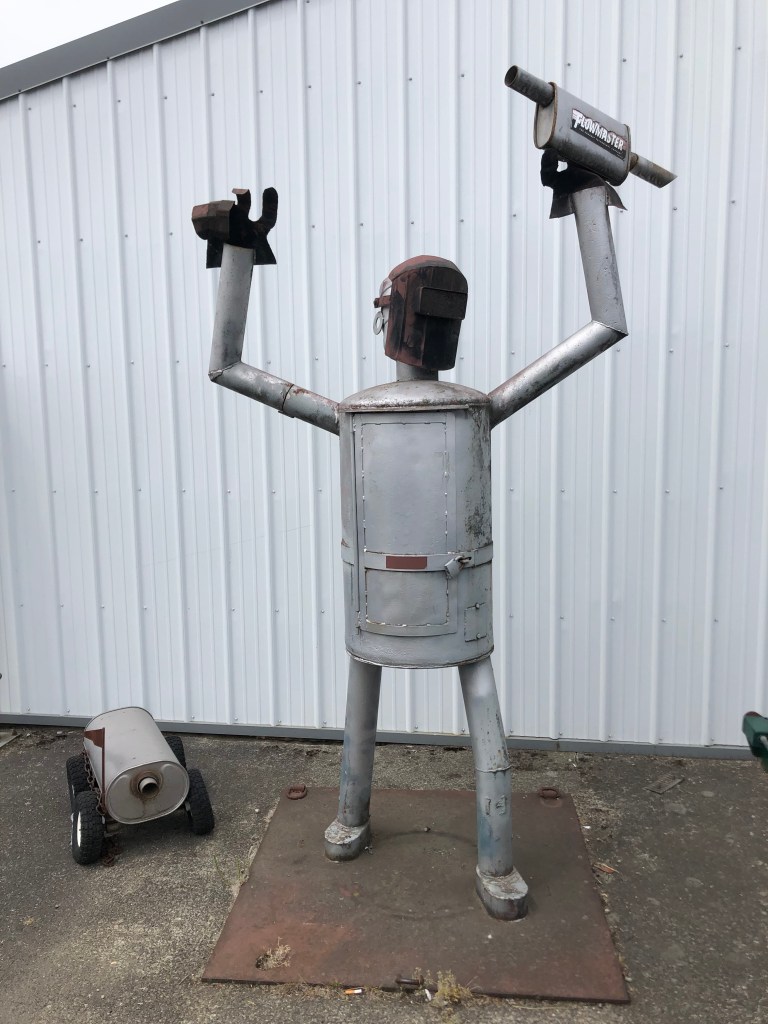
Muffler man sculpture in Snohomish, WA.
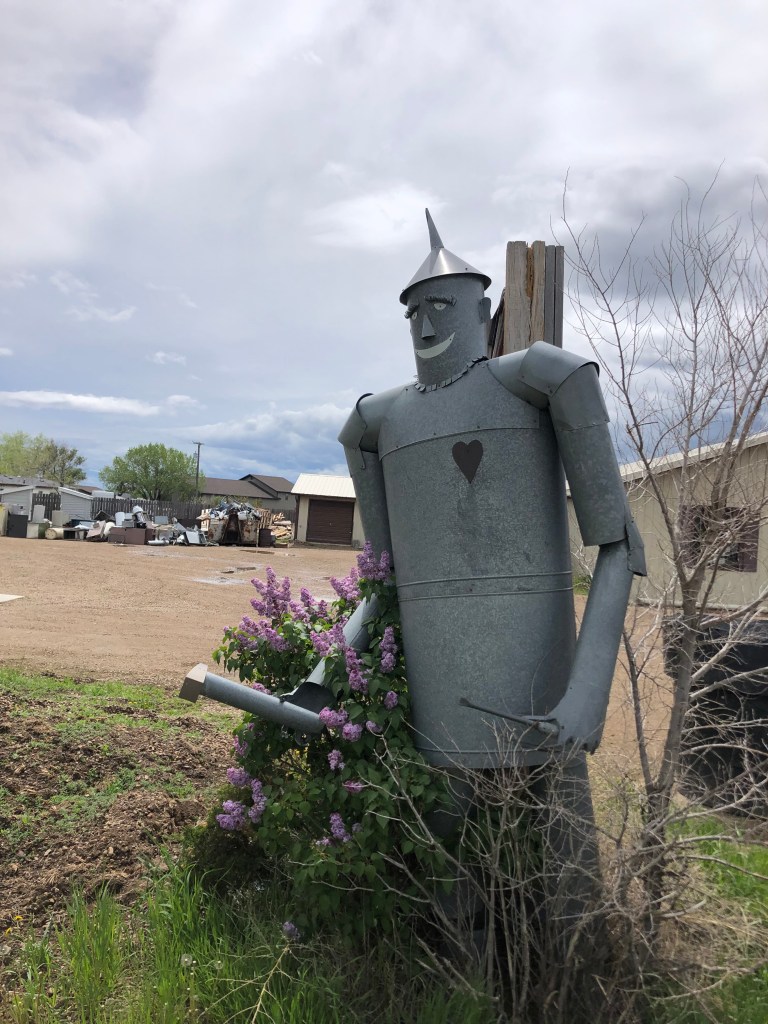
Similar idea, a thousand miles to the east. If I only had a heart…
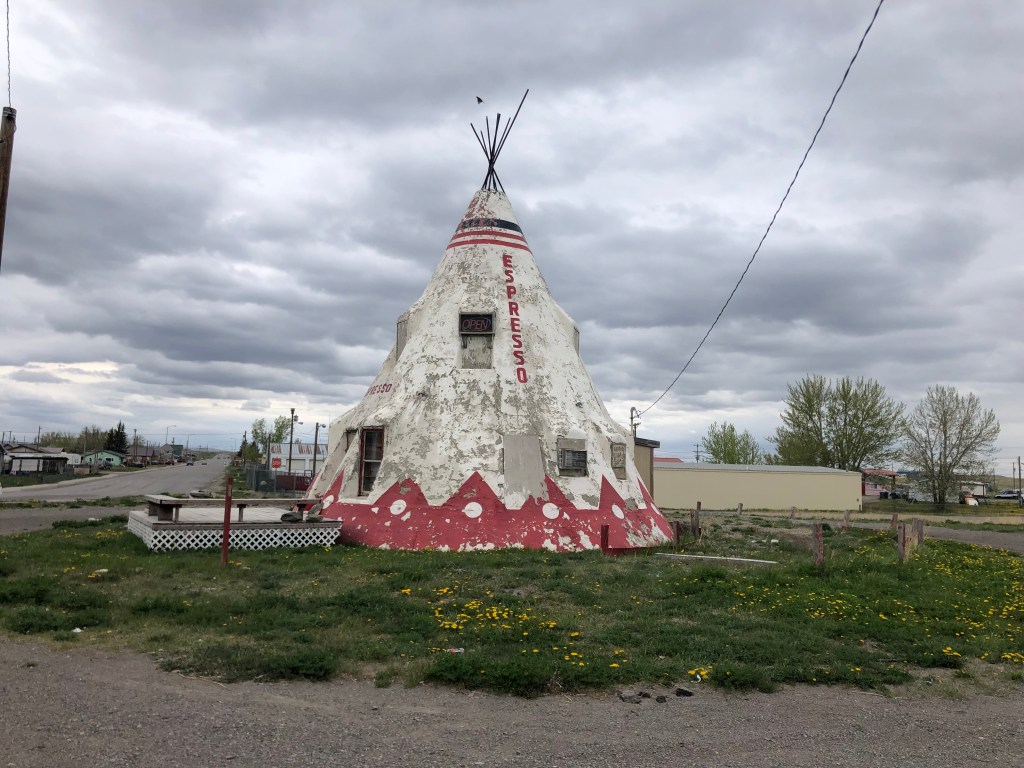
Concrete teepee that houses espresso shop, originally built in Browning, MT, on the Blackfeet reservation. It originally opened as a gas station in 1934.
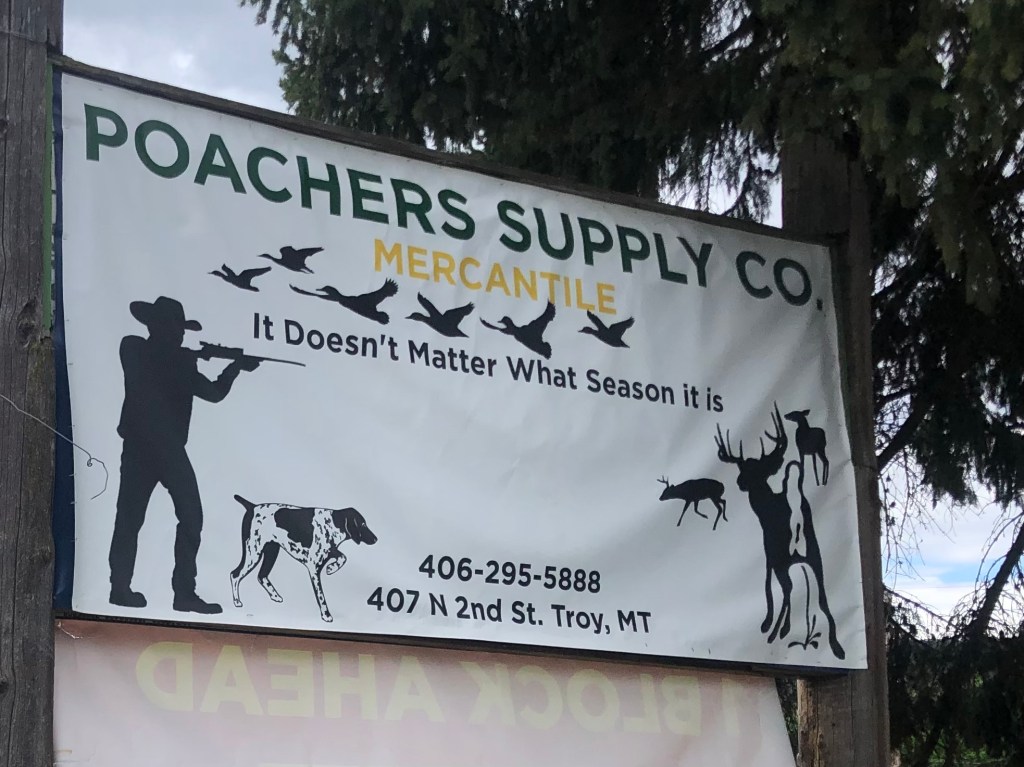
Supposedly a legit livestock feed store. But what’s up with the name??
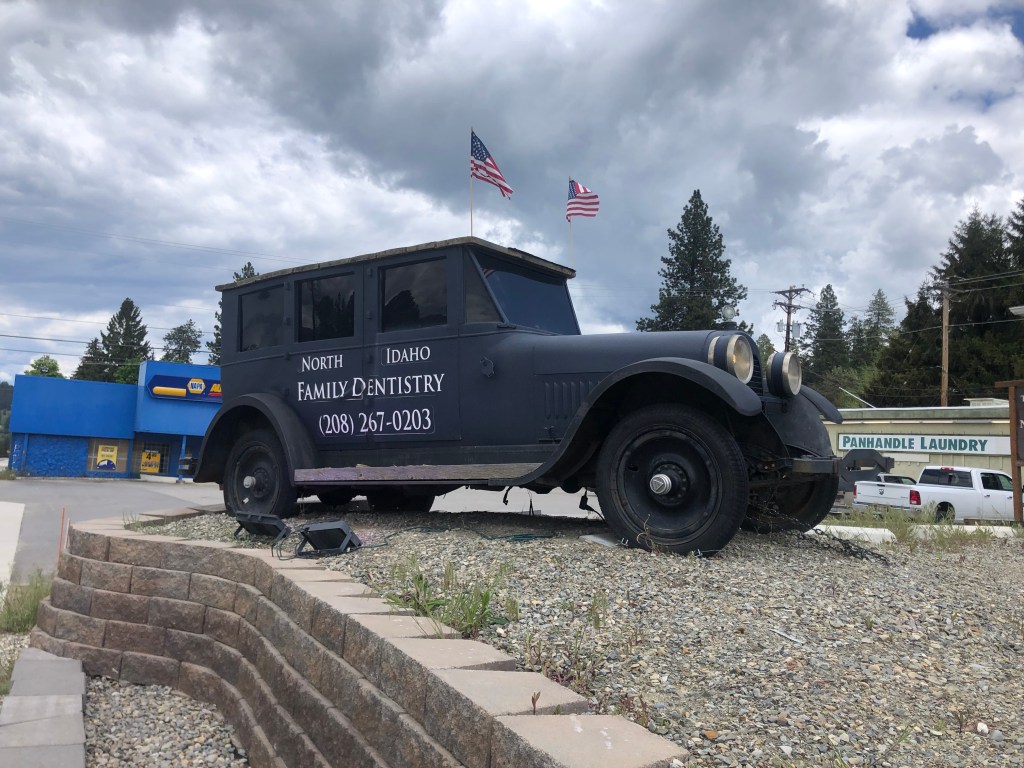
In front of a dentist’s office in Bonners Ferry, ID. I wonder if they use old-timey foot-operated drills?
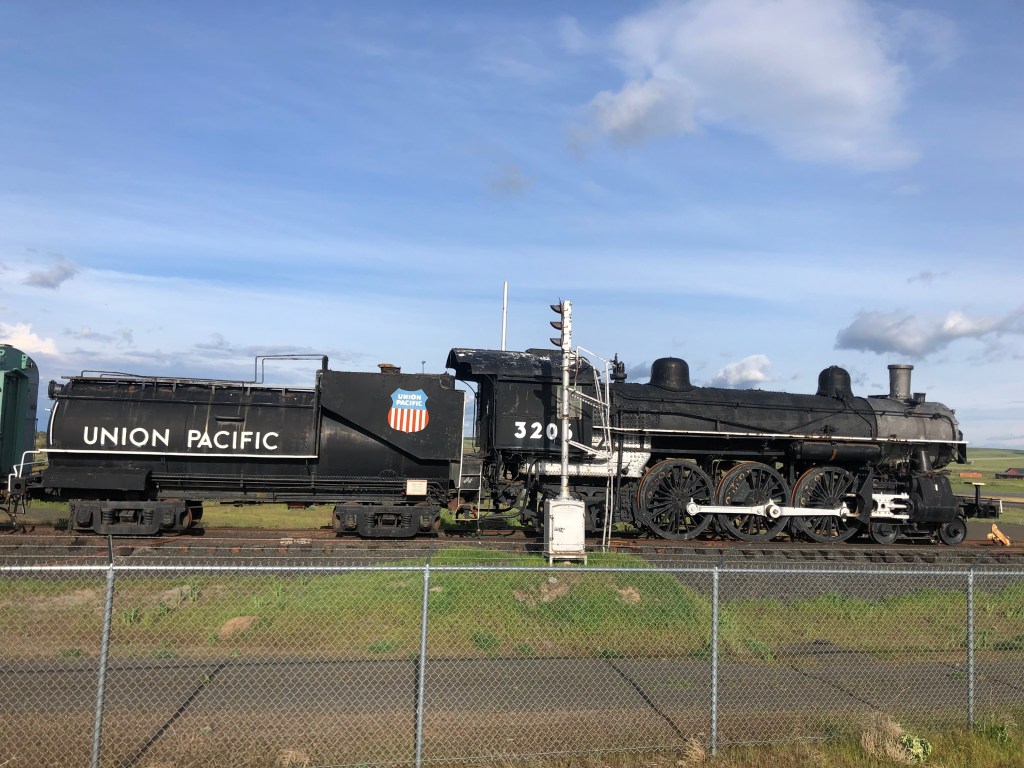
I just love the old UP steam locomotives. This one, from 1904, is in Reardan, WA
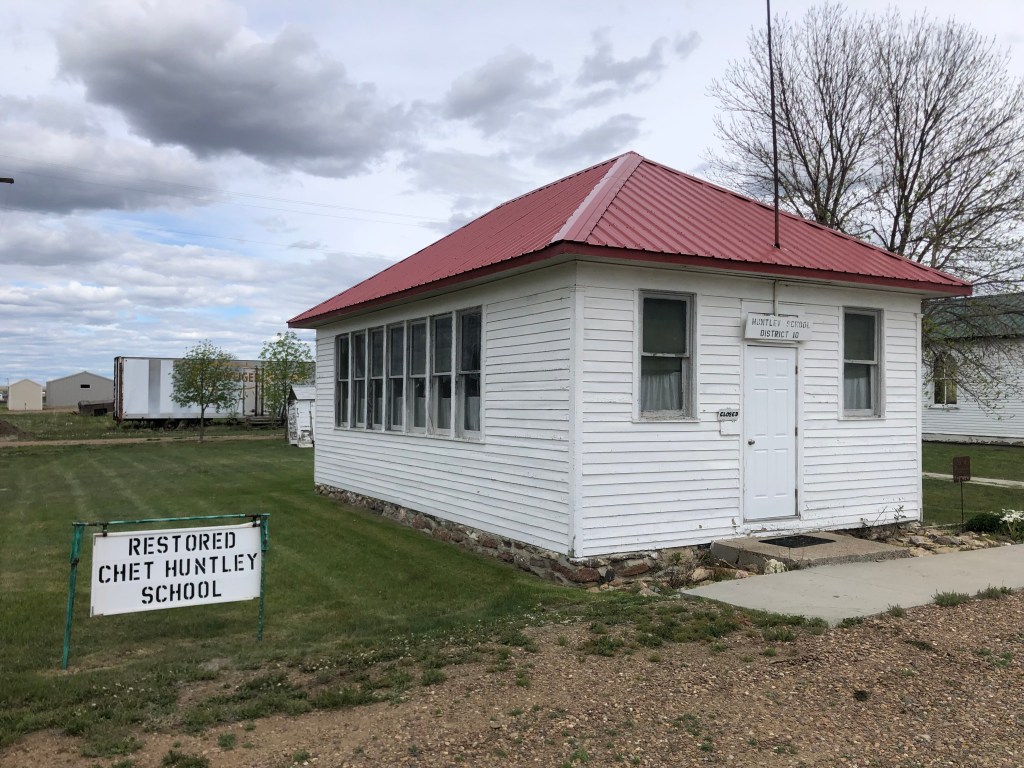
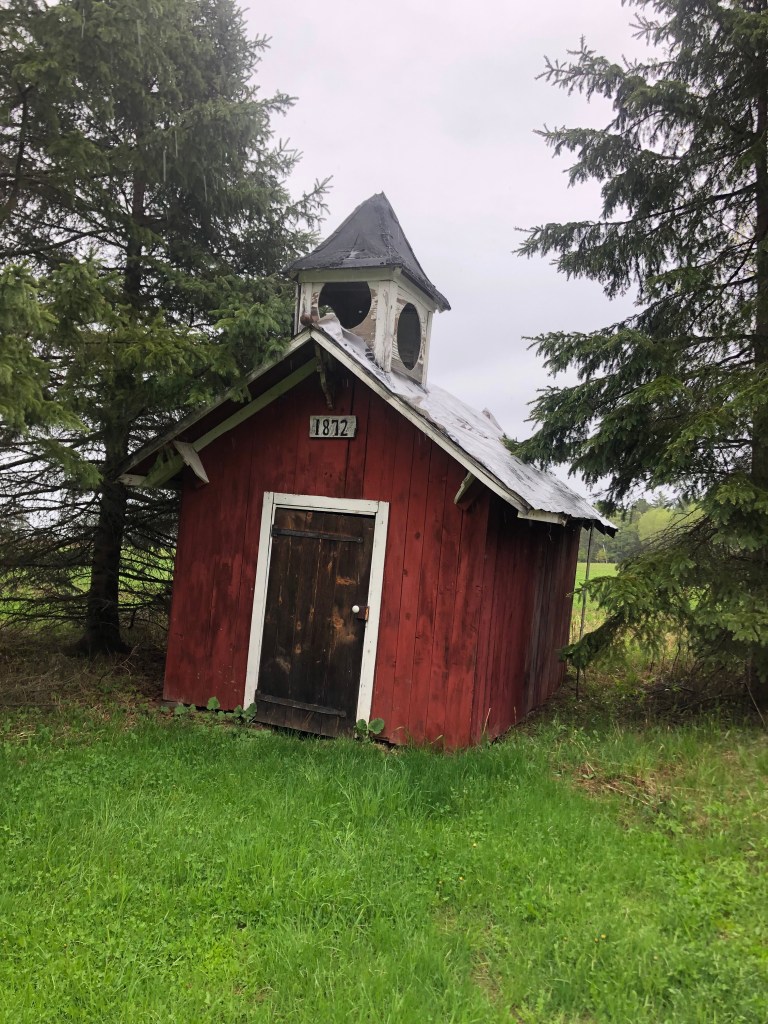
The one-room school house that NBC news anchor Chet Huntley attended in Saco, MT. Remember him?
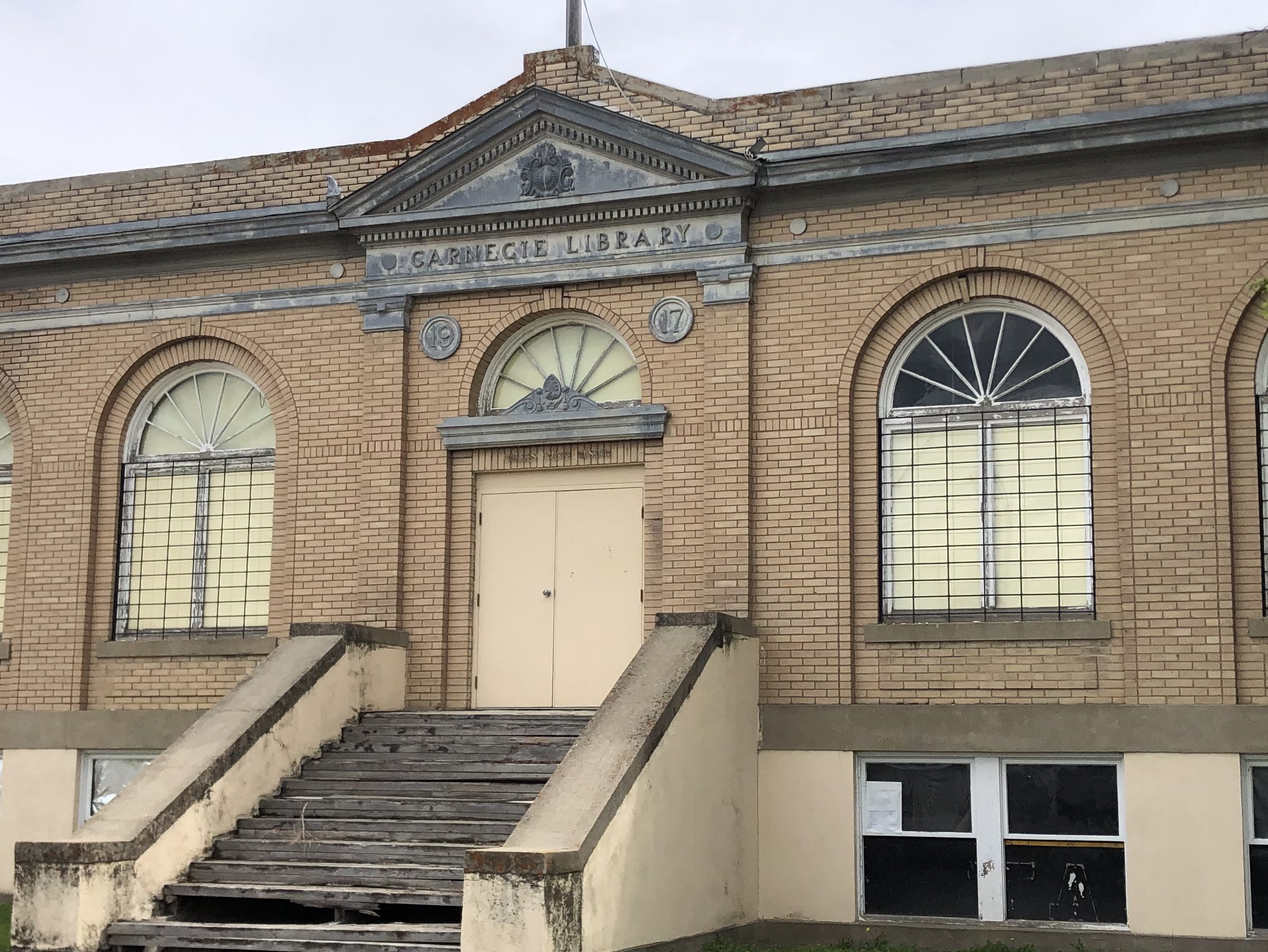
Old Carnegie library in Malta, MT. It was originally built in 1917.
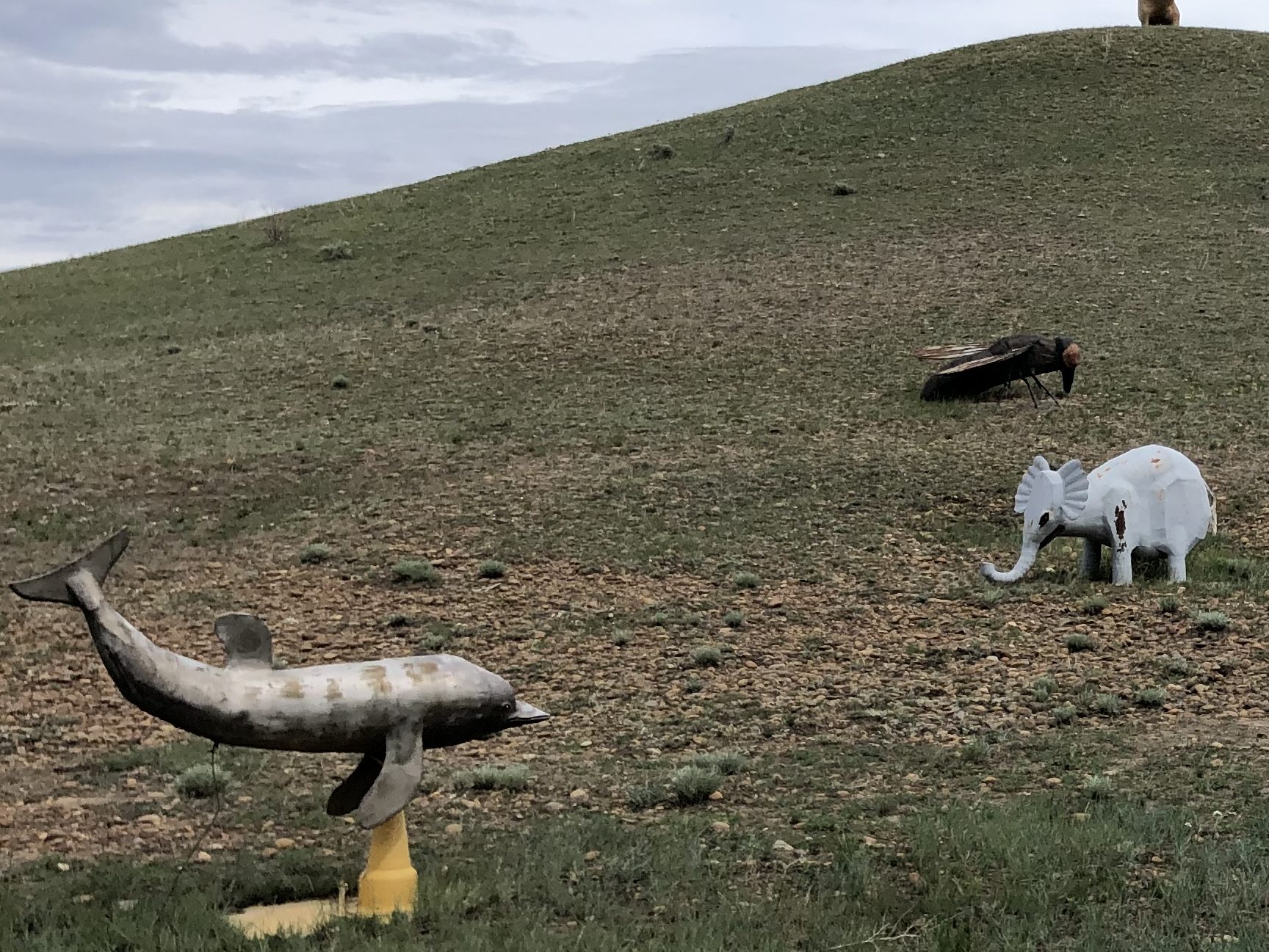
Mysterious metal sculptures in Glasgow, MT.
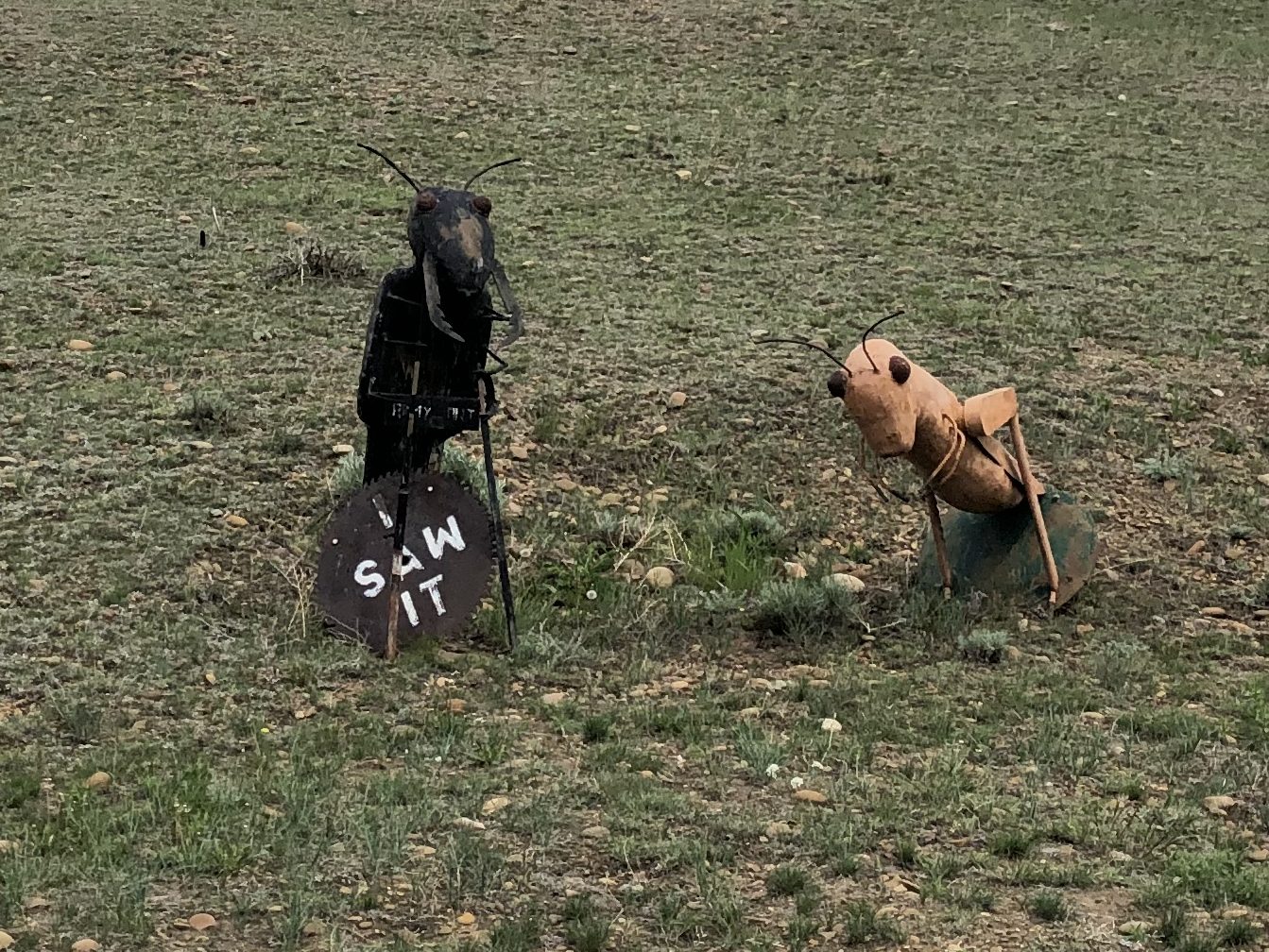
More sculptures. It’s not obvious, but the “I saw it” sign is on an old saw blade. Get it?
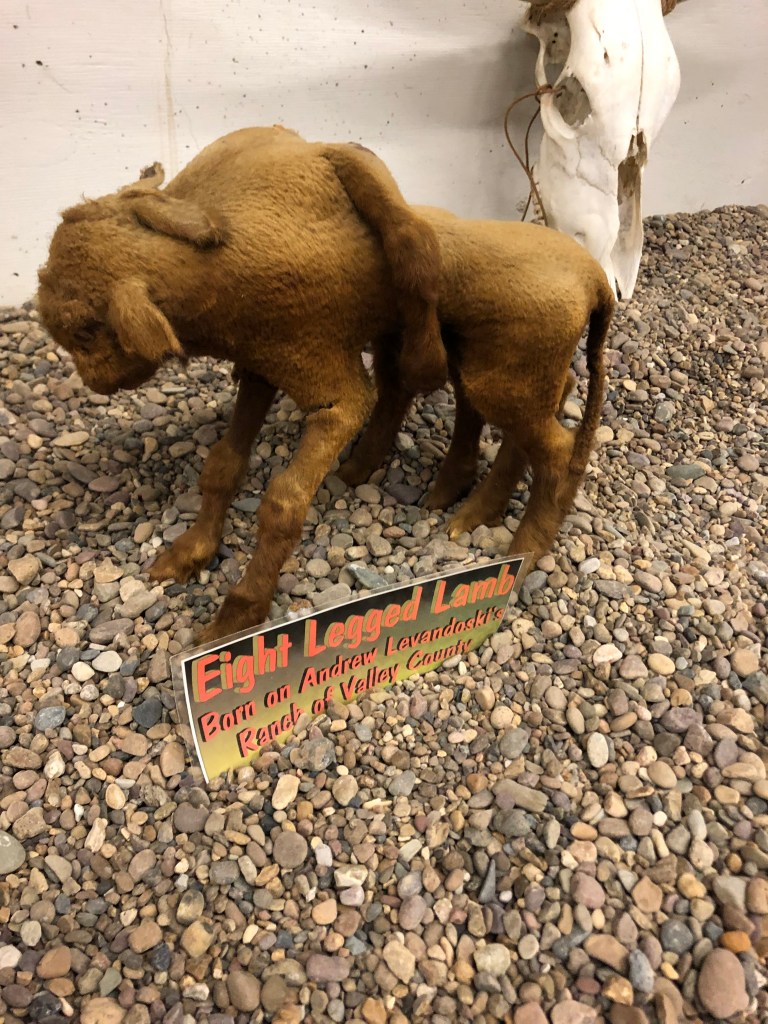
Eight-legged calf at a classy museum in Glasgow, MT
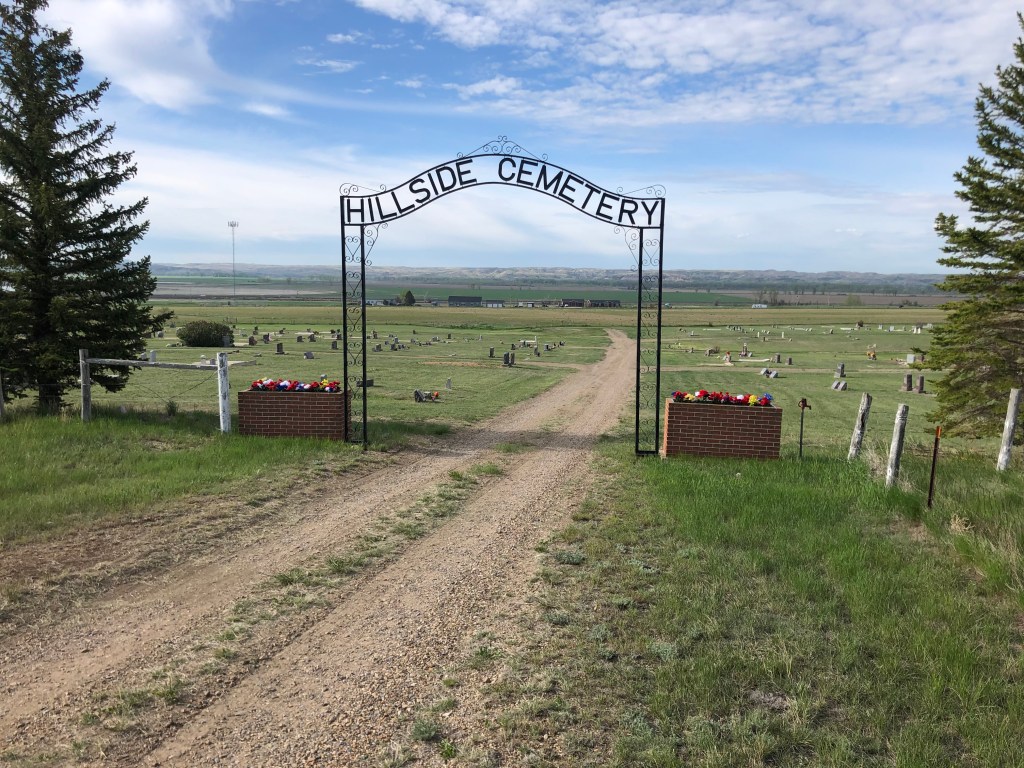
Hillside cemetery…with no hill.
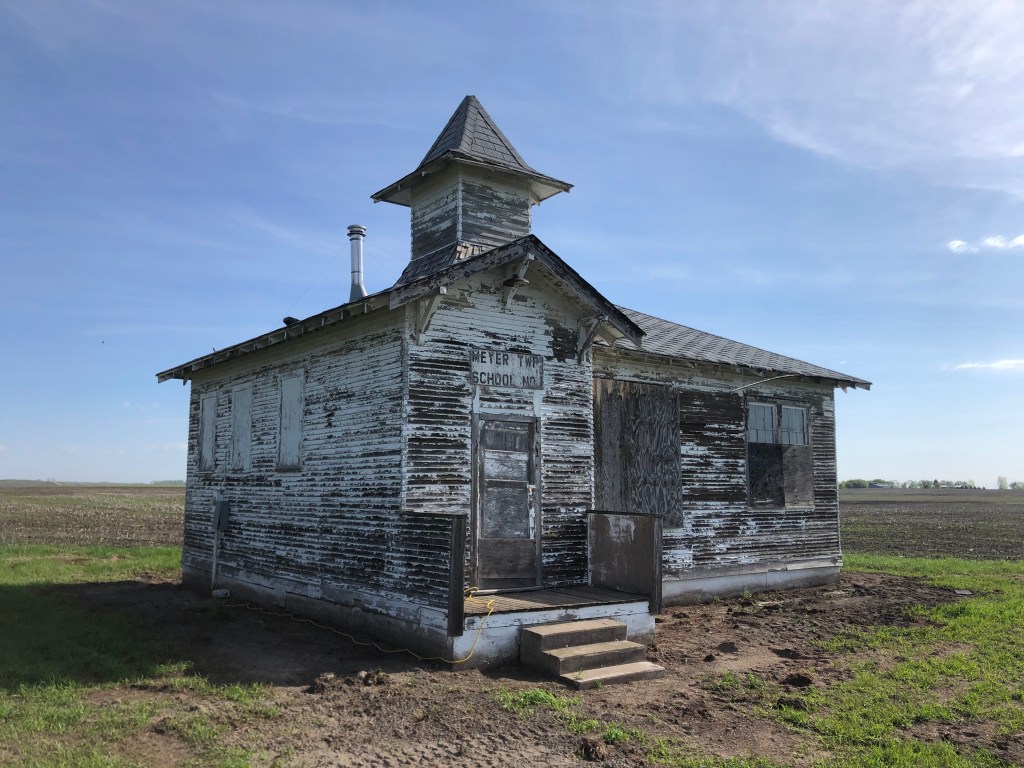
Meyer Township School in Rugby, ND. Originally built in 1897, and closed in 1959. And still standing!
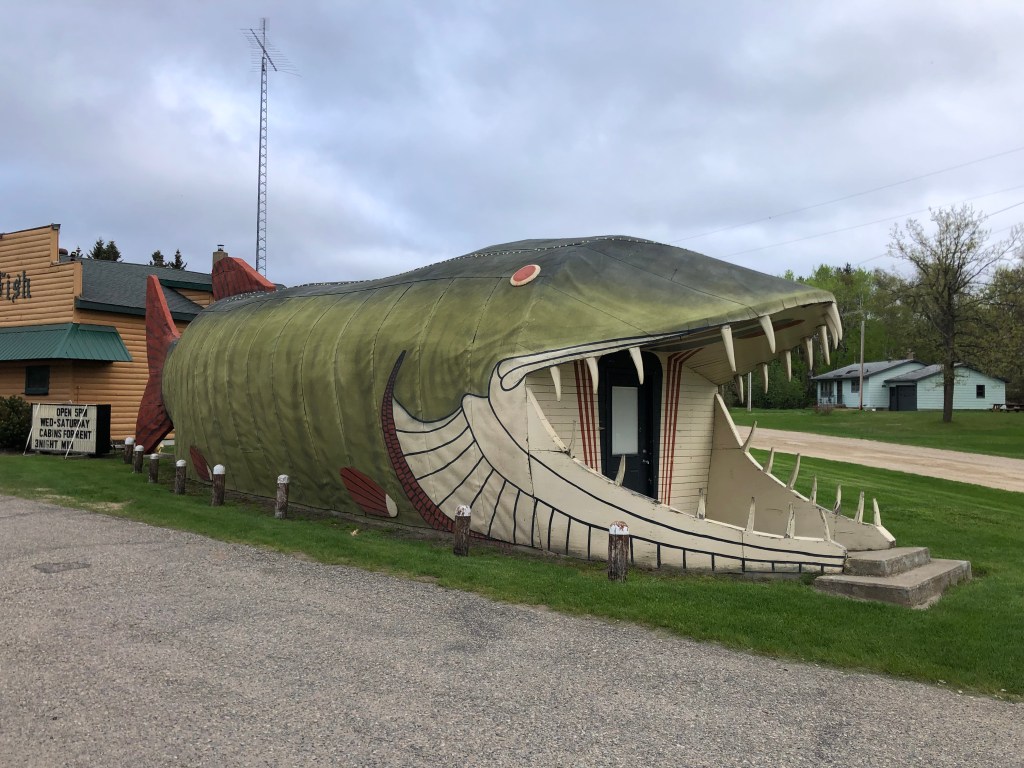
Big Fish Supper Club in Bena, Minnesota. I’m told it appears in the opening credits of National Lampoon’s Vacation. Built in 1957…back when this kind of thing was de rigueur. Now it’s a little–er–long in the tooth.
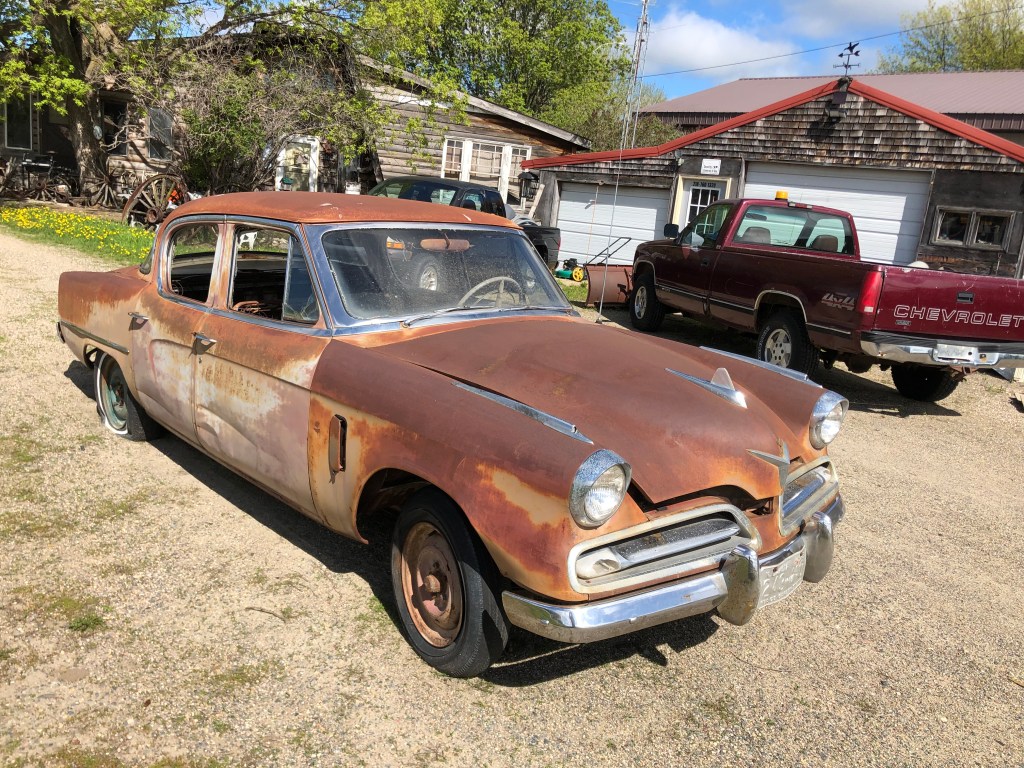
1952-(ish) Studebaker Commander. If you can better identify the year/model, let me know!
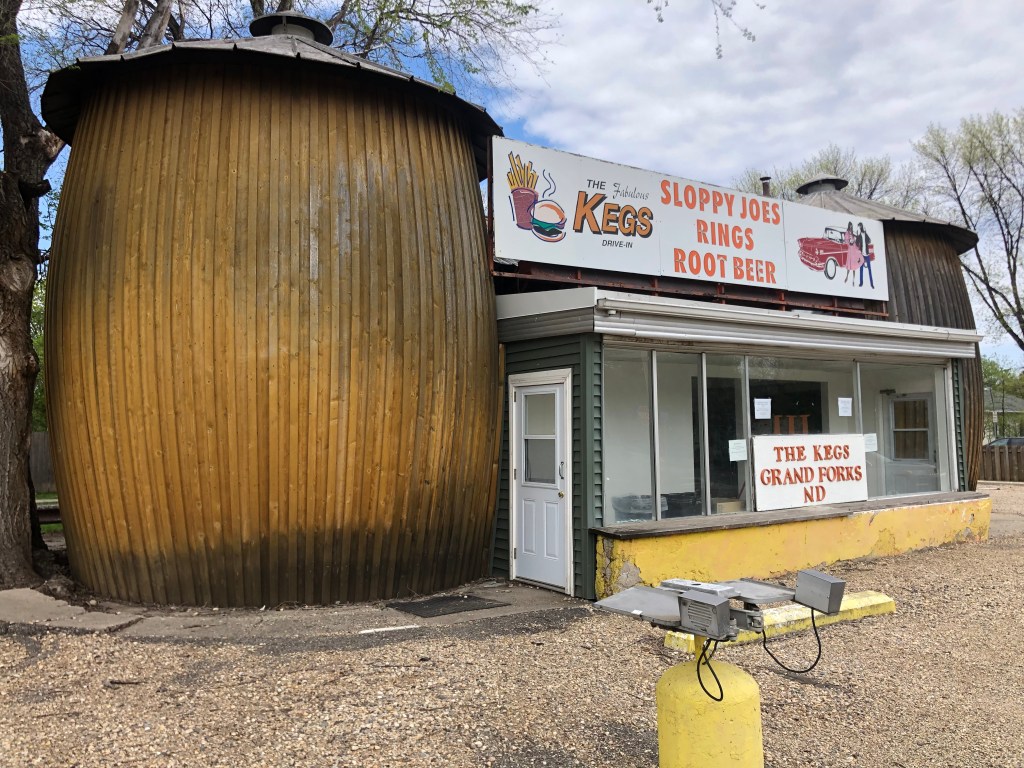
“Fabulous Kegs” drive-in in Grand Forks, ND, built in 1935. I’m told it was part of a chain.
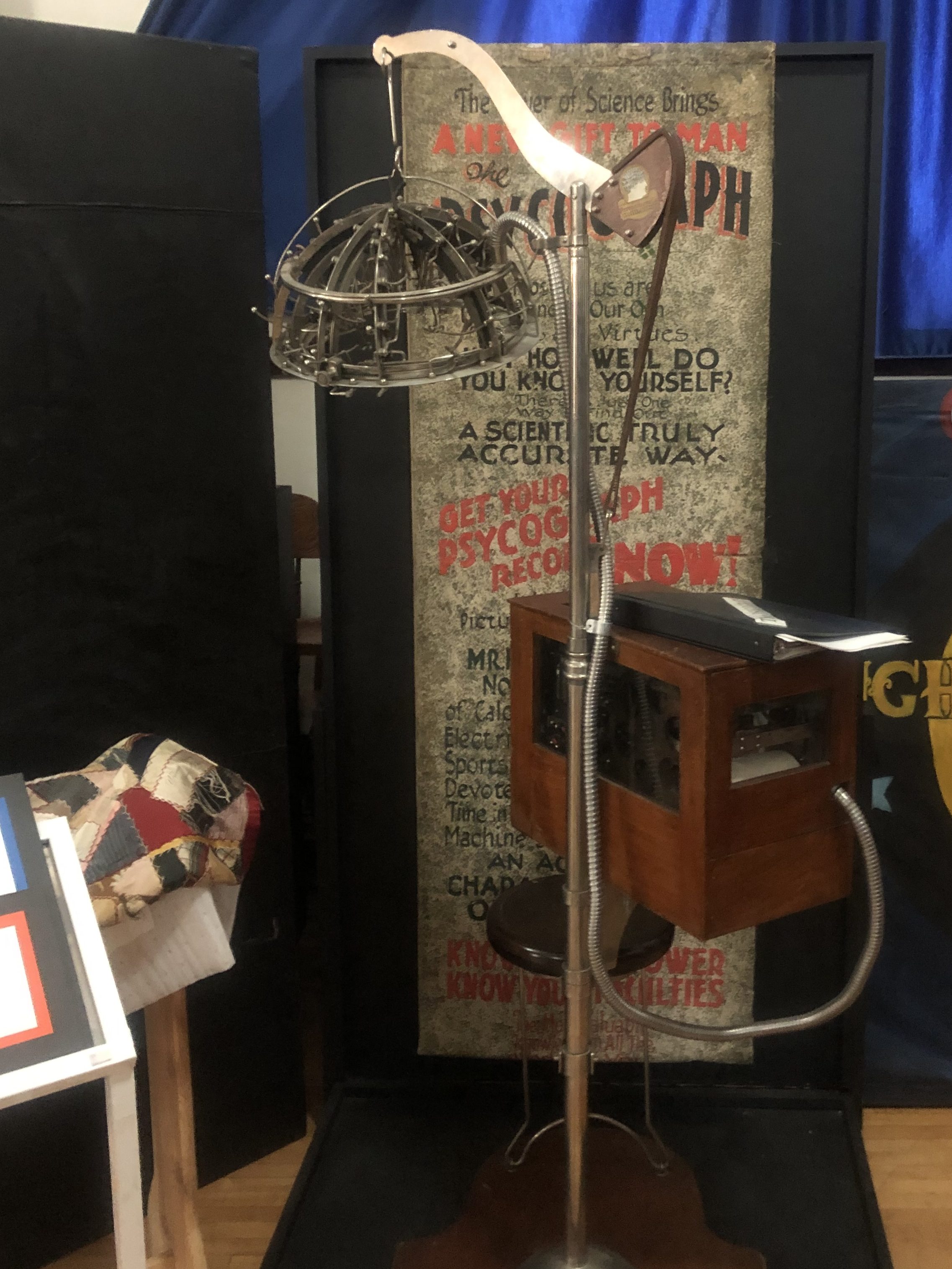
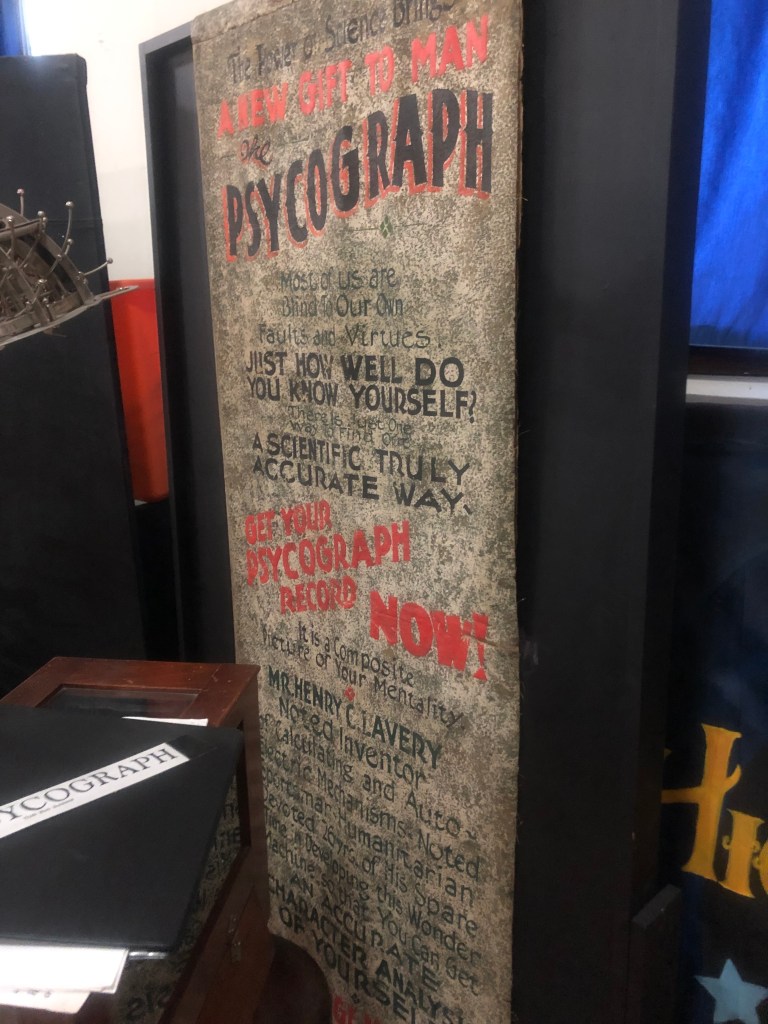
This “psycograph” requires a little explanation. The contraption, which to me looks like one of those hair dryers my mom sat under at the beauty shop, is supposed to automatically measure your intellect and other brain-related capacity–including “faults and virtues”– using the (now-discredited) principles of phrenology. It was patented in 1905 by Henry Lavery in Superior, Wis. I saw it in a museum in that same city. More info here.
That’s all, Folks!
Road trips

The Final Frontier

Alert readers will recall that in my May 25 blogpost, I wrote:

In the town of Mason, Wisconsin a gas station attendant encouraged me to check out an old, abandoned, Wild West theme park that was homemade by a man (recently passed) named Ed Sandor on his farmland. This I did, and it was one of the most enjoyable hours I’ve spent. It deserves its own blog post, which I hope to write in the next day or two. 

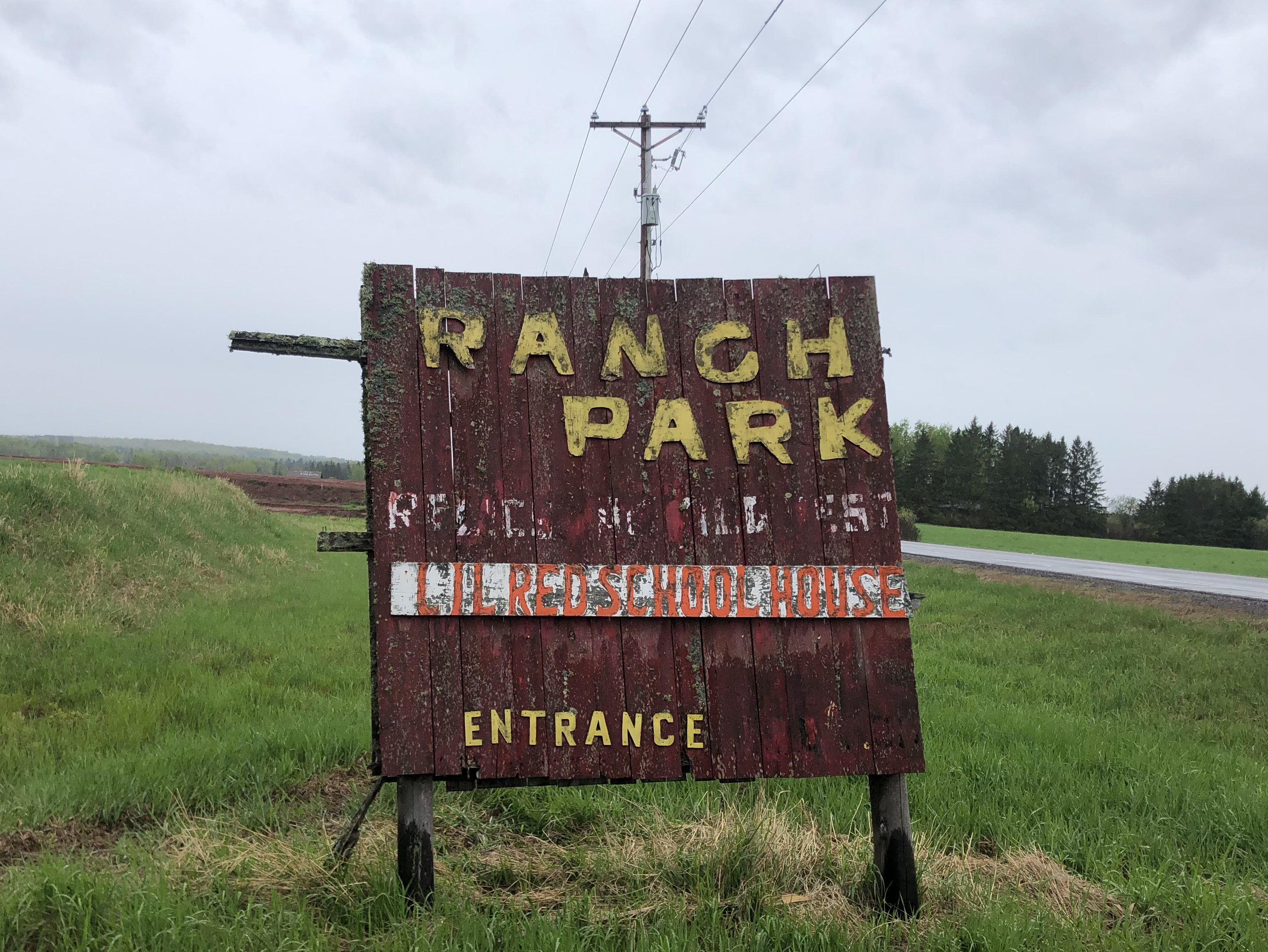
I’m now finally able to share the whole story. It was a cold, drizzly spring day in rural Wisconsin. The somewhat rustic attendant at the nondescript gas station noticed my rental car’s Florida plates and made the observation that I was a long way from home. I told him about this road trip, and he said, “Well, then I reckon you oughtta check out the old Sandor place. He built an Old West town to entertain the kids while families camped on his farm. It’s abandoned and pretty run down, but it’s still worth a gander.” I told him I was game, and he provided me with moderately vague directions, using terms like “Bill Rabbs farm” and “the place where the school bus stops” as landmarks. Undeterred, I drove about a mile off of Route 2, and spotted the old, weathered sign the attendant had mentioned.

Why am I thinking of the Bates Motel?

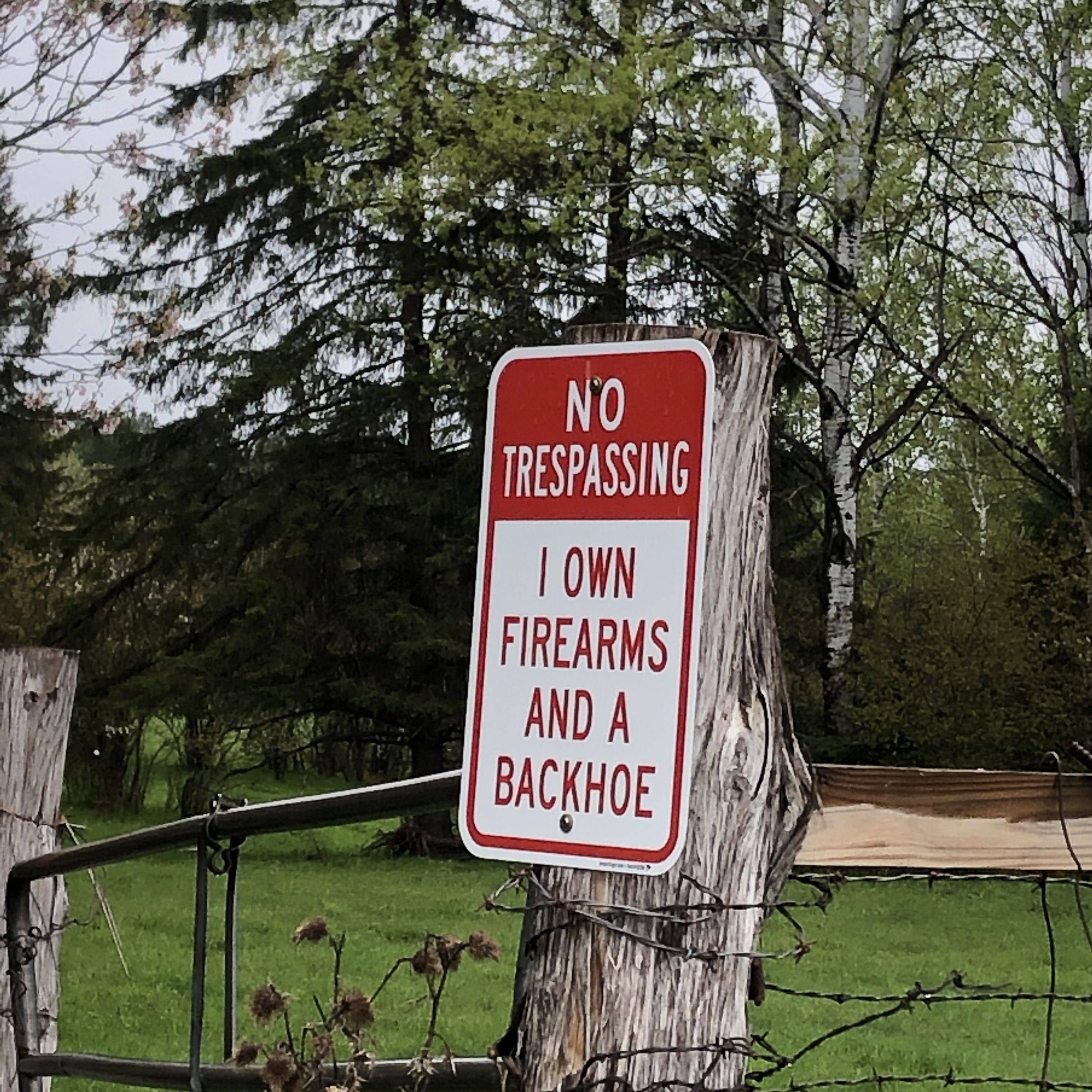
The sign stood next to a narrow dirt road which had been dampened by the morning drizzle. I put the Jeep into 4WD mode and turned onto the dirt side road. Wooden fences ran along both sides of the road, presumably marking private property. After about half a mile the road split into two, narrower dirt driveways. This sign was posted at one of the driveways:

Country hospitality

Needless to say, I took the other driveway.

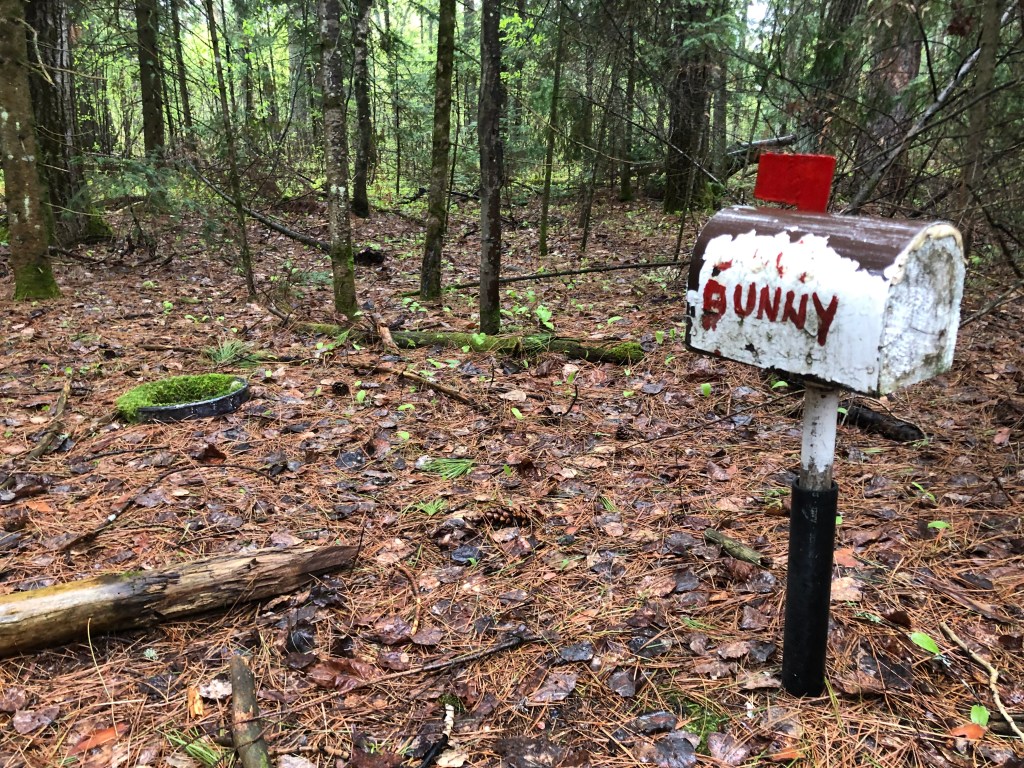
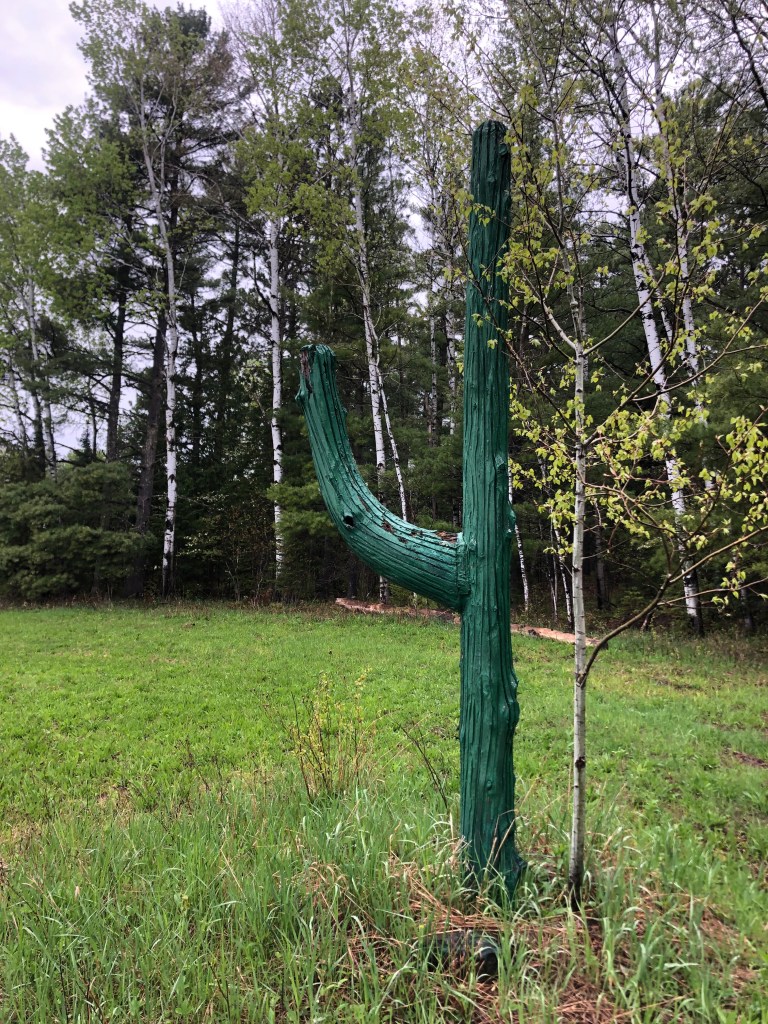
Just as I thought I’d been led on a wild goose chase I spotted a fake, cartoonish saguaro cactus which would be de rigueur at a 1950s Old West theme park. I had to be close.

Invasive species

Then, around the next curve, I arrived at what must be Ranch Park….though I still didn’t really know what to expect.

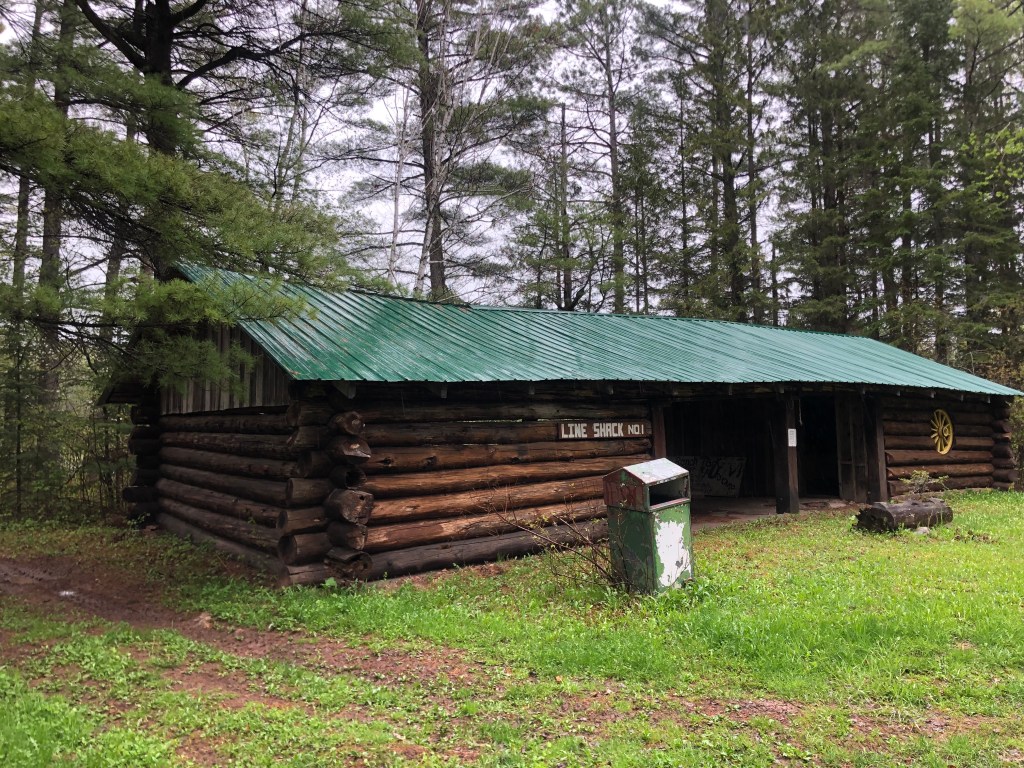
This is not my beautiful house.

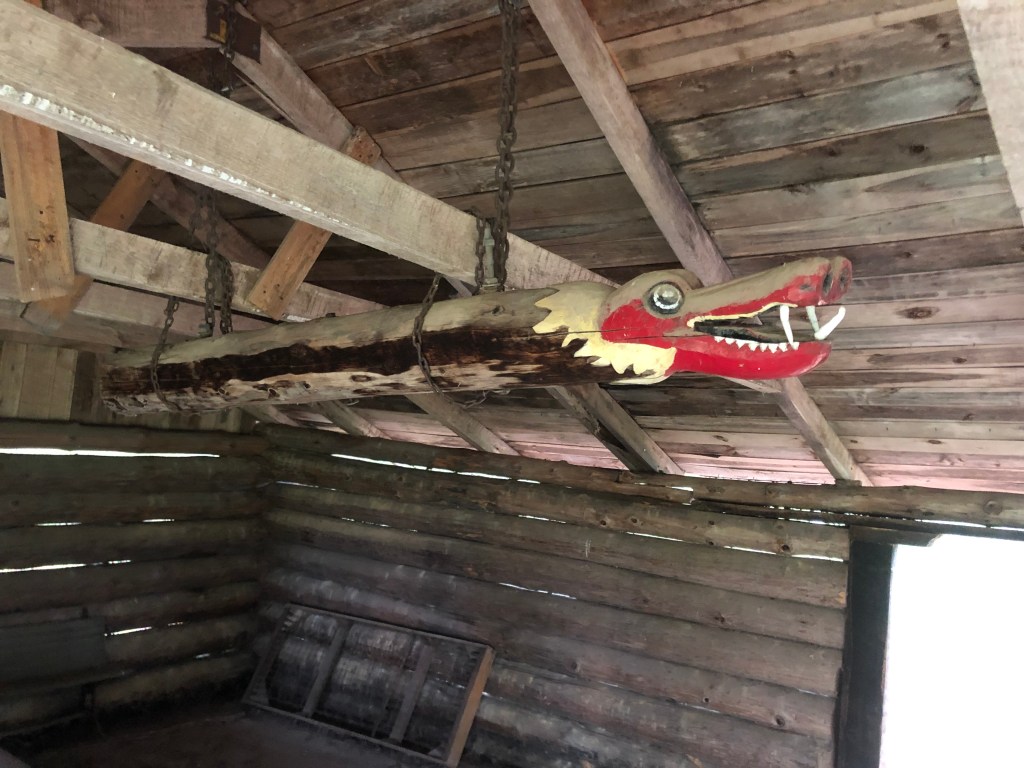
A rustic log cabin with a doorless open front stood in front of me, with a sign indicating that it was “Line Shack No. 1.” It was largely empty, except for a couple of picnic tables and a large, carved serpent (?) hanging from the rafters.

Serpentine wood carving?

Based on a few notices stapled to a bulletin board, I determined that this had been a communal gathering place for people who camped on Ed Sandor’s land. But if that saguaro cactus was all that makes this an “Old West theme park,” I’m sure the visiting kiddies were disappointed.

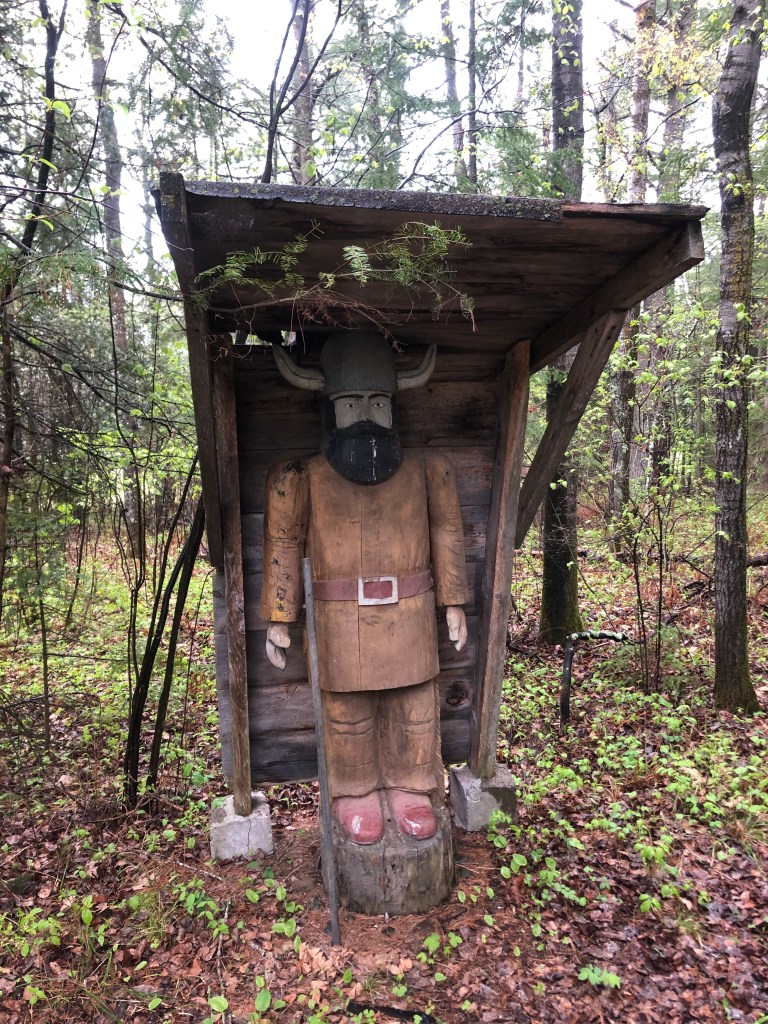
The rain was coming down harder, so I told myself I’d just make a quick search of the grounds for something more interesting before I left. A sign pointed to the “History Story Trail,” and when I walked 100 feet in that direction I encountered a carved, life-size viking.

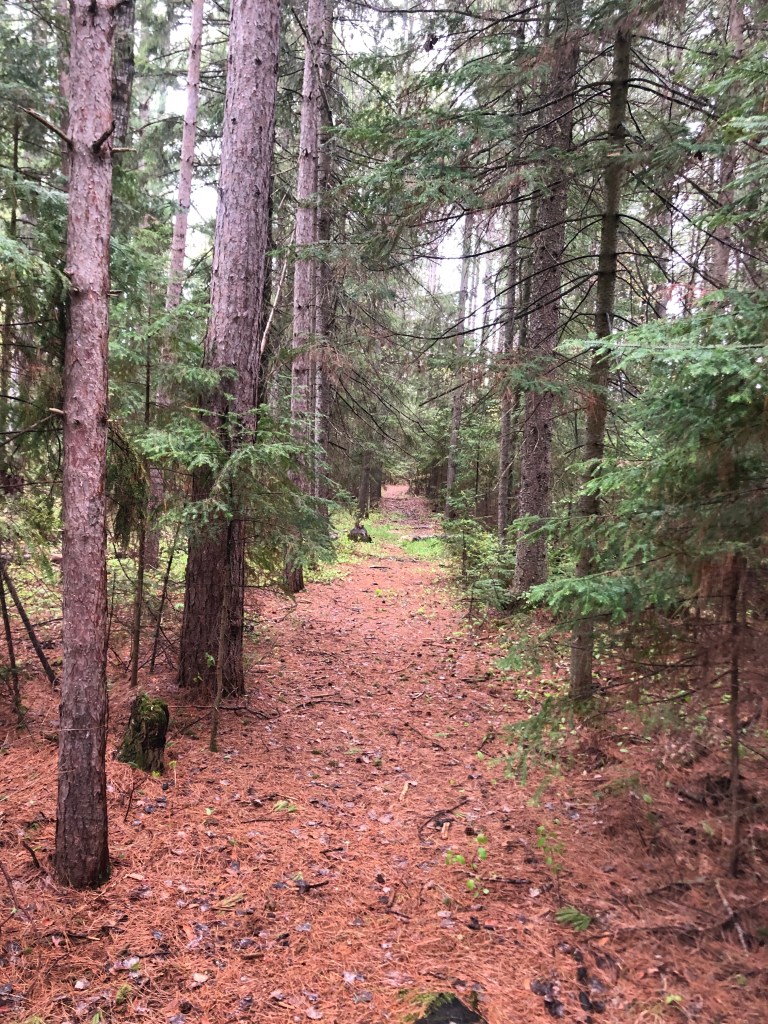
OK, this didn’t exactly evoke the Old West, but it was definitely getting interesting. The Viking stood near the beginning of an overgrown trail. I got onto the trail, thinking perhaps I’d find a carved Visigoth.

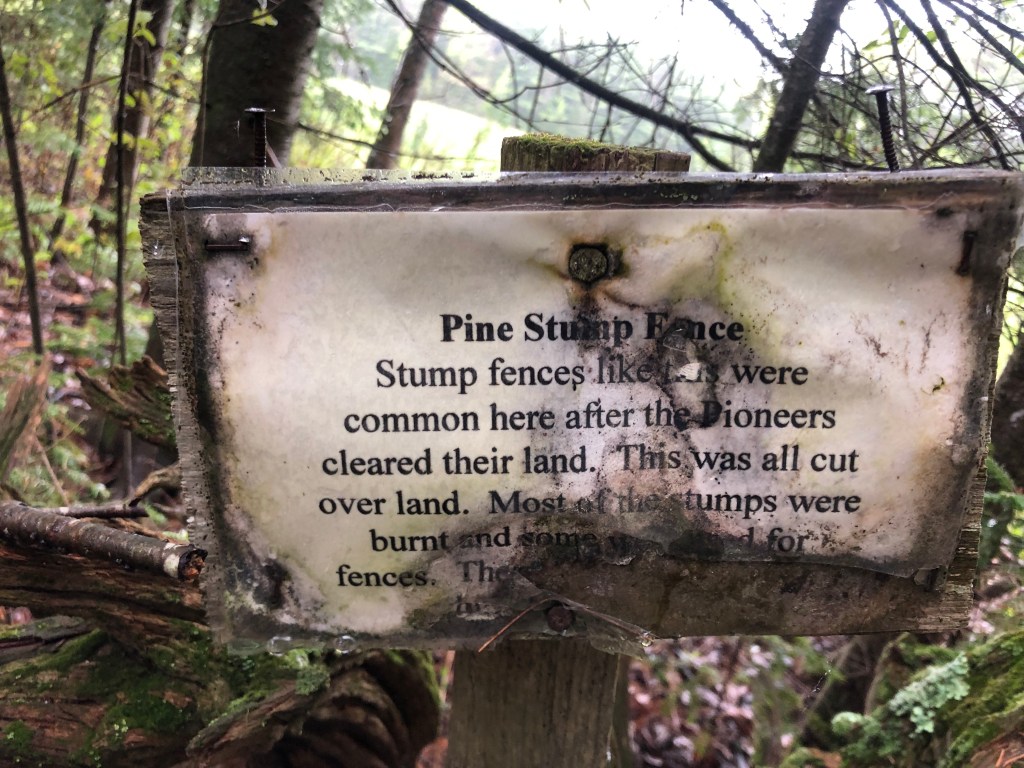
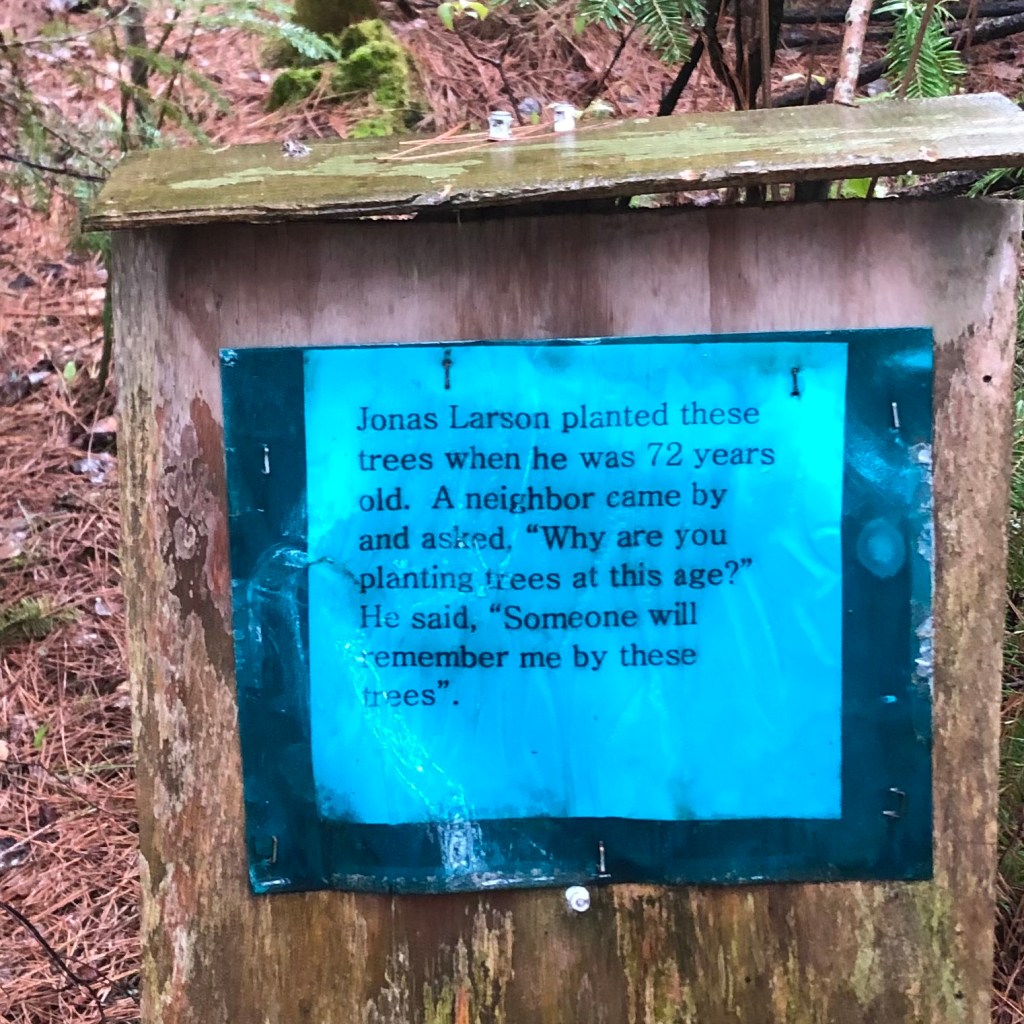
Here and there along the trail someone had staked small paper signs, obviously not suited for outdoor use. They seemed intended to educate visitors about various aspects of pioneer life.

I studied each of these little placards as I passed them, and before long I stumbled upon a rabbit hole. Literally.

What’s next? “Tresspassers Will”?

I continued to push forward, encountering these small gifts as though they’d been left by Boo Radley in a tree’s knothole. Finally I reached a clearing and I discovered what all the fuss was about.

Howdy, Pardner

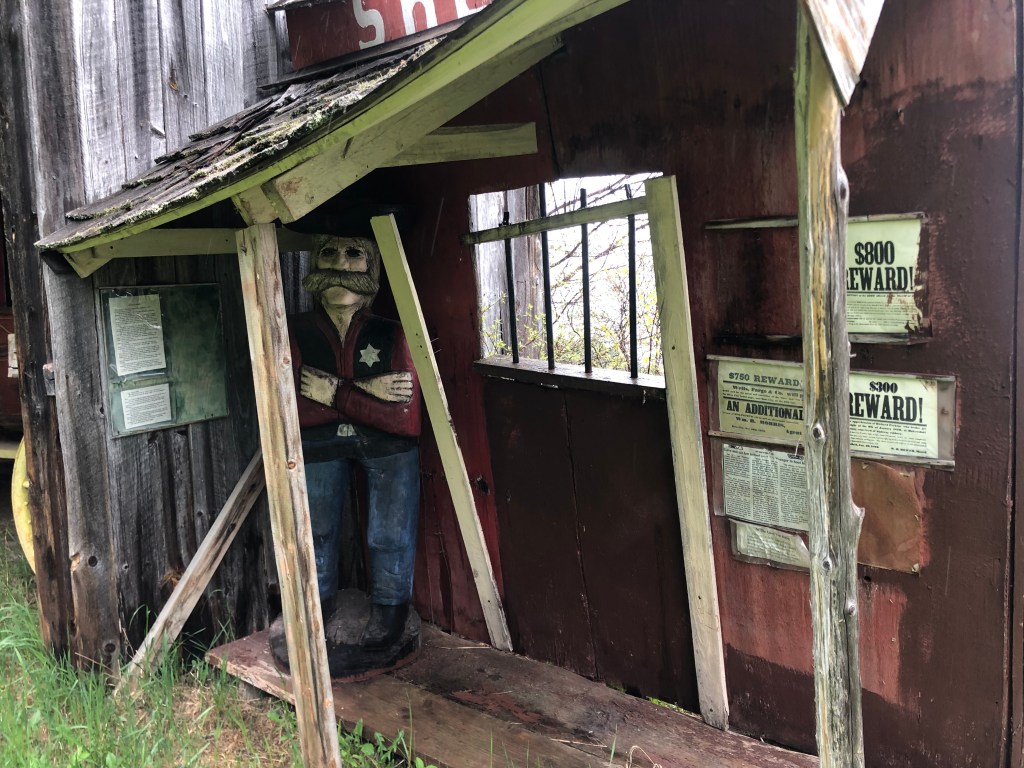
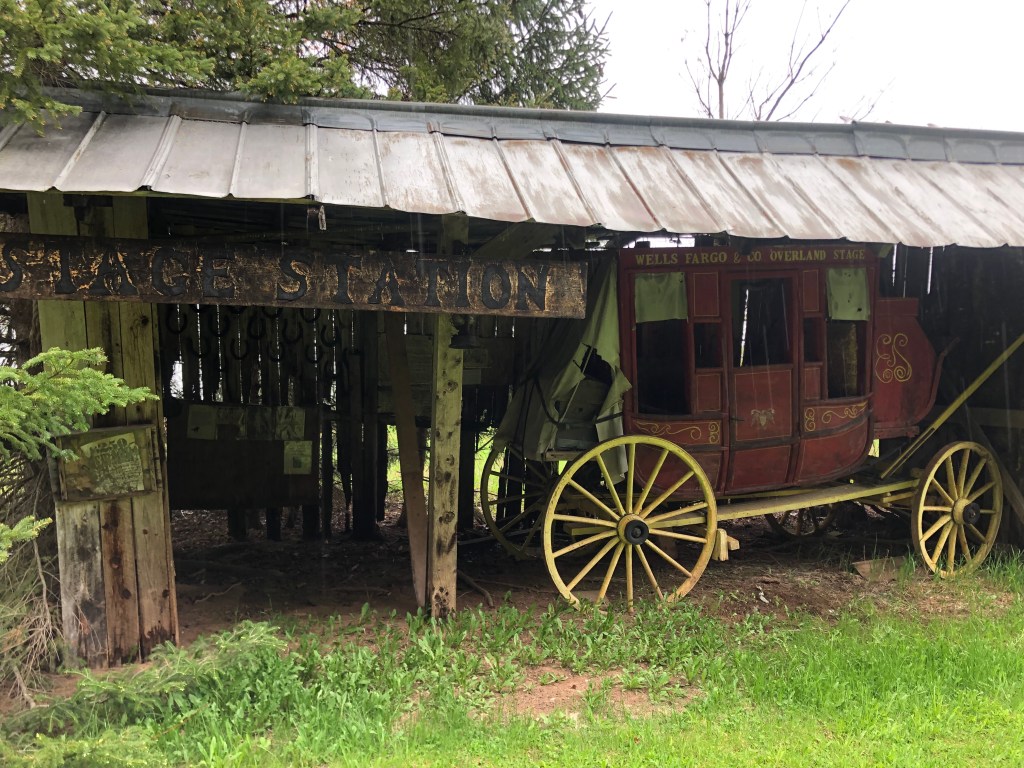
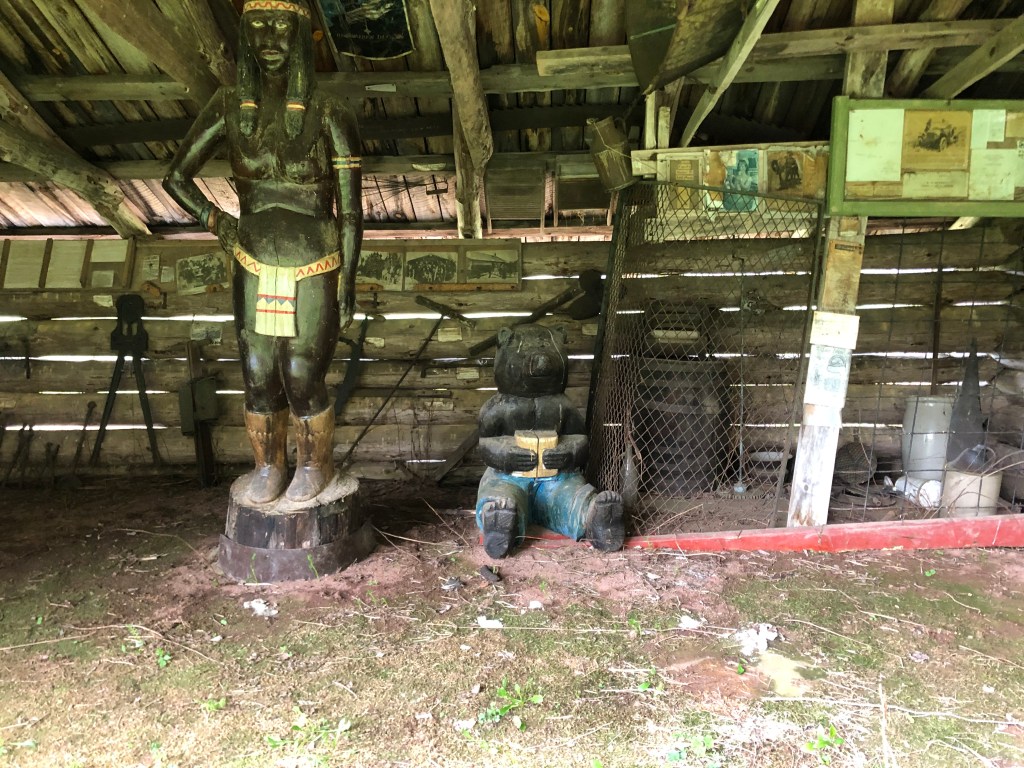
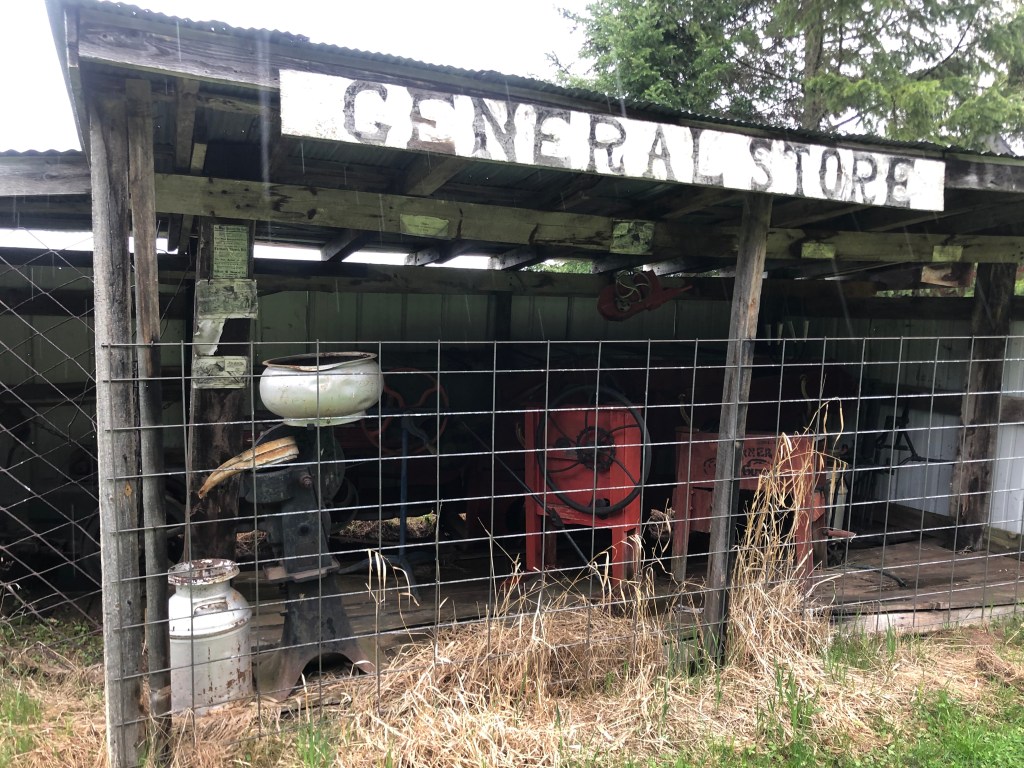
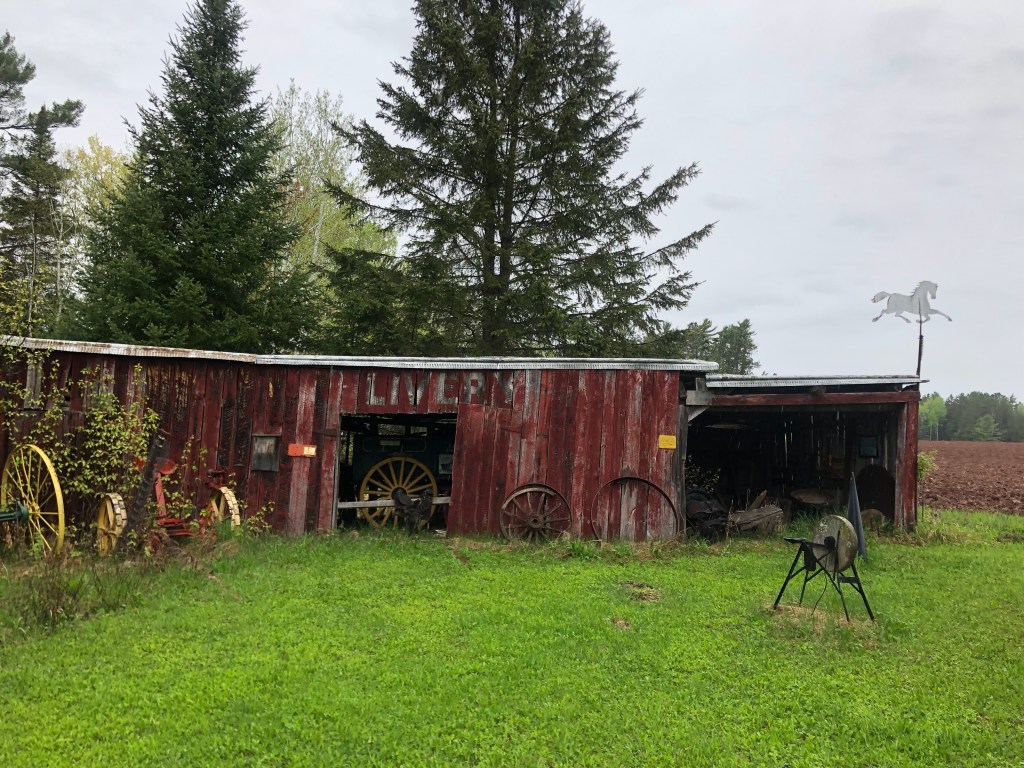
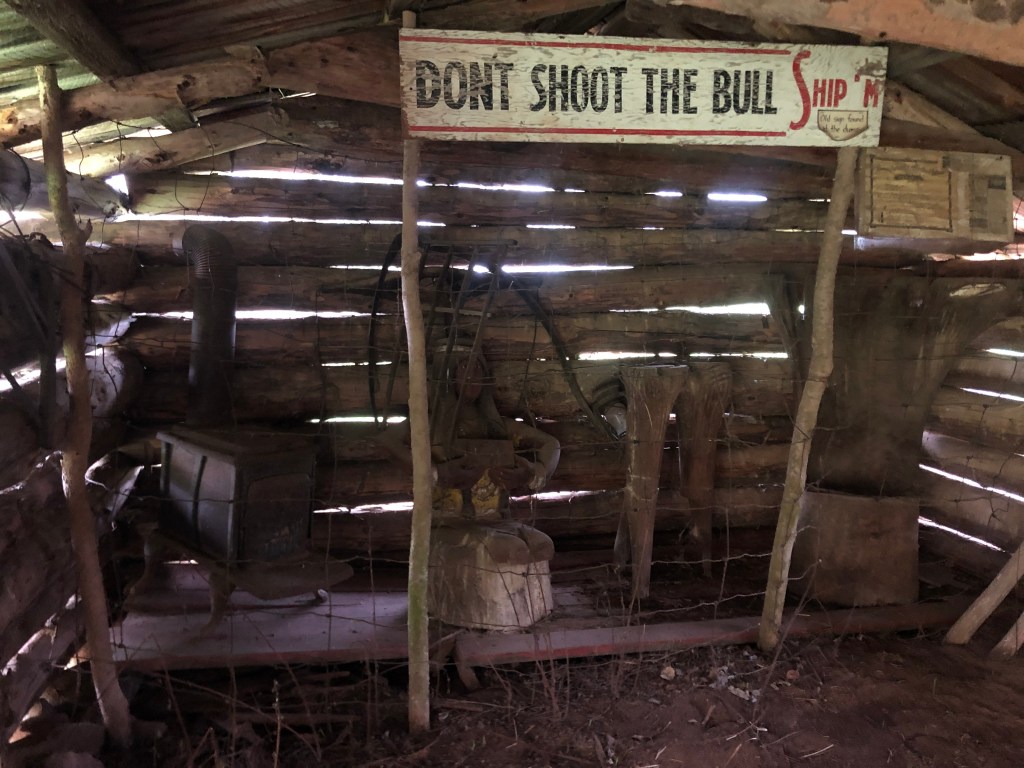
It was remarkable. Ed Sandor had built a small cluster of buildings, resembling a frontier town of the Old West, and filled them with various artifacts, most of which are authentic. There were carriages, tools, furniture, saddles, bridles, books, cookware, and numerous other antiques. What’s more, they weren’t behind glass or protected with cameras or alarms. Everything was just sitting out there to be touched, examined, and appreciated. (There were a few displays behind chicken wire, but it would be easy to circumvent and I think it was just there to keep the youngest kids from getting themselves in trouble.)

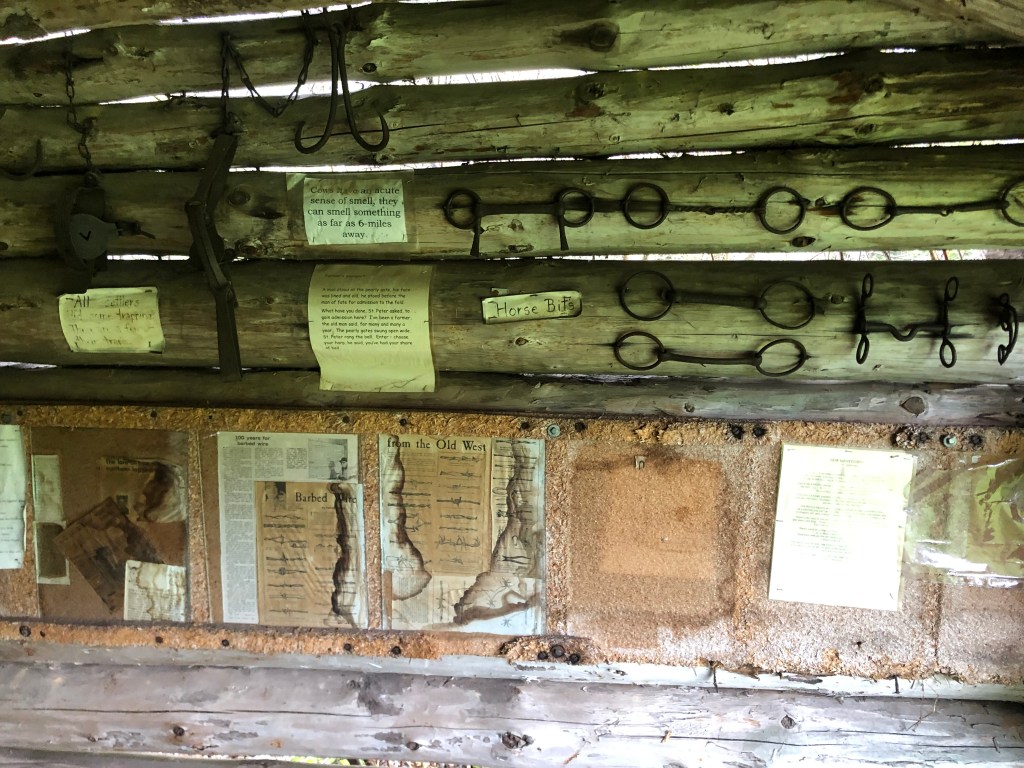
It wasn’t a carefully-curated collection by any stretch of the imagination; the displays didn’t have much rhyme or reason. But there were some explanatory labels and newspaper clippings tacked up here and there.

The photos included here barely scratch the surface of the collections hidden away here in the woods. And I later learned that Ranch Park used to be even more extensive, back in its day. Ed Sandor (1924-2019) began to accommodate camping on his farmlands in the 1950s, and in the early 1960s he began creating this western theme town pretty much single-handedly. It grew to become a popular stop for families, much like some of the tourist attractions along Route 66 in its heyday. Ed Sandor and his family kept the place running, making small repairs as needed and occasionally adding some new displays. Sadly, Ed’s declining health forced him to stop working on the Ranch in 2015. He died in 2019, and the Ranch is now for all intents and purposes abandoned, left to decay in the elements.

Here’s a video that shows the Ranch a few years before I visited:

I have a hard time putting into words my feelings as I walked among these decaying displays. The dark skies and drizzling rain, coupled with my being isolated in the forest far from home, lent a distinct melancholy feeling. I felt sad that Ed Sandor’s life work was being left to disintegrate; surely the place would be unrecognizable in a few more years. It also seemed like a waste that no one was working to preserve those genuine and rare artifacts. And I had a nostalgic longing for those simpler times of my childhood, where entertainment was found outdoors and we played in a tangible (rather than digital) world.

And yet there are some positive and hopeful aspects to this story. For starters, Ed Sandor spent over 50 years running this “ranch” and entertaining kids and families. In a guest book next to Line Shack No. 1 are hundreds of heartfelt testimonials from grownups who have fond memories of the place from their childhood, and from people like me who just now discovered it.

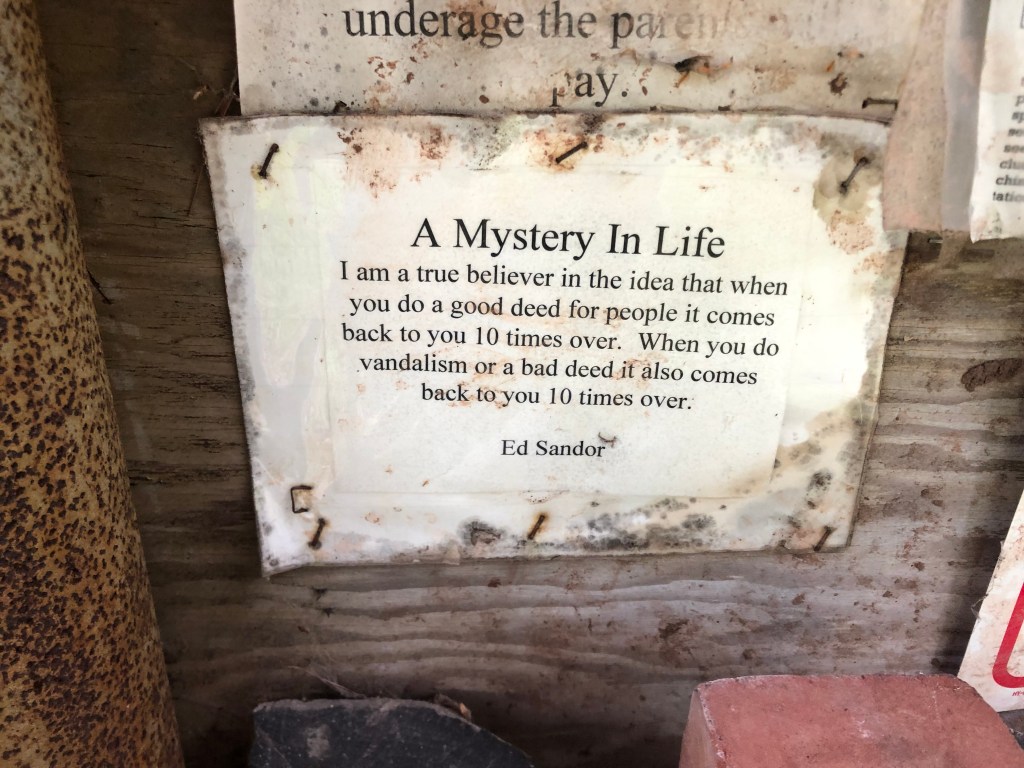
Another thought that struck me was that there wasn’t a single jot of graffiti anywhere at the ranch. This place is completely open and has been abandoned for about 8 years now, and yet no one has felt an urge to deface it. I can’t say for sure whether anyone has walked off with any of the artifacts, but I can say that there is a treasure trove of artifacts that no one has disturbed. And I wonder if one of the reasons why comes from this little sign that Ed posted on the bulletin board by Line Shack No. 1:

The world needs more Ed Sandors.

bridges · Golden Bear signs · Road trips · trains

3,773 Miles Later…

You’ll recall that I began this journey in Vermont and upstate New York, where I met with relatives and visited places where my grandfather grew up. After driving 3,773 miles, I’m ending the trip by visiting places where my grandmother grew up. There’s a certain symmetry in all that, which I find strangely satisfying.

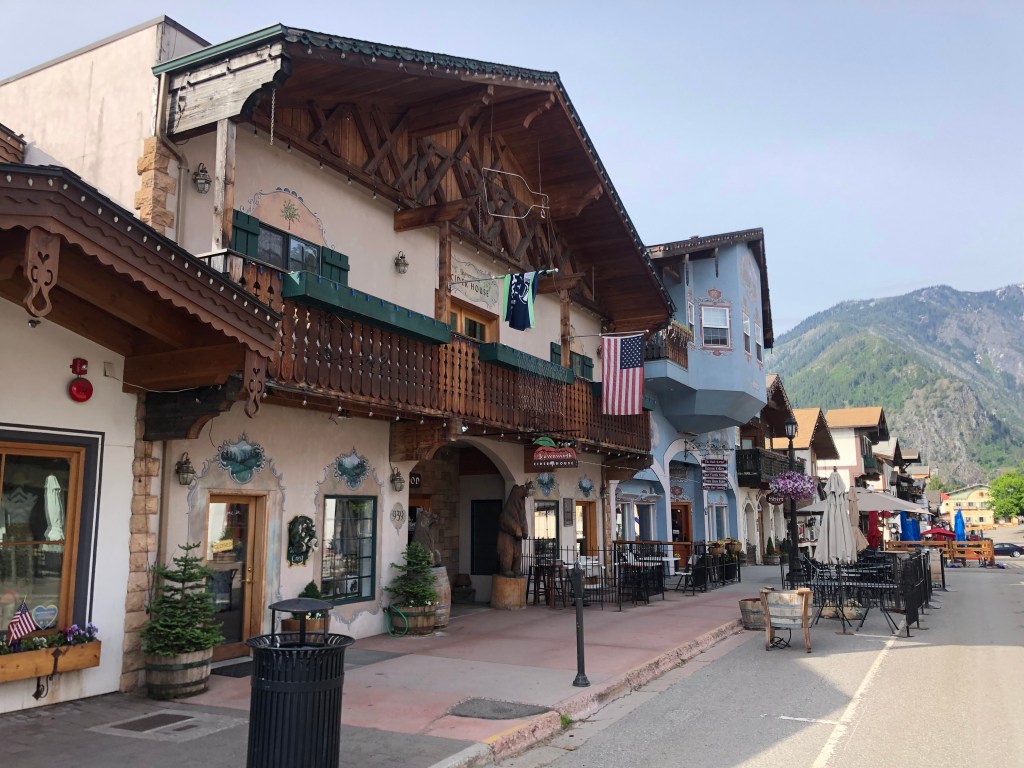
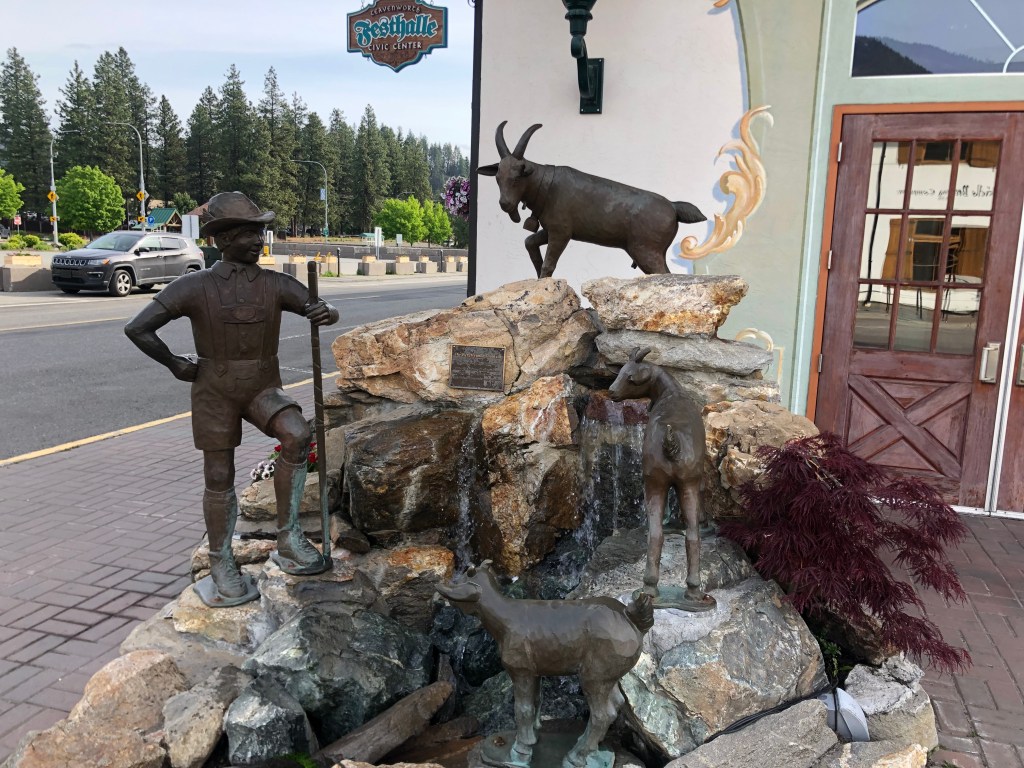
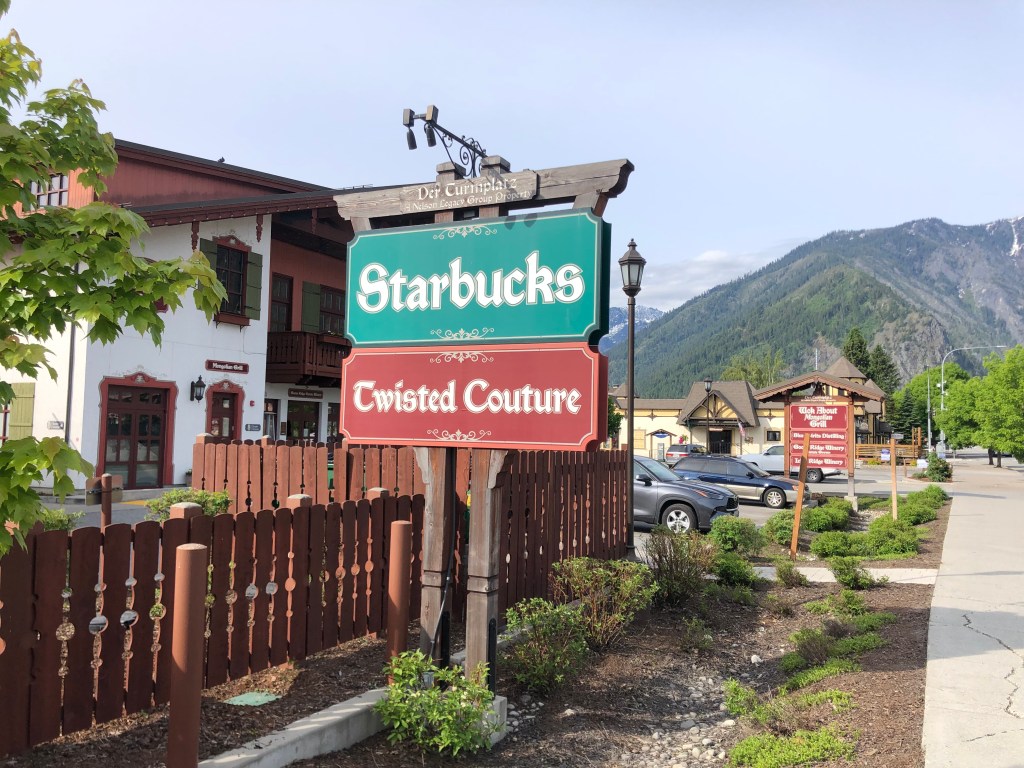
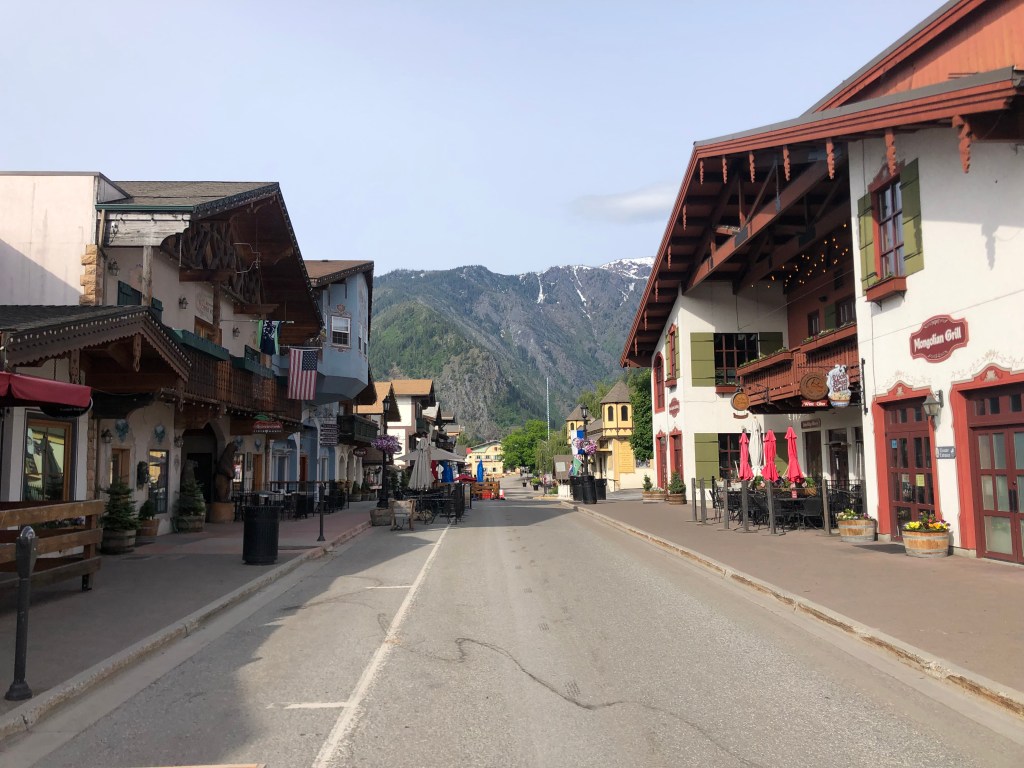
I set out this morning from Wenatchee, and soon the environment was changing again. This time it felt like I was in Germany….and that’s because I passed through the town of Leavenworth (pop: 2,500), which for some reason has decided to dress up as a Bavarian village. Like so many towns along Route 2, Leavenworth was founded over 100 years ago as a Great Northern railroad town. It even housed the regional office of the GN. But the office was relocated to Wenatchee in 1925, and then the remaining major industry (timber) steadily declined into the 1950s. The town needed a new source of income, and by the 1960s it settled on a strategy: It would seek tourism dollars by recreating itself as a Bavarian village. No doubt you’re familiar with the town of Solvang on the Central California coast; it’s the same idea. Indeed, Leavenworth officials actually visited Solvang as they were developing their strategy.

I knew I should have packed my Lederhosen!
Are there no German tropes Leavenworth is unwilling to exploit?

Leavenworth has a live webcam trained on its town square. I’m sure it would be fun to watch during Oktoberfest. But right now, not so much.

They even made Starbucks alter its logo.

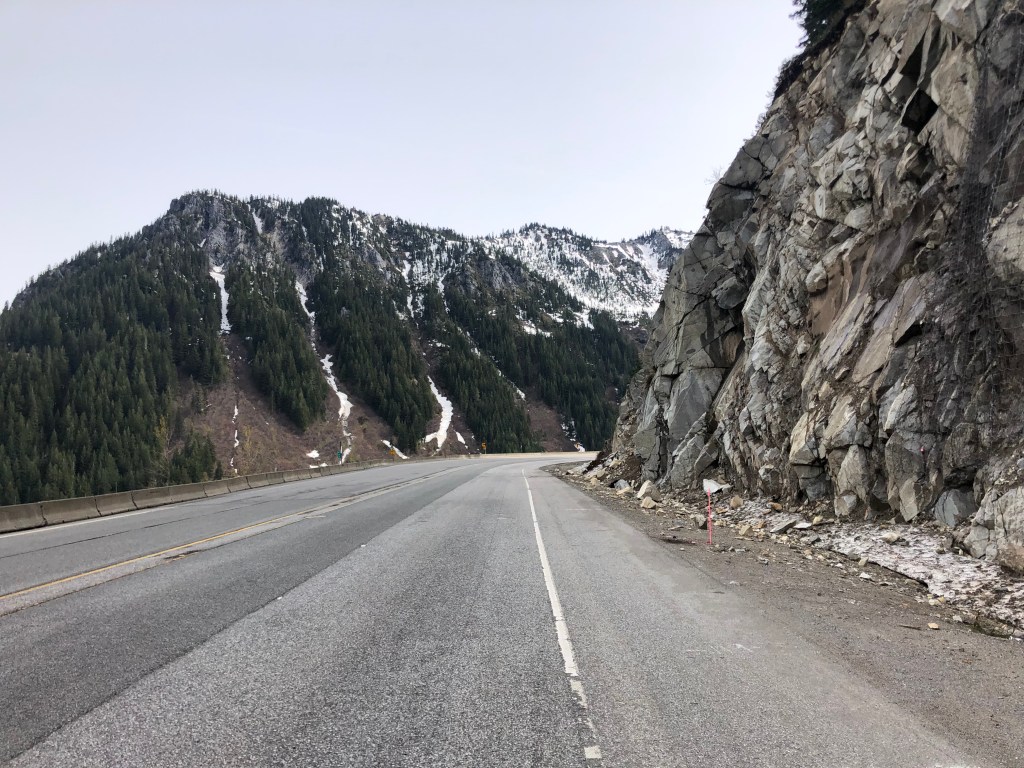
Immediately beyond the town the North Cascade Range looms, as you can see in the picture below. I was about to experience yet another change in scenery….

Going up…

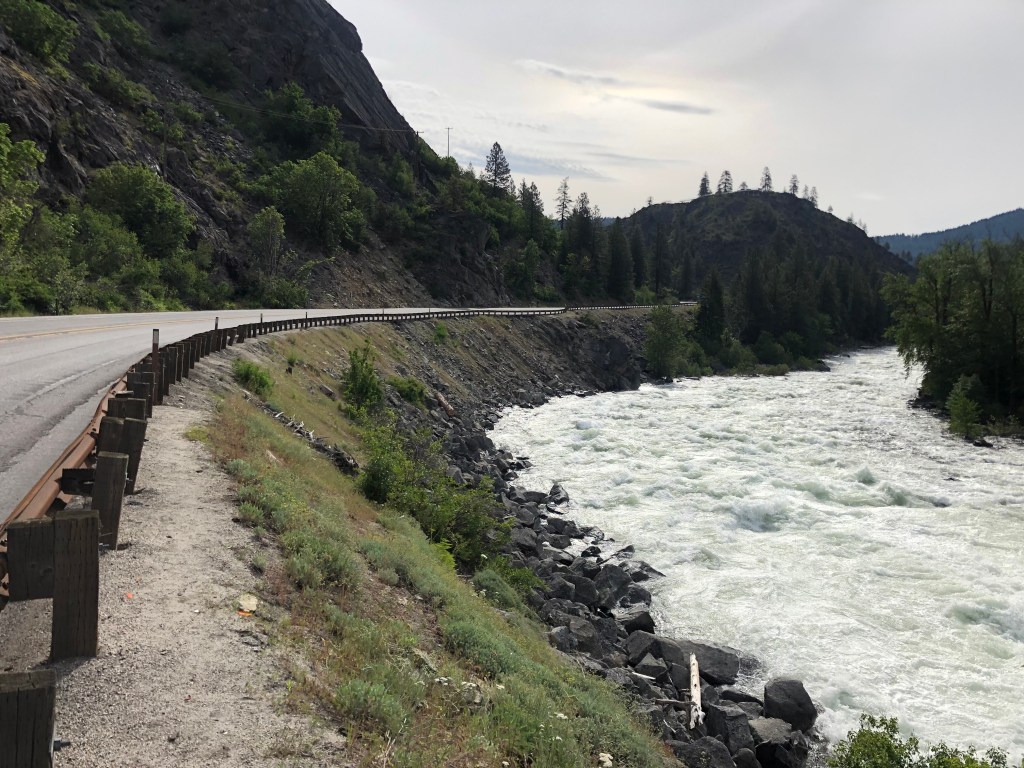
Route 2 through the Cascades is a truly beautiful drive. The road follows the Wenatchee River, which is impressive and scenic.

Flowing toward the Wenatchee Valley Brewing Company. Seriously.

You’ll recall that a few days ago US Route 2 took me over the Rockies at Marias Pass in Montana, and I noted that the Great Northern Railway ran its transcontinental route over that pass in 1889. The last segment of Great Northern’s transcontinental tracks to be completed was the section over Stevens Pass, right here in the Cascade Range.

Crossing the Cascades at Stevens Pass.

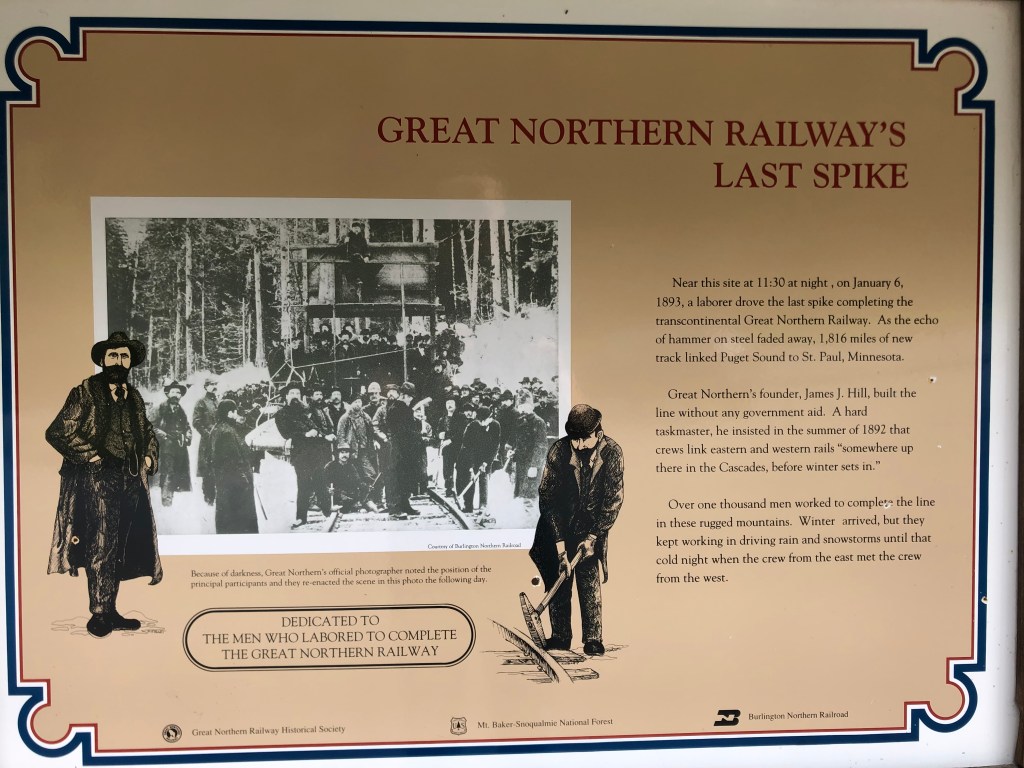
So this morning I stopped on the Pass near the point where the final railroad spike was driven on January 6, 1893. There’s a placard commemorating the event.

A creek runs by this same spot. It’s called Deception Creek, and I’ve been unable to find out the story behind the name. (Please enlighten me, if you have info.) I did manage to take this short video of the creek running under Route 2.

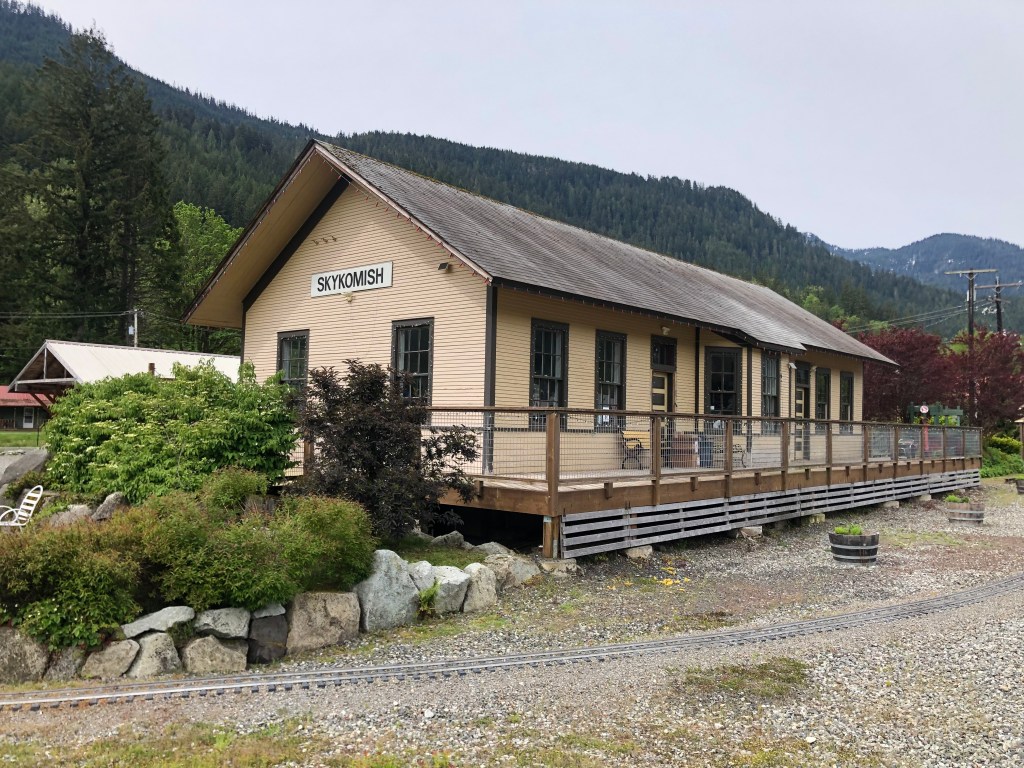
On the other side of the pass I came to the town of Skykomish (pop: 190). Like Leavenworth and many other towns along Route 2, Skykomish was established as part of the Great Northern Railway’s surveying efforts. For about 80 years it provided maintenance and fueling services for the Great Northern. Today, however, the GN doesn’t even stop at Skykomish’s historic depot.

The tiny tracks in front of the depot are for a kiddie-size train ride.

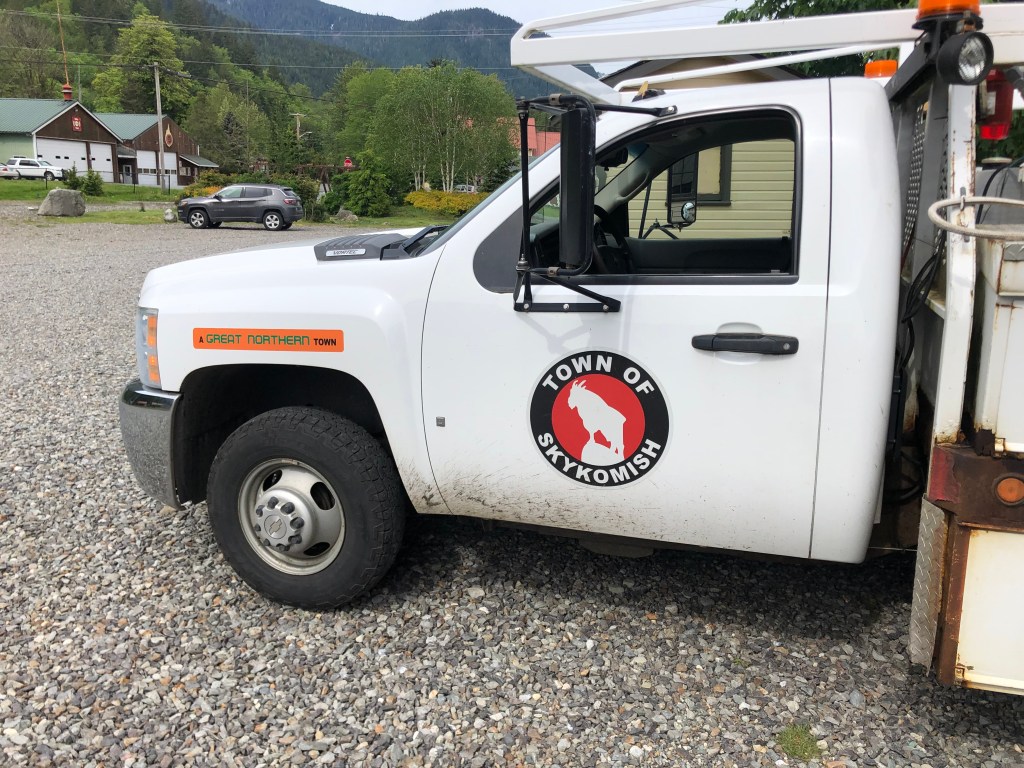
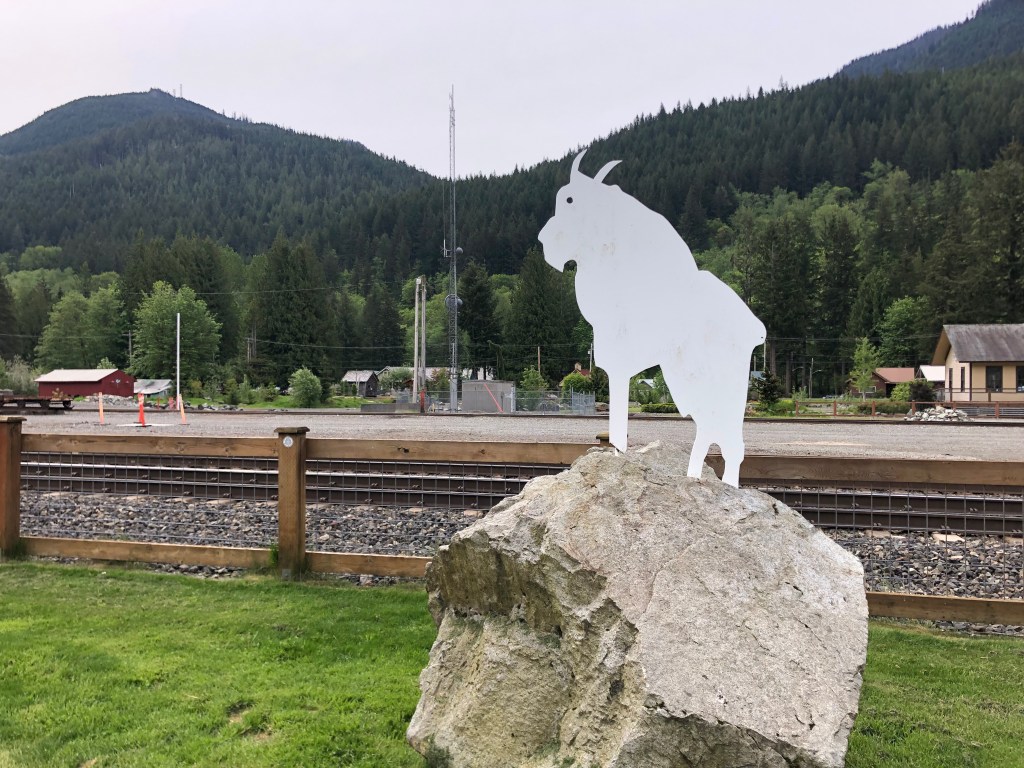
Still, Skykomish continues to link its identity to the Great Northern. Indeed, the town seal incorporates a version of GN’s logo, and it calls itself “A Great Northern Town.”

The railroad’s actual logo.
Look familiar? GN’s goat (named Rocky) is everywhere in Skykomish.

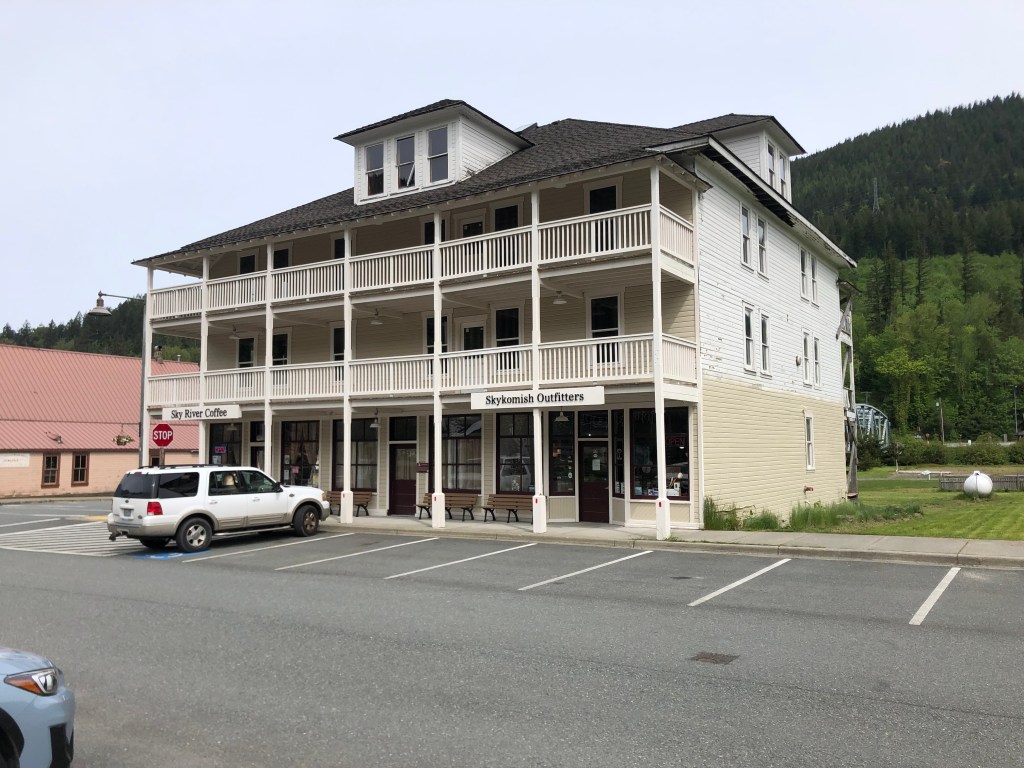
Like Leavenworth, Skykomish seems to have found a niche with tourists. In Skykomish’s case, it’s railfans that they’re courting. They have a restored depot that’s now a museum, they offer train rides, they’ve plotted a walking tour of historic GN-era buildings. And while passenger trains no longer stop in Skykomish, plenty of freight trains pass through the town, making it a good location for train spotting. In addition to all this, the town has several upscale cafes, coffee shops, and outdoor equipment purveyors that are popular with a wide variety of tourists.

1905 Skykomish Hotel, restored and with viable tenants.

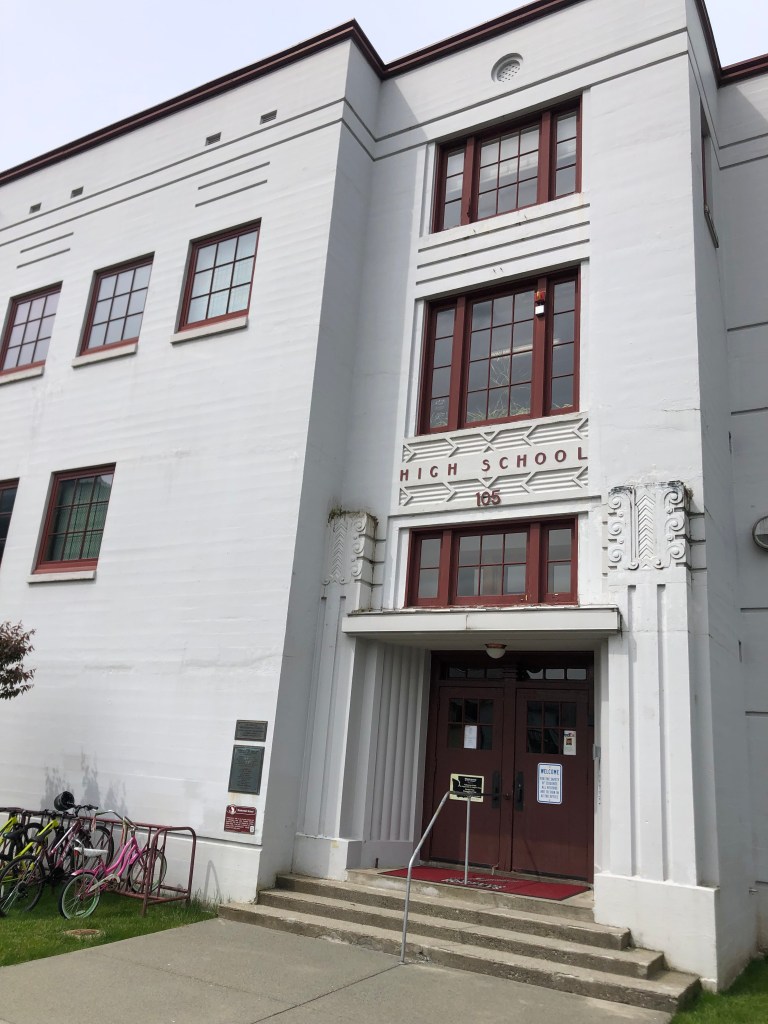
After an enjoyable walk among Skykomish’s streets (which, among the older historic structures, include this WPA-era school building that’s still in use), I eased back onto US 2. I was getting dangerously close to the western terminus at Everett.

In continuous use for 86 years.

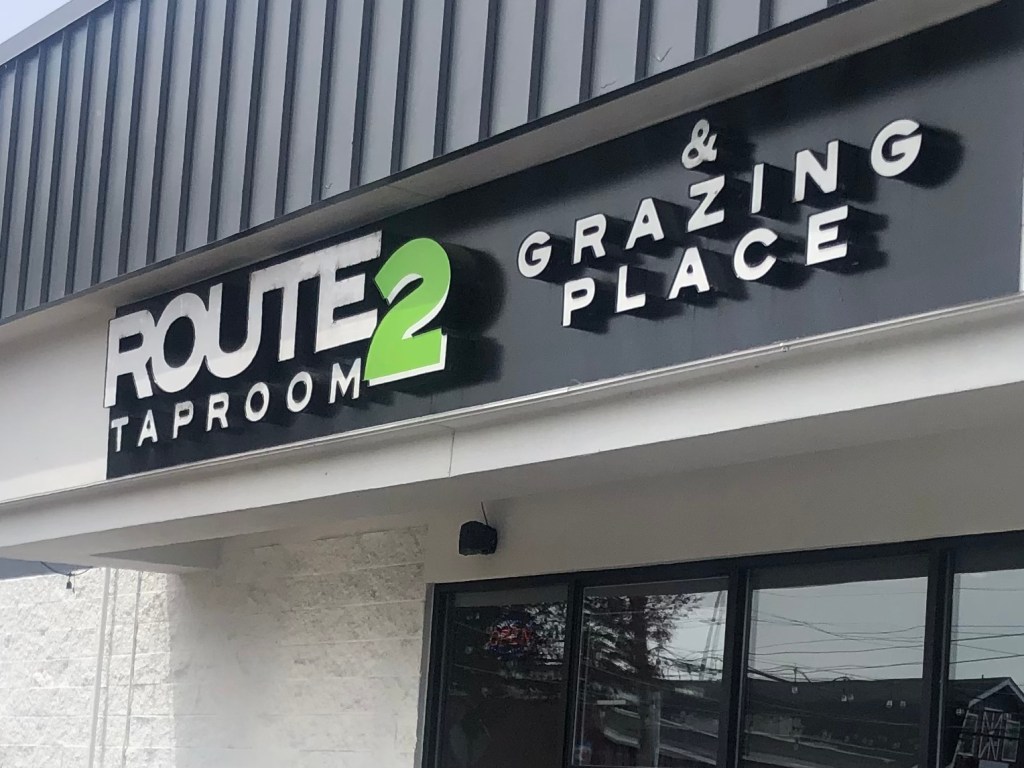
Now, recall that a few days ago, when I was in Glasgow, Montana, I met a guy named Chris at the Loaded Frog who explained the “Middle of Nowhere” slogan to me. Well, Chris also told me that there’s a good taproom near the western end of Route 2. I’ve been looking forward to checking it out ever since I learned of it. With a little research I discovered that the place–the Route2 Taproom–is in Monroe, WA, which is about a dozen miles before the end of Route 2.
Serving beer to thirsty Route 2 travelers since 2015.

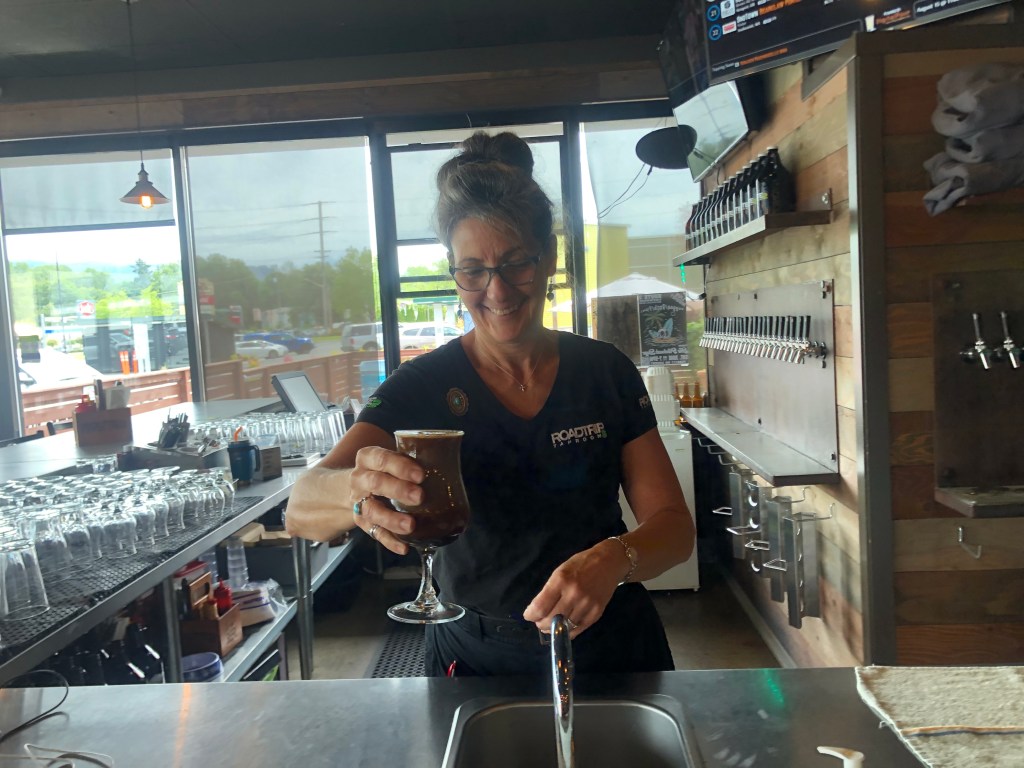
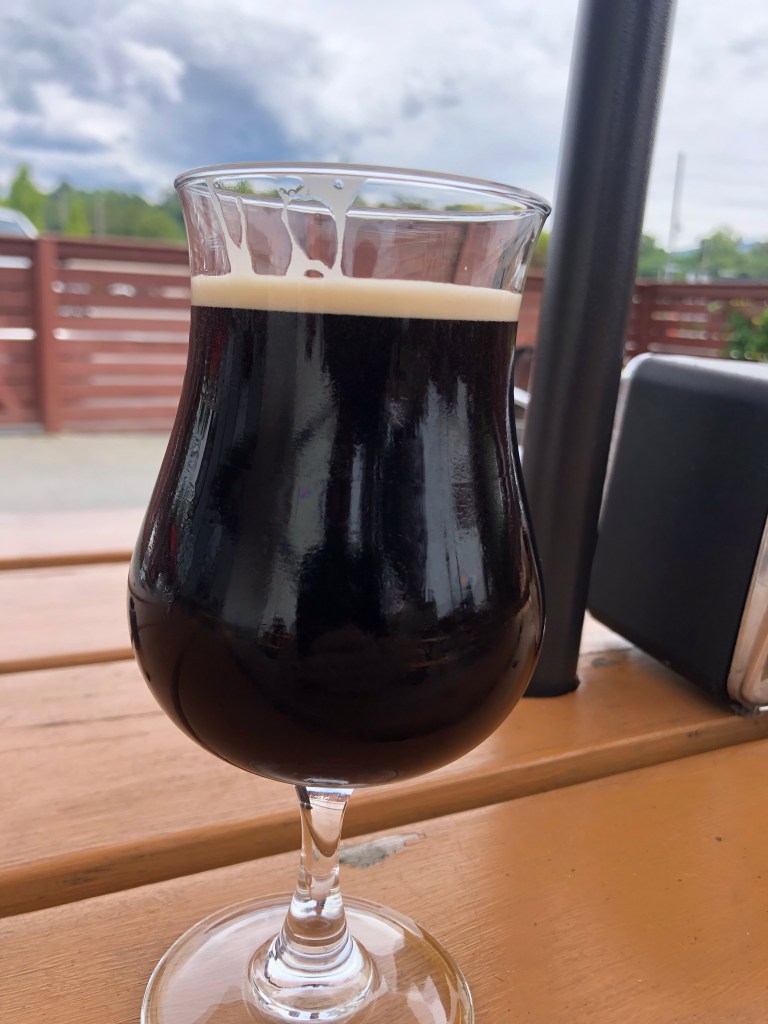
I stopped in and ordered the Triplehorn Nemesis Milk Stout on Nitro. So let’s get the BOTD out of the way:

Maggie at Route2 Taproom serves up a perfect stout.

What a great choice for my final BOTD! It’s got a complex range of flavors, and somehow they work together nicely: There are hints of coffee grounds, vanilla, tobacco leaves, and those miniature Hershey’s bittersweet chocolate bars I used to get at Halloween. The hops are reined in a bit, which is appropriate for a milk stout. The mouthfeel is creamy (that’s partly due to the nitro), and it’s pretty boozy at 10% ABV. It would be really hard to improve on this. I give it 5 stars.

Saved the best for last.

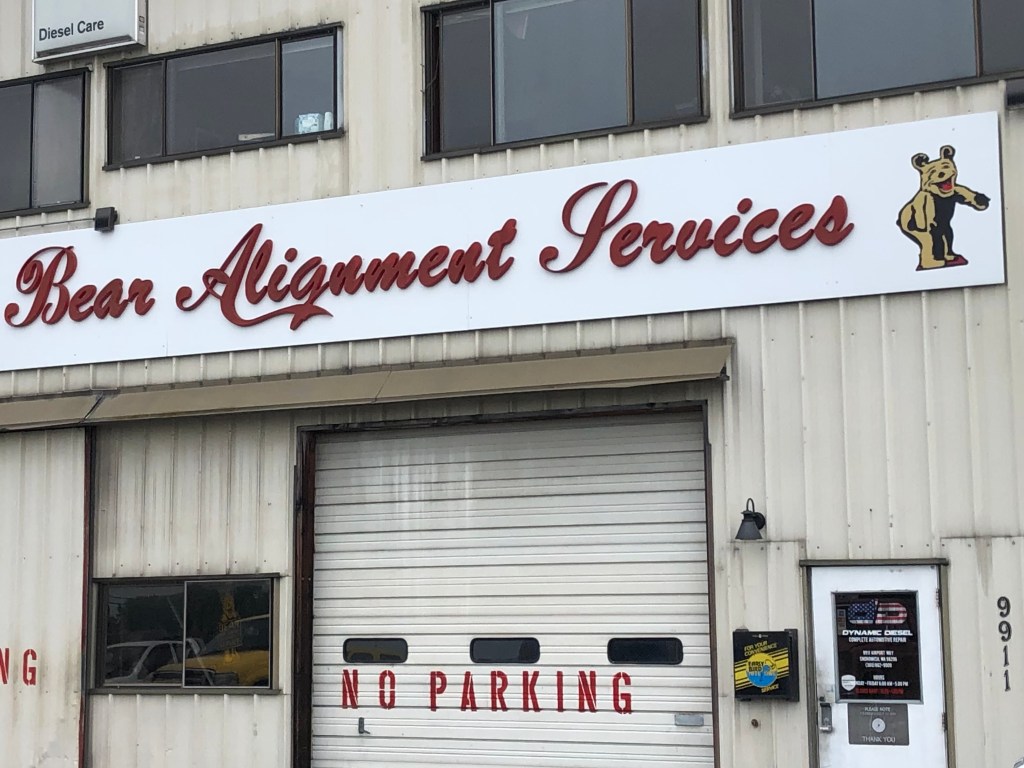
Refreshed and rejuvenated by a good stout, I got back in the car and set out on the last few miles of the trip. And just when I didn’t think my luck could get any better, I spied a Golden/Laughing Bear sign! And what’s more, unlike some of the other such signs I’ve encountered, this one was affixed to a still-operating wheel alignment business. Surely the gods are smiling on me today.

If you zoom in on the window, you can see a second Laughing Bear on the other side of the glass.

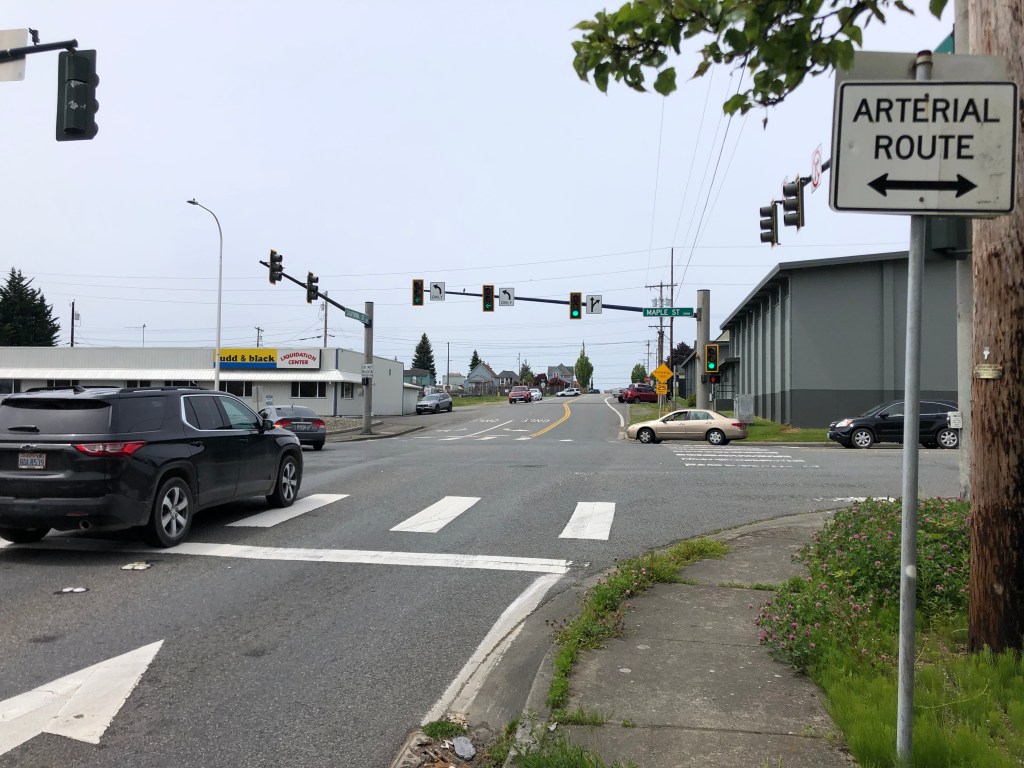
And then, after all this, I was driving the final mile of Route 2. I had arrived in Everett (pop: 111,000, which might be about equal to the combined population of all the other towns I visited along Route 2!) The western terminus of Route 2 in Everett is where Maple Street and Interstate 5 meet. Disappointingly, I was unable to find a sign marking the end of the westbound highway. (I couldn’t find a sign marking the beginning of US 2 East, either.) So all I can show you by way of evidence is this photo of where, in theory, the route ends:

Anticlimactic ending

There was no brass band, no one to hand me a key to the city, no banner strung across the roadway for me to snap with my car. My journey simply ended.

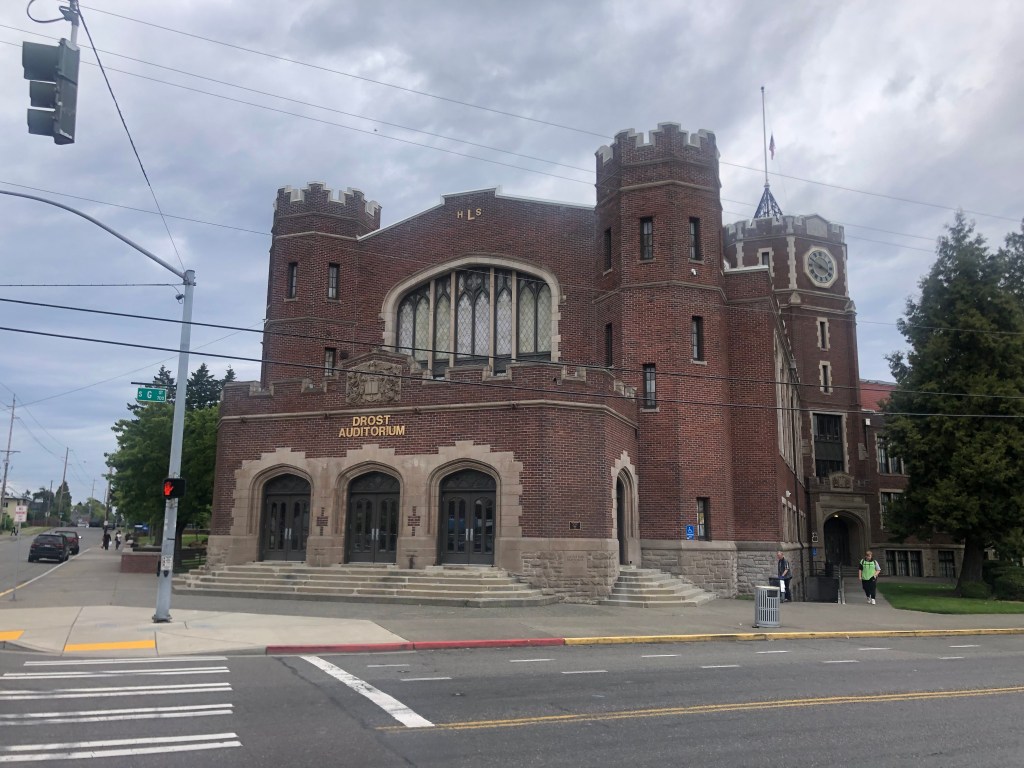
Having dispensed with Route 2, I next headed down to Tacoma (pop: 216,000) to visit some places where my grandmother–and, later, my dad–grew up. This blog isn’t the place to go into any detail about the sites I saw, but I will offer this photo of Grandma’s high school, which is still educating students after 107 years.

Grandma walked these halls almost 100 years ago.

Finally, I will be making a final post tomorrow about a memorable visit I made to an abandoned Old West theme park in Wisconsin. I mentioned it in passing in my May 25 blog, but I didn’t have enough time to do it justice. This I will do tomorrow while I’m waiting for my plane.
Until then.