Breweries · cemeteries · Road trips

Family Matters

I arrived in Beantown this morning about 6:30, got a good cup of coffee, and soon was in temporary possession of a Nissan Altima (which, I’m told, is specifically designed with an eye to the rental trade). Everything was moving along according to schedule.

Things gummed up considerably when I drove out of the airport and entered Boston’s rush hour traffic. It took me over half an hour to drive five miles. But finally, I was at Kenmore Square, right next to Fenway Park, and under the giant Citgo sign that gives this fair city light. This is where Route 20 begins (or ends, depending on your perspective.)
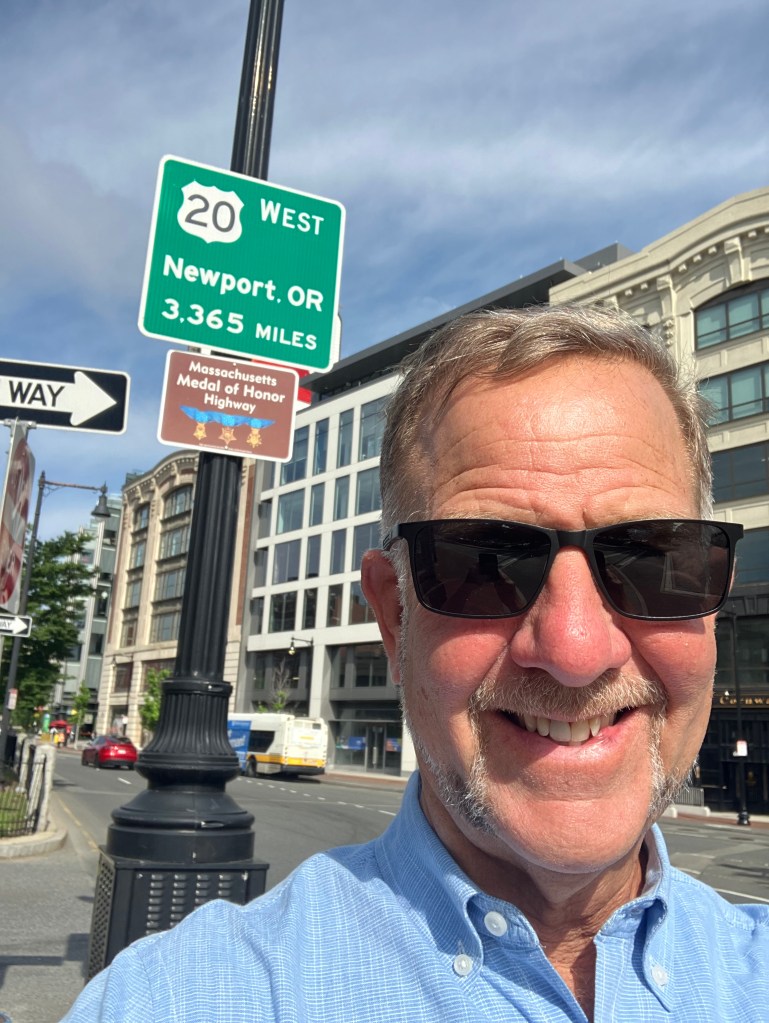
Sorry; the giant Citgo sign is behind the green sign…which, for our purposes, is more relevant.

I know there’s a lot to do in Boston. I know it’s a great town. In fact, it wasn’t that long ago that friend Vic and I made a visit that I wrote about in this blog post. But today is not that day. I’ve got a lot of miles to travel, and the focus is on the gentle, low-key life of everyday America, not on a teeming capital city of about 650,000 souls. So I spent most of the morning just trying to escape the metro area.

But eventually, the traffic began to subside and I found myself in the city of Worcester (pop: 200,000). It’s still a biggish city, but I spent a pleasant, quiet hour surrounded by smiley faces. Let me explain.

I was at the Worcester Historical Museum, which dates back to 1875. It recently moved to a stately brick building that used to be the headquarters of the Worcester County Horticultural Society. Upon entering I was greeted by the estimable Deb, who grew up in the town and has encyclopedic knowledge of everything that’s happened over the past 150 years. Oh, did I mention this year is their 150th anniversary, and I got in for free?
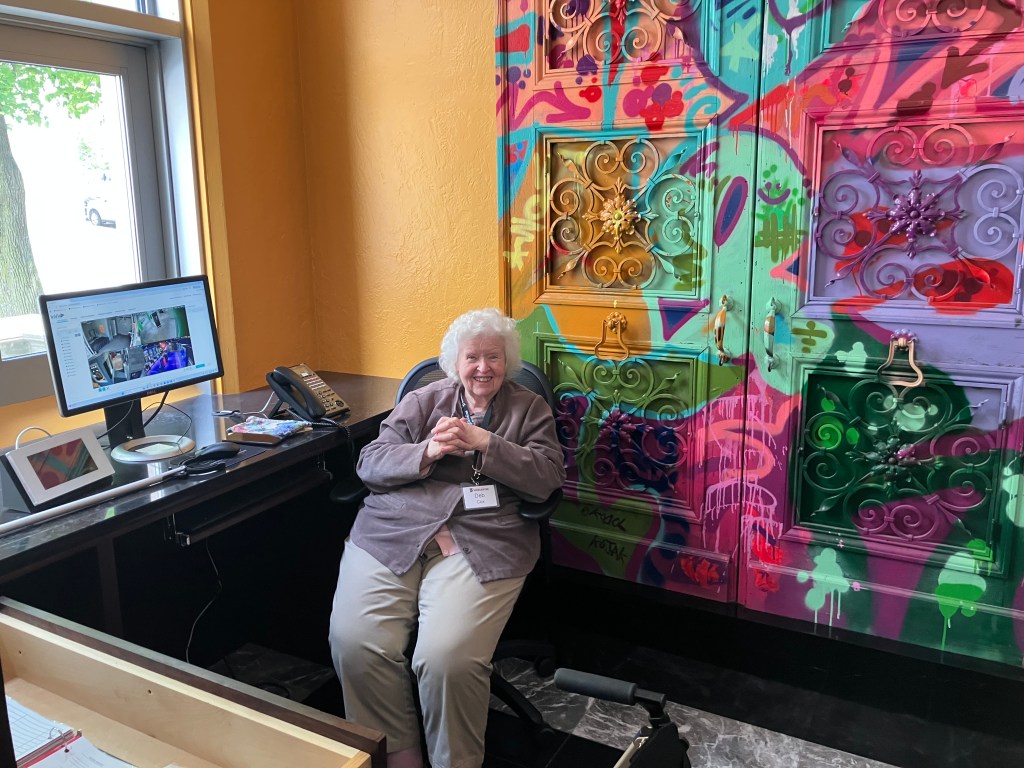
Deb, demonstrating the famous Worcester Smiley Face.

Among the firehose of factoids she shared, the one that made the greatest impression is that the humble and ubiquitous Smiley Face was invented in Worcester in 1963.
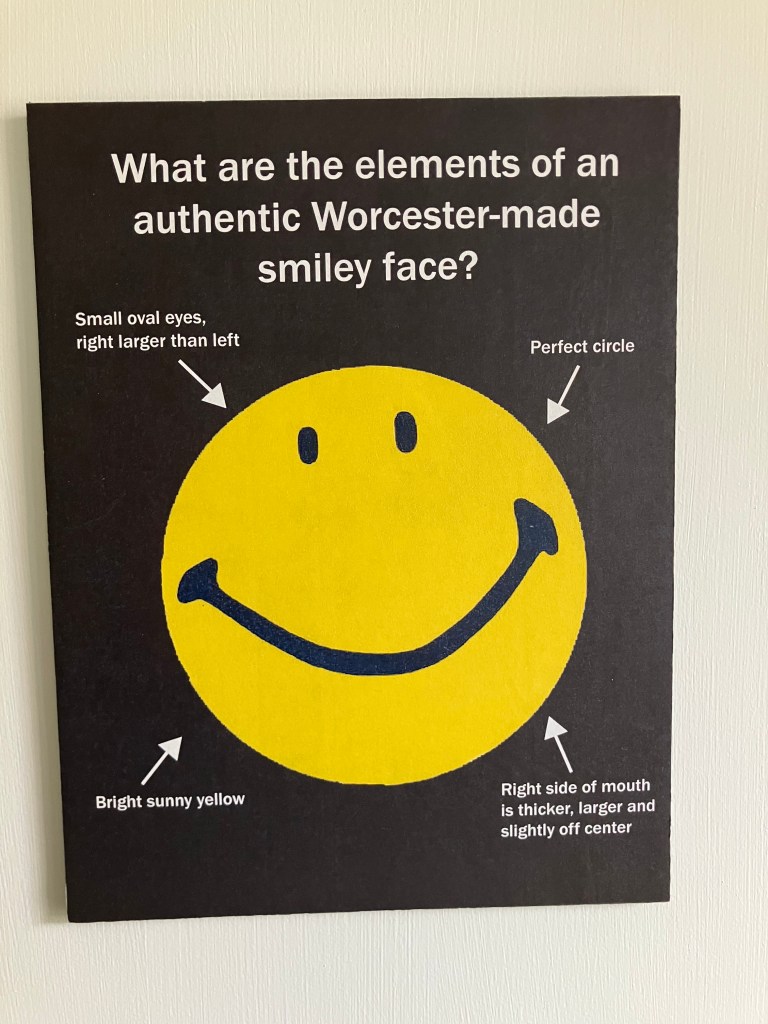
It was designed by a local artist named Harvey Ball, who was commissioned by an insurance company to design a moral-boosting image for their staff. If you were alive in the 1960s or 1970s, you know how the Smiley became a pop culture phenomenon. And of course it remains omnipresent today, adorning WalMart uniforms and, much more importantly, morphing into the emojis that adorn the majority of text messages.
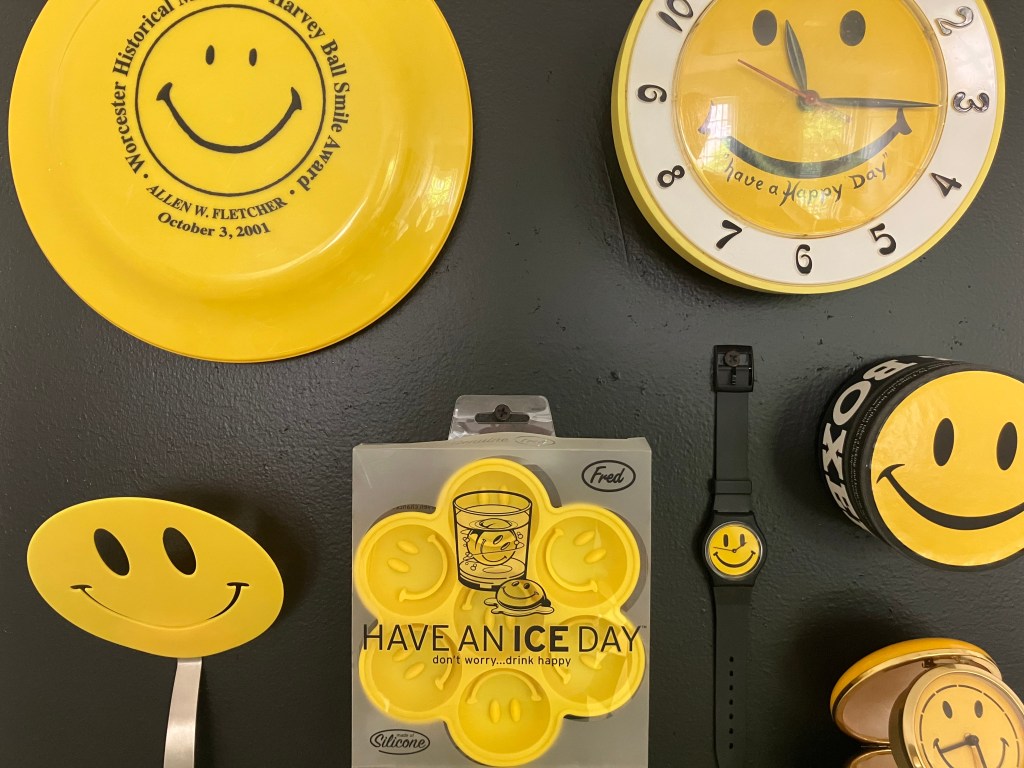
A tiny part of the museum’s Smiley collection.

Deb wanted me to know that Harvey Ball never trademarked the Smiley, and so he never made anything off it other than about fifty bucks for the original drawing. But in the 1990s Walmart tried to copyright it, which led to a court (Deb couldn’t tell me exactly which one) decreeing that they couldn’t claim credit for Harvey’s work. Or something like that.

After visiting the museum I made a pilgrimage to pay my respects to Harvey Ball. I think you can guess where this is leading:
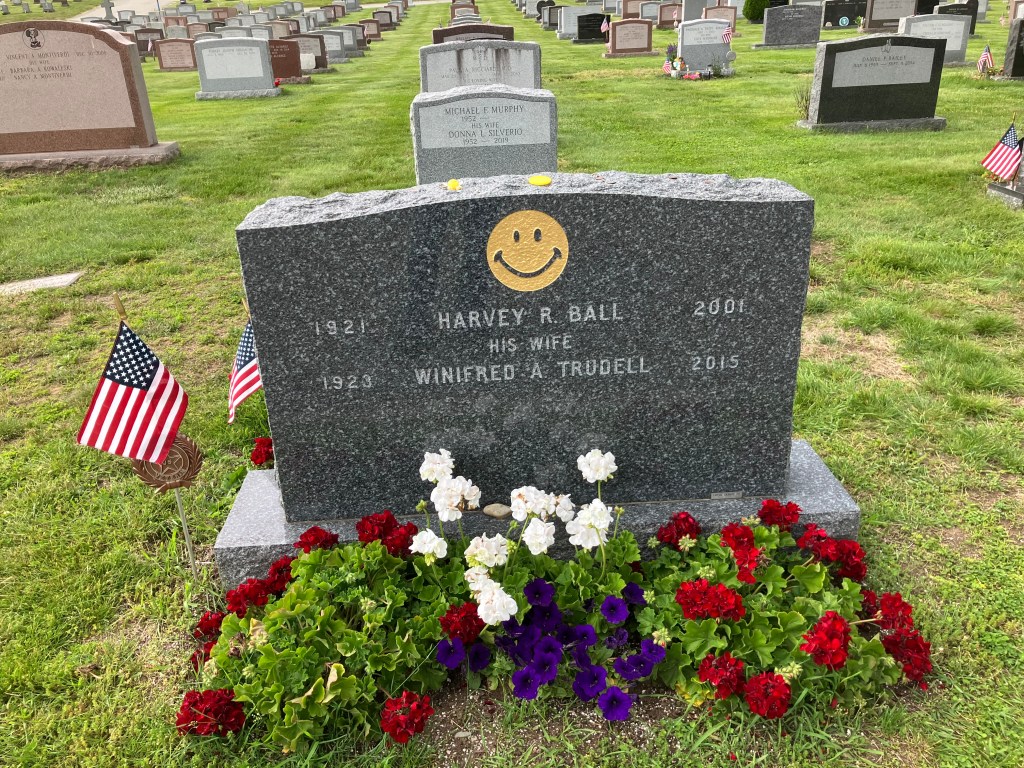
Notre Dame Cemetery, Worcester, MA

It was time to get back on the road, and once Worcester was in my rearview mirror, US 20 settled into the kind of road I’ve been longing for: rolling hills, a lane or two each direction, and a route smack-dab through the middle of numerous small towns.
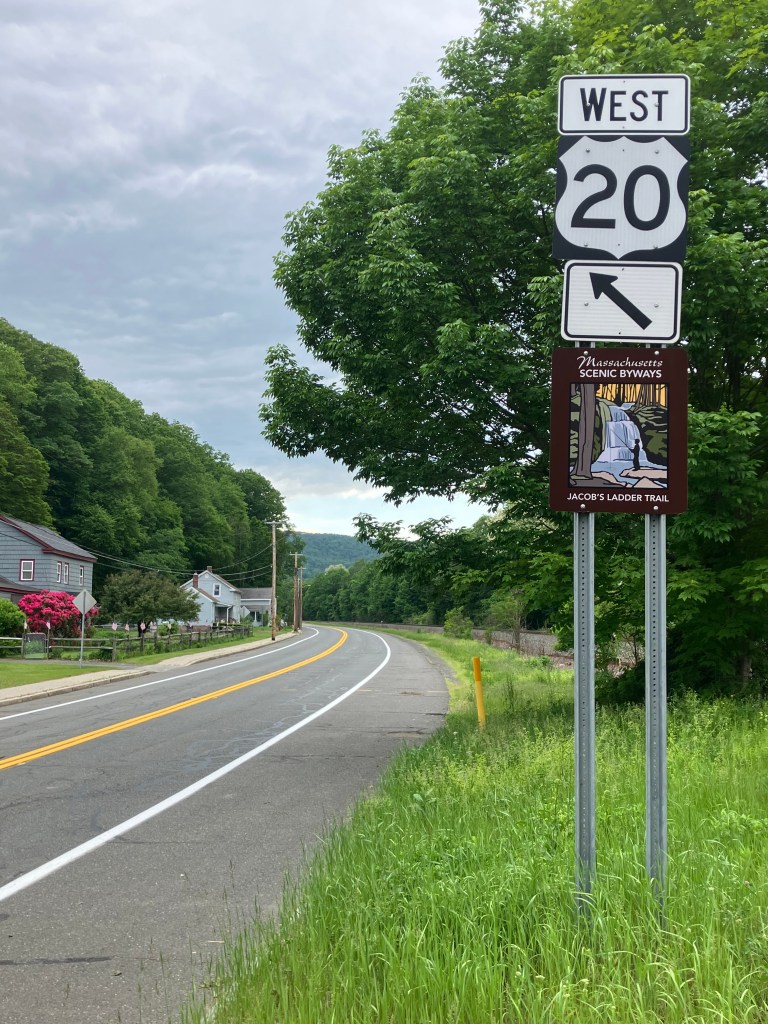
Next up was the town of Indian Orchard, a small village on the outskirts of Springfield, Mass. Now, alert readers may recall that about a dozen years ago I discovered a large Boilard clan living in the northeast. One roguish member of this Boilard branch of the family tree was my grandfather, Henry “Red” Boilard. You can read about him here on my website. Anyway, Henry had an uncle named Adelard Boilard, who founded Boilard and Sons Lumber in Indian Orchard in 1936.
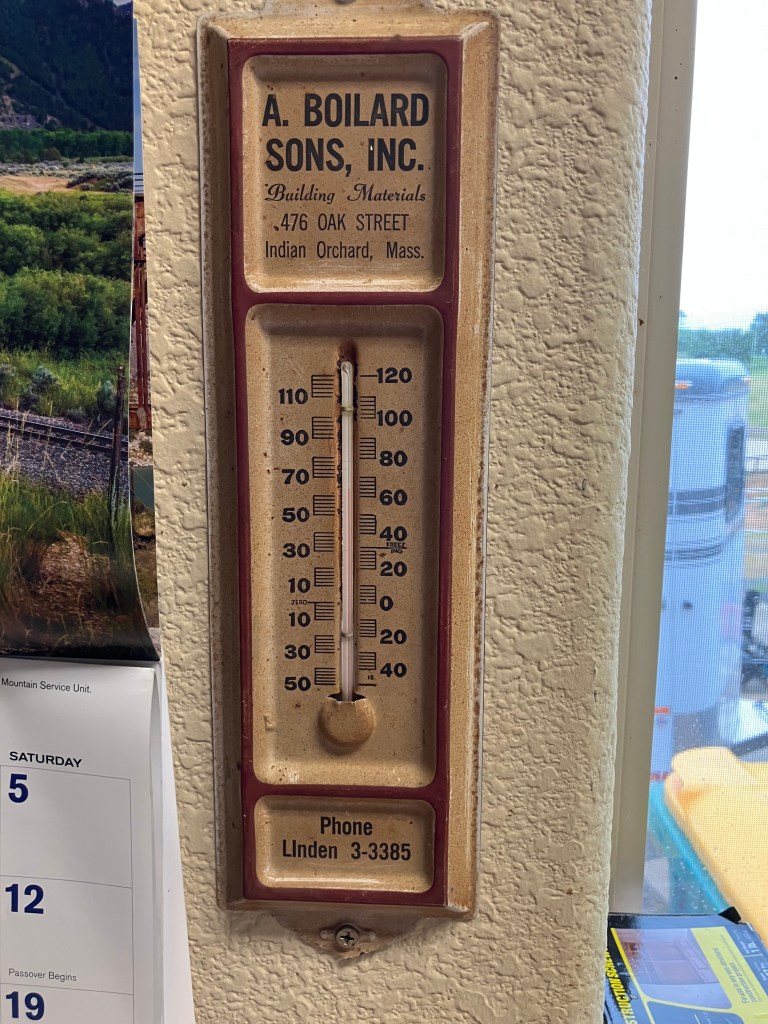
Historic thermometer hangs in my garage, but I’d never visited the store.

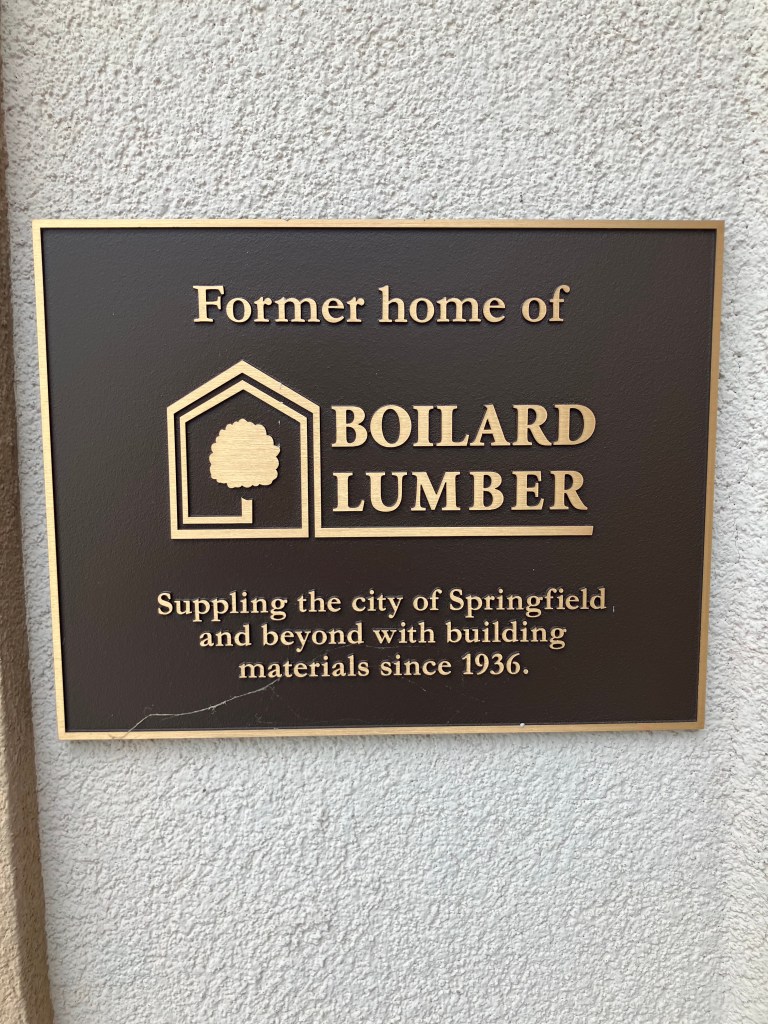
So, since US 20 goes right by Indian Orchard, I figured I’d pay a visit to the old family business at 476 Oak Street. The building still stands on the same site, but as of a couple of years ago Boilard and Sons got purchased by Koopman’s Lumber. The name of the business changed, but next to the front door there’s this plaque that acknowledges the lineage.
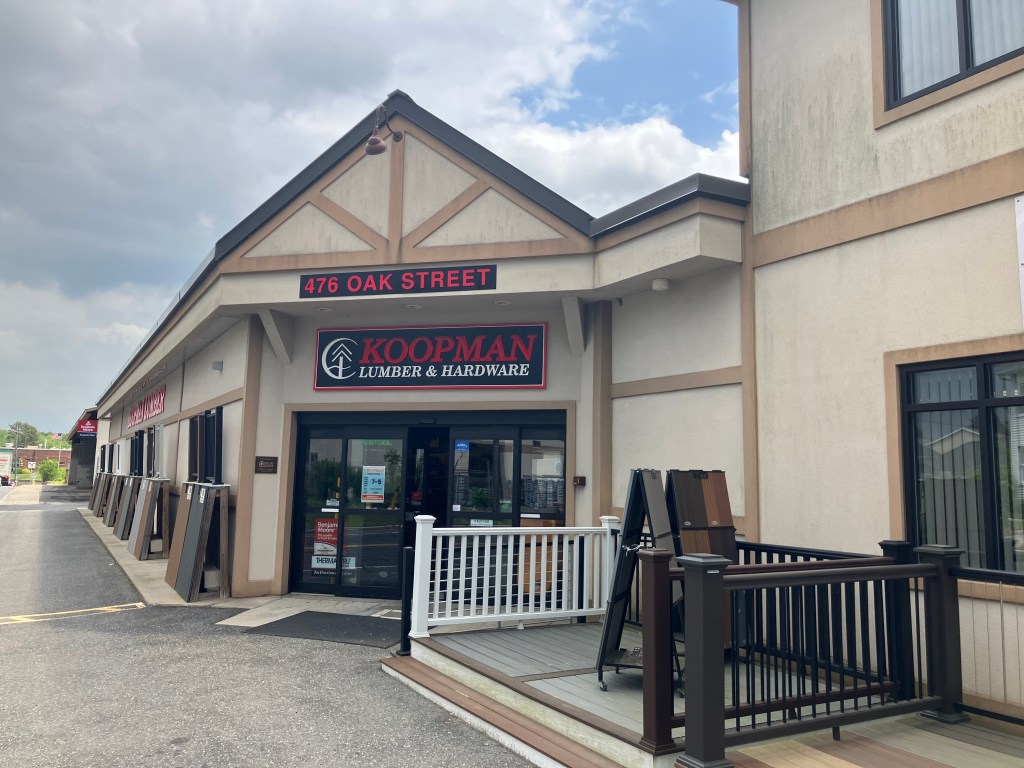
I went into the store hoping that maybe someone remembered the old Boilard family. I explained to the man behind the counter that my name is Steve Boilard, and that I’m related to the family that founded the store. Was he familiar with the history? The guy, whose name is Bob, did indeed know the history and explained how the family ran the place for over 85 years. I asked him if any family members were still involved with the operation. He said, “Well, there’s me.” His name is Bob Boilard…Adelard Boilard’s grandson. Talk about burying the lede! I guess that proves he’s a Boilard after all.
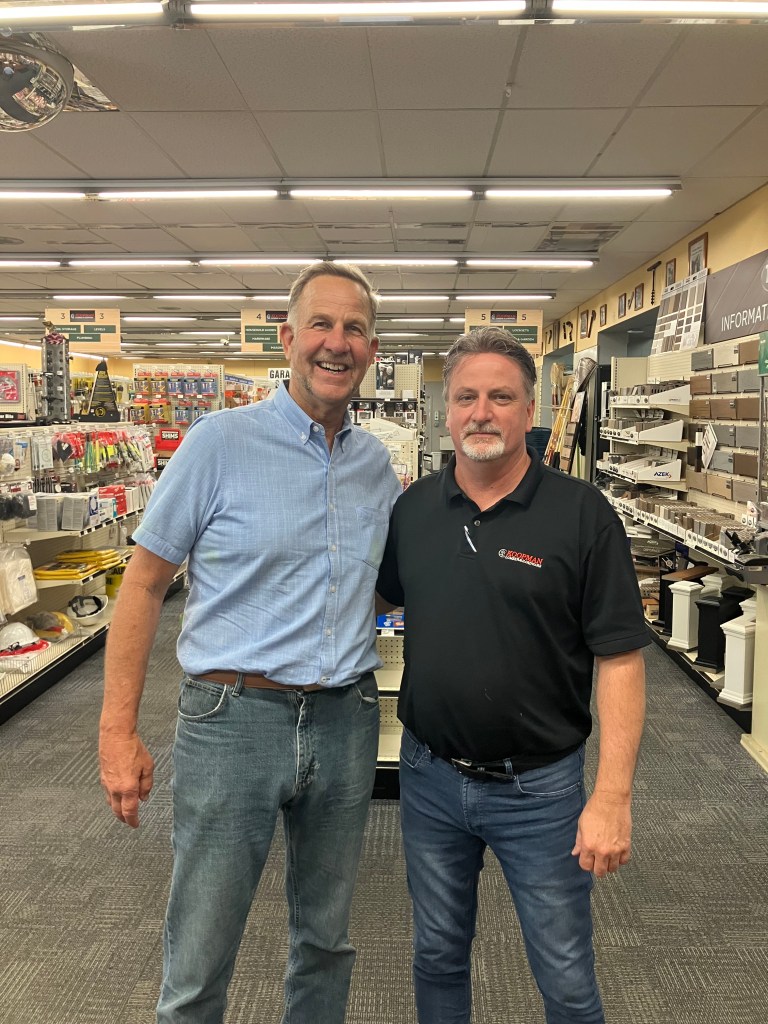
Me with Bob Boilard, who’s demonstrating the famous Boilard enthusiasm.

Bob gave me directions to the local cemetery (another Boilard trademark) and suggested I pay a visit to Adelard Boilard. Soon I was at Saint Aloysius cemetery…but finding Adelard would be like a needle in a haystack. As luck would have it, I ran into a cemetery employee named John, but he said the formal directory was in another part of town, and it wasn’t open today. At my obvious disappointment, he lowered his voice conspiratorially and said, “Well, we can see if maybe there’s anything helpful in the garage.”
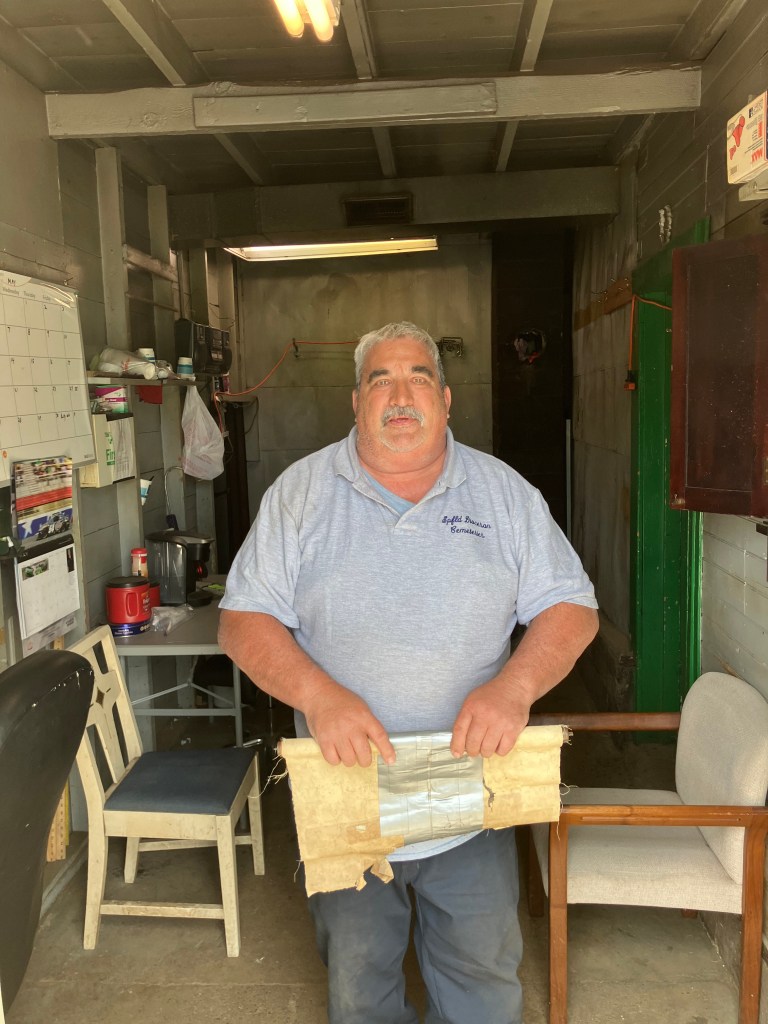
Co-conspirator John.

He led me into a dark and dusty building, and asked me when Adelard died. “December of 1981,” said I. John then produced a worn and dusty journal and flipped the pages to December. It had records for all burials that month. No Boilard. “Sometimes they didn’t get recorded,” he explained. But as I was about to turn away empty handed, he said “Wait–these are recorded by date of burial, not date of death.” He pulled out the 1982 journal, and turned to January:
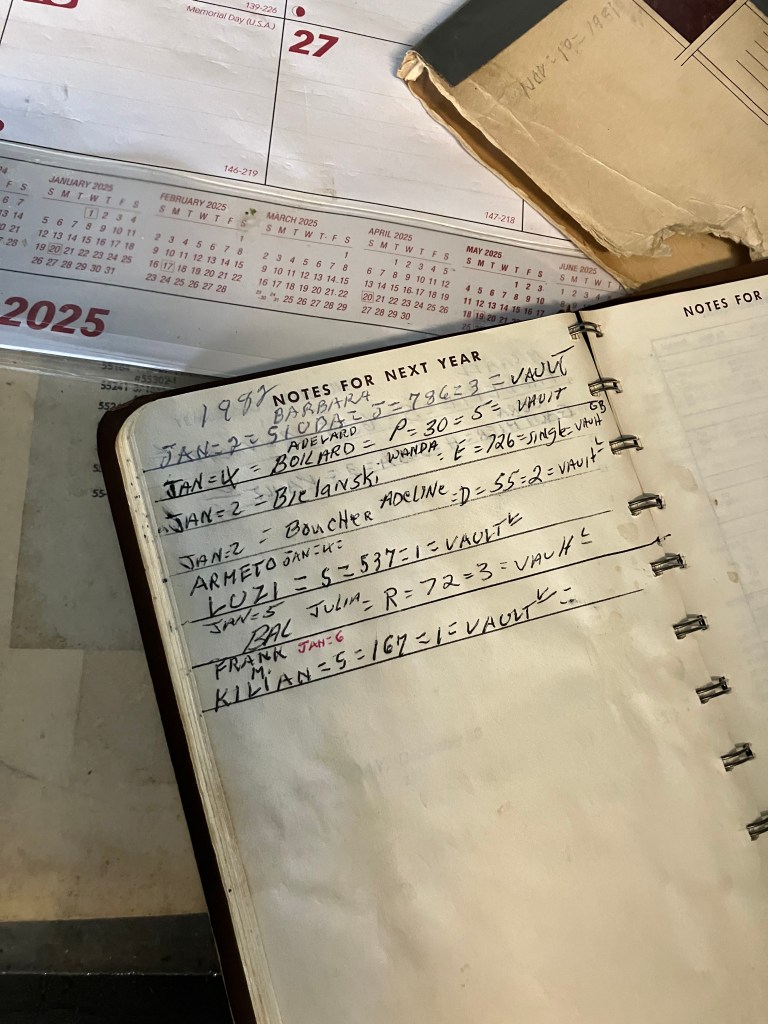
Second line (Jan 4): Adelard Boilard

The journal included DaVinci-code-like notations next to the name, which John then used to locate the grave on an ancient plot map.
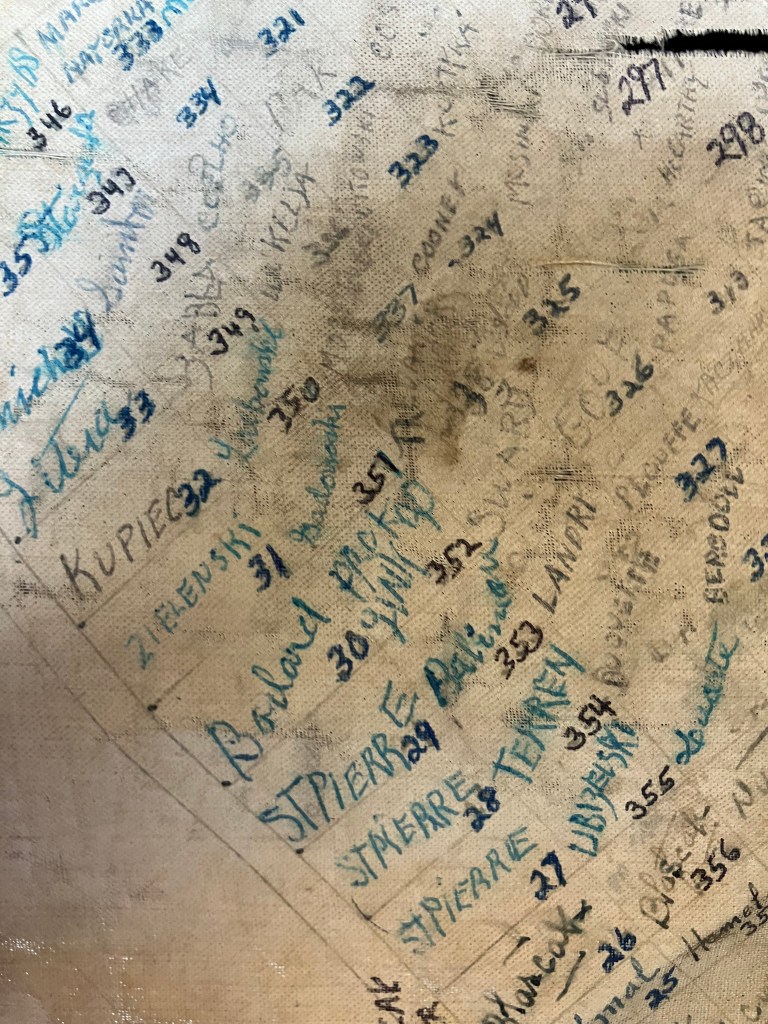
Boilard: Middle-left edge.

And with that information, my friends, I was able to locate the Boilard marker, under which are buried Adelard, his wife Lillian, and several other Boilards.
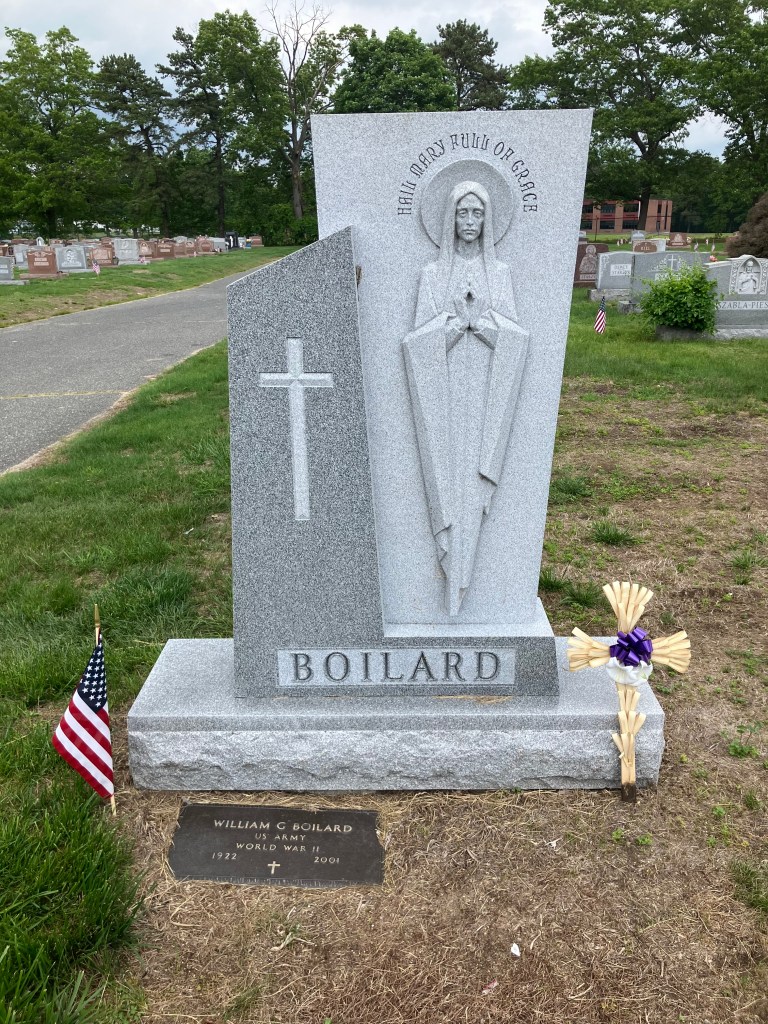
Be it ever so humble…

There’s one more postscript to this story: when my Aunt Mary (one of the east coast Boilards) learned of my Route 20 trip, she told me there’s another relative I need to visit in Indian Orchard. Phyllis Emet (nee Boilard). Phyllis’ grandmother was Adelard Boilard’s sister. I guess that makes Phyllis Adelard’s grand-niece? (Somebody please help me with this!) Anyway, Phyllis is 90 years old and has encyclopedic knowledge of the Boilard family history. I spent a delightful hour getting filled in on family lore.
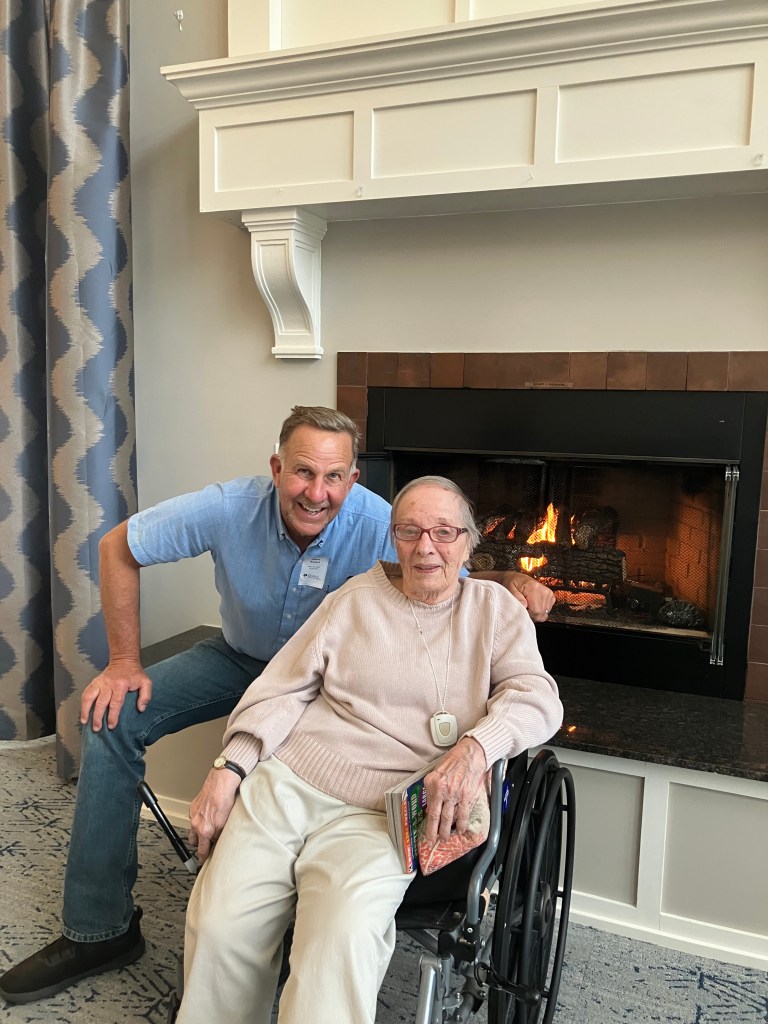
Me with Phyllis, keeper of the Boilard secrets.

After visiting with Phyllis I stumbled upon some interesting (non-Boilard) history in the town of Chester (pop: 1,250), but I think I’ll save that tomorrow as this post is getting long and the jet lag is kicking in. I will end with the…

BOTD
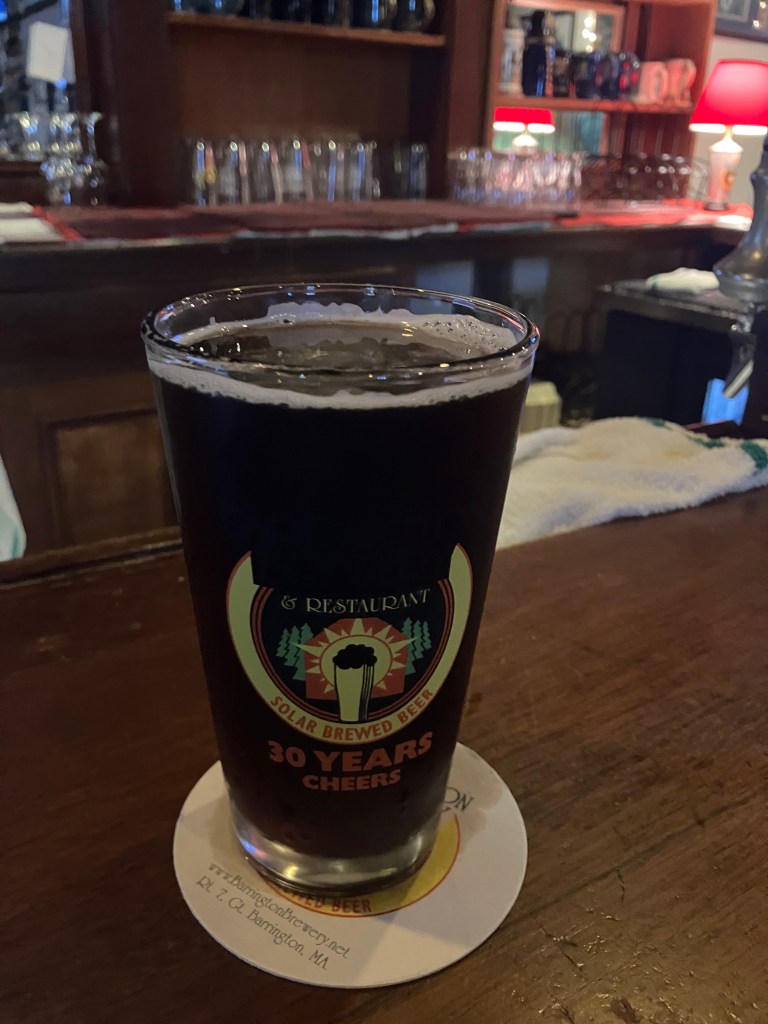
Meh.

I had my dinner and my Beer of the Day at a place called Barrington Brewery in the town of Great Barrington, Mass (pop: 7,200). I didn’t realize until I saw the bartender’s polo shirt that I’m in the Berkshires. It’s admittedly a very nice environment around here.

On the bartender’s recommendation, I had a pint of the Barrington Brown Ale (5.4 percent alcohol, which barely exceeds the alcohol you’d get from the brandy-flavored chocolates your grandma kept in a dish at Christmas time). After all my other great successes today, I should have known my luck couldn’t hold out. This ale is the color of Lipton Iced Tea, and it’s similarly uncarbonated. It has no discernible strong flavors at all. The mouthfeel is positively watery. It reminds me of dishwater, with notes of dirty straw and potato peels. The finish evokes soggy Cheerios. This is a spectacularly forgettable beer. 1 star.
2024 Halloween treats · Breweries · California history · cemeteries · Halloween · Puns

Ossuaries

This isn’t very humerus.

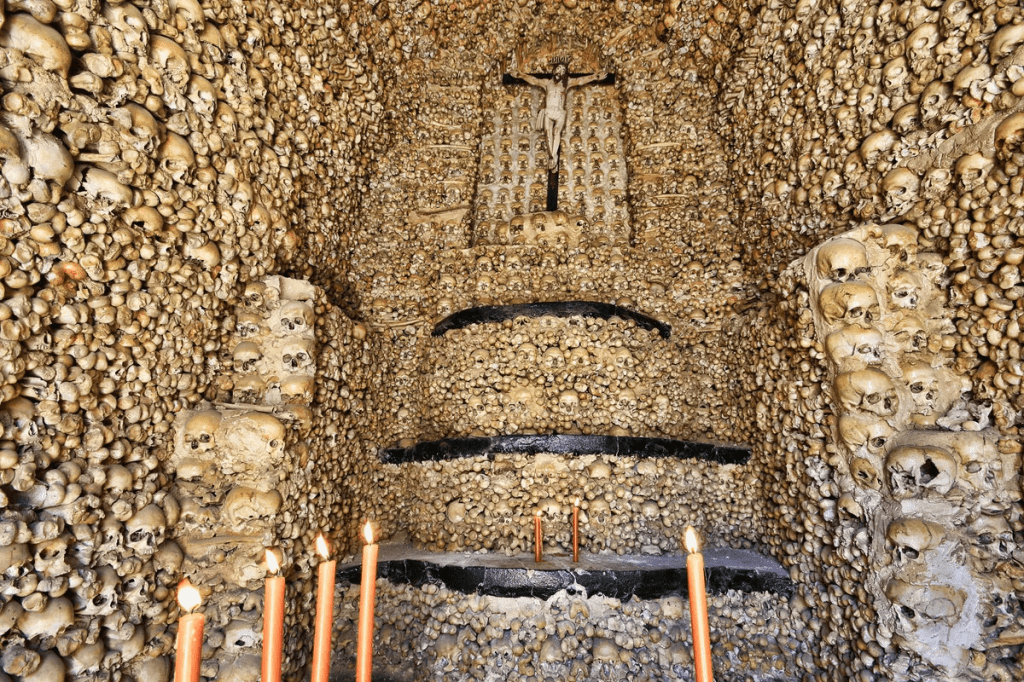
Just over a year ago the Missus and I visited the town of Evora in Portugal. One particular vision from that trip is seared into my memory: the Capela dos Ossos (Chapel of the Bones). It’s a small, 16th-century chapel that adjoins the Church of St Francis, and its interior walls and ceiling are decorated (if that’s the word) with the bones from about 5,000 corpses. It’s said that the Franciscan friars built the chapel using exhumed skeletons from local cemeteries.

This is what you’d call an ossuary–a building or container that holds skeletal remains. Why did the friars put the bones on display rather than burying them? The answer, I think, is found in a poem that hangs within the chapel. It’s attributed to the village priest, Fr. António da Ascenção Teles, and here’s an English translation:

Where are you going in such a hurry, traveler?
Pause…do not advance your travel.
You have no greater concern than this one:
That which is now before your eyes.

Recall how many have passed from this world,
Reflect on your similar end.
There is good reason to do so;
If only all did the same.

Ponder, you so influenced by fate,
Among the many concerns of the world,
So little do you reflect on death.

If by chance you glance at this place,
Stop … for the sake of your journey,
The longer you pause, the further on your journey you will be.

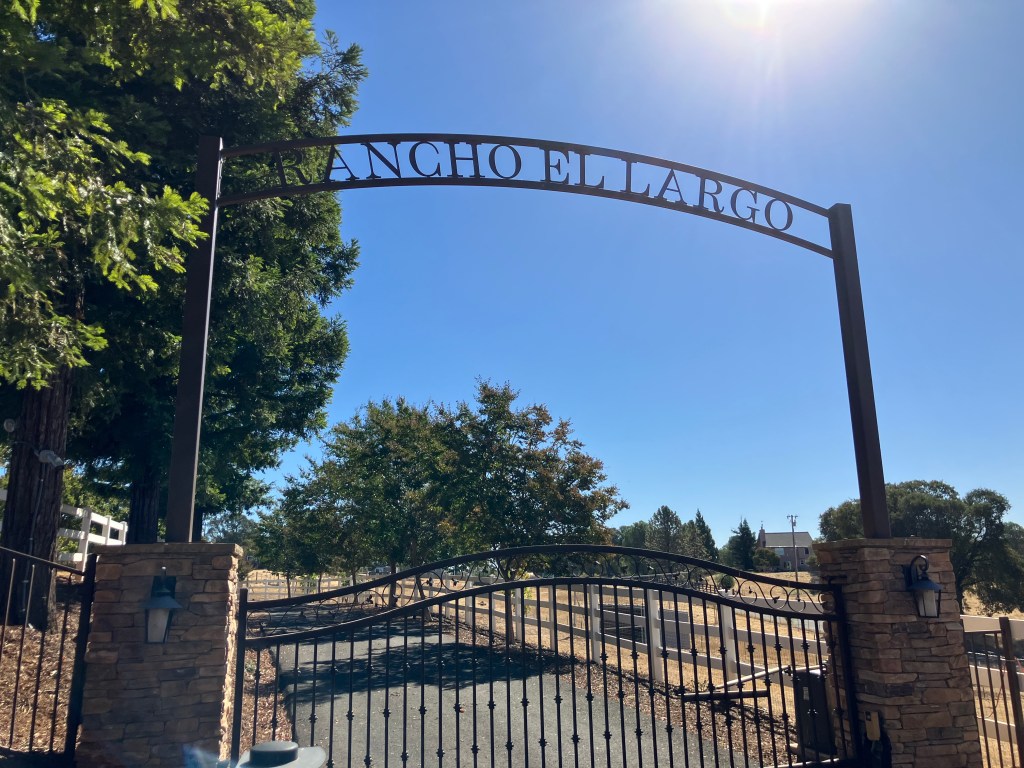
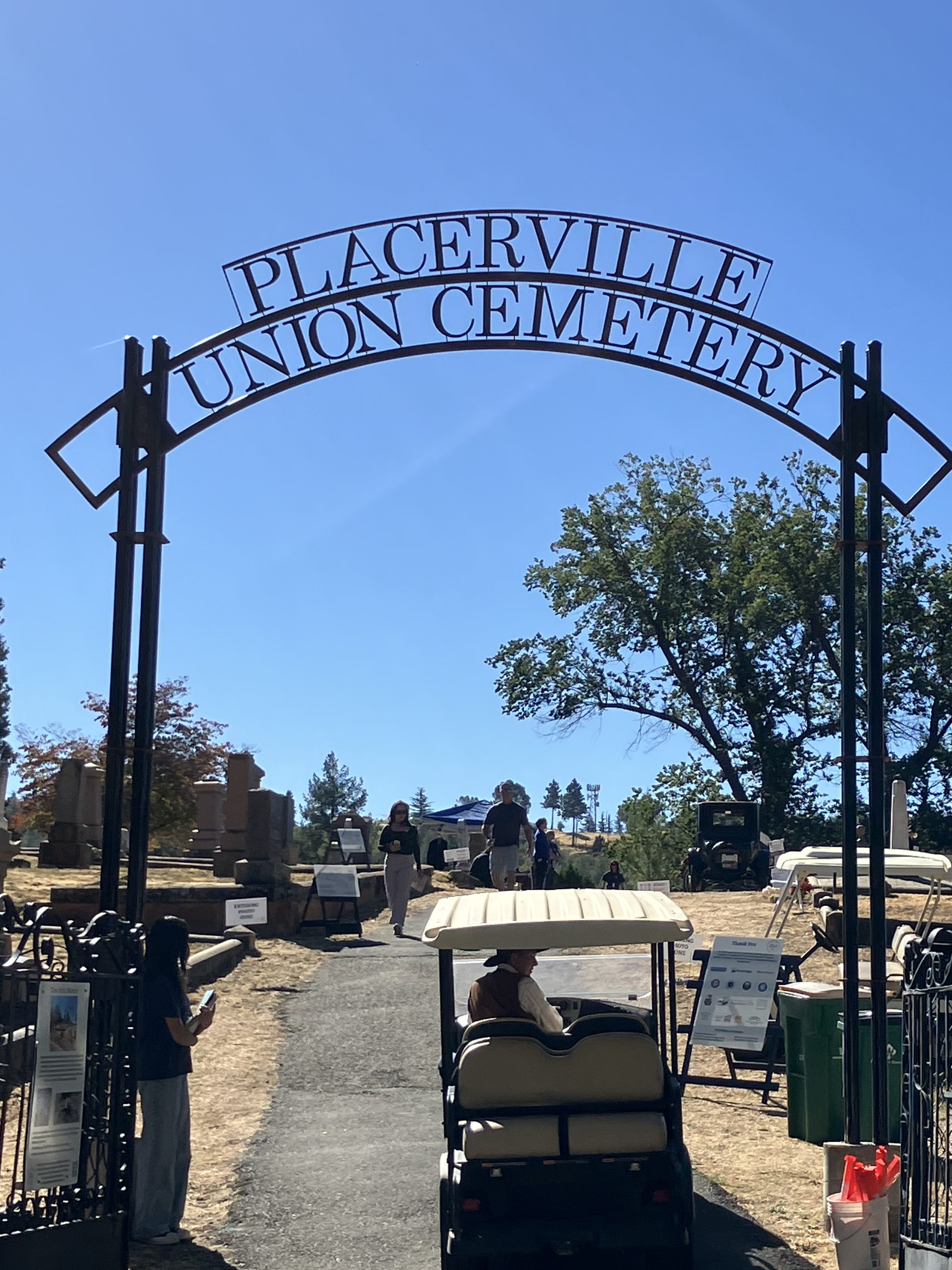
Today I visited another ossuary of sorts: Placerville Union Cemetery. The cemetery was founded in 1871, and is said to be haunted. (But what graveyard isn’t said to be haunted?) Notable (to me at least) is that the cemetery’s arched gateway was designed and constructed by the same guy who designed and constructed the one at my property.

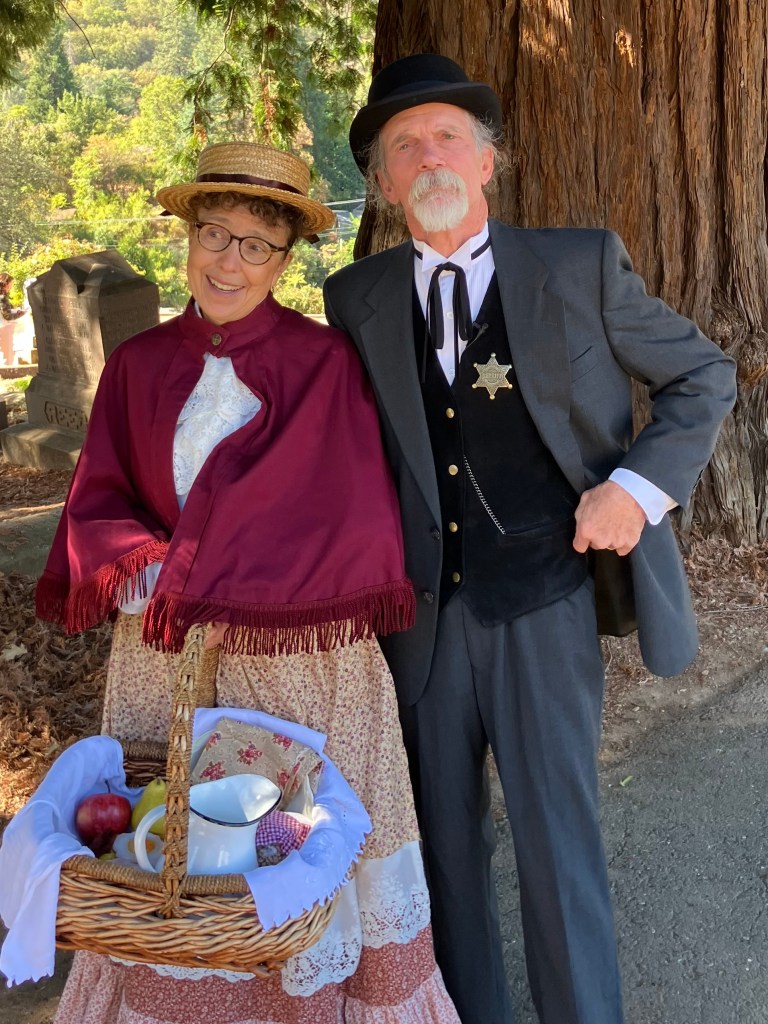
This morning the cemetery grounds were haunted by actors portraying key historical figures from the region. I watched a performance by Dan Trainor who portrayed Sheriff James Madison Anderson. Sheriff Anderson had unsuccessfully tried to halt Placerville’s last hangings in 1889. It’s a gut-wrenching story, as Sheriff Madison ultimately was obligated to pull the lever that executed two men he’d come to respect. (To this day Placerville continues to embrace its official nickname “Old Hangtown”.)

Dan and Cheryl Trainor, as Sheriff Anderson and his good wife.
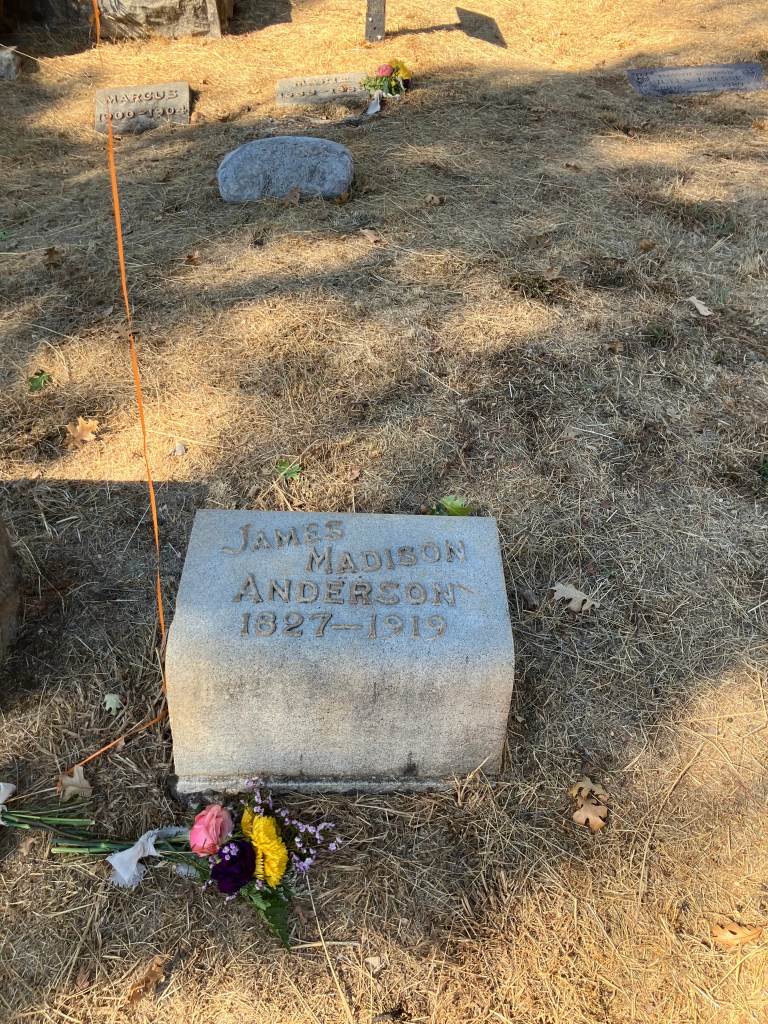
Sheriff Anderson’s final resting place, just yards from Dan’s re-enactment.

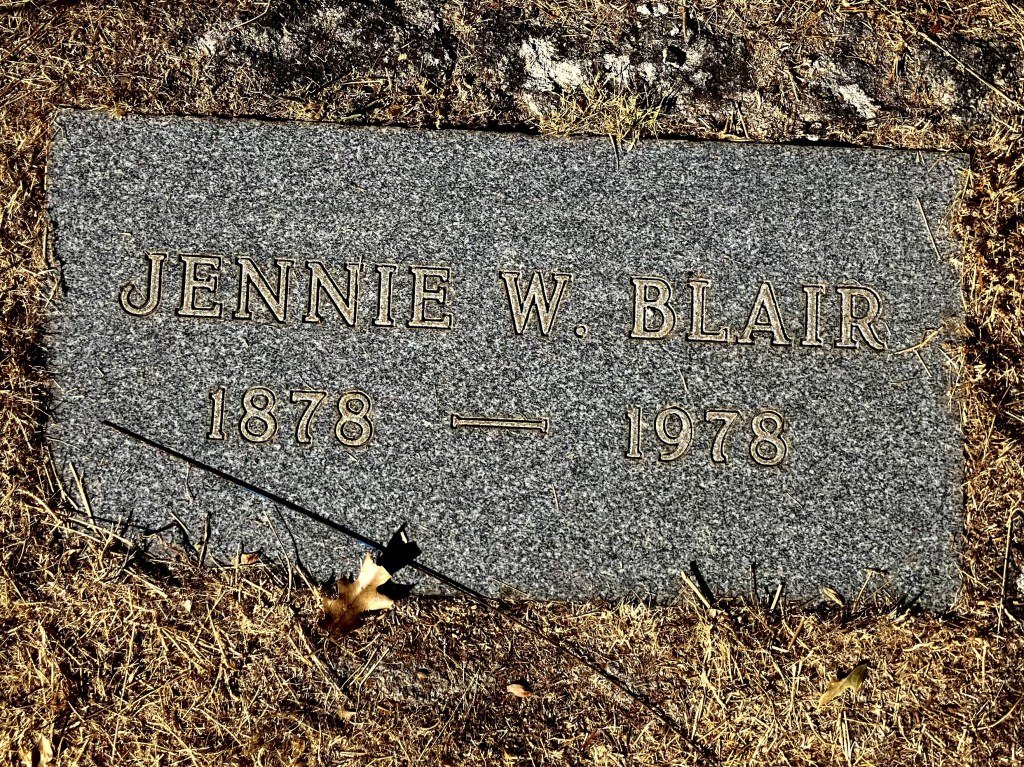
While I was watching Dan’s performance, I was standing near a stone that caught my interest. The Blair family emigrated to El Dorado County from Scotland in 1882, and their descendants continue to live in the area. Jennie Blair, next to whose marker I was standing, lived a full century that bridged many different eras in Placerville.

Born before the Statue of Liberty; lived to experience disco.

But let’s get back to Ossuaries. Look what I found at the local liquor store:

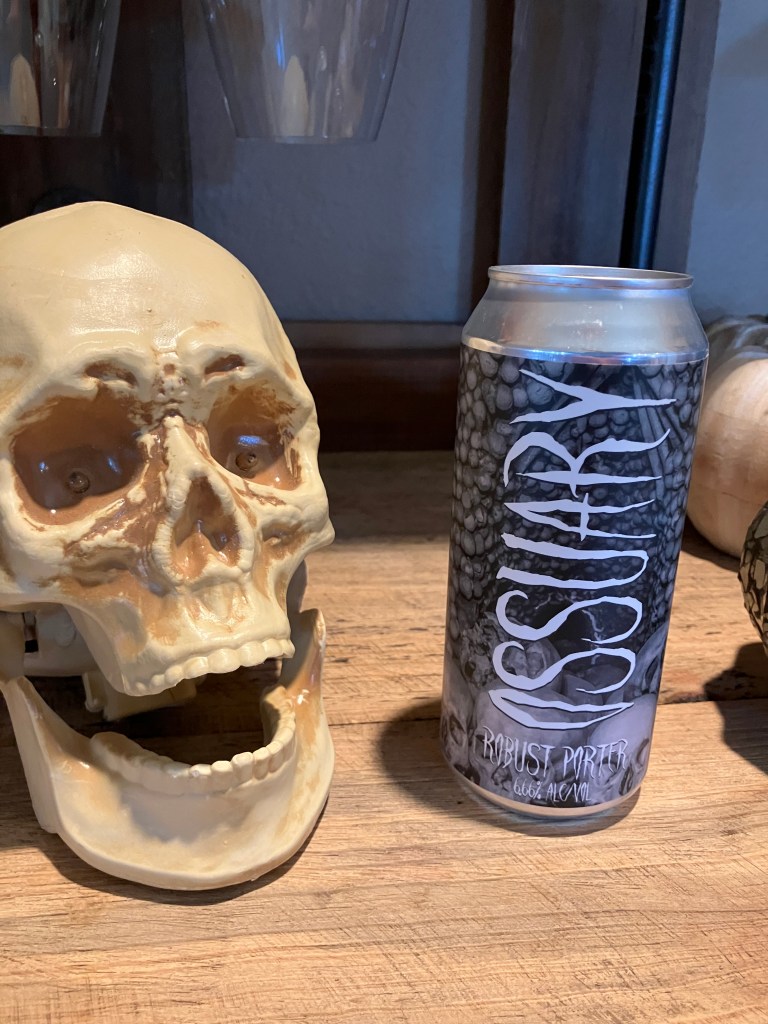
Containing the mortal remains of myriad hops and barleycorns.

I’d never heard of Ghost Town Brewing before, but evidently it’s a popular brewery in west Oakland, California. The name “Ghost Town” is supposedly an old nickname for the brewery’s neighborhood, which ages ago hosted two coffin manufacturing operations. It’s claimed the brewery itself resides in one of those coffin plants, but details are sketchy. Still, you have to admit this is a promising backstory for a Halloween libation review. You can read more about Ghost Town Brewing, and how it was founded by a metal band as their side hustle, here.

Note the coffin.

But for now, let’s see how this stacks up on our Treat Template (TM).

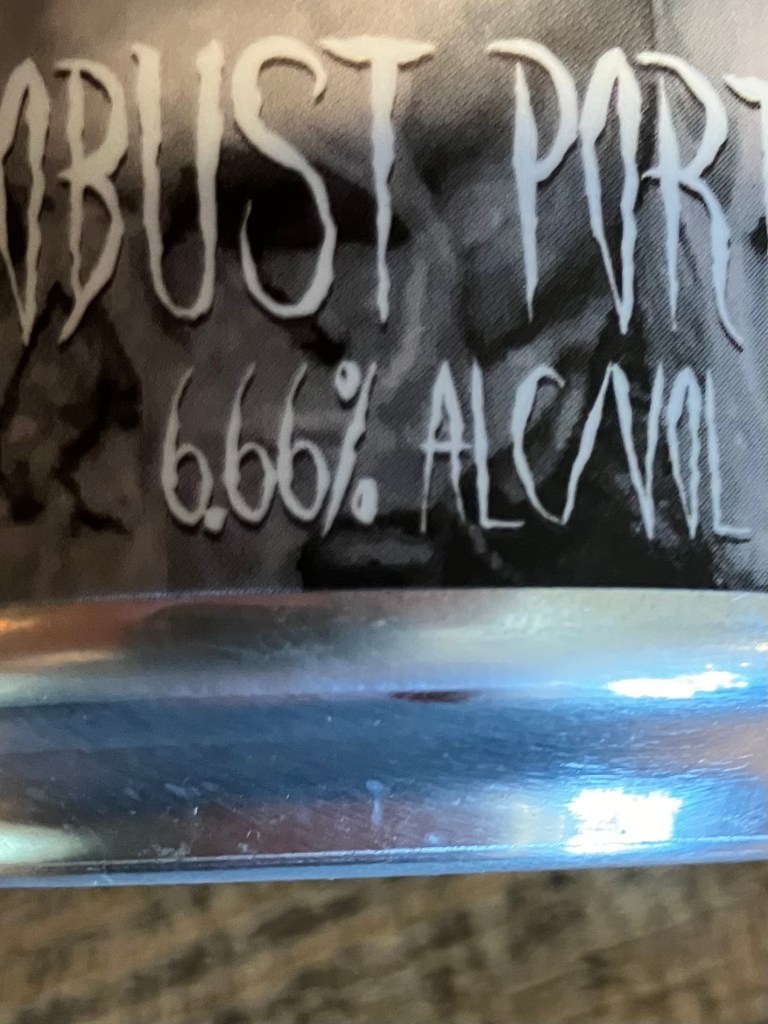
Conceptual Soundness: As noted above, Ghost Town Brewing has a spooky backstory, and all their beers are named and packaged to tap into (ha!) that same vibe. The main concept here is to make a “robust porter” — that is, somewhat darker, more flavorful, or more potent than your average porter. Recognizing that Ghost Town’s jam seems to be graveyards/coffins/death and dare I say the underworld, it seems they’ve reverse-engineered the ABV of this porter to match their spooky vibe:

Number of the Beast.

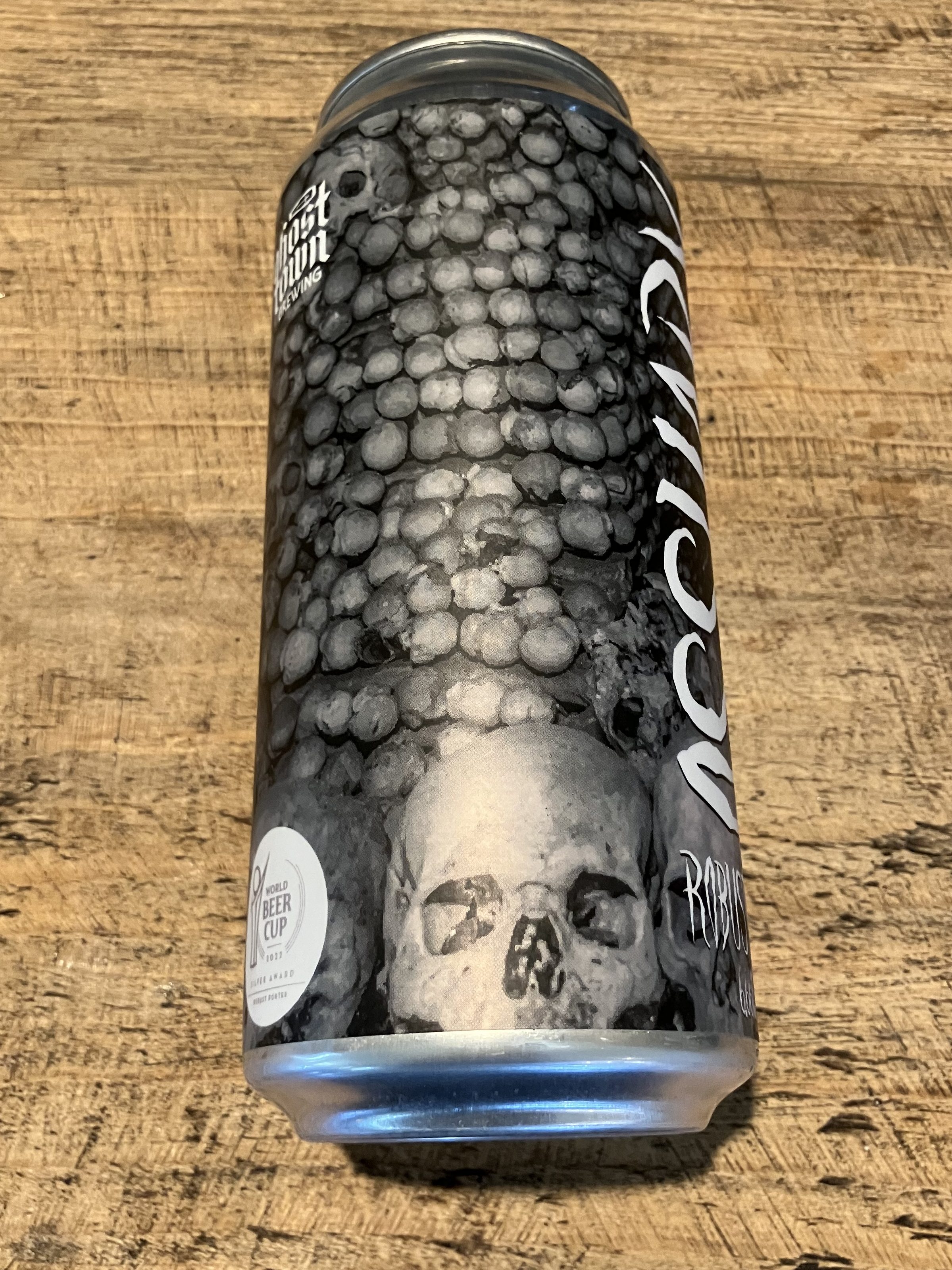
And in case the name “Ossuary” and the “666” don’t get the message across, they emblazon the can with a photo that may well have been taken from that ossuary in Evora that I featured at the top of this post.

It’s a beer with lots of head. (Har.)

Overall, it’s a sound (albeit simple) concept: Make a robust porter and surround it with dark imagery. 4 points. (I’m sure this score is influenced by the fact that, as a rule, I like porters.)

Appearance: Like most porters, it’s dark brown with a respectable tan head. It’s shot through with a bit a ruby-gold. It presents as a very solid and meaty drink for a cold October night. Coupled with the graphics on the can, I think this has earned an appearance score somewhere between 3 and 4 points. Let’s give it 3.5 points.

Taste: This beer has a complex range of tastes. It’s very malty, as expected, and the hop bitterness is reined in, as you’d expect from a porter. But swirl it over your tongue and you catch hints of Peet’s coffee, graham crackers, dark chocolate, mild pipe tobacco, burned pizza crust, and fennel. Notwithstanding the 16-oz container, this is a beer meant for sipping. You want to savory the flavors; pairing it with some strong cheese, I imagine, would really help bring out those flavors. This is delicious. This is 4 points.

Value: A four-pack set me back 20 bucks. That’s five dollars a beer, which is on the steep end. I might expect that for an imperial stout, but at “6.66%” ABV, this can’t really justify such a high price point. I give it 2 points.

Total Treat Score: 13.5 points. Highly recommend you drink one on the next dark and stormy night. Or as you watch this 1970 short film:

MAIL BAG

Loyal reader Katelyn P shared this video in reference to my Oct 1 post about Starbucks’ Raccoon Pop:

Would this qualify as cannibalism?
Breweries

Heading East to South of North

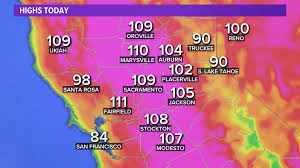
We’ve been experiencing a heatwave this week, with temperatures getting well above 100 degrees. Then on Saturday statewide news outlets reported a fire had broken out near the Placerville airport. Given the tinder-dry conditions and the large number of historic wooden structures in the area, my mind naturally turned to this question:

There’s an airport in Placerville?

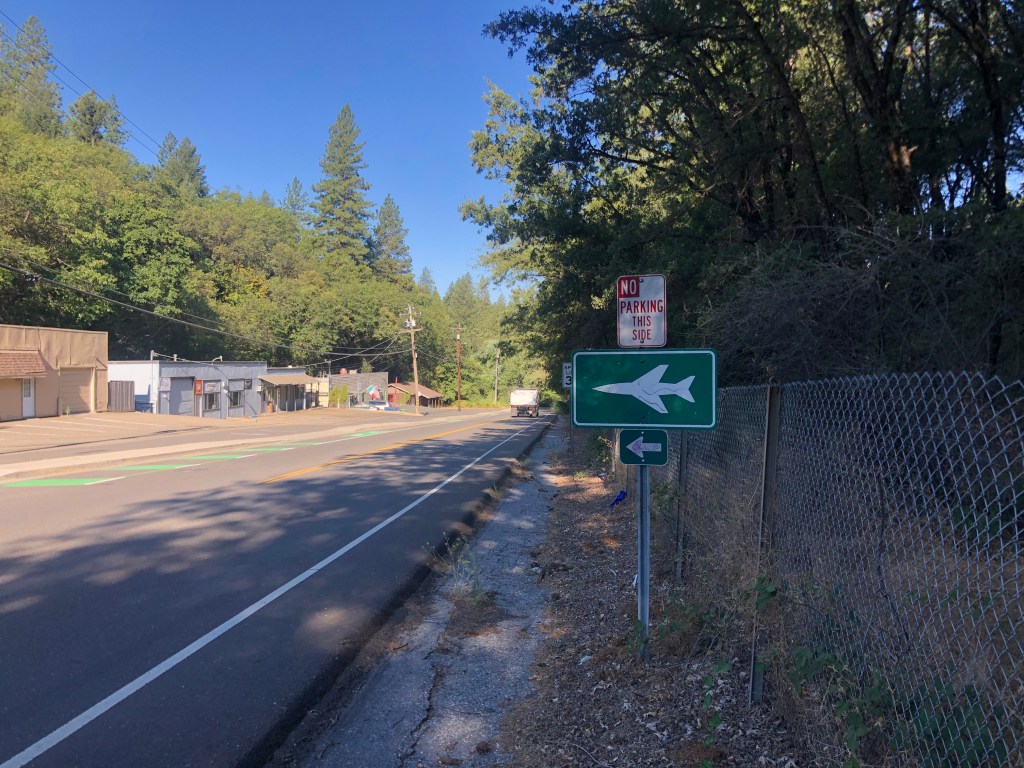
I’d certainly never heard of it before. And now it was burning?? Borrowing an aphorism from Ronald Reagan, I decided to trust but verify. So this morning I headed up the hill and just east of town I came to the very real Placerville Airport (PVF). It’s a one-runway airport that apparently mainly handles private, single-prop aircraft.

Sign for Placerville Airport suggests it’s a MIG jet fighter base.

I didn’t manage to get a photo of the airport because there was a Sheriff’s cruiser blocking the entrance, presumably to keep our lookie-loos like myself. But I can report that there was absolutely no evidence of a fire. No scorched trees, no smell of smoke, no nothing. This is odd, because to judge by the news reports you’d think it was the Second Coming of the Great Chicago Fire. Friends and relatives from all over the country have been texting me asking if our home was threatened by the inferno.

Anyway, as long as I was heading east on US 50 I figured I’d continue up to Lake Tahoe and enjoy a respite from the heat. I met up with my old college roommate, Bruce, who was with his dad at Zephyr Cove for a music camp. It’s always nice to come up to Tahoe, with the smell of pine and the views of the lake and the cool(er) temperatures.

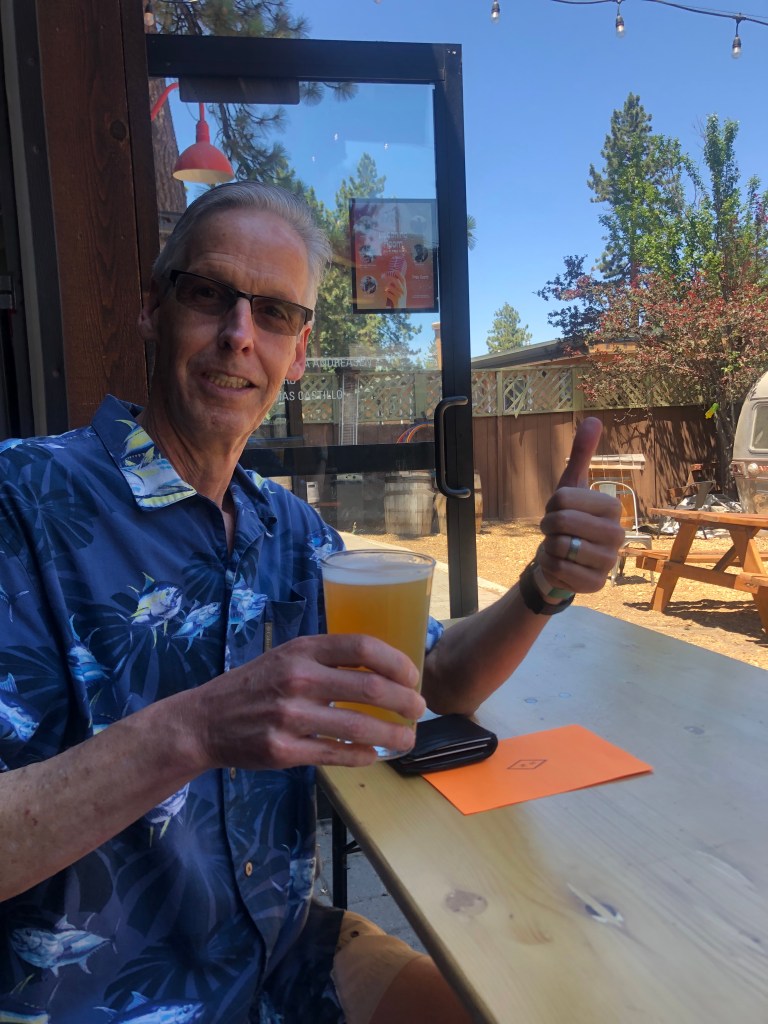
Bruce and a Blonde

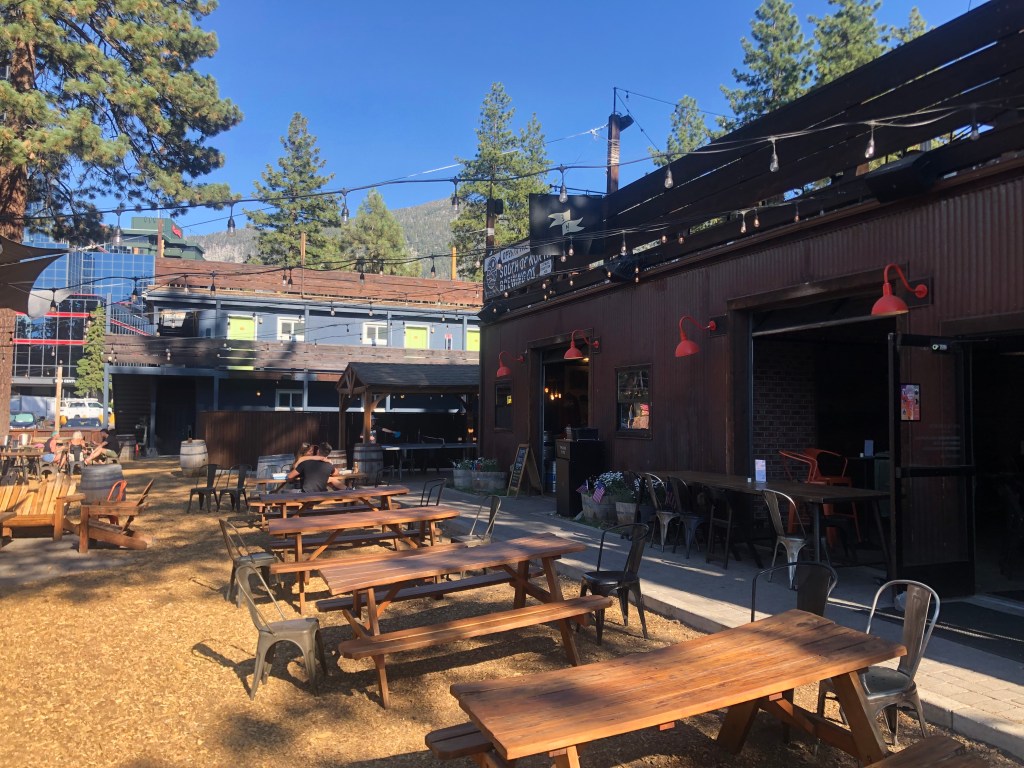
Near Zephyr Cove is a brew pub with the confusing name of South of North Brewing Company. This is where Bruce and I went for lunch, and we were glad we did. It’s nestled into a relaxing setting, with plenty of outdoor seating under pine trees and solar shades. Amidst the outdoor seating are a ping-pong table and the now-requisite Cornhole game. A rustic but homey building houses their service counter/bar, an event space, a bar, and their brewing operation. Yes, they brew their own beer. Today they had eight of their delicious beers on tap, plus another half-dozen guest brews. Notably, they are the only brewery in the area to draw their water directly from Lake Tahoe, and I want to think it makes a real difference in the taste. Didn’t some Brand X brewer used to say “it’s the water, and a lot more”?

Monday afternoon at South of North, before the crowds.

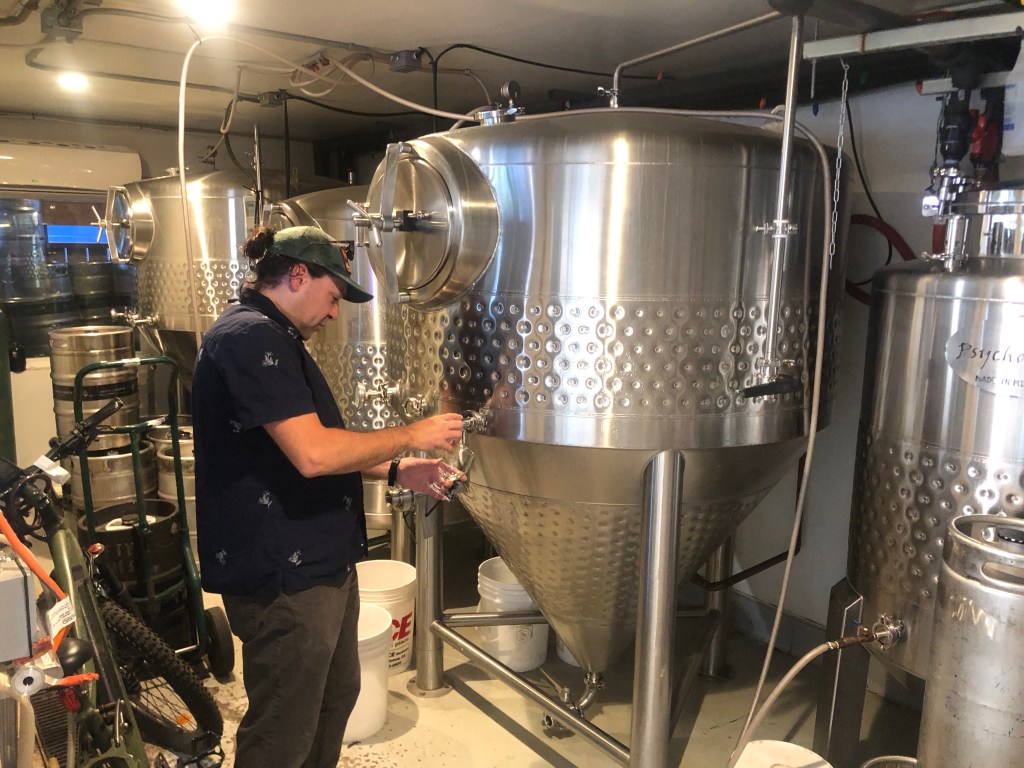
The head brewer is a Sacramento transplant named Thomas. He’s been here for a little over three years, and with a single assistant they make all those beers. The brewing space is a converted hotel room. (Their business abuts an old hotel.) Their brewing tanks were custom designed for the space.

Head Brewer Thomas draws a Lakeview Blonde from the tank.

So Bruce and I found a table in the shade and enjoyed pastrami sandwiches, salads, Bavarian pretzels with beer cheese, and a handful of beers. The food was delicious, the weather was perfect, and the bartender, Heather, had her personal 1970’s classic rock playlist feeding into the speakers. It was just what we were looking for.

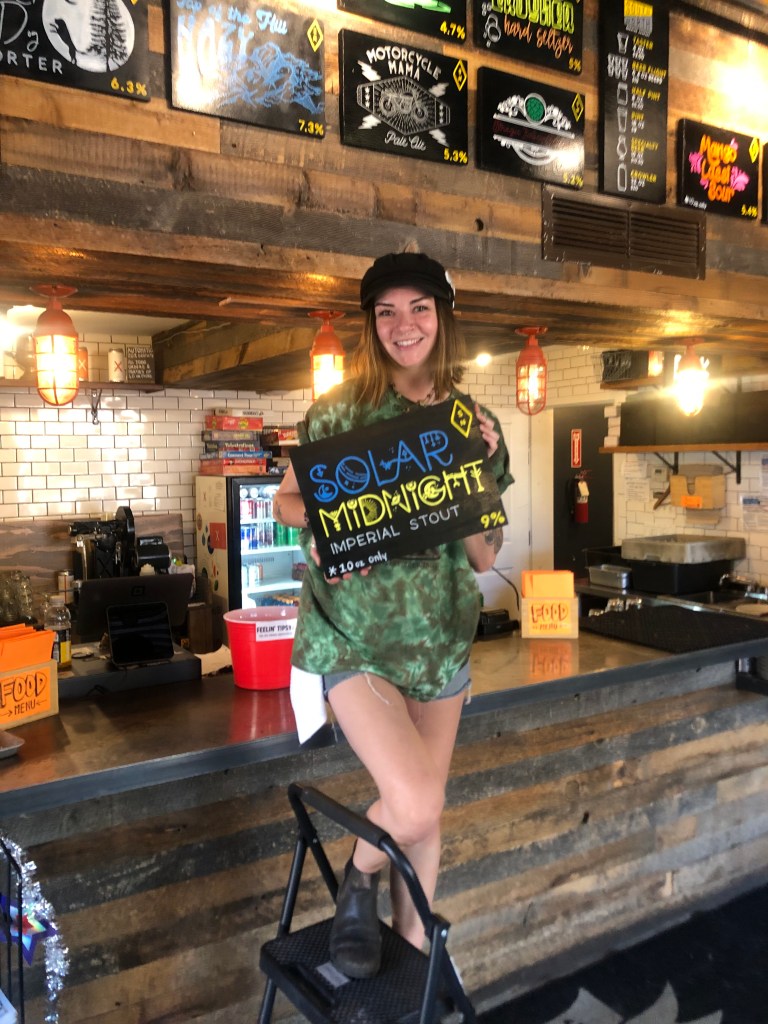
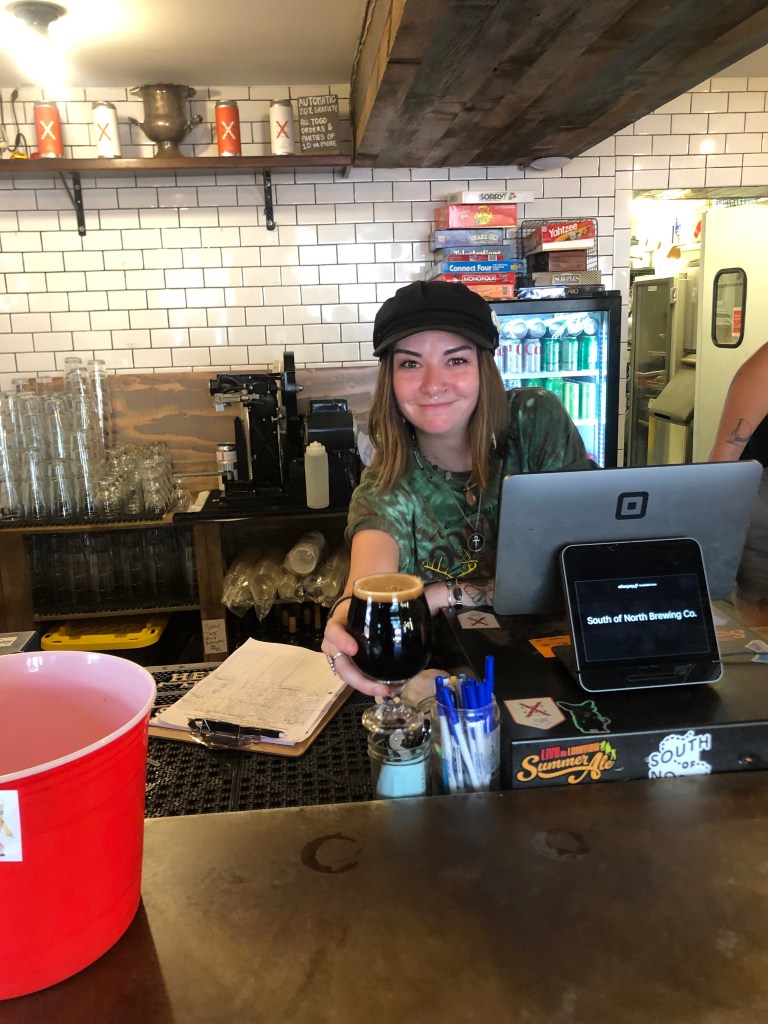
Heather, who wasn’t even born when most of her playlist was originally recorded. Here she’s promoting the BOTD.

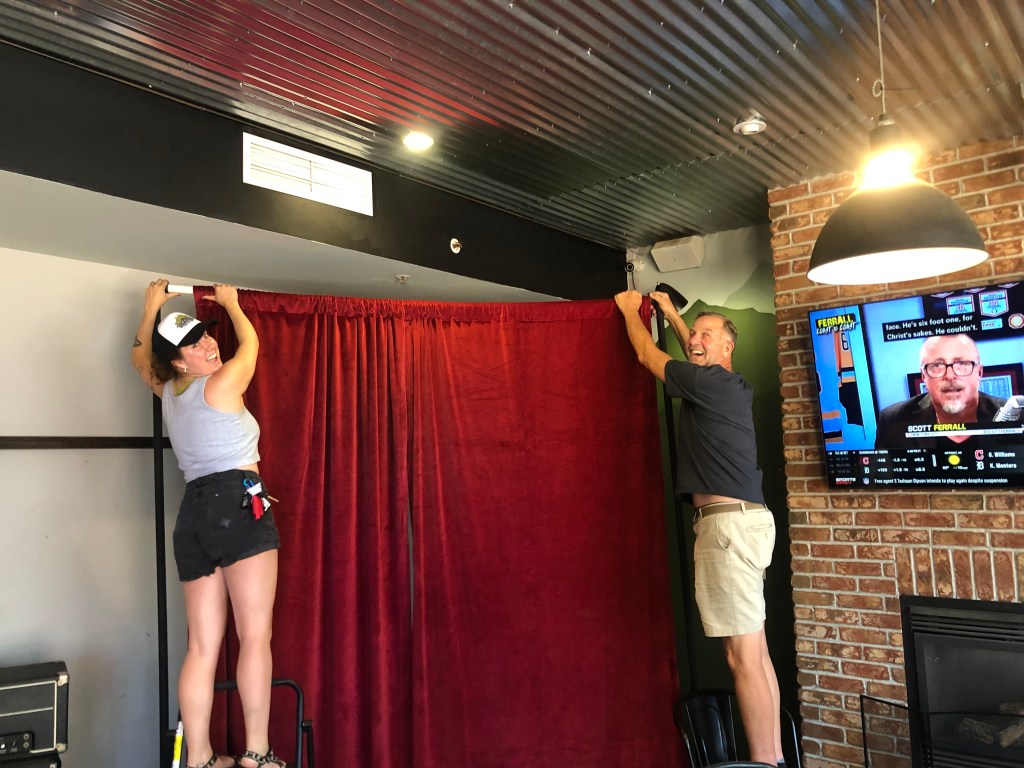
Meanwhile, the Community Engagement Event Coordinator, Sam, was setting up a stage for their signature “Listening Room” program, where local artists share their music and tell their stories. The place was a hub of activity, and is clearly one of the go-to destinations in the Tahoe area.

Event Coordinator Sam and a random helper set up the stage.
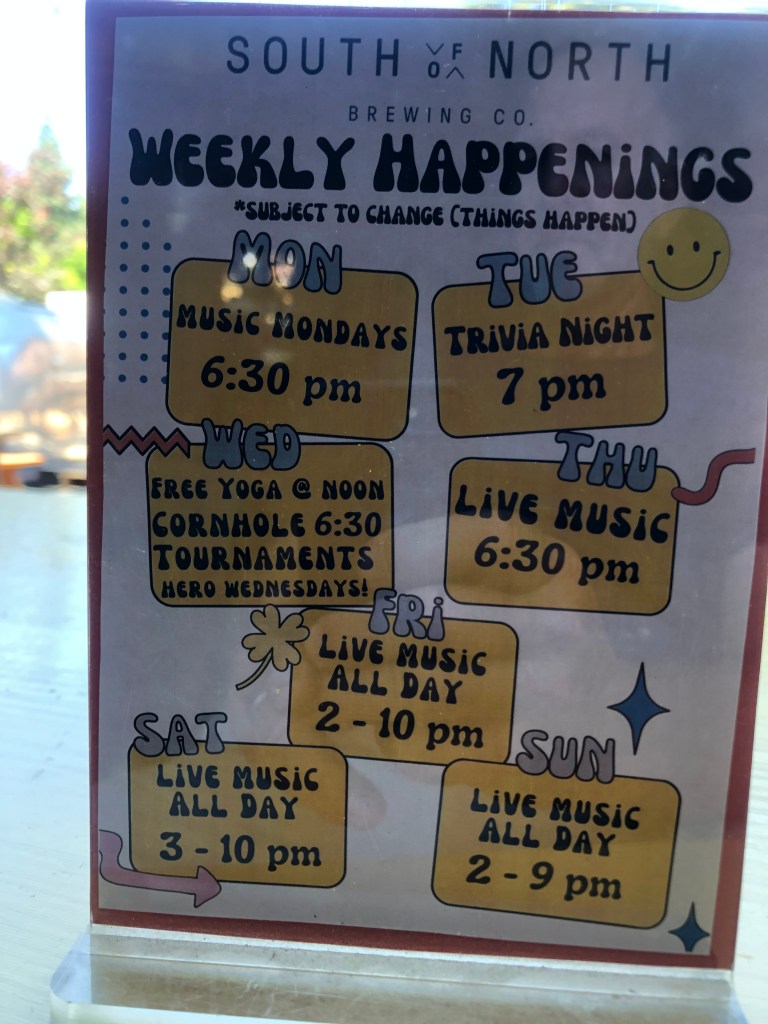
Lots of stuff going on at South of North!

So, if it hasn’t already been made obvious, this is an awesome place that’s a worthy Tahoe destination, no matter where you’re coming from. I’m definitely coming back soon.

BREW OF THE DAY

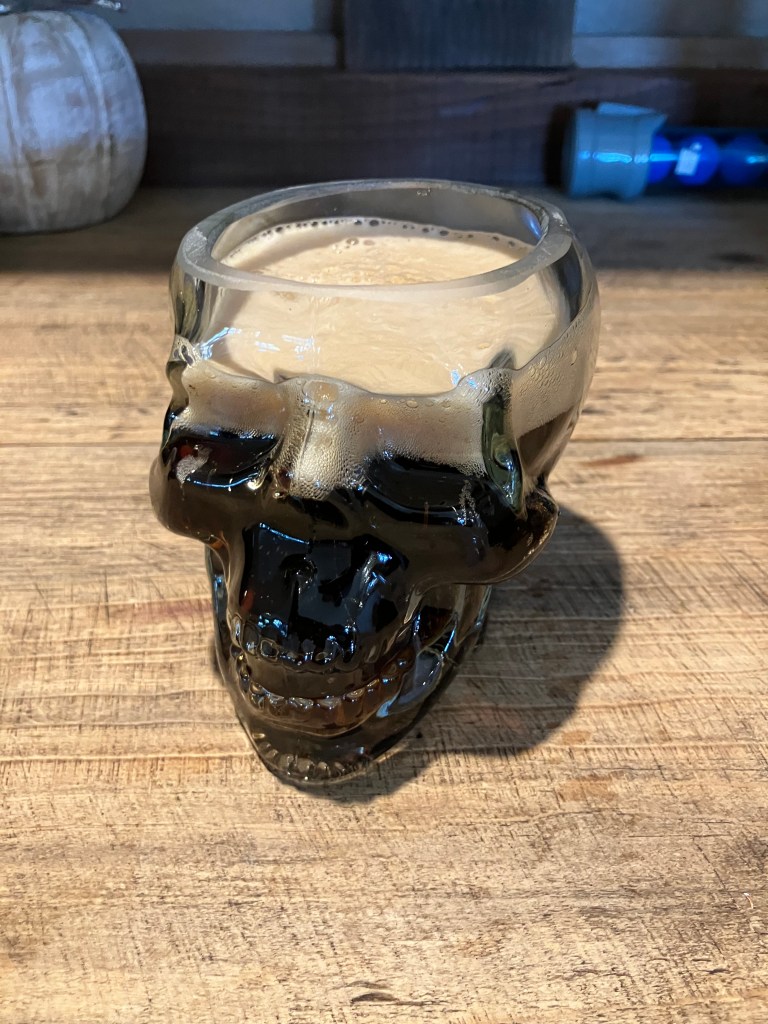
The BOTD is South of North’s Solar Midnight Imperil Stout. This is a deceptively drinkable beer, even on a hot day (by Tahoe standards). It’s exceptionally smooth with the consistency of strong coffee. Served with almost no head, this is not as heavy or creamy as your average stout. It has distinct notes of chocolate, coffee, vanilla, and licorice. Each sip is pretty sweet on the front, but it finishes with some mild hoppiness that keeps the whole experience from becoming cloying.

This beer clocks in at 9 percent ABV, which is why it’s only available in a 10-ounce pour. You can’t drink just one, though, so I was compelled to order a second. Then Sam bought me a third as a way of saying thanks for helping her with the stage curtain. It wasn’t until after I finished that one that I realized I hadn’t taken a picture of my drink. Given my dedication to my readers, I was compelled to the counter and asked for another pour purely as a photo op. Heather insisted that this one was on the house, and I felt it would seem ungrateful not to drink it. This all explains why I’m sitting here trying to sober up before heading back down the mountain to Placerville.

Heather serves my fourth imperial stout, strictly for photographic purposes.