California history · trains

Sacramento’s Ghostly Cathedrals

I like to think of Sacramento as a railroad town. Though it’s the capital of California and a thoroughly modern city of over a half-million residents, it owes much of its success to its location as the western terminus of the first transcontinental railroad (and, of course, its proximity to the Sierra foothills during the Gold Rush). Founded in 1850, Sacramento was the headquarters of the Central Pacific Railroad, which in 1863 began laying track from what is today Old Sacramento toward Promentory Point, Utah, where it connected with the Union Pacific’s tracks.
The Central Pacific (which later became the Southern Pacific) centered most of its locomotive-building and repair operations just north of downtown, on a reclaimed swamp that was formerly called China Slough. Buildings were erected starting in the 1860s, and they eventually became a sprawling complex that employed tens of thousands of workers. It would remain a major part of Sacramento’s industrial landscape until the late 1990s (!), when new owners of the railroad consolidated operations elsewhere and shut down the Sacramento shops.
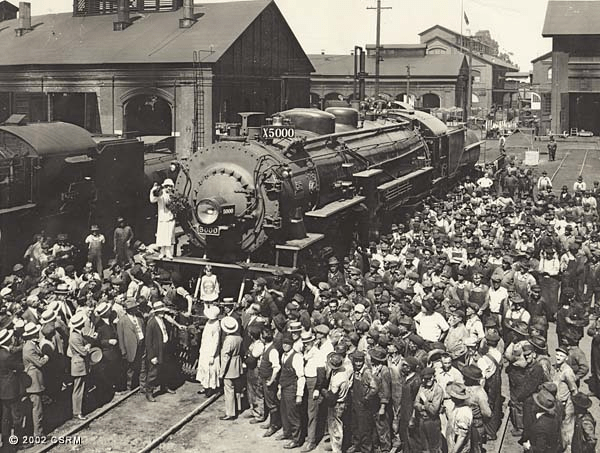
Celebrating the first of a new class of locomotive at the Shops in 1925. Some of the shops buildings are in the background.

Now, here’s the intriguing part: While so many of Sacramento’s historic sites have been razed (I’m looking at you, Alhambra Theater), a number of the Central Pacific shop buildings are still standing–even a couple of the ones that date back to the mid-to-late 19th century. And not only are they still standing, but they look very much as they did for much of the 150-year history. What’s more, they’re once again being used to work on vintage railroad equipment. (More on this in a moment.) There’s something reassuring about knowing that these pieces of Sacramento–and US–history are still with us, tangible reminders of an ancient but formative past of iron and steam, standing in the shadow of Interstate 5 and just a short distance from the dubious modernity of the Emerald City Building and Golden 1 Center.
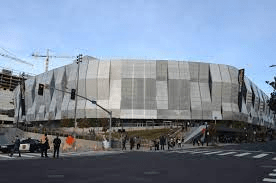
Unlikely to be standing–or missed–150 years from now.

The reason I mention all this is because I had the rare opportunity to tour the Shops this morning, guided by the doughty docents of the California State Railroad Museum (CSRM). For it turns out that one of the historic shop buildings (the Boiler Shop) is now owned by CSRM, and a second (the Erecting Shop) (insert middle-aged male joke here) is being leased by CSRM with an option to buy. The CSRM uses these buildings to store and service locomotives and other equipment in their collection. The number of employees working in the shops today can be counted on one hand, but the legacy nonetheless continues.

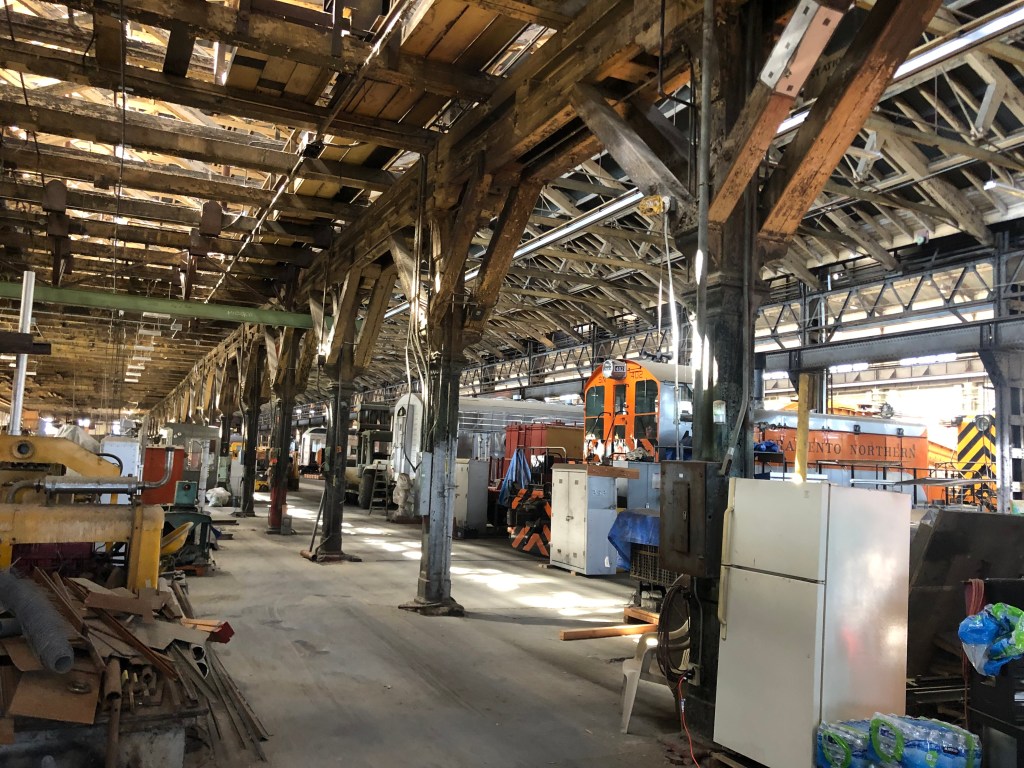
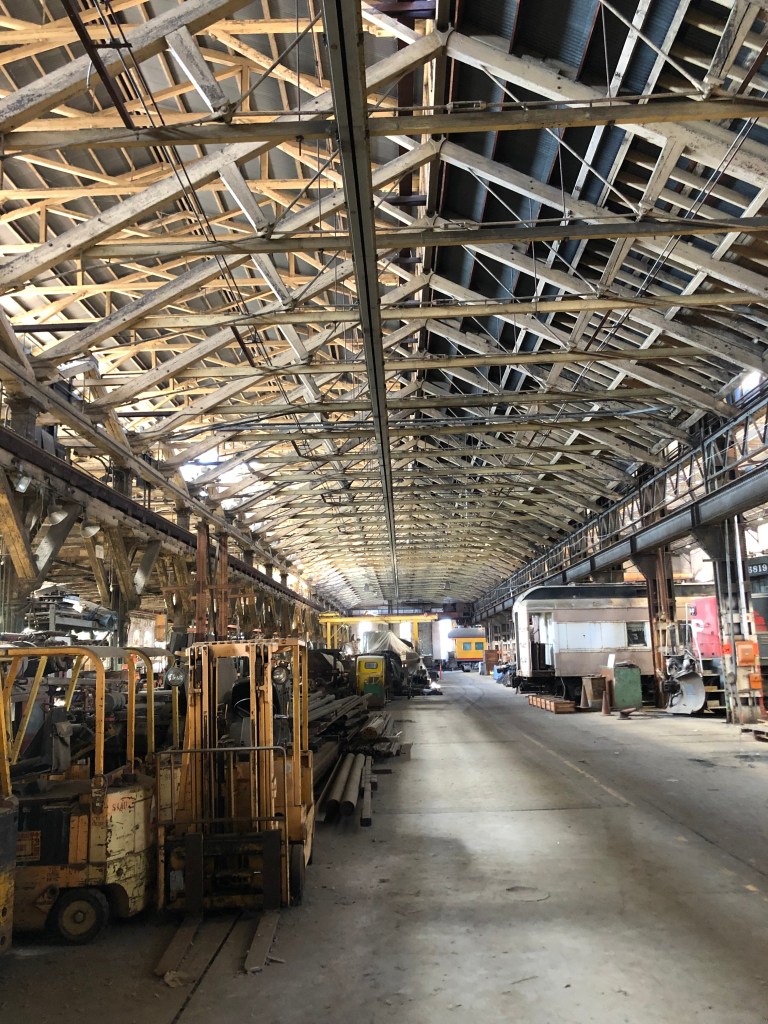
Now, there are three things I want to emphasize about the Shops. First, these are cavernous spaces, sometimes metaphorically called “cathedrals” in honor of their high ceilings, majestic architecture, and sacred purpose (I made that last one up).
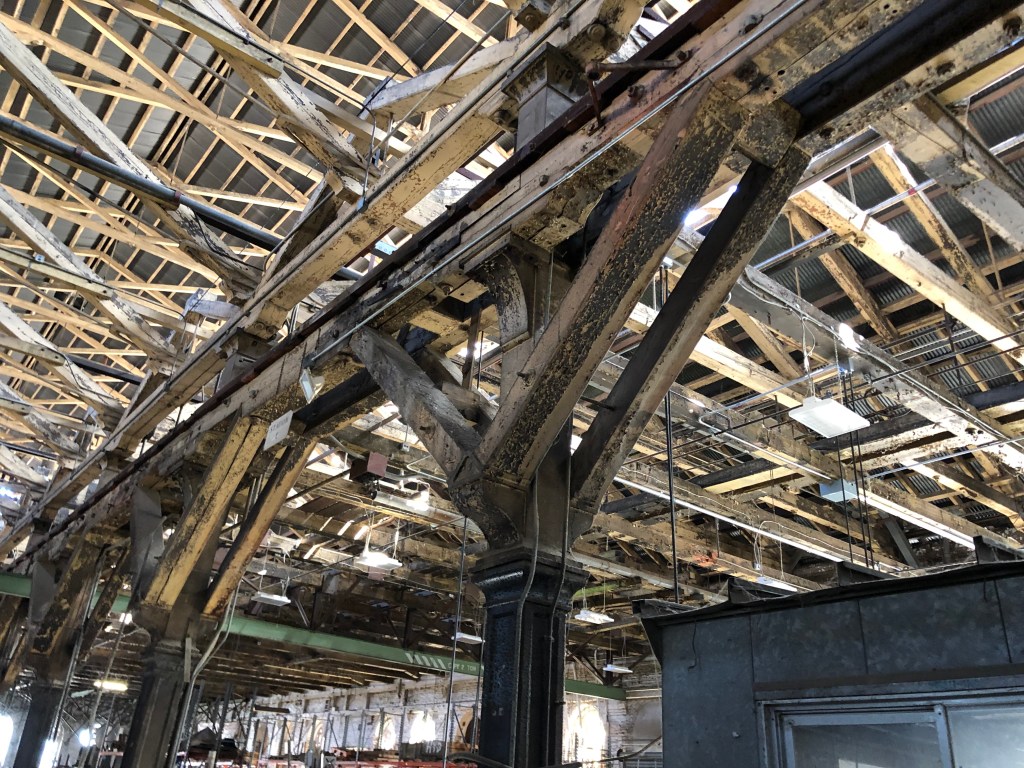
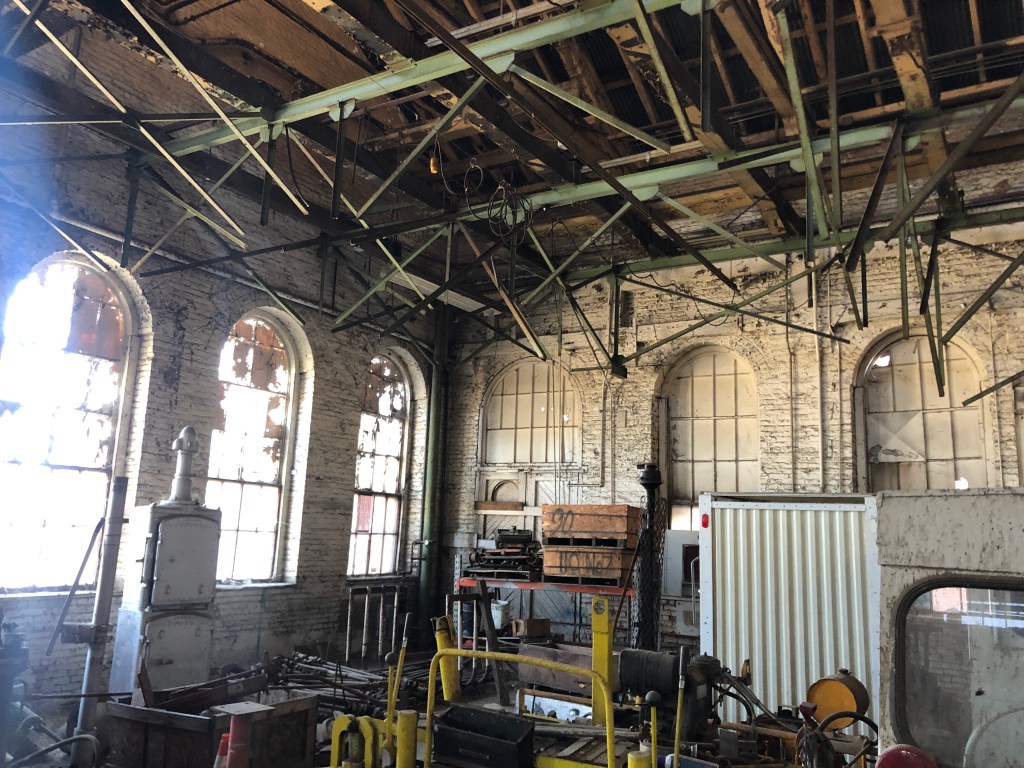
Inside the Boiler Shop
Showing its age, but still…
Still a working space.
Doesn’t it make you want to genuflect?

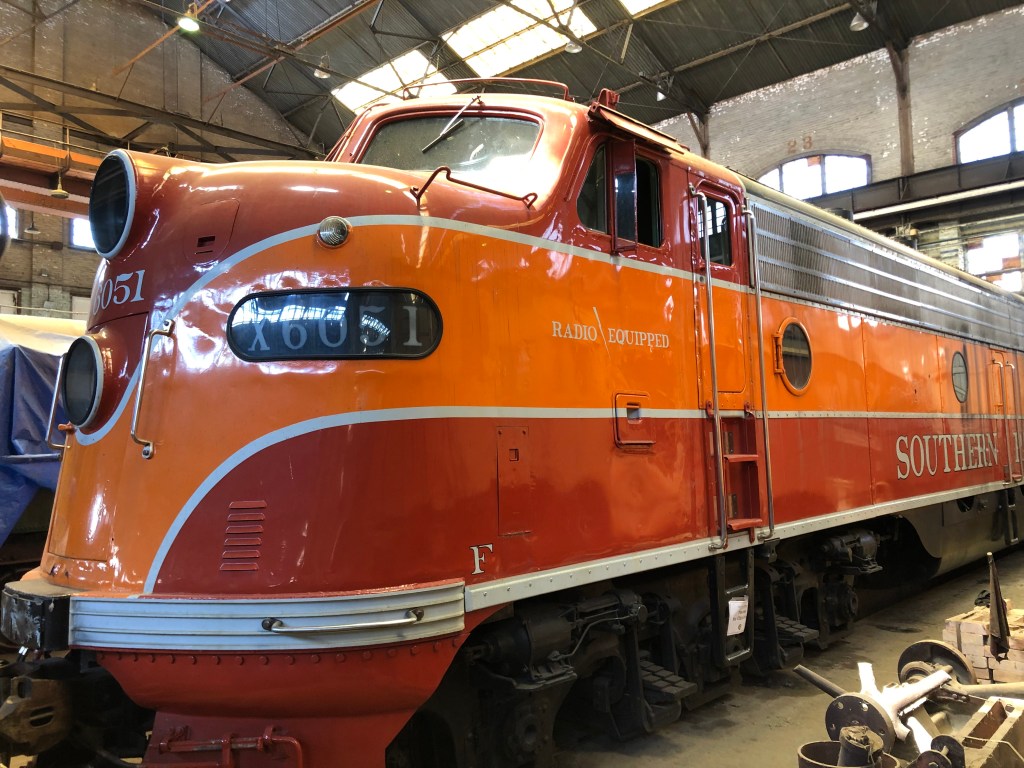
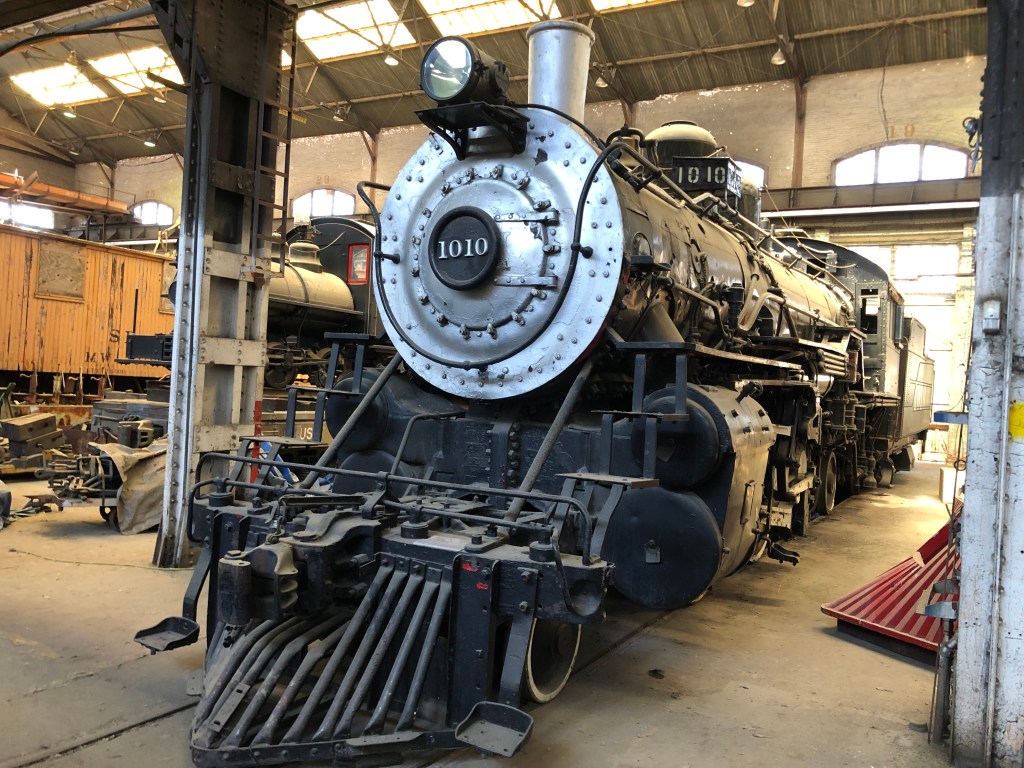
Second, the CSRM has filled much of the space with locomotives and other rolling stock from its extensive collection. These are not currently on display for the general public (though they sometimes find their way into the main CSRM museum building). But the CSRM receives many donations for which it’s not yet ready to restore and display, so they find their way here.
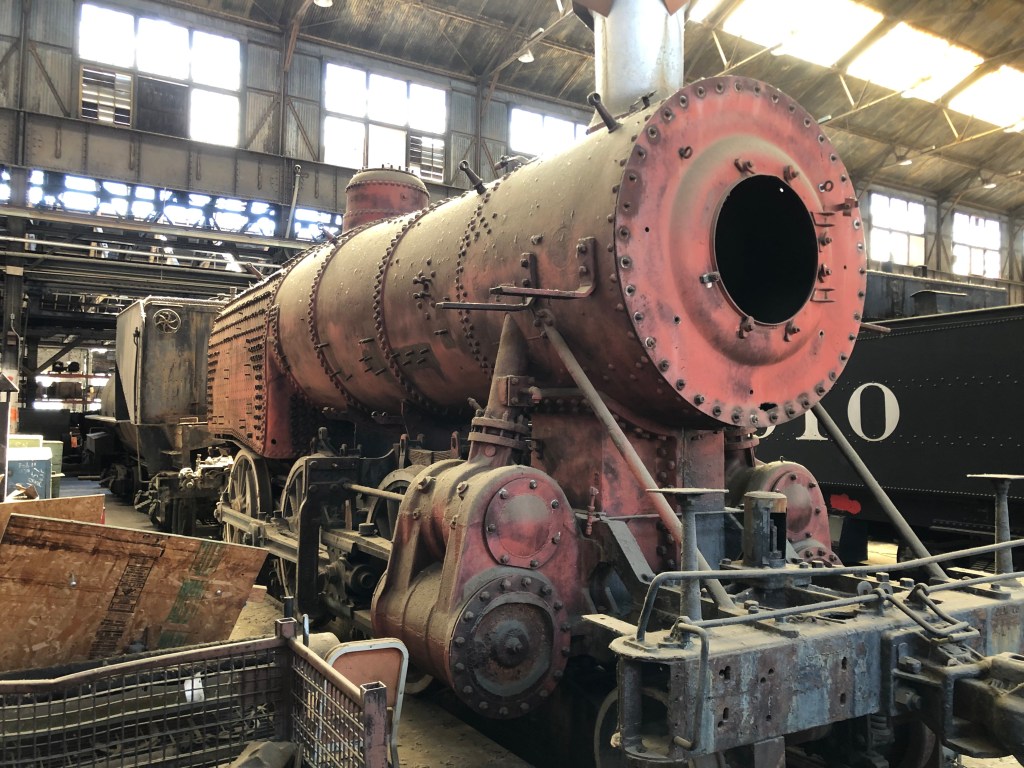
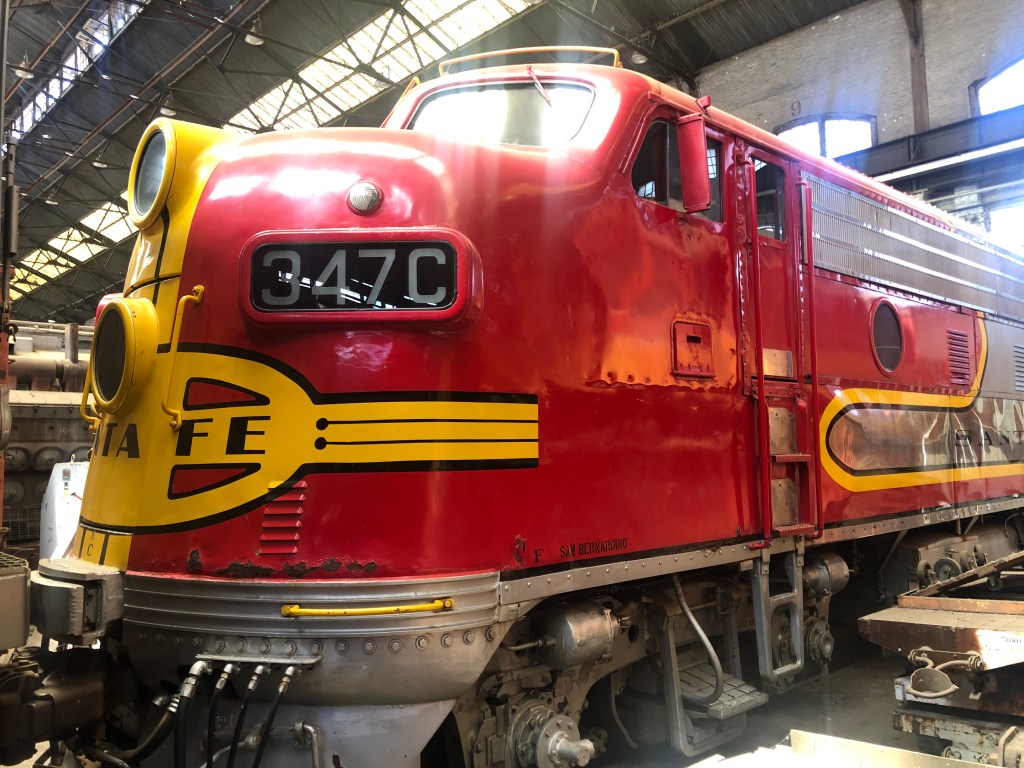
Steam loco, a work in progress.
She’s a beauty.
The “Daylight” paint scheme is always a crowd pleaser.
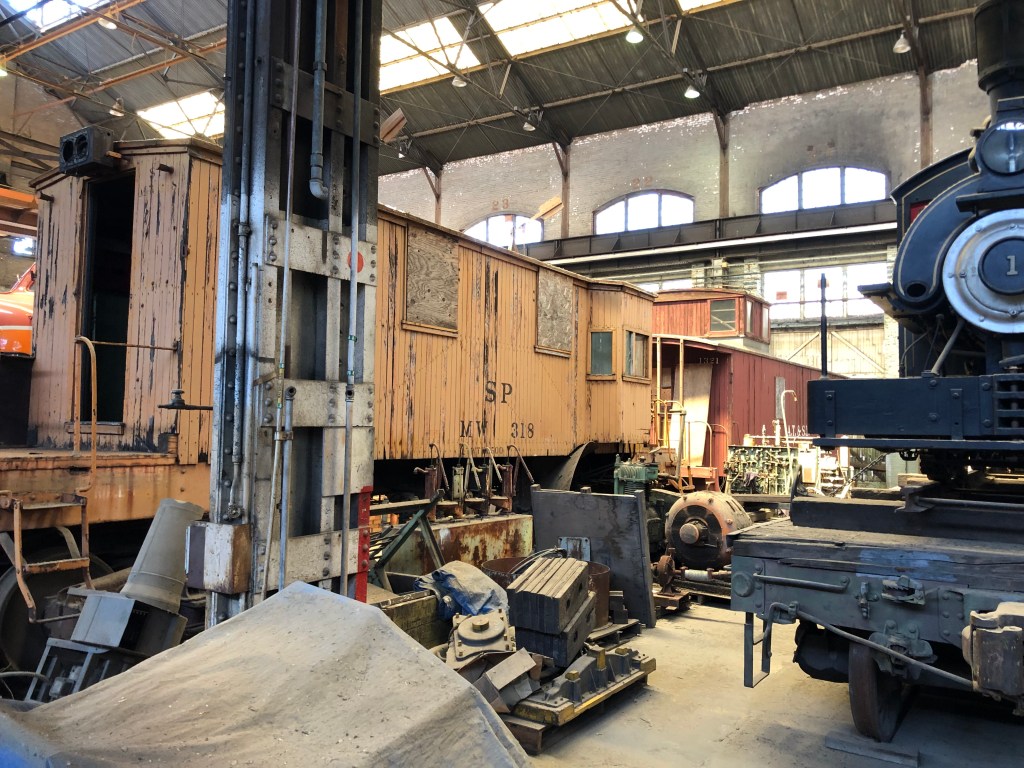
The CSRM has acquired a number of wood-constructed cars, which understandably don’t weather the years very well.
Record-breaker from 1905. Read the story here.

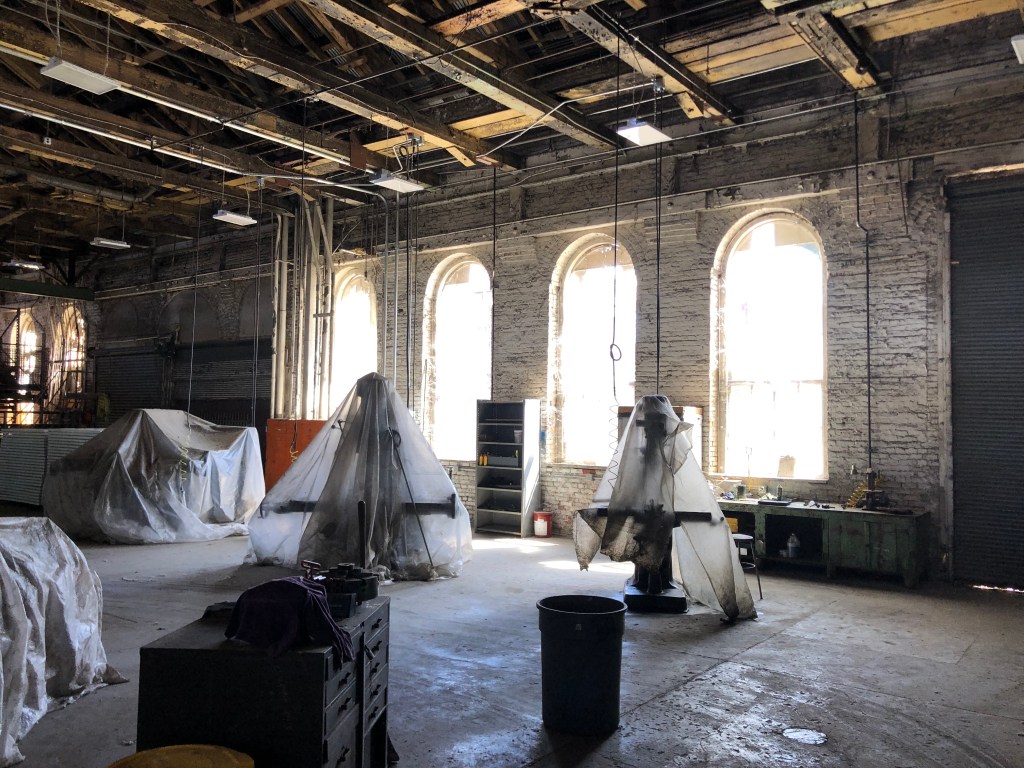
Third, the shops harbor a number of artifacts that really don’t fit neatly into any category, and as such will probably never be part of a museum display. But it’s electrifying to be able to simply walk past them.
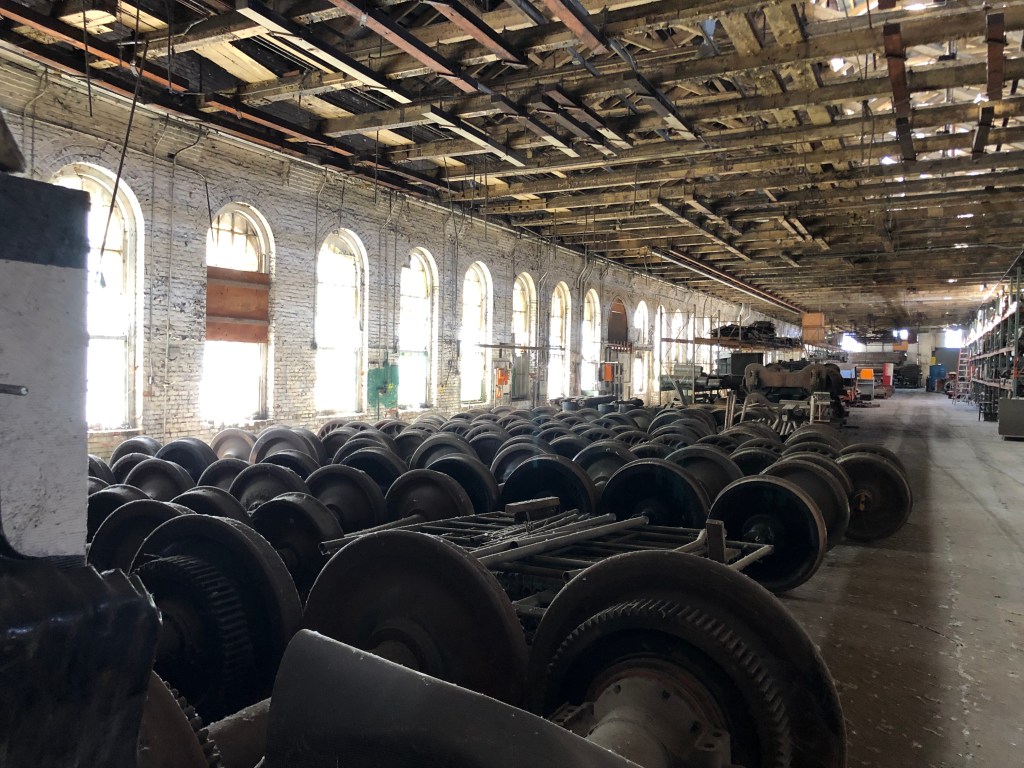
Flanged railroad wheels, as if they were Lionel model parts stored in a hobby shop.
Lathes, drill presses, and other shop tools, dressed like ghostly furniture in a haunted house.
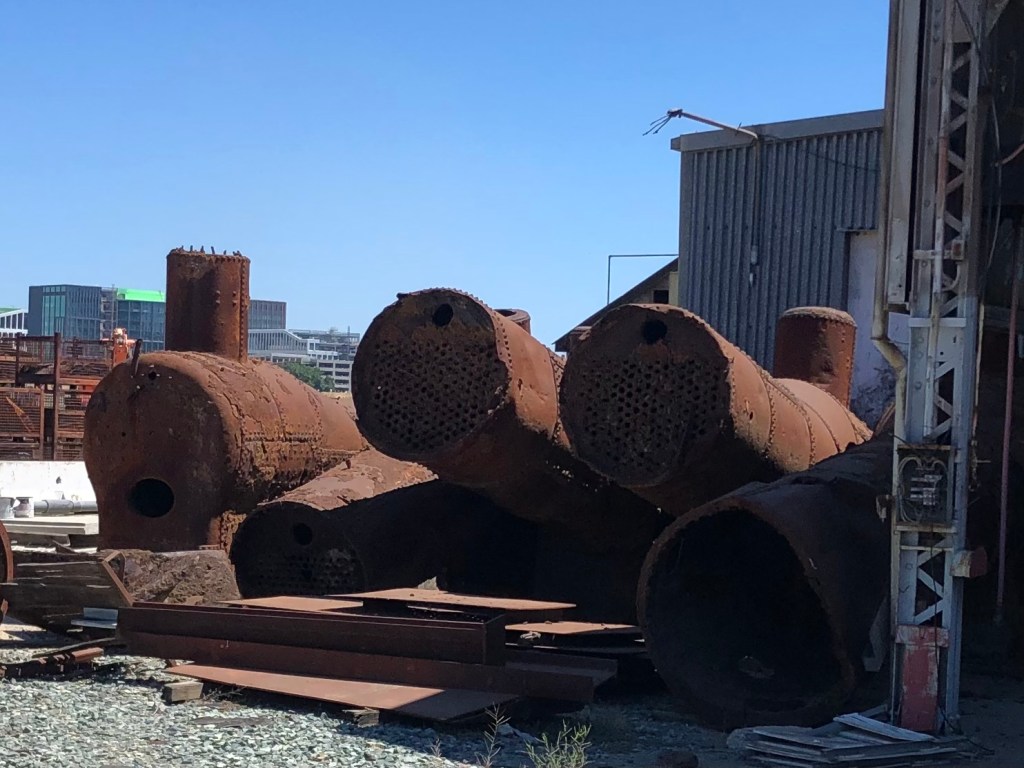
Old locomotive boilers that were excavated from the (former) China Slough, as part of EPA remediation efforts.
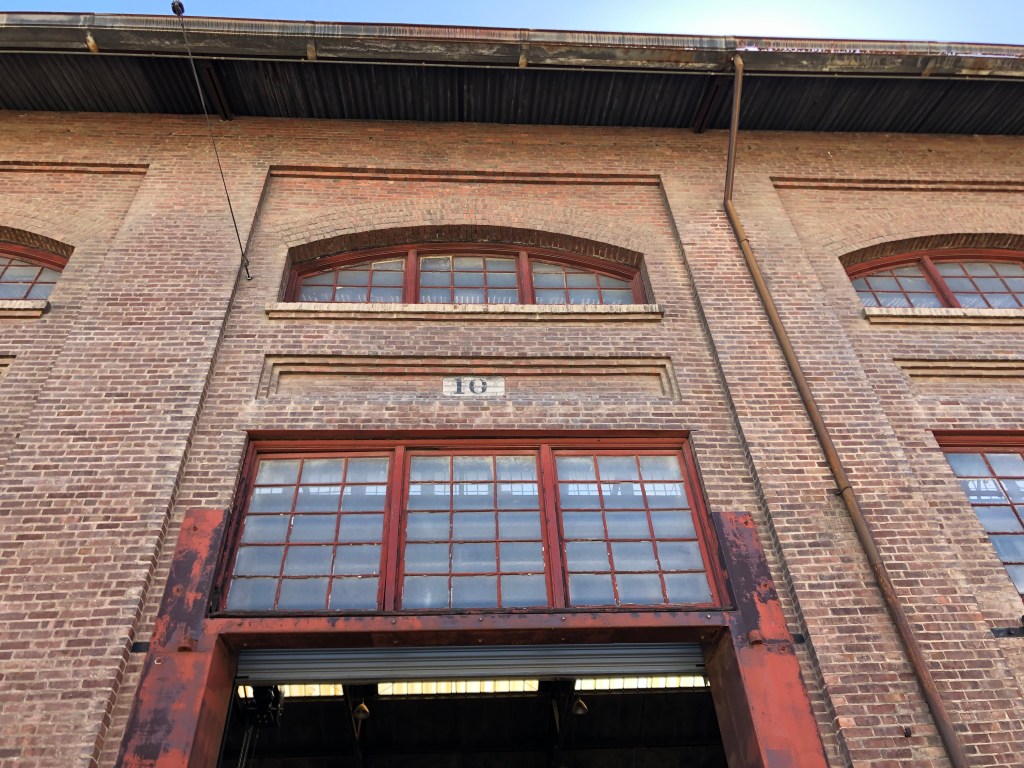
One of the many doors into the erecting shop. A classic example of fin de siecle architecture.

In conclusion, I feel compelled to say “God bless the CSRM and the city of Sacramento” for preserving this hallowed ground from a critical stage of our history. It’s difficult to articulate just how unique and important this property is. I strongly encourage you to visit the CSRM and walk the block or two from the museum to also view the outside of the Shops from the Amtrak platform at the Sacramento Depot. (The Depot itself will be the worthy subject of a subsequent blog.) For the moment, the Shops are not open to the general public. But if you’re willing to become a docent of the CSRM (as I have just done), you’ll get your own guided tour. That’s worth the price of admission. Trust me.
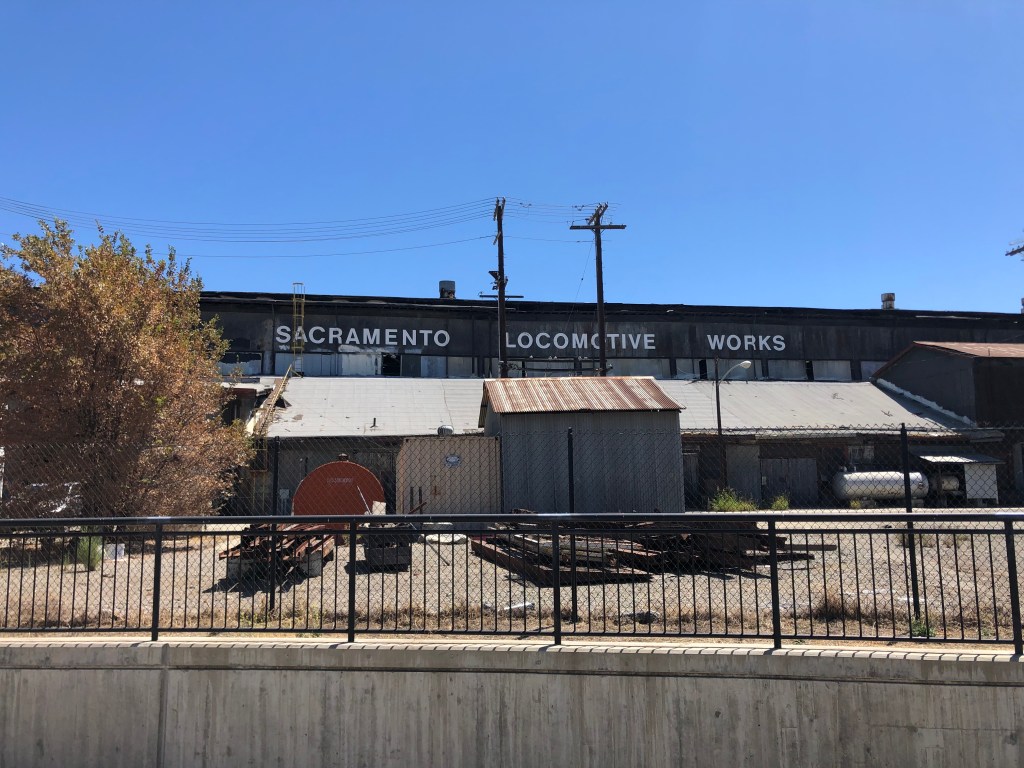
Railroad Remnant
California history · Cars

The Postman Cometh

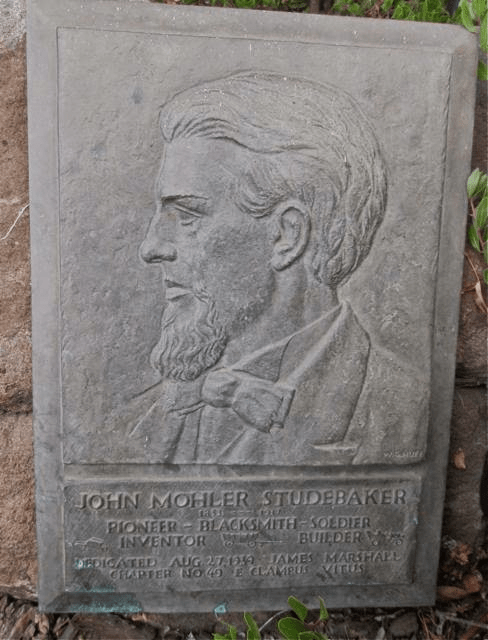
This morning a little after 6 am I took out the Speedmaster to downtown Placerville (pop: 11,000). There I got a cup of coffee and took a seat at the site of the old blacksmith shop where John M. Studebaker built wheelbarrows over a century ago. There’s a marker in the courtyard of the Bagel Works commemorating this fact.

John Studebaker was not the reason for my visit, but it’s worth recalling his connection to Placerville and the California Gold Rush. He was born in Pennsylvania and came out to California as a young man seeking his fortune in the gold fields. It didn’t take him long to realize the real path to riches lay not in mining for gold but in selling supplies to the gold miners. So he began building wheelbarrows right where I was drinking my coffee, and eventually amassed enough money to launch what would become one of the country’s largest, longest-lived, and most successful independent automobile manufacturers: The Studebaker Corporation. This is probably a good time for a brief clip of my friend Bill’s 1941 Studebaker Commander, which is still moving under its own power after 81 years. It’s a goal I hope to achieve myself in 20 years.

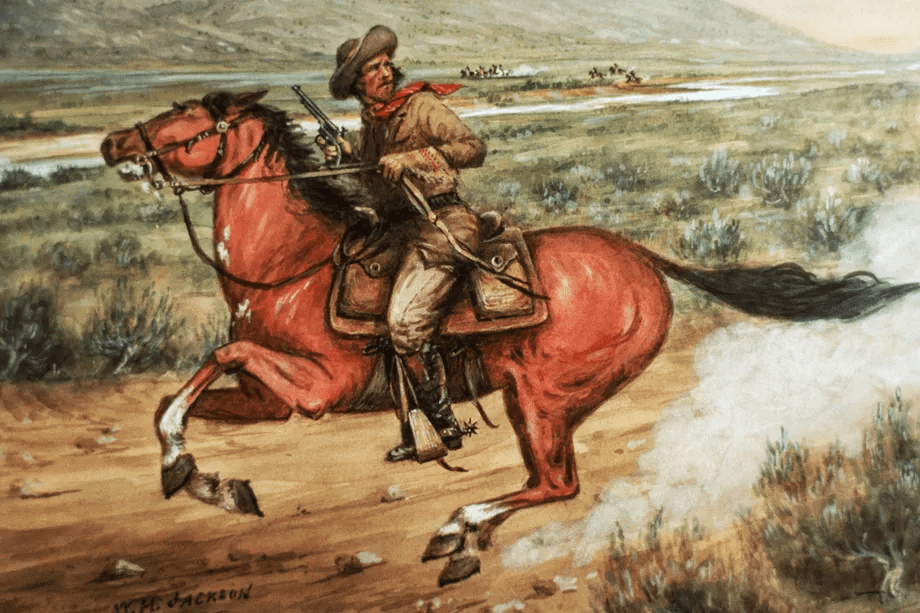
But back to this morning: I sat there with my coffee, waiting for the mail to be delivered. And this wasn’t just any mail delivery: This was a special delivery by the Pony Express. The Pony Express, you’ll remember, was created right about the same time that John Studebaker was building his wheelbarrows. The Pony Express carried US Mail from St. Joseph, MO to Sacramento on horseback, in only 10 days. It covered a route of 190 ten-mile segments, with fresh horses being supplied at each segment, and riders being changed about every 10 segments. (Some of the old Pony Express stations are still standing; I’ve been to a few of them in my travels, including the Pony Express Cafe in Eureka, Nevada, as I discussed briefly here.)

The Pony Express only lasted about a year and a half (from the spring of 1860 to the fall of 1861). It went bankrupt a month or two after the first transcontinental telegraph was established. But the Pony Express remains a romantic (or romanticized) part of the Old West.

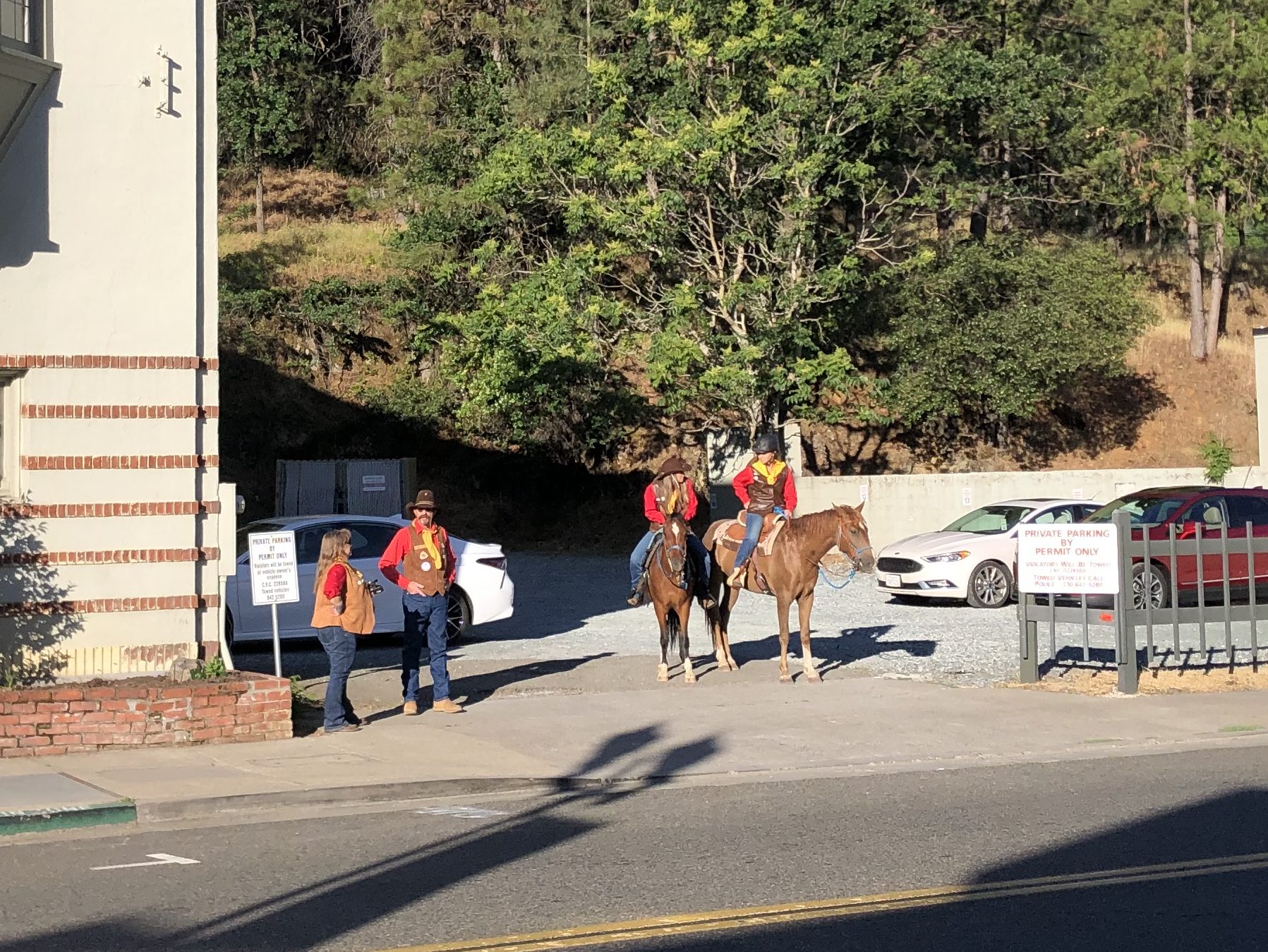
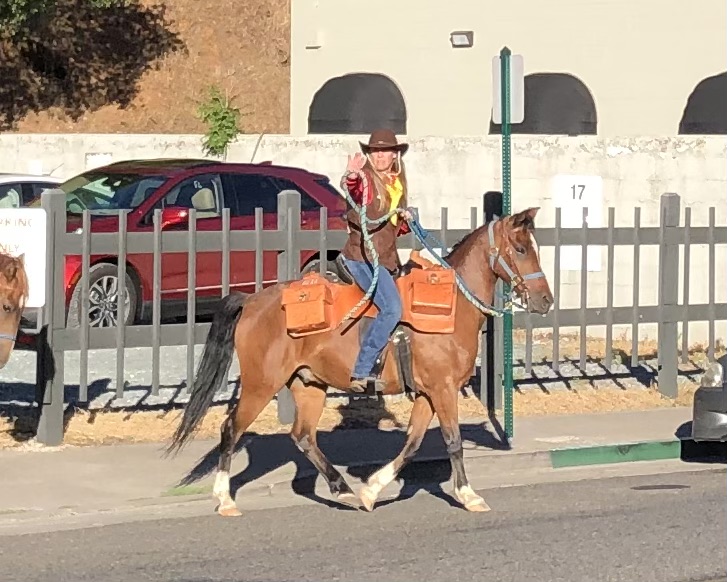
So what does any of this have to do with this morning? Well, it seems that the good folks at the National Pony Express Association annually re-create the Pony Express ride–24 hours per day for 10 days. This morning the rider was scheduled to be coming through downtown Placerville a little before 7 am. When I got there, a small number of people were milling about, as though they were waiting for the world’s smallest parade. Seriously, this was not a well-attended event, but perhaps that’s because anyone living in this general area would probably opt instead to be present for the final moments, when the rider comes into Old Sacramento this afternoon.

Waiting for the mail to arrive

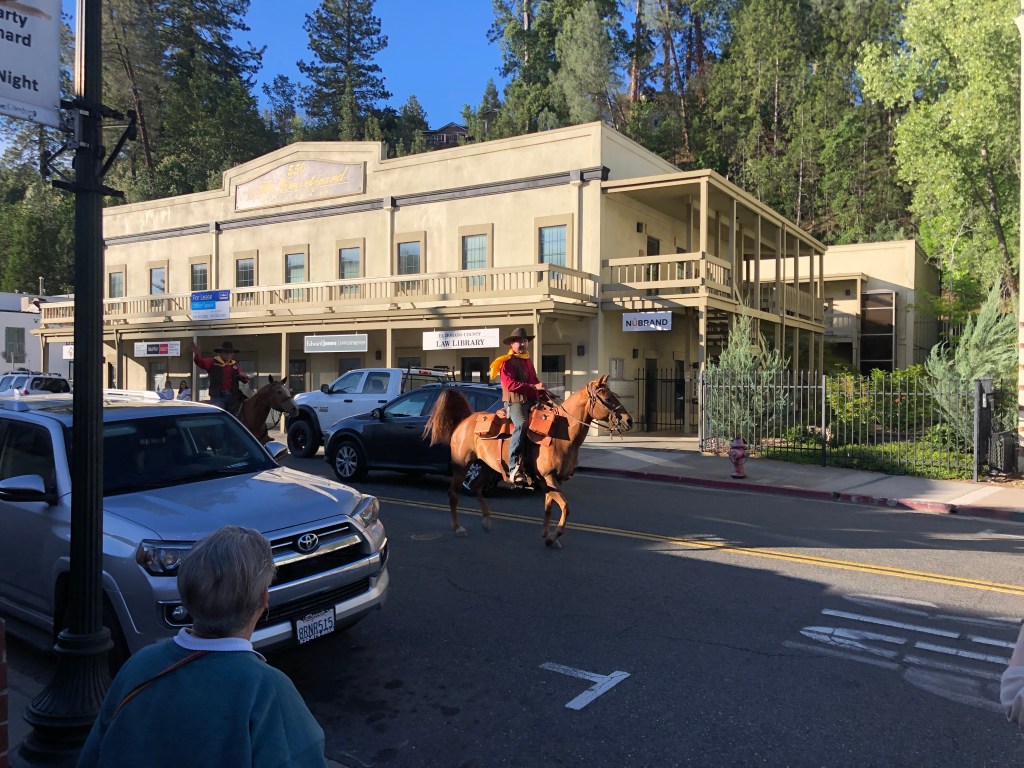
Most of the people were wearing distinctive red shirts and leather vests–the uniform of the National Pony Express Association. But I also spotted a few civilians such as myself. The mood wasn’t exactly raucous, but clearly these hardy souls shared an interest in history and/or horses. Adding to the mood was the backdrop of 19th-century buildings on Placerville’s Main Street.

And then suddenly, without warning, the mailman arrived.

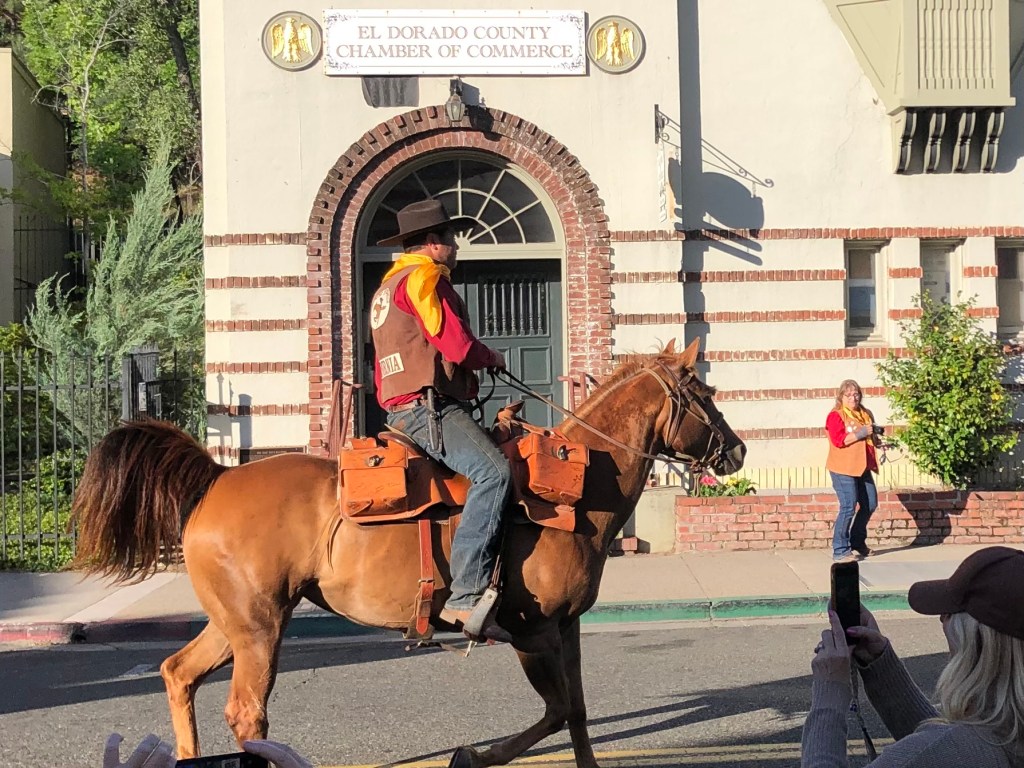
Then the mail bag (“mochila”) was transferred to a waiting rider, and the mail was back on its way. It was all over in less than a minute.

Neither sleet nor snow nor traffic laws….

There’s something compelling, in this age of texting, email, and on-demand media access, to see old-timey, flesh-and-blood communication mechanisms at work. I certainly would not argue that the Pony Express was superior to modern communications; heck, it wasn’t even superior to the telegraph. But it does represent a spirit and energy that seems to be in short supply these days. And that’s why this afternoon I’m going to be raising a pint to the young men who rode for the Pony Express.

California history · trains

Skunk Works

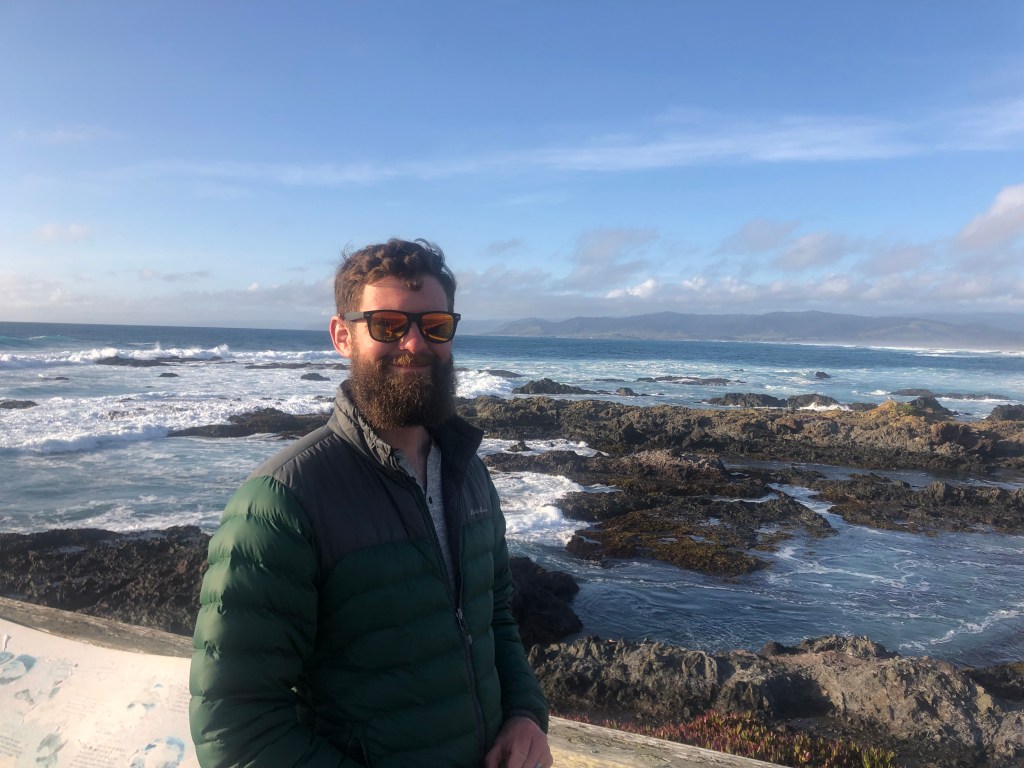
This past weekend my son (Ian) and I took a trip to Fort Bragg (pop: 7,000) for his belated 29th birthday celebration. We camped at Mackerricher State Park, which sits next to the beach just north of Fort Bragg.

The birthday boy

Now, of course, one of the main reasons for going to Fort Bragg is to ride the Skunk Train. For those of you who haven’t been enlightened, here’s a quick history:

In 1885 the Fort Bragg Redwood Company built a railroad to carry logs from the inland redwood forests to their lumber mill at the coast. When fully expanded in subsequent years, the railroad would extend about 40 miles eastward from Fort Bragg to Willits, generally following the Noyo River. The railroad passed through a 1,200-foot tunnel that was completed in 1893, and over numerous wooden trestles and bridges. The railroad (eventually named the California Western Railroad, or CWR) got involved with passenger service as well, serving the logging families scattered about the redwoods and, later, tourists.

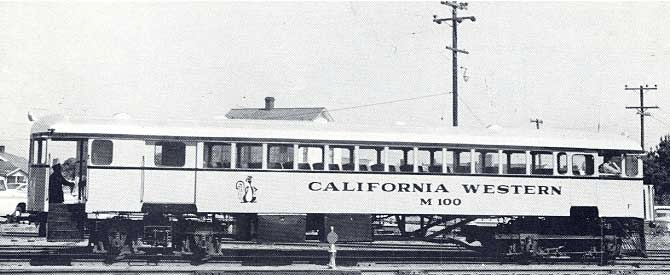
Especially popular were gasoline-powered motorcars, introduced in 1925. The smell of the gasoline fumes (as well as the heating oil used to warm the interior space) earned them the nickname “Skunks.” Most of the Skunk motorcars have since been retired, but the name has stuck, and virtually any rail conveyance operated by CWR to this day wears that epithet.

One of the malodorous motorcars.

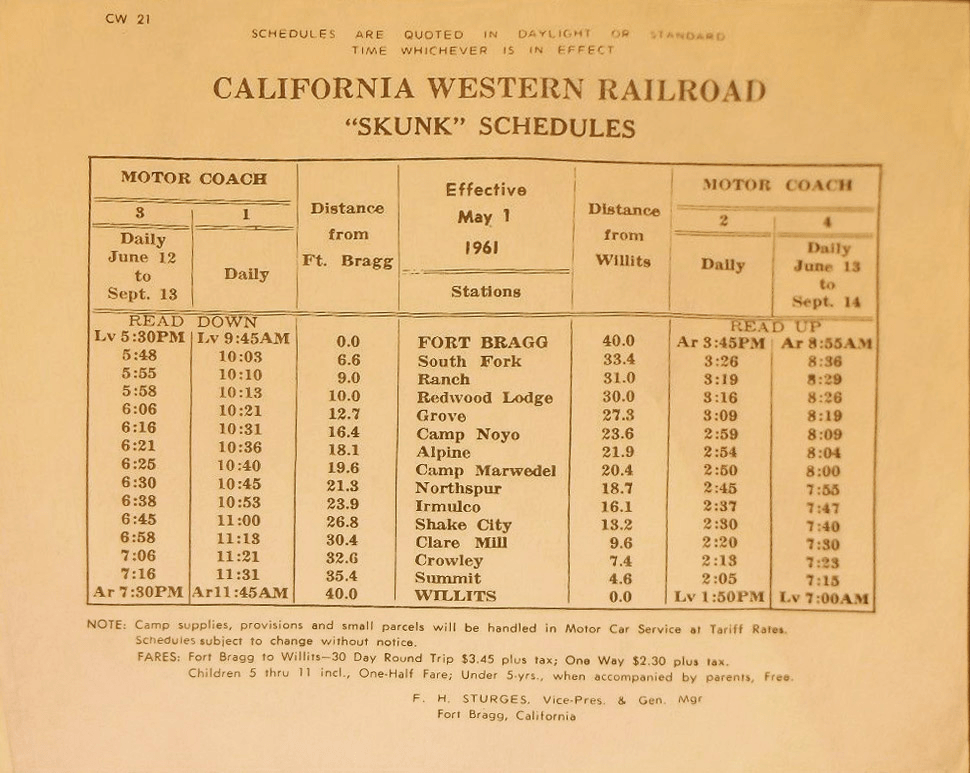
For some years now the CWR has exclusively operated excursion trains catering to tourists. Steam-powered locomotives would pull a sting of several passenger cars on a forty-mile journey from Fort Bragg to Willits.

1961 “Skunk” timetable, borrowed from my Uncle Edward’s celebrated “Dome O’Foam” website.

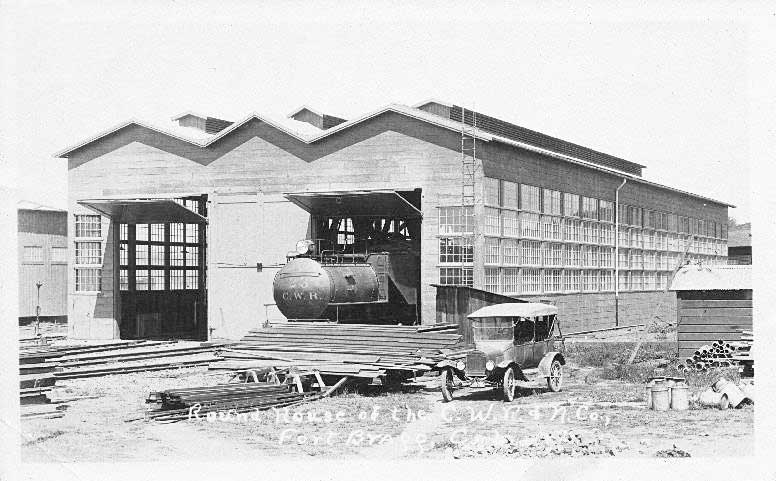
The terminus at Fort Bragg includes a depot and various other facilities, including this engine house that was constructed in the 1920s.

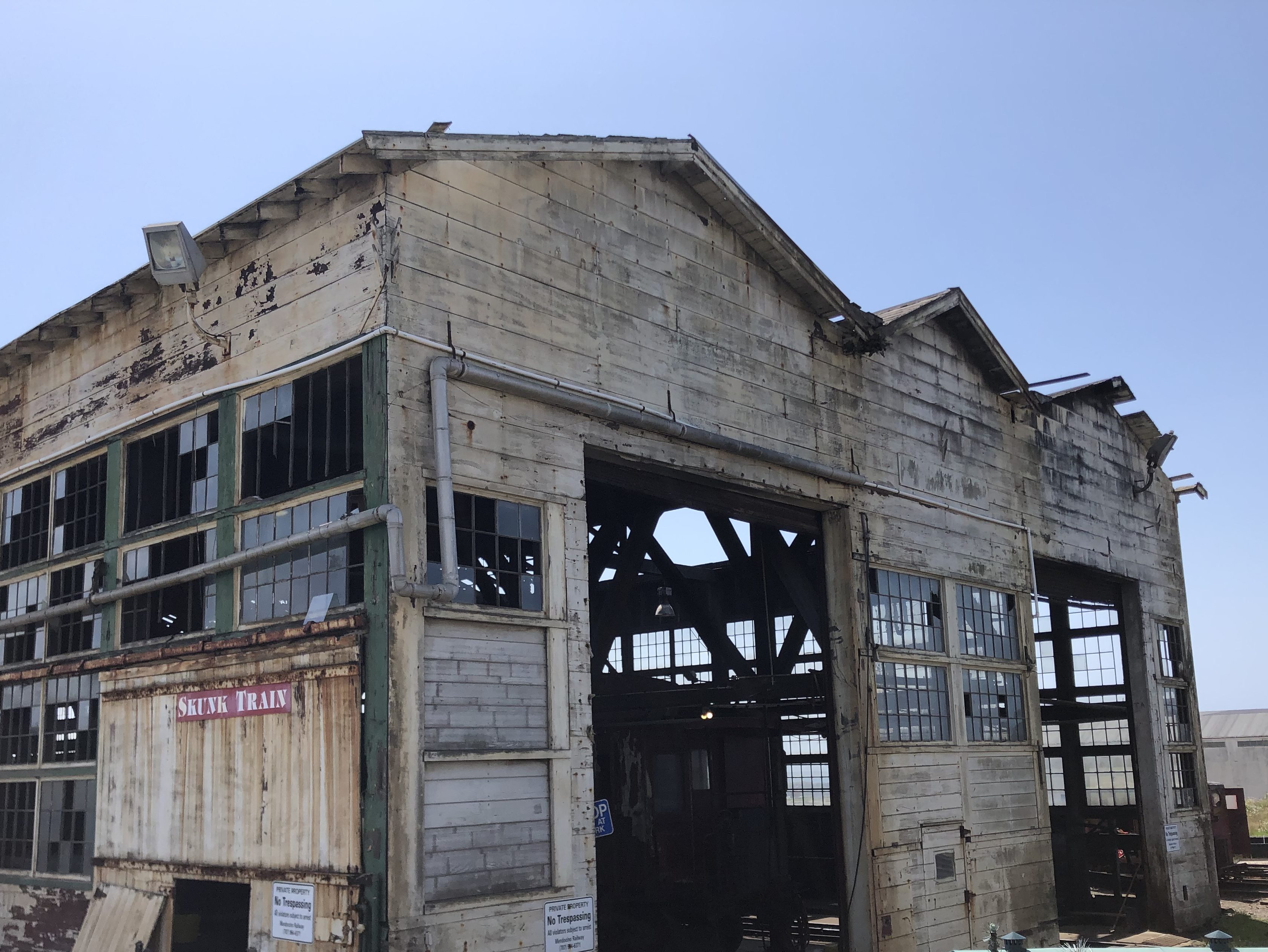
The railroad has changed ownership a few times, but today–some 137 years after its founding–it’s still alive and kicking, owned by a group of private, local investors. Of course, some of the operation is showing its age. Here’s the engine house when we visited it today:

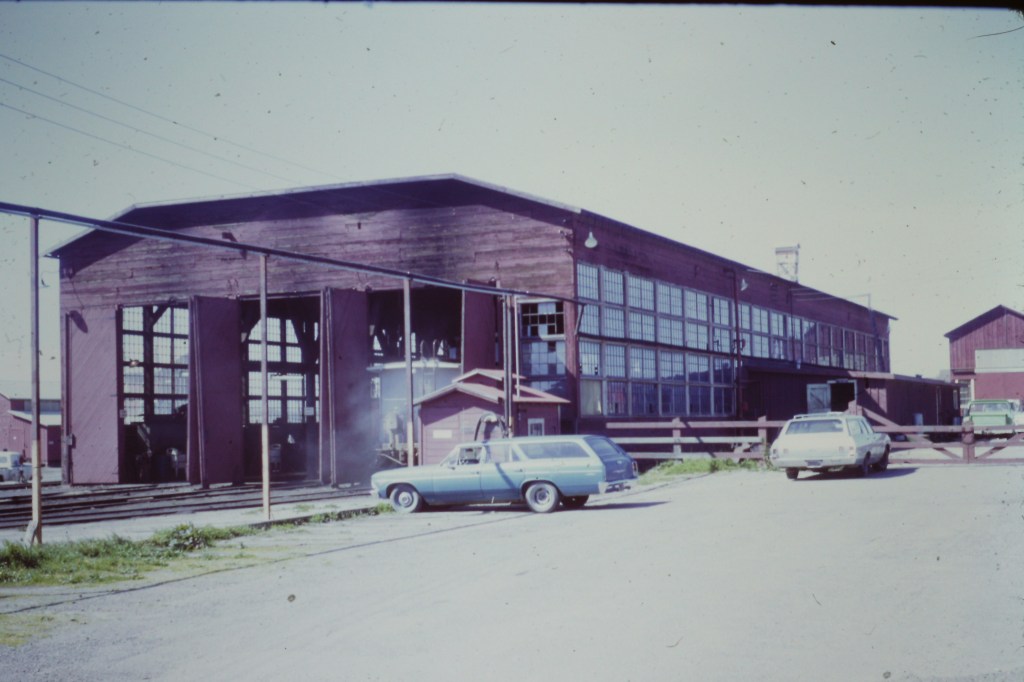
Incidentally, my family visited the Skunk Trains in 1974, and Dad took this photo.

Photo courtesy Dennis Boilard (aka Dad)

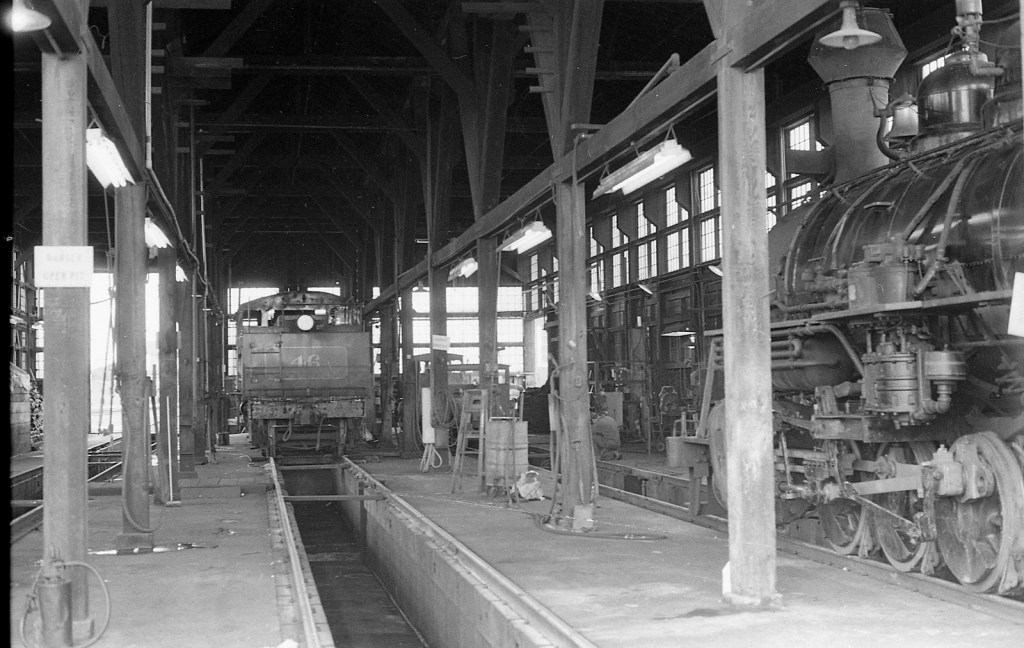
But even though the windows along the side look similar, surely this isn’t the same building. For starters, it’s got three engine bays rather than two. I consulted my Uncle Ed (who’s been cited in this blog before as a sage of railroad history, particularly in California), and he informed me that Dad’s picture is of the CWR’s long-gone engine shops. Uncle Ed had taken a picture of the interior of said shops in 1974, and sent along this picture to prove it.

Courtesy of Uncle Ed

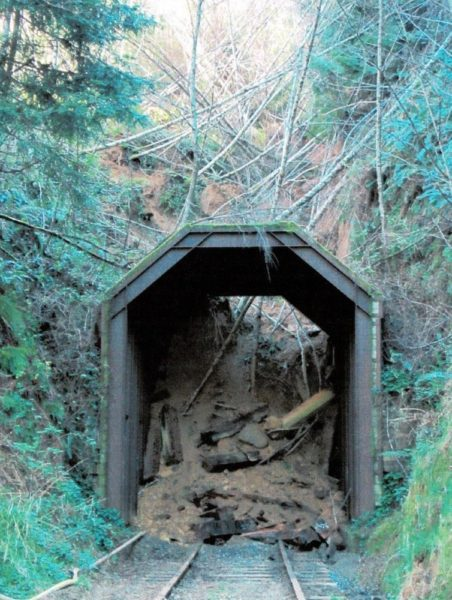
But let us return to last weekend: It was a beautiful spring day and Ian and I were looking forward to a rail journey. Now, as it turns out, that historic 19th-century tunnel had collapsed in the spring of 2013, when a “bus-sized boulder” dropped out of the ceiling. They’ve been working to secure funding to have the tunnel cleared, which might happen in the next year or two. Meanwhile, the CWR continues to run a short excursion trip up to the tunnel and back, which amounts to a 7-mile round trip.

The collapsed tunnel. Photo courtesy of Lonnie Dixon.

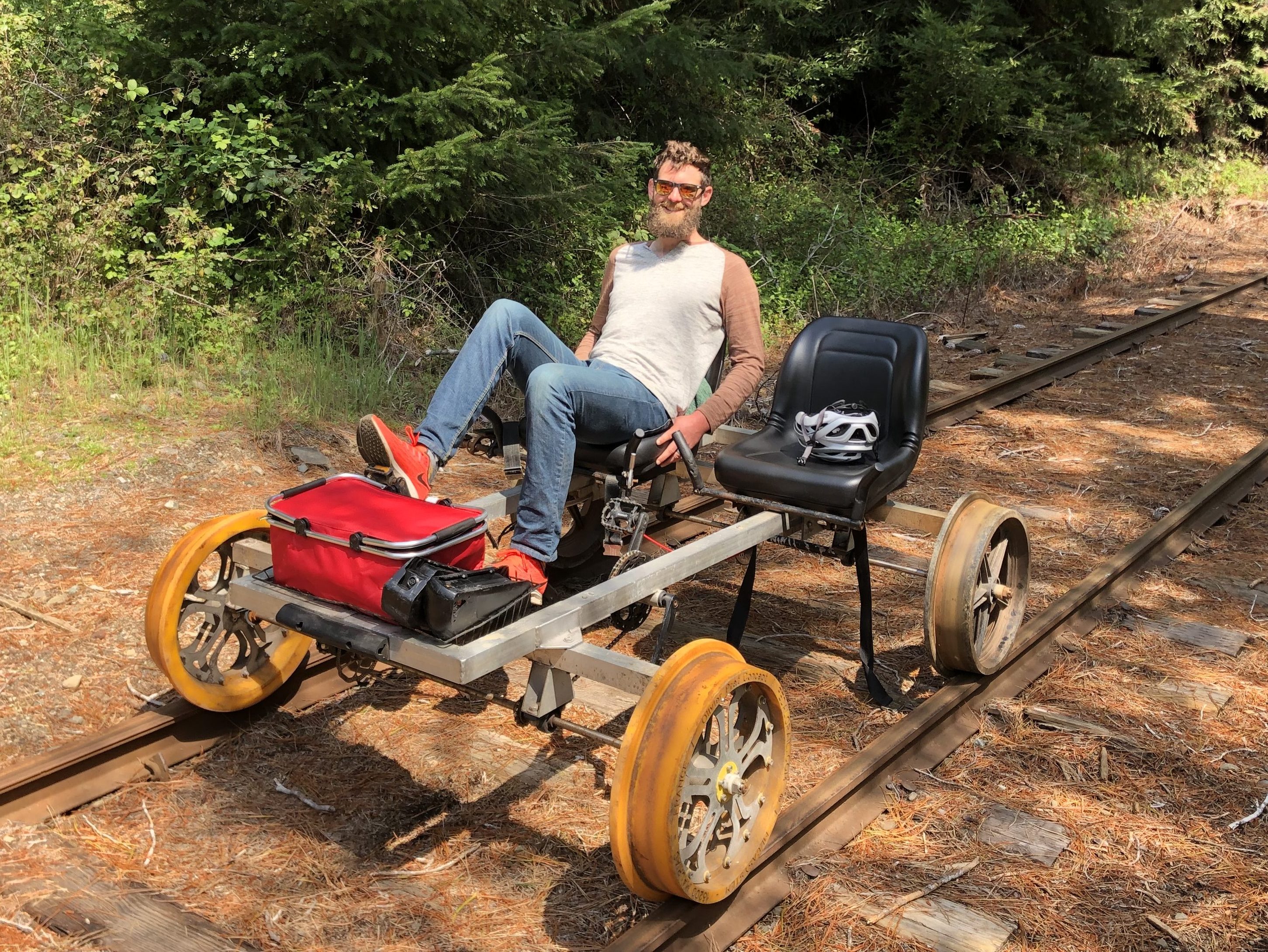
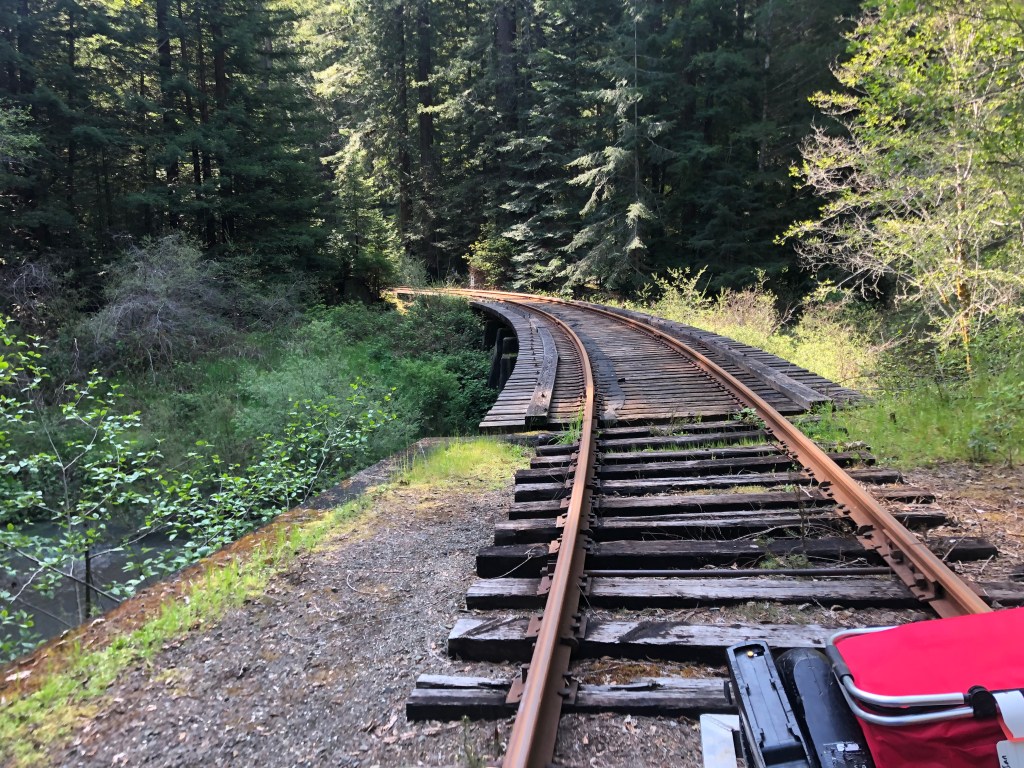
We, however, opted for another type of rail journey which the CWR initiated a few years ago. For this ride, you begin on the far side of the collapsed tunnel, and make a 25-mile round trip along the eastern stretch of railroad. There’s only one catch: You have to power your own vehicle.

Ian-powered train

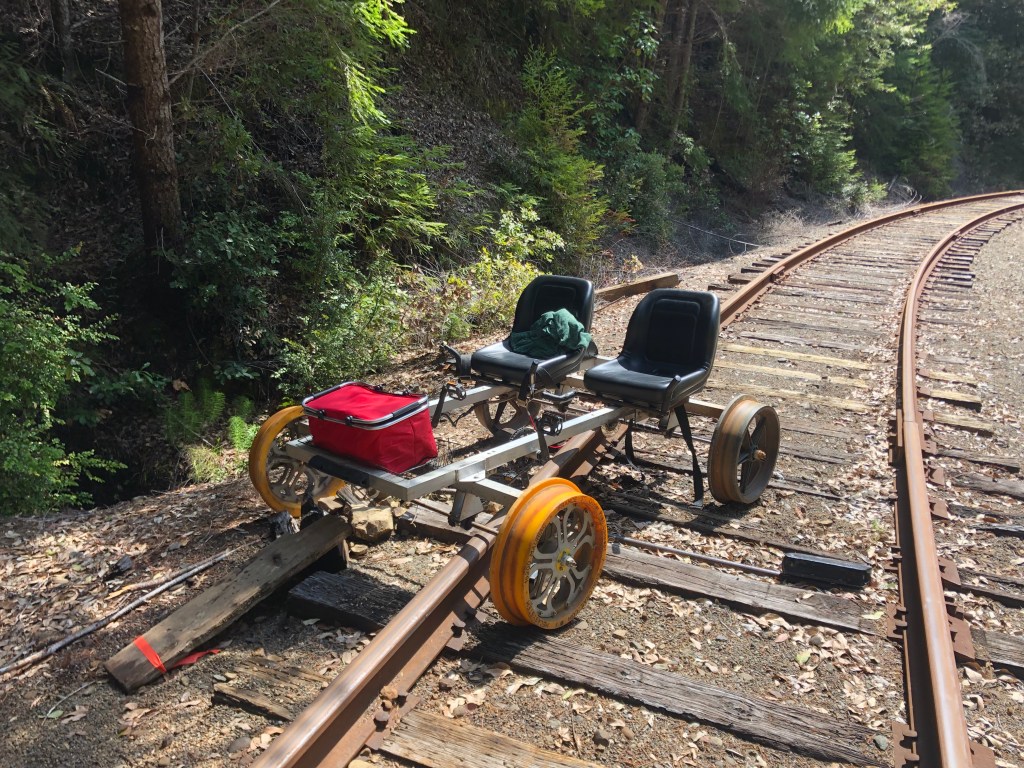
The good folks at CWR have manufactured a fleet of “railbikes” of their own design, and rent them out to tourists like us. Because there’s only a single set of rails, riders are restricted to specific time slots and a comfortable buffer of time separates the riders.

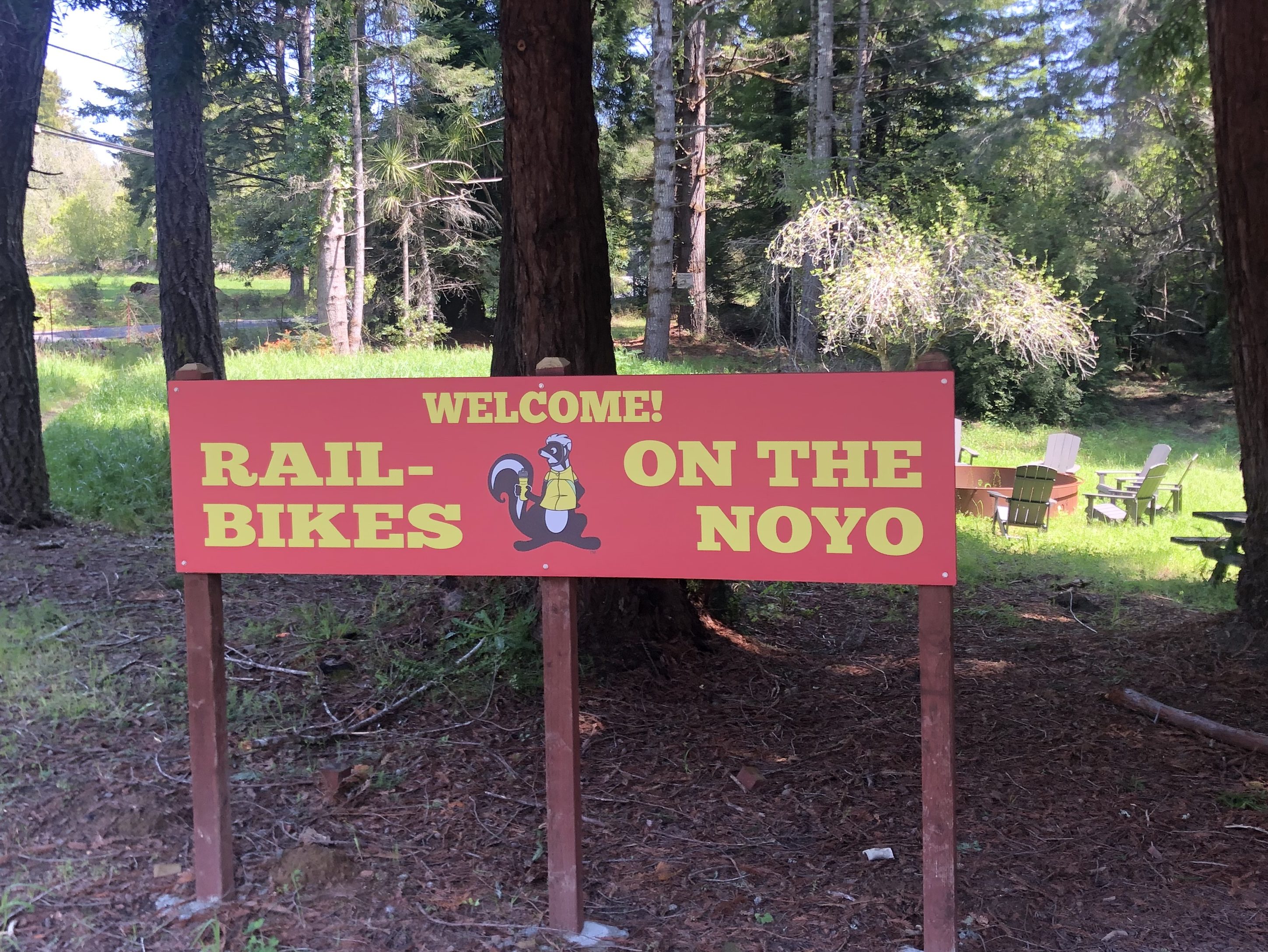
“Rail- on the bikes Noyo”?

It’s a beautiful, pleasant journey, lazily rolling on the rails next to the slow-moving Noyo River, surrounded by mighty old-growth redwoods. The railroad crosses the river at multiple points over wooden bridges constructed years ago.

Here’s a short video I took which should give you a sense the railbike experience:

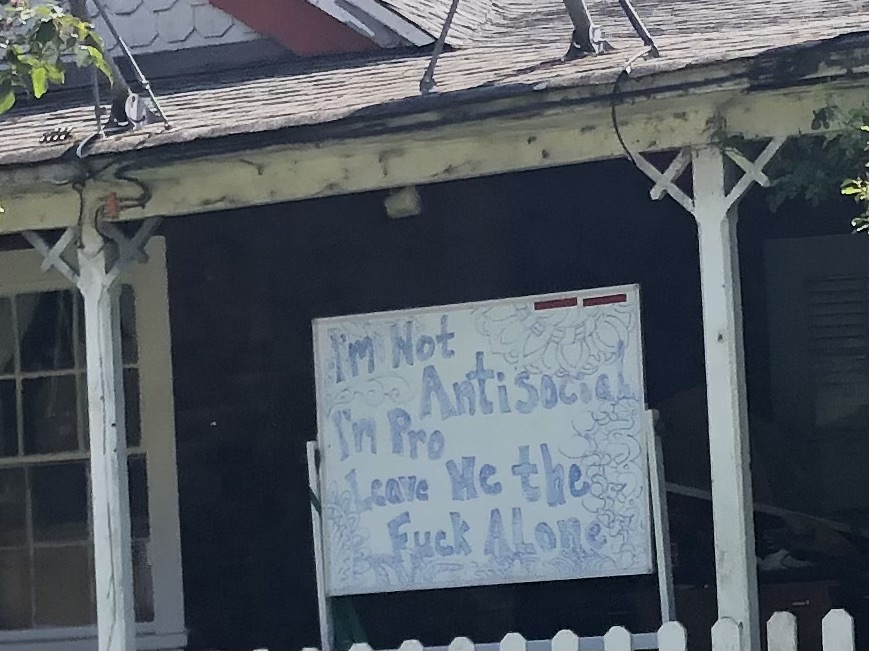
Although most of the scenery consisted of old-growth redwoods and the Noyo River, we did pass a couple of hermit’s cabins, which are reached by old logging roads.

You’d have to be a brave Seventh Day Adventist to knock on this door.

Twenty-five miles is a long distance for pedaling one of these beasts, so the railbikes include an electric motor to assist with the legwork. Naturally, Ian and I sought to discover just how fast we could go, so we cranked up the motor and pedaled with all our might. We topped out at 27 miles per hour, which might not sound that fast, but it was fast enough to derail us.

Don’t try this at home.
After about 13 miles we arrived at the turnaround point. (Note: The railbikes are turned around on a small turntable set in the track. I neglected to get a photo of it, though.) While the bikes were being turned around and having their batteries replaced, we enjoyed a hearty lunch next to the river. The folks at CWR supplied the lunch, complete with a few beers, and they even let us keep the red picnic cooler that you see in the basket on the front of our bike. Then it was back to pedaling. We finally got back to our starting point about 4 and a half hours after we started our journey.
I highly recommend this trip.

Oh, and Happy Belated Birthday, Ian!

California history · trains

Sierra Railway, Page 2

In my haste to post the story about my trip to Railtown 1897 yesterday, I neglected to check the one true and complete source of all things related to railroads: The Dome O’ Foam.

The Dome is developed, maintained, curated, etc. by my Uncle Edward–a retired railroad man and an amateur researcher/historian. He reminded me that he has a large collection of photos and other information related to Railtown. As an example, here’s Uncle Ed’s photo of the No. 34 (which I featured yesterday), which he took in 1971:

Back when she was still a runner.

The link to the Sierra Railroad section of The Dome is here. Be forewarned that once you go down that rabbit hole, you may never come back.

California history · Hydrology · Obelisks · trains

Spring Train-ing

Yesterday my good friend Bill mentioned that there was going to be some kind of celebration in Sierra Foothills this weekend to commemorate a new locomotive acquisition by California’s Department of State Parks. Given my long-standing interest in trains, as well as the fact that the spring weather has been glorious this year, it sounded like a worthy day trip. I consulted my calendar, which, given my state of retirement, is as empty as a bird’s nest in December. So it was that Bill and I met this morning in the historic township of Jamestown.

Jamestown (pop: 3,100) was founded just as the Gold Rush was beginning, in 1848. It remains a small, unincorporated town of Tuolumne County, about 100 miles southeast of Sacramento. The important thing about Jamestown, for our purposes today, is the railroad. The Sierra Railway Company was established in Jamestown in 1897, hauling ore from mining operations and timber from logging operations around the area.

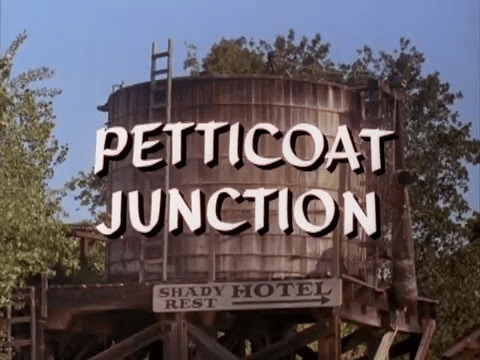
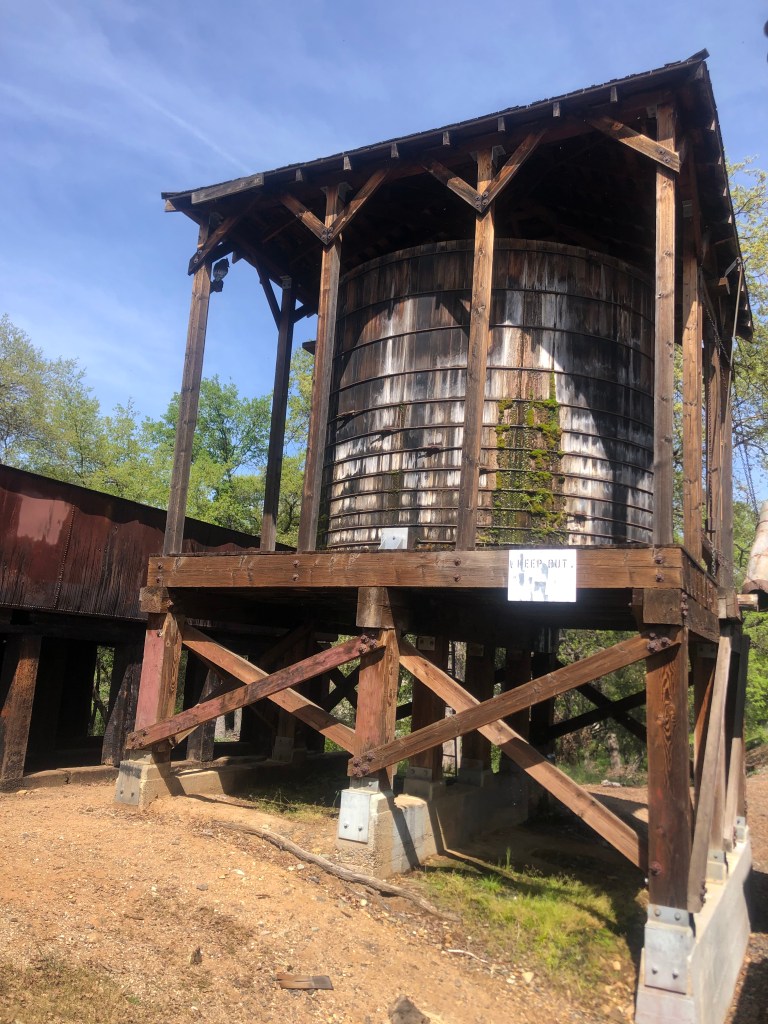
The narrow-gauge railroad operated into the 1960s. In addition to freight and passenger hauling, the Sierra Railway developed a niche as a “movie railroad,” whose trains and structures appeared in numerous Hollywood films (including High Noon (1952), 3:10 to Yuma (1957), and for you young ‘uns, Back To the Future Part III (1990). Oh, and it was featured in the opening credits of “Petticoat Junction” each week.

Then….
…and now.

In 1971, after most of the commercial transportation purposes of the railroad had dried up, the Sierra Railroad’s Jamestown facilities (including a station, roundhouse, and shops) were opened to the public as “Rail Town 1897.” A decade later (i.e., 50 years ago this year), the facilities, along with locomotives and cars, were purchased by the California Department of Parks and Recreation for $750,000. Railtown 1897 was designated a State Historic Park. It remains a popular tourist destination, offering tours of the shops and steam train rides pulled by the original engines on the original tracks.

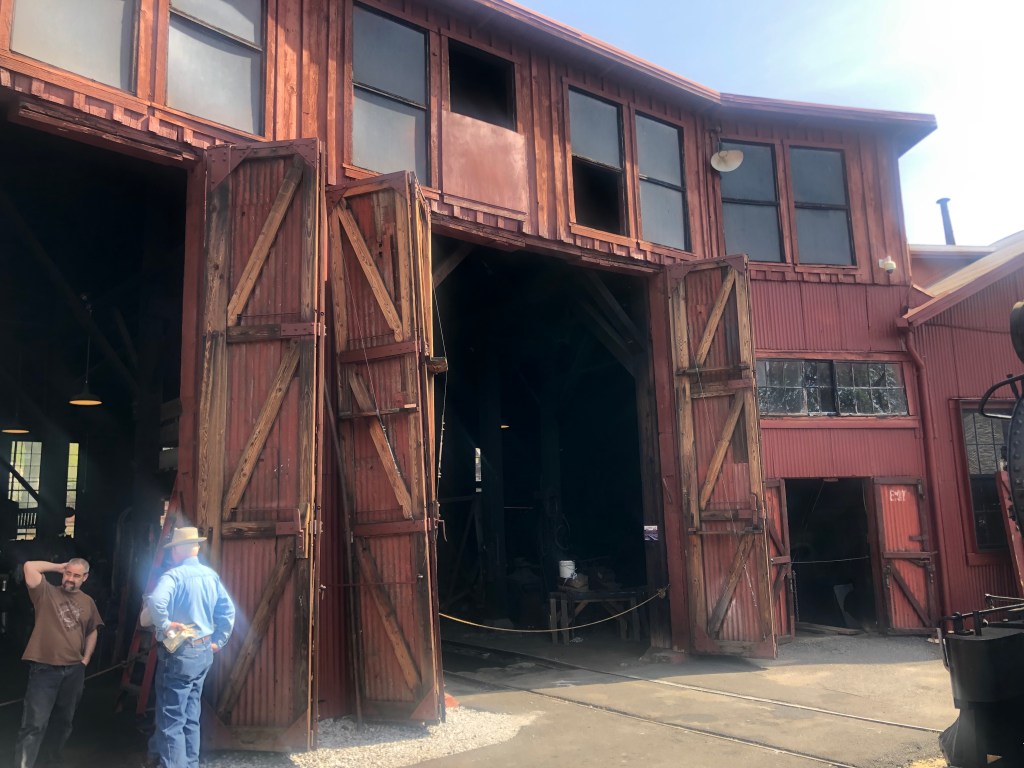
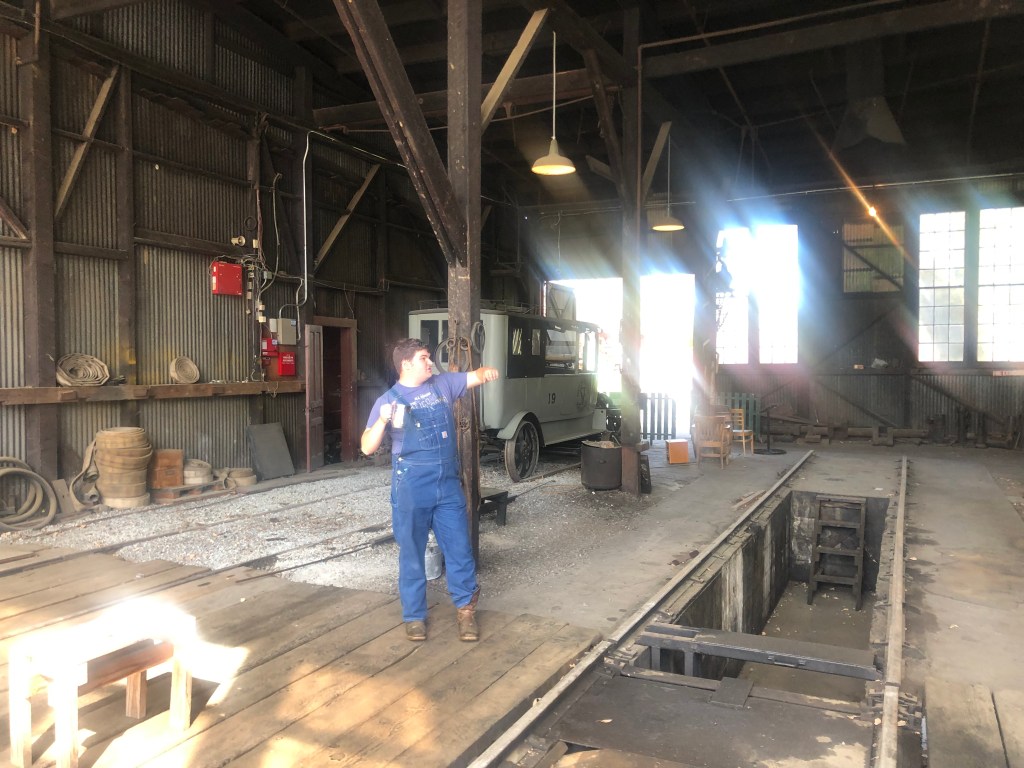
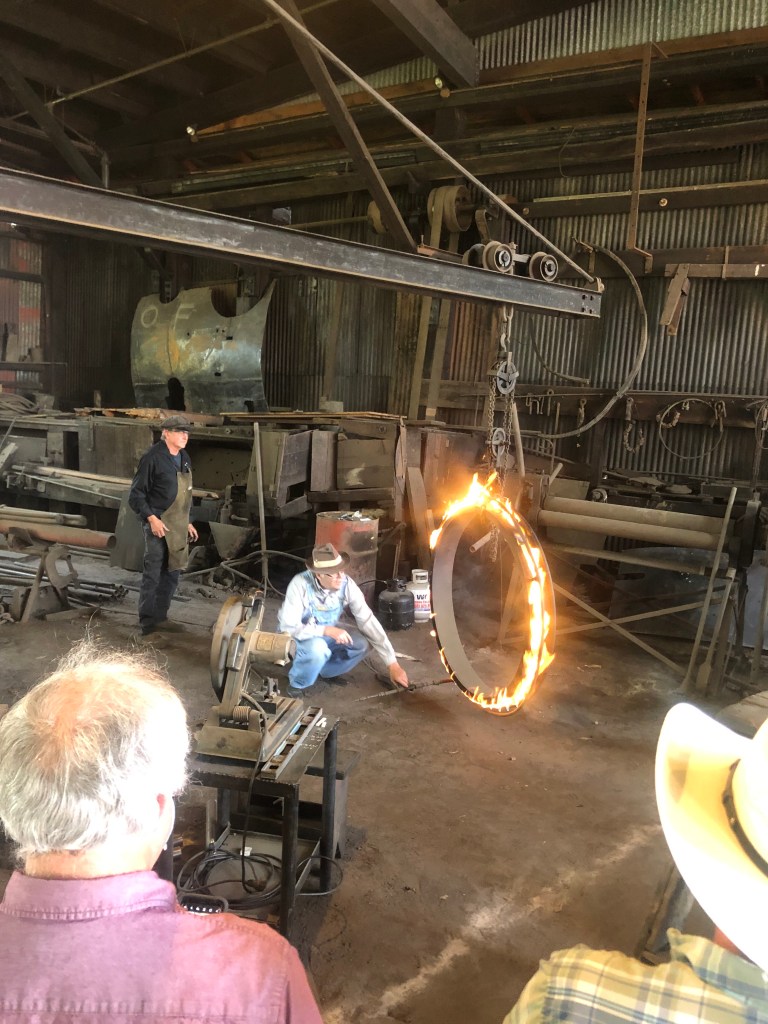
I can’t emphasize enough how unique and impressive this place is. The roundhouse is largely unchanged from how it looked over 100 years ago. Most of the same tools and equipment are still in place, and are used regularly to repair and restore locomotives and cars. They have vintage locomotives and rail cars that offer excursion rides every weekend. This place is an authentic time capsule.

The Roundhouse, over a century old and still in use
Inside the roundhouse
Don’t try this at home.

But let’s get back to the purpose of this trip. The whole reason we came was because Railtown 1897 had put out a press release that they had acquired a new locomotive. And by “new,” they meant “old.” The locomotive (Sierra Railway’s No. 34) was built almost a century ago. Sierra purchased it new in 1925 from the venerable Baldwin Locomotive Works and it remained on Sierra’s roster until the company closed in the late 1960s. The locomotive was eventually sold to a collector (someone who evidently didn’t think model trains were sufficiently authentic), but this collector never got around to moving the engine away from its stomping grounds. It just sat there in the roundhouse in Jamestown. Recently that owner/collector died, and the locomotive went up for sale. Money was provided by two generous donors–Chris Baldo and Marion Hatch–and Railtown was able to acquire the “pink slip” for the engine that’s been on their property for a century. Hence the big celebration today.

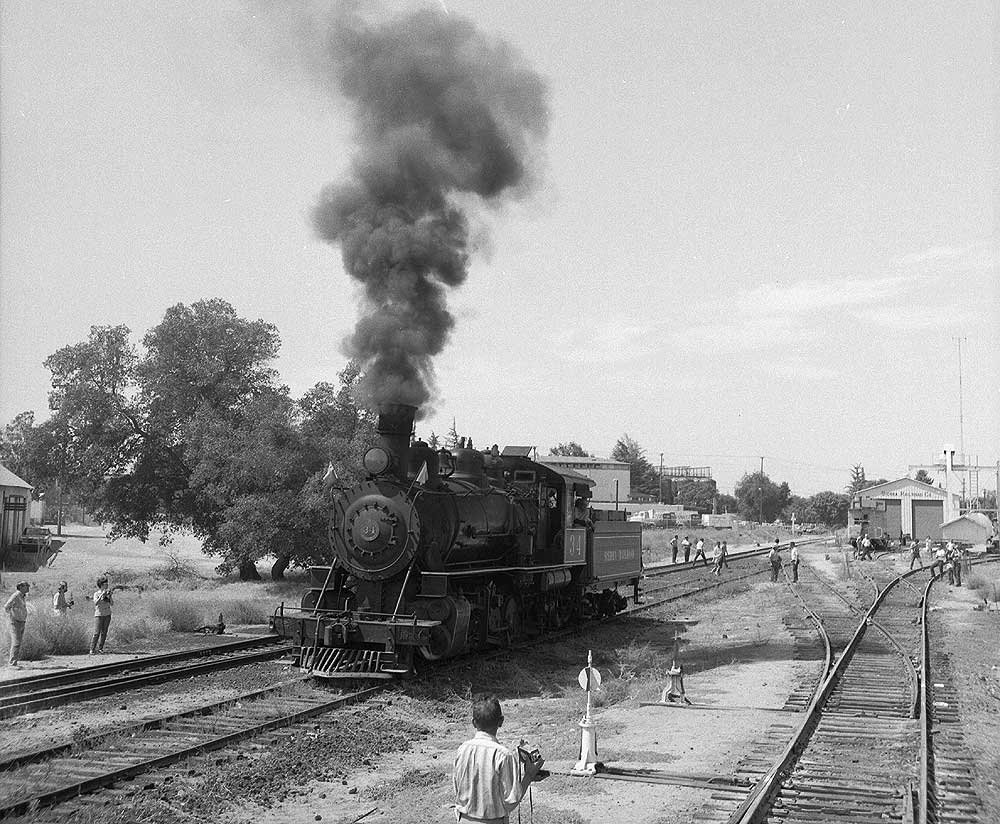
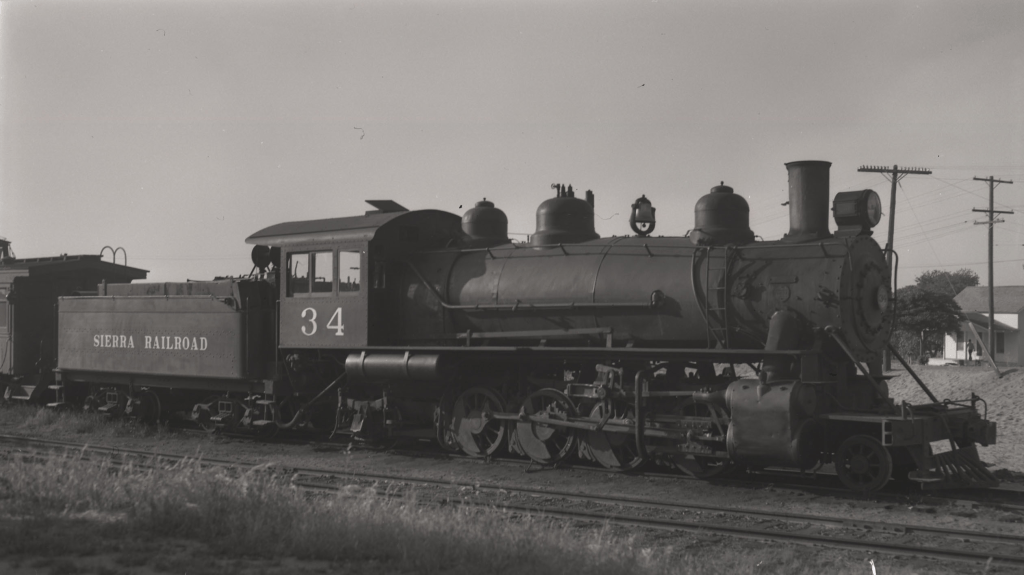
The engine in question is the Sierra Railway’s No. 34, seen here in its heyday:

Old Number 34
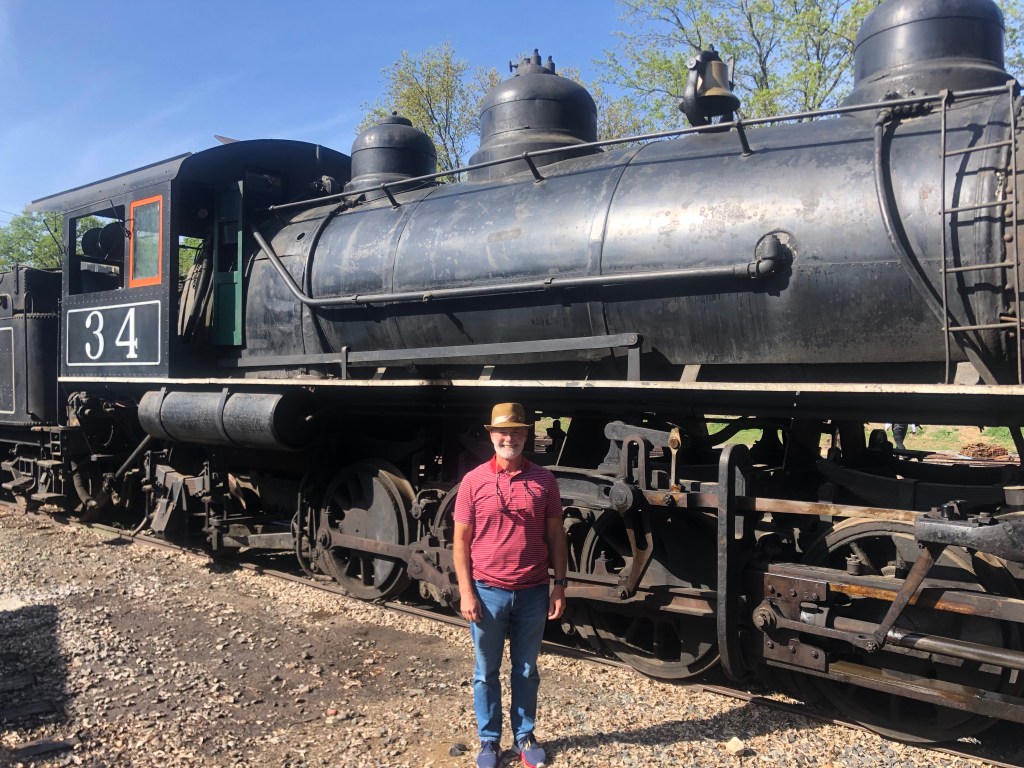
Friend Bill in front of Old(er) No. 34 today

The engine hasn’t run since 1980, but, using words familiar to everyone who’s purchased a classic automobile, “it was running when we last shut her down.” The plan is to restore the locomotive to operational condition.

Like Charlie Brown’s Christmas tree, it just needs a little TLC…

They plan to do the restoration work right here, in the venerable old shops at Railtown. Bill and I hope to provide a little volunteer muscle on that project.

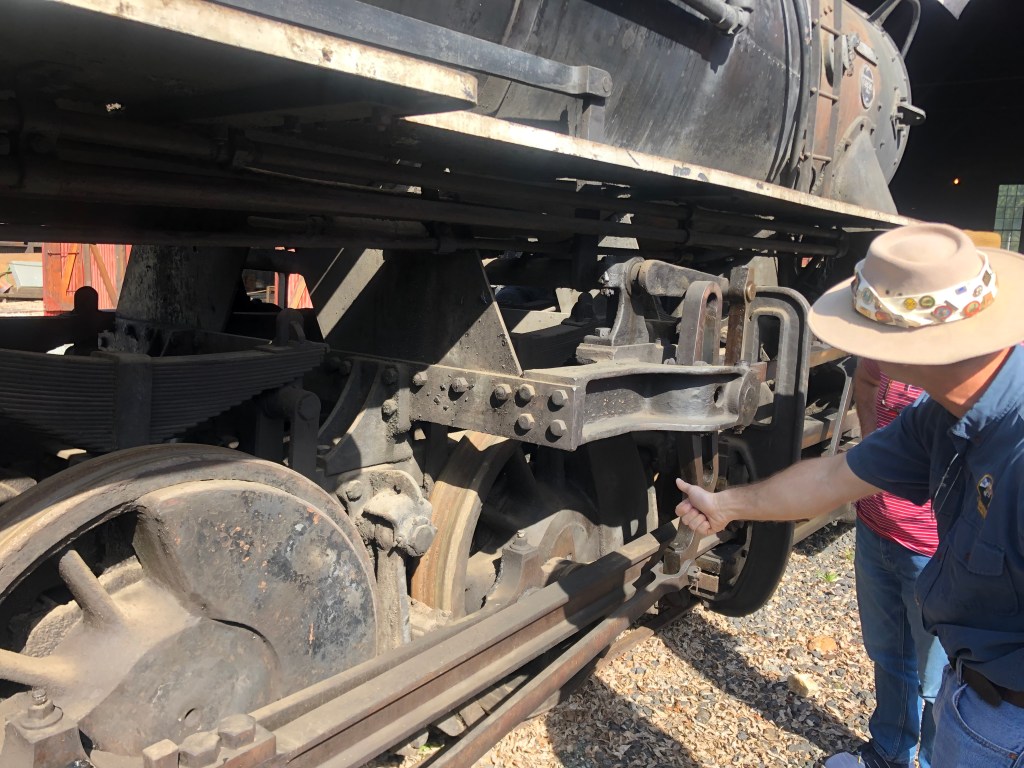
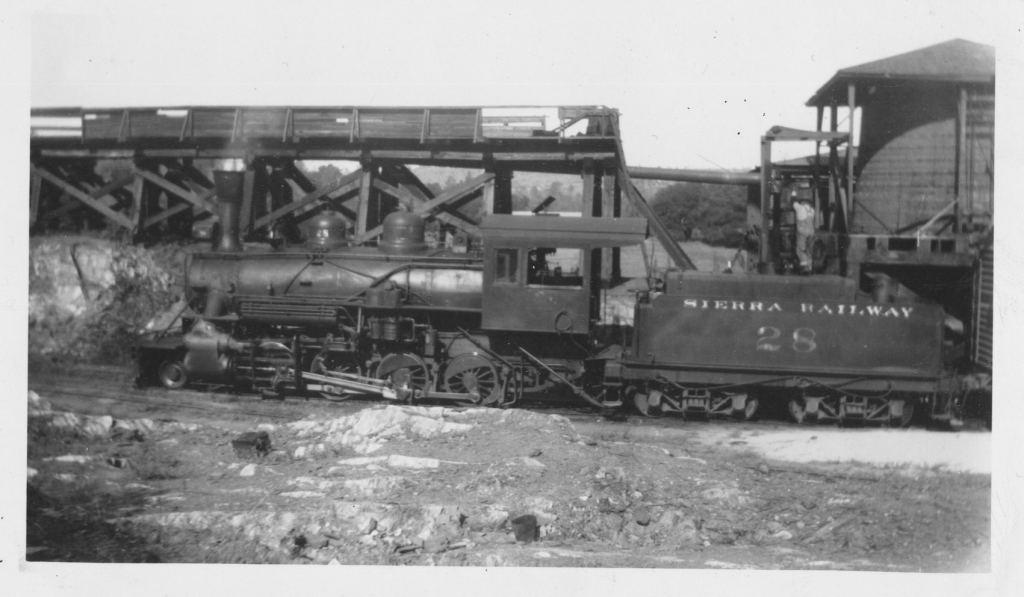
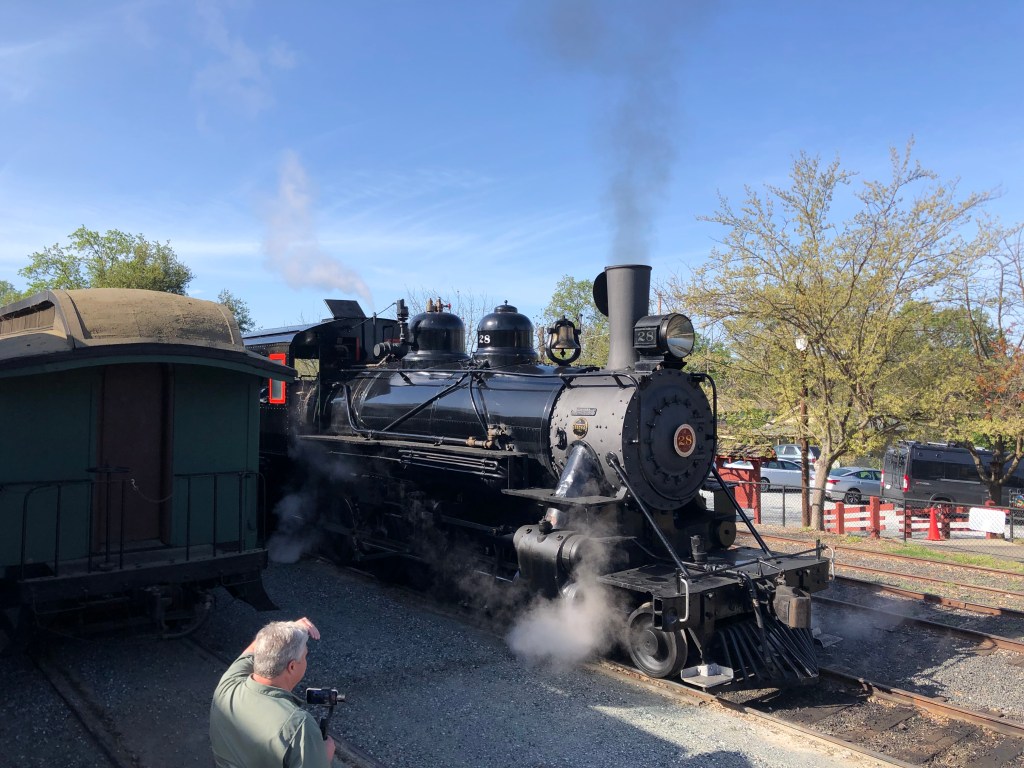
Meanwhile, Railtown does have other steam locomotives. These include the No. 28, which celebrates its 100th birthday this year. The engine hauled cement and rock for the construction of the O’Shaughnessy Dam at Hetch Hetchy in the 1920s, and then turned to regular freight and passenger service. It has appeared in various movies and television shows, including “Little House on the Prairie” and Bound for Glory.

Old No. 28, back in the day

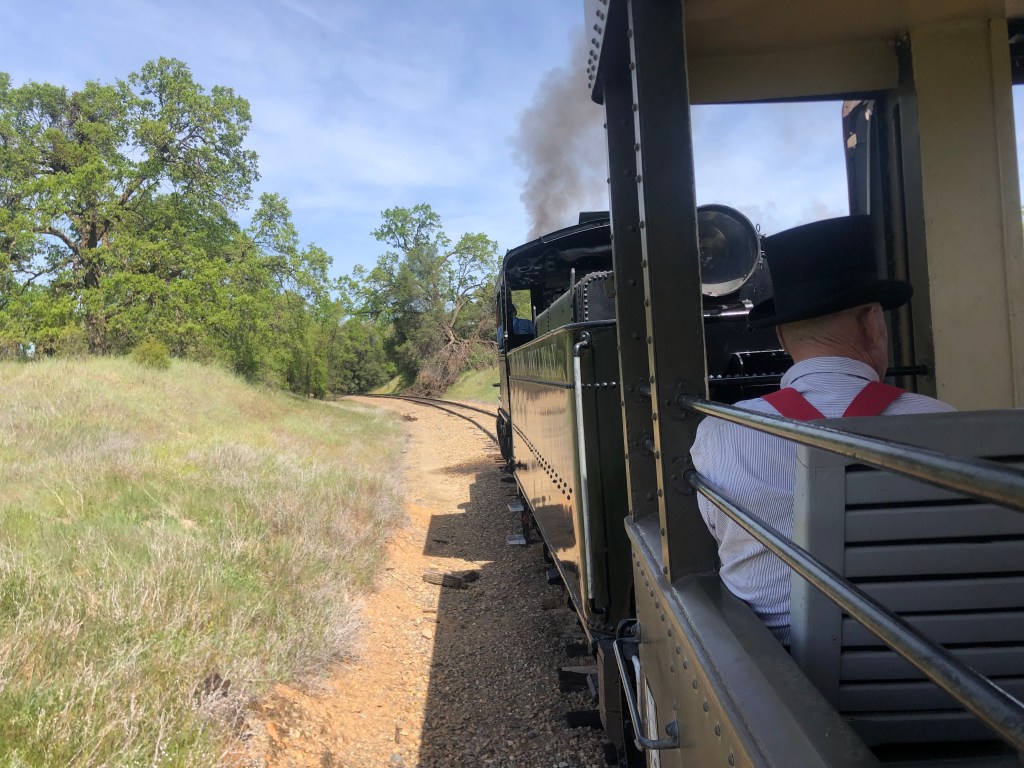
Today this same engine is still running strong. In fact, it pulled our excursion train this afternoon as we enjoyed an hour’s journey along the Sierra Railway’s old, historic tracks.

No. 28, under steam this morning
View of the Old 28 from our passenger car

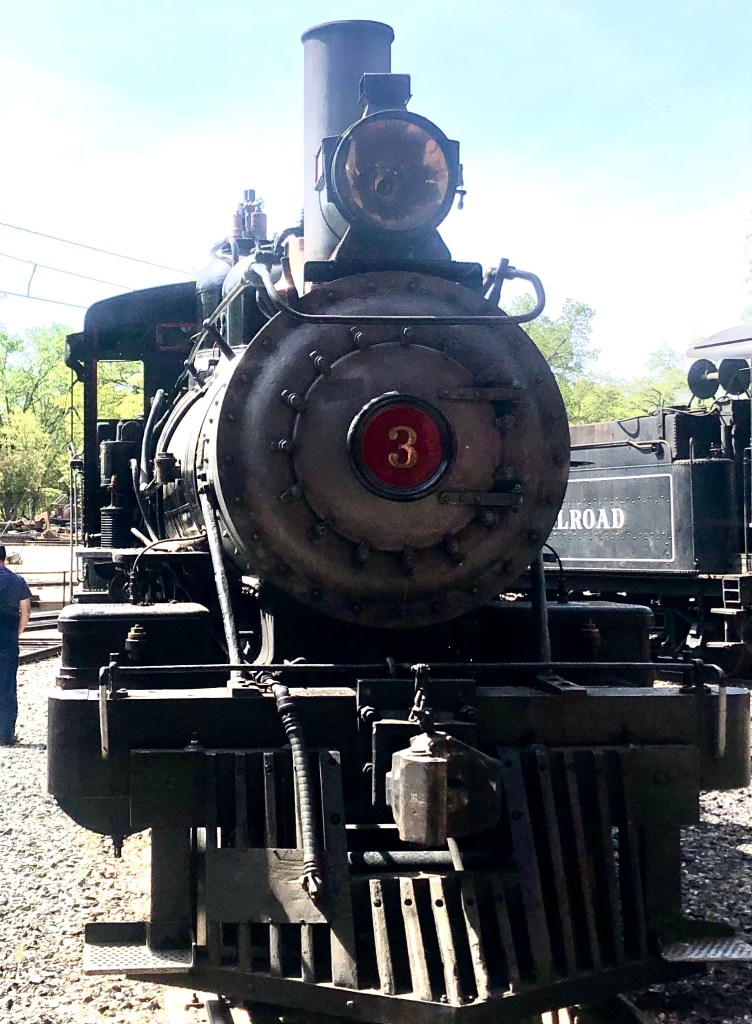
Railtown also has another operational steam engine–the No. 3, which was built in 1891(!). This locomotive has appeared in more movies than any other locomotive, and is regarded as an archetypal example of late 19th-century American trains. It’s been involved in a few mishaps over the years…

…like this one in 1918….

…but it’s been repaired each time, and remains in service to pull excursion trains.

Old No. 3 today

So, overall, the Sierra Railway’s facilities in Jamestown (i.e., “Railtown 1897”) is a remarkable, virtually unspoiled, authentic example of California’s railroading past. It’s well worth a trip. (Admission is $5. I’ll send you a fin if you’re strapped for cash.)

Postscript

Stick with me here; this is going to connect back to Railtown 1897.

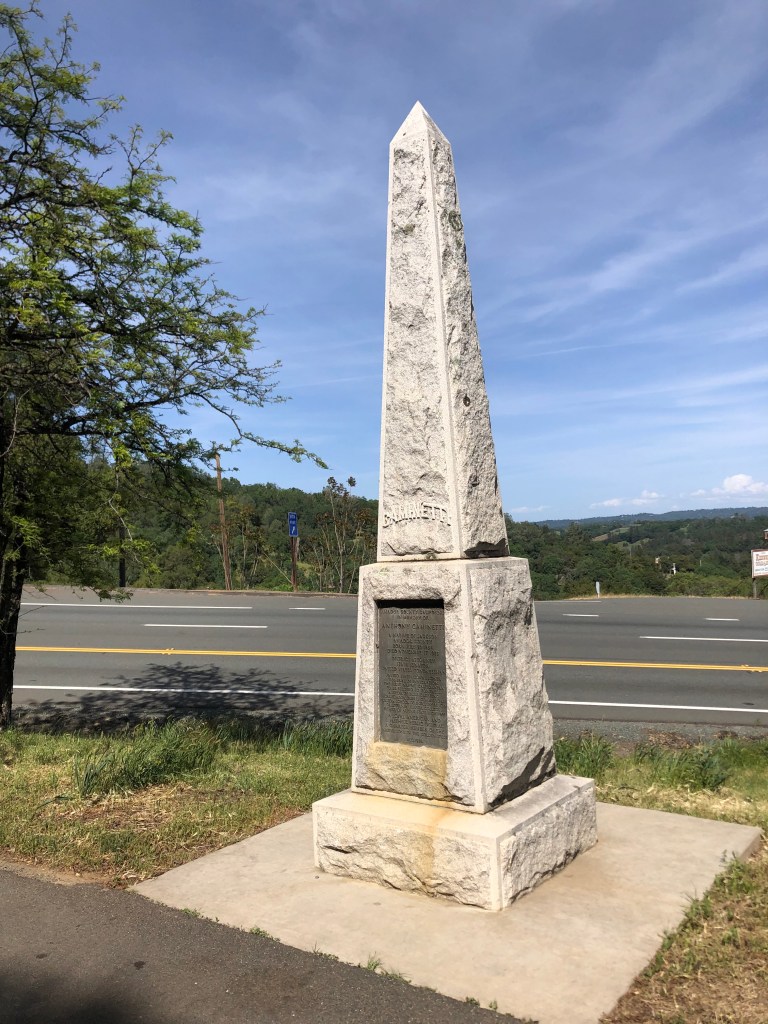
On the way home along Highway 49, I stopped in the town of Jackson (pop: 4,800) to check out this obelisk that I saw from the road:

Wouldn’t you have stopped for it?

The obelisk was erected in 1938 to honor favorite son Anthony Caminetti (1854-1923), who racked up an impressive resume. Allow me to quote the marker: “District Attorney, State Senator, United States Congressman, United States Commissioner, General of Immigration, the first native Californian to be elected to Congress, author of bills creating California Debris Commission, Preston School of Industry at Ione, California Junior Colleges, Father of Alpine State Highway, a loyal American and a faithful public official.”

Some of these posts sound impressive (Congressman, Senator…). Others are a bit less so. I mean, being one (of many) authors of certain pieces of legislation isn’t exactly herculean. It does, however, raise a critical question: What exactly is the “California Debris Commission,” anyway? Answer: it was an agency created in 1893 to clean up the damage that had been done to California’s waterways by the extensive use of hydraulic mining in the Sierras. The Commission was dismantled in 1986.

And here’s were we link back to Railtown 1897. For it turns out that the Clint Eastwood movie Pale Rider (1985) focuses on hydraulic mining and how it did extensive environmental damage to the rivers. And scenes from that movie were filmed at Railtown.

I do recommend the movie, by the way. Check it out here.