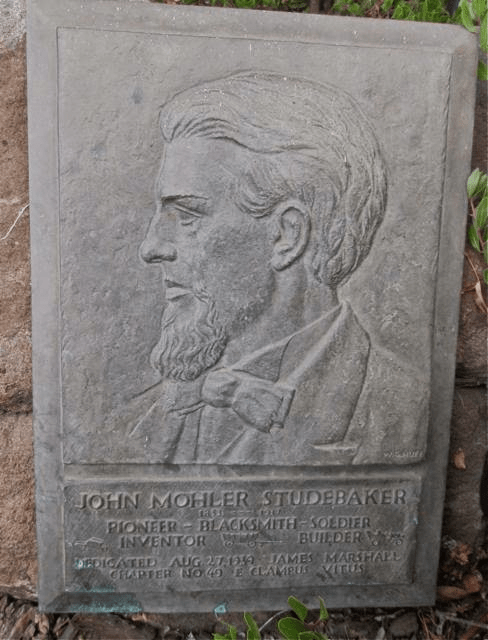
This morning a little after 6 am I took out the Speedmaster to downtown Placerville (pop: 11,000). There I got a cup of coffee and took a seat at the site of the old blacksmith shop where John M. Studebaker built wheelbarrows over a century ago. There’s a marker in the courtyard of the Bagel Works commemorating this fact.
John Studebaker was not the reason for my visit, but it’s worth recalling his connection to Placerville and the California Gold Rush. He was born in Pennsylvania and came out to California as a young man seeking his fortune in the gold fields. It didn’t take him long to realize the real path to riches lay not in mining for gold but in selling supplies to the gold miners. So he began building wheelbarrows right where I was drinking my coffee, and eventually amassed enough money to launch what would become one of the country’s largest, longest-lived, and most successful independent automobile manufacturers: The Studebaker Corporation. This is probably a good time for a brief clip of my friend Bill’s 1941 Studebaker Commander, which is still moving under its own power after 81 years. It’s a goal I hope to achieve myself in 20 years.
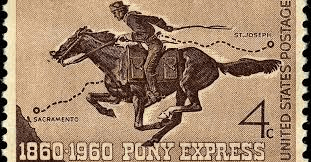
But back to this morning: I sat there with my coffee, waiting for the mail to be delivered. And this wasn’t just any mail delivery: This was a special delivery by the Pony Express. The Pony Express, you’ll remember, was created right about the same time that John Studebaker was building his wheelbarrows. The Pony Express carried US Mail from St. Joseph, MO to Sacramento on horseback, in only 10 days. It covered a route of 190 ten-mile segments, with fresh horses being supplied at each segment, and riders being changed about every 10 segments. (Some of the old Pony Express stations are still standing; I’ve been to a few of them in my travels, including the Pony Express Cafe in Eureka, Nevada, as I discussed briefly here.)
The Pony Express only lasted about a year and a half (from the spring of 1860 to the fall of 1861). It went bankrupt a month or two after the first transcontinental telegraph was established. But the Pony Express remains a romantic (or romanticized) part of the Old West.
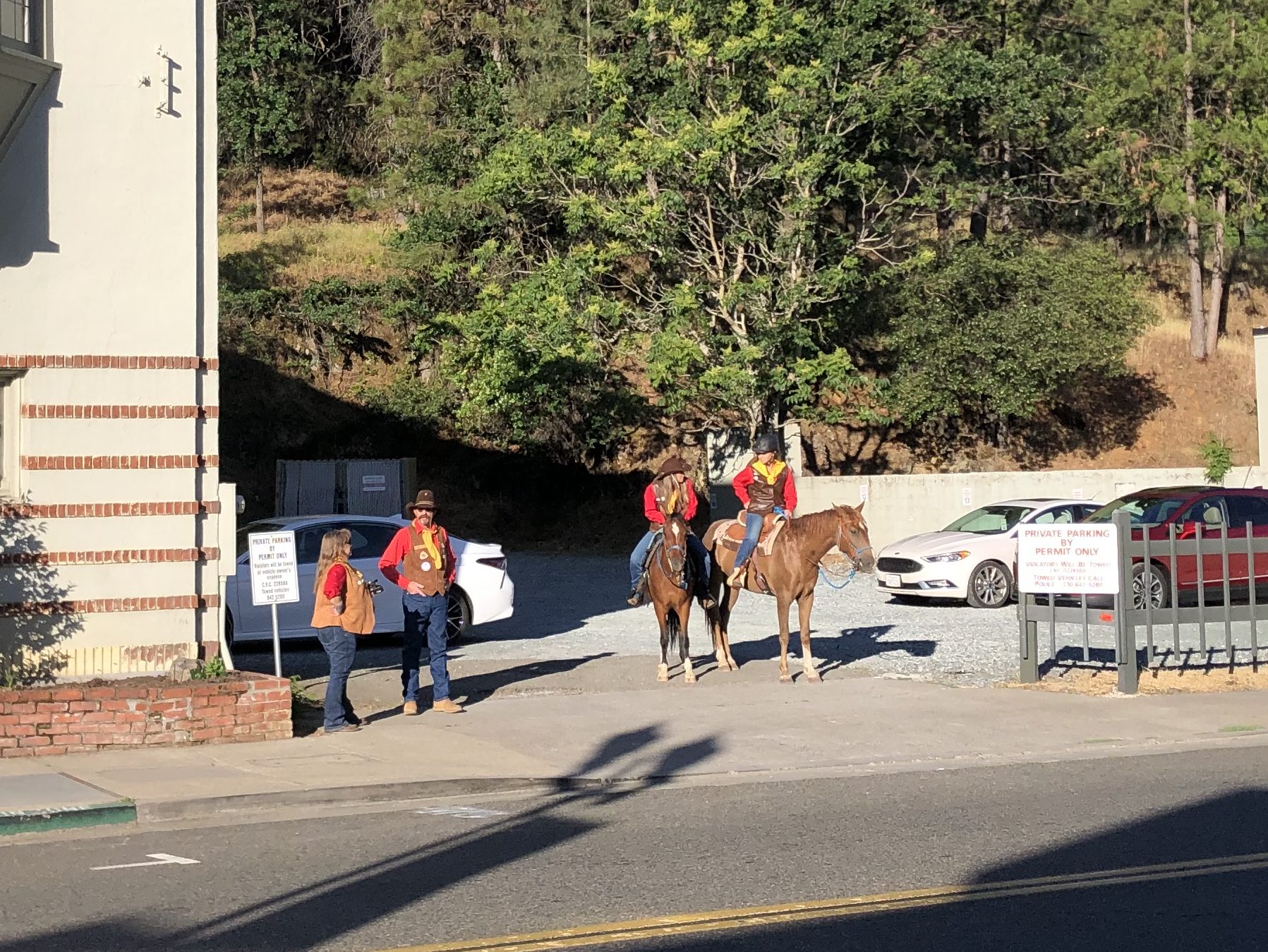
So what does any of this have to do with this morning? Well, it seems that the good folks at the National Pony Express Association annually re-create the Pony Express ride–24 hours per day for 10 days. This morning the rider was scheduled to be coming through downtown Placerville a little before 7 am. When I got there, a small number of people were milling about, as though they were waiting for the world’s smallest parade. Seriously, this was not a well-attended event, but perhaps that’s because anyone living in this general area would probably opt instead to be present for the final moments, when the rider comes into Old Sacramento this afternoon.
Waiting for the mail to arrive
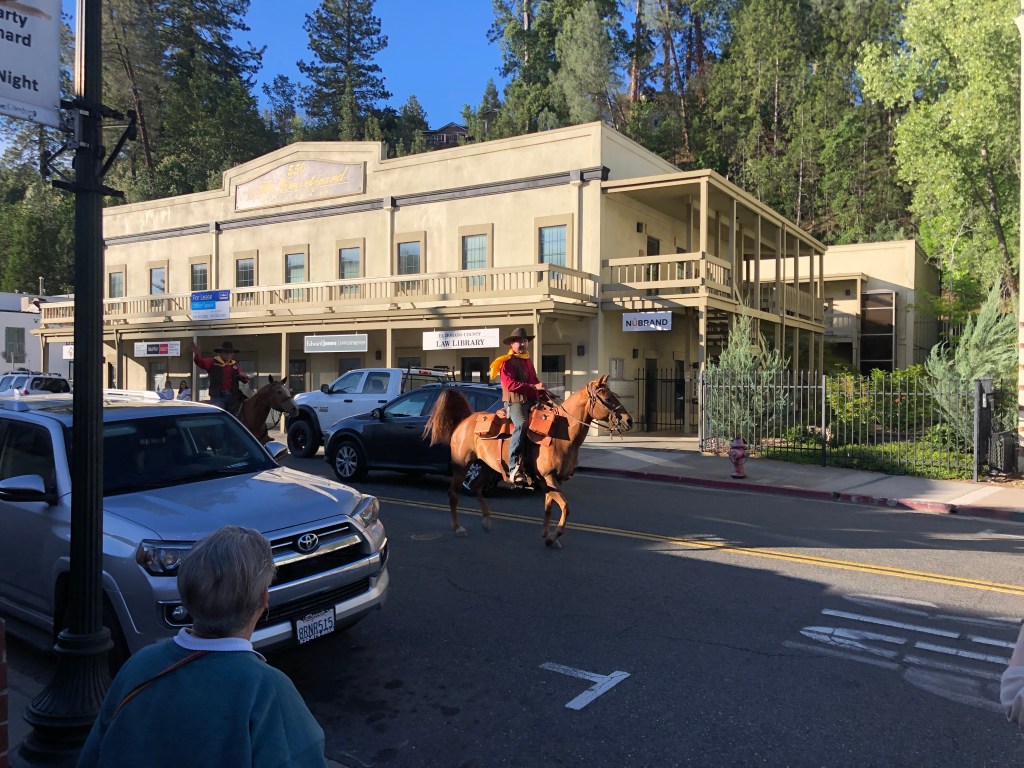
Most of the people were wearing distinctive red shirts and leather vests–the uniform of the National Pony Express Association. But I also spotted a few civilians such as myself. The mood wasn’t exactly raucous, but clearly these hardy souls shared an interest in history and/or horses. Adding to the mood was the backdrop of 19th-century buildings on Placerville’s Main Street.
And then suddenly, without warning, the mailman arrived.
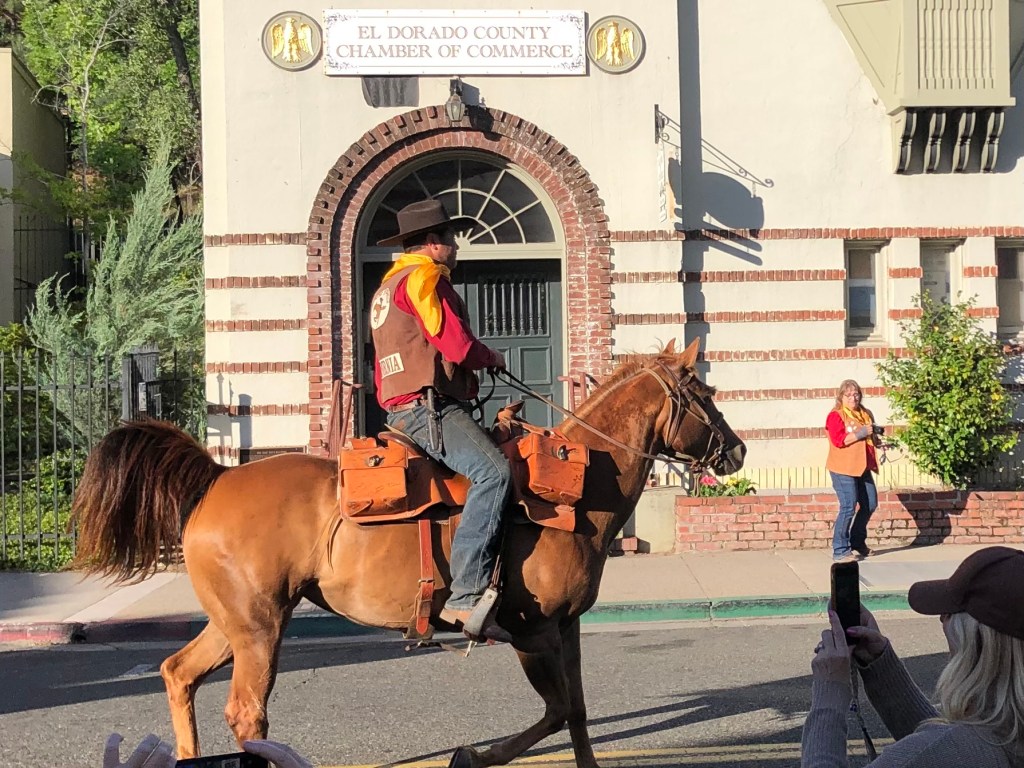
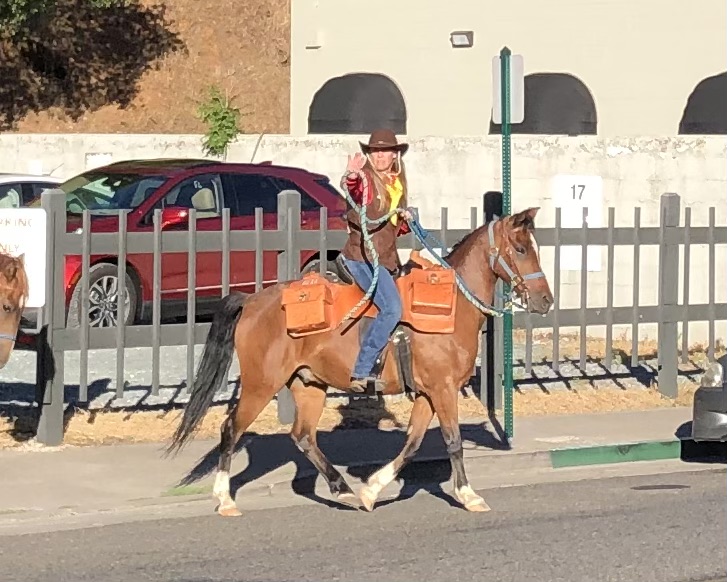
Then the mail bag (“mochila”) was transferred to a waiting rider, and the mail was back on its way. It was all over in less than a minute.
Neither sleet nor snow nor traffic laws….
There’s something compelling, in this age of texting, email, and on-demand media access, to see old-timey, flesh-and-blood communication mechanisms at work. I certainly would not argue that the Pony Express was superior to modern communications; heck, it wasn’t even superior to the telegraph. But it does represent a spirit and energy that seems to be in short supply these days. And that’s why this afternoon I’m going to be raising a pint to the young men who rode for the Pony Express.
There were a number of photos from my Route 2 trip that didn’t make it into the blog. I’m including some of them here, as a bonus feature. Enjoy!
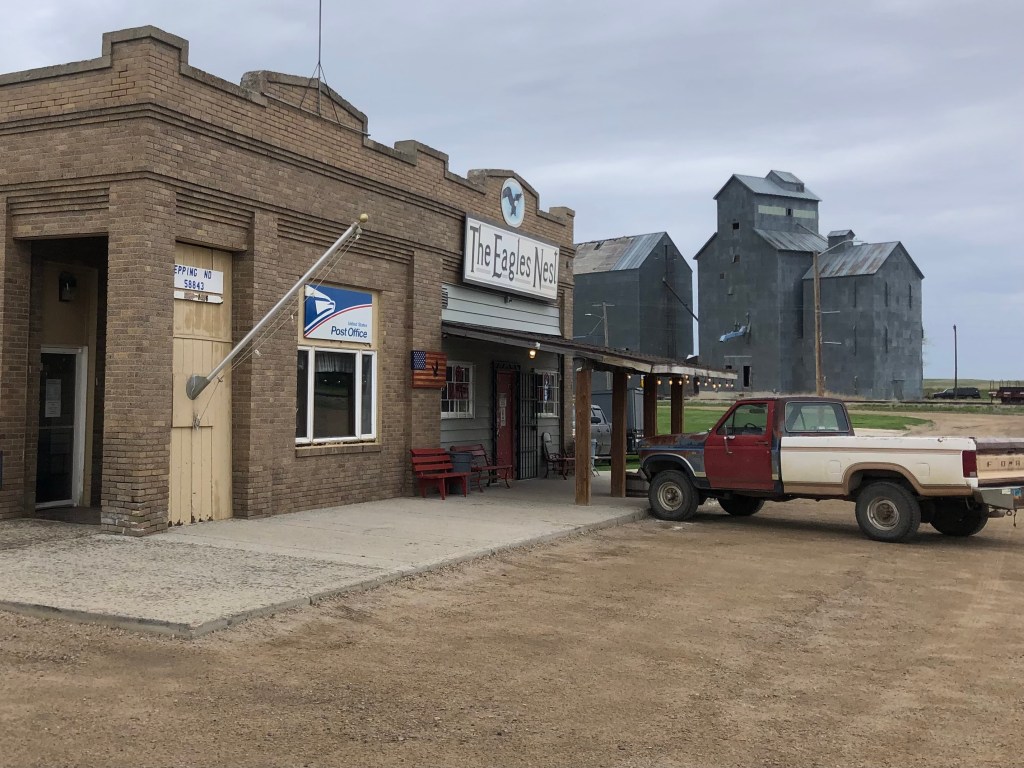
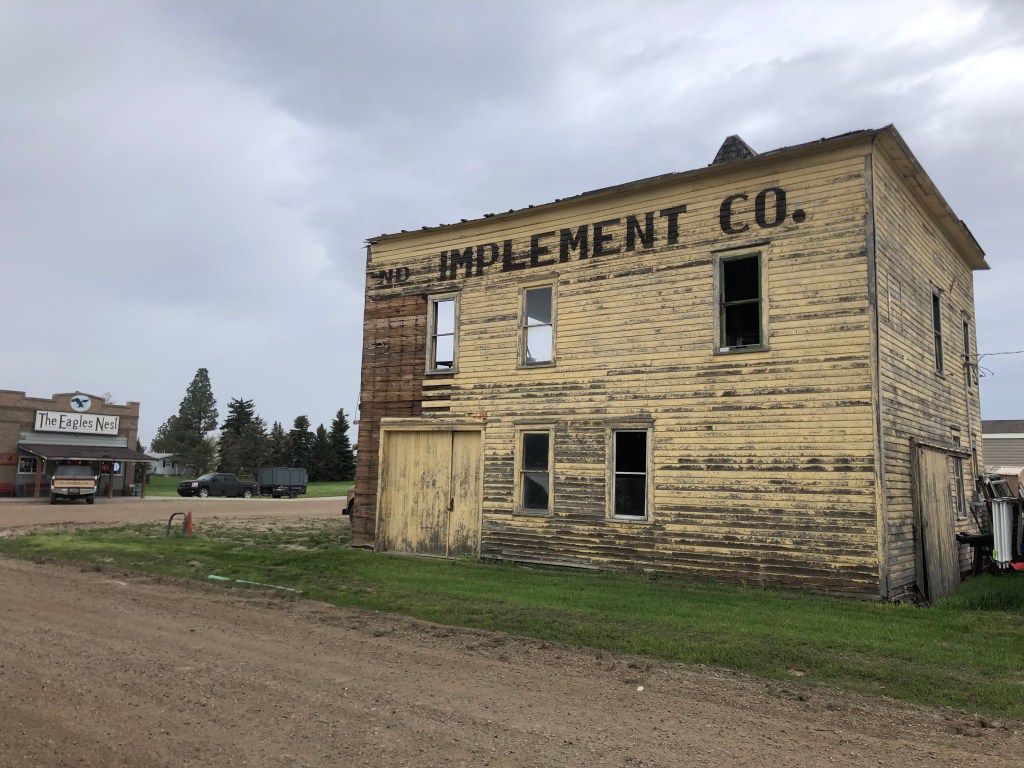
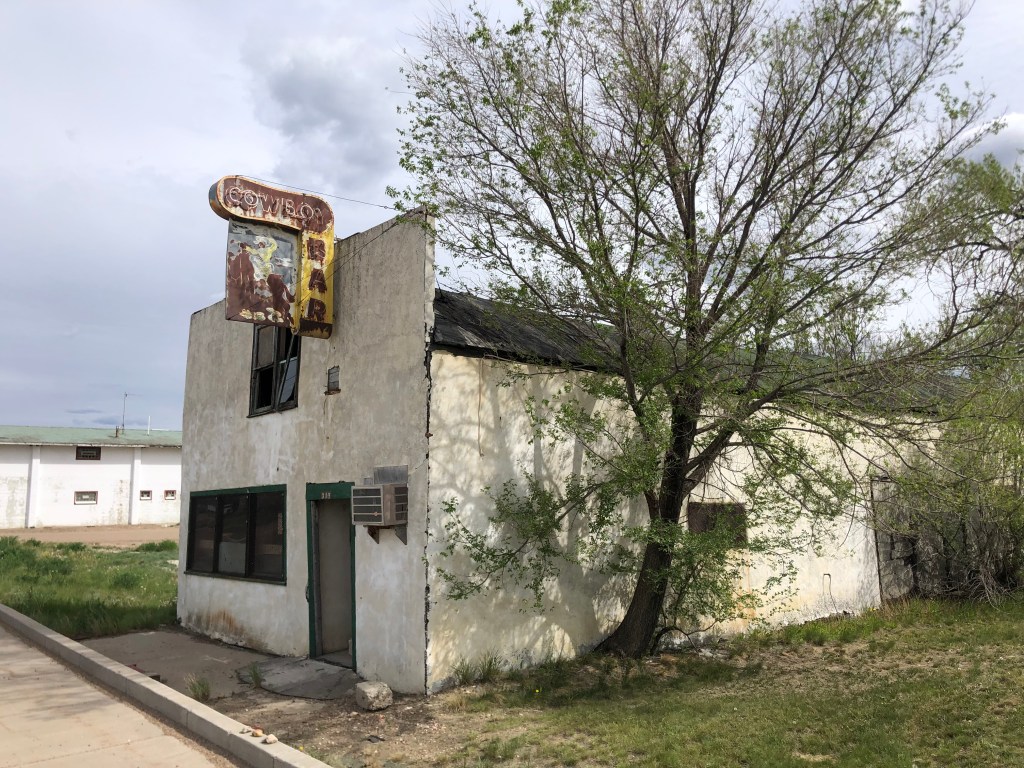
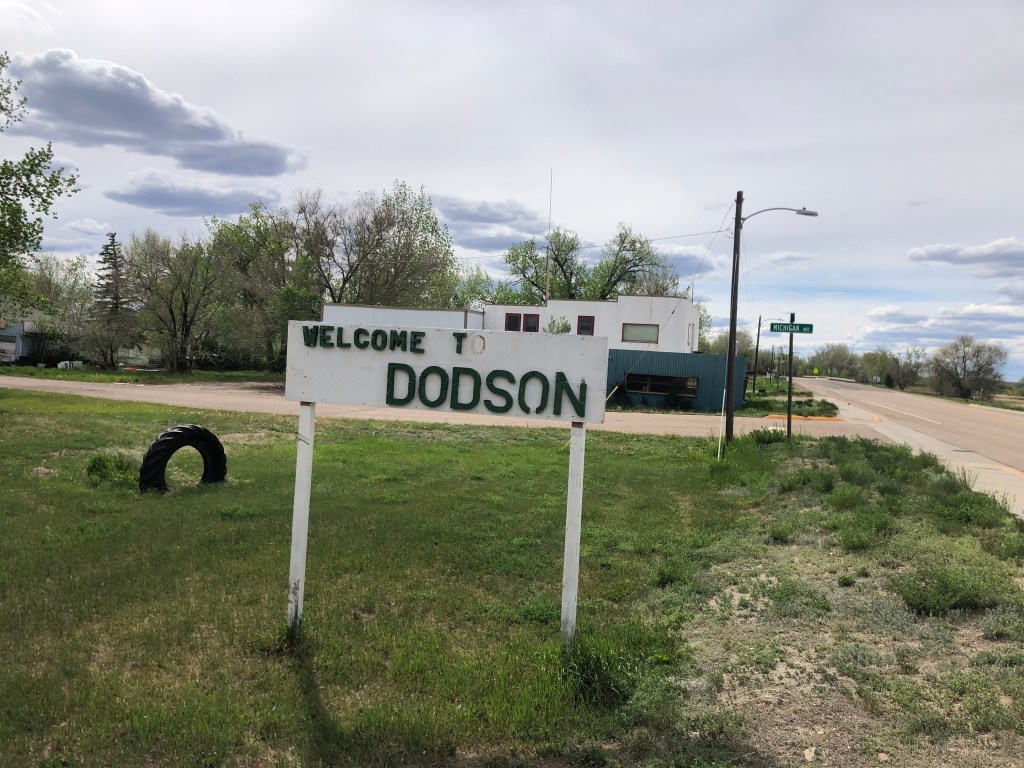
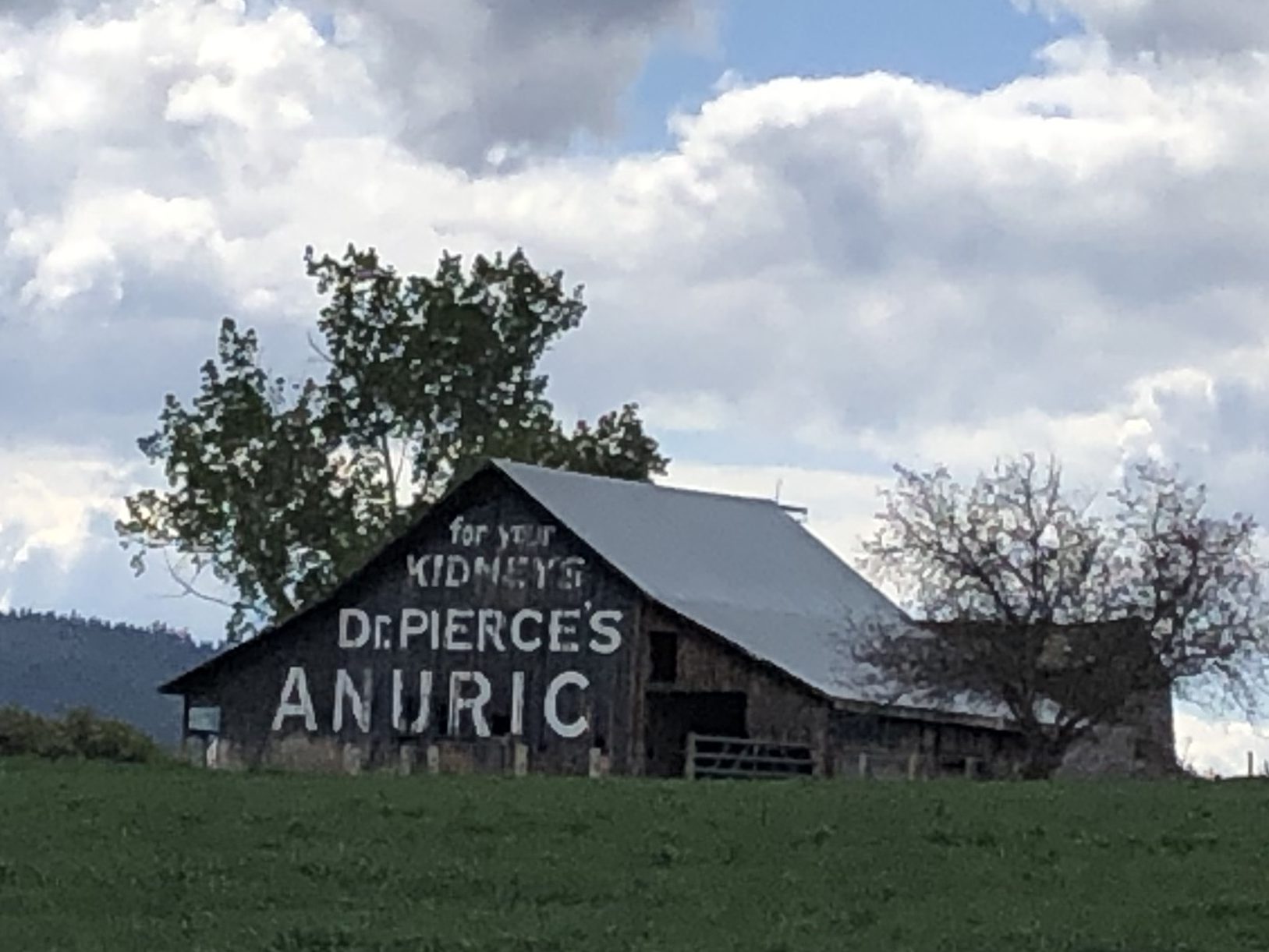
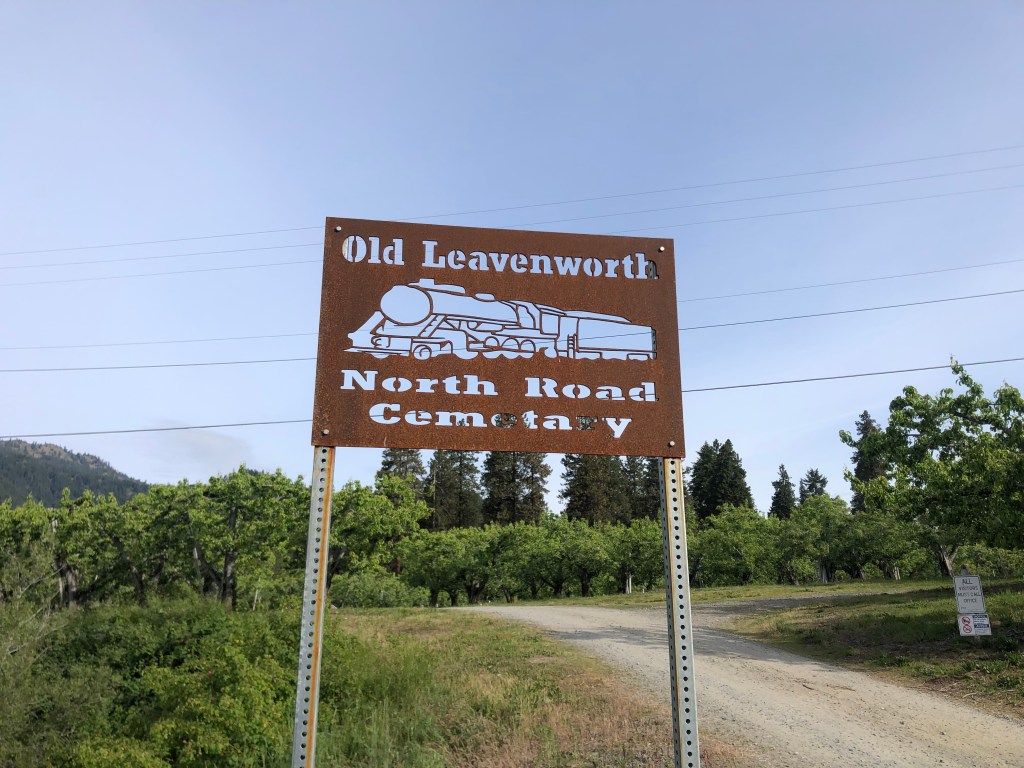
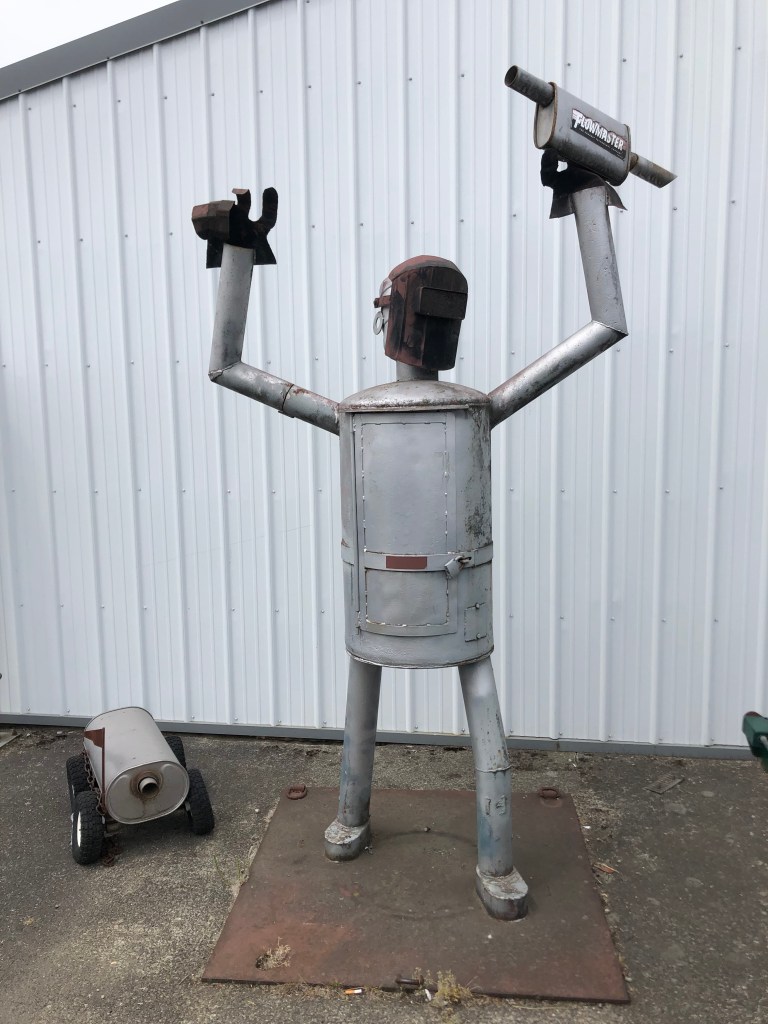
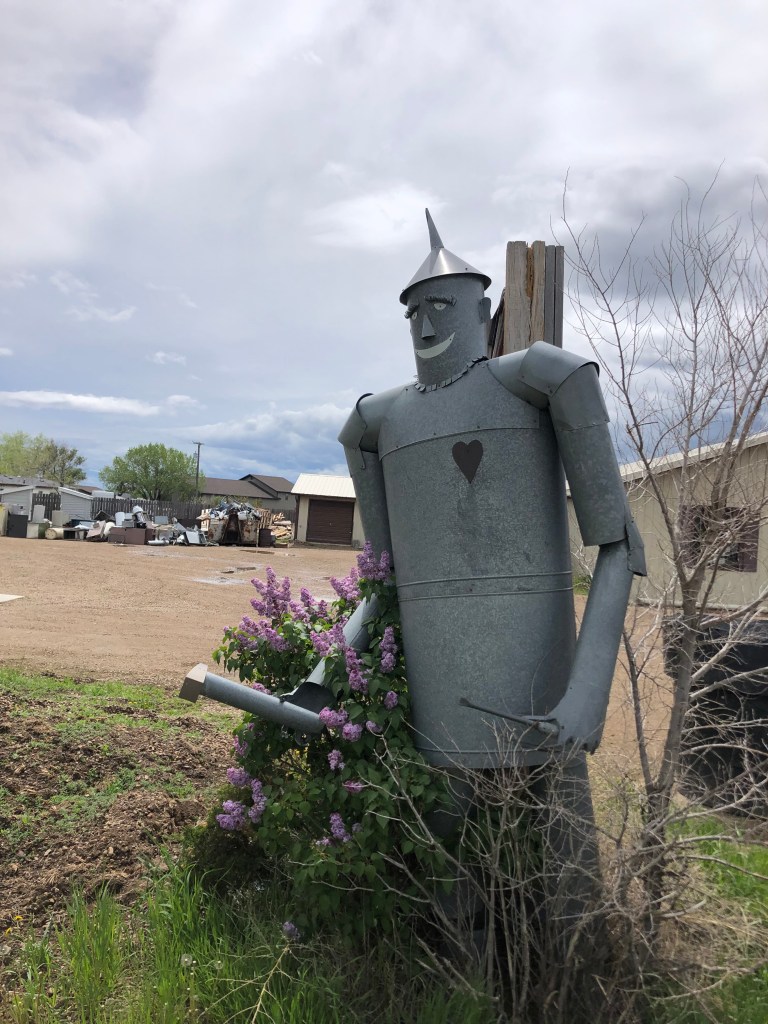
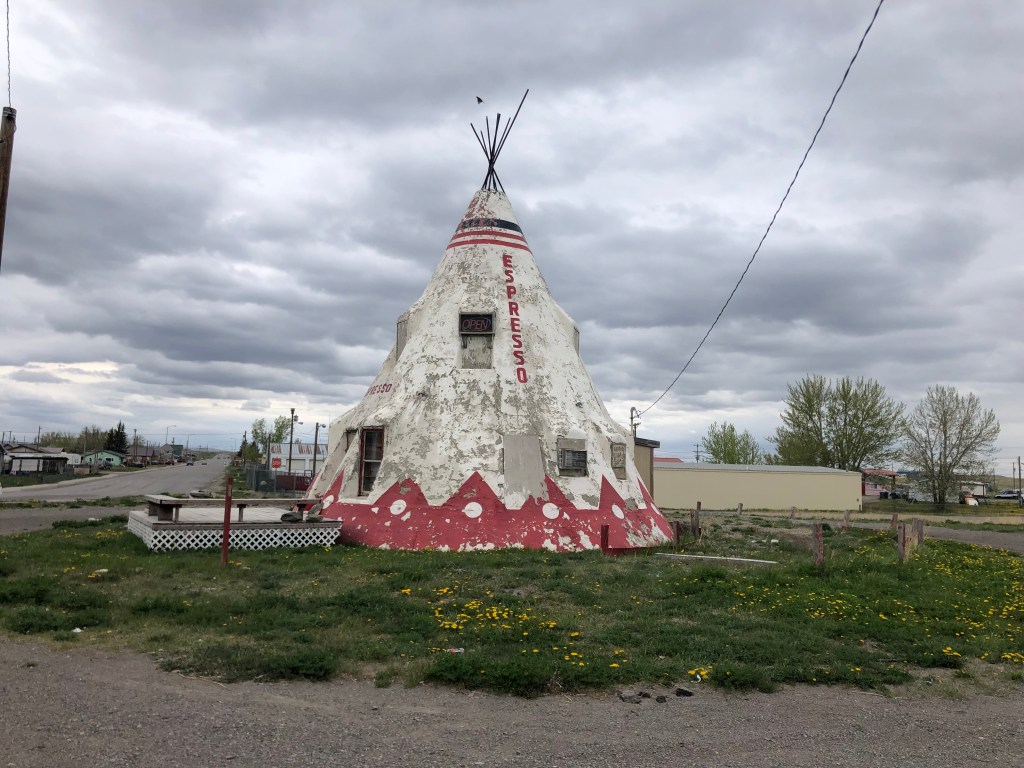
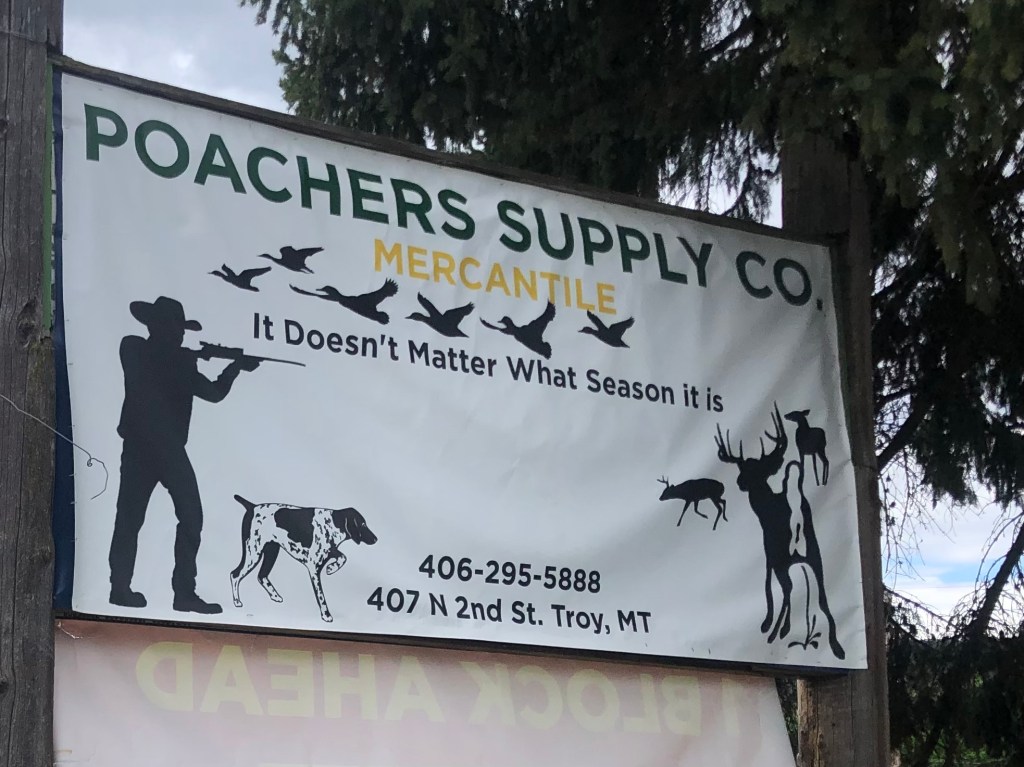
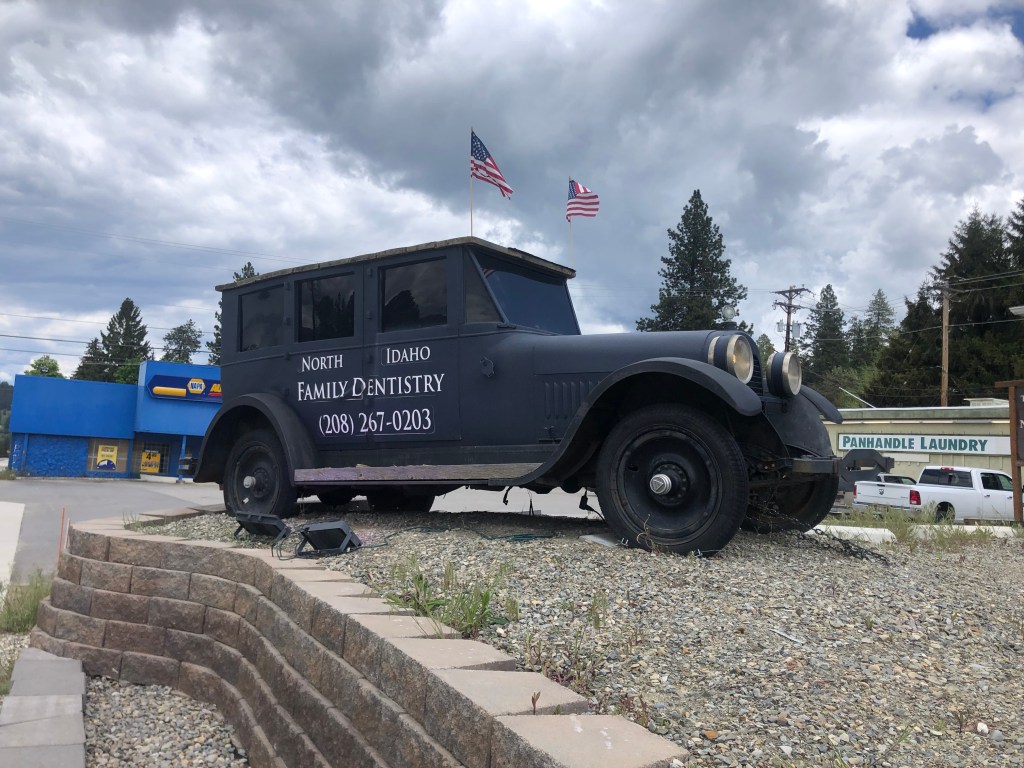
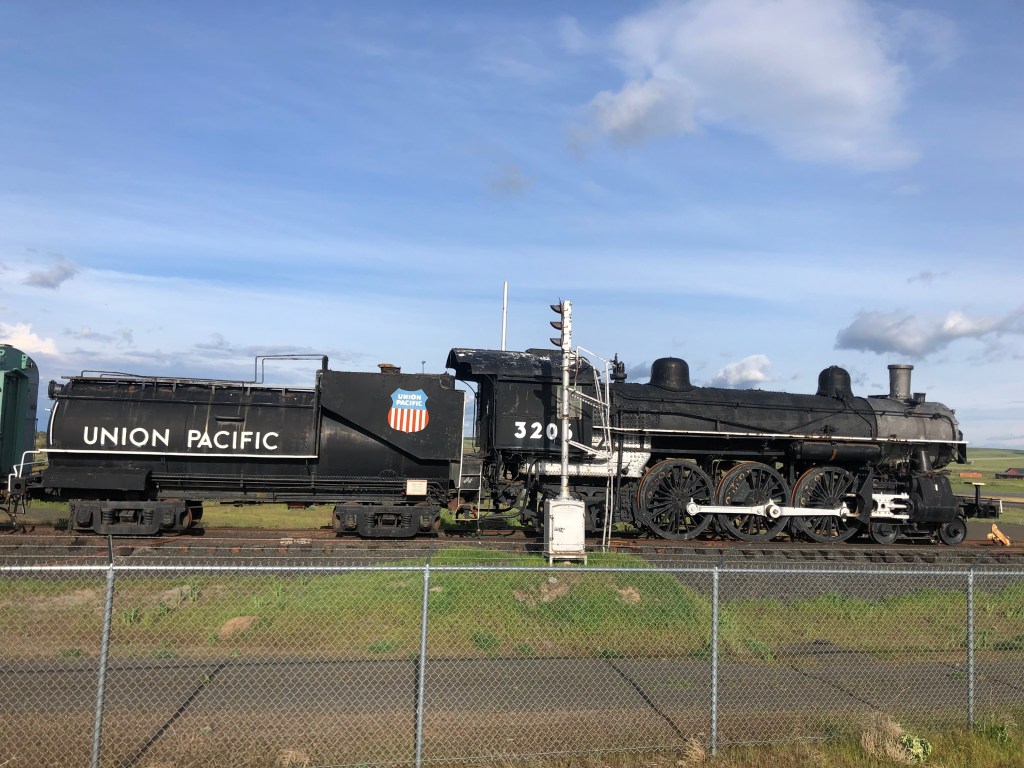
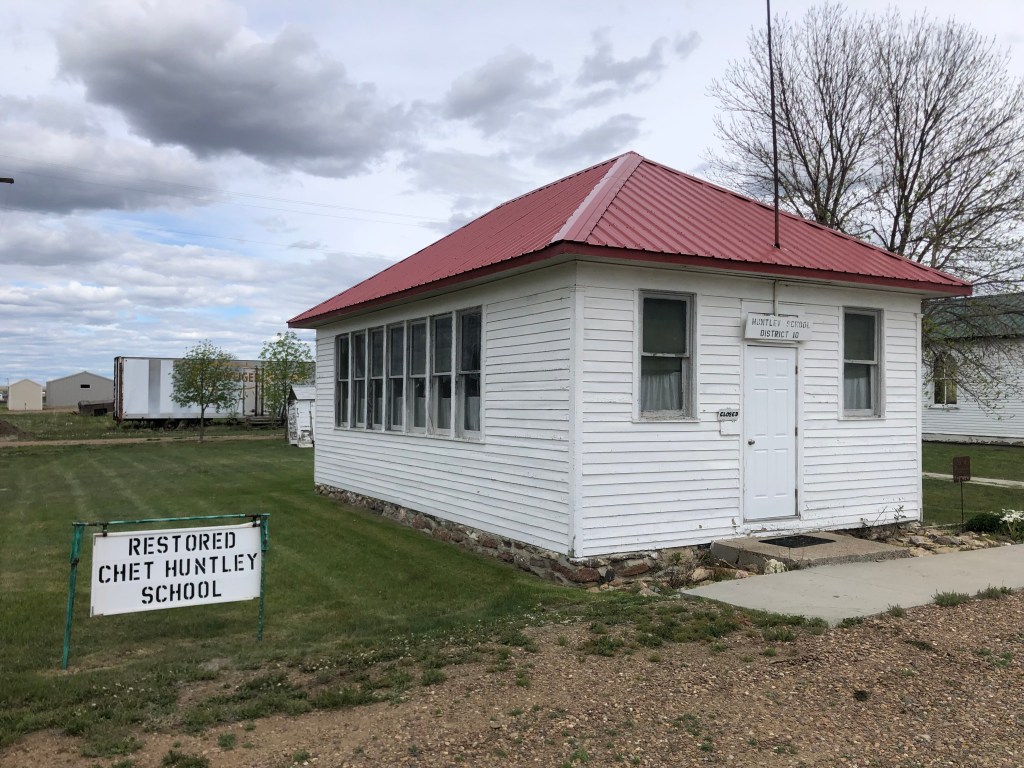
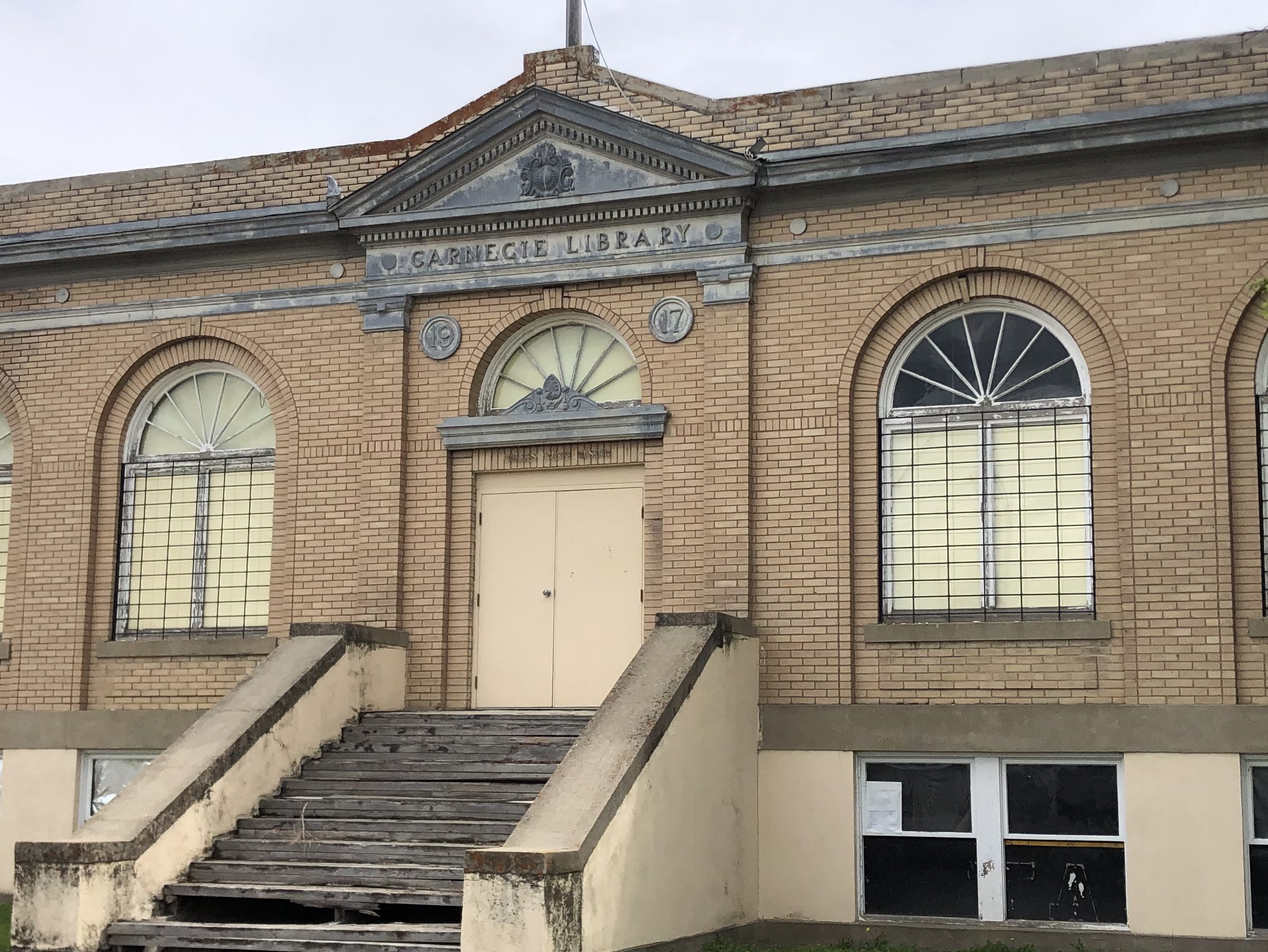
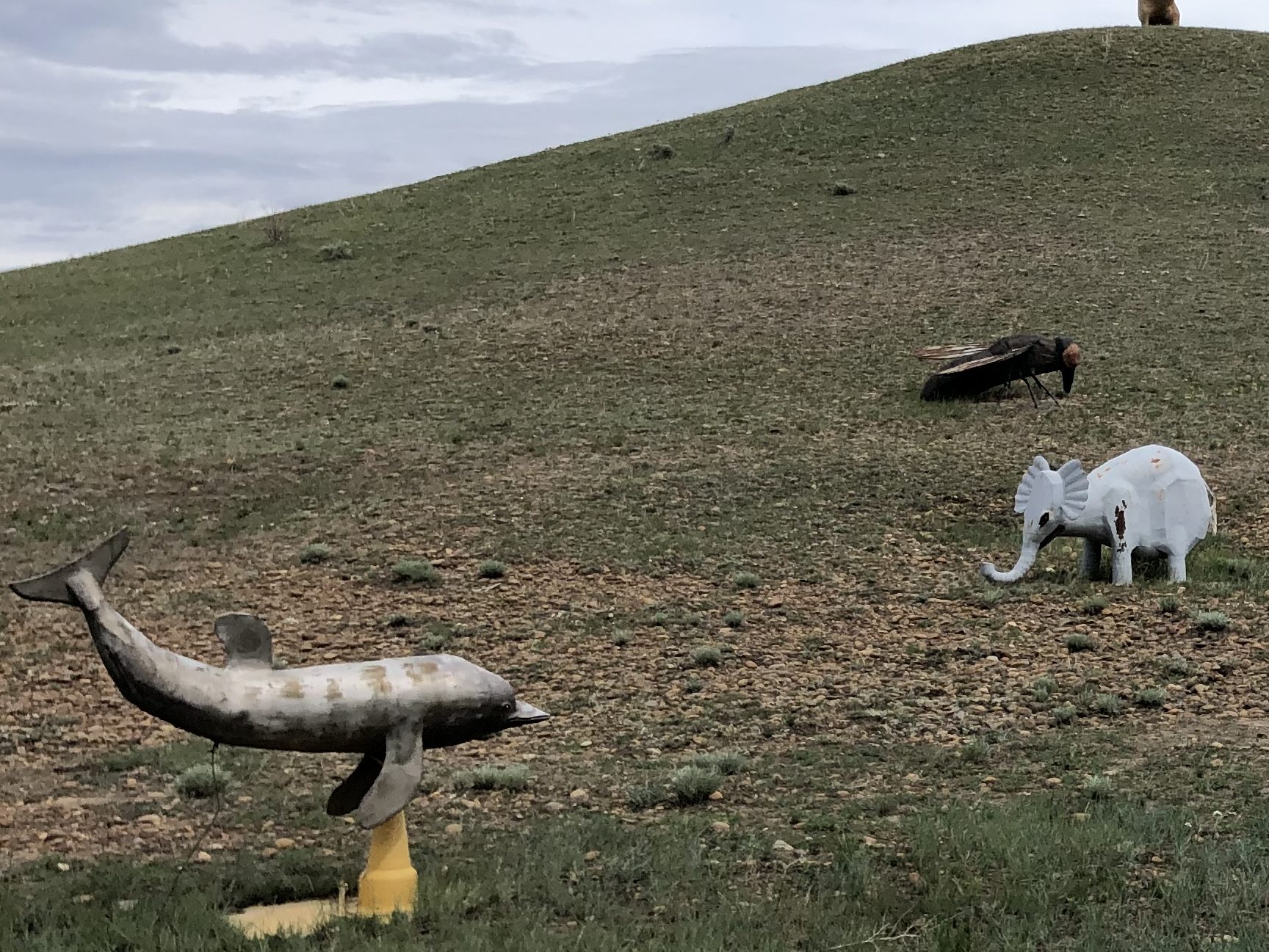
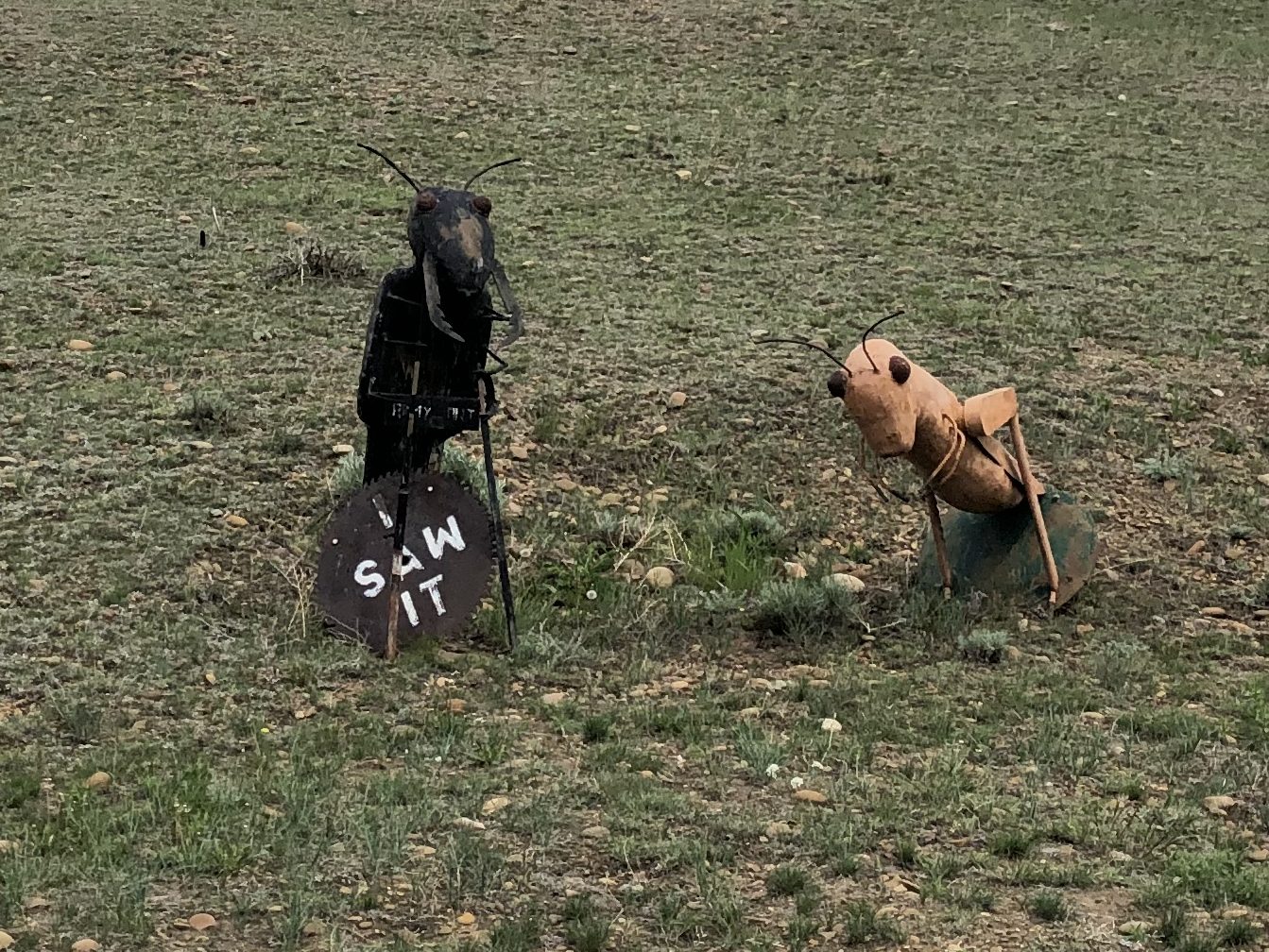
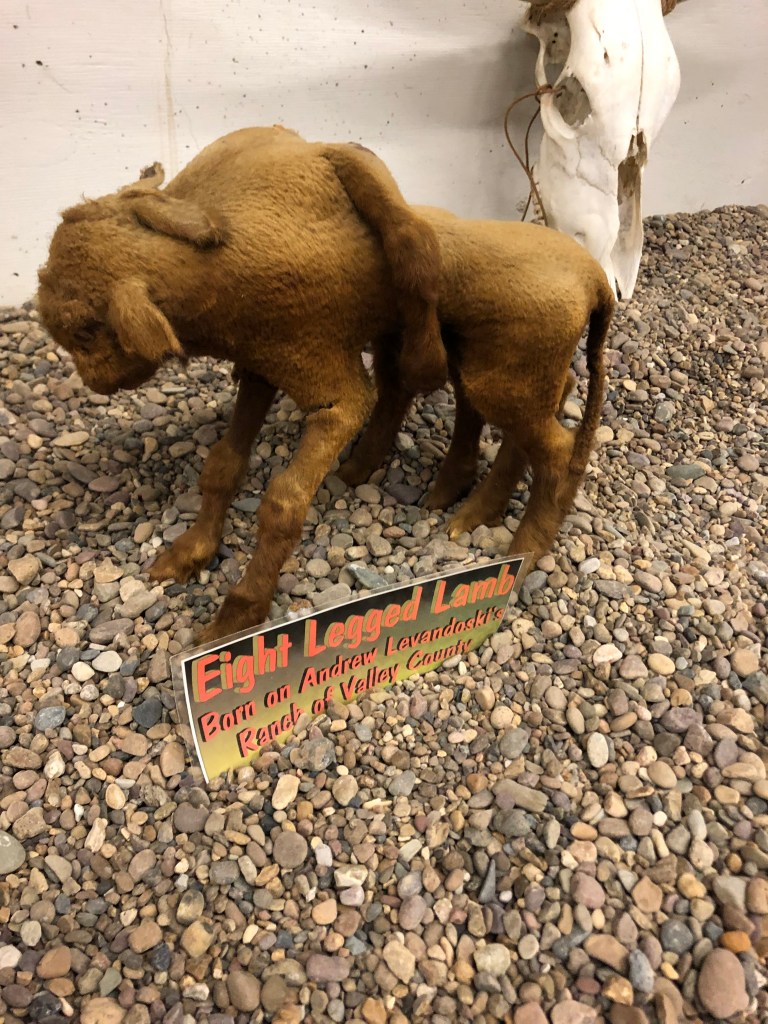
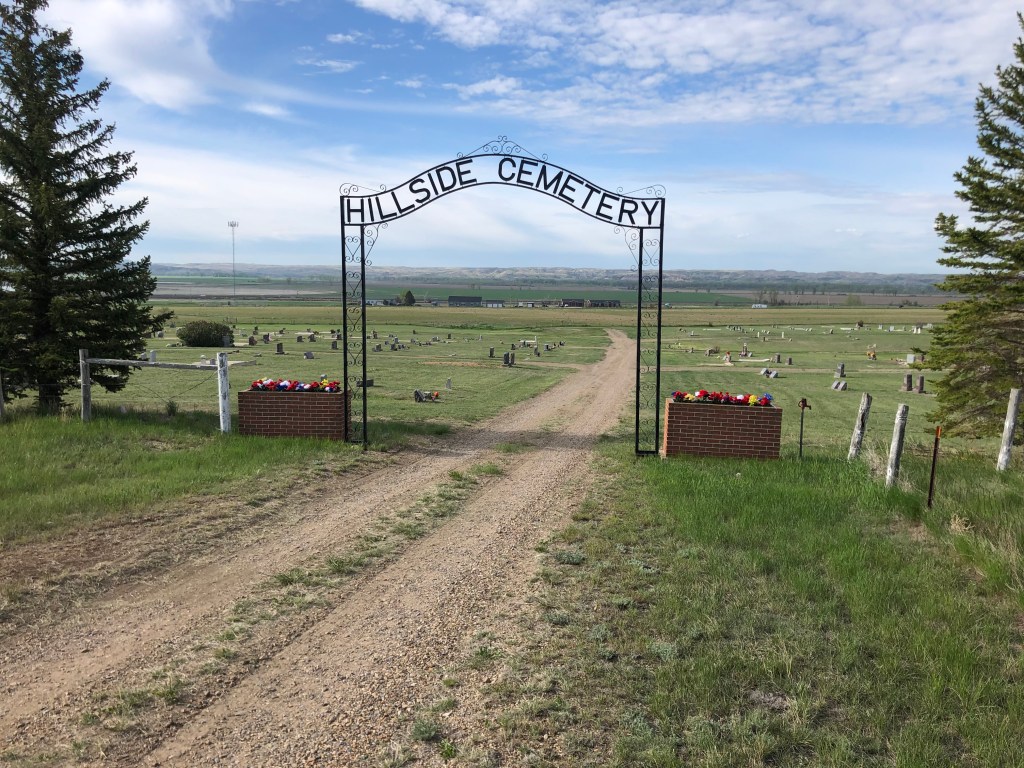
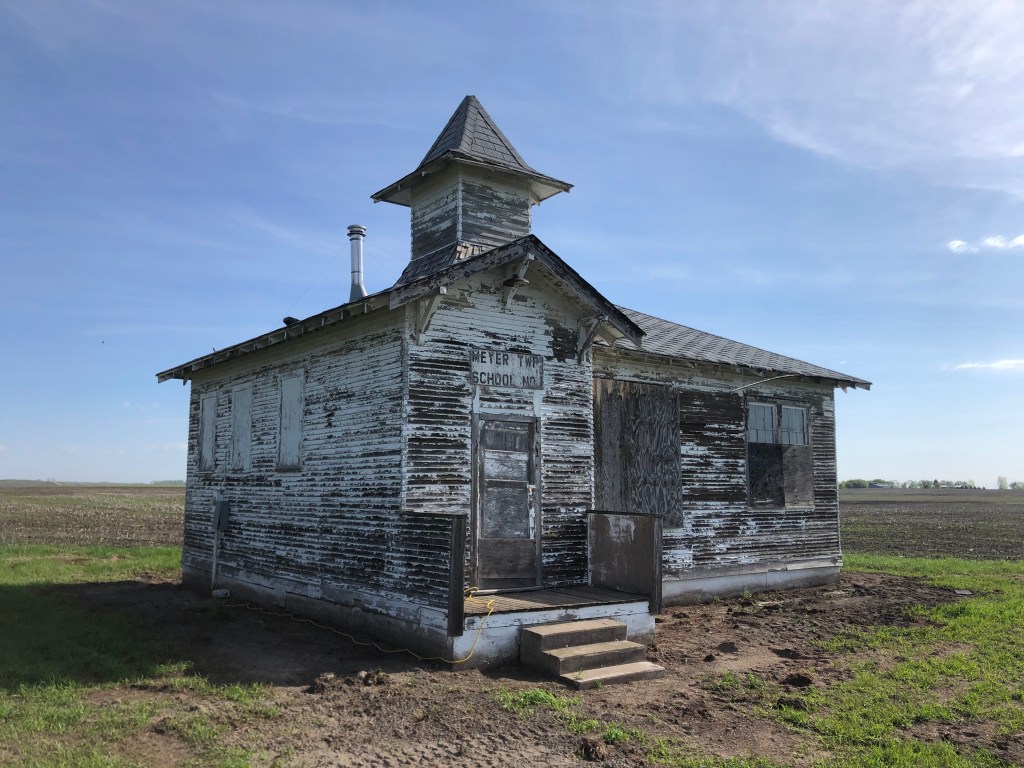
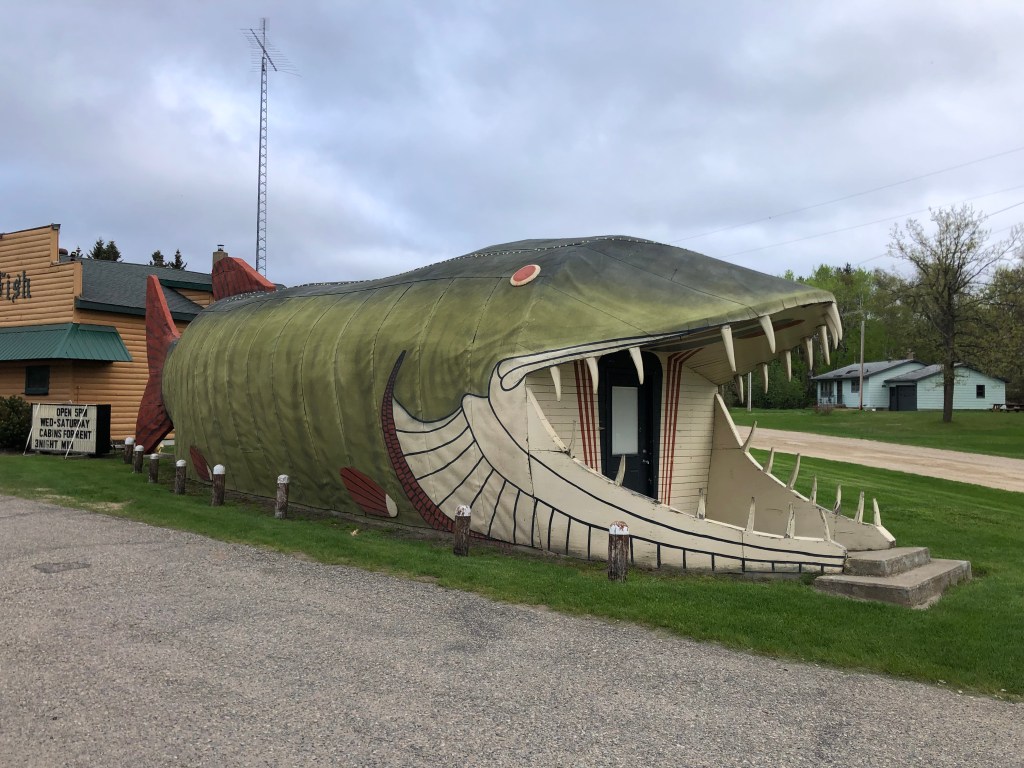
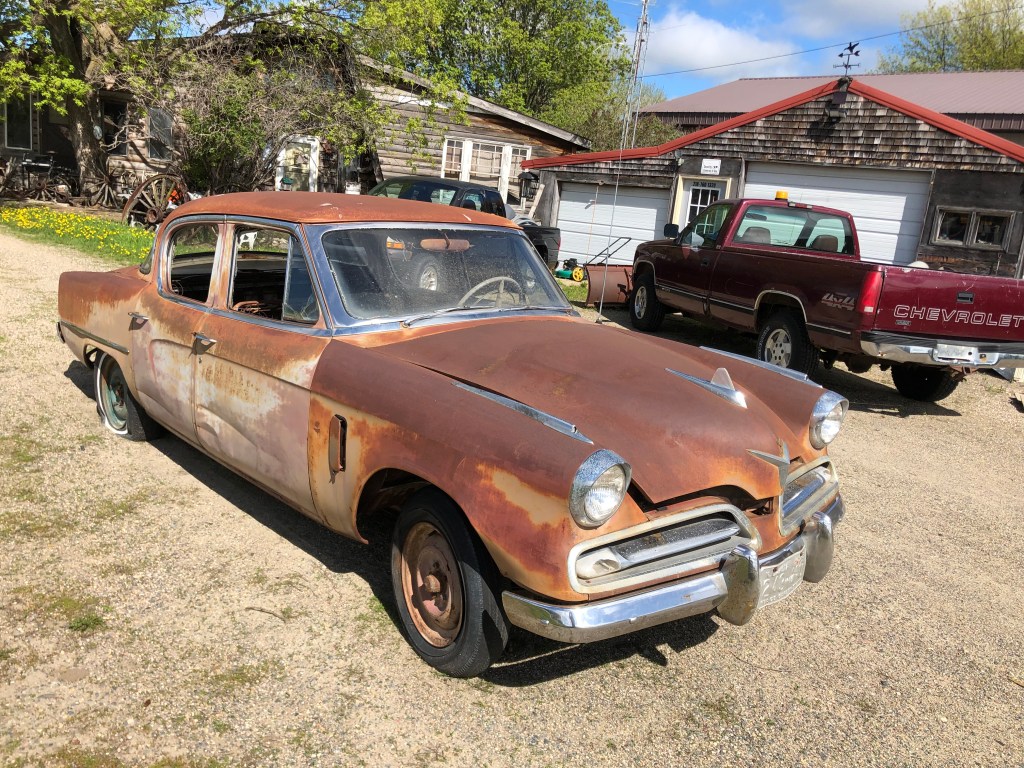
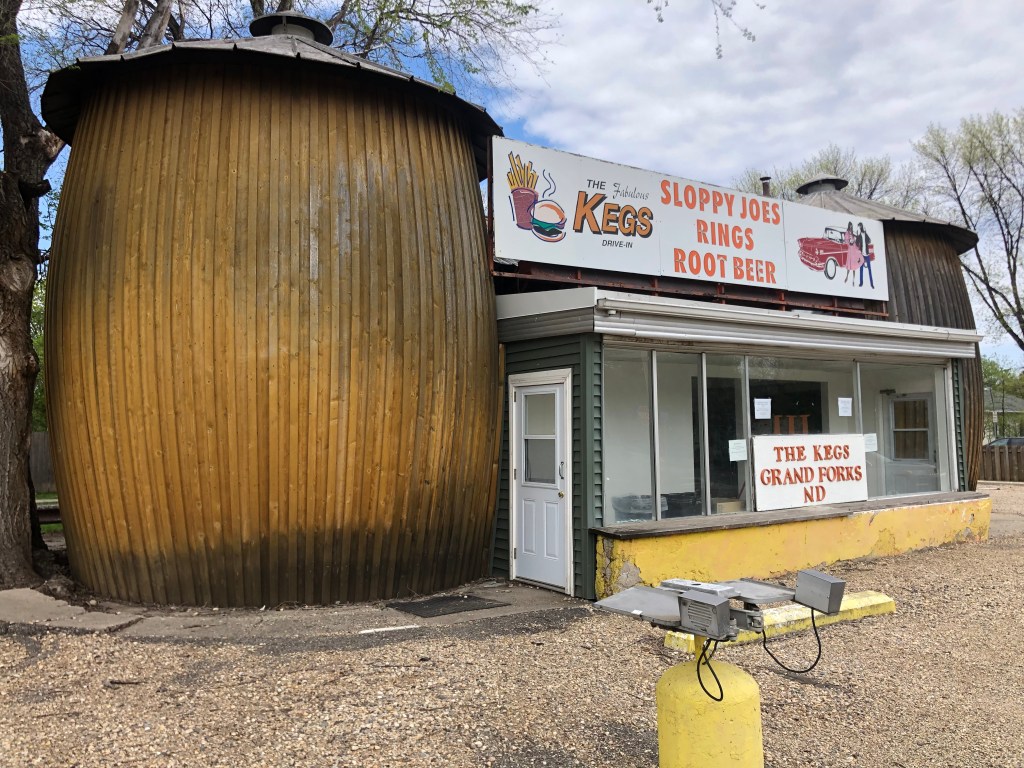
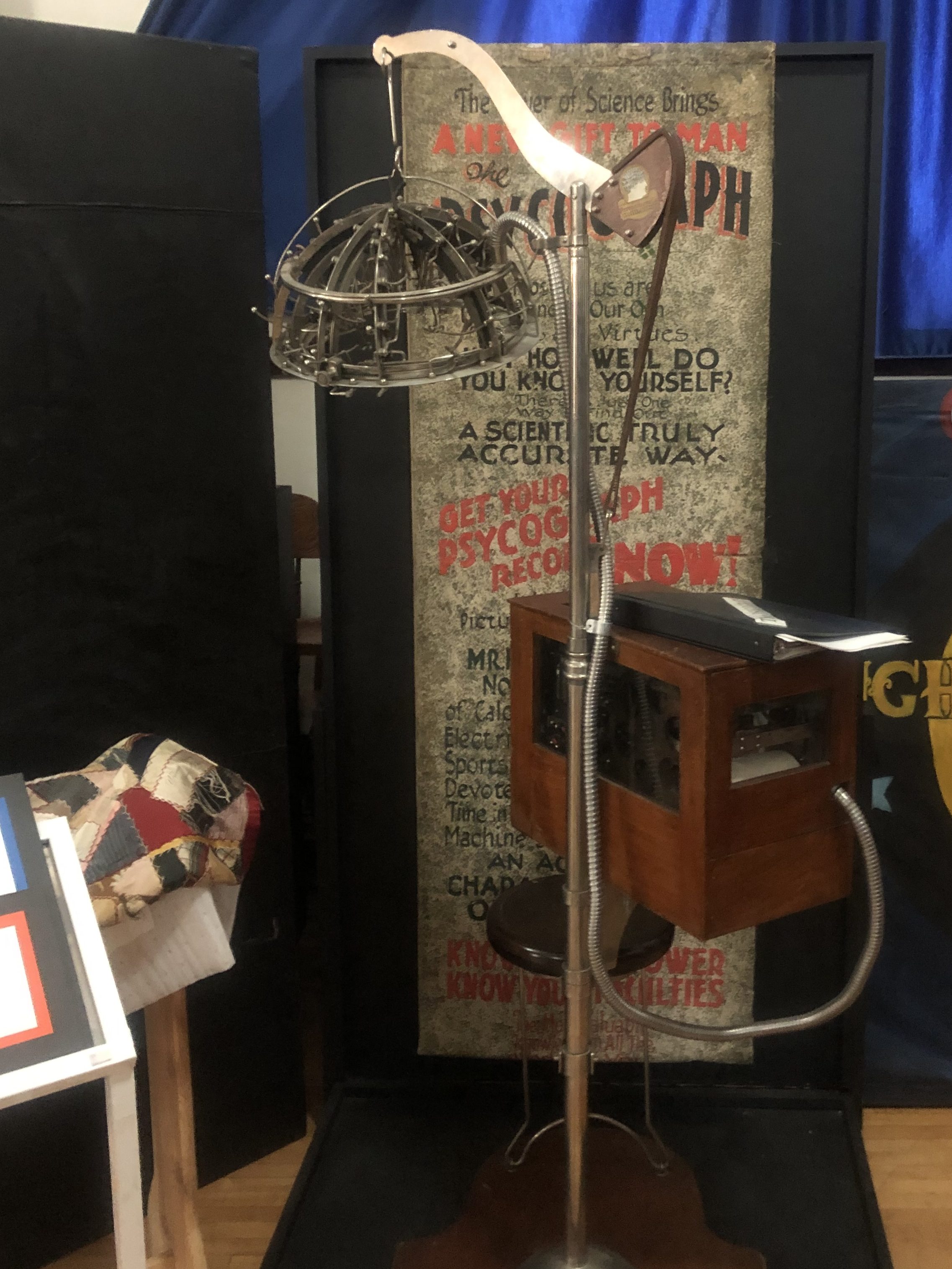
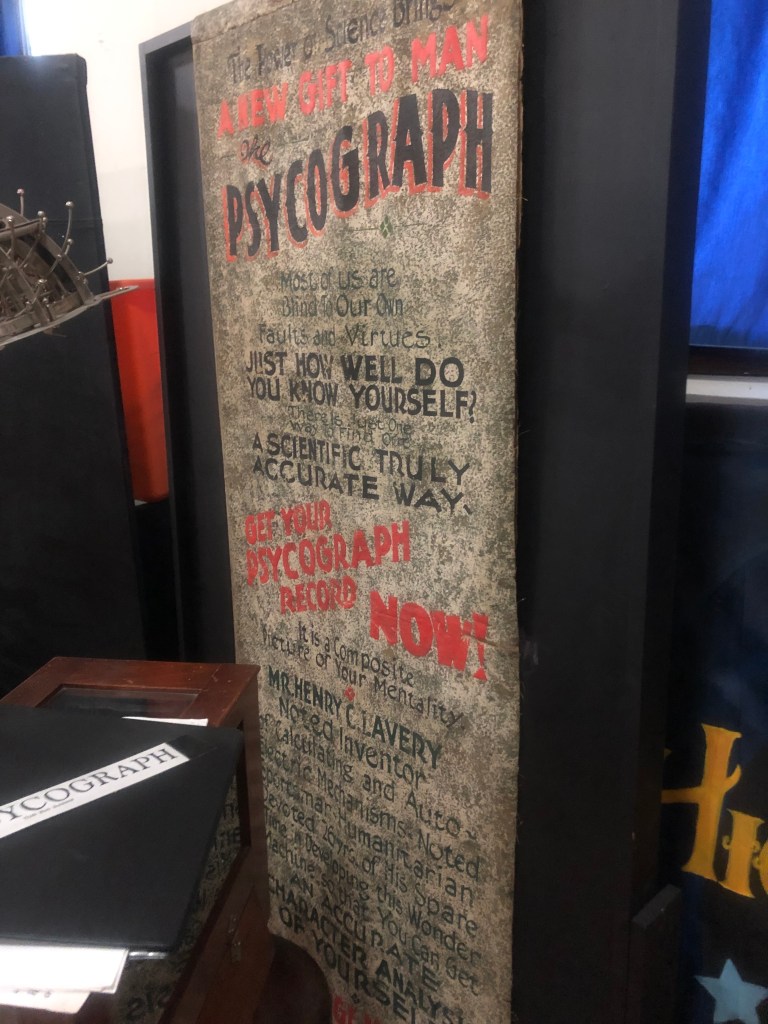
Epping, ND (pop: 100). Practically a ghost town, the only businesses showing any signs of life were the post office and the bar…which are in the same building.Another Epping builidng.Speaking of bars: here’s one that’s getting a little long in the tooth, in Dodson, MT (pop: 125).The Welcome Wagon went all out.Barn near Waterville, WA, built in 1906. Dr. Pierce’s concoctions were well-known quack medicines.Cool, cut-metal sign at cemetery in Leavenworth, WA (the Bavarian town). This is one of the few signs that wasn’t all tarted up in faux-German script.Muffler man sculpture in Snohomish, WA.Similar idea, a thousand miles to the east. If I only had a heart…Concrete teepee that houses espresso shop, originally built in Browning, MT, on the Blackfeet reservation. It originally opened as a gas station in 1934.Supposedly a legit livestock feed store. But what’s up with the name??In front of a dentist’s office in Bonners Ferry, ID. I wonder if they use old-timey foot-operated drills?I just love the old UP steam locomotives. This one, from 1904, is in Reardan, WAThe one-room school house that NBC news anchor Chet Huntley attended in Saco, MT. Remember him?Old Carnegie library in Malta, MT. It was originally built in 1917.Mysterious metal sculptures in Glasgow, MT.More sculptures. It’s not obvious, but the “I saw it” sign is on an old saw blade. Get it?Eight-legged calf at a classy museum in Glasgow, MTHillside cemetery…with no hill.Meyer Township School in Rugby, ND. Originally built in 1897, and closed in 1959. And still standing!Big Fish Supper Club in Bena, Minnesota. I’m told it appears in the opening credits of National Lampoon’s Vacation. Built in 1957…back when this kind of thing was de rigueur. Now it’s a little–er–long in the tooth.1952-(ish) Studebaker Commander. If you can better identify the year/model, let me know!“Fabulous Kegs” drive-in in Grand Forks, ND, built in 1935. I’m told it was part of a chain.This “psycograph” requires a little explanation. The contraption, which to me looks like one of those hair dryers my mom sat under at the beauty shop, is supposed to automatically measure your intellect and other brain-related capacity–including “faults and virtues”– using the (now-discredited) principles of phrenology. It was patented in 1905 by Henry Lavery in Superior, Wis. I saw it in a museum in that same city. More info here.That’s all, Folks!
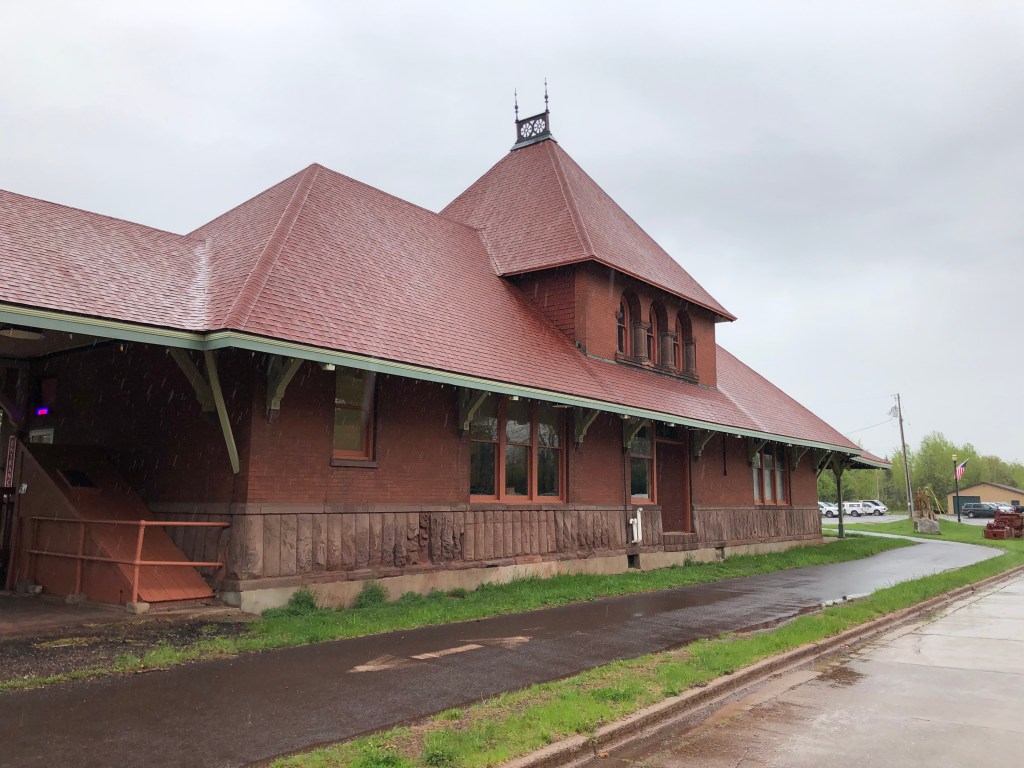
As I headed out of Ironwood this morning, I passed another venerable old railroad depot.
Ironwood Railroad Depot, looking good at 130 years old.
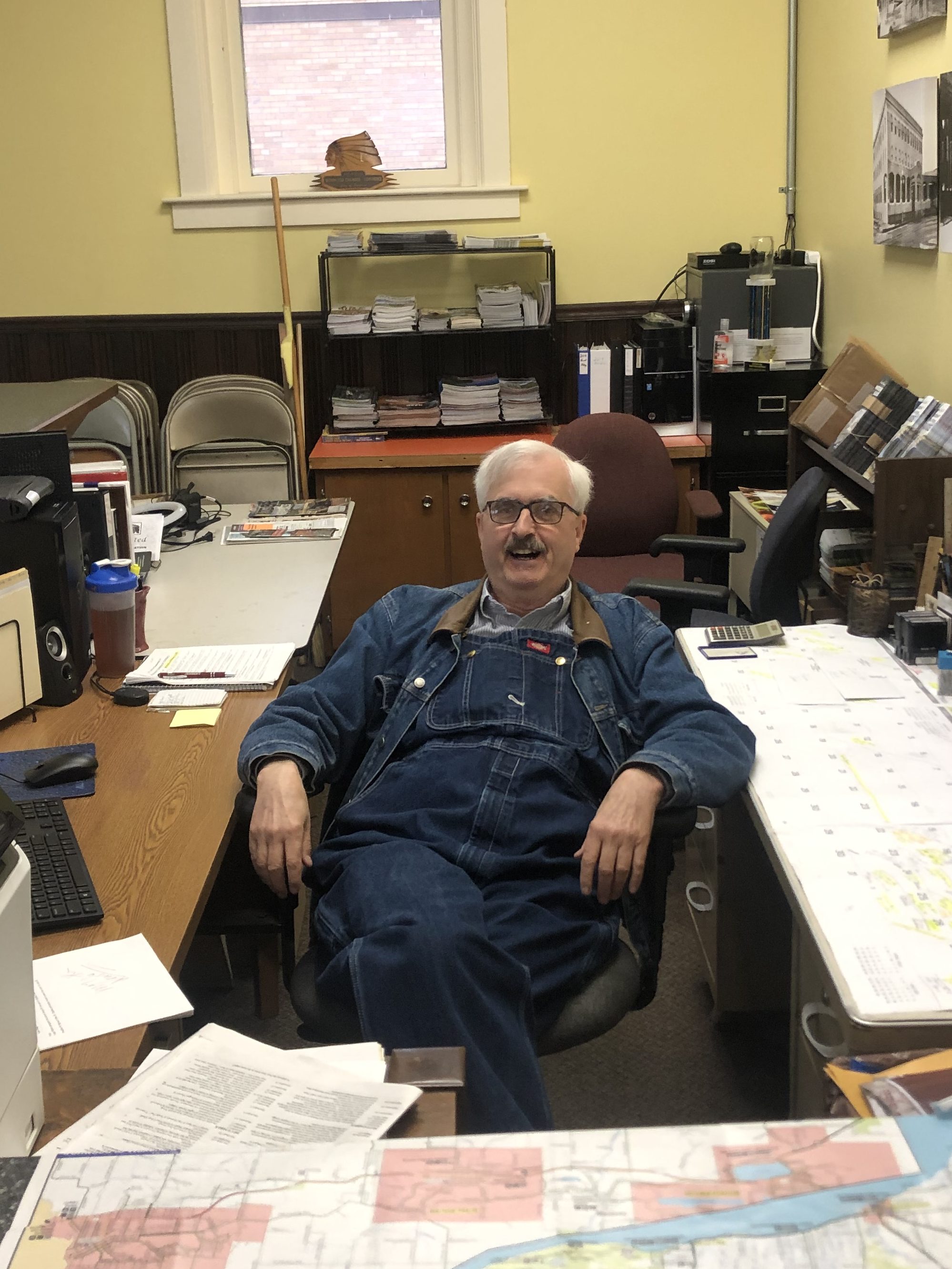
The Ironwood depot of the Chicago and Northwestern Railroad was the town’s transportation hub since it opened in 1892, but the trains stopped coming through in 1970. It’s now a museum and the headquarters for Ironwood’s Chamber of Commerce. It was a few minutes after 7 am when I arrived there, but I found the door unlocked and entered, being greeted by the Chamber of Commerce’s director, Michael Meyer.
Michael gets points for wearing the railroad overalls.
Michael spent close to an hour with me, explaining the history of the depot and of the town. He’s a transplant (from Indiana, if I recall correctly), and thus can speak somewhat objectively about the Yoopers. He’s also a great booster for the town. Apparently the economy took a major jolt when the railroads left and mining petered out, but now, to listen to Michael, the town is experiencing a renaissance.
Michael hepped me to a documentary film about Route 2 called “Route 2 Elsewhere.” (I wish I’d thought of that name!) I’ll have to check that out when I get home. He’s the first person I’ve talked to on this trip who even knew that Route 2 spans the entire country.
After we’d talked awhile Michael was called to a meeting of some kind, and I wandered the displays of the museum. It was the usual stuff–interesting to me, but not really worth describing in a blog. With one exception:
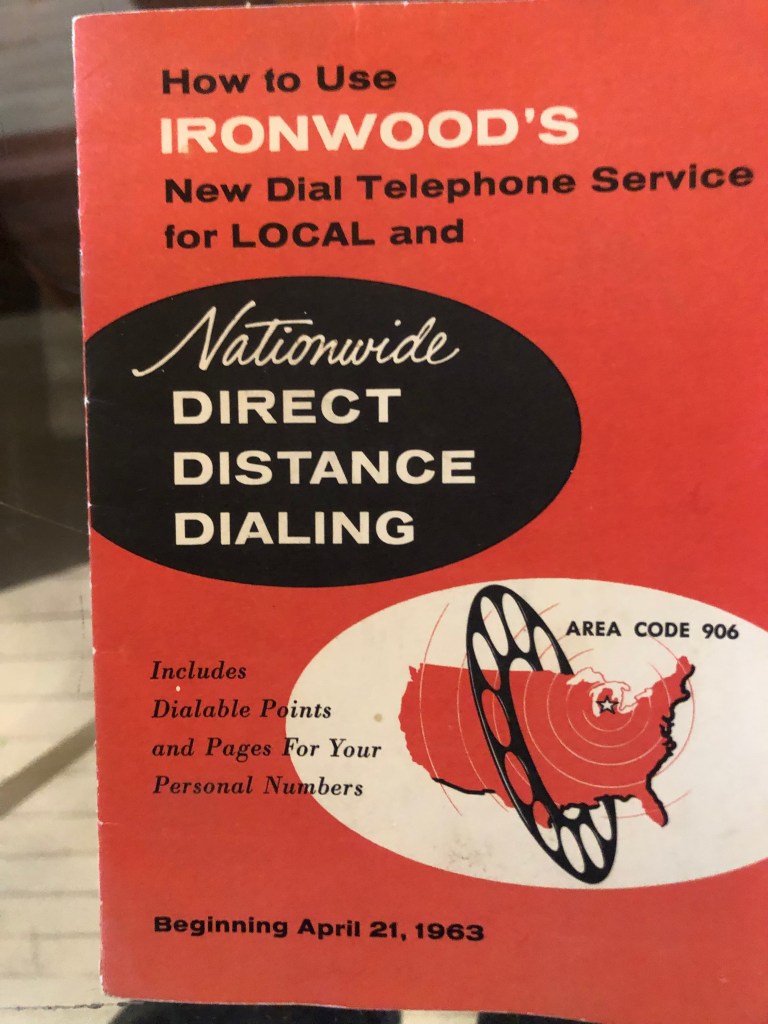
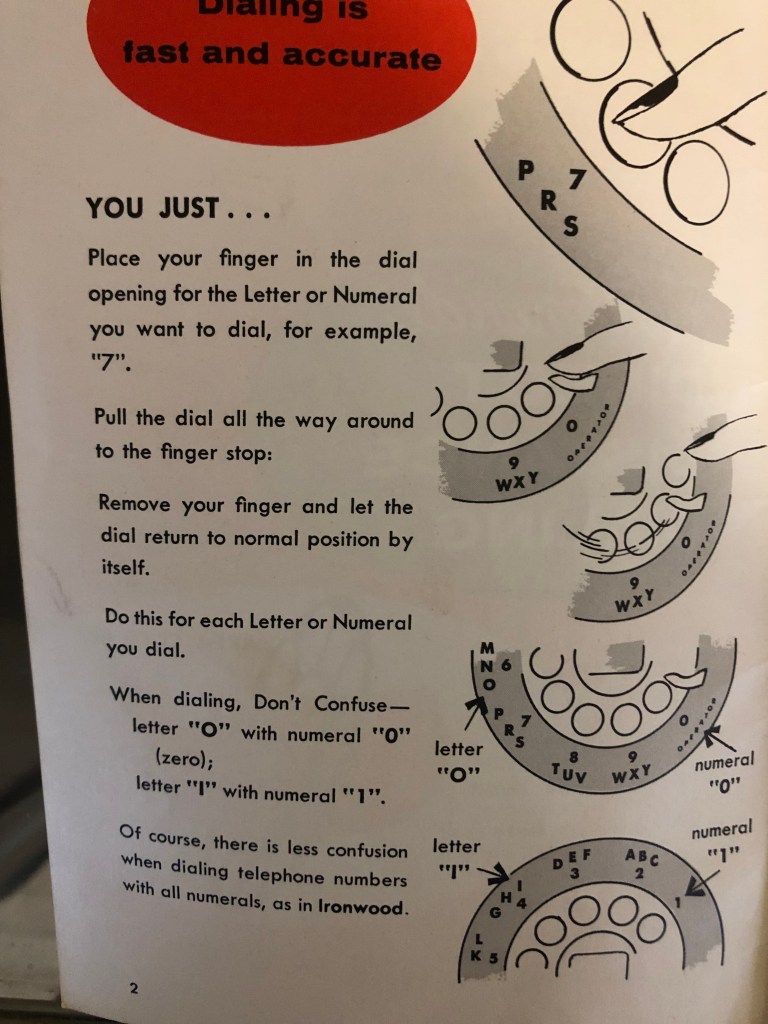
The museum has an old telephone switchboard, and on it was this brochure that evidently was provided to all phone customers in 1963. Now, I’m not saying that Ironwood was a little behind the times, but the brochure explains in excruciating detail how to dial a phone. (I realize that some of my younger readers might not understand this concept, either.)
From the days before instructional Youtube videos.
After reviewing these eye-opening displays about my own early childhood, I got back into the rental car (which is a Jeep, for those of you who have asked) and headed into the great state of Wisconsin.
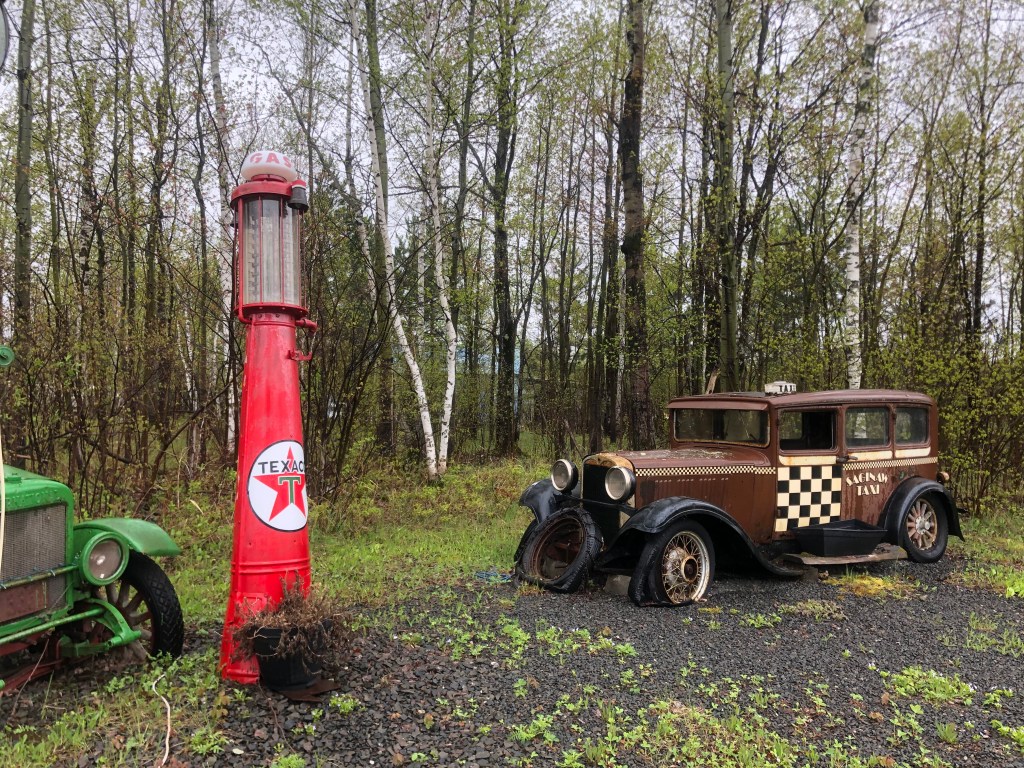
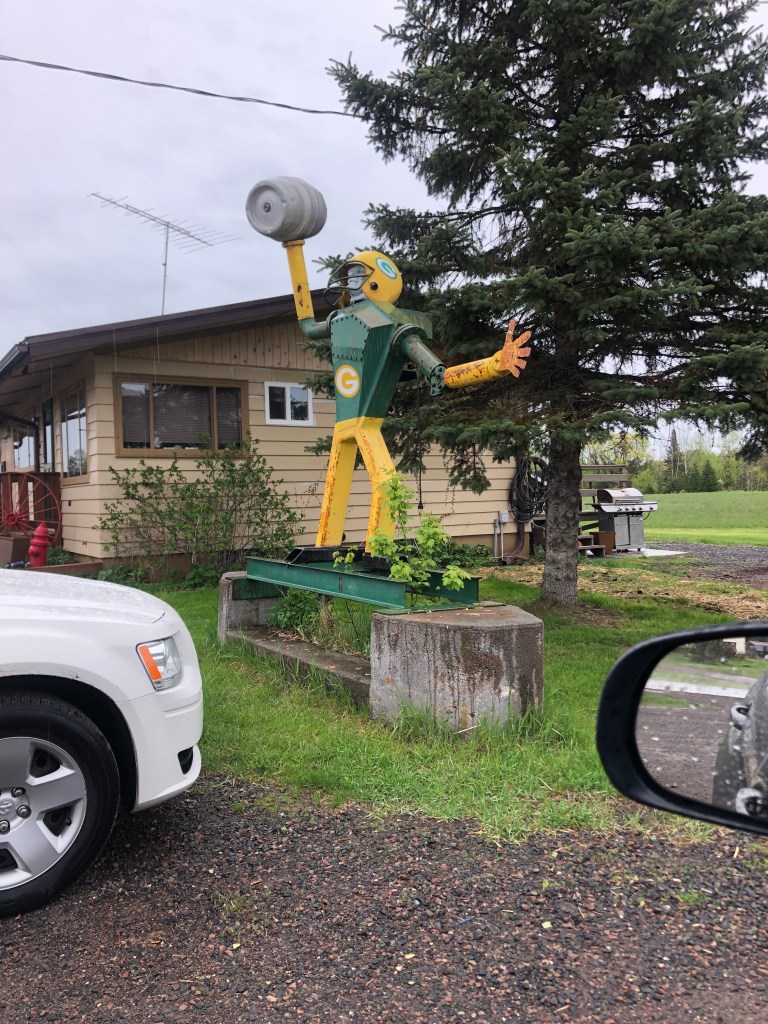
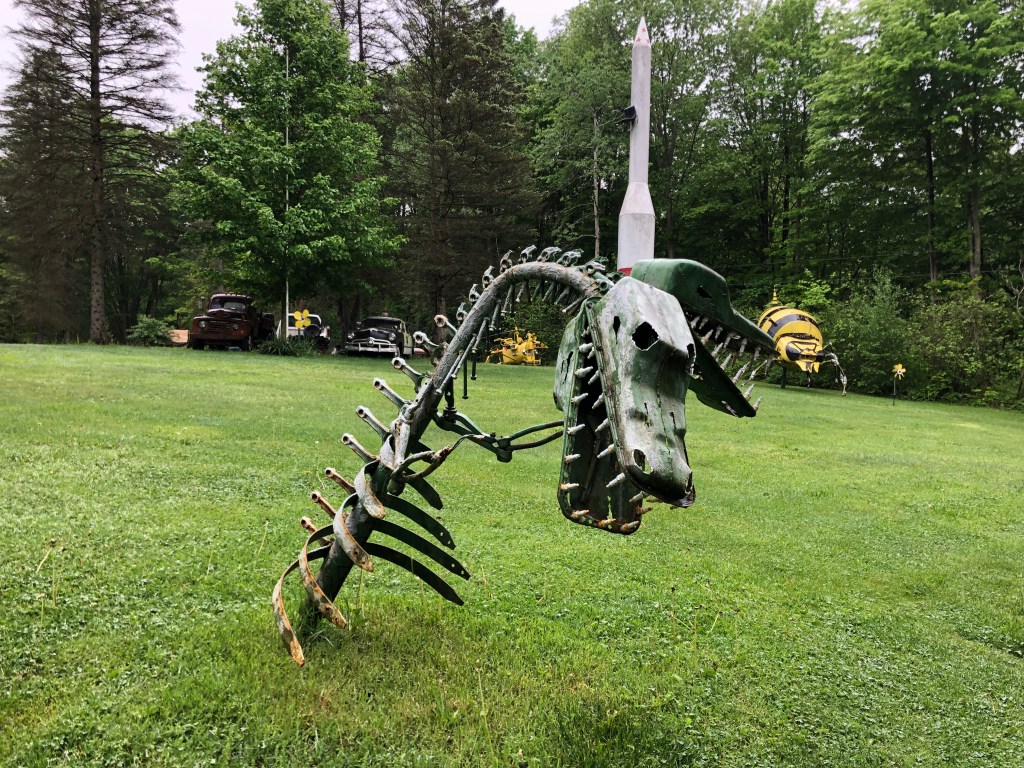
I have to say this about Route 2: It’s really a very reliable, comfortable, friendly road. This is in part due to the fact that it goes through very few big cities; most of the towns you encounter are small villages that aren’t going to ticket you for parking in the wrong spot or prohibit you from turning left. The gas station attendants and restaurant servers are uncommonly friendly, and graffiti is practically unheard of. Moreover, property owners seem to be compelled to communicate with passersby through yard art. A few examples:
On the side of the road in Solway, MinnesotaIn front of a liquor store. The keg is a nice touch.Made from car parts. Note the spark plug teeth.The April 1 date might be a giveaway.
There’s something reassuring about people taking the time and making the effort to add some whimsy for the benefits of passersby. I encounter a lot of this kind of thing out on the US highways. If you were to seek out the opposite of a twitter flame war, surely this kind of thing would qualify. God bless these people.
In the town of Mason, Wisconsin a gas station attendant encouraged me to check out an old, abandoned, Wild West theme park that was homemade by a man (recently passed) named Ed Sandor on his farmland. This I did, and it was one of the most enjoyable hours I’ve spent. It deserves its own blog post, which I hope to write in the next day or two. Here’s a photo to whet your appetite:
RIP Ed Sandor
Eventually I came to my first biggish town on this trip: Duluth, Minnesota (pop: 87,000). While stopping to get a sandwich, I asked the proprietor what Duluth is known for. Without skipping a beat, she said “Dylan.” It turns out that one Robert Allen Zimmerman (aka Bob Dylan) spent his early childhood in a modest home on North Third Avenue. I made the pilgrimage, and offer this humble photo.
House of the Risin’ Sun
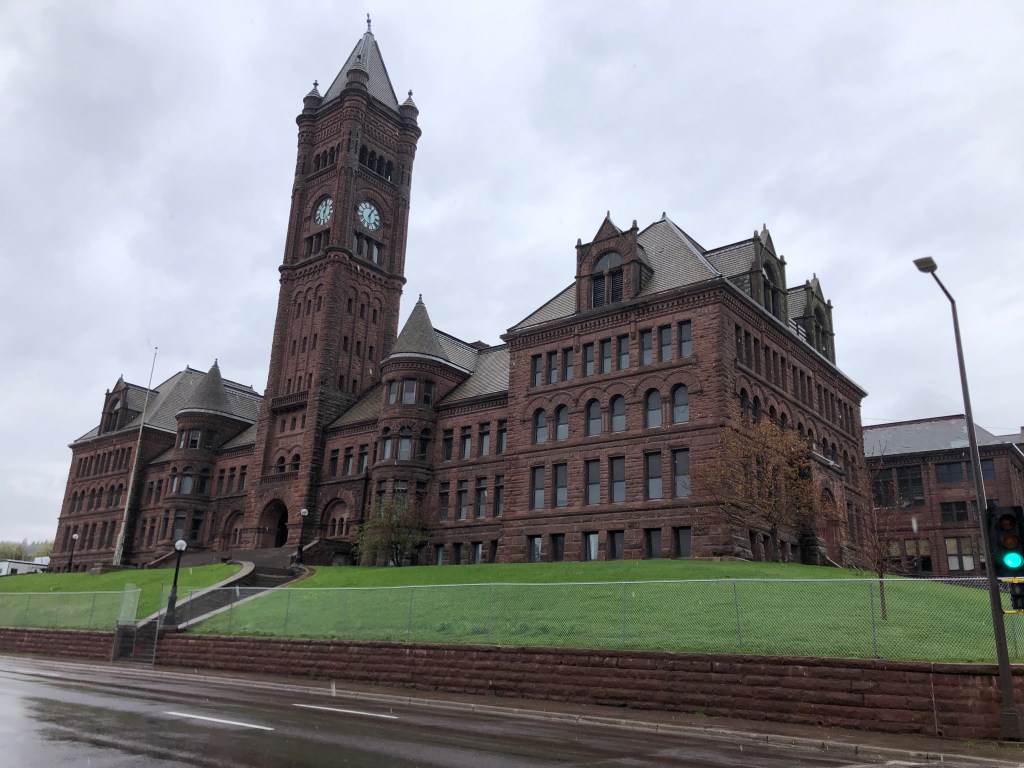
While in Dylan’s neighborhood, I passed Duluth’s Central High School. This is a breathtaking gothic building, originally constructed in 1893, and it didn’t close until 1970. And even then it remained open as administrative offices until 2011.
I can’t figure out what’s happening with the property now, but this is a staggeringly-impressive, large, historic property. Clearly it speaks of a day when public buildings were not just respected but revered. I do hope that Duluth’s leaders find a suitable use for this historic property.
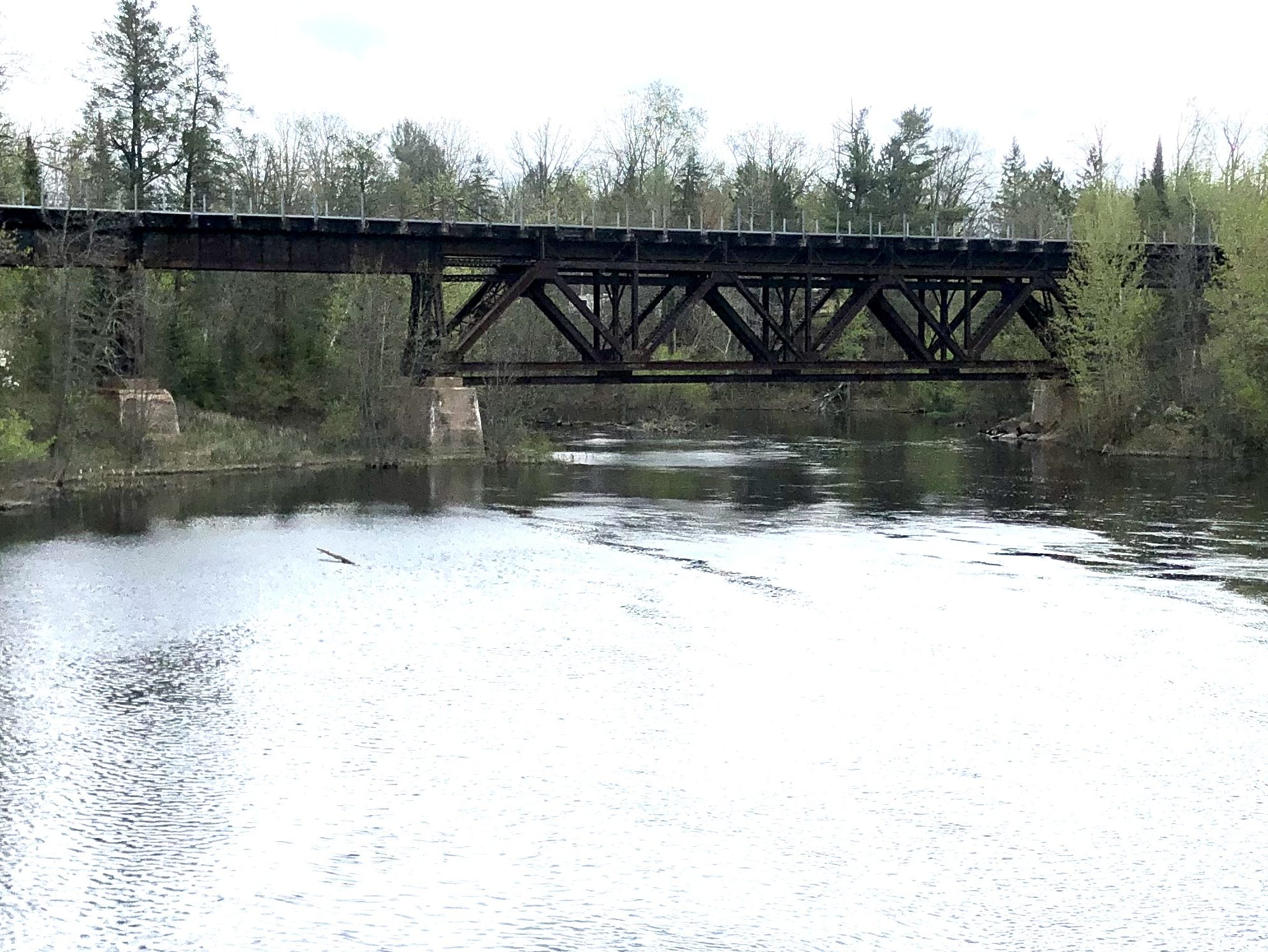
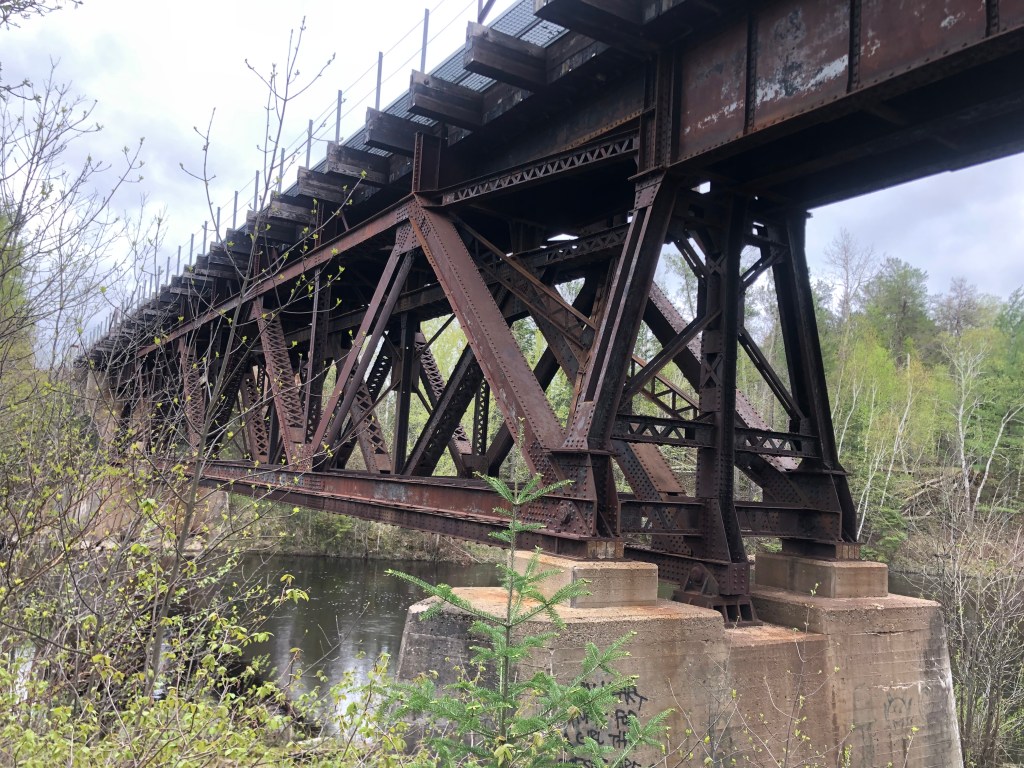
I ended the day’s travels in Grand Rapids, Minnesota (pop: 11,000). Based on my experiences as a tourist, Grand Rapids is known for two things. The first is that it sits at the upper navigable end of the Mississippi River. I noted this when I crossed the Mississippi on Route 2–it was nice to see a body of water that wasn’t one of the Great Lakes, after the past few days of Lakes Erie, Michigan, and Superior! I took a few photos of a picturesque, turn-of-the-century railroad bridge, and I noticed that the Mississippi wasn’t as mighty as I remember it from past encounters further south. (Edit: I later learned that this river is only a tributary of the Mississippi–the Prairie River.)
Carrying trains since 1899.
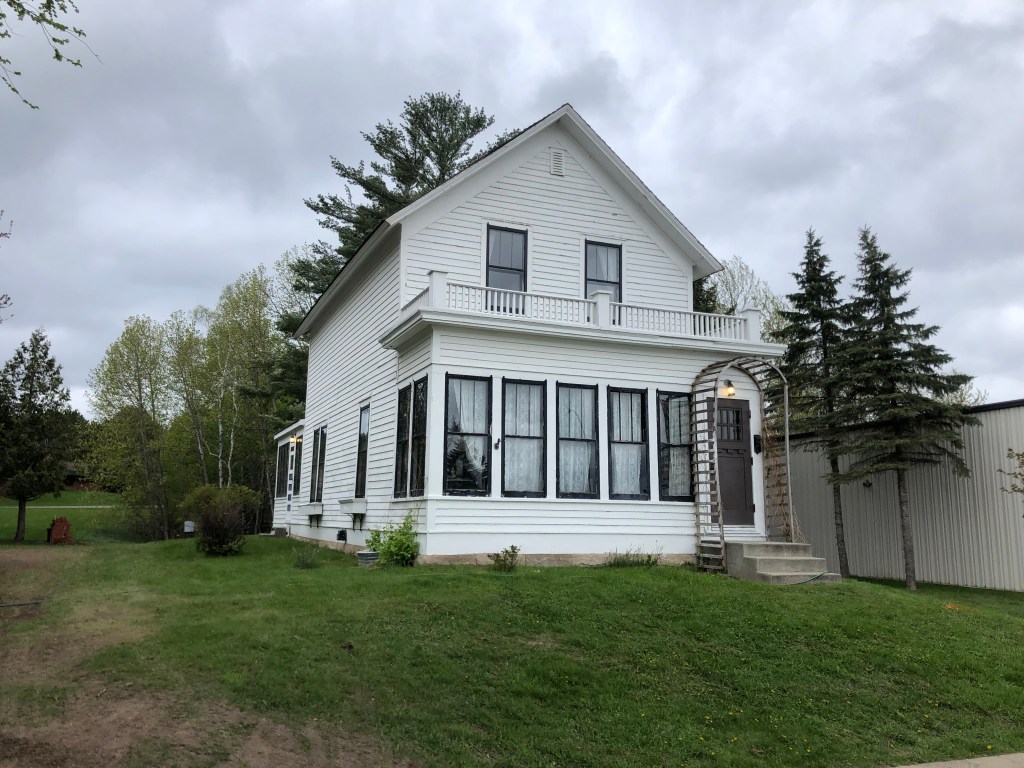
Second, Grand Rapids the birthplace of Judy Garland. Indeed, the hotel in which I’m staying tonight is next door to the Judy Garland museum, which includes the (relocated) home where Judy grew up.
There’s no place like home…
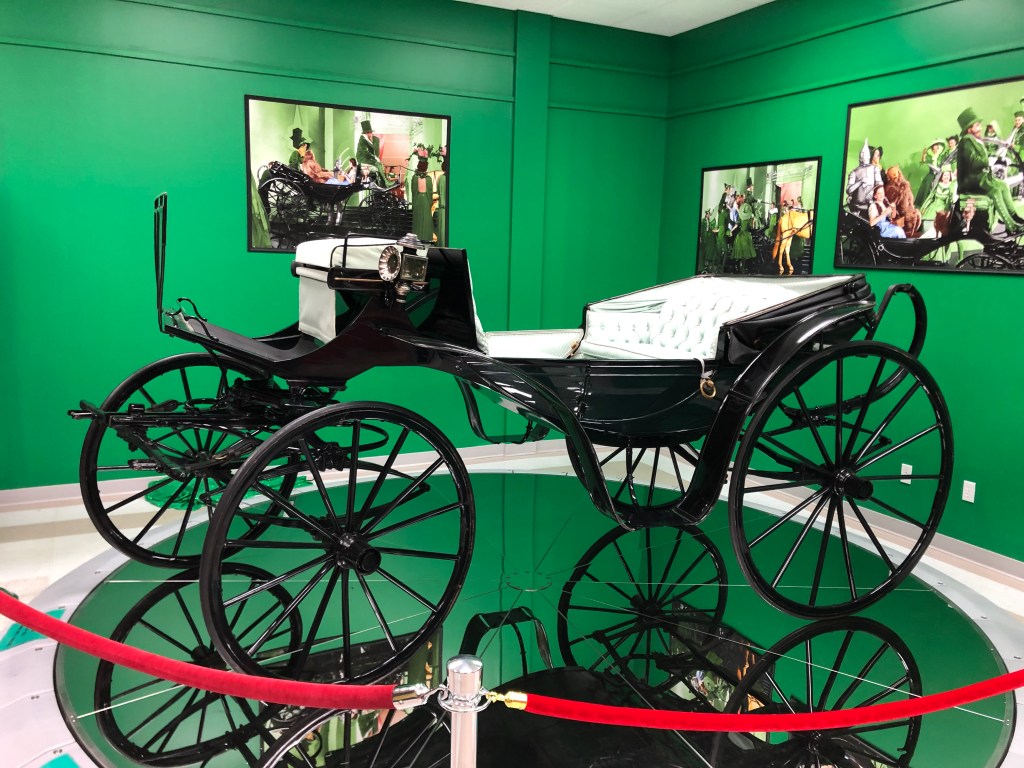
Now, to be clear, I’m not a total fanboy of Judy Garland, but I certainly find her story to be compelling. And I always loved The Wizard of Oz. So the museum (which I toured) intrigued me, with various artifacts from her movies and her (somewhat tragic) life.
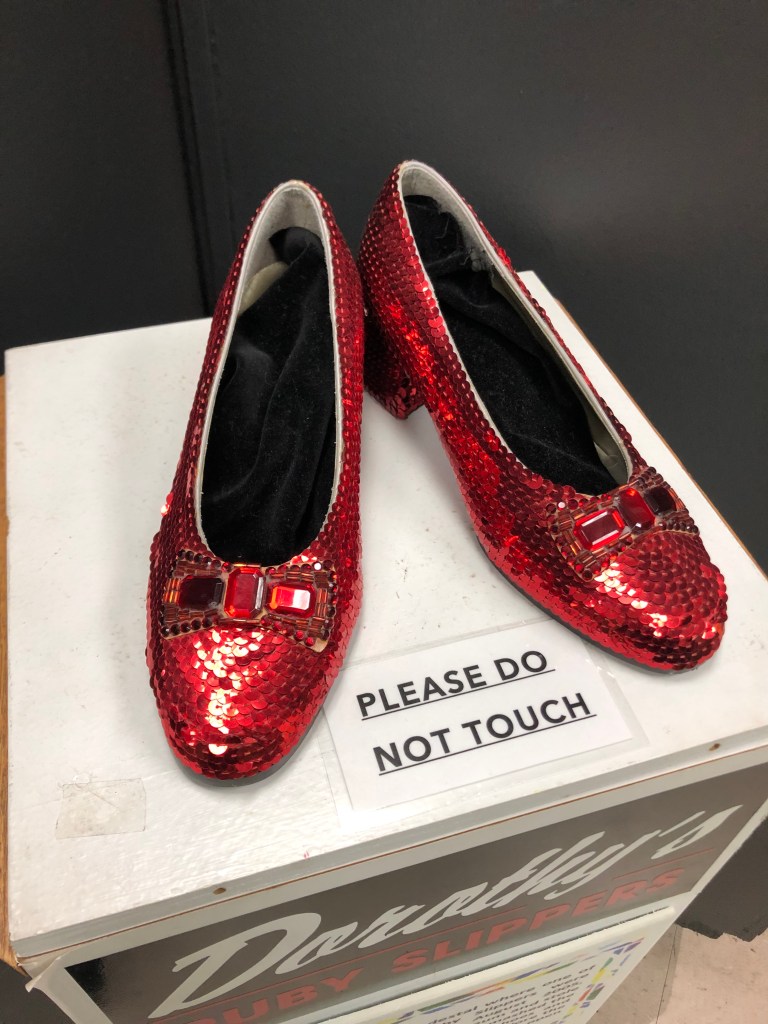
Naturally, my primary objective at the Judy Garland museum was to see the ruby slippers. And behold, there they were, just sitting on a pedestal with no barrier separating me from them!
“Their magic must be very powerful, or she wouldn’t want them so badly.”
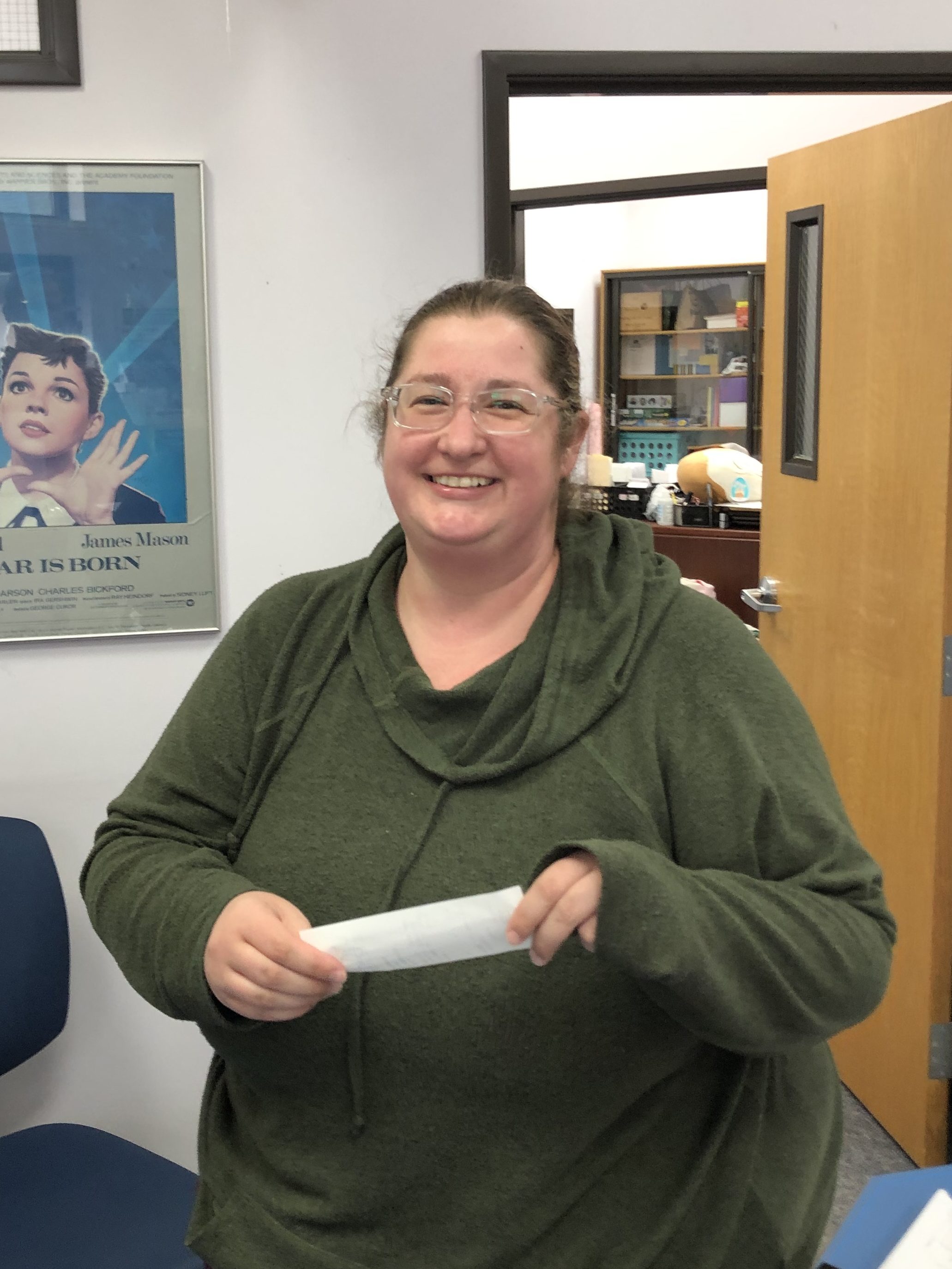
Alas, a sign explained that while this was the “original pedestal” on which the ruby slippers used to sit, the slippers were reproductions. The original slippers were stolen in 2005. A docent (Sheena, pictured below) told me that the slippers were recovered in 2018 in Minneapolis, but they remain in the possession of the FBI, which continues to gather evidence of the crime. What’s worse is that the slippers were just on loan to the museum, so if and when the FBI releases them, they’ll go to the owner, and not to the museum.
Sheena, the Wizard of…the Garland Museum.
Still, the museum contains numerous authentic artifacts, and I recommend it. Meanwhile, when she heard I was driving the length of US Route 2, Sheena encouraged me to visit the headwaters of the Mississippi River, which are a short drive from the highway. This I will do tomorrow. Until then.
BOTD
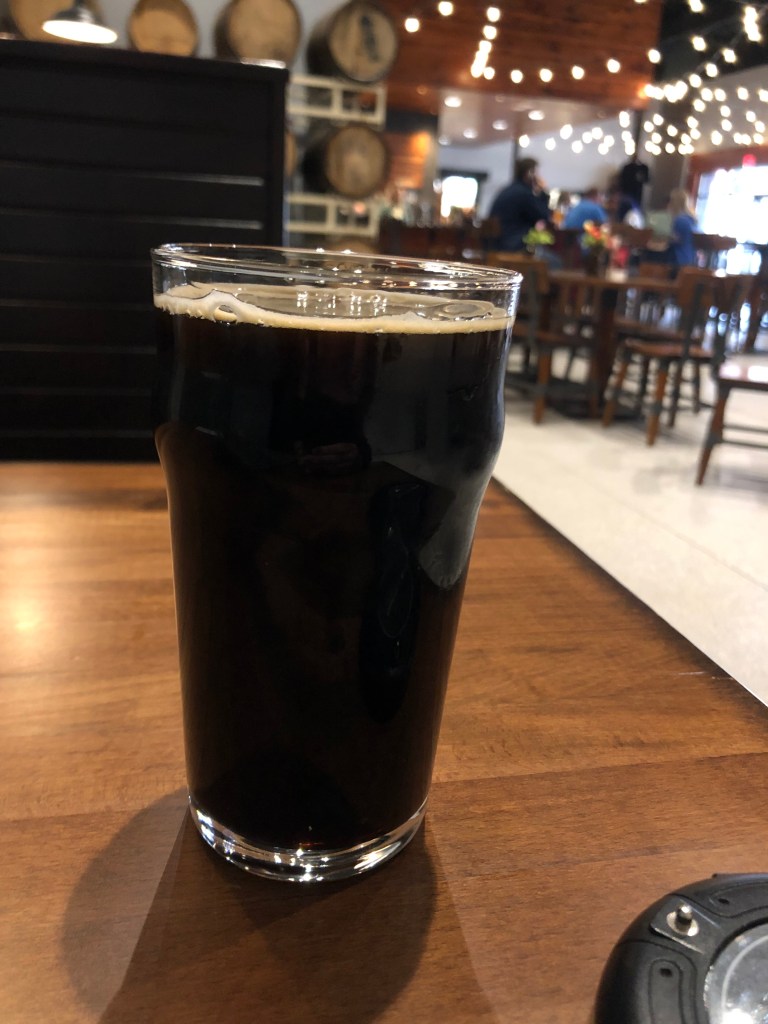
The Ichabod Crane of beers.
The Brew of the Day was a “Cocon-Oat and Boat Stout” from Rapids Brewing Co., in Grand Rapids, Minnesota. RBC has only been around for about 3 years, and it looks like your typical modern brewpub with a spacious floor in a warehouse-like building, minimalist industrial-chic decor, and lots of bearded hipsters. But unlike some other such brewpubs that I’ve visited, this place has nailed the food and the staff really makes an old guy like me feel welcome.
As its somewhat-forced name suggests, the “Cocon-Oat” stout is an oatmeal stout brewed with toasted coconut. This won’t be everyone’s cup of tea, but it totally worked for me. The toasted coconut isn’t overpowering, but it adds just the right amount of sweetness and interest to the flavor profile. Don’t think Mounds candybar; think macaroon. The oatmeal lends a creamy smoothness, and it has just the right amount of hops. It goes down really easy, but at 5.9 percent ABV, this isn’t going to put you on the floor. I give it 4.5 stars.
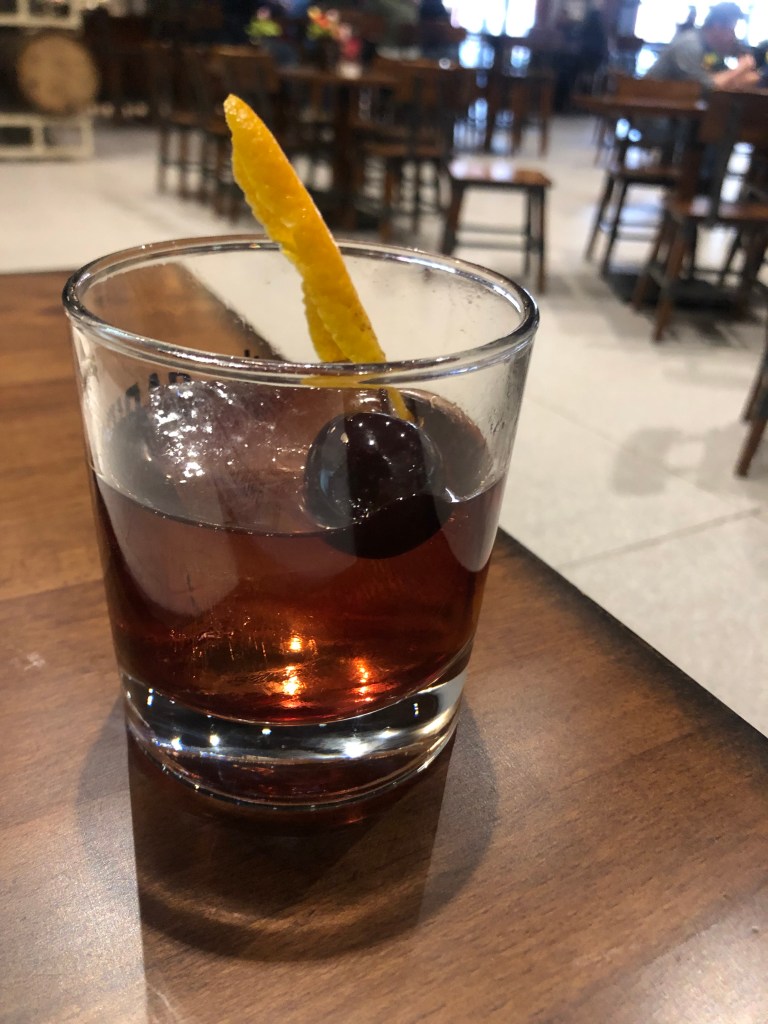
PS: The bartender told me that today is Whiskey Wednesday, which means that I get $2 off any bourbon cocktail. So I chased the stout with an Old Fashioned, to which I give 5 stars.
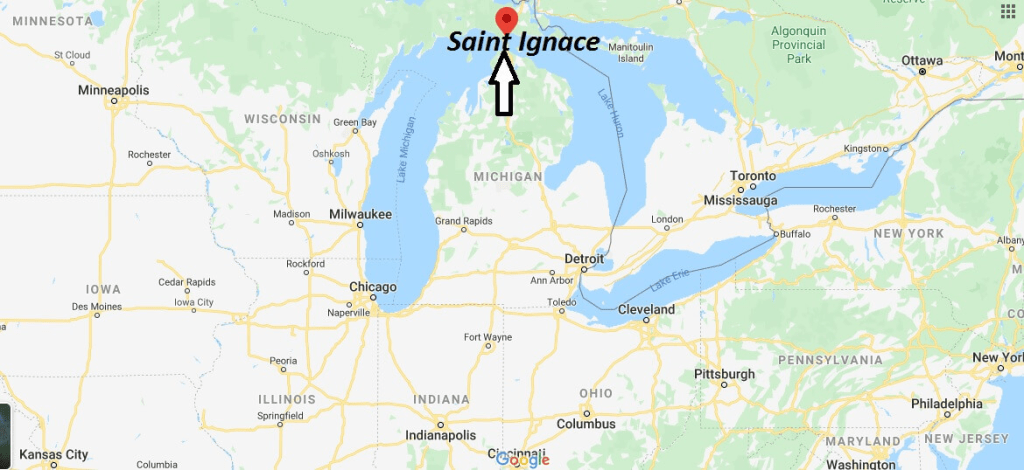
This morning I awoke to a pleasant, clear, sunny day in St. Ignace, Michigan—a city that straddles Lake Huron and Lake Michigan.
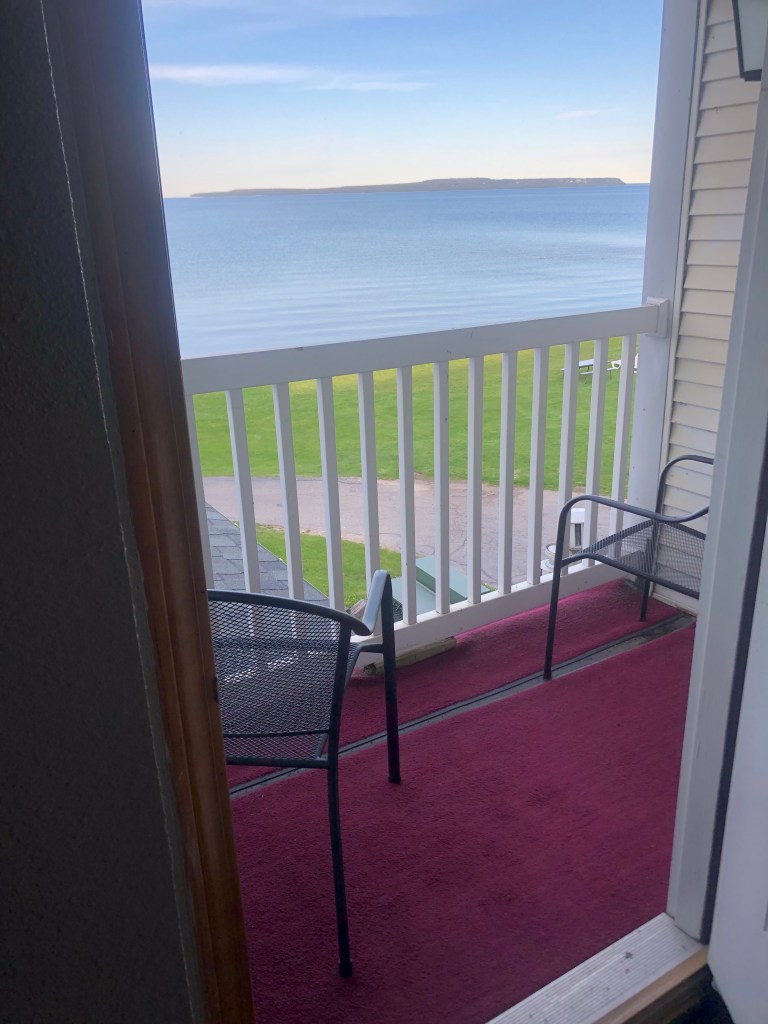
Uncharacteristically, I even sprang for a room with a view. When I awoke in the middle of the night and observed that there were virtually no lights to be seen out around the lake. I guess there’s very little development out in these parts.
Paging Lucy Honeychurch…
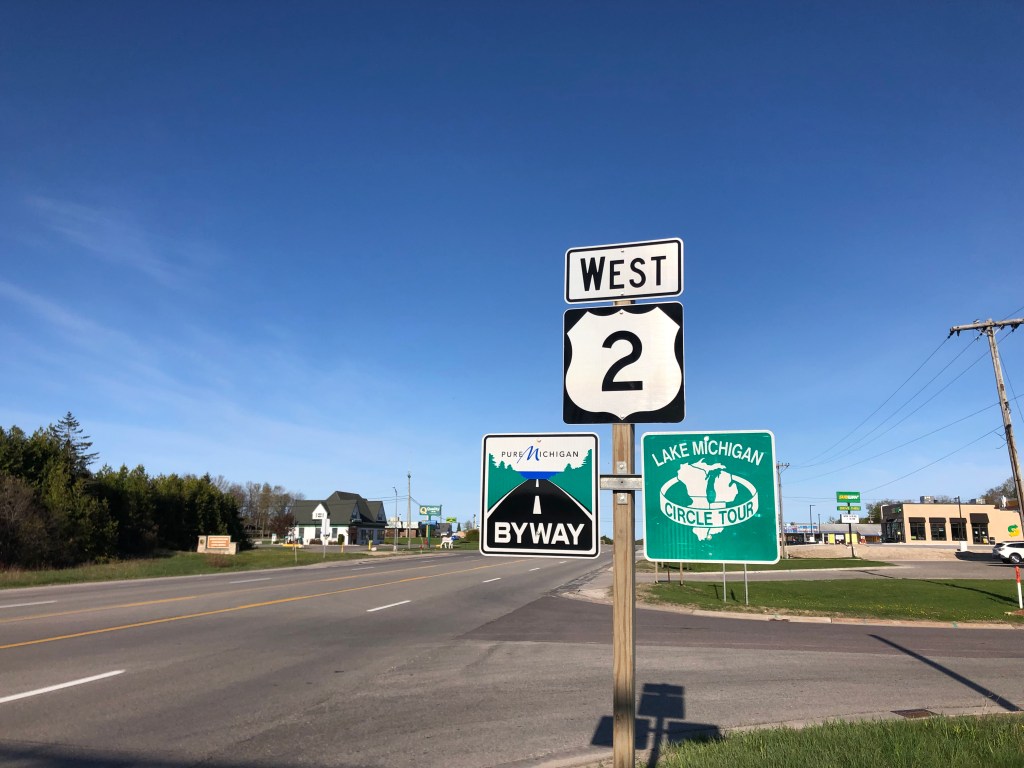
After a virtually inedible continental breakfast at the hotel, I drove a few blocks to the beginning of US Route 2’s western segment.
And away we go!
The day’s travel took me about 300 miles due west across Michigan’s Upper Peninsula, or UP (sounds like “you pee”) (that’s a quote from a helpful cashier at the local BP [“bee pee”?] gas station). Residents of the UP are therefore called “Yoopers.”
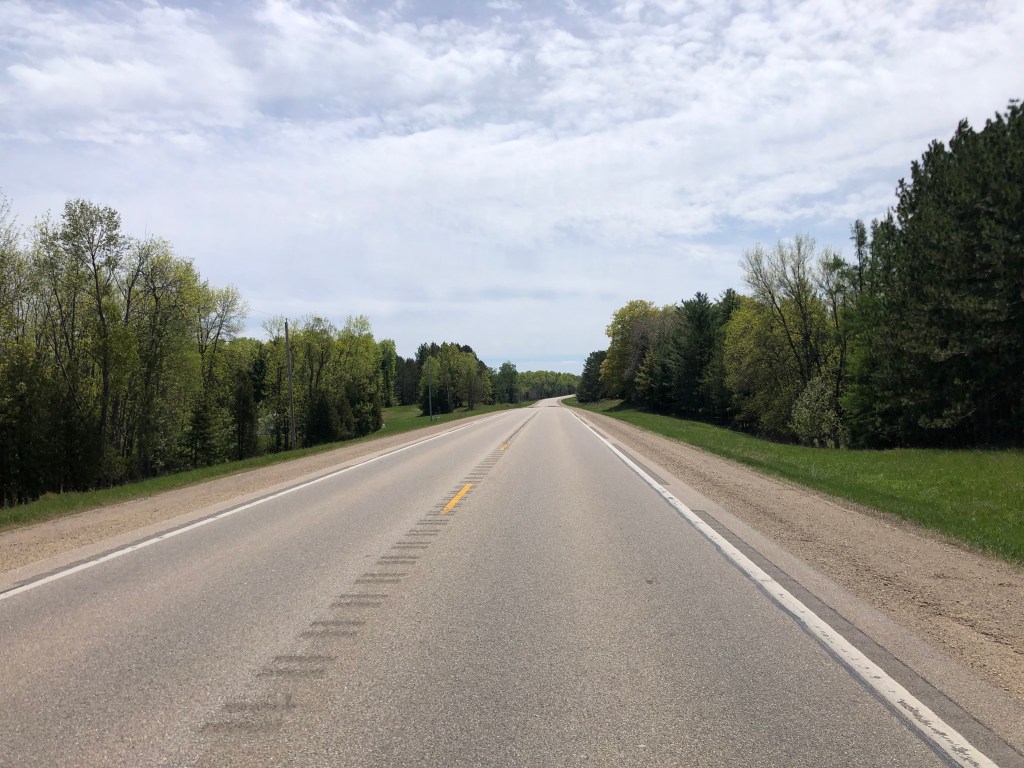
Anyway, I pointed the car west and soon the touristy town of St. Ignace was in the rearview mirror. US 2 is a simple two-lane road surrounded by pine and spruce, and offers occasional glimpses of Lake Michigan to the south. It has virtually no stoplights or even stop signs, except when it passes through the occasional small town. It’s a great road for decompressing and pondering the meaning of life.
As I went driving that ribbon of highway/I saw above me that endless skyway.
Now, I don’t pretend to be an expert on the UP. In fact, this is the first time I’ve ever set foot in the territory. But after 300 miles of driving, with numerous stops and exploratory side trips, I can offer the following top five things that the UP is (or should be) known for:
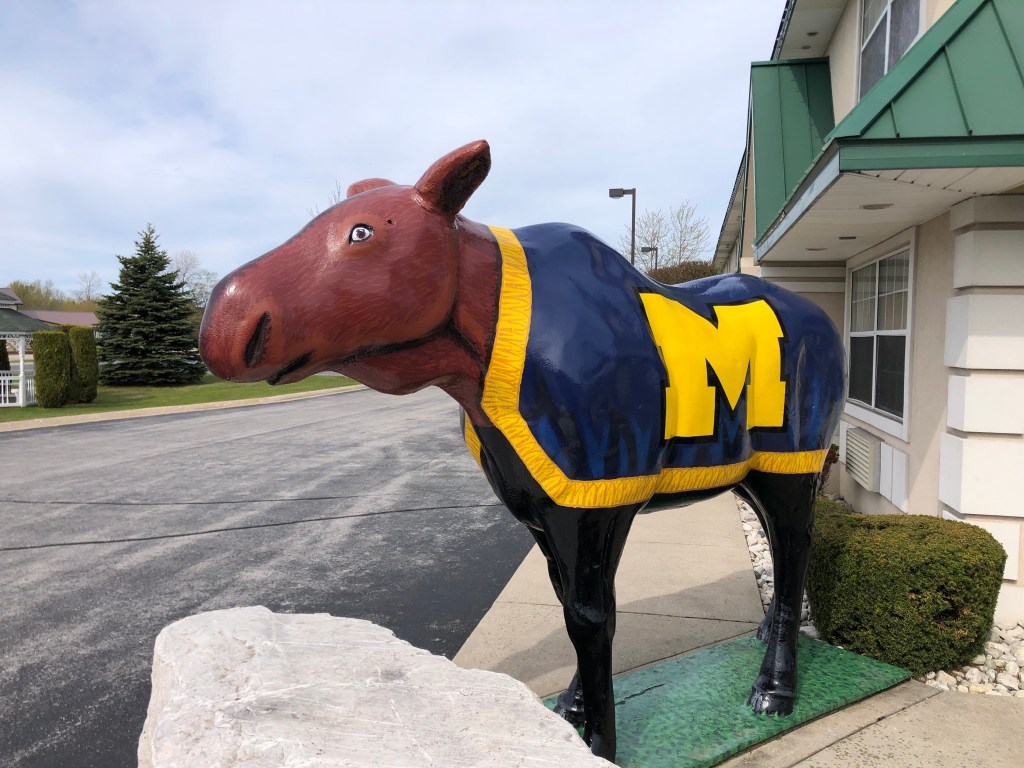
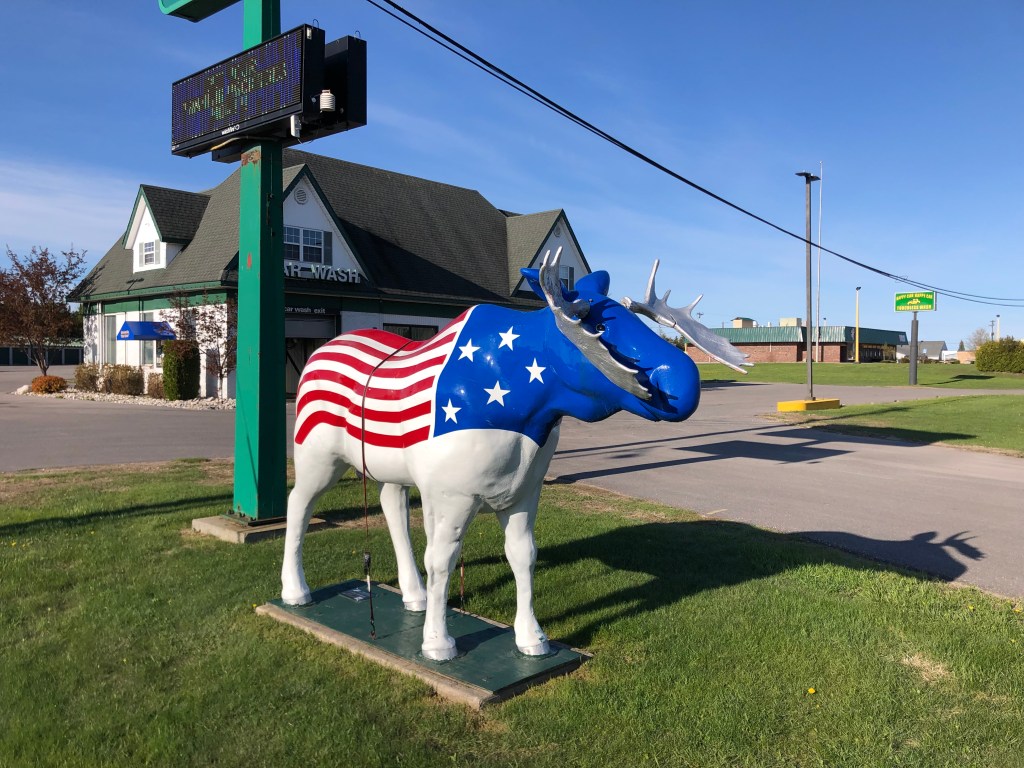
1: Moose. Moose are native to Michigan, but they were heavily predated and largely eliminated from the lower part of the state in the 1800s. In the 1980s Michigan’s Department of Natural Resources introduced more moose into the UP, where they maintain a self-sustaining population. The moose seems to have become an unofficial mascot, which I came across repeatedly.
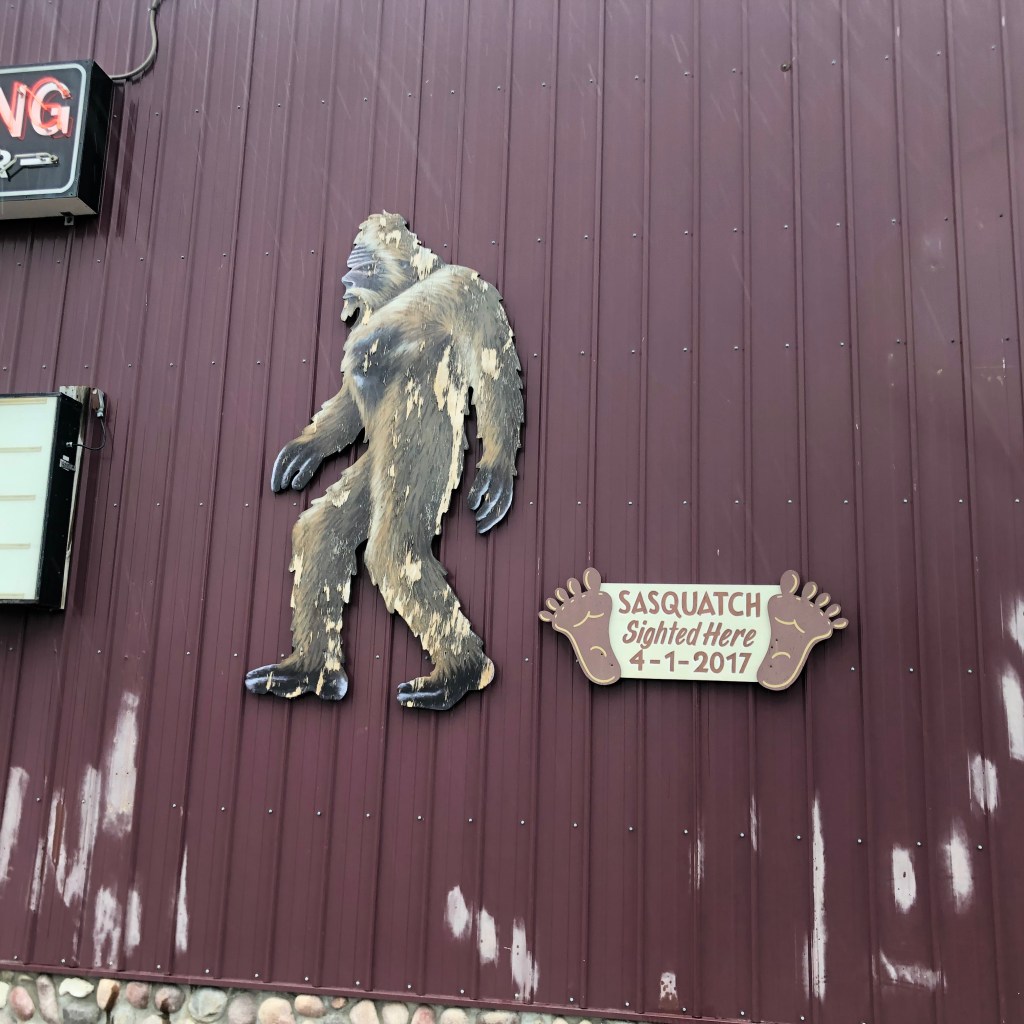
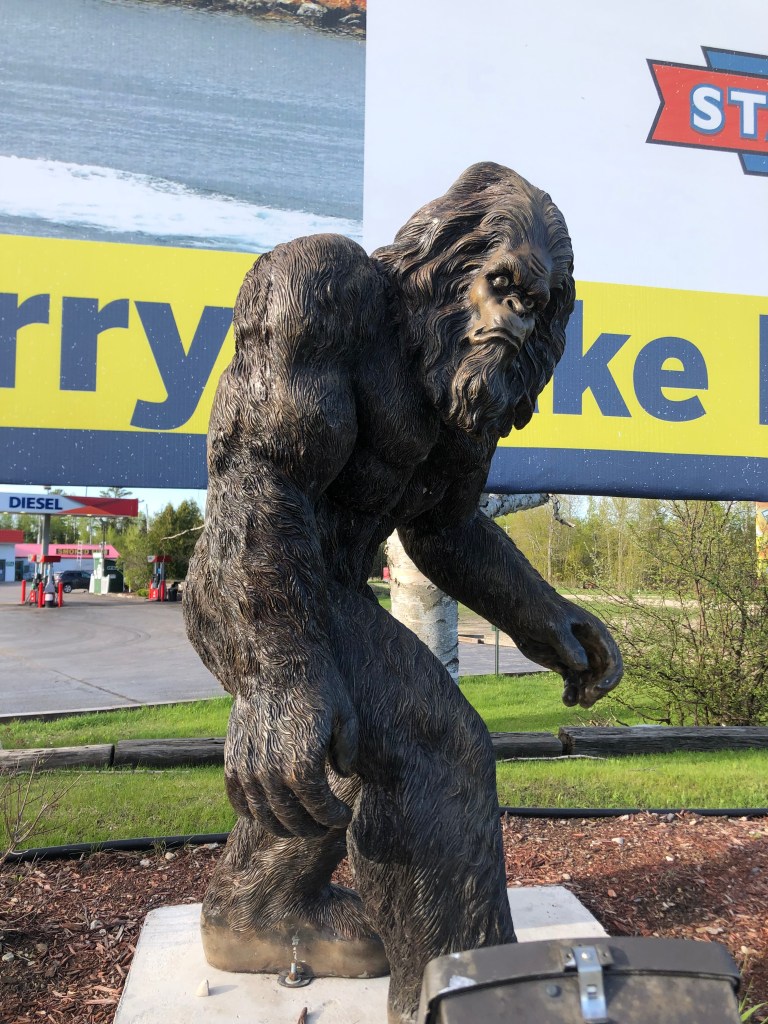
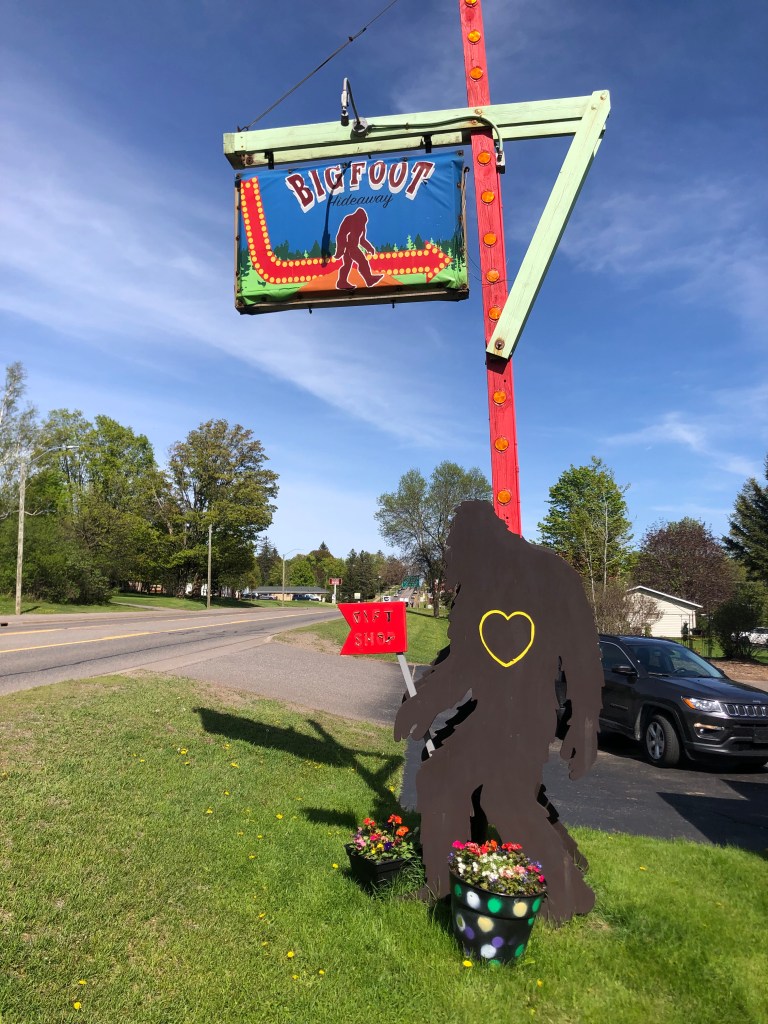
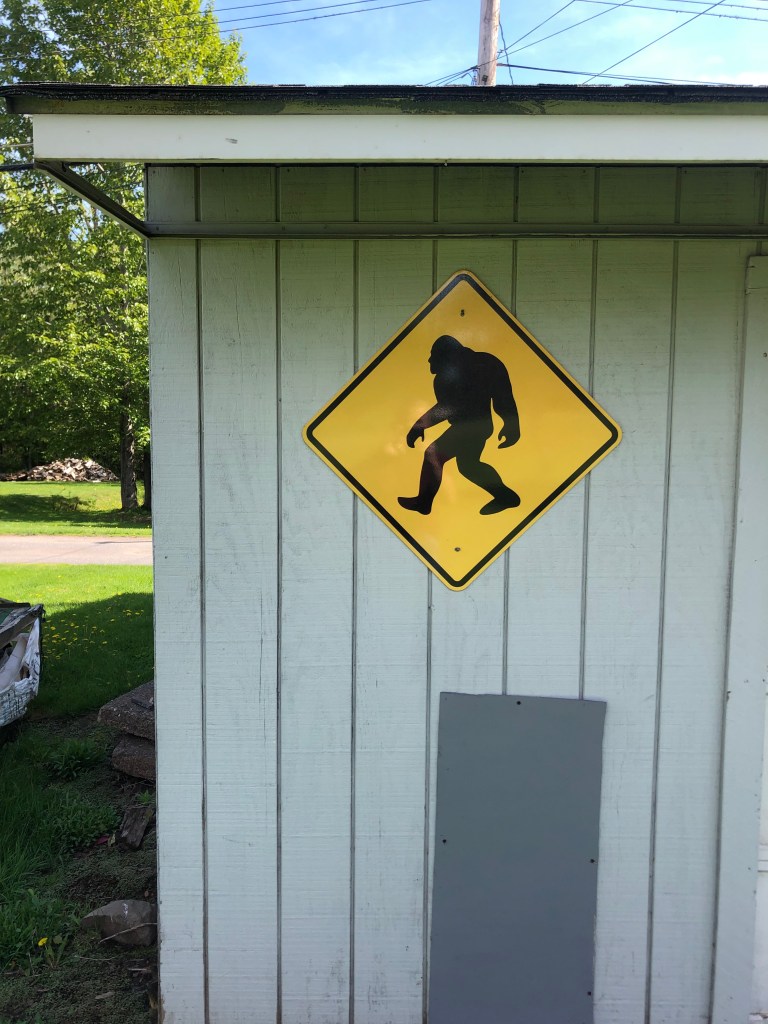
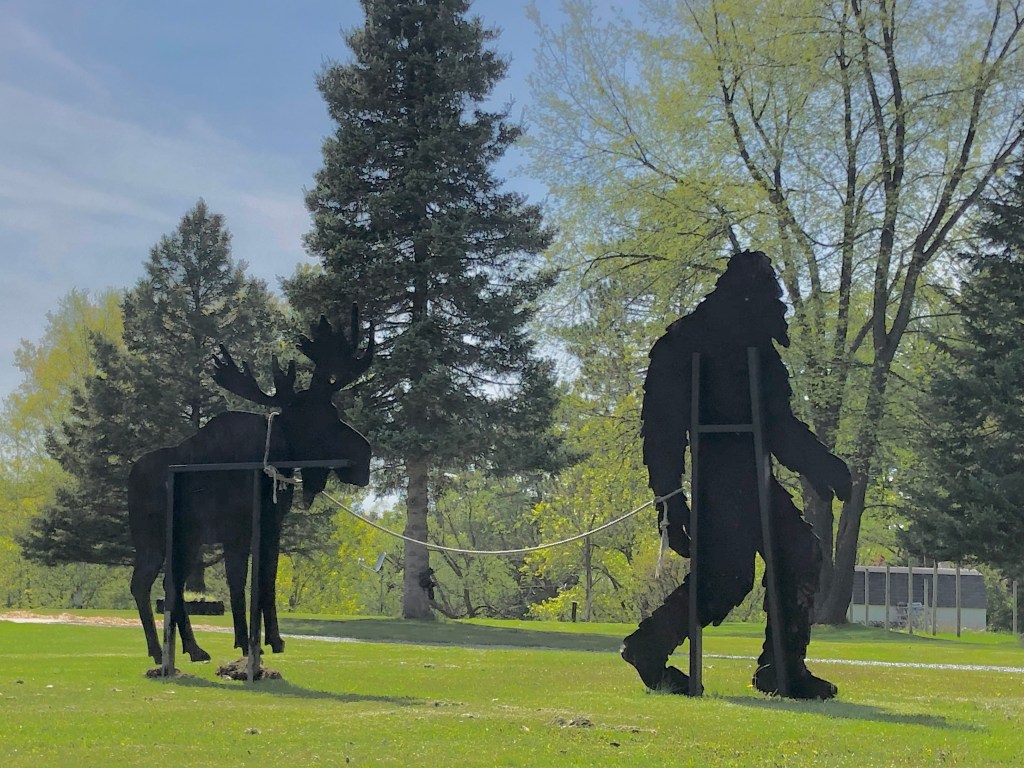
2: Bigfoot. His likeness is everywhere. I guess the fact that the UP is remote, with lots of trees to hide among, makes for good Sasquatch habitat. There’s even a UP Bigfoot Conference each year.
And perhaps inevitably, I even encountered a Bigfoot with a Moose on a leash…
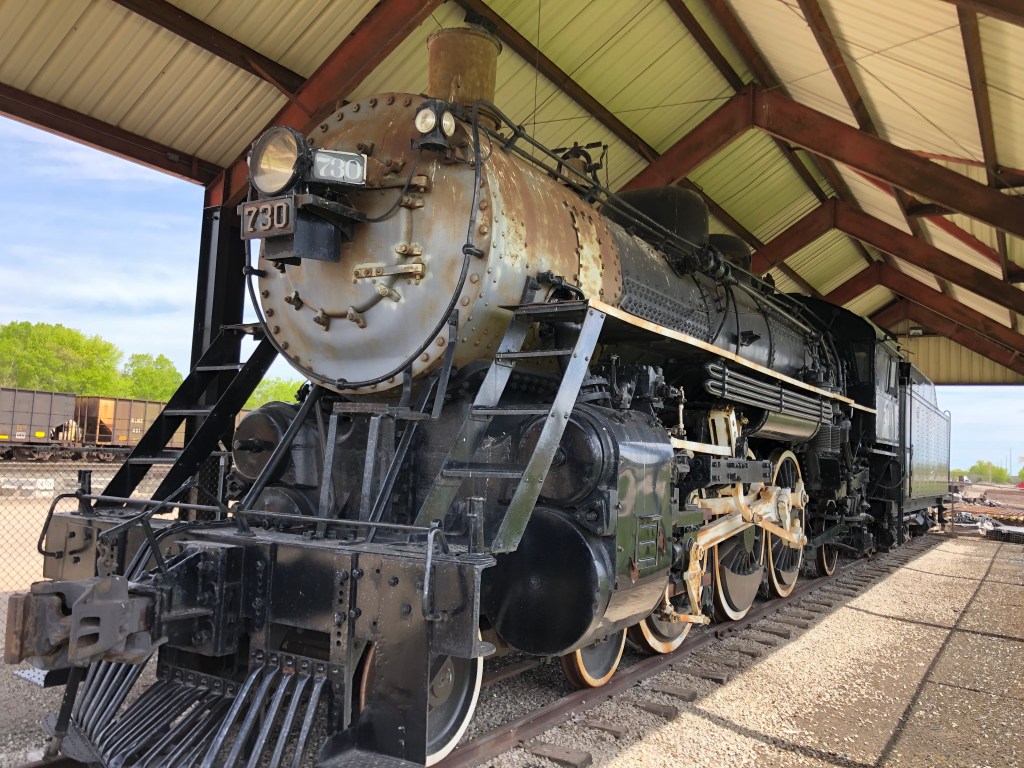
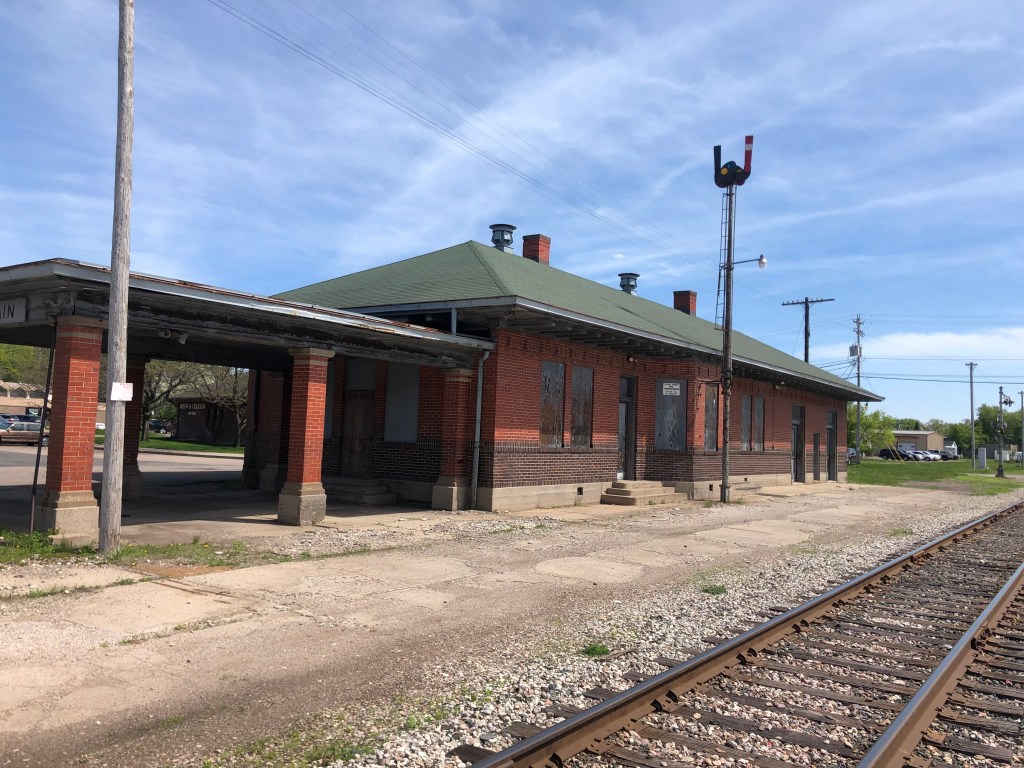
3: Trains. Railroads played a key role in the development of Michigan, of course. But with the long stretches of undeveloped land in the UP, trains were especially vital for communications, transportation, economic development, etc. in the region. Parts of the UP are major producers of iron, and railroads made it possible to export the ore to far-flung markets. Throughout my drive I encountered remnants of the old railroad infrastructure, now largely abandoned.
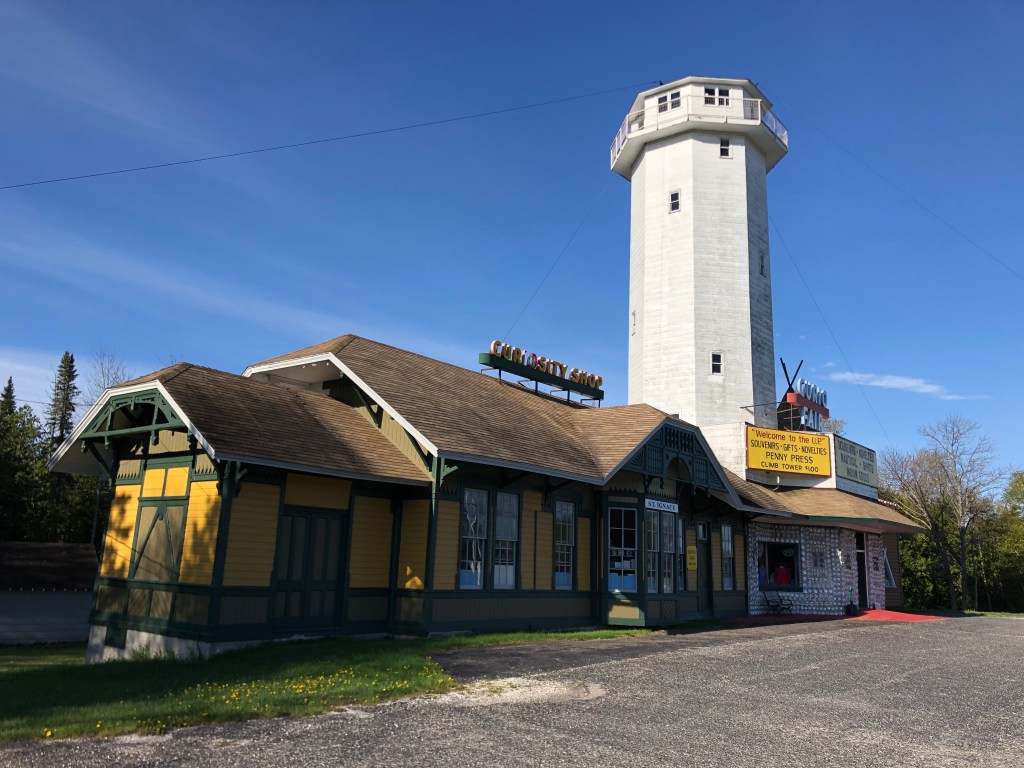
1911 steam locomotive from the Soo Line, now in Gladstone, MIIron Mountain RR Depot, built around 1910. Note the still-operational semaphore!The Curio Fair antique shop/tourist trap, in Saint Ignace. The closer of the two structures is an old railroad depot from the Duluth, South Shore & Atlantic RR. You can also walk up the adjoining tower structure to get a good view of Lake Michigan. Sadly, it was closed when I visited.
4: Pasties. No, pasty doesn’t rhyme with tasty; it rhymes with nasty. Pasties are advertised everywhere in the UP. Supposedly they were introduced by Cornish settlers to the region in the 19th Century. Essentially, they’re meat pies. I had one today and it was definitely tasty–not nasty at all.
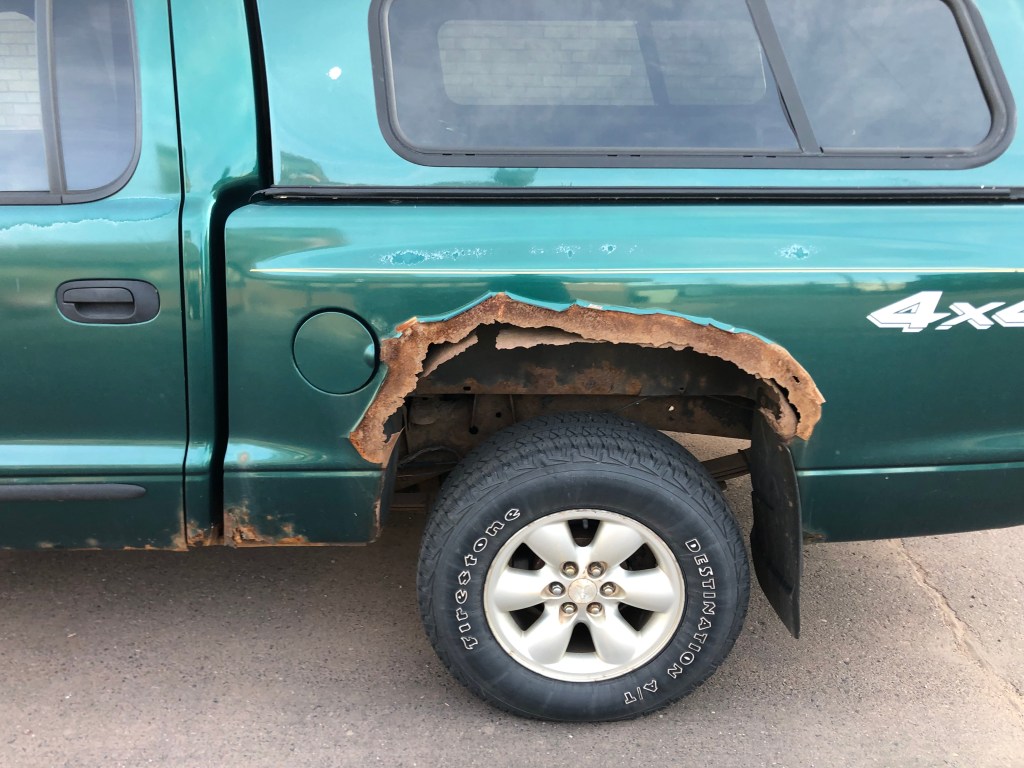
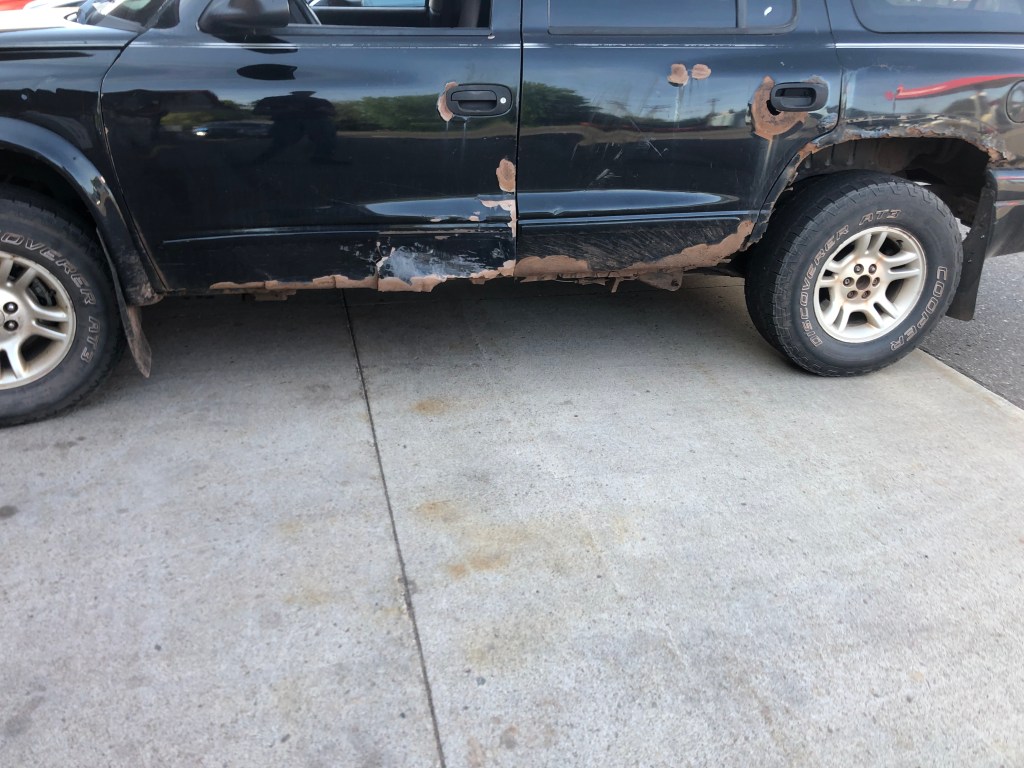
5: Rust. Winter in the UP brings freezing temperatures, ice, and snow, which requires that the Transportation Department spread salt on the roads. The combination of continuous moisture and salt hastens the formation of rust on iron and steel, which means that your F150 is going to gradually disappear.
Rust never sleeps.
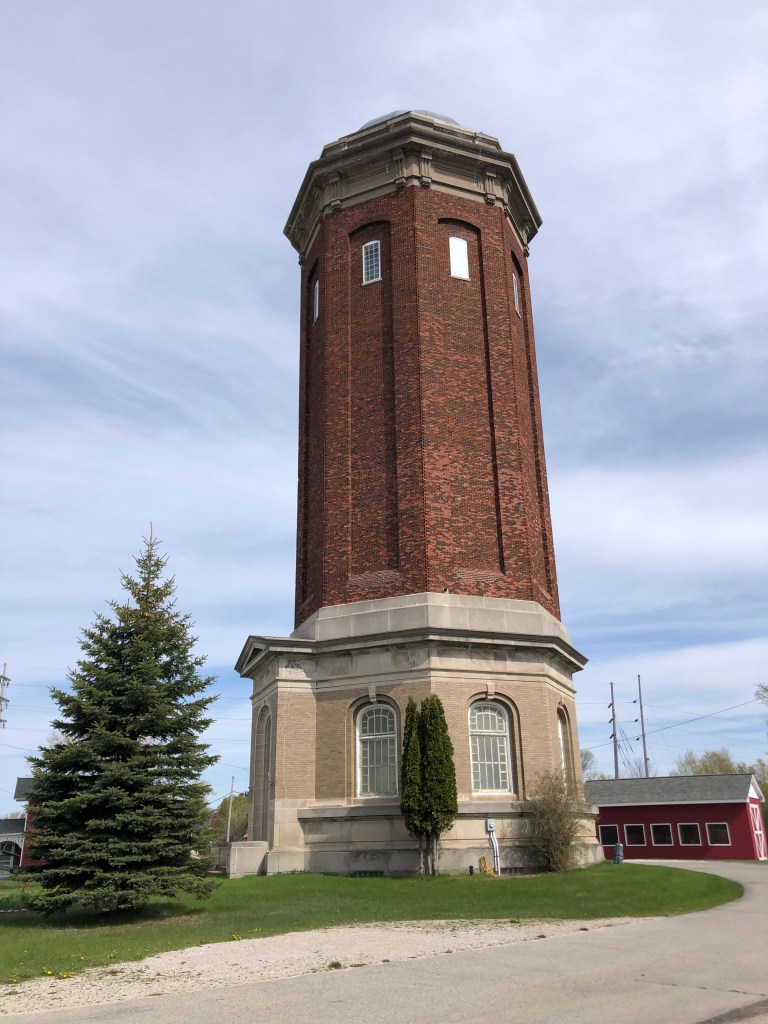
Anyway, that’s my view of the UP, based on a drive along Route 2. I’m sure I’m missing some key elements… But before I get to the BOTD, let me share one other historic structure I came across in the city of Manistique, MI (pop: 2,800). It’s a water pumping station that was constructed in 1922. It operated into the 1950s, but then was replaced by a more modern facility. It’s currently part of a museum complex. It’s a good example of neoclassical, brick structures that I saw in historic downtowns throughout the UP. Courthouses, city halls, theaters, even office buildings have a similar grandeur that, to me, seems really out of place given the UP’s rustic culture.
Might make for a good haunted hydro? (see yesterday’s blog)
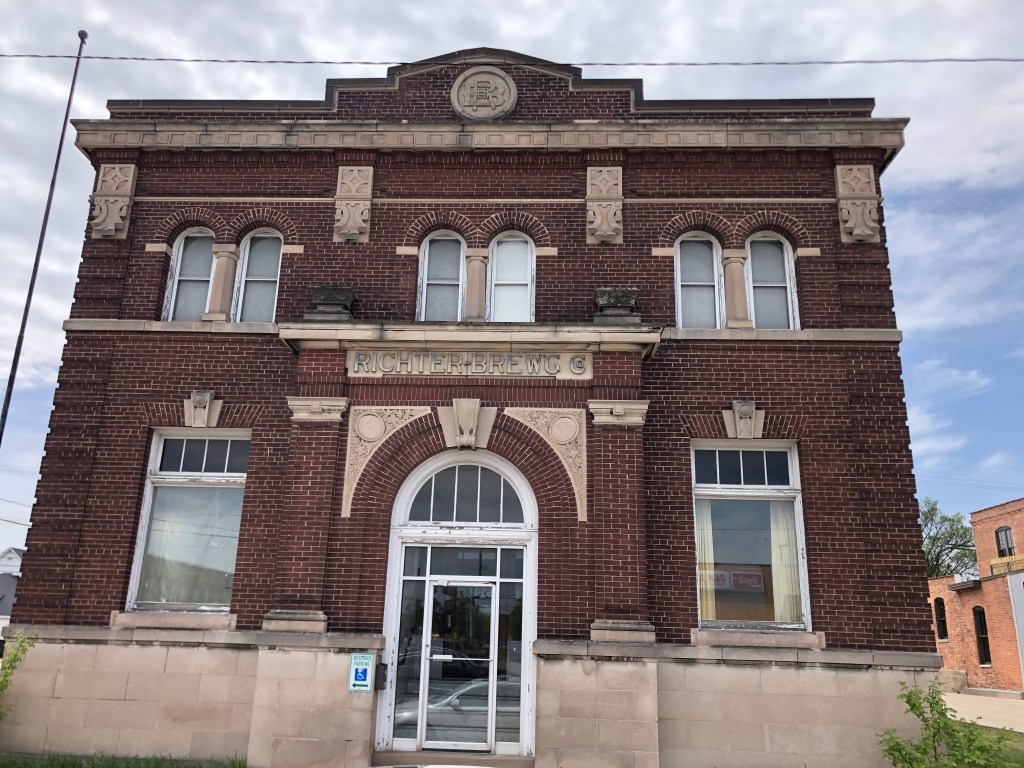
Now, as we move into the BOTD, let me set the mood with one more structure: The Richter Brewing Company building was constructed in 1915 in Escanaba, MI. Brewing operations were shut down with Prohibition, and Richter sold off the building. But it was again used to brew beer by another company until 1940. Then it stood vacant for about 50 years. It was renovated in 2012, and now houses loft apartments.
Zoom in on the lettering over the door.
Tonight I’m in Ironwood, MI, and will drive across the border into Wisconsin tomorrow morning.
BREW OF THE DAY
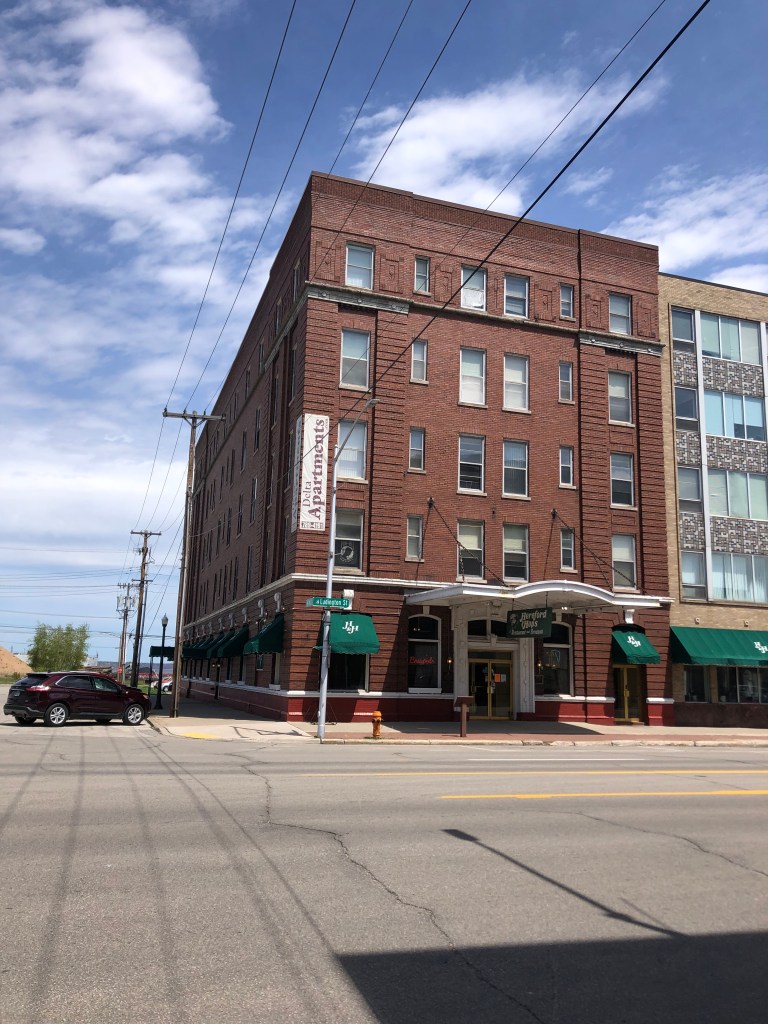
Close to the Richter Brewing Company is the Delta Hotel, built in 1915. The first floor of the hotel building is now a brewpub named Hereford and Hops.
The venerable Delta Hotel building
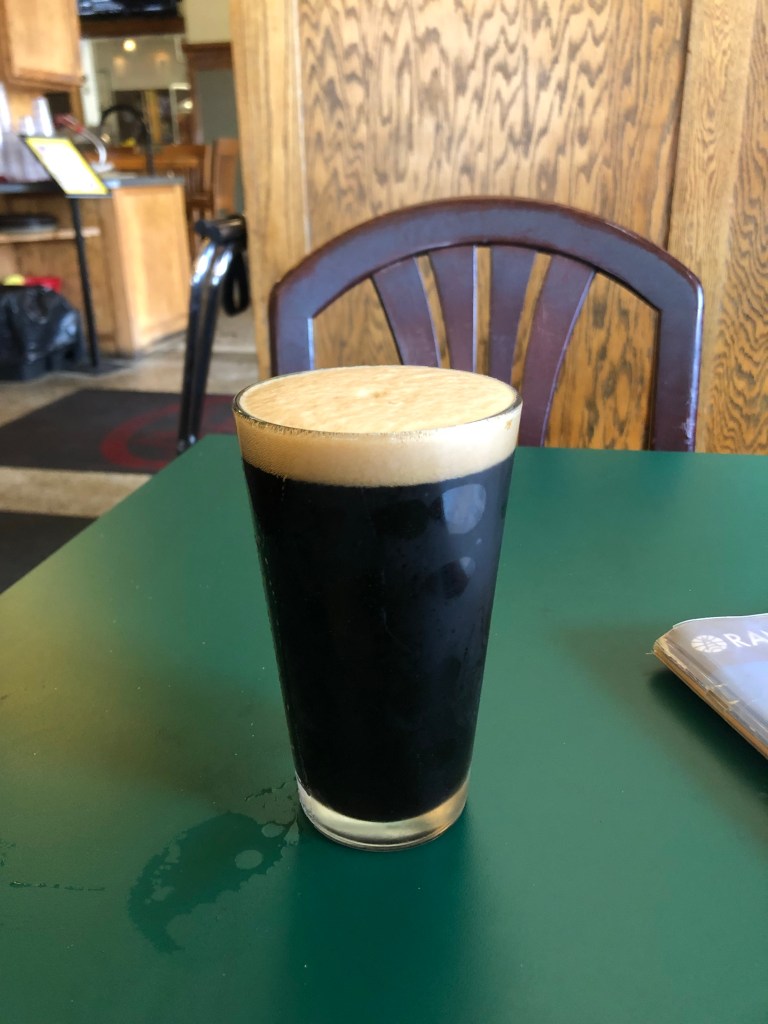
It was here that I ordered a pint of the Blackbird Oatmeal Stout, which is made on the premises. It was a beautiful pour: a dark mahogany color with a perfect, creamy head. The temperature was just right, with a bit of condensation on the glass.
Pretty as a picture. But not as pretty as a pitcher.
Sadly, though, I can’t recommend this beer. It seemed overhopped–just too bitter for a stout. And the malt flavor that did manage to make itself known was one-dimensional, completely lacking in that kaleidoscope of changing flavors you expect from a stout. It had more of an earthy taste than the caramel, malty taste I was hoping for. Partly redeeming it was a satisfying, creamy mouthfeel courtesy of the oatmeal. I’ll give this a three out of five stars.
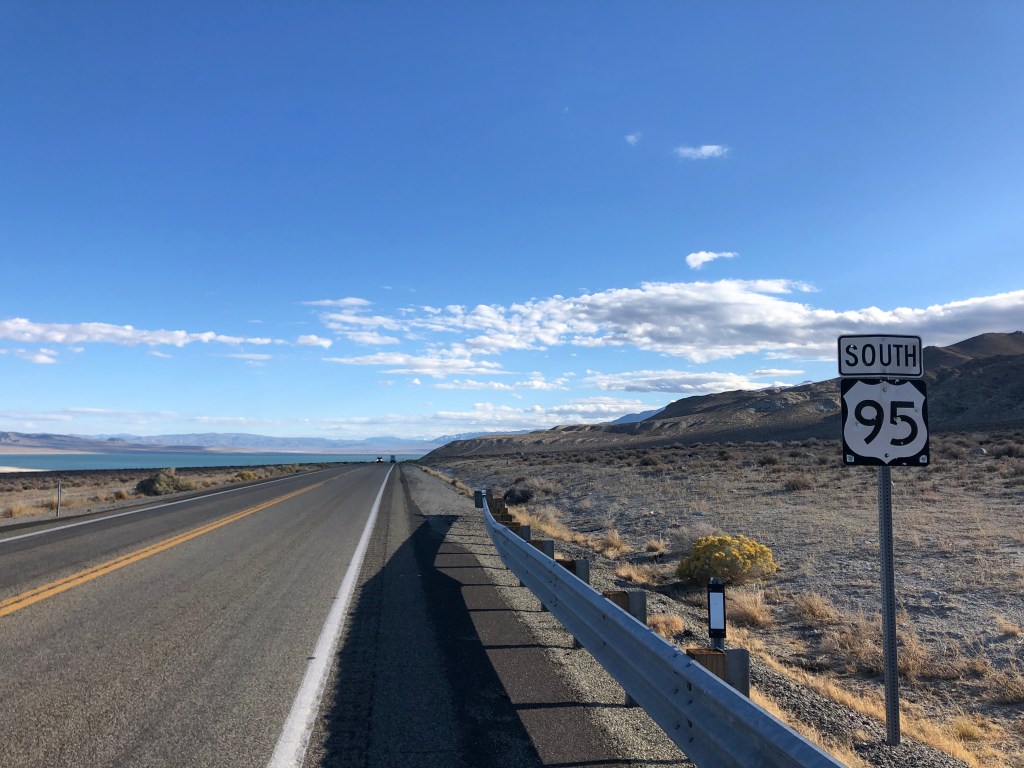
I awoke early in Hawthorne, got a decent breakfast at Mr. Beane’s coffee shop, and got back on the road. A short distance from Hawthorne US 95 takes a jog eastward, but otherwise today’s ride was looking a lot like yesterday’s.
Deja vu
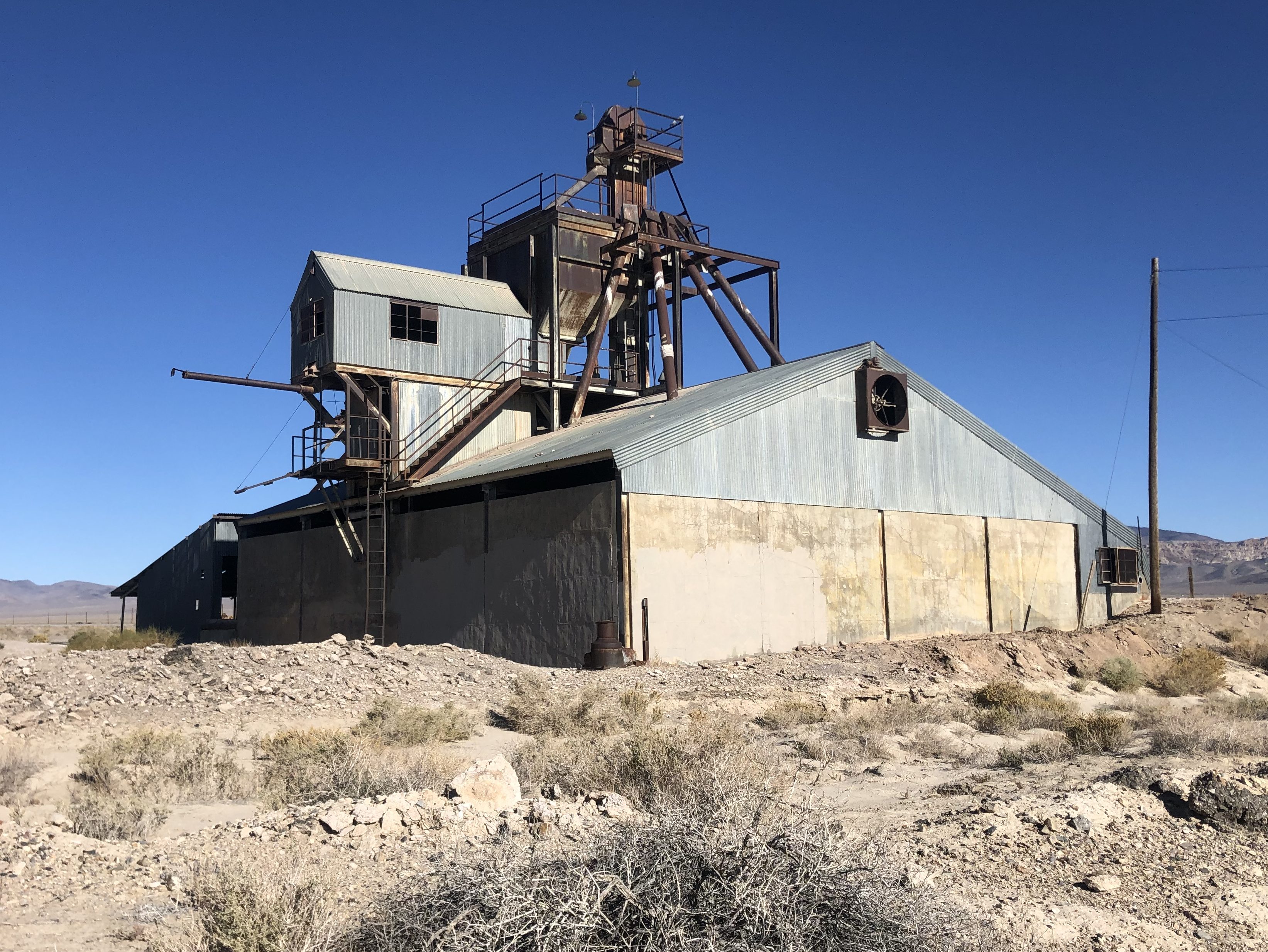
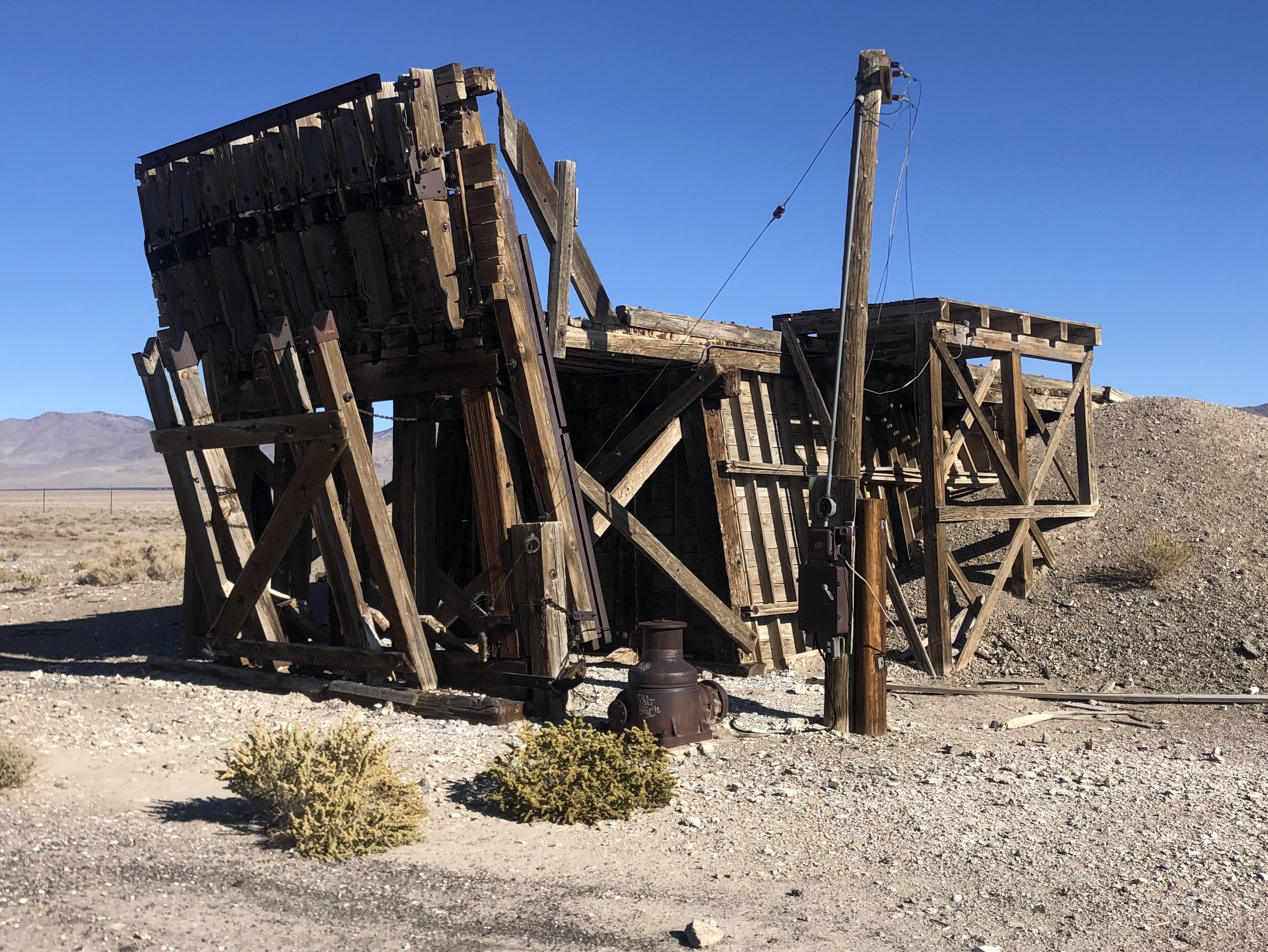
Then suddenly I found myself passing through another (nearly dead) town. Luning (pop: 87) was established in 1884 as a railroad town, with a trackside facility for loading magnesium ore onto freight cars. The once-active facility has long since shut down, but the main structures still stand, and I suspect the ghosts of long-since-passed stevedores still walk their creaky floors on moonlit nights.
Luning’s obsolete raison d’etre.
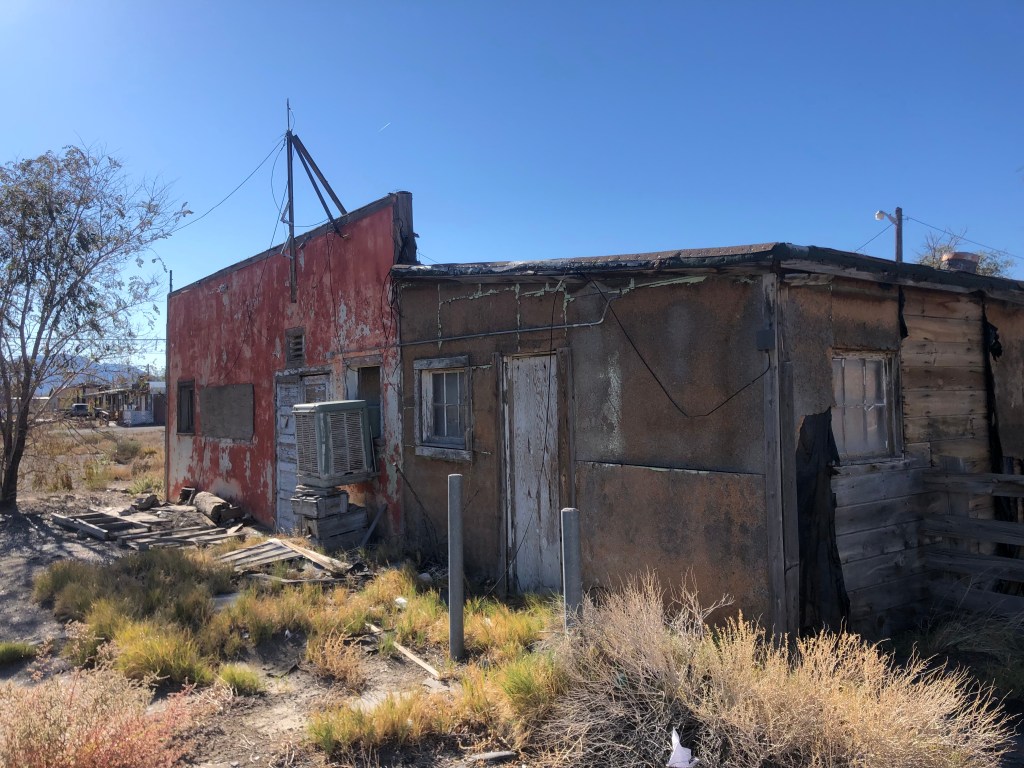
One wonders why 87 people still remain in this ghost town. From what I saw, the housing stock isn’t especially covetable.
Still inhabited.
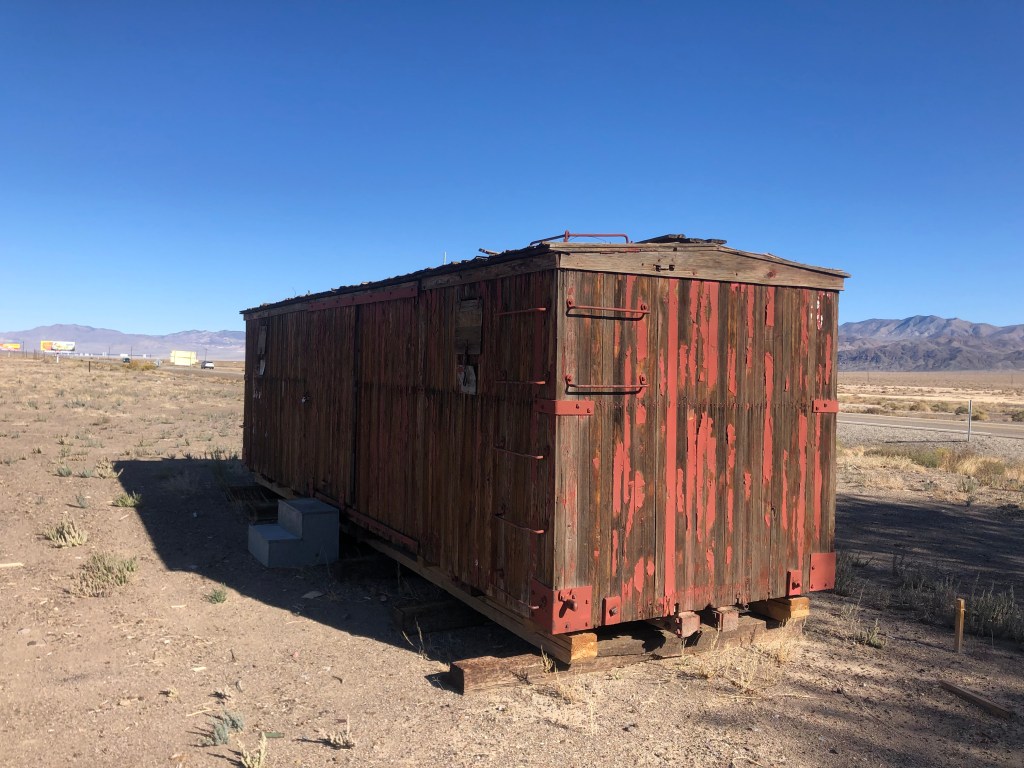
Some time after leaving Luning I came to a similar town. Like Luning, Mina (pop: 150) was founded as a railroad town over a century ago. As with so many Nevada towns, Mina owed its existence to mining operations. But the mines eventually played out, the residents began to move away, and the trains stopped coming through town.
Ancient railcar in Mina, now used for storage, apparently.
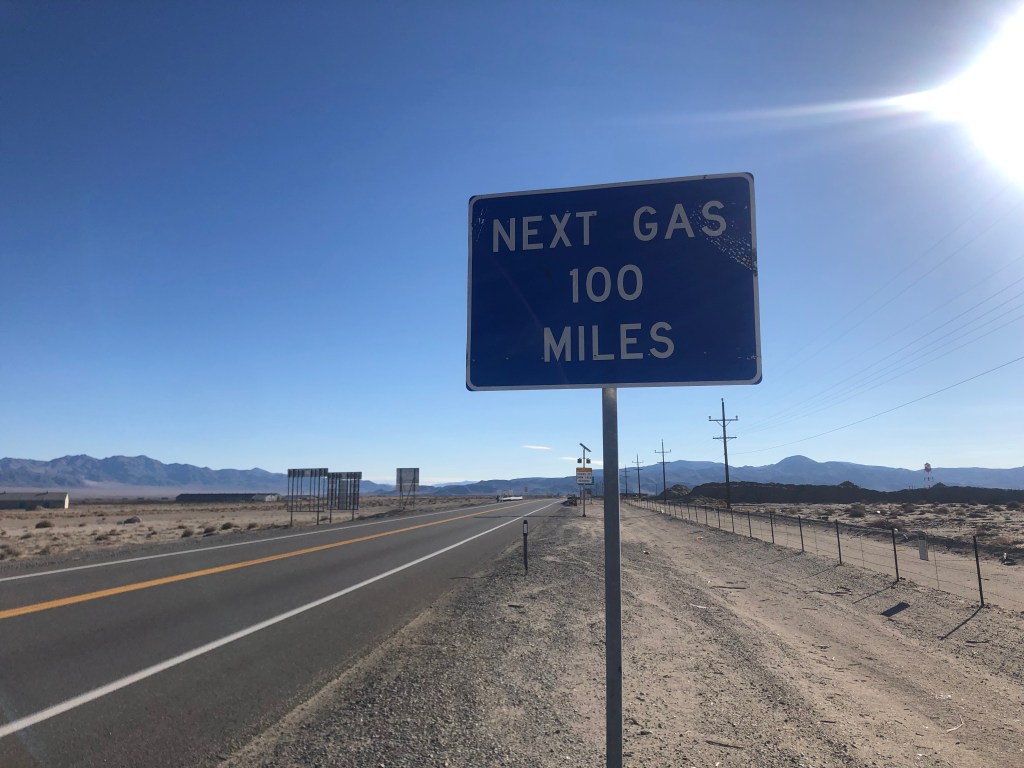
You’ve really got to wonder why anyone stays in this godforsaken place, with no working infrastructure to speak of, no job opportunities, and, to my eye at least, no pleasant surroundings. On top of all that, the nearest town with a gas pump and a mini mart is well over an hour away.
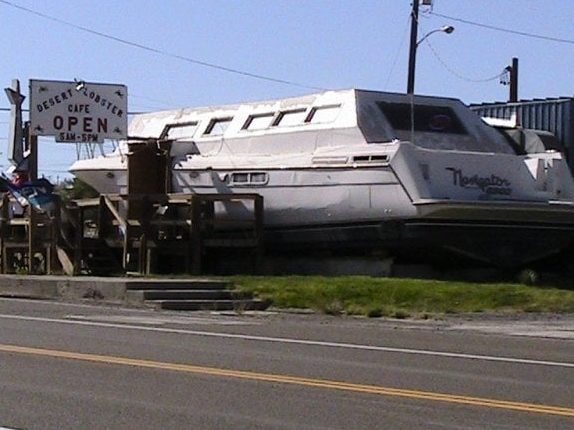
As far as I can tell, Mina is only known for two things. First, it used to have a restaurant named The Desert Lobster that was definitely unique. Owner Bob Eddy bought an old, damaged yacht he’d found in Texas and had it shipped to Mina, and this served as the front of his restaurant. But here was the genius of Bob’s plan: He would raise lobsters in greenhouses out in the desert, fed with water from a nearby spring. Sadly, wildlife officials eventually put an end to the lobster farm, and as of a few years ago the restaurant closed.
The Desert Lobster, back in the day. (Photo credit: Tom M., on Yelp)
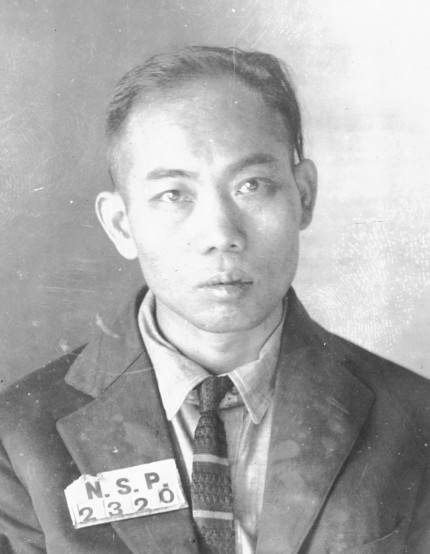
The other thing Mina is known for is its role in shaping America’s death penalty. In 1921 a Chinese immigrant by the name of Gee Jon was convicted of killing a laundry proprietor in Mina. He was sentenced to death, and was the first person to be executed by lethal gas. You can read the whole sordid tale here.
Gee Jon
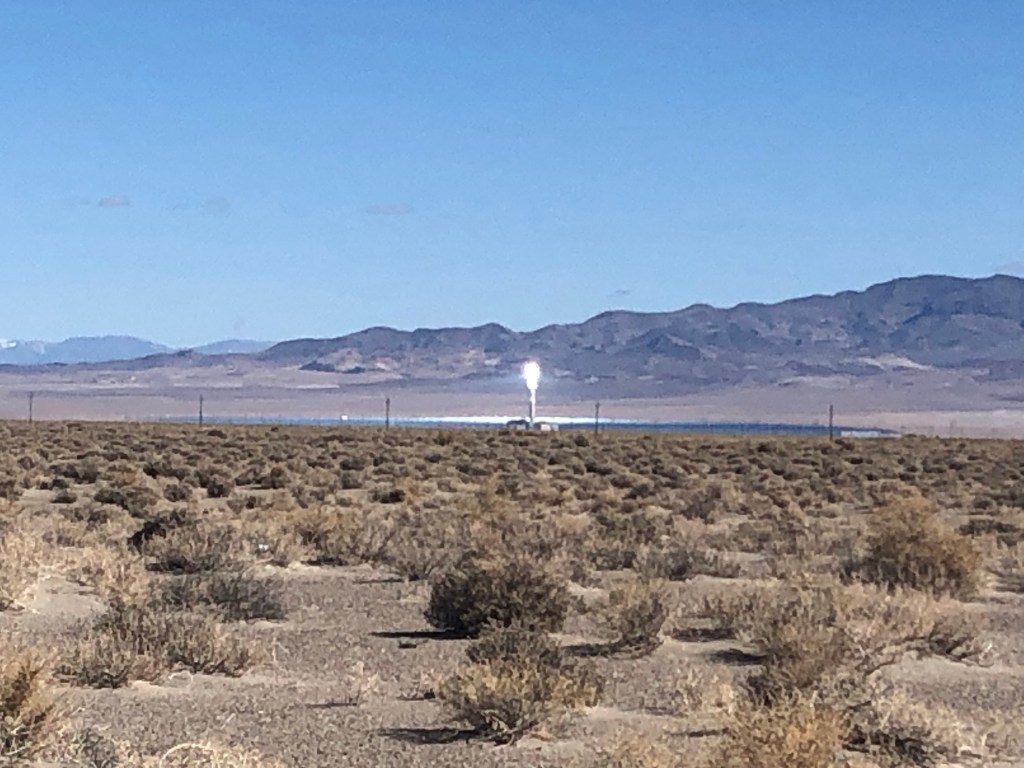
As I drove away from Mina I began to notice an intense point of light ahead of me on the left. For many miles the light kept getting brighter and closer. Finally I stopped at a rest stop near the light’s source and I learned that the light was coming from the Crescent Dunes Solar Energy Project. The project is essentially a huge array of mirrors sitting in the desert that concentrates sunlight at one point, creating enough heat to superheat liquid salt that is then used to produce steam and turn generators. (Think of it as frying an ant with a magnifying glass, on steroids.) Only about 6 years old, the plant has been beset with technical troubles and lawsuits. It was eventually shut down, but it appears to have been restarted by the time I drove by.
Not such a bright idea after all.
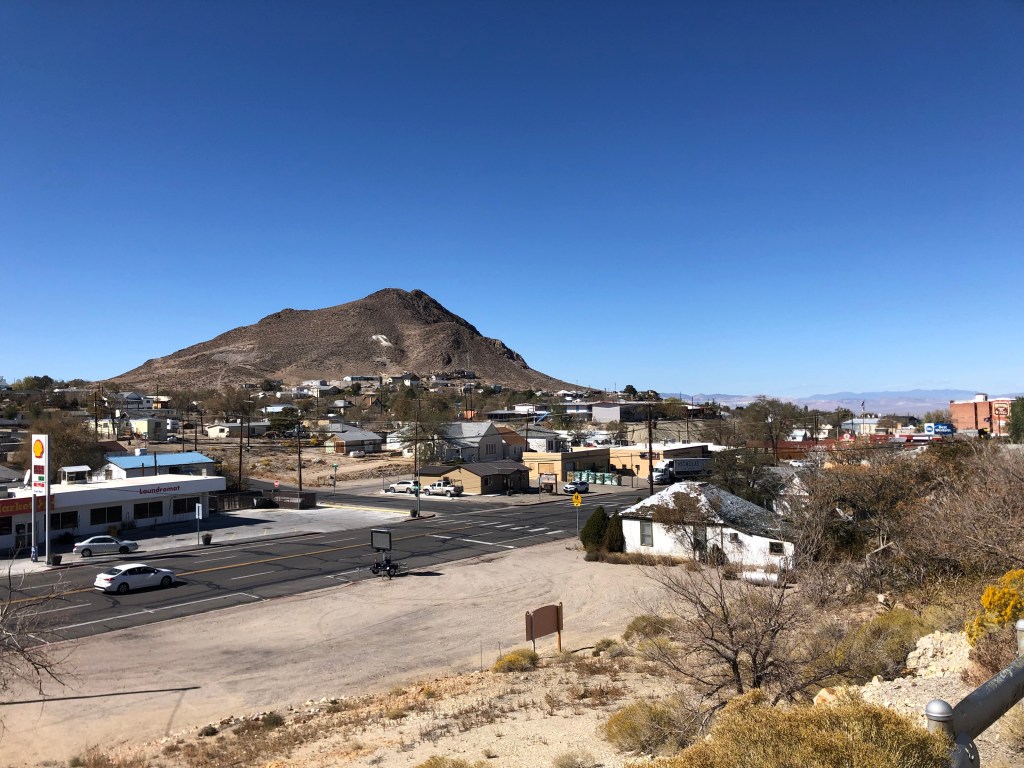
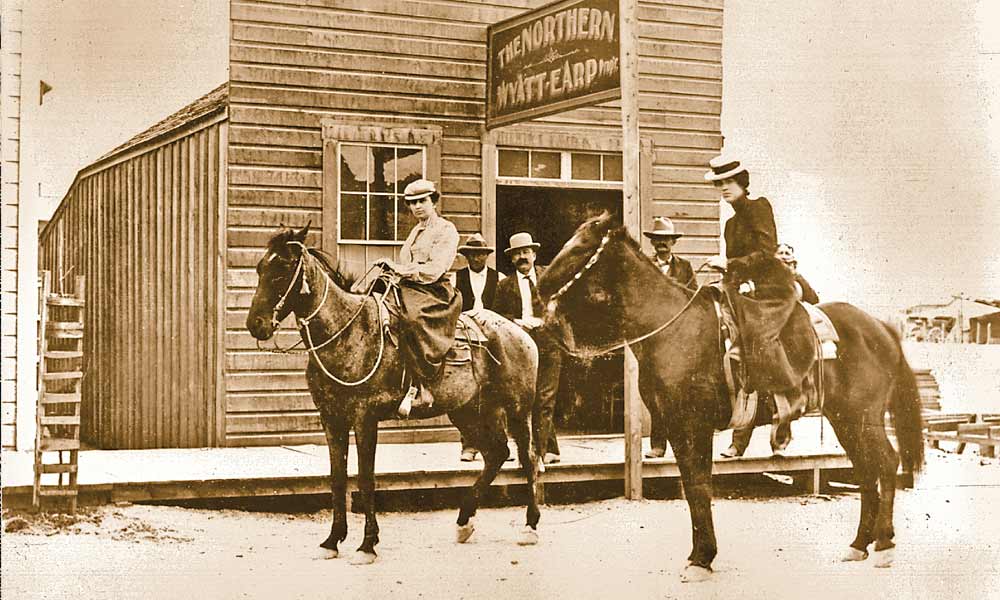
About an hour and half later I came upon the (relative) metropolis of Tonopah (pop: 2,500). Once the place that Wyatt Earp called home, Tonopah started out as a mining town around the turn of the 20th century. Like all the other mining towns it declined in the mid-century, but its location about halfway between Reno and Las Vegas seems to have helped it to survive as a convenient stopover location for those traveling between the two cities.
Downtown TonopahWyatt Earp’s bar in Tonopah
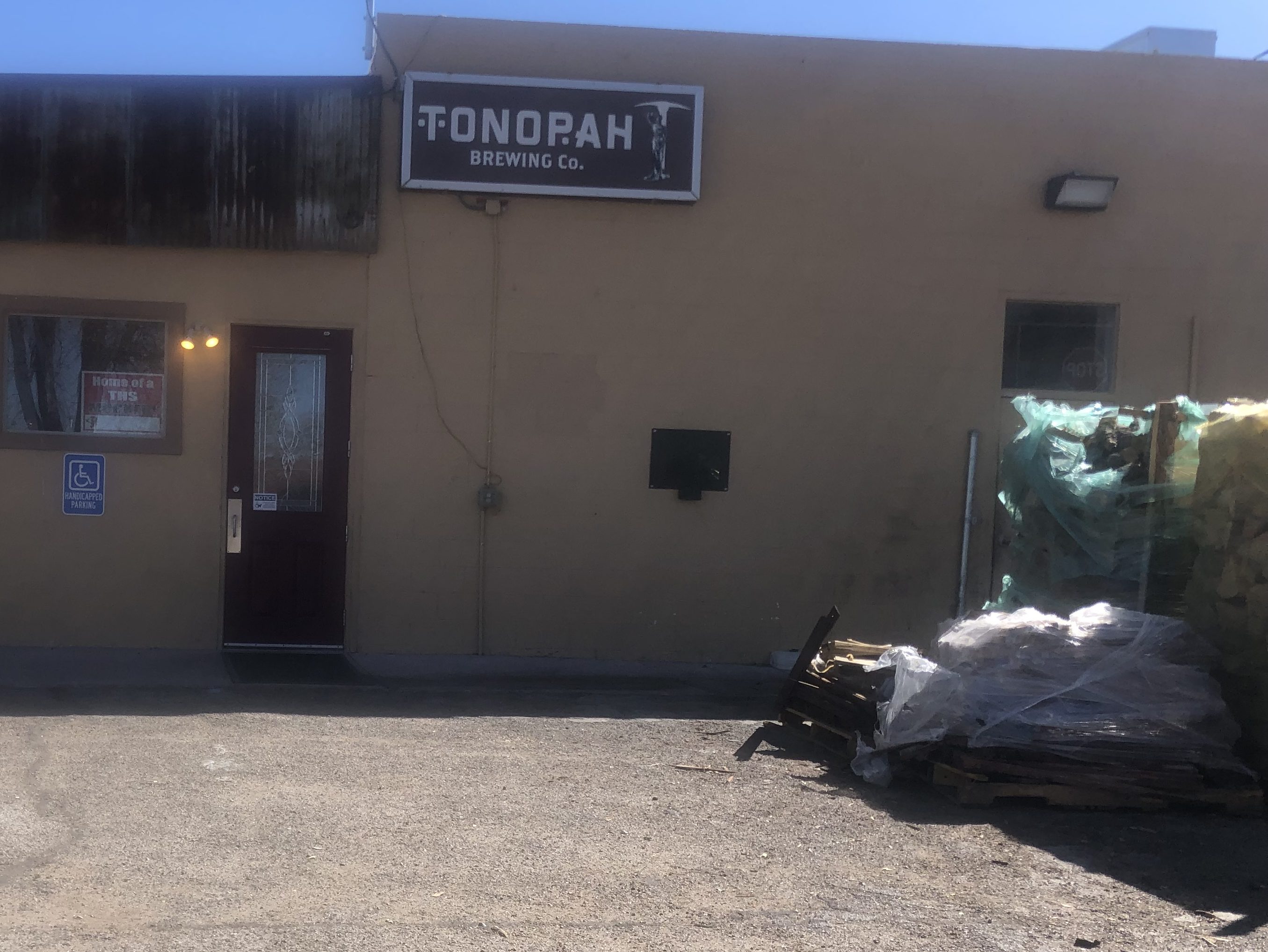
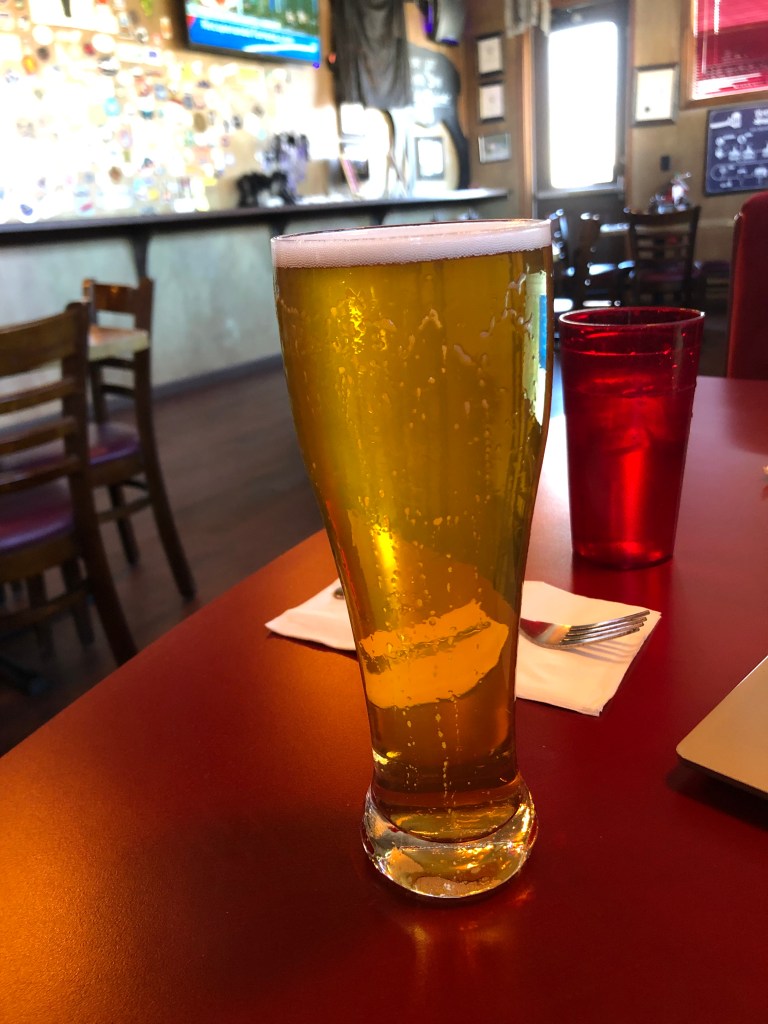
I stopped for lunch at the Tonopah Brewing Company, whose motto is “blood, sweat & beers” (seriously). I ordered their Double IPA, but managed to knock it over it before I’d had more than a sip. (The waitress was not happy with my clumsiness.) So I really can’t say much about the beer. But I can say that Tonopah Brewing Company is the absolute best brew pub in Tonopah. Of course, it’s also the absolute worst brew pub in Tonopah…because it’s the only brew pub in Tonopah. Perhaps because it’s the only game in town, the place seems to cater to every conceivable taste. The music is an unlikely combination of death metal, country&western, 1970s pop, and the Beastie Boys. And the television is tuned to a Spanish-language station.
Tonopah Brewing Company. Not much to look at from the outside.BOTD, moments before The Big Spill
They do have their own small-batch brewing setup, and they have their own smoker for in-house barbecue preparation. I had a decent pulled pork sandwich.
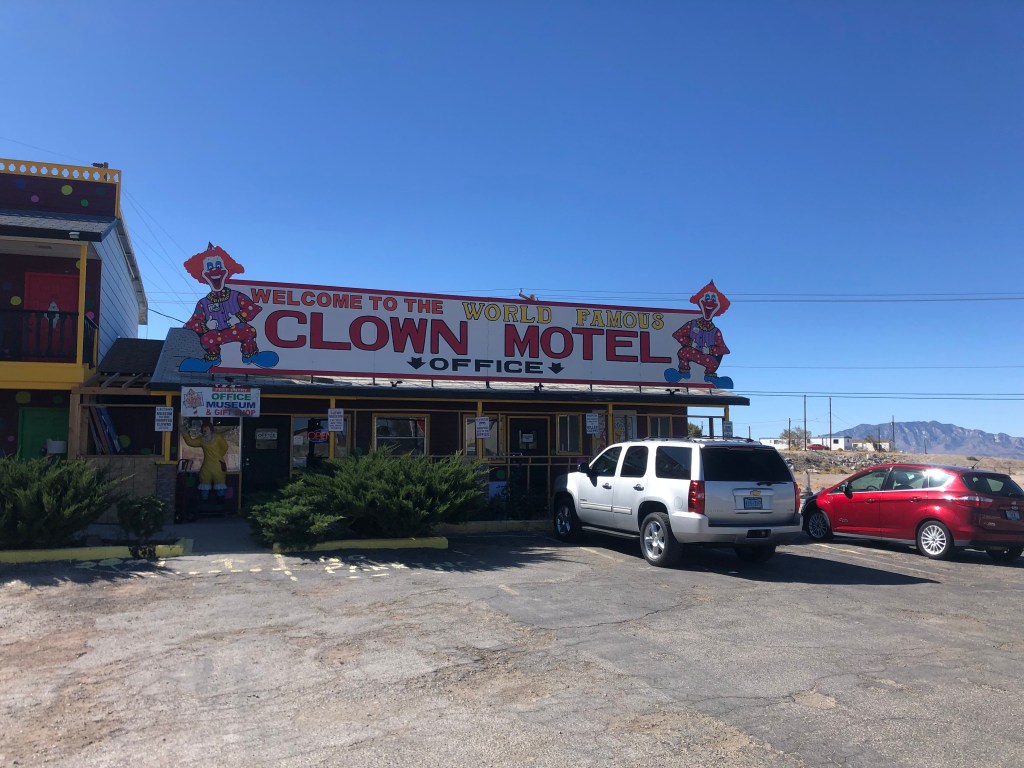
Thus fortified with smoked, cooked, dead animals and a sleeve soaked with beer, I got back on the familiar Route 95 and soon encountered what is surely the scariest part of this trip: Tonopah’s Clown Motel.
Please don’t kill me, Please don’t kill me….
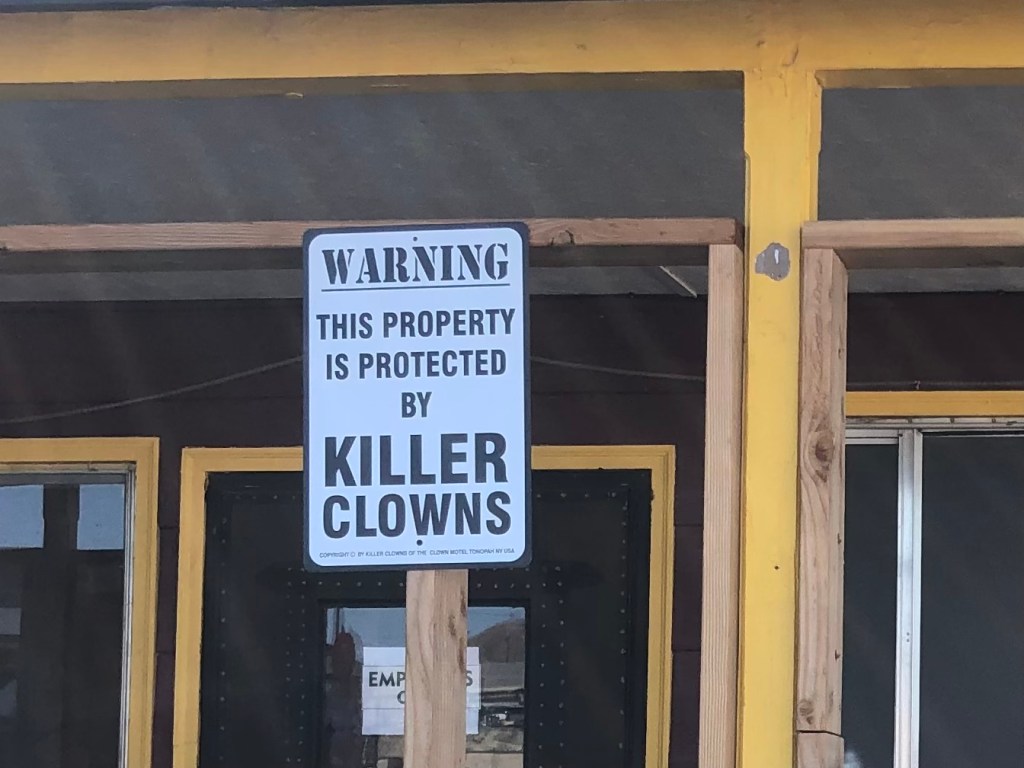
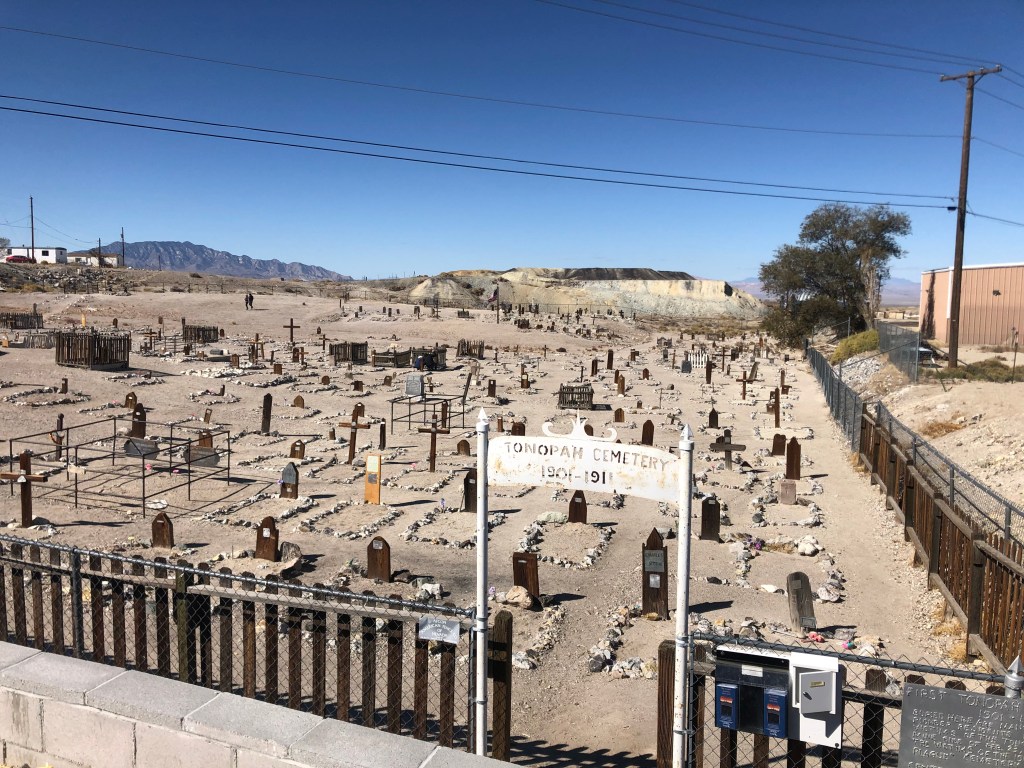
The hotel was originally opened in 1985, and it seems that the intent was innocent enough. The original owners, Leroy and Leona David, say they wanted to honor their late father who’d amassed a collection of about 150 clown figures (as one frequently does). The clown figures were used to decorate the property, and that’s about it. But over time the “creepy clown” trope became a thing, and books and movies like “It” pushed clowns into the realm of the truly scary. So the motel seems to have decided to swim with the tide and play up the creepy aspects of their clown theme. Oh, and did I mention that the motel sits right next door to an ancient cemetery? I’m not making this up.
Sign in front of parking lot. Way to reassure the kids whose parents take them here!
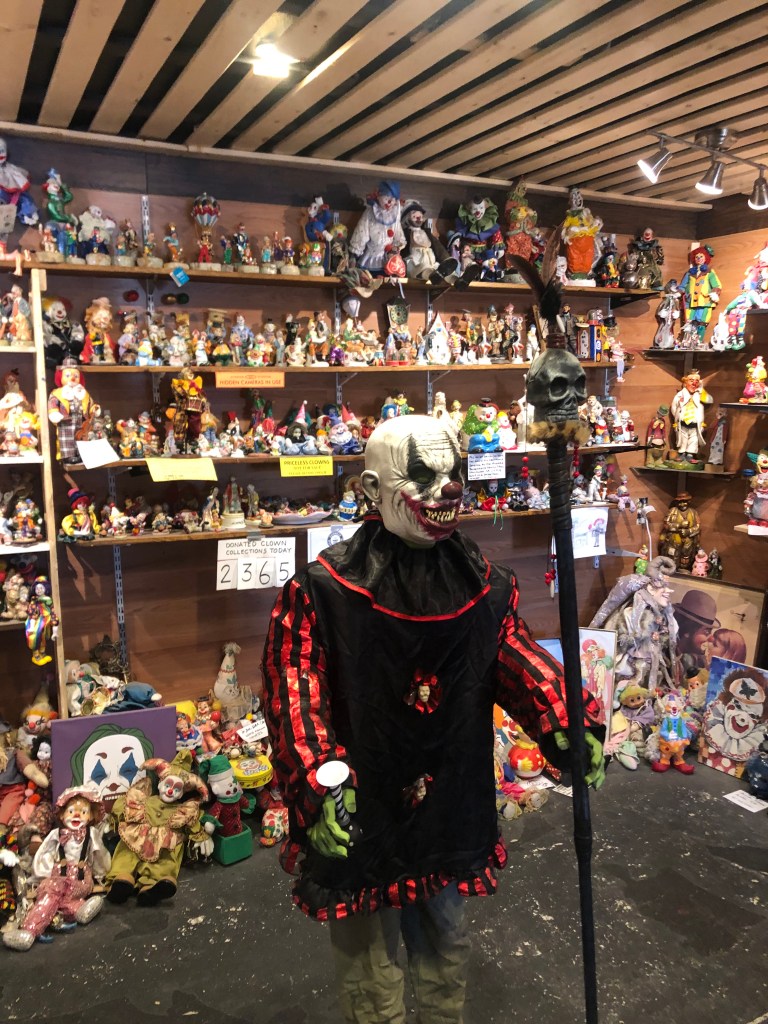
Over the years, the place has developed something of a cult following. Many people have sent in their own clown memorabilia, which now numbers over 2000 items. Many of the pieces are on display in the lobby, which doubles as a “clown museum.” The motel has also been featured on the television show “Ghost Adventures” in 2015. Supposedly a clown doll was caught on film moving by itself. You can judge for yourself!
In the lobby, which doubles as a “Clown Museum.”
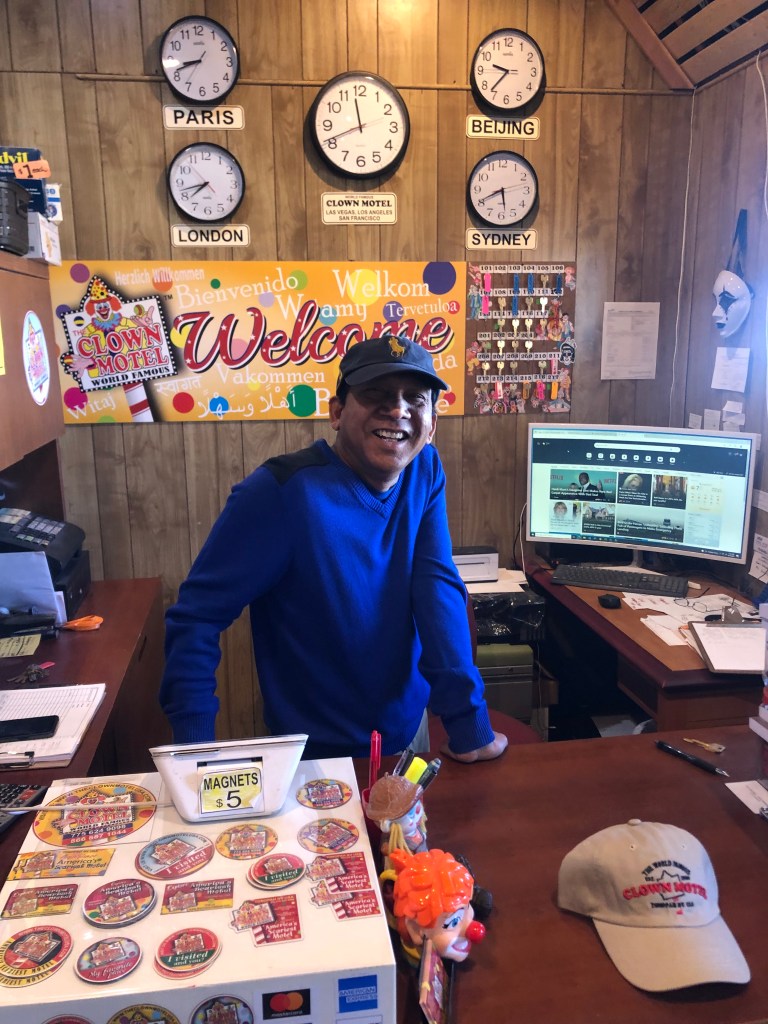
The current owner, Vijay Mehar, told me that Covid has really put a dent in business, but he’s making a go of it. He’s even amping up the scary clown vibe, decorating a few of the rooms with themes such as the “Halloween” room, the “Friday the 13th” room, and the “Exorcist” room. Again, I’m not making this up.
The man behind the clowns.
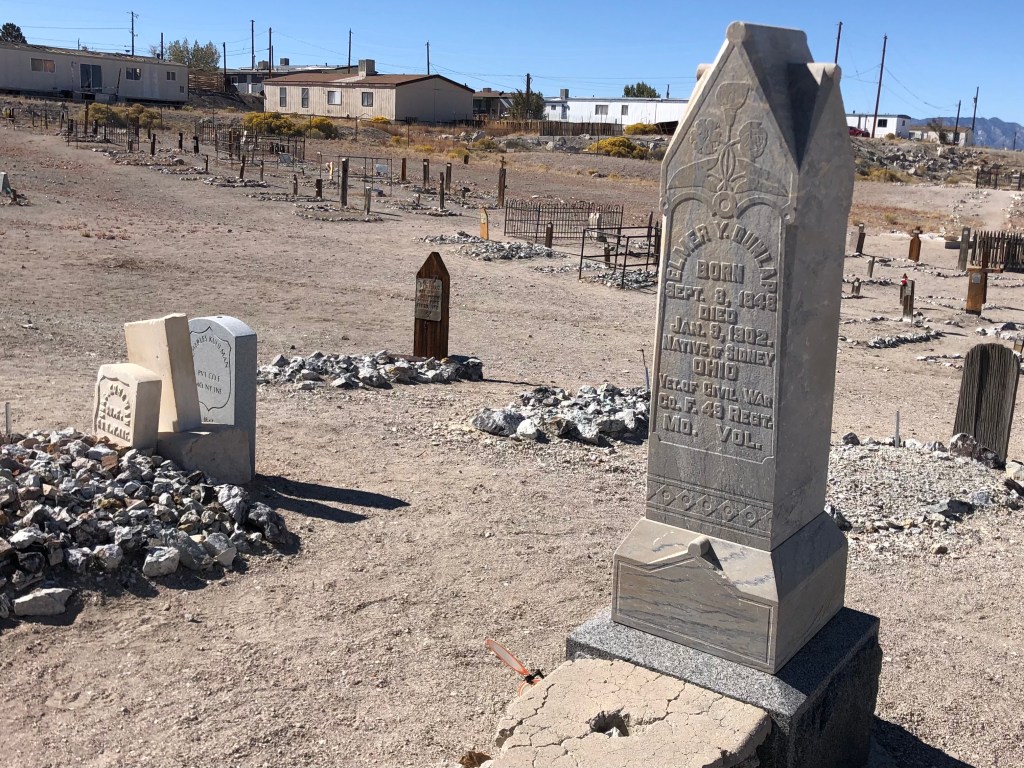
Vijay encouraged me to go take a walk through the neighboring graveyard, which butts up against the Clown Motel’s parking lot. It’s one of those desert cemeteries which lack trees, grass, or any other signs of life. I was surprised that Vijay hadn’t placed a few zombie clowns around the cemetery, in order to further advance the creepy clown vibe of his property.
Having pretty much exhausted the coulrobic aspects of Tonopah, I once again hit the road. Within 45 minutes I encountered the remarkably well-maintained, historic town of Goldfield (pop: 250). As the name suggests, Goldfield had started out as a gold mining encampment. The mines produced about $1 billion in gold (in today’s dollars.) The rich gold veins turned Goldfield into a boom town, and for a time it was Nevada’s largest city. Goldfield boasted some 20,000 residents at its peak in 1906. One of those residents in 1904 and 1905 was Virgil Earp (Wyatt’s brother), who was the town’s deputy sheriff.
A fire in 1923 destroyed much of Goldfield. Since gold production had become much less profitable by that point, there wasn’t much reason for people to rebuild their homes in the town. Those who did remain steadily declined until only a few hundred people were left in 1950, and Goldfield has limped along ever since.
Today Goldfield has just a handful of residents, but the town exudes a strength and robustness that belies its scant population. This is town that clearly values its history. The Goldfield Historical Society is a local nonprofit organization that actively works to preserve and restore Goldfield’s buildings and to promote its history. They’ve erected markers and plaques, organized walking tours, and held various fundraisers. You can see evidence of their work on almost every block.
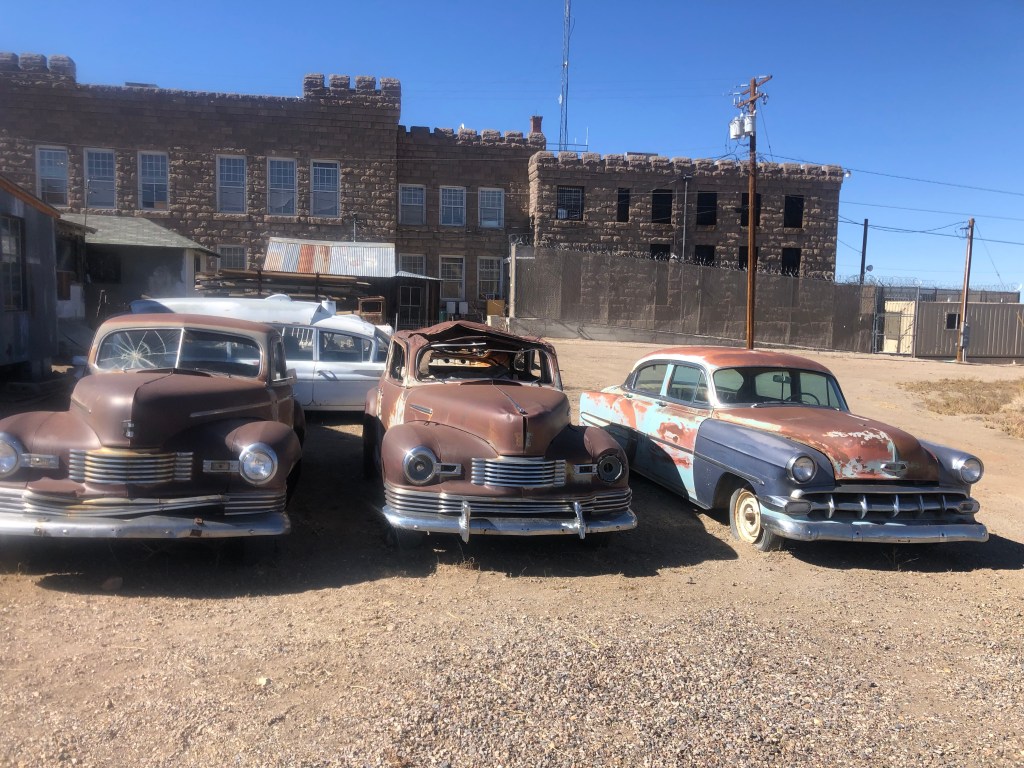
Originally Goldfield’s elementary school, this building is now the town’s public library. The grounds (on the other side) serve as a “historic equipment park.”A few cars that look like they haven’t moved in awhile. (Goldfield’s courthouse is in the background.)
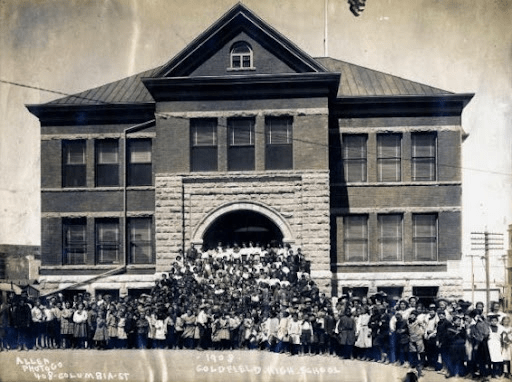
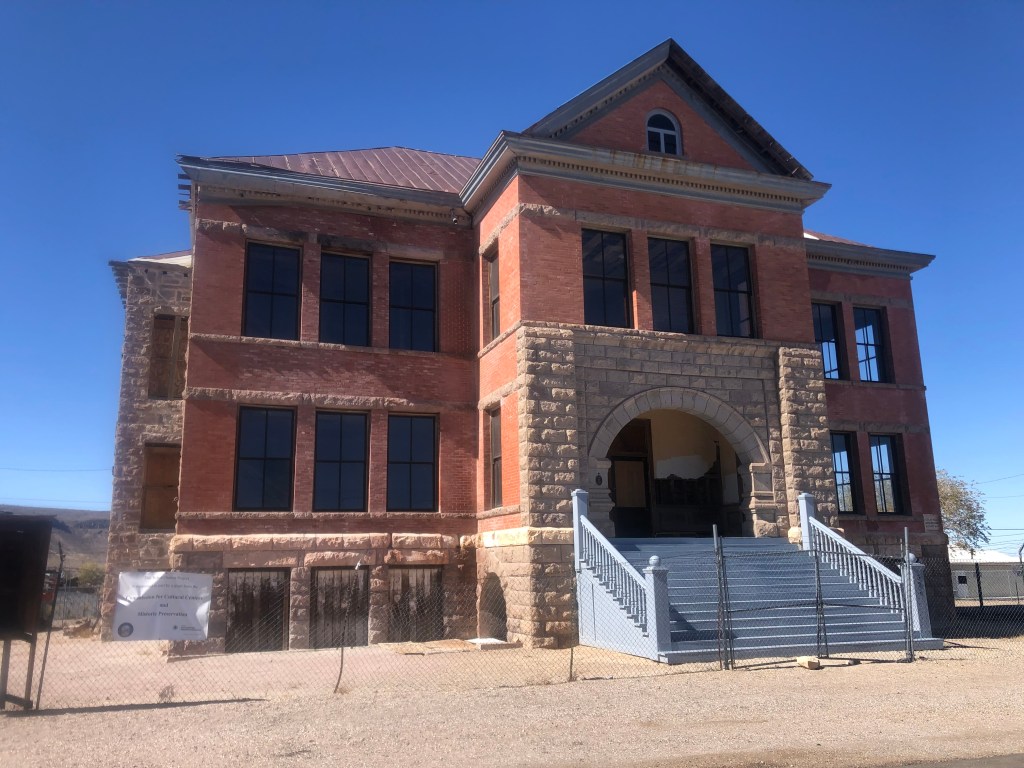
Goldfield High School is one of the historical society’s biggest projects. It was built in 1907, and its three stories served up to 450 high school students. The school closed in 1952, and it’s been shuttered ever since. After a half-century of neglect, the south wall collapsed, and efforts to save the structure finally began in earnest. The historical society has received grants and donations toward a full restoration of the building, which is ongoing.
Goldfield High School, back in the day.
Goldfield High School today.
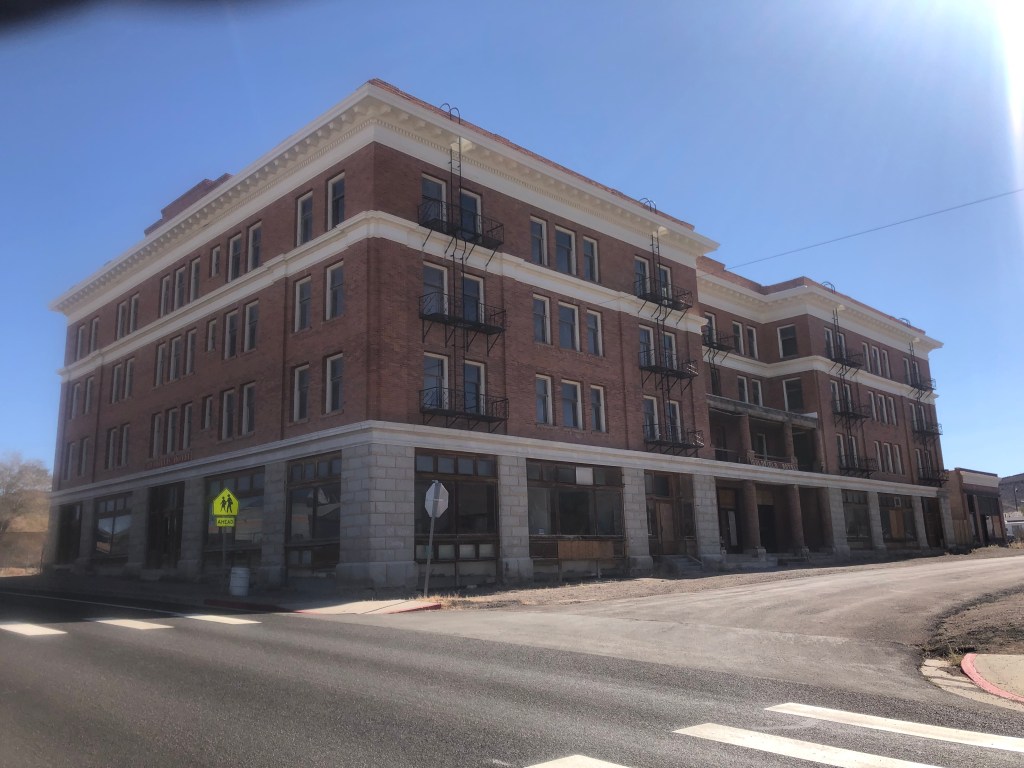
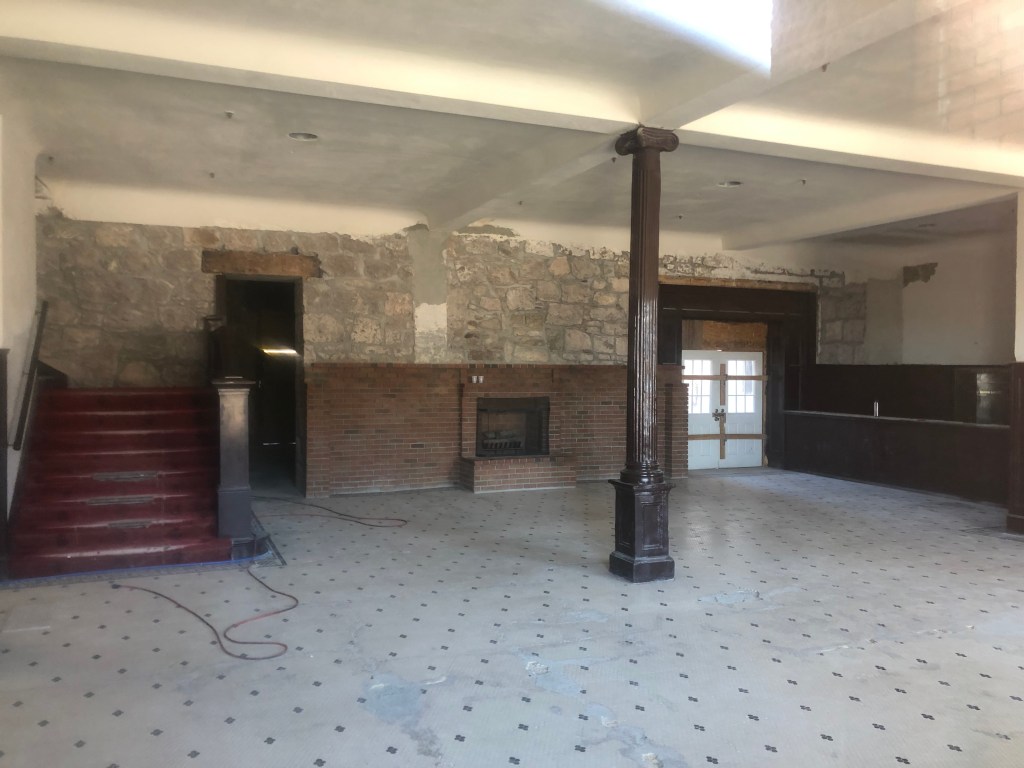
Another major restoration effort focuses on the Goldfield Hotel. It’s a huge structure, and in surprisingly good shape considering it was built in 1907, survived a flood and a fire, and has been vacant since World War II.
The Goldfield Hotel.
Inside the Goldfield Hotel. Don’t ask how I got this photo.
Ownership of the hotel has changed several times in recent years, and plans to make it into a boutique hotel seem to have fallen through. But I saw clear evidence of active restoration work when I visited. Oh, and that same Ghost Adventures show that went to the Clown Motel also has been to the Goldfield Hotel, and claim that they’ve seen evidence of hauntings. A local resident told me that the Ghost Adventures team had recently come back just a few months ago to do another feature on the hotel.
Anyway, it feels like there are historic structures all over this town. And I’m told that every single one of them has a current owner who’s either restored it or is planning to do so. Why does Goldfield have all this energy and civic pride, while towns like Luning and Mina have essentially disappeared?
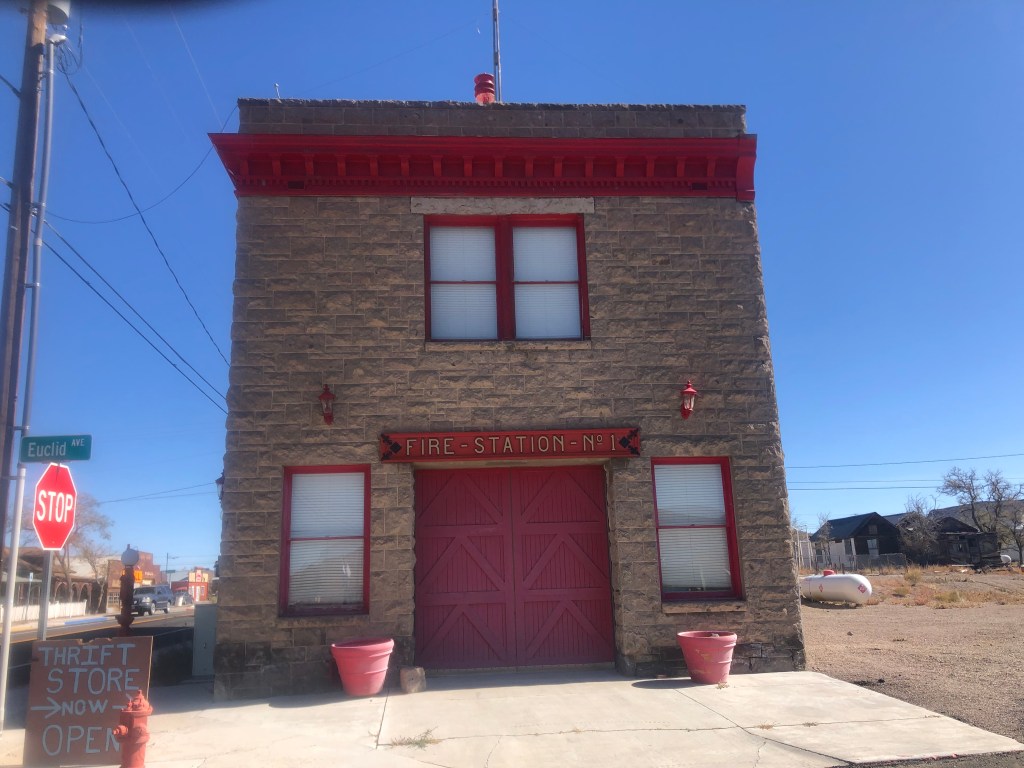
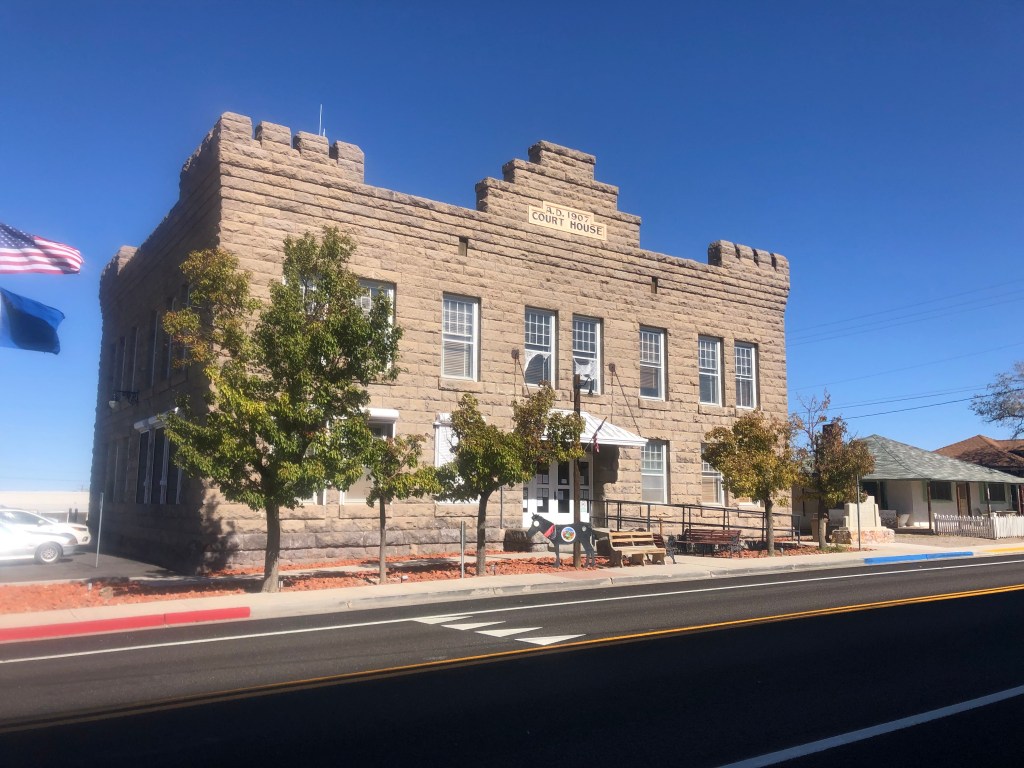
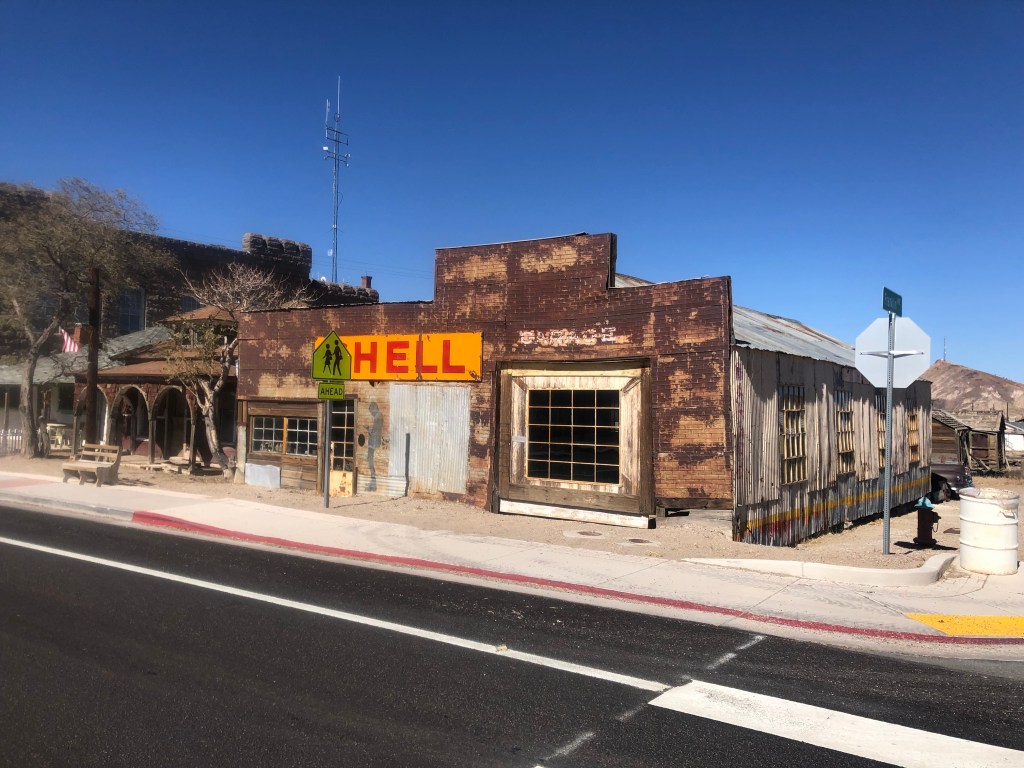
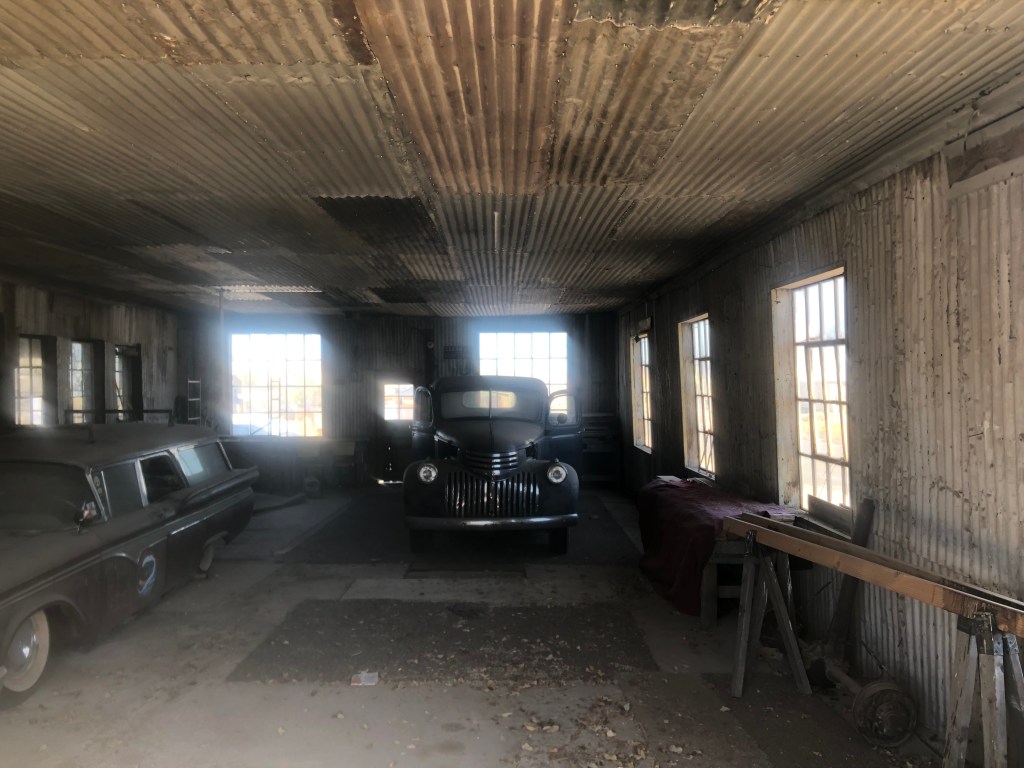
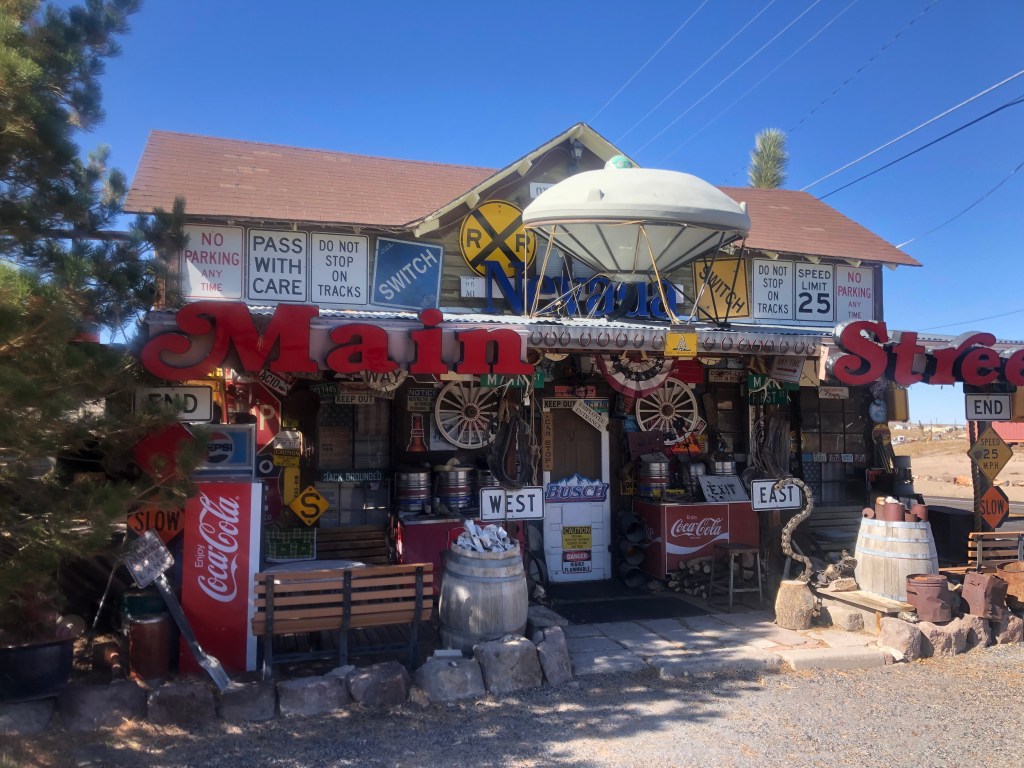
Goldfield’s fire station, from 1908. Beautifully restored, and now a museum (that’s only open by appointment).The Esmeralda County Courthouse in Goldfield, constructed in 1907Old filling station and garage, built around 1935. Inside the garageOf course, not everyone in Goldfield is on board with the historical society’s pleas for historical authenticity.
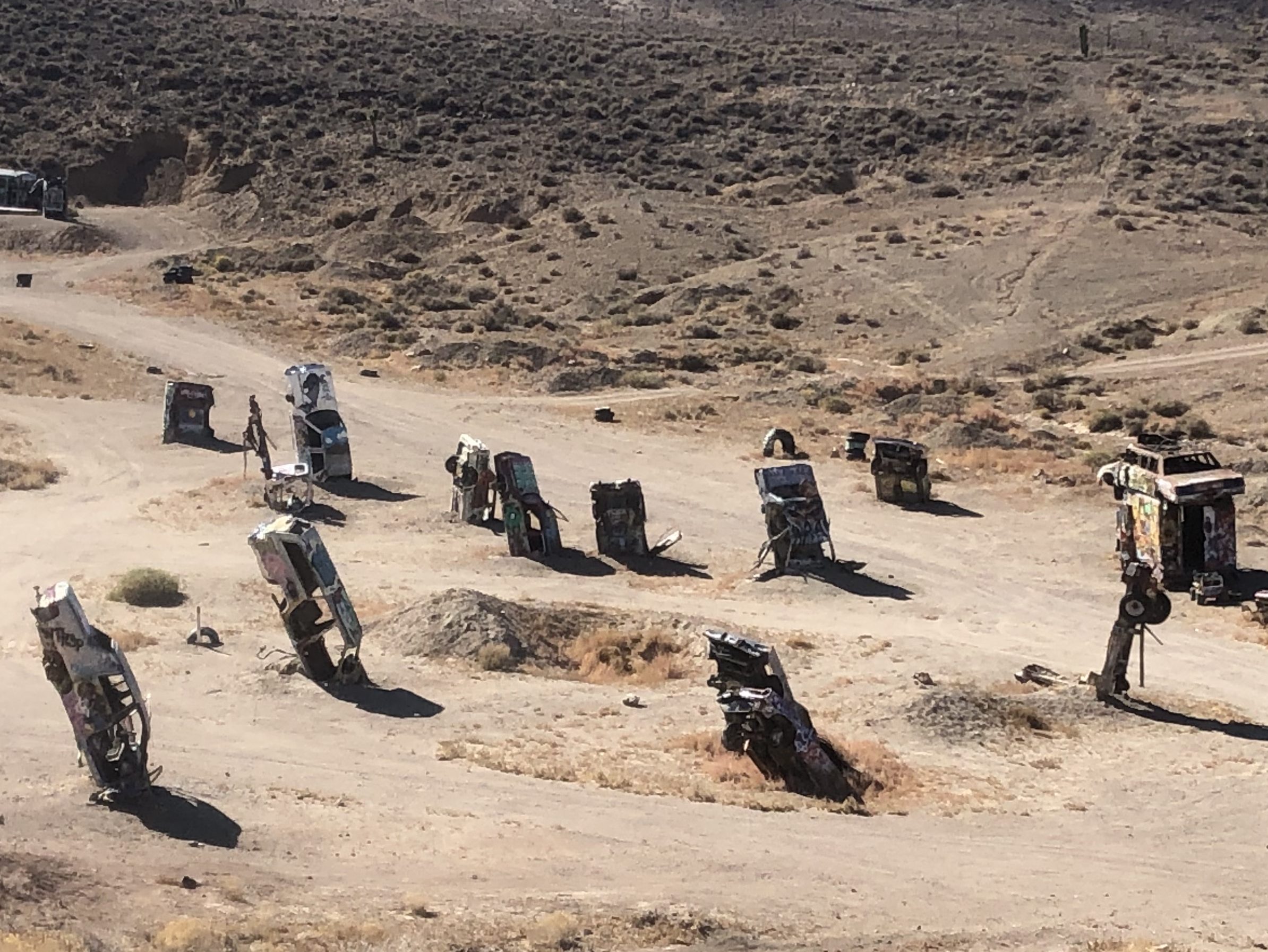
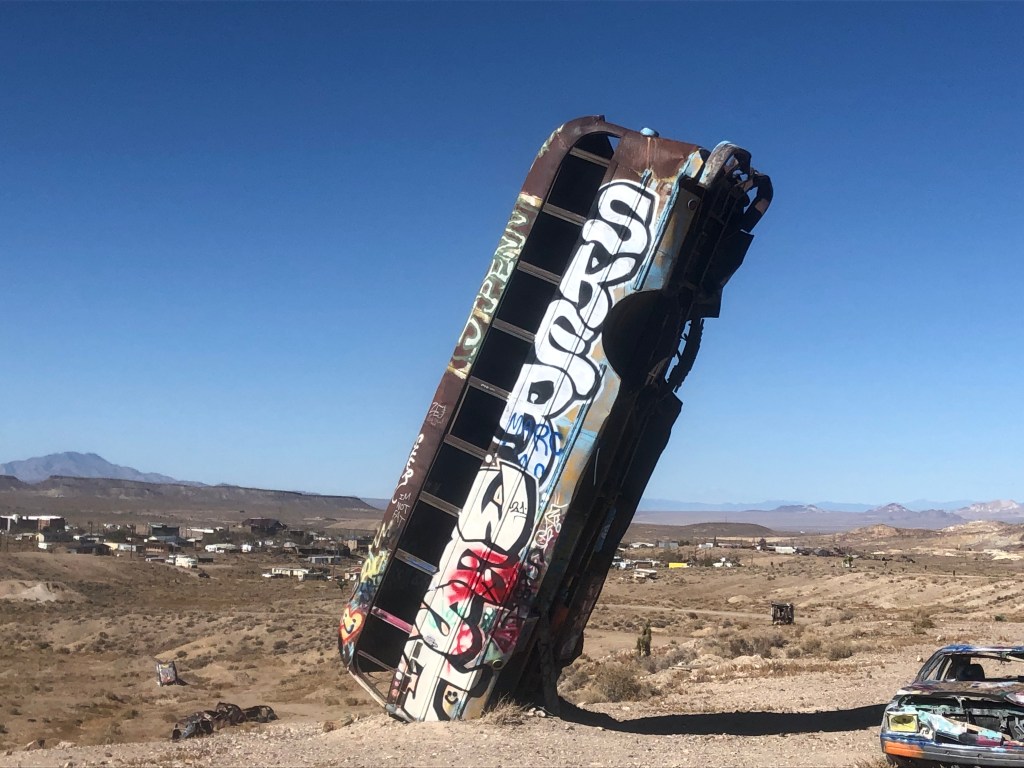
On the outskirts of town is a quite different type of attraction. The International Car Forest of the Last Church is a public art installation (I guess). It started when local resident Mark Rippie for some reason decided to stand a car on its nose in the desert outside Goldfield. This “art installation” was noticed by artist Chad Sorg as he was passing along Route 95, and Sorg was so taken by the piece that he settled in Goldfield to help Rippie expand the single car into a “forest” of abandoned cars. (I’m assuming that controlled substances played a part in the decisionmaking.) Today the “forest” includes over 40 vehicles, all of which are regularly covered and re-covered with graffiti by visitors. (The International Car Forest of the Last Church in fact encourages that behavior.) I hate to sound like a Philistine, but isn’t this all highly derivative of the much more famous and whimsical Cadillac Ranch?
Just a portion of the forestWon’t get fueled again
Yes. Well. So, after studying each vehicle with my arms behind my back and muttering “I can feel what the artist is trying to say,” like a hippie version of Woody Allen, I left the Forest and got back on US 95. After my enjoyable and engaging visit to Goldfield, I was back in the mode of speeding along endless miles of desert and an unchanging horizon. After a little over an hour I saw a large yellow sign ahead and, as I was about due for a break, I figured I’d make a stop.
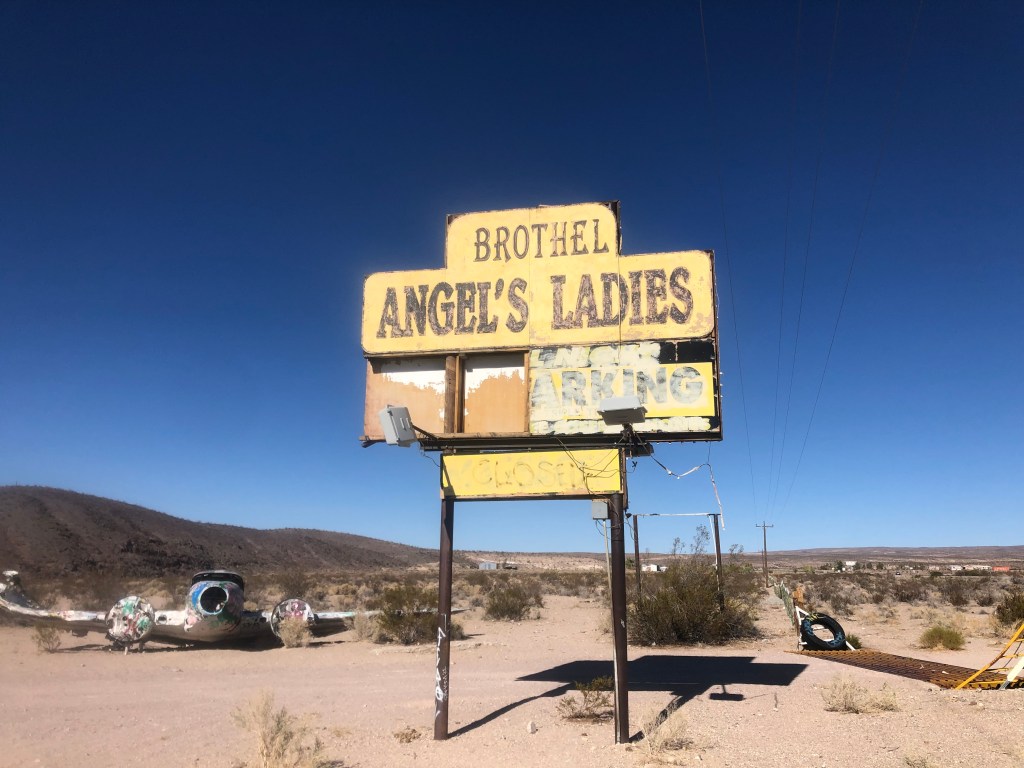
You at least have to admire the bluntness. No “Gentlemen’s Club” or similar euphemisms here!
As we all know, prostitution is legal in Nevada. Has been since 1971. You just have to conduct your activity in a licensed brothel. So, here we have the confusingly-punctuated “Angel’s Ladies” brothel, which has been around (under various names) for over a century. (Yes, evidently it operated illegally until 1971.) The place has been closed since 2014.
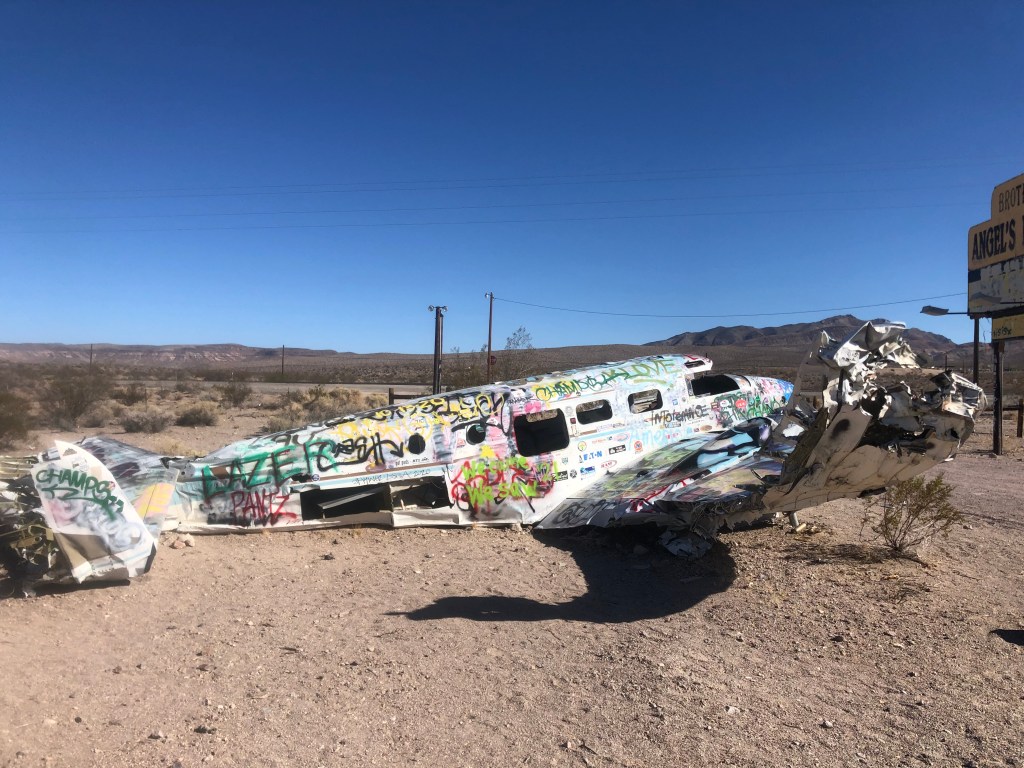
Alert readers might notice the wreckage of a small plane not far from the sign.
Well, there’s a story to it. It seems the brothel’s owners decided to run a promotion in 1978: They got this plane, and let volunteers parachute out of the plane from a low altitude over the property. If the jumper managed to land on a mattress that had been put on the ground, they won a free night at the brothel with the woman of their choice. Unfortunately, the pilot had some trouble during the promotion and crashed the plane right where you see it today. The owners evidently figured that it was worth more as a roadside attraction than as scrap, so they left it where it crash-landed. (News reports say that no one was hurt in the crash.)
Angel’s Ladies Brothel is just north of the town of Beatty, which is otherwise not notable. After passing Beatty, I started to plan (better late than never) on the remainder of my route. I decided that I didn’t want to go all the way to Las Vegas, as it really isn’t the kind of city that I’ve been seeking out on these trips. So I made a last-minute decision to leave US 95 and cut northwest through Death Valley and then take US 395 home. Those segments have been the subject of other blogs (like this and this), so I won’t detail the rest of the trip, except to say that Death Valley in the fall is stunning, and US 395 always affords awesome views of the eastern Sierras.
I’d also say that US 95 — at least the segment of it that I took through Nevada — is an interesting, stress-free, pleasant enough highway for those looking for such things. And I’m sure there were plenty of roadside attractions and stories that I missed, so I’d encourage you go out there and find some more!

 Chasing Phantoms