Breweries · California history · cemeteries · churches · Gas stations · Obelisks · Puns · Road trips · trains

Meditation

Spending a few days in the desert gives you time to think. To ruminate. To meditate. To shorten your sentences to unconjugated verbs.

This morning I headed south on CA 127, and within the hour I was at Shoshone (official pop: 31). I say “official”population because one of the locals told me the actual population is now down to 13. In any event, Shoshone was founded in 1910 by Ralph “Dad” Fairbanks, by literally relocating buildings from nearby abandoned mines and towns. Shoshone was situated on the Tonopah and Tidewater Railroad line which, we learned yesterday, was launched a few years earlier to haul borax. Interestingly, the T&T’s name was an unfulfilled aspiration. It never reached north to Tonopah, and it never reach southwest to San Diego (which was the “tidewater” envisioned by the name). Anyway, “Dad” Fairbanks’ daughter married a boy named Charlie Brown (well, Charles Brown), and young Charles essentially became the heir apparent of the town.
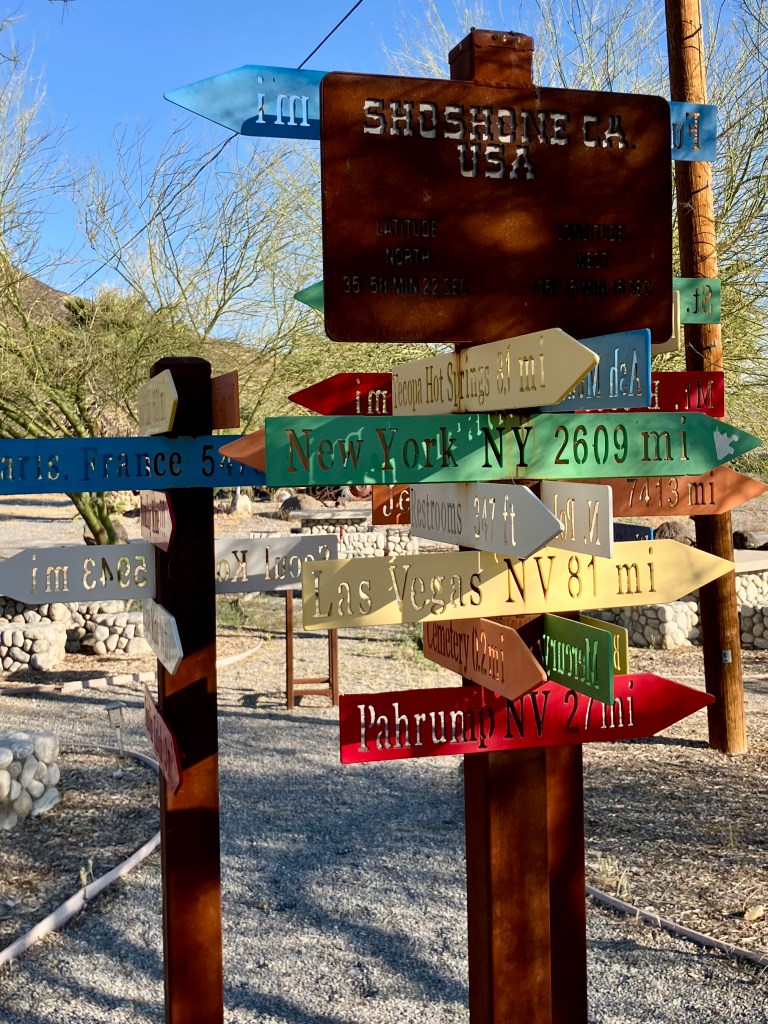
All roads lead to Shoshone.

Despite its limited population, Shoshone today remains a going concern. It’s well-positioned as the southern gateway to Death Valley, and it’s at the crossroads of a couple of important highways. Services are therefore oriented towards travelers, with a gas station, a market, a restaurant, a museum, and even a generic Catholic church.
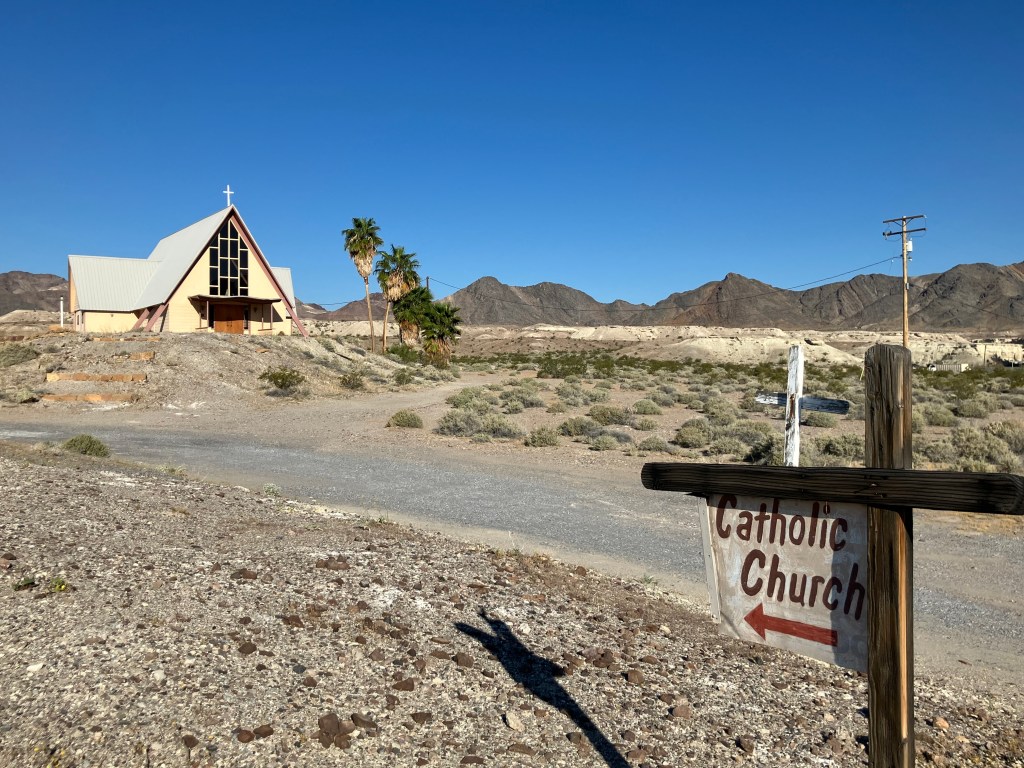
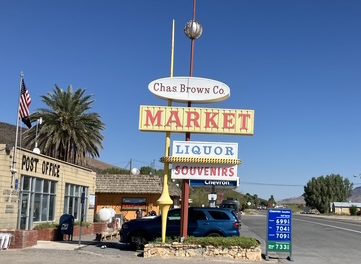
Note the ownership of the market. Also, is it just me, or is the sign done in the Googie tradition?

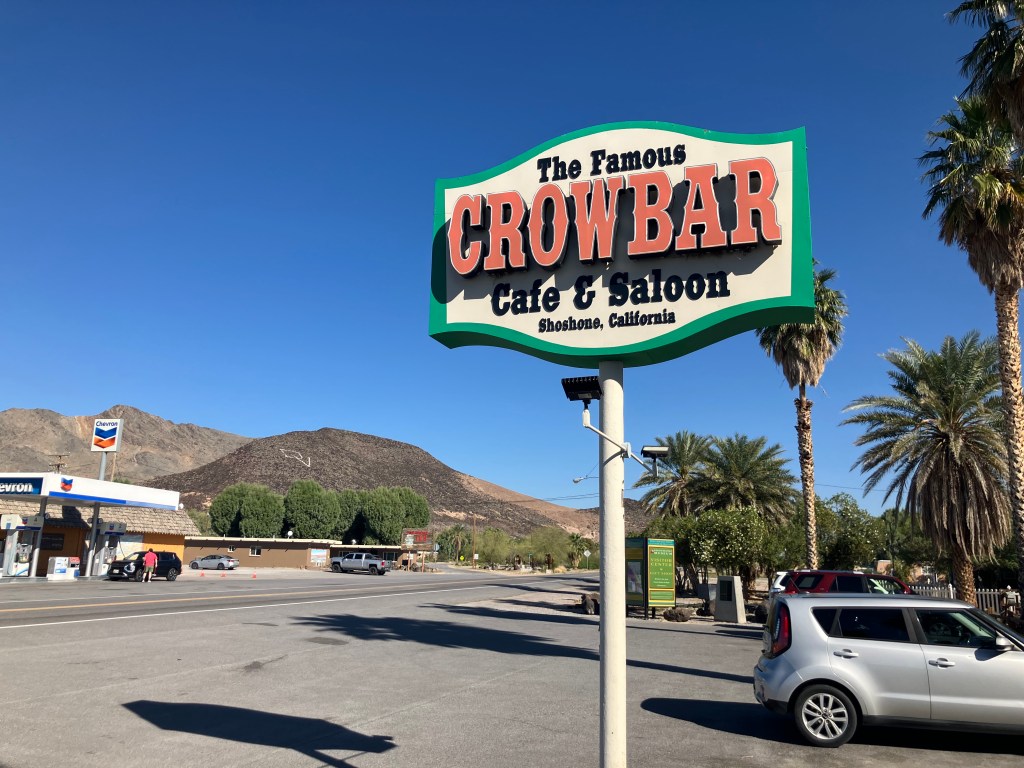
I decided to get breakfast at the “famous” Crowbar Cafe & Saloon. There were a few other people at the counter, and they seemed to be travelers like myself.
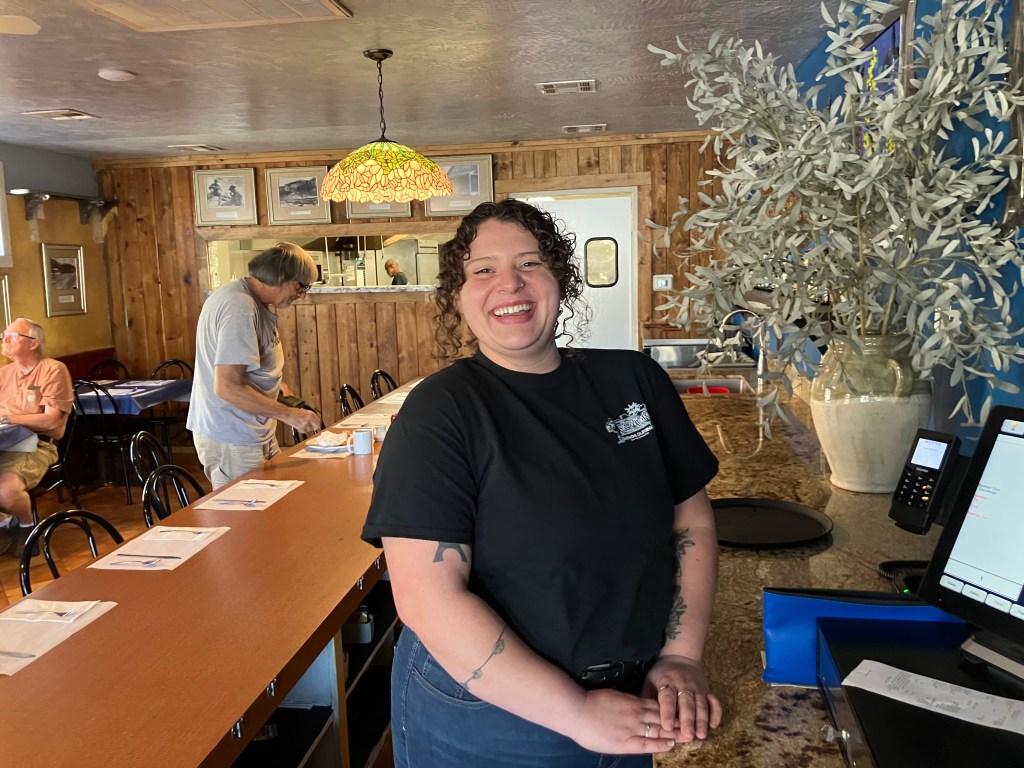
I’m still not sure whether the restaurant has earned the term “famous,” but Brianna–the server–is memorable. Friendly, attentive, and effervescent, with a sly sense of humor, she gives the place a buoyancy that goes well with the strong coffee.
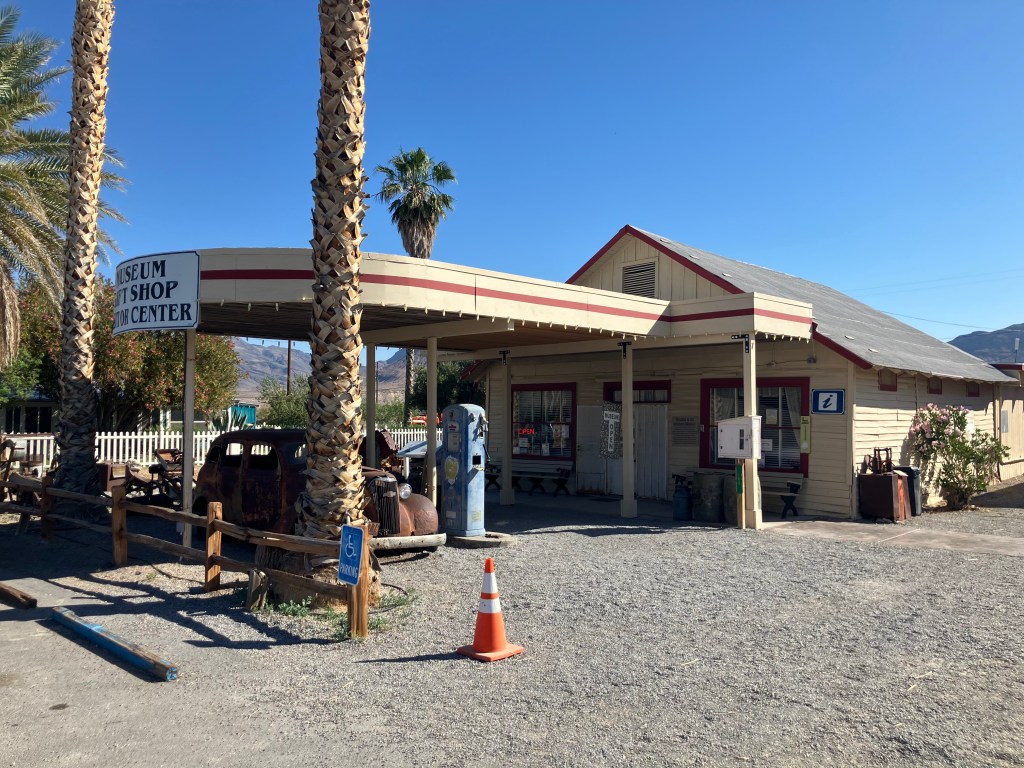
Directly next door to the Crowbar is an old service station that’s been converted into a museum and visitor center. What the heck, thought I. Let’s see what I can learn about this town.
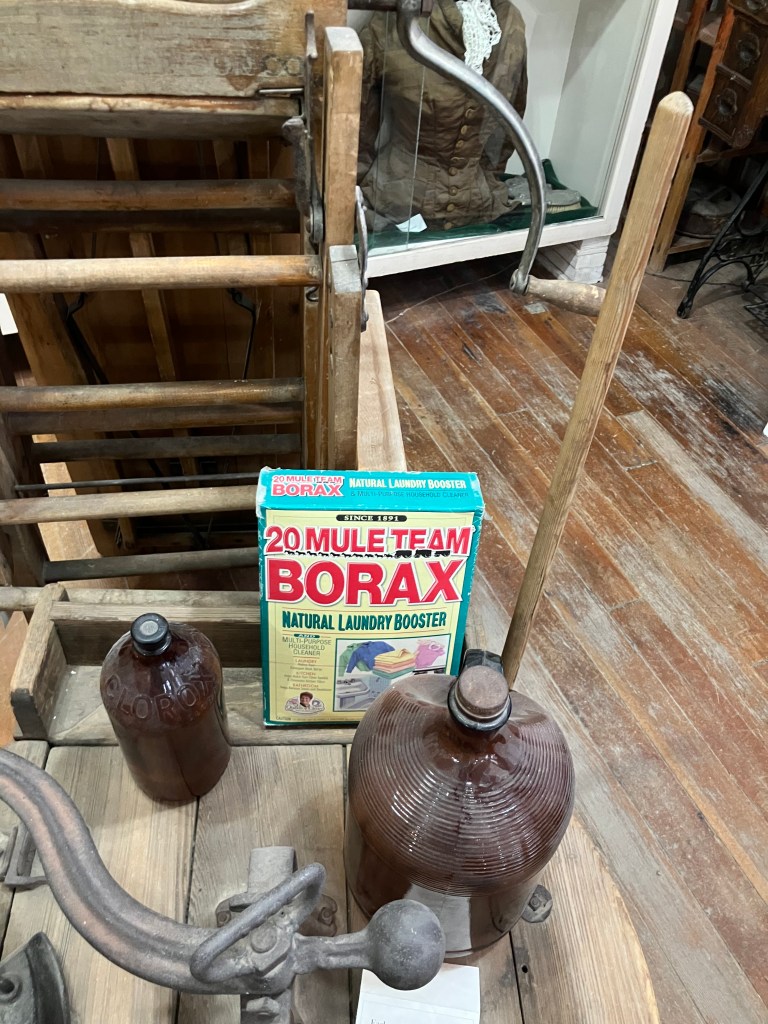
Even though it’s small, every corner of the building is packed with artifacts: old railroad schedules, household appliances, guns, photographs, maps, sheriff’s badges, even an old mastodon skeleton that was uncovered by local students. And of course there’s the requisite box of that white gold of Death Valley: Borax.
If I have any critique of the museum, it’s that some of the exhibits lack enough descriptive backstory. Fortunately, there’s a remedy in the form of Eliza, who runs the place (or at least today she was).
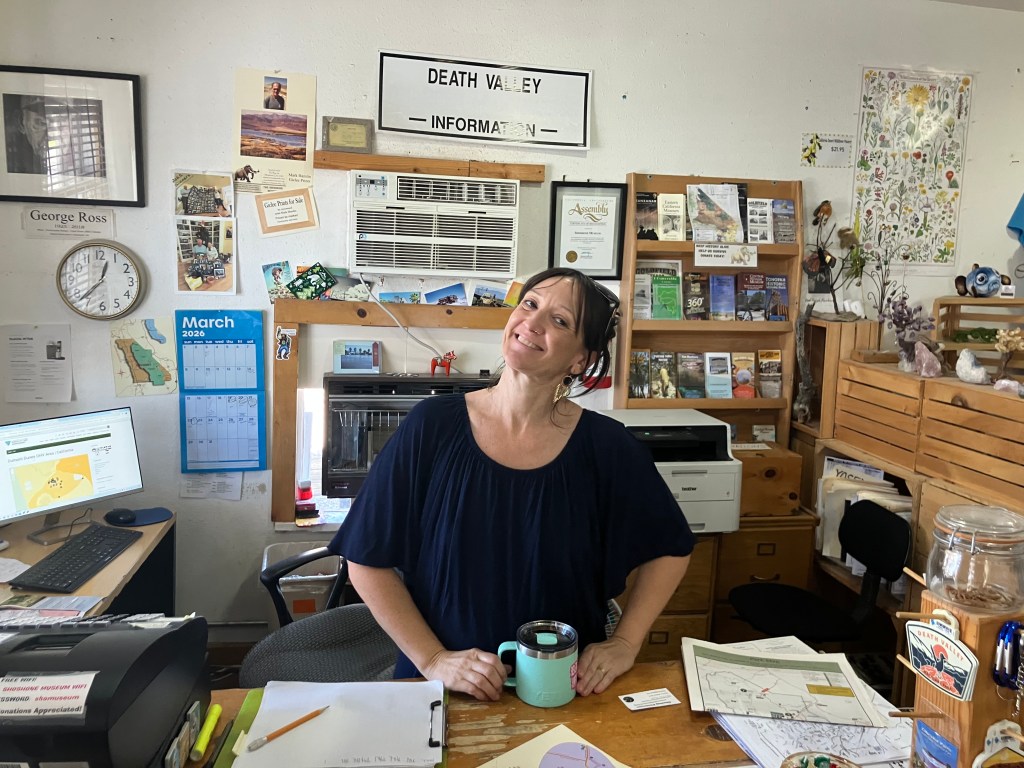
Eliza–Shoshone’s answer to Google.

It was Eliza who sketched the town’s history for me, who pointed me to the remnants of the T&T Railroad, who told me which local breweries were open and which were still getting their taps installed, and who insisted that I make a short detour to the date orchards of Tecopa for a date shake.

Based in part of Eliza’s suggestions, I first went across the street to Dublin Gulch, where miners dug rough-hewn caves into the hillside a century ago.
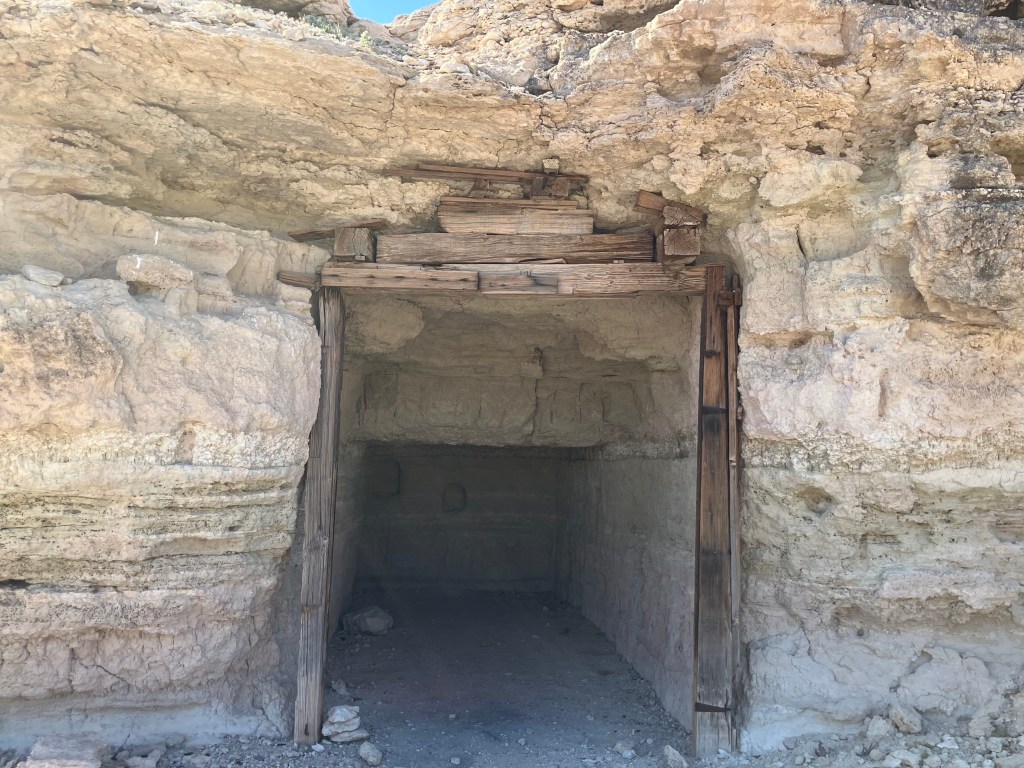
Be it ever so humble…
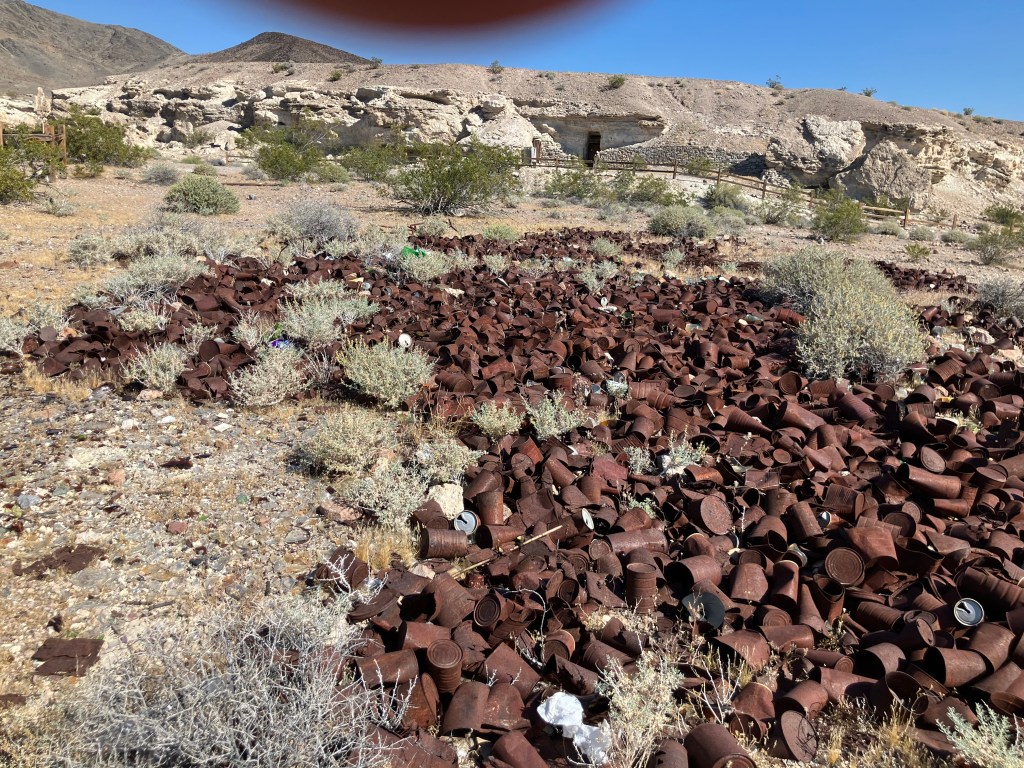
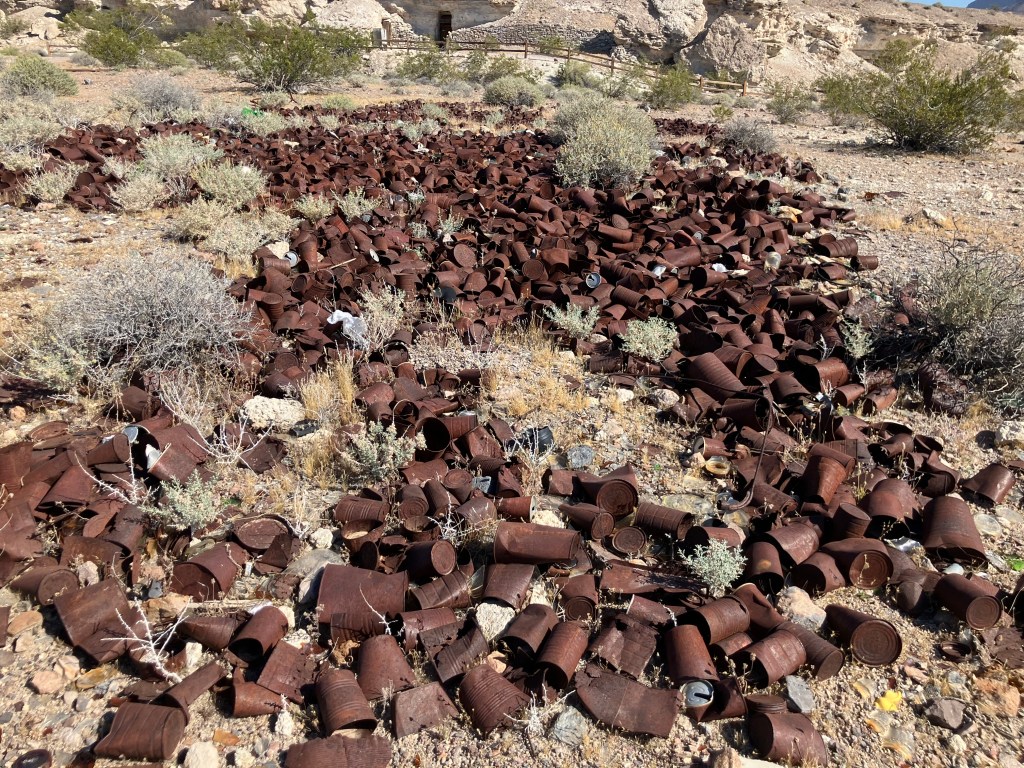
The ground around the caves is strewn with old cans. Presumably these once contained dinner.
More cans…
…and another….

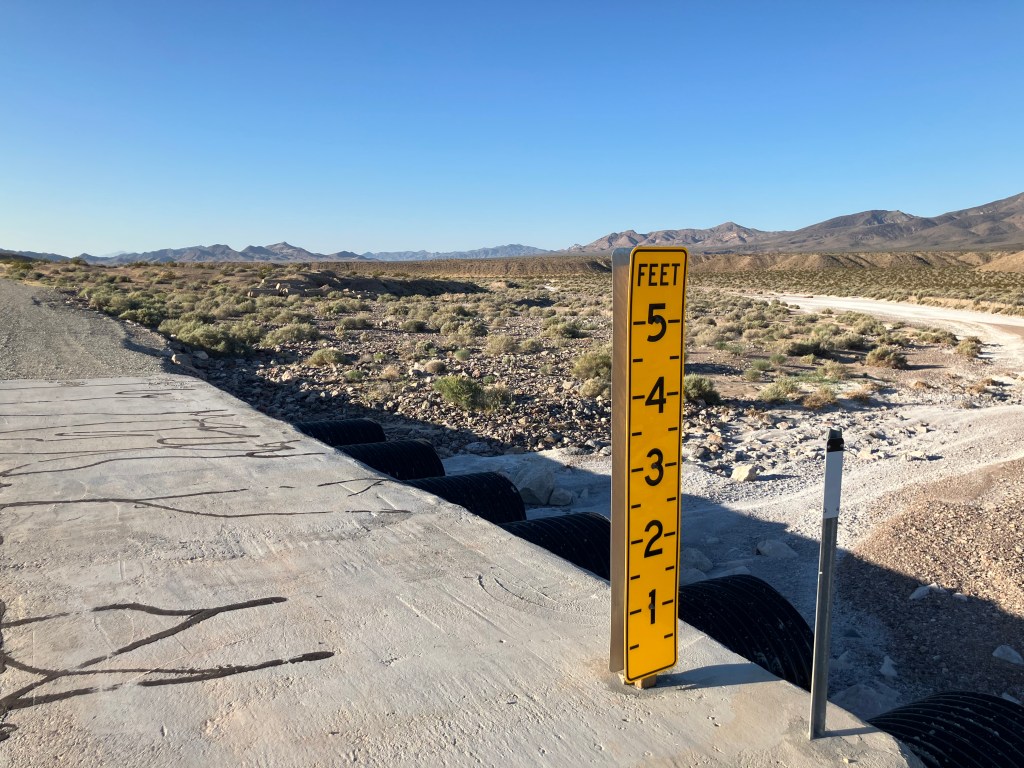
Having seen what I could see in Shoshone, I got back in the car and headed out to Tecopa (pop: 169). Along the way I spotted a few of these 5-foot markers where the road comes close to the Amargosa River. I learned yesterday that flash floods are a real and persistent danger out here; the Amargosa Opera House has been flooded several times. I’m guessing the markers help drivers to judge the depth of water on the roadway?
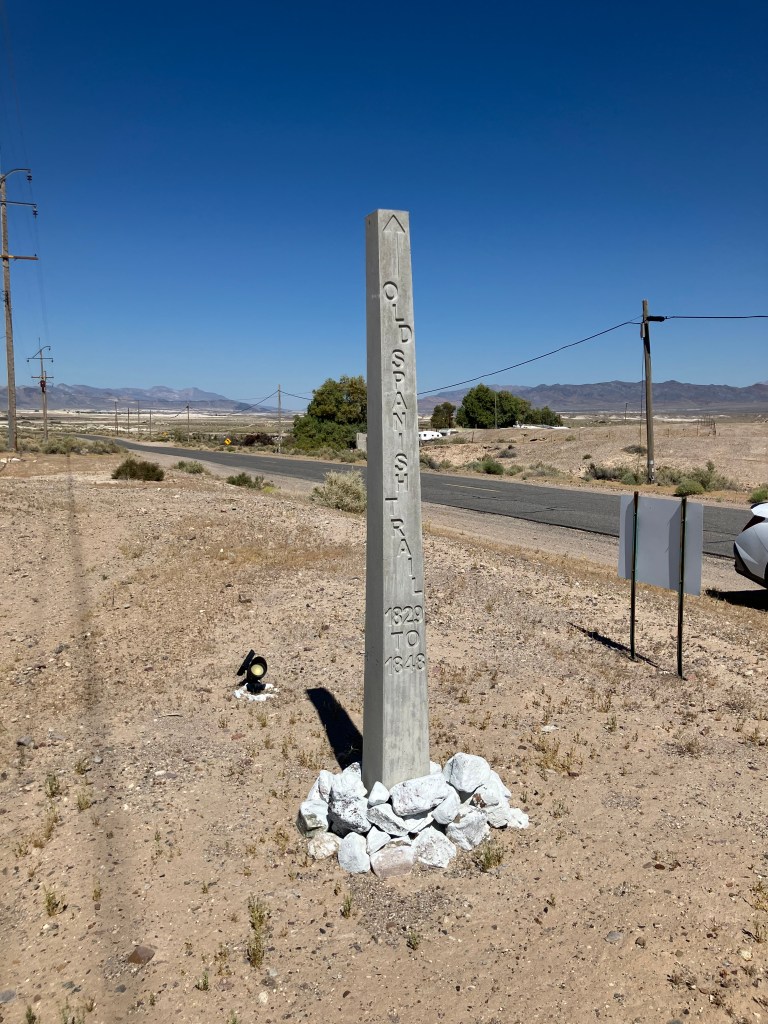
Tecopa is a few miles off CA-127, and to get there you cross the Old Spanish Trail, that connected the settlements of Santa Fe with Los Angeles in the 19th century. I saw a small obelisk (about 5 feet tall, designated #32) marking the route. I surmise there are at least 31 others, and most likely many more. This may be the subject of an upcoming road trip…
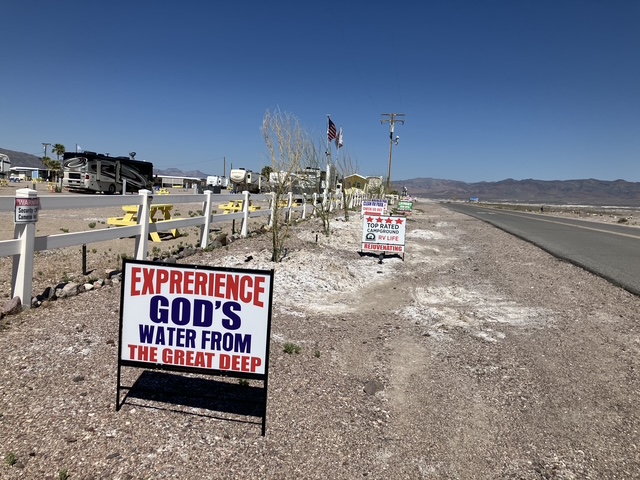
The road to the date orchards passes along a string of privately-owned hot springs. Signage from competing outfits lines the road. Some of the claims seem a bit over-the-top…
I did eventually get to the China Ranch Date Farm, where I had me one of best of the two date shakes I’ve consumed in my life. But near the farm I encountered two sites that spurred the rumination suggested in the title of this post. First, there’s the U-We Wash:
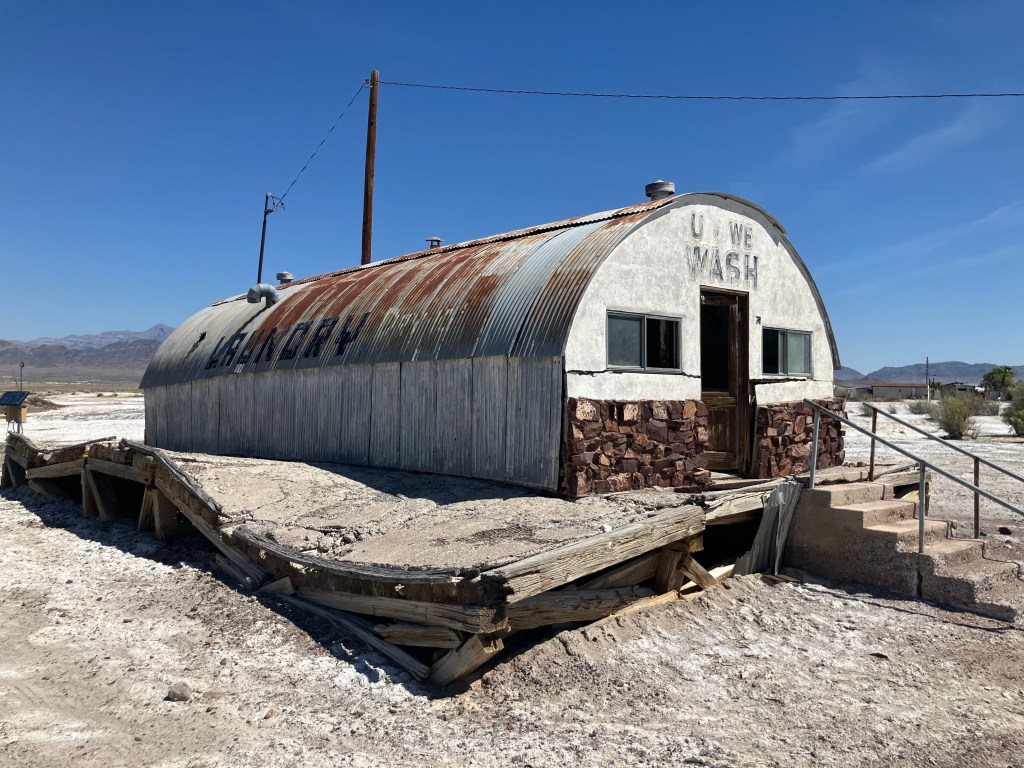
It’s a long-defunct laundromat in a quonset hut. The equipment remains largely intact, seemingly spared from vandals.
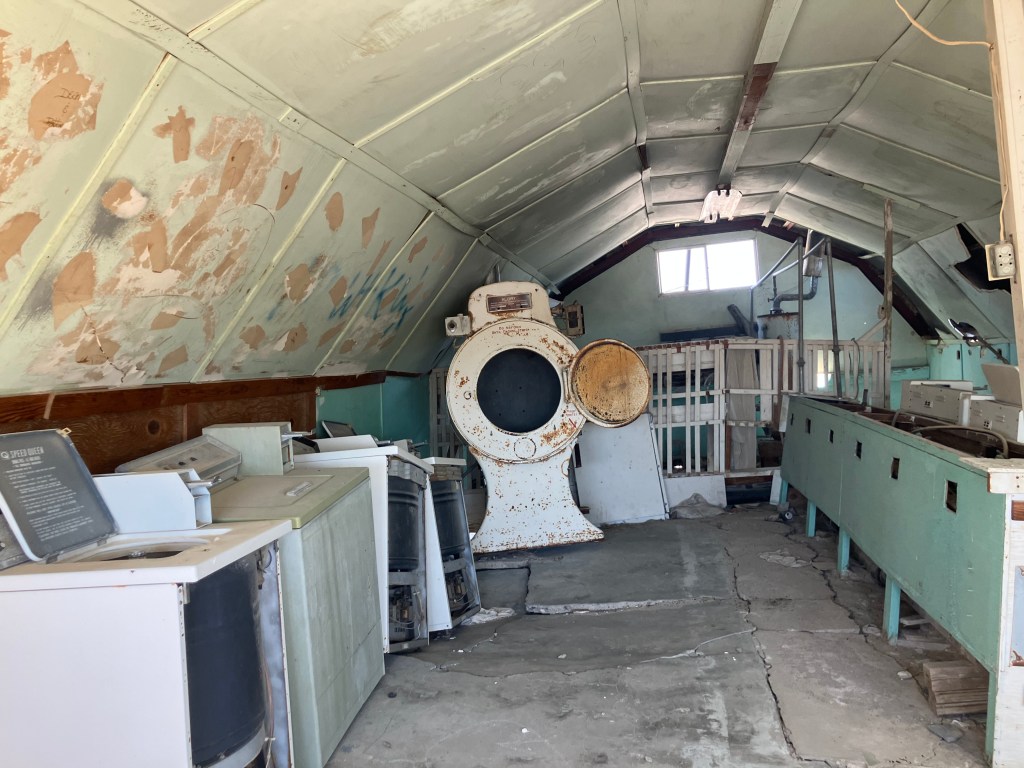
It seems the place has been around since early in the last century, and has been abandoned for decades. It must have served visitors staying at the trailer and RV parks across the street. It’s got a bit of an eerie, Twilight Zone vibe, as though the the owners and customers all instantly disappeared decades ago, perhaps due to a nuclear explosion.

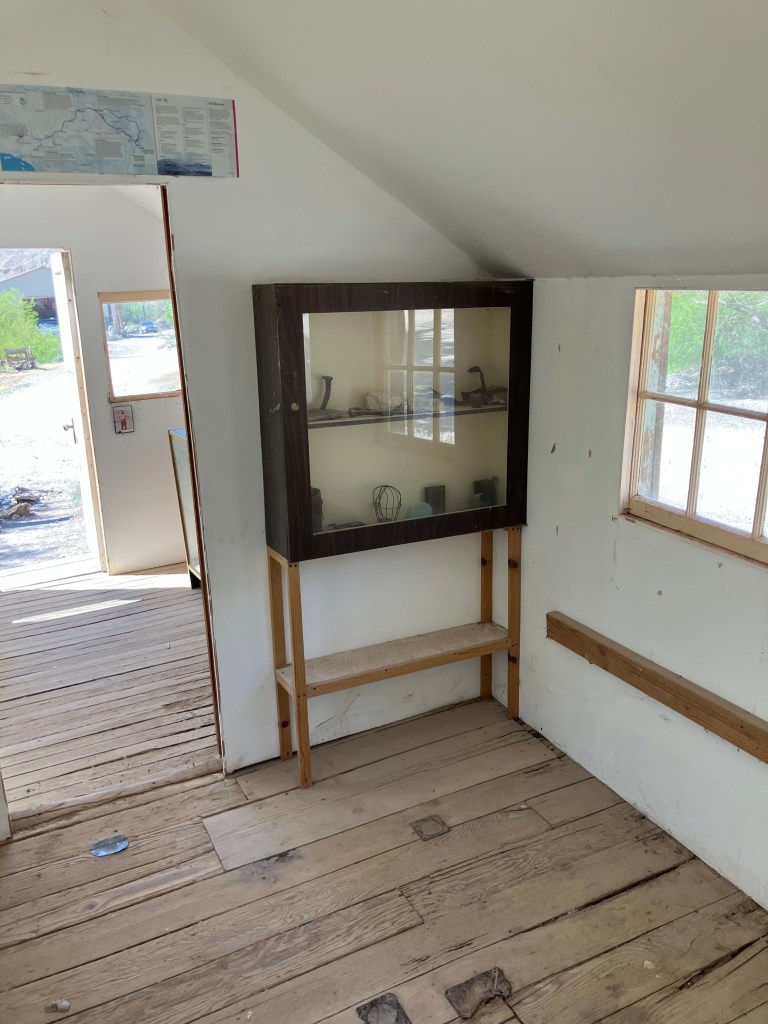
Now, hold that thought and consider the second site that got me ruminating: Just down the dirt road from the date farm is the self-proclaimed “Modest Museum,” which is a simple, old two-room building which a few neglected displays about the history of the area.
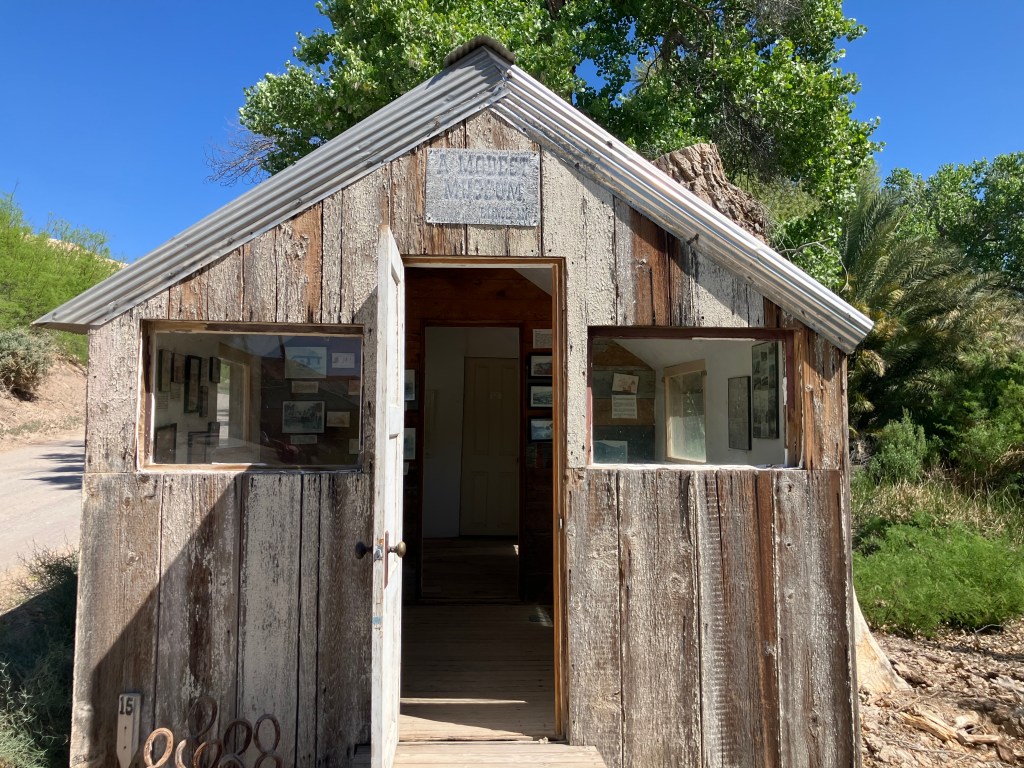
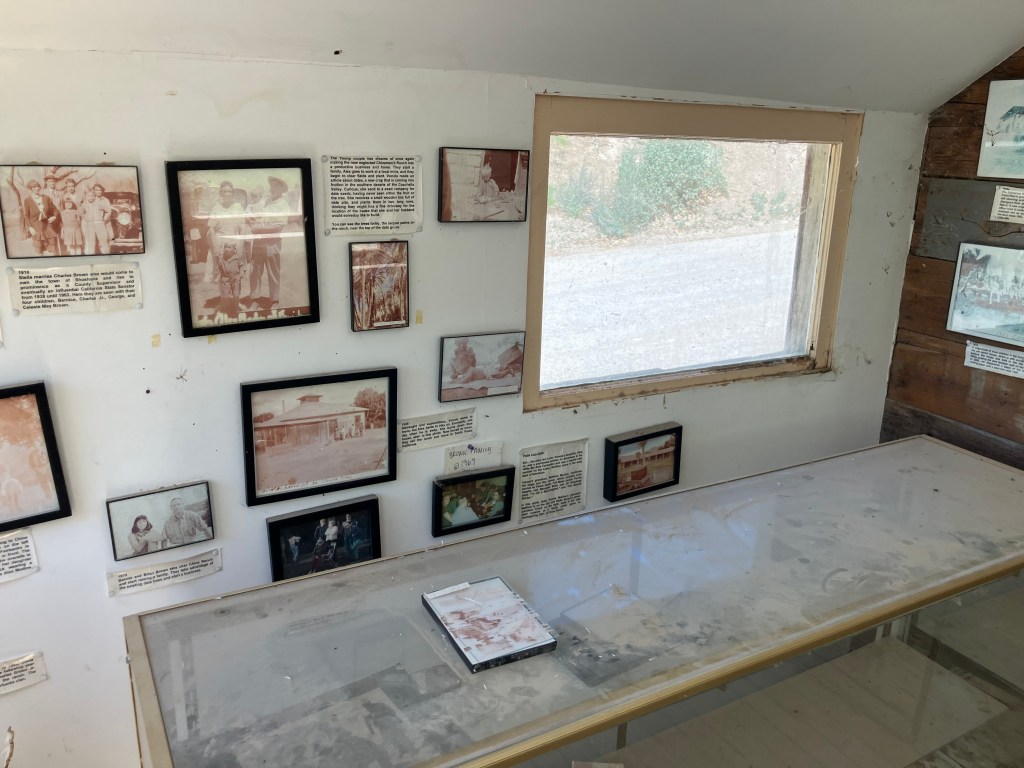
A sign on the wall reads: “We have deliberately made these exhibits accessible to the public, especially children, so they can get a real sense of the history here. Please behave honorably and do not remove or vandalize anything in this little museum.” And indeed, there are no signs of vandalism or theft, which is of course a good thing. And yet, there’s also no sign that the museum has been visited or cared for in the slightest. Dust is thick on the display cases, the photographs are sun-bleached and virtually indecipherable, and descriptive labels have fallen to the ground.

To me, the U-We Wash is cool and intriguing, an artifact in our midst that testifies to a different time. But the Modest Museum is depressing: a well-intentioned and hopeful endeavor that has fallen flat and/or been abandoned. Why my different reactions? Why are some artifacts cool, and others are junk? I’m thinking now of an old home-made theme park in Wisconsin that I visited in 2022. The man who lovingly created it had recently died, and the place was falling into disrepair. As I walked through it on a rainy afternoon I felt melancholy but appreciative of his effort. I did not feel like the remnants of his little park should be torn down. Just as I did not feel the U-We wash should be torn down. And to be fair, it’s not that I think the Modest Museum should be torn down exactly, but if the owners still believe in the mission, they need to give it some TLC or think of a new approach.

Part of this rumination comes from something that tourguide Sue mentioned at the Amargosa Opera House. According to Sue, Marta Becket had always insisted that, after her death, no one should ever restore or otherwise repaint any of the murals she had painted on the walls of the opera house and the hotel. She believed that the desert will rightly reclaim all that she did out here, and she was OK with that. Don’t fight it, she said. And so, as our tour group walked through the opera house, we saw areas of peeling paint and torn fabric that, according to Sue, the caretakers just have to accept.

I spent a lot of time thinking about this today, and the thought that keeps coming to my mind is the notion of burying the dead. Trees die in our gardens and we cut them down. Buildings become uninhabitable and unsalvagable, so we take a wrecking ball to them. An open bottle of wine goes bad and we pour it out. And, of course, our pets and our relatives die, so we return their bodies to the earth. I still don’t know exactly why I don’t feel that the U-We Wash shouldn’t be torn down. But I do know that the guy in my neighborhood with the weathered, broken, and rudderless boat in his side yard needs to get rid of the damn thing.

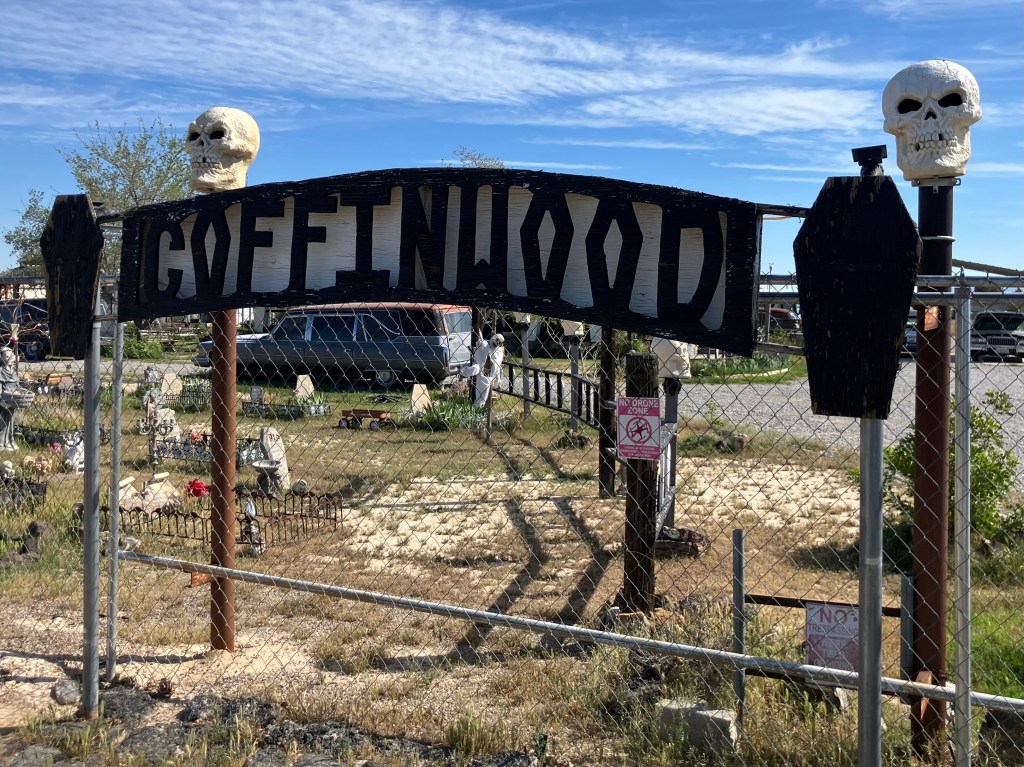
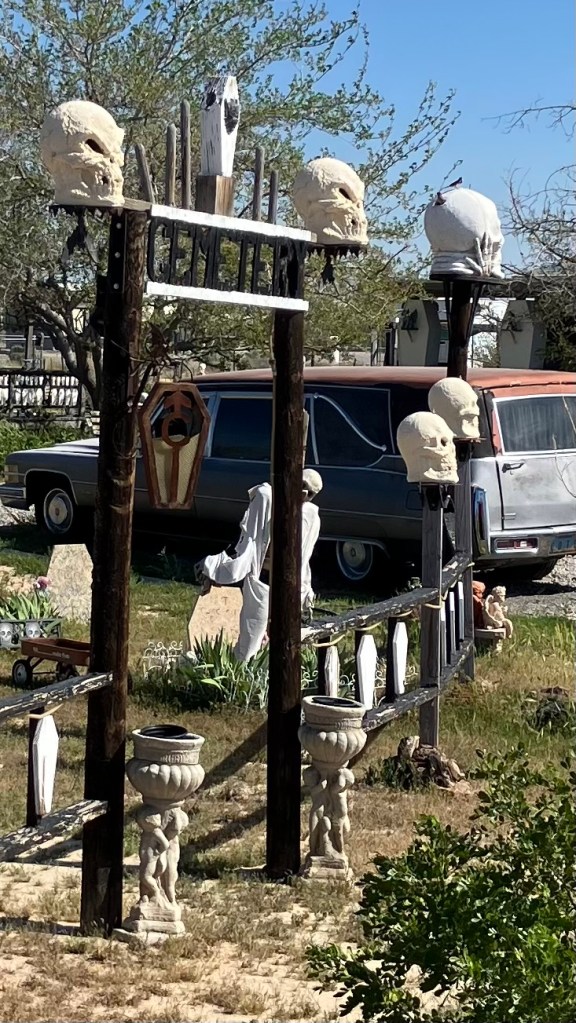
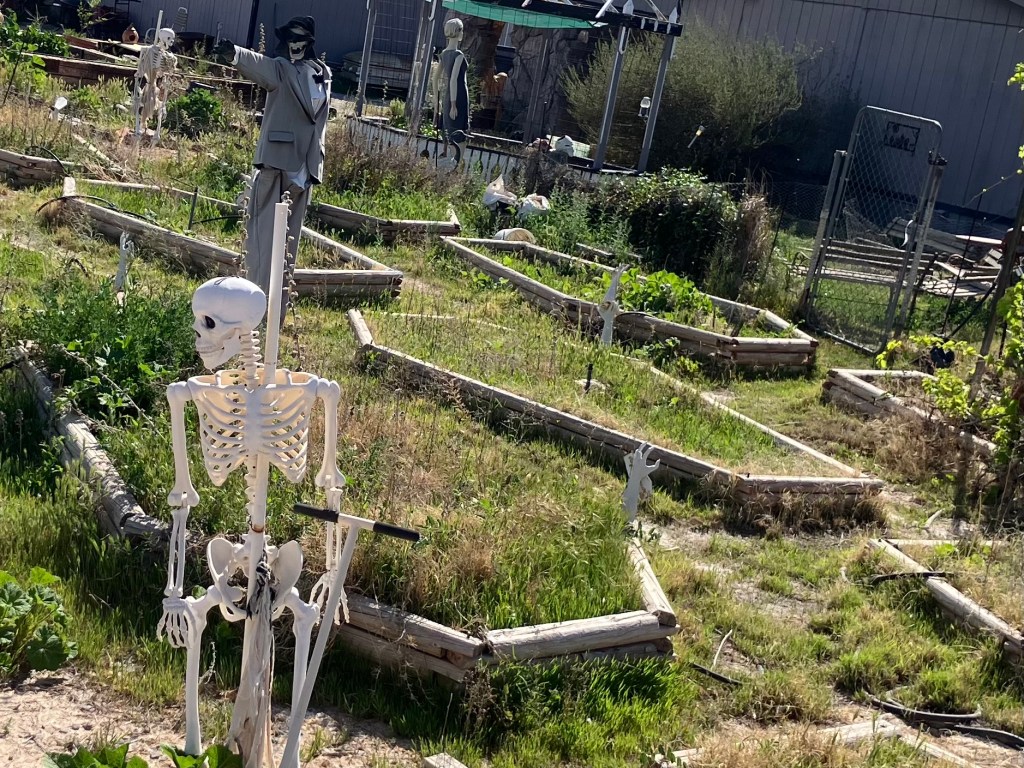
Out here in the desert there seems to be different attitude about death. Desert people appear to do a better job of accepting the concept. The imagery of death of all around the desert, including, of course, in the name Death Valley. So I’ll leave you with some of that imagery.
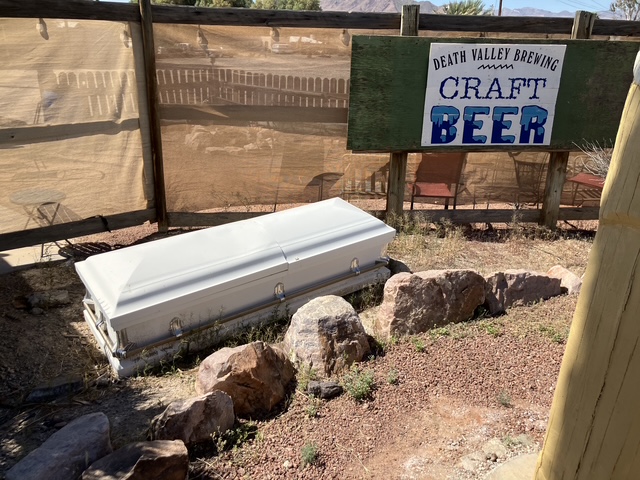
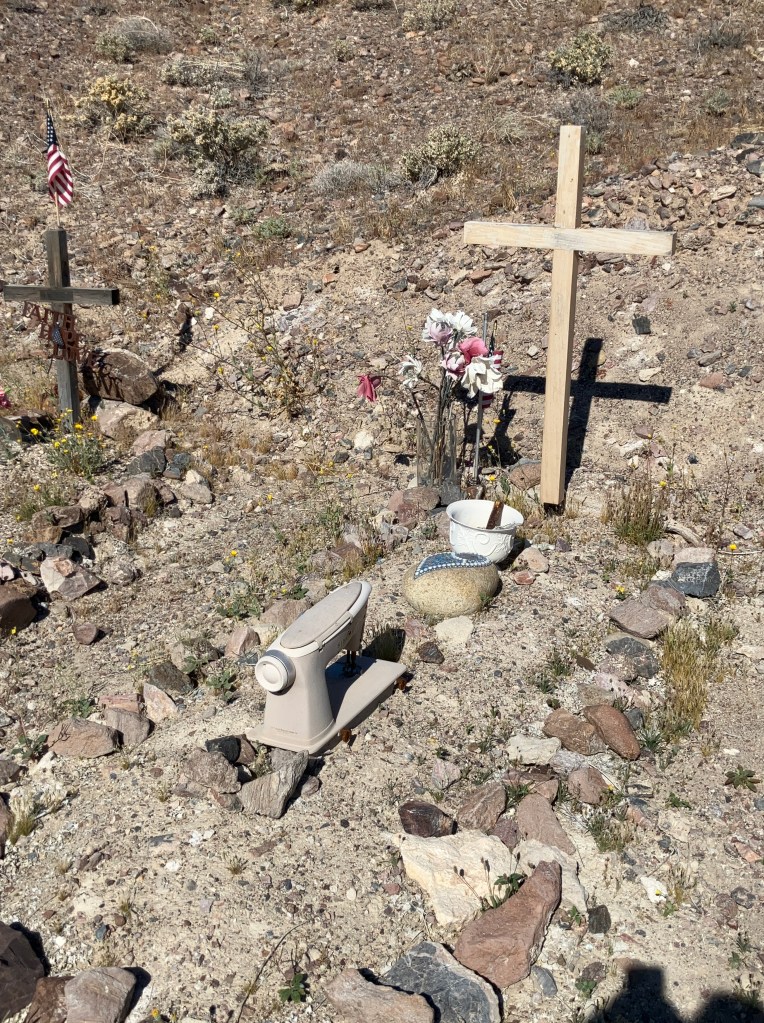
I’m betting the deceased was a singer. Har.

BEER OF THE DAY

OK, that was a little heavy. So let’s end with the Beer of the Day. I had a beer at Steelbound Brewery and Distillery in Pahrump, NV (pop: 44,000). (I had to make a 20-minute detour across the state line to find a place to spend the night.)
Speaking of imagery of death…

This brewery/restaurant feels a little weird, and seems to still be trying to find its niche. (I’m told the place recently changed ownership.) It’s attached to the Best Western hotel, which seems to seriously undercut its effort to appear like a hip microbrewery. Video gambling machines are situated at every seat at the bar. Giant TV screens show The Price is Right, a program that’s punctuated with endless ads for prescription weight loss and asthma drugs. The menu is overrepresented with Indian food. The Sirius country-western station is piped over the speakers. The whole place has a soulless corporate feel. Even the servers seem robotic.

But they make their own beer. Perhaps because they’re still in the start-up phase, they only had three beers on tap. I chose the Chocolate Peanut Honey Cream Ale. Believe it or not, I considered this to be the safer choice.
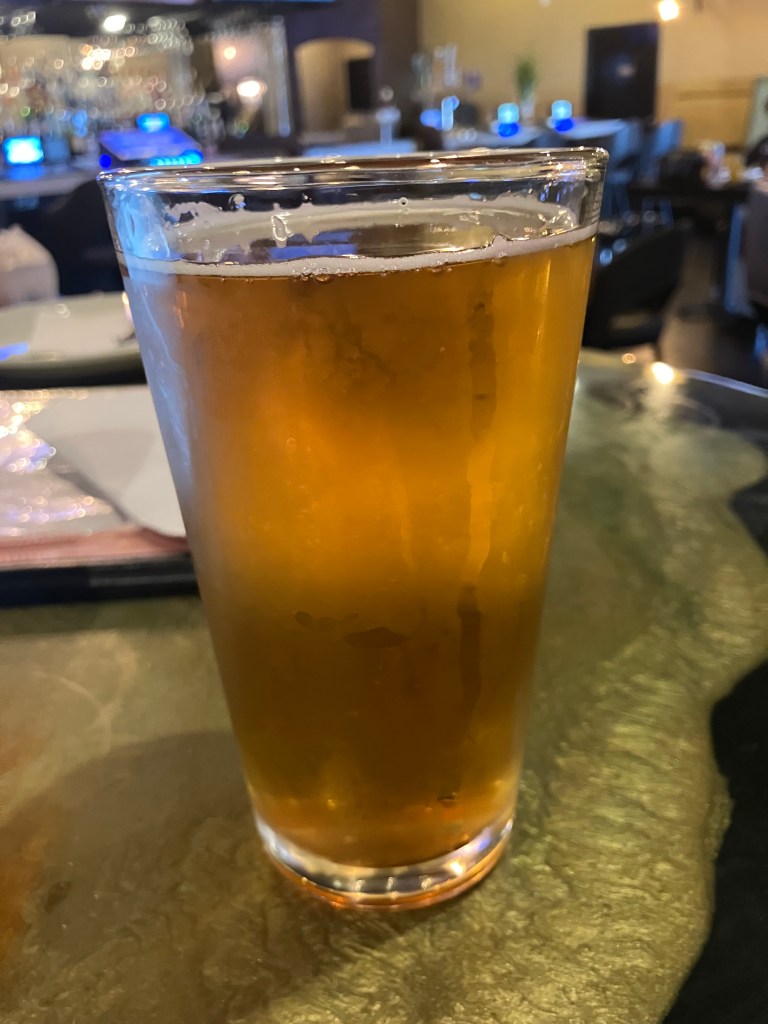
And I wasn’t disappointed! It’s got a golden honey color with a slight cloudiness. There’s no nose to speak up, but it is definitely refreshing. It’s not too hopped, not too carbonated, but neither is it flat or bland. I’d call it “brisk.” The mouthfeel is slightly creamy. I don’t taste the “chocolate” mentioned in the name, except maybe that slight chocolate essence you get from chocolate bitters. A full pint of this stuff was not filling in the slightest. If I lived near here, this would be my go-to summer beer. 5 out of 5 stars.

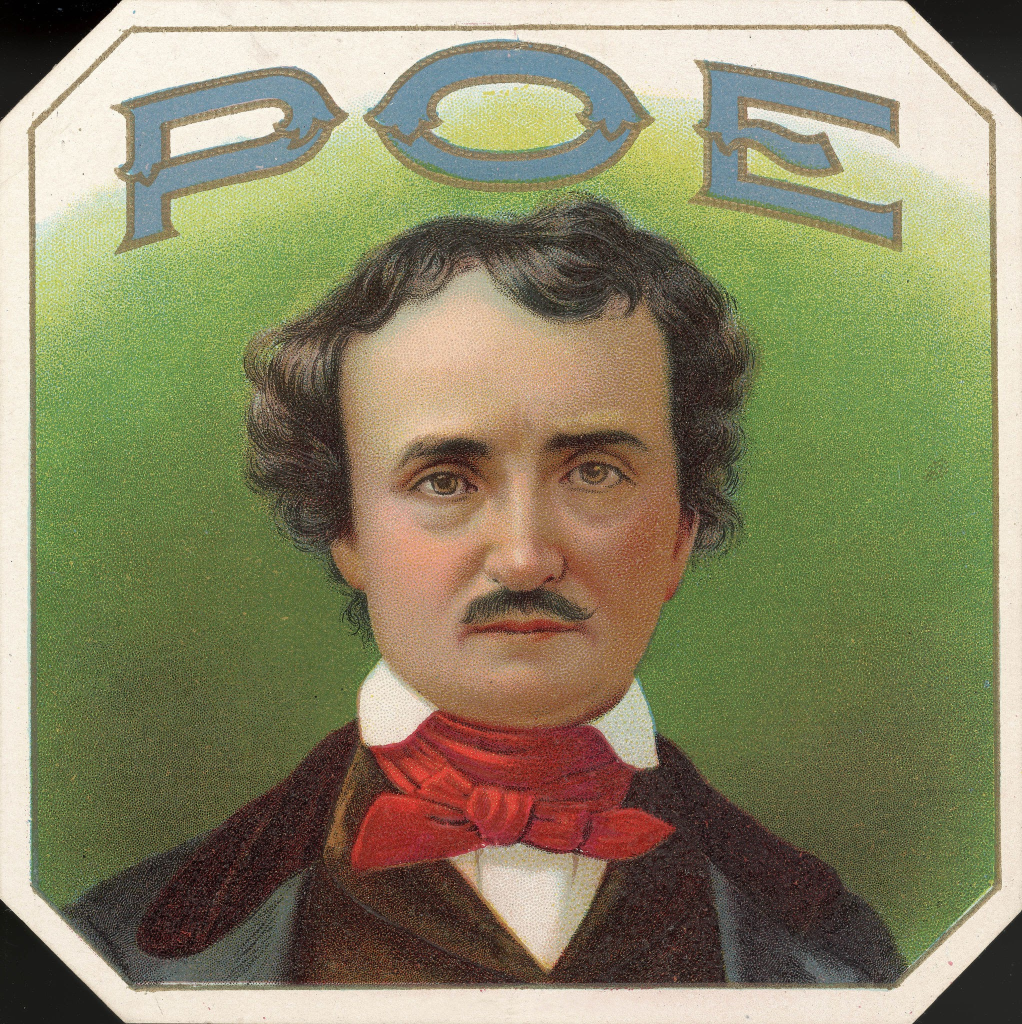
cemeteries

Kicking and Screaming

For many years I’ve avoided creating a Facebook page or an Instagram profile or a TikTok account. But that self-discipline ends today.

This is because the good people behind Six Degrees of Poe have designated this week as “Author Madness,” which plays off March Madness and highlights authors who have some connection to Edgar Allan Poe. Participants are supposed to post something each day on social media, which, in my case, necessitates creating a social media presence.

So, as you might expect from a Luddite like me, I’m doing the bare minimum here. I’ll be making the one requisite post each day this week, and I’ll be posting them on my spanking-new Instagram account. I’m also posting them on YouTube, and on this blog, which, as you might imagine, is more my comfort zone.

Anyway, check out today’s video, which highlights my recent short story, Poe’s Last Lament:

cemeteries · churches

Poe-nus Material

Speaking of Edgar Allan Poe…today is the 176th anniversary of his death. In celebration of the occasion, I’m providing this bonus post. No need to thank me, but feel free to remember me in your will.

So, I spent last weekend in Baltimore–the city where Poe wrote several of his better-known works, and where he is said to have died under mysterious circumstances. (For an entertaining, alternative history explaining those and subsequent events in Poe’s life, please see my short story “Poe’s Last Lament.”)

Anyway, I was, as I say, in Baltimore, where every October a crowd gathers in the neighborhood, where Poe once lived with his wife and mother-in-law/aunt, to participate in the International Edgar Allan Poe Festival. Among other things, we drank a toast to Poe at his gravesite at Baltimore’s Westminster Hall, visited the catacombs beneath the church, and watched a burlesque performance by an Australian stripper whose precise connection to Edgar Allan Poe continues to elude me. I’m not making this up.

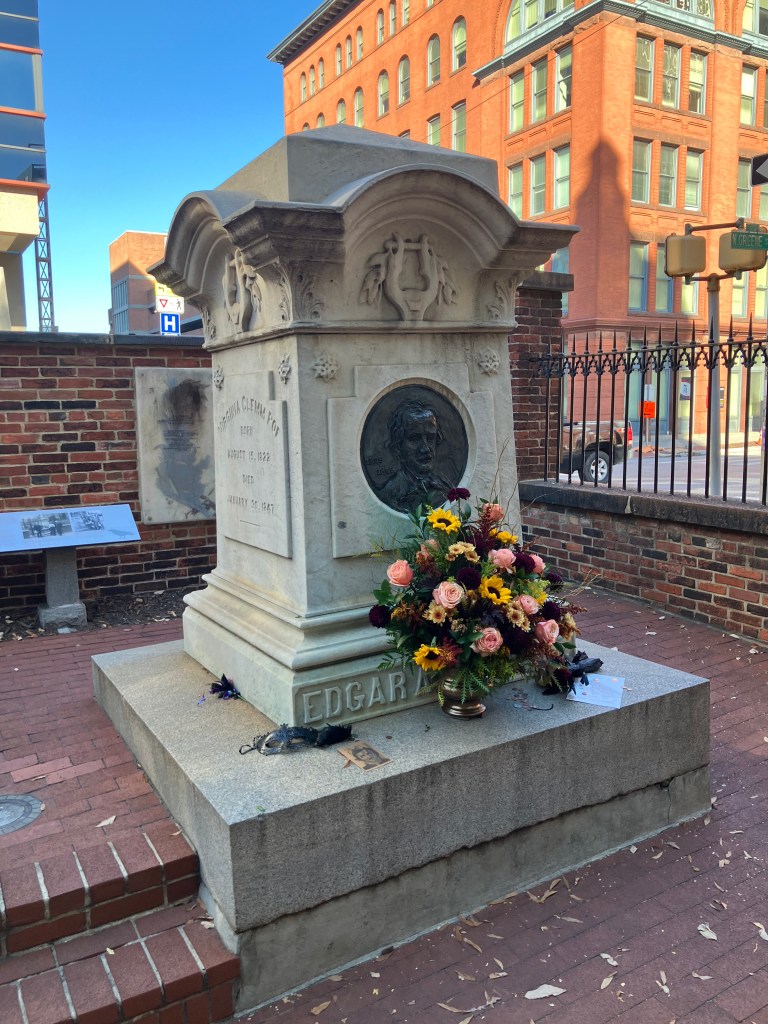
Poe’s final resting place.

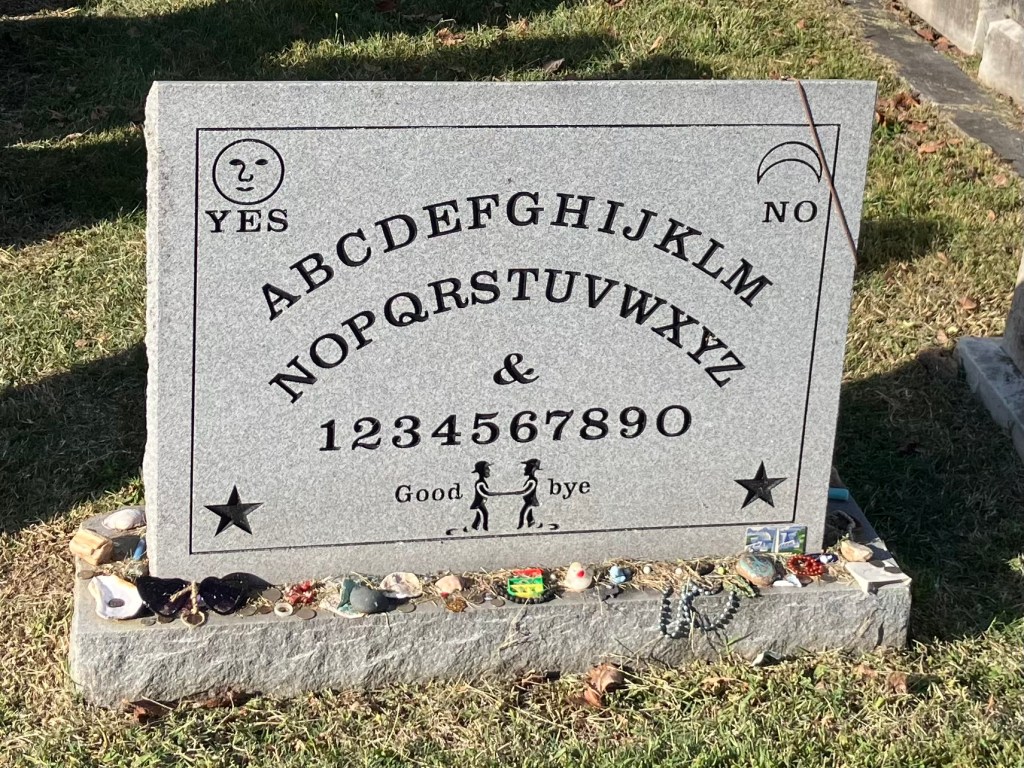
We also toured the beautiful and brooding Green Mount Cemetery (est. 1838), where a number of Poe’s relatives are buried. Green Mount is where I encountered the topic for this blog post. Take a gander at this headstone:

A standard element of a regulation Ouija board, the phrase “goodbye” is especially apropos on a gravestone.

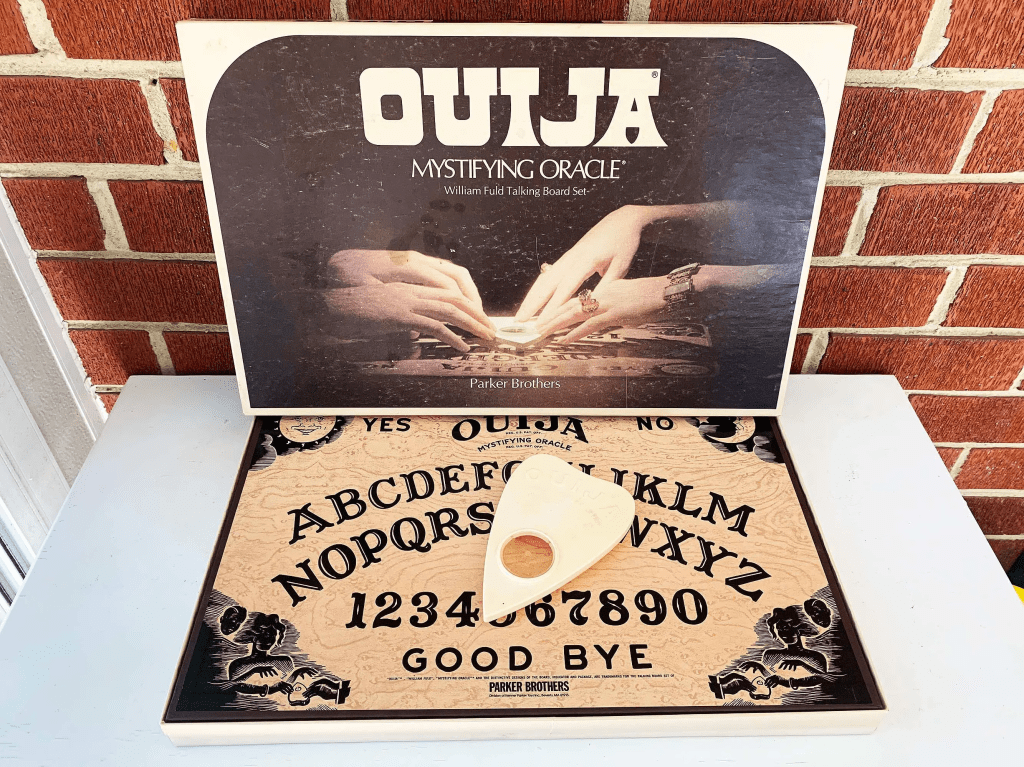
Readers of a certain age might remember this design from the family game closet, where the Parker Bros. Ouija game was kept.

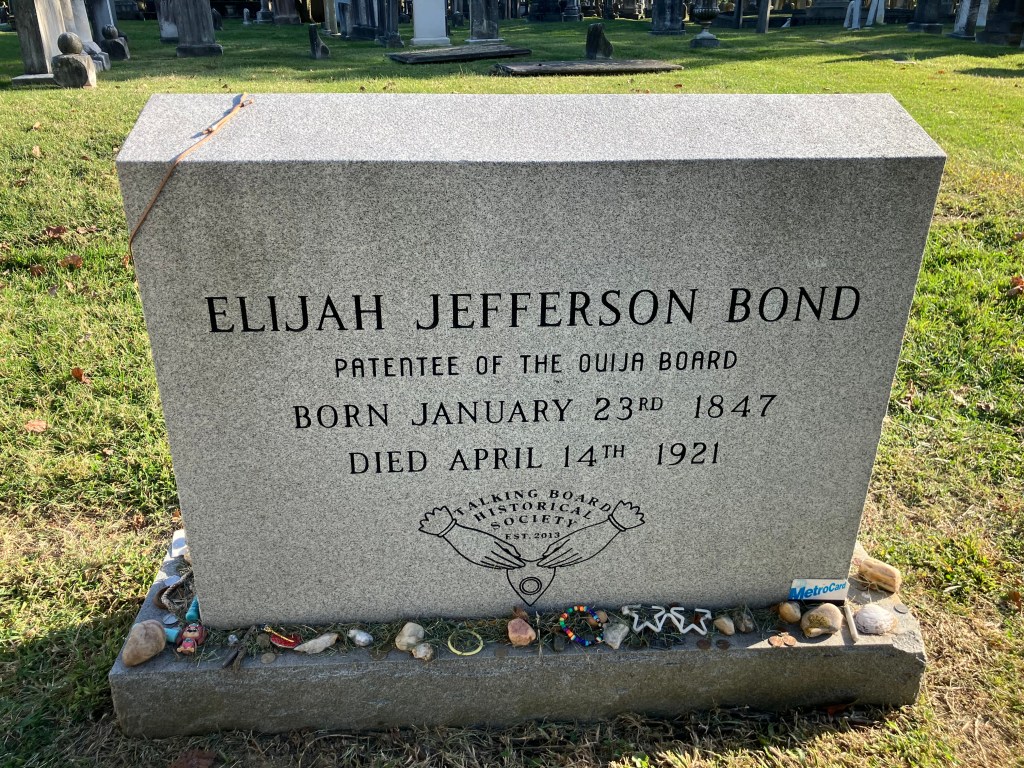
Turns out the Ouija headstone marks the mortal remains of the man who patented the Ouija board. Here’s a pic of the reverse side of the headstone:

Note that this headstone does not claim that Elijah Bond is the inventor of the Ouija board; he’s just the patentee. The full origin story of the Ouija board is quite convoluted, disputed, and fascinating, and I have now spent several days going down an Ouija rabbit hole. Here’s the Cliff’s Notes version:

  • The “talking board” (which is the broad category the Ouija board fits into) has been around for over a thousand years….well before the establishment of the US Patent Office.
  • Talking boards became insanely popular in the US near the end of the 19th century and the early 20th century, during the heyday of Spiritualism.
  • A prototype of the Ouija board was made famous in 1886, when it was used to supposedly communicate with a long-dead spirit.
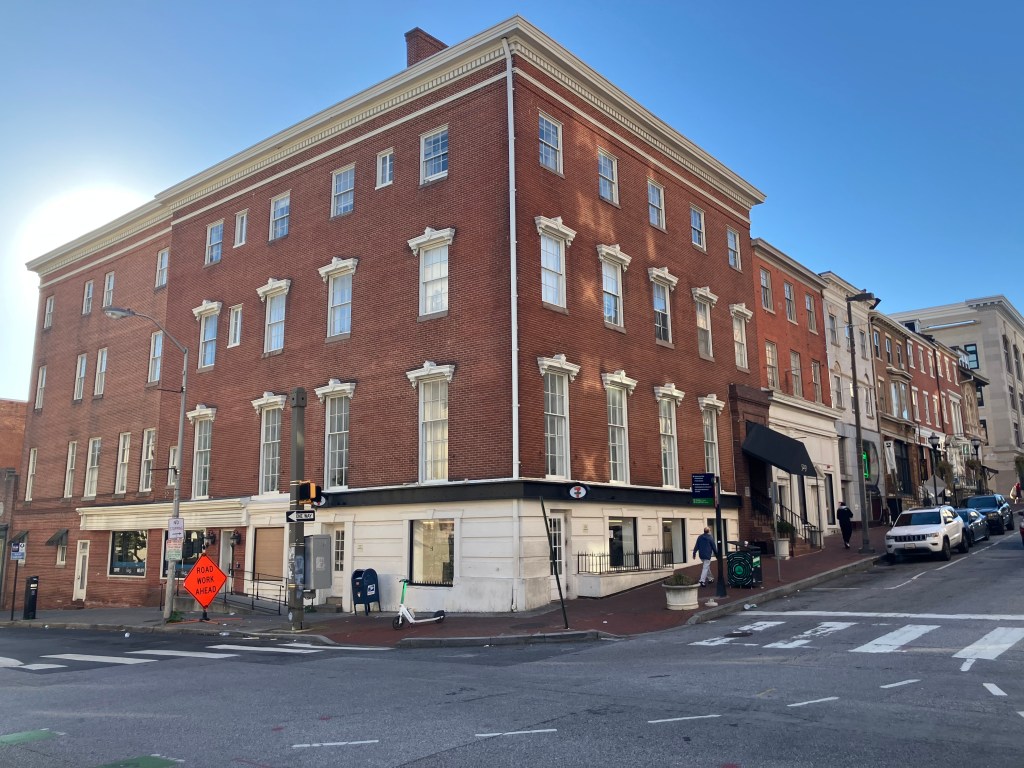
  • A few years later, Elijah Jefferson Bond–a Confederate veteran, inventor, and lawyer–sensed an opportunity and patented this version of the talking board. He called it Ouija. The Baltimore boarding house where he came up with the name still stands. Of course I had to visit it.
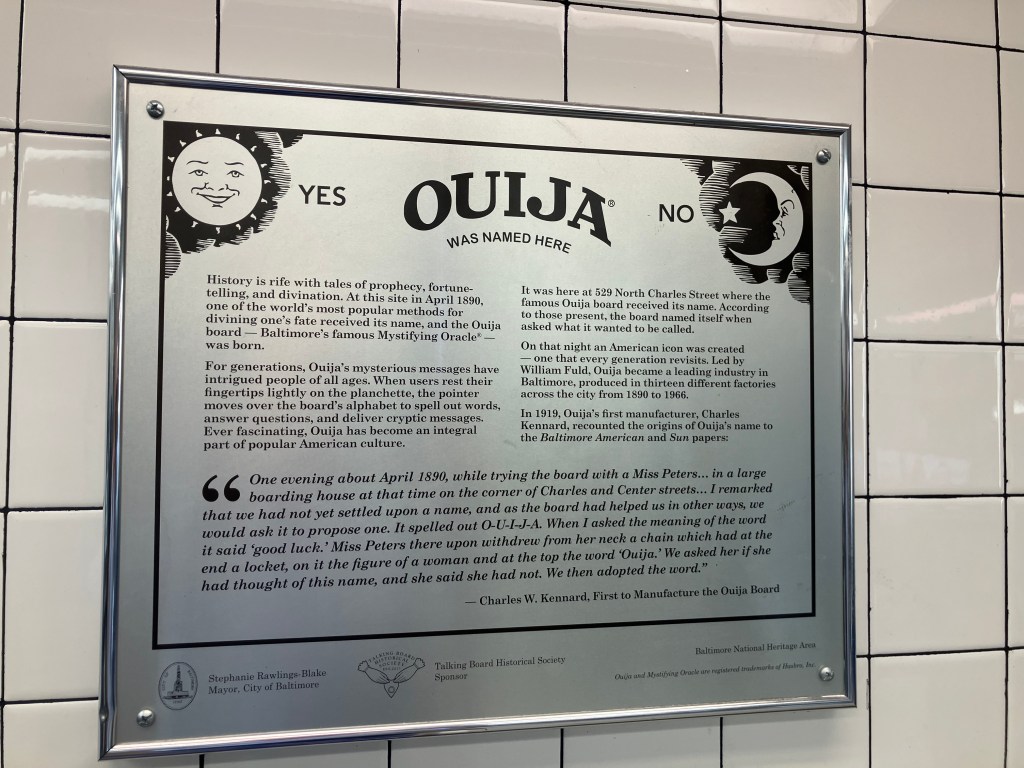
The building where Ouija get its name. Note that the ground floor–once a boarding house–now hosts a 7-11 store.
Plaque inside the 7-11.
  • Bond sold the US distribution rights for the Ouija board to the Kennard Novelty Company.
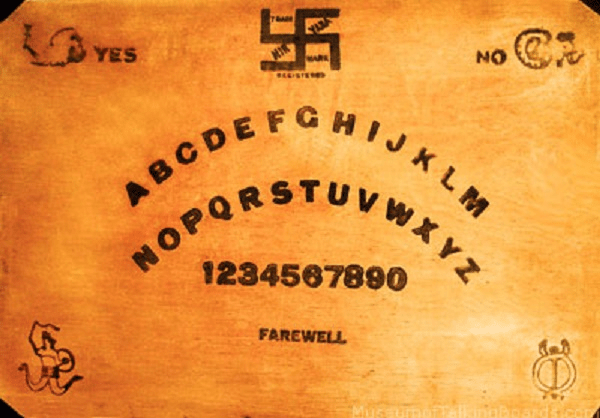
  • A few years after selling the distribution rights, however, Bond started selling a knock-off version of the Ouija board that he called “Nirvana.”
  • And here’s where I really feel down the rabbit hole: Bond created a company in 1907 to sell his Nirvana board. And what was its name? The Swastika Novelty Company. These are words that I would never expect to go together.
  • Now, to be fair, the swastika would not come to be associated with the Nazis for another decade or two. But according to Wikipedia, the company wasn’t dissolved until 2014!

Sadly (?), Parker Bros (now owned by Hasbro) no longer produces the Ouija board as part of its regular lineup. But it does occasionally offer a specialized version as a movie tie-in. Therefore, it seems that your best bet might be to seek out an old, original one on eBay. You might even track down an old Nirvana version…but you’d have to explain to your friends that the swastika is “grandfathered in,” as it were.

Modified Ouija board, with patent-evading design and pre-Nazi swastika.

Please let me know if you know of any other trivia related to the Ouija board (besides the oh-so-obvious link to The Exorcist). And thus we end this special post related to Poe, Baltimore, and Ouija.

bridges · California history · cemeteries · Road trips · trains

The Placerville Chronicles–Day 1

This morning I picked up my rental car in Placerville, California, and headed in the direction of Placerville, Colorado–some 900 miles to the east. (For those coming late to this story, the details are here.)

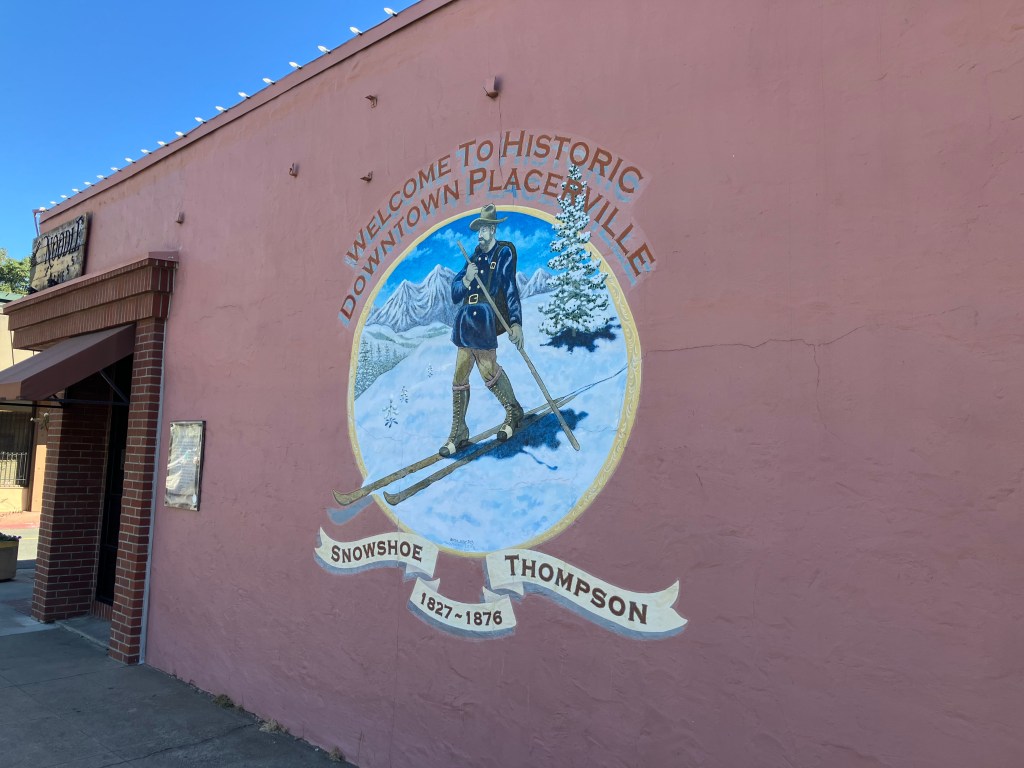
As I left Placerville I passed this mural that honors John Albert “Snowshoe” Thompson, a Norwegian immigrant who settled in Placerville in the mid 19th century. Every winter for 20 years (1856-1876) he made a twice-monthly trip over the Sierra Nevada range to deliver the mail. He made the 90-mile trek on skis (despite his “Snowshoe” nickname) from Placerville to settlements in Nevada.

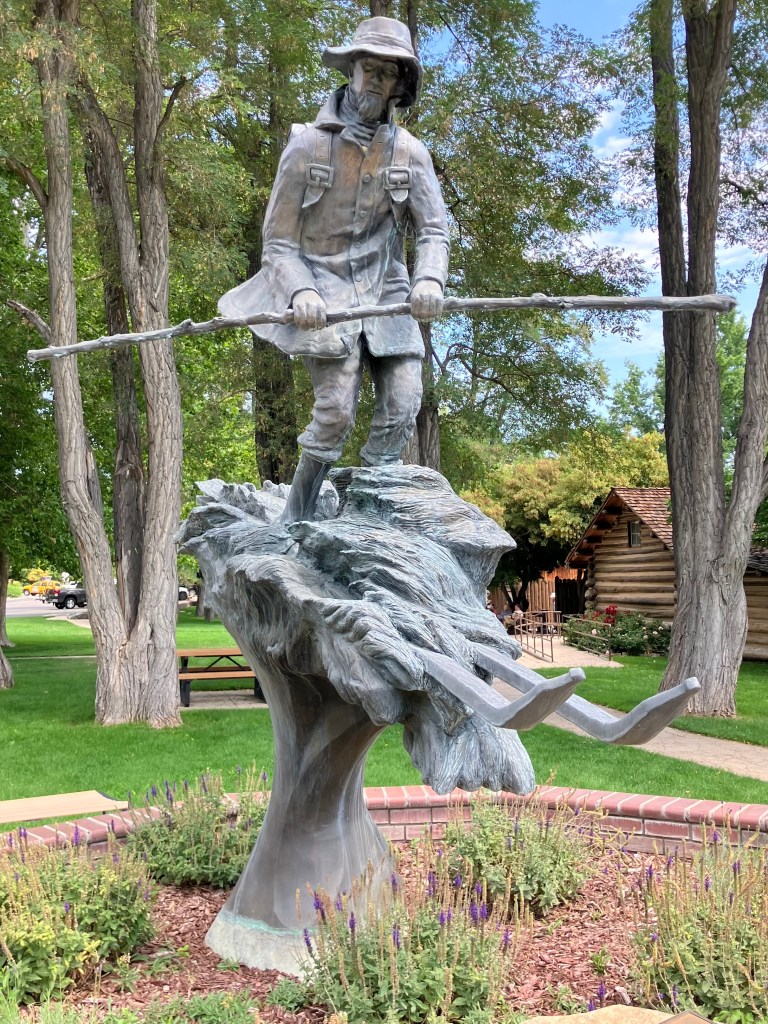
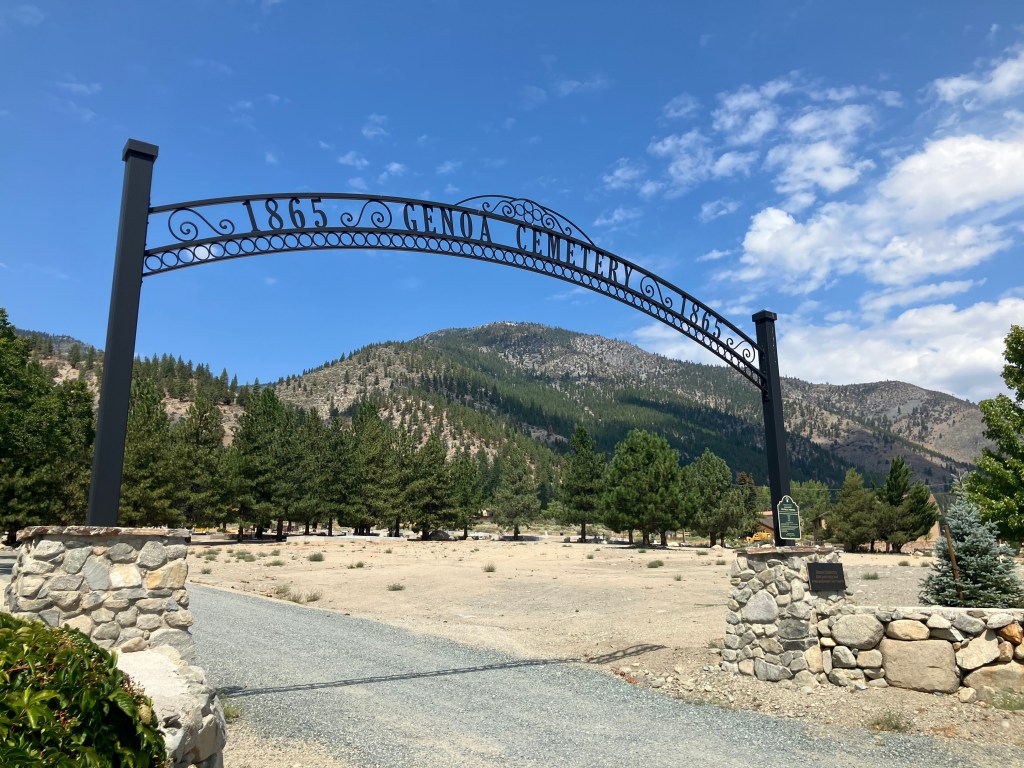
Unlike Snowshoe Thompson, I chose an easier passage over the mountain, driving a Nissan on US 50 over Echo Summit. I ended up in a little tourist trap of a town called Genoa, NV (pop: 1,300). Genoa brags that it’s the oldest settlement in Nevada…but I was struck by something that’s more relevant to this journey: Genoa was the eastern terminus of Snowshoe Thompson’s mail delivery route. And they have a statue to commemorate the fact.

Snowshoe Thompson, doing his Gorton’s Fisherman impression.

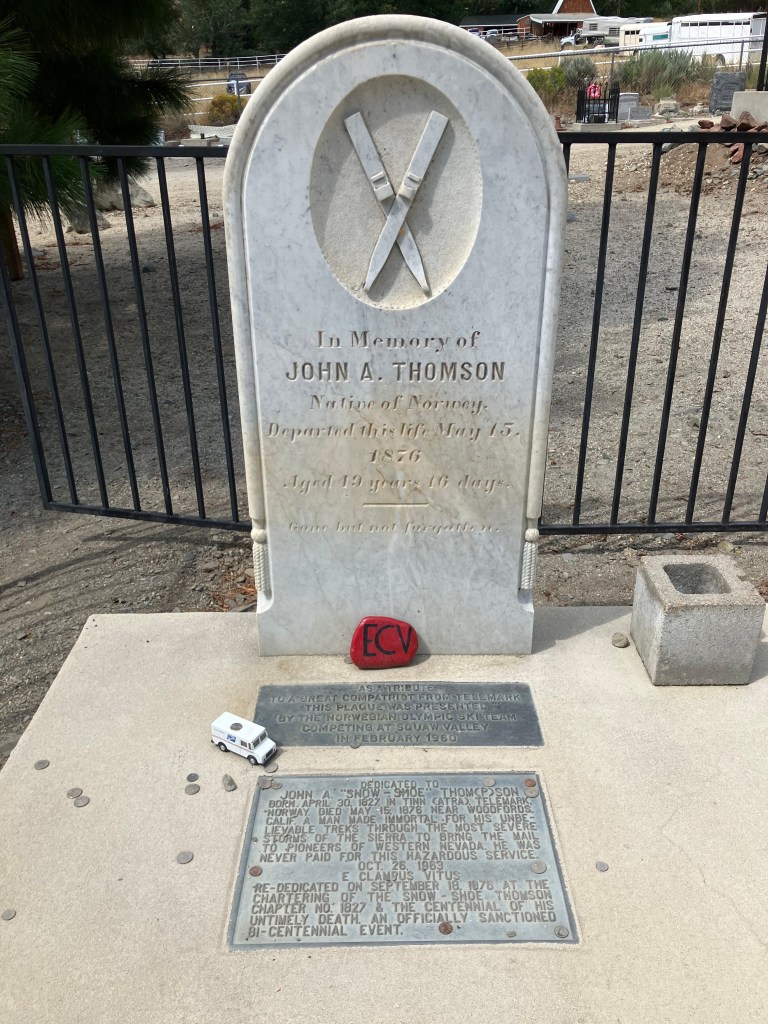
At some point Snowshoe Thompson moved his residence from Placerville to Genoa. In fact, Genoa became his final resting place.

The Postman Resteth.
Those pruning shears on the face of his tombstone presumably are meant to be skis. But who knows, given the misspelling of his last name.

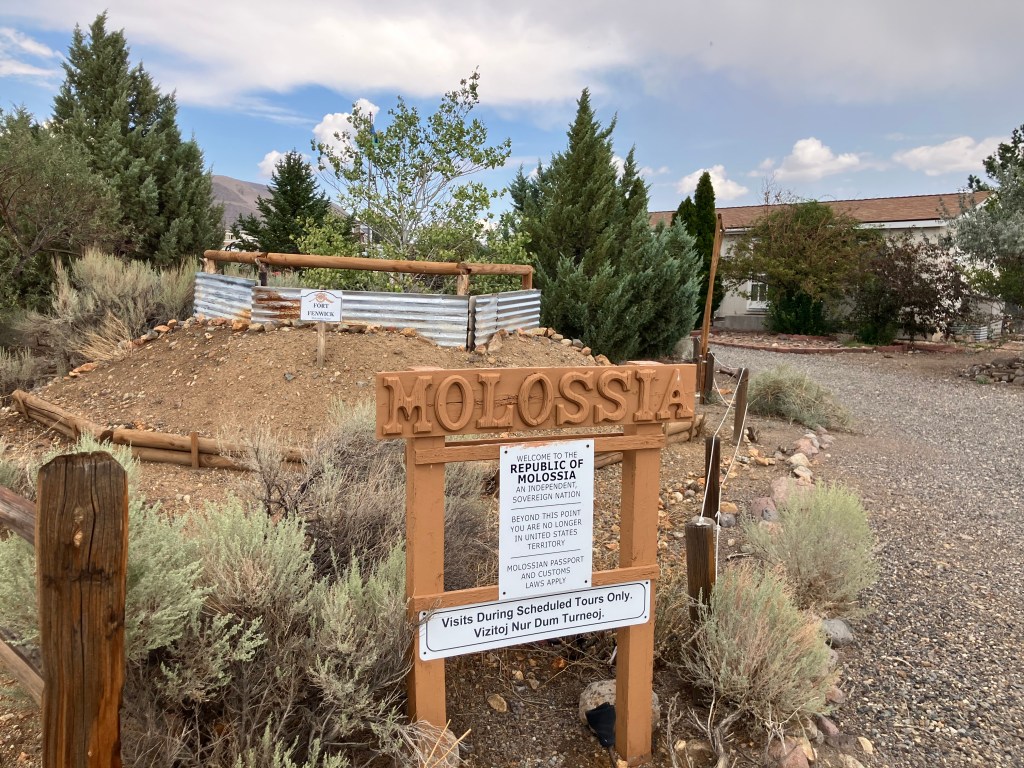
Having appropriately honored this (quasi-)native son of Placerville, CA, it was time to continue my journey toward Placerville, CO. To do this, I passed through the “independent and sovereign nation” of Molossia.

What, you’ve never heard of Molossia? Neither had I. But it seems that there are about 11 acres of land in the town of Dayton, Nevada, whose owner (Kevin Baugh) has declared to be a sovereign nation. Molossia claims to have its own currency, postal service, navy, railroad, and various other trappings of a proper nation. President Baugh does have to pay property taxes to the county assessor, but he calls this “foreign aid.” Molassia’s back story is actually quite interesting and entertaining; if you’re interested, you should check their Wikipedia entry or their actual website.

The president of Molossia is very clear that you need to arrange your visit ahead of time. So a few weeks I emailed His Excellency, and got this response:

Steve, Greetings, and thank you for your interest in visiting our nation as a part of your travel blog. It is an honor.

I regret that we will be unable to host your visit to our nation on that date. … There are other events and activities taking place in Molossia on those dates, thus we will not be able to welcome you to our nation. My apologies.  Hopefully you will make it back out this way on a future tour date and we will be more than happy to welcome you to Molossia then.

Regards,

His Excellency President Kevin Baugh
Republic of Molossia

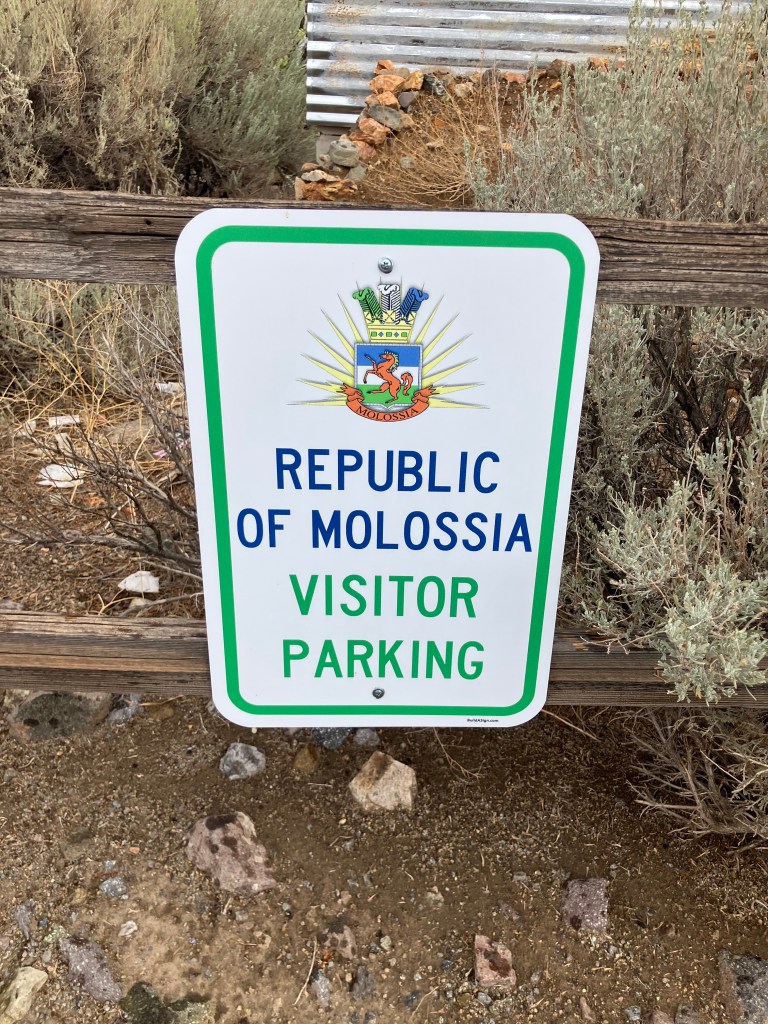
Undeterred, when I came to Dayton I drove up to the border of Molossia. Conveniently, there was an open parking spot.

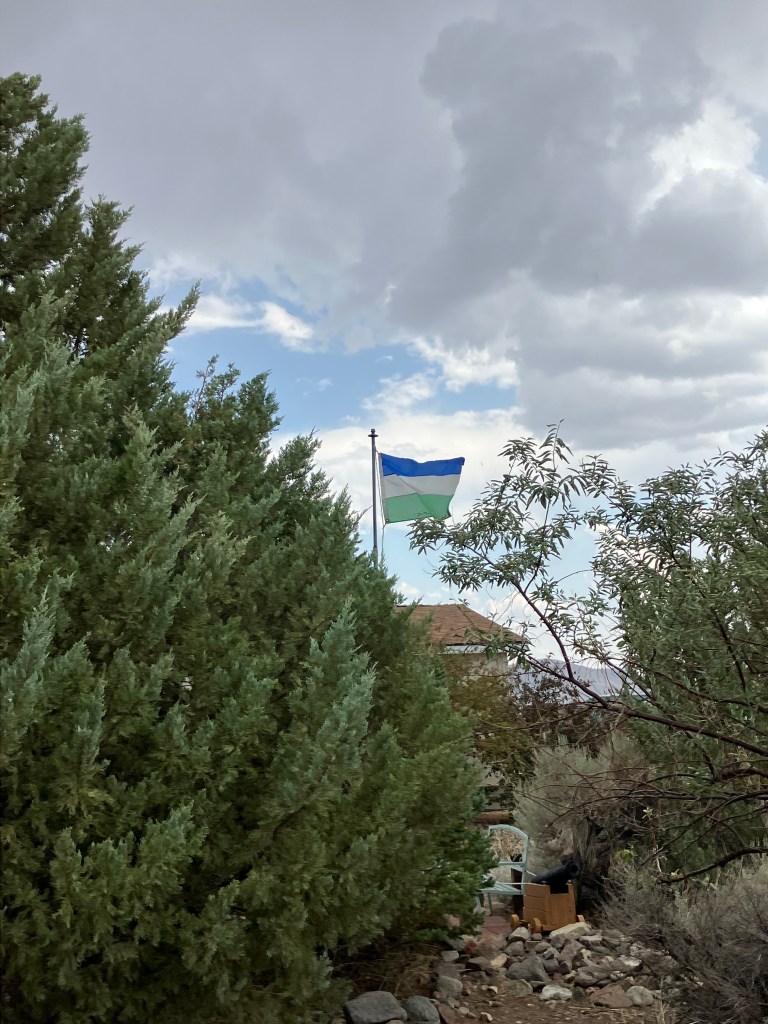
The Molossian flag was flying proudly, and a sign made clear that I was indeed about to leave the United States.

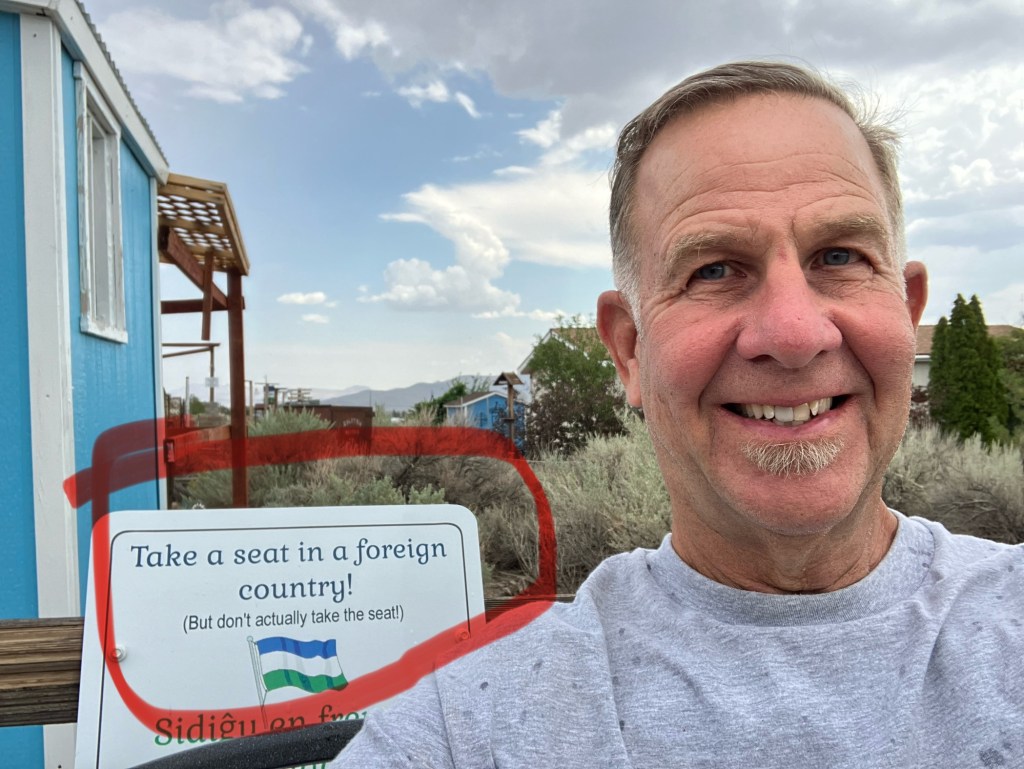
A sign next to a bench even invited me to “take a seat in a foreign country.”

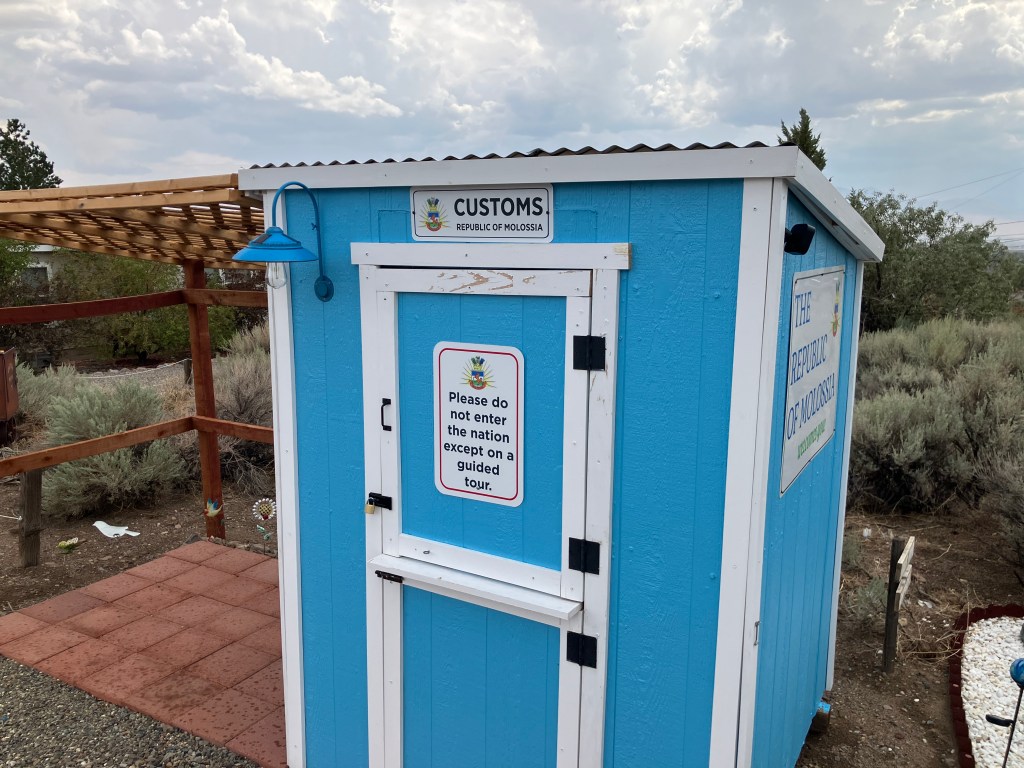
Despite my inability to secure a reservation, I decided to approach the customs building. Alas, it was locked up.

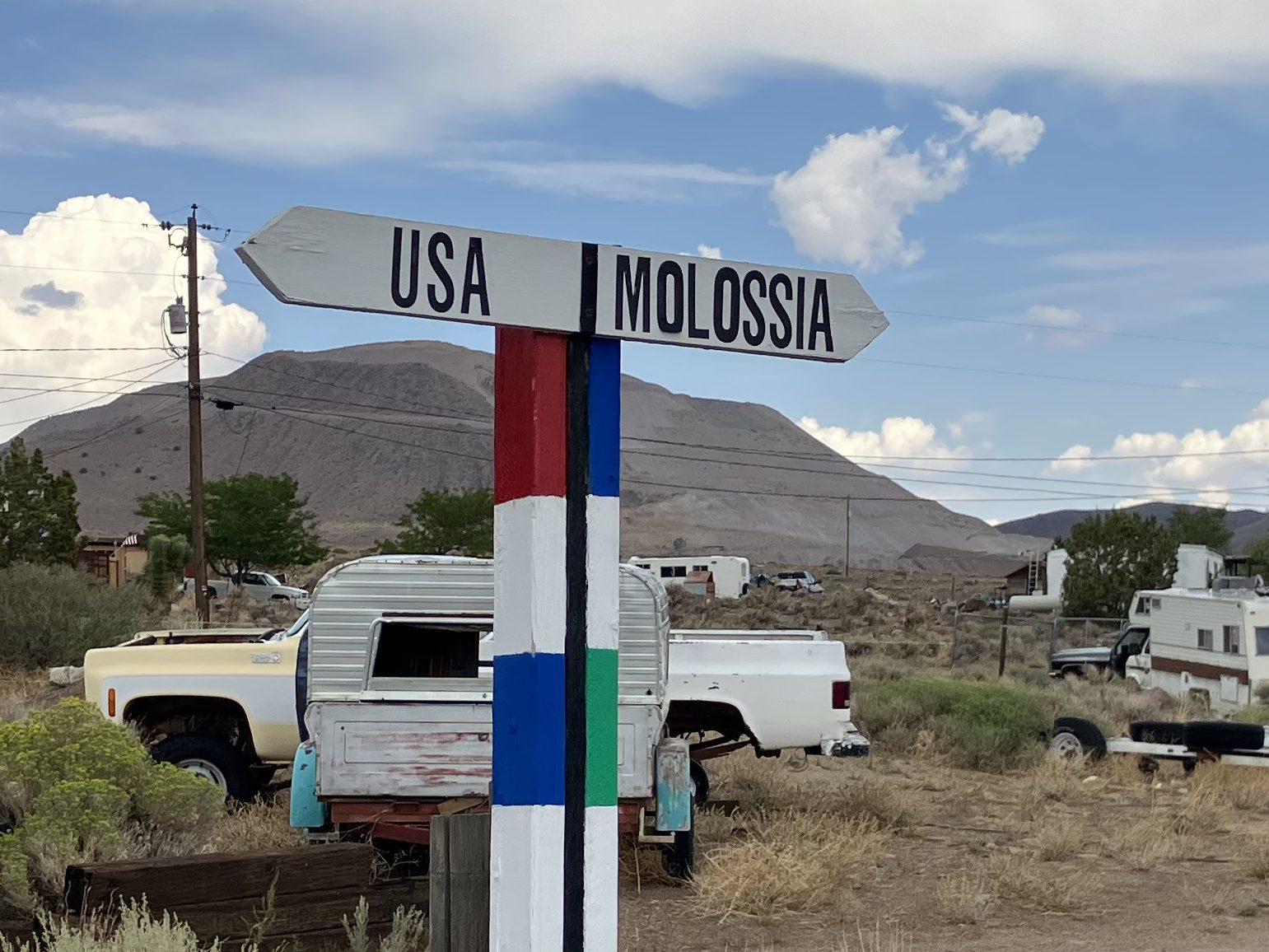
So I had no choice but to follow the signs back to the United States.

I plan to try to get on Molossia’s official tour list for 2026. When I have a date, I will announce it on this blog in case any of my loyal readers want to join my delegation. But for now, I had to bid a sad farewell to Molossia.

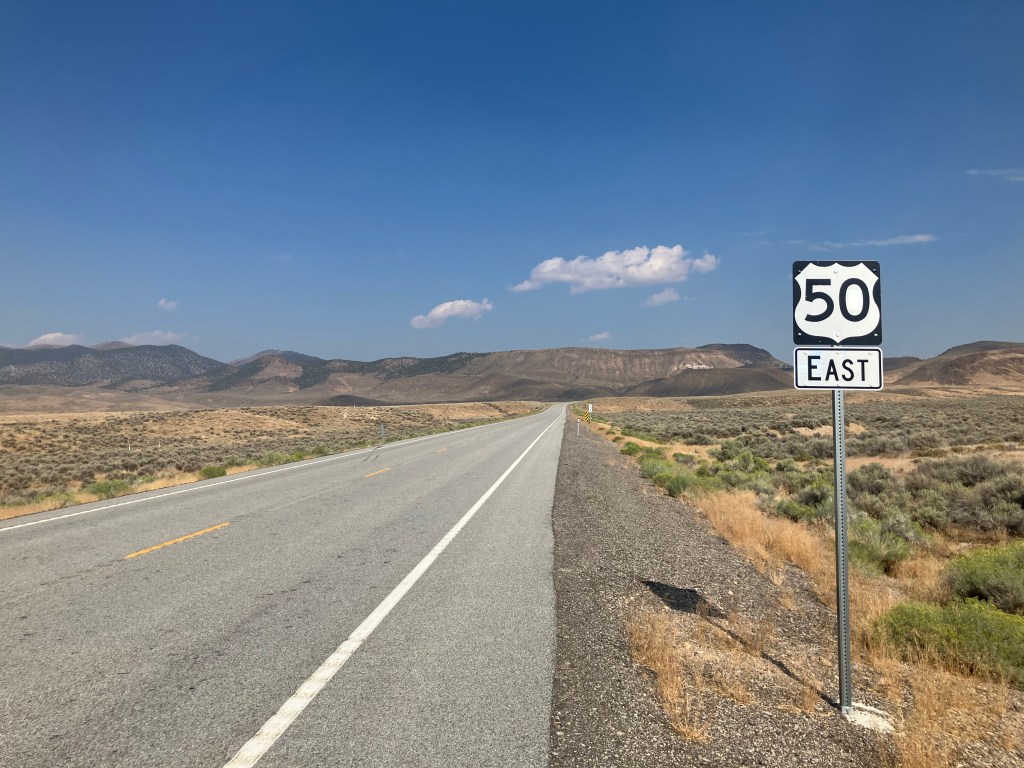
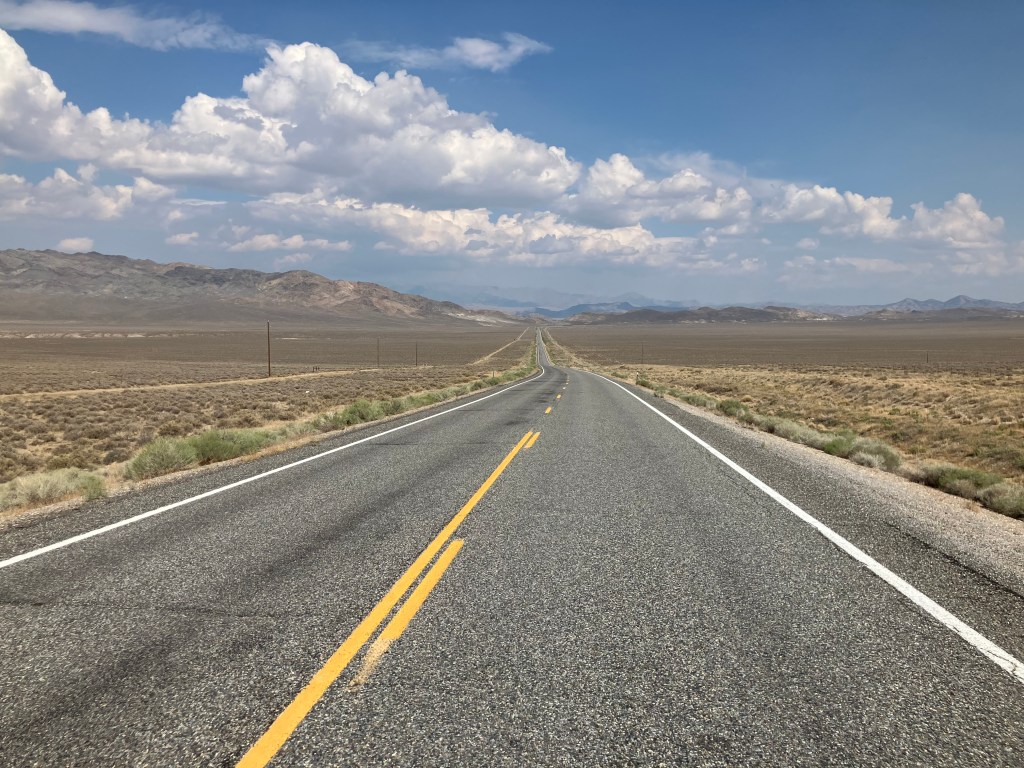
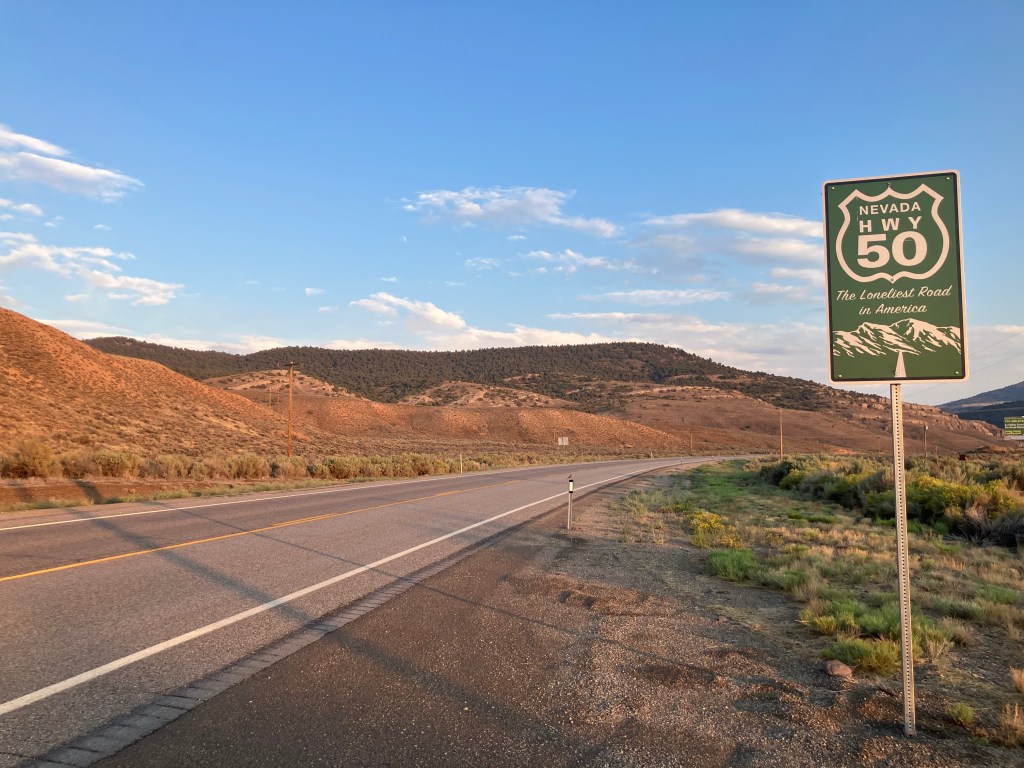
Almost all the remainder of today’s journey involved traveling US 50 across Nevada’s enchantingly bleak Great Basin. This stretch of highway is often called “The Loneliest Highway in America.” I’ve driven it several times (see my blog post here) and I always find it to be relaxing and contemplative. Today was no exception. Here are a few pictures to give you a sense of the landscape:

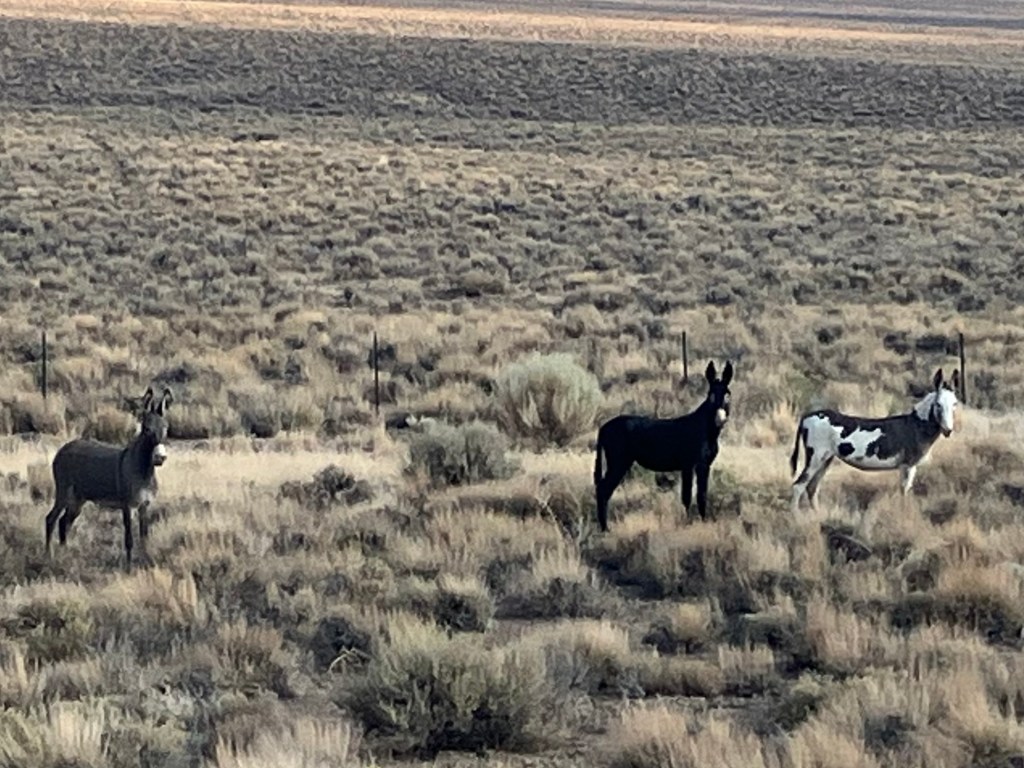
Inevitably, even out here in the middle of nowhere, you run into jackasses…
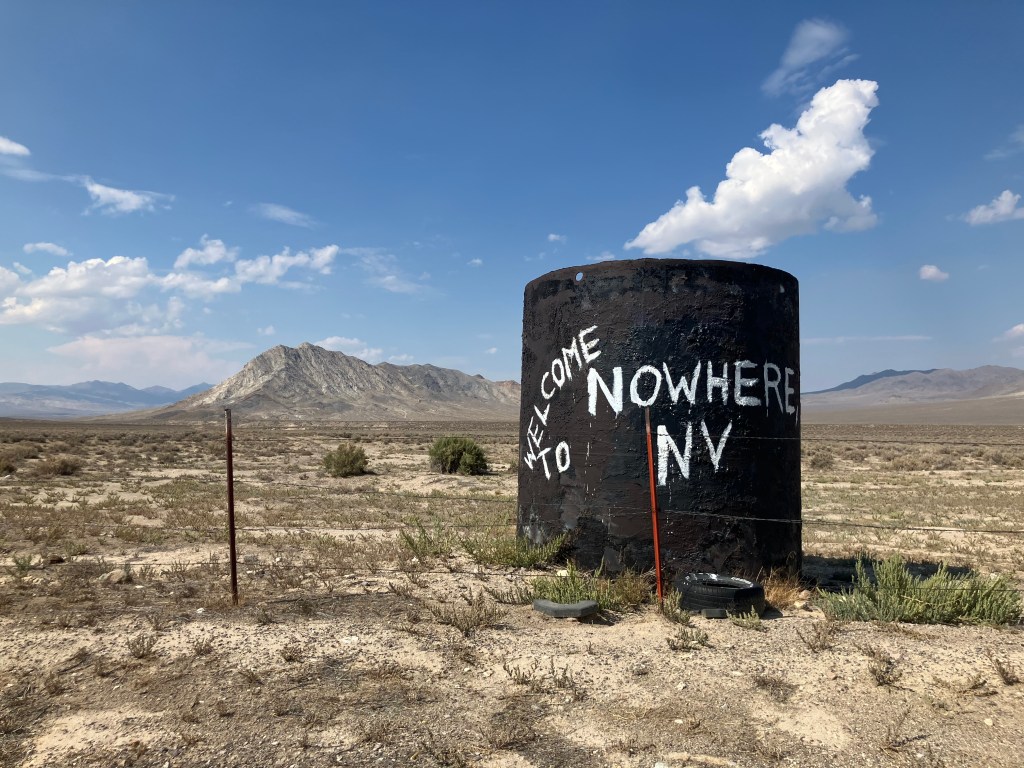
Speaking of the middle of nowhere…
One of the few watering holes along the way, in Austin, NV.

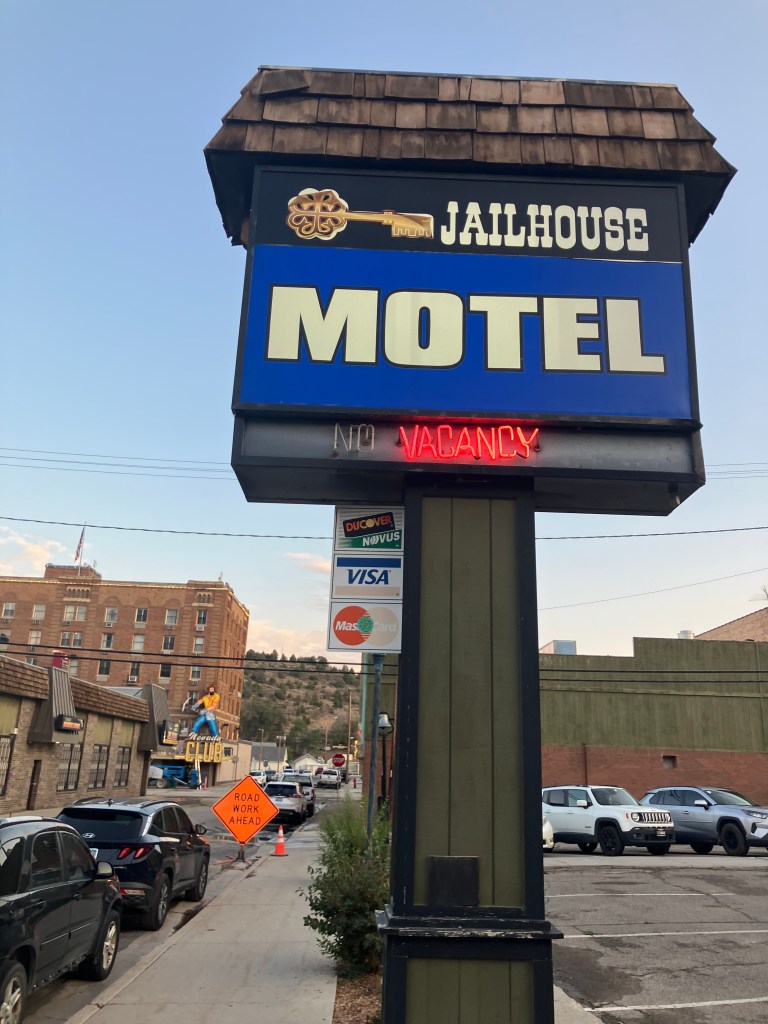
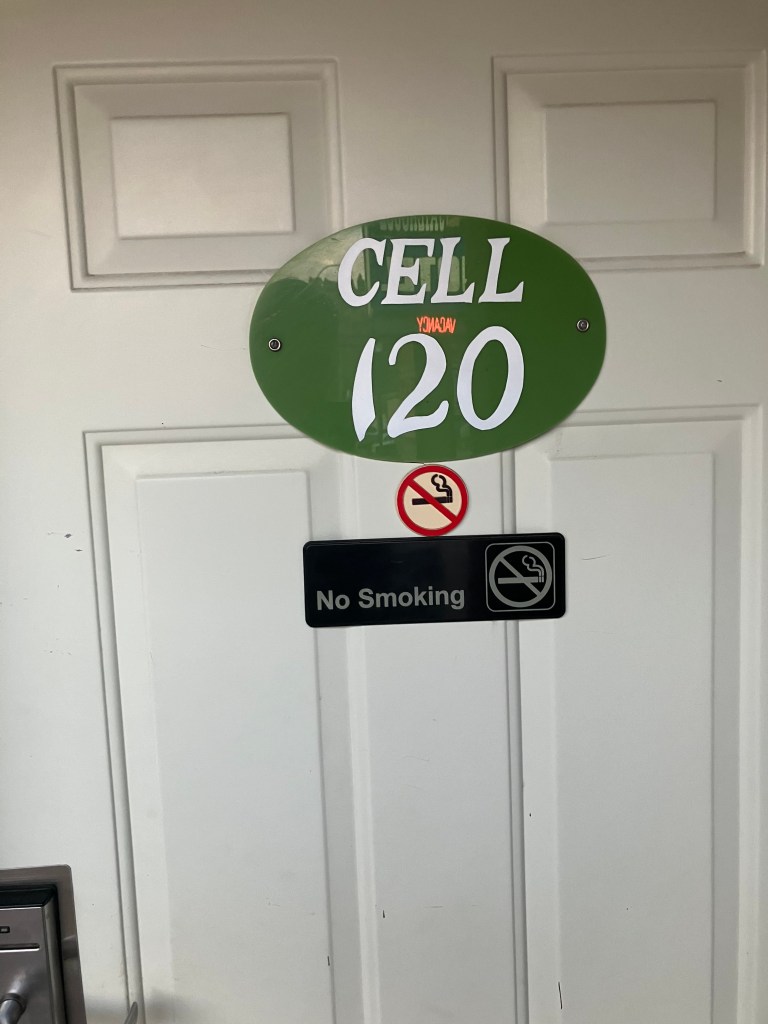
As the sunlight was wanting I stopped for the night in Ely, NV (pop: 3,900). Ely is well known for its superb railroad museum and heritage railway, but beyond that there isn’t much besides smoky casinos. I took a room at the Jailhouse Motel, whose reception desk is inside the adjoining smoky casino.

Also in the casino was something that passes for a bar, so I figured I’d try to get my Brew of the Day. But the beer selection was positively abysmal, and each seat at the bar was equipped with a huge, noisy video poker terminal. Looking at the bar’s sad patrons, I mumbled “terminal indeed,” and headed across the street to my room.

Hardy-har-har.

BRIDGE CORNER!

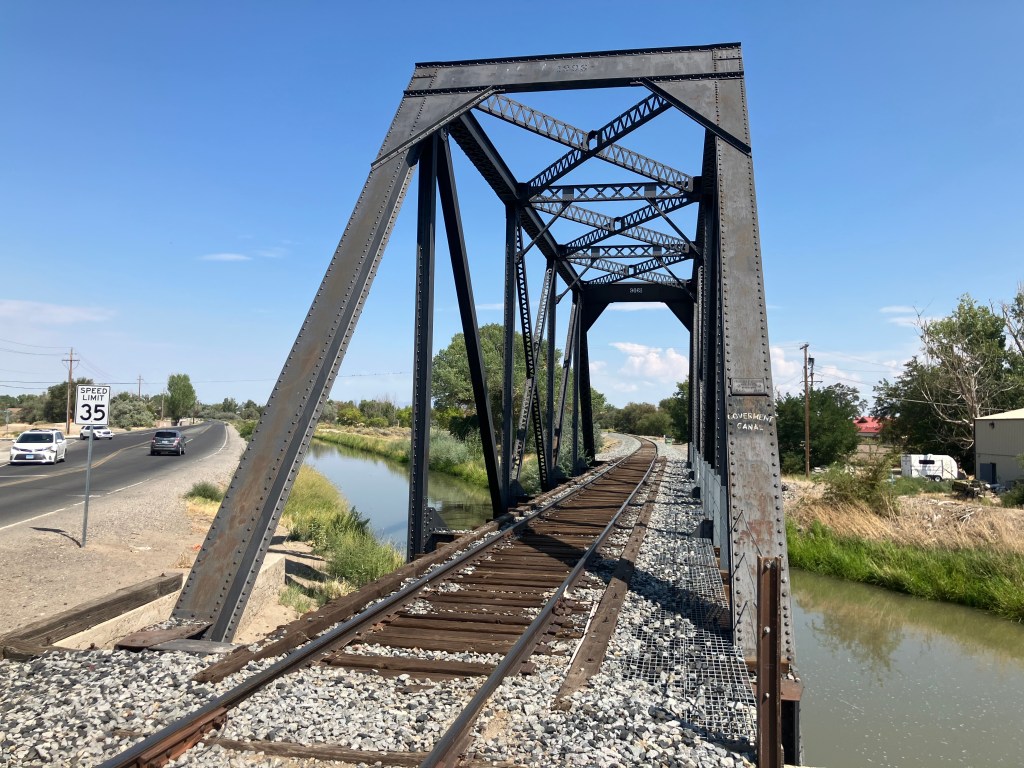
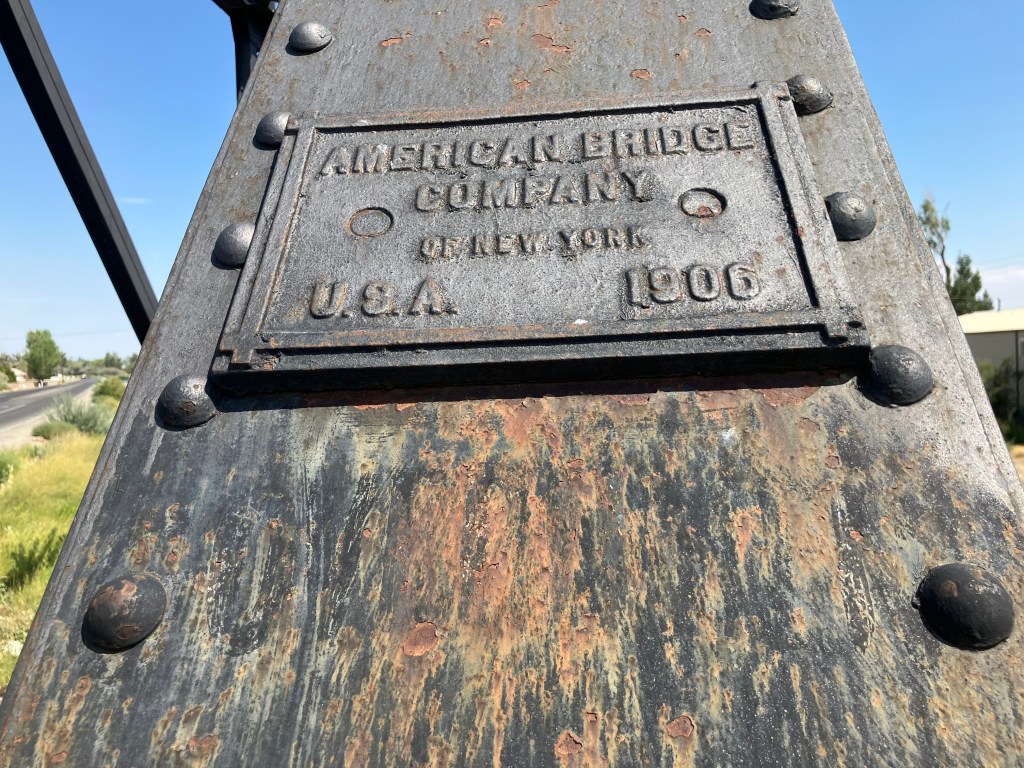
Although we don’t have a BOTD for today, we can offer you this 1906 railroad bridge over the Carson River in Fallon, NV:

As should be painfully obvious, this is a Pratt subdivided through-truss bridge. And, as a steel marker certifies, it’s made by the American Bridge Company of New York.

OK…thanks for indulging me. Tomorrow we’ll return to the BOTD.

Breweries · bridges · cemeteries · Obelisks · Road trips · trains

Redenbacher’s Revenge

Today’s segment of Route 20 took me from Iowa Falls, Iowa to O’Neill, Nebraska–a distance of almost 300 miles. But while I covered more distance than usual today, I spent less time on the road. This is because I’m now in the Midwest/Great Plains part of the country, where US 20 runs straight and fast. Plus, frankly, there isn’t as much to see here, meaning fewer stops. This part of the drive is more meditative, with mile after mile of farmland, a big open sky, and almost no other traffic on the road.

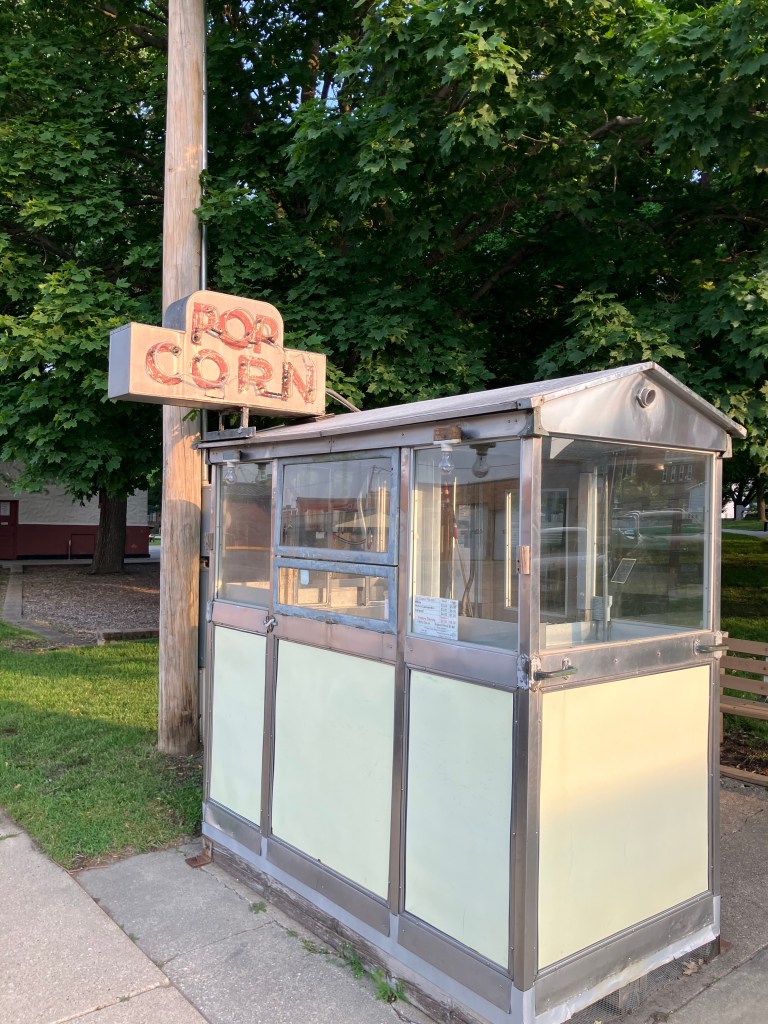
As I left Iowa Falls, I noticed this popcorn stand on a downtown corner.

That neon sign looked pretty antique, and a little research revealed that there’s been a popcorn stand in Iowa Falls since the 1870s. The current incarnation has reportedly been around since 1947, though it looks like the wall panels have been replaced fairly recently. Unfortunately, I arrived too early in the morning to get a bag of popcorn. But it still made me smile to see such a simple, old-fashioned treat prominently featured downtown.

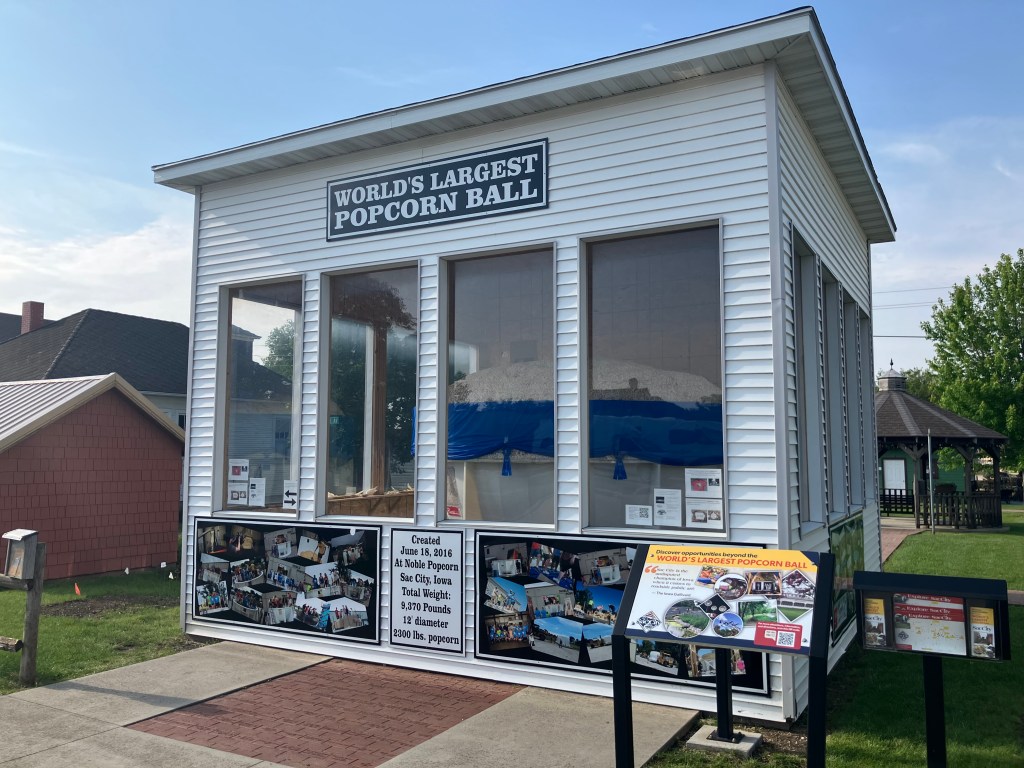
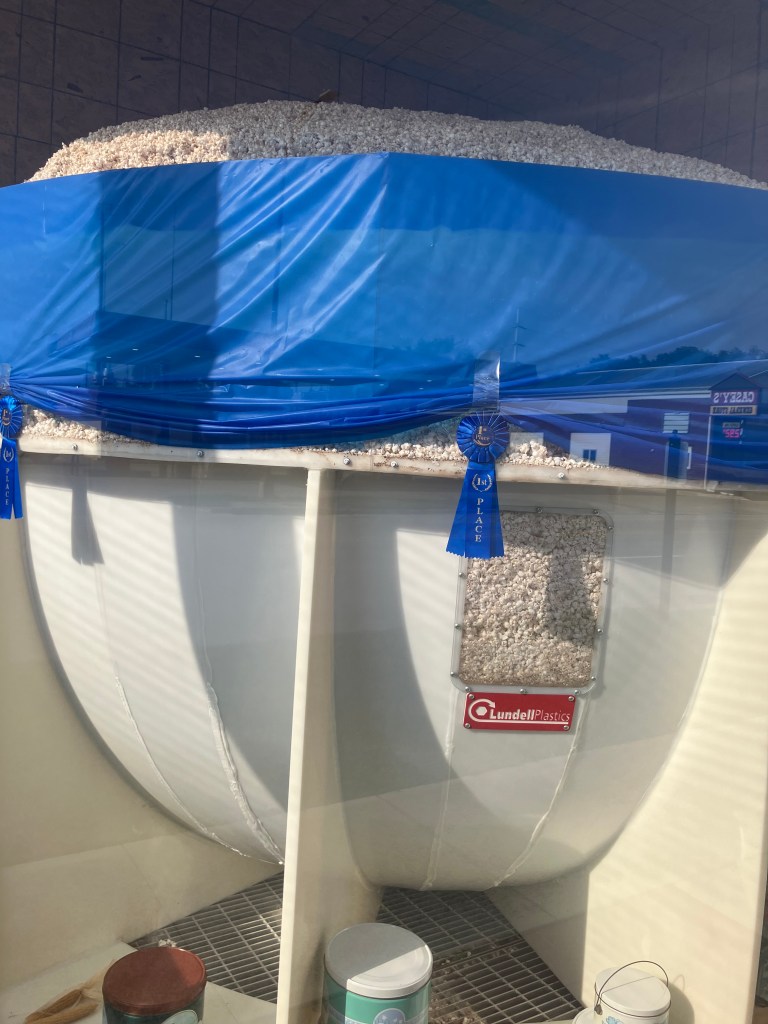
About 100 miles to the west I encountered a place called Sac City (pop: 2,000) (har!) I say “har” because Sac City has decided to promote itself through the currency of popcorn. Specifically, right on the side of US 20 (which is also Sac City’s Main Street), a four-and-a-half-ton popcorn ball is on display.

Ummmm…. OK….

Now, this had me scratching my head. Of all the things you could do to put yourself on the map, creating the world’s largest popcorn ball and putting it in a roadside hut doesn’t seem like a huge tourist draw. Especially since it doesn’t seem to relate to the city’s history or industry in any way. What’s more, it seems like the shelf life of a giant popcorn ball would be somewhat limited. But most damning, this isn’t really even a popcorn ball–it’s just a bunch of popcorn dumped into a giant plastic bowl. The top of the popcorn “ball” is almost completely flat. The arrangement of the windows made it difficult for me to get a good shot (which points to another problem with this tourist “attraction”), but you get the general idea:

Popcorn “ball,” my eye!

Still, I give Sac City an A for effort. They have brochures promoting the city next to the popcorn ball, there’s a QR code, there’s signage to other nearby points of interest…They’re really doing a lot to promote their city. I just question their choice of roadside attraction. Quite frankly, I liked Iowa Falls’ popcorn stand a lot better.

Now, the real head-scratcher today was this place:

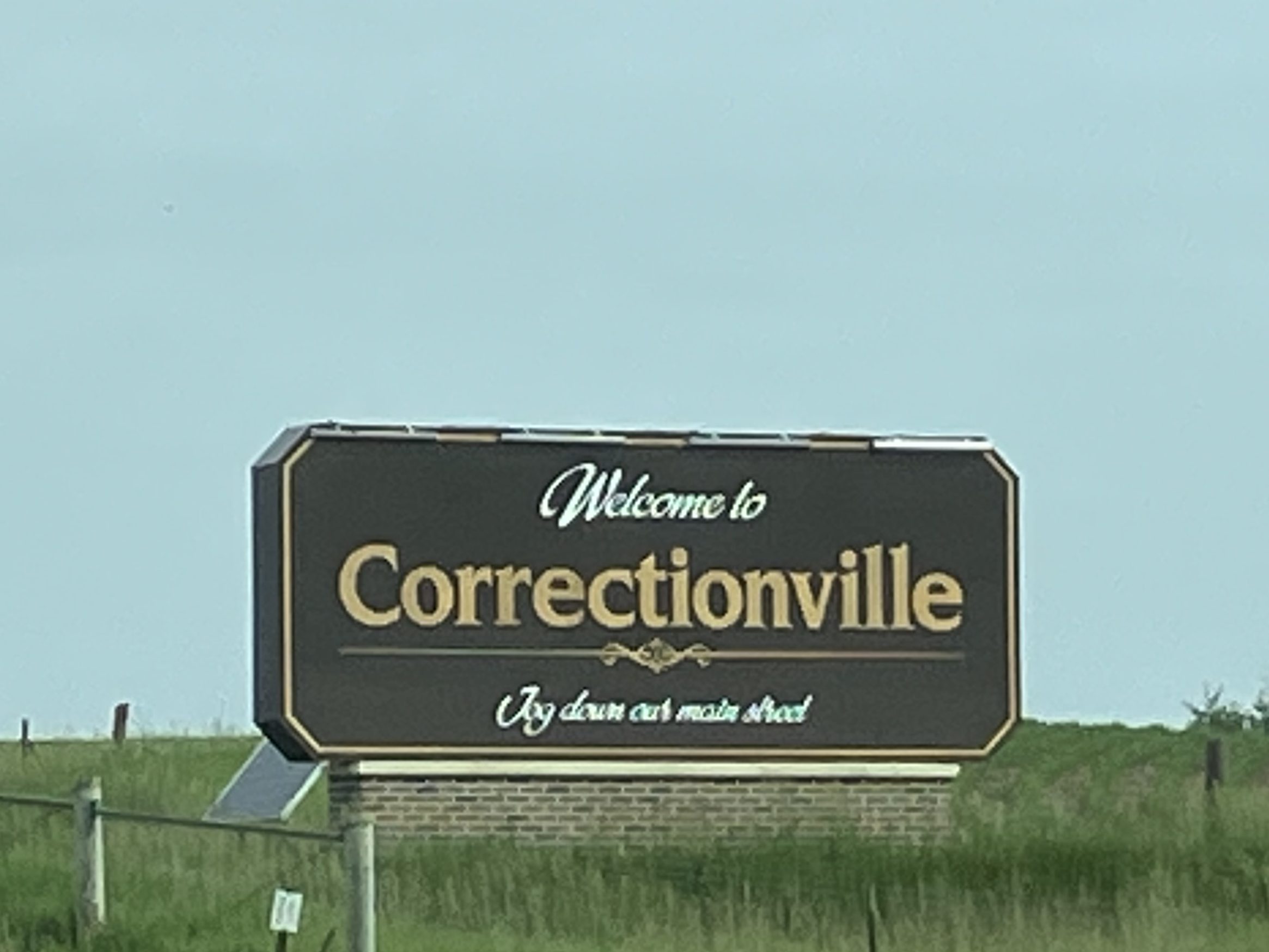
…Home of Wite-Out (TM)

Now that’s an odd name for a town. Is it build around a state prison? I didn’t realize at the time but the sign’s tagline–“Jog down our main street”–was a clue.

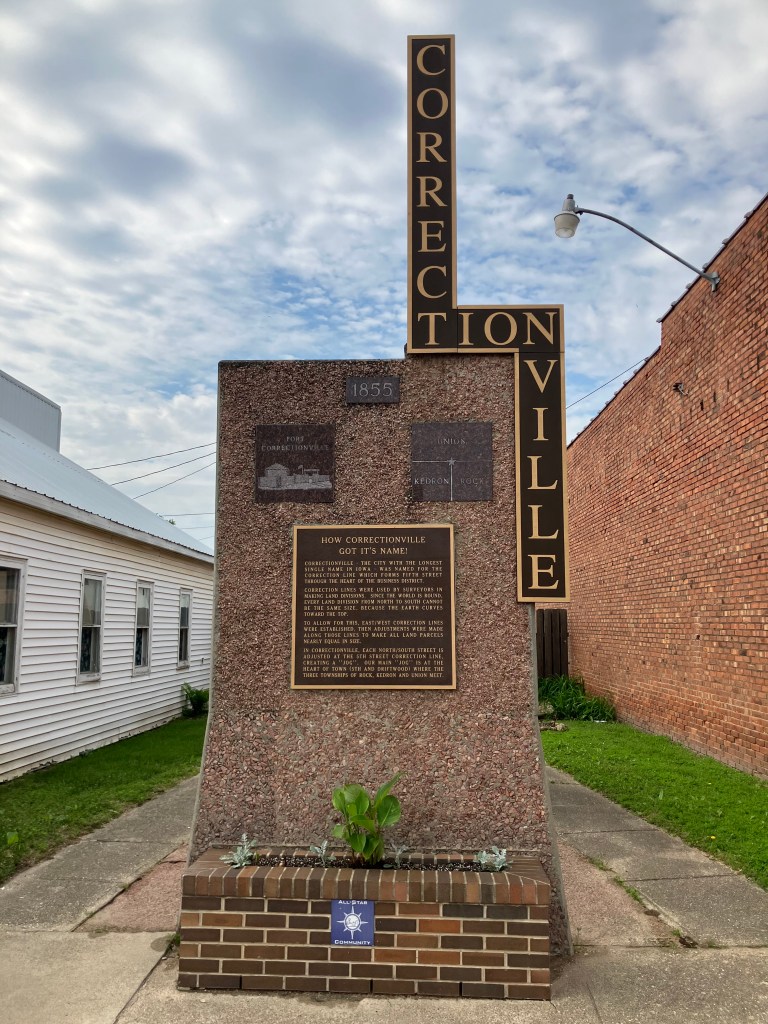
I “jogged down” the Main Street and encountered a monument that explained the name. The town’s name references a land surveying term called “correction lines.” Because of the curvature of the earth, north-south lines are adjusted with “jogs” every 24 miles. In Correctionville, this means that all the north-south streets “Jog” horizontally at 5th Street. Don’t ask me to explain it any further.

It’s actually a pretty clever design.

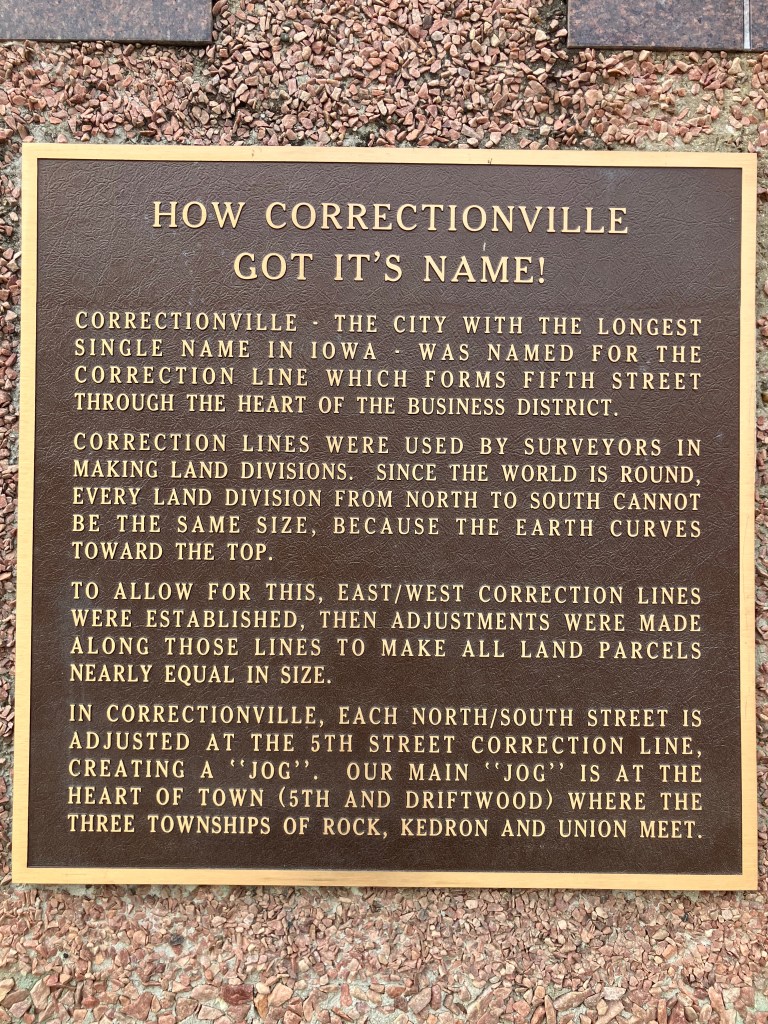
You can read more about correction lines on this close-up of the plaque. But do you notice anything unusual about it?

That’s right–Correctionville needs to “correct” the punctuation in the heading on this plaque. How embarrassing.

Oh, and speaking of Corrections: in yesterday’s blog post, the link to my story about the Wisconsin Wild West Town was left out. Here’s the link.

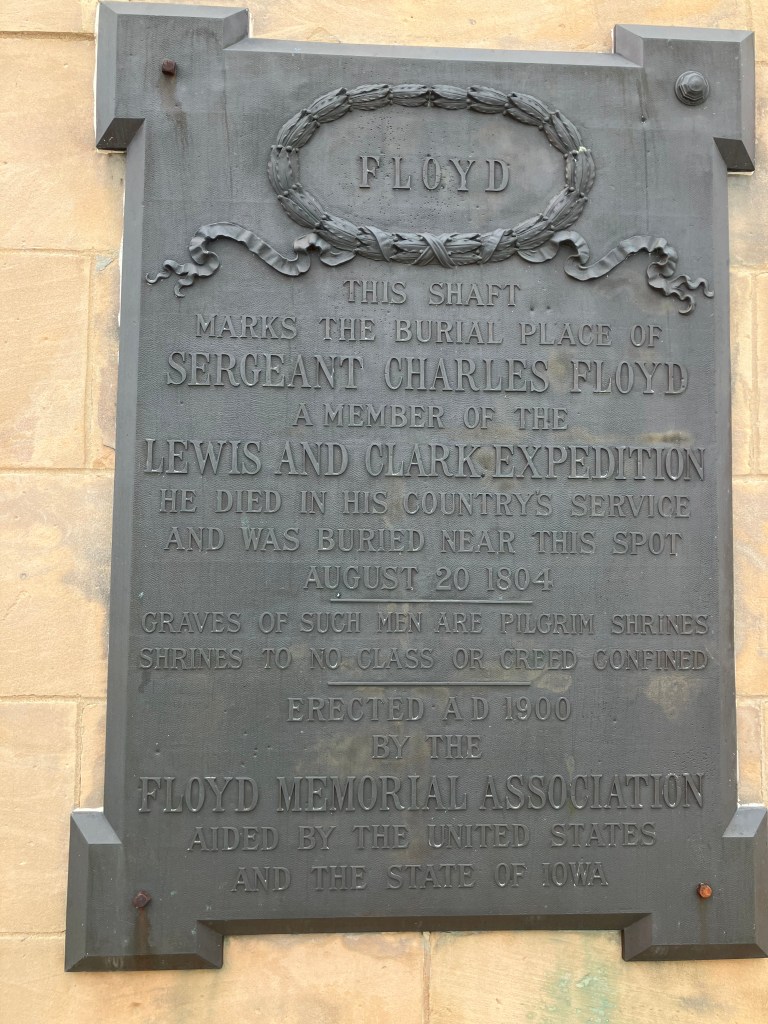
I returned to the road and eventually arrived in Sioux City, Iowa (pop: 86,000), on the banks of the Missouri River. It was here that the Lewis and Clark expedition (which was following the River toward its headwaters in the Rocky Mountains) buried Sgt. Charles Floyd, the only member of the expedition to die on the journey. He was buried on a bluff overlooking the river. This was in 1804.

RIP, Sgt Floyd.

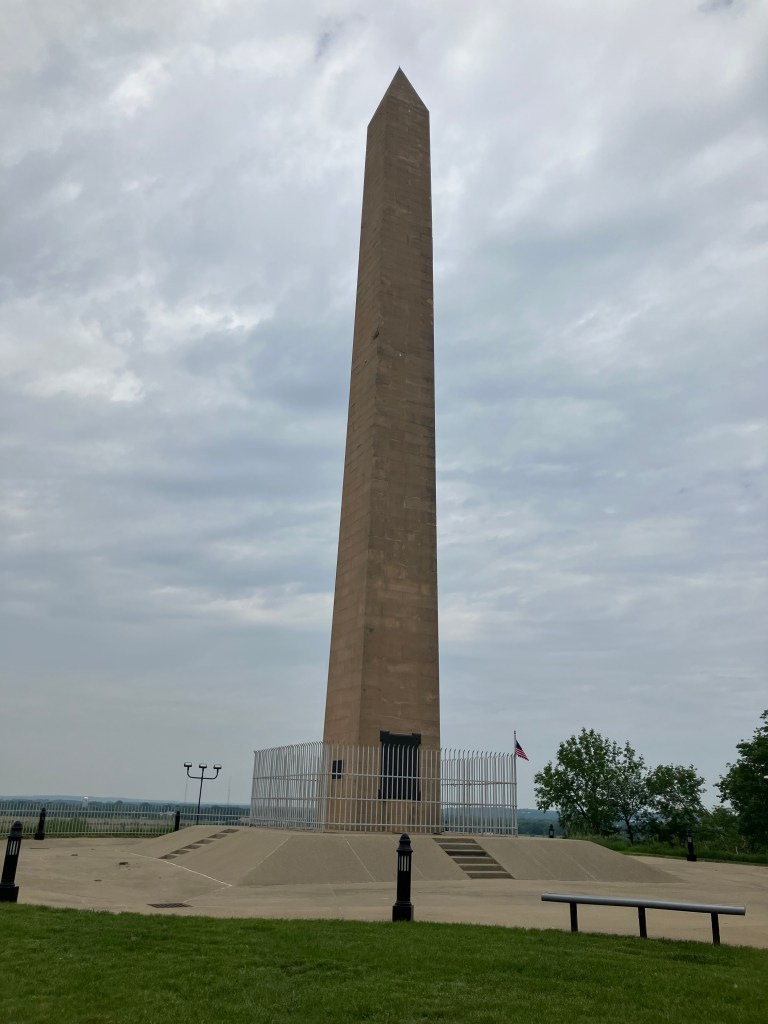
Unfortunately, the river eroded the bluff where Floyd was buried, and exposed part of his grave. His skeleton was salvaged and reburied a bit further inland. Then, roughly 100 years after his death, Sgt Floyd was reburied again and his grave was marked with a 100-foot obelisk. (And you know how I’m a sucker for an obelisk!)

Sepulchre for a Sergeant.

After paying my respects to Sgt Floyd, I returned to US 20 and crossed the Missouri River into Nebraska. This is the point in the trip where one needs lots of coffee. The road is straight and monotonous, but not without a stark beauty of its own.

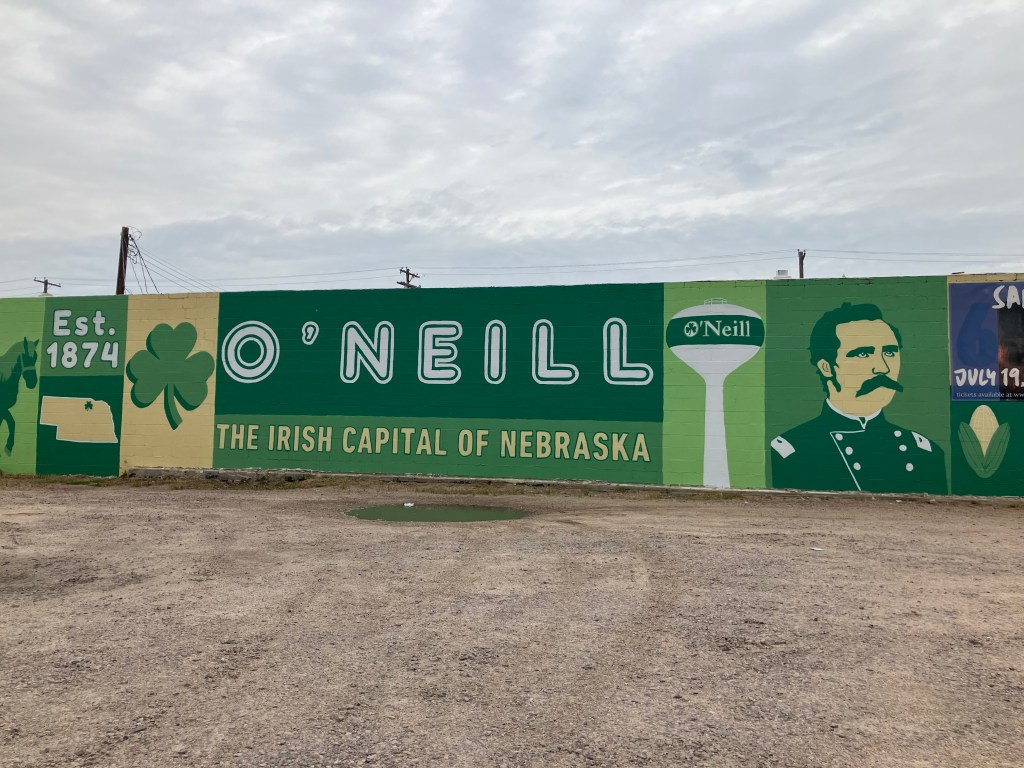
I stopped for the night in one of the few towns of any size, a place called O’Neill (pop: 3,575). As you might guess by the name, O’Neill is named after an Irish immigrant by the name of John O’Neill. Incorporated in 1882, the town was settled mainly by Irish immigrants. Today, it takes that heritage quite seriously. Shamrocks adorn the local fire station, the school, the bank, even the local Subway sandwich shop. The pubs all seem to be Irish themed, and there are several Catholic churches and a Catholic school.

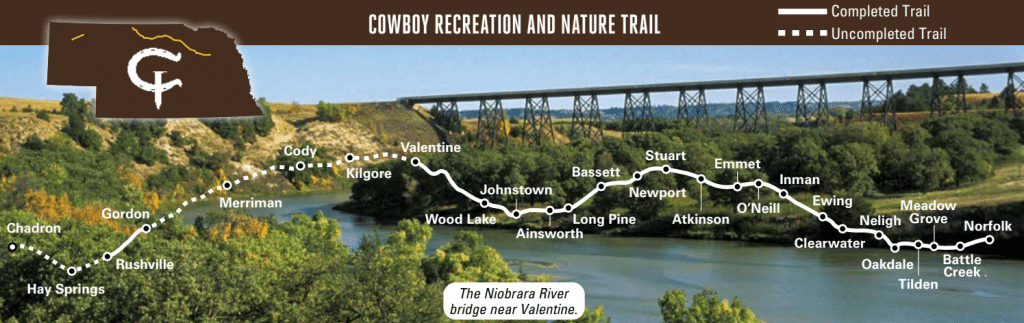
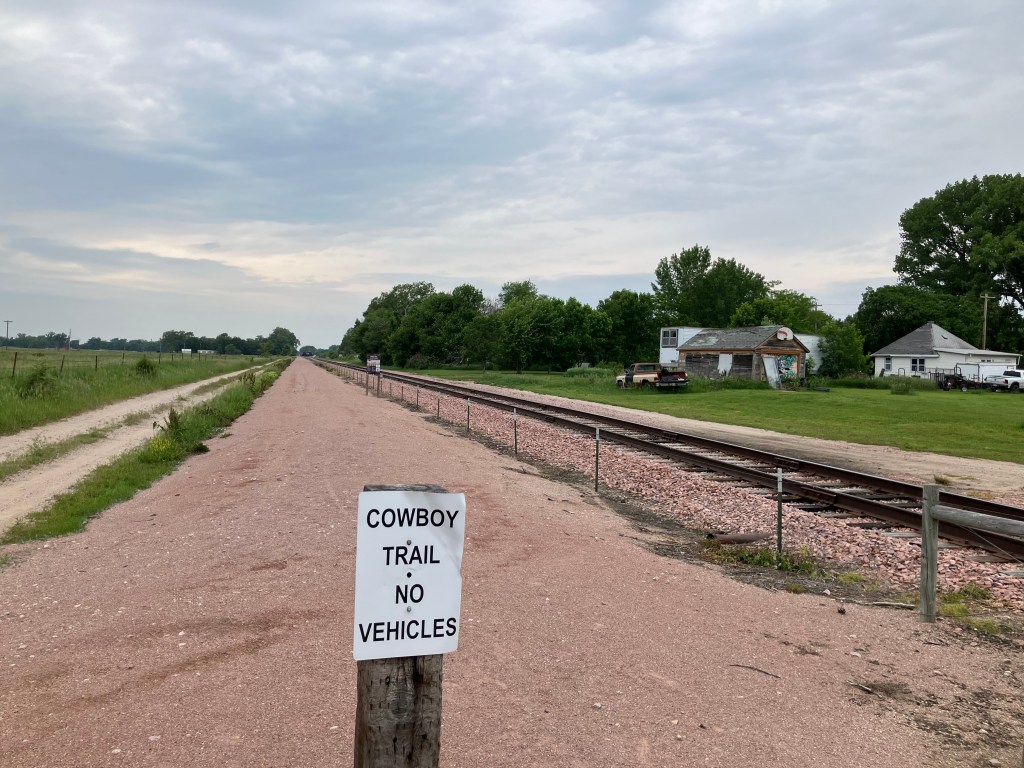
At this point in the trip I was feeling a need for a long walk, and fortunately O’Neill has something called the Cowboy Trail. This is one of those “Rails to Trails” arrangements, where an abandoned railroad right-of-way is converted into a hiking and biking trail.

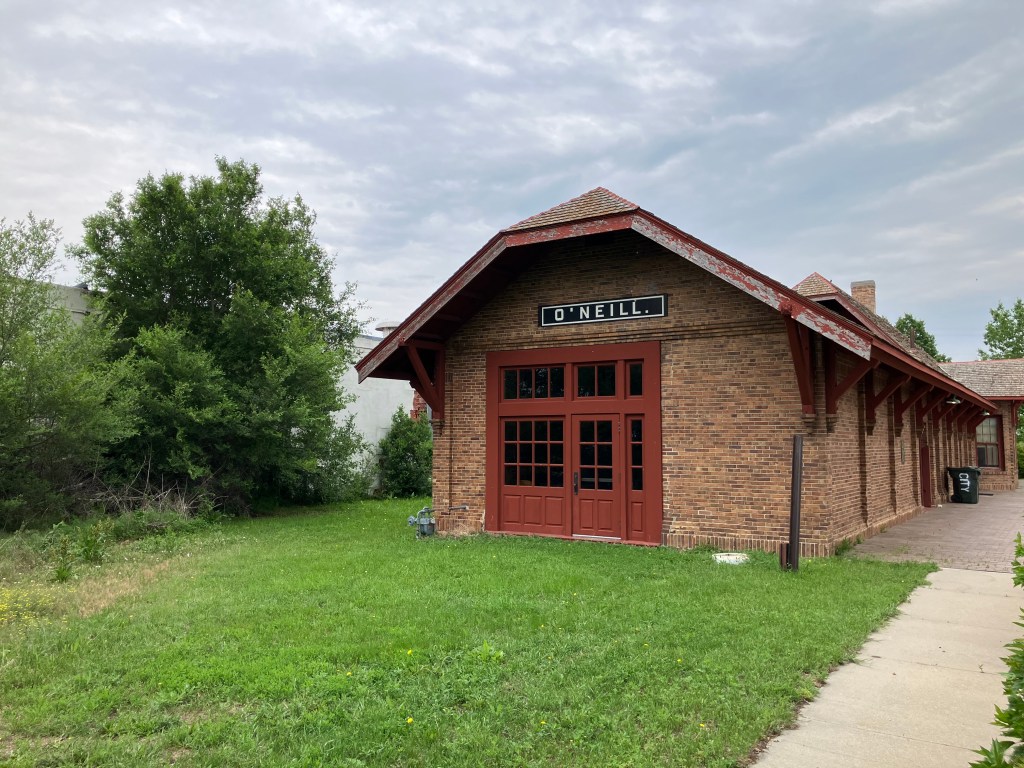
The Cowboy Trail runs 317 miles along the old Chicago & Northwestern railroad route from Norfolk, Nebraska to Chadron, Nebraska. There’s only one railroad station still standing on the route, and as luck would have it it’s here in O’Neill.

After visiting the station, I spent an hour walking along the trail. It’s a quiet and pleasant walk along a crushed limestone path, with plenty of trees and wildlife. Who knows what the other 300-plus miles look like, but I think it would make for an enjoyable mountain bike trip over a couple of weeks. Towns and sleeping facilities are located all along the route.

But that’s another trip. Tomorrow I’ll again be heading west on Route 20.

BRIDGE CORNER

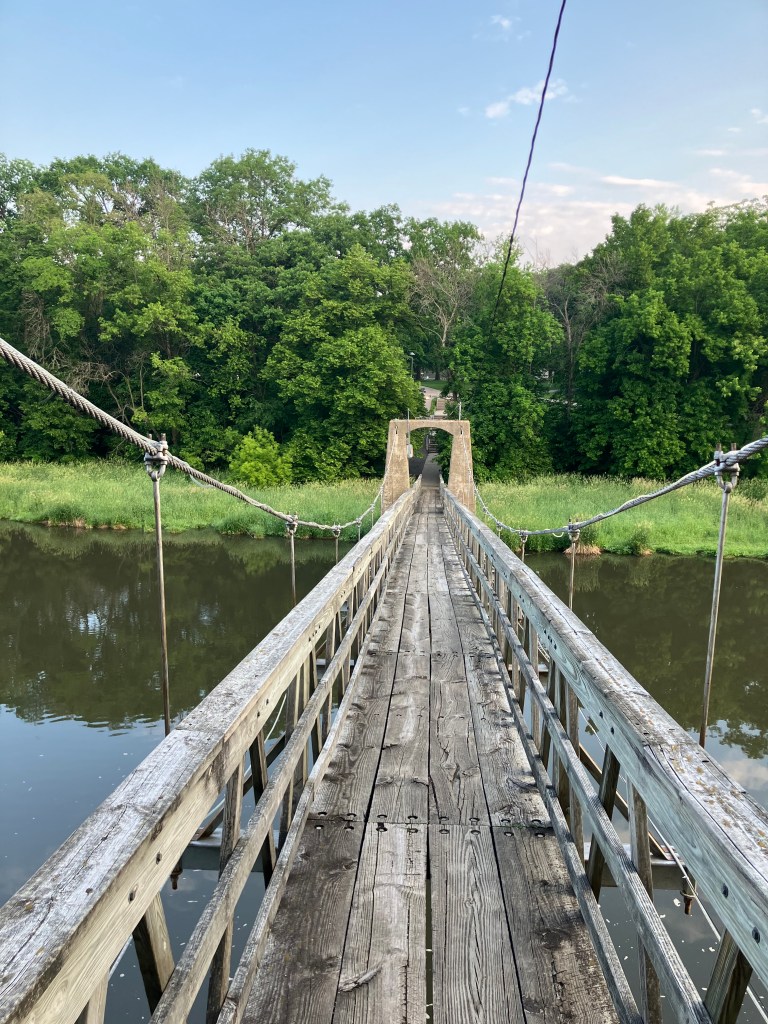
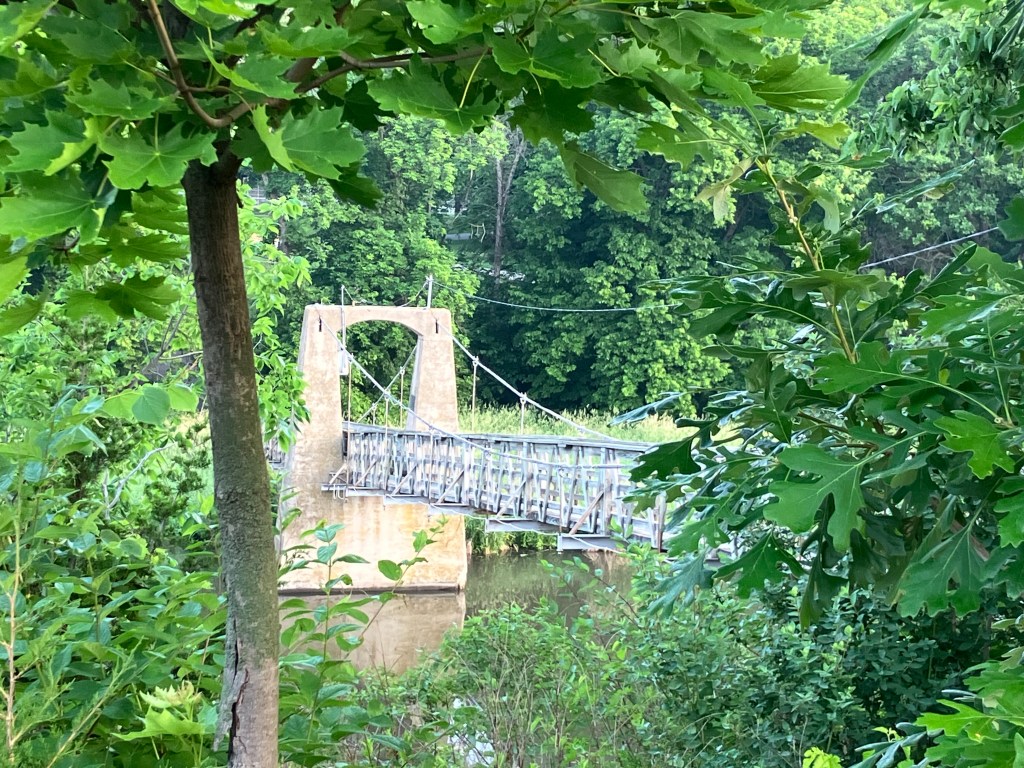
At the suggestion of loyal reader Peter D, this morning I walked across the so-called Swinging Bridge of Iowa Falls. I say “so-called” because it doesn’t really swing. But then neither do I…

Anyway, it’s a pedestrian suspension bridge across the Iowa River. It was originally constructed in 1897, and then re-built in 1909, 1925, 1956, and 1989. In other words, the bridge has been rebuilt every 23 years (on average). It’s now been 36 years since the last rebuild. But why worry about these things?

A good place for the Billy Goats Gruff to cross.

I crossed the Iowa River on the bridge, and returned to my starting point without incident. It’s actually very pleasant out there in the morning. Here’s a video of the peaceful scene.

My only complaint is that the bridge barely flexes while you walk on it. It certainly doesn’t live up to its “Swinging Bridge” moniker.

Deep cut: Now here’s a real swinging bridge that I crossed in Montana in 2022. It’s the Kootenai Swinging Bridge. The full blog post is here.

BEER OF THE DAY

I really wanted to get the BOTD at Brioux City Brewery in Sioux City. The name alone makes the place worthy. Alas, they were not open when I got there. So instead the BOTD comes courtesy of Marto Brewing Company in Sioux City, Iowa. Though “courtesy” is probably not the right word, as will quickly become evident.

Sioux City actually has several craft breweries, but Marto was distinguished simply by dint of being open at 11:30 am when I came through town. Though “open” is probably not the right word, because they couldn’t be bothered to unlock their doors until well past opening time. At any rate, I eventually got inside and bellied up to the bar. I greeted the bartender behind the counter, though “bartender” is probably not the right word. He was occupied washing out a big plastic bucket in the sink behind the bar, and explained to me “I don’t work here.” He eventually disappeared. Meanwhile, there were approximately a half-dozen servers standing around a table where (I later learned) various new foods were laid out for them to sample so they could speak with authority to the customers. Which presumes, of course, that they actually bother to talk to a customer. The servers filled their plates and went to various corners of the (otherwise empty) restaurant to eat their free food.

Finally a young woman wandered behind the counter and I asked her for the barrel-aged stout. She disappeared and returned with a glass of water. Just when I was going to repeat my request she asked whether I wanted the “Art of Survival” or the “Maple Fluff.” Going against my better judgment, I chose the latter.

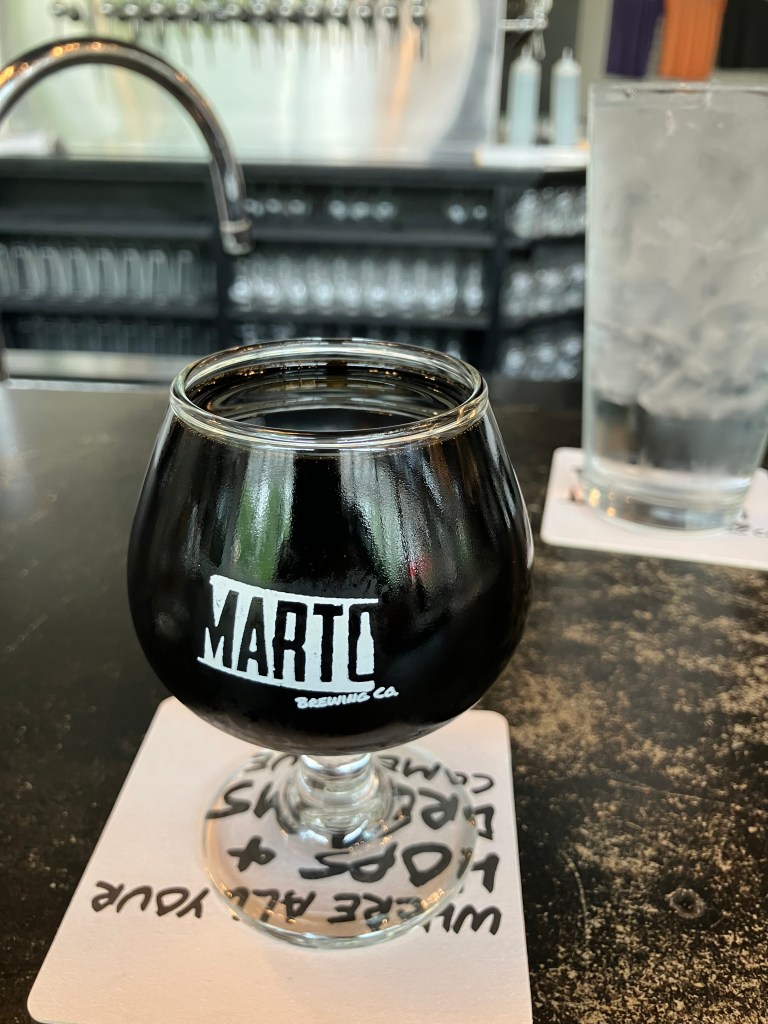
That faucet in the background is where the random worker was washing out his bucket.

I tell you all this backstory because I want to acknowledge that I wasn’t in the best mood to review their beer. Anyway, here we go:

The Maple Fluff is billed as a chocolate stout made with peanuts and marshmallows and aged in Jim Beam barrels for over two years. It’s also billed as 13.5 percent alcohol, which is why it comes in a small, 5-ounce goblet. Sounds promising, no?
From the very first sip, it’s clear that this is a case of false advertising. I don’t taste any marshmallow or peanuts. Without exaggeration, this tastes like I’m drinking molasses diluted with Trader Joe’s teriyaki marinade. I can’t overstate how sickeningly sweet this is. There is no trace of hops to even slightly counterbalance the unfermented sugars. And while I like robust, meaty stouts, this has the consistency of Pennzoil. Even after I finished the glass, the sides remained coated with a thick layer of the high-viscosity beer. You know how old glass window panes in a Victorian mansion are thicker at the bottom due to the gradual “flow” of glass downward in the course of a century or two? I suspect that’s how long it would take for this beer to drain from the sides to the bottom of the goblet.
Now, to be fair, a tablespoon or two of this beer would be good over vanilla ice cream. It also might make a good additive to your car’s crankcase if the piston rings are worn. But under no circumstances would you ever want to drink a full glass of this sweet sludge. Actually, that would be a good name for it: Marto’s Sweet Sludge. 1 star.