California history · cemeteries · churches · movie theaters · Road trips · trains

A Likely Story

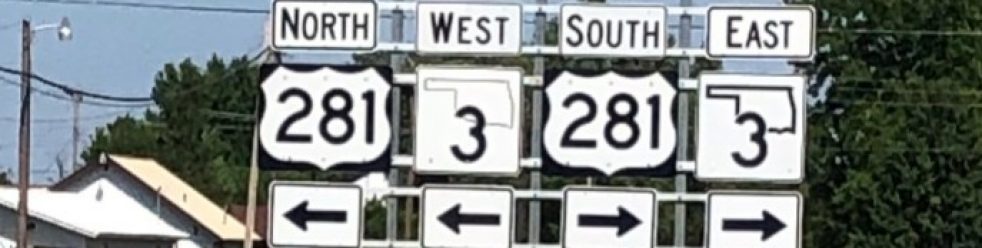
About half a century ago, when I was in the throes of adolescence, my dad loaded up our family and made the seven-hour drive from Sunnyvale to Eagleville, in the northeast corner of California. We were going to spend the Thanksgiving weekend with my Aunt Alice’s family. One of Alice’s brothers owned a house up there (in retrospect, it seems her extended family owned half the town).
Motto: “Any further north and you’d be in Oregon.”

Eagleville is a tiny town in Modoc County. (Today it boasts 45 residents, about half of whom presumably are related to Aunt Alice). I have three main memories from that weekend we spent there: (1) Mom was sick with a migraine headache, Dad was distracted by mom’s condition, and Dave and I knew no one else other than Aunt Alice and Uncle Edward (Dad’s brother). (2) The general store was the only business open that weekend, so my brother Dave and I hung out there for what seemed like hours, studying the comic books and MAD magazines. (3) There was a tiny church that was unlocked and empty; as a city slicker, I was surprised that people could be so trusting as to leave a building full of chalices and patens and suchlike just sitting there unattended. Even though Dave and I were not known for our high moral principles, we realized that it would be extremely bad karma to rip off anything from a church. So we left well enough alone.

As I recall, our Thanksgiving dinner was a traditional though awkward affair. All the expected Thanksgiving staples were there: turkey, stuffing, cranberry sauce, etc. But the four of us in my immediate family were clearly unfamiliar outsiders, while Aunt Alice’s family members were all comfortable together, laughing and joking and having fun. I envied their ease being in their own skin, and their grounding in that remote corner of California.

That Thanksgiving weekend still stands out from the 60 undistinguished others I’ve experienced. Perhaps it’s because it was the only Thanksgiving I spent with snow. Perhaps it’s because Eagleville felt like such a mysterious, remote, foreign place. Notably, I’ve never been back to Eagleville.

Until now.

Recently I decided, for no particular reason, that I would revisit that tiny town and see how the reality stacked up against my memory. So I contacted my Uncle Edward, who helpfully supplied me with the address of the house where we stayed, which evidently still remains in Alice’s family. As loyal readers of this blog know, Uncle Ed is the creator and sole “staff” of The Dome of Foam, which is internationally recognized as the premier, authoritative, entertaining website on western railroads (particularly the Southern Pacific). I asked Uncle Ed if he could recommend any railroad-related sites in the greater Eagleville area, and he connected me with a doozy: The Nevada-California-Oregon (N-C-O) Railway, a now-defunct narrow-gauge railroad that connected Eagleville’s Surprise Valley with the outside world.
In doing a little research I read that the N-C-O Railway’s southern terminus was in Reno, Nevada, and I recalled that son Ian and I had visited that same depot just last winter. (Scroll down to the BOTD in this post.) It’s now a brewery/distillery, but they’ve keep the original exterior largely intact. The N-C-O also had a major presence in Alturas, which is just west of Eagleville. And the northern terminus was in Lakeview, Oregon, which is just north of Alturas.
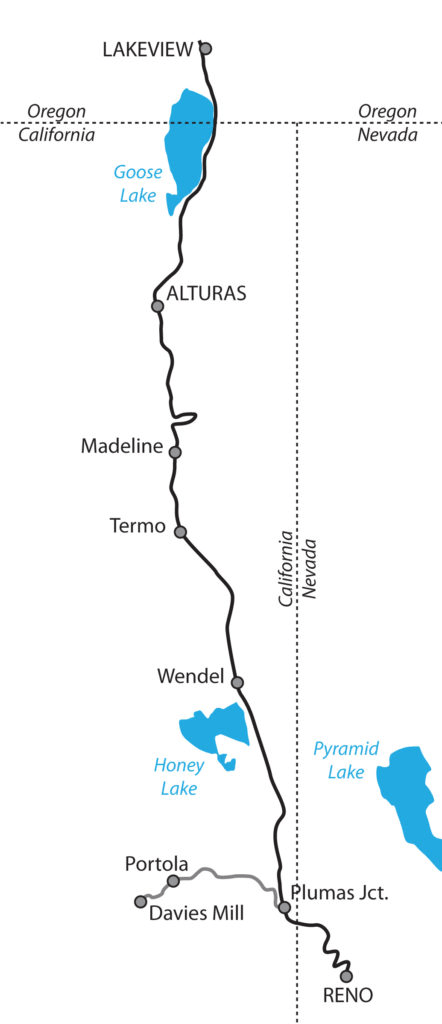
Route of the N-C-O Railway.

So my plan became clear: my trip to Eagleville would generally follow the entire route of the N-C-O Railway, an I’d be able to visit historic structures in each of the three states served by the railroad.

And so this morning I set out on the trusty Speedmaster eastward to Reno (pop: 264,000). Within a couple of hours I was standing in front of the N-C-O’s Reno depot. Originally built in 1910, the building served as a railroad depot until 1937. After that it was used for railroad offices and was finally sold off for non-railroad purposes in 1975. It was eventually abandoned, then in 2014 it underwent renovation to become the brewery/restaurant it is today.
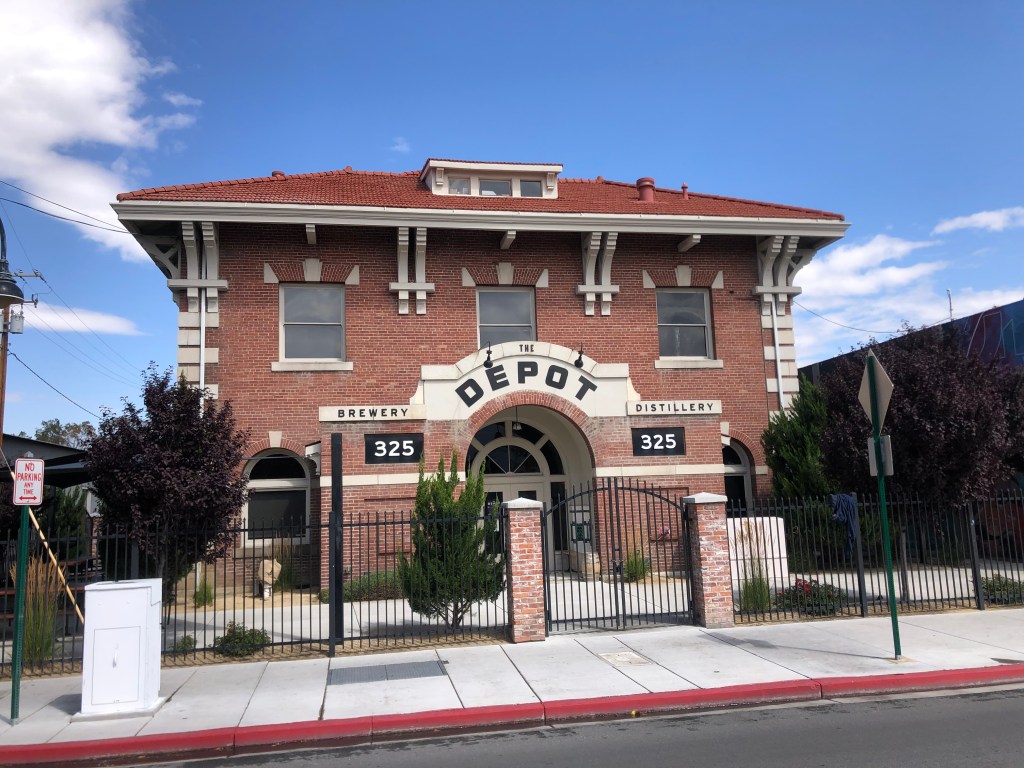
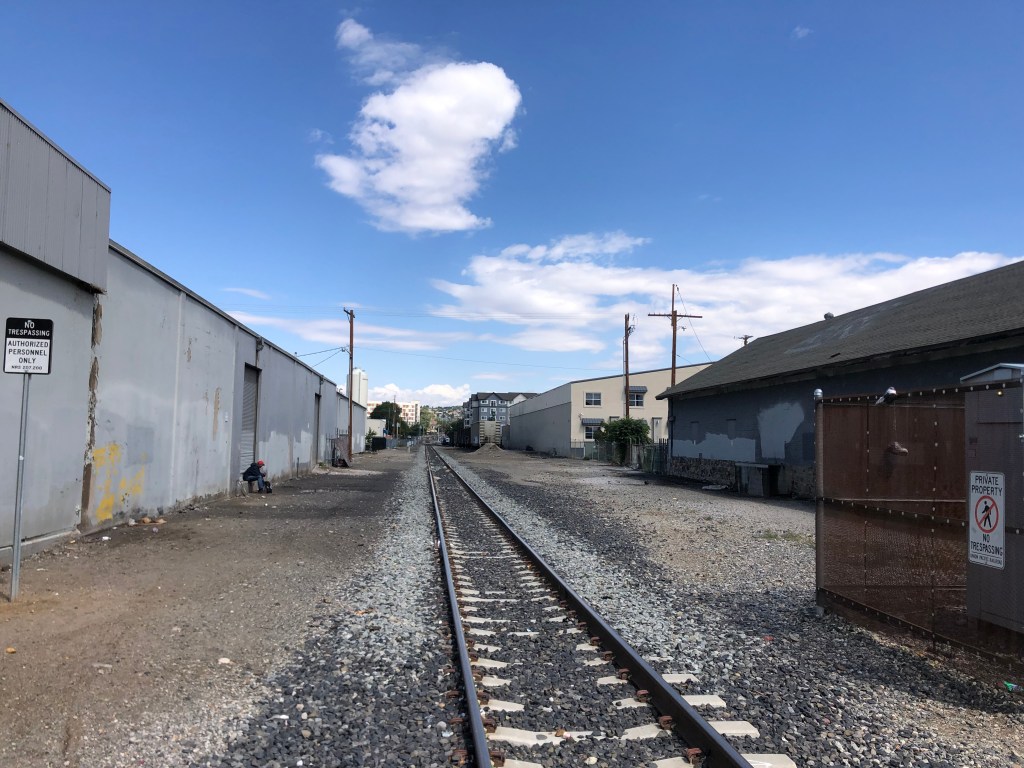
Once the southern terminus of the NCO Railway.
The rail line still runs alongside the Depot.
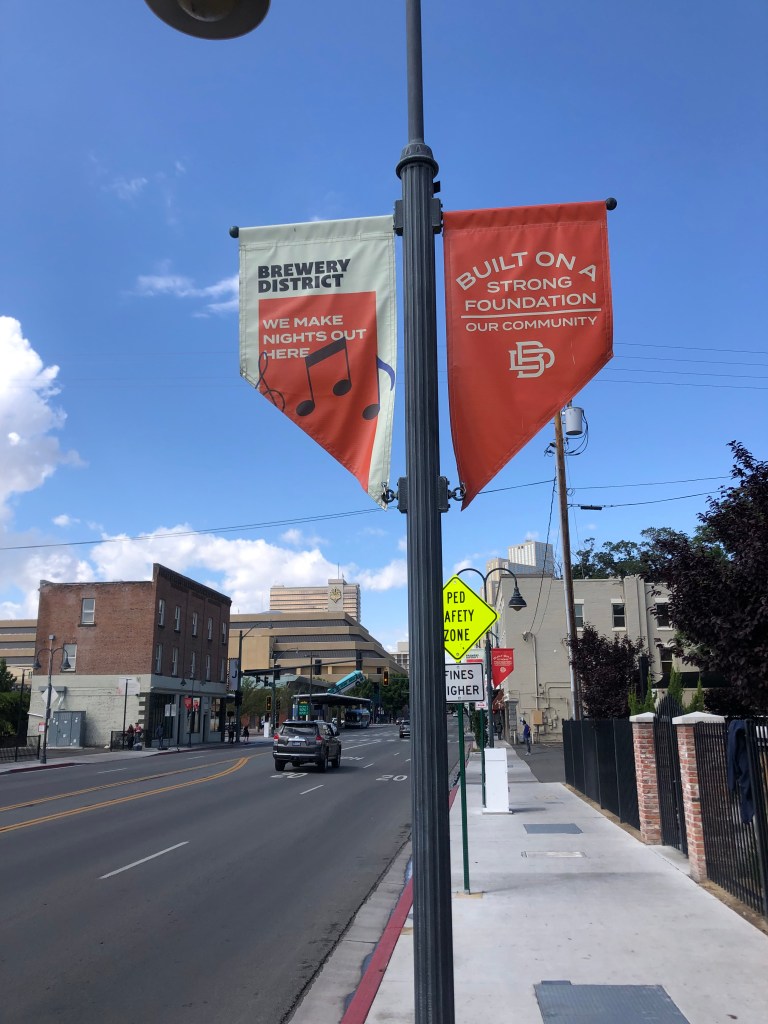
The Depot sits in the middle of Reno’s Brewery District, alongside a handful of other breweries and distilleries.

I next headed north on US 395. I’ve written about US 395 before (here and here and here, for example). You’ll recall that Hallelujah Junction (where US 395 intersects with CA-70) holds special significance. So I made a brief stop as as I passed through, to relive the magic.
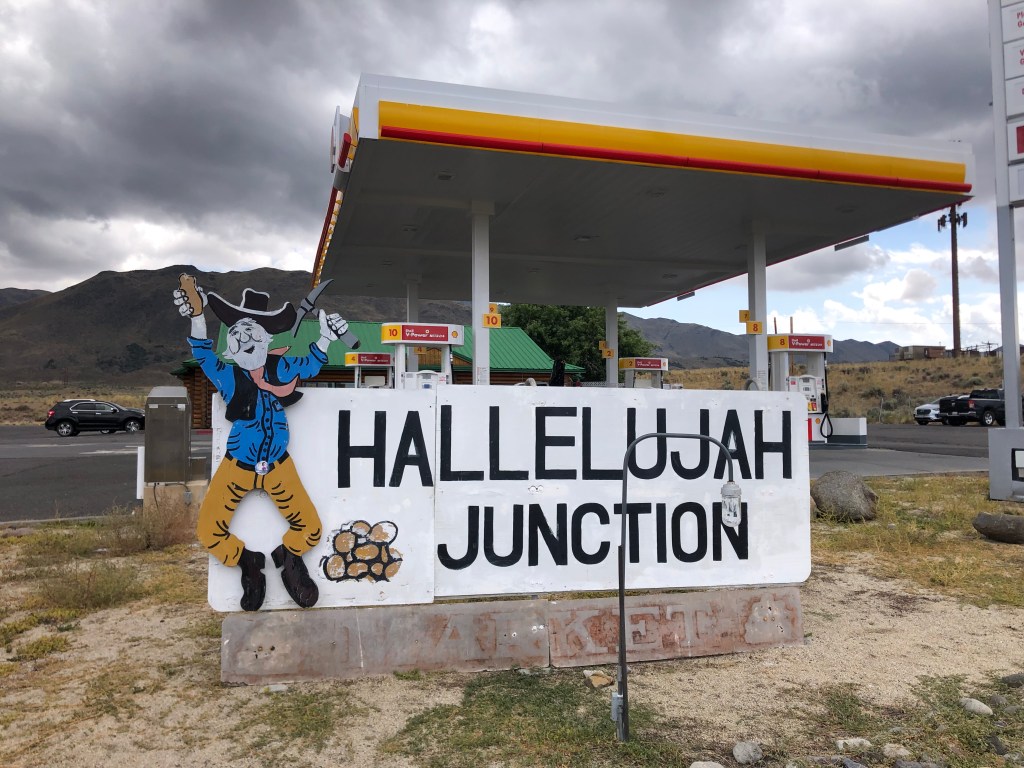
Where I learned about the Seven Wonders of the Railroad World.

US 395 has a stark beauty to it. You don’t see much in the way of towns or even other cars. The quietude and long horizon are conducive to contemplation if not meditation.
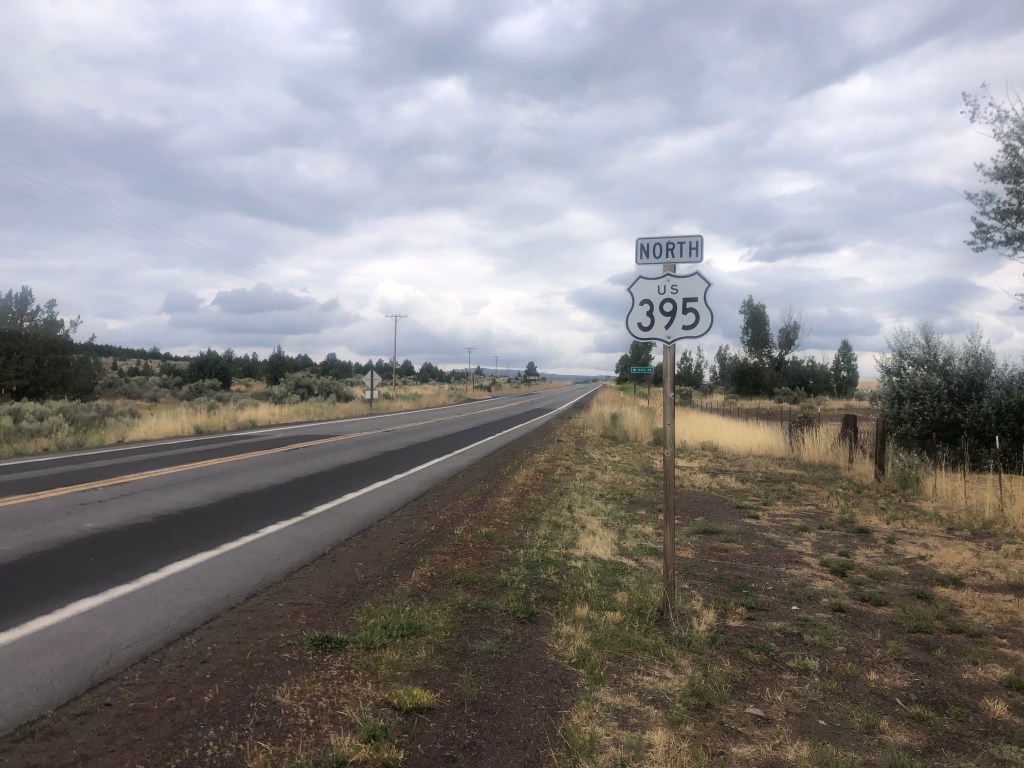
Ommmmm…..

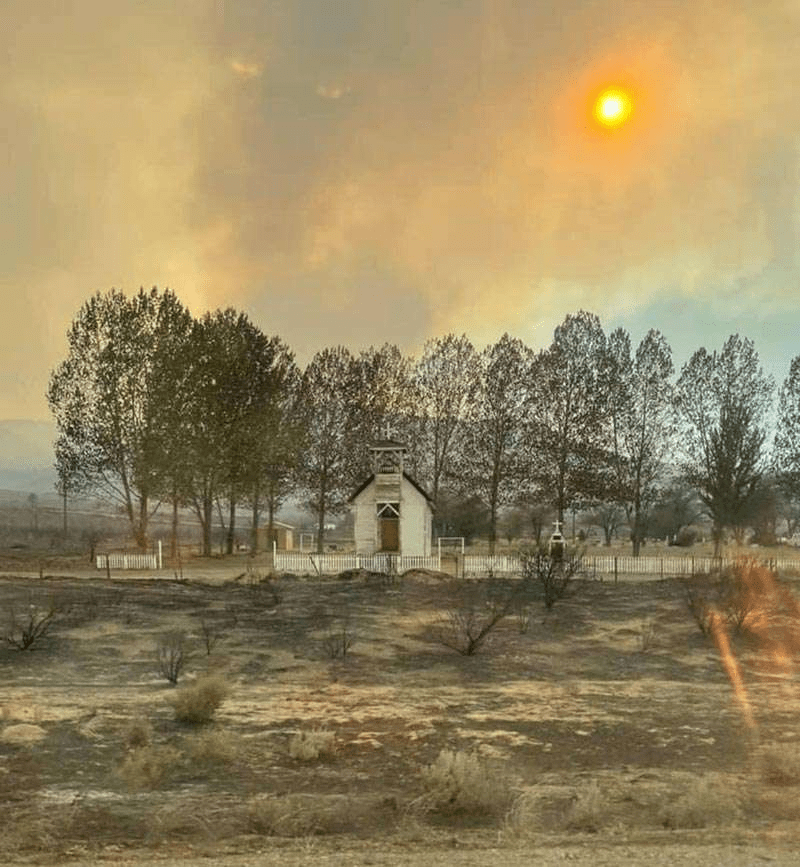
When the rare town does appear, I feel compelled to stop and look around a bit. One such town is Doyle (pop: 700). A couple of years ago Doyle lost much of its housing stock due to wildfires, so there really isn’t much going on here. But I was charmed by this historic chapel that somehow escaped the fire. Constantina Church was built around 1900 about five miles south of Doyle, and infrequent worship services were held there whenever a circuit priest was available. Services stopped around the 1920s, and the chapel was eventually abandoned. The structure was moved to Doyle in 1994, and it appears to be in regular use as a church once again.
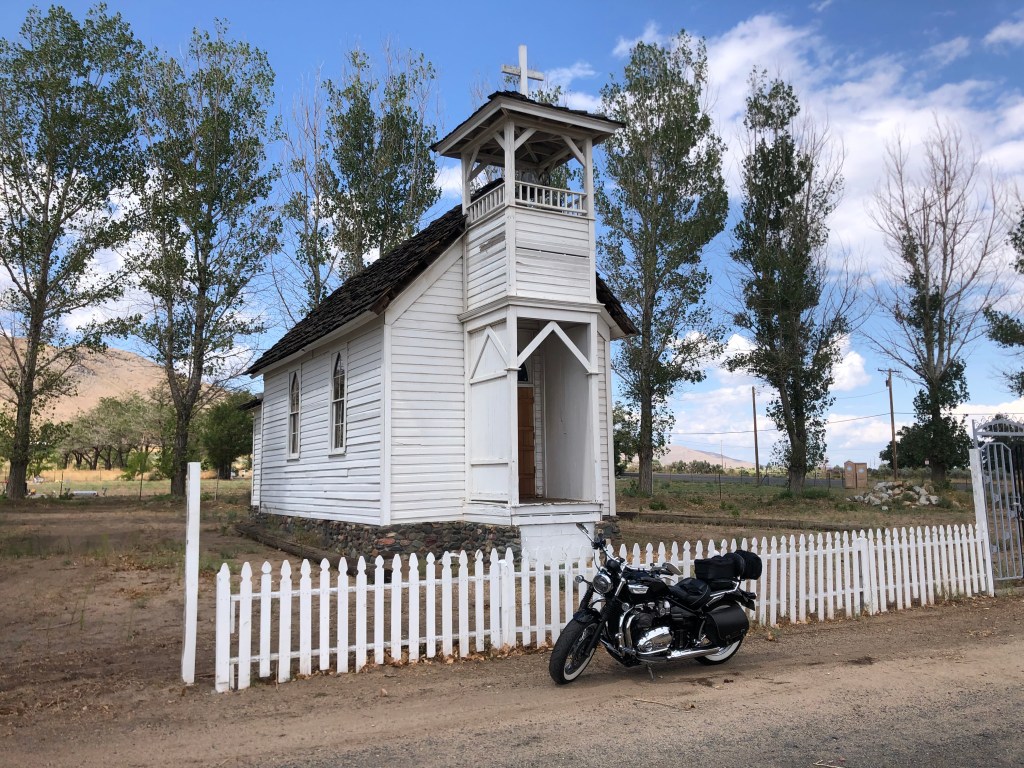
Constantina Church today.
Same church in 2021, after the town’s fire.
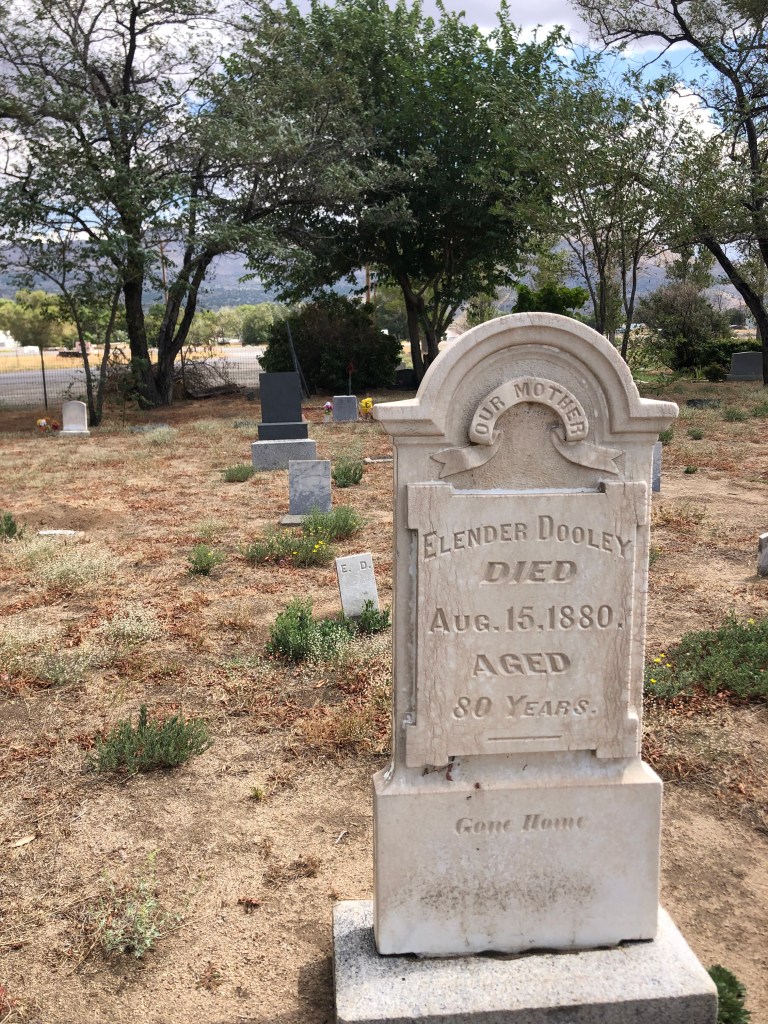
A historic cemetery is next to the church.

I also passed through the town of Likely (pop: 99). The story goes that, back when the area was being settled, some homesteaders were speculating about whether the settlement would become a proper town. One man (Billy Nelson) reportedly said “There’s likely to be a town here one day, and there’s just as likely not to be. So let’s call it Likely.”
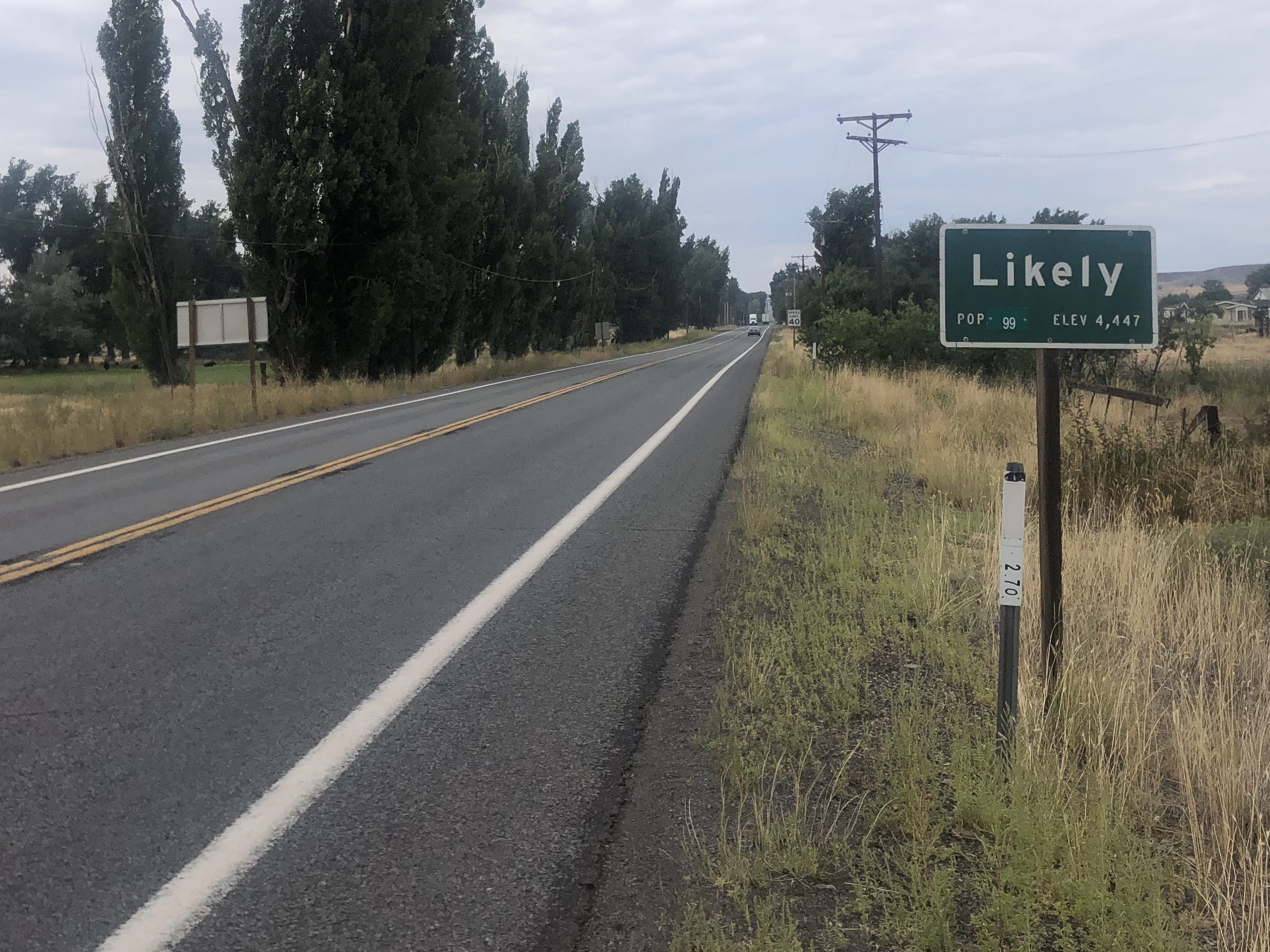
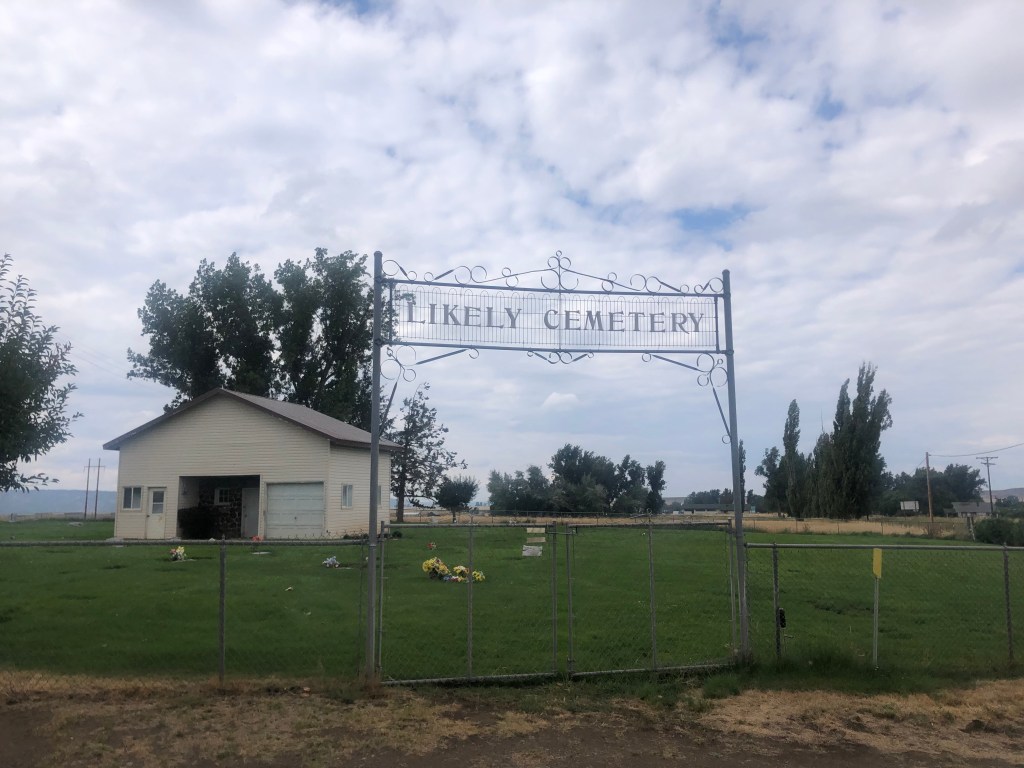
A Likely story.
But we’re not sure.

Finally I arrived at the relative metropolis of Alturas (pop: 2,700). Approaching from the south, the first thing you encounter is a striking, if somewhat faded, 1904 steam locomotive that used to run on the NCO line. The locomotive was presented to Alturas in 1956 by Southern Pacific (which had earlier bought up the NCO), and it resides outside the Modoc County Museum.
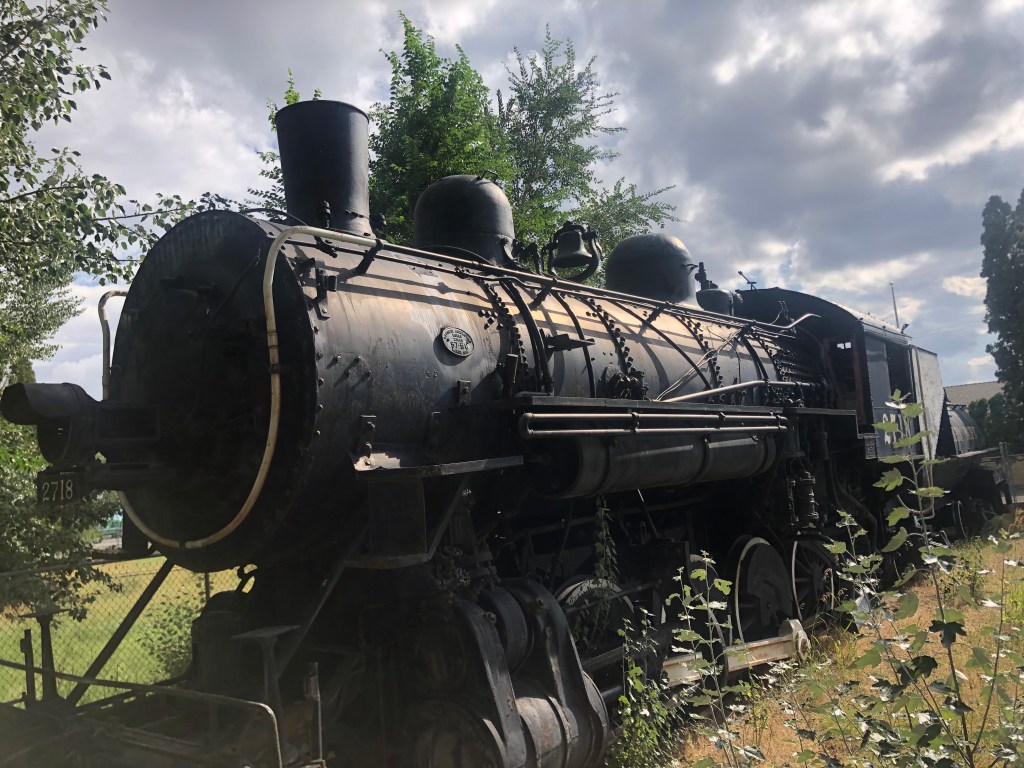
Standing still since 1956.

The story of the locomotive, as told by the local boosters, makes clear how much the NCO had meant to Alturas:

“This particular locomotive was utilized on the Alturas, California to Reno, Nevada route. The railroad was chartered as N.C.O. (Nevada, California, Oregon) in 1884. It was first established in Alturas in 1908 reaching Lakeview by 1912. The railroad and Alturas have an extensive symbiotic relationship from its inception to the day that Alturas was terminated as a home terminal on January 17, 1972, which was a devastating blow to the city as a large percentage of the population was forced to relocate to Klamath Falls, Oregon. Every business in town interacted with the railroad, whether by the influx of tourists or business travelers when the Southern Pacific offered a passenger service from 1927 to 1938. Even railroad workers who made their home base in Alturas, or stayed in one of the hotels made on impact on the town. The third floor of the Niles Hotel offered dorm style living for the railroad workers for decades. Before and during the time of passenger rails, the Southern Pacific and N.C.O. offered livestock shipment from 1908 to 1972, which provided most of its revenue. This was an option for the ranchers throughout the region to get their livestock to markets and sustained a way of life followed since the pioneers first arrived to this region.”

The docent at the museum was incredibly helpful when I told him of my interest in the NCO. He directed me to a place down the road where an old NCO structure was being renovated. “Look for the red truck and ask for Shane.” Dutifully I followed the directions, and was rewarded by the sight of a large NCO sign…and a red truck.
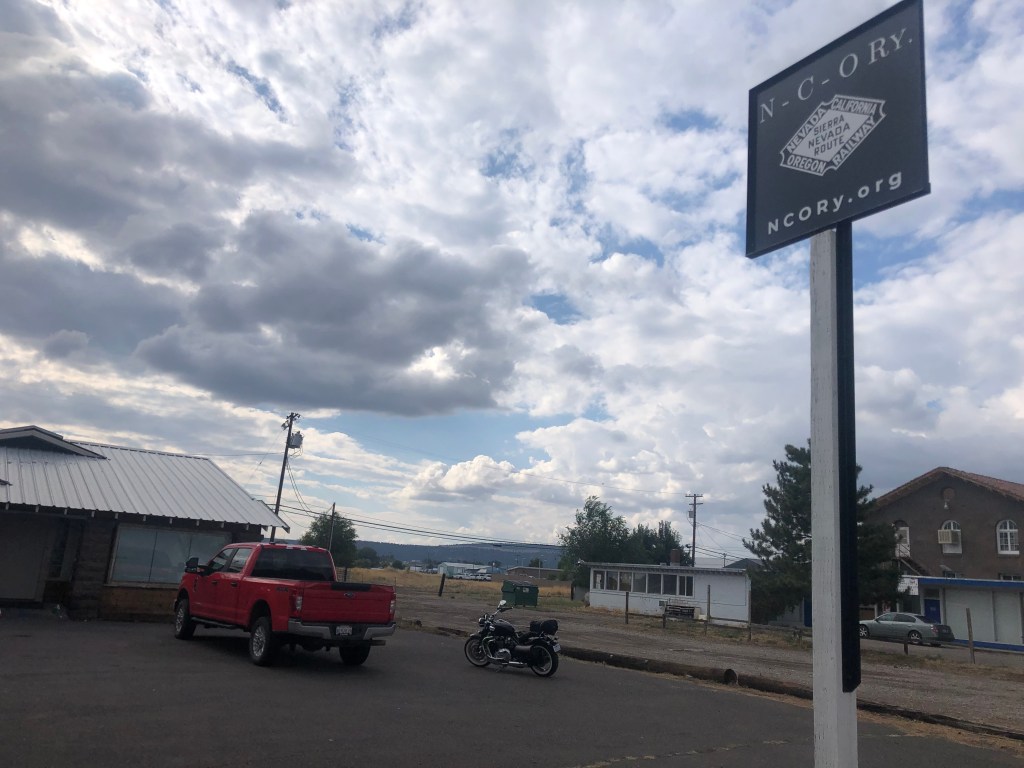
This must be the place….

Shane turned out to be the head of a nonprofit organization called the Nevada-California-Oregon Railway. (Evidently the name was free to use.) The nonprofit is working to preserve the history of the NCO railroad, including buildings and rolling stock. The building where I met him (and where he was restoring some woodwork) had once been NCO crew quarters, and Shane’s dream is to turn the building into a museum.
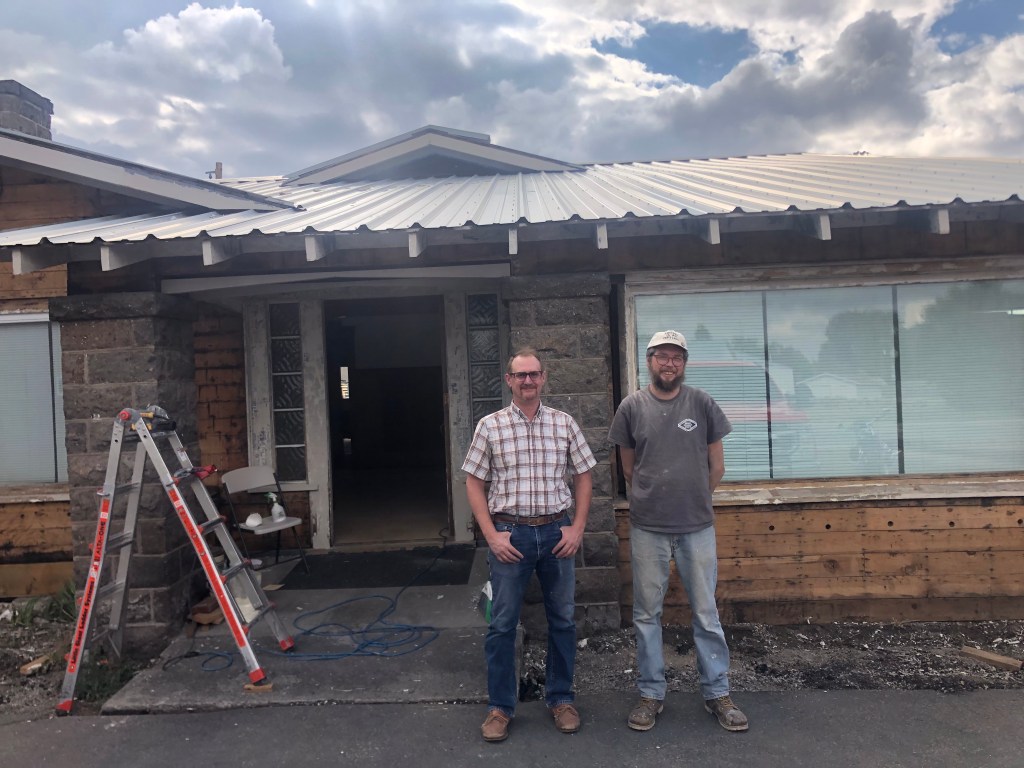
Shane (left) and Andrew, taking a break from restoring the NCO crew quarters on Main Street, Alturas.

According to Shane, there are several NCO buildings still standing in Alturas. He pointed to a large Mission Revival building that had once served as the NCO’s headquarters. Built in 1918, the building became an Elks Lodge in 1974 and remains such today.
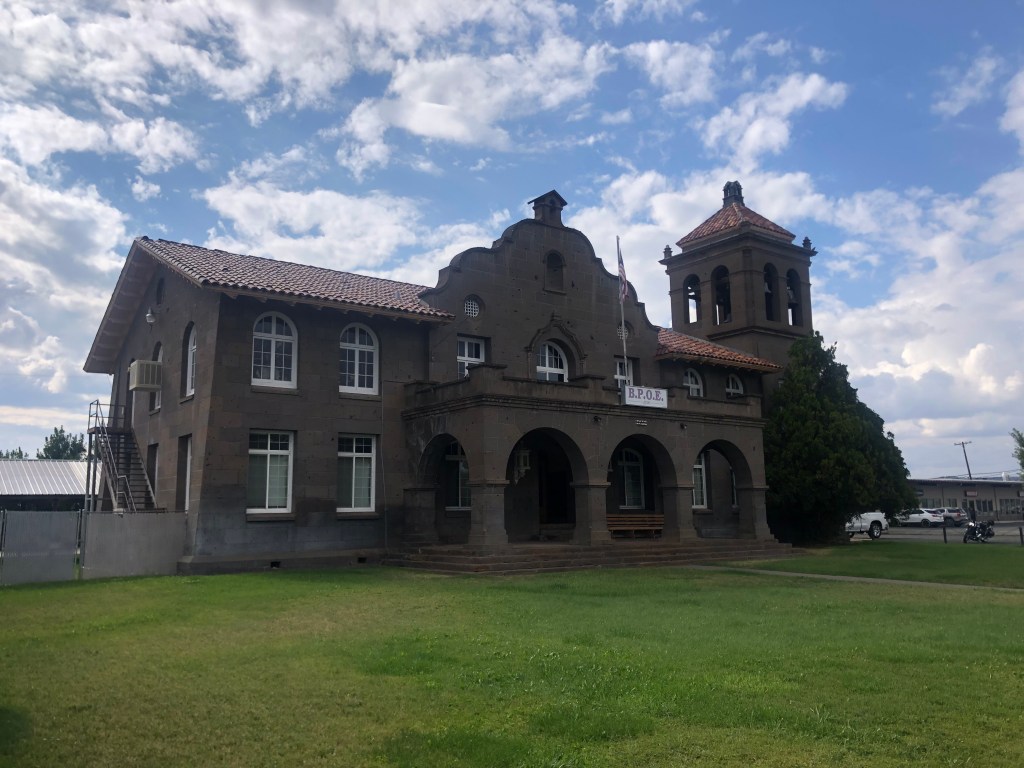
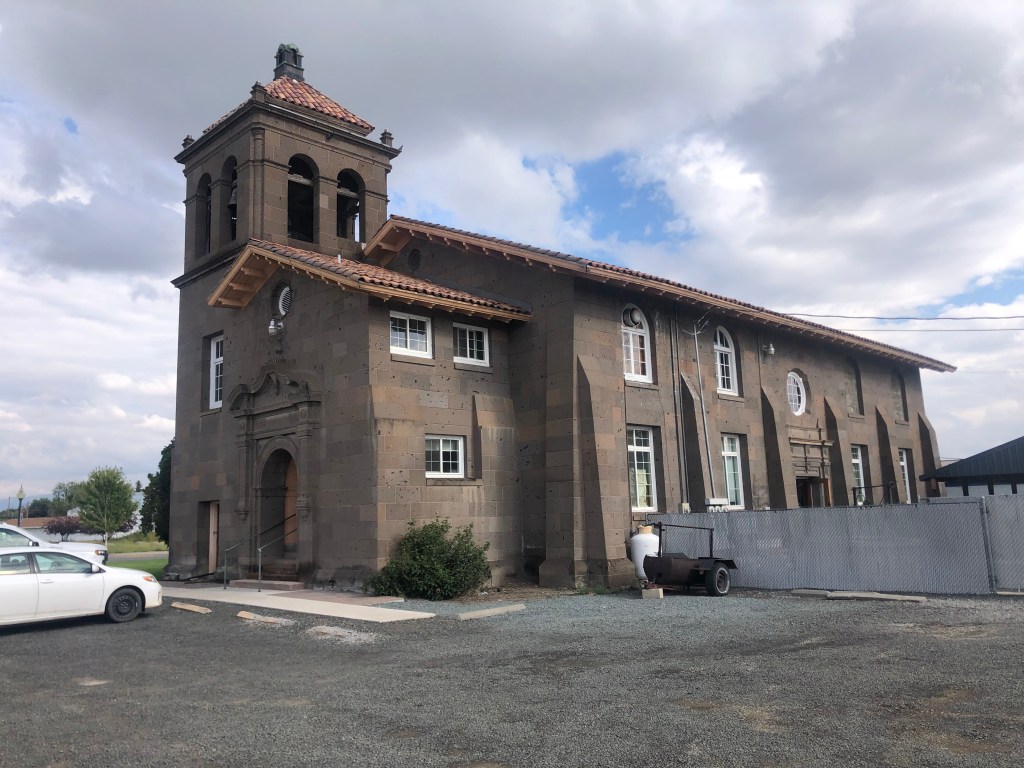
Attentive readers will recall that I encountered this building when I drove through town coming back from my Weiser trip last year. At the time I didn’t put together that this building and the Reno Depot shared the same lineage.
View from the parking lot.

Shane also pointed to a carpet store which had once been the NCO’s freight depot in Alturas.
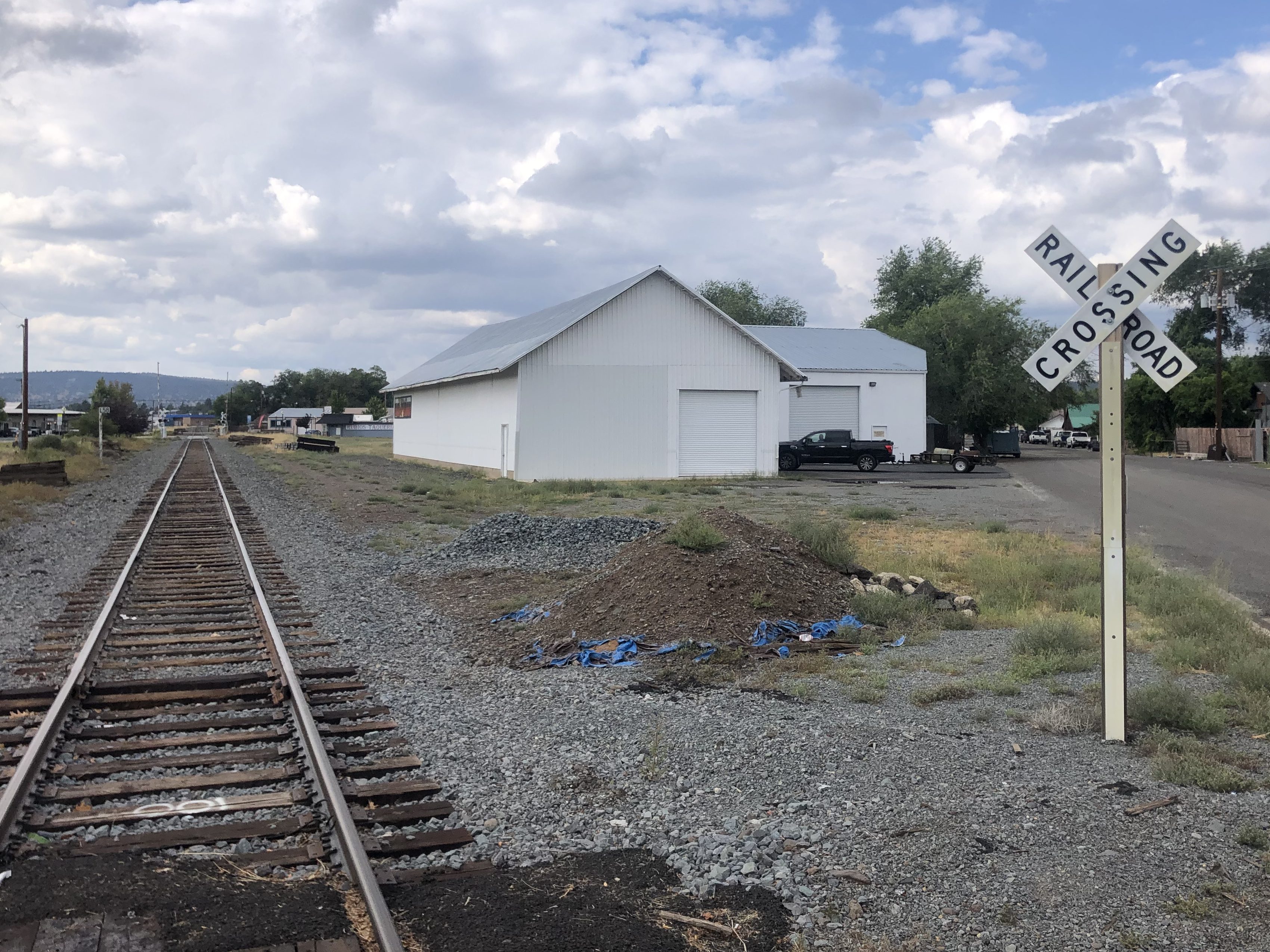
And finally, Shane directed me to the NCO’s passenger depot, which was constructed in 1908. Seven years later, it was decided that the station should be closer to the center of town, so it was moved, stone by stone, several blocks.
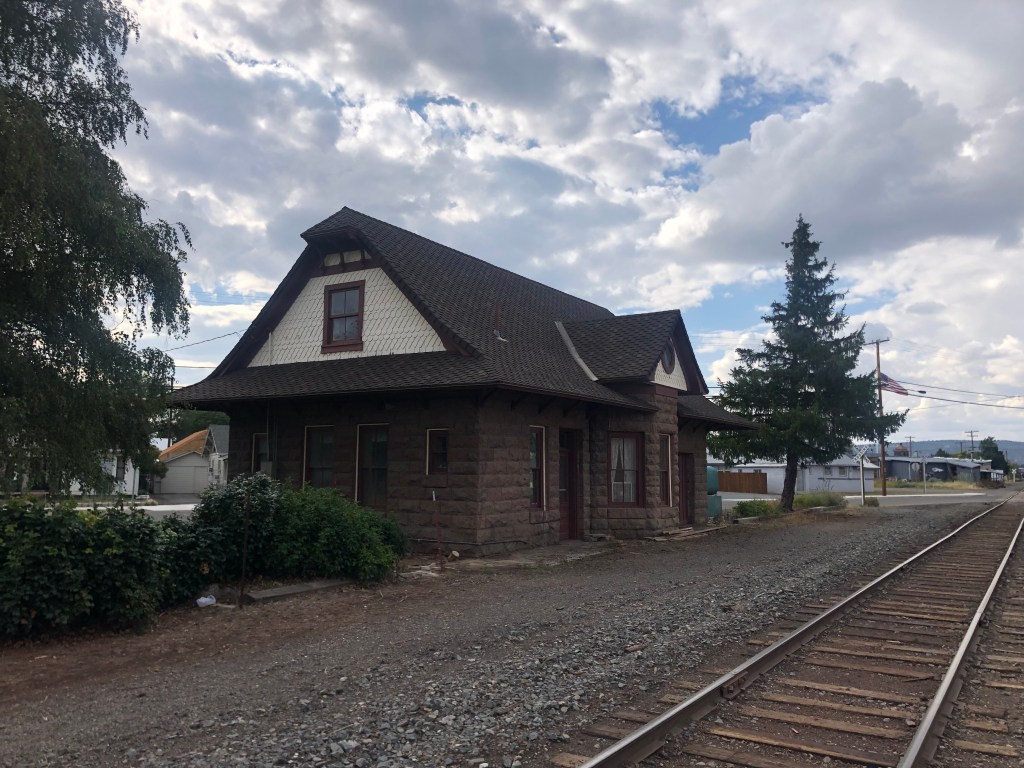
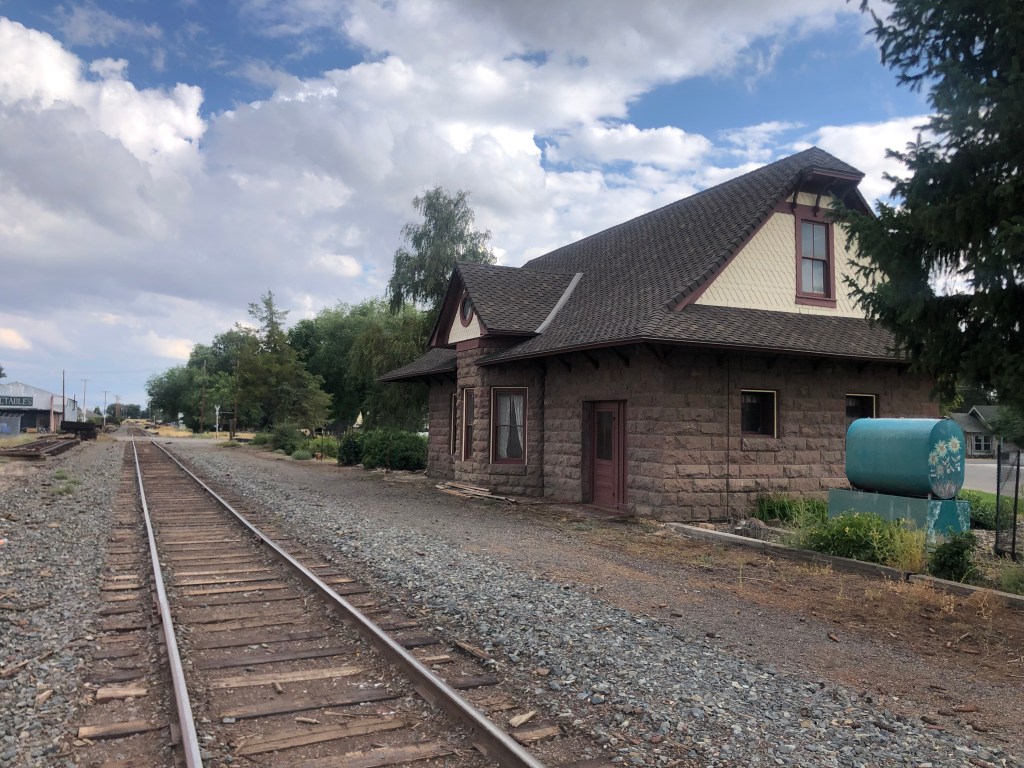
Peripatetic depot.

The Southern Pacific RR bought the NCO in 1926, and passenger service to Alturas was discontinued in 1938. Freight service ended in 1988. Still, Alturas remembers the NCO as an influential and pivotal part of its history. Indeed, the Modoc County museum includes a number of photographs and artifacts from the railroad.
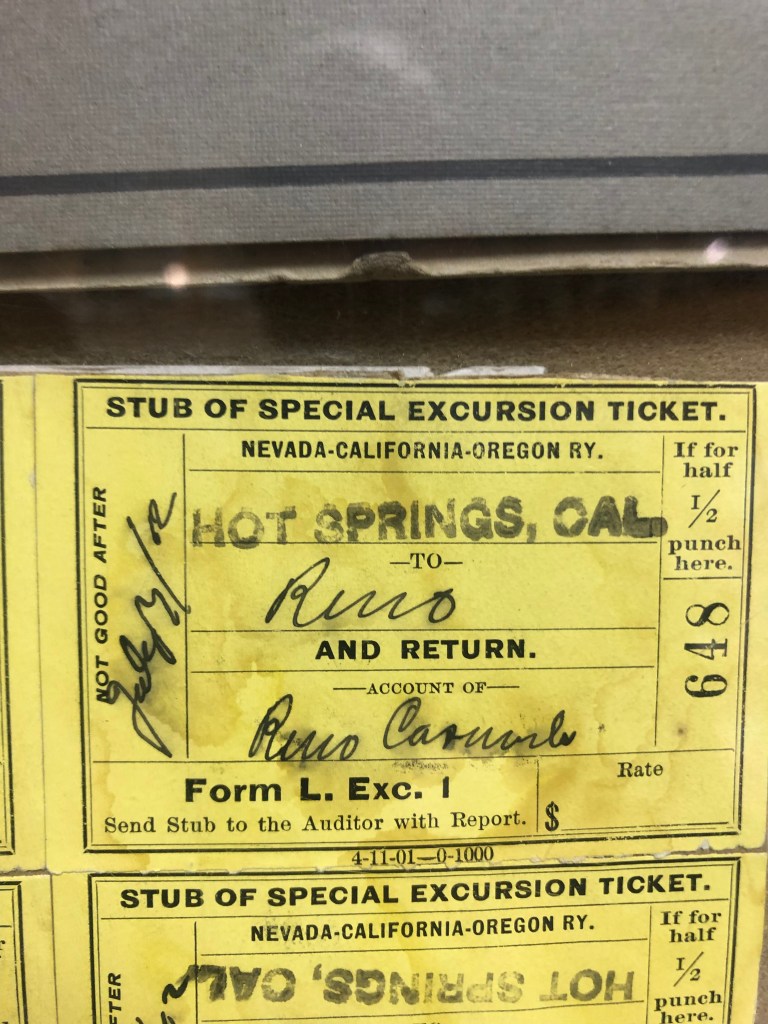
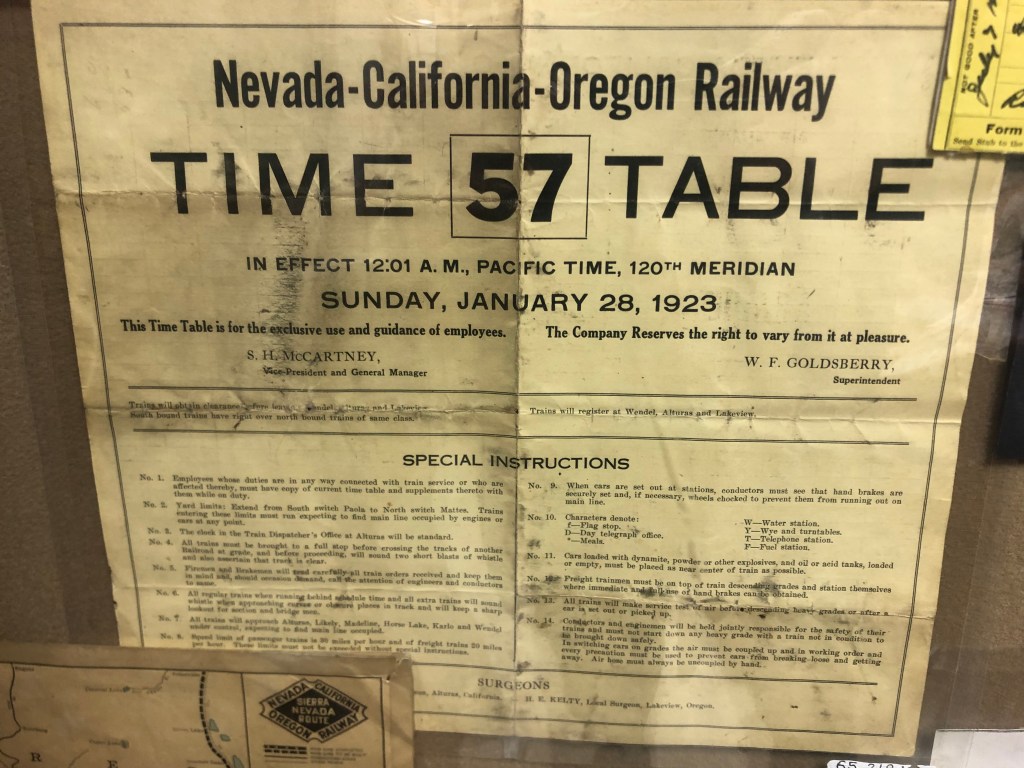
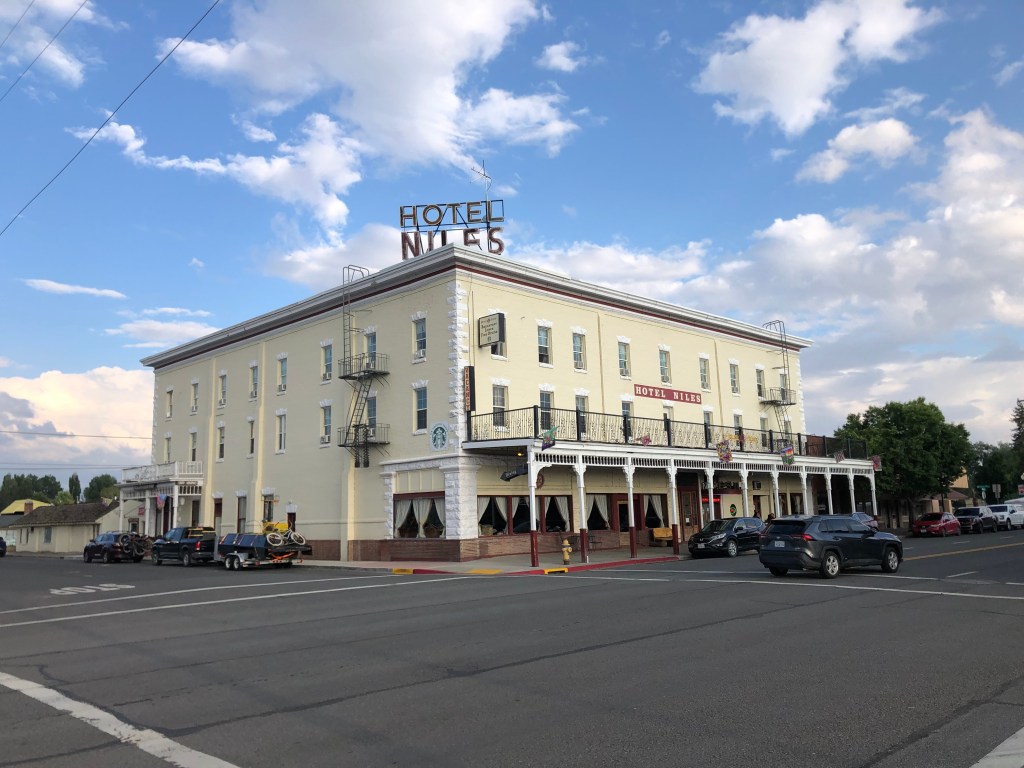
I’m holing up for the night in the Hotel Niles, a historic hotel that was built before the First World War. The hotel remains authentic, by which I mean the floors creak and the widows rattle. But it’s a fitting place to spend the night on this day of historical exploration.
This image has an empty alt attribute; its file name is hotel-niles.jpg
I’m on the second floor of the left side.

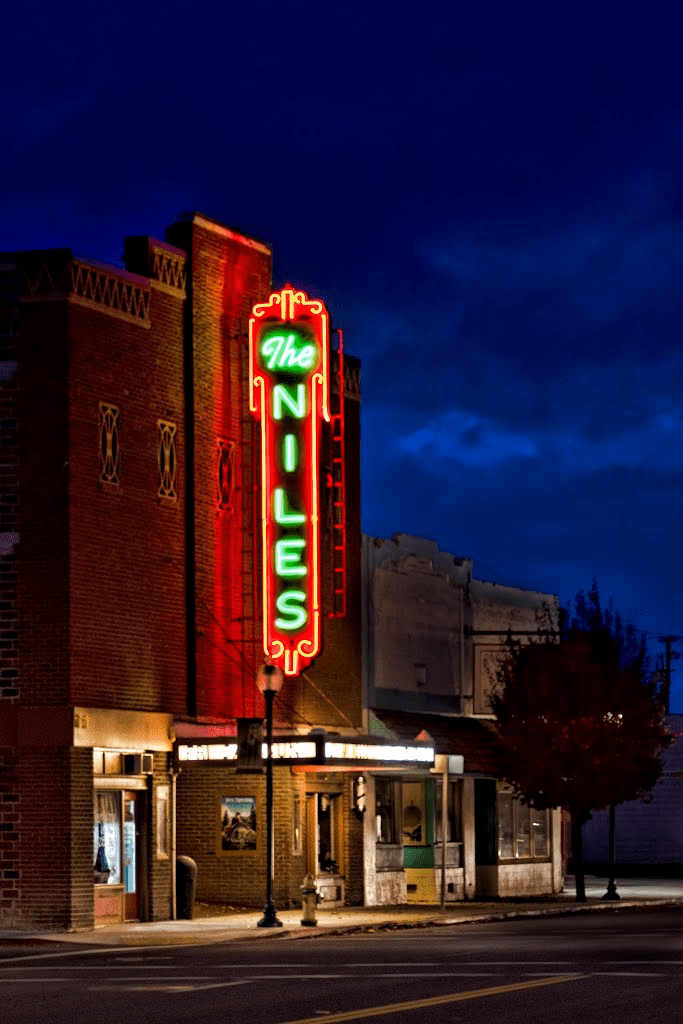
Incidentally, the hotel sits across the street from the Niles Theater. Built in 1937, it dates back to the era of art deco movie palaces. The neon itself is a sight to behold. An unlike many historic theaters, this one still shows first-run movies. (Next week it starts showing the Barbie movie. I’m not making this up.)
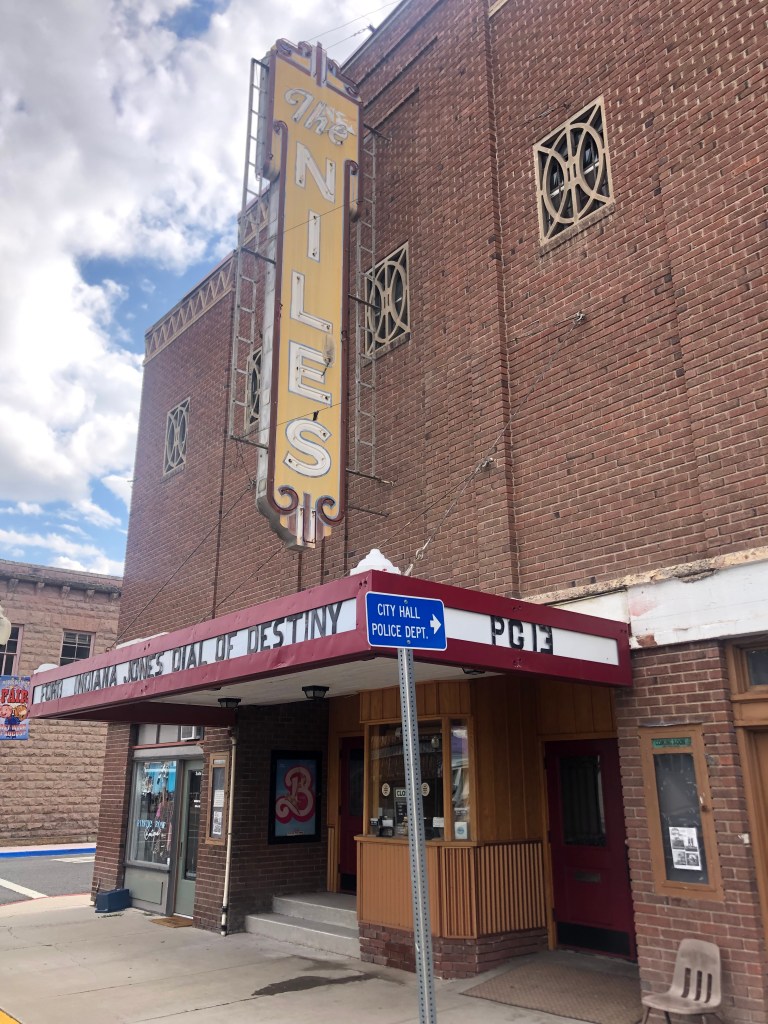
Note the telltale pink “B” on the lobby card.
(Night photo c/o the theater’s website.)

What are the odds that two buildings in such close proximity (the hotel and the theater) would both be named “Niles?” Well, both were built by local businessman J.E. Niles. He was 85 years old when the theater first opened.

I had dinner down the block at a place called Antonio’s. Sadly I can’t recommend it. Even the BOTD is not worth mentioning.
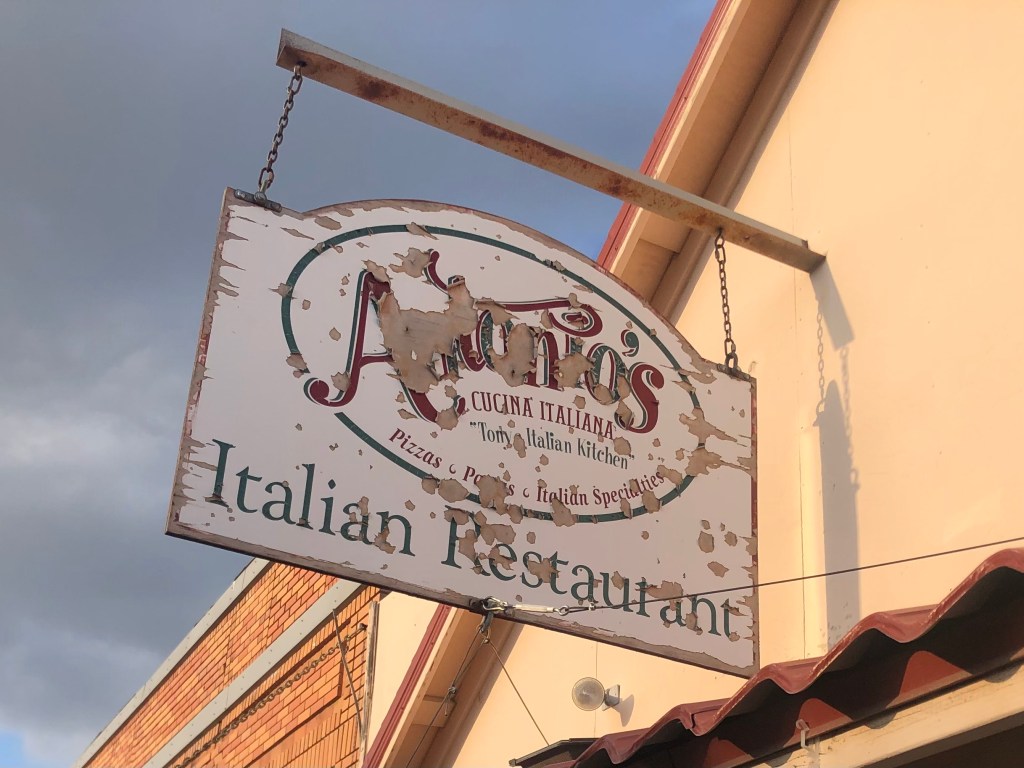
You’d think I would have taken a hint from the condition of the sign.

Tomorrow I’m making the hour’s drive up to Lakeview to see the northern terminus of the NCO Railway. Then it’s off to Eagleville!
cemeteries · Uncategorized

Bay Area Blues

It’s been about 7 weeks since I got back from my road trip along the Blues Highway in the Mississippi Delta. I do think the trip left a bit of an imprint on me — just as I think travel does for all people. As regards this particular trip I feel like I’m more aware of the influence of the blues in much of the music I listen to, and I have a slightly better understanding of the cast of characters who have moved the art form along.

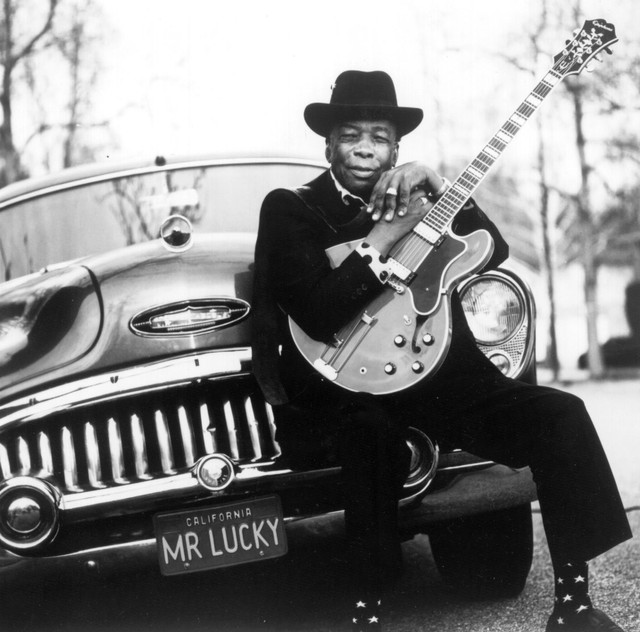
Enter John Lee Hooker. He was born in 1912 in Tutwiler, Mississippi, not far from Route 61 (the Blues Highway) which I drove on my road trip. John Lee Hooker was an incredibly influential Delta Blues artist, and his name kept turning up in the various blues museums I was visiting. He played an electric guitar like nobody’s business. And he popularized the song “One Bourbon, One Scotch, One Beer” long before George Thorogood made it popular all over again on his 1977 debut album.

“I said look man, come down here…”

And here’s something else about JLH: you saw him playing in the original Blues Brothers movie, as himself on the streets of Chicago in 1980. It’s worth watching that clip again, just to get into the mood:

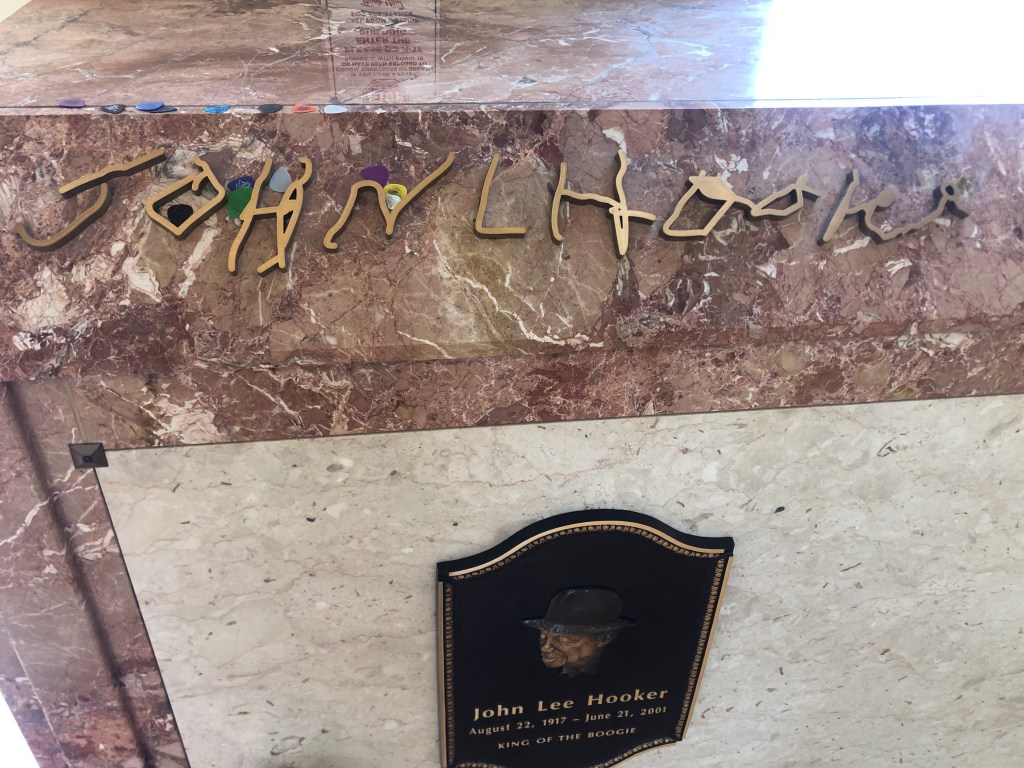
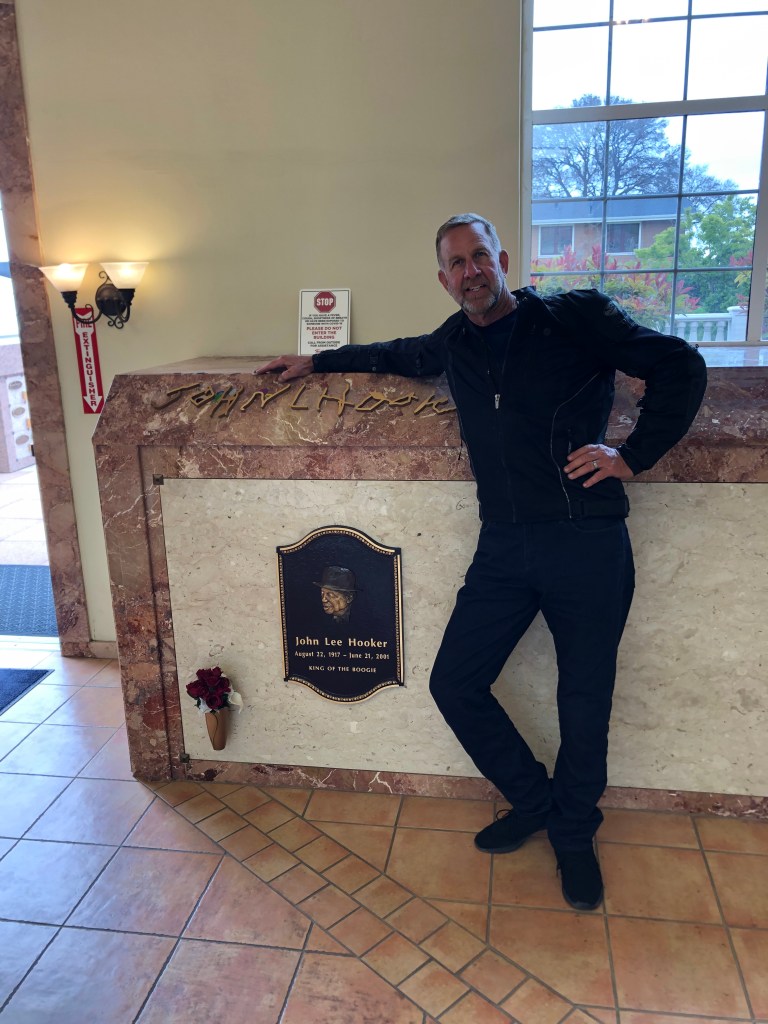
I mention all this because the other day I literally stumbled upon John Lee Hooker’s resting place:

The man was an amazing musician, but his handwriting evidently sucked.

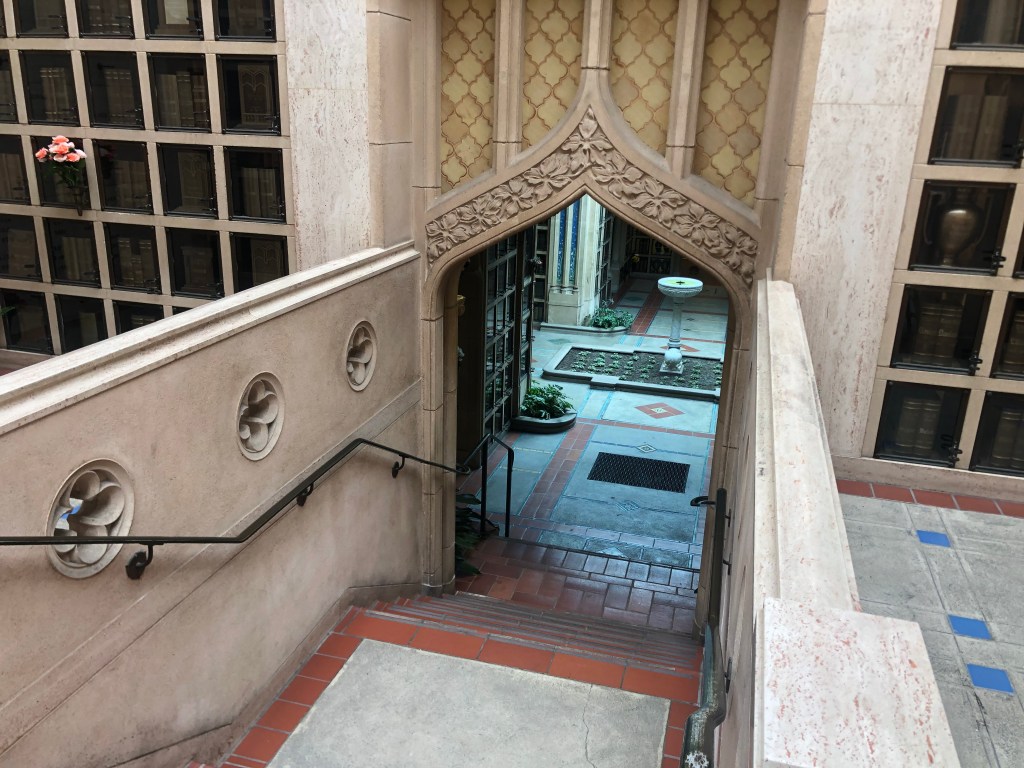
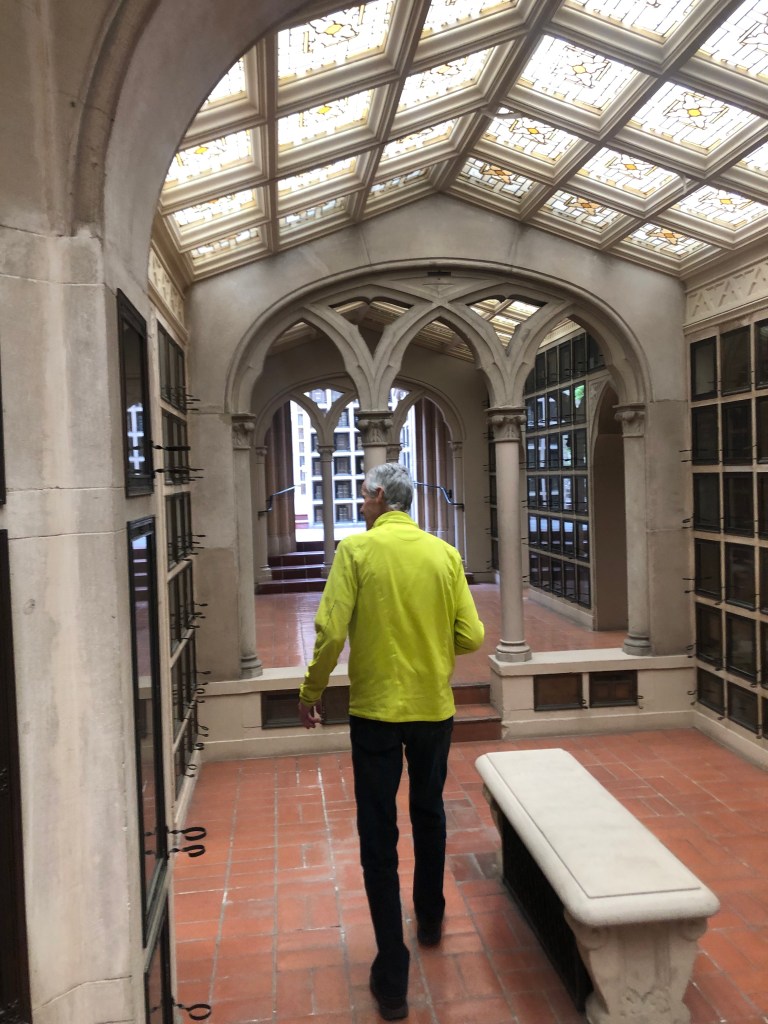
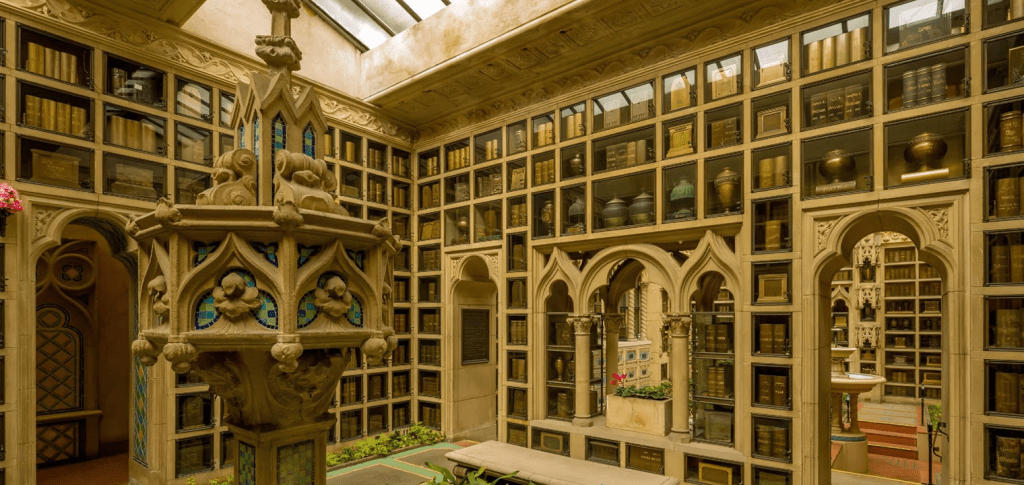
I had taken a ride to the Bay Area to visit with my old college roommate, Bruce. And, for reasons that still aren’t entirely clear, Bruce decided that we should visit The Chapel of the Chimes in Oakland. The COTC is a massive Moorish/Gothic columbarium that was designed by the famed architect Julia Morgan in 1928. (You’ll remember that Morgan designed Hearst Castle, among other iconic structures.) It would be easy to get lost in this place, with its multiple floors, twisting hallways, large airy rooms, and endless decoration. But it’s fascinating and over-the-top with its overwrought decoration.

Random doorway in the Chapel of the Chimes
Bruce trying to find his way out.
This photo stolen from the Internet gives a good sense of the Moorish decoration.

Anyway, to get back to John Lee Hooker: In his later years Hooker lived in California, with houses in Los Angeles and the Bay Area. He was inducted into the Blues Hall of Fame and the Rock and Roll Hall of Fame. He died in 2001 at age 88 (though there’s some dispute about his exact age; he was the son of a sharecropper in the early 20th century, and recordkeeping wasn’t that great at the time). He was in his house in Los Altos when he died, and evidently made the short journey to this final resting spot here in Oakland.

I’d urge you listen to a few songs by John Lee Hooker, and maybe even to visit the Chapel of the Chimes. And if you do, please help Bruce find his way out….

RIP the Boogie Man
cemeteries · churches · movie theaters · Road trips · trains

Driving Into Natchez

One of my favorite songs is “Don’t Think About Her When You’re Trying To Drive,” recorded by Little Village on their first and only album in 1991. Little Village was a collaboration of four established musicians: John Hiatt, Ry Cooder, Nick Lowe, and Jim Keltner. Their musical style was heavily blues-influenced, and the group’s name is a reference to a famous foul-mouthed diatribe by Sonny Boy Williamson, whose name keeps showing up at the blues museums I’ve been visiting.

Anyway, I’ve been thinking about that song because one of its lines is “Driving out of Natchez/You drive her back and forth across your mind.” And the reason I’m thinking about that is because I’m driving into Natchez.

Anyway, here’s the song, if you’re interested: (the song starts at 8:40)

With that out of the way, let’s turn to today’s trip, whose theme is “southern ruins.”

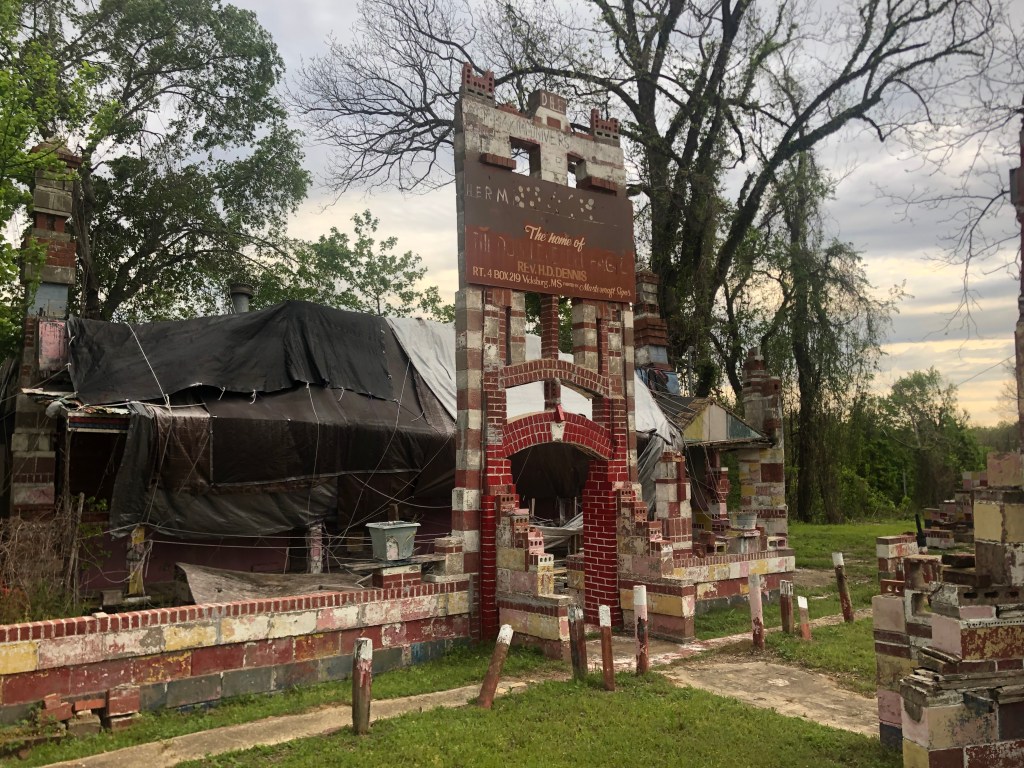
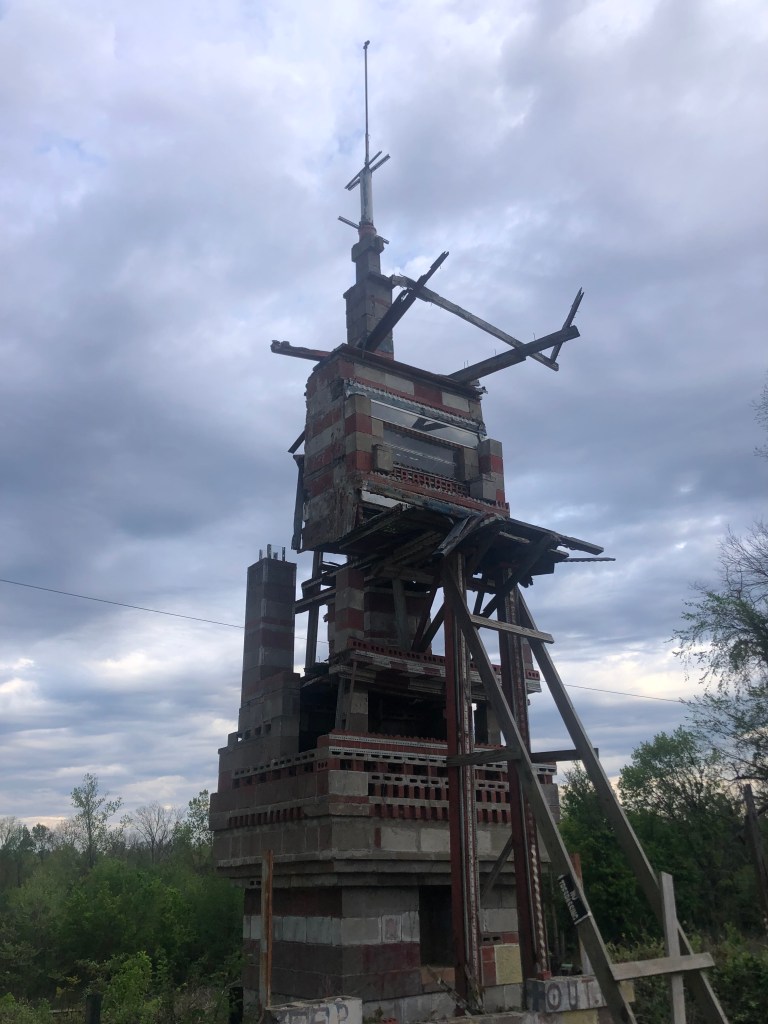
On my way out of Vicksburg I passed these ruins within sigh of the Mississippi:

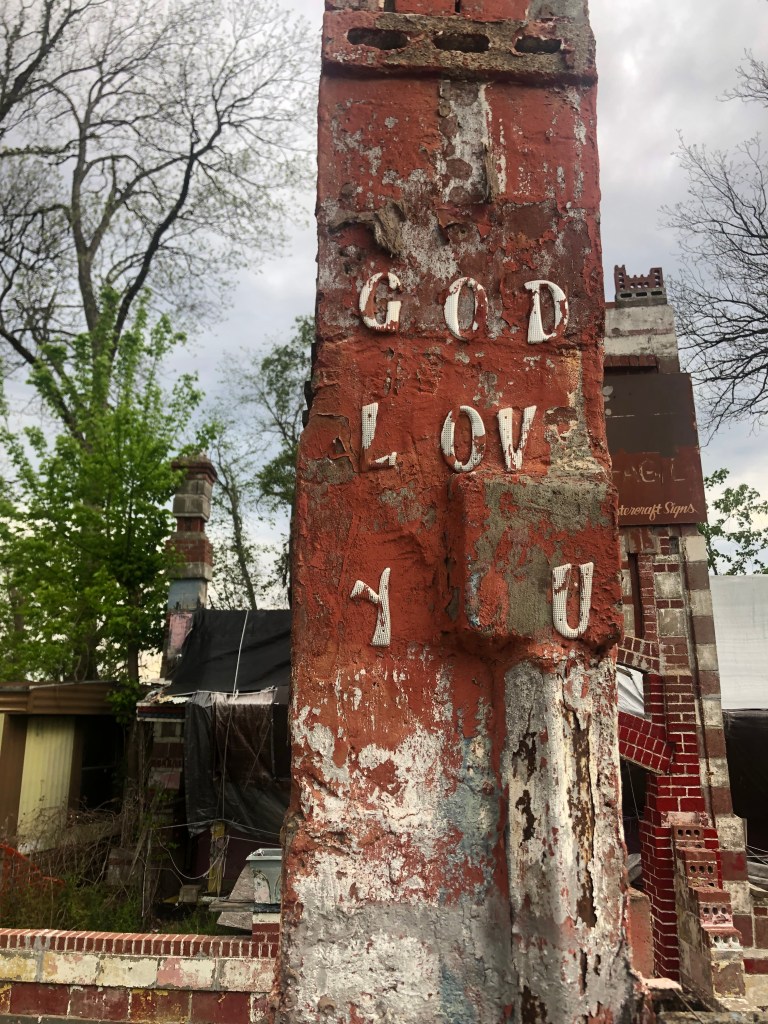
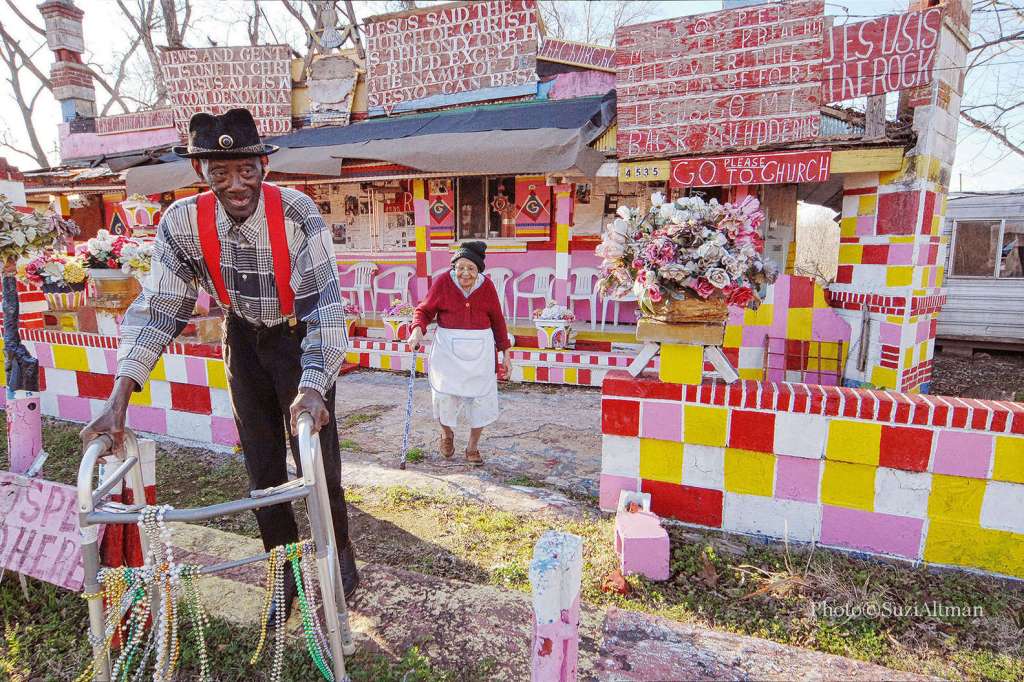
The background on this place is a little sketchy, but it seems that Margaret Rogers, who was born in the area in 1906, ran a general store on this site for many years. It’s said that throughout the 1960s and 1970s it was the only store along Route 61 that was run by an African American woman. In the late 1970s Margaret’s husband was shot and killed in a robbery. A few years later Martha met Rev. H.D. “Preacher” Dennis, who promised to build her “a castle to our love” if she would marry him. She accepted and for the many years Preacher Dennis spent each day working on this structure.

Preacher Dennis, Margaret, and their “castle.”

Margaret died in 2009 and Preacher Dennis died in 2012 (age 96). The structure has been deteriorating ever since. Many locals consider it to be a good example of folk art and there’s a group actively raising funds to restore the structure. They’ve set up a gofundme page. I’m going to make a small contribution when I get to a secure internet connection.

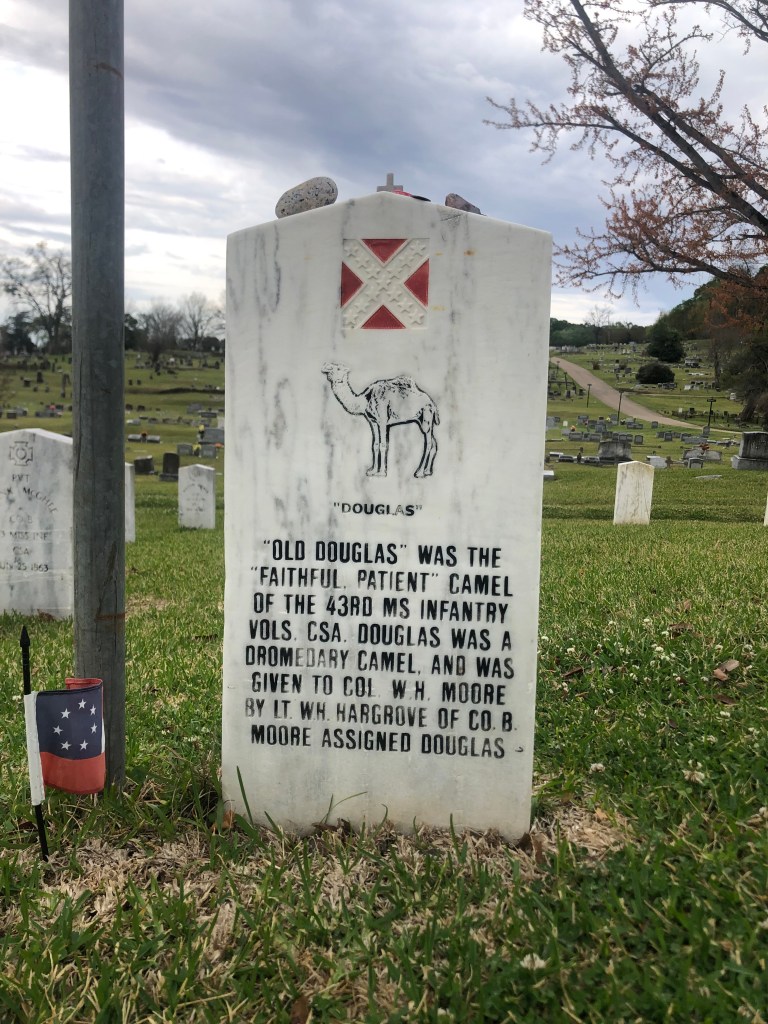
Continuing my way out of town I stopped at the historic Cedar Hill Cemetery which contains the mortal remains of a camel that was buried with military honors.

Here’s the story of the Confederate camel:

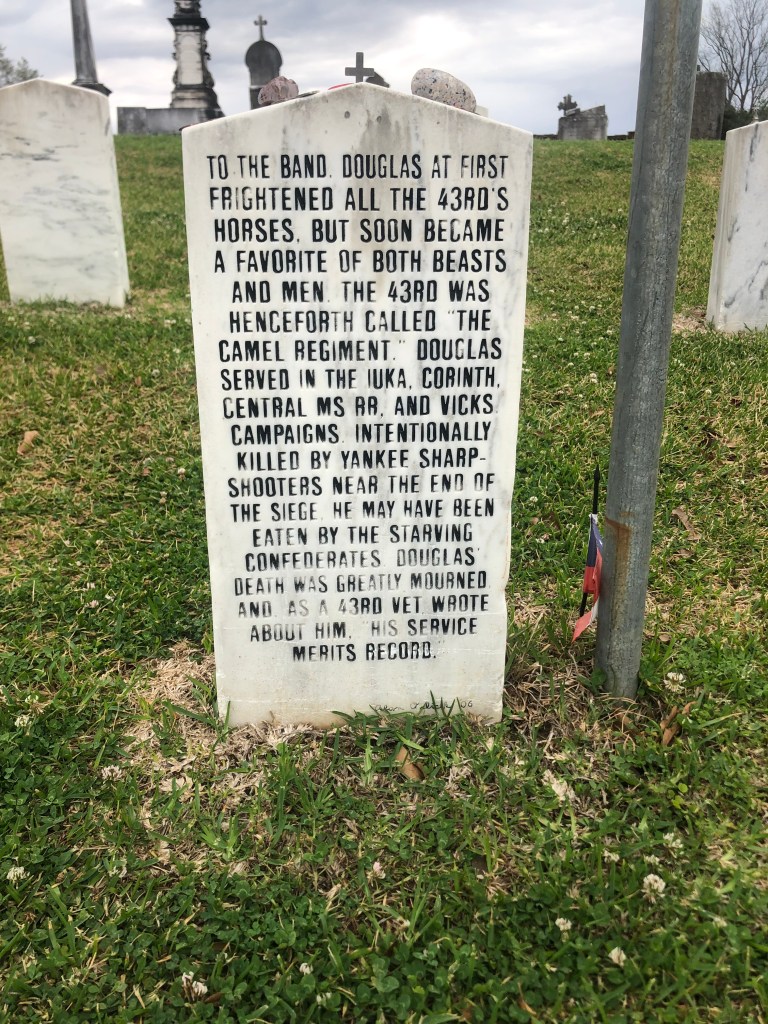
In the 1850s the War Department experimented with a “Camel Corps,” employing camels as pack animals in the arid southwest regions of the continent. The US Secretary of War at the time was one Jefferson Davis. Davis of course would become the president of the Confederacy a few years later, and so it’s not surprising that his armies would try using camels as pack animals in the Civil War. Old Douglas was a much-loved member of the 43rd infantry, but he was shot and killed by a Union sharpshooter.

The back of Old Douglas’ headstone is full of bad news.

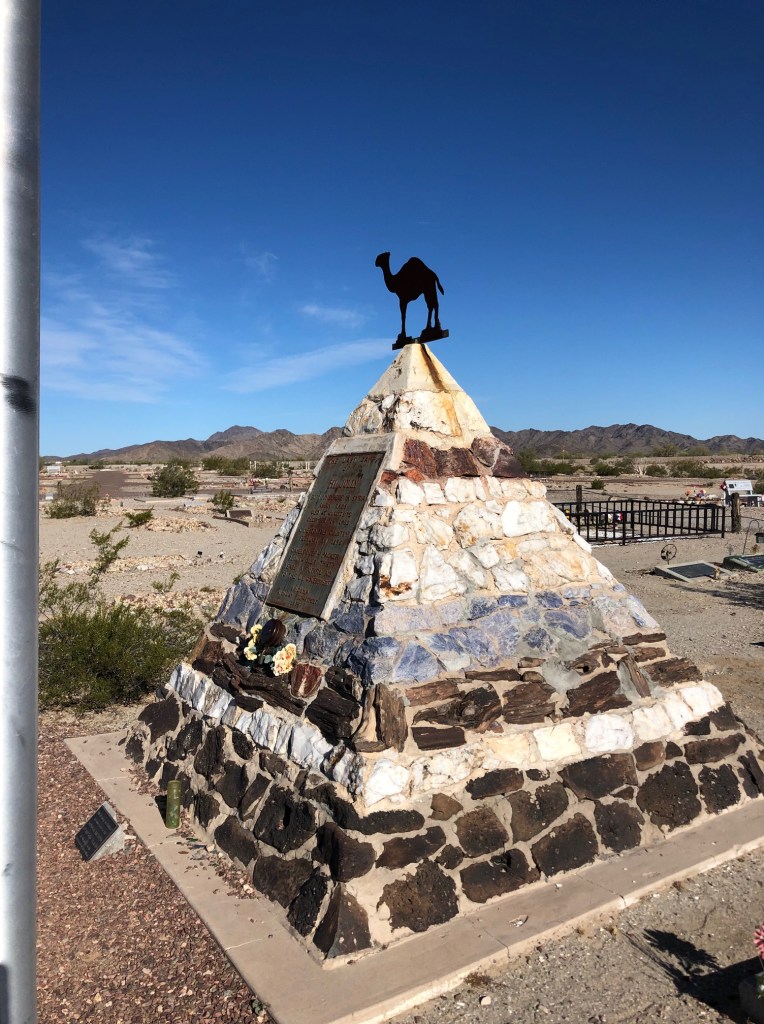
As a footnote, attentive readers will recall one of my earlier road trips where I visited the grave of Hi Jolly, one of main camel drivers of the US Army’s Camel Corps.

Hi Jolly’s tomb in Quartzite, AZ. (Photo from my Route 60 Blog, 2019)
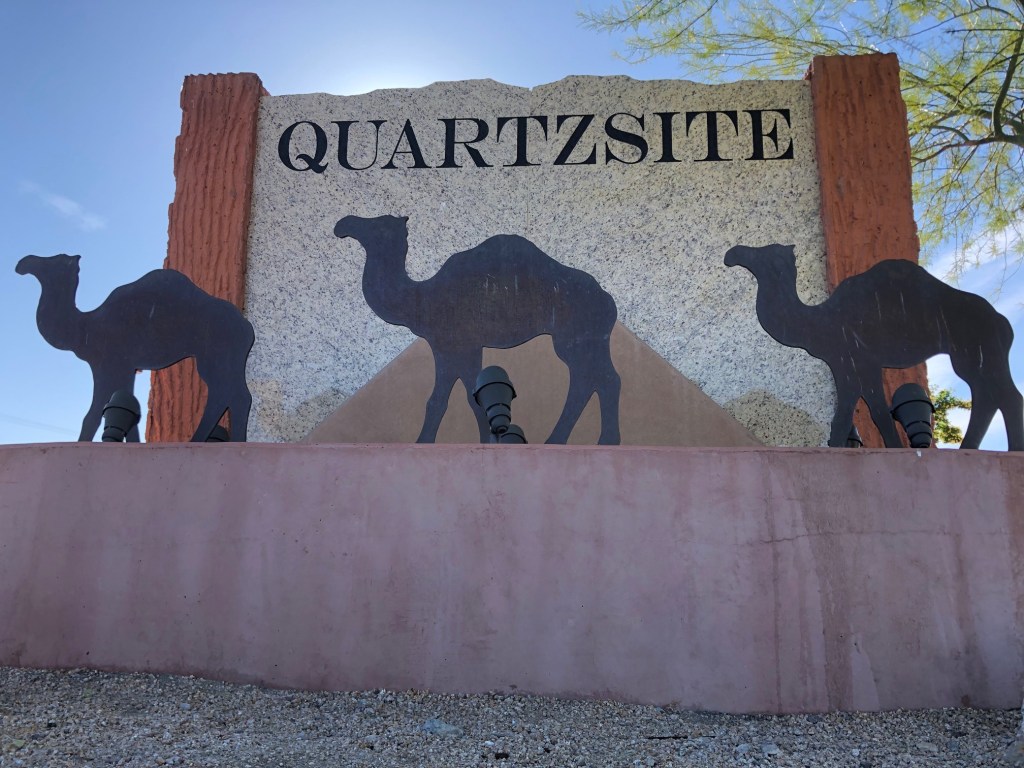
Quartzite really ran with the camel theme. (Photo from my Route 60 blog, 2019.)

Anyway, back to today’s drive. After leaving the cemetery I got back on US Route 61, heading south to Natchez. Along the way I stopped at a decimated city named Port Gibson (1,500). For the first half of the 20th century Port Gibson was the home base of an influential, traveling minstrel show called the Rabbits Foot Company. It’s been credited with influencing and advancing blues music in the Delta. There’s a placard to this effect on the site of the old Rabbits Foot offices.

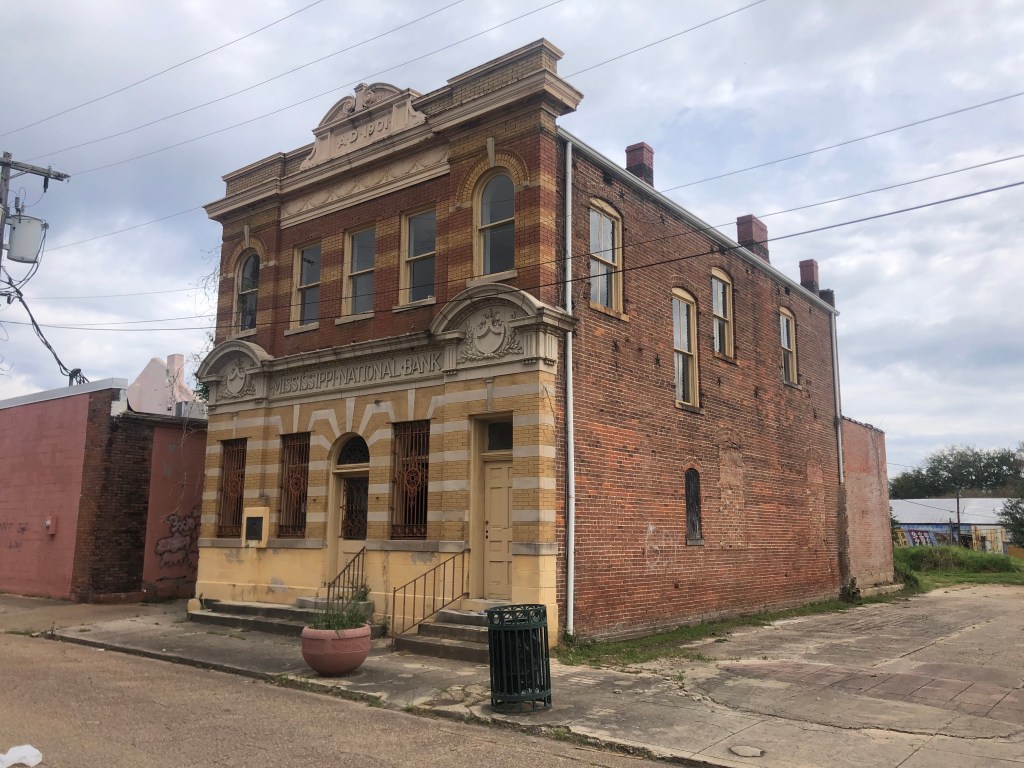
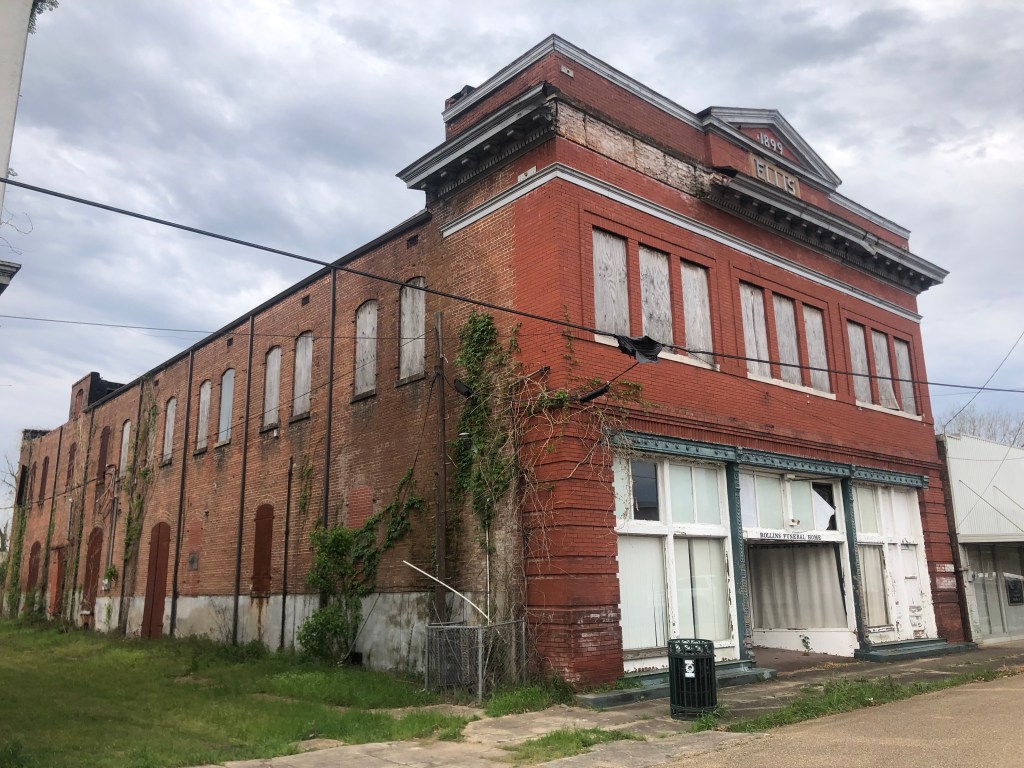
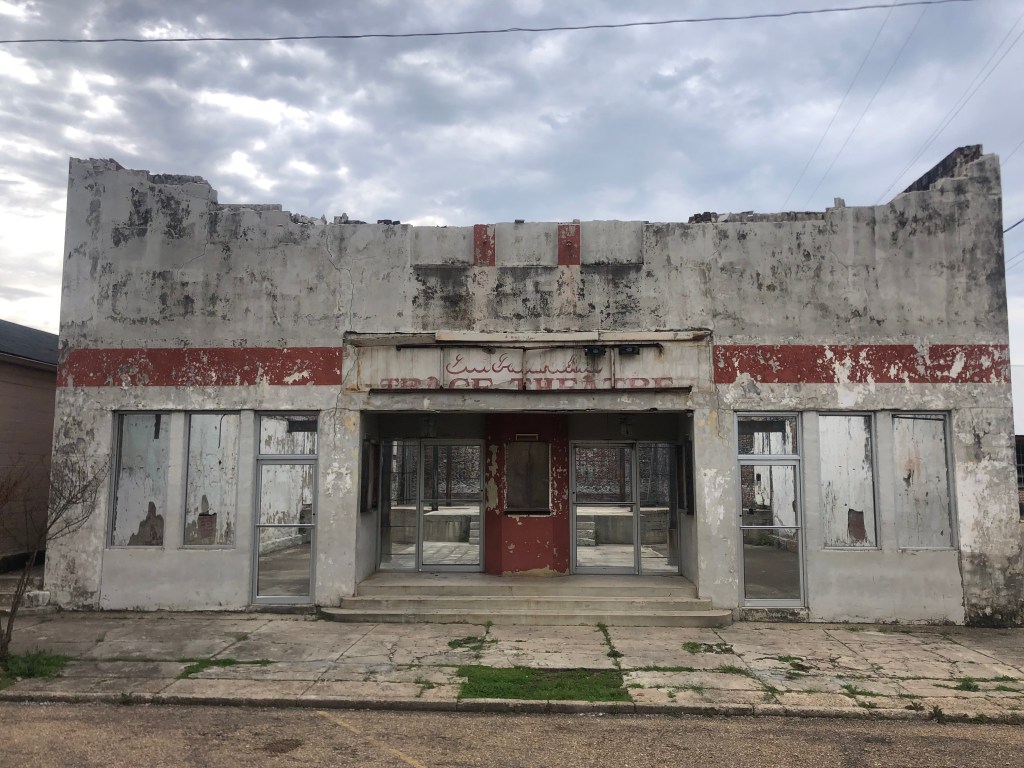
The town’s economy relied on labor-intensive agricultural jobs, which largely disappeared in the post-World War II era. Since then the population has been declining and poverty is pervasive. Today I was struck by a number of historic buildings that speak of a more prosperous time. Most have been simply abandoned.

Mississippi National Bank building, built in 1901. Currently vacant.
Rollins Funeral Home building, abandoned. Structure dates to 1899.
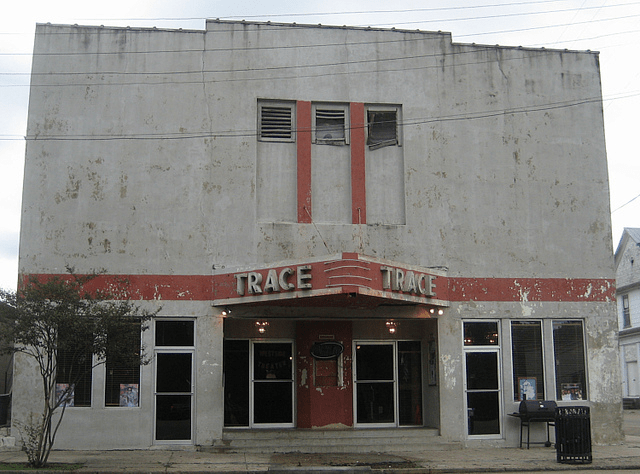
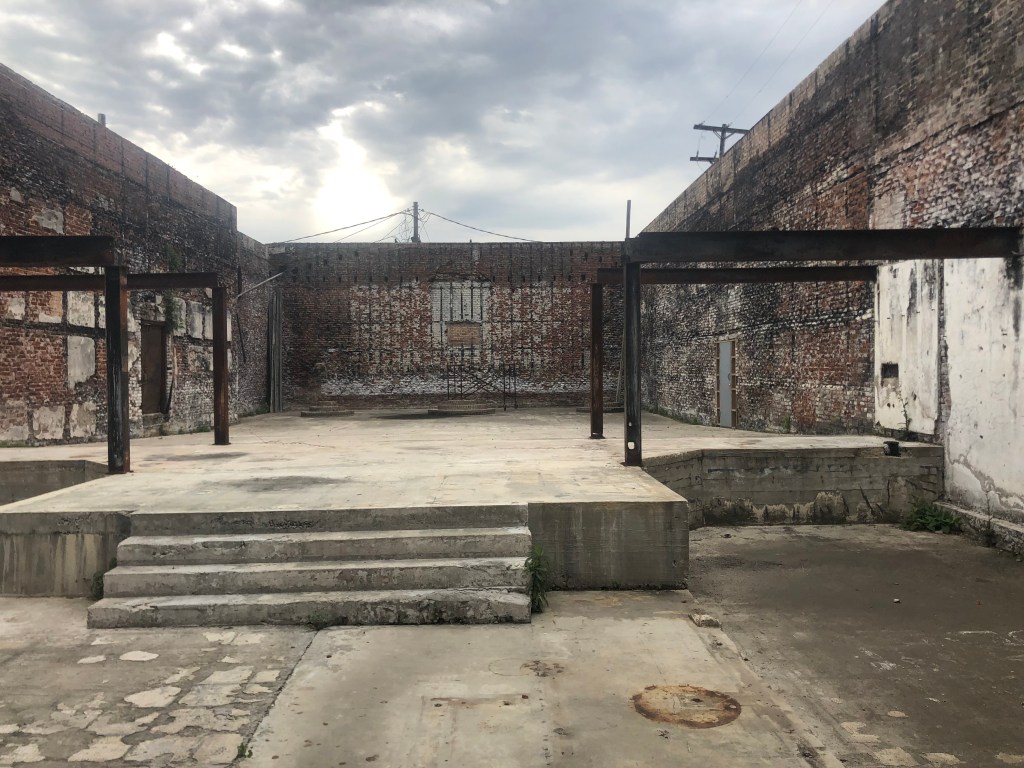
The Trace Theater, originally built in 1870 and remodeled in Art Deco style in 1940. It closed in 1968 and sat vacant for almost 50 years (!) The inside was refurbished in 2017 and it reopened as a night club. Sadly, it suffered a fire in 2020.
2011 (?) photo from Cinema Treasures website.
This is the interior of the Trace Theater today. I took this photo through the glass front doors. At least they’ve cleaned up the debris from the 2020 fire, and they appear to have installed a new set of doors on the front.
Port Gibson still has a few pockets of relative prosperity.

It was eerie walking among these vacant buildings on these empty streets. Eventually I got back in the car and continued down the Blues Highway. A few miles south of town the the highway intersects with the Natchez Trace Parkway. I recalled that my good friend Victor R had recommended I drive along that route if I had the opportunity.

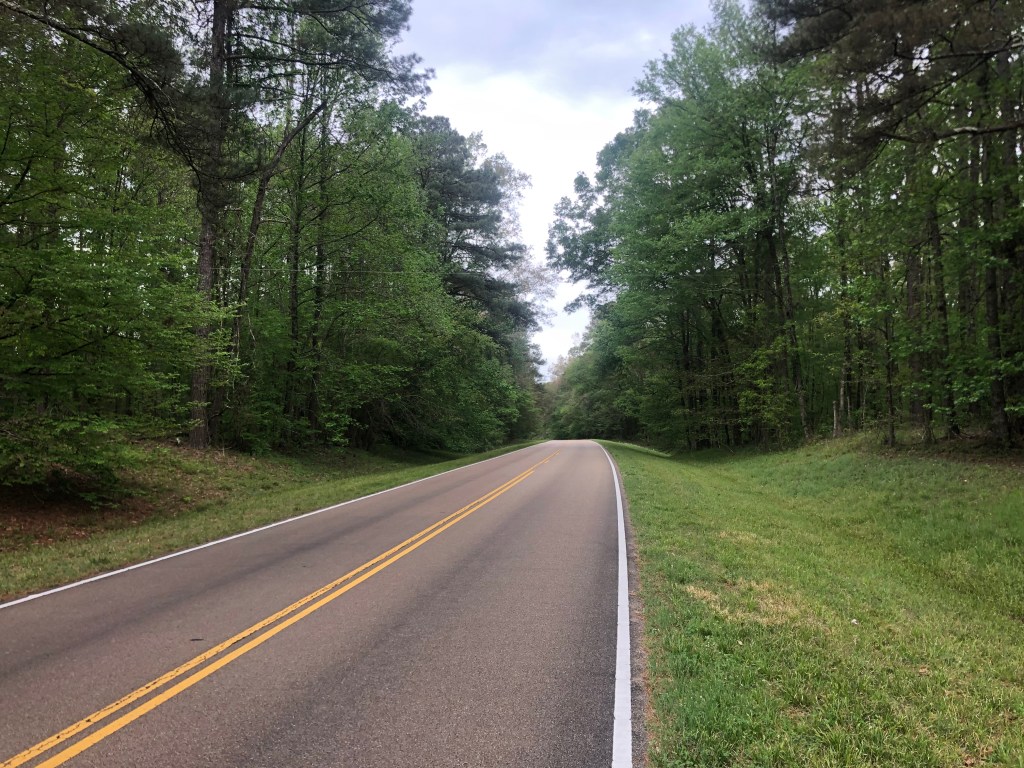
The Natchez Trace runs from Nashville to Natchez, roughly following the Cumberland, Tennessee and Mississippi Rivers. It began as an ancient trail used by Indians (themselves following trails created by grazing and migrating animals. The general contours of the trace became more firmly established over time, and it eventually became a network of major trails used by traders, emigrants, and others. In 1938 President Roosevelt signed legislation that created the Natchez Trace Parkway, a paved road built by the Civilian Conservation Corps. This is what I drove on today (or the last 40 miles of it). It’s a verdant, gracefully-meandering, low-key road that is almost entirely devoid of signage, signals, intersections, and other signs of civilization. It’s just a narrow two-lane ribbon of asphalt cutting through the woods.

The Natchez Trace Parkway.

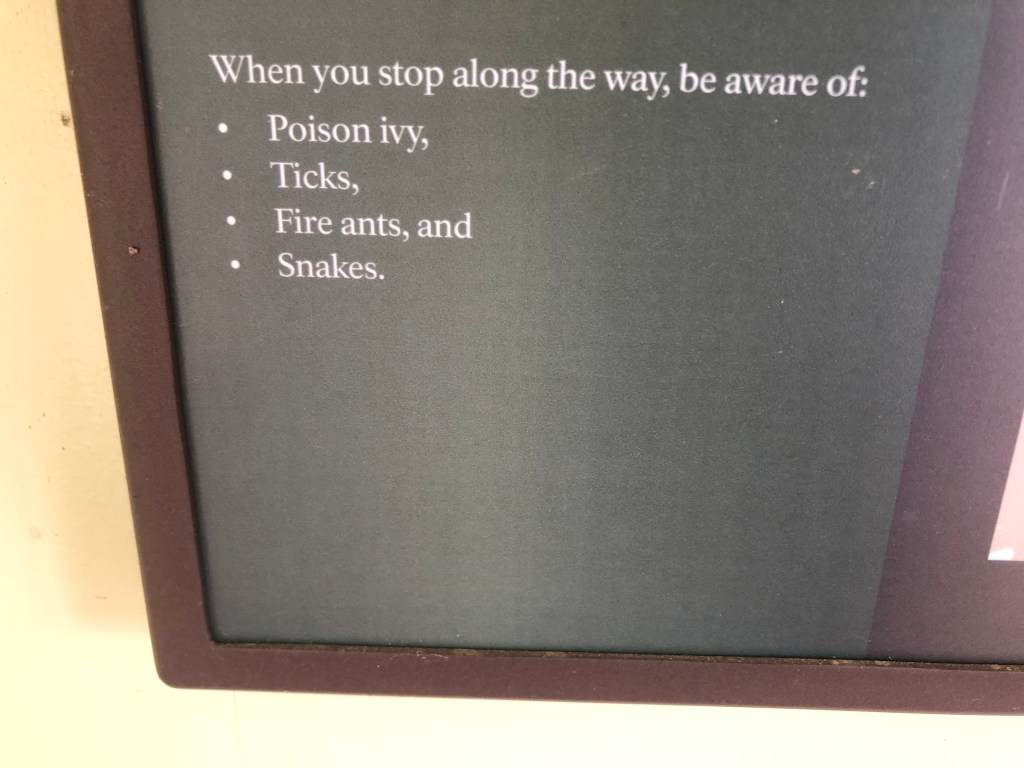
Of course, being out in nature has its drawbacks, as detailed on this “welcome” sign along the route:

It’s enough to make you stay in the car.

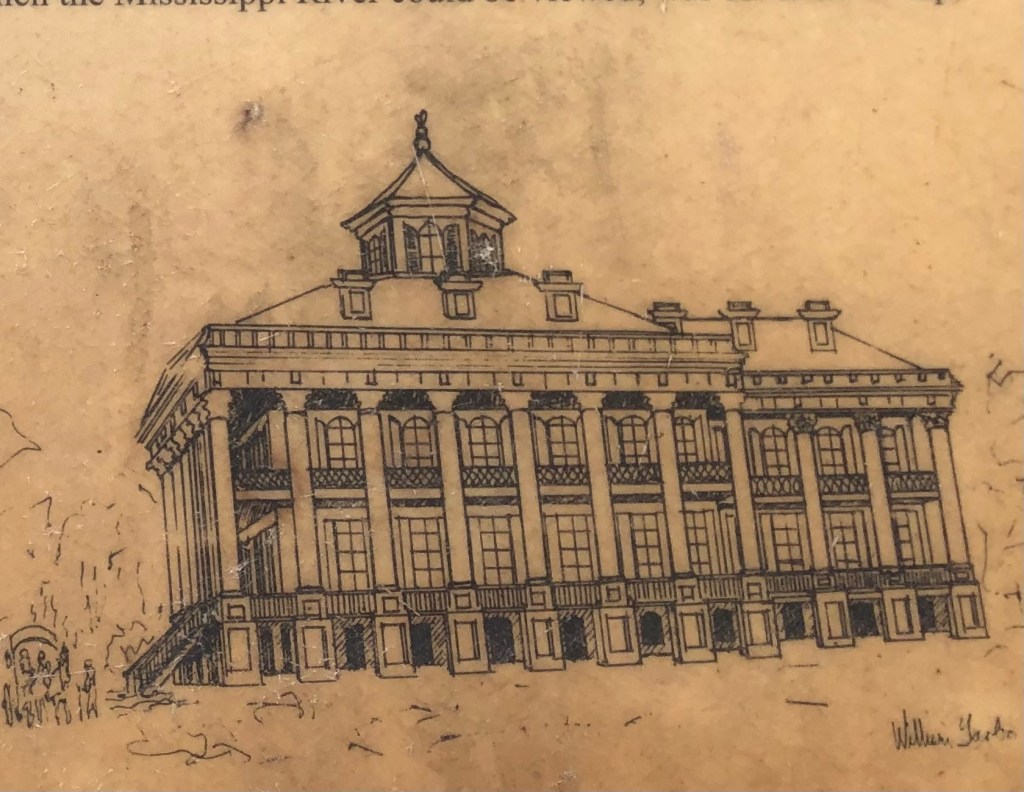
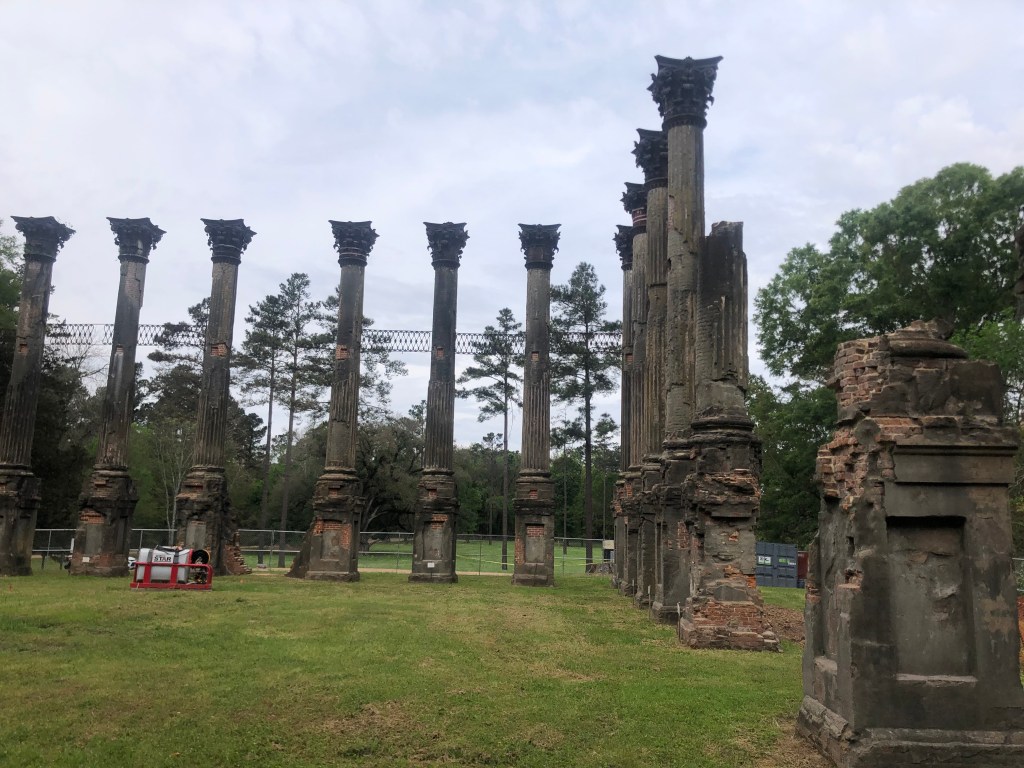
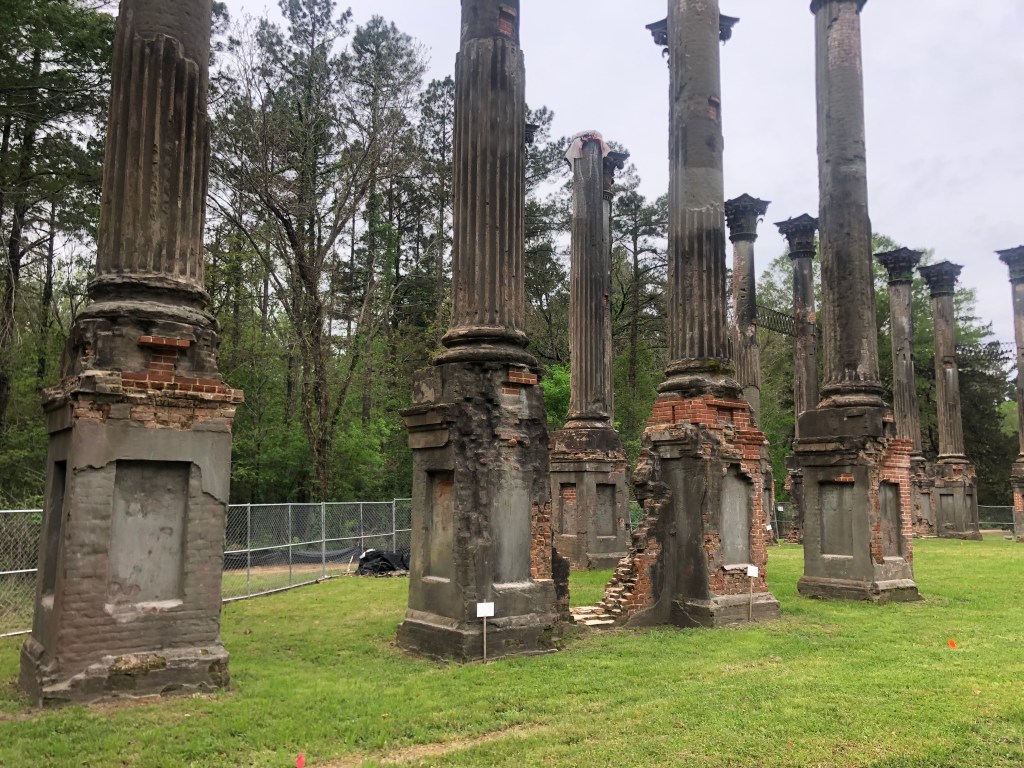
I did leave the car and risk being swarmed by fire ants and the other plagues a few times. First, I followed a side road to the “Windsor Ruins.” I had no idea what it was, but it seemed to fit within today’s theme of Southern ruins. A few miles later I was standing in a clearing from which rose an impressive display of 27 corinthian (?) columns. It used to be a plantation home, and a placard illustrated what the place used to look like:

The becolumned mansion was built in 1861 by a wealthy planter by the name of Daniell, who owned the Windsor cotton plantation. Unfortunately for him, he died just a few weeks after his home was finished. The mansion somehow survived the Civil War, but it burned to the ground in 1890. All that remains are these columns. When I arrived today, the ruins were surrounded by temporary fencing, as the state (which now owns the ruins) is working to stabilize them from damage by the elements.
Best laid plans of mice and men…

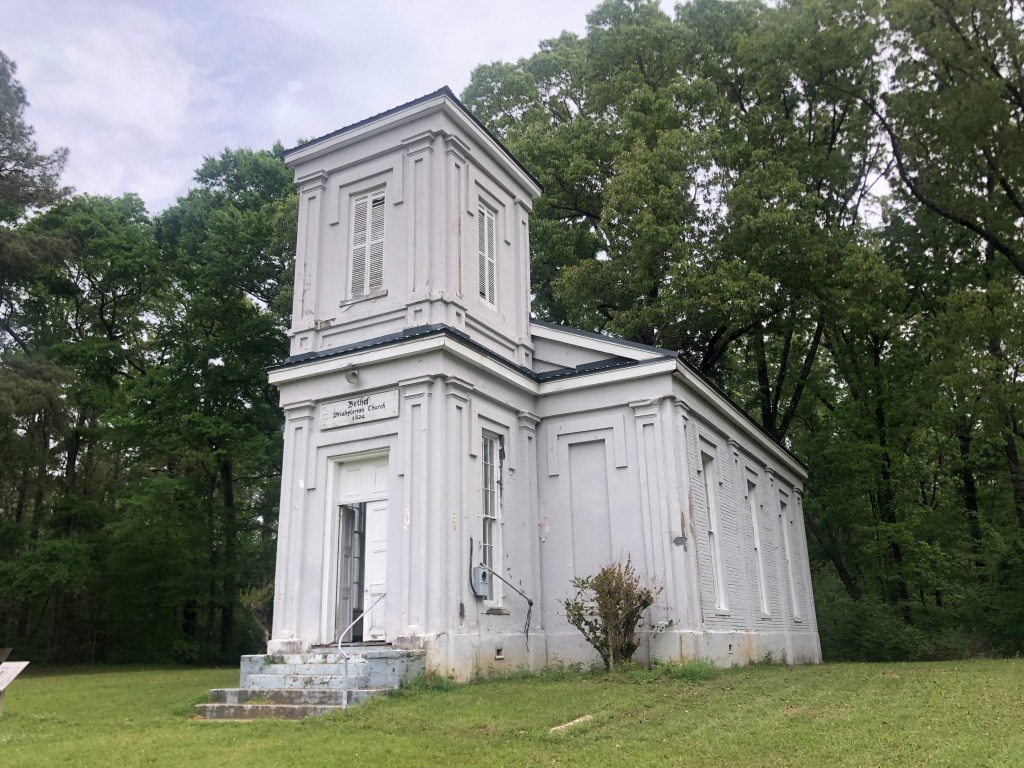
On my way back to the Natchez Trace I passed this 200-year-old Presbyterian church.

Bethel Presbyterian Church, built in 1842.

The church has been standing for over 180 years. A tornado in 143 (when the church was 101 years old) did major damage, notably tearing of its tall, pointed steeple. The church was rebuilt, but the steeple was omitted from the new design. Why tempt fate? Over the years the congregation dwindled, until it was no longer classified as an active church by the Presbyterian leadership.

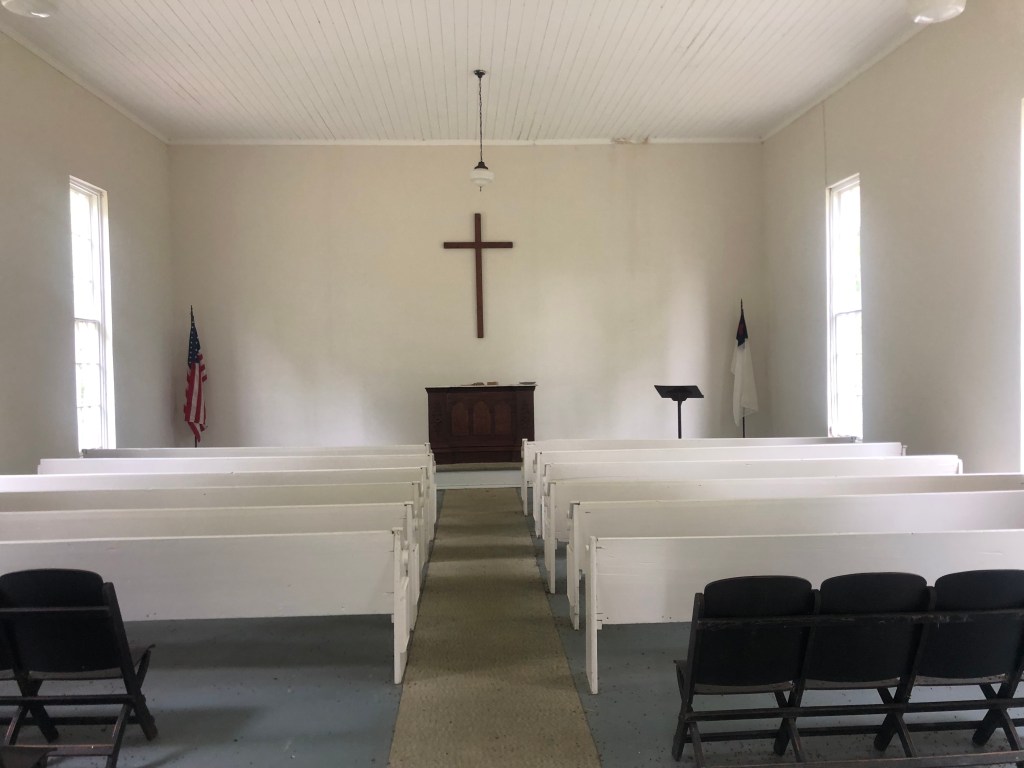
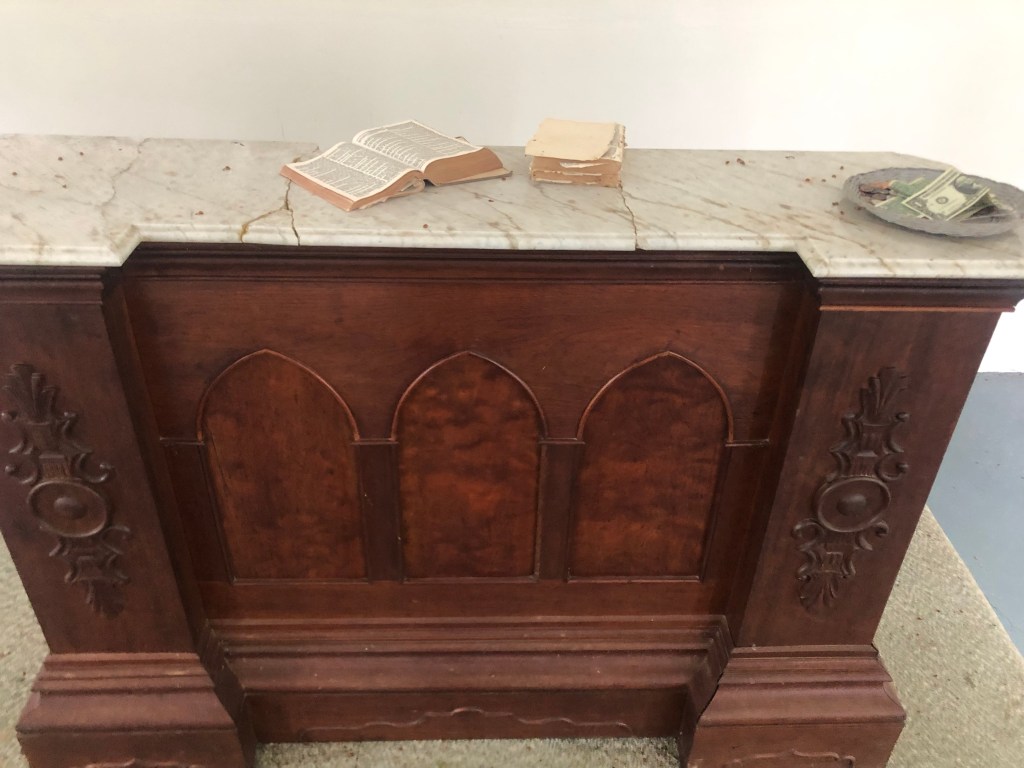
But what’s this? An open door? I poked my head inside:

Looks like you could still hold a service in here.
Open Bible and full collection plate.

A little research informed me that the church can still be used as a chapel by whomever wants to to do. And a nearby church in Port Gibson (!) conducts a two services here each year, in the spring and the fall.

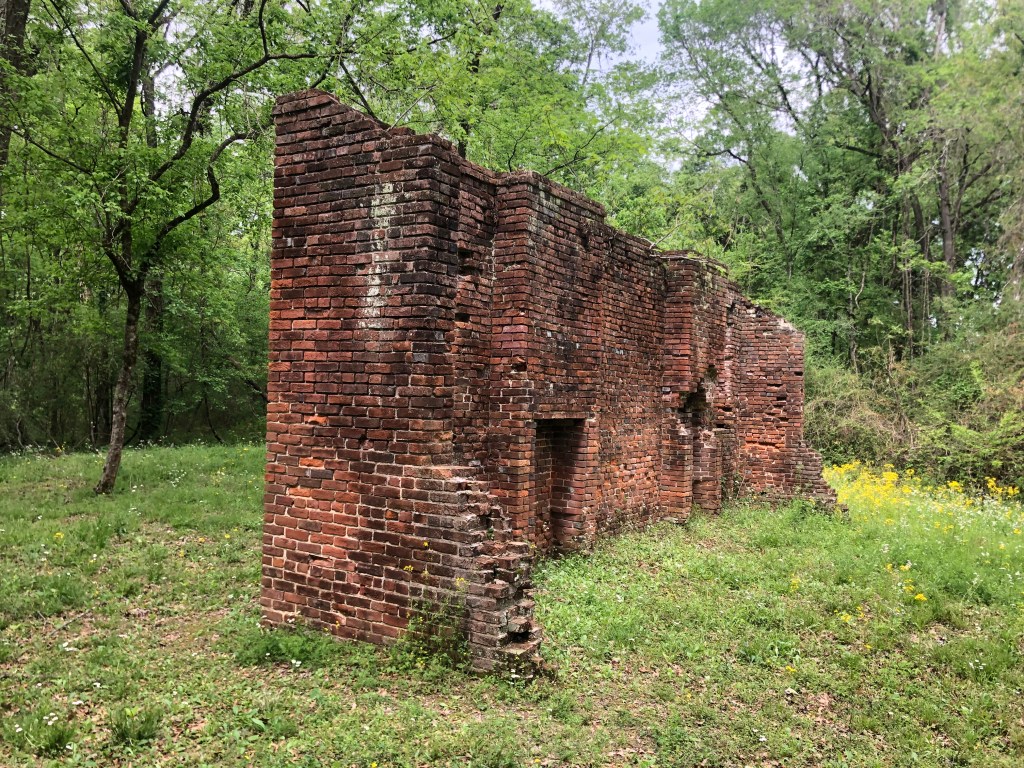
A final set of ruins I encountered on the way to Natchez was something called the Elizabeth Female Academy. Opening in 1818, it was Mississippi’s first higher education institution for women. For a short time, the faculty included a drawing instructor by the name of John James Audubon (yes, the Audubon). The academy closed in 1845 due to declining enrollment (linked to a shrinking population in the area). The building burned in the late 1870s, and these ruins were all that remained.

And you know what’s striking about all these ruins and abandoned buildings I saw today? I didn’t spot a single bit of graffiti. The elements are certainly taking their toll on the Delta’s history, but it seems that, by and large, the residents of the region either appreciate the value of these historical treasures…or maybe they just ignore them.

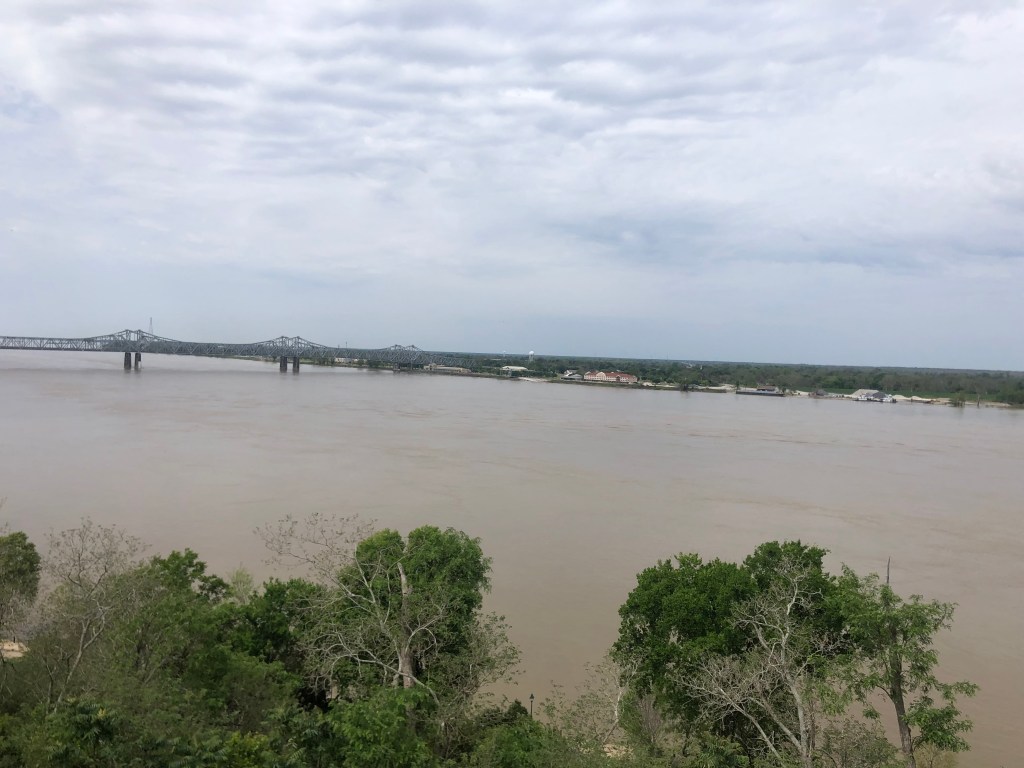
Finally I arrived at the end of the Natchez Trace, appropriately enough in the city of Natchez (pop: 14,500). The city, which for a short time had been the Mississippi state capital, reminds me of Vicksburg. Both are historic and seemingly prosperous towns located on the east bank of the Mississippi.

View of the Mississippi from downtown Natchez.

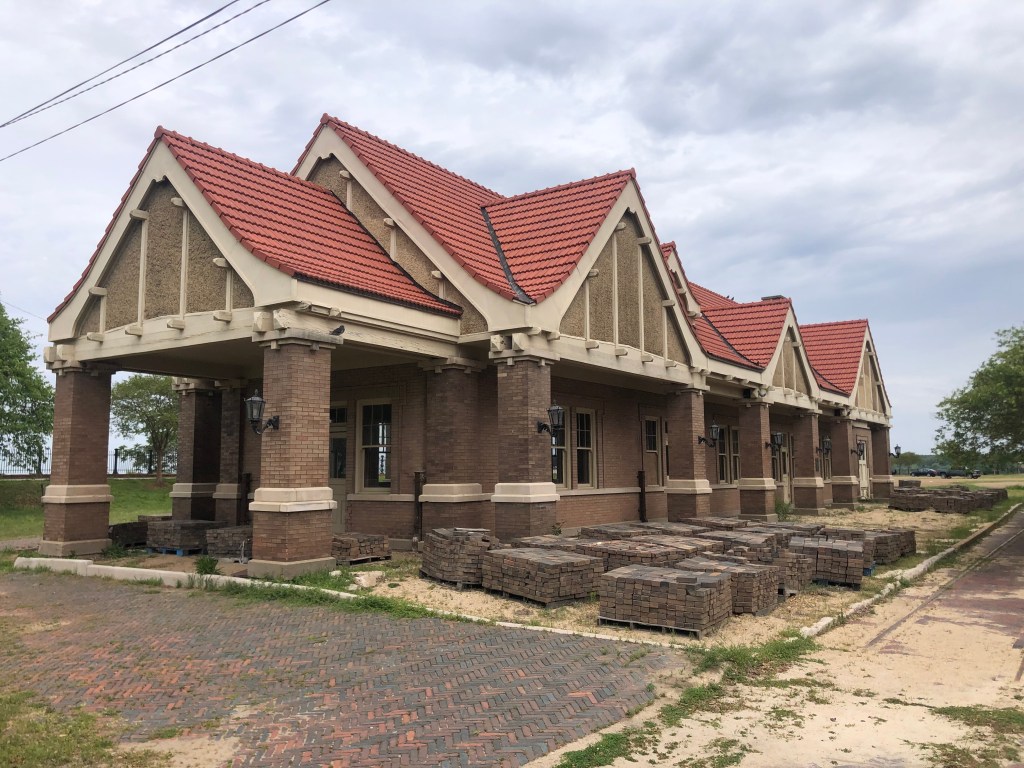
And, like Vickburg, Natchez seems to place value on its historic resources. For example, the 1915 Yazoo &Mississippi Valley Railway depot has been restored–at least on the outside. The inside is gutted, awaiting a tenant (like a restaurant) to lease it out.

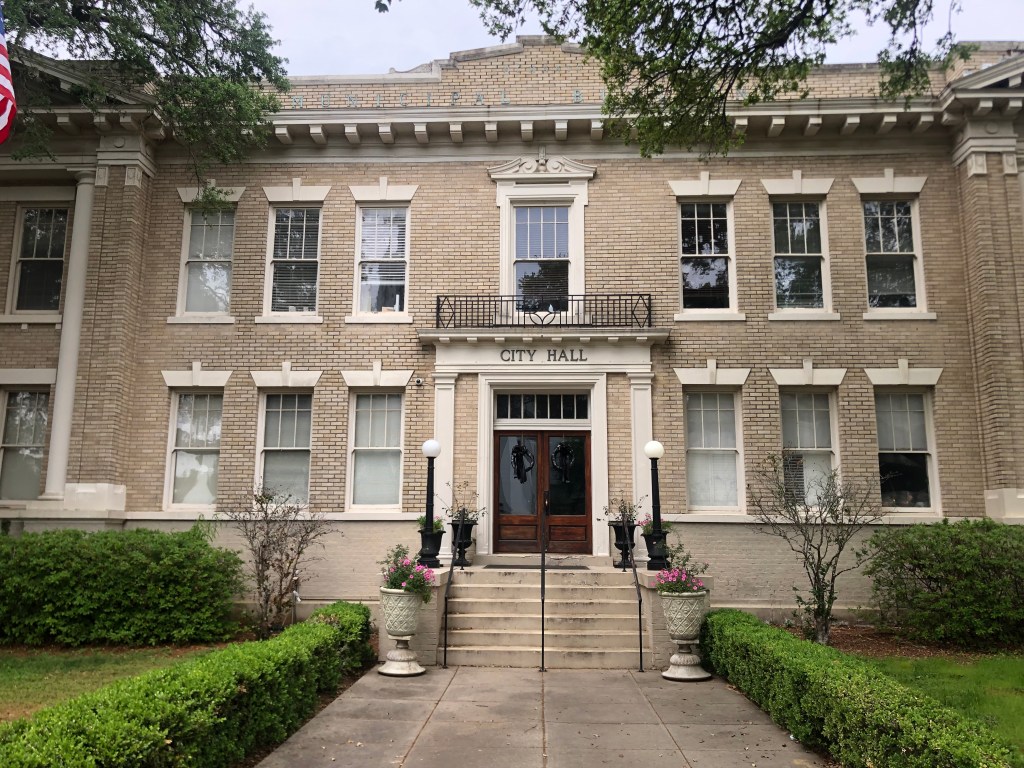
The city hall building will have its hundredth birthday next year, and it looks great as well.

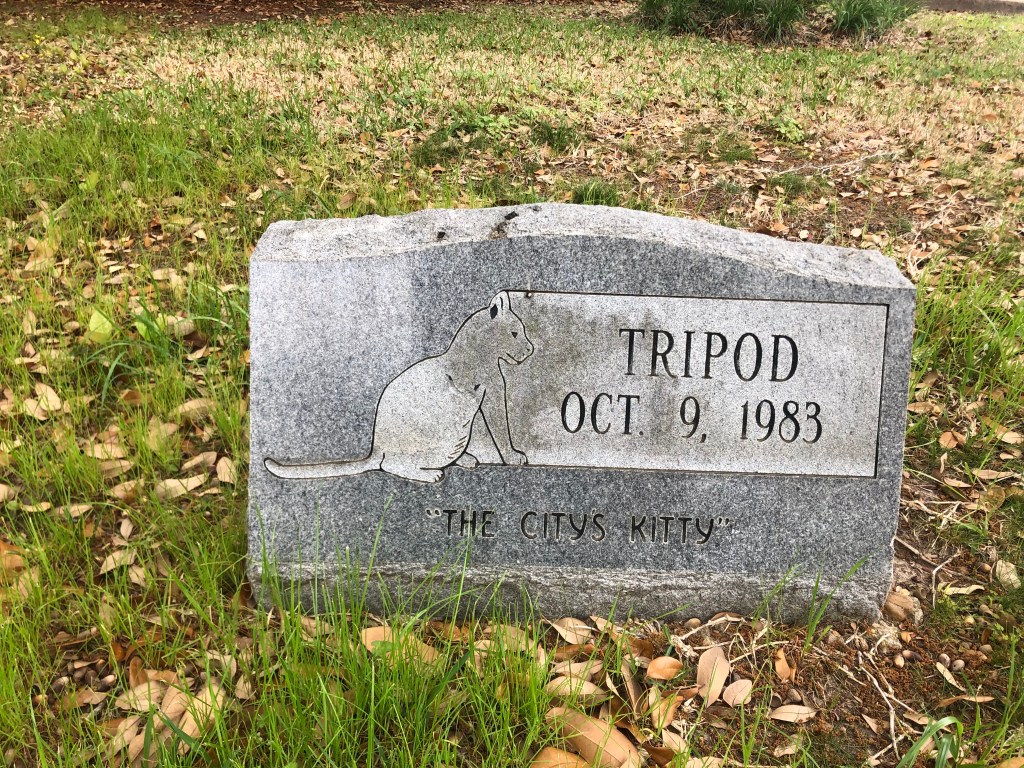
On the front lawn I noticed a small grave marker for “Tripod,” who was a feral, three-legged cat that showed up at City Hall in 1979 and never left. Literally. When he died four years later the city held a full memorial service and placed him under this marker.

Evidently Tripod was more beloved than some of the humans around City Hall. One of the city Aldermen–Hal Wilson–was allergic to cats and made a motion Tripod be banned from the building. The motion failed to get a second, and the Mayor then moved to have Wilson banned from the building. (That motion failed as well. But still.)

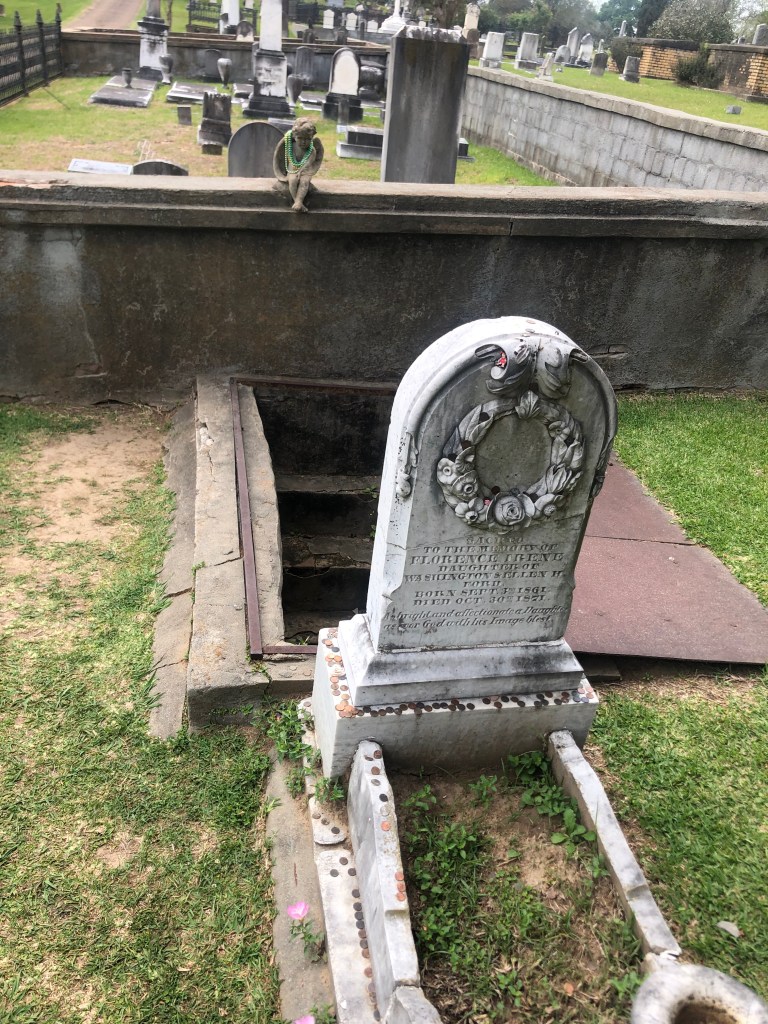
Speaking of graves, Natchez Cemetery had this unusual specimen:

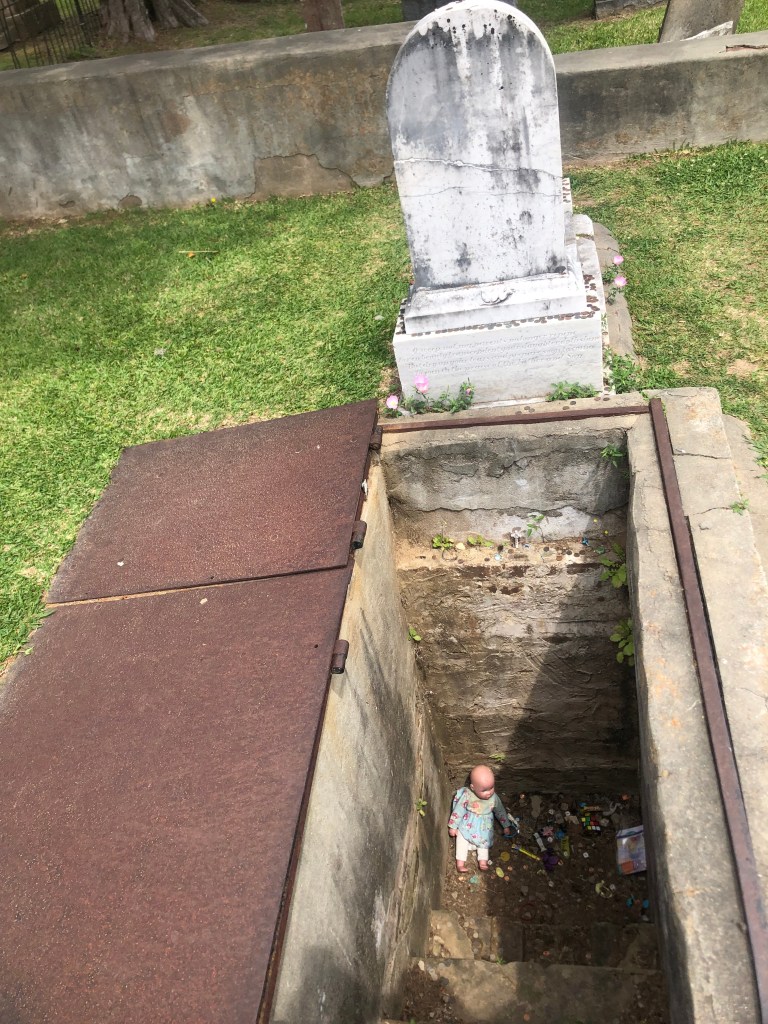
Florence Irene Ford was only 10 years old when she died of yellow fever in 1871. The story goes that she always sought comfort from her mother during a storm. So when she died her parents had a staircase built into the ground of her grave so that her mother could descend to a specially outfitted window and comfort the spirit of her daughter during storms. That’s not creepy, is it?

There used to be a glass window with a view of the Florence’s coffin, but this was cemented over in the 1950s–long after Florence’s mother had herself died.

After leaving Natchez I departed from the Blues Highway and headed southeast to the city of Hattiesburg (pop: 49,000). Hattiesburg is on US route 49–which I’d encountered way back in Clarksdale. (Recall the possibly literally damned crossroads of Route 61 and Route 49 where Robert Johnson sold his soul to the Devil.) Highway 49 essentially forms the hypotenuse of the right triangle formed by my route (Highway 61 south to Highway 84 east).

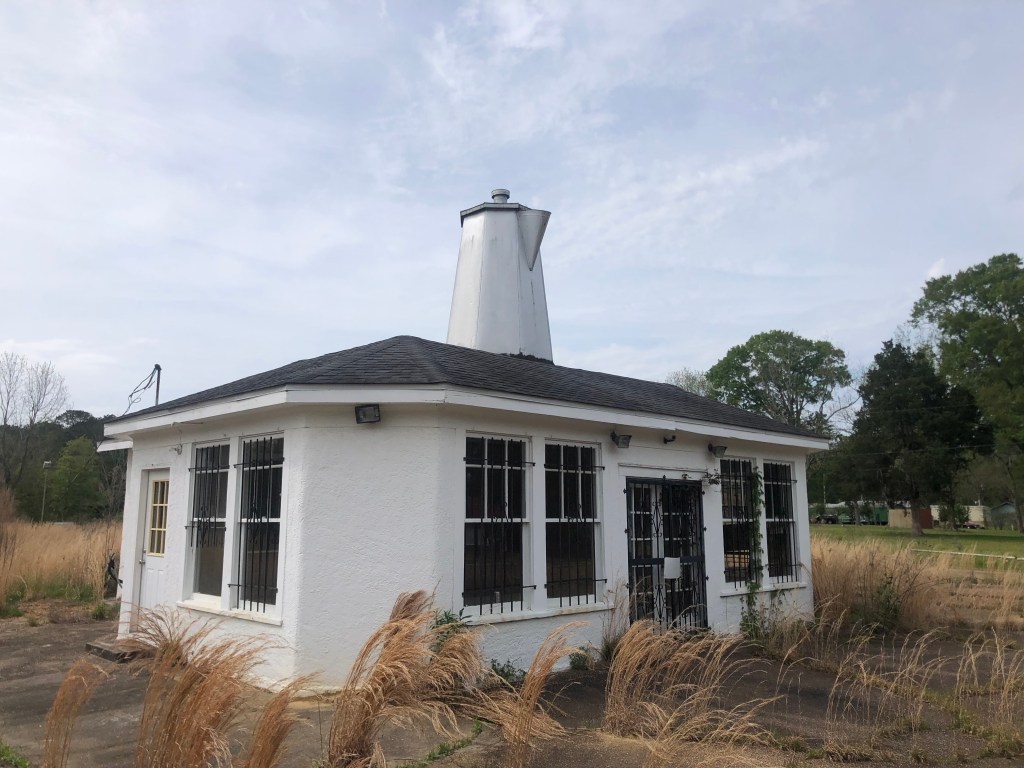
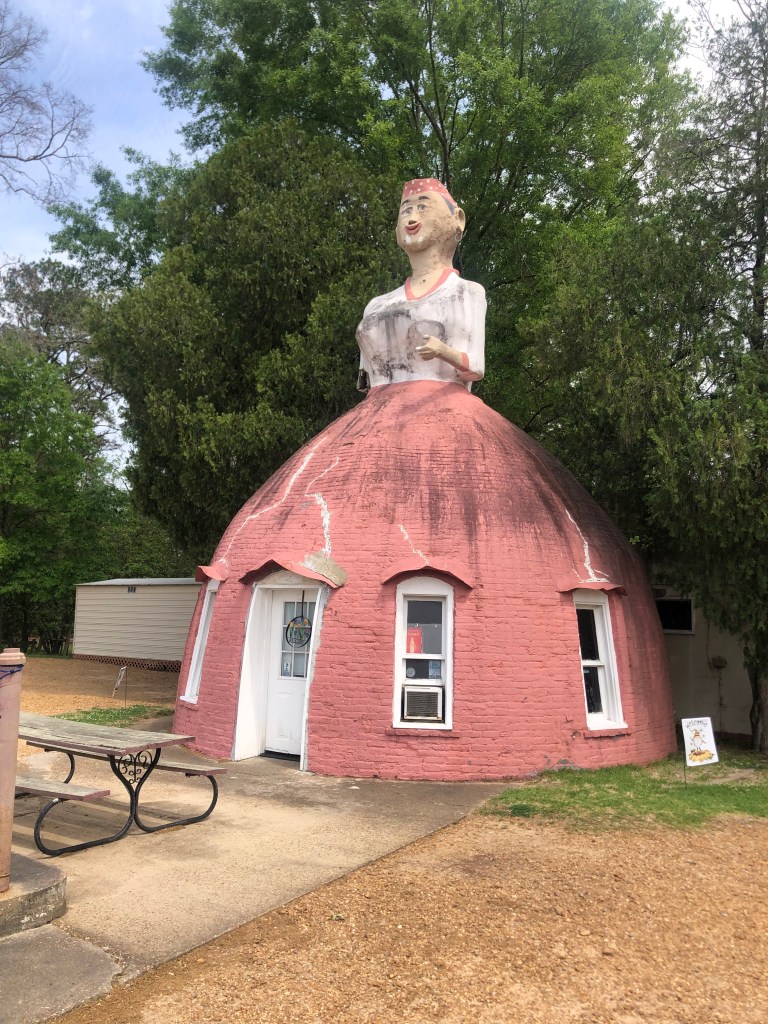
Along the way to Hattiesburg I encountered two notable pieces of historic roadside kitch:

The Coffee Pot Inn was built in 1931 as the first drive-in restaurant in Brookhaven, MS.
Mammy’s Cupboard is a roadside restaurant that was built at the outskirts (ha!) of Natchez in 1940. It’s still open for lunch daily except Sundays. And today is Sunday, sadly.

Tonight I’m spending the night in Hattiesburg. Tomorrow it’s off to New Orleans!

Beer of the Day

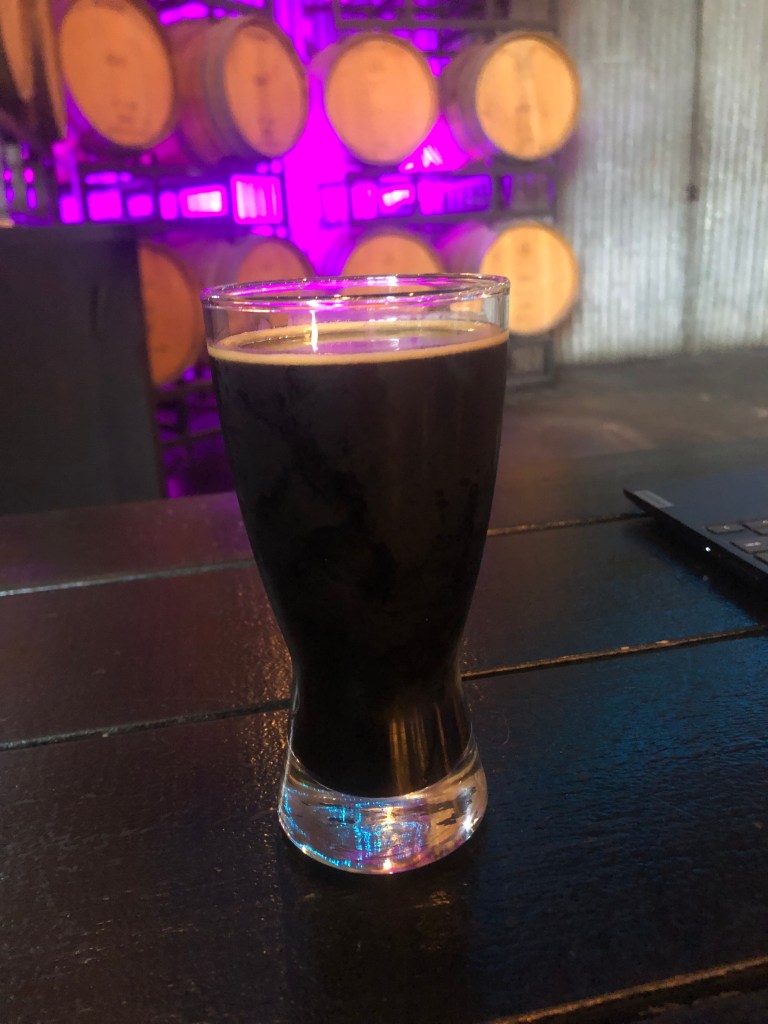
I went into Natchez Brewing Company, where owners Lisa and Patrick Miller were working hard to handle the lunch crowd. I ordered a “Smorish Imperial Stout” and a calzone the size of a Frisbee.

I think “Smorish” is supposed to evoke s’mores. Indeed the description claims it’s got chocolate, graham cracker, and marshmallow notes.

I’m not so sure about all that. The malt has a seriously roasted taste, to the point of charring. It’s as if the marshmallow of your s’more caught on fire. I don’t taste much sweetness. The dominant taste is bitter dark chocolate and black coffee. 

The mouthfeel isn’t that creamy, but it is smooth. It’s also what I call a Sleepy Hollow Beer (i.e., headless).

The ABV is 10.3 percent, which is pretty standard for an imperial stout. Overall, it’s quite drinkable, though the s’more reference is false advertising.

3.5 stars (out of 5)

cemeteries · Halloween Cocktails · Obelisks

Zombie All You Can Be

C/o “I heart crafty things,” obviously.

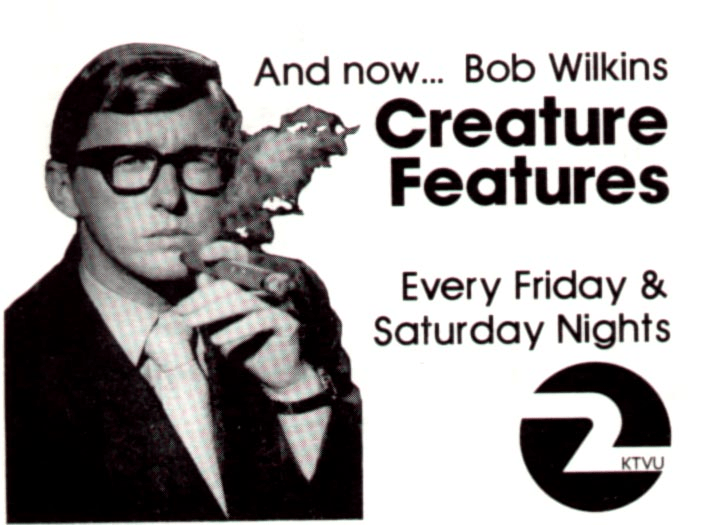
I’m not sure when it happened, but Zombies are cool again. They sure weren’t in 1932 when Bela Lugosi starred in the shlocky embarrassment called White Zombie. They sure weren’t in 1968 when George Romero made the ground-breaking horror film, Night of the Living Dead. They sure weren’t when the low-budget Italian horror film named Baron Blood appeared on Channel 2’s Creature Features in 1972, giving me nightmares for a week.

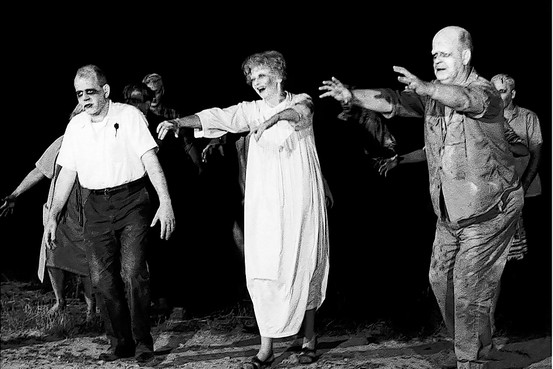
Zombies were always too clumsy to be cool, too disgusting to be slick like Dracula, too inarticulate to really even have much of a personality.

Is the one on the left a zombie accountant?

But somewhere along the line, zombies became cool. It might have been when Simon Pegg starred in 2004’s campy Shaun of the Dead. Or maybe it’s when urban hipsters started holding Zombie Walks. Or maybe it was the profusion of zombie-themed internet games like “Resident Evil” and “The Walking Dead.” All I know is: Zombies are no longer relegated to the lame zone in the pantheon of movie monsters.

Ghostbusters meets White Zombie

So, given all that, perhaps the Zombie can bring a little cachet to our list of Halloween cocktails.

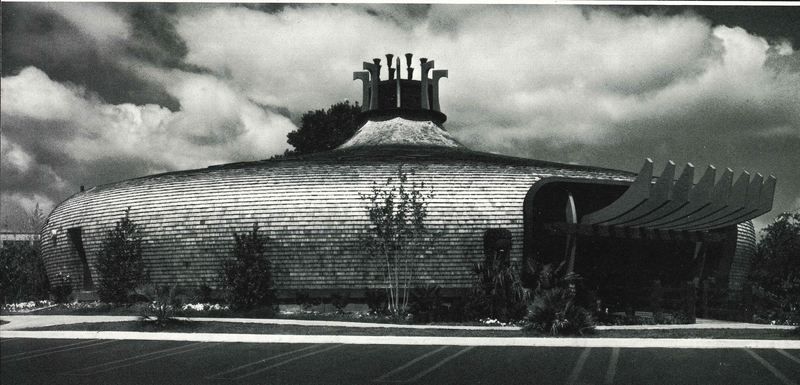
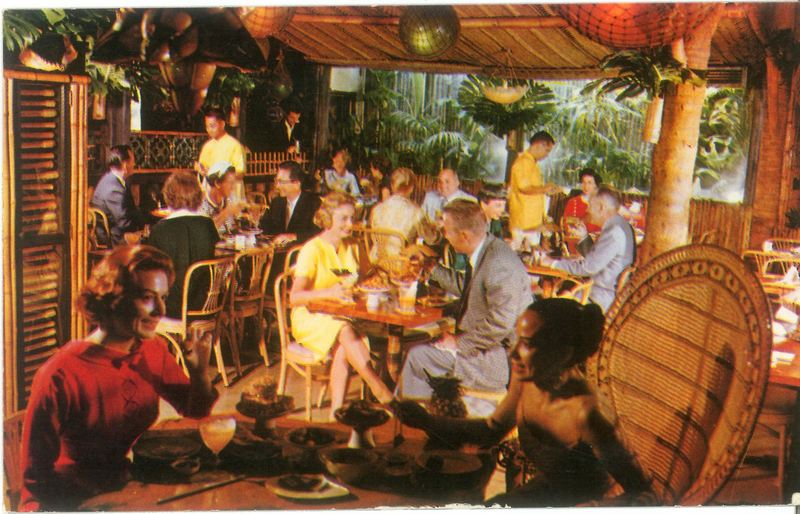
It’s said that the Zombie was invented by Donn Beach, founder of the Don The Beachcomber chain of prototypical “tiki bar” restaurants. When I was a wee lad, one such establishment was located in San Jose, on Stevens Creek Boulevard. I spied it through the car window many times, but alas, I never darkened its doorstep.

San Jose’s Don the Beachcomber, looking like a 1950’s spaceship.

Donn Beach opened his first bar, called Don’s Beachcomber, in Hollywood in 1933. It was successful, and he and his wife developed a chain of Donn the Beachcomber restaurants that numbered 16 at its height. The restaurants cashed in on the post-war Tiki fad that gripped the nation.

But let’s get back to Zombies. Beach is credited with creating the Zombie cocktail. Supposedly he came up with the drink as a courtesy to a favorite customer, who was hung over and was facing an important business meeting. The unnamed customer drank the concoction, and subsequently informed Beach that the drink had turned him “into a Zombie.” Beach recognized the marketing potential, and his drink was henceforth called the “Zombie.”

So, let’s now acknowledge that the Zombie really has nothing to do with Halloween. Its claim to fame is being a high-alcohol drink that goes down easy due to a variety of fruity juices and syrups.

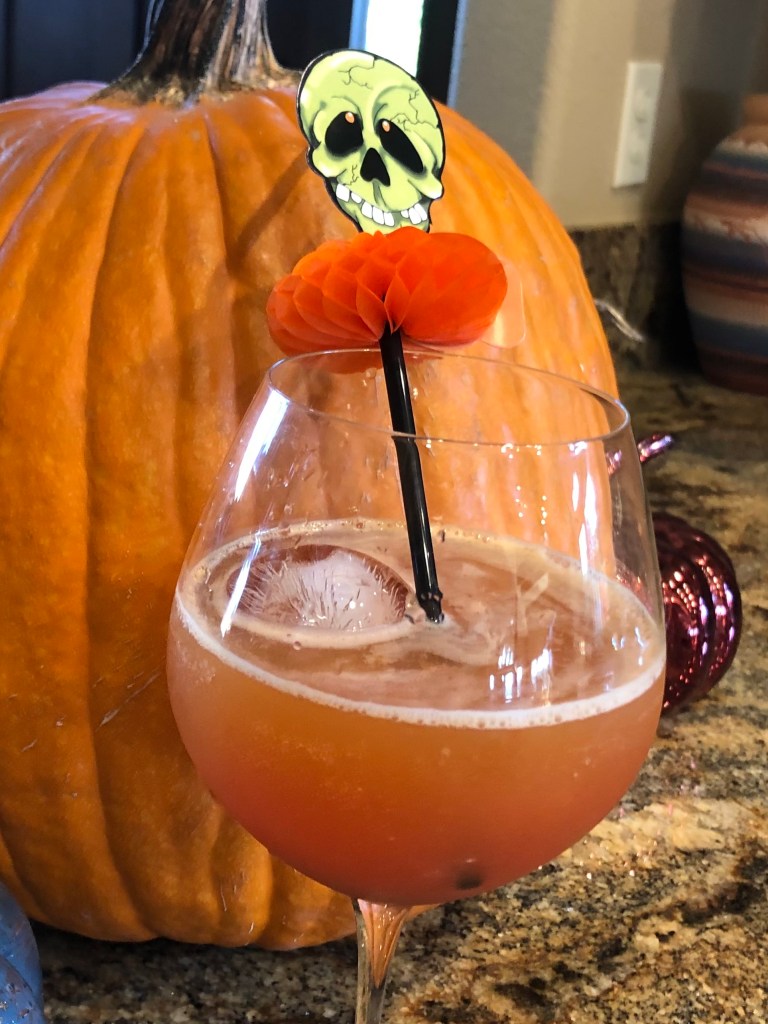
The Recipe: You’ll need four (!) rums: Pour 1 oz. each of white, spiced, and dark rums into a shaker, and hold in reserve 1/2 oz. of 151. Now, to disguise the rum, add 1 oz of lemon juice, 1 oz of lime juice, 1 oz of pineapple juice, 1 oz of passion fruit syrup, and 3 dashes of orange bitters. Shake and pour into a suitable glass with ice. Now, add 1/2 oz of grenadine and the 151. Drink and pass out.

RIP Donn Beach.

The Ratings: The appearance is nothing special. Just a tropical drink. 1 point.

The taste is very tropical–the fruit juices really come through, though I think it was too strong on the lemon. The fruit juices really hide the 3.5 oz of rum, which I guess is the point. Nevertheless, the taste certainly isn’t evocative of Halloween. It’s more of your standard summer drink. 2 points.

As a Halloween name, Zombie is hard to beat. 2 points.

Total: 5 points.


RAVEN’S CORNER

In honor of Edgar Allan Poe and my recent lightning trip to Richmond, I thought I’d share a few raven (or a least big black bird) sightings.

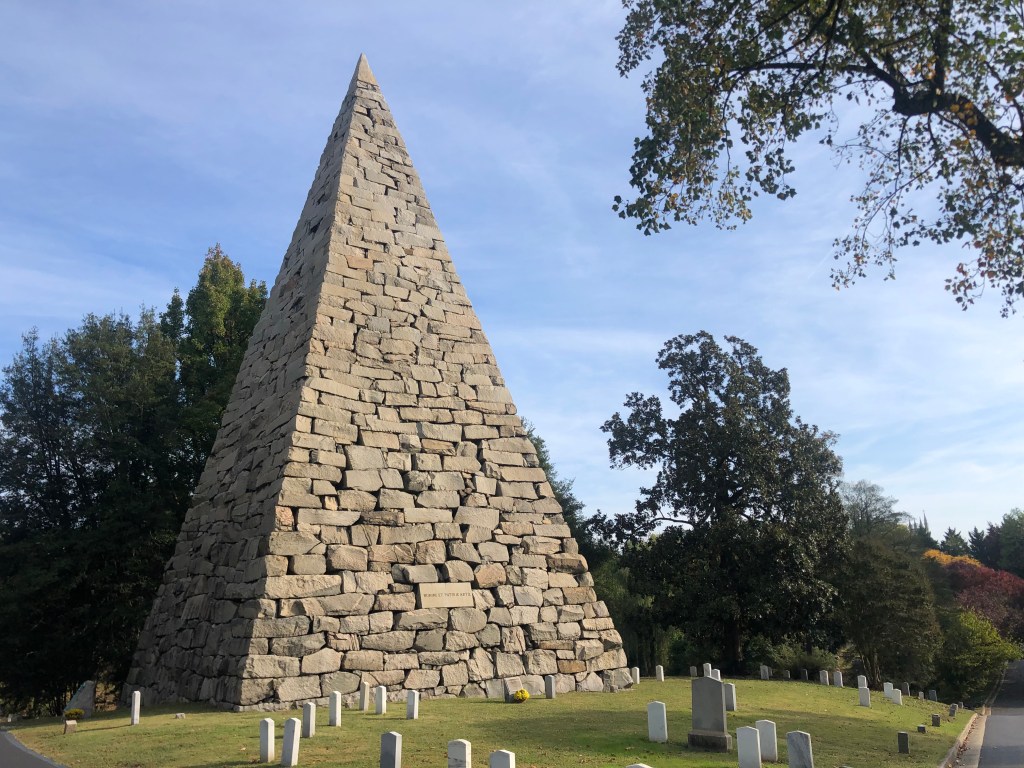
This morning Chris and I visited Richmond’s Hollywood Cemetery (est. 1847). In the midst of the confederate section (Hollywood contains about 18,000 confederate dead), there stands a 90-foot-tall granite pyramid erected in 1869.

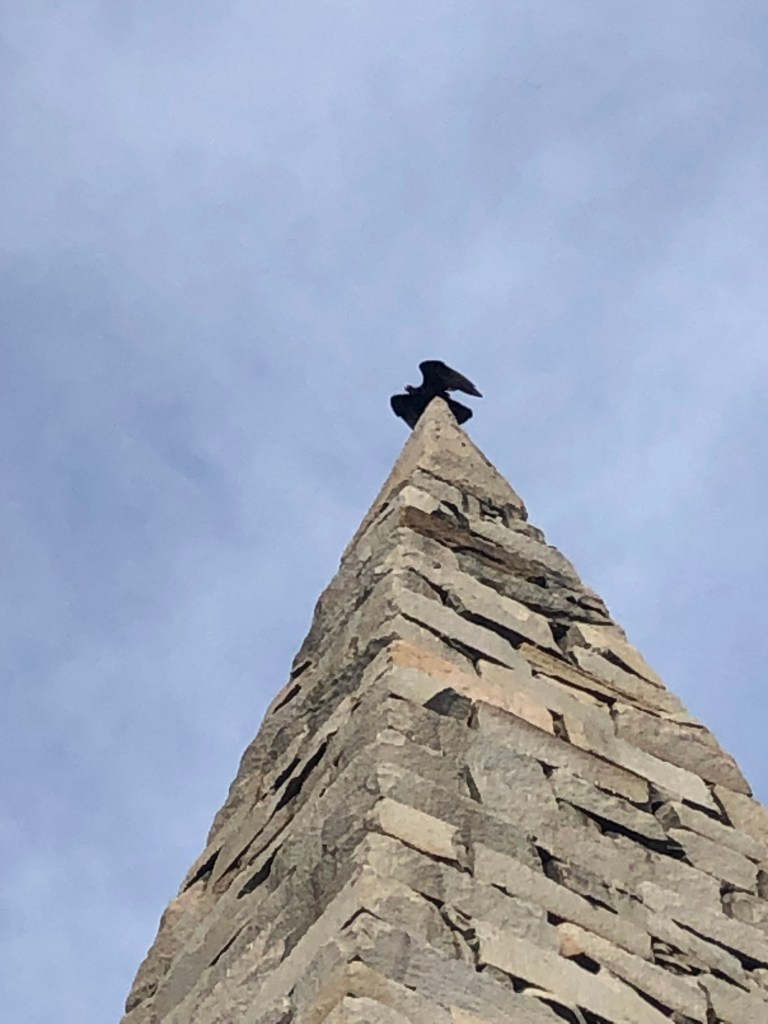
But what’s this at the apex of the pyramid?

“Then this ebony bird beguiling my sad fancy into smiling….”

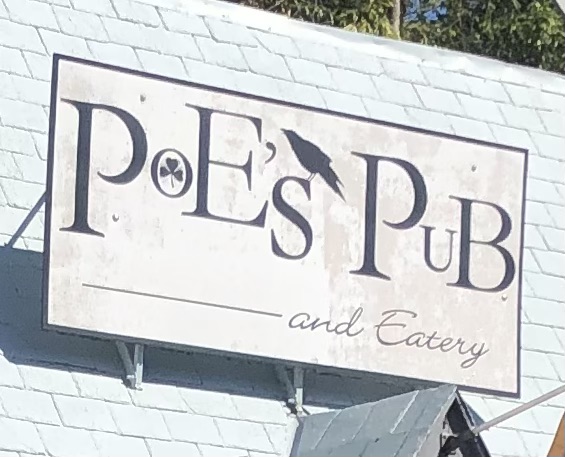
Ravens have been incorporated into some of Richmond’s signage, such as Poe’s Pub.

That’s either a stylized raven, or a rocket ship.

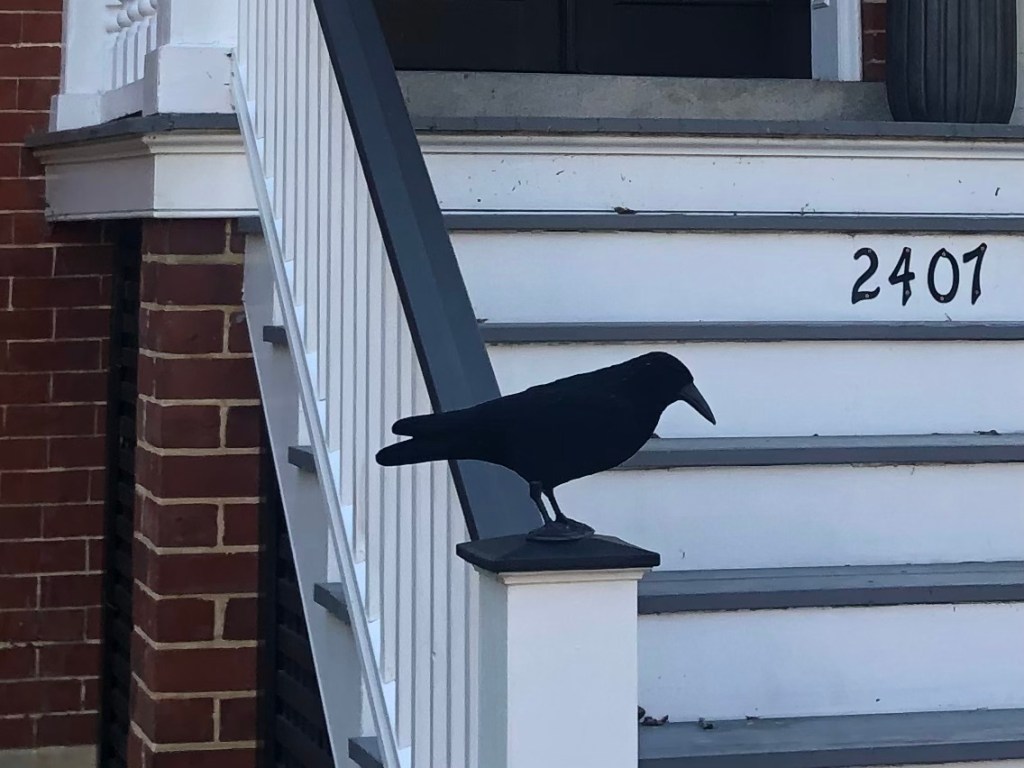
We appreciated that the owners of the Shelton House (where Poe’s last fiancee lived) have seen fit to plant a fake raven at the front steps.

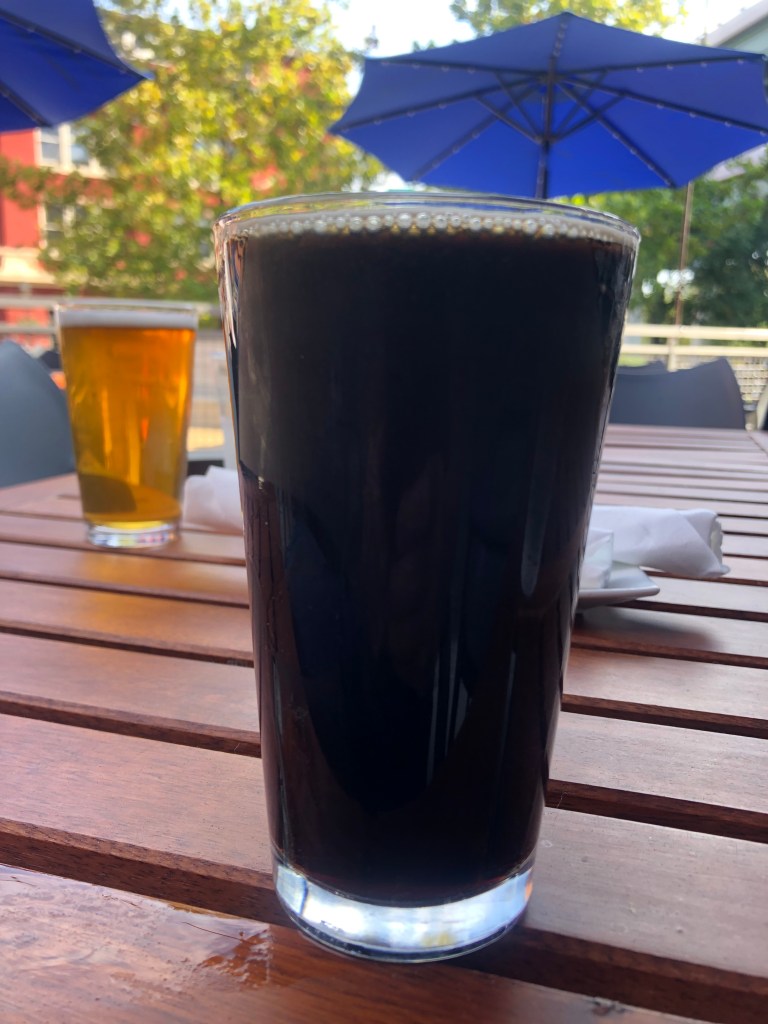
And, cap things off, today’s Beer of the Day is something called the Raven’s Roost Baltic Porter.

Dark as a raven is the Baltic Porter from Raven’s Roost.

This BOTD isn’t as thick as the Imperial Stouts that I’m partial toward. The body is actually rather thinner than you’d expect from something this dark. It’s also lightly hopped and lightly carbonated. Overall, it’s a rather tame beer. And yet it’s also very flavorful, with a strong chocolate profile and sweet maltiness. Clocking in at 7.1 ABV, it will improve your mood but it won’t kick your ass. I give it four out of five stars.

cemeteries · churches · Halloween Cocktails · trains

Poe-tober 2022

Chartreuse? Nevermore!
We interrupt this month of Halloween cocktails to bring you breaking news that I’m in Virginia for an Edgar Allan Poe pilgrimage. I will give you the gory details in a moment, but first let me share some other breaking news:

The Twentieth Anniversary Edition of the Dome of Foam is live!
Uncle Edward’s Fever Dream

I am aware that a number of my readers respond positively to any railroad-themed content from my road trips, so they will be especially heartened by this news. The Dome o’ Foam, for those of you not already familiar, is a quirky, hard-to-define, and entirely mesmerizing collection of railroad history and miscellanea, focusing in particular on the Southern Pacific Railroad. The Dome is the brainchild of my Uncle Edward — E.O. Gibson, to you. Alert readers will recall that Uncle Ed has periodically made appearances in this blog. The new, 20th anniversary edition of his site contains a dizzying array of new content, updates on old content, photographs, personal stories, and cartoons. You owe it to yourself to check it out here.


So, on to my Poe trip. As everyone should have learned as a school child, Edgar Allan Poe lived in various cities of the East during the 19th century, focused largely on Richmond, VA (where he grew up) and Baltimore, MD (where he died under mysterious circumstances). Three years ago (before Covid shut down public gatherings) my friend Chris and I attended the International Edgar Allan Poe festival, held literally in Poe’s old neighborhood in Baltimore, MD. Today Chris and I bookended that trip with a visit to Poe’s old neighborhood in Richmond VA.

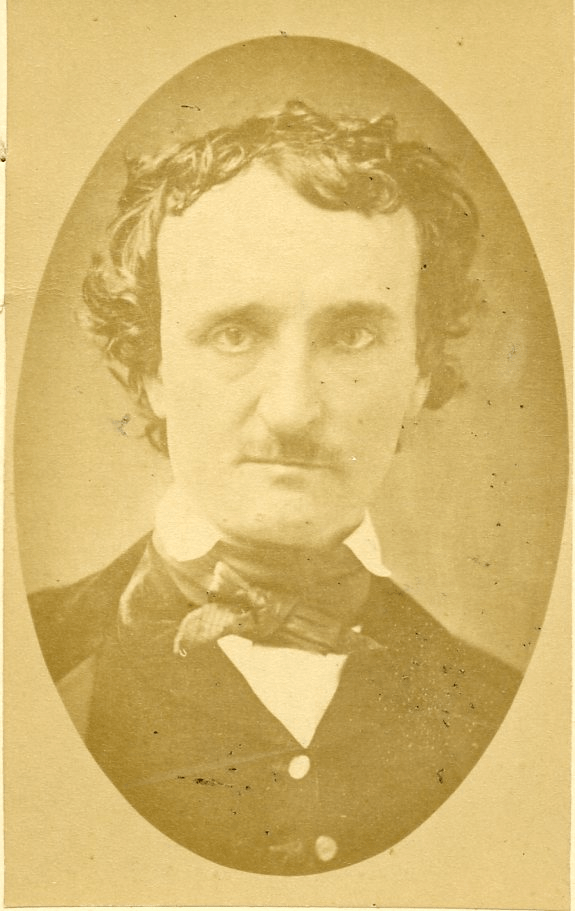
Before beauty filters.

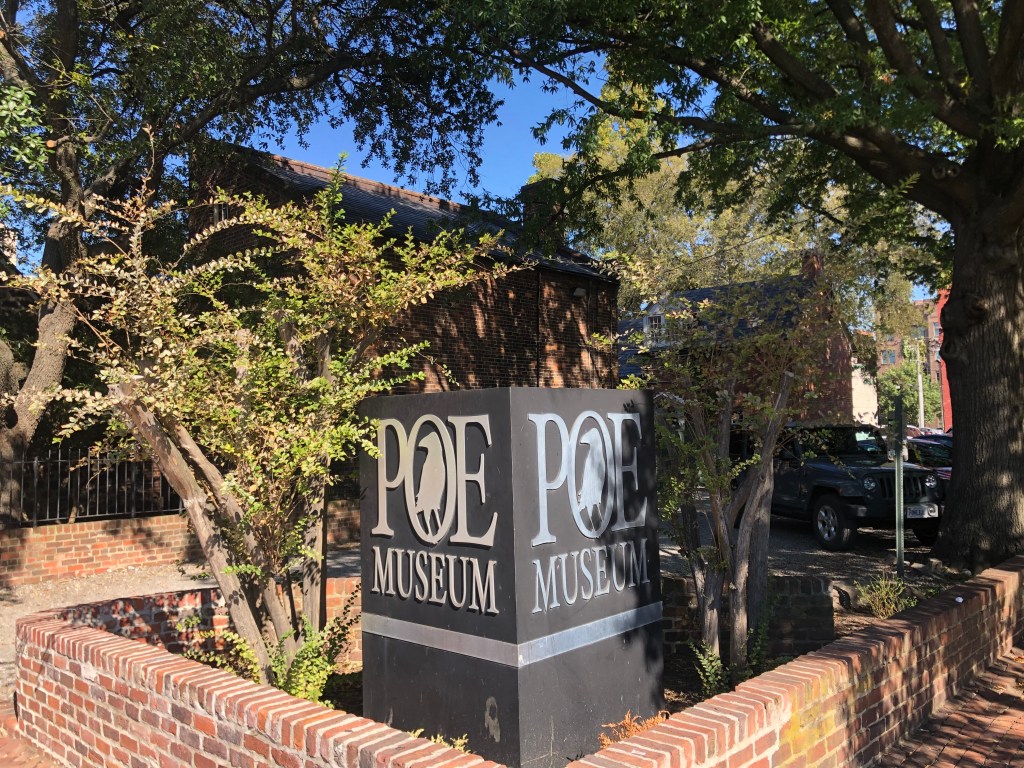
The main Poe attraction in Richmond is the Poe Museum on E. Main Street. You may recall that I drove right by the museum on my Route 50 trip in 2018, as Route 50 becomes Richmond’s Main Street and takes you right through the neighborhood. Alas, the museum was closed when I passed it. So this time, I was finally able to darken its doorstep.

Better late than never.

It’s a remarkable museum, with the world’s largest collection of authentic Poe memorabilia: His bed, writing desk, walking cane, various letters, articles of clothing, photographs and daguereotypes, books, other personal effects, and even the staircase and fireplace mantel from prior Poe residences. It also has a meditation garden and major shrine to Poe.

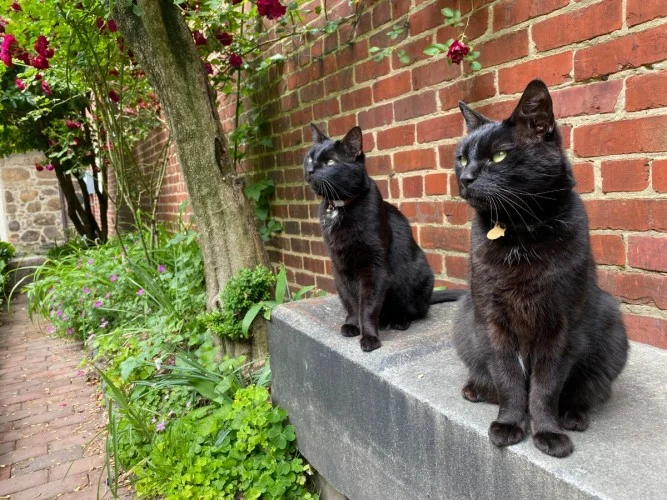
Two cats–Edgar and Pluto–roam the museum grounds like the own the place…which in a way they do.

Edgar and Pluto…or is that Pluto and Edgar?

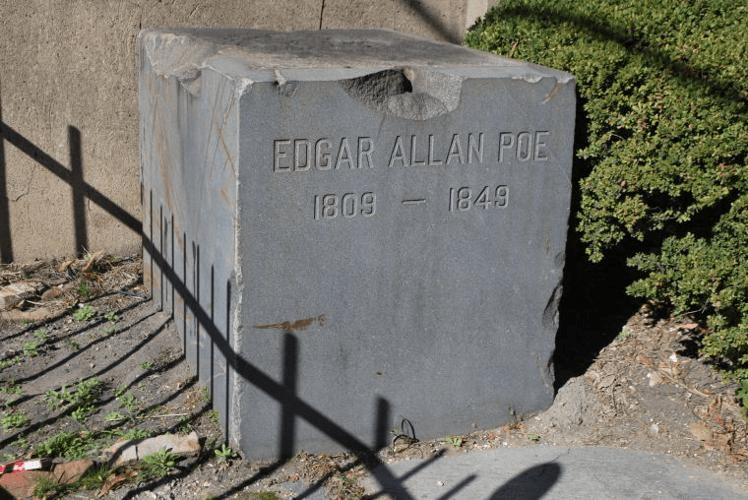
In front of the museum is a large granite block with Poe’s name and birth and death years inscribed on it. No, it’s not a giant tombstone; it’s the pedestal base for a Poe statue that was created in the mid-1950s–when Richmond finally decided to embrace Poe.

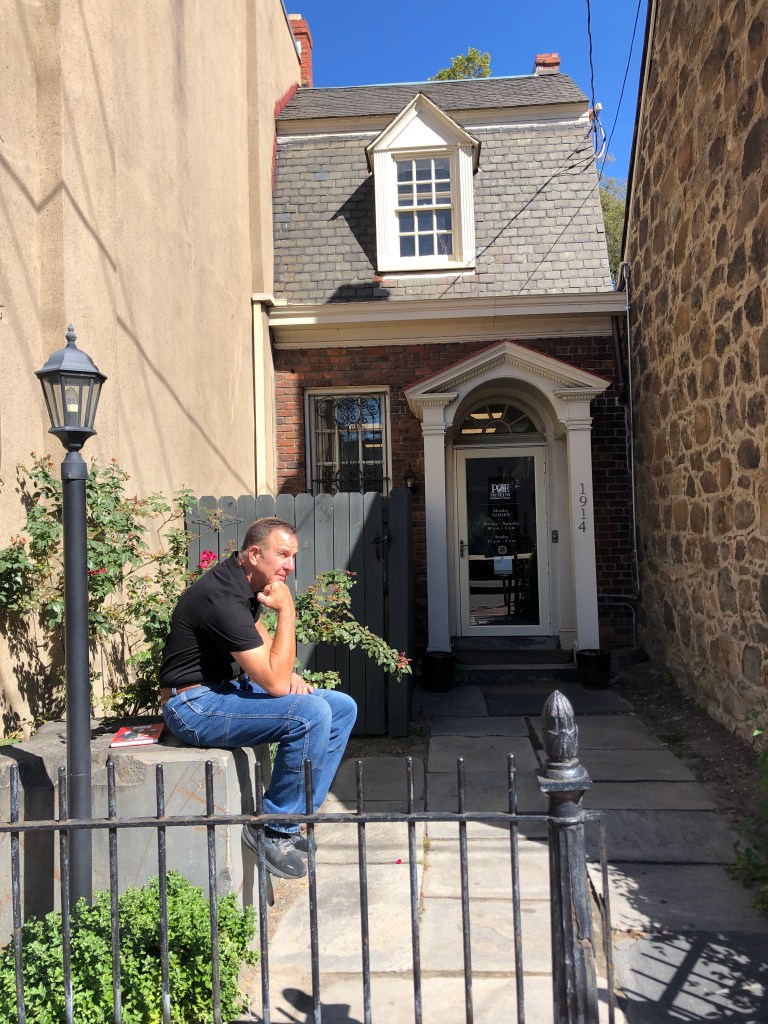
Channeling my inner Dobie Gillis

For reasons that aren’t entirely clear, the pedestal base was discovered in a local landfill by some kids many years later (in 1973, to be exact). It seems that it had been rejected by the city, and a new one had been cut. This “new” base sits, with the statue atop it, in Richmond’s capitol park.

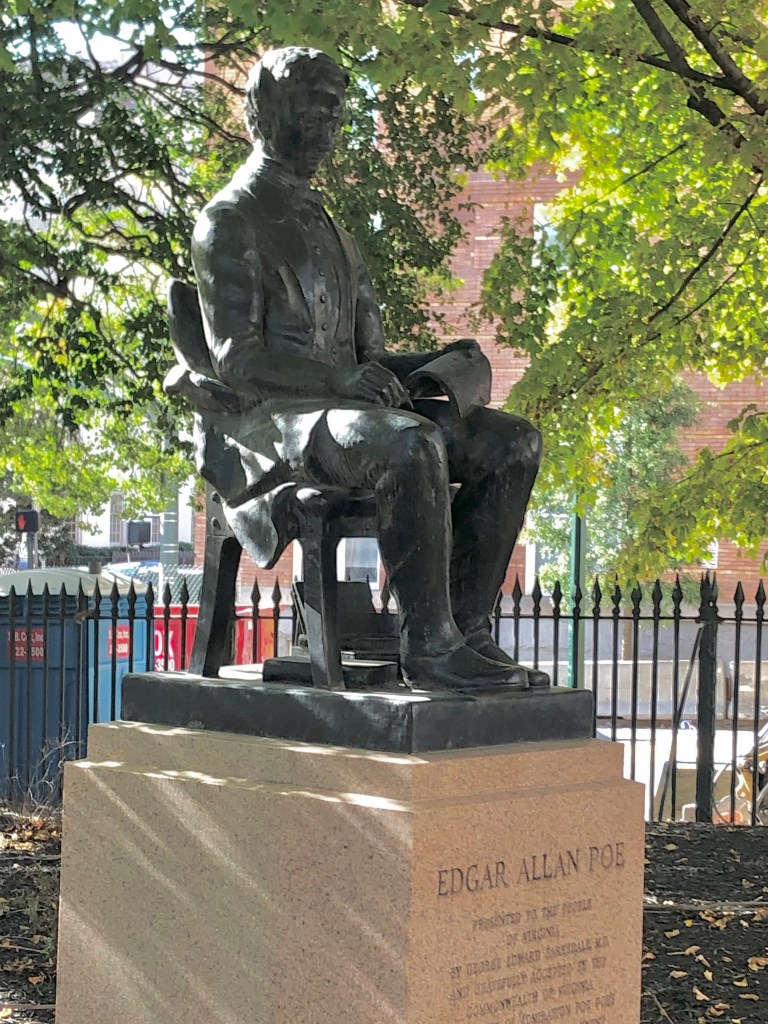
Poe statue in Capitol Park

After the museum, Chris and I visited a number of other Poe-related sites in Richmond, as depicted below.

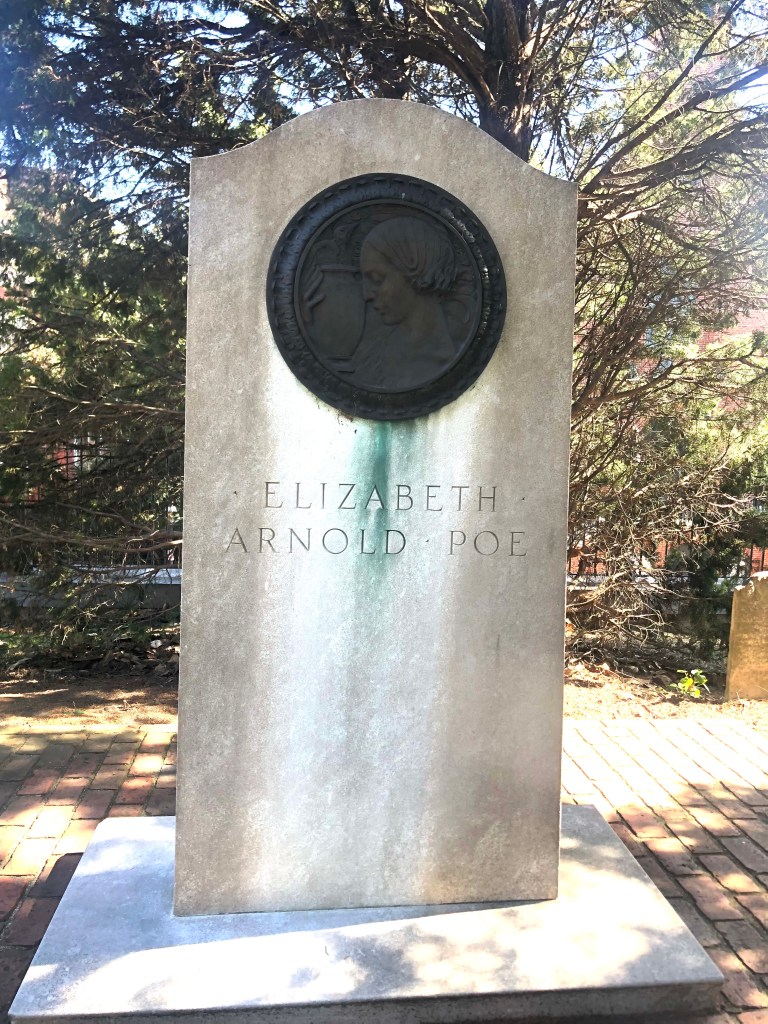
Grave marker for Poe’s mother–an English actress who died of tuberculosis in Richmond at age 24, when Poe was only 2.
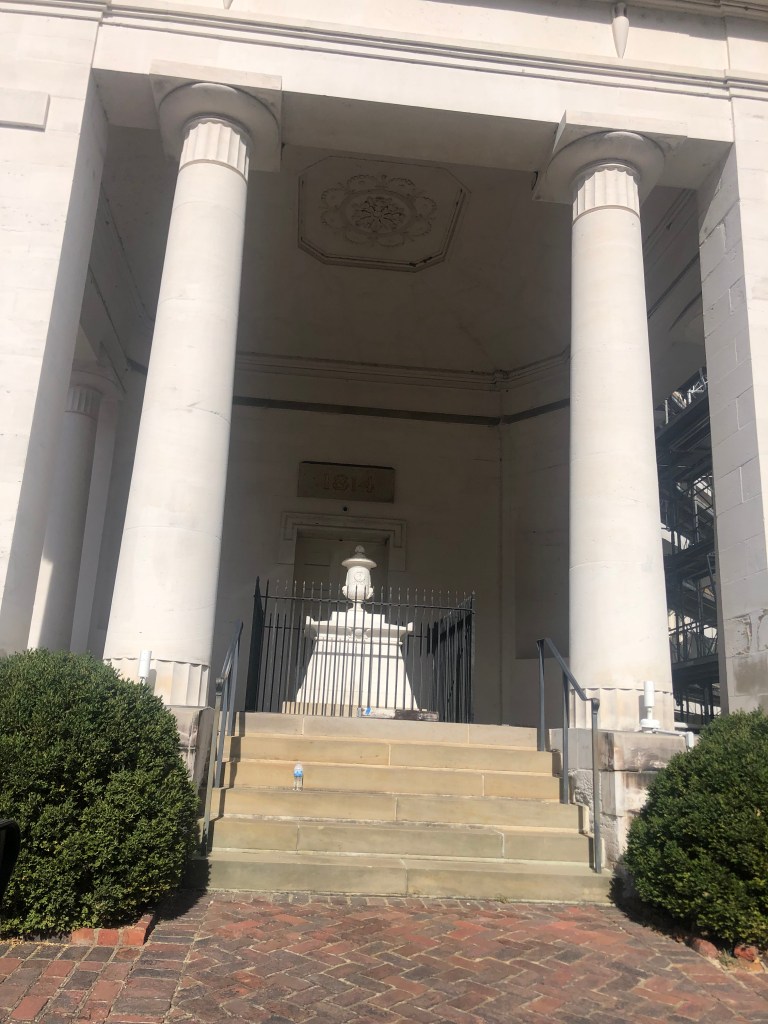
Richmond’s Monument Church, where John and Frances Allan were parishioners. The Allans took in the orphaned Edgar Poe (as his father had abandoned the family before Eliza Poe’s death). This is how Edgar Poe became Edgar Allan Poe.
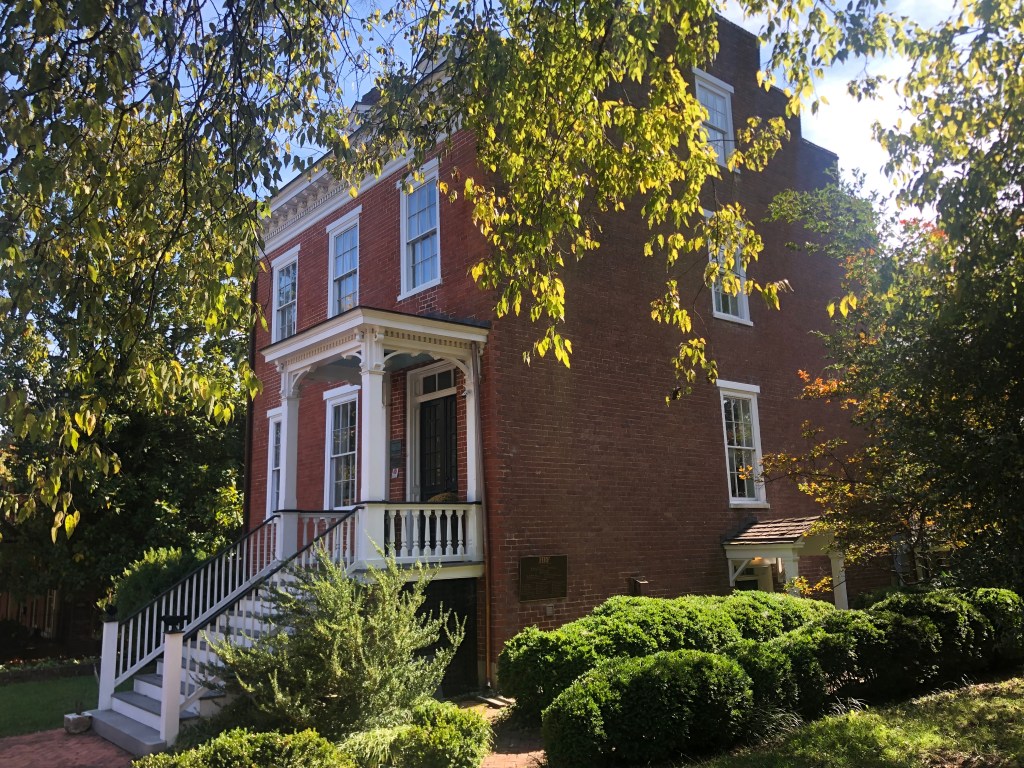
The house of Elmira Shelton. Poe became engaged to Elmira at the tender age of 16, just before leaving for UVA. Her father disapproved of the courtship, and intercepted Poe’s letters to Elmira. Thinking that Poe had forgotten about her, Elmira married another man. Later, Poe famously married his own 13-year-old cousin. But after she died of tuberculosis and Elmira’s husband also died, Poe and Elmira again became engaged. To complete the tragedy, Poe himself died at age 40 just a week and a half before he and Elmira were to be married.
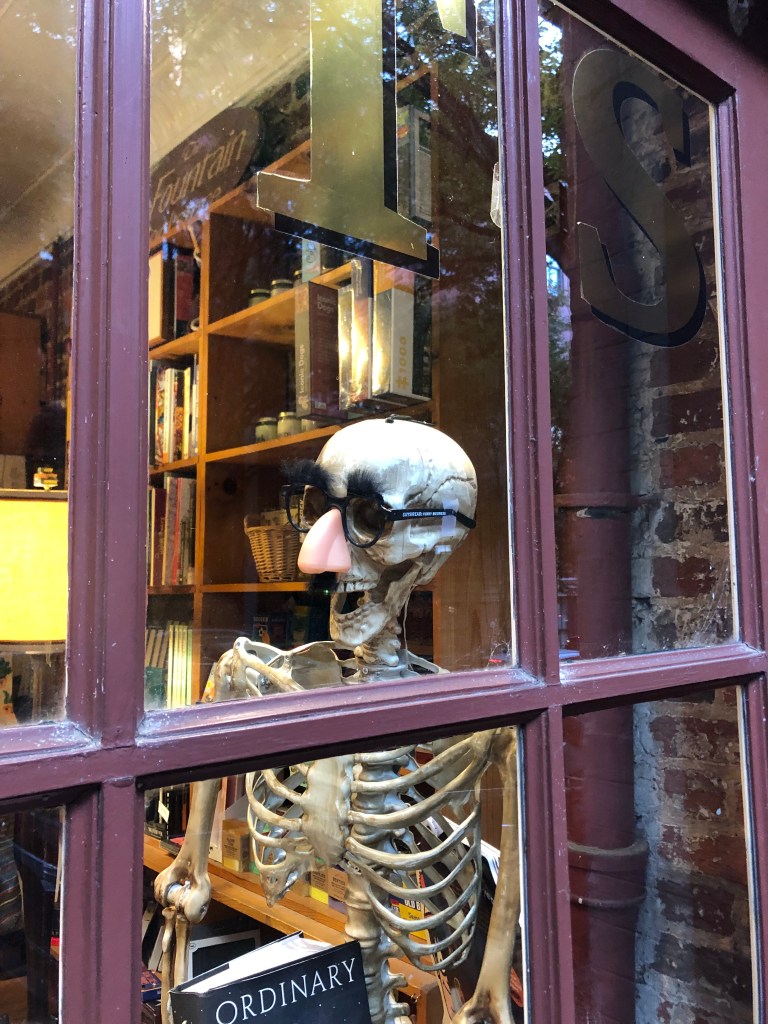
Skeleton in a local bookstore. It’s not directly Poe-related, but somehow it’s appropriate.
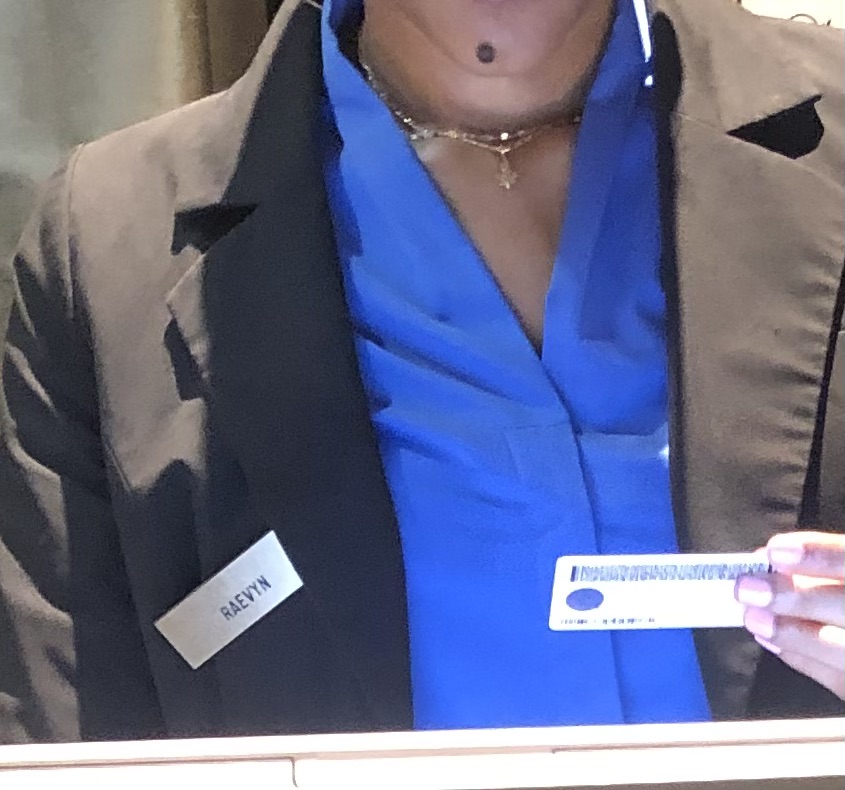
And to round out our Poe-themed day, the receptionist at our hotel is named “Raevyn” (as in, Raven).I’m not making this up.

I hope that all this explains why I wasn’t able to prepare a Halloween cocktail for the blog today. I promise to double-up my cocktail posts when I get home.