There were a number of photos from my Route 2 trip that didn’t make it into the blog. I’m including some of them here, as a bonus feature. Enjoy!
Discovering the ghosts of California and beyond, one road trip at a time.
There were a number of photos from my Route 2 trip that didn’t make it into the blog. I’m including some of them here, as a bonus feature. Enjoy!
As you will recall from my last post, I recently flew out east to visit family and friends for a few days, after which I would travel the entire western segment of US Route 2, from St. Ignace, Michigan to Everett, Washington. The visits have been made, and I have now arrived at St. Ignace. I will be traveling Route 2 over the next 8 days. Be looking for daily posts on this site.
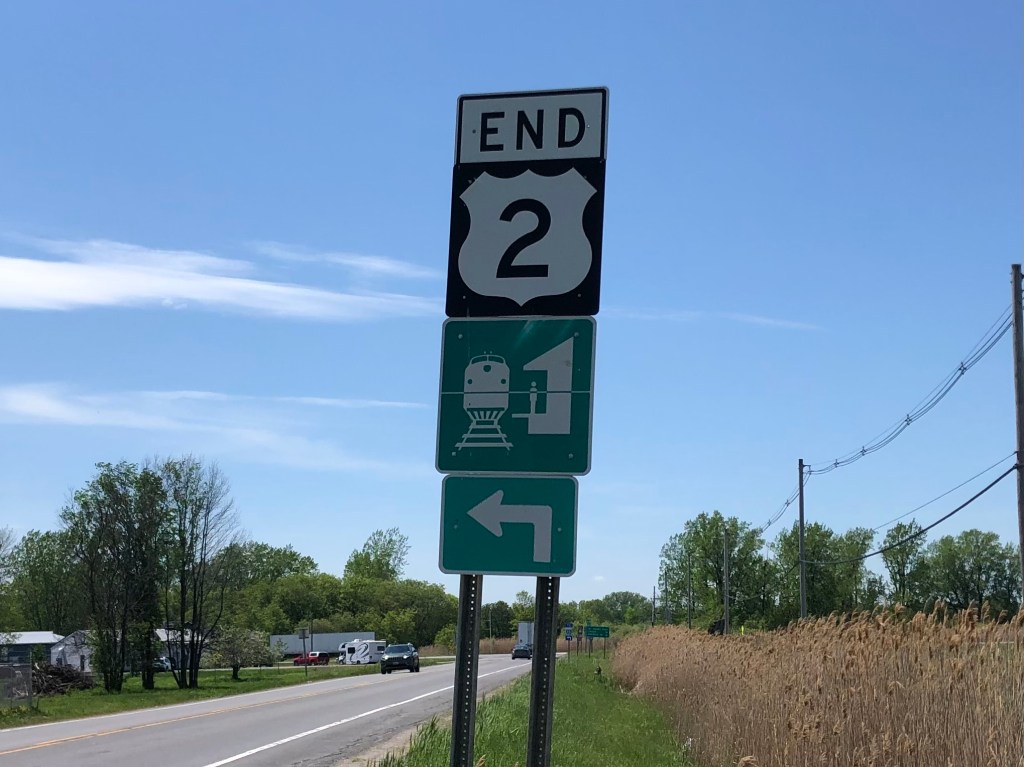
I did manage to drive a small portion of Route 2’s eastern segment while I was visiting as I left Cousin Bonnie’s in Vermont. That segment terminates (or begins, depending on your direction) at Rouse’s Point, NY. And (drum roll please) here it is:
I then spent the next two days making my way across Route 2’s lacuna. (Along the way I stopped at a Greek restaurant for a little moussaka. Ah, Lacuna Moussaka–what a wonderful phrase!)
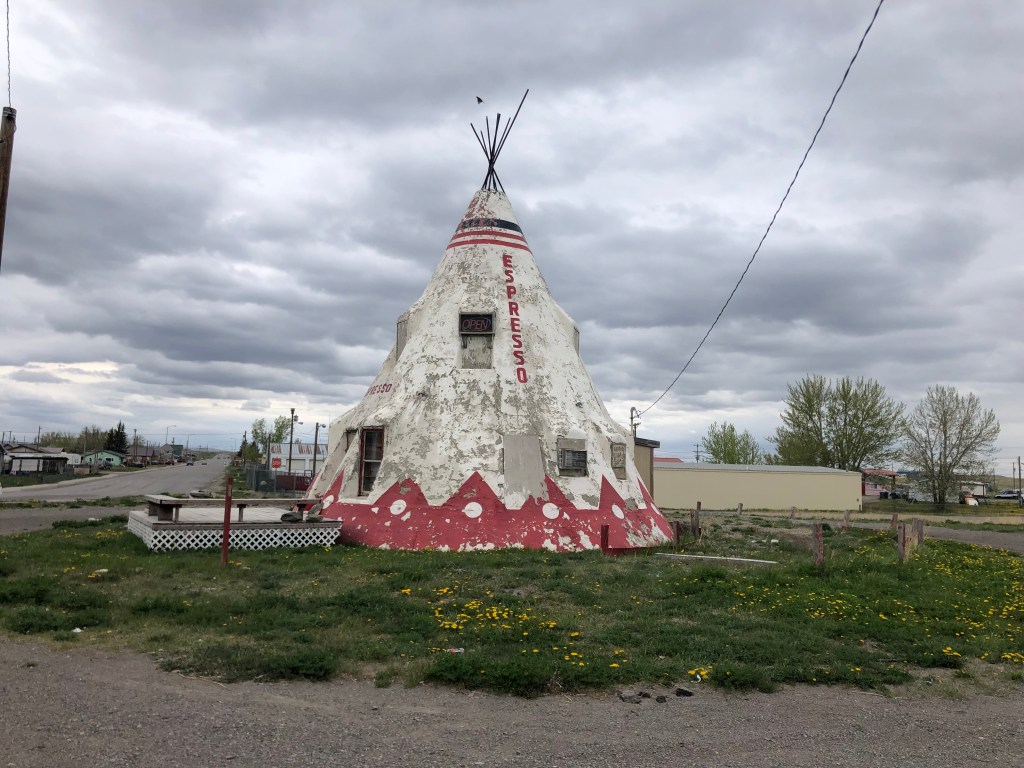
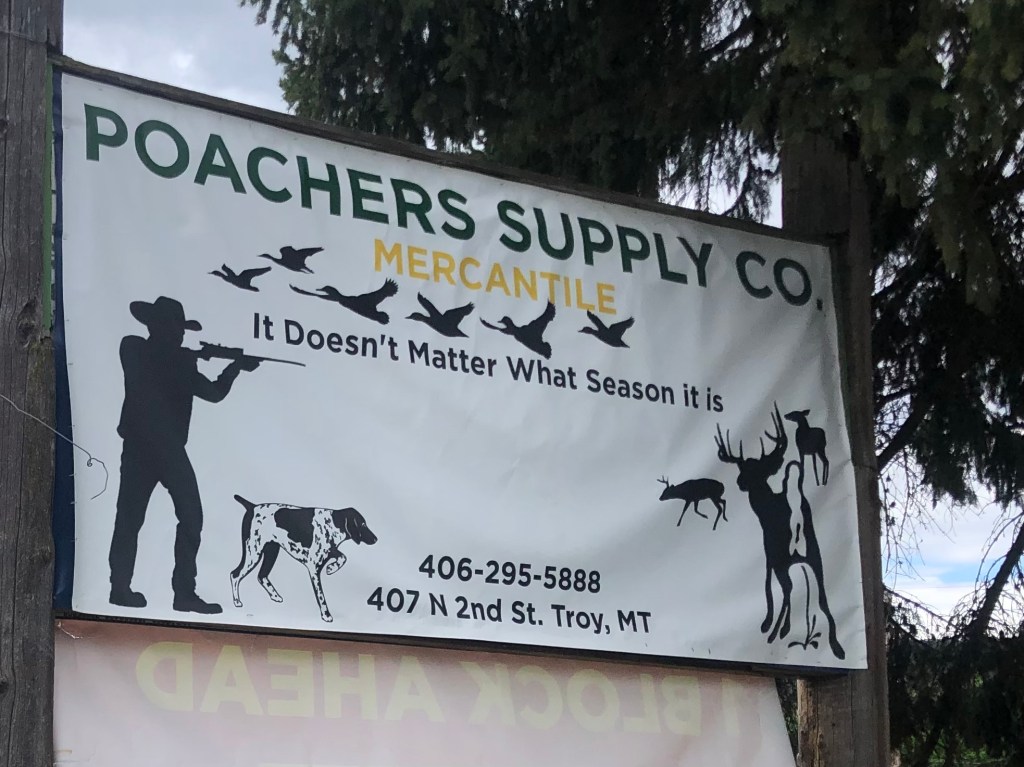
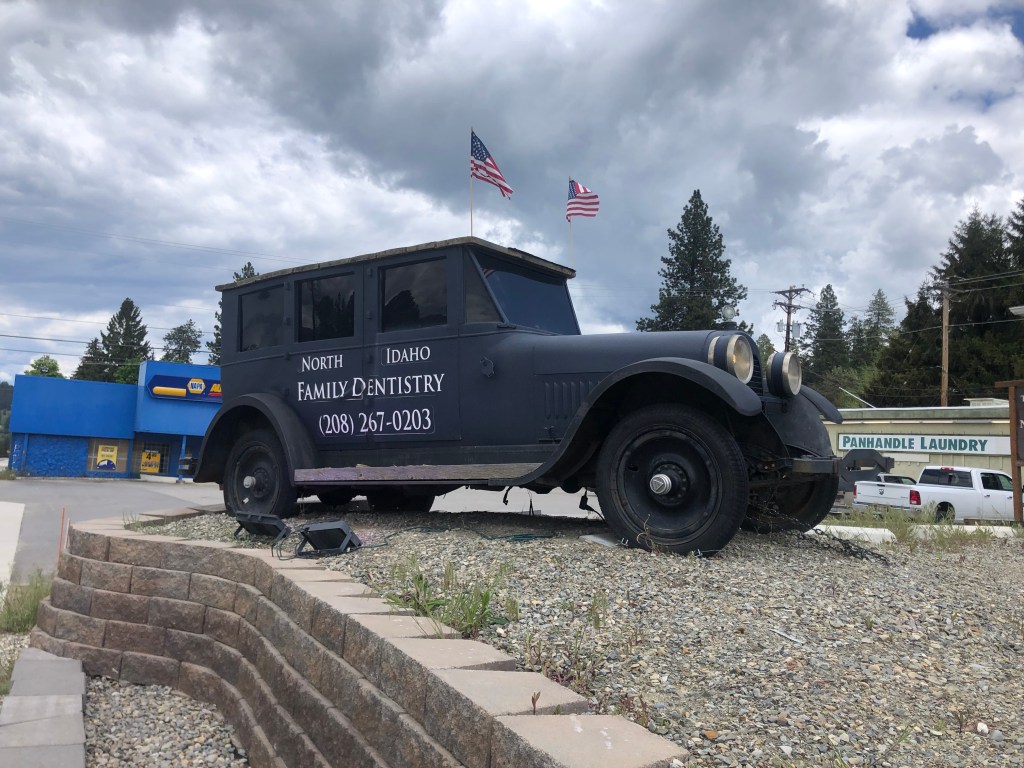
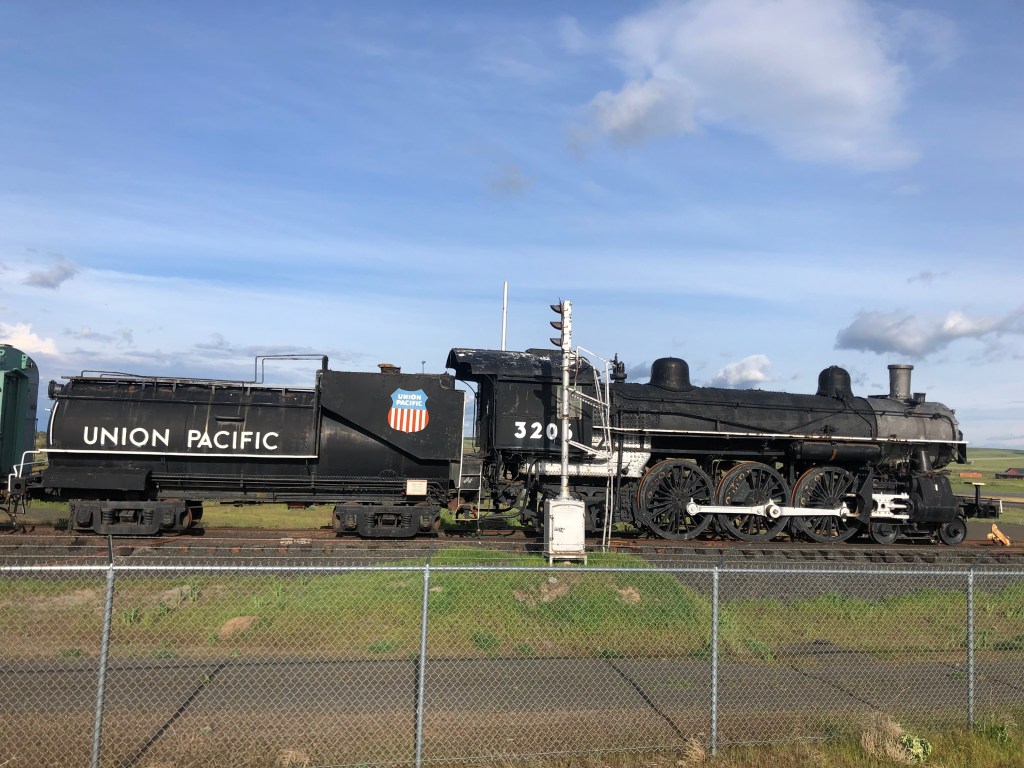
Anyway, although I was technically not on Route 2 during this time, I did encounter a few noteworthy roadside oddities. And here they are:
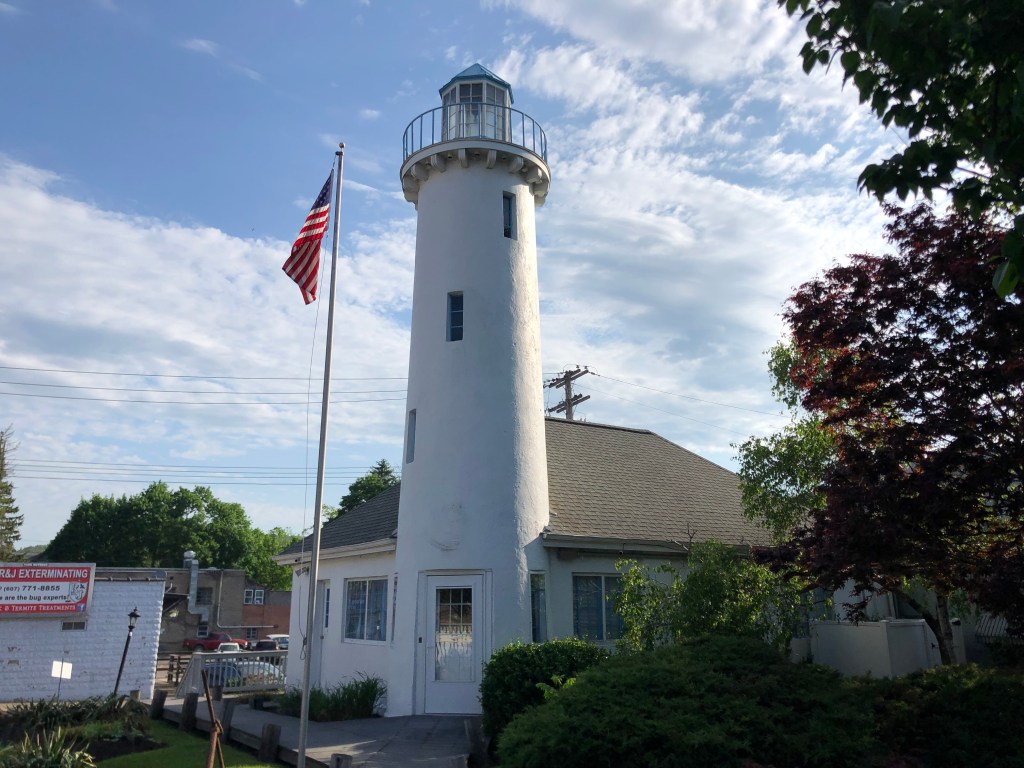
We start with this awesome, restored, historic building in Endicott, NY which was once part of the Lighthouse Service Station chain that supposedly served much of New England. It now appears to be some kind of private office or business, though there are no signs indicating what, exactly, they do.
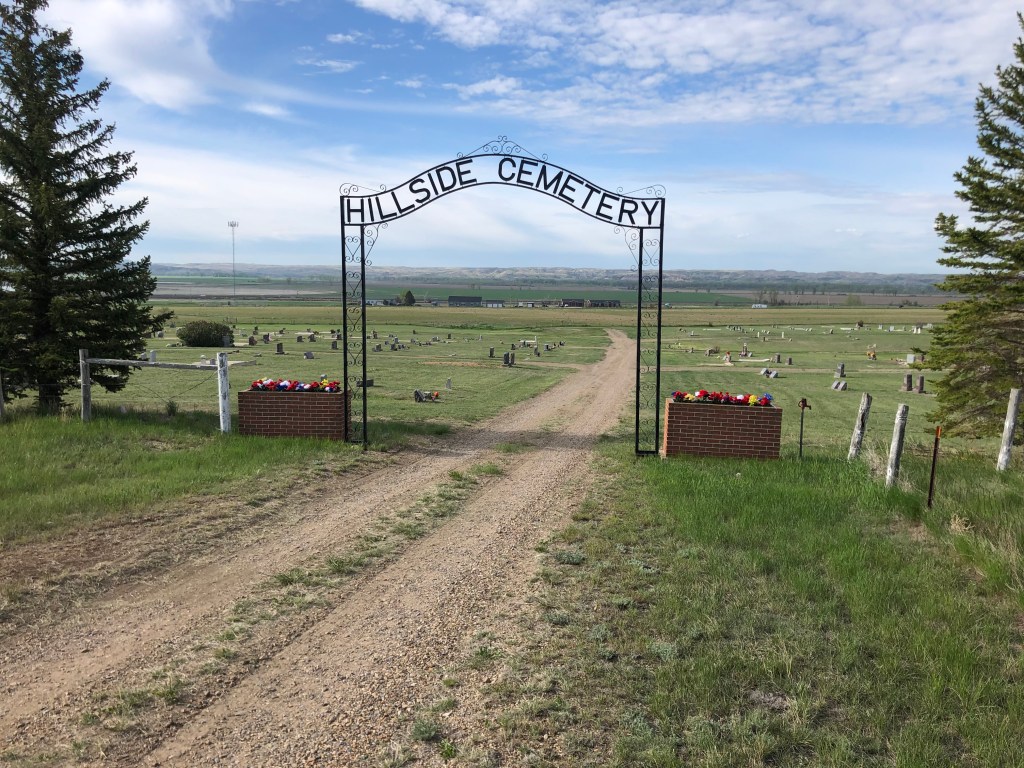
I also stopped a number of cemeteries (the east is lousy with ’em!), and found some notable gravesites:
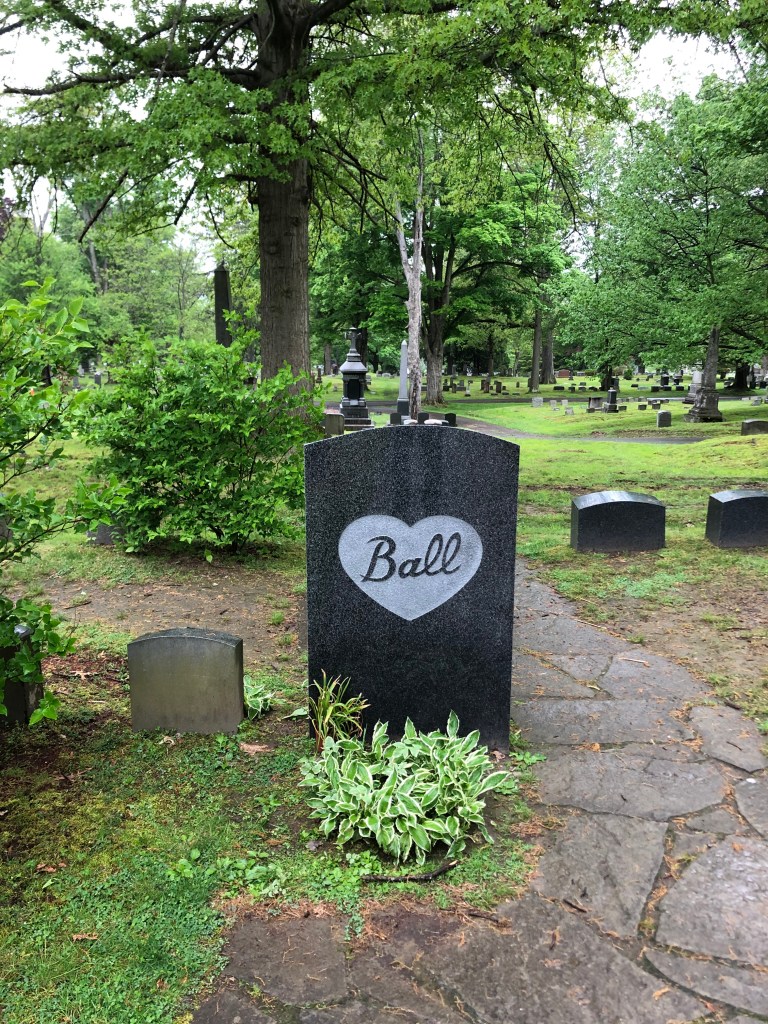
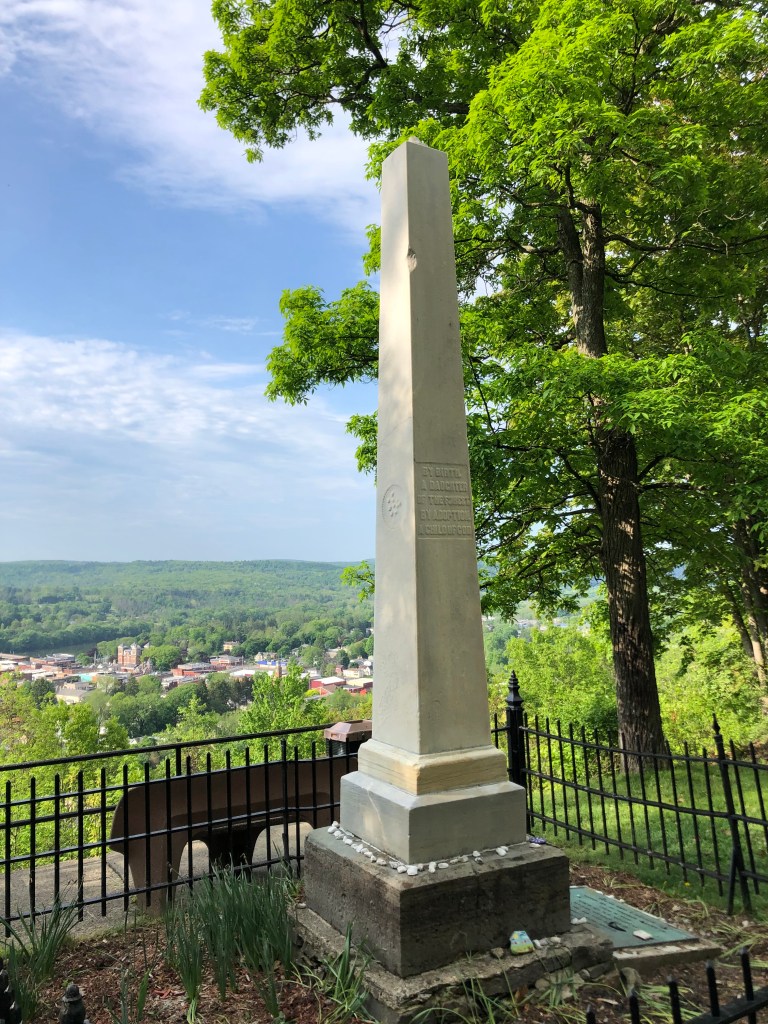
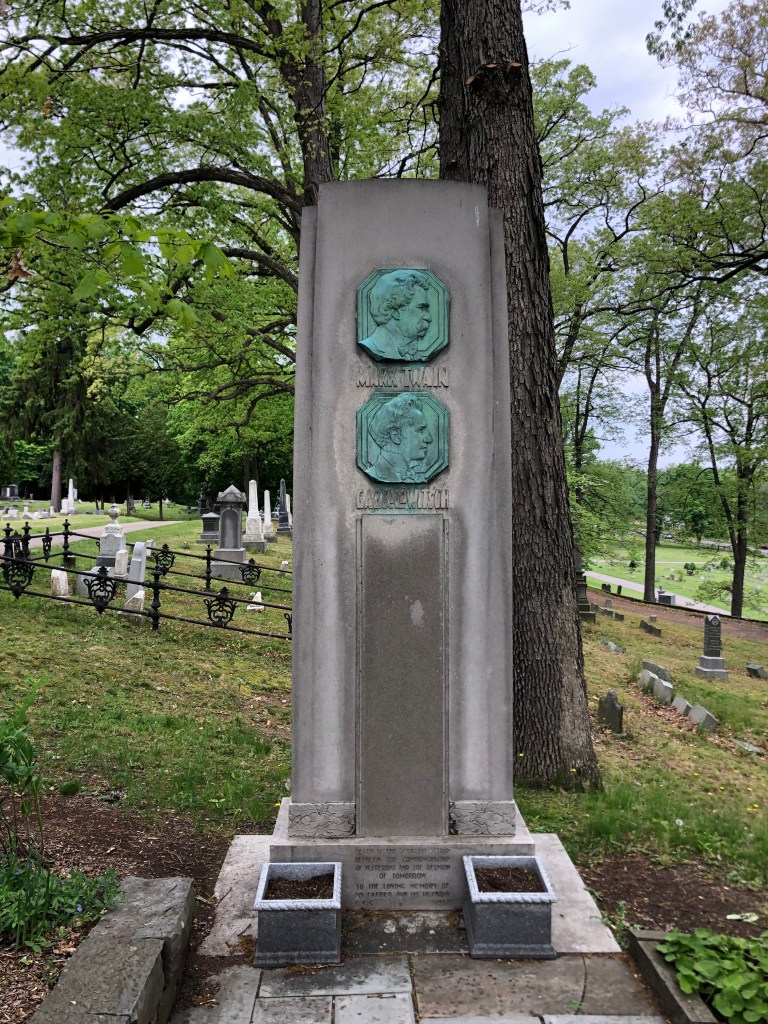
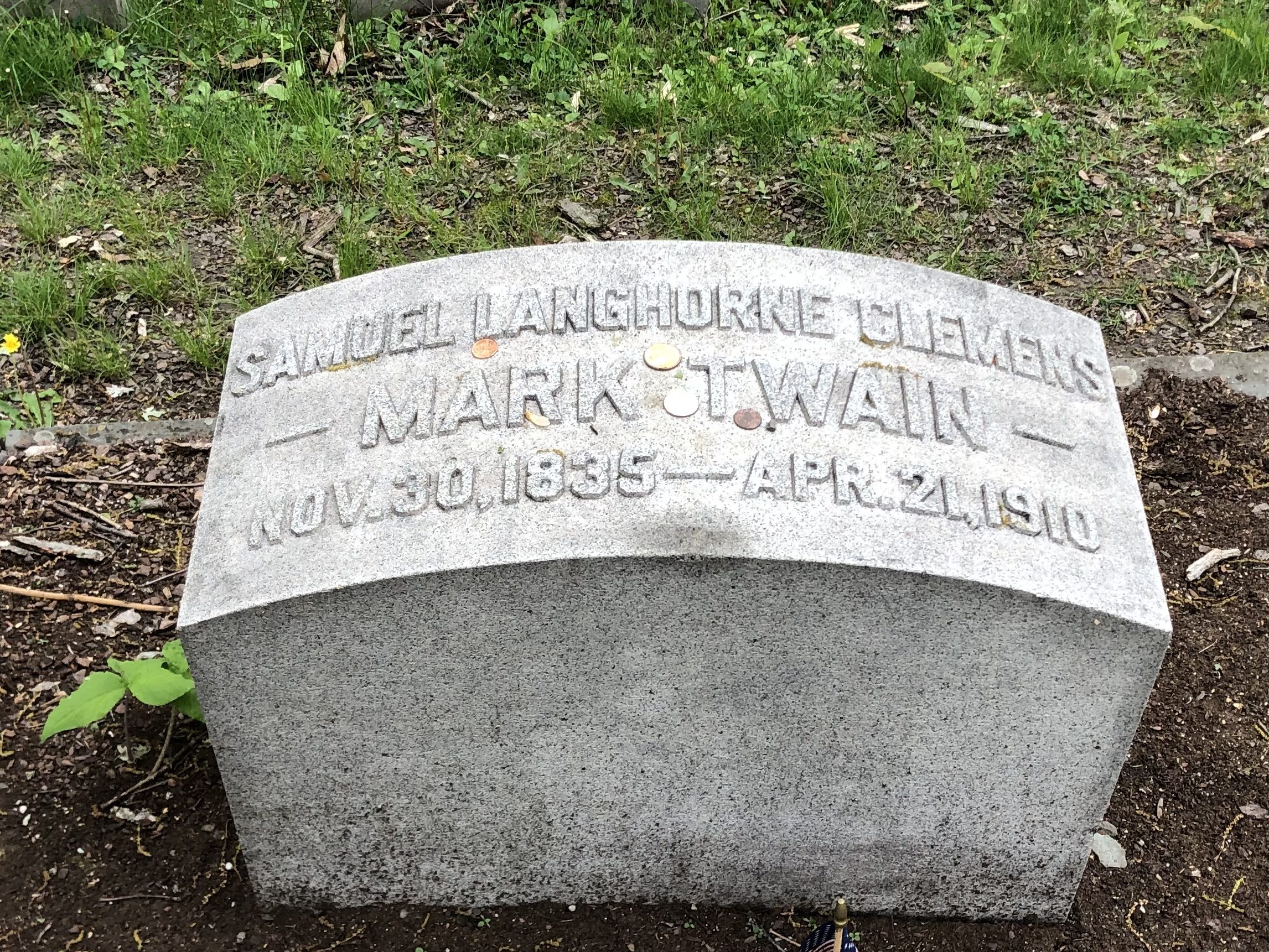
Let me note here my favorite Mark Twain factoid: When he was born in 1835, Halley’s Comet appeared in the sky. It was known that the comet passes earth every 75 years or so. And so, as the next encounter with the comet approached in 1910, Twain made this comment:
I came in with Halley’s Comet… It is coming again … and I expect to go out with it… The Almighty has said, no doubt: ‘Now here are these two unaccountable freaks; they came in together, they must go out together.’
And they did. Twain died the day after the comet emerged from the far side of the sun.
The most impressive cemetery I encountered during my Drive of the Lacuna was Lake View Cemetery, in Cleveland, Ohio. It includes these notable figures and impressive works of art:
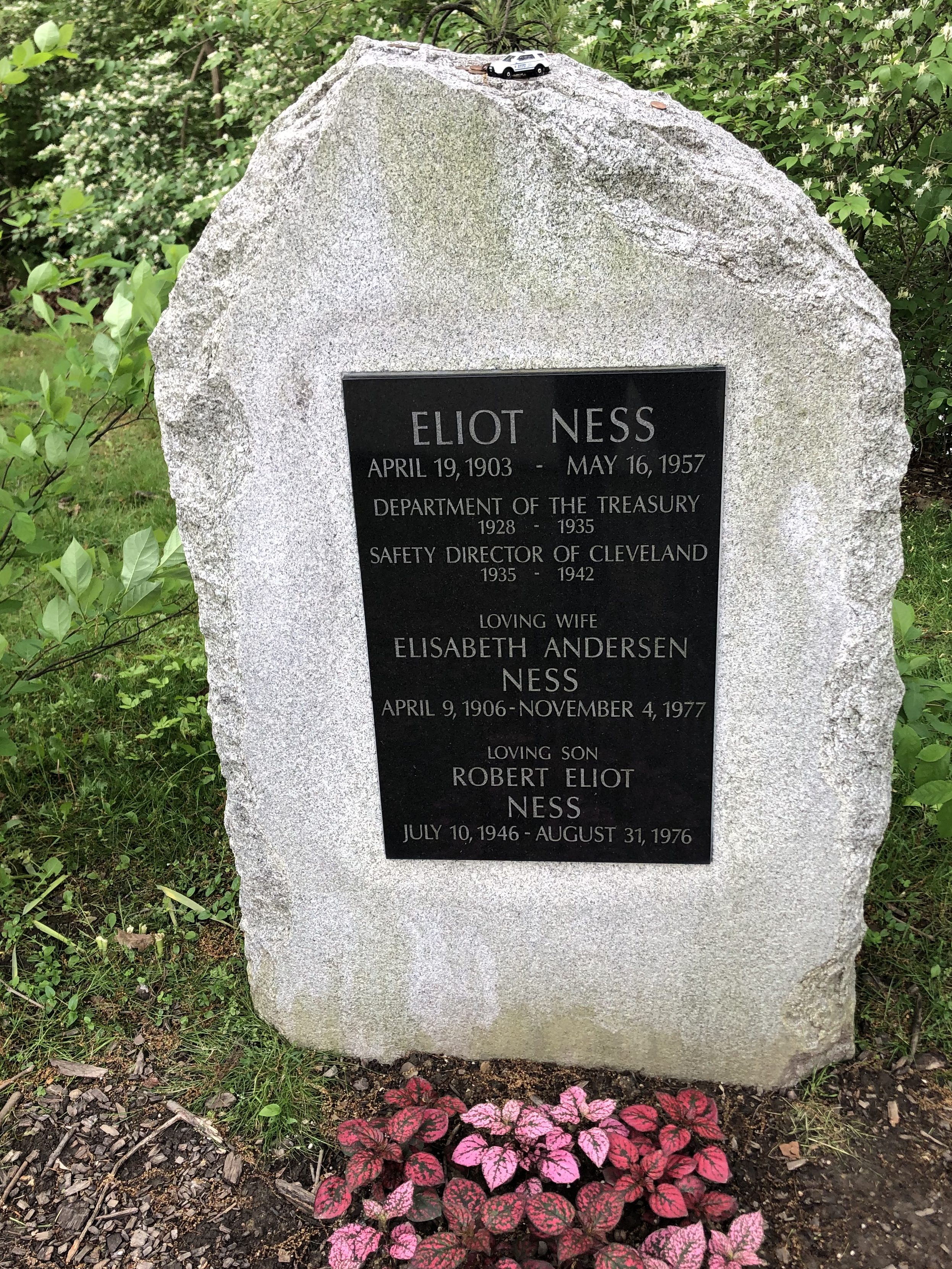
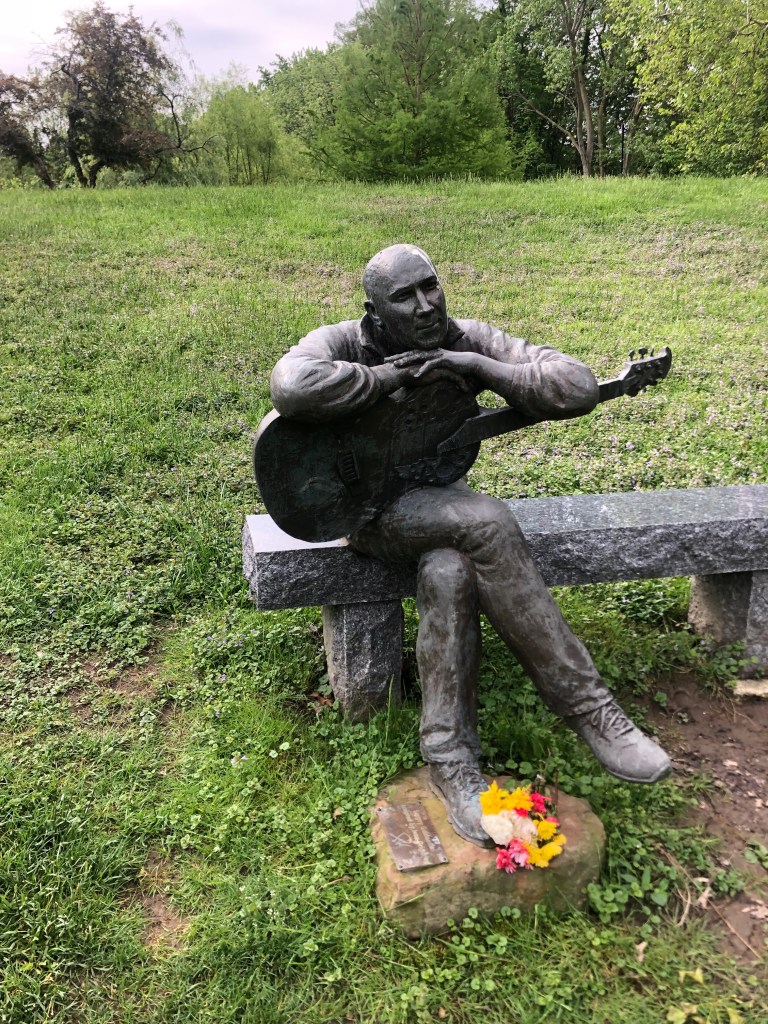
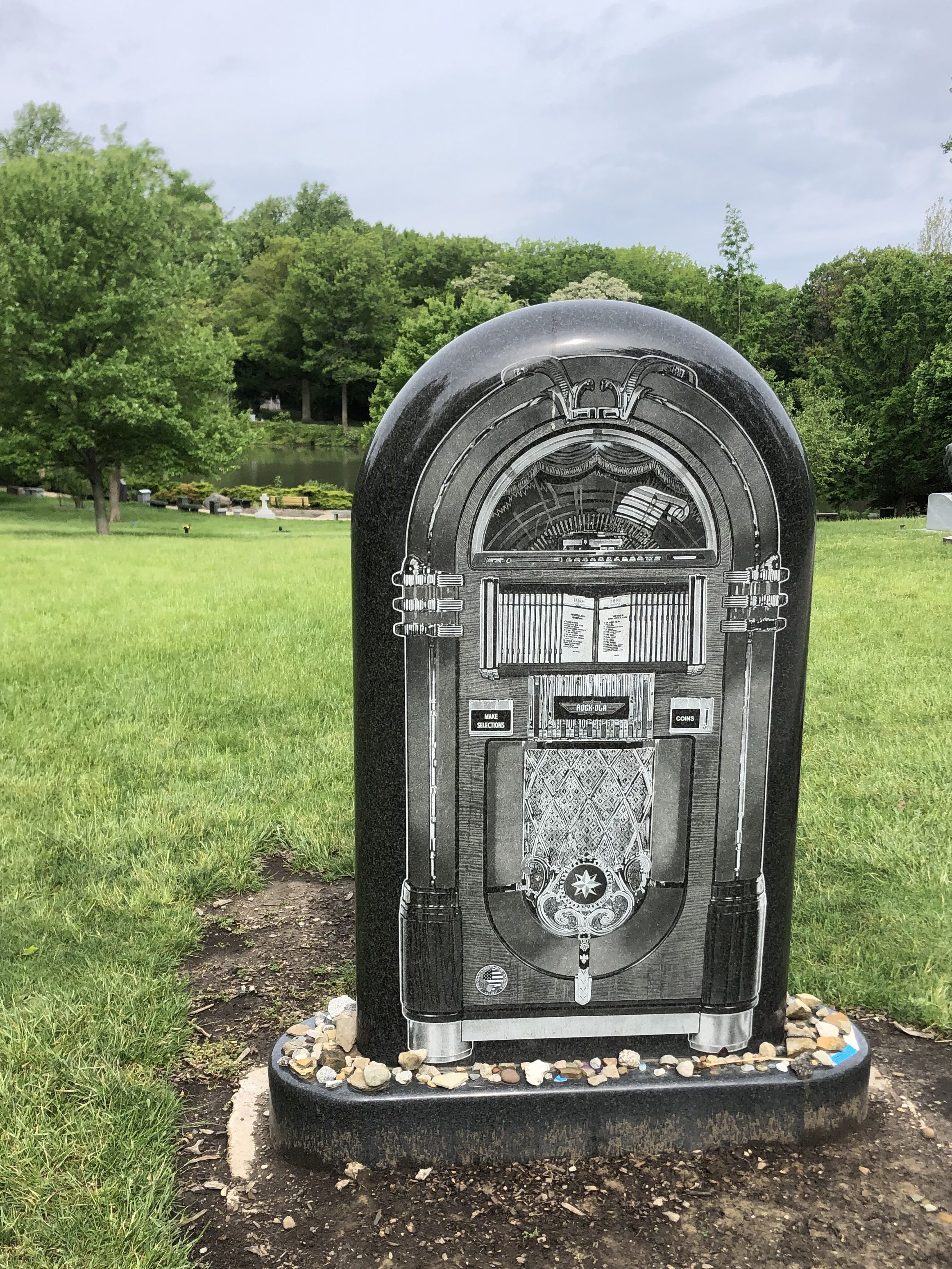
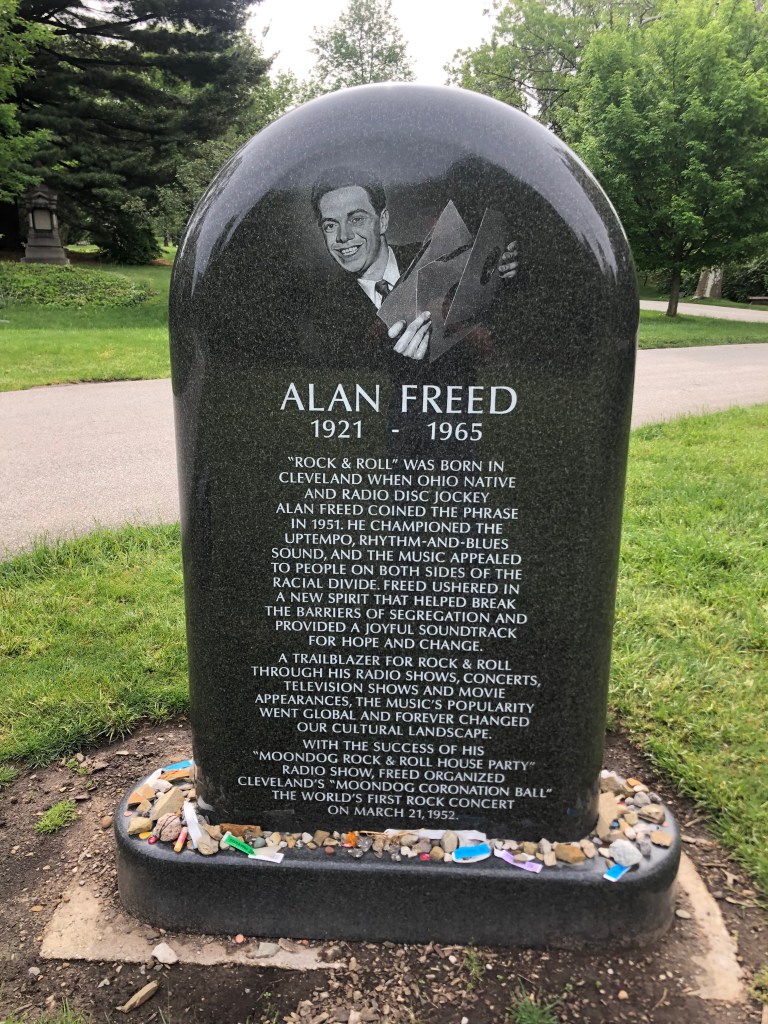
If you’re interested in what all the fuss was about, check this out:
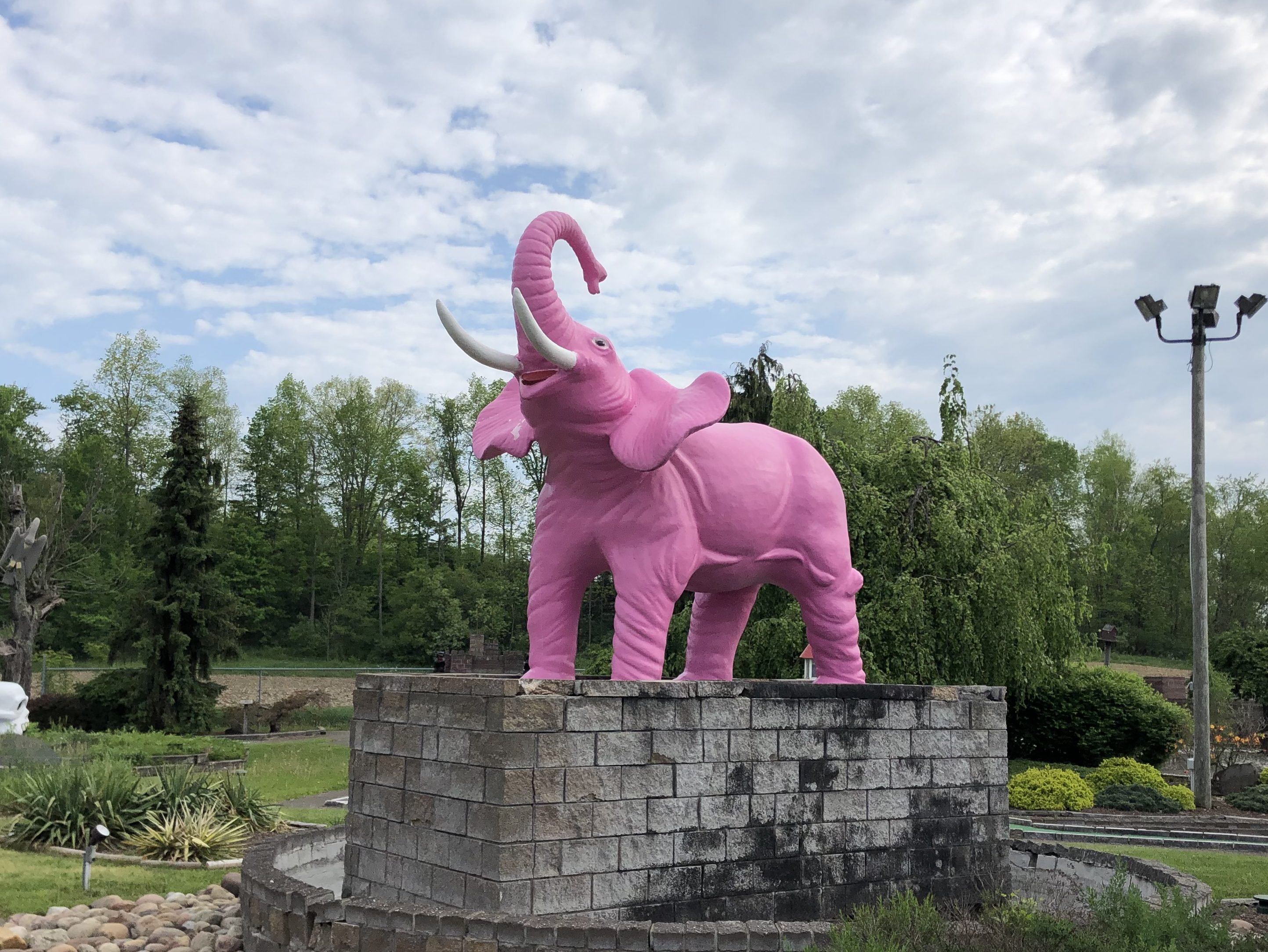
And speaking of recurring creatures, this Beetle/Spider in Erie, Pennsylvania very much resembles earlier encounters. Observe:
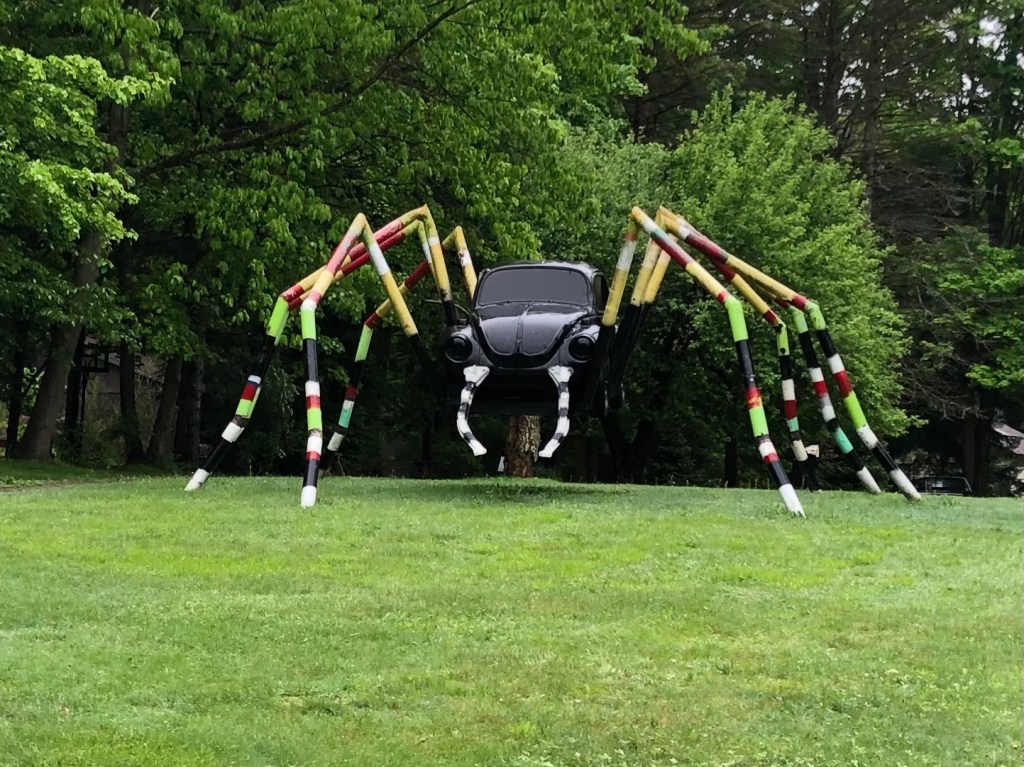
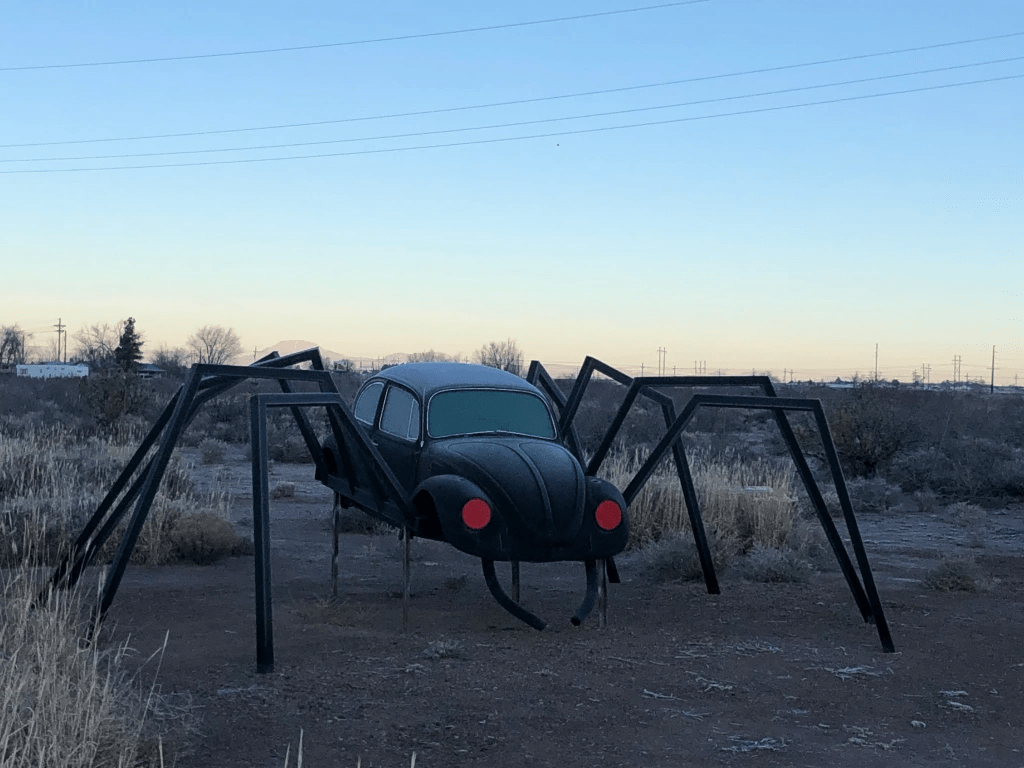
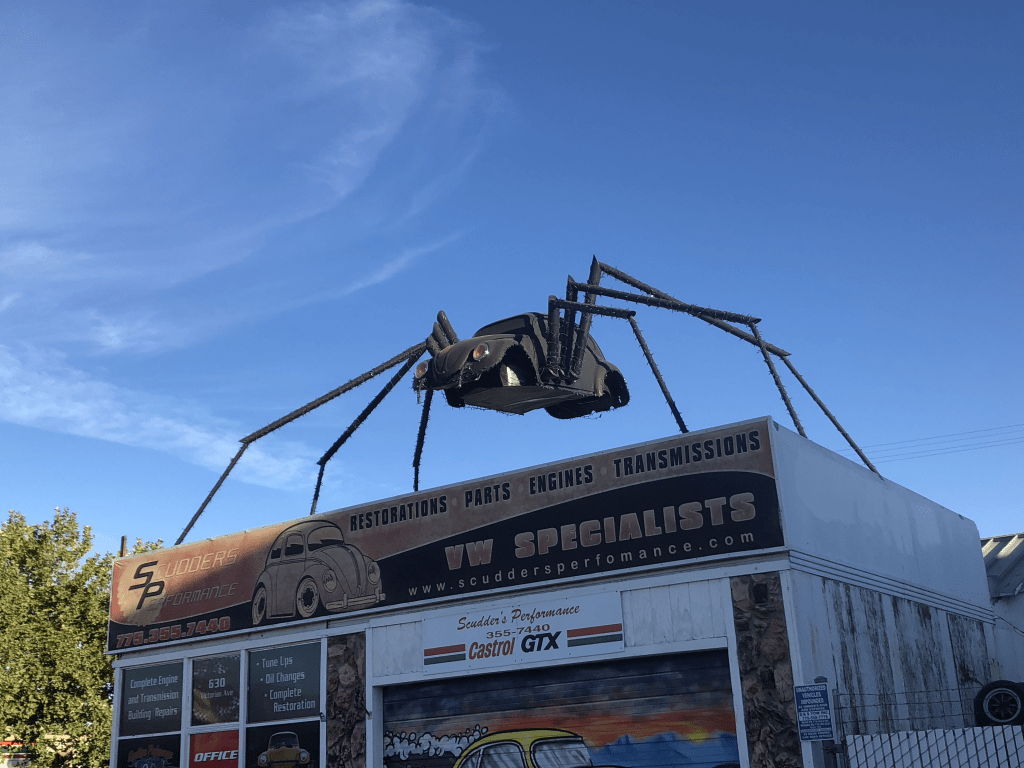
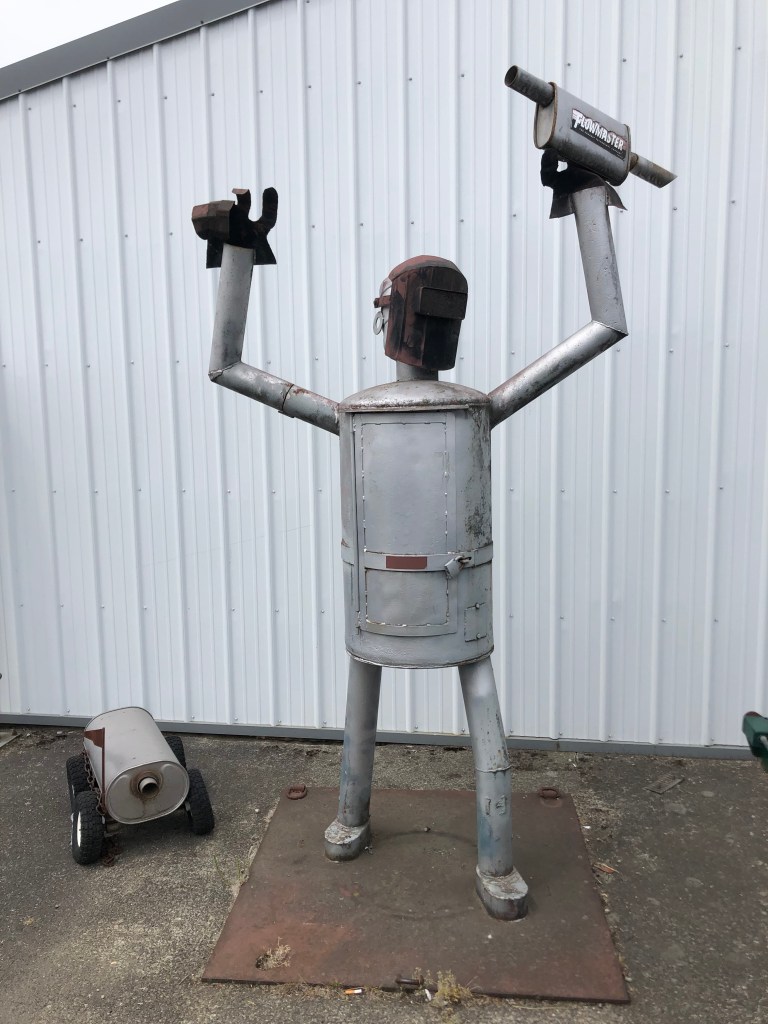
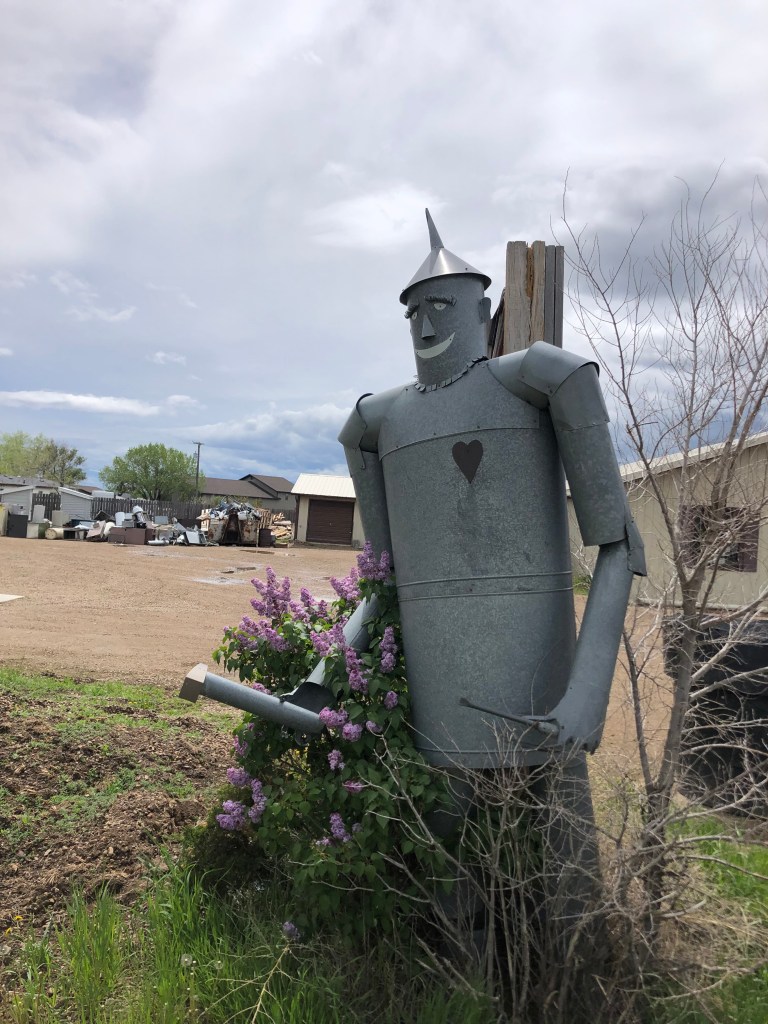
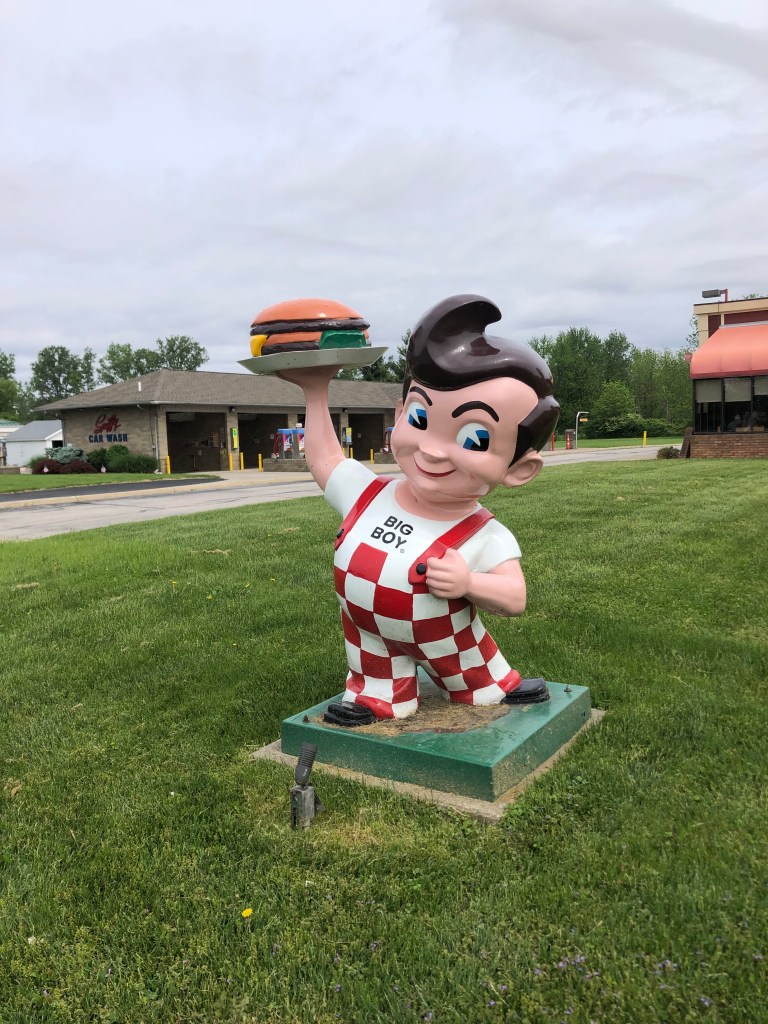
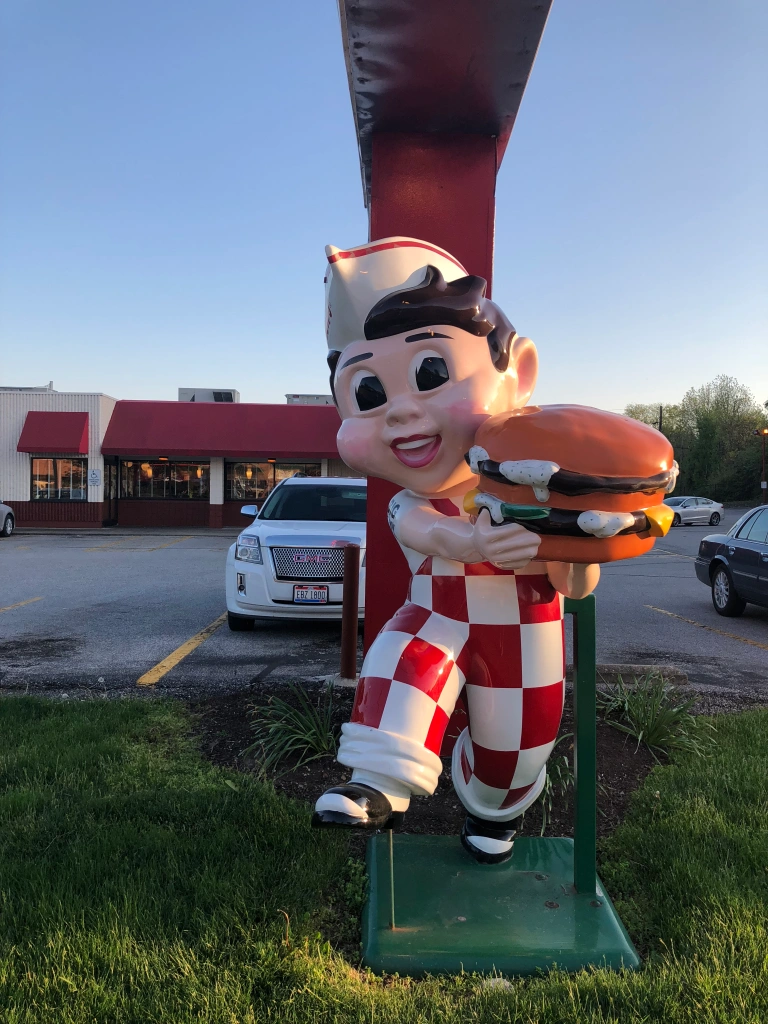
And of course, there’s this recurring fellow:
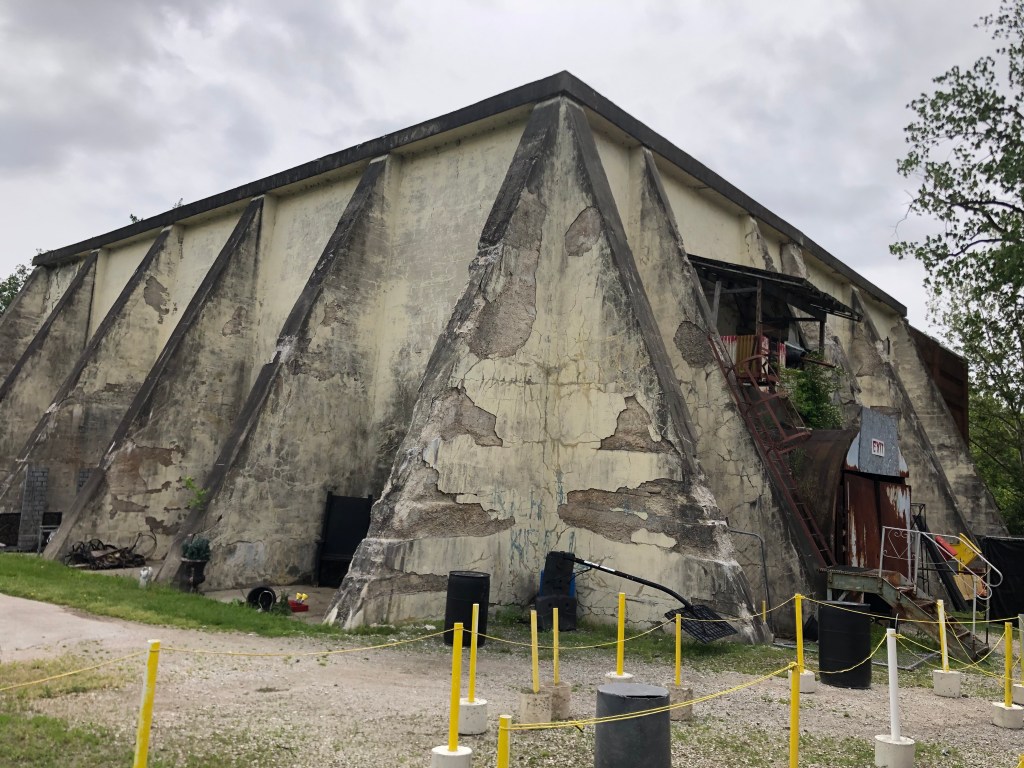
Finally, I bring you the Haunted Hydro, a so-called “Dark Attraction Park” that is open during the Halloween season.
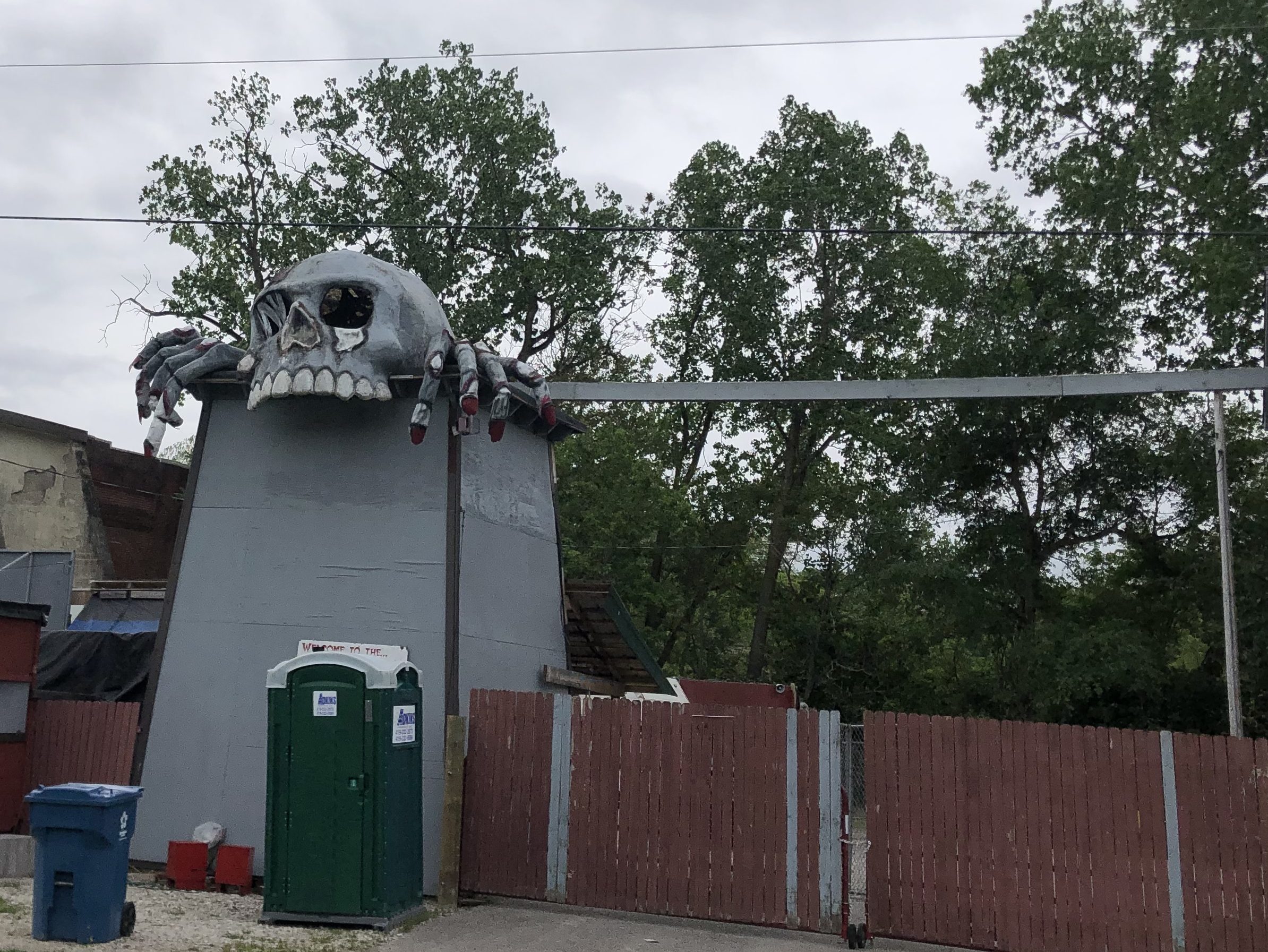
The place looks pretty run down, even abandoned. But I’m told that it’ll be resurrected in time for Halloween. The main part of the attraction is a century-old hydroelectric power plant (hence the “hydro” part of the name). You can see it in action here.
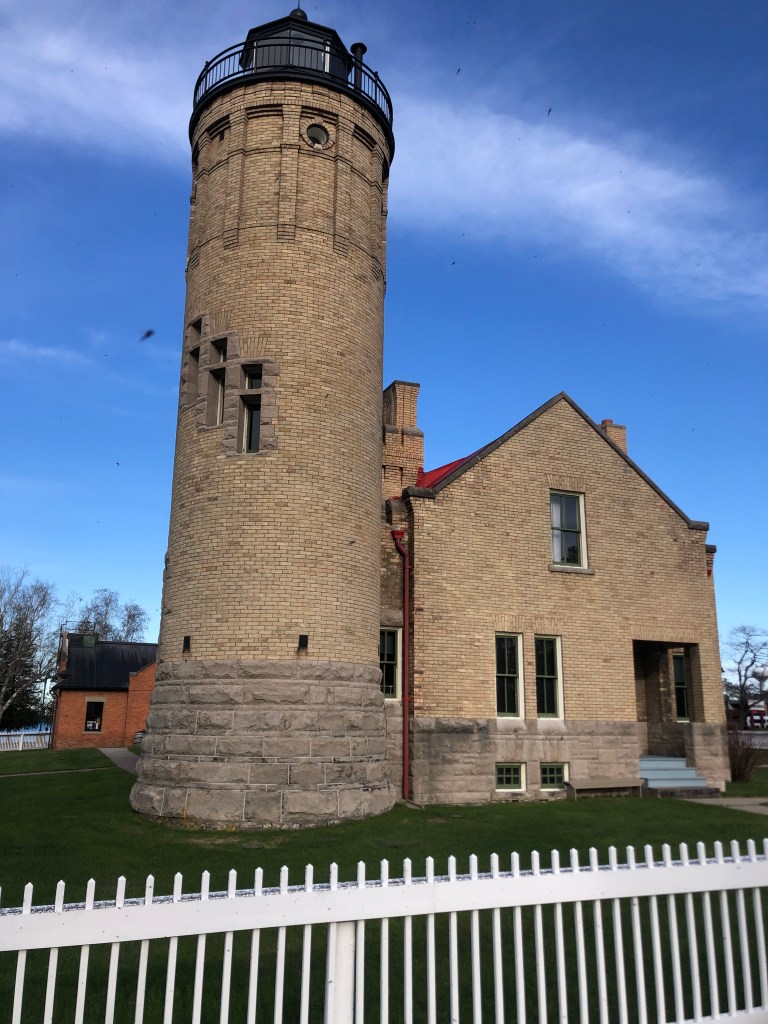
Finally, this afternoon I arrived in St. Ignace, Michigan, where I’ll start the western segment of Route 2 tomorrow morning. By the way, the the Lacuna ended as it began, with a lighthouse–this time a real one:
Until tomorrow!
In 1983 Elton John had a hit on the airwaves titled “I’m Still Standing.” It reached #12 on the Billboard Top 100. Today’s blog post looks at some structures that are, remarkably, still standing around the Placerville area. And with a tip of the hat to the season of Lent, those structures are churches.
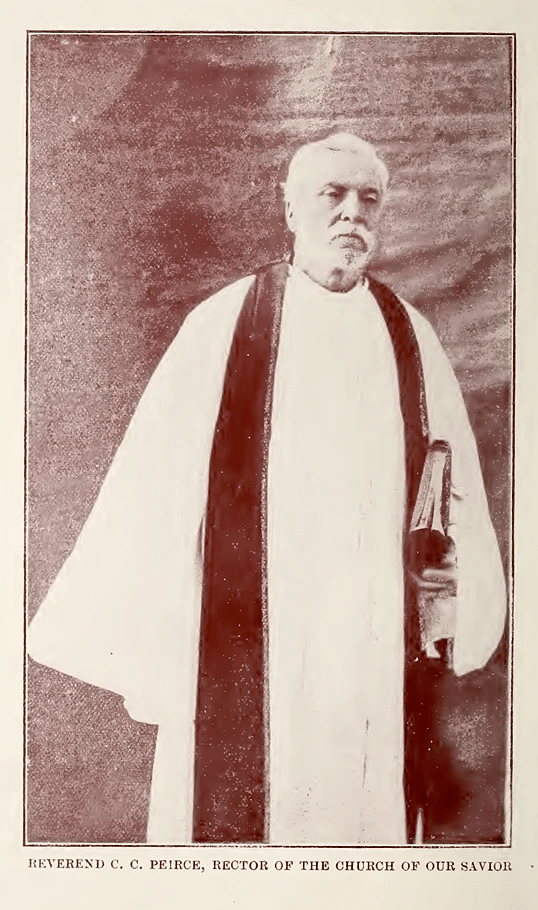
In 1825, Charles Caleb Peirce (yes, that spelling is correct) was born in the eastern United States (or, as it was called then, the central United States). Caleb (as he came to be called) was something of a precocious young man, with a strong literary streak and an industrious attitude. After graduating from college he earned his law degree– before he reached his 21st year. He clerked at the Ohio Supreme Court, but quickly became disillusioned about the “sordidness” of the practice of law. So, in a stunning career change, he entered the General Theological Seminary of New York and became ordained in the Episcopal Church in 1860.
From there, he crossed the continent to an upstart town in the far west called San Francisco (pop. at the time: 57,000)–a place that Peirce figured was in great need of ministry. He became rector of Grace Church (today’s Grace Cathedal), but once again he became disillusioned, this time by what he perceived as the corrupting influence of money in that church. (Notably, Grace Church’s evident difficulty in keeping a rector was satirized by Mark Twain in 1865.)
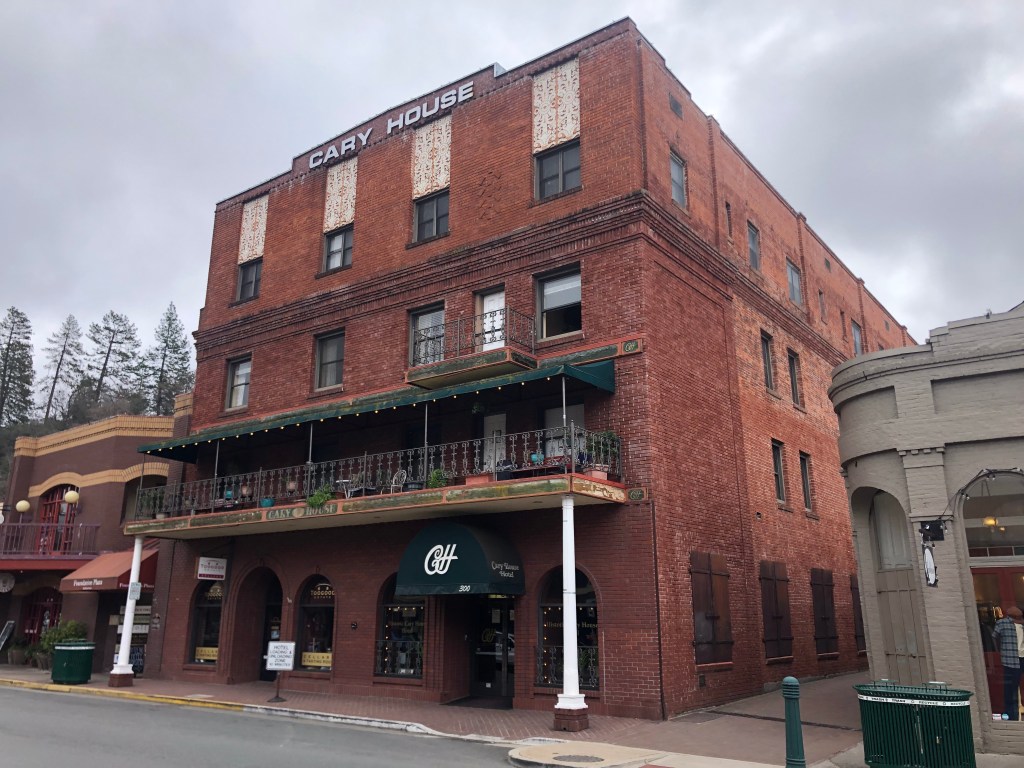
So Caleb Peirce uprooted himself again, this time to “a rough, sparsely settled, obscure corner of the United States” — which is of course Placerville, CA (pop. at the time: 2,500). He’s said to have alighted from his stagecoach in front of the Cary House hotel, which, incidentally, is still standing on Placerville’s Main Street today.
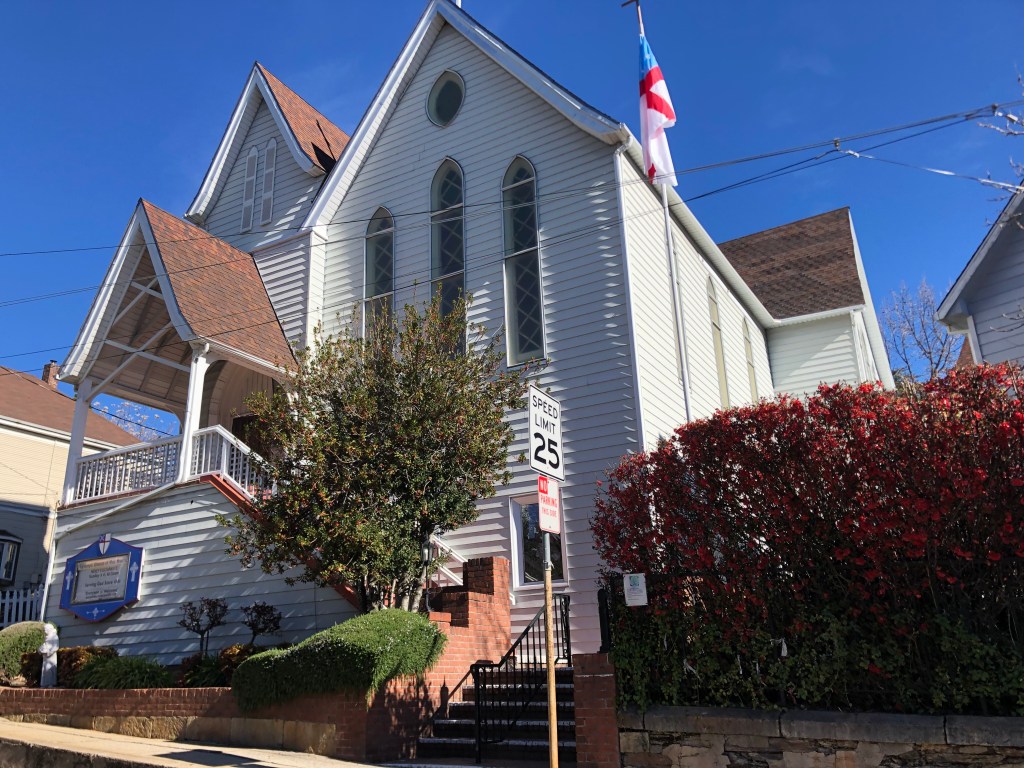
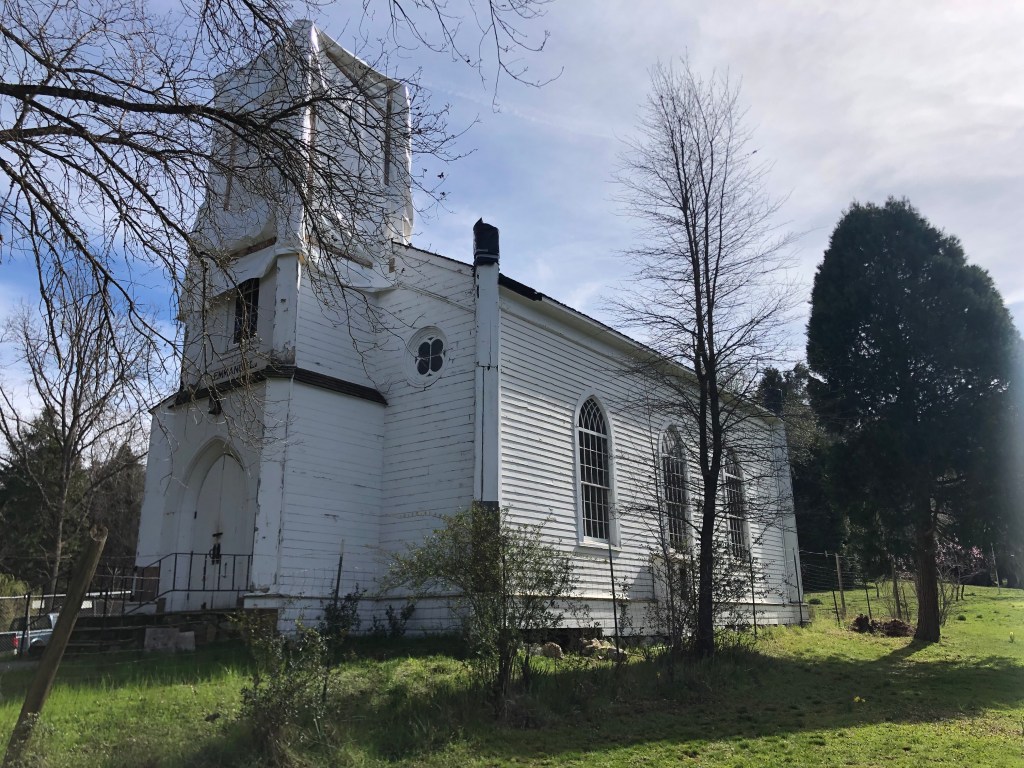
Peirce began organizing a church under the name “Church of Our Saviour.” Services were held in the county courthouse until a dedicated church building could be constructed. That church was completed in 1865, and it too is still standing today, just a few blocks from the Cary House.
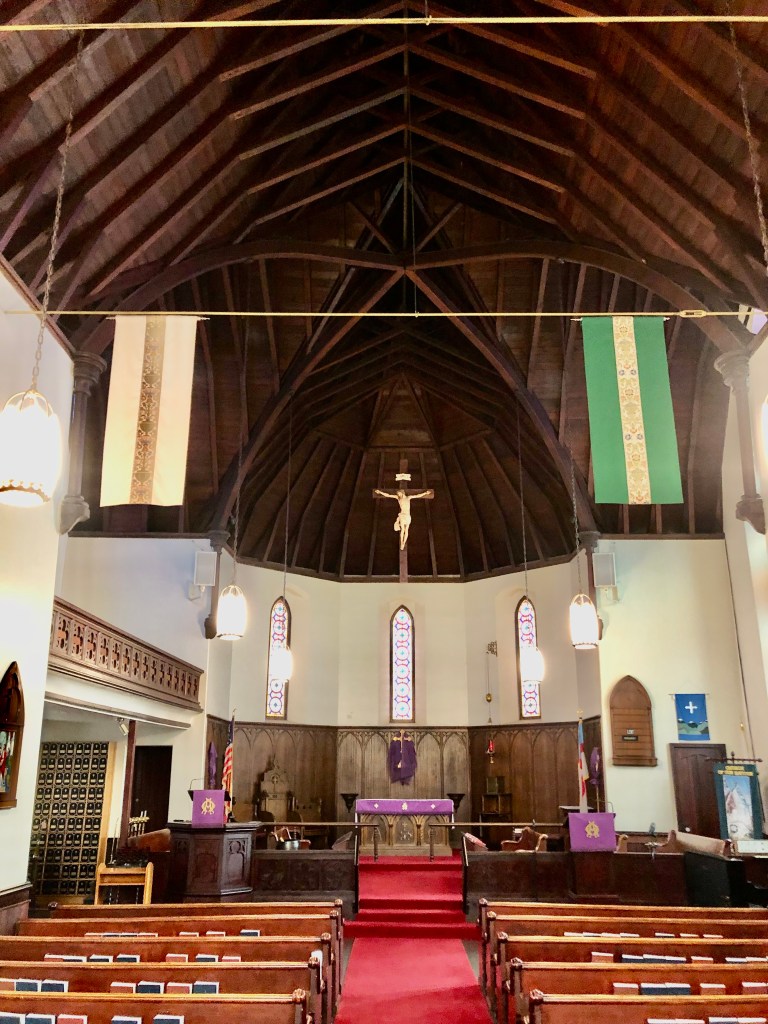
Caleb Peirce would remain the minister at the Church of Our Saviour for the rest of his life. But he hadn’t quite settled down exactly. Although he preached at the Church of Our Saviour every Sunday, he traveled (on foot!) to towns throughout the county the rest of the week, preaching, officiating at weddings and funerals, baptizing children, and whatnot.
One of those nearby towns was Coloma (pop. at the time: 888). You’ll recall that this is the town where gold was first discovered at Sutter’s Mill. Peirce would preach frequently at Coloma’s Emmanuel Church. This was California’s first Episcopal church, constructed in 1855. And guess what? It too is still standing!
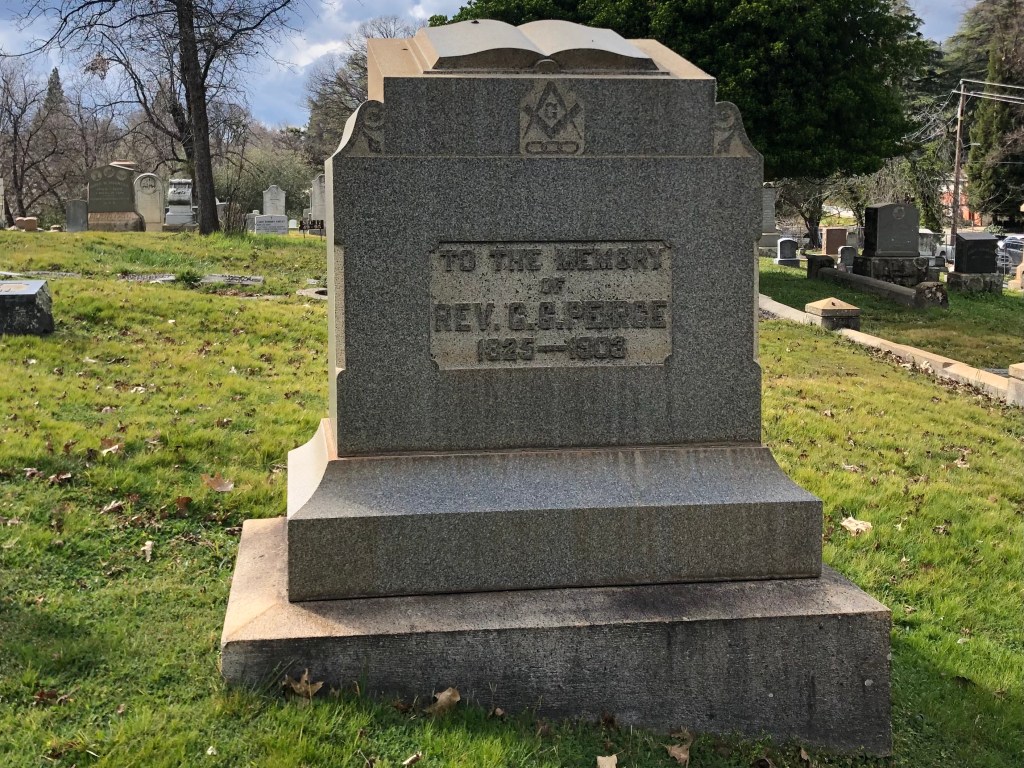
Caleb Peirce died of kidney disease on March 14, 1903. He was buried at Placerville’s Union Cemetery, just couple of blocks from the Church of Our Saviour. He is no longer standing, though perhaps in the eyes of God…
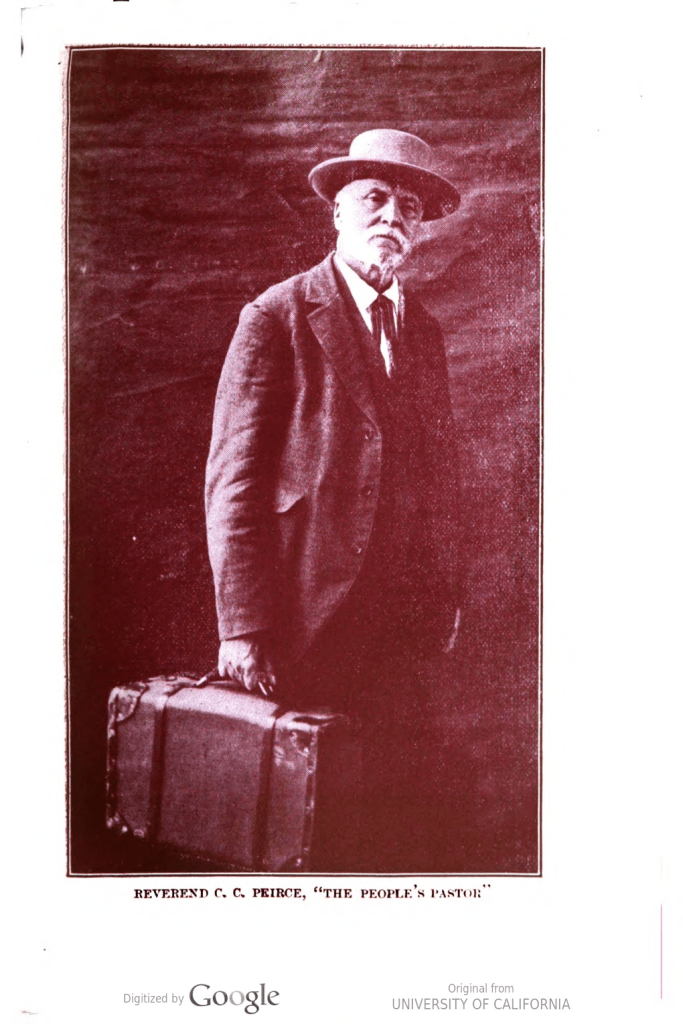
Peirce left few possessions, as most of his books and clothes had been destroyed in a hotel fire a few years earlier. But he did leave a suitcase…
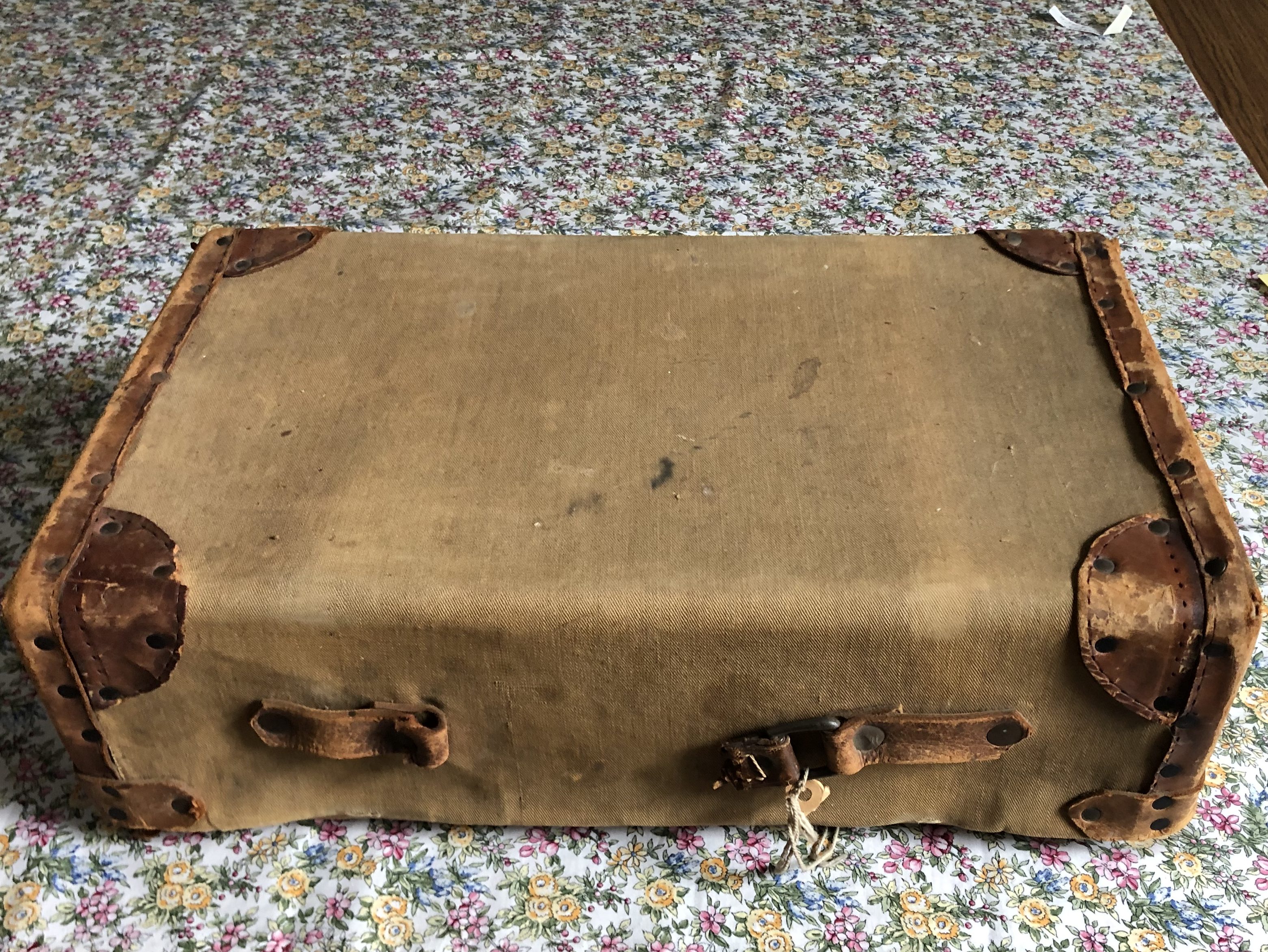
…and that suitcase still survives today. It’s in The Church of Our Saviour’s Parish Hall, as if waiting for its owner to return.
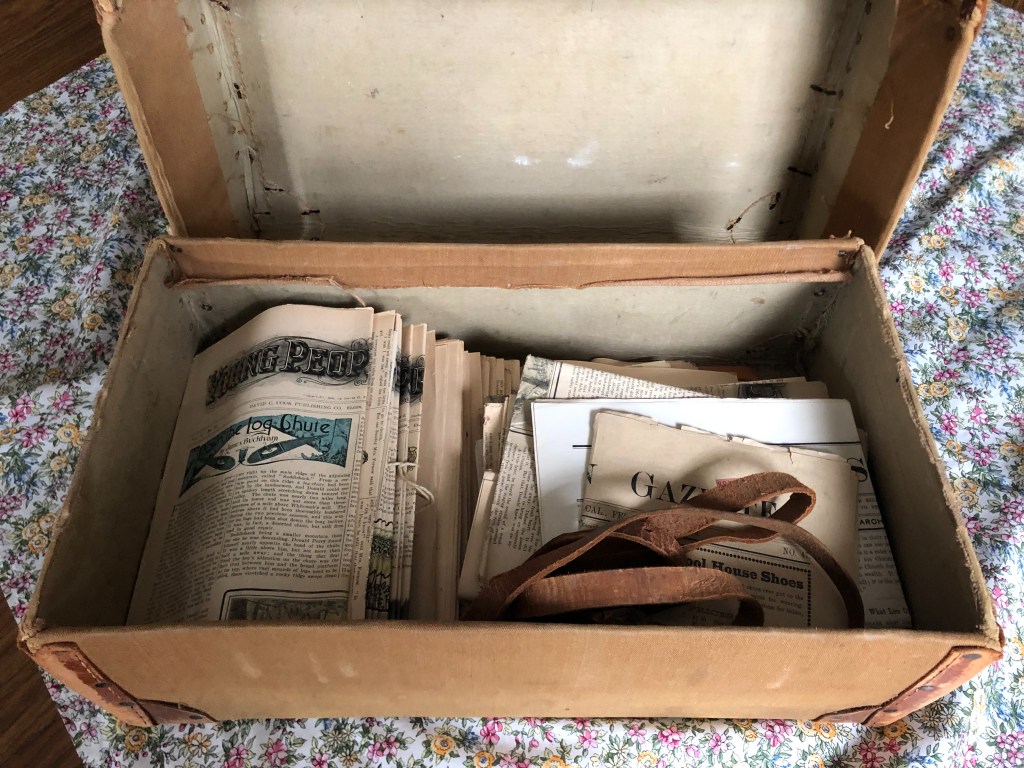
Today the Church of Our Saviour remains an active, little-engine-that-could church in the Placerville community. And what of the Emmanuel Church in Coloma? It still stands in the same place it’s stood for over 160 years, but its worn condition caused it to be shuttered in 2015, until extensive repairs can be made. That church, like much of Coloma, sits within the Marshall Gold Discovery State Historic Park, and as such it is under the control of the State Parks Department. However, I recently talked to someone who holds the deed to the church building, and this opens an interesting story of its own:
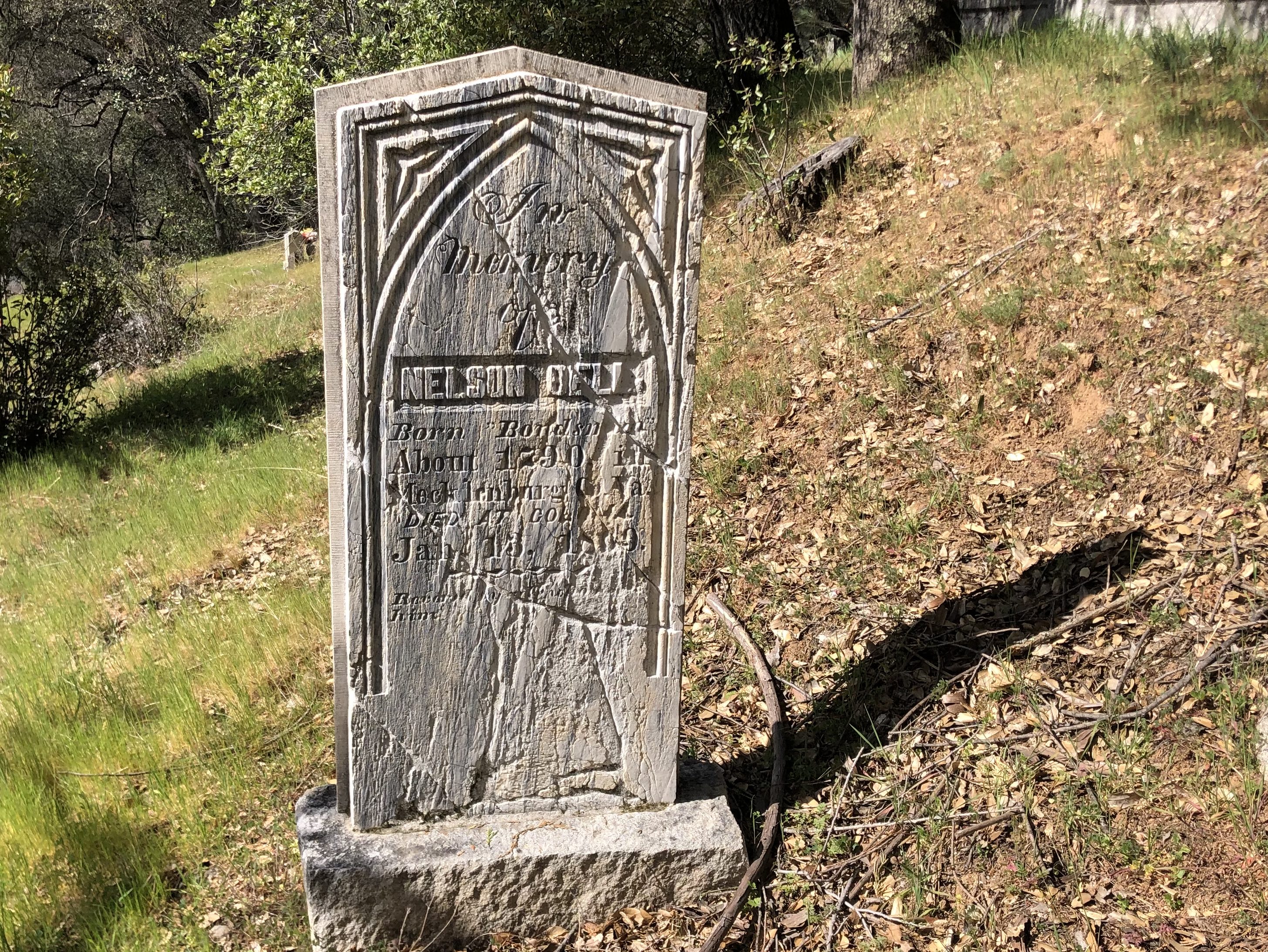
The story goes back to the Gold Rush, just a few years before Caleb Peirce arrived in Placerville. At that time, men from all over the country were pouring into the Sierra foothills in hopes of striking it rich in the goldfields. One of those men was a slave trader named Robert Bell, who brought with him an enslaved man he called Nellson Bell. (Evidently it was customary for slave traders to confer their own last names on the people they sold.) Nellson eventually made enough money mining that he was able to purchase his freedom. He died in 1869, and his headstone is still standing in the Coloma’s Pioneer cemetery.
Now, Nellson had a son, named Rufus M. Burgess (no slaver’s surname for him!) He got married, took a job as a blacksmith, and eventually became a prominent, well-liked, and rather wealthy citizen of Coloma. Indeed, he died owning over 90 acres of Coloma land…including the Emmanuel Church building. (You wondered where this was going, didn’t you?)
The State Parks Dept claims the Burgess properties were given up to the state in probate after Rufus M. Burgess’s death. But Rufus’s great grandson, one John Burgess, argues that the land was taken illegally, which of course is plausible given the poor treatment of African Americans by the courts at the time. One wonders how one-time lawyer Jacob Peirce would have framed the legal issues.
As a coda: I met John Burgess (the great grandson) last weekend, and he’s got persuasive arguments as well as copy of his great-grandfather’s deed to his Coloma property. (He’s put out a book for young readers on the topic here.) If he wants to pursue legal action against the State Parks Department, I suppose the question is: Does he have standing?
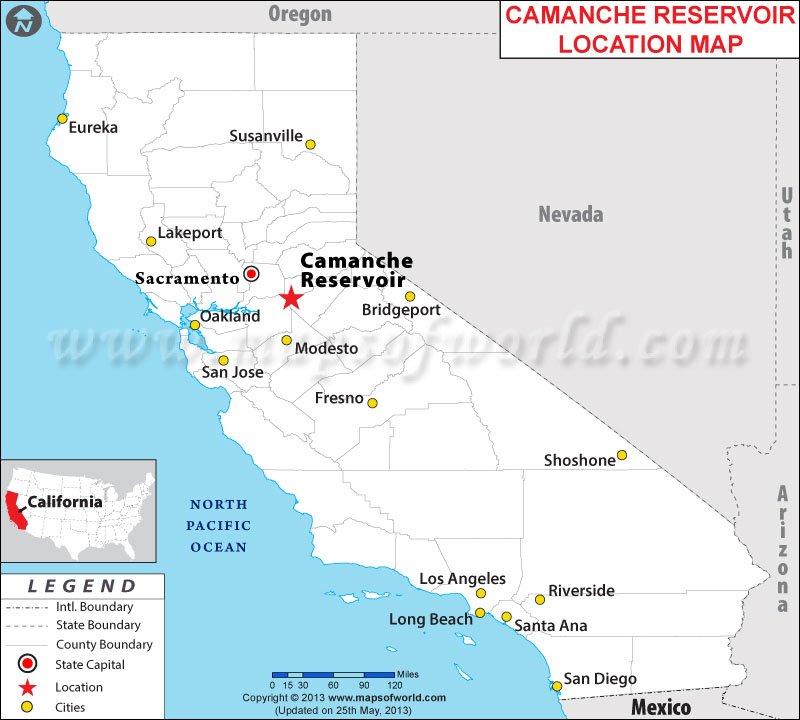
Back when I was a babe (shockingly, no one calls me this anymore), the good folks at the East Bay Municipal Utility District (East Bay MUD) decided to dam the Mokelumne River in the Sierra Foothills, thus creating a reservoir that would supply the growing population of the East Bay with reliable drinking water. They named the reservoir Lake Camanche.
I vaguely remember the too-good-to-be-true commercials, featuring over-excited sport fishermen and giddy children playing at the beach, that were broadcast over the fuzzy UHF stations on our ancient television set in the late 1960s. The commercials sought to entice families to buy undeveloped land that, thanks to the creation of the reservoir, had suddenly become beachfront property. The sales pitches belong to a mildly ineffable class of advertisements that evoke tropical beaches improbably appearing in the shrublands of California’s dry foothills or, say, the deserts of northern Arizona. Here’s a good example of the genre. For an illustration of how these schemes can go wrong, see my post on the Salton Sea.
Anyway, although new communities were springing up on the north and south shores of Lake Camanche, several historic settlements found themselves underwater–literally. By damming the Mokelumne River, East Bay MUD flooded several gold rush towns: Lancha Plana, Poverty Bar, and Camanche. The first two were unihabited ghost towns, but Camanche still had some residents and a functioning post office that had to be relocated. (Camanche had been named by settlers in the 1850s after their home town of Camanche, Iowa.) Today, the towns sit under about 150 feet of water. It’s said that scuba divers occasionally explore the submerged remnants of the old towns.
Now, the Sacramento region has been experiencing unusually warm temperatures this week, feeling more like mid-spring than mid-February. And if that’s not a good enough reason for a retired chap to take a little road trip down to Lake Camanche, I don’t know what is.
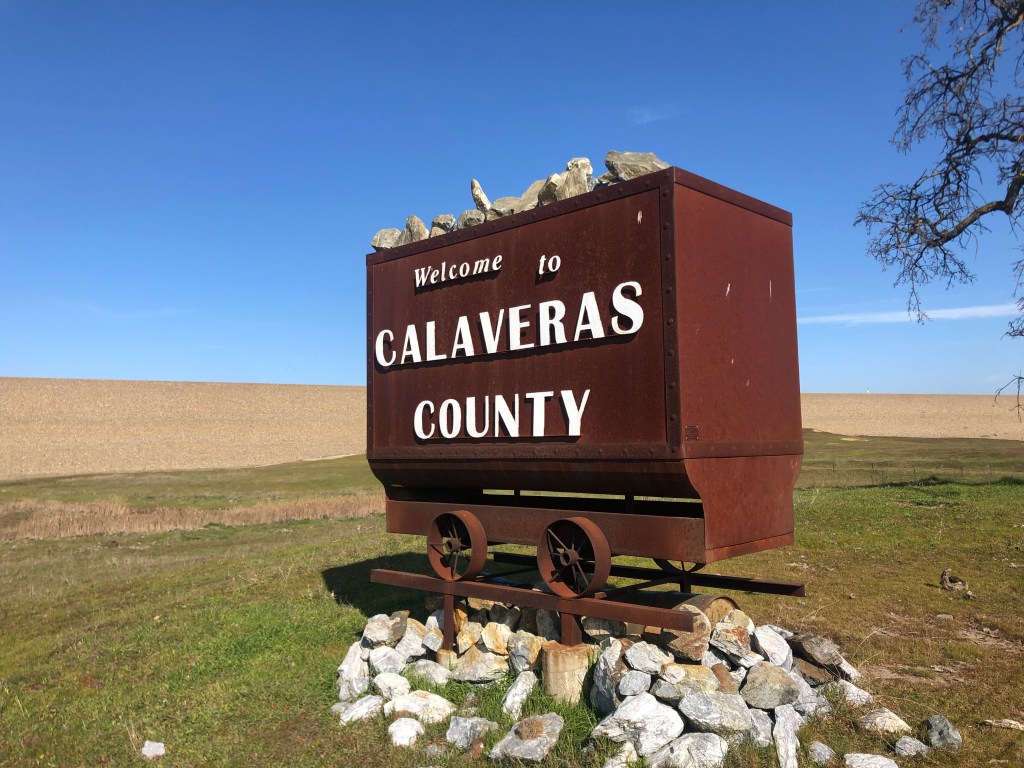
Thus I found myself heading south from my newish stomping grounds near Placerville, down to an area where Amador, San Joaquin, and Calaveras Counties meet. (Most of the trip followed Route 49, which I described in a recent blog post.)
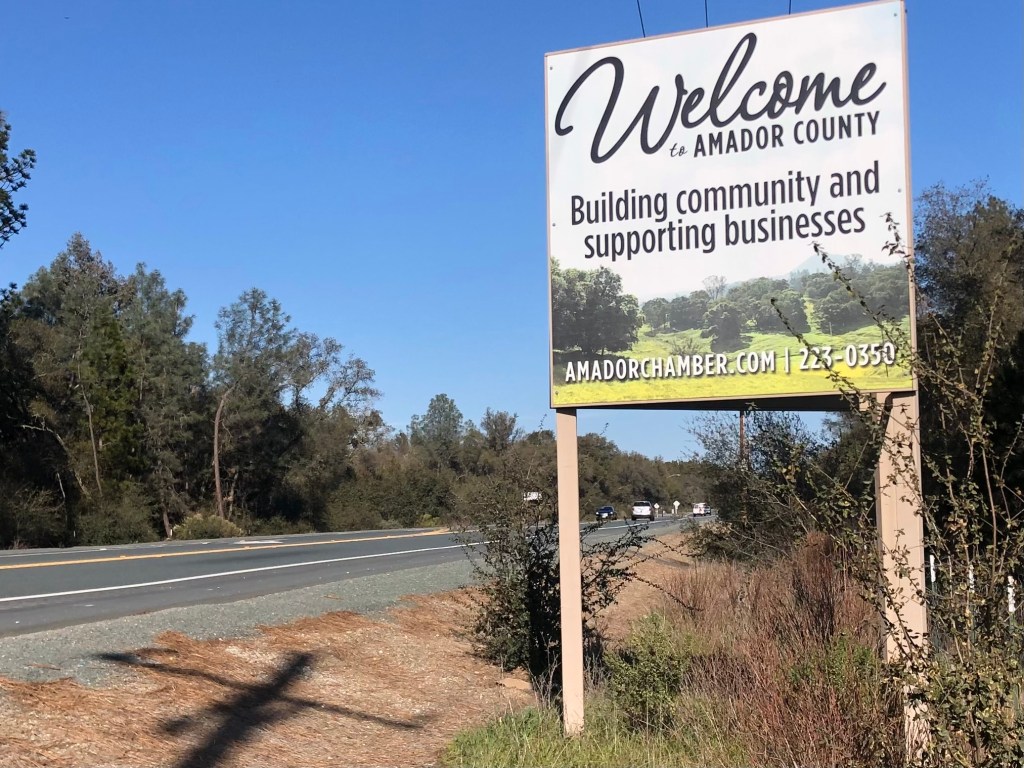
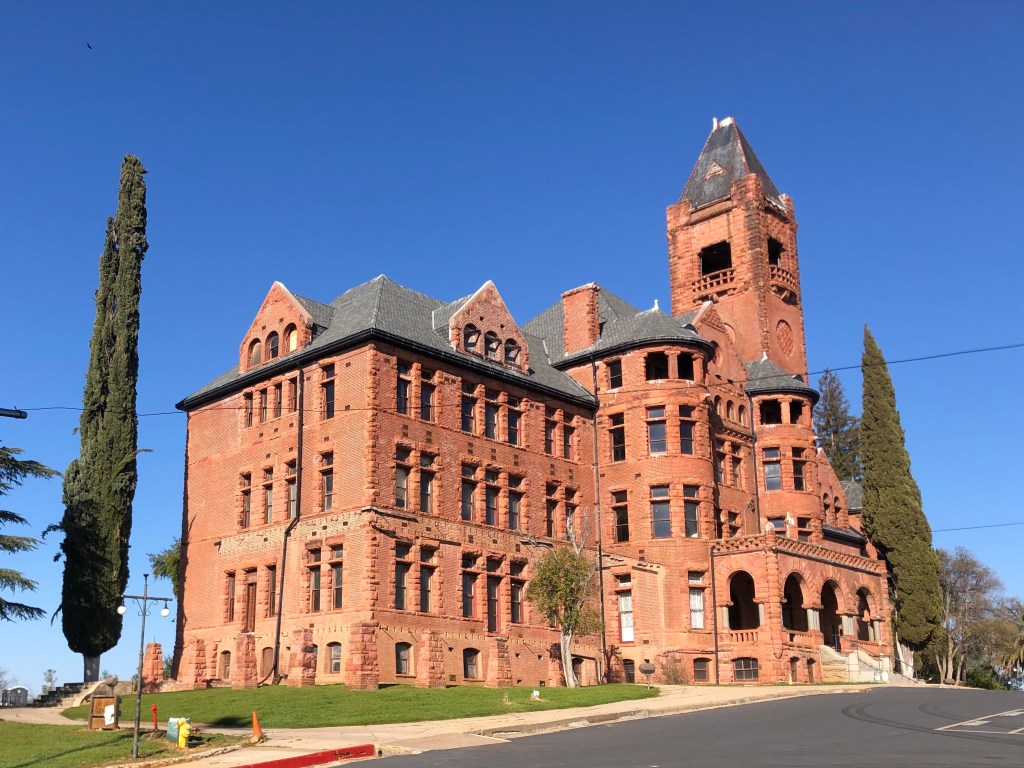
As I got close to Lake Camanche, I passed through the town of Ione (pop: 8,600). It’s a historic, quaint, and reasonably prosperous little community that no doubt will be the subject of a later blog. But for now, let’s just observe that Ione is home to the historic Preston Castle, which had been a reform school for boys that was built at the end of the 19th century. It’s said to be haunted, and for that it will likely be the subject of a blog in October.
When I finally arrived at Lake Camanche, I was somewhat disappointed. Let me enumerate the three reasons for my disappointment:
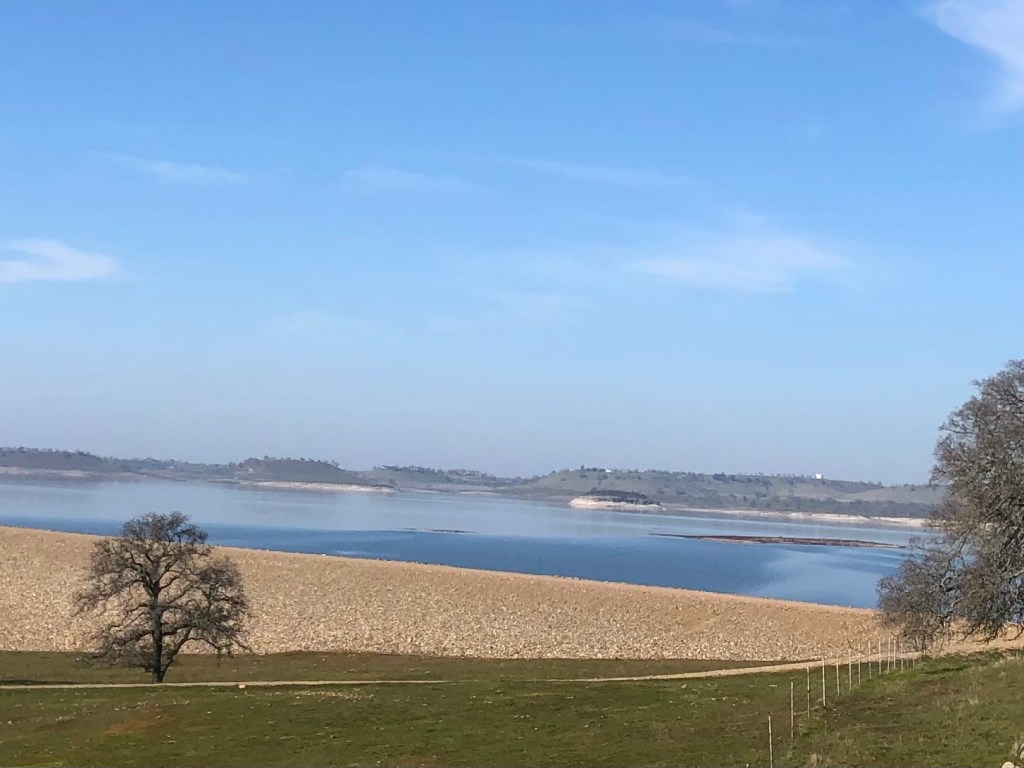
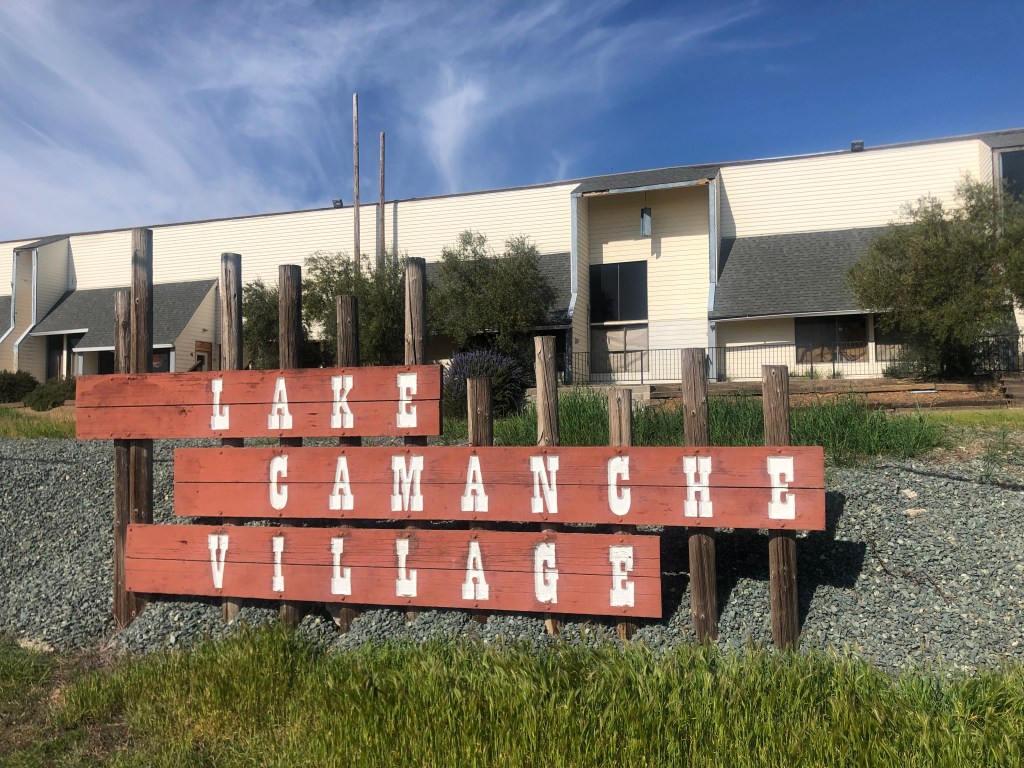
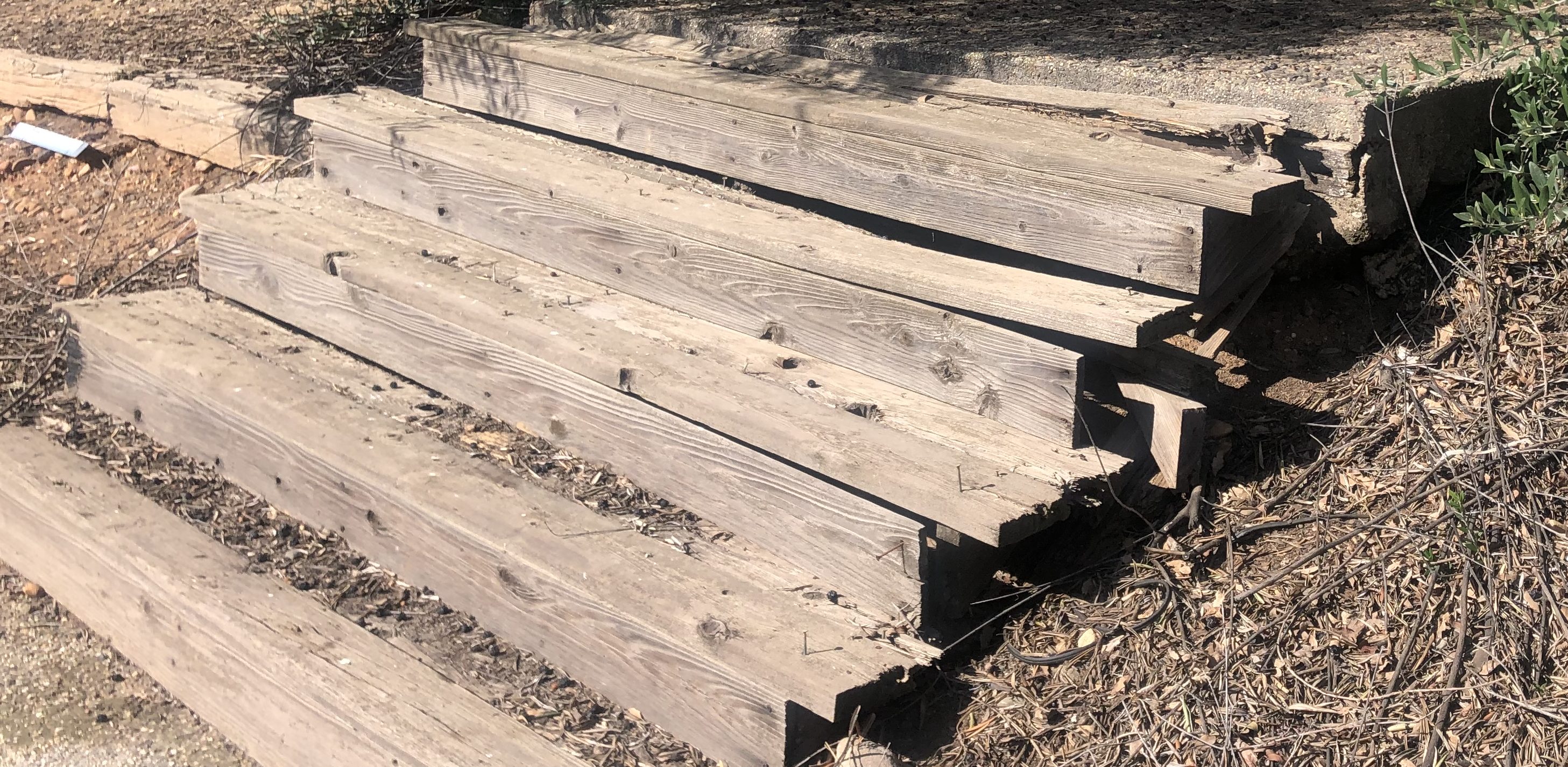
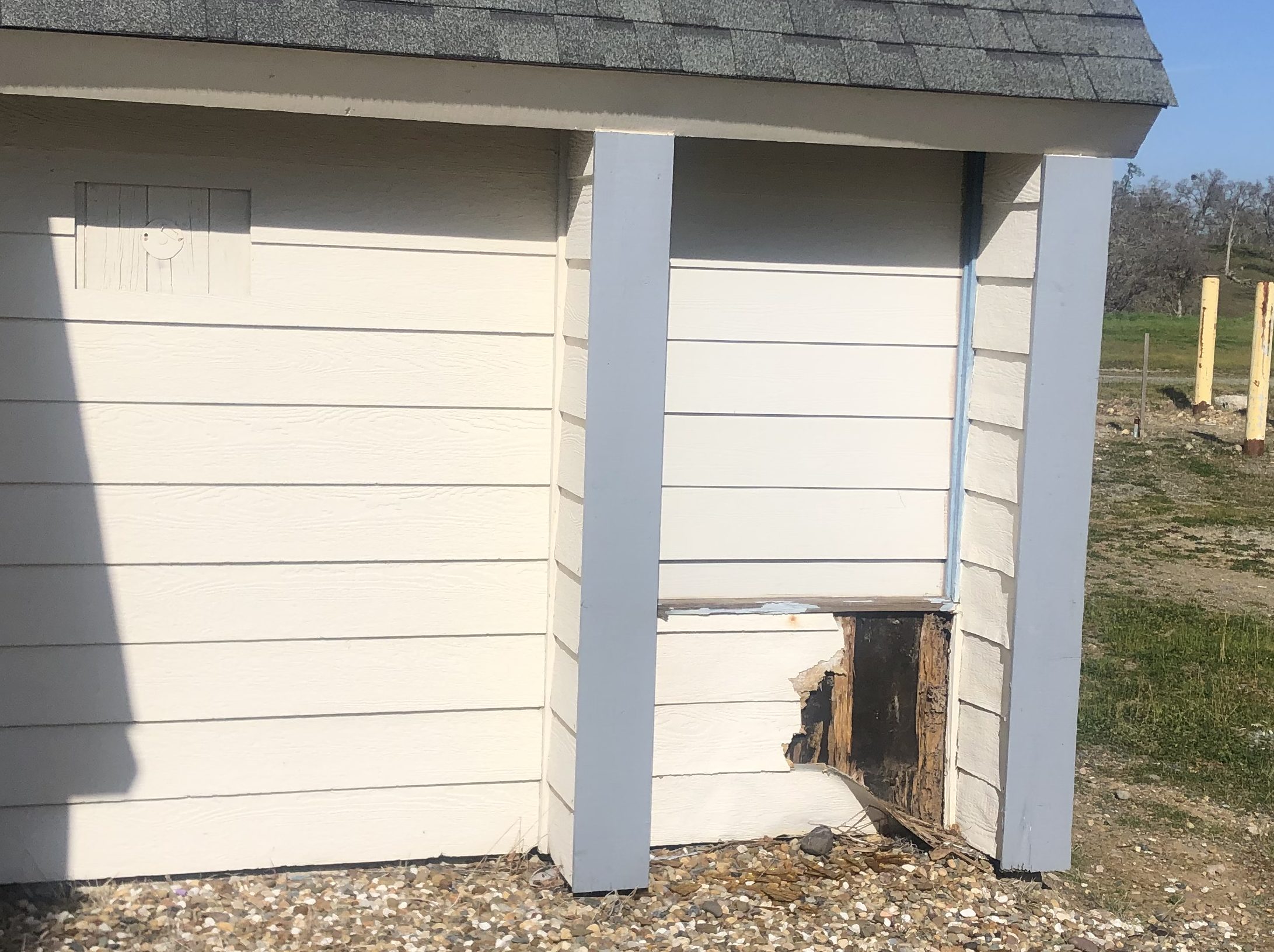
3. Although recent news items spoke of how California’s drought has exposed ruins that normally reside under water, major rains this past December re-covered those historic remains and I was unable to find any evidence of those three historic towns under Lake Camanche.
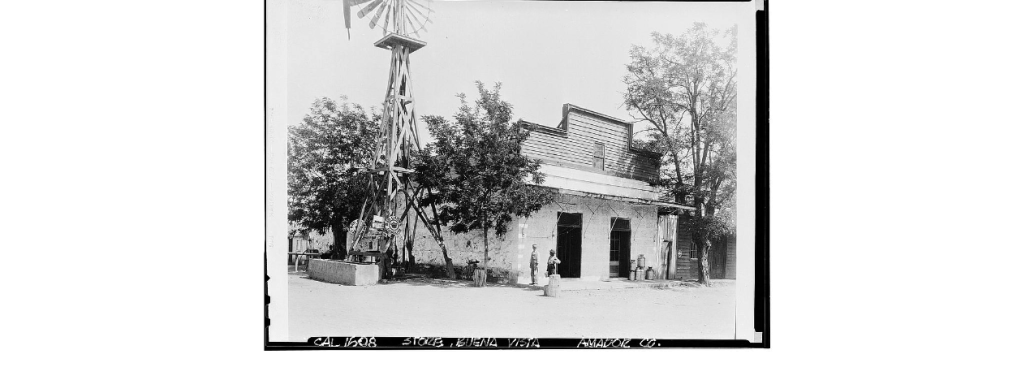
Incidentally, although Lancha Plana had no population when the reservoir was being developed, it did have a cemetery. East Bay MUD decided to move the graves to another location…as if somehow, after over a hundred years, it would be cruel to put a lake over the cemetery. But such are the expectations of civilized society. Let’s just hope they learned the lesson of Poltergeist.
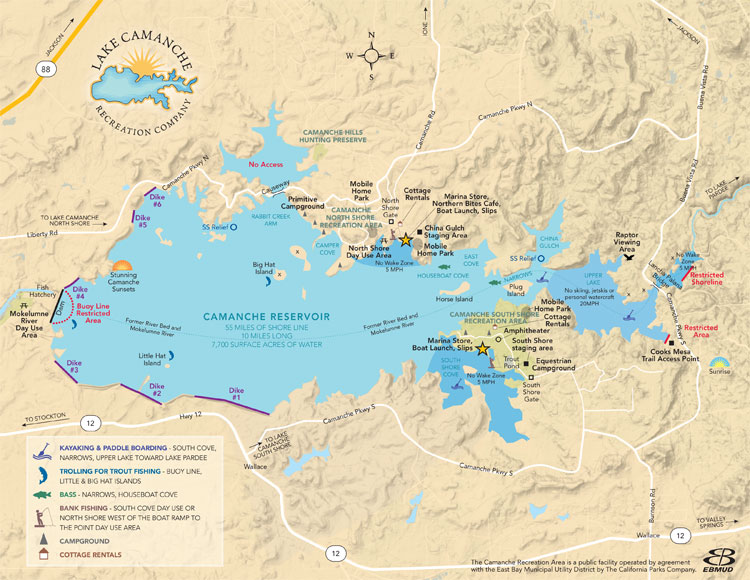
Still, even without encountering drought-exposed ruins, the visit was a good one. I took a pleasant drive more or less around the lake, with glimpses of the blue water and, more often, views of the surrounding hills. Eventually I came to Camanche Dam, which stops the Mokelumne River in its tracks.
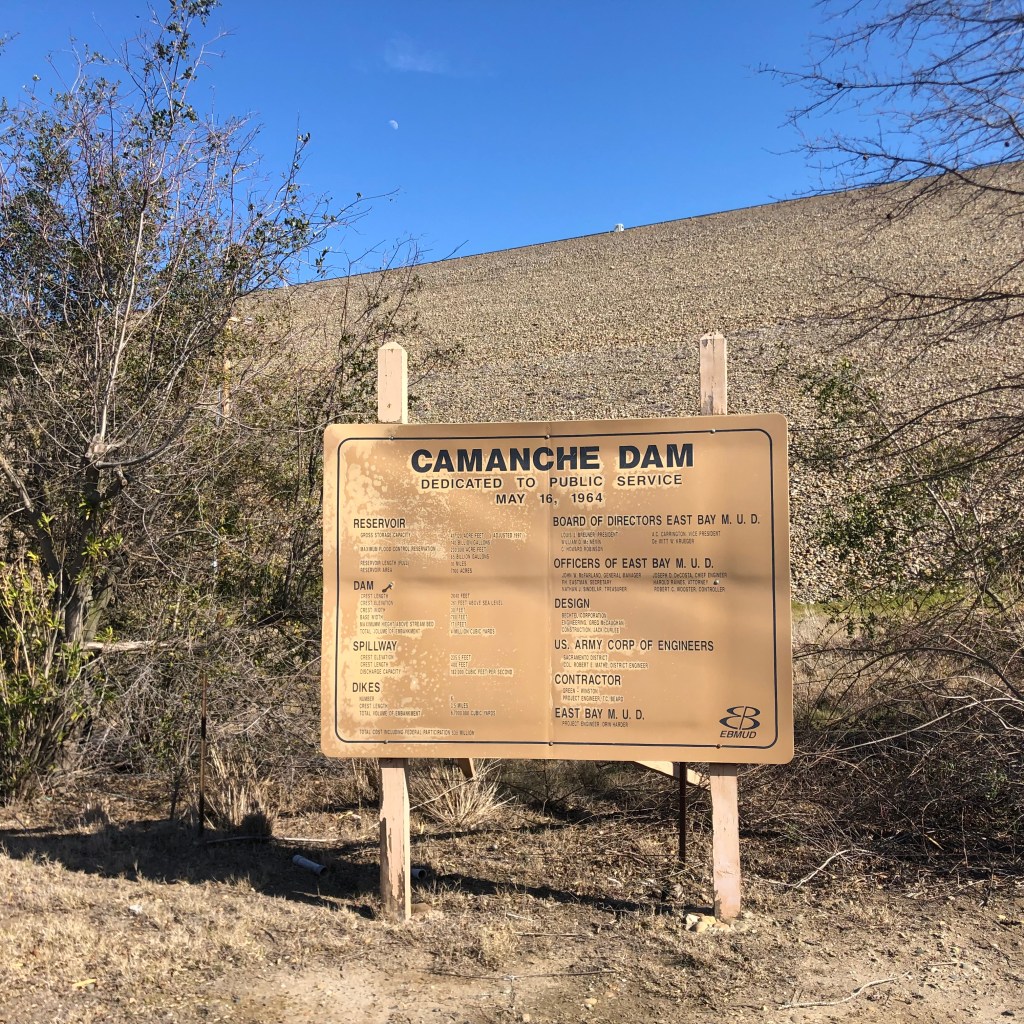
A few stats about the dam, which was constructed in 1964: it’s 2640 feet long and 261 feet high, holding back up to 241 billion gallons of water. For those of you who can’t wrap your head around that number, it equates to about 107 billion cases of beer.
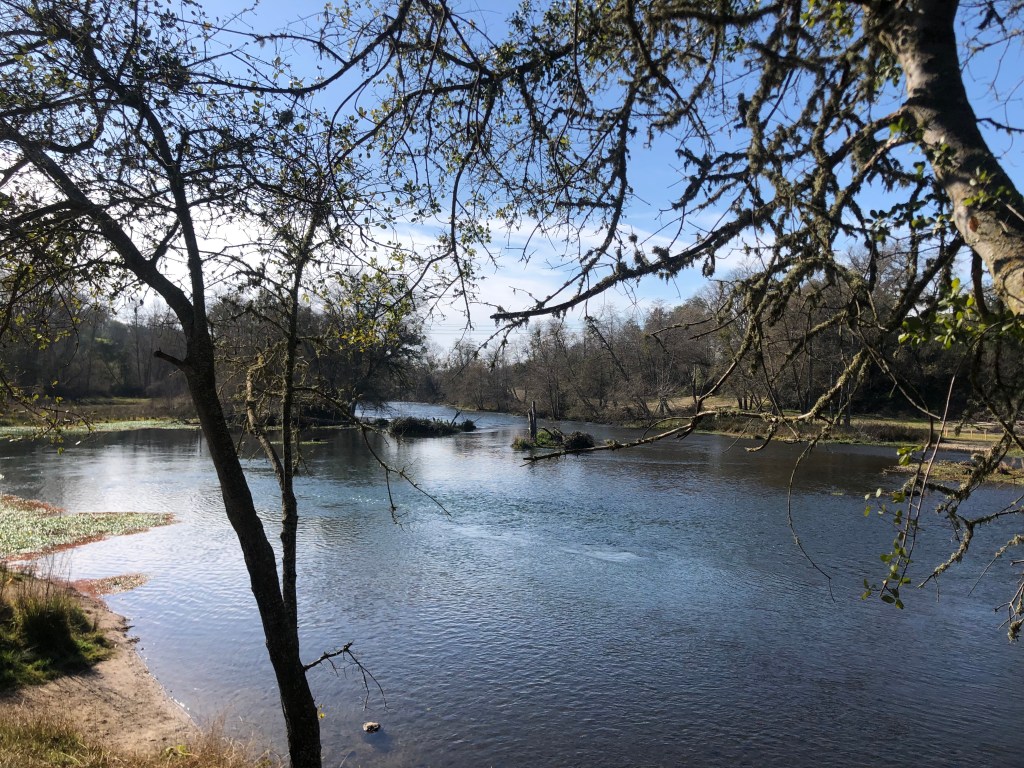
Here’s the placid Mokelumne River shortly after it passes through the dam.
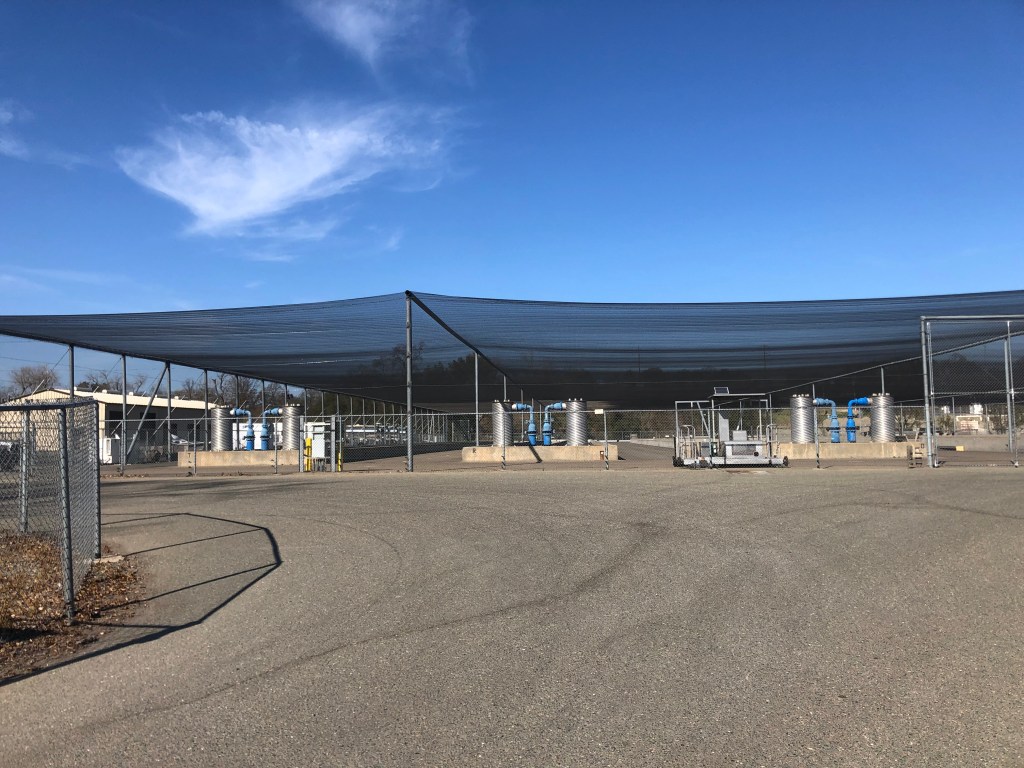
Near the reservoir there’s also a fish hatchery, which is used to restore Chinook salmon and steelhead whose kinky sex lives were impeded by the dam. Sadly, the facility is now “temporarily closed” to visitors.
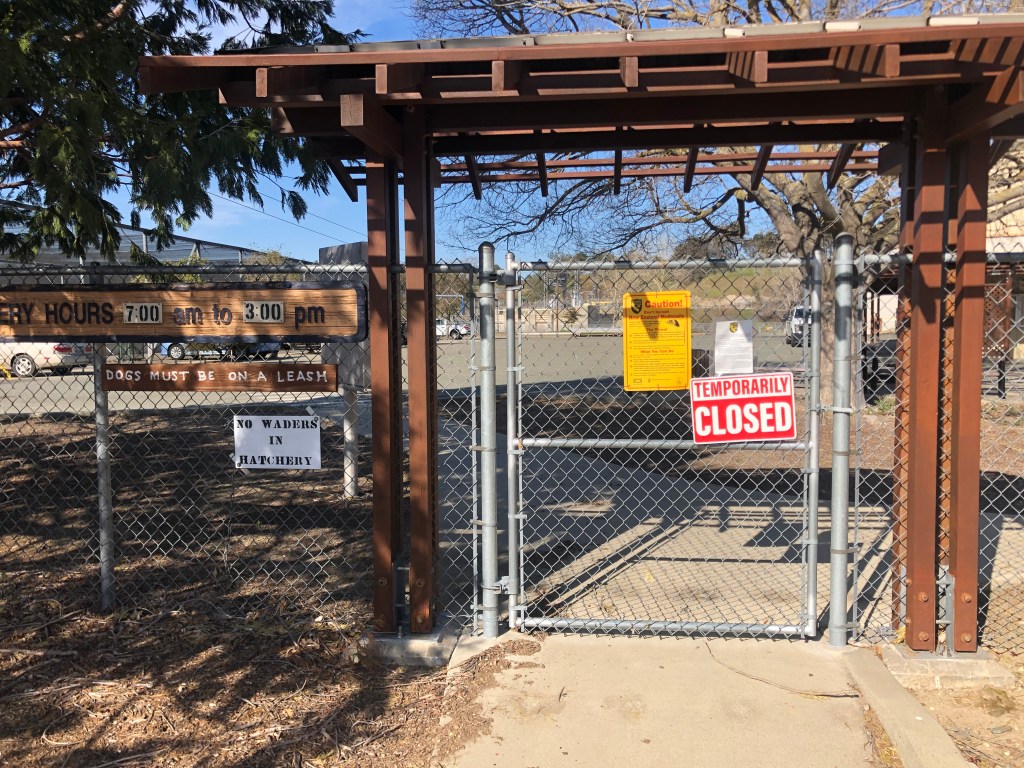
Well, that’s kind of it. Without a watercraft or scuba gear, there isn’t a whole lot to do around Lake Camanche. With a final glance at a few anglers attempting to hook, kill, and presumably devour some of the recent graduates from the fish hatchery, I got back on the Speedmaster and headed for home.
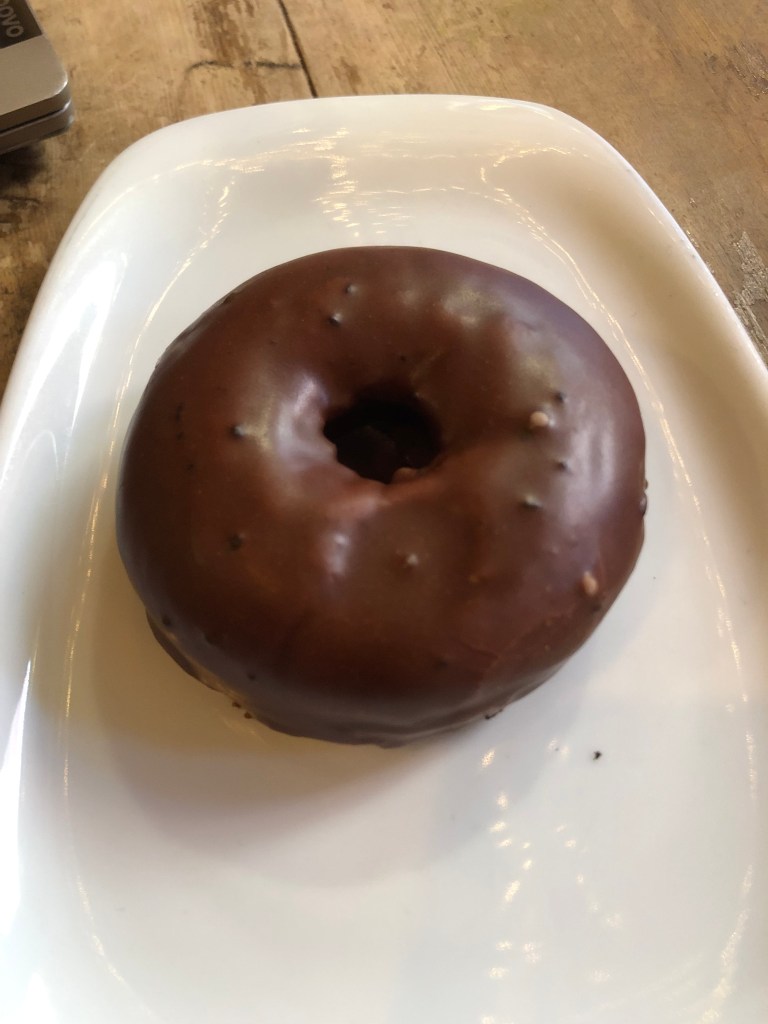
So, today is my birthday. I’m not going to dwell on that, other than to note it’s a prime number, and it earned me a free donut. Anyway, I figured that I’m not getting any younger, so I decided to spend the day exploring the back roads of the Sierra Foothills. The region is beautiful this time of year, with its rolling hills covered with deep green grass. And today was unseasonably warm, feeling much more like spring than winter. So I saddled up the Speedmaster and went to see what I could see.
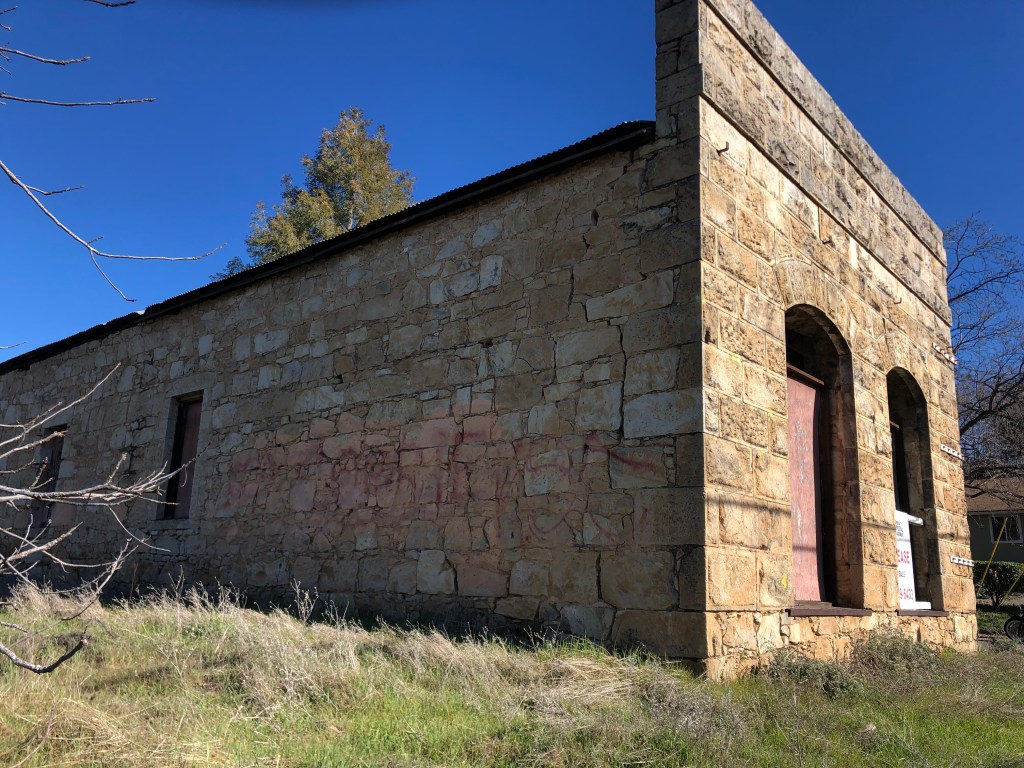
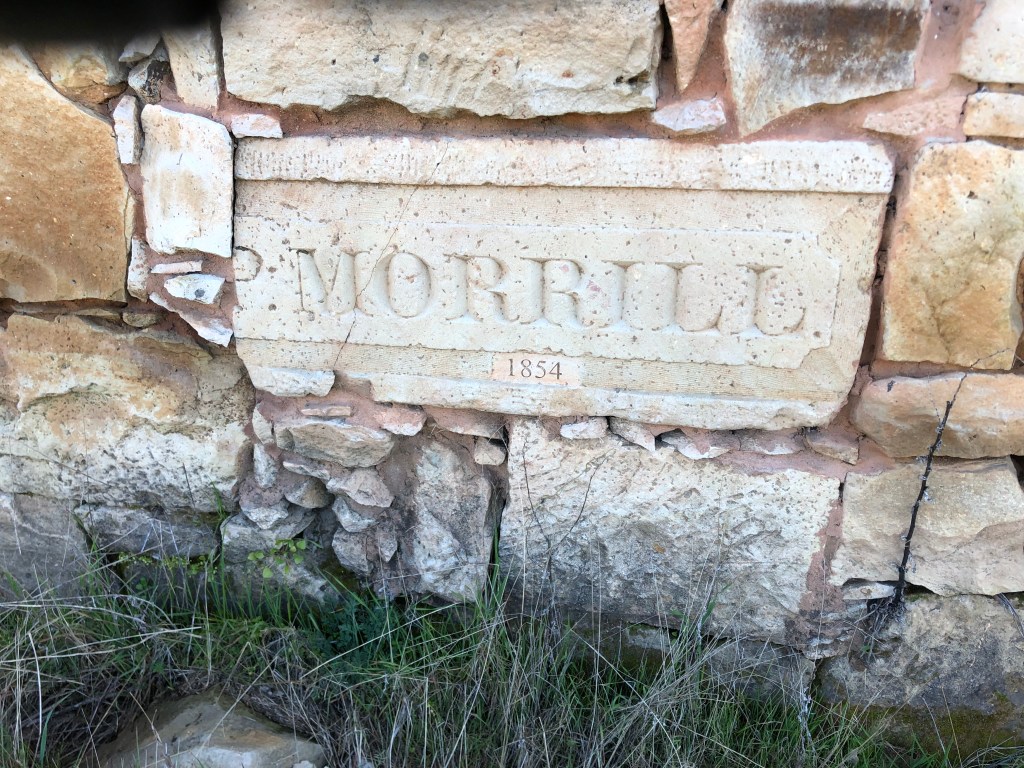
I found myself meandering along CA Route 49–a scenic, historic road that links a number of gold mining towns. (I wrote about an earlier trip along a stretch of it here.) This time I headed south on CA-49, starting around Coloma. I passed through the (relative) metropolis of Placerville, and soon came to Diamond Springs (pop: 11,000). To me, Diamond Springs is one of those gold rush towns that has somehow managed to maintain its historic charm while still being relevant in the 21st century. Its population has more than doubled since 2000. The most attractive business in town, for my money (literally), is Solid Ground Brewing. But the most picturesque building is the old General Store, from the 1850s. It’s for sale or lease, if any of my readers wants an investment property…
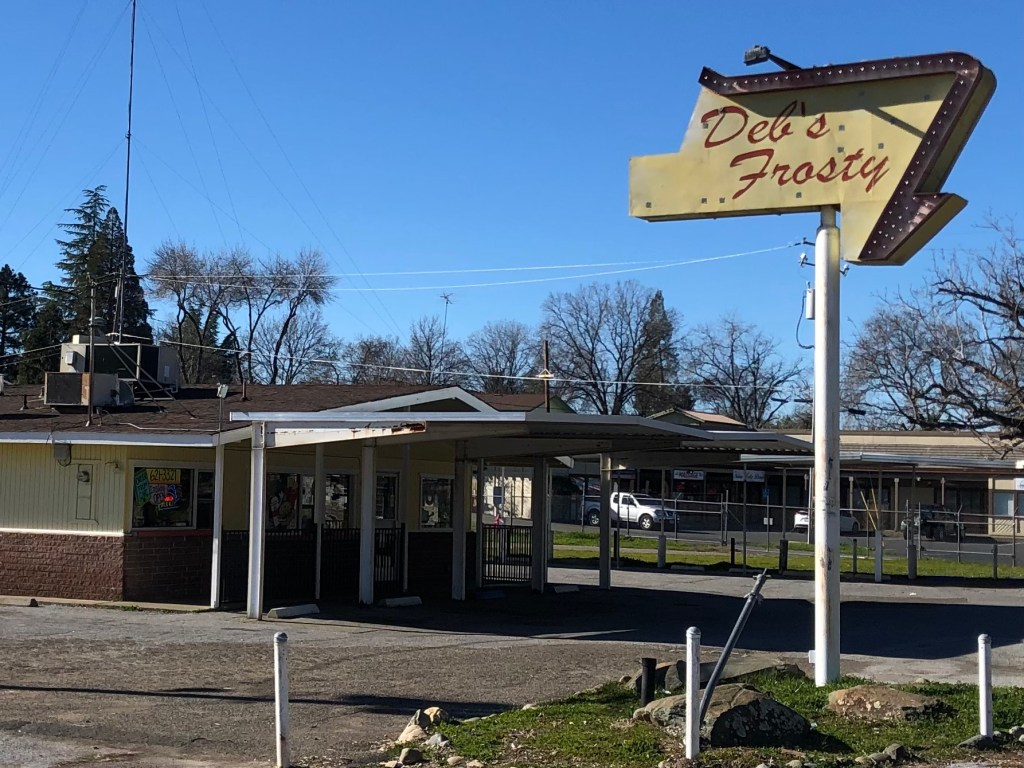
Now, in case you thought Diamond Springs was stuck in the Gold Rush era, it does have some “modern” buildings….from the 1950s. According to Yelp, Deb’s Frosty specializes in Mexican food. (??!)
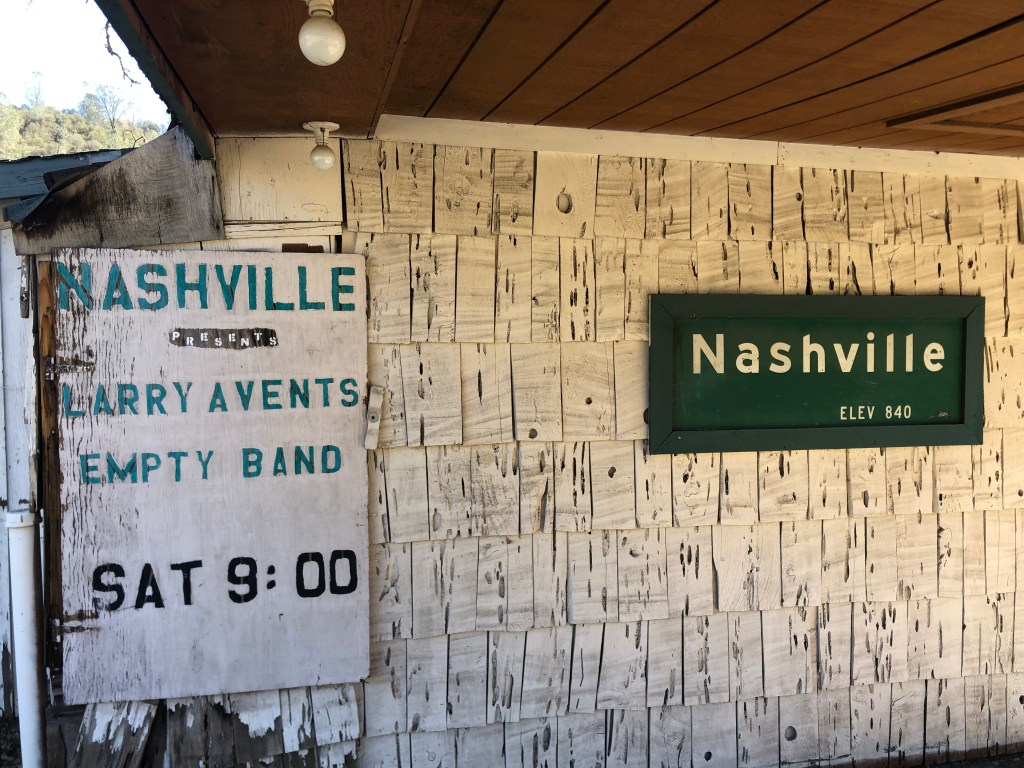
Somewhat further down 49 I entered Nashville. No, not the Nashville. But they do have their own music venue.
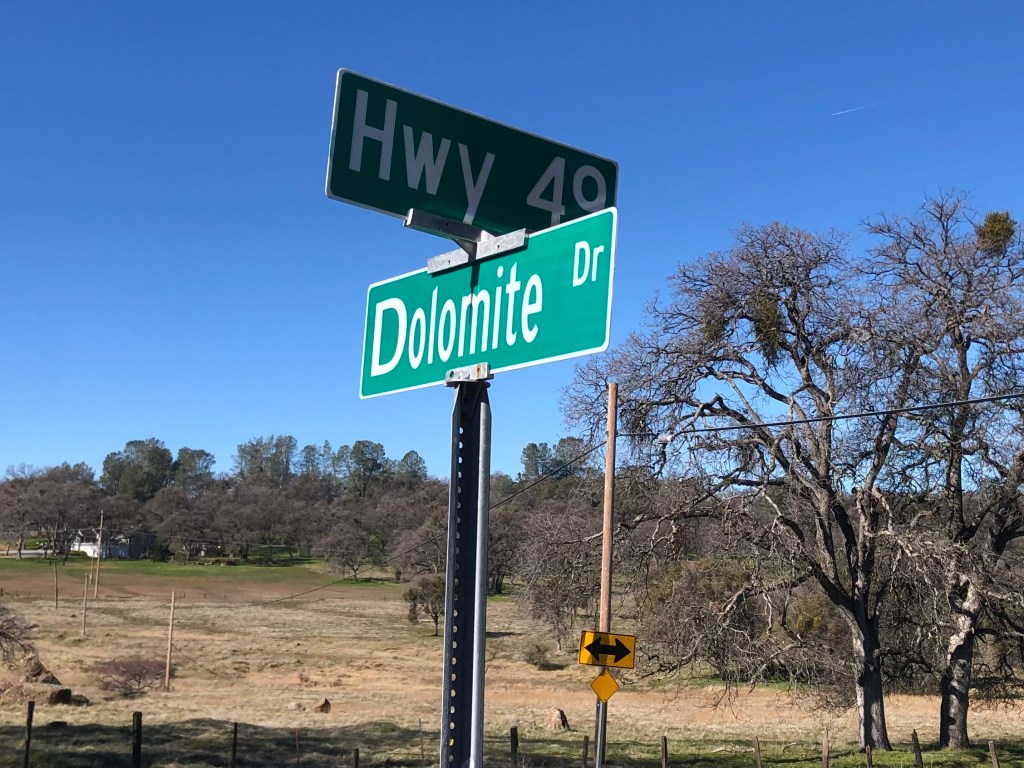
A little further down the road I encountered the name of another entertainment icon…
After a few random stops for gas, coffee, and Reeses (it’s my birthday, after all), ended up in Fiddletown (pop: 235). I spent several hours here. Fiddletown dates back to 1849, as do so many of the towns here in the Mother Lode Country. It didn’t start out as a particularly popular place to mine for gold, given that it didn’t have any year-round rivers or streams, which the miners needed for panning and placer mining.

Then, in 1852, gold was found in the region’s dry creekbeds, and everything changed. The town swelled with an influx of prospectors, and a canal was dug to divert water from the Cosumnes river into Fiddletown’s dry creekbeds. Not only did this facilitate easier gold mining, but it also opened the region to agriculture. By 1854 Fiddletown’s population exceeded 2000 souls.
With growth and wealth came the desire for respectability, which for some required changing the name to anything but “Fiddletown.” (It’s unclear where the original name came from, but one story suggests the original settlers from Missouri enjoyed playing fiddles in their spare time.) In any event, a decision was made in 1878 to change the name to “Oleta,” which was the name of a prominent resident’s daughter. Fortunately for those of us who appreciate local color, the original name was restored in 1932.
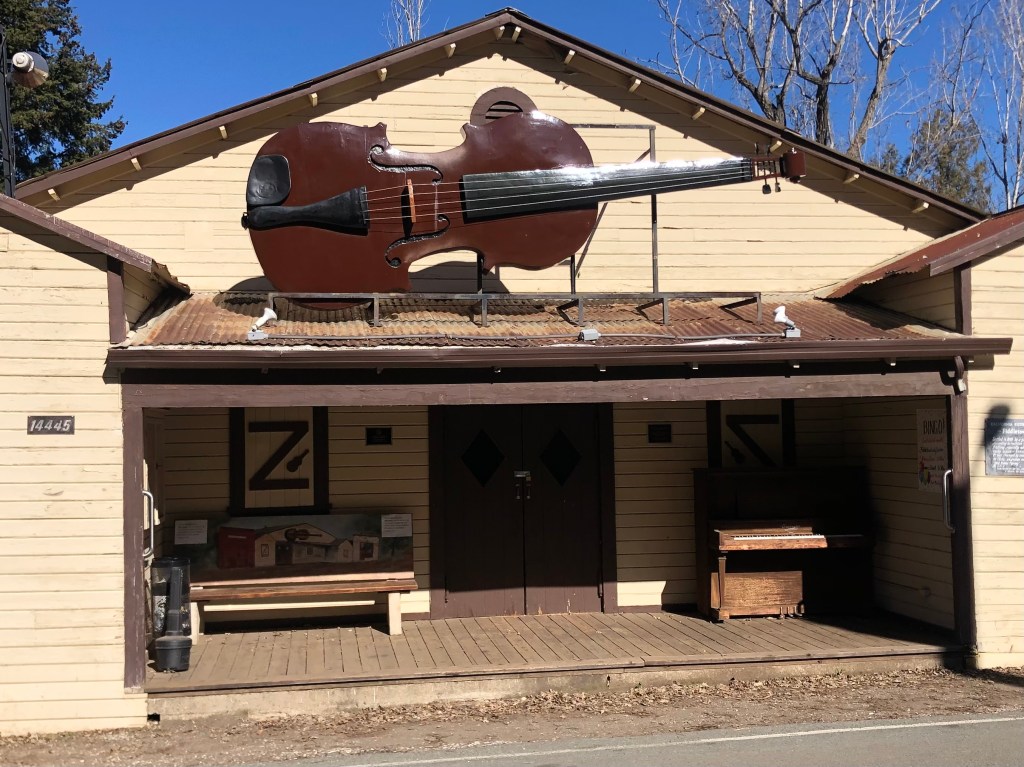
At some point, the town so embraced its name that it erected a huge fiddle over the community center. I’m told that there have been several iterations of this instrument. The latest version is made out of fiberglass.
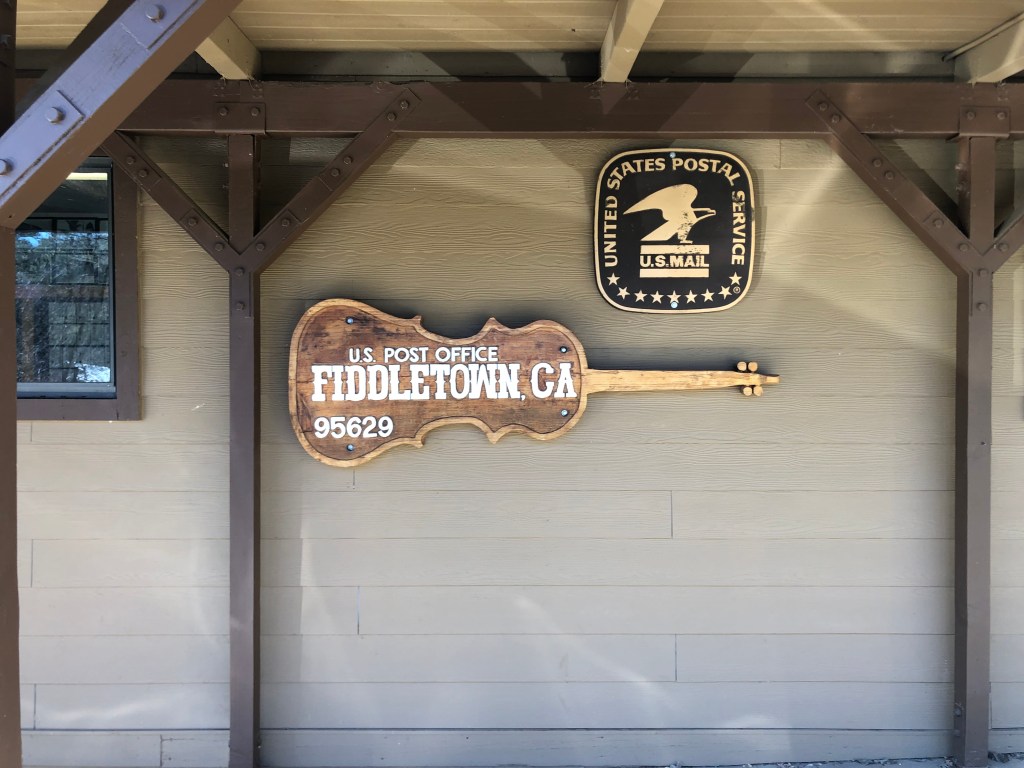
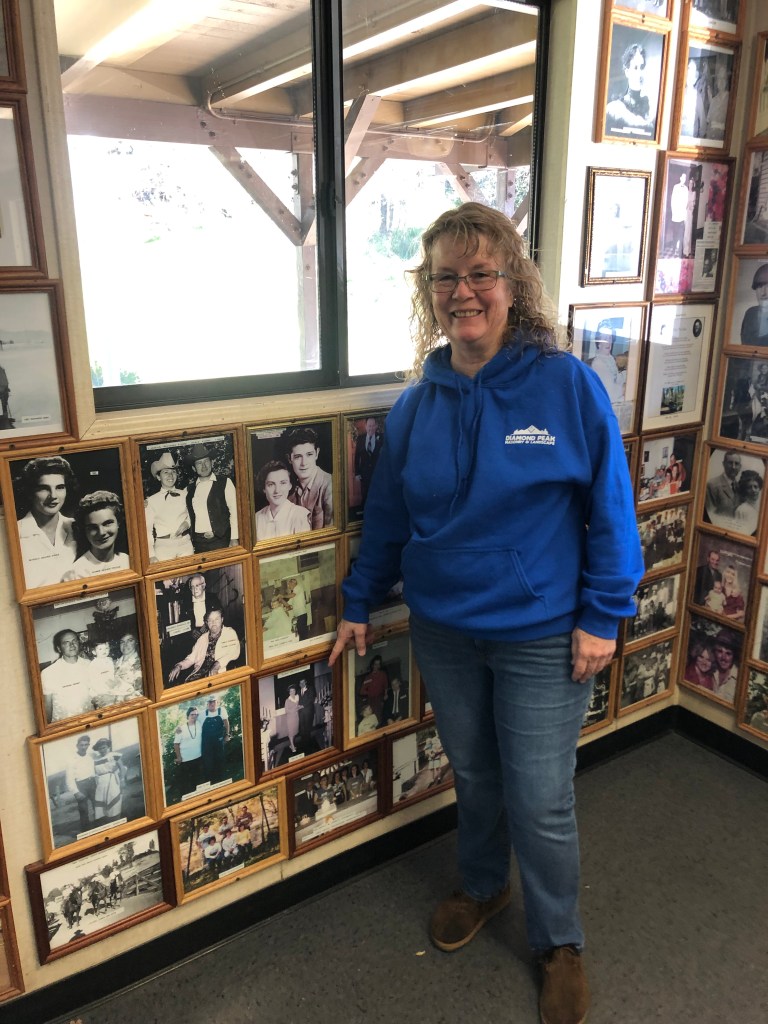
How do I know this? Because Michelle told me. I ran into Michelle at the town’s post office. The walls of the lobby are lined with historic photographs of the town’s residents, and I was perusing them when Michelle walked in to get her mail. There are literally hundreds of photos, so I asked her, “Is every resident in town pictured here? Where’s your photo?” She matter-of-factly told me that the post office ran out of wall space long ago, and replacing an old picture with hers “would require permission from the Post Mistress.”
Michelle then spent the next 20 minutes pointing out pictures of friends and relatives on the walls. She grew up in Fiddletown, and says it’s an wonderful place to live. She used to rollerskate in the community center (where the big fiddle is), and knows most of the residents. However, she said the town’s recent growth has made it difficult to keep track of everyone.
At some point Fiddletown became a major enclave for ethnic Chinese folks–in fact, for a time it boasted the state’s second-largest Chinese population, after San Francisco. Along the main street there are several well-preserved buildings that speak to the town’s Chinese heritage: A general store, a gambling hall, and an apothecary.
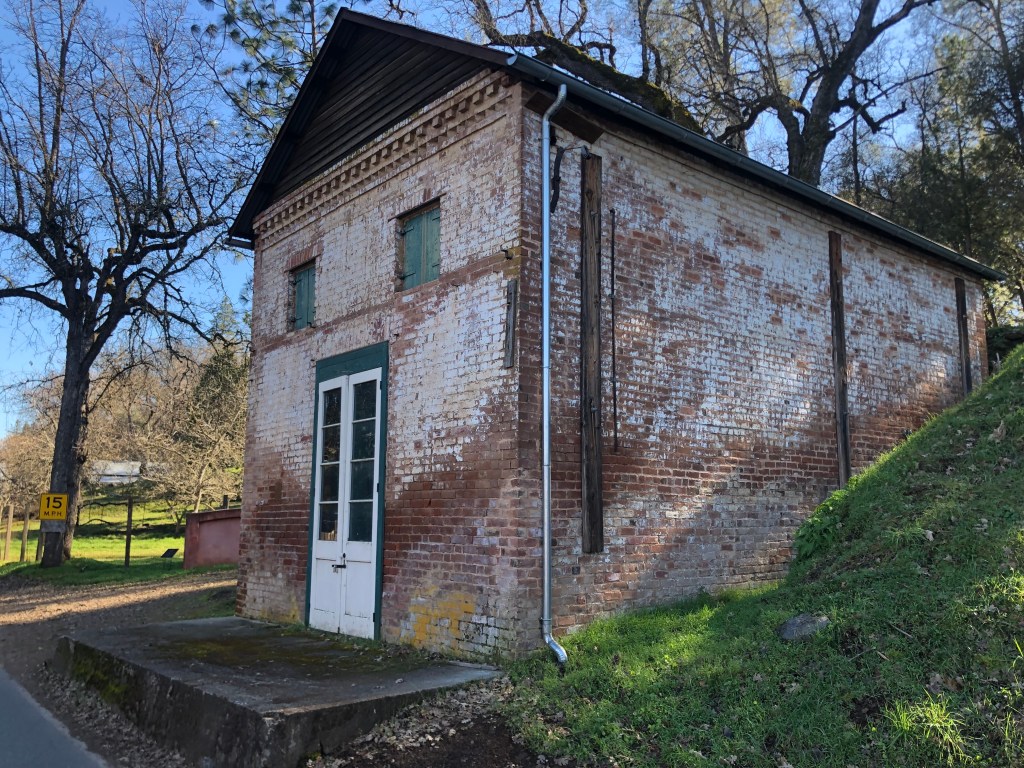
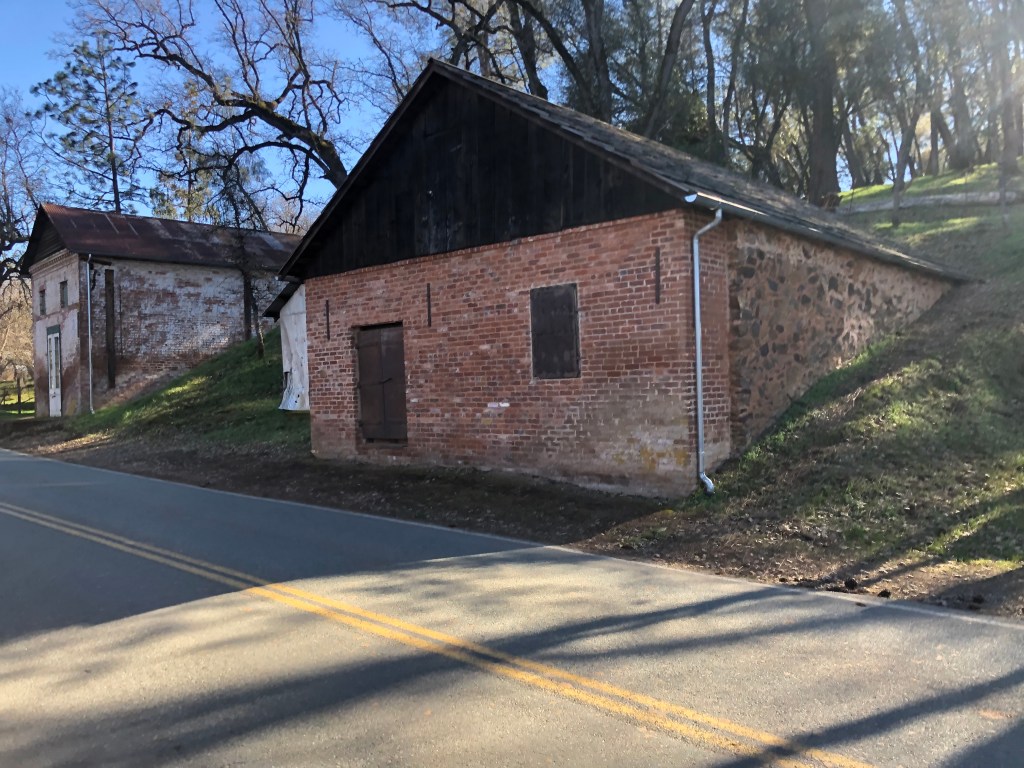
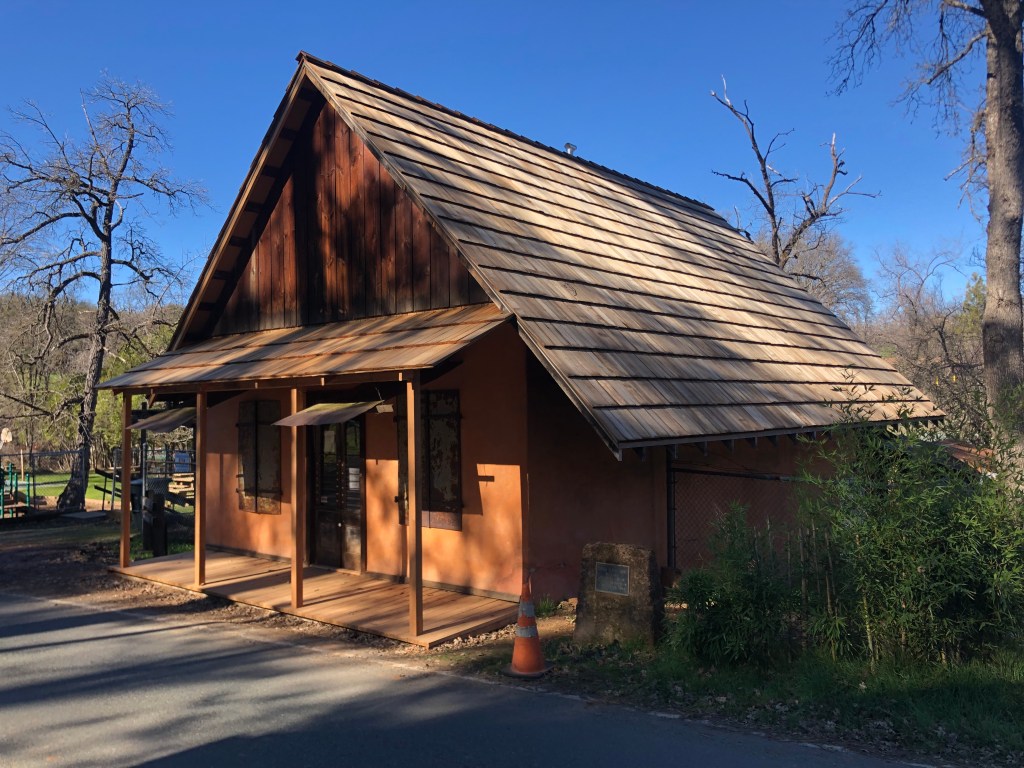
The apothecary also serves as a museum (which, sadly, was closed when I visited). It contains personal effects from over 100 years of continuous habitation by Chinese “herb doctor” Yee Fung Cheung, his successor Chew Kee, and Chew Kee’s adopted son, Jimmie Chow. Jimmie Chow lived his entire life in Fiddletown, and was the town’s last Chinese resident when he died in 1965. Notably, Michelle (whom I’d met at the post office) had met Jimmie in the early 1960s. Her father and she took some fish heads to Jimmy’s house for his fish head soup. Michelle had thought it was a joke until she watched Jimmy add the heads to his soup pot. (If you’re interested, here is a recipe.) Michelle told me she was fascinated by the home/apothecary, and all the unusually artifacts therein.
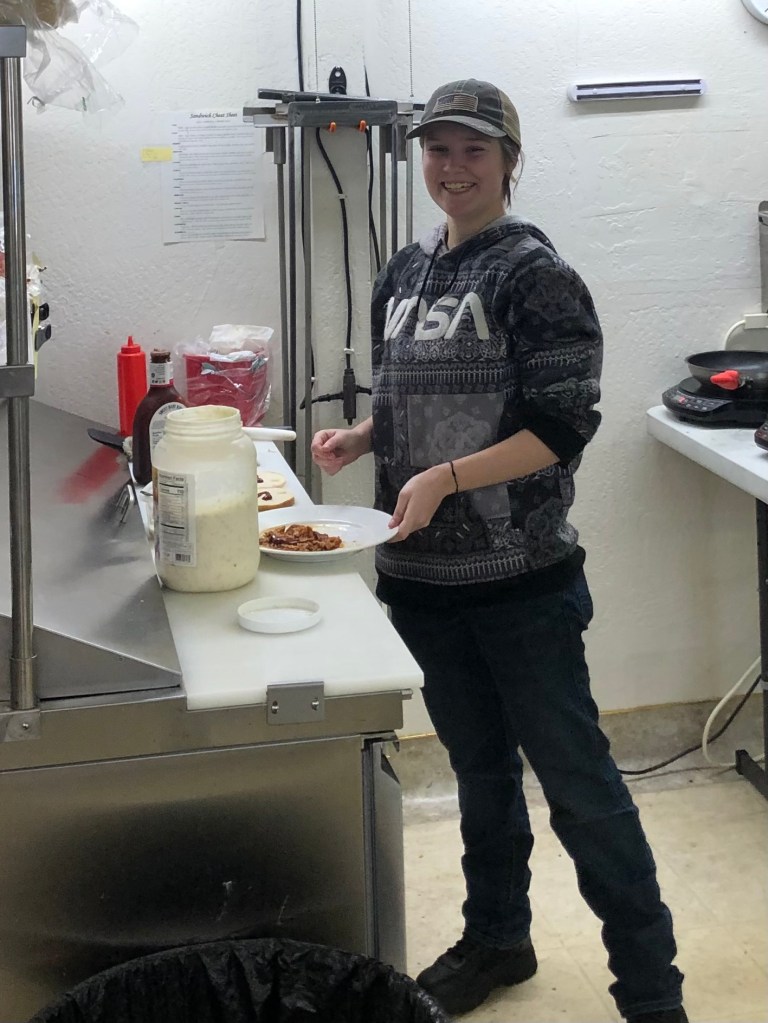
All this talk of fish heads was making me hungry, so I figured I’d scope out a place for lunch. There is exactly one place in town that will serve you a sandwich, so that made my choice easy. Improbably, it’s the Brown’s English Toffee store on Main Street. A young woman named Kailey, who’s been working there for the past two months, took my order. After a few false starts (they were out of the meat and the bread that I wanted. But other than that, they had just what I wanted for a sandwich!), she managed to produce a pulled pork sandwich with cole slaw.
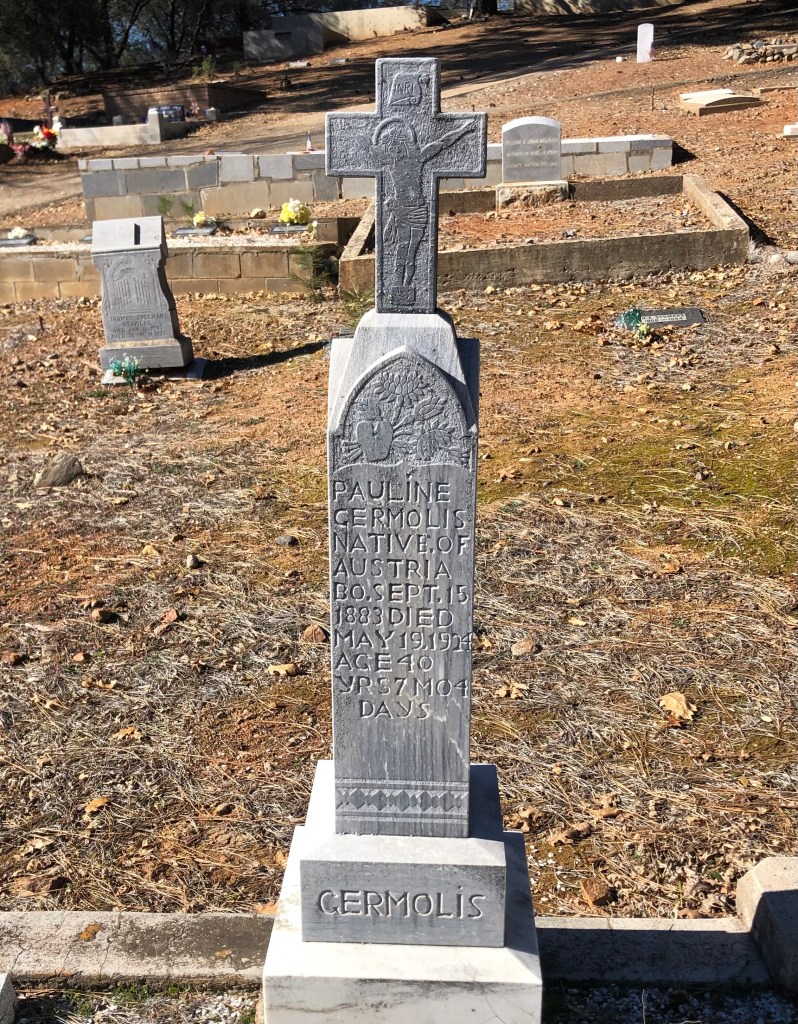
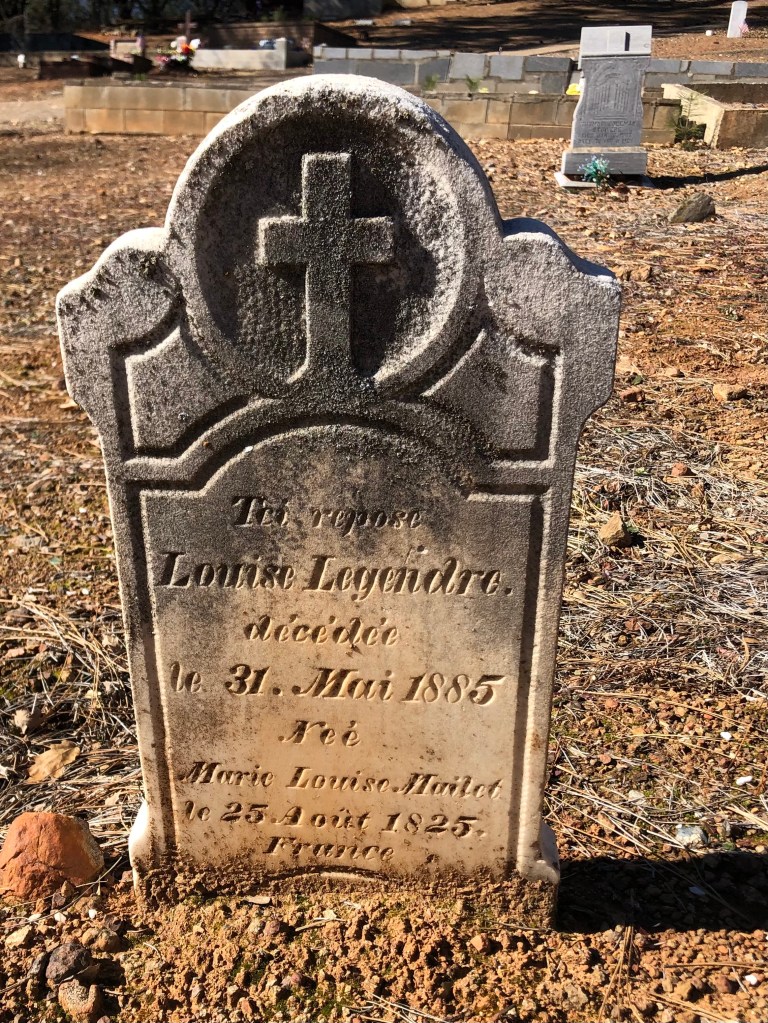
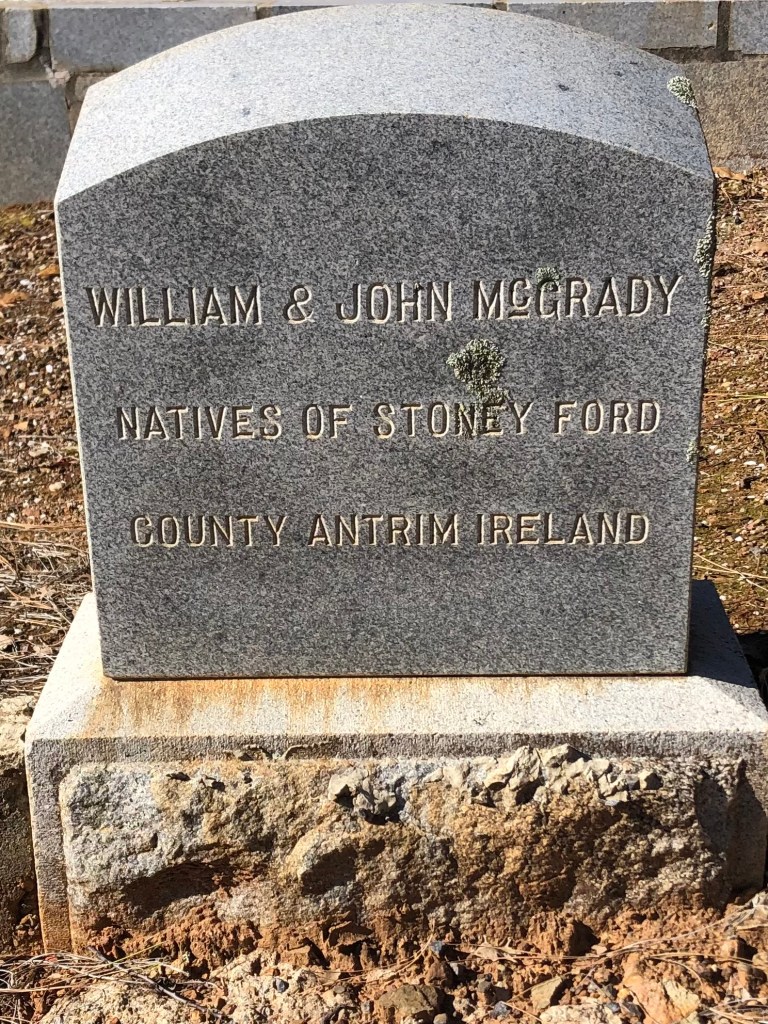
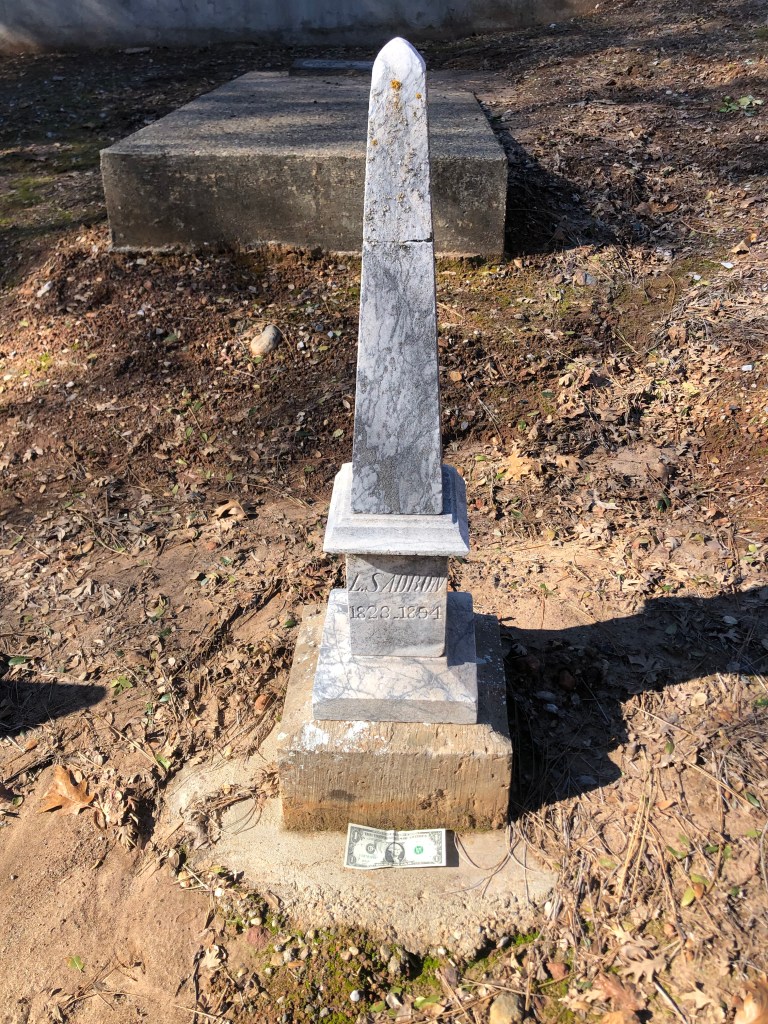
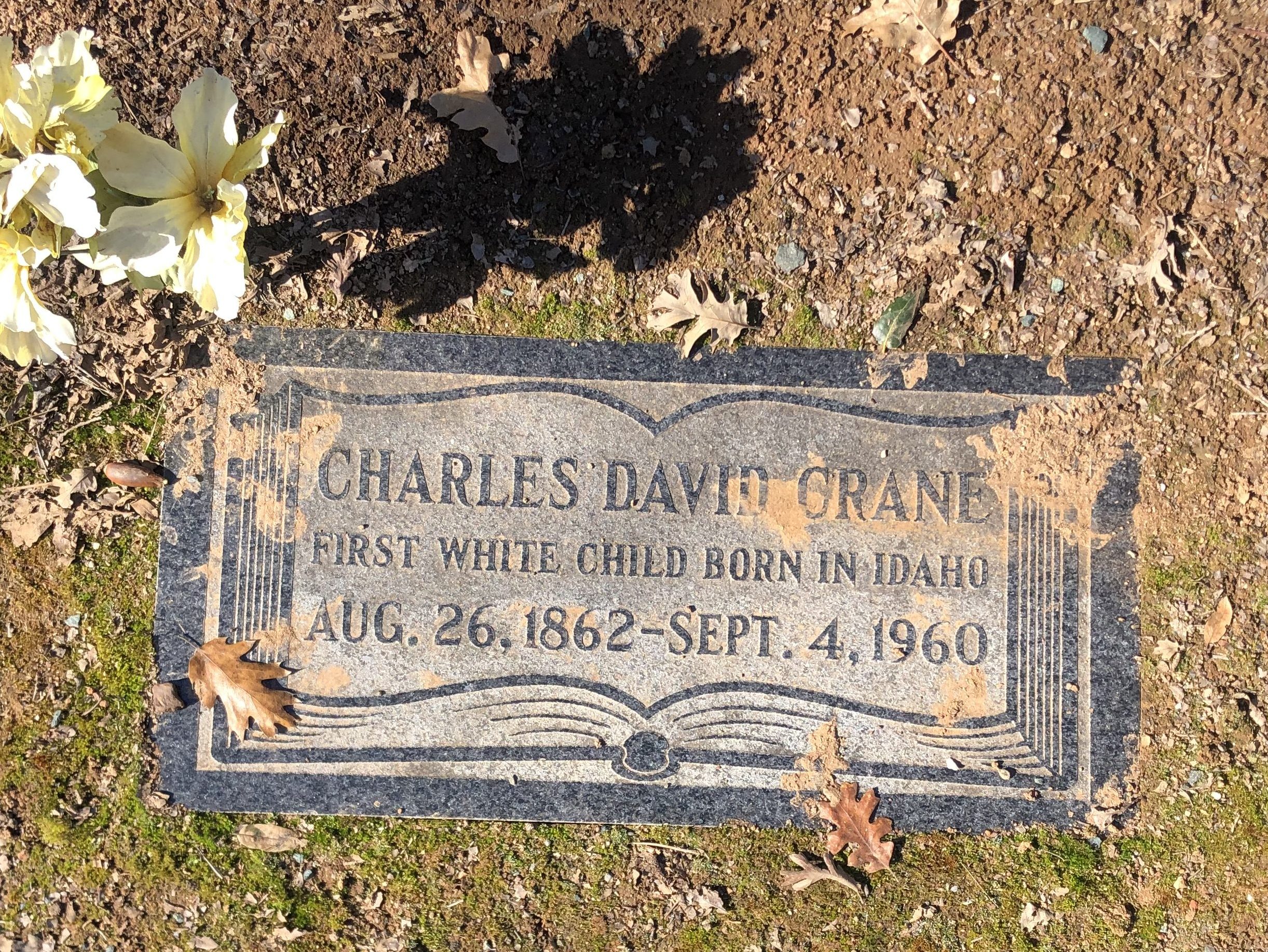
It was now time for my traditional cemetery visit. The Fiddletown Cemetery was established in 1870, and is the final resting place for a broad swath of humanity. The headstones offer testimony to the large number of countries from which the 49ers hailed:
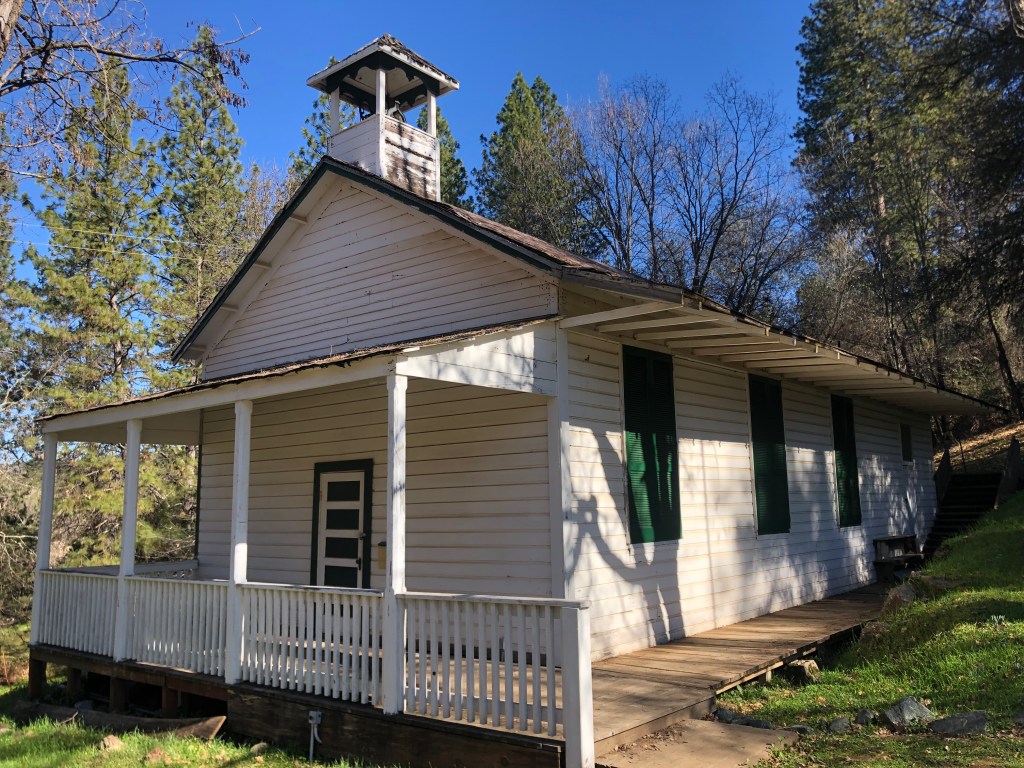
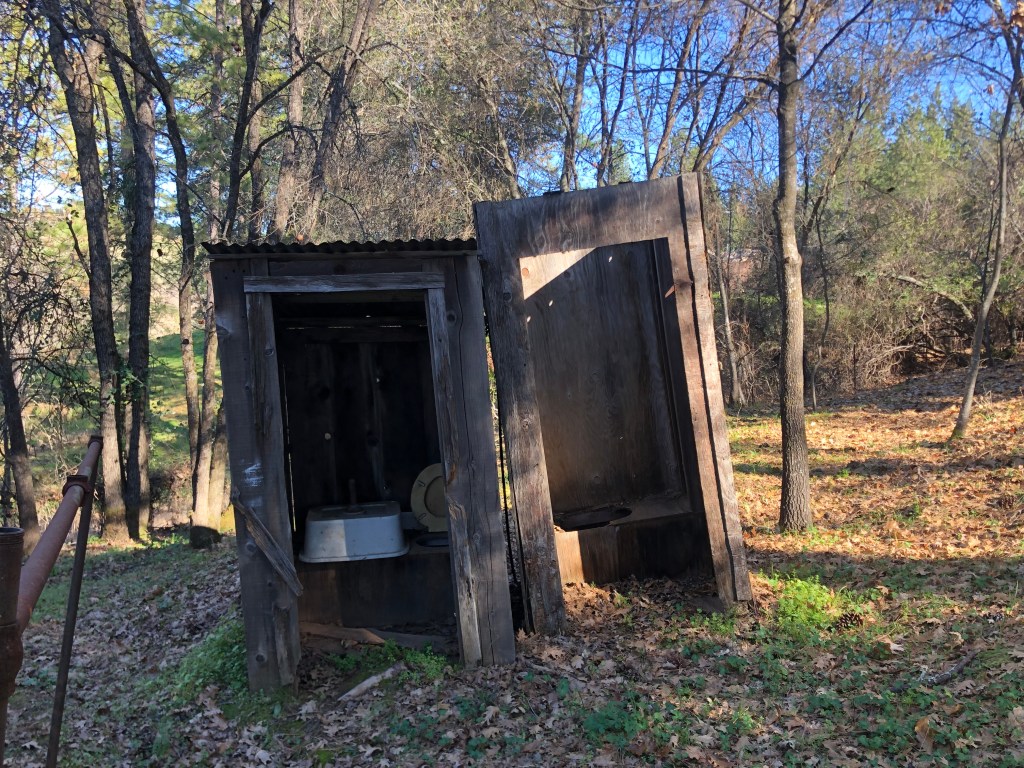
Across the street from the cemetery is Fiddletown’s historic one-room school. It was constructed in 1862 and was in operation until 1955, when the area schools were consolidated and relocated to the nearby town of Plymouth. The school had no running water, and featured outhouses (which are still extant) in the back.
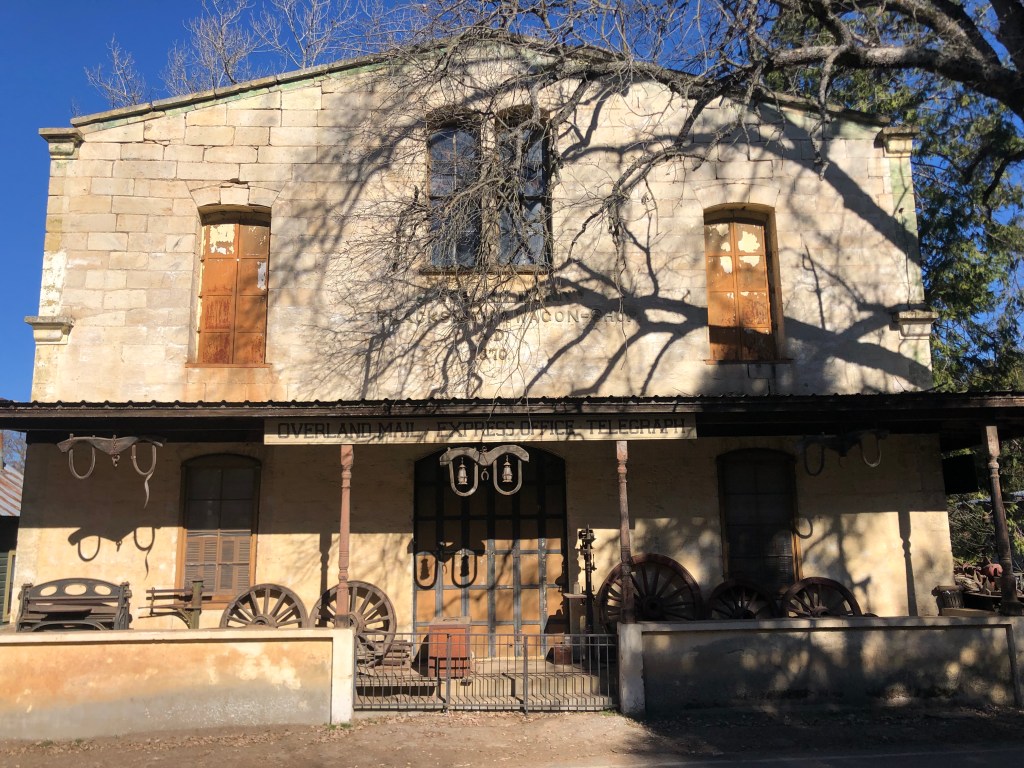
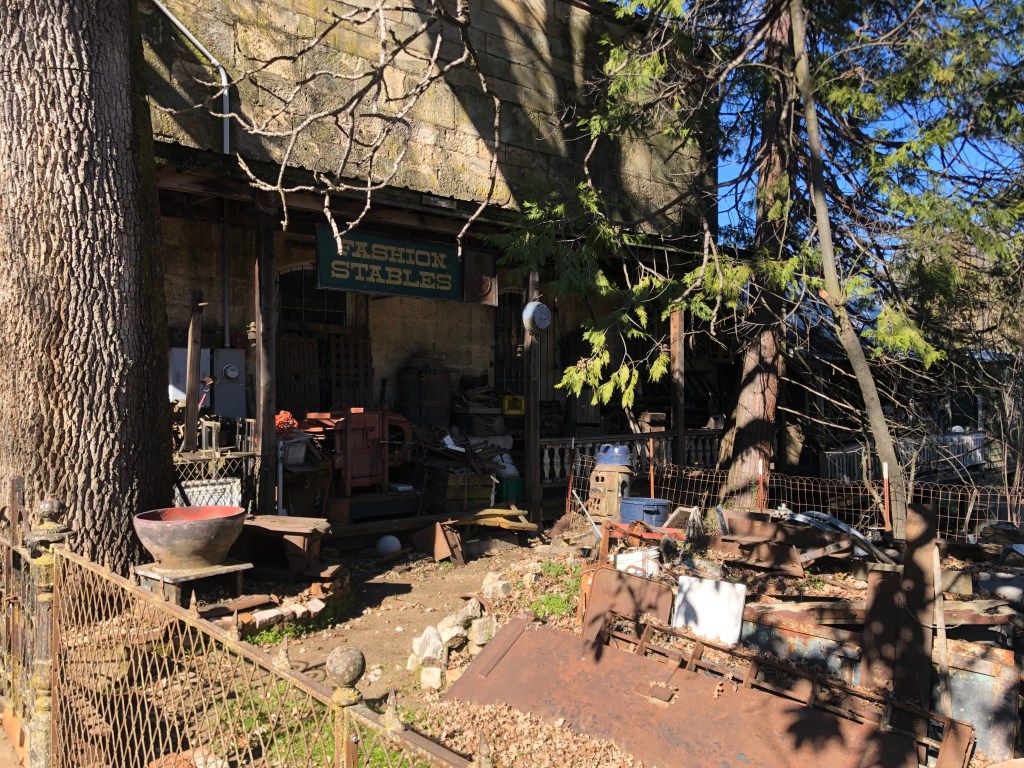
One other notable structure is the looming Schallhorn building, built in 1870. It was a long-time blacksmith’s shop and wagon repair facility, as well as a telegraph office and mail stop. Today it appears to be the site for accumulating various historic artifacts. The front porch is littered with wagon wheels, metalworking equipment, a safe, a old ovens, even a small railcar. Heaven knows what’s inside the massive building itself!
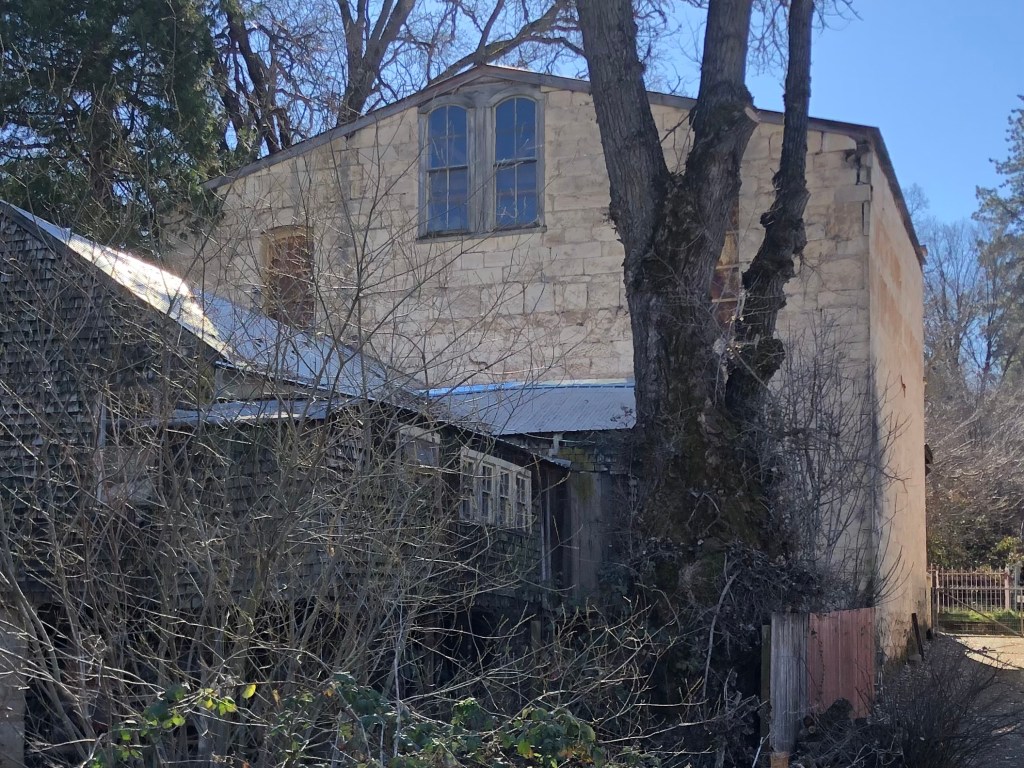
It was beginning to get late, so I decided to head back home. One of my final glimpses of Fiddletown suggests a story that I honestly don’t really think pertains. If you ask me, I think this place has a future.
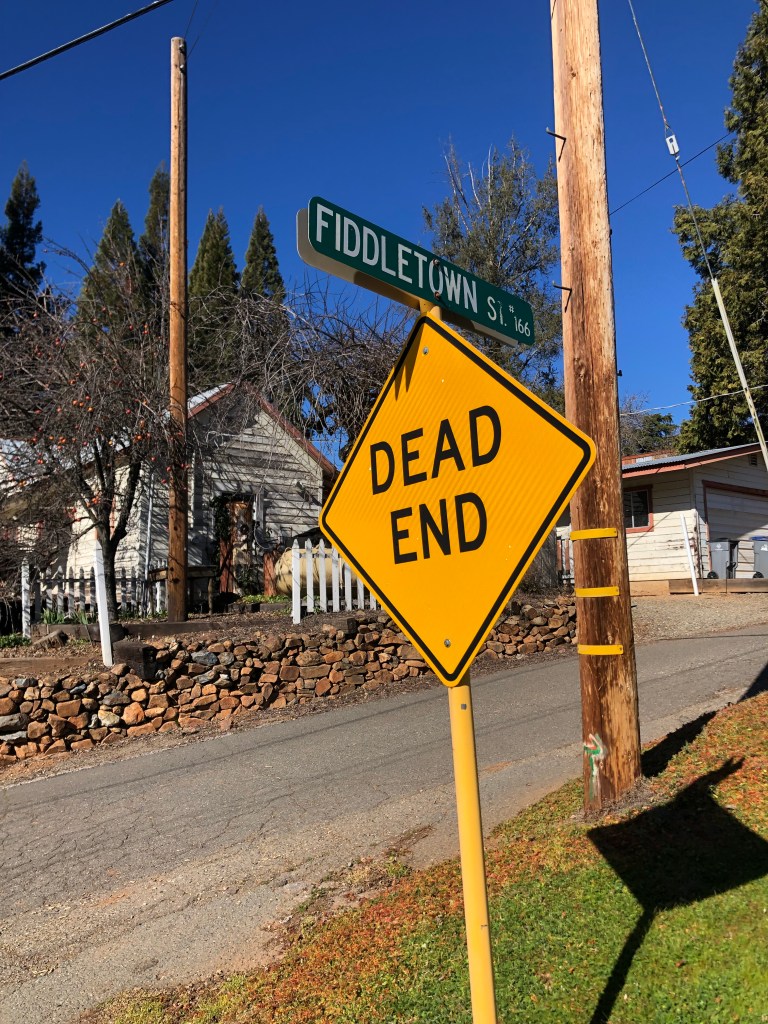
So, that was my trip to Fiddletown. I managed to get home in the afternoon without incident. I wish you all a very happy Steve Boilard’s birthday. I suggest celebrating with the high-gravity imperial stout of your choice.
 Chasing Phantoms