Breweries · Ghost stories · Golden Bear signs · Puns

Hey, Eugene!

In the good old days, by which I mean the days before Covid and Chat GPT and the subsequent, rapid disintegration of society, I was living in the Los Angeles area, where Karen and I would occasionally catch a show at the Hollywood Bowl. For me, this hundred-year-old amphitheater reflects many of LA’s best aspects: warm evenings outdoors, a vibrant entertainment industry, people dressed to the nines, and free popcorn brought to your seat during intermission.

On one of these occasions we saw the band Pink Martini, which is a quirky but virtuosic orchestra/big band from Portland. And they played a catchy number titled “Hey Eugene.” That song has been running through my mind all day. Because this morning I flew to Eugene, Oregon. And boy are my arms tired…

Eugene (pop: 176,000) is described by Wikipedia as having “a significant population of people in pursuit of alternative ideas and a large original hippie population.” Which explains the endless stream of vintage VW minibuses rattling along in the slow lane.

Anyway, I came here to meet son Ian B., who recently took up graduate studies at Oregon State University in the nearby town of Corvallis. Attentive readers may recall that Ian and Katelyn are expecting my first grandchild this June. So clearly, between school and fatherhood, Ian has decided to give up sleep for the next four or five years.
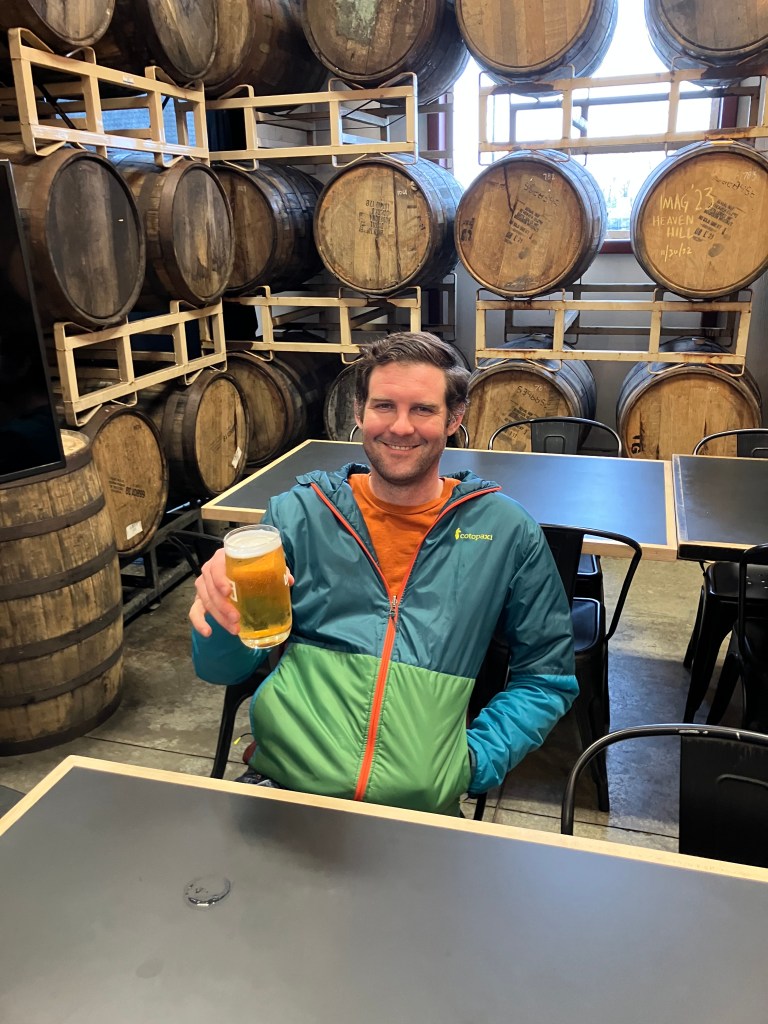
Ian studying for an exam.

Normally I would like to make the trip to Oregon by car, but various factors conspired to prevent that option. I therefore took a Delta flight that routes through Sea-Tac, near the ancestral Boilard home in Tacoma, and terminates in Eugene. As my plane was approaching the airport I was thinking, “Hey, the weather out here is actually nice! What’s all this about Seattle always being perpetually grey and cloudy?” Then we descended from our cruising altitude and were enveloped in dismal, soul-sapping, Vitamin-D-blocking, depression-inducing cloud cover, and my thoughts immediately turned to melancholy.

Ian met me at the airport, and we drove to Corvallis (pop: 61,000), which Wikipedia helpfully notes is “the westernmost city in the contiguous 48 states with a population larger than 50,000.”

What with the weather and the limited time, we focused mainly on drinking beer. But we did manage to go on a “Corvallis Ghost Tour.” The number of ghosts we encountered was precisely zero. At least we got to see this cool 1888 courthouse, whose heating radiators reportedly make weird sounds. Surely the only explanation for old radiators making noise must involve the paranormal.
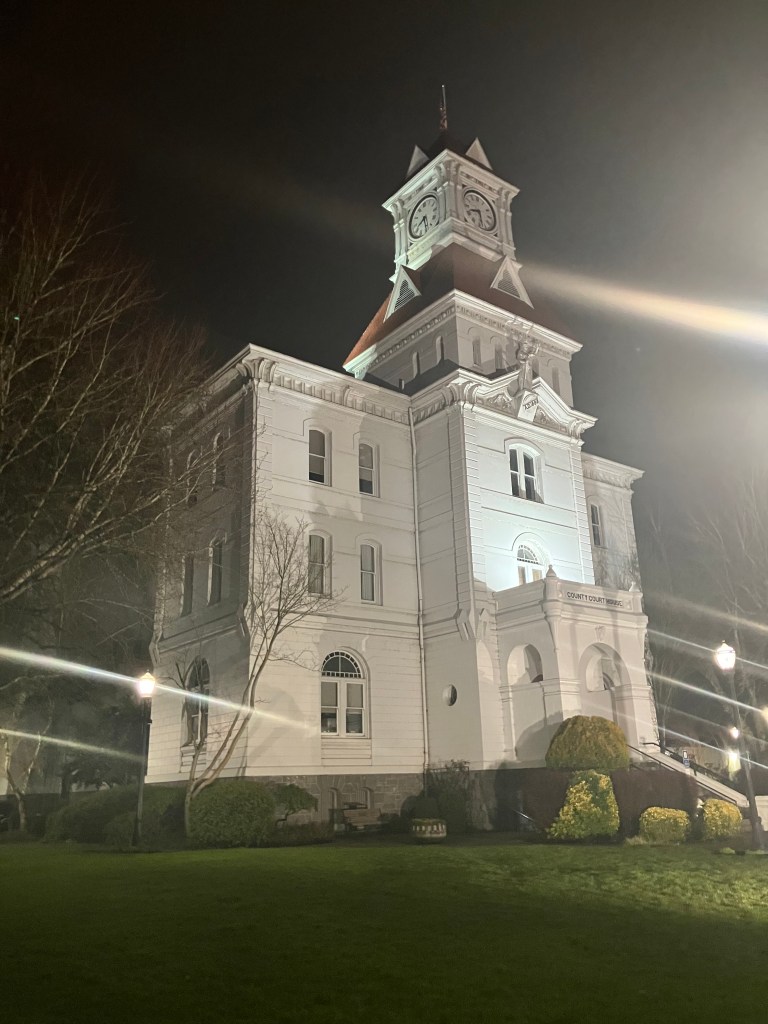
Home of the haunted HVAC.

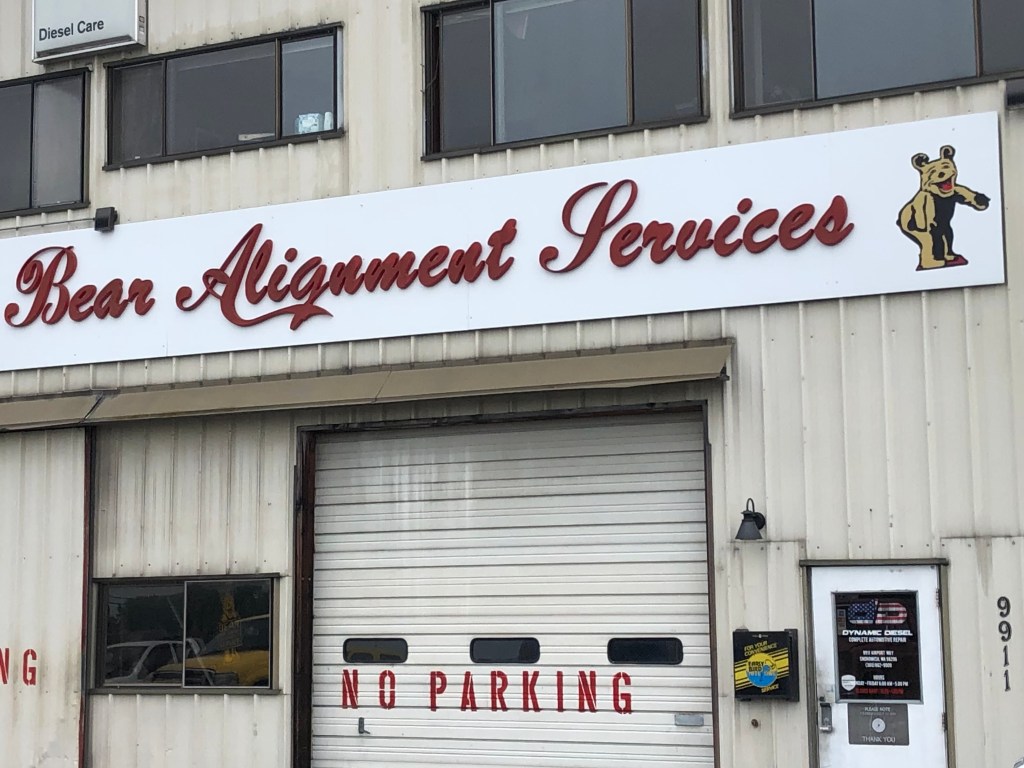
But the Corvallis building that excited me the most was this:
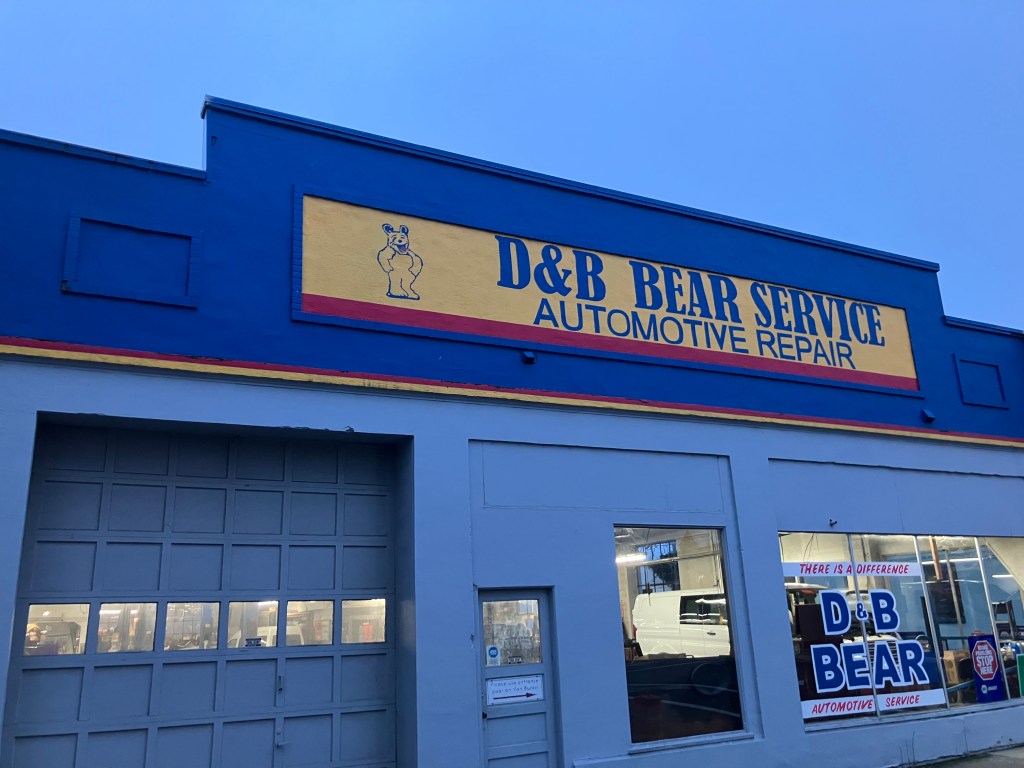
Did you spot the cause of my excitement? Let’s zoom in:
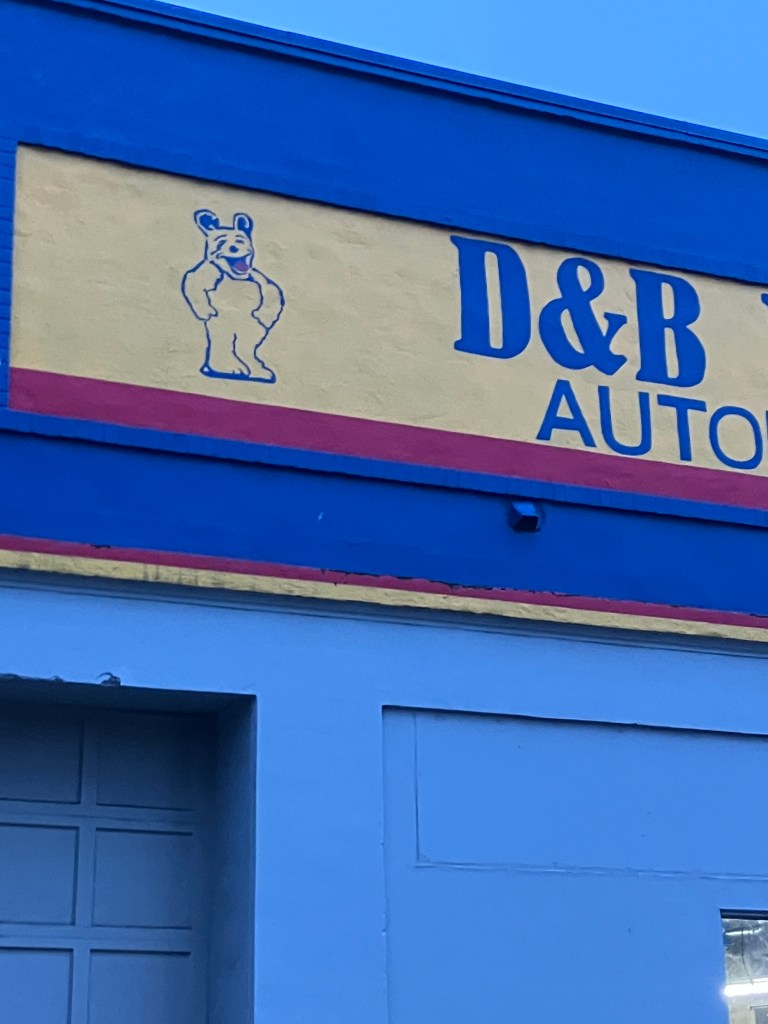
Be still my heart.

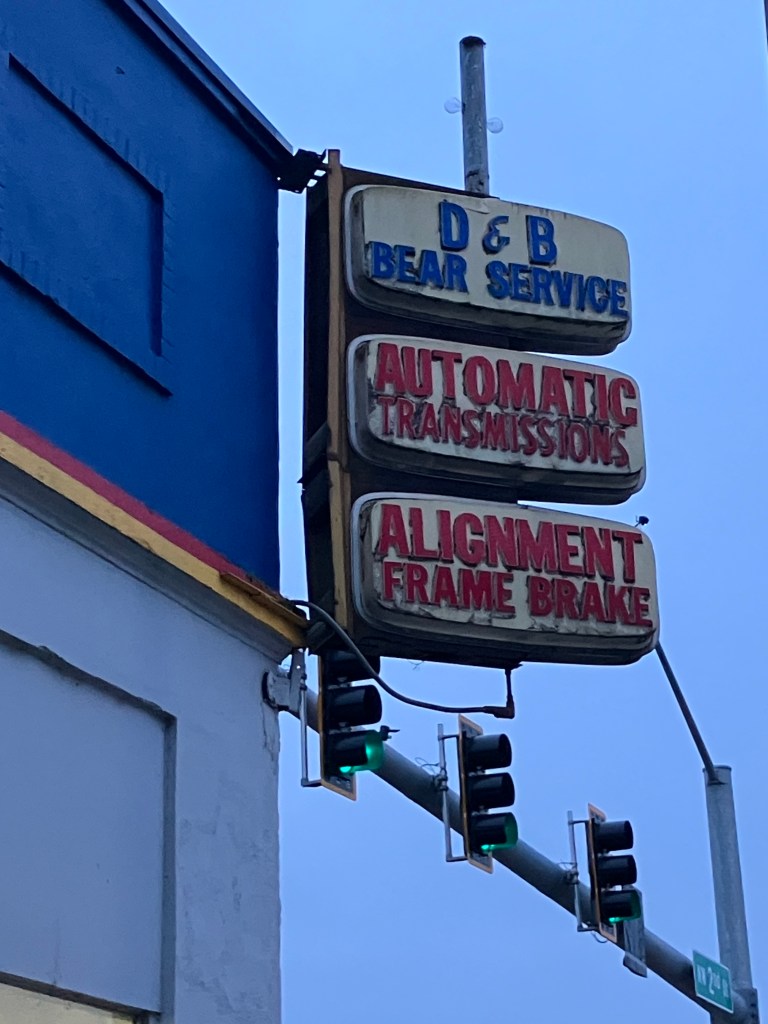
Alert readers will recall that I’ve made a minor study of these Golden Bear signs, which were affixed to countless alignment shops in the postwar era. Additional examples are here and here. To this list we can now add D&B Bear Service on NW 2nd Street in Corvallis. It’s an old-school, family-run auto shop, and the inside appears to look very much as it did during the Truman administration. The online reviews are stellar, so I recommend it to loyal readers in the Willamette Valley.
* * *

And now, back by popular demand, we bring you the

Brew of the Day

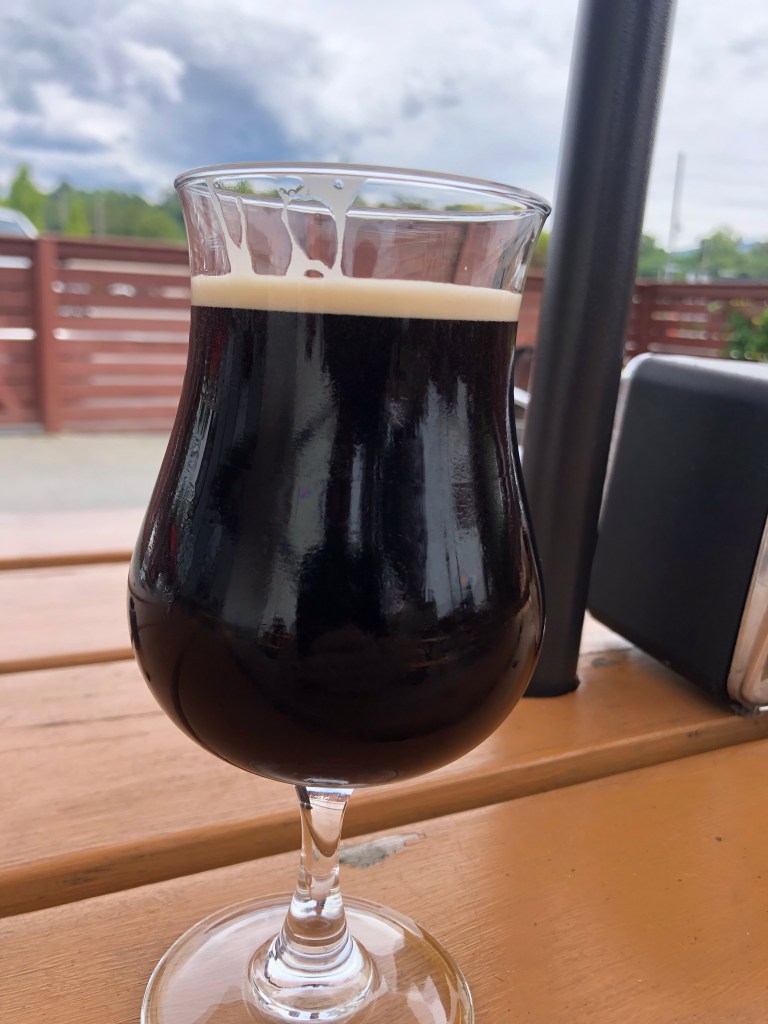
The BOTD comes from Block 51, which is a local brewery in Corvallis. I ordered the Super Nebula, which is an imperial stout that’s been aged in bourbon barrels.
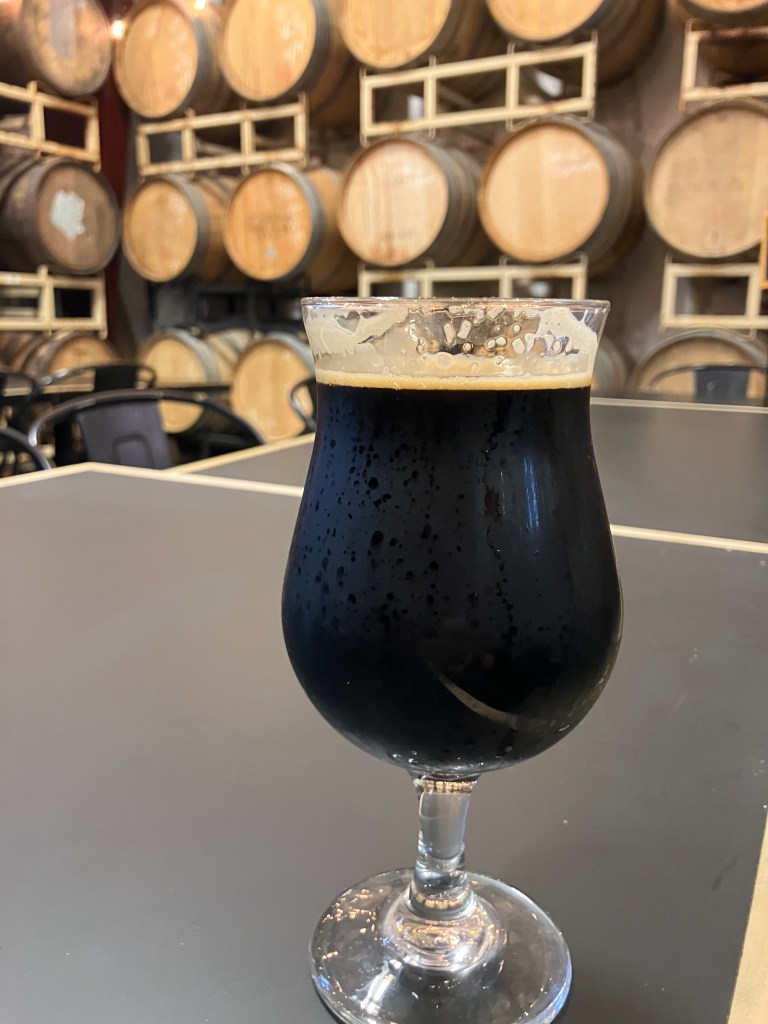
Sometimes these barrel-aged stouts can be cloying if they don’t properly balance the malty sweetness with a decent amount of hops. But you have to select the hops carefully, because the wrong kind of bitterness can destroy the bourbon notes. Meanwhile, a beer this dark and flavorful needs to have body, but not to the point of becoming syrupy. As you can see, creating a quality barrel-aged imperial stout requires lots of patience and nuance.

Fortunately, the good people at Block 51 were up to the task. The flavors come together wonderfully, benefiting from the addition of a judicious amount of cocoa nibs. The alcohol comes in at 13.8 percent, which is in the range of what you’d expect for an imperial stout without entering crazy territory like Bruery’s Chocolate Rain (18 percent) or even Firestone Walker’s Parabola (usually 14-point-something). In a word, I’d characterize Block 51’s effort as balanced.

The only thing I’d ding it for is the finish. After a nice, satisfying sip-and-swallow, there’s something missing. Interestingly, Block 51 also makes something called Super Nebula Valhalla, which includes cardamom, star anise, and juniper. I tried a sip of that and it seemed like there was a bit too much going on, but if they could maybe just add a little of that star anise to the regular Super Nebula, I think the finish would be better.

But this is a minor point. I recommend Block 51 and their Super Nebula. Get yourself a pint while you’re having your car aligned at D&B.
California history · Golden Bear signs · Obelisks

Obelisk and Doggie Head Update!

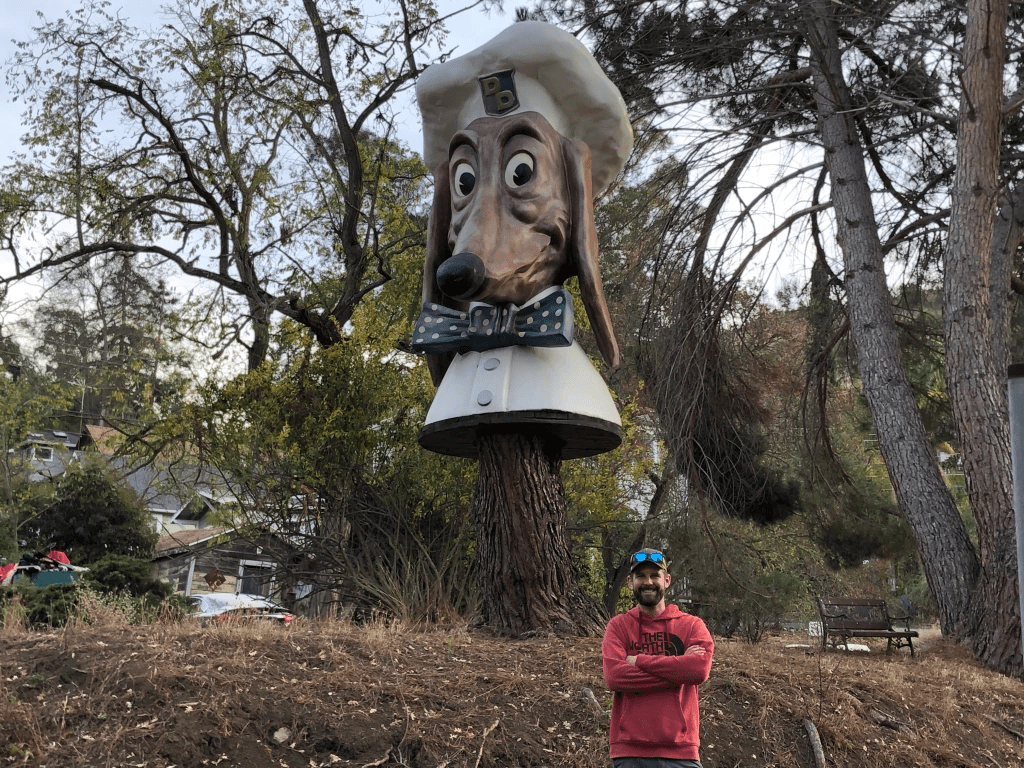
Attentive readers will recall that last November, while in the Bay Area burg of Port Costa (pop: 200), I encountered this dachshund from the long-defunct Doggie Diner chain.
That’s son Ian wearing his sunglasses improperly.

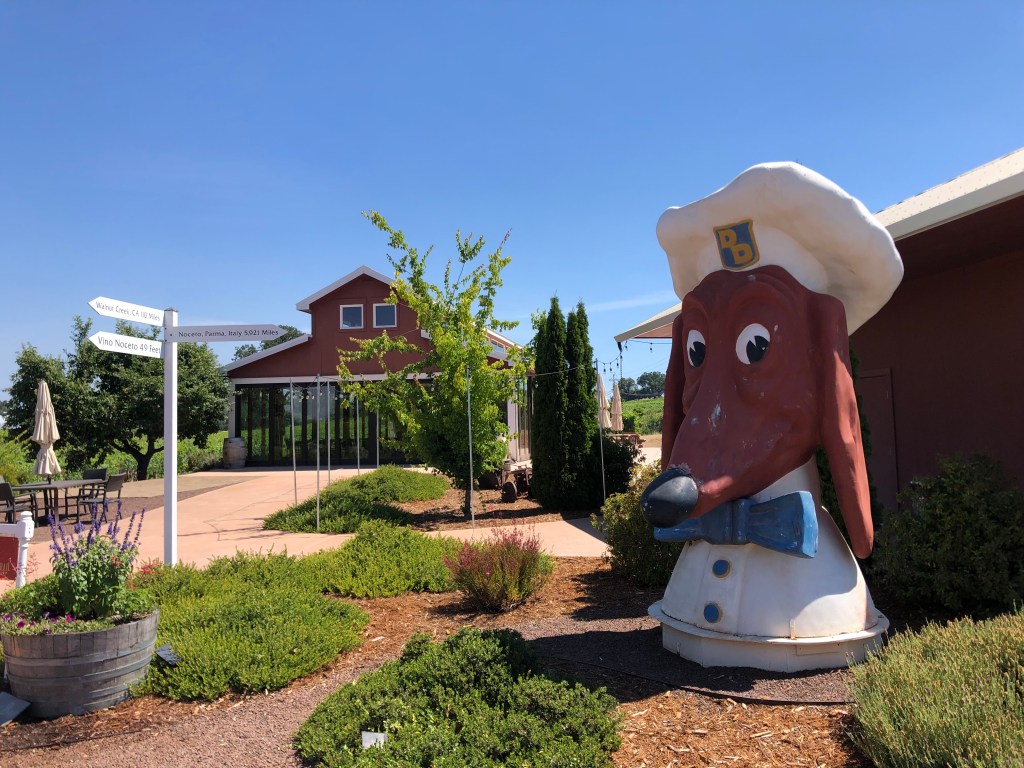
Today as I was cruising CA Route 49 through Amador County, I passed another Doggie Diner head. This one is at the Vino Noceto winery in the town of Plymouth (pop: 1,100).

“Doggie Diner, nothin’ finer.”

The giant heads adorned the 30 or so Doggie Diner restaurants around the Bay Area (concentrated mainly in San Francisco). It seems that when the chain closed in the 1980s, many of the doggie heads were purchased by private parties. The owners of Vino Noceto got theirs in 1985 at a fundraising auction for their kid’s nursery school. On a lark they had offered $300, expecting that surely someone else would outbid them. But theirs was the only bid. Let that be a lesson to you all.

These orphan heads remind me of the Golden Bear signs. I encourage all faithful readers of this blog to report any Doggie Diner Heads you might be aware of. And of course, also let me know of any Golden Bear sightings.

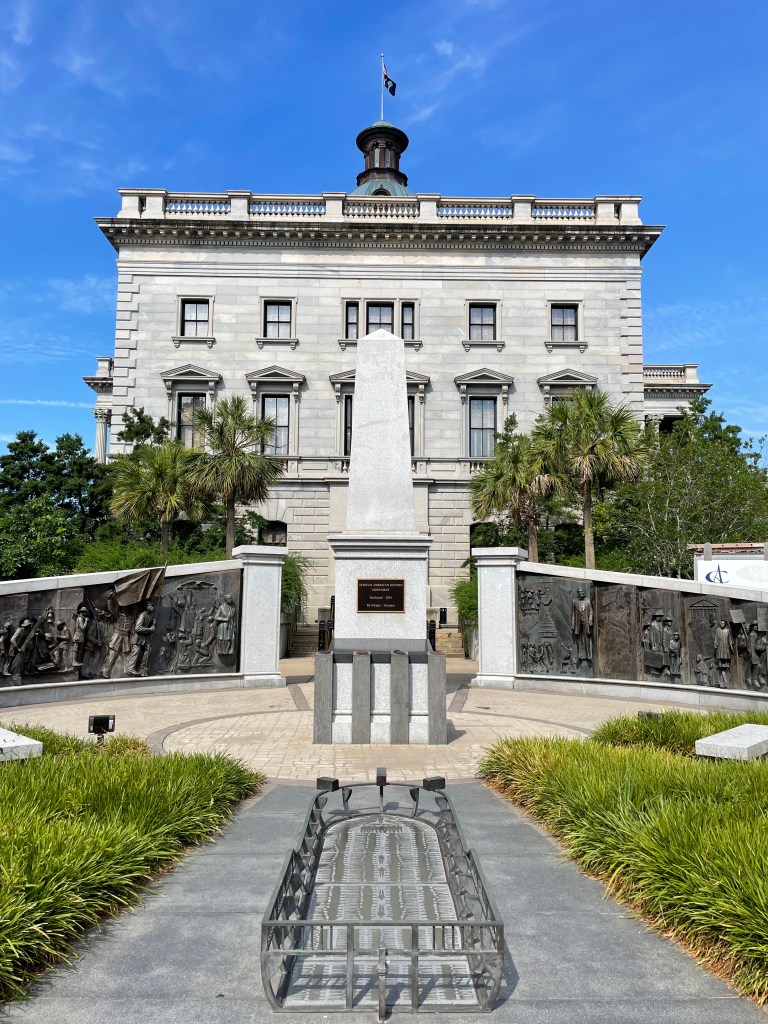
Speaking of crowd-sourced photo collections, loyal reader Brian W shared this photo he took of an obelisk in front of the South Carolina statehouse.

The bronze frieze panels flanking the obelisk depict African American History.

Brian has been commissioned to photograph all the state capitols, which is itself an impressive project. The obelisk is part of the state’s African American History Monument, and was installed in 2001. The artist who designed the monument asserts that obelisk is a form that originated in Africa. Wikipedia tells us that the earliest obelisks come from Egypt, so I guess it depends on whether you consider Egypt to be an African or an Asian country. Either way, the monument is an impressive one and is part of a historic compromise that also removed the Confederate flag from the statehouse building.

That’s it for this brief update. Next week I’ll have the story of California’s oldest operating railroad depot.

bridges · Golden Bear signs · Road trips · trains

3,773 Miles Later…

You’ll recall that I began this journey in Vermont and upstate New York, where I met with relatives and visited places where my grandfather grew up. After driving 3,773 miles, I’m ending the trip by visiting places where my grandmother grew up. There’s a certain symmetry in all that, which I find strangely satisfying.

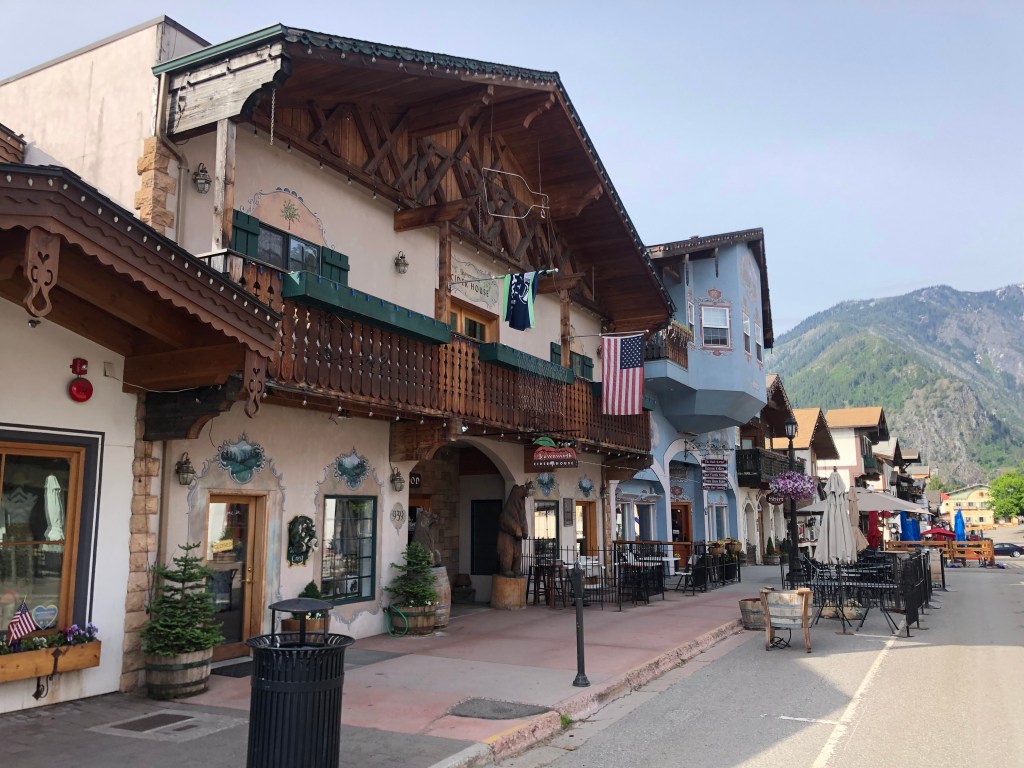
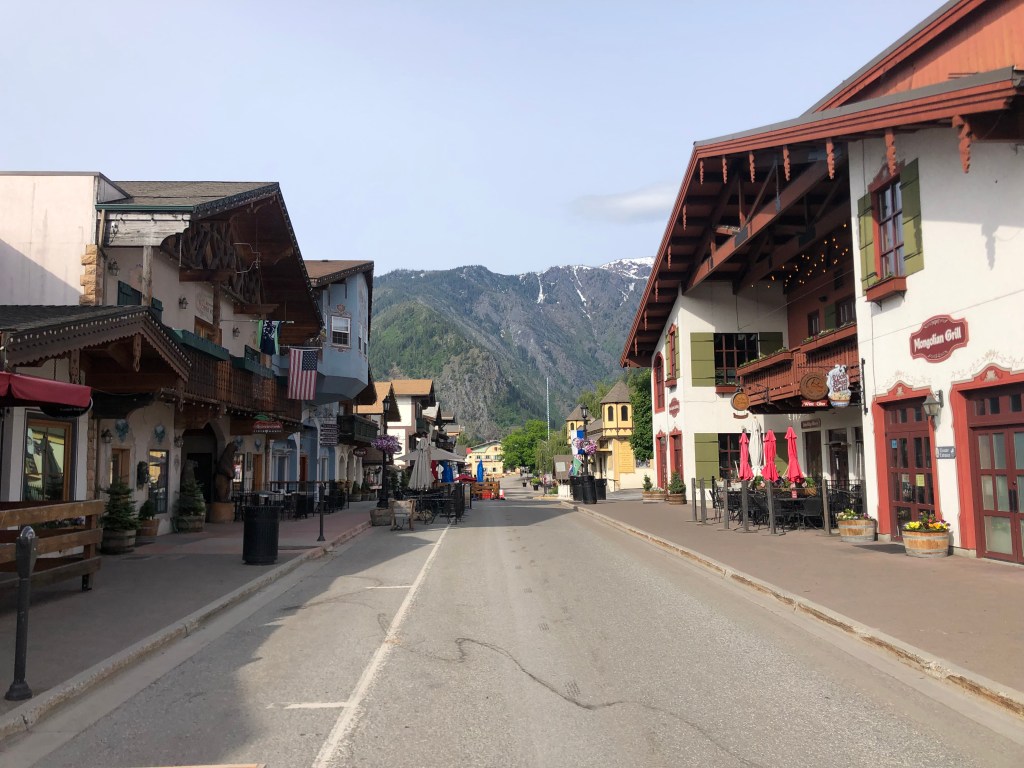
I set out this morning from Wenatchee, and soon the environment was changing again. This time it felt like I was in Germany….and that’s because I passed through the town of Leavenworth (pop: 2,500), which for some reason has decided to dress up as a Bavarian village. Like so many towns along Route 2, Leavenworth was founded over 100 years ago as a Great Northern railroad town. It even housed the regional office of the GN. But the office was relocated to Wenatchee in 1925, and then the remaining major industry (timber) steadily declined into the 1950s. The town needed a new source of income, and by the 1960s it settled on a strategy: It would seek tourism dollars by recreating itself as a Bavarian village. No doubt you’re familiar with the town of Solvang on the Central California coast; it’s the same idea. Indeed, Leavenworth officials actually visited Solvang as they were developing their strategy.

I knew I should have packed my Lederhosen!
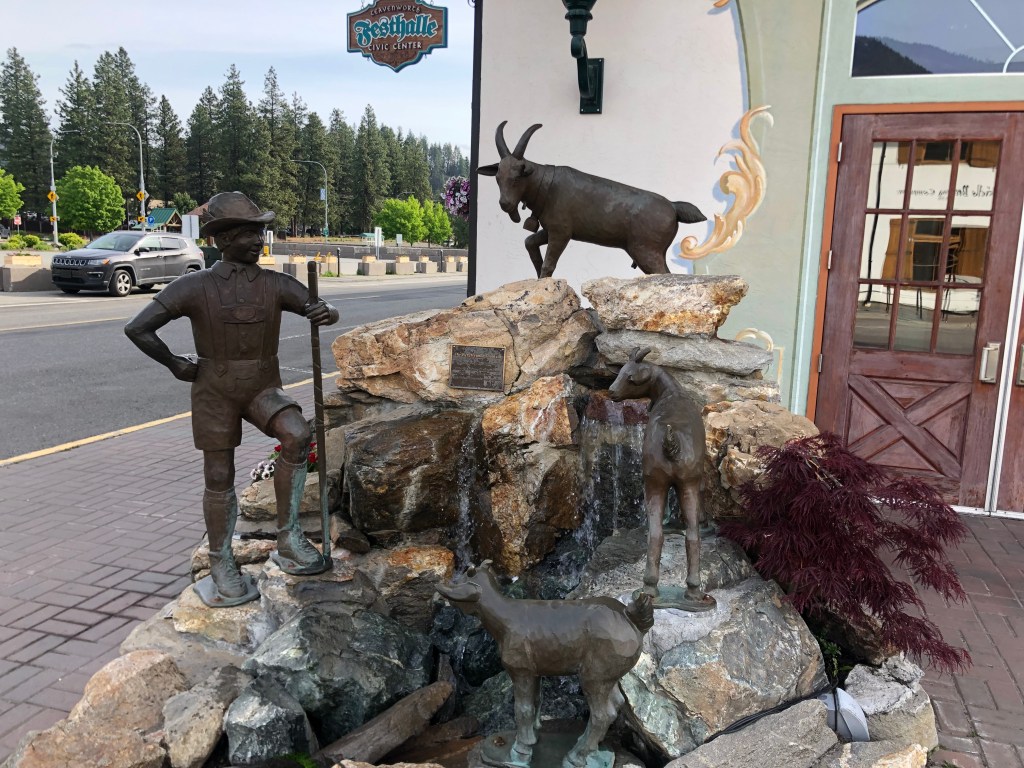
Are there no German tropes Leavenworth is unwilling to exploit?

Leavenworth has a live webcam trained on its town square. I’m sure it would be fun to watch during Oktoberfest. But right now, not so much.

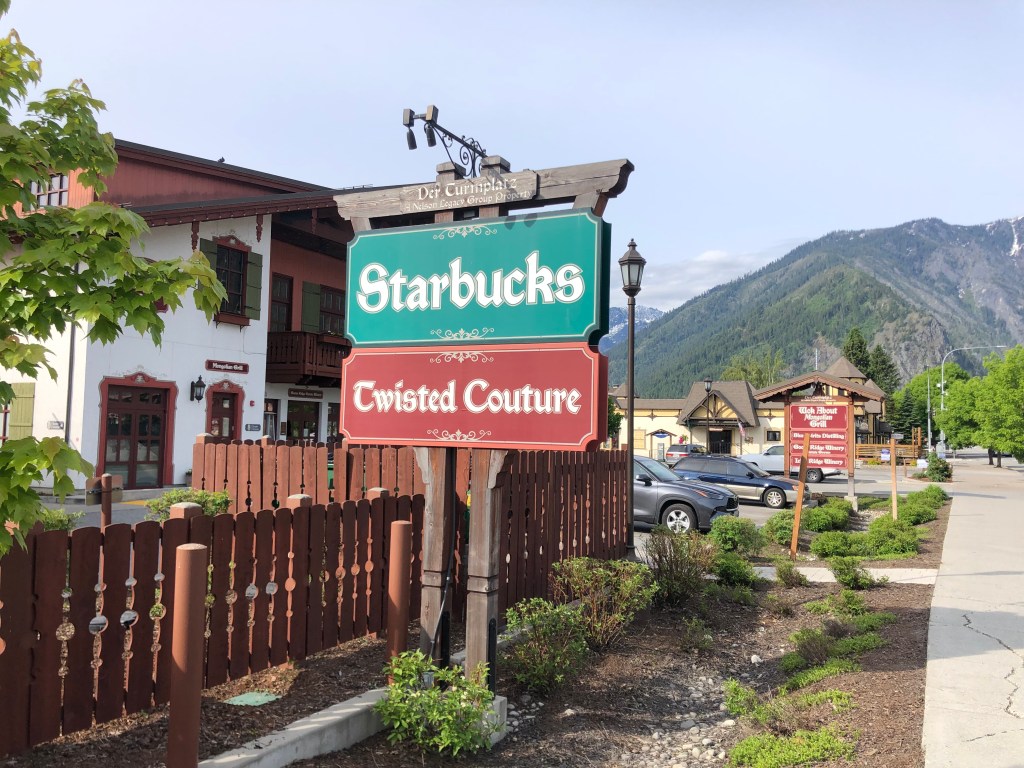
They even made Starbucks alter its logo.

Immediately beyond the town the North Cascade Range looms, as you can see in the picture below. I was about to experience yet another change in scenery….

Going up…

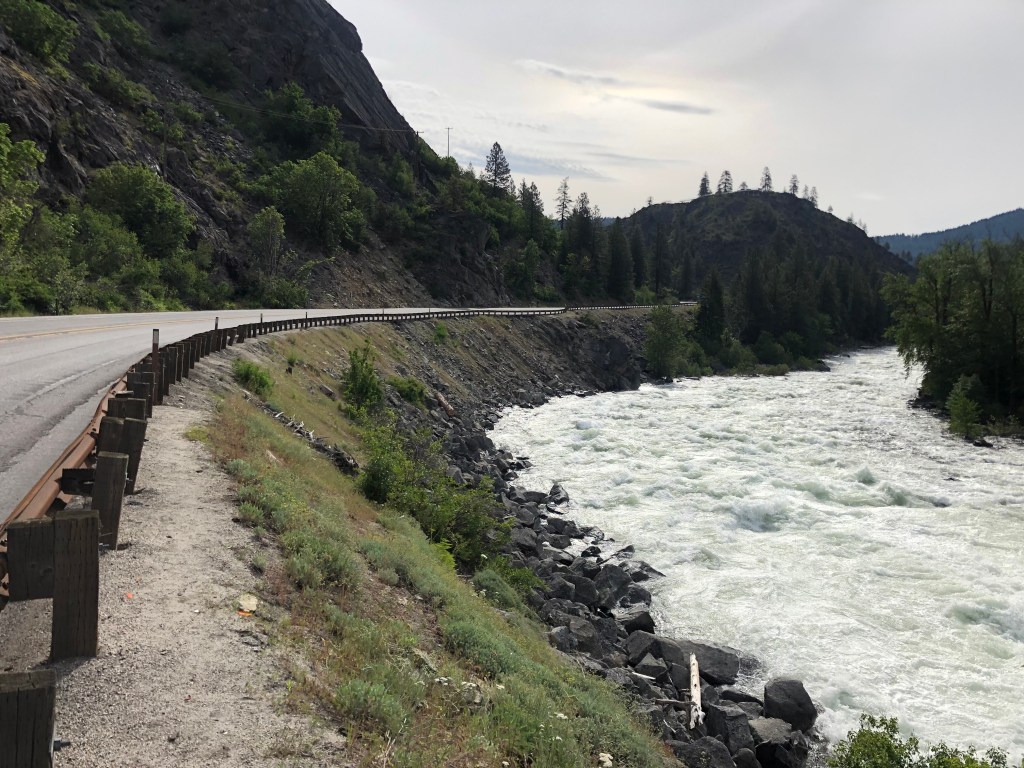
Route 2 through the Cascades is a truly beautiful drive. The road follows the Wenatchee River, which is impressive and scenic.

Flowing toward the Wenatchee Valley Brewing Company. Seriously.

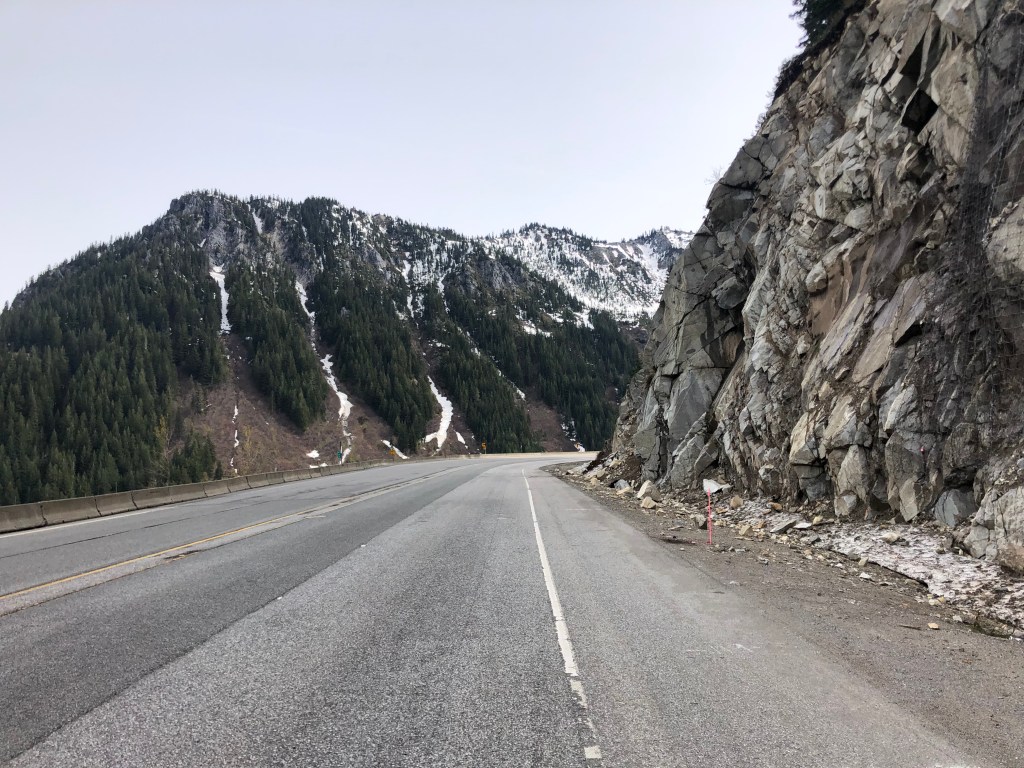
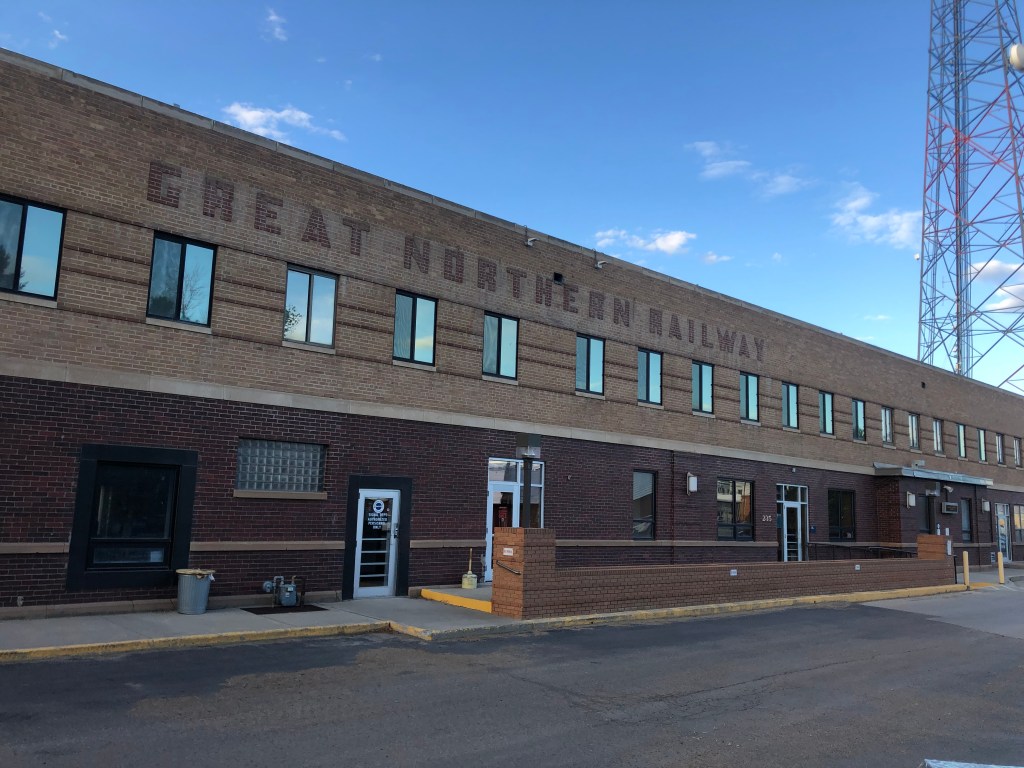
You’ll recall that a few days ago US Route 2 took me over the Rockies at Marias Pass in Montana, and I noted that the Great Northern Railway ran its transcontinental route over that pass in 1889. The last segment of Great Northern’s transcontinental tracks to be completed was the section over Stevens Pass, right here in the Cascade Range.

Crossing the Cascades at Stevens Pass.

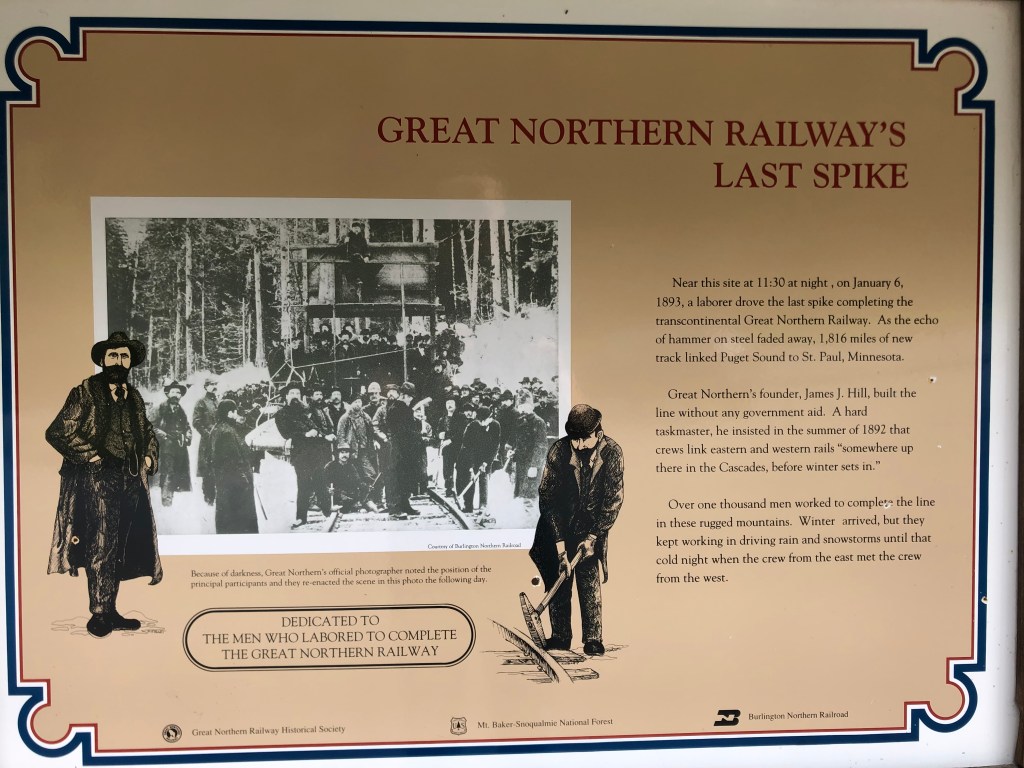
So this morning I stopped on the Pass near the point where the final railroad spike was driven on January 6, 1893. There’s a placard commemorating the event.

A creek runs by this same spot. It’s called Deception Creek, and I’ve been unable to find out the story behind the name. (Please enlighten me, if you have info.) I did manage to take this short video of the creek running under Route 2.

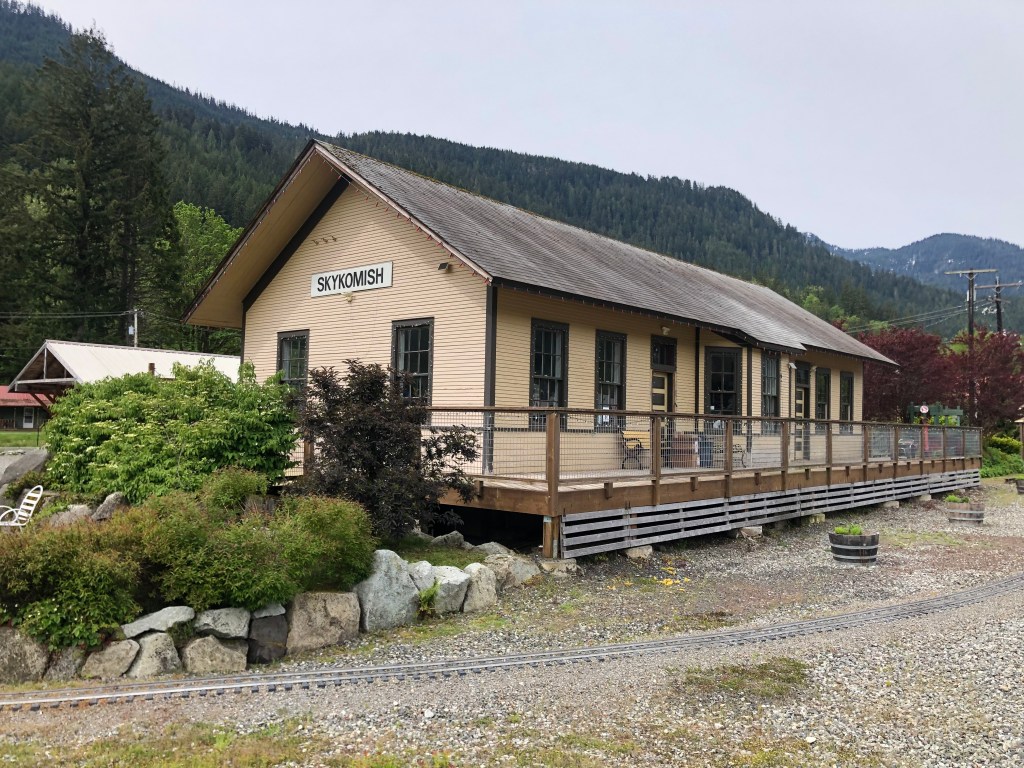
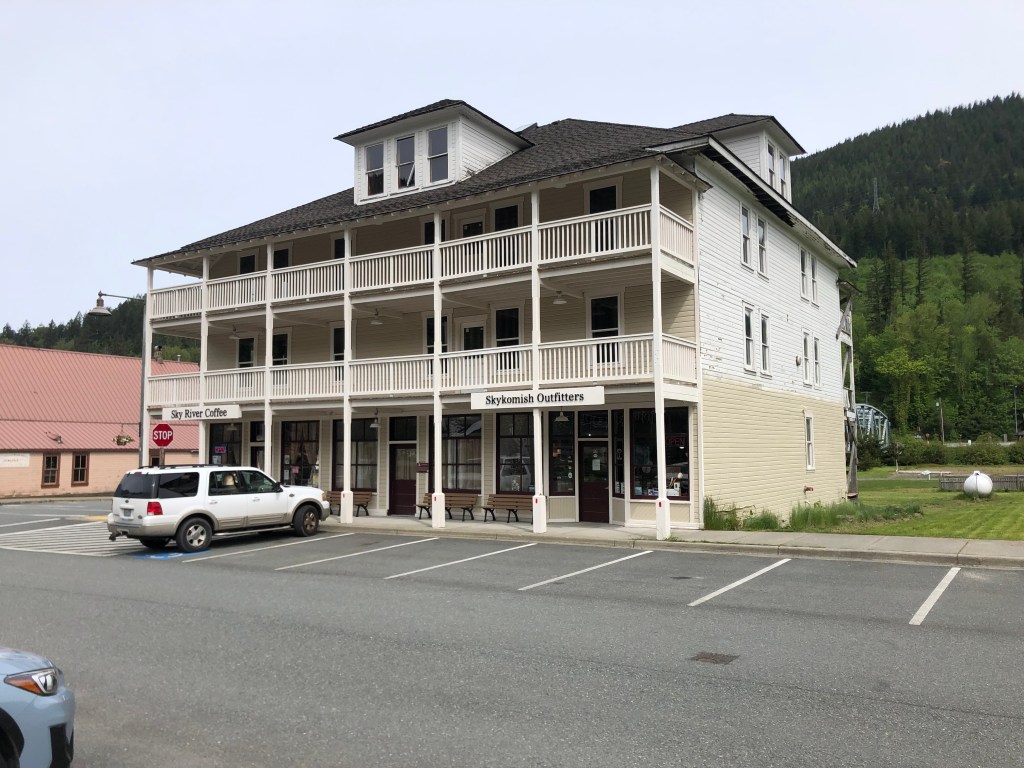
On the other side of the pass I came to the town of Skykomish (pop: 190). Like Leavenworth and many other towns along Route 2, Skykomish was established as part of the Great Northern Railway’s surveying efforts. For about 80 years it provided maintenance and fueling services for the Great Northern. Today, however, the GN doesn’t even stop at Skykomish’s historic depot.

The tiny tracks in front of the depot are for a kiddie-size train ride.

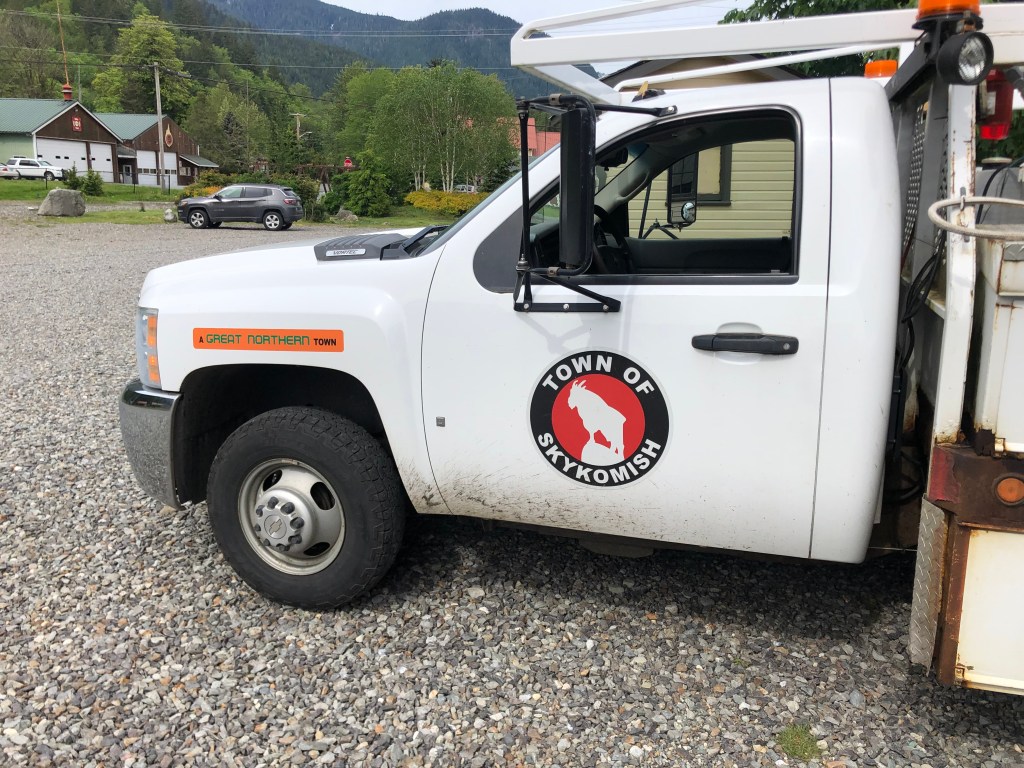
Still, Skykomish continues to link its identity to the Great Northern. Indeed, the town seal incorporates a version of GN’s logo, and it calls itself “A Great Northern Town.”

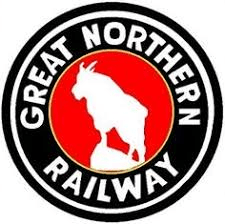
The railroad’s actual logo.
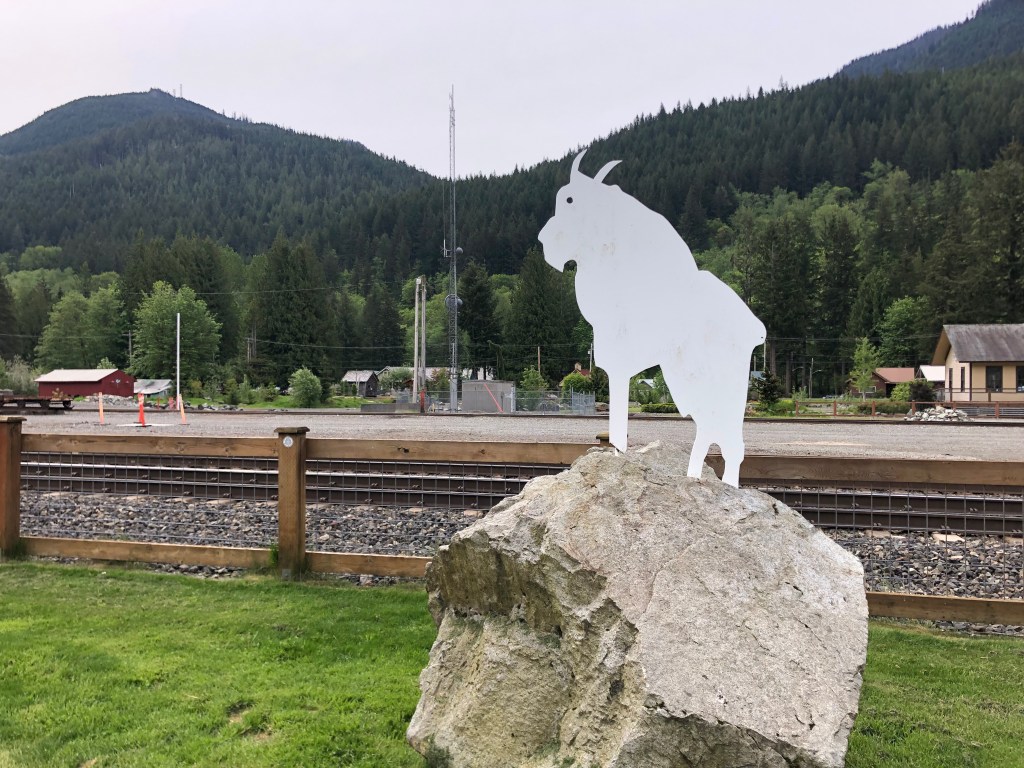
Look familiar? GN’s goat (named Rocky) is everywhere in Skykomish.

Like Leavenworth, Skykomish seems to have found a niche with tourists. In Skykomish’s case, it’s railfans that they’re courting. They have a restored depot that’s now a museum, they offer train rides, they’ve plotted a walking tour of historic GN-era buildings. And while passenger trains no longer stop in Skykomish, plenty of freight trains pass through the town, making it a good location for train spotting. In addition to all this, the town has several upscale cafes, coffee shops, and outdoor equipment purveyors that are popular with a wide variety of tourists.

1905 Skykomish Hotel, restored and with viable tenants.

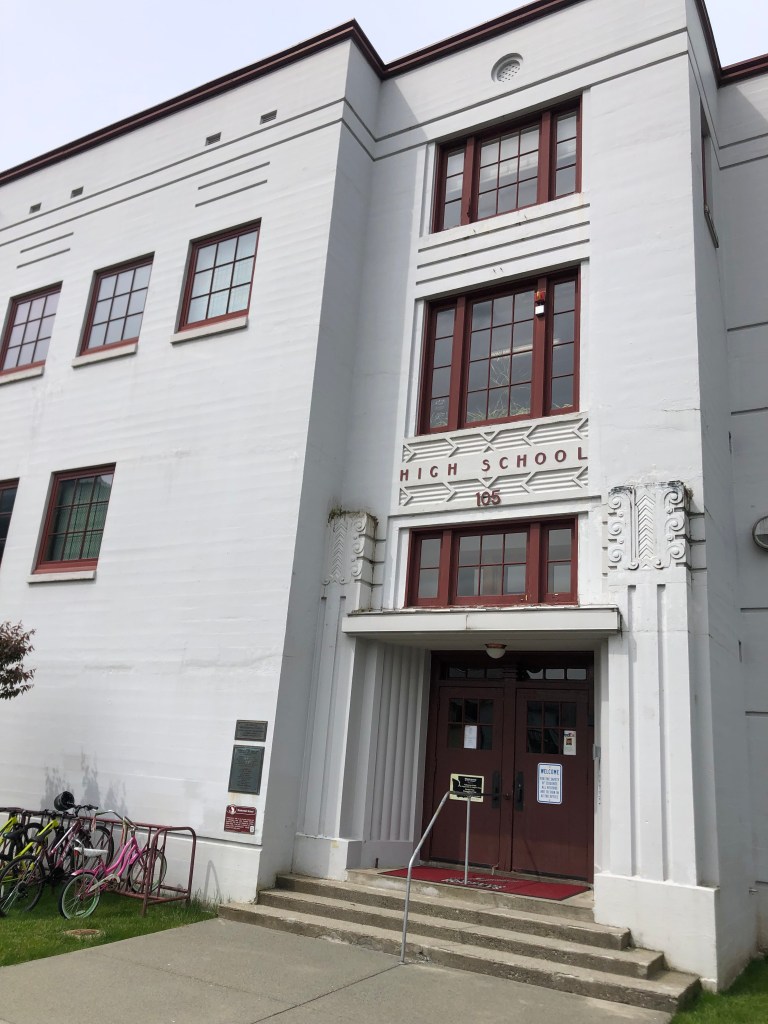
After an enjoyable walk among Skykomish’s streets (which, among the older historic structures, include this WPA-era school building that’s still in use), I eased back onto US 2. I was getting dangerously close to the western terminus at Everett.

In continuous use for 86 years.

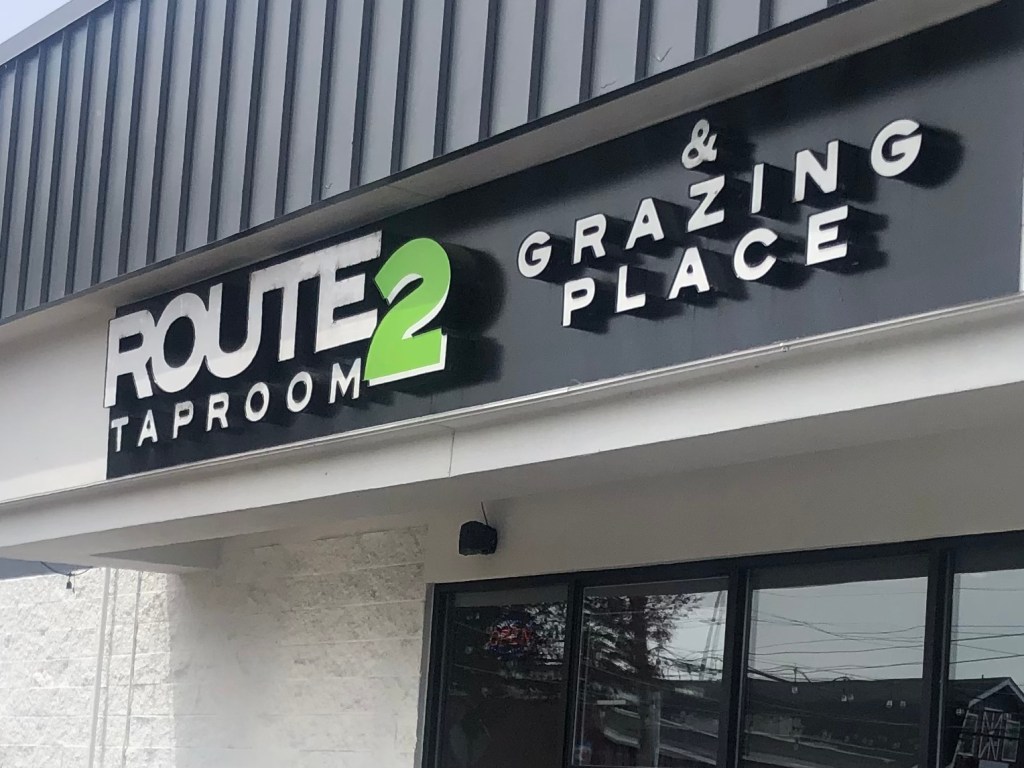
Now, recall that a few days ago, when I was in Glasgow, Montana, I met a guy named Chris at the Loaded Frog who explained the “Middle of Nowhere” slogan to me. Well, Chris also told me that there’s a good taproom near the western end of Route 2. I’ve been looking forward to checking it out ever since I learned of it. With a little research I discovered that the place–the Route2 Taproom–is in Monroe, WA, which is about a dozen miles before the end of Route 2.

Serving beer to thirsty Route 2 travelers since 2015.

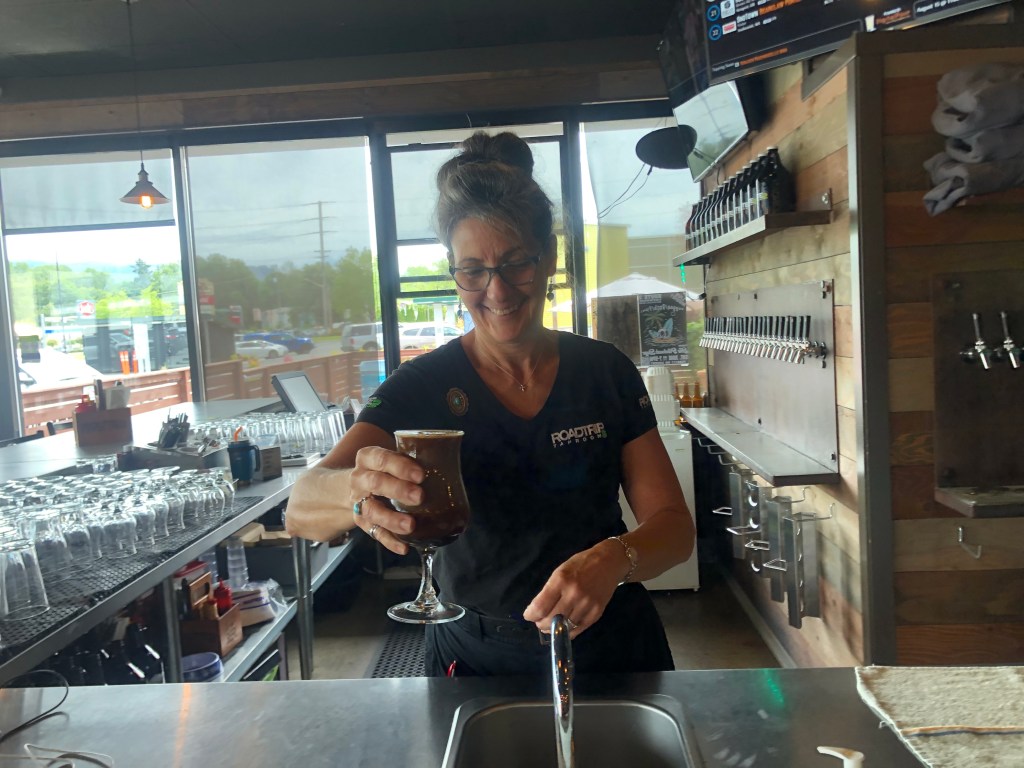
I stopped in and ordered the Triplehorn Nemesis Milk Stout on Nitro. So let’s get the BOTD out of the way:

Maggie at Route2 Taproom serves up a perfect stout.

What a great choice for my final BOTD! It’s got a complex range of flavors, and somehow they work together nicely: There are hints of coffee grounds, vanilla, tobacco leaves, and those miniature Hershey’s bittersweet chocolate bars I used to get at Halloween. The hops are reined in a bit, which is appropriate for a milk stout. The mouthfeel is creamy (that’s partly due to the nitro), and it’s pretty boozy at 10% ABV. It would be really hard to improve on this. I give it 5 stars.

Saved the best for last.

Refreshed and rejuvenated by a good stout, I got back in the car and set out on the last few miles of the trip. And just when I didn’t think my luck could get any better, I spied a Golden/Laughing Bear sign! And what’s more, unlike some of the other such signs I’ve encountered, this one was affixed to a still-operating wheel alignment business. Surely the gods are smiling on me today.

If you zoom in on the window, you can see a second Laughing Bear on the other side of the glass.

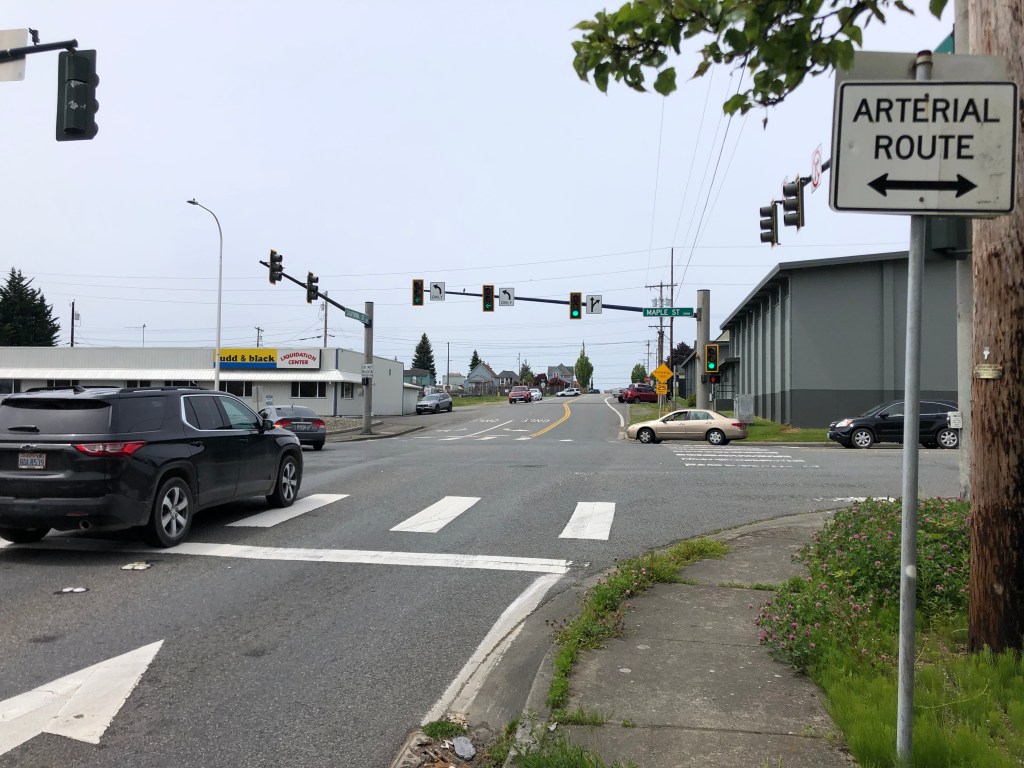
And then, after all this, I was driving the final mile of Route 2. I had arrived in Everett (pop: 111,000, which might be about equal to the combined population of all the other towns I visited along Route 2!) The western terminus of Route 2 in Everett is where Maple Street and Interstate 5 meet. Disappointingly, I was unable to find a sign marking the end of the westbound highway. (I couldn’t find a sign marking the beginning of US 2 East, either.) So all I can show you by way of evidence is this photo of where, in theory, the route ends:

Anticlimactic ending

There was no brass band, no one to hand me a key to the city, no banner strung across the roadway for me to snap with my car. My journey simply ended.

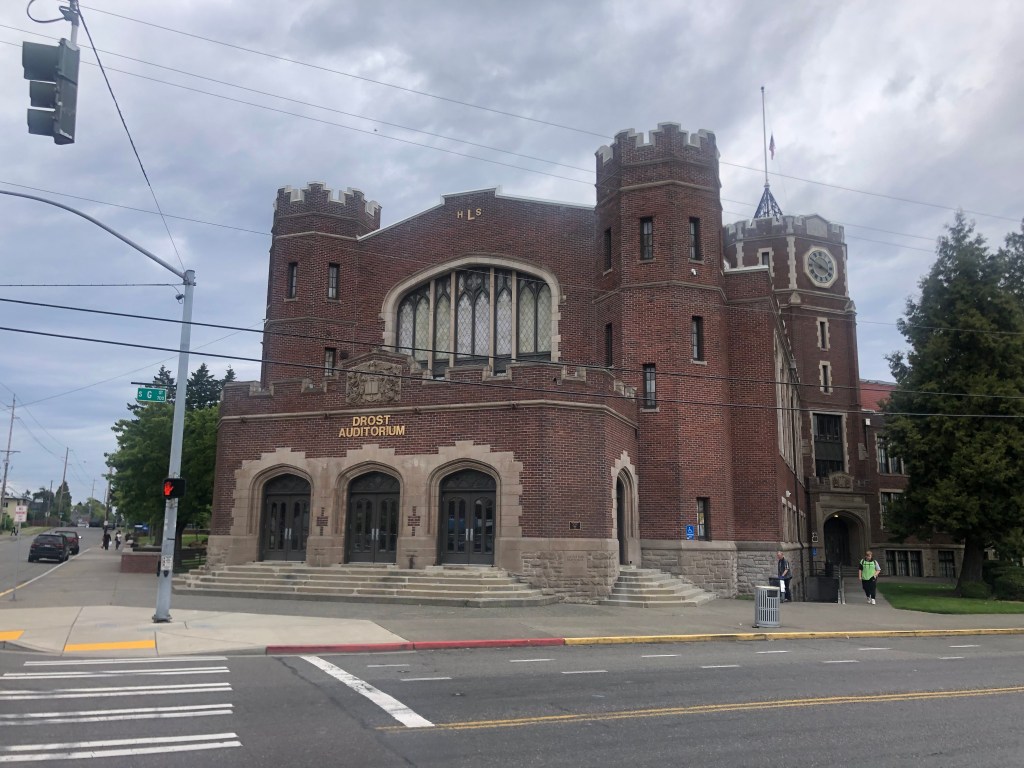
Having dispensed with Route 2, I next headed down to Tacoma (pop: 216,000) to visit some places where my grandmother–and, later, my dad–grew up. This blog isn’t the place to go into any detail about the sites I saw, but I will offer this photo of Grandma’s high school, which is still educating students after 107 years.

Grandma walked these halls almost 100 years ago.

Finally, I will be making a final post tomorrow about a memorable visit I made to an abandoned Old West theme park in Wisconsin. I mentioned it in passing in my May 25 blog, but I didn’t have enough time to do it justice. This I will do tomorrow while I’m waiting for my plane.

Until then.

churches · Golden Bear signs · Road trips · trains

Dem Bones

Back in Devils Lake I took a photo of an art deco sign for a chain called “Home of Economy.” (It didn’t make my cut for that day’s blogpost, though.) “Home of Economy” is a small chain of discount stores in North Dakota. It’s said to be America’s first discount chain. The story is here. Well, it turns out there’s another one of these signs in Williston. And when I came into town last night it was illuminated. I thought I’d share it with you, so you can get the whole effect:

Welcome to 1952. I love how garish this sign is–especially when it’s promoting “economy.”

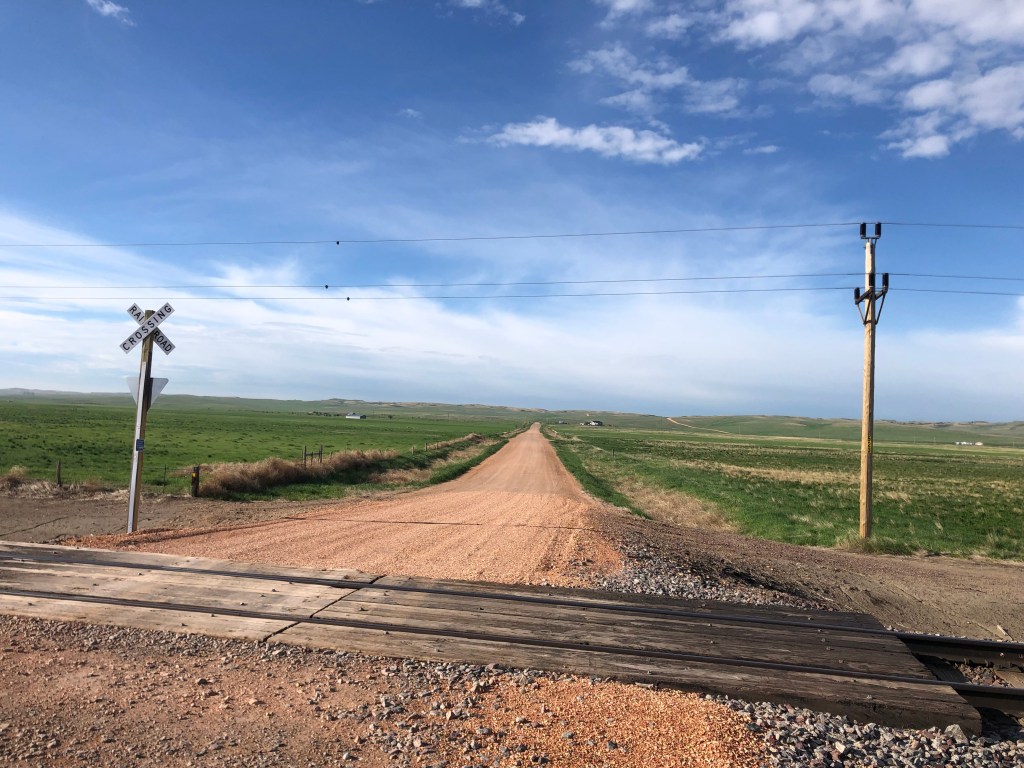
I was back on the road this morning around 7 am, and before long I crossed the state line into Montana. The flat plains and distant horizon reminded me that they call Montana “Big Sky Country.” My dad (rest his soul) used to complain that the sky is the same size wherever you go; what right does Montana have to claim it as their distinctive characteristic? But a few hours on Montana’s roads convinced me that Dad was wrong and Montana is right. Sorry, Dad.

Size matters

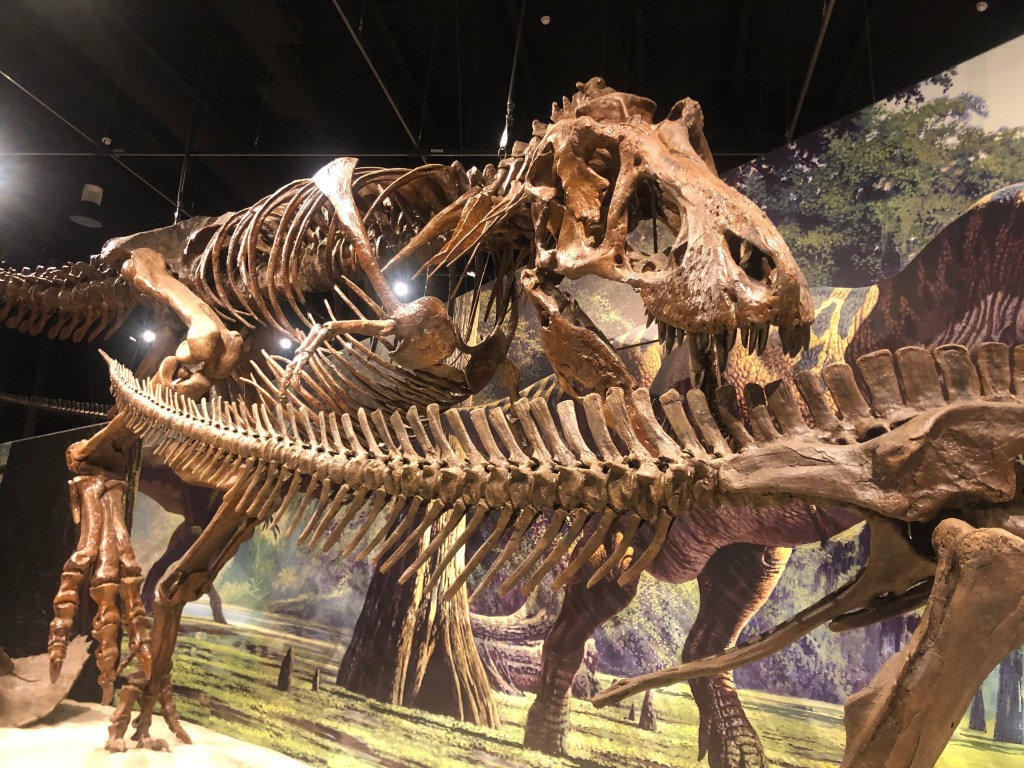
Anyway, today’s theme seems to be bones. For starters, Montana is well known for its dinosaur fossils. There are some good specimens at the “interpretive center” at Fort Peck.

Jurassic Denticles

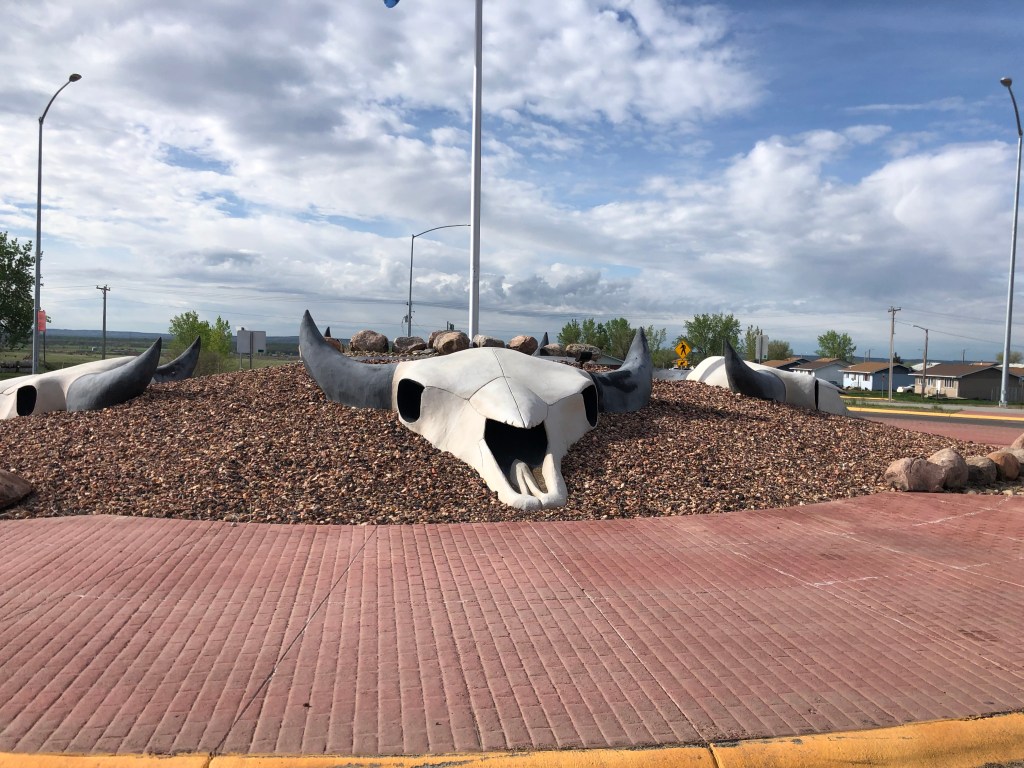
Second, Montana seems to have adopted the cow skull as some kind of a mascot. I see it everywhere, from storefront logos, to ranchhouse decorations, and even to art installations in the roundabouts on Route 2.

Skeletal streetscape

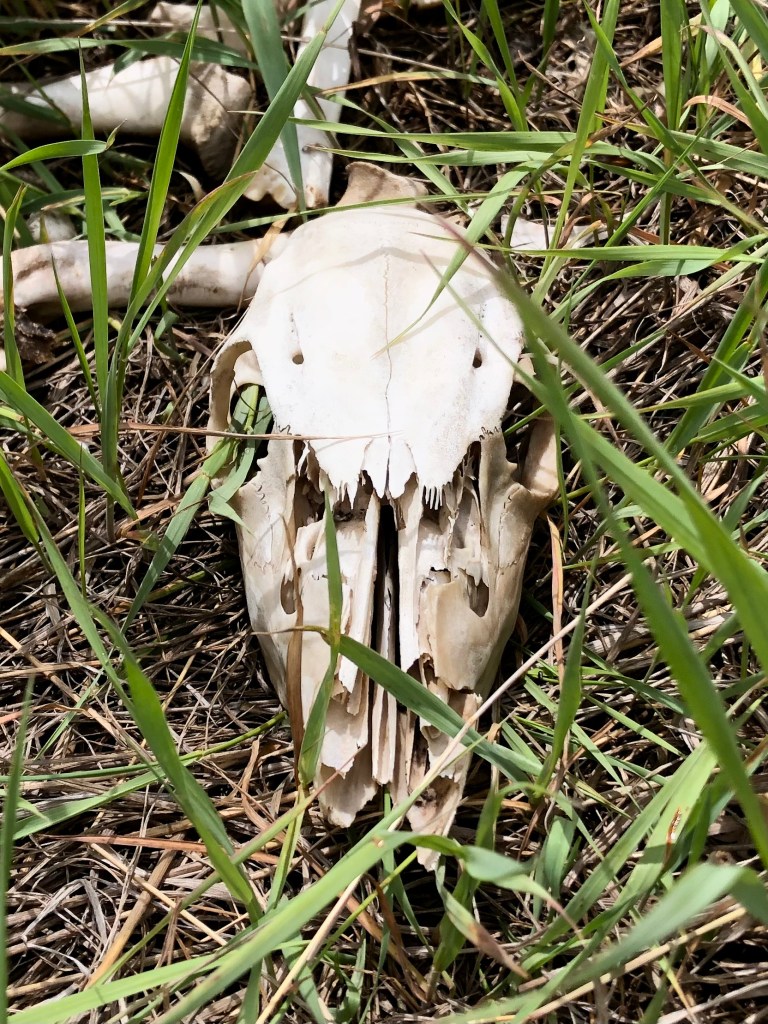
Third, there are actual skulls scattered about on the landscape, the inevitable result when Montana’s extensive wildlife clashes with predators.

At least the crows are well fed.

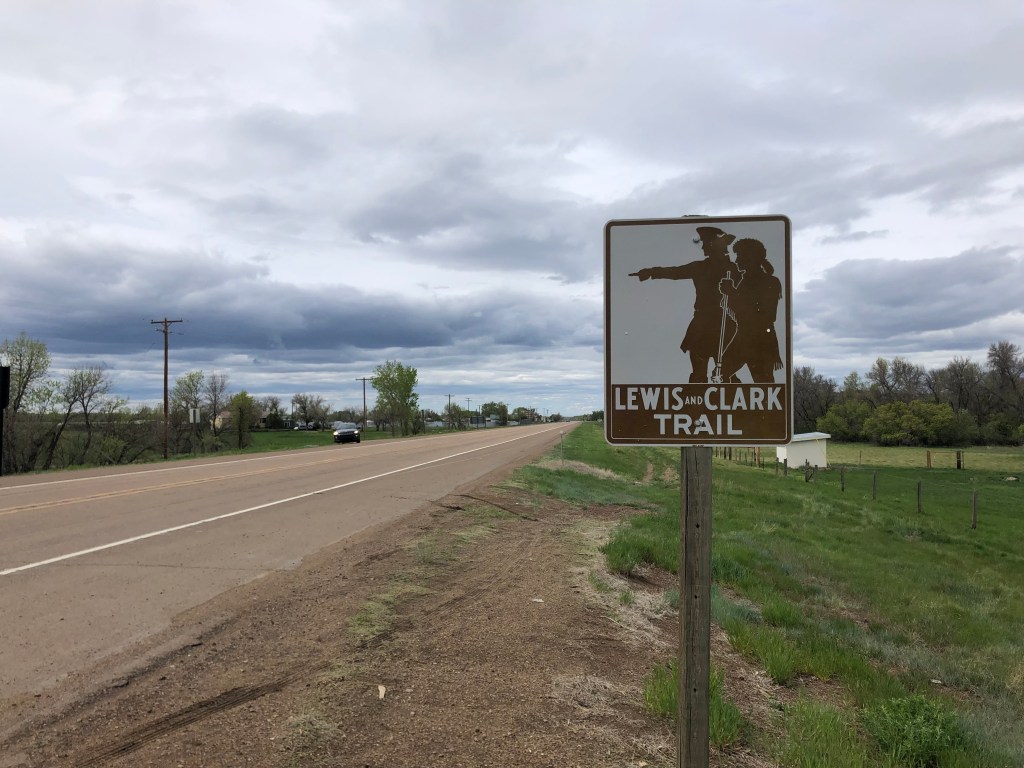
Throughout the day I drove about 300 miles. A goodly portion of Route 2 between Wiliston and Havre follows the Missouri River, and, not coincidentally, it tracks with the Lewis and Clark route.

“Over there–is that an obelisk?”

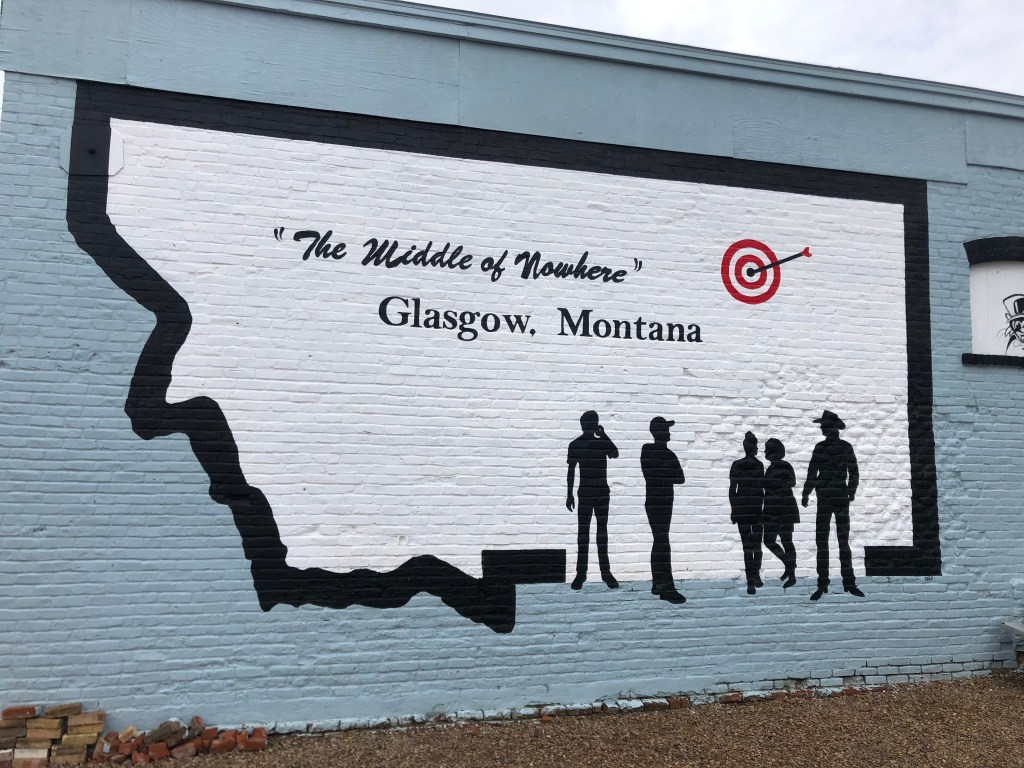
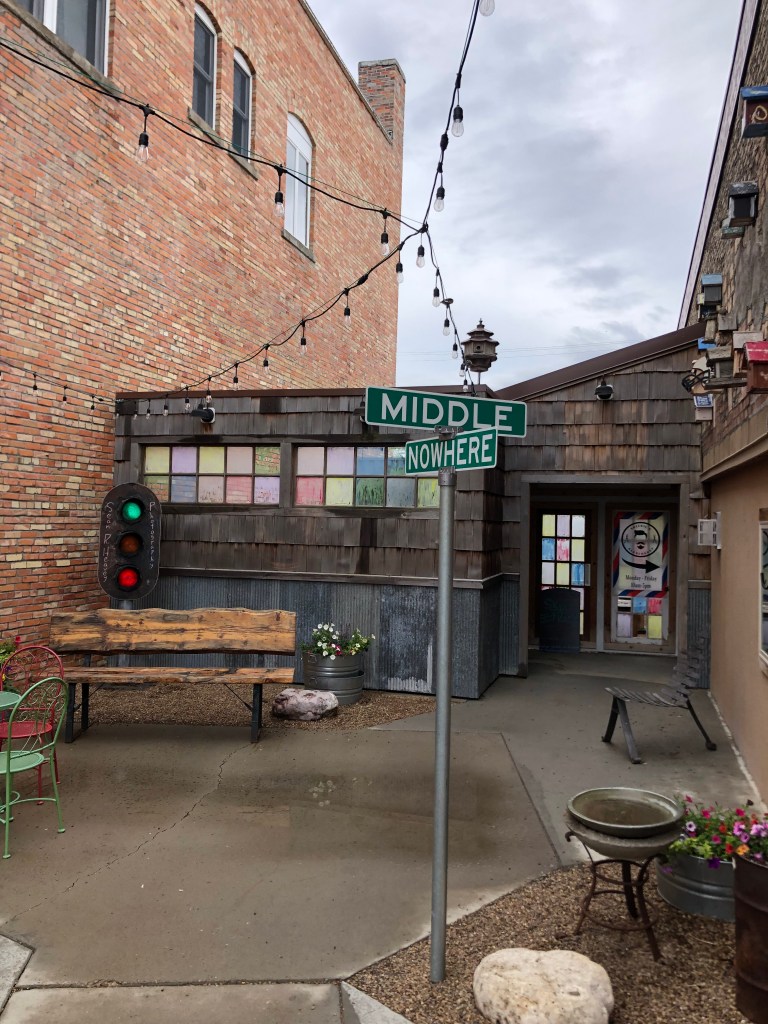
My favorite town on today’s drive was Glasgow, MT (pop: 3,300). It was named by Great Northern Railroad magnate James Hill, who supposedly picked the name by spinning a globe and randomly dropping his finger on Glasgow, Scotland. Glasgow, MT embraces its Scottish connection by depicting plaid color schemes, bagpipes, and Scottie dogs on various buildings and logos. And to contrast with Rugby, ND’s “geographical center of North America” claim, Glasgow proudly calls itself “The Middle of Nowhere.”

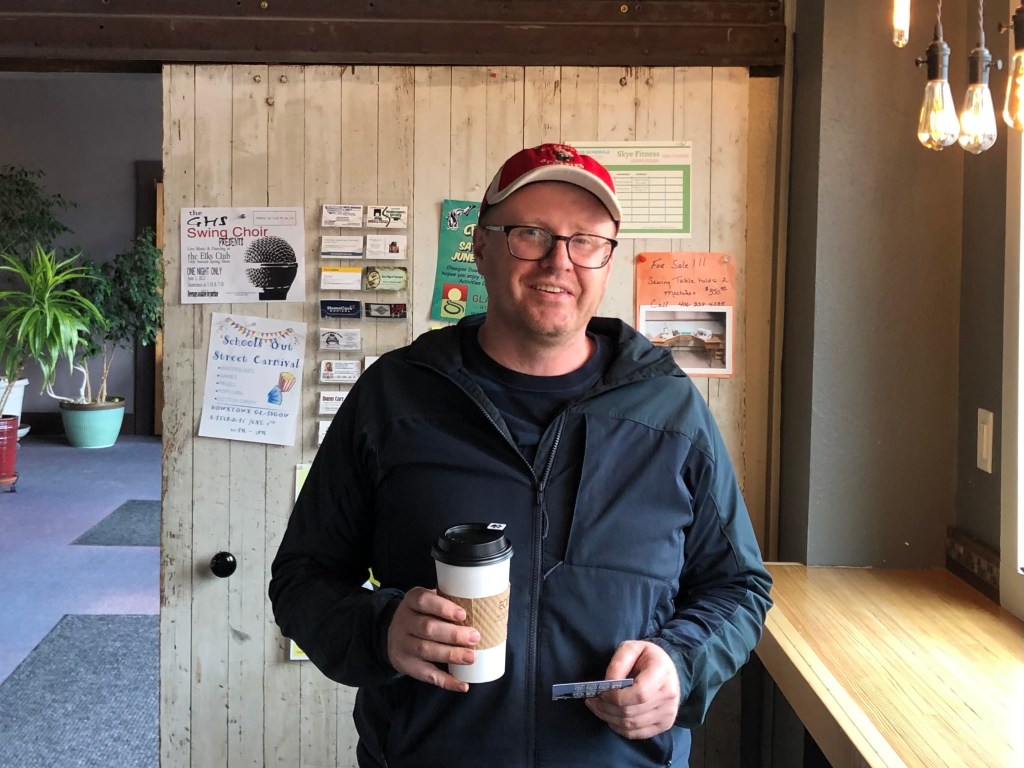
I went into a Glasgow coffee shop (“The Loaded Toad”), which, surprisingly for a town this size, offers honest-to-goodness espresso drinks, and I asked what’s up with the “middle of nowhere” slogan. The barista didn’t really have an answer, but one of the patrons (a guy named Nick) told me that it’s actually a scientific fact. It seems that a team of researchers at Oxford University collected data from all towns in the continental US with populations of up to 1,000 residents, and then determined which one of these is the farthest from any city of at least 75,000 residents. The answer: Glasgow, MT. You can read about it here.

Nick: Master of Glasgow trivia.

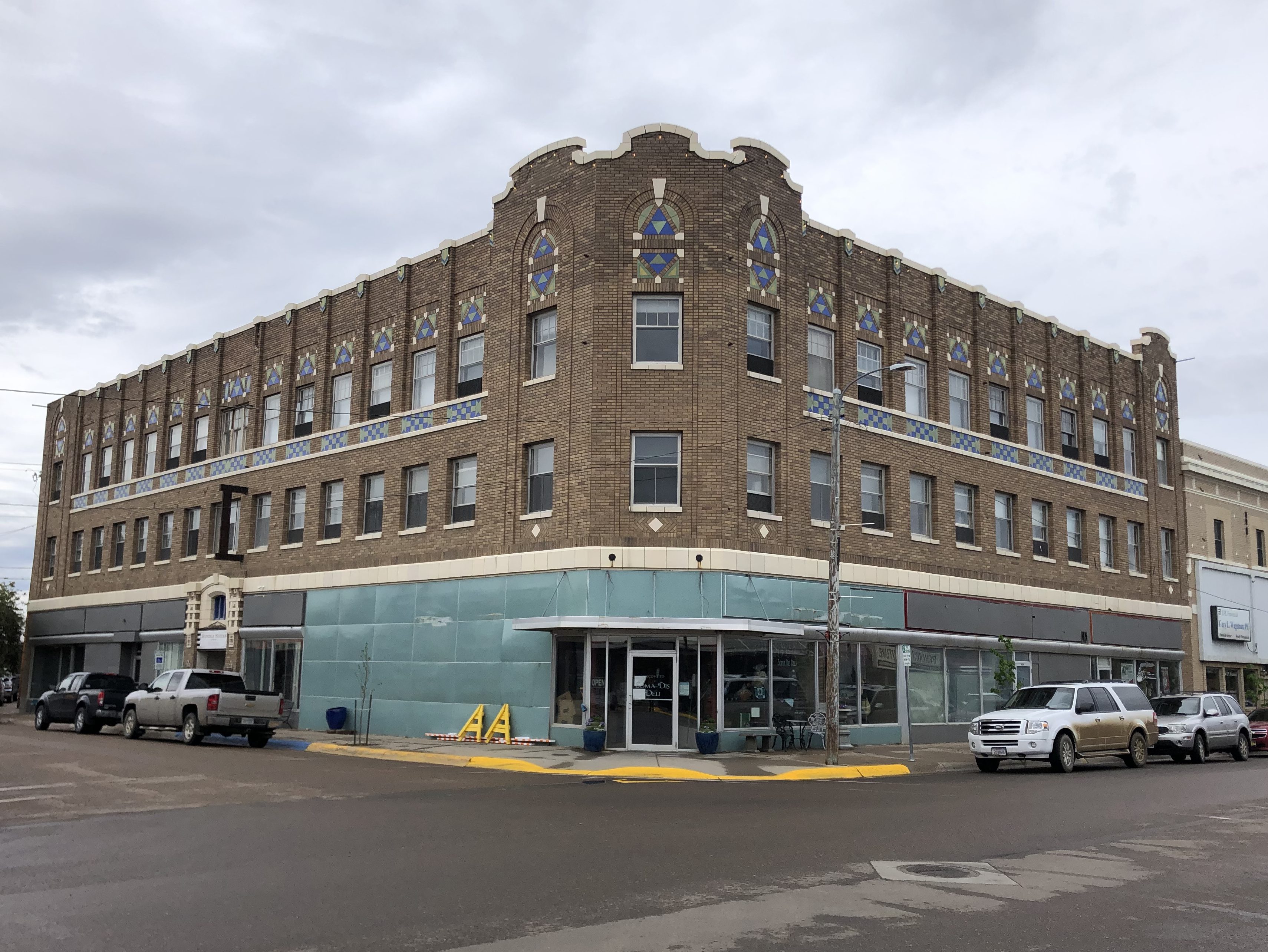
For such a small and demonstrably isolated town, Glasgow has a lot to offer. Not only does it have hipster quality coffee, but it also has a healthy, historic downtown, centered on the recently-renovated Rundle Hotel that dates back to 1915.

The Rundle Building, age 107.

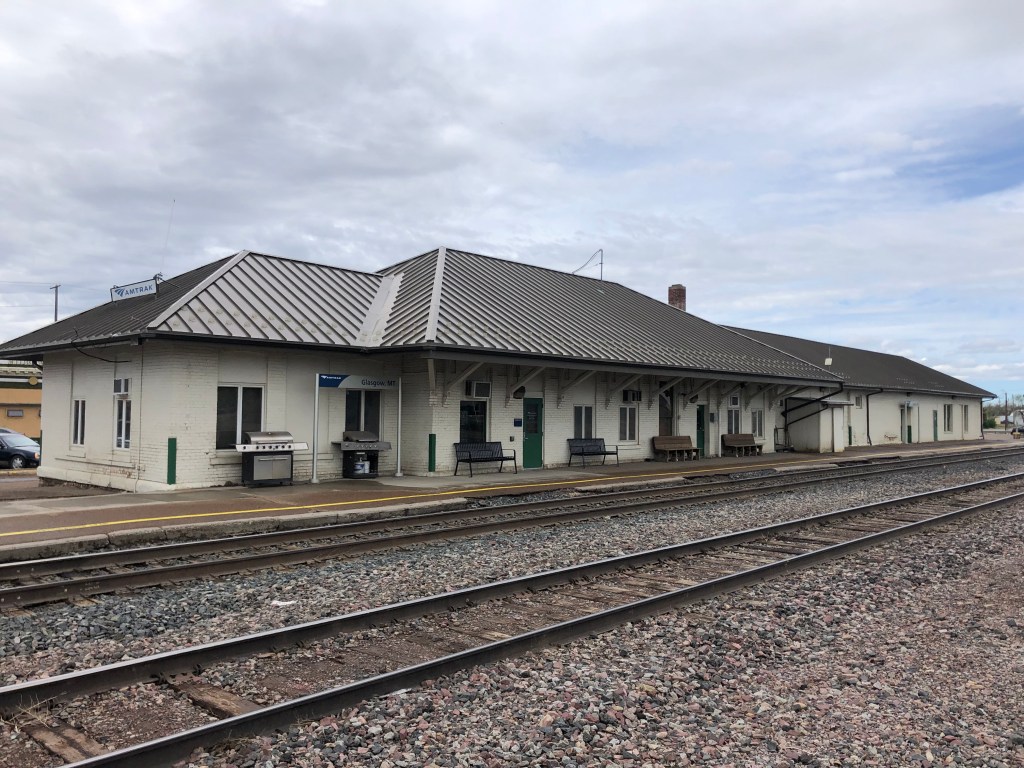
Glasgow also has an operating, historic depot with daily passenger service. As I noted in an earlier post, trains no longer stop at many of the small towns along the Hi-Line.

Your portal to the Middle of Nowhere.

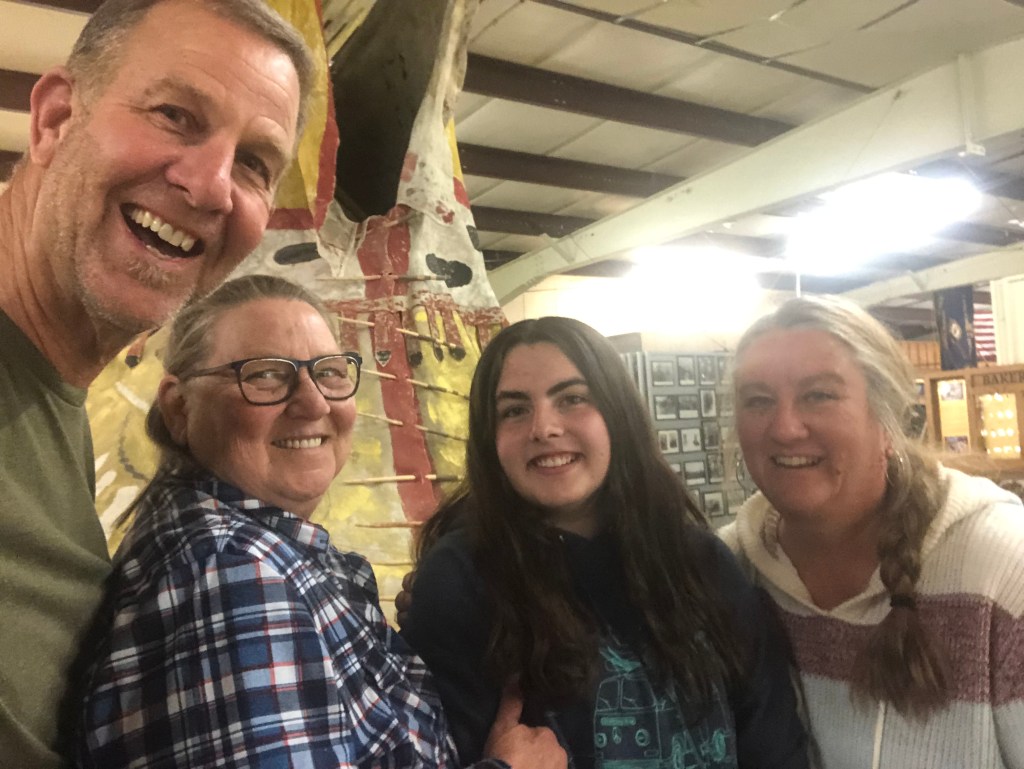
And as if that’s not enough for a town of 3,300 souls, Glasgow has a well-curated, large Pioneer Museum of Valley County, which covers the history of the region. It has displays on the railroads, schools, agriculture, industries, domestic life, government, and many other aspects of life in northeast Montana. The staff was very welcoming and opened up a frozen-in-time 1924 home for me. They even let me take a selfie with them.

Steve’s Angels.

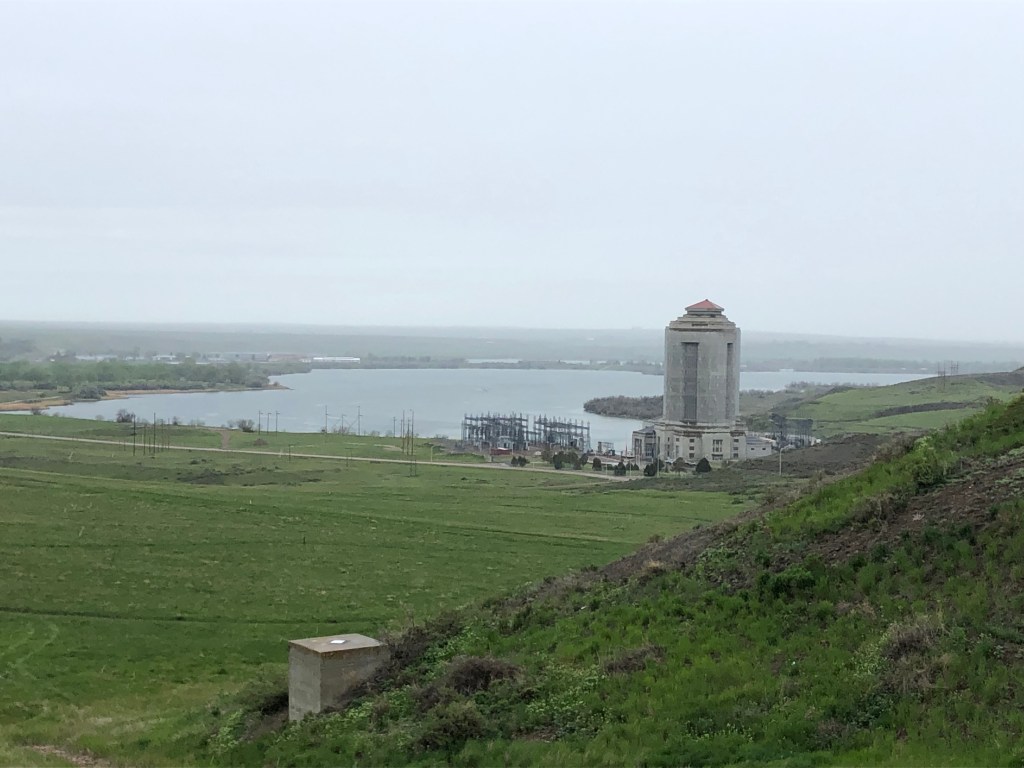
Although Glasgow was founded as a railroad town, much of its growth occurred in the 1930s, when a major influx of workers and their families came to build the nearby Fort Peck Dam. It was an monumental undertaking, and the completed dam created a 134-mile-long lake in the course of the Missouri River. The flood control, electrical generating, and recreational benefits of the project were enormous (not to mention the economic stimulus during the Great Depression).

To parallel my earlier visit to the headwaters of the Mississippi, here I’m overlooking the point where the Missouri resumes its course after passing through Fort Peck Dam.

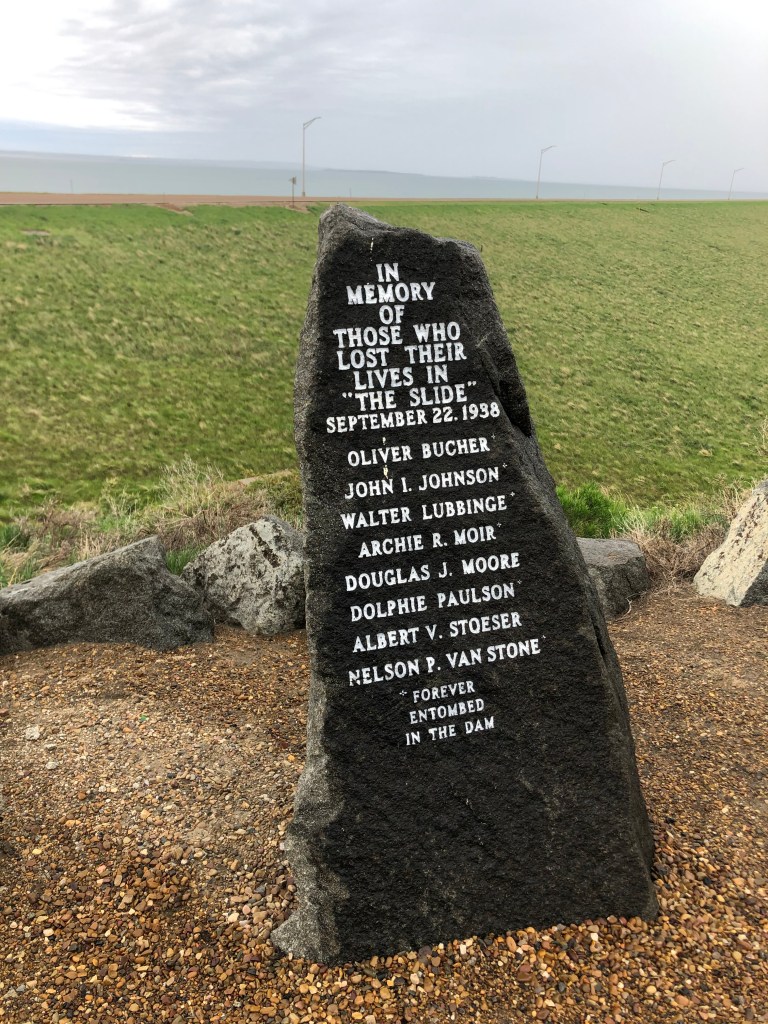
Sadly, though, 60 men died in the course of construction, and six bodies couldn’t be recovered. They are forever entombed deep in the dam.

Requiescat in pace.

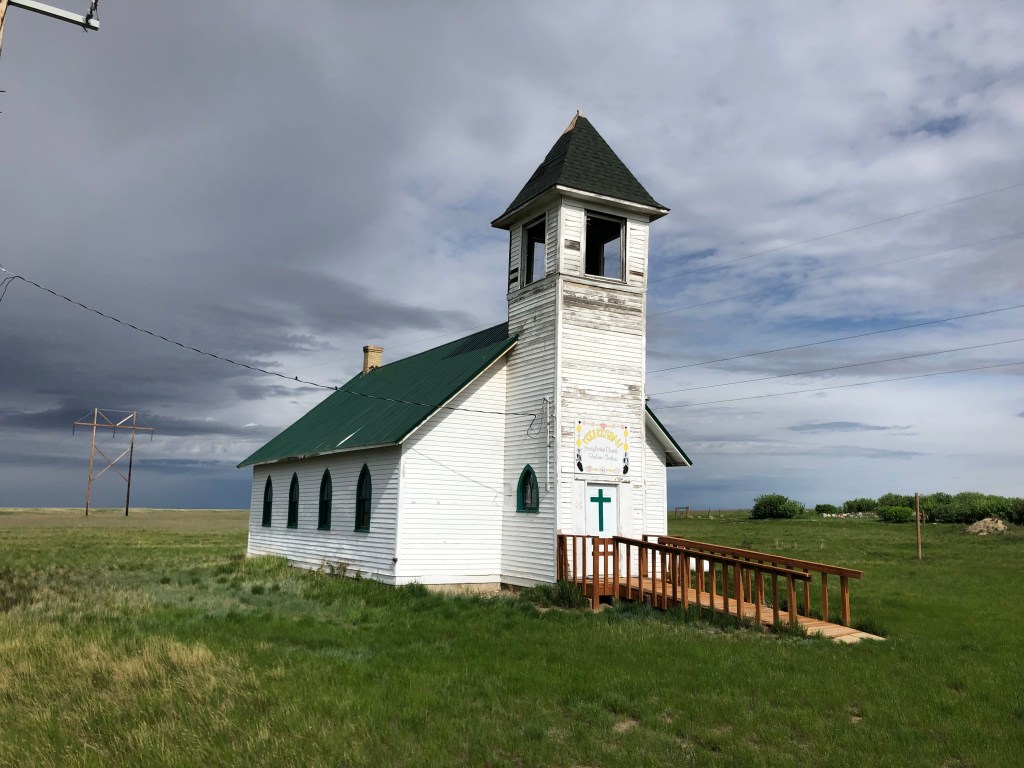
Naturally, churches made another appearance today. My eye was once again caught by the classic Prairie architecture of an old, whitewashed, clapboard church with that distinctive belfry. Built in 1904, this particular church has some real history behind it. It was attended by some of the Sioux Indian band that was once led by Chief Sitting Bull. (Some of that band had converted to Christianity.) There are also some urban legends about a “goat man” occasionally seen jumping from the church’s belfry. A little info is here.

If I were a supernatural being, I’d probably hang around a church like this too.
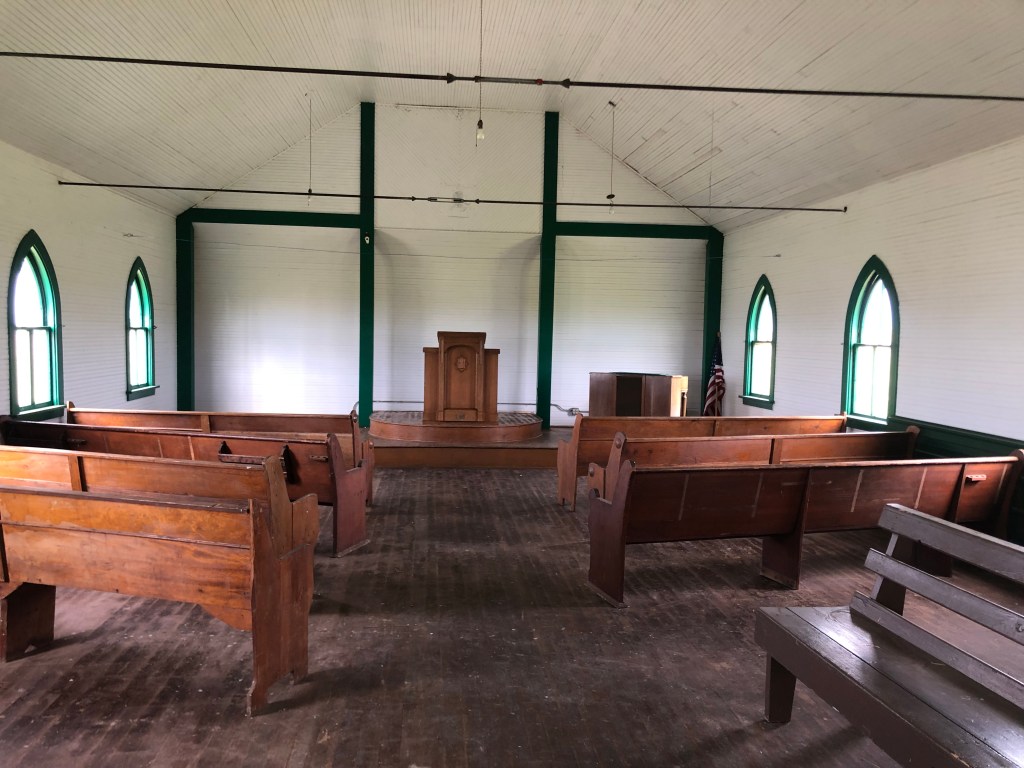
Inside the Chelsea Church. Pretty minimalist.

I wound up today’s travels in Havre (pronounced “HAVE-er), Montana (pop: 9,500). It’s one of the larger towns on Route 2, and it seems to have a pretty vibrant economy. Once again I encountered a functioning railroad station, with some impressive art installations (if I can call them that).

Havre Train Station, built in 1904 and significantly remodelled (in streamline moderne fashion) in 1949. Is it just me, or is it intended to look like a railroad passenger coach?
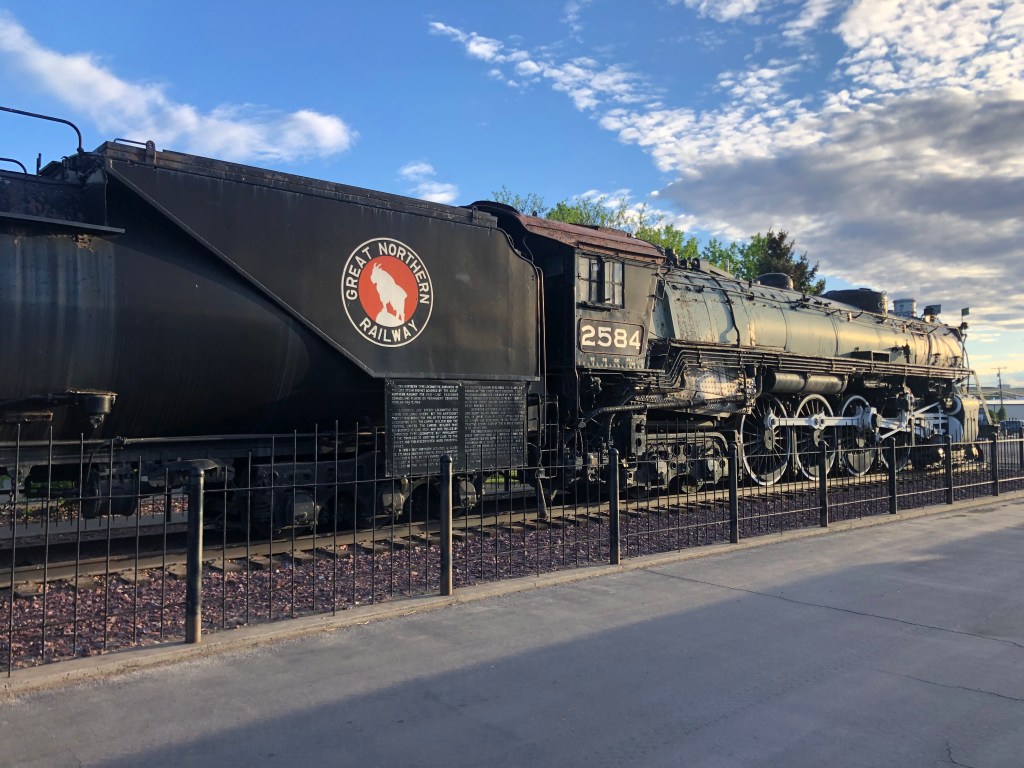
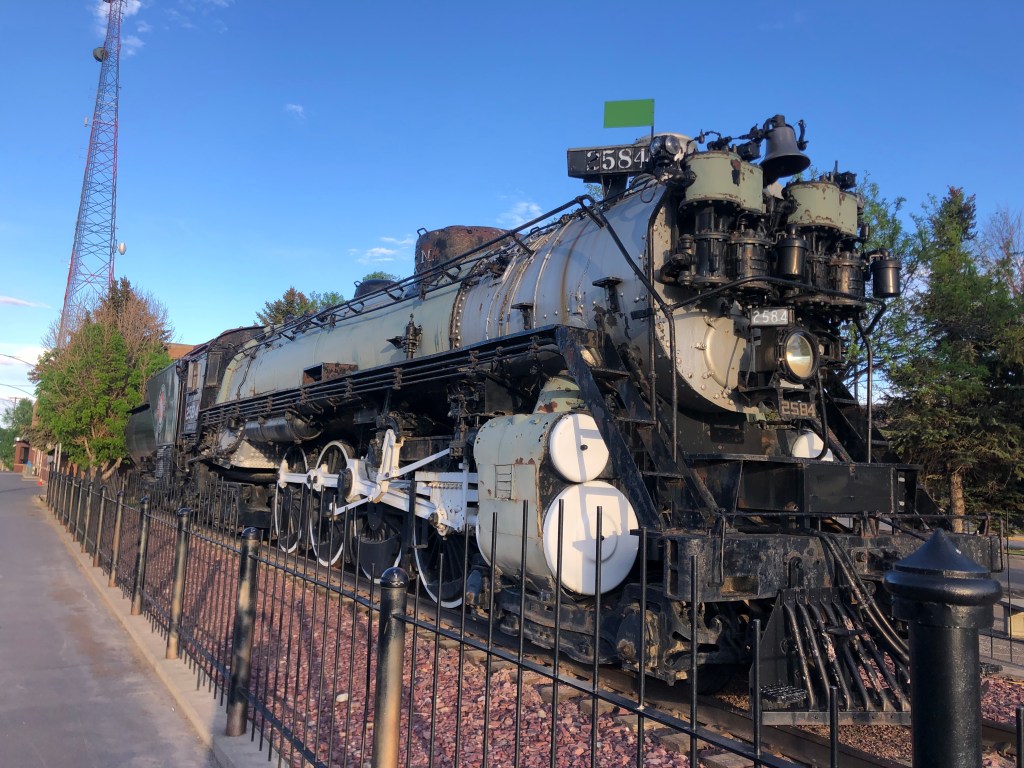
Great Northern’s #2584 was built in 1930, retired in 1957, and has been on display at the Havre station since 1964.
Even if you’re not into trains, you have to find this piece of machinery impressive, right?
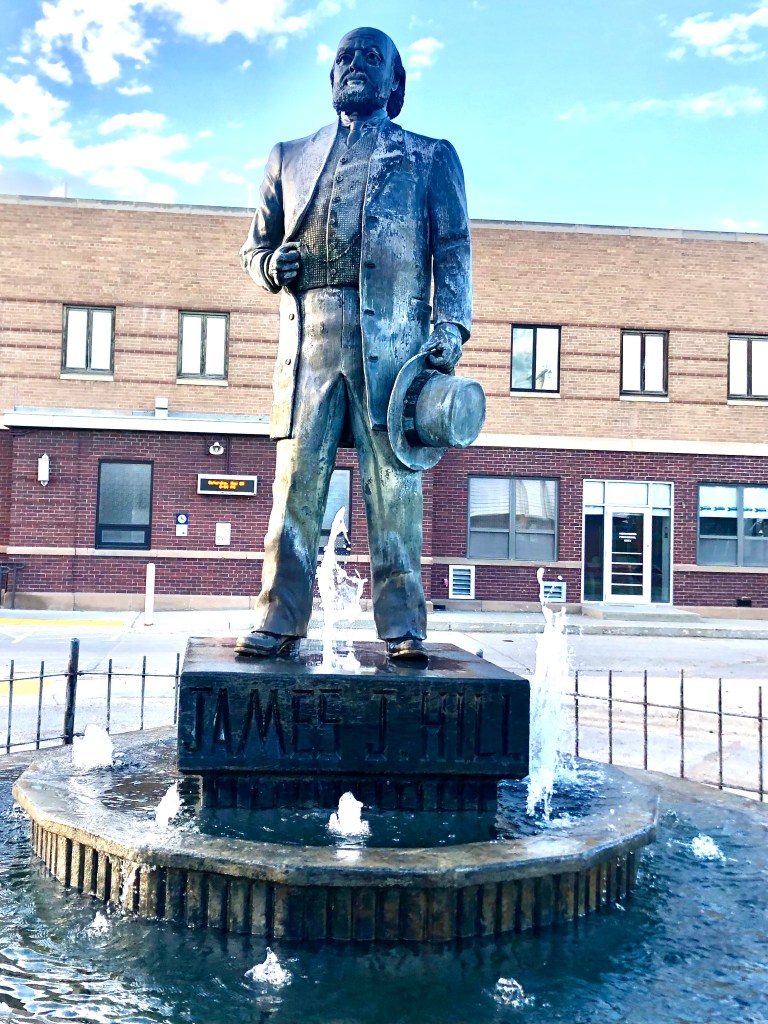
Statue of James J. Hill, Great Northern’s founder and CEO. He was called “The Empire Builder.”

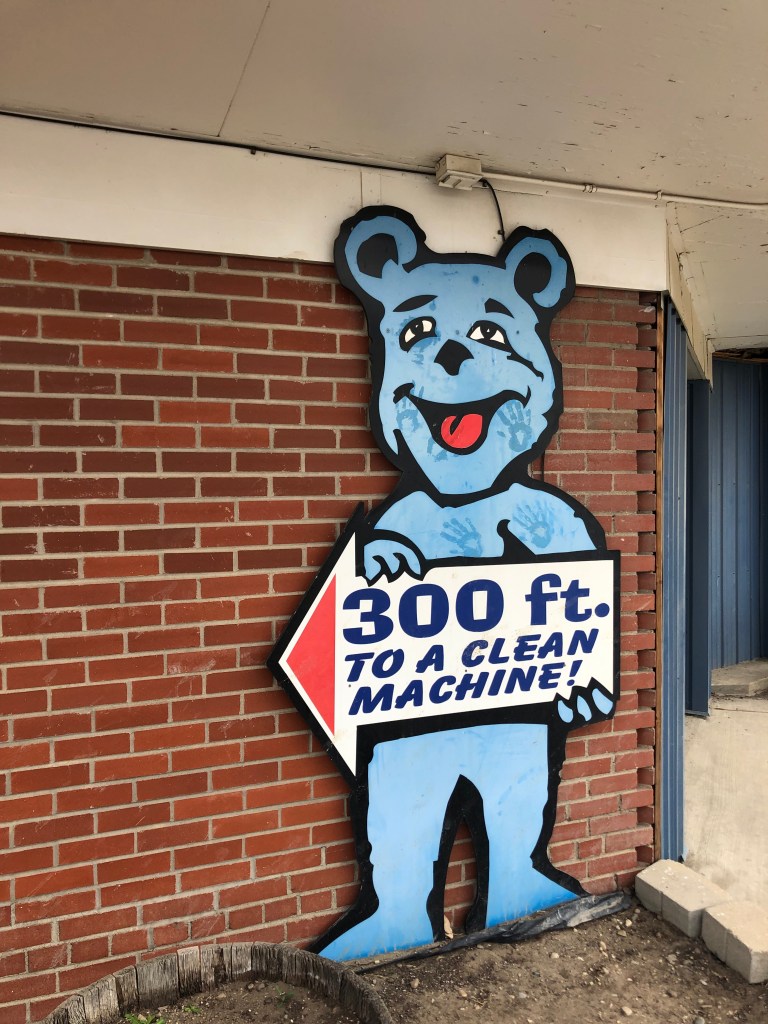
Not far from the station I spotted what seems like it could be a Laughing Bear. (For a refresher on what I’m talking about, click here.) It has the same outline and expression, but inexplicably it’s blue rather than gold. Please let me know whether you think this was originally a proper laughing bear, or just a coincidental doppelganger.

YOU make the call.

BREW OF THE DAY

In honor of my visit to Glasgow, I had the Aberdeen Scotch Ale at Triple Dog Brewing Company in Havre. Triple Dog is a hip brewery with the usual industrial-chic vibe, and it’s populated by 20-somethings (both employees and clientele). The only reason that I didn’t significantly increase the average age is because this place was packed. I mean, for such a small town, this place was hopping (brewing related pun unintended). They don’t have a kitchen, but a food truck in the front parking lot supplied me with a wonderful concoction called Irish Nachos. I love this place, and if you’re interested in the back story, here’s an interview with the young founder:

Anyway, as I mentioned, I ordered a Scotch Ale. I had fully intended to get myself an imperial stout, but evidently the folks out here in northern Montana aren’t manly enough for this kind of beer. (Note to the guys sitting behind me here at the brewery, who look like they could snap me in two: I’m just joshin’.)

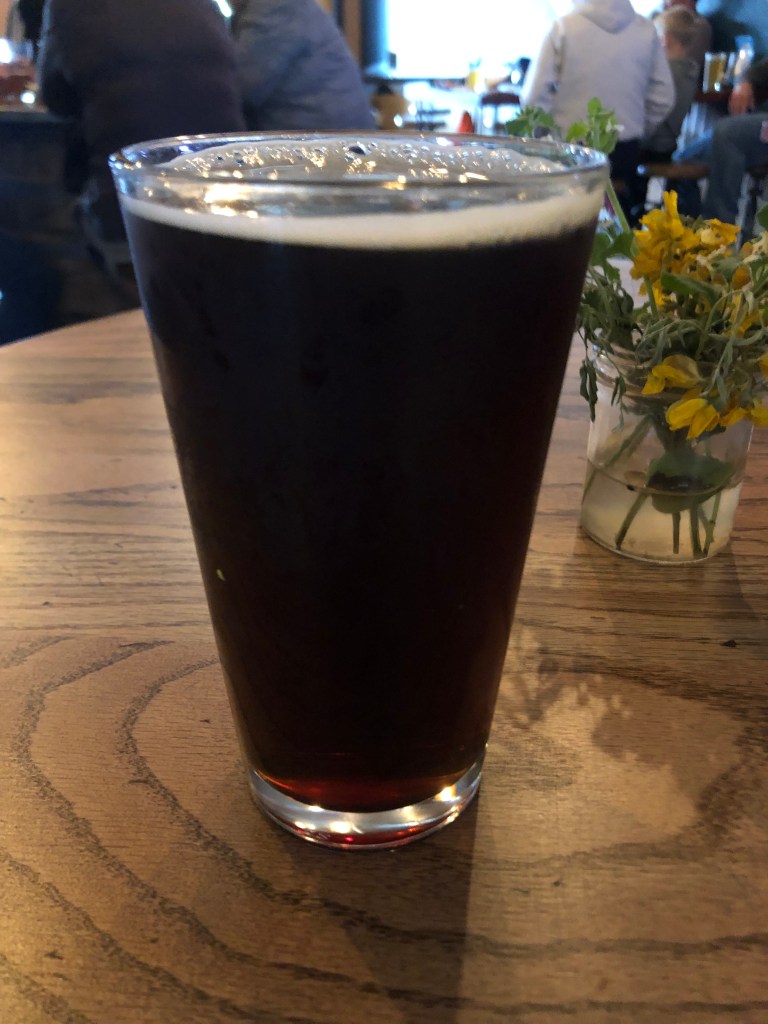
Not exactly a kilt-lifter.

Scotch ale is a difficult beer to do right. You really need to get your hands on some good peated malt, so that the resulting drink evokes Scotch whisk(e)y. The other key characteristics of a good Scotch ale (in my humble opinion) are a malty-sweet backbone and a boozy ABV. Sadly, this beer had none of these characteristics. (The ABV clocked in at 6 percent.) That said, and in contrast with last night’s beer, this Scotch ale got better the more sips I took. I’m thinking that the first sips were disappointing because they didn’t match my expectations for a Scotch ale. But with further sips, I was able to appreciate it for what it was: Essentially, a good brown ale. Judged by that standard, this was flavorful, suitably hopped, and pleasantly fresh and, dare I say, bright. I give it a 2.5 as a Scotch ale, but 4.0 as a brown ale.

BONUS: DISTILLERY SIGHTED IN HAVRE

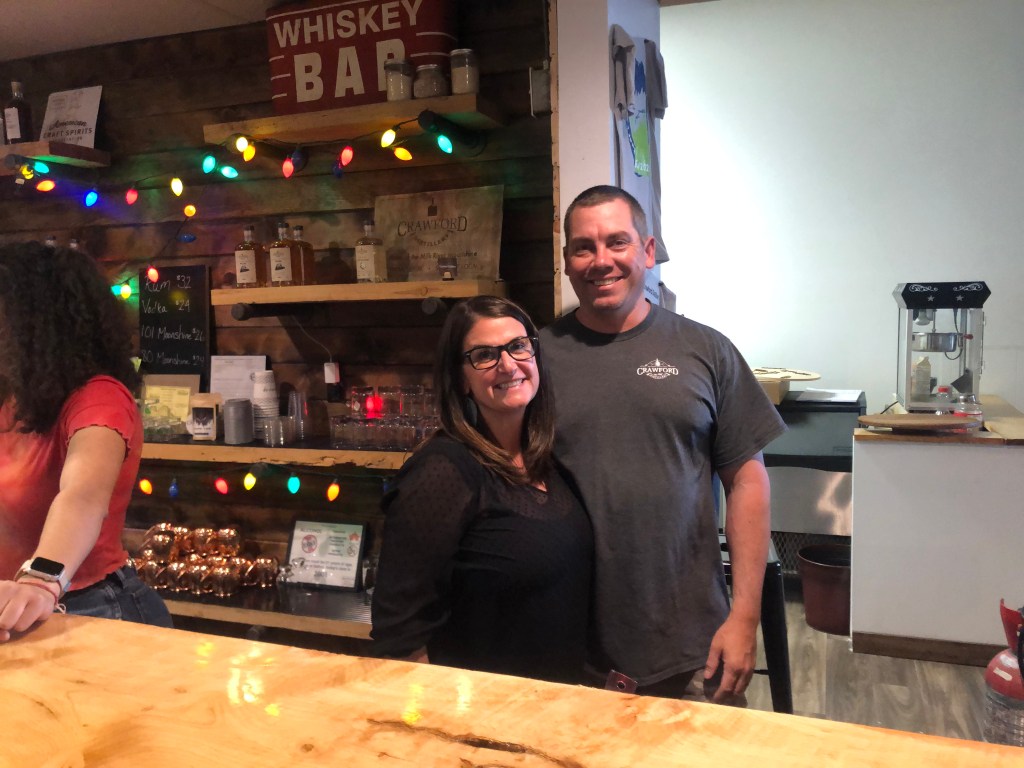
After dinner I was driving to my hotel when I spotted the Crawford Distillery. It’s an awesome place: they hand-craft their own whiskies, vodkas, and rums. It’s not the kind of place I’d expect to find in a small Montana town along the Hi-Line; the attention to quality, enthusiastic atmosphere, and craft cocktails would seem more common in a place like San Diego. So I wasn’t surprised when I learned that the owners (Alyssa and Neil Crawford) are transplants from San Diego. Alyssa’s mom also helps out behind the bar and offers humorous, Shirley Booth-like commentary. I felt welcomed and their cocktails were first-rate. Alyssa even burned wood chips to make me a smoked whiskey. You can buy their spirits online. Just sayin’.

Alyssa and Neil Crawford–owners of my new favorite bar.

Tomorrow I cross the Rockies.

Golden Bear signs

Who’s Laughing Now?

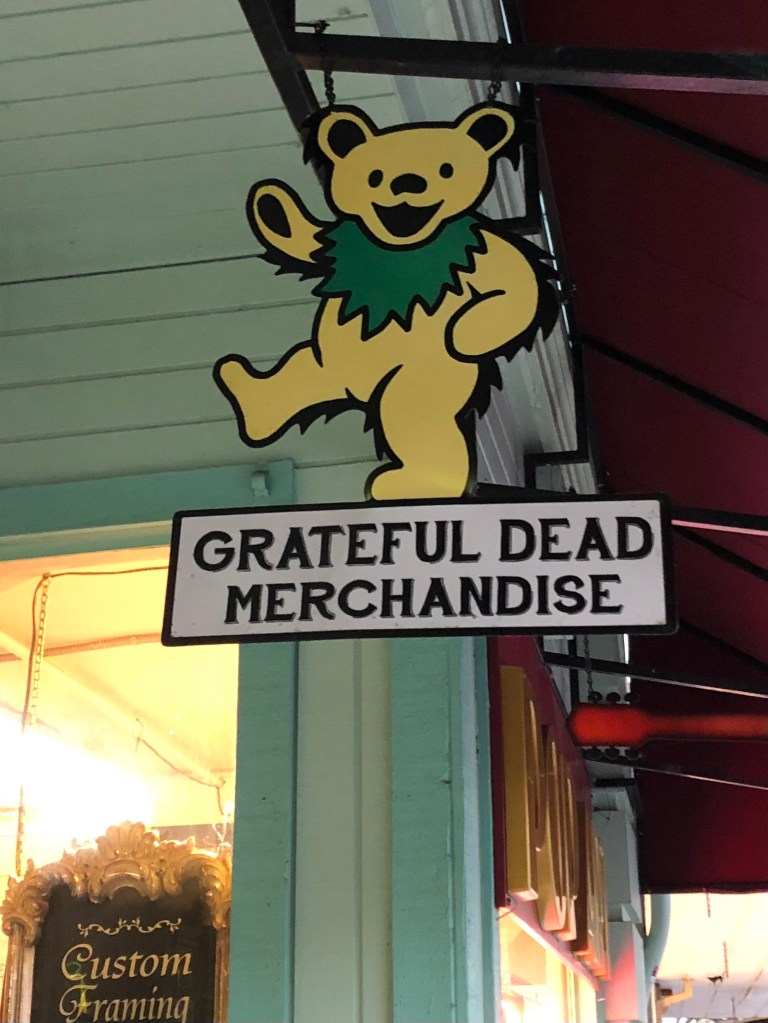
A few nights ago the wife and I were having dinner in downtown Placerville. We were sitting outdoors (as one does these days), watching the strollers stroll and the passersby pass by. Then what to my wond’ring eyes should appear but a bright, shiny sign with a gold, laughing bear.

Attentive readers will recall my mission to track down historic Golden Bear signs. I made a few subsequent discoveries here and here. Had I now stumbled across another one?

Sadly, upon closer inspection, I noted that this Laughing Bear was just an advertisement for another hippy-dippy store selling tie-dyed shirts and all manner of hemp products. For as we all know, The Grateful Dead appropriated the image many years ago as part of their brand.

No Birkenstocks, no service.

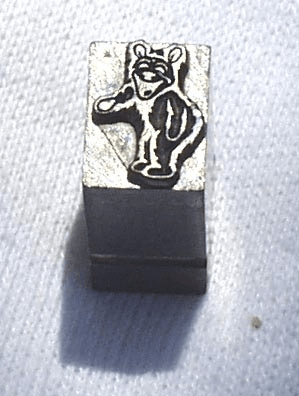
Now, to be fair, there is an alternative myth that the Grateful Dead’s bear was copied not from the Golden Bear signs, but from a “36 point lead slug” (that is, a piece of old printer’s type). Here is the slug in question:

The plot thickens

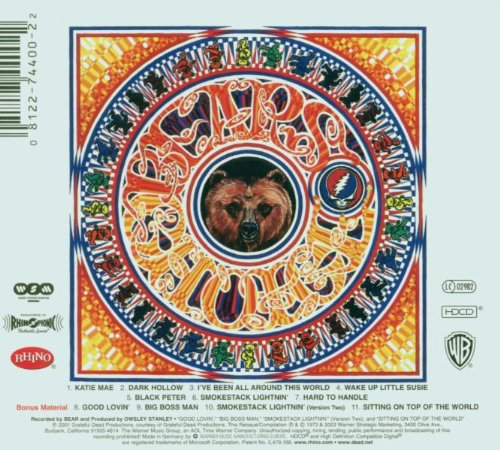
The story goes that an artist by the name of Bob Thomas found the slug somehow, and used it as an inspiration for the album design of The Dead’s 1973 album, The History of the Grateful Dead, Volume 1 (Bear’s Choice). (“Bear’s Choice” is a reference to Owsley “Bear” Stanley, who was the Dead’s sound engineer and, not incidentally, a major purveyor of LSD. I’m not making this up.)

Look carefully around the perimeter of the circle.

I’m of the opinion that the “36 point lead slug” may indeed have been Mr. LSD’s inspiration for the album art, but I suspect that the slug itself was designed from the historic Golden Bear logo. It may have been used for Golden Bear advertisements in the newspaper, for example.

Anyway, my point is this: If you need drug paraphernalia, there’s a place next to Bene Italian Restaurant in Placerville. In the meantime, please send me pictures of any authentic Golden Bear signs that you might come across.