cemeteries · churches · movie theaters · Road trips · trains

Driving Into Natchez

One of my favorite songs is “Don’t Think About Her When You’re Trying To Drive,” recorded by Little Village on their first and only album in 1991. Little Village was a collaboration of four established musicians: John Hiatt, Ry Cooder, Nick Lowe, and Jim Keltner. Their musical style was heavily blues-influenced, and the group’s name is a reference to a famous foul-mouthed diatribe by Sonny Boy Williamson, whose name keeps showing up at the blues museums I’ve been visiting.

Anyway, I’ve been thinking about that song because one of its lines is “Driving out of Natchez/You drive her back and forth across your mind.” And the reason I’m thinking about that is because I’m driving into Natchez.

Anyway, here’s the song, if you’re interested: (the song starts at 8:40)

With that out of the way, let’s turn to today’s trip, whose theme is “southern ruins.”

On my way out of Vicksburg I passed these ruins within sigh of the Mississippi:
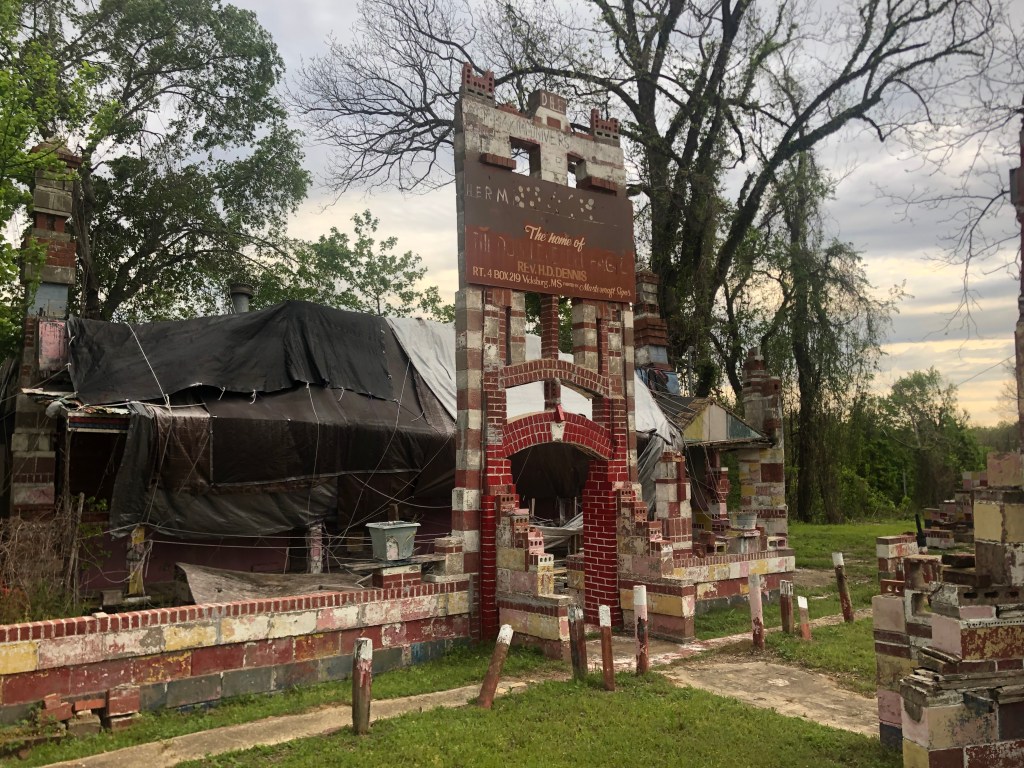
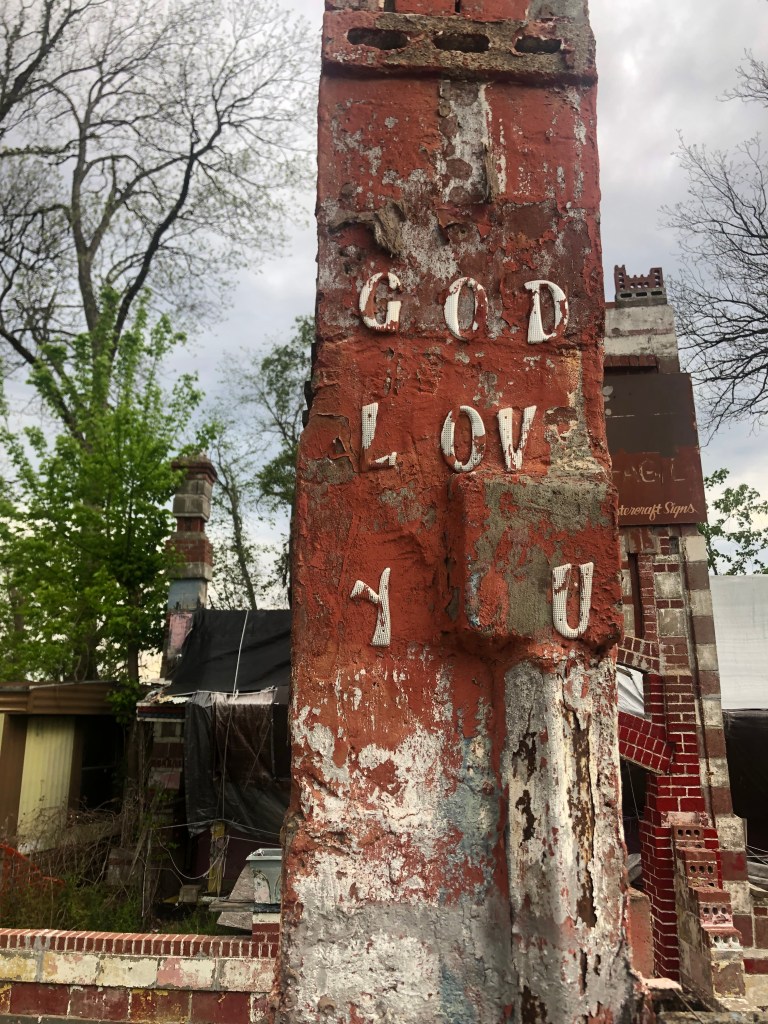
The background on this place is a little sketchy, but it seems that Margaret Rogers, who was born in the area in 1906, ran a general store on this site for many years. It’s said that throughout the 1960s and 1970s it was the only store along Route 61 that was run by an African American woman. In the late 1970s Margaret’s husband was shot and killed in a robbery. A few years later Martha met Rev. H.D. “Preacher” Dennis, who promised to build her “a castle to our love” if she would marry him. She accepted and for the many years Preacher Dennis spent each day working on this structure.
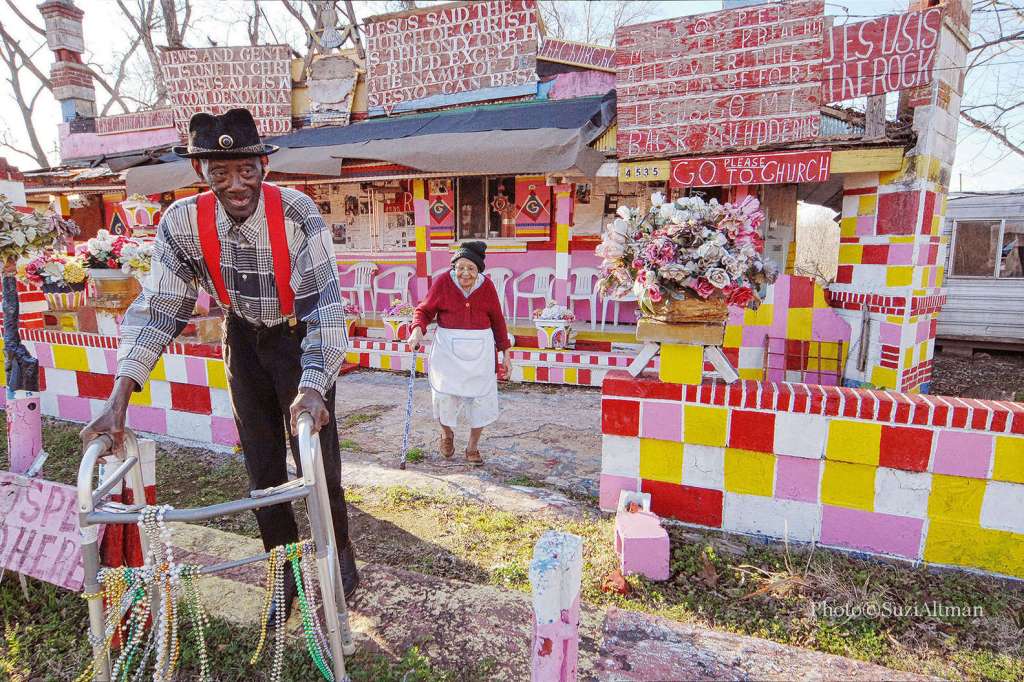
Preacher Dennis, Margaret, and their “castle.”

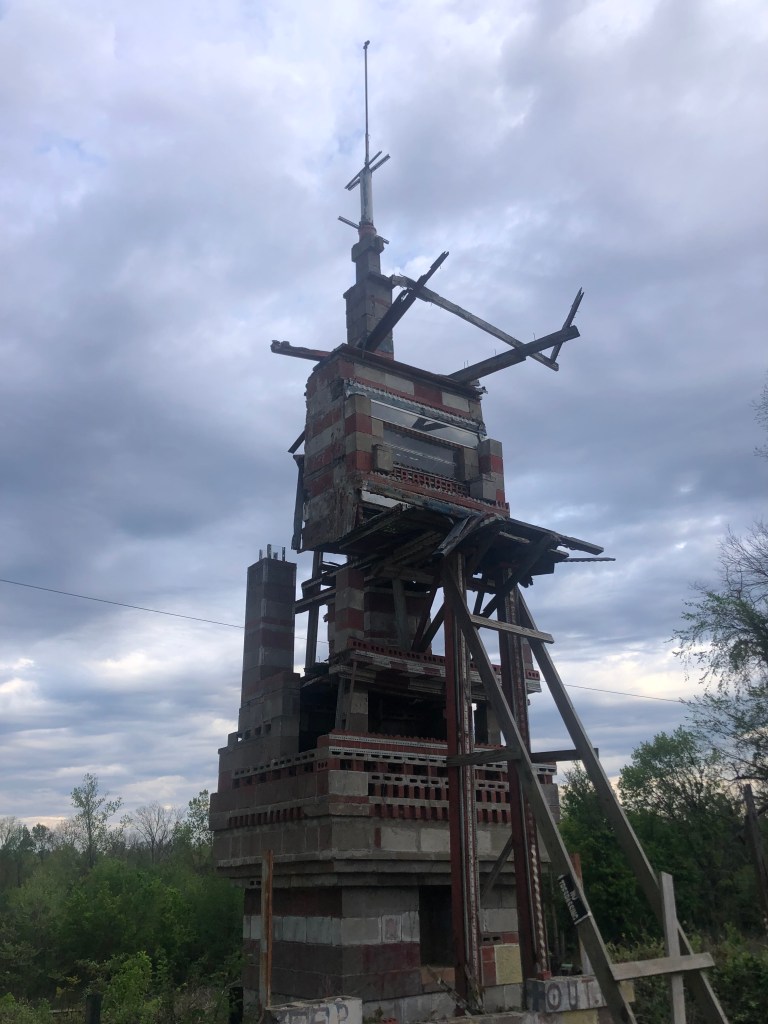
Margaret died in 2009 and Preacher Dennis died in 2012 (age 96). The structure has been deteriorating ever since. Many locals consider it to be a good example of folk art and there’s a group actively raising funds to restore the structure. They’ve set up a gofundme page. I’m going to make a small contribution when I get to a secure internet connection.
Continuing my way out of town I stopped at the historic Cedar Hill Cemetery which contains the mortal remains of a camel that was buried with military honors.
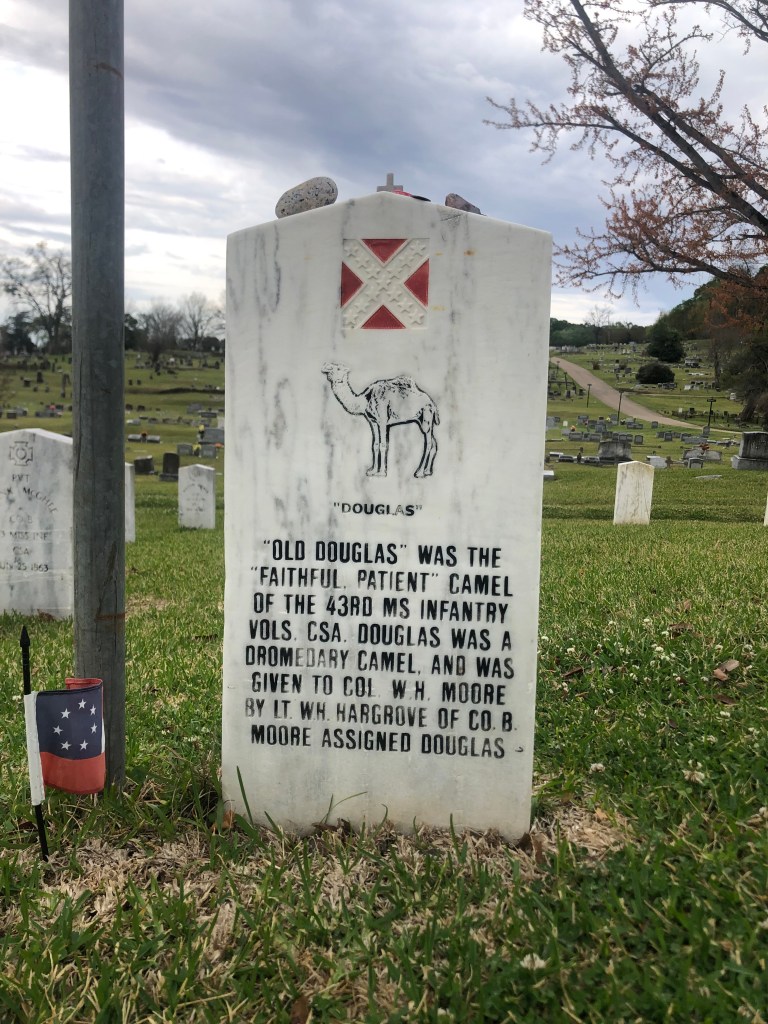
Here’s the story of the Confederate camel:

In the 1850s the War Department experimented with a “Camel Corps,” employing camels as pack animals in the arid southwest regions of the continent. The US Secretary of War at the time was one Jefferson Davis. Davis of course would become the president of the Confederacy a few years later, and so it’s not surprising that his armies would try using camels as pack animals in the Civil War. Old Douglas was a much-loved member of the 43rd infantry, but he was shot and killed by a Union sharpshooter.
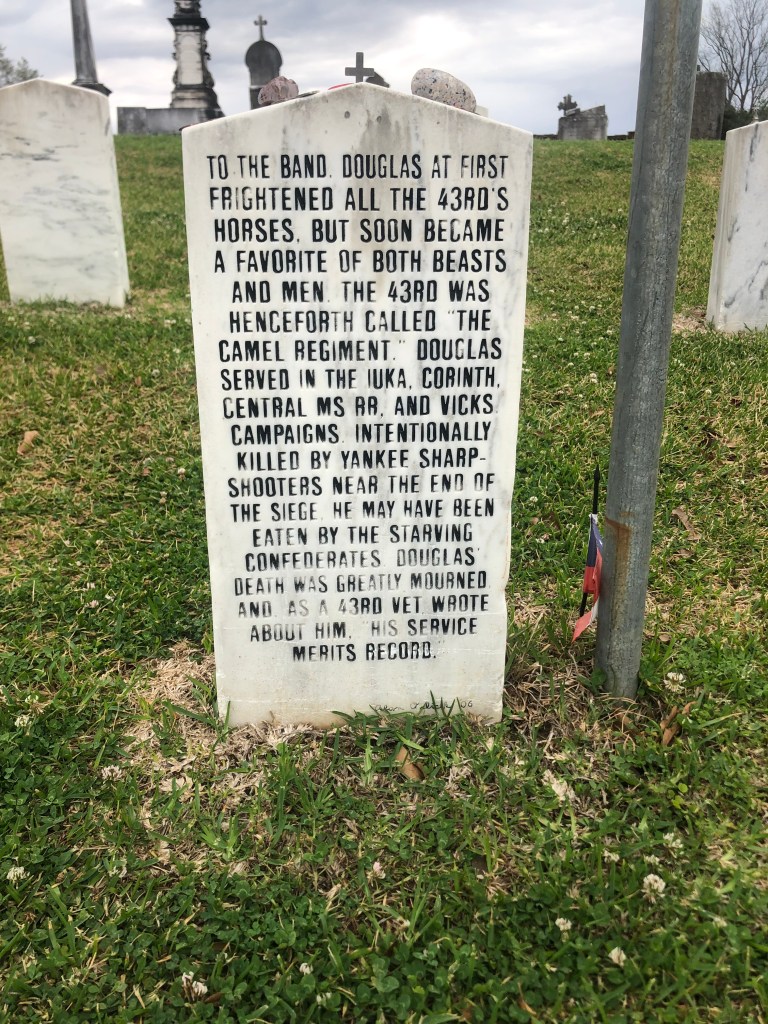
The back of Old Douglas’ headstone is full of bad news.

As a footnote, attentive readers will recall one of my earlier road trips where I visited the grave of Hi Jolly, one of main camel drivers of the US Army’s Camel Corps.
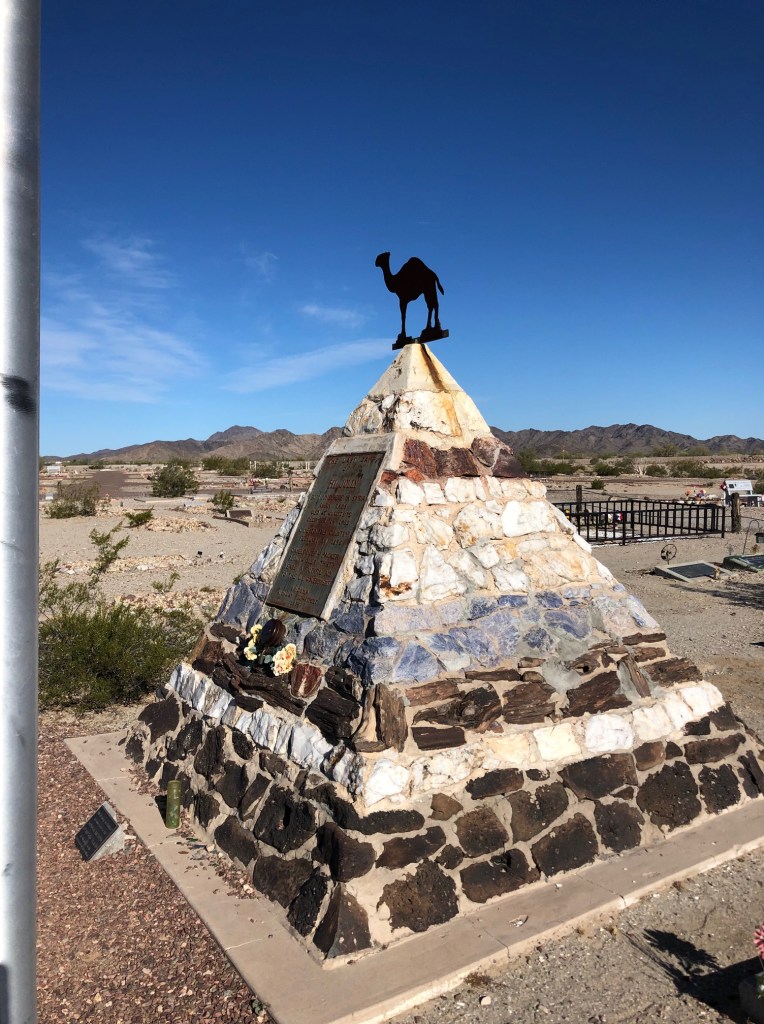
Hi Jolly’s tomb in Quartzite, AZ. (Photo from my Route 60 Blog, 2019)
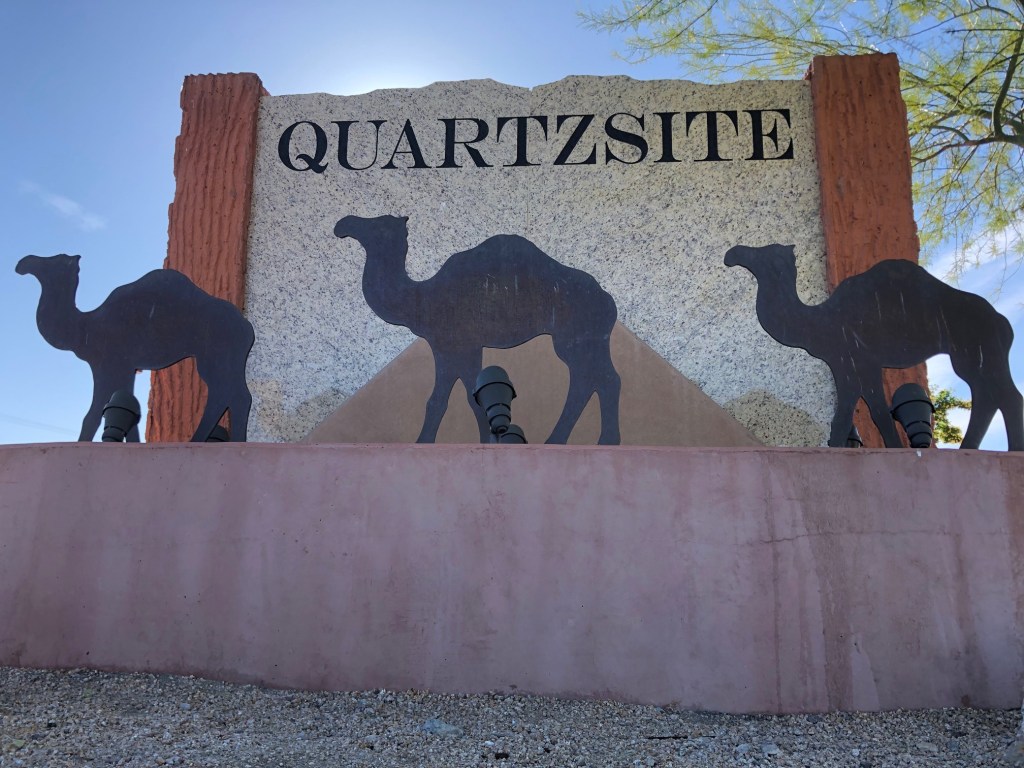
Quartzite really ran with the camel theme. (Photo from my Route 60 blog, 2019.)

Anyway, back to today’s drive. After leaving the cemetery I got back on US Route 61, heading south to Natchez. Along the way I stopped at a decimated city named Port Gibson (1,500). For the first half of the 20th century Port Gibson was the home base of an influential, traveling minstrel show called the Rabbits Foot Company. It’s been credited with influencing and advancing blues music in the Delta. There’s a placard to this effect on the site of the old Rabbits Foot offices.

The town’s economy relied on labor-intensive agricultural jobs, which largely disappeared in the post-World War II era. Since then the population has been declining and poverty is pervasive. Today I was struck by a number of historic buildings that speak of a more prosperous time. Most have been simply abandoned.
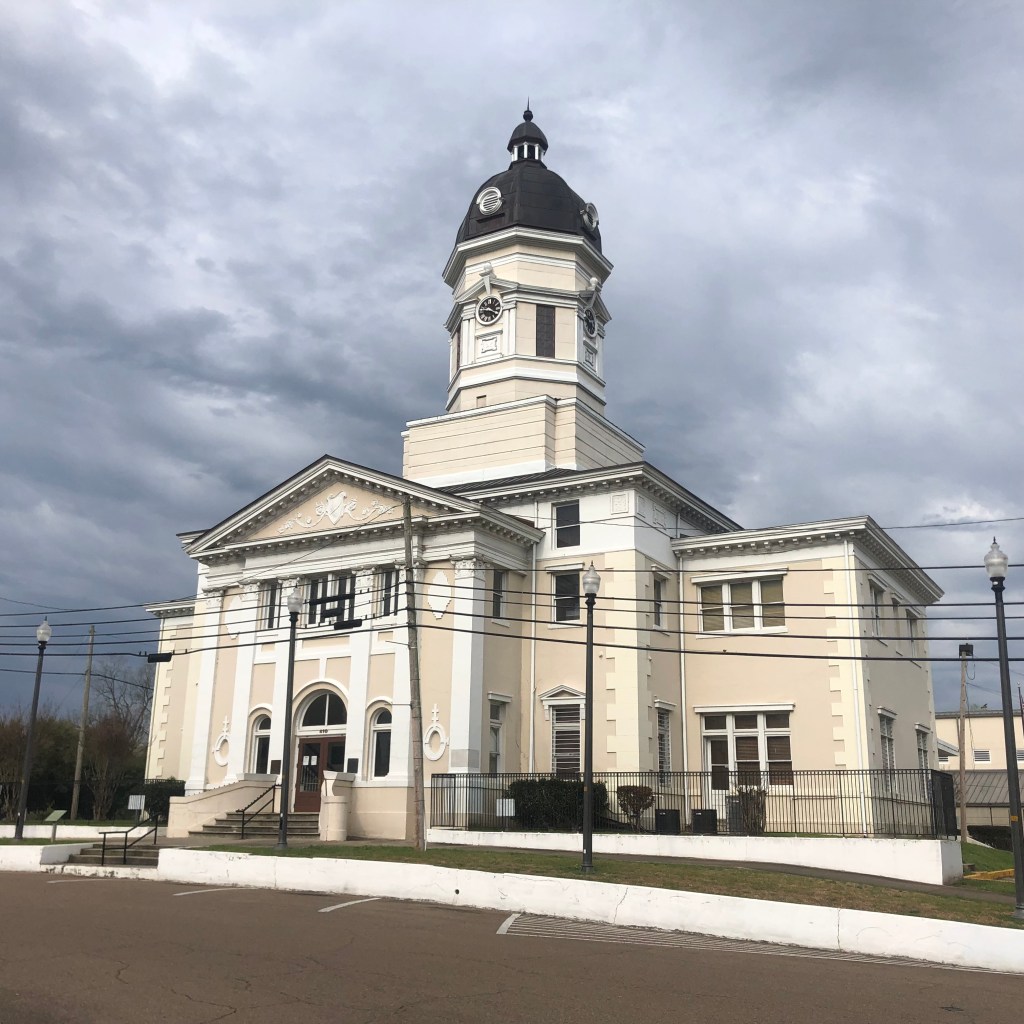
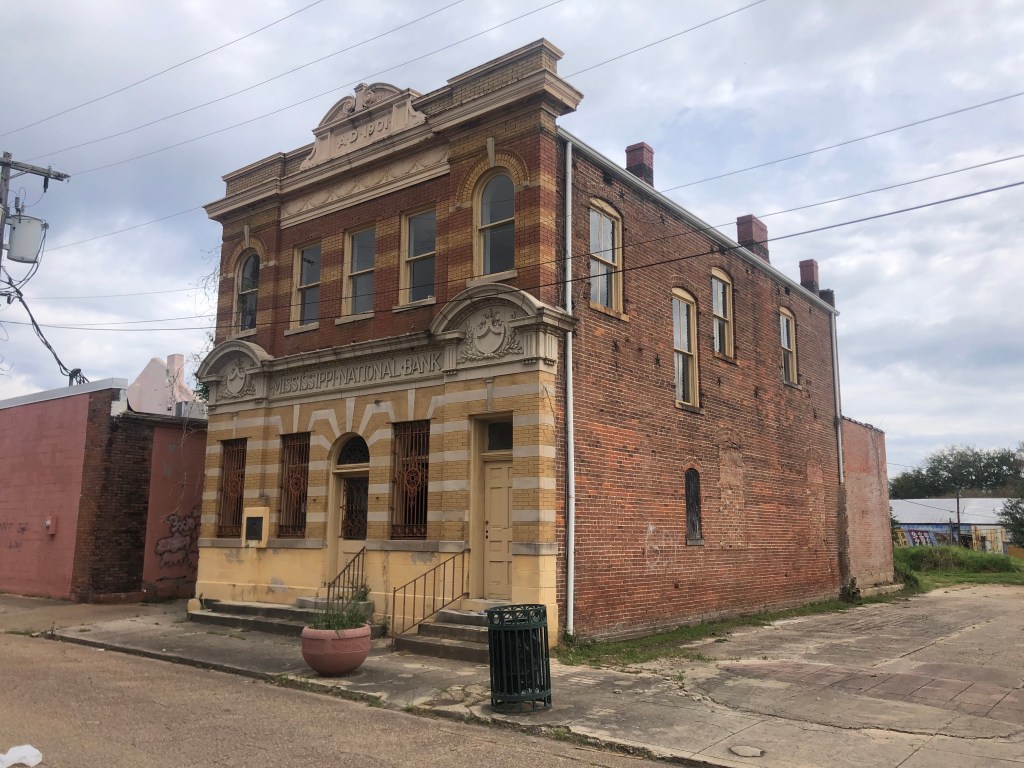
Mississippi National Bank building, built in 1901. Currently vacant.
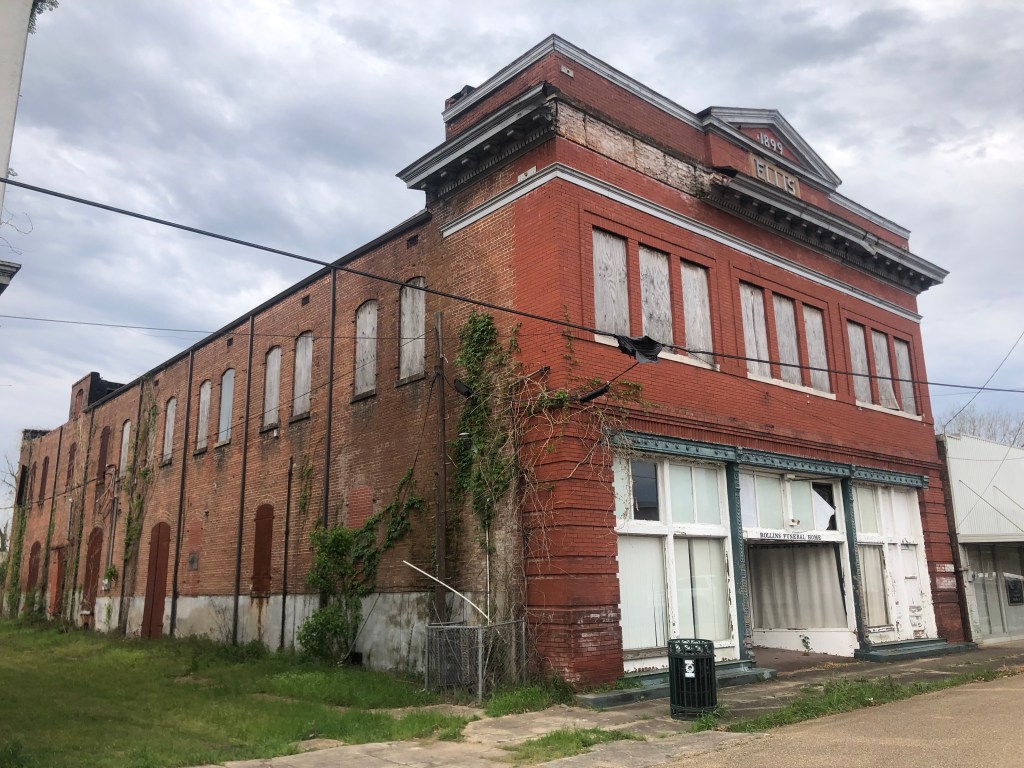
Rollins Funeral Home building, abandoned. Structure dates to 1899.
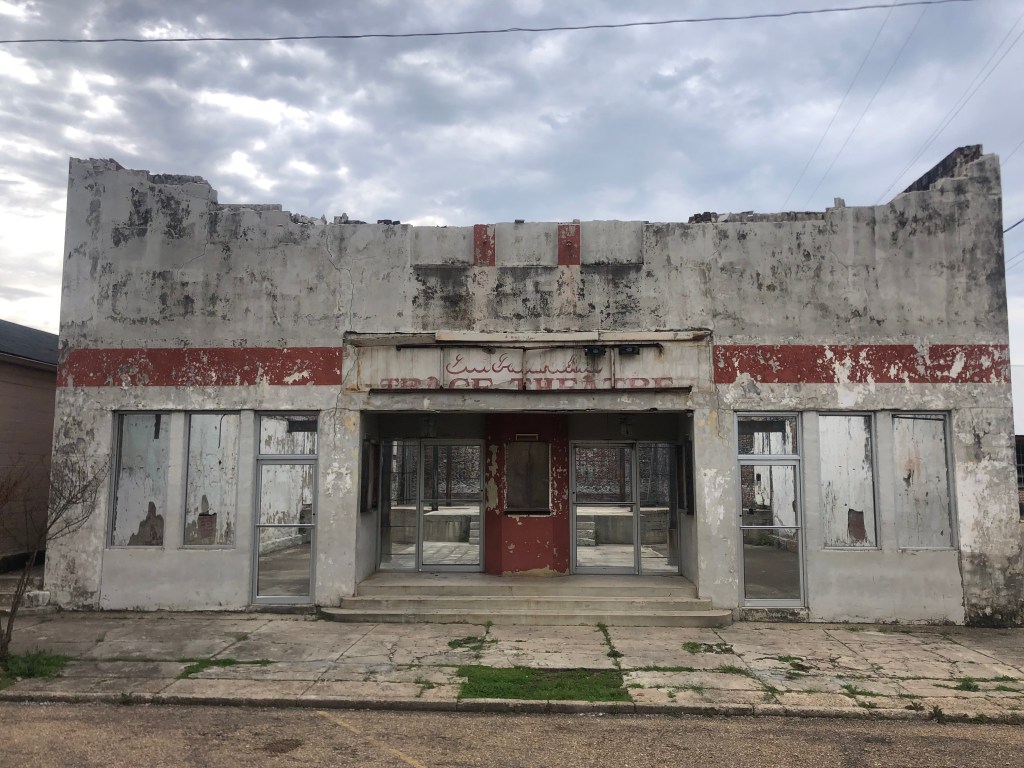
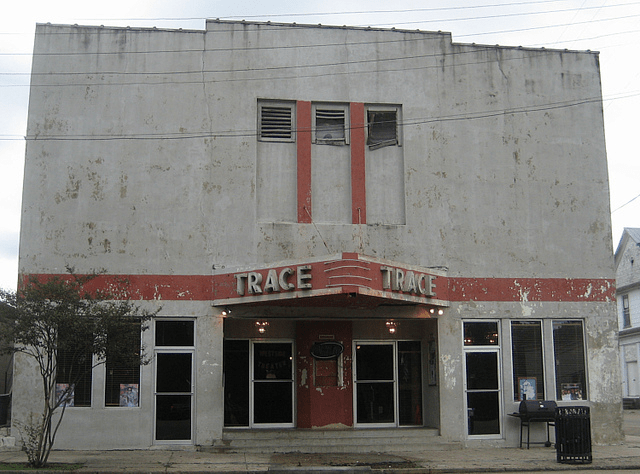
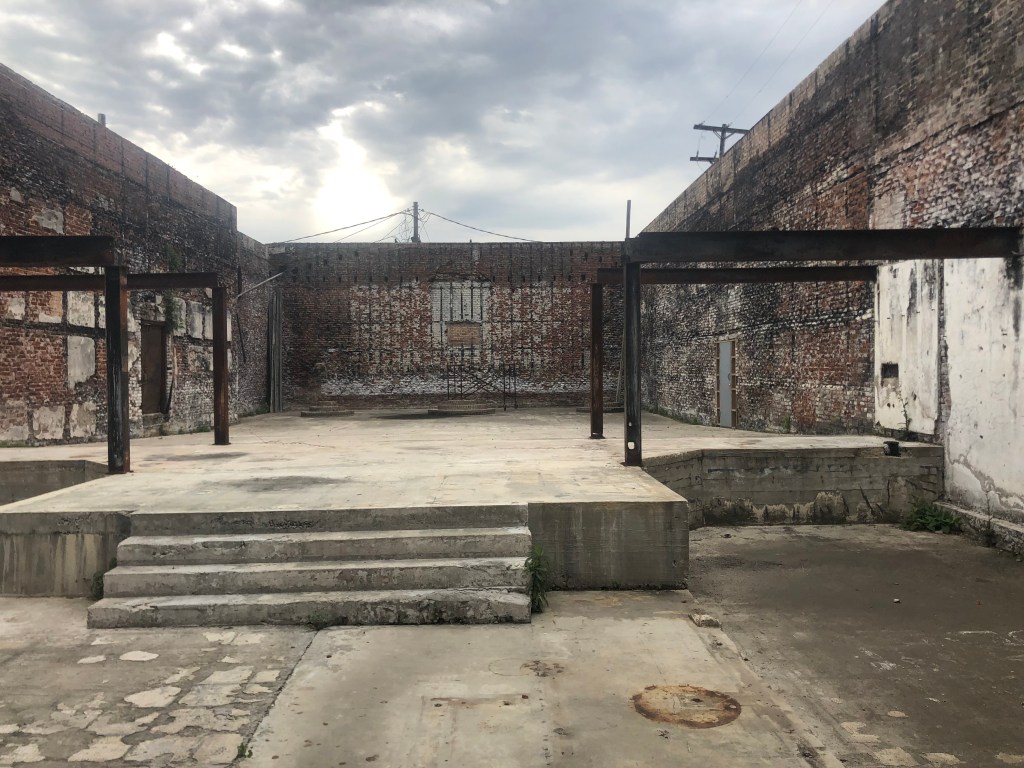
The Trace Theater, originally built in 1870 and remodeled in Art Deco style in 1940. It closed in 1968 and sat vacant for almost 50 years (!) The inside was refurbished in 2017 and it reopened as a night club. Sadly, it suffered a fire in 2020.
2011 (?) photo from Cinema Treasures website.
This is the interior of the Trace Theater today. I took this photo through the glass front doors. At least they’ve cleaned up the debris from the 2020 fire, and they appear to have installed a new set of doors on the front.
Port Gibson still has a few pockets of relative prosperity.

It was eerie walking among these vacant buildings on these empty streets. Eventually I got back in the car and continued down the Blues Highway. A few miles south of town the the highway intersects with the Natchez Trace Parkway. I recalled that my good friend Victor R had recommended I drive along that route if I had the opportunity.

The Natchez Trace runs from Nashville to Natchez, roughly following the Cumberland, Tennessee and Mississippi Rivers. It began as an ancient trail used by Indians (themselves following trails created by grazing and migrating animals. The general contours of the trace became more firmly established over time, and it eventually became a network of major trails used by traders, emigrants, and others. In 1938 President Roosevelt signed legislation that created the Natchez Trace Parkway, a paved road built by the Civilian Conservation Corps. This is what I drove on today (or the last 40 miles of it). It’s a verdant, gracefully-meandering, low-key road that is almost entirely devoid of signage, signals, intersections, and other signs of civilization. It’s just a narrow two-lane ribbon of asphalt cutting through the woods.
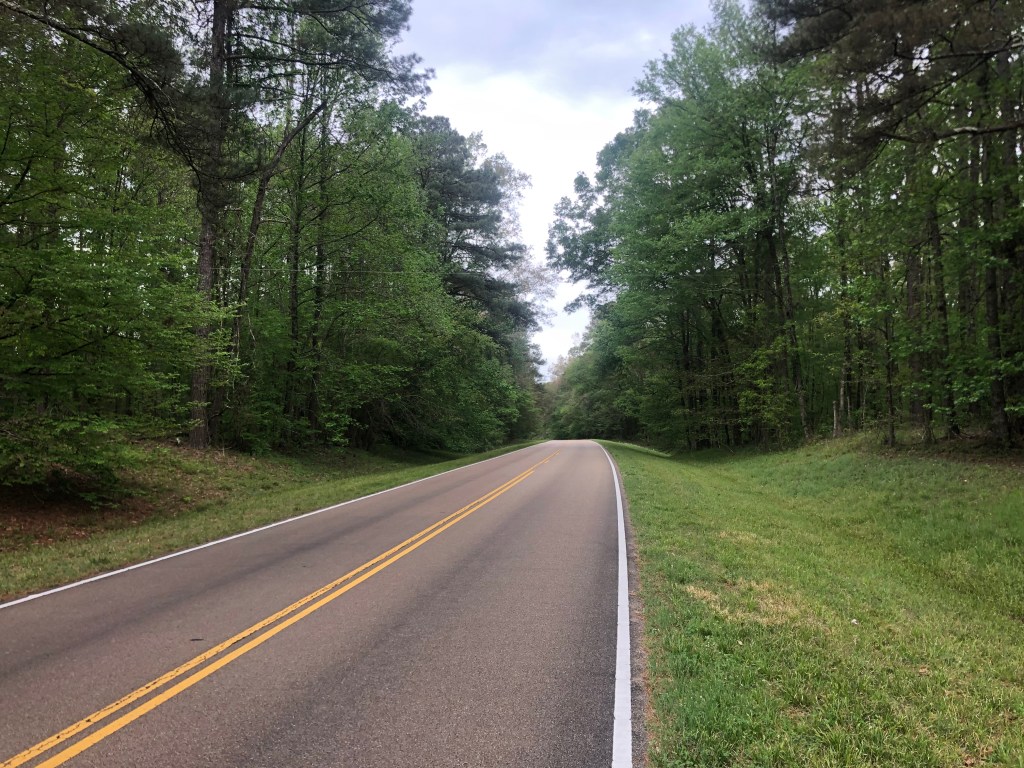
The Natchez Trace Parkway.

Of course, being out in nature has its drawbacks, as detailed on this “welcome” sign along the route:
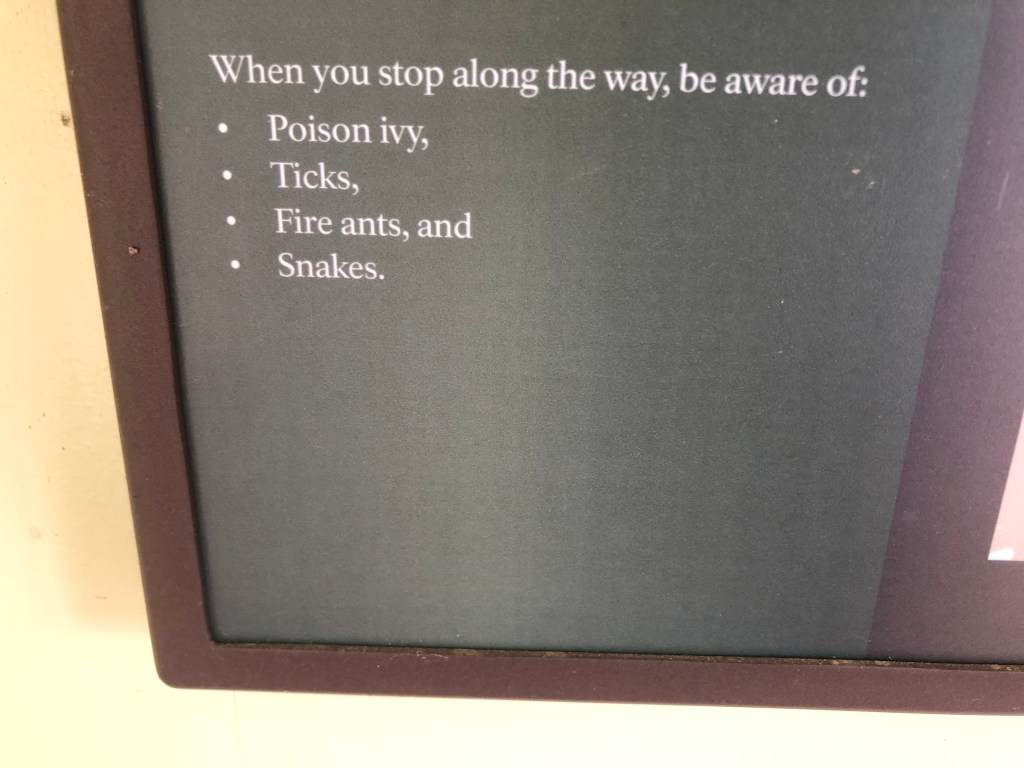
It’s enough to make you stay in the car.

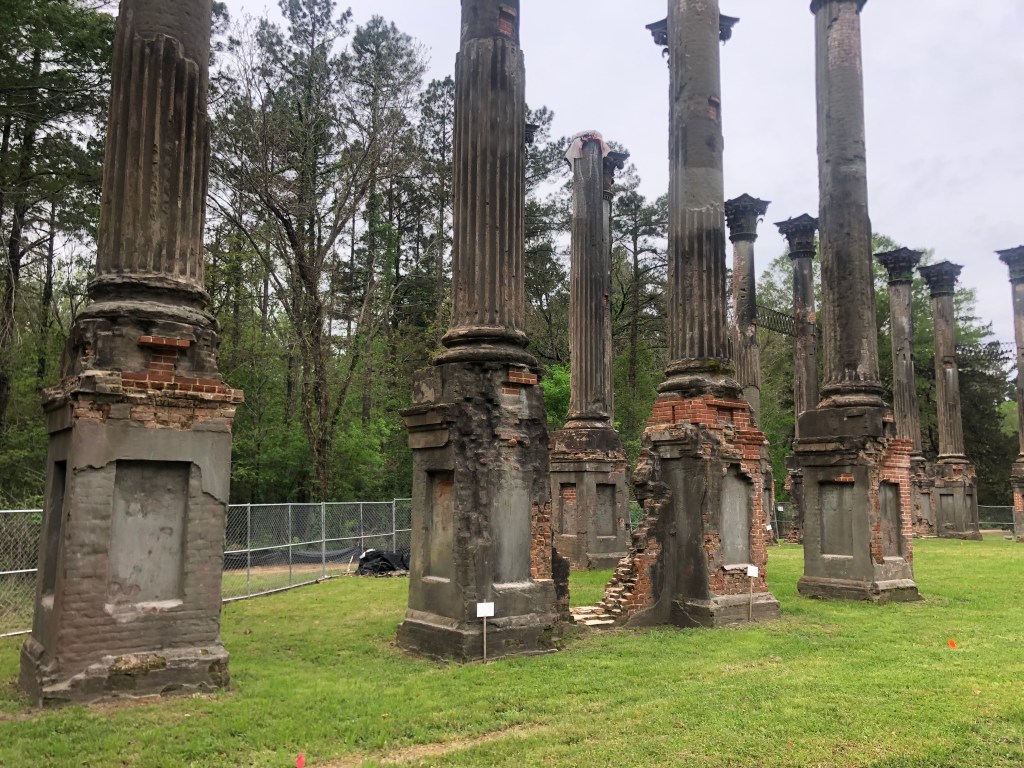
I did leave the car and risk being swarmed by fire ants and the other plagues a few times. First, I followed a side road to the “Windsor Ruins.” I had no idea what it was, but it seemed to fit within today’s theme of Southern ruins. A few miles later I was standing in a clearing from which rose an impressive display of 27 corinthian (?) columns. It used to be a plantation home, and a placard illustrated what the place used to look like:
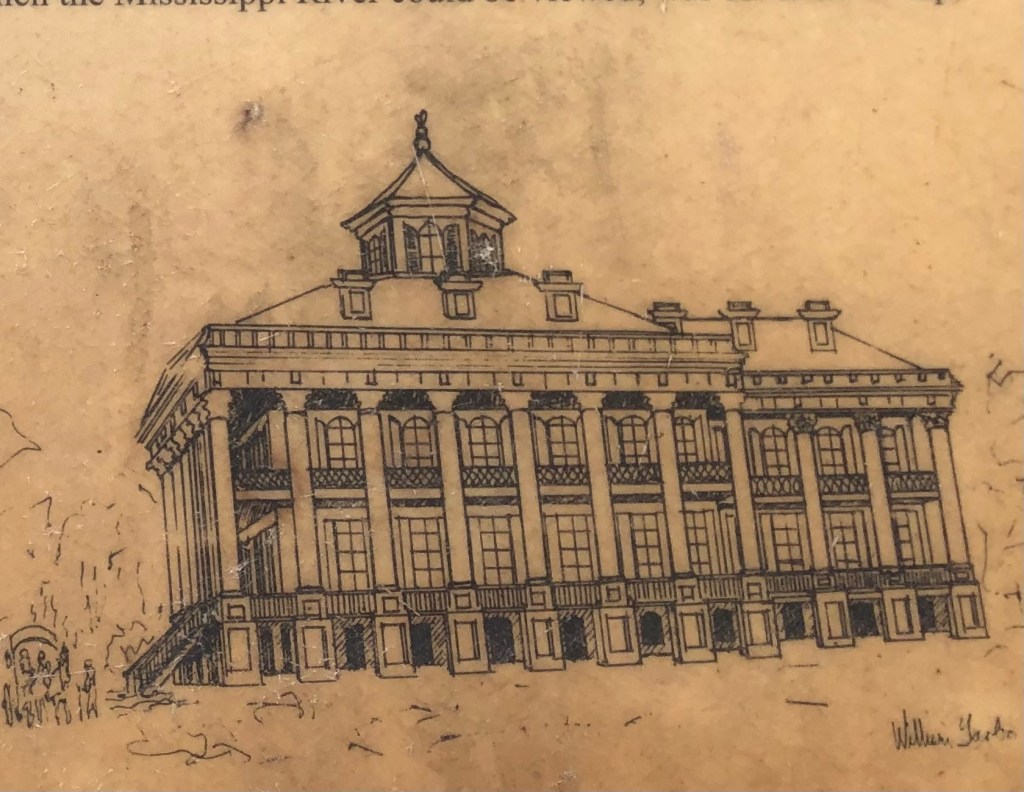
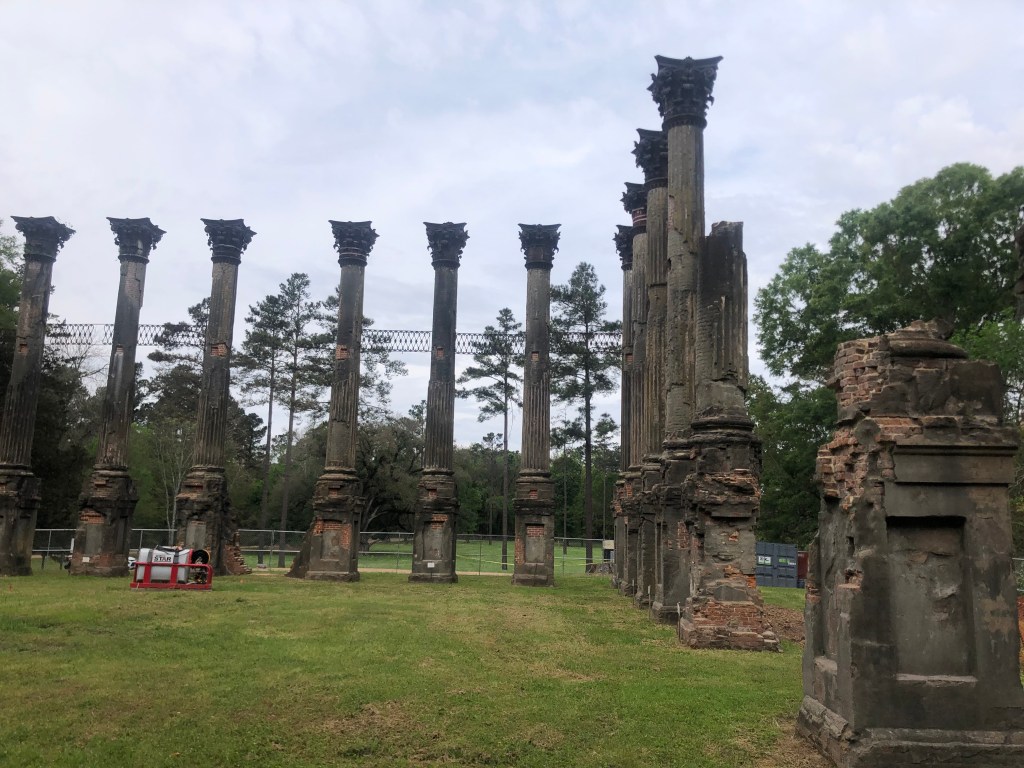
The becolumned mansion was built in 1861 by a wealthy planter by the name of Daniell, who owned the Windsor cotton plantation. Unfortunately for him, he died just a few weeks after his home was finished. The mansion somehow survived the Civil War, but it burned to the ground in 1890. All that remains are these columns. When I arrived today, the ruins were surrounded by temporary fencing, as the state (which now owns the ruins) is working to stabilize them from damage by the elements.
Best laid plans of mice and men…

On my way back to the Natchez Trace I passed this 200-year-old Presbyterian church.
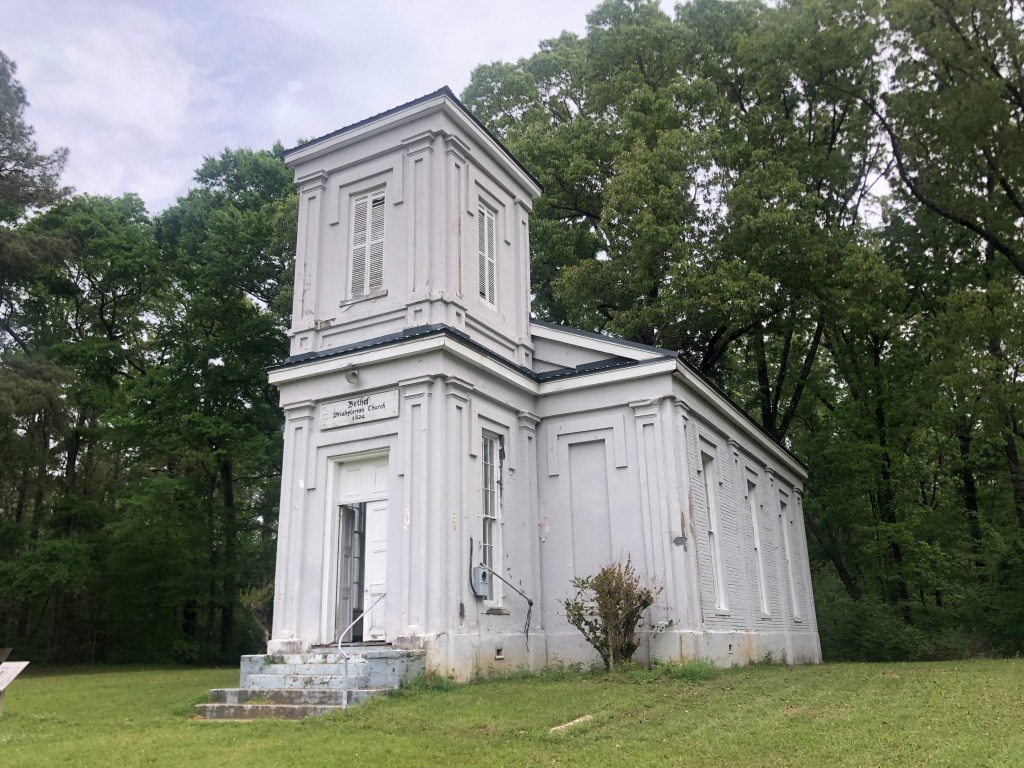
Bethel Presbyterian Church, built in 1842.

The church has been standing for over 180 years. A tornado in 143 (when the church was 101 years old) did major damage, notably tearing of its tall, pointed steeple. The church was rebuilt, but the steeple was omitted from the new design. Why tempt fate? Over the years the congregation dwindled, until it was no longer classified as an active church by the Presbyterian leadership.

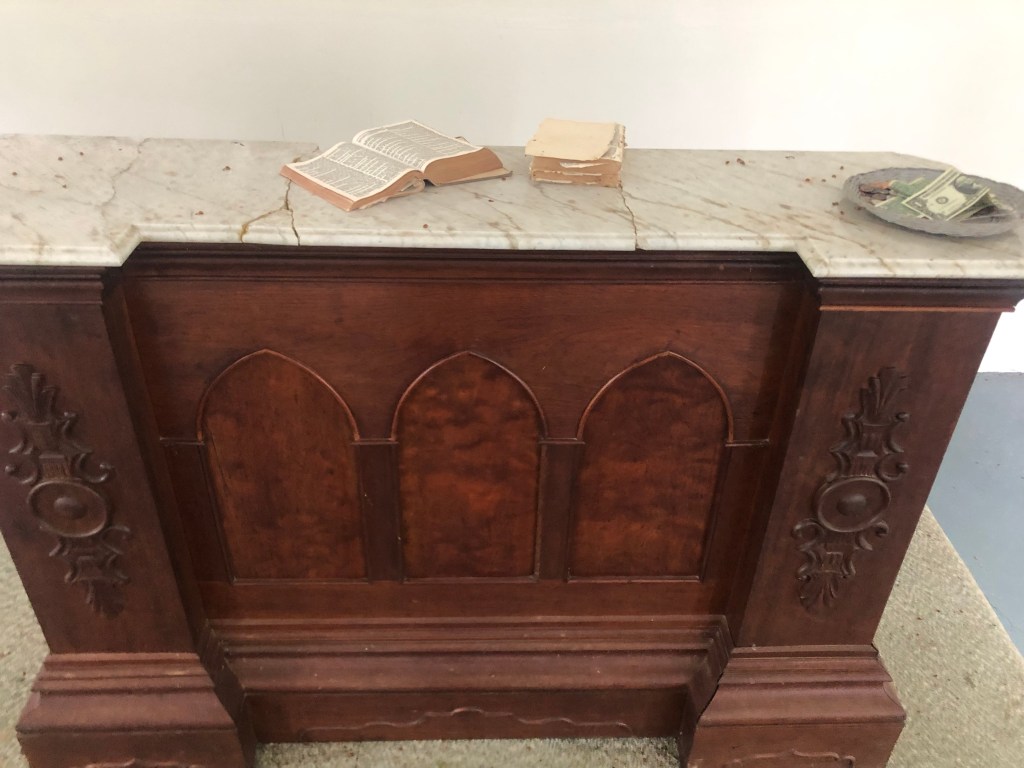
But what’s this? An open door? I poked my head inside:
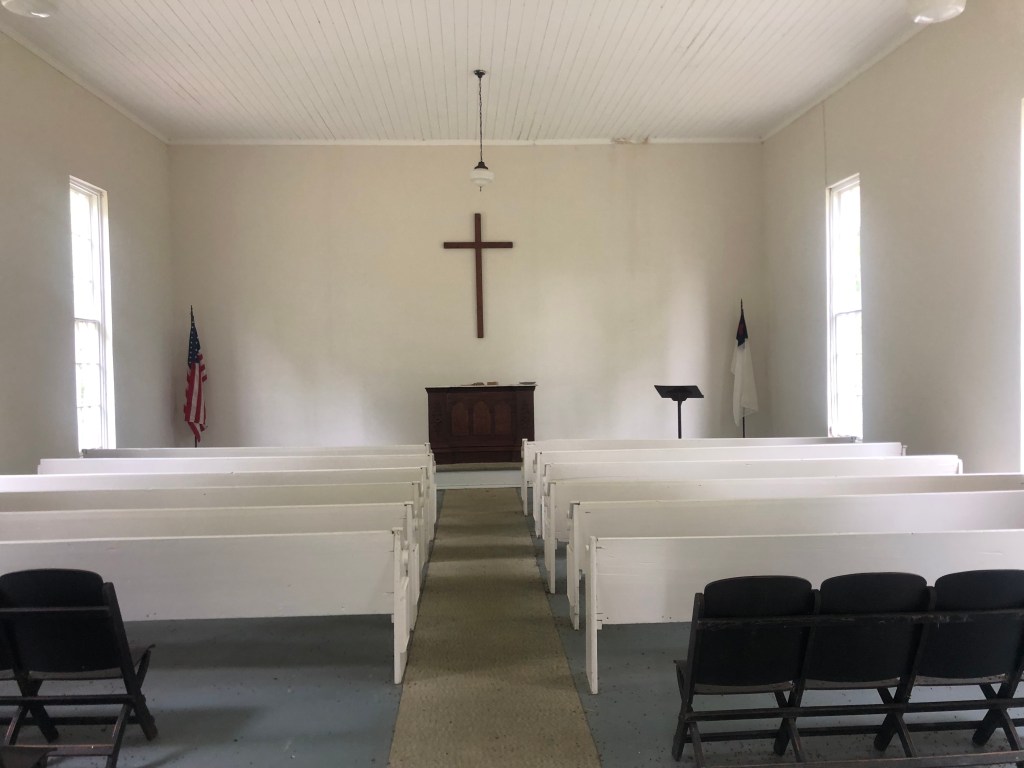
Looks like you could still hold a service in here.
Open Bible and full collection plate.

A little research informed me that the church can still be used as a chapel by whomever wants to to do. And a nearby church in Port Gibson (!) conducts a two services here each year, in the spring and the fall.

A final set of ruins I encountered on the way to Natchez was something called the Elizabeth Female Academy. Opening in 1818, it was Mississippi’s first higher education institution for women. For a short time, the faculty included a drawing instructor by the name of John James Audubon (yes, the Audubon). The academy closed in 1845 due to declining enrollment (linked to a shrinking population in the area). The building burned in the late 1870s, and these ruins were all that remained.
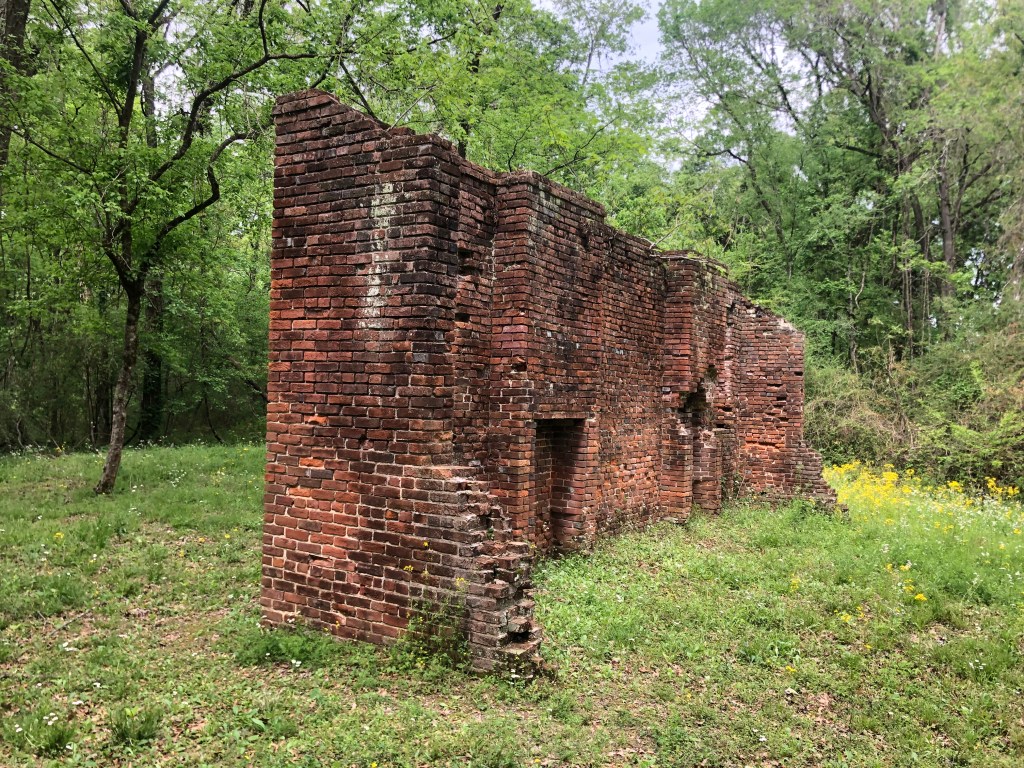
And you know what’s striking about all these ruins and abandoned buildings I saw today? I didn’t spot a single bit of graffiti. The elements are certainly taking their toll on the Delta’s history, but it seems that, by and large, the residents of the region either appreciate the value of these historical treasures…or maybe they just ignore them.

Finally I arrived at the end of the Natchez Trace, appropriately enough in the city of Natchez (pop: 14,500). The city, which for a short time had been the Mississippi state capital, reminds me of Vicksburg. Both are historic and seemingly prosperous towns located on the east bank of the Mississippi.
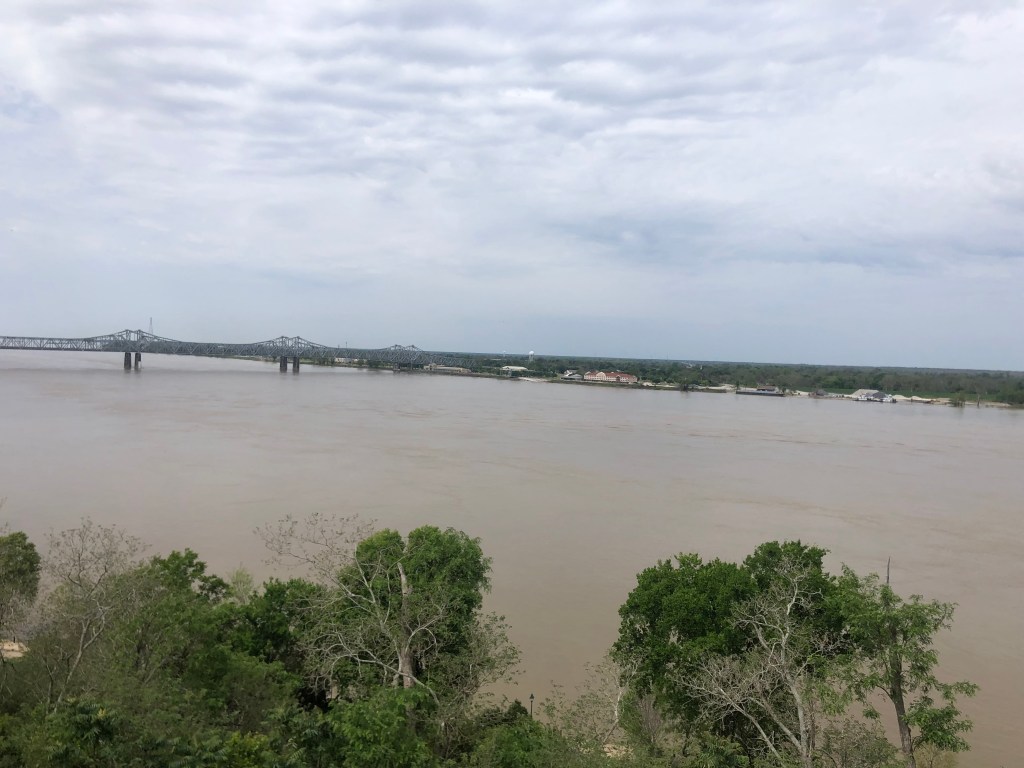
View of the Mississippi from downtown Natchez.

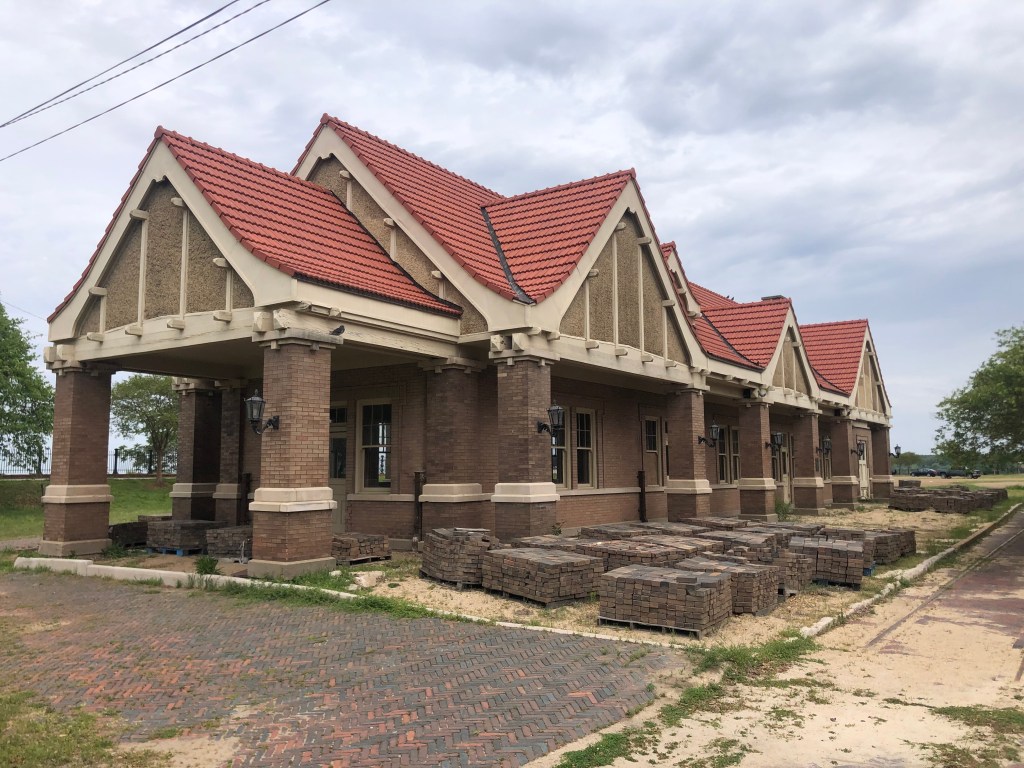
And, like Vickburg, Natchez seems to place value on its historic resources. For example, the 1915 Yazoo &Mississippi Valley Railway depot has been restored–at least on the outside. The inside is gutted, awaiting a tenant (like a restaurant) to lease it out.
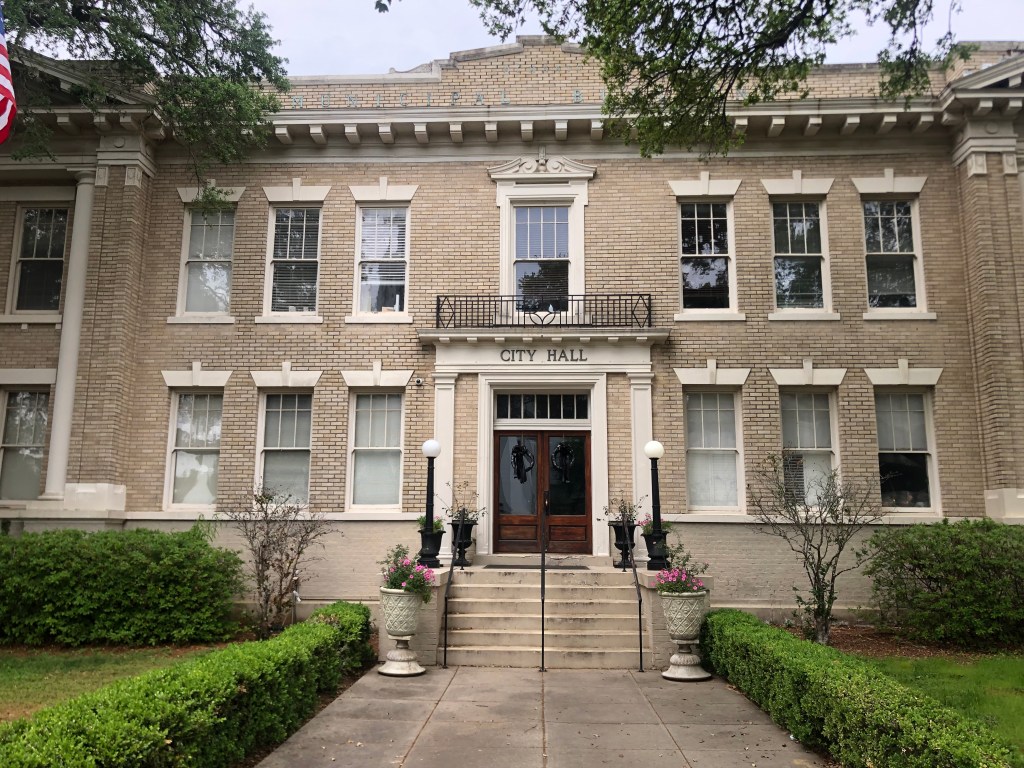
The city hall building will have its hundredth birthday next year, and it looks great as well.
On the front lawn I noticed a small grave marker for “Tripod,” who was a feral, three-legged cat that showed up at City Hall in 1979 and never left. Literally. When he died four years later the city held a full memorial service and placed him under this marker.
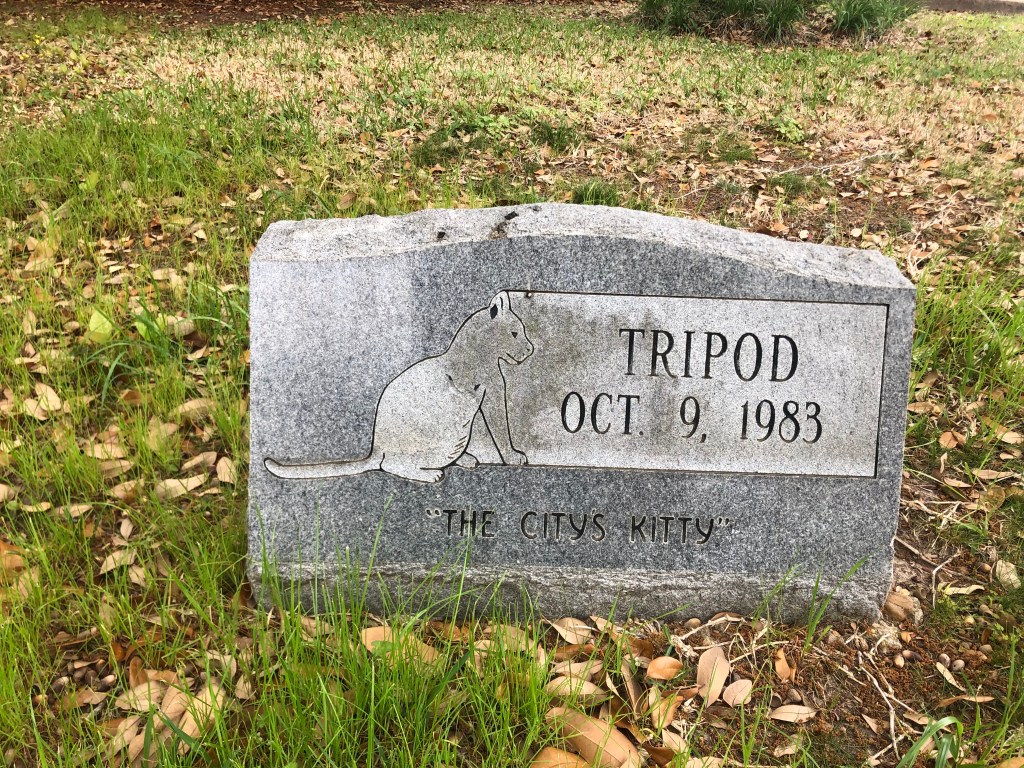
Evidently Tripod was more beloved than some of the humans around City Hall. One of the city Aldermen–Hal Wilson–was allergic to cats and made a motion Tripod be banned from the building. The motion failed to get a second, and the Mayor then moved to have Wilson banned from the building. (That motion failed as well. But still.)

Speaking of graves, Natchez Cemetery had this unusual specimen:
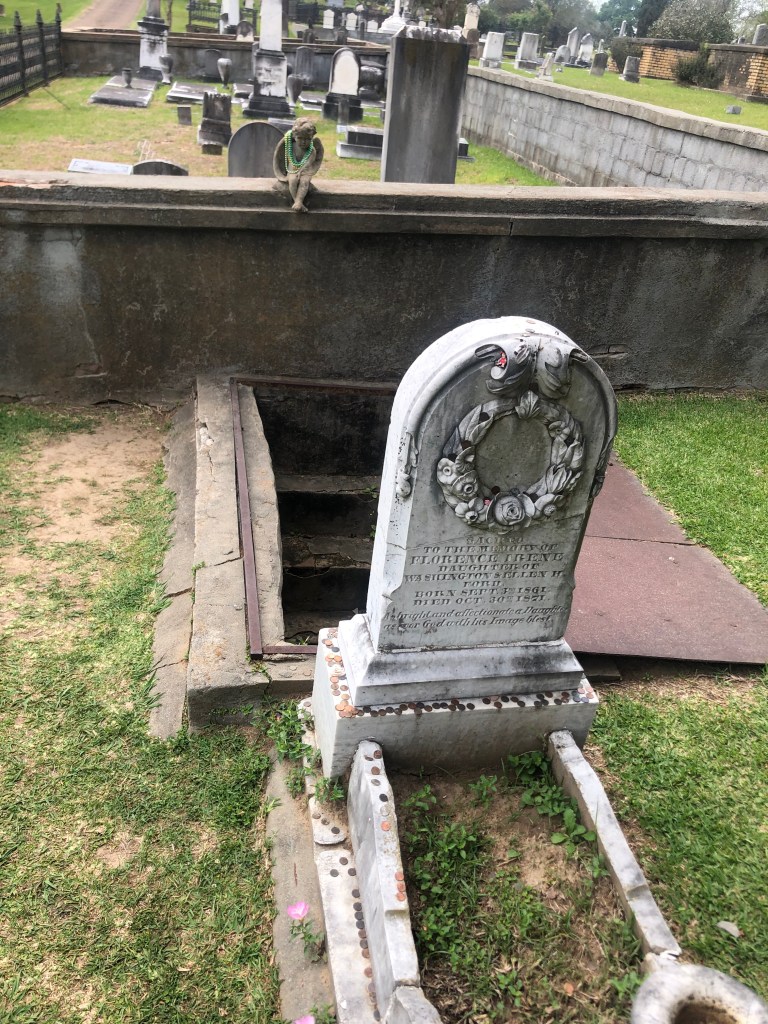
Florence Irene Ford was only 10 years old when she died of yellow fever in 1871. The story goes that she always sought comfort from her mother during a storm. So when she died her parents had a staircase built into the ground of her grave so that her mother could descend to a specially outfitted window and comfort the spirit of her daughter during storms. That’s not creepy, is it?
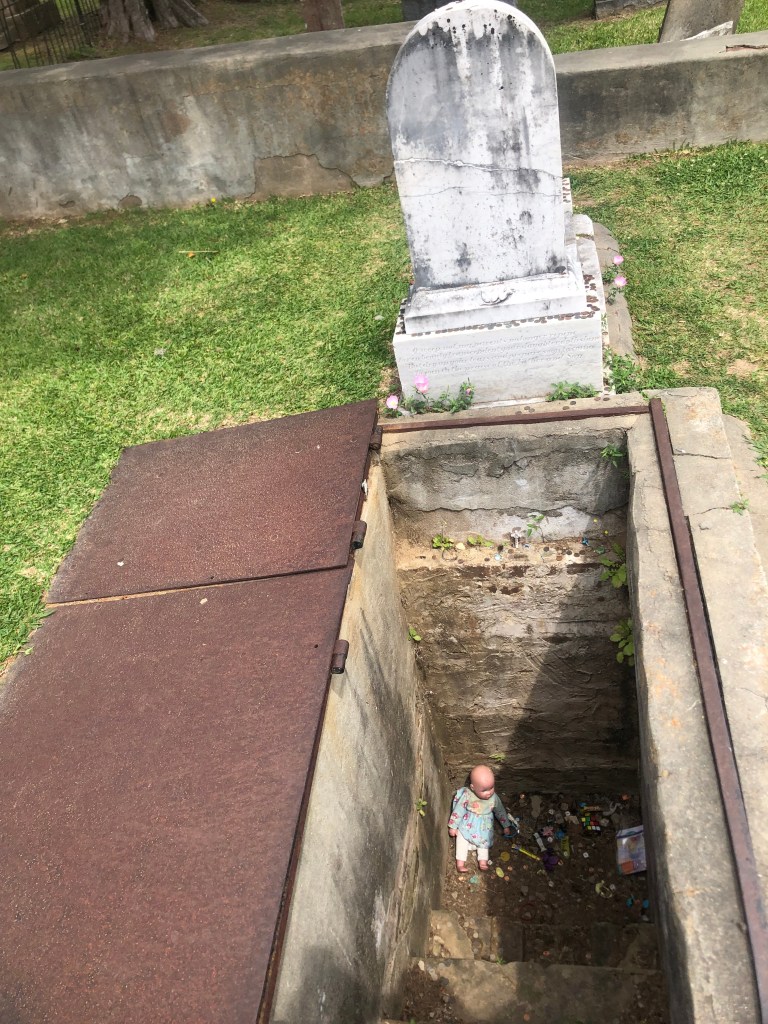
There used to be a glass window with a view of the Florence’s coffin, but this was cemented over in the 1950s–long after Florence’s mother had herself died.

After leaving Natchez I departed from the Blues Highway and headed southeast to the city of Hattiesburg (pop: 49,000). Hattiesburg is on US route 49–which I’d encountered way back in Clarksdale. (Recall the possibly literally damned crossroads of Route 61 and Route 49 where Robert Johnson sold his soul to the Devil.) Highway 49 essentially forms the hypotenuse of the right triangle formed by my route (Highway 61 south to Highway 84 east).

Along the way to Hattiesburg I encountered two notable pieces of historic roadside kitch:
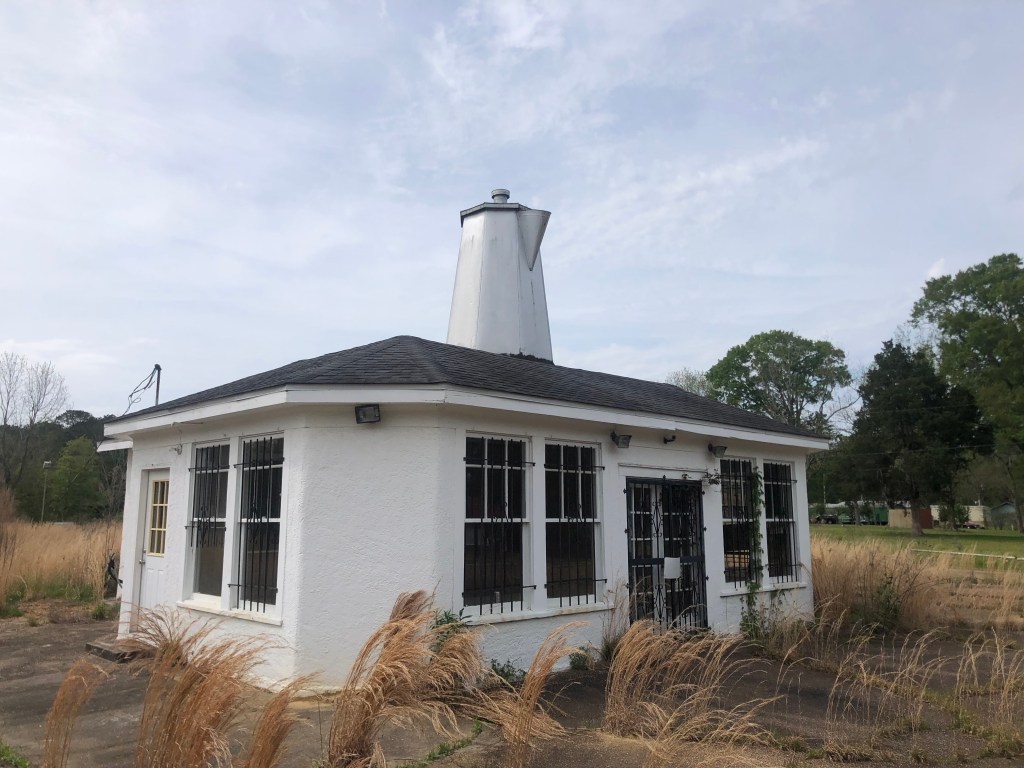
The Coffee Pot Inn was built in 1931 as the first drive-in restaurant in Brookhaven, MS.
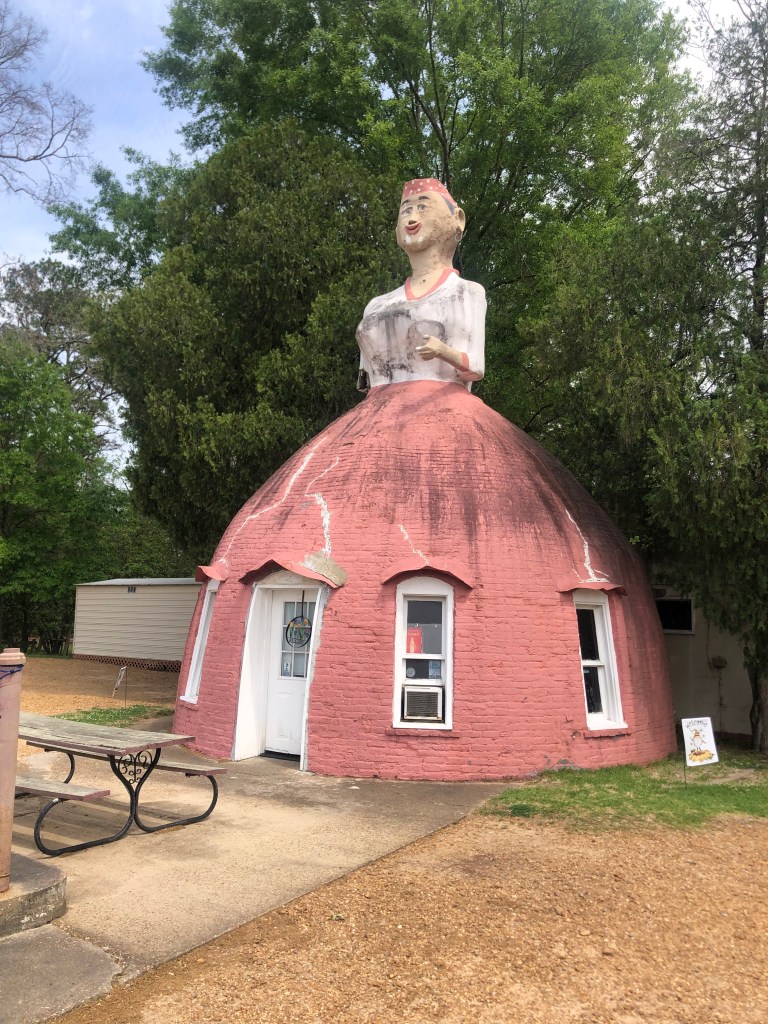
Mammy’s Cupboard is a roadside restaurant that was built at the outskirts (ha!) of Natchez in 1940. It’s still open for lunch daily except Sundays. And today is Sunday, sadly.

Tonight I’m spending the night in Hattiesburg. Tomorrow it’s off to New Orleans!

Beer of the Day

I went into Natchez Brewing Company, where owners Lisa and Patrick Miller were working hard to handle the lunch crowd. I ordered a “Smorish Imperial Stout” and a calzone the size of a Frisbee.
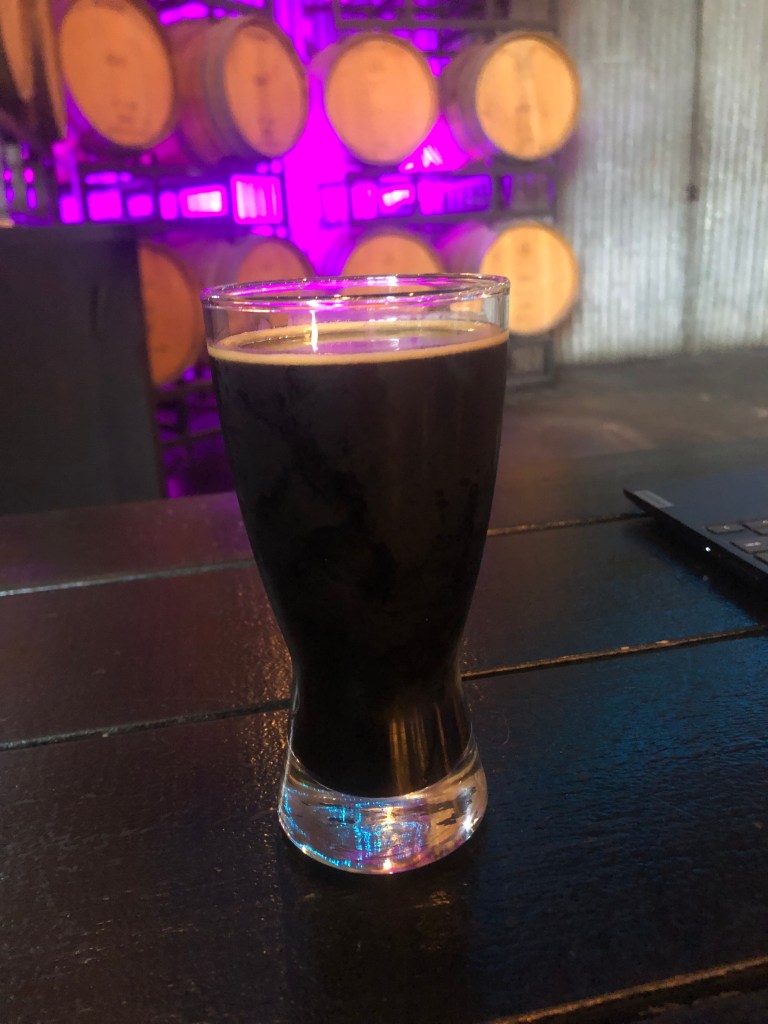
I think “Smorish” is supposed to evoke s’mores. Indeed the description claims it’s got chocolate, graham cracker, and marshmallow notes.

I’m not so sure about all that. The malt has a seriously roasted taste, to the point of charring. It’s as if the marshmallow of your s’more caught on fire. I don’t taste much sweetness. The dominant taste is bitter dark chocolate and black coffee. 

The mouthfeel isn’t that creamy, but it is smooth. It’s also what I call a Sleepy Hollow Beer (i.e., headless).

The ABV is 10.3 percent, which is pretty standard for an imperial stout. Overall, it’s quite drinkable, though the s’more reference is false advertising.

3.5 stars (out of 5)
movie theaters · Road trips

Deep Into the Delta

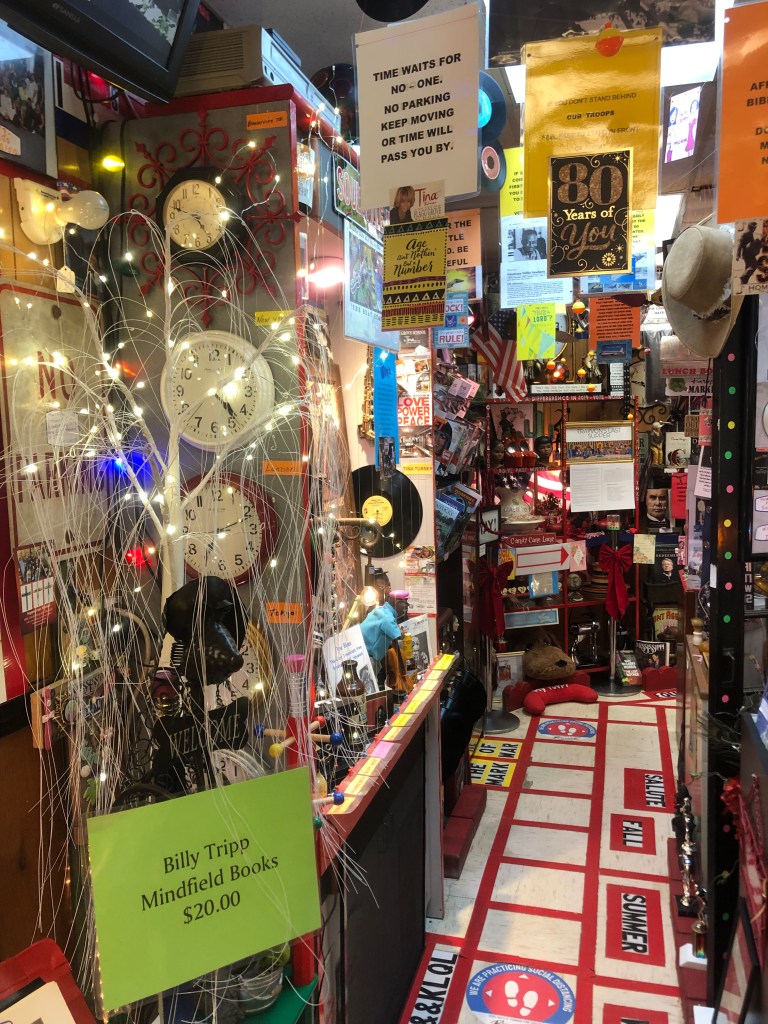
A surprising number of you were interested in learning more about Anthony Turner (my Delta barber). I’ll share two anecdotes that have been running through my head since yesterday. First, there is a method to the madness of the Menagerie Museum. Sure, it’s a tangled and confused congeries of seemingly unrelated trinkets and kitch. But it’s all connected (quite literally, with fishing line and rubber bands) in a way that Anthony seems to have dedicated much thought and deliberation. What’s more, schoolchildren visit his museum as part of their curriculum, and Anthony teaches them an inspirational lesson about what’s probable versus what’s possible. The teachers seem to think it’s a worthy message, delivered with earnestness, kindness, and the most overwhelming number of props imaginable. There’s a method to all this madness. I’m fully convinced that Anthony knows every piece of his collection, and sees a purpose for each one.

Even the markings on the floor have meaning and purpose.

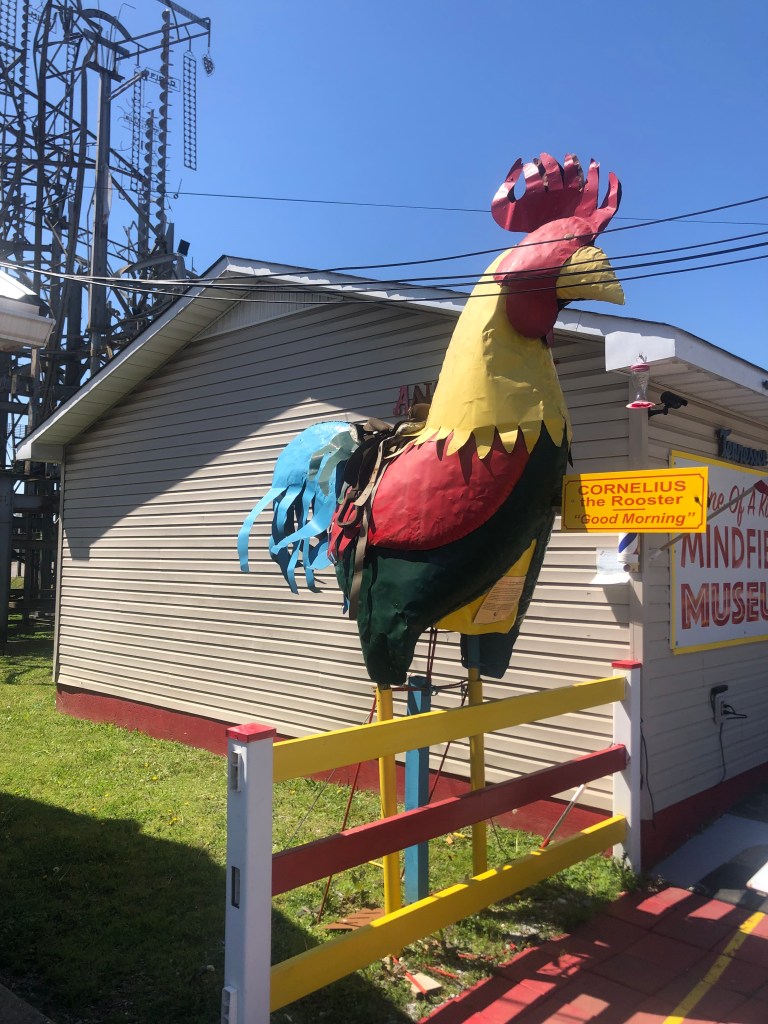
Second, Anthony told me a story about how there had been an empty spot in front of his shop that “needed something.” Then one day he spotted that something: A giant metal rooster that was for sale elsewhere in town. Alas, at $800, the rooster was beyond his means. He mentioned this in passing to a customer in his barber chair, and by the end of the day that customer had taken up a collection around town and presented Anthony with $800. The rooster now stands in the spot where it belongs.

We now return to today:

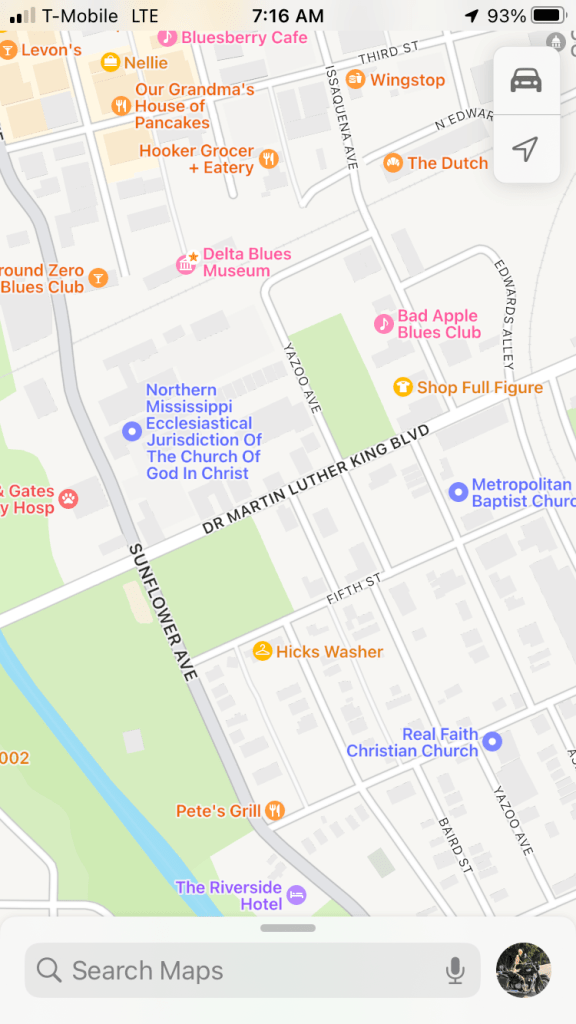
This morning I woke up in Clarksdale, Mississippi. As proof, the downstairs buffet had biscuits and gravy, and the map on my cellphone revealed there to be two blues clubs, three churches, and a blues museum in the immediate area.

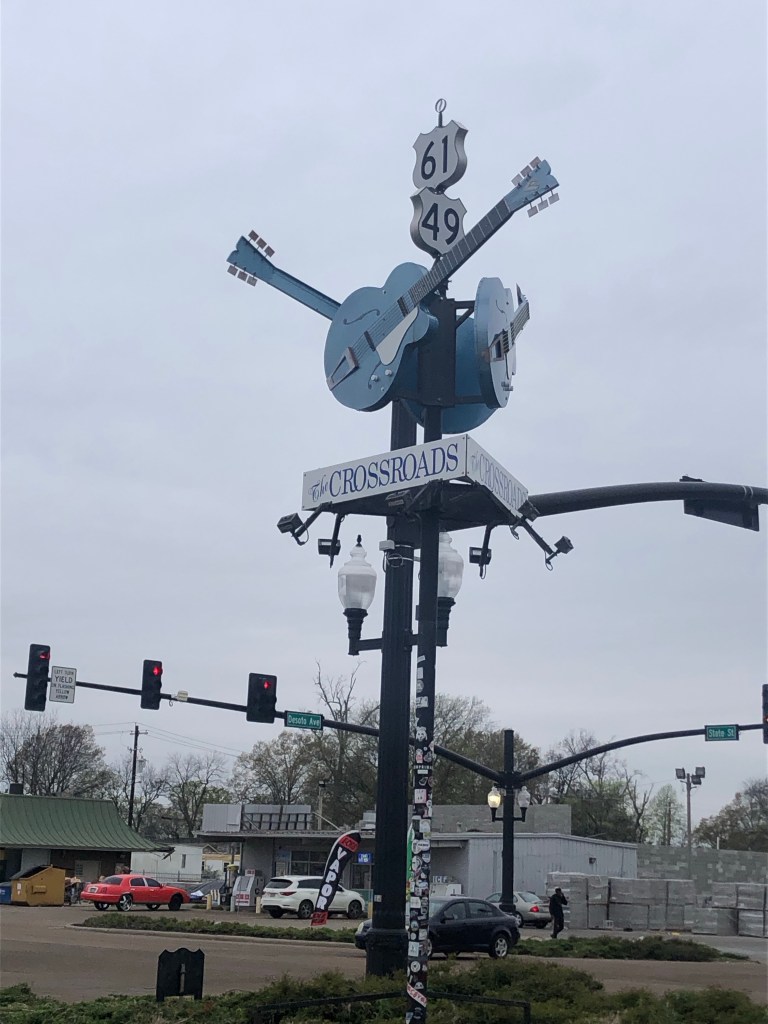
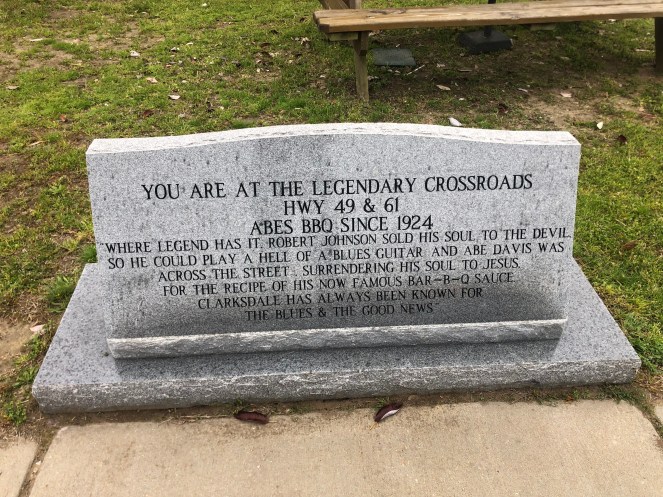
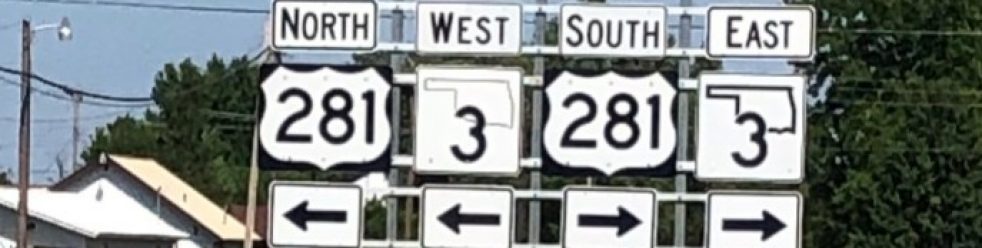
Clarksdale (pop: 14,000) is the birthplace of Sam Cooke, John Lee Hooker, Ike Turner, and many other blues musicians. Muddy Waters moved here as a child. Just east of the mighty Mississippi River (or, as the locals call it, the Mississip), Clarksdale sits at the crossroads of US Route 61 (the Blues Highway) and US Route 49 (which runs south to the Gulf Coast).

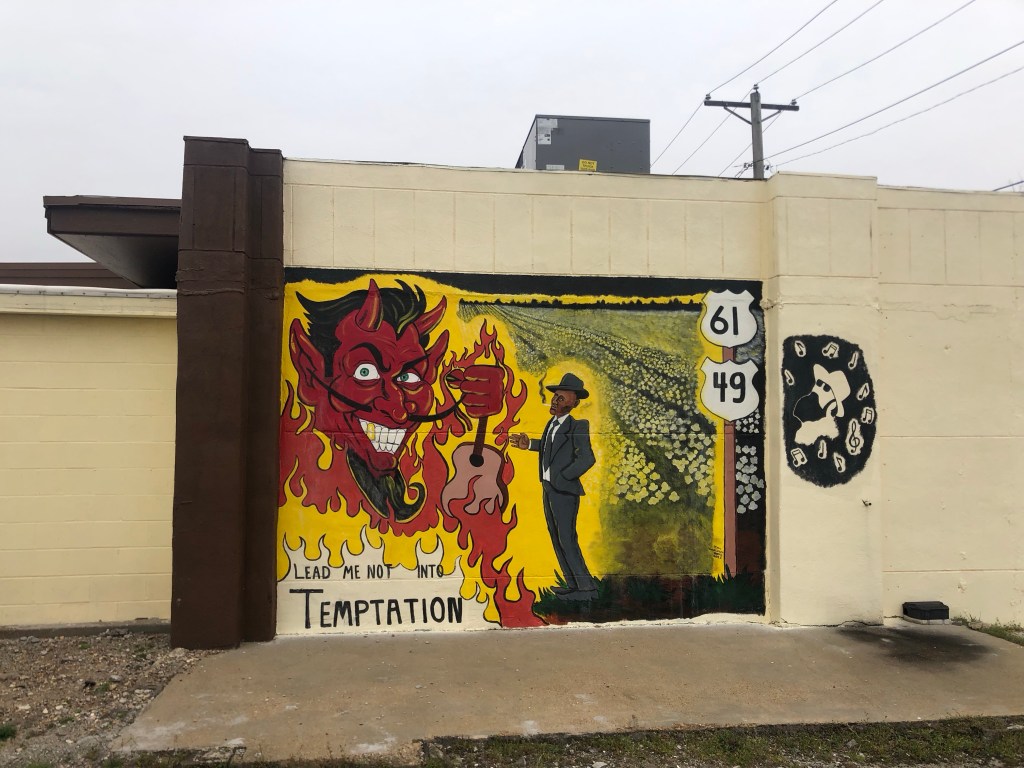
That crossroads is sometimes called the Devil’s Crossroads. Legend has it that a struggling, less-than-skilled blues player named Robert Johnson went to the Crossroads one night about a century ago, where a strange man tuned his guitar for him and showed him some techniques. Johnson disappeared for a few months. He eventually reappeared as a blues guitar virtuoso, achieving fame on the blues circuit and earning the respect of the established bluesmen.

As you might imagine, things didn’t end well for Johnson, who died under mysterious circumstances at age 27. The legend holds that Johnson had sold his soul to the Devil that night at the crossroads. And the fact that Johnson recorded a song entitled “Me and the Devil Blues” seems to support that hypothesis.

Robert Johnson goes to hell.

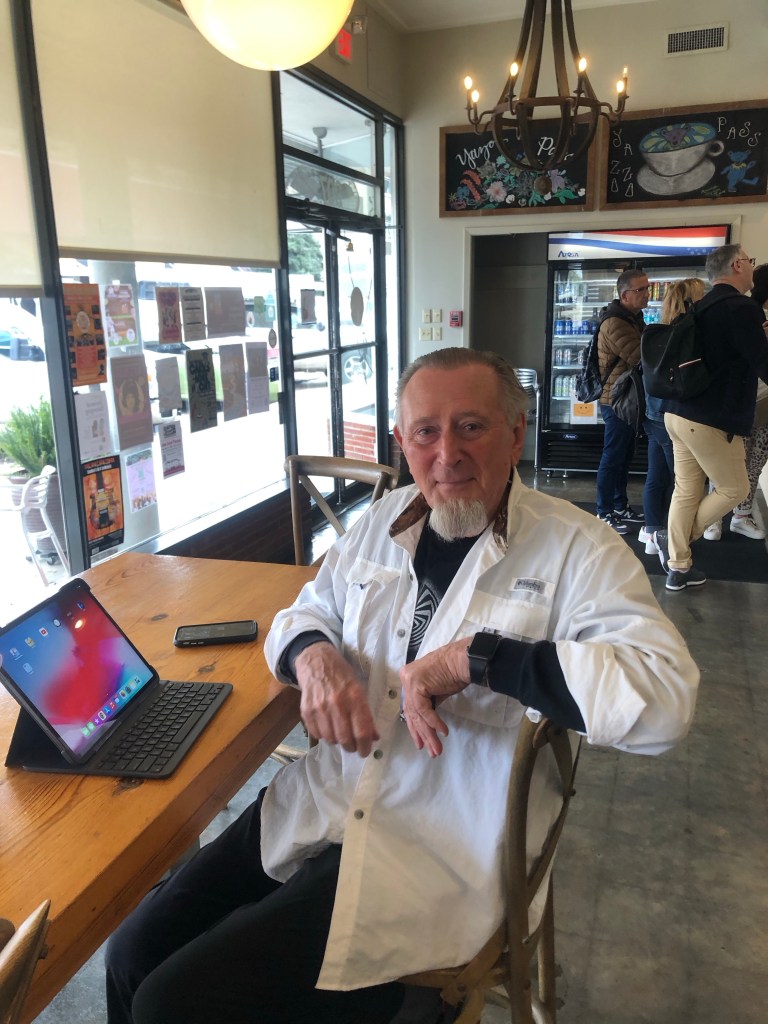
I got breakfast at a place called Yazoo Pass in the historic downtown, where I met a literal fellow-traveler. Jim has been making his own Blues pilgrimage that began in (what I assume to be his home of) Pensacola. He’s now traveling north on 61, while I’m traveling south. We exchanged a few stories and tips. He put me to shame with his extensive knowledge of blues history, his obvious emotional attachment to the art form, and his extensive photo collection from this trip.

Jim: Blues savant.

I continue to be struck by how much people are deeply affected by music, and in particular by the blues. I’m a mere novice when it comes to this music, but I’m quickly learning of its power to affect moods and impart lessons. I’m especially struck by how dedicated the musicians are to this music which they seem to treat as a religion.

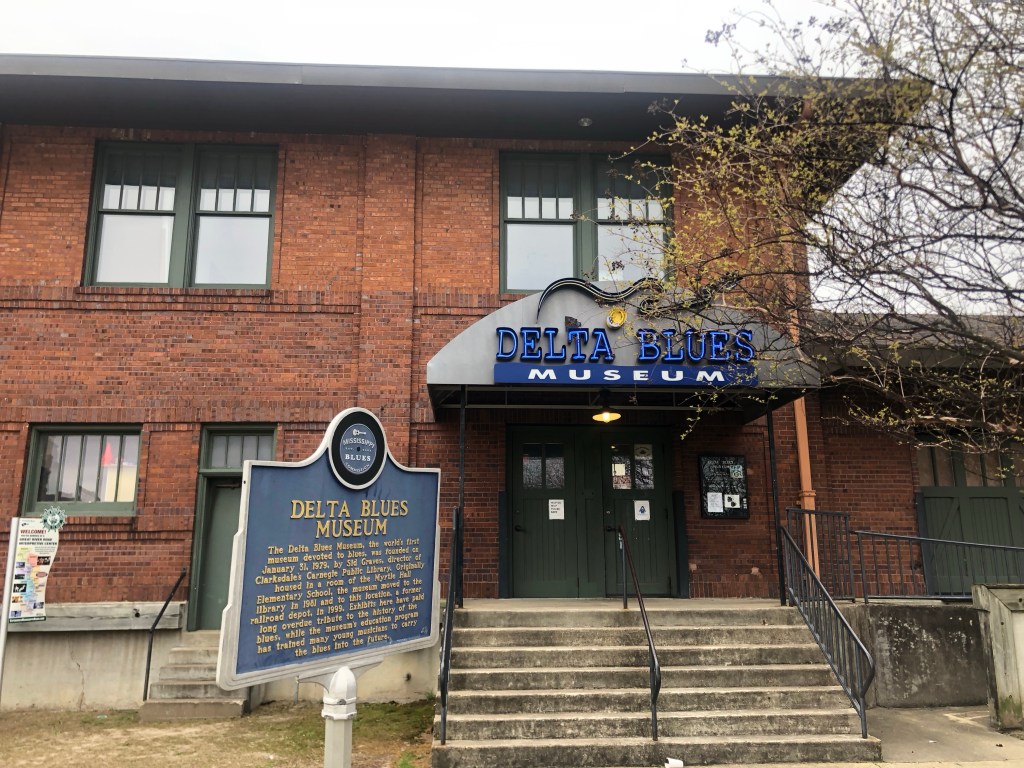
After breakfast I went to the famous Delta Blues Museum, which is housed in a hundred-year-old building that once was the freight depot of the Yazoo and Mississippi Valley Railroad.

All aboard!

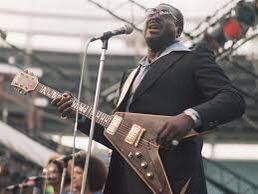
It’s a modern and slick affair, but it does a great job of illustrating the importance of the blues to the delta, and vice versa. I’m beginning to learn about some of the key names in blues history. (A number of them I dimly recognize from when friends Chris and Jerry and I all went to the San Francisco (!) Blues Festival some forty (!) years ago. I knew nothing about Albert King and various other headliners, but I sure liked their music.)

I also noticed that as I get deeper into the delta, the music changes. What started as twangy country music in Nashville became gospel-infused bluegrass in Jackson and slick, horn-centered R&B in Memphis. Down here in rural Clarksdale the music is a bit more stripped-down and raw.

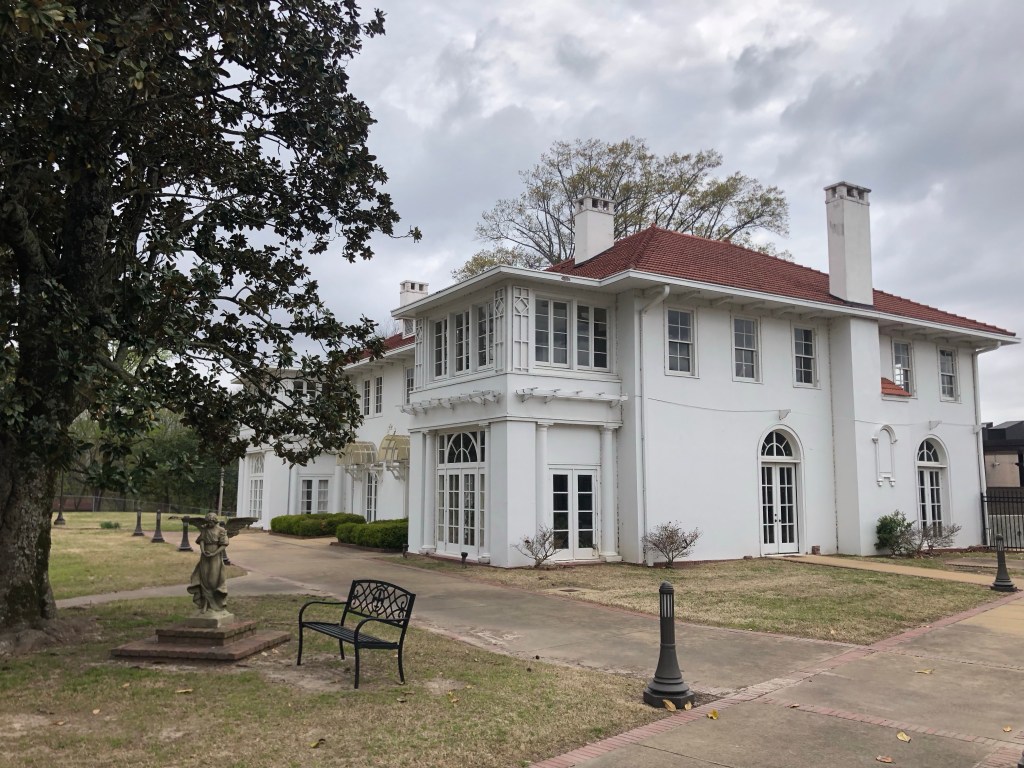
After I left the museum I took a brief break from the blues and visited the J W Cutrer House. Built in 1916 by a wealthy local attorney, the house and the Cutrer family served as inspirations for Tennessee Williams when he wrote A Streetcar Named Desire and Orpheus Descending. I don’t know about all that, but it sure is an impressive mansion.

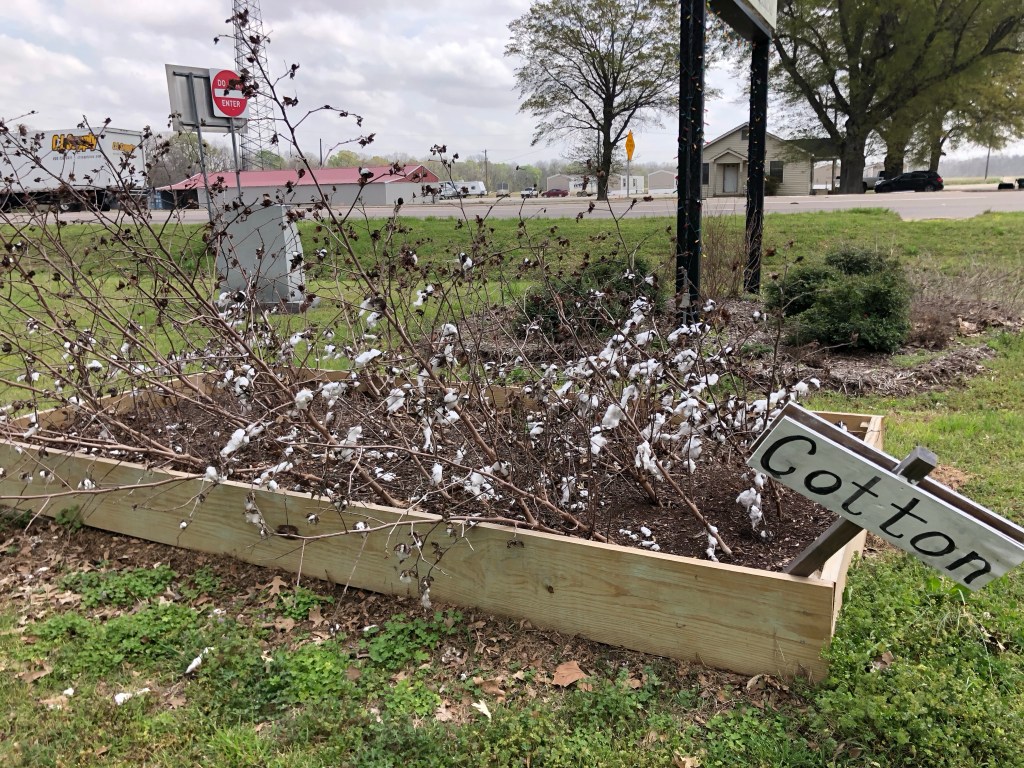
It was now time to say goodbye to Clarksdale and get back on Route 61. Truth be told, Route 61 is not the most beautiful highway I’ve been on. The countryside is relatively flat with large, treeless expanses of grasses, low scrub, and sickly-looking farms. I didn’t see much cotton, with the exception of this designer plot.

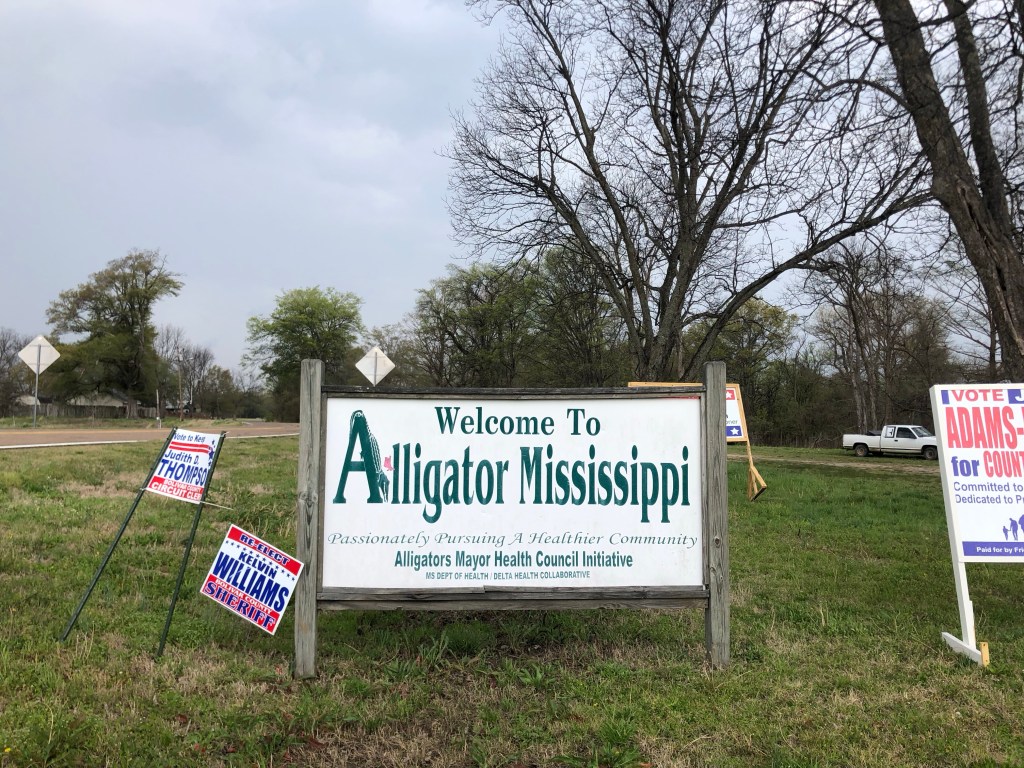
One of the sparse settlements along The Blues Highway is the town of Alligator (pop: 116).

What a croc.

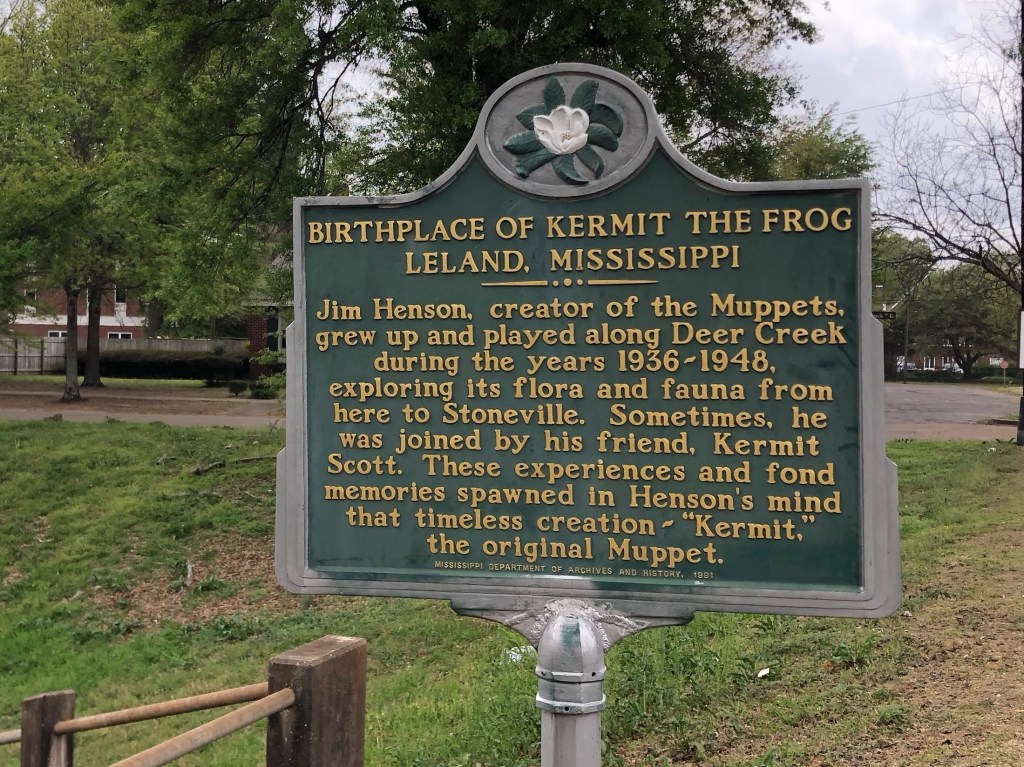
Soon I came to Leland, Mississippi, where things shifted from the Blues to the Greens. For, incredibly, it seems that this is Kermit the Frog country.

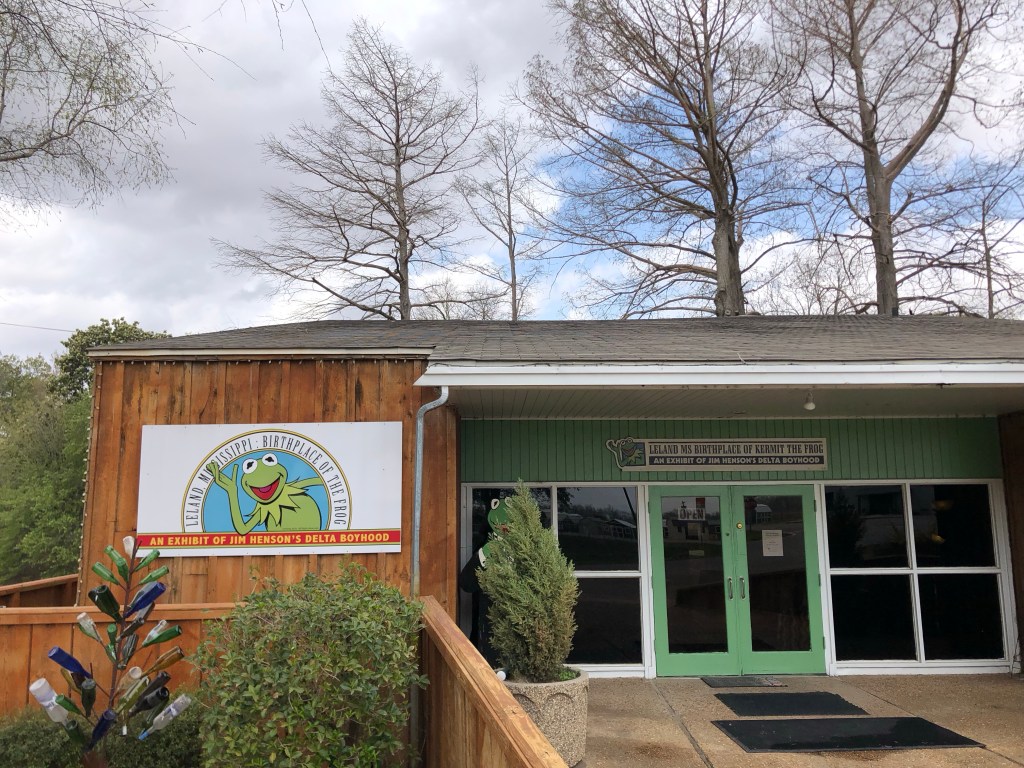
Leland was the boyhood home of Jim Henson, who lived here until he was 12. Leland claims Henson as a native son, and the chamber of commerce has set up a small Jim Henson museum just off the road.

It’s not easy being green in the land of the blues.

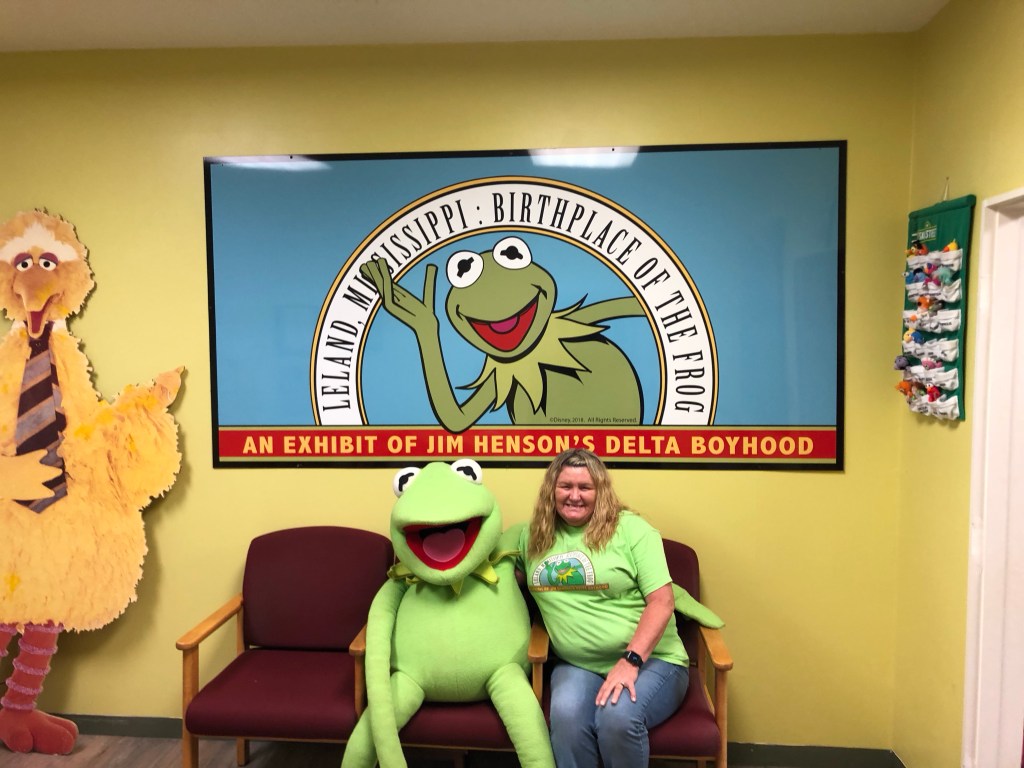
Docent Heather explained to me the history, and directed me to the nearby “Rainbow Connection Bridge.”

Kermit and Heather
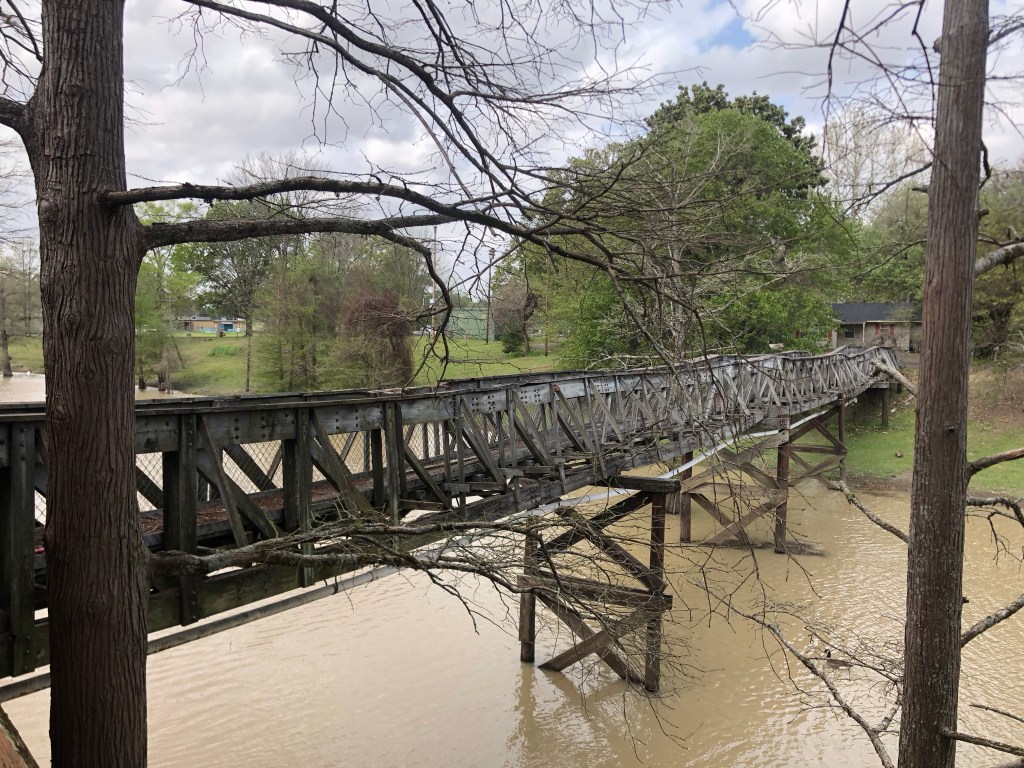
Shockingly, this bridge, which is directly behind the museum, is NOT the Rainbow Connection Bridge. But it should be!

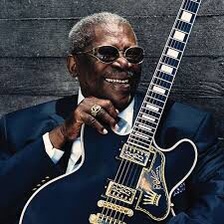
While I was in Leland I was hoping to visit the Highway 61 Blues Museum, which is touted as one of the most earnest (albeit small) of the museums along the Blues Highway. Alas, Heather reported that the museum closed at the beginning of the Covid pandemic and never reopened. As an alternative she recommended something called the “wildlife heritage museum.” I thanked her but I chose instead to head down to the next town: Indianola. It’s the birthplace (and final resting place) of B.B King, and it boasts the impressive B.B. King Museum. As you probably already know, B.B. King was one of the most successful blues artists of all time, and was known around the world.

Believe it or not, BB King’s “The Thrill is Gone” was the first record I ever bought. I was 8 years old, and my parents took my brother and me to a record store and allowed us each to pick a record. “The Thrill is Gone” was a crossover hit and playing on top 40 radio. Mom tried to steer me towards Blood, Sweat, and Tears’ “Spinning Wheel,” but I would not be moved. Interestingly, both songs seem to have a very similar groove and have stood the test of time.

Anyway, this is not the place to recount B.B. King’s life, which is well told in many, many other places. But I did want to share this small scrap I learned at the museum: When B.B. King’s mother lay on her deathbed, she held her son’s hand and said “Be kind. It will always bring you good things.” He was and it did. (It also sounds very much like something barber Anthony Turner might say!)

I’m spending the night in Greenville, which is just west of Indianola and right on the east bank of the Mississip. Tomorrow it’s onward to Vicksburg… as Ulysses S. Grant might have said…

Bonus Material!

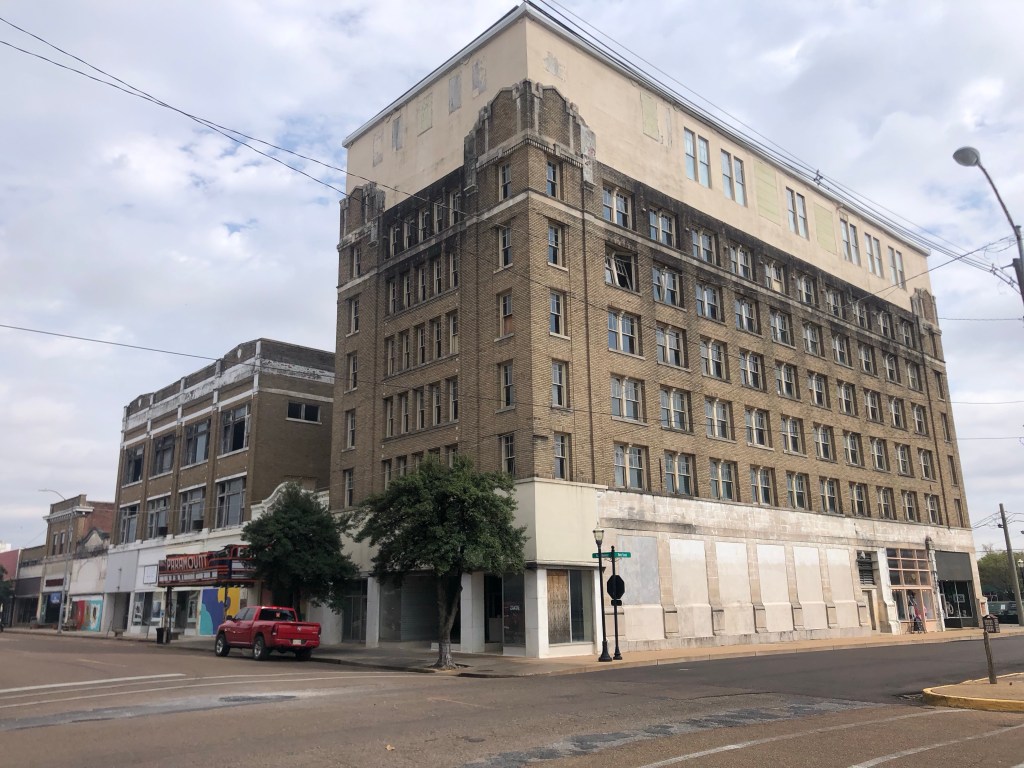
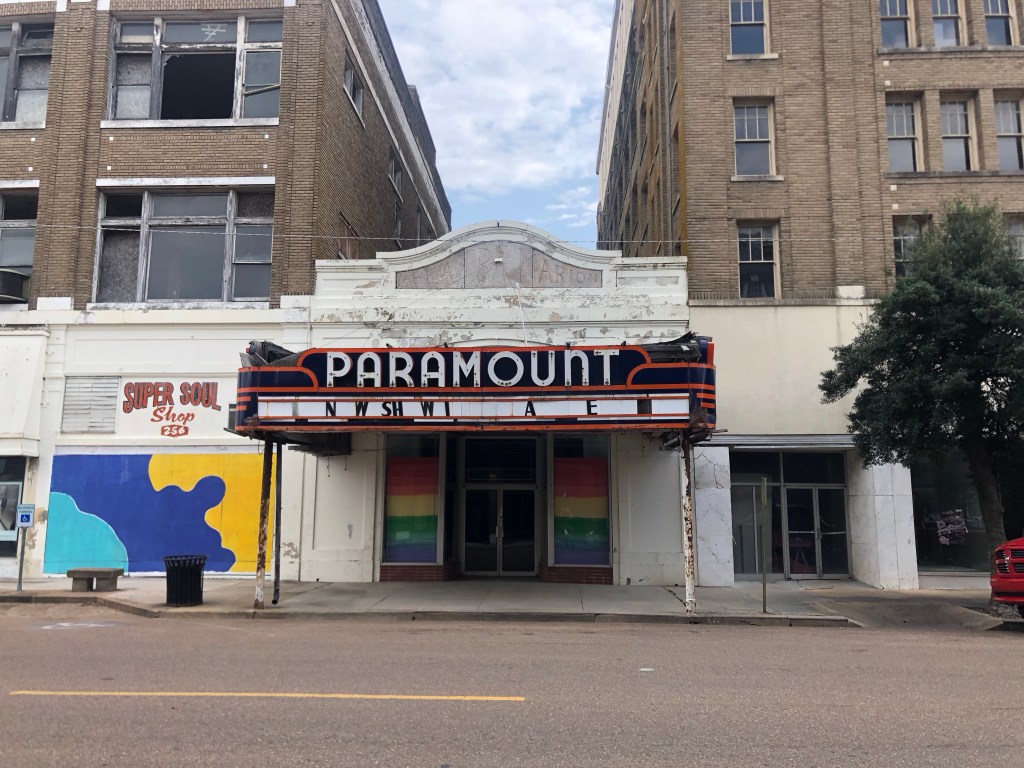
I did come across an old theater in Clarksdale. The Marion Theater opened in 1918–one of the first theaters constructed to show (silent) movies. It was renamed the Paramount in 1931. It closed in 1976, and has only been partially and fitfully restored by a local performing arts group. Heaven only knows what all those upstairs rooms are for. There is evidence of a fire in those upper rooms. But on the ground floor, I did see some evidence of recent renovation. Let’s hope they’re able to save this impressive structure!

Look carefully at the uppermost part of the sign over the entrance, and you can see “Theater Marion” cast into the cement.
California history · churches · movie theaters

After Many Years

Editor’s note: Given limited travel opportunities these days, I decided each Thursday to post travel stories I’d written prior to starting this blog. The following is from a short trip I made into downtown LA before the Corona pandemic. I hope you might vicariously enjoy this trip while we’re all hunkering down at home.

Editor’s other note: Special prize to the first reader who identifies the reference in this blog’s title.

Today I headed into downtown Los Angeles to find a historic theater. But this story requires a little background:

My Dad used to watch a lot of TV (although the line between “watching” and “napping” was somewhat blurred). After Warriors basketball and the Solid Gold dancers, dad’s favorite television fare centered on a cranky, white-haired televangelist with a penchant for quirky headgear. Dr. Gene Scott began broadcasting from southern California in 1975. Unlike the better-known televangelists of the era, such as Oral Roberts and Jerry Falwell, Scott wasn’t slick or even particularly adroit as a preacher. He could be profane, often smoked a cigar while he talked to his TV “congregation,” and could wait out television viewers during a fund drive with interminable pauses and endless repetitions of a single clip of a barbershop quartet singing a white man’s spiritual. His nightly programs usually contained some meditations on a biblical passage, but much of the program was filled with Scott’s meandering musings about his clothes, postage stamps, or, eventually, his battles with the FCC and the IRS.

Says here I can’t claim my toupee as a dependent

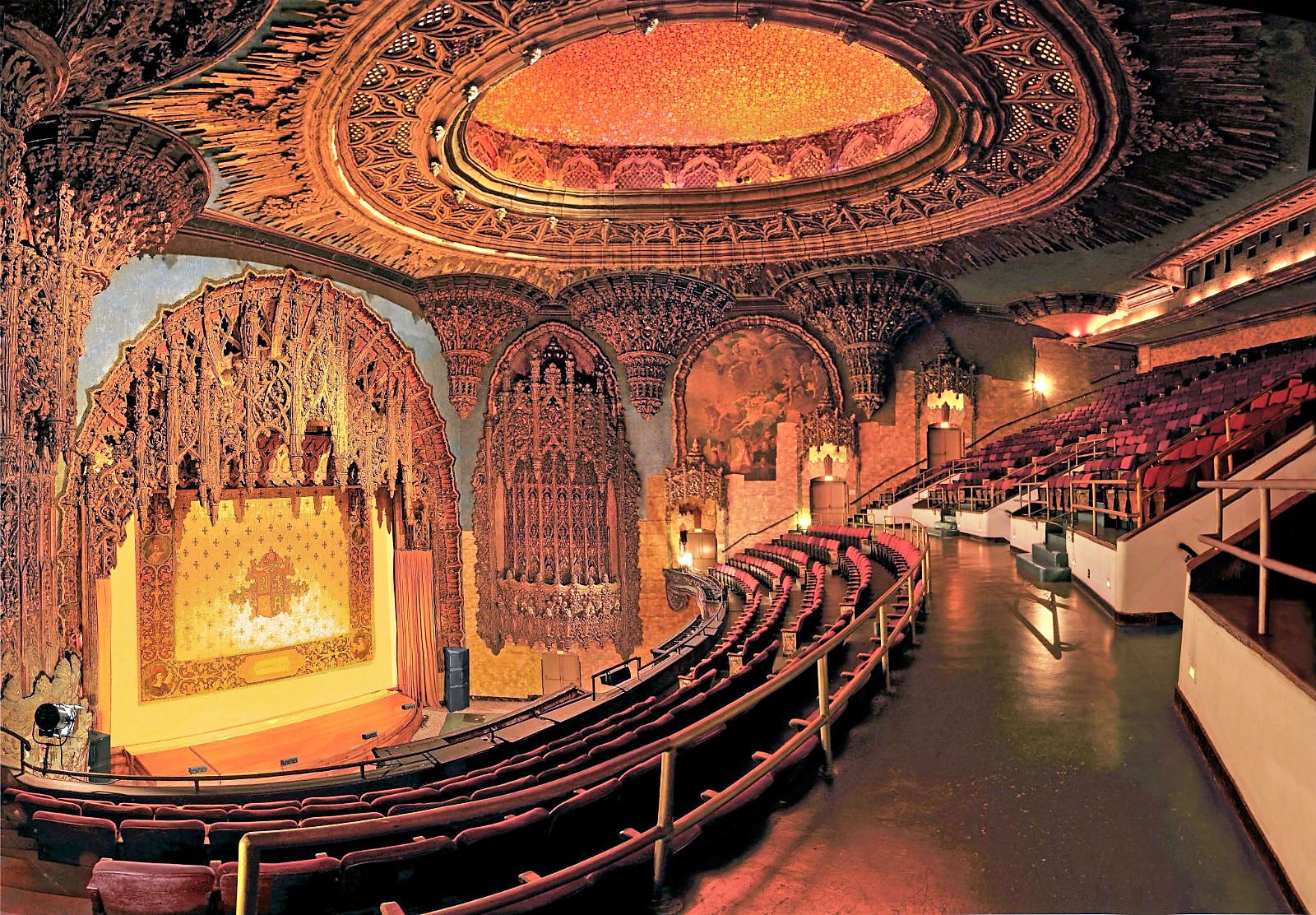
Gene Scott used to broadcast from the historic (1927) United Artists’ theater building in downtown Los Angeles. He used the building’s auditorium to conduct worship services that were shown on TV stations across the country.

So this was my destination for today’s trip. I saddled up the Speedmaster and made my way to LA’s so-called fashion district. For the uninitiated, the fashion district isn’t really that fashionable. Here are a couple of the more respectable structures in the area:

For those in need of body parts
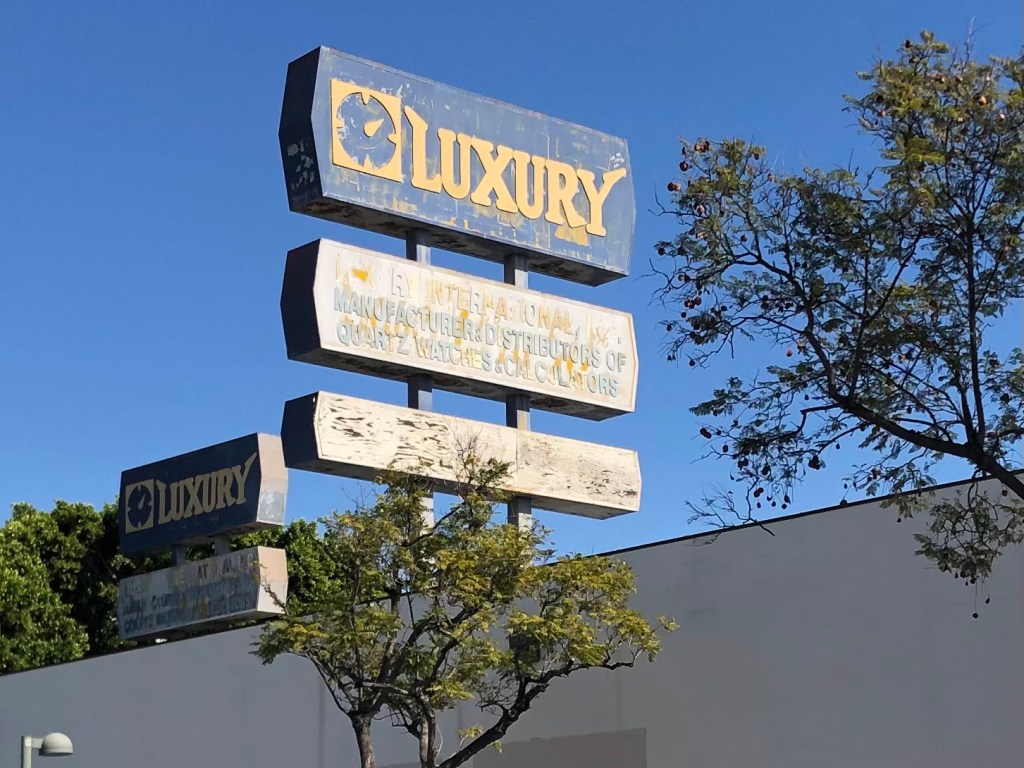
I’m not sure their definition of “luxury” is the same as mine

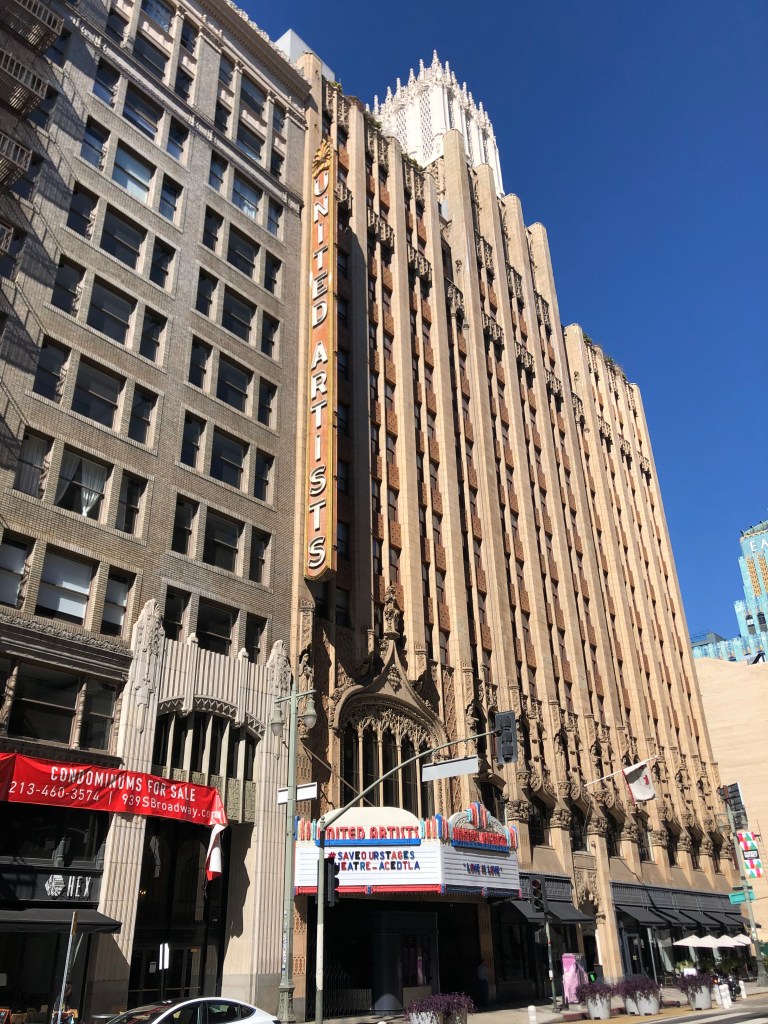
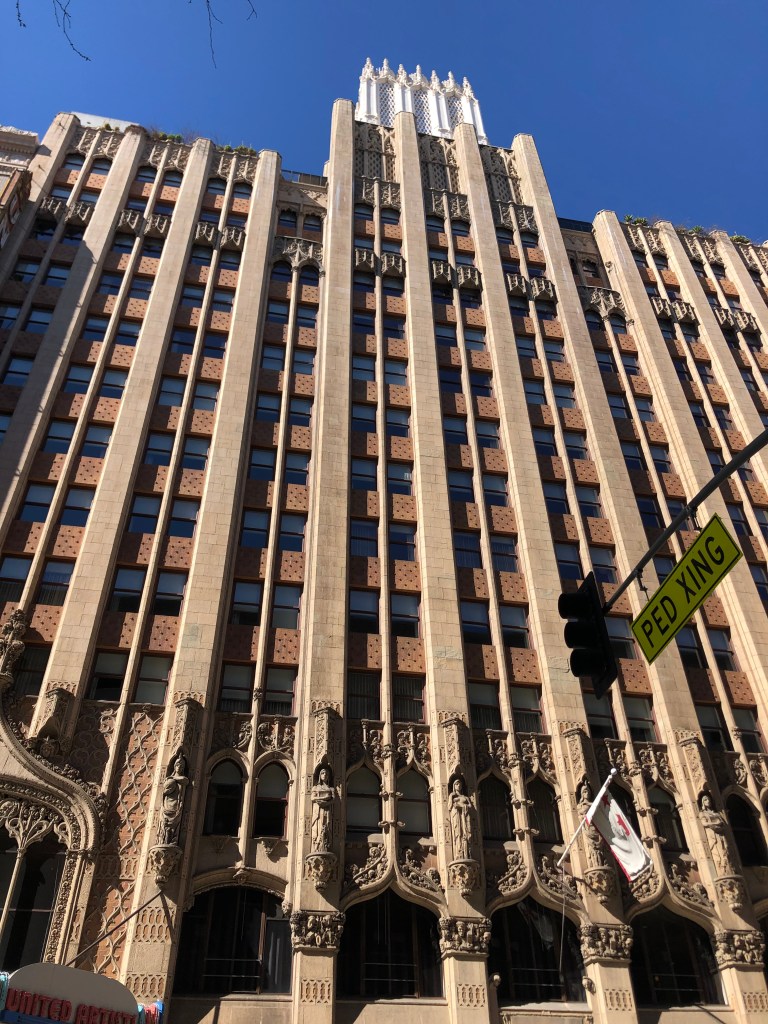
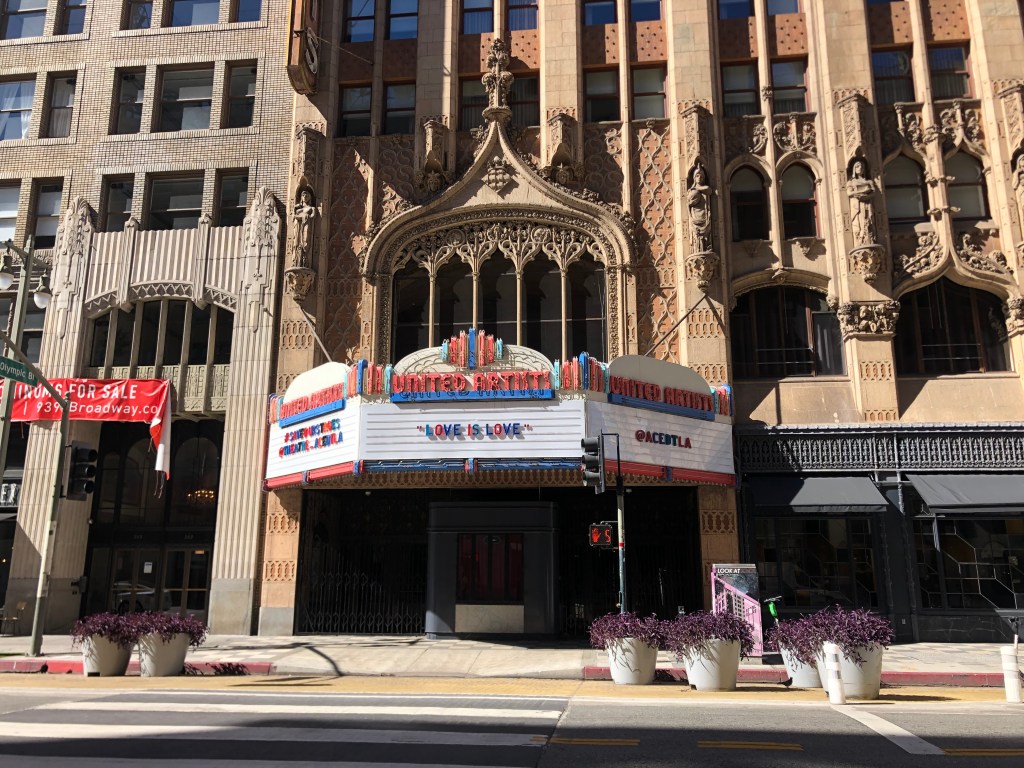
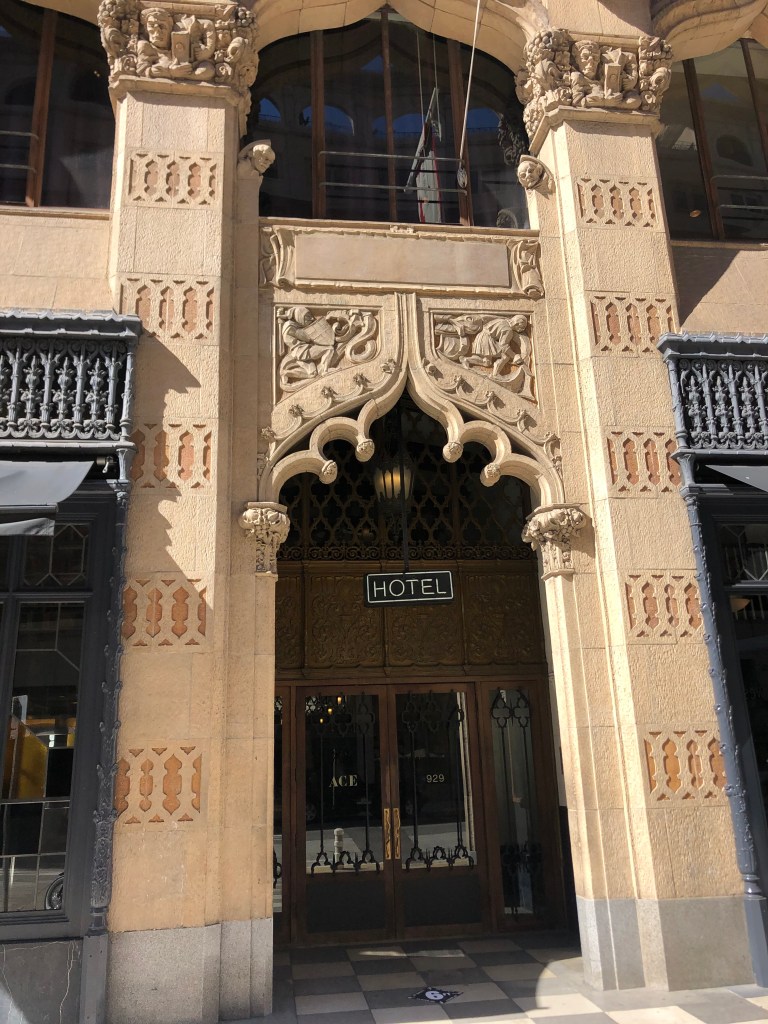
Eventually I found the UA building on a gentrifying stretch of Broadway. After almost 100 years, it’s still looking good:

Beware the Moors….

United Artists was founded in 1919 by D.W. Griffith, Charlie Chaplin, Douglas Fairbanks, and Mary Pickford. The four veterans from the silent era were reacting to efforts by Hollywood producers and distributors to tighten their grip on moviemaking. So they formed UA as a way to retain control over their own films. In 1927 they constructed this 13-storey building with a grand movie theater taking up the bottom three floors. Supposedly it was Mary Pickford’s love of Spanish castles that influenced the design.

Mary’s Folly

United Artists underwent many changes over the years, including an odd period in the early 2000s involving Tom Cruise. But the building has been a constant presence in downtown LA. The theater was capable to accommodating over around 1,600 moviegoers, and played host to many UA premiers and red-carpet events in its day.

Image result for interior of united artists building downtown la
Gilding the lily

Of course, as movie palaces became less popular in the television era, the United Artists’ theater was leased for other uses. And then in 1989, Gene Scott began using it to conduct his televised worship services. Scott eventually bought the whole building and restored much of its opulence from the Golden Age of movies. After Scott’s death in 2005 his widow sold the building to a boutique hotel chain. It’s now known as the Ace Hotel, although the theater continues to operate as an entertainment venue.

Sign of the times

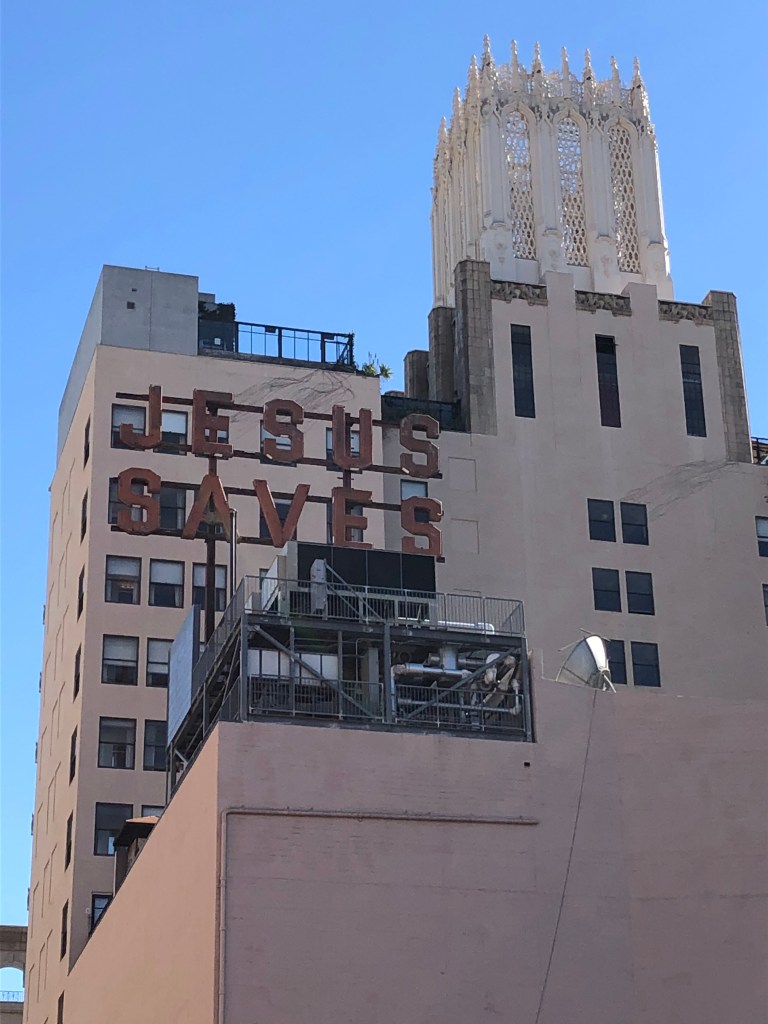
One interesting feature from the Gene Scott era is a historic “Jesus Saves” neon sign that he had placed on the back of the building. I can’t speak to whether Jesus is directly responsible, but I’m glad that this landmark has been Saved.