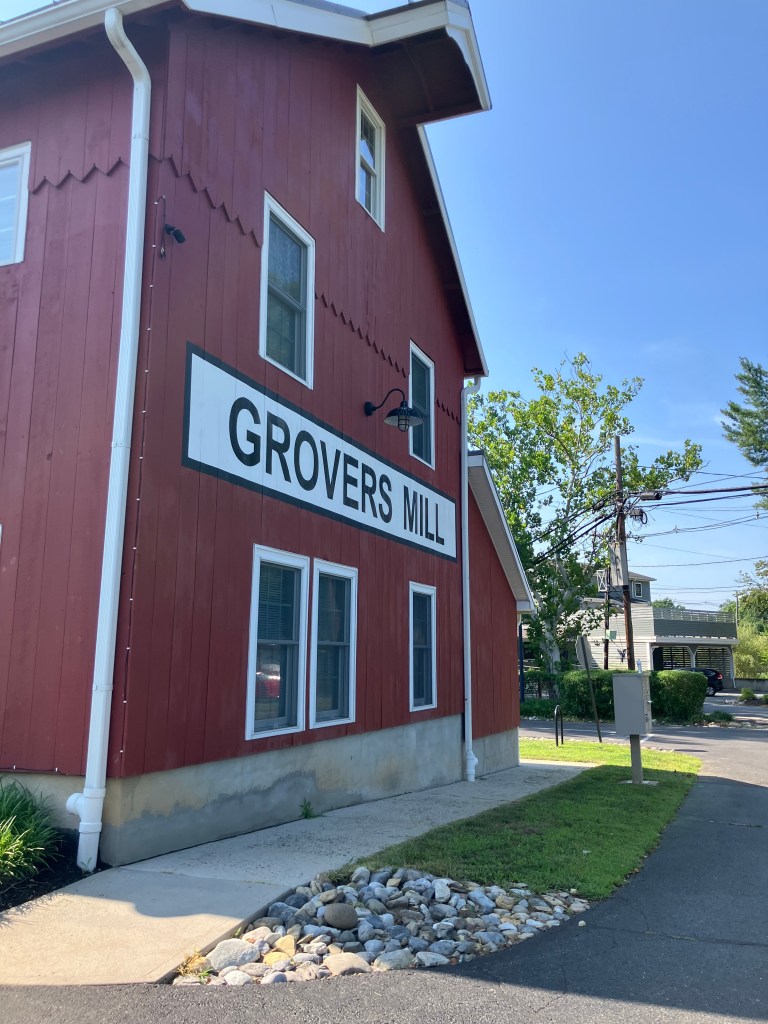
After cheering on the runners at the Blob Half-Marathon on Sunday morning, I fired up the Blobmobile and set a course for upstate New York to visit dear friend and loyal reader Ross M., whom I hadn’t seen in years. Along the way I passed through Grovers Mill, New Jersey.
Now, the name Grovers Mill seemed somewhat familiar, but I couldn’t quite place it…
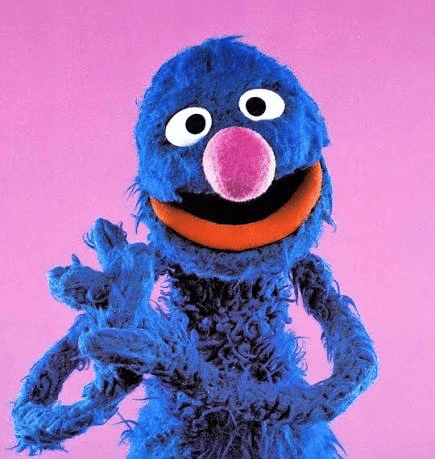
No, not that Grover
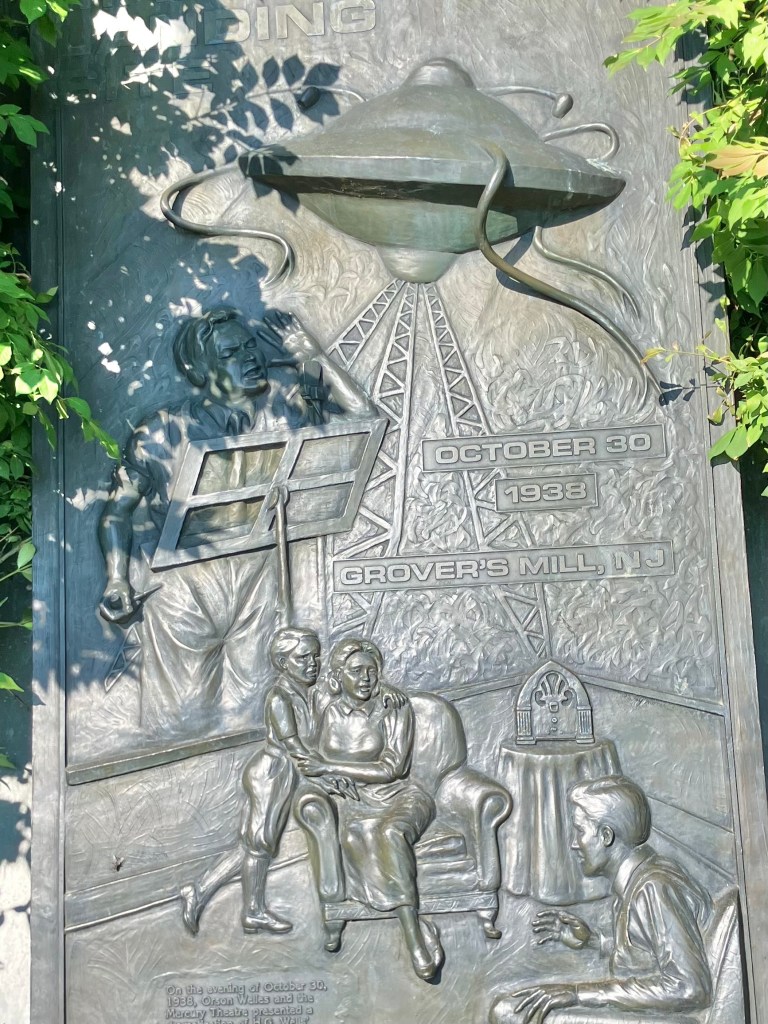
While still pondering the name I stopped at a local park to answer the call of nature. And upon exiting the loo I saw this plaque:
The morning shadows make it a little hard to read, but the plaque commemorates Orson Welles’ 1938 live radio broadcast based on H.G. Wells’ [no relation] story “The War of the Worlds.” The broadcast, which aired the night before Halloween, was presented as a series of urgent news bulletins interrupting a scheduled music program. And the crux of the thing was that Martians had landed at this self-same Grovers Mill, NJ, and were slaughtering the locals and wreaking havoc as they made their way toward New York. Later in the broadcast we learn that additional Martian craft had landed in other cities across the US. The world is doomed.
Famously, the broadcast triggered frantic calls to police stations by terrified listeners. According the plaque, which may or may not be exaggerating, “for a brief time as many as one million people throughout the country believed that Martians had invaded the earth, beginning with Grover’s [sic] Mill, New Jersey.” The full extent of the panic is disputed, but there were reports of heart attacks, suicides, car accidents, and the like, all supposedly prompted by Welles’ broadcast. One or more residents of Grovers Mill itself are said to have shot at a local water tower, thinking it to be a Martian craft in the darkness.
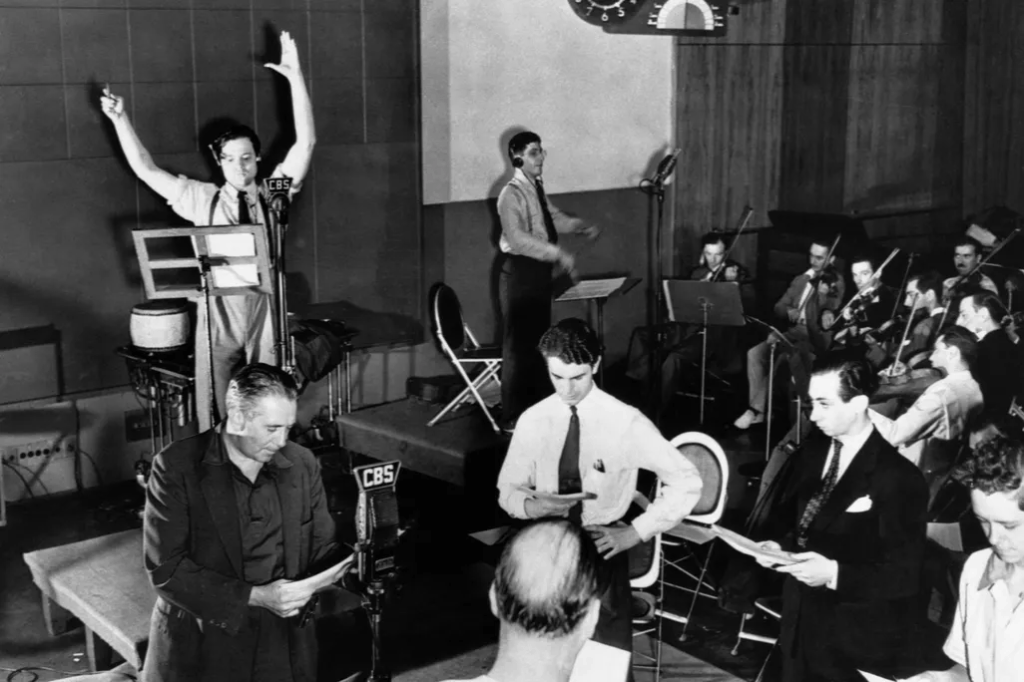
Boy Wonder Orson Welles, with arms raised, during rehearsal for the radio broadcast in 1938.
The incident spurred fervent debates about mass hysteria, the media’s culpability for promoting hoaxes, what qualifies as entertainment, the gullibility of Americans (none other than Adolf Hitler weighed in on this one), and other topics. For me, one question rose above all the others: Can I find that water tower that the locals shot up?
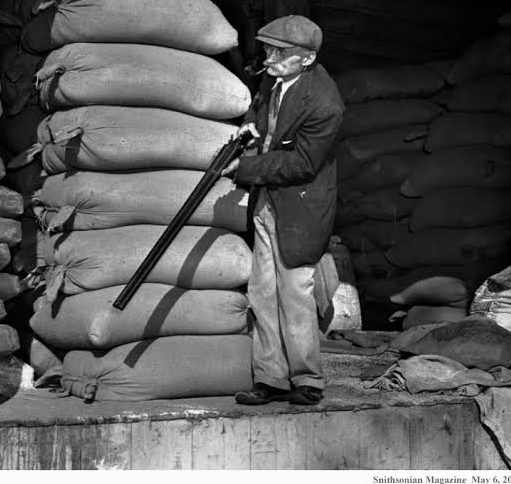
Grovers Mill resident William Dock poses for a photograph the day after he supposedly shot up a neighbor’s water tower.
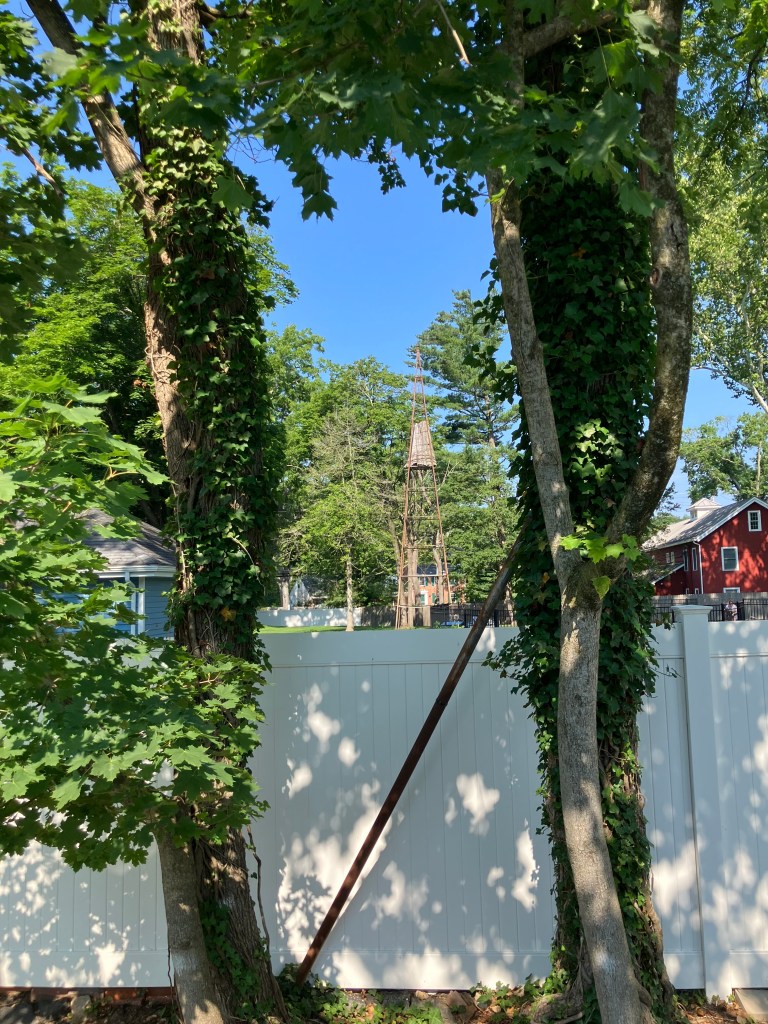
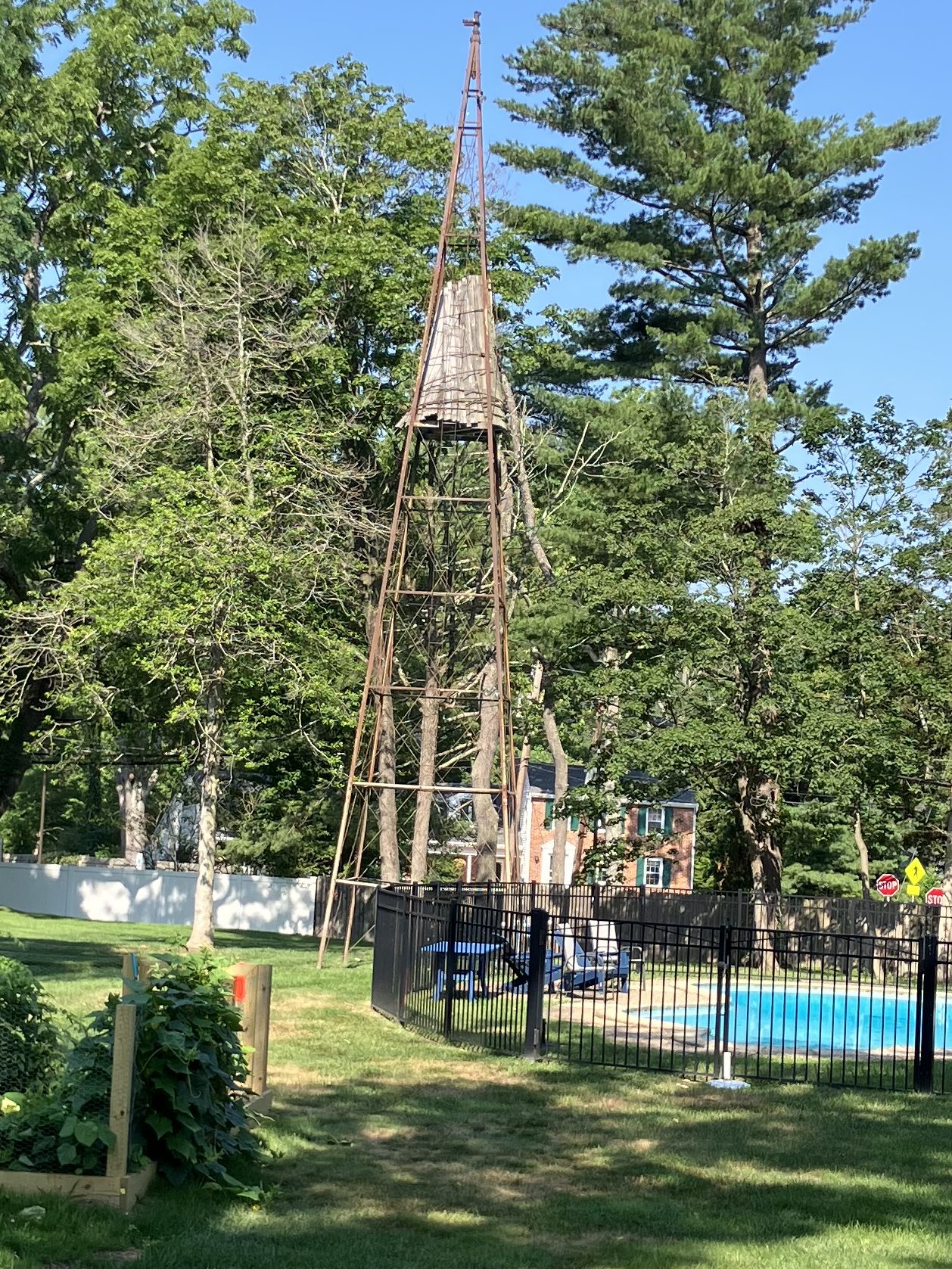
Turning to ChatGPT–which itself might destroy civilization as we know it one day soon–I learned that the water tower still existed, and wasn’t far from the park where I saw the plaque. After a bit of searching I found it behind a tall white fence on a residential street:
With a little more jockeying for position that some might define as trespassing, I got a better shot:
I have to admit this old water tower, mounted on spindly iron poles, does generally fit the description of the Martians’ war machines: “giant tripods [with] stilt-like legs, thin as wire.” Maybe if I had a cocktail or two in me, I might have shot at it myself.
This whole War of the Worlds broadcast thing intrigues me for several reasons. In part I wonder how today’s Americans would react to a Martian spaceship. I suspect we would all break out our phones and take pictures, oblivious to the danger. I also am nostalgic for the time when families would gather around the radio or TV and share a program together. And I am grateful to the good people of Grovers Mill for keeping this story about rural America, Orson Welles, Martians, and Halloween hijinks alive. But most of all, I am astounded that Orson Welles had this kind of impact at age 23. It’s very humbling.
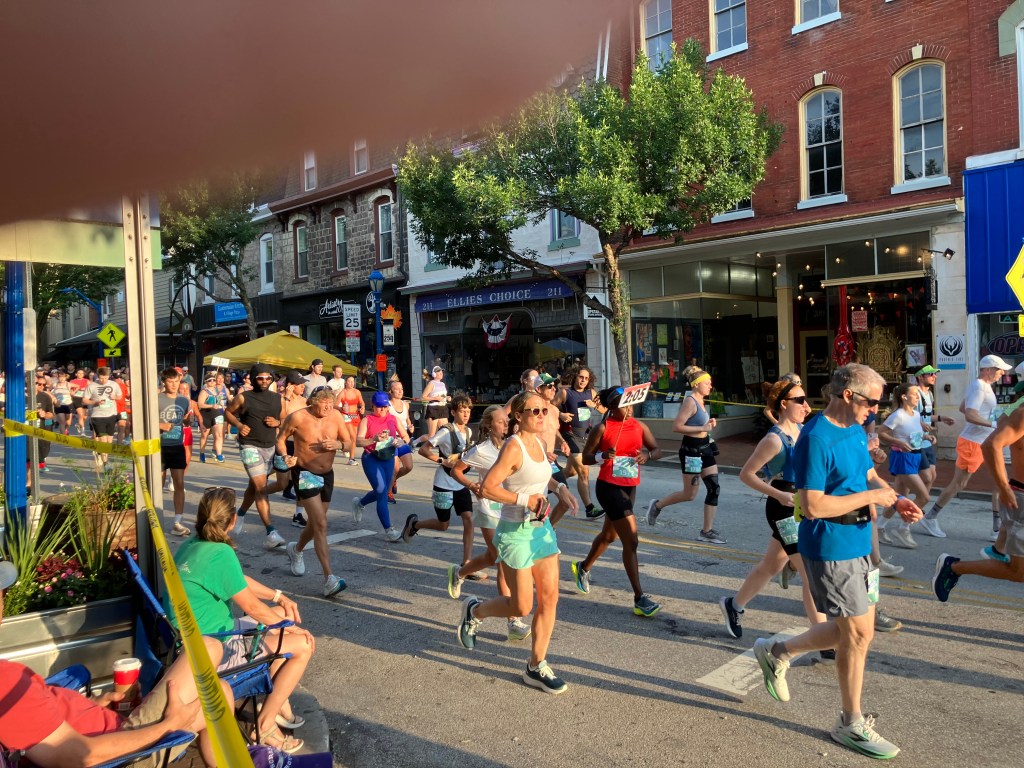
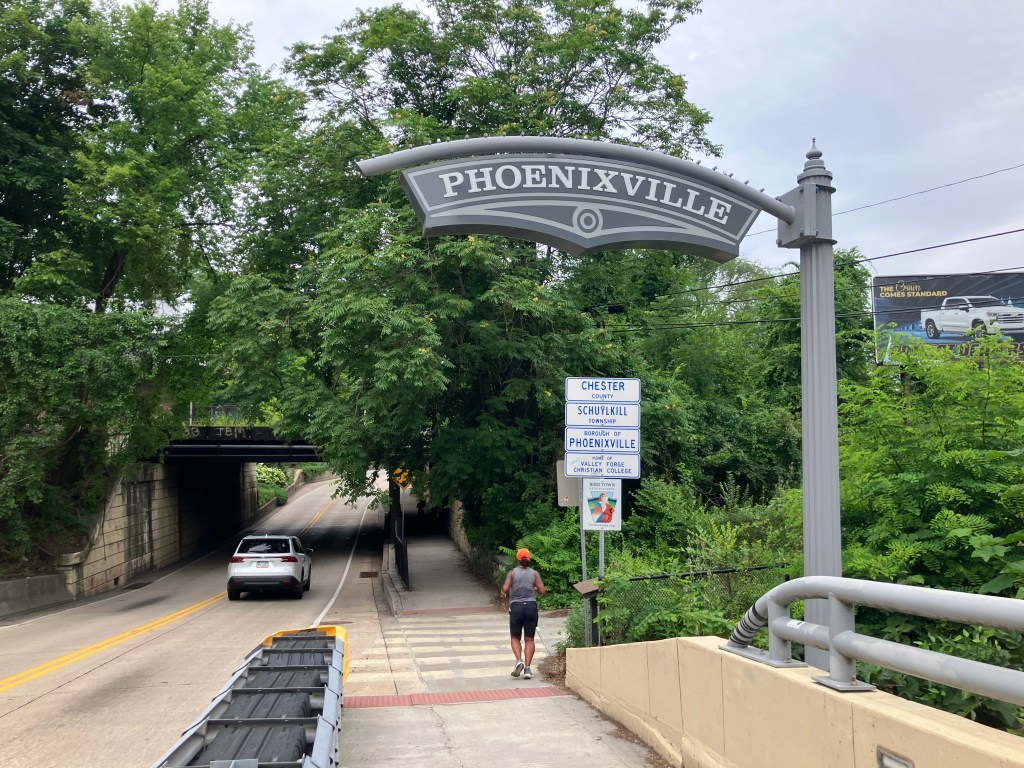
Finally–after over two years of waiting, this morning I finally returned to Phoenixville, PA (pop: 18,600) to attend the 26th annual Blobfest.
This has got to be one of the high points of the year for Phoenixville. Most of the main drag (Bridge Street) was closed to vehicular traffic, and well over 100 vendors were setting up tables to promote their blob-related (or blog-adjacent) wares.
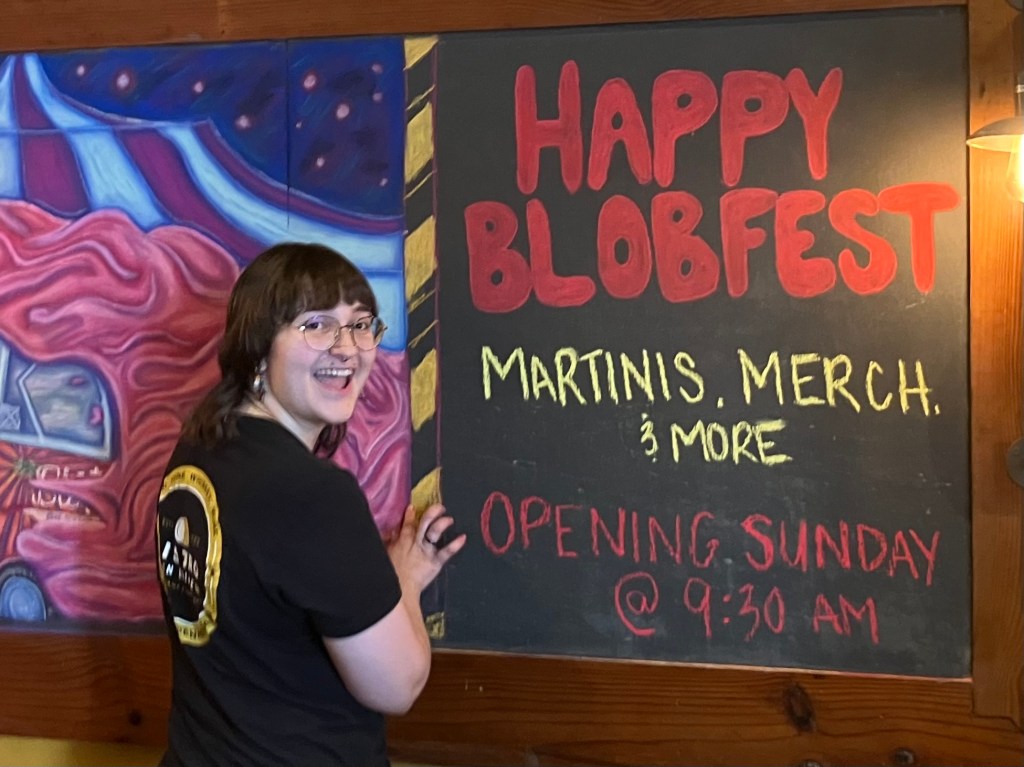
Mia, the hostess at Bistro on Bridge
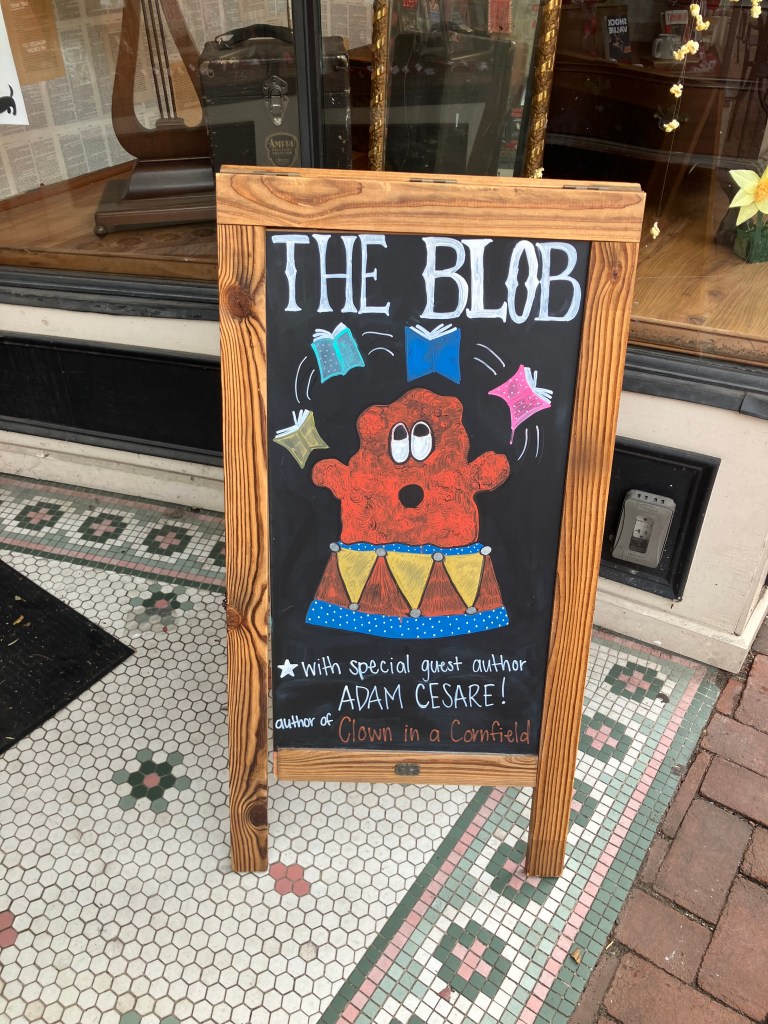
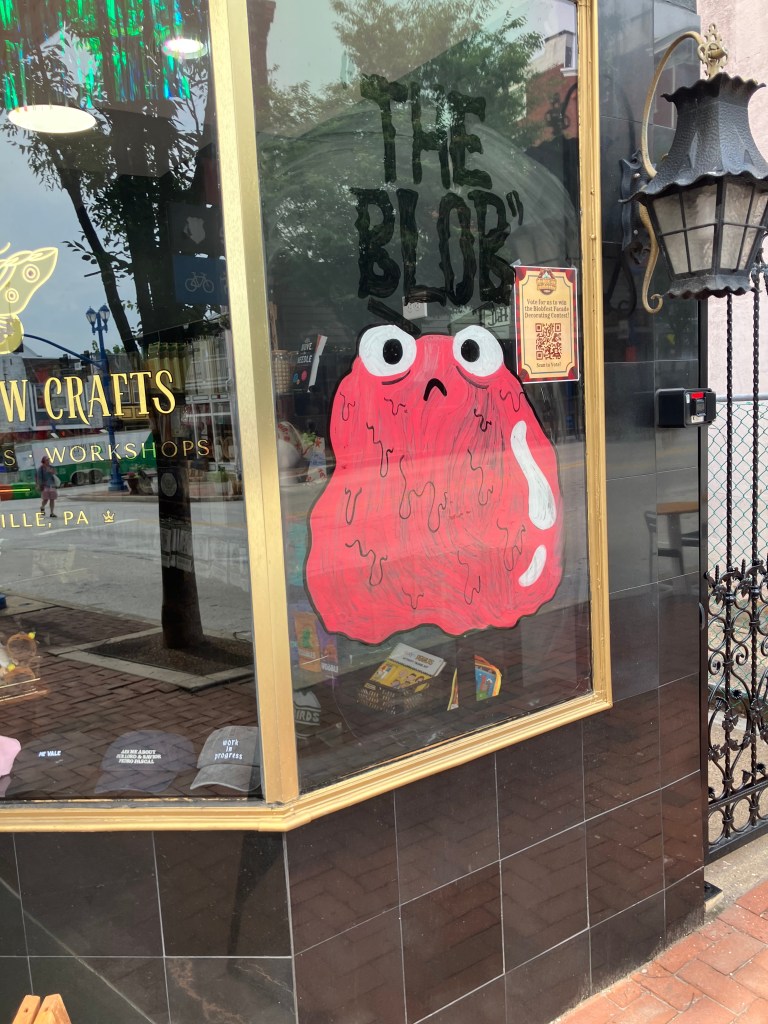
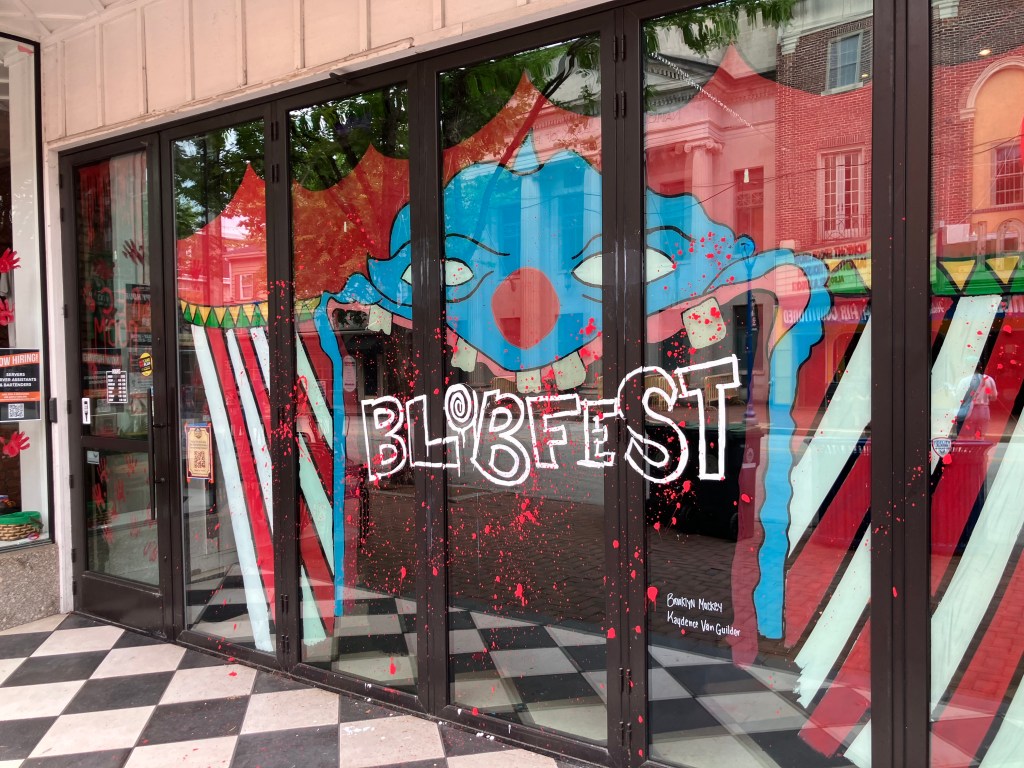
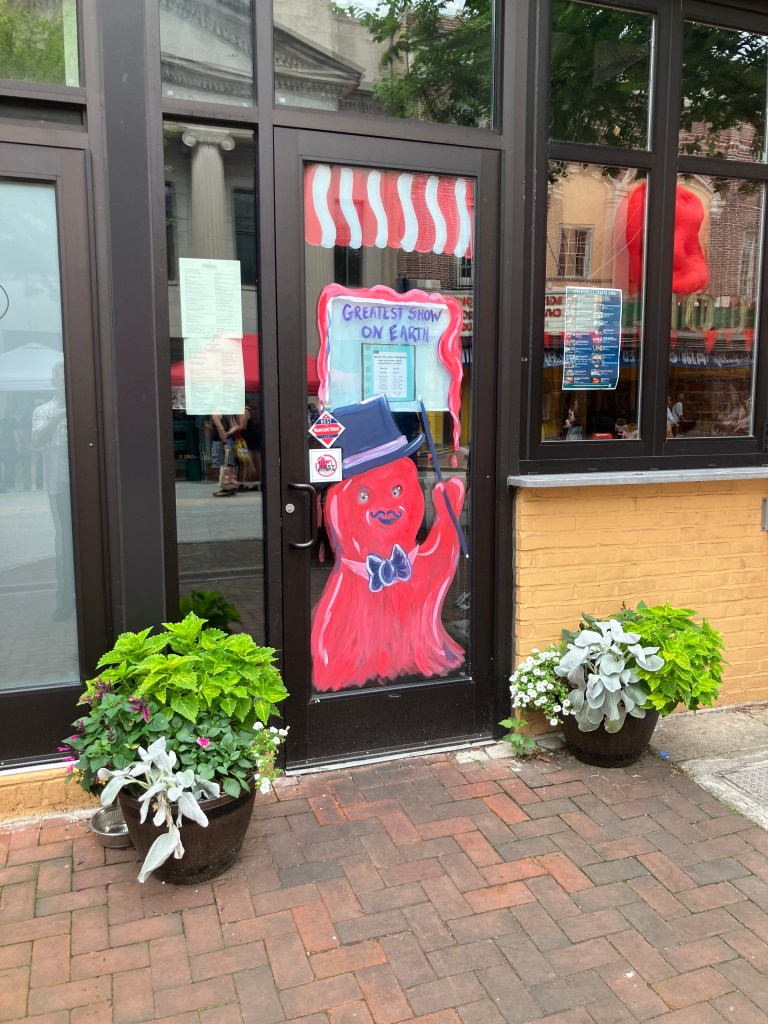
Many of the businesses along the street got into the spirit of things, with blob-themed displays everywhere. Now, let me take a moment to acknowledge that “blob-themed) is a rather malleable category…by definition. Some chose to portray it as a cute figure reminiscent of Western Kentucky University’s “Big Red.”
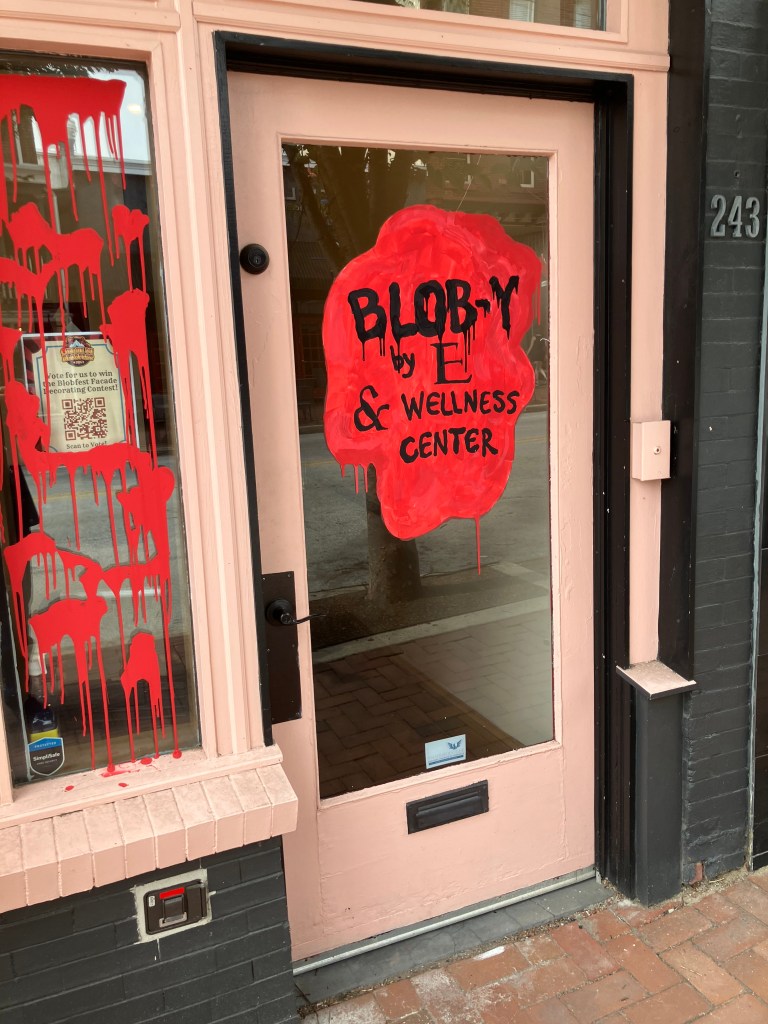
Others opted for oozing slime which was more reminiscent of blood than “blob.”
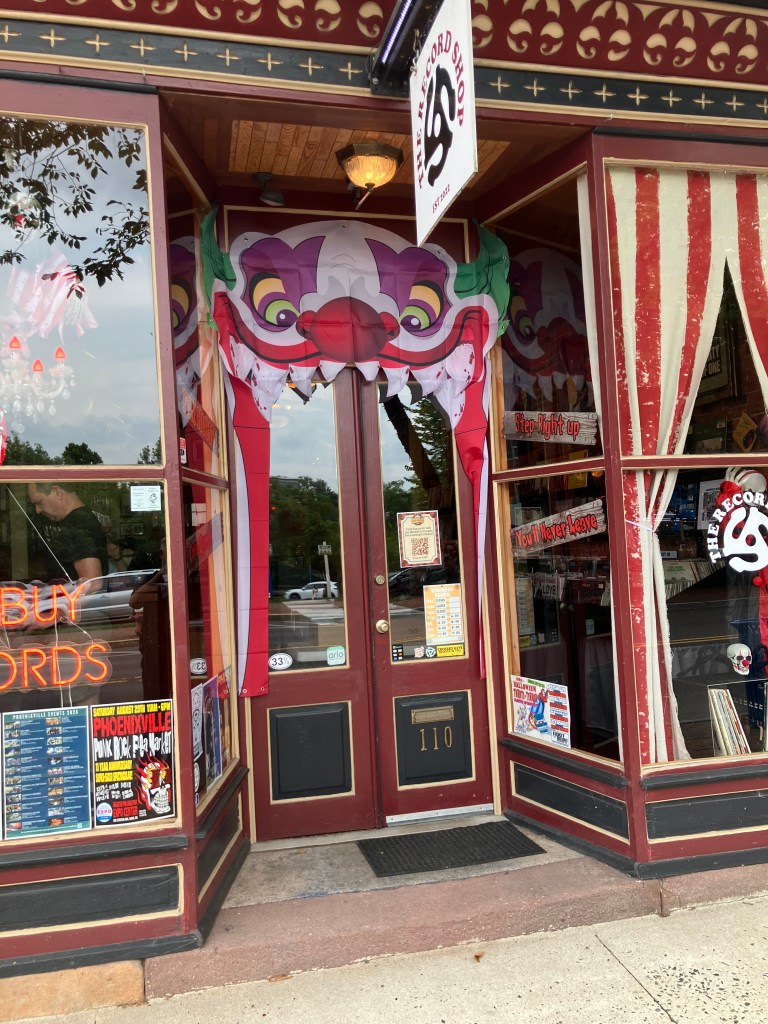
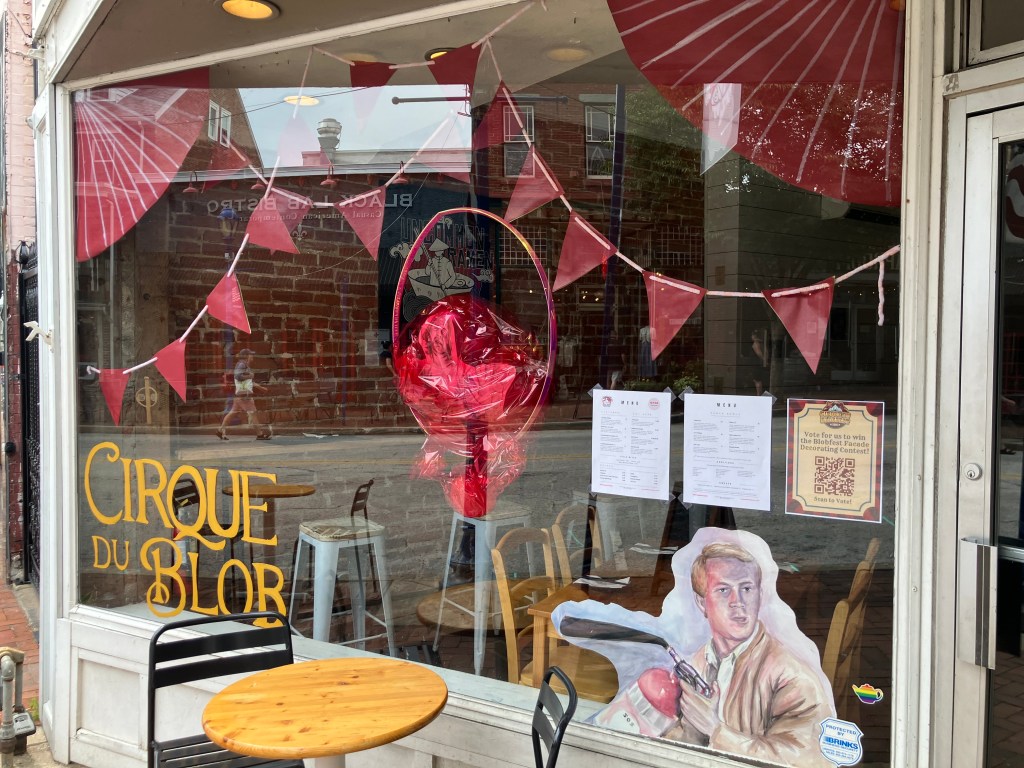
Still others went the circus route, which is the ill-advised theme of this year’s Blobfest.
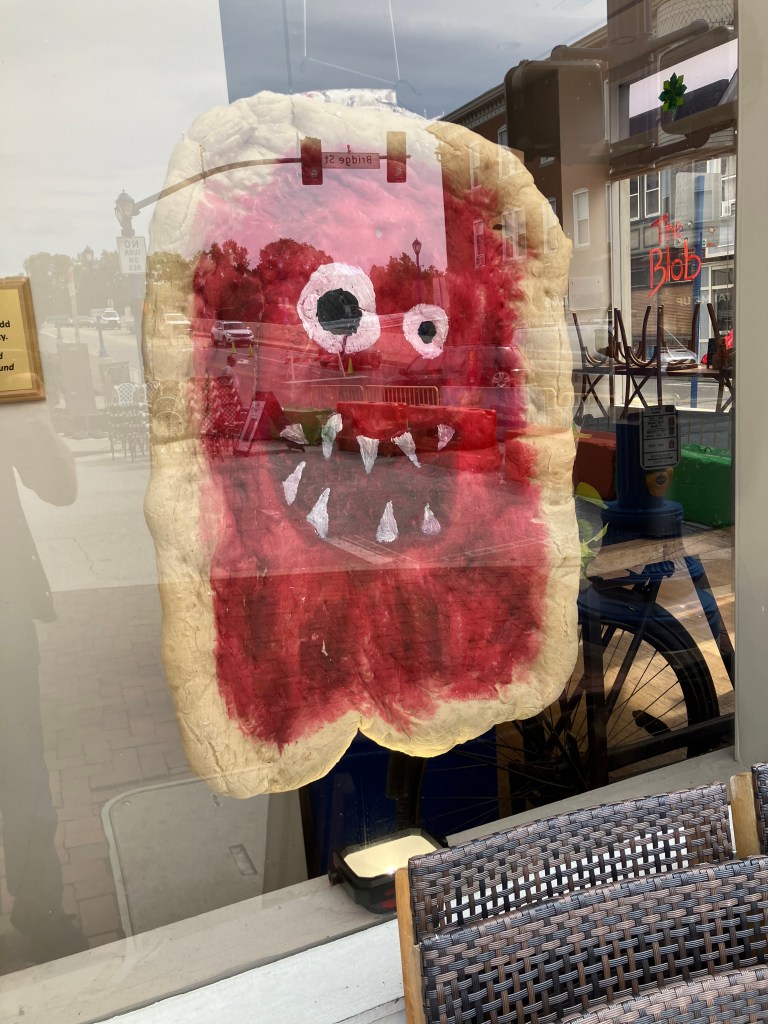
And then there was this….pizza(?)
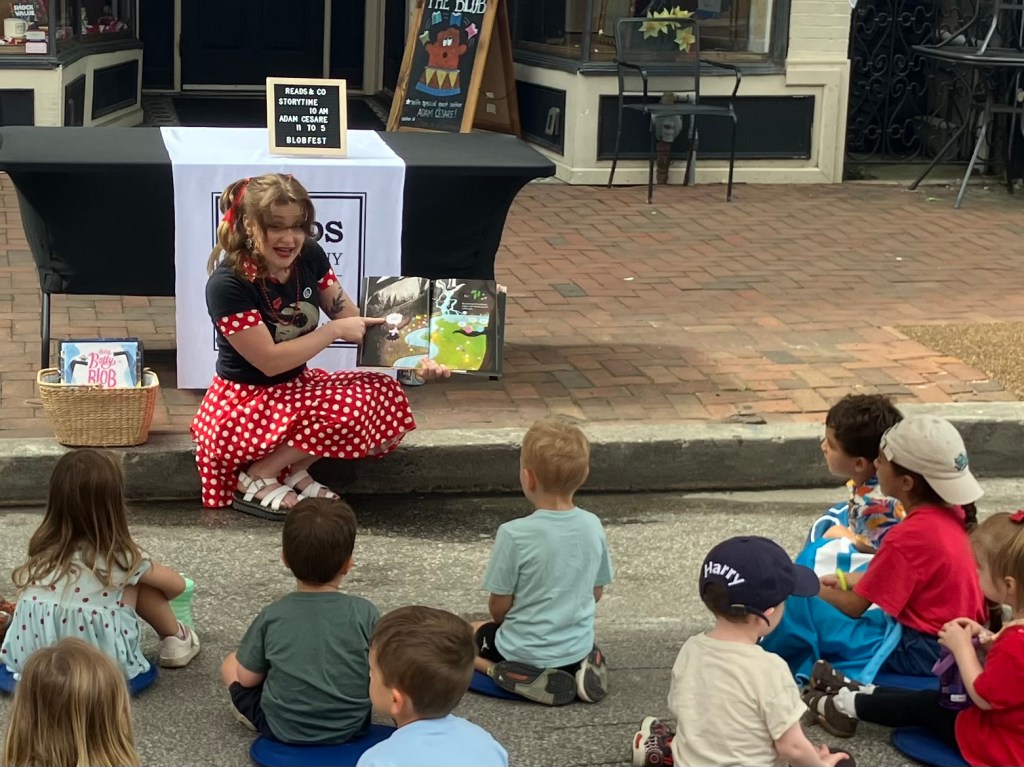
Anyway, my point is that the entire town (or at least the Bridge Street) was decked out for a proper Blobfest. The festivities were attended by myriad people of all ages and dispositions. Accordingly, there was a play zone and a story time for the little blobs:
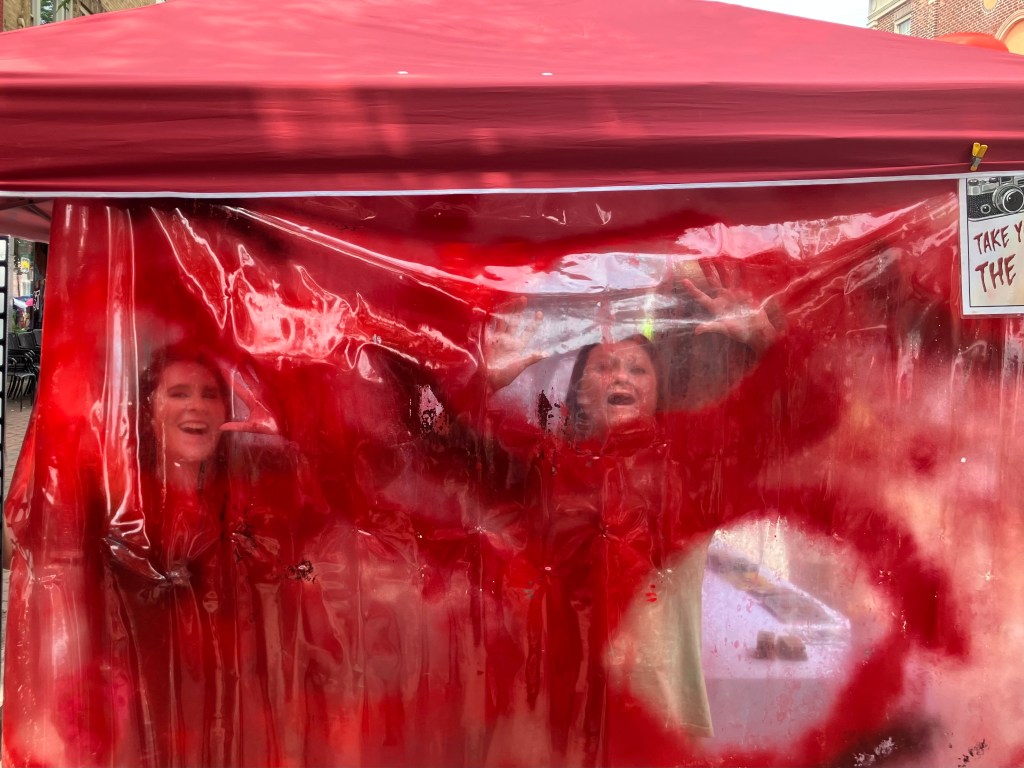
Happily, two of the Blobfest attendees were horror author Holly Knightley and her mother, April. They were game to do a photo op from within the blob:
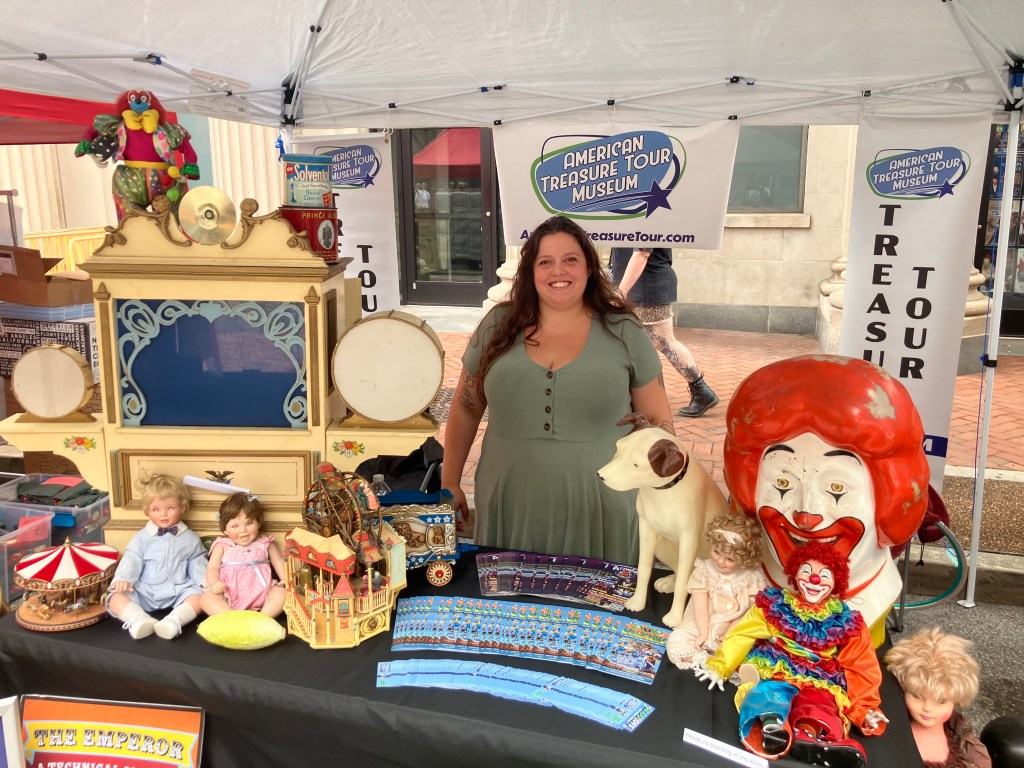
Also in the Small World Department: I ran into Ashley Galleo, who is the manager of the American Treasure Tour, that I wrote about in yesterday’s blog. I asked Ashley what binds together the disparate items in that collection, and she said the anonymous collector seeks out things that are “mechanical and fun,” and that bring “joy.” Next time you’re in eastern Pennsylvania, you should check it out.
Ashley with a minuscule sample from the American Treasure Tour.
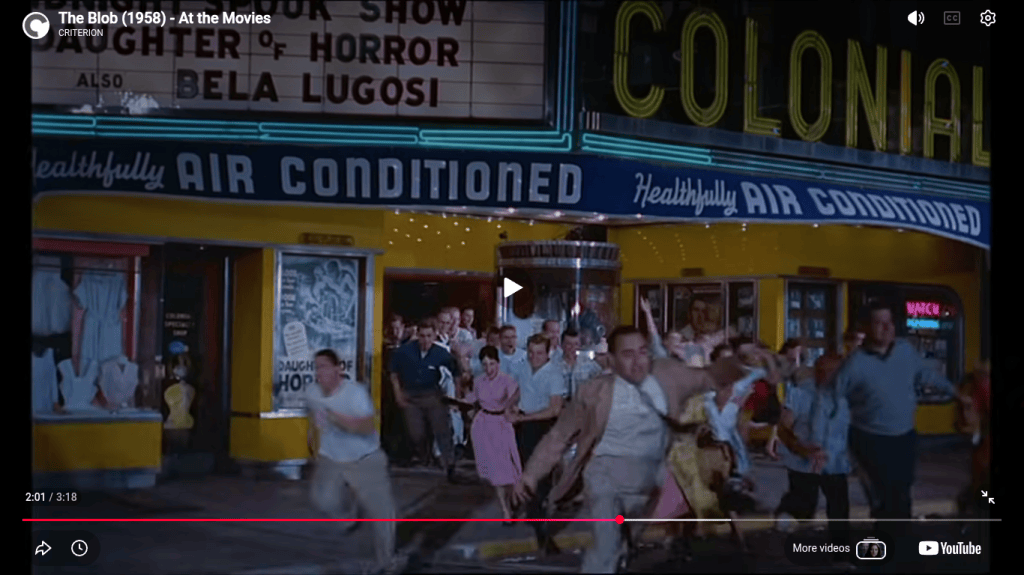
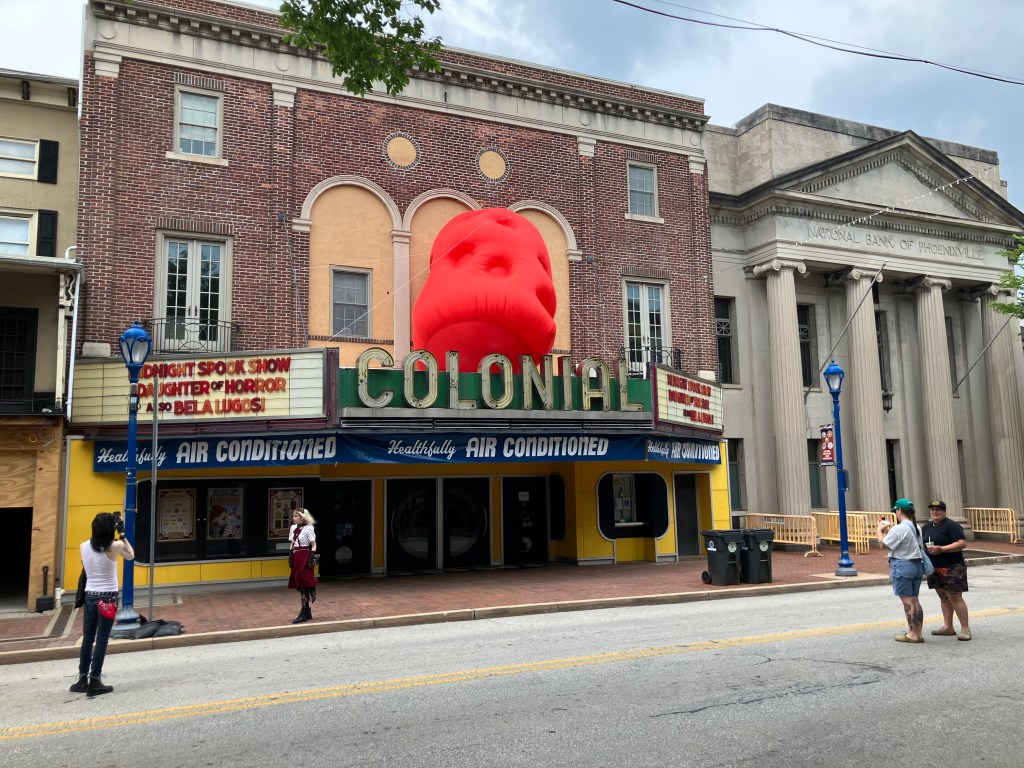
But the real star of the Blobfest was the historic Colonial Theater. Originally constructed in 1902 as the Colonial Opera House, it has spent the one-and-a-quarter century as a vaudeville house, a live performance venue, and a movie theater. Notably for our purposes, key scenes from The Blob were filmed in and around the Colonial Theater.
From the climax of the 1958 movie.
My photo from this morning, before Blobfest started. Note the marquee display is the same. Also note the inflatable blob.
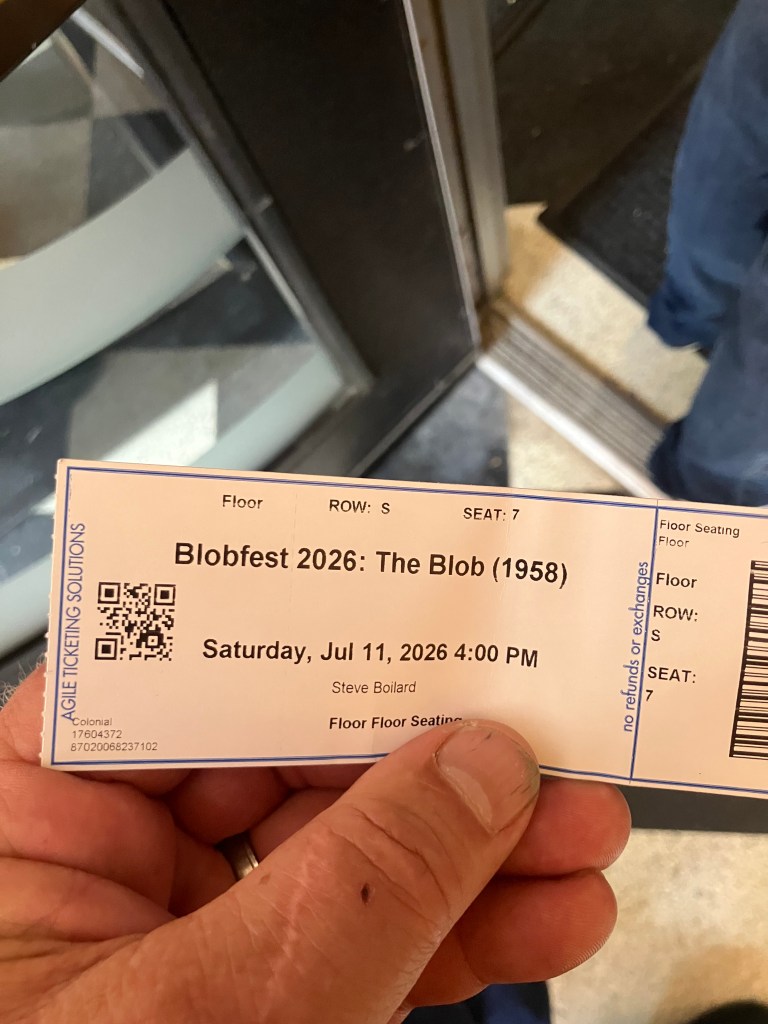
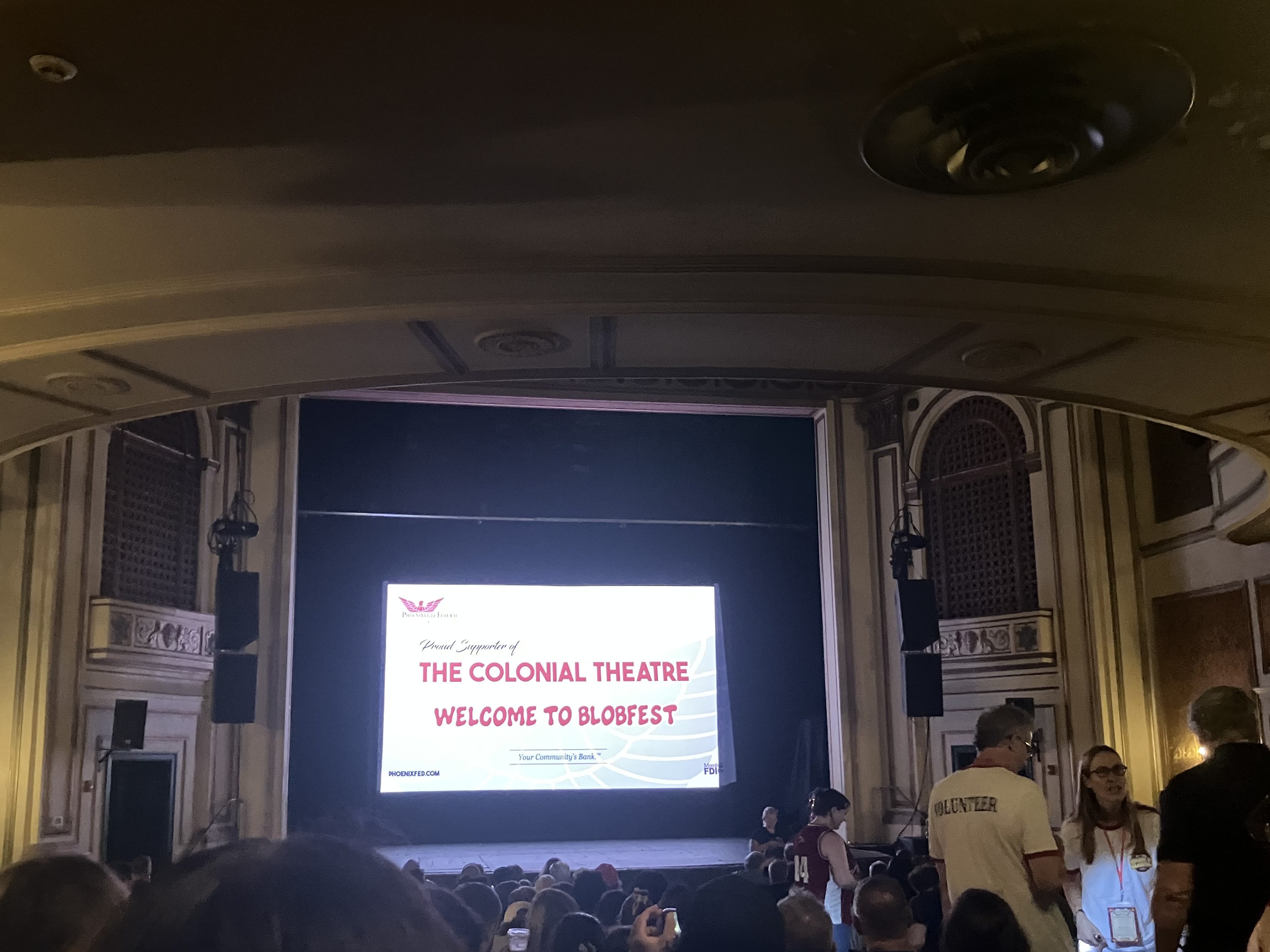
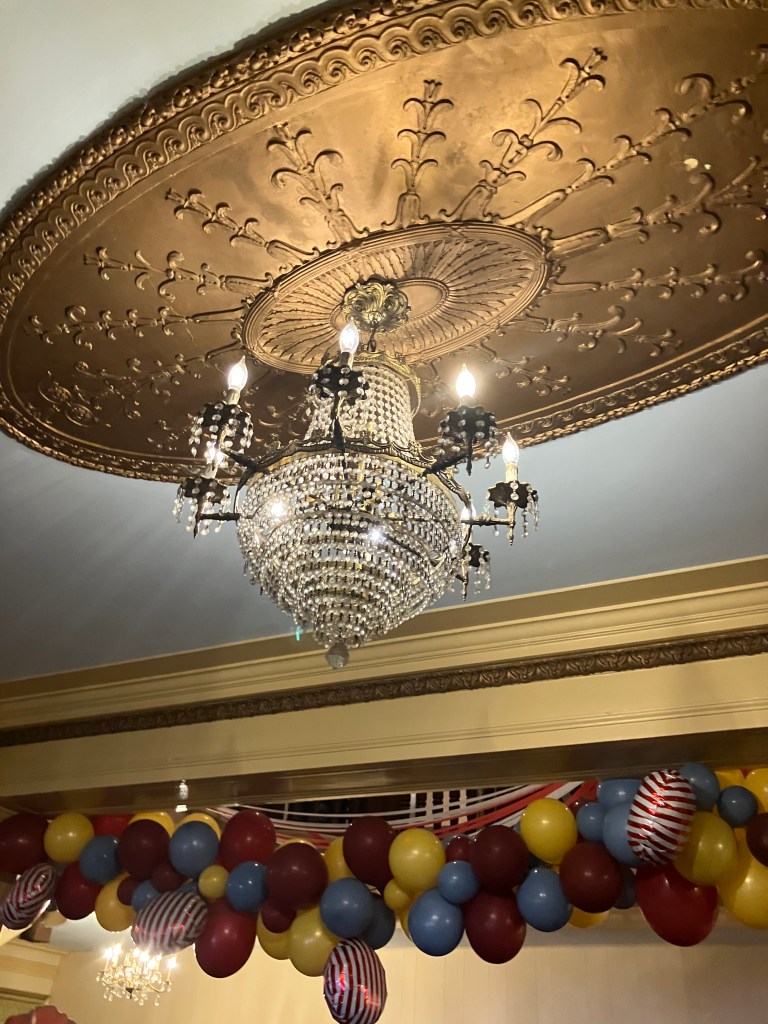
I joined a packed house for a screening of The Blob this afternoon. The interior of the theater looks much like it did in 1958, and probably much earlier than that.
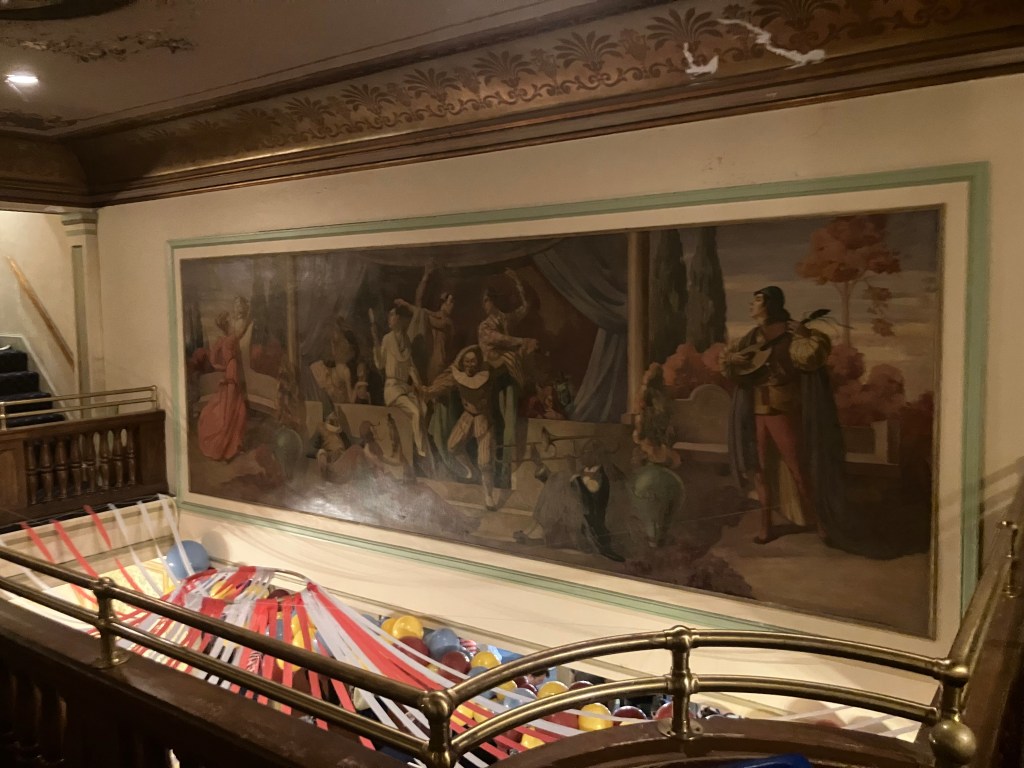
Mystery mural on the mezzanine level. I couldn’t discover what it depicts. Ideas?
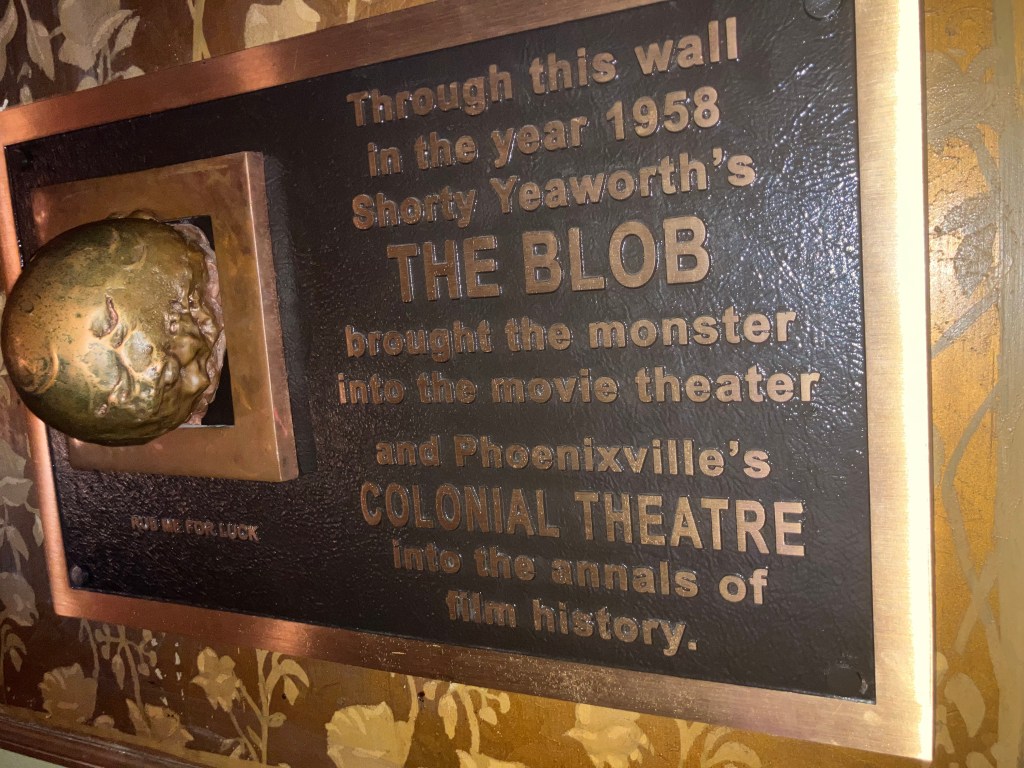
And the back of the house, on the wall of the projection booth, is this plaque:
Now might be a good time to explain the movie to those of you who haven’t seen it. It’s a classic B-movie horror film, starring a young Steve McQueen. A small meteorite strikes the earth, and it contains a softball-sized “blob” of gelatinous goo. A hapless old man ends up getting the goo stuck on his hand, and before long the blob has entirely digested him, growing in the process. The blob goes on to claim other victims, until it’s big enough to cover an entire diner. Finally Steve McQueen figures out how to stop its reign of terror, but you’ll have to watch it (or search IMDB) to find out how.
Let’s acknowledge that this is not a great movie. The pacing is uneven, the dialogue is (unintentionally) laughable, the “special effects” are unconvincing, and there are plot holes aplenty. Still, it’s an earnest movie, and Steve McQueen is eminently likable. On top of all that, there’s a moral lesson at the end that bears a special resonance today. But I think what I enjoyed most about watching it today was sitting in that same Colonial Theater, with several hundred fans, cheering and laughing together. There aren’t many such opportunities for a communal experience like that these days.
Oh, and speaking of communal experiences: after the evening showing all the patrons ran out of the theater screaming, just like in the movie. I’ll close my report on Blobfest with this short video of the run-out:
BOTD
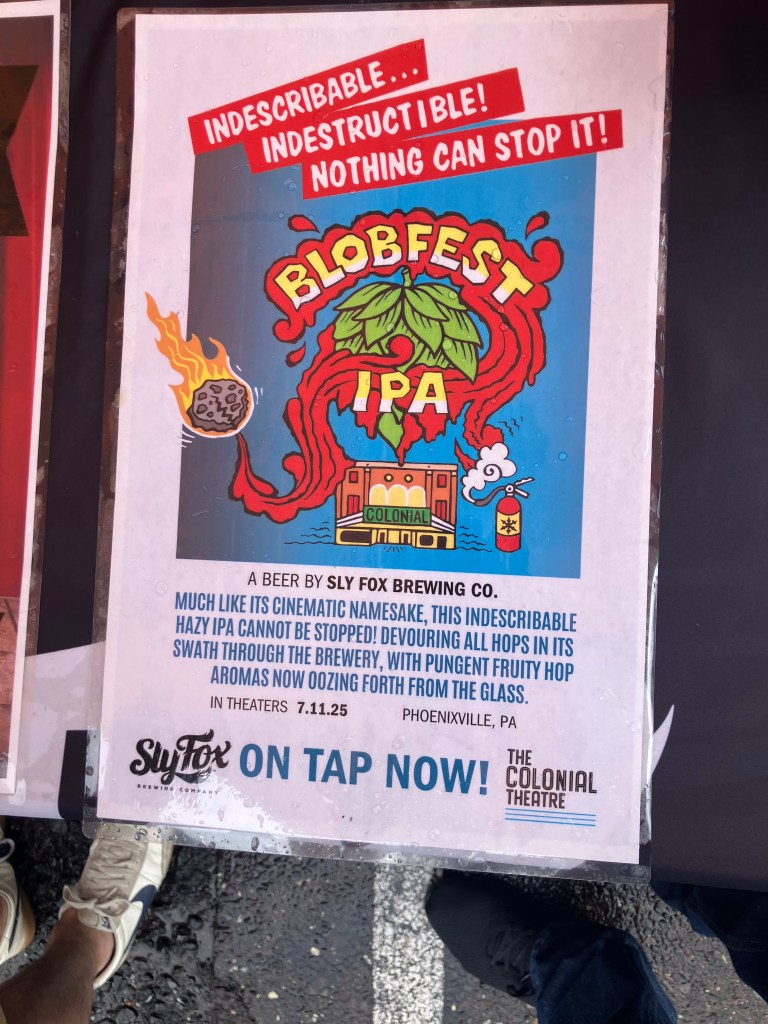
The Brew of the Day was, appropriately, a Blobfest IPA, that comes from Phoenixville’s own SlyFox Brewing Company.
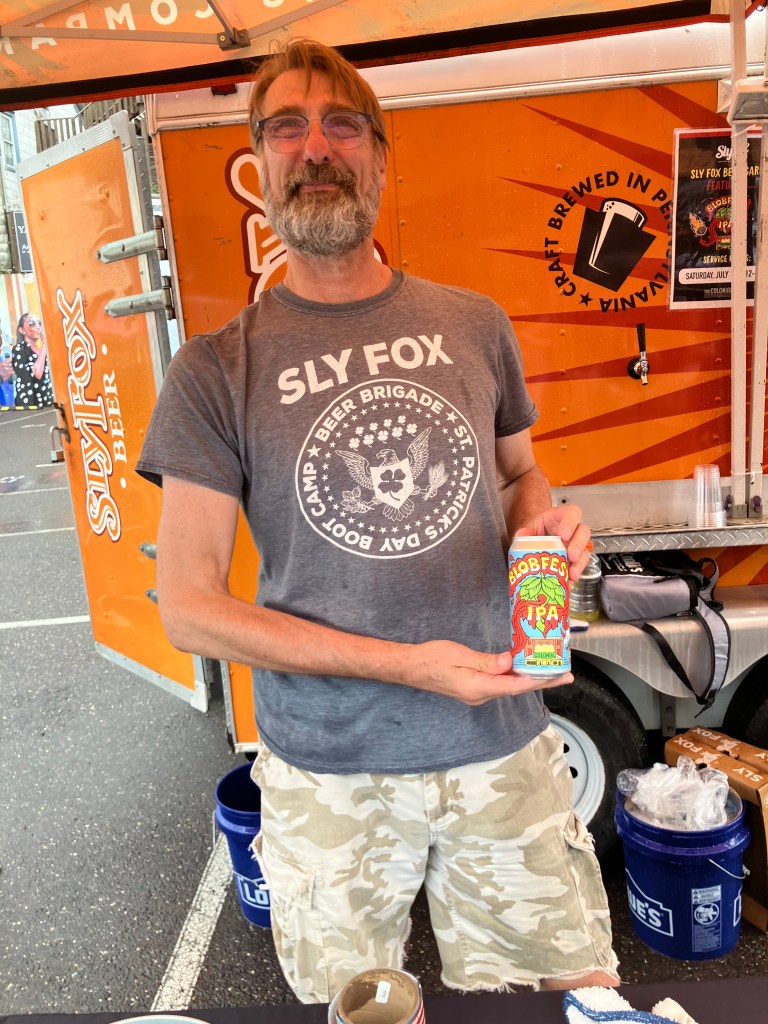
You could only buy draft versions for consumption, so I had the owner hold up a can of the stuff for your benefit.
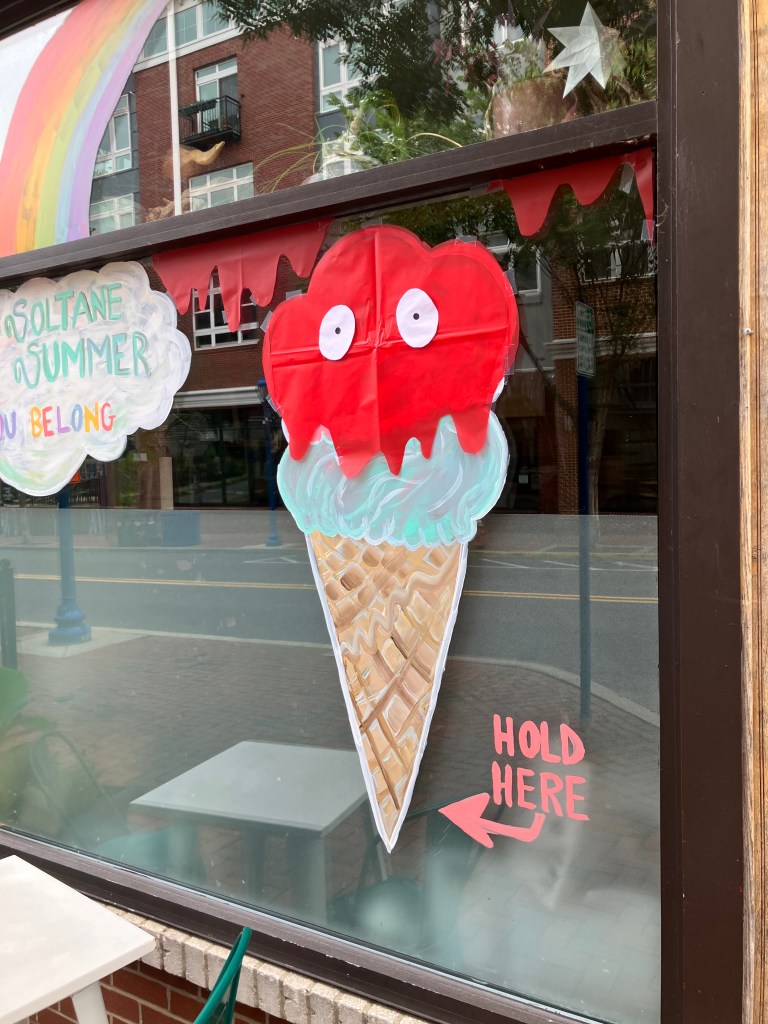
This is the third year that SlyFox has put out a special beer for Blobfest. I admire that kind of commitment–especially as several of the local bars and eateries have offered nothing blob-related. In fact, that window art of a blob ice cream cone that I featured above was not available as the real thing. Talk about a missed opportunity!
So kudos to SlyFox for doing the Blob IPA. It’s a hazy IPA that clocks in at 6.3 percent alcohol. So that’s good. What’s not good is the taste. I found it far too bitter, too overhopped. And that’s not just on the palate; it also characterizes the finish. In other words, there’s a distinct, lingering bitterness….which also describes me, but that’s another issue altogether. I frankly found this to be almost undrinkable, and ending up tossing it out halfway through.
Now, to be fair, I’m not a fan of IPAs, but I think I can appreciate when they’re done well. In my humble opinion, the recipe missed on this one. One star.
Alert readers will recall that about two years ago, while traveling in Pennsylvania on a secret mission, I stumbled upon the old Colonial Theater in Phoenixville, where parts of the 1958 movie The Blob was filmed. Marquee posters informed me that every summer the theater hosts BlobFest, which honors that film and, presumably, the larger genre of classic B movies. I mused that it would be fun to come back for BlobFest one day.
Well friends, “one day” has arrived!
Blobfest begins tonight at 7 pm, and I will be there! I just landed in Philadelphia, and once I get my Blobmobile from Avis, I’ll make my way toward Phoenixville. And for those of you unfortunate enough to miss Blobfest this year, I’ll be blobbing blogging from the Colonial Theater. Stay tuned; you won’t want to miss it!
“Blobs, blogs…this is starting to sound fishy…”
Until then, I’d like to share these…
Muffler Man Sightings
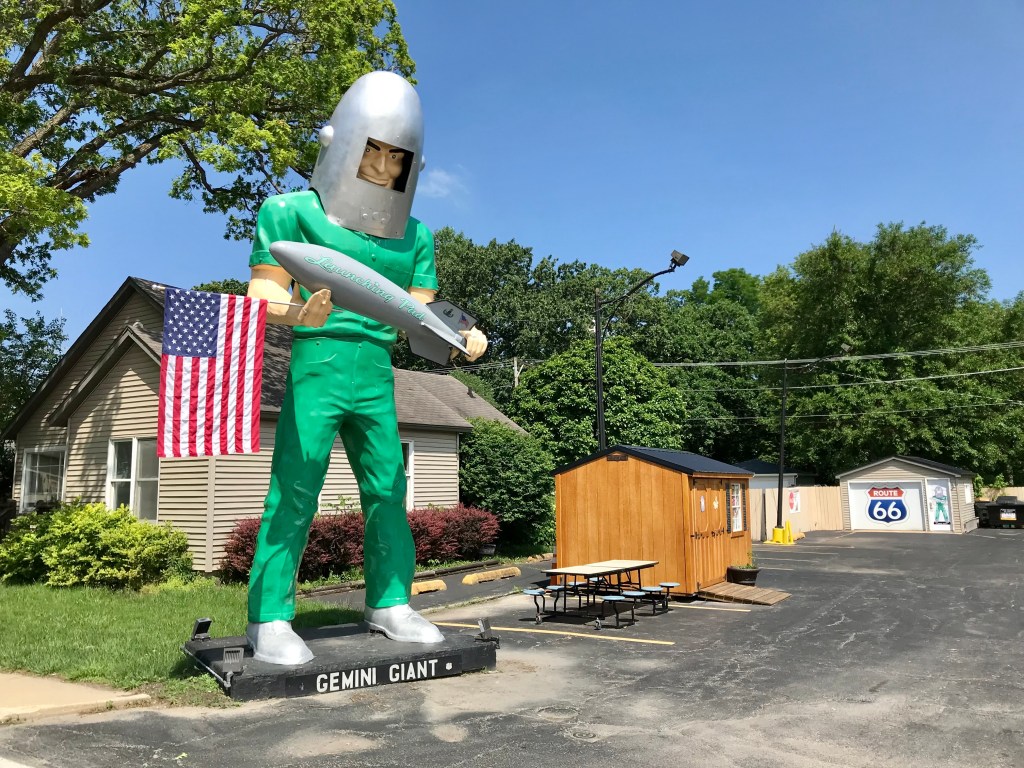
Loyal reader Brian W sent us this photo he took of a Muffler Man in Wilmington, IL.
This is a classic muffler man, with the distinctive hand positions and that same determined half-grin that was worn by Babe at Babe’s Mufflers in San Jose. This one is huge, standing 30 feet tall. Just look how it dwarfs the picnic table!
According to my research, this muffler man–which is named “Gemini Giant”–was installed at a restaurant on Route 66 in the 1960s. That restaurant was originally named “Dari-Delite,” but was rebranded as “The Launching Pad” in a cynical but successful effort to capitalize on the then-extant space race. He was outfitted with a space helmet (which to me looks like a welding helmet) and a handheld rocket which, confusingly, is labeled “Launching Pad.”
Gemini Giant soon became one of the most famous attractions along Route 66, and the Launching Pad served hungry travelers for over sixty years, until finally closing down in 2022. The Gemini Giant sold for $275,000 (!) at auction in 2024, purchased by the local historical museum. It now stands at the entrance of South Island Park in Wilmington.
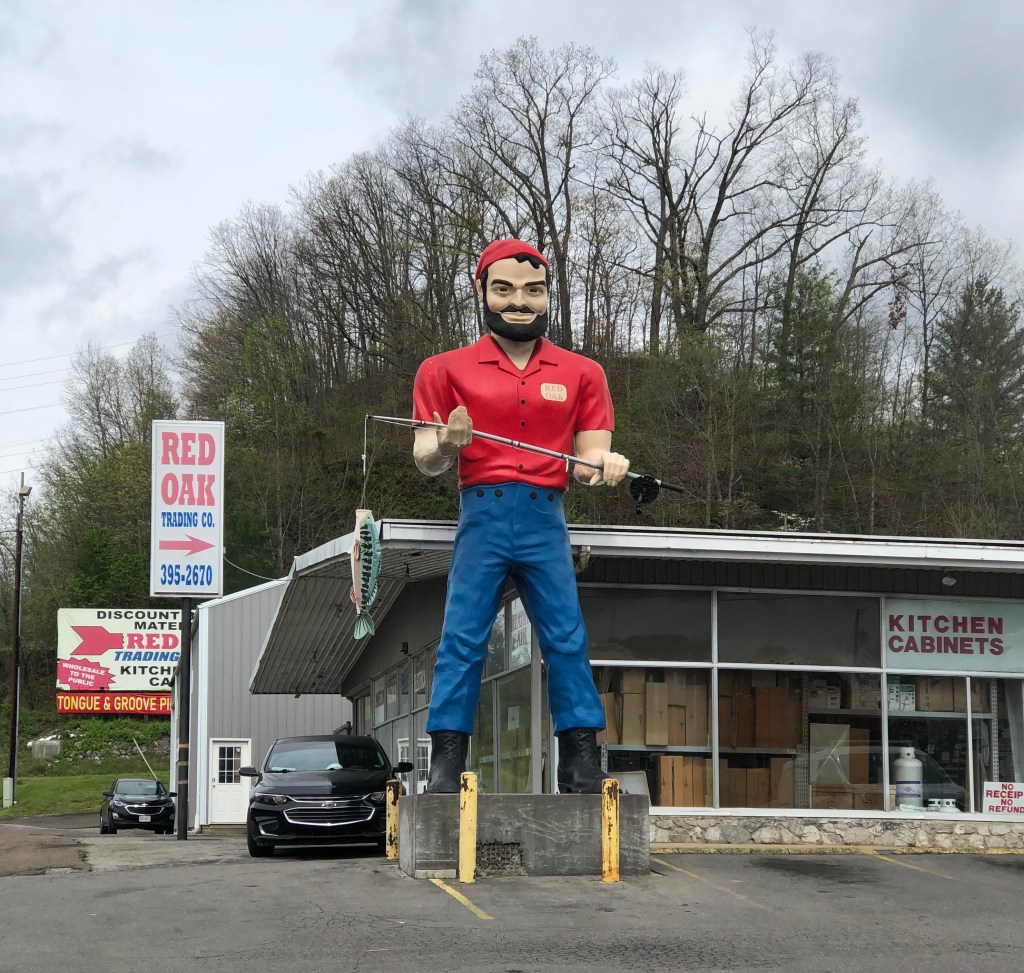
Meanwhile, loyal reader Chris F. sent us this photo of a Paul Bunyan-themed muffler man in Coeburn, Virginia.
Note that Paul Bunyan has traded in his axe for a fishing pole.
Chris helpfully provided several links verifying this muffler man’s provenance. He’s a 20-foot-tall statue from International Fiberglass, and was first installed in front of Palmer Hardware in the Elkhart, Indiana in 1967. The hardware store experienced several ownership changes, and along the way the muffler man’s clothing colors and handheld implements changed as well. In 2011 the hardware store closed for good, and the muffler man was relocated to Coeburn, VA, where he stands in front of the Red Oak Trading Company.
Both of today’s muffler men appear on Wikipedia’s official list. I’m still holding out hope that we can locate a new one that’s not on the list!
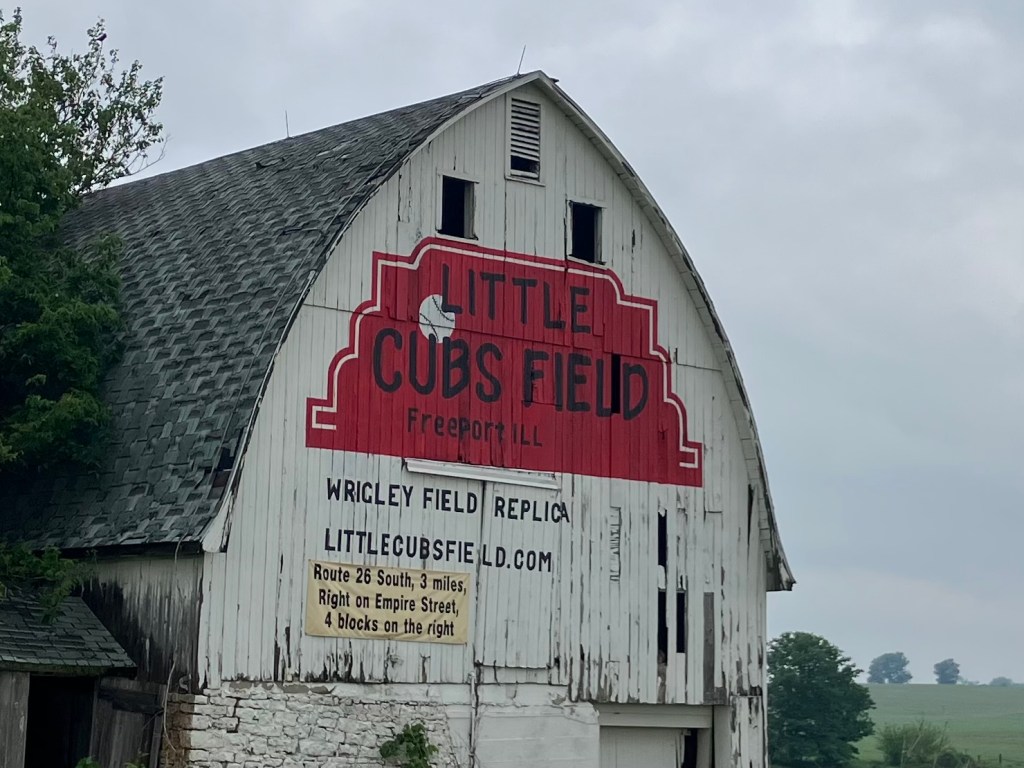
Today I took US 20 from Northlake, IL to Iowa Falls, IA. Near the beginning of the day’s drive I noticed this huge sign on a barn in the town of Freeport, Illinois (pop: 24,000).
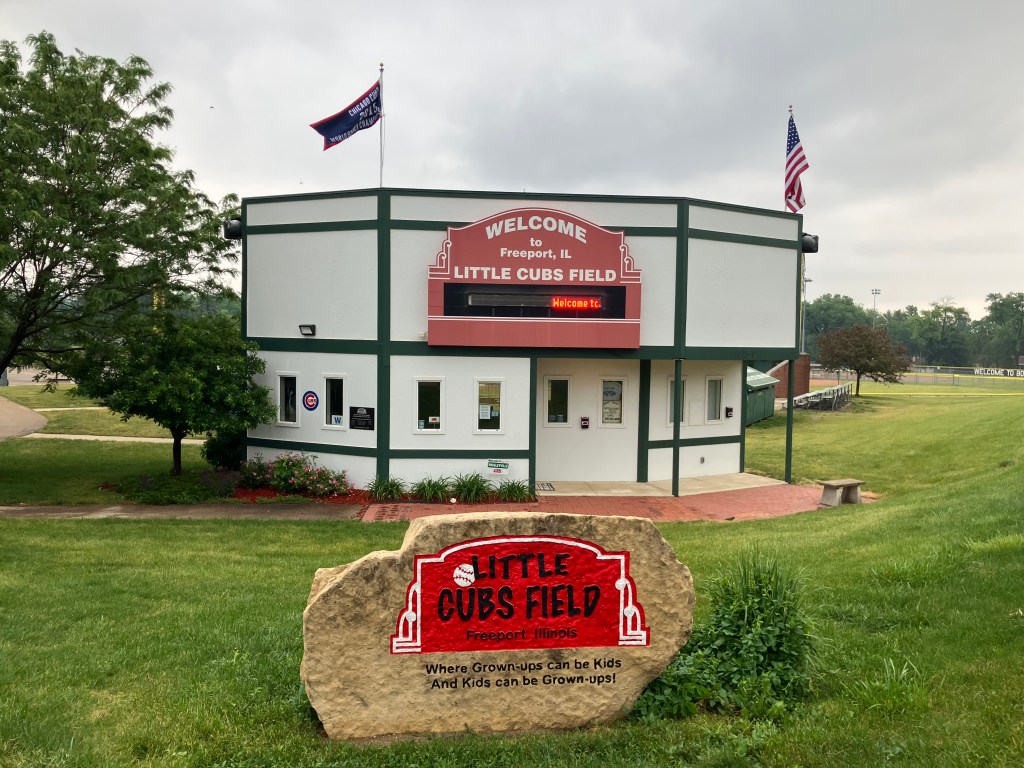
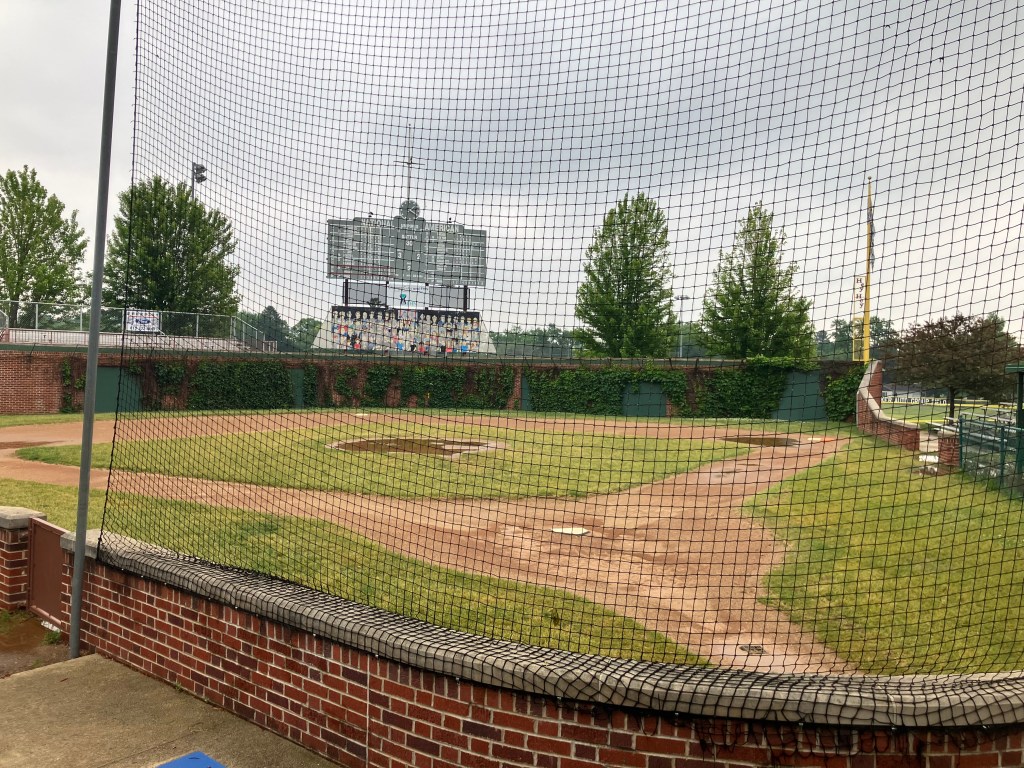
Why not? I followed the directions and was soon at this miniature version of Wrigley Field. It’s kind of cool–I’m sure a Little Leaguer would get a kick out of playing on that field.
The Friendly Confines.
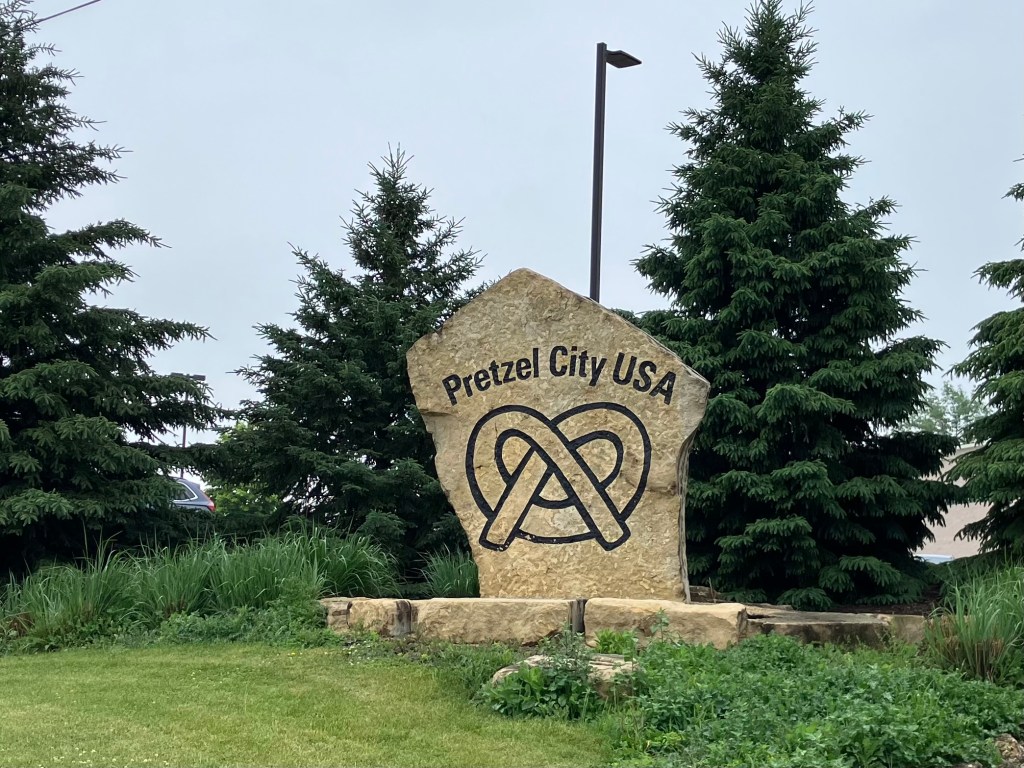
Now, while I was on Freeport’s surface streets I encountered this marker:
Knot your average city.
And do you know why Freeport calls itself “Pretzel City?” Is it because it produces more pretzels than anyone else? No. Is it because the roads twist and turn like a pretzel? No. Is it because the world’s pretzel production relies on Freeport’s proprietary yeast? No. In fact, it turns out that Freeport once had a German bakery that made pretzels. Like 150 years ago. That’s it.
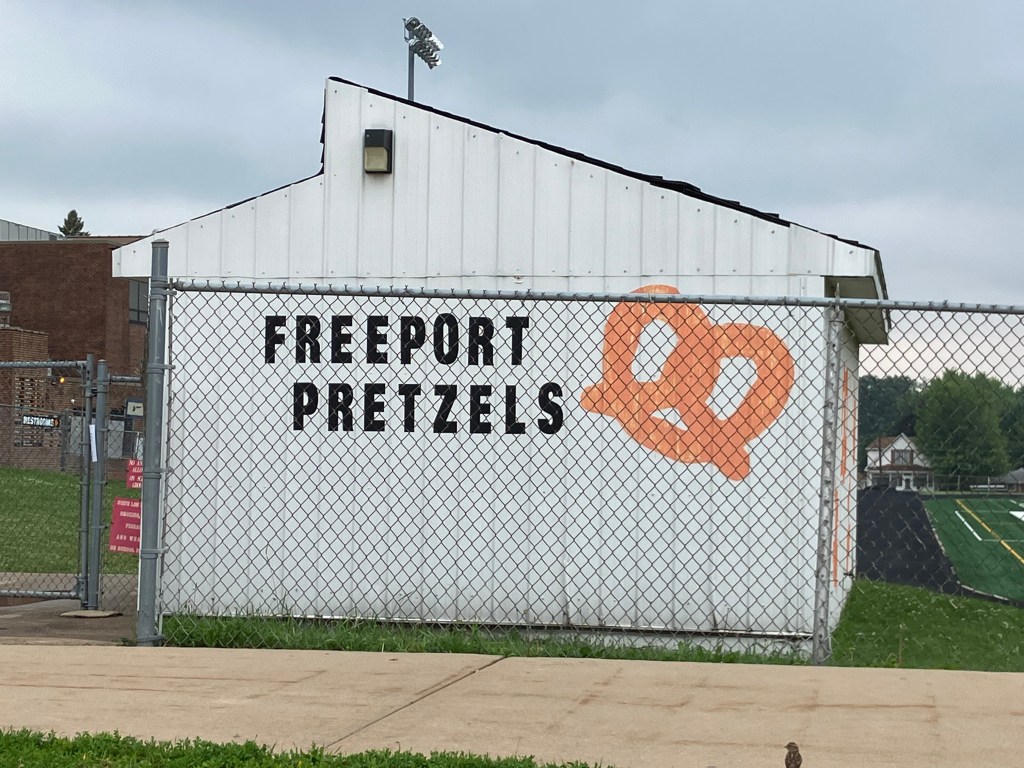
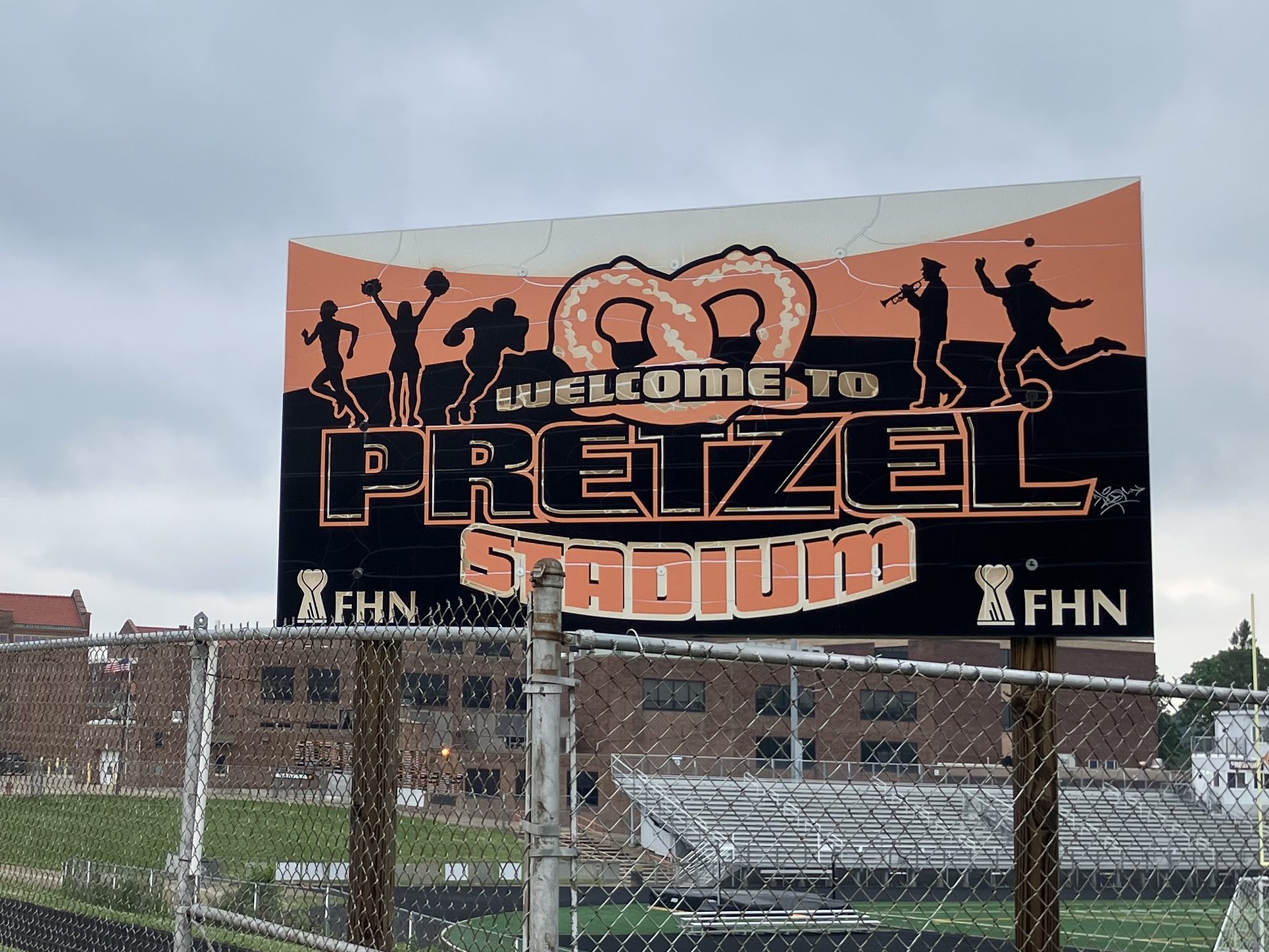
And for that small and random fact, the local high school’s mascot is a pretzel. I’m not making this up.
I wonder if they’re sponsored by Snyder’s of Hanover?
Now, you may think I’m mocking Pretzel City. And I am. But I happen to love pretzels, and all this ruminating on the snack brought on a hankering for a big, soft pub pretzel with beer cheese. Surely I could get one here in Pretzel City.
No. “Pretzel City” does not sell big pretzels. There isn’t even an Auntie Anne’s in town.
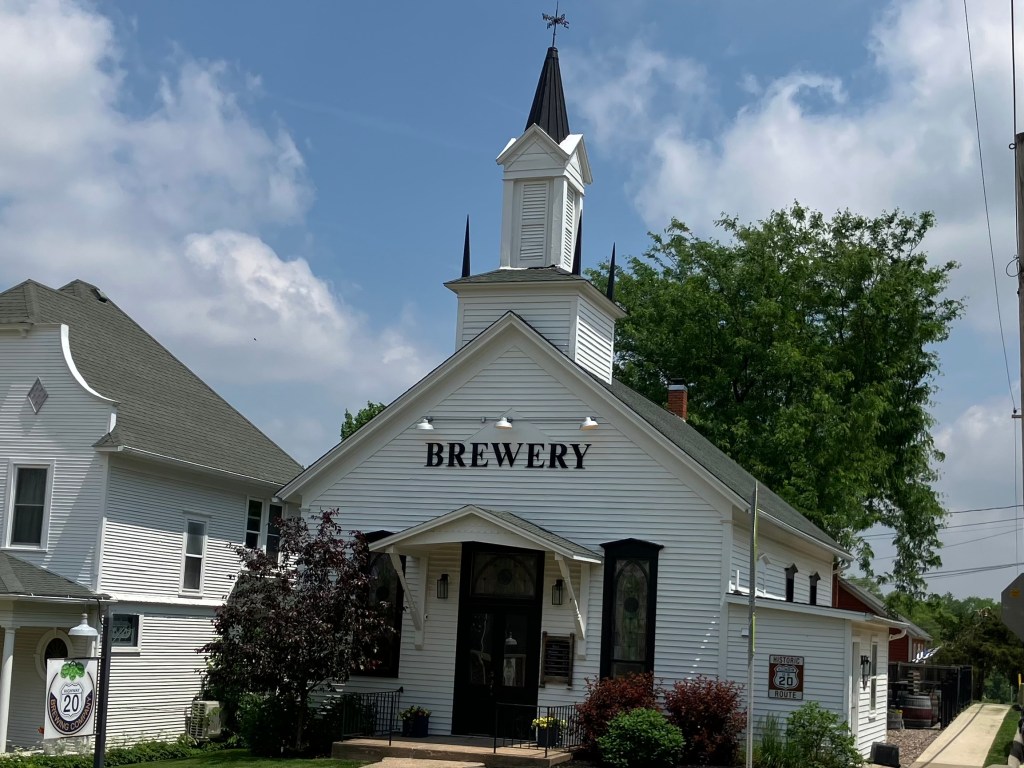
So I ended up scanning each town I passed through for either a German bakery (unlikely) or a brew pub (more likely). Around noon, when I was passing through the town of Elizabeth, Illinois (pop: 694), I hit the jackpot. Right next to the road was the Highway 20 Brewing Company.
Let us brew.
The brewery is in an 1875 Presbyterian church with beautiful stained glass and a large outdoor seating area. What could be better? I parked the car and strode up to the Narthex. And there I was foiled: The place didn’t open until 3 pm. I seriously thought about killing a few hours until they opened, but it was such a tiny town I couldn’t think of much more to do than drink a beer and eat a pretzel in a church. Muttering words that shouldn’t be spoken on church grounds, I got back in the Perigrinator (as I’ve taken to calling the Altima) and continued along Route 20.
Shortly before I got to the Iowa state line, I entered the town of Galena, Illinois (pop: 3,300). Now Galena is an interesting place. Most of the town is recognized as a National Historic Site, and just passing along the street feels like you’ve gone a century or two back in time. Virtually all the buildings in the downtown are historic, and most of them seem to cater to tourists. Among other things, Galena plays up the fact that General US Grant retired here after the Civil War, and his home is a major tourist draw.
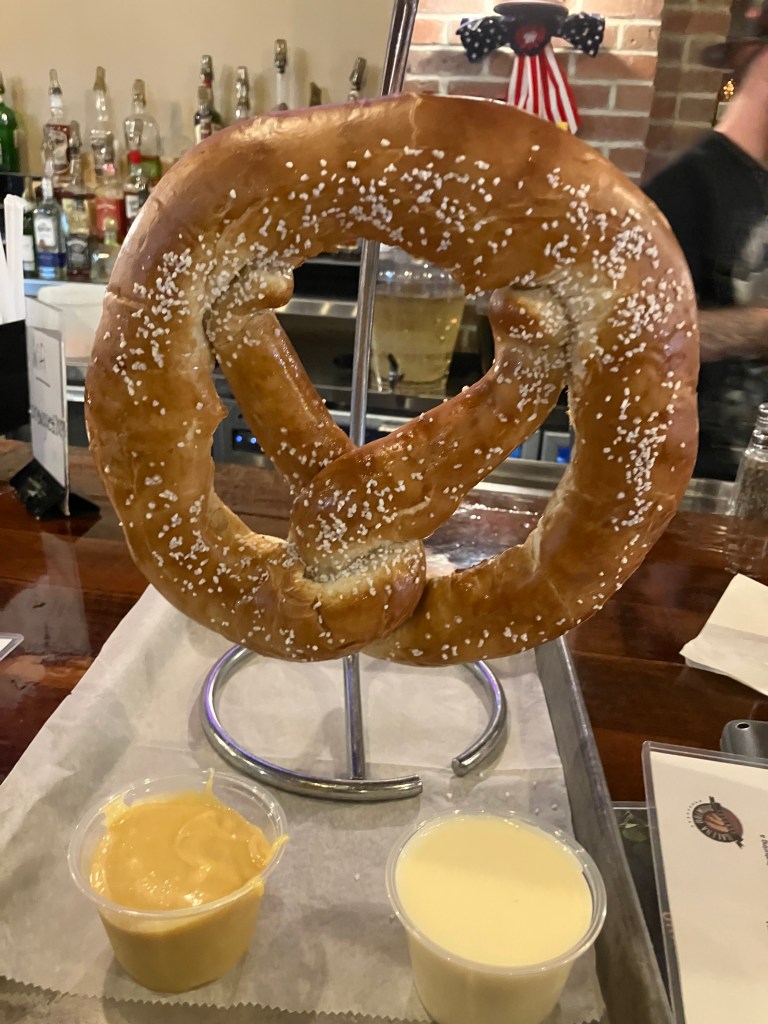
Of course, the main draw for me was a place called the Galena Brewing Company. It’s in an old building from 1849, that once housed a print shop. They make a good selection of interesting beers, and I’ll discuss my choice when we get to the BOTD. But my immediate goal was to get me a big pub pretzel. Voila!
It’s a one-pound pretzel, which the brewery claims it is “famous” for. I don’t know about that, but I do know that it constituted my entire lunch. I was supremely happy.
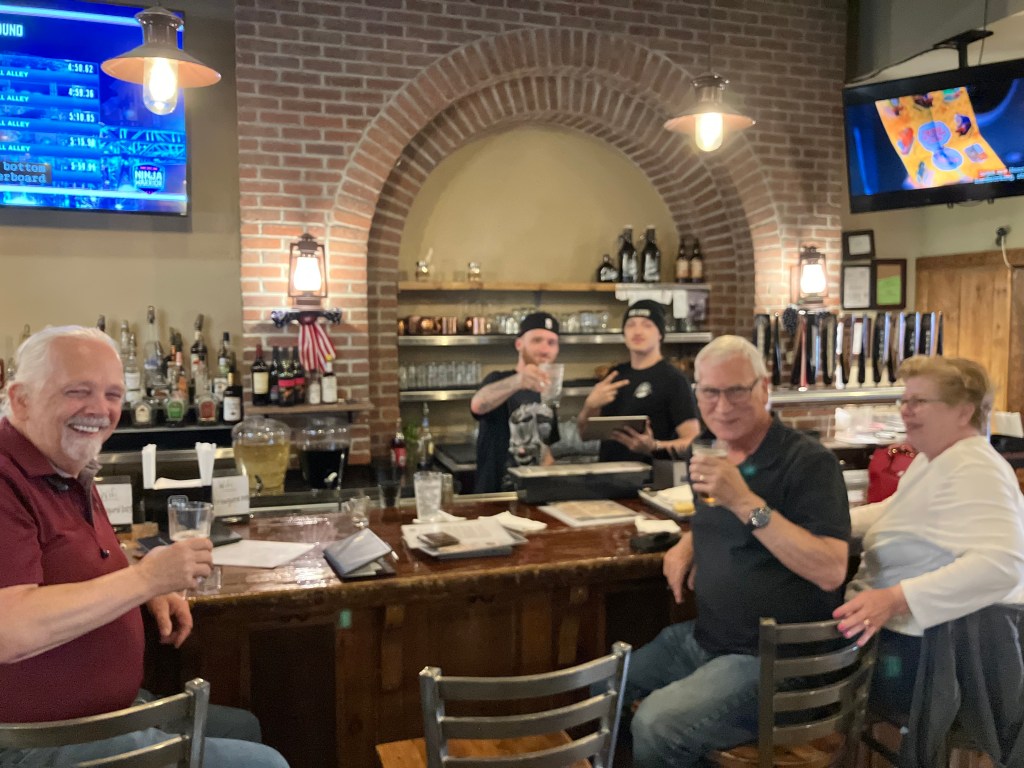
While scarfing my pretzel I chatted with a few other people at the bar. We were all out-of-town visitors. Tom had just visited his sister nearby, and had a 300-mile drive home in front of him. Steve and Ann had come over from the greater Rockford area to spend a few days, and this was their third trip to Galena Brewing Company. There was also a woman from Denver visiting a relative in the area. Bailey the Bartender kept us all happy. It was a very enjoyable hour. And that’s not just the pretzel talking.
Left to right: Tom, Bartender Bailey, mystery bartender, Steve, and Ann.
OK, now that I’m done with that twisty tale of pretzels (har!), let’s go back to a couple of other sites of note along today’s drive.
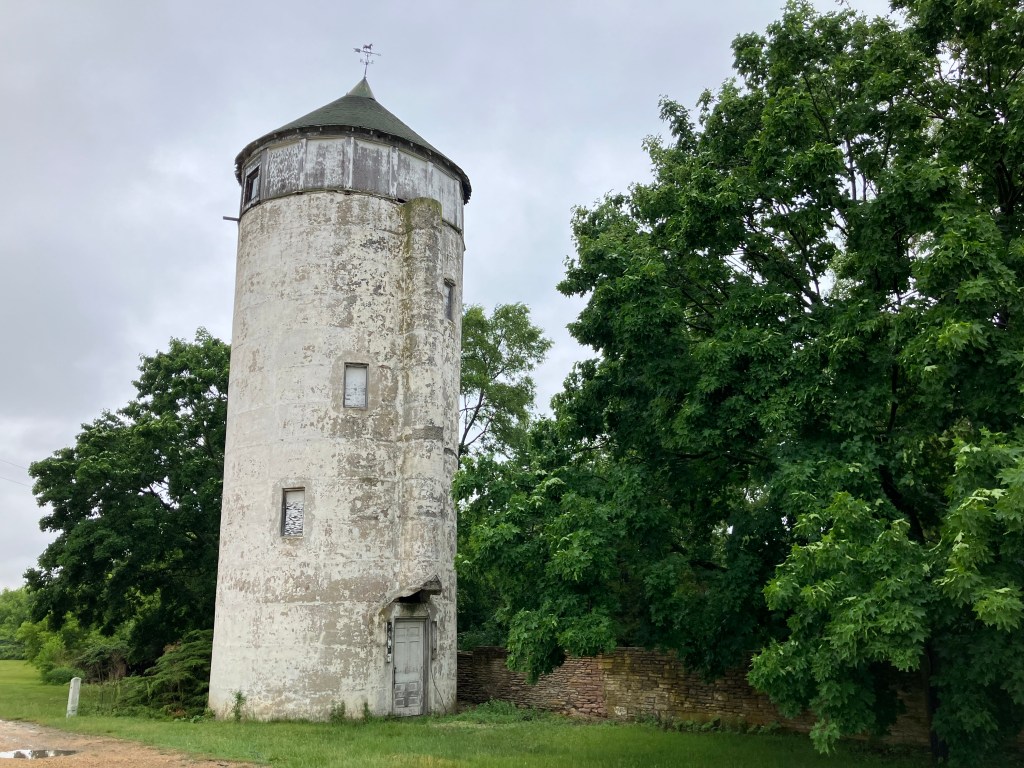
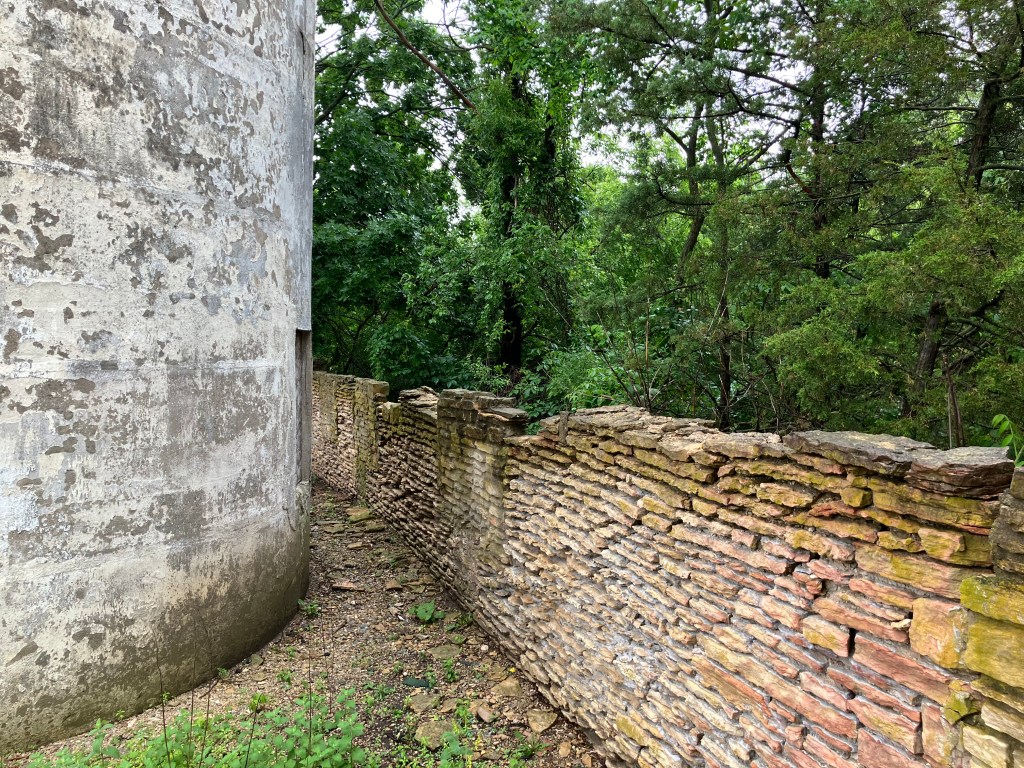
In Marengo, Illinois (pop: 7,600), I spied this mysterious old tower right next to the road. It abuts a decaying, old stone wall–like ancient Italian ruins. Is it a watchtower of some kind?
Mysterious Marengo Tower.
This wall behind the tower surrounds a plot of overgrown brush and random pieces of cast concrete.
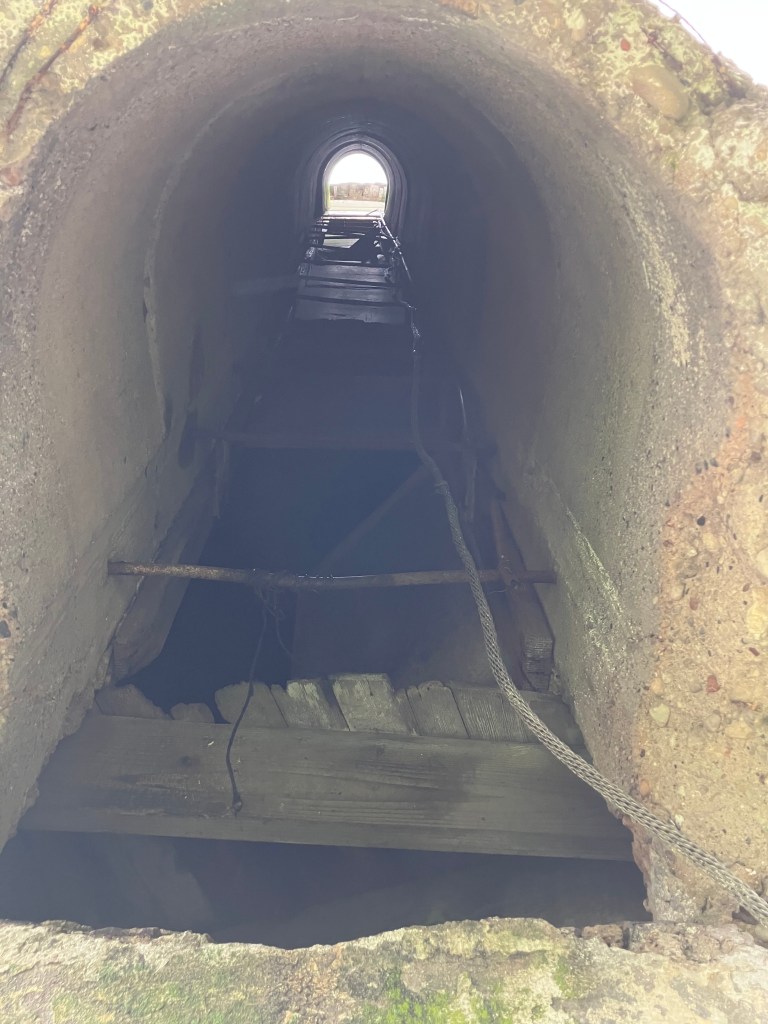
Looking upward along an enclosed ladder on the side of the tower. You can see the enclosure above the door in the first photo. I considered climbing the ladder, but chickened out.
My internet sleuthing didn’t turn up anything definitive to explain what the heck I was looking at. ChatGPT thinks it’s a fire watchtower, but it seems to be confusing the structure with a steel tower not far from there. Anyone know what we’re looking at here?
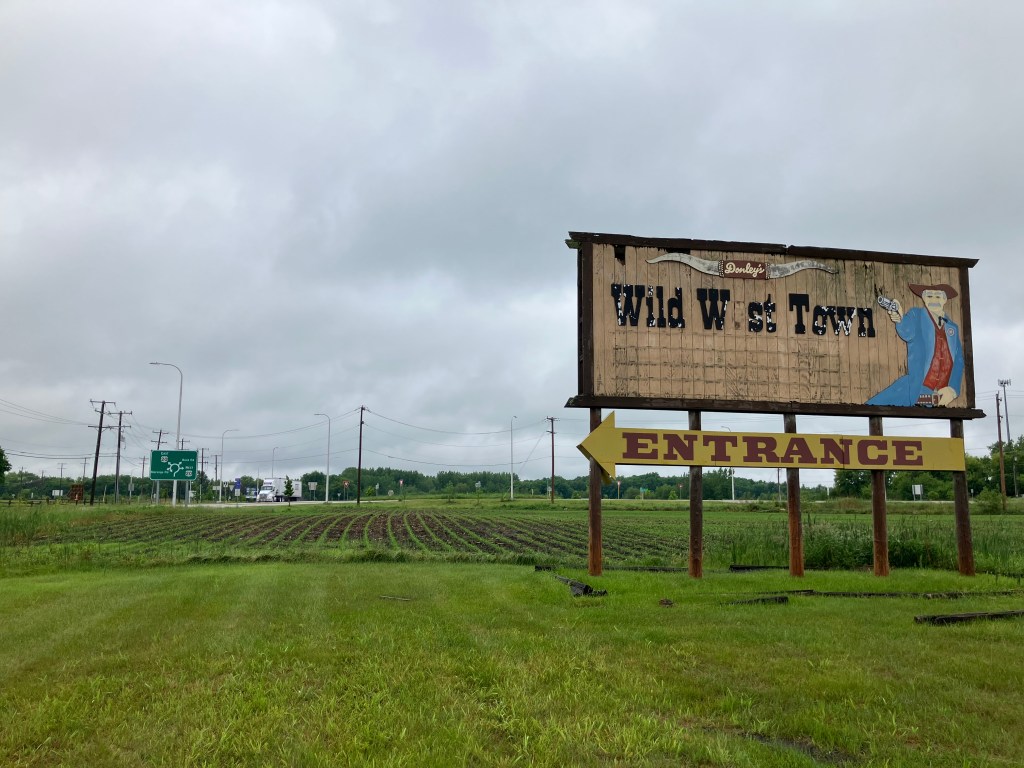
The most melancholy site of the day was Donley’s Wild West Town, also in Merango. This sign caught my attention:
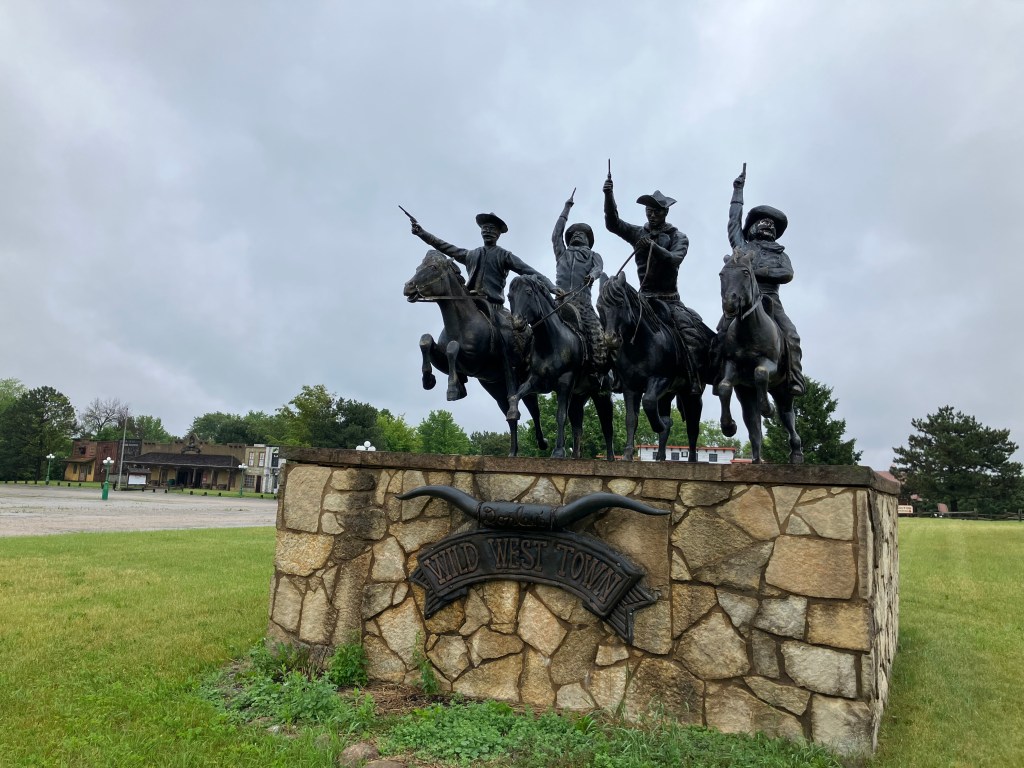
Following the sign, I encountered what appeared to be a giant Frederic Remington sculpture:
The Four Horsemen of the Apocalypse?
Judging from the iconography so far, I assumed this Wild West Town would be similar to a place near my childhood home, called Frontier Village. Frontier Village depicts a sanitized version of the Old West, with rodeos and bloodless shootouts and gold panning and alcohol-free saloons and pony rides and such. I remember it being great fun.
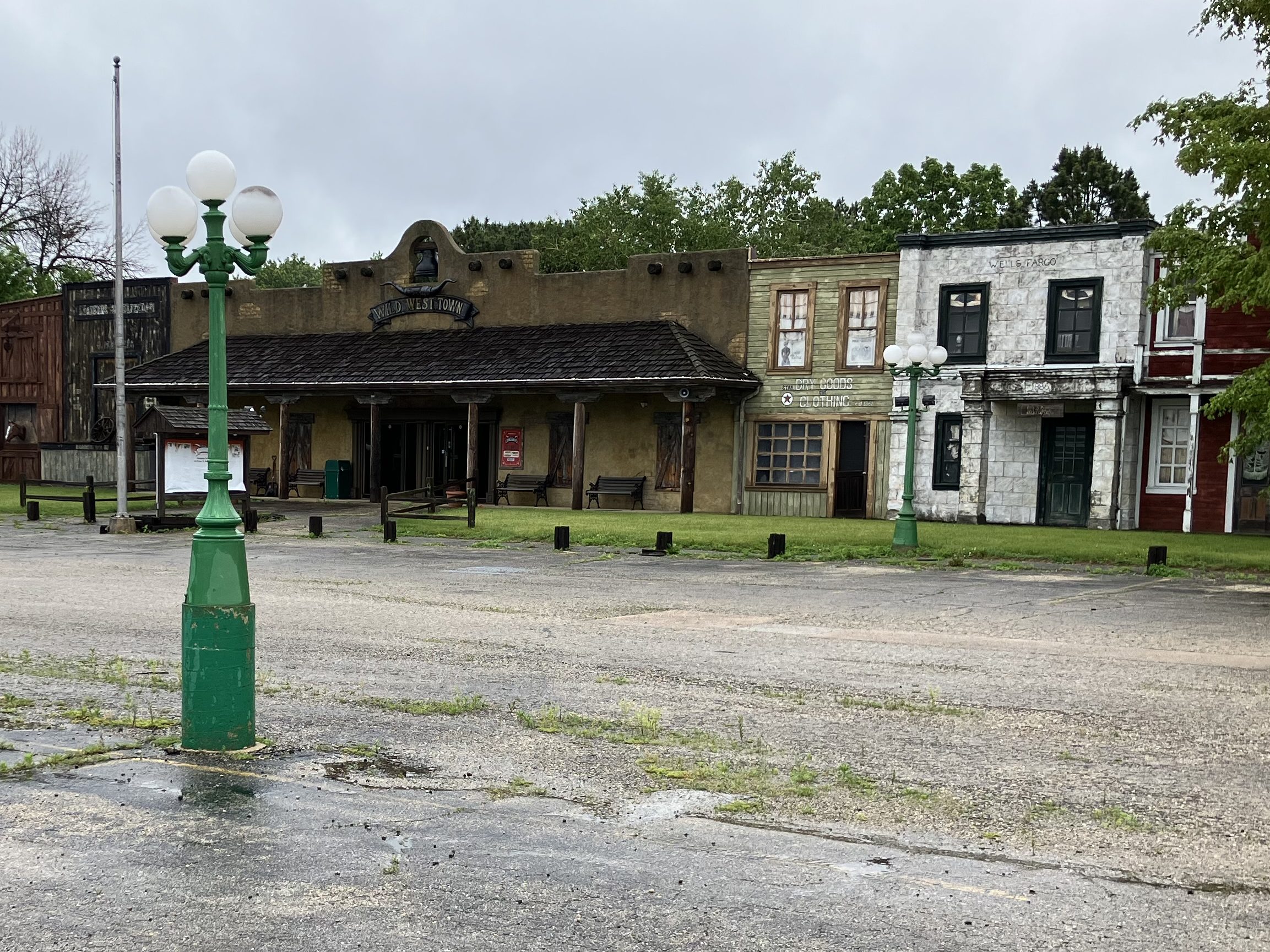
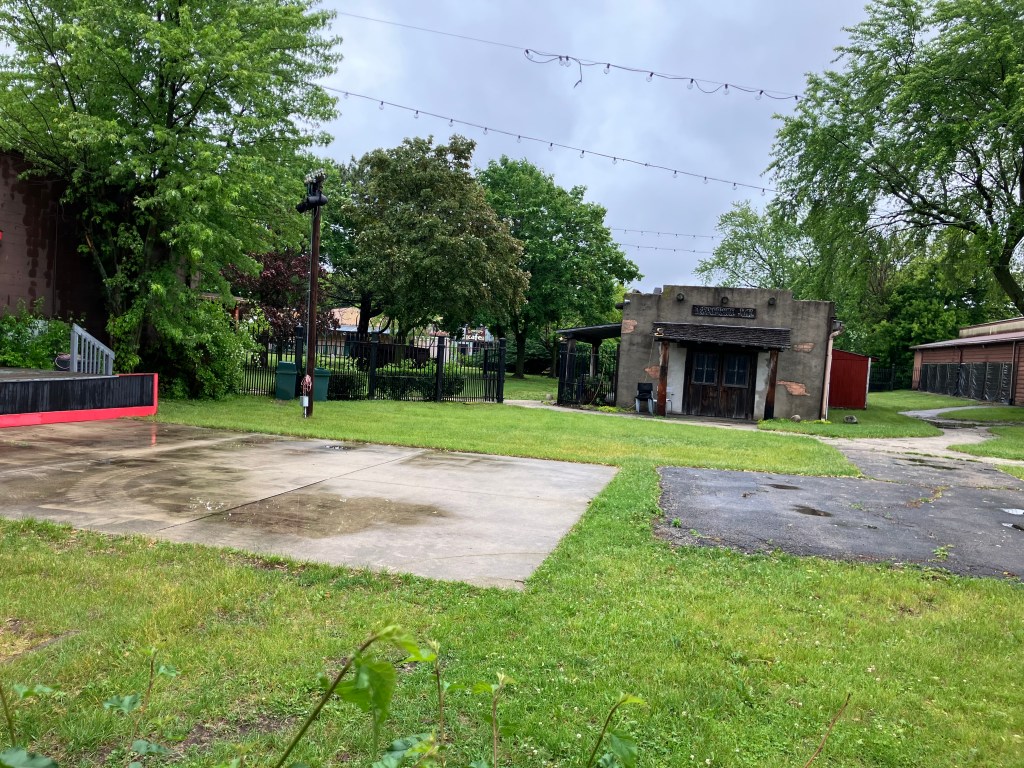
So, hoping to relive a few moments of my youth, I turned into the parking lot. The place was clearly closed for the day, and despite the presentable-looking front doors, the facade was looking a little long in the tooth.
Cue the whistle from The Good, the Bad, and the Ugly.
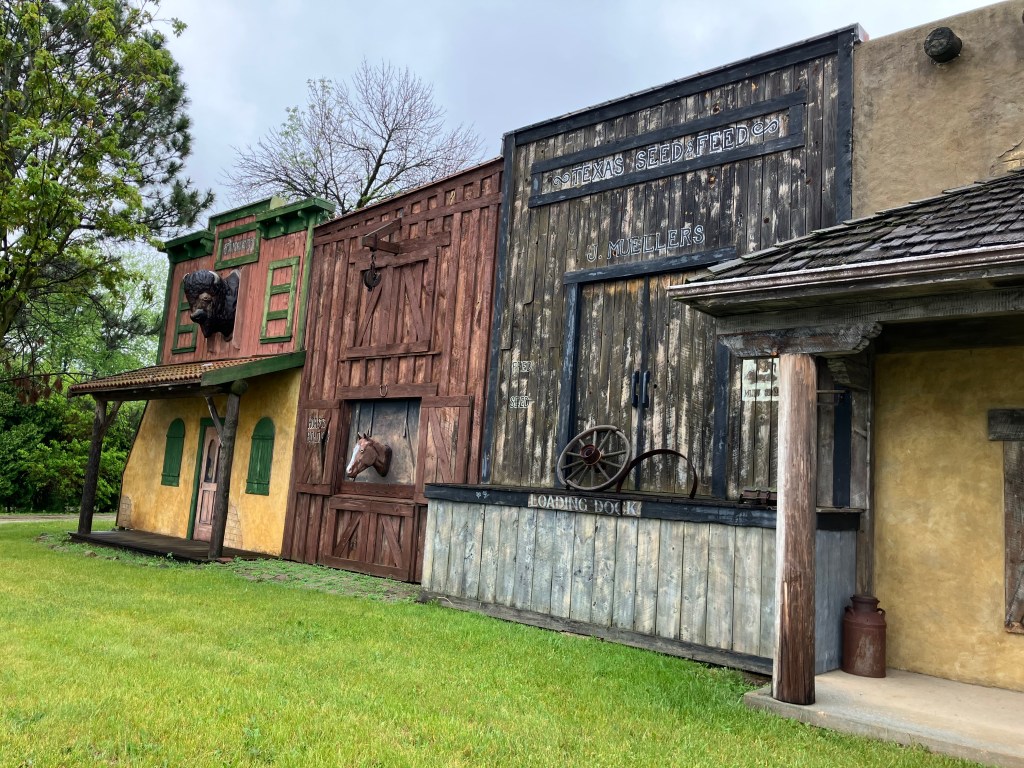
Must have been a pretty fun place, back in the day.
Peeking behind the fence.
A search of the internet confirmed that the place is permanently closed. This made me feel kind of melancholy, for two reasons. First, it’s always poignant when someone’s dream dies. From the little I know about Wild West Town, it seems like it was a family-owned, family-friendly place with a lot of heart. It reminds me of an abandoned place in Wisconsin that I discovered in 2022. You can read my post about it here. And if you do, make sure you scroll all the way down to the comments at the end, where the son of the park’s founder makes a surprise appearance.
Anyway, the second reason the demise of a park like this saddens me is because it reminds me of the passing of an era. It seems that these low-tech, sweetly-corny, flesh-and-blood places aren’t popular in the modern, digital world. I know that makes me sound like a Luddite, or at least an old man. Which I am. But still.
I encourage you to watch this 2016 video of highlights from the Wild West Town. You’ll see what I’m talking about.
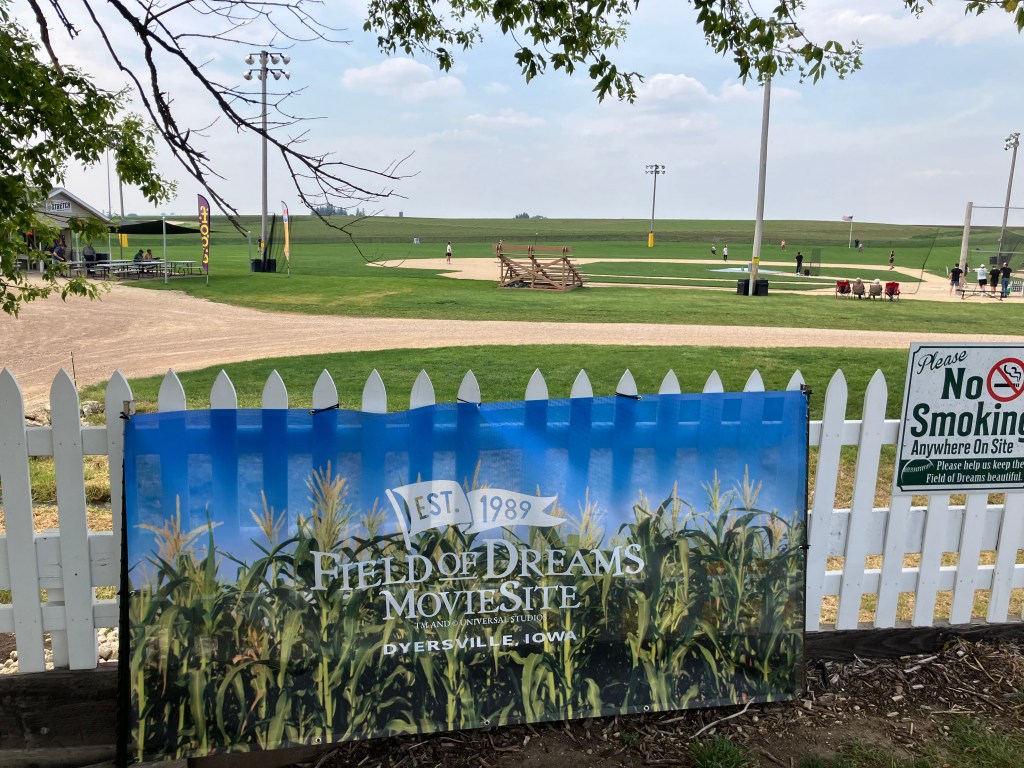
But let me end on a somewhat more inspiring note: Near the end of the day I saw a sign along US 20 urging me to visit the “Field of Dreams.” Yes, that Field of Dreams. It turns out that after they made the 1989 Kevin Costner movie, the town of Dyersville, Iowa (pop: 4,000) preserved the baseball diamond that was created in a cornfield. It’s now a tourist attraction.
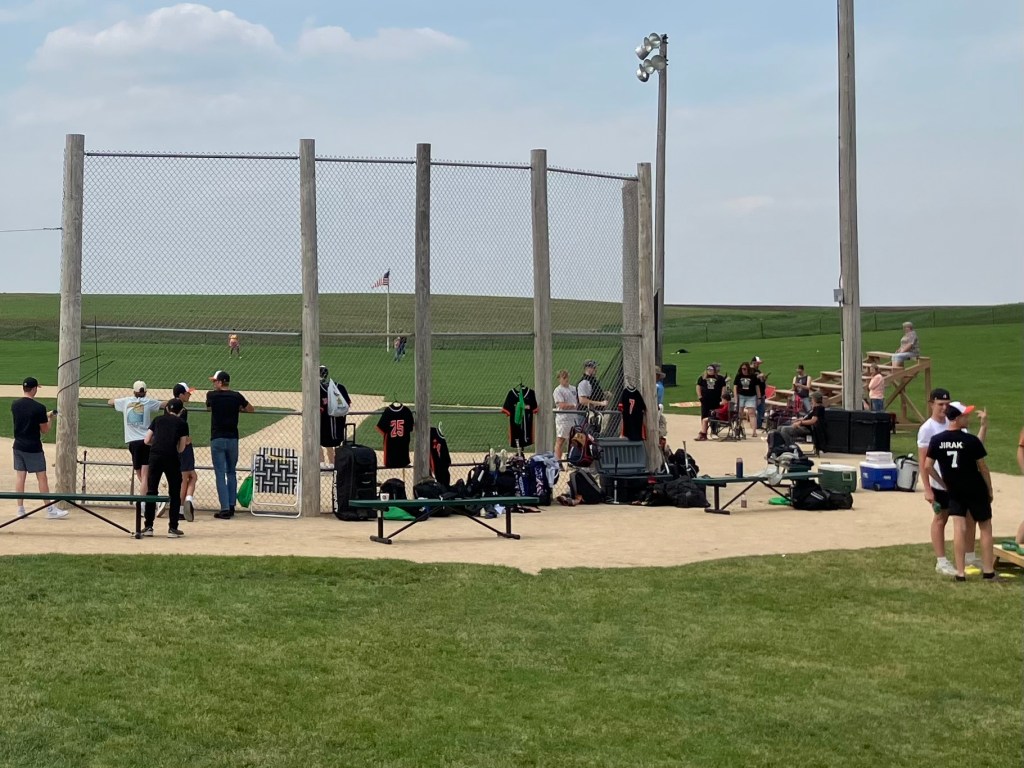
Sure, it’s a little corny (ha!), but it was heartwarming to see kids and families playing catch on the field. What a perfect bookend to a day that began at the Little League version of Wrigley Field.
Build It and They Will Come indeed!
BRIDGE CORNER
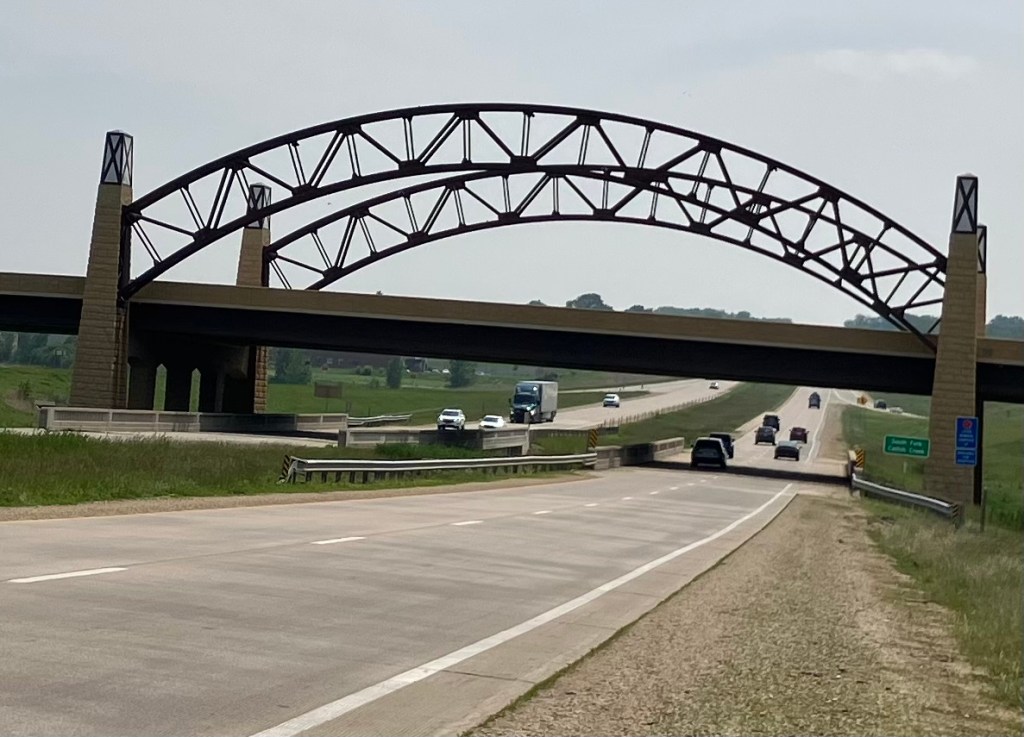
This overpass carries traffic from Seippel Street in Dubuque over US 20. To me it looks like a fairly new structure, and it seems to incorporate old steel arches from a prior bridge. I cannot confirm any of this with my research though. Our research team will keep working on it, but any tips would be appreciated!
BEER OF THE DAY
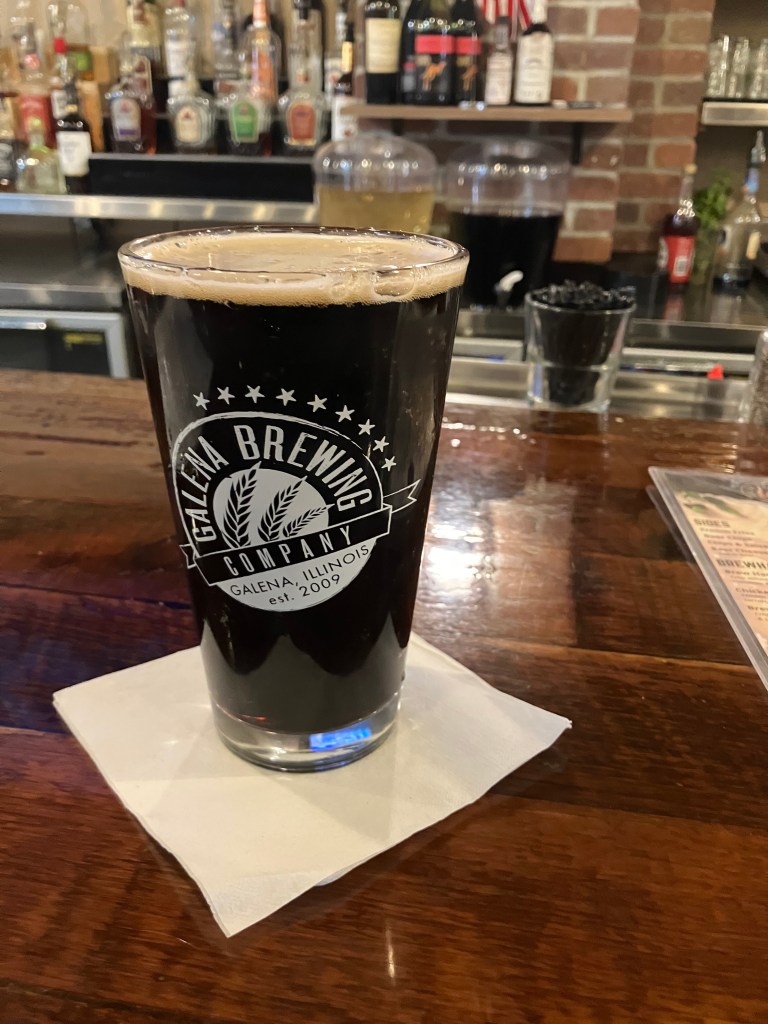
As noted early, the BOTD comes from Galena Brewing Company. I had the “All Day Reveille,” which is a black lager. It’s as dark as a stout, but with a much thinner body and less robust taste.
This beer is quite balanced, with a dark, malty base that’s countered with a moderate amount of hops. After fermentation, they add some cold-brewed espresso from a local coffee roaster. This gives the flavor a stronger backbone. Still, it’s not overpowering, and the flavor profile is fairly flat. The ABV is 5.7, which is about average. I’d call this a pseudo-stout for people who don’t like stouts. I’ll give it 3.5 stars, which means I wouldn’t go out of my way for one, but I’ll enjoy one if it’s in front of me. I give the accompanying pretzel a solid 5 stars.
You’ll recall that yesterday I filmed myself crossing the US’s longest covered bridge, and then ended the day in Geneva OH where I encountered the country’s shortest covered bridge. Loyal reader Detlef K. asked why I didn’t include footage of crossing the Geneva span. I can’t believe I didn’t think of that. So first thing this morning I returned to the Geneva bridge to correct my oversight. Here is the fruit of my labor:
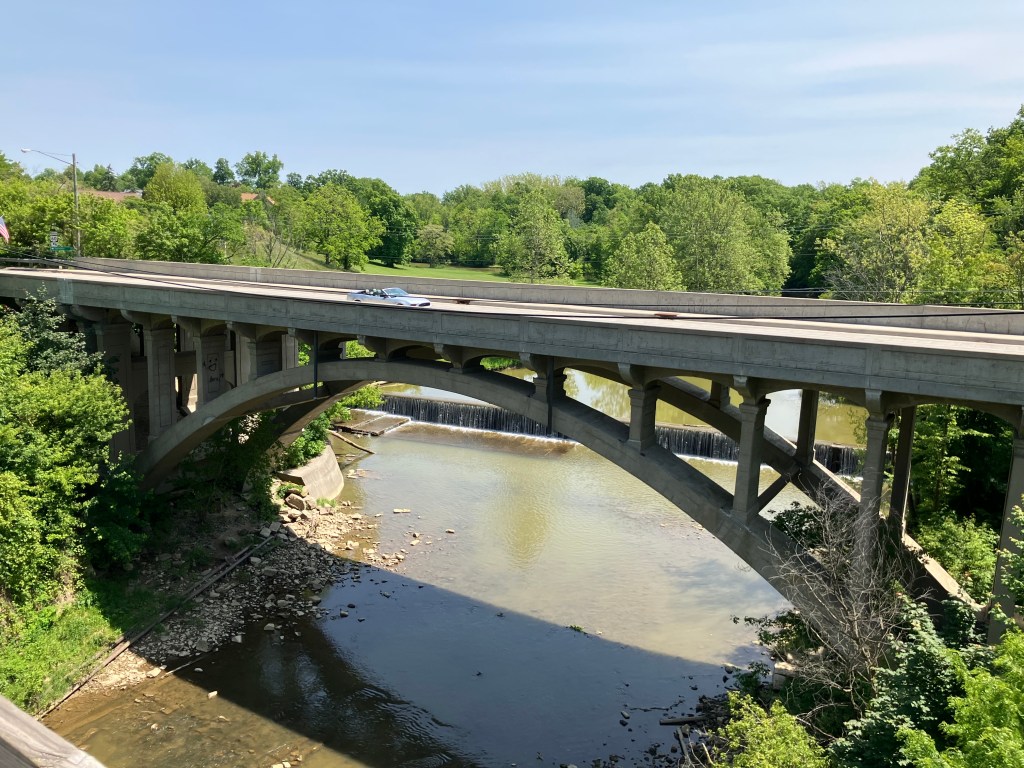
Today actually turned out to be a bridge-filled day. Take, for example, this bridge that carries US Route 20 traffic over the Vermillion River in Wakeman, OH. It was built in 1933, and I’m told it’s an “open-spandrel, concrete-arch” design.
I’m no engineer, but I can appreciate how graceful that arch design is. And the fact it’s been there for almost a century is certainly impressive.
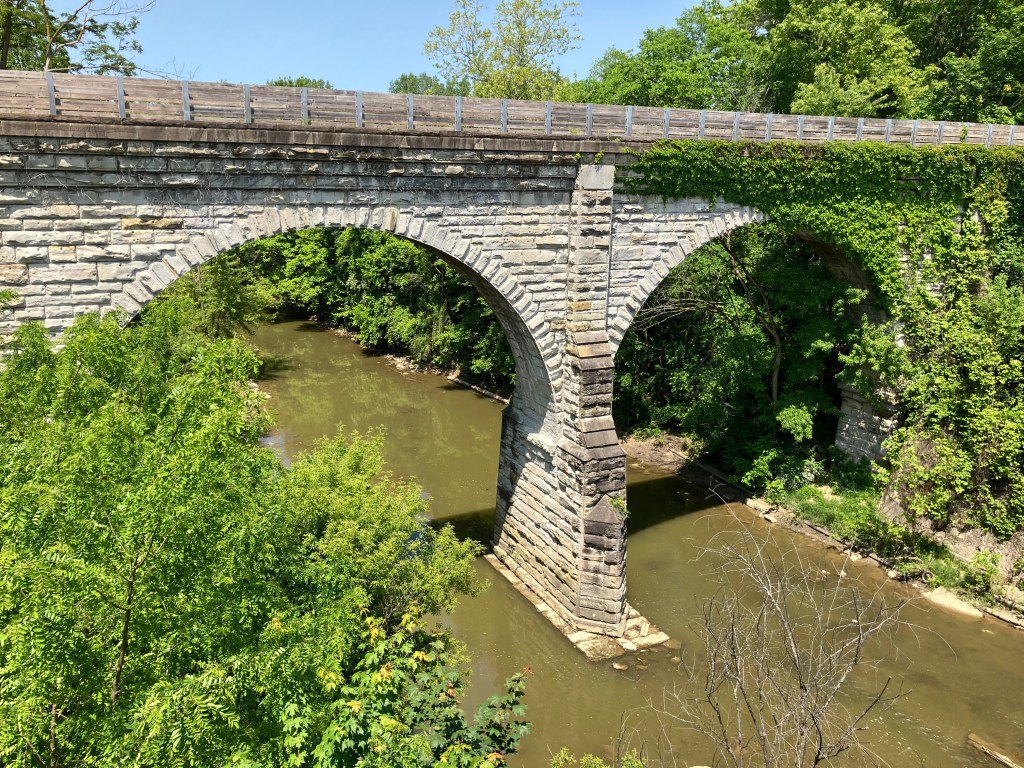
I took the picture from atop a pedestrian/bike bridge, and got to wondering what that bridge looks like from the side. So I moved over to the Wakeman (US 20) bridge and took this picture of the pedestrian bridge:
Is that impressive, or what?? It turns out the pedestrian/bike path was placed atop an 1872 railroad bridge. Trains haven’t come through here in decades, so about a decade ago the “rails to trails” people retrofitted it.
But then there’s Cleveland (pop: 363,000). US 20 cuts through the town on surface streets, and the experience of driving it is infinitely different from the peaceful cruise through innumerable small towns that I’d experienced the past few days. This morning’s drive through Cleveland was crowded, people were honking, blight was evident on both sides of the road. I did make a small detour to find the house that was used for the exterior shots of A Christmas Story (1983). But I got lost and found myself in a jungle of massive, looming bridges that cross the river at all angles. And that’s when the magic happened: I saw what makes Cleveland unique. I saw 200 years of history. Would it be going to far to say I saw its heart?
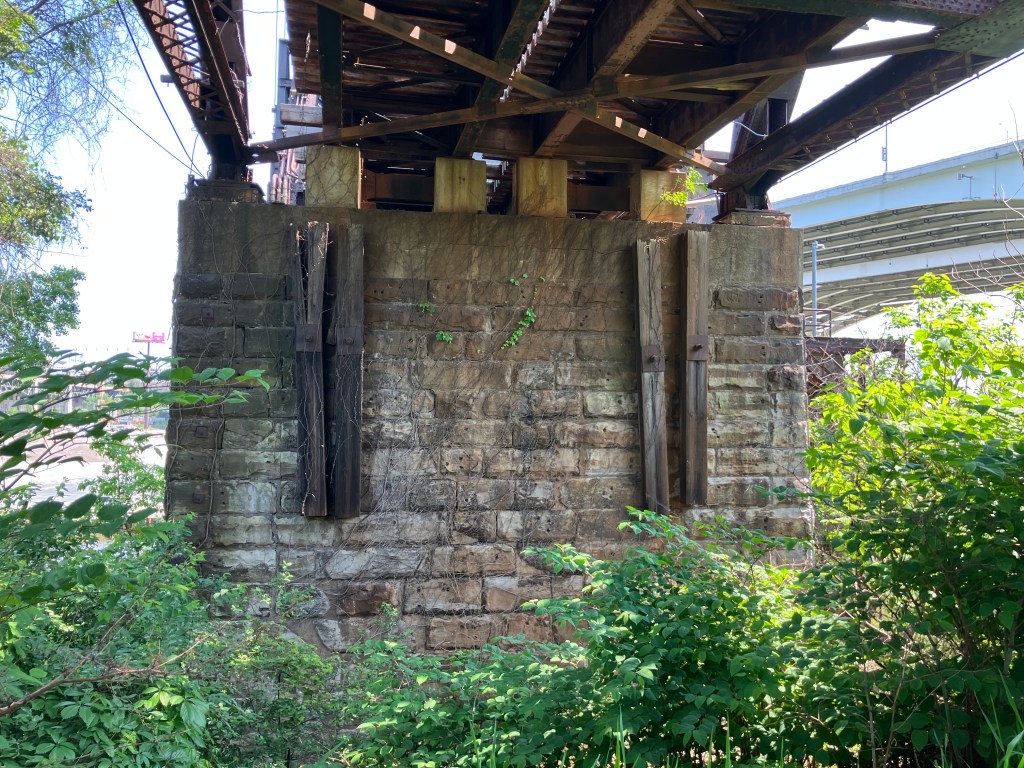
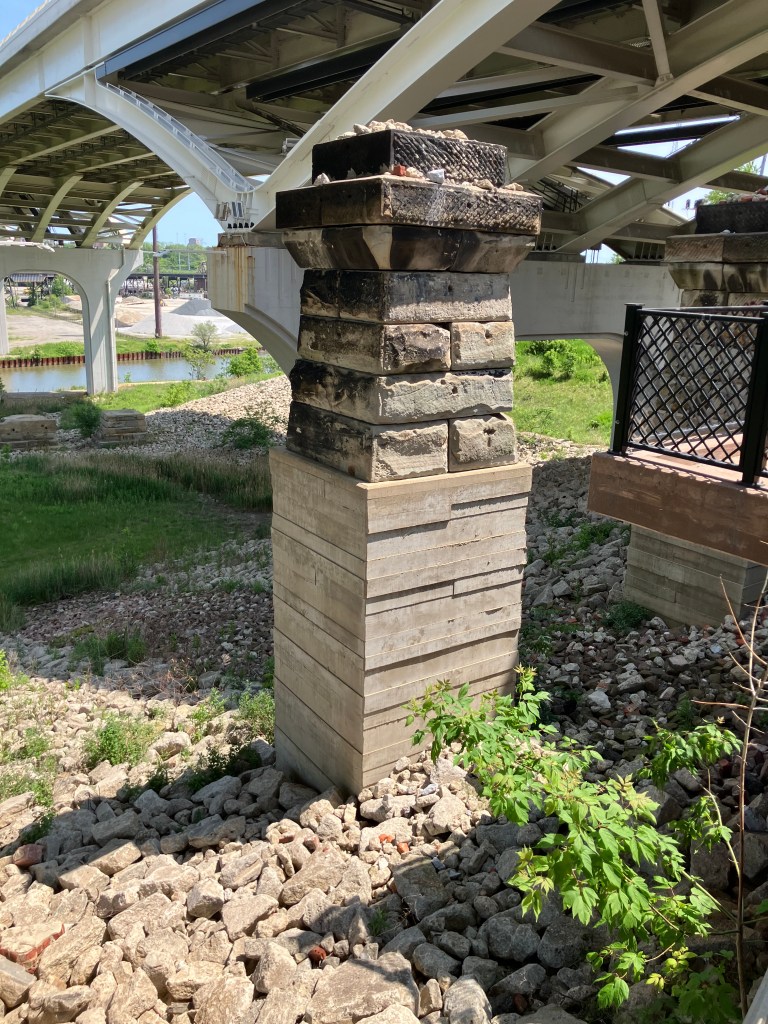
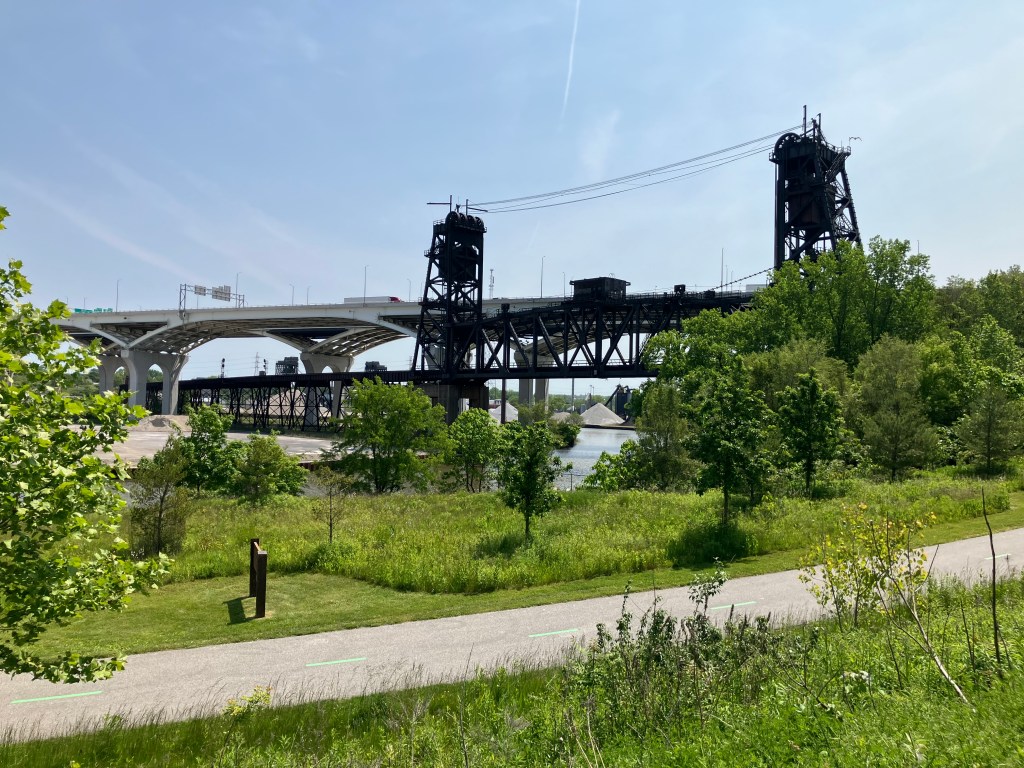
I took most of the following photos from a trail that was once the “towpath” along the Ohio and Erie Canal. Mules labored along these paths pulling boats and barges up the canal via ropes. The modern trail/historic towpath runs alongside the canal for about 100 miles. I walked less than a mile of this path, passing under and next to innumerable bridges–some still in service, and some decommissioned.
I was wondering if the rusty old Nickel Plate Road High Level Bridge was still operational, and suddenly a Norfolk Southern train clattered over it.
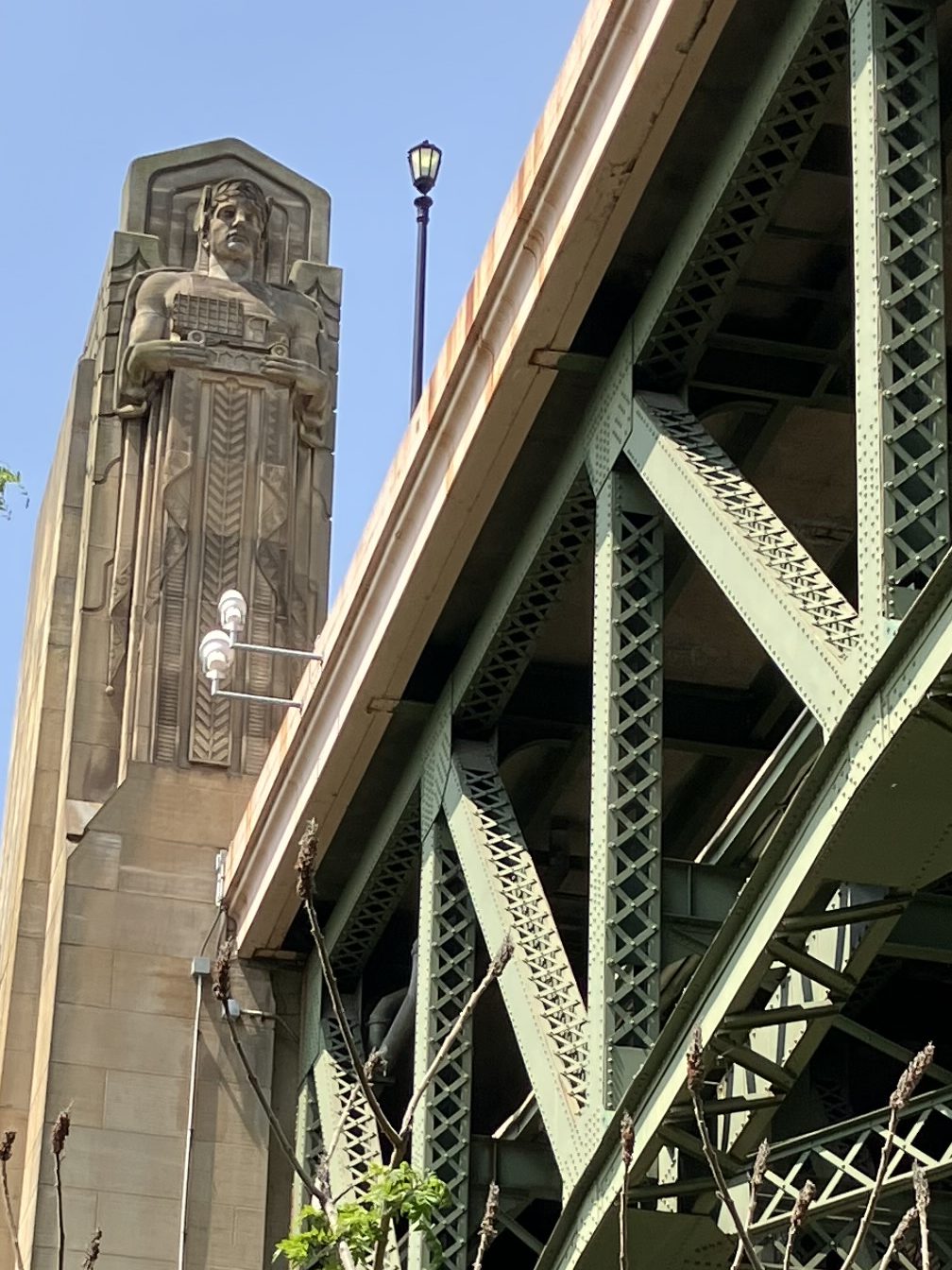
Detail of one of the eight “Guardians of Traffic” on the 1932 Hope Memorial Bridge. Note that he’s holding a truck.
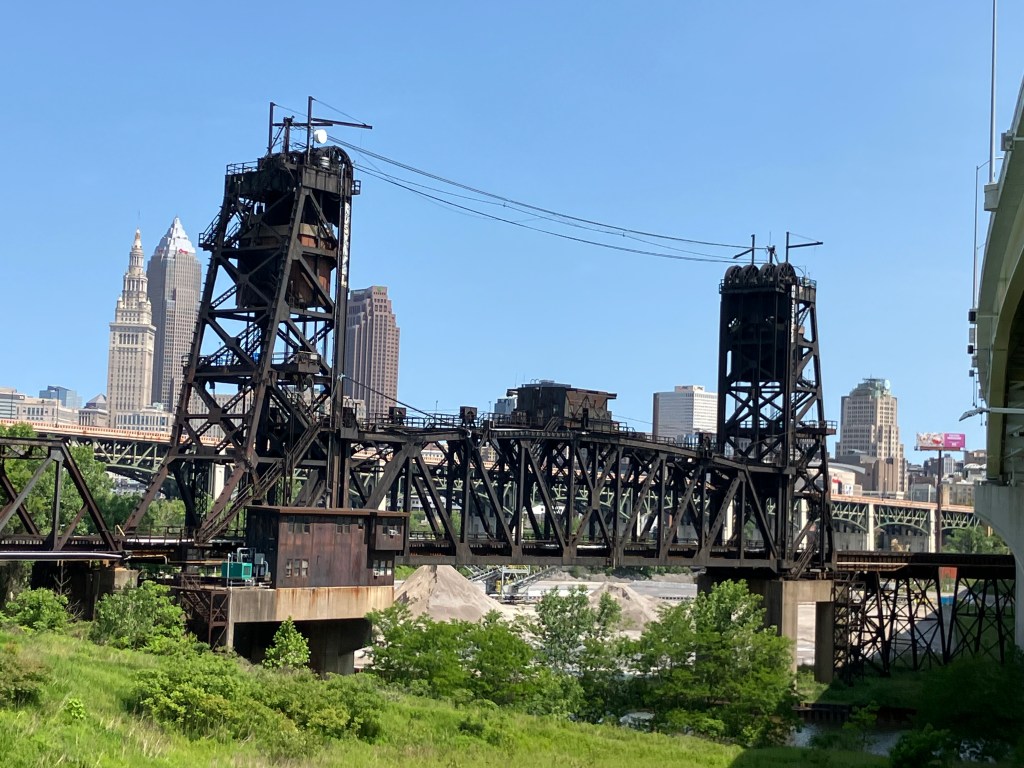
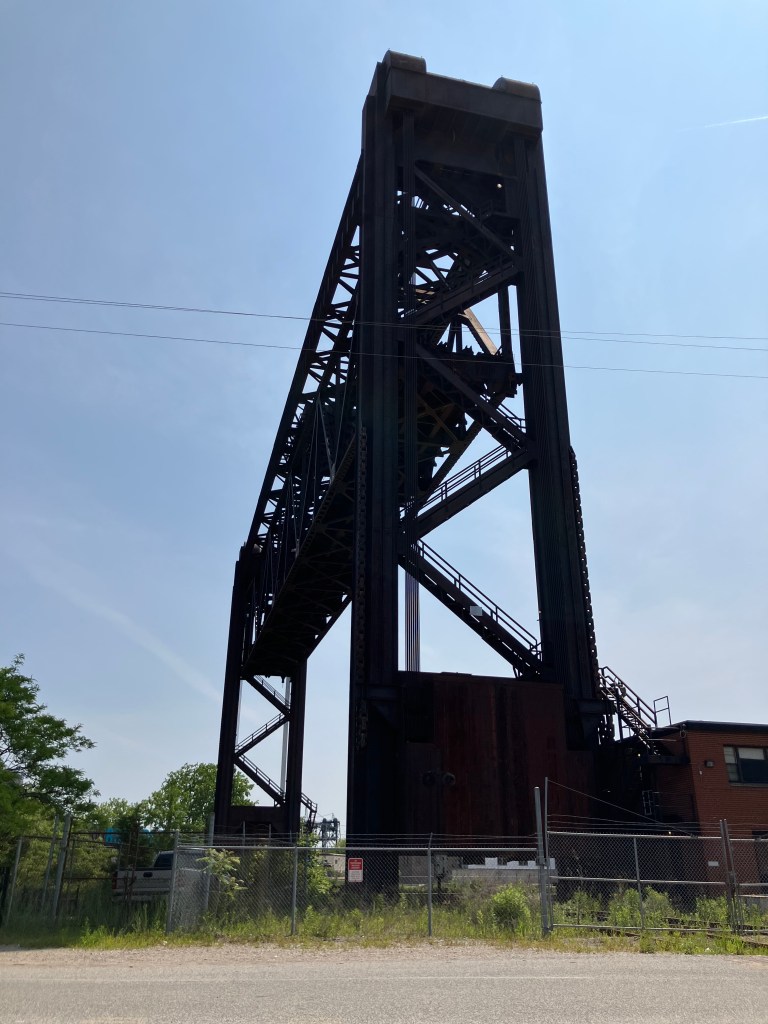
Railroad center-lift bridge, now decommissioned.
Want to see one of these types of bridges in operation? Here I am waiting in traffic for an automobile bridge to return to earth:
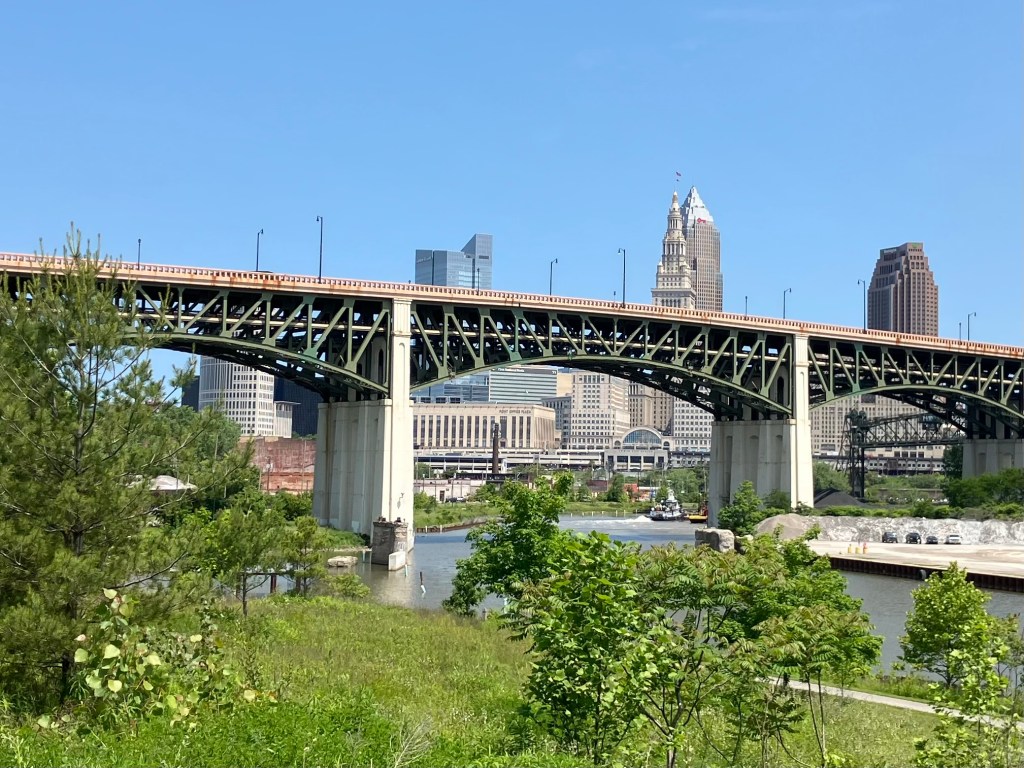
One of the modern spans. (Can one of my loyal readers identify it for me?)
A remnant of the 1888 Central Viaduct.
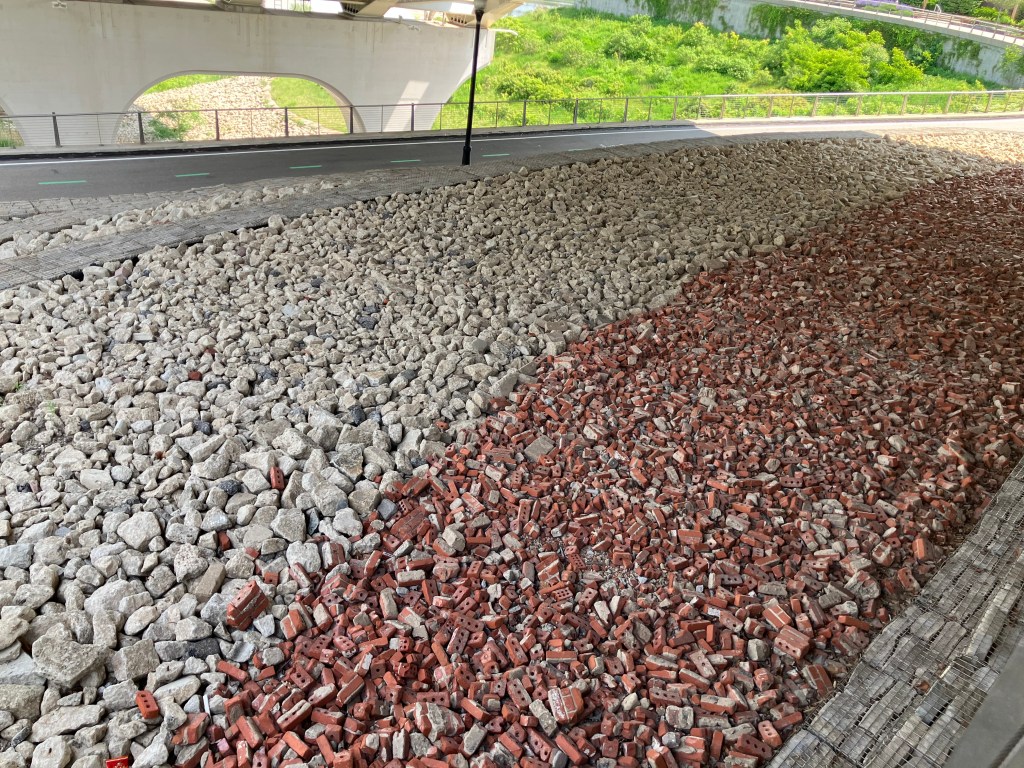
Rubble from the demolition of old bridges and associated structures, now used as ground cover next to the Towpath.
The modern towpath in foreground, with old and new bridges in background.
Evidently Cleveland has over 300 bridges, many of which cross the Cuyahoga River. I’m not going to make you view them all. But you’ve got to admire the engineering and the grit that went into building these over the past two centuries. And you also have to admire how modern Clevelanders somehow navigate daily through this confusing labyrinth.
We now move on to the non-bridge-related part of the day:
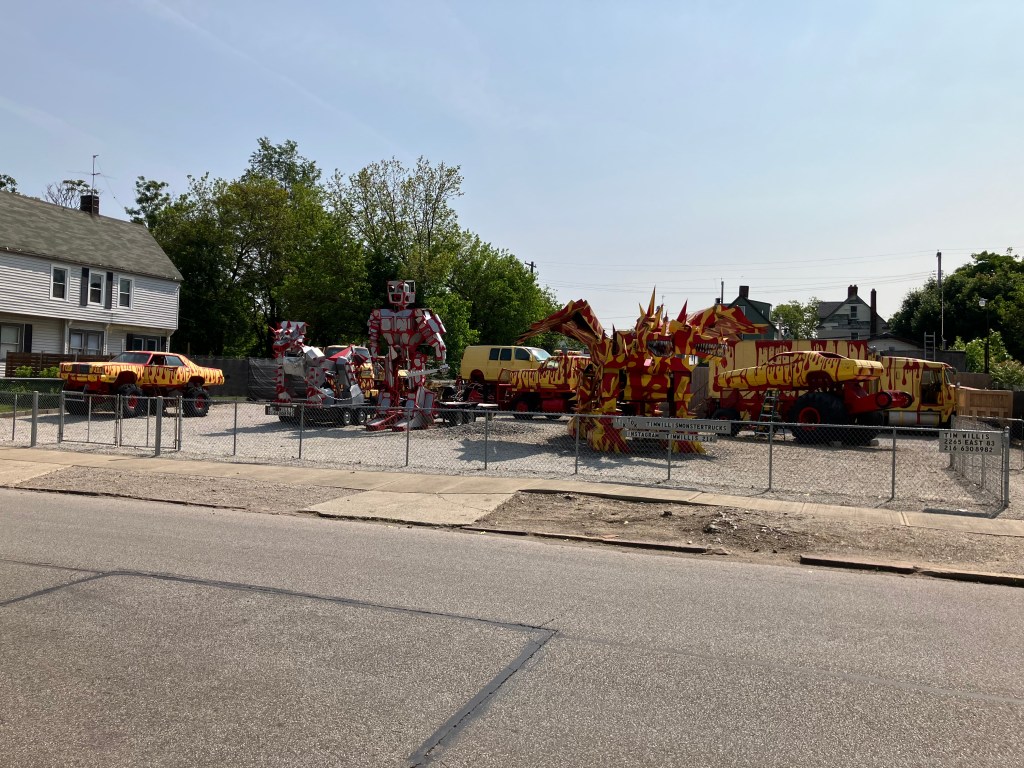
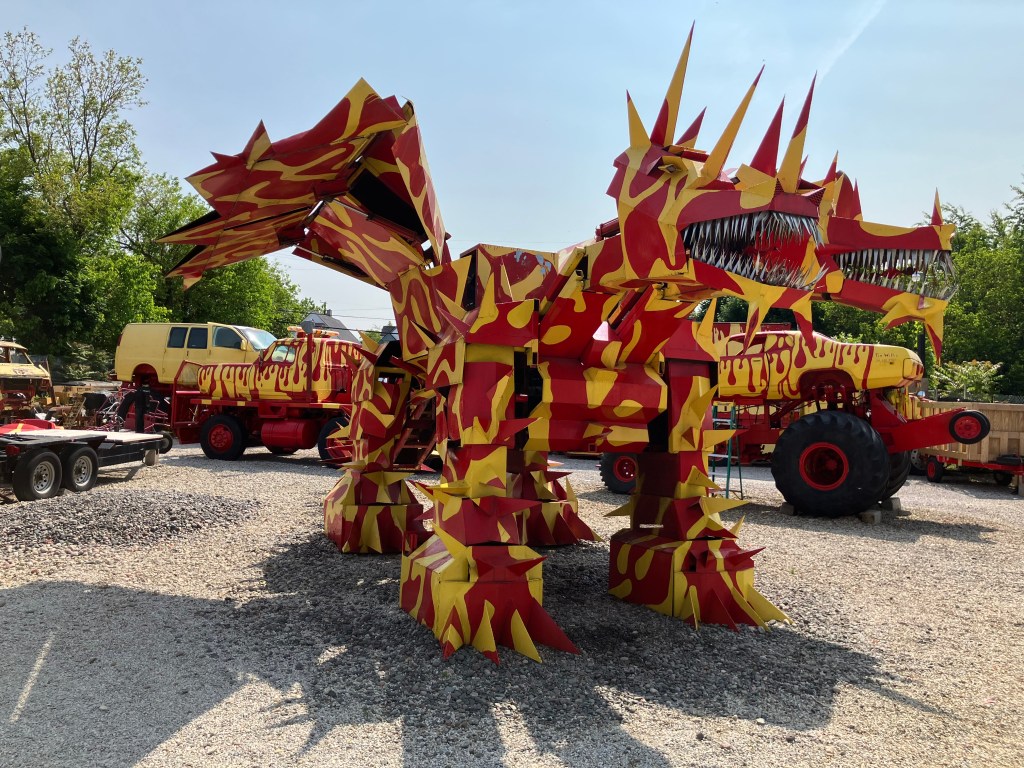
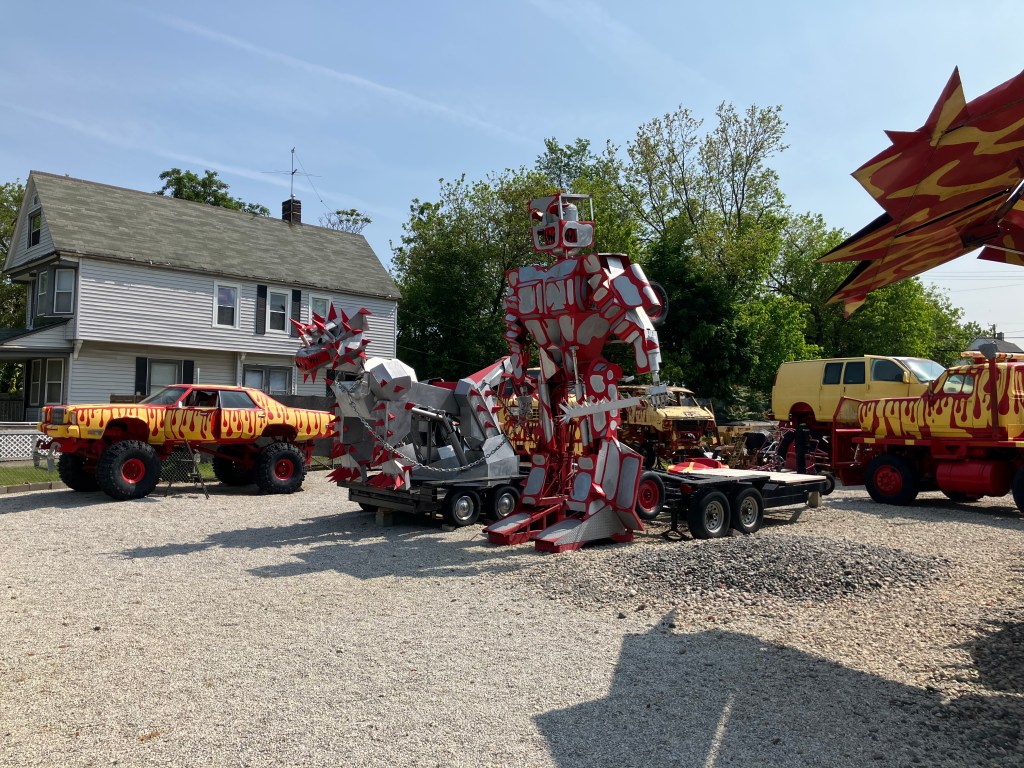
Here’s a different kind of engineering project, carried out by a high-school dropout who taught himself welding, electronics, power delivery, and a ton of other stuff:
Corporation yard from hell.
This is all on a lot on a residential street. Let’s look a little closer:
Jiang.
“More than meets the eye.”
It’s all the work of local artist Tim Willis. And those robots and dragons actually move with electric servos, and the trucks have powerful engines that presumably could get them into a monster truck show. My readers will recall that I have a soft spot for yard art; this is incredible. Spend a minute or two hearing from Tim himself:
Sadly, he wasn’t available when I dropped by.
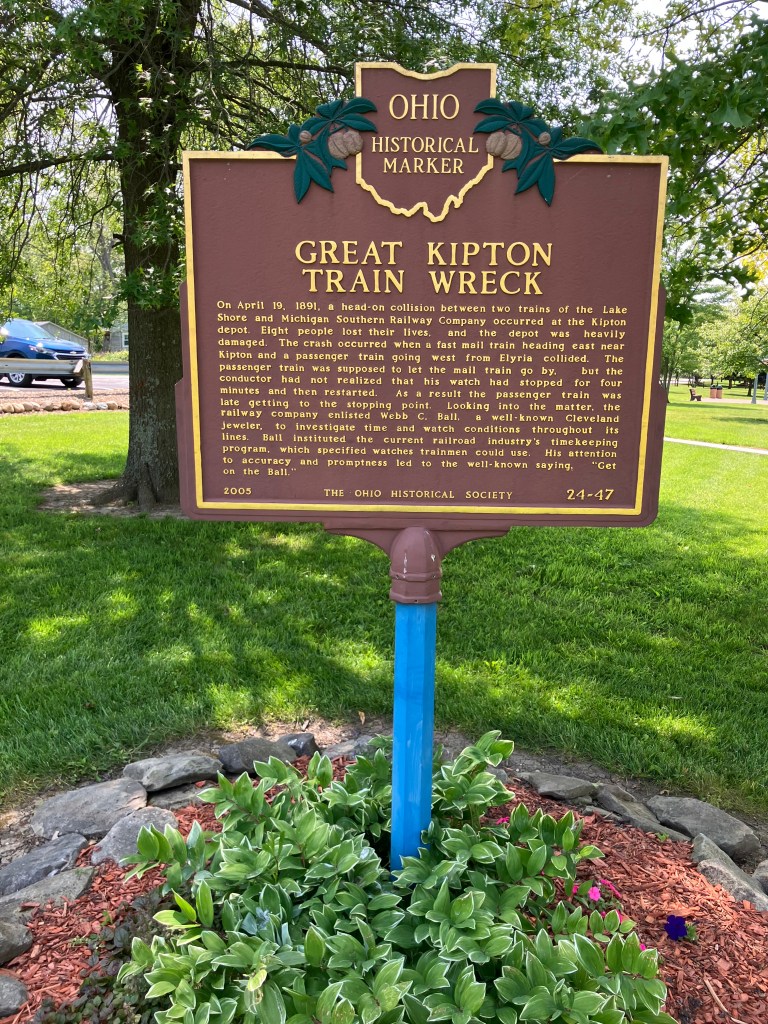
Next up was the town of Kipton, OH. A new reader named Bob suggested I check out the site of the “Great Kipton Train Wreck of 1891.” There’s a marker at the site explaining how a head-on railroad collision occurred because the watch of one of the conductors was four minutes slow. Leaving aside the issue of whether it’s wise to create railroad schedules that have two trains occupying the same space just minutes apart, this accident prompted the railroads to adopt strict standards for railway timepieces.
The marker sits in a park/bike trail that used to be the rail line where the accident occurred.
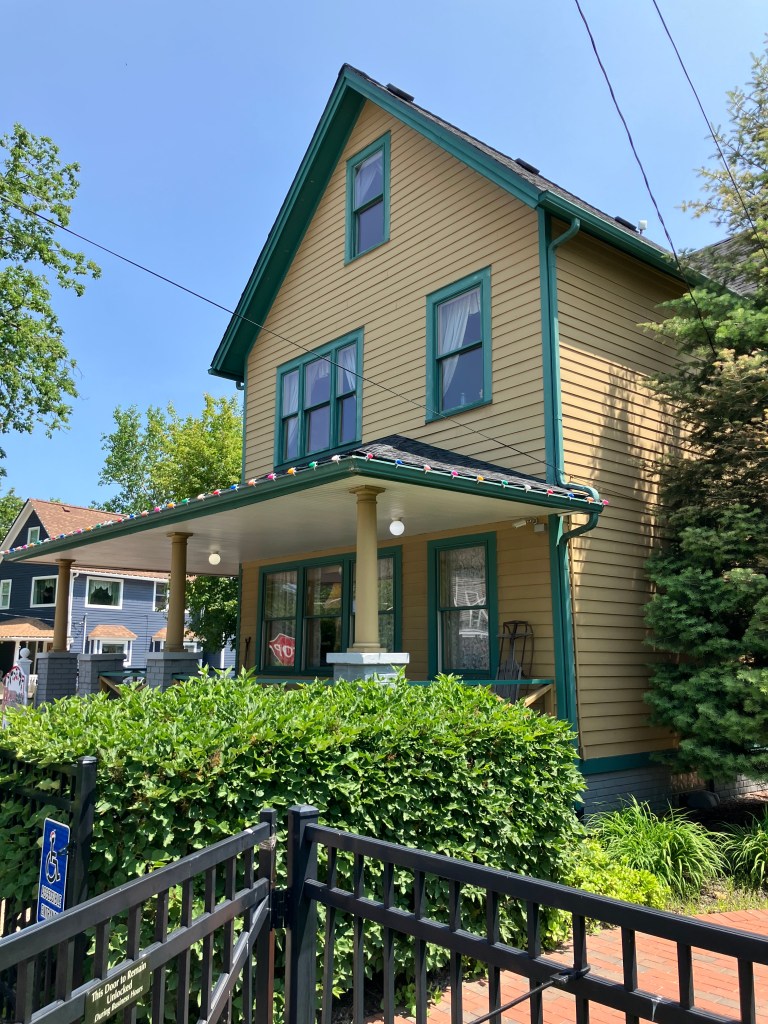
Finally, can anyone identify the building below? (You already had a hint.)
“You’ll shoot your eye out!”
Beer of the Day
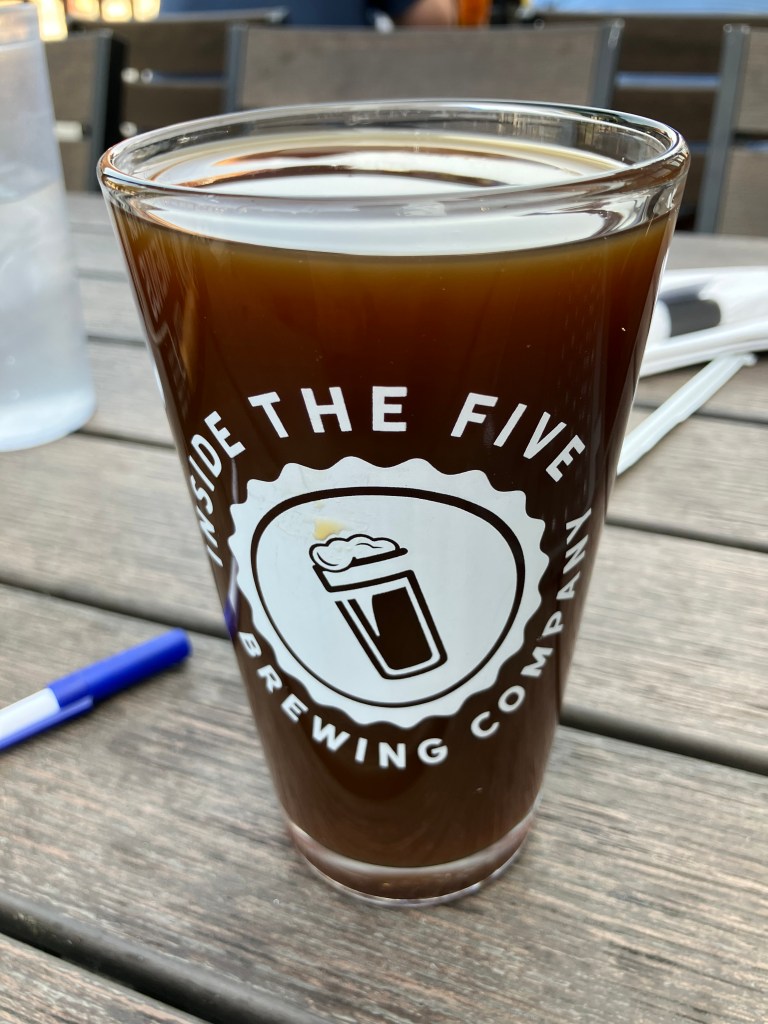
I nabbed my BOTD at the Inside the Five Brewing Company, just west of Toledo, Ohio. It’s owned by two retired NFL players: Chris Morris (Oakland Raiders) and Brandon Fields (Miami Dolphins). They both retired in the Toledo area, and started this brew pub in 2018. I’m told “Inside the Five” is reference to the last 5 yards of the gridiron. But it’s all Greek to me.
Anyway, the place is evidently very popular–it was packed when I got there on a Monday evening. They have a big space, with comfortable outdoor seating on a deck that overlooks the street. They also have friendly servers, and the weather was perfect. What better place to get the BOTD?
I had a pint of their Deimos, which is an American Porter. As we all know (after consulting Wikipedia), in Greek mythology Deimos was the son of Ares (god of war) and Aphrodite (goddess of love). Somehow he turned out to be the god of dread and terror. Should I be worried for ordering this beer?
Deimos is made by brewing a traditional Porter and adding local coffee and vanilla. Both of these tastes are prominent in the beer, though the vanilla is more prominent on the nose than on the palate. The mouthfeel is incredibly smooth. It’s very lightly carbonated, and has no foam to speak of. The ABV is 6.5 percent. The color is quite light for a porter–it’s the color of honey, or maybe the color of coffee when you use the Kuerig pod a second time.
Speaking of coffee: The coffee flavor is not particular roasty; instead it reminds me of Coffee Nips (TM) candy. There’s also a sweetness to this beer that is just this side of cloying. The beer seems to have no bitterness at all, with just the slightest evidence of hops on the finish. I’d say this is more of a dessert beer, that wears out its welcome as you move through a full pint of it. I’d give the first half 4.5 stars, and the second half 3 stars. I guess that means the overall score is 3.75.