bridges · California history · Puns · Road trips · trains · Yard art

All That Glitters

Get it?

When I was a kid, my family would go camping each summer in California’s gold country. We’d hike to open mineshafts, visit countless museums featuring Gold Rush artifacts, and clamber around decaying miner’s cabins and rusty hydraulic mining equipment that had been abandoned in the foothills. My dad would collect antique square nails (a practice that we later learned was unlawful) and occasionally we’d try our hands panning for gold. My mom would stay back at the campsite, cooking meals, sweeping the tent, and wishing we soon would return to suburbia.
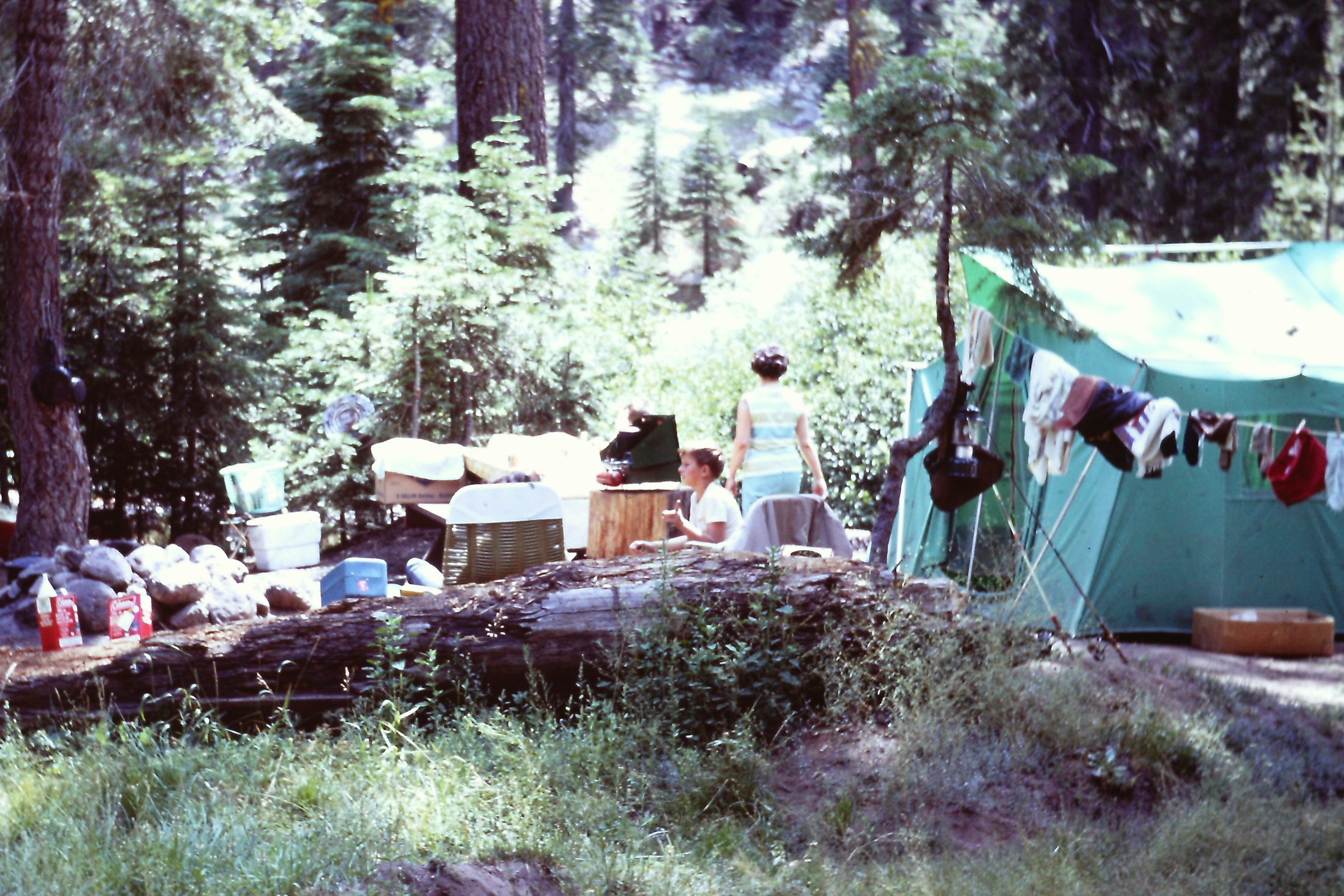
Not exactly glamping

Even as a kid I was impressed by how these relics of the Gold Rush could be seen and touched out in the wild, even after more than a century. To a kid like me in the 1960s, the Gold Rush seemed like ancient history. And now it’s been another half-century since I was a kid! It’s hard for me to explain, but today, as I examined old stone buildings from the 1850s and hillside scars created in the 1860s, I felt a connection with a longer arc of history. The State of California was in its infancy then, and they didn’t call it the Wild West for nothing. We’ve come a long way since we routinely dumped cyanide and mercury into waterways, since we carved into hillsides with powerful water canons, since thousands of miners daily breathed toxic fumes and hundreds of them died in fires and cave-ins. That’s not to say we have no problems today; far from it. But clearly there’s been progress.
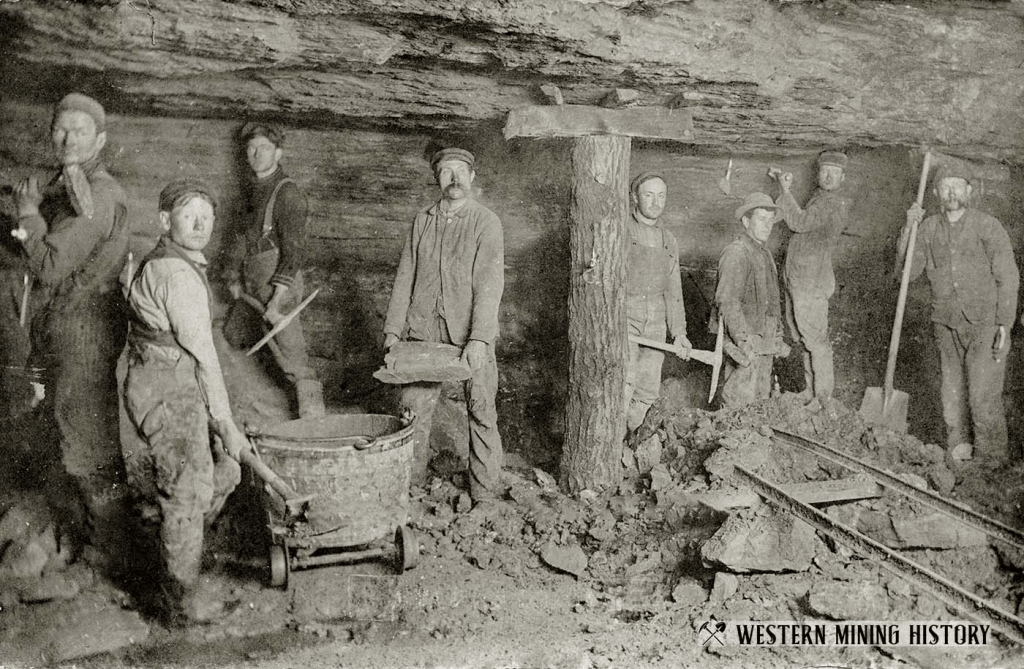
California’s Gold Country is a reminder both of how our civilization has changed, and how as humans we’re largely unchanged. There’s a persistent 49er spirit in those small towns that still dot the Mother Lode. You can sense the tenacity, patience, perseverance in your average Amadorian or Calaverasian. Take the owner of a coffee shop named Moke-A-Java in Mokelumne Hill. She told me she opened the place in 2019…just before Covid shut everything down. Somehow she managed to keep the business afloat with mail-order candy sales and catering. Today business is finally picking up, and she’s grateful. She’s a latter-day version of a patient prospector.

There’s also something very soul-soothing about the rolling, oak-covered hills in this part of the state. There’s plenty of space and natural beauty, and no one seems to be in a hurry. Take for example the owner of the B&B where I stayed in San Andreas. He sat in conversation with me through the three-course breakfast he’d cooked for me, then spent half an hour showing me his workshop and his Harley. It was as though nothing mattered more to him than visiting with his guests. You can be sure I’ll be back.

About 10 am I got back on Highway 49 and fired up the driving app I’d purchased specifically for this trip. The idea was to have a knowledgeable guide direct me through a handful of small towns from Angels Camp to Jamestown. While the concept of the guide was a good one, I found it to be a bit clunky and fussy. And not only was the app awkward to navigate (a process which is admittedly complicated on a motorcycle), but the interstitial diary readings by overly-enthusiastic community-theater actors were not my cup of tea. So the app was quickly bagged.

I did learn from the app that Calaveras County gets its name from the Spanish word for “skulls,” a quantity of which were discovered by early explorers along local riverbanks. And at almost the moment I learned that fact my eyes beheld this:
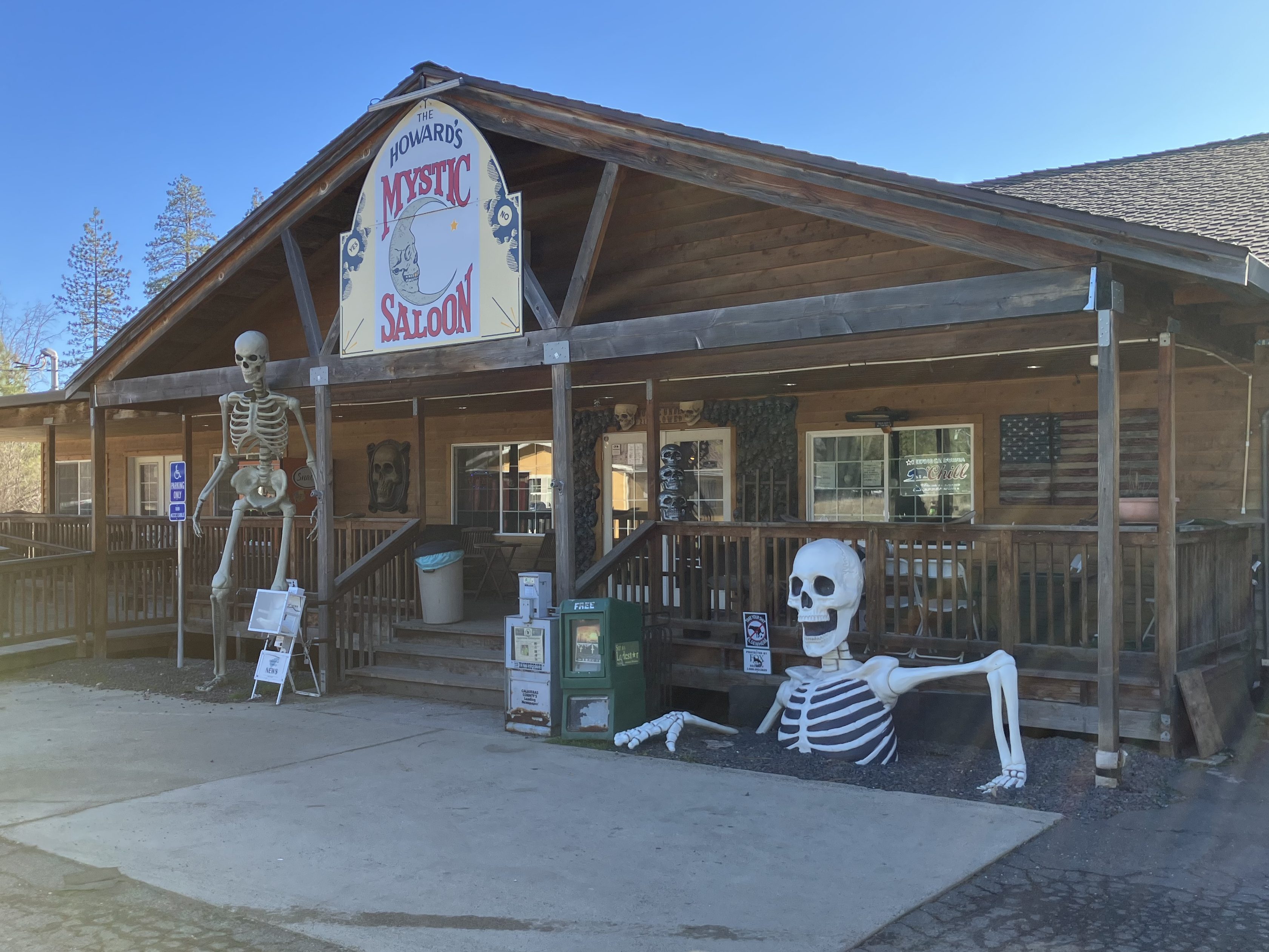
Walking into Howard’s Mystic Saloon is  like entering an ossuary. You’re greeted by a giant skeleton standing just inside the door, and as your eyes adjust to the darkness you notice that all the chandeliers are decorated with skulls and bones. More skeletons hang from the ceiling, and the entire wall behind the wall is covered with black skulls.
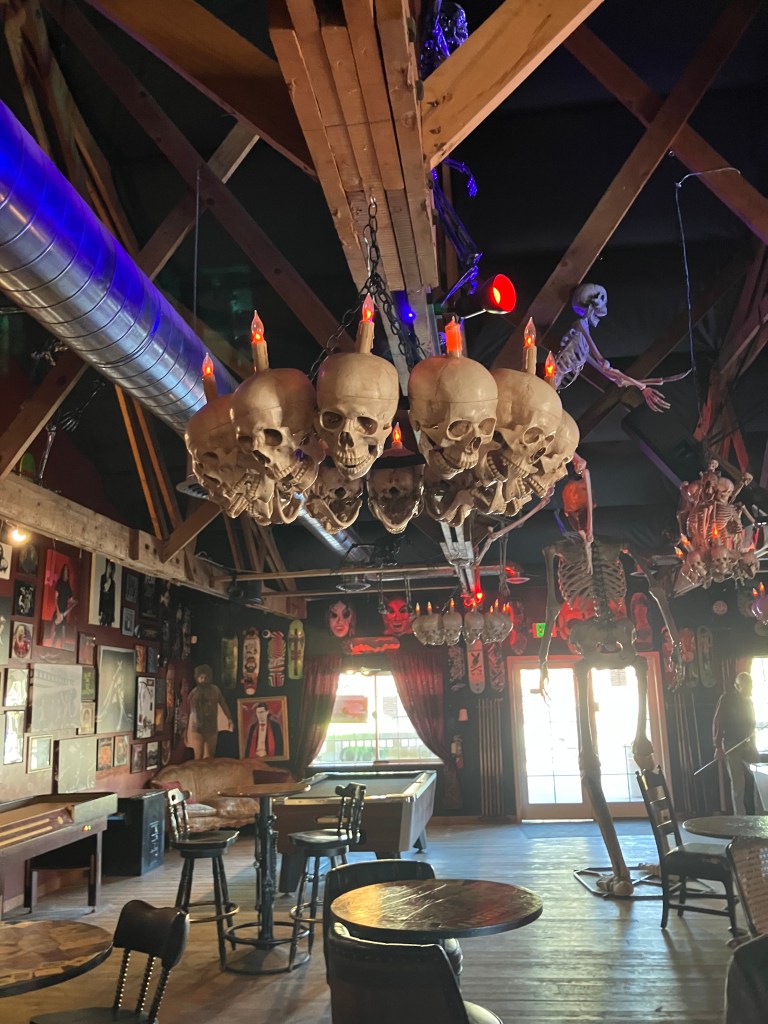
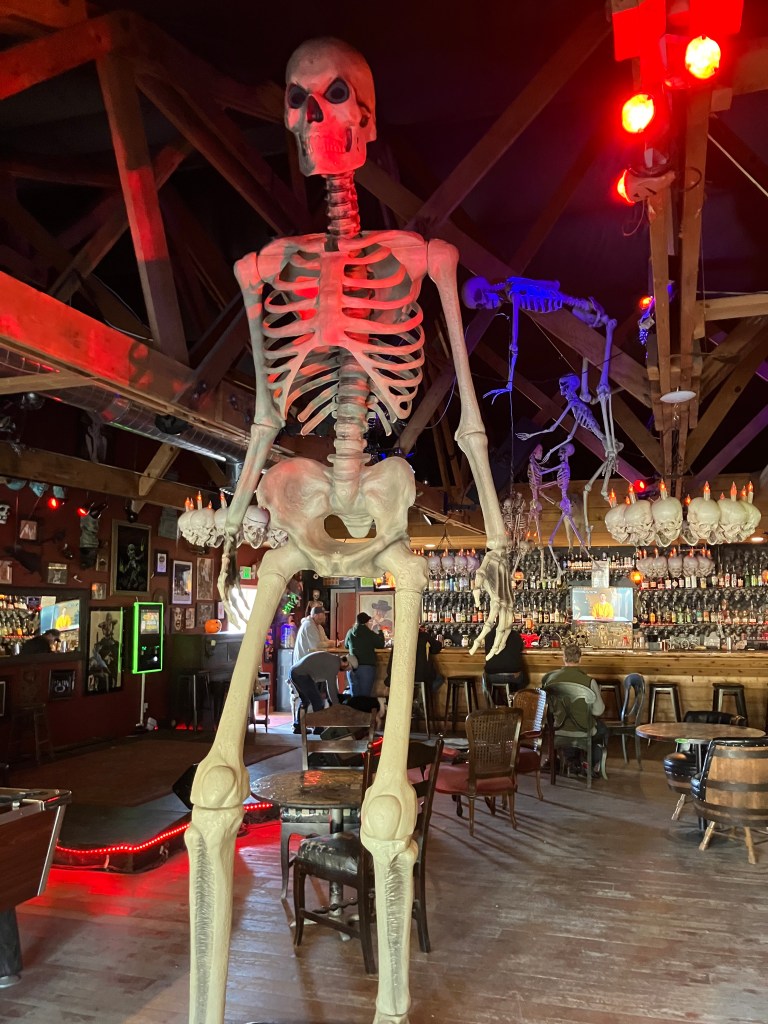
I asked the bartender, Ivory, for the story, and she told me the skulls are not meant as a reference to Calaveras County. In fact, the owners (Curtis and Tana Howard) own another skeleton-themed bar in Oakland. At this point a jovial man with a beard and a cowboy hat sitting at the end of the bar said “This place is tame compared to their Oakland place!”
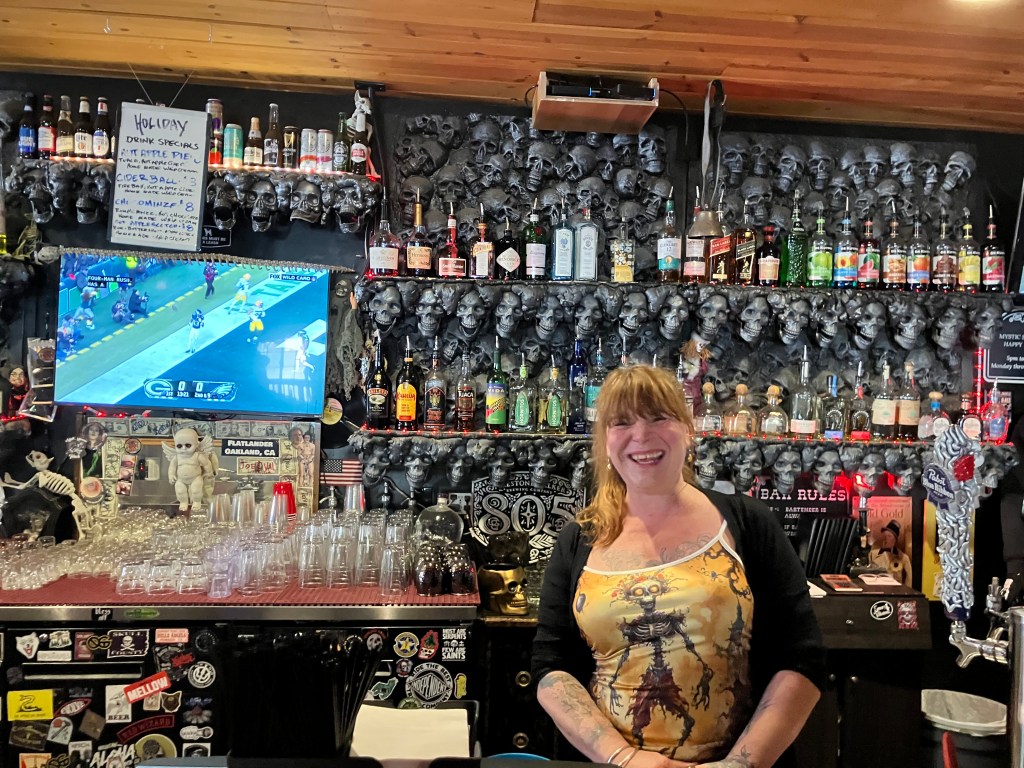
Ebony and Ivory

True to my theory about folks in the Gold Country, and despite being surrounded by skeletons, I found this to be one of the friendliest places I’ve been to in years. I chatted with the locals at the bar for the better part of an hour while nursing my hot apple cider. I had eschewed a higher-octane drink because I’d already had my beer of the day earlier in Murphys. 

We’ll get to the BOTD shortly, but Murphys (pop: 2,000) was the one stop that didn’t feel authentic to me. At some point they went all-in as a wine tasting destination. According to Wikipedia, Main Street has at least two dozen wine tasting establishments. In between are boutique-y places selling scented candles, panini presses, and other appurtenances that a miner would never recognize.
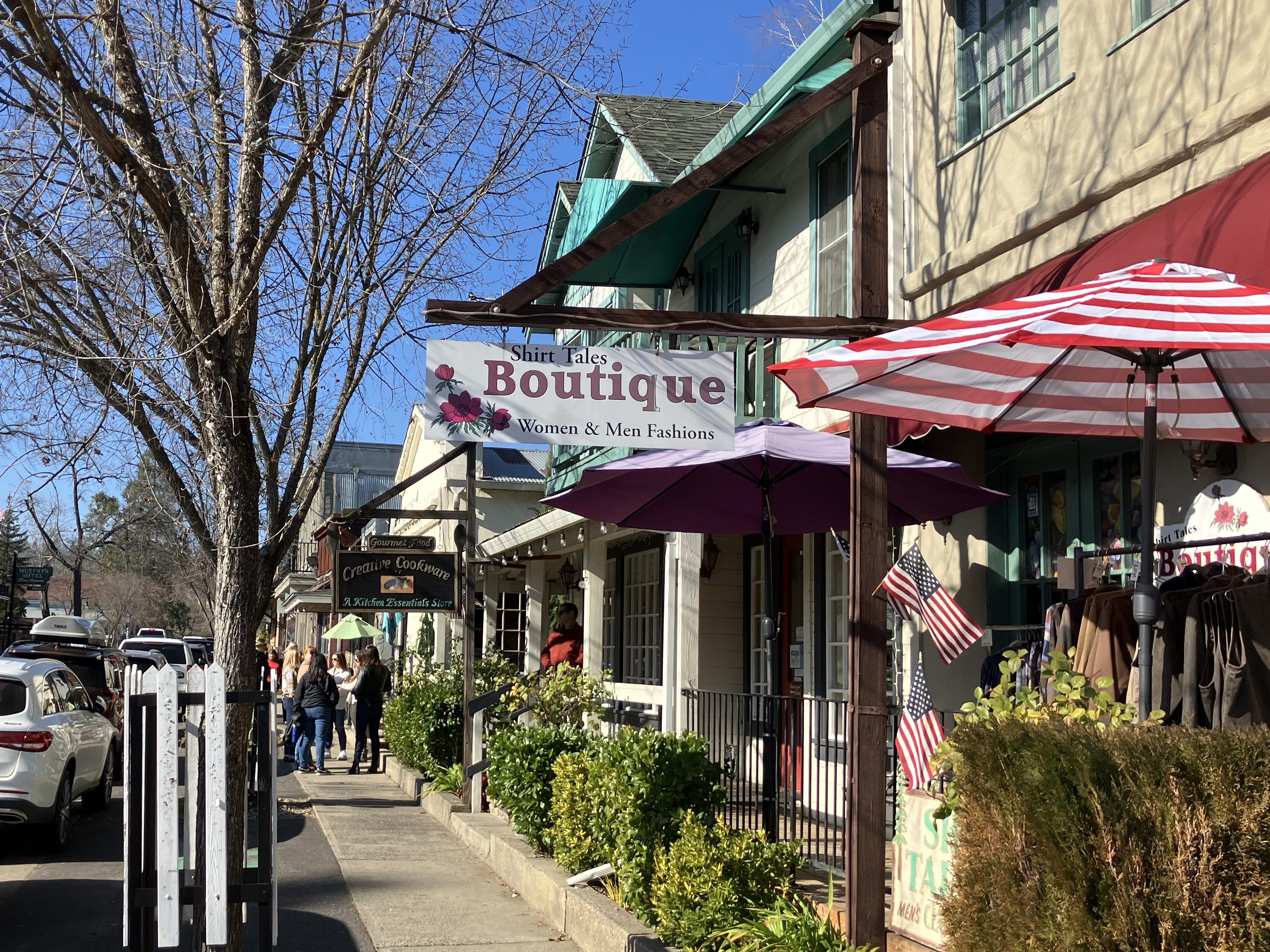
An example of Murphy’s Law

Murphys is evidently quite prosperous, and I don’t knock their business model. But this is not the Gold Country experience I was looking for.

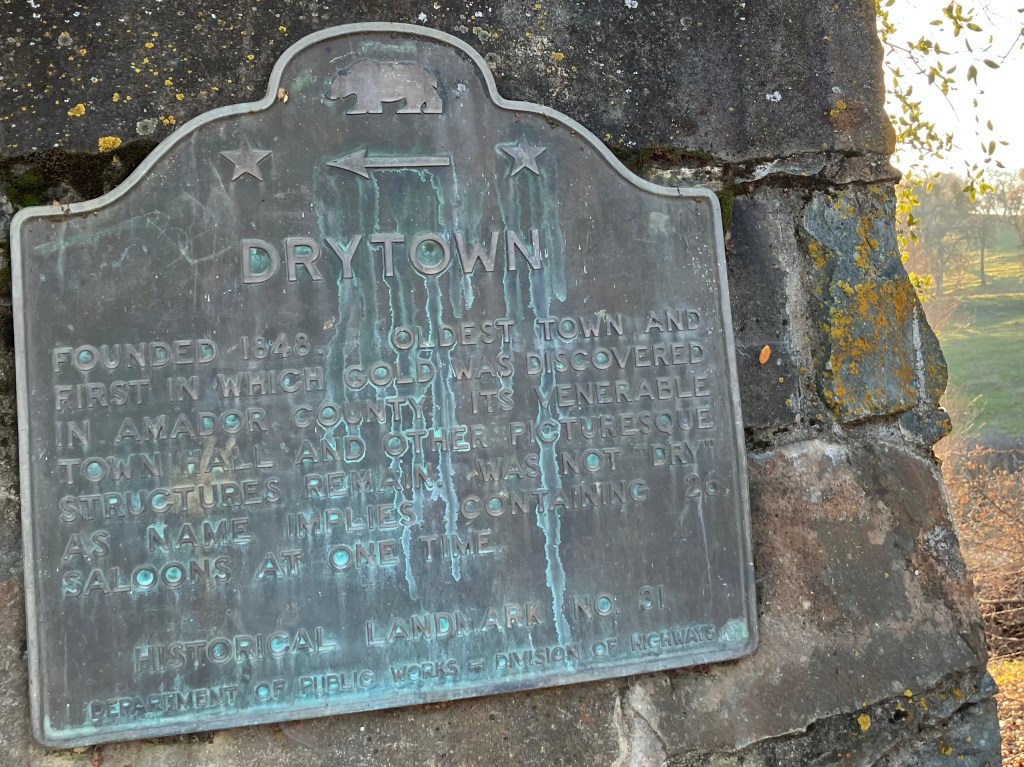
More authentic are places like Drytown (pop: 186).
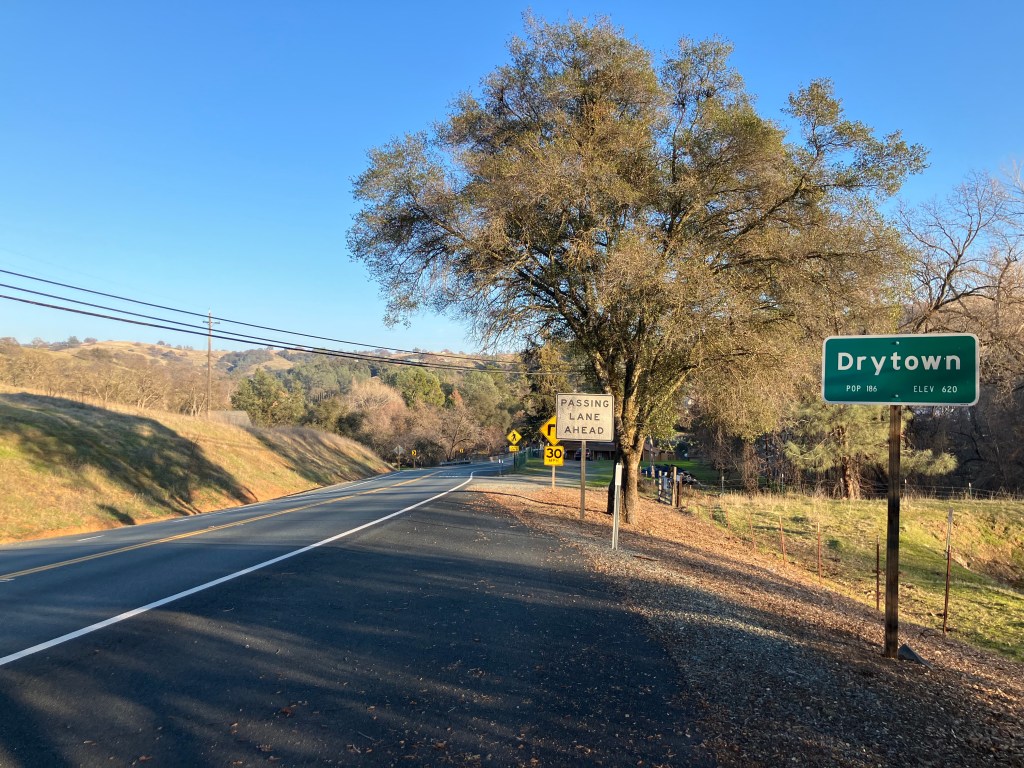
During the Gold Rush it was home to some 10,000 souls, and despite the name, it also had 26 saloons. (The name refers to a dry creek.) It burned down in 1857, and never really recovered. But there’s a roadside marker and occasional artifacts among the rolling hills and oak trees.
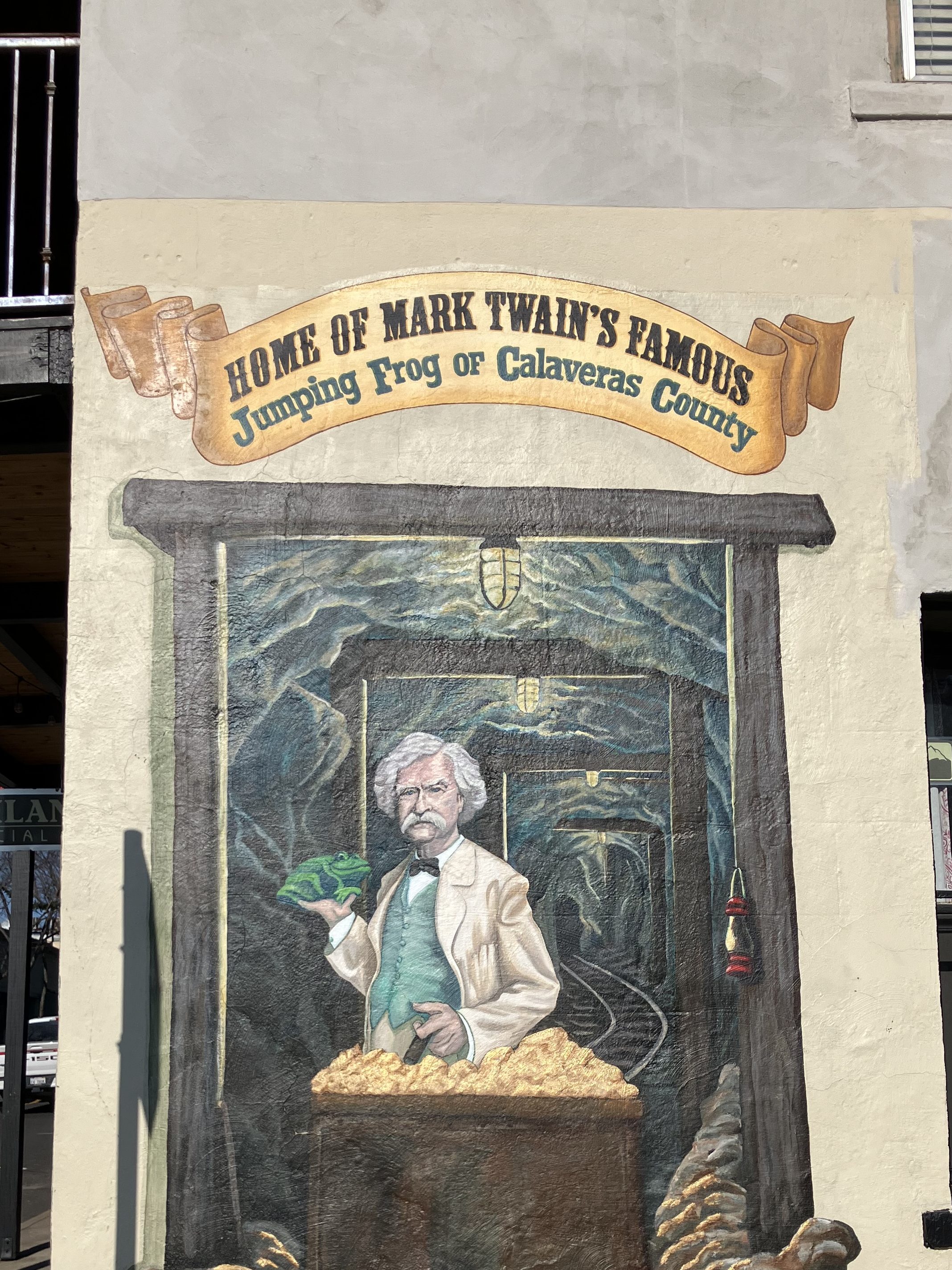
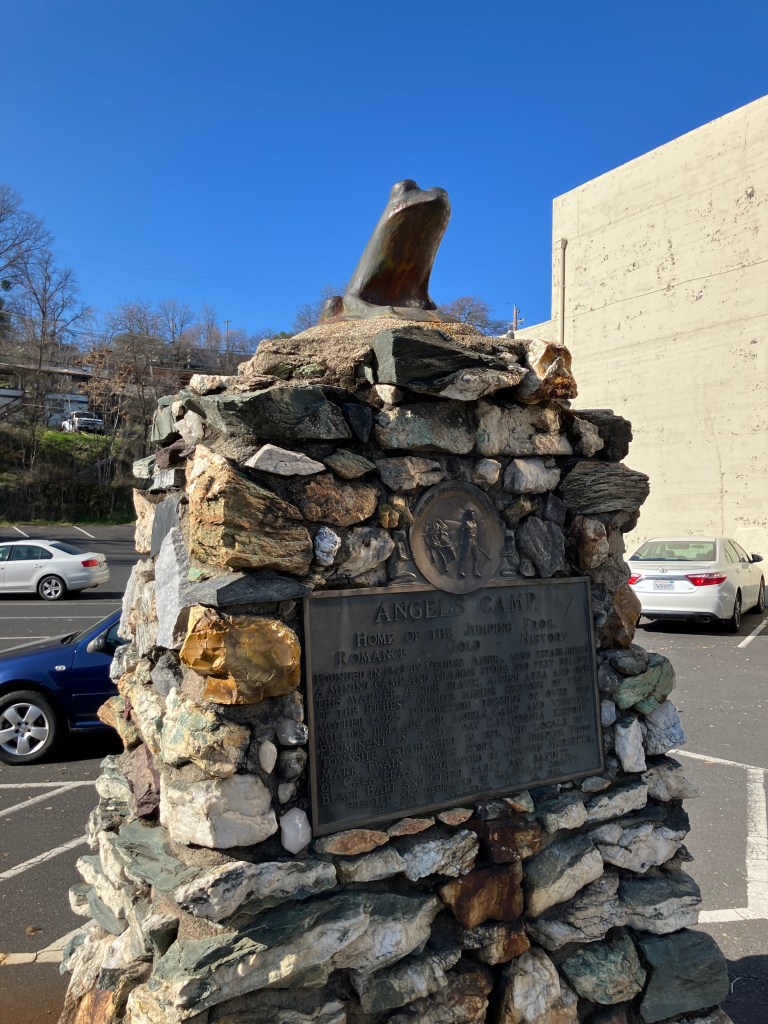
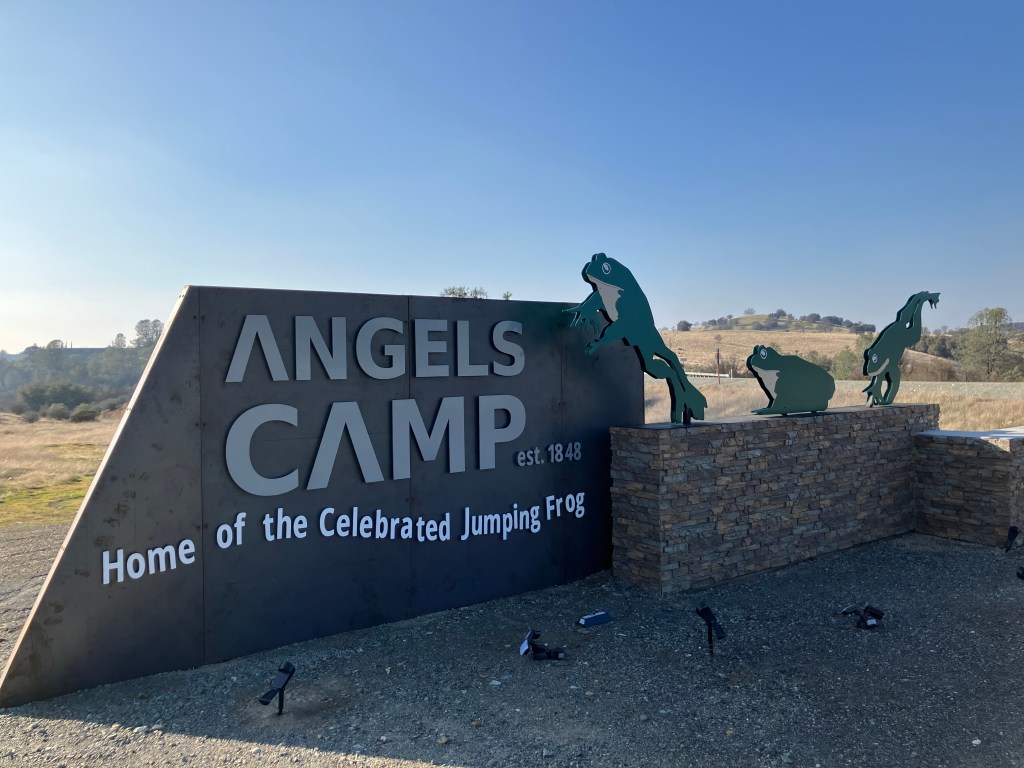
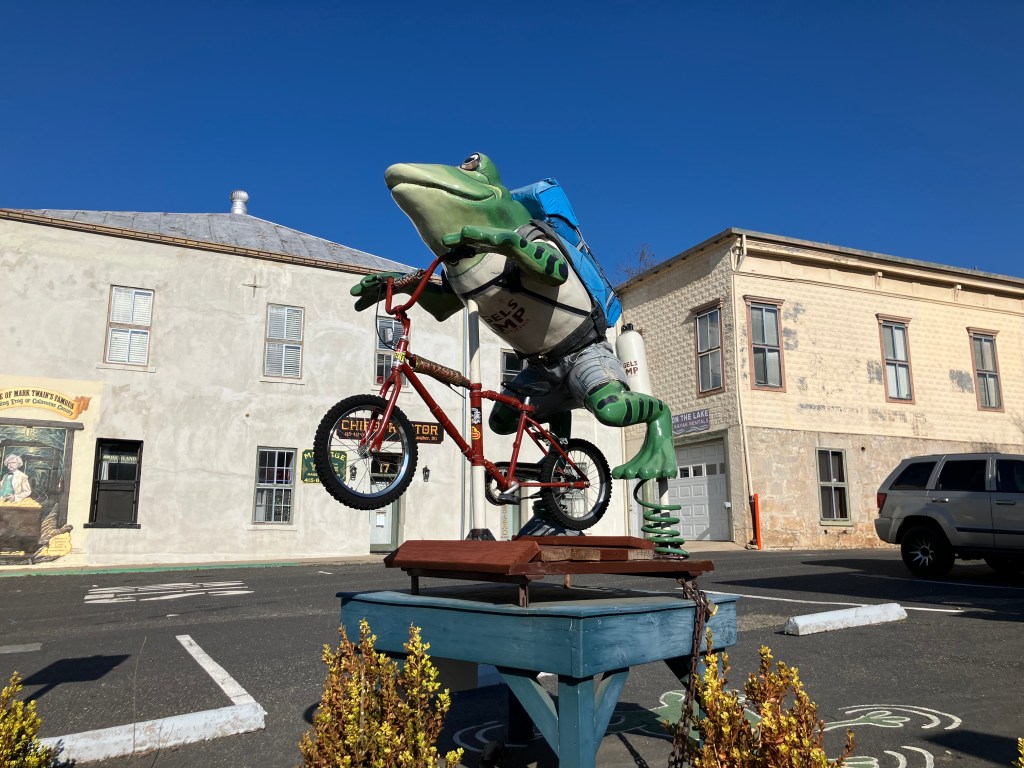
I also appreciate how Angels Camp (pop: 3,700 and the only incorporated city in Calaveras County) has leveraged its purported role in Mark Twain’s story “The Celebrated Jumping Frog of Calaveras County.” The little buggers are everywhere!
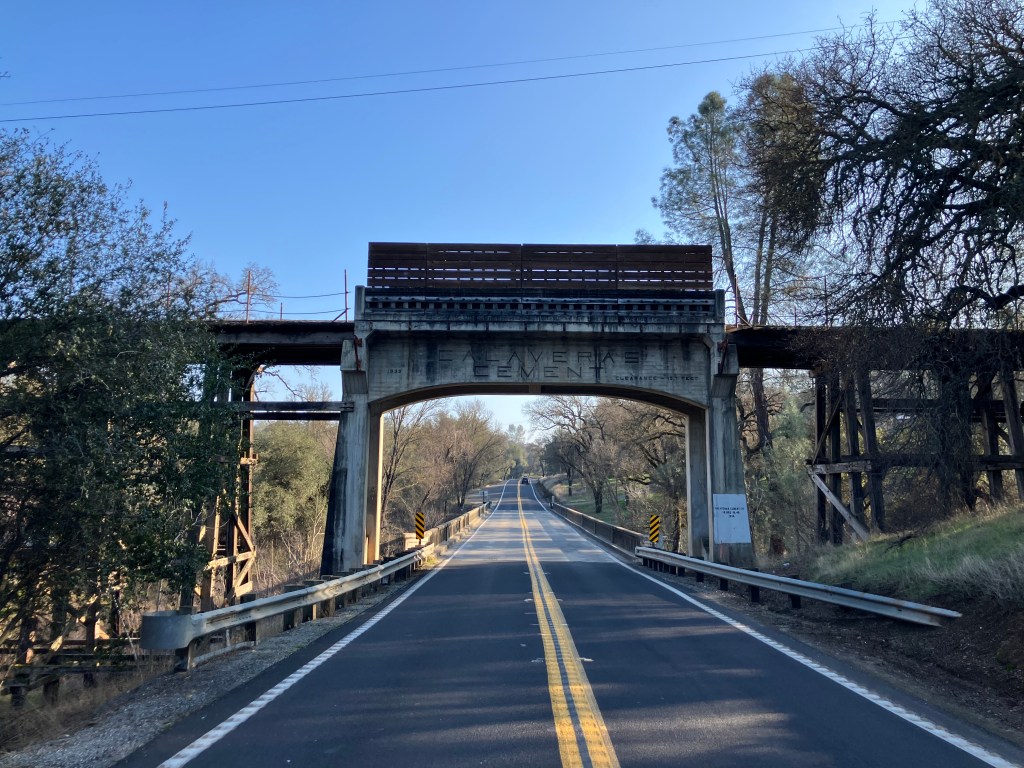
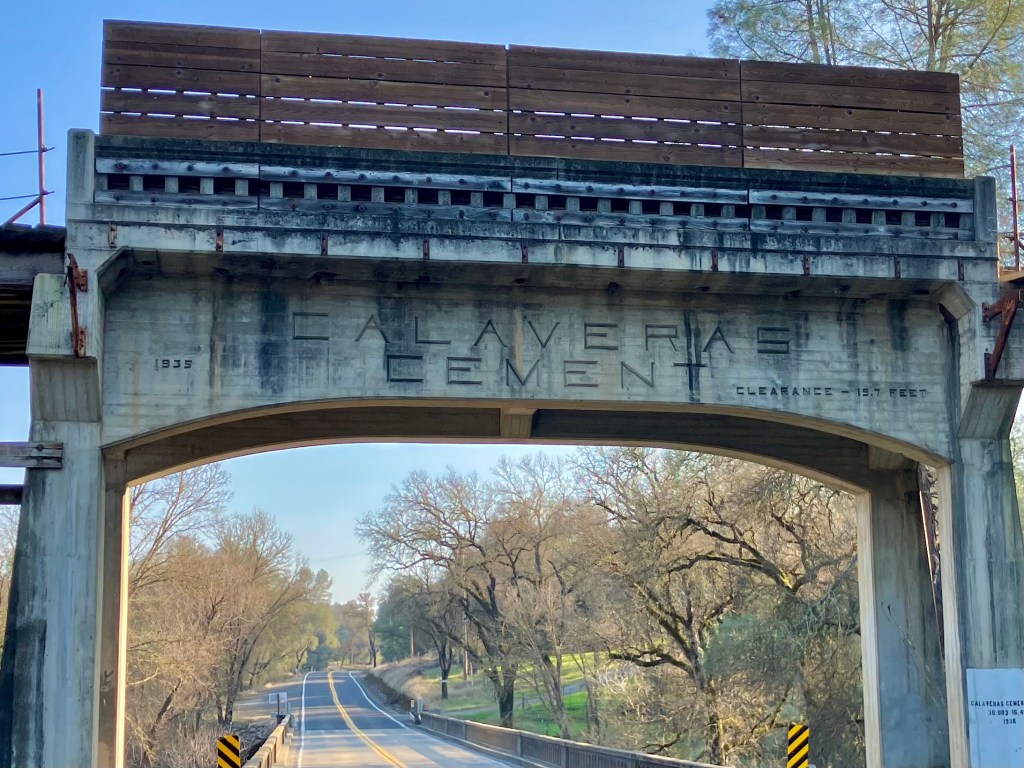
Now, if I had been in charge of that driving app I would have featured a Depression-era railroad bridge that crosses Highway 49 just south of San Andreas. It was part of a railroad short line that connected the Calaveras Cement plant to several local quarries. Calaveras Cement Co. produced material that built dams, freeways, and other infrastructure throughout northern California. The company shut down in 1983 as Chinese imports undercut domestic cement production. But the bridge remains as a proud (and shockingly graffiti-less) relic of a major local industry.
Before we get to the BOTD, let me leave you with a couple of photos of yard art I saw a long the way. These people are true artists.
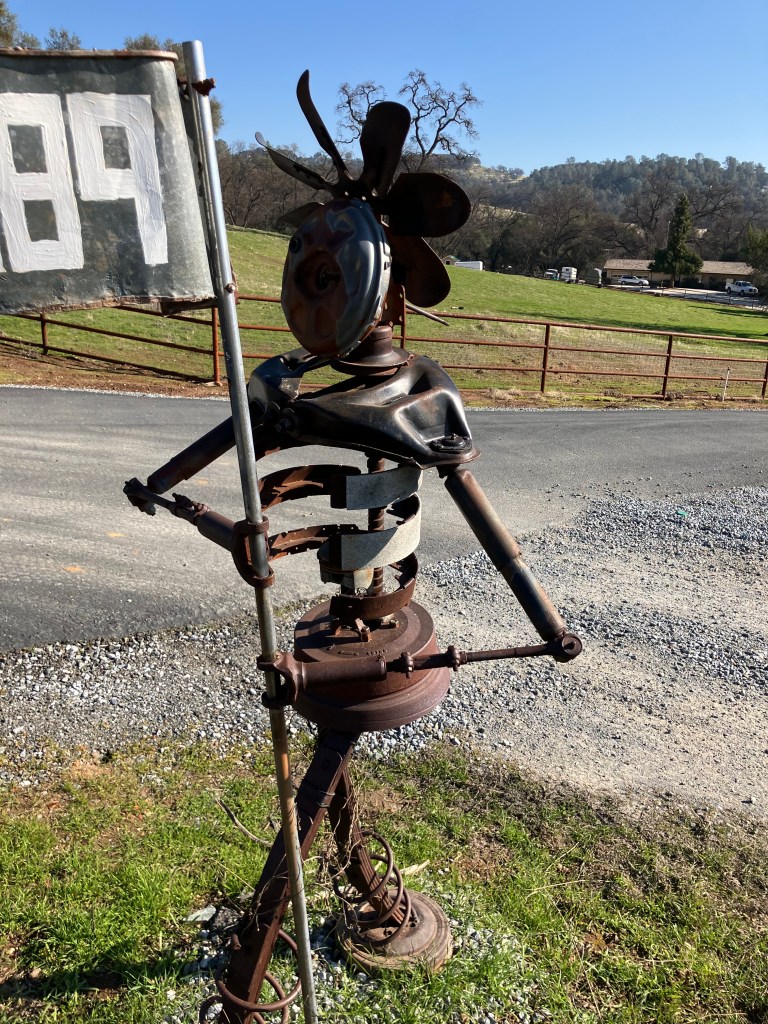
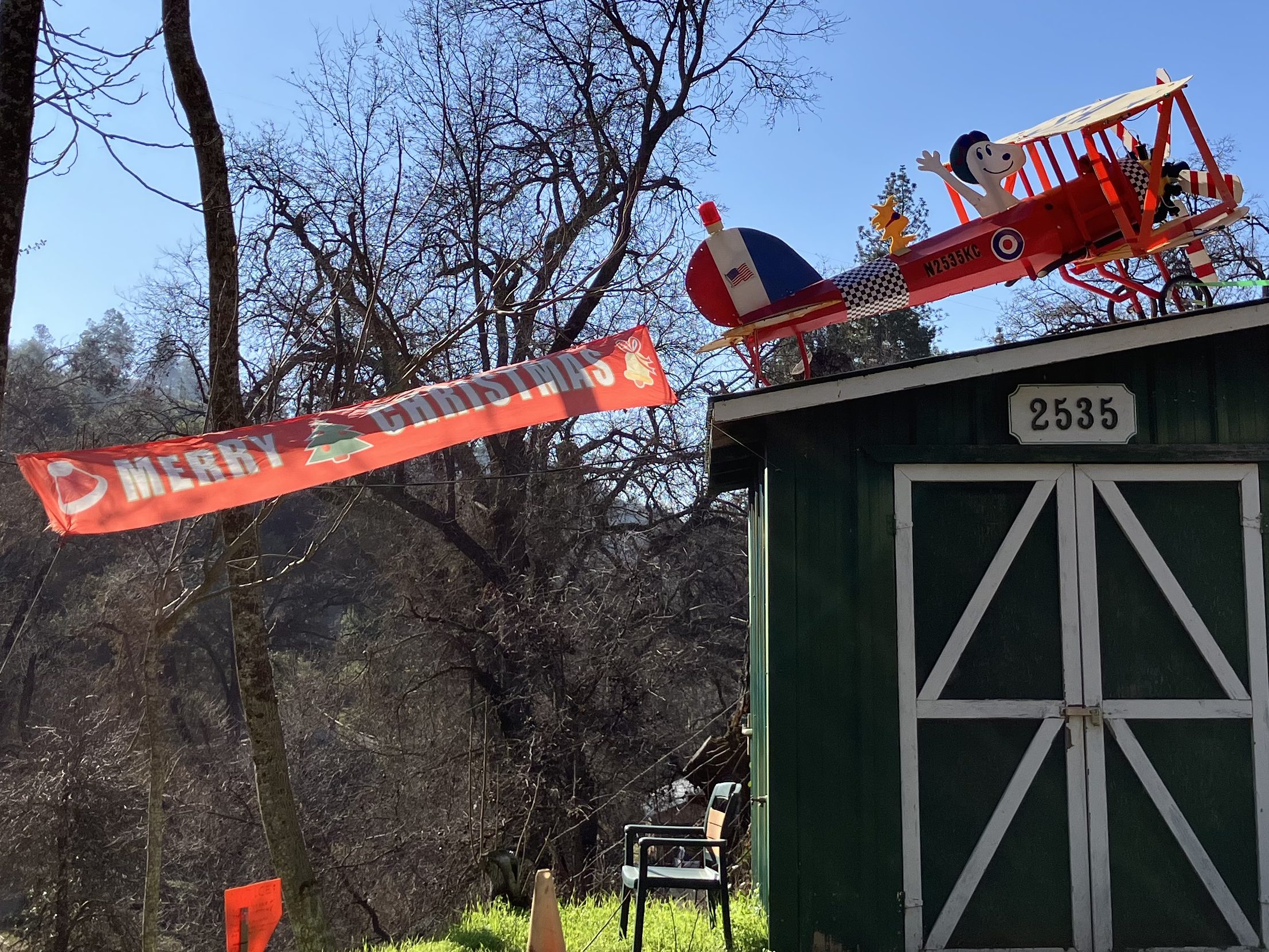
How many different car parts can you identify?
Please don’t tell the Charles Schultz estate about this one.

BEER OF THE DAY

Just because I’m a cranky contrarian, I walked right past all the wine shops in Murphys and snagged myself a brew at Murphy’s Pourhouse. It’s an open, friendly place with outdoor seating and 16 beers on tap. I chose the rare and coveted Anniversary XXVI Strong Ale from Firestone Walker.
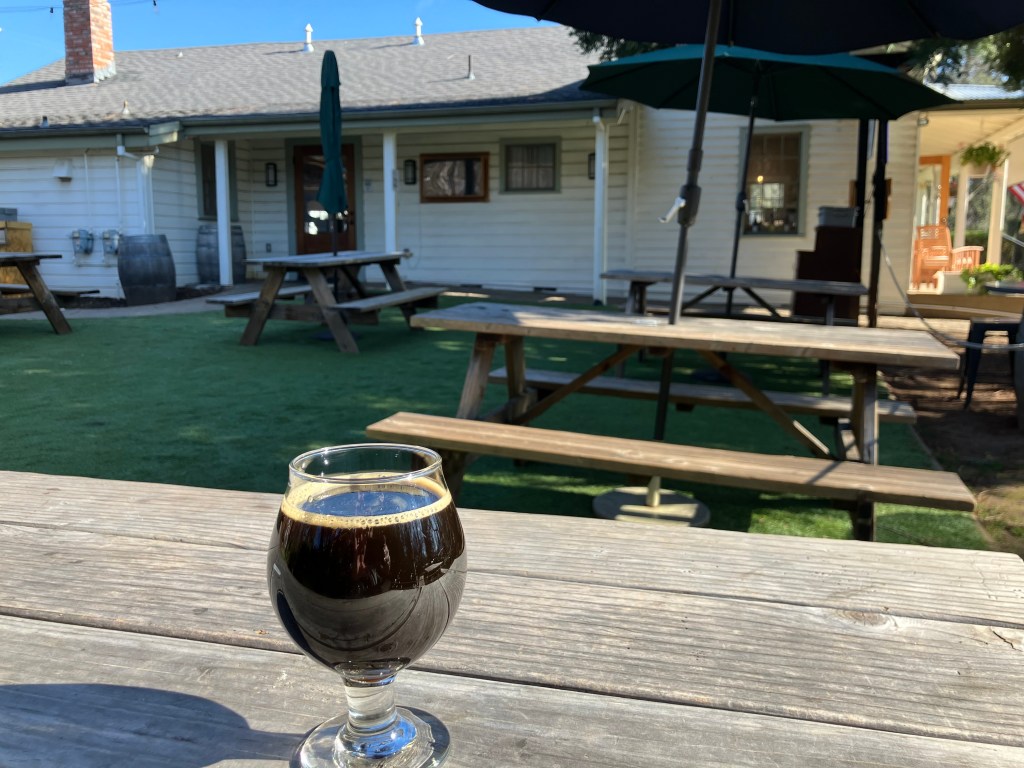
Even if you don’t like dark beer, you should try this. It’s aged in bourbon and brandy barrels, and if that doesn’t guarantee a symphony of flavors, it at least delivers a cacophony of flavors. We’re talking anise, black strap molasses, oak, Christmas fruitcake, semi-sweet chocolate, toasted pecans, vanilla extract, cherry sucrets, Worcestershire sauce, and those spent “grounds for your garden” you get at Starbucks. It’s on the sweet side, but there’s just enough hops to prevent it from becoming cloying. Well-carbonated but no head. 11 percent ABV, so if you are riding a motorcycle and find yourself at Howard’s Mystic Saloon shortly thereafter, have yourself a hot apple cider. I give this beer 5 points out of 5.

MAIL BAG

Faithful reader Peter D pointed out that I walked right past a pun opportunity  in my post about the tailing wheels at the Kennedy Mine. I had explained that, despite their shape, they’re not Ferris wheels. Peter’s response: Of course they aren’t Ferrous Wheels; they’re made of wood! Peter also helpfully includes this newspaper report on the bordellos of Jackson, CA.

Meanwhile, Victor R points out that the Frolic’s delivery of a disassembled courthouse building in 1849 proves that Americans had stuff delivered from China well before Amazon was even a glint in Jeff Bezos’ eye. 

Finally, Sherrill J informs me that the third book in her mystery series discusses mining for gold in southern California–a topic I confess to knowing almost nothing about!
2024 Halloween treats · Halloween · Puns

Taking a Walk on the Wild Cider

That’s the only apple-related pun I could come up with. I mean, there are others, but they’re pretty core-ny.

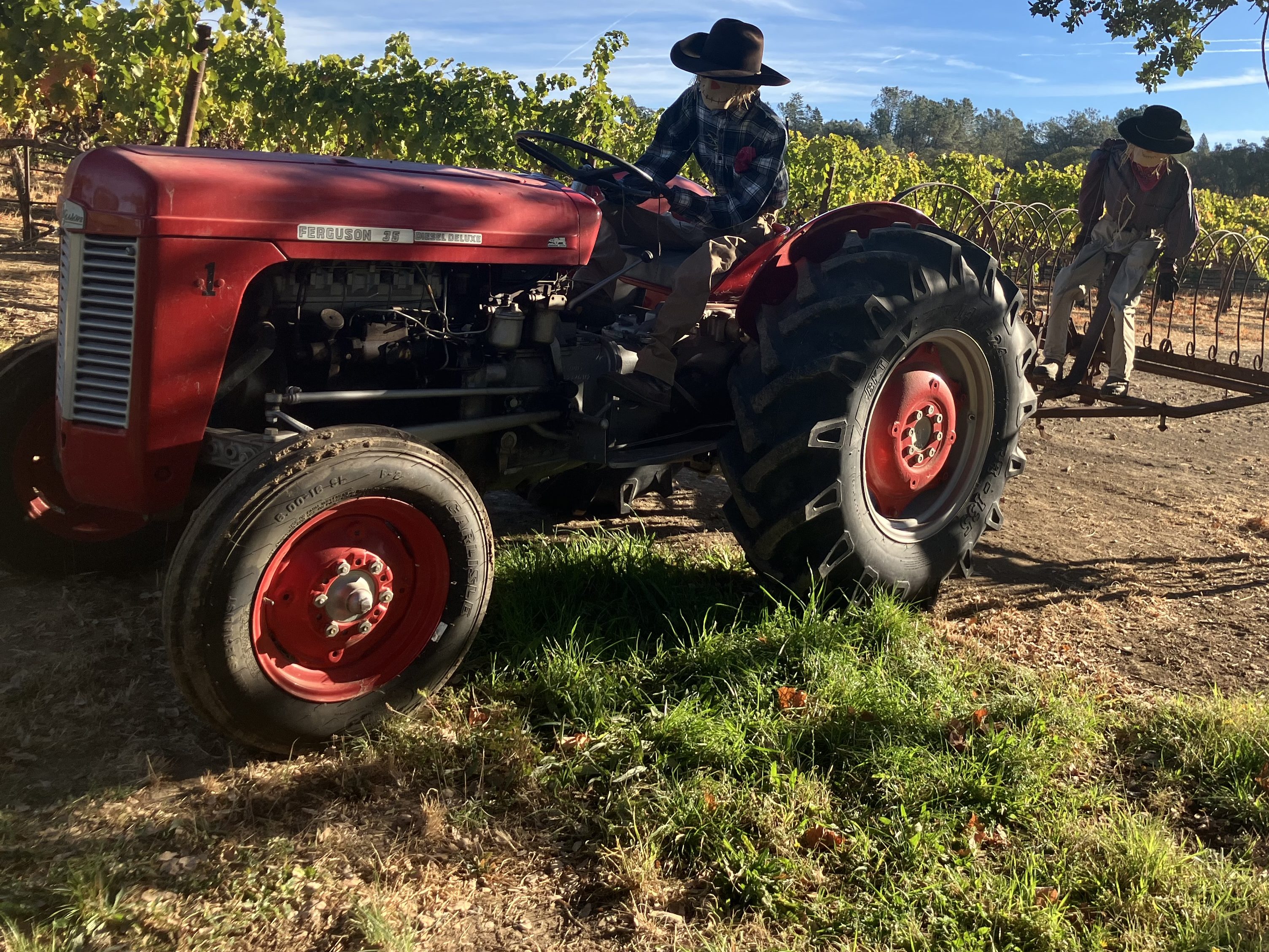
Anyway, whenever I think of October treats, my mind conjures up visions of apples, orchards, and scarecrows.

Down the street from me; yes, we live in the country.

Anyway, today I visited a place called Shorty’s. It’s a family-run bakery and gelateria in Placerville. It’s been open about a year now, and it’s been featured on Good Day Sacramento. The show featured a bubbly interview with owner Morgan Hunter. Check it out:

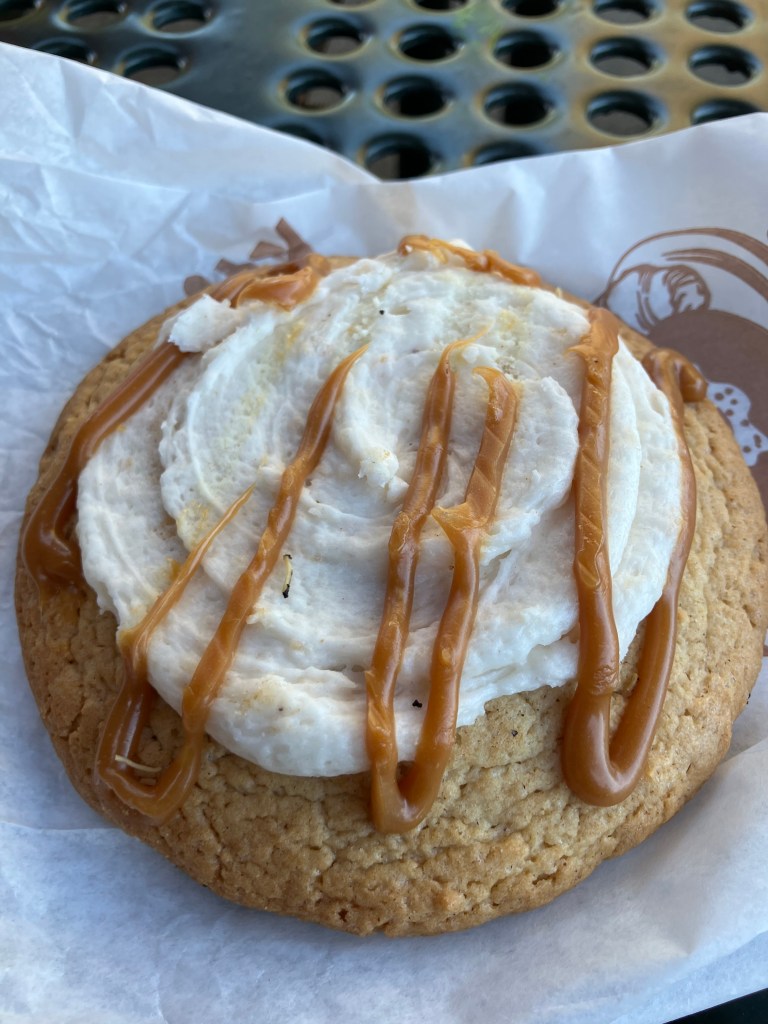
It’s a small shop, but they have a good variety of high-quality, homemade treats. I went for the apple caramel cookie. You know the drill:

Conceptual Soundness: The basic idea here is to convert a caramel apple into cookie form. Caramel apples are one of those fall/Halloween treats that combine classic tastes of fall into a single stick-mounted food that is fun to eat. (Check out my earlier review of a caramel apple here.) This could be hard to actually achieve in cookie form, but I like the idea of it. It deserves the full 4 points.

Appearance of the Treat. It’s an attractive cookie with a large, perfectly-baked cookie base, a generous topping of butter cream frosting, and a playful drizzle of caramel sauce. It looking tempting and fun. My only complaint is that the caramel sauce got a little mussed when they shoved it into a little paper sack. Seems a small plastic or cardboard box would have been a better way to transport a treat that’s as attractive as this one. I’m going to ding it a point for that. 3 points.

Great cookie, but note the caramel damage.

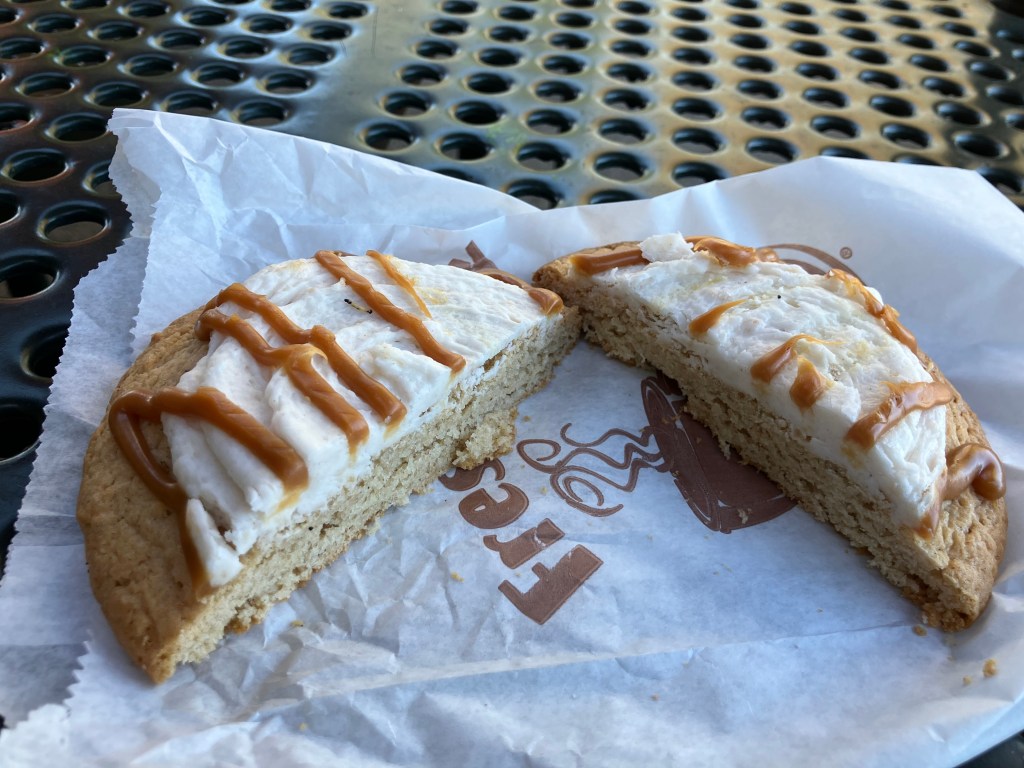
Taste: This reminds me of a cross between a caramel apple and a slice of apple pie. Either way, it’s delicious. The cookie base is soft, with a consistency almost of cake. The cookie dough is mixed with apple pie spices, which definitely come through in each bite. On top of the cookie is a rich butter cream frosting which has a thick consistency almost like cream cheese. One of the bakers told me it’s made with house-made, fresh apple juice, which helps to evoke the apple-on-a-stick experience. On top of the frosting they’ve drizzled a sweet caramel sauce that adds depth to the taste experience. Put it all together and this is a solid four-star cookie.

No stick needed.

Value: Five bucks for a cookie seems a bit steep. But it’s a very large cookie, it’s hand-made in-house, and the ingredients are obviously fresh. Let’s give it a mid-range score of 2 points for value.

Total Treat Score: 13 points out of 16 points. If you find yourself in Placerville looking for soul food and a place to eat, swing by Shorty’s for a cookie and/or some gelato!

2024 Halloween treats · Breweries · California history · cemeteries · Halloween · Puns

Ossuaries

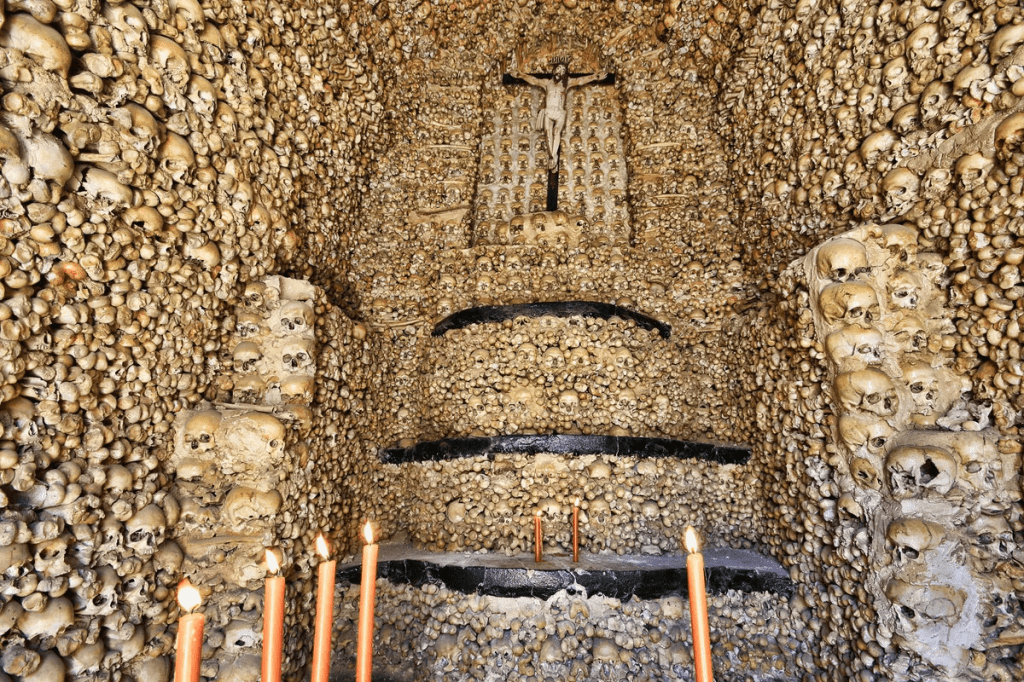
This isn’t very humerus.

Just over a year ago the Missus and I visited the town of Evora in Portugal. One particular vision from that trip is seared into my memory: the Capela dos Ossos (Chapel of the Bones). It’s a small, 16th-century chapel that adjoins the Church of St Francis, and its interior walls and ceiling are decorated (if that’s the word) with the bones from about 5,000 corpses. It’s said that the Franciscan friars built the chapel using exhumed skeletons from local cemeteries.

This is what you’d call an ossuary–a building or container that holds skeletal remains. Why did the friars put the bones on display rather than burying them? The answer, I think, is found in a poem that hangs within the chapel. It’s attributed to the village priest, Fr. António da Ascenção Teles, and here’s an English translation:

Where are you going in such a hurry, traveler?
Pause…do not advance your travel.
You have no greater concern than this one:
That which is now before your eyes.

Recall how many have passed from this world,
Reflect on your similar end.
There is good reason to do so;
If only all did the same.

Ponder, you so influenced by fate,
Among the many concerns of the world,
So little do you reflect on death.

If by chance you glance at this place,
Stop … for the sake of your journey,
The longer you pause, the further on your journey you will be.

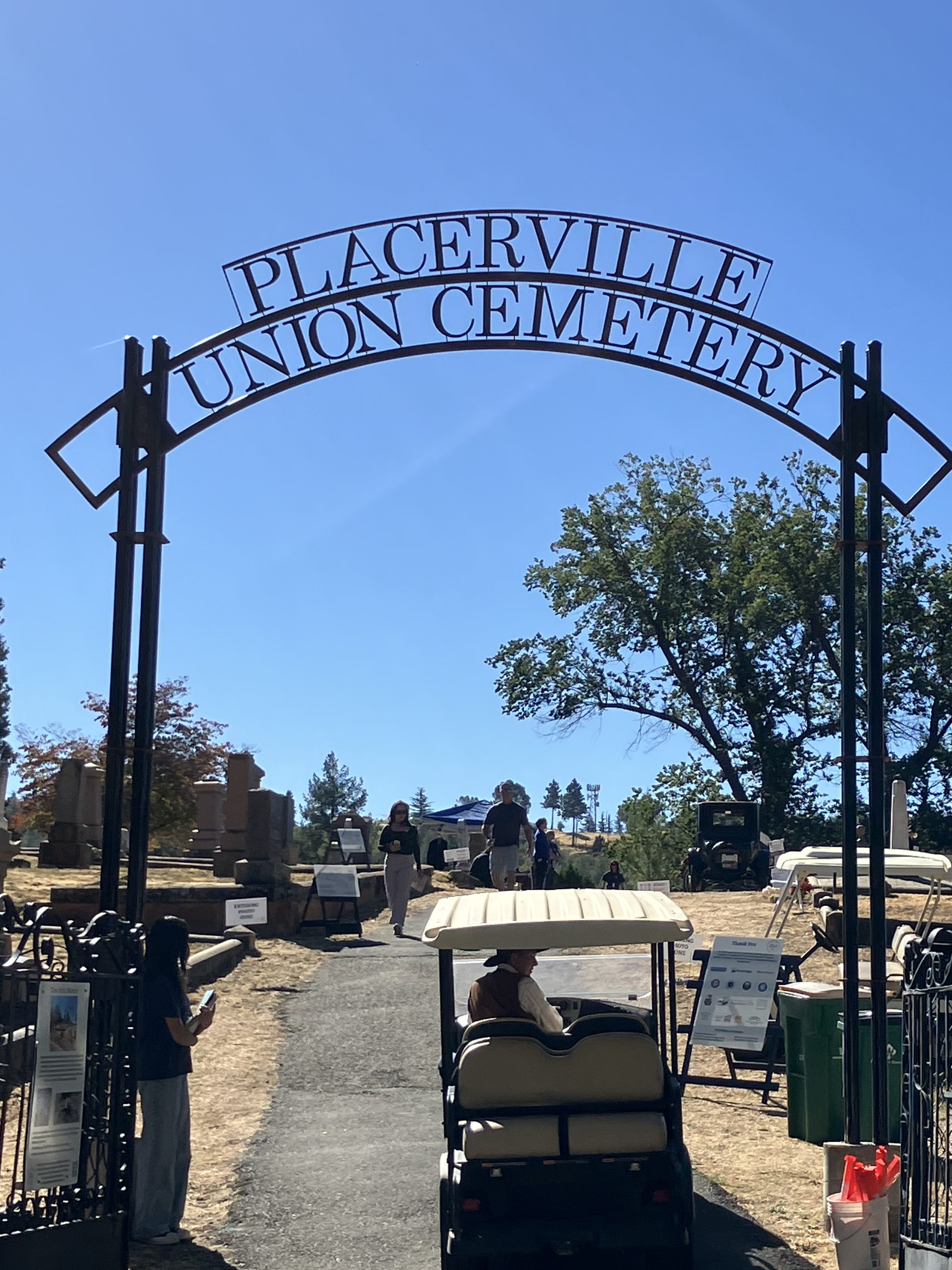
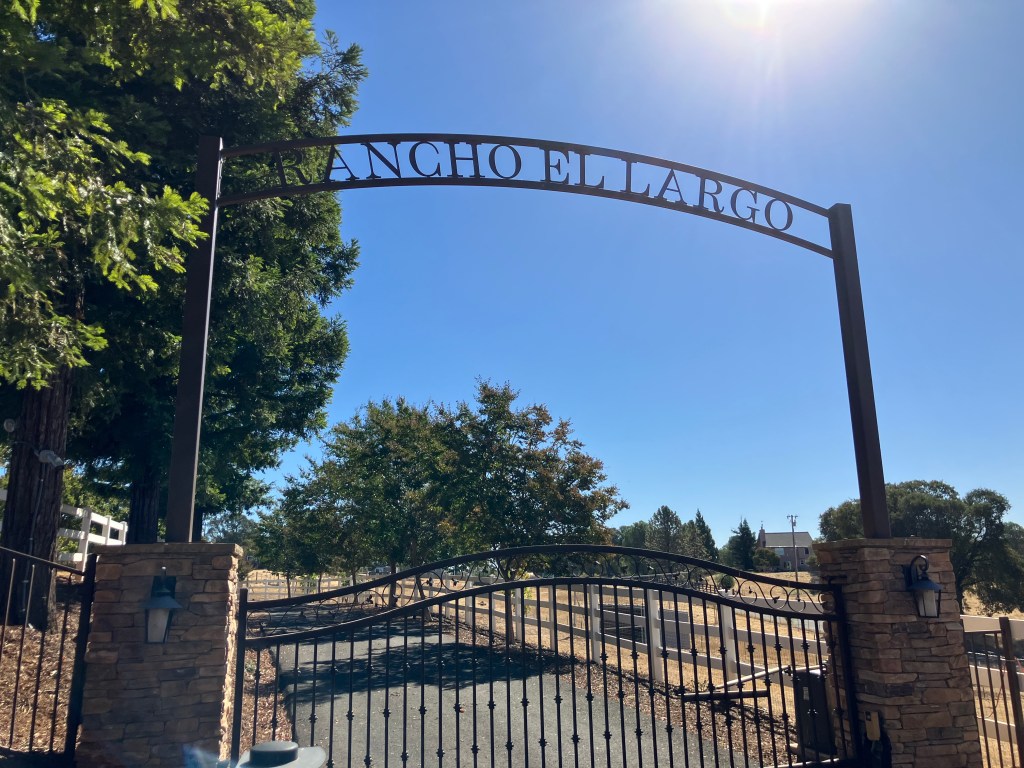
Today I visited another ossuary of sorts: Placerville Union Cemetery. The cemetery was founded in 1871, and is said to be haunted. (But what graveyard isn’t said to be haunted?) Notable (to me at least) is that the cemetery’s arched gateway was designed and constructed by the same guy who designed and constructed the one at my property.

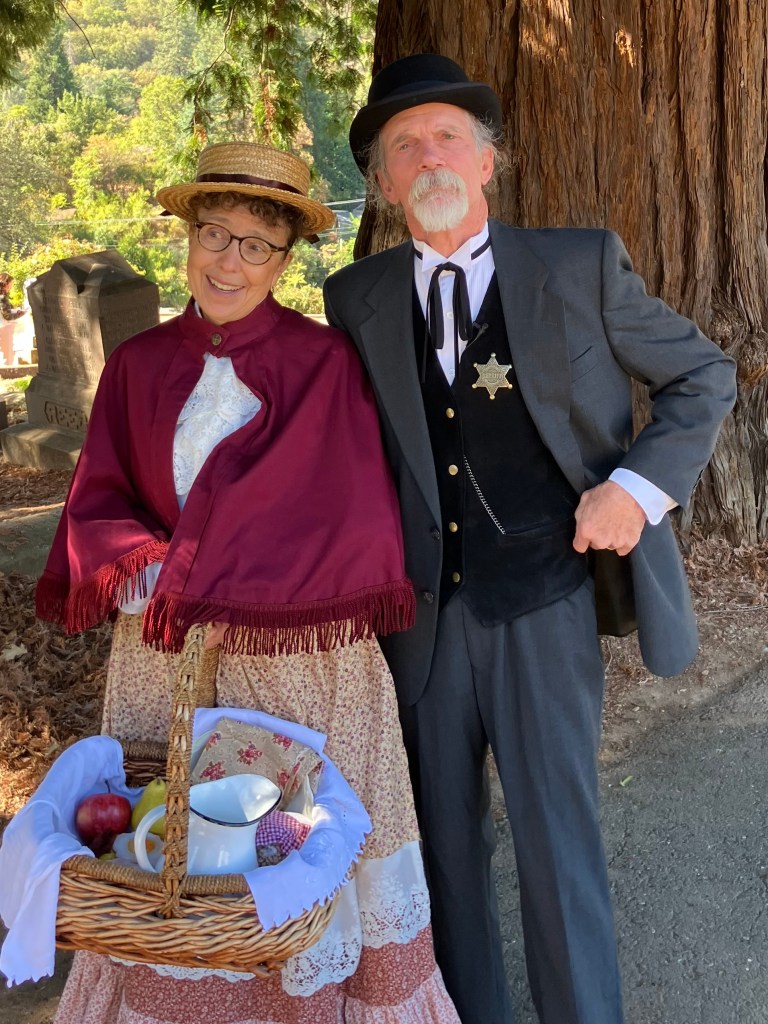
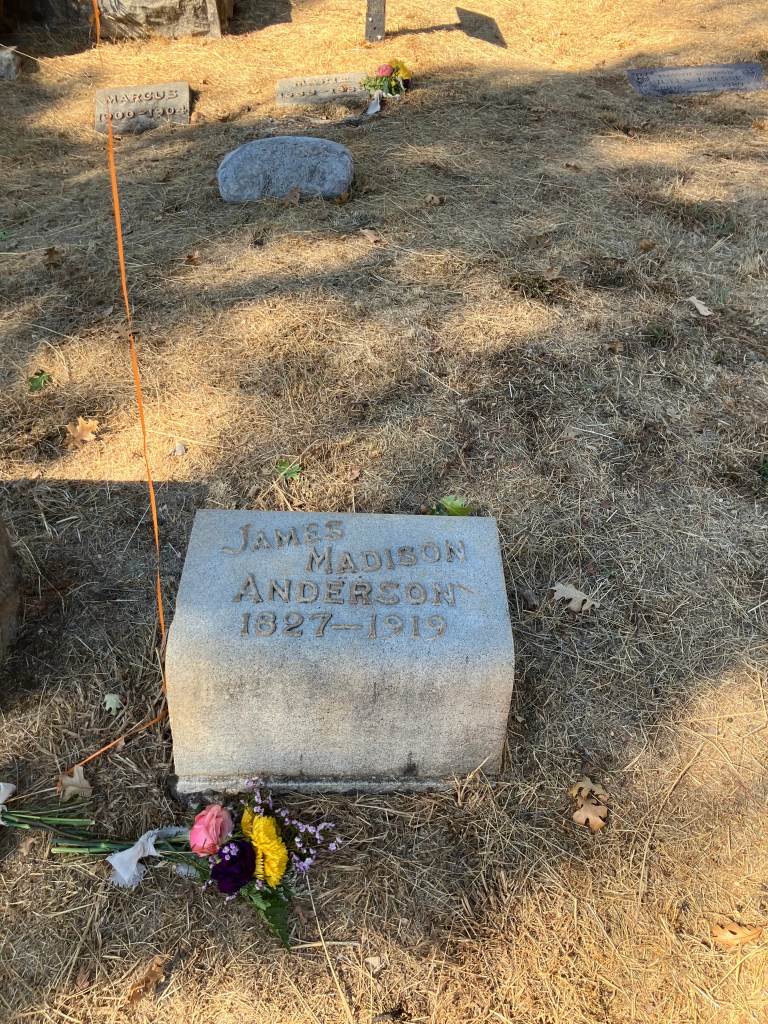
This morning the cemetery grounds were haunted by actors portraying key historical figures from the region. I watched a performance by Dan Trainor who portrayed Sheriff James Madison Anderson. Sheriff Anderson had unsuccessfully tried to halt Placerville’s last hangings in 1889. It’s a gut-wrenching story, as Sheriff Madison ultimately was obligated to pull the lever that executed two men he’d come to respect. (To this day Placerville continues to embrace its official nickname “Old Hangtown”.)

Dan and Cheryl Trainor, as Sheriff Anderson and his good wife.
Sheriff Anderson’s final resting place, just yards from Dan’s re-enactment.

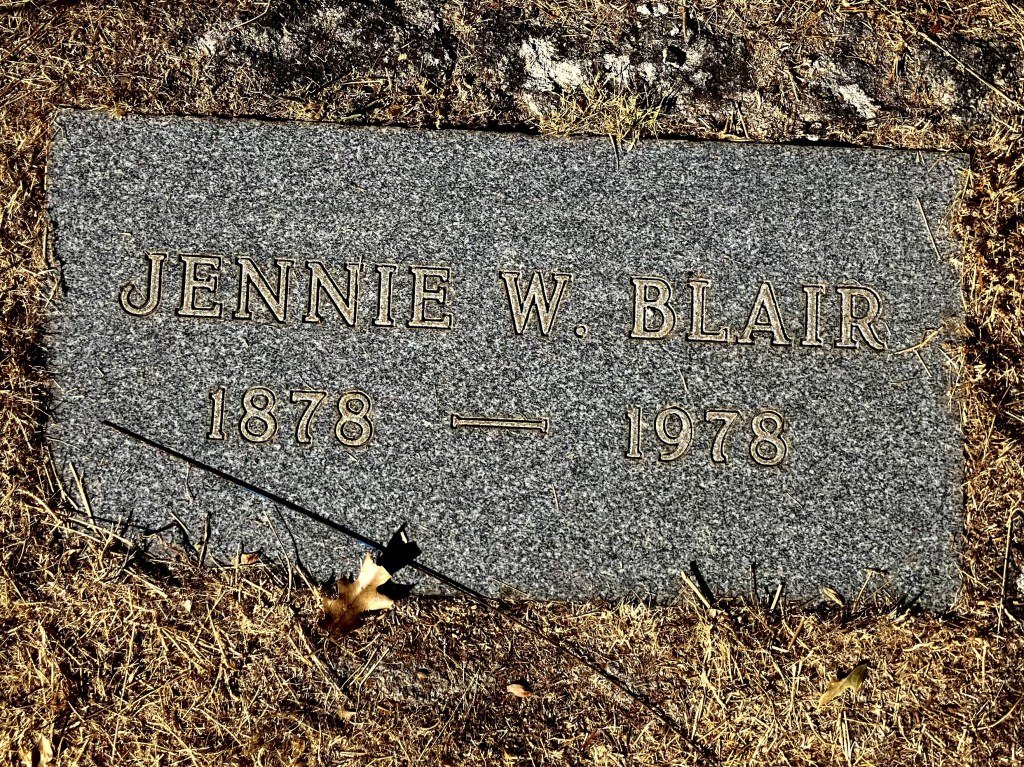
While I was watching Dan’s performance, I was standing near a stone that caught my interest. The Blair family emigrated to El Dorado County from Scotland in 1882, and their descendants continue to live in the area. Jennie Blair, next to whose marker I was standing, lived a full century that bridged many different eras in Placerville.

Born before the Statue of Liberty; lived to experience disco.

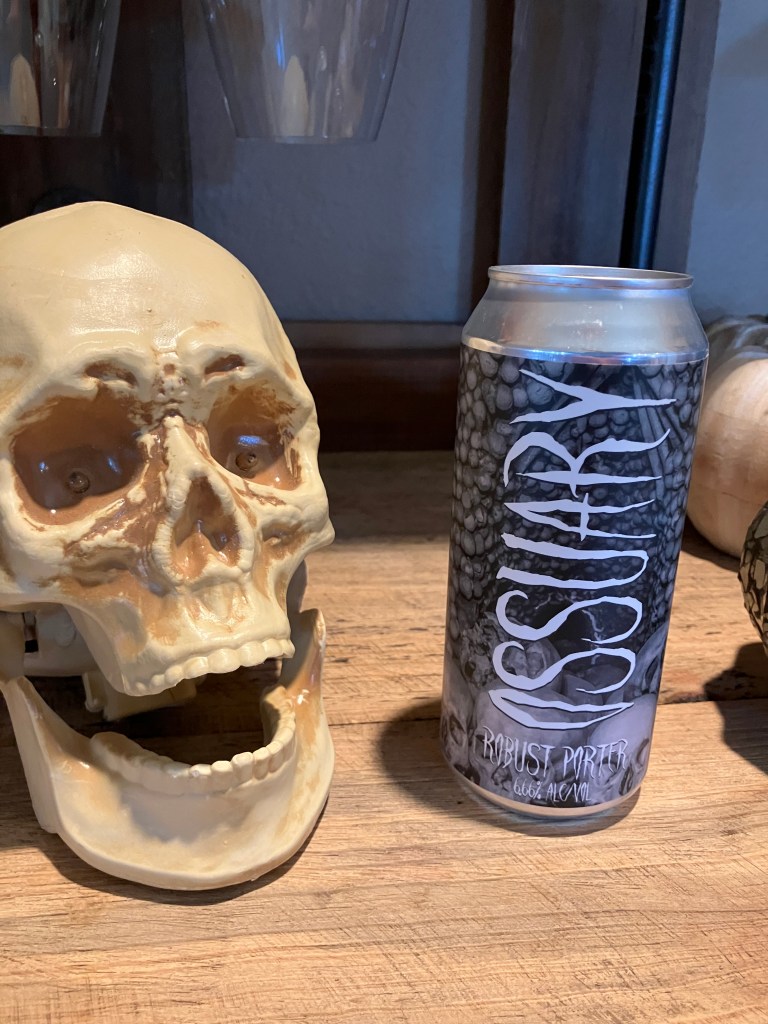
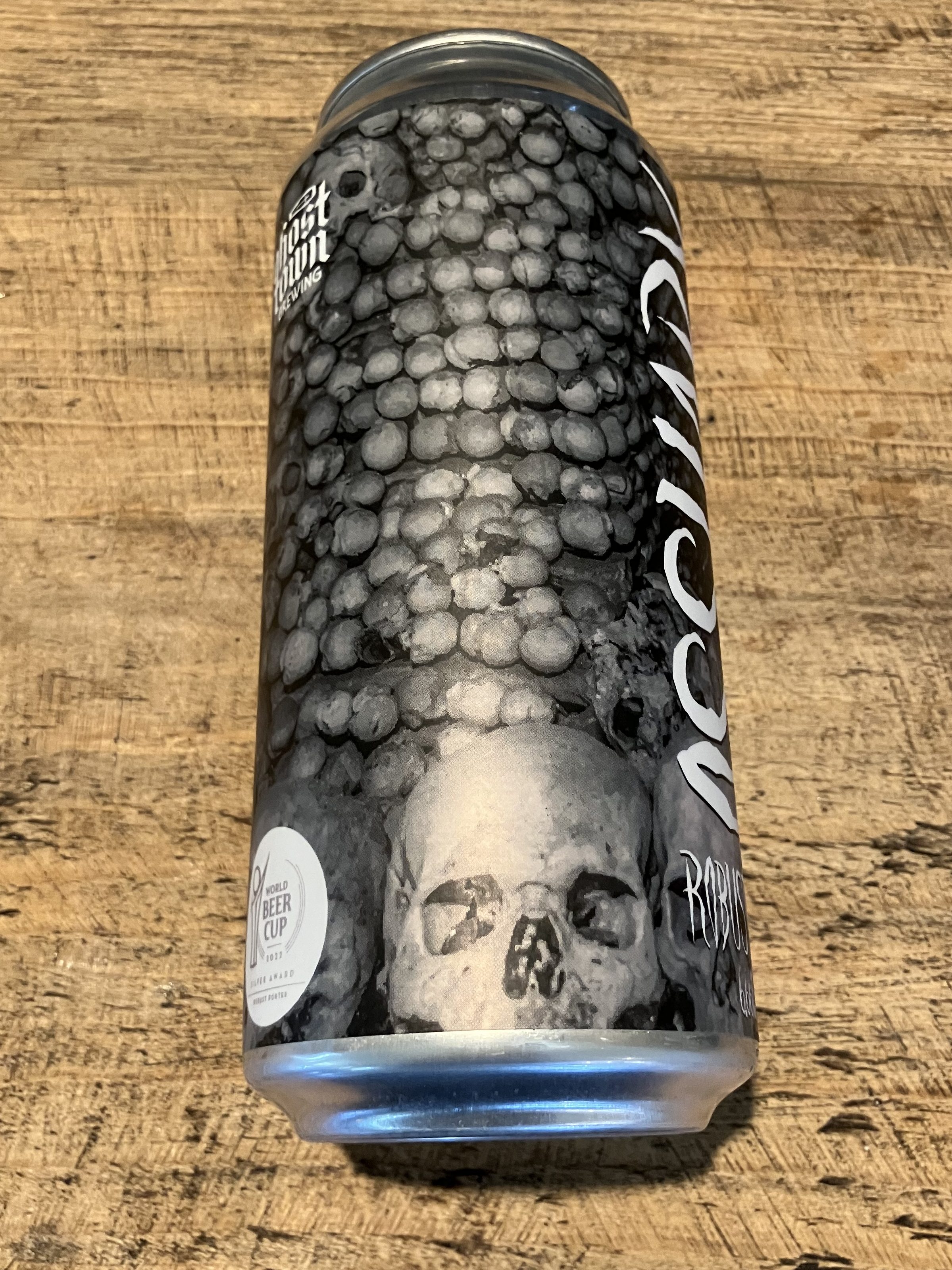
But let’s get back to Ossuaries. Look what I found at the local liquor store:

Containing the mortal remains of myriad hops and barleycorns.

I’d never heard of Ghost Town Brewing before, but evidently it’s a popular brewery in west Oakland, California. The name “Ghost Town” is supposedly an old nickname for the brewery’s neighborhood, which ages ago hosted two coffin manufacturing operations. It’s claimed the brewery itself resides in one of those coffin plants, but details are sketchy. Still, you have to admit this is a promising backstory for a Halloween libation review. You can read more about Ghost Town Brewing, and how it was founded by a metal band as their side hustle, here.

Note the coffin.

But for now, let’s see how this stacks up on our Treat Template (TM).

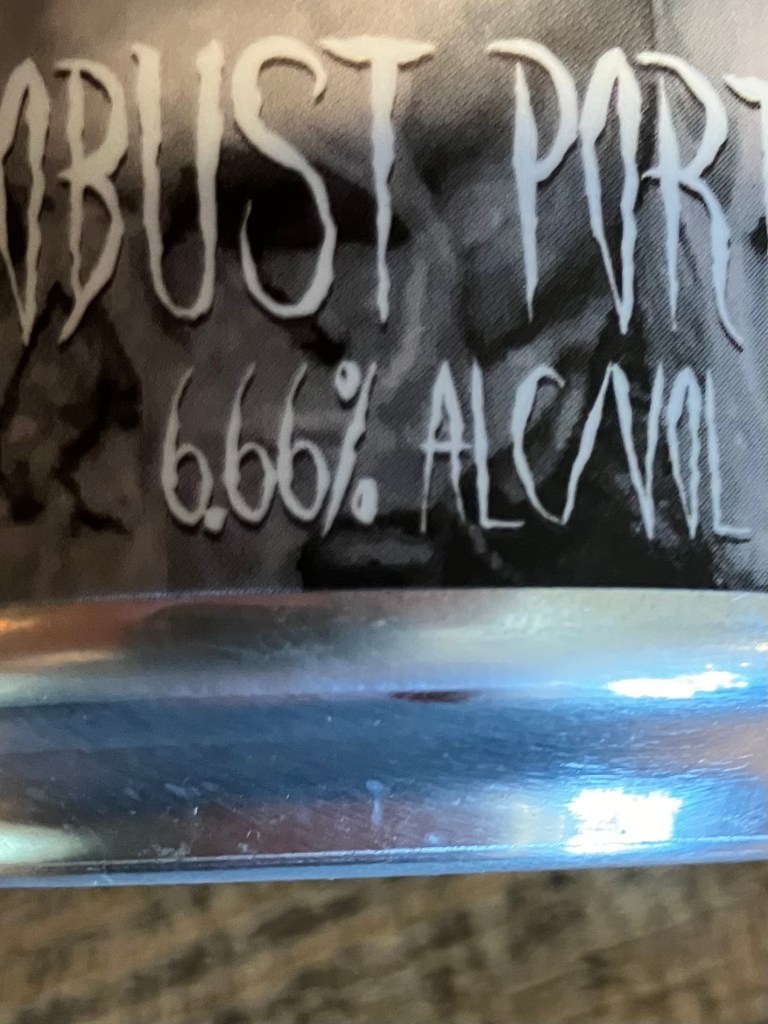
Conceptual Soundness: As noted above, Ghost Town Brewing has a spooky backstory, and all their beers are named and packaged to tap into (ha!) that same vibe. The main concept here is to make a “robust porter” — that is, somewhat darker, more flavorful, or more potent than your average porter. Recognizing that Ghost Town’s jam seems to be graveyards/coffins/death and dare I say the underworld, it seems they’ve reverse-engineered the ABV of this porter to match their spooky vibe:

Number of the Beast.

And in case the name “Ossuary” and the “666” don’t get the message across, they emblazon the can with a photo that may well have been taken from that ossuary in Evora that I featured at the top of this post.

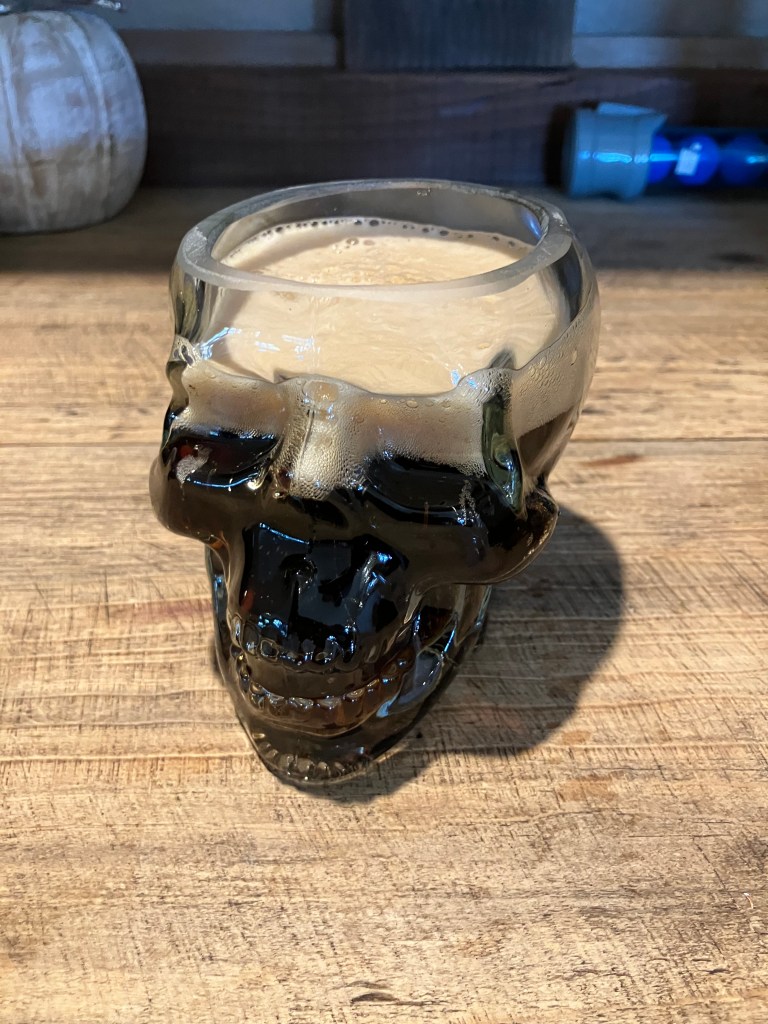
It’s a beer with lots of head. (Har.)

Overall, it’s a sound (albeit simple) concept: Make a robust porter and surround it with dark imagery. 4 points. (I’m sure this score is influenced by the fact that, as a rule, I like porters.)

Appearance: Like most porters, it’s dark brown with a respectable tan head. It’s shot through with a bit a ruby-gold. It presents as a very solid and meaty drink for a cold October night. Coupled with the graphics on the can, I think this has earned an appearance score somewhere between 3 and 4 points. Let’s give it 3.5 points.

Taste: This beer has a complex range of tastes. It’s very malty, as expected, and the hop bitterness is reined in, as you’d expect from a porter. But swirl it over your tongue and you catch hints of Peet’s coffee, graham crackers, dark chocolate, mild pipe tobacco, burned pizza crust, and fennel. Notwithstanding the 16-oz container, this is a beer meant for sipping. You want to savory the flavors; pairing it with some strong cheese, I imagine, would really help bring out those flavors. This is delicious. This is 4 points.

Value: A four-pack set me back 20 bucks. That’s five dollars a beer, which is on the steep end. I might expect that for an imperial stout, but at “6.66%” ABV, this can’t really justify such a high price point. I give it 2 points.

Total Treat Score: 13.5 points. Highly recommend you drink one on the next dark and stormy night. Or as you watch this 1970 short film:

MAIL BAG

Loyal reader Katelyn P shared this video in reference to my Oct 1 post about Starbucks’ Raccoon Pop:

Would this qualify as cannibalism?
2024 Halloween treats · Halloween · Puns

It’s Easy Being Green

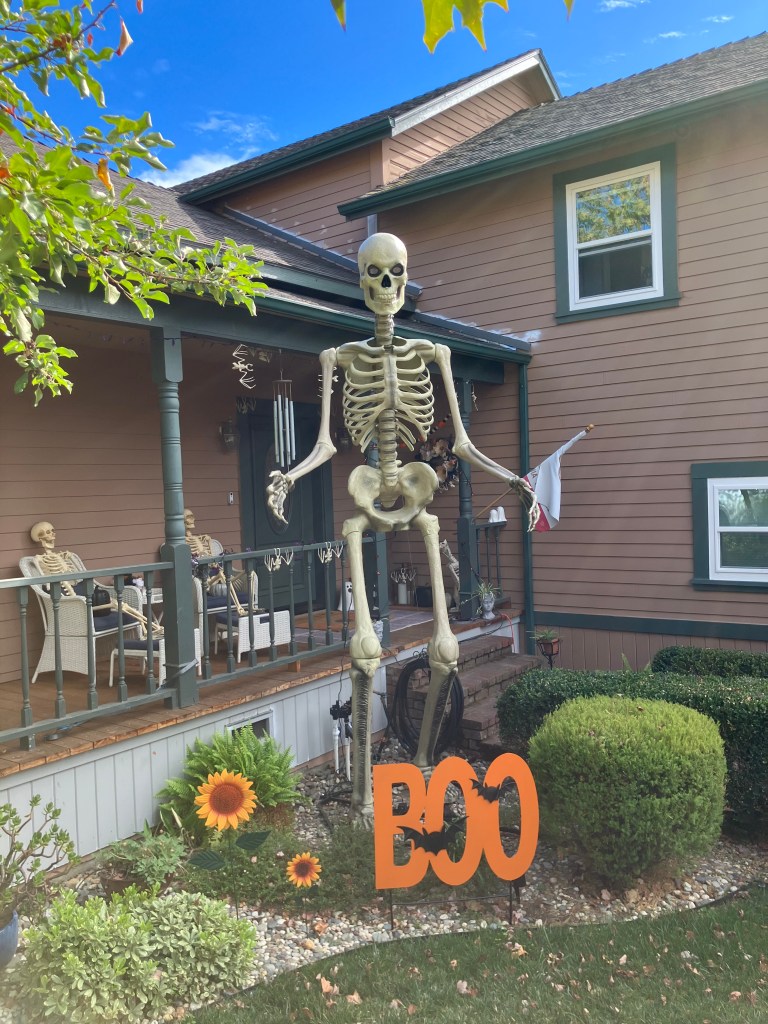
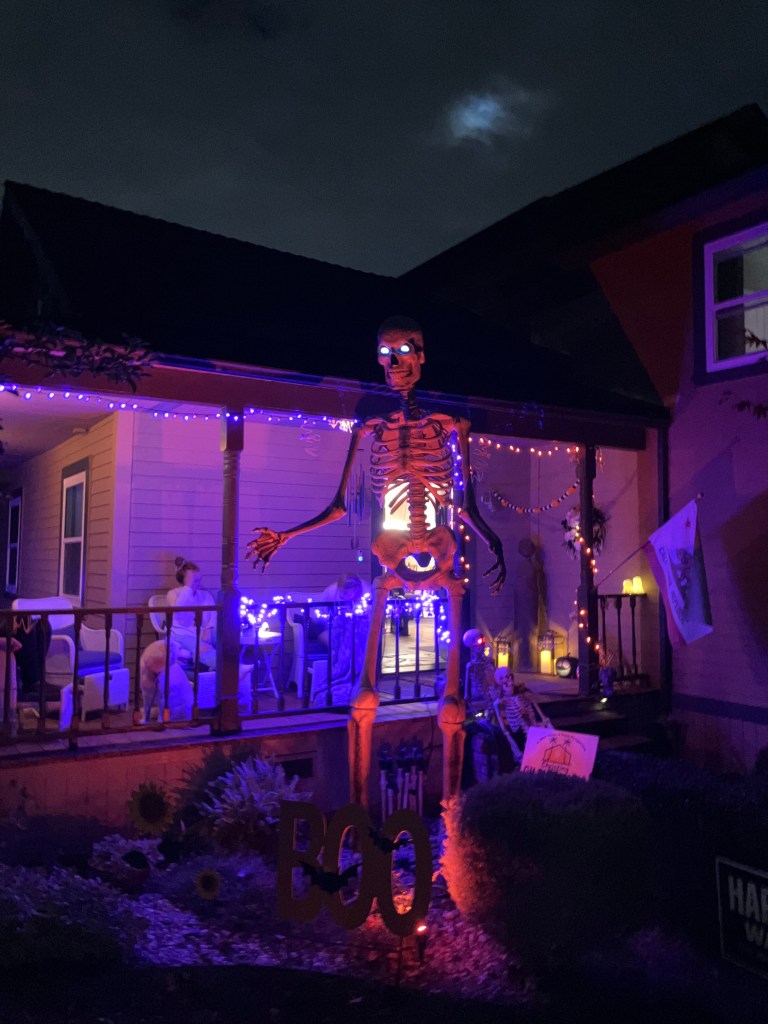
Today’s Halloween-themed spotting is at the home of son Ian and daughter-in-law Katelyn. It’s a 12-foot skeleton that makes even me feel short. Note his smaller companions lounging on the porch. What, that’s not scary enough for you? Then check out the scene at night:

Even more spooky: The skeletons on the porch have fleshed out!
Note how the scene becomes spookier with the addition of unexpected color–in this case, the red and blue light that washes over the whole scene.

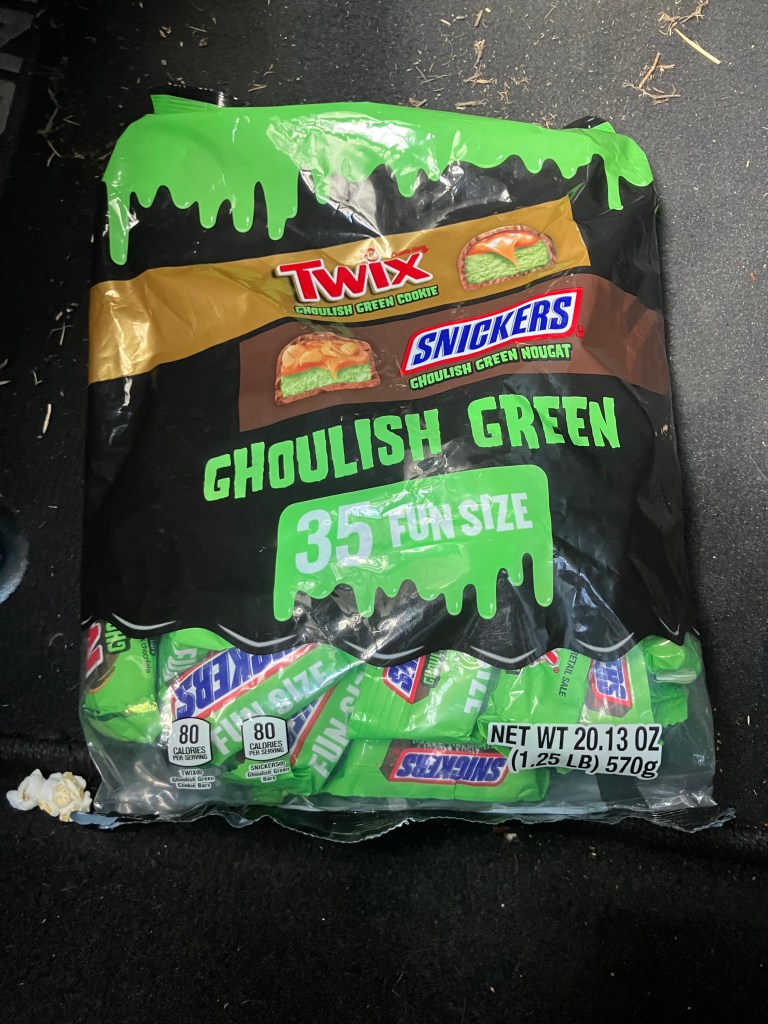
The folks at Mars, Inc. seem to understand this principle, and have applied it to the inveterate Snickers bar. Specifically, in an effort to dress up the candy bar for Halloween, they have changed the color of the nougat from light tan to “ghoulish green.” Let’s determine whether this is a trick or a treat.

Conceptual Soundness: Many food purveyors will try to goose sales by giving their product a holiday tweak. Examples include red and green M&Ms, green beer, and eggnog ice cream. Such moves are intended to renew interest in the product and create a sense of ephemeral exlusivity. In this case, Mars has taken a classic candy bar that everyone knows well, and added green food coloring to the nougat. It’s definitely different and does radiate a bit of a Halloween vibe. That’s worth 3 points.

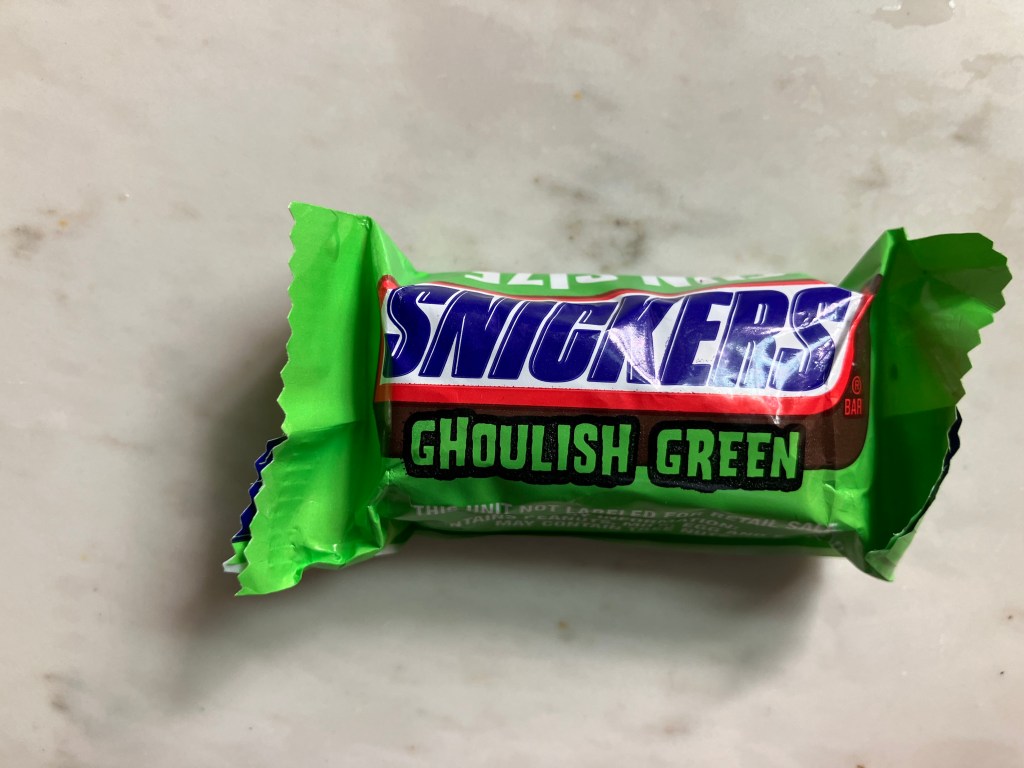
Appearance of the Treat: The most noticeable difference is the green wrapper. And in case you’re colorblind, they print the words “Ghoulish Green” just under the traditional Snickers logo. Now, I’m not sure there’s anything “ghoulish” about green. I assume the word choice had more to do with alliteration.

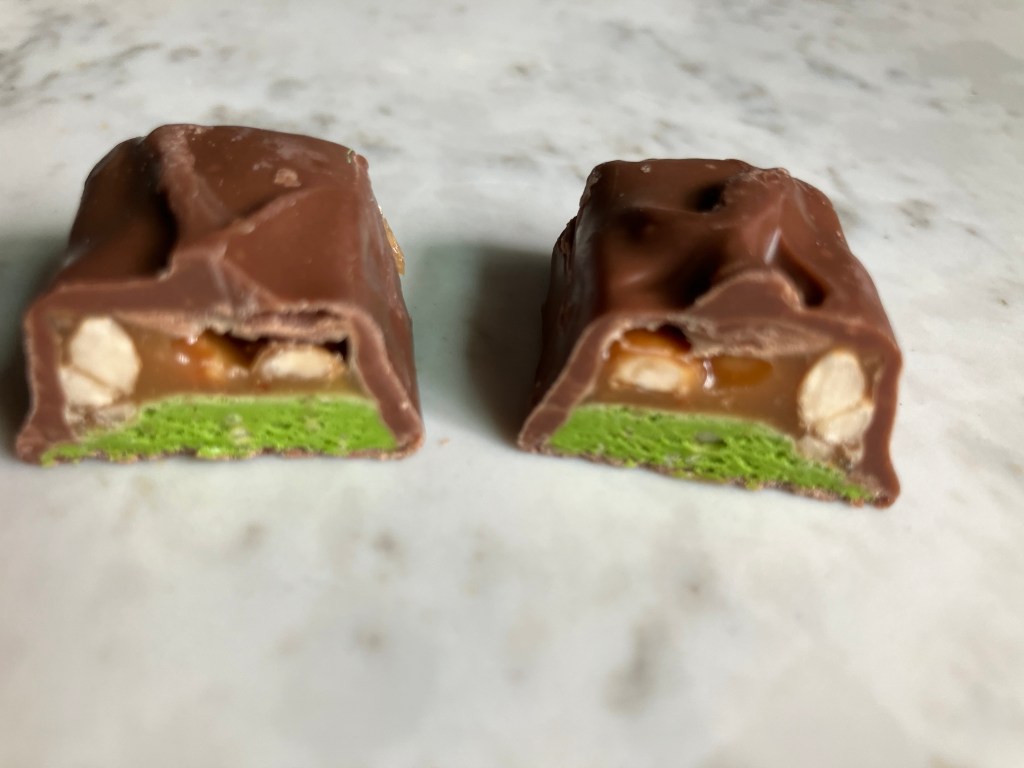
If you remove the wrapper, the candy bar looks identical to any other Snickers bar you’ve eaten. But bite into it (or cut it in half, as I did) and you see that the nougat is the exact same shade of green as the wrapper.

Now, these are “fun size” bars, which means they’re less than an ounce. You probably will eat it in two bites. So that leaves just those few moments between the first and second bite to admire (or even notice) the green nougat. Still, it’s novel, and the color is truly putrid. As a Halloween gag (if you’ll pardon the pun), it’s worth 3 points.

Taste: These taste exactly the same as any other Snicker’s bar. The “ghoulish green” nougat has no impact on the flavor. Now, in my opinion, the Snickers bar is a delicious candy, with the ideal balance of caramel, nougat, chocolate, and peanuts. But if you’re going to hype a candy as being redesigned for Halloween, shouldn’t you also give it a new taste? Maybe a little mint, which is suggested by the green color? Or substitute pistachios for the peanuts? The people at Mars missed a huge opportunity here. Treats sporting a different look should taste different.

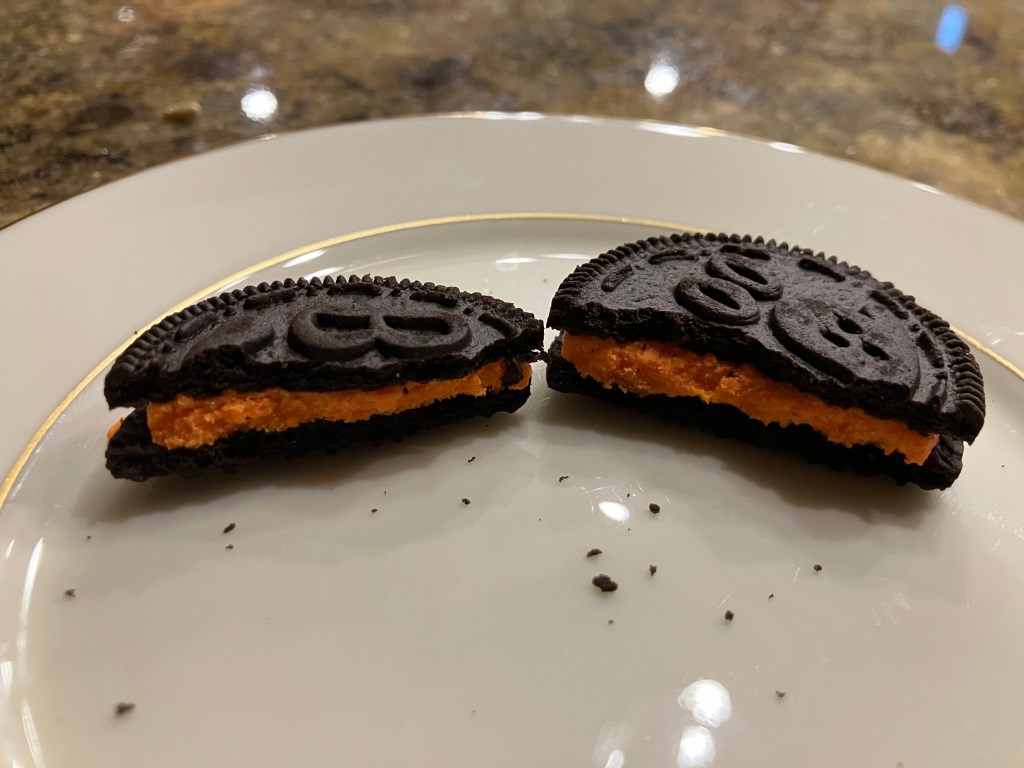
Now, I should probably admit here that, to me, Halloween Oreos, with their orange filling, taste much better than regular Oreos. I realize the package says “same great taste,” and the ingredient list is identical to regular Oreos. But somehow I find the Halloween Oreos to be far tastier than the regular ones. I am open to the possibility that the visual appearance of the Halloween Oreo somehow tricks my brain into thinking I’m tasting something different. But that’s OK. As we know, the placebo effect can cause genuine health improvements in clinical trials. So, as far as I’m concerned, if I think the Halloween Oreos taste better, then they taste better.

“Same great taste” my ass; these taste much better than the run-of-the-mill Oreos.

Anyway, my point is simply that the “ghoulish green” Snickers do not taste any different than regular Snickers. So I can’t give them any points for taste. Zero points.

Value: The fun-size “ghoulish green” Snickers come in a bag that also includes “ghoulish green” Twix bars. You get 35 bars to a bag, which costs $12 on sale at Safeway. That works out to 35 cents per bar, which really isn’t bad. Let’s give it 3 points.

Total Treat Score: 9/16 points. If you like Snickers, then you should get yourself a bag.

Speaking of bags, our mailbag received the following item which is evocative both of The Birds and Poe:

Submitted by loyal reader Peter D.
bridges · Cars · Puns · Road trips · Yard art

O Say Can You See?

The short answer is: Not very well.

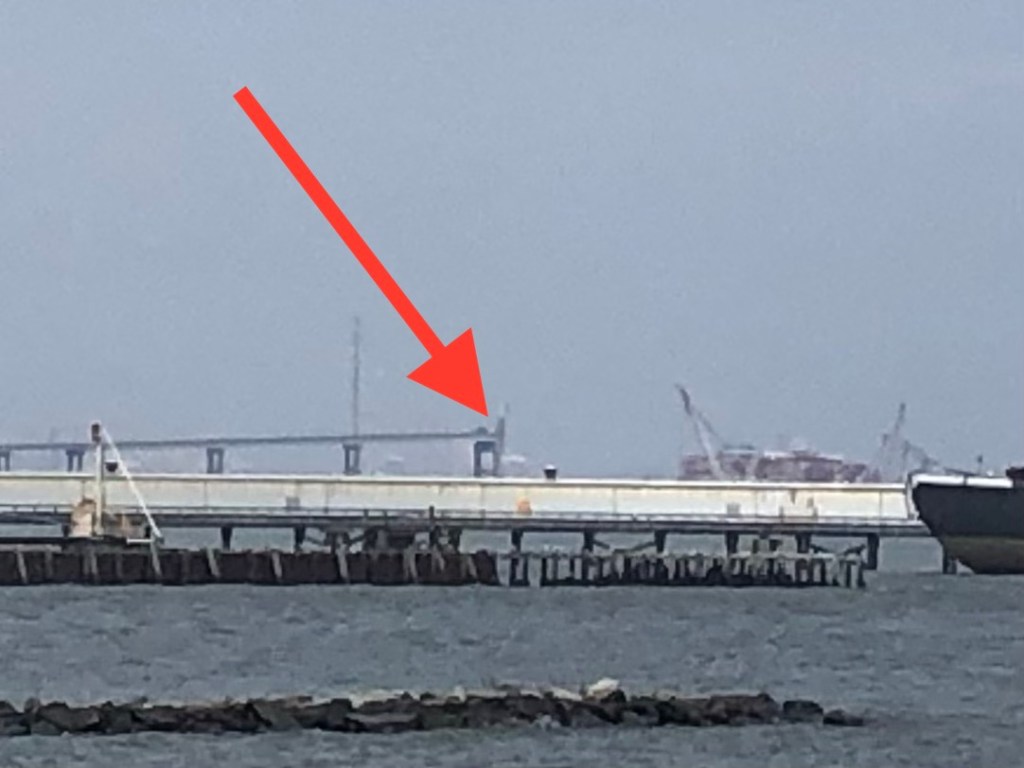
The longer answer is this: Son Ian recommended I take advantage of my proximity to Baltimore (pop: 570,000) and check out the remains of the Francis Scott Key bridge, which collapsed a scant 3 weeks ago. It’s the kind of light-hearted whimsy we Boilards are known for.

The FSK Bridge opened in 1977, and it carried over 11 million vehicles annually until a container ship struck one of its piers last month. Much of the span is now underwater, posing a hazard to ships.

“My bad!”

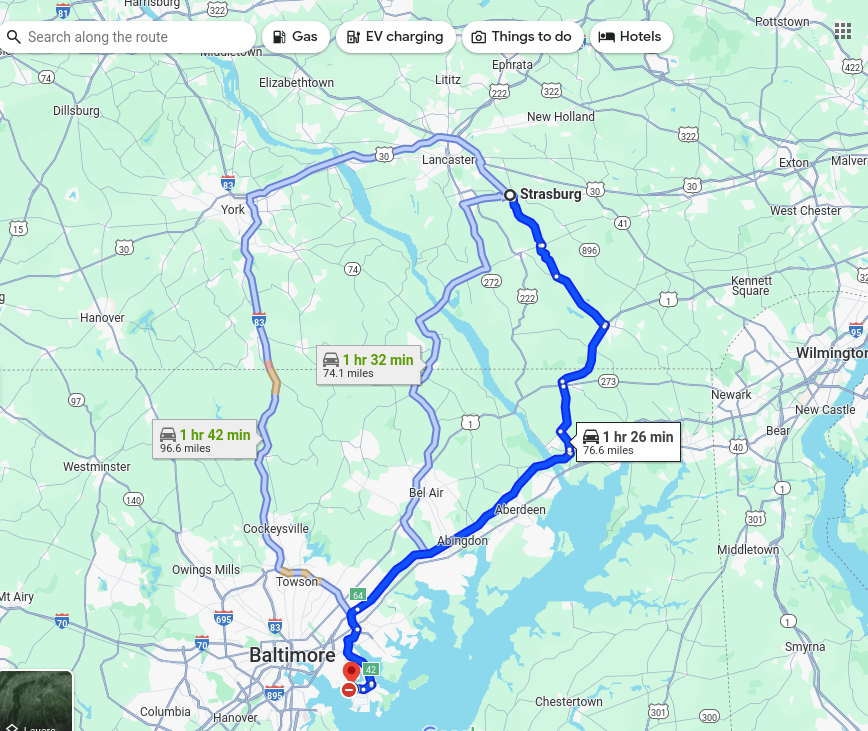
This week the Army Corps of Engineers is supposed to be removing much of that wreckage. It should make for a cool photo op! And according to Google Maps, I was only about an hour and a half from the foot of the bridge.

How hard could it be?

So after getting a cup of coffee and a Power Muffin from The Speckled Hen in Strasburg, I set out for the greater Baltimore area.

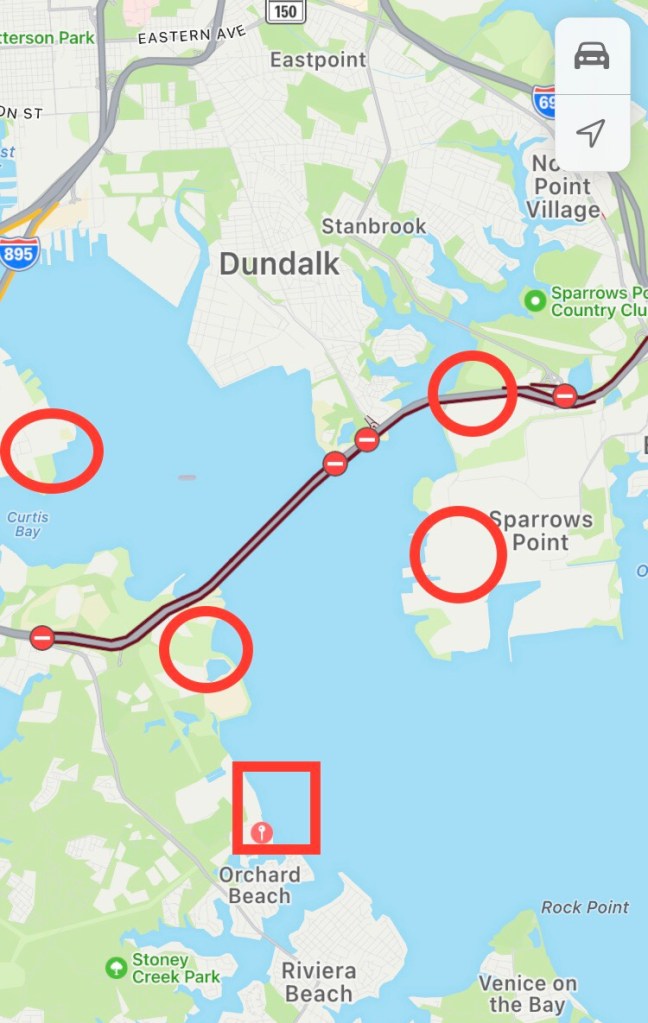
Getting there was easy enough–until the last couple of miles, when I encountered a police roadblock. They weren’t going to let me get anywhere close to the foot of the bridge. I’m not sure what I was expecting. I guess I envisioned a big, Roadrunner-style “Bridge Out” sign on sawhorses a dozen yards from the shore of Boston Harbor.

No matter. There’s more than one way to skin a cat. I consulted Google and found a nearby spot that should afford a good view of the salvage operation. Alas, all the property in the area seemed to be a naval base or some other official facility that prohibits visitors. Undeterred, I drove under the harbor through the miraculous Baltimore Harbor Tunnel, and approached the Key bridge from the southern end. More roadblocks. Finally, I headed further south to a private beach community, where through a combination of illegal parking and trespassing I was able to get a decent view of the Francis Scott Key bridge in the distance.

Circles represent my failed attempts to see the bridge; the square is where I finally succeeded.
FSK Bridge in the background, terminating at the head of the arrow.

So, now with that pointless project out of the way, I began a leisurely drive in the direction of Philadelphia.

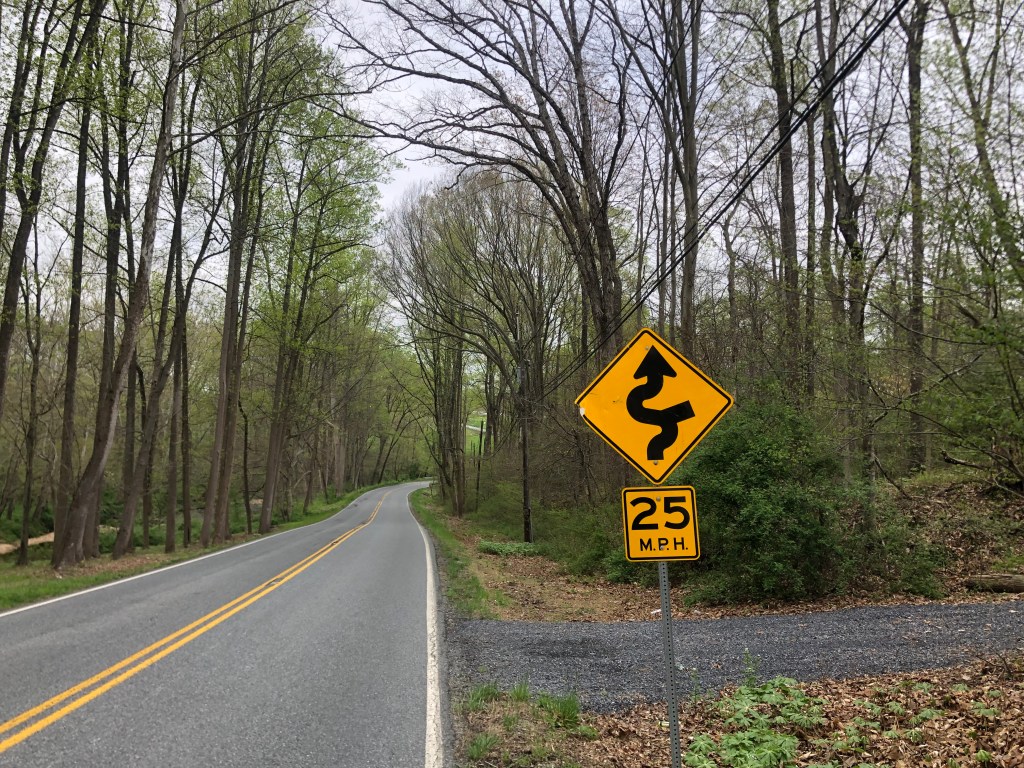
The drive through the Maryland countryside was pleasant and picturesque. The road carved its way through hills dense with trees and other flora. My only complaint is that some of the signage was a bit hard to comprehend at a glance.

Signs like these remind me of the nighttime driving scene in Pee Wee’s Big Adventure. It appears in the following clip, which is only 45 seconds. Note that the guy who uploaded the clip wants to point out you can see a pulley system moving the scenery. But we want to watch the clip just for the signs.

I know just how you feel, Pee Wee.

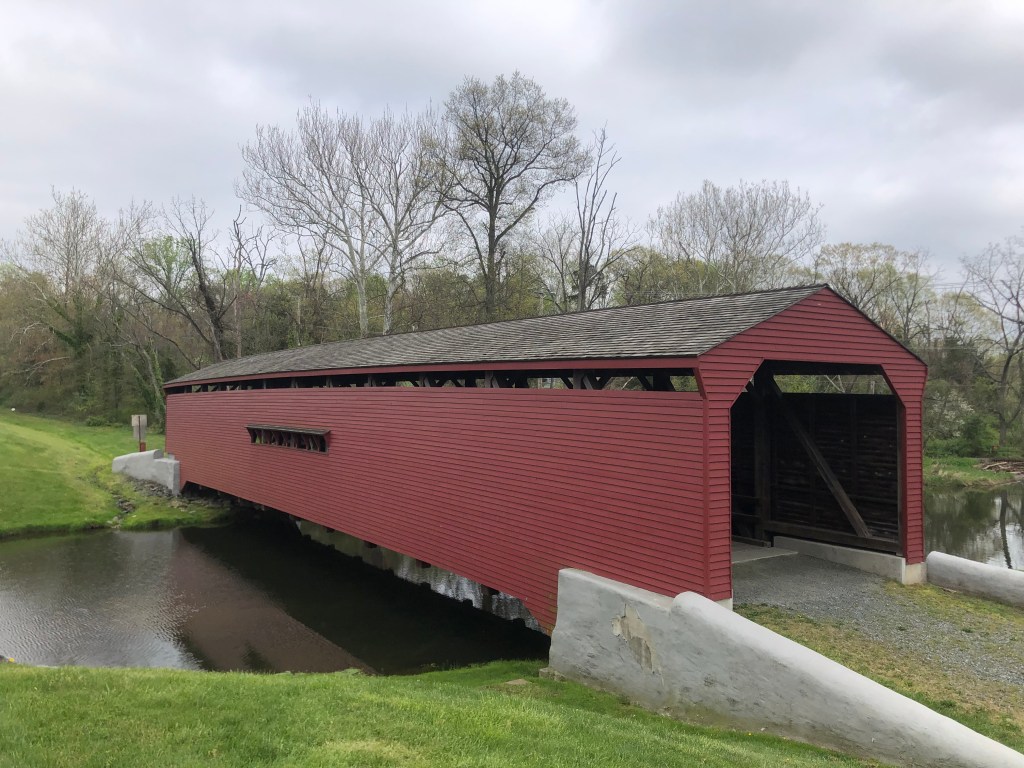
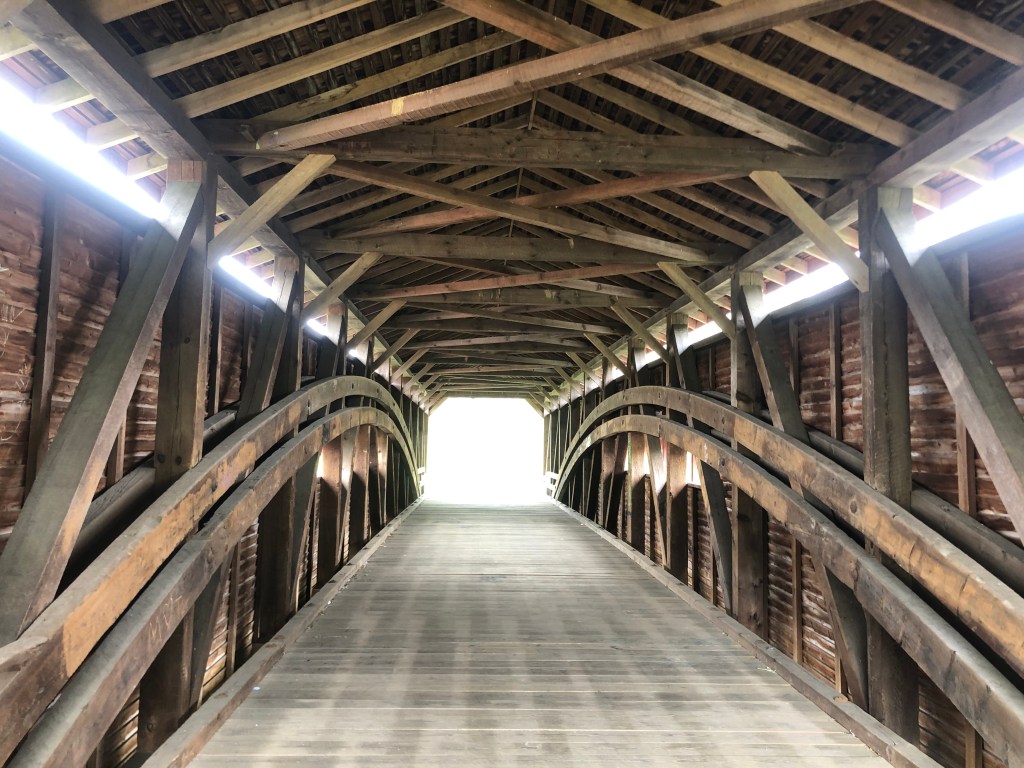
Along the way I passed another bridge that, like the FSK Bridge, no longer carries traffic. The Gilpin’s Falls covered bridge in Maryland’s Cecil County was originally constructed in 1860, and restored in 1959 and again in 2010. And unlike the FSK Bridge, it still sits on the same piers where it was placed in 1860.

Straight out of The Bridges of Cecil County.
Where form and function come together

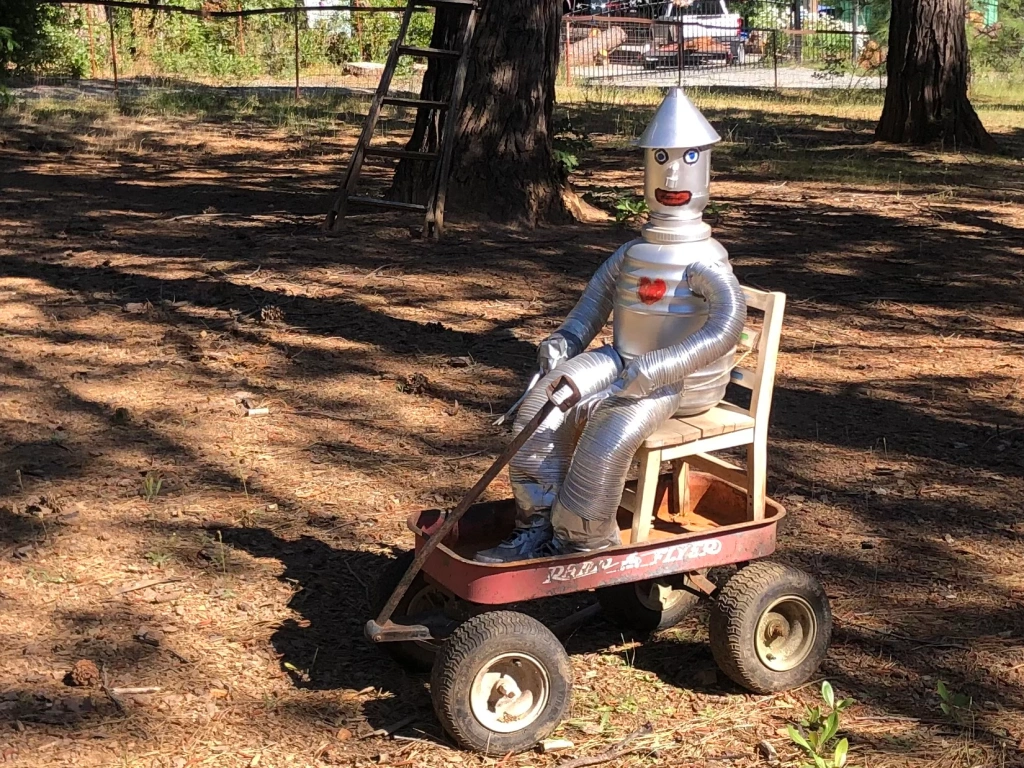
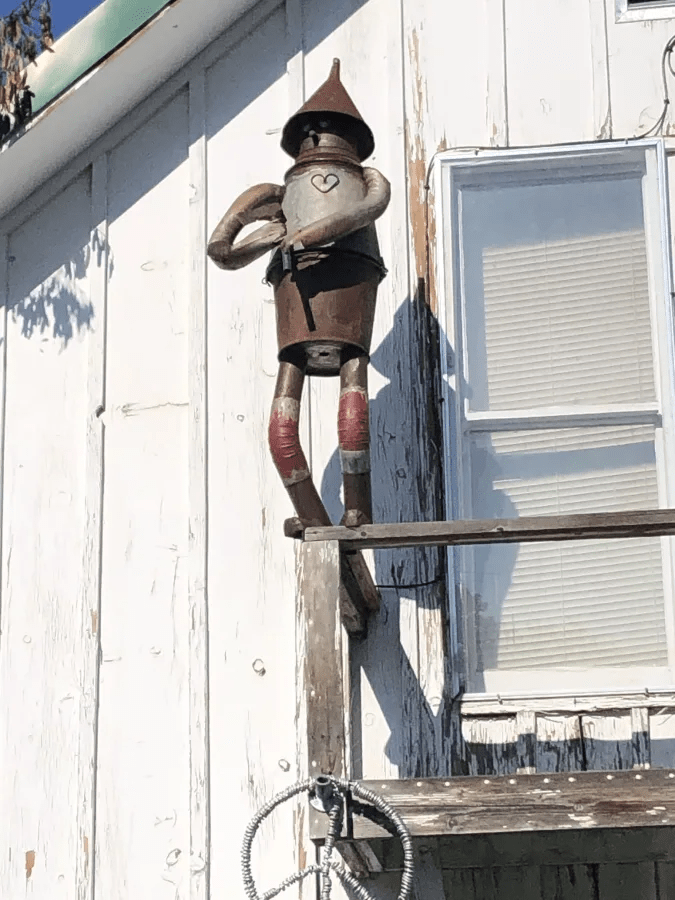
The next roadside attraction requires a bit of a setup: You may recall that I’ve been charmed by Tin Man-themed yard art that I’ve spotted on my travels. Here are two recent examples:

In Georgetown, CA. Blog post here.
In Lakeview, Oregon. Blog post here.

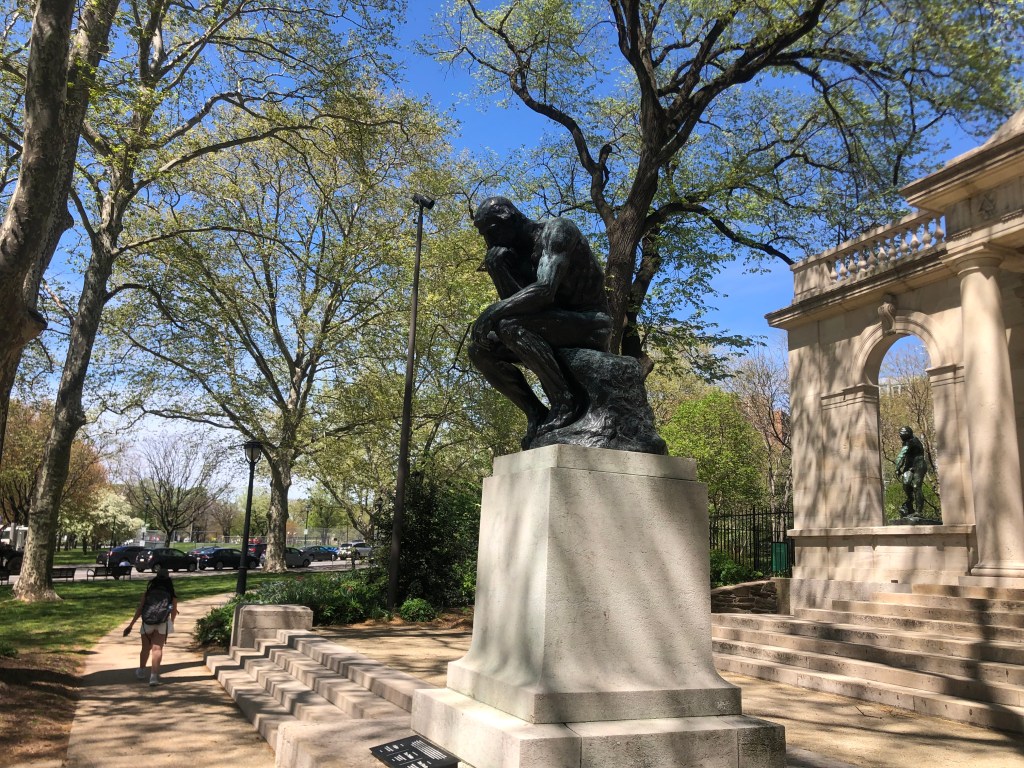
Now, recall my photo of Rodin’s “The Thinker” that I took in Philadelphia:

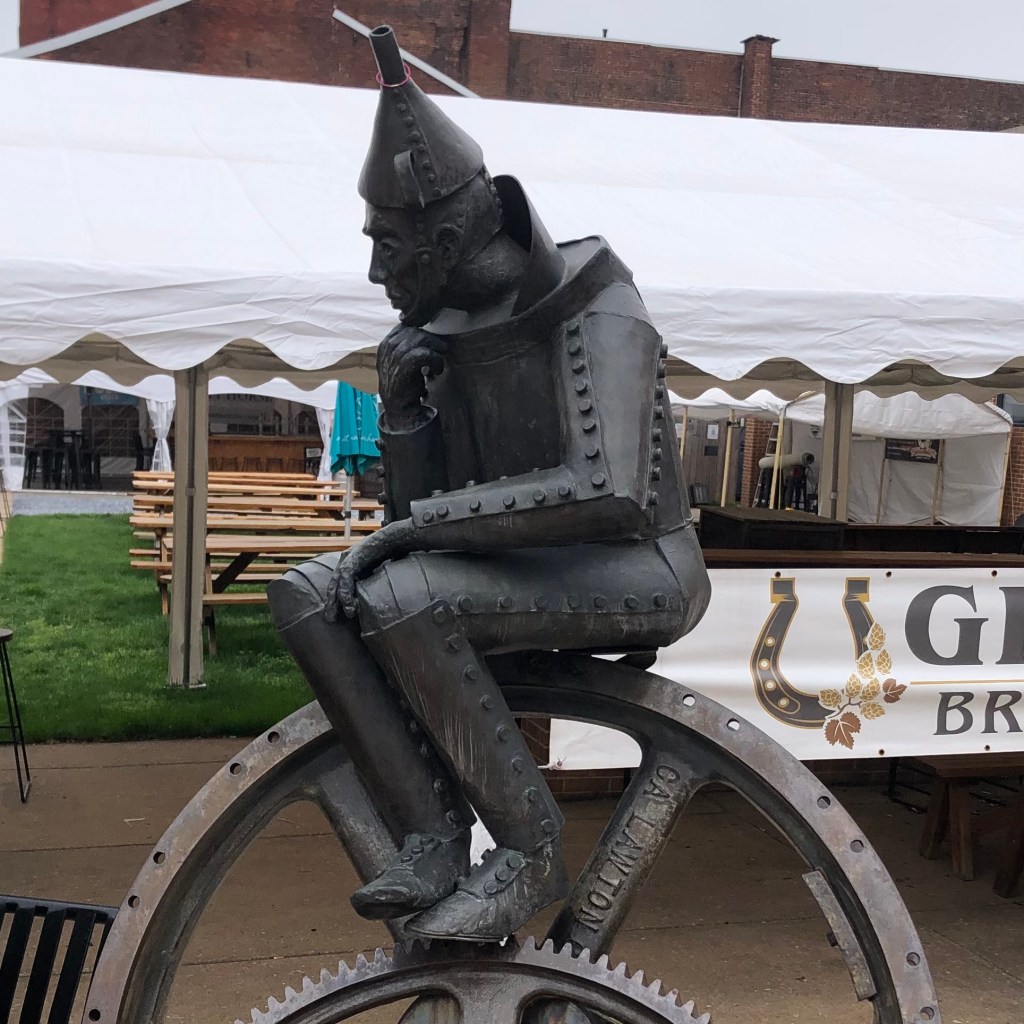
Put them together and what do you get? This sculpture of “The Tinker” (note spelling) that sits in front of a brewery in York, Pennsylvania.

For some reason I think this is brilliant!
The artist claims his sculpture says something about York’s industrial history. I don’t know about that, but I’m simply taken by the whimsy and humanity of the thing. As I’ve said before: This world needs more Tin Men.

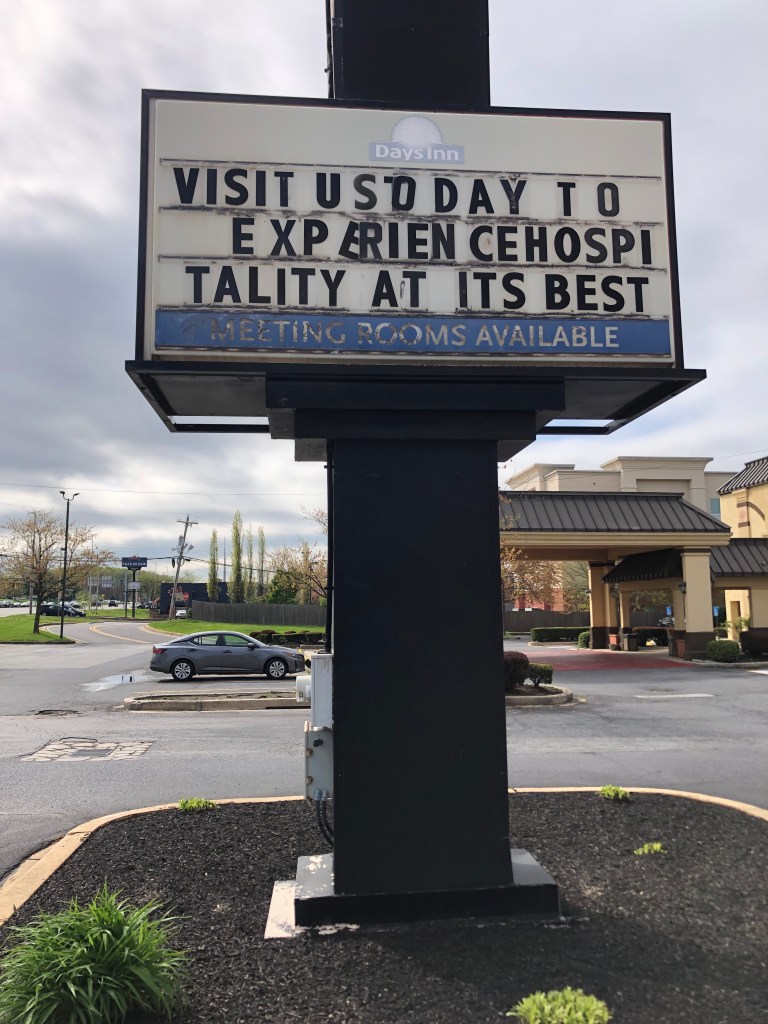
I stopped for the night in Wilmington, Delaware–less than an hour from Philly. After my big splurge on the Red Caboose Motel last night I figured I’d bed down in a simple Days Inn. Upon my arrival, I was greeted by this sign whose reference to “”the best” seems like a dubious claim.

At least they didn’t make the common error of adding an apostrophe to “its.”

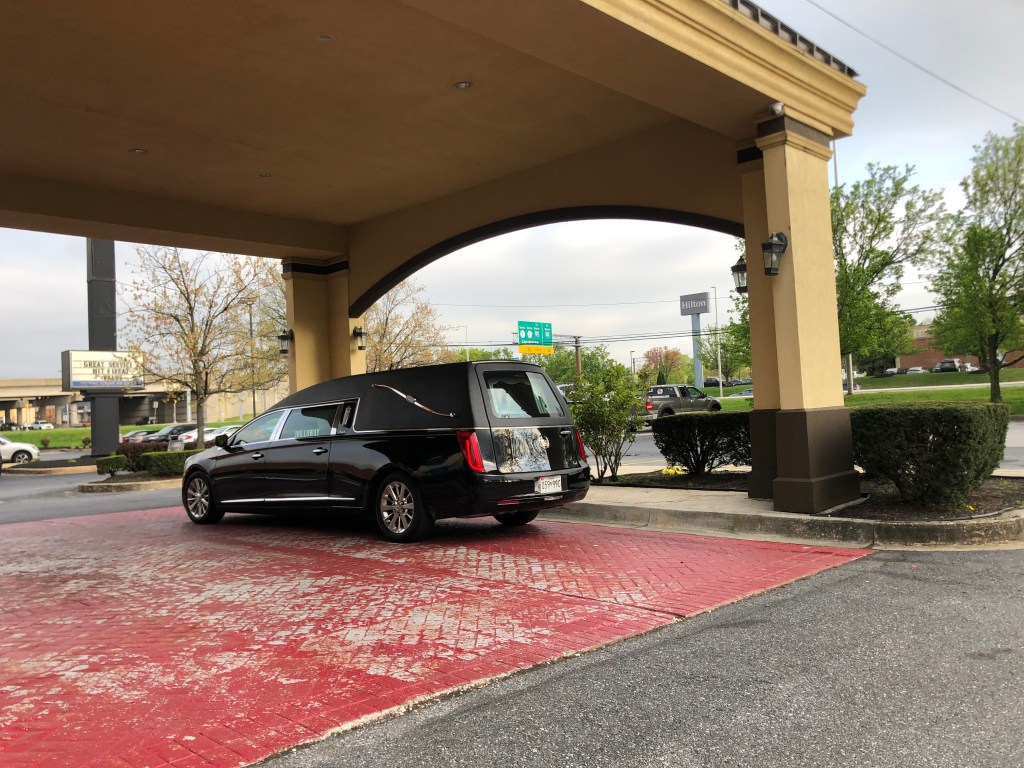
Then I got to the office and saw this idling near the front doors:

Must be check-out time.

Tomorrow I’ll head back into Philadelphia. God willing.

Mail Corner

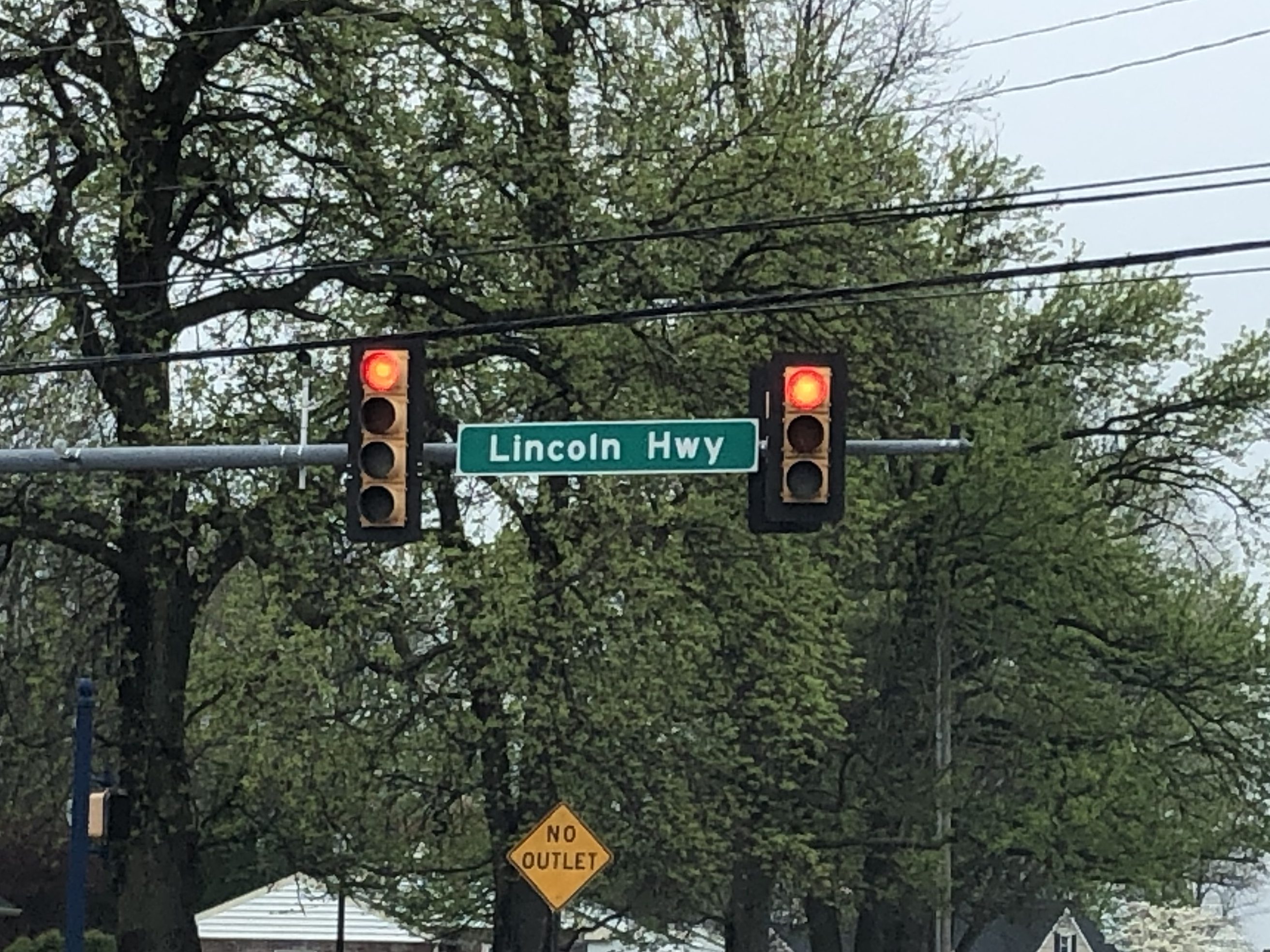
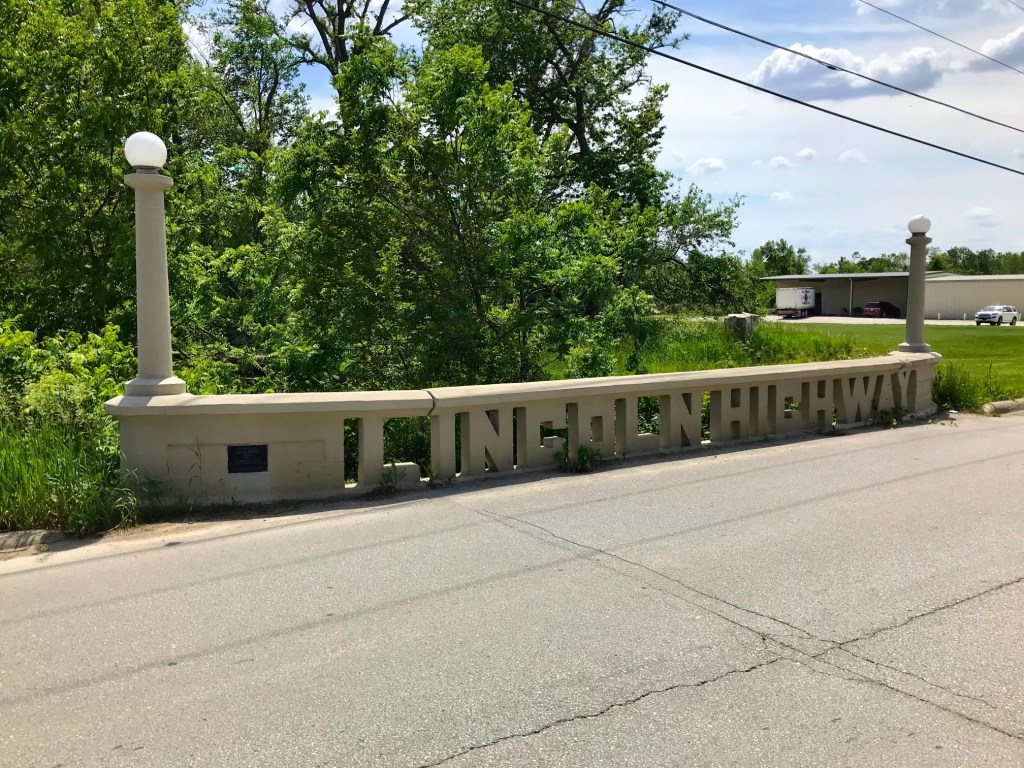
Loyal reader Brian W sent along this photo he took of a Lincoln Highway sign he spotted near Route 30 in Tama, Iowa. It dates from 1915, which is just two years after the Lincoln Highway was established.

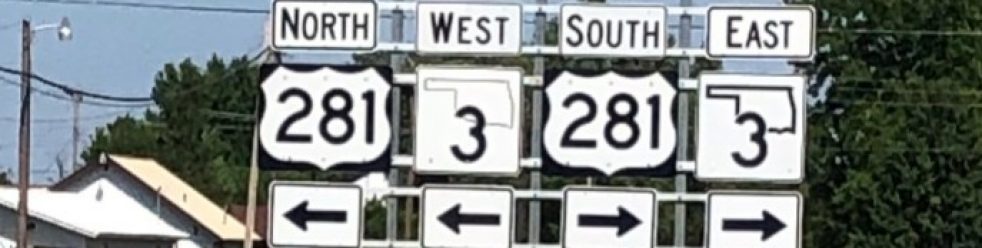
It’s a far cry from the boring, utilitarian signage I encountered today in Strasburg.

Brew of the Day

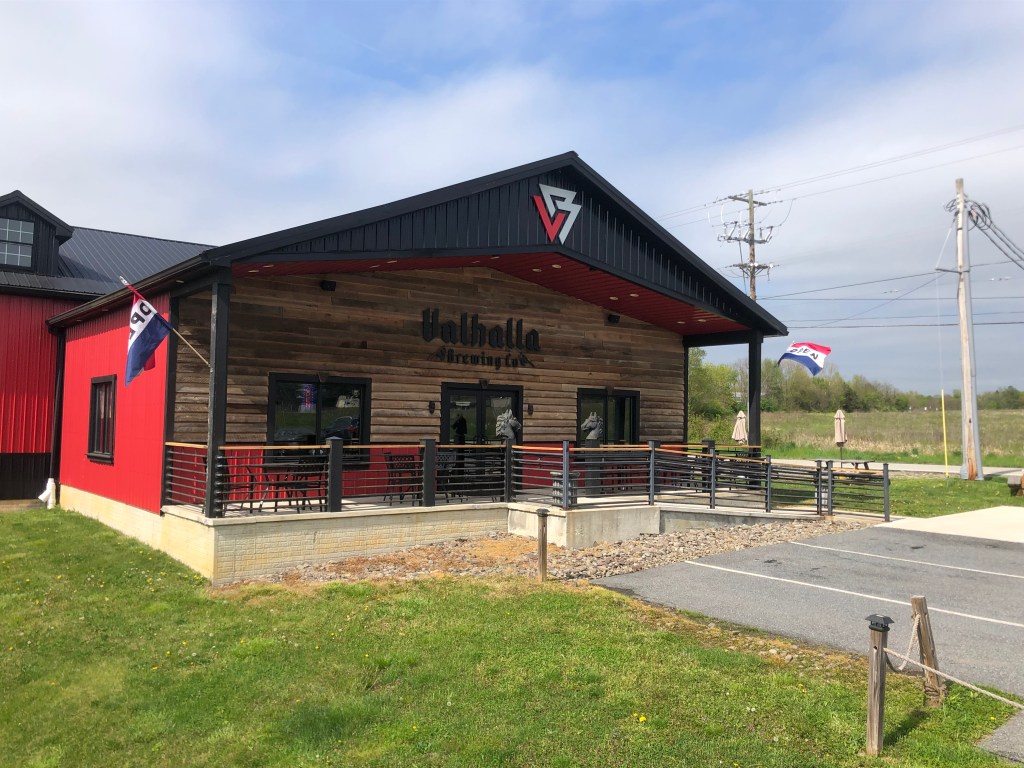
I got today’s BOTD at Valhalla Brewing Company in Elkton, Maryland. It’s an out-of-the-way roadhouse with an empty parking lot and an nearly-empty bar. The bartender spent most of his time leaning on the bar and staring at his phone. But to be fair, it was 2 in the afternoon on a Thursday.

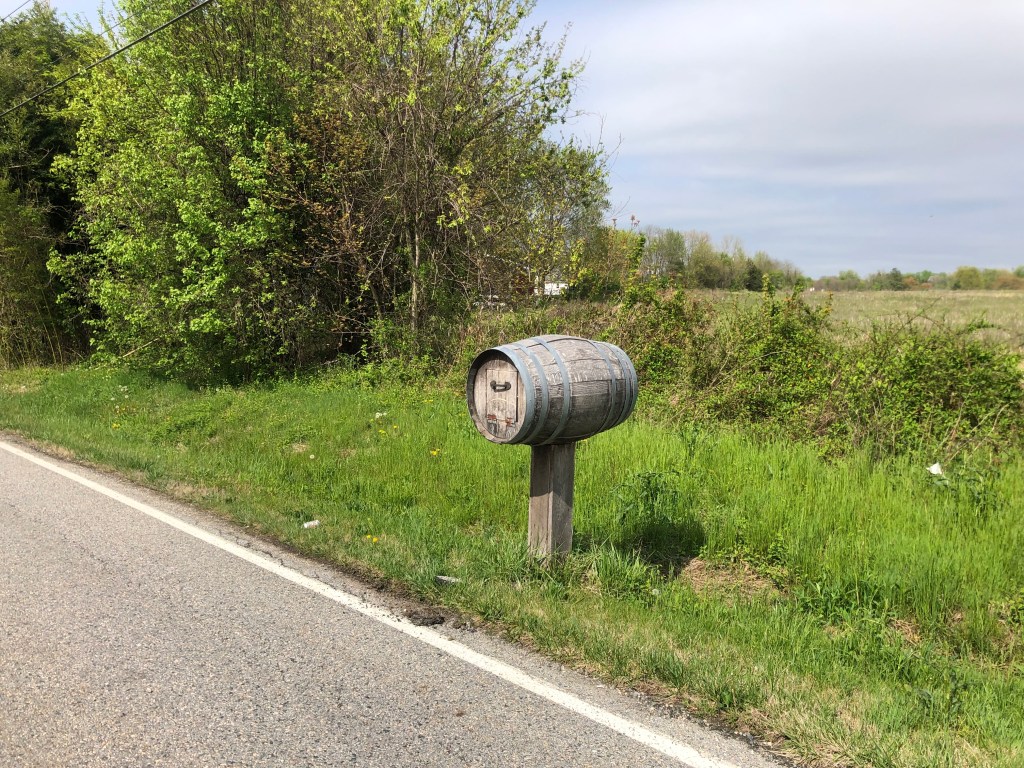
Middle of nowhere. Which I guess is where you’d expect to find Valhalla.
Cool mailbox, though.

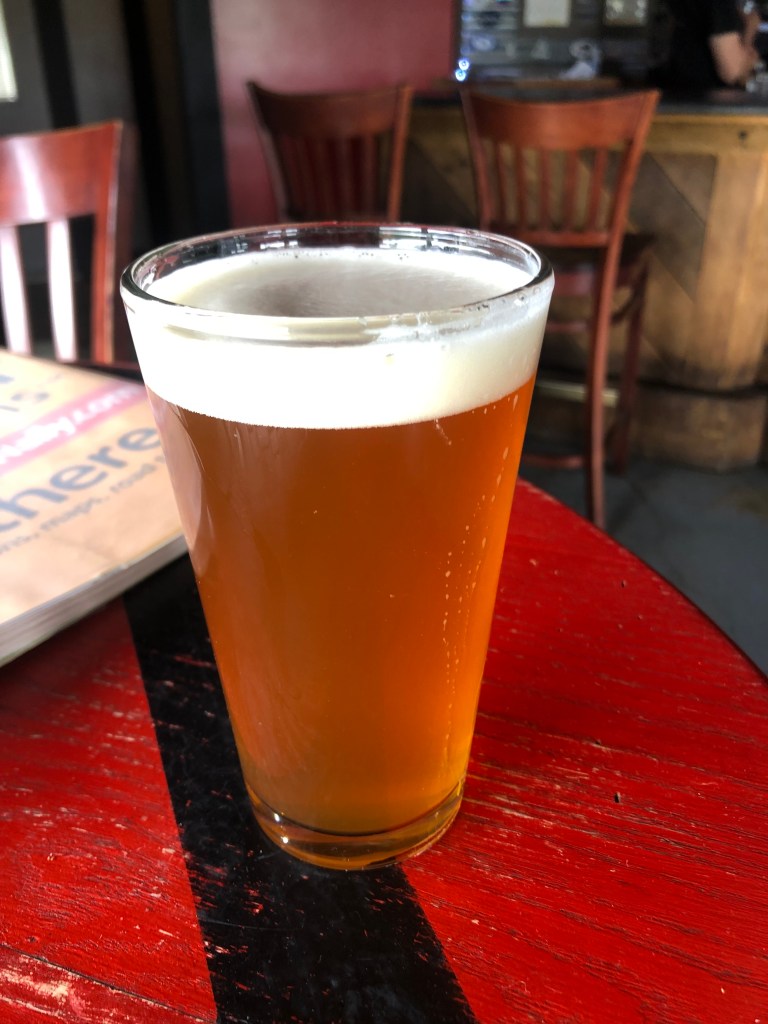
I chose the Zombie Ice Double IPA. It turns out it’s a guest brew, made by 3 Floyds Brewing Co, in Munster, Indiana. Behold the golden-copper color:

The first sip suggested that this is just a basic IPA. But with subsequent sips it became more interesting. The usual citrus and hops are omnipresent, but as you move through it you detect orange peel, library paste, and shoe polish. You might not think that sounds especially tasty, but somehow it works. There’s a total lack of pretentiousness about this beer (except for its name, of course). It’s solid, genuine, and hardworking. I give it a solid 4 out of 5 stars.

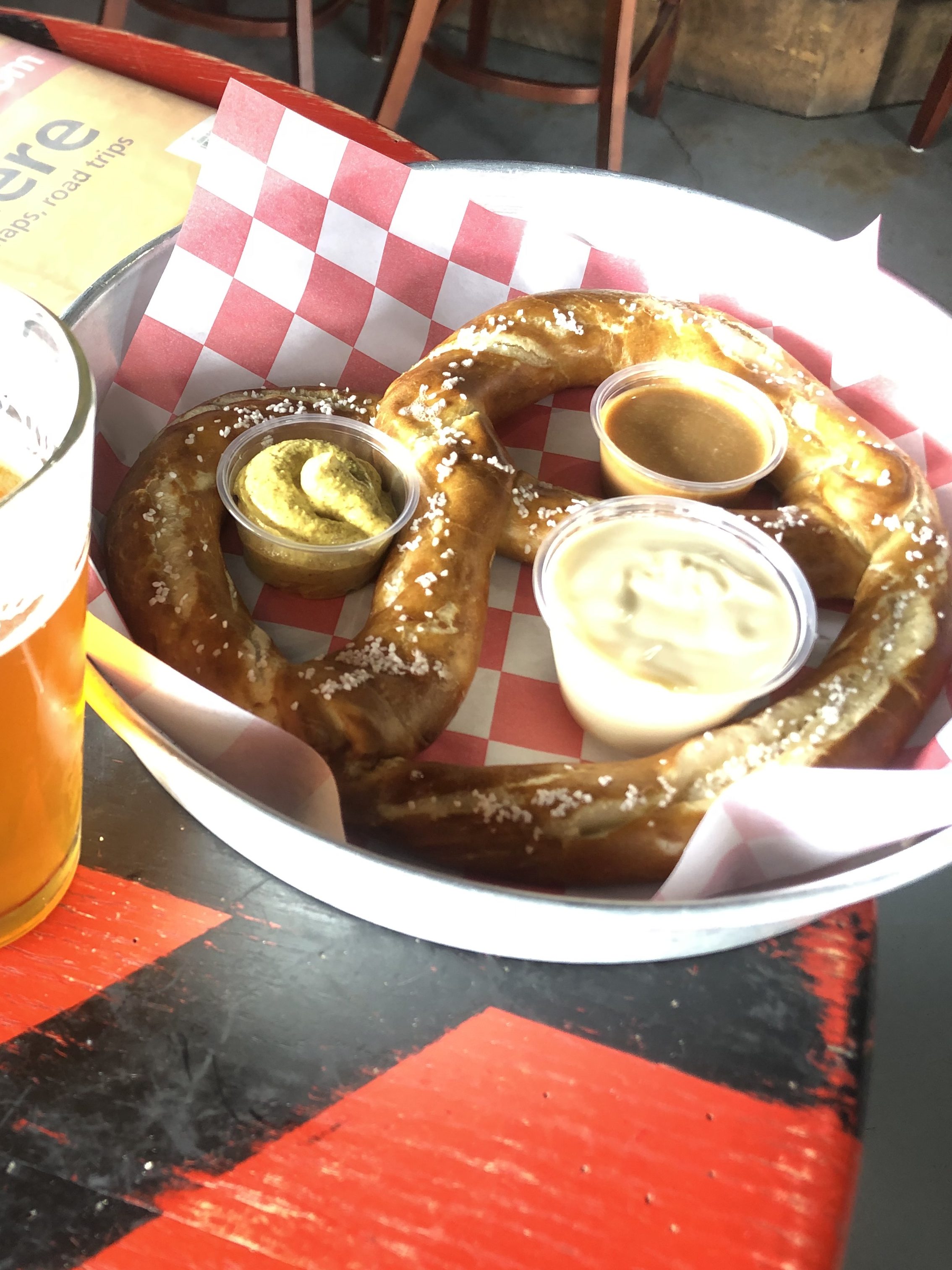
In the interests of full disclosure, I should note that I paired this IPA with Valhalla’s “Big Ass Pretzel,” which is served with mustard, beer cheese, and a maple-caramel sauce that is to die for. So consider that it might just be the pretzel talking. In fact, the Pretzel gave the beer 5 stars.