Road trips · trains · Uncategorized

Day 2: Nevada and Utah

Editor’s note: Given limited travel opportunities these days, I decided each Thursday to post travel stories I’d written prior to starting this blog. The following is from a cross-country trip I made along the length of US 50 in the spring of 2018. I hope you might vicariously enjoy this trip while we’re all hunkering down at home. Because this is a longer trip (a week and a half), I’m going to post each of the daily entries over each of the next 10 days.

I woke surprisingly refreshed this morning at the Cozy Mountain Motel, and took my bracing cold shower. While checking out, I noticed these displayed on the front counter like Russian nesting dolls. I decided to hurry on my way before they discovered any problems with my MasterCard payment…
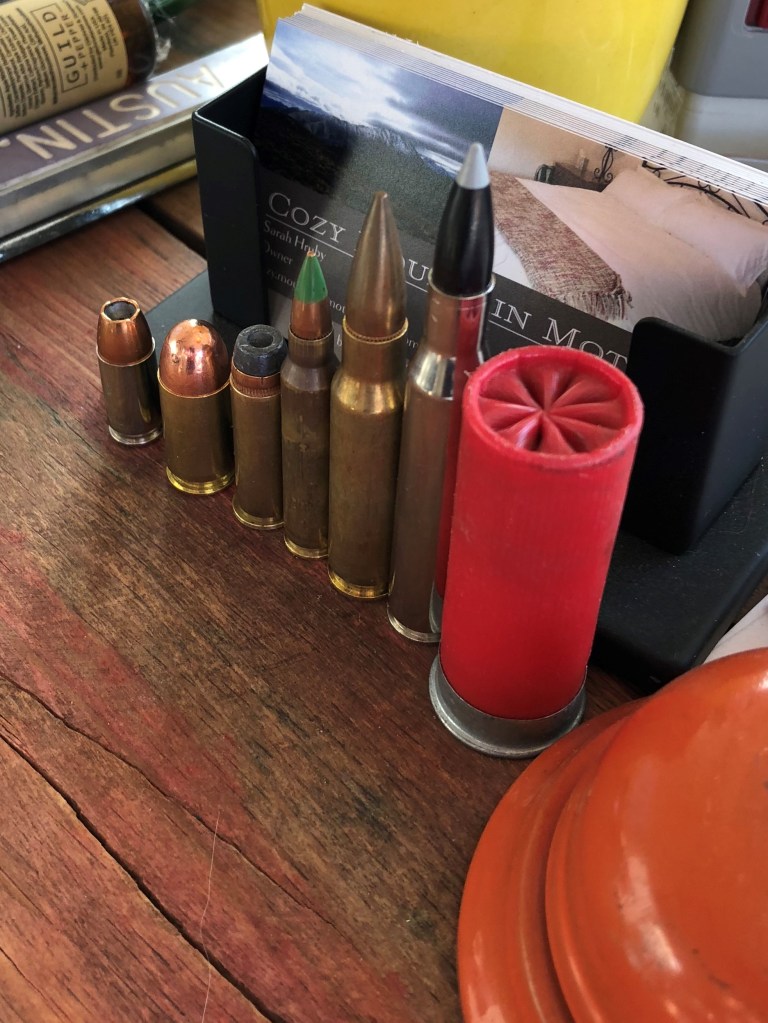
Literally loaded for bear

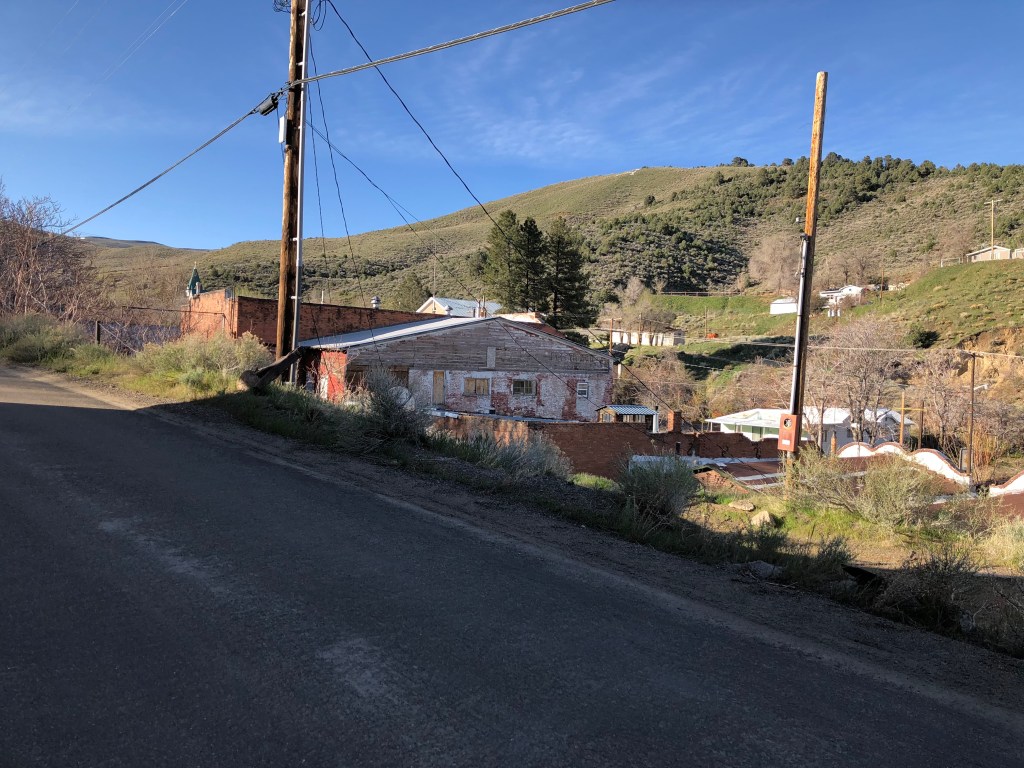
I explored the town of Austin a bit more before getting back onto 50. I was struck by the number of abandoned buildings, completely untouched for decades. This is truly a ghost town. 
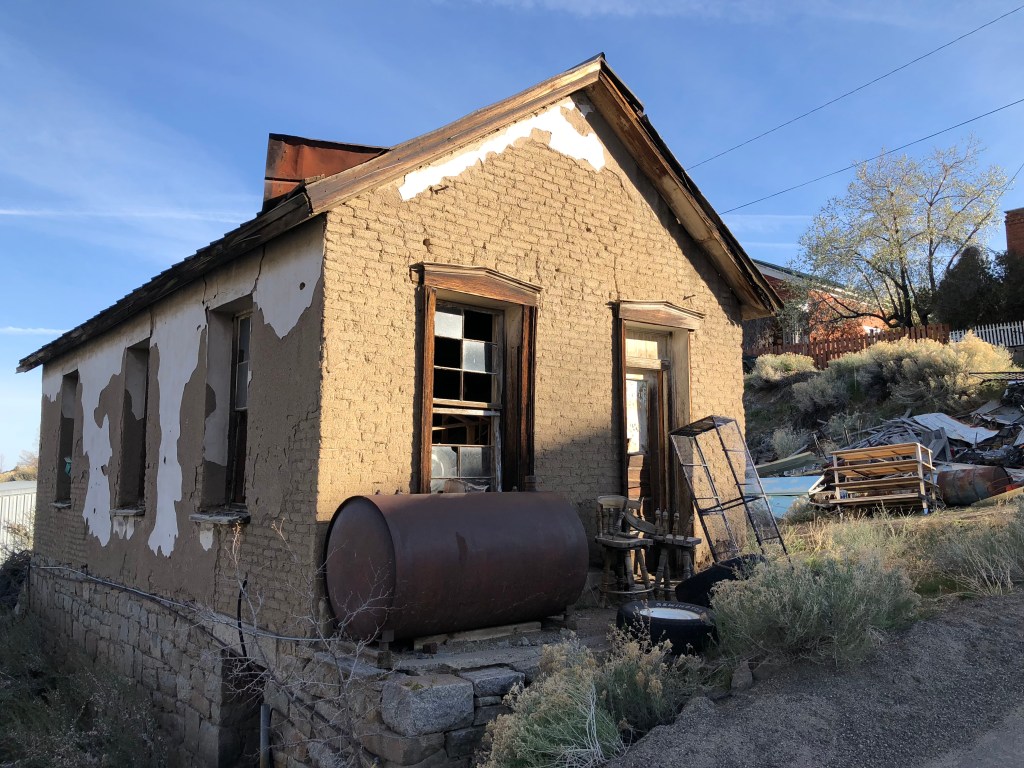
1313 Mockingbird Lane meets Georgia O’Keeffe

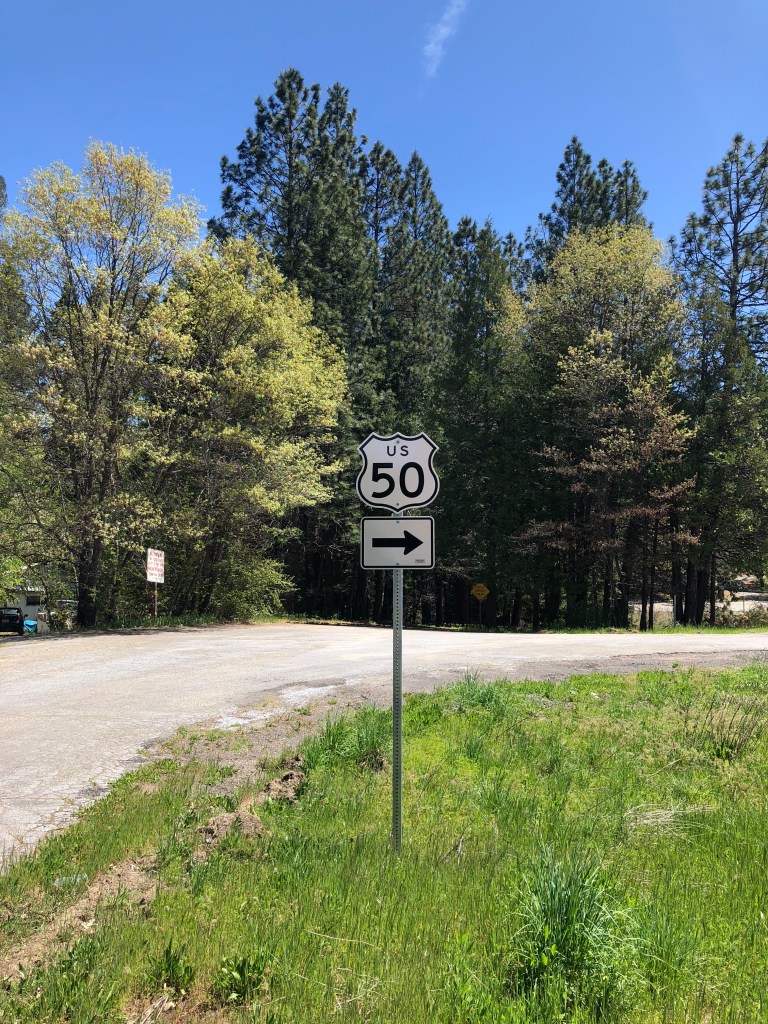
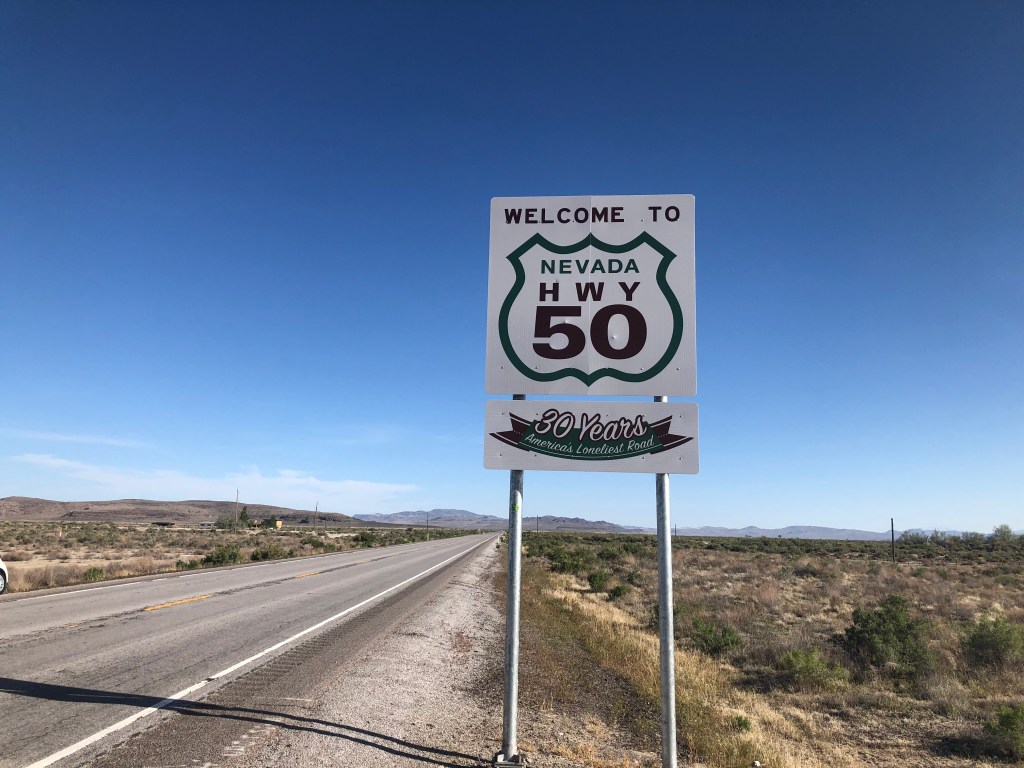
As I mentioned yesterday, I resolved to get breakfast in the town of Eureka, about an hour down the road. So I got back onto US 50, which, if anything, was more deserted than yesterday. I’m getting used to the rhythm, though, and there’s a fullness to the emptiness, if that makes any sense. The sky is big, blue, and beautiful, and the landscape stretches out for miles and miles. Periodic US 50 signs confirm that I didn’t make a wrong turn somewhere, heading far off course.
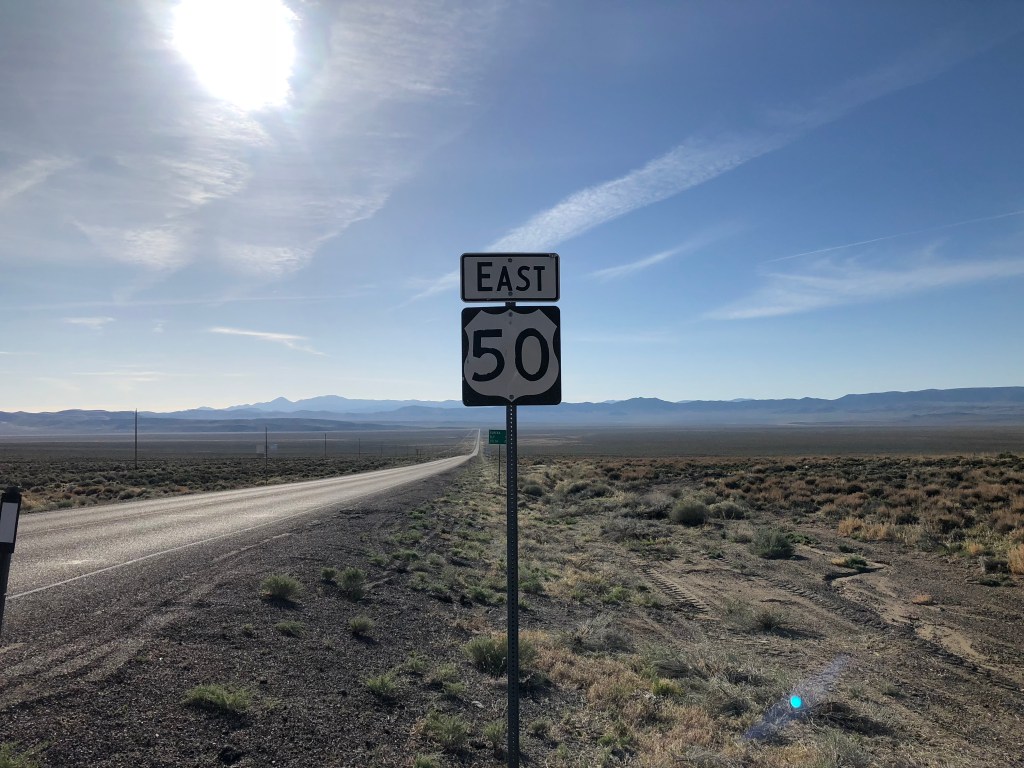
The zen of the Great Basin

I was quite hungry when I got to Eureka, and I found the Jackson Hotel (which supposedly has the amazing food) quite easily. It’s part of a complex of buildings on the main drag (which is, of course, US 50). I had trouble determining which door actually led to the restaurant, so I just entered a door that said “open” on it, hoping for the best. I found myself in a large auditorium of sorts that looked to be well over a century old. After a moment I was greeted by a middle-aged woman with a Farrah Fawcett hairdo who asked if she could help me. When I informed her I was just a tourist looking for a place to eat, she seized upon the opportunity to give me a guided tour of the building, which I learned was the Eureka Opera House.
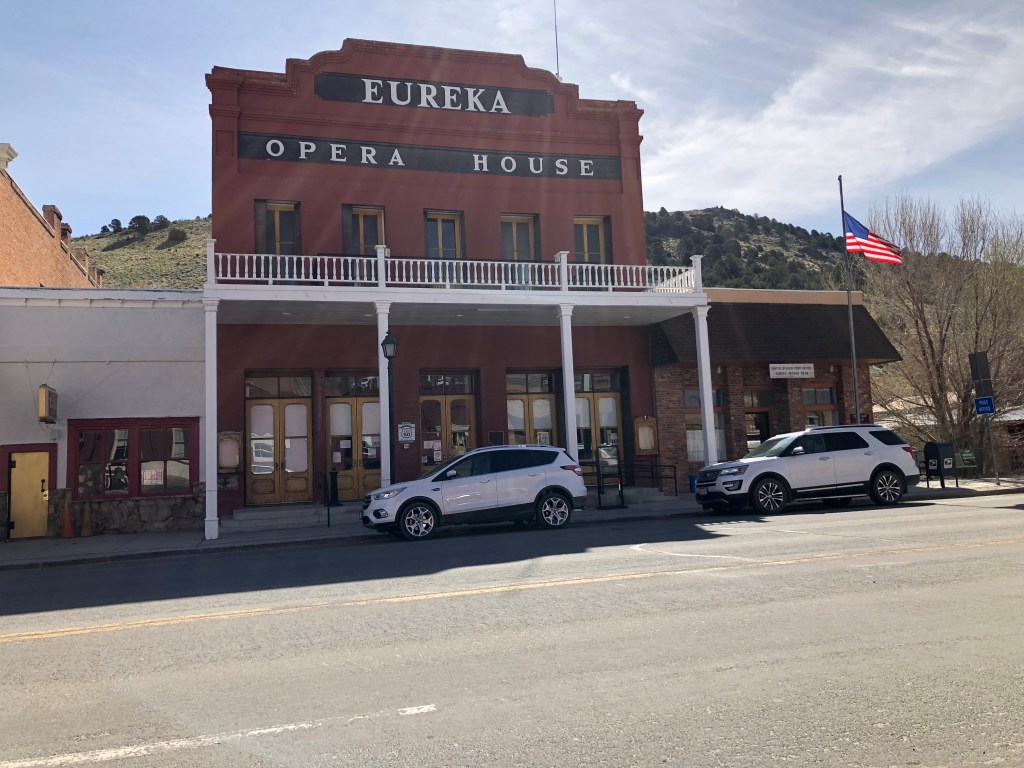
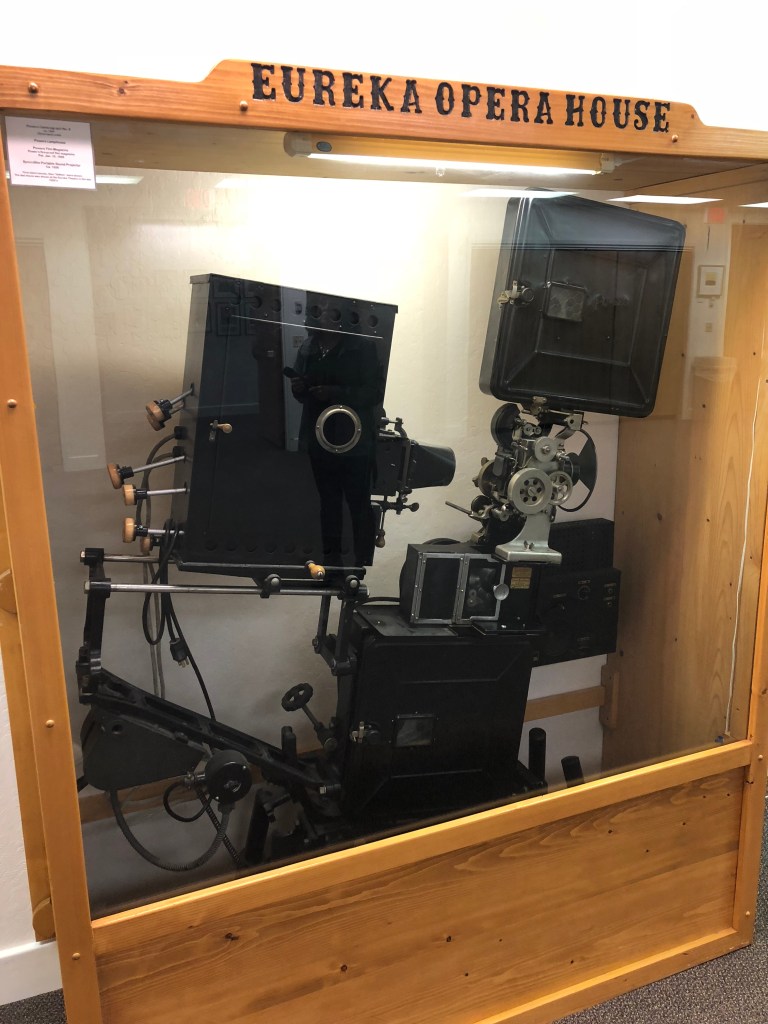
It’s an impressive building that was originally built in 1880. My guide (whose name is Patty), it turns out, is the manager of the building, and is responsible for booking events (including concerts by Eddie Rabbit and Loretta Lynn’s daughter, among others. Their signed photos are on the wall.) She’s also responsible for setup, clean up, and everything else. Check out the old, original projectors that are down in the basement:
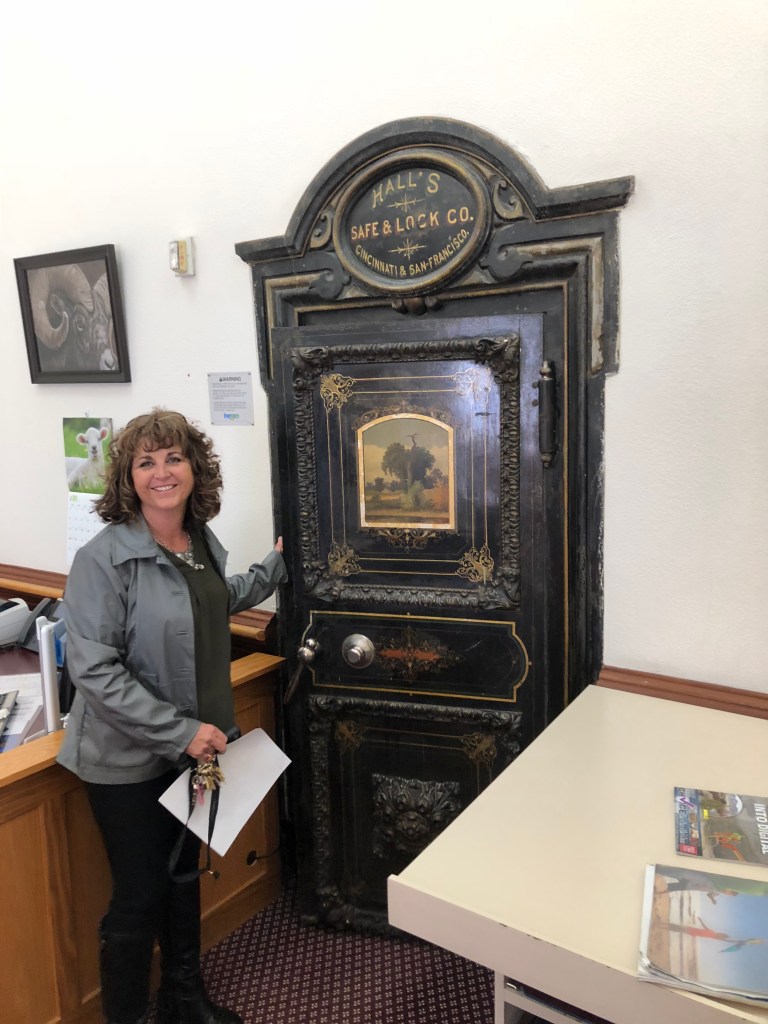
Patty is a bundle of energy, and wants nothing more than to promote the Opera House and the town of Eureka. After she gave me a tour of the Opera House, she took me across the street to the county courthouse, the jail, the assessors office, and other county offices. (These are housed in the historic courthouse, as well as a more modern annex.) For some reason, Patty has keys to all these offices, as well as several vaults. Here she is showing off the Treasurer’s vault:
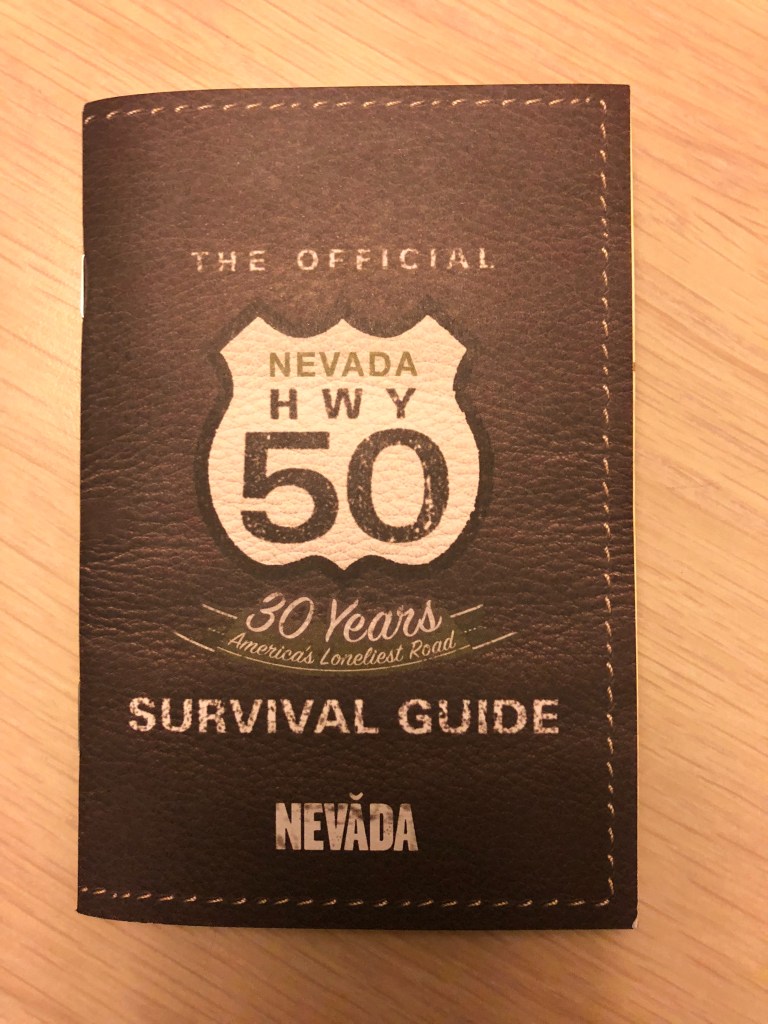
I told Patty I was driving the full length of US 50, and she asked if I had the “passport” for the drive. I hadn’t heard of this at all, so she provided me with a copy. It turns out that it’s just for the towns along the Nevada stretch of US 50, and I had already passed most of those towns. But I took the passport, and she stamped it with the gusto of a customs official. 
When I told her I’m writing a blog about my trip, she offered to take a picture of me in the judge’s chair in the courtroom.
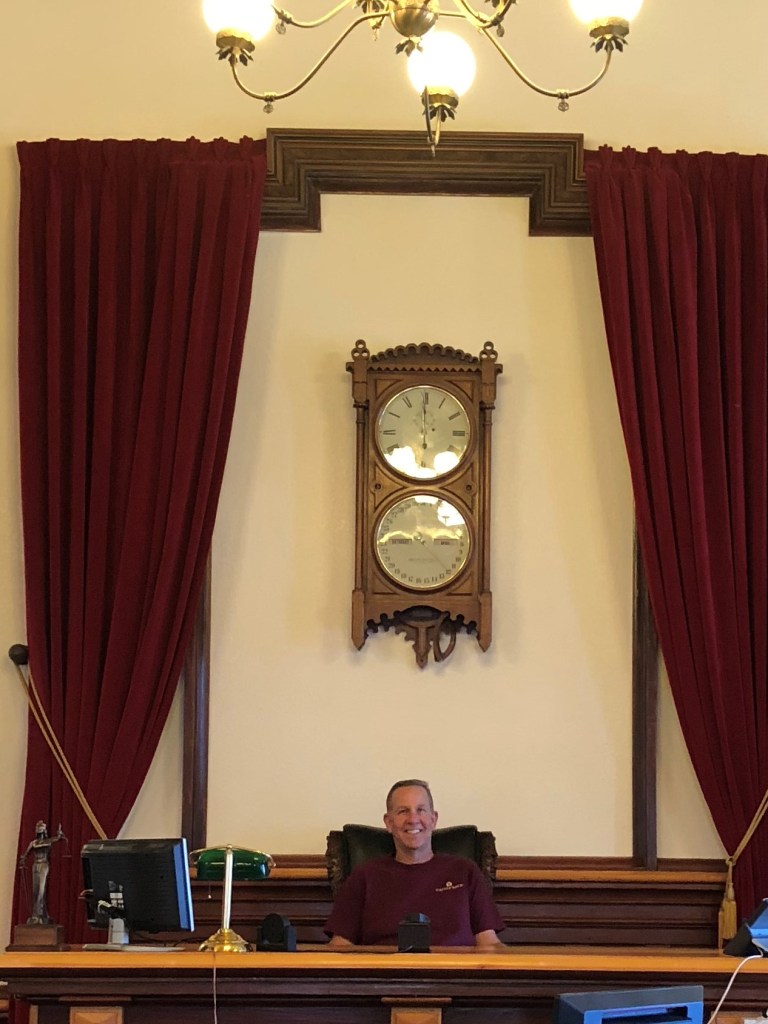
Patty spend a full hour with me, and which point I was really ready for breakfast. I asked for a recommendation, and she referred me to the Pony Express Café. (It turns out that US 50 follows the old Pony Express trail in Nevada; I encountered numerous references to it along the way.) The Café is run by a couple of Amish women, who were warm and welcoming. It appears that the Café is where all the locals hang out, with plenty of conversation and back-slapping. In fact, while I was sitting at a table waiting for my breakfast, I felt a large hand grab my shoulder. I looked up and it was just some local greeting me, smiling and asking how I was doing. Is this a great town, or what? Oh, and I had the best “Amish Breakfast Sandwich” ever.

Refueled, I got back onto 50 and headed for Ely, Nevada. Ely is a famous railroad town, and a few miles before reaching Ely I saw plumes of black smoke next to the highway. It turns out a steam locomotive was operating – I still am not sure why. But there’s something wonderful about seeing this equipment, which must be from the 1930s or earlier, out in the wild, rather than at some museum. (Editor’s note: I later learned that, for a fee, regular shmoes like me can drive these vintage steam engines along a private track. Is this a great country, or what?)
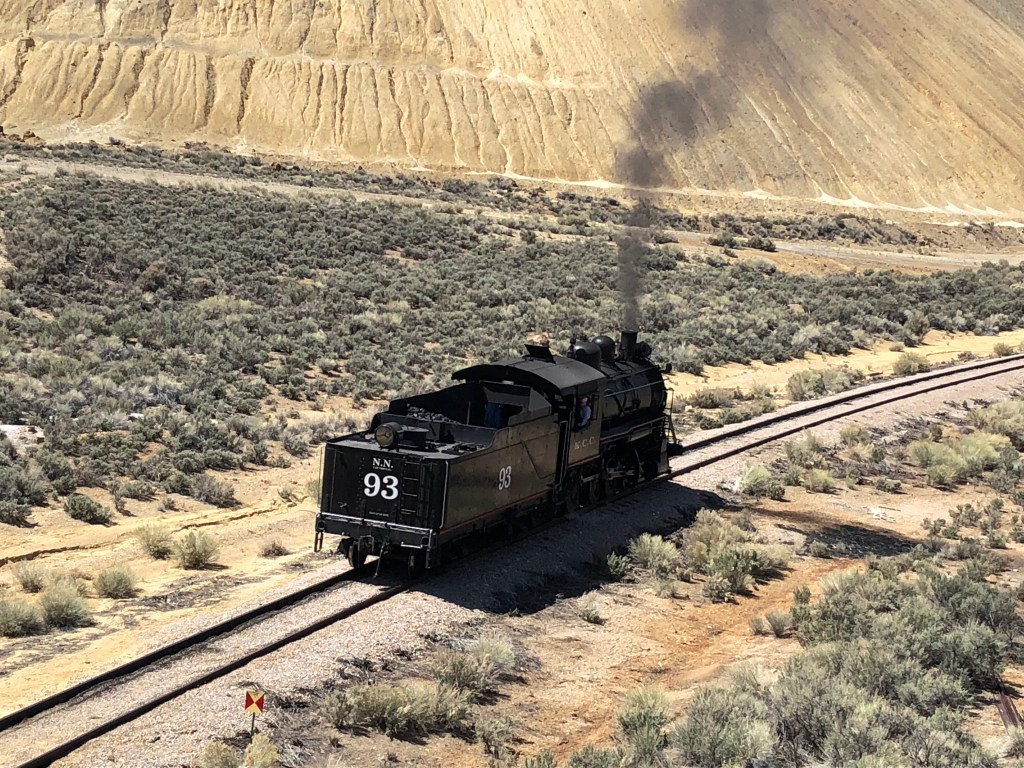
Now that I had my official US 50 passport, I visited the Chamber of Commerce in Ely. The woman there stamped it with the “Ely” stamp, and commented that Patty sure had made a lot of stamps in my passport. Evidently there was some rivalry between the two towns, or these two women. I asked her what I should visit in Ely, and she said I should get a lime rickey from the old drug store down the street. I didn’t know what a lime rickey even is (didn’t he manage the Brooklyn Dodgers?), but I was game.

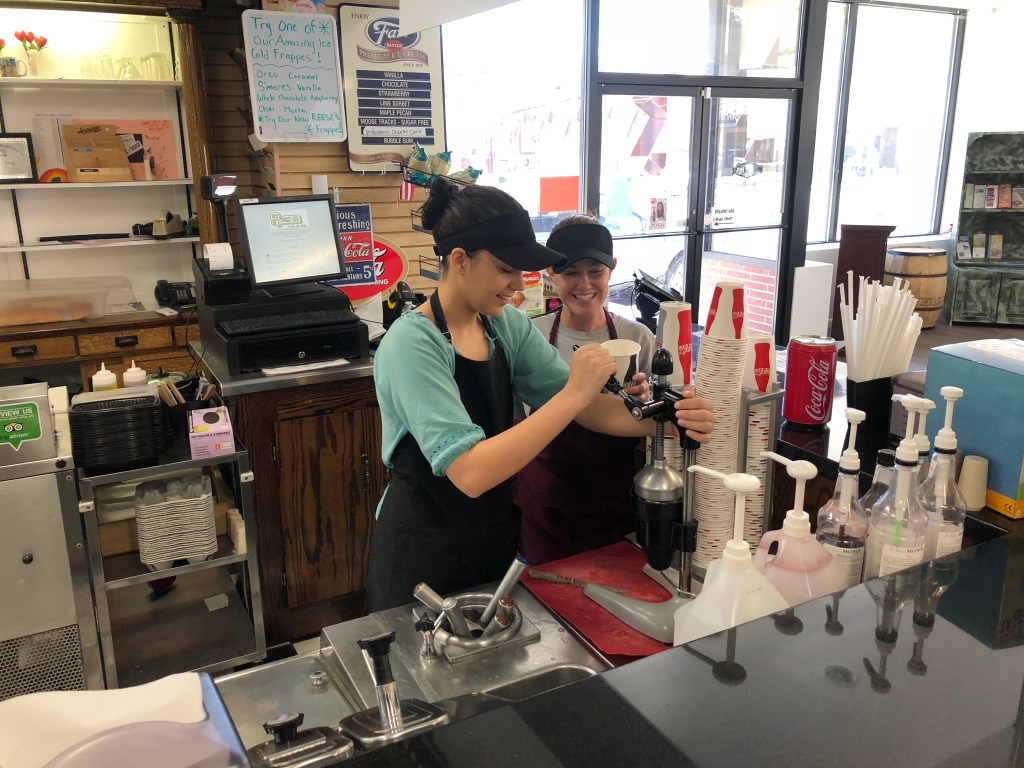
Upon arriving at the drug store I learned it had been at the same location since 1946, with the same soda fountain, same chairs, same stamped metal ceiling, etc. all those years. There were two young women working the fountain, and I ordered my lime rickey. Impressively, the two of them created this drink from scratch, which involved cutting and squeezing fresh limes.  It turns out the woman on the right is 31, with a 3 year old, and she moved here from Las Vegas. She seems to really love Ely, and says it’s definitely a good place to be raising a young child. But she thinks in a few years she’s going to move out to Florida, where all her relatives currently reside. She reflected that Ely used to be a much bigger town, “before the mine closed.” It used to be a bustling town of almost 10,000 souls.  “We even had a Sears!” I think she sees the writing on the wall.
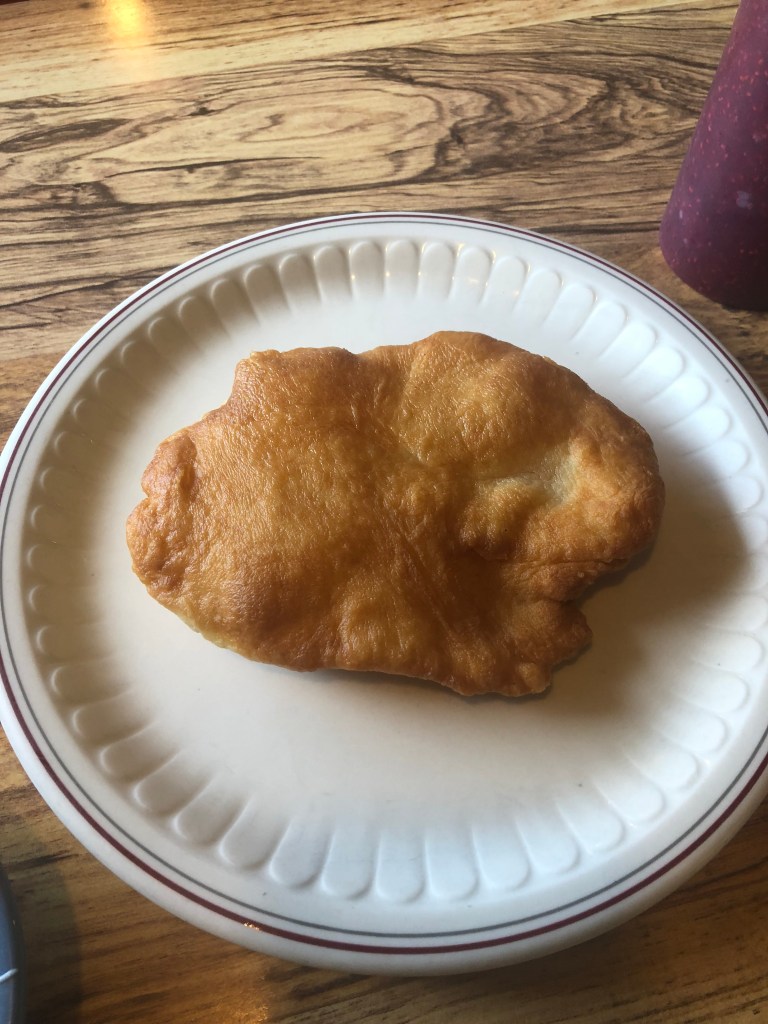
After my lime rickey, I returned to the familiar ribbon of US 50. I left Nevada behind some time in the afternoon, entering Utah. I stopped for dinner in the town of Delta. There were two good prospects on the main drag; a diner and a motel “cafe.” It turns out the diner now serves only Chinese food, so I opted for the cafe. I was feeling a need for some greens, so I ordered a chef’s salad. It came with my choice of bread, and the waitress recommended I get the scone. It’s not like any scone I’ve ever seen:
Shortly after leaving Delta, US 50 becomes part of Interstate 70 for a bit. I was dreading this part of the trip, because I hadn’t been on an interstate since I’d left Sacramento and I was enjoying the freedom to drive on the empty, undivided, quiet roadway that is US 50. I could pull over whenever I wanted to see anything, and I could flip around whenever I needed to backtrack. So the idea of getting onto the interstate, and sharing it with semis, was not appealing.

However, it turns out that I-70 in Utah cuts through some of the most spectacular scenery I’ve seen. You wend your way around enormous carved mountains that are iconic in this area. Here’s an example, which somehow reminds me of a poop emoji.
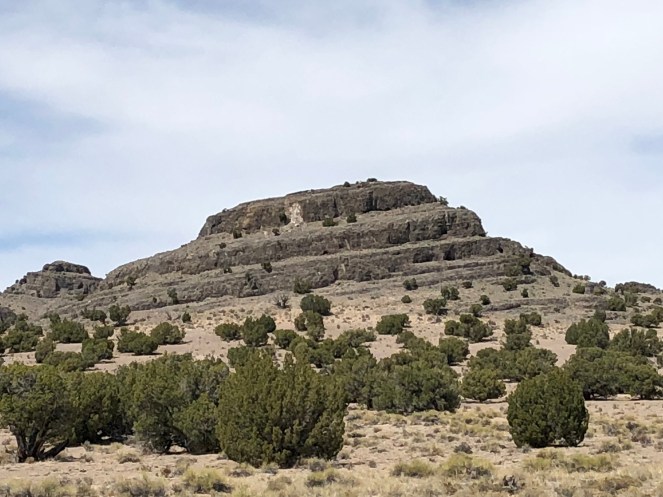

So I actually enjoyed this part of the drive. Even travelling at 80 mph plus, the scenery simply dwarfs and overwhelms me. It’s a unique experience, and really places one in perspective.

I didn’t take many photos of this scenery, because an iphone camera just doesn’t do it justice. You really have to drive through it to appreciate it. But I did stop at the “ghost rock” viewing area in Emory, UT. There I ran into a solitary person who was taking a photo. She was probably in her 20s, and probably pregnant. (I knew better than to ask.) I noticed her SUV was packed to the gills with boxes and suitcases. I said that it looks like she’s moving somewhere. “Yes. New York.” From where? “San Francisco.” That was about the extent of our conversation, but after I got back in my car I wondered: Why is she taking this route? Wouldn’t Interstate 80 make more sense? What caused her to want to relocate all the way to the other side of the country? One theme I seem to keep running into on this trip is that everyone wants to be somewhere else.

I called a halt to today’s driving when I got to Green River, UT. Tomorrow it’s off to Colorado!
Road trips · Uncategorized

America’s Loneliest Road

Editor’s note: Given limited travel opportunities these days, I decided each Thursday to post travel stories I’d written prior to starting this blog. The following is from a cross-country trip I made along the length of US 50 in the spring of 2018. I hope you might vicariously enjoy this trip while we’re all hunkering down at home. Because this is a longer trip (a week and a half), I’m going to post each of the daily entries over each of the next 10 days.

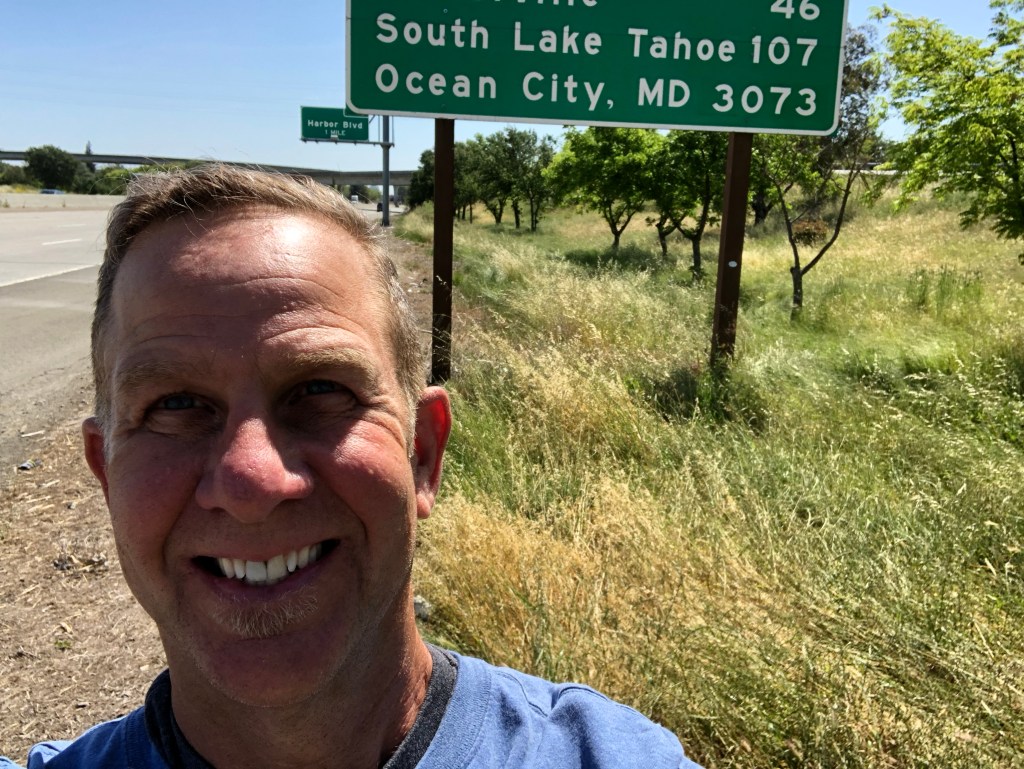
The inspiration for this trip comes from the sign at the western terminus of US Route 50, in West Sacramento, which I have passed many a time over the years. The sign tantalizes me with the vision of “Ocean City, MD 3,073” miles away. 

Day 1

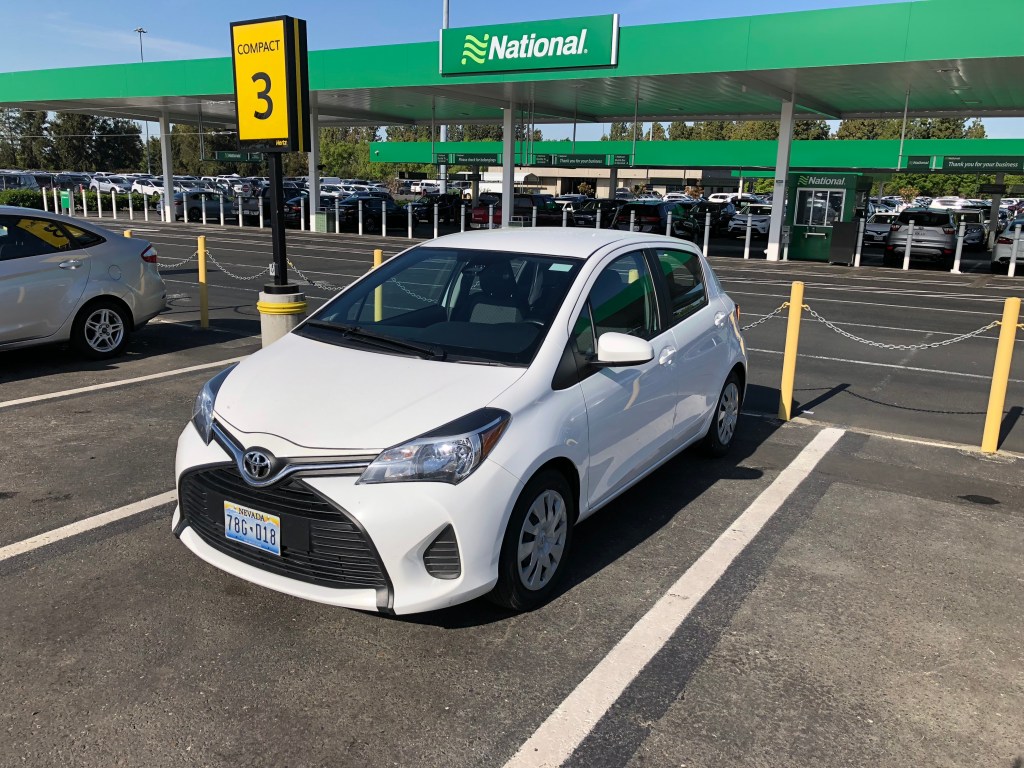
My US 50 trip began early this morning with a flight from LAX to Sacramento, where I picked up my rental car. Now, many people had urged me to rent a “fun” car for this trip. And I thought about that. But in my normal, everyday life I drive a “fun” car, and this trip is about connecting with the “backbone of America,” not blasting across the country in luxurious, steel cocoon surrounding me with infotainment options and various gadgets.

Batteries not included.

     So I’m driving a Toyota Yaris. And not just any Yaris, but a no-frills Yaris. I know you think that’s redundant, but there are actually blank plastic plugs in the dash where available options –like power mirrors, cruise control, or even FM radio – might go in the “loaded” version. I’ll say this much for it: The car won’t be distracting me from the sights the US 50.

My first stop was on the side of the freeway where eastbound Interstate 80 branches north, leaving, as the straight part of the branch, the beginning of US 50 . (The photo below was taken just before I was almost hit by a drifting truck.)

“Please don’t kill me, please don’t kill me…”

After narrowly escaping a Peterbilt’s front grille, I hopped back in the Yaris and headed east on US 50. The first half hour of driving was old hat. I’ve driven that stretch of US 50 many, many times. But after passing Placerville, I moved beyond my usual haunts and drove on pavement I haven’t experienced too many times. You can feel the metropolis of Sacramento, and the poor air quality of the central valley, melt away as you head into the foothills. It’s a very freeing feeling. Every time I’ve driven out towards Tahoe in the past, I’ve told myself I should do this more often. But somehow I almost never have found the time. Until now.

Just 3,000 more miles to Ocean City!
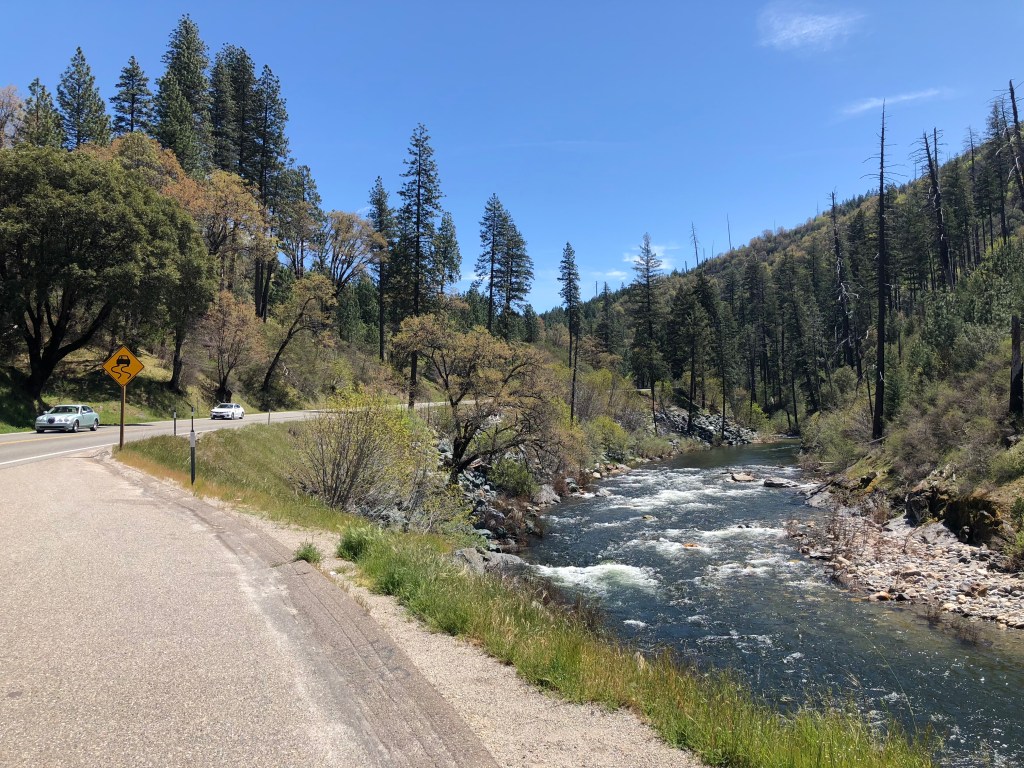
As I wended up towards the Sierra, I spotted the South Fork of the American River. It’s just beautiful this time of year.

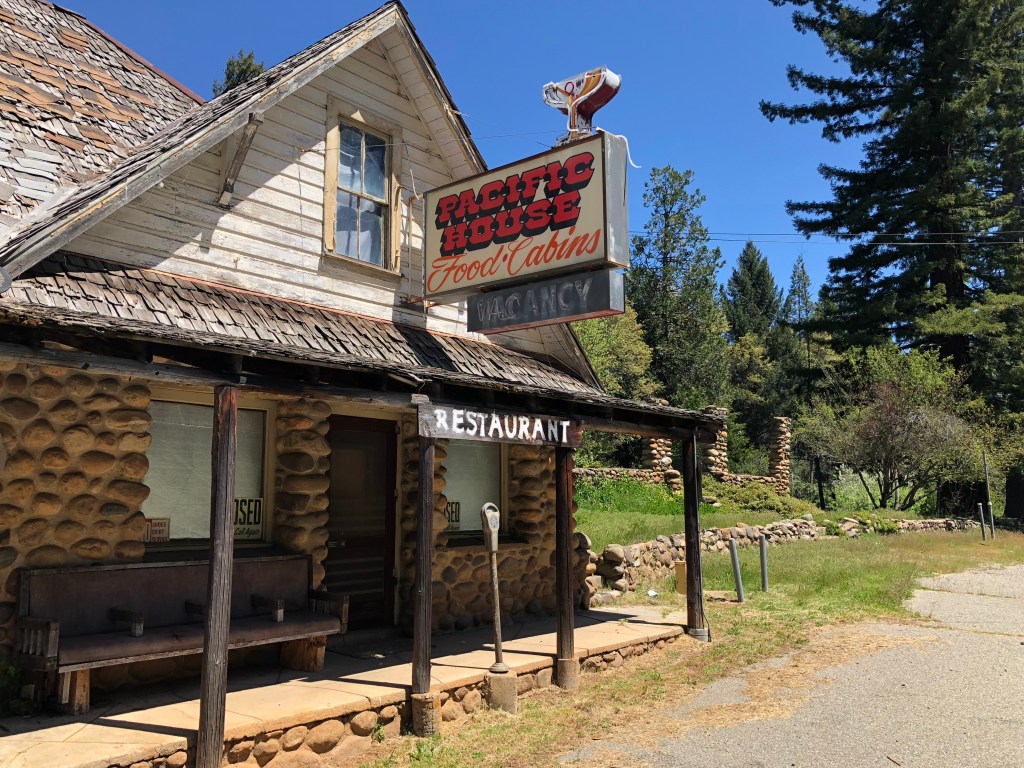
I encountered a couple of abandoned buildings. Maybe the economic recovery hasn’t caught up with this part of California? I love how the “restaurant” sign was painted freehand, almost as an afterthought. And I doubt that parking meter has seen a coin since Buffalo nickels went out of fashion. Land out here is so cheap that buildings just stand vacant for years, and some eventually just crumble. I’ll rejoin this theme in a few paragraphs, when I describe the motel room I’m writing this from right now….

George Washington Slept Here


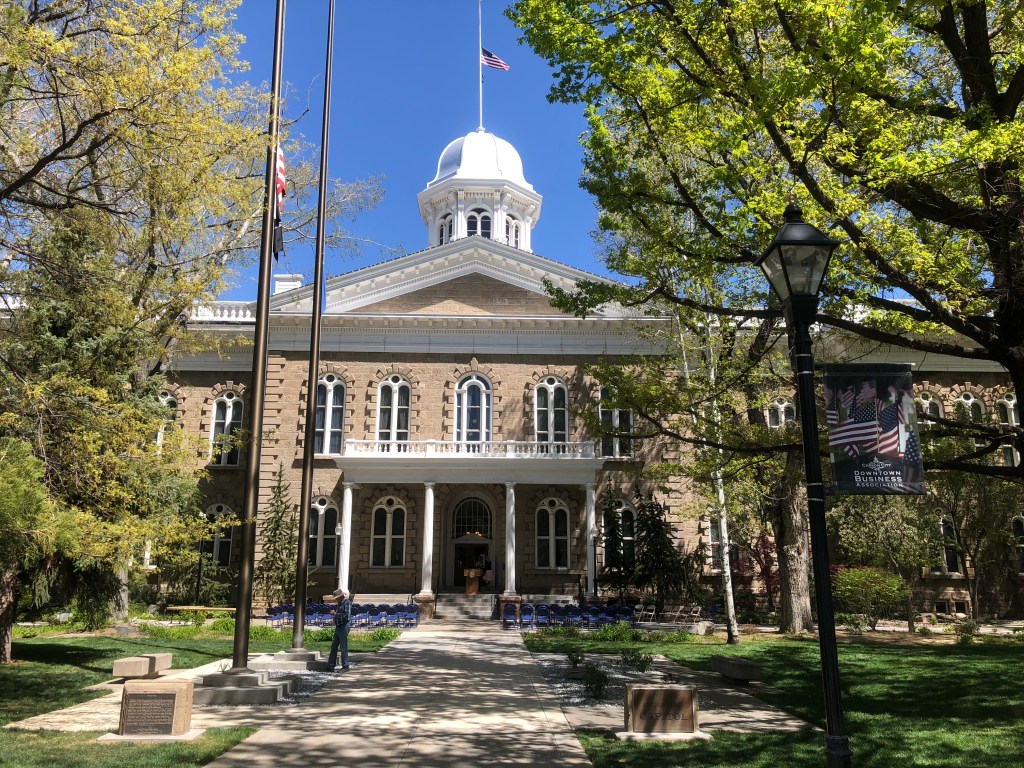
After a bit more driving I re-encountered civilization at South Lake Tahoe. And then, in the blink of an eye, I left California behind. A few buildings greeted me as I entered Nevada, but it was a half-hearted greeting. Unlike Reno or Vegas, Stateline, NV barely tries to entice gamblers from California. You just pass a faded casino or two, and then the town disappears. The vast expanse of Nevada beckons, interrupted by only a couple of cities. One is Carson City, the State Capital. I made a brief visit to the Capitol building. It’s a contrast to California’s, not only in terms of architecture, but also to the paucity of visitors, employees, and legislators. I suppose when your entire state’s population is only about 3 million souls, there’s no need for major legislative activity.

Volens et Potens


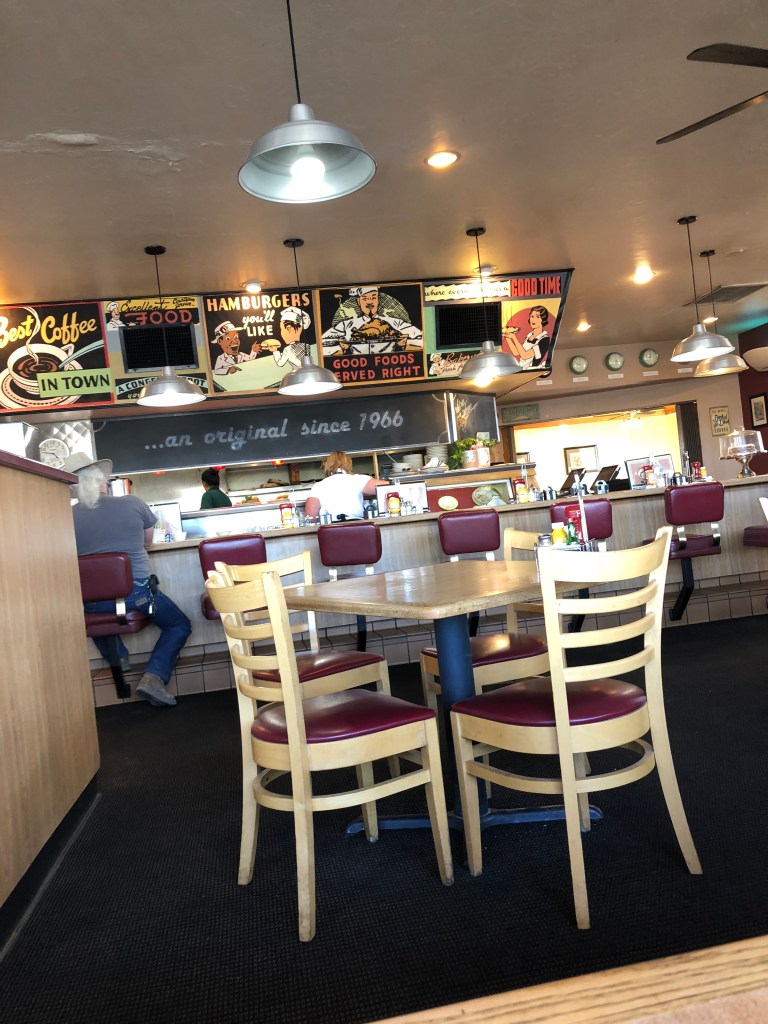
The last town of any size at all I went through today was Fallon (pop: 8,606). I stopped for dinner at Jerry’s Diner, which has supposedly been “a Fallon original since 1966.” (I learned later, though, that it’s now owned by the same people who own Black Bear Diner, so I inadvertently violated my “no restaurant chains” rule for this trip.)

But why the ellipsis?

My waitress was very authentic and friendly, though. She saw me consulting my Rand McNally atlas at the table and asked me about my trip. It turns out that she is from Sacramento, and has noticed the same US 50 sign and wondered about Ocean City, MD as well. But here in Fallon is as far as she ever got. She’s raising an 11 year old, and hopes that, after he’s graduated from high school, she can do some travelling. By which she means getting an hour or two out of Fallon.

After leaving Fallon, I became one of the few people remaining on the highway. It’s this stretch of US 50 that earned the moniker “America’s Loneliest Road.”

In an hour I passed only a handful of cars. And I was covering lots of ground in that hour — about 90 miles, actually. (You do the math.) At one point I looked down and the speedometer showed 100 mph. I had no idea the Yaris could move that fast. But you just don’t feel the speed out here. Partly it’s because there are almost no landmarks to highlight your speed. And partly it’s because the road surface is flat, straight, and in good shape. Evidently Nevada takes much better care of its roads than California does. Someone once told me that Nevada doesn’t have speed limits, which is demonstrably false, because I saw signs posted with a 70 mph limit. I’ve also heard that, even if there are limits in Nevada, they aren’t enforced. I hope I don’t encounter evidence to the contrary.

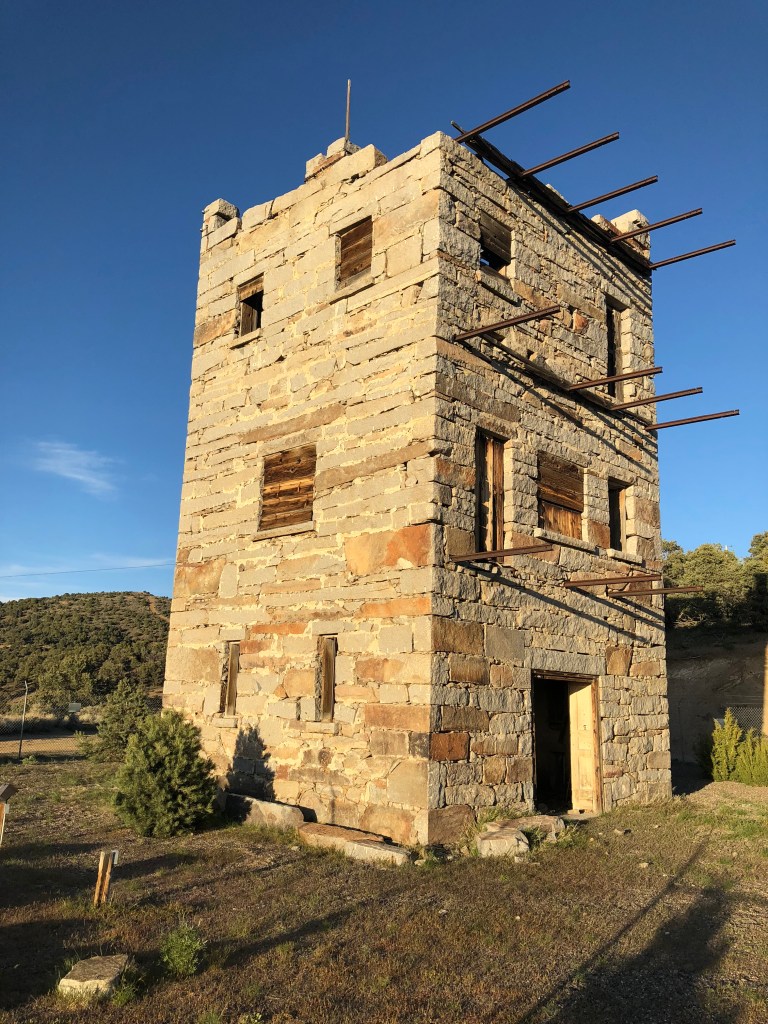
I ended today’s leg of my US 50 journey in the town of Austin, NV (pop: 192), at the base of the Toiyabe range. There’s something very eerie about this town, which alternately feels abandoned and haunted. The first thing you see, high up on a hill as you enter the town on US 50, is an ancient stone tower. A short drive up this hill reveals the tower to be something called Stokes Castle, which was constructed by a silver and railroad magnate named Anton Phelps Stokes in 1897. After completion, it was only inhabited for a couple of months, and has been vacant ever since. As you can see, even the local kids have been afraid to spray graffiti on it for over a century.

Stoked to be here.

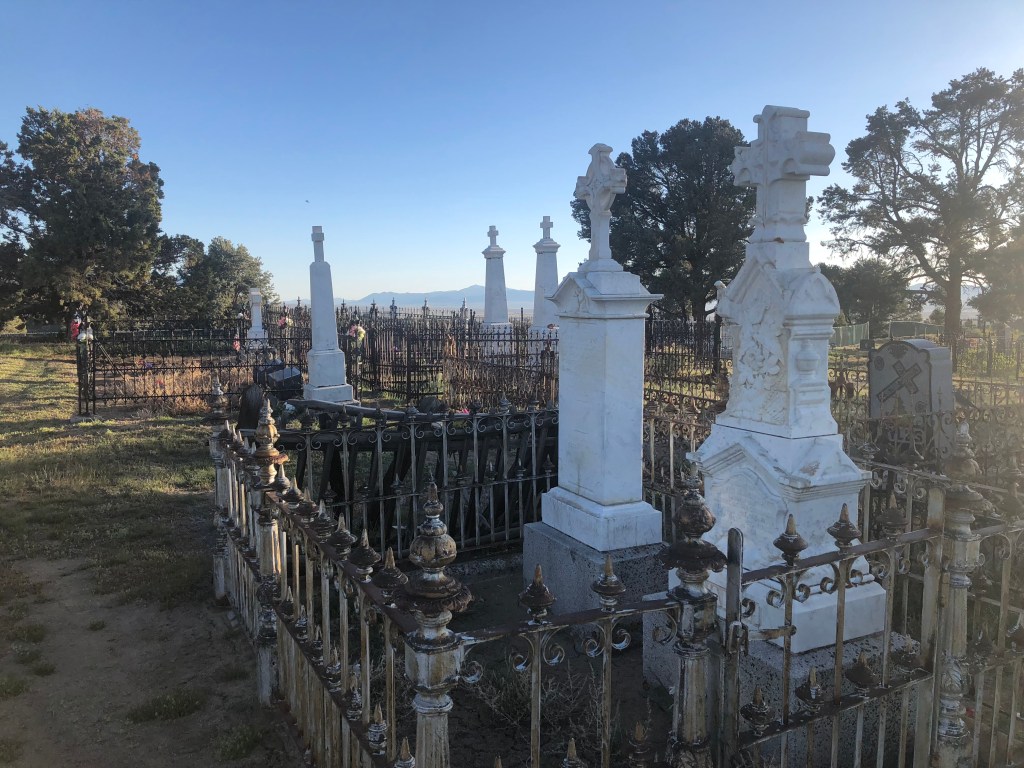
Complementing the sense of doom and abandonment, just a short hike from Stokes Castle, is a Civil War-era cemetery. I walked the cemetery for awhile, and not a single car passed by on US 50. All was silent except for a faint rustling of the leaves in the trees.

Some of the only residents I encountered along America’s Loneliest Highway.

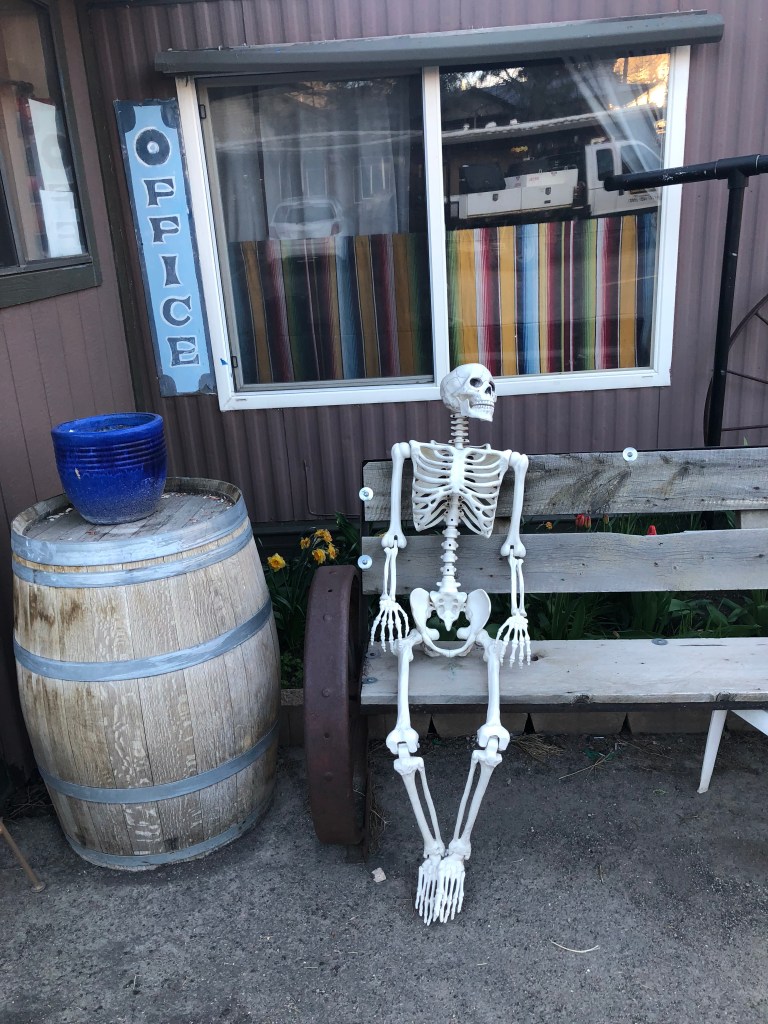
Now, you should know that, back in Fallon, I had phoned the “Cozy Mountain Motel” in Austin to make reservations for the night. I knew nothing about this place, other than it had a vacancy. When I turned into the driveway, right off US 50, this is what greeted me:

You can call me Slim

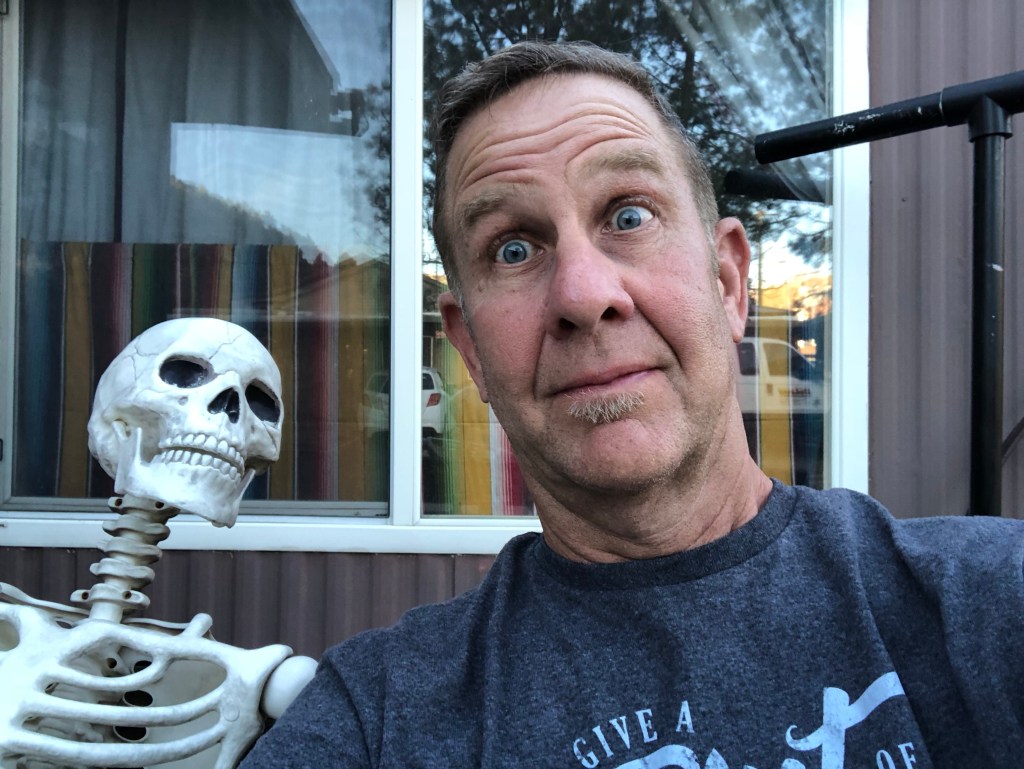
When I checked in, I asked the desk clerk what was up with the skeleton on the front bench. Without missing a beat, she said “he’s been waiting for the shower in his room to get hot.” I told her I didn’t get it, and she looked down and muttered “you will.”


I suspect tomorrow’s shower will be bracing.

Until then, I’m going to try to get some shut-eye. Here in this doomed town.

California history · Road trips

My Fair Lady

Editor’s note: Given limited travel opportunities these days, I decided each Thursday to post travel stories I’d written prior to starting this blog. The following is from November 2018. I hope you might vicariously enjoy this trip while we’re all hunkering down at home.

For many years, my friend Vic and I have been talking about driving out to Lake Havasu, on the border between California and Arizona, to see London Bridge. As you may know, London Bridge was moved from London to Lake Havasu in the 1960s, and it’s always struck us as a “you-have-to-see-it-to-believe-it” kind of phenomenon. But, despite the best of intentions, the trip never materialized. Until now.

So it was that last Tuesday morning I found myself at Ontario airport, picking up Vic who’d just arrived from Sacramento. A couple of illegal U-turns later, we were on our way to…….the site of the first McDonald’s restaurant, which is in San Bernardino.

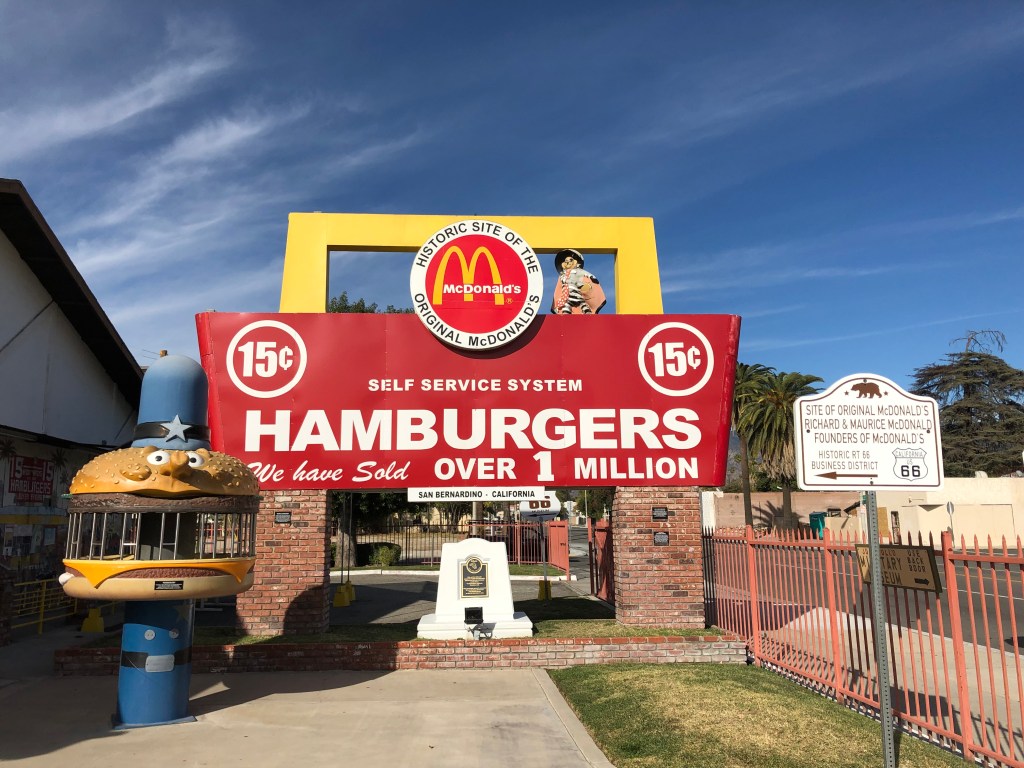
Ray Kroc’s fever dream

It would probably help to explain that Vic shares my interest in unsung history. And while McDonald’s is hardly unsung, this particular site is something that the McDonald’s Corporation would rather be forgotten. For it was on this site in 1948 that the McDonald’s brothers built the first McDonald’s restaurant. But when Ray Kroc bought the chain from the brothers in 1961, he was infuriated to learn that the sale did not include the original San Bernardino store. He made the brothers remove the Golden Arches from that building, and change its name from McDonald’s to “Big M.” A decade later, the building was torn down, but the sign was saved, and remains to this day.

Now, along comes a fellow named Albert Okura, who owns the Juan Pollo Rotisserie Chicken chain. (I’d never heard of it either.) He learns that this old McDonald’s property (with the original sign, and a new office building) is up for sale, so he buys it and moves the Juan Pollo headquarters there. But, supposedly because he “believes it is his responsibility to preserve the early history of the most successfulfast food restaurant chain in the world,” he devotes half of the office building to an unofficial McDonald’s history museum. Vic and I spent an hour checking out the old McDonald’s paraphernalia, as well as thousands of Happy Meal toys.

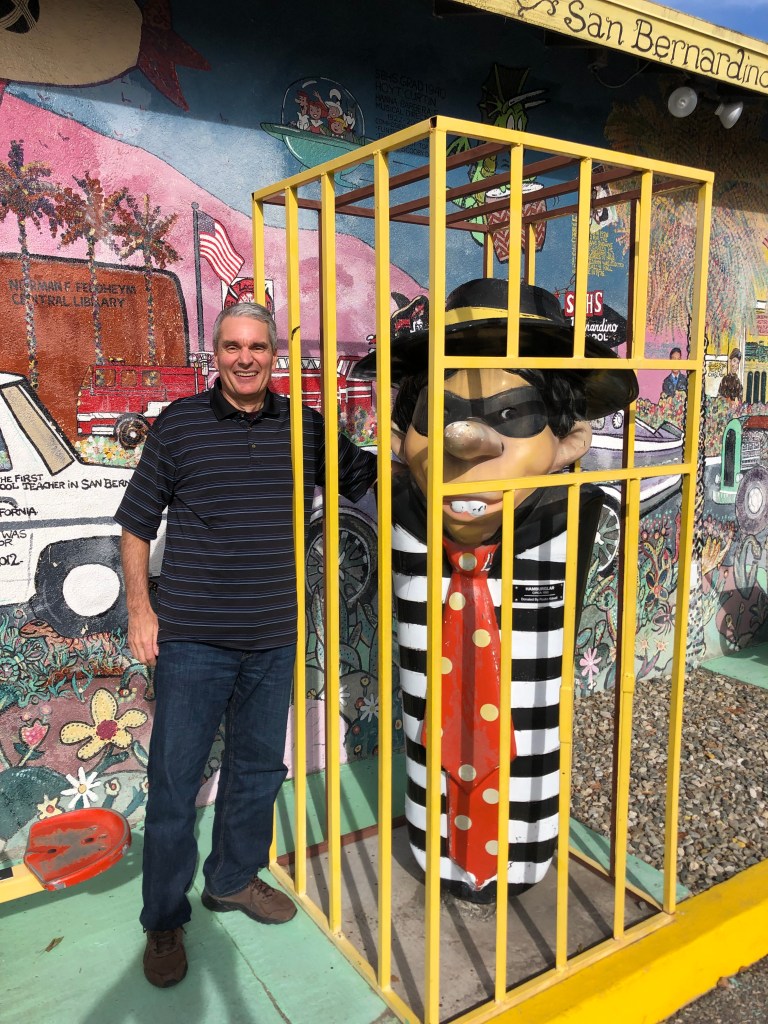
Vic, fraternizing with the prisoners.

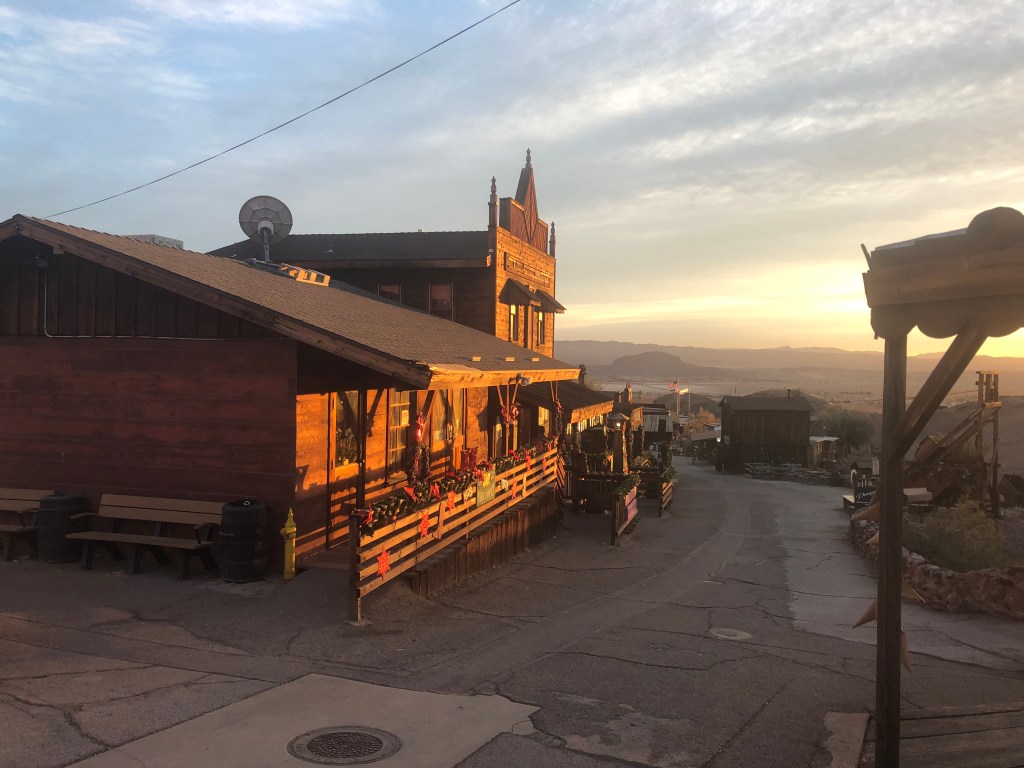
A little later, as we were driving across the Mojave Desert, we stopped at the “ghost town” of Calico. I use quotation marks because, while Calico was once a prosperous mining town that became all but deserted after silver prices dropped, it’s now a county park. In fact, to enter the “town” you have to stop at the entrance and pay $8 a head to the County parks ranger, who was asleep on a stool. (Evidently visitors are as scarce as residents in this ghost town.)

The ghost town of Calico, complete with historic satellite dish.

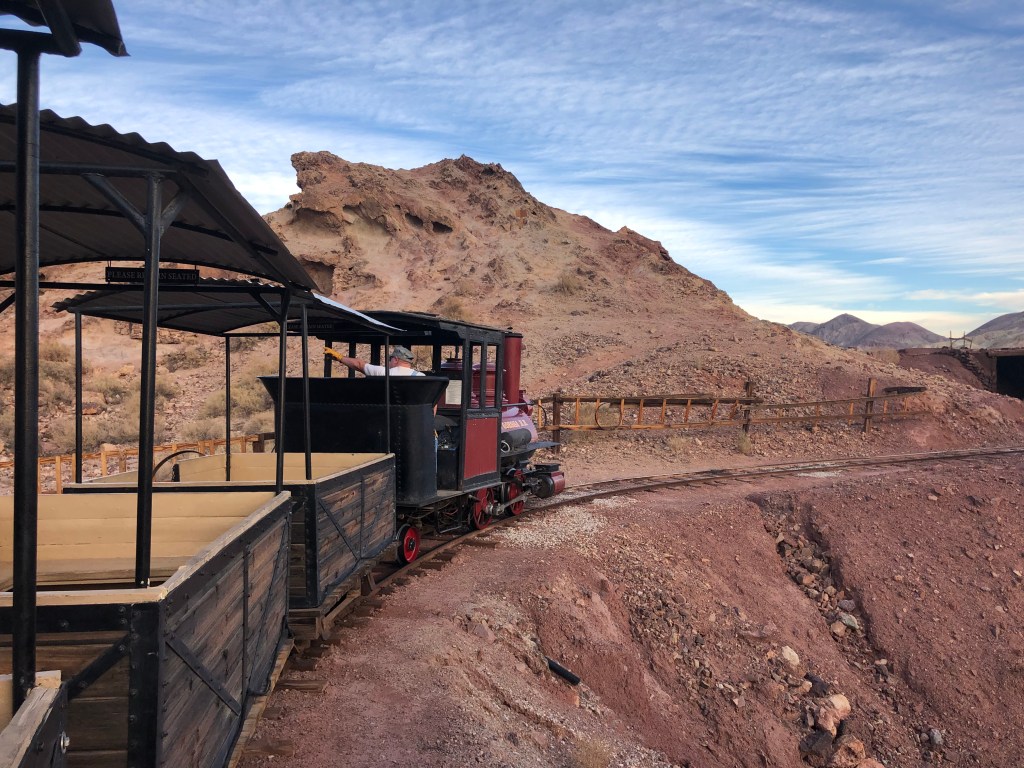
Calico is an uneasy mix of legitimate historic structures, kitchy craft stores, and hucksterism. Indulging in the latter category, we took the train ride (as the only two passengers) and visited the “mystery shack,” where water supposedly runs uphill.

At least this train ride isn’t cluttered with pesky paying customers…

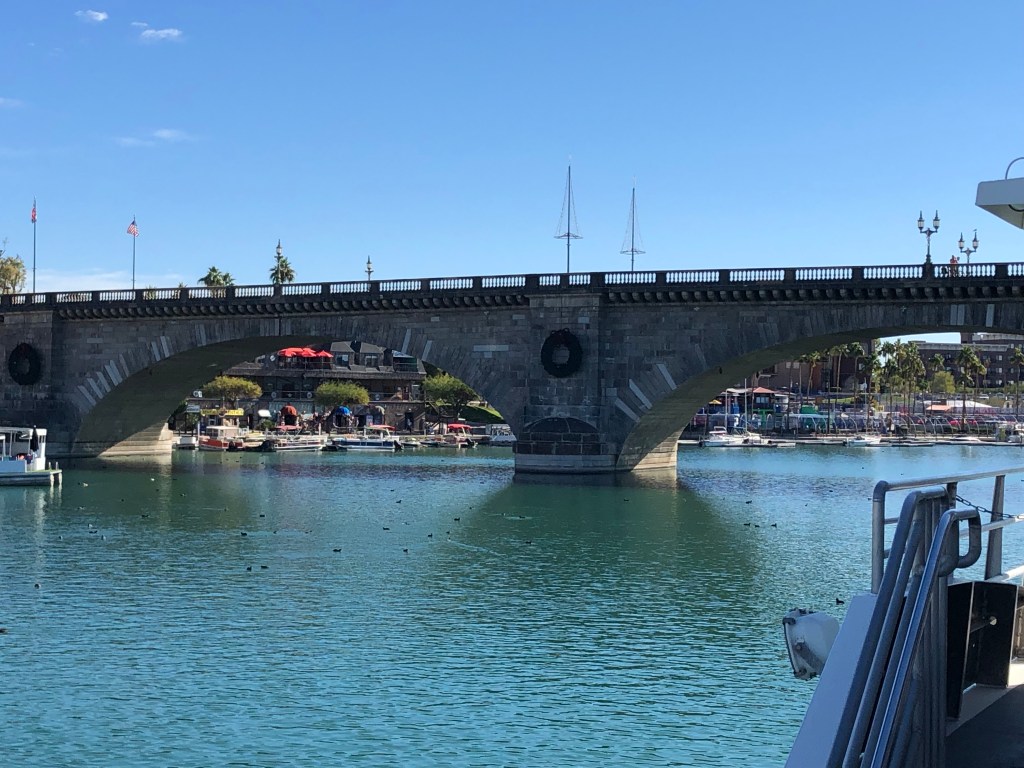
Eventually, we made our way to Lake Havasu City, Arizona, where we got dinner and rested up for the next day’s assault on London Bridge. The story of how London Bridge ended up in the Mojave desert is fascinating. It’s all due to the efforts of Robert McCullough, an entrepreneur who was born in Missouri and eventually made his way to Lake Havasu, where he developed, tested, and manufactured boat motors. As his manufacturing facilities grew, he bought much of the surrounding land and founded Lake Havasu City. But he needed some kind of gimmick to draw people to this barren land. As he pondered this, he learned that the City of London was auctioning off the London Bridge, which had been built in 1831 but was gradually sinking inch-by-inch into the Thames. So, in 1967, McCullough’s bid of $2.5 million was accepted, and he became the proud owner of London Bridge. The structure was carefully disassembled stone by stone, shipped through the Panama Canal, and unloaded at Long Beach, CA, where it was then trucked inland 300 miles to Lake Havasu City. The bridge was re-assembled on the desert floor. Finally, a channel was dug to bring the Lake’s water under the bridge. The bridge was reopened in 1971.

The original Bridge to Nowhere

It’s hard to express why I’m so intrigued by McCullough’s effort. Sure, it was a crazy idea. The very logistics of moving a bridge 5,300 miles are daunting enough. And to spend a good chunk of one’s personal fortune on it seems foolhardy, especially when the end result is a relatively useless structure in an unpopulated desert town. But I suppose it’s because of those things, rather than in spite of them, that I admire McCullough. Too often we let logic get in the way of our dreams. In a very small way, that’s why it took Vic and me so long to take this trip!

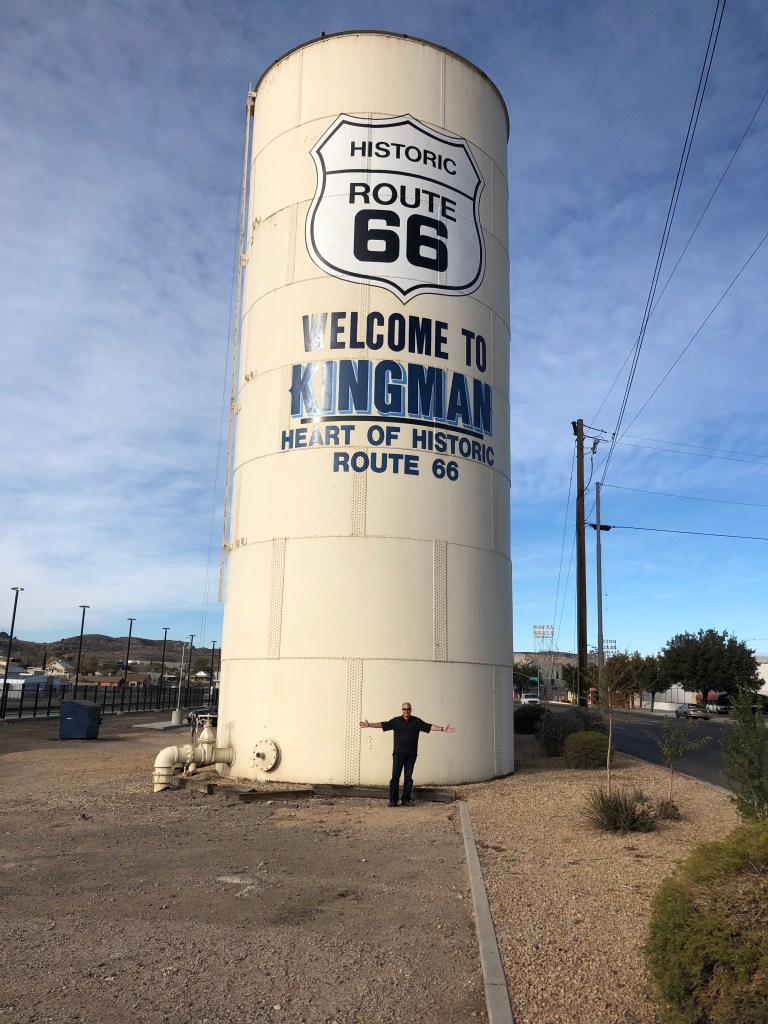
With the main objective of our trip now complete, we began our return drive along several stretches of historic Route 66. We headed up to Kingman, AZ (pop: 28,000), which is called out by name in Nat King Cole’s “Route 66.”

Geographically, Kingman is more like Route 66’s left wrist.

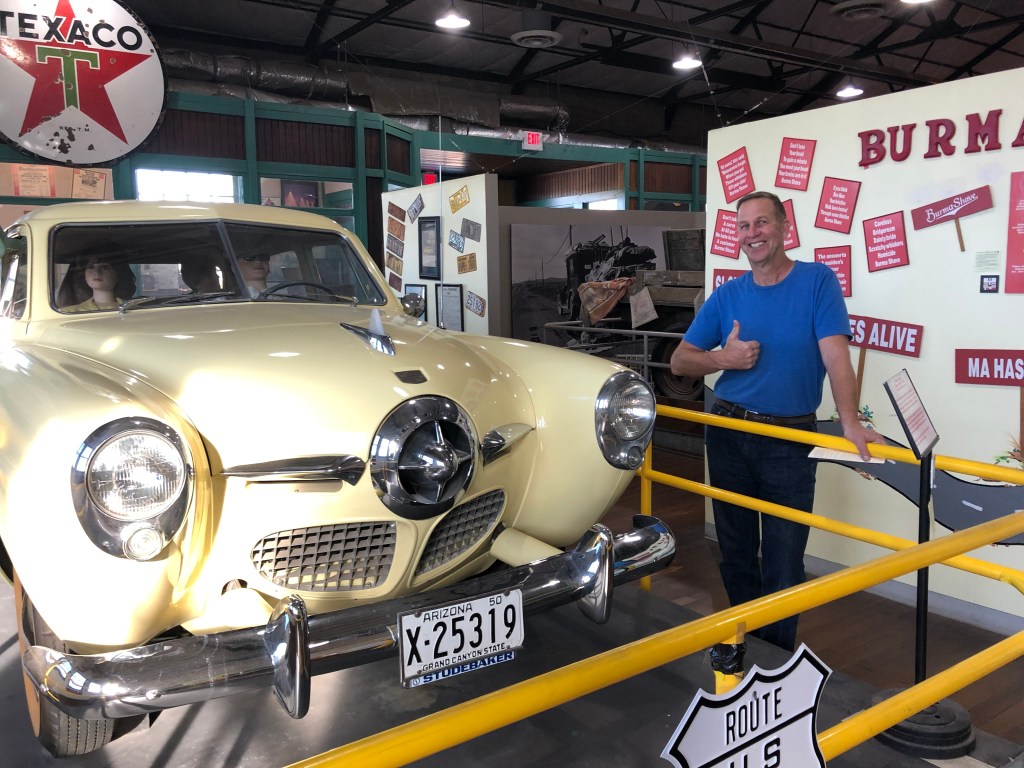
We visited Kingman’s Route 66 museum (which included a sweet Studebaker Commander), and explored some of the historic sites along the Mother Road.

That quirky look that’s so ugly that it’s kind of cool. Oh, and the car is pretty neat, too…

The next day we headed west on Interstate 40 (which replaced Route 66 in this region in 1984). But whenever a stretch of the historic highway was available, we left the interstate and motored along the historic pavement. Each time we transitioned off the interstate, I could feel my grip on the steering wheel relax. My eyes would open a little wider, and I’d feel more at one with the passing countryside.

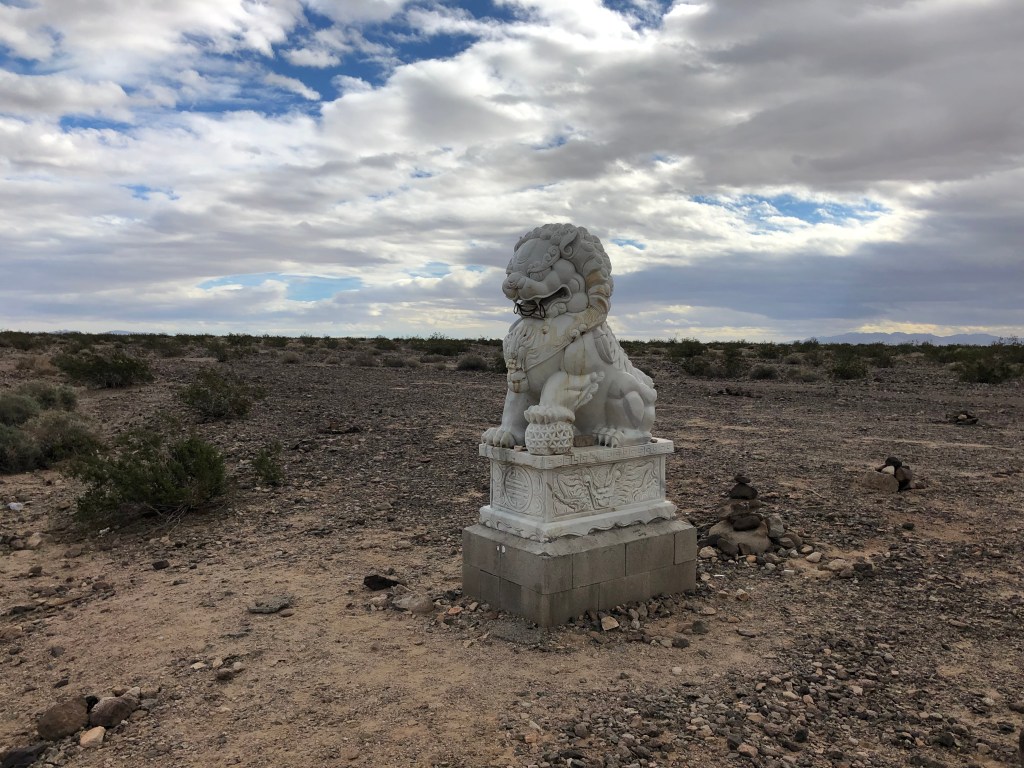
One item that caught my heightened attention on Route 66 was a Chinese lion, cast out of cement, sitting about 20 feet off the road, all alone.

Something you don’t see every day.

A waterproof journal was sitting on the pedestal, with an invitation to record our thoughts. There were many earlier entries, about half of which clearly got into the Zen of the thing, while the other half expressed puzzlement. I wrote something that was somewhere in between those sentiments. But I confess that a world with mysterious lions along the roadside is better than a world without such oddities.

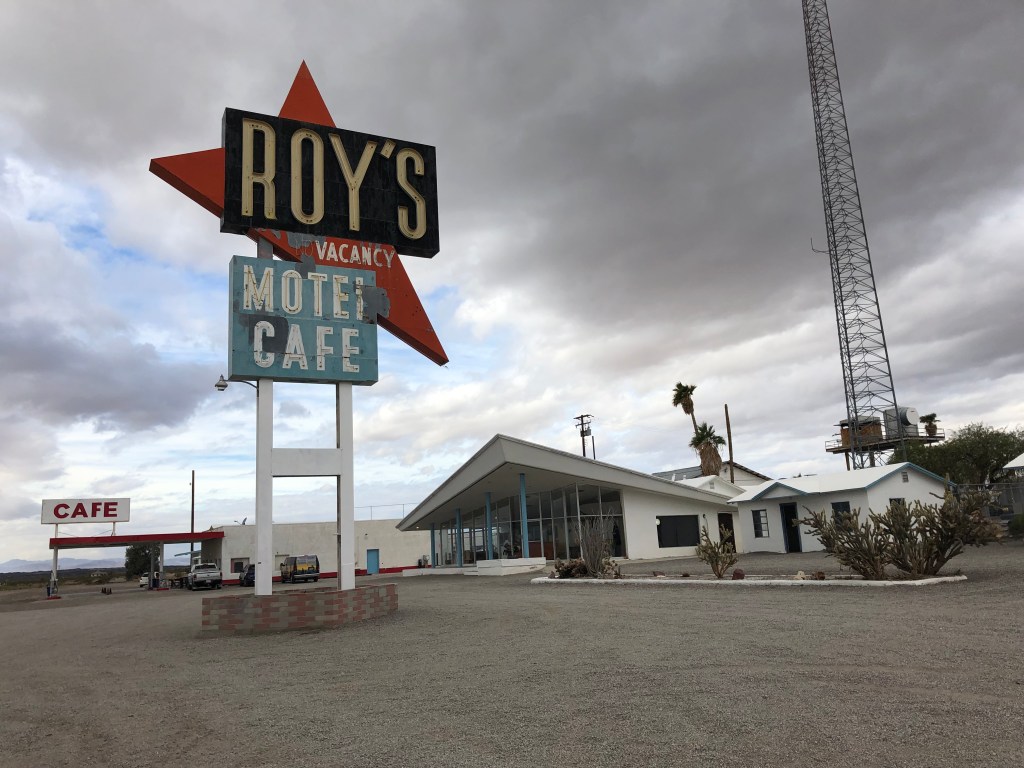
A short time later we came upon the town of Amboy (pop: 4). Amboy was first settled in 1858, and became a boomtown when Route 66 opened up in the 1920s. In the 1930s, Roy’s Motel and Cafe were built by Roy Crowl. The complex included a gas station and a store, and the addition of a large sign in 1959 make Roy’s an especially popular, even iconic, spot along Route 66.

Vacancy? You don’t say.

Like the many other businesses along the route, Roy’s (and Amboy) fell on hard times when the interstate replaced Route 66. Roy’s went through several ownership changes, Eventually, the motel, gas station, and cafe closed, and the property fell into disrepair. Then, in 2005, a history buff and Route 66 preservationist purchased the town of Amboy with the intention of re-opening Roy’s and creating a Route 66 museum. I can attest that Roy’s is indeed now open for business, selling gas and supplies to the (scarce) passers-by. We saw active construction on the motel cabins, which look like they should be open for visitors sometime next year. And who is this savior of Amboy and Roy’s, who puts his money and time into saving a piece of history for the rest of us? Coincidentally, it’s Albert Okura — the same guy who created theMcDonald’s museum we’d stopped at 2 days earlier. And, like Robert McCullough, Okura isn’t afraid to purchase an entire town in the effort to fulfill his dreams.

So, as we headed home, Vic and I tipped our hats to Albert Okura, Robert McCullough, and all the others who work to make our world a little less jejune and a little more worthy of a road trip like this one.

For those who have their taste sense, but no other.
California history · Road trips

Eight Hours for a Hot Dog

Editor’s note: Given limited travel opportunities these days, I decided to post some travel stories I’d written prior to starting this blog. The following is from August 2019. I hope you might vicariously enjoy this trip while we’re all hunkering down at home.

Yesterday was a beautiful, warm, sunny day here in the so-called “Southland,” and more importantly, it was not a Monday, Tuesday, or Wednesday. Stick with me on this for a minute.

There’s an old restaurant high up in the San Gabriel Mountains. Named Newcomb’s Ranch, its lineage dates back to 1888, when a mountain man named Louie Newcomb built a cabin and became one of the first forest rangers in the new San Gabriel Timber Reserve. Louie ended up selling his land in 1929, and by 1939 the new owners had built a restaurant just a few hundred yards from Louie’s original cabin. Over the years this restaurant (largely rebuilt after a fire some 45 years ago) became a popular stop for motorcyclists. It sits about halfway along the winding, 66-mile, two-lane “Angeles Crest Highway,” which crosses the San Gabriel Mountains and was built by prison labor in the 1930s and 1940s.

I first stumbled across Newcomb’s Ranch a few years back while taking a day trip along the Angeles Crest Highway. Now, no one who knows me would ever use the term “biker” to describe me. But I was strangely attracted to the biker hangout as a way to prove that, yes, I can fit in with that crowd. I mean, I own a bike, right? But it was late in the day, and I didn’t have time to stop. So I made a mental note to return some day. A few weeks later I made the trip up the ACH again, with the intention of stopping for lunch at Newcomb’s. But I found the doors locked, and a couple of swarthy-looking bikers eating bag lunches on a picnic table in front of the place. “Are they closed?” I asked the bikers. The more sentient of the two looked up at me and said “Yep.” When it was obvious that I was looking for a little more information, he volunteered that the place is closed Monday through Wednesday. I was there on a Wednesday.

So Thursday of this week I set out for a third assault on Newcomb’s Ranch. I was enjoying the ride through the mountains when I abruptly encountered a “road closed” sign. It turns out the ACH experienced a landslide a few months back, and CalTrans is still at work clearing it and installing new retaining structures. Here’s a picture (from the web) of the goings-on:

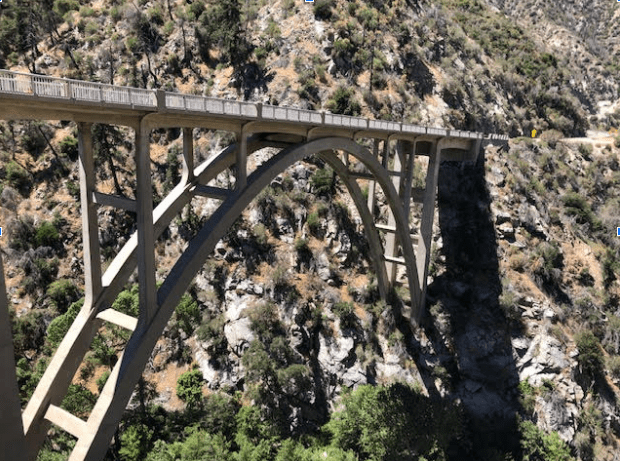
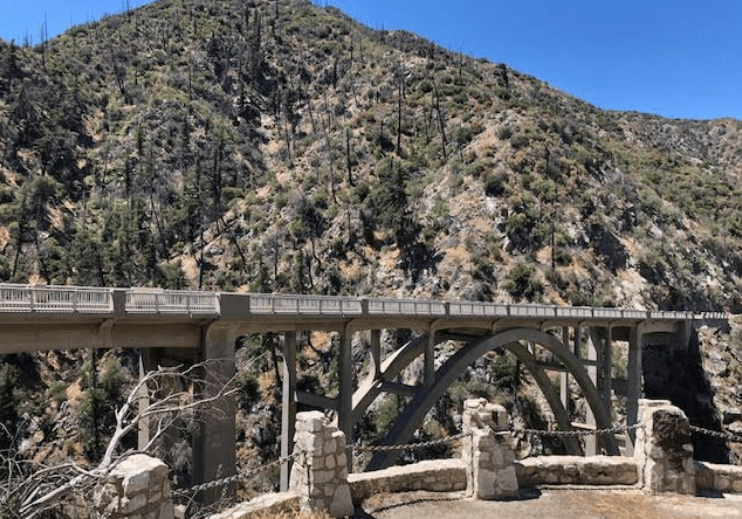
A “detour” sign pointed toward a side road (though it contained no information as to length or destination). I tried it. Before long I was crossing the Big Tujunga Narrows Bridge, which is an impressive structure over 400 feet long from 1941. Here are a couple of my photos:

Tempted to make an arch comment..

The second photo shows what appears to be an old overlook site in the foreground. The area was fenced off, but it was easy to get past the barrier. I got the sense that it was considered unsafe, and thus the public was discouraged from going out to this area. It felt like an old Conservation Corps project, or maybe a WPA project. But there was no plaque, and I couldn’t find any information about it online. I’d welcome any intel that readers might be able to share.

Eventually the detour routed me back to the ACH, some ways past the landslide, I presume. A few more miles and I came upon the fabled Newcomb’s Ranch. But wait: there were no signs of life through the windows of the building. And weren’t those the same two bikers I’d met weeks before, sitting out on a picnic bench? I walked up to these now-familiar figures, and asked if the place was closed. “Yep.” (I should have learned my lesson the first time.) I protested that “It’s Thursday!” One of the guys just shrugged, and said “sometimes something comes up. I think they might have lost their power.” I told them that I’d made a trip out here just to get a burger, so they pointed me down the road to a place called Sky High. How far is it, I asked. “About 30 miles.” That would take me just about to the end of the ACH, so heck, I decided to make the trip.

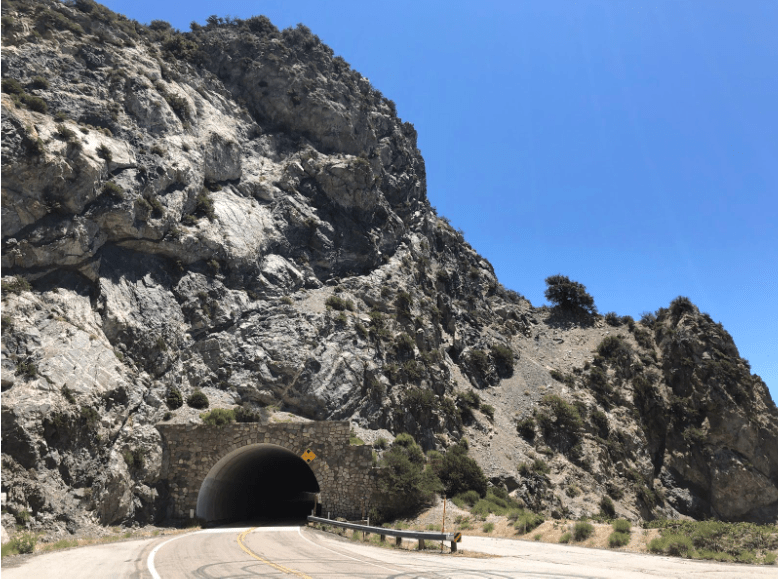
I didn’t encounter much traffic on the ride. Mainly just a few other guys on motorcycles. The road twisted over and even through the mountains. Here’s one of the tunnels, that I thought was picturesque:

Boring work, digging tunnels is.

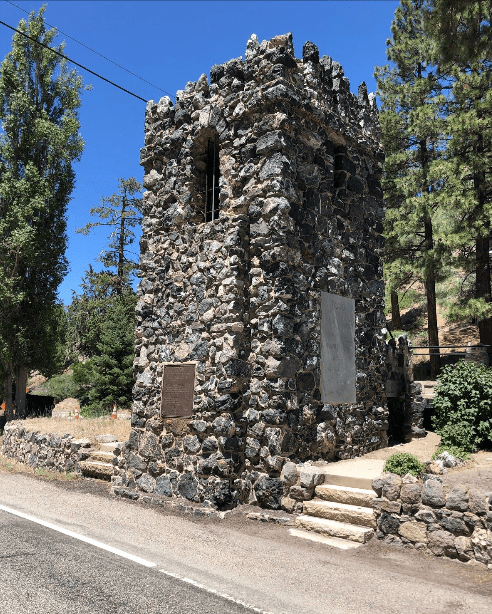
I was becoming famished. What with the detour, and with the unexpected additional mileage to the Sky High restaurant, it was now almost 2 pm. But I stopped once again for another of the rare structures along this desolate road. It looked like an old lodge of some kind, with a stone tower and a bronze plaque bearing a poem from 1925. Here’s a picture of the tower. (Sadly, I didn’t get a picture of the lodge.)

Must be from the Stone Age…

 The structures were immediately on the side of the road, and they were completely deserted. Other than the poem (“In the Pines,” by WIlliam Bristol) and the engraved names of the LA County Supervisors from early in the last century, there was no information as to what the heck I was looking at. Further research would explain that these are the remnants of the Big Pines Recreation Camp — a retreat owned by the County of Los Angeles to provide recreational opportunities like boating, hiking, and horseback riding on 5,600 acres of property in the San Gabriel Mountains. The camp was opened in the 1920s. Here’s a historic photo I found:

You can see that my mysterious stone tower had been part of an entry arch for the camp. The lodge-like building I saw evidently had been the recreation hall. At some point later in the century the facility came to be too much for the county to maintain, so it was turned over to the US Forest Service. I’m told that the recreation hall is now a ranger station, but there were no signs of life when I was there.

WIth hunger gnawing at my stomach, I got back on my bike and continued eastward on the ACH. Shortly I saw a sign for “Burgers and Pizza” at a place called “Sky High Disc Golf.” This must be the place. I turned onto a narrow, steep road for about a mile, and arrived at an old two-story building that seemed to serve as a ski lodge in the winter. Now, in mid-summer, the vast parking lot was deserted. I went up the stairs and found the door to be open. I was met by an older woman who’d evidently had a hard life, standing behind a lunch counter looking bored. I was the only person in the place that wasn’t paid to be there, and I wouldn’t be surprised if I was her only paying customer for the entire day. She asked me what I wanted, and I (perhaps foolishly) asked her what she’d recommend. “Well, the chili cheese dog isn’t bad.” With a recommendation like that, how could I resist? Soon I was tucking into a slightly warmed generic hotdog on a soggy bun covered with shredded American cheese and some questionable chili. This was my quarry for the day.

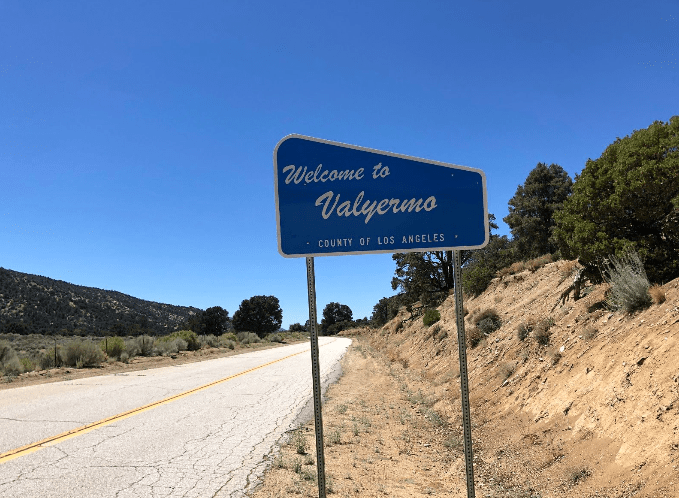
After my repast, I got back on the Triumph and headed down the hill to rejoin the ACH. But then I figured I’d take a different route to head home, so I jumped onto the Big Pines Highway, which looped a little further north than the route I’d come. Most of the day’s travel was entirely rural, with almost no signs of habitation. Imagine my surprise, then, when I came across this sign which seems to promise some kind of real civilization:

A sign of things to come.

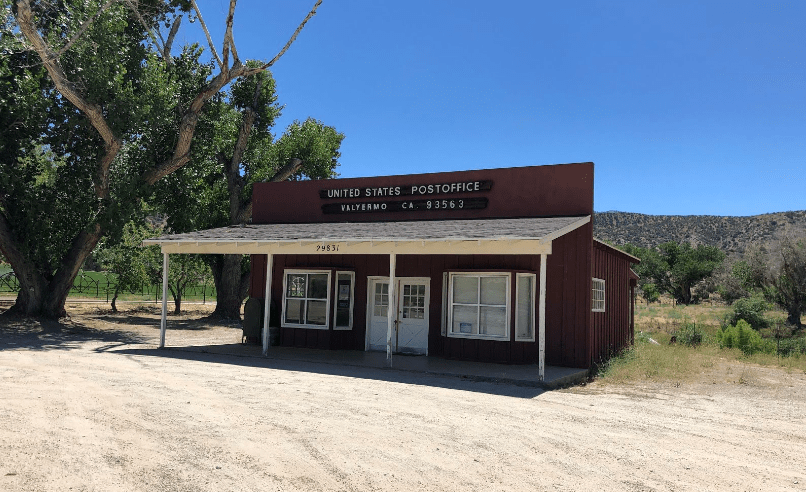
Alas, Valyermo appears to have little to recommend it, other than some scrub brush and a couple of buildings. One of those buildings, surprisingly, is a sturdy post office. It was closed however. On a Thursday afternoon. I can’t imagine they get a lot of business.

Lost in time.

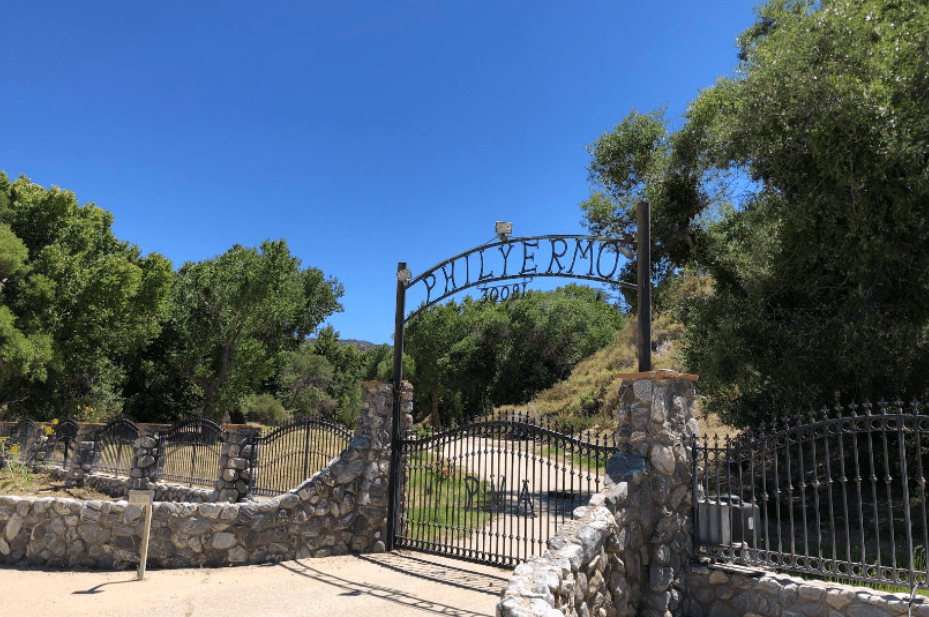
The other notable site was this entrance to an 800-acre ranch, which had originally been owned by Bob Wian (the guy behind the eponymous “Bob’s Big Boy” hamburger chain). Bob died over 25 years ago, but his ranch, I’m told, is now owned by a guy named “Phil,” who renamed the place by inserting his surname into the first syllable of Valyermo. I guess it’s his version of Trump Tower.

The Name Game. Phily, Phily, Bo-Bily, Bo-nana Fanna Fo-Fily….

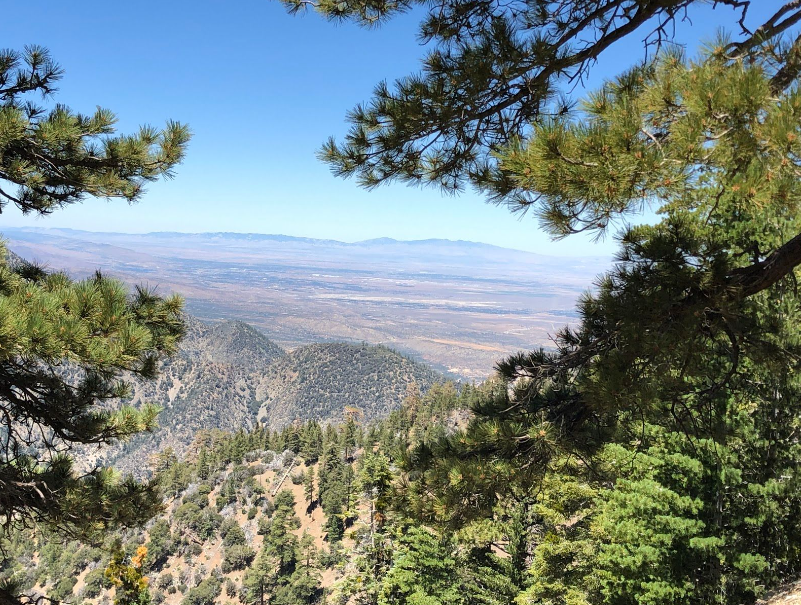
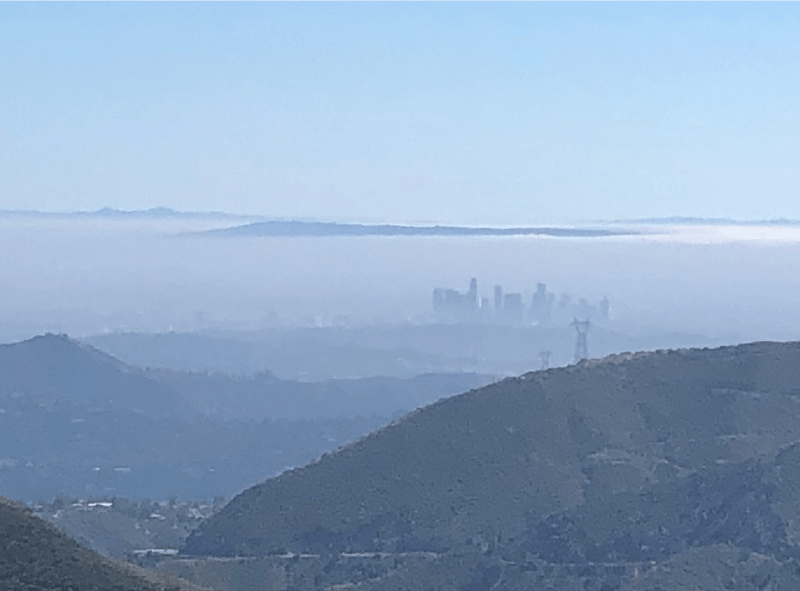
Continuing on, I found myself leaving the mountains and heading towards Palmdale, on the floor of the Mojave Desert. Here’s a photo looking down on the desert from when I was still higher in the mountains:

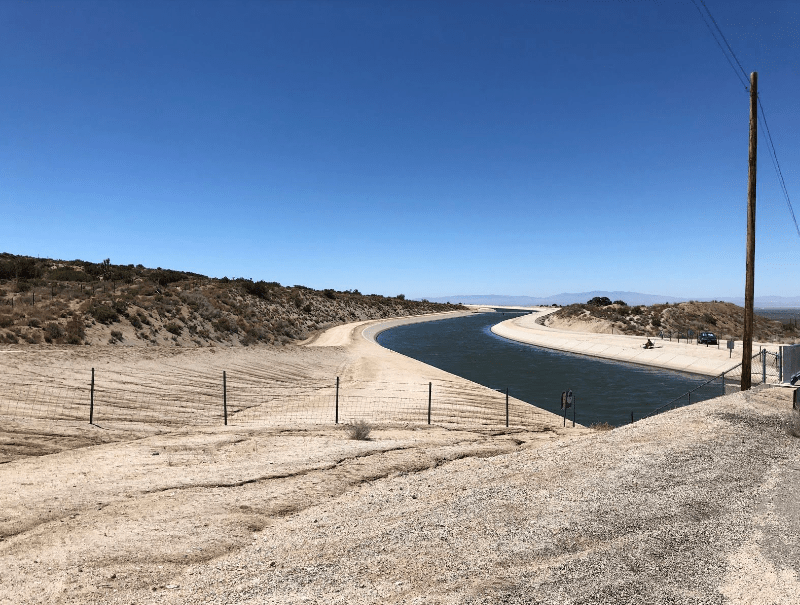
 It’s striking how effectively the San Gabriel mountains separate the burning desert heat from the (relatively) cool ocean air of Los Angeles. And yet, cutting through this inhospitable, arid land is an aqueduct. This time it’s the California Aqueduct, bringing water from the Sacramento Delta down to Los Angeles. You have to wonder how much of the water evaporates before it enters the county.

Next stop: Los Angeles

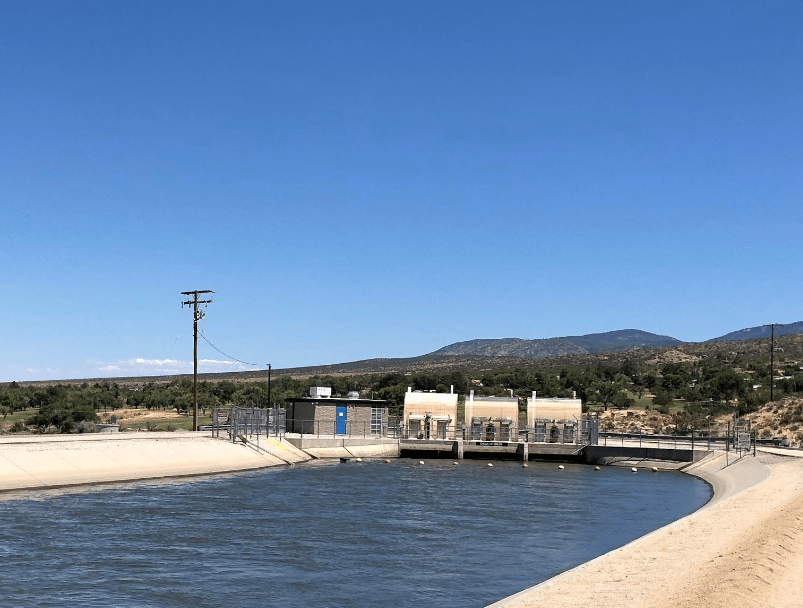
Shockingly, even in this post-9/11 era, one is able to walk directly onto the banks of the aqueduct and, say, fish. (I saw a sunburned fellow in a lawn chair doing just that.) I amused myself by checking out the gate infrastructure:

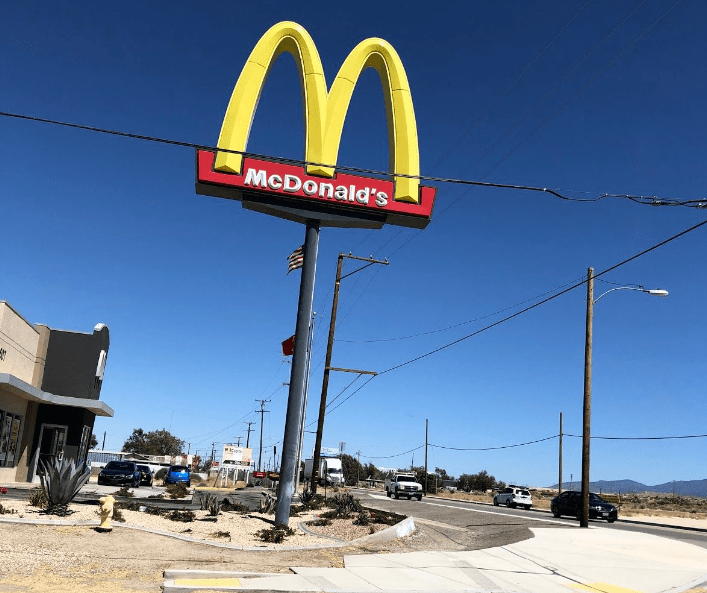
When I got to an oasis of civilization near Palmdale, just before heading back south toward LA, I encountered something I hadn’t seen for about 30 years: real Golden Arches.

Not much to look at, compared to arches on the Big Tijunga Bridge at the beginning of the trip…

And, come to think of it, it might have been preferable to get my lunch at that old McDonald’s in the middle of the Mojave, rather than at Sky High Disc Golf in the mountains. But no matter. I learned a little more about the Los Angeles region. And it seems like every trip seems to bring more examples of aqueducts, dams, and other water-related facilities. It’s striking that this metropolis of 10 million people relies on so much far-flung infrastructure. From up here in the mountains, you get a whole new perspective on the town.

Shakey Town, through a glass darkly.
California history · Road trips

Ghosts

Funny thing happened when I was checking out of my No-tell Motel this morning. I found the door to the office locked, and so I tried ringing the doorbell at the night window. No one ever materialized, and a hand-lettered sign in the window indicated there were “NO ROOMS!” It’s as though the proprietor suddenly got fed up with all these pesky customers showing up, so he vamoosed. Either that, or I was checked in last night by a ghost.

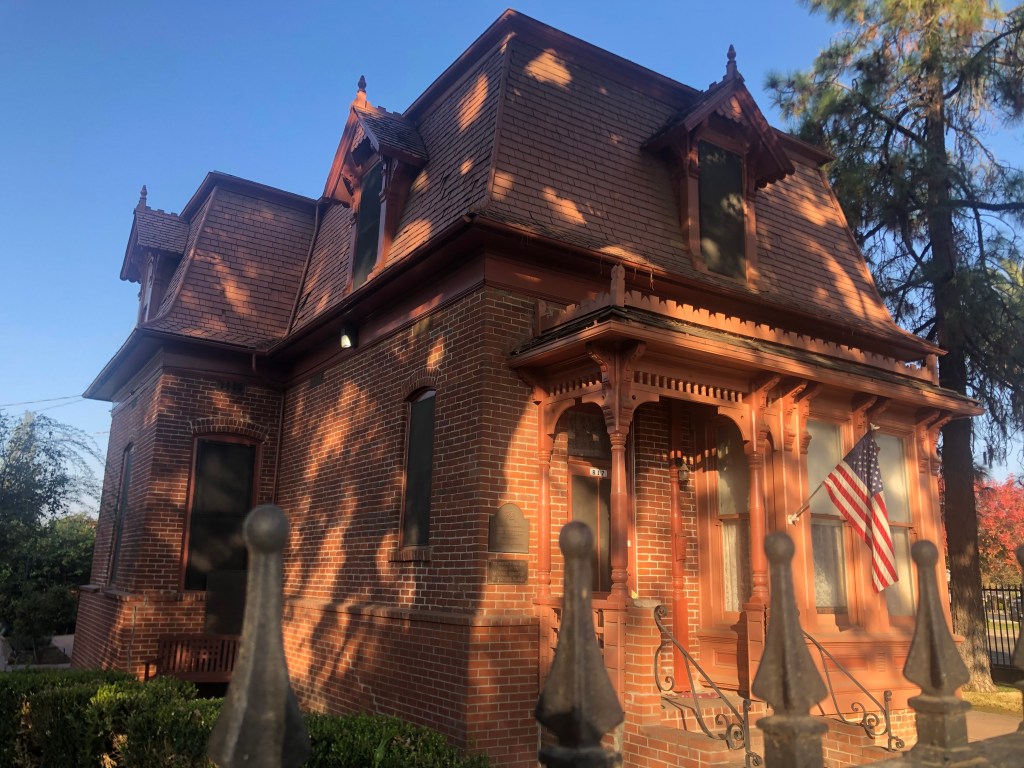
Speaking of ghosts, on my way out of Porterville I passed an old, ornate, and somewhat creepy Victorian mansion complete with gables, dormers, and a mansard roof. The place, which at some point seems to have become a museum, was locked up tight and surrounded by a gothic wrought-iron fence. Surely a place like this has a story.

1313 Mockingbird Lane?

It turns out the place was built in 1891 as the home of a Bohemian immigrant couple. (I don’t mean they were unemployed pot-smokers who composed folk tunes for sitars; I mean they immigrated from the Kingdom of Bohemia.) And sure enough, the family (named Zalud) suffered a string of tragedies that has led to rumors that the house is haunted. Death was a constant companion: a daughter died of tuberulosis; a son in law was shot to death by a would-be lover, and a son was killed when he was thrown from a horse.

When the last of the Zalud children died (of natural causes, in 1962), the home was donated to the city of Porterville and it became a museum. The house contains the bullet-riddled rocking chair in which the son-in-law was seated when he was shot, as well as the saddle on which the son was seated when he was fatally thrown. Given all this, the Zalud house must be a very tempting venue for any self-respecting ghost. And indeed, paranormal activity at the Zalud house has been chronicled by the “Ghost Adventures” television series.

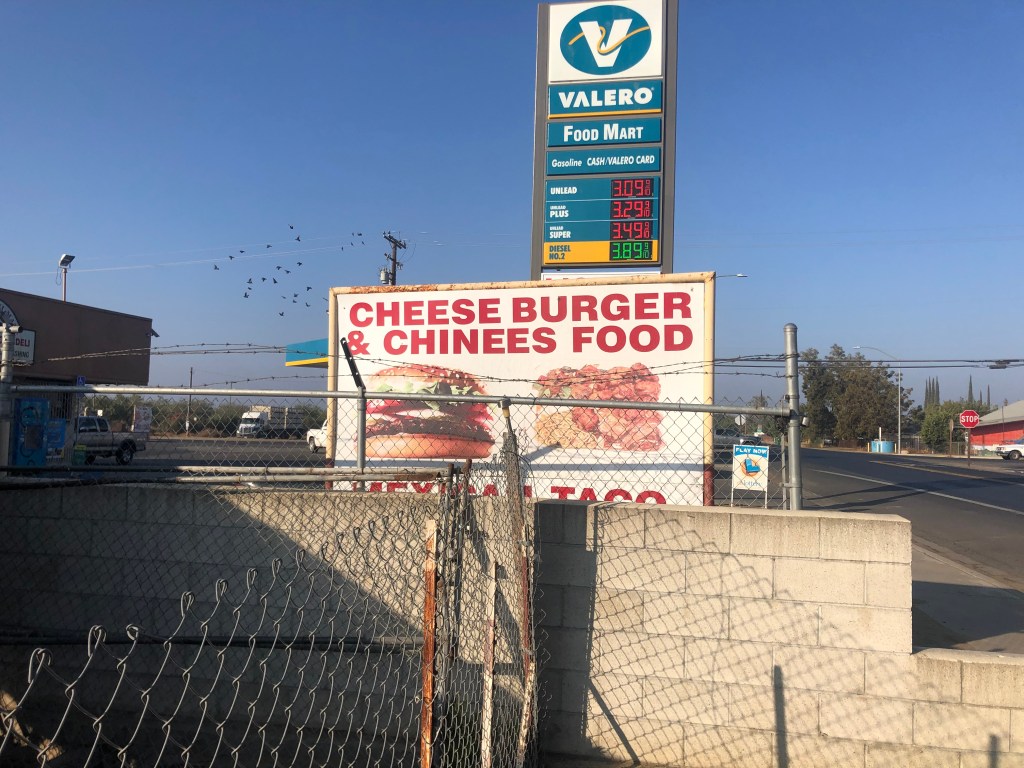
Just before I passed out of Porterville I figured I’d get a bite for breakfast. I encountered this tempting offer:

That pretty much covers the waterfront of fine cuisine.

The centerpiece of today’s ride was CA Route 43, which skirts the eastern Central Valley from a little south of Fresno to a little west of Bakersfield. It’s primarily flat, agricultural land, and a far cry from the winding mountain roads I was taking yesterday. But I’m on a mission to ride all the California routes, and this number came up. Just don’t expect any scenic photos.

One notable sight along this route is the ghost town of Allensworth. The town was established in 1908 by an escaped former slave, Allen Allensworth, who’d joined the Union forces during the Civil War and retired in 1906 as the highest ranking African American officer in the US Army. With several compatriots, Allensworth purchased this land and created a colony for African American families.

Allensworth is credited as “the only town in California founded, built, governed, and populated by African Americans.” After only a short while, though, the well water that supplied the town began to decline in quality and quantity. By the 1950s water problems and other concerns had caused many residents to leave. The town was purchased by the state in 1970 and was made a state historic park. Today, most of the buildings have been renovated or rebuilt.

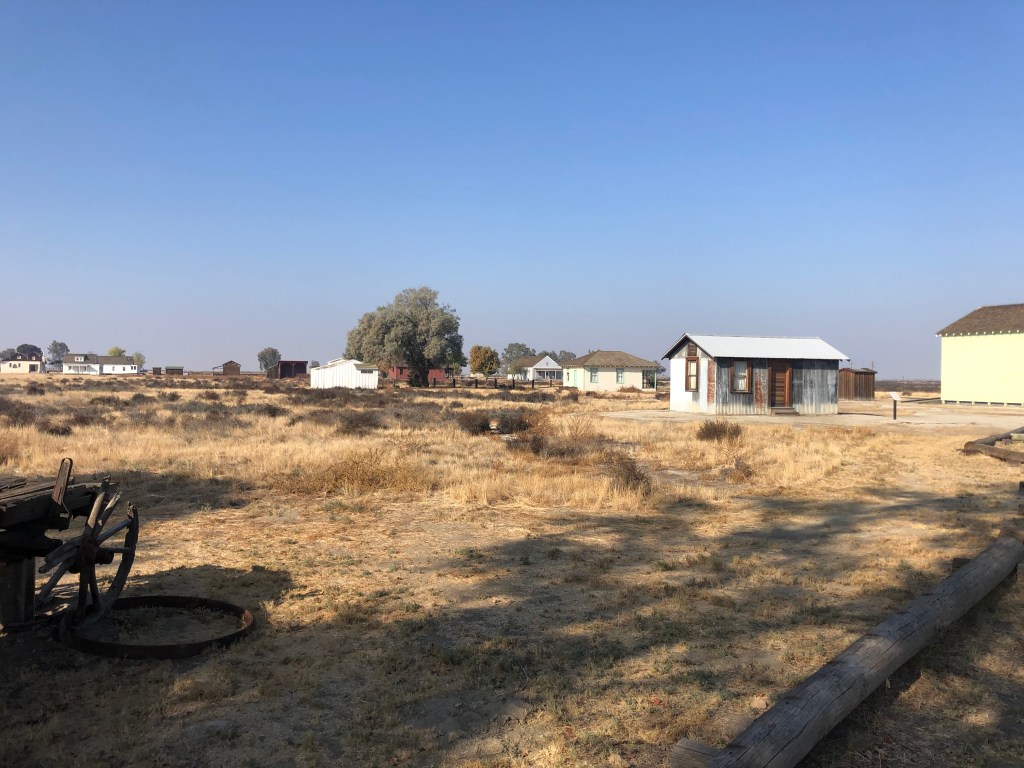
Allensworth today
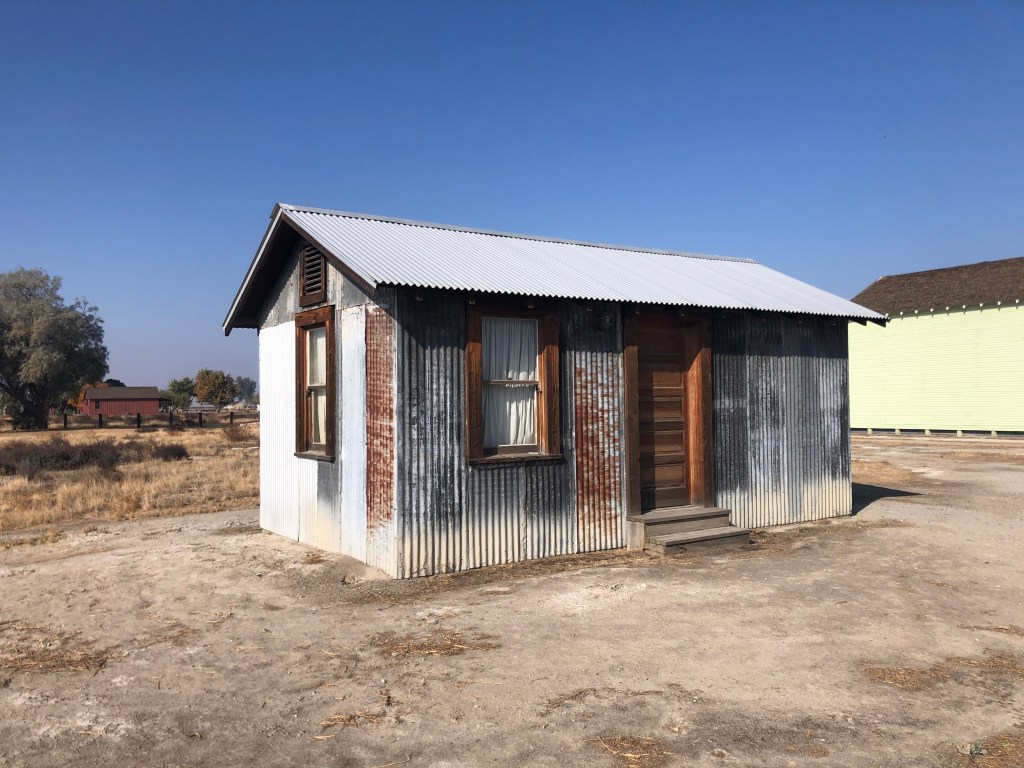
One of the early homes, constructed by Wiley Howard in 1915. It was still inhabited in 1970 when the California State Parks department purchased the entire town.
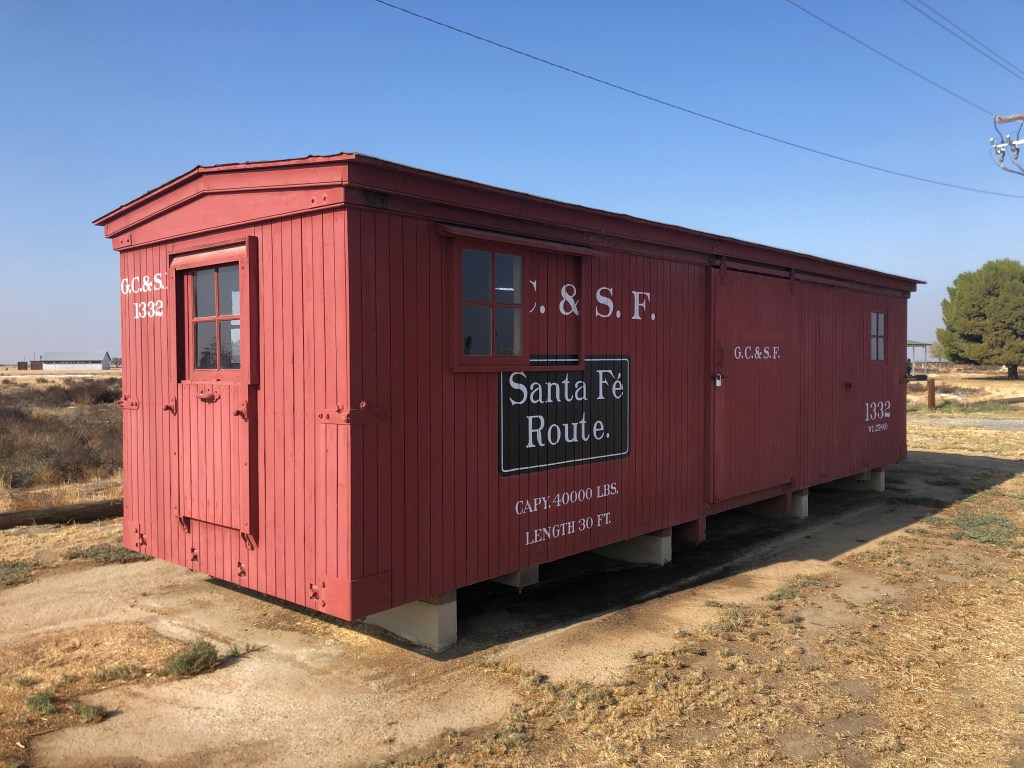
Restored boxcar from the 1880s, which had been the residence of Allenworth’s railroad station agent.

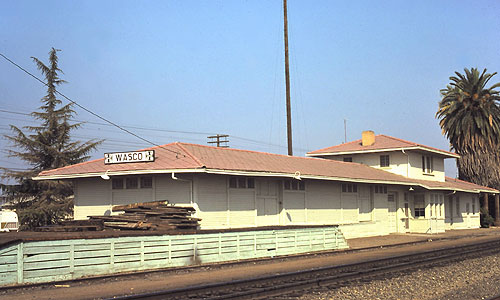
A short while after leaving Allensworth I passed through the city of Wasco. Prominently featured on a corner is the town’s Amtrak depot. The depot was constructed in 2006 to replace a historic, century-old depot that had been used by the Atchison, Topeka and Santa Fe (AT&SF) railroad. That old station fell into disrepair after AT&SF terminated passenger service in 1971.

Wasco’s AT&SF station in 1974.

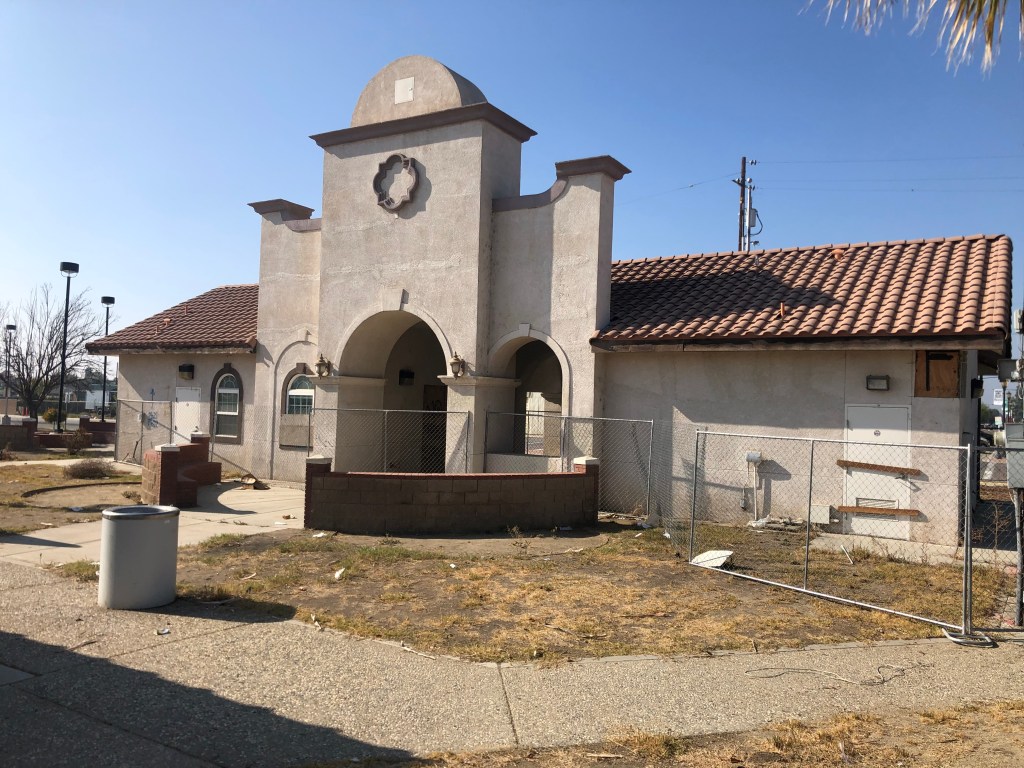
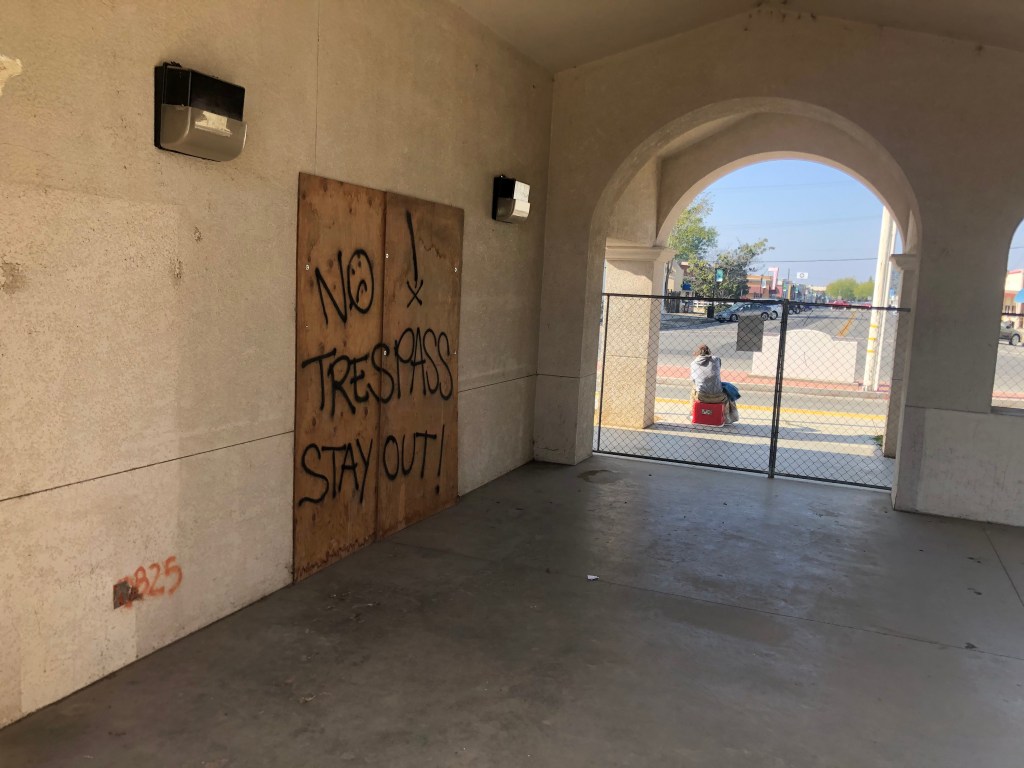
The new Amtrak station has some attractive architectural features, and passenger trains continue to stop there several times each day. So you’d think that’s a happy ending. However, in response to Covid, Amtrak has locked up the station and when I visited it today it looked post-apocalyptic: boarded up, tagged with graffiti, beset by homeless people. The landscaping has been let to die, and the entire scene is depressing.

The Wasco station today. It’s only 14 years old.

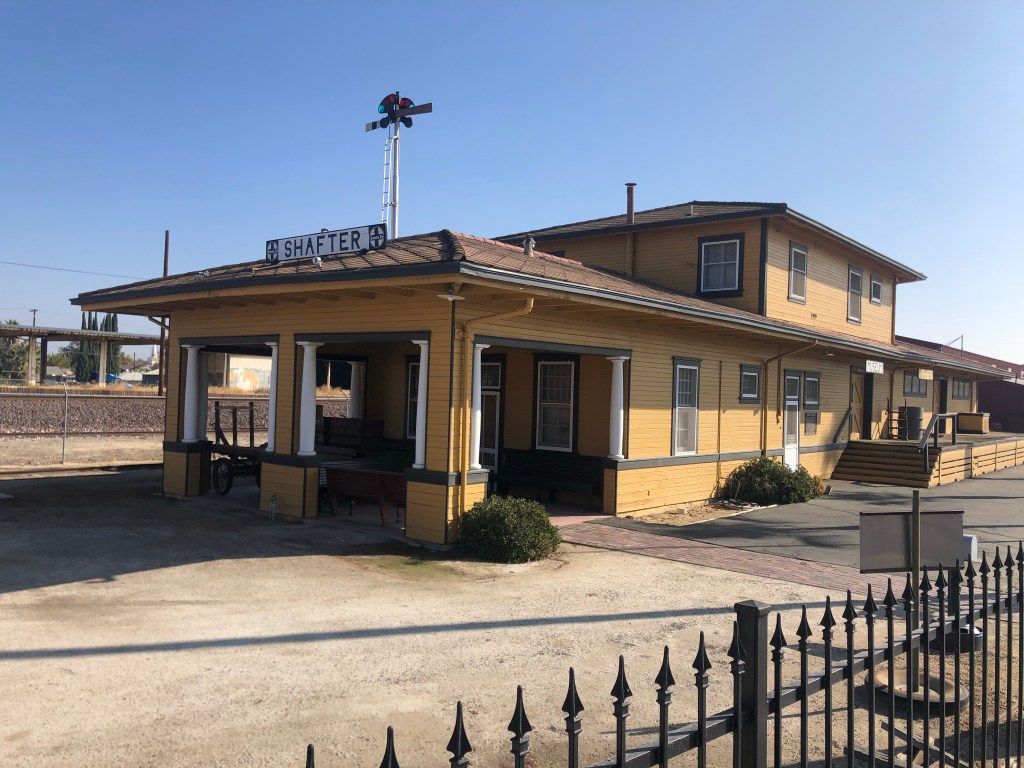
Further down the road, the historic AT&SF depot at Shafter presents a much prettier picture. It’s been renovated and turned into a museum. It was closed today, however, and I was only able to see it from the outside.

Note the semaphore signal in the backgroud.

The depot dates back to 1917, and it closed, like so many other passenger depots, in the 1970s. It’s been operating as a museum since 1982.

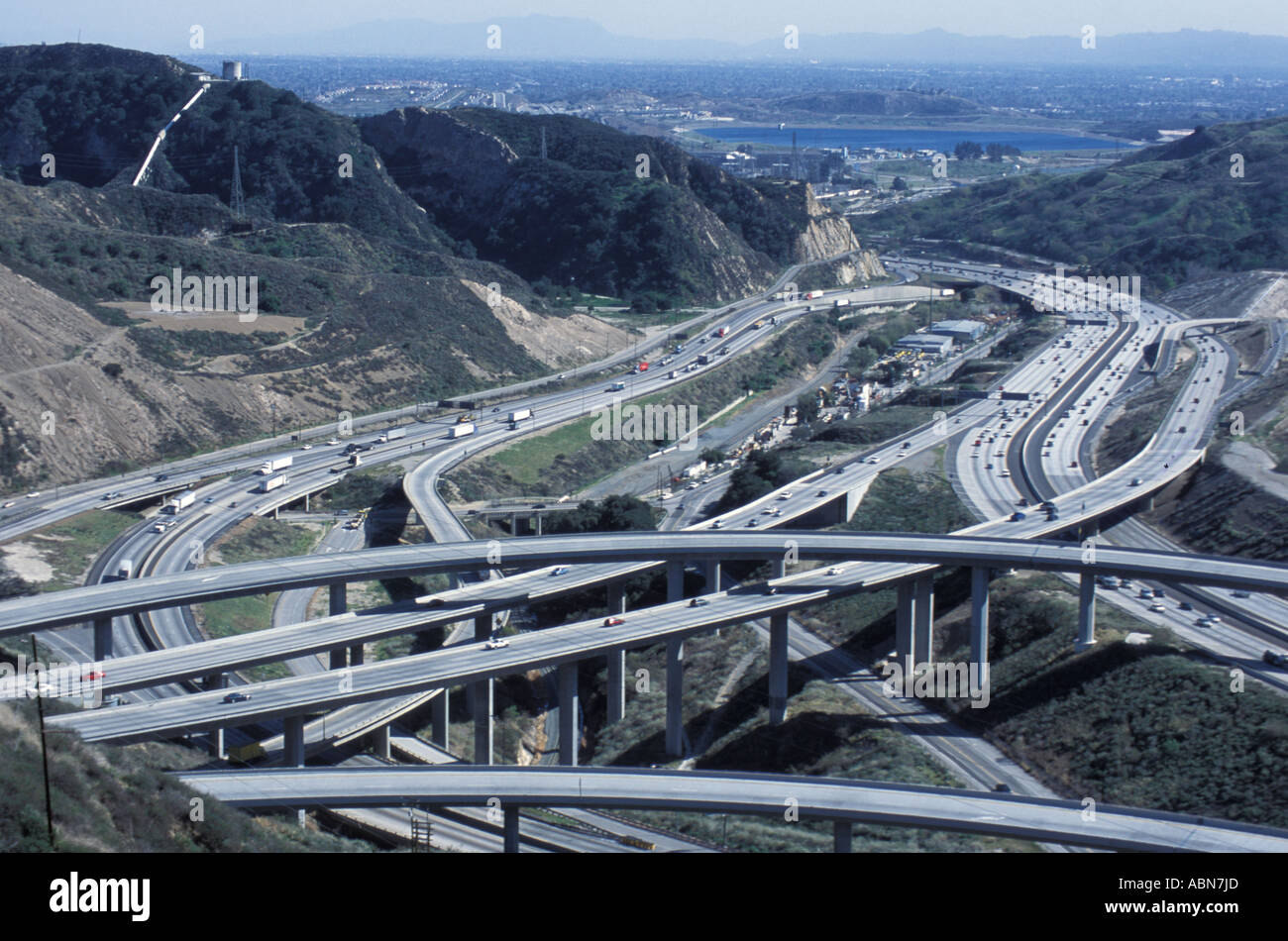
After some more driving I connected with Interstate 5, and I headed over the Grapevine into the San Fernando Valley. There were still a couple of more railroad sites to behold. In the city of Santa Clarita there’s a massive freeway interchange between Interstate 5 and CA 14. It’s an overwhelming tangle of on-ramps, off-ramps, flyovers, and suchlike, originally constructed in the mid-1970s.

5 Freeway and 14 Freeway interchange Los Angeles California United Stock  Photo - Alamy
..and it’s been successively rebuilt after the 1971 Sylmar earthquake, the 1994 Northridge earthquake, and a major tunnel fire in 2007.

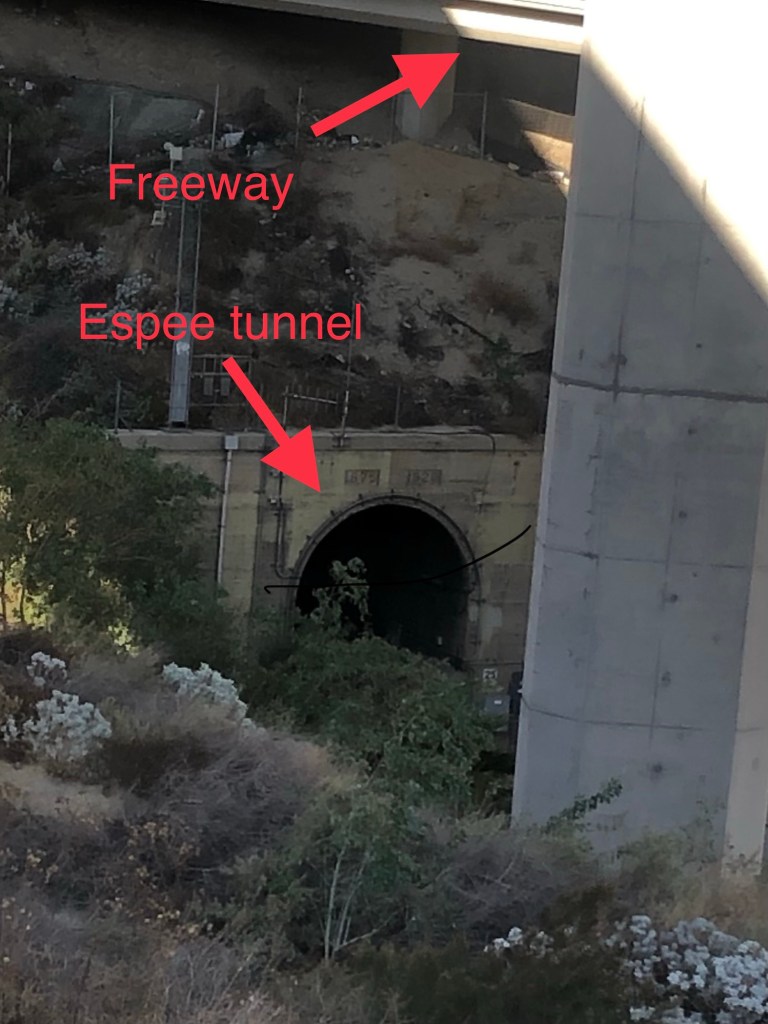
Now, hidden unnoticed near the bottom of this jumble of freeway lanes is a Southern Pacific railroad tunnel originally constructed in 1875. Don’t believe me? Here’s a picture I took this afternoon:

Now, remember those tunnels up in Tehachapi that allowed trains to travel over the Tehachapi range from Bakersfield to Mojave? Well, trains moving through there would eventually make their way down to Santa Clarita, where they’d be blocked from further southern movement by the San Gabriel Mountains. And so the Espee built a new tunnel — the San Fernando Tunnel–to allow its trains to enter the LA basin. It was another impressive engineering feat. To expedite the job, SP crews dug from both sides of the mountain, and when they met up in the middle they were only misaligned by one-half of an inch. That’s impressive, given the rudimentary technology of the late 1800s. The completed tunnel measures 6,966 feet long, or over 1.3 miles. It was the fourth longest tunnel in the world at the time. And today, its entrance just sits there, forlorn and unseen by the many thousands of people passing above it every day. But it’s still in use. In fact, I saw a Metrolink train emerge from the portal this afternoon.

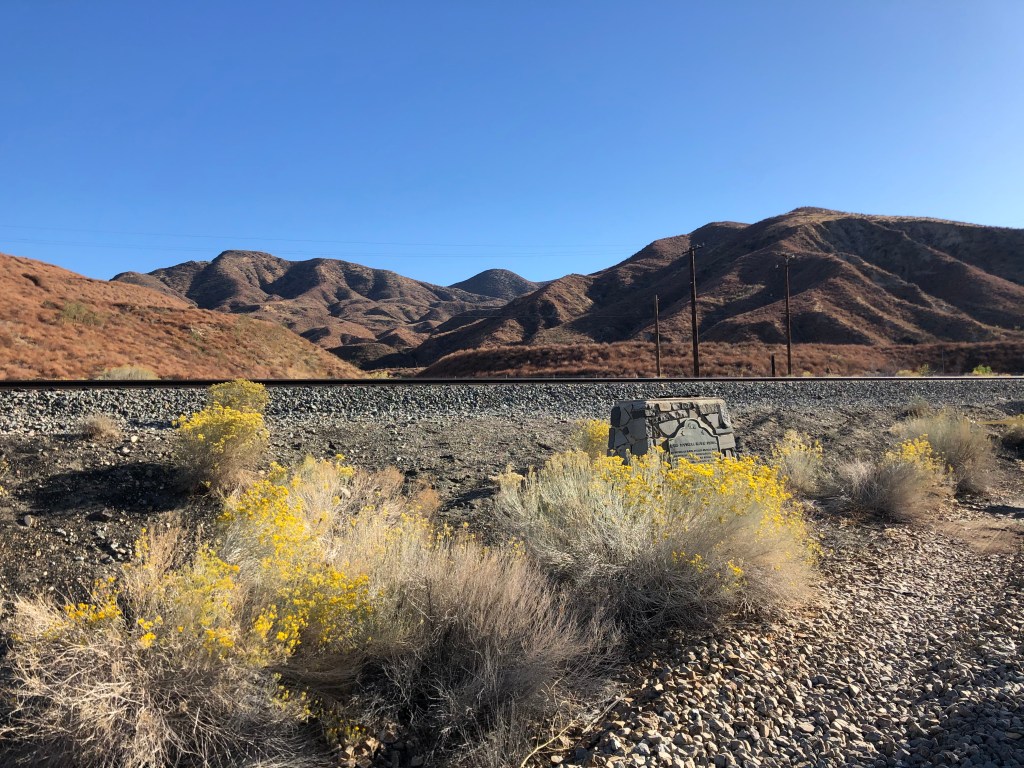
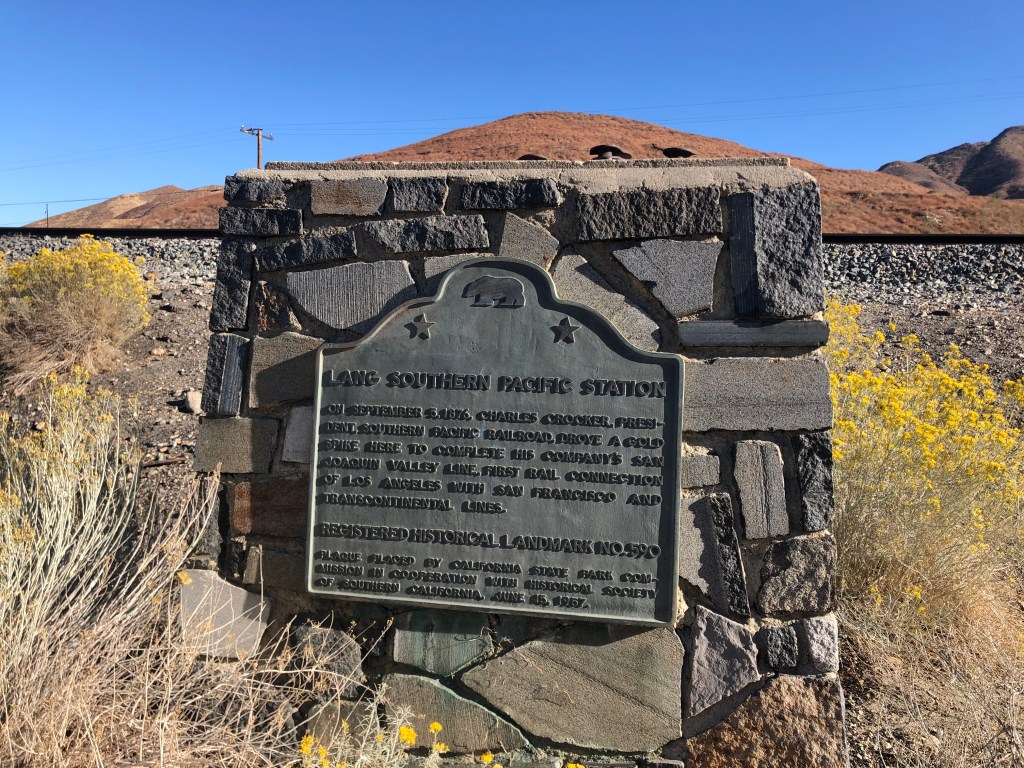
It seems that much of this trip centered around the Southern Pacific’s 1876 rail line that connected northern and southern California, mountain ranges be damned. And so there was just one more site to see: I headed northeast from Santa Clarita, on the self-same CA 14 that originates on top of the old San Fernando tunnel. In 10 minutes I was in front of a picturesque stretch of railroad right-of-way called Lang Station. Partially hidden behind some scrub brush was an old bronze plaque set in a stone block. The plaque commemorates an event that happened here in 1876, just a few weeks after the San Fernando tunnel was completed.

For at this spot, on September 5, 1876, the president of the Southern Pacific, Charles Crocker, drove a golden spike to complete the laying of track linking San Francisco to Los Angeles. And that’s a fitting conclusion for this road trip.

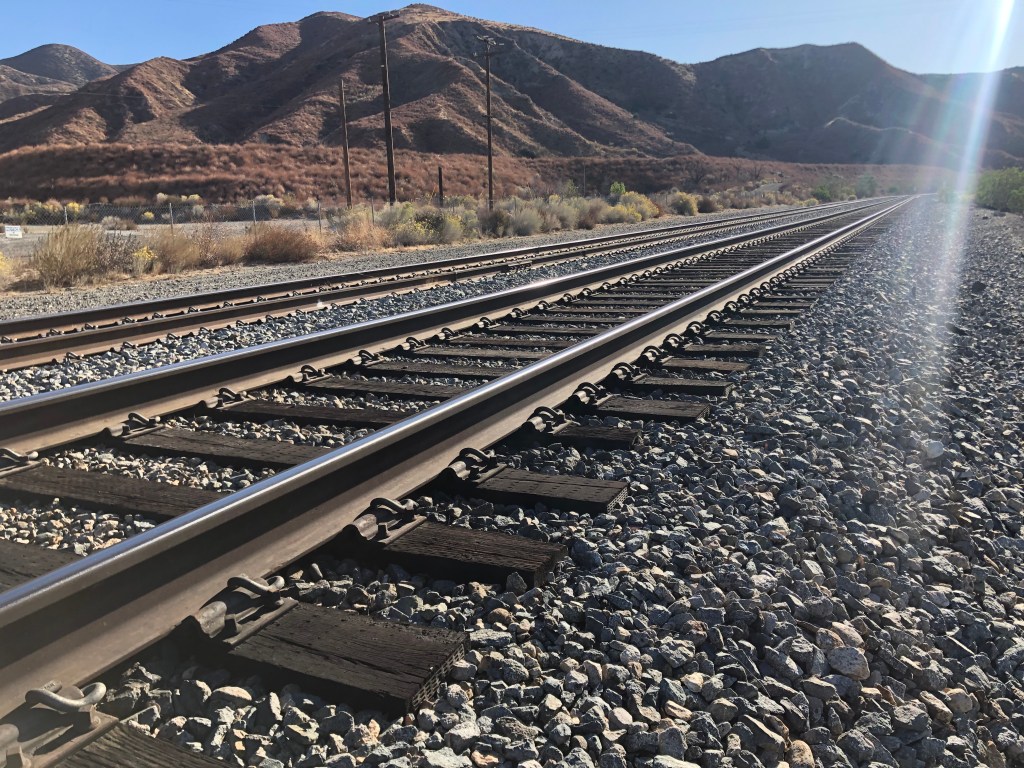
Track at the site of the Golden Spike ceremony. (Evidently the spike was removed; I looked.)

MAIL BAG

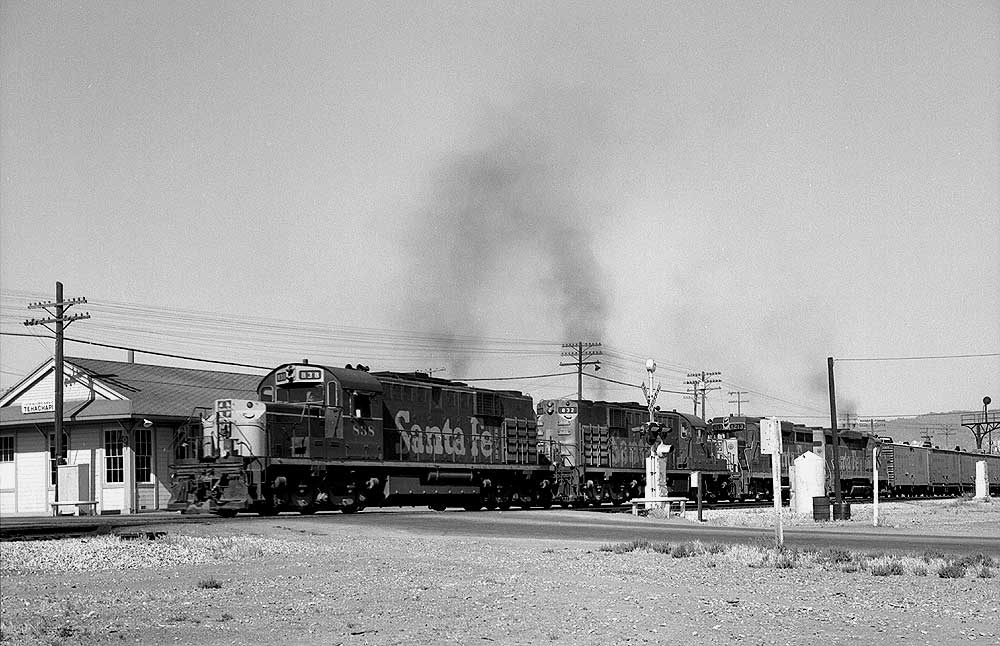
You’ll remember that Uncle Edward worried that a trip like this would be depressing, given all the Espee sites that have vanished in recent decades. He wrote to point out that the burning of the Tehachapi depot, which I recounted on Saturday, proves his point. But he also shared with me this photo of the depot that he took in 1967.

Photo credit: E.O. Gibson

Also, we had a number of excellent submissions to yesterday’s photo contest. Our celebrity panel selected as the winner this caption, submitted by Loyal Reader Alison C.: “The Future of the Republican Party.” It’s worth noting that Alison is a lapsed Republican. Her caption might also fit in with the title for today’s blog post.