Road trips · trains

Mich-again

This morning I woke up in Grand Rapids, Minnesota, and drove westward into North Dakota. So imagine my surprise when, hours later, I found myself again in Michigan!
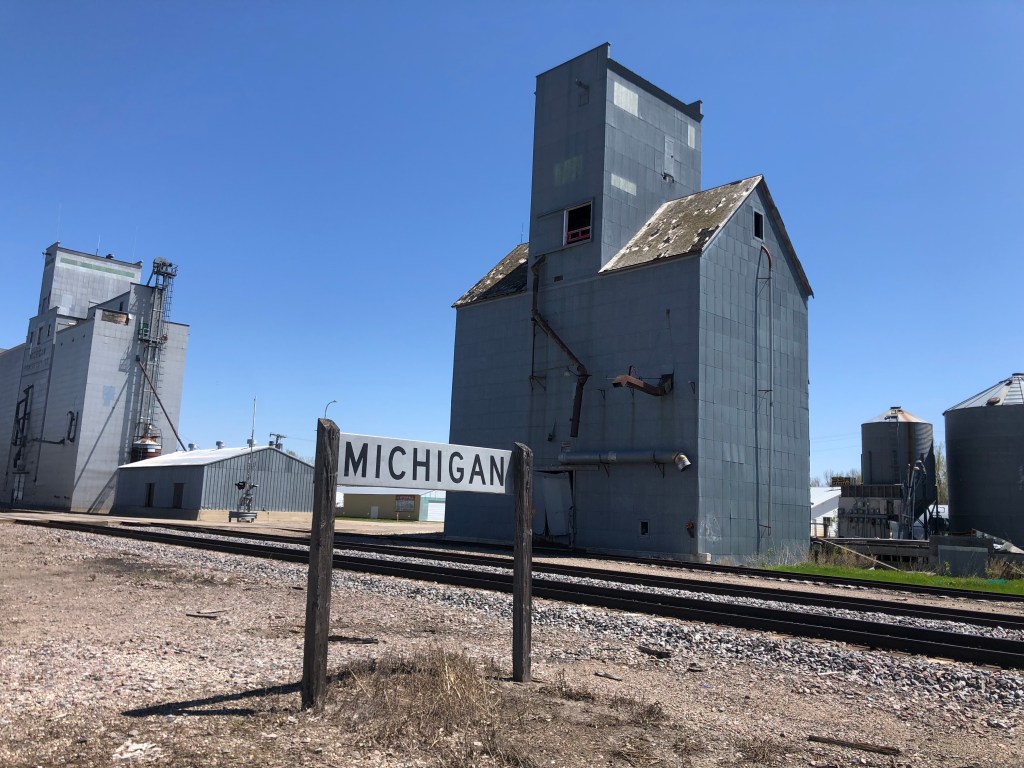
Michigan, again?

Yes, it turns out that a community along Route 2 in North Dakota is named Michigan (pop: 263). The town was founded in 1882 by an emigrant from the state of Michigan. I’m not making this up.

Michigan is barely a wide spot in the road, and the population (such as it is) has been declining for decades. The most notable thing I could learn about the town is that it’s the site of North Dakota’s all-time worst railroad disaster, killing 34 people and injuring over 300. (Two trains collided, carrying mostly returning servicemen.)
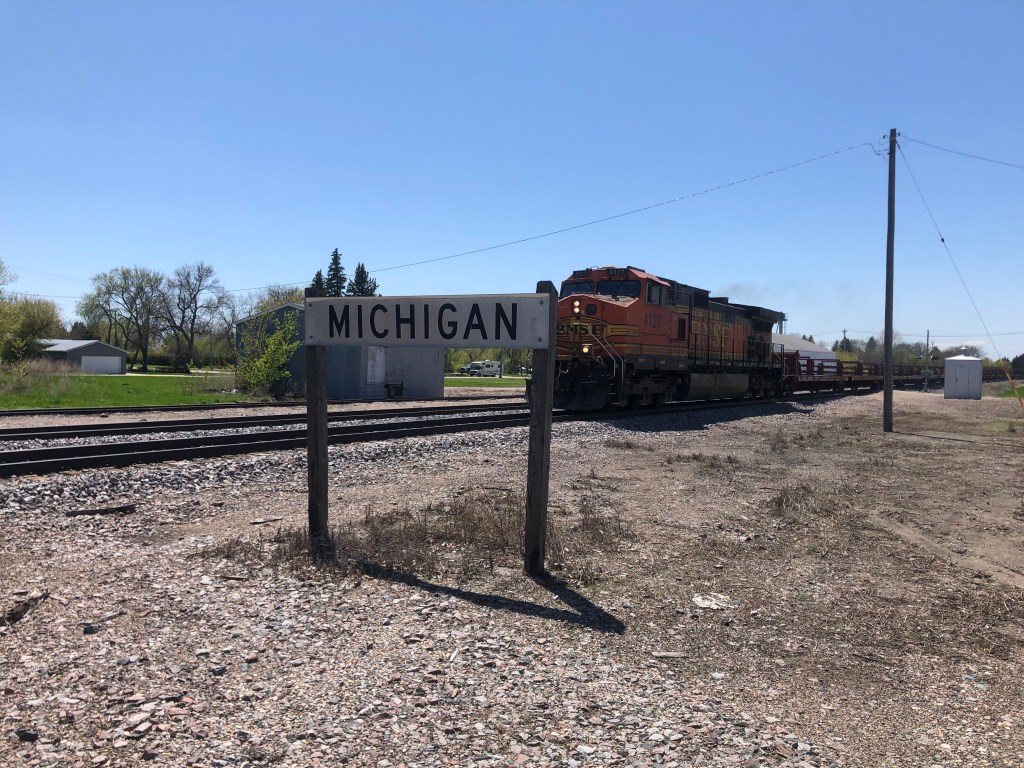
Look out! The spot where disaster struck 77 years ago.

But let’s get back to the beginning of the day. The Jeep’s low fuel light came on just as I was passing this colorful, Bavarian-inspired gas station halfway between Grand Rapids and Bemidji.
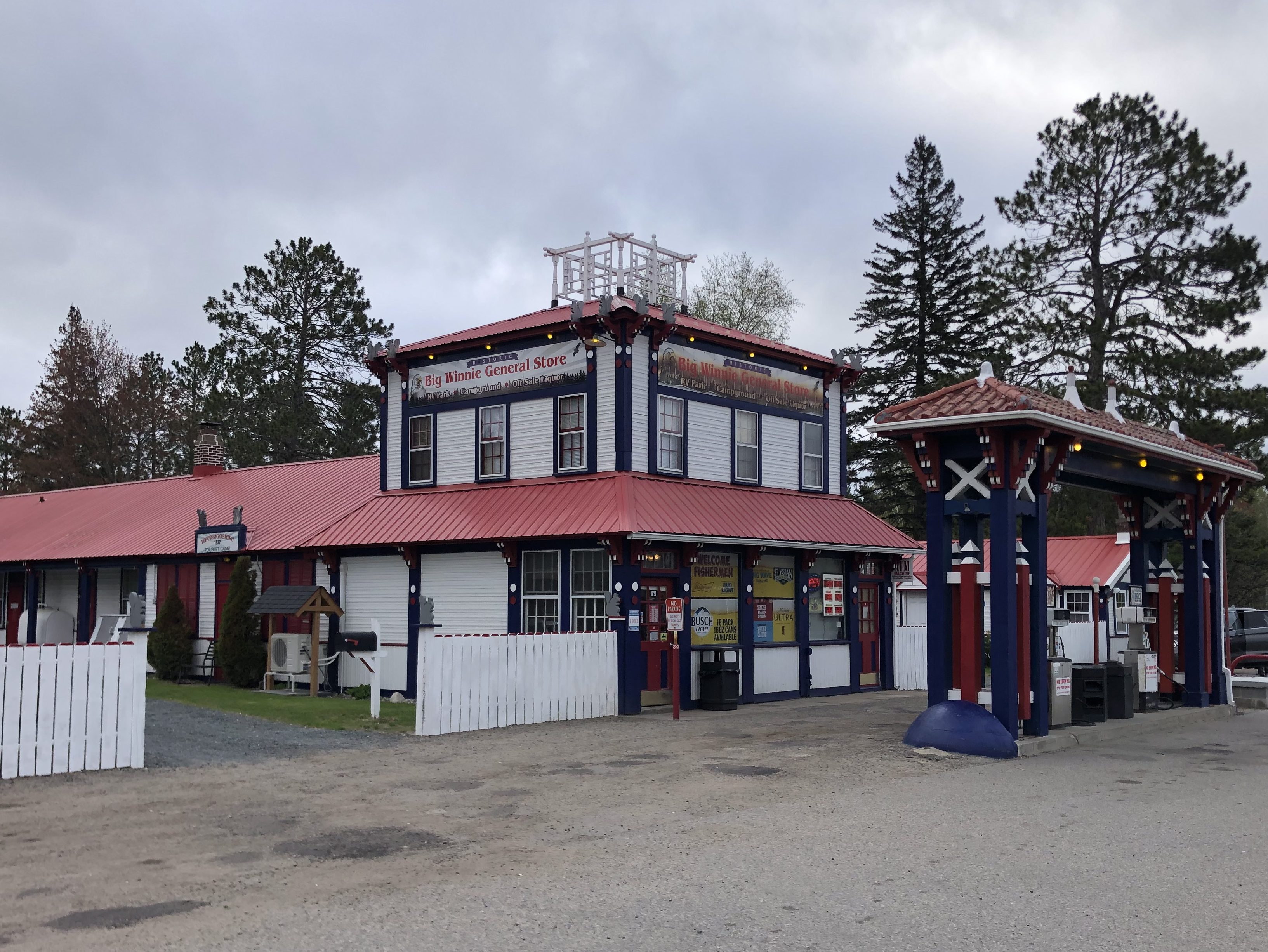
All it needs is an oom-pah-pah band.

A small plaque noted that the building is on the National Register of Historic Places. So after fueling up (at $4.19 a gallon–eat your heart out, my fellow Californians!), I asked the gas station manager what’s the story. She told me that the place is called The Big Winnie, that it was built in 1932, that it’s remained in the same family for five generations, and that it was designed by Frank Lloyd Wright. (A little internet research says that the Frank Llloyd Wright connection is unproven. But FLW did stay in the adjoining cabins on multiple occasions just before the structure was built, and it has FLW design elements, so it’s a plausible theory.)

Replenished with gasoline and coffee, I headed back out on US 2 West. You’ll recall that Sheena at the Judy Garland museum recommended that I visit the headwaters of the Mississippi. It required a 25-minute detour off US 2, which I figured was managable. So before you could say Hernando de Soto (or even Walter Chrysler–get it?), I was standing at the spot where a small stream of water leaves Lake Itasca and begins its journey as the Mississippi.
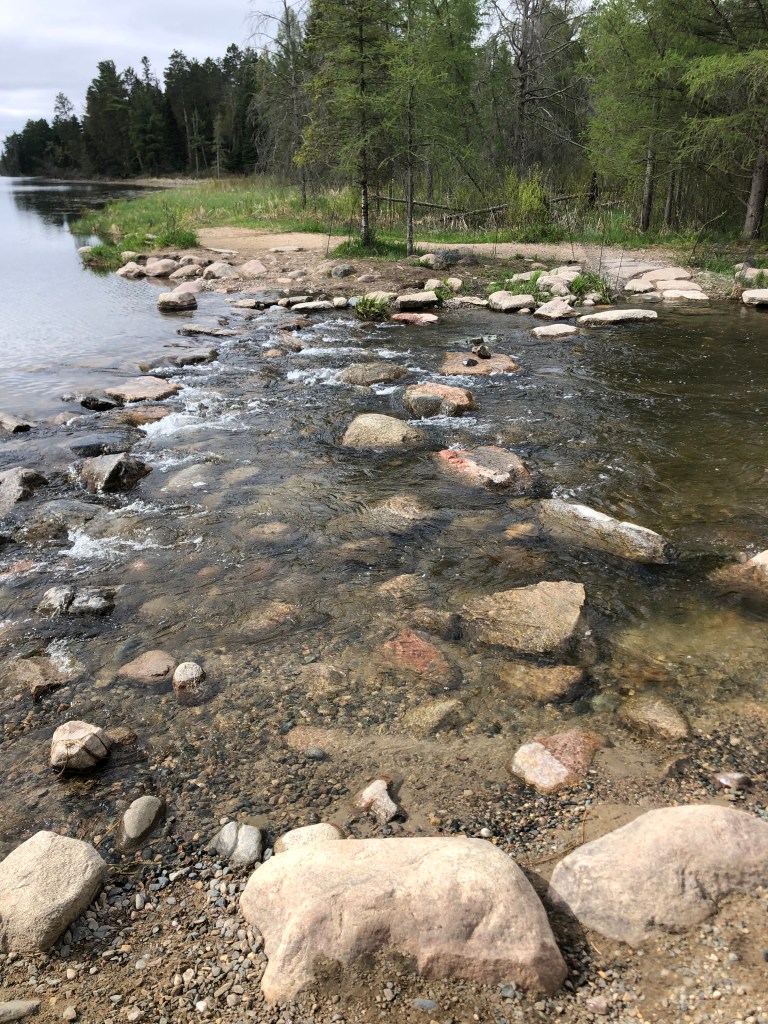
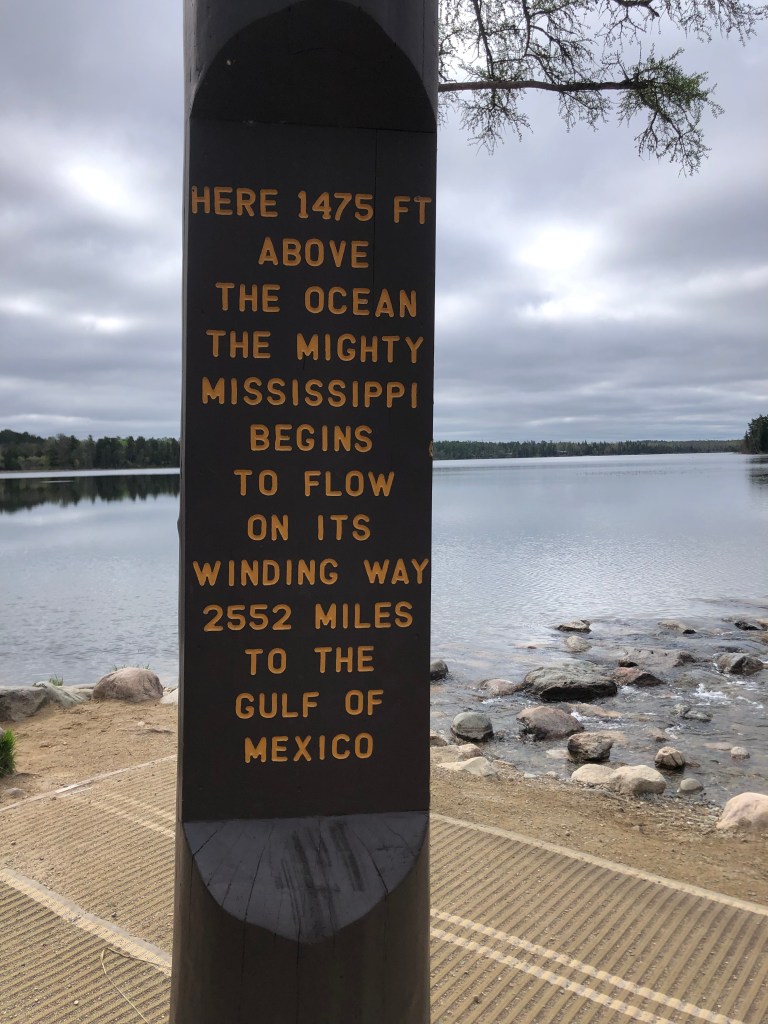
I walked across the mighty Mississippi!

If you’d been online around 8 am eastern time, you could have watched me on the livestream.

I was now moving into the Great Plains. Some of my loyal readers have commented that this part of the country is exceedingly boring. But you just have to know where to look. For example, I saw this:
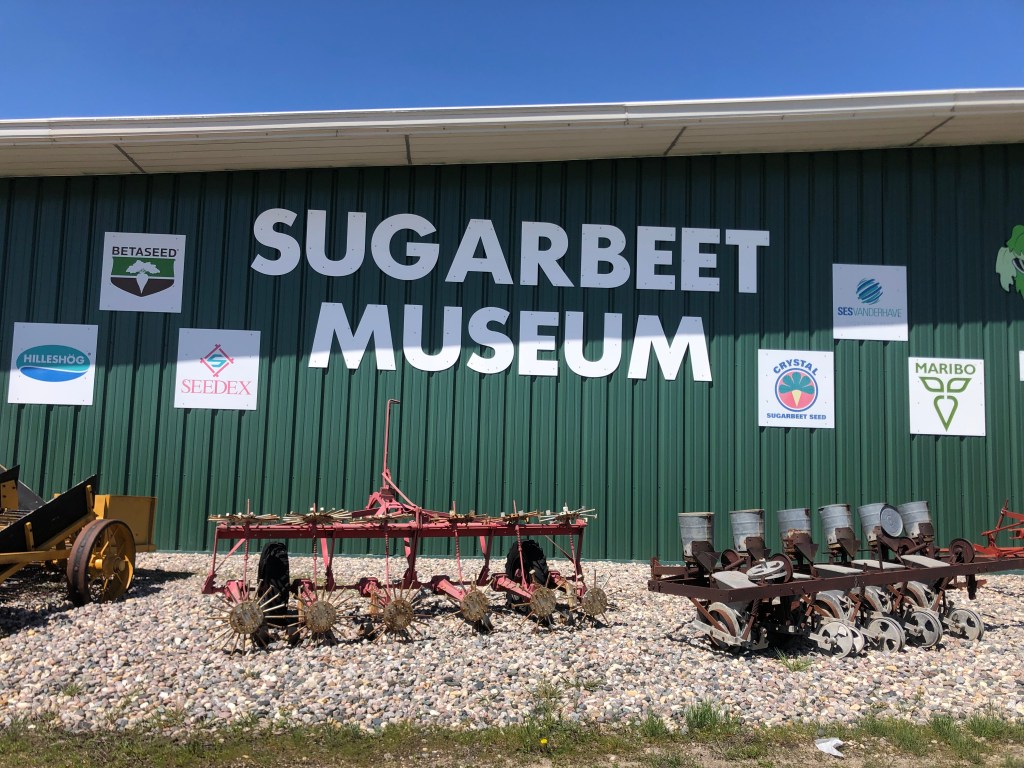
Hard to ‘beet” this!

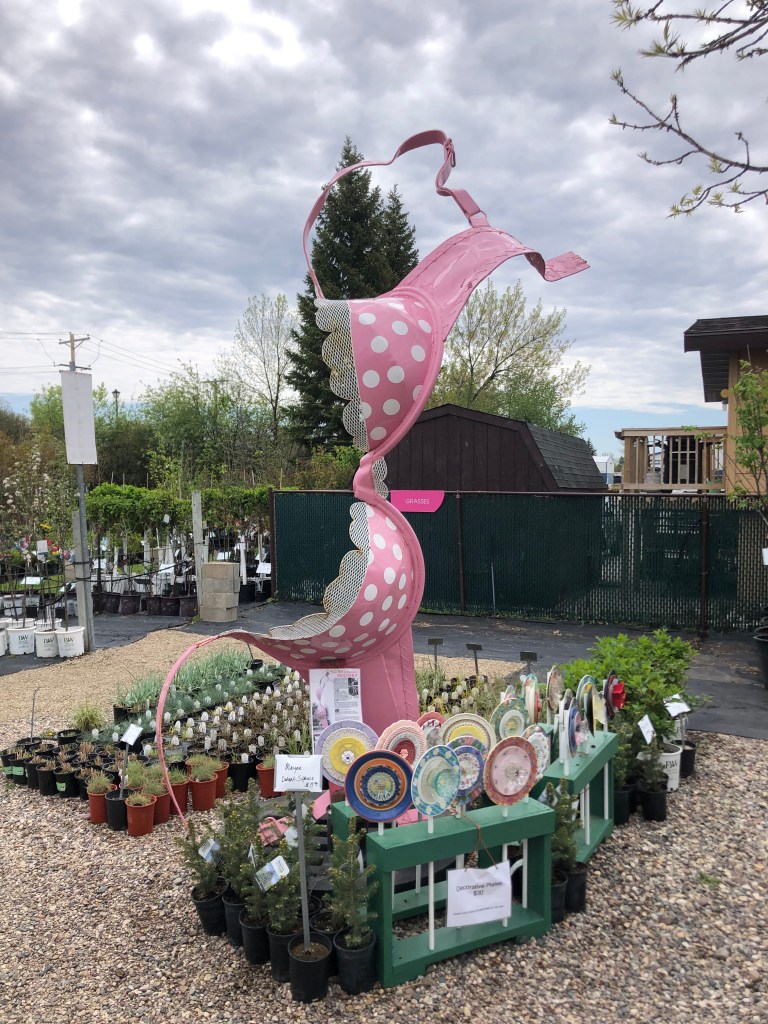
Okay, okay–how about this?

14-foot tall bra sculpture in a nursery in Grand Forks, ND

Of course, it wasn’t all fun and games on the road today. I did pass a few quiet moments at this roadside chapel in Fosston, Minnesota. It’s only eight feet wide, and (barely) seats eight people on four pews.
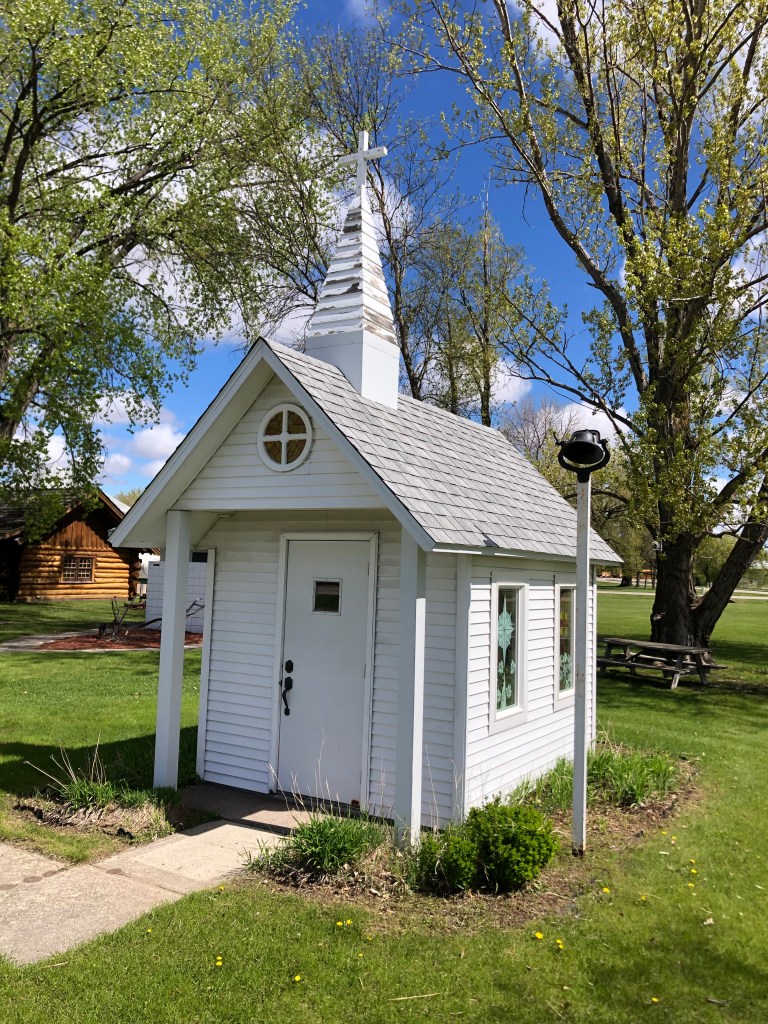
A good way to limit wedding expenses.

Speaking of chapels, near the end of today’s drive I was passing through the town of Lakota, ND (pop: 700). It’s a surprisingly charming and hardy small town, with well-maintained homes and nicely-landscaped parks. As I was driving down a side street I saw this picture-perfect, small Episopal church.
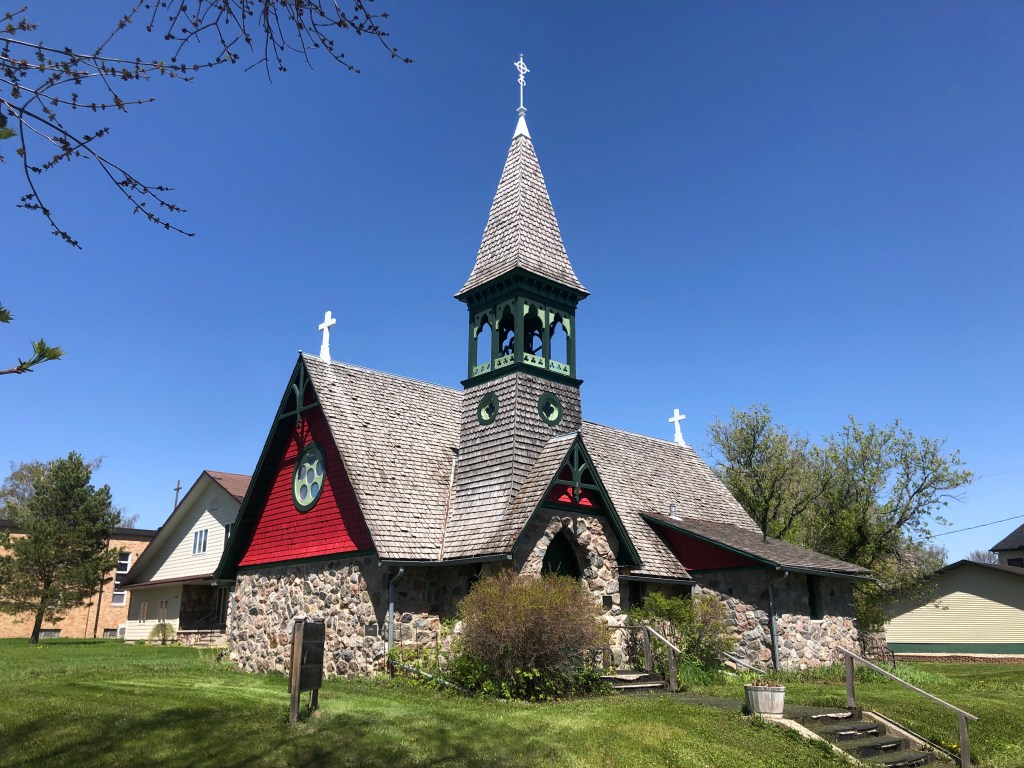
Could have come out of a fairy tale.

A sign on the front lawn told me that this is the Episcopal Church of the Good Shepherd, and a plaque told me it’s on the National Register of Historic Places. I went to the door hoping that the church might be open to visitors, and then I noticed a man and a woman doing some planting and landscaping work. I introduced myself, and asked if I might be able to look inside. They said sure…but as soon as I opened the door I realized that this was not a church but a private residence! It turns out the two “gardeners” were the owners, who’d purchased the deconsecrated church from the Episcopal diocese in 2015.
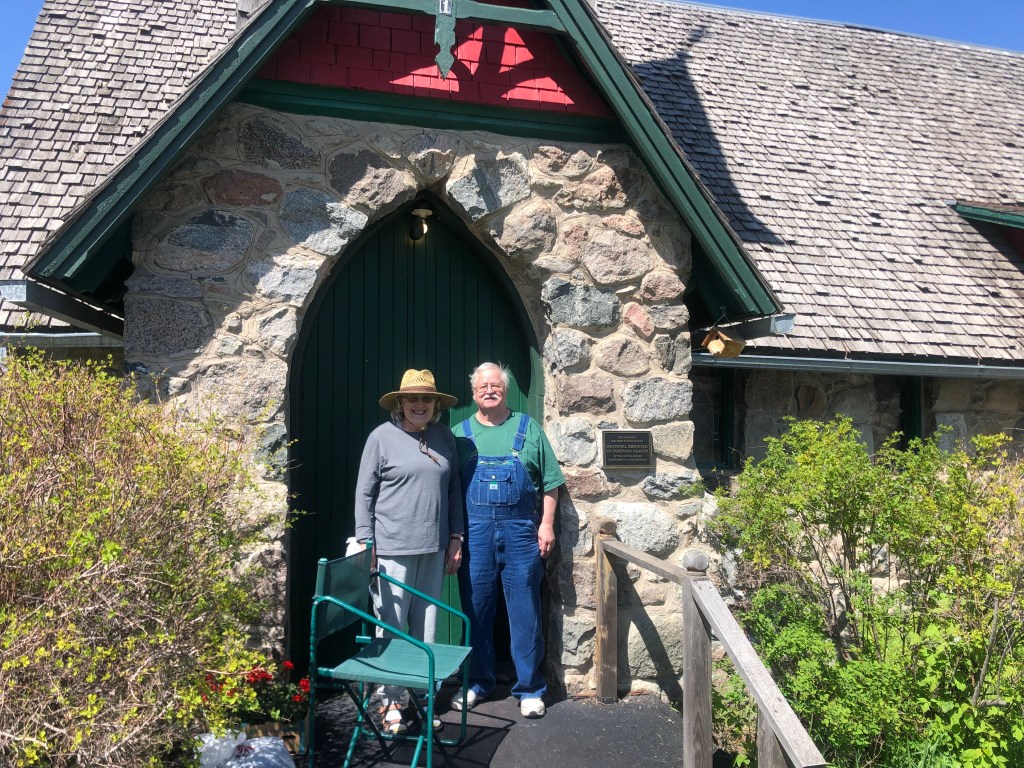
Steve and JoAnna

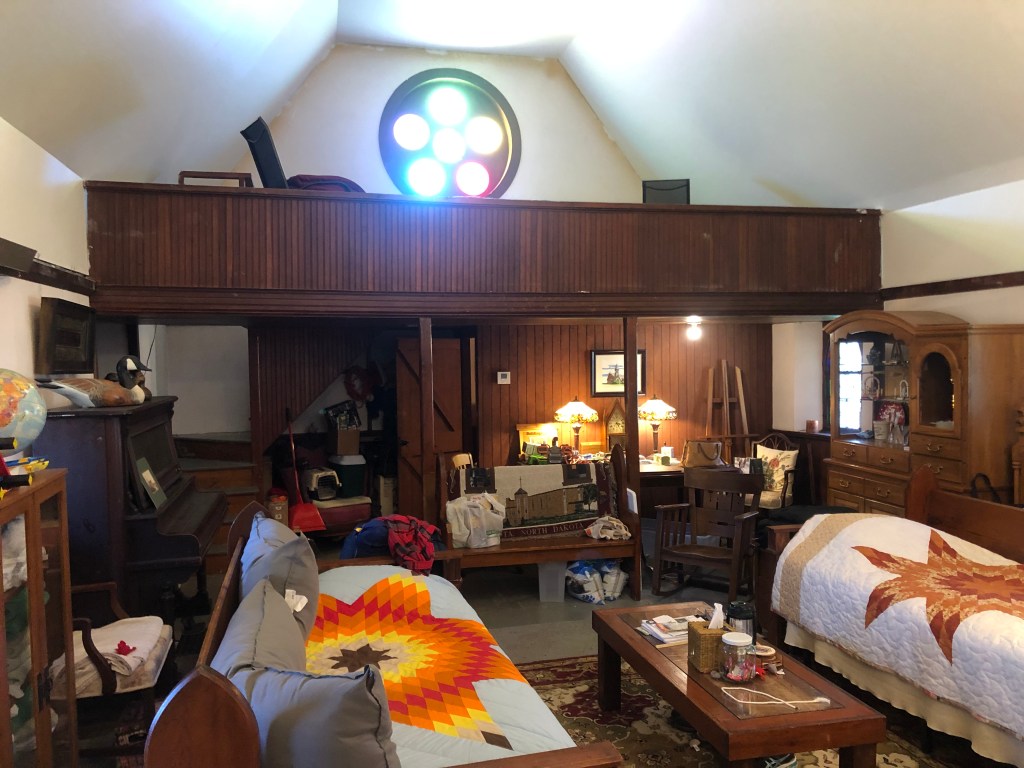
Steve and JoAnna Martens (as they introduced themselves) have since been converting this former church into their vacation home. (They live in Fargo the rest of the time.) They graciously showed me around the home and explained its history. It seems that when the church was being organized in 1883, the priest asked parishioners to bring large stones that they may have plowed up from their fields, and these were used to build the church building. It was completed in 1885.
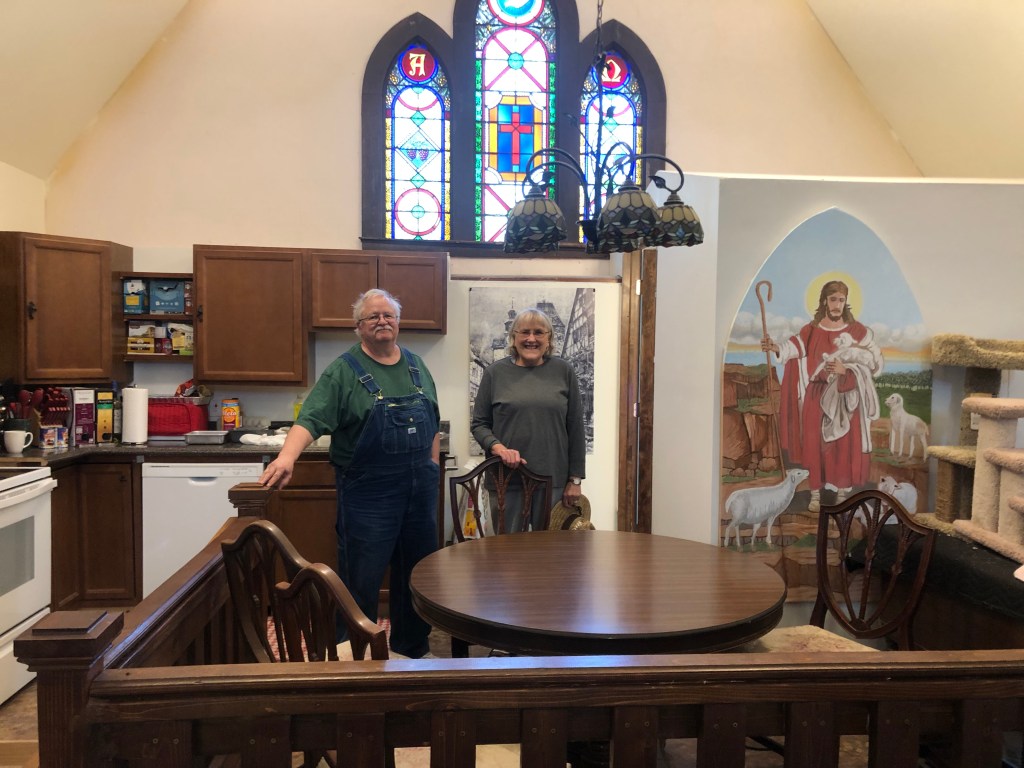
Steve and JoAnna in their kitchen.
Living room and choir loft.
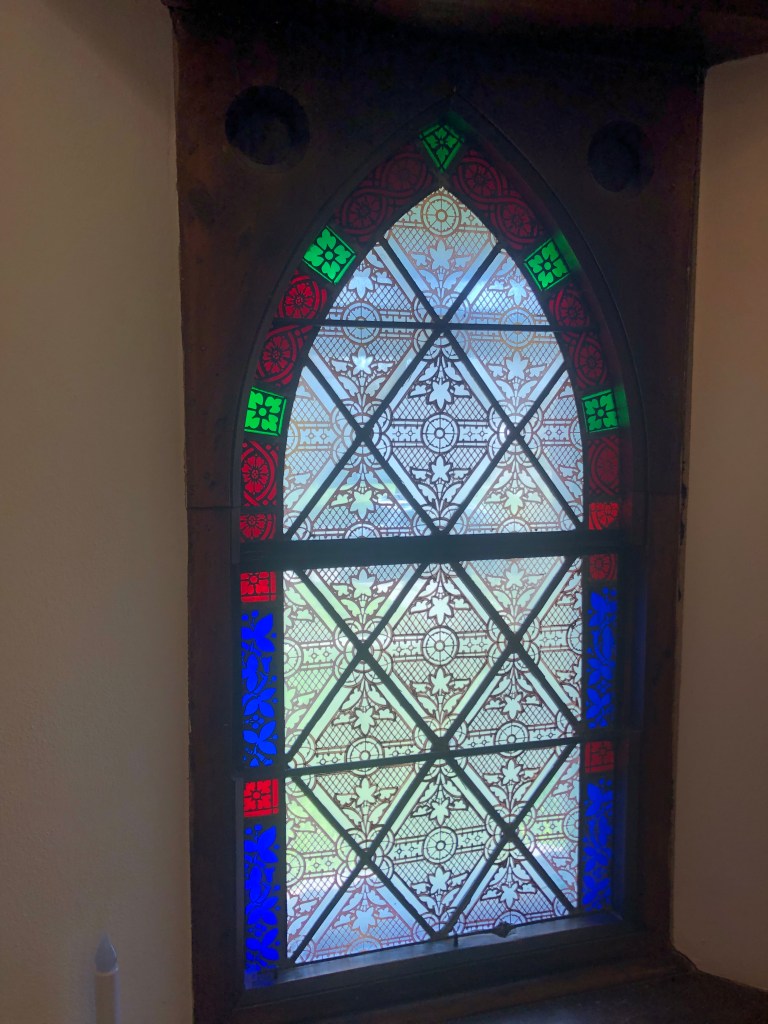
One of the original stained-glass windows, about 130 years old.
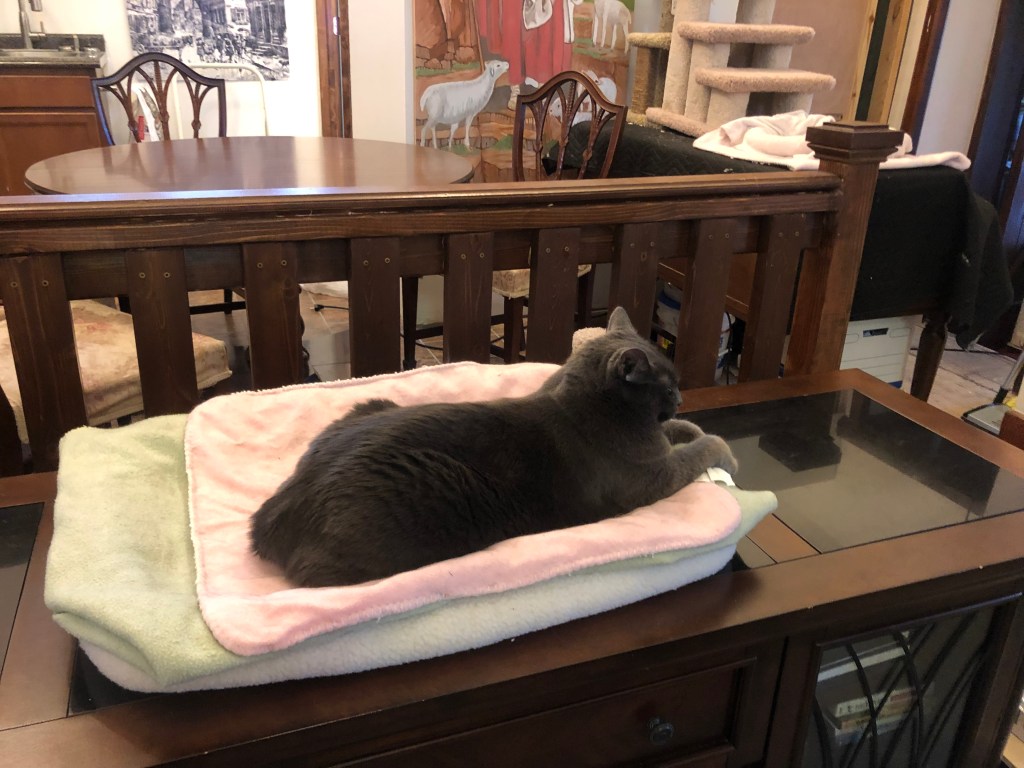
Smokey wasn’t happy that I’d invaded his home.

After a pleasant, 45-minute visit I had to get back on the road, but first they let me ring the bell in the belltower. I am grateful for Steve and JoAnna’s hospitality. In this era of Twitter flame wars, they give me hope about us as a people.

So, after leaving this former House of God, guess where my next stop was? Yes, it’s Devil’s Lake, ND (pop: 7,200). And that’s where I’m spending the night. Pray for me.

MONEY-SAVING TIP OF THE DAY

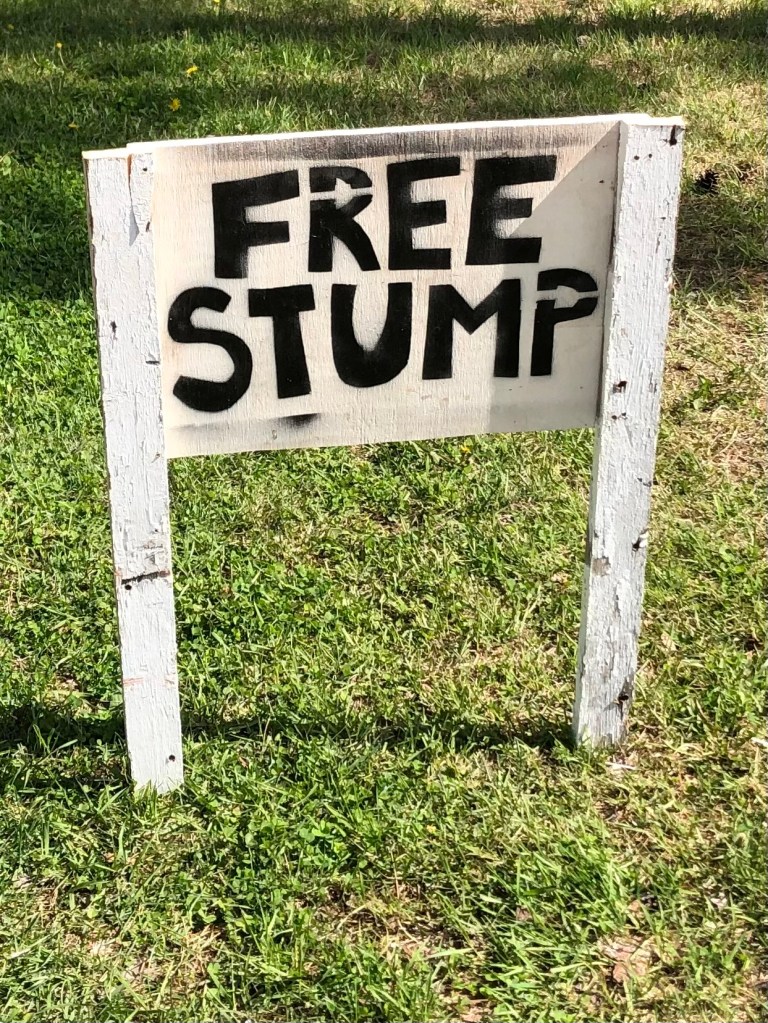
Before we get to the BOTD, let me share with you my money-saving tip for the day. Have an unwanted tree stump in your yard, but don’t want to pay to remove it? Here are two ways to avoid the cost that I saw on display:
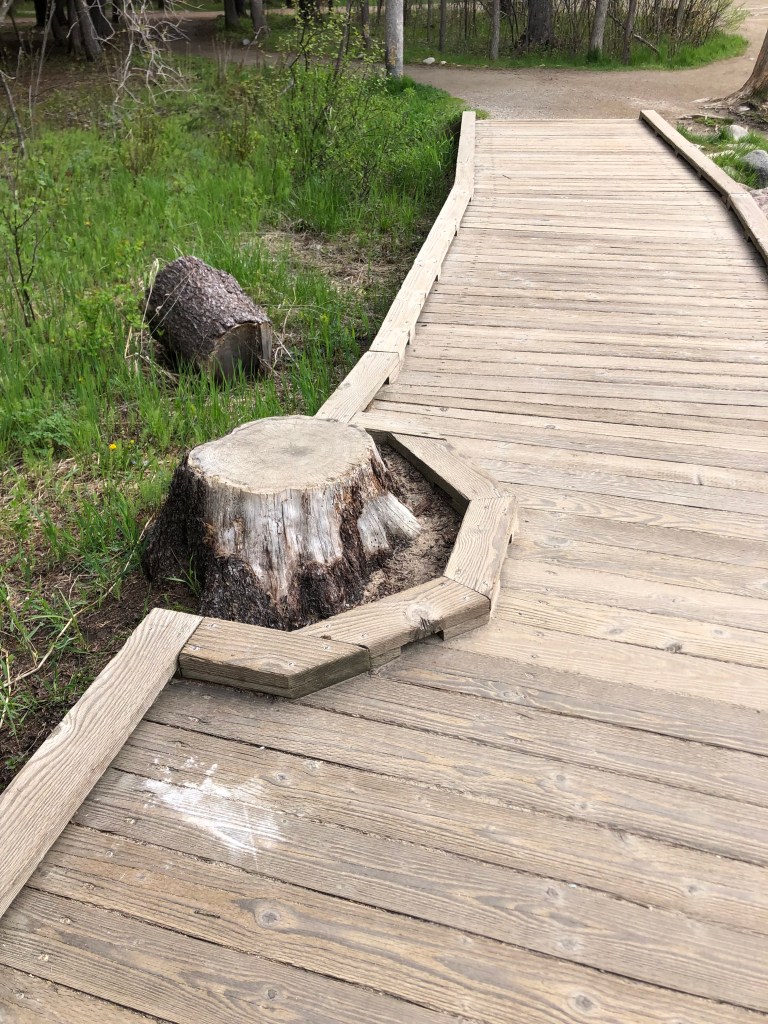
Option 1: Just work around it.
Option 2: I call this the Tom Sawyer ploy.

BREW OF THE DAY

I couldn’t find a proper brew pub in Devils Lake, so I opted for Mexican food at Charras and Tequila Mexican Restaurant. The fajitas were awesome, but the beer options were abysmal. I opted for a margarita, to which I award 4 stars.
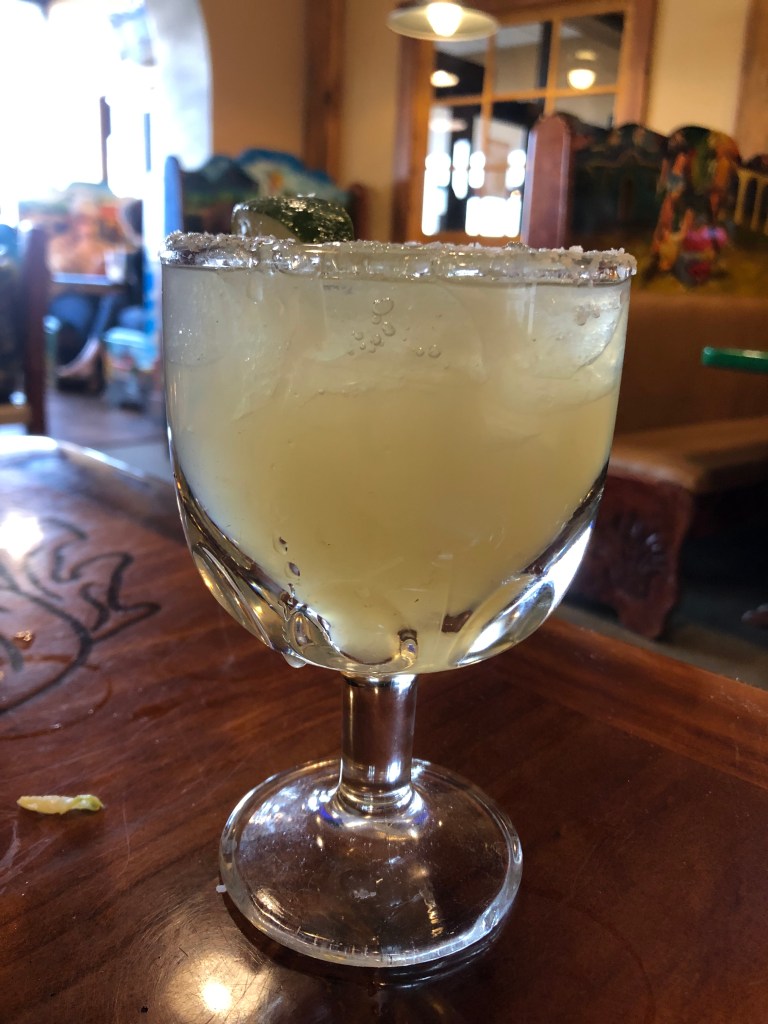
Life’s too short to drink bad beer.
bridges · Cars · Road trips · trains

Of Badgers and North Stars

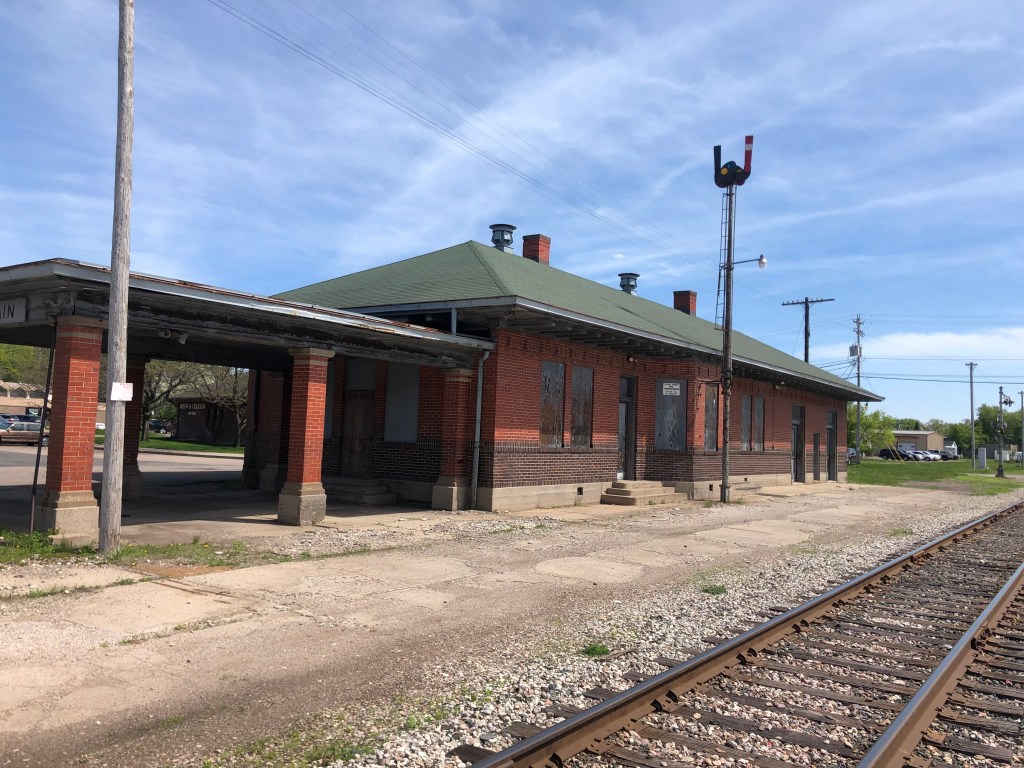
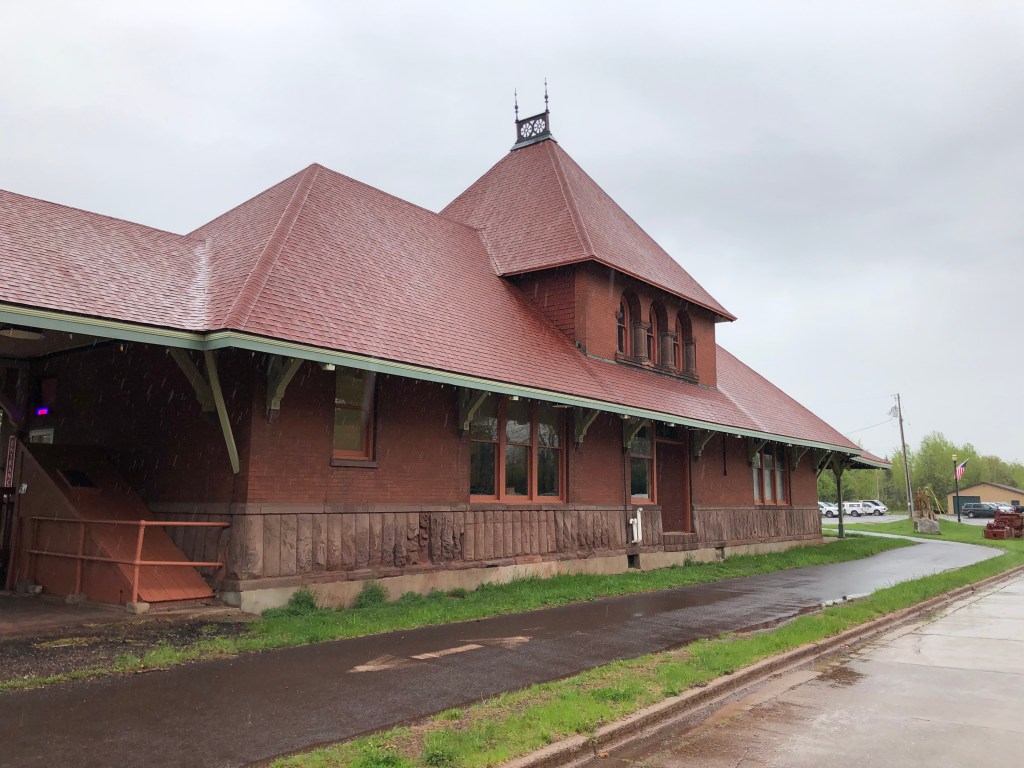
As I headed out of Ironwood this morning, I passed another venerable old railroad depot.

Ironwood Railroad Depot, looking good at 130 years old.

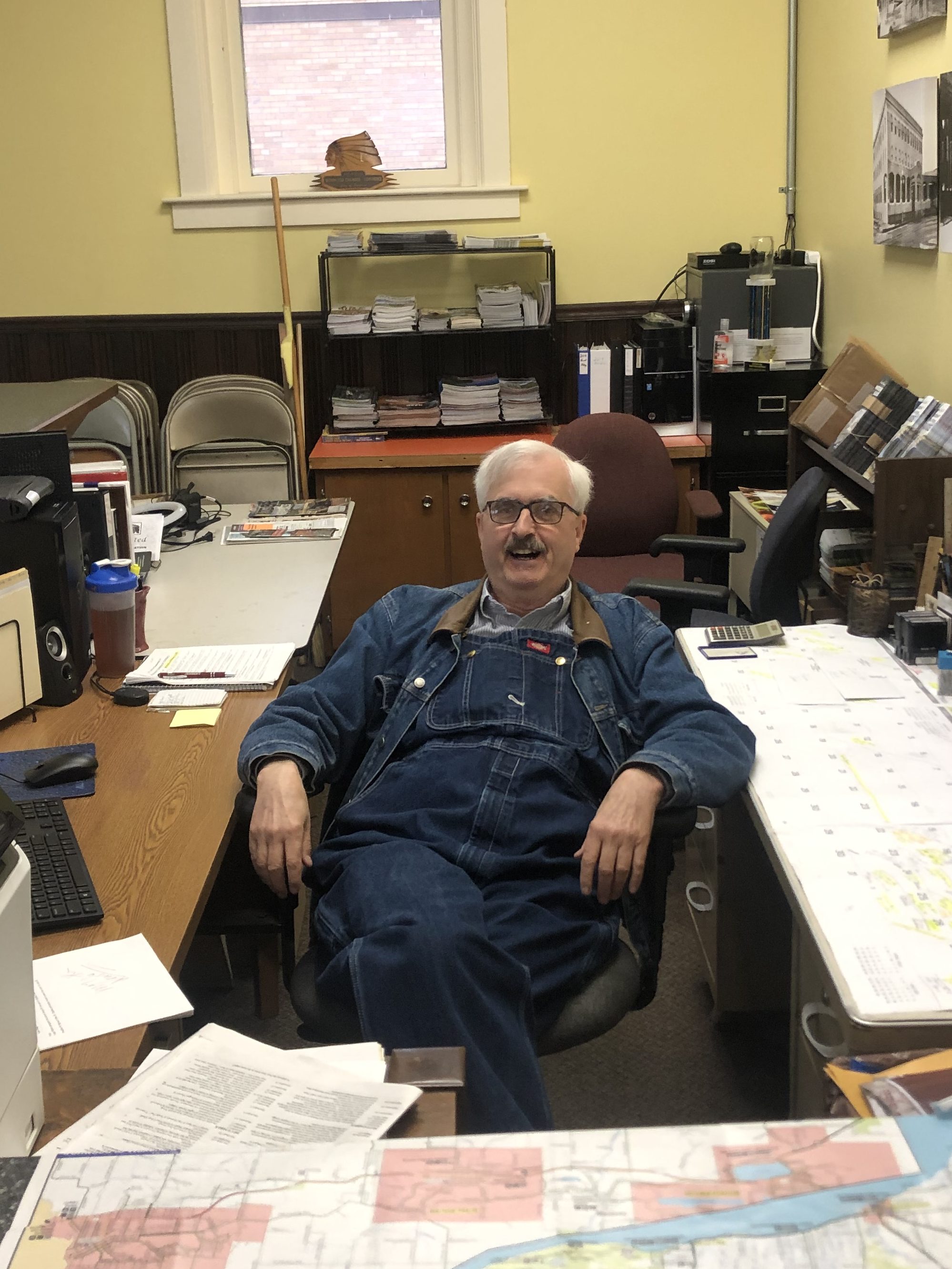
The Ironwood depot of the Chicago and Northwestern Railroad was the town’s transportation hub since it opened in 1892, but the trains stopped coming through in 1970. It’s now a museum and the headquarters for Ironwood’s Chamber of Commerce. It was a few minutes after 7 am when I arrived there, but I found the door unlocked and entered, being greeted by the Chamber of Commerce’s director, Michael Meyer.

Michael gets points for wearing the railroad overalls.

Michael spent close to an hour with me, explaining the history of the depot and of the town. He’s a transplant (from Indiana, if I recall correctly), and thus can speak somewhat objectively about the Yoopers. He’s also a great booster for the town. Apparently the economy took a major jolt when the railroads left and mining petered out, but now, to listen to Michael, the town is experiencing a renaissance.

Michael hepped me to a documentary film about Route 2 called “Route 2 Elsewhere.” (I wish I’d thought of that name!) I’ll have to check that out when I get home. He’s the first person I’ve talked to on this trip who even knew that Route 2 spans the entire country.

After we’d talked awhile Michael was called to a meeting of some kind, and I wandered the displays of the museum. It was the usual stuff–interesting to me, but not really worth describing in a blog. With one exception:

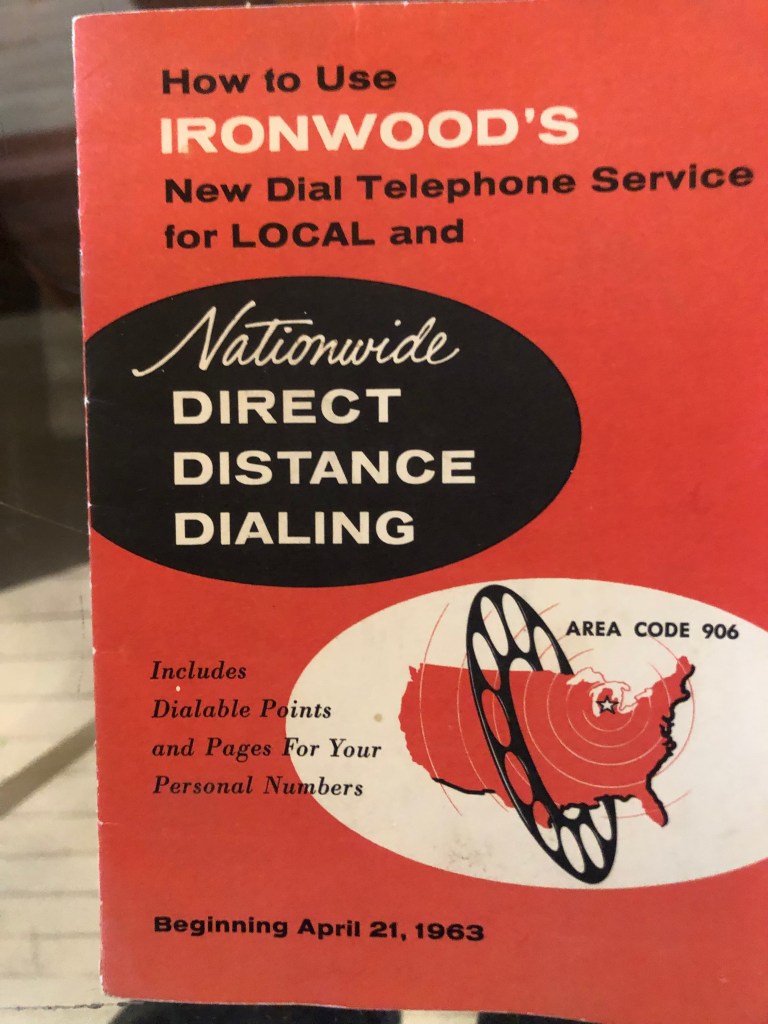
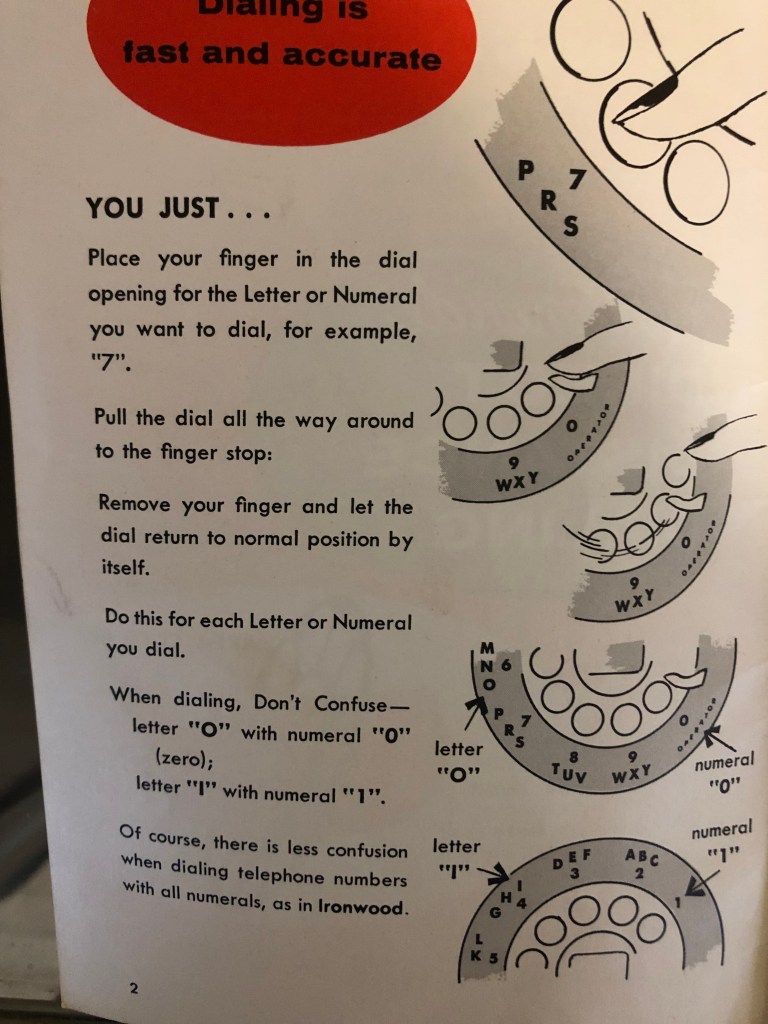
The museum has an old telephone switchboard, and on it was this brochure that evidently was provided to all phone customers in 1963. Now, I’m not saying that Ironwood was a little behind the times, but the brochure explains in excruciating detail how to dial a phone. (I realize that some of my younger readers might not understand this concept, either.)

From the days before instructional Youtube videos.

After reviewing these eye-opening displays about my own early childhood, I got back into the rental car (which is a Jeep, for those of you who have asked) and headed into the great state of Wisconsin.

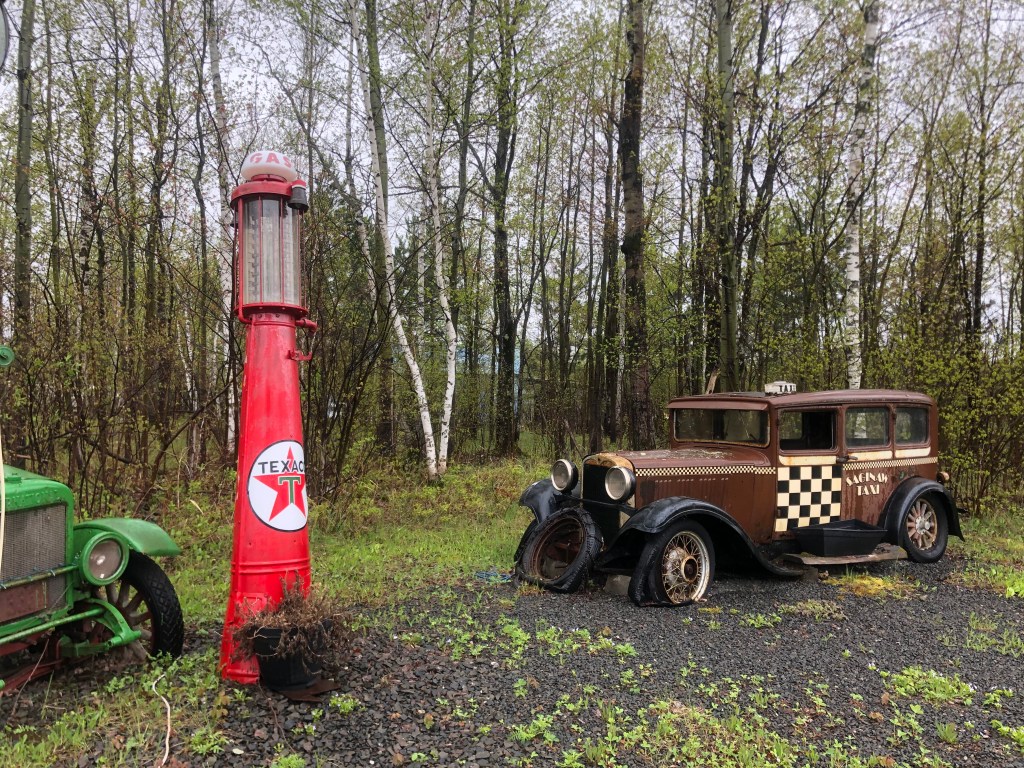
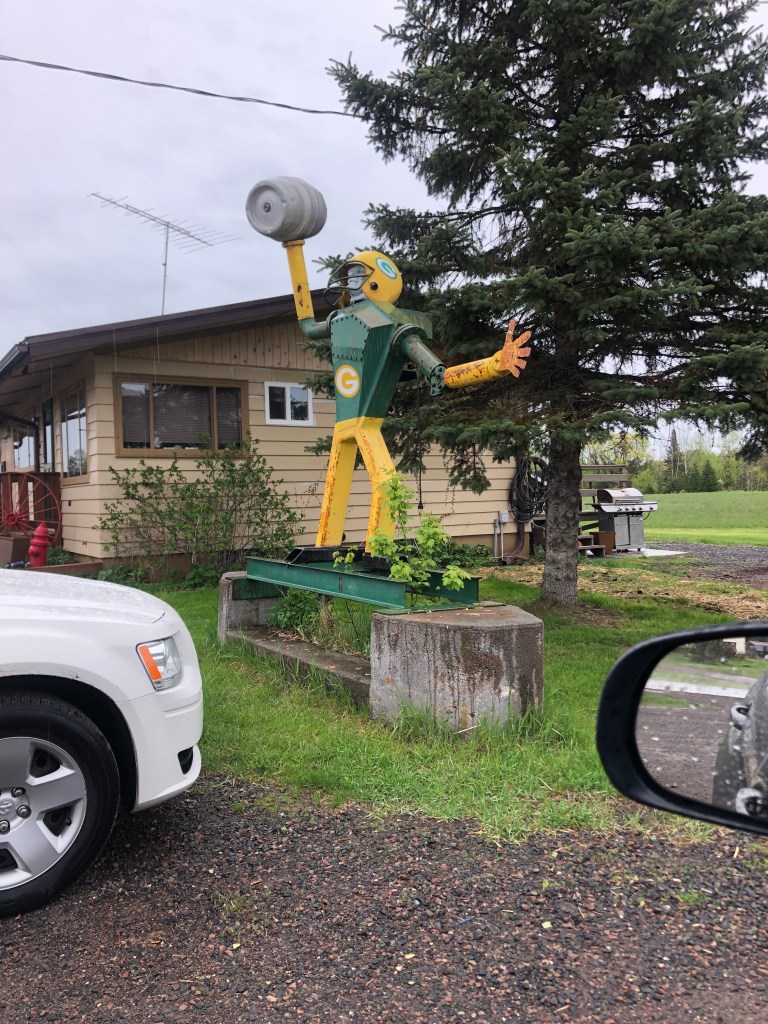
I have to say this about Route 2: It’s really a very reliable, comfortable, friendly road. This is in part due to the fact that it goes through very few big cities; most of the towns you encounter are small villages that aren’t going to ticket you for parking in the wrong spot or prohibit you from turning left. The gas station attendants and restaurant servers are uncommonly friendly, and graffiti is practically unheard of. Moreover, property owners seem to be compelled to communicate with passersby through yard art. A few examples:

On the side of the road in Solway, Minnesota
In front of a liquor store. The keg is a nice touch.
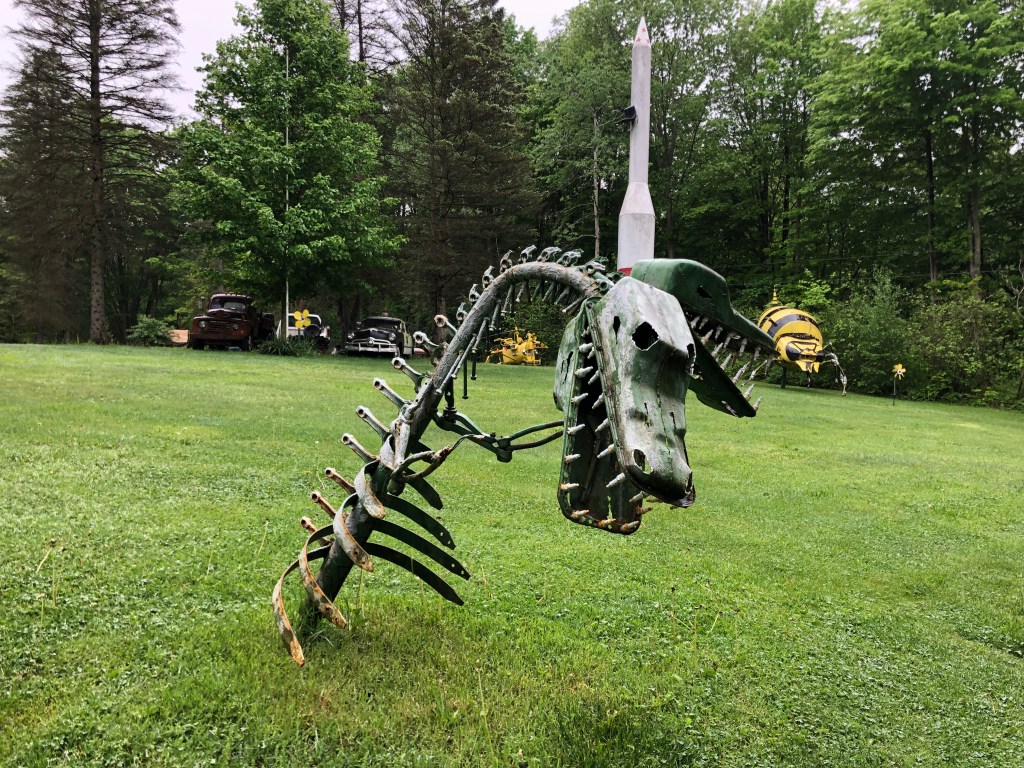
Made from car parts. Note the spark plug teeth.
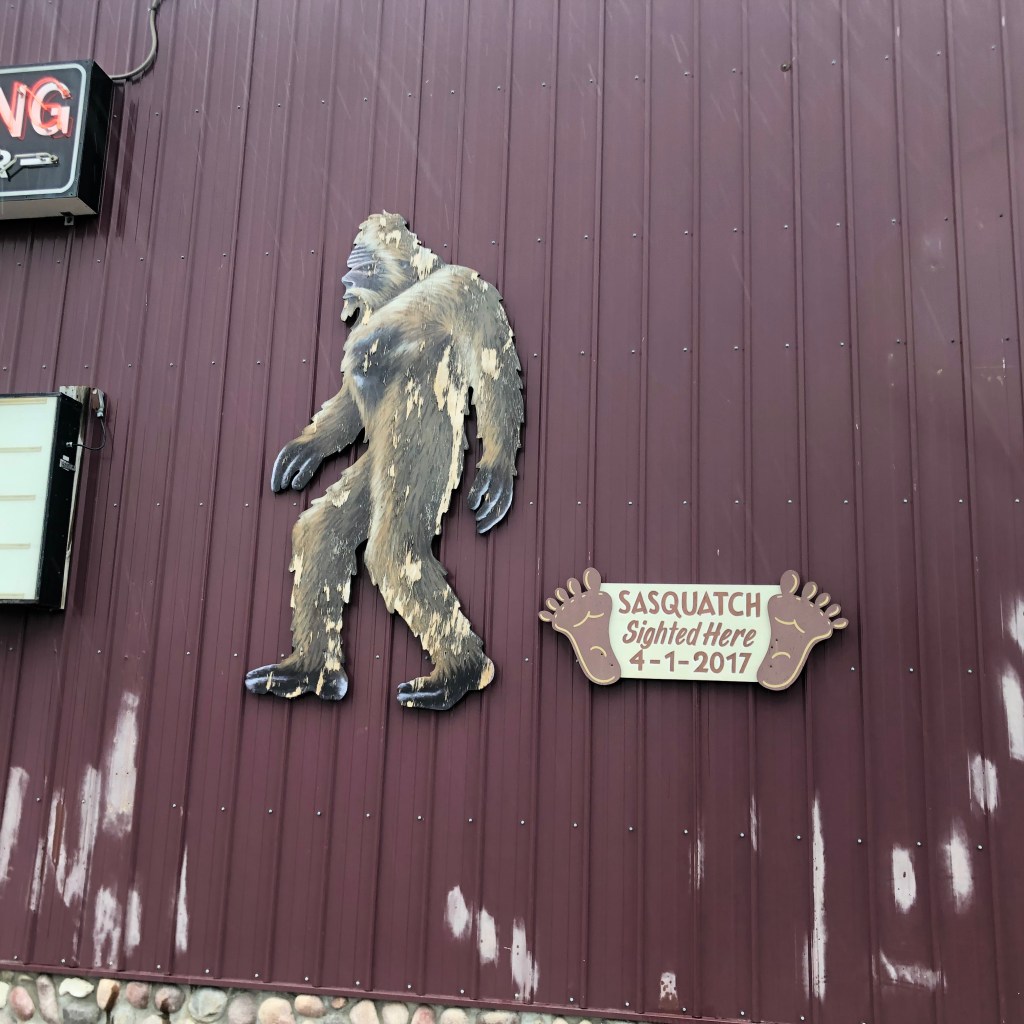
The April 1 date might be a giveaway.

There’s something reassuring about people taking the time and making the effort to add some whimsy for the benefits of passersby. I encounter a lot of this kind of thing out on the US highways. If you were to seek out the opposite of a twitter flame war, surely this kind of thing would qualify. God bless these people.

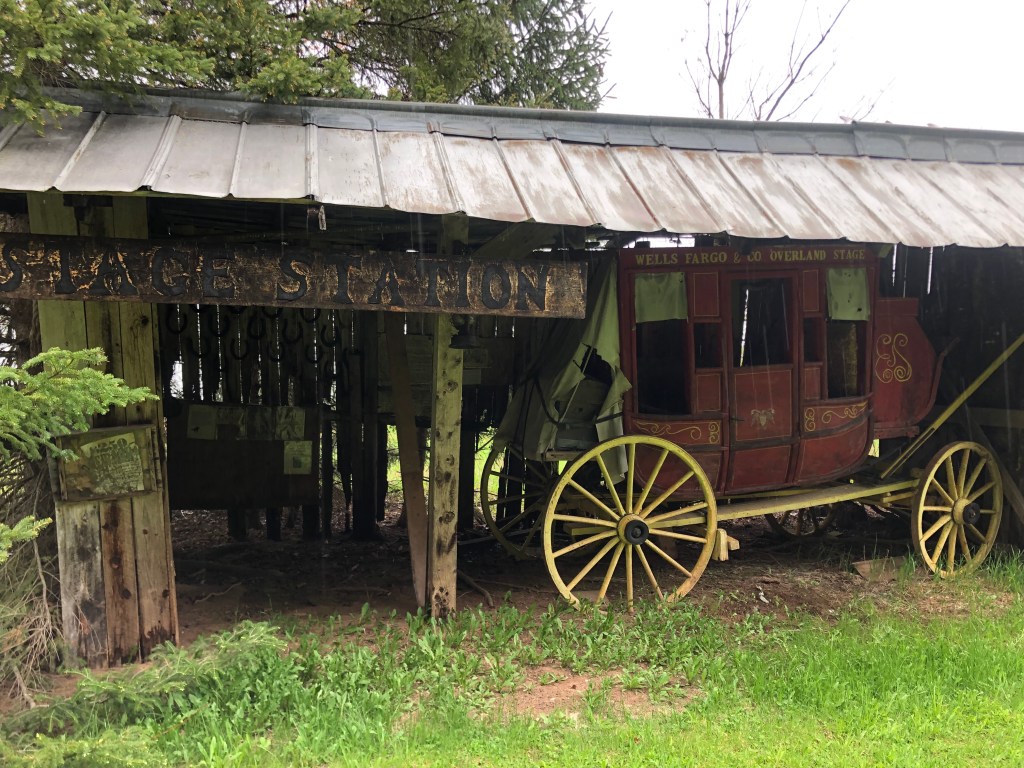
In the town of Mason, Wisconsin a gas station attendant encouraged me to check out an old, abandoned, Wild West theme park that was homemade by a man (recently passed) named Ed Sandor on his farmland. This I did, and it was one of the most enjoyable hours I’ve spent. It deserves its own blog post, which I hope to write in the next day or two. Here’s a photo to whet your appetite:

RIP Ed Sandor

Eventually I came to my first biggish town on this trip: Duluth, Minnesota (pop: 87,000). While stopping to get a sandwich, I asked the proprietor what Duluth is known for. Without skipping a beat, she said “Dylan.” It turns out that one Robert Allen Zimmerman (aka Bob Dylan) spent his early childhood in a modest home on North Third Avenue. I made the pilgrimage, and offer this humble photo.

House of the Risin’ Sun

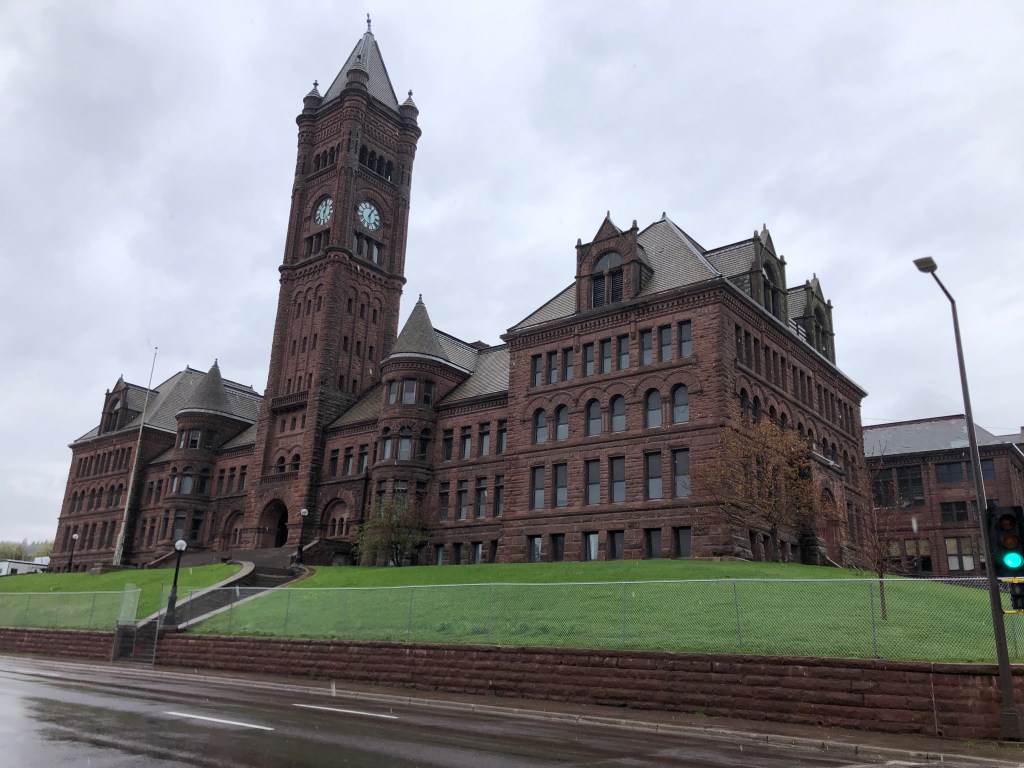
While in Dylan’s neighborhood, I passed Duluth’s Central High School. This is a breathtaking gothic building, originally constructed in 1893, and it didn’t close until 1970. And even then it remained open as administrative offices until 2011.

I can’t figure out what’s happening with the property now, but this is a staggeringly-impressive, large, historic property. Clearly it speaks of a day when public buildings were not just respected but revered. I do hope that Duluth’s leaders find a suitable use for this historic property.

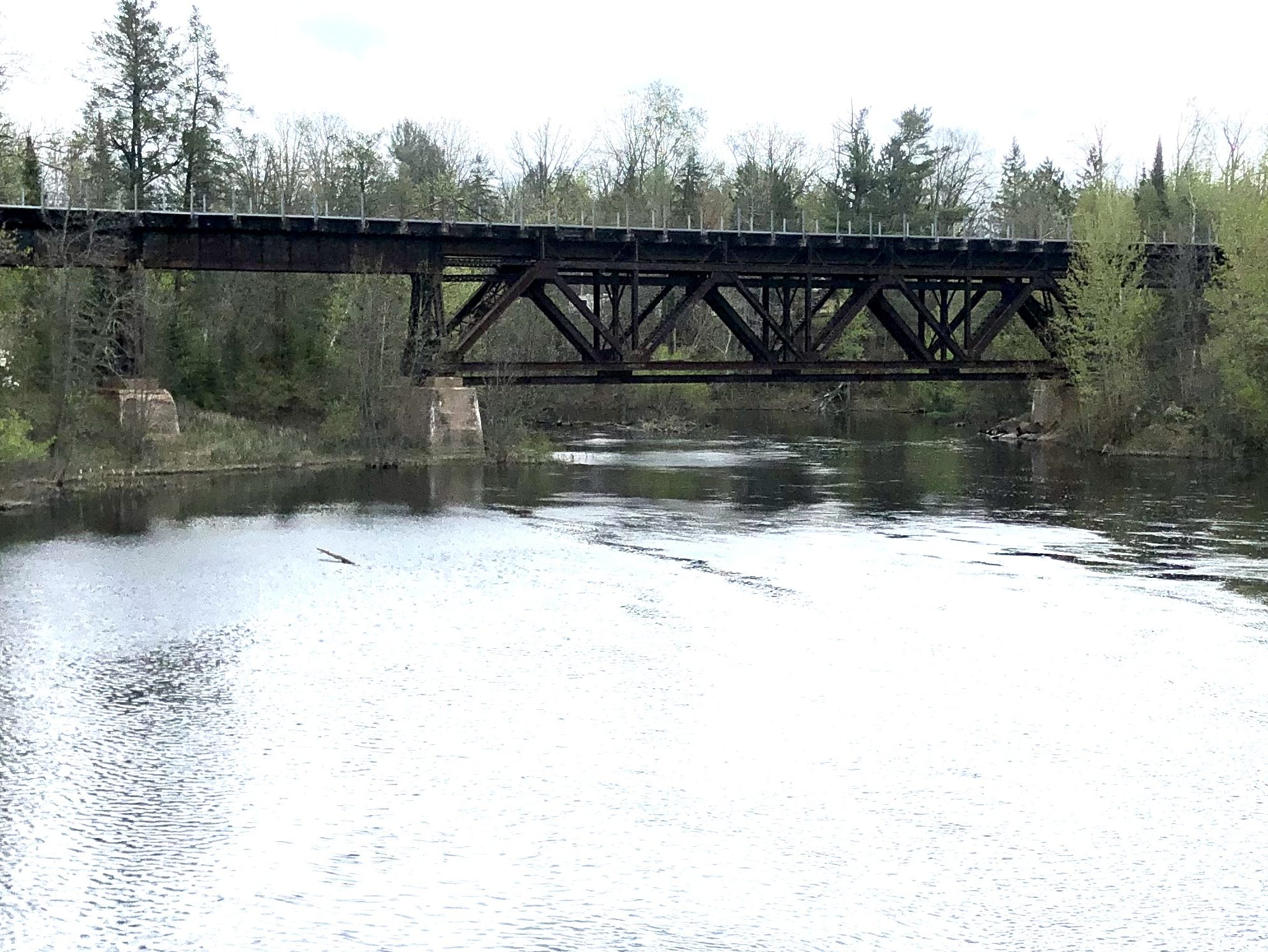
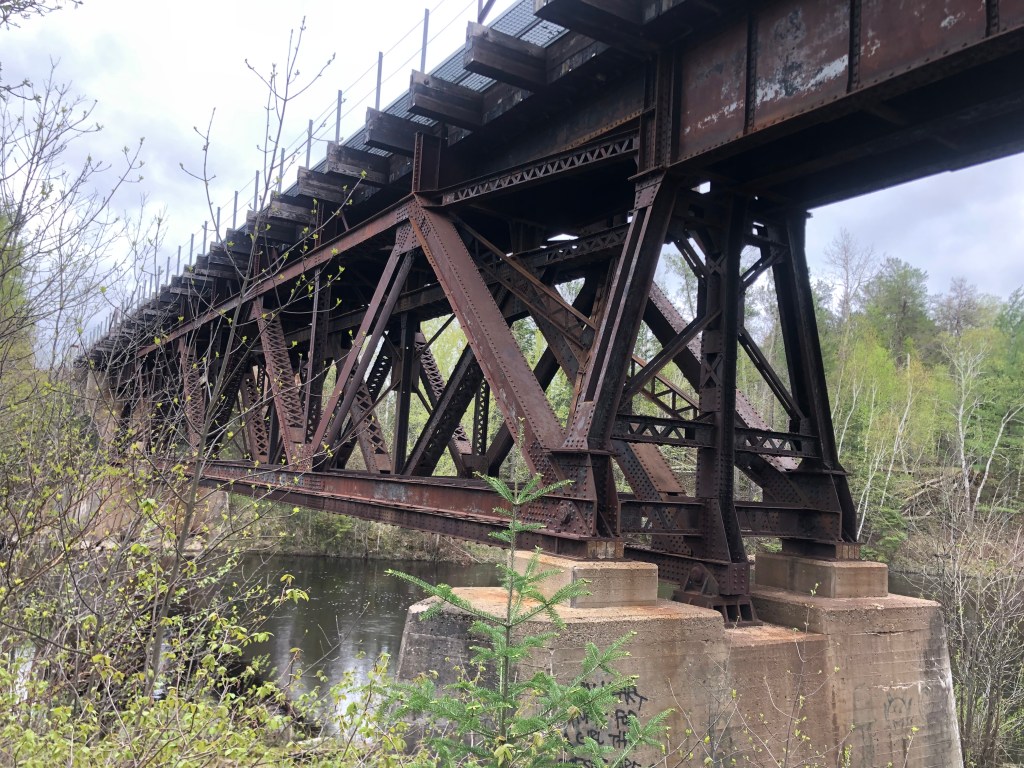
I ended the day’s travels in Grand Rapids, Minnesota (pop: 11,000). Based on my experiences as a tourist, Grand Rapids is known for two things. The first is that it sits at the upper navigable end of the Mississippi River. I noted this when I crossed the Mississippi on Route 2–it was nice to see a body of water that wasn’t one of the Great Lakes, after the past few days of Lakes Erie, Michigan, and Superior! I took a few photos of a picturesque, turn-of-the-century railroad bridge, and I noticed that the Mississippi wasn’t as mighty as I remember it from past encounters further south. (Edit: I later learned that this river is only a tributary of the Mississippi–the Prairie River.)

Carrying trains since 1899.

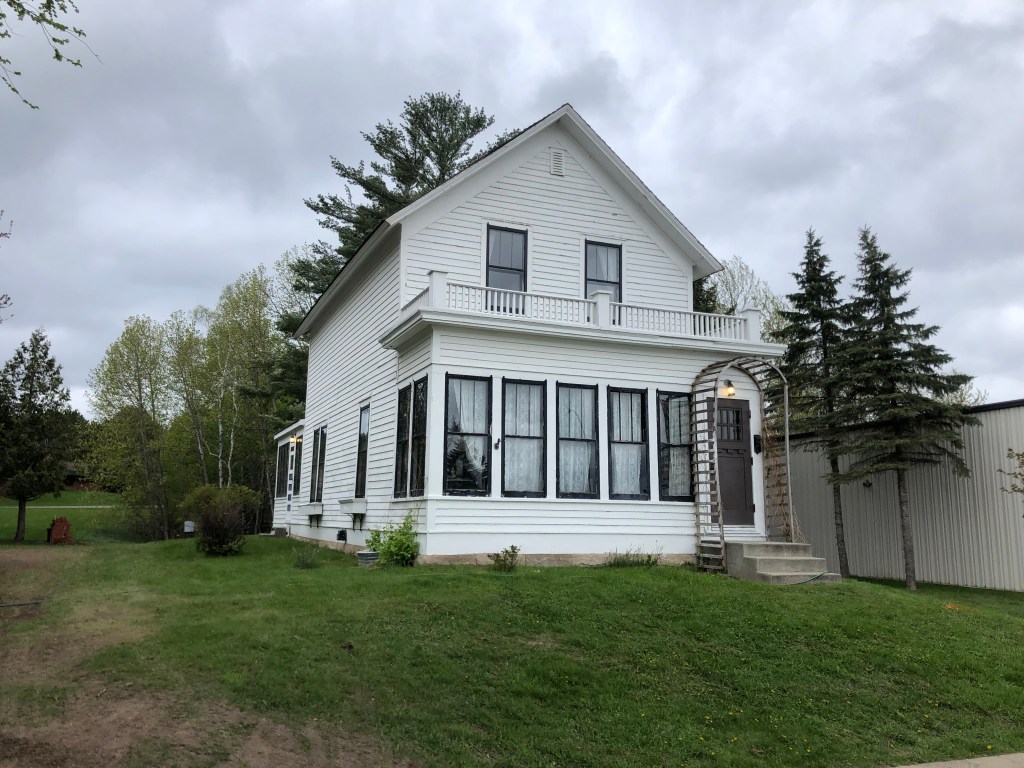
Second, Grand Rapids the birthplace of Judy Garland. Indeed, the hotel in which I’m staying tonight is next door to the Judy Garland museum, which includes the (relocated) home where Judy grew up.

There’s no place like home…

Now, to be clear, I’m not a total fanboy of Judy Garland, but I certainly find her story to be compelling. And I always loved The Wizard of Oz. So the museum (which I toured) intrigued me, with various artifacts from her movies and her (somewhat tragic) life.

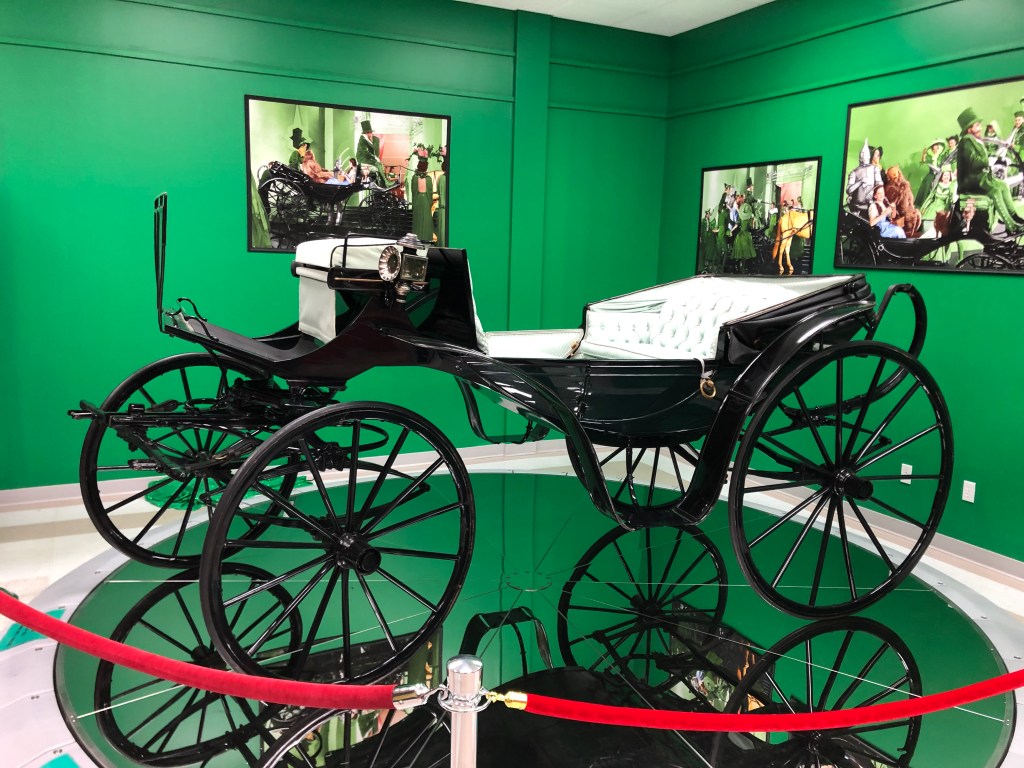
The actual carriage from Oz. Remember?

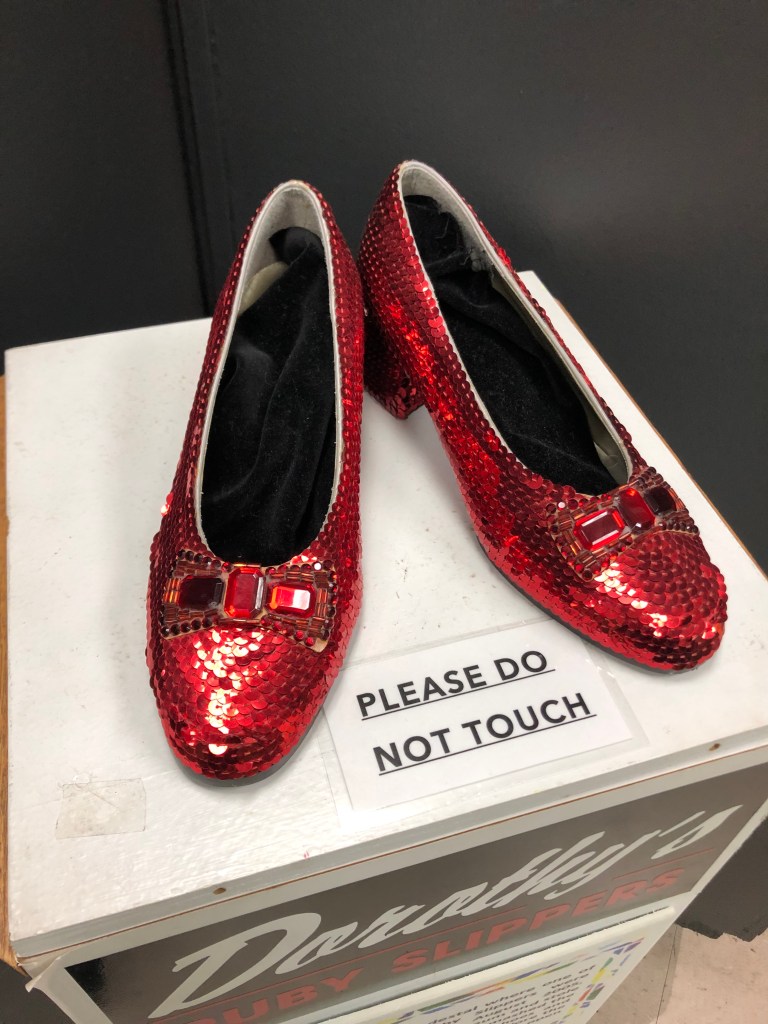
Naturally, my primary objective at the Judy Garland museum was to see the ruby slippers. And behold, there they were, just sitting on a pedestal with no barrier separating me from them!

“Their magic must be very powerful, or she wouldn’t want them so badly.”

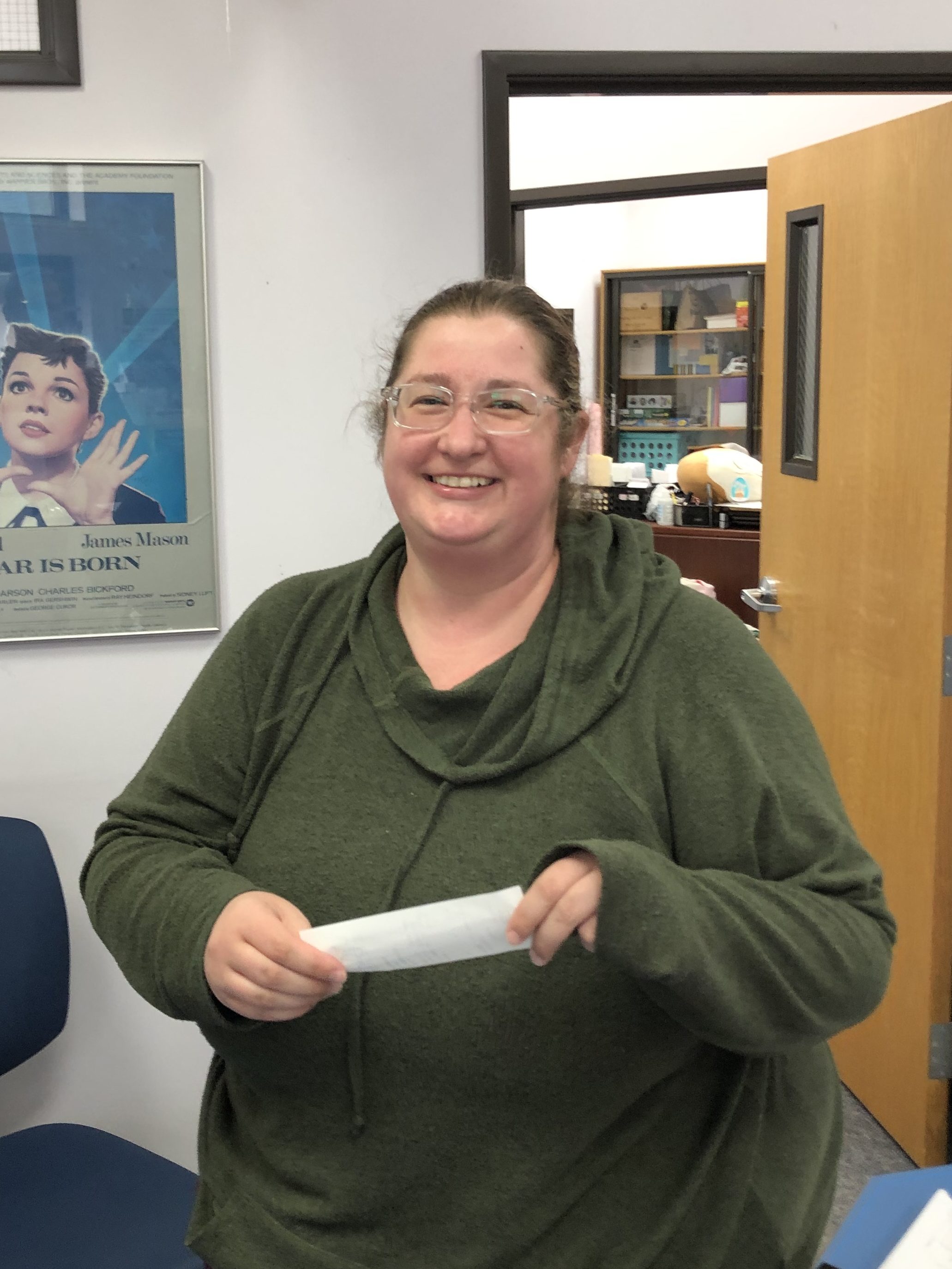
Alas, a sign explained that while this was the “original pedestal” on which the ruby slippers used to sit, the slippers were reproductions. The original slippers were stolen in 2005. A docent (Sheena, pictured below) told me that the slippers were recovered in 2018 in Minneapolis, but they remain in the possession of the FBI, which continues to gather evidence of the crime. What’s worse is that the slippers were just on loan to the museum, so if and when the FBI releases them, they’ll go to the owner, and not to the museum.

Sheena, the Wizard of…the Garland Museum.

Still, the museum contains numerous authentic artifacts, and I recommend it. Meanwhile, when she heard I was driving the length of US Route 2, Sheena encouraged me to visit the headwaters of the Mississippi River, which are a short drive from the highway. This I will do tomorrow. Until then.

BOTD

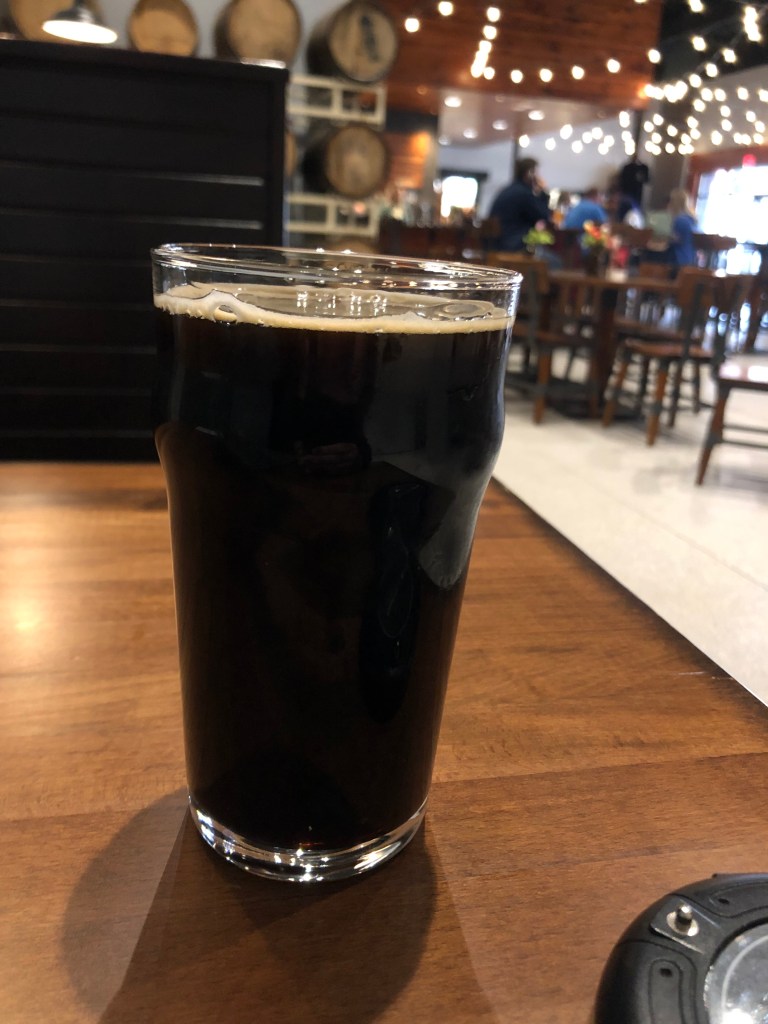
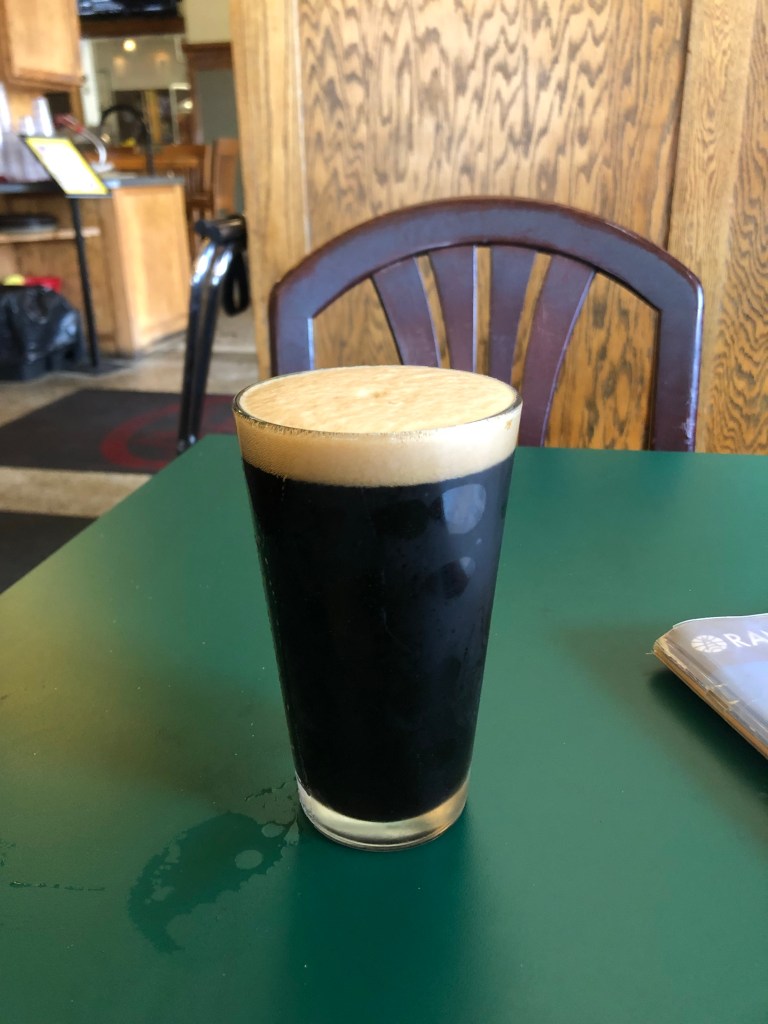
The Ichabod Crane of beers.

The Brew of the Day was a “Cocon-Oat and Boat Stout” from Rapids Brewing Co., in Grand Rapids, Minnesota. RBC has only been around for about 3 years, and it looks like your typical modern brewpub with a spacious floor in a warehouse-like building, minimalist industrial-chic decor, and lots of bearded hipsters. But unlike some other such brewpubs that I’ve visited, this place has nailed the food and the staff really makes an old guy like me feel welcome.

As its somewhat-forced name suggests, the “Cocon-Oat” stout is an oatmeal stout brewed with toasted coconut. This won’t be everyone’s cup of tea, but it totally worked for me. The toasted coconut isn’t overpowering, but it adds just the right amount of sweetness and interest to the flavor profile. Don’t think Mounds candybar; think macaroon. The oatmeal lends a creamy smoothness, and it has just the right amount of hops. It goes down really easy, but at 5.9 percent ABV, this isn’t going to put you on the floor. I give it 4.5 stars.
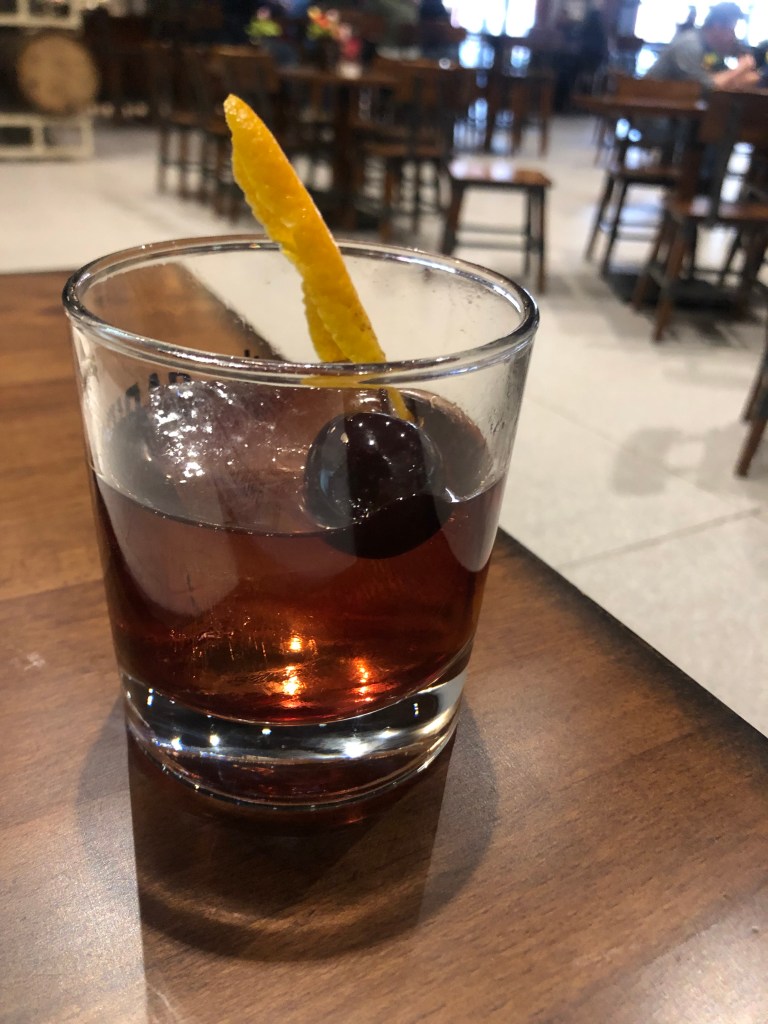
PS: The bartender told me that today is Whiskey Wednesday, which means that I get $2 off any bourbon cocktail. So I chased the stout with an Old Fashioned, to which I give 5 stars.

Cars · Hydrology · Road trips · trains

My Day as a Yooper

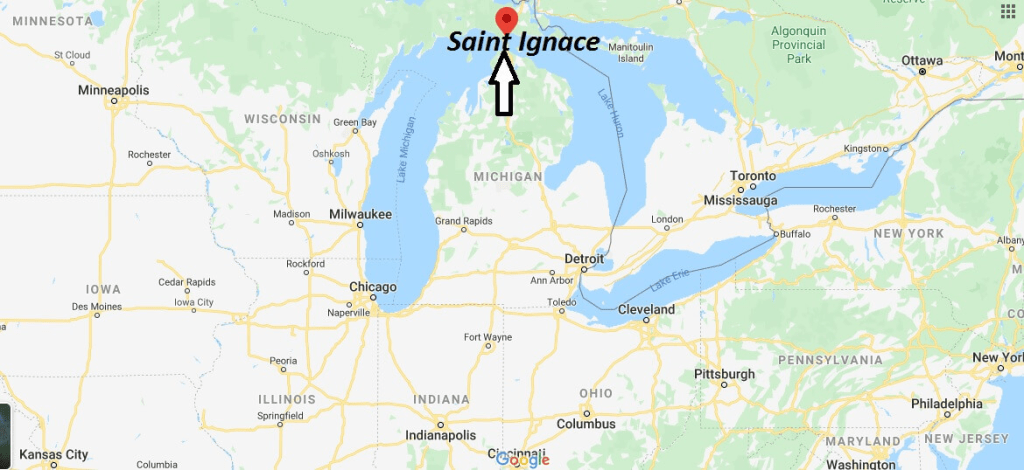
This morning I awoke to a pleasant, clear, sunny day in St. Ignace, Michigan—a city that straddles Lake Huron and Lake Michigan.

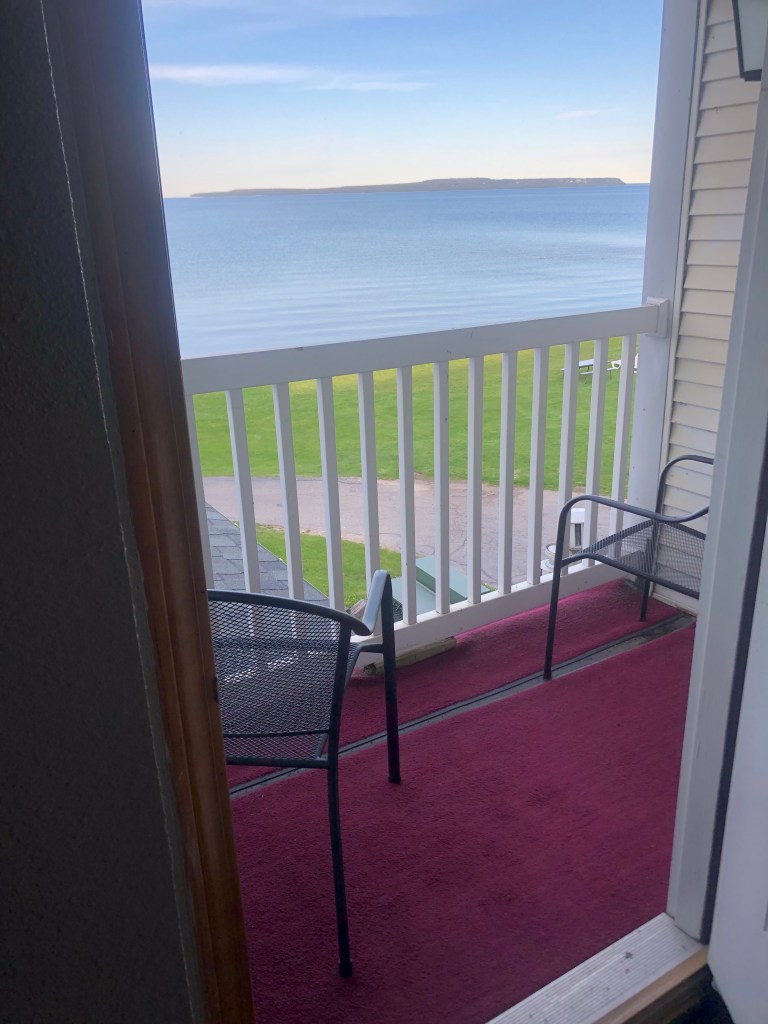
Uncharacteristically, I even sprang for a room with a view. When I awoke in the middle of the night and observed that there were virtually no lights to be seen out around the lake. I guess there’s very little development out in these parts.

Paging Lucy Honeychurch…

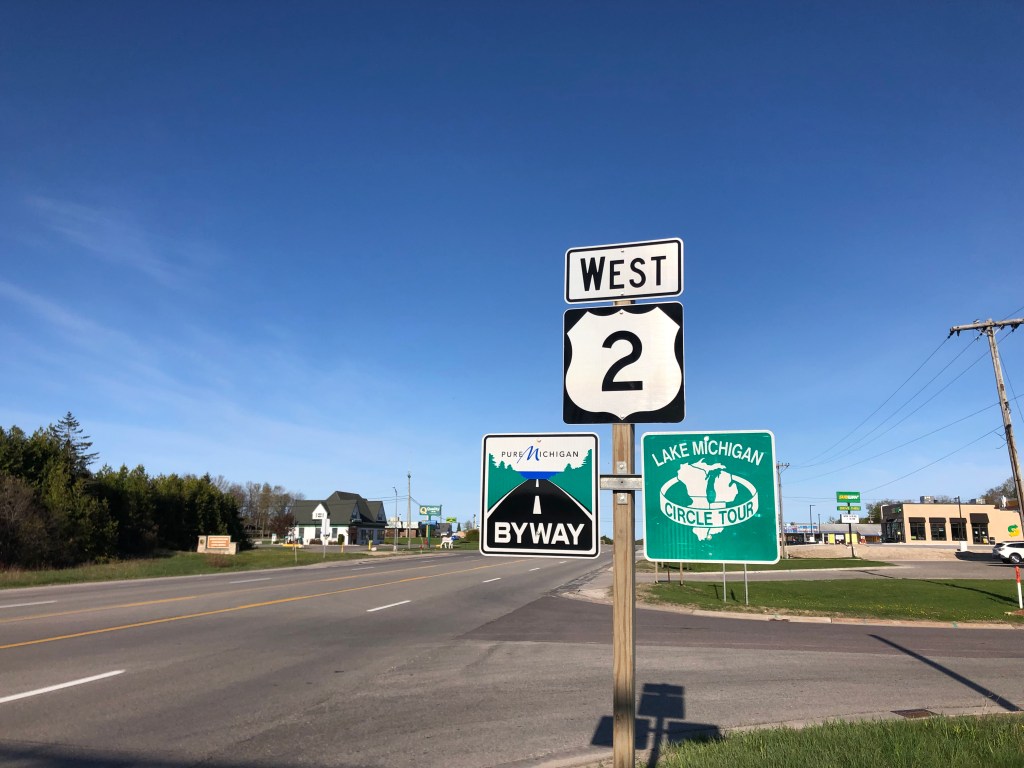
After a virtually inedible continental breakfast at the hotel, I drove a few blocks to the beginning of US Route 2’s western segment.

And away we go!

The day’s travel took me about 300 miles due west across Michigan’s Upper Peninsula, or UP (sounds like “you pee”) (that’s a quote from a helpful cashier at the local BP [“bee pee”?] gas station). Residents of the UP are therefore called “Yoopers.”

Anyway, I pointed the car west and soon the touristy town of St. Ignace was in the rearview mirror. US 2 is a simple two-lane road surrounded by pine and spruce, and offers occasional glimpses of Lake Michigan to the south. It has virtually no stoplights or even stop signs, except when it passes through the occasional small town. It’s a great road for decompressing and pondering the meaning of life.

As I went driving that ribbon of highway/I saw above me that endless skyway.

Now, I don’t pretend to be an expert on the UP. In fact, this is the first time I’ve ever set foot in the territory. But after 300 miles of driving, with numerous stops and exploratory side trips, I can offer the following top five things that the UP is (or should be) known for:

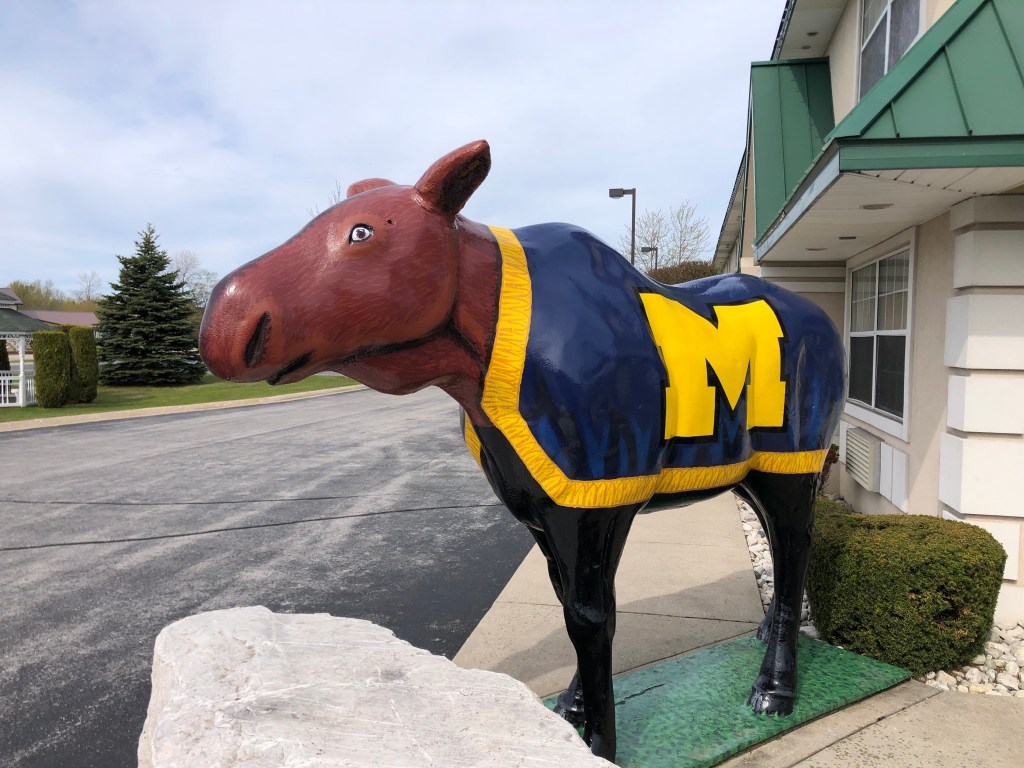
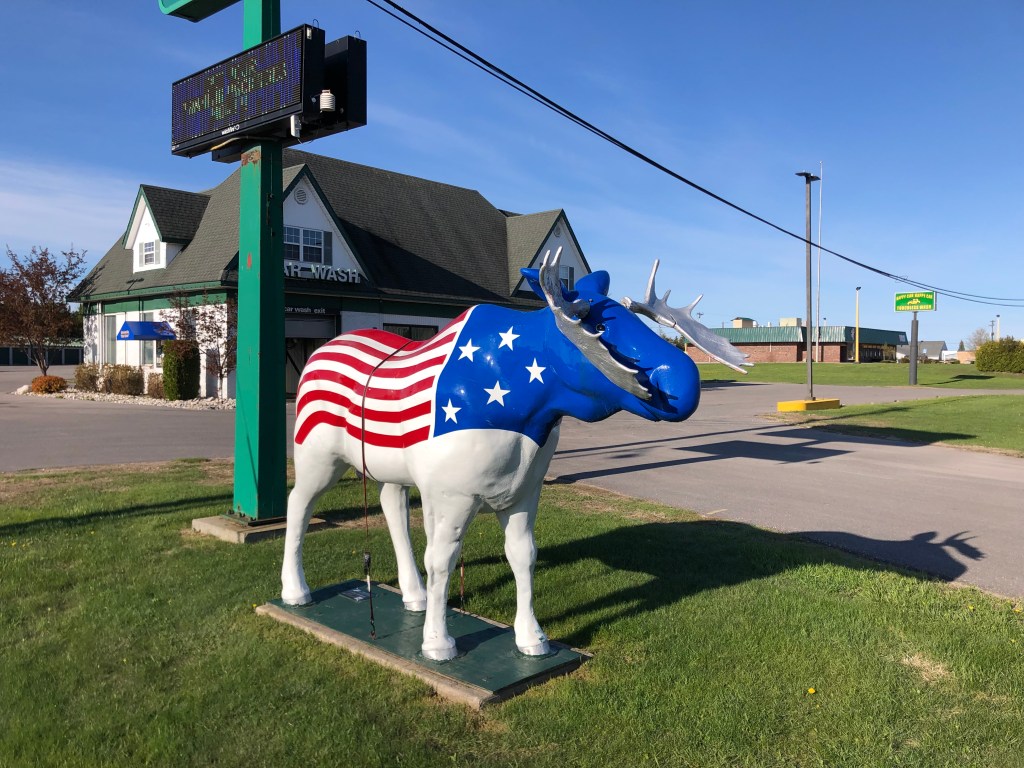
1: Moose. Moose are native to Michigan, but they were heavily predated and largely eliminated from the lower part of the state in the 1800s. In the 1980s Michigan’s Department of Natural Resources introduced more moose into the UP, where they maintain a self-sustaining population. The moose seems to have become an unofficial mascot, which I came across repeatedly.

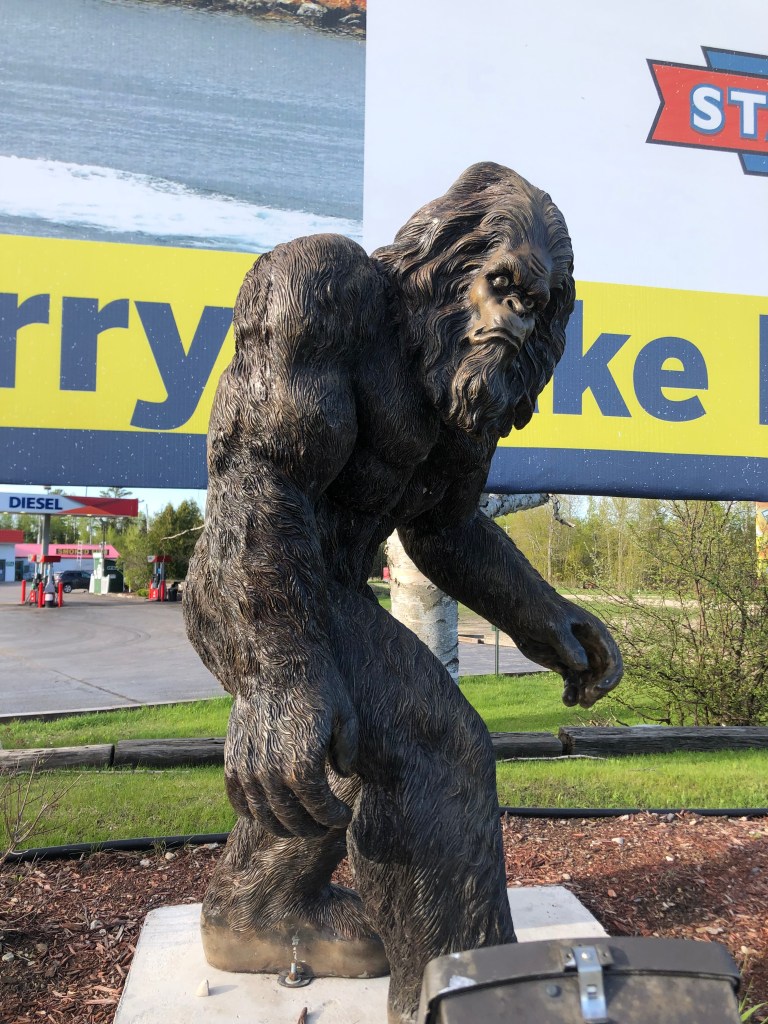
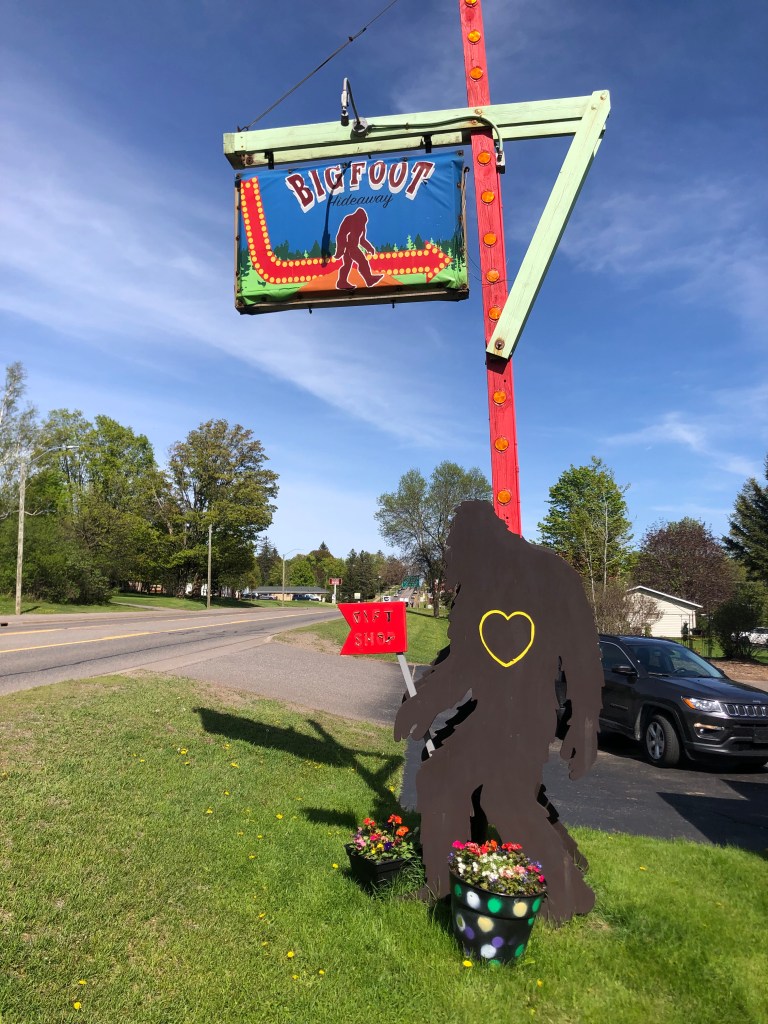
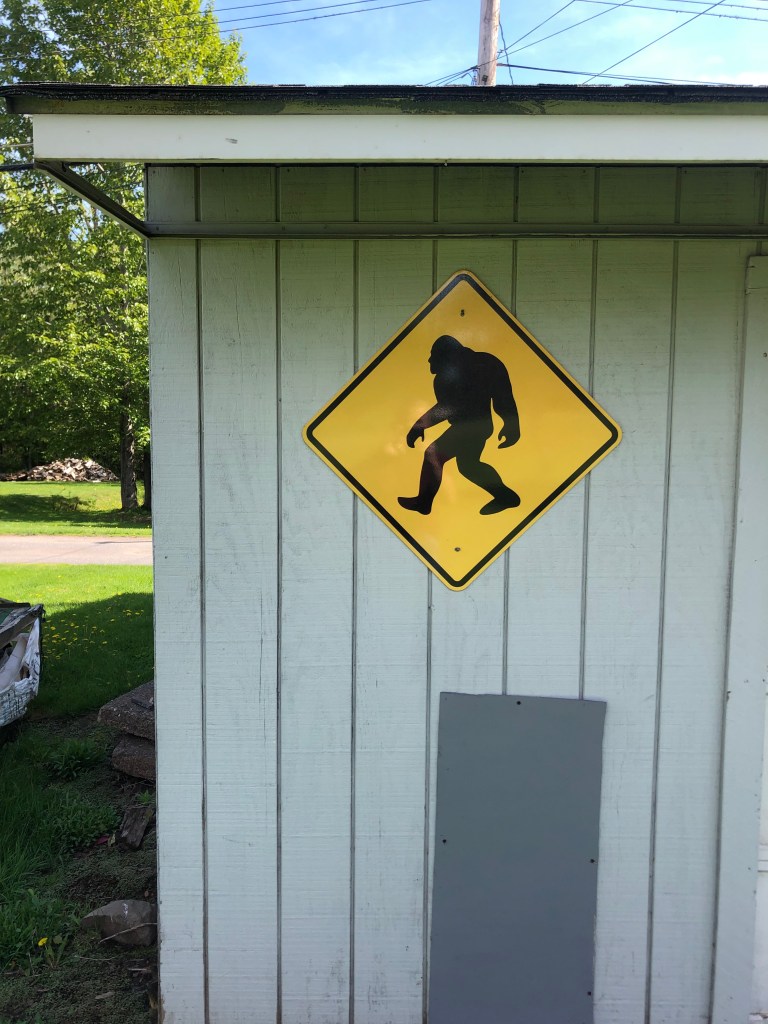
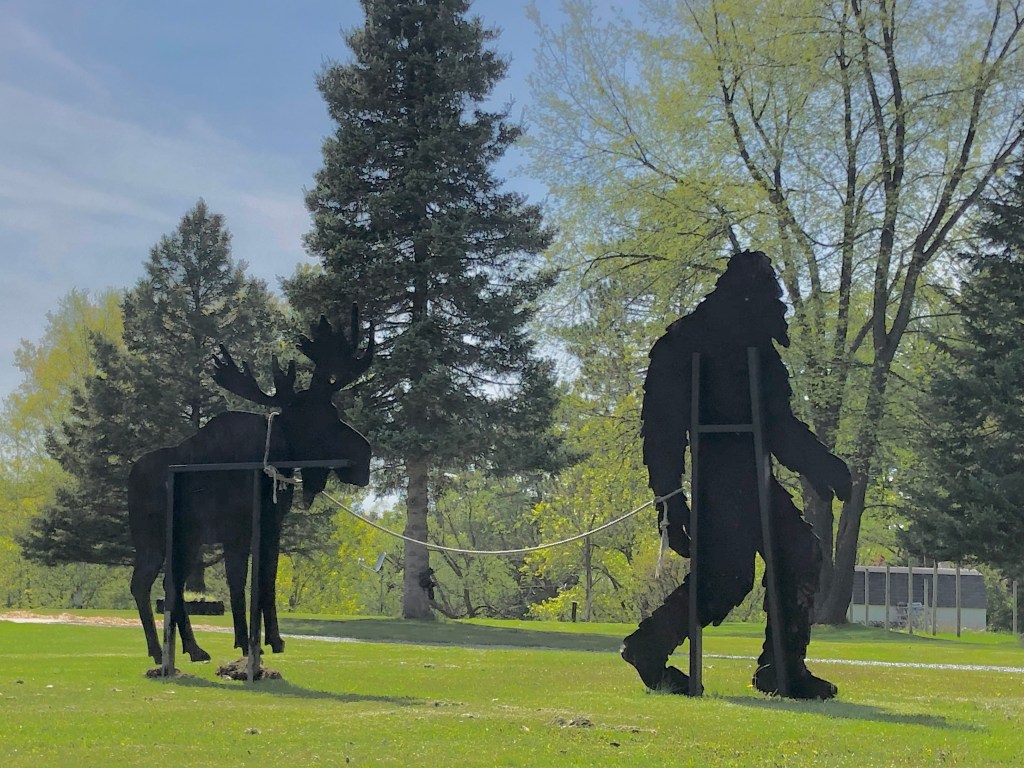
2: Bigfoot. His likeness is everywhere. I guess the fact that the UP is remote, with lots of trees to hide among, makes for good Sasquatch habitat. There’s even a UP Bigfoot Conference each year.

And perhaps inevitably, I even encountered a Bigfoot with a Moose on a leash…

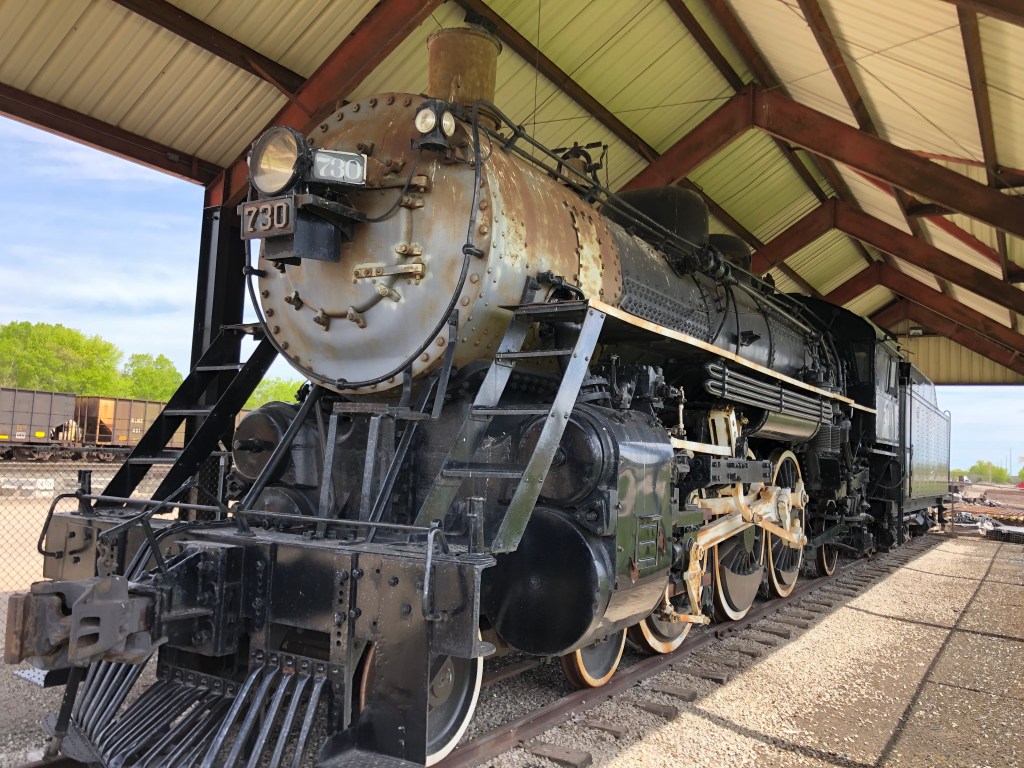
3: Trains. Railroads played a key role in the development of Michigan, of course. But with the long stretches of undeveloped land in the UP, trains were especially vital for communications, transportation, economic development, etc. in the region. Parts of the UP are major producers of iron, and railroads made it possible to export the ore to far-flung markets. Throughout my drive I encountered remnants of the old railroad infrastructure, now largely abandoned.

1911 steam locomotive from the Soo Line, now in Gladstone, MI
Iron Mountain RR Depot, built around 1910. Note the still-operational semaphore!
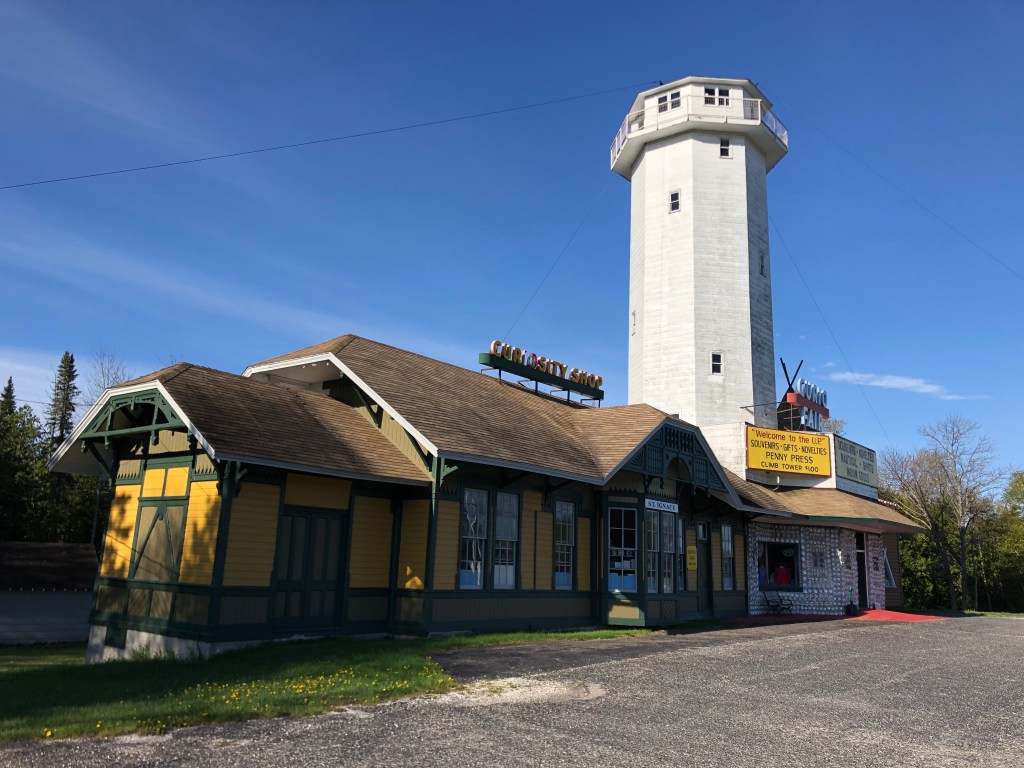
The Curio Fair antique shop/tourist trap, in Saint Ignace. The closer of the two structures is an old railroad depot from the Duluth, South Shore & Atlantic RR. You can also walk up the adjoining tower structure to get a good view of Lake Michigan. Sadly, it was closed when I visited.

4: Pasties. No, pasty doesn’t rhyme with tasty; it rhymes with nasty. Pasties are advertised everywhere in the UP. Supposedly they were introduced by Cornish settlers to the region in the 19th Century. Essentially, they’re meat pies. I had one today and it was definitely tasty–not nasty at all.

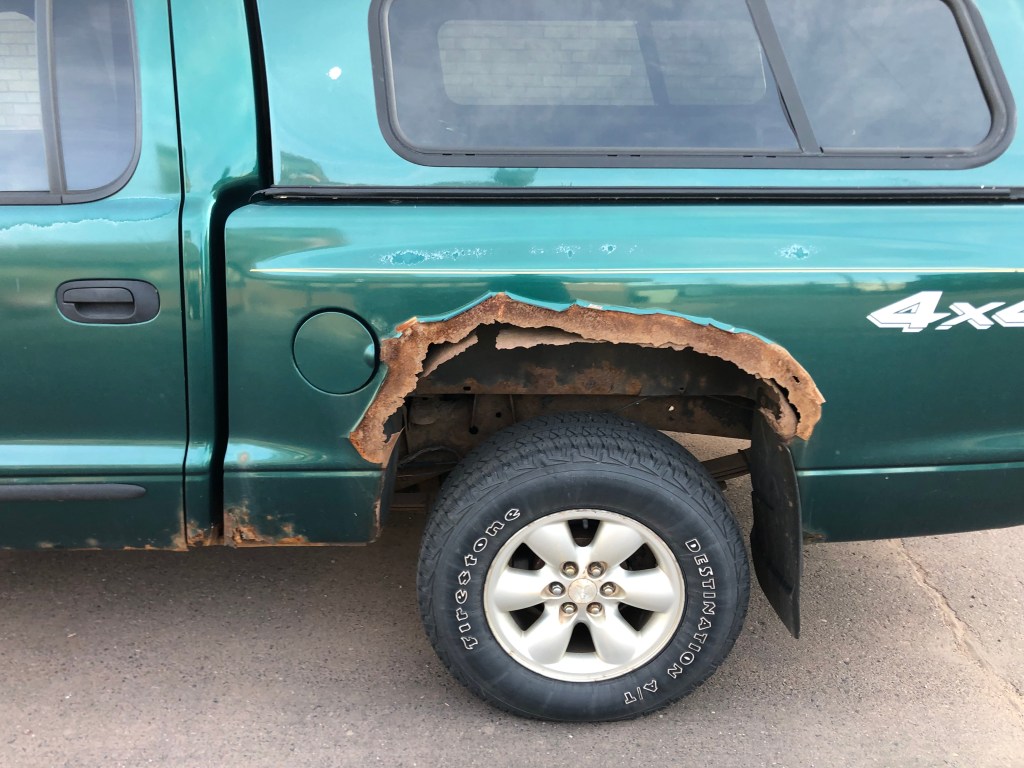
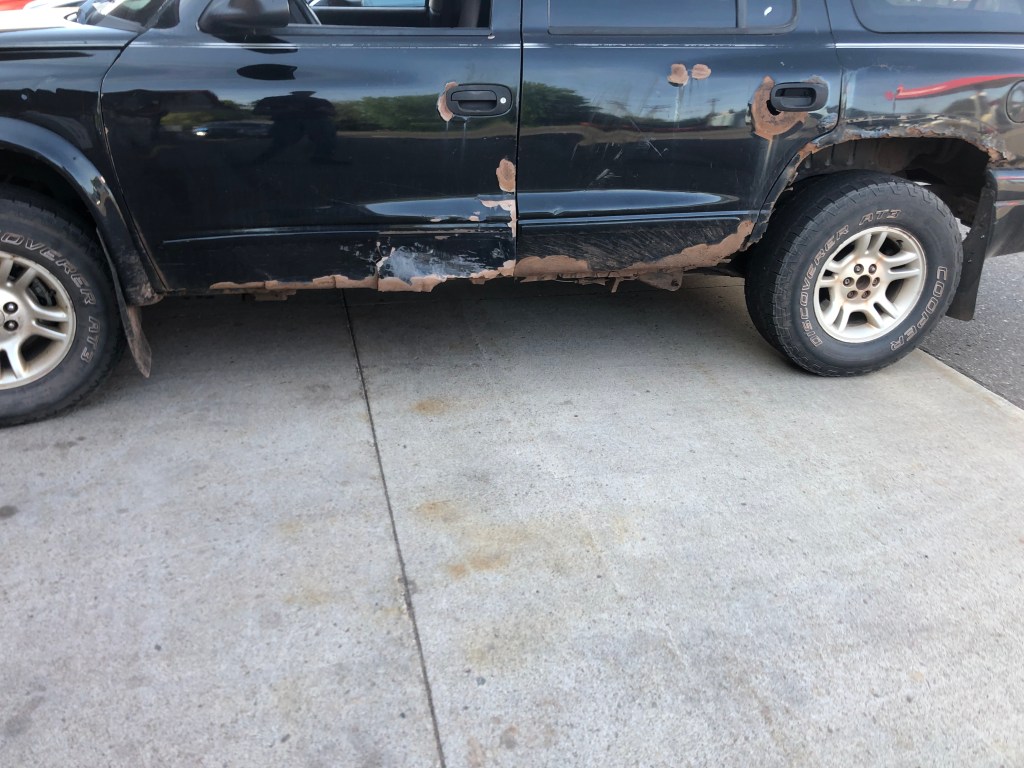
5: Rust. Winter in the UP brings freezing temperatures, ice, and snow, which requires that the Transportation Department spread salt on the roads. The combination of continuous moisture and salt hastens the formation of rust on iron and steel, which means that your F150 is going to gradually disappear.

Rust never sleeps.

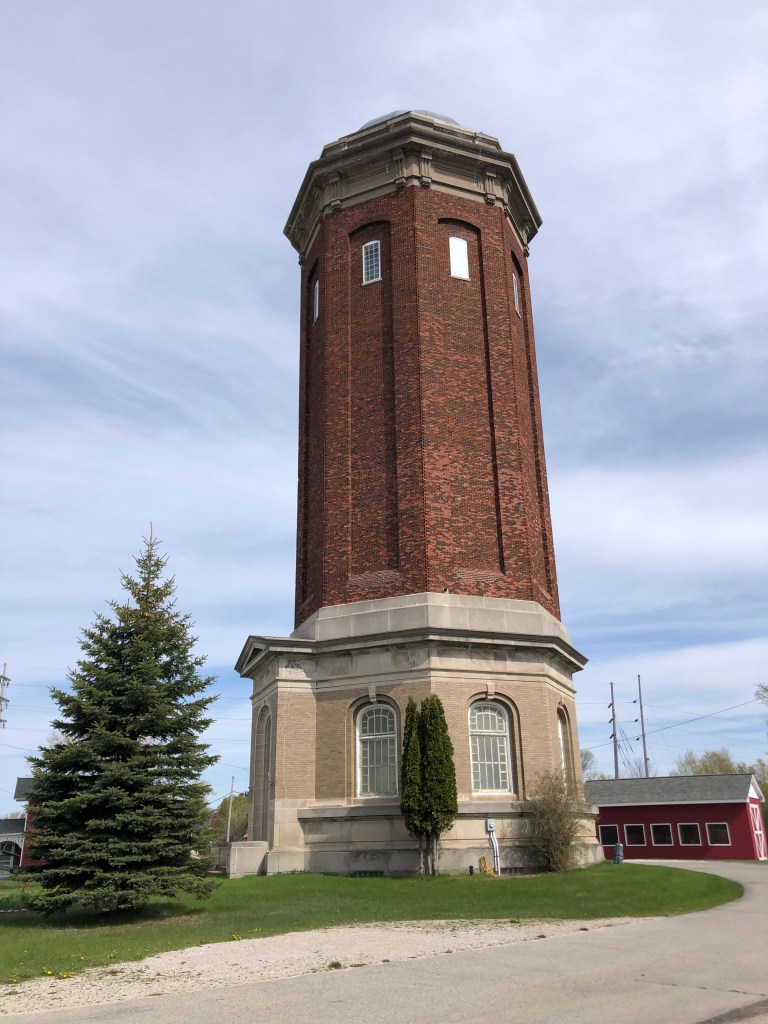
Anyway, that’s my view of the UP, based on a drive along Route 2. I’m sure I’m missing some key elements… But before I get to the BOTD, let me share one other historic structure I came across in the city of Manistique, MI (pop: 2,800). It’s a water pumping station that was constructed in 1922. It operated into the 1950s, but then was replaced by a more modern facility. It’s currently part of a museum complex. It’s a good example of neoclassical, brick structures that I saw in historic downtowns throughout the UP. Courthouses, city halls, theaters, even office buildings have a similar grandeur that, to me, seems really out of place given the UP’s rustic culture.

Might make for a good haunted hydro? (see yesterday’s blog)

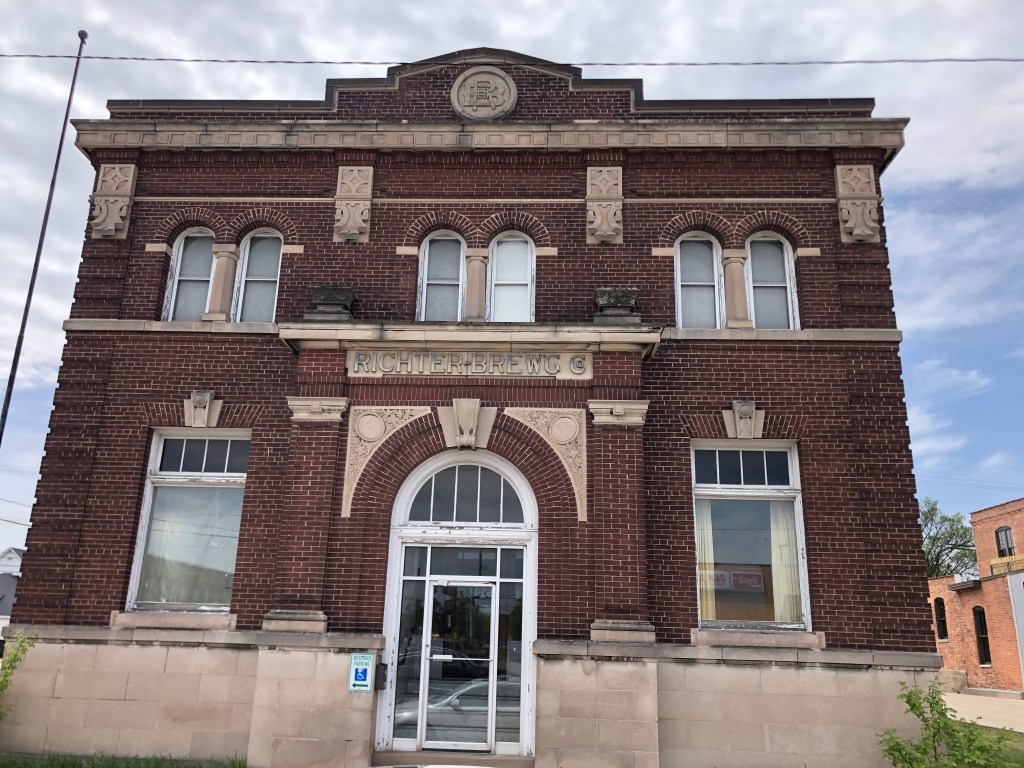
Now, as we move into the BOTD, let me set the mood with one more structure: The Richter Brewing Company building was constructed in 1915 in Escanaba, MI. Brewing operations were shut down with Prohibition, and Richter sold off the building. But it was again used to brew beer by another company until 1940. Then it stood vacant for about 50 years. It was renovated in 2012, and now houses loft apartments.

Zoom in on the lettering over the door.

Tonight I’m in Ironwood, MI, and will drive across the border into Wisconsin tomorrow morning.

BREW OF THE DAY

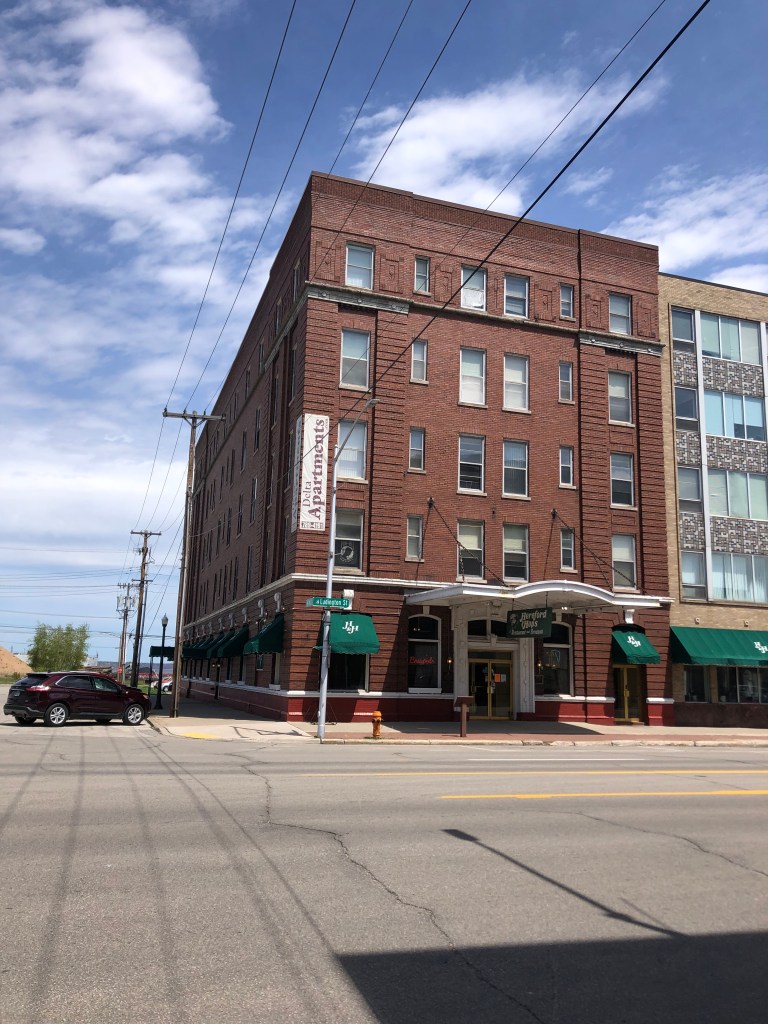
Close to the Richter Brewing Company is the Delta Hotel, built in 1915. The first floor of the hotel building is now a brewpub named Hereford and Hops.

The venerable Delta Hotel building

It was here that I ordered a pint of the Blackbird Oatmeal Stout, which is made on the premises. It was a beautiful pour: a dark mahogany color with a perfect, creamy head. The temperature was just right, with a bit of condensation on the glass.

Pretty as a picture. But not as pretty as a pitcher.

Sadly, though, I can’t recommend this beer. It seemed overhopped–just too bitter for a stout. And the malt flavor that did manage to make itself known was one-dimensional, completely lacking in that kaleidoscope of changing flavors you expect from a stout. It had more of an earthy taste than the caramel, malty taste I was hoping for. Partly redeeming it was a satisfying, creamy mouthfeel courtesy of the oatmeal. I’ll give this a three out of five stars.
cemeteries · Hydrology · Obelisks · Road trips · trains

The Big Lacuna

As you will recall from my last post, I recently flew out east to visit family and friends for a few days, after which I would travel the entire western segment of US Route 2, from St. Ignace, Michigan to Everett, Washington. The visits have been made, and I have now arrived at St. Ignace. I will be traveling Route 2 over the next 8 days. Be looking for daily posts on this site.

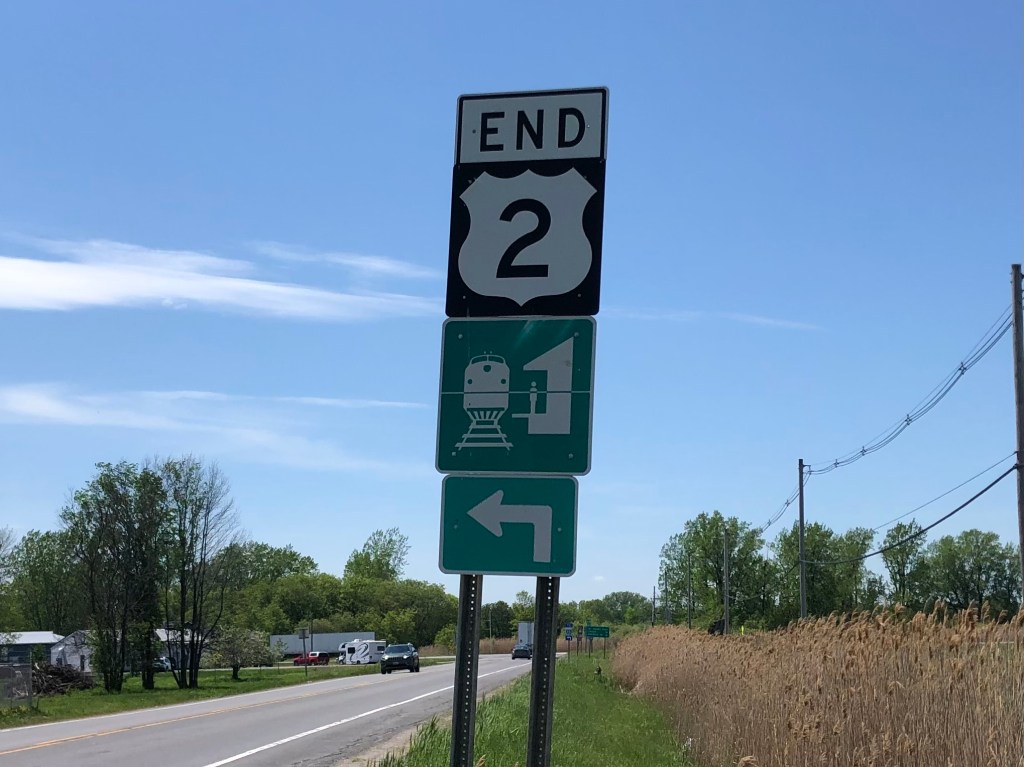
I did manage to drive a small portion of Route 2’s eastern segment while I was visiting as I left Cousin Bonnie’s in Vermont. That segment terminates (or begins, depending on your direction) at Rouse’s Point, NY. And (drum roll please) here it is:

All good things must come to an end.

I then spent the next two days making my way across Route 2’s lacuna. (Along the way I stopped at a Greek restaurant for a little moussaka. Ah, Lacuna Moussaka–what a wonderful phrase!)

Anyway, although I was technically not on Route 2 during this time, I did encounter a few noteworthy roadside oddities. And here they are:

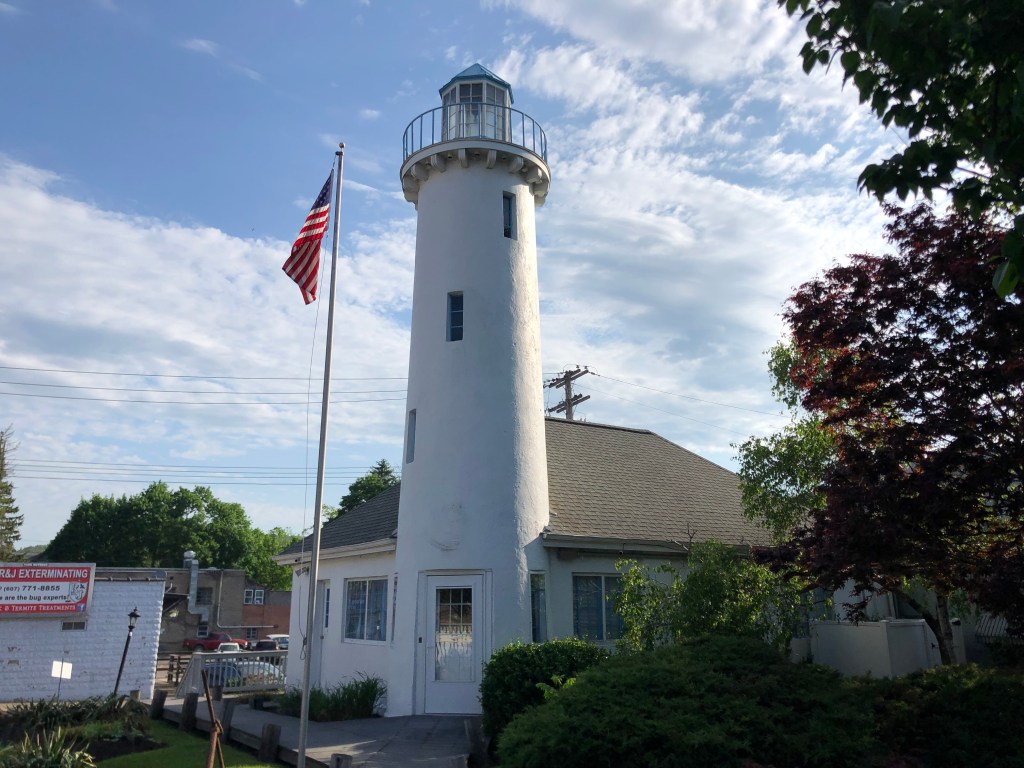
We start with this awesome, restored, historic building in Endicott, NY which was once part of the Lighthouse Service Station chain that supposedly served much of New England. It now appears to be some kind of private office or business, though there are no signs indicating what, exactly, they do.

I also stopped a number of cemeteries (the east is lousy with ’em!), and found some notable gravesites:

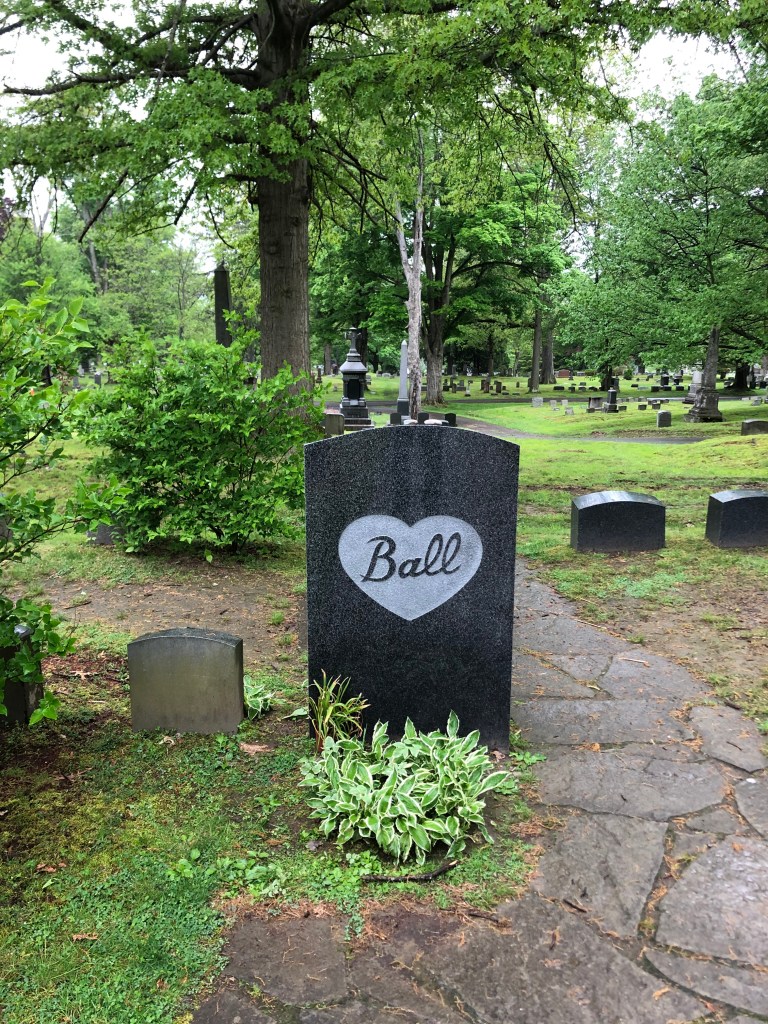
Lucille Ball’s grave (along with other famly members), in Jamestown, NY. Lucy was born in Jamestown, don’t you know.
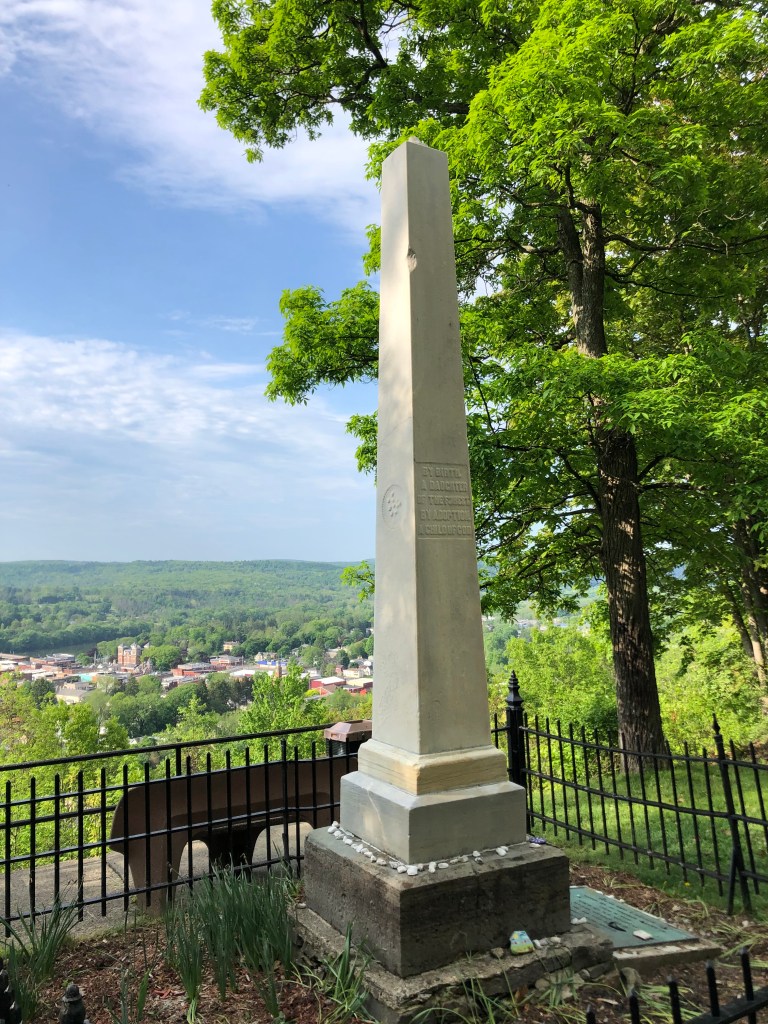
Obelisk alert! Here, in Owego NY, lie the remains of Sa Sa Na Loft, who was killed by a runaway freight train in 1852. It’s supposedly the “oldest white-sponsored grave tribute to a Native American woman.”
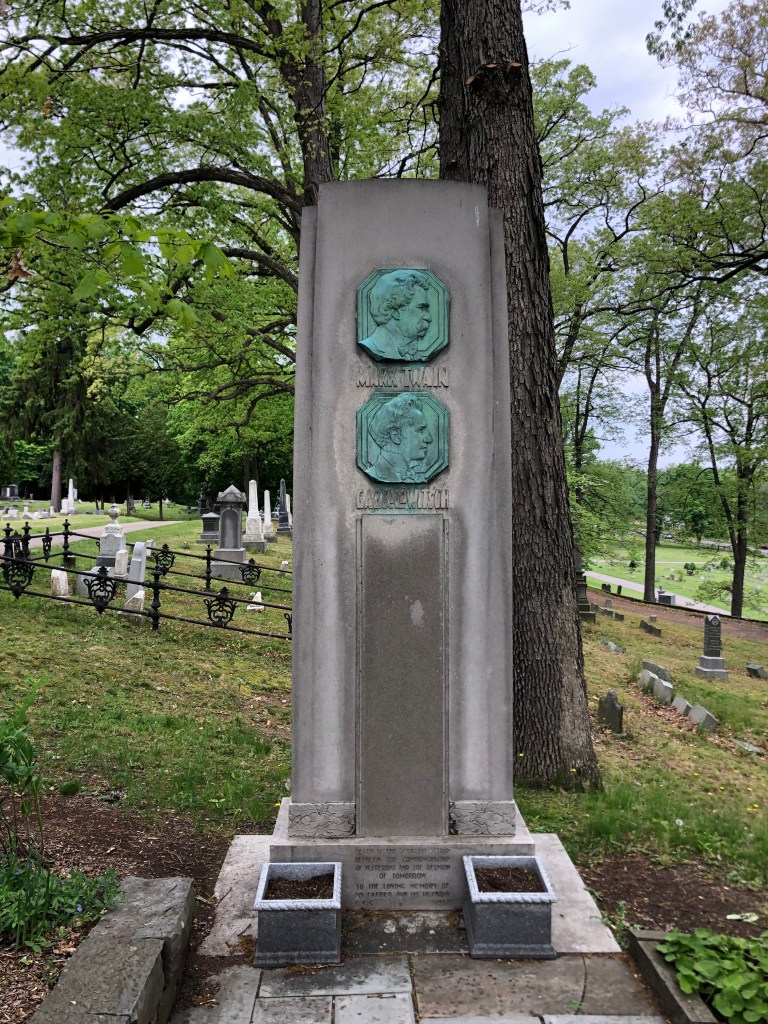
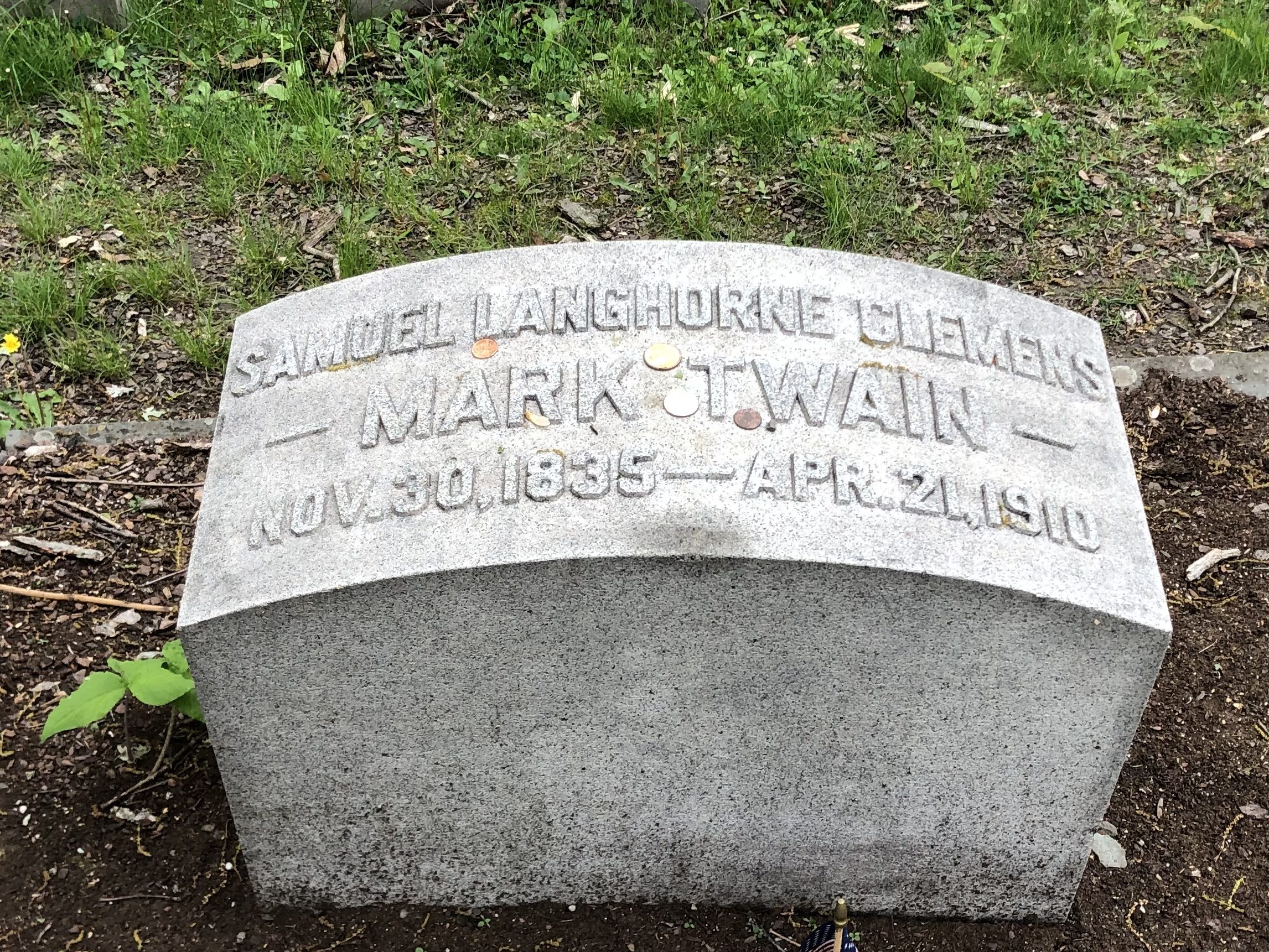
In Elmira, NY: Family plot marker for Mark Twain and his son-in-law, Ossip Gabrilowitsch. Elmira was Twain’s wife’s hometown.

Let me note here my favorite Mark Twain factoid: When he was born in 1835, Halley’s Comet appeared in the sky. It was known that the comet passes earth every 75 years or so. And so, as the next encounter with the comet approached in 1910, Twain made this comment:

I came in with Halley’s Comet… It is coming again … and I expect to go out with it… The Almighty has said, no doubt: ‘Now here are these two unaccountable freaks; they came in together, they must go out together.’

And they did. Twain died the day after the comet emerged from the far side of the sun.

Hitched to Halley.

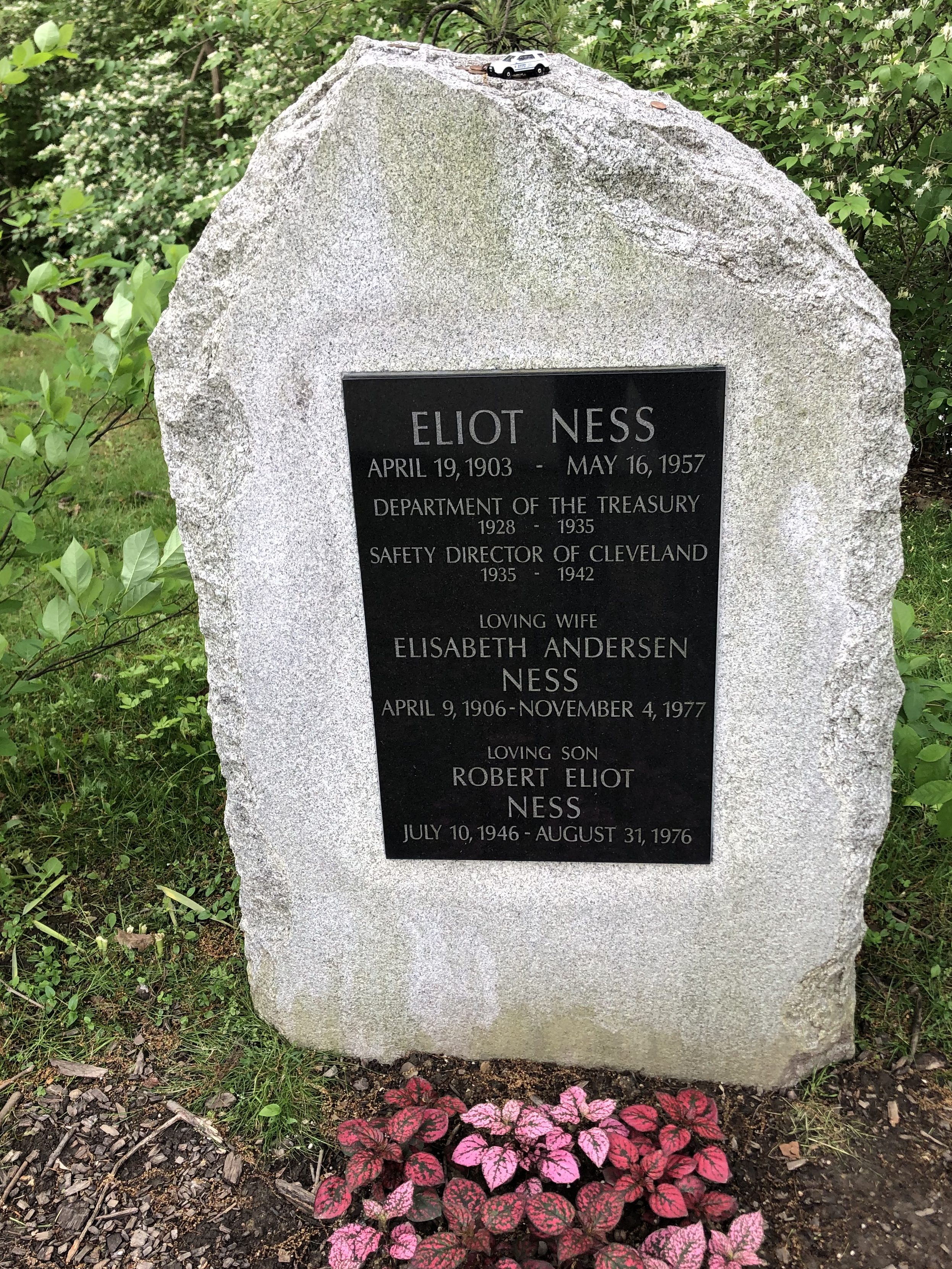
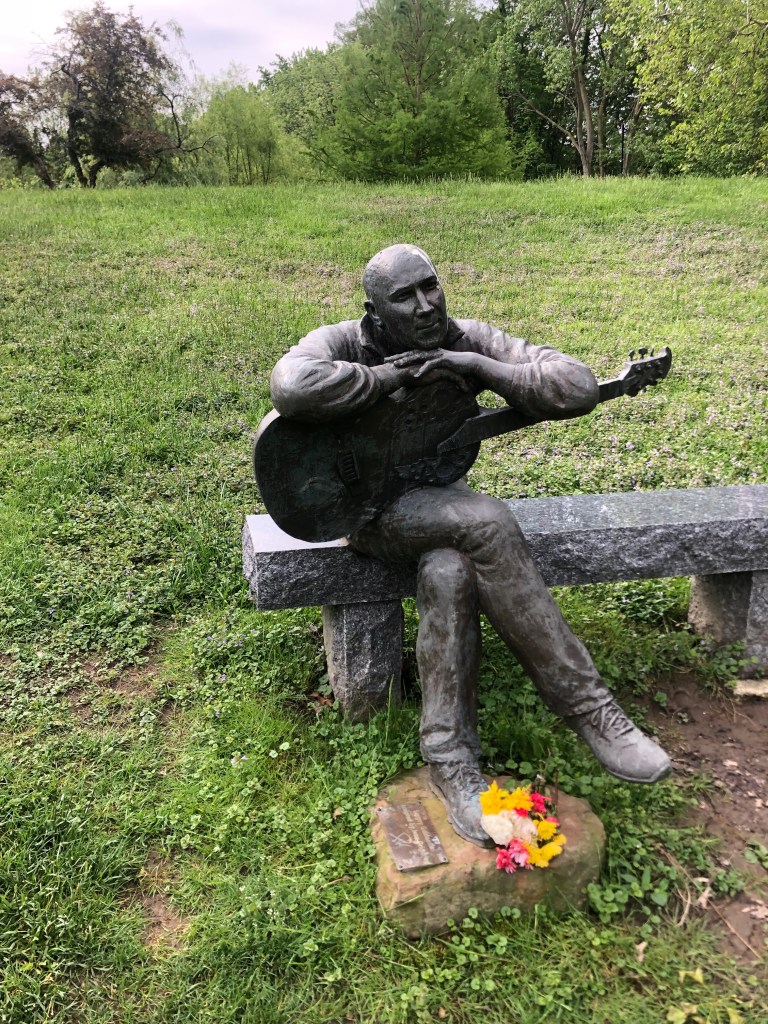
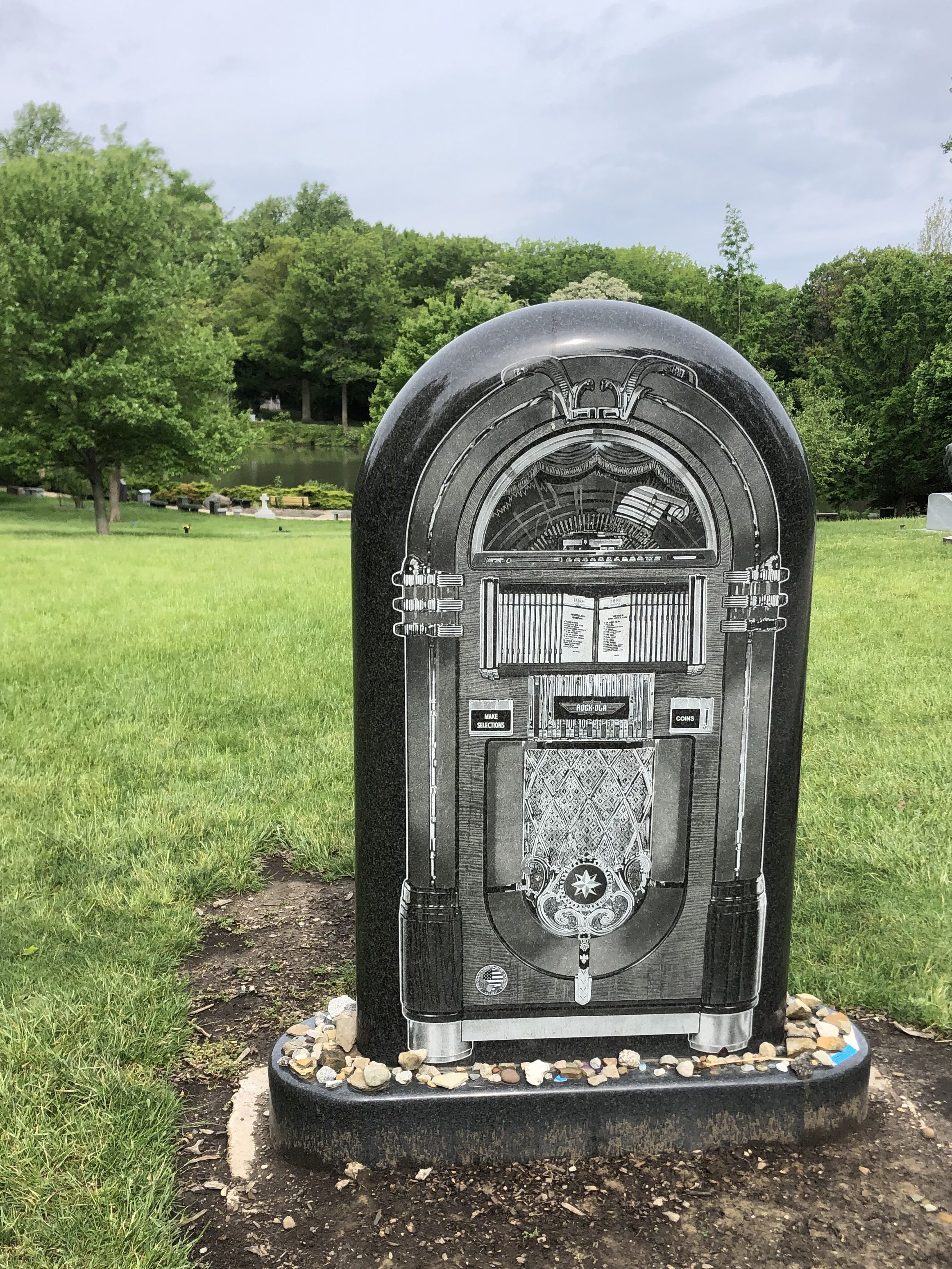
The most impressive cemetery I encountered during my Drive of the Lacuna was Lake View Cemetery, in Cleveland, Ohio. It includes these notable figures and impressive works of art:

Marker for Untouchable Elliott Ness. His ashes were scattered over a pond just behind the marker.
Very touching sculpture over the grave of local musician Sergei Gaidaenko. He’s of Ukrainian background.
It’s well worth 45 seconds of your time to watch this video, with Sergei’s music in the background. I never met him but I miss him.
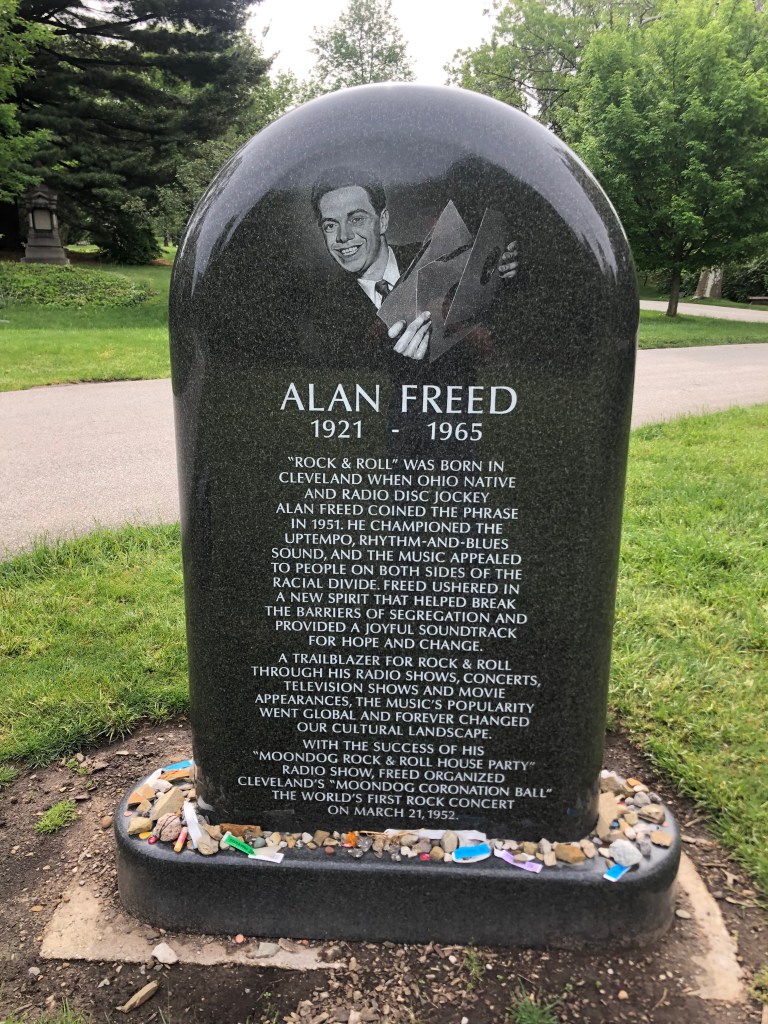
Here’s something you don’t see every day: A jukebox tombstone. It belongs to local disk jockey Alan Freed, who supposedly coined the term “rock and roll” in 1951.

If you’re interested in what all the fuss was about, check this out:

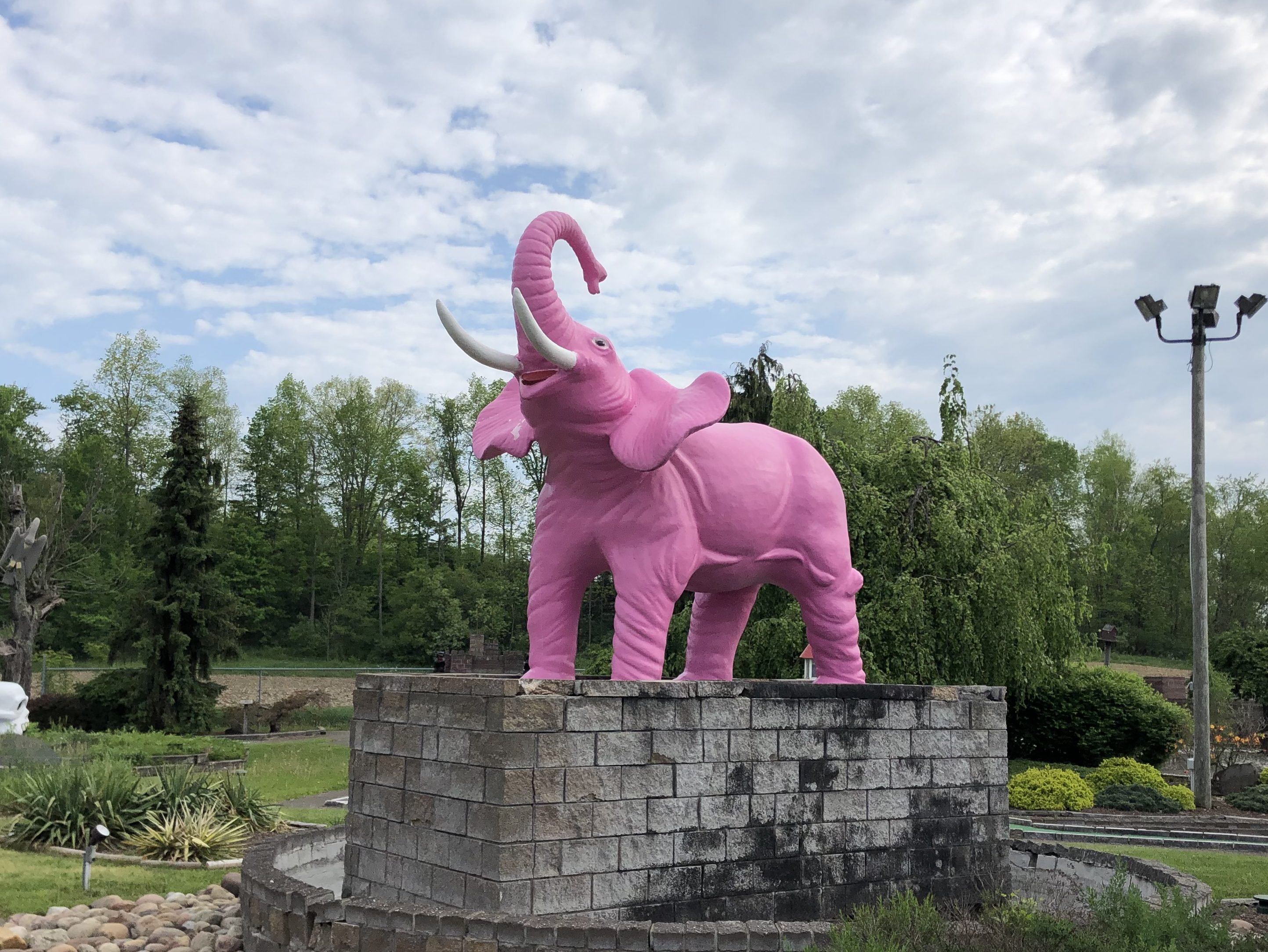
At a miniature golf course in Owego, NY. Alert readers will recall a number of Pink Elephant sightings on my earlier trips; see here for a refresher.

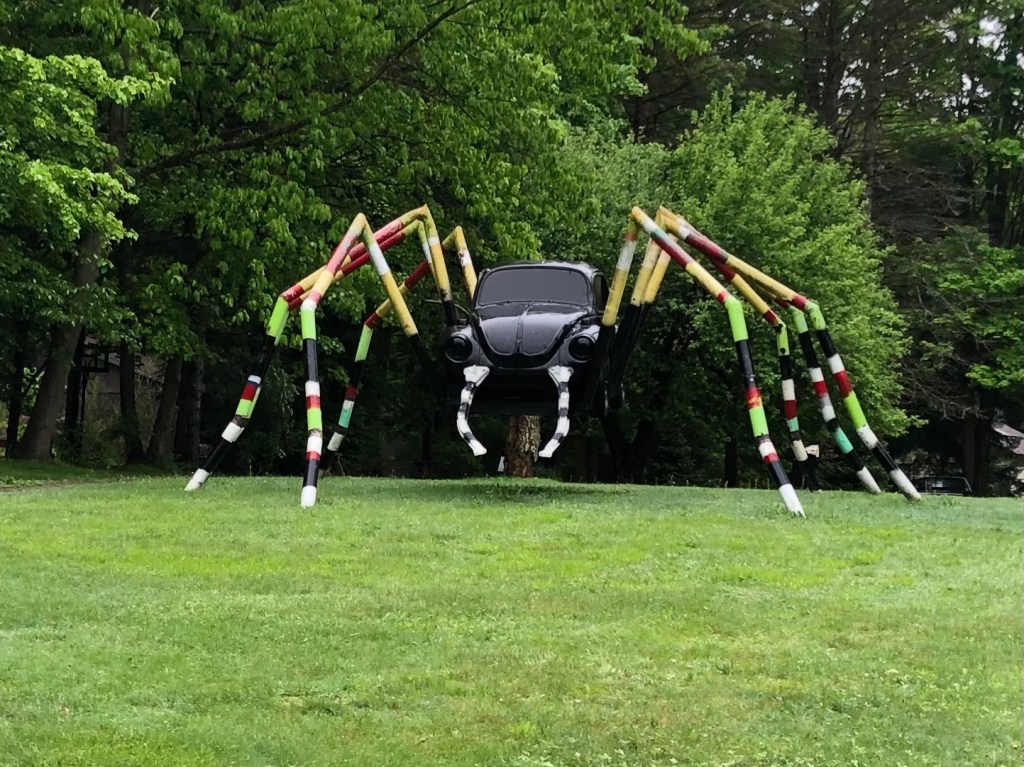
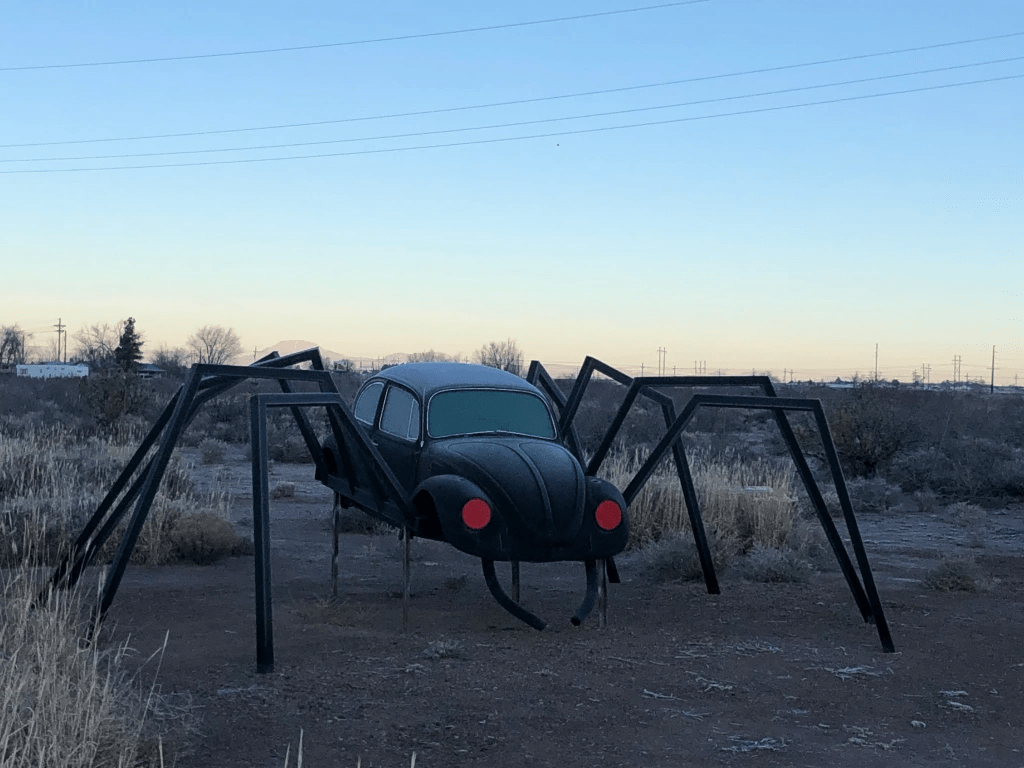
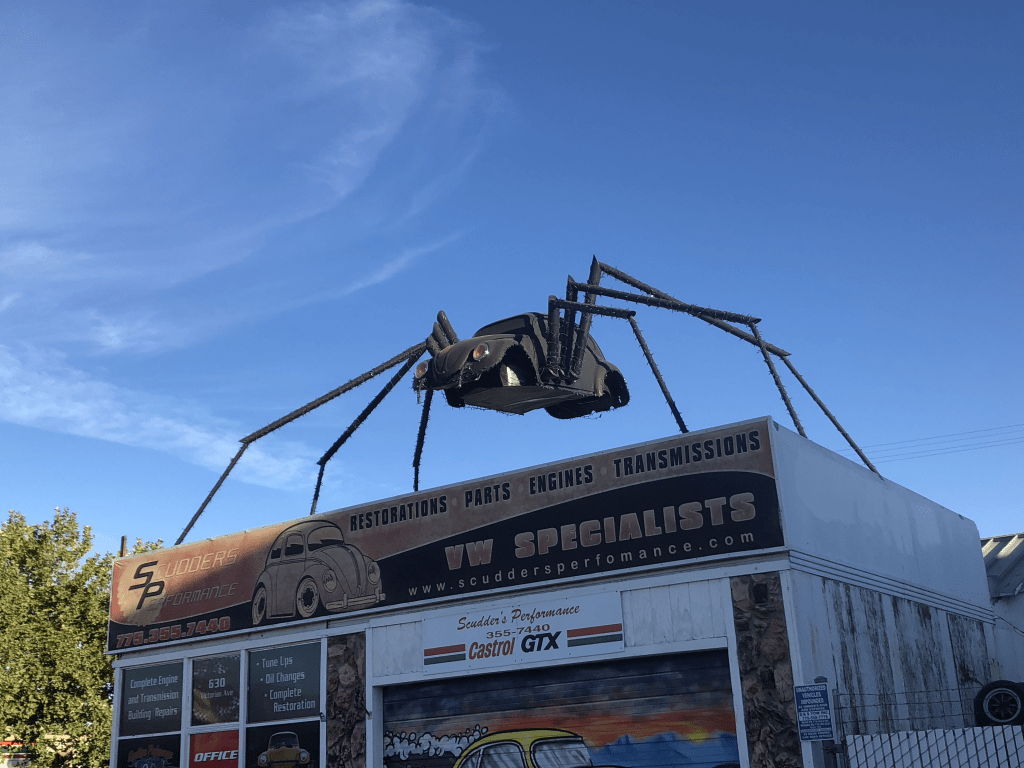
And speaking of recurring creatures, this Beetle/Spider in Erie, Pennsylvania very much resembles earlier encounters. Observe:

Erie, Pennsylvania
Somewhere in New Mexico
Reno, NV

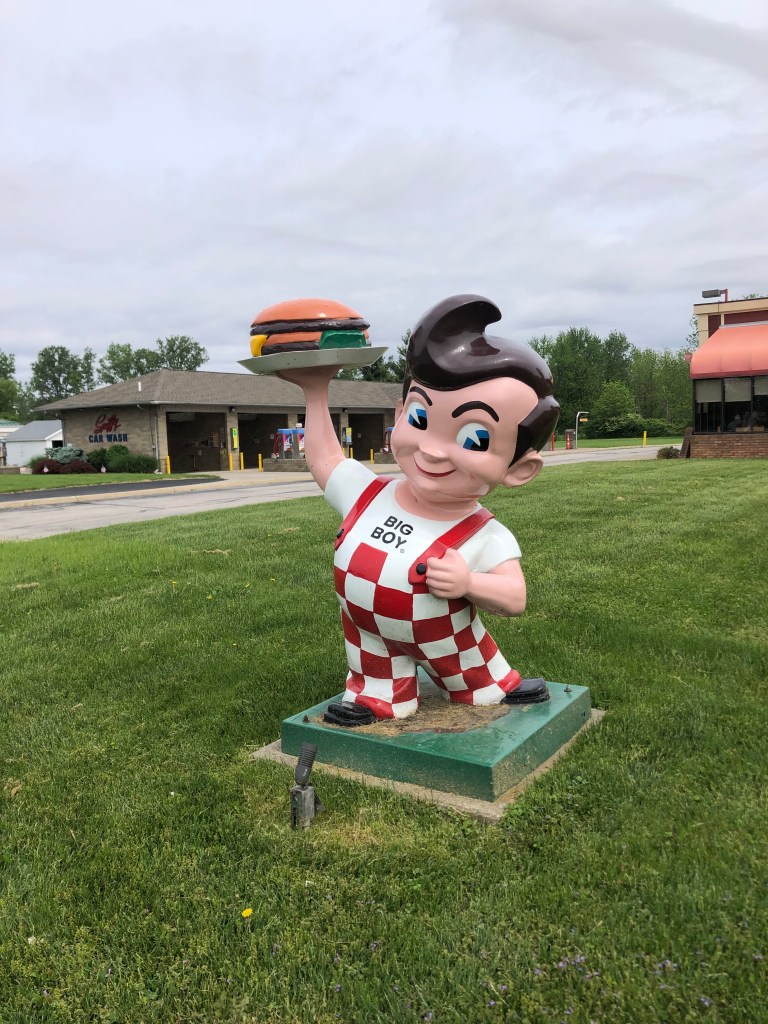
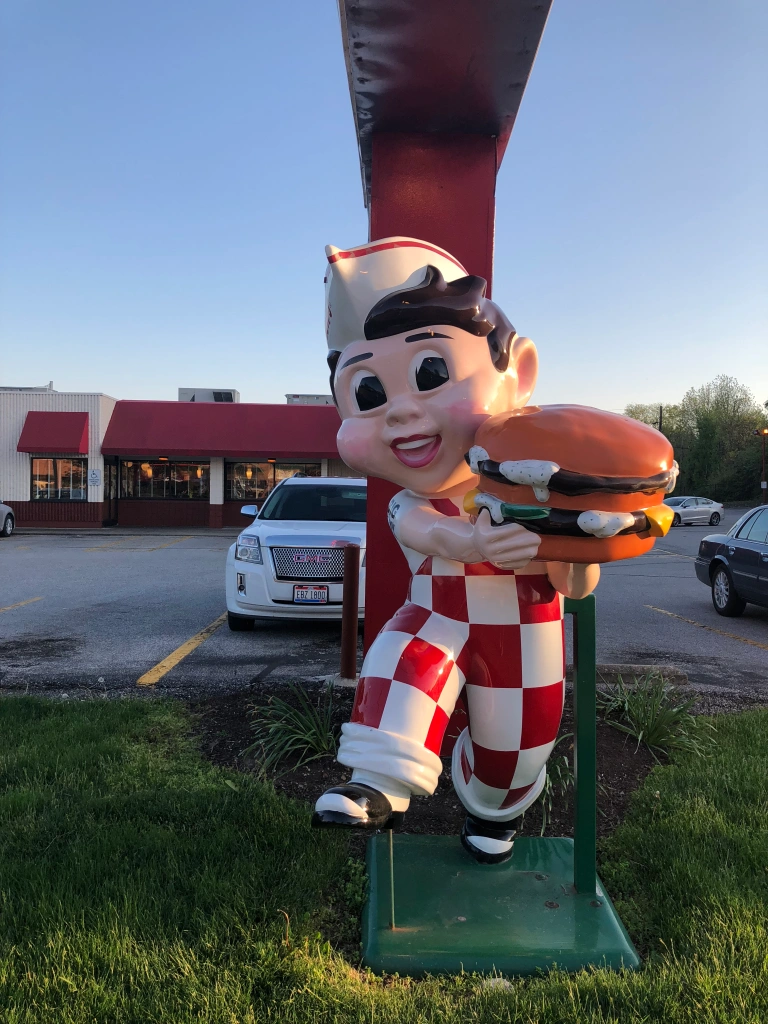
And of course, there’s this recurring fellow:

Fremont, OH
Milford, OH (from a prior trip). Full story about the Big Boys is here.

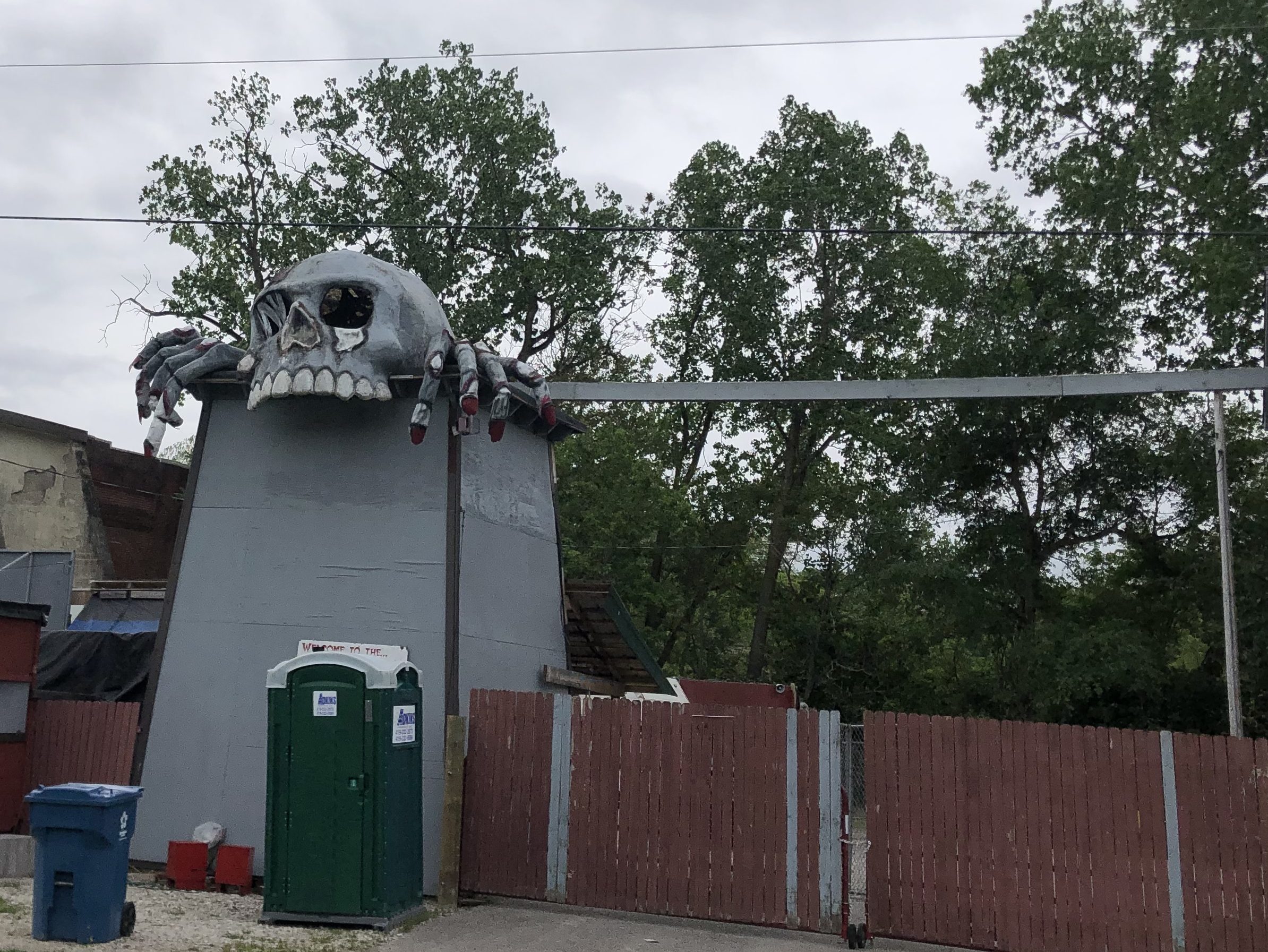
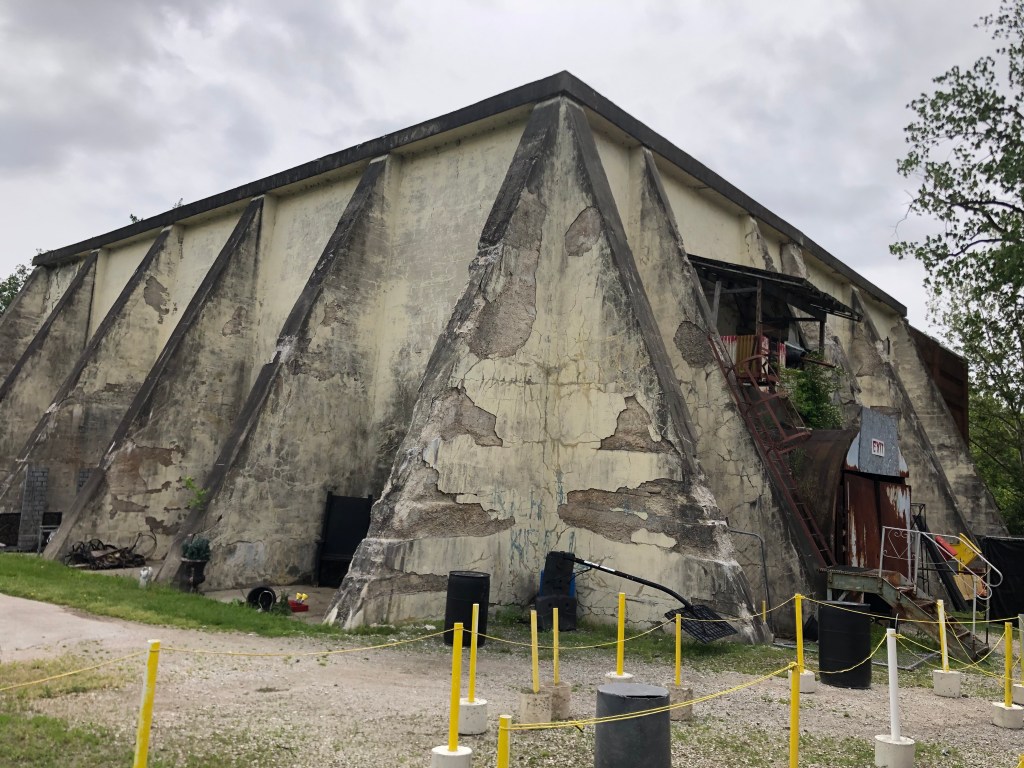
Finally, I bring you the Haunted Hydro, a so-called “Dark Attraction Park” that is open during the Halloween season.

Scary juxtaposition of skull and portapotty….

The place looks pretty run down, even abandoned. But I’m told that it’ll be resurrected in time for Halloween. The main part of the attraction is a century-old hydroelectric power plant (hence the “hydro” part of the name). You can see it in action here.

The 1911 Hydro

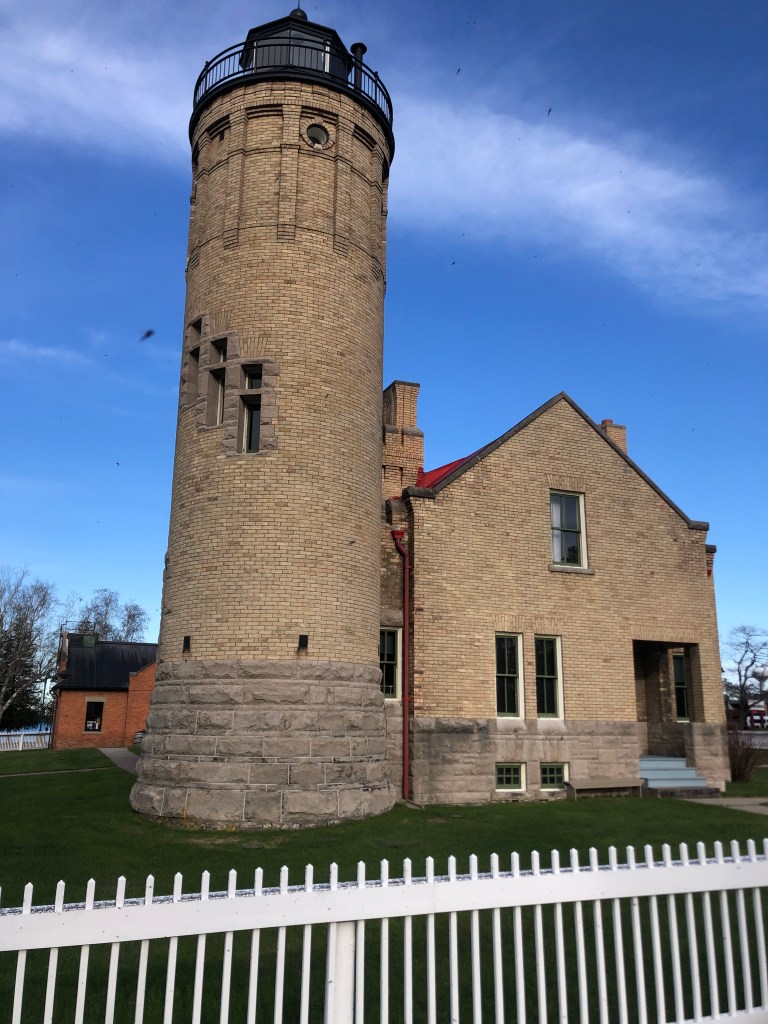
Finally, this afternoon I arrived in St. Ignace, Michigan, where I’ll start the western segment of Route 2 tomorrow morning. By the way, the the Lacuna ended as it began, with a lighthouse–this time a real one:

Old Mackinac Point Lighthouse, in St. Ignace

Until tomorrow!

California history · trains

Skunk Works

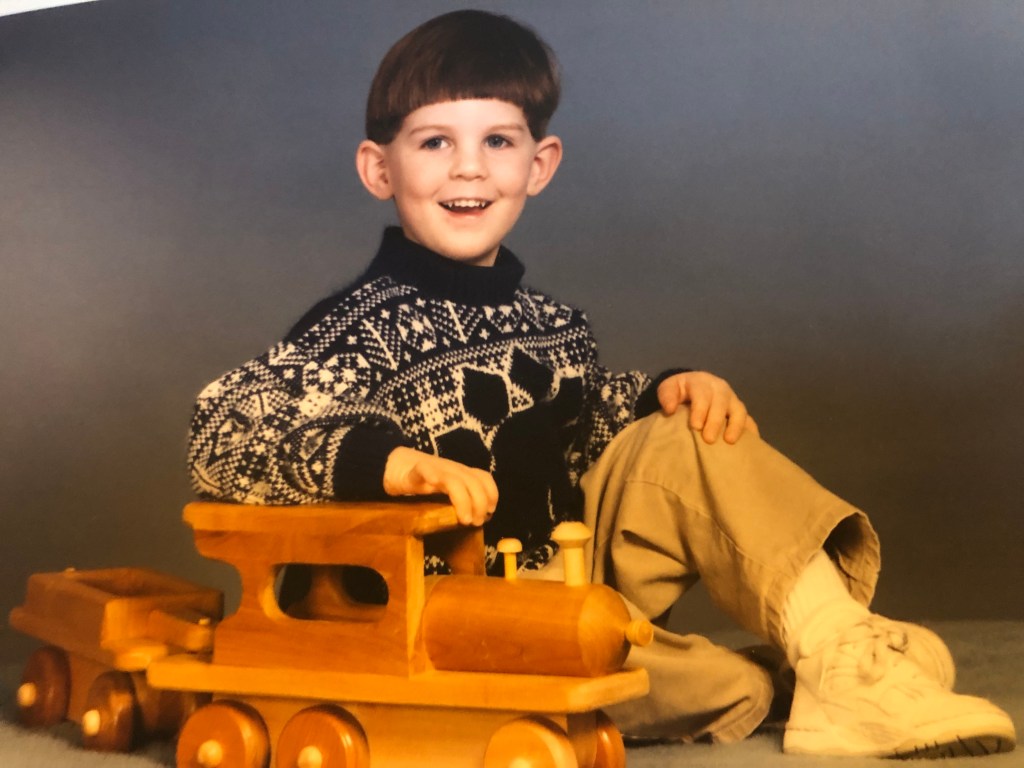
This past weekend my son (Ian) and I took a trip to Fort Bragg (pop: 7,000) for his belated 29th birthday celebration. We camped at Mackerricher State Park, which sits next to the beach just north of Fort Bragg.

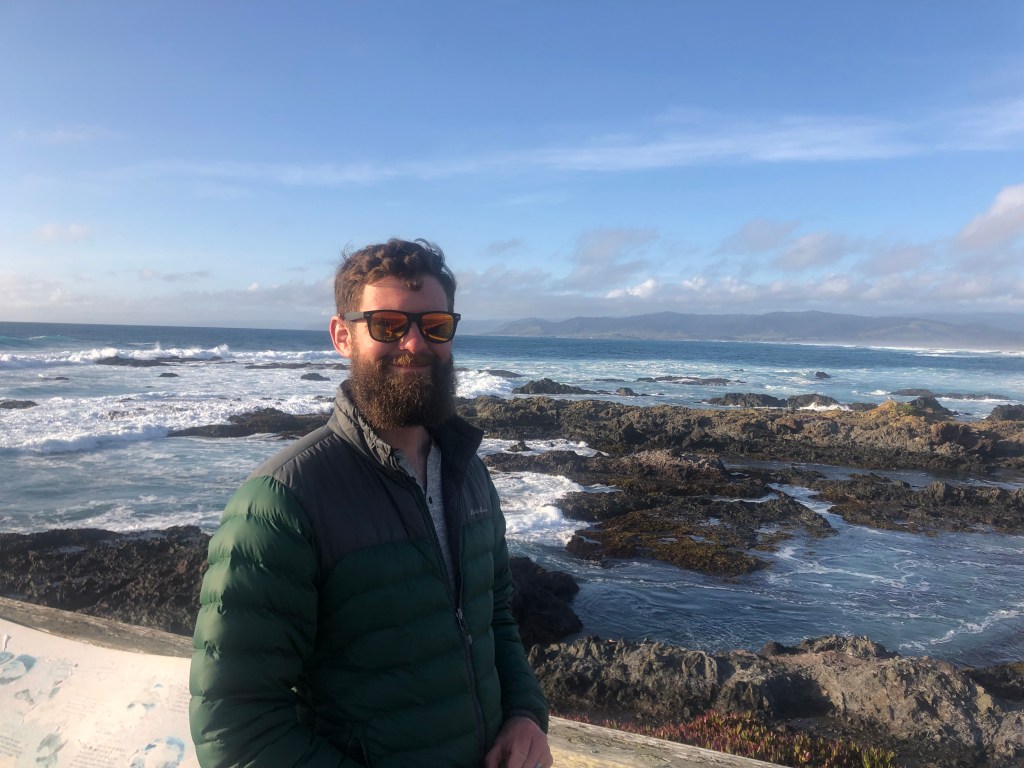
The birthday boy

Now, of course, one of the main reasons for going to Fort Bragg is to ride the Skunk Train. For those of you who haven’t been enlightened, here’s a quick history:

In 1885 the Fort Bragg Redwood Company built a railroad to carry logs from the inland redwood forests to their lumber mill at the coast. When fully expanded in subsequent years, the railroad would extend about 40 miles eastward from Fort Bragg to Willits, generally following the Noyo River. The railroad passed through a 1,200-foot tunnel that was completed in 1893, and over numerous wooden trestles and bridges. The railroad (eventually named the California Western Railroad, or CWR) got involved with passenger service as well, serving the logging families scattered about the redwoods and, later, tourists.

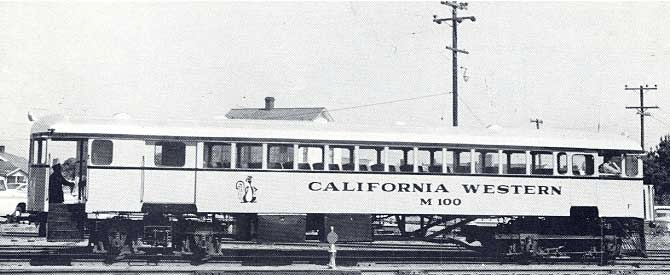
Especially popular were gasoline-powered motorcars, introduced in 1925. The smell of the gasoline fumes (as well as the heating oil used to warm the interior space) earned them the nickname “Skunks.” Most of the Skunk motorcars have since been retired, but the name has stuck, and virtually any rail conveyance operated by CWR to this day wears that epithet.

One of the malodorous motorcars.
For some years now the CWR has exclusively operated excursion trains catering to tourists. Steam-powered locomotives would pull a sting of several passenger cars on a forty-mile journey from Fort Bragg to Willits.

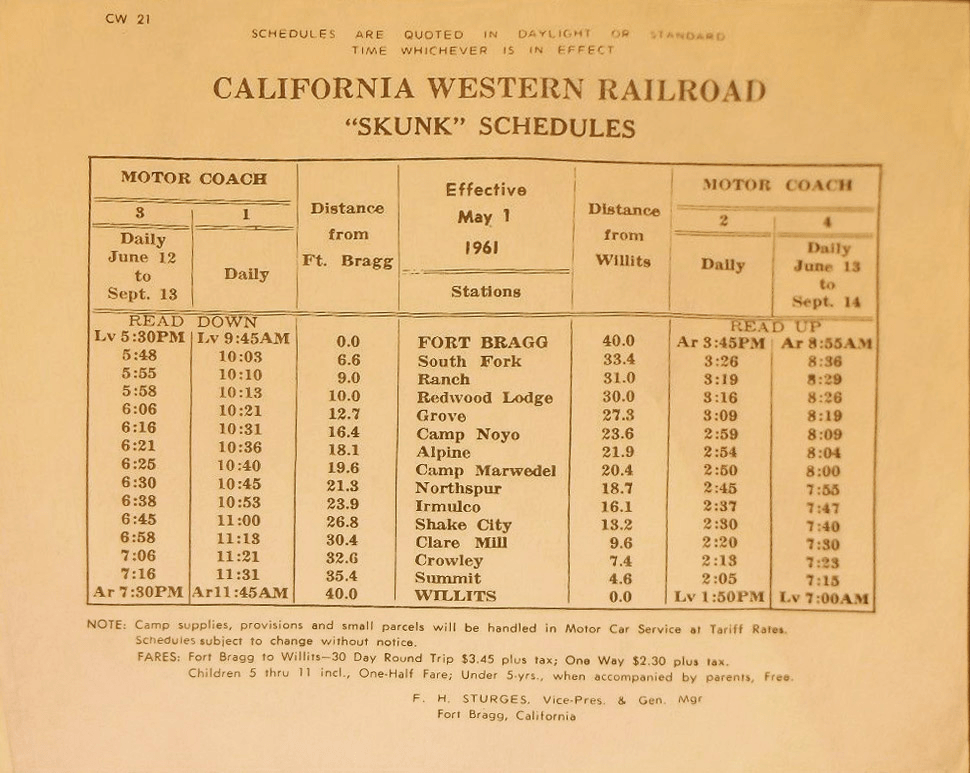
1961 “Skunk” timetable, borrowed from my Uncle Edward’s celebrated “Dome O’Foam” website.

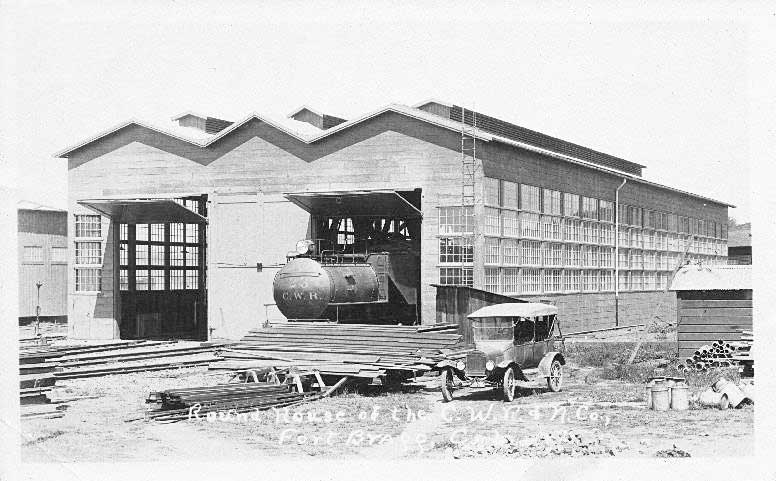
The terminus at Fort Bragg includes a depot and various other facilities, including this engine house that was constructed in the 1920s.

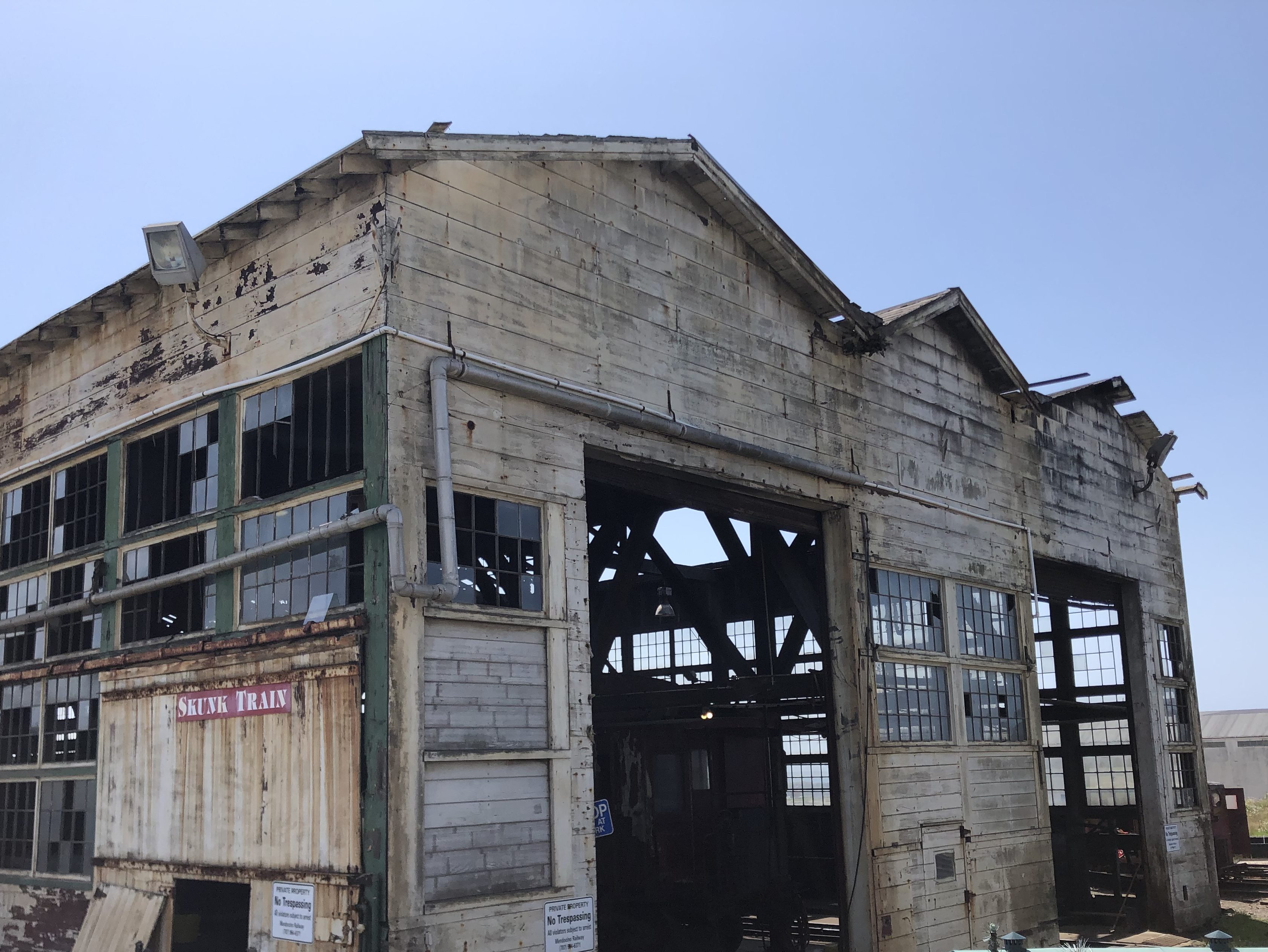
The railroad has changed ownership a few times, but today–some 137 years after its founding–it’s still alive and kicking, owned by a group of private, local investors. Of course, some of the operation is showing its age. Here’s the engine house when we visited it today:
Incidentally, my family visited the Skunk Trains in 1974, and Dad took this photo.

Photo courtesy Dennis Boilard (aka Dad)

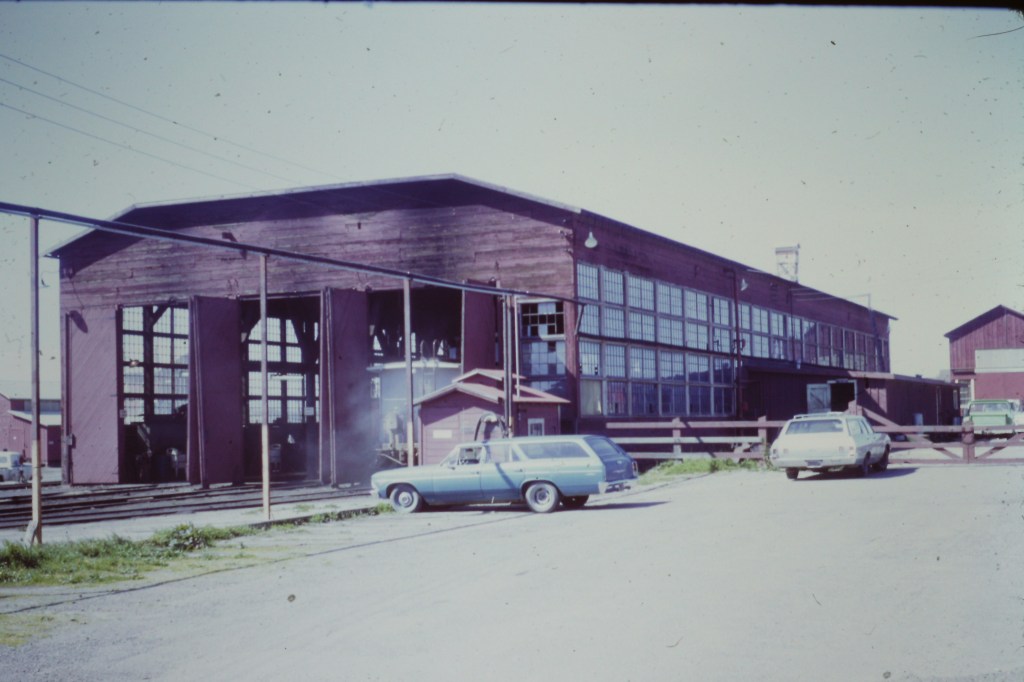
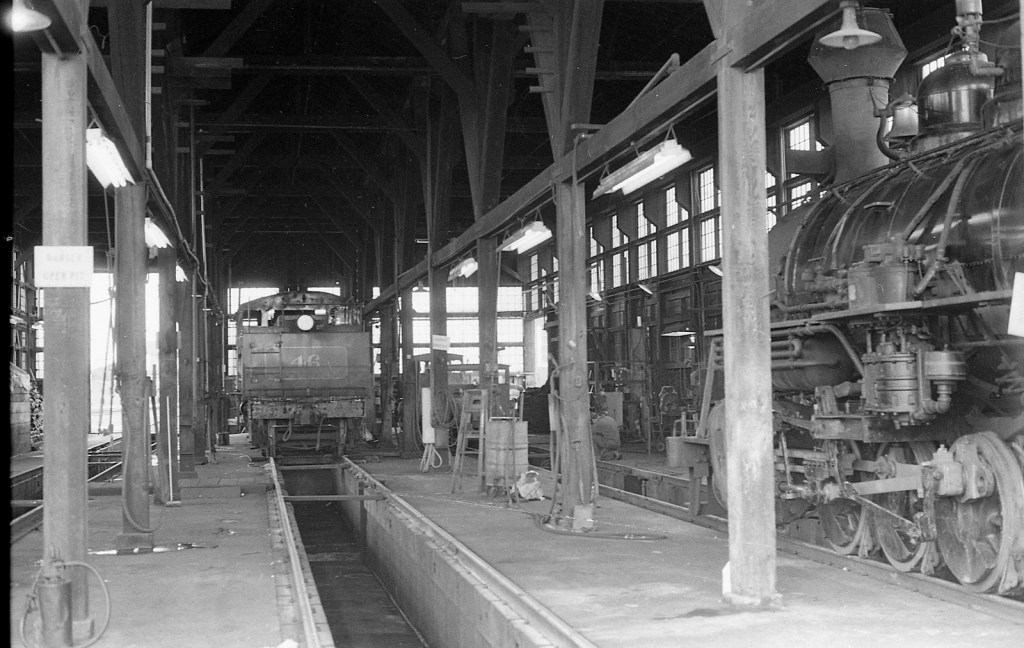
But even though the windows along the side look similar, surely this isn’t the same building. For starters, it’s got three engine bays rather than two. I consulted my Uncle Ed (who’s been cited in this blog before as a sage of railroad history, particularly in California), and he informed me that Dad’s picture is of the CWR’s long-gone engine shops. Uncle Ed had taken a picture of the interior of said shops in 1974, and sent along this picture to prove it.
Courtesy of Uncle Ed

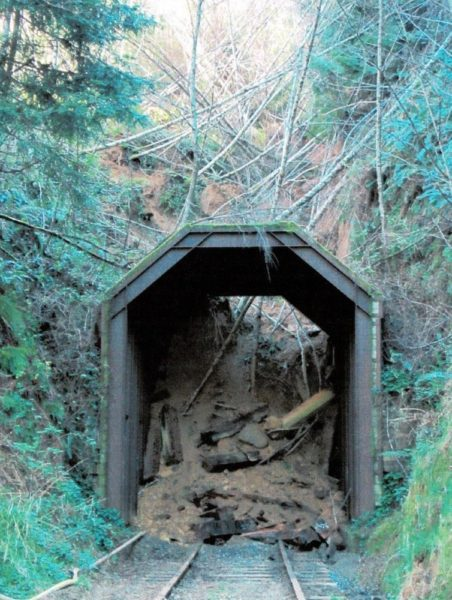
But let us return to last weekend: It was a beautiful spring day and Ian and I were looking forward to a rail journey. Now, as it turns out, that historic 19th-century tunnel had collapsed in the spring of 2013, when a “bus-sized boulder” dropped out of the ceiling. They’ve been working to secure funding to have the tunnel cleared, which might happen in the next year or two. Meanwhile, the CWR continues to run a short excursion trip up to the tunnel and back, which amounts to a 7-mile round trip.

The collapsed tunnel. Photo courtesy of Lonnie Dixon.

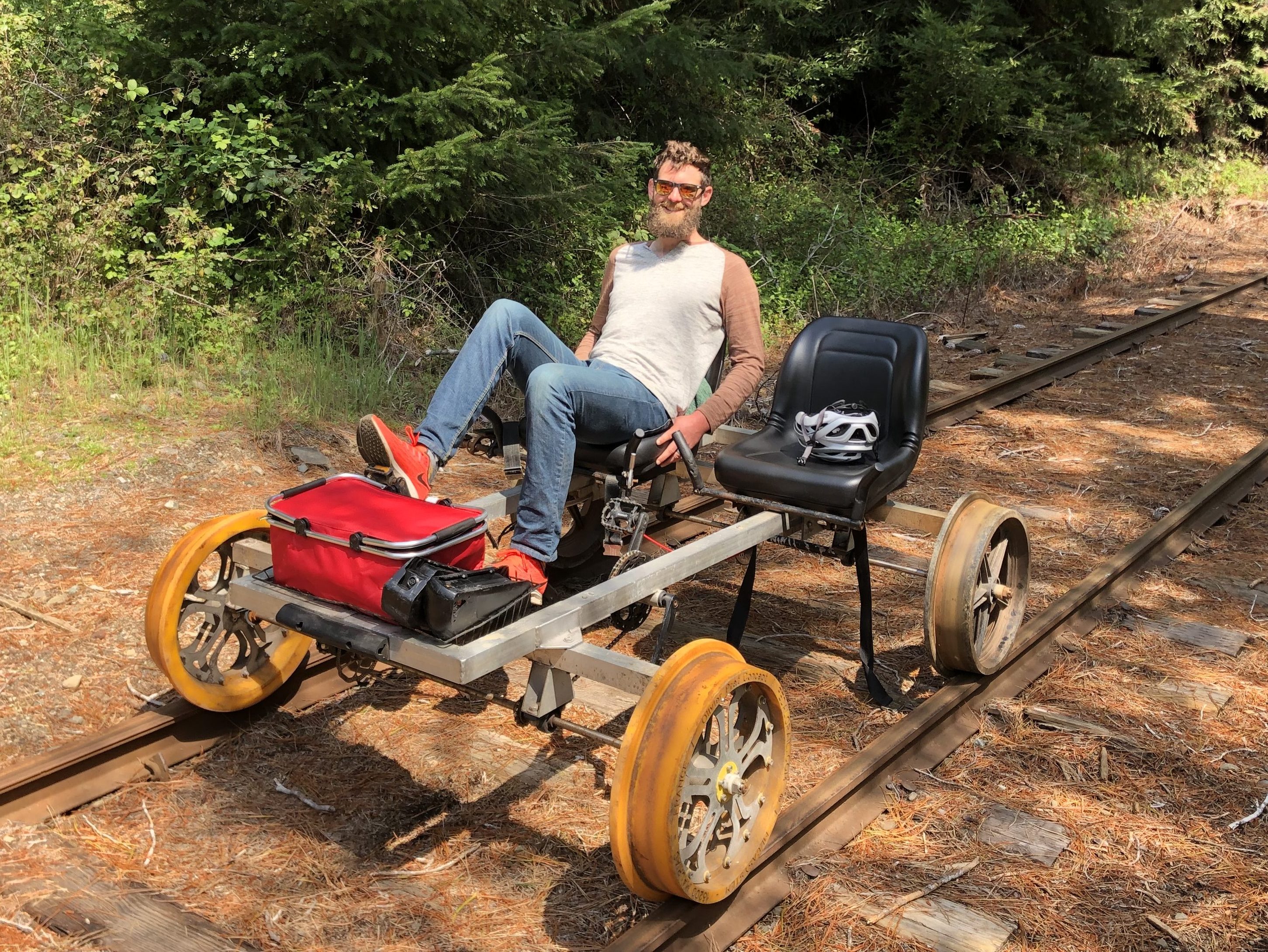
We, however, opted for another type of rail journey which the CWR initiated a few years ago. For this ride, you begin on the far side of the collapsed tunnel, and make a 25-mile round trip along the eastern stretch of railroad. There’s only one catch: You have to power your own vehicle.

Ian-powered train

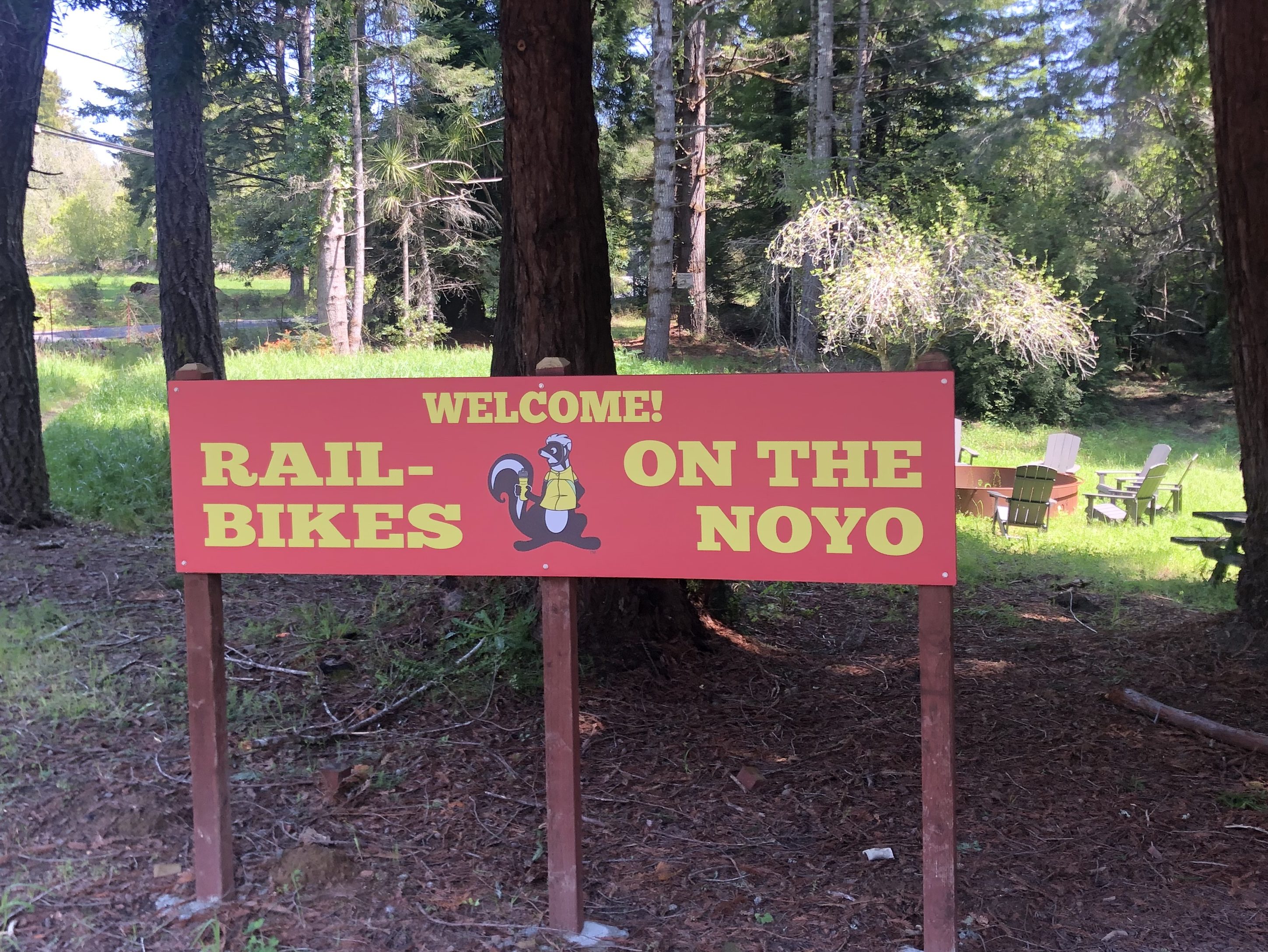
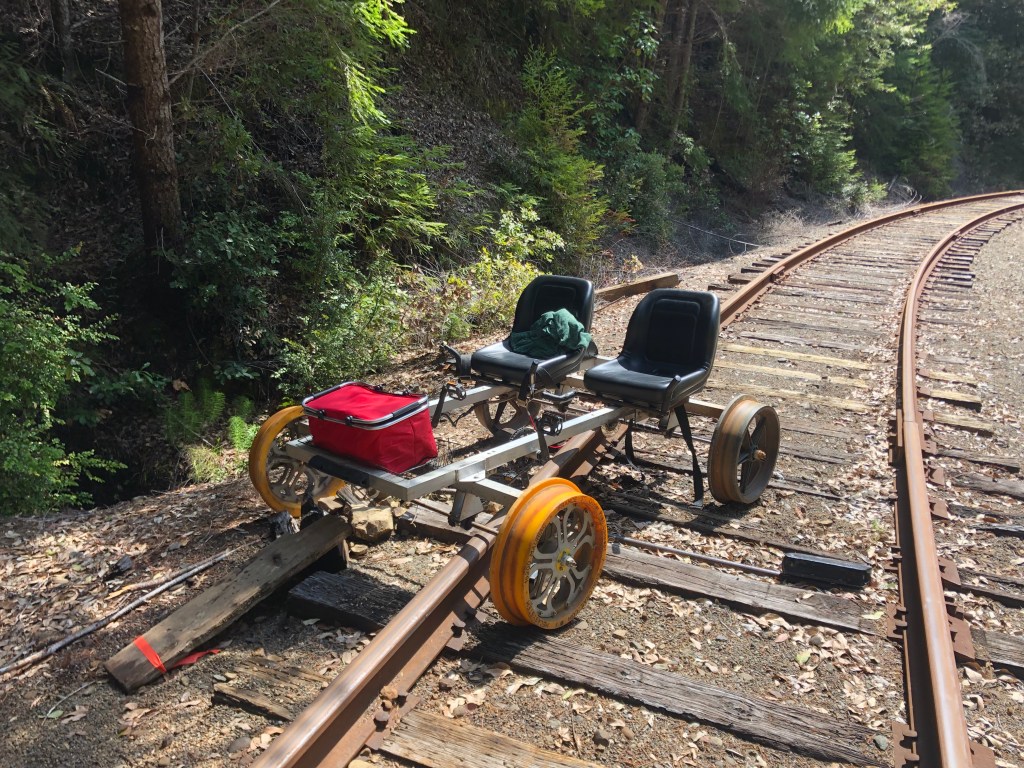
The good folks at CWR have manufactured a fleet of “railbikes” of their own design, and rent them out to tourists like us. Because there’s only a single set of rails, riders are restricted to specific time slots and a comfortable buffer of time separates the riders.

“Rail- on the bikes Noyo”?

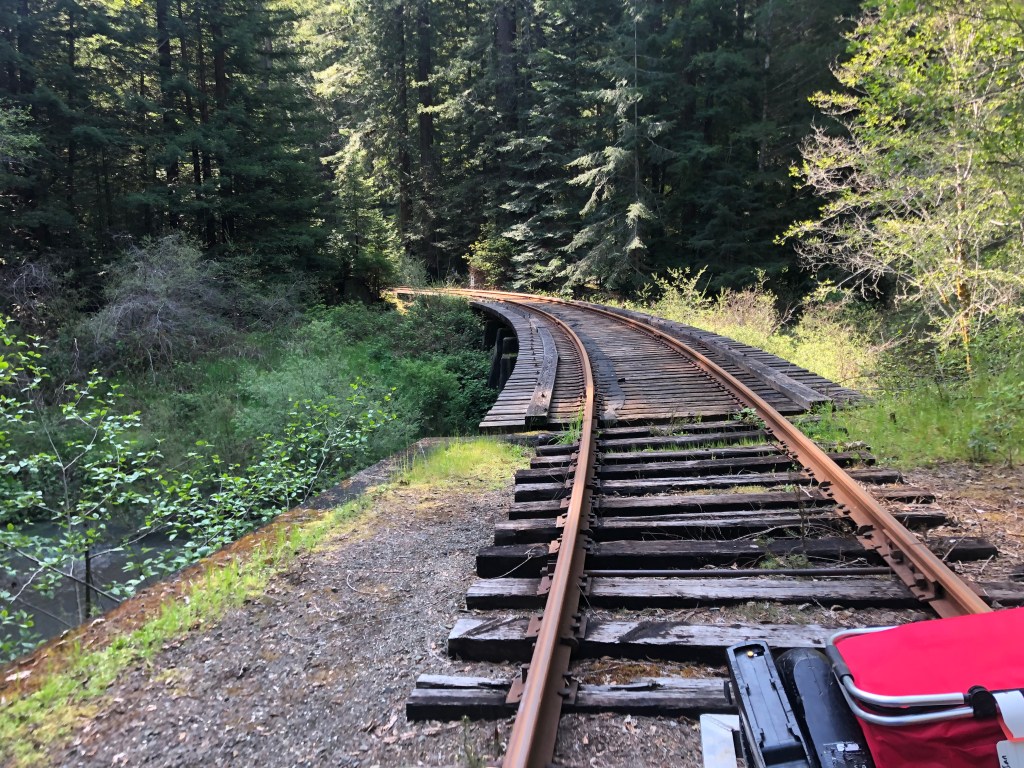
It’s a beautiful, pleasant journey, lazily rolling on the rails next to the slow-moving Noyo River, surrounded by mighty old-growth redwoods. The railroad crosses the river at multiple points over wooden bridges constructed years ago.

Here’s a short video I took which should give you a sense the railbike experience:

Although most of the scenery consisted of old-growth redwoods and the Noyo River, we did pass a couple of hermit’s cabins, which are reached by old logging roads.

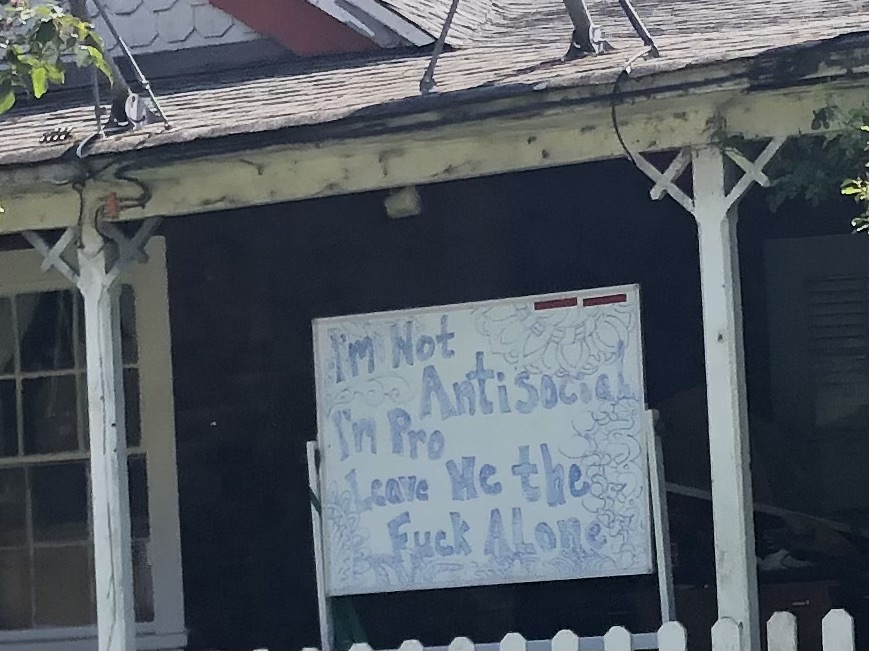
You’d have to be a brave Seventh Day Adventist to knock on this door.

Twenty-five miles is a long distance for pedaling one of these beasts, so the railbikes include an electric motor to assist with the legwork. Naturally, Ian and I sought to discover just how fast we could go, so we cranked up the motor and pedaled with all our might. We topped out at 27 miles per hour, which might not sound that fast, but it was fast enough to derail us.

Don’t try this at home.

After about 13 miles we arrived at the turnaround point. (Note: The railbikes are turned around on a small turntable set in the track. I neglected to get a photo of it, though.) While the bikes were being turned around and having their batteries replaced, we enjoyed a hearty lunch next to the river. The folks at CWR supplied the lunch, complete with a few beers, and they even let us keep the red picnic cooler that you see in the basket on the front of our bike. Then it was back to pedaling. We finally got back to our starting point about 4 and a half hours after we started our journey.

I highly recommend this trip.

Oh, and Happy Belated Birthday, Ian!