Uncategorized

Circus Days

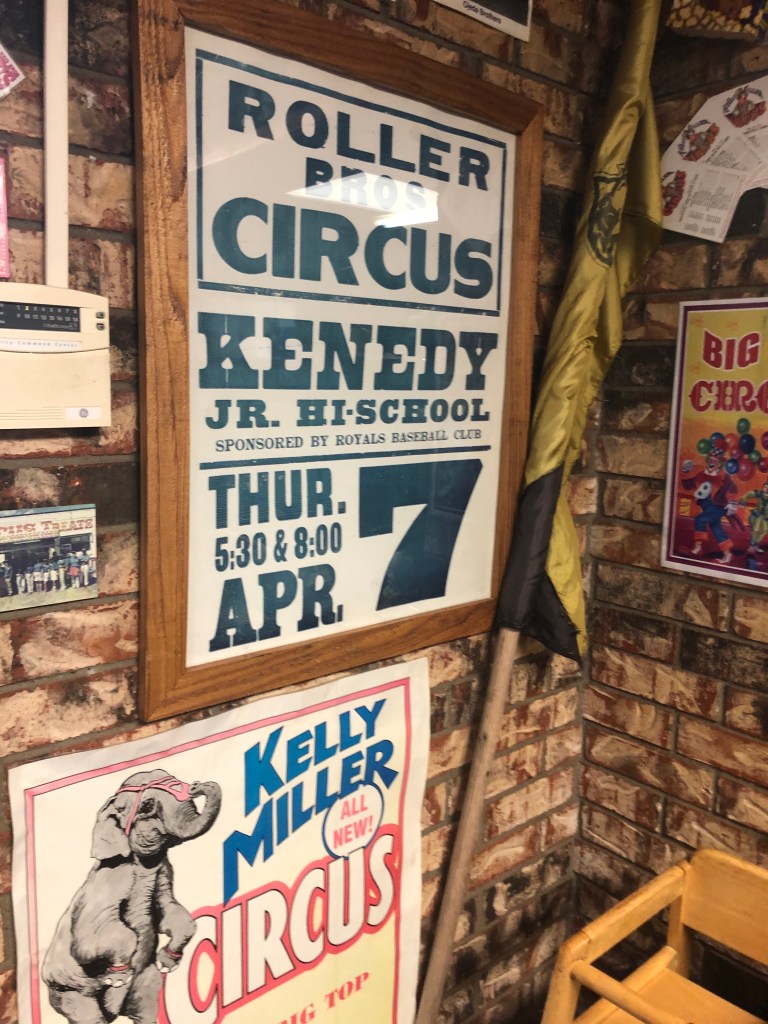
This morning I woke up in Hugo, OK, which you’ll recall has been called “Circus City USA” because it plays hosts to various circuses (circi?) in the off-season. It turns out that some of the circus folks never leave; that is, they are buried in the local cemetery. In fact, I was told there’s a special section set aside in the cemetery called “Showmen’s Rest,” which is dedicated to them.

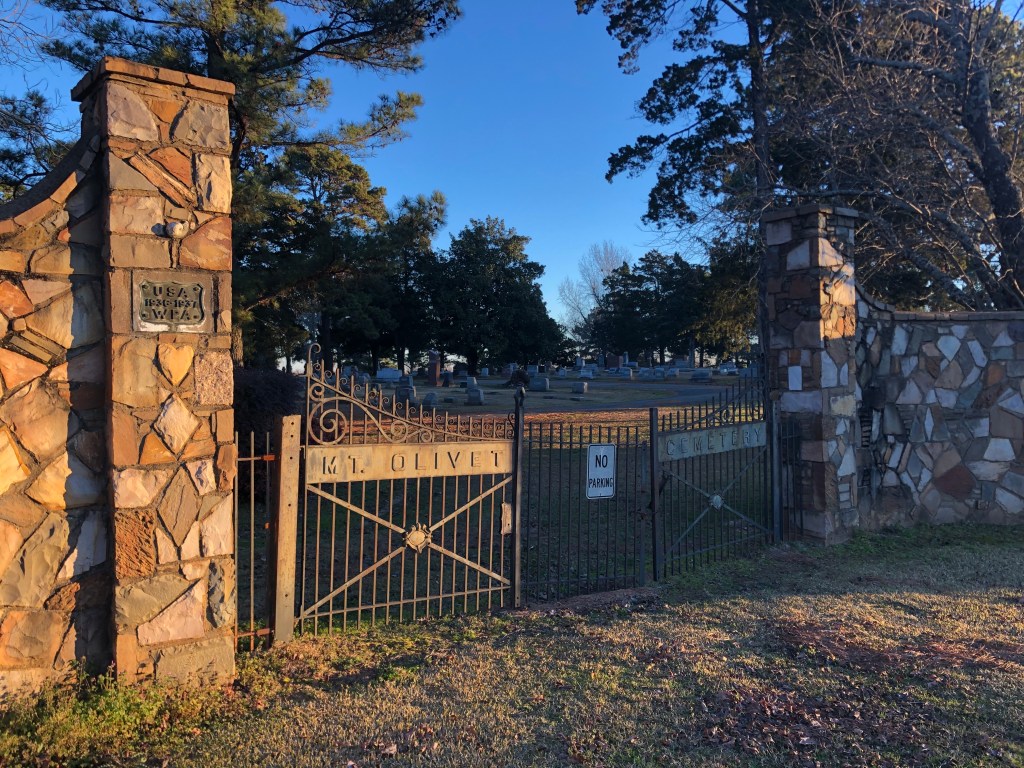
So at dawn this morning I found the Mt. Olivet cemetery, which has an impressive set of gates built as a WPA project in 1937.
Cue the Skeleton Dance

Unfortunately the gates were still locked. And so it was that I found myself, for the first time in years, scaling a fence under cover of (almost) darkness.

The cemetery is enormous, and it took me quite some time stumbling among graves dating back to the first world war before I finally located the Showmen’s Rest. It was outlined with elephant-topped columns, and a large monument in the middle of the them identified the area as “A Tribute To All Showmen Under God’s Big Top.”
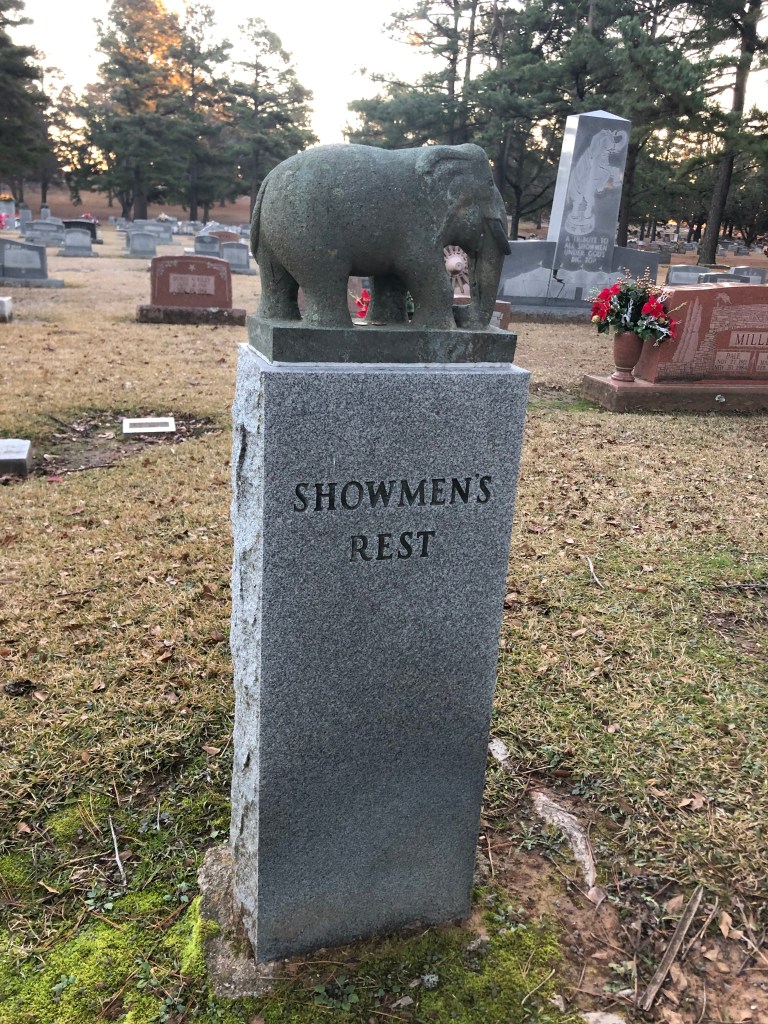
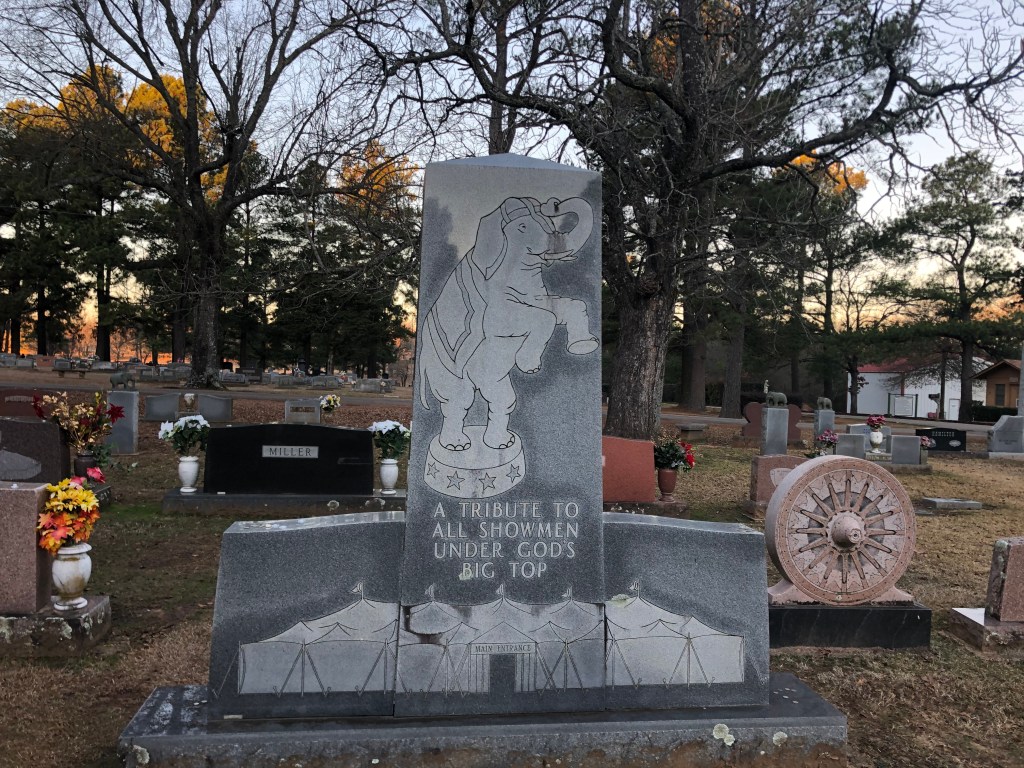
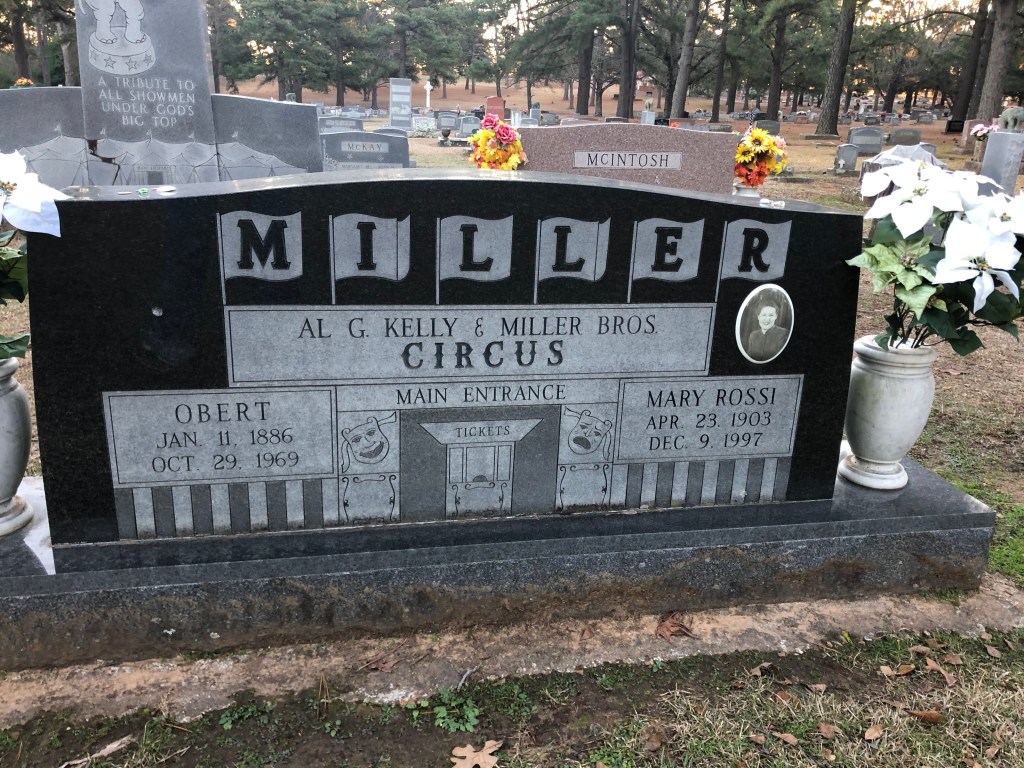
There were many headstones within the Showmen’s rest, a few of which I captured on my camera. Many of the permanent residents had the last name of Miller, which evidently was a major circus family.
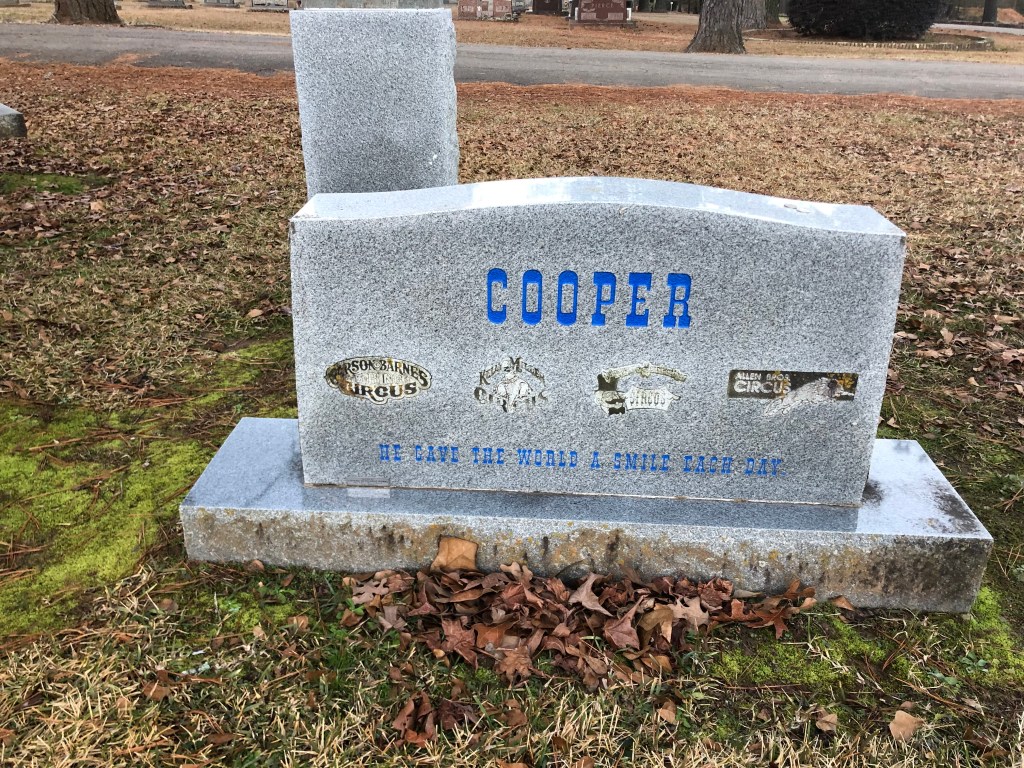
Headstone of Joe Wallace Cooper, an agent with several circuses…hence the different circus logos on his headstone.
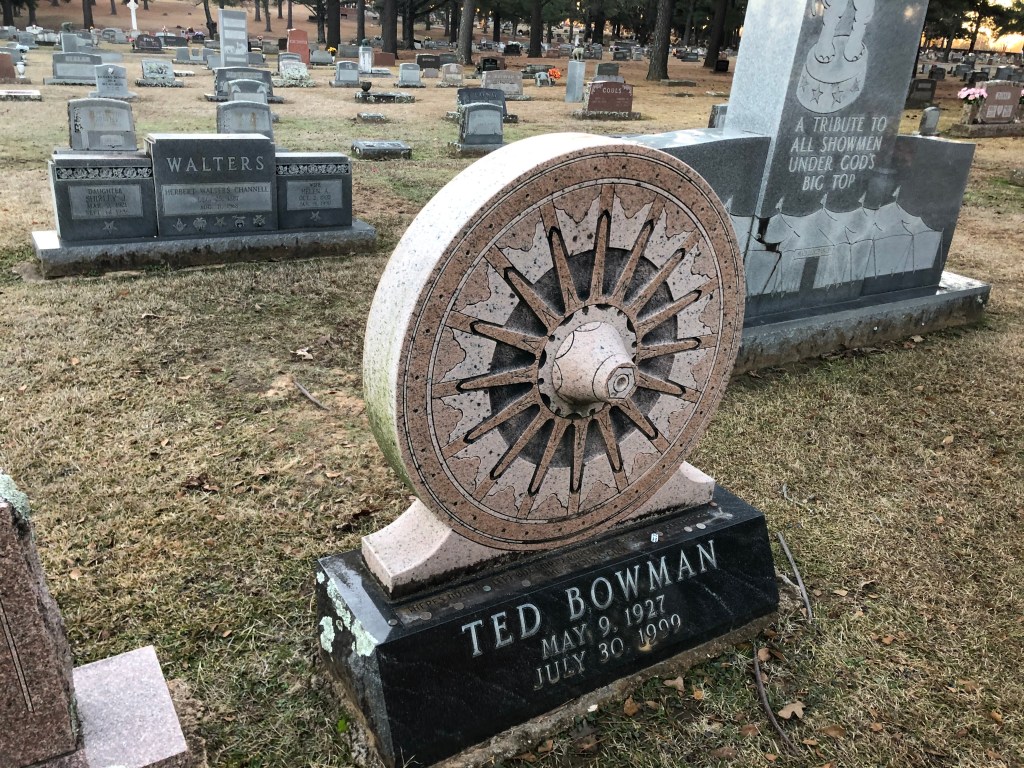
Ted Bowman was involved with several circuses, including the Carson and Barnes circus for 17 years. An inscription near the bottom of the wagon wheel reads “There’s nothing left but empty popcorn sacks and wagon tracks –the circus is gone.” Which, for some reason, strikes me as incredibly sad.

All this circus atmosphere (albeit in a graveyard) reminded me that a day earlier I had passed through an Oklahoma town called Ringling (pop: 1,037). That sure sounds like a circus name, yes? With a little research I discovered that the town was founded in 1914 by the very same John Ringling of Ringling Brothers. If it were up to me, it would have been the town of Ringling, rather than the town of Hugo, that served as the winter home of the traveling circuses. But I suppose the non-Ringling circuses would have resented that.

But that’s not the end of today’s circus antics. In the afternoon US 70 took me through Hot Springs, Arkansas (population: 35,000). I noticed a sign for something called the Hot Springs Showmens Association, and the sign also bore images of a big top and a Ferris wheel.
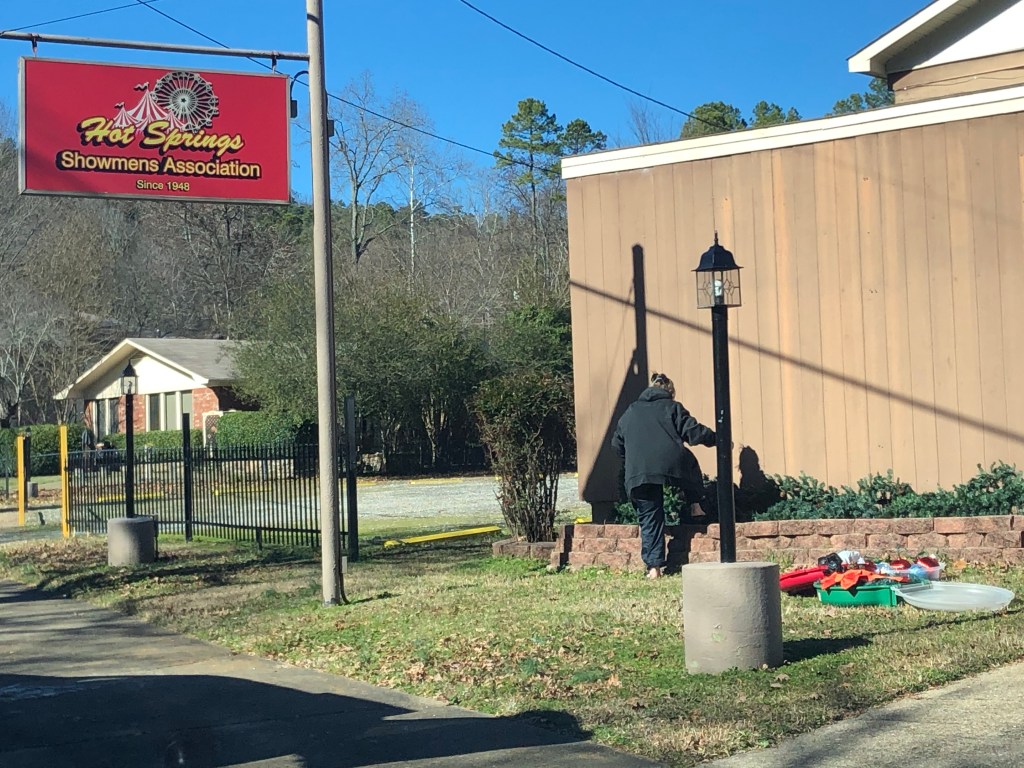
She wasn’t interested in posing for a picture.

Atuned as I now was to the term “Showmen” as a reference to circus folk, coupled with the circus imagery on the sign, I stopped to talk to a woman who was taking down Christmas decorations from the building. She greeted my question about the mission of the Hot Springs Showmens Association with an incredulous look. “You don’t know??!” I told her I’m not from around here. “Neither am I,” she sneered. “I’m from Massachusetts, but I know about it.” She didn’t acknowledge that, even though she may originally be from Massachusetts, she was currently working at the building owned by the Hot Springs Showmens Association, so I’d sure hope she’d know what the organization does. I tried another tack: “I assume it has to do with circuses. This morning I was in Hugo, which I guess also has a lot of circus connections.” Blank stare. “Well, I guess I’ll be getting back to my car.” As I tried to back away without getting assaulted, she mumbled something about how all showmen–not just circus people–are served by the Hot Springs Showmens Association. I locked my door and got back on my way.

Just another mile or two down the road I saw the kind of sign that one always looks for on road trips such as this: A sign promoting a tacky roadside attraction that’s probably hokum, but that offers early-20th-century-style entertainment.
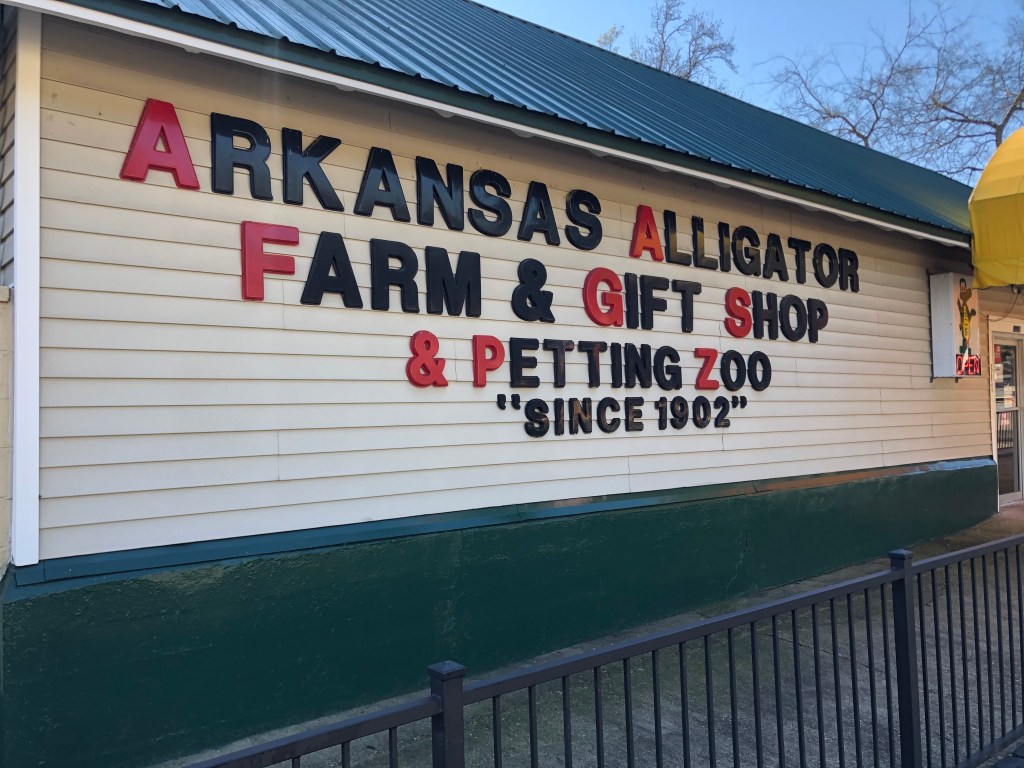
What could possibly go wrong?

It’s not often that one sees the words “Alligator Farm” and “Petting Zoo” on the same sign. So I went in to investigate. It turns out this place, which supposedly has been around for over 100 years, raises over 100 alligators each year, most of which are destined to become handbags or wallets. But in the meantime, you’re welcome to pet them! And so I did.
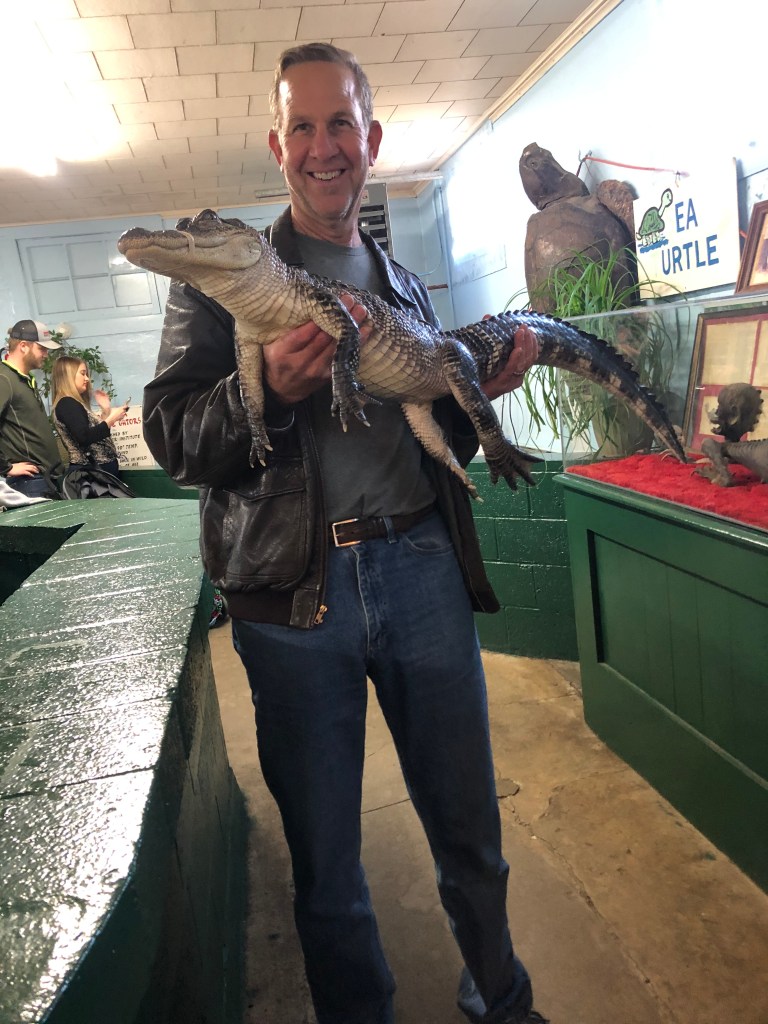
Yes, he’s real. But note the band around his snout. The legal team evidently insists on that part.

The Alligator Farm had lots of other curiosities as well, including this taxidermy Merman:
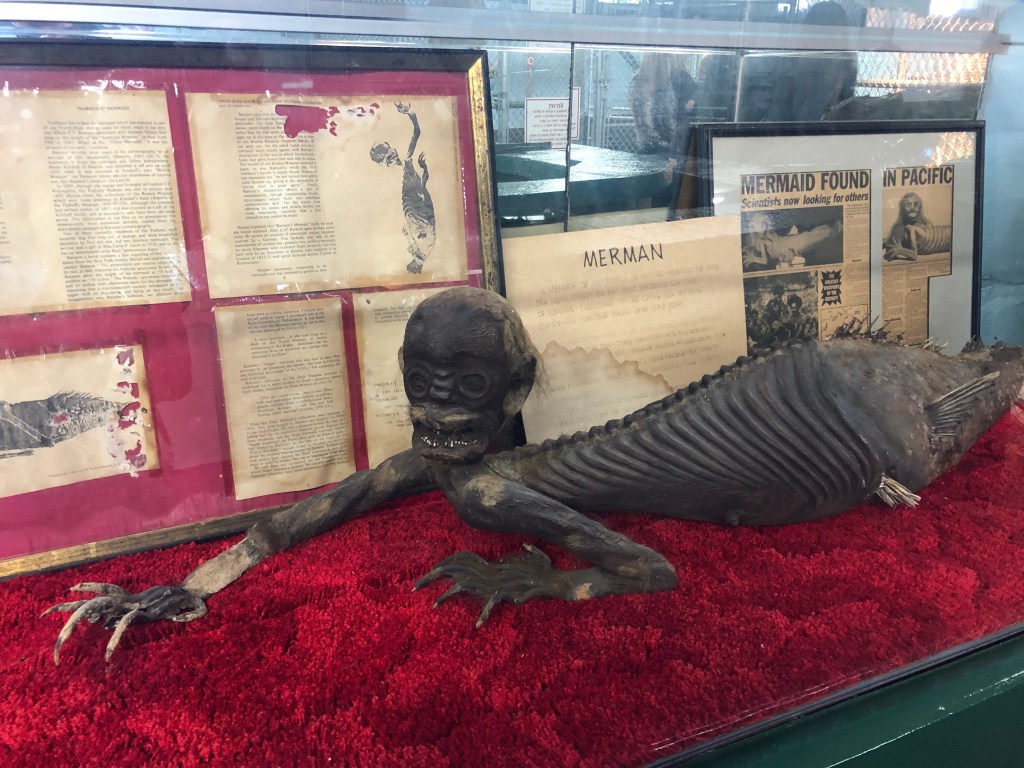
Quite a difference from Daryl Hannah in Splash…

Now this is the kind of roadside attraction that road trips are all about. According to the signage, the merman was captured 500 miles off the coast of Hong Kong, and displayed in the Chinese National Museum. Danny Older (the original owner of the Alligator Farm) bought the merman and brought it back to Arkansas for travelers like me to marvel at.

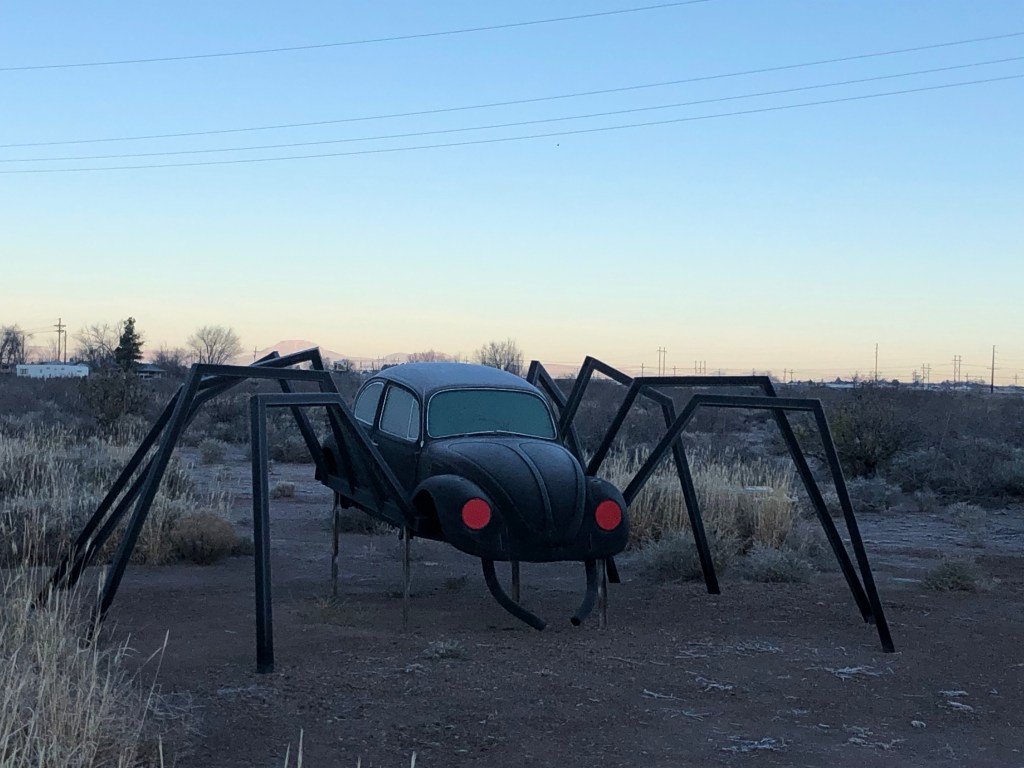
One of the fun aspects of a trip like this is encountering whimsical roadside art. Many of you have seen Cadillac Ranch in Amarillo, TX, where ten vintage Caddies are half-buried nose-first in the ground. This has spawned imitative tributes, such as the combine harvester version I saw along Route 60 last year. So now we can add to the list this effort that I spotted in Bonnerdale, Arkansas:
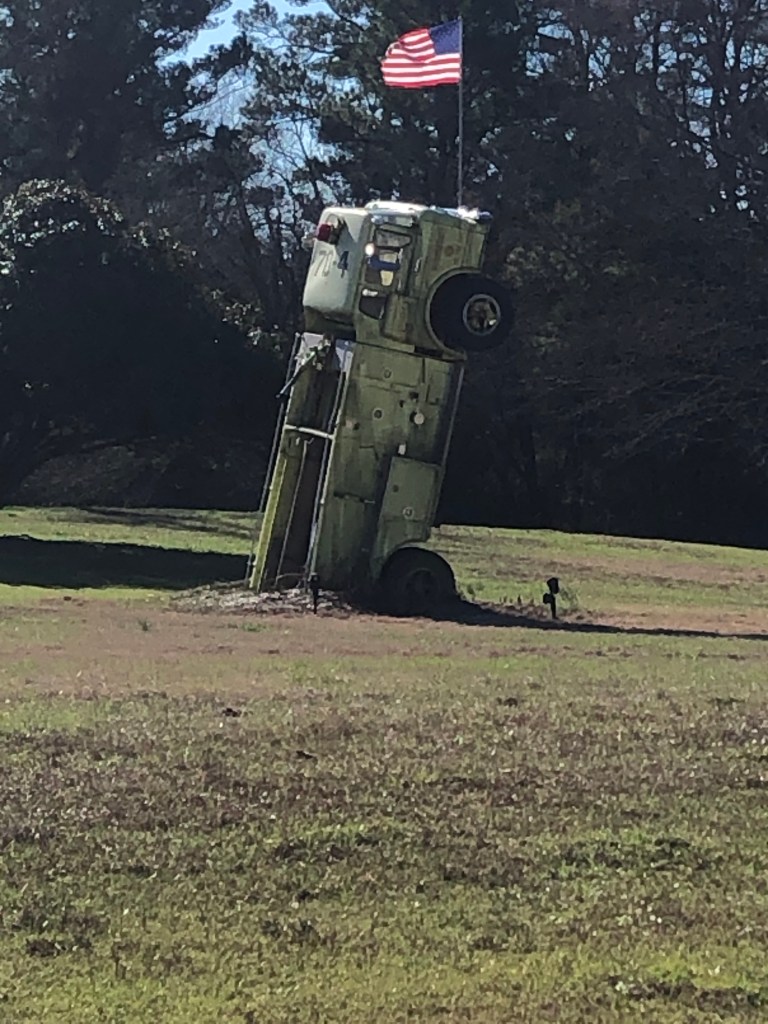
A sign on the property explains that this is meant as a “Tribute to Irvin C. Bainum, founder of Bonnerdale Fire Department and to the members of the Fire Department.”

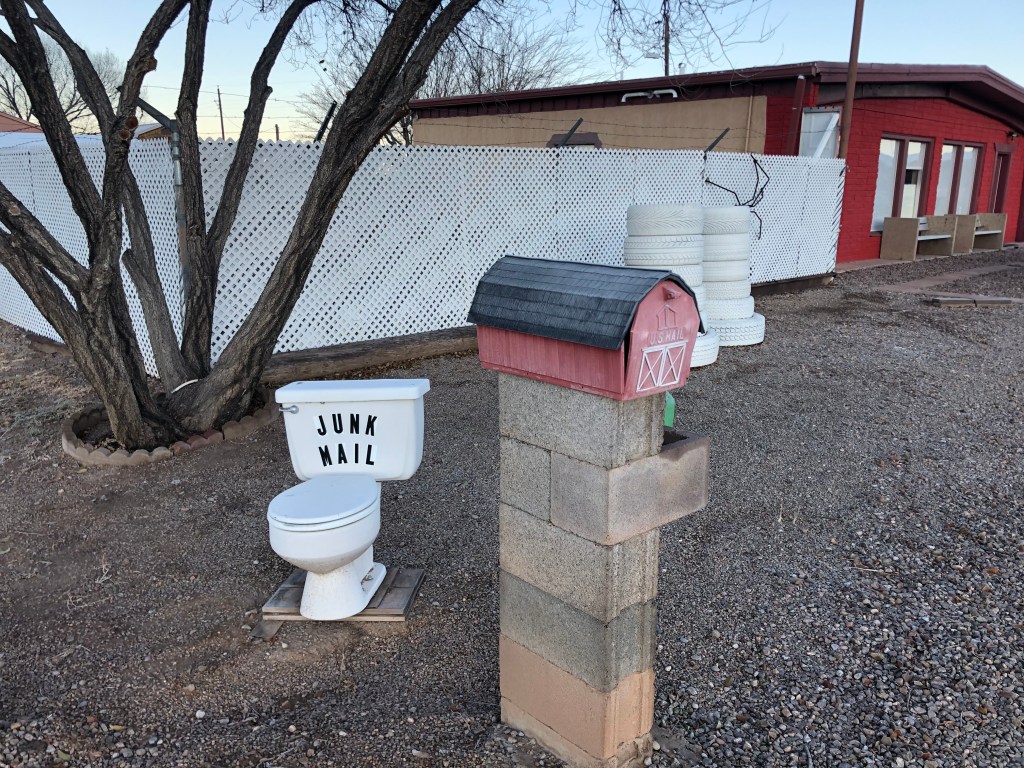
And, as proof that this guy really has too much time on his hands, he designed a matching mailbox:
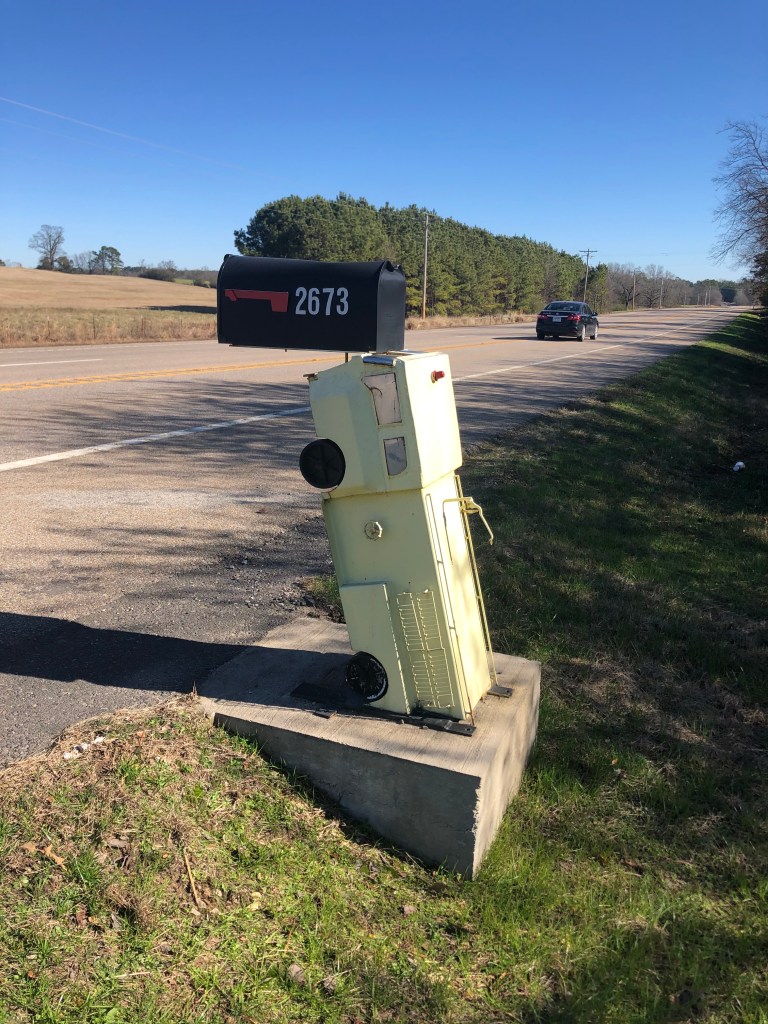
Art imitating art?

Before we get to the Brew of the Day, here are the day’s railroad finds:
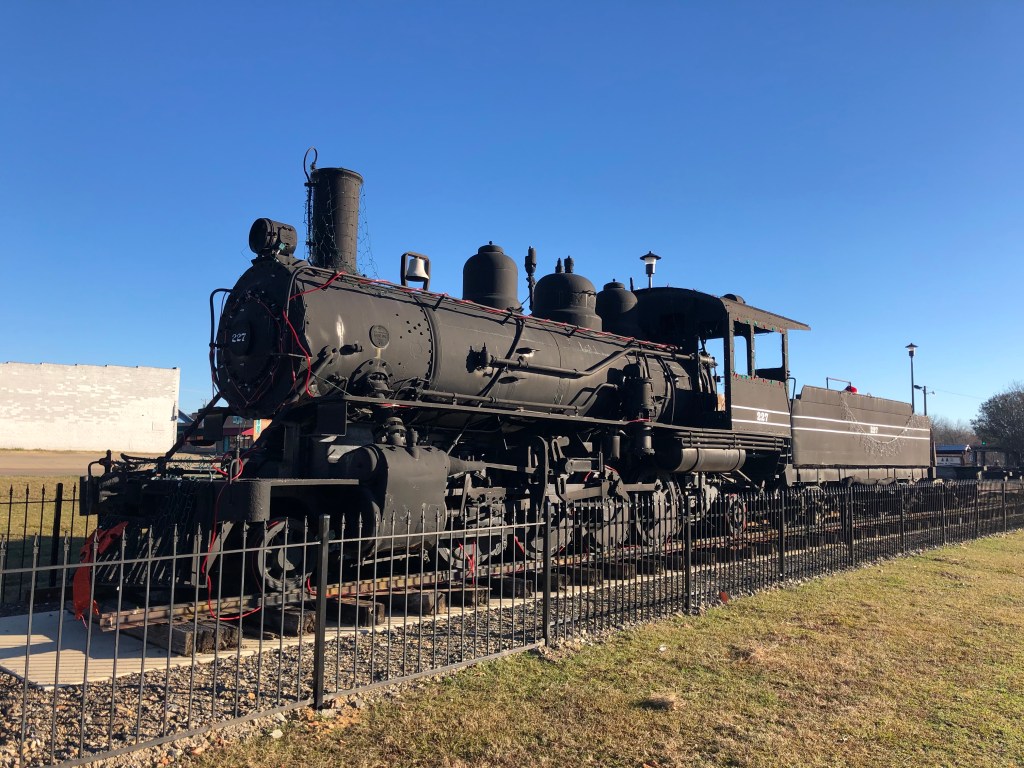
1927 Baldwin steam locomotive built for the Dierks Lumber and Coal Company, now resting in Broken Bow, OK
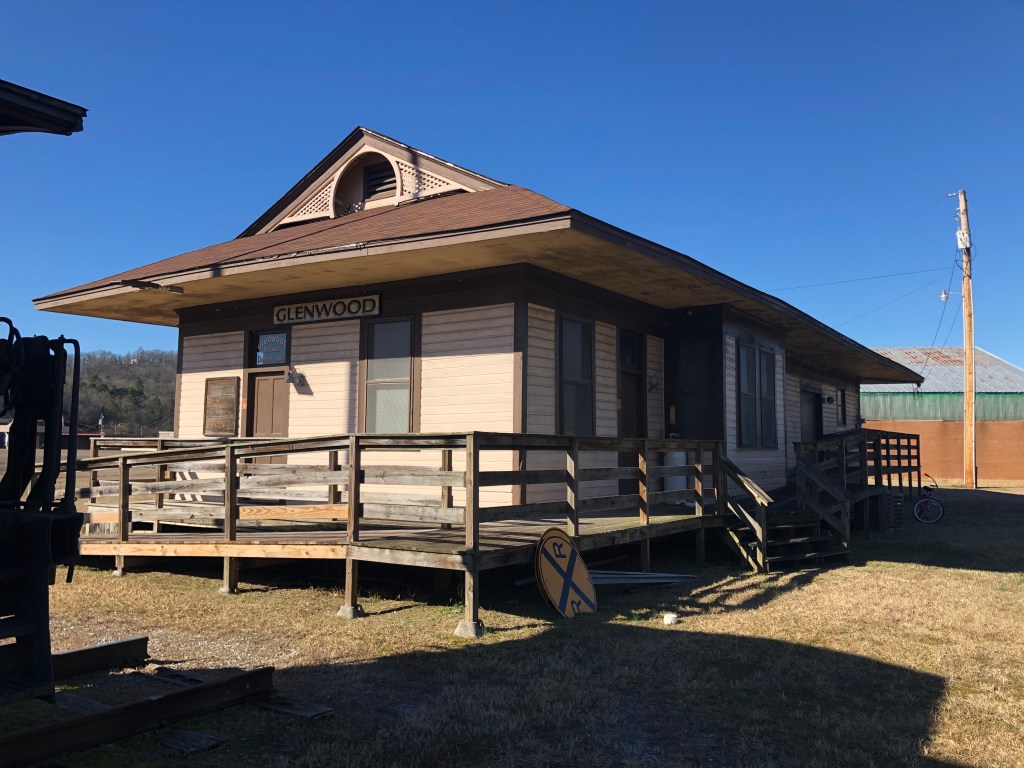
Missouri Pacific Railroad Depot, built in 1910, in Glenwood, Arkansas. Interestingly, it had been moved out of town and used as a hay barn in the 1970s; it’s now back close to its original location.
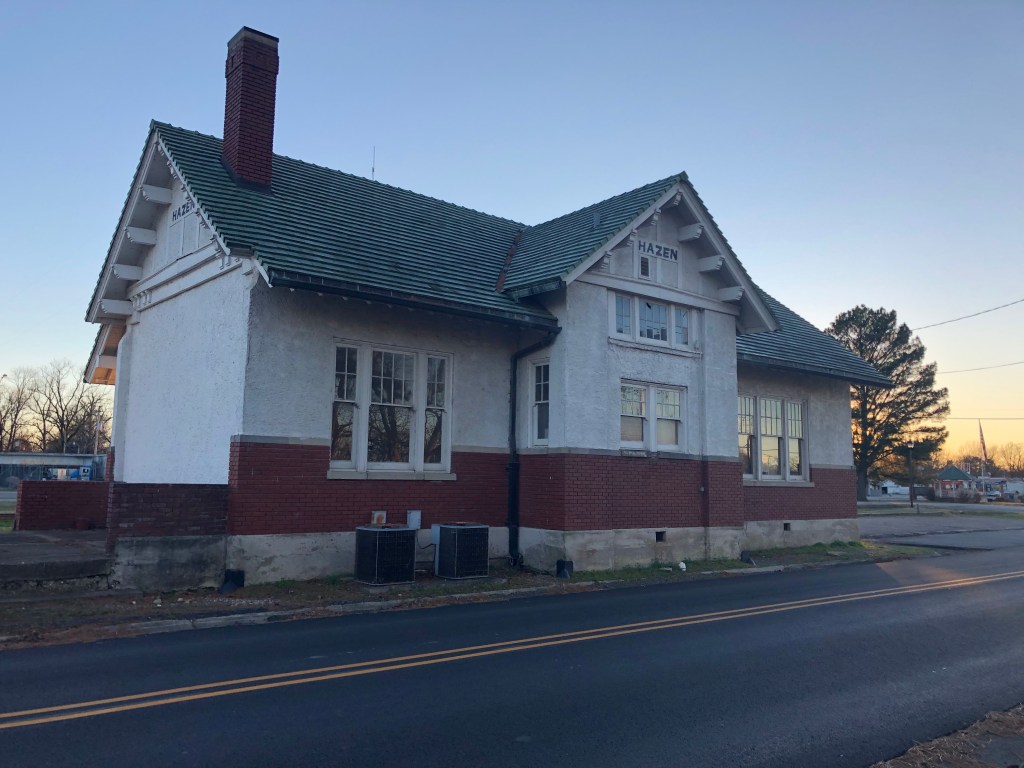
Rock Island RR depot in Hazen, Arkansas. Built in 1915. Now being used as the office for the local irrigation district.
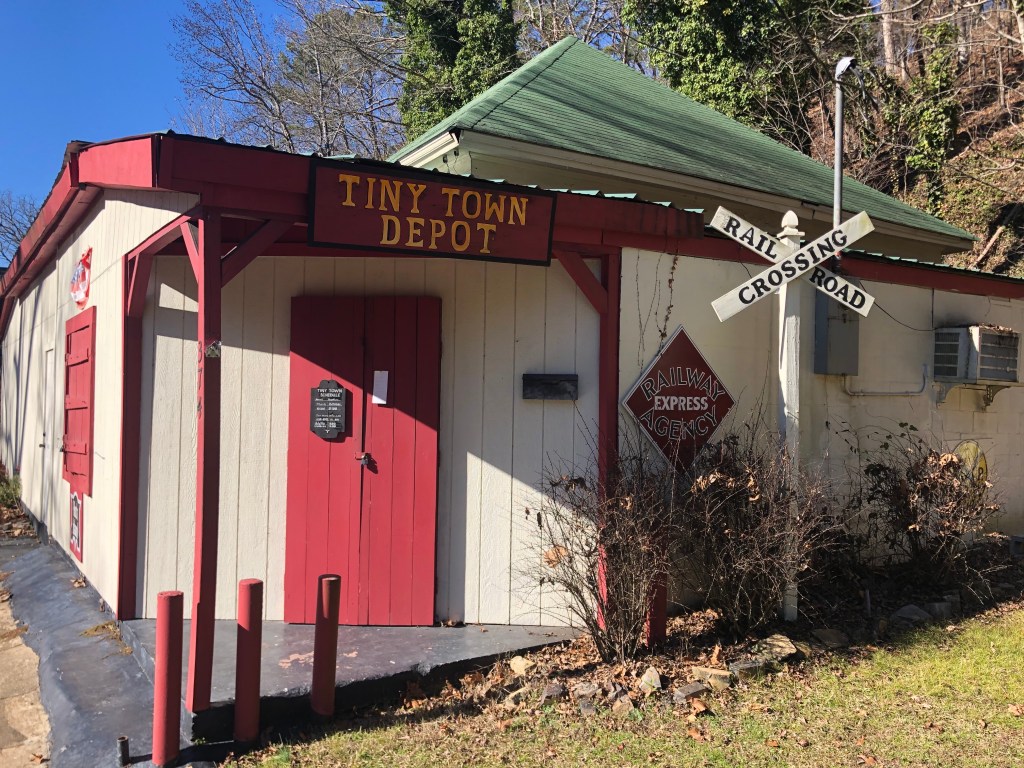
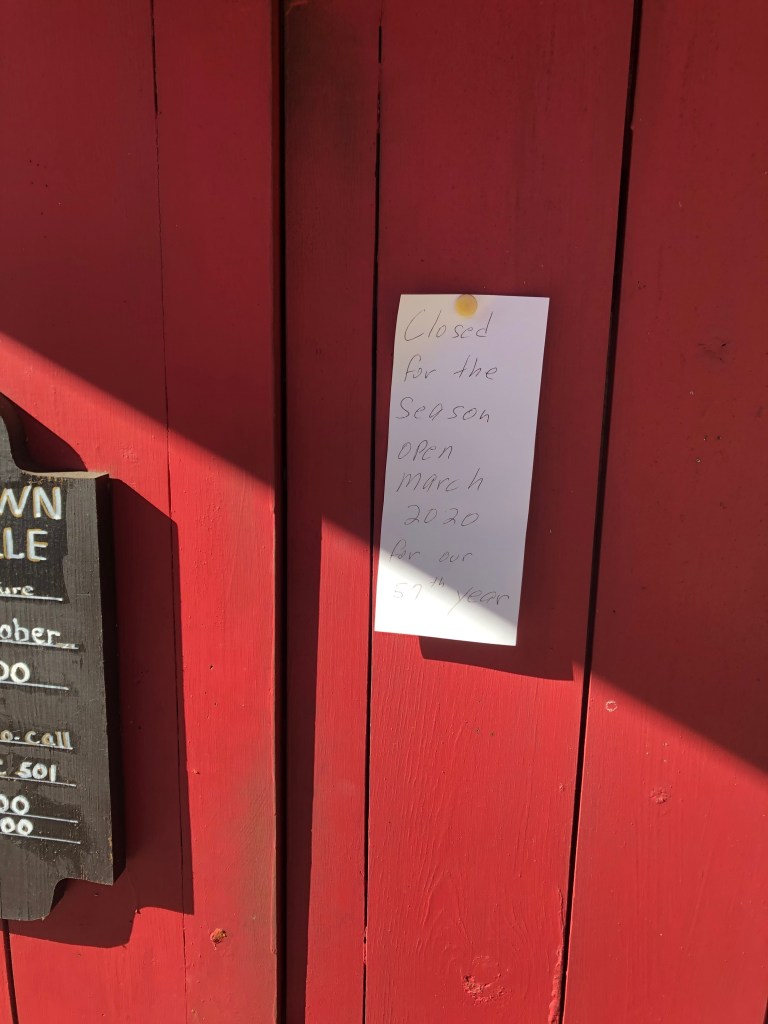
This building houses a miniature railroad called “TinyTown.” The website makes it sound glorious. Alas, a note on the door said it’s closed until March.
Gotta hope that thumbtack holds for the three months the note is supposed to stay on the door…

BREW OF THE DAY

I managed to find a good local taphouse in Little Rock, called Flying Saucer. It calls itself a “Beer Emporium,” and it’s an apt description. Check out their online “beer finder.” The range of beers available at any given time is staggering. Working tap handles line an entire wall.
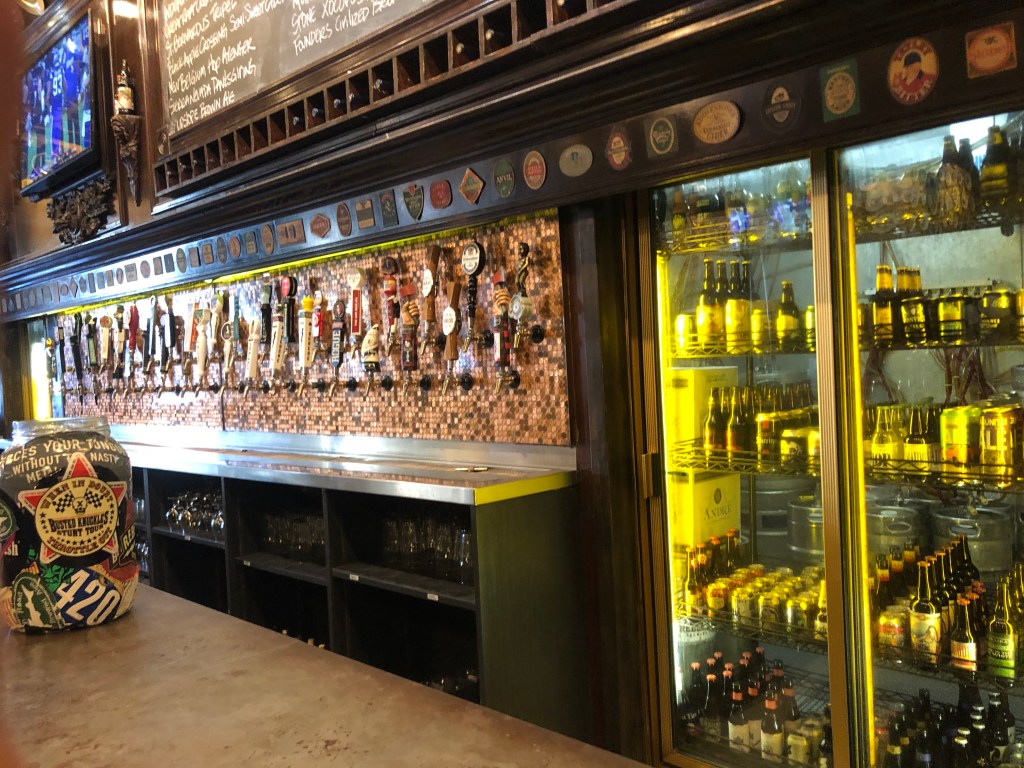
And there’s an equal number of taps on the right side of the beer case.

The name “flying saucer” is a reference to “saucers” (plates, really) that are affixed to the ceiling of this cavernous building. Here’s a small section of ceiling:
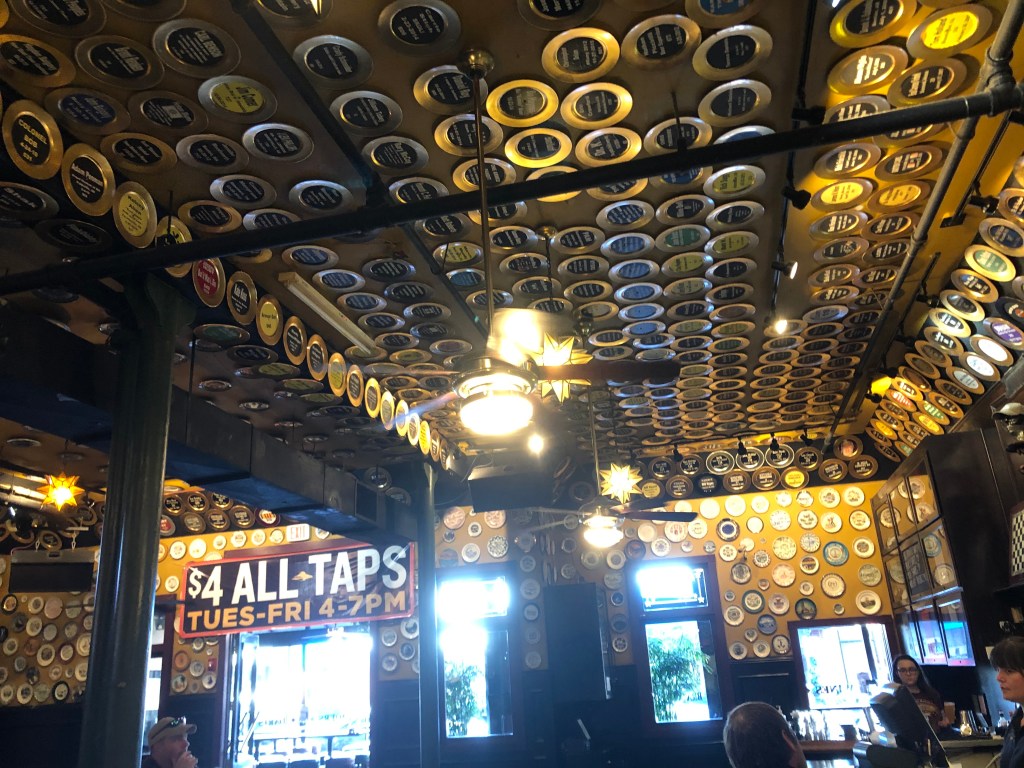
Take one down, pass it around, …

You’ll note that the saucers all have writing on them. The bartender explained to me that patrons can join their “UFO Club” for $18 (plus tax), and they’ll get a magnetic card. But you don’t get a saucer until you’ve consumed 200 different beers. Let me repeat that: You have to come in to the Beer Emporium and select a beer. You drink it, and they swipe your magnetic card. You then pick a different beer, drink it, and you get a second swipe of your card. Repeat this 198 more times, and you get to put your saucer on the ceiling. I estimate that there are about 500 saucers on the ceiling, which would represent 100,000 beers.

So, I decided to do 1/2 of 1 percent of this task, and ordered me an Ozark Cream Stout. (The Ozark Beer Company is local, based in Rogers, Arkansas.) It was exceptionally smooth, with very little head. It was malty and roasty, as you’d expect from a stout, but it didn’t have any of the burnt taste you sometimes get. That’s the beauty of a “cream” stout (sometimes called a “milk” stout), with its added lactose that sweetens the finish.
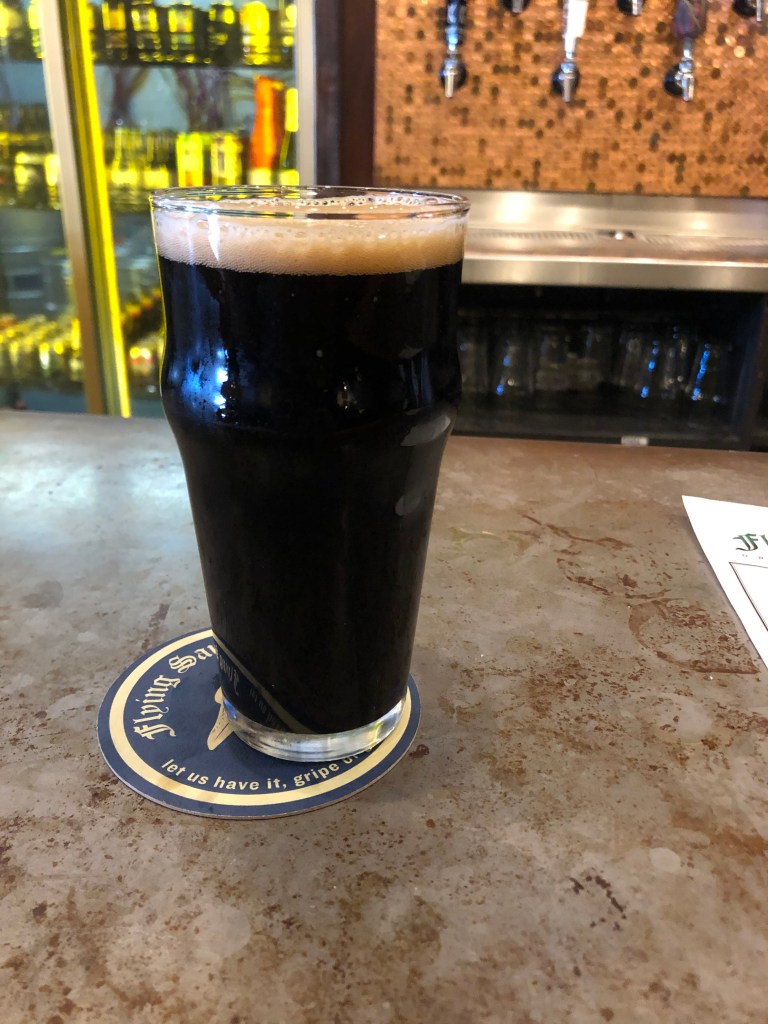
Got milk?

While I was enjoying my drink, a young man at the bar next to me asked me if he should get what I was drinking. I asked what he normally drinks, and he said “Corona.” I noted that the stout was at the opposite end of the spectrum from his lager, but he figured he’d try it anyway. We got to talking about my road trip, and Dale (for that was his name) told me he wants to move out to California “in six years.” I asked why six years, and he told me that’s when his probation is over.
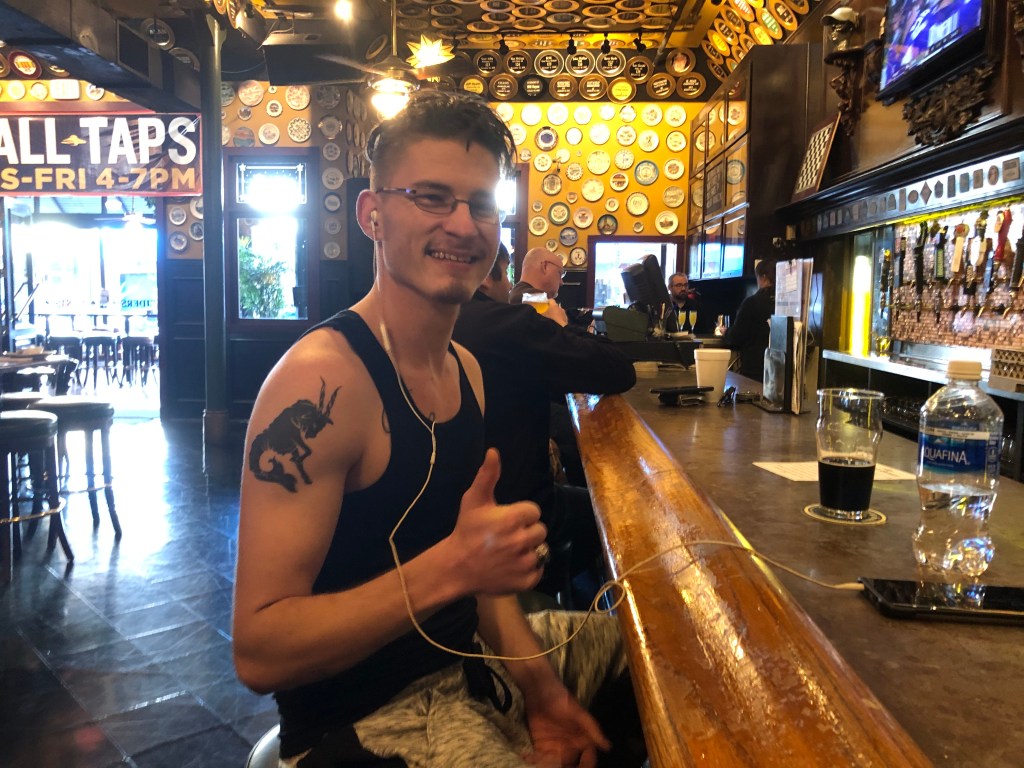
“See ya in six years!”

He seemed like a great guy, though, for someone whose felonious activities have bound him here in Little Rock. He works at a local Mexican restaurant, and wants to save up some money, get married, and move out west. When I asked Dale why he wanted to move west, the bartender, who had been eavesdropping, said “everyone that lives here wants to move west.” Once again, it seems that lots of people wish they were somewhere else, but family, or money, or the local criminal justice system, prevent them from acting on that desire. I think I found the remedy for that thinking, though, on one of the gravestones at Showmen’s Rest. It’s a simple phrase that suggests happiness comes not from a place, but from an attitude:

“May all your days be circus days.”
Uncategorized

Maudlin

A number of you reminded me that I forgot Friday’s Brew of the Day. So today’s blog will end with Friday’s BOTD. (This actually works out well, since I could not find a single local brewpub during today’s travels.)

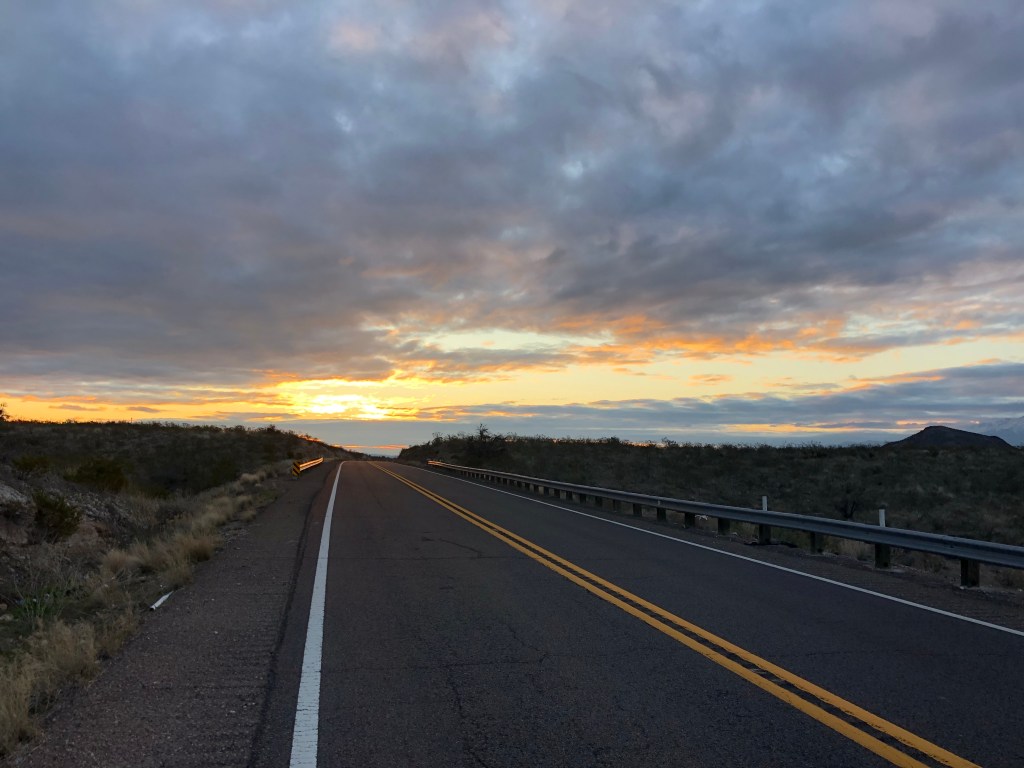
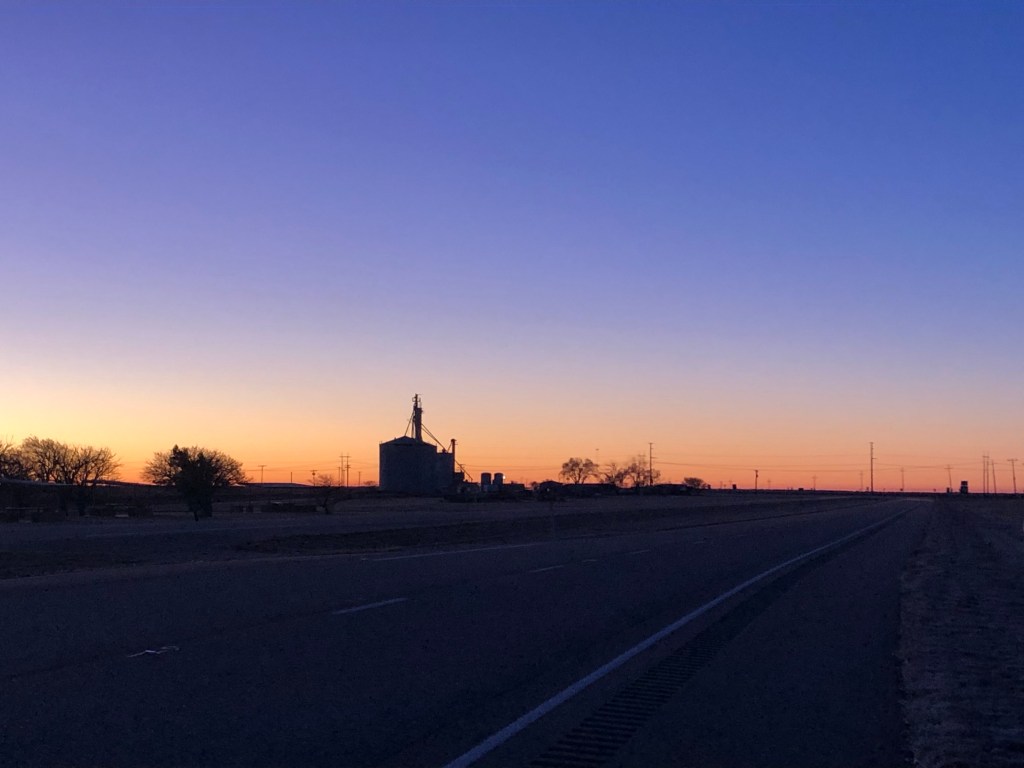
But first, let’s look at today’s travels, which began early with a beautiful Texas sunrise.

I was up with the chickens, as they say in these parts…

One of the fortunate aspects of driving these lesser US highways (instead of the interstates) is that you don’t have to choose when to exit the freeway to check out a town. Instead, US 70 takes you right down the main street of each town, whether you want to go there or not.

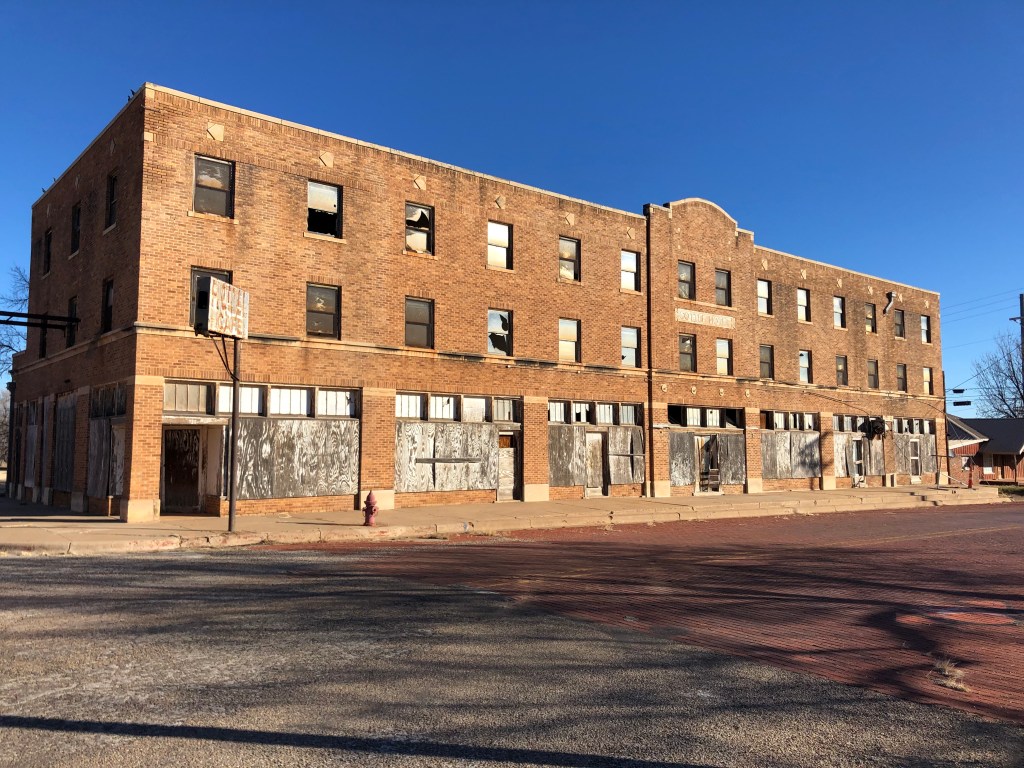
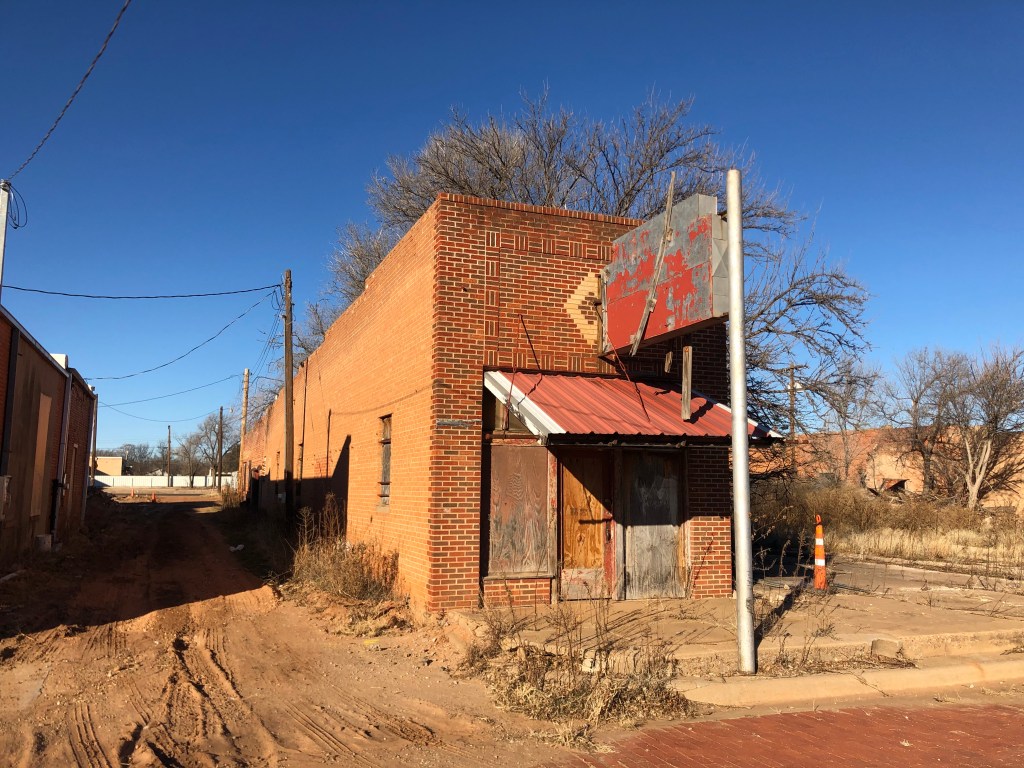
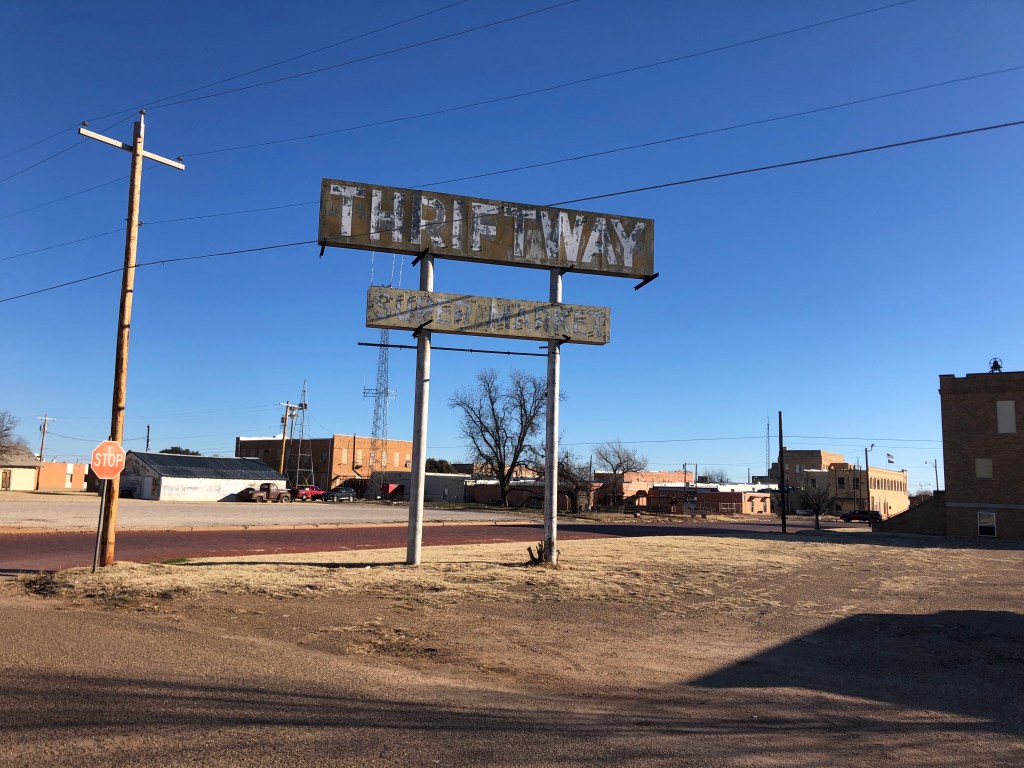
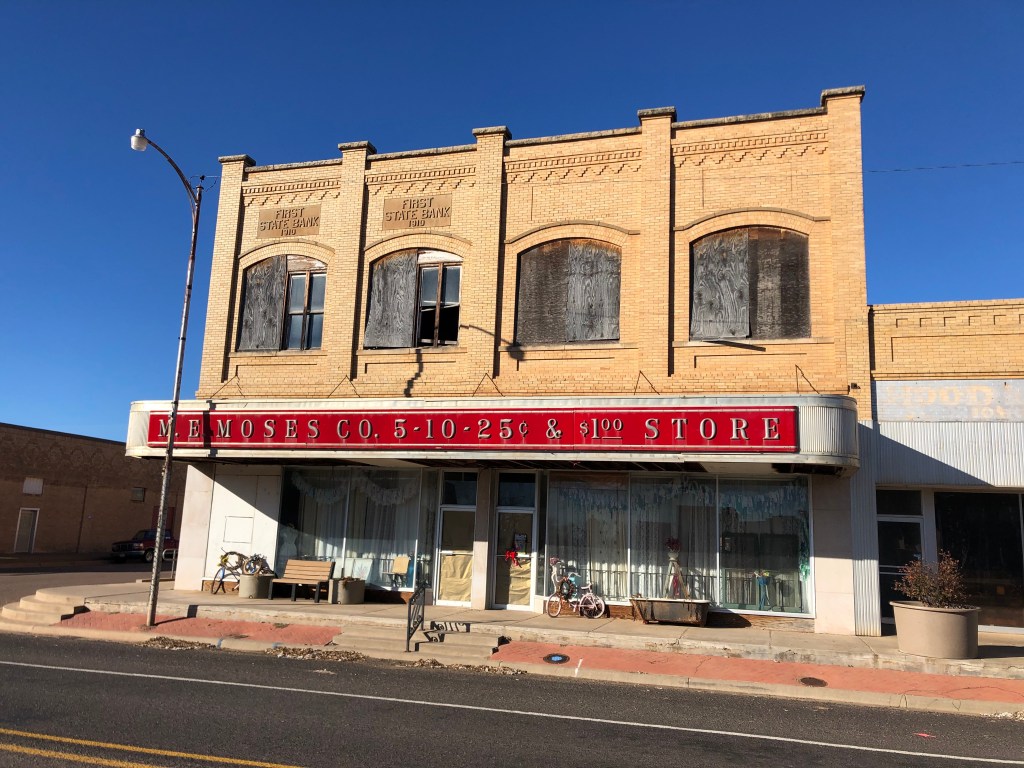
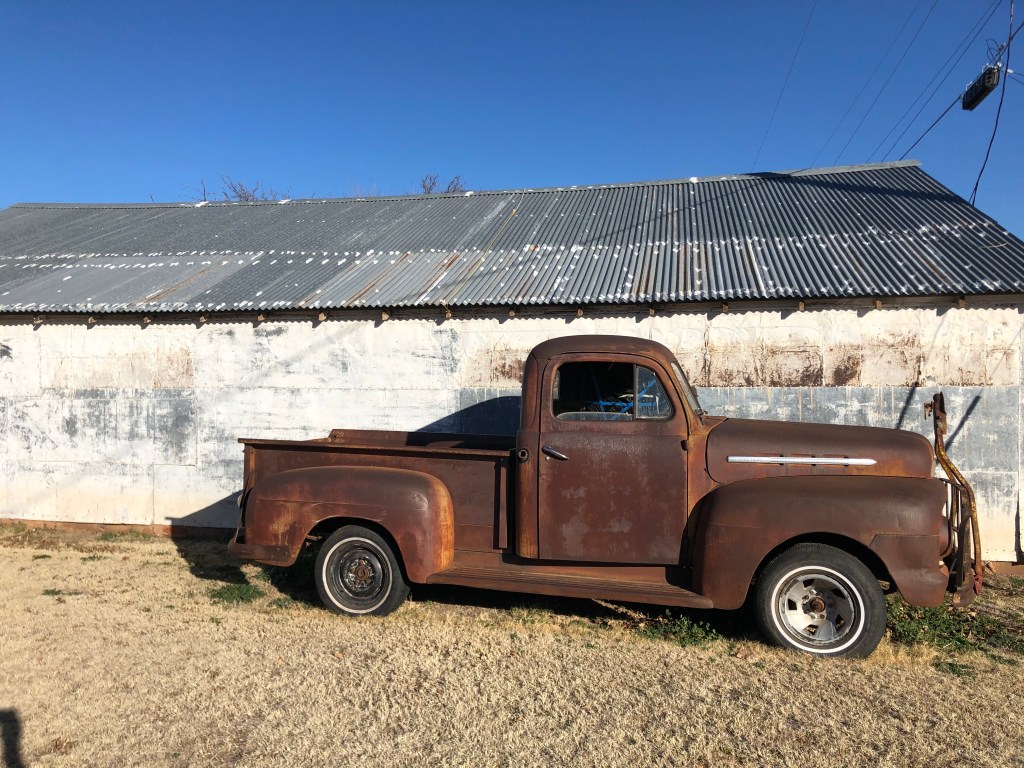
Several of my experiences today had an air of the maudlin about them, starting with the town of Paducah, Texas (population: 1,000). Paducah is what I would call I dying city. In fact, it’s barely on life support. In fact, when I first entered the town, I figured it was a ghost town. Check out these photos:

The Cottle Hotel, built in 1929. I guess Paducah used to be a destination?
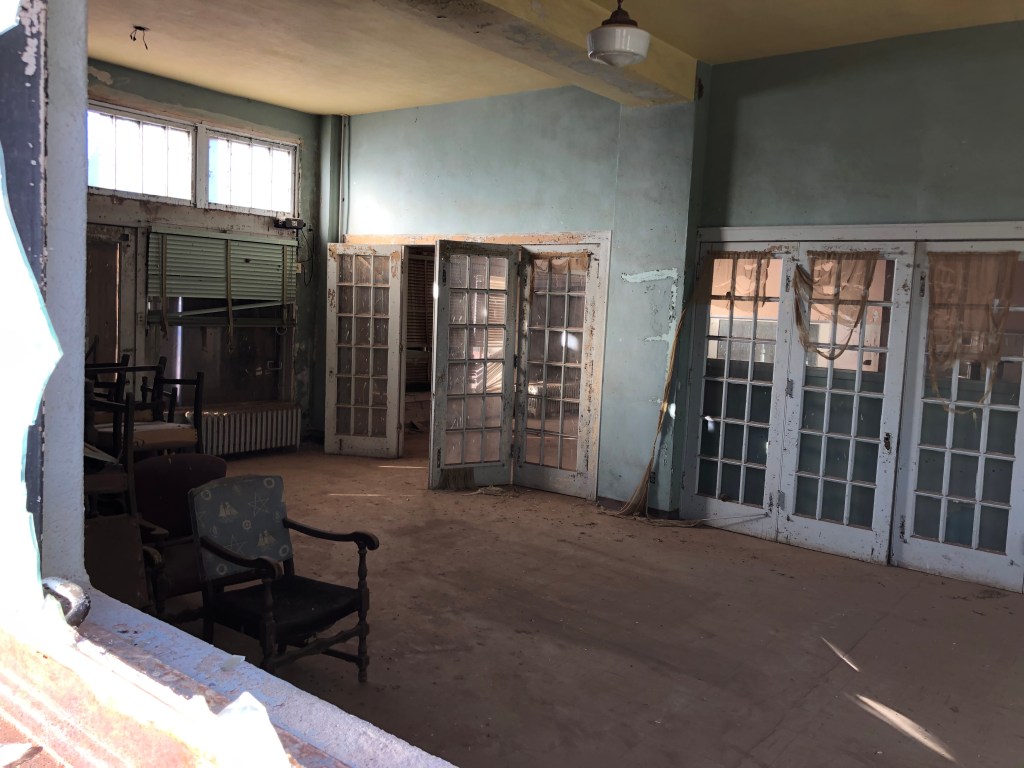
I poked me head through one of the (broken) windows of the Cottle Hotel. It looks to be fairly intact, and historic, inside.

But as I drove around I saw a few signs of life, as the handful of remaining residents try desperately to keep the town from collapsing entirely. Someone had hung some lonely Christmas decorations on the city hall, and an ancient feed store appeared to still be open for business. But for the most part, the streets, and the buildings, were empty. I fear that, if I were to come through here again in a couple of years, even the small signs of life I witnessed would be gone. Or, even worse, the remaining residents might make a desperate effort to rejuvenate the local economy by knocking down these wonderful, unique old buildings and putting in a new WalMart or a Dollar General.

The maudlin mood intensified when I stopped for lunch in Lone Grove, OK. As is my habit during these stops, I asked the waitress what the town is known for. She thought about it for a moment and said “nothing, really.” I asked about the size of the town’s population, and she couldn’t even guess at the number. “It’s just a small, country town.” When I asked if she grew up here, she scoffed. She grew up in Houston, and moved here for some kind of business opportunity. It dried up after a year and a half, so now she’s waiting tables at this diner. Do you want to go back to Texas, I asked. “In a heartbeat. But I don’t have the money, and I don’t have a job lined up.” I wished her a happy new year as a left.
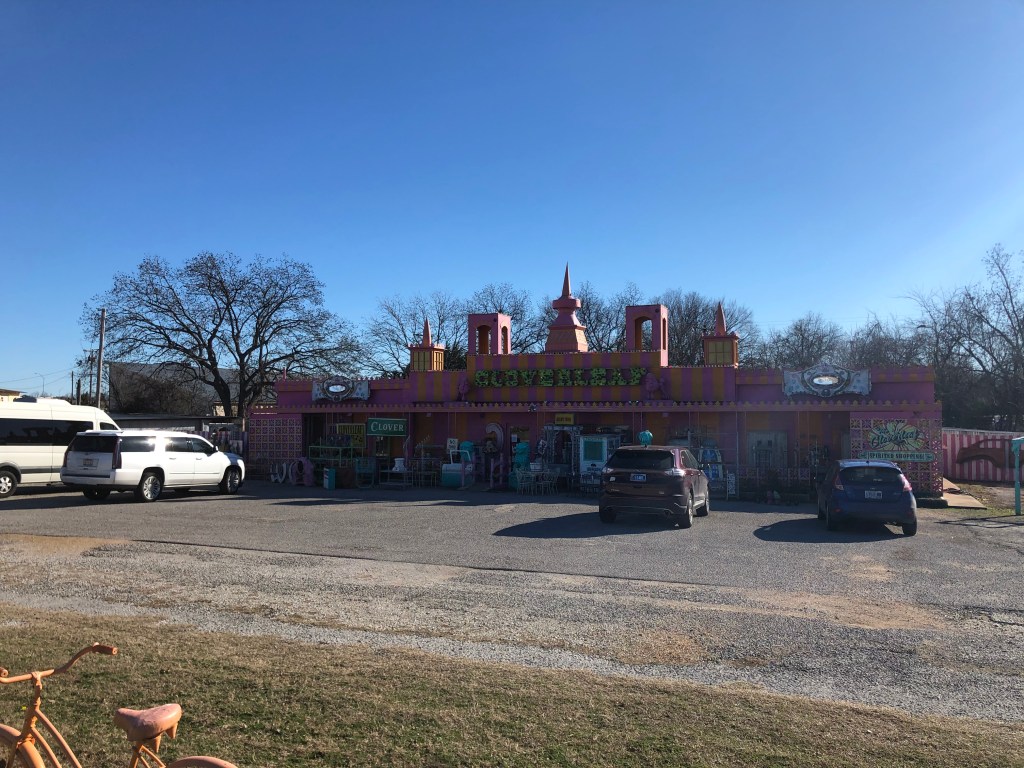
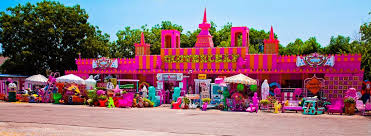
Later, I found myself in Ardmore, OK (population: 25,000). My eye was caught by a garish pink structure that at first reminded me of the Madonna Inn near San Luis Obispo. But it turned out to be an indescribable bazaar of miscellaneous, kitchy junk. It’s called “Cloverleaf.”

Alex Madonna must be spinning in his grave.

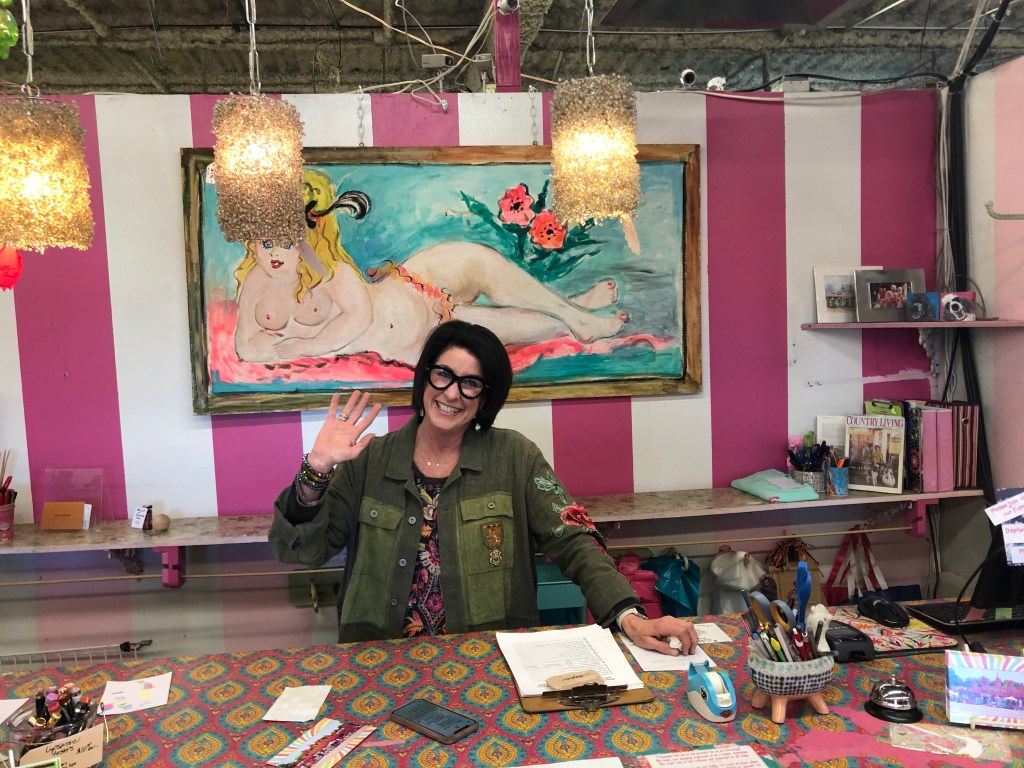
I entered on a whim, and was greeted by the owner, who was standing behind a counter in front of an amateurish painting of a reclining nude. It’s the kind of thing you’d expect to see in a brothel. Or so I’m told.

“Excuse me, sir? I’m down here!”

The owner, whose name is Heidi, asked how she could help me. When I told her I was just browsing she informed me that technically they’re out of business. But since I was here I could look around. Instead, I asked her to give me the story of the place. She’s a self-described “junker” who bought this property 20 years ago to sell and trade her many truckloads of junk. But her husband is now ill with Parkinson’s, and she’s retiring to take care of him. Major buyers already came through and bought up all the good stuff. “All that’s left is true junk, and I’ll probably throw it away.” She sadly showed me a postcard of how the place used to look before the sell-off.

The Cloverleaf in happier, garish-er days.

Heidi seemed genuinely sad to be quitting. “It’s not my choice, but it’s what I need to do.” It’s interesting, I thought, that the waitress in Lone Grove was stuck in a job and a place she didn’t like, while Heidi was saddened because she has to leave this job and this place. I guess nobody’s ever really happy with whatever they have. The grass is always greener…

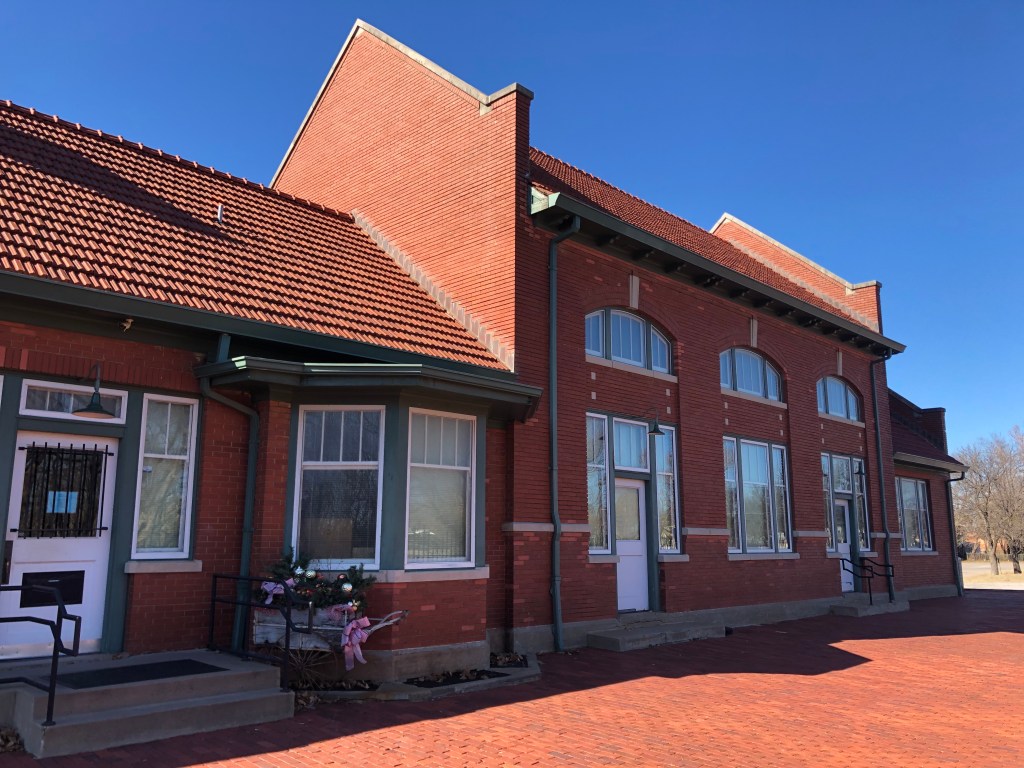
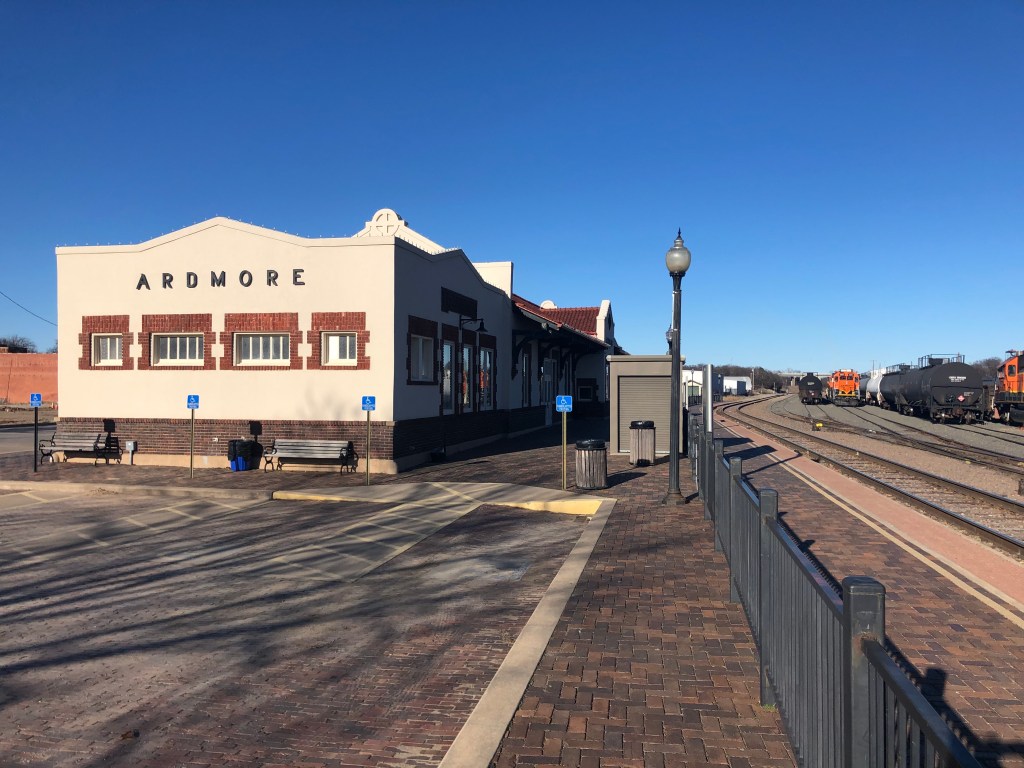
But today was not all sad stories. As regular readers of this blog have learned, trains are another key aspect of my road trips. And today I encountered two restored train depots and a restored steam locomotive. Please indulge me by checking these out:

The restored Rock Island Railroad depot in Waurika, OK. It was originally constructed in 1912, and now serves as the town library.
The restored Santa Fe depot in Ardmore OK. It was originally built in 1916, and now serves as an Amtrak stop. Note active trains to the right.
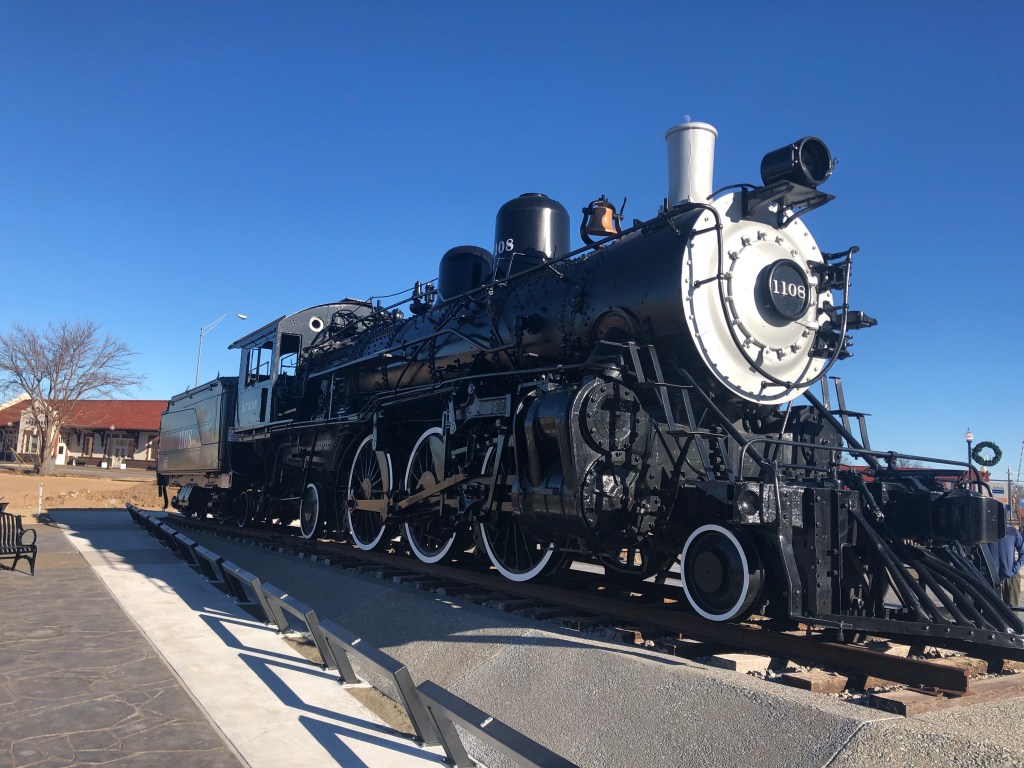
Is this beautiful, or what? It was built for the Atchison, Topeka, and Santa Fe railroad in 1903. It helped to bring aid workers to Ardmore in 1915, when a tank car carrying fuel exploded at the depot pictured above. The locomotive was recently restored and located at the Ardmore Depot.

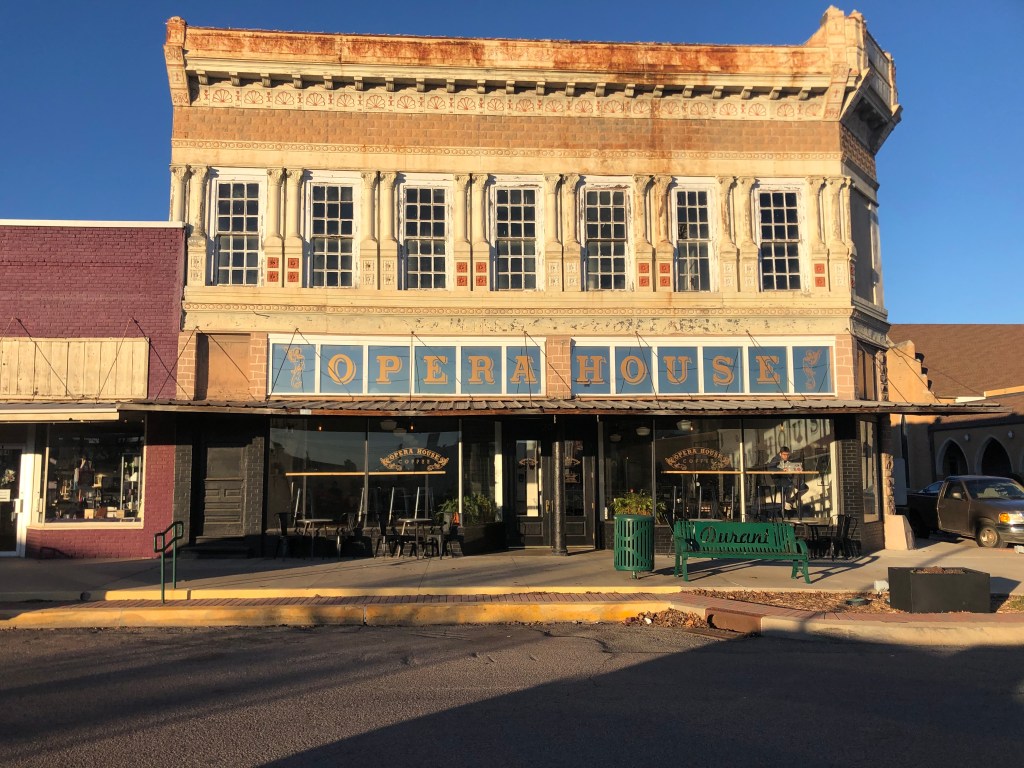
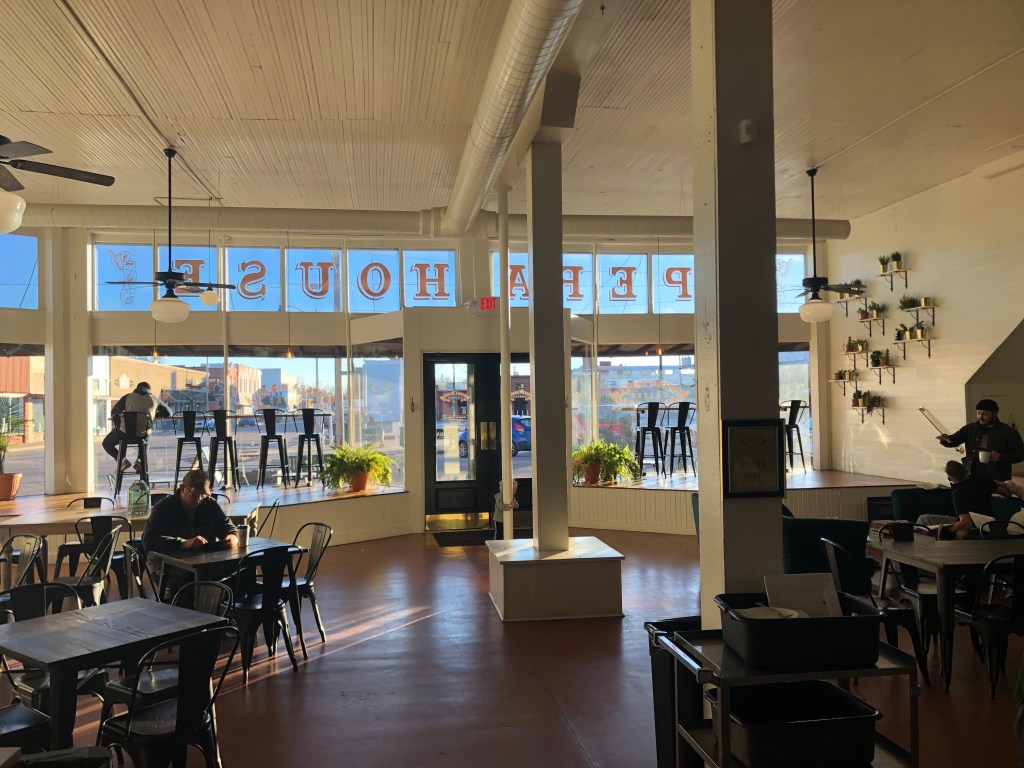
In the late afternoon I was getting a little sleepy, so I stopped for a cup of coffee in Durant, OK (population: 16,000). Opera House Coffee is a coffee house situated in a large building built in 1901 that was home to the Wilson Opera House until about 1915. Since that time it’s served as a post office and various other businesses, until its conversion to this coffee house about 2 years ago. One wishes that all cool, historic buildings like this could similarly find viable uses like this. How is it that Durant has found the right formula, but Paducah has not?

119 years old this year…
I had a good view of the street from a stool at the front window.

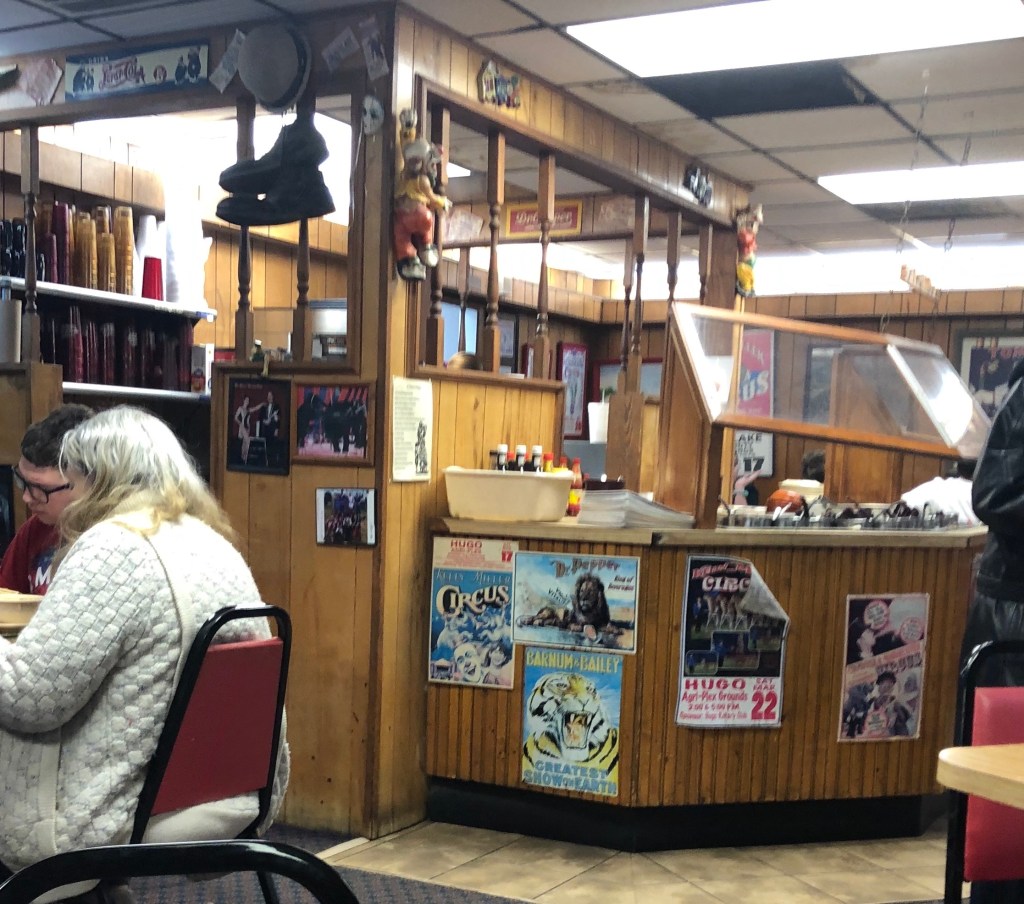
I ended the day’s travels in town of Hugo, OK (population: 5,300). The town is named after Victor Hugo, and over the years has served as the winter headquarters for many traveling circuses. Today it is still home to three circuses, and its cemetery is the final resting place for a number of circus performers. In fact, the old timers called Hugo “Circus City USA.” All this I learned from my waitress at Angie’s Circus City Diner, which is a circus-and-clown-themed restaurant where I had a bloody ribeye steak with onion rings.

Note the clown shoes hanging above the woman’s head.

Alas, Angie’s is a kid-friendly place, and they don’t serve beer. So, I’ll leave you with yesterday’s Brew of the Day.

BREW OF THE (YESTER)DAY

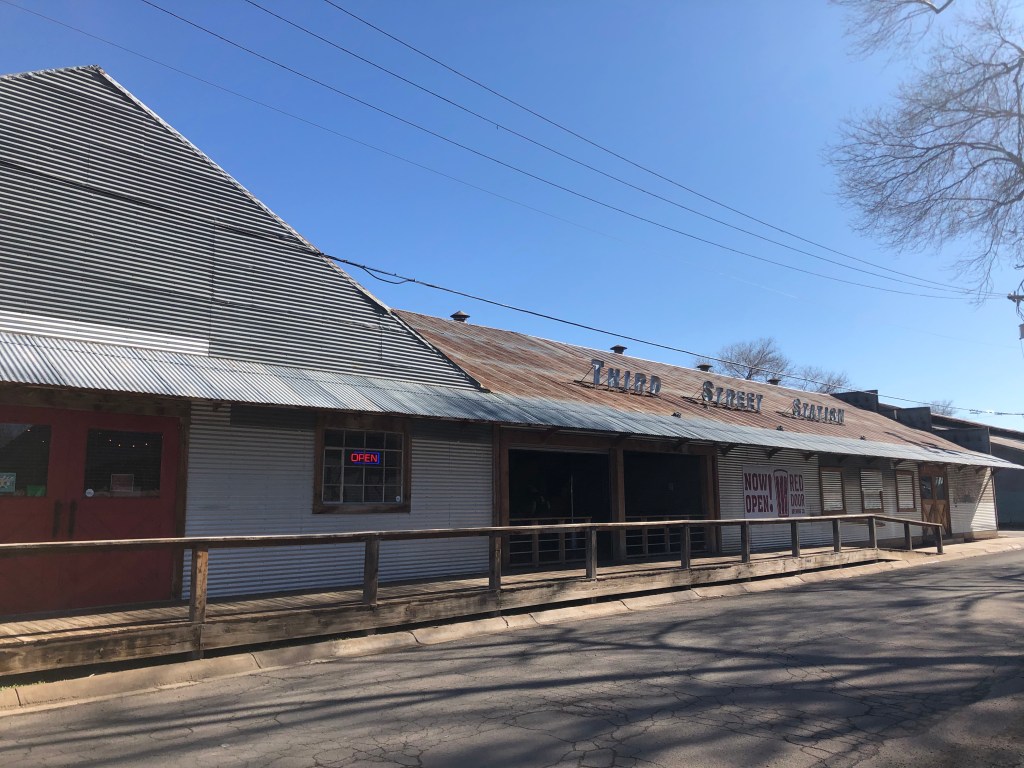
On Friday I stopped at a new brewpub in Roswell called Red Door . It’s located in an old train station, and I was one of only two patrons there at the time. This is the fourth Red Door opened in New Mexico by its owner, Jeff Hart, and it’s only been open about a month.

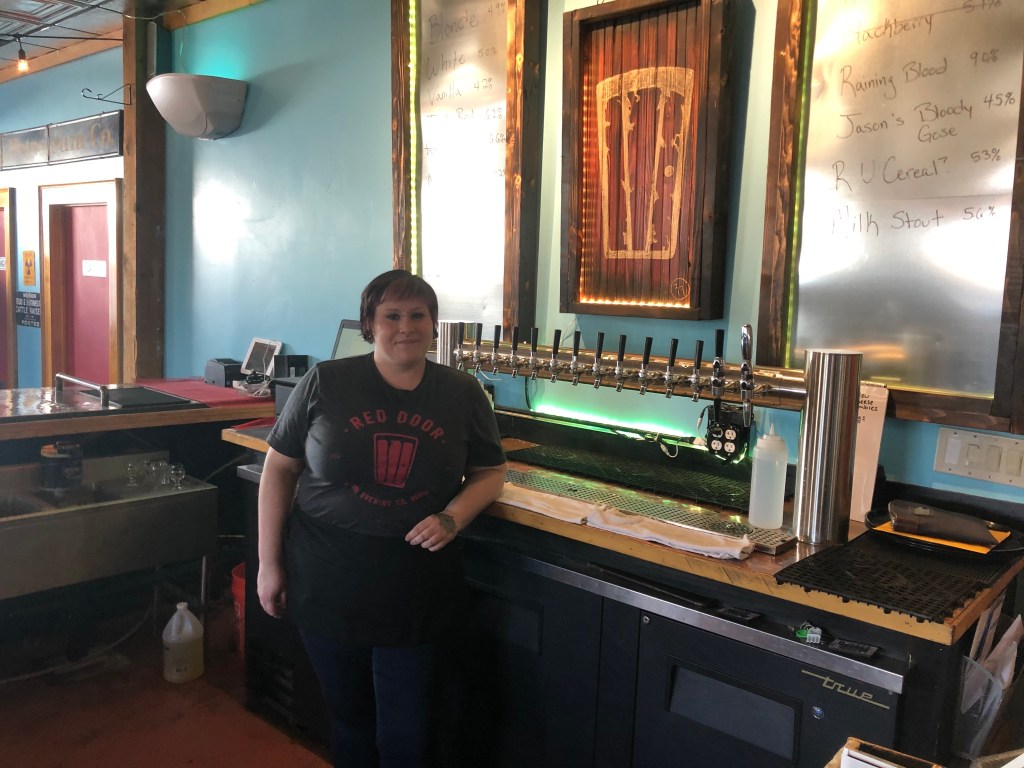
The bartender, Lindsey, insisted that I try a half-dozen samples before she’d let me order a pint. I think she wanted to show off their extensive range of beers (which was indeed impressive).

The estimable Lindsey, who also works a second job at her family’s pest-control business, and who thinks this whole alien fixation in Roswell is just silly.

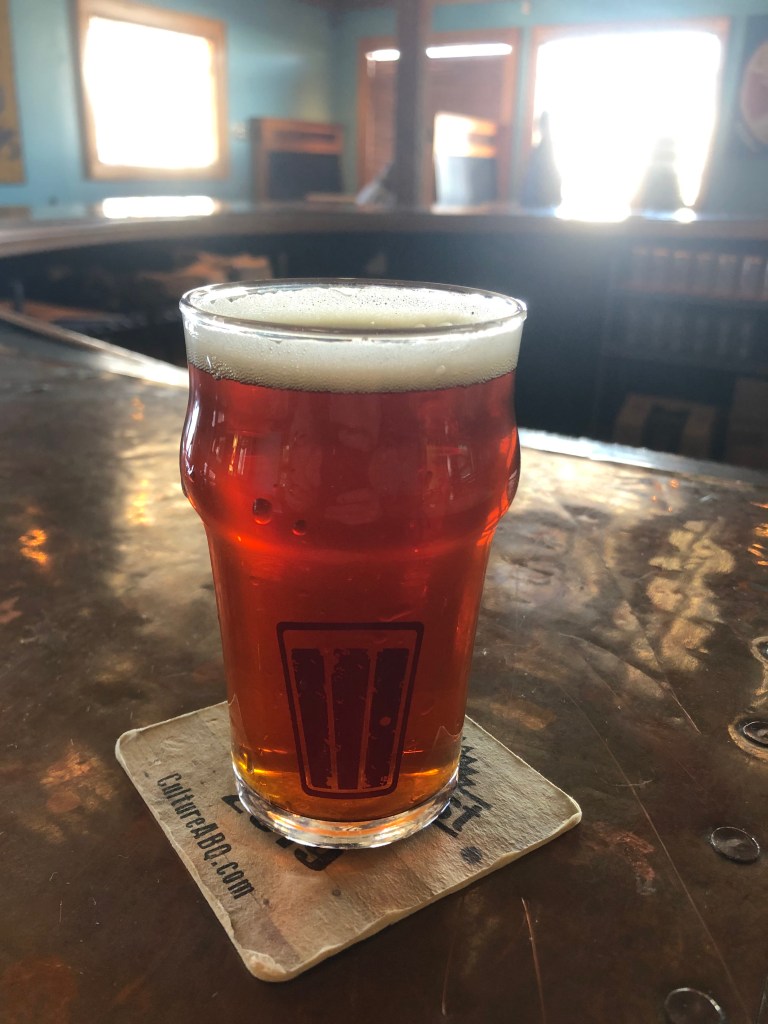
I settled on something with the mouth-watering name “Raining Blood.” It’s an Imperial Red Ale, which means it’s a red ale with an ABV of 9 percent. The beer had a pretty light mouthfeel, and a resinous (but not too hoppy) flavor. It wasn’t bad, but I expect something with the adjective “imperial” in its name to be “bigger.” And yet, the fried jalapeno caps that Lindsey brought me as a snack totally made up for any shortcomings with the beer.

Meh.
Uncategorized

All Paved, you say??

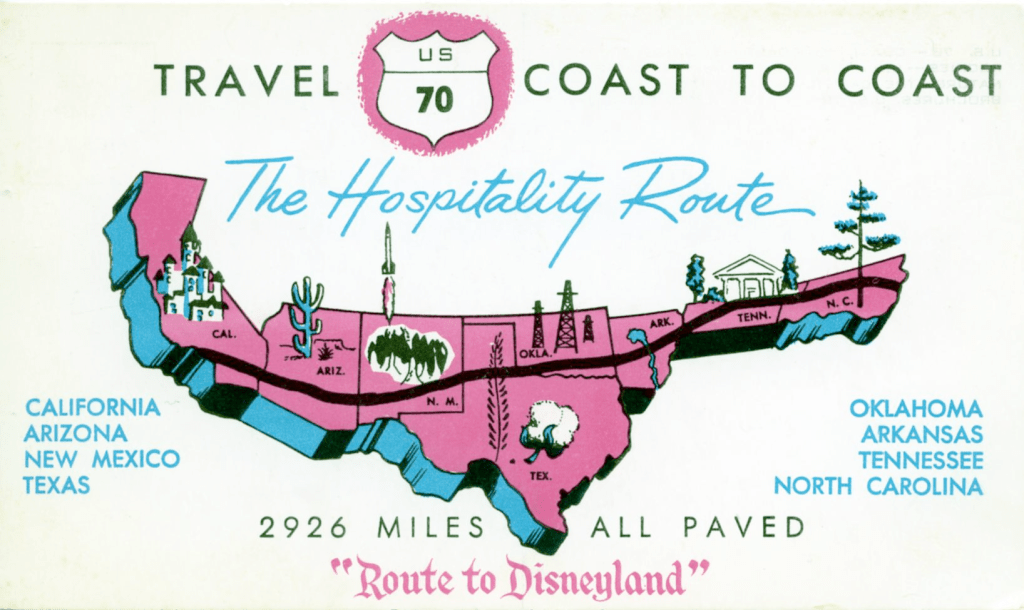
Disneyland evidently used to be the western terminus of Route 70. (Credit to Brian W for finding this graphic.)

Truth be told, I was thinking about the “all paved” status of US 70. It’s remarkable that the road is in such good shape, mile after mile. With about 700 miles of driving on US 70 for the past couple of days, I have not encountered a single significant defect in the road. This is a far cry from California’s track record. Most of the federal interstates and US highways in California are what I’d call “semi-paved,” as in they once had been paved, but damage from trucks and weather have created potholes, ruts, and crumbling roadbase.

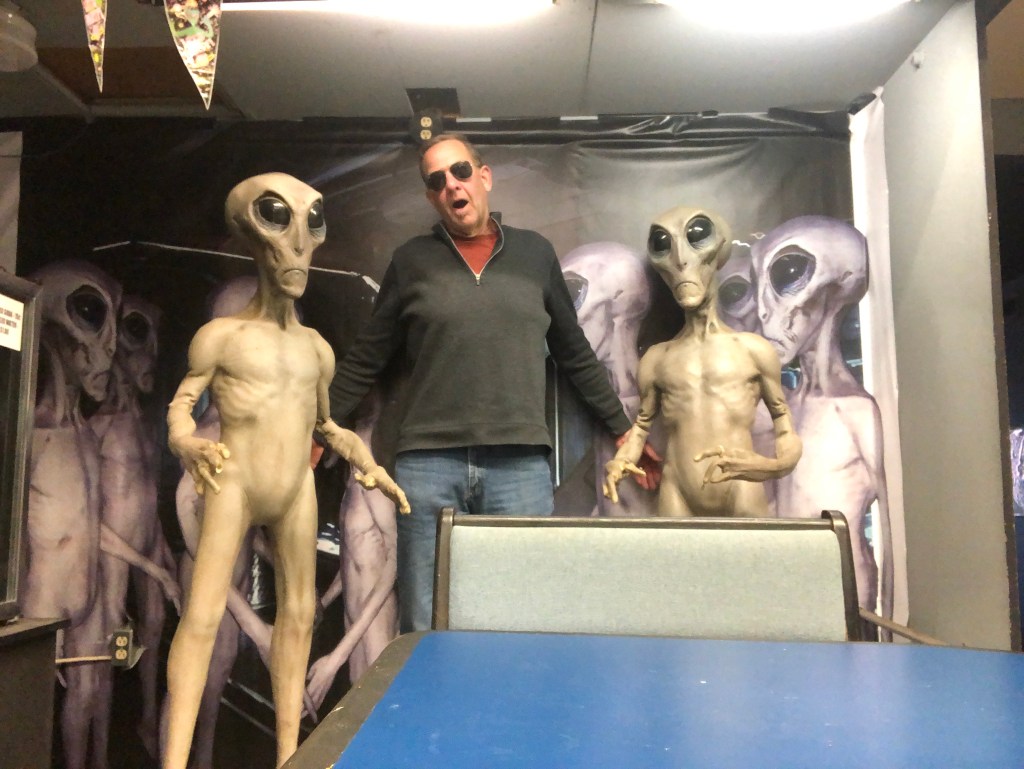
But today’s topic is not the physical condition of US 70, as good as it is. Rather, we’re here to talk about aliens, Like the ones that abducted me this afternoon in Roswell.

But let’s start at the beginning. This morning I awoke in the town of Alamogordo, NM (population: 30,400). You may already know where this is going: since we’re talking about aliens, Alamogordo is important as the town where Atari officials buried between 10 and 20 semi -trailer loads of unsold game cartridges of their ET–The Extraterrestrial title. But what: That’s an urban legend, yes? I was here to find out.

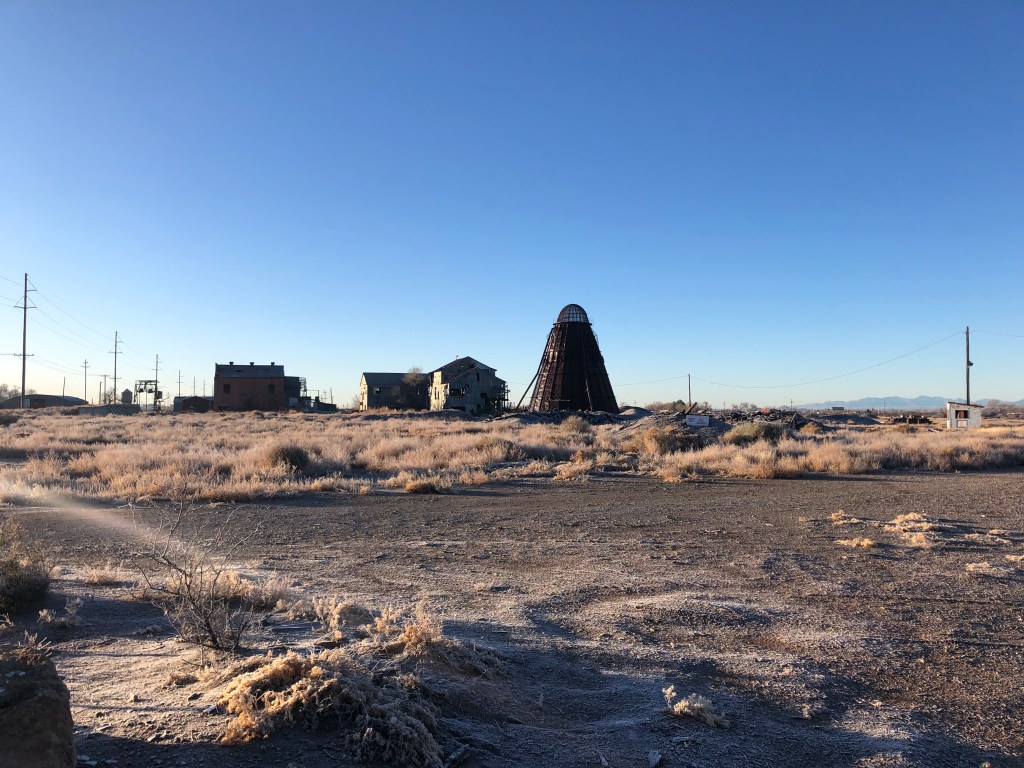
The story goes that Atari was so humiliated by the savage critical reception of ET that it took all the unsold copies and buried them under the cover of darkness in a landfill in Alamogordo in 1983. So, after getting breakfast at the Super 8, I headed out to the landfill to see what I could see. Which was this:

The landfill didn’t appear to be active any longer, and there wasn’t a game cartridge in sight. It occurred to me that I didn’t really have a plan for how this visit was going to teach me anything, so I found a passerby and asked if this was the place Atari dumped the cartridges. I was answered in the affirmative, with the added information that a film crew came out here a few years ago and excavated the landfill to validate the urban legend. A little more research online confirmed the general points of the story. If you’re interested in the details, you can watch the documentary, with footage of the exhuming of the Atari games from the landfill where I was this morning.

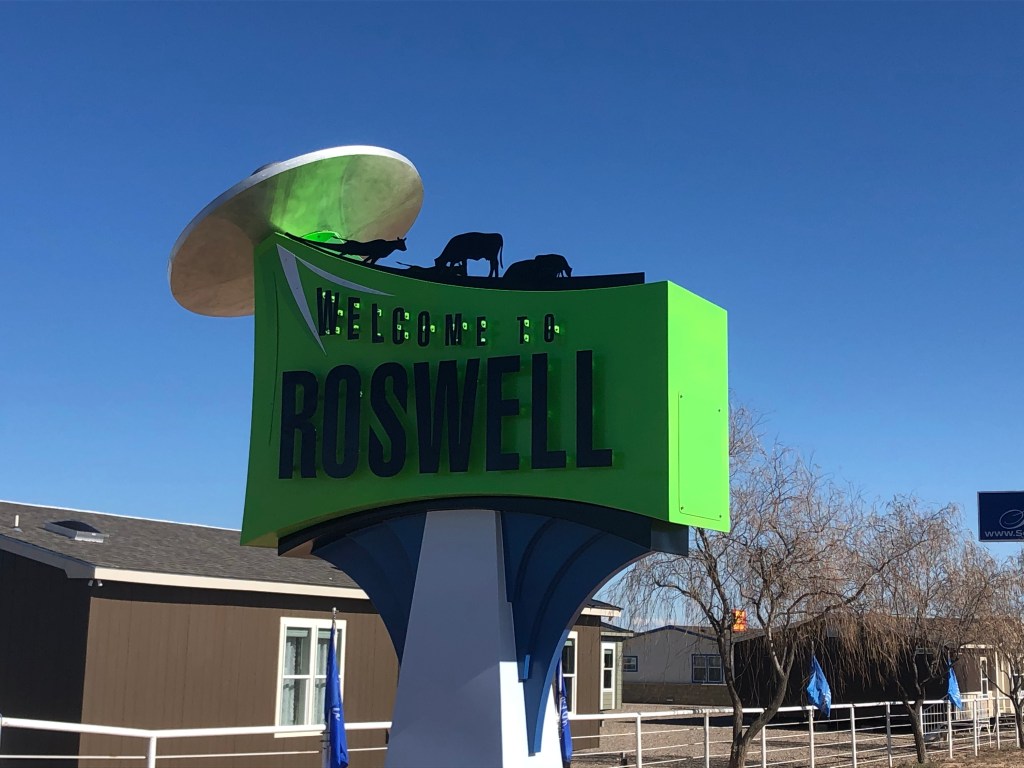
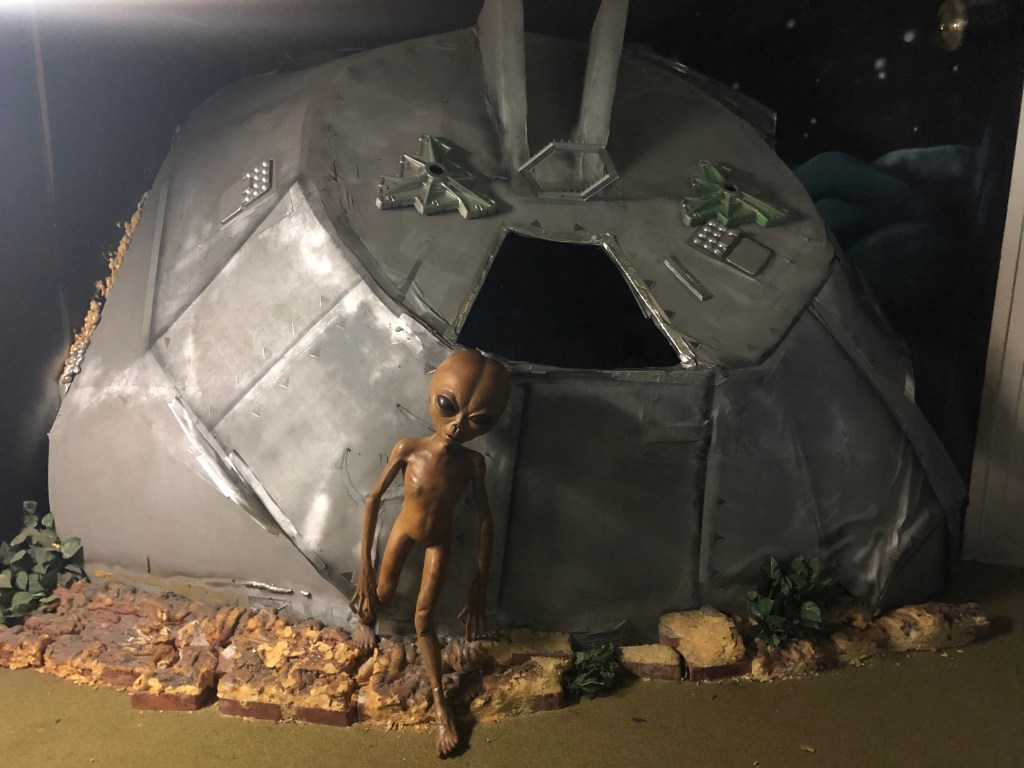
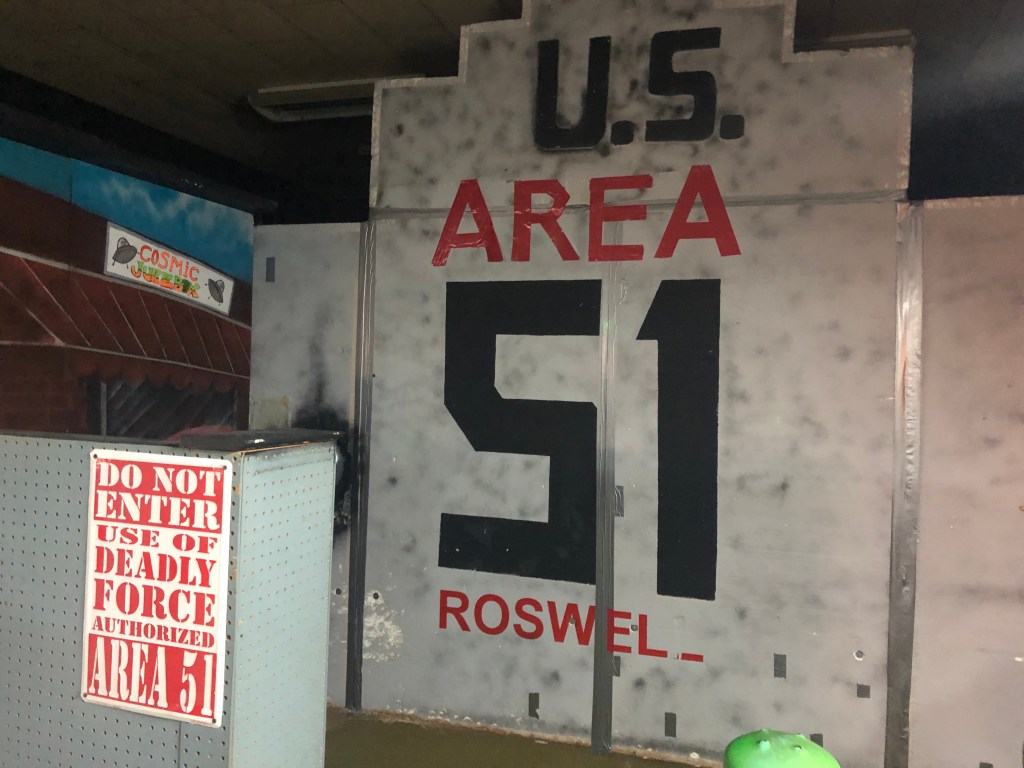
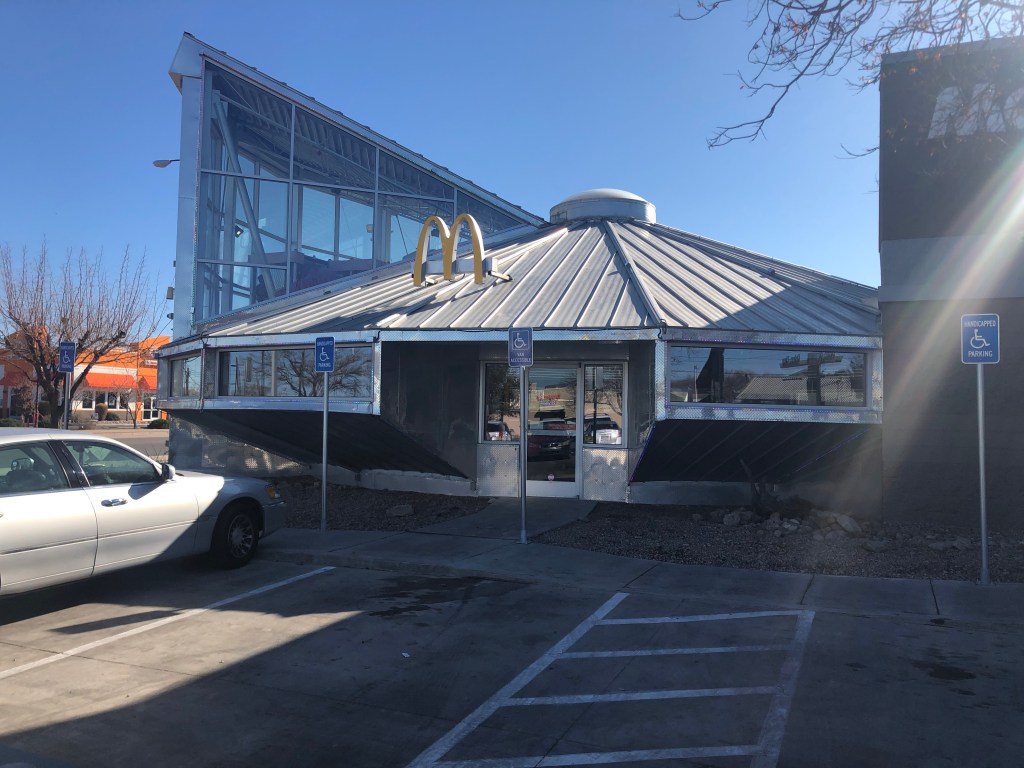
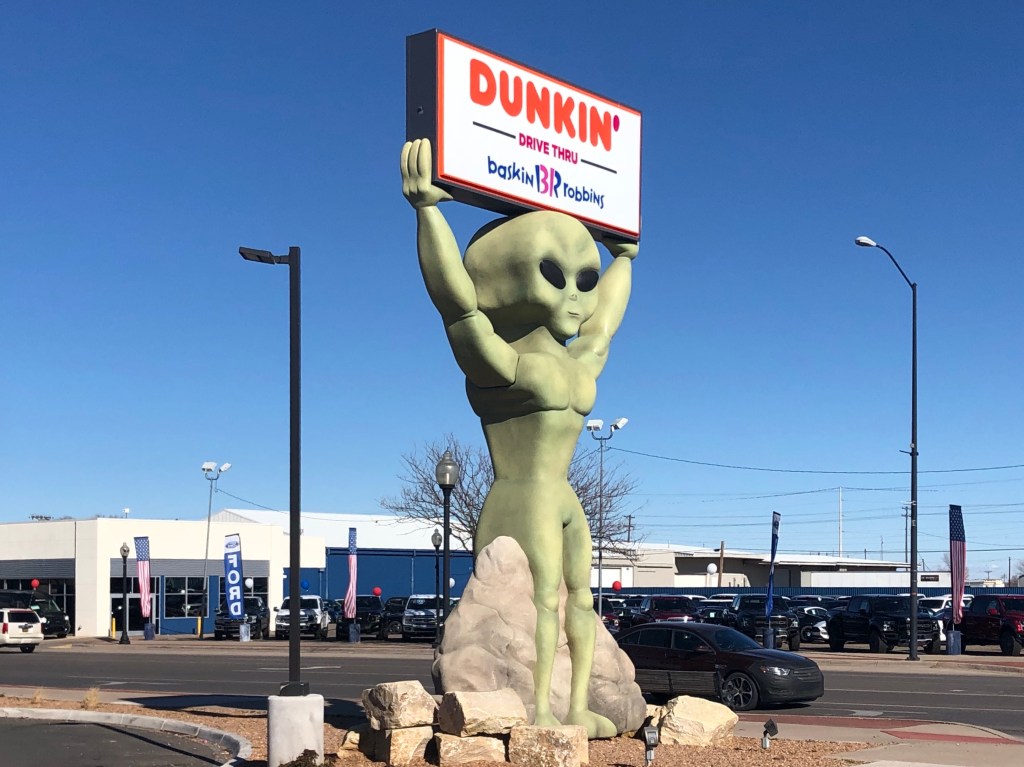
So, that was the first encounter with aliens today. Then I made my way to Roswell (population: 47,800). Now, Roswell is exactly what you’d expect: a medium-sized town that’s capitalized on its association with alien sightings (starting with a supposed UFO crash in 1947). One of the locals (a bartender named Lindsey) told me that tourism is the major industry here, so the townspeople tolerate all the hokum because it brings in much-needed revenue. Here’s a few pictures to illustrate the point:

Even the local McDonalds got in on the act, building their restaurant in the shape of a flying saucer.
I guess they’ve graduated from Reeses Pieces…

But the day was not exclusively filled with Aliens. Another recurring theme was Billy the Kid. You’ll recall that in Shakespeare I saw the building where Billy worked as a dishwasher, and in Las Cruces I visited the grave of Sheriff Pat Garrett, who killed The Kid in 1881. (On my US 60 road trip, I’d visited Billy’s gravesite in Fort Sumner, as well the the house where Garrett shot him.)

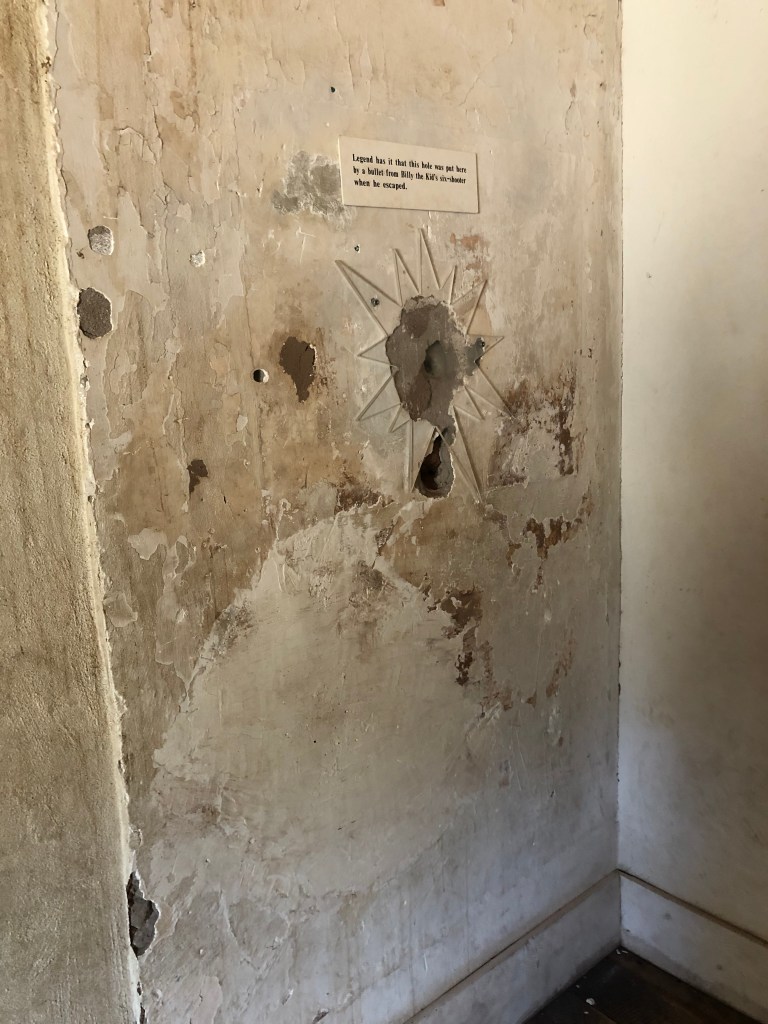
Today I found myself in the courthouse of Lincoln, NM, which is where Billy the Kid had been awaiting his execution for the murder of Sheriff Brady in 1881. The Kid managed to escape, though, by killing two deputies. The interior of the courthouse, which is largely unchanged from Billy the Kid’s time, still bears the bullet hole from Billy’s pistol shot that killed the first deputy.

The placard reads: “Legend has it that this hole was put here by a bullet from Billy the Kid’s six-shooter when he escaped.”

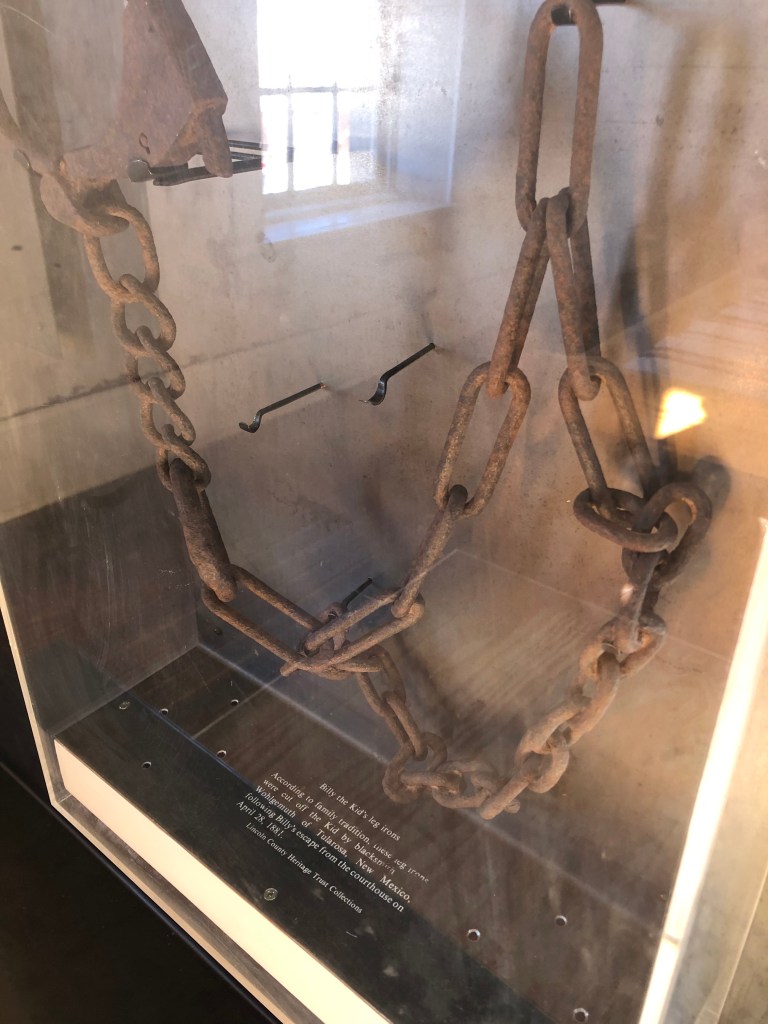
The courthouse also had on the display the leg irons that Billy was wearing when he escaped. There’s a fascinating account of how he engaged in casual conversation with an assembled crowd while he worked to break the chain with an axe, and then galloped away on a horse.

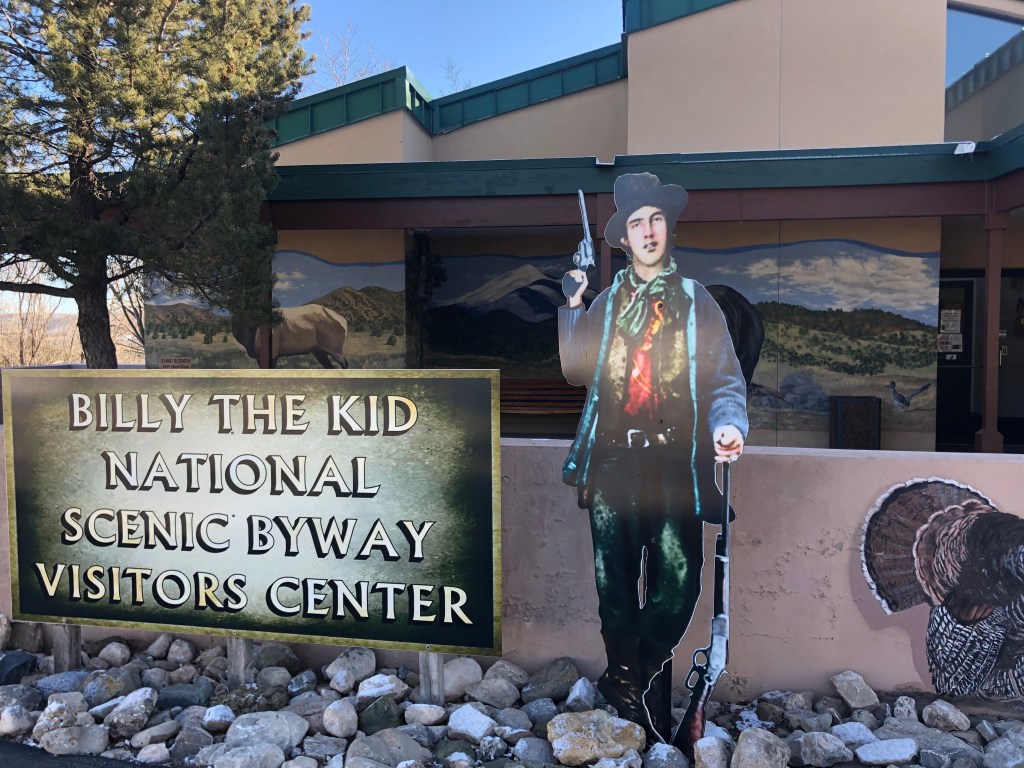
My last Billy the Kid sighting today was at the Billy the Kid National Scenic Byway Visitors Center. Unfortunately, it was closed. But I got a picture of the man in question:

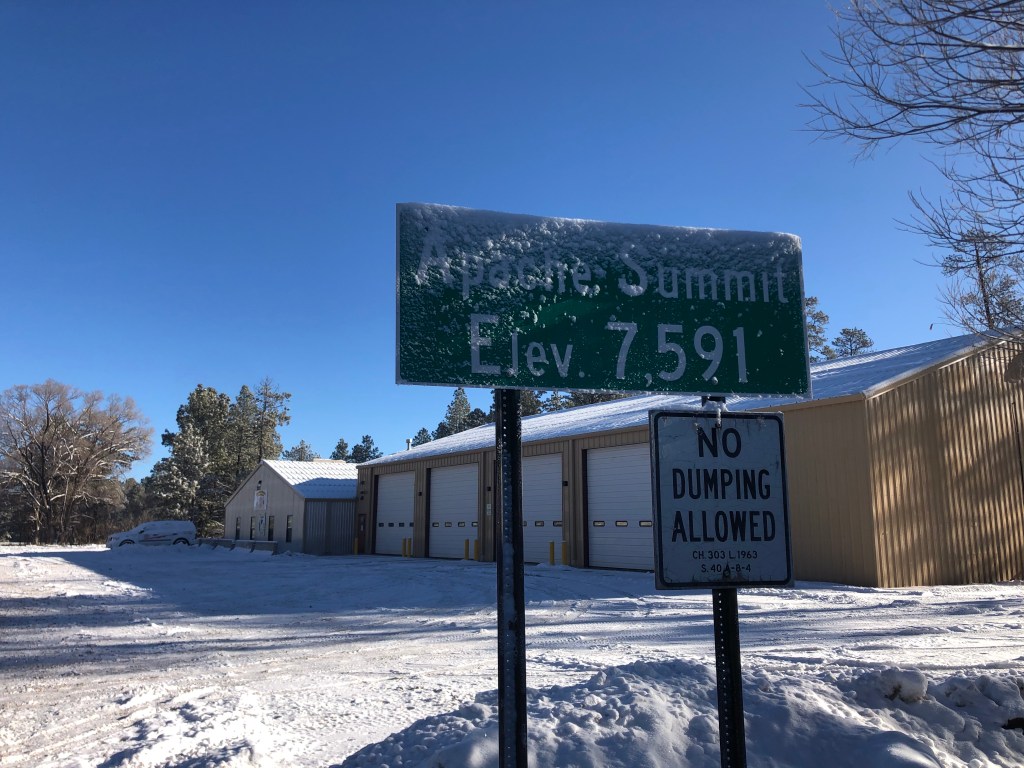
The “high point” of today’s trip, though, was this, in the Sierra Blanca mountains.

Finally, today had its share of folk art sightings. I’ve opined before that there’s something about the desert that gets people to create this stuff. Check out this sampling:

Or maybe, Dear John letters?
Alert readers will recall that I’ve run into two of these before, one in Reno and one near Palm Springs.
Altamont Pass redux

PAGE 2

(With a tip of the hat to the late, great Paul Harvey.)

You’ll recall that, in yesterday’s blog, we observed that the town of Shakespeare used to be called Ralston City. What I failed to note (and what was pointed out to by alert reader Peter D), is that the person who lent his name to Ralston City is also the person whom Modesto, California is named after. It’s true. William Chapman Ralston was a California businessman who financed part of Ralston’s mining operations (and, incidentally, founded the Bank of California). Later, Ralston would be asked to lend his name to a new town in California’s Central Valley. When Ralston demurred, the new town was named Modesto, a reference to the phrase “muy modesto” uttered by one of the Spanish-speaking gents at the naming ceremony.

William Chapman Ralston, Mr. Modesty

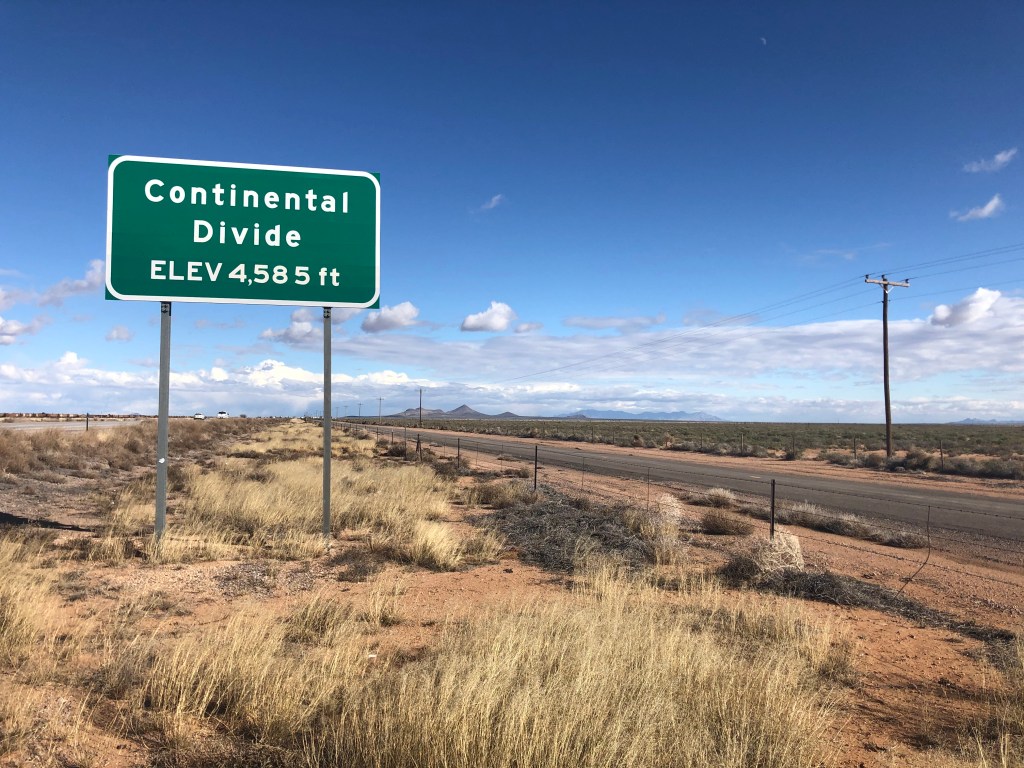
Finally, I completely missed an opportunity to better justify my claim in yesterday’s blog that the previous day had a “binary” quality. For during the day’s travels I crossed the Continental Divide. The Divide is something that’s mystified me each of the dozen or so times I’ve crossed it, in different locations around the country (though largely in the West). As near as I can understand, it’s a roughly north-south line dividing our continent into one side where rainfall drains westward, and another side where rainfall drains eastward. That’s binary, right? At least a little bit?

So, does this mean it’s all downhill from here?
Uncategorized

Binary

The motel at which I stayed in Globe was called the Nights Inn, or the Knights Inn (neither usage employing an apostrophe), depending on whether you were consulting the illuminated sign outside or the paperwork that you signed. I’m reminded that the Moody Blues’ 1967 hit has a similar ambiguity, showing up in some places as “Knights in White Satin,” perhaps in order to deny the carnal implications of the real title.

But the thing that struck me about the (K)nights Inn was the binary nature of its accoutrements. Take the room heater. It has only two states: blasting out air that’s hot enough to strip paint, or off. There is no middle ground. So, throughout the night, the heater cycled noisily between these two states, unwilling to simply provide a steady stream of warm air. This morning, the shower was revealed to be similarly designed, its hair-trigger knob releasing a cascade of water that’s either scalding or frigid, depending on where along a one-degree arc you point handle. The force of the water itself was enough to flay one’s skin, so I concluded that Arizona doesn’t require the flow restrictors that bedevil California plumbing. Still, the hot, forceful shower was strangely invigorating. Not bad for a nondescript motel in the middle of nowhere. When my wife asked me why I was staying at a $40 motel, I told her because I was feeling, at my age, I can afford to live it up.

The reason we’re talking about binary is that the settlement patterns out here in Arizona strike me as binary (for lack of a better word). You drive for miles and miles with nothing but red earth, cacti, and the occasional tumbleweed to see through the windshield. And then, suddenly, there’s a small settlement, like an oasis, where a small community of hardy souls are scratching out a living. And then, just as suddenly, all signs of civilization disappear and it’s just you and the saguaros again.

Could have fooled me…

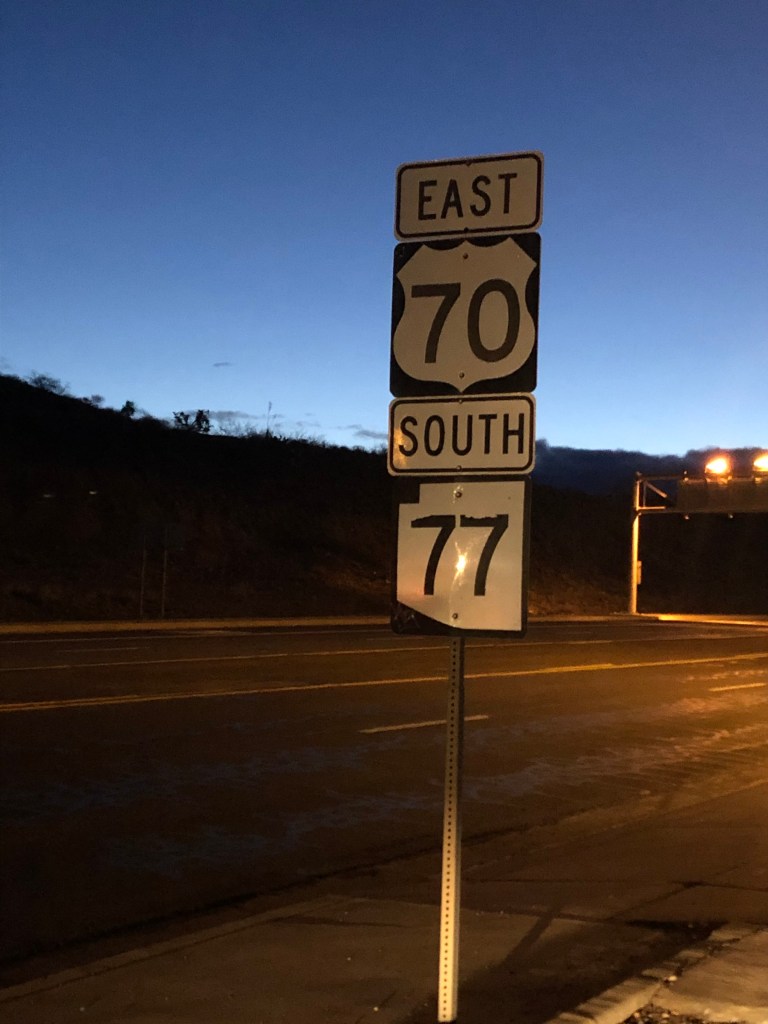
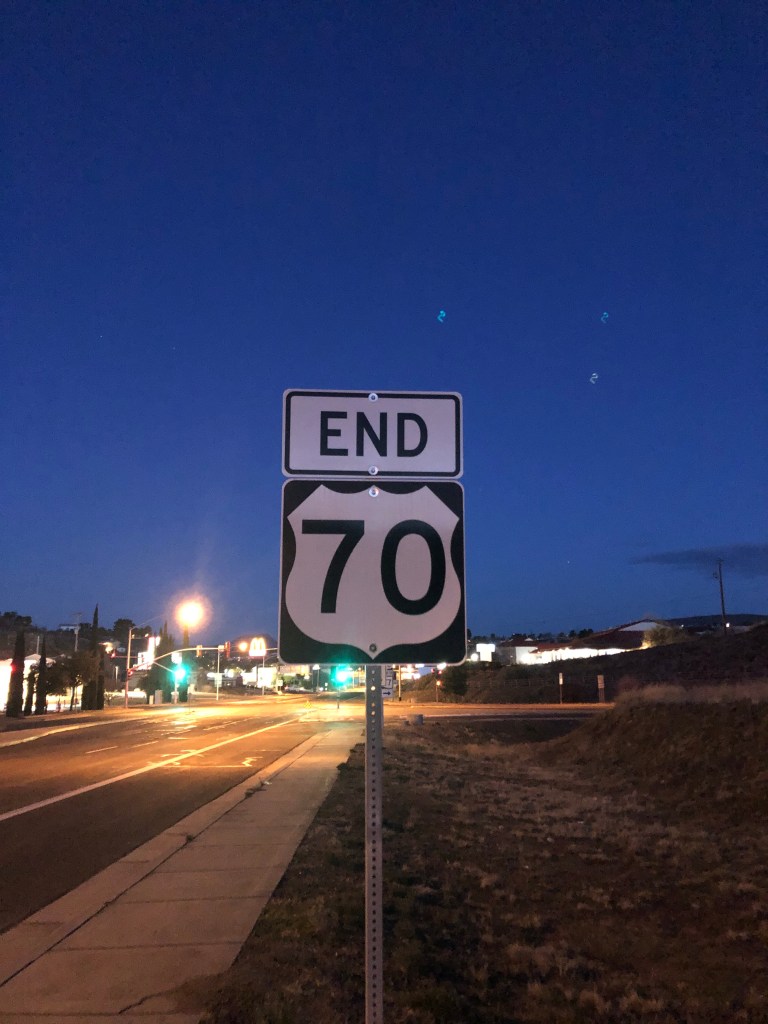
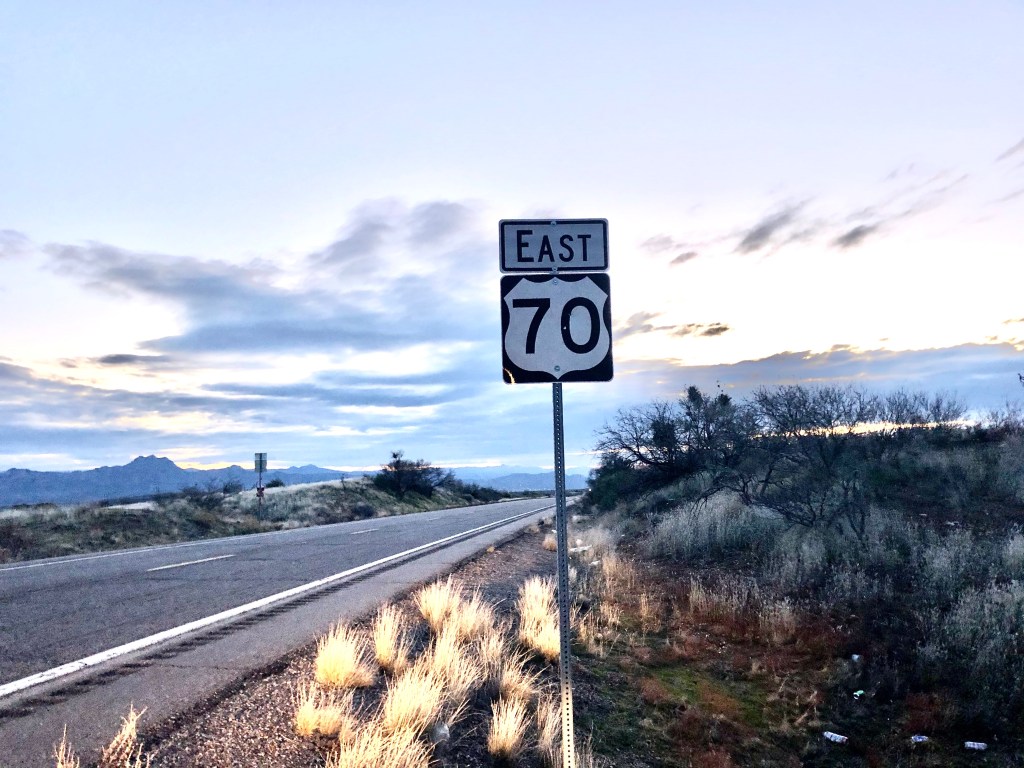
Today’s trek began in Globe, a town in western Arizona that, as I mentioned yesterday, I drove through last spring during my Route 60 trip. As I drove out of Globe on this alternate transcontinental route at daybreak, I marked the occasion with a photo of the westernmost Route 70 sign.

Buckle up!

And then, for good measure, I turned around and took a photo of the sign facing the opposite direction:

One man’s start is another man’s end. Or something like that.

I suppose I’m exhibiting geographical chauvinism when I call Globe the start of US 70, since the folks in the east surely consider Atlantic, NC to be the start. But let’s just agree that Globe is my start of US 70, one of the two binary options at each terminus.

The drive across Arizona was quiet, pleasant, uneventful. The sunrise in the east was a sight to behold.

Who needs corneas anyway?

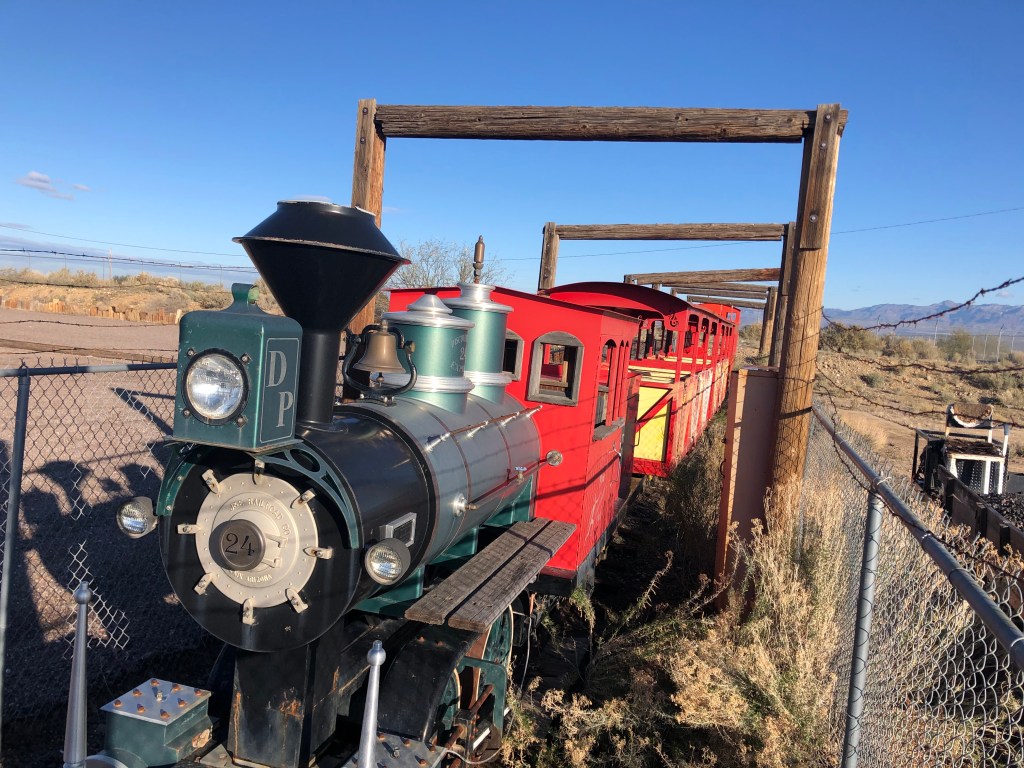
Mid-morning I came upon a small (sub-narrow-gauge) steam train sitting behind a fence. The train turned out (oddly, when you think about it) to be part of a space museum on the campus of Eastern Arizona College.

Besides the steam train (!), the museum has an observatory and three space telescopes, a space shuttle simulator, displays about space study and exploration, and a camera obscura. This last item is the one that intrigued me, for two reasons. First, is the Night Gallery episode of the same name, which I watched in 1971 which still gives me nightmares. Secondly, my friend Bill recently shared with me that there is a large Camera Obscura in Santa Monica. I haven’t yet visited that facility, so I figured I’d check out this one in Safford, AZ to see what all the fuss is about .

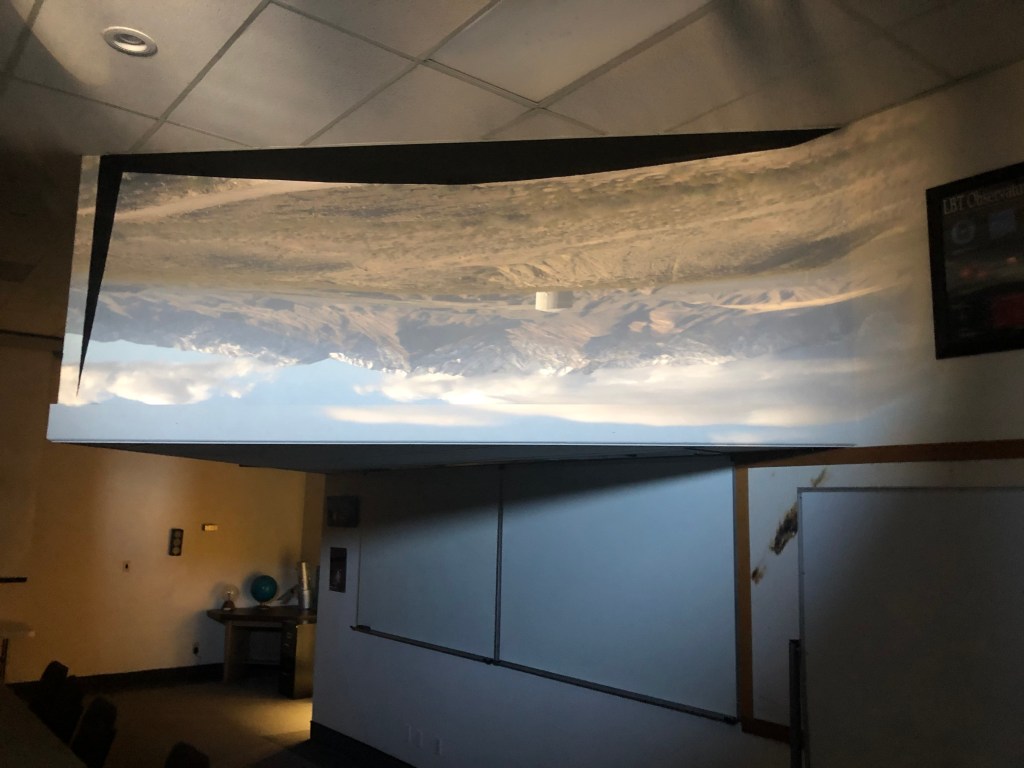
I’m sorry to report that the device in question is little more than a large lens or two that projects a landscape image from outside the building onto a screen inside the building. Here; see the image for yourself:

Careful observers will note that the landscape is upside down. Otherwise, it’s exactly the same image you’d see if you just looked out the window. The tour guide showing me this wonder of science did just that; unshuttered a window to let me see that it was indeed the same image. I’m still not sure what the practical use of this device is.

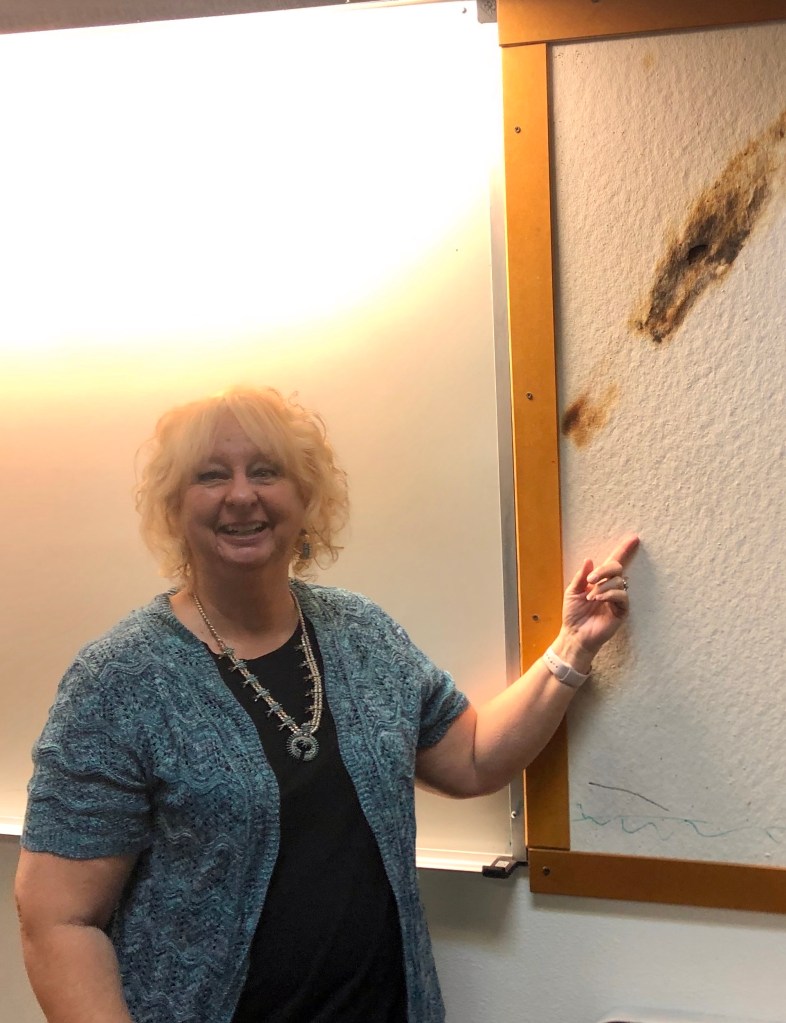
But the tour guide (Jackie) was worth more than the price of admission (which, truth be told, was zero). She pounced on me the moment I walked into the building, and it was clear that I was her first, and probably only, visitor of the day. She showed me all around the museum with all the excitement of a girl showing off her presents on Christmas morning. You had to admire her enthusiasm.

Jackie, showing off a burn caused by the camera obscura accidentally focusing the suns rays on the wall. For real.

Eventually I told Jackie I had to get back on the road, and as I backed out of the building she encouraged me to come back and see the telescope next time I’m in town. At first I thought that will never happen. But then I remembered that I thought the same thing the first time I drove through Globe last year….

I returned to the familiar pavement of US 70. As I mentioned on the US 50 and US 60 blogs, there’s something very comforting or reassuring about taking a single road across the US. I mean it’s really hard to get lost, as you just have to remember one number (70) and one direction (east). My hat is off to the folks who post signage on these US highways.

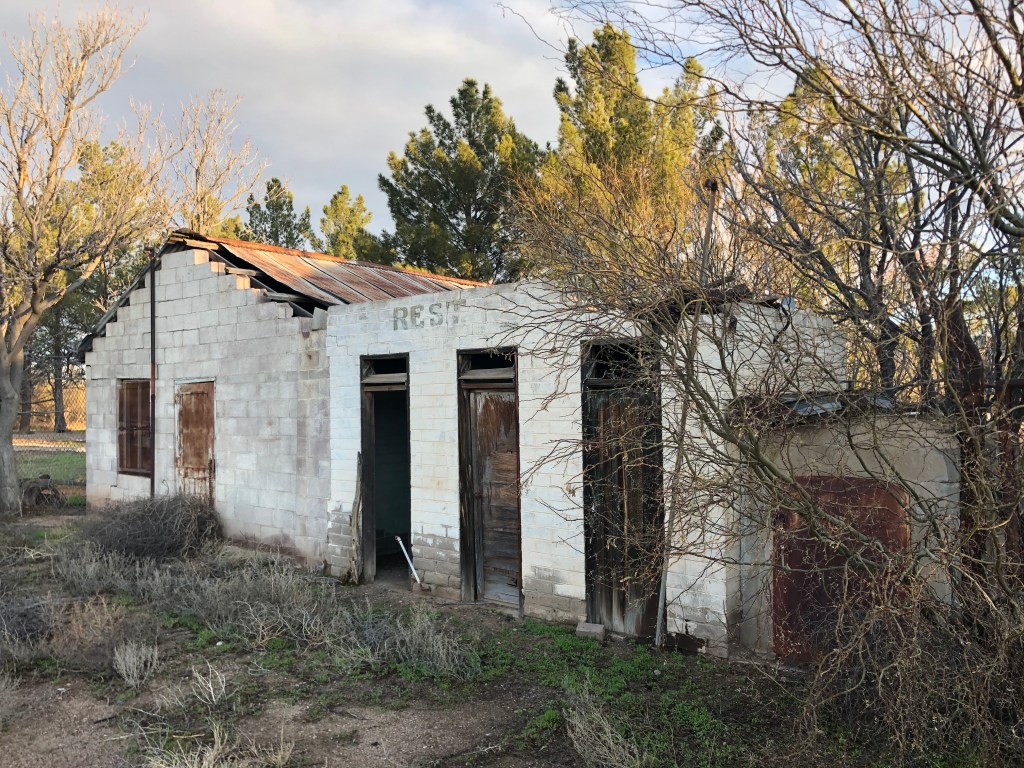
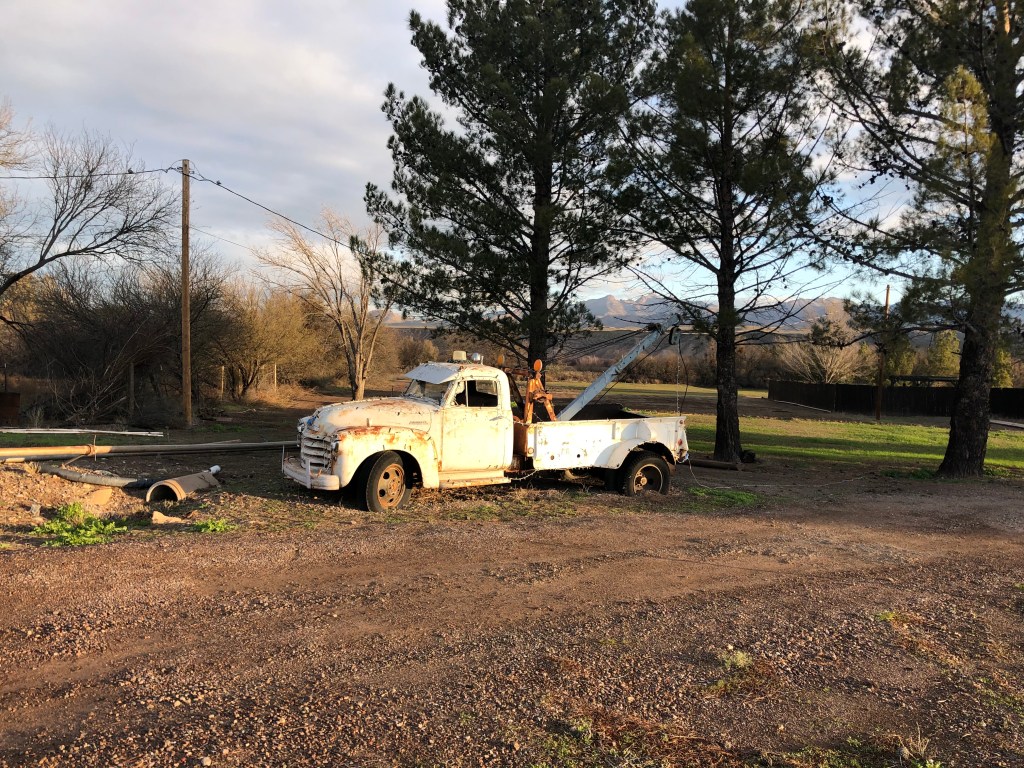
On more than a few occasions today I noticed old, abandoned structures and vehicles set back from the road. I’m often saddened by these tableaus, which stand like headstones marking lives that were once lived here . The fact that these artifacts weren’t moved, or demolished, or rehabilitated suggests the result of some catastrophe (bankruptcy, a death). Or maybe they were abandoned in despair, cut loose as their owners chose to start again somewhere else. But out here on these lonely roads, there seems to be an inordinate number of these markers bearing mute testimony to a forgotten, unmourned past.

Inexplicably, the water in the restrooms still works.
Mater’s nephew, perhaps.

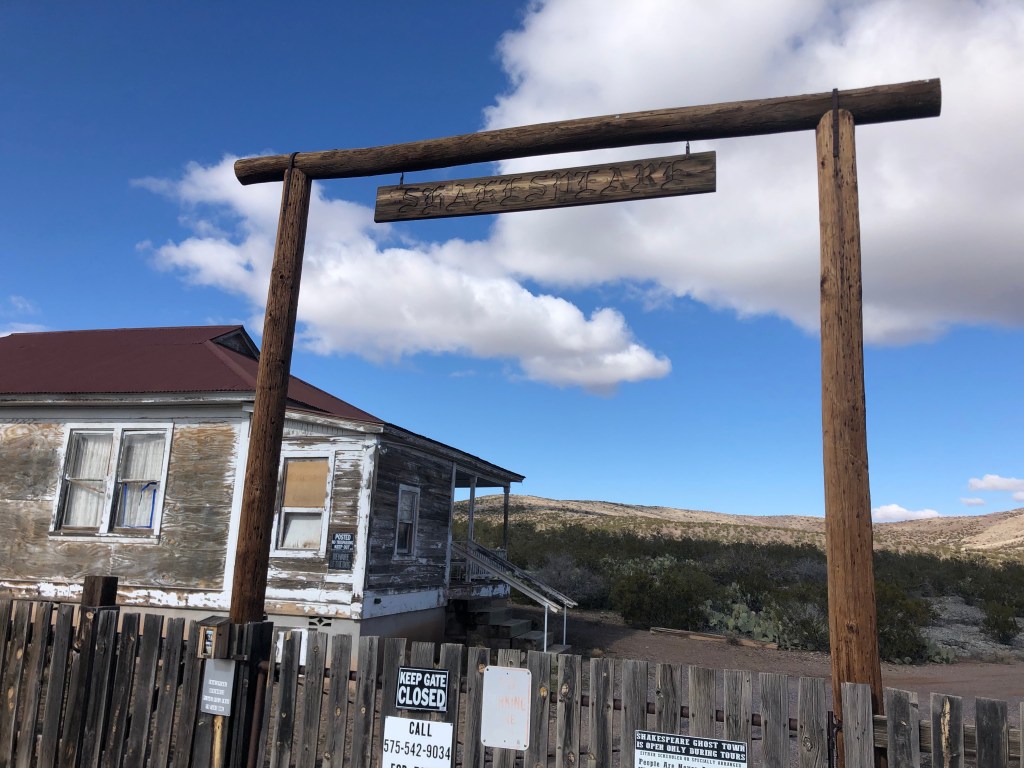
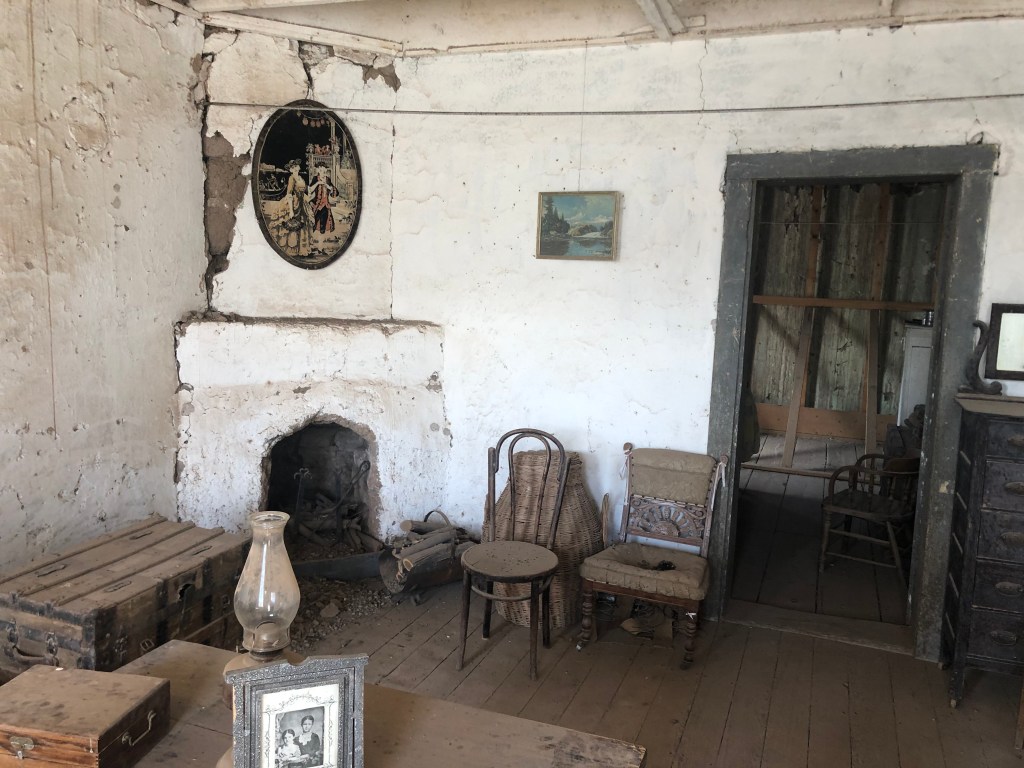
And yet, I experienced an entirely different series of thoughts when I came upon the ghost town of Shakespeare, N.M. (population: 0). An earlier incarnation of the town was named Ralston City, home to several thousand miners during the silver boom of the 1870s. As the easy silver played itself out, landowners tried to attract investment back into town by seeding the nearby hills with diamonds, hoping to convince eastern financiers that the land was valuable for diamond mining. The scam was quickly exposed, however, in part because cut, faceted diamonds are pretty unusual in the wild…

Shakespeare, N.M. Did you ever expect to see those words in the same phrase?

But the town received a new life, and a new name, when Col. William Boyle bought up key mining claims and renamed the town “Shakespeare,” thinking, perhaps not illogically, that it evoked colorful history, education, and literacy. More importantly, the new name distanced the town from that unpleasant business of the diamond hoax. The renamed town enjoyed some prosperity during a second mining boom, and then gradually lost its population around the turn of the century. That’s where you’d expect this story to end, and perhaps a few of the buildings or their foundations could mutely tell the grim tale to passersby on US 70 like myself. But instead, a couple named Frank and Rita Hill bought the town in 1935. After trying their hand at ranching, they decided that the town’s rich history, made manifest by its old buildings and artifacts, were the real value here. And so they had it designated as a National Historic Site, did considerable rehabilitation to the structures, and began giving tours. Their daughter Janaloo and her husband Manny took over the operation after Frank and Rita passed. Then Janaloo died, leaving Manny to run it. Manny died just over a year ago, in 2018.

And once again, you’d think that would be the end of the story. But Janaloo and Manny had had a daughter, who married a young man (Dave) out in Ohio. The two of them came back to Arizona after Manny’s passing, and Dave now runs the ghost town.

It was Dave who met me at the gate, and it was to Dave that I paid $7 for a two hour, custom, solo, guided tour of the property. That’s fully two-thirds of the length of the Minnow’s tour on Gilligan’s Island. For only $7. You’ve got to wonder how he makes a go of this. (Yes, I left a hefty tip at the conclusion of the tour.)

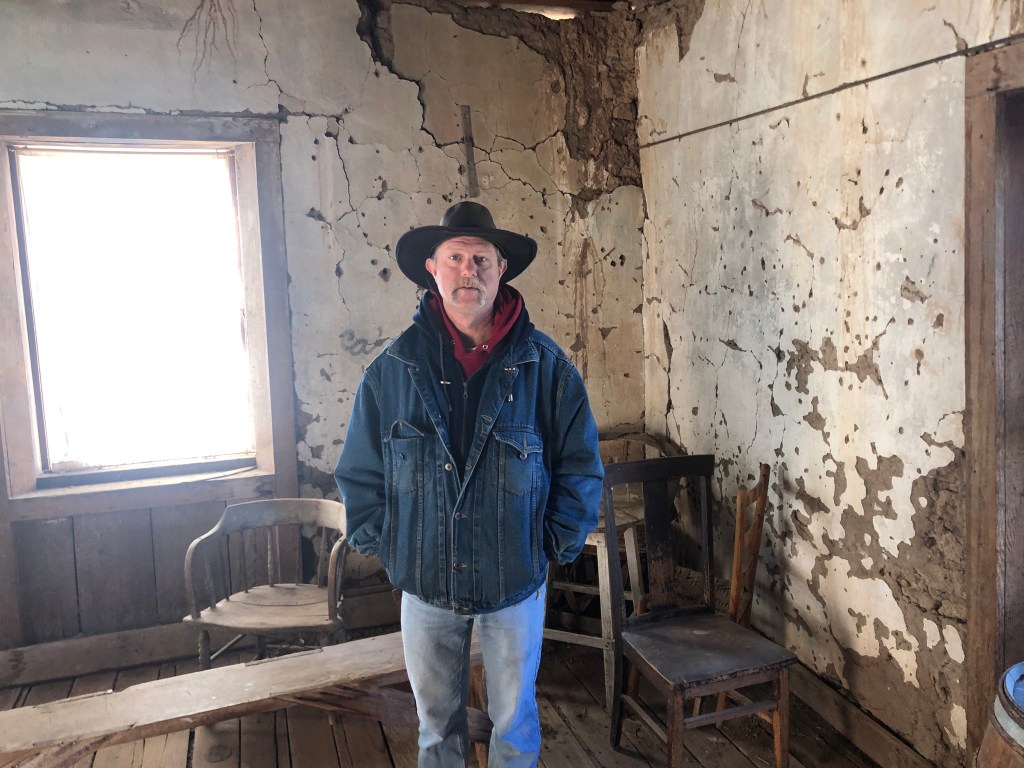
Dave. You can’t see it, but he’s wearing a six-shooter that may or may not have been authentic.

I won’t go into more detail about Shakespeare, other than to recommend you visit it whenever you’re in Arizona. And to note that, unlike the abandoned buildings I’d seen along the road earlier, the buildings in Shakespeare, despite their worn condition, inspire hope rather than regret. They are owned and cared for and — can I say it? — loved by Dave, and even by the small trickle of tourists that visit it. I suppose that’s what’s meant by keeping a business or a dream or a ghost town “alive.” The stories are still told, with gusto.

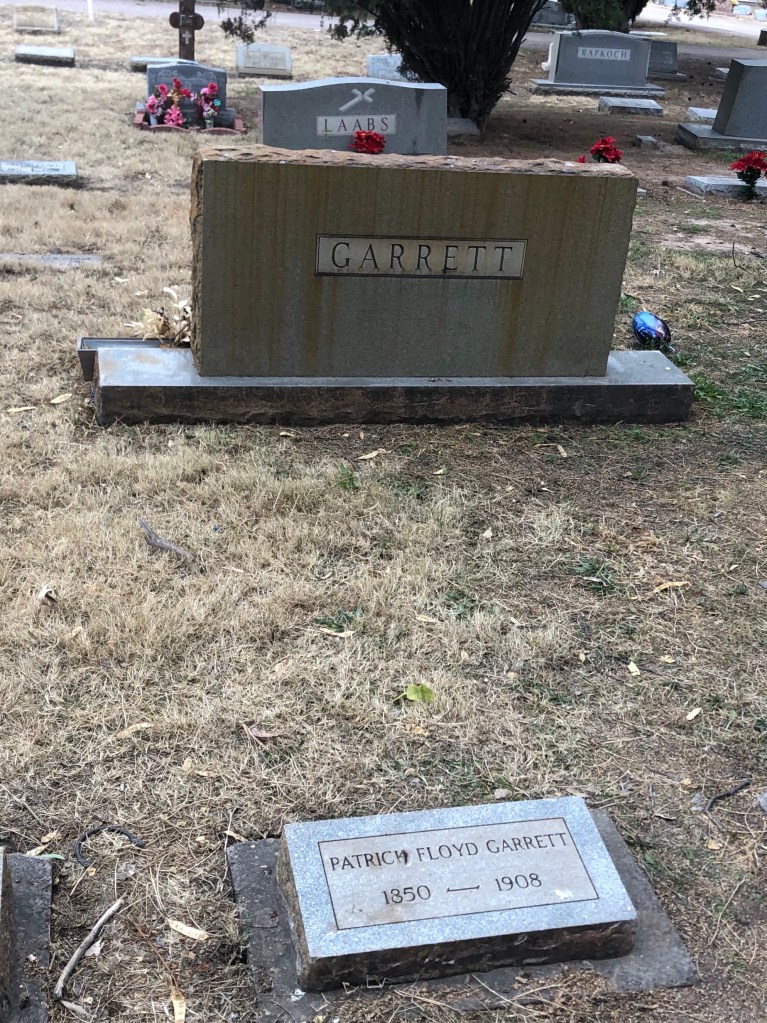
One coda to the Shakespeare story: Billy the Kid evidently worked as a dishwasher here for a short spell. Alert readers will recall that The Kid has been a recurring figure in my travels. Last year, on my US 60 trip, I visited his grave in Fort Sumner, NM. And shortly after leaving Shakespeare, I paid a visit to the grave of Sheriff Patrick Floyd Garrett, who is reputed to be the person who shot The Kid in 1881.

All in a day’s work.

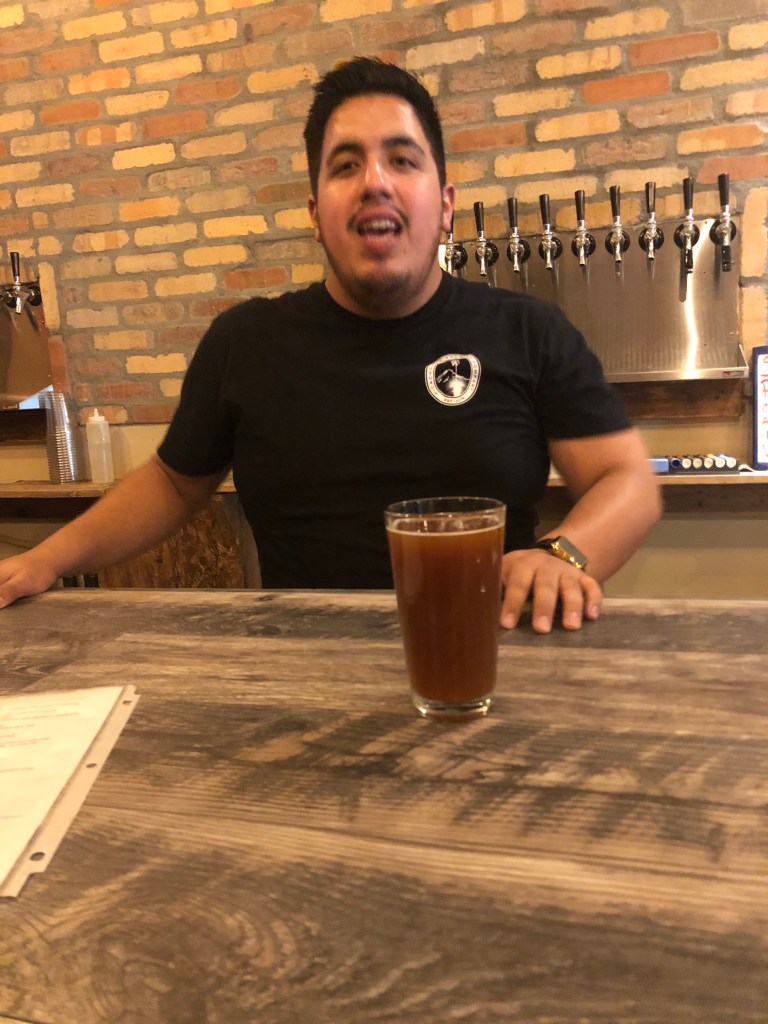
As the afternoon wore on, I was in need for sustenance and a libation, so I dropped by a newish brew pub in Las Cruces, NM named Picacho Peak Brewing Company. There I consumed one of the best BLTs ever, along with fries that were perfectly cooked and doused with enough salt to do major cellular damage to my insides. It was a delicious meal. But when I asked the bartender (a young man of 24 named Juan) to help me choose a beer to go along with the meal, he confessed he couldn’t help because “I don’t like beer.” Now, I know there are lots of people who don’t like beer, but I doubt there are lots of bartenders who don’t like beer. No matter, though. I found a good libation (detailed below), and talked with Juan about life in Las Cruces. He’s studying hospitality and food service at the local community college, and managing events at the brew pub. After he graduates, unlike most of the young people I talk to in these towns, Juan wants to stay in the town and start his own business. I would not be at all surprised if he’s successful with this dream.

Juan, future teetotaling bar owner.

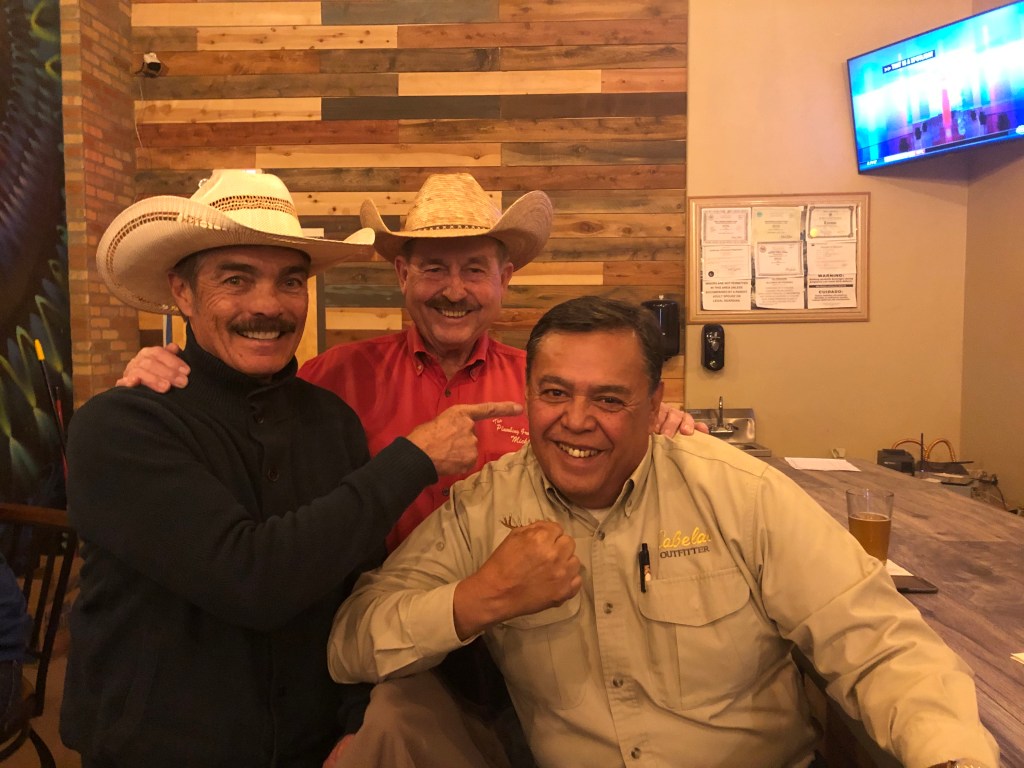
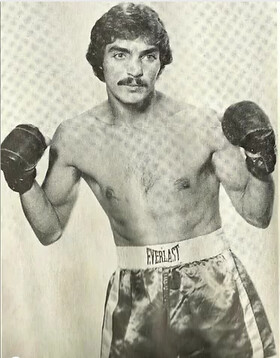
While Juan and I talked, a few regulars came in and we all started talking. It turns out that one of them (Rocky Burke) is a former pro boxer and is evidently a favorite son in Las Cruces. Rocky kept showing me pictures on his phone of him with various boxers. But he was most proud of appearing in the movie “Love Ranch” (a 2010 movie with Helen Mirren and Joe Pesci).

Rocky’s on the left.
Rocky at his peak.

I have to confess this was one of the most friendly, welcoming group of guys I’ve ever seen in a bar. We drank our beers and chatted, but the road was calling to me so I made my goodbyes and got into the trusty Ford. I’d only had one beer, but this is what I saw as I drove down the street:

Ten minutes later I encountered a sobriety checkpoint. I’m not making this up.

BREW OF THE DAY

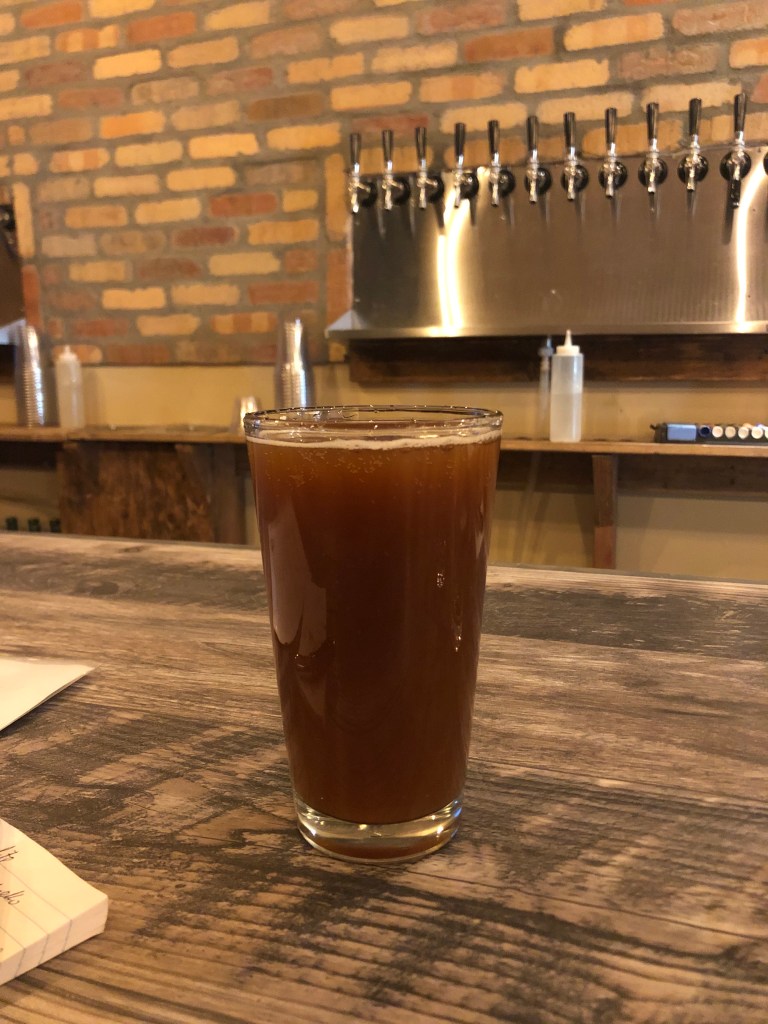
Today’s brew was a Green Chile Amber from Picacho Brewing Company in Las Cruces. It’s hazy to the point that it looks like unfiltered apple cider. For something with “green chile” in its name, it really didn’t taste very spicy. It didn’t have much of a nose on it at all (as opposed to myself…), and the hops were barely noticeable. The first few sips were unremarkable, bordering on disappointing. But the mouthfeel was substantial without being heavy, and after a bit I began to feel a warm glow. (The ABV on this beer is 6.2, which isn’t huge, but still.) I have to conclude that the chiles, without making the drink spicy, make it “warm.” In the end, I enjoyed it as a pleasant drink for a cold January day. Which today was.

The heat creeps up on you.

Tomorrow it’s off to Roswell! Let’s hope you hear from me tomorrow evening…

Uncategorized

The Broadway of America

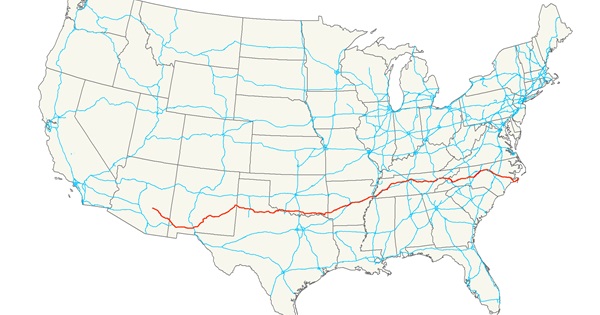
On this dawn of a new year, I’ve set out on my latest cross-country road trip. This one travels the entire length of US Route 70, sometimes known as the Broadway of America. Like US 50 and US 60 (which I drove in 2018 and 2019, respectively), US 70 is a transcontinental road that connects many small, forgotten towns. Along most of the way, the route is a lightly-traveled two-lane road, but when it enters a town it often becomes the main boulevard . Hence, the “Broadway of America” sobriquet.

2,381 miles of southern fun!

US 70 was conceived as a southern counterpart to the north’s Lincoln Highway. (The Lincoln Highway, established in 1913, ran from Lincoln Park in San Francisco to Times Square in New York.) US 70 was originally known as the Lee Highway, presumably as a political response to the northern route’s being named after the Confederacy’s nemesis. Both the Lincoln Highway and the Lee Highway were among the first transcontinental automobile routes in the United States.

US 70 no longer extends all the way to the west coast. It now begins in Globe, Arizona (population: 7,532). So, this afternoon I drove the 481 miles from Los Angeles to Globe, pretty much without stopping, since this first leg of my trip doesn’t really “count” as part of the intended journey.

I write this from a cheap motel in Globe. I’m reminded that I came through this town last spring, while driving the length of US 60. It is here that US 70 branches off southward from US 60, giving the good residents of Globe (as well as the not-so-good ones, of course) a second option for driving to the east coast. I’m looking forward to seeing how this southern route differs in scenery and culture from its mid-country sister route.

Starting tomorrow, I’ll spend a week driving the length of US 70 through Arizona, New Mexico, Texas, Oklahoma, Arkansas, Tennessee, and North Carolina, ending up in the town of Atlantic, NC. I’ll then drop off the rental car and fly home. For tomorrow, though, I should end up somewhere in New Mexico. (As is known by those of you who’ve followed my earlier blogs, I have no definite mileage planned for each day; the only fixed deadline is my flight home on January 9.)

I’ll be posting about my travels daily. Until then, I wish you all a Happy New Year.

sdb