
cemeteries · churches · Halloween Cocktails · trains

Poe-tober 2022

Chartreuse? Nevermore!

We interrupt this month of Halloween cocktails to bring you breaking news that I’m in Virginia for an Edgar Allan Poe pilgrimage. I will give you the gory details in a moment, but first let me share some other breaking news:

The Twentieth Anniversary Edition of the Dome of Foam is live!

Uncle Edward’s Fever Dream

I am aware that a number of my readers respond positively to any railroad-themed content from my road trips, so they will be especially heartened by this news. The Dome o’ Foam, for those of you not already familiar, is a quirky, hard-to-define, and entirely mesmerizing collection of railroad history and miscellanea, focusing in particular on the Southern Pacific Railroad. The Dome is the brainchild of my Uncle Edward — E.O. Gibson, to you. Alert readers will recall that Uncle Ed has periodically made appearances in this blog. The new, 20th anniversary edition of his site contains a dizzying array of new content, updates on old content, photographs, personal stories, and cartoons. You owe it to yourself to check it out here.


So, on to my Poe trip. As everyone should have learned as a school child, Edgar Allan Poe lived in various cities of the East during the 19th century, focused largely on Richmond, VA (where he grew up) and Baltimore, MD (where he died under mysterious circumstances). Three years ago (before Covid shut down public gatherings) my friend Chris and I attended the International Edgar Allan Poe festival, held literally in Poe’s old neighborhood in Baltimore, MD. Today Chris and I bookended that trip with a visit to Poe’s old neighborhood in Richmond VA.
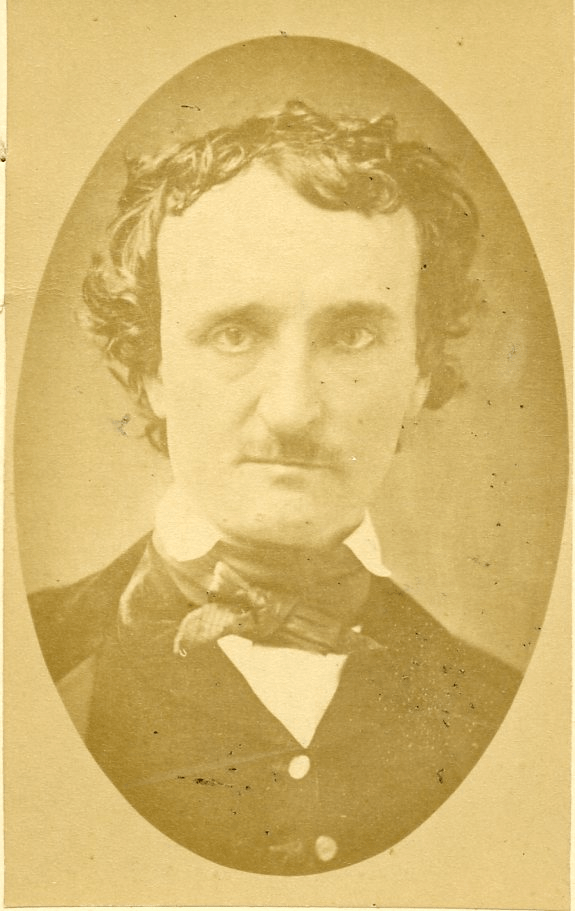
Before beauty filters.

The main Poe attraction in Richmond is the Poe Museum on E. Main Street. You may recall that I drove right by the museum on my Route 50 trip in 2018, as Route 50 becomes Richmond’s Main Street and takes you right through the neighborhood. Alas, the museum was closed when I passed it. So this time, I was finally able to darken its doorstep.
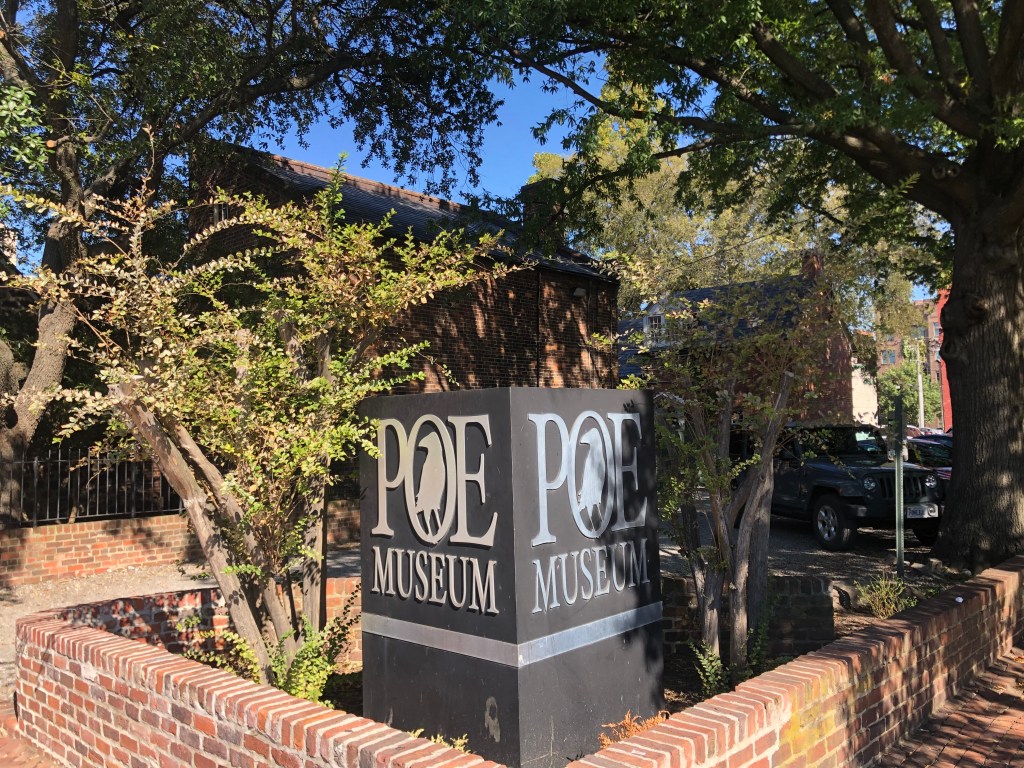
Better late than never.

It’s a remarkable museum, with the world’s largest collection of authentic Poe memorabilia: His bed, writing desk, walking cane, various letters, articles of clothing, photographs and daguereotypes, books, other personal effects, and even the staircase and fireplace mantel from prior Poe residences. It also has a meditation garden and major shrine to Poe.

Two cats–Edgar and Pluto–roam the museum grounds like the own the place…which in a way they do.
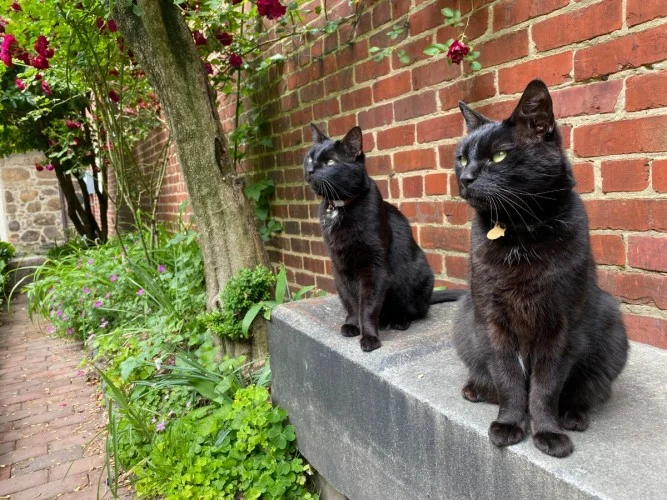
Edgar and Pluto…or is that Pluto and Edgar?

In front of the museum is a large granite block with Poe’s name and birth and death years inscribed on it. No, it’s not a giant tombstone; it’s the pedestal base for a Poe statue that was created in the mid-1950s–when Richmond finally decided to embrace Poe.

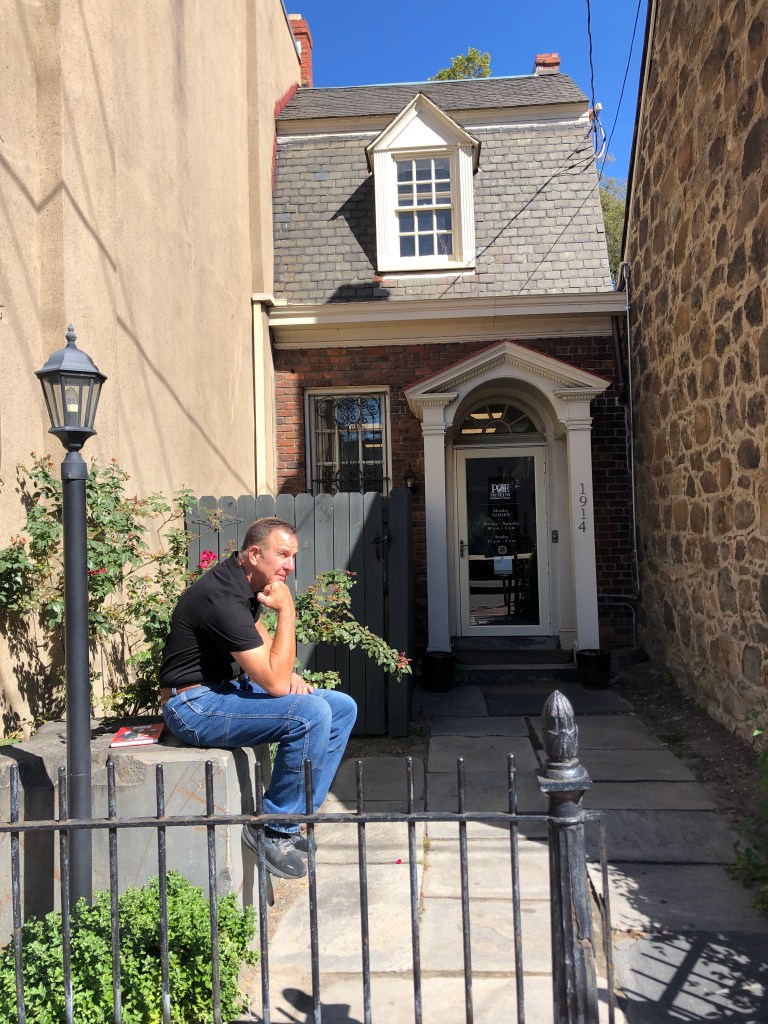
Channeling my inner Dobie Gillis

For reasons that aren’t entirely clear, the pedestal base was discovered in a local landfill by some kids many years later (in 1973, to be exact). It seems that it had been rejected by the city, and a new one had been cut. This “new” base sits, with the statue atop it, in Richmond’s capitol park.
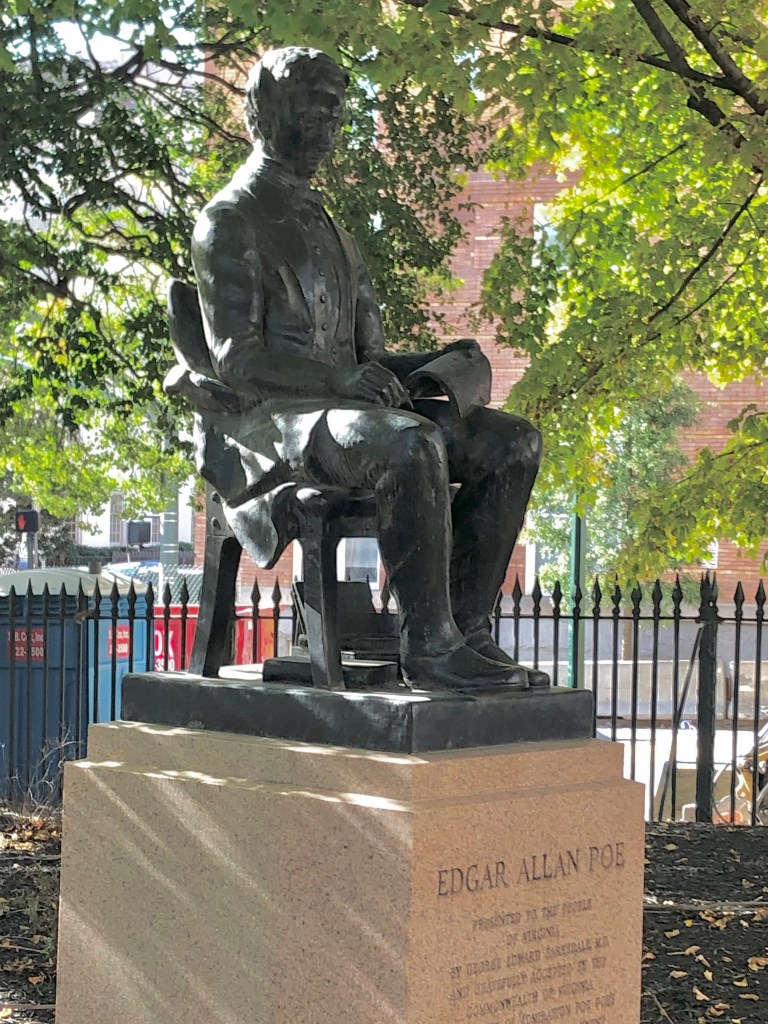
Poe statue in Capitol Park

After the museum, Chris and I visited a number of other Poe-related sites in Richmond, as depicted below.
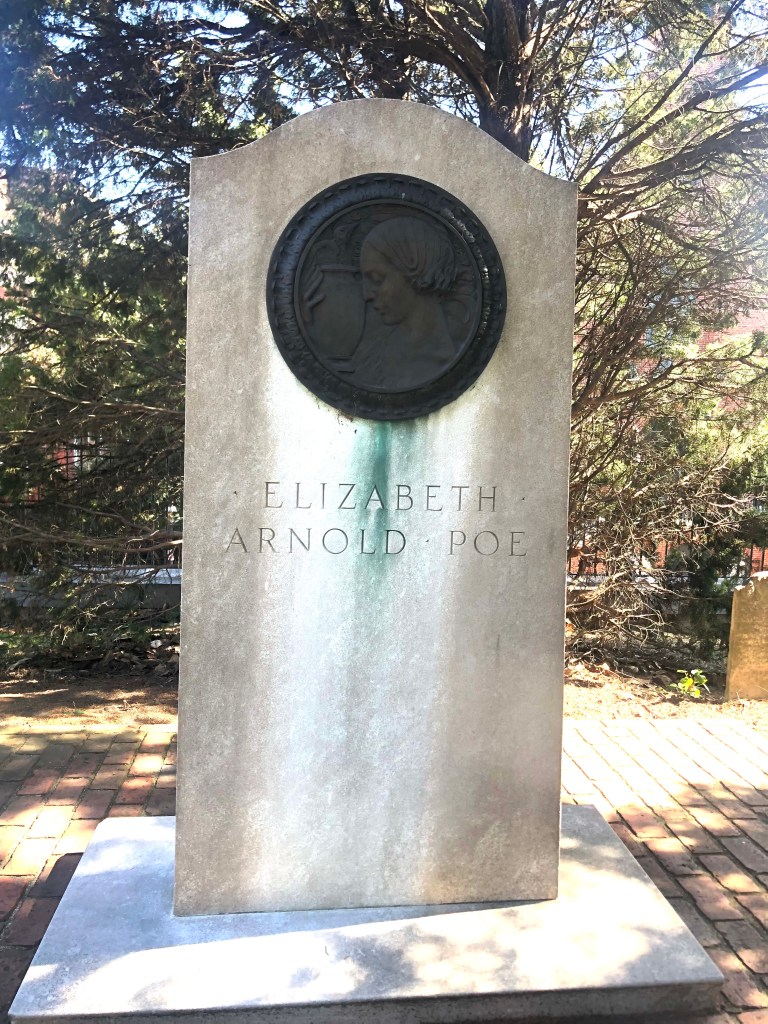
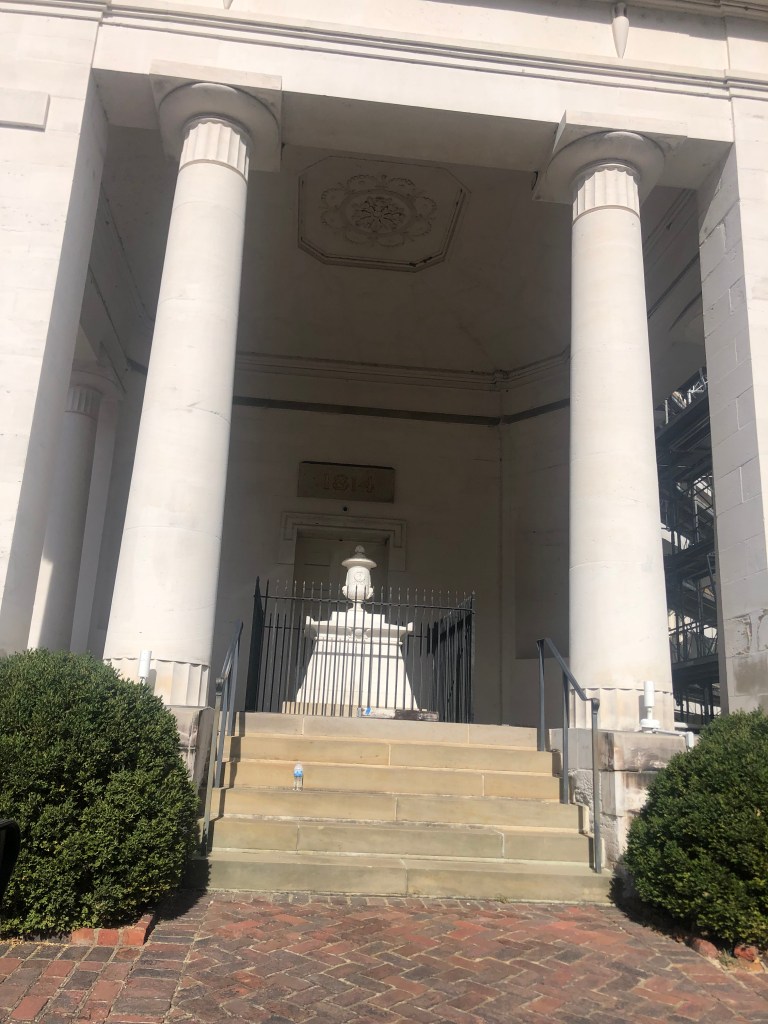
Grave marker for Poe’s mother–an English actress who died of tuberculosis in Richmond at age 24, when Poe was only 2.
Richmond’s Monument Church, where John and Frances Allan were parishioners. The Allans took in the orphaned Edgar Poe (as his father had abandoned the family before Eliza Poe’s death). This is how Edgar Poe became Edgar Allan Poe.
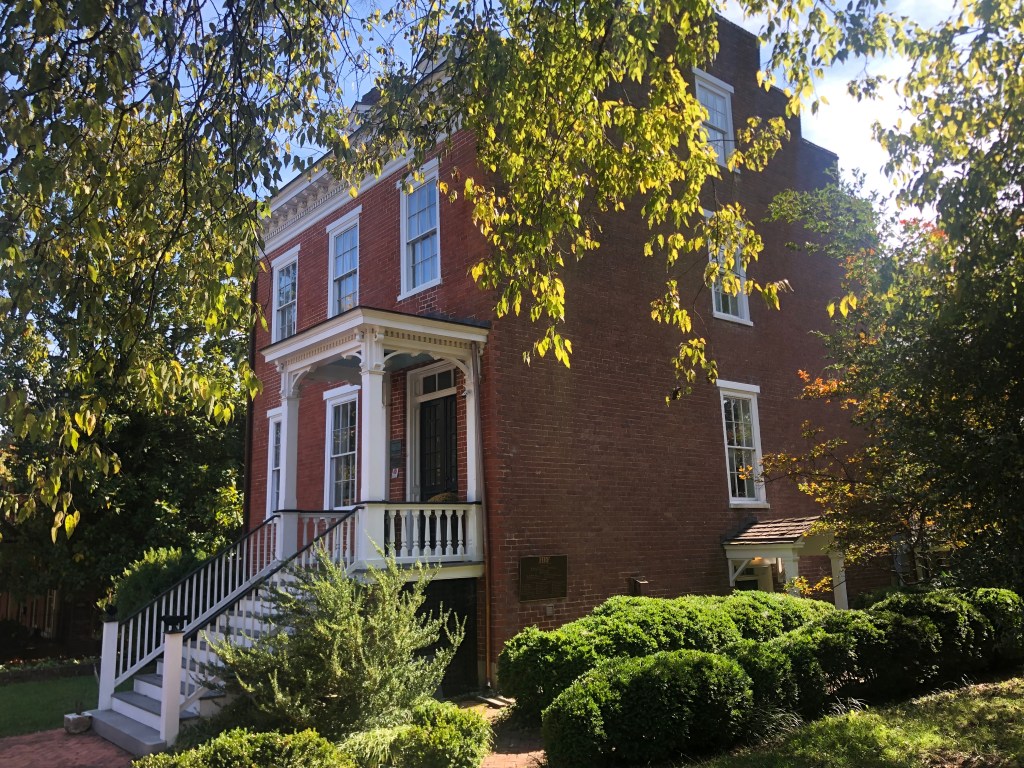
The house of Elmira Shelton. Poe became engaged to Elmira at the tender age of 16, just before leaving for UVA. Her father disapproved of the courtship, and intercepted Poe’s letters to Elmira. Thinking that Poe had forgotten about her, Elmira married another man. Later, Poe famously married his own 13-year-old cousin. But after she died of tuberculosis and Elmira’s husband also died, Poe and Elmira again became engaged. To complete the tragedy, Poe himself died at age 40 just a week and a half before he and Elmira were to be married.
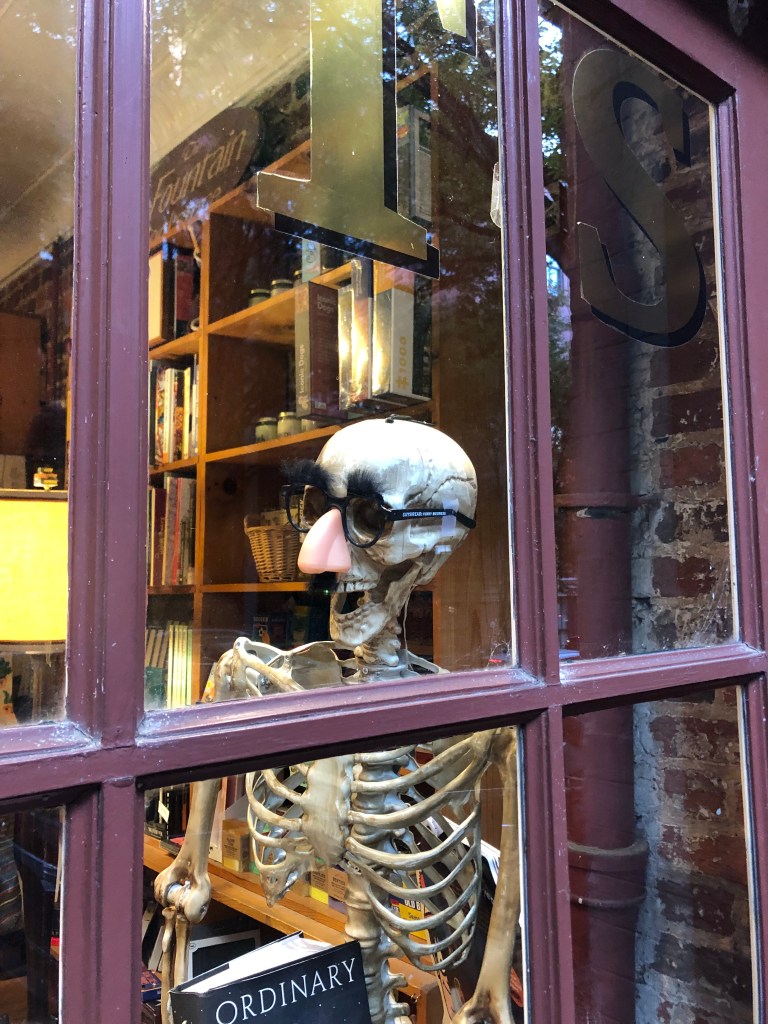
Skeleton in a local bookstore. It’s not directly Poe-related, but somehow it’s appropriate.
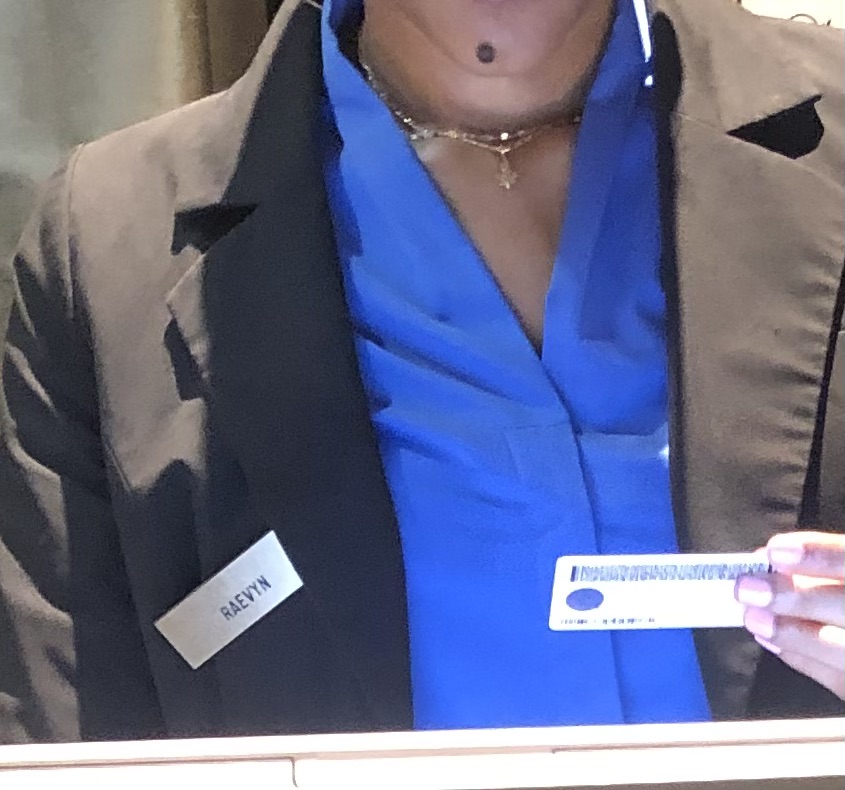
And to round out our Poe-themed day, the receptionist at our hotel is named “Raevyn” (as in, Raven).I’m not making this up.

I hope that all this explains why I wasn’t able to prepare a Halloween cocktail for the blog today. I promise to double-up my cocktail posts when I get home.

Halloween Cocktails

Skeleton Gelatin

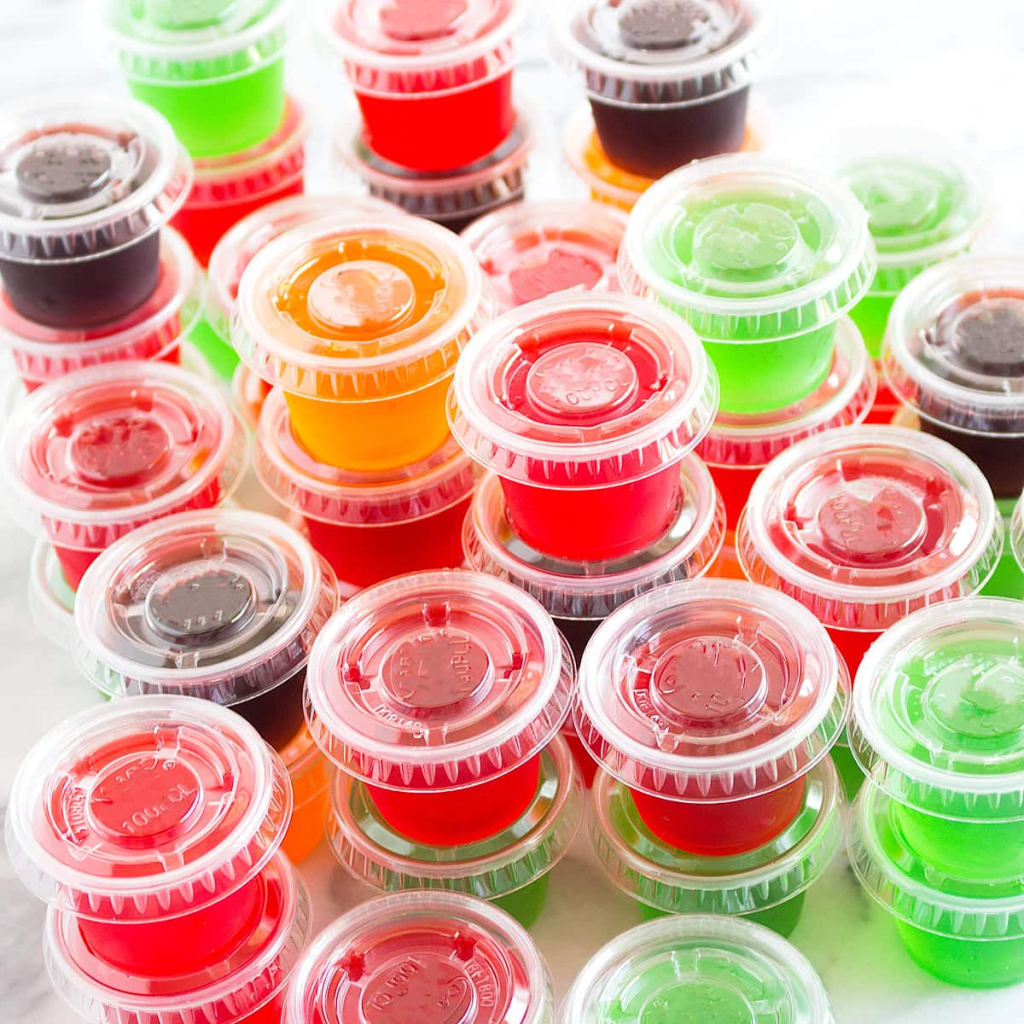
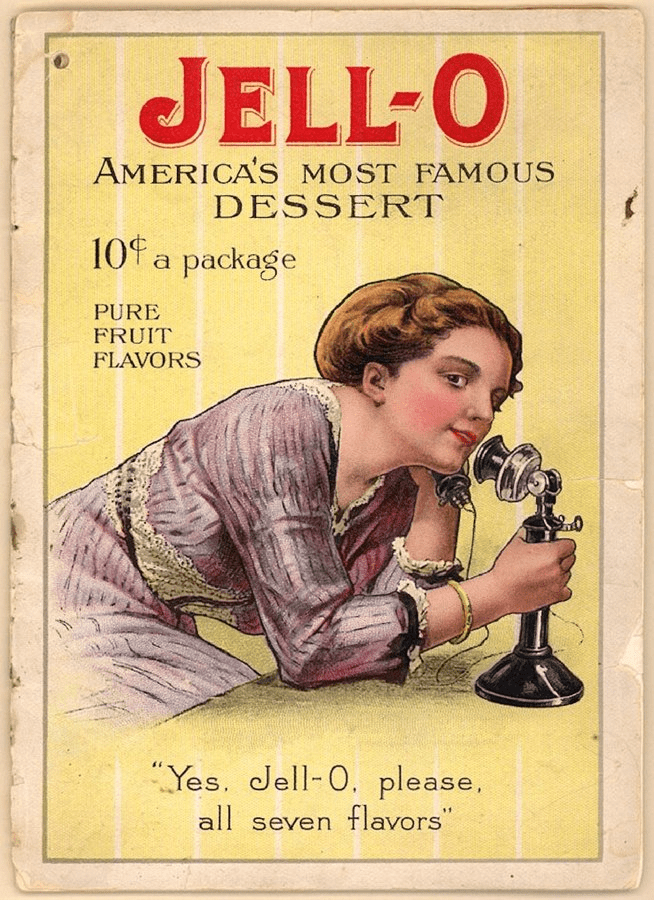
I’ve been advised by some of my younger readers (i.e., those born after Al Gore invented the Internet) that I should branch out this series of cocktails to include Jello shots.

Now, I have never partaken of this gelatinous “libation.” But evidently it’s not just a modern trend. According to Wikipedia, gelatin/alcohol mixtures date back into the 19th century, with rougher approximations (with aspic and wine, for example) dating back centuries before that. Modern Jell-O itself was invented in 1897, and the first modern Jell-O shot recipe was published in 1902.

And yet, Tom Lehrer (of “Vatican Rag” fame) claims to have invented the modern jello shot as a way to circumvent the alcohol ban at a Navy base. I don’t know about that, but it does seem that the concoction has various benefits, such as being spill-proof and tasting like an innocuous dessert.

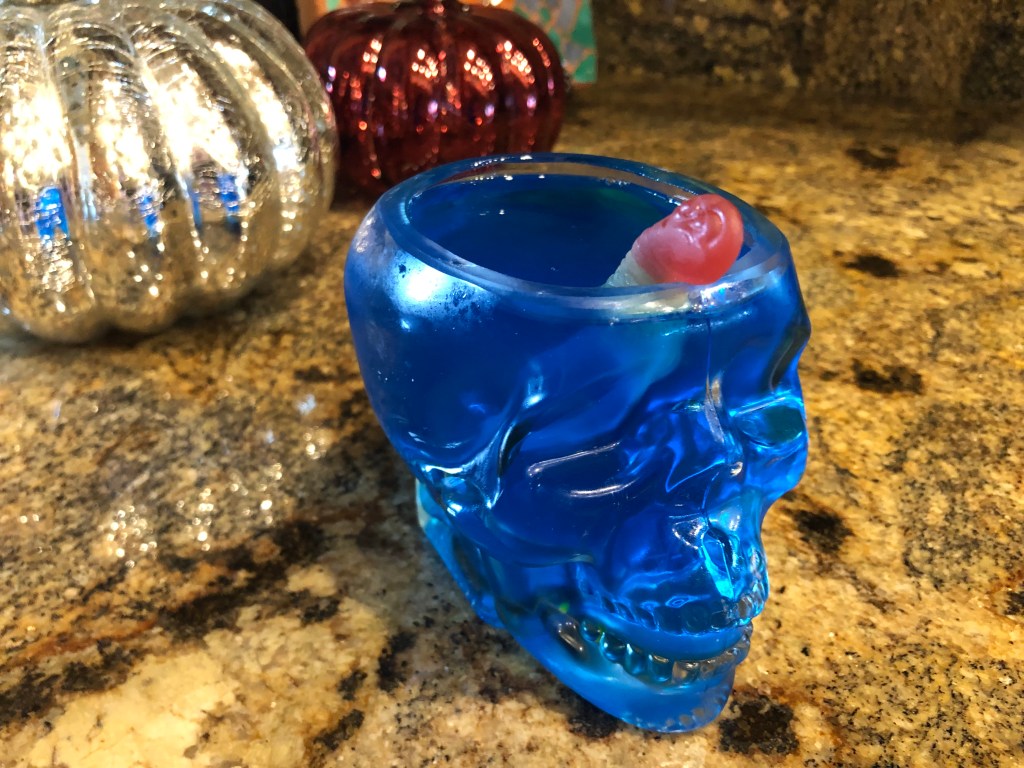
There are a number of different Halloween-themed jello shot recipes on the Internet, so I figured I’d try one. I chose an unnaturally blue shot with a worm that was on a list of “Halloween Jello Shots.” Here we go!

The Recipe: Boil 1/2 cup water, add a 3-oz package of Berry Blue Jell-O, and stir until completely dissolved. Add 1/2 cup Sprite and 1 cup of raspberry vodka. Pour into shot glasses and chill. When the mixture is about halfway set, add a gummy worm to each shot.

Only after I had combined all the ingredients did I realize that this recipe was supposed to yield 50 (!) Jell-O shots. I guess they’re supposed to be in thimble-sized glasses? So rather than let all that Jell-O goodness go to waste, I poured a goodly amount of the mixture into your standard-sized skull glass (12 oz).

After about 20 minutes I added the worm, and an hour later the “shot” was ready.

The Ratings: Well, it’s different, I’ll give it that. The blue color is completely unnatural, and it creates an otherworldly glow in the skull. The worm is appropriately disgusting, crawling out of the cranium. Overall, it has a pretty good Halloween look. I’ll give the appearance 3.5 points.

Tasting the shot is easier said that done. Evidently one is supposed to loosen the Jell-O shot from the sides of the class with a finger, and then throw it down your gullet (i.e., you shoot it). But I was unable to get the Jell-O to drop out of the inverted glass. The eye sockets and other convolutions in the glass kind of locked the Jell-O in. I ended up eating it was a spoon, like a kid in a 1970’s Jell-O commercial.

The taste actually wasn’t bad. It just tasted like blue-flavored (!) Jell-O. After a few spoonsful you do begin to notice that you’re consuming alcohol. But it keeps going down easy. I’m sure if I’d make a couple of proper, 1-oz shots this would have been a fun experience. But slogging through a whole skull’s worth was, in retrospect, excessive.

I give the taste 3 points.

The name gets no points. “Halloween Jell-O Shot”?? How unimaginative and boring. “Skeleton Gelatin” would have been a better moniker. Or maybe “Jell-O Hell-O”? Or how about “A bunch of ground-up horse hooves with sugar and grain alcohol”? Nothing scarier than that!

Grand Total: 6.5 points.

Halloween Cocktails

Of Celery and Olives

You’ve played the game…now make the drink!

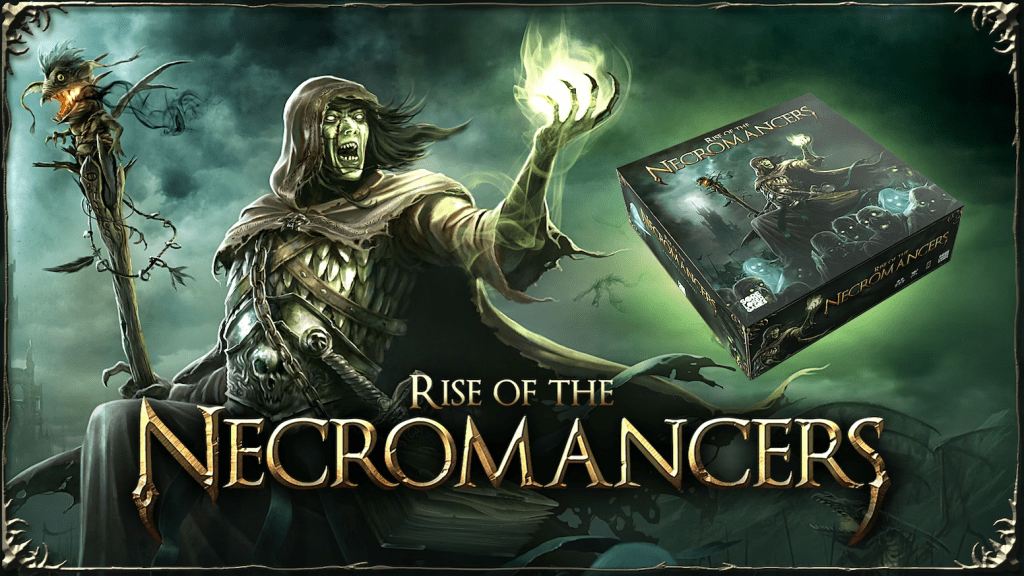
Today’s drink is the mysteriously-named Necromancers Martini, thoughtfully brought to my attention by my daughter-in-law Katelyn. (Thanks, Katelyn!) But first let me tell you a little story:

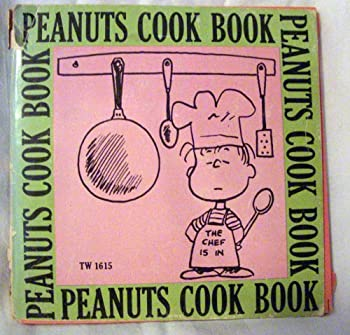
When I was a wee lad, my grammar school would occasionally have a book sale, and we’d be sent home with brochures from Scholastic Book Services (TM) hawking cheap paperbacks. Mom and Dad would usually let me get a book or two, and one year, for reasons still unclear to me, I chose something called “Peanuts Cook Book.”

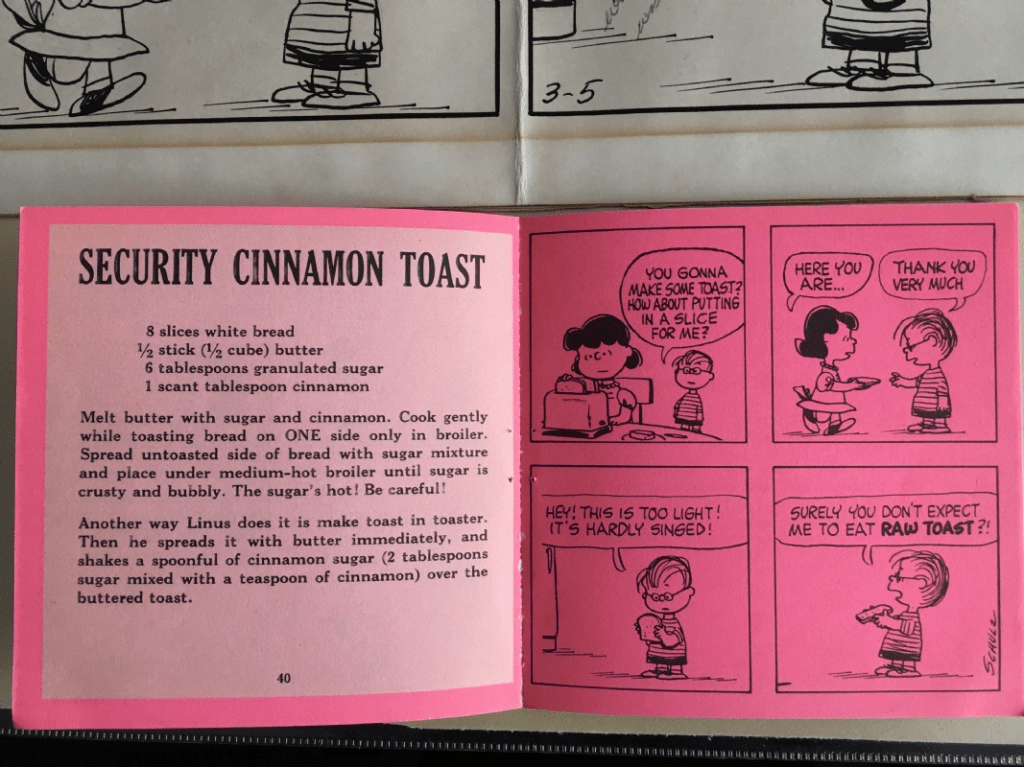
I had absolutely no interest in cooking, but I suppose the Peanuts theme appealed to me. The book contained recipes for “Lucy’s Lemonade,” “Great Pumpkin Cookies,” “Linus’s Security Cinnamon Toast,” and a bunch of others. The only thing I ever made was the cinnamon toast, which involved (1) toasting bread, and (2) sprinkling it with sugar and cinnamon. (By the way, I think my parents paid like a buck for that book in 1969; a used “collectible” copy is currently available for $51!)

Anyway, my point in bringing this up is that, even at the tender age of eight, I realized that the book was a cynical effort to capitalize on the popularity of Peanuts. The recipes really had nothing to do with Peanuts at all. They were just basic recipes for midcentury kids fare, such as mac and cheese, a hot cheese and tomato sandwich, and the aforementioned cinnamon toast. The only difference is they slapped a Peanuts-related name onto each recipe, and added a few topical Peanuts cartoons.

I think you can see where this is going.

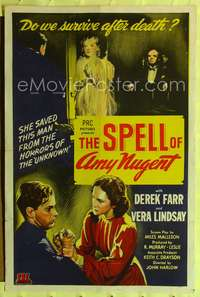
The Necromancers Martini comes from the latest issue of Benicia Magazine, which also contains a couple of other Halloween recipes that the author promises are “just the thing to get us into the spooky season.” A necromancer, as you may or may not know, is a person who communicates with the dead. I know this because a year or two ago I watched a movie from 1941 called The Necromancers. (It’s also called The Spell of Amy Nugent, Passing Clouds, Spellbound, and Ghost Story.) Almost everyone reviewing it on IMDB hates the movie, and admittedly Citizen Kane it ain’t. But I found it oddly entertaining, relating the story of a young man seeking help from spiritualists to get in touch with his deceased, young fiancee.

Anyway, a Necromancer Martini sounds suitably spooky and appropriate for our Great Halloween Cocktail Adventure, so let’s make one!

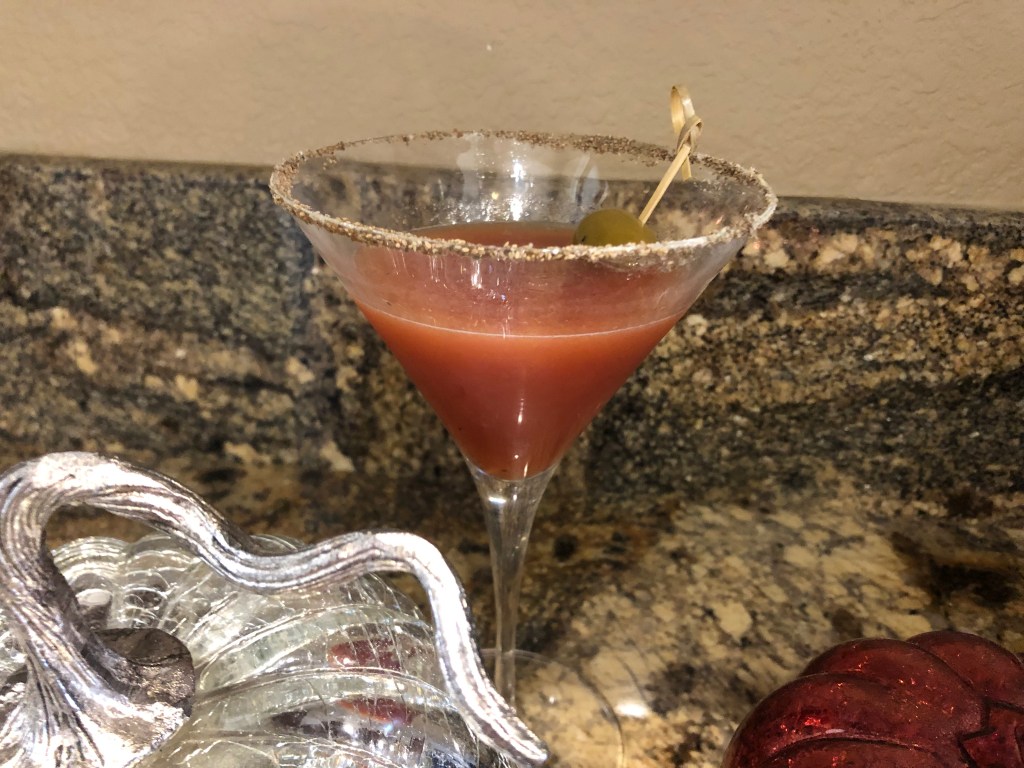
The recipe: Add 1 oz Bloody Mary mix, 1.25 oz gin, and 1/4 oz. dry vermouth to a cocktail shaker. Add ice and shake. Pour into a martini glass that has celery salt on the rim. Add a garnish of olives.

The Ratings: Did you see what just happened? We took your standard martini and added some Bloody Mary mix. That’s it. So part of me feels cheated — there was no effort (at least, none written into the recipe) to link the name (“necromancer”) to the finished product. It’s like Linus and the cinnamon toast. The name is irrelevant to the drink.

But maybe I’m being too unimaginative. Bloody Mary, of course, comes from 19th-century folklore as an apparition that appears in a mirror and conveys information about your future (or scratches your eyes out, depending on the version). So maybe it’s not a huge stretch to say that the necromancer martini cleverly symbolizes a folk story about communicating with the dead.

Anyway, the appearance is very much like a standard Bloody Mary breakfast drink that’s been poured into a martini glass. The dissonance of the stemware is playful, I suppose. And the drink does kind of resemble blood. So, while I wouldn’t normally think of this as a “Halloween” drink, I do understand how it could be so categorized. I’ll give the appearance two points.

The taste is confusing. We’ve either taken a perfectly good dry martini and added Bloody Mary mix, or we’ve taken a perfectly good Bloody Mary and substituted gin for the vodka and olives for the celery. Either way, the overall effect is a little jarring. It’s not bad, though, and by the last gulp I actually wished I had a little more. I’ll give it 2.5 points. But it would probably have received more points if it were just a straight-up Bloody Mary.

In terms of the name: You had me at necromancer. Either as a cynical effort to pass off this martini as a Halloween drink, or as a clever and subversive link between Bloody Mary and necromancy, the name features a solid link to Halloween and doubtless sent many people running for their dictionaries. Two points.

Grand Total: 6.5 points.

Bonus: You can watch The Necromancers/Spellbound/Passing Clouds/Ghost Story/The Spell of Amy Nugent for free on YouTube. Drink a Necromancers Martini while you do so!

Halloween Cocktails

Absinthe makes the heart grow fonder

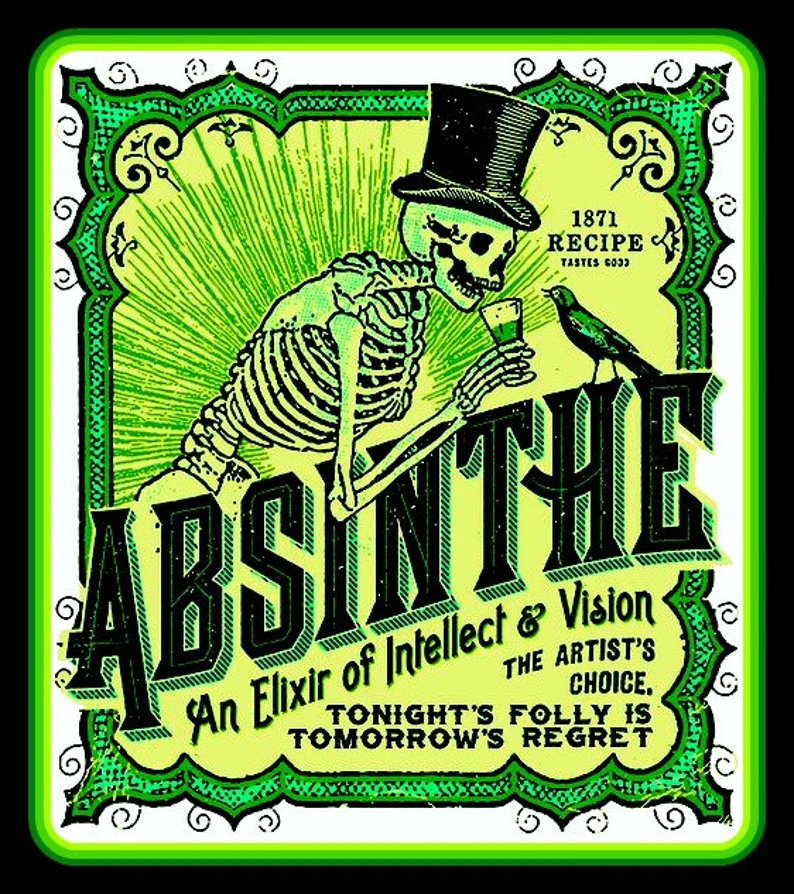
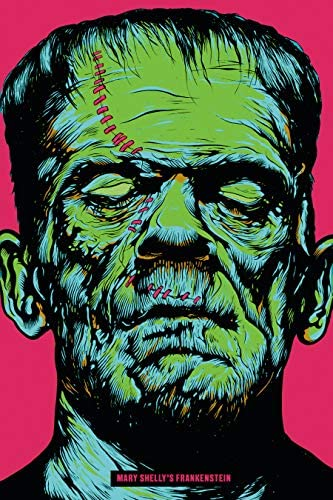
One drink that shows up on a couple of Halloween cocktail lists is absinthe–not as a mere ingredient, but rather as the whole drink. The unearthly green color is in the Frankenstein vein, but more to the point, it has a mysterious and Byzantine history that involves hallucinogenics, evil spirits, and the likes of Edgar Allan Poe. Let’s review:

Color me absinthe

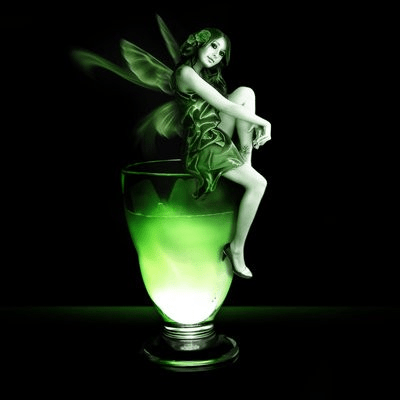
Absinthe is a high-alcohol spirit made from wormwood, anise, fennel, and various other exotic and ordinary ingredients. It tastes strongly of anise, and has been compared (usually favorably) to Jagermeister. Absinthe has a distinct green color which, in the more authentic (and expensive) versions occurs naturally from the ingredients. In the 19th Century absinthe became a popular drink among the Bohemian set, who would gather in cafes and drink the stuff all evening. They called the drink “The Green Fairy” for its supposed magical effects.

Tinkerbell she’s not.

Conservatives railed against absinthe as a hallucinogenic spirit that was wreaking havoc with young people. Those claims were overblown, although absinthe does include trace amounts of thujone. As is often the case, the moral outrage from conservatives made absinthe all the more popular among the hipsters. Notable absinthe drinkers (addicts?) included Edgar Allan Poe, Oscar Wilde, and Lord Byron, which would be enough to solidify its Bohemian street cred.

Rhapsodic Bohemian (“He’s just a Poe boy from a Poe family…)

For most of the 20th century absinthe was banned in the US and most of Europe. It wasn’t until 2007 that America’s ban was lifted. Because we’re fortunate enough to be living in the post-absinthe Prohibition era, we’re able to add this drink to our October list. So what are we waiting for?

The recipe: With its high alcohol content (the stuff I used is 100 proof), absinthe is traditionally diluted with water. Also, as absinthe contains no sugar (and thus it is not classified as a liqueur), the drink is normally prepared with the addition of a sugar cube. Now, there are two ways to do this preparation: the French method and the Bohemian method. Guess which one I used?

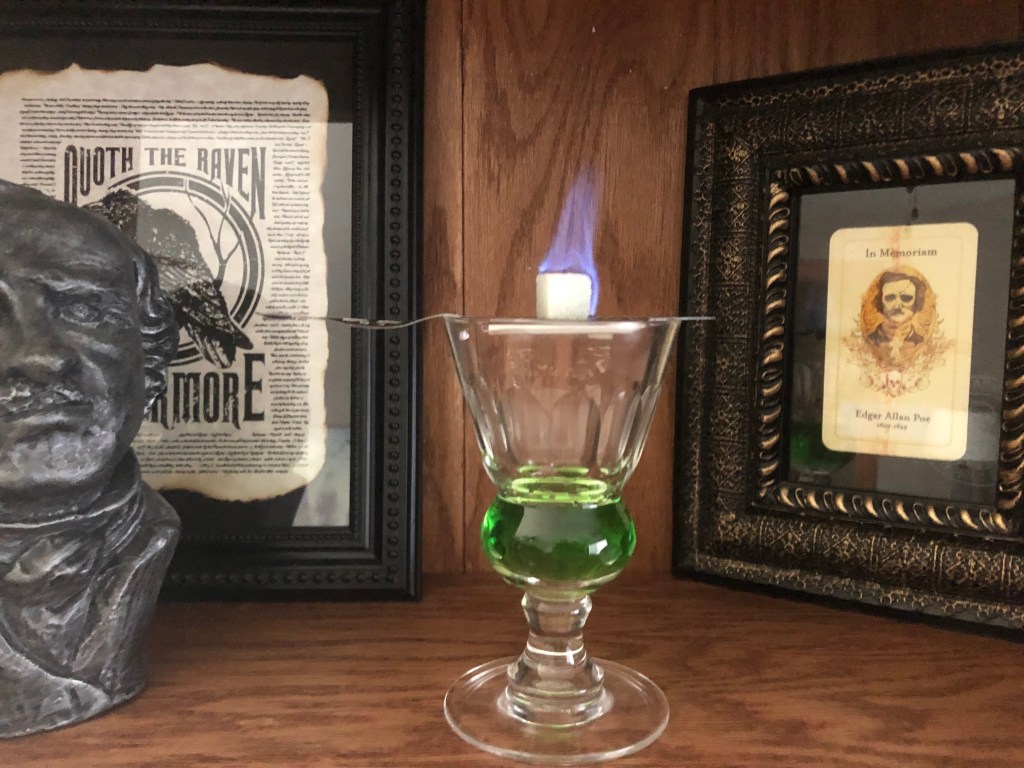
There is a distinct ritual to all this. First you need to get yourself an absinthe glass, whose shape makes it easy to measure the exact amount of absinthe to pour from the bottle. Then you need to get a slotted absinthe spoon. (All this stuff is available on Amazon.) Rest the spoon on top of the glass, and place a sugar cube on the spoon. (I had to go out to the barn and steal a sugar cube from the horses’ treat stash.) Now, pour a little more absinthe over the sugar cube to soak it with alcohol. Then light it on fire. I’m not making this up.

Horse treats burn, evidently.

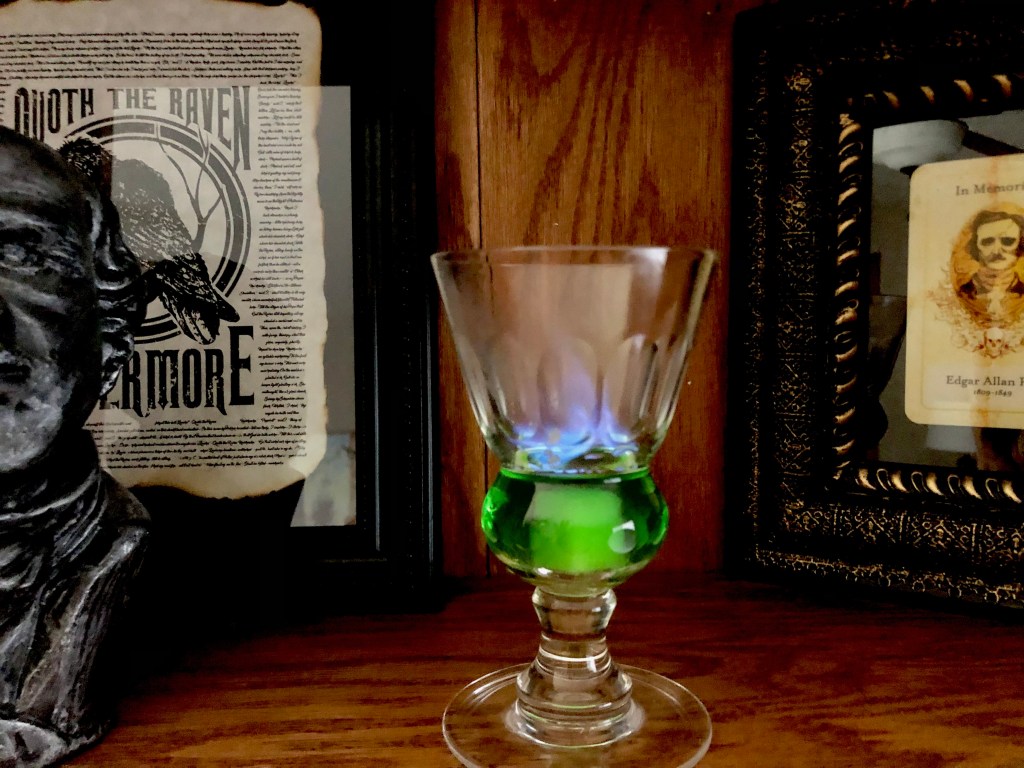
Now, dump the flaming sugar cube into the absinthe, setting it ablaze.

Trouble and toil indeed!

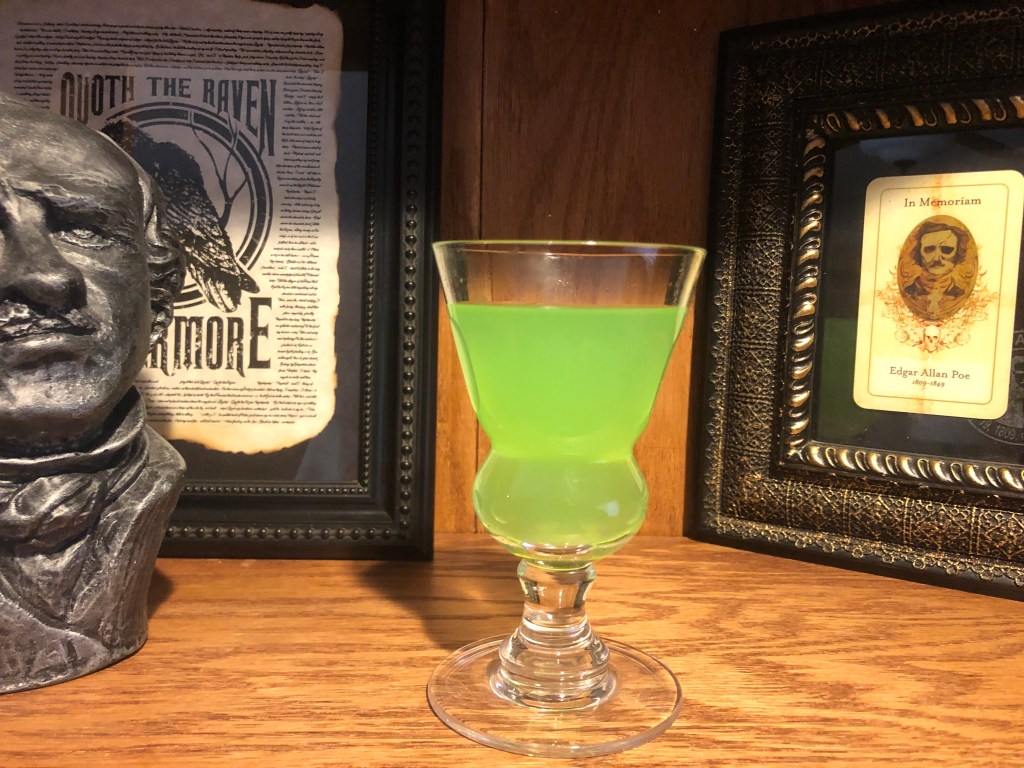
And finally douse the flames with a shot glass full of water. Everything mixes together, with some of the ingredients dissolving and some coming out of solution, resulting in a cloudy liquid called louche. Drink up and meet the Green Fairy!

I didn’t get much of a louche. I’m told that’s because I used a cheap absinthe.

The Ratings: I’m going to consider all the ritual to be part of the “appearance,” and for that I’m awarding full points. The whole process is quite Steampunk, and all the flames and color changes remind one of a mad scientist’s laboratory. The final product looks suitably Gothic in its fussy stemware. 4 points.

But how did it taste? The resulting drink felt more watery than I expected it would be. I used 1 oz of absinthe and 3 parts of water, while Wikipedia says one typically uses between 5 and 7 parts water! So, I guess this preparation is supposed to be watery. The water of course dilutes the alcohol content, which would allow you to spend all day drinking the stuff in a Parisian cafe. Still, even though I thought it watery, it wasn’t unpleasantly so. The taste stands up to the water, with the botanicals fighting each other on your tongue, and there’s a sweet, medicinal bite that hangs on the finish. Clearly this is for sipping rather than quaffing. I can see how you could get used to this. The taste pairs really well with a standard Bohemian lifestyle, but for drinking under more prosaic circumstances, it’s really not appropriate “cocktail” fare. Therefore I’ll rate the taste in the middle at 2.

I’m not sure about how to rate the name. The simple name of the spirit doesn’t exactly evoke Halloween, but absinthe’s close association with insanity, hallucinations, and moral degradation surely helps nudge up the rating. And of course the nickname–Green Fairy–is a worthy Halloween name. So I’ll give it 2 points.

Grand Total: 8 points


Mixology Mailbag–

Acclaimed mixologist and family friend Erin R informs me that my misadventures with Chartreuse were my own damn fault. Apparently the amount of Chartreuse I was using in those drinks was absurd. She writes: “The internet is full of bad information and I blame that [the online recipe] for Steve’s mishaps here. Chartreuse should be used sparingly, most recipes use a quarter to half ounce. There are people who take shots of it, but that’s insane and very expensive!”

Erin also offers a superior Corpse Reviver recipe, which I may try before this month is out. Plus, I’m trying to commission her to design her own Halloween drink. Stay tuned.

Frankenstein movies · Halloween Cocktails

“OK, It’s about witch’s brew, but just hear me out.”

The relevance of the title to the post will be revealed near the end of this point. But here’s a hint:

Today’s drink recipe comes from loyal reader Alison K, who was a fellow grad student at UCSB. We’ve both moved on to greener pastures—in both our cases, quite literally.

Alison offered a drink called “Witches’ Brew,” which of course presents us with the age-old question: is it witches or witches’ or witch’s? Grammarians among my readership would weigh in. But not literally.

The 1980 movie with Teri Garr was called Witches’ Brew. You can watch it for free on YouTube here. But I can’t recommend it. The acting is as wooden as an Amish table. Garr’s work in Young Frankenstein is far superior.

“Hallo. Vould you like to have a roll in ze hay?”

Now where was I? I suppose the whole “witches/witches’/witch’s brew” trope comes from Shakespeare’s Macbeth (“Double double toil and trouble/Fire burn and cauldron bubble.”) But that recipe called for “Fillet of a fenny snake, In the cauldron boil and bake; Eye of newt and toe of frog, Wool of bat and tongue of dog, Adder’s fork and blind-worm’s sting, Lizard’s leg and owlet’s wing.” Perhaps knowing my low-level mixology skills, Alison sent a simplified verion.

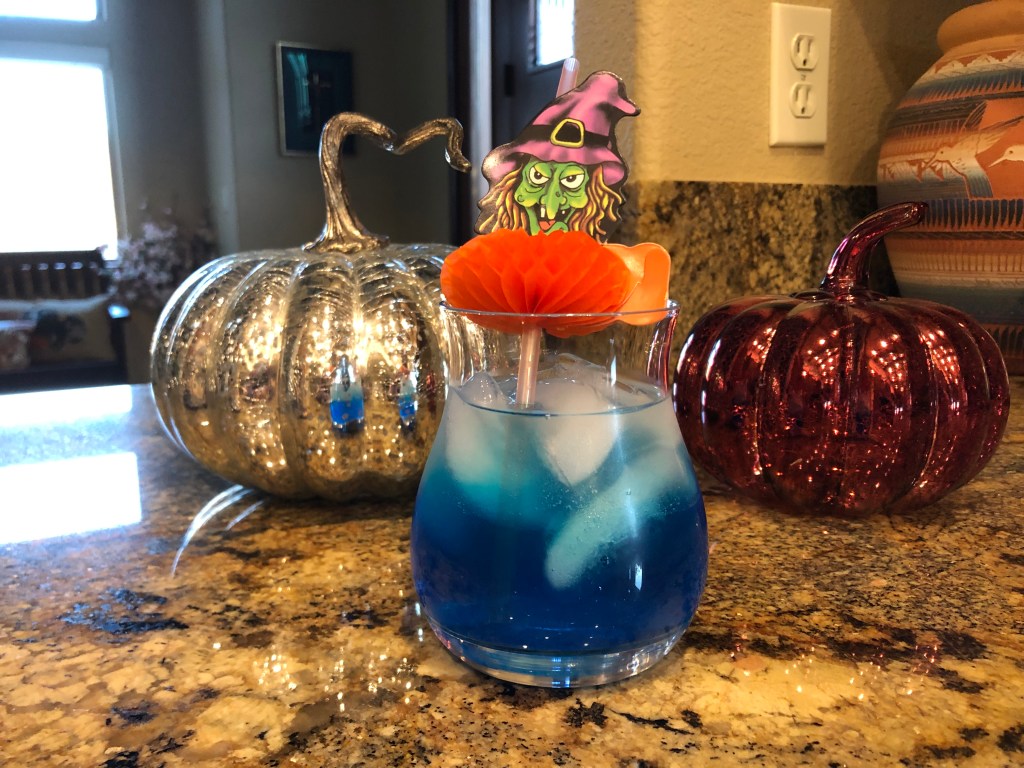
The Recipe: Fill a tall glass with ice. Pour 2 oz of gin and top with 2 oz. of sparkling lemonade. Very carefully and slowly pour 2 oz. of Blue Curacao into the glass, letting it settle on the bottom. Garnish with a sprig of rosemary.

I had no rosemary. Sorry.

The Ratings: OK, let’s be blunt: There’s nothing especially Halloweeny about a refreshing, light-blue drink. There’s no floating eyeballs or spiderweb of chocolate syrup or pumpkin puree. It’s just a light. blue. drink. The recipe implies that the Blue Curacao would be a separate bottom layer, with a lighter gin-and-lemonade layer on the top, but that’s no how it worked for me. I can’t in good conscience give this any points for appearance.

But how does it taste? My first sip of the drink was not especially positive. As the recipe directs me to let the Blue Curacao “settle to the bottom,” I figured you weren’t supposed to stir it. As a result, my first sip tasted simply of gin. So, I went ahead and stirred the drink vigorously, and that changed everything. Properly mixed, it’s a distinctly citrusy drink, with the Blue Curacao and the lemonade doing their thing. It’s both sweet and tart in a very balanced and pleasant way. And the carbonation from the lemonade keeps things fizzy and playful. I give it 3.5 points for taste. Ah, hell, I’ll give a full 4 points. That might just be the gin talking, but this is a very enjoyable drink indeed.

The name “Witches Brew” is certainly appropriate to the season. Although perhaps a little cliche, and perhaps not exactly a fair description of a drink with three ingredients (two of which are quite pedestrian), it’s a perfect description of our quarry in this monthlong quest. (Plus, it’s one of Homestar Runner’s catchphrases. If you weren’t an adolescent boy in the early aughts, and/or you weren’t raising an adolescent boy in the early aughts, here’s a short introduction.) Two points.

Grand Total: 6 points.

Bonus Tip: If you’re like me, you’ve been mispronouncing Blue Curacao all your life. Here’s how to say it: