Frankenstein movies

Bride of Frankenstein (1935)

The unexpected success of Universal’s original Frankenstein got the studio execs thinking: Let’s do a sequel! They asked director James Whale to crank out another one, but he demurred for several years. Eventually he relented, and in 1935 Universal released its second Frankenstein movie: “The Bride of Frankenstein.”

Amazon.com: Bride of Frankenstein (1935) Movie Poster 24"x36": Posters &  Prints

In addition to getting James Whale take the director’s chair again, Universal again signed up Boris Karloff as the monster and Colin Clive as Baron Henry Frankenstein. Dwight Frye (who’d played Fritz [essentially, Igor] in the first movie reappeared here as a different assistant. A few other bit players were also recast. The movie was so successful that Universal would go on to make a number of other Frankenstein movies, and for the next decade or so the studio would be known for a whole range of monsters.

The Plot: This movie picks up essentially where its predecessor left off: With the monster presumably destroyed in a fire in an abandoned windmill, and with Baron Frankenstein recuperating at home and vowing to put all this behind him. Of course, we soon learn that the monster is not in fact dead, and he re-emerges, a bit the worse for wear, to terrorize the village. At almost the same moment, Baron Frankenstein’s old teacher, Dr. Pretorius, shows up on the Baron’s doorstep, looking for all the world like “The Exorcist.” But rather than casting out demons, Pretorius is clearly on the dark side, and wants to team up with his old pupil to create a female creature. The monster (Karloff), evidently feeling a bit randy, is all for that idea. So between the monster’s threats and Pretorius’ kidnapping of Henry’s wife, Henry agrees to the scheme. What could go wrong?
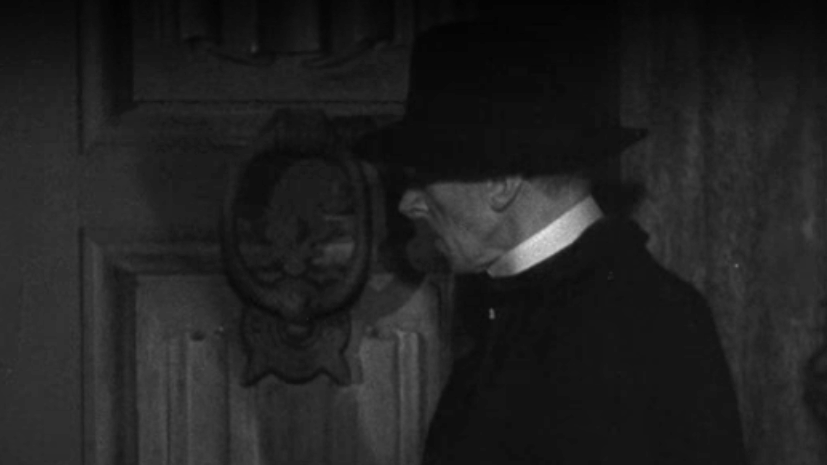
Dr. Pretorius-cum-Father Damien

And yet it’s worth noting that the idea of the monster demanding a female mate was actually part of Shelly’s original story. It’s one of the small ways that the movie hews to its source material.

The Monster: Boris Karloff reprises his role as the monster. But there are a few small changes. For starters, Karloff’s makeup now includes some burns (because he’s supposed to have survived a fire) and his hair is largely singed away. He face also looks fuller, because (unlike in the first movie) he did not take out the removable bridgework from his mouth. (He’d removed it in the first movie in order to create a more hollow-cheeked, cadaverous appearance.)

But the biggest change to the monster is that he now speaks, albeit with a limited vocabulary. (One review I read pegs his vocabulary at 41 words.) Karloff is said to have been strongly against the decision to have the monster talk, feeling that it removes some of the mystery from the creature. But director James Whale and the Universal execs insisted, presumably knowing a good gimmick when they see one.

Watch The Bride of Frankenstein | Prime Video
Words cannot express

As with the first movie, the monster is portrayed sympathetically. In fact, this time around, he’s almost downright likable. He befriends a lonely hermit, and delights with childlike wonder at food, drink, music, and even cigars.
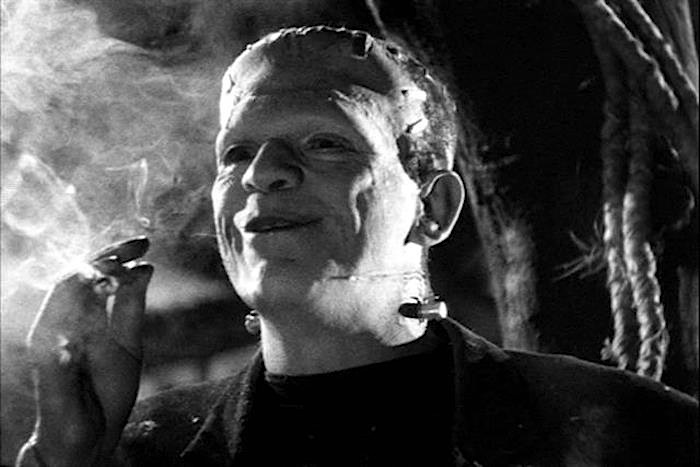
bride-of-frankenstein | The Kim Newman Web Site
Who cares about emphysema when Doc Frankenstein can hook you up with new lungs?

But wait! There’s more! There’s a second monster in this movie, and it’s the titular Bride. And yet, the Bride does not even show up until the last few minutes of the film. She has no speaking role, and doesn’t do much more than just peremptorally spurn her would-be mate. Still, her character would go on to become one of the most iconic monsters in Universal’s stable.

Never the Monster, Always the Bride: The Bride of Frankenstein in film and  television
A hunka-hunka burnin’ love

The Atmosphere: “Bride of Frankenstein” was filmed entirely on Universal’s sets, and the atmosphere feels very similar to the first movie. There are graveyards, castles, electrical storms, that same mad-scientist’s laboratory, and torch-lit dungeons. But James Whale had clearly honed his craft between the two movies, adding atmospheric touches throughout. For starters, there’s actually a music score (underpinning most scenes). The cinematography seems a bit more nuanced, and the use of shadows is spooky and powerful.
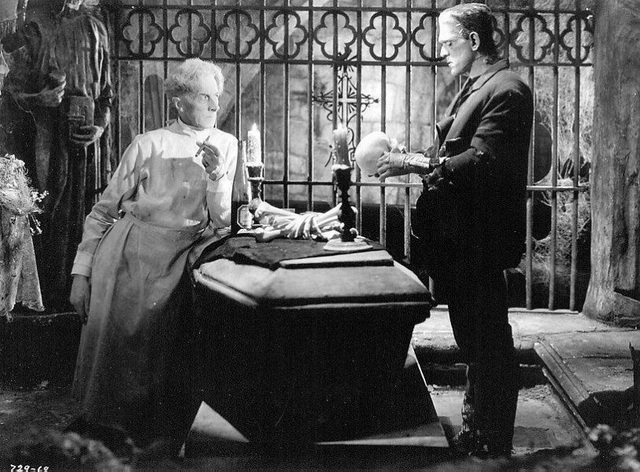
MEMORABLE MOVIE QUOTES: THE BRIDE OF FRANKENSTEIN (1935) | This Is My  Creation: The Blog of Michael Arruda
Alas, poor Yorick…

In fact, the atmosphere is so strong and, well, “atmospheric,” that the movie is able to indulge in a bit of humor without descending into farce. Dr. Pretorius is of course a villainous character in this movie, but he’s also the main source of comic relief. Start with the fact that he’s a bit over-the-top as an (unacknowledged) “old queen” (to use a term that the actor, Ernest Thesiger, would use). One wonders if it’s an in-joke when Baron Frankenstein’s maid says Pretorius is “a very queer old gentleman.” Pretorius also seems to engage in a pun when says he’s come to speak with Herr Frankenstein on a “grave” matter. There’s also an extended sequence where Pretorius shows off miniature people he’s created (having not yet figured out how to make them full size), and the antics of these miniature people are a source of hijinks. There are other occasions for levity involving the Burgomaster, as well as a scene with some “resurrection men.”

General Comments: It’s a fun movie that’s well worth watching, certainly for Karloff’s acting but also for the added fun of Dr. Pretorius. The movie contains a number of the cliches that we’ve come to associate with the Frankenstein story (the monster’s interaction with the blind man, the iconic “Bride of Frankenstein” creature, the lightning storms, the old castle on a hill….)

There’s just one part of this movie that’s really odd, and that’s the beginning. The movie opens with Mary Shelley (author of the original Frankenstein story), the poet Percy Shelley (her husband), and the poet Lord Byron, sitting together in a drawing room while a fierce storm lashes at the windows. In real life, these three had engaged in a competition to see who could write the best horror story, and it was in this way that the book Frankenstein was born. In this vignette in the movie, Lord Byron contrives to summarize Mary Shelley’s book, then asks her to develop the story further. We then shift to the Karloff movie, which presumably is the unfolding of the rest of Mary’s story.

Discovery of Lord Byron's Copy of FRANKENSTEIN Seems to Verify Questions of  Authorship | Unleash The Fanboy
Yes, she also plays the–ahem–titular Bride.

The woman who plays Mary Shelley is Elsa Lanchester. Interestingly, it is she who plays the Bride of Frankenstein as well. And while Lanchester is listed in the opening and closing credits as Shelley, the credits don’t list her as the Bride. Instead, the actress playing the Bride is listed simply as “?” (You’ll recall that the actor portraying the monster was listed as “?” in the opening credits of the first movie, and that Boris Karloff was listed only in the closing credits. In Bride, Universal makes a big deal of listing their star simply as “Karloff.” Man, had he gone from no one to a major star in just a few years!)

One other character note: The inimitable Billy Barty appears in this movie. Most of his scene ended up on the cutting room floor, but you can catch a glimpse of him. Hint: He’s the baby in one of Dr. Praetorius’s bottles. I’m not making this up.

Anyway, if you enjoyed the first Frankenstein movie, you’ll almost certainly enjoy this one. In fact, you really need to do so if you’re going to appreciate Mel Brooks’ satire from the 1970s, which we’ll get to in due course…

TOMORROW: Son of Frankenstein, available on YouTube.

Frankenstein movies

Universal’s Frankenstein (1931)

When you think of the story of Frankenstein, and especially when you envision the monster, chances are it’s the 1931 Universal movie, rather than Mary Shelley’s book, that’s responsible. Shelley’s monster was eight feet tall, was able to speak witih an extensive vocabulary, and was highly emotional. The Universal version, by contrast, was about six and a half feet and was unable to speak. What’s more, Mary Shelley didn’t really describe the scene of Dr. Frankenstein creating his creature. The lonely old castle, the laboratory with the electrical apparatus, the lightning storm — that was all Hollywood’s creation, And it seems to have eclipsed — indeed, it has replaced — the less atmospheric (ha!) scene painted by Shelley.

Frankenstein (1931) - Movie Review / Film Essay

Simply put, this 1931 movie starring Boris Karloff is the definitive Frankenstein movie, not because it’s true to the original source material (ha again!), but because it’s the basis for almost all other renditions that followed. For this reason, I’ll be comparing many of the rest of the Frankenstein movies this month to this O.G. version.

The Plot. Surely you know the basic outlines of this movie: a student of medicine by the name of Henry Frankenstein sews together body parts from cadavers to build a living man. He brings the creature to life by harnessing the power of an electrical storm, and at first he is thrilled. “Now I know what it’s like to be God!”, he shouts, in a line that was censored from the film as blasphemy for many, many years. But the creature is somewhat unruly, and soon becomes violent. Dr. F comes to loathe his creation, and eventually realizes that obsession is affecting his relationship with his fiance. He therefore resolves to destroy the creature, but it escapes and wreaks havoc in the countryside. Ultimately, the creature and Dr. F become trapped in an old windmill surrounded by angry villagers.

Notably, the plot is quite different from the sweeping, 300-page epic that Shelley wrote. The movie is highly condensed and simplified, fitting into a tidy 70-minute film.

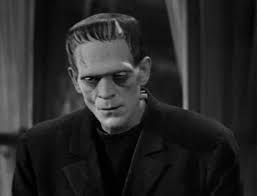
The Monster. Even more than the simplified story, it’s our understanding of the creature’s appearance that comes entirely from the Universal movie. Makeup artist Jack Pierce created the look out of whole cloth, with a flat head, electrodes in the neck, hooded eyes, various scars, cadaverous cheeks, and ill-fitting clothes. And of course, the monster looks a lot like Boris Karloff, because it was he who played the role in this landmark movie.

Later in life he’d play The Grinch

Karloff’s monster has no facility for speech; he just growls. (Shelley’s monster, as noted above, was highly articulate.) The monster is mercilessly taunted by Dr. Frankenstein’s assistant, Fritz (not Igor, who wouldn’t appear until a sequel). Fritz was played by Dwight Frye, who a few months earlier played Renfield in Univeral’s Dracula, starring Bela Lugosi. But that’s another story.

Incidentally, Lugosi was originally offered the part of Frankenstein’s monster, but he turned it down as an unworthy part with no dialogue or nuance. So the then-unknown Boris Karloff was cast, and the rest, as they say, is history. Karloff threw himself into the part, and made it his own. It’s hard to think of Frankenstein’s monster without thinking of Boris Karloff. Notably, Karloff played the monster as a sympathetic creature, who became violent only in response to taunting and torture. He was confused by his sudden birth, fully-formed, in the world, feeling like a lost child. And, like a child, he could be charmed by a flower, a ray of sunlight, or a young girl. Especially in this first Universal version, Karloff’s creature is nuanced and pitiable.

The Atmosphere. This movie defines what atmosphere should be like in a Frankenstein movie. Desolate graveyards, old castles, sparking “mad scientist” lab equipment, lightning storms, torch- and pitchfork-bearing villagers, towering windmills–it’s all here.

Frankenstein (1931) | and you call yourself a scientist!?
From the days before UPS

This first Universal Frankenstein movie came out near the beginning of the “talkie” era. Some of the cinematography is pretty impressive for its day, but this is clearly an early motion picture effort. For one thing, background music is almost entirely absent (limited only to the opening and closing credits). The outdoor scenes are clearly on a sound stage, and the editing can be quite clumsy in places. Still, director James Whale did some wonderful things with the technology that was available to him. It’s a groundbreaking film. (Har!)

Overall Comments. This is the definitive Frankenstein movie, and you should watch it. I understand that, as a 90-year-old (!) film, it lacks some of the production values, multi-camera shooting techniques, computer-generated special effects, Dolby surround-sound, car chases, gratuitous nudity, and hip-hop soundtrack of modern films. But its technical simplicity enhances its melancholy and stark atmosphere. The acting and directing are good enough to stand on their own, without the accoutrements. Do yourself a favor and watch it.

Fast & Furious: Highway Heist Review - IGN
Who needs acting or directing when you have all this?

Tomorrow: Karloff returns in Bride of Frankenstein! (Available here on YouTube for $3.99)

Uncategorized

Bonus: The Back Story on Creature Features

In the first post for my Frankenstein series, I mentioned the TV show Creature Features. Some of you recalled the show fondly, and others wondered what the fuss was all about.

For both groups, I have a special treat: Loyal reader Keith G. sent along a link to a story, written by his friend Bob Calhoun, describing the history of Creature Features…including efforts to resurrect it today. Check out the story here.

Thanks, Keith!

Frankenstein movies

Frankenstein (1910)

Frankenstein (1910 film) - Wikipedia

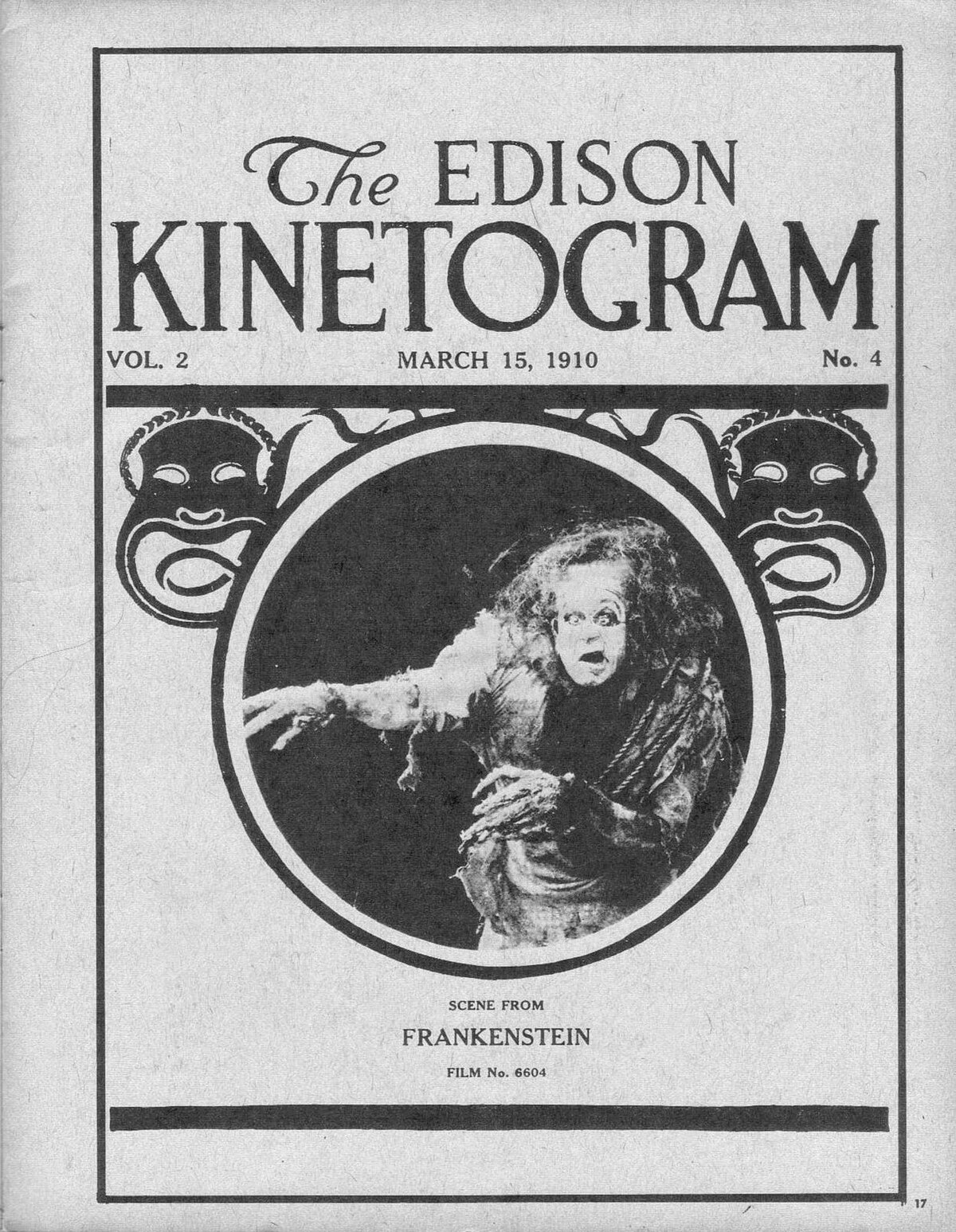
We start off this month of Frankenstein movies with the earliest example of the genre: A 13-minute number produced by the (Thomas) Edison Studios. This will be the only silent movie that I review this month because, let’s face it, silent movies tend to be excruciatingly boring. But this particular movie is worthy and notable because (1) it’s the first effort to translate Mary Shelly’s monster onto celluloid, and (2) it includes some primitive “special effects” which, for the time, were groundbreaking.

The Plot: The film begins with Frankenstein going off to college, and “two years later” (according to the title cards) he “has discovered the secret of life.” We then go into a lengthy sequence where Frankenstein creates a human being by throwing some chemicals into a burning cauldron, closing a steel door, and then watching a man slowly materialize within as he spies through a peephole. The creation sequence, by the way, was fabricated by playing in reverse a film of a life-size puppet being burned up. It wasn’t sophisticated, but it was effective. Especially for audiences in 1910.

Once the creature emerges, Doc Frankenstein is repulsed by the hideous being. The creature, on the other hand, has the hots for Dr. F’s fiance. After some back and forth, the creature seems to realize he’s no prize (I went through a similar revelation during my dating years) and he departs, leaving Dr. F and his fiance to live happily ever after. (Near the end of the film, watch the sequence of the creature disappearing while his image remains in the mirror, and then the image becomes that of Dr. Frankenstein.)

What, you were expecting Citizen Kane?

Frankenstein 1910 (REMASTERED 2020) : Thomas Edison Studio : Free Download,  Borrow, and Streaming : Internet Archive
He’s no Arnold Schwarzenegger, but he’s a body-builder.

The Monster: Played by Charles Ogle (1865-1940).Ogle went on to play over 300 characters during his long career during the silent era. In this movie, Ogle’s creature looks a lot like David Lee Roth.

Incredible! See The Remastered 1910 'Frankenstein' - Bloody Disgusting
“Yes I’m livin’ at a pace that kills.”

The Atmosphere: Almost all the action takes place in Dr. Frankenstein’s sitting room/study. No graveyards, no fancy laboratories, no castle, no villagers with pitchforks and torches. It’s very “stagey,” as were most early movies of the silent era. Still, it’s a captivating movie. The claustrophobic scenes keep you zeroed in on the story.

Inside Thomas Edison's FRANKENSTEIN Adaptation | Film Inquiry
C’mon, pull my finger!

Overall Comments: This film isn’t especially good by modern standards, but it’s important given its early provenance and its pathbreaking contribution to the Frankenstein oevre. It’s worth spending 13 minutes watching it (for free!), just to say you’ve seen the first Frankenstein movie.

It’s also notable that this film was for many years considered lost (that is, it was assumed that no copies of it existed). It wasn’t until the 1970s that a nitrate print of the film was learned to be in the possession of a collector, and this was used for an eventual restoration print by the Library of Congress in 2018 (for the 200th anniversary of the publication of original novel). It is available for viewing here.

Tomorrow, we’re off to the best-known Frankenstein movie, starring Boris Karloff!

Frankenstein movies

Frank(enstein)ly Igor, I don’t give a damn.

For the next 31 days, I’m turning over this blog to daily reviews of Frankenstein movies.

As we all know, the story of Frankenstein was invented by Mary Shelley some two centuries years ago. The basic outline of the story is: The brilliant though somewhat crazed Victor Frankenstein is obsessed with creating life. He pieces together a being using parts from cadavers, and the resultant man (or creature, or monster) ends up wreaking havoc and ultimately destroying its creator. The moral: Don’t try this at home.

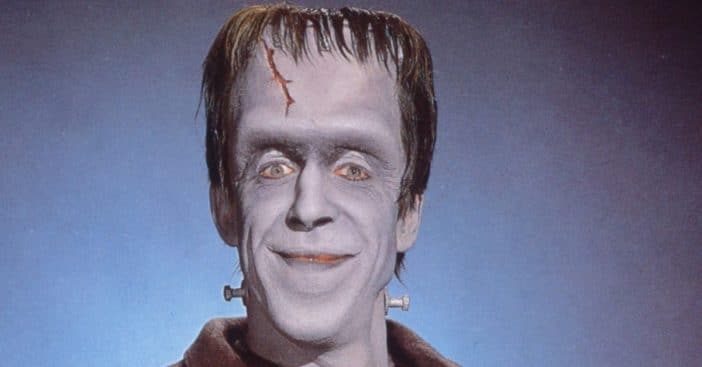
The published book initially received mixed reviews, but over the past 75 years or so it has generally been regarded as a masterpiece. Certainly it has occupied a prominent place in pop culture. Particularly when I was growing up, Frankenstein (in one form or another) had a starring role on The Munsters, Milton the Monster, Frankenstein Jr., the Groovy Ghoulies, and various other shows.

Fred Gwynne played three different characters on The Munsters

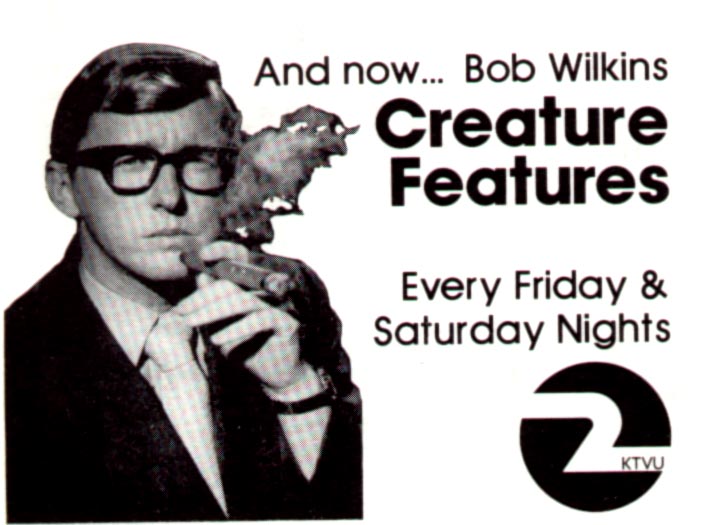
As a child I jumped onto the Frankenstein bandwagon myself. Frankenstein was the theme of two of my Halloween costumes, and I built and displayed a plastic model of the creature that I bought at the local toy store. But it was the Frankenstein movies that held a special fascination for me. This was in the days before VCRs (let alone YouTube), so my access to these movies was dictated largely by the program directors at the local UHF stations. The films were typically a few decades old and were broadcast late at night. The local station, KTVU, had a weekly show called “Creature Features” hosted by an unlikely, milquetoast, and droll host named Bob Wilkins. Creature Features was the source of much of my exposure to the Frankenstein movies. They were clearly artifacts from a different cinematographic era, but I found them to be entertaining and atmospheric and just plain fun.

“Every…nights”?

So Frankenstein movies of all kinds will be this month’s theme. Each day I will be reviewing a different movie where Frankenstein (and/or his monster) appears as the central character. Every movie I review is readily available for viewing, albeit it might cost you a few bucks. As I review the movies I’ll offer suggestions as to how you can watch them, if you’re so inclined. My list does not include absolutely every Frankenstein movie, but it certainly covers the majority of the notable ones.

So, I encourage you to select at least a few of these films to enjoy this month, perhaps in a darkened room after you finish dinner, with a glass of port. Or, you can watch all of them along with me in order….if you dare! Until tomorrow.

sdb