Breweries · bridges · Movies · Road trips · trains · Yard art

Bridge-A-Palooza

You’ll recall that yesterday I filmed myself crossing the US’s longest covered bridge, and then ended the day in Geneva OH where I encountered the country’s shortest covered bridge. Loyal reader Detlef K. asked why I didn’t include footage of crossing the Geneva span. I can’t believe I didn’t think of that. So first thing this morning I returned to the Geneva bridge to correct my oversight. Here is the fruit of my labor:

Today actually turned out to be a bridge-filled day. Take, for example, this bridge that carries US Route 20 traffic over the Vermillion River in Wakeman, OH. It was built in 1933, and I’m told it’s an “open-spandrel, concrete-arch” design.
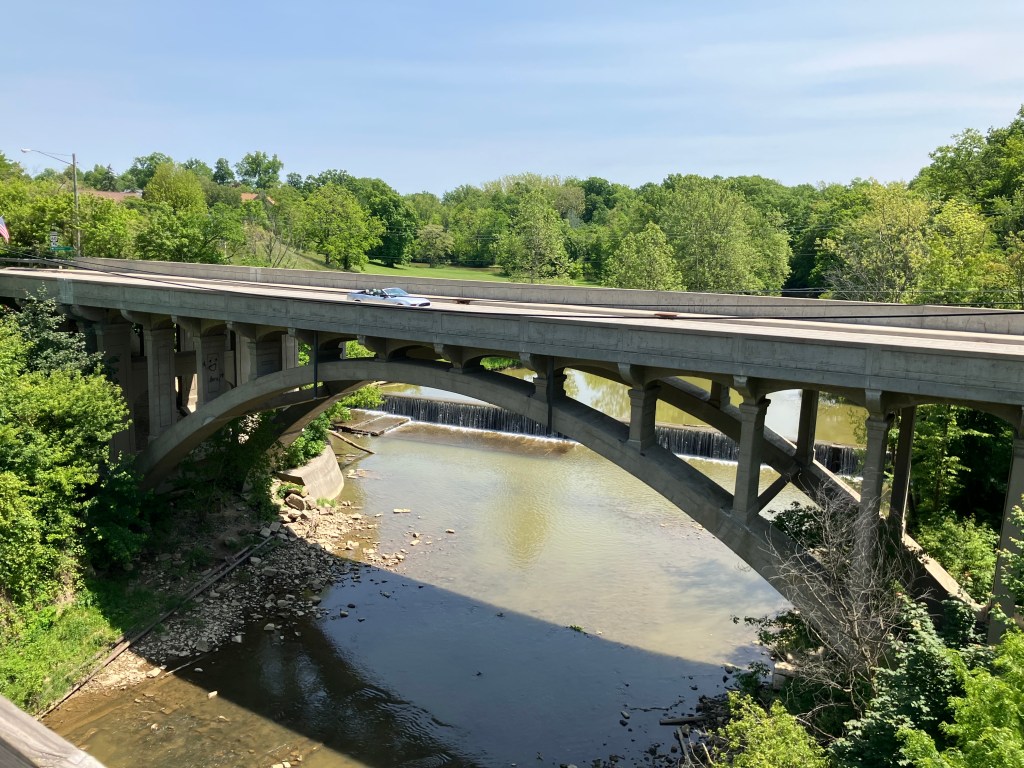
I’m no engineer, but I can appreciate how graceful that arch design is. And the fact it’s been there for almost a century is certainly impressive.

I took the picture from atop a pedestrian/bike bridge, and got to wondering what that bridge looks like from the side. So I moved over to the Wakeman (US 20) bridge and took this picture of the pedestrian bridge:
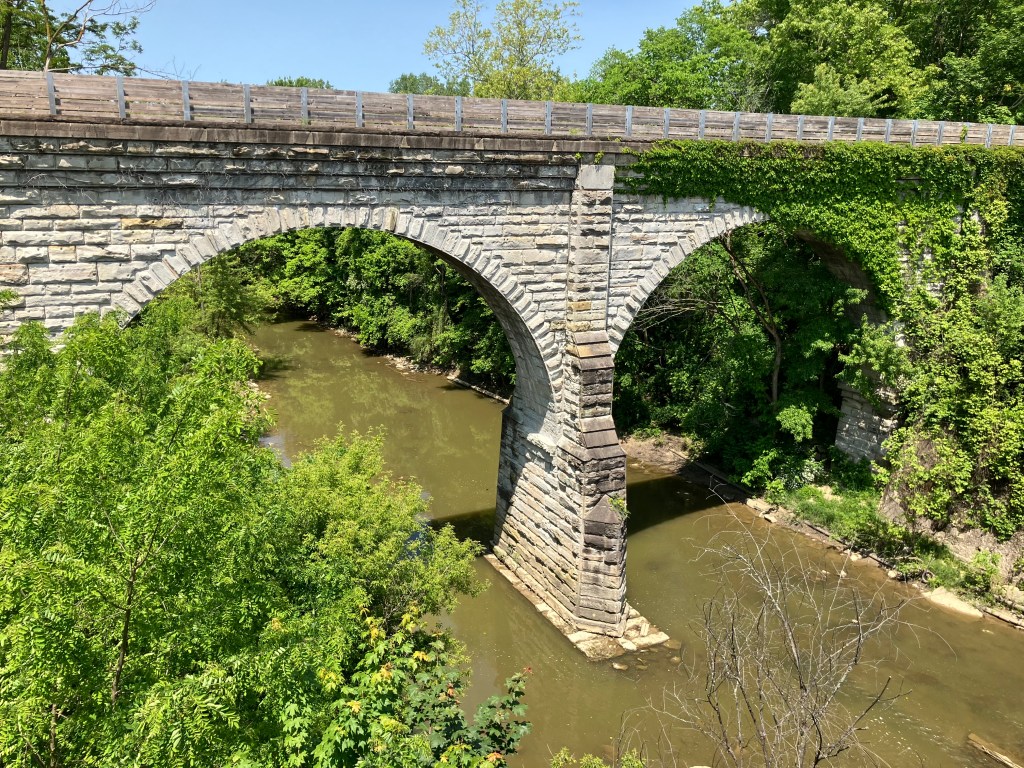
Is that impressive, or what?? It turns out the pedestrian/bike path was placed atop an 1872 railroad bridge. Trains haven’t come through here in decades, so about a decade ago the “rails to trails” people retrofitted it.

But then there’s Cleveland (pop: 363,000). US 20 cuts through the town on surface streets, and the experience of driving it is infinitely different from the peaceful cruise through innumerable small towns that I’d experienced the past few days. This morning’s drive through Cleveland was crowded, people were honking, blight was evident on both sides of the road. I did make a small detour to find the house that was used for the exterior shots of A Christmas Story (1983). But I got lost and found myself in a jungle of massive, looming bridges that cross the river at all angles. And that’s when the magic happened: I saw what makes Cleveland unique. I saw 200 years of history. Would it be going to far to say I saw its heart?

I took most of the following photos from a trail that was once the “towpath” along the Ohio and Erie Canal. Mules labored along these paths pulling boats and barges up the canal via ropes. The modern trail/historic towpath runs alongside the canal for about 100 miles. I walked less than a mile of this path, passing under and next to innumerable bridges–some still in service, and some decommissioned.
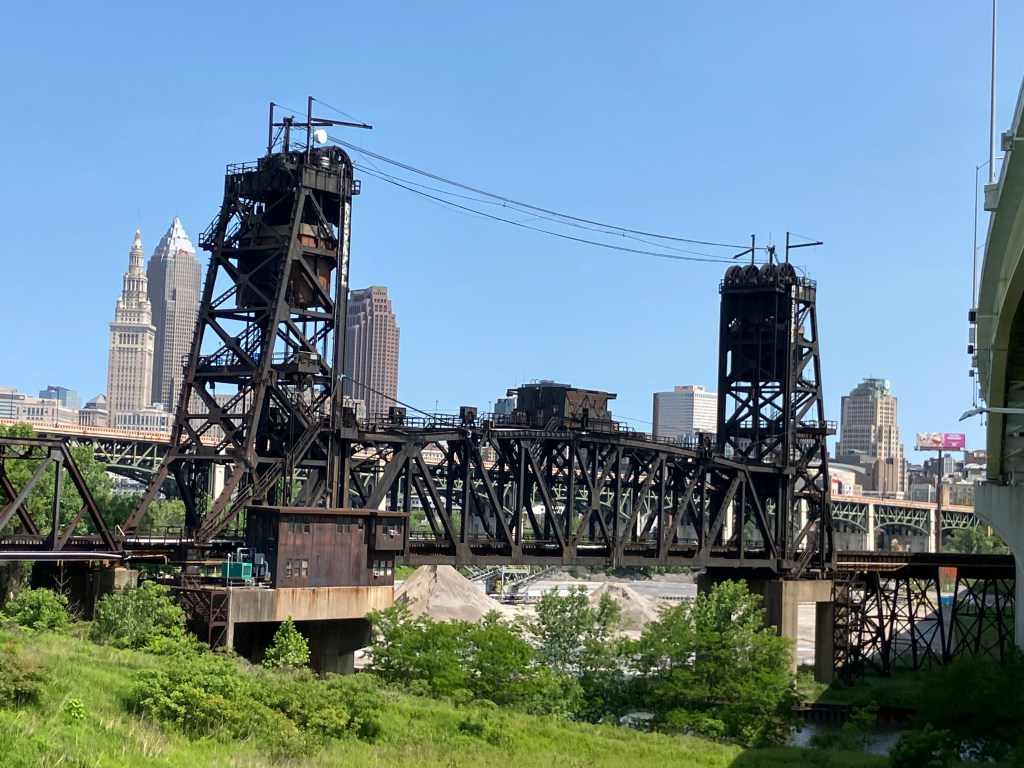
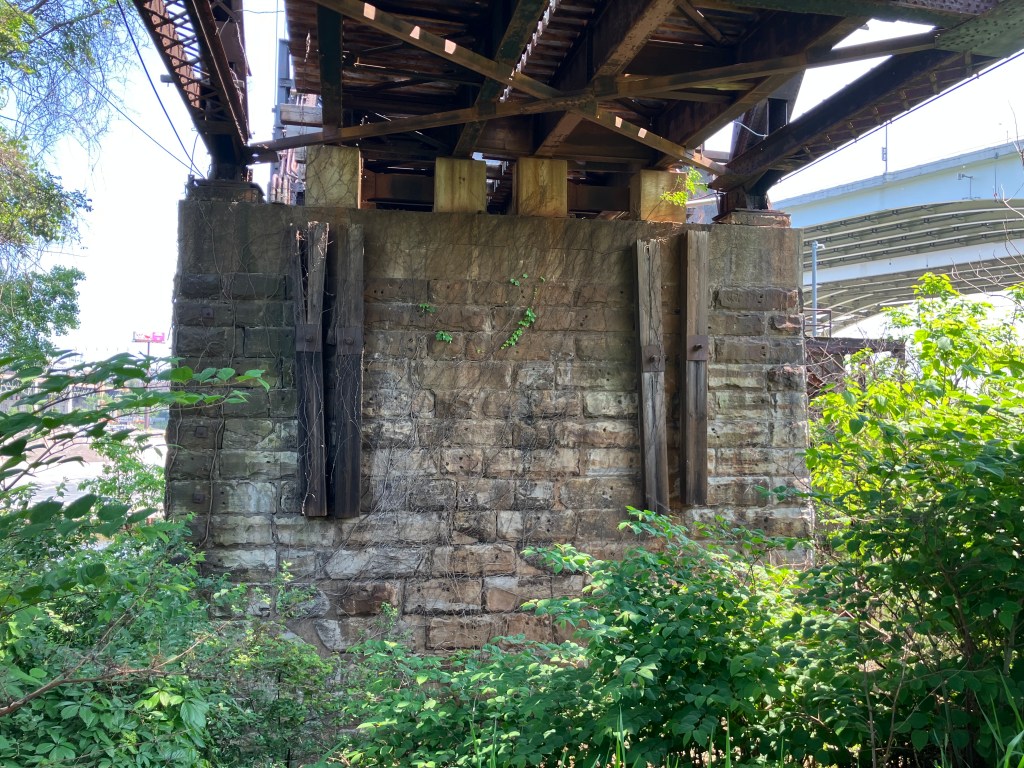
I was wondering if the rusty old Nickel Plate Road High Level Bridge was still operational, and suddenly a Norfolk Southern train clattered over it.
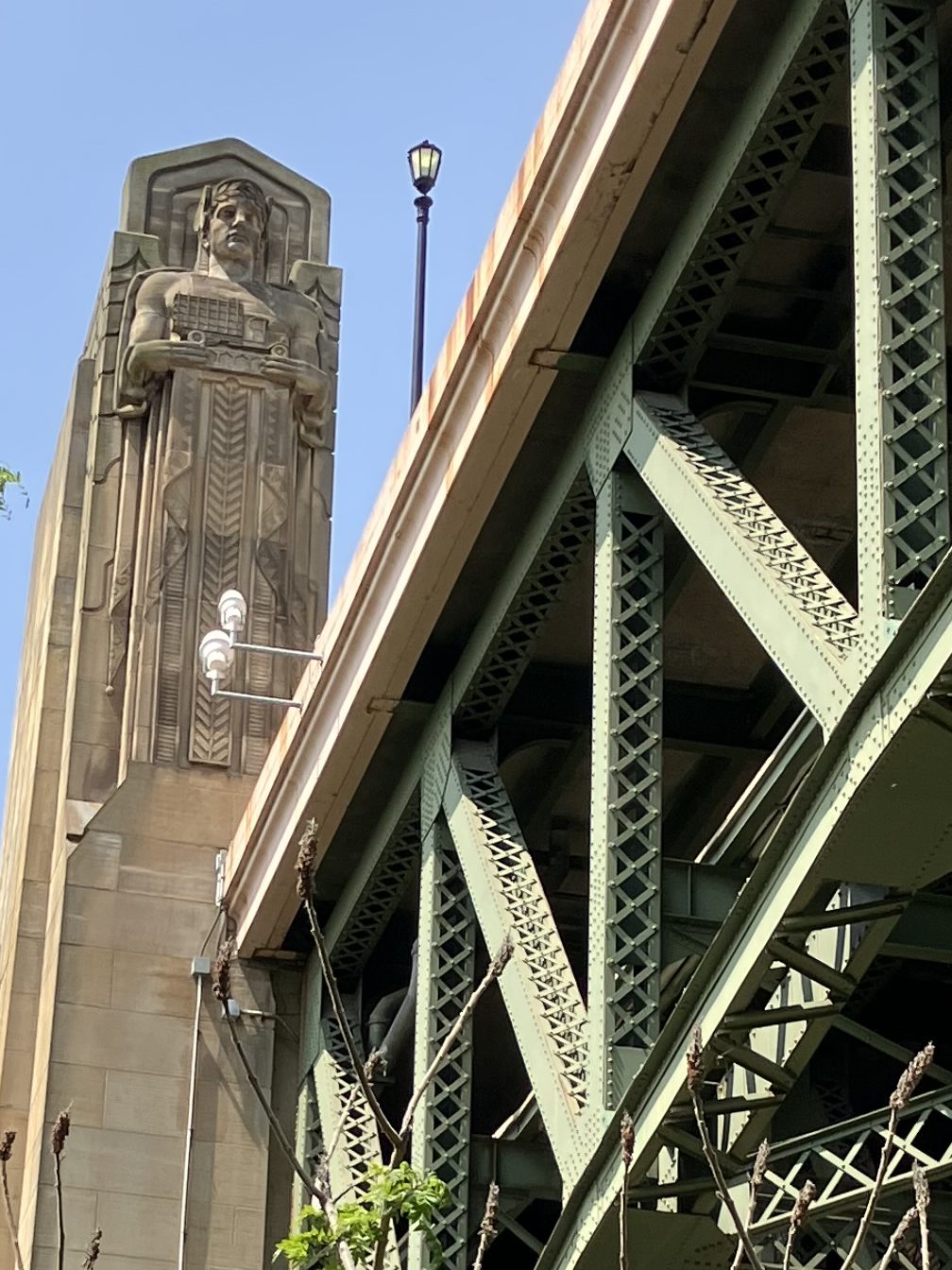
Detail of one of the eight “Guardians of Traffic” on the 1932 Hope Memorial Bridge. Note that he’s holding a truck.
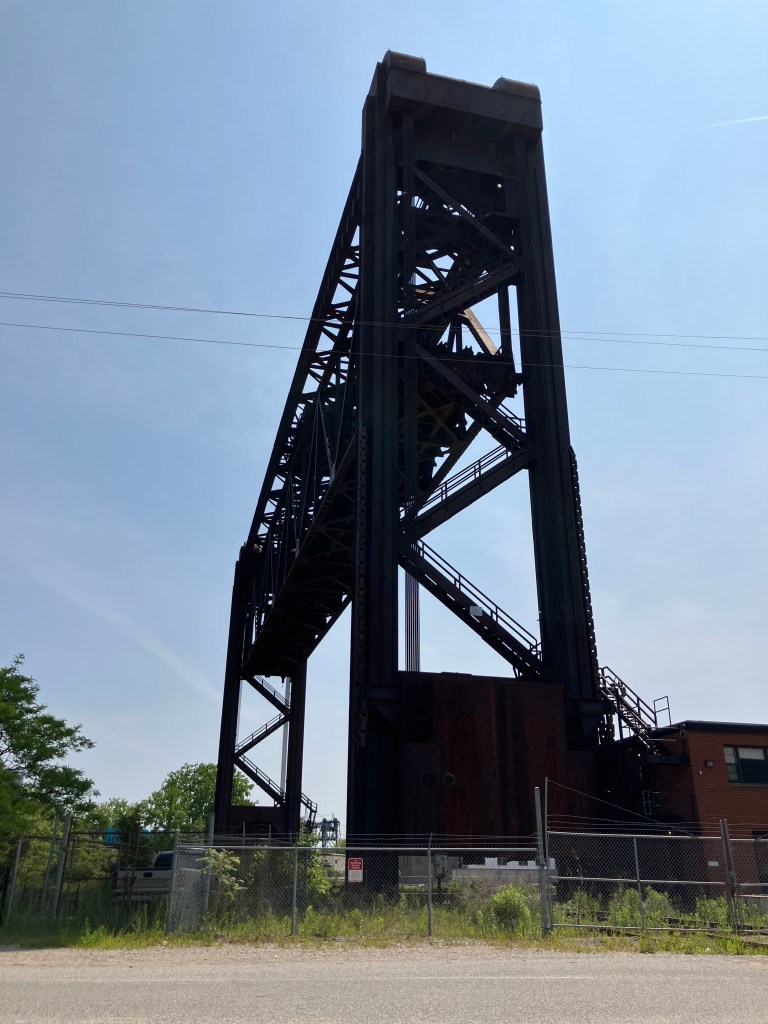
Railroad center-lift bridge, now decommissioned.

Want to see one of these types of bridges in operation? Here I am waiting in traffic for an automobile bridge to return to earth:
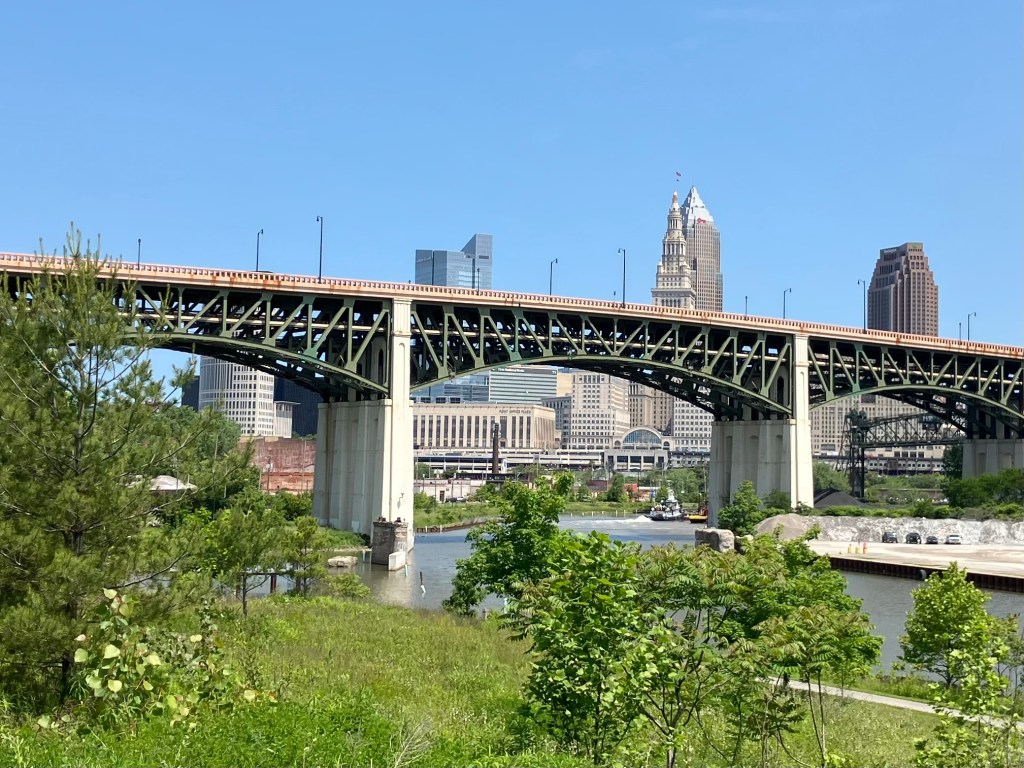
One of the modern spans. (Can one of my loyal readers identify it for me?)
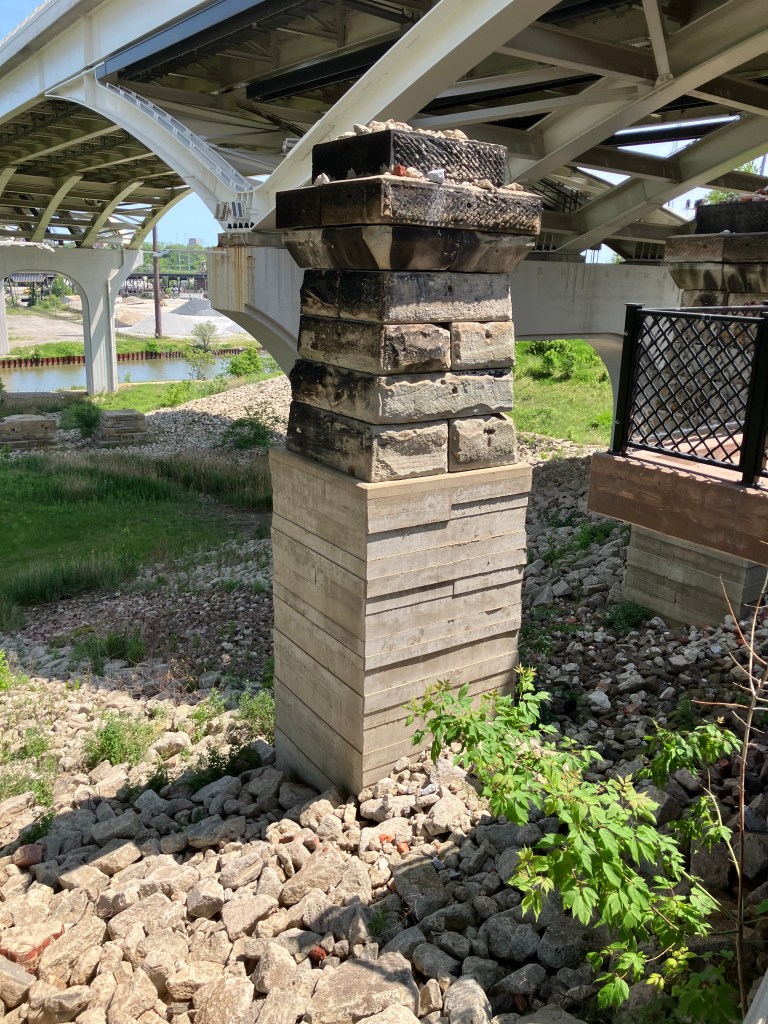
A remnant of the 1888 Central Viaduct.
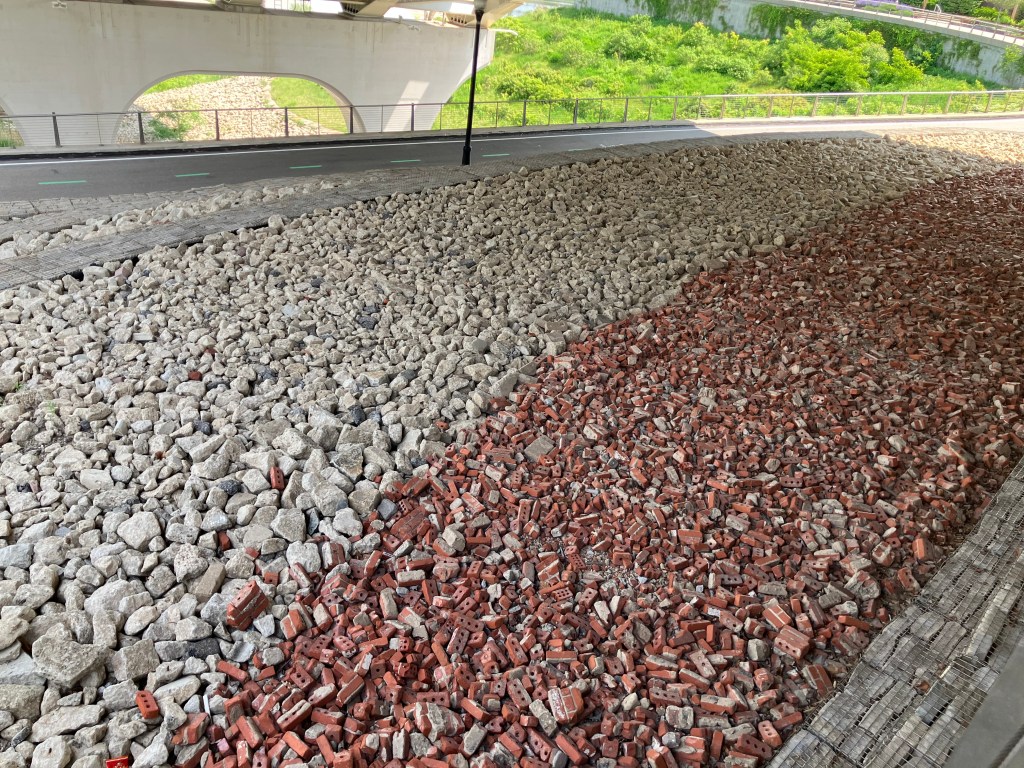
Rubble from the demolition of old bridges and associated structures, now used as ground cover next to the Towpath.
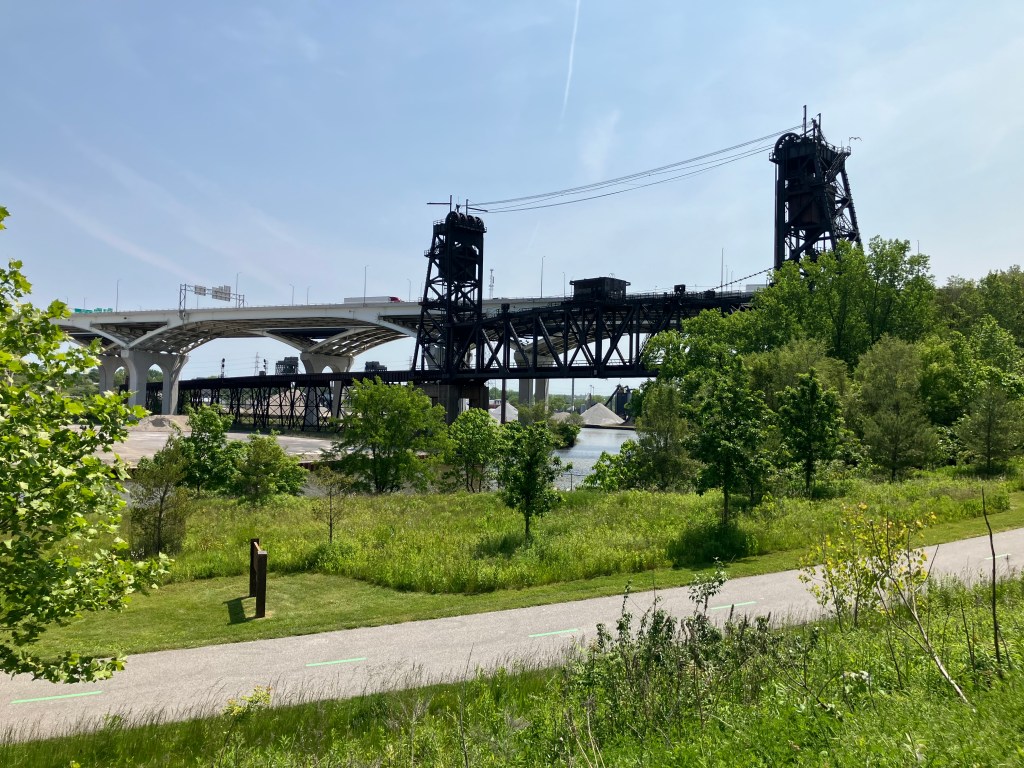
The modern towpath in foreground, with old and new bridges in background.

Evidently Cleveland has over 300 bridges, many of which cross the Cuyahoga River. I’m not going to make you view them all. But you’ve got to admire the engineering and the grit that went into building these over the past two centuries. And you also have to admire how modern Clevelanders somehow navigate daily through this confusing labyrinth.

We now move on to the non-bridge-related part of the day:

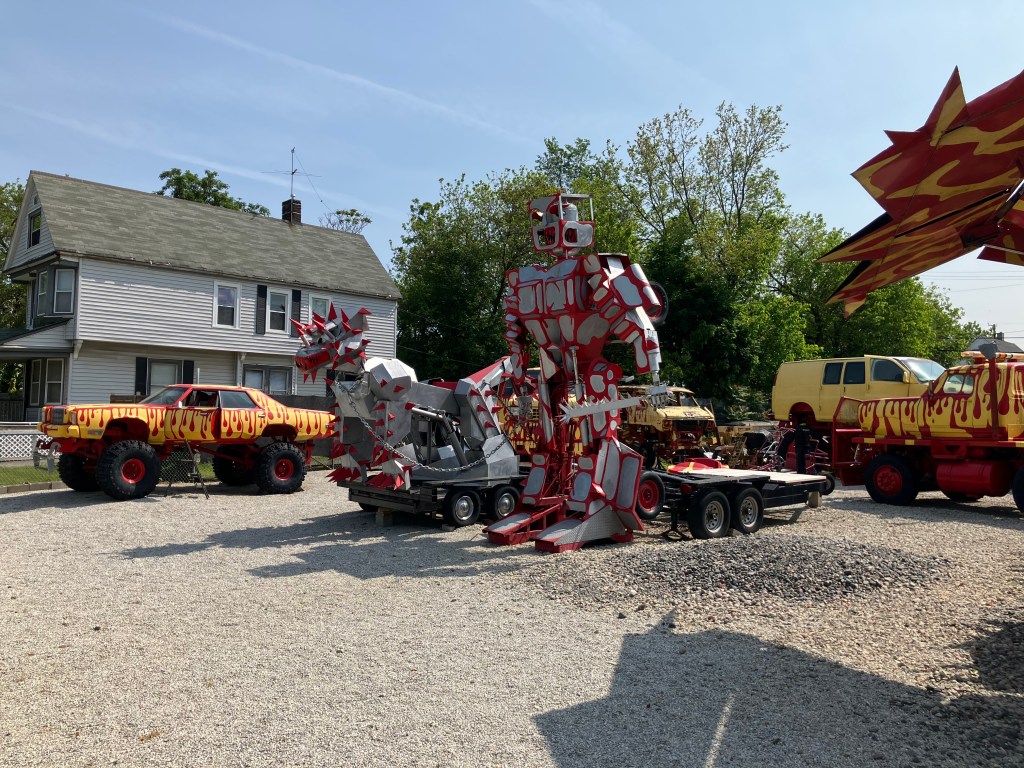
Here’s a different kind of engineering project, carried out by a high-school dropout who taught himself welding, electronics, power delivery, and a ton of other stuff:
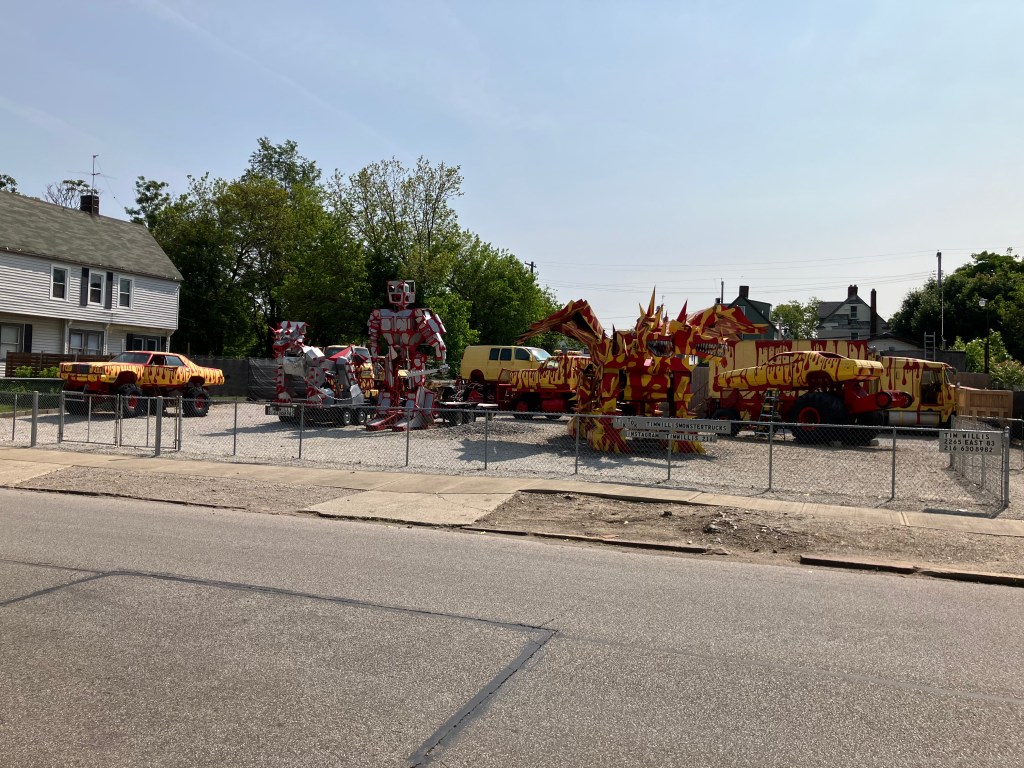
Corporation yard from hell.

This is all on a lot on a residential street. Let’s look a little closer:
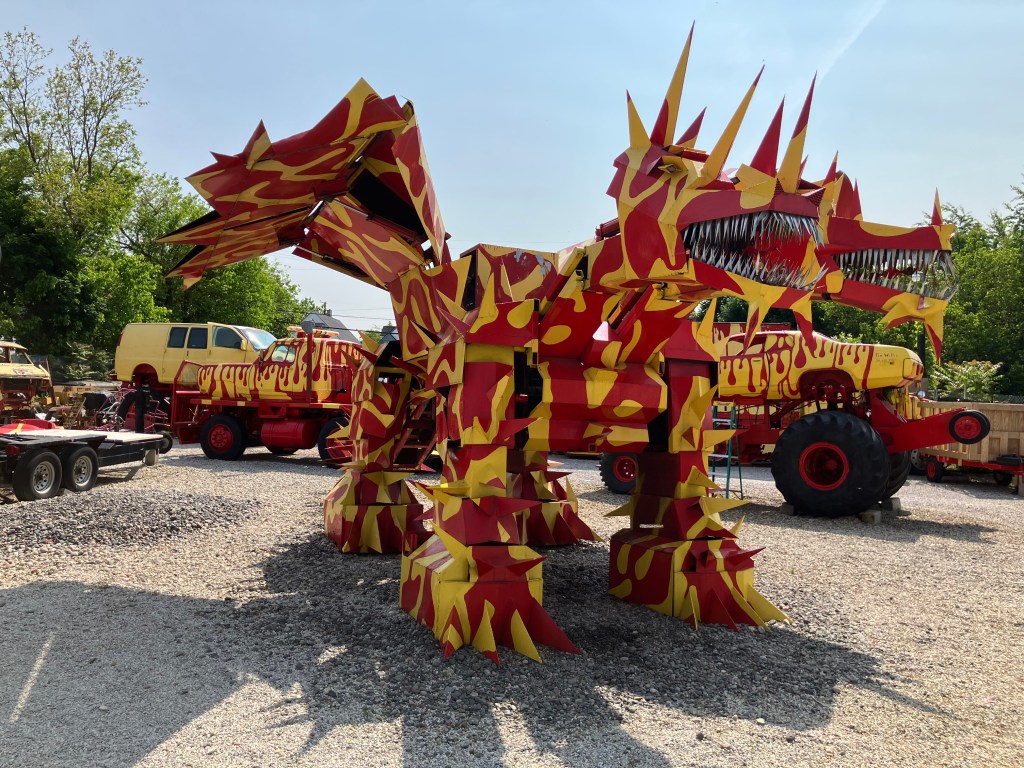
Jiang.
“More than meets the eye.”

It’s all the work of local artist Tim Willis. And those robots and dragons actually move with electric servos, and the trucks have powerful engines that presumably could get them into a monster truck show. My readers will recall that I have a soft spot for yard art; this is incredible. Spend a minute or two hearing from Tim himself:

Sadly, he wasn’t available when I dropped by.

Next up was the town of Kipton, OH. A new reader named Bob suggested I check out the site of the “Great Kipton Train Wreck of 1891.” There’s a marker at the site explaining how a head-on railroad collision occurred because the watch of one of the conductors was four minutes slow. Leaving aside the issue of whether it’s wise to create railroad schedules that have two trains occupying the same space just minutes apart, this accident prompted the railroads to adopt strict standards for railway timepieces.
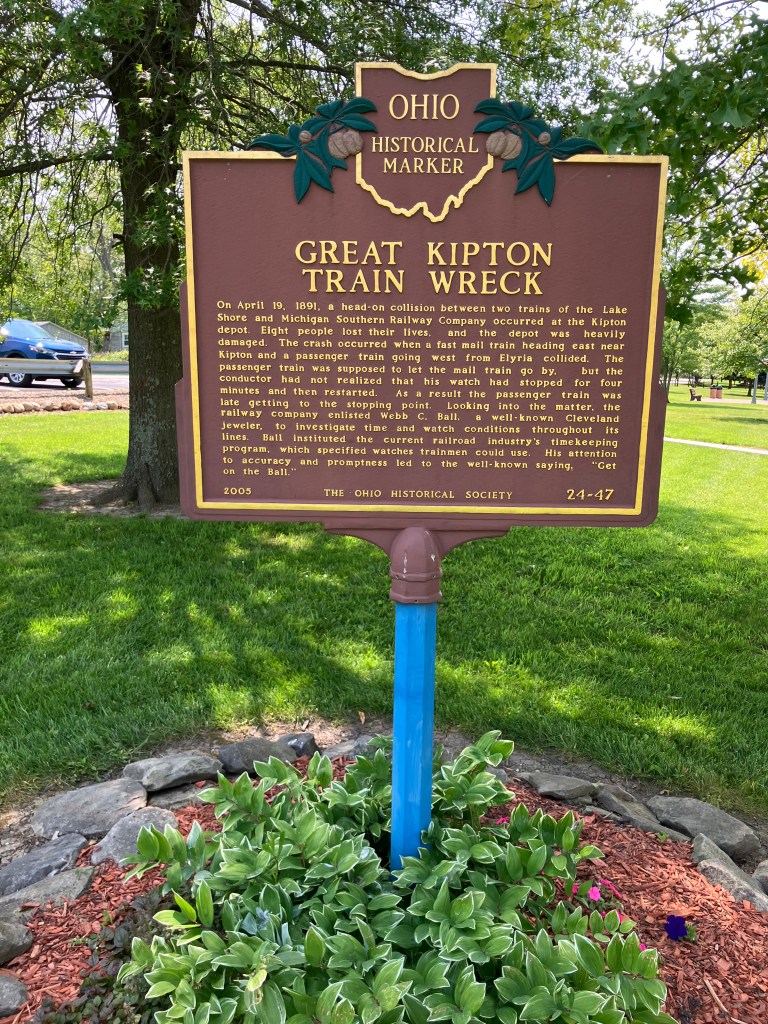
The marker sits in a park/bike trail that used to be the rail line where the accident occurred.

Finally, can anyone identify the building below? (You already had a hint.)
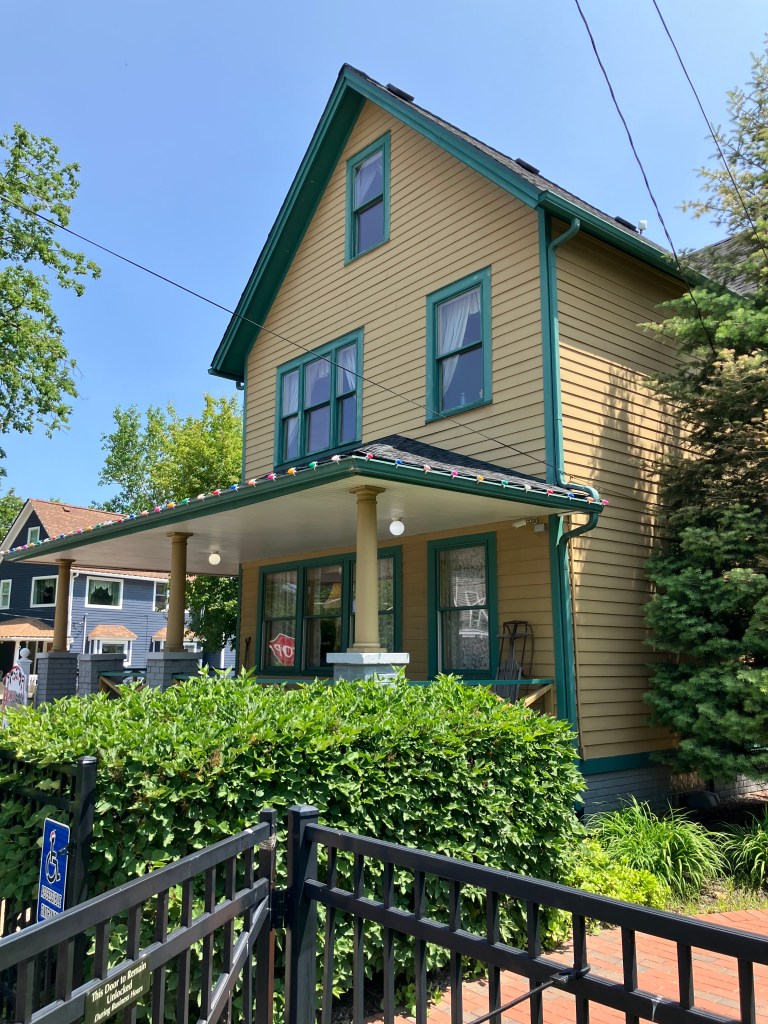
“You’ll shoot your eye out!”

Beer of the Day

I nabbed my BOTD at the Inside the Five Brewing Company, just west of Toledo, Ohio. It’s owned by two retired NFL players: Chris Morris (Oakland Raiders) and Brandon Fields (Miami Dolphins). They both retired in the Toledo area, and started this brew pub in 2018. I’m told “Inside the Five” is reference to the last 5 yards of the gridiron. But it’s all Greek to me.

Anyway, the place is evidently very popular–it was packed when I got there on a Monday evening. They have a big space, with comfortable outdoor seating on a deck that overlooks the street. They also have friendly servers, and the weather was perfect. What better place to get the BOTD?

I had a pint of their Deimos, which is an American Porter. As we all know (after consulting Wikipedia), in Greek mythology Deimos was the son of Ares (god of war) and Aphrodite (goddess of love). Somehow he turned out to be the god of dread and terror. Should I be worried for ordering this beer?
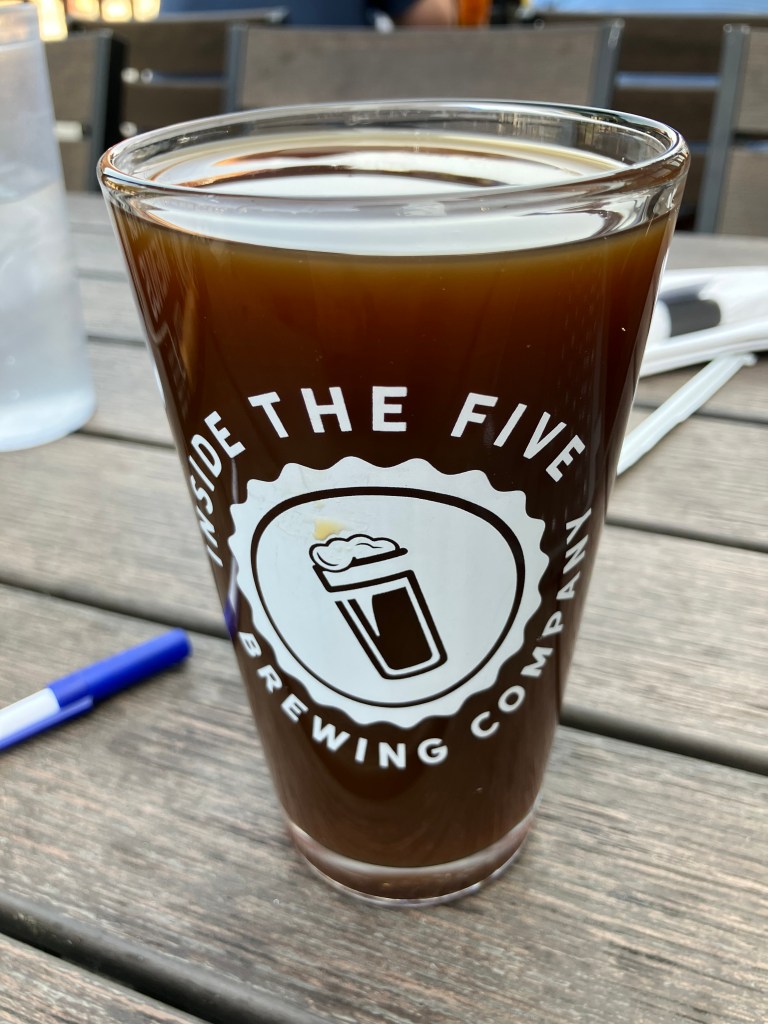
Deimos is made by brewing a traditional Porter and adding local coffee and vanilla. Both of these tastes are prominent in the beer, though the vanilla is more prominent on the nose than on the palate. The mouthfeel is incredibly smooth. It’s very lightly carbonated, and has no foam to speak of. The ABV is 6.5 percent. The color is quite light for a porter–it’s the color of honey, or maybe the color of coffee when you use the Kuerig pod a second time.

Speaking of coffee: The coffee flavor is not particular roasty; instead it reminds me of Coffee Nips (TM) candy. There’s also a sweetness to this beer that is just this side of cloying. The beer seems to have no bitterness at all, with just the slightest evidence of hops on the finish. I’d say this is more of a dessert beer, that wears out its welcome as you move through a full pint of it. I’d give the first half 4.5 stars, and the second half 3 stars. I guess that means the overall score is 3.75.
Breweries · bridges

A Geneva Convention

When I awoke in Geneva NY this morning I was relieved to discover that yesterday’s rain had stopped. It was going to be a good day.

After my morning ablutions I eased the Altima back onto US 20, which at this point was feeling like an old friend. Those iconic white-and-black shield signs, with the reassuring “West” designation, appear every few miles, or even more frequently when encountering some complicated twists and turns through the towns. For it’s worth remembering this 3,365-mile road was largely assembled from preexisting roadways which didn’t always line up perfectly. I have to admit, though, the USDOT has done a great job of making the route clear. I have hardly used a map or nav at all, instead relying almost exclusively on the road signs.

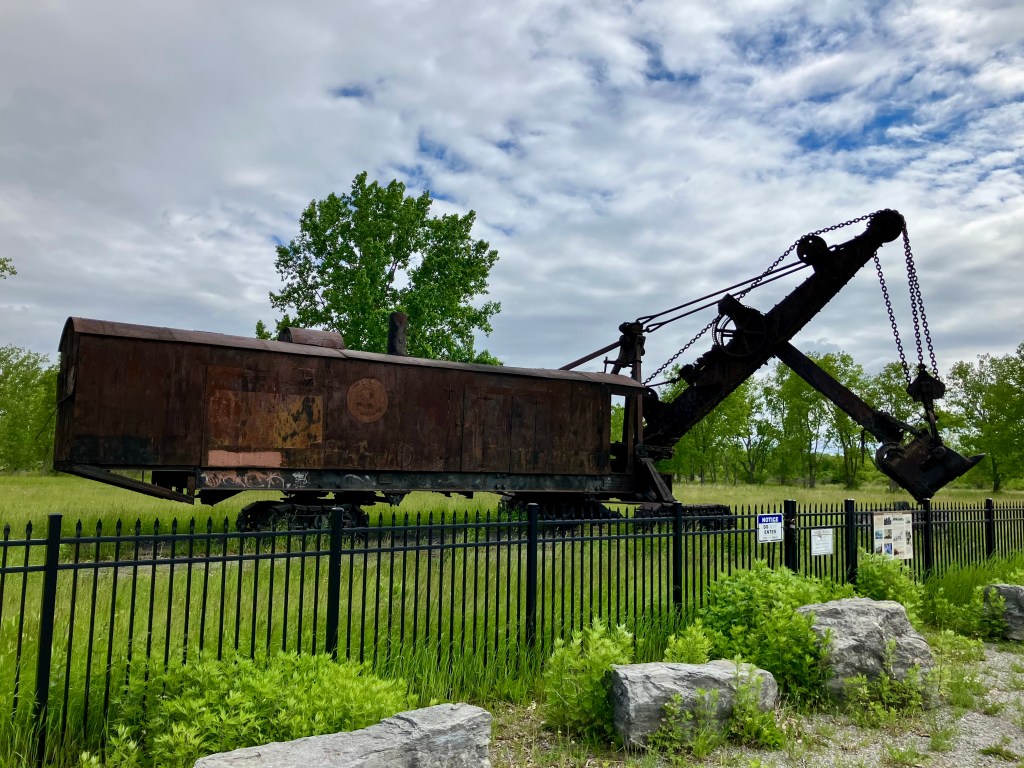
I encountered today’s first sight of note in the town of LeRoy NY (pop: 7,700). Do you recognize this?

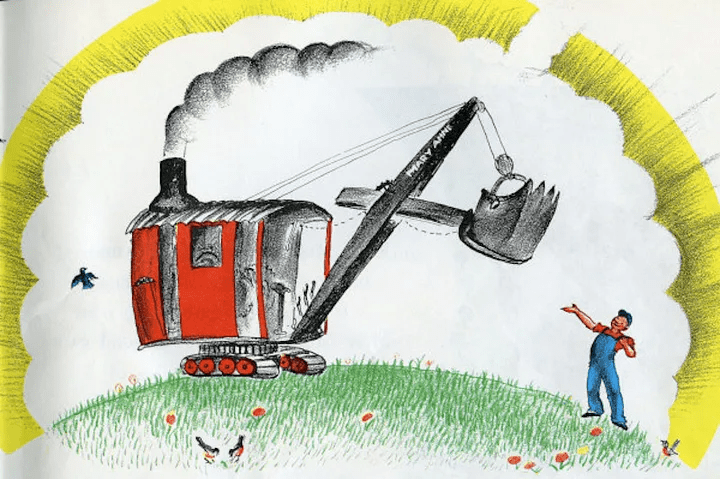
Doesn’t it reminds you a lot of this?

Surely you remember Mike Mulligan and his steam shovel. The rusty hulk I saw in LeRoy this morning was made by the Marion Steam Shovel Company in 1906. (Notably, the name of Mike Mulligan’s steam shovel was Mary Anne-almost certainly a nod to the Marion company.) For decades the LeRoy shovel worked in a quarry across the street from where it now stands. It was retired to that spot in 1949…just a few years after Mike Mulligan’s Mary Anne was converted into a boiler for a building’s heating system. I’m just impressed with the scale of this beast. It took a crew of four men just to operate the thing!

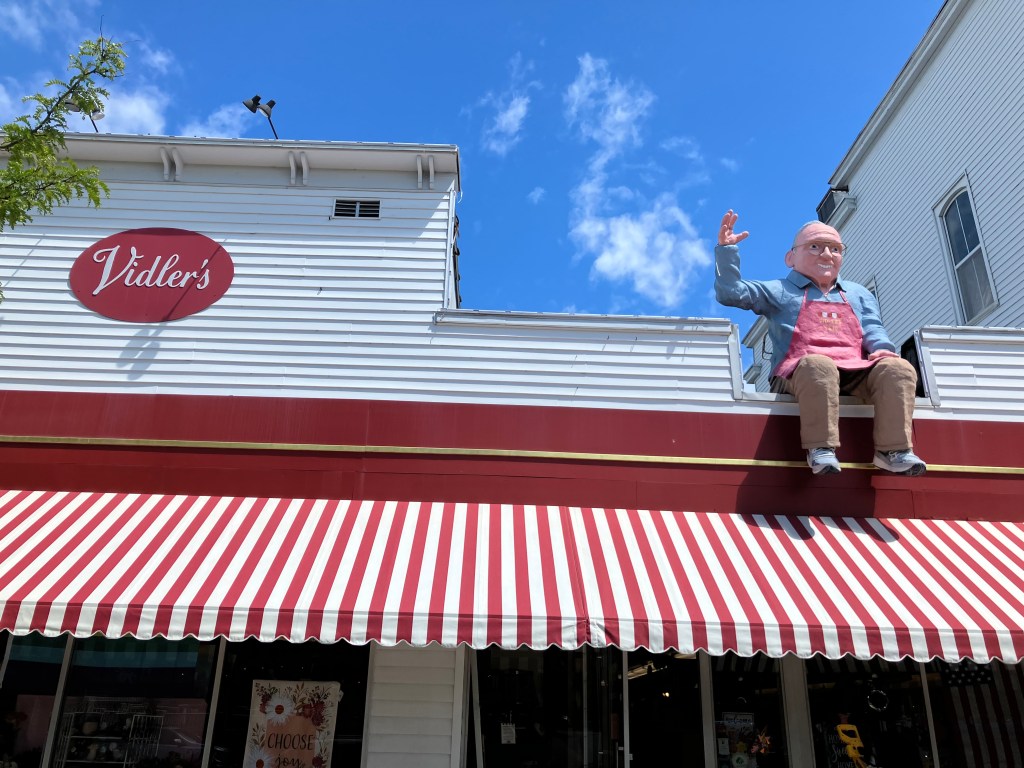
Next up was the town of East Aurora, NY, where I saw the first of several giant sculptures. This first one is affectionately known as Vidler on the Roof:

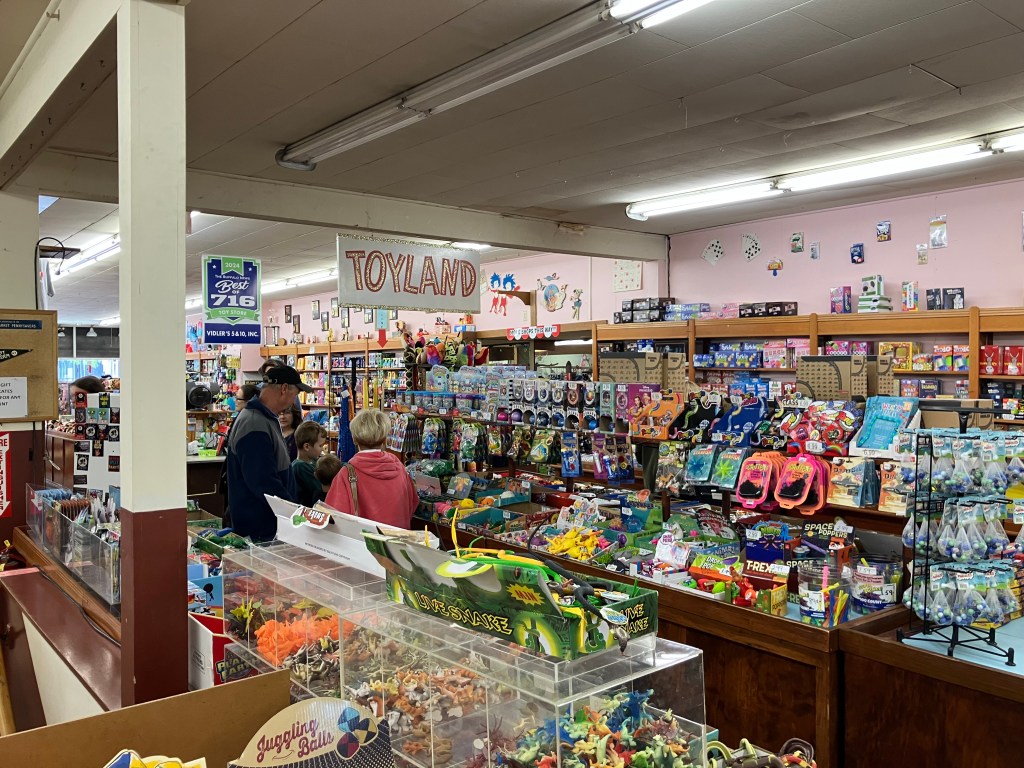
Vidler’s is an old-timey five and dime store founded by Robert Vidler in 1930. This East Aurora location was established 65 years ago by Robert’s son, Ed. The inside of the store still looks very much like the old five and dimes…except the prices are much higher. The statue of Ed was placed on top of the building in 2009; Ed died ten years later, at age 90.

And yet I still couldn’t find a perpetual-motion bird!

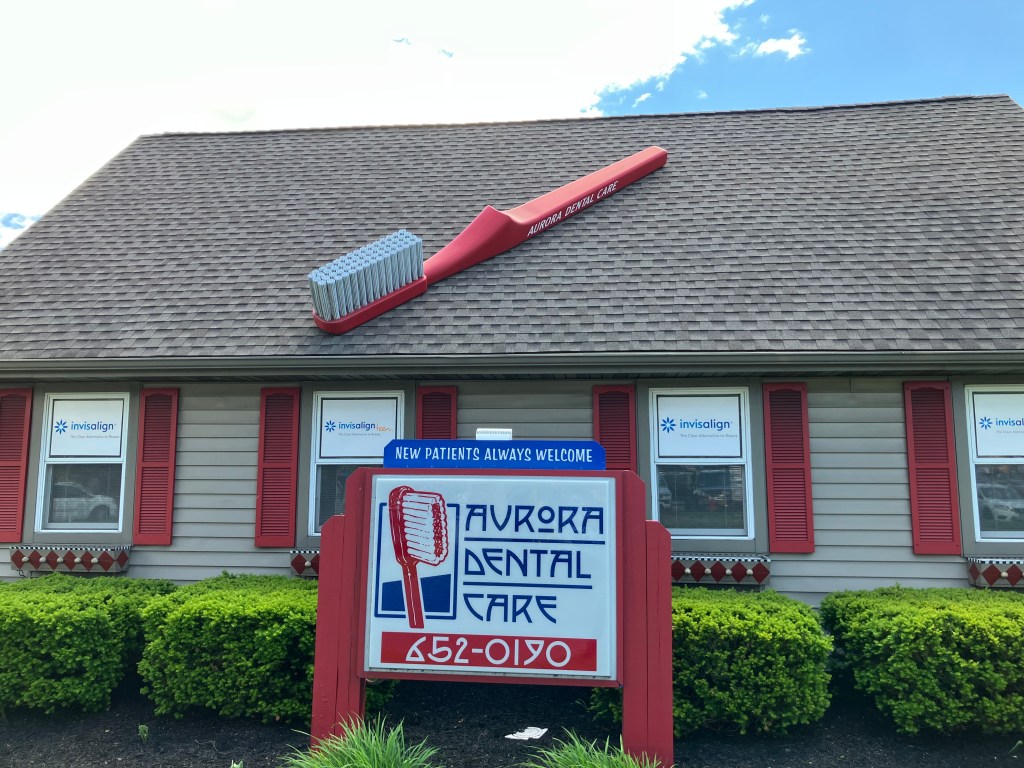
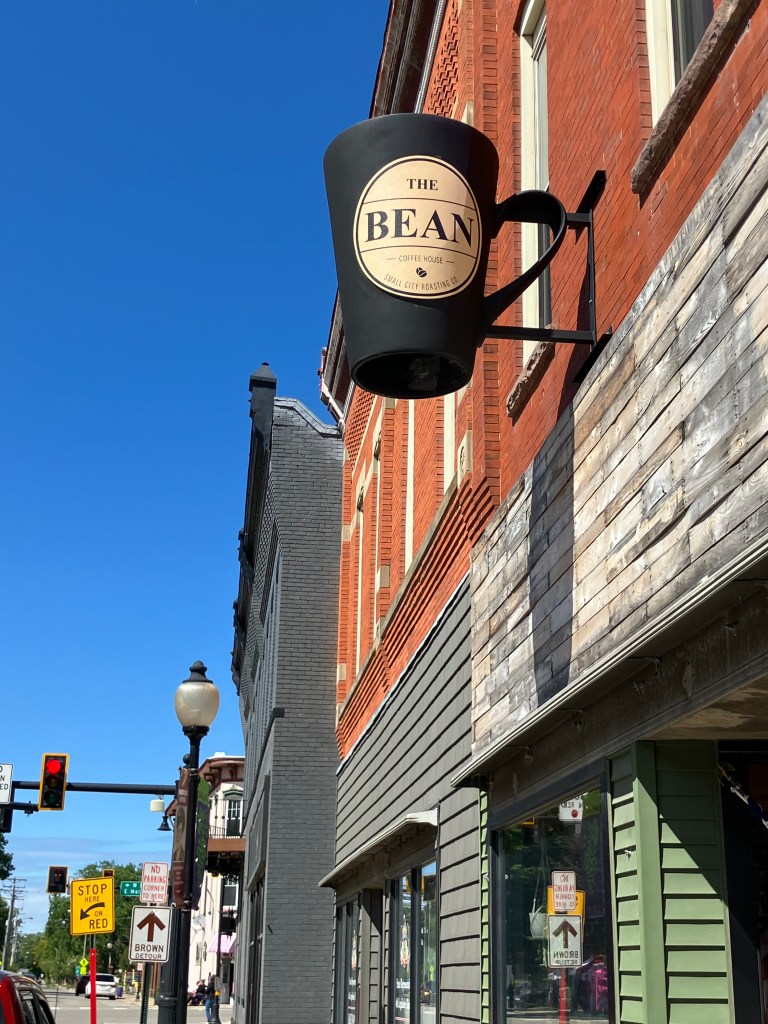
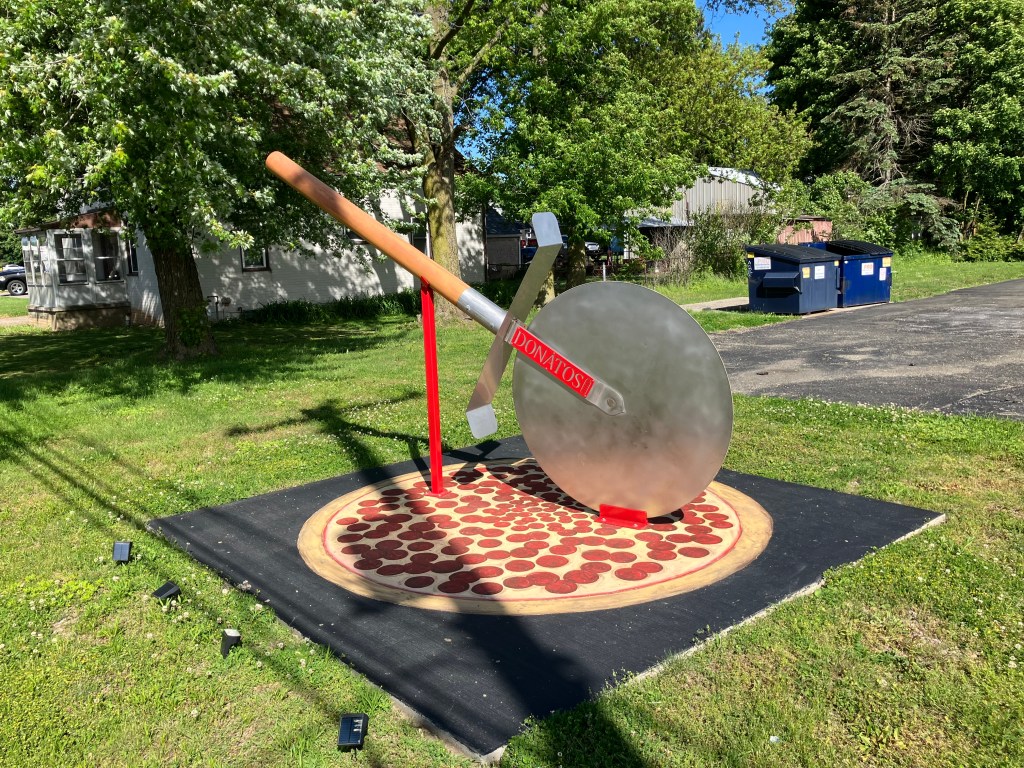
It seems that this part of the country really likes to place giant objects on their buildings. A few other examples from today:

In East Aurora. Is that a phone number on the sign or is it the Klingon word for “gum recession”?
Giant coffee cup in the town of North East, PA.
In front of a pizzeria in Erie, PA. The handle is 8 feet long, and the stainless steel wheel is 5 feet in diameter.

My main objective of the day was to see some lighthouses on Lake Erie. Alert readers will recall that I’ve had a passing interest in lighthouses as interesting pieces of history, architecture, and (possibly) ghost lore. More to the point, though, last time I visited a light house I bought one of those souvenir “passports” that can be stamped at all the lighthouses in the US. I’ve already got five stamps. I only have 772 more to go…

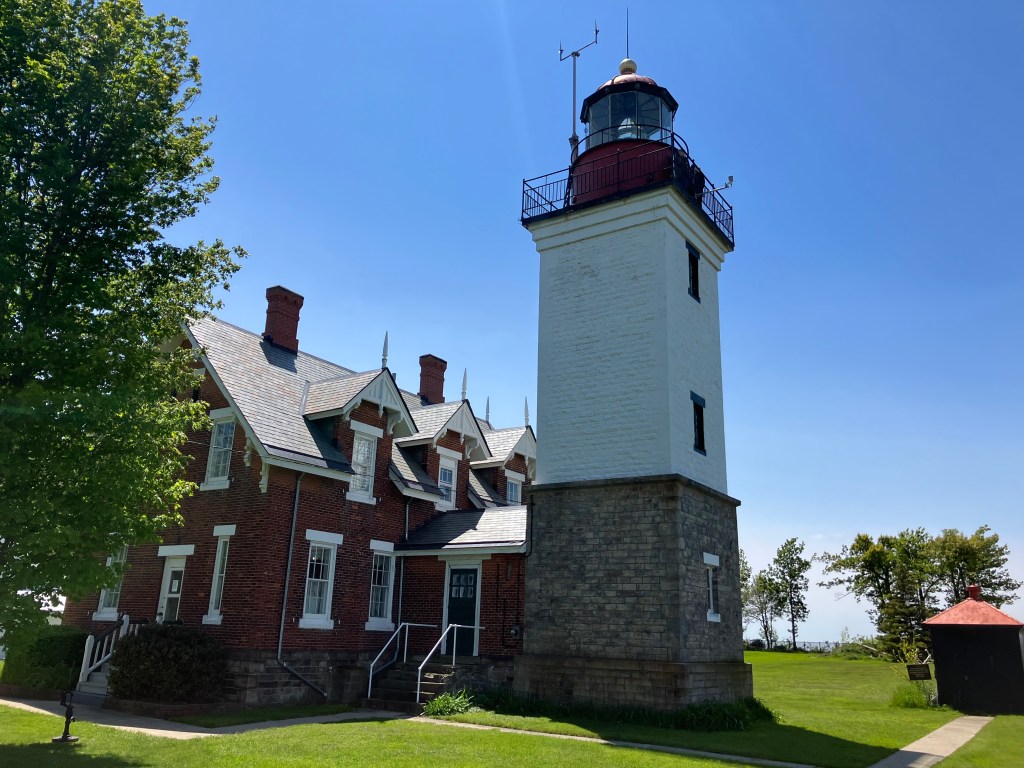
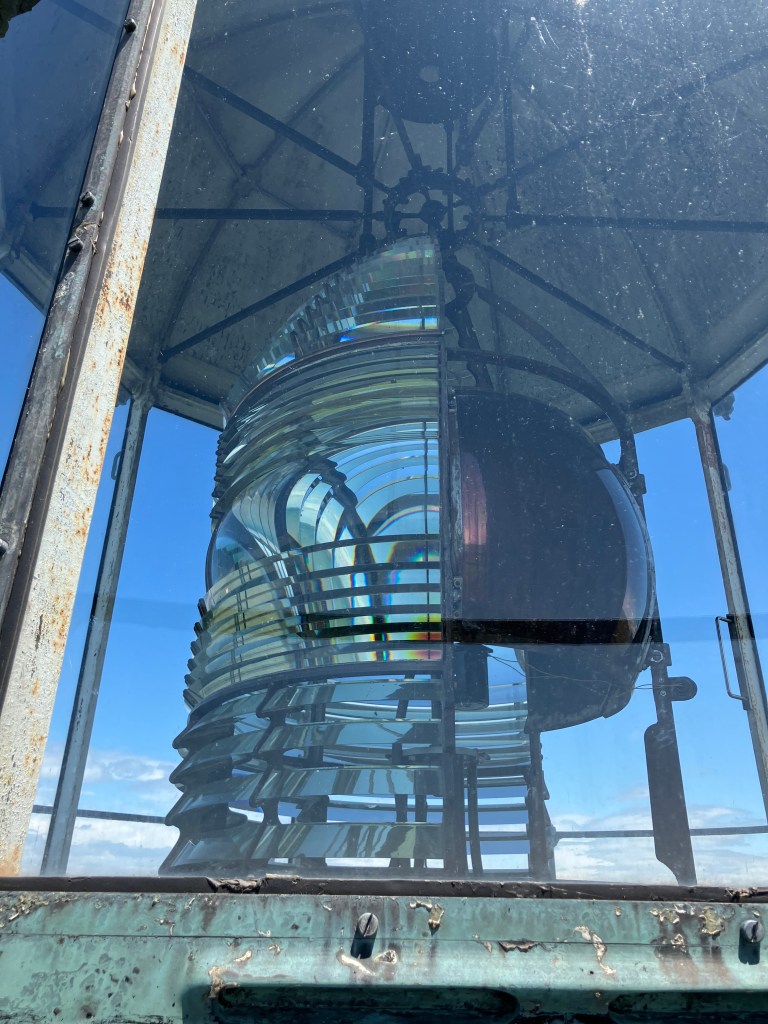
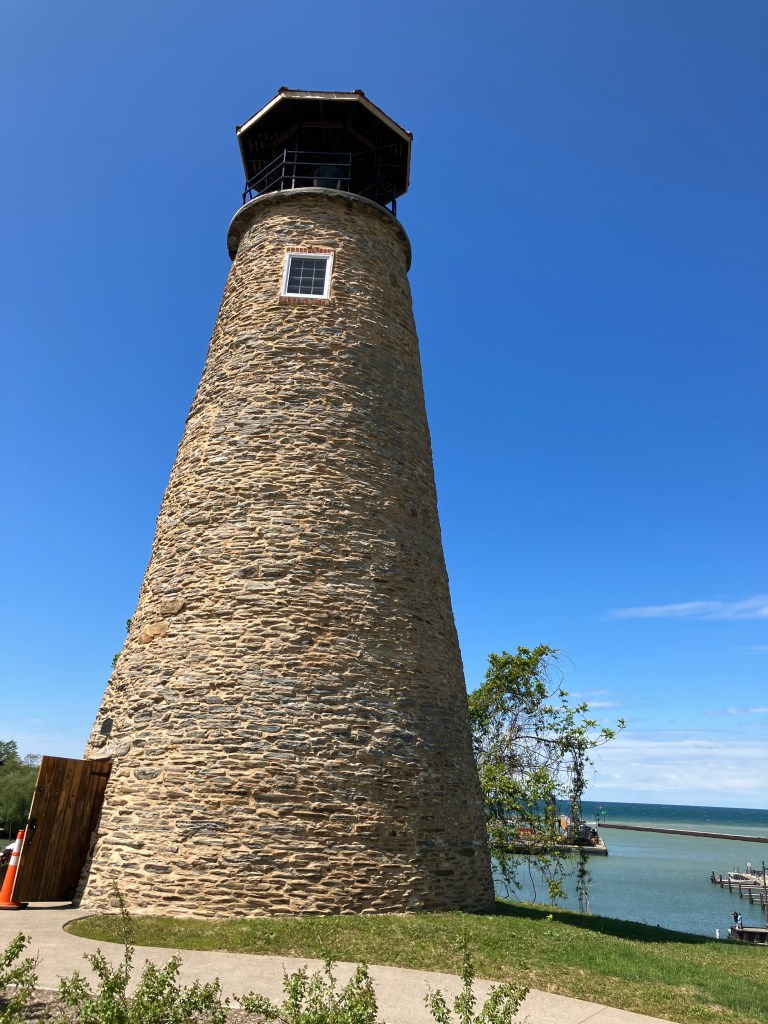
Anyway, today I climbed to the top of the Dunkirk Lighthouse and the Barcelona Lighthouse. Both had docent-led tours, but I had to fake an emergency to escape the endless, meandering stories and dad jokes from one of the docents. I’m not making this up. Anyway, both lighthouses date from the 19th century, and the Dunkirk Lighthouse is still active. The Barcelona Lighthouse had the world’s first natural-gas powered lighthouse light. It hasn’t been active for well over a century, and is now run by the NY Parks Department. It was recently renovated and re-opened just this week!

Dunkirk NY Lighthouse.
Dunkirk Light’s Fresnel lens (from 1857) is still in use.
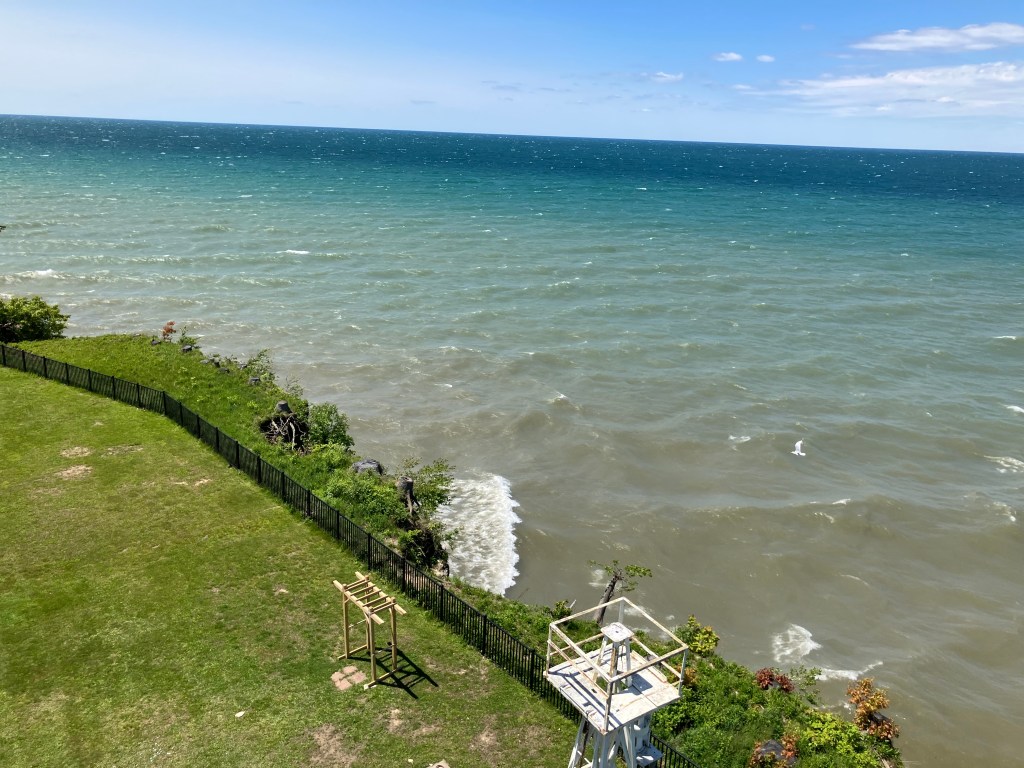
View of Lake Erie from Dunkirk’s light tower.
Barcelona, NY Lighthouse, freshly restored.

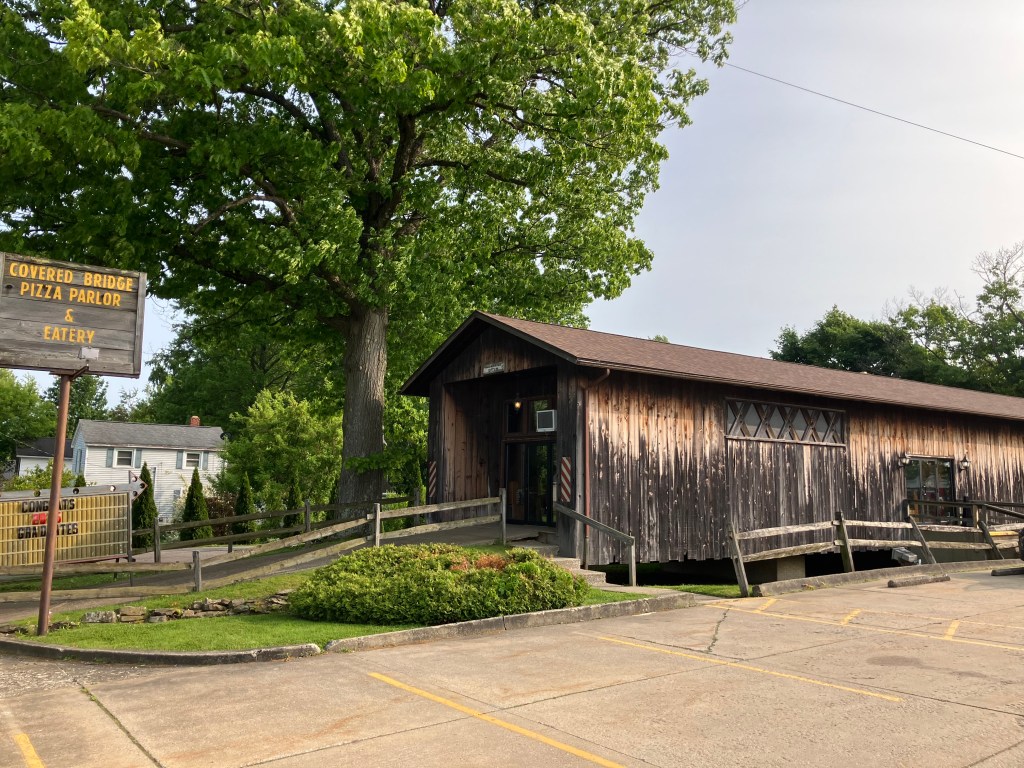
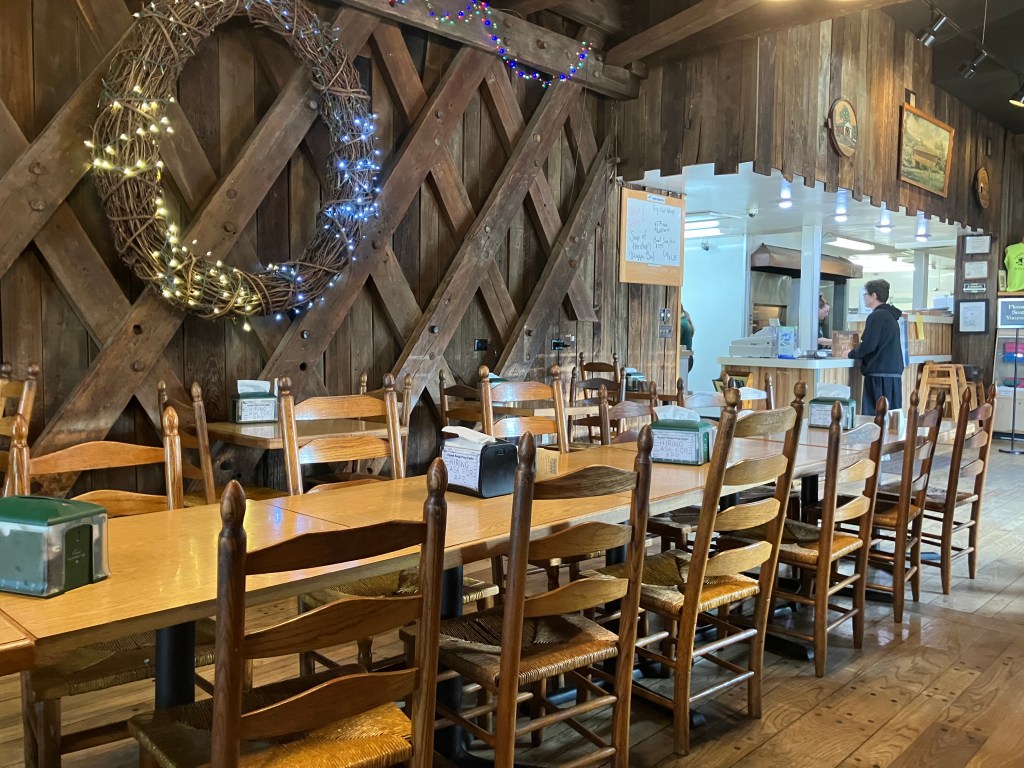
It was now getting close to dinnertime, so I went to a pizzeria in Ashtabula, PA that’s situated entirely within a covered bridge. Seriously. The 1862 town truss bridge was originally located about 11 miles south of its current location until it was slated for replacement in 1972. It was auctioned off, and the highest bidder was Gary Hewitt. His bid was five bucks. Gary had the bridge disassembled and then reassembled on its current site. He named the place Covered Bridge Pizza Parlour, which is kind of on the nose.

“The Pizzas of Madison County.”

Sitting in the dining room of Gary’s restaurant you’re surrounded entirely by the bridge. It’s a neat and well-executed concept. I wish I could say the same for the pizza.

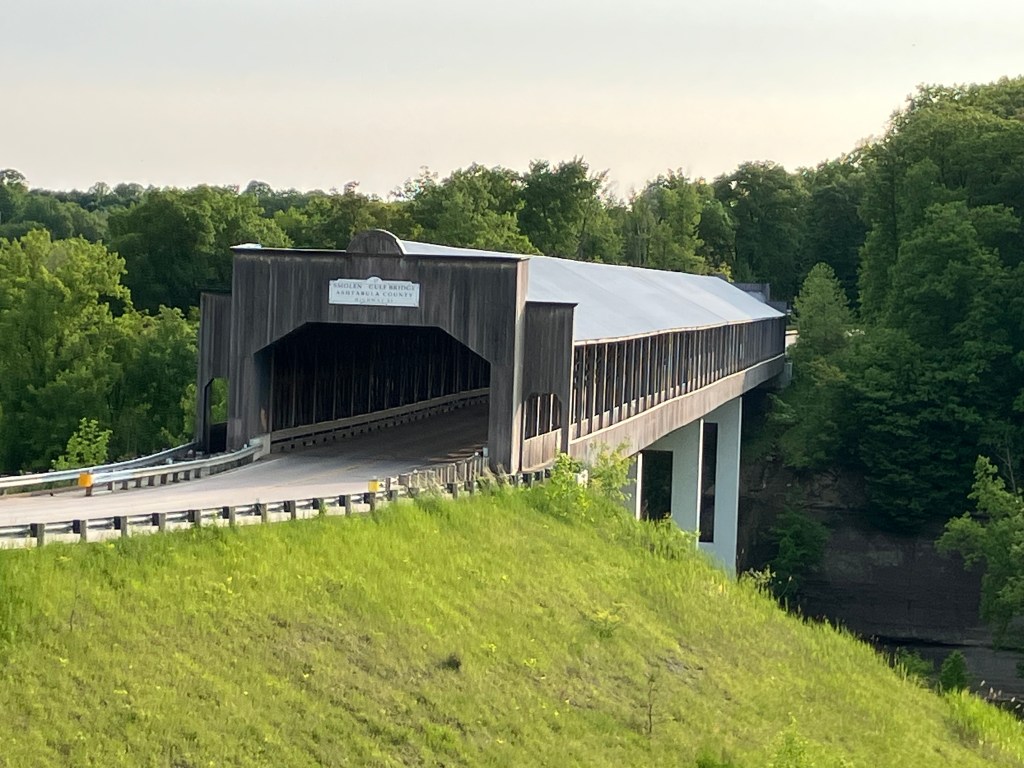
Now here’s where things start to get a little weird. Just minutes after leaving the covered bridge restaurant, I encountered this monster of a covered bridge:

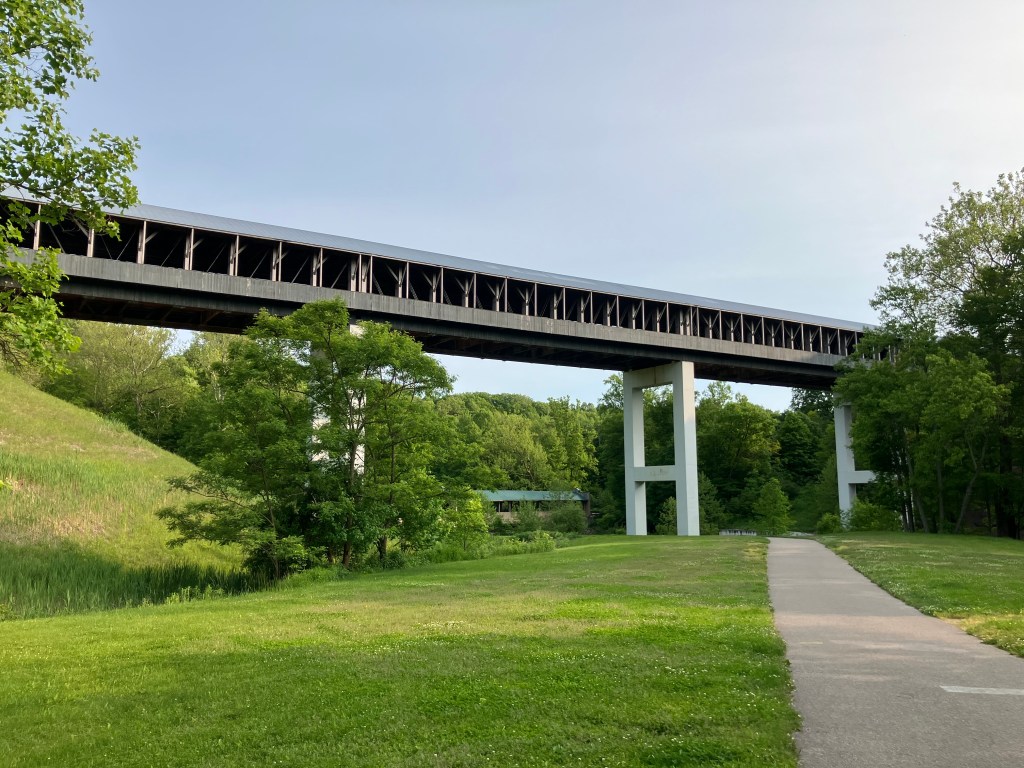
I stopped to get a better view, but couldn’t find a decent angle.

From here it looks like an elevated BART trackbed.

A nearby kiosk explains that this is the longest covered bridge in the entire country, at 613 feet long. It was built in 2008. Come with me as I drive over it!

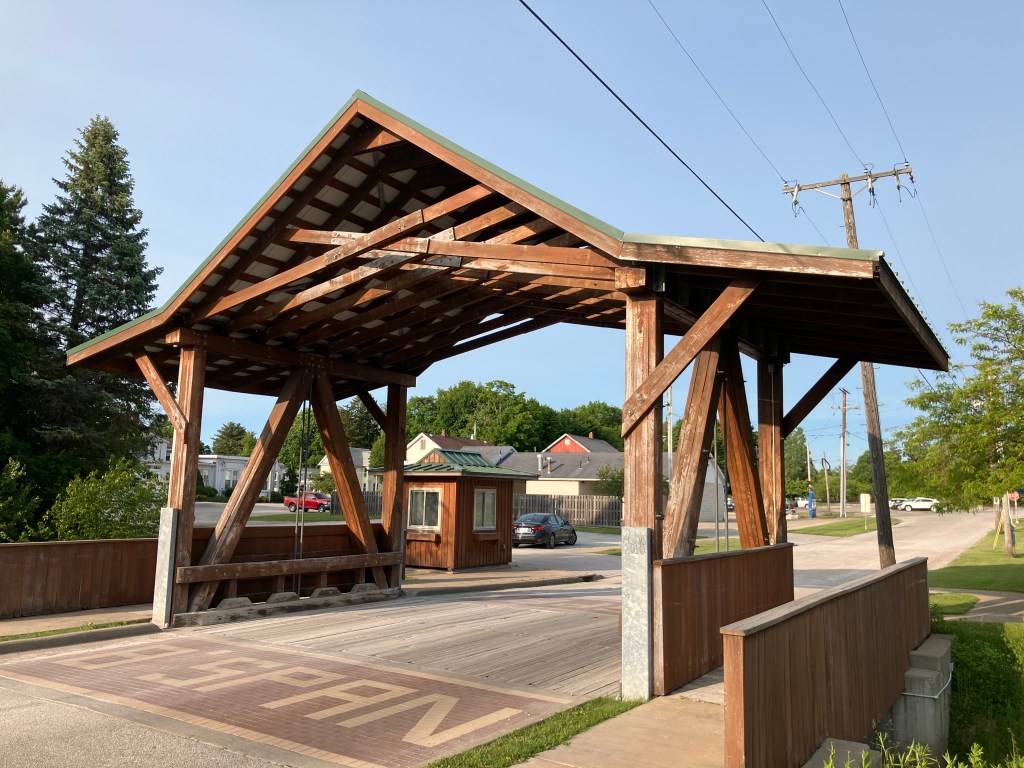
Now, a few minutes after crossing the country’s longest covered bridge, I enter the next town and decide to get a motel for the night. During my search I encounter another covered bridge. This time it’s the shortest covered bridge in the US!

I’ve seen Eagle Scout projects more ambitious than this…

What are the odds of the country’s shortest and longest covered bridges being within a few miles of each other along Route 20?? Of course, this is easily explained: Shortly after Ashtabula got all the attention for building the longest covered bridge in 2008, the folks in this neighboring town decided to replace an old cement culvert with an 8-foot-long covered bridge. It’s not a joke, exactly, but it’s certainly a lighthearted statement piece.

And what’s the name of this town where I’m ending my day’s travels? Geneva, Ohio. Which is fitting, since I started the day in Geneva, New York. There’s been a lot of doppelgangers today…

BOTD

I got my Beer of the Day here in Geneva, OH, close to the banks of Lake Erie. It’s a brewery called The Darkroom Brewing Company, for the space it occupies used to be a commercial photography darkroom. (Note to you young ones: In the old days, before pics were digital, you had to develop your photographs on paper with chemicals in the dark.)

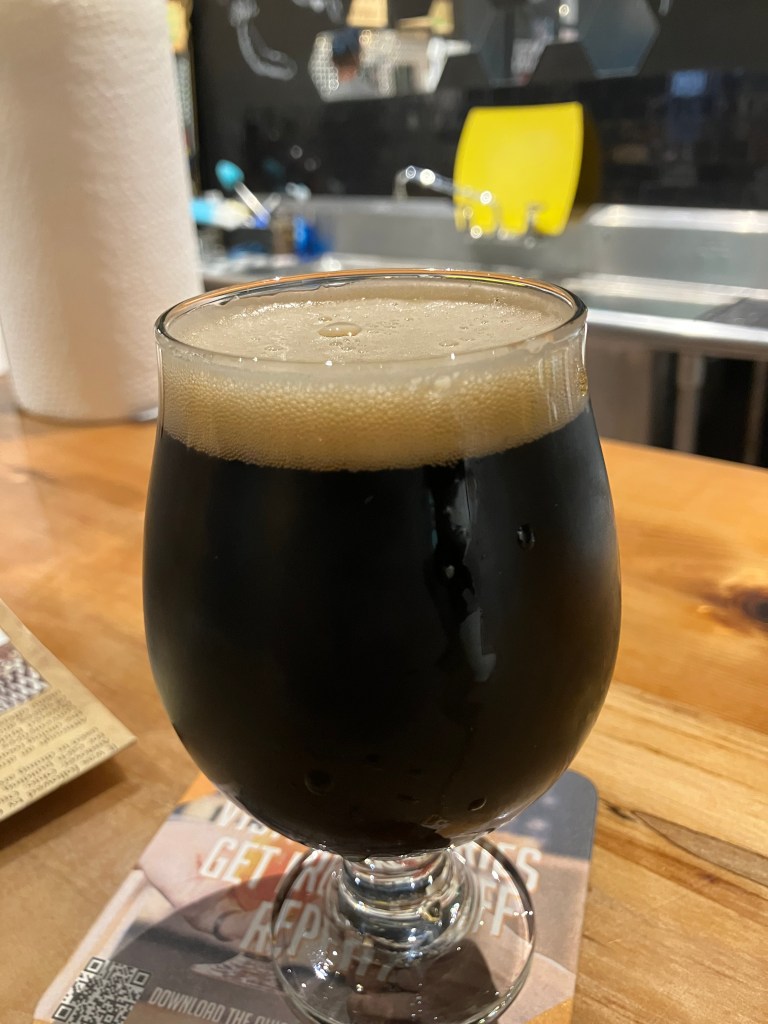
I had something called “Nachthexen” Russian Imperial Stout. The name–which translated from German means something like “Night Witches”–was a term the Germans used to describe a special all-female bombing unit in the Soviet air force during the Second World War. So that’s cool.

Bombs away!

The Nachthexen is very approachable for an imperial stout. It’s not as sweet or as heavy as some renditions of this style can be. It has decent carbonation, and it has 10% alcohol by volume..which may sound like a lot, but I typically encounter imperial stouts that have ABVs of 12, 13, even 15 percent.

This is an interesting beer. The nose is very malty, and a bit like unfermented wort. On the tongue it’s roasty almost to the point of burned. It starts out like dark coffee, but midpalate you get hints of burned popcorn, cork, and pencil lead. The finish has some bitterness and astringency, somewhat reminiscent of the volatile organic compounds in PVC pipe glue. Somehow, when you put it all together, it’s pleasantly interesting and strangely balanced. I give it 4.5 out of 5 stars.