In a recent blog post, I asserted that Kingsburg, CA is “smack-dab in the middle of” California. I based this assertion on nothing more than a quick glance at a map.
Several alert readers called out my unsubstantiated claim. The reader with the best case was Jeff N., who wrote: “To go to the official center of the state, head a little North out of Fresno to a spot near the town of North Fork. There’s an official surveyors mark noting the exact center of the state.”
A quick search of various sources provided unanimous corroboration of Jeff’s claim. For instance, check out this newspaper article from the Desert Sun.
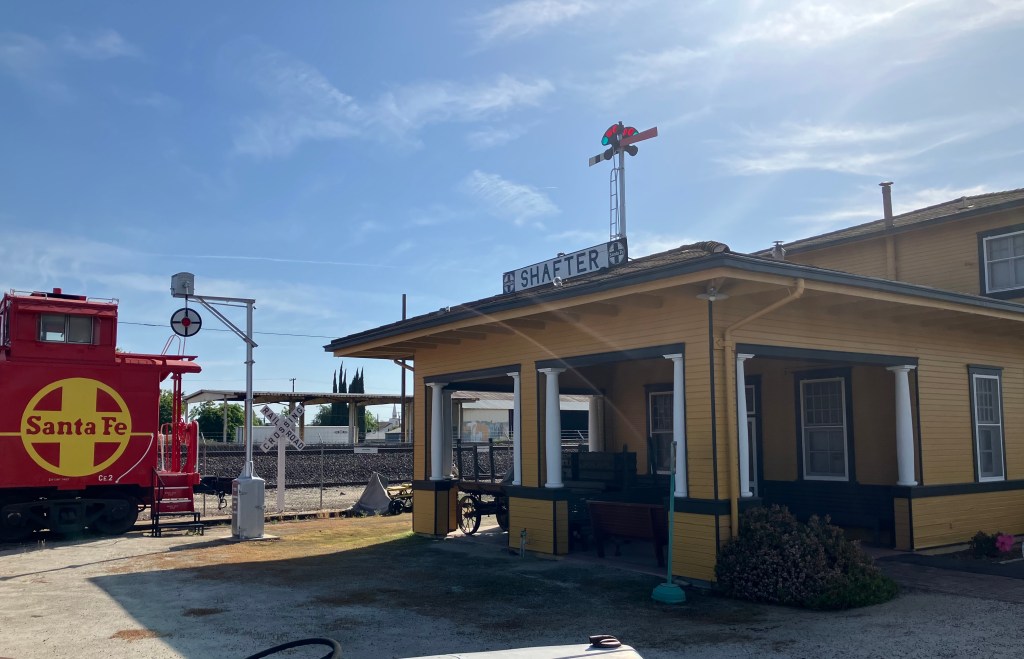
Coincidentally, I did stumble across a (sort of) competing claim in the town of Shafter, CA (pop: 22,000). Shafter is home to a 1917 Santa Fe railroad depot, which now serves as a railroad museum. I visited the station because the folks at the Kingsburg Depot meeting I attended the other evening told me that Shafter was their “sister depot”…whatever that means. So I made a quick visit.
Kingsburg’s “sister.”
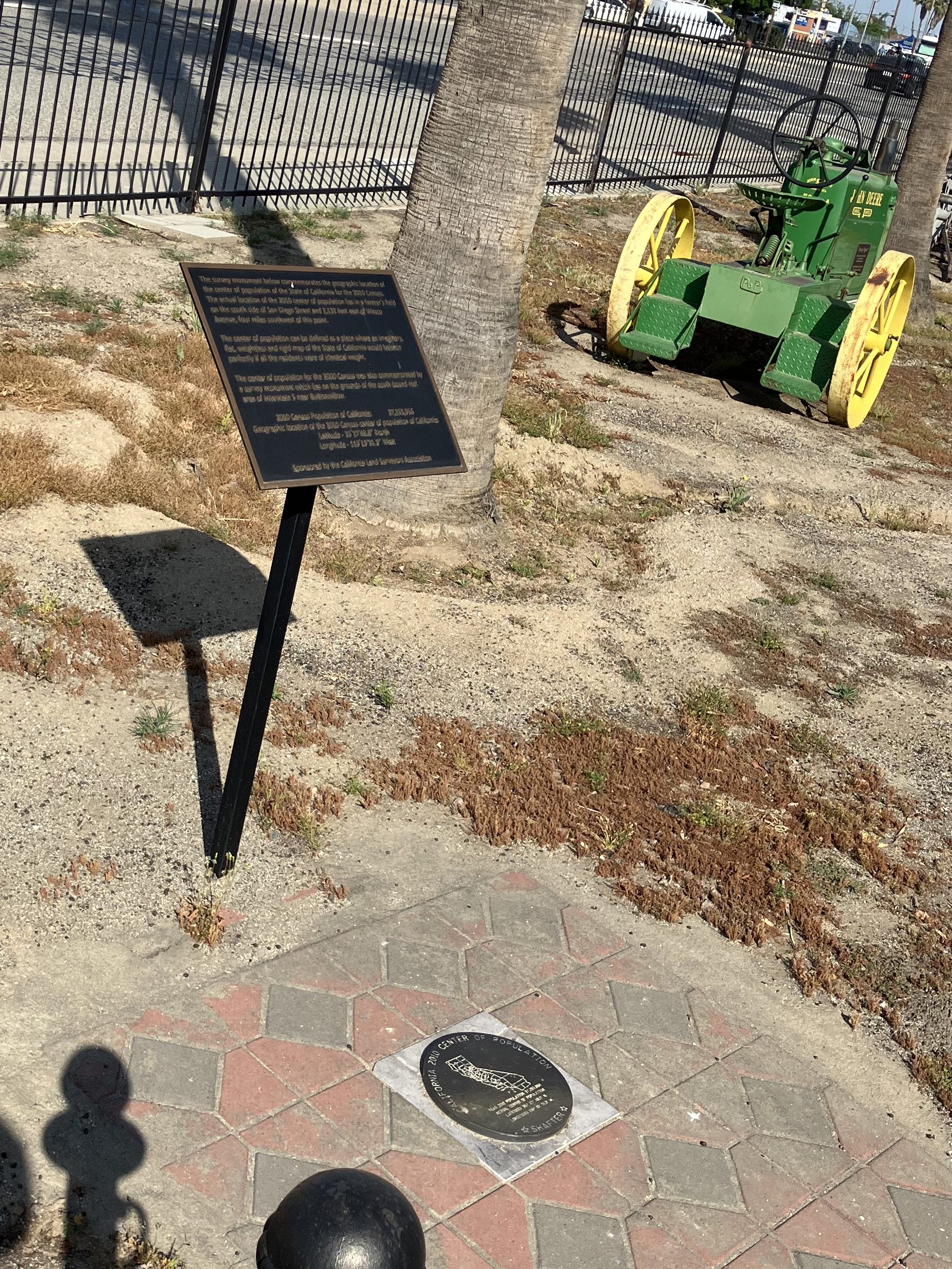
Anyway, during my visit I noticed this marker, which proudly boasts “California 2010 Center of Population.” So while North Fork is the geographical center of California, Shafter is the population center…at least based on the 2010 census.
“Center of Population” marker on the ground.
But upon closer inspection, the plaque above the marker reads:
The survey monument below commemorates the geographic location of the center of population of the State of California for the 2010 Census. The actual location of the 2010 center lies in a farmer’s field on the south side of San Diego Street and 2,132 feet east of Wasco Avenue, four miles southwest of this point.
All of which raises the obvious question: Why couldn’t they put the marker any closer than 4 miles from the proper location???
Incidentally, the 2020 census still places California’s population center in the town of Shafter. Here’s a good article, for context.
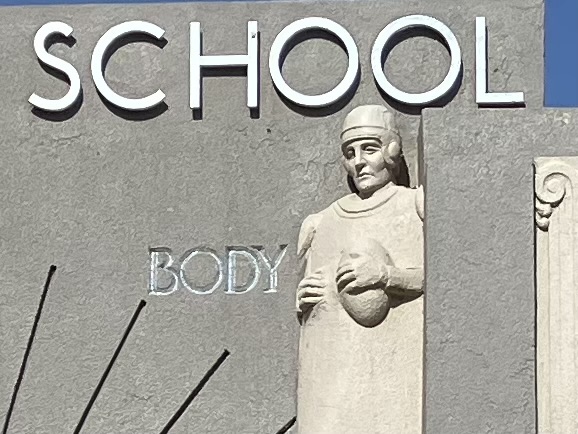
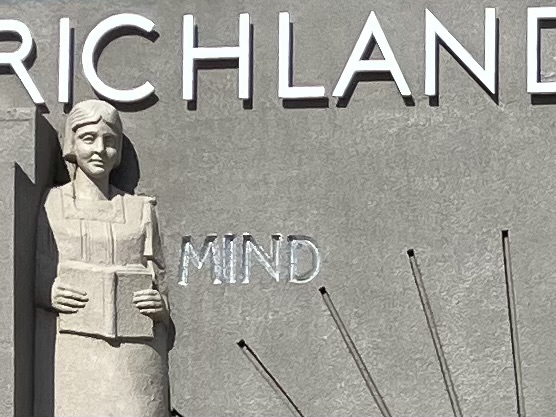
As an aside: close to the Shafter depot is this historic middle school, the facade of which reminds me of a creepy Twilight Zone episode where the school messed with the students’ minds.
An impressive edifice….
…But aren’t these column-topping figures a little creepy?
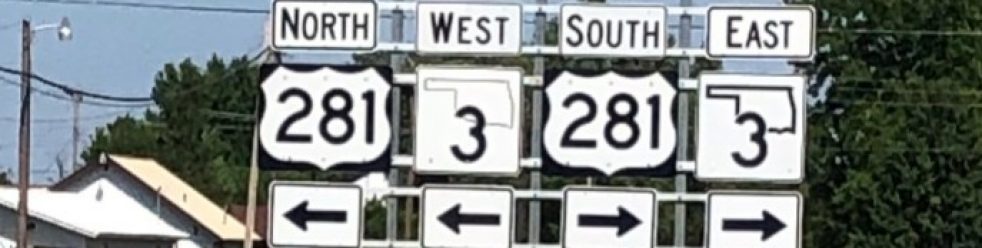
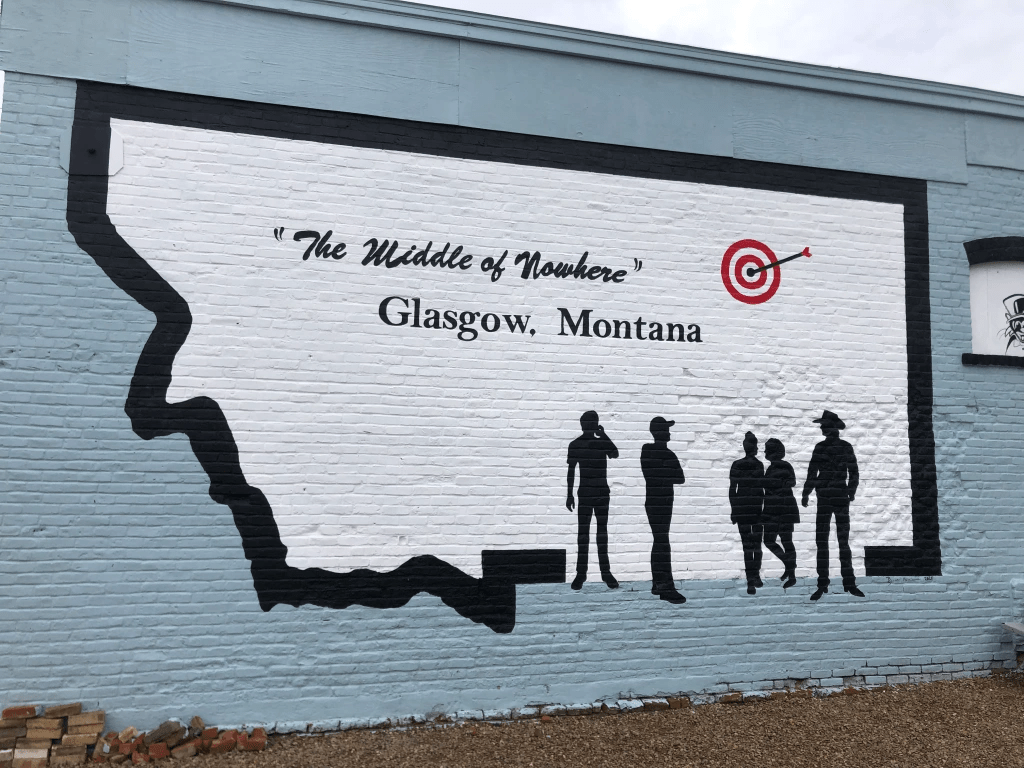
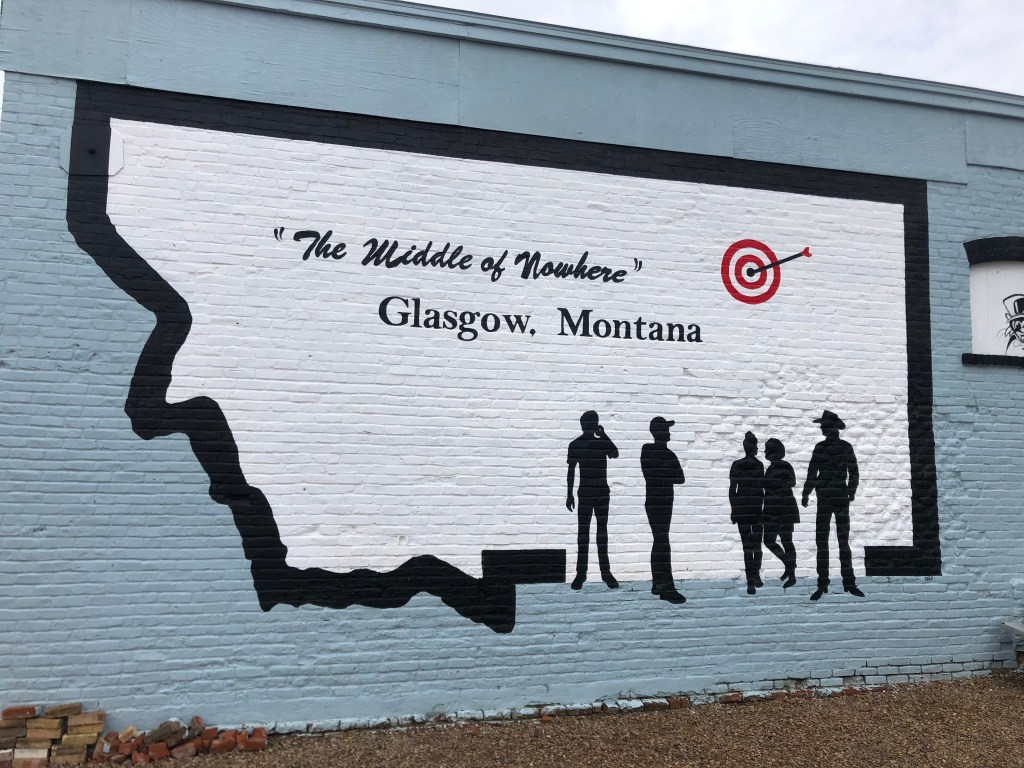
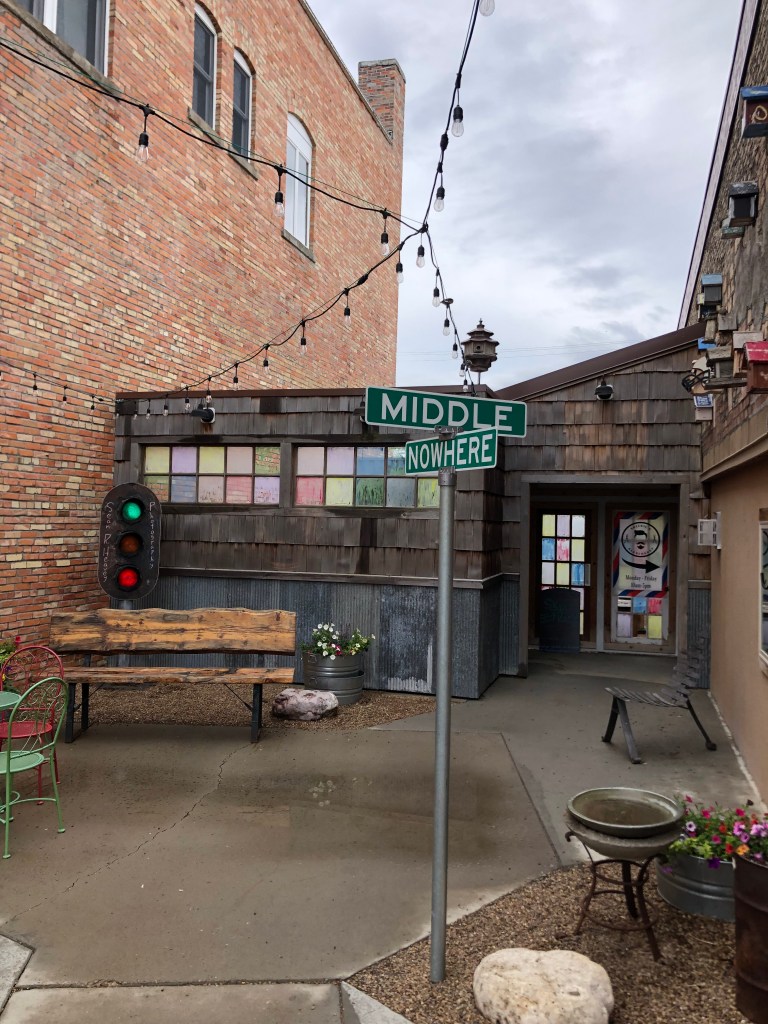
But to return to the competing claims as the “center” of California: I would be remiss if I didn’t reprise this 2022 photo I took in Glasgow, MT. Few could argue with their claim!
Back in Devils Lake I took a photo of an art deco sign for a chain called “Home of Economy.” (It didn’t make my cut for that day’s blogpost, though.) “Home of Economy” is a small chain of discount stores in North Dakota. It’s said to be America’s first discount chain. The story is here. Well, it turns out there’s another one of these signs in Williston. And when I came into town last night it was illuminated. I thought I’d share it with you, so you can get the whole effect:
Welcome to 1952. I love how garish this sign is–especially when it’s promoting “economy.”
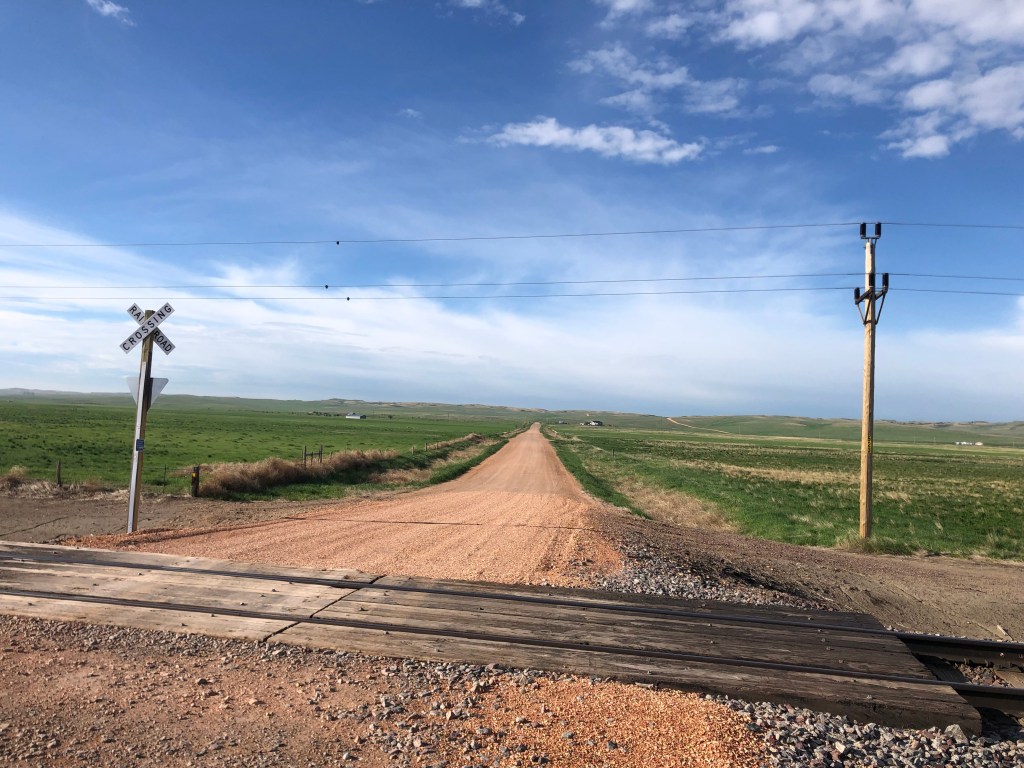
I was back on the road this morning around 7 am, and before long I crossed the state line into Montana. The flat plains and distant horizon reminded me that they call Montana “Big Sky Country.” My dad (rest his soul) used to complain that the sky is the same size wherever you go; what right does Montana have to claim it as their distinctive characteristic? But a few hours on Montana’s roads convinced me that Dad was wrong and Montana is right. Sorry, Dad.
Size matters
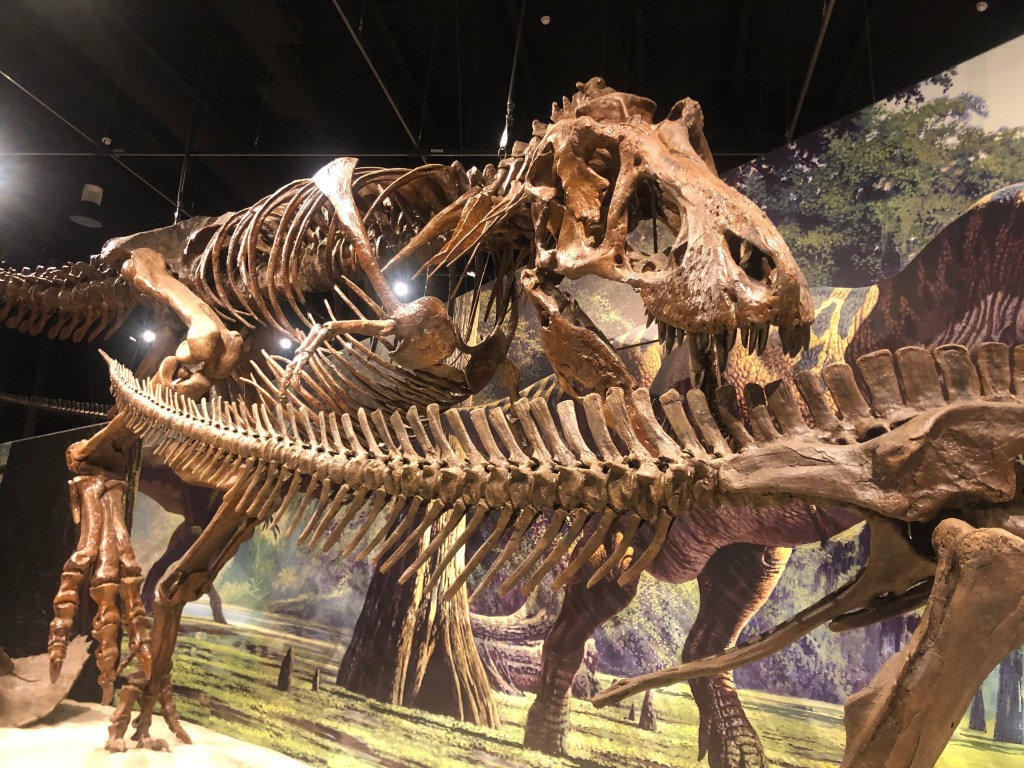
Anyway, today’s theme seems to be bones. For starters, Montana is well known for its dinosaur fossils. There are some good specimens at the “interpretive center” at Fort Peck.
Jurassic Denticles
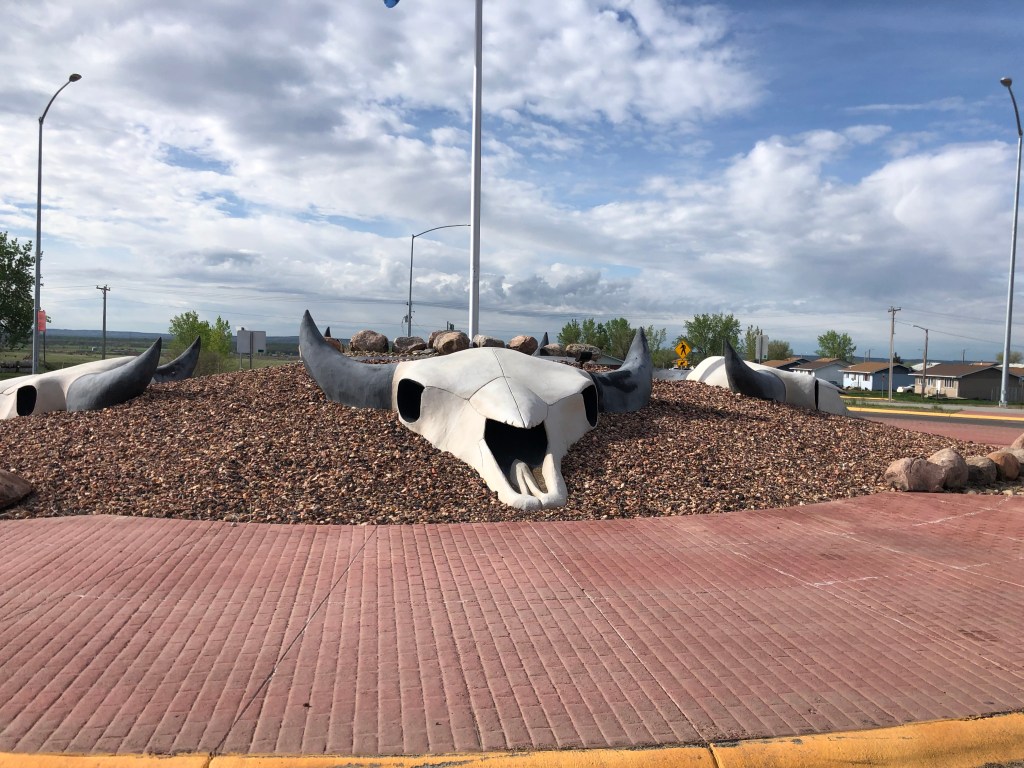
Second, Montana seems to have adopted the cow skull as some kind of a mascot. I see it everywhere, from storefront logos, to ranchhouse decorations, and even to art installations in the roundabouts on Route 2.
Skeletal streetscape
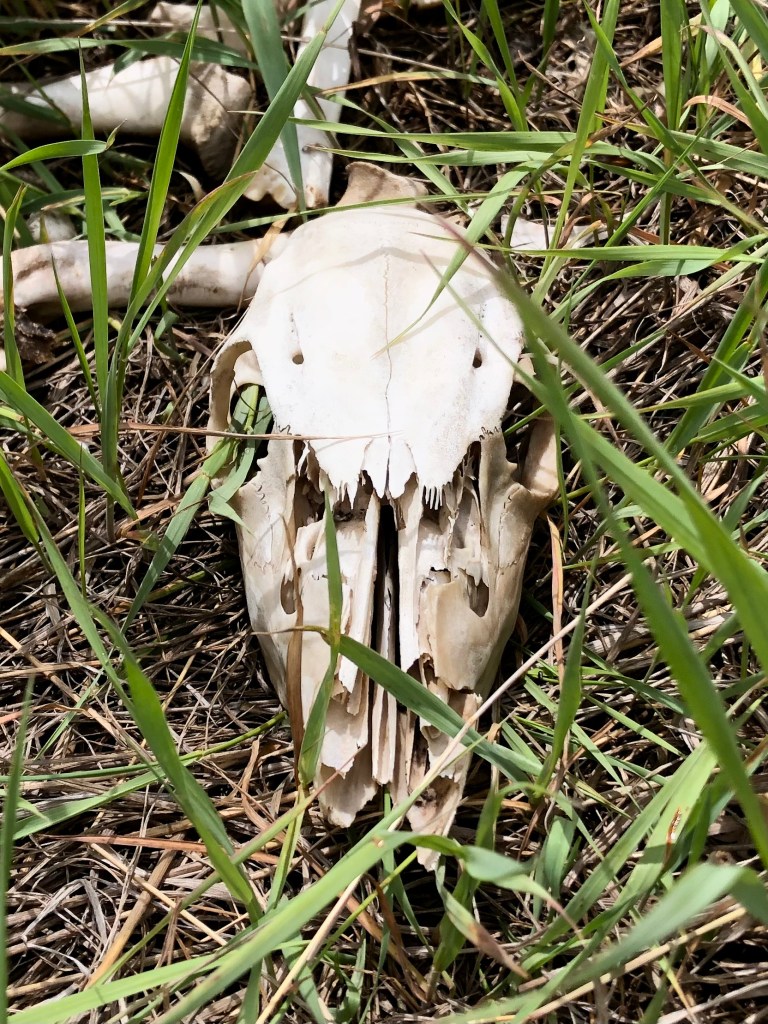
Third, there are actual skulls scattered about on the landscape, the inevitable result when Montana’s extensive wildlife clashes with predators.
At least the crows are well fed.
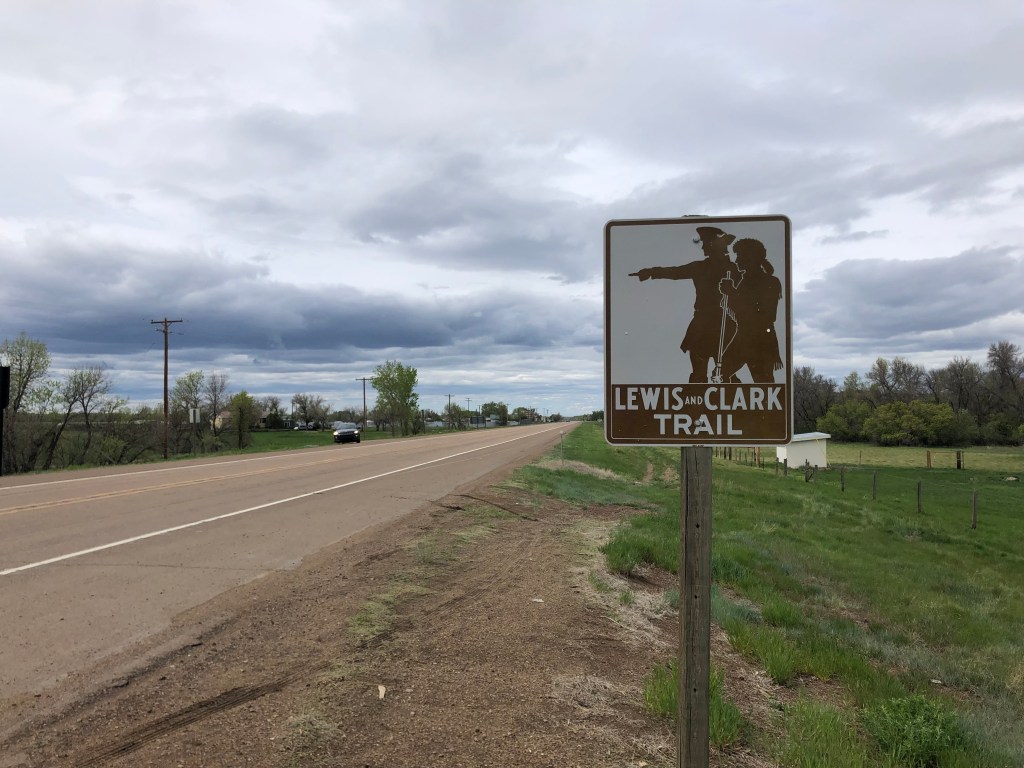
Throughout the day I drove about 300 miles. A goodly portion of Route 2 between Wiliston and Havre follows the Missouri River, and, not coincidentally, it tracks with the Lewis and Clark route.
“Over there–is that an obelisk?”
My favorite town on today’s drive was Glasgow, MT (pop: 3,300). It was named by Great Northern Railroad magnate James Hill, who supposedly picked the name by spinning a globe and randomly dropping his finger on Glasgow, Scotland. Glasgow, MT embraces its Scottish connection by depicting plaid color schemes, bagpipes, and Scottie dogs on various buildings and logos. And to contrast with Rugby, ND’s “geographical center of North America” claim, Glasgow proudly calls itself “The Middle of Nowhere.”
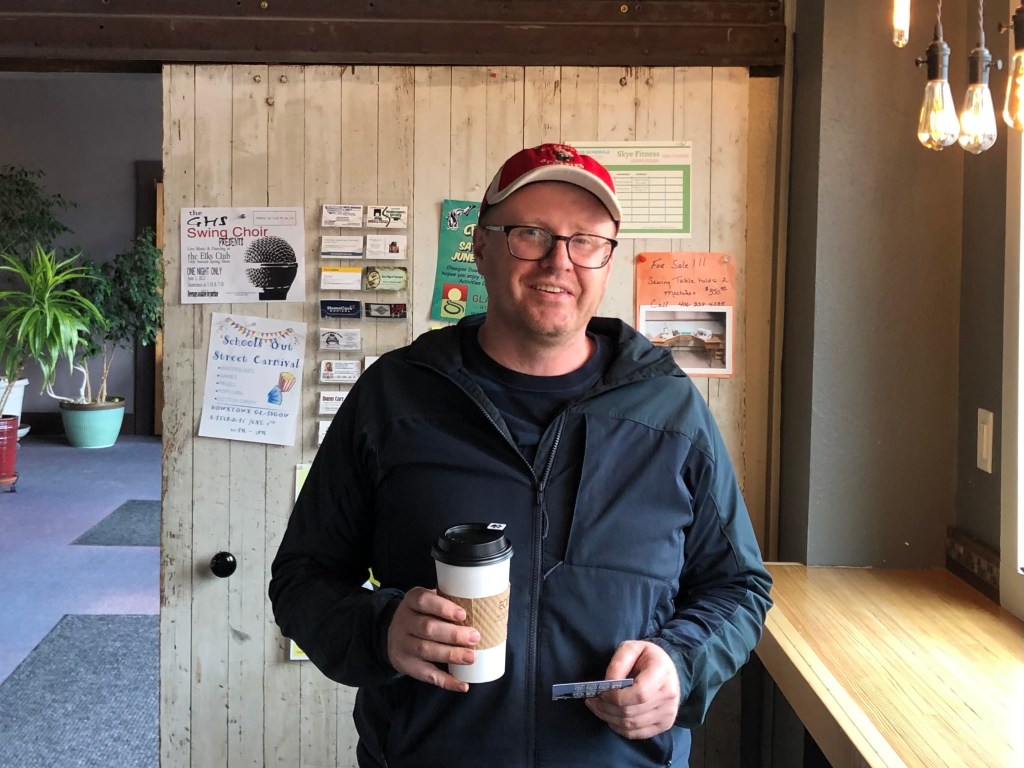
I went into a Glasgow coffee shop (“The Loaded Toad”), which, surprisingly for a town this size, offers honest-to-goodness espresso drinks, and I asked what’s up with the “middle of nowhere” slogan. The barista didn’t really have an answer, but one of the patrons (a guy named Nick) told me that it’s actually a scientific fact. It seems that a team of researchers at Oxford University collected data from all towns in the continental US with populations of up to 1,000 residents, and then determined which one of these is the farthest from any city of at least 75,000 residents. The answer: Glasgow, MT. You can read about it here.
Nick: Master of Glasgow trivia.
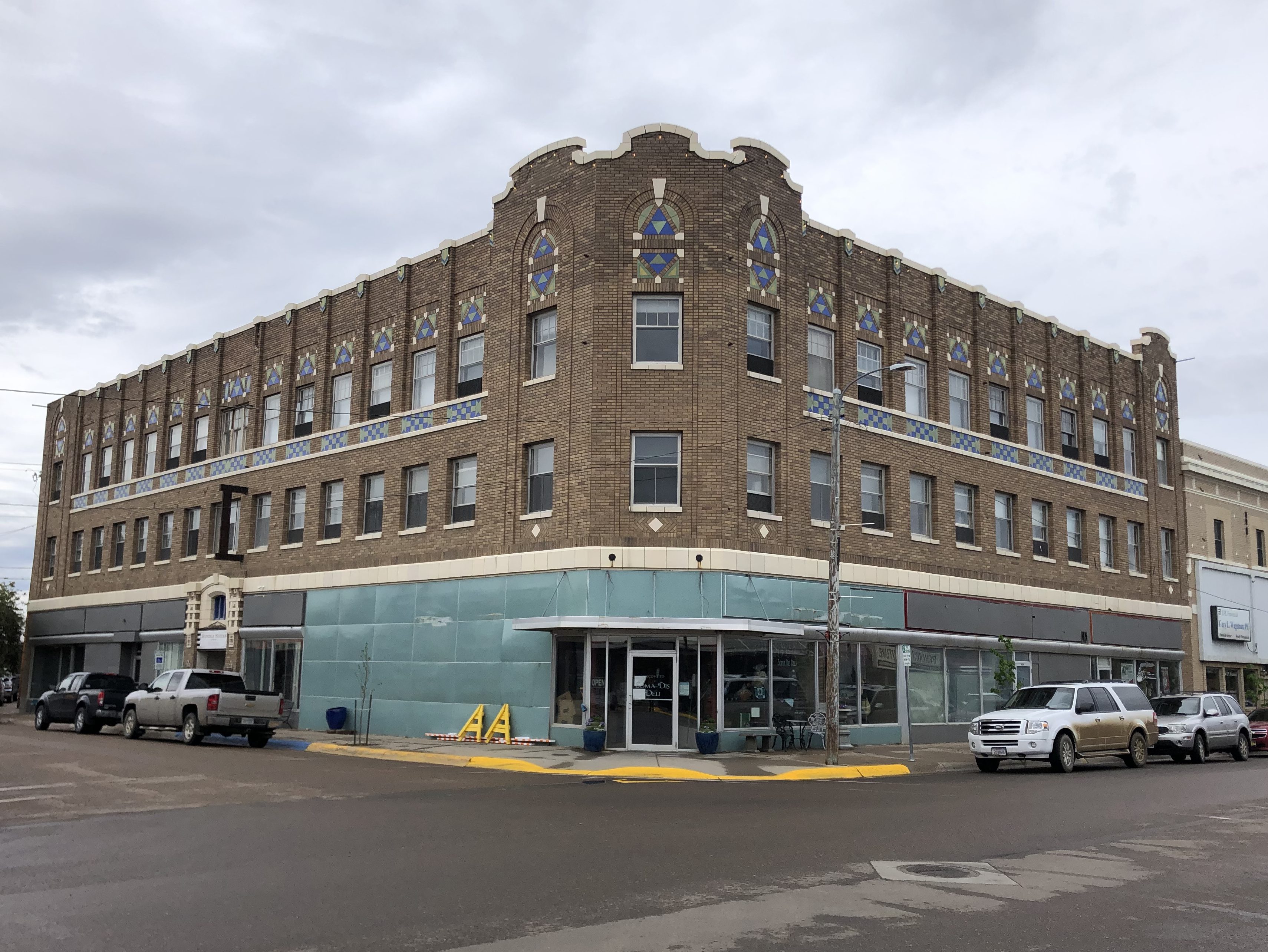
For such a small and demonstrably isolated town, Glasgow has a lot to offer. Not only does it have hipster quality coffee, but it also has a healthy, historic downtown, centered on the recently-renovated Rundle Hotel that dates back to 1915.
The Rundle Building, age 107.
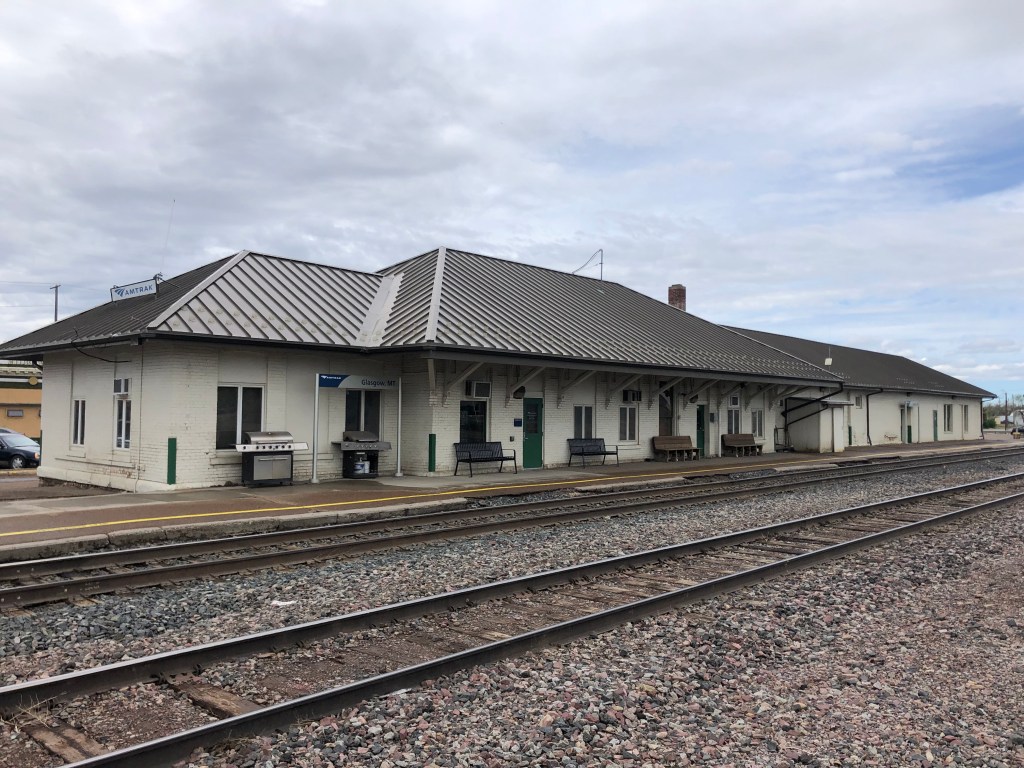
Glasgow also has an operating, historic depot with daily passenger service. As I noted in an earlier post, trains no longer stop at many of the small towns along the Hi-Line.
Your portal to the Middle of Nowhere.
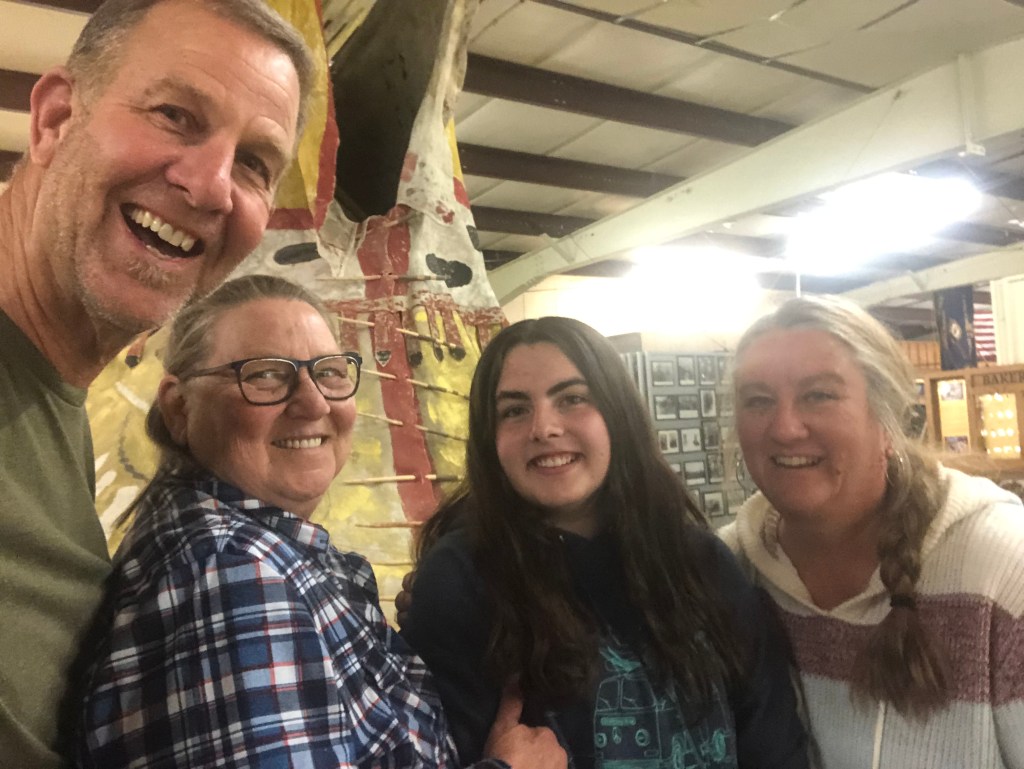
And as if that’s not enough for a town of 3,300 souls, Glasgow has a well-curated, large Pioneer Museum of Valley County, which covers the history of the region. It has displays on the railroads, schools, agriculture, industries, domestic life, government, and many other aspects of life in northeast Montana. The staff was very welcoming and opened up a frozen-in-time 1924 home for me. They even let me take a selfie with them.
Steve’s Angels.
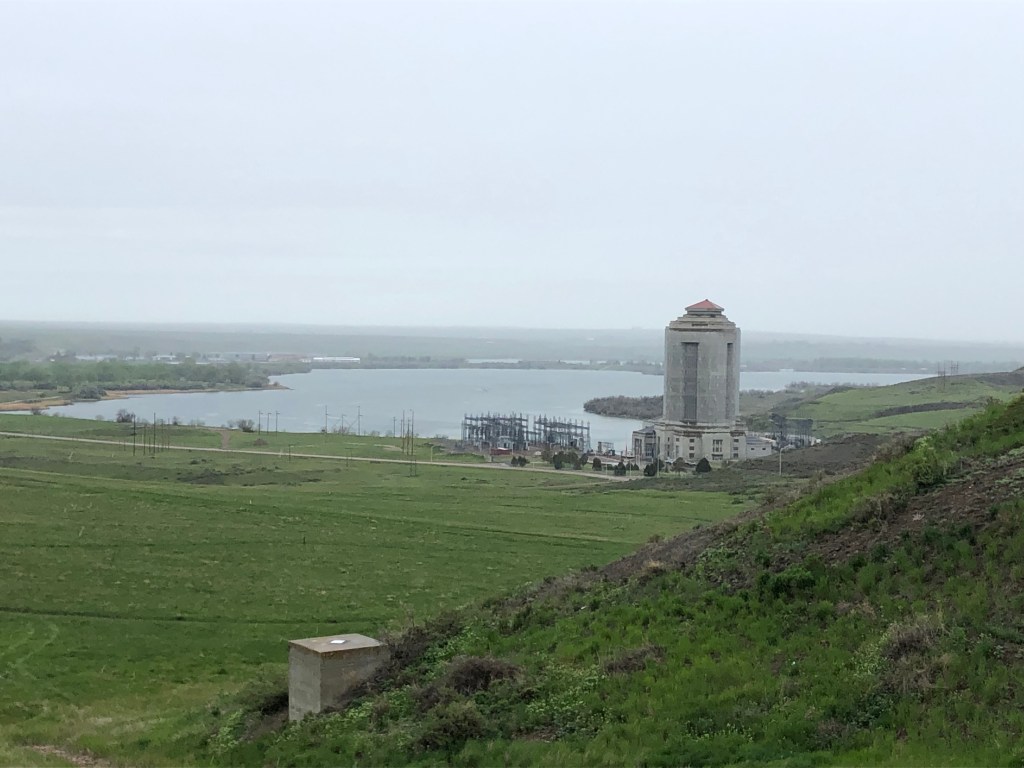
Although Glasgow was founded as a railroad town, much of its growth occurred in the 1930s, when a major influx of workers and their families came to build the nearby Fort Peck Dam. It was an monumental undertaking, and the completed dam created a 134-mile-long lake in the course of the Missouri River. The flood control, electrical generating, and recreational benefits of the project were enormous (not to mention the economic stimulus during the Great Depression).
To parallel my earlier visit to the headwaters of the Mississippi, here I’m overlooking the point where the Missouri resumes its course after passing through Fort Peck Dam.
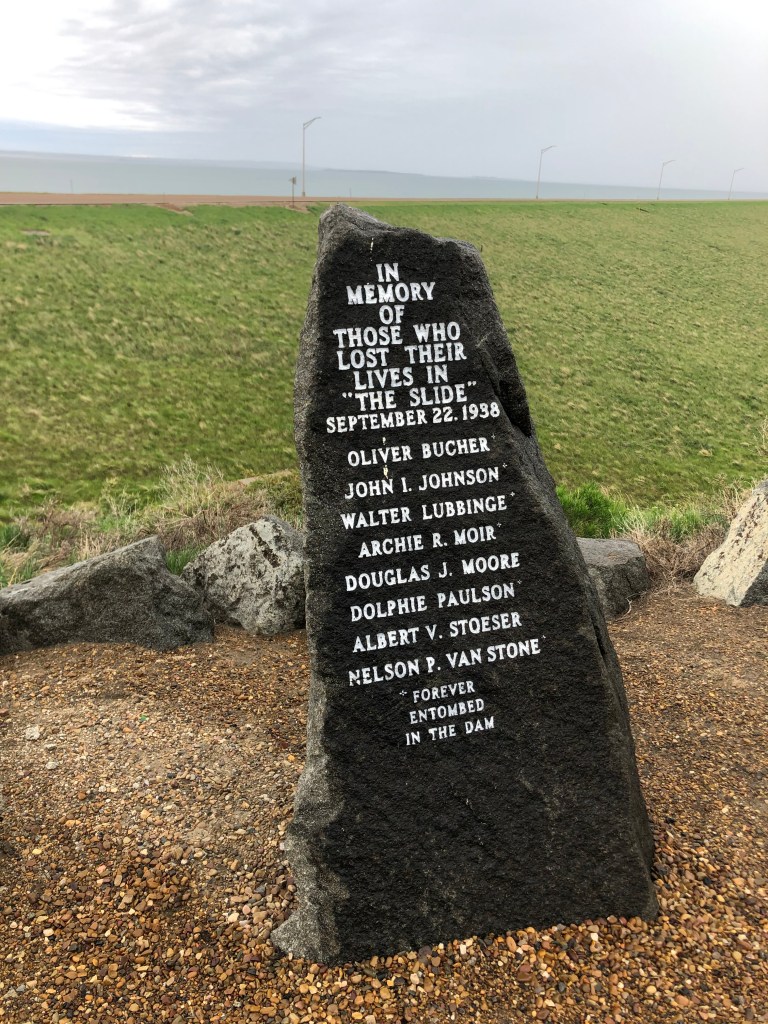
Sadly, though, 60 men died in the course of construction, and six bodies couldn’t be recovered. They are forever entombed deep in the dam.
Requiescat in pace.
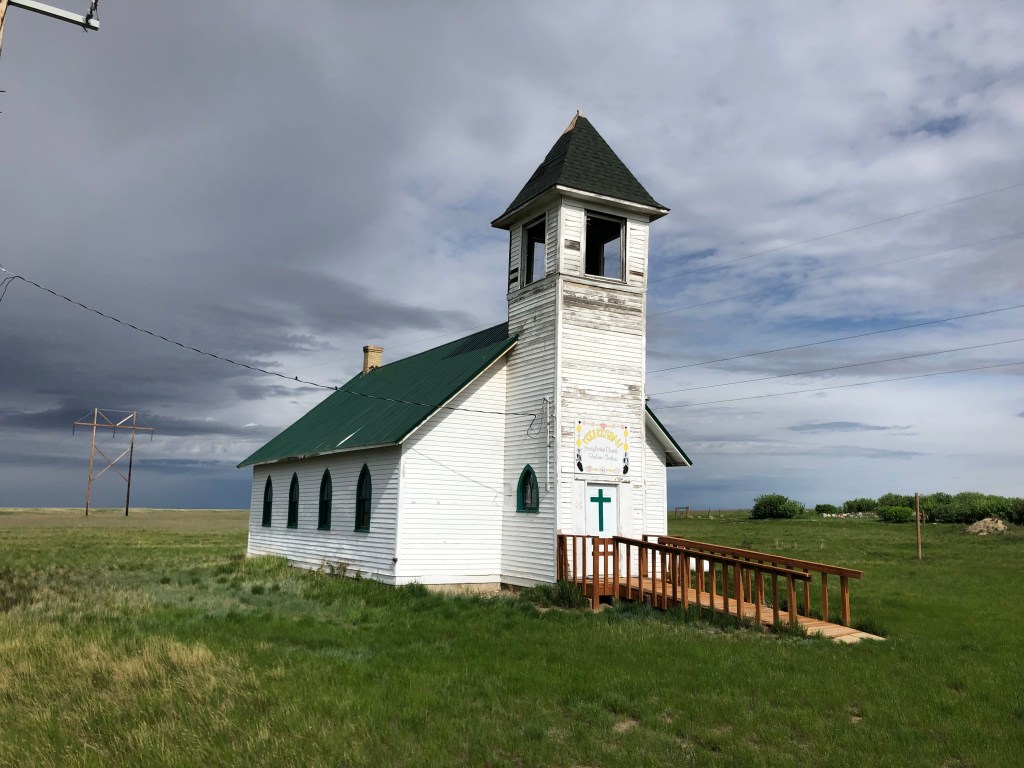
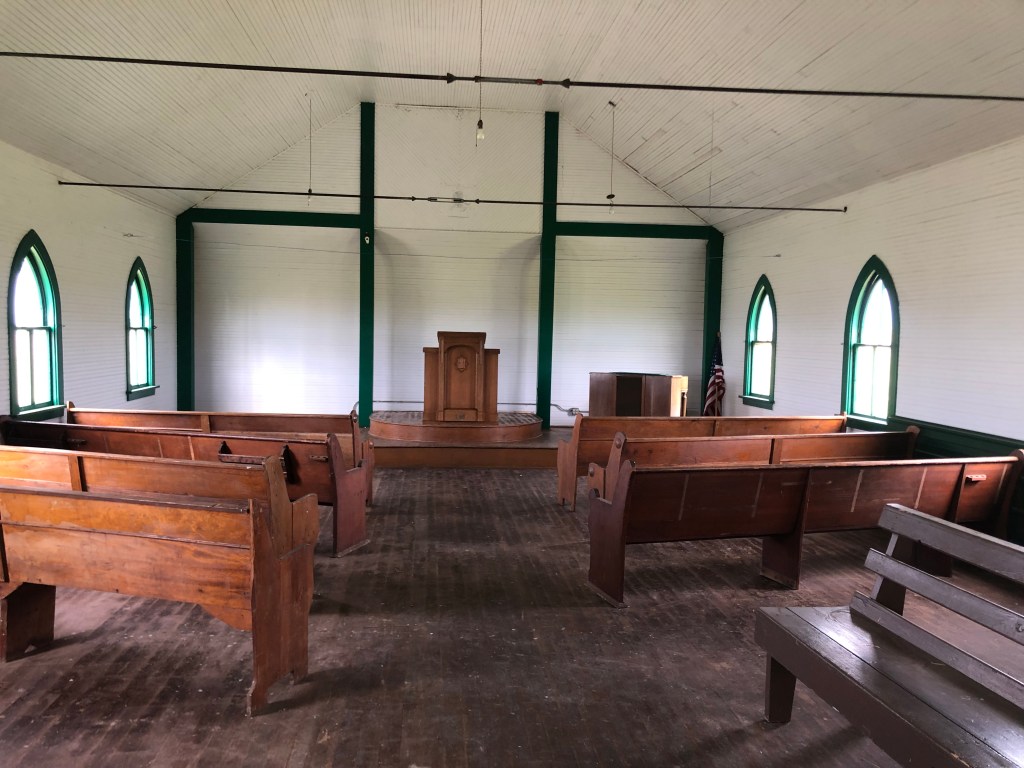
Naturally, churches made another appearance today. My eye was once again caught by the classic Prairie architecture of an old, whitewashed, clapboard church with that distinctive belfry. Built in 1904, this particular church has some real history behind it. It was attended by some of the Sioux Indian band that was once led by Chief Sitting Bull. (Some of that band had converted to Christianity.) There are also some urban legends about a “goat man” occasionally seen jumping from the church’s belfry. A little info is here.
If I were a supernatural being, I’d probably hang around a church like this too.Inside the Chelsea Church. Pretty minimalist.
I wound up today’s travels in Havre (pronounced “HAVE-er), Montana (pop: 9,500). It’s one of the larger towns on Route 2, and it seems to have a pretty vibrant economy. Once again I encountered a functioning railroad station, with some impressive art installations (if I can call them that).
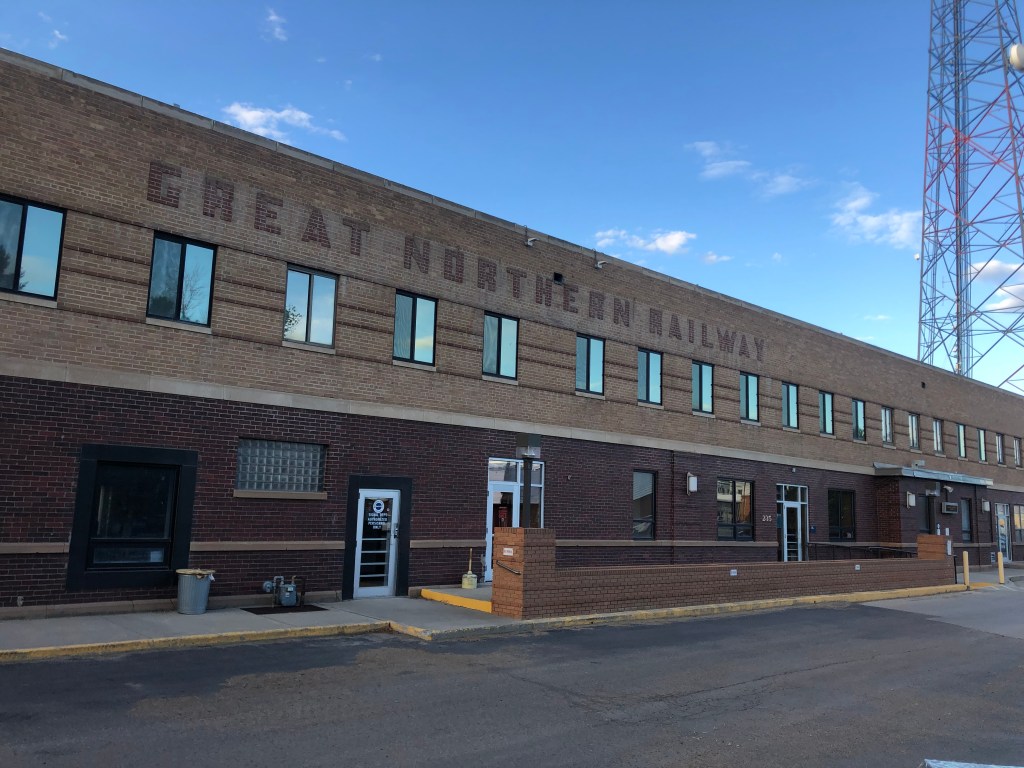
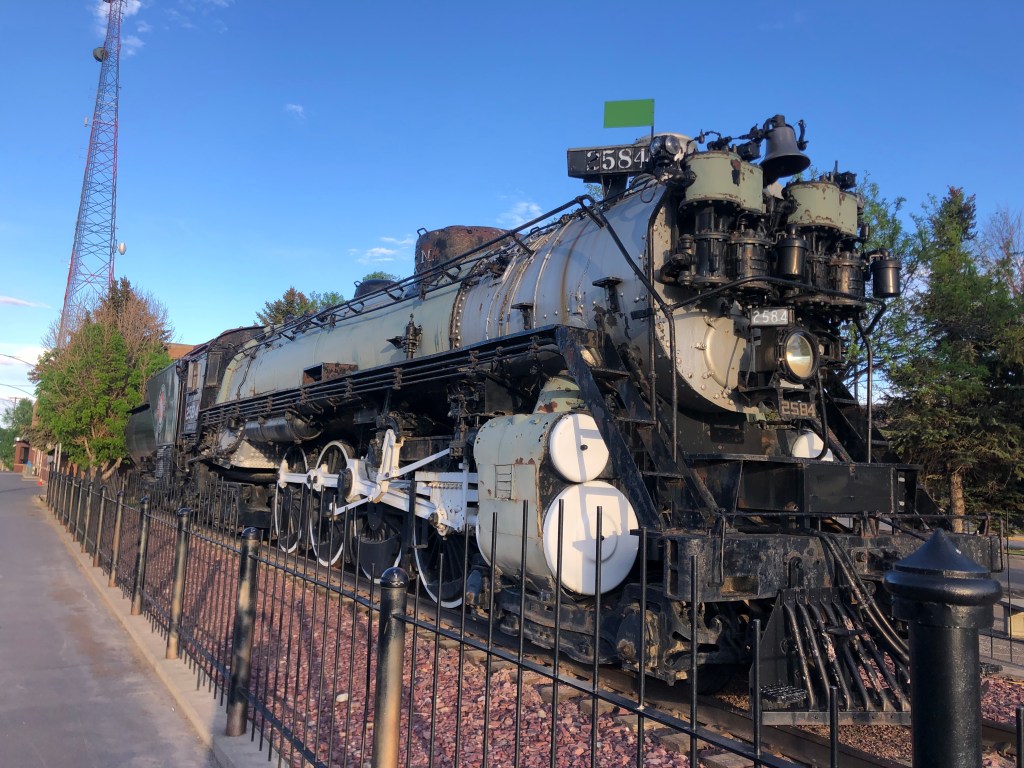
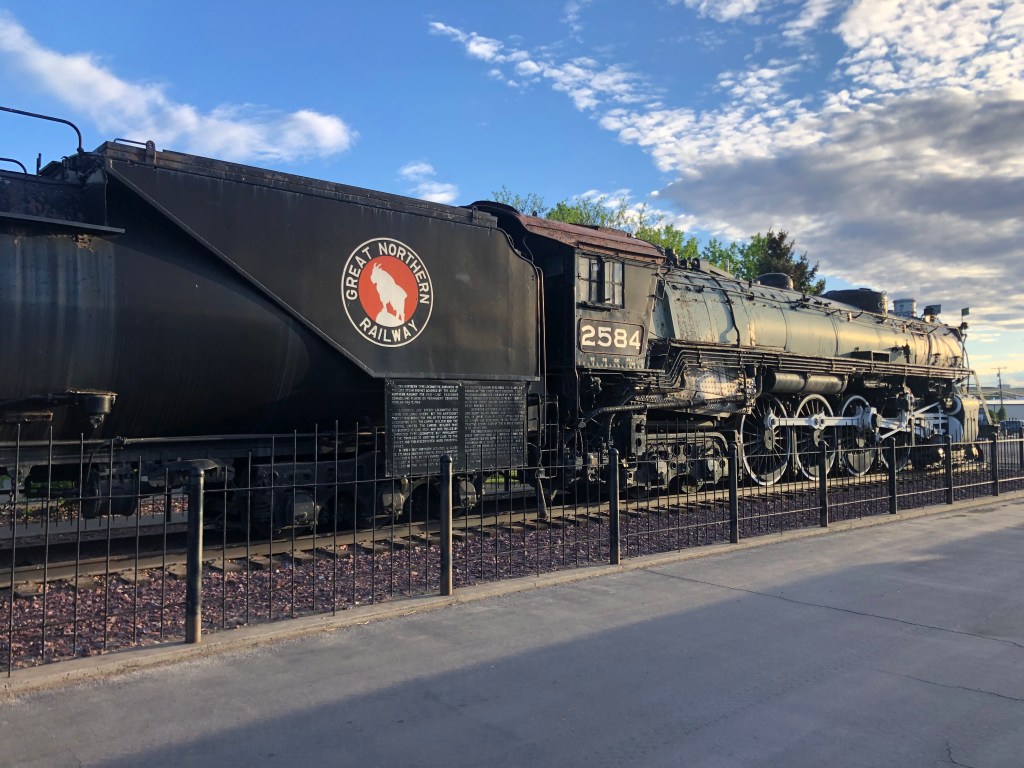
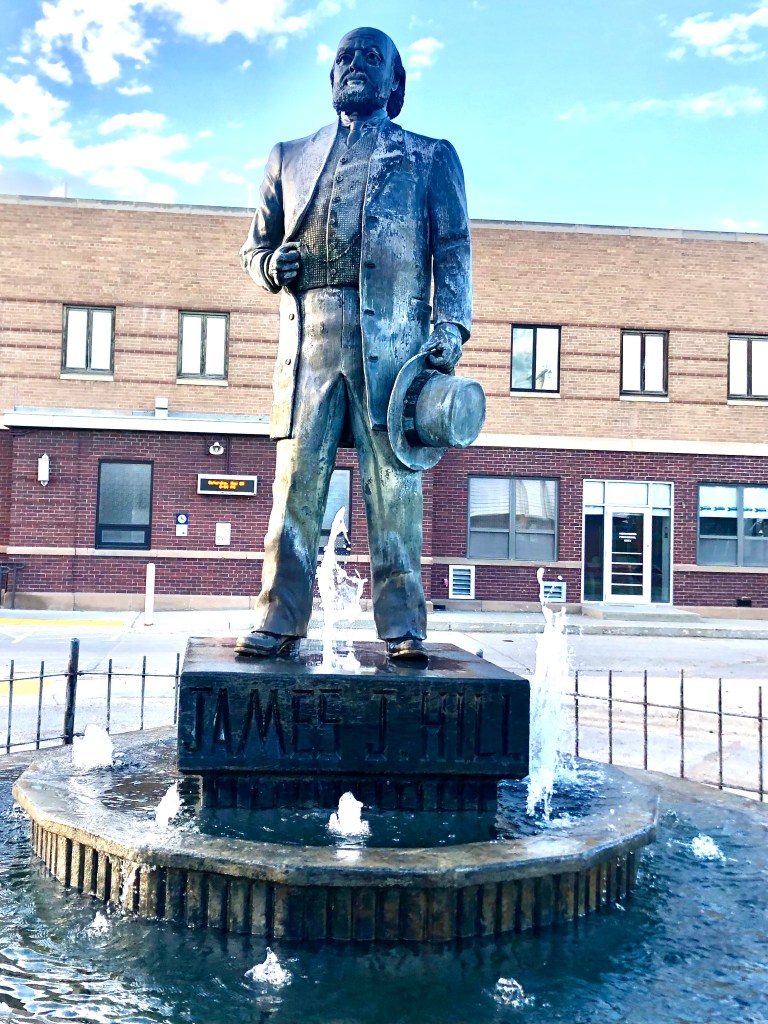
Havre Train Station, built in 1904 and significantly remodelled (in streamline moderne fashion) in 1949. Is it just me, or is it intended to look like a railroad passenger coach?Great Northern’s #2584 was built in 1930, retired in 1957, and has been on display at the Havre station since 1964.Even if you’re not into trains, you have to find this piece of machinery impressive, right?Statue of James J. Hill, Great Northern’s founder and CEO. He was called “The Empire Builder.”
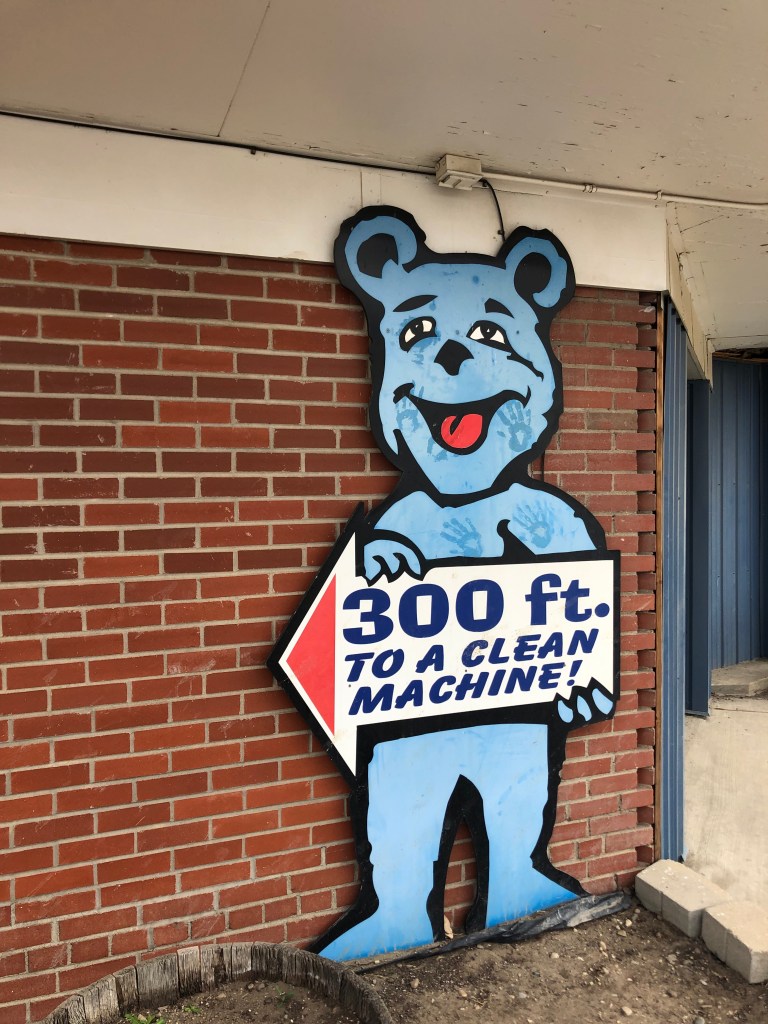
Not far from the station I spotted what seems like it could be a Laughing Bear. (For a refresher on what I’m talking about, click here.) It has the same outline and expression, but inexplicably it’s blue rather than gold. Please let me know whether you think this was originally a proper laughing bear, or just a coincidental doppelganger.
YOU make the call.
BREW OF THE DAY
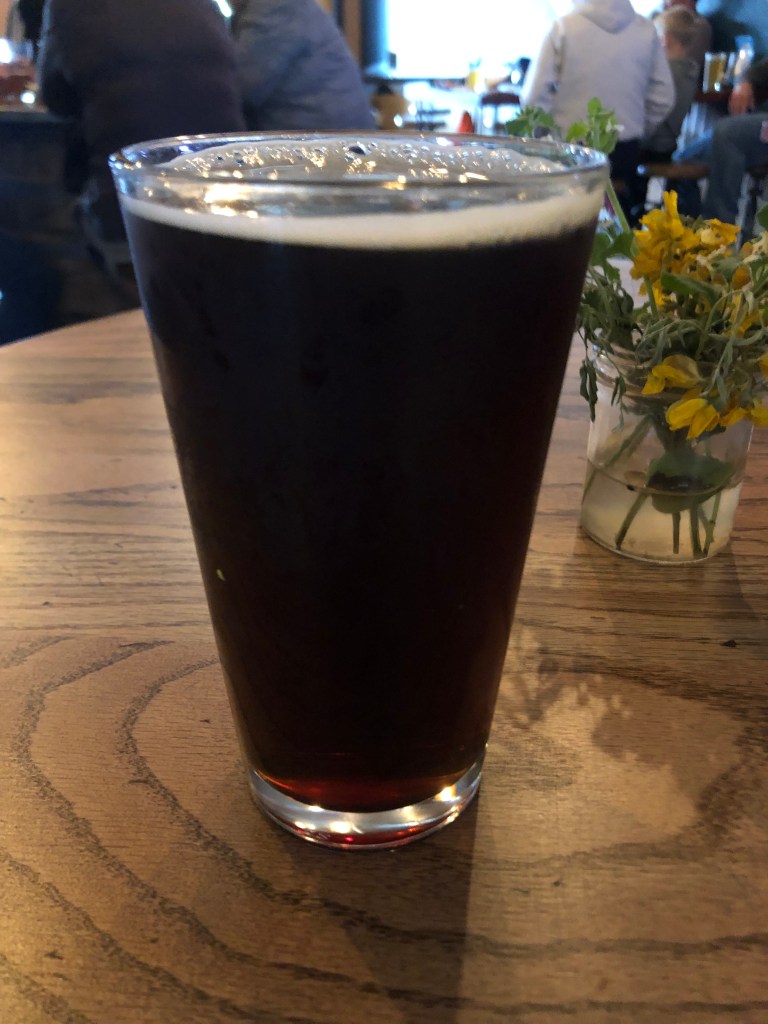
In honor of my visit to Glasgow, I had the Aberdeen Scotch Ale at Triple Dog Brewing Company in Havre. Triple Dog is a hip brewery with the usual industrial-chic vibe, and it’s populated by 20-somethings (both employees and clientele). The only reason that I didn’t significantly increase the average age is because this place was packed. I mean, for such a small town, this place was hopping (brewing related pun unintended). They don’t have a kitchen, but a food truck in the front parking lot supplied me with a wonderful concoction called Irish Nachos. I love this place, and if you’re interested in the back story, here’s an interview with the young founder:
Anyway, as I mentioned, I ordered a Scotch Ale. I had fully intended to get myself an imperial stout, but evidently the folks out here in northern Montana aren’t manly enough for this kind of beer. (Note to the guys sitting behind me here at the brewery, who look like they could snap me in two: I’m just joshin’.)
Not exactly a kilt-lifter.
Scotch ale is a difficult beer to do right. You really need to get your hands on some good peated malt, so that the resulting drink evokes Scotch whisk(e)y. The other key characteristics of a good Scotch ale (in my humble opinion) are a malty-sweet backbone and a boozy ABV. Sadly, this beer had none of these characteristics. (The ABV clocked in at 6 percent.) That said, and in contrast with last night’s beer, this Scotch ale got better the more sips I took. I’m thinking that the first sips were disappointing because they didn’t match my expectations for a Scotch ale. But with further sips, I was able to appreciate it for what it was: Essentially, a good brown ale. Judged by that standard, this was flavorful, suitably hopped, and pleasantly fresh and, dare I say, bright. I give it a 2.5 as a Scotch ale, but 4.0 as a brown ale.
BONUS: DISTILLERY SIGHTED IN HAVRE
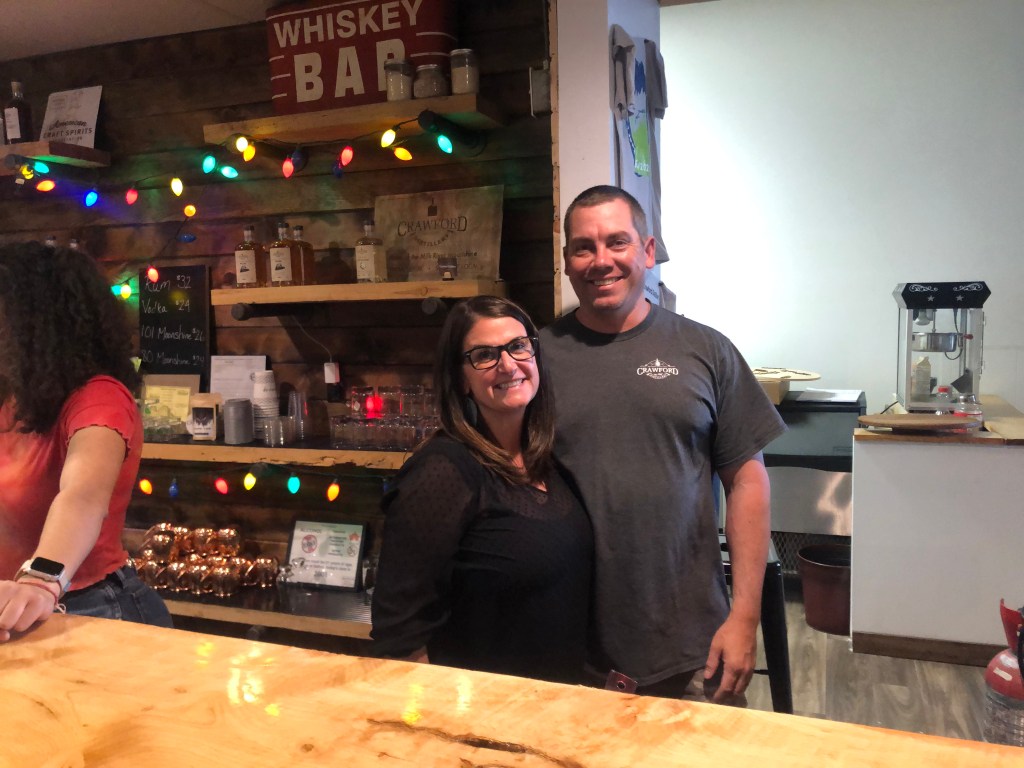
After dinner I was driving to my hotel when I spotted the Crawford Distillery. It’s an awesome place: they hand-craft their own whiskies, vodkas, and rums. It’s not the kind of place I’d expect to find in a small Montana town along the Hi-Line; the attention to quality, enthusiastic atmosphere, and craft cocktails would seem more common in a place like San Diego. So I wasn’t surprised when I learned that the owners (Alyssa and Neil Crawford) are transplants from San Diego. Alyssa’s mom also helps out behind the bar and offers humorous, Shirley Booth-like commentary. I felt welcomed and their cocktails were first-rate. Alyssa even burned wood chips to make me a smoked whiskey. You can buy their spirits online. Just sayin’.
Alyssa and Neil Crawford–owners of my new favorite bar.

 Chasing Phantoms