
As a child I was never sent to prison–though not for lack of trying. But if the law had caught up with me, I surely would have been sent to juvenile hall (a place invariably referred to as “juvie” when I was growing up). For I grew up in a more enlightened time than that of the unfortunate wastrels of the 19th century. In those days, northern California felons as young as 14 years old would be sent to San Quentin or Folsom prison.
And then, in 1889, the California Legislature passed legislation to create a state reform school for boys. It was a progressive idea for the time: Instead of serving out their terms in prison alongside more seasoned felons, underage boys would be sent to live together at a youth facility, where they would attend school, learn a trade, and eventually be reintegrated into society.
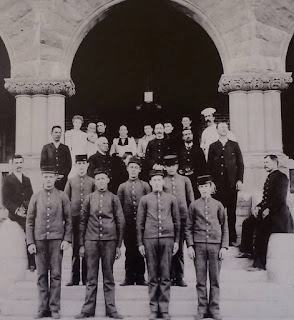
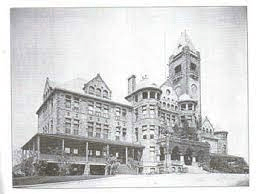
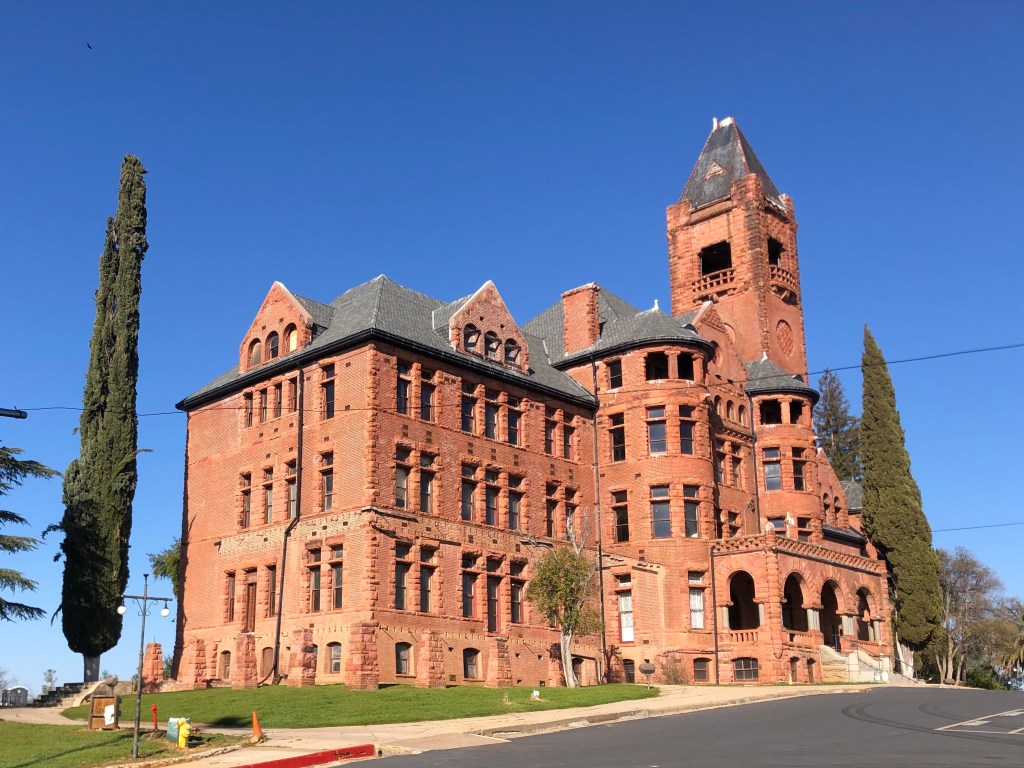
Originally the school was to be sited near Folsom Prison, but the Legislature ultimately decided to downplay the prison connection and place the new school in a more bucolic setting, amid the rolling, oak-studded hills of Amador County. They also gave it the milder name, “Preston School of Industry.” (Senator Edward Preston was the bill’s author.) Soon, an imposing, four-story stone building was being erected outside the tiny town of Ione, about 30 miles southeast of Folsom.
Preston opened its doors to student inmates (they were officially called “wards”) in 1894, and it eventually housed up to 800 wards at a time from all of the state. They weren’t all felons; during the Depression it was not unusual for some impoverished families to abandon their boys to Preston, where they would be fed and clothed at the state’s expense. One Preston “graduate” who would go on to become famous was country singer Merle Haggard, who was sent there in 1954 after being convicted of auto theft.

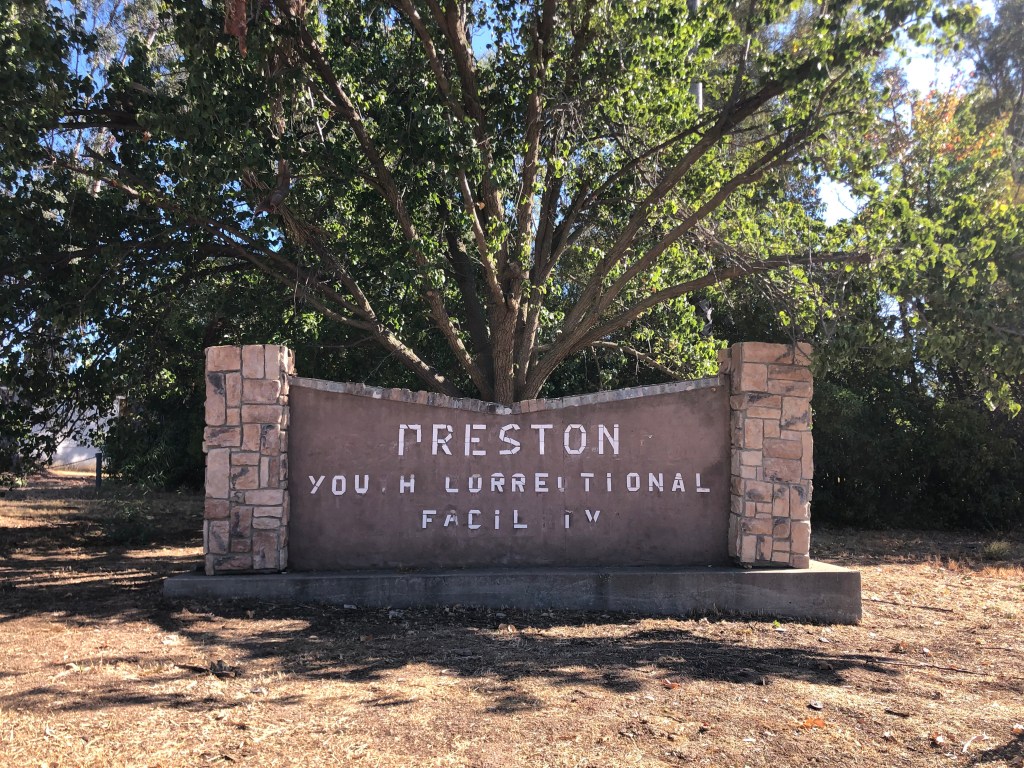
The Preston School of Industry was shut down in the late 1950s, when it was replaced with more modern facilities next door. The new facility adopted the name “Preston Youth Correctional Facility,” which, if you ask me, sounds less enlightened than “School of Industry.” The “new” facility itself shut down in 2011.
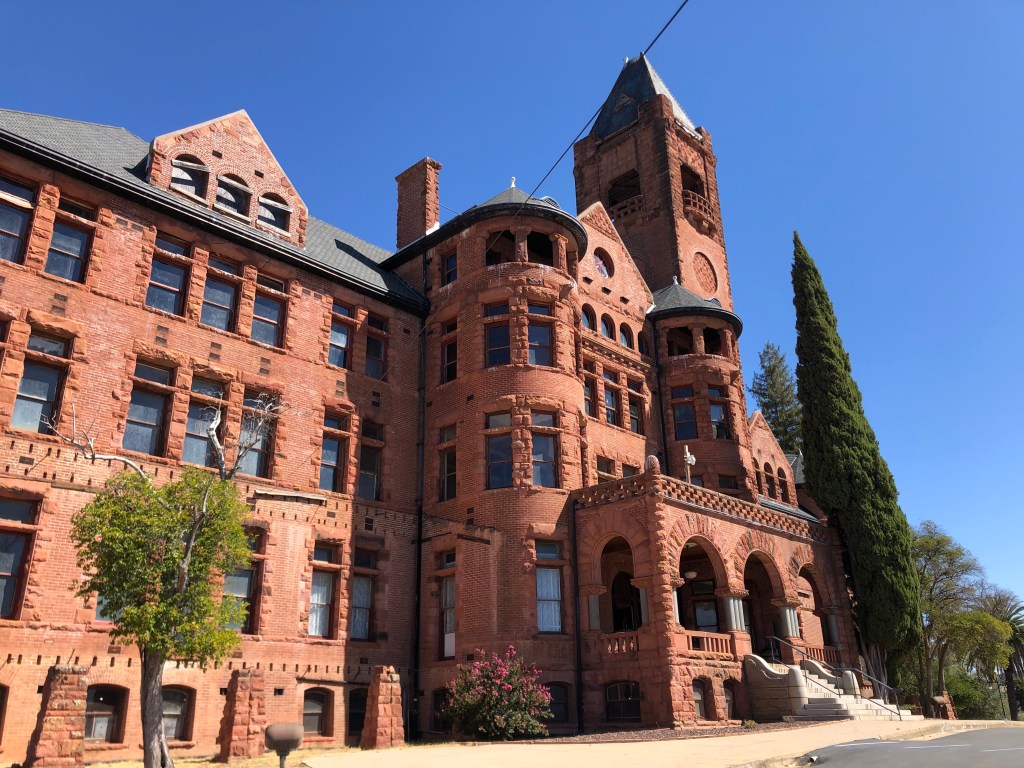
But what of the original building? The plan was to tear it down, and, incredibly, in 1960 the general public was invited to come in and take whatever usable pieces they wanted. Wainscoting, moulding, light fixtures, decorative tile, even parts of the slate roof were ransacked. But then local activists successfully fought to spare the building from the wrecking ball. The building became State Historical Landmark #867, and it’s been standing in a state of barely-arrested decay ever since.
Today I visited what’s now known as Preston Castle. It’s as imposing as ever.
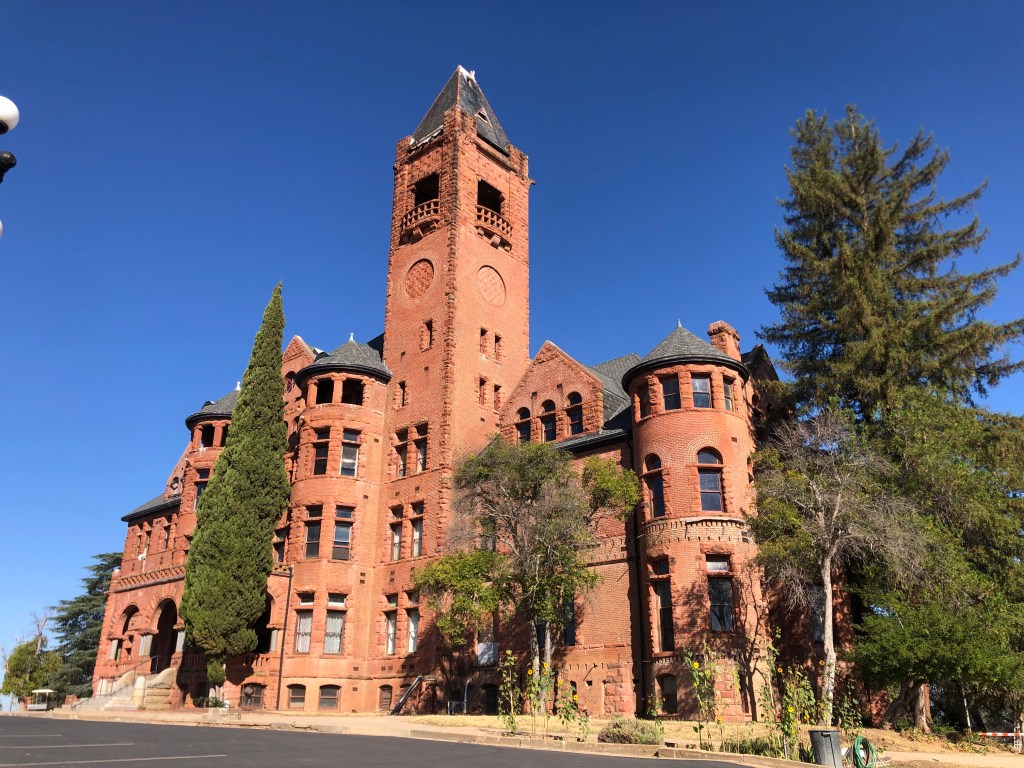
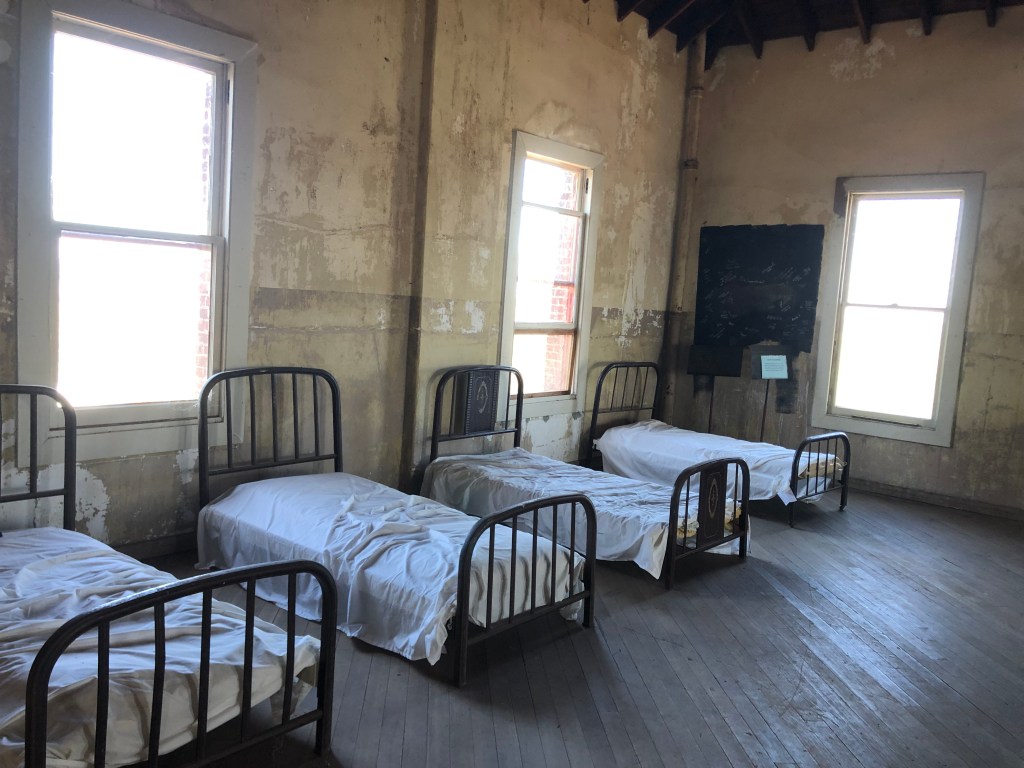
The building was open for self-guided tours today–the last day of the season, as it’s next going to be transformed into a haunted house for a Halloween fundraiser. From what I saw today, it won’t require much work to make it into a proper haunted house….
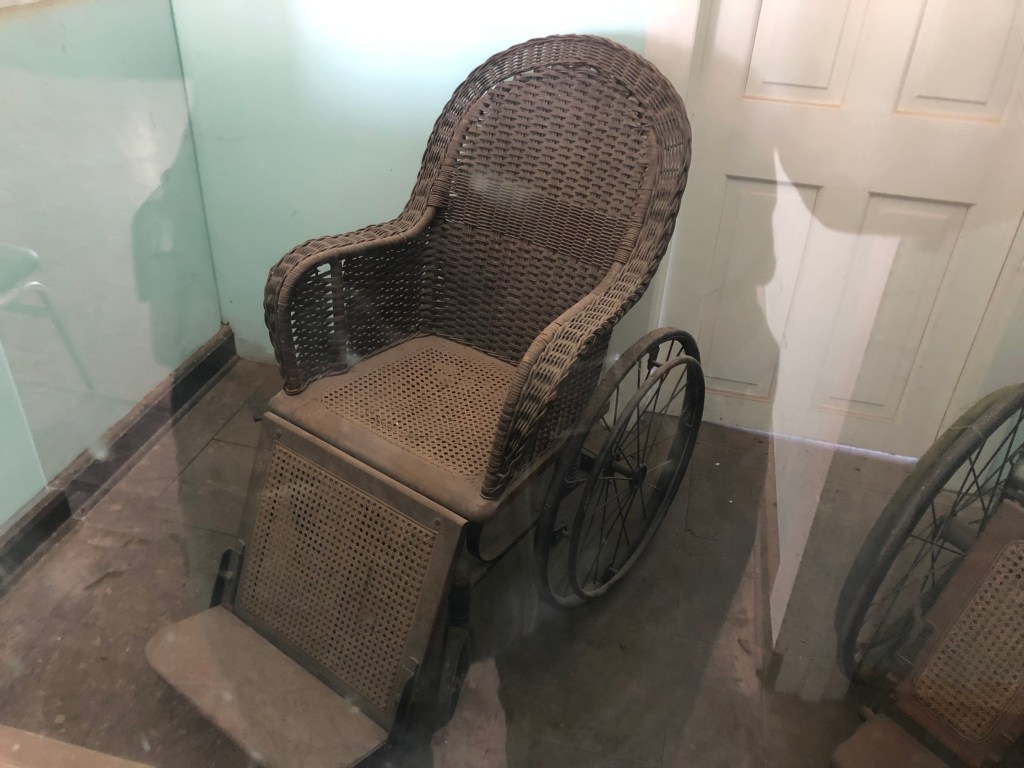
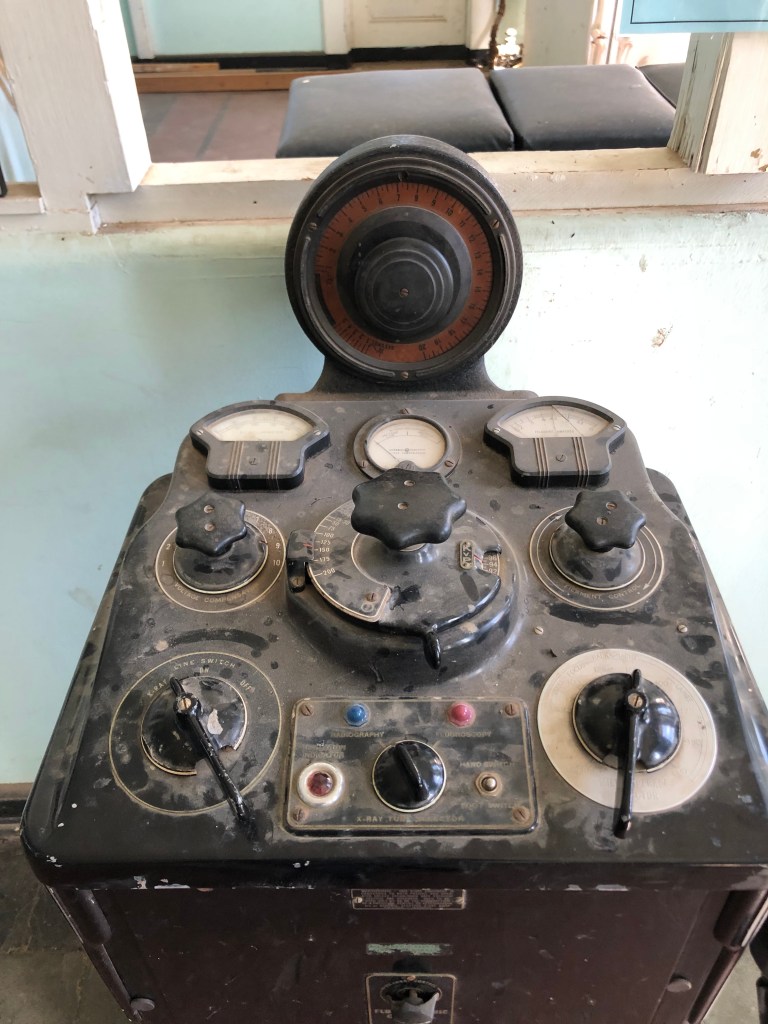
And then we have the infamous “plunge.” Newly-arrived wards would be stripped, shorn, and then required to swim through a chemical pool to rid them of lice and other bugs. I’m not making this up. (Some accounts say the pool was filled with lye, though I haven’t been able to confirm that.)
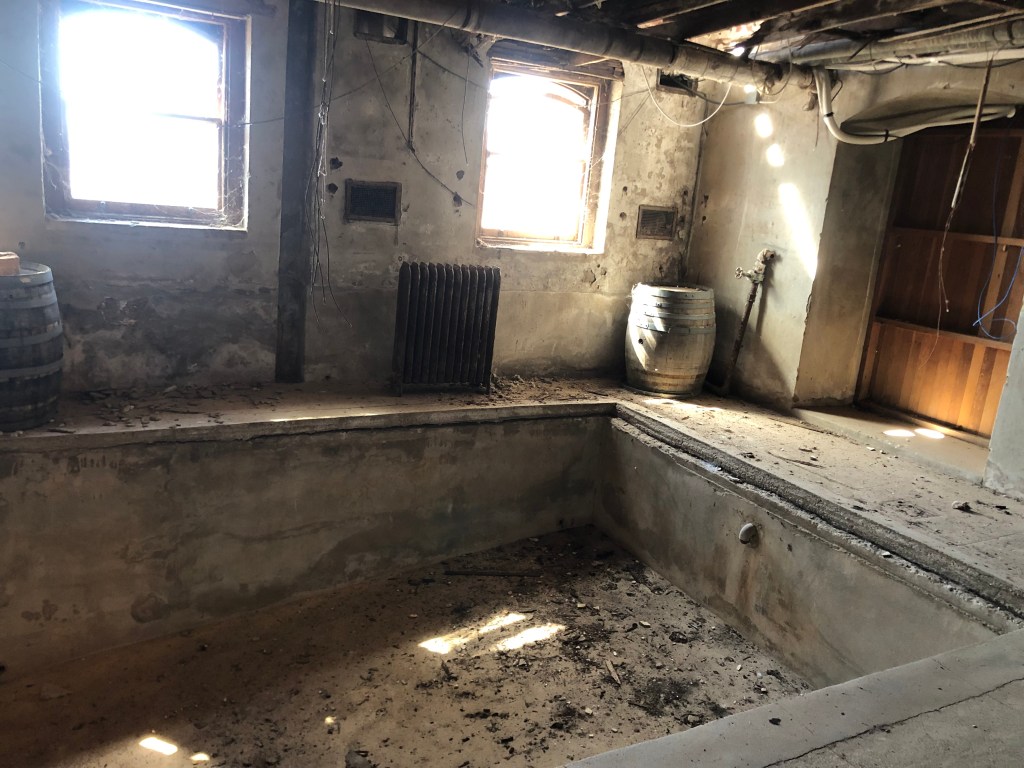
Overall, a palpable sense of despair hangs over this place. I’m sure part of it is due to the state of decay. But the history doesn’t help.
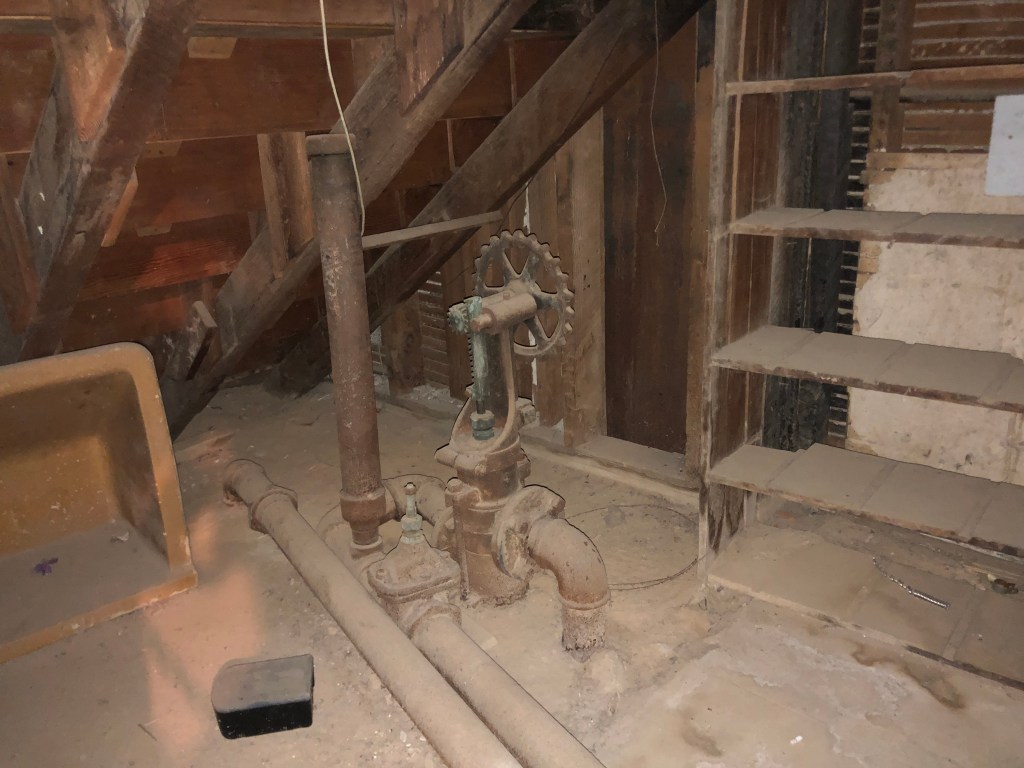
I noted that the Castle contained some innovative features. For example, it boasted a late-19th-century elevator, prior to electrification. The device was powered by water pressure. Alas, the elevator was soon deemed too slow and an unnecessary waste of water in the dry foothills, so it was removed. (From that point forward, everyone had to use stairs to move between floors in the four-story building.) But the lift mechanism remains today in the dusty basement.
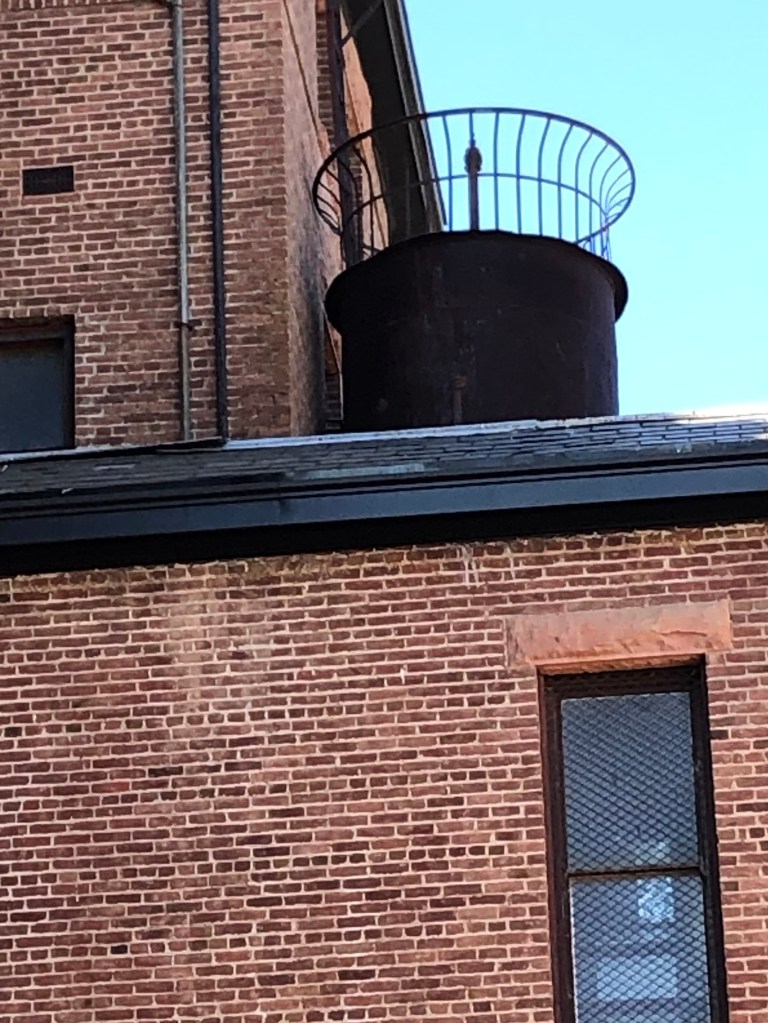
Another water-related innovation is the fire escape. It’s actually a spiral slide within a metal tube, which utilized a spray of water to lubricate the trip down. I’m not making this up either.
The only bright spot I observed during my visit was the reading room which adjoins the building’s library. You can still feel the lightness of spirit afforded by an open space and a good view.
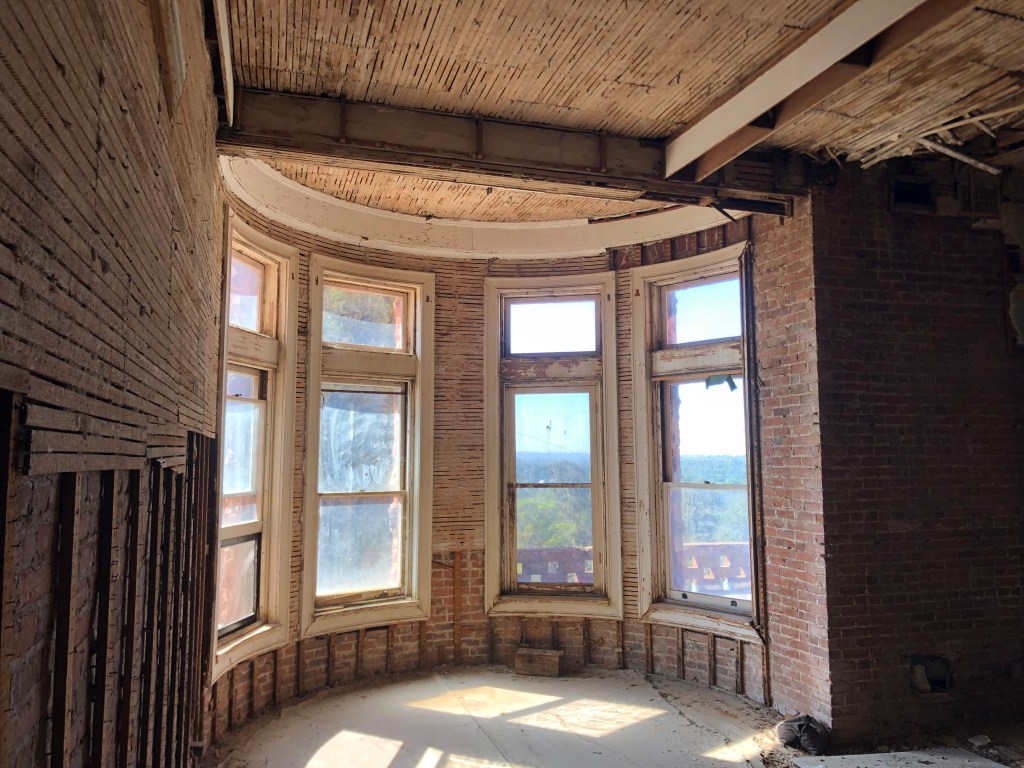
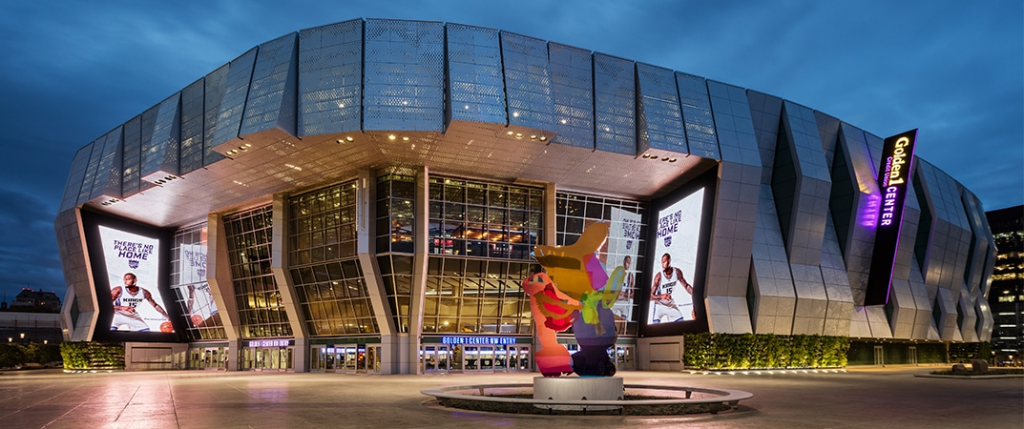
So, what to make of all this? First, I think we all owe a debt of gratitude to the original activists and to the Preston Castle Foundation for preserving this piece of history. Preston Castle is a stunning structure with a fascinating past. Second, I think we’re well advised to continually revisit the topic of how we’re dealing with the state’s youthful offenders. I’m of the opinion that we as a society must stand up to antisocial behavior…but, at the same time, I believe that no one is irredeemable. I don’t know how to balance those two thoughts, but I do have some confidence in this third point: Public institutions should pay some attention to architectural style. I’m looking at you, Golden 1 Center.


 Chasing Phantoms