Breweries · California history · Cars · Puns · Road trips

Life in the Slow Lane

With a level of complication that rivals the Normandy Invasion, my son (Ian) and I decided to rendezvous at a resort near Bend, Oregon, where we used to spend summer vacations once upon a time. Ian flew there from Vermont (which took two days, thanks to United Airlines), while I decided to drive up from Placerville along the east side of the Sierra Nevada range on US 395.
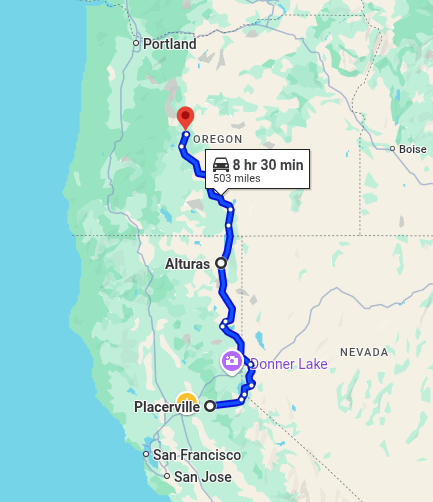
One of the more contemplative drives in California.

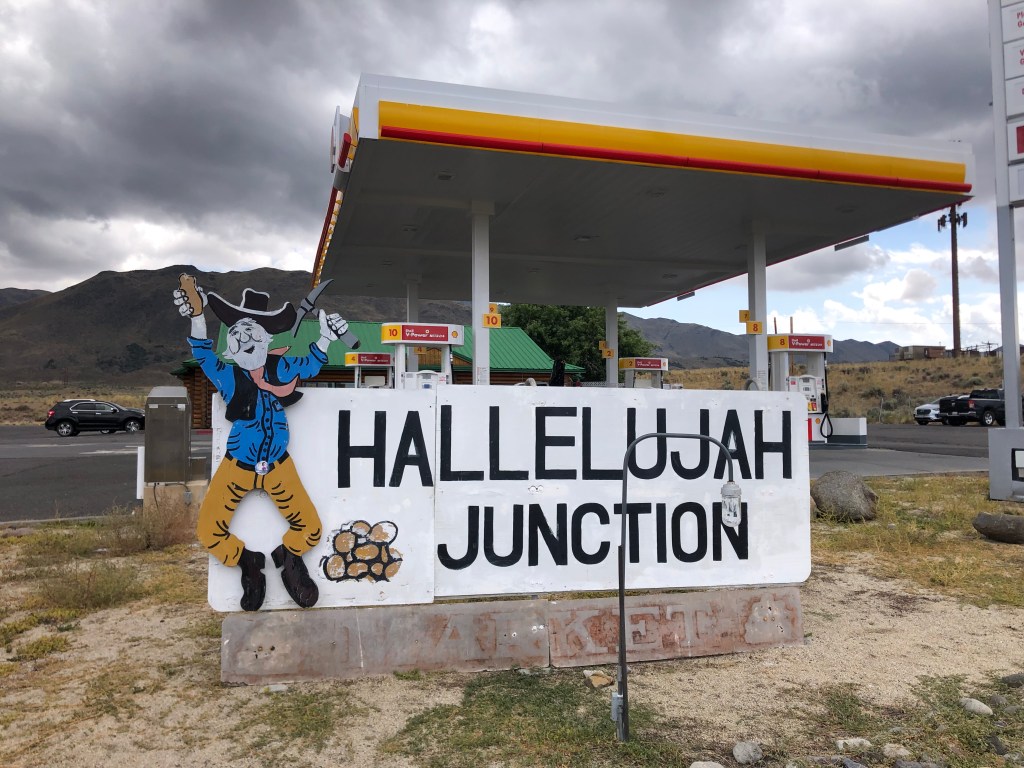
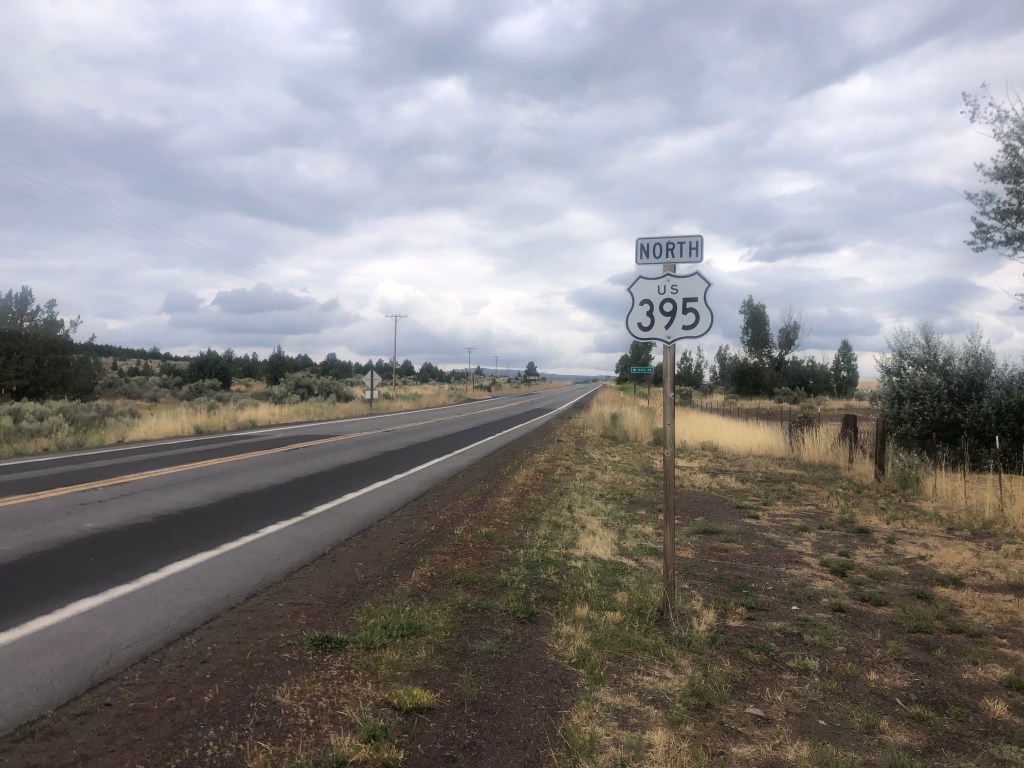
As alert readers will recall, I’ve driven various stretches of 395 at various times, most recently on my famous search for the remnants of the Nevada-California-Oregon narrow-gauge railroad. You can read about that trip here. Heading north on this stretch of US 395 is simultaneously one of the most contemplative and dramatic routes in California, with the craggy east slope of the Sierras on your left and lots of open range and the occasional lake on your right. Traffic is fairly sparse and the occasional towns are small and infrequent. My two favorite stops on the route–partly for their names and partly for their oasis-like qualities–are Hallelujah Junction (pop: 1) and Likely (pop: 99).

Hallelujah Junction’s sole resident.

While I didn’t cover new ground during this week’s trip up to Oregon, I did have a new rental car experience. I typically reserve the smallest, cheapest car on offer, knowing that the rental car companies will almost always “upgrade” me to an Altima because that’s pretty much the only car they actually keep on the lot. Ian correctly points out that the price difference between renting the bottom-of-the-line subcompact and just a normal sedan is only a few bucks a day. But it’s that kind of thinking that led to our current $36.2 billion national debt.

So I booked the cheap-o car. And this time they called my bluff. Meet the Mitsubishi Mirage–with three working cylinders and a total displacement (1.2 liters) that’s literally the same as my motorcycle.
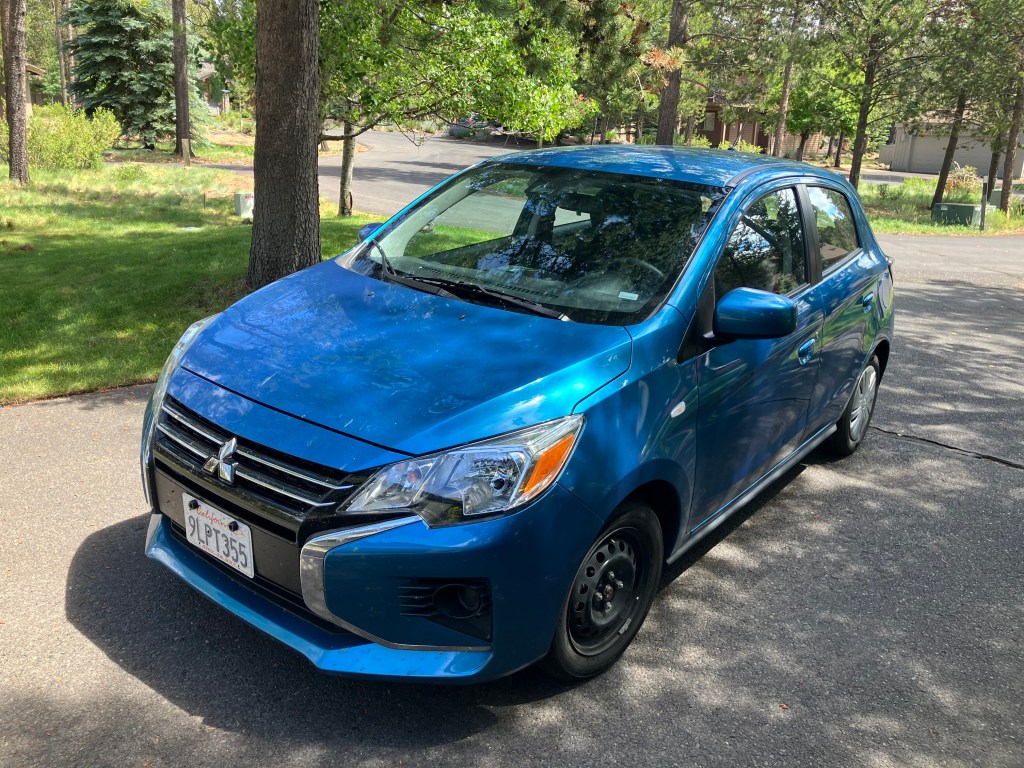
78 Horsepower baby.

A little research reveals that the Mirage was the lowest-priced car available when it was manufactured in 2023. In a zen-like way, those savings come at a cost. The interior is as bare-bones as it gets, with manual seats, basic AM-FM radio, hard-plastic door panels, and a no center console of any kind.
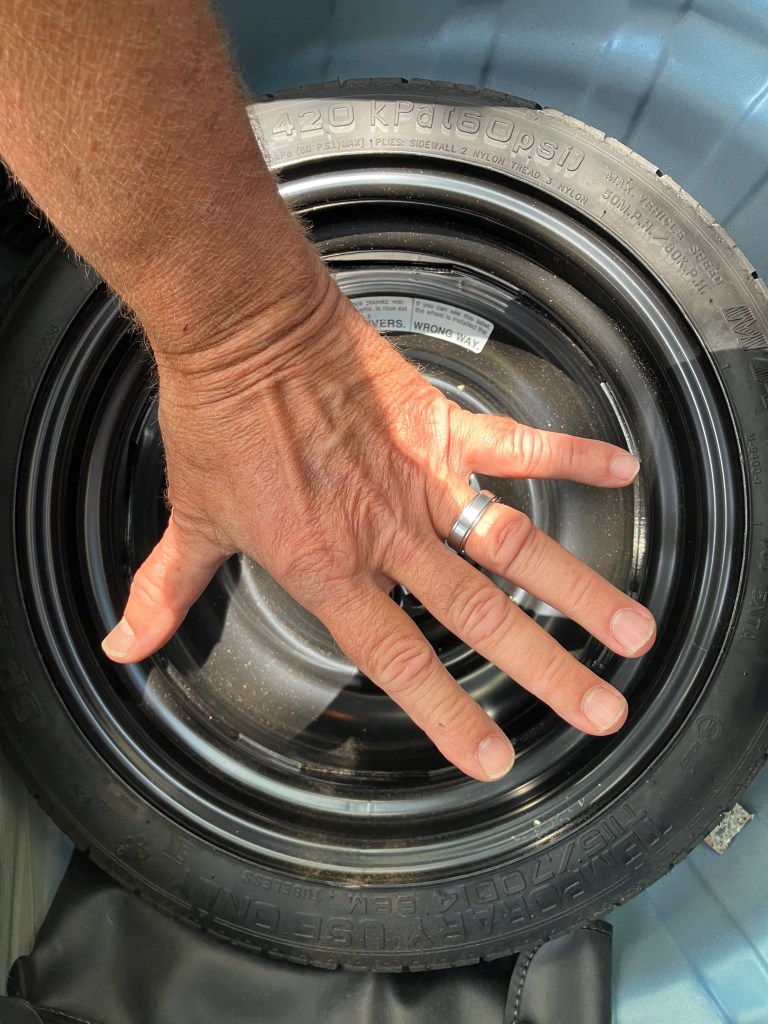
I’ve eaten pizzas with a larger diameter than the Mirage’s spare tire.

Plus, in a throwback to the Clinton era, this is one of the last production cars to still require an old-fashioned key to get its three cylinders firing.
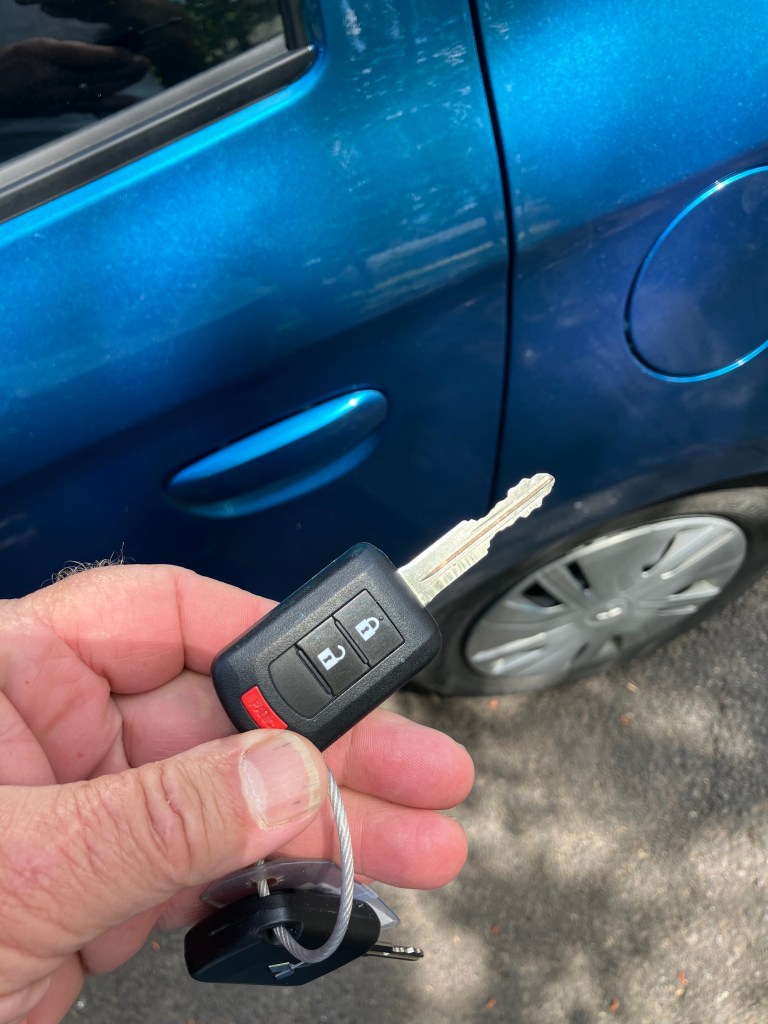
Remember these?

But the most remarkable thing about the Mirage is the (lack of) acceleration. This car notoriously has the slowest zero-to-sixty time of any production car. Ian did a Google search and found this review that Carbuzz did of the ten slowest cars. Here’s their take on the Mirage:

And finally, the number one slowest vehicle in America is the soon-to-be-dead Mitsubishi Mirage. It takes you an impressive 12.8 seconds to get from zero to 60 miles per hour in this sad excuse for a passenger vehicle, and it’s all thanks to the minuscule 1.2-liter three-cylinder engine that only produces 78 hp and 74 lb-ft of torque. It isn’t fast, it isn’t comfortable, it isn’t nice, and it’s pretty old. The Mirage won’t be missed.

Now, Ian’s an engineer, and he insisted that we subject this claim to empirical testing. So I stopped the Mirage on a flat stretch of road, Ian readied his stopwatch, and I stomped on the (aspirationally-named) accelerator. The analog speedometer began move, like Frankenstein’s monster on the slab. Five mph, ten mph….my fingernails and hair became noticeably longer….twenty mph…empires rose and fell….thirty, forty, fifty….North America drifted another few inches away from Europe…finally we achieved 60 mph.

The feat required 17 seconds–almost a third longer than even even CarBuzz’s incredulous estimate. On the positive side, the Mirage gets good gas mileage.

Anyway, we spent a few days near Bend simultaneously consuming water, hops, and barley. It was a relaxing break from my mile-a-minute retired life.
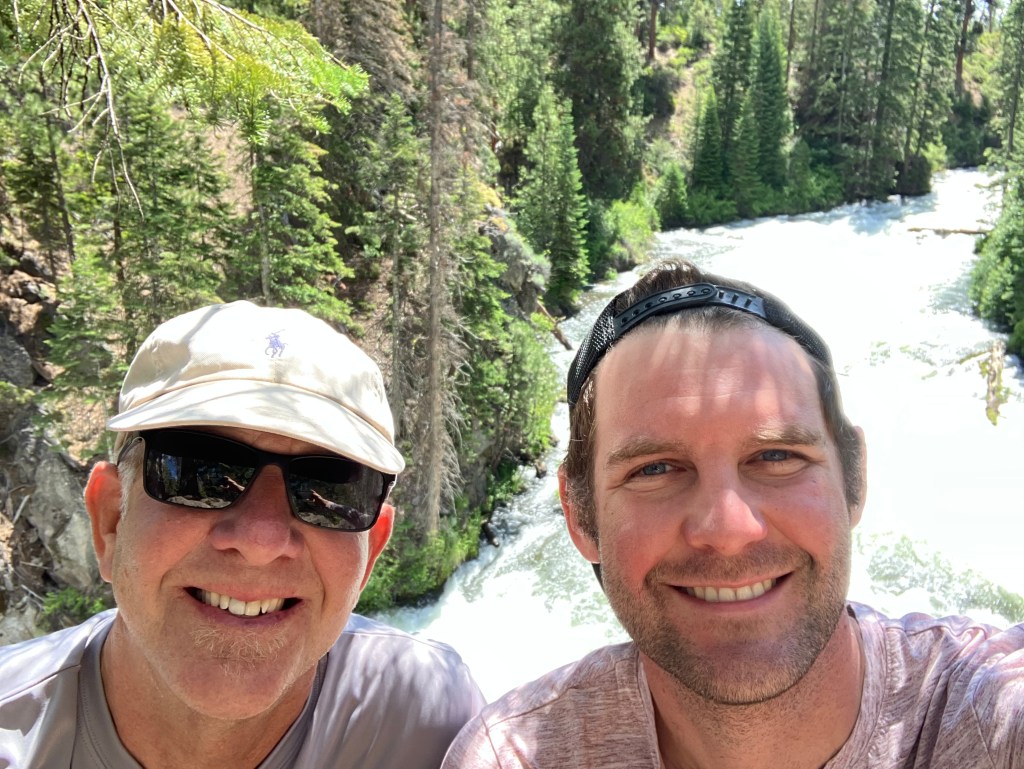
Then, just like that, it was time to head home. For the return trip we took US 97 from Bend to Weed, where we connected to Interstate 5 and continued south to Sacramento. A few notable items along the return trip include this decaying roadside relic in Chiloquin, OR (pop: 769).
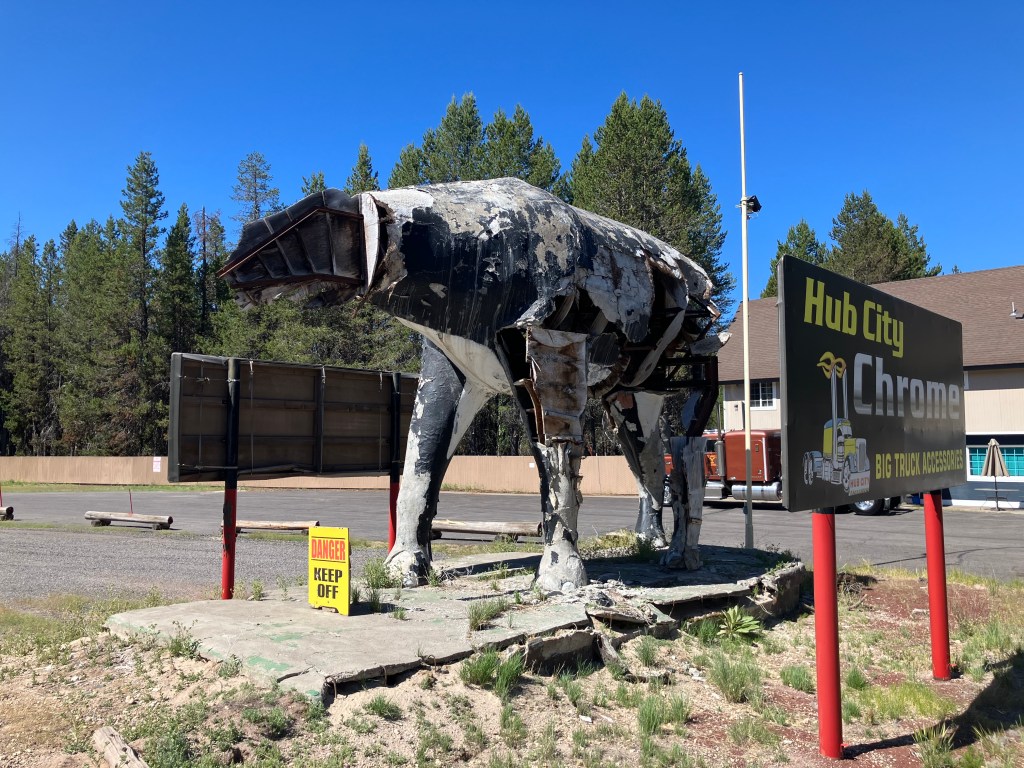
I found an online photo from some years back that helps to clarify what it’s supposed to look like:
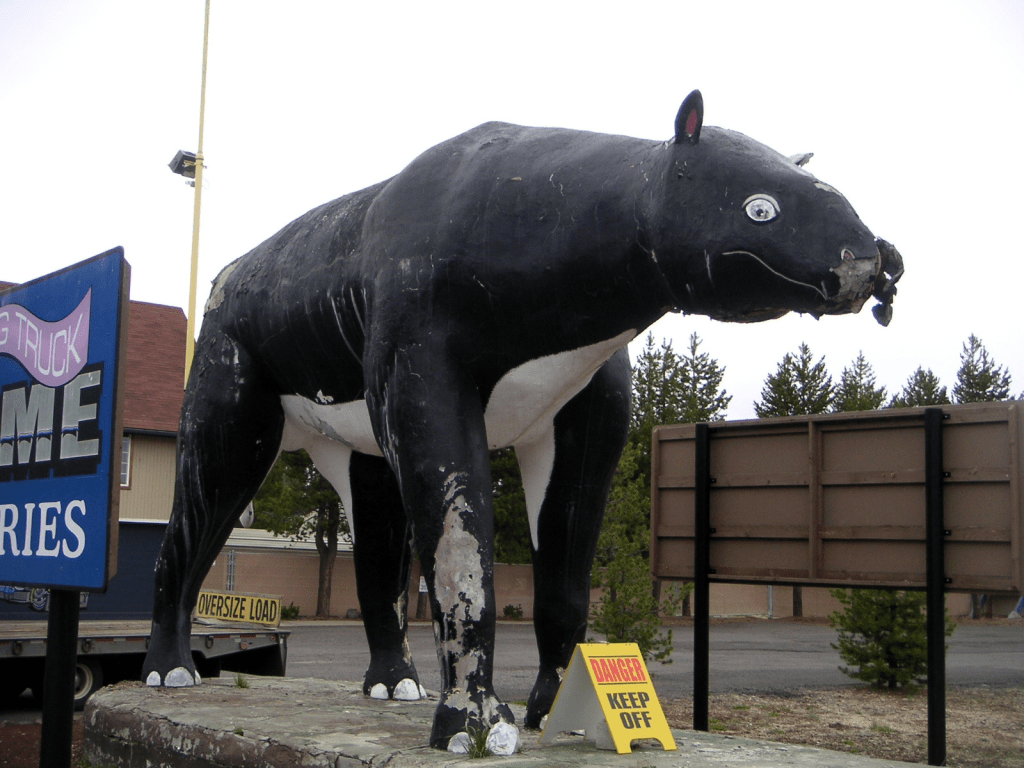
Is it a tapir? A cross between a horse and a cow? A dinosaur of some kind? There’s a lot of online debate about this. It’s sort of the Rorschach test of roadside kitch. Turns out it’s a remnant from a place called Thunderbeast Park that opened on this spot in the 1960s. There are some rumors on the internet that the remaining dinosaurs were relocated to a spot along highway 1 on the north coast. Ian claims we actually saw them on an earlier trip, but I think he may be hallucinating. Please let me know if you have any insights on the whereabouts of the Thunderbeasts.

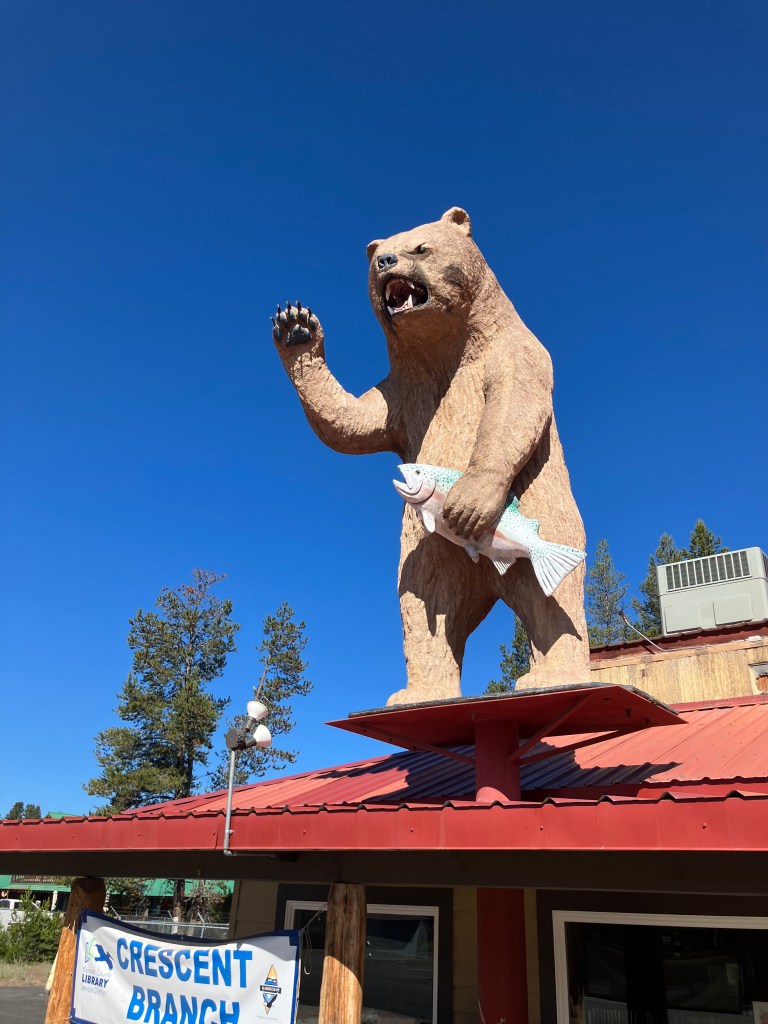
Meanwhile, the town of Crescent (pop: 400) has this unusual, but better-preserved, roadside art on top of the town library. I’m assuming the bear had some meaningful connection to an earlier use of the building?
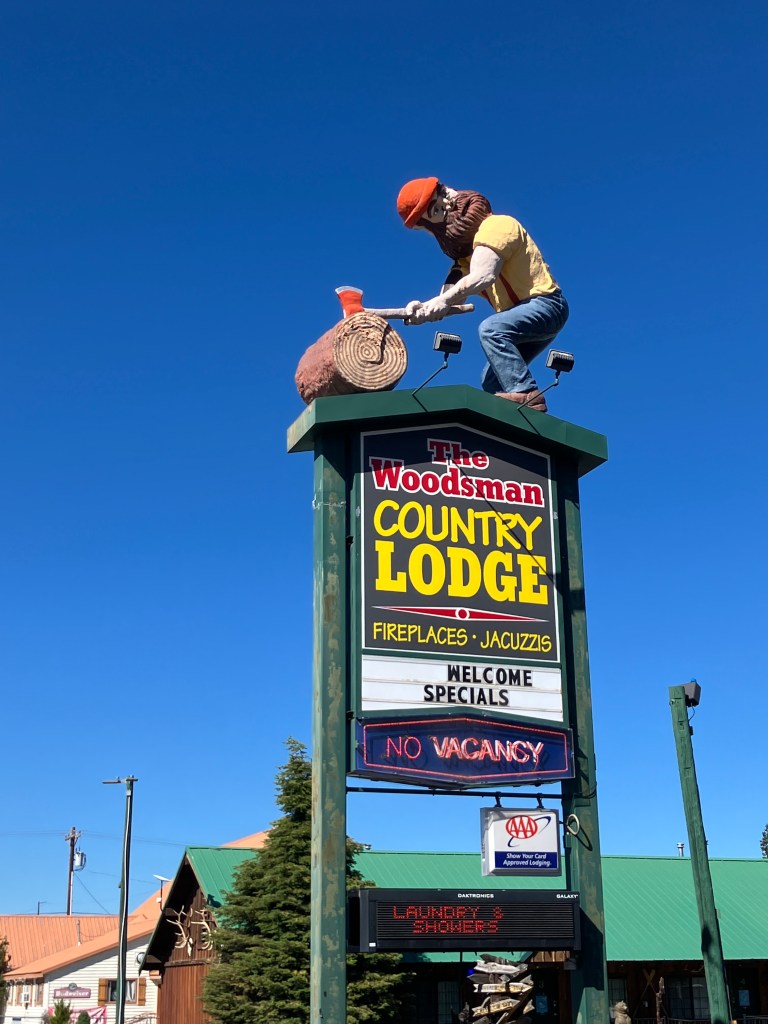
The town of Crescent also features this lumberjack, who appears to be suffering from a cervical fracture:
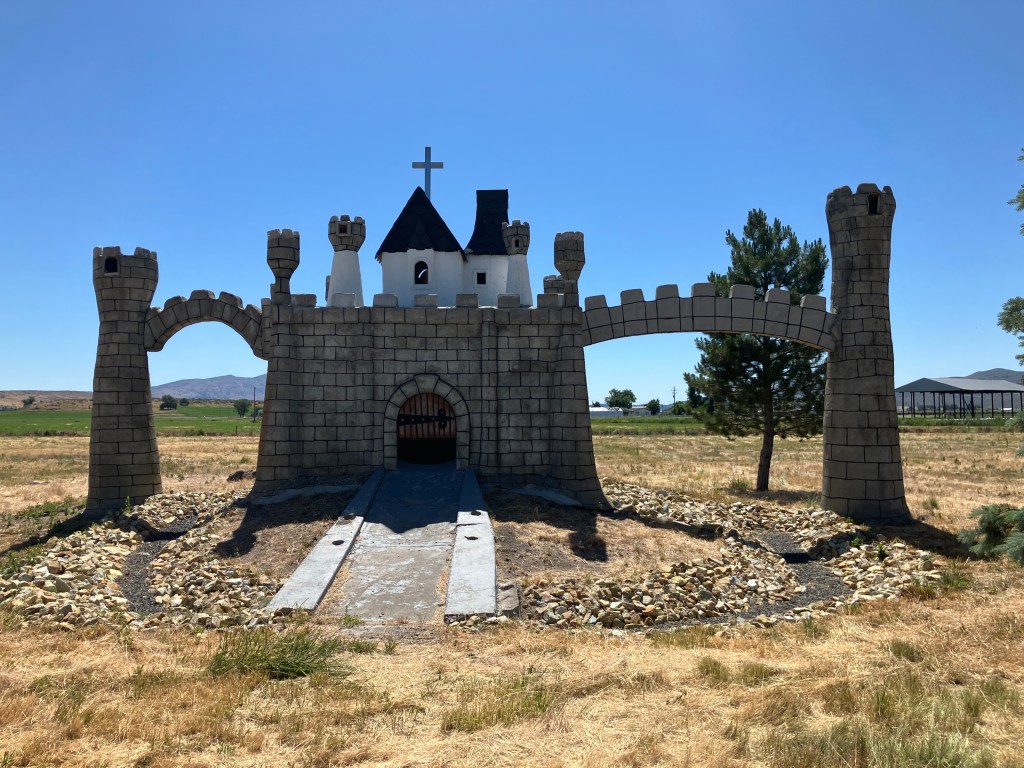
Near Klamath Falls we encountered this unexplained castle sitting in a field along US 97. To me it looks like a giant version of the kind of thing you’d see on a miniature golf course. Turns out it’s a trademark display from a bygone place called “Kastle Klamath,” which billed itself as a “Family Fun Land.” It had go-karts and a swimming pool and, yes, miniature golf. Like so many such places, it seems to be a victim of changing tastes in the Internet age.
Eventually we crossed back into California and came to the town of Doris (pop: 860), whose claim to fame is its 200-foot-tall flagpole. A plaque claims it is “America’s tallest flagpole.” (As of this writing, the tallest flagpole in America is actually in Wisconsin, and it stands at 400 feet. Meanwhile, the tallest flagpole in the world currently resides in Cairo, Egypt, at 662 feet.)
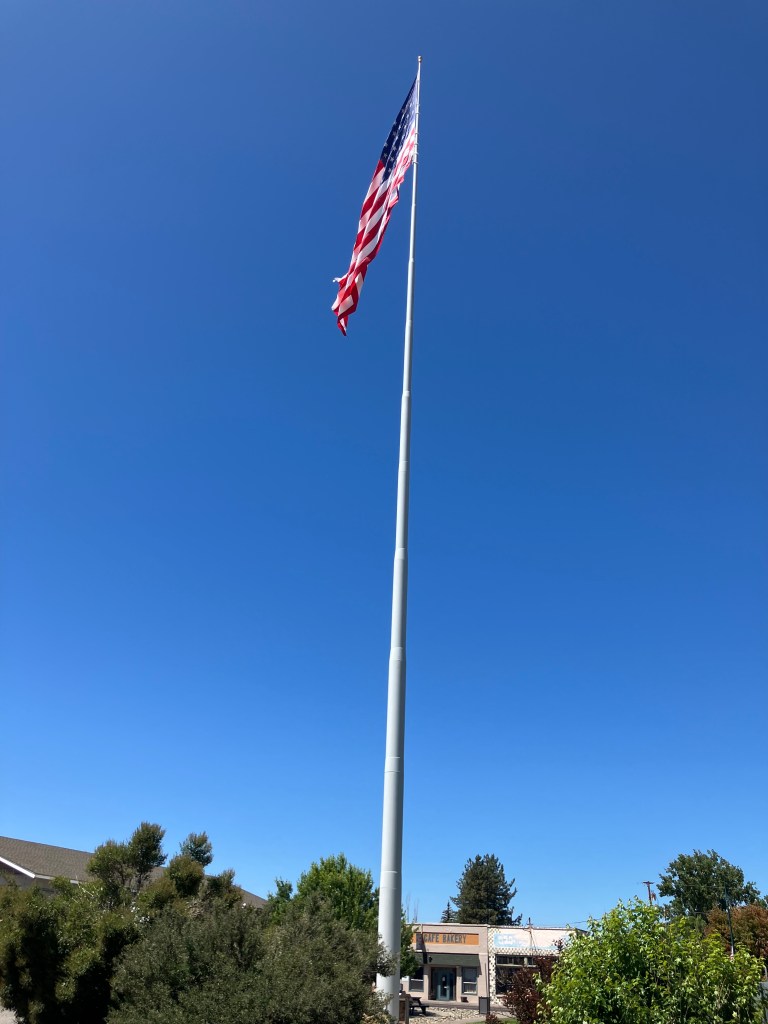
The southern end of US 97 terminates at Interstate 5 in the town of Weed (pop: 3,000). Located close to Mount Shasta, the town of Weed is named after Abner Weed, who founded the town when he built a lumber mill here in 1897. Today, the name provides endless opportunities for hilarious puns. For example, the town’s motto is “Weed like to welcome you.” And there are a half-dozen souvenir shops hawking T-shirts saying “I love Weed” and similar phrases that will make you the envy of Deadheads everywhere.
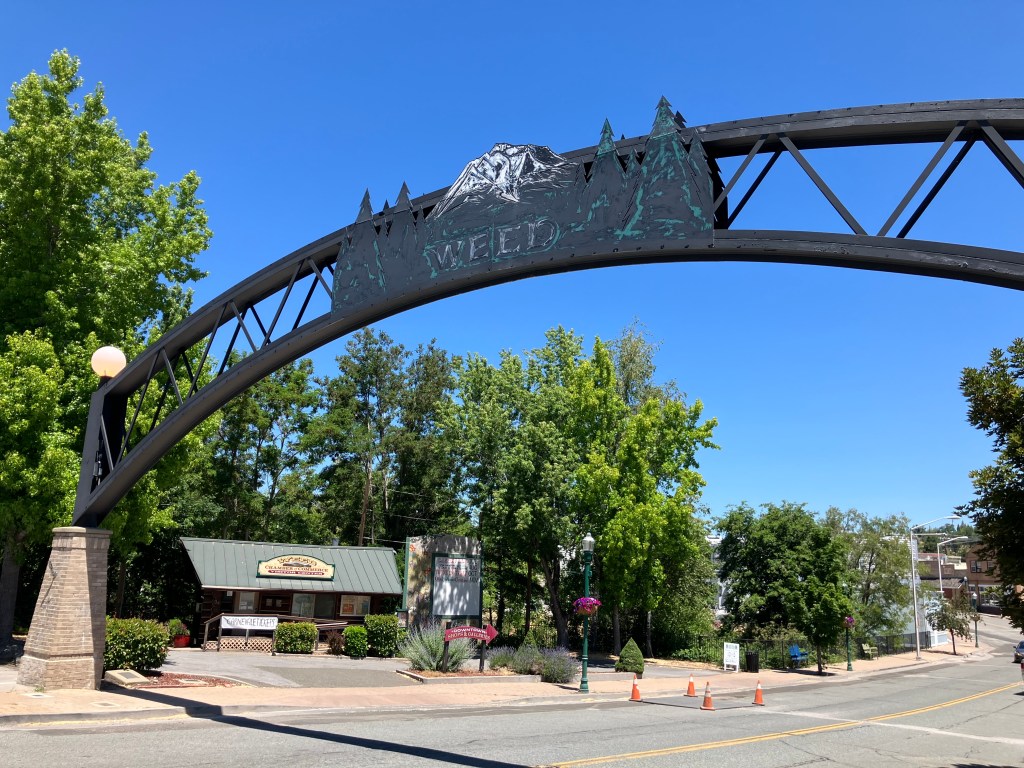
The historic archway to downtown Weed.

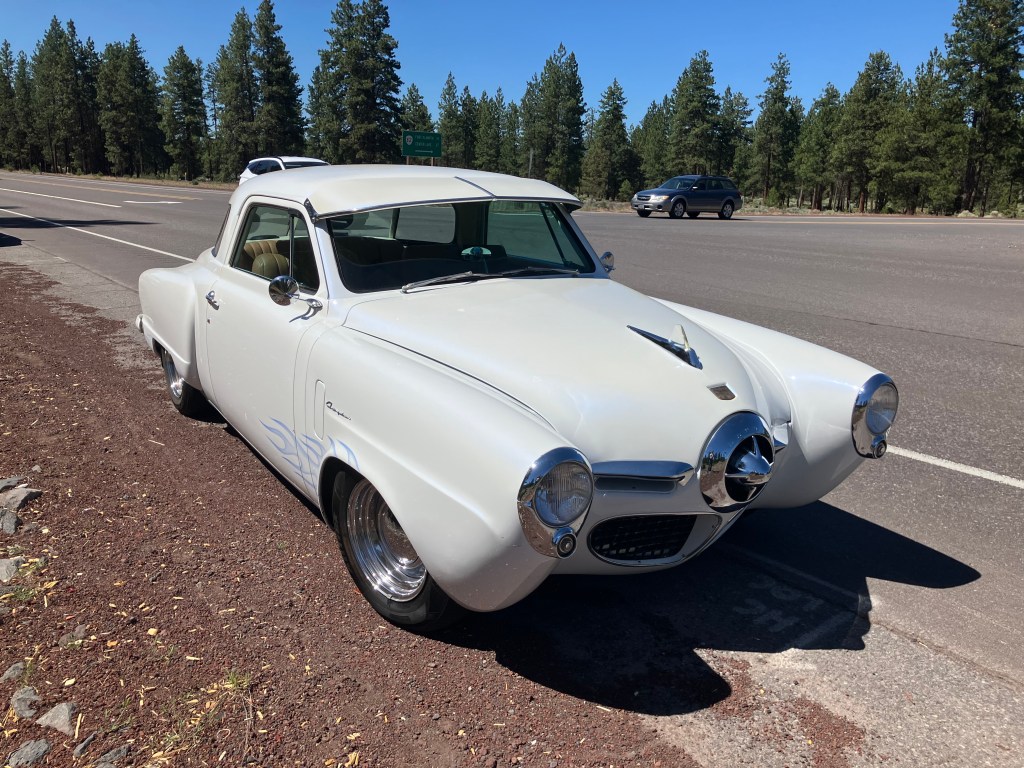
Finally, what is a road trip without a Studebaker sighting? We spotted this heavily-modified 1950 Starlight Coupe on the side of the road…where most Studebakers eventually spend a good portion of any outing.
And now, it’s time for the…

BEER OF THE DAY

The BOTD comes from McMenamins Old St. Francis School in Bend, Oregon. McMenamins is a privately-owned chain of historic structures that have been converted into pubs, restaurants, and hotels. This location had been a Catholic school which was built in 1936, and today the classrooms are hotel rooms. It also includes a full restaurant, a brewery, and movie theater, and a public pool.
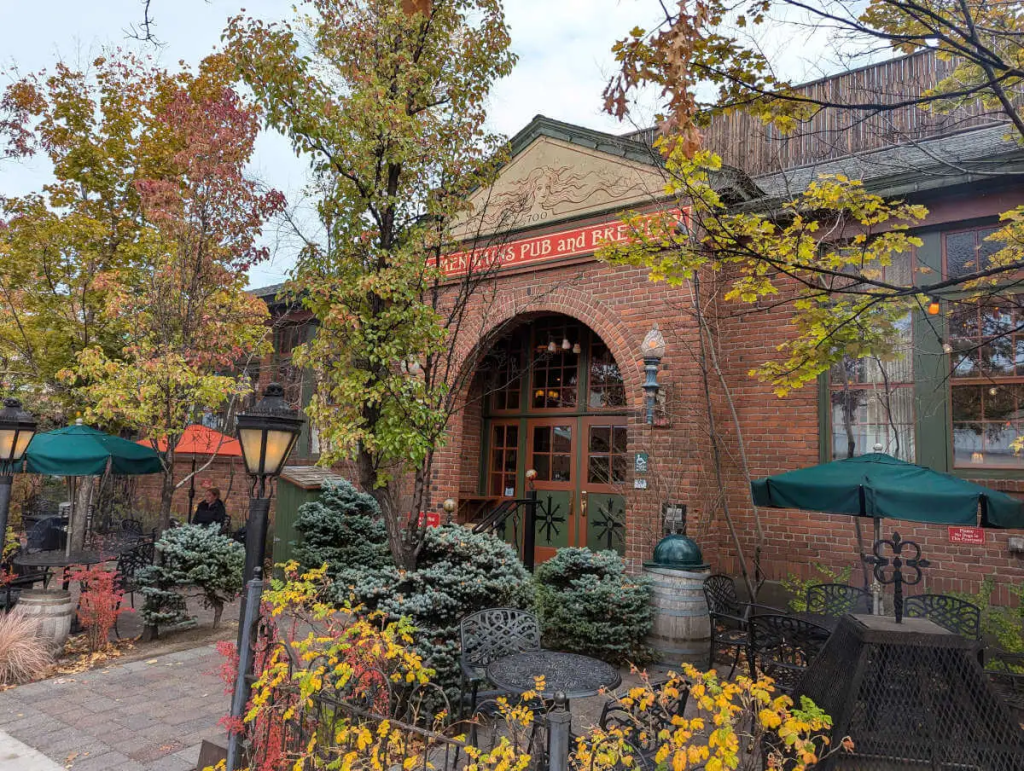
Photo from The Brew Site.

The offspring and I had lunch in the back patio, and for my beverage I selected the Bamberg Obsession. It’s a Munich Helles (a lightish German beer) to which they’ve added beechwood-smoked malt.
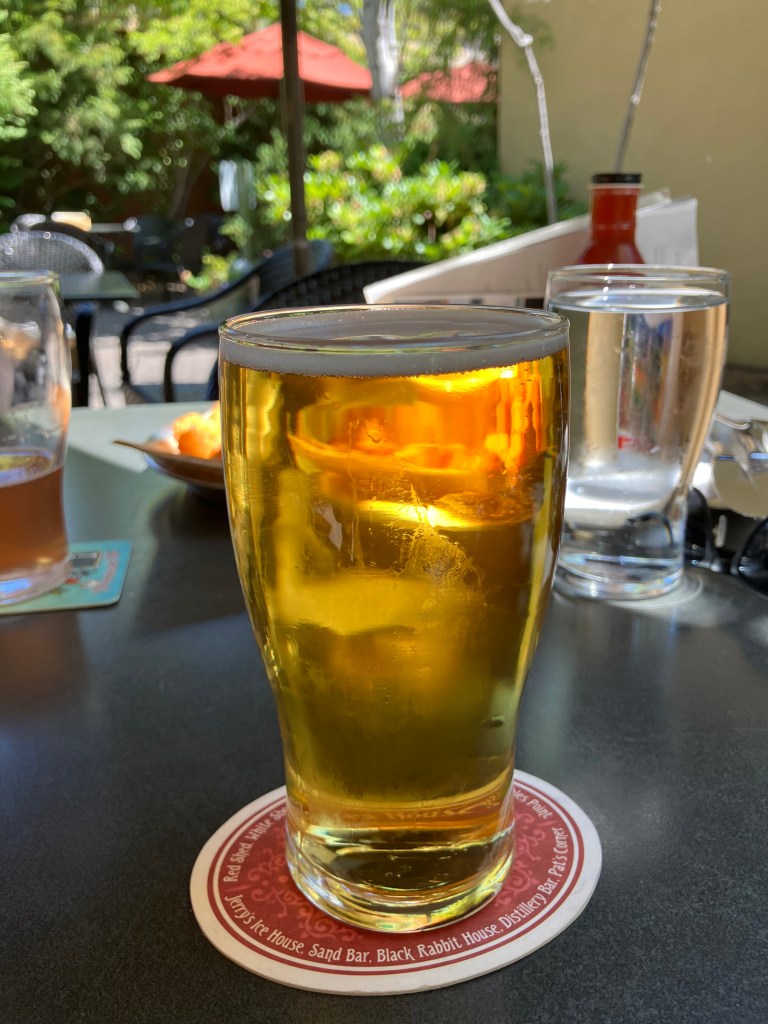
This looks promising.

It’s a beautiful, golden beer the color of light honey. I was mesmerized simply by the look of the thing, radiating sunshine and pot-at-the-end-of-the-rainbow good luck. The taste didn’t disappoint, either. This is a refreshing beer, as you’d expect from a Helles. But the addition of the smoked malt lends a subtle complexity that keeps things interesting. It’s not overwhelming, but rather gives just a hint of peat or a distant campfire. There’s not much bitterness to this drink, which again is consistent with the Helles style. A slight sweetness also comes through. The ABV clocks in just under 5 percent. This is the Arnold Palmer of beers. Highly recommended on a warm day. 4.5 out of 5 stars.
California history · cemeteries · churches · movie theaters · Road trips · trains

A Likely Story

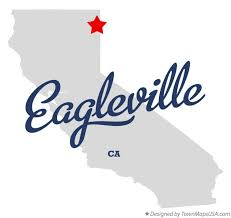
About half a century ago, when I was in the throes of adolescence, my dad loaded up our family and made the seven-hour drive from Sunnyvale to Eagleville, in the northeast corner of California. We were going to spend the Thanksgiving weekend with my Aunt Alice’s family. One of Alice’s brothers owned a house up there (in retrospect, it seems her extended family owned half the town).

Motto: “Any further north and you’d be in Oregon.”

Eagleville is a tiny town in Modoc County. (Today it boasts 45 residents, about half of whom presumably are related to Aunt Alice). I have three main memories from that weekend we spent there: (1) Mom was sick with a migraine headache, Dad was distracted by mom’s condition, and Dave and I knew no one else other than Aunt Alice and Uncle Edward (Dad’s brother). (2) The general store was the only business open that weekend, so my brother Dave and I hung out there for what seemed like hours, studying the comic books and MAD magazines. (3) There was a tiny church that was unlocked and empty; as a city slicker, I was surprised that people could be so trusting as to leave a building full of chalices and patens and suchlike just sitting there unattended. Even though Dave and I were not known for our high moral principles, we realized that it would be extremely bad karma to rip off anything from a church. So we left well enough alone.

As I recall, our Thanksgiving dinner was a traditional though awkward affair. All the expected Thanksgiving staples were there: turkey, stuffing, cranberry sauce, etc. But the four of us in my immediate family were clearly unfamiliar outsiders, while Aunt Alice’s family members were all comfortable together, laughing and joking and having fun. I envied their ease being in their own skin, and their grounding in that remote corner of California.

That Thanksgiving weekend still stands out from the 60 undistinguished others I’ve experienced. Perhaps it’s because it was the only Thanksgiving I spent with snow. Perhaps it’s because Eagleville felt like such a mysterious, remote, foreign place. Notably, I’ve never been back to Eagleville.

Until now.

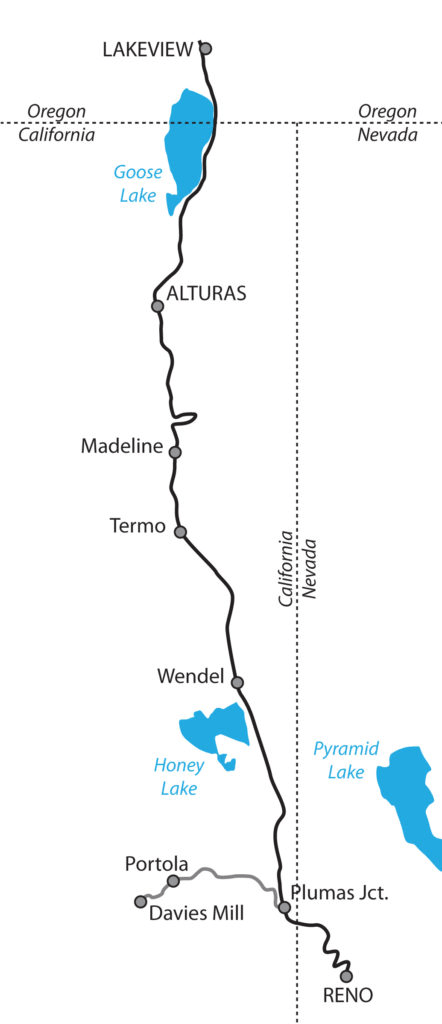
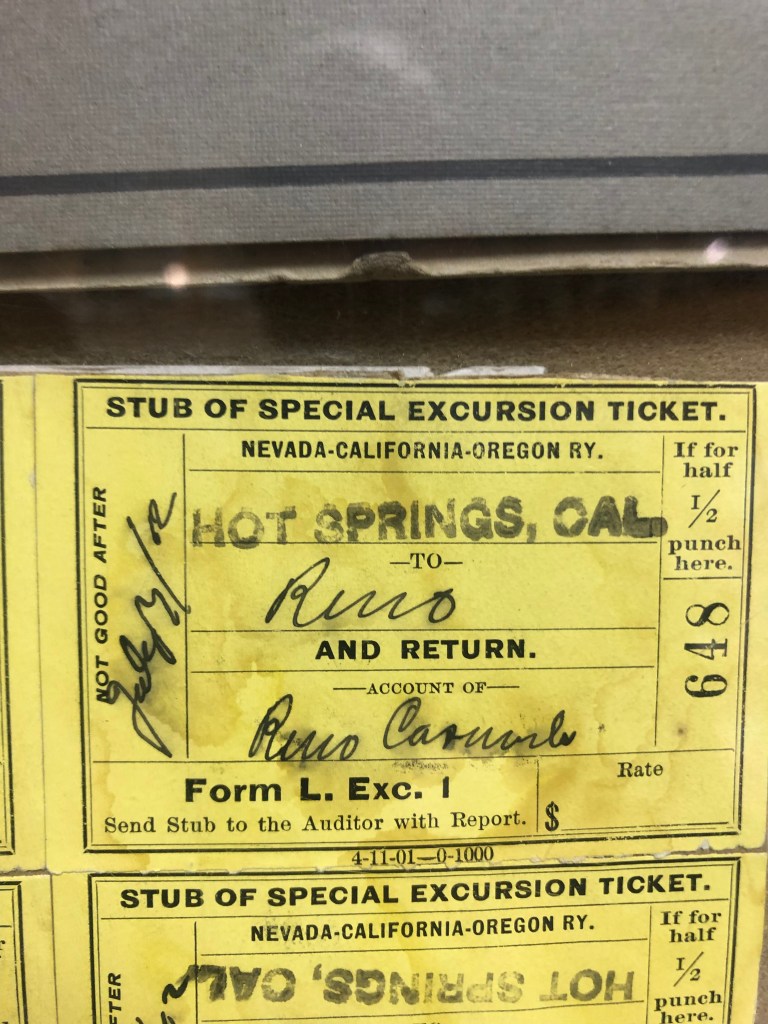
Recently I decided, for no particular reason, that I would revisit that tiny town and see how the reality stacked up against my memory. So I contacted my Uncle Edward, who helpfully supplied me with the address of the house where we stayed, which evidently still remains in Alice’s family. As loyal readers of this blog know, Uncle Ed is the creator and sole “staff” of The Dome of Foam, which is internationally recognized as the premier, authoritative, entertaining website on western railroads (particularly the Southern Pacific). I asked Uncle Ed if he could recommend any railroad-related sites in the greater Eagleville area, and he connected me with a doozy: The Nevada-California-Oregon (N-C-O) Railway, a now-defunct narrow-gauge railroad that connected Eagleville’s Surprise Valley with the outside world.

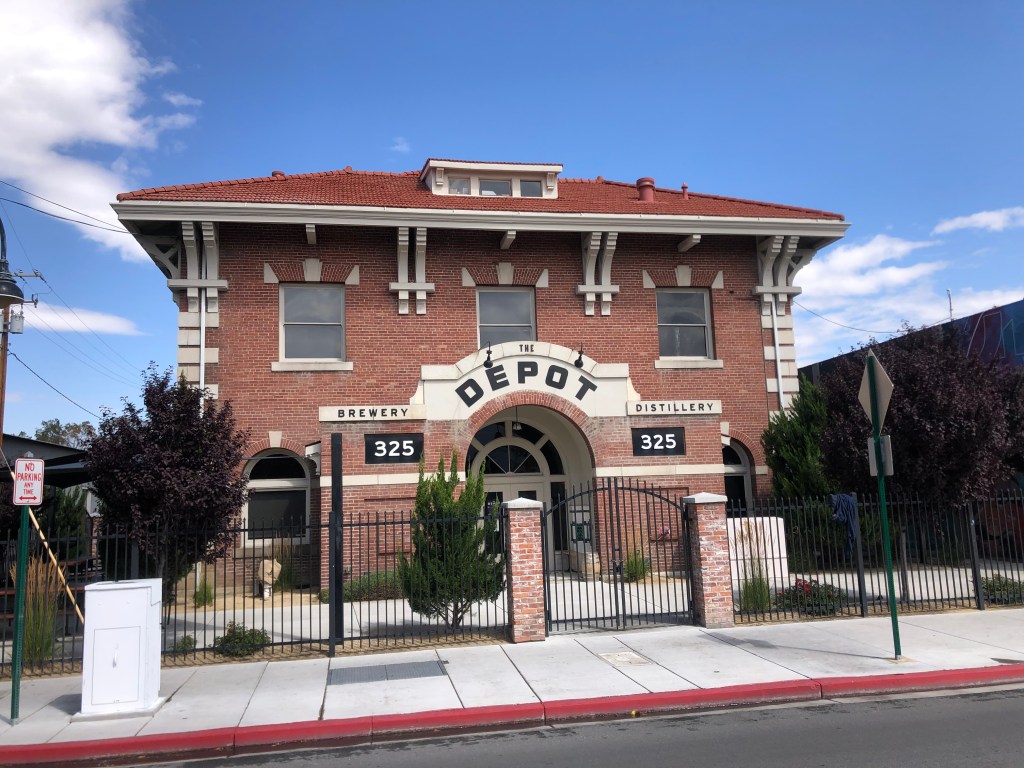
In doing a little research I read that the N-C-O Railway’s southern terminus was in Reno, Nevada, and I recalled that son Ian and I had visited that same depot just last winter. (Scroll down to the BOTD in this post.) It’s now a brewery/distillery, but they’ve keep the original exterior largely intact. The N-C-O also had a major presence in Alturas, which is just west of Eagleville. And the northern terminus was in Lakeview, Oregon, which is just north of Alturas.

Route of the N-C-O Railway.

So my plan became clear: my trip to Eagleville would generally follow the entire route of the N-C-O Railway, an I’d be able to visit historic structures in each of the three states served by the railroad.

And so this morning I set out on the trusty Speedmaster eastward to Reno (pop: 264,000). Within a couple of hours I was standing in front of the N-C-O’s Reno depot. Originally built in 1910, the building served as a railroad depot until 1937. After that it was used for railroad offices and was finally sold off for non-railroad purposes in 1975. It was eventually abandoned, then in 2014 it underwent renovation to become the brewery/restaurant it is today.

Once the southern terminus of the NCO Railway.
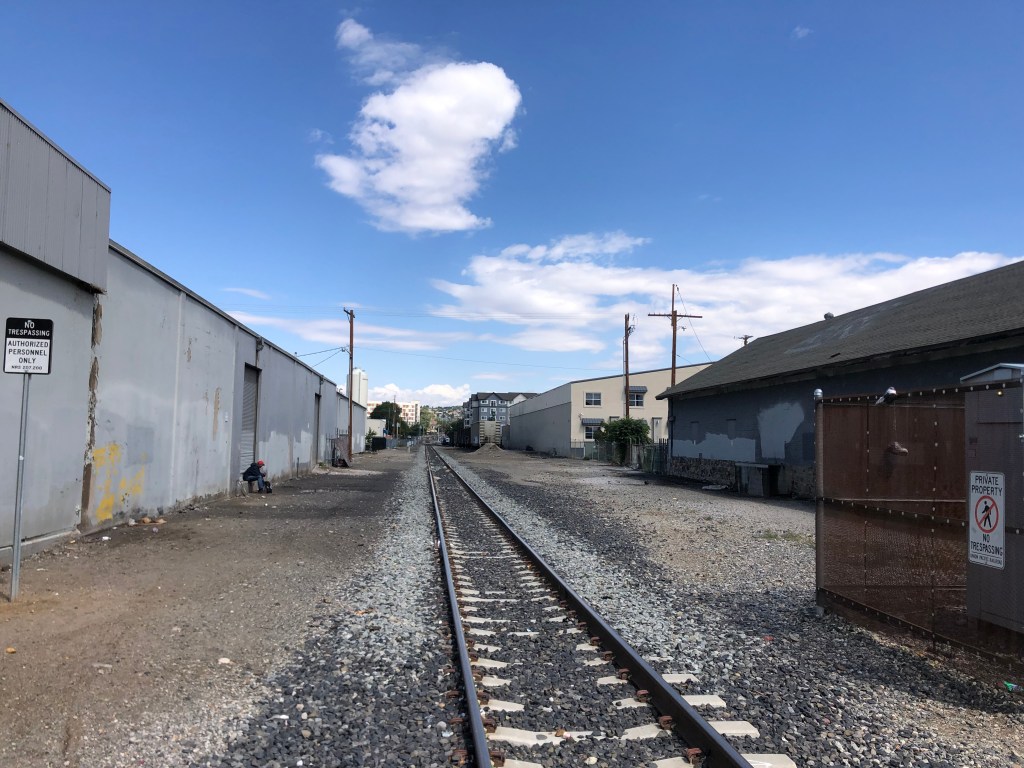
The rail line still runs alongside the Depot.
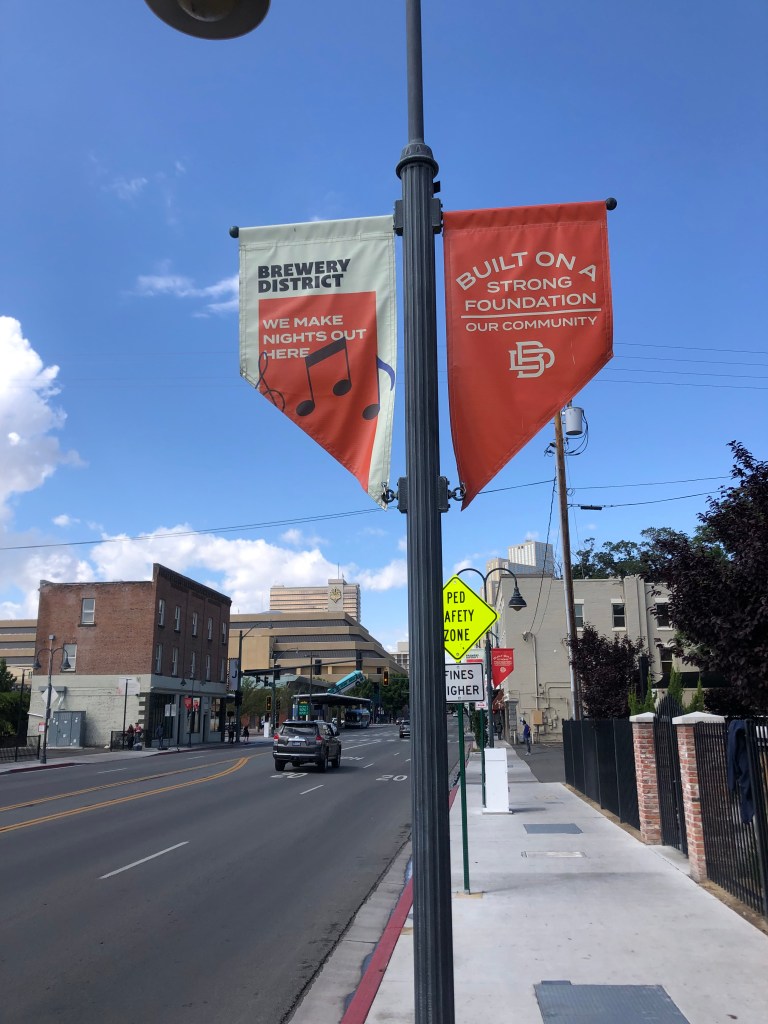
The Depot sits in the middle of Reno’s Brewery District, alongside a handful of other breweries and distilleries.

I next headed north on US 395. I’ve written about US 395 before (here and here and here, for example). You’ll recall that Hallelujah Junction (where US 395 intersects with CA-70) holds special significance. So I made a brief stop as as I passed through, to relive the magic.

Where I learned about the Seven Wonders of the Railroad World.

US 395 has a stark beauty to it. You don’t see much in the way of towns or even other cars. The quietude and long horizon are conducive to contemplation if not meditation.

Ommmmm…..

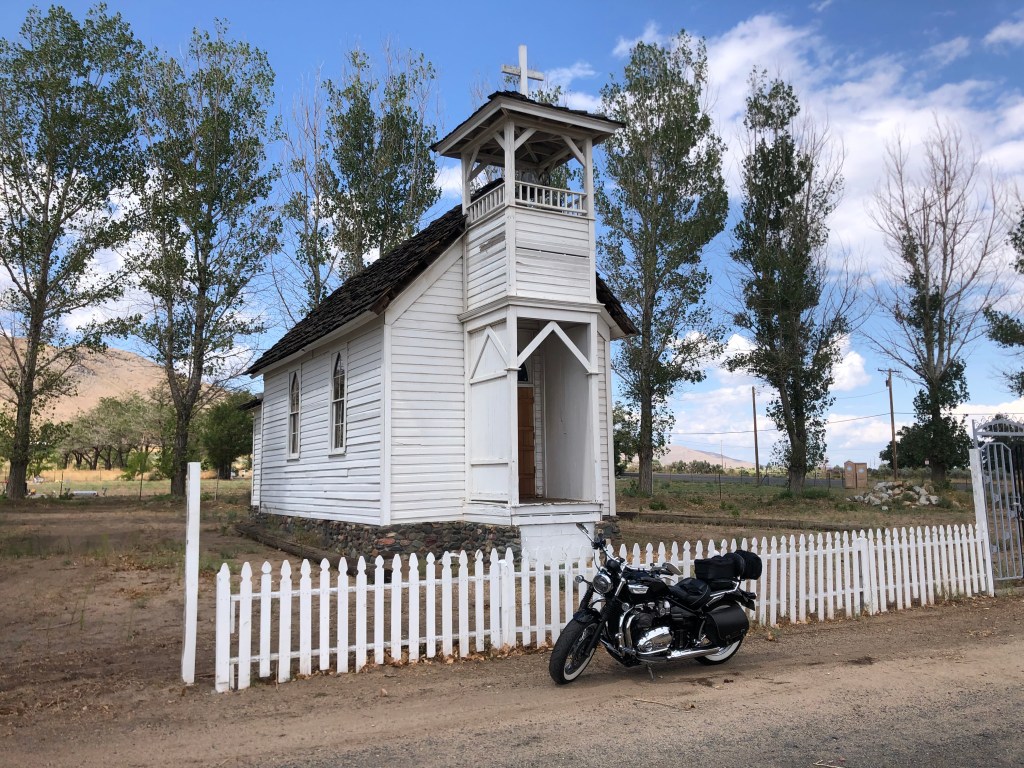
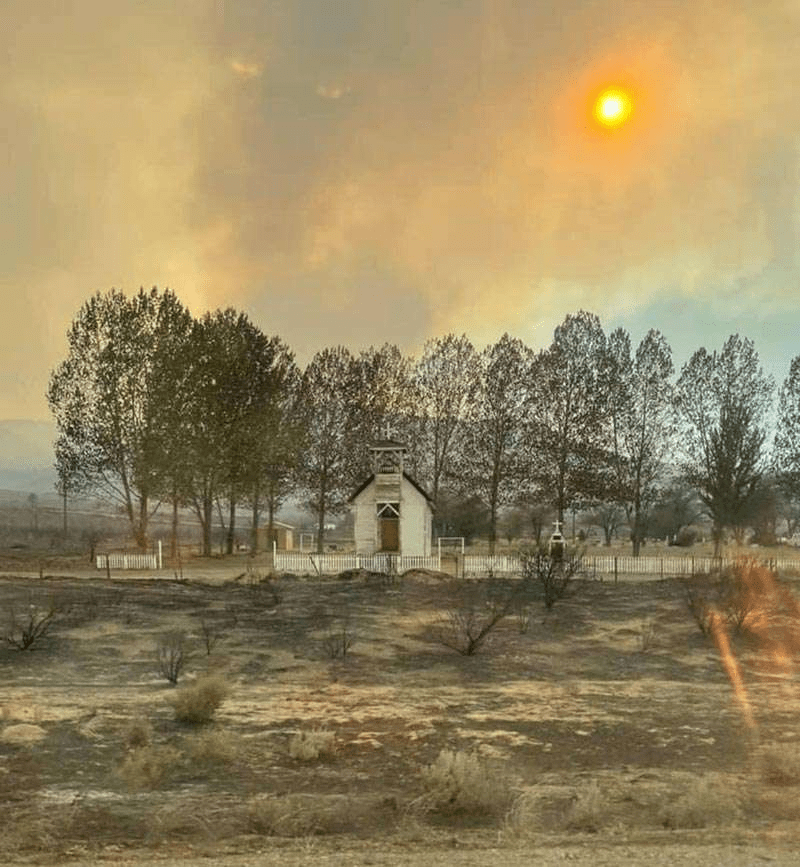
When the rare town does appear, I feel compelled to stop and look around a bit. One such town is Doyle (pop: 700). A couple of years ago Doyle lost much of its housing stock due to wildfires, so there really isn’t much going on here. But I was charmed by this historic chapel that somehow escaped the fire. Constantina Church was built around 1900 about five miles south of Doyle, and infrequent worship services were held there whenever a circuit priest was available. Services stopped around the 1920s, and the chapel was eventually abandoned. The structure was moved to Doyle in 1994, and it appears to be in regular use as a church once again.

Constantina Church today.
Same church in 2021, after the town’s fire.
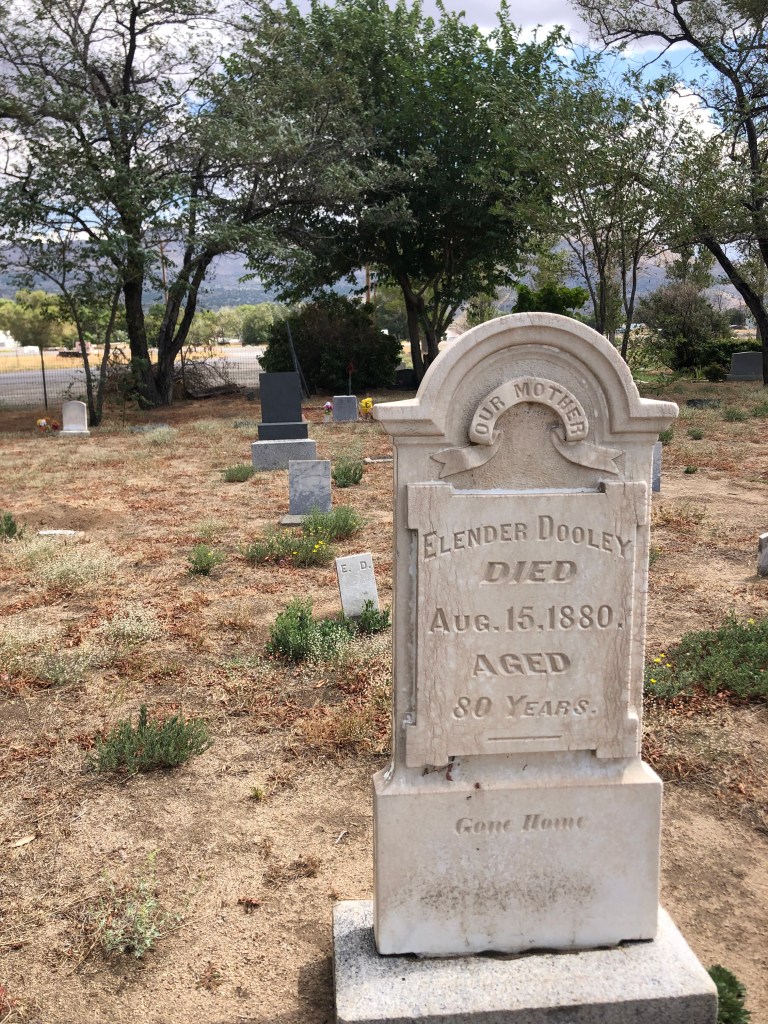
A historic cemetery is next to the church.

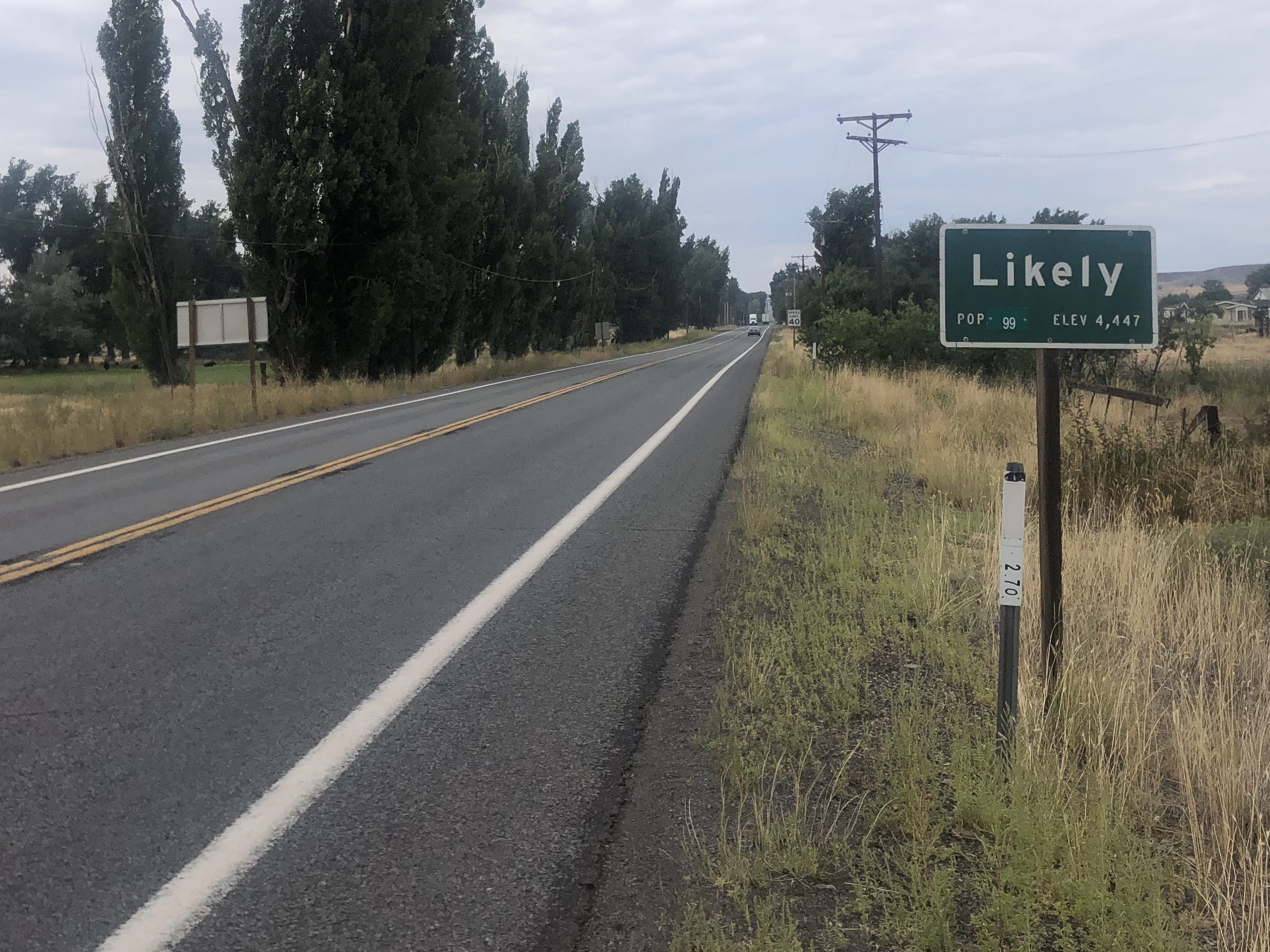
I also passed through the town of Likely (pop: 99). The story goes that, back when the area was being settled, some homesteaders were speculating about whether the settlement would become a proper town. One man (Billy Nelson) reportedly said “There’s likely to be a town here one day, and there’s just as likely not to be. So let’s call it Likely.”

A Likely story.
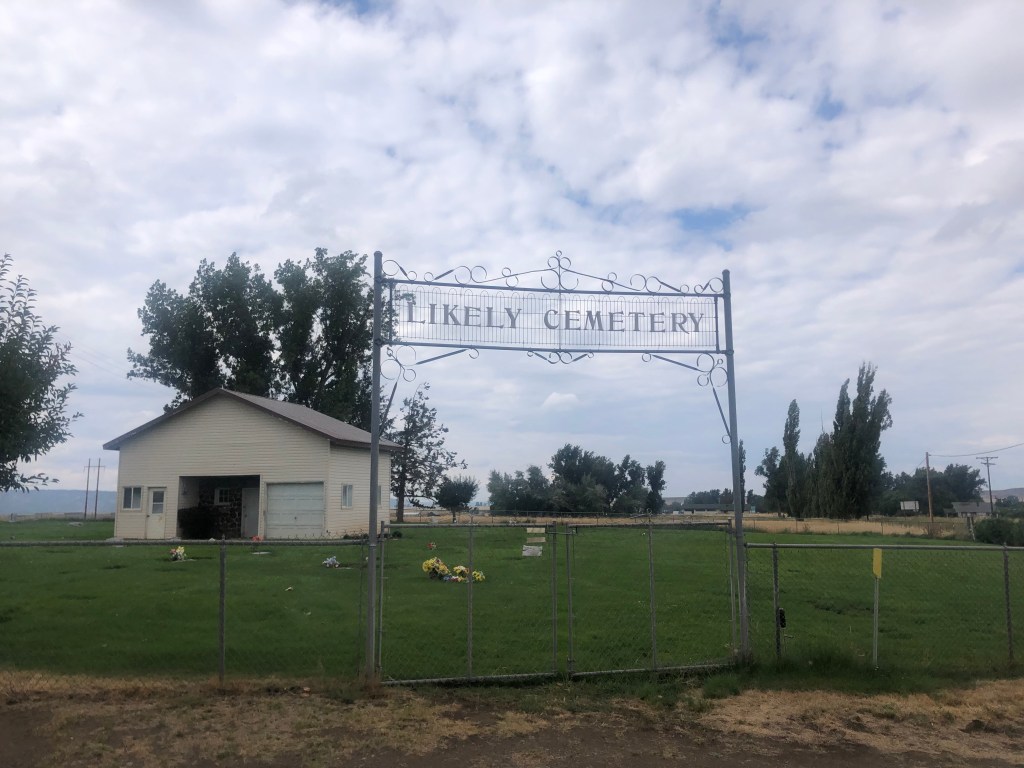
But we’re not sure.

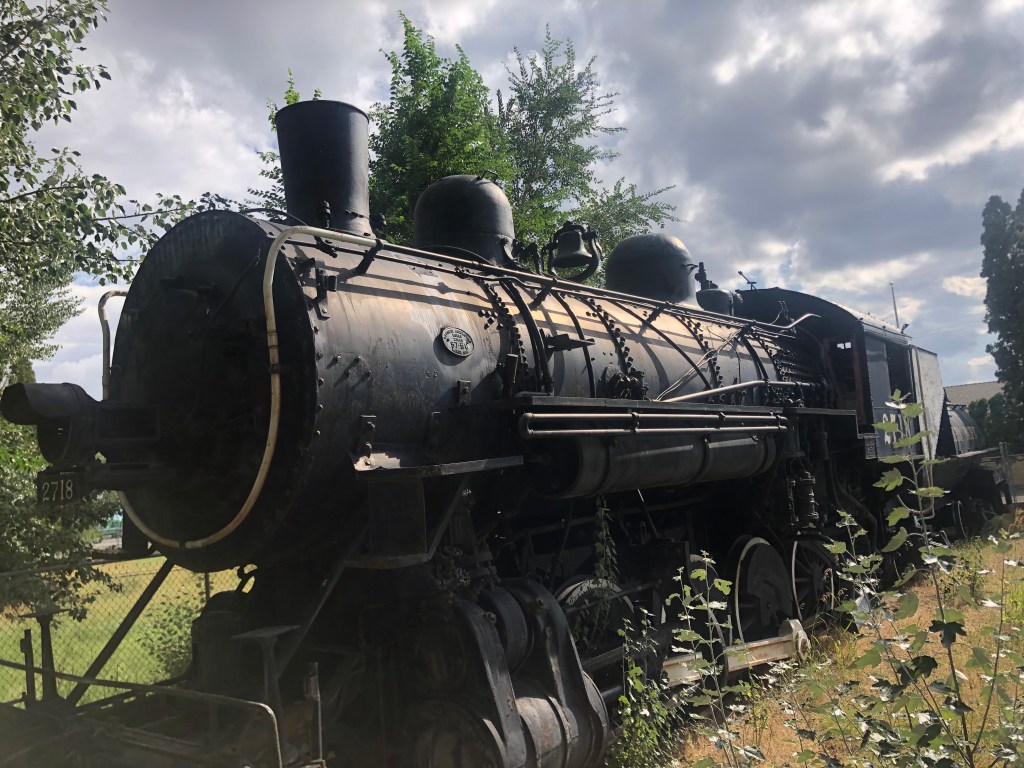
Finally I arrived at the relative metropolis of Alturas (pop: 2,700). Approaching from the south, the first thing you encounter is a striking, if somewhat faded, 1904 steam locomotive that used to run on the NCO line. The locomotive was presented to Alturas in 1956 by Southern Pacific (which had earlier bought up the NCO), and it resides outside the Modoc County Museum.

Standing still since 1956.

The story of the locomotive, as told by the local boosters, makes clear how much the NCO had meant to Alturas:

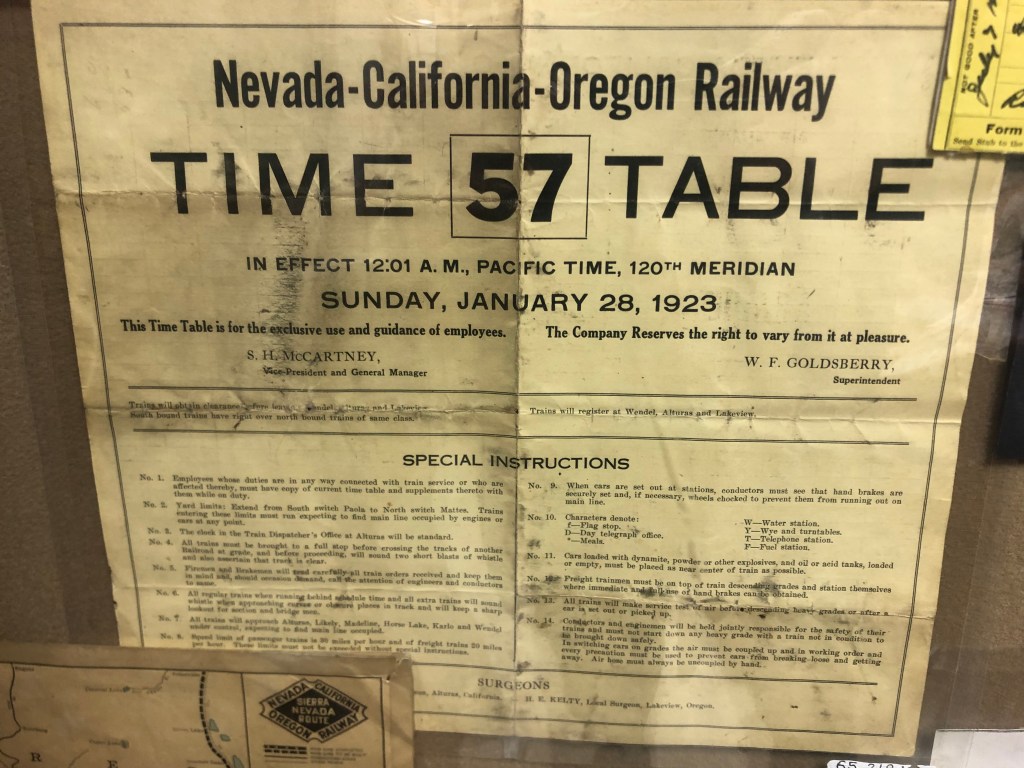
“This particular locomotive was utilized on the Alturas, California to Reno, Nevada route. The railroad was chartered as N.C.O. (Nevada, California, Oregon) in 1884. It was first established in Alturas in 1908 reaching Lakeview by 1912. The railroad and Alturas have an extensive symbiotic relationship from its inception to the day that Alturas was terminated as a home terminal on January 17, 1972, which was a devastating blow to the city as a large percentage of the population was forced to relocate to Klamath Falls, Oregon. Every business in town interacted with the railroad, whether by the influx of tourists or business travelers when the Southern Pacific offered a passenger service from 1927 to 1938. Even railroad workers who made their home base in Alturas, or stayed in one of the hotels made on impact on the town. The third floor of the Niles Hotel offered dorm style living for the railroad workers for decades. Before and during the time of passenger rails, the Southern Pacific and N.C.O. offered livestock shipment from 1908 to 1972, which provided most of its revenue. This was an option for the ranchers throughout the region to get their livestock to markets and sustained a way of life followed since the pioneers first arrived to this region.”

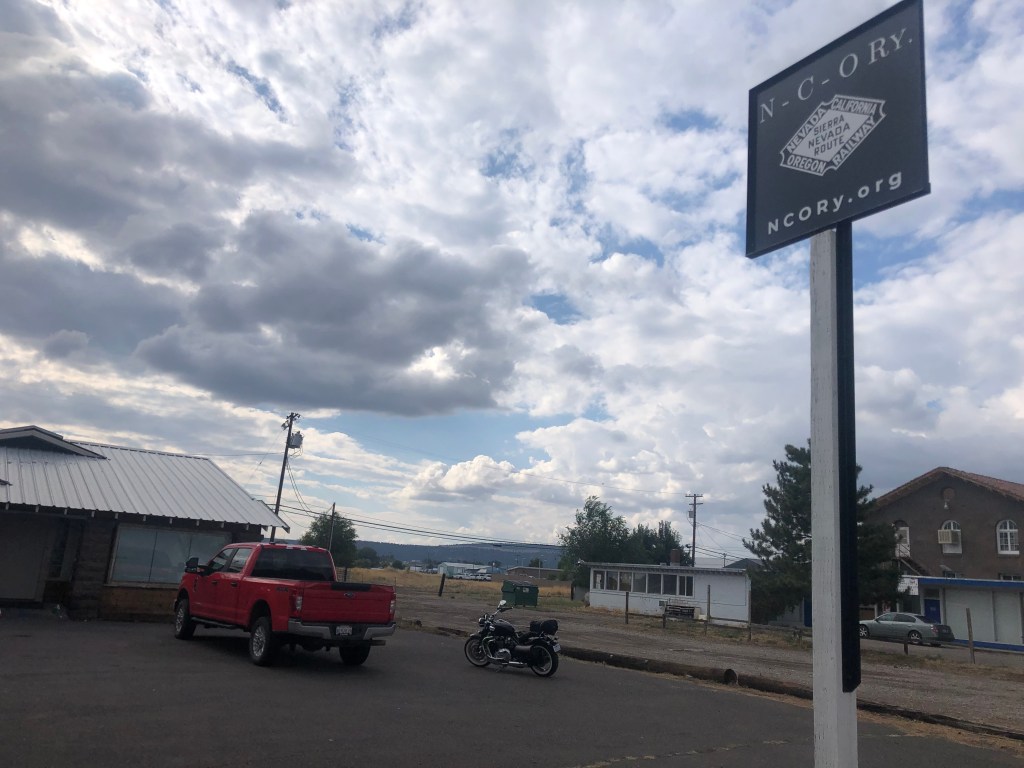
The docent at the museum was incredibly helpful when I told him of my interest in the NCO. He directed me to a place down the road where an old NCO structure was being renovated. “Look for the red truck and ask for Shane.” Dutifully I followed the directions, and was rewarded by the sight of a large NCO sign…and a red truck.

This must be the place….

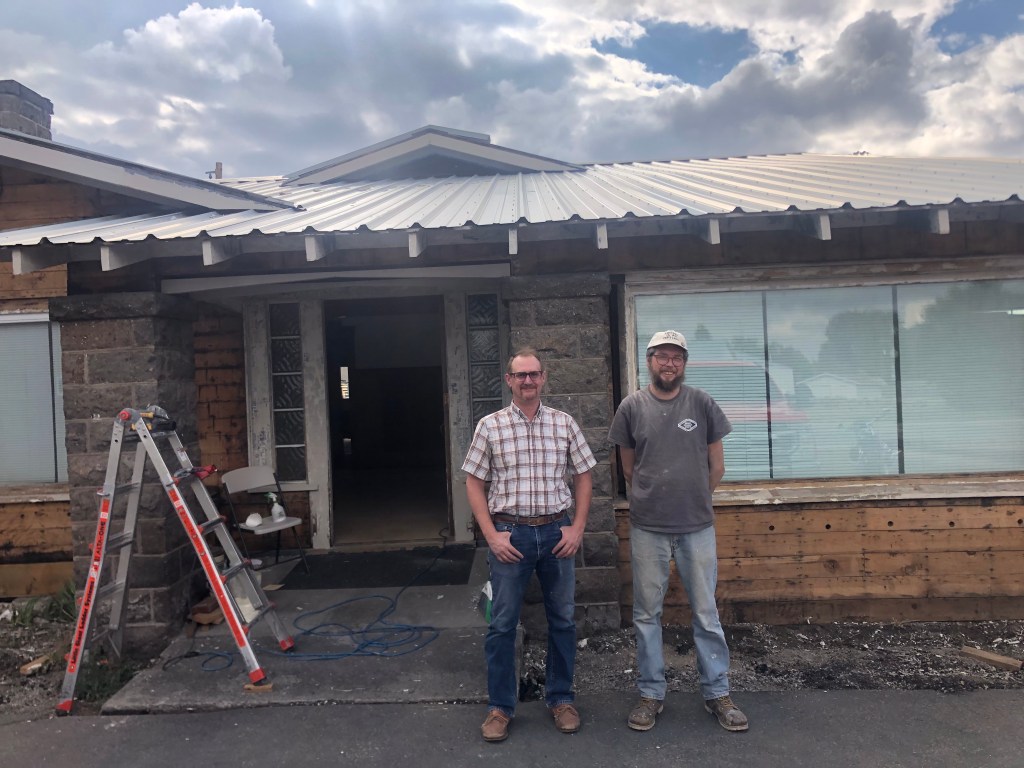
Shane turned out to be the head of a nonprofit organization called the Nevada-California-Oregon Railway. (Evidently the name was free to use.) The nonprofit is working to preserve the history of the NCO railroad, including buildings and rolling stock. The building where I met him (and where he was restoring some woodwork) had once been NCO crew quarters, and Shane’s dream is to turn the building into a museum.

Shane (left) and Andrew, taking a break from restoring the NCO crew quarters on Main Street, Alturas.

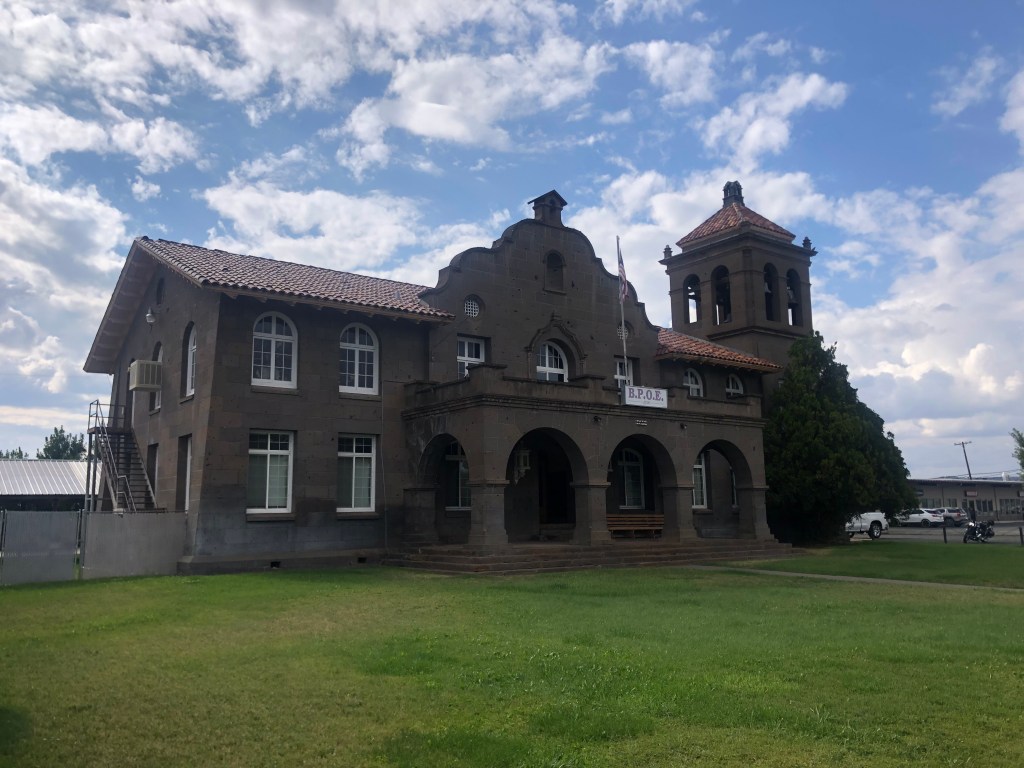
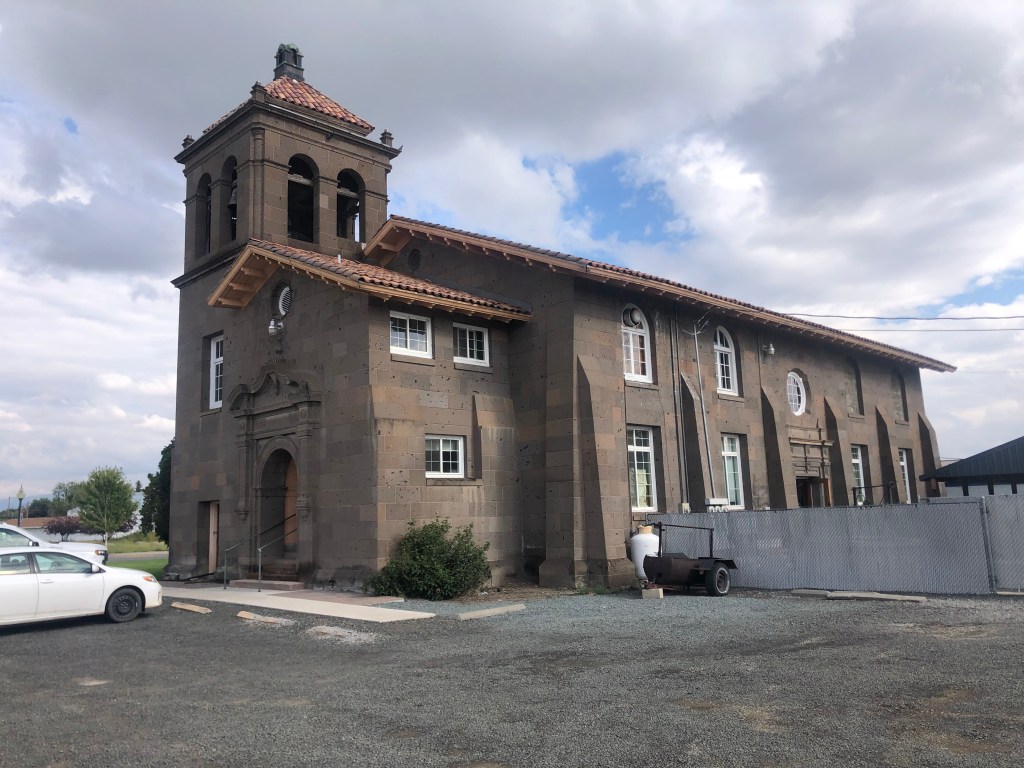
According to Shane, there are several NCO buildings still standing in Alturas. He pointed to a large Mission Revival building that had once served as the NCO’s headquarters. Built in 1918, the building became an Elks Lodge in 1974 and remains such today.

Attentive readers will recall that I encountered this building when I drove through town coming back from my Weiser trip last year. At the time I didn’t put together that this building and the Reno Depot shared the same lineage.
View from the parking lot.

Shane also pointed to a carpet store which had once been the NCO’s freight depot in Alturas.

And finally, Shane directed me to the NCO’s passenger depot, which was constructed in 1908. Seven years later, it was decided that the station should be closer to the center of town, so it was moved, stone by stone, several blocks.

Peripatetic depot.

The Southern Pacific RR bought the NCO in 1926, and passenger service to Alturas was discontinued in 1938. Freight service ended in 1988. Still, Alturas remembers the NCO as an influential and pivotal part of its history. Indeed, the Modoc County museum includes a number of photographs and artifacts from the railroad.

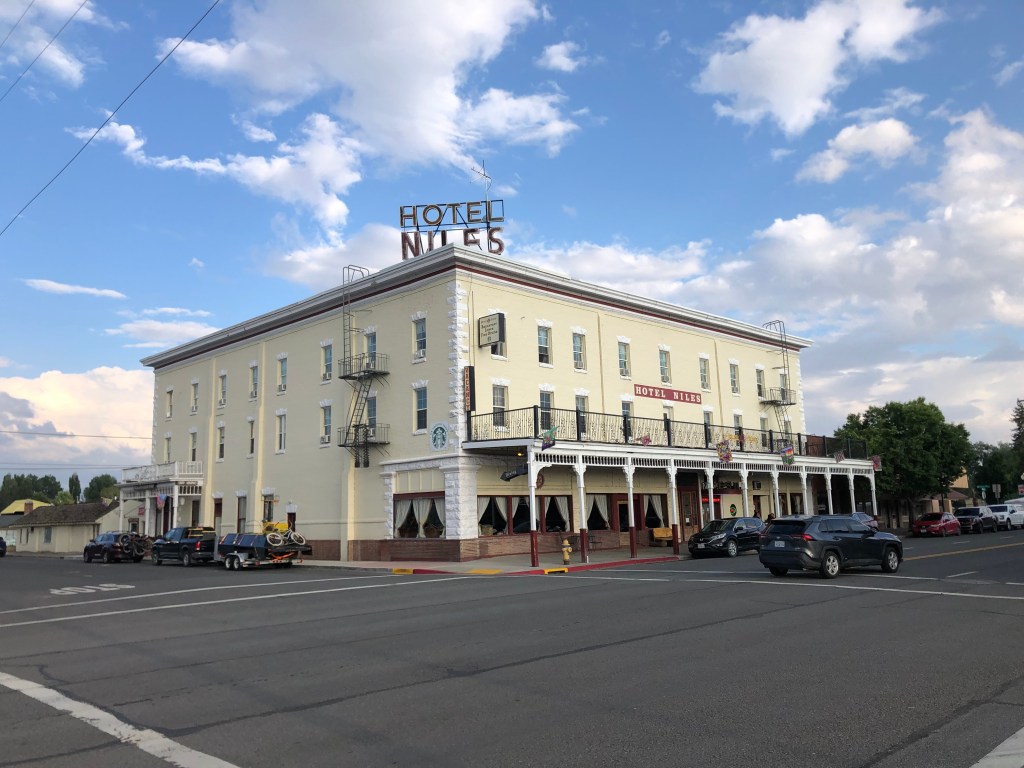
I’m holing up for the night in the Hotel Niles, a historic hotel that was built before the First World War. The hotel remains authentic, by which I mean the floors creak and the widows rattle. But it’s a fitting place to spend the night on this day of historical exploration.

This image has an empty alt attribute; its file name is hotel-niles.jpg
I’m on the second floor of the left side.

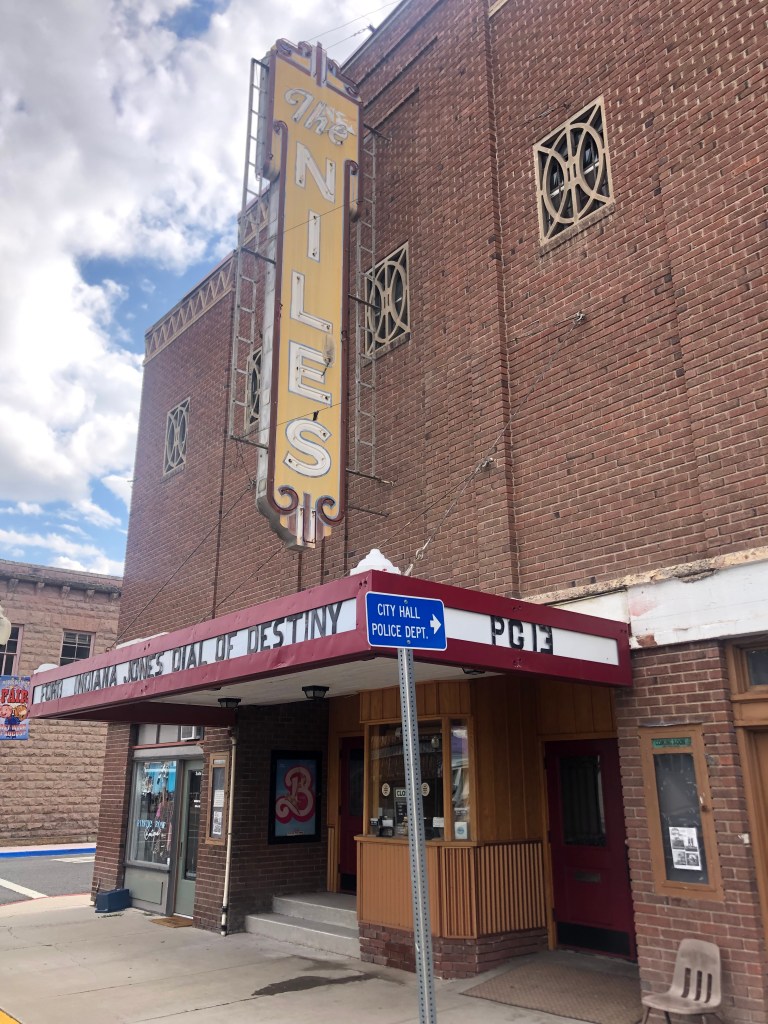
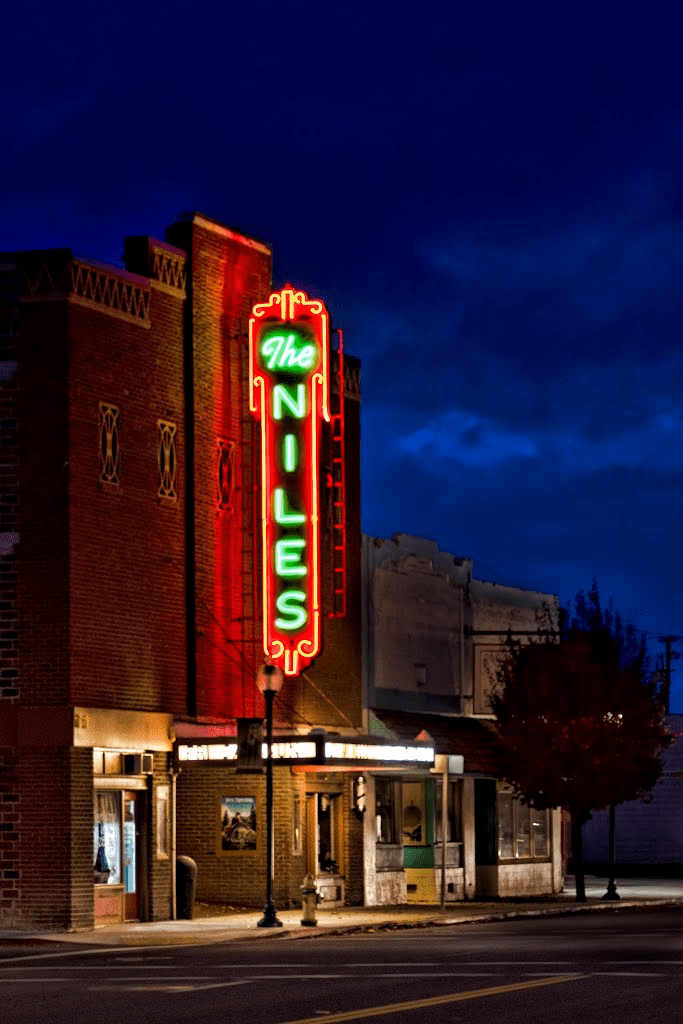
Incidentally, the hotel sits across the street from the Niles Theater. Built in 1937, it dates back to the era of art deco movie palaces. The neon itself is a sight to behold. An unlike many historic theaters, this one still shows first-run movies. (Next week it starts showing the Barbie movie. I’m not making this up.)

Note the telltale pink “B” on the lobby card.
(Night photo c/o the theater’s website.)

What are the odds that two buildings in such close proximity (the hotel and the theater) would both be named “Niles?” Well, both were built by local businessman J.E. Niles. He was 85 years old when the theater first opened.

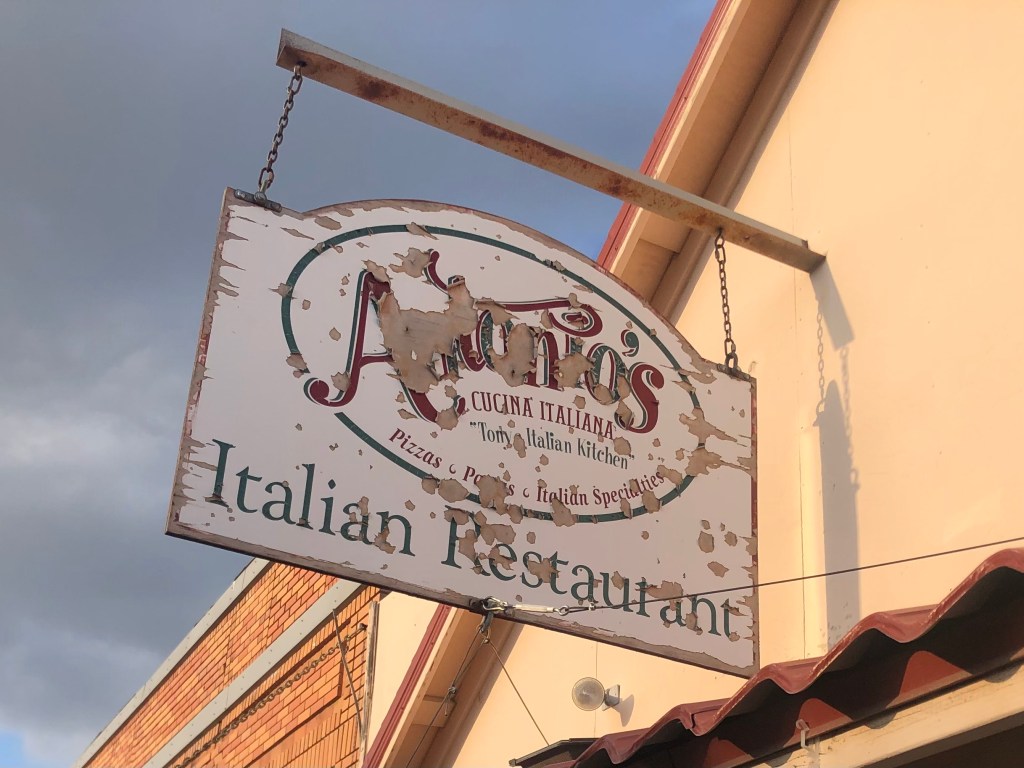
I had dinner down the block at a place called Antonio’s. Sadly I can’t recommend it. Even the BOTD is not worth mentioning.

You’d think I would have taken a hint from the condition of the sign.

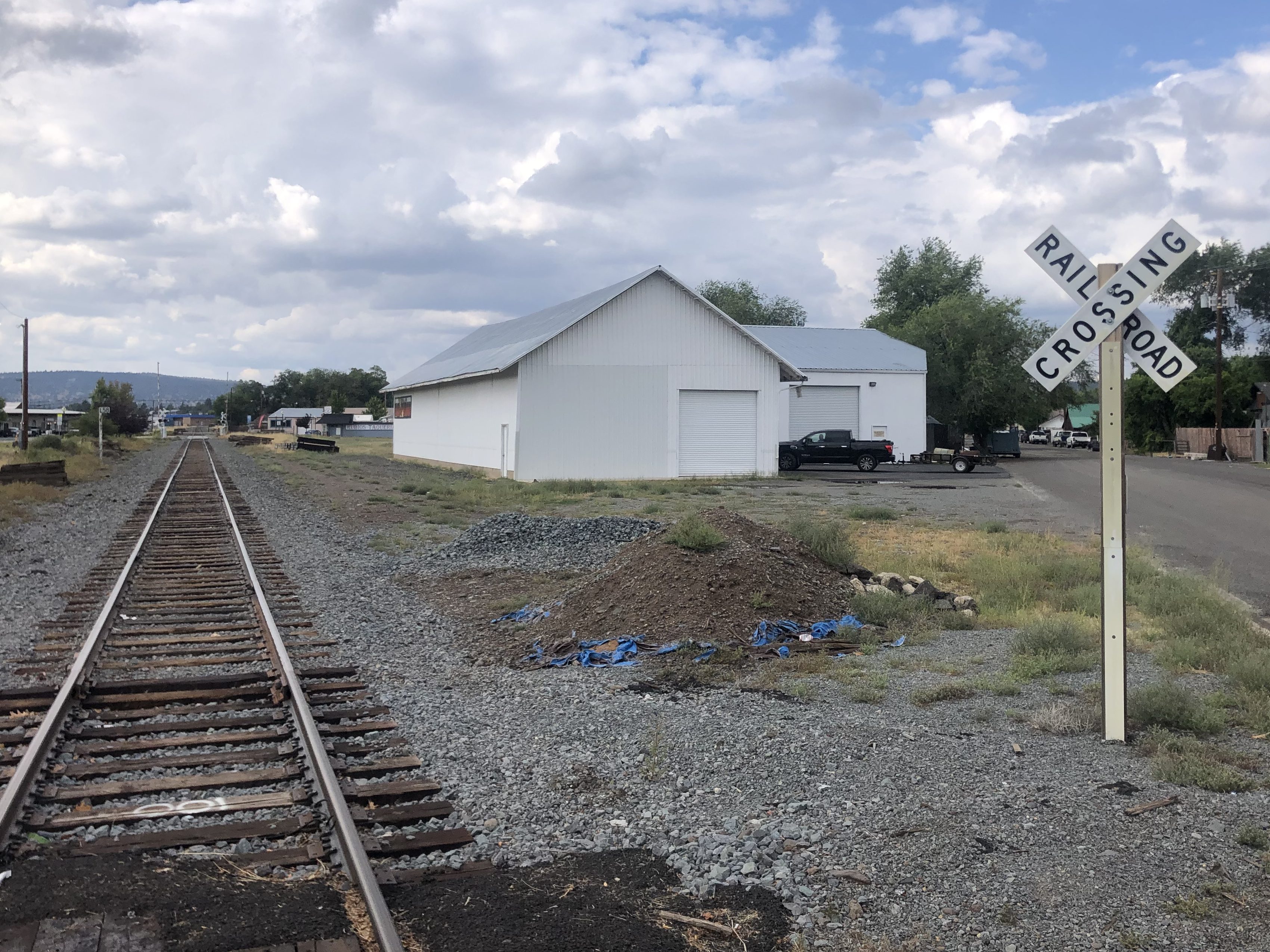
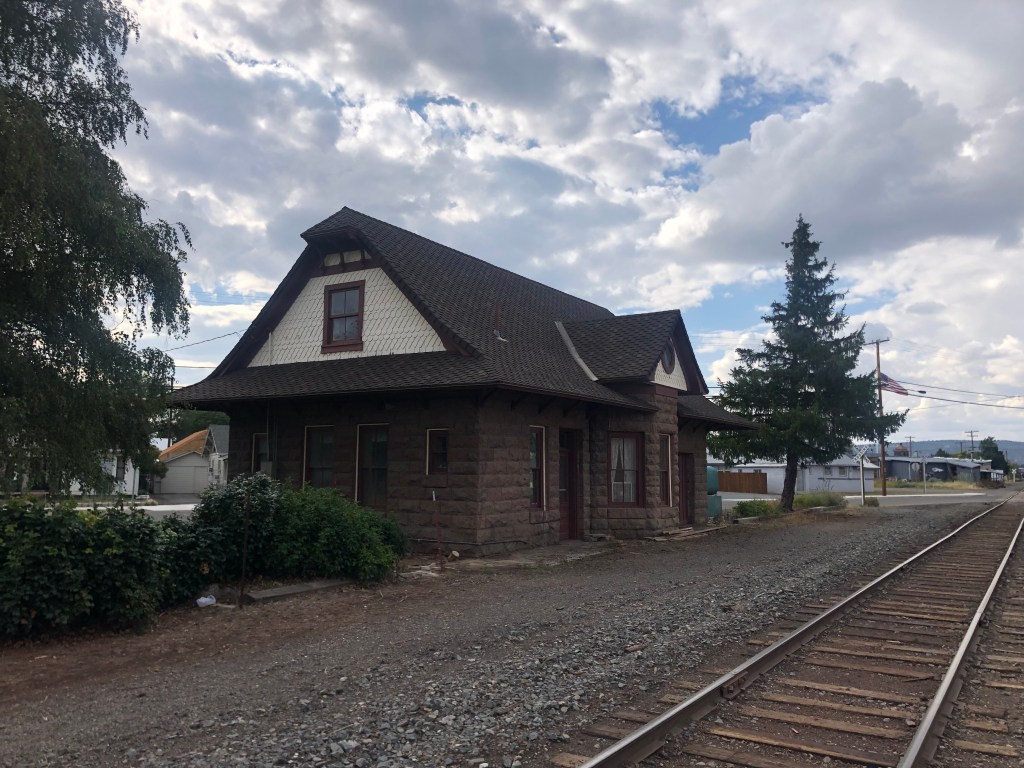
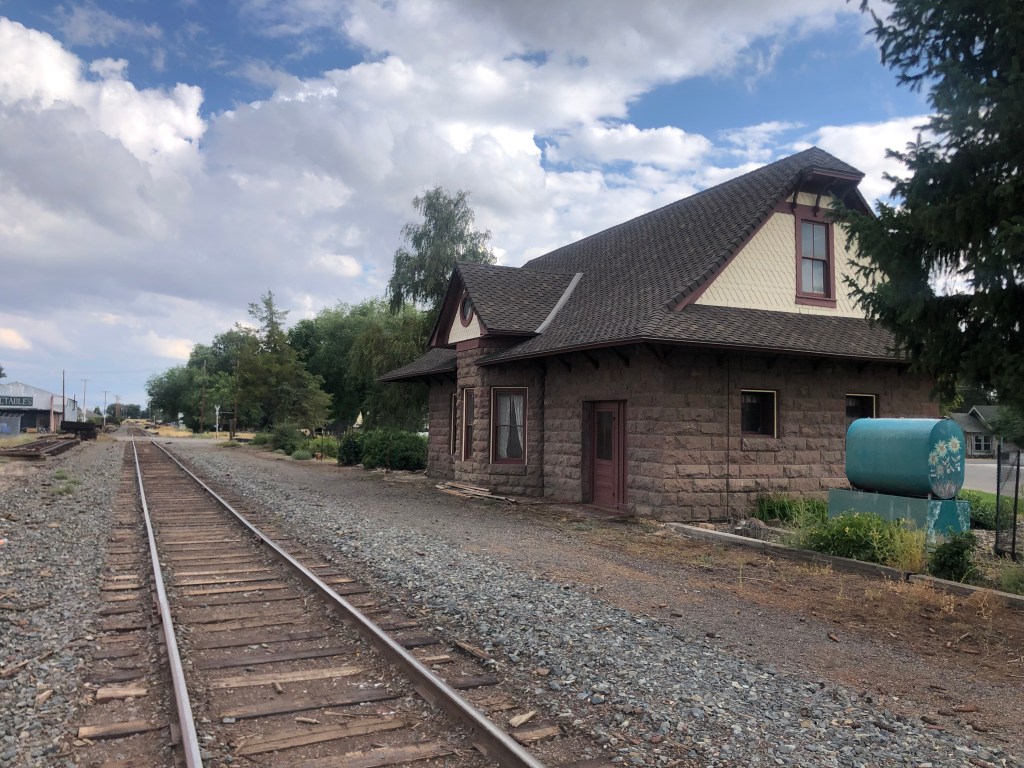
Tomorrow I’m making the hour’s drive up to Lakeview to see the northern terminus of the NCO Railway. Then it’s off to Eagleville!