I think you’ll agree that the 1950s were the heyday for Los Angeles. This is partly because Los Angeles is defined by its car culture and its movie industry, and the 1950s were arguably a golden age for both of those themes. What’s more, LA was still a somewhat functional metropolitan area in the 1950s, before gridlocked freeways, ubiquitous homeless encampments, and persistent air pollution threatened the region’s liveability.
The 1950s also brought some iconic architecture to Los Angeles: The Wayfarers Chapel (designed by Lloyd Wright, and located just a couple of miles from my house), CBS Television City, Norm’s Coffee House, the Capitol Records building — a number of uniquely LA buildings were constructed during this period. But sometimes forgotten are the whimsical and wonderful creations of Russell C. Wendell. It was he who opened a chain of 10 “Big Donut Drive-In” restaurants around the city in the 1950s.
Wendell oversaw his donut empire into the 1970s, when he finally decided to sell off the individual restaurants and instead focus on his “Pup ‘N’ Taco” chain. (Taco Bell bought up those restaurants in the 1980s.)
So, what happened to the ten “Big Donut Drive-In” restaurants? Five of them were razed (insert “raised donut” joke here), and one of them was unceremoniously converted into a bagel shop. But four of the original Big Donut Drive Ins remain, still serving donuts to a loyal clientele. My mission today was to visit those remaining restaurants, and sample their wares. (The things I do for my readership…)
First up was “Donut King II,” in Gardena. This was the third of the original Big Donut Drive-Ins. It’s changed names and owners a few times, finally ending up with the rather humorless and unfriendly woman I met today.
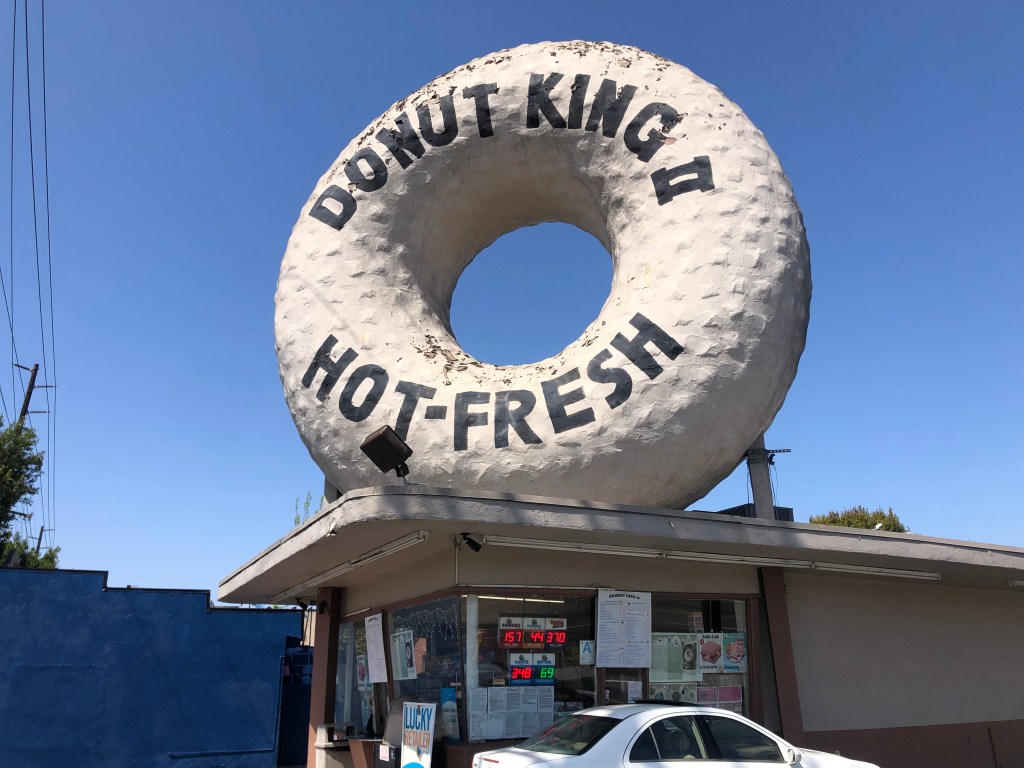
Now, I figured since I was visiting each of these donut shops, it would make sense to sample a donut from each one. But what kind of donut to purchase? I decided to let the owner (or manager) of each place make the choice. So I approached the scowling woman behind the window, who looked like she was tired of being interrupted by pesky customers. I asked her a simple question: Which is the best kind of donut that you sell? “We sell lots of different kinds of donuts. They’re all on the menu in front of you. Pick one.” I wasn’t going to be daunted that easily. “But which one is your favorite?,” I persisted, turning on the Boilard charm. “The glazed,” she immediately responded, most likely because she had a surfeit of them on the tray beside her. So glazed it was.
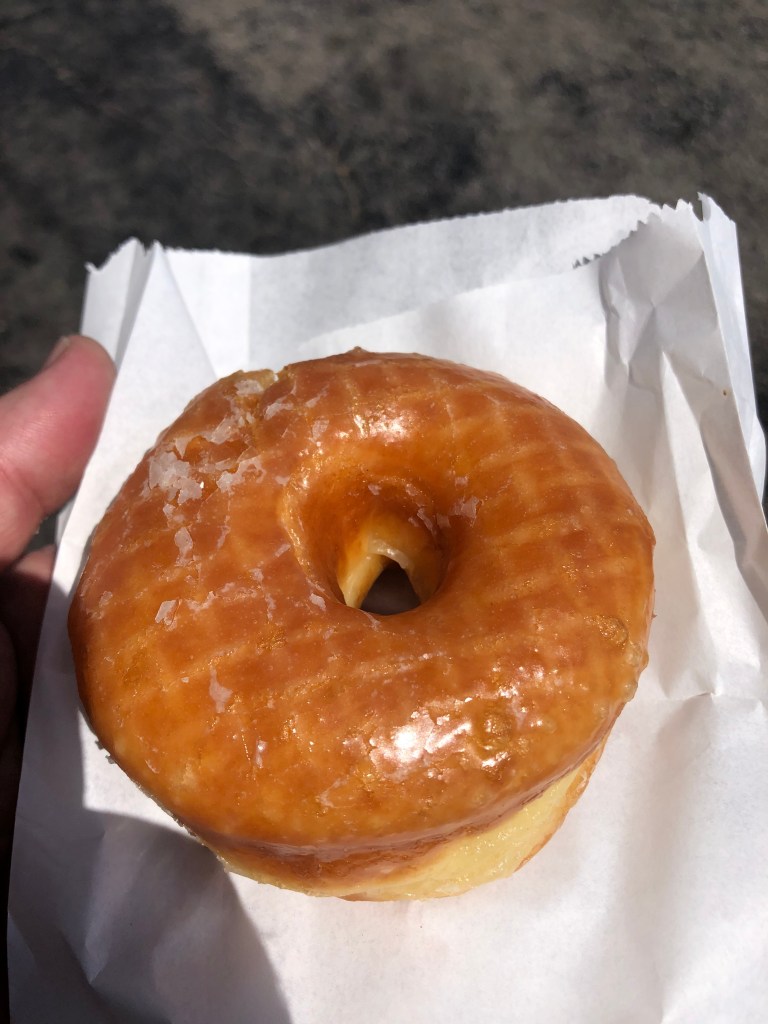
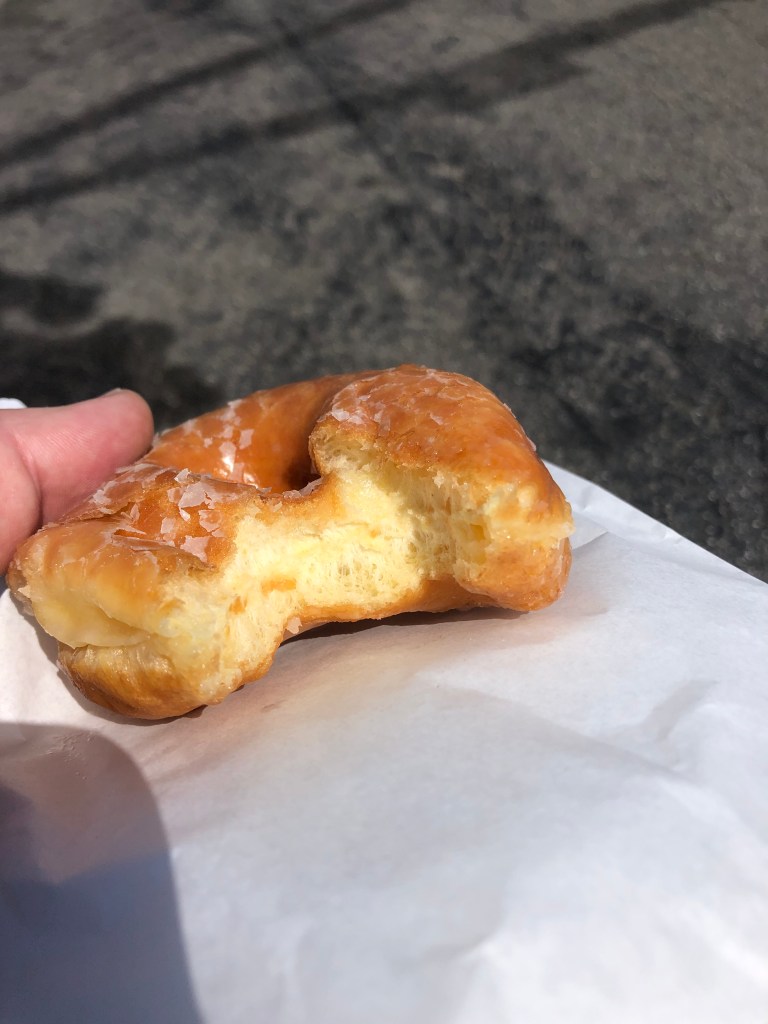
So let’s get down to brass tacks. This was a good donut. Not great, but good. The grid pattern (presumably from the cooling rack) gave the illusion of texture, and it was fried to a nice, golden brown. The glaze might have been a little thick, though, and the inside was slightly underdone. Overall, I give it a 7 out of 10.
Having been fortified by fried, leavened dough, I moved on to Dale’s Donuts in Compton. There was that unmistakable, familiar, 32-foot-donut again, signalling that this was one of the original Big Donut Drive-Ins.
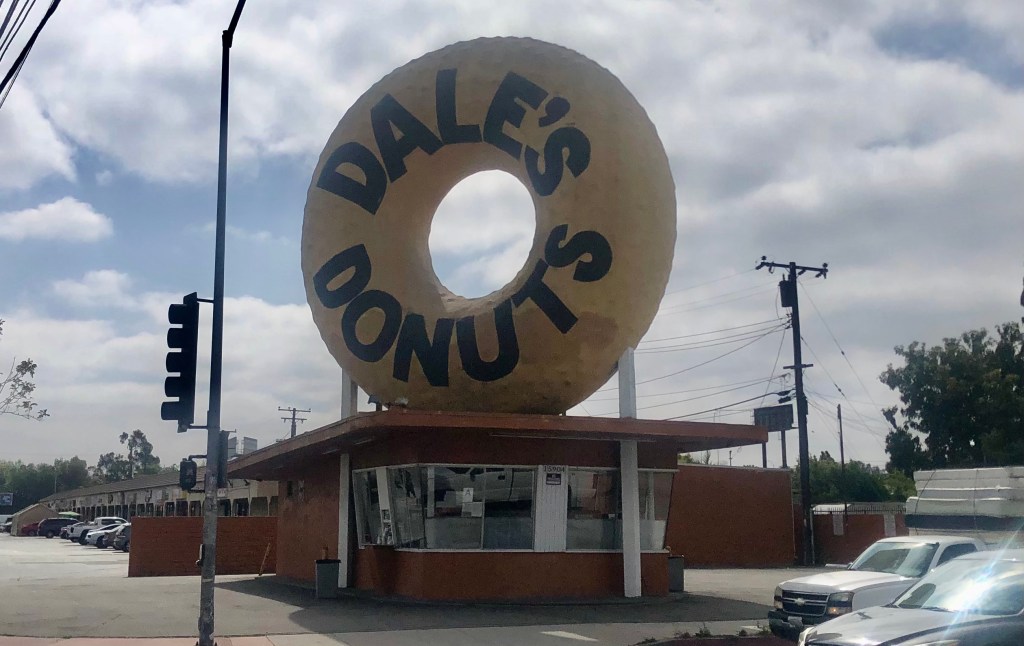
Here, the owner was a little more chatty, sharing that he bought the place 29 years ago. I asked if he bought it from Mr. Wendell himself. “No, just from my neighbors.” I asked him my usual question: Which is your best donut? He frowned, as though he’d never thought to reflect on the quality of his wares over the past 29 years. Finally, with a shrug, he said “Well, the glazed is pretty good.” So I acquired my second glazed donut of the morning.
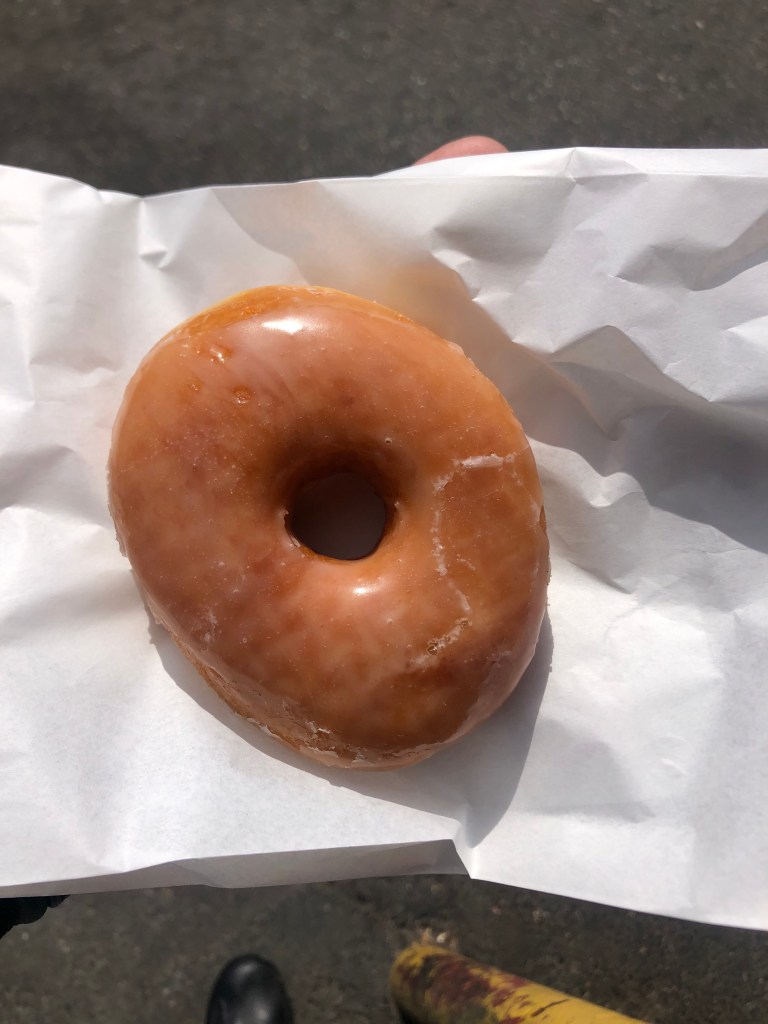
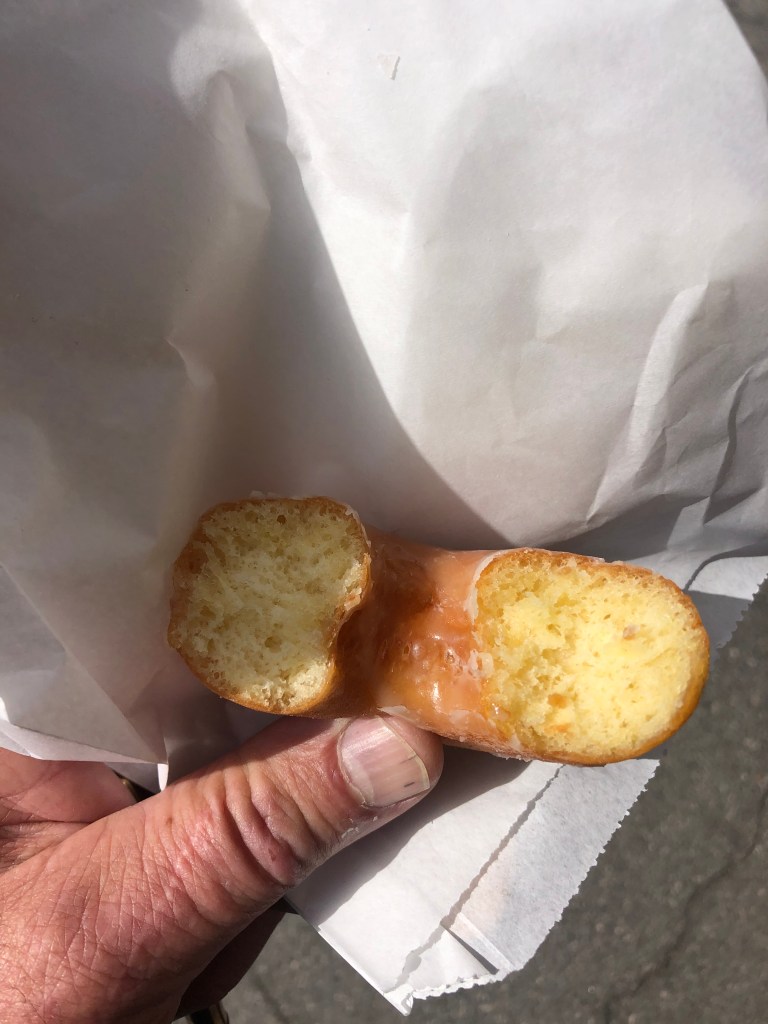
Now this glazed donut was clearly superior to the one from Donut King II. This donut had a much lighter glaze that was nicely bonded to the donut ring. The glaze was so delicate that I didn’t even get sticky fingers. The body of the donut was light, almost fluffy. I’d say it was fried perfectly. I give this a 9 out of 10.
I was beginning to feel a sugar buzz, and raced up to Randy’s Donuts in Inglewood for my next fix.
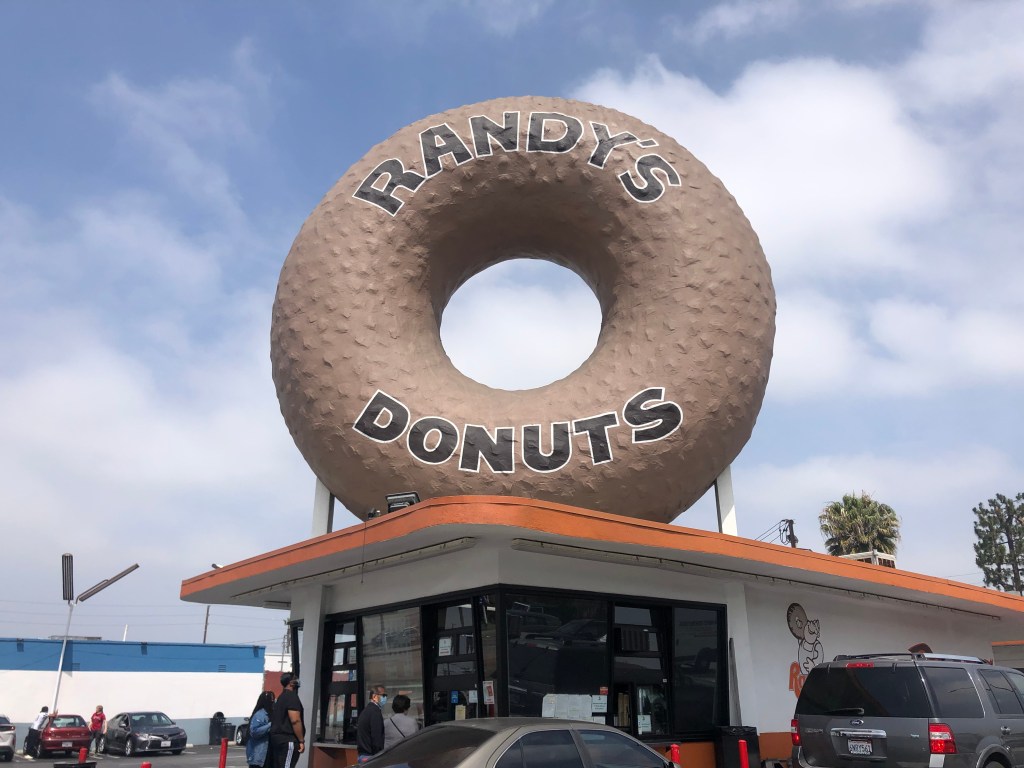
Constructed in 1953, this was the second of Wendell’s original buildings. And it’s the one that seems to get all the attention, due to its prime real estate. It’s located near LAX, and you probably saw it while gassing up your rental car. The place has been called Randy’s Donuts since Wendell sold it in 1976. The iconic sign has appeared in numerous movies, including Mars Attacks!, Earth Girls Are Easy, Coming To America, Crocodile Dundee in LA, and Iron Man 2. This place is clearly the Grand Dame of the Big Donut Drive-Ins. It is the best maintained, has the largest parking lot, and had a line of people standing six feet apart, waiting for their turn to get a ring of fried dough.
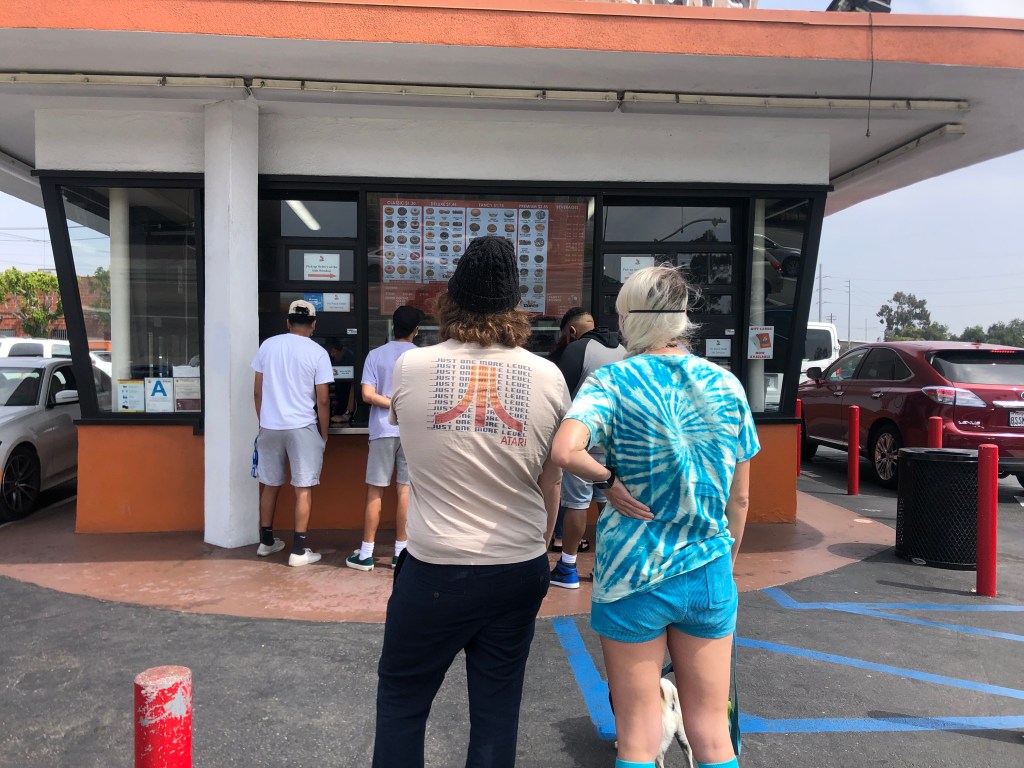
When I got to the front of the line, I asked the kid behind the counter which was their best donut. He smiled broadly: “That’s got to be the mango. We just invented it two days ago, and it’s our best seller!” Now this is the enthusiasm I was looking for. Hook me up, said I. And behold — this was no ordinary donut. In fact, it was more like a pastry (and with a $2.75 price to match).
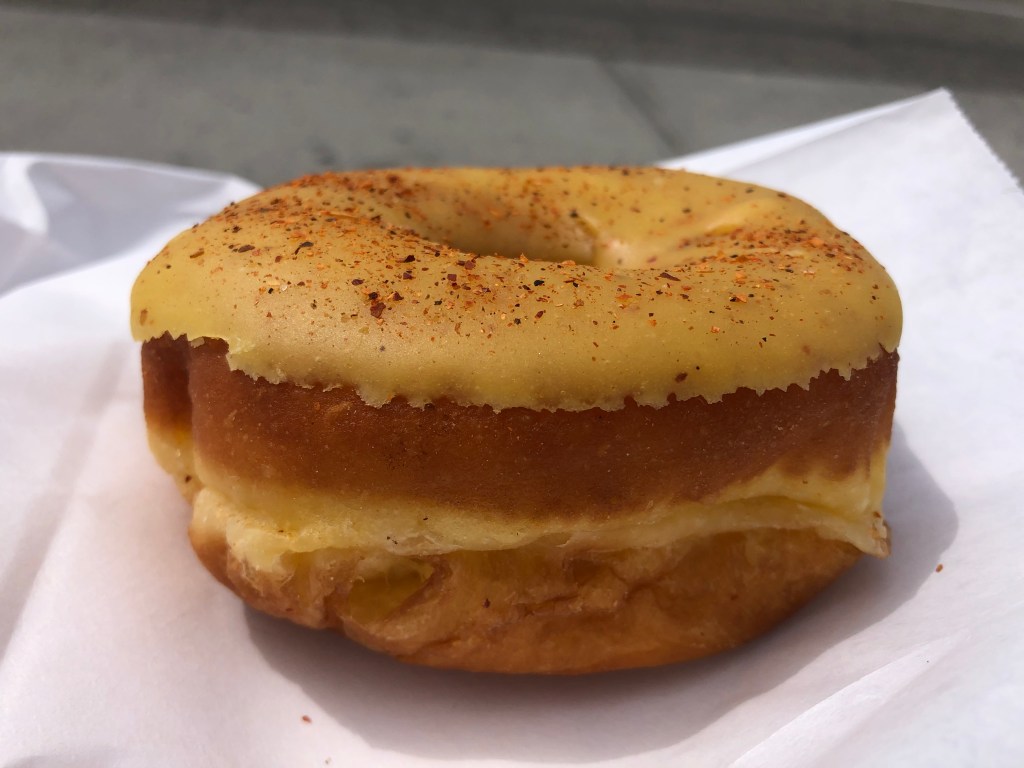
The first thing you notice biting into this “donut” is the heavy mango glaze. It cracked into pieces as I took the first bite, showering my lap with mango-icing shards. The next thing you notice is an overly-sweet, gooey mango filling, like the stuff they used to put in Hostess Pies when I was a lad. The third thing you notice is that the overall effect is rich and flavorful and robust; you’re overwhelmed with flavor and mouthfeel.
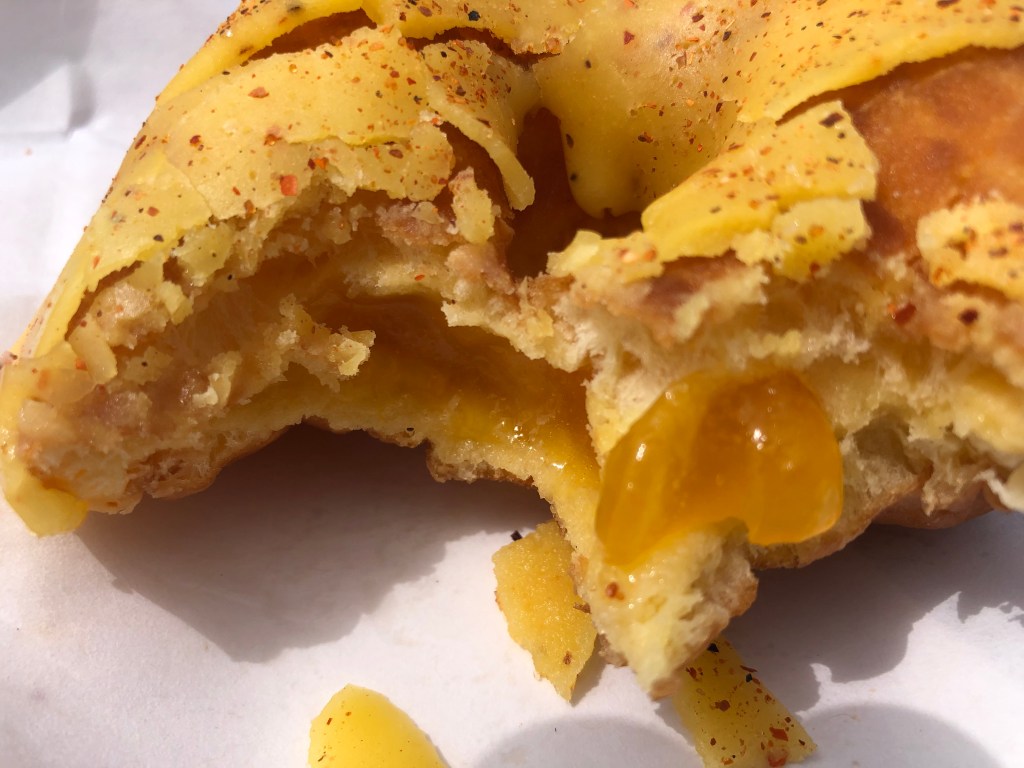
Then, a moment later, you feel sick. I suppose I shouldn’t have eaten the whole thing, especially after already eating two glazed donuts just a short time earlier. But this thing is just too much. It’s too filling, and too gooey, and too sweet. And it’s two points (out of 10).
But I still had one more of the extant Big Donut Drive-Ins to visit: Kindle’s Do-nuts (note the hyphen) is the first of the 10 Big Donut Drive-Ins constructed by Wendell. It dates back to 1950, and, like most 71-year-olds, is showing some battle scars.
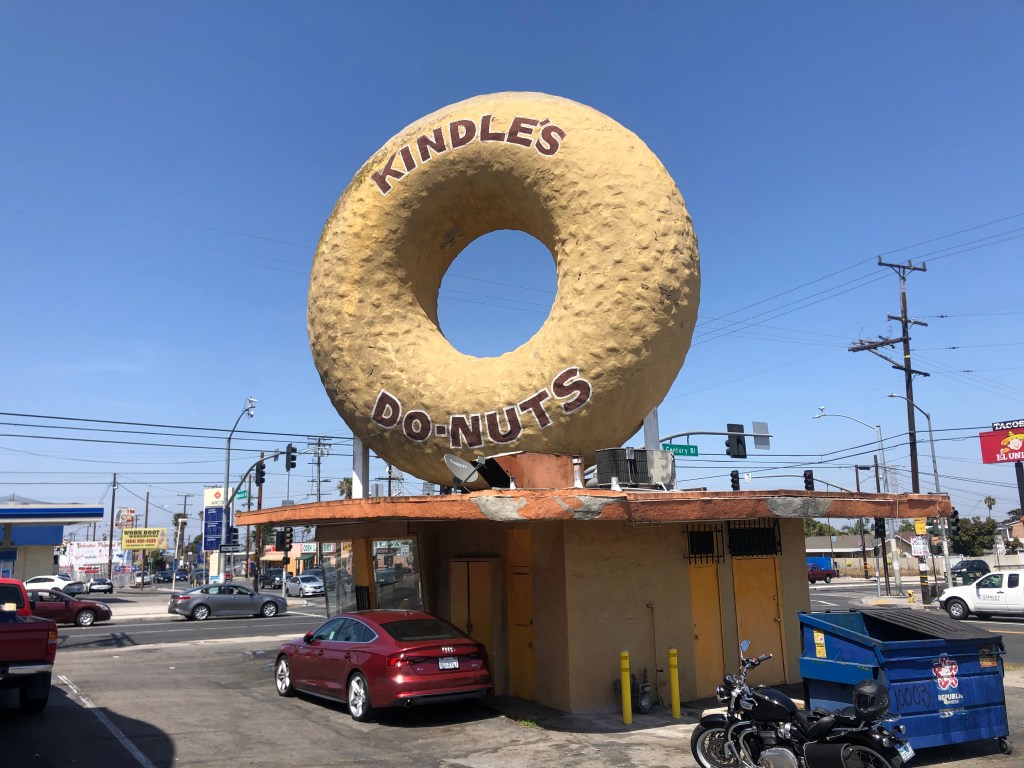
At Kindle’s I was again served by the establishment’s owner, who told me he’s owned the place for 30 years. “And which donut is the best?”, I asked. “Glazed. Hands down.” Now, I’m starting to think that glazed must be the wagyu beef of donuts, like you’re a fool to pick anything else. “OK, give me a glazed, Mac,” I said, trying to sound like an in-the-know donut aficionado.
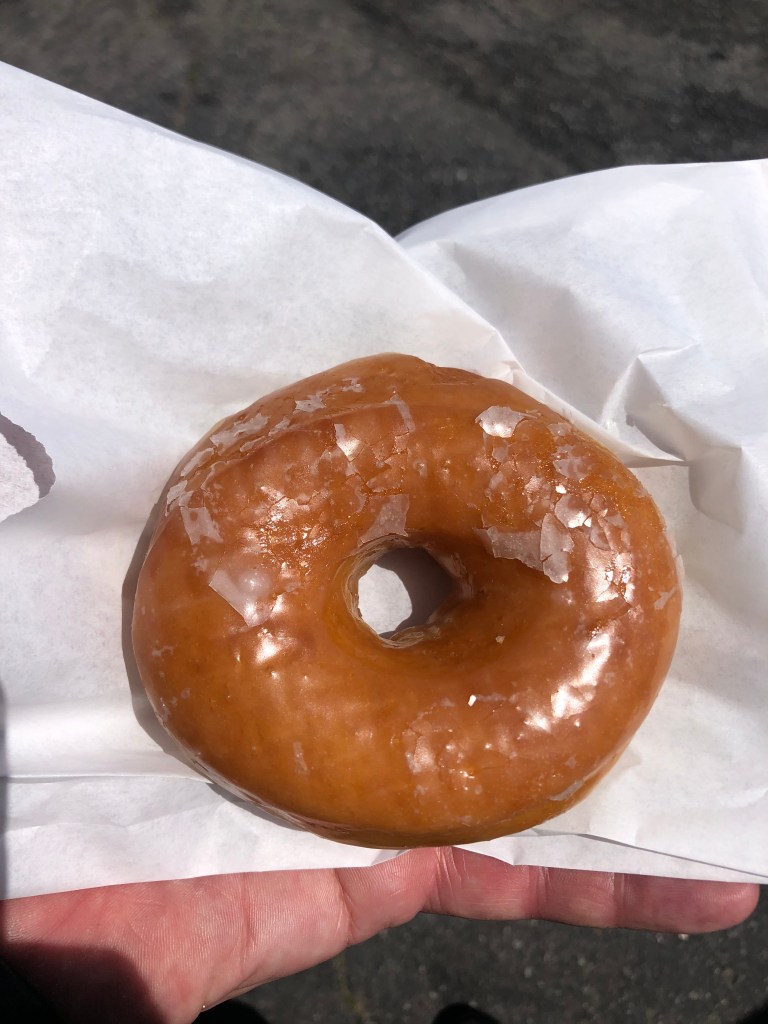
With two other glazed donuts (literally) under my belt, I felt qualified to critique this specimen. It wasn’t stellar. The glaze was applied a little unevenly, and it was a little too sweet. The ring itself seemed a bit stale, though the flavor was solid. I’ll give it a 5. Actually, let’s make it six, because my donut fatigue might be unnaturally lowering the scores.
So, the winner is Dale’s Donuts, with a score of 9 out of ten for their glazed donut. But more importantly, I have to commend the owners of all four establishments for retaining those iconic, 32-foot donuts. They’re preserving a little slice of LA history, and even architecturally tying together some disparate corners of the region. I recommend you check one or all of them out next time you’re in the area!
BONUS MATERIAL
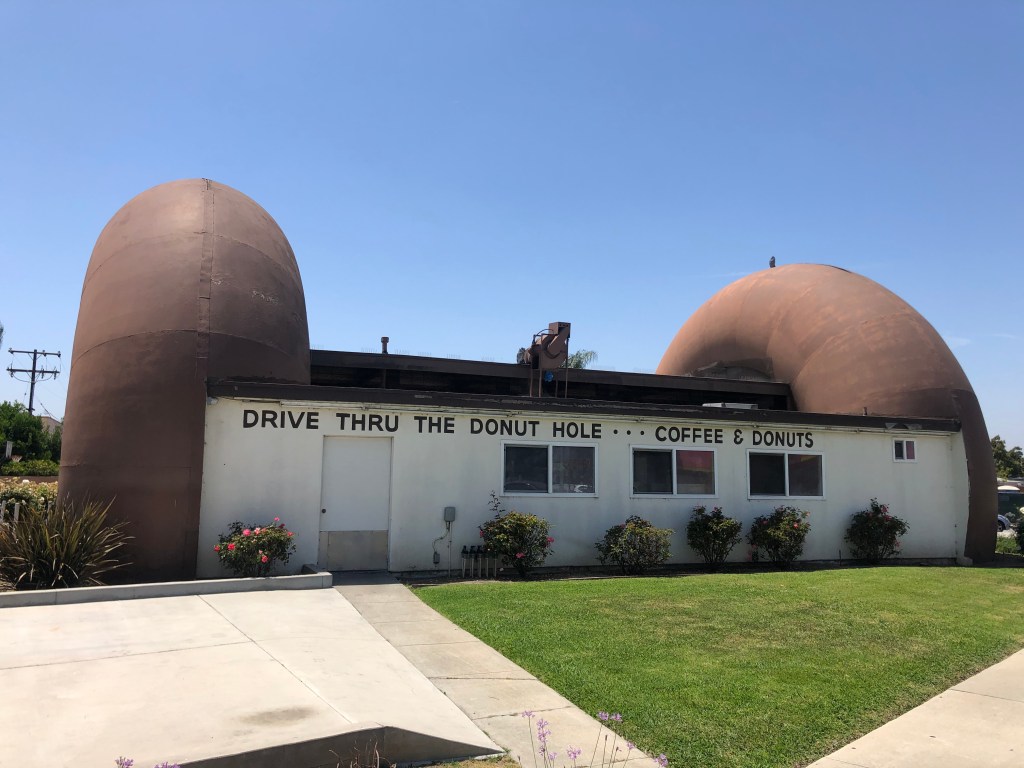
After I’d visited the four remaining Big Donut Drive Ins, there were still a few fat cells in my body that had not yet exploded from an infusion of donut calories. So to remedy this, I headed out to La Puente to visit a place called The Donut Hole. The Donut Hole is not one of Wendell’s original Big Donut Drive Ins, but it does have a giant donut incorporated into the architecture. In fact, it has two giant donuts. Behold:
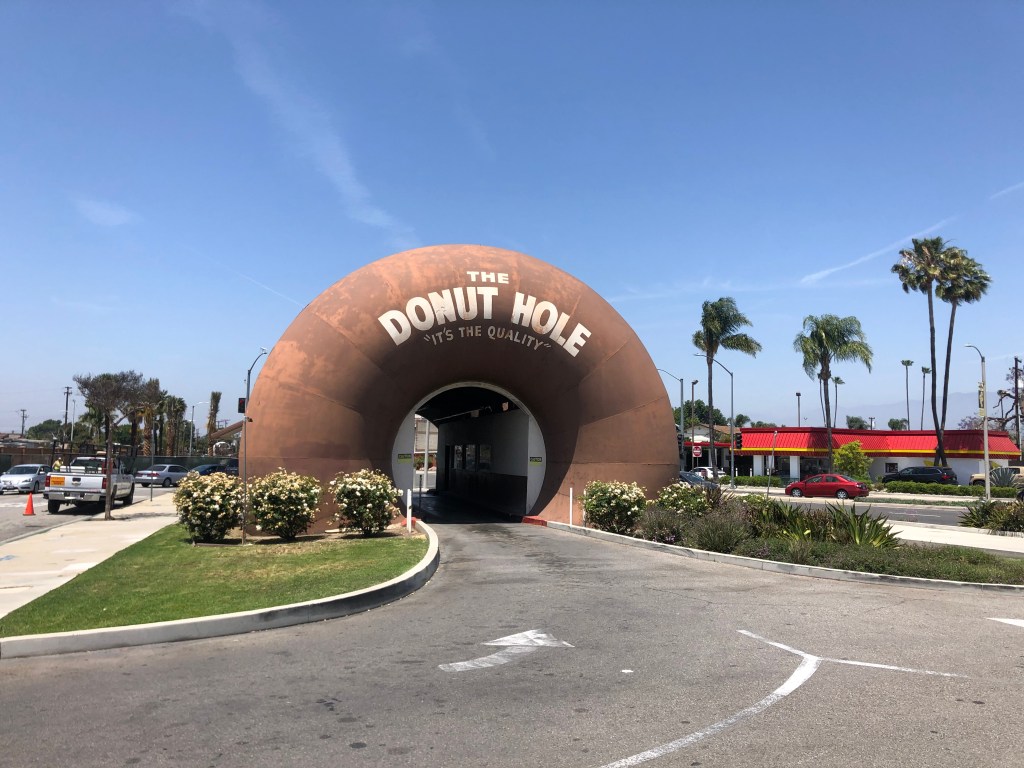
Unlike the Big Donut Drive Ins, this donut place doesn’t have a walk-up window. So I rode my motorcycle through one of the giant donuts. (Has that sentence ever been written before?) And I asked the young lady: Which is the best donut? “They’re all the best!” she said, cheerily. OK, which is your favorite?, I asked. “That would be the fresh strawberry donut. I love it!” Sold, said I.
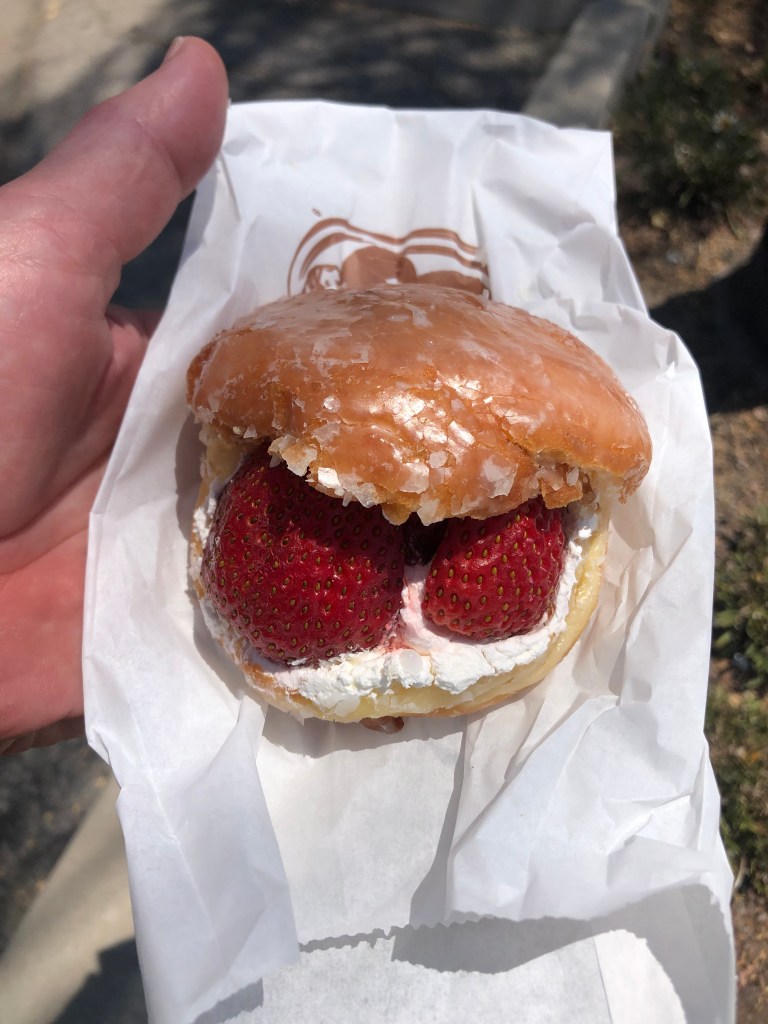
Yikes. Now, on the plus said, it really does have whole, fresh strawberries. They’re nestled in fresh whipped cream. The overall effect is sort of like strawberry shortcake, but instead of shortcake, there’s a cloyingly sweet donut split like a hamburger bun. The first bite was wonderful. The sweetness of the donut and the whipped cream is balanced (a bit) with the (relative) tang of the strawberries. And the different textures worked together as well. The whole ensemble tasted fresh and flavorful.
And I learned my lesson after the mango disaster. I forced myself not to eat the whole thing. Just two bites — that’s all I had.
But next time, I’m going to The Donut Hole first, on an empty stomach.

 Chasing Phantoms