bridges · California history · cemeteries · Road trips · trains

The Placerville Chronicles–Day 1

This morning I picked up my rental car in Placerville, California, and headed in the direction of Placerville, Colorado–some 900 miles to the east. (For those coming late to this story, the details are here.)

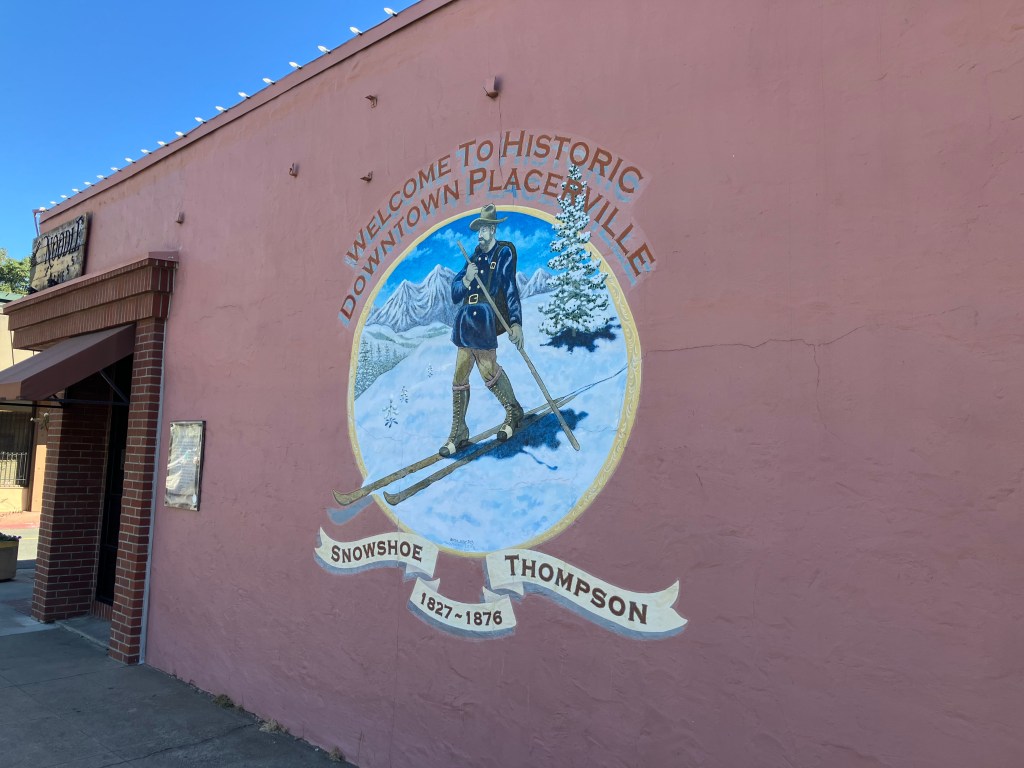
As I left Placerville I passed this mural that honors John Albert “Snowshoe” Thompson, a Norwegian immigrant who settled in Placerville in the mid 19th century. Every winter for 20 years (1856-1876) he made a twice-monthly trip over the Sierra Nevada range to deliver the mail. He made the 90-mile trek on skis (despite his “Snowshoe” nickname) from Placerville to settlements in Nevada.
Unlike Snowshoe Thompson, I chose an easier passage over the mountain, driving a Nissan on US 50 over Echo Summit. I ended up in a little tourist trap of a town called Genoa, NV (pop: 1,300). Genoa brags that it’s the oldest settlement in Nevada…but I was struck by something that’s more relevant to this journey: Genoa was the eastern terminus of Snowshoe Thompson’s mail delivery route. And they have a statue to commemorate the fact.
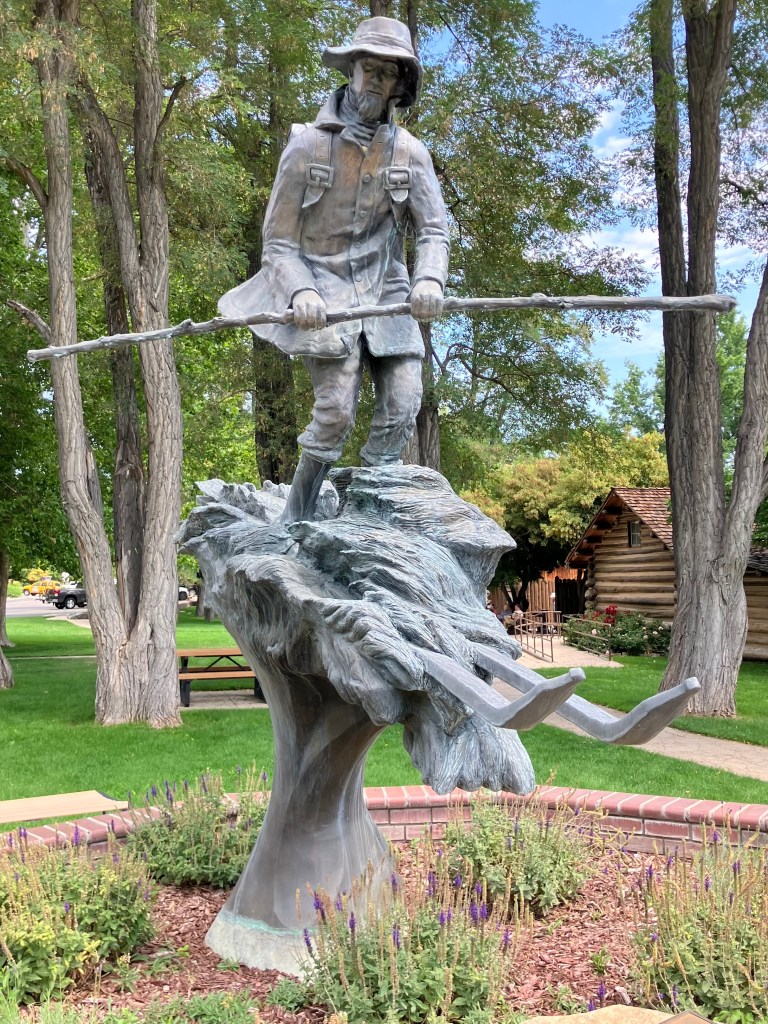
Snowshoe Thompson, doing his Gorton’s Fisherman impression.

At some point Snowshoe Thompson moved his residence from Placerville to Genoa. In fact, Genoa became his final resting place.
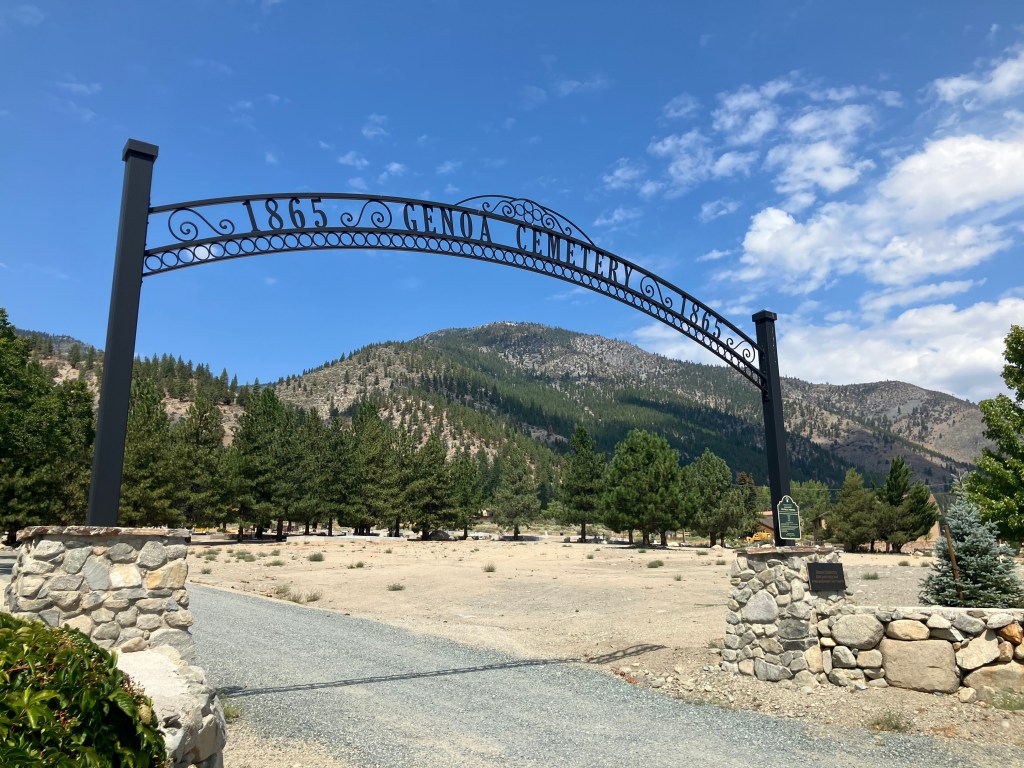
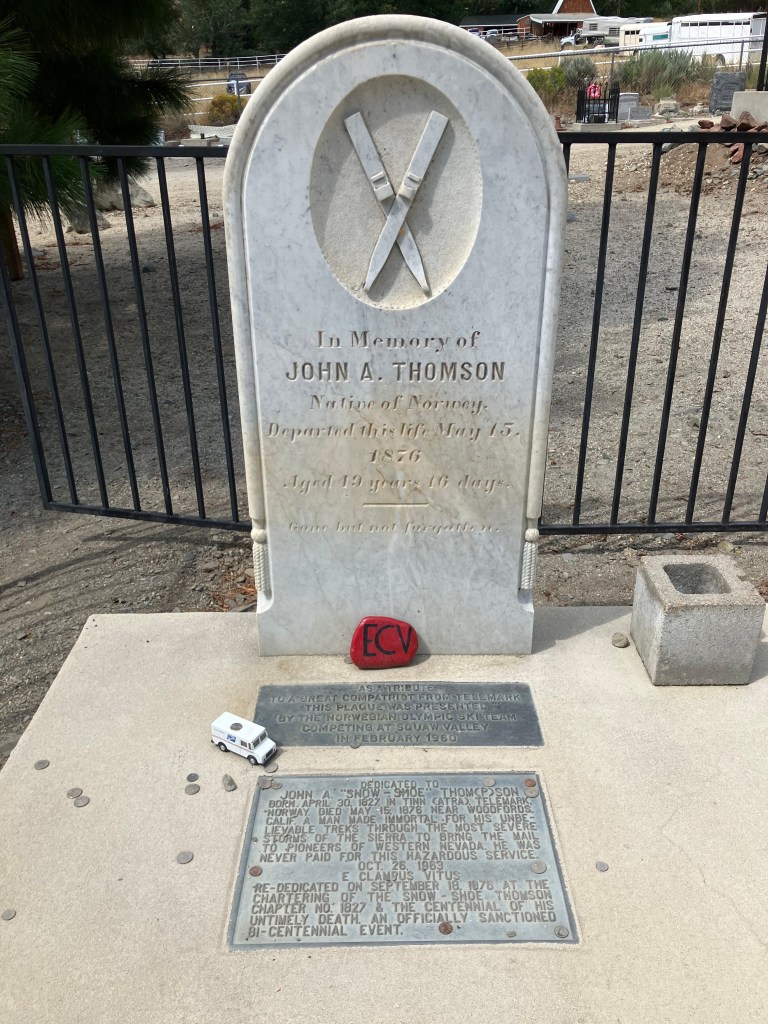
The Postman Resteth.
Those pruning shears on the face of his tombstone presumably are meant to be skis. But who knows, given the misspelling of his last name.

Having appropriately honored this (quasi-)native son of Placerville, CA, it was time to continue my journey toward Placerville, CO. To do this, I passed through the “independent and sovereign nation” of Molossia.

What, you’ve never heard of Molossia? Neither had I. But it seems that there are about 11 acres of land in the town of Dayton, Nevada, whose owner (Kevin Baugh) has declared to be a sovereign nation. Molossia claims to have its own currency, postal service, navy, railroad, and various other trappings of a proper nation. President Baugh does have to pay property taxes to the county assessor, but he calls this “foreign aid.” Molassia’s back story is actually quite interesting and entertaining; if you’re interested, you should check their Wikipedia entry or their actual website.

The president of Molossia is very clear that you need to arrange your visit ahead of time. So a few weeks I emailed His Excellency, and got this response:

Steve, Greetings, and thank you for your interest in visiting our nation as a part of your travel blog. It is an honor.

I regret that we will be unable to host your visit to our nation on that date. … There are other events and activities taking place in Molossia on those dates, thus we will not be able to welcome you to our nation. My apologies.  Hopefully you will make it back out this way on a future tour date and we will be more than happy to welcome you to Molossia then.

Regards,

His Excellency President Kevin Baugh
Republic of Molossia

Undeterred, when I came to Dayton I drove up to the border of Molossia. Conveniently, there was an open parking spot.
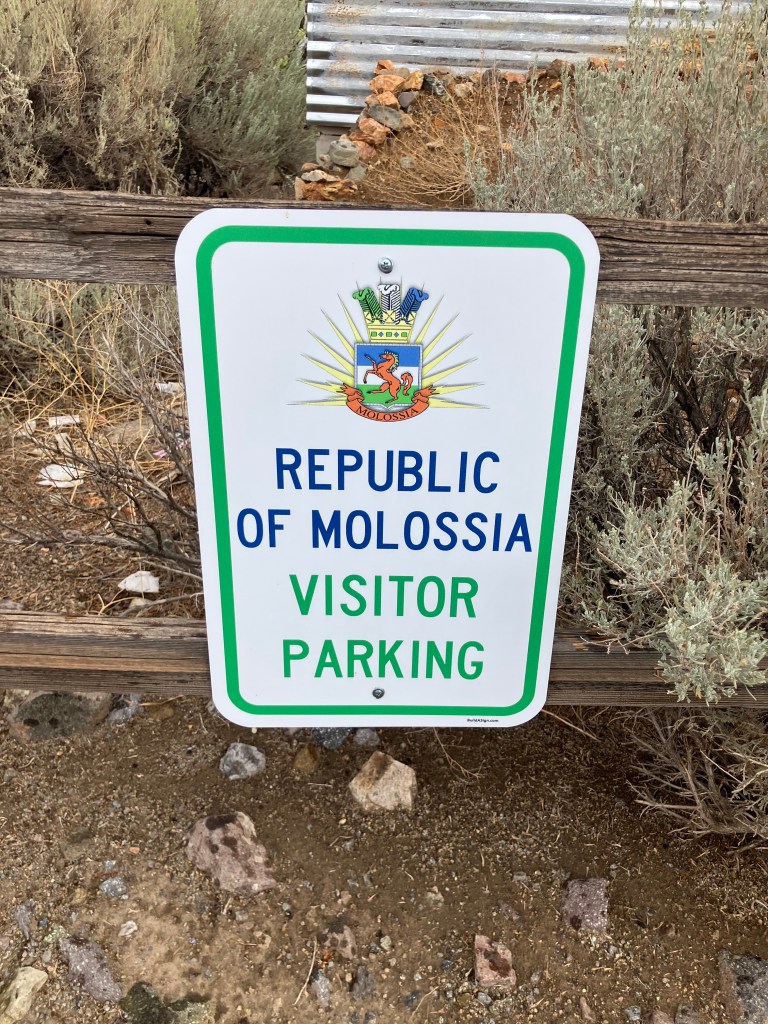
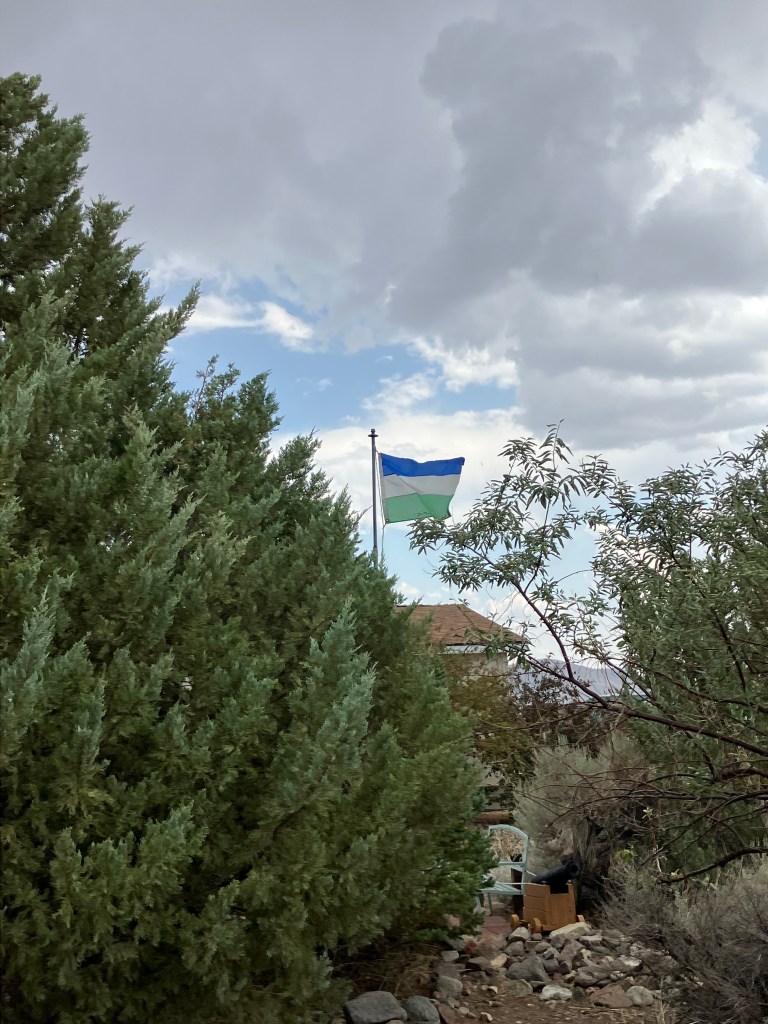
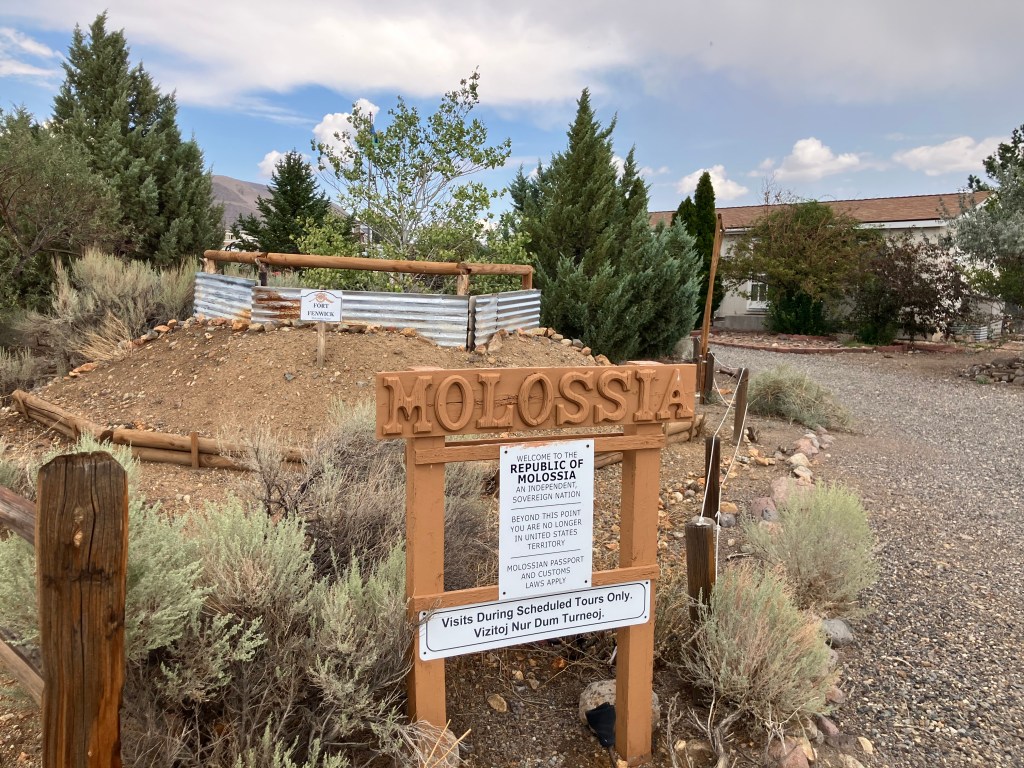
The Molossian flag was flying proudly, and a sign made clear that I was indeed about to leave the United States.
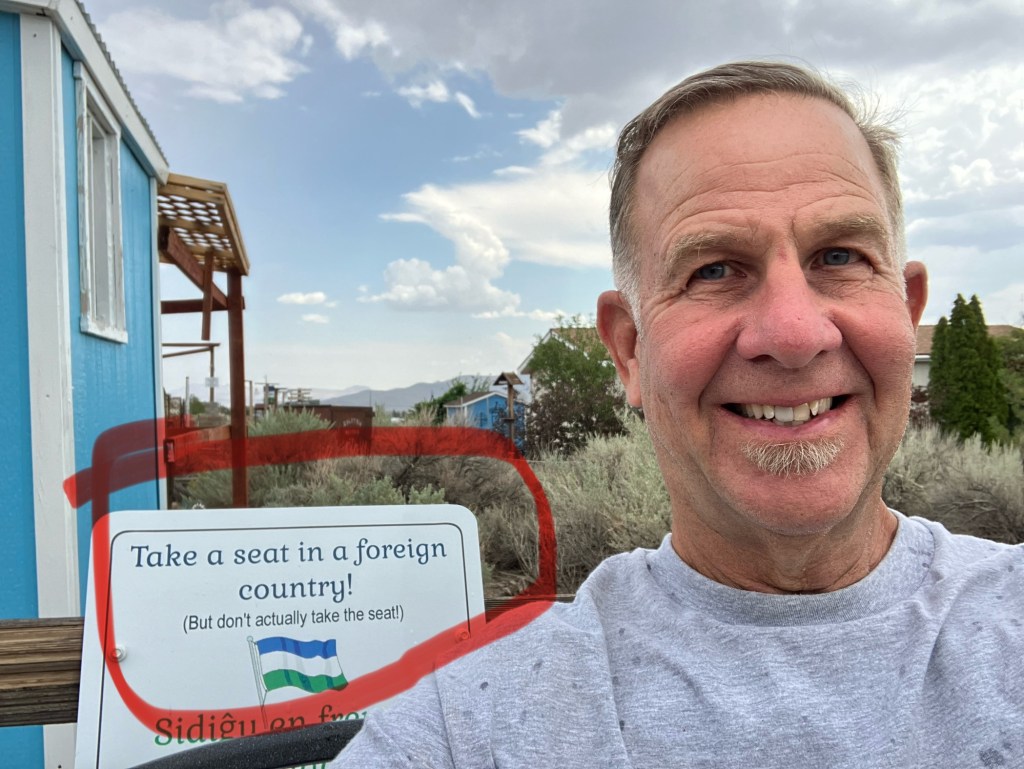
A sign next to a bench even invited me to “take a seat in a foreign country.”
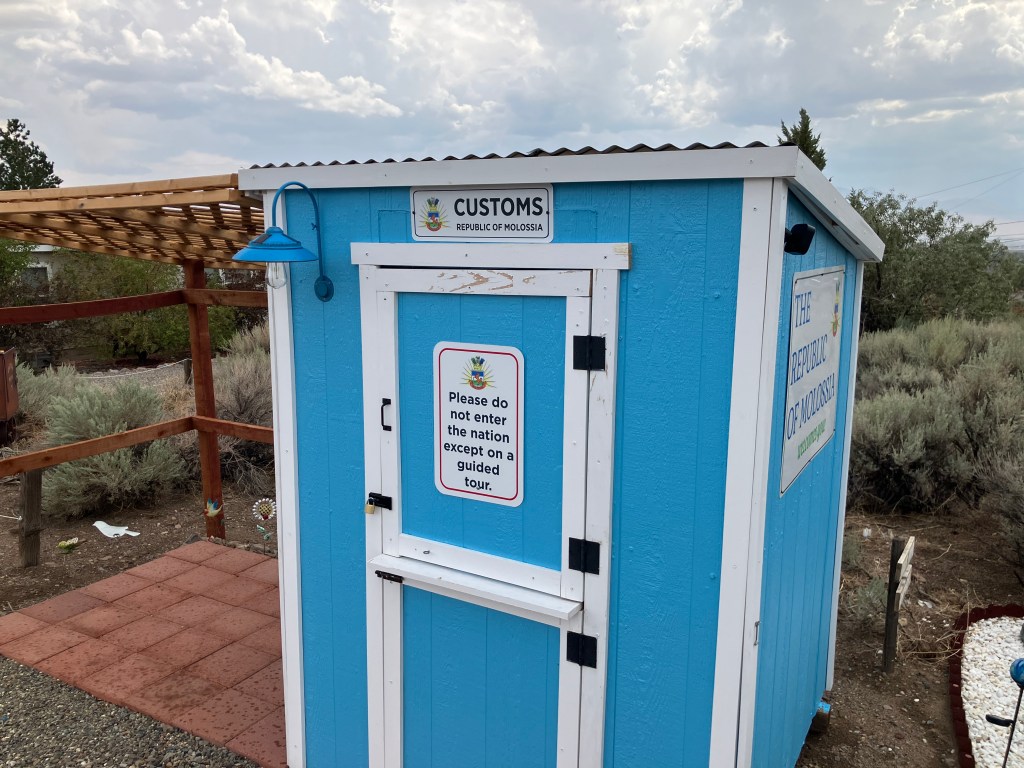
Despite my inability to secure a reservation, I decided to approach the customs building. Alas, it was locked up.
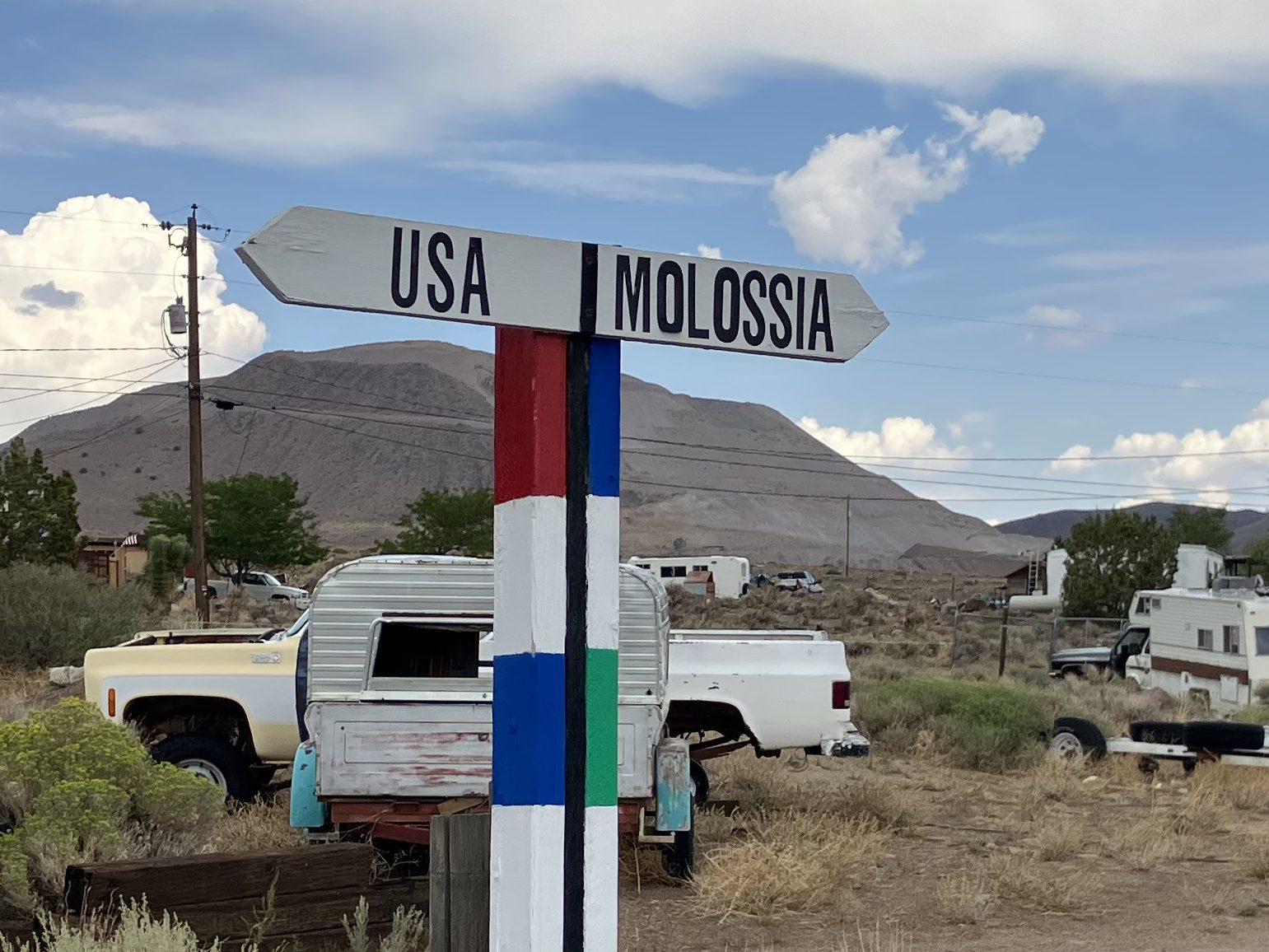
So I had no choice but to follow the signs back to the United States.
I plan to try to get on Molossia’s official tour list for 2026. When I have a date, I will announce it on this blog in case any of my loyal readers want to join my delegation. But for now, I had to bid a sad farewell to Molossia.

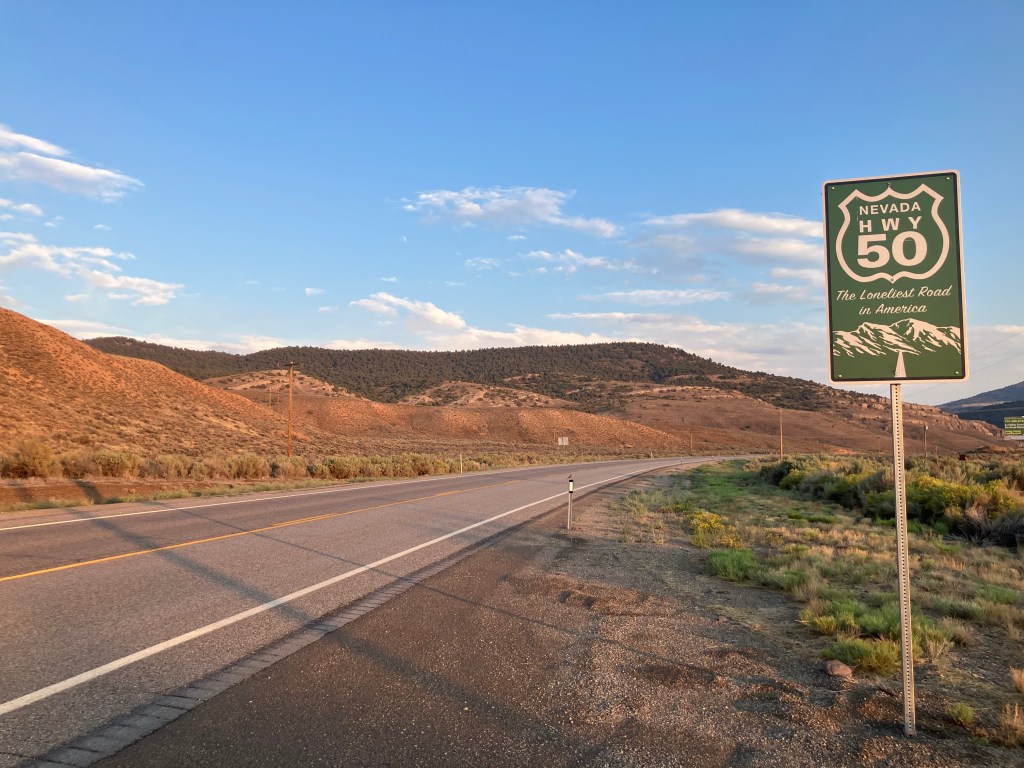
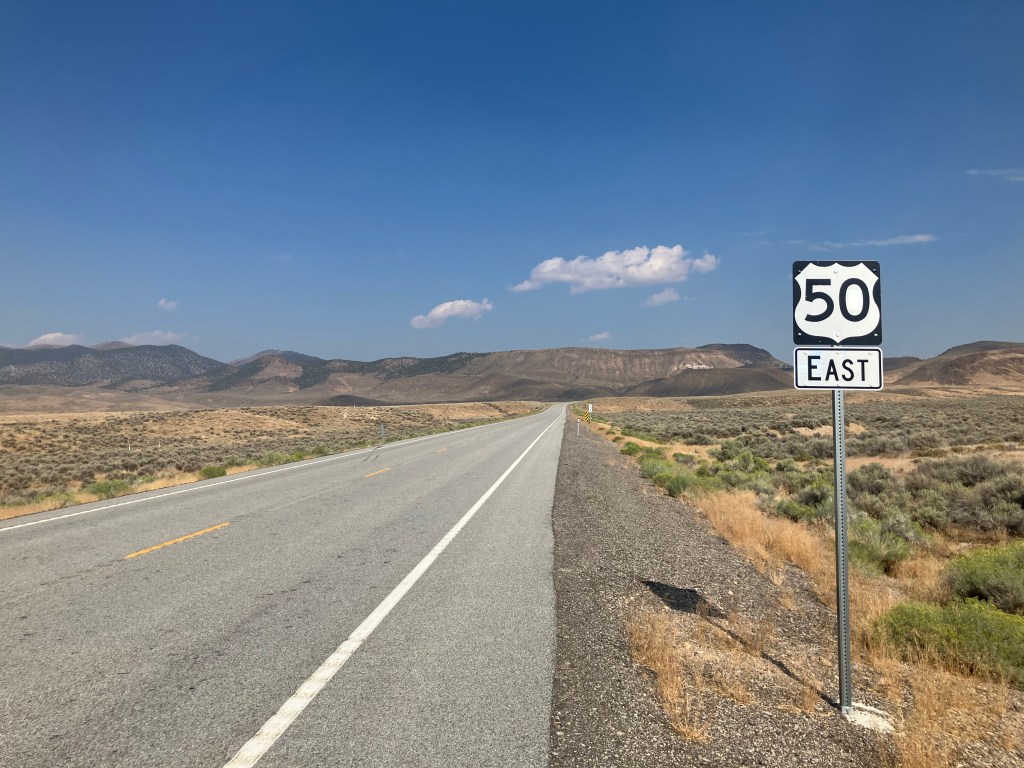
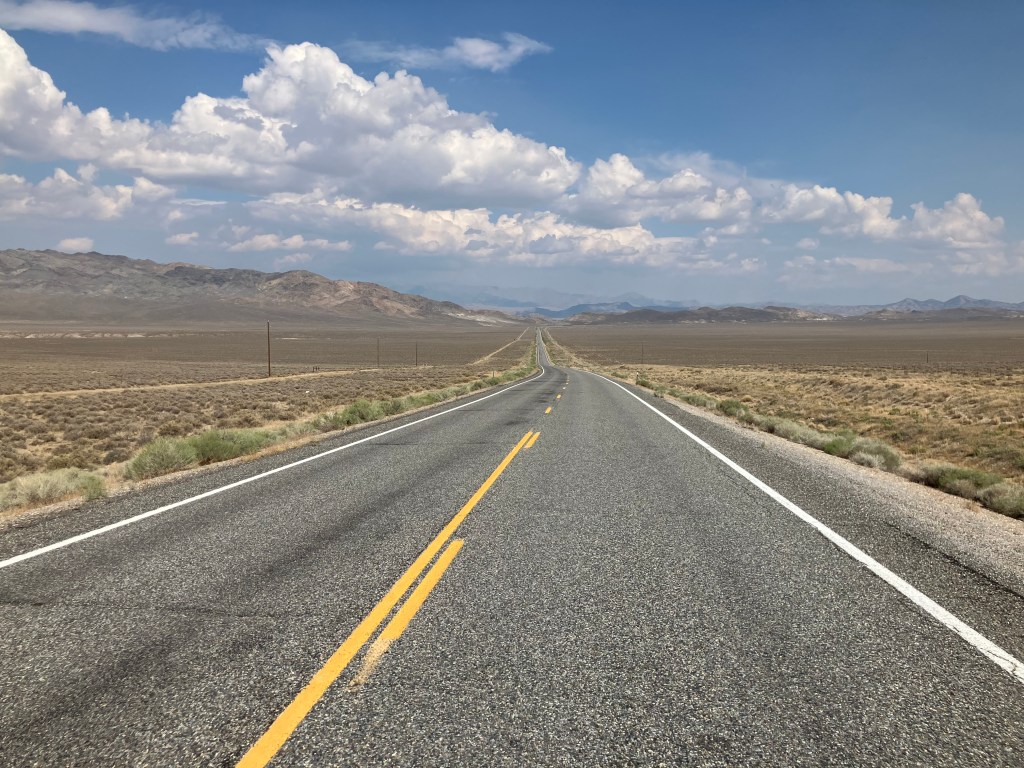
Almost all the remainder of today’s journey involved traveling US 50 across Nevada’s enchantingly bleak Great Basin. This stretch of highway is often called “The Loneliest Highway in America.” I’ve driven it several times (see my blog post here) and I always find it to be relaxing and contemplative. Today was no exception. Here are a few pictures to give you a sense of the landscape:
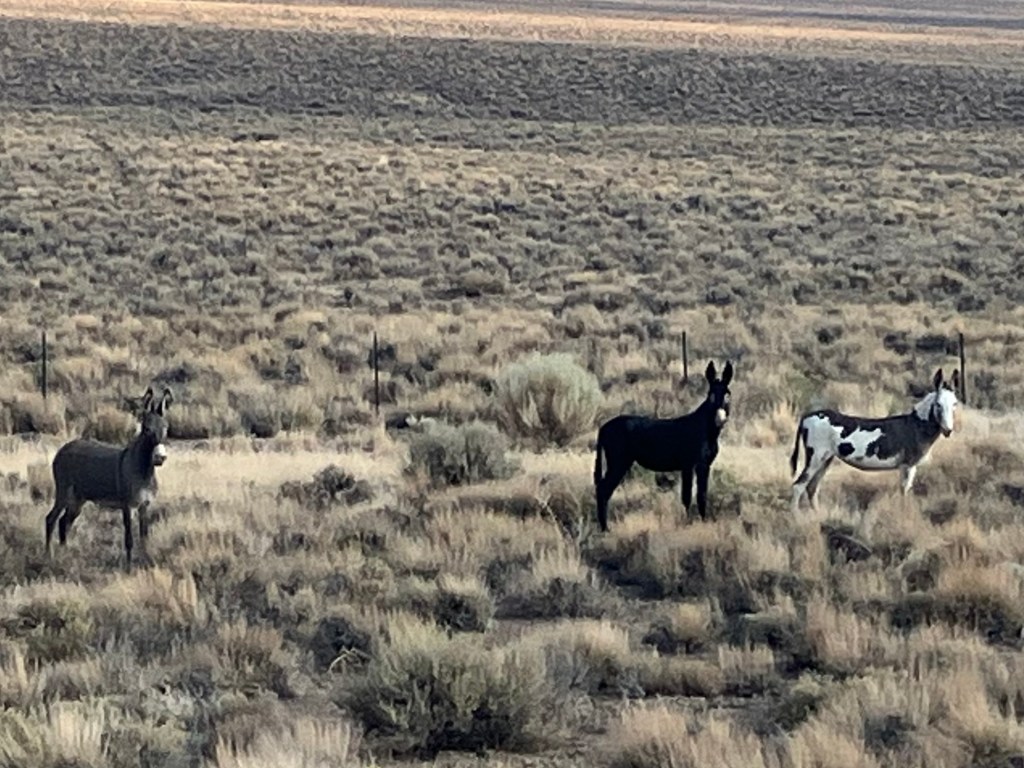
Inevitably, even out here in the middle of nowhere, you run into jackasses…
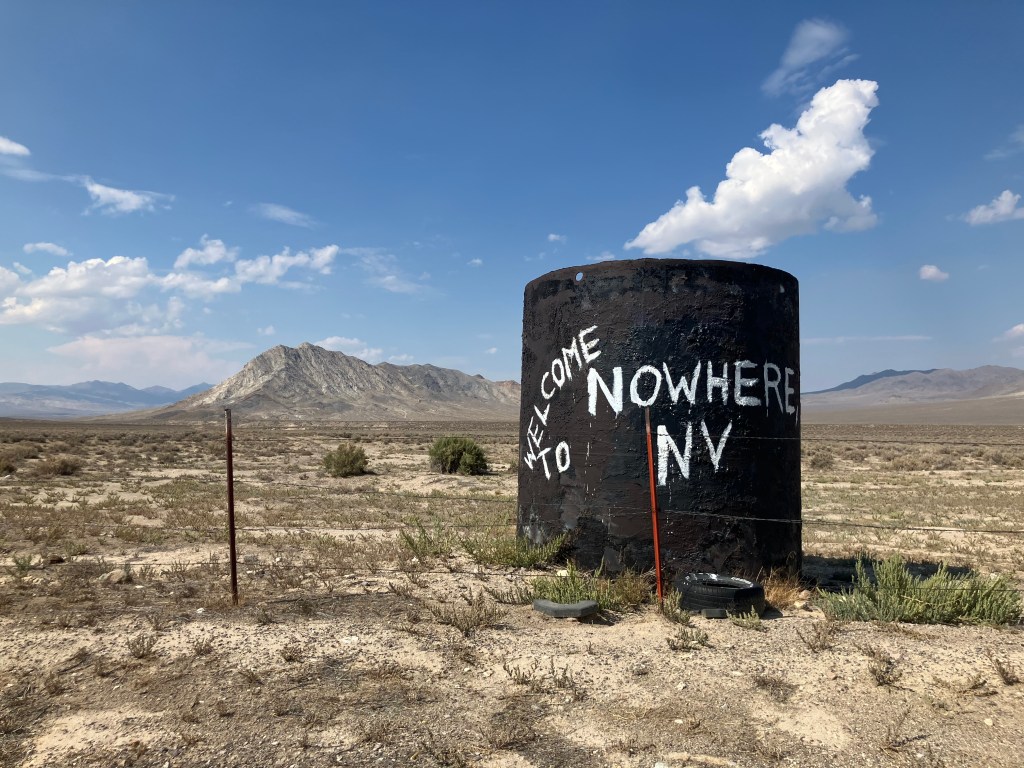
Speaking of the middle of nowhere…
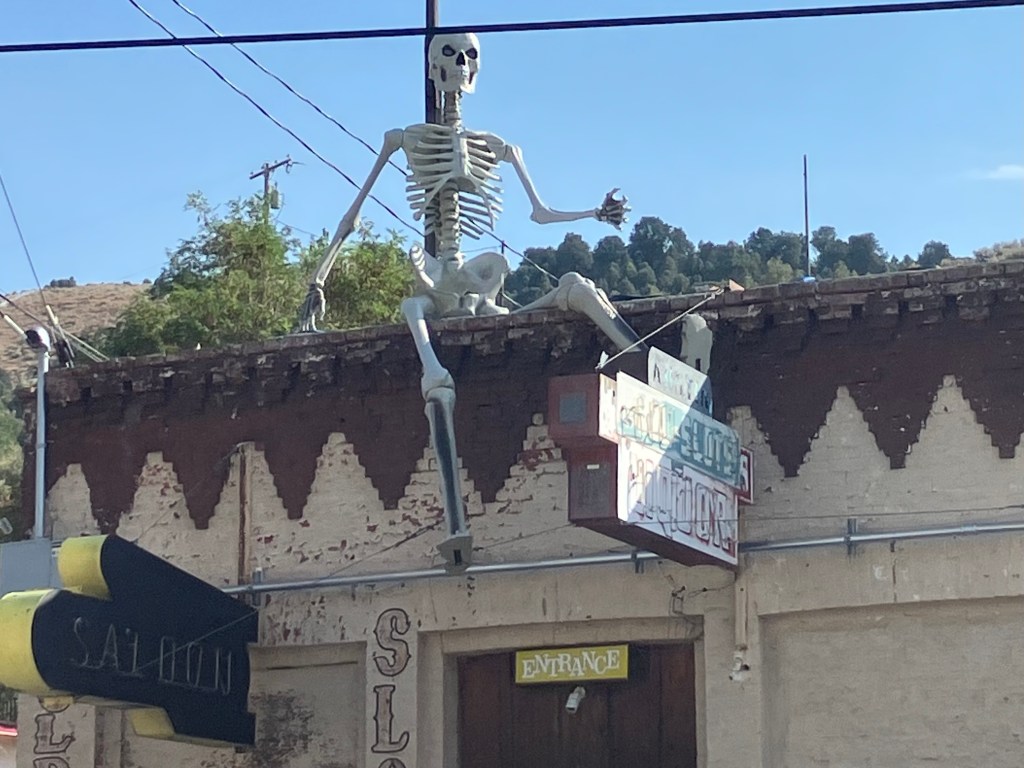
One of the few watering holes along the way, in Austin, NV.

As the sunlight was wanting I stopped for the night in Ely, NV (pop: 3,900). Ely is well known for its superb railroad museum and heritage railway, but beyond that there isn’t much besides smoky casinos. I took a room at the Jailhouse Motel, whose reception desk is inside the adjoining smoky casino.
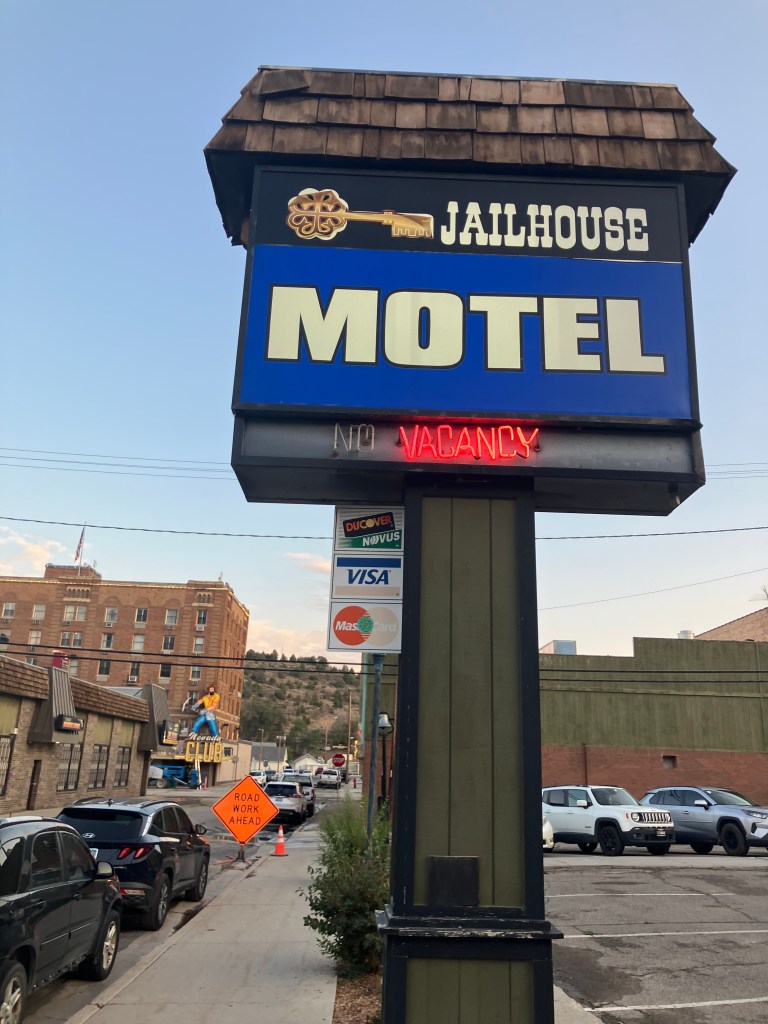
Also in the casino was something that passes for a bar, so I figured I’d try to get my Brew of the Day. But the beer selection was positively abysmal, and each seat at the bar was equipped with a huge, noisy video poker terminal. Looking at the bar’s sad patrons, I mumbled “terminal indeed,” and headed across the street to my room.
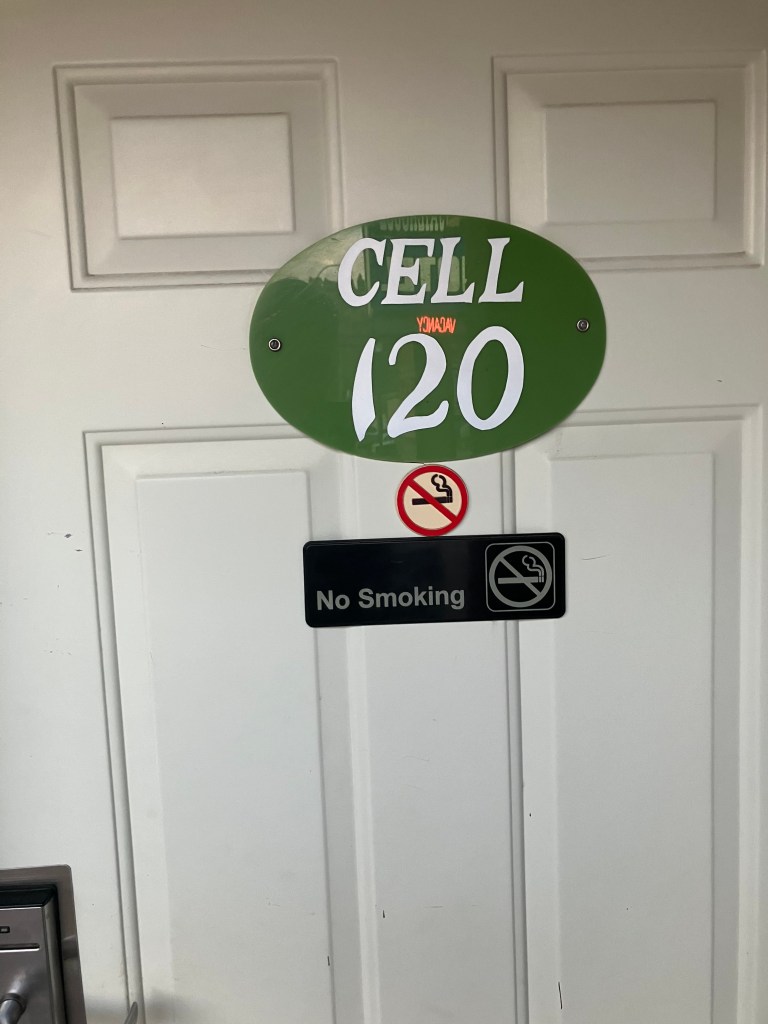
Hardy-har-har.

BRIDGE CORNER!

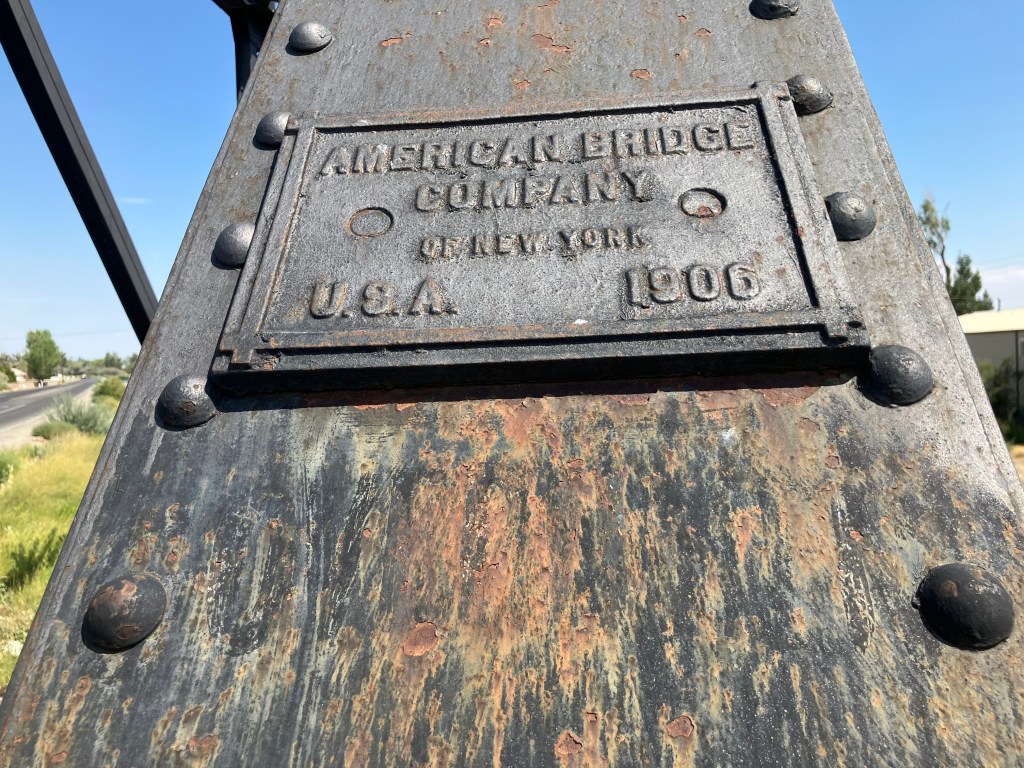
Although we don’t have a BOTD for today, we can offer you this 1906 railroad bridge over the Carson River in Fallon, NV:
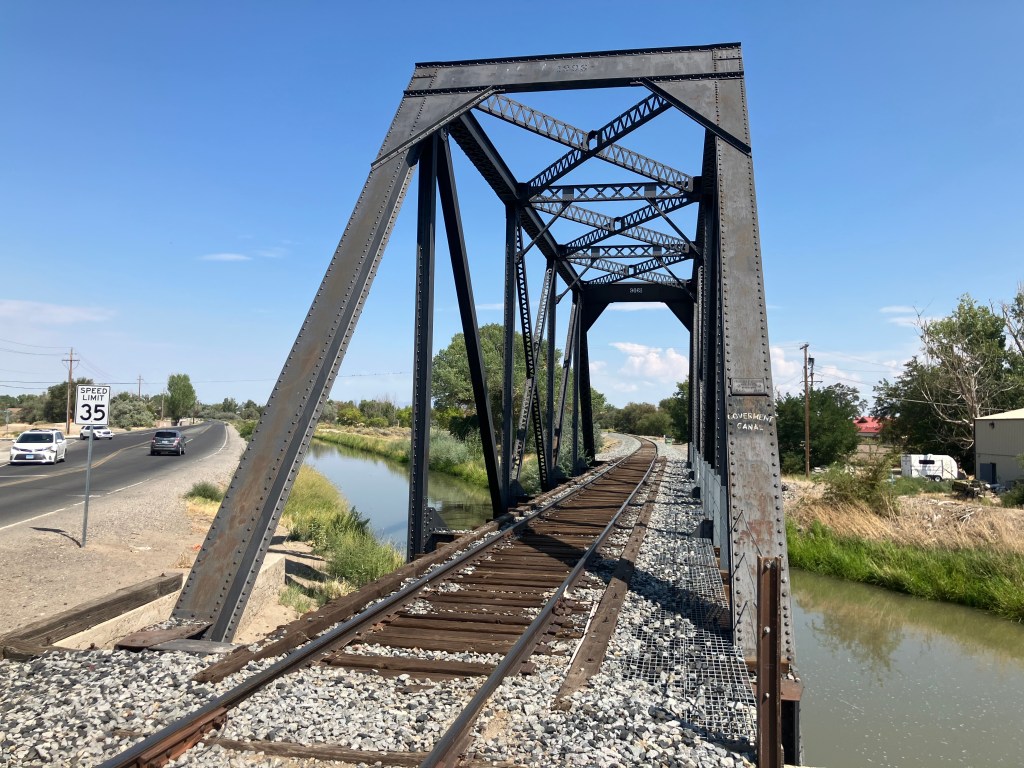
As should be painfully obvious, this is a Pratt subdivided through-truss bridge. And, as a steel marker certifies, it’s made by the American Bridge Company of New York.
OK…thanks for indulging me. Tomorrow we’ll return to the BOTD.
California history · Road trips · trains

Tale of Two Cities

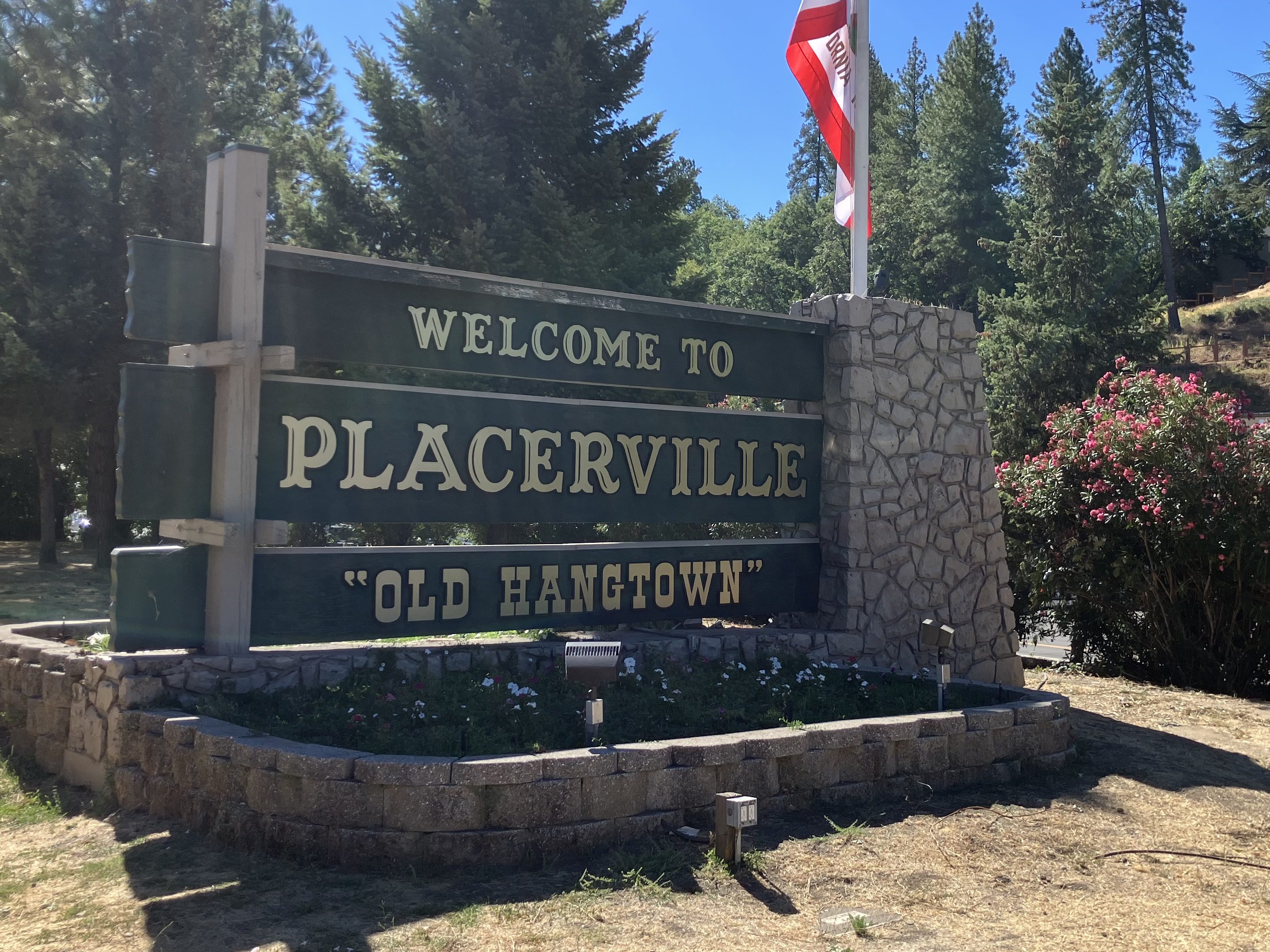
I’ve called many places “home” during my many years here on this big blue marble. Currently, I hang my hat in Placerville, California—a medium-sized town halfway between Sacramento and Lake Tahoe on US 50. Placerville started out as a mining camp during the California Gold Rush, and today it is the county seat of El Dorado County. And it may or may not be where Edgar Allan spent his final years, incognito.

The settlement was originally known as “Hangtown” because of the way justice was meted out from a big oak tree on Main Street. After the town got bigger and more respectable it changed its name to Placerville—a reference to the placer mining (that is, the relatively simple collection of gold from stream beds) which characterized the first years of the Gold Rush.

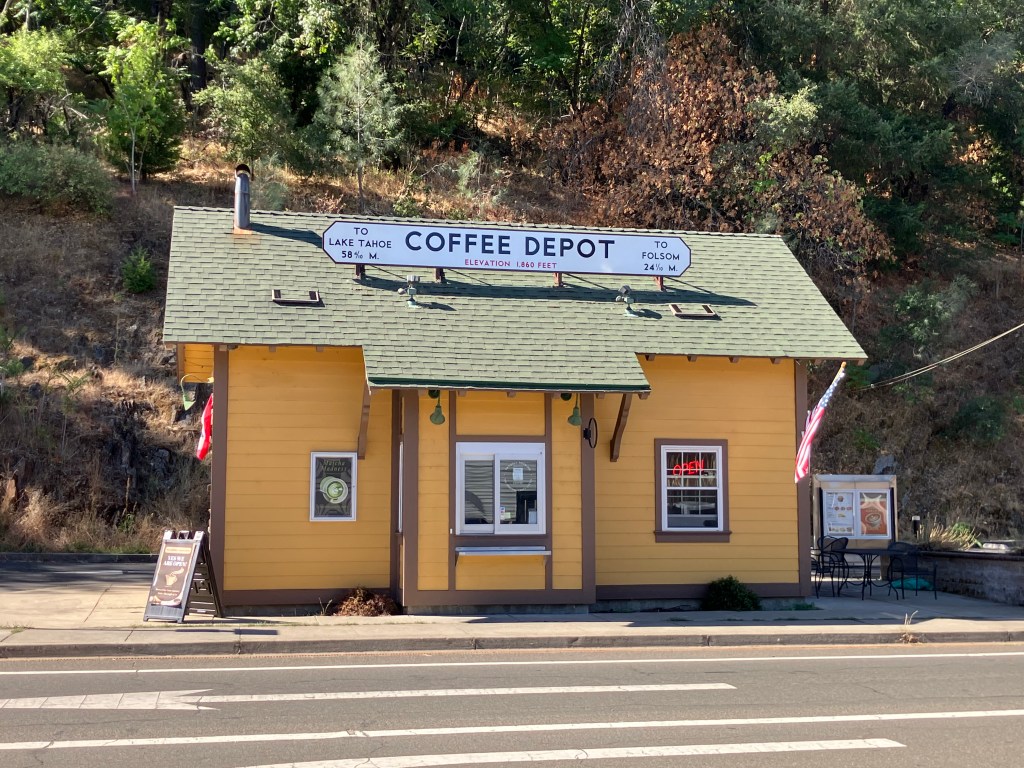
In addition to its gold mining heritage, Placerville is steeped in transportation history. Spurned by the original transcontinental railroad, Placerville was the eastern terminus of the Placerville and Sacramento Valley Railroad. It also served as a relay station for the Pony Express, and it’s where John Studebaker made his fortune selling wheelbarrows before he went back east to produce automobiles. (See my earlier blog post for more on these last two items.)

Faithful reproduction of Placerville’s 1889 depot. Placerville had hoped to be a stop on the original transcontinental railroad, but a more northerly route through Truckee was chosen.

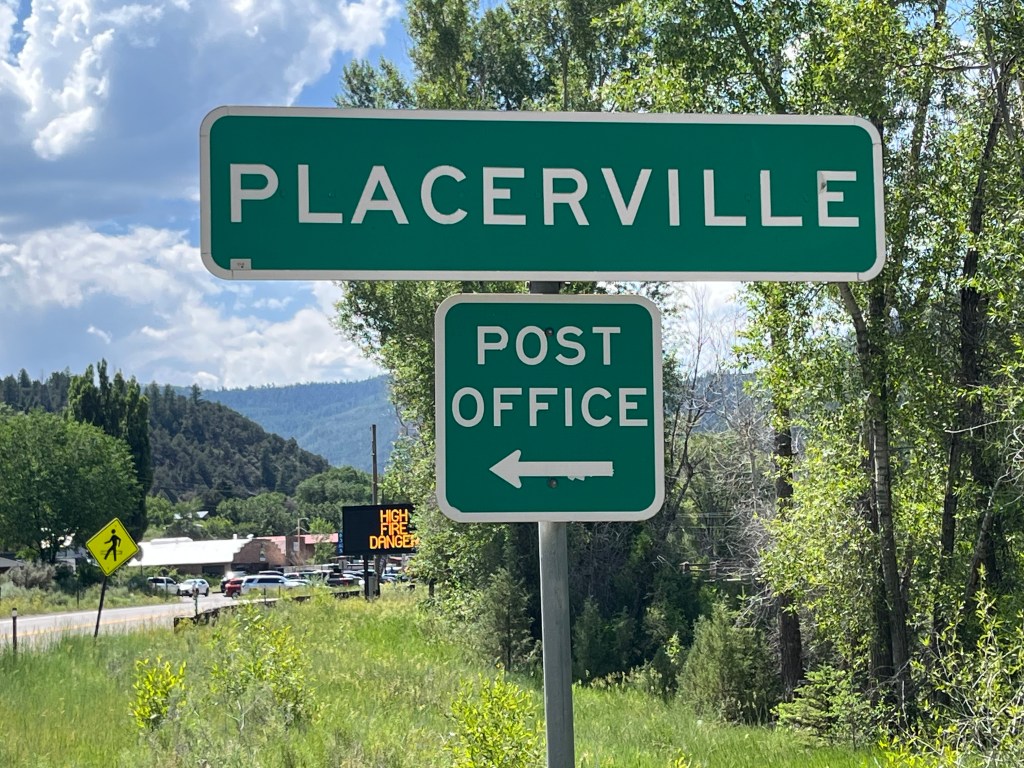
So, Placerville is a historic town with a unique and colorful history all its own. And yet about a month ago, my brother-in-law Scott was in Colorado and came across this sign:

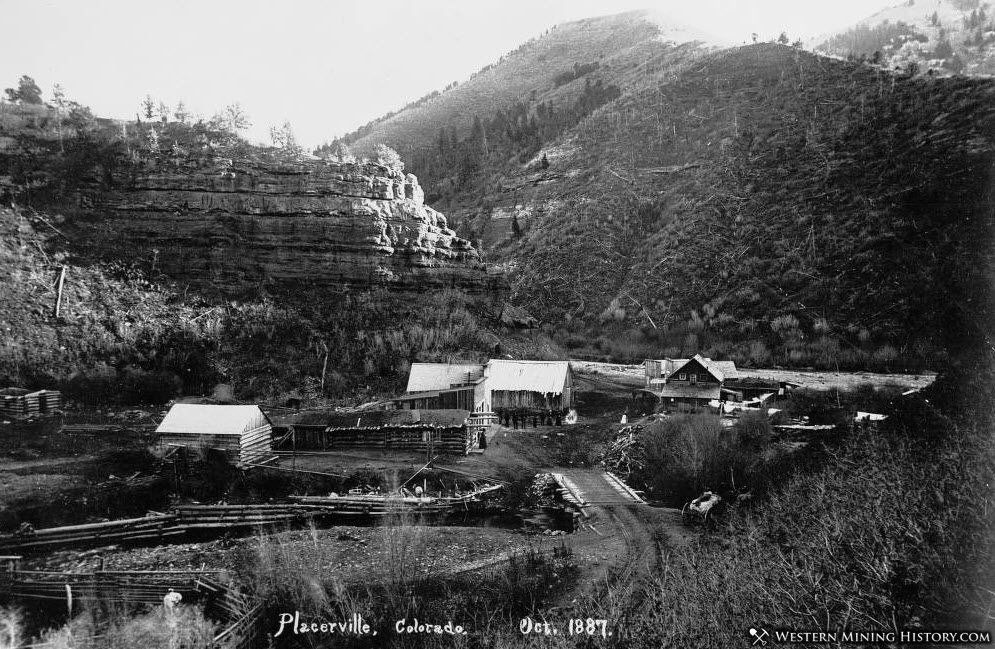
Who knew?? It seems there’s a second Placerville about 900 miles to the east. Evidently this eastern upstart was founded on Colorado’s San Miguel River in 1878, about three decades after “my” Placerville.

Photo c/o Western Mining History.

The two Placervilles presumably take their name from their shared history of placer mining. And yet there are significant differences: California’s Placerville sits at about 1800 feet in the Sierra foothills, while Colorado’s Placerville is perched at 7300 feet in the Rocky Mountains. The California version has a population of about 10,700, while the eastern upstart only has about 3 percent as many souls.

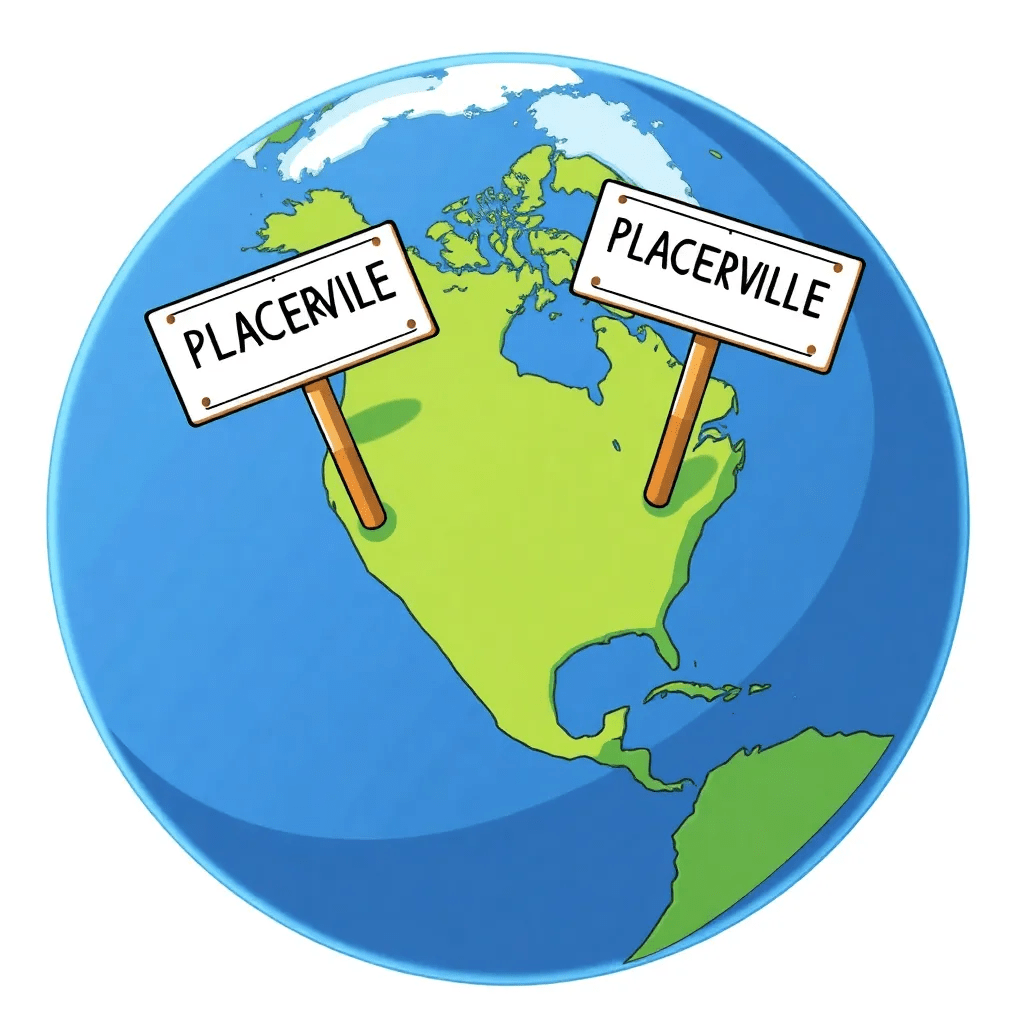
ChatGPT generated this image for me…and seems to have some trouble with spelling.

So, what to do with this discovery of Placerville’s doppelganger? Why, plan a Placerville-to-Placerville road trip, of course! And that trip starts tomorrow morning. To spice things up, my route is going to take me through a foreign nation. All will be revealed over the next couple of days. Stay tuned!

California history · cemeteries

Still Standing

In 1983 Elton John had a hit on the airwaves titled “I’m Still Standing.” It reached #12 on the Billboard Top 100. Today’s blog post looks at some structures that are, remarkably, still standing around the Placerville area. And with a tip of the hat to the season of Lent, those structures are churches.

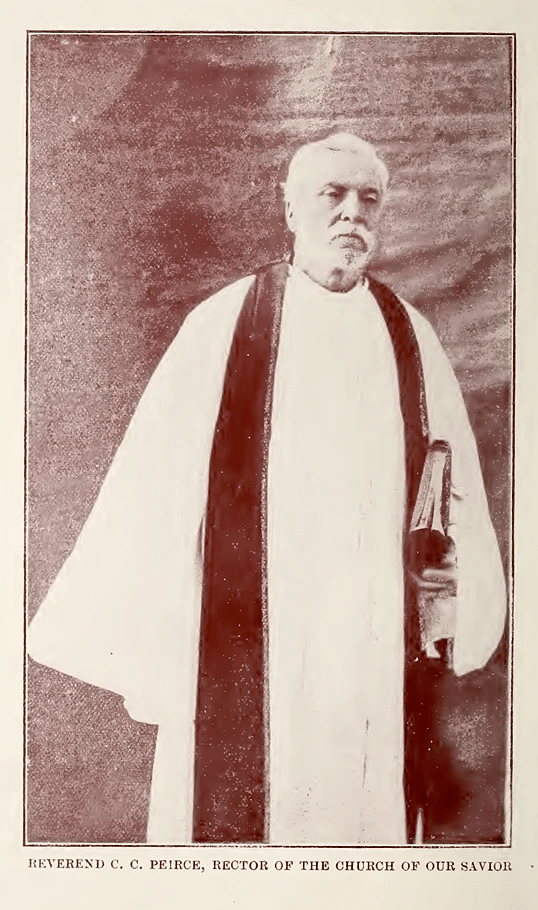
In 1825, Charles Caleb Peirce (yes, that spelling is correct) was born in the eastern United States (or, as it was called then, the central United States). Caleb (as he came to be called) was something of a precocious young man, with a strong literary streak and an industrious attitude. After graduating from college he earned his law degree– before he reached his 21st year. He clerked at the Ohio Supreme Court, but quickly became disillusioned about the “sordidness” of the practice of law. So, in a stunning career change, he entered the General Theological Seminary of New York and became ordained in the Episcopal Church in 1860.

From there, he crossed the continent to an upstart town in the far west called San Francisco (pop. at the time: 57,000)–a place that Peirce figured was in great need of ministry. He became rector of Grace Church (today’s Grace Cathedal), but once again he became disillusioned, this time by what he perceived as the corrupting influence of money in that church. (Notably, Grace Church’s evident difficulty in keeping a rector was satirized by Mark Twain in 1865.)

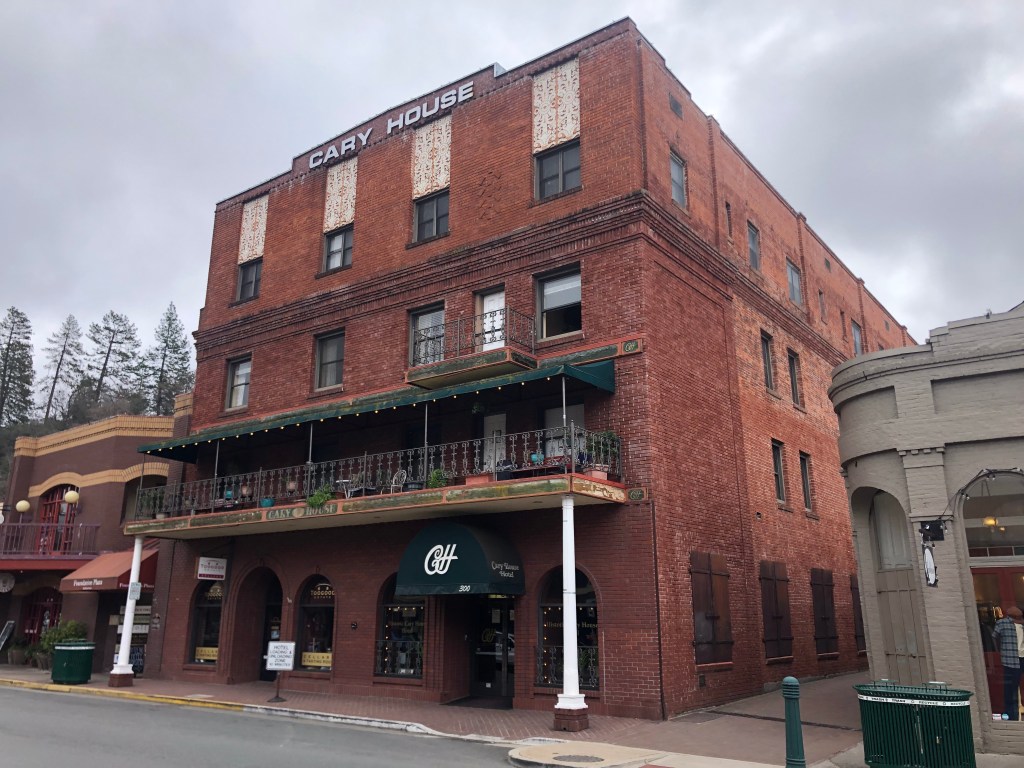
So Caleb Peirce uprooted himself again, this time to “a rough, sparsely settled, obscure corner of the United States” — which is of course Placerville, CA (pop. at the time: 2,500). He’s said to have alighted from his stagecoach in front of the Cary House hotel, which, incidentally, is still standing on Placerville’s Main Street today.

Cary-ing on since 1857.

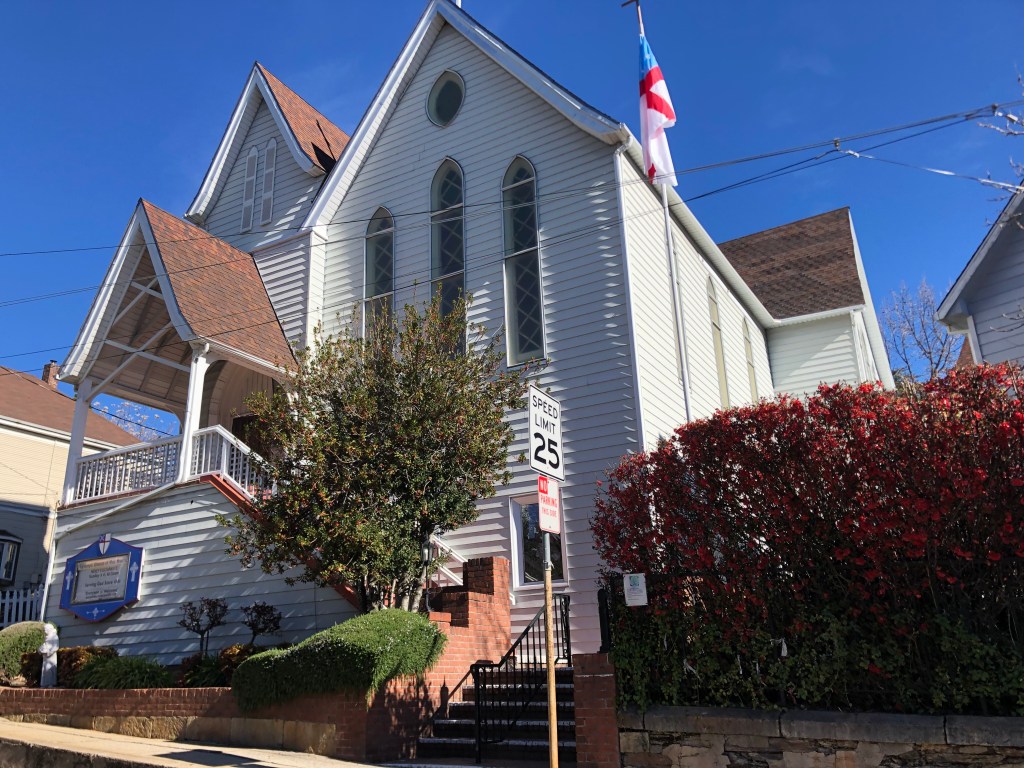
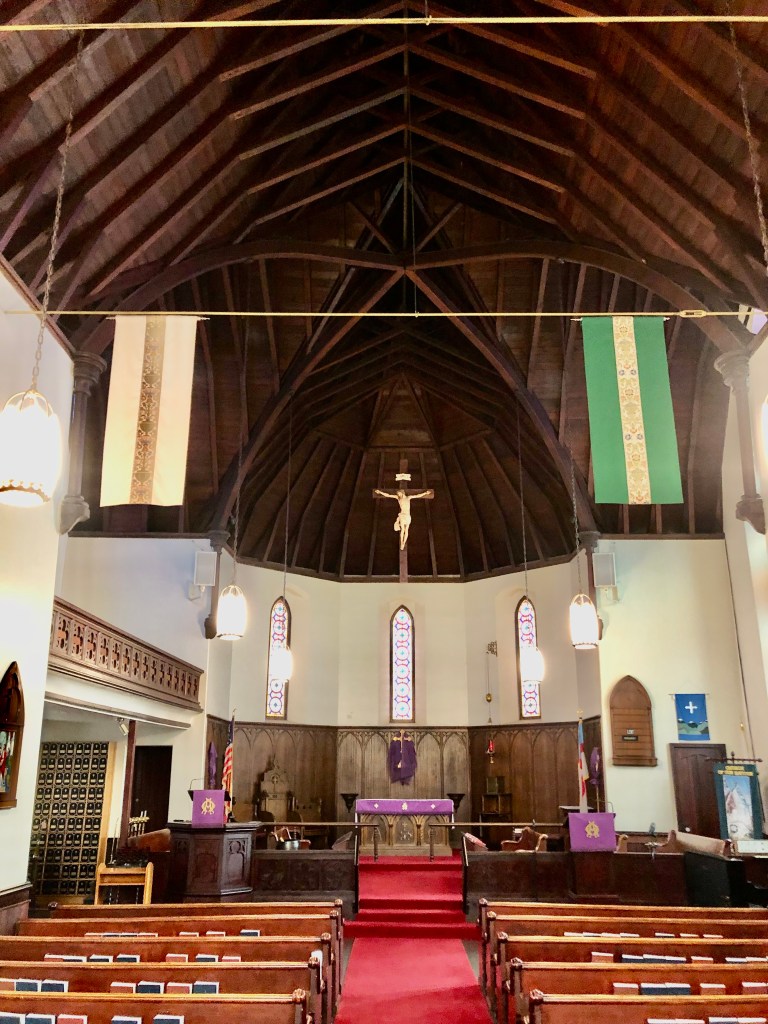
Peirce began organizing a church under the name “Church of Our Saviour.” Services were held in the county courthouse until a dedicated church building could be constructed. That church was completed in 1865, and it too is still standing today, just a few blocks from the Cary House.

Church of Our Saviour, still standing after 156 years.
Our Saviour’s sanctuary.

Caleb Peirce would remain the minister at the Church of Our Saviour for the rest of his life. But he hadn’t quite settled down exactly. Although he preached at the Church of Our Saviour every Sunday, he traveled (on foot!) to towns throughout the county the rest of the week, preaching, officiating at weddings and funerals, baptizing children, and whatnot.

Peripatetic Preacher

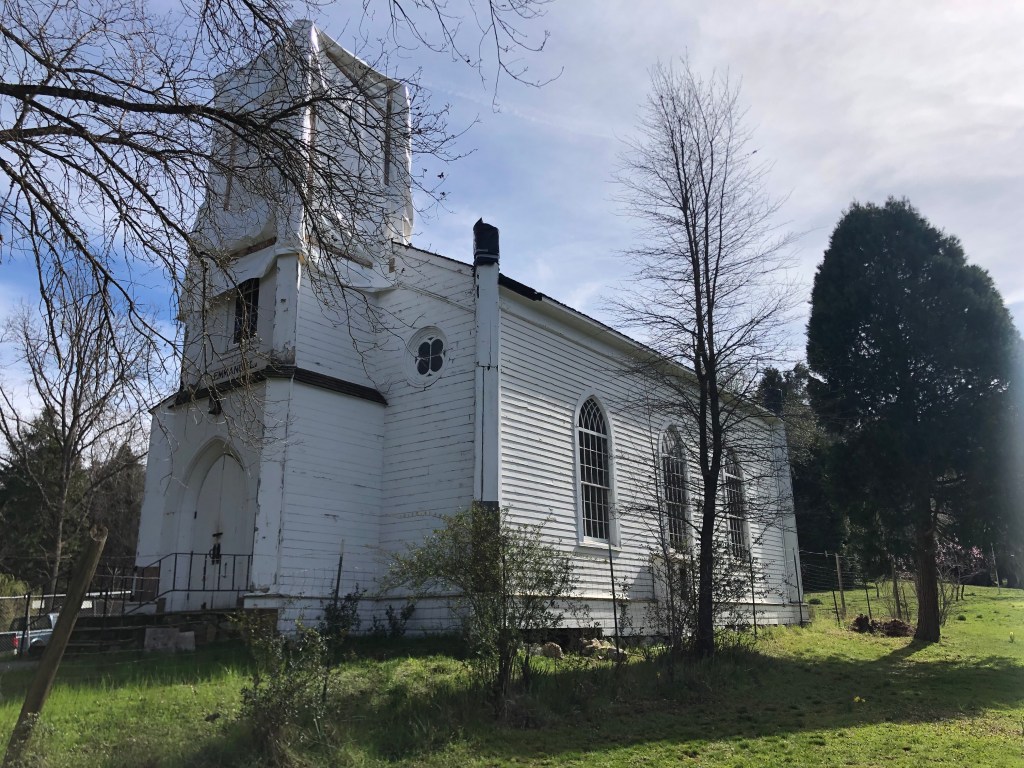
One of those nearby towns was Coloma (pop. at the time: 888). You’ll recall that this is the town where gold was first discovered at Sutter’s Mill. Peirce would preach frequently at Coloma’s Emmanuel Church. This was California’s first Episcopal church, constructed in 1855. And guess what? It too is still standing!

Emmanuel Church of Coloma.

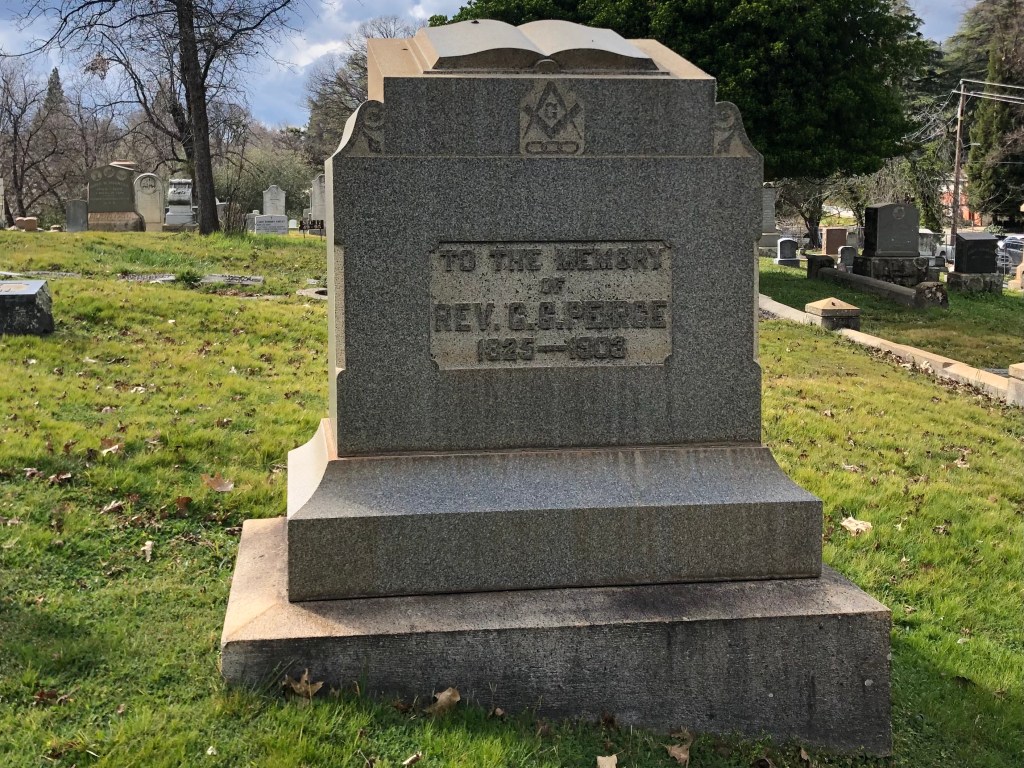
Caleb Peirce died of kidney disease on March 14, 1903. He was buried at Placerville’s Union Cemetery, just couple of blocks from the Church of Our Saviour. He is no longer standing, though perhaps in the eyes of God…

Note the symbols for the Free Masons and the Independent Order of Odd Fellows.

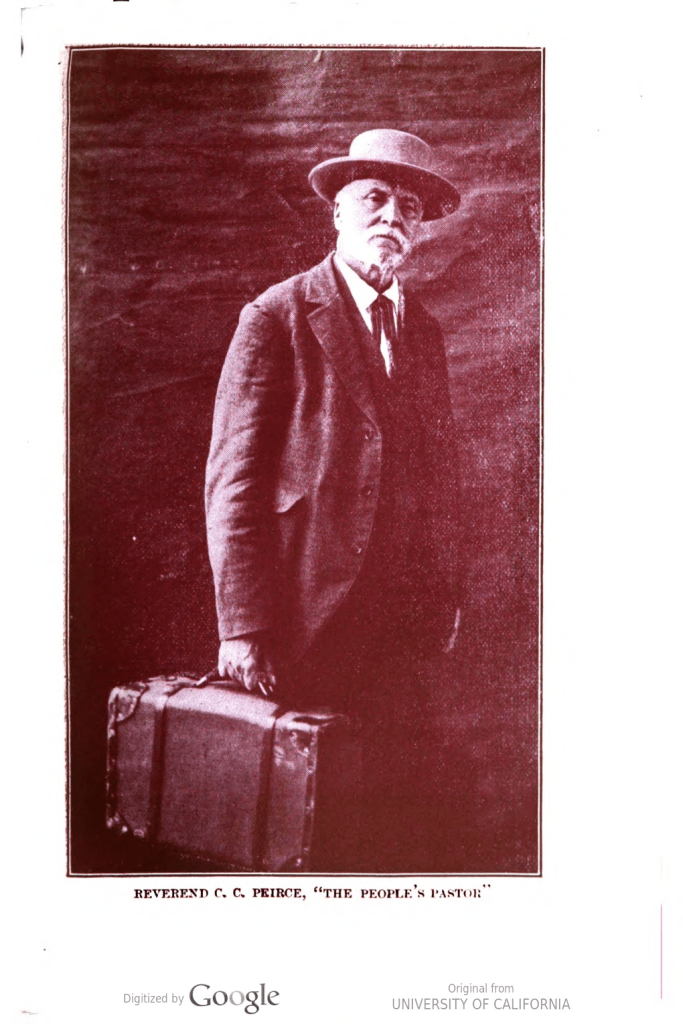
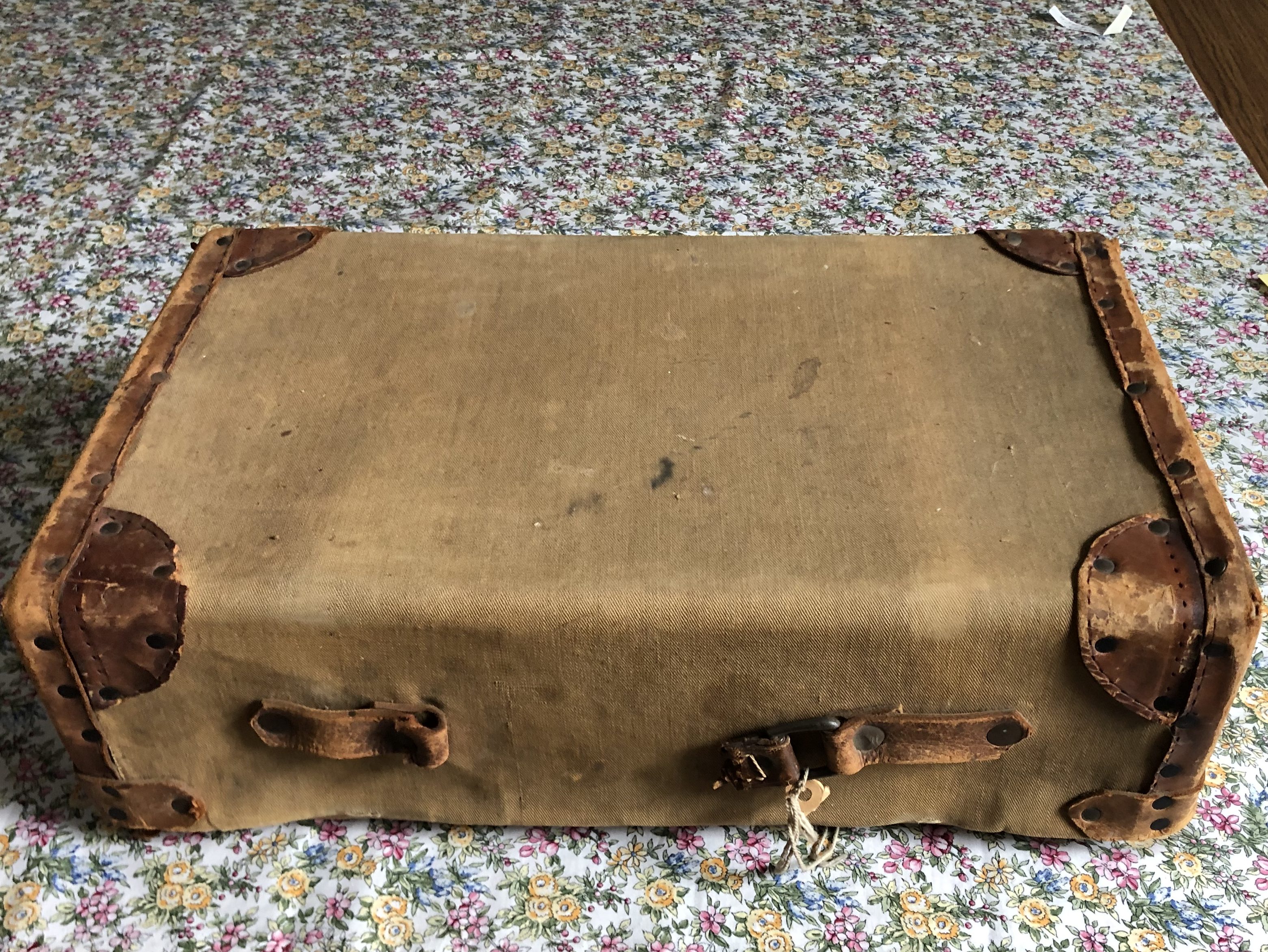
Peirce left few possessions, as most of his books and clothes had been destroyed in a hotel fire a few years earlier. But he did leave a suitcase…

Caleb and his Case.

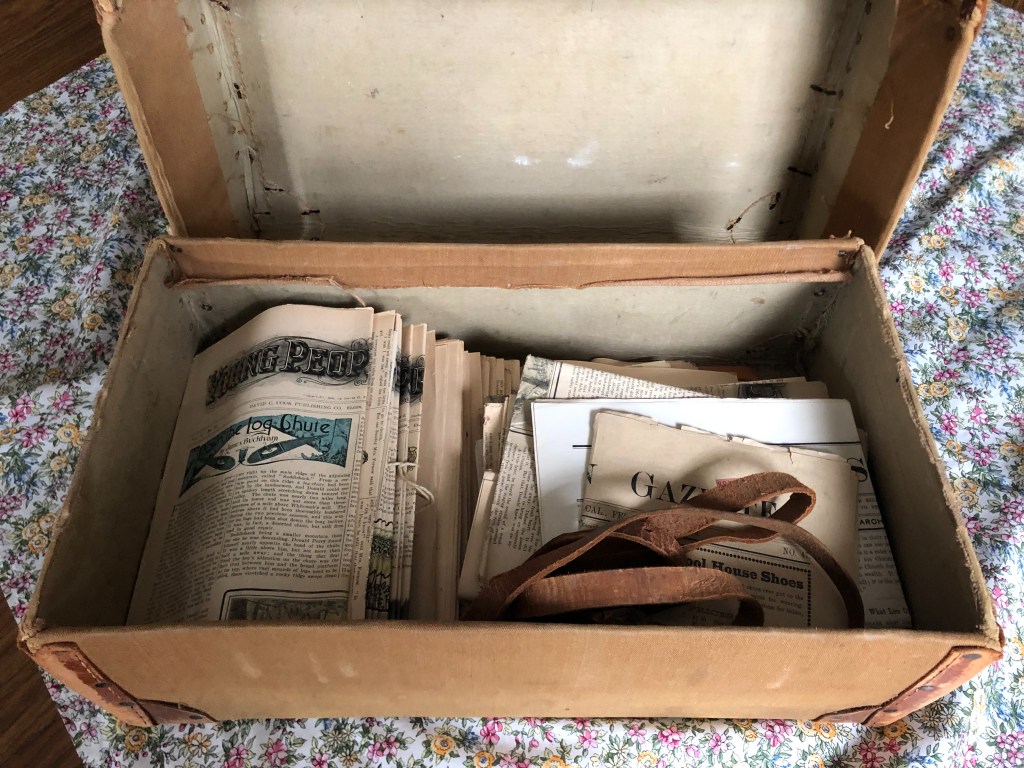
…and that suitcase still survives today. It’s in The Church of Our Saviour’s Parish Hall, as if waiting for its owner to return.

Today the Church of Our Saviour remains an active, little-engine-that-could church in the Placerville community. And what of the Emmanuel Church in Coloma? It still stands in the same place it’s stood for over 160 years, but its worn condition caused it to be shuttered in 2015, until extensive repairs can be made. That church, like much of Coloma, sits within the Marshall Gold Discovery State Historic Park, and as such it is under the control of the State Parks Department. However, I recently talked to someone who holds the deed to the church building, and this opens an interesting story of its own:

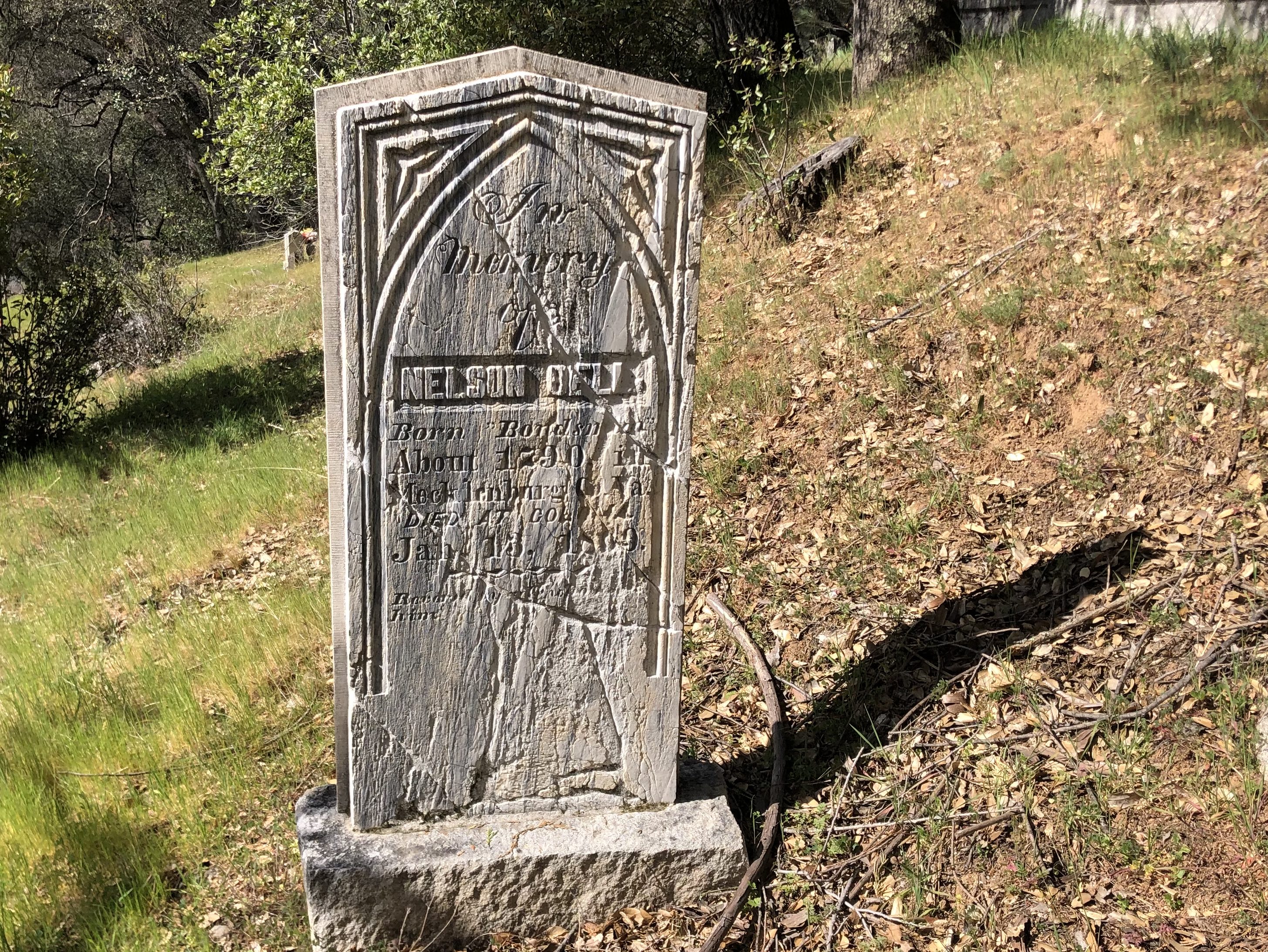
The story goes back to the Gold Rush, just a few years before Caleb Peirce arrived in Placerville. At that time, men from all over the country were pouring into the Sierra foothills in hopes of striking it rich in the goldfields. One of those men was a slave trader named Robert Bell, who brought with him an enslaved man he called Nellson Bell. (Evidently it was customary for slave traders to confer their own last names on the people they sold.) Nellson eventually made enough money mining that he was able to purchase his freedom. He died in 1869, and his headstone is still standing in the Coloma’s Pioneer cemetery.

The grave of Nelson [sic] Bell.

Now, Nellson had a son, named Rufus M. Burgess (no slaver’s surname for him!) He got married, took a job as a blacksmith, and eventually became a prominent, well-liked, and rather wealthy citizen of Coloma. Indeed, he died owning over 90 acres of Coloma land…including the Emmanuel Church building. (You wondered where this was going, didn’t you?)

The State Parks Dept claims the Burgess properties were given up to the state in probate after Rufus M. Burgess’s death. But Rufus’s great grandson, one John Burgess, argues that the land was taken illegally, which of course is plausible given the poor treatment of African Americans by the courts at the time. One wonders how one-time lawyer Jacob Peirce would have framed the legal issues.

As a coda: I met John Burgess (the great grandson) last weekend, and he’s got persuasive arguments as well as copy of his great-grandfather’s deed to his Coloma property. (He’s put out a book for young readers on the topic here.) If he wants to pursue legal action against the State Parks Department, I suppose the question is: Does he have standing?