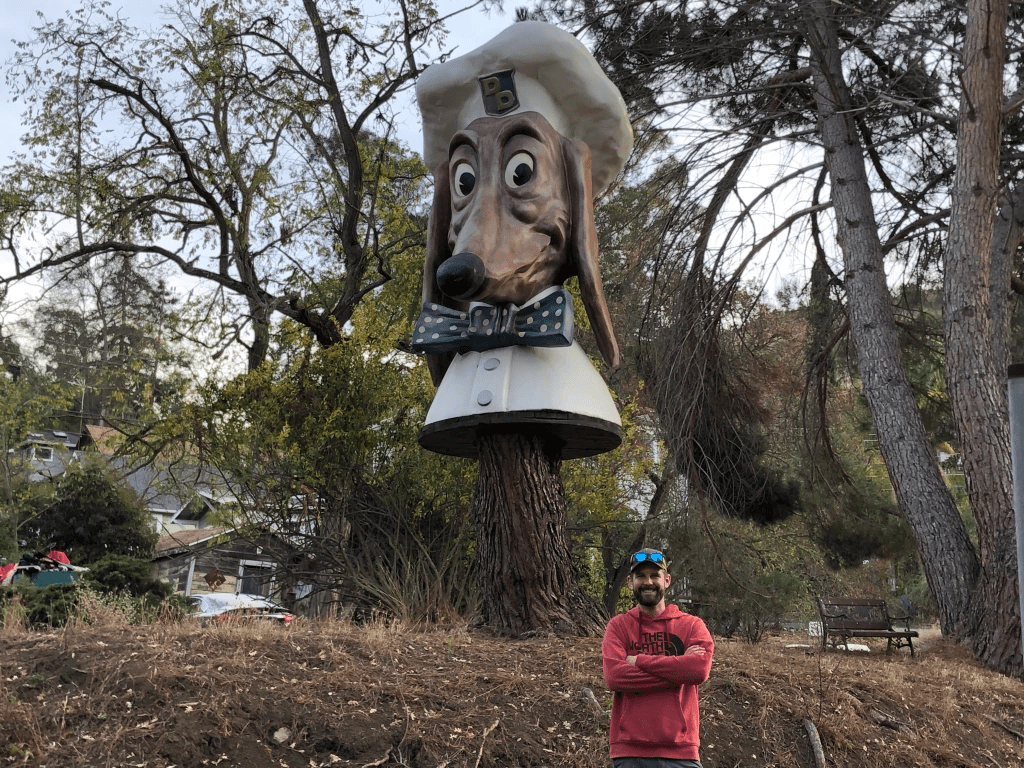
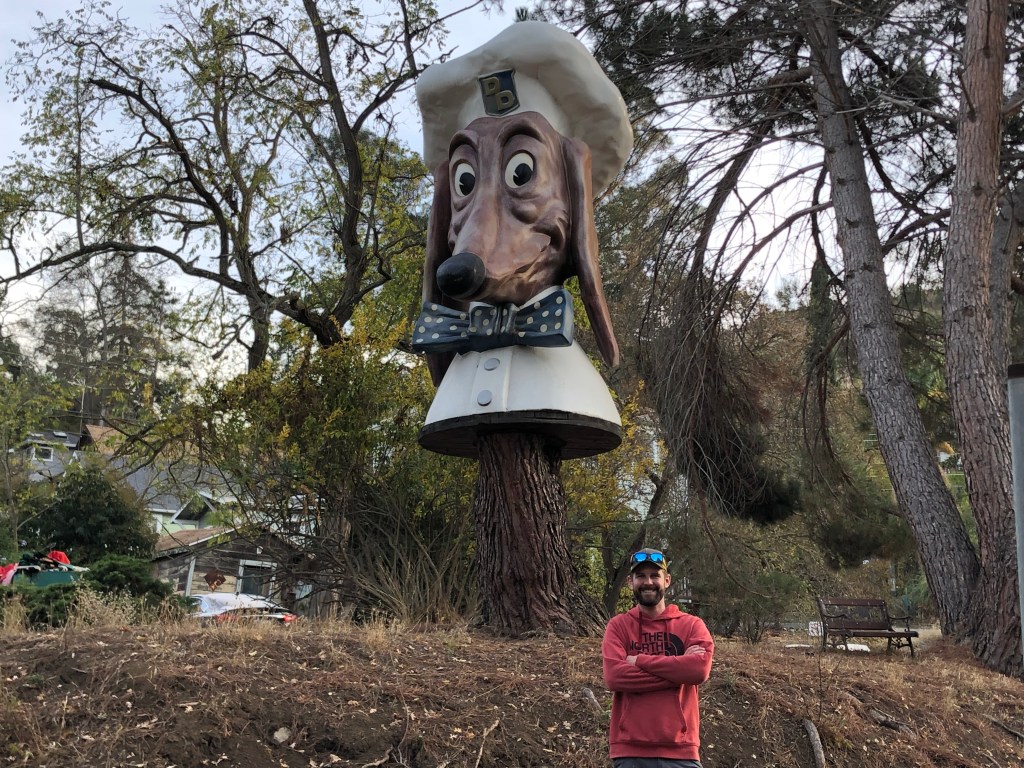
Attentive readers will recall that last November, while in the Bay Area burg of Port Costa (pop: 200), I encountered this dachshund from the long-defunct Doggie Diner chain.
That’s son Ian wearing his sunglasses improperly.
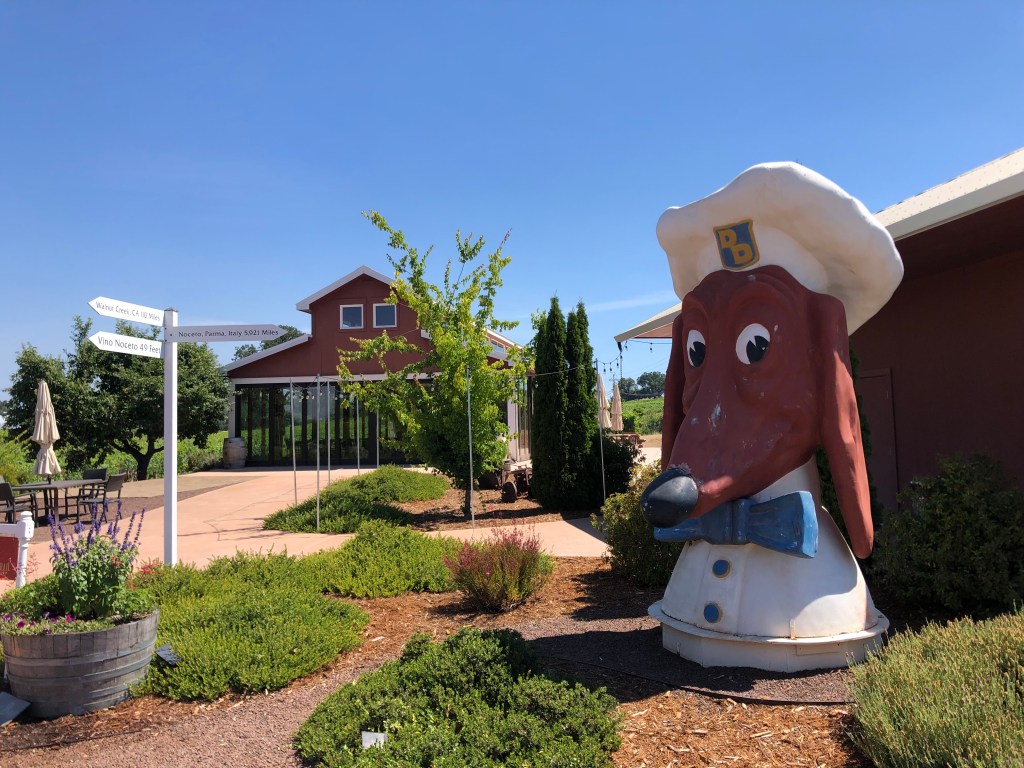
Today as I was cruising CA Route 49 through Amador County, I passed another Doggie Diner head. This one is at the Vino Noceto winery in the town of Plymouth (pop: 1,100).
“Doggie Diner, nothin’ finer.”
The giant heads adorned the 30 or so Doggie Diner restaurants around the Bay Area (concentrated mainly in San Francisco). It seems that when the chain closed in the 1980s, many of the doggie heads were purchased by private parties. The owners of Vino Noceto got theirs in 1985 at a fundraising auction for their kid’s nursery school. On a lark they had offered $300, expecting that surely someone else would outbid them. But theirs was the only bid. Let that be a lesson to you all.
These orphan heads remind me of the Golden Bear signs. I encourage all faithful readers of this blog to report any Doggie Diner Heads you might be aware of. And of course, also let me know of any Golden Bear sightings.
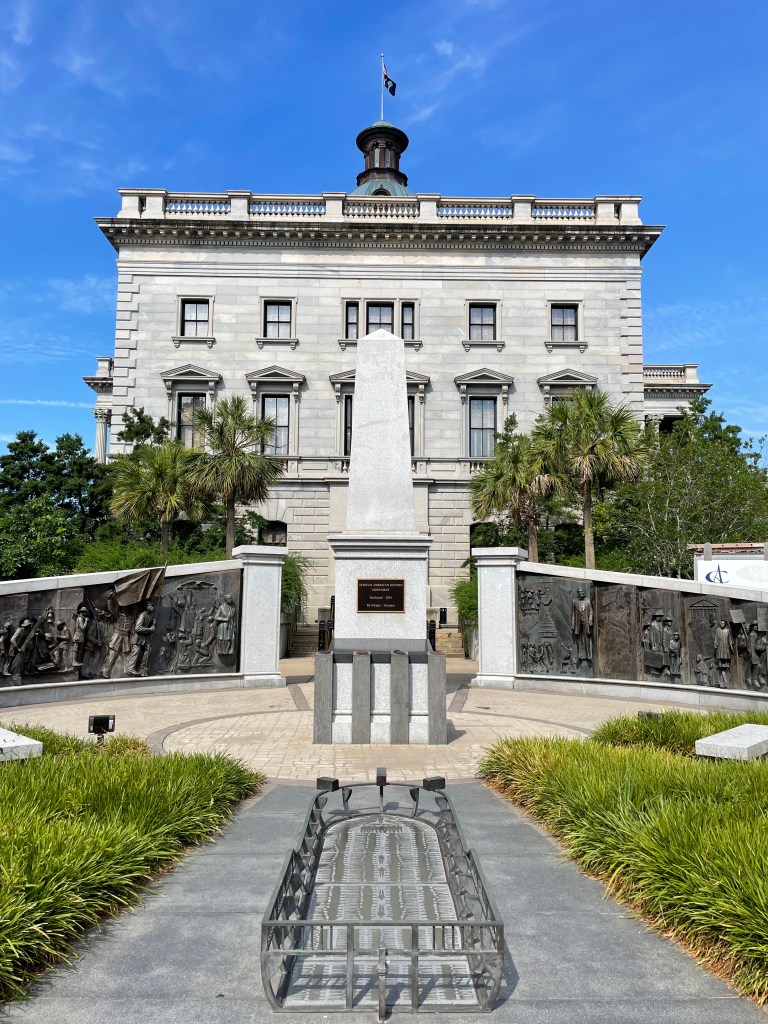
Speaking of crowd-sourced photo collections, loyal reader Brian W shared this photo he took of an obelisk in front of the South Carolina statehouse.
The bronze frieze panels flanking the obelisk depict African American History.
Brian has been commissioned to photograph all the state capitols, which is itself an impressive project. The obelisk is part of the state’s African American History Monument, and was installed in 2001. The artist who designed the monument asserts that obelisk is a form that originated in Africa. Wikipedia tells us that the earliest obelisks come from Egypt, so I guess it depends on whether you consider Egypt to be an African or an Asian country. Either way, the monument is an impressive one and is part of a historic compromise that also removed the Confederate flag from the statehouse building.
That’s it for this brief update. Next week I’ll have the story of California’s oldest operating railroad depot.
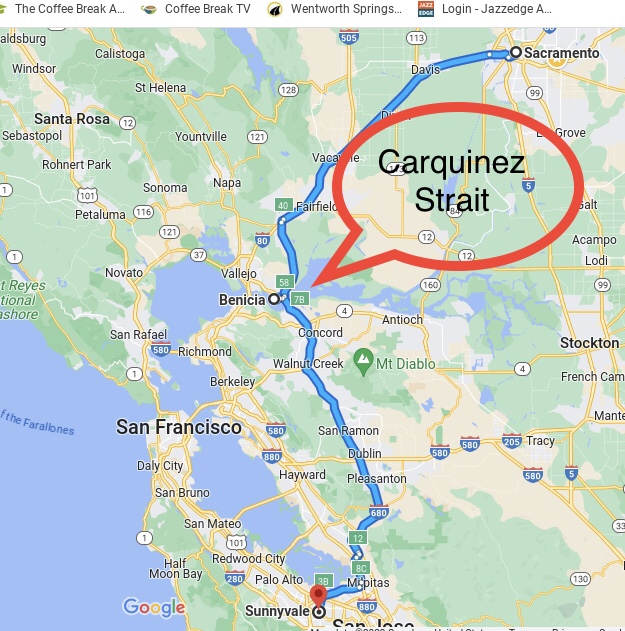
Eons ago, when I finished college, I moved to Sacramento, and in the succeeding years I made many weekend trips back to the familial homestead in Sunnyvale. The trip required crossing the Carquinez strait on the Benicia-Martinez Bridge. In those days, the bridge had traffic going in both directions, but in 2007 a second bridge was opened and each of the two bridges was henceforth devoted to traffic in a single direction.
My overland trail.
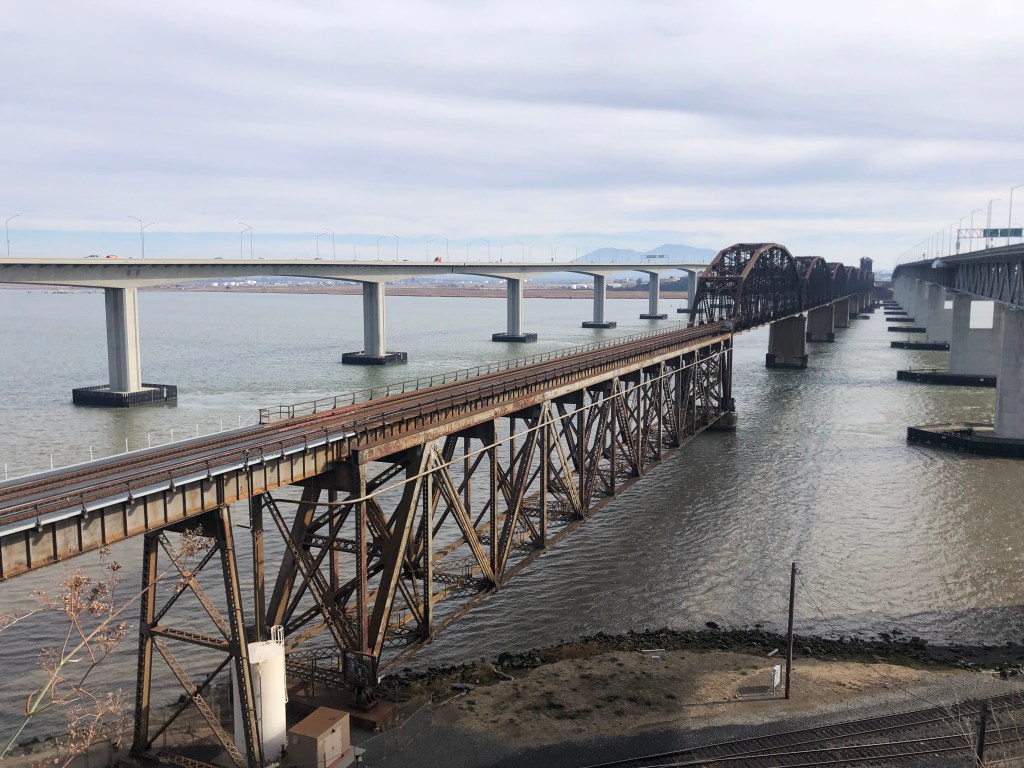
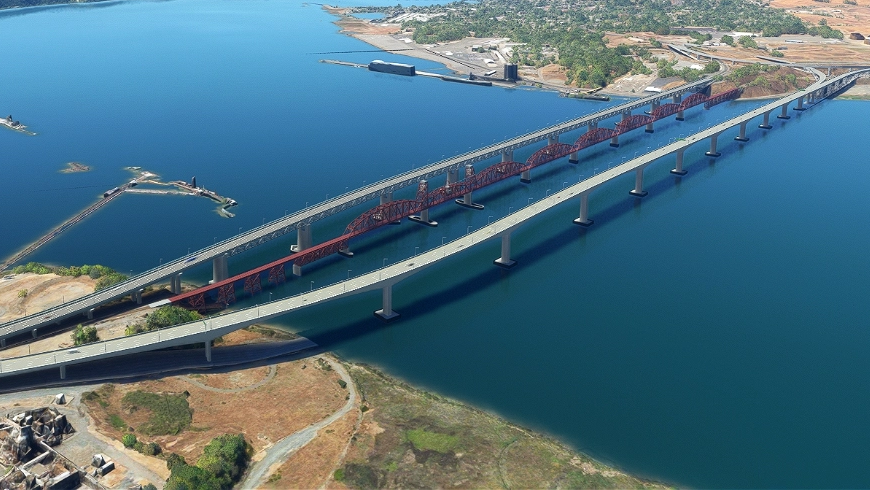
As I crossed the Carquinez Strait in my Studebaker Hawk (which I’m not making up), I would always glance at the old railroad bridge that ran alongside me. Often I’d see a train rumbling over the creaky structure. Here’s a shot I took this morning of the railroad bridge flanked by the two automobile bridges:
Looking south, from Benicia to Martinez.
Aerial view, stolen from the Internet.
The Benicia-Martinez Bridge railroad bridge opened in 1930. It was–and still is today–the second-longest railroad bridge in North America. But did you know that trains had already begun crossing the Carquinez strait more than half a century earlier? How could this be?
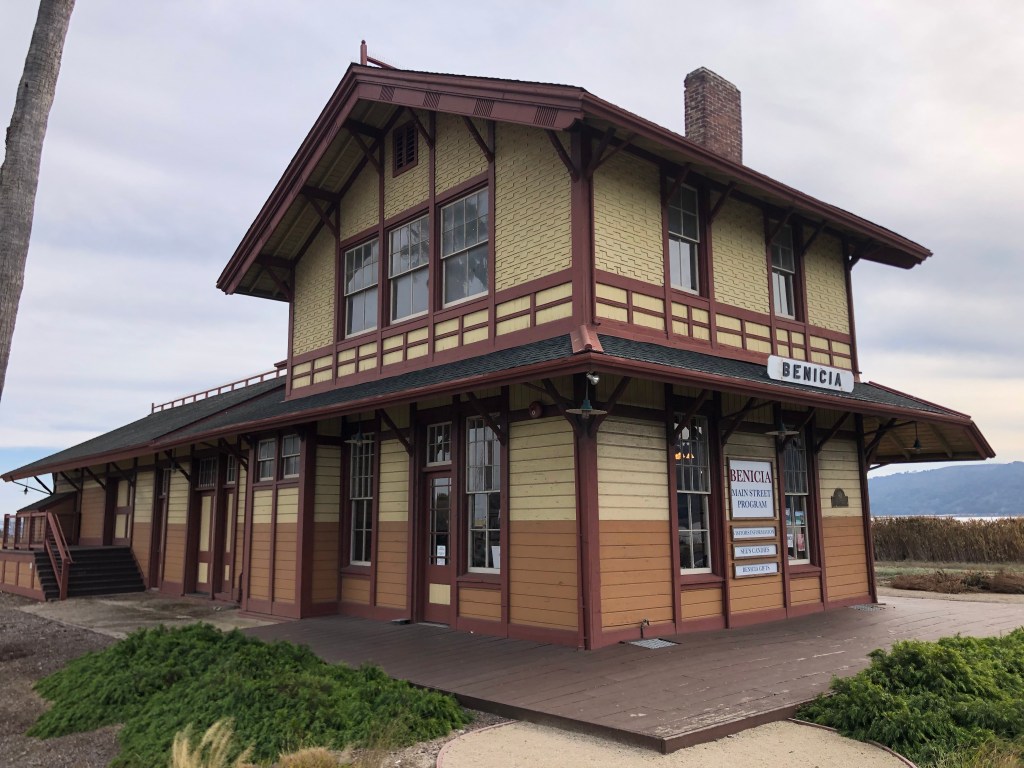
To answer this question, I visited the unassuming town of Benicia (pop: 27,000). Briefly California’s capital (from February 1853 to February 1854), Benicia today is famously home to my son Ian and daughter-in-law Katelyn. But it’s also home to this old depot which can shed some light on our railroad bridge puzzle:
End of the line, in a way…
This 144-year-old depot was originally built in 1879 in the small town of Banta, California (pop: unclear, though probably around 100 according to this account). Banta was a whistlestop on the original transcontinental railroad. Westbound trains would make the final leg from Sacramento to the Bay Area by way of the Altamont Pass, which they would cross just after passing Banta.
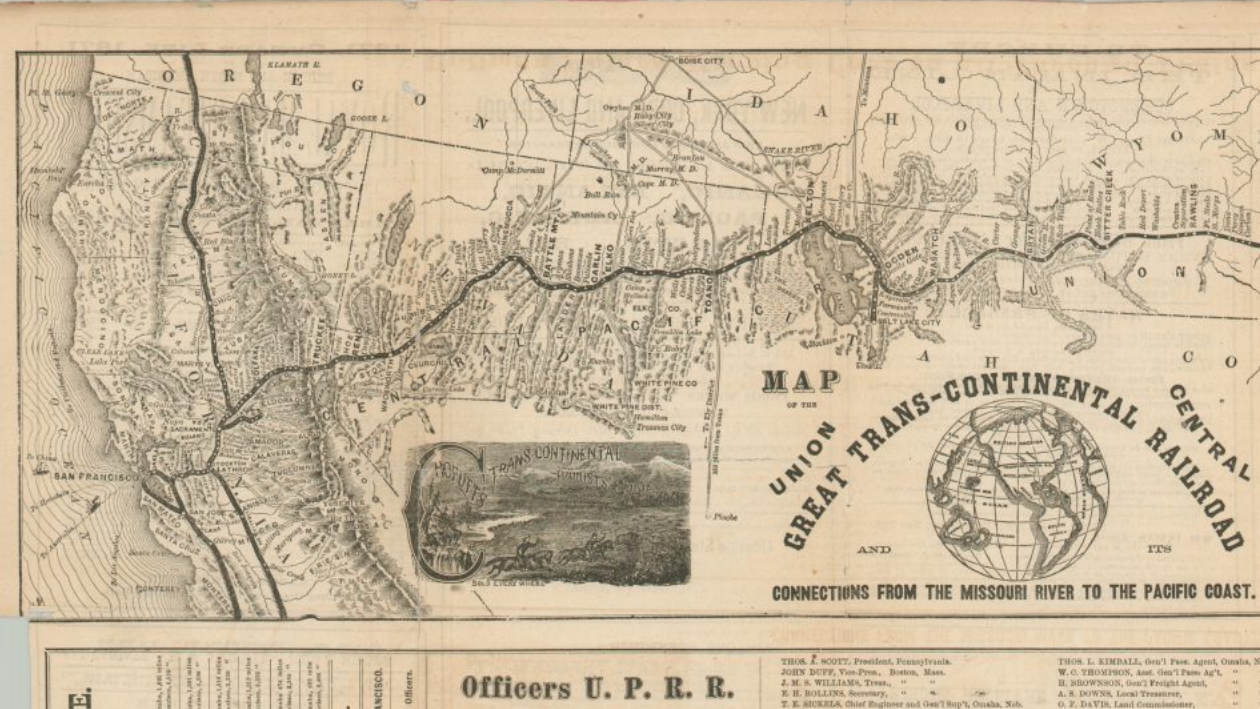
The original route.
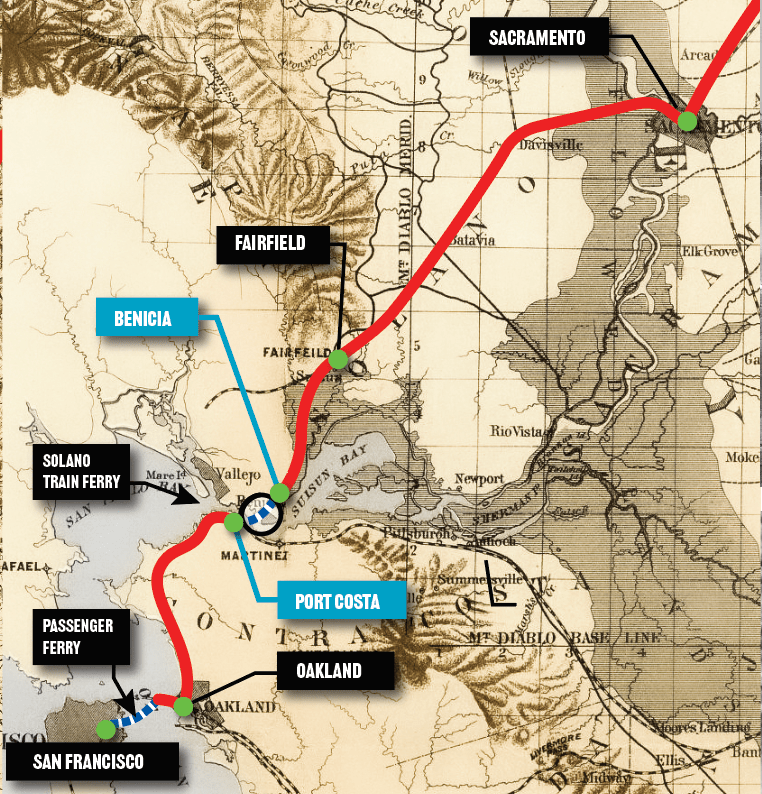
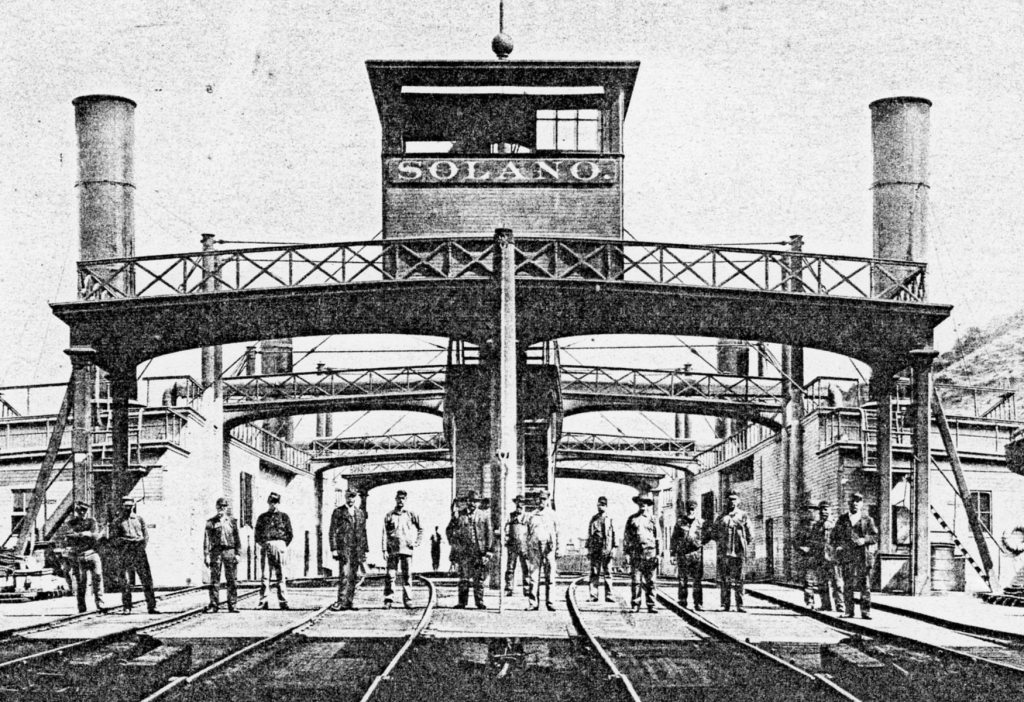
But the same year the Banta train depot was constructed, the Southern Pacific opened a new, shorter route from Sacramento to the Bay Area. This route crossed the Carquinez Strait, shaving off several hours from the old route over Altamont Pass. But since the Benicia-Martinez railroad bridge wouldn’t be constructed until 1930, trains were ferried over the Strait. Seriously. An enormous ferry dubbed The Solano was constructed for this purpose. Westbound trains would slowly chug over the Benicia Pier, roll onto the Solano, and make the half-hour trip to Port Costa, about a mile across the water. From there the trains would return to the mainline and continue to the end of the line in Oakland.
The new route.
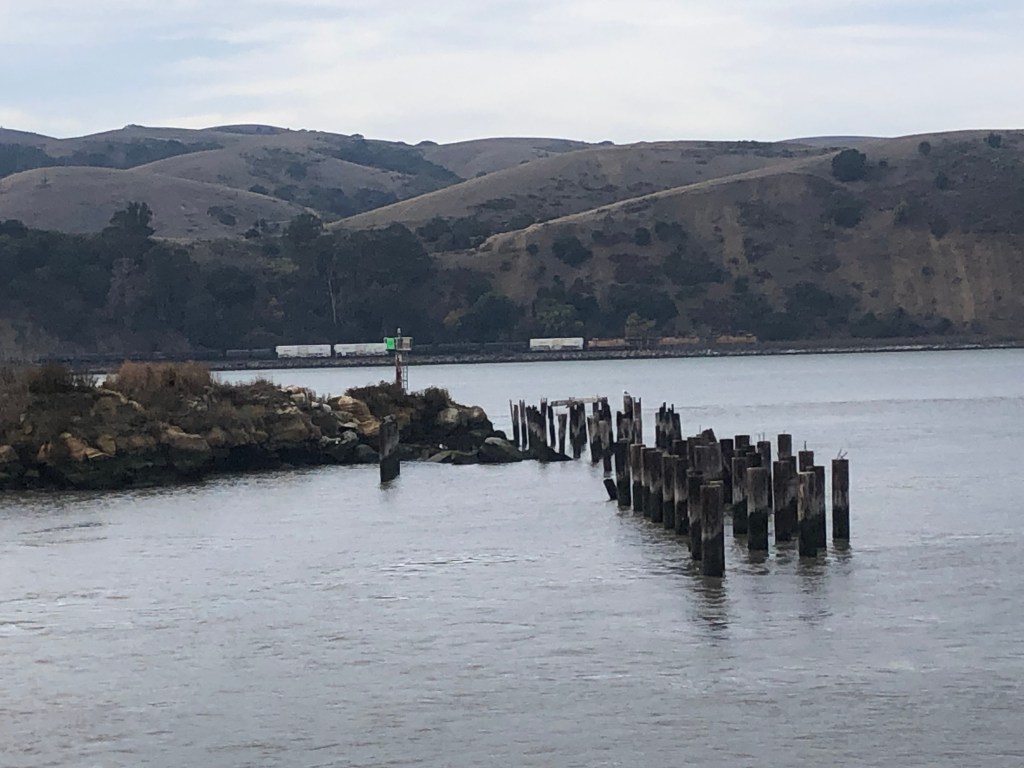
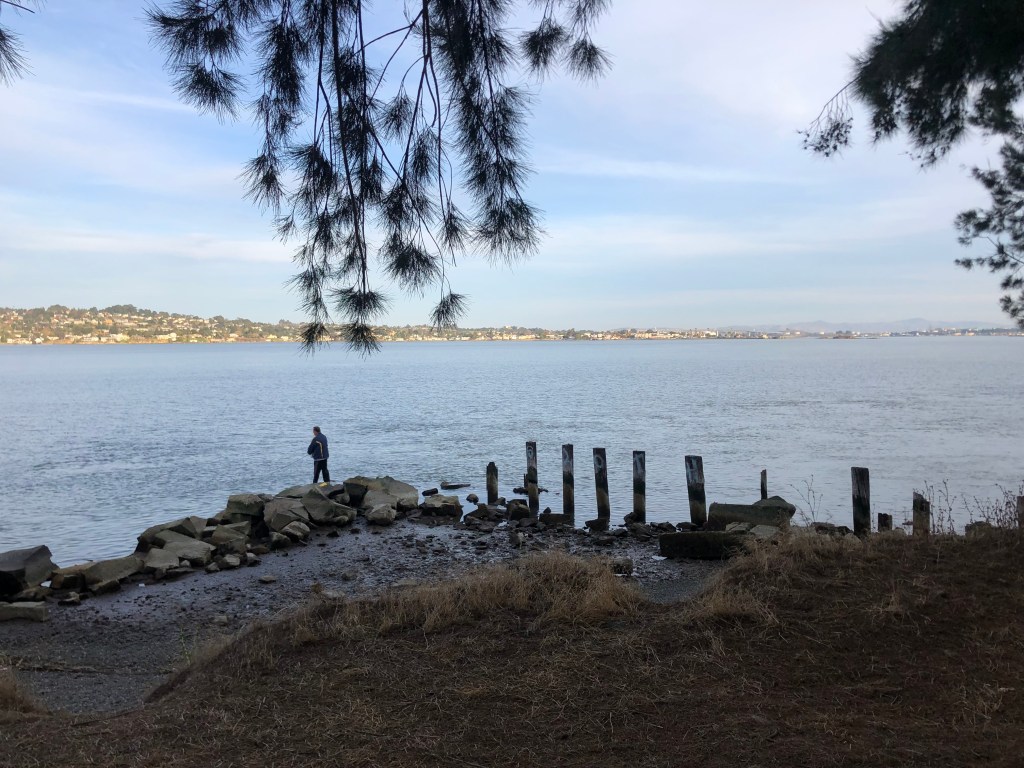
This morning I stood on Benicia’s modern fishing pier and looked out at the ancient pilings from the old pier where the Solano used to dock.
The Solano’s old haunt…perhaps literally?
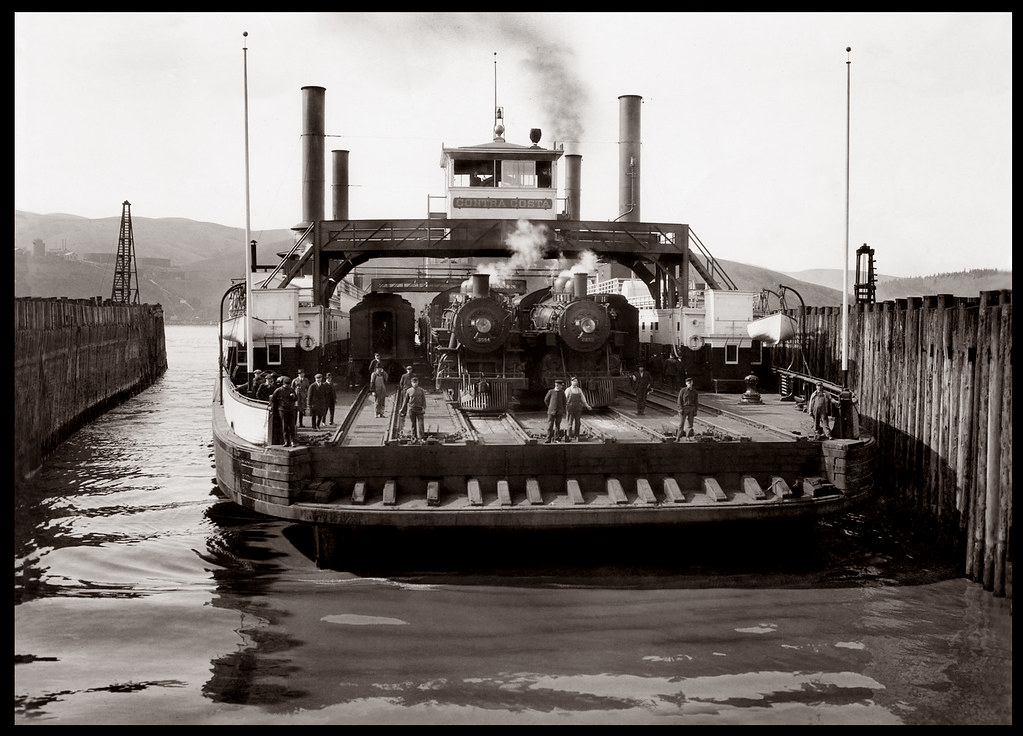
The Solano, which remained in continuous operation for 51 years, had a length of 425 feet and was equipped with four sets of tracks. It was the largest railroad ferry in the world.
Demand on the line increased continually, and eventually it was decided that a full-size railroad station was needed on the Benicia side of the ferry crossing. So in 1902, Southern Pacific uprooted that station they’d built in Banta, floated it on a barge to Benicia, and planted it where you see it today.
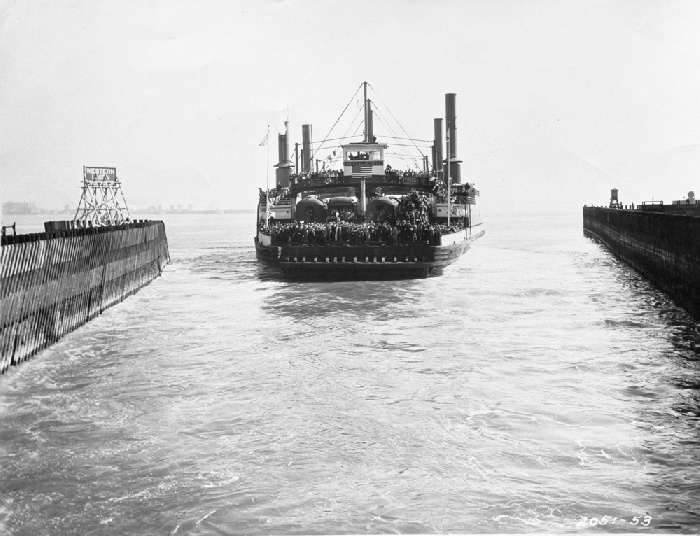
The Solano kept working around the clock, year in and year out. In 1914 she was joined by a sister ferry, the Contra Costa, to absorb the growing demand on the line. But then in 1930, the railroad bridge (which we encountered near the beginning of this post) opened, and the ferries instantly became obsolete. They made their last run in November 1930.
The final run, loaded with well-wishers.
So after exploring the depot and remains of the Benicia ferry pier, I enlisted son Ian to drive us to the other end of the ferry crossing, which was in Port Costa (pop: 200). Port Costa is a small, funky, historic town, replete with a Doggie Diner head. (People of a certain age may remember getting a hotdog at one of the Doggie Diner restaurants in the Bay Area in the 1960s or 1970s. I sure do! Those who don’t remember them can get enlightened here.)
Ian and a midcentury Bay Area icon.
After a bit of walking around Port Costa we came upon the remains of the southern dock of the Carquinez ferry crossing:
The Solano’s southern haunt. Benicia is directly across the strait.
So, for those of you keeping score at home, we’ve managed to find the depot from which ferry-bound trains departed, the remains of both ferry piers, and the bridge that put the ferry out of business. But what of the ferry itself?
A little Internet research revealed that the Solano was decommissioned and towed out to Antioch in 1931. There she was scuttled near the bank of the San Joaquin River and partially submerged to serve as a breakwater. She remained there, largely identifiable in her old form, for about half a century. But in the 1980s some clown was setting off fireworks and accidentally set The Solano ablaze, and she burned to the waterline.
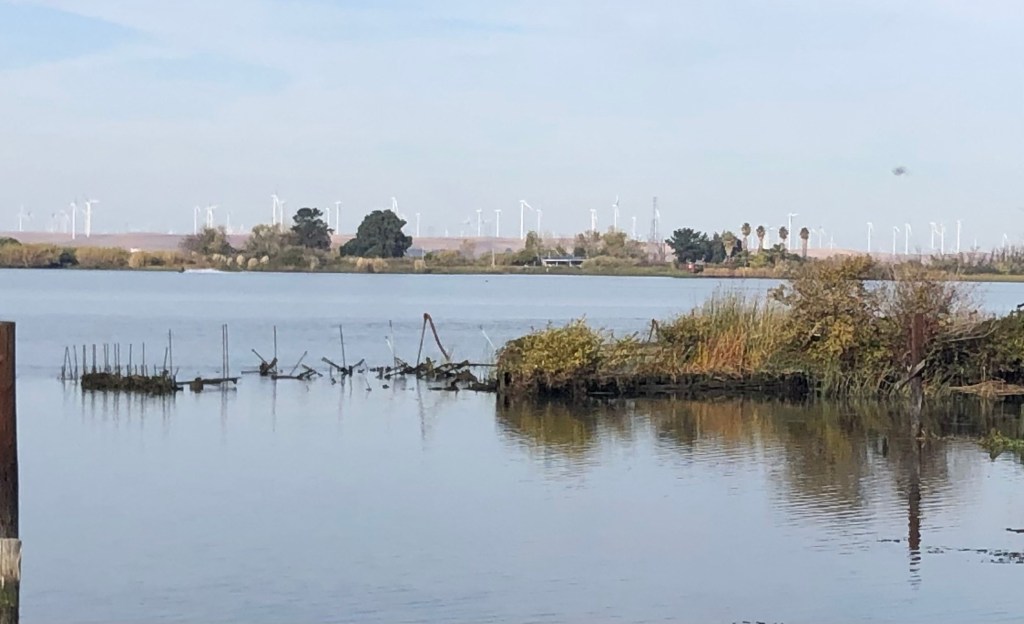
Naturally, Ian and I headed over to Antioch to see what remained of the Solano. The answer is “not a lot,” but there’s still a ghostly presence. Check it out:
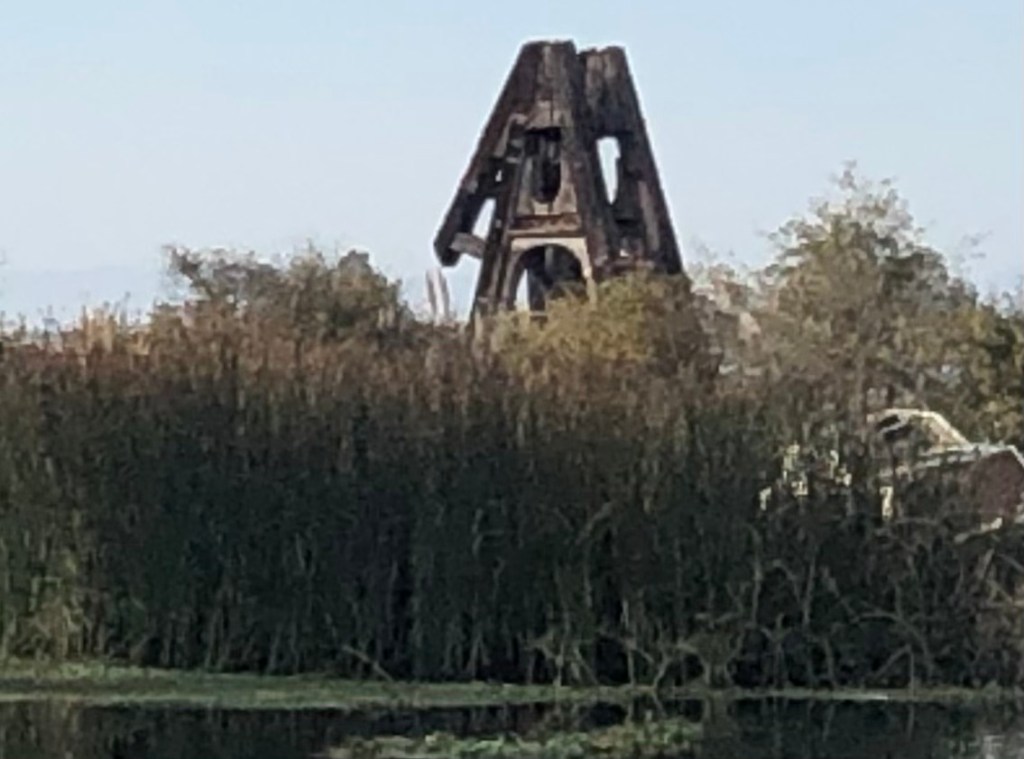
Remains of the Solano in Antioch. We’re looking at the port side of the ferry, with metal rods from the bow poking out of the water on the left.
The 40-foot-high A-frame that housed one of The Antioch’s two paddlewheel engines still rises from the wreckage.
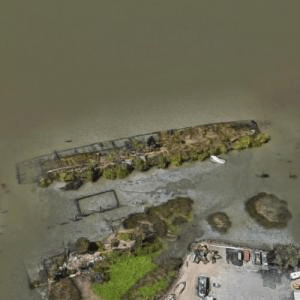
Aerial view, courtesy of Virtual Globetrotting, clearly shows the outlines of The Solano.
So that’s pretty much it. As always I’m struck by how physical barriers were overcome in the Age of Steam…and how remnants of that era can still be seen all around us, if we’re just willing to look.
For complicated reasons that aren’t worth getting into here, tonight’s cocktail was made by a professional: bartender Chris at the Bull Valley Roadhouse in Port Costa, CA.
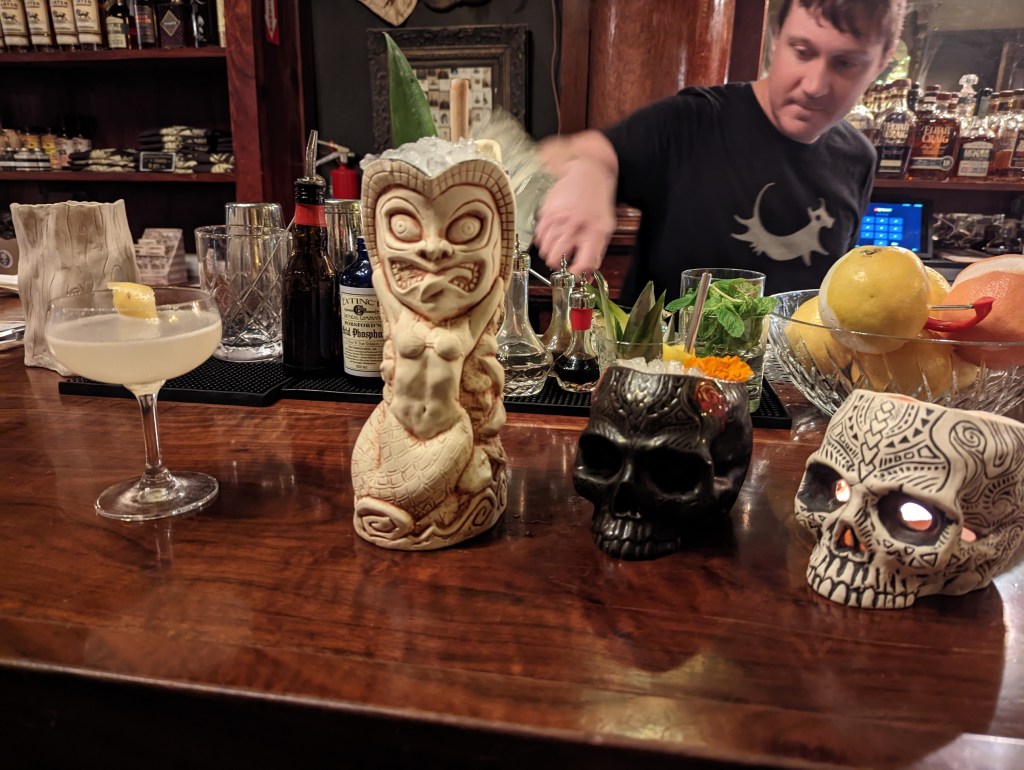
Chris plying his trade.
I asked Chris to make me a Halloween-themed cocktail. He said he didn’t have anything especially kitchy in his repertoire, but he did offer to make a Corpse Reviver. (Alert readers will recall I made one of these myself, after my misadventures with Chartreuse.) I ordered one of his corpse revivers, and he indulged me by adding a sidecar in the form of a little cauldron. Kitch triumphs!
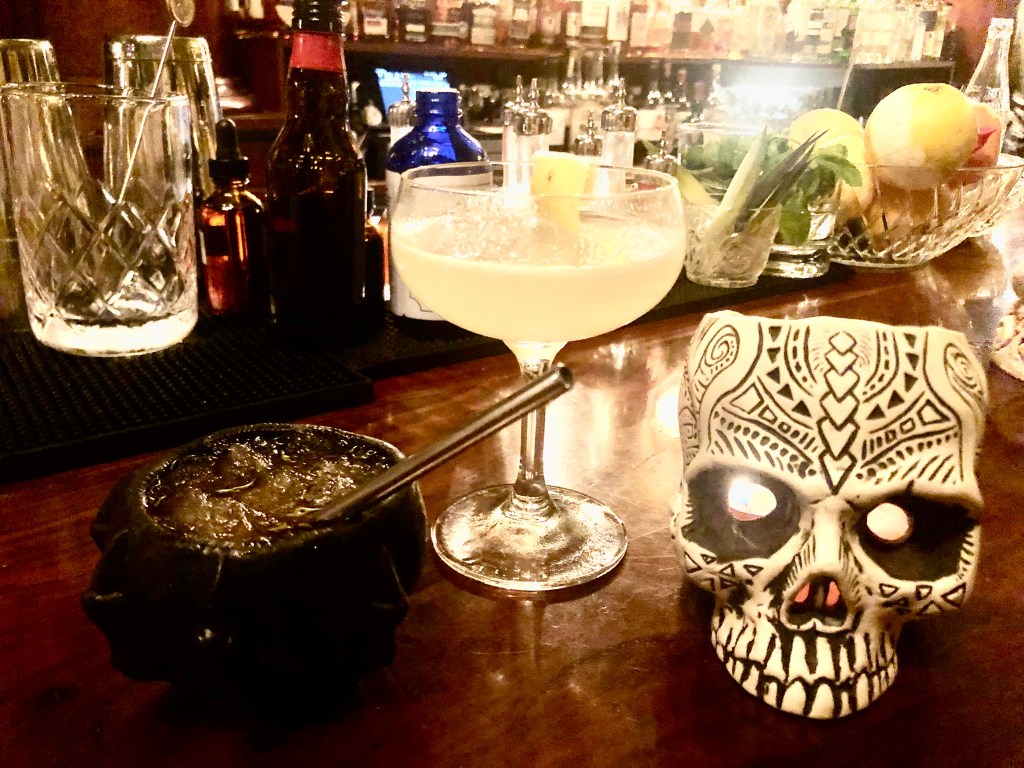
From left to right: Smokey Cauldron, Corpse Reviver, and random skull candle for ambiance.
Now, it’s worth acknowledging that his Corpse Reviver was far superior to the one I made. But what I want to focus on here is the sidecar. I’m going to call it a Smoky Cauldron, because (1) it tastes smoky, and (2) it’s served in a cauldron.
The Recipe: I don’t know the specific proportions of ingredients, but Chris tells me that the Smoky Cauldron uses mesquite rhubarb syrup, strawberry shrub, and mescal. It’s all muddled together in a cauldron with ice.
The Ratings: The appearance is just what the doctor ordered: Putting the drink in a cauldron is a great Halloween touch. The drink is dark and mysterious, with crushed ice giving it texture and reflecting the eerie lights of this dimly-lit bar. I have to admit the atmosphere of the bar definitely adds to the appearance of this drink. There’s a lesson in there somewhere. But the overall effect was just what I was looking for. I’m giving it 4 points.
Turning to the taste: The Smoky Cauldron is delicious! It’s very, very smoky (as a result of the mesquite and the mescal). This aligns with my personal preference for Scotch, smoked porters, and smoked meats. But beyond this, there’s an unusual mix of flavors that includes the aforementioned rhubarb and strawberry, and a sweet vinegar profile. There’s also something distinctly herbal. The overall effect is slightly unnerving and unique, but it’s also intriguing and makes you want to drink more. I give it 3.5 points for taste.
The name (Smoky Cauldron–which, admittedly I made up) is simultaneously fun, descriptive, and evocative of Halloween. 2 points.
Grand Total: 9.5 points.
My takeaway: I have to face that fact that I’m really not a good mixologist. Chris knows how to make a drink. And you’d be even more impressed if you saw him mix it. This experience forces me to recalibrate my judgments about cocktails. I’m getting the sense that much of what I might object to in some of the earlier cocktails was my own damn fault. Henceforth I’m going to try to be a little more like Chris.
 Chasing Phantoms