California history · Hydrology

Spooky Castle in the Sierra Foothills

As a child I was never sent to prison–though not for lack of trying. But if the law had caught up with me, I surely would have been sent to juvenile hall (a place invariably referred to as “juvie” when I was growing up). For I grew up in a more enlightened time than that of the unfortunate wastrels of the 19th century. In those days, northern California felons as young as 14 years old would be sent to San Quentin or Folsom prison.

And then, in 1889, the California Legislature passed legislation to create a state reform school for boys. It was a progressive idea for the time: Instead of serving out their terms in prison alongside more seasoned felons, underage boys would be sent to live together at a youth facility, where they would attend school, learn a trade, and eventually be reintegrated into society.
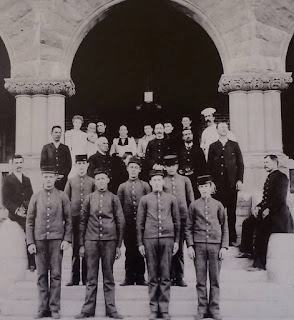
The new reform school’s first class (1894). All seven young men had been transferred from San Quentin.

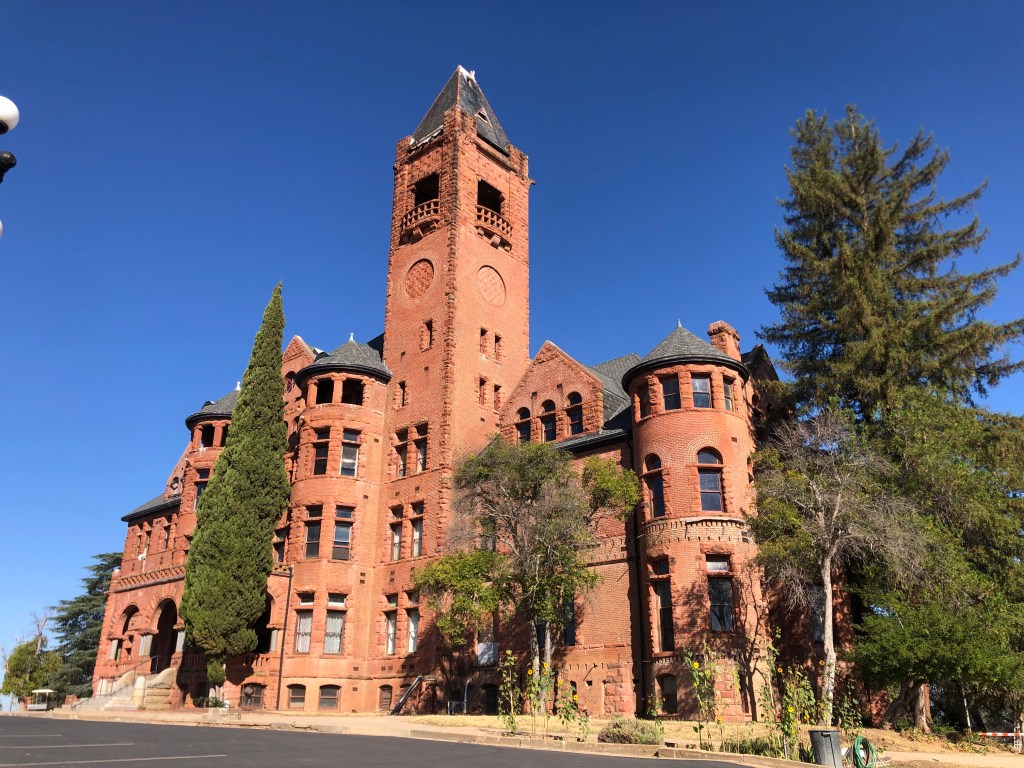
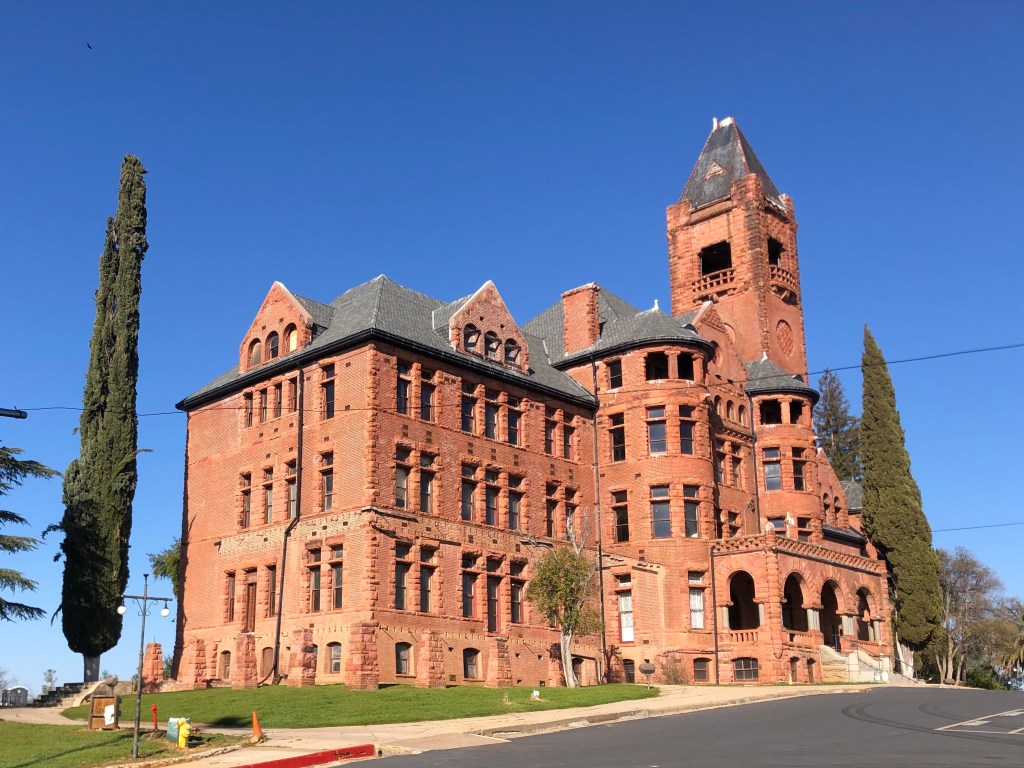
Originally the school was to be sited near Folsom Prison, but the Legislature ultimately decided to downplay the prison connection and place the new school in a more bucolic setting, amid the rolling, oak-studded hills of Amador County. They also gave it the milder name, “Preston School of Industry.” (Senator Edward Preston was the bill’s author.) Soon, an imposing, four-story stone building was being erected outside the tiny town of Ione, about 30 miles southeast of Folsom.
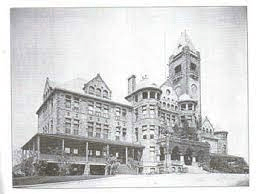
The Preston School of Industry, in all its Romanesque Revival glory.

Preston opened its doors to student inmates (they were officially called “wards”) in 1894, and it eventually housed up to 800 wards at a time from all of the state. They weren’t all felons; during the Depression it was not unusual for some impoverished families to abandon their boys to Preston, where they would be fed and clothed at the state’s expense. One Preston “graduate” who would go on to become famous was country singer Merle Haggard, who was sent there in 1954 after being convicted of auto theft.

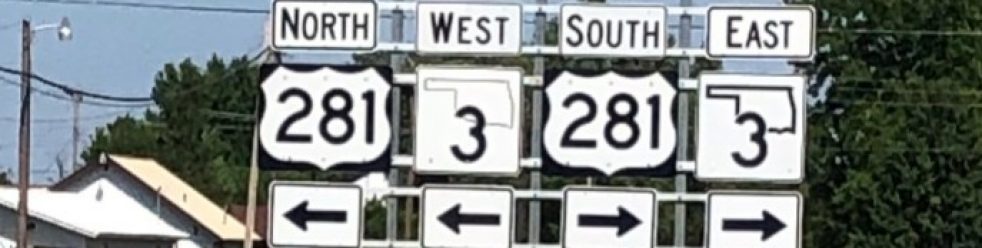
The Okie from Muskogee did a stretch at Preston School of Industry.

The Preston School of Industry was shut down in the late 1950s, when it was replaced with more modern facilities next door. The new facility adopted the name “Preston Youth Correctional Facility,” which, if you ask me, sounds less enlightened than “School of Industry.” The “new” facility itself shut down in 2011.
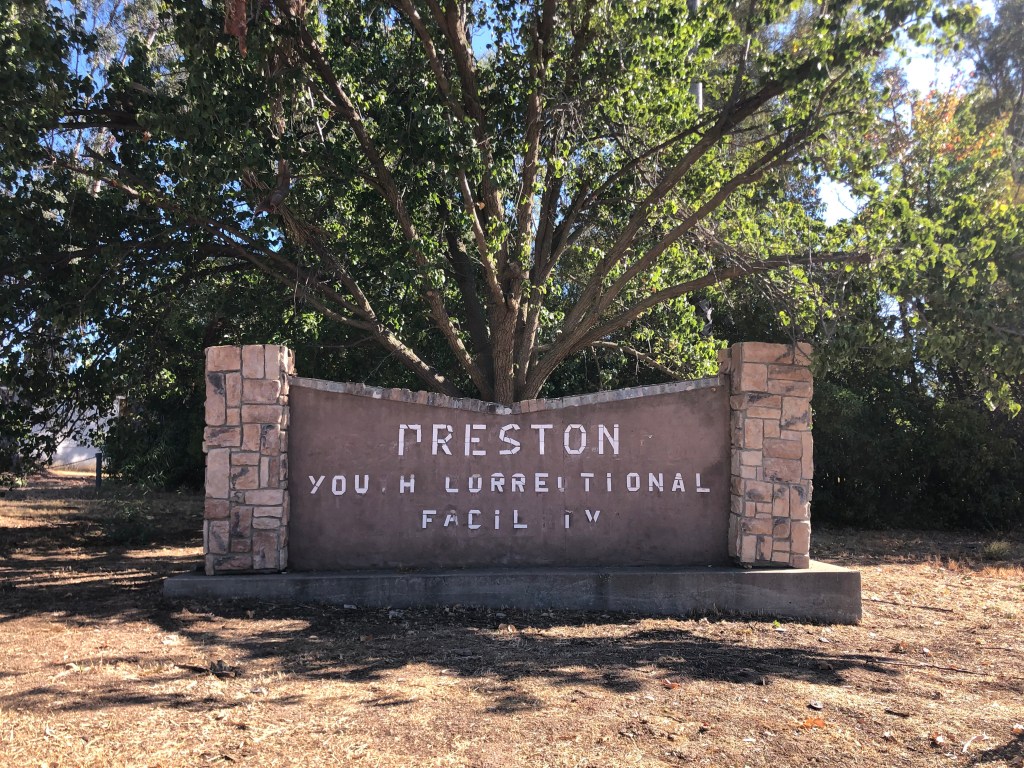
Well-intentioned step backward in nomenclature.

But what of the original building? The plan was to tear it down, and, incredibly, in 1960 the general public was invited to come in and take whatever usable pieces they wanted. Wainscoting, moulding, light fixtures, decorative tile, even parts of the slate roof were ransacked. But then local activists successfully fought to spare the building from the wrecking ball. The building became State Historical Landmark #867, and it’s been standing in a state of barely-arrested decay ever since.

Today I visited what’s now known as Preston Castle. It’s as imposing as ever.
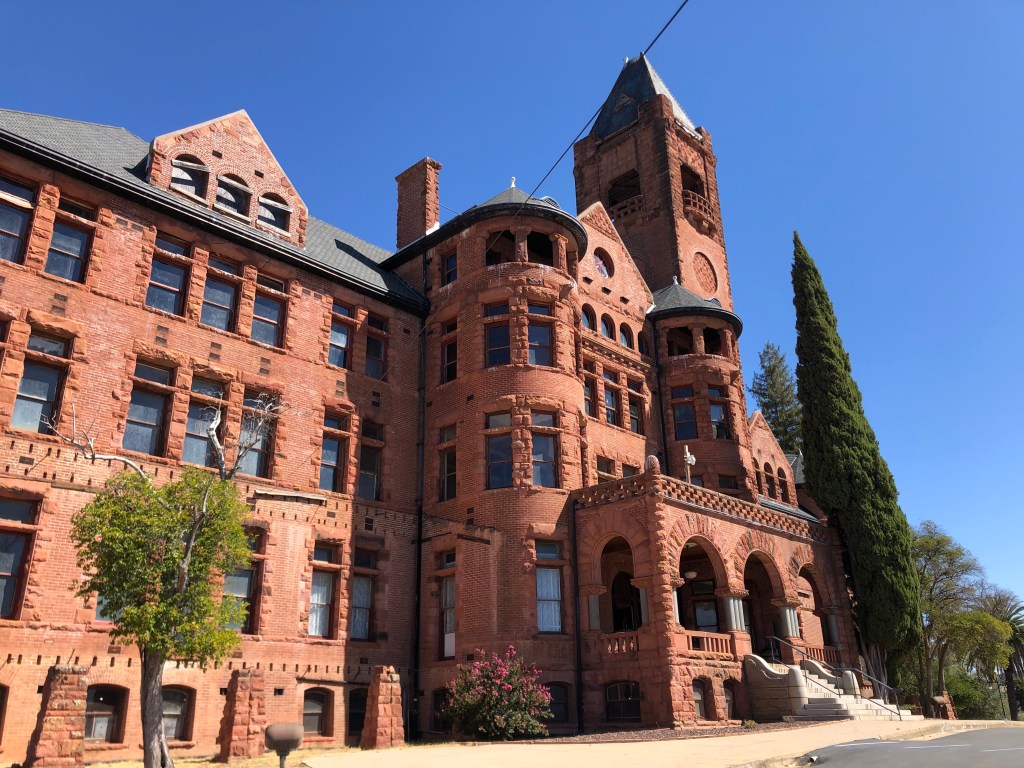
Can you imagine calling this home?
But be it ever so humble…

The building was open for self-guided tours today–the last day of the season, as it’s next going to be transformed into a haunted house for a Halloween fundraiser. From what I saw today, it won’t require much work to make it into a proper haunted house….
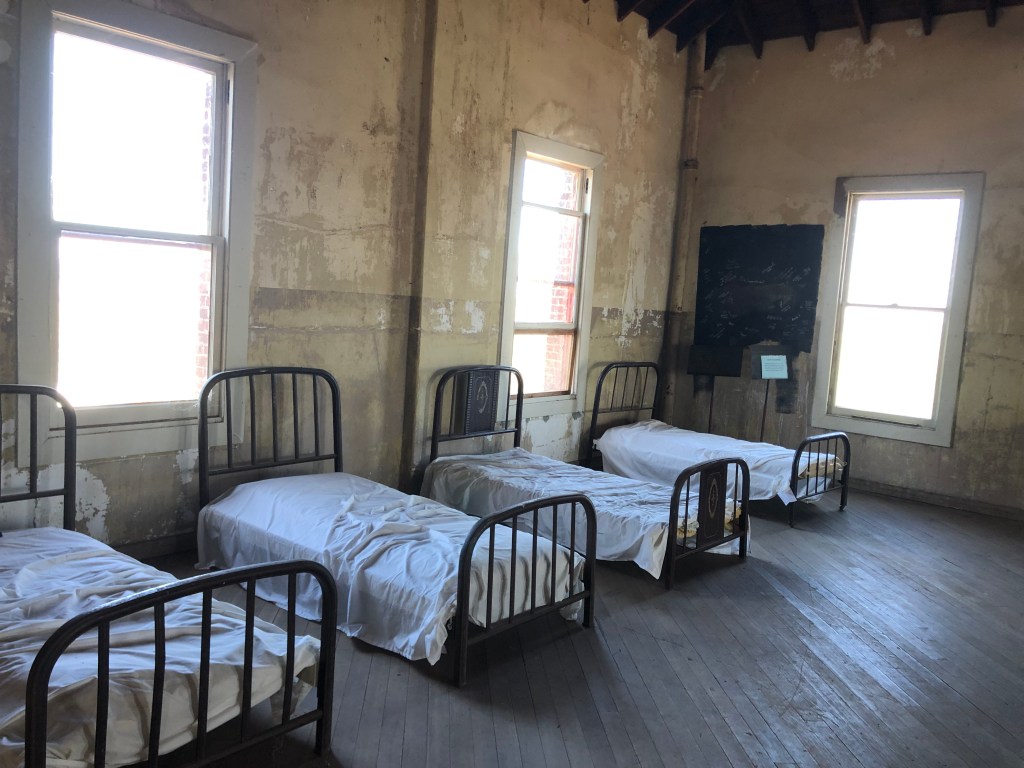
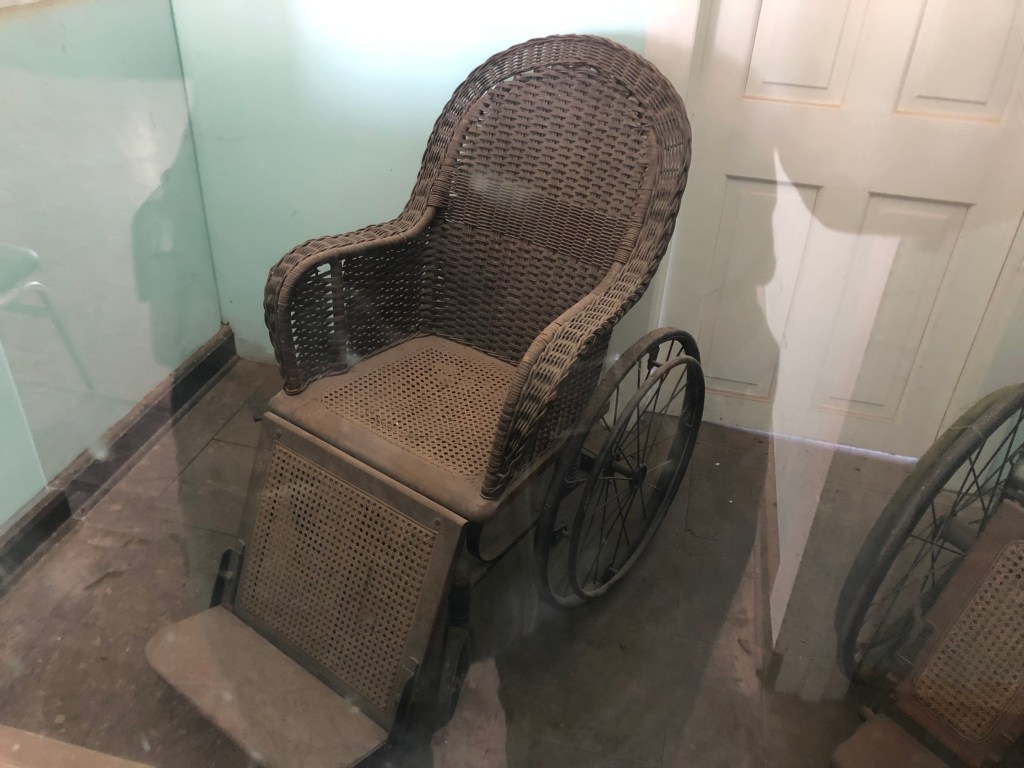
You know what’s creepier than a 100-year-old institutional ward?
…It’s a 100-year-old institutional wheelchair.
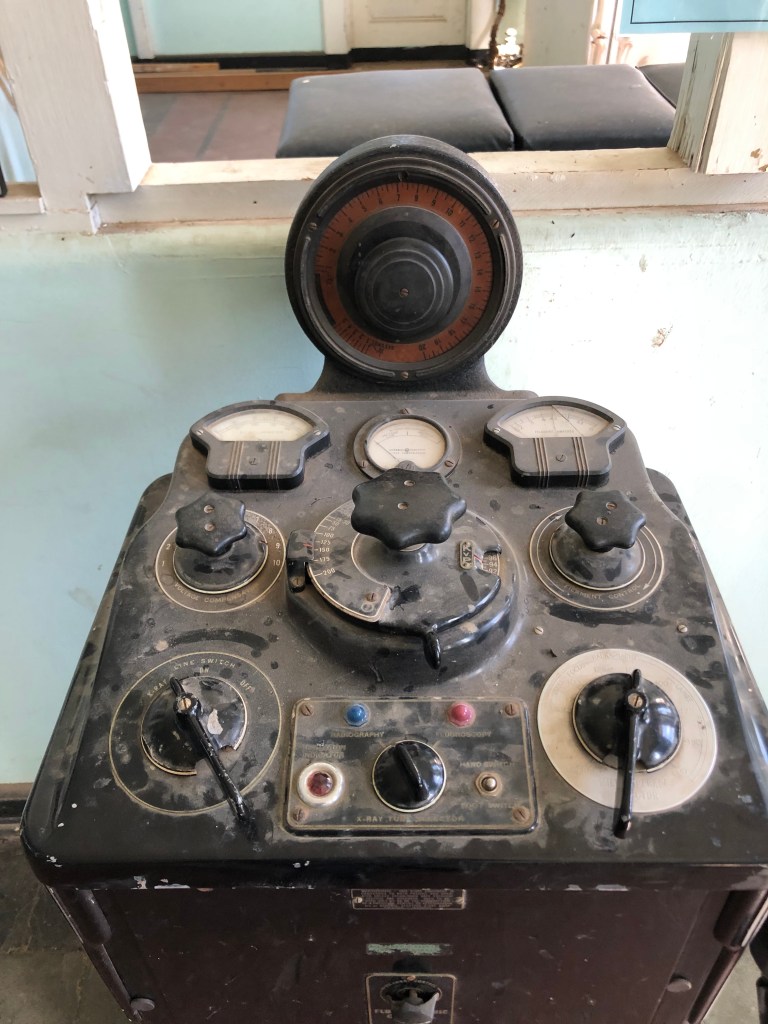
Runner up is this old-timey X-ray machine.

And then we have the infamous “plunge.” Newly-arrived wards would be stripped, shorn, and then required to swim through a chemical pool to rid them of lice and other bugs. I’m not making this up. (Some accounts say the pool was filled with lye, though I haven’t been able to confirm that.)
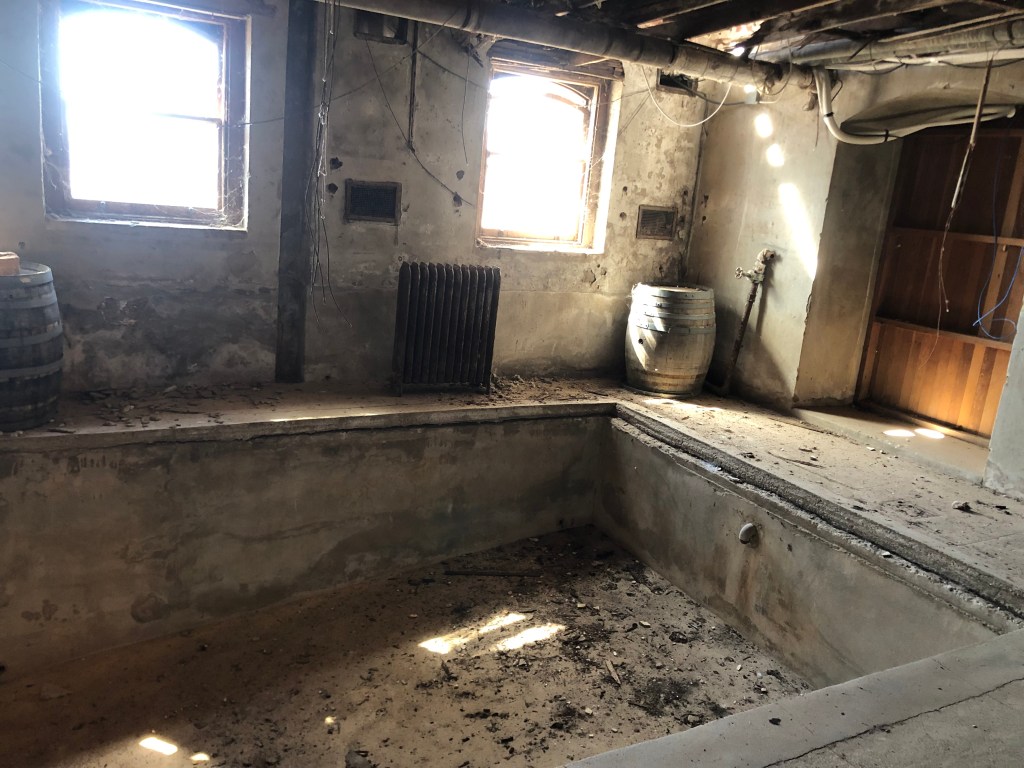
The Plunge. What? No jacuzzi?

Overall, a palpable sense of despair hangs over this place. I’m sure part of it is due to the state of decay. But the history doesn’t help.
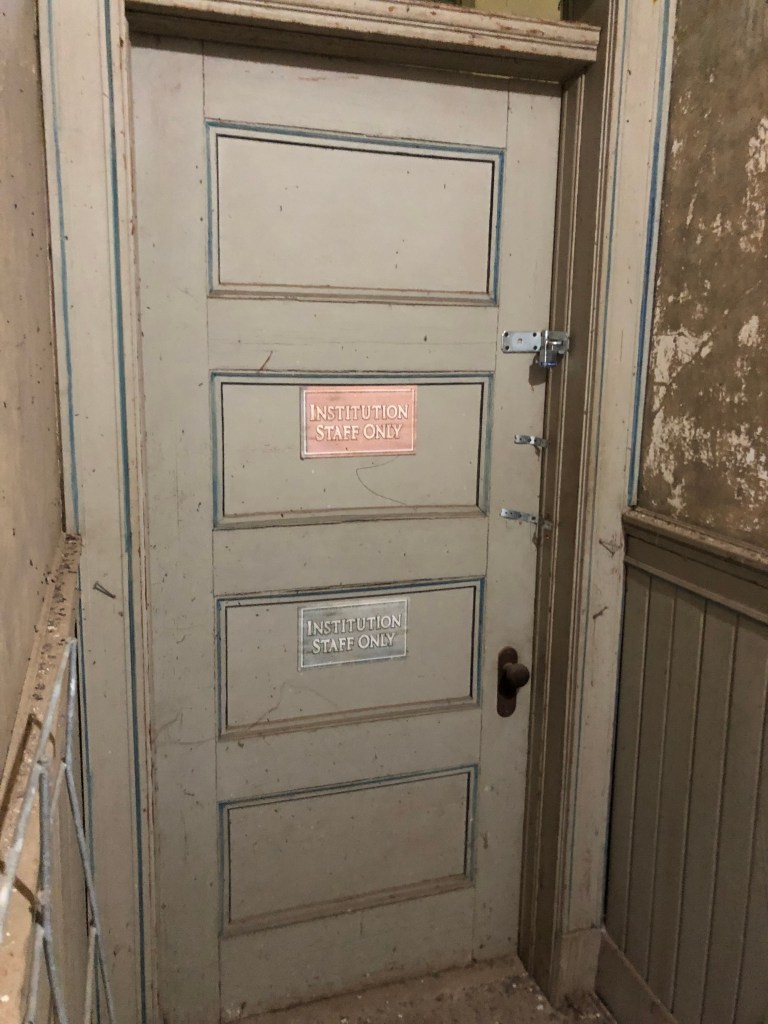
As if anyone else would want to darken that doorstep!

I noted that the Castle contained some innovative features. For example, it boasted a late-19th-century elevator, prior to electrification. The device was powered by water pressure. Alas, the elevator was soon deemed too slow and an unnecessary waste of water in the dry foothills, so it was removed. (From that point forward, everyone had to use stairs to move between floors in the four-story building.) But the lift mechanism remains today in the dusty basement.
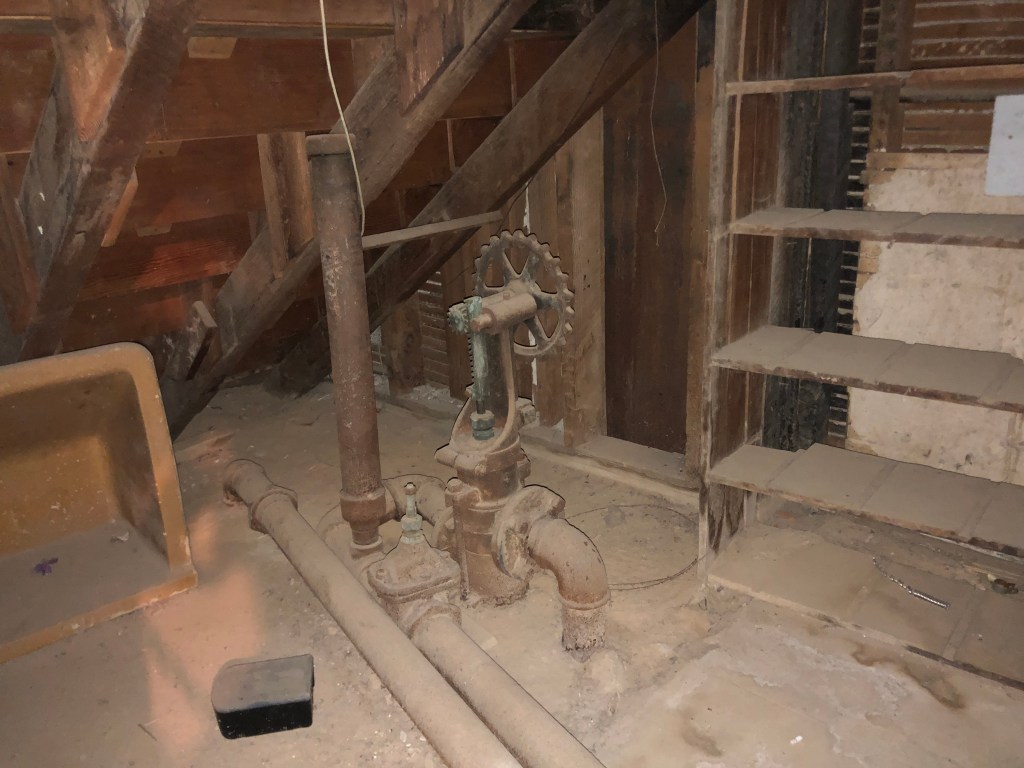
Abandoned lift mechanism for Preston’s water-powered elevator.

Another water-related innovation is the fire escape. It’s actually a spiral slide within a metal tube, which utilized a spray of water to lubricate the trip down. I’m not making this up either.
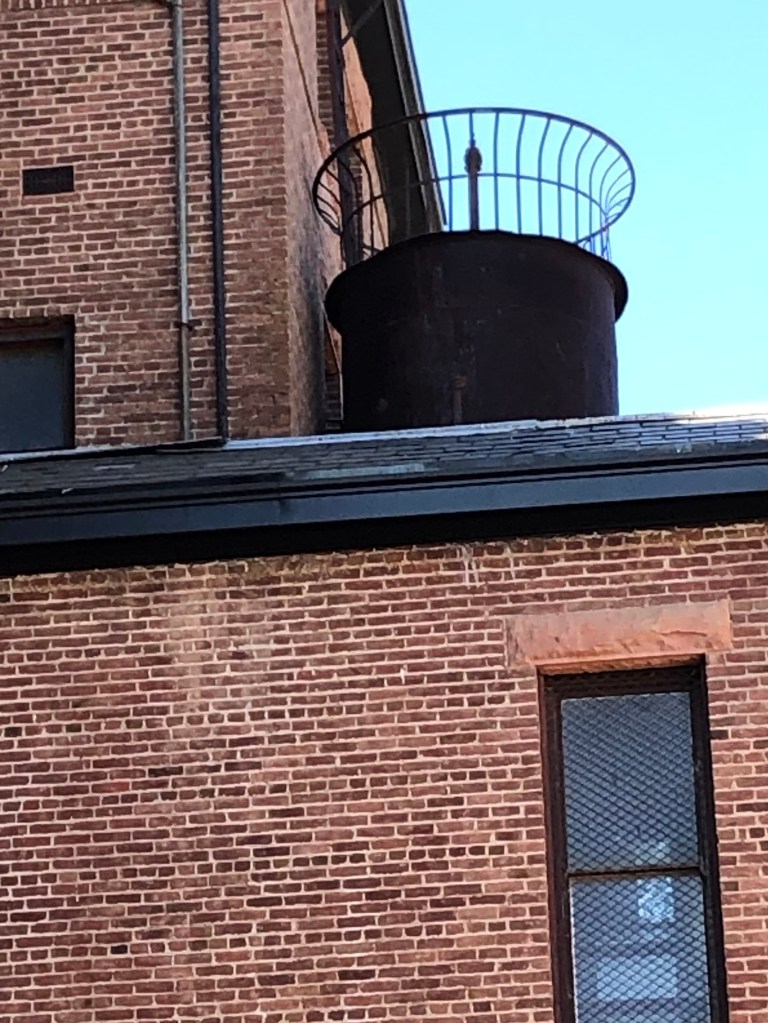
Top of the fire escape/water slide. Eat your heart out, Six Flags!

The only bright spot I observed during my visit was the reading room which adjoins the building’s library. You can still feel the lightness of spirit afforded by an open space and a good view.
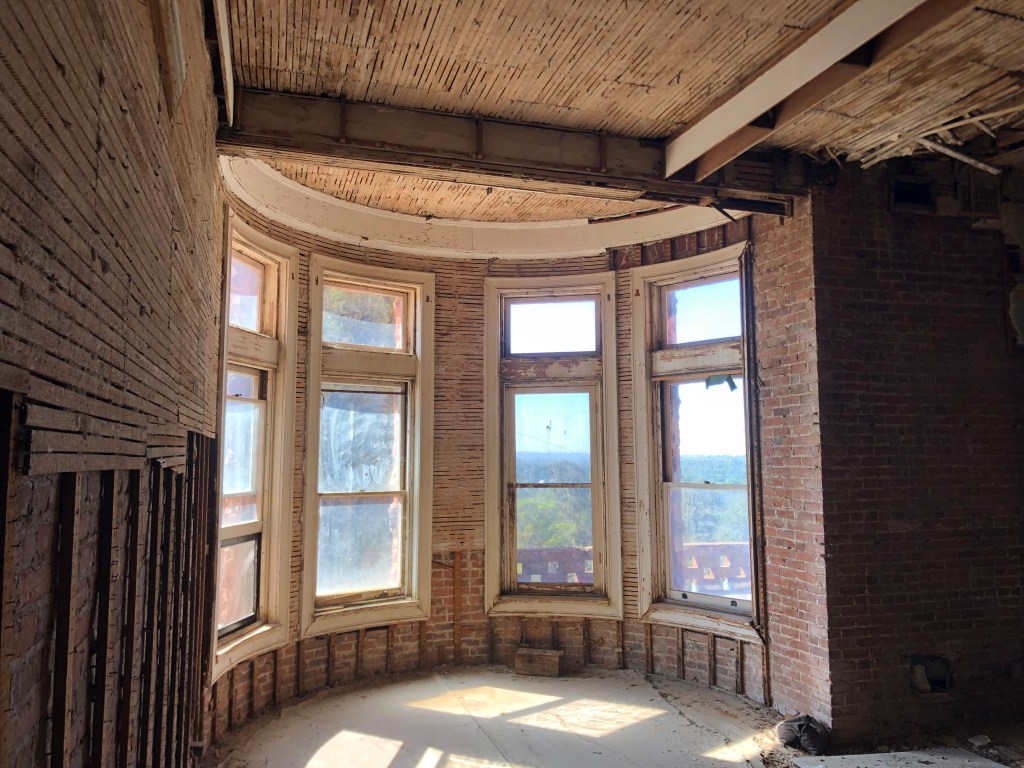
Refuge for reading.

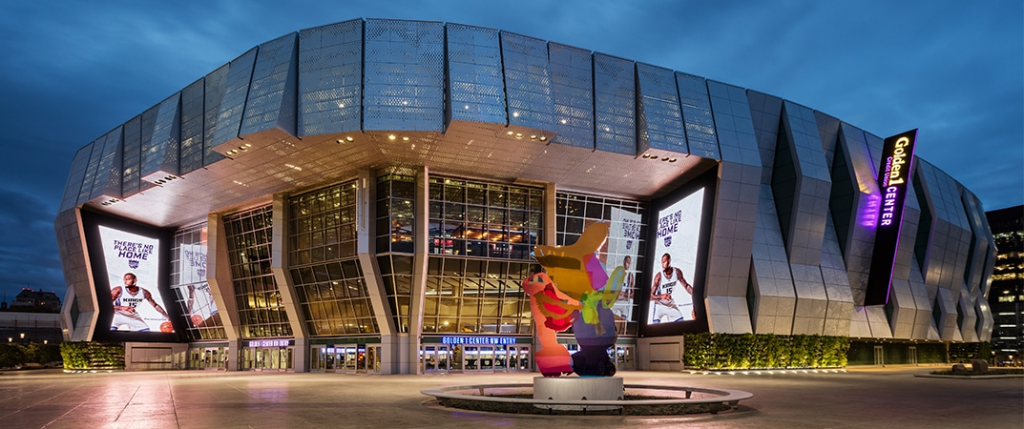
So, what to make of all this? First, I think we all owe a debt of gratitude to the original activists and to the Preston Castle Foundation for preserving this piece of history. Preston Castle is a stunning structure with a fascinating past. Second, I think we’re well advised to continually revisit the topic of how we’re dealing with the state’s youthful offenders. I’m of the opinion that we as a society must stand up to antisocial behavior…but, at the same time, I believe that no one is irredeemable. I don’t know how to balance those two thoughts, but I do have some confidence in this third point: Public institutions should pay some attention to architectural style. I’m looking at you, Golden 1 Center.
California history · cemeteries · Hydrology

Underwater Towns

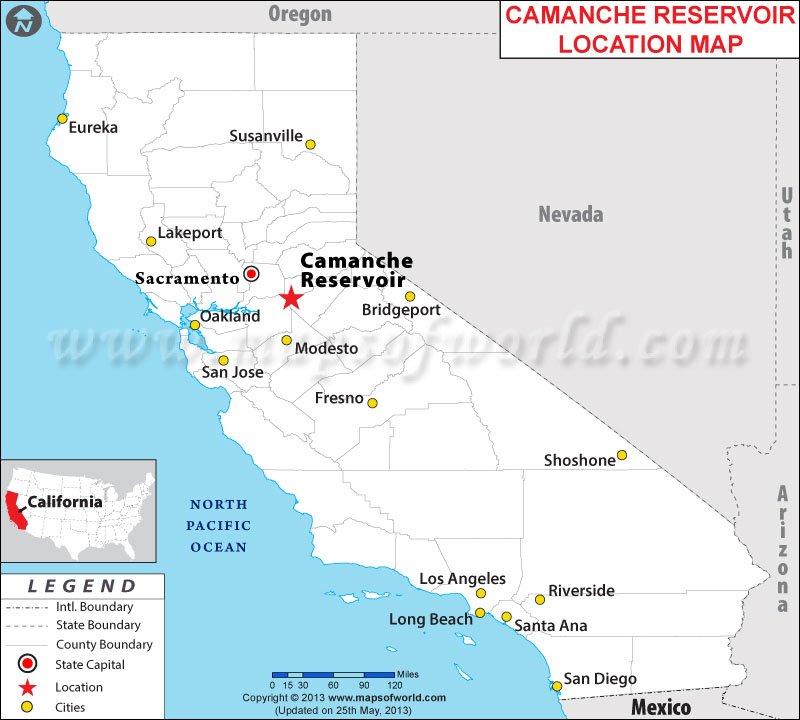
Back when I was a babe (shockingly, no one calls me this anymore), the good folks at the East Bay Municipal Utility District (East Bay MUD) decided to dam the Mokelumne River in the Sierra Foothills, thus creating a reservoir that would supply the growing population of the East Bay with reliable drinking water. They named the reservoir Lake Camanche.

I vaguely remember the too-good-to-be-true commercials, featuring over-excited sport fishermen and giddy children playing at the beach, that were broadcast over the fuzzy UHF stations on our ancient television set in the late 1960s. The commercials sought to entice families to buy undeveloped land that, thanks to the creation of the reservoir, had suddenly become beachfront property. The sales pitches belong to a mildly ineffable class of advertisements that evoke tropical beaches improbably appearing in the shrublands of California’s dry foothills or, say, the deserts of northern Arizona. Here’s a good example of the genre. For an illustration of how these schemes can go wrong, see my post on the Salton Sea.

Anyway, although new communities were springing up on the north and south shores of Lake Camanche, several historic settlements found themselves underwater–literally. By damming the Mokelumne River, East Bay MUD flooded several gold rush towns: Lancha Plana, Poverty Bar, and Camanche. The first two were unihabited ghost towns, but Camanche still had some residents and a functioning post office that had to be relocated. (Camanche had been named by settlers in the 1850s after their home town of Camanche, Iowa.) Today, the towns sit under about 150 feet of water. It’s said that scuba divers occasionally explore the submerged remnants of the old towns.

Now, the Sacramento region has been experiencing unusually warm temperatures this week, feeling more like mid-spring than mid-February. And if that’s not a good enough reason for a retired chap to take a little road trip down to Lake Camanche, I don’t know what is.

Thus I found myself heading south from my newish stomping grounds near Placerville, down to an area where Amador, San Joaquin, and Calaveras Counties meet. (Most of the trip followed Route 49, which I described in a recent blog post.)

As I got close to Lake Camanche, I passed through the town of Ione (pop: 8,600). It’s a historic, quaint, and reasonably prosperous little community that no doubt will be the subject of a later blog. But for now, let’s just observe that Ione is home to the historic Preston Castle, which had been a reform school for boys that was built at the end of the 19th century. It’s said to be haunted, and for that it will likely be the subject of a blog in October.

You should see it at night.

When I finally arrived at Lake Camanche, I was somewhat disappointed. Let me enumerate the three reasons for my disappointment:

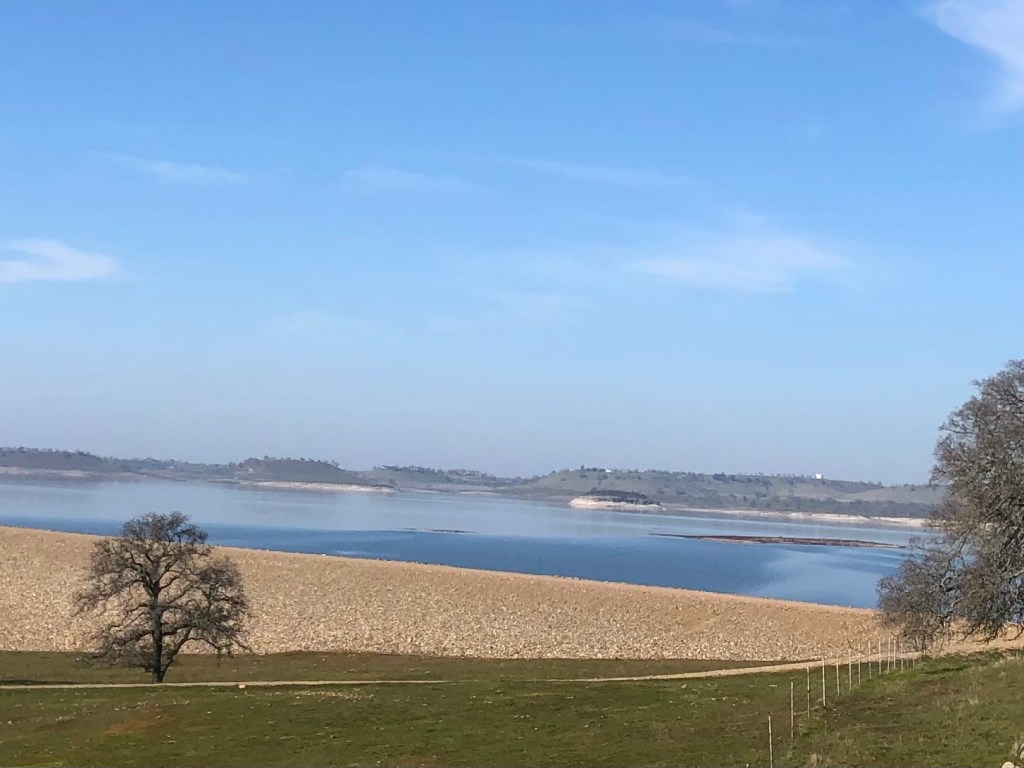
Camanche Reservoir, behind a dike.
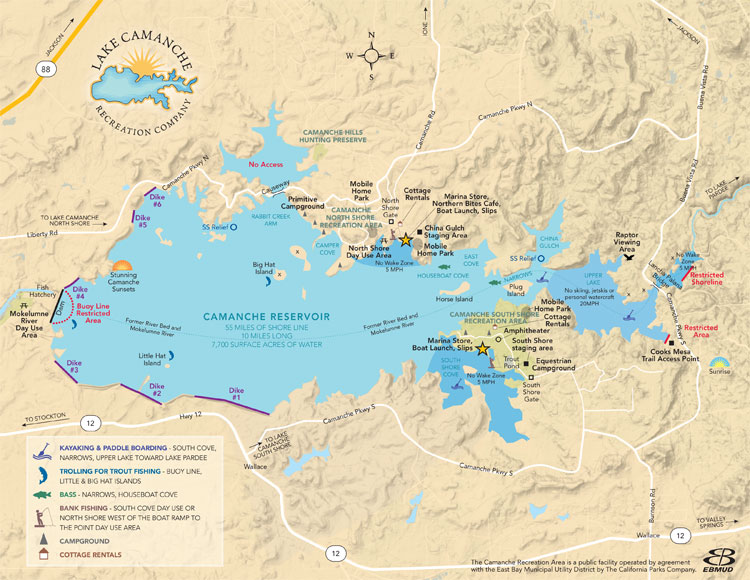
  1. There is limited public access to the lake itself. You can pay day use fees to enter at the boat launch, but I couldn’t find any shoreline drive to cruise along. I guess I should have brought a boat.
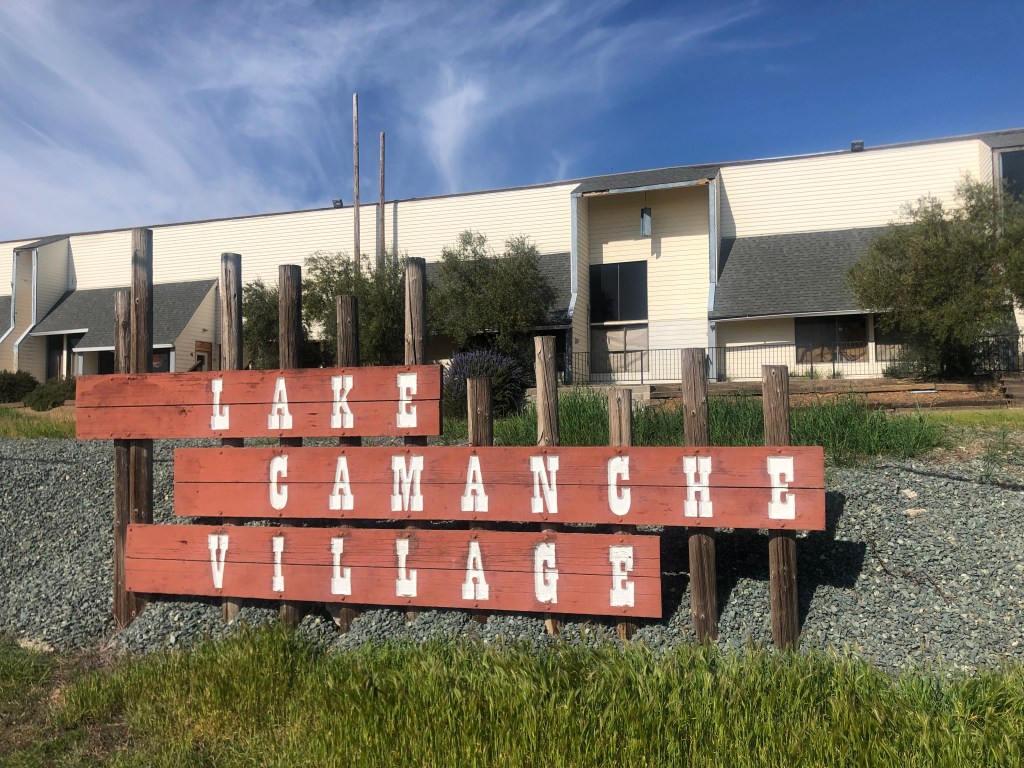
  2. The communities around the lake never seem to have properly taken root. I saw no evidence of viable commercial districts, neighborhood parks, or even a decent brewpub. What little infrastructure I encountered was abandoned and/or decrepit.

3. Although recent news items spoke of how California’s drought has exposed ruins that normally reside under water, major rains this past December re-covered those historic remains and I was unable to find any evidence of those three historic towns under Lake Camanche.

Somewhere under Lake Camanche

Incidentally, although Lancha Plana had no population when the reservoir was being developed, it did have a cemetery. East Bay MUD decided to move the graves to another location…as if somehow, after over a hundred years, it would be cruel to put a lake over the cemetery. But such are the expectations of civilized society. Let’s just hope they learned the lesson of Poltergeist.

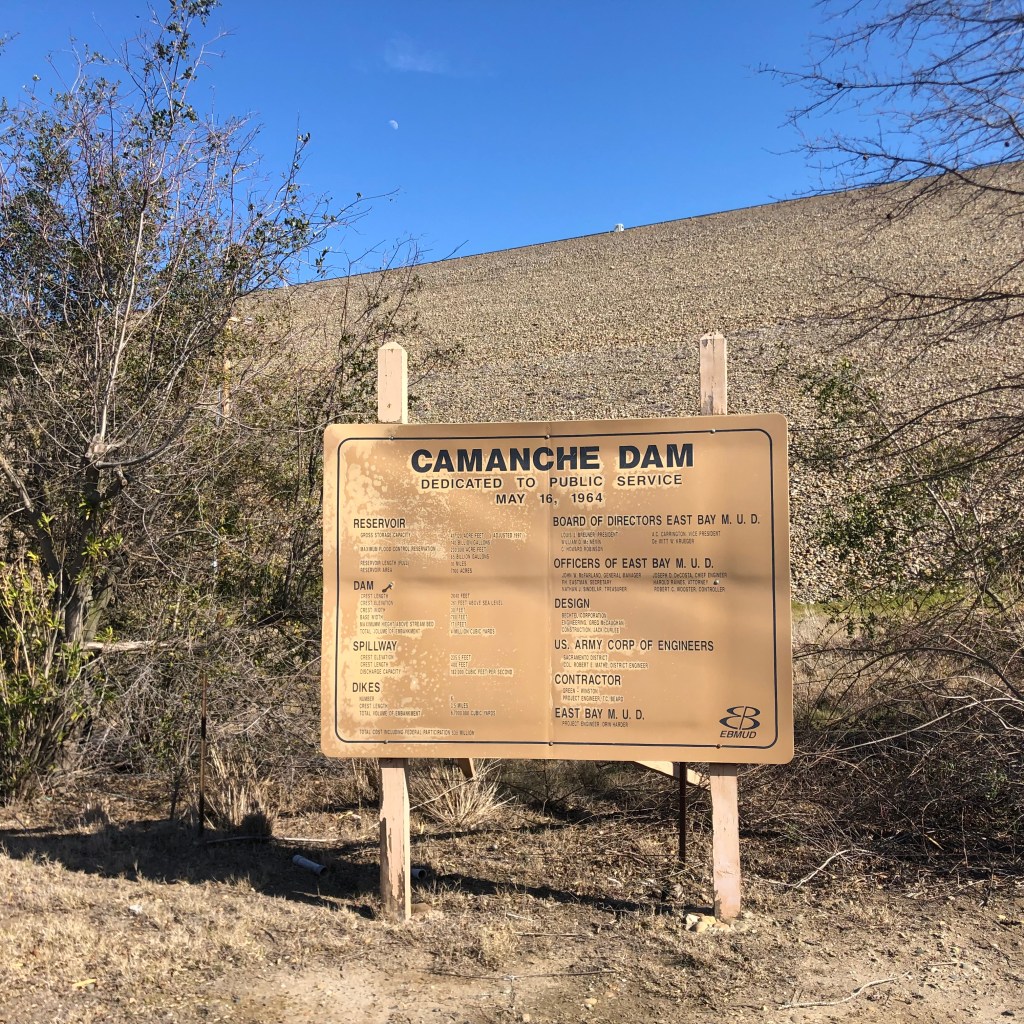
Still, even without encountering drought-exposed ruins, the visit was a good one. I took a pleasant drive more or less around the lake, with glimpses of the blue water and, more often, views of the surrounding hills. Eventually I came to Camanche Dam, which stops the Mokelumne River in its tracks.

A few stats about the dam, which was constructed in 1964: it’s 2640 feet long and 261 feet high, holding back up to 241 billion gallons of water. For those of you who can’t wrap your head around that number, it equates to about 107 billion cases of beer.

Weekend Drowning At Lake Camanche | myMotherLode.com
Is it just me, or does anyone else think the reservoir is in the shape of a guppy?

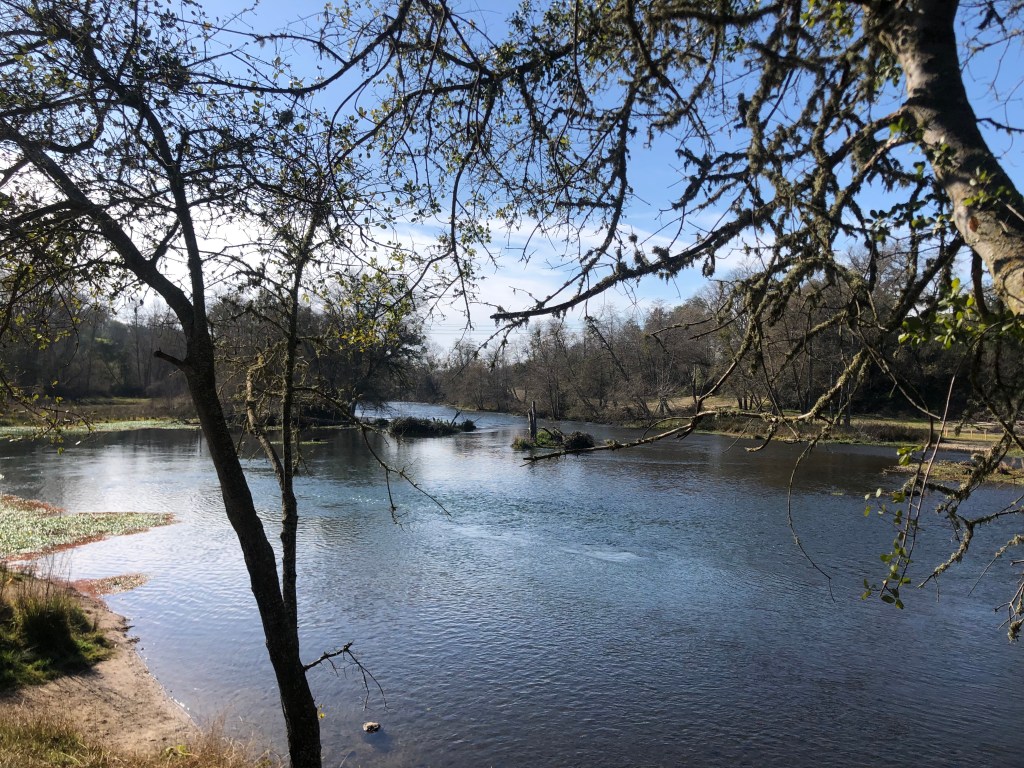
Here’s the placid Mokelumne River shortly after it passes through the dam.

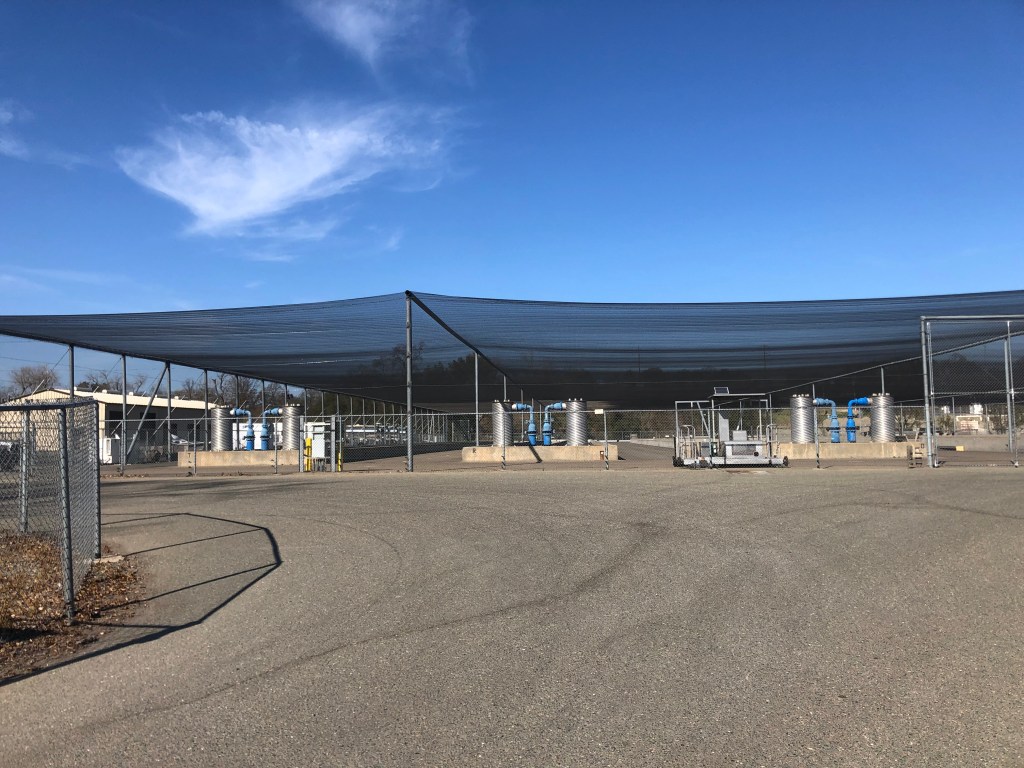
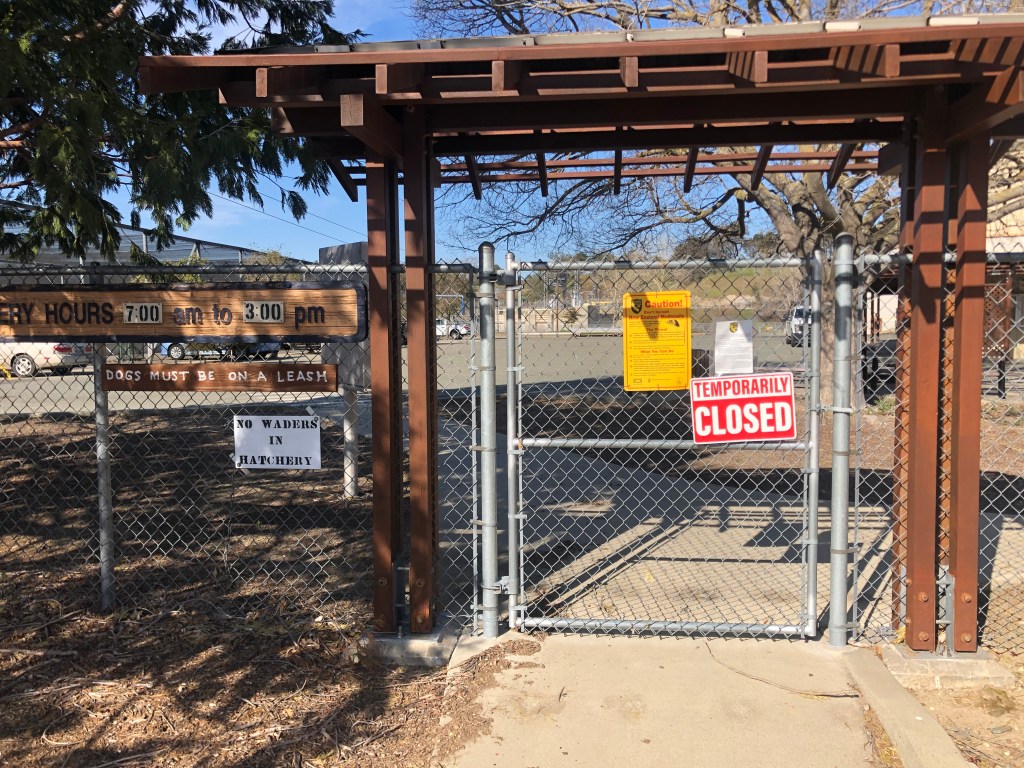
Near the reservoir there’s also a fish hatchery, which is used to restore Chinook salmon and steelhead whose kinky sex lives were impeded by the dam. Sadly, the facility is now “temporarily closed” to visitors.

Well, that’s kind of it. Without a watercraft or scuba gear, there isn’t a whole lot to do around Lake Camanche. With a final glance at a few anglers attempting to hook, kill, and presumably devour some of the recent graduates from the fish hatchery, I got back on the Speedmaster and headed for home.