Cars · movie theaters · Road trips · trains

A Stew-pendous Day

This morning I awoke around 7:15, and looked out my window to see the world still cloaked in darkness. I figured it was still too early for the sun, since I was on the western edge of the eastern time zone. After my morning ablutions I returned to the window, but it was still dark outside. I looked up to see a blanket of black clouds covering the sky. The sun was entirely AWOL.

Undeterred, I got in my rental car and began to head out of Albany. But as I was passing through the historic downtown what do you think I saw? Yes, it was another Union Station. For those of you keeping score at home, I’m now up to four on this trip.
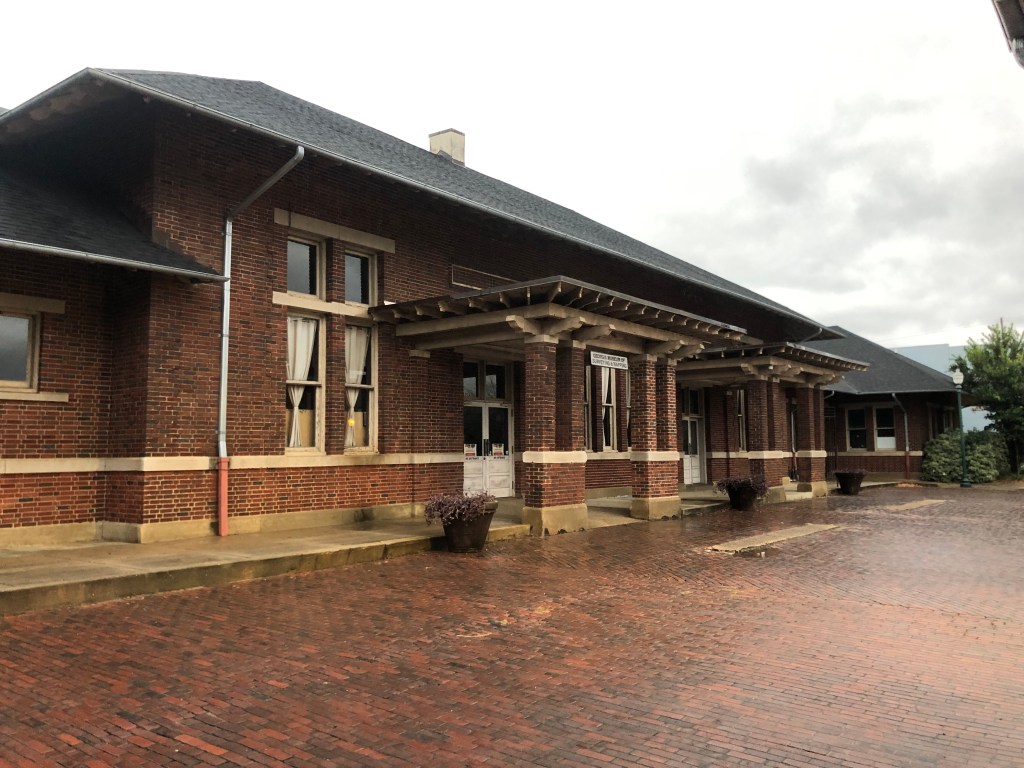
“Look for..the Union la-ble….”

Albany’s Union Station was constructed in 1913. It replaced an earlier depot that had been built in 1857, but wasn’t able to accommodate the vast increase in rail traffic. Union Station continued to serve trains until 1971, after which it was slated to be razed. However, preservationists in the town mobilized to protect the building from the wrecking ball that was knocking down so many old buildings in the 1970s. Union Station was placed on the National Register of Historic Places in 1975.

The station was renovated and became a museum. It was part of a larger “Heritage Plaza” project that includes several other historic buildings, including the old freight warehouse. There’s also a Georgia Northern steam locomotive and rail cars on the tracks behind the station.
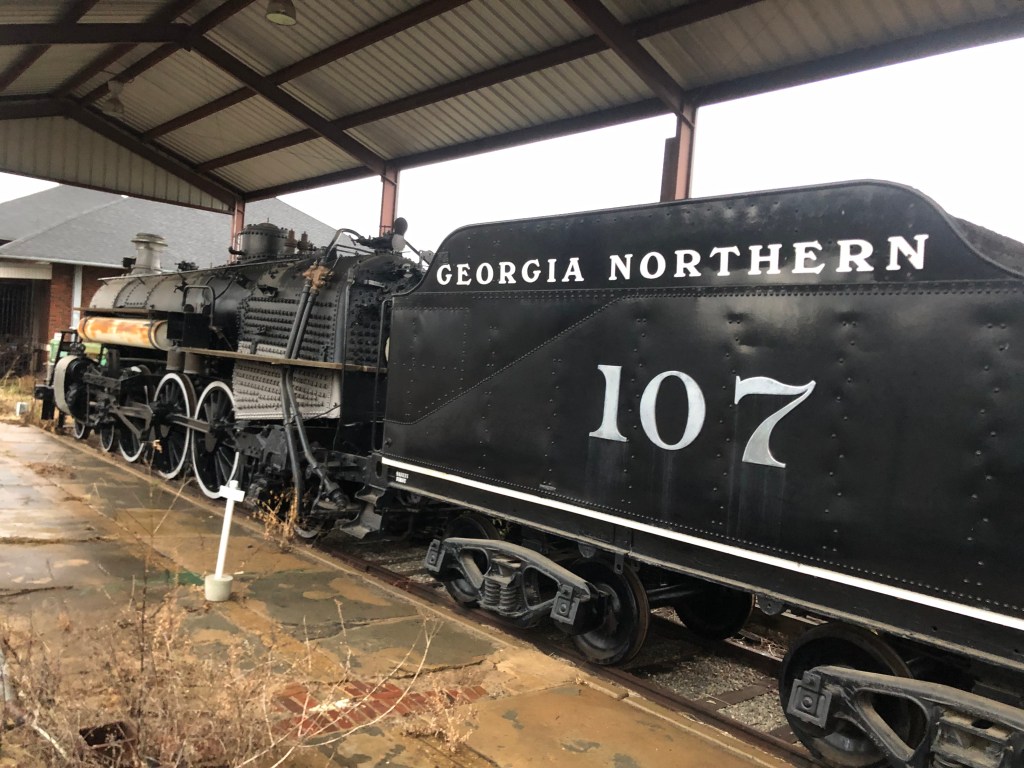
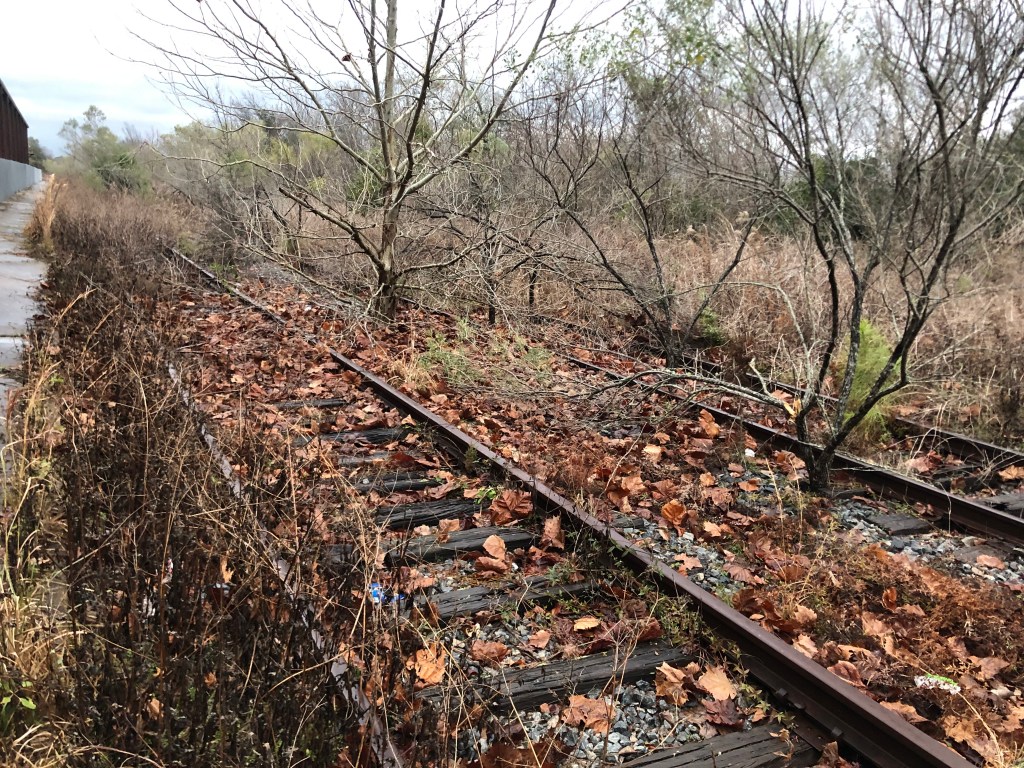
Looks like it’s been awhile since trains ran on Union Station’s tracks.

Having gotten my daily Union Station fix, I got back onto US 82 East. The wind had picked up and it was beginning to rain. As I drove out of town I saw public works crews blocking off streets and clearing drains.
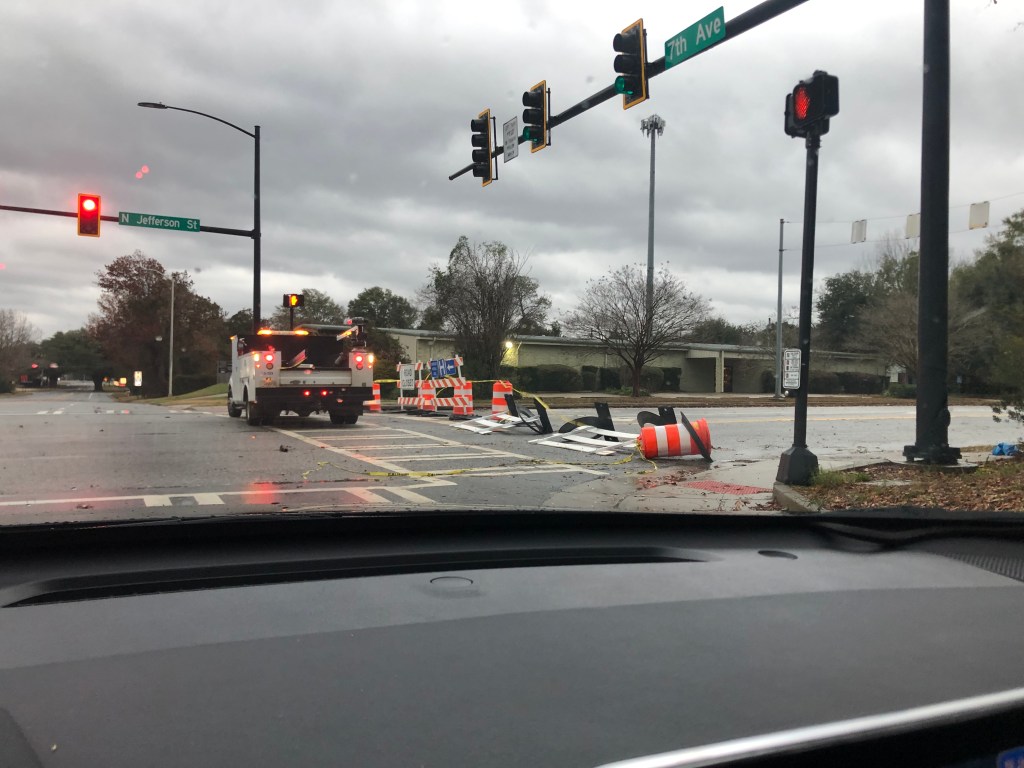
Do they know something I don’t know?

Then, all of a sudden, the leaden skies fully opened up, and lightning started flashing like paparazzi from hell. This continued for the rest of the day. And in the mid-afternoon I started receiving tornado warnings on my iphone.

Thankfully, US 82 was not closed down by the storm, so I carefully made my way across Georgia with my wipers working overtime and only a few incidences of hydroplaning.

Because of the weather, I didn’t make many stops today. But I did break for lunch in the city of Waycross (pop: 14,000). Like so many of the places along Route 82, Waycross sprung up as a railroad town. In fact, its name references the town’s location at the intersection of six railroad lines. The town’s large, 1911 railroad station (can you guess its name??) was at the center of those rail lines, and it now houses the Chamber of Commerce and serves as a visitors center.
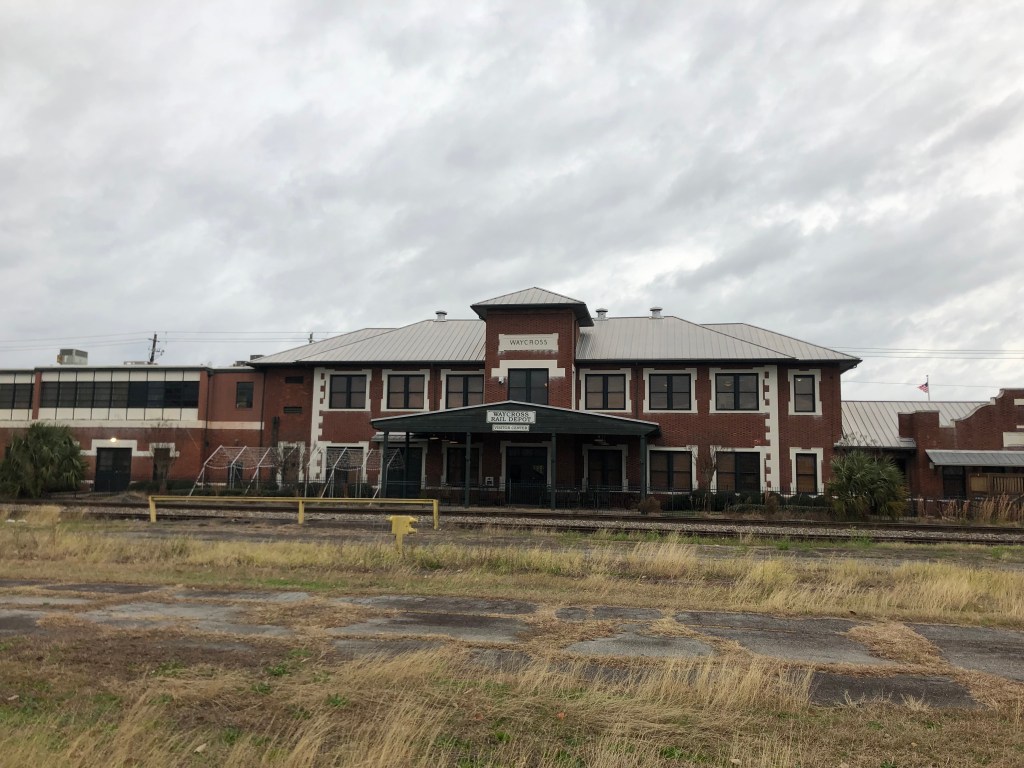
Union Station No. 5

The guy at the visitor center encouraged me to visit the nearby Okefenokee Swamp, since Waycross is “the closest city to the Swamp.” Be that as it may, it would still require a long drive along a narrow road through peat bogs during a major downpour. Maybe next time.

Instead, I took a leisurely drive around the town and encountered two historic theaters. The Ritz theater opened in 1913 as a vaudeville house called The Grand Theater. In the mid-1930s it was extensively remodeled into a movie theater and its name was changed to the Ritz. It closed in 1977. However in the mid-1980s a group of Preservationist citizens resurrected the theater as a live performance venue. Today it’s the city’s main stage for community theater.
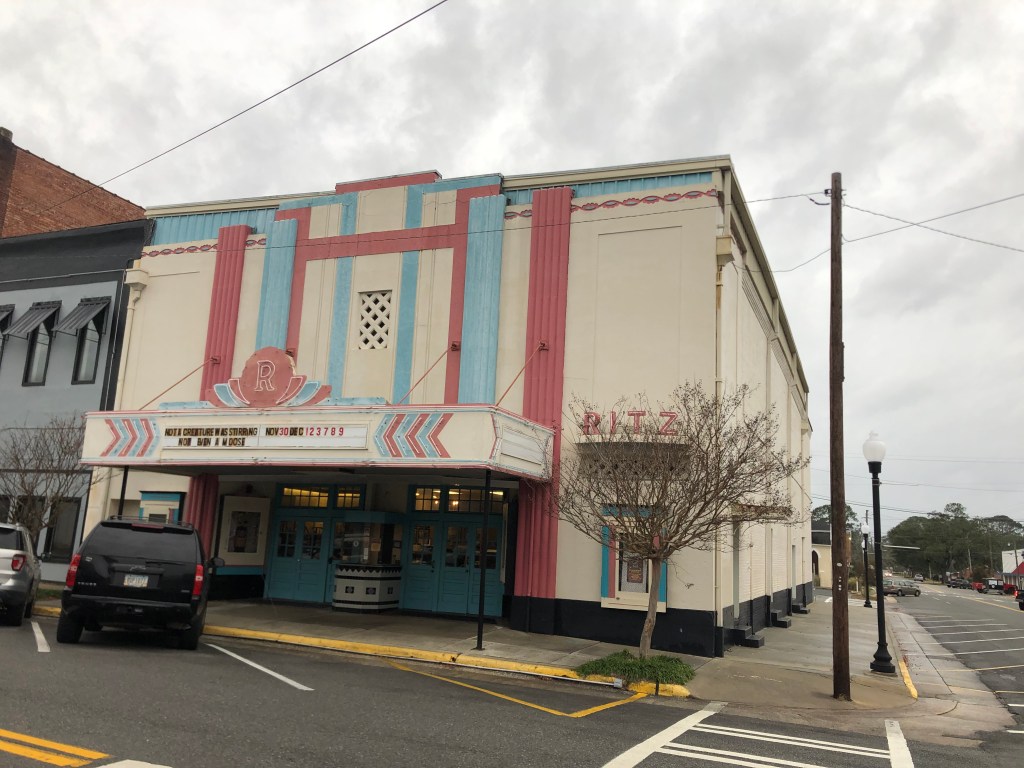
Everything’s better on a Ritz.

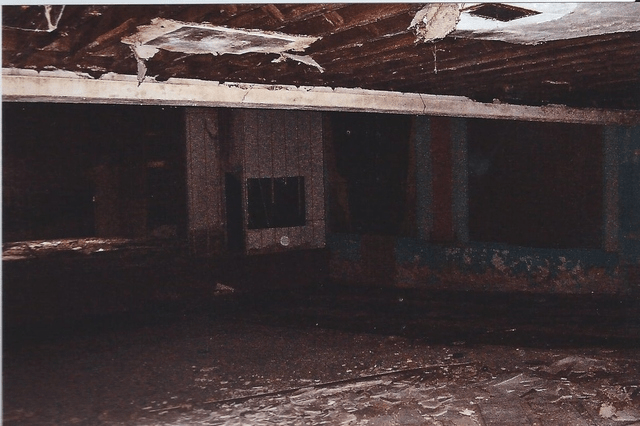
Waycross’s other theater has a less successful story. The Lyric Theater opened in 1923, and like the Ritz, it showed movies in the middle decades of the 20th century. I can’t find when it closed, but They Shoot Horses Don’t They? was playing there as late as 1970. For my money, the Lyric is far more interesting looking than the Ritz, but its interior is probably beyond salvation.
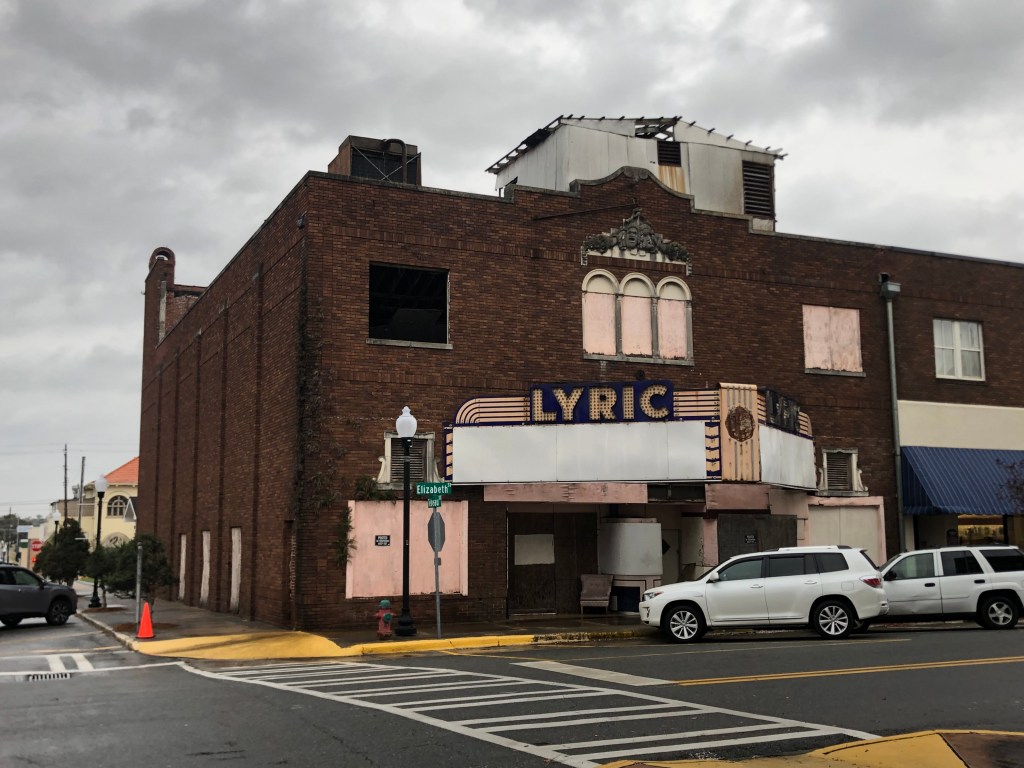
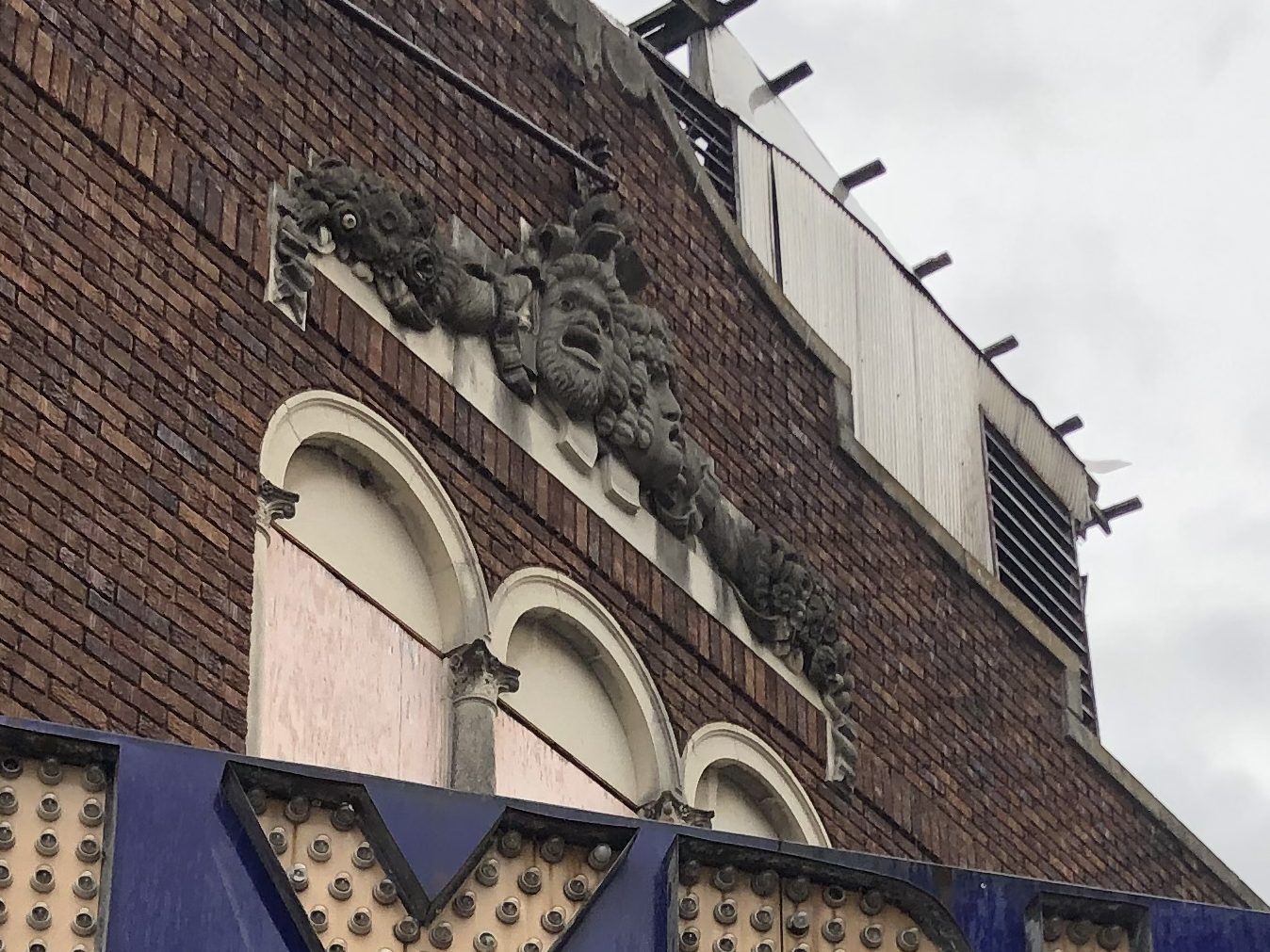
The Lyric Theater looks pretty solid, from a distance.
Note the detail in the original decoration of the facade.
2018 photo of the interior, from “Cinema Treasures” website.

The reason I came across those theaters is because I was looking for a Studebaker dealer. Let me explain:

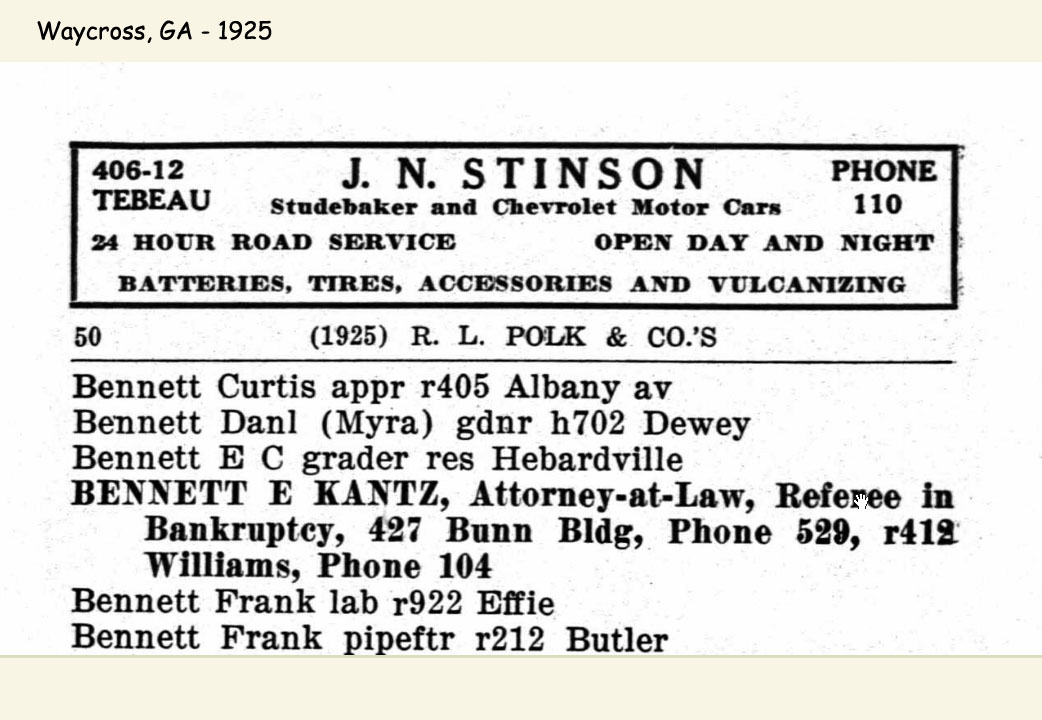
Loyal reader Victor R sent me a link to a database of Studebaker dealerships all across the country. The database lists two dealerships in Waycross: Johnson Motor Car Co. at 302 Albany Ave, and J.N. Stinson at 406 Tebeau St. The first address is now just a vacant lot, but there is a building at the Tebeau address. I think the current building is not the same as Stinson’s dealership, though, because according the database Stinson was in business in 1925. And what I saw today is clearly not a 1925 building.
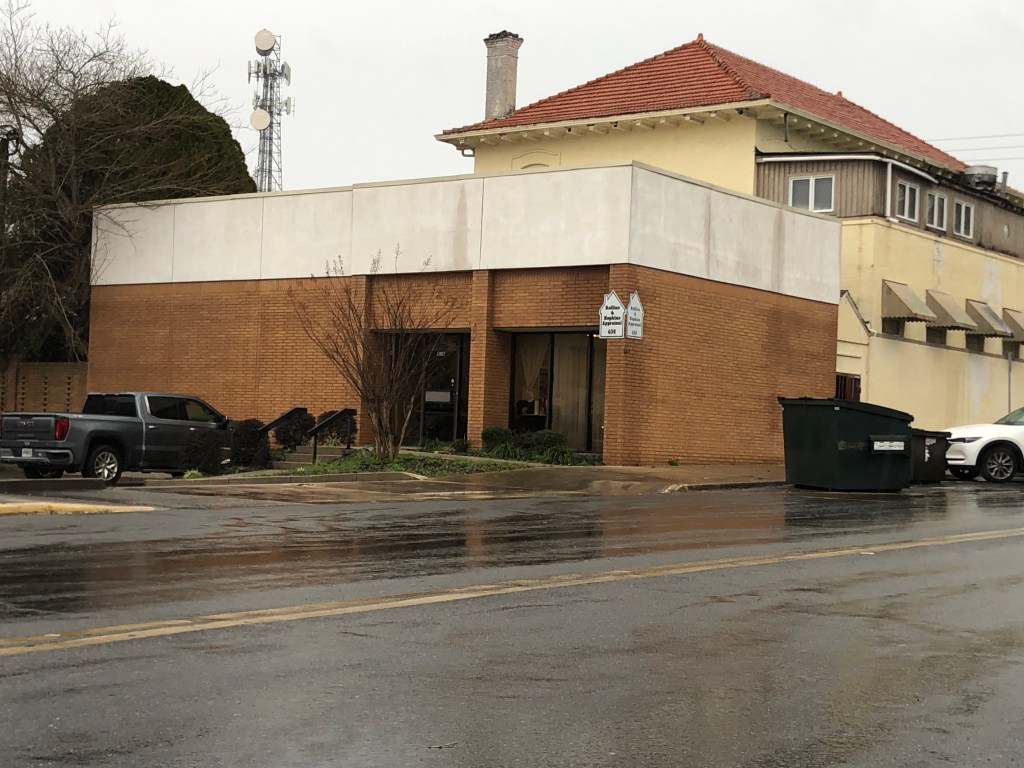
Probably was not used as a Studebaker showroom.

Eventually I got back onto Route 82 to complete the final 60 miles of the trip. The weather was worsening again, but it was still driveable. A cup of coffee from a Waycross coffee bar kept me alert.

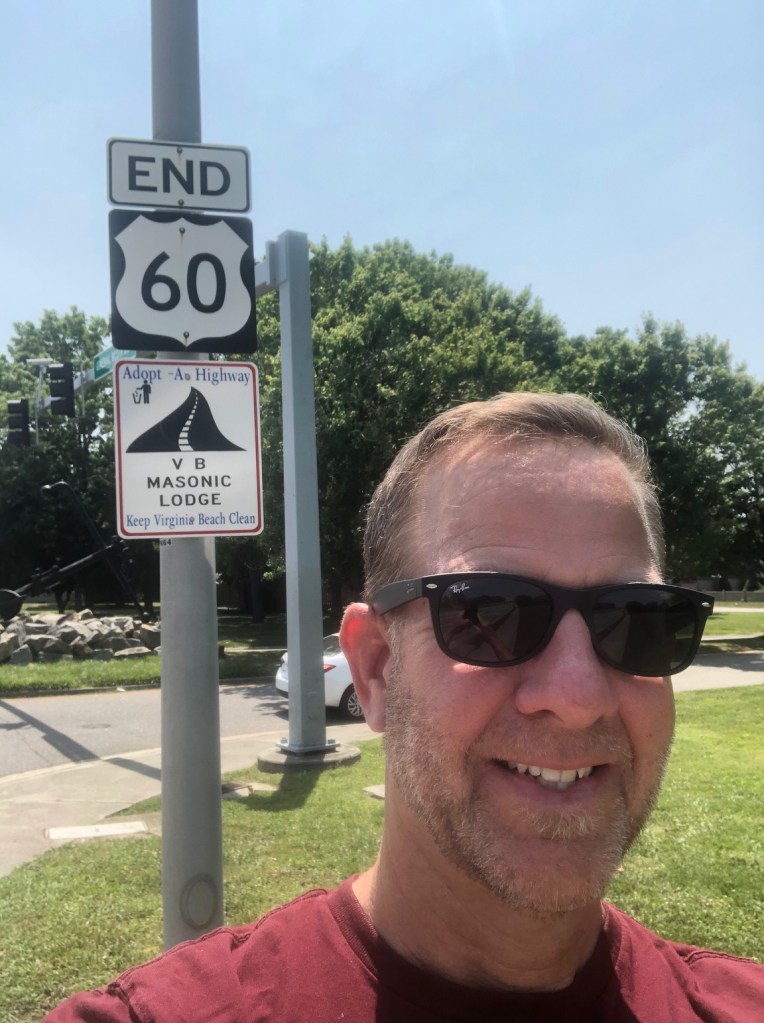
It seems that I’m always able to sense when I start to approach the Atlantic, and today was no exception. I don’t know if there’s a scent in the air, or if the landscape changes (definitely the density of trees thinned out), or if the development patterns change, or maybe the style of architecture is different. All I can say is that it felt like I was getting close to the end of the continent. I was anticipating the satisfaction, the closure, of arriving at that final Route 82 sign that says “END” on it. Like this one at the eastern end of Route 60:
The rain was getting heavier, but I just knew I was almost there. I fixed my eyes on each sign I passed, straining to see past the rain on the windshield and the rapidly-sweeping wipers, anticipating the dopamine hit I would surely receive when I caught side of the “END.” And then, suddenly…I’m on US 17 north! What happened to US 82??

It took me some retracing of my steps to sort things out, but the bottom line is that there’s no END sign. Instead, there’s what I’ll call a “handoff” sign that marks both 82 East and 17 North simultaneously. This is the easternmost sign for US 82.
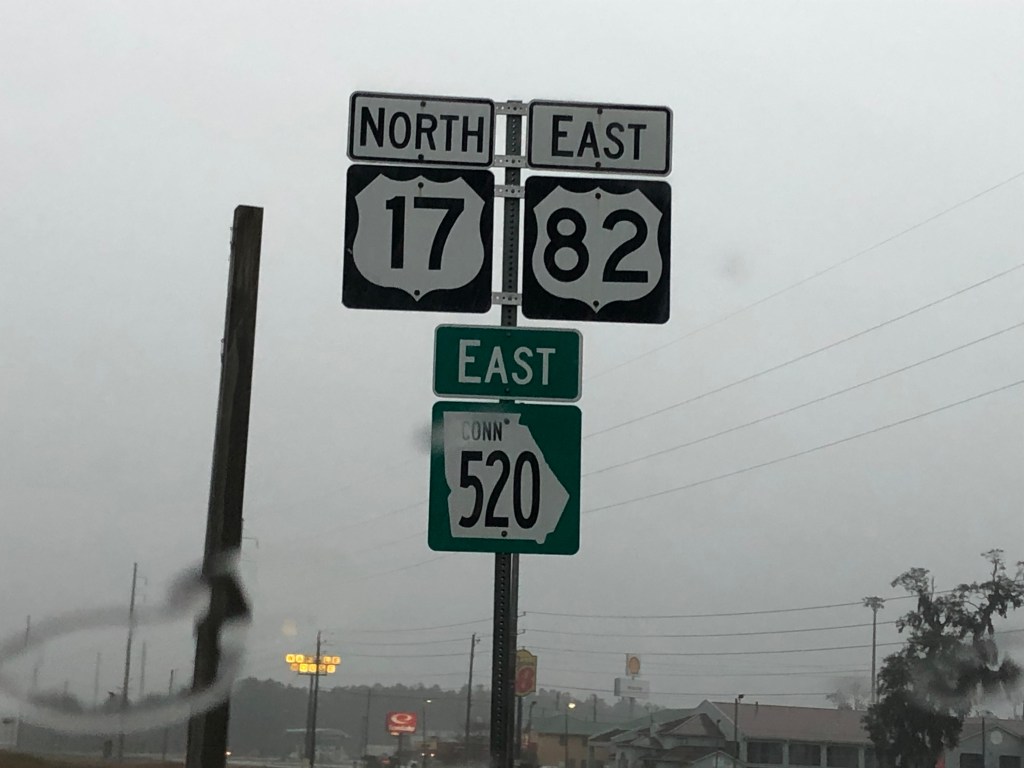
End of the line.

Well, that was anticlimactic. But no matter. I had safely made it to Brunswick, that’s what mattered. And to celebrate, I took a picture of the big stew pot that supposedly was used to make the first Brunswick Stew in 1898.
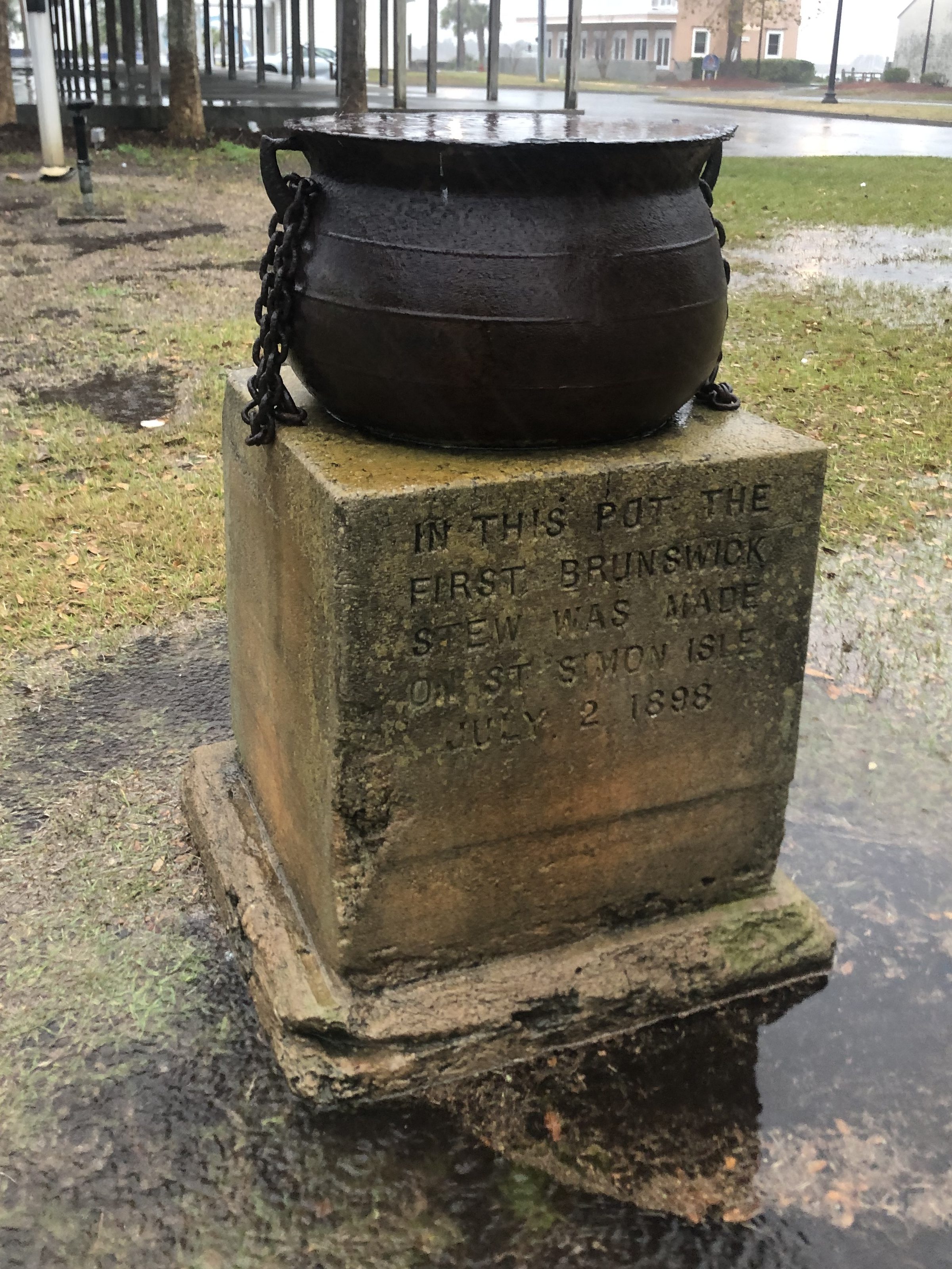
“In this pot the first Brunswick Stew was made on St. Simon Isle July 2 1898.”

There only remained two things left to do: First, I got my Brew of the Day (see below). And then, tomorrow, I will do a Mystery Travel Task that will complete an important collection for the Boilard Travel Archive. All will be made clear tomorrow. Now it’s on to the:

BREW OF THE DAY

Today’s BOTD came from Weber’s Growler Factory in Brunswick. It’s an interesting place, with forty beers on tap to fill your growler or to drink there by the glass. They also have a lot of bottled beers and an extensive selection of cigars. Sadly, they also have one of the most disinterested, unfriendly bartenders you’ll ever meet.
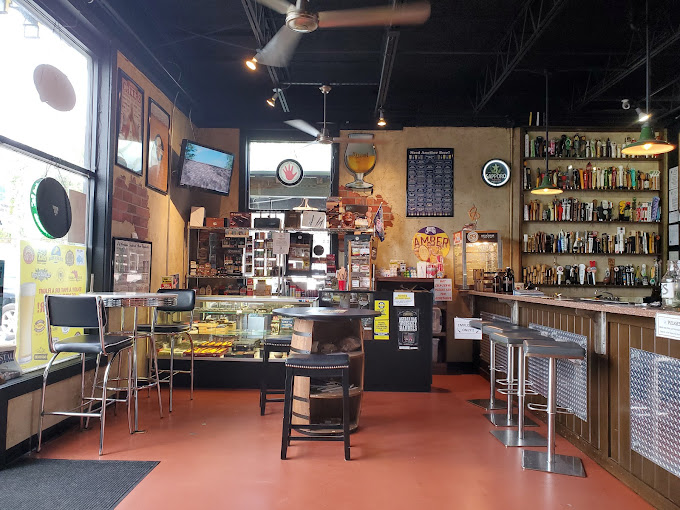
Eclectic taproom. (photo lifted from Yelp, since I didn’t want to tick off the bartender with my camera)

I was overwhelmed by the menu, so I asked for something local. Turns out the only beer from a Brunswick brewery is a Mexican lager. Lagers really aren’t my cup of tea, especially on a stormy winter day. So I asked if there was anything from elsewhere in Georgia. I ended up with a “De-stress Express” from Georgia Beer Company in Valdosta, GA.
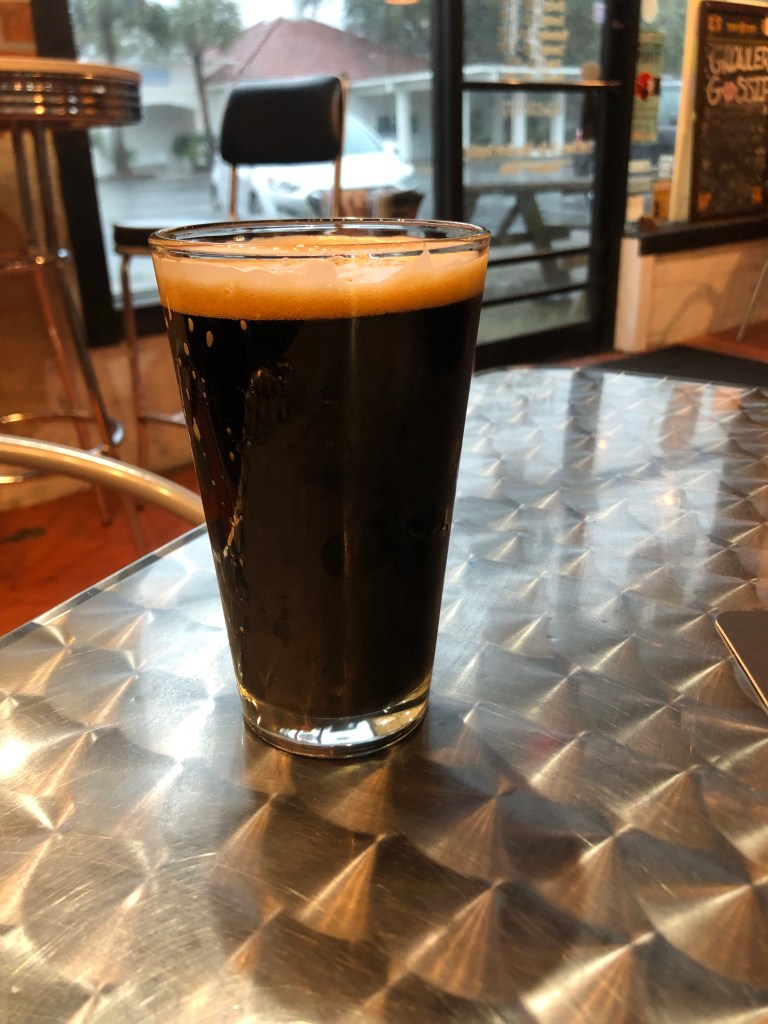
All aboard the De-stress Express!

Interestingly, though I didn’t plan it, the De-stress Express is quite similar on paper to the Stone Xocaveza I drank last night. They are both stouts that are intended to evoke a mix of coffee and chocolate. But while Stone’s effort tasted flat and uninteresting and even a little off, today’s entry from Georgia was a winner.

De-Stress Express’s chocolate and coffee tastes don’t fight against each other; they complement each other. The coffee keeps the chocolate from being too cloying, and the chocolate keeps the coffee from being too bitter. Some light hoppiness is present, nicely balanced by the creamy, milky lactose. Today’s beer also had more carbonation than Stone’s, which helped to create a foamy head and to provide a nice tickle on the tongue. The beer comes across quite bright and fresh, which is a bit unusual for a stout. Perhaps that’s because it’s a local brew? Mouthfeel is very full-bodied and creamy. Definitely for sipping rather than quaffing. It took me almost half an hour to get through mine! ABV is a manageable 6.5 percent. I wish I could get it in California. Four stars out of five.
Cars · Halloween Cocktails

Superannuated

Old-Fashioned Pumpkin

Today we’re going to take a break from those vile green liqueurs and get back to basics. We’re going to try a version of an Old Fashioned, that bourbon-based drink with an adjectival name. But the recipe gets Halloweenified with some pumpkin and maple syrup.

Dating back to the 19th century, the Old Fashioned is indeed old fashioned. It’s said that the drink was originally called a “bittered sling,” which I actually prefer as a name. But as drinks became ever fussier as time went on (recall my ordeal with the Herman), purists would ask their bartender for something “old fashioned,” and the new name stuck.

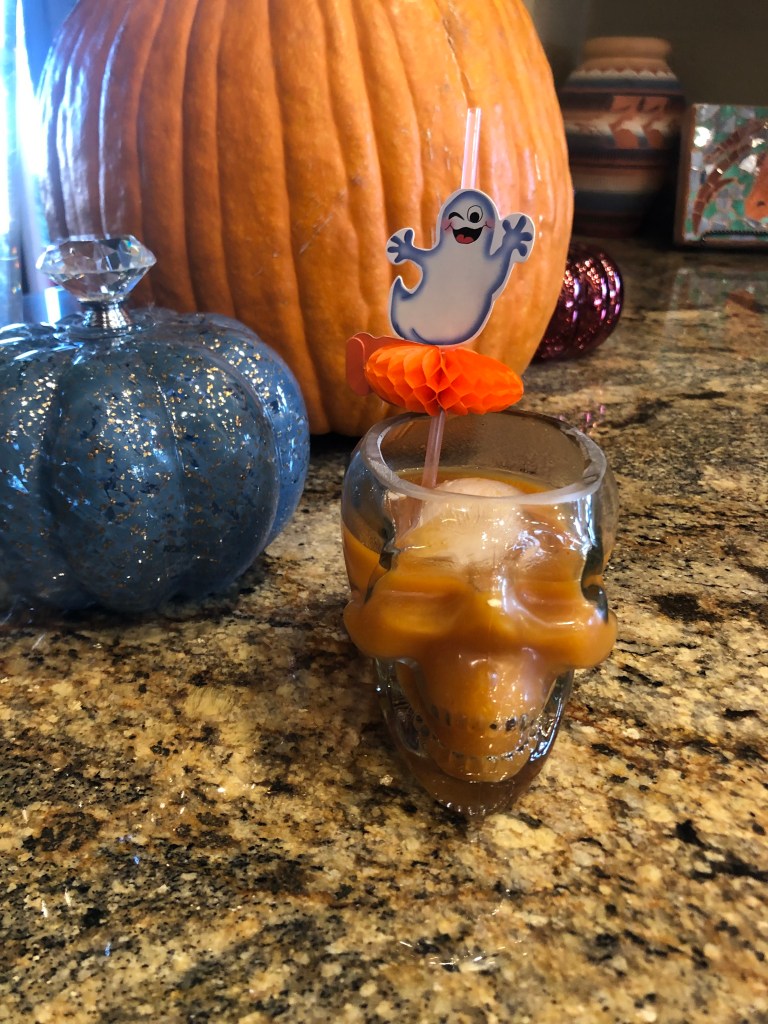
The Recipe: Mix 2 oz bourbon, 1 Tbsp pumpkin puree, 1/2 Tbsp maple syrup, 1/4 tsp pumpkin pie spice, 1/4 tsp vanilla extract, and a dash of Angostura bitters in a shaker. Pour over fresh ice.

The Ratings:

The appearance is somewhat off-putting. It’s not bright enough to be a frivolous, fun drink, and it’s not translucent enough to look like a proper Old Fashioned. The color looks like Bakelite plastic from the radio tuning knob of a 1940s Studebaker. It certainly doesn’t look like a Halloween drink. But it does have a vague pumpkin hue, so I’ll give it two points.

Old Fashioned indeed.

In terms of taste, the bourbon dominates, as it should. The bitters fight a bit against the maple syrup, and the pumpkin spices kind of get lost in all the infighting. But the pumpkin puree gives it a depth and heft not normally present in an Old Fashioned. I’ll give it 2.5 points.

I give the name one point. It would have been two points if they’d had the presence of mind to name it an Old Fashioned Pumpkin.

Grand Total: 5.5 points.


Dark N’ Stormy Corner

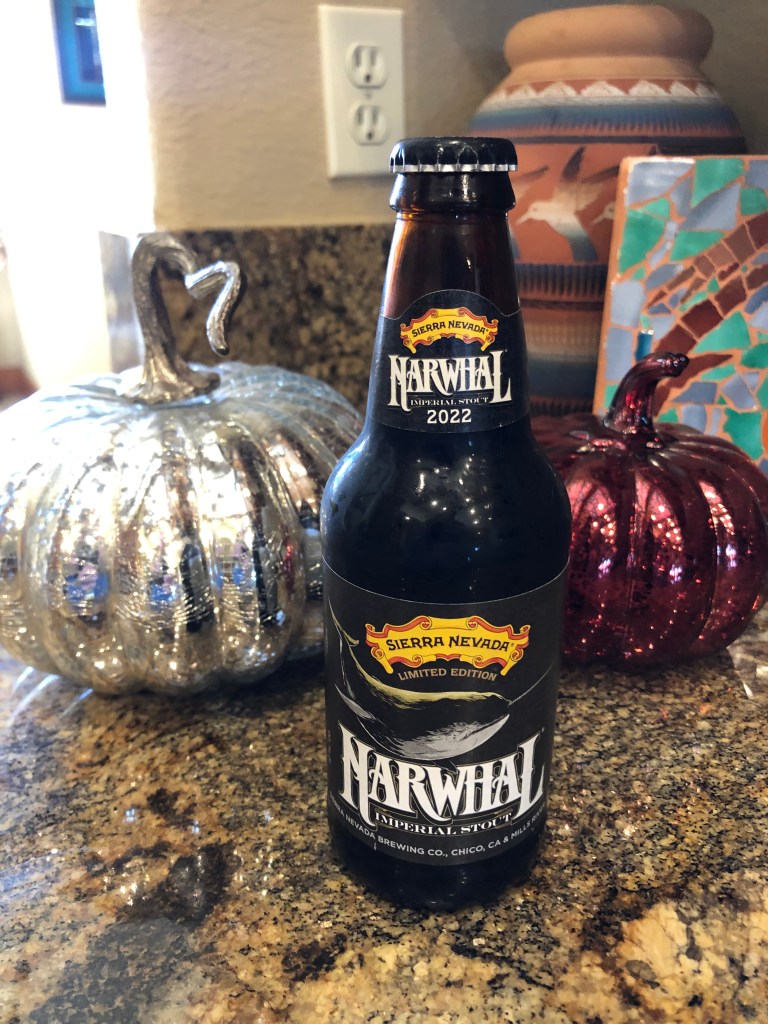
Recall that I’m trying to find a way to make this Dark N’ Stormy darker and stormier. This time I tried adding 2 oz of Sierra Nevada’s Narwhal to the drink. It did not improve on the taste. In the same way that filling your mattress with glass shards does not improve on its comfort. I find it surprising, because Narwhal (only available seasonally) is my favorite widely-available imperial stout. Best to just drink the beer on its own.

Do yourself a favor and grab a six pack before they’re gone til next year!

As for the Dark N’ Stormy, it’s back to the drawing board.

California history · Cars

The Postman Cometh

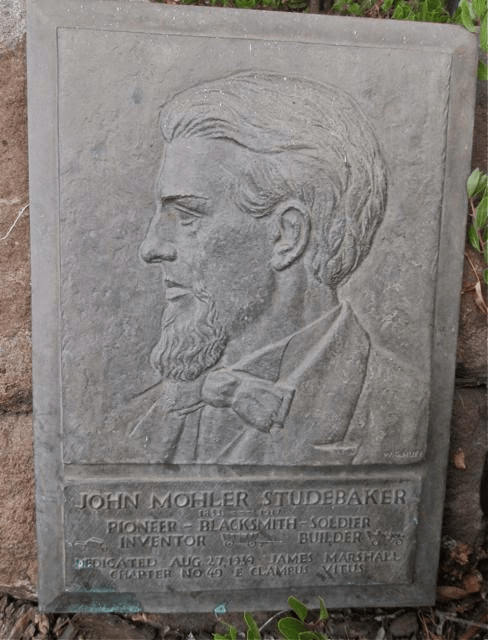
This morning a little after 6 am I took out the Speedmaster to downtown Placerville (pop: 11,000). There I got a cup of coffee and took a seat at the site of the old blacksmith shop where John M. Studebaker built wheelbarrows over a century ago. There’s a marker in the courtyard of the Bagel Works commemorating this fact.

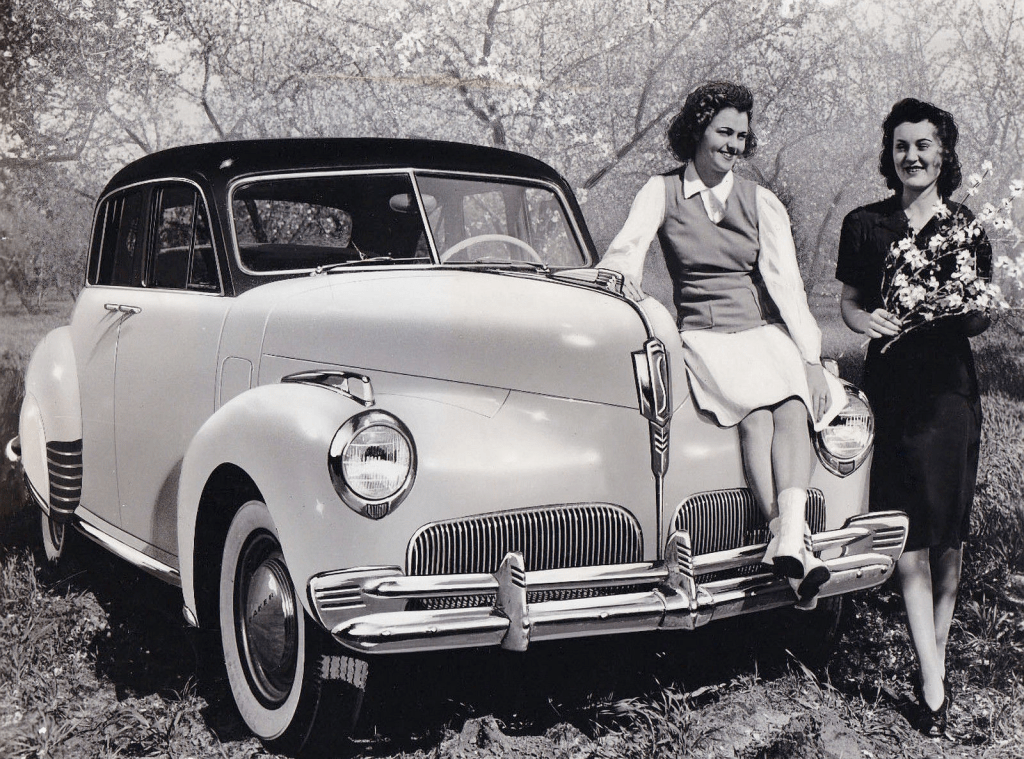
John Studebaker was not the reason for my visit, but it’s worth recalling his connection to Placerville and the California Gold Rush. He was born in Pennsylvania and came out to California as a young man seeking his fortune in the gold fields. It didn’t take him long to realize the real path to riches lay not in mining for gold but in selling supplies to the gold miners. So he began building wheelbarrows right where I was drinking my coffee, and eventually amassed enough money to launch what would become one of the country’s largest, longest-lived, and most successful independent automobile manufacturers: The Studebaker Corporation. This is probably a good time for a brief clip of my friend Bill’s 1941 Studebaker Commander, which is still moving under its own power after 81 years. It’s a goal I hope to achieve myself in 20 years.

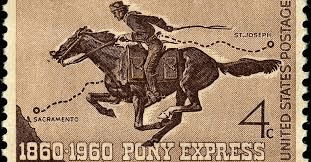
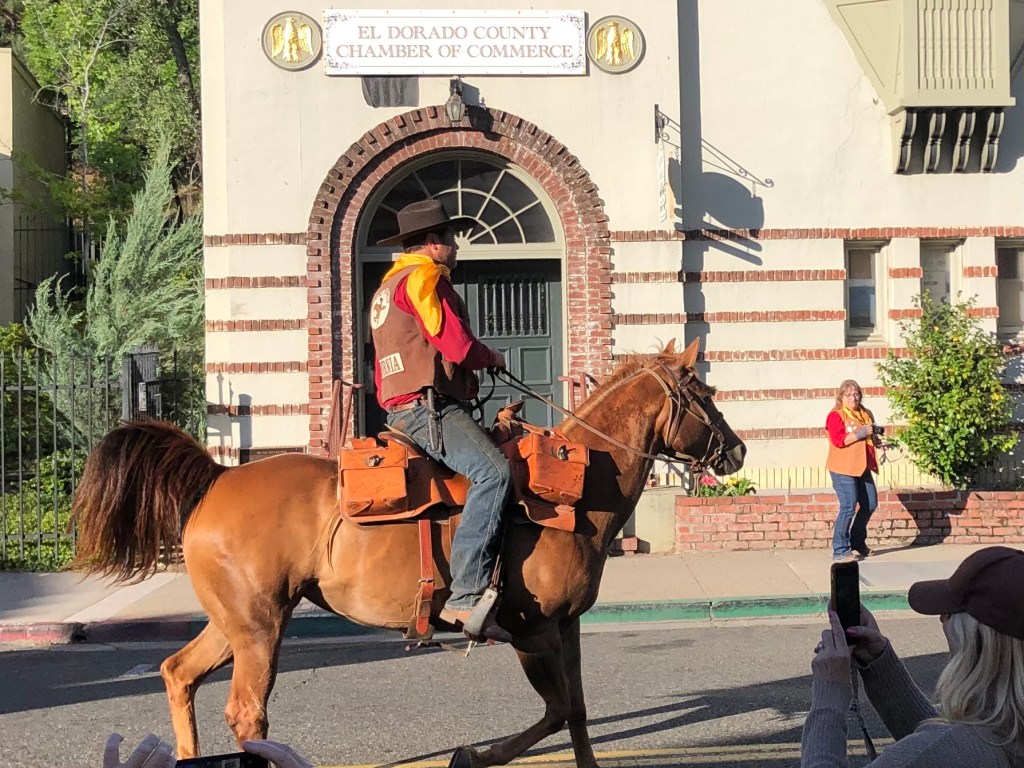
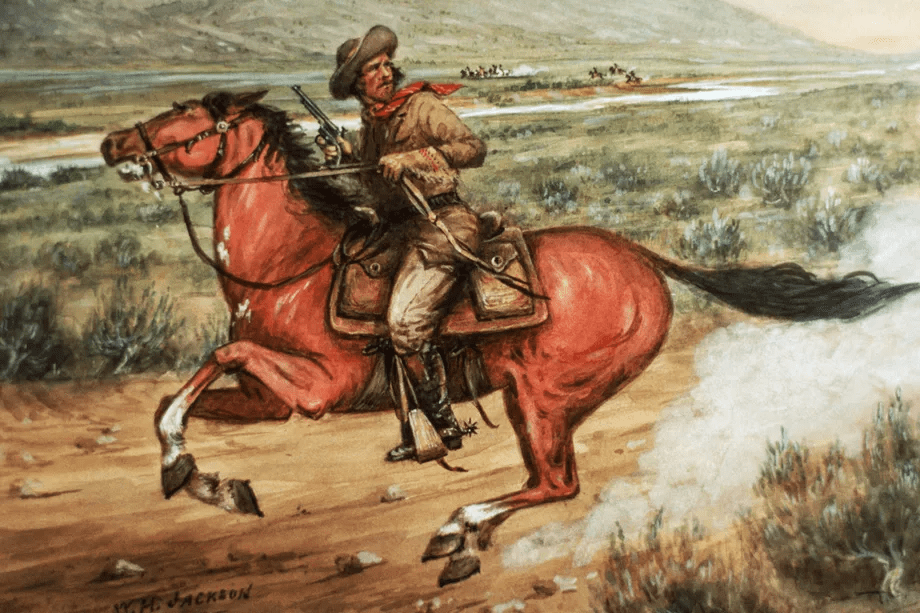
But back to this morning: I sat there with my coffee, waiting for the mail to be delivered. And this wasn’t just any mail delivery: This was a special delivery by the Pony Express. The Pony Express, you’ll remember, was created right about the same time that John Studebaker was building his wheelbarrows. The Pony Express carried US Mail from St. Joseph, MO to Sacramento on horseback, in only 10 days. It covered a route of 190 ten-mile segments, with fresh horses being supplied at each segment, and riders being changed about every 10 segments. (Some of the old Pony Express stations are still standing; I’ve been to a few of them in my travels, including the Pony Express Cafe in Eureka, Nevada, as I discussed briefly here.)

The Pony Express only lasted about a year and a half (from the spring of 1860 to the fall of 1861). It went bankrupt a month or two after the first transcontinental telegraph was established. But the Pony Express remains a romantic (or romanticized) part of the Old West.

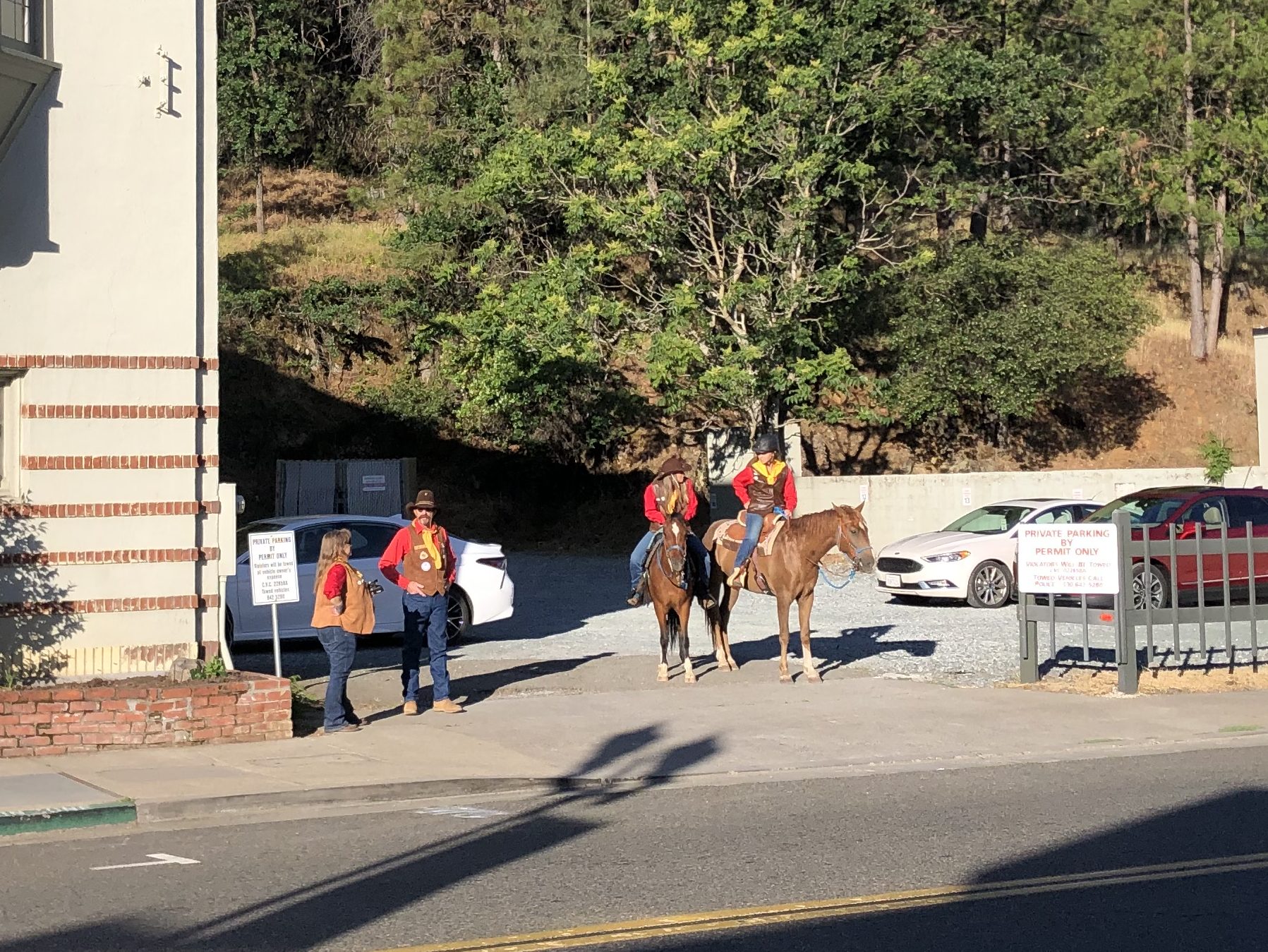
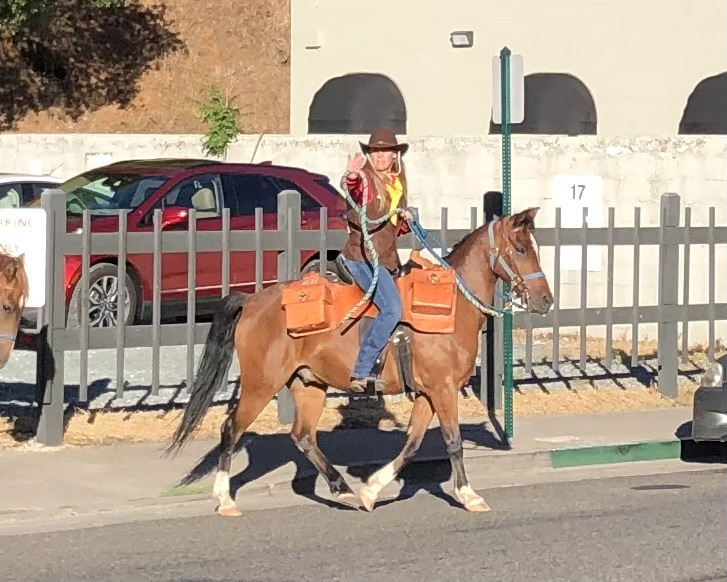
So what does any of this have to do with this morning? Well, it seems that the good folks at the National Pony Express Association annually re-create the Pony Express ride–24 hours per day for 10 days. This morning the rider was scheduled to be coming through downtown Placerville a little before 7 am. When I got there, a small number of people were milling about, as though they were waiting for the world’s smallest parade. Seriously, this was not a well-attended event, but perhaps that’s because anyone living in this general area would probably opt instead to be present for the final moments, when the rider comes into Old Sacramento this afternoon.

Waiting for the mail to arrive

Most of the people were wearing distinctive red shirts and leather vests–the uniform of the National Pony Express Association. But I also spotted a few civilians such as myself. The mood wasn’t exactly raucous, but clearly these hardy souls shared an interest in history and/or horses. Adding to the mood was the backdrop of 19th-century buildings on Placerville’s Main Street.

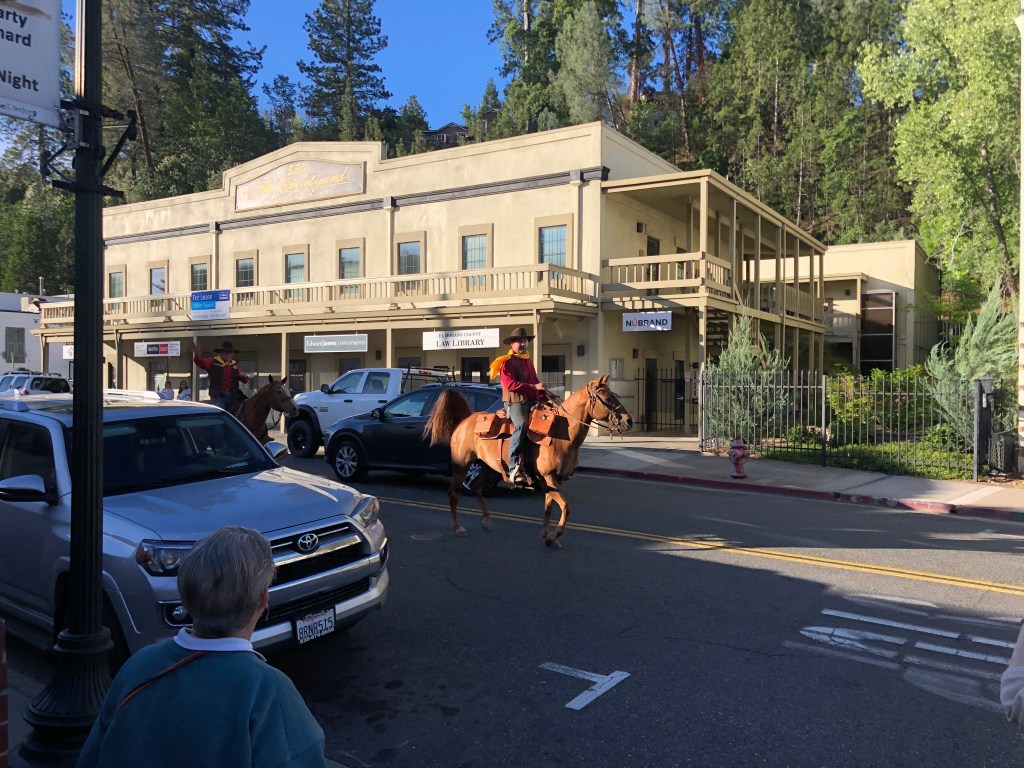
And then suddenly, without warning, the mailman arrived.

Then the mail bag (“mochila”) was transferred to a waiting rider, and the mail was back on its way. It was all over in less than a minute.

Neither sleet nor snow nor traffic laws….

There’s something compelling, in this age of texting, email, and on-demand media access, to see old-timey, flesh-and-blood communication mechanisms at work. I certainly would not argue that the Pony Express was superior to modern communications; heck, it wasn’t even superior to the telegraph. But it does represent a spirit and energy that seems to be in short supply these days. And that’s why this afternoon I’m going to be raising a pint to the young men who rode for the Pony Express.

Road trips

Days 8 and 9: Old Dominion

Editor’s note: Given limited travel opportunities these days, I decided each Thursday to post travel stories I’d written prior to starting this blog. The following is from a cross-country trip I made along the length of US 50 in the spring of 2018. I hope you might vicariously enjoy this trip while we’re all hunkering down at home. Because this is a longer trip (a week and a half), I’m going to post each of the daily entries over each of the next 10 days.

So, I took yesterday off from driving 50, and instead spent the day visiting my friend Chris and his wonderful wife Carol at their lakefront home in Moneta, which is 40 minutes outside of Roanoke (pop: 9,891) in southern Virginia. Even if you haven’t been to Moneta, you’ve seen it in the classic Bill Murray film, What About Bob? Chris shares a number of my interests, including trains, Edward Allen Poe, and Sherlock Holmes. Accordingly, we spent yesterday at the O. Winston Link museum and the Virginia Museum of Transportation. We ate a late lunch at Roanoke’s oldest (and perhaps smallest) restaurant, and then went back home to fail miserably at a game based around a Sherlock Holmes mystery. 

Chris, enjoying the local brew
I always feel obliged to take Studebaker photos. This 1870 Studebaker Half-Platform Wagon is at the Virginia Museum of Transportation.

Today I left Moneta around noon, and, at Chris’ suggestion, I stopped at the University of Virginia in Charlottesville (pop: 47,000) to see Edgar Allan Poe’s dorm room. It turns out that Poe had studied at UVA in 1826.

Poe was a po’ old soul, and a poet.

Poe’s dorm room is preserved with period furniture and references to his then-budding literary career.

Is that a pallid bust of Pallas on the windowsill?

It should be noted that the room is part of a still-operating dorm building. Poe’s room (#13, fittingly) is glassed off, but the all the other rooms are occupied by UVA students. To that point, the space in front of Poe’s current next door neighbor was littered with beer empties. I am not making this up. You’d wish that the current residents of Poe’s dorm building would show more respect for Poe’s memory. And yet, if you think about how Poe met his demise, perhaps the beer empties are fitting.

I suspect the university police told the revelers, “Nevermore.”

About 6 pm I finally make it back to Winchester, VA, whence I’d taken my detour away from US 50 on Wednesday evening. Rather than resume my driving trip immediately, I decided to just get some dinner and find a hotel for the night, and start out fresh in the morning. Now, I’ve had surprisingly good luck with my hotel accommodations all along this trip. I’ve been stopping mainly in small towns, and the innkeepers have seemed genuinely happy to see me. Today, however, I’m in a somewhat larger town, the motel is rather crowded, and to the innkeeper I’m just another traveler who’s washed up onto his doorstep. Out in the parking lot, next to my room, some other guests are drinking beer and rebuilding the engine of their Cutlass. Next to them, a group of young people has a Weber barbecue set up in the parking lot, with flames at an alarming height. It actually seems rather festive. But I wonder if any of these people is actually staying at the motel.

Since I don’t have any US 50 stories from today, allow me to share a few earlier photos that didn’t make it into previous blogs:

View of Lake Tahoe from US 50:
Ominous memorial on the shoulder of US 50 in Nevada
Windmill valiantly struggling to pump water in the Nevada desert
The Apostrophiser strikes again! (Delta, UT)

OK, now you’re caught up on my photo collection from US 50 so far. Tomorrow I should get through Washington, DC and into MD. Until then!

Sdb

P.S.” The Yaris has now logged close to 3,000 miles on this trip (with detours). There are two ways of measuring this. One is the odometer, and the other is the accretion of bugs on the sideview mirror:

Thank God Hertz didn’t ask for a cleaning deposit
bridges · Cars · Road trips · Uncategorized

Day 5: Kansas and Missouri

Editor’s note: Given limited travel opportunities these days, I decided each Thursday to post travel stories I’d written prior to starting this blog. The following is from a cross-country trip I made along the length of US 50 in the spring of 2018. I hope you might vicariously enjoy this trip while we’re all hunkering down at home. Because this is a longer trip (a week and a half), I’m going to post each of the daily entries over each of the next 10 days.

Here’s a picture of the first grain elevator I saw this morning, heading east out of Larkin, KS:

Going up…

And here’s a picture of the second grain elevator I saw:

Your silage may vary.

Now, multiply those pictures by 100, and you get a sense of the scenery along US 50 through Kansas. Seriously. It’s flat, with lots of open space and no trees, and periodic, looming grain elevators. I suppose there’s some kind of charm to the monotony. But monotonous it was.

Breakfast was at Richie’s Café in Cimmaron. I was craving a good cup of strong, fresh-brewed, artisan coffee, a toasted bagel and cream cheese, and some good juice. The outside of the place didn’t look promising, but it was the only game in town. I entered the double doors, and found myself in a small, dark anteroom with another set of double doors. These I opened, and stepped into a large, windowless auditorium with ancient wood flooring. It looked like the place where the Peanuts put on their Christmas pageant in “A Charlie Brown Christmas.” In the middle of the room were rows of long tables surrounded by folding chairs. A group of about eight people, all of retirement age and none with a healthy body mass index, where chatting over coffee and a couple of empty plates. They evidently had been there awhile. The waitress (if that’s the correct term) brought me a menu, which I searched in vain for my artisan coffee and bagel and juice. I had to settle for a greasy breakfast taco. I was back in the Yaris and on the road within 10 minutes. 

I suppose it’s fair to say that there wasn’t a lot notable about Kansas. I was looking forward to Dodge City (pop: 27,000), which is on my route, but just about all traces of the old west there are contained in museums or reconstructed facsimiles. It felt too touristy for this trip. I did stop at a grocery store in the town of Meridian (pop: 813). You haven’t truly heard laughter until you’ve asked a Kansan if they have Naked Juice.

Oh, I also made a stop to check out an old 19th century stone arch bridge in the town of Clements (pop: 0). The bridge crosses the Cottonwood River in an idyllic setting. I think I may have walked through poison ivy to take the photo, so I hope you appreciate it!

Impressive archery

So, that’s about it for Kansas. After I got to Emporia, US 50 again merged with an Interstate (I-35), which sped me toward Kansas City. Soon I was in Missouri. Once I left behind the congestion of KC, the drive became quite pleasant. Missouri is a greener, hillier state than Kansas.

It’s easy being green

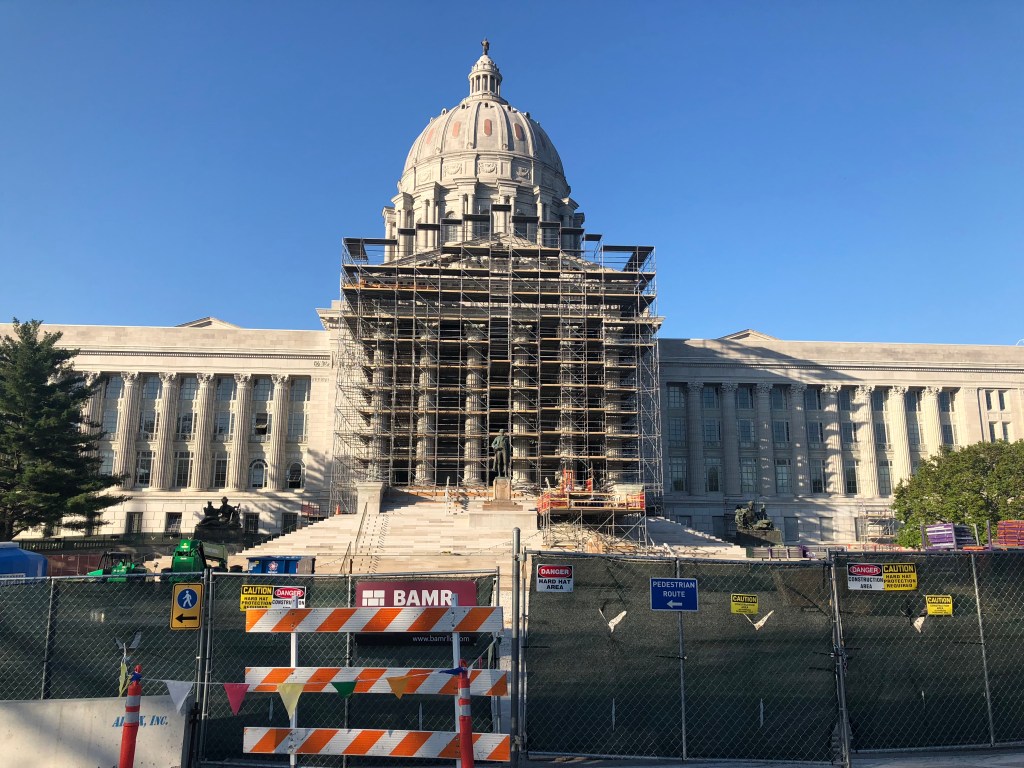
I stopped in Jefferson City at the state Capitol, which was unfortunately being renovated. It appears to be much larger than California’s Capitol. It strikes me that US 50 goes through four state capitals as well as the country’s capital. That seems to be a testament to how important the road was when it was originally designated.

Capital improvement project

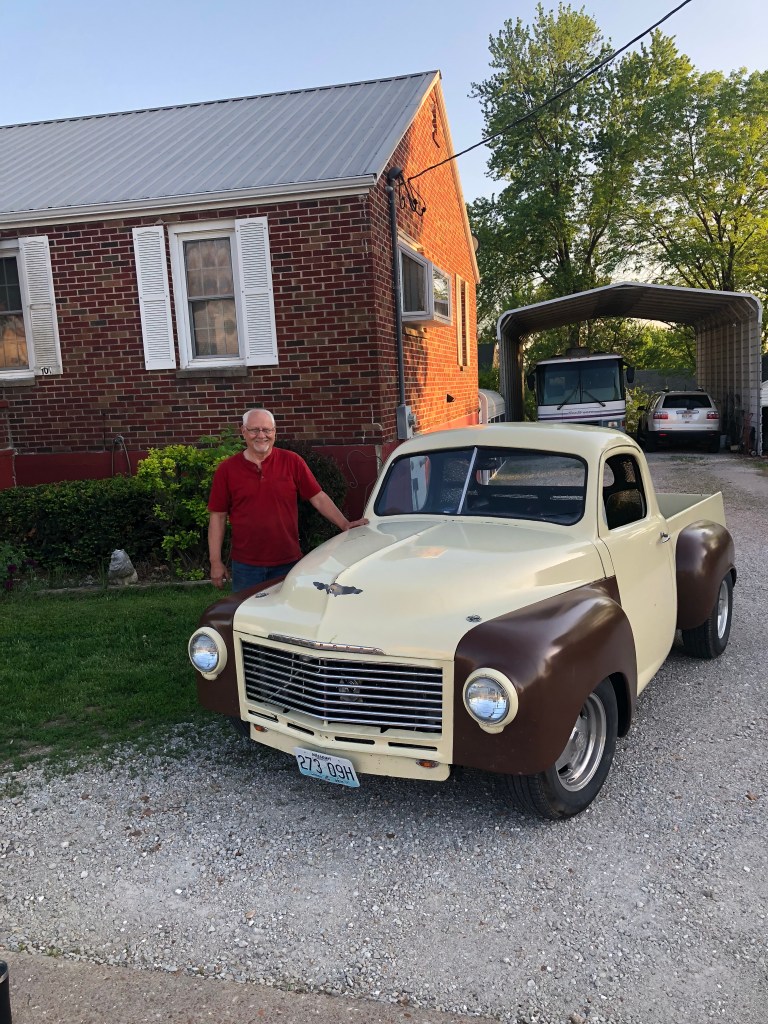
I was enjoying the drive when, out of the corner of my eye, I saw a Studebaker truck parked in a driveway. I stopped on the side of the road, and asked the two old guys sitting on the front porch of a tidy brick home whether they owned the truck. One of them (whose name turned out to be Roy) claimed ownership, and came down from his porch to show it off, opening the hood to reveal the small-block Chevy engine he had dropped into it. He had bought the truck about three years ago, and as he used to teach body work at the local technical school, he had no problem fixing up the truck. Roy retired 11 years ago, and when he isn’t working on his Studebaker, he’s sitting on his front porch with his friend Dean “counting cars as they pass.”

Studebaker owners’ motto: We’d rather fix than switch. (Youngsters can learn the reference here.)

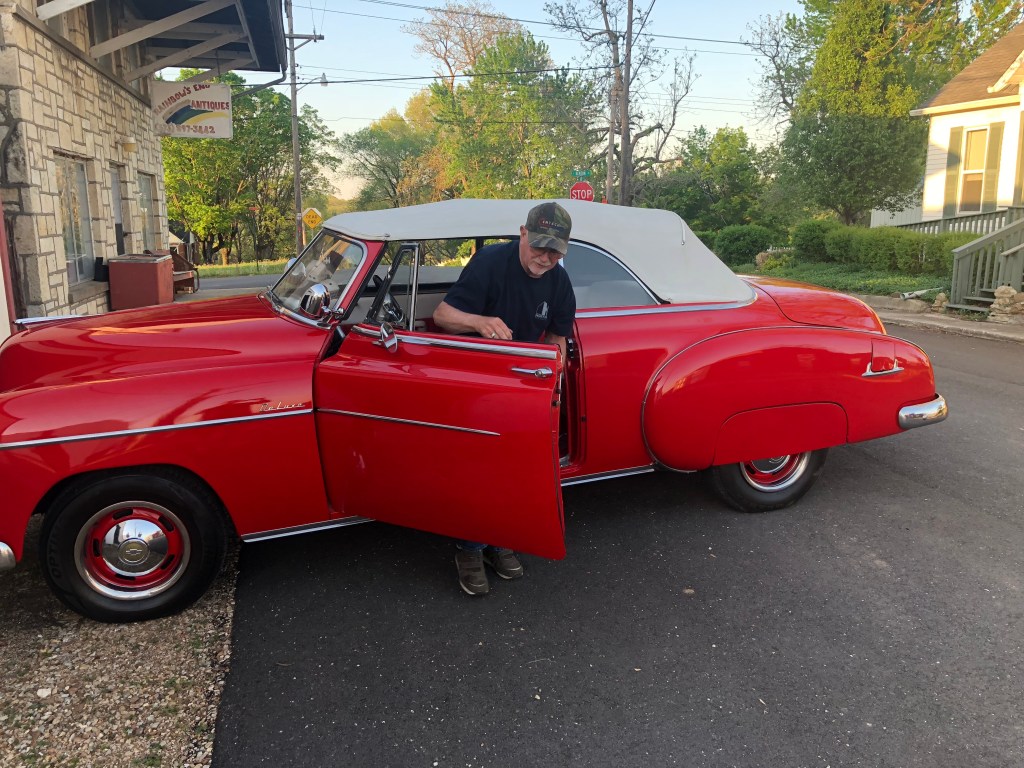
Dean lives across the street, and after I had praised Roy’s Studebaker, Dean insisted that we go over to his place to check out his 1950 Chevy convertible. We walked over, and Dean pulled the car out of the enormous, warehouse-like garage so that I could see it in the sunlight. It was a beauty. He then invited me into the garage to see his other cars (3 or 4 of them, including a Mustang convertible).

Two senior citizens

After thanking Roy and Dean for the tour, I got back in the Yaris with a bit of embarrassment, and made the final leg of today’s trip, to Union, MO (just west of St. Louis).