A recent suggestion from a family friend (Linda M.) got me thinking thinking that the storied Southern Pacific Railroad would make a good theme for an upcoming road trip. And given that the days are getting shorter and colder, I figured I should get cracking if this trip were to happen before next Spring.
As regards the question of where, specifically, to go, I decided to ping my Uncle Ed. Alert readers of this blog will recall that Uncle Ed is a lifelong railroad buff who turned his passion for trains into a career. It’s Ed’s influence that got me interested in trains during my childhood. Uncle Ed is also the brains (and all the other organs) behind the celebrated Dome O’ Foam website, which bills itself as a “veritable foam-induced-wheelslip fiesta of past-day railroading.” And its specialization in the Southern Pacific is recognized to be, if not the most definitive, at least the most entertaining.
So I asked Uncle Ed to suggest sites for my trip, and he responded with this melancholy lament: “Nearly all of my favored old SP haunts are either bulldozed from the map, or so radically altered that they are nearly unrecognizable. These were places where I joked and worked and played cards with my other family, all the while passing and receiving the latest important rumors and gossip. To see these places and their people disappear has been a painful exercise, so I prefer to think of them as they were, rather than confront things as they are. I really don’t want to visit the present when it comes to my past.”
It’s true that vestiges of the Southern Pacific (or, the “Espee,” as some of us old-timers call it) are fast disappearing. Southern Pacific practically owned California (at least, it owned a number of its politicians) for many years, and its influence was exerted in the development of industries, the price of various commodities, and the expansion and even creation of entire cities. In its heyday, the Espee was highly visible in California, and its bright, gleaming Daylight passenger trains were iconic works of art that zipped along the coast.
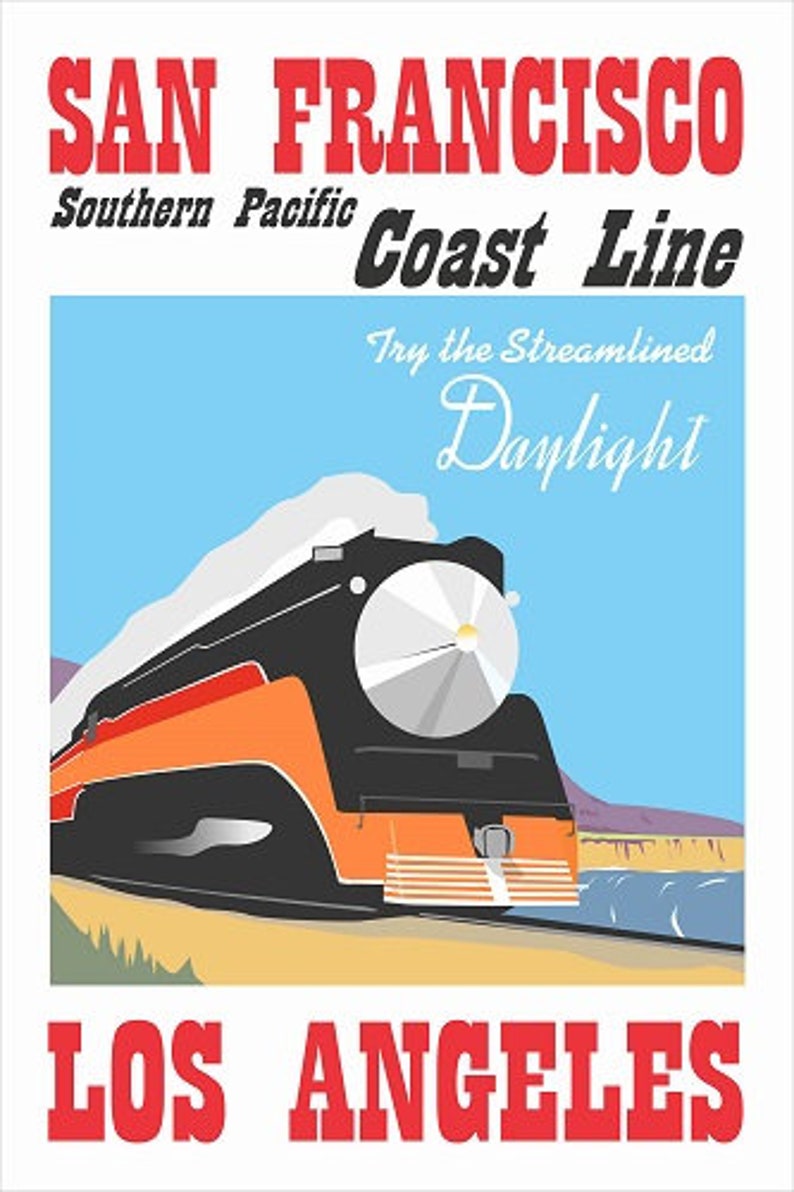
But Southern Pacific’s prominence declined with the rise of the automobile and long-haul trucks. It’s passenger service ended in 1971. And then the Espee was absorbed by the Union Pacific in 1995. Since then, the physical infrastructure associated with the old Espee has deteriorated and disappeared.
Now, there’s two ways for these sad facts to influence the planning of a road trip: (1) I could logically conclude that the Espee has been relegated to the dustbin of history, and instead focus my road trip on something else, or (2) I could commit to seeing some of the last remnants of the Espee before they’re all gone for good. Guess which approach I chose?
And so this morning I saddled up the Speedmaster and headed for the town of Tehachapi, home of a Southern Pacific depot dating back to 1904, along a rail line the Espee built in 1876. The depot was recently restored and now serves as a museum. The rail line remains one of the most active rail segments in the West.
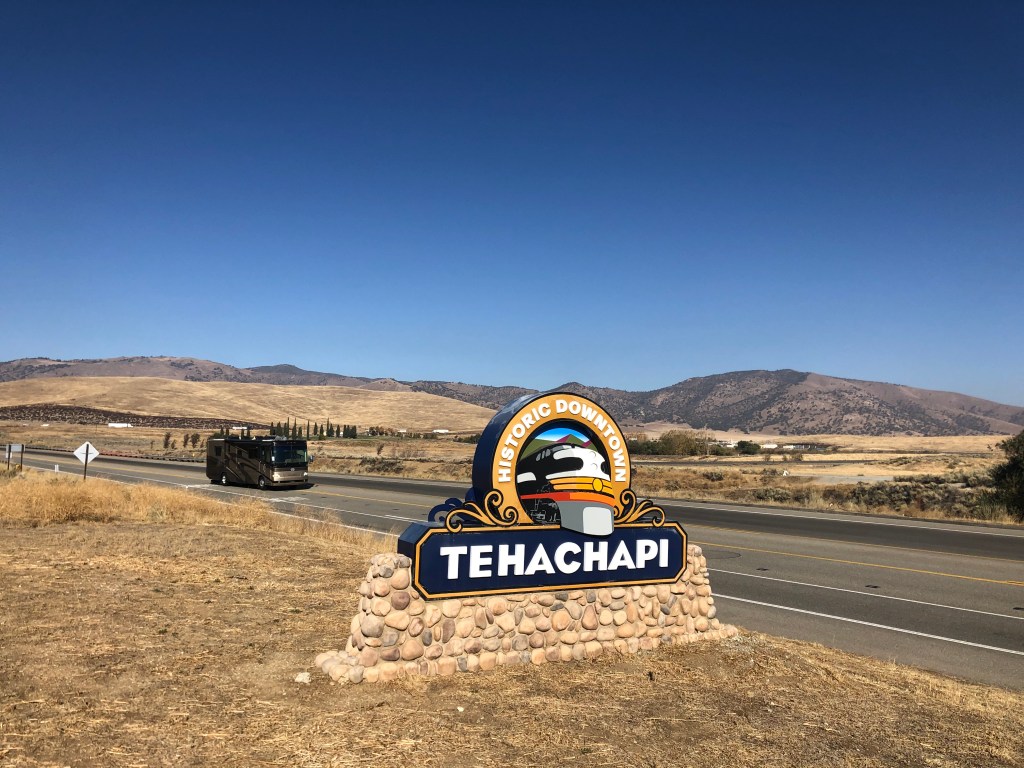
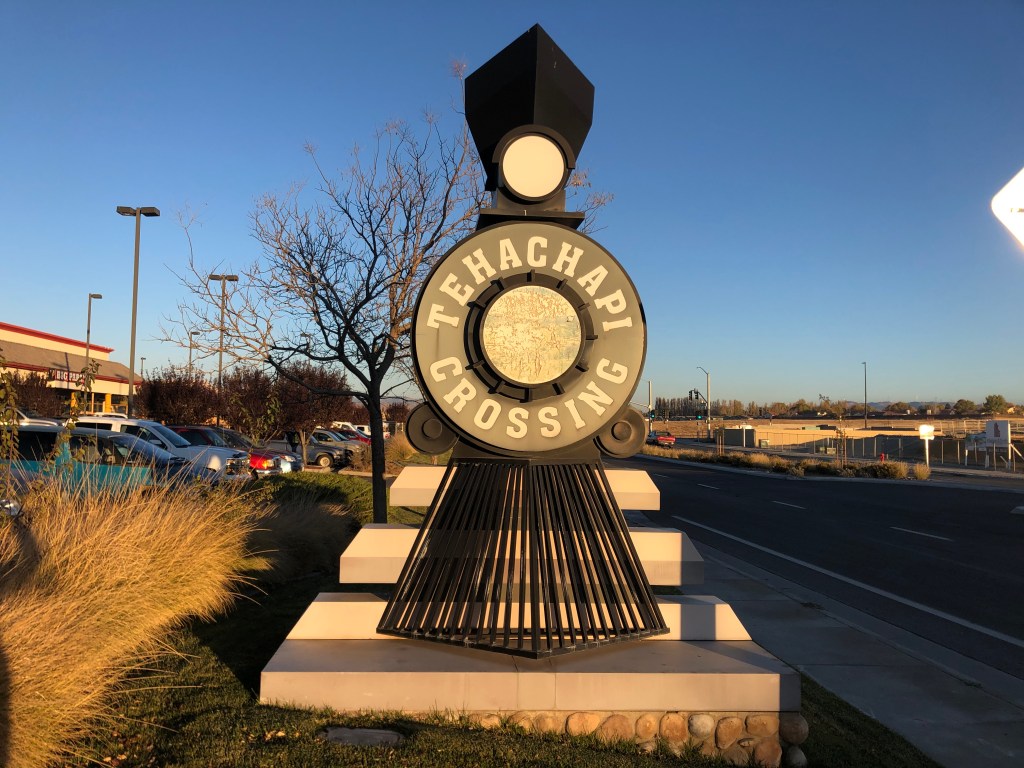
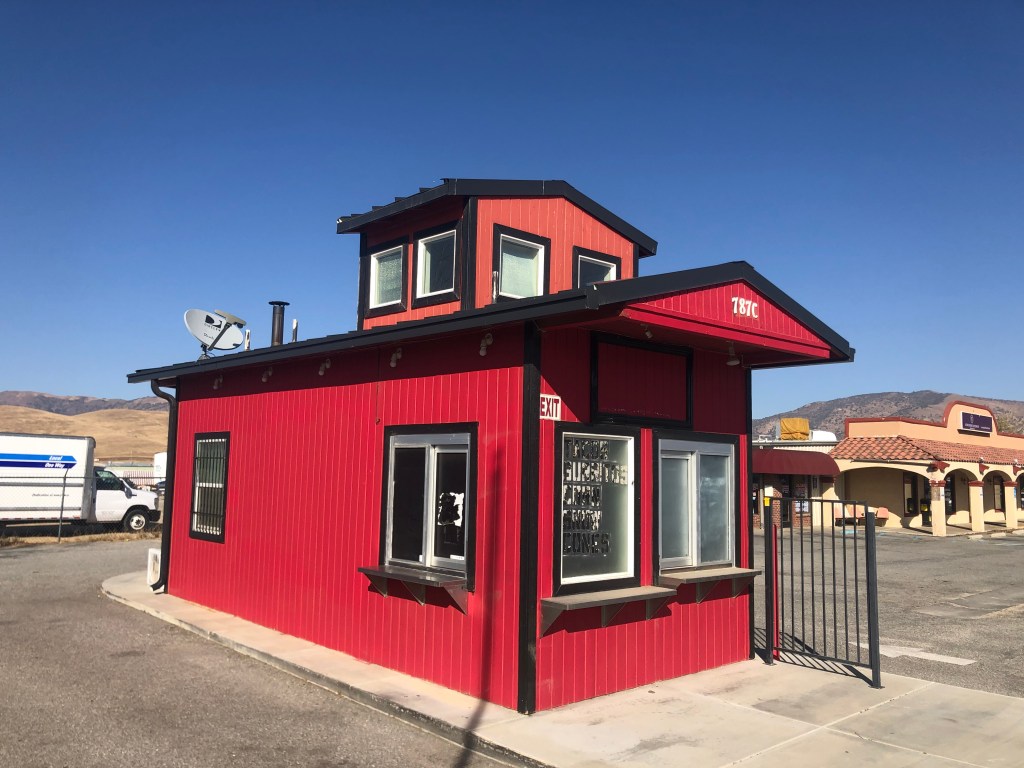
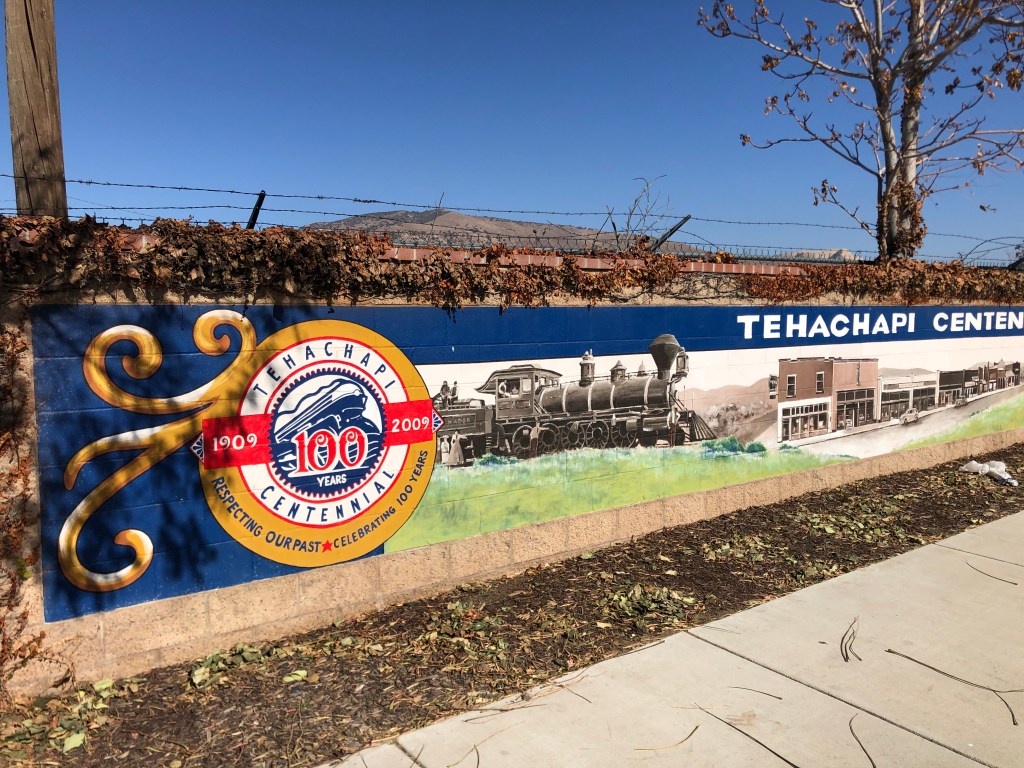
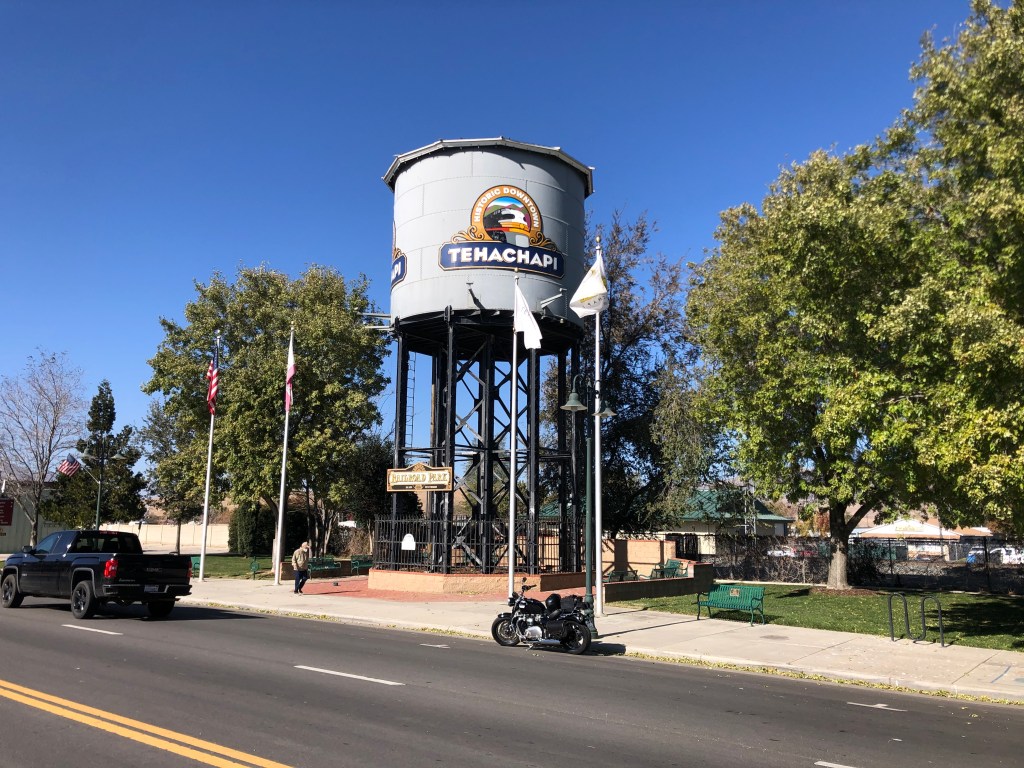
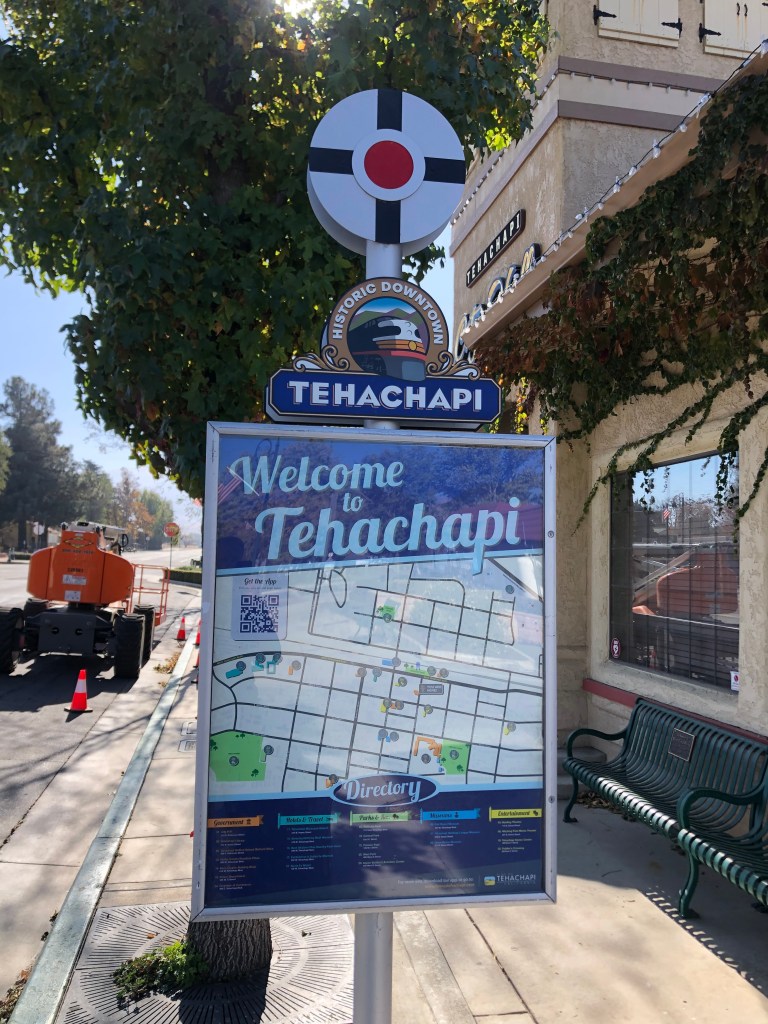
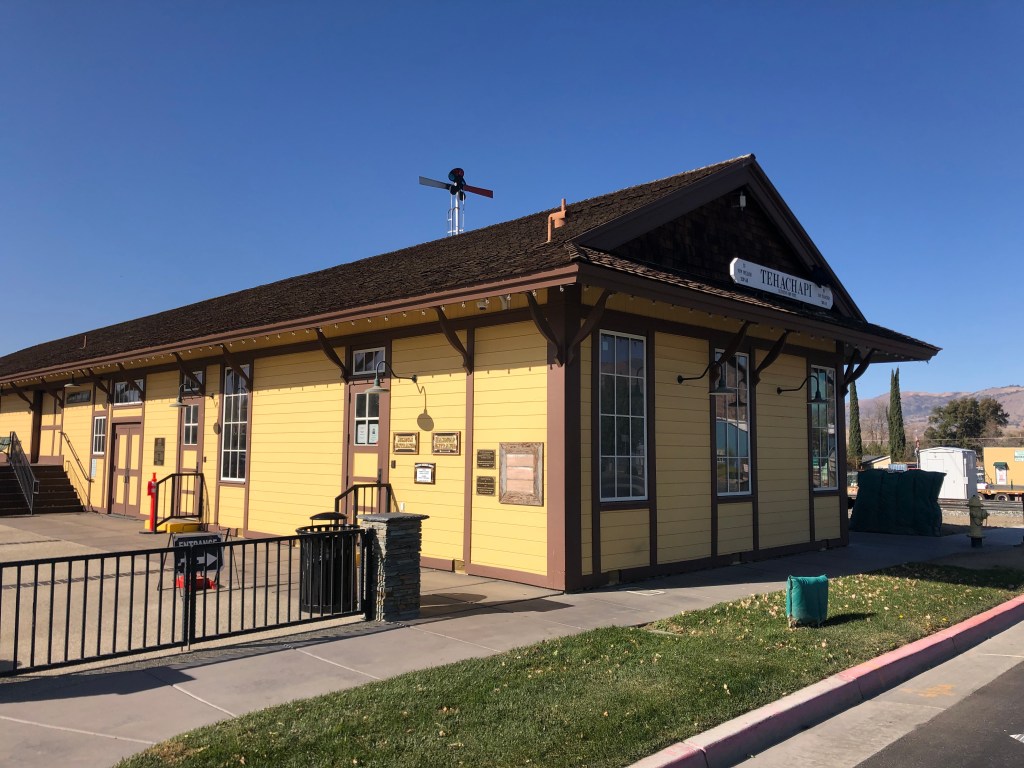
The city of Tehachapi (pop: 14,000) lies about halfway between Bakersfield and Mojave. It was founded in the 1870s, beside that new rail line the Southern Pacific constructed between the San Joaquin Valley and the Mojave. I arrived downtown around noon, and took a leisurely look around. It was clear that Tehachapi embraces its railroad heritage, as is evident in these photos:
The Tehachapi depot museum, which had been one of the main attractions that led me to this city, was looking good for what was supposed to be a 146-year old building. It was painted Southern Pacific colonial yellow, the same, familiar color that all Espee buildings sported.
I entered the building and was immediately accosted by an old man (or maybe it was an old woman; it was hard to tell with the Covid mask) in a Southern Pacific conductor’s uniform who checked my temperature with a “touchless” thermometer. I put “touchless” in quotation marks because he/she bonked me on the head with the thing. I clocked in at 96.7. Slightly below average. My life story.
Having passed the medical exam, I checked in with a pleasant woman at the front desk and then was turned over to a equally pleasant docent named Doug. It was Doug (pictured below) who set me straight on the history of this depot.
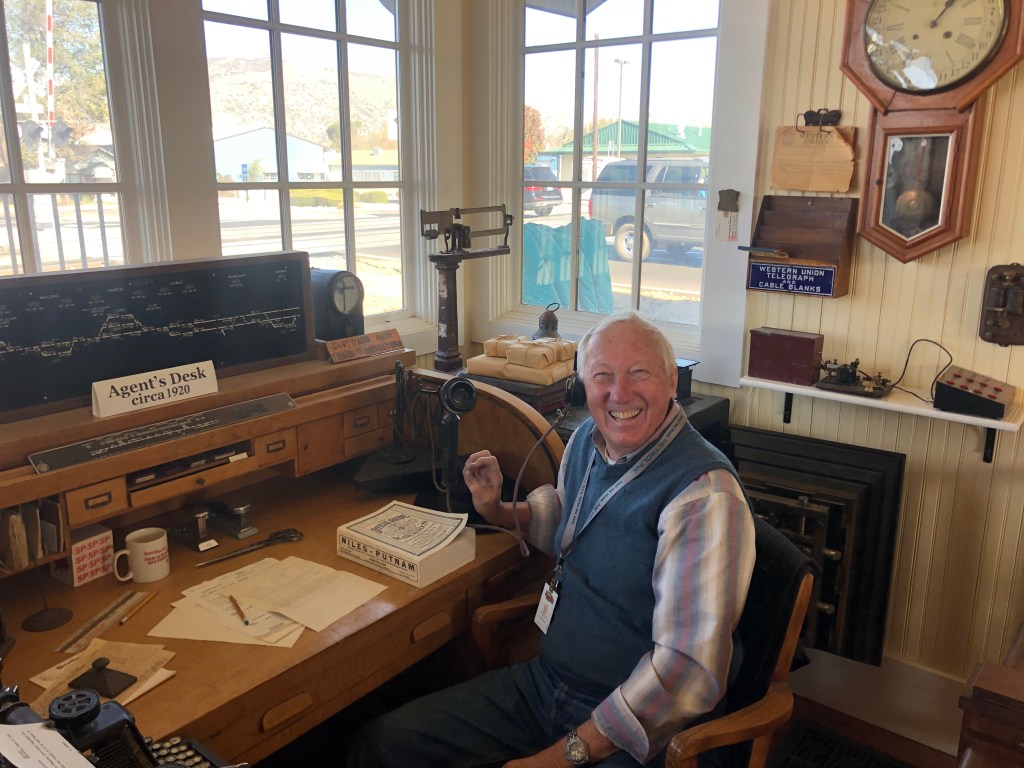
The first Epee depot in Tehachapi was constructed in 1876, the same year that the rail line was put in. That building burned down in 1904, and a new depot was immediately constructed near the original site. This second building was a central feature of “downtown” Tehachapi for many years, but gradually it fell into disrepair, particularly after passenger service was halted in the 1970s. By the 1990s the building had become a dilapidated shell of its former self.

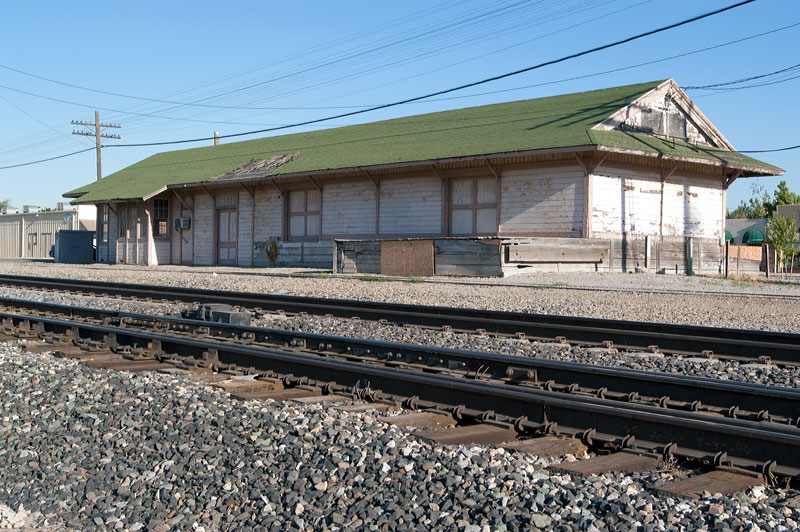
Now, remember that the Southern Pacific Railroad, who owned this depot, was absorbed by the Union Pacific in 1995. The UP decided it didn’t need this old white elephant from the Espee days, and figured they’d probably raze the damn thing. Then the good citizens of Tehachapi, who, as we’ve established, embrace their railroad heritage, approached the UP officials and asked if they could have the old building. The UP drove a hard bargain (insisting that it be compensated with a shiny new building to replace the old one), and the city became the proud owner of an old, deteriorating, but historic depot. And guess who was the key actor in making all this happen? Yes, it was my tour guide, Doug.
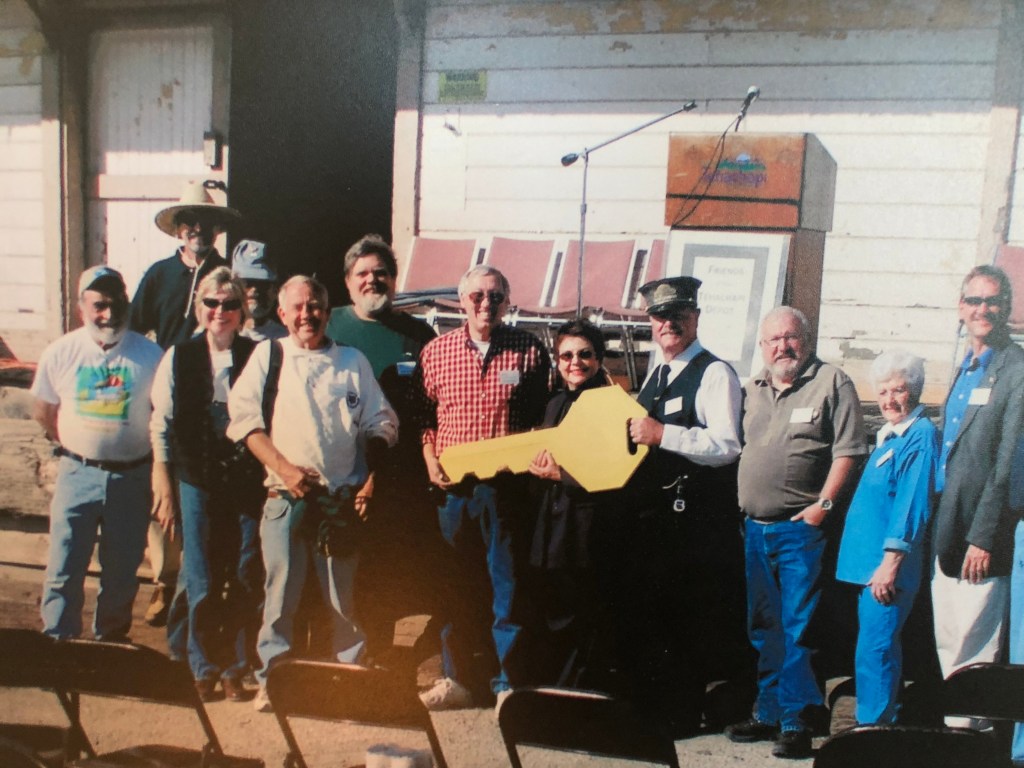
So, that’s awesome, right? The city raised funds to fully restore the depot, and finally in 2008 the restoration was complete. In a few months the city would move displays and artifacts into the building and make it into a proper museum of Tehachapi railroad history.
And then, before the museum could open, some errant fireworks torched the restored building and it burned to the ground.
Mimicking the Three Little Pigs, the city’s leaders resolved to rebuild the depot, this time with fire sprinkers and ADA access. Fortunately, they had a full set of blueprints from the 1904 building, and they rebuilt the place almost exactly as it had been. This is the depot that I was now standing in, staffed by cheery volunteers and crowded with railroad memorabilia.
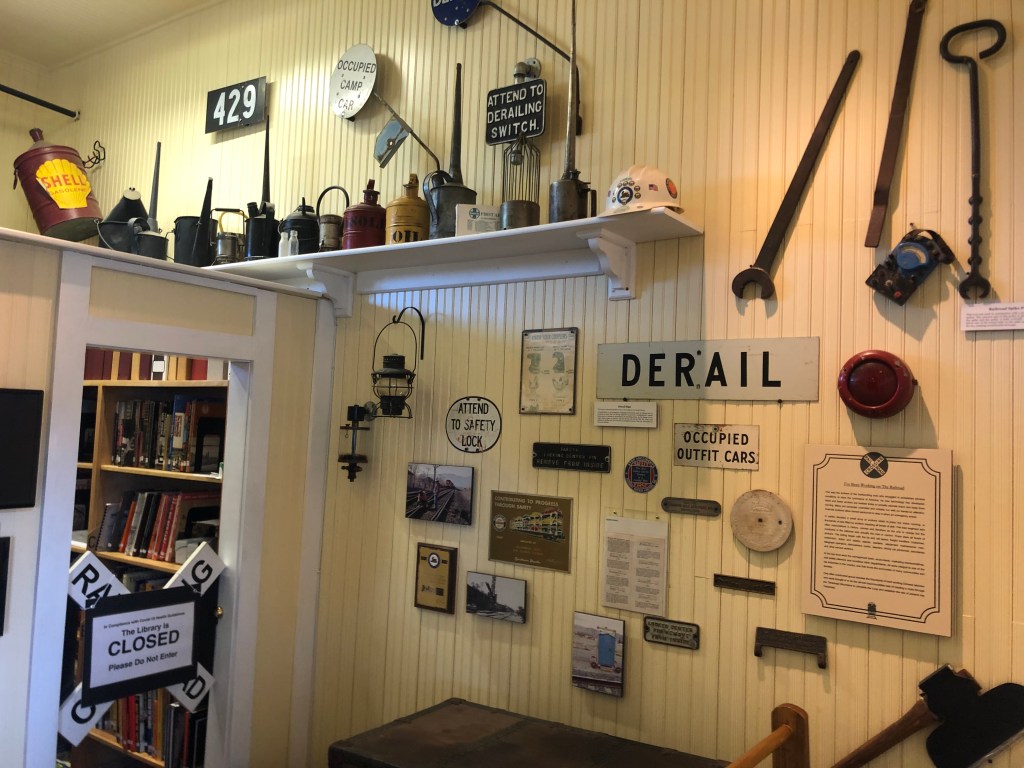
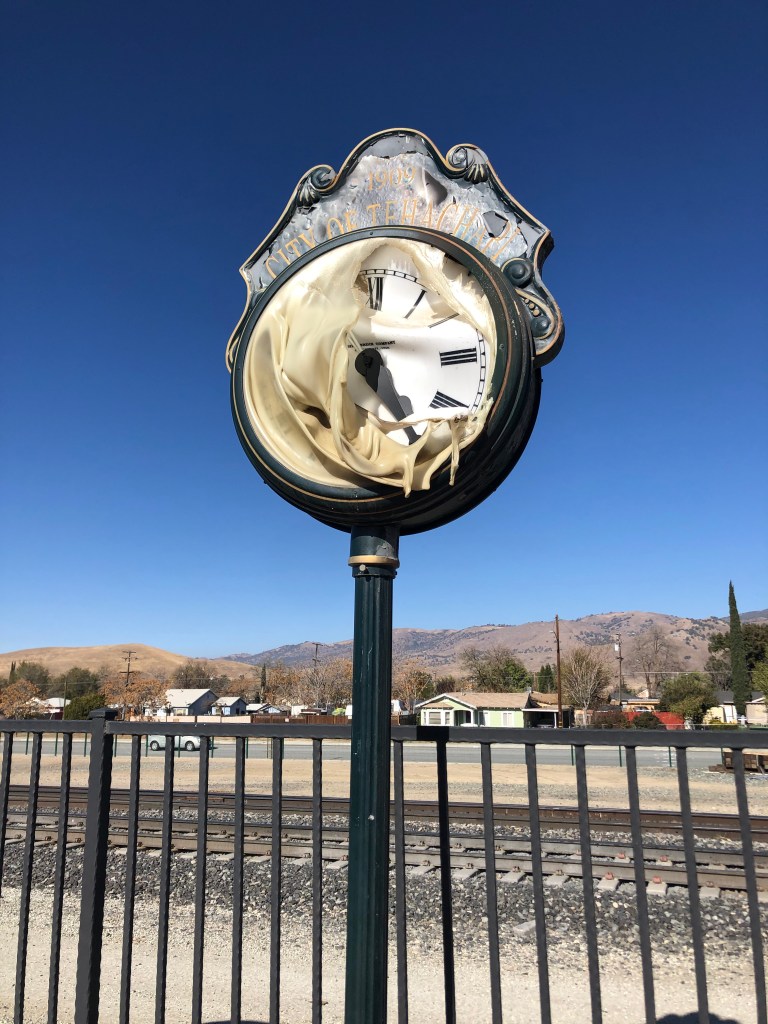
The only obvious reminder that the earlier building had burned was the old clock near the platform, melted from the flames.
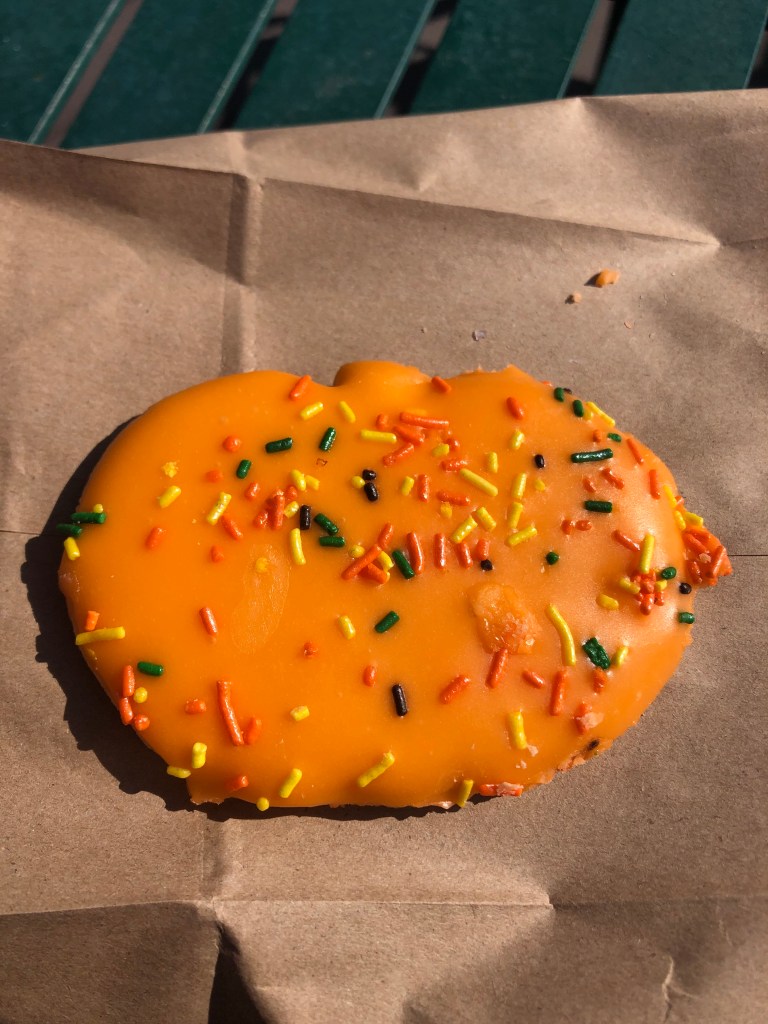
I spent a full hour with Doug, learning about the town’s railroad history. As I was leaving, I asked what other sites I should explore while I was in Tehachapi.The woman at the front desk had two suggestions: The Tehachapi Loop (which we’ll get to in a moment), and the Kohnen’s Authentic German Bakery, right next to the museum. She didn’t steer me wrong. Get an eyeful of these baked goods:
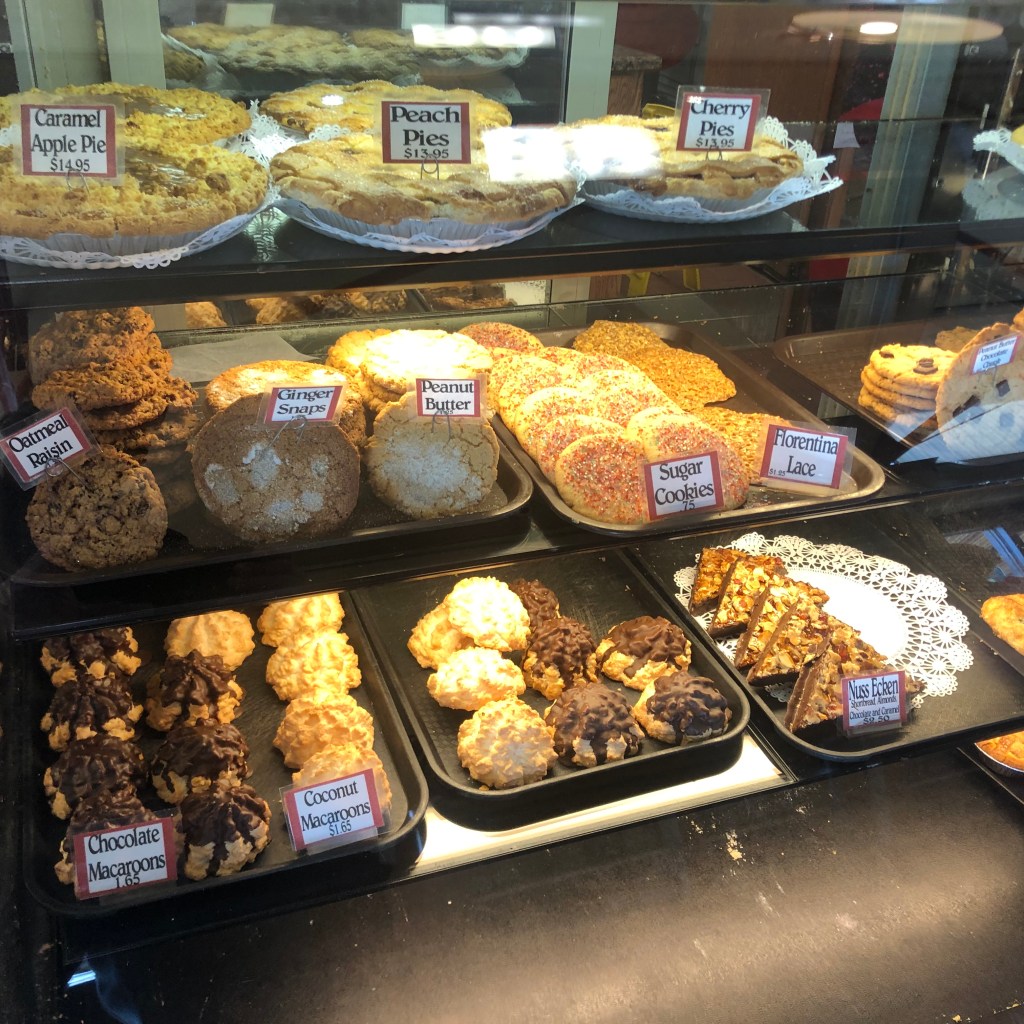
And so today, 14 days after the conclusion of my Halloween Treat Series, I finally found the Halloween Sugar Cookie I’d been looking for all the month of October. I give it 0 points out of 3 for packaging (they put it in a paper bag), 2 for appearance of the treat (finally someone used the correct color blend of sprinkles!), 3 for taste, and 3 for value (it was a buck and a half), for a Steve’s Sweetoberfest Score of 8 out of 12. A solid treat.
My next stop was the Tehachapi Loop, which is just a few miles from the depot. Like the original depot, the Tehachapi Loop dates back to 1876. It was considered a major engineering feat of its time, and still operates, essentially unchanged, to this day. Between 20 and 30 trains pass along the loop daily.
The loop allows trains to gain elevation gradually (about a 2 percent grade) so that they are able to cross the Tehachapi Pass. Here’s a photo I got off the web, which has a much better angle than from my vantage points on the winding road in the background.
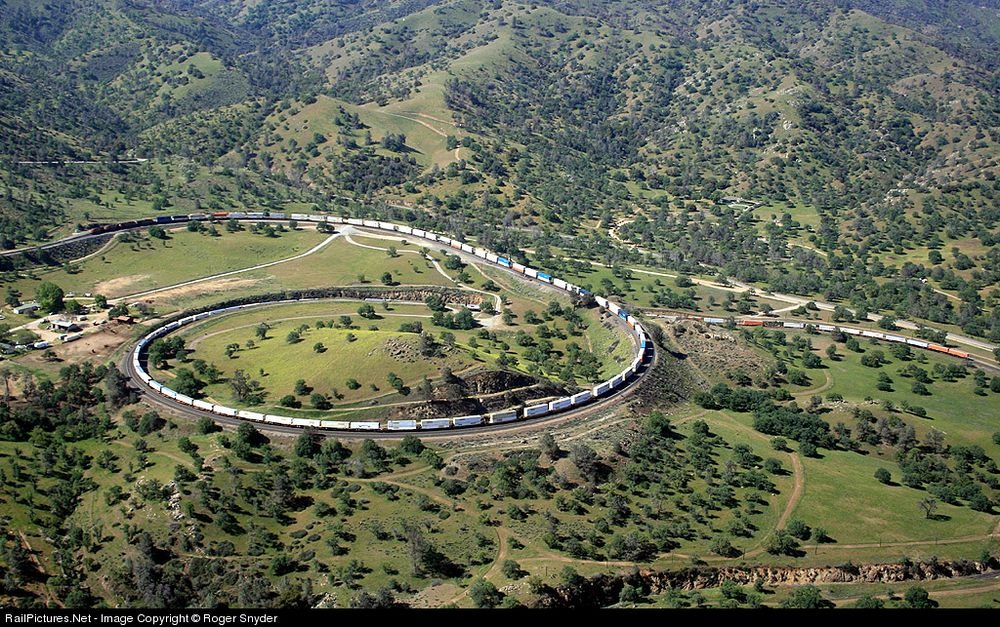
There’s something mesmerizing about watching 100-car trains spiraling up or down this corkscrew. Unlike a freeway, a railroad leaves much of the surrounding scenery untouched, somehow gracefully blending the trackbed with the natural environment. And it’s especially entrancing when you realize the thing is almost 150 years old, an impressive legacy of the storied Espee.
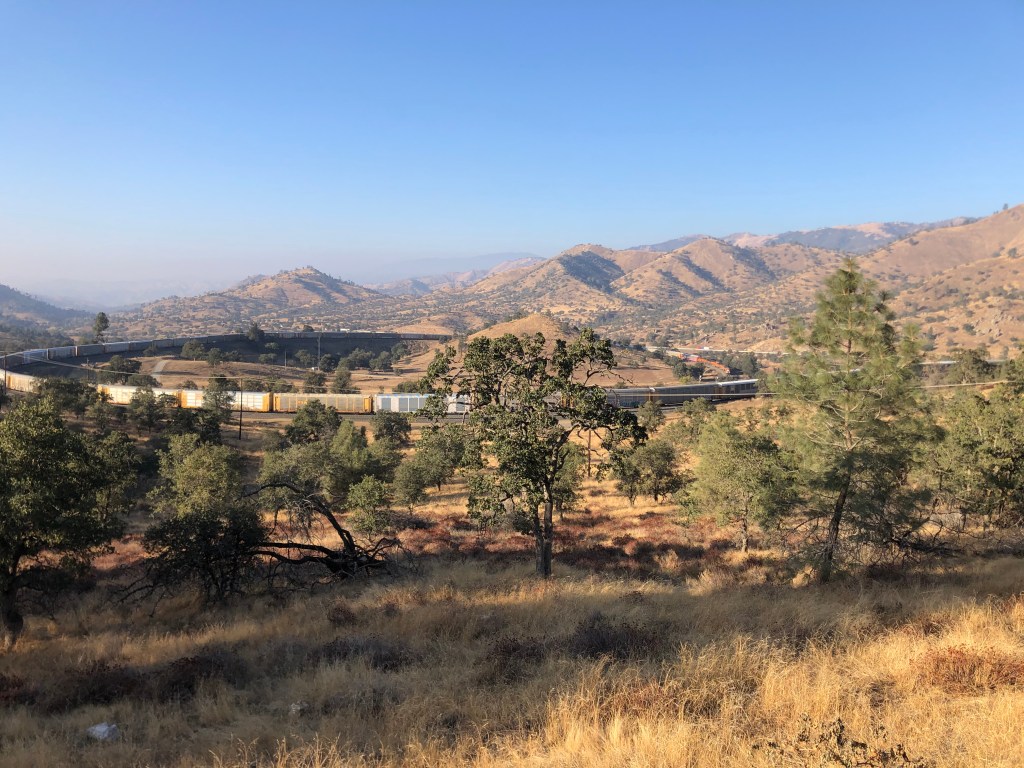
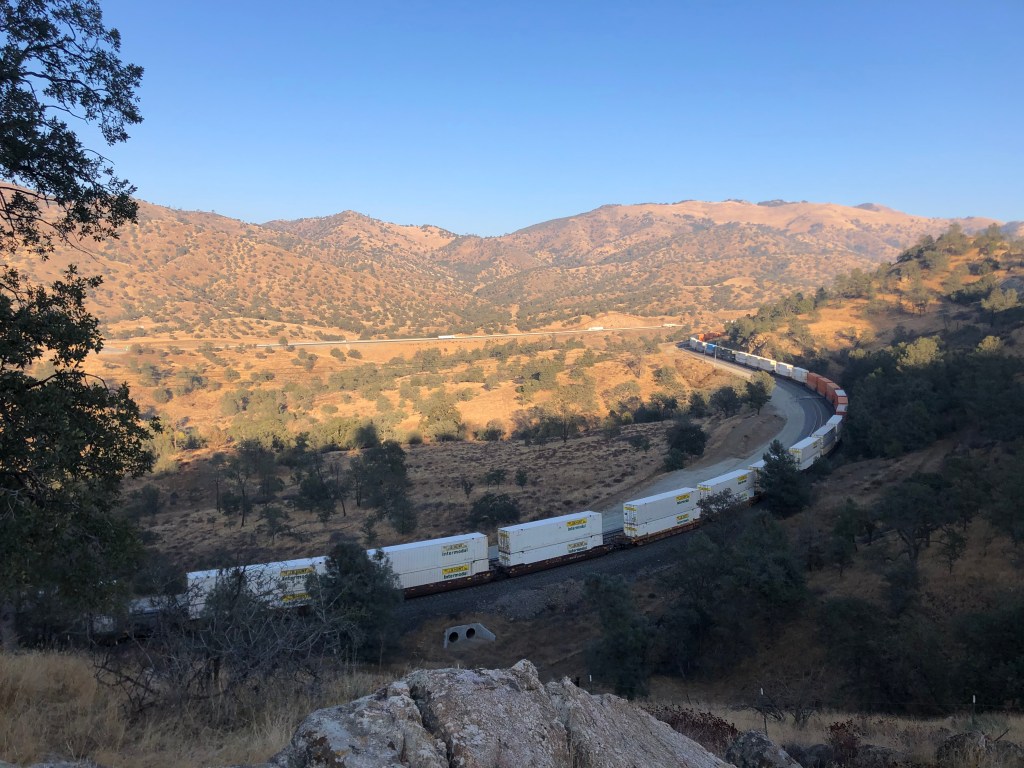
After spending an hour or so watching 3 long trains pass through the loop, I continued down the road to see if I could find its the tunnel entrance. I failed in that effort, but as I was searching I came across the grave of one Cesar Chavez, buried just yards from the mainline. I’m not making this up.
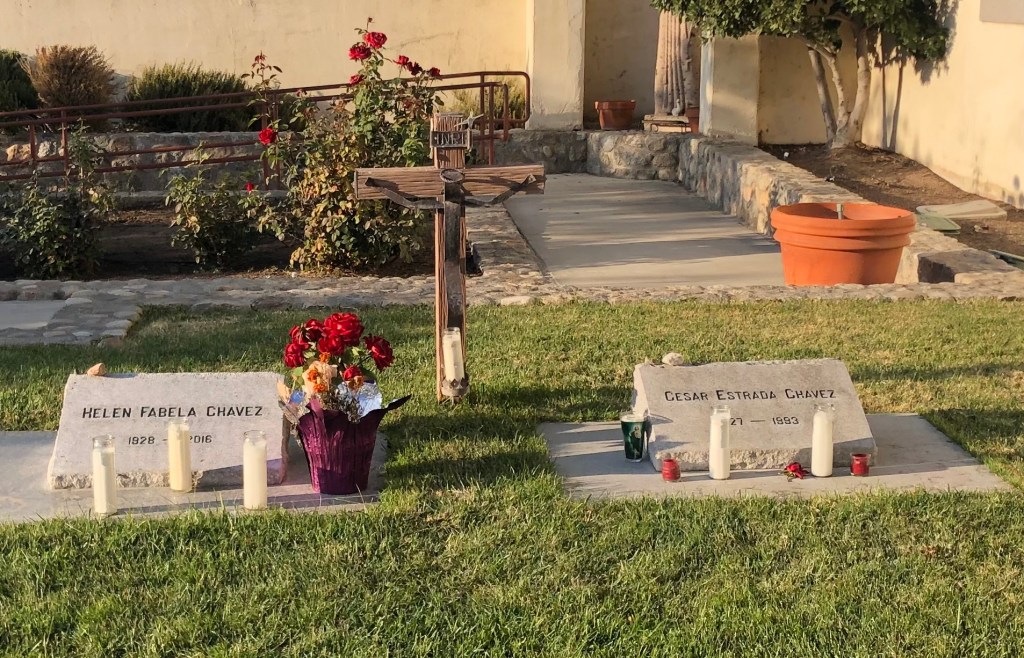
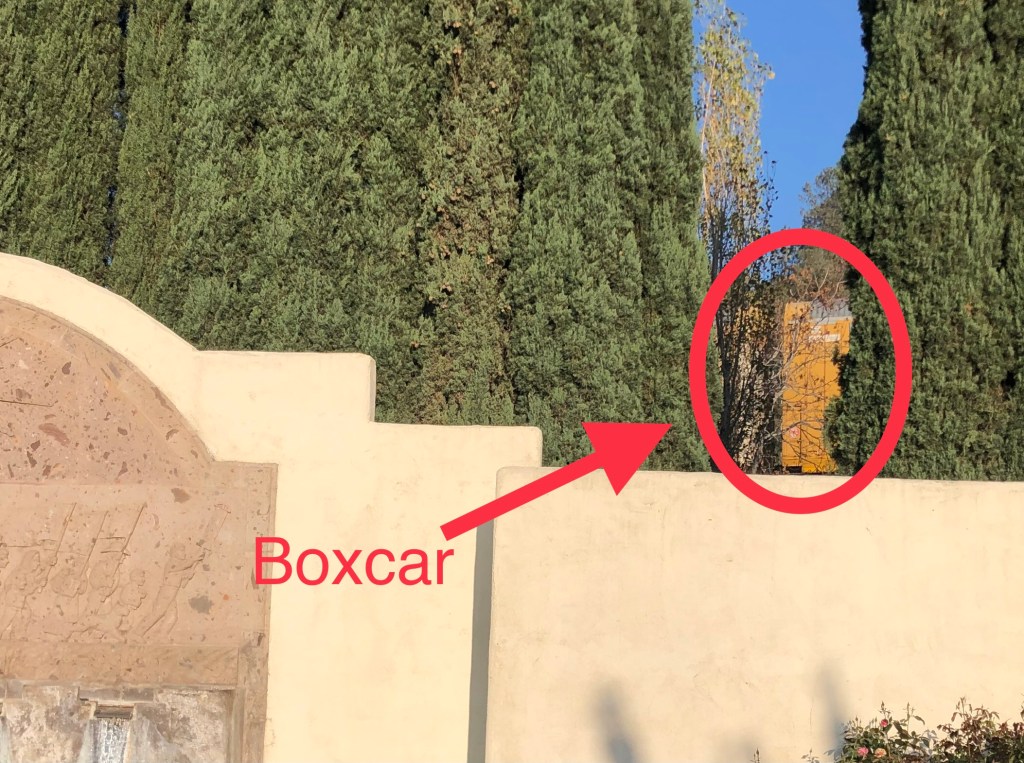
The sun was beginning to dip behind the mountains, and I figured it was time to call it a day. Tomorrow I’ll be heading up into the southern Sierra Nevada mountains to see what I can see. But first, I decided that I’d earned a BOTD.
BREW OF THE DAY
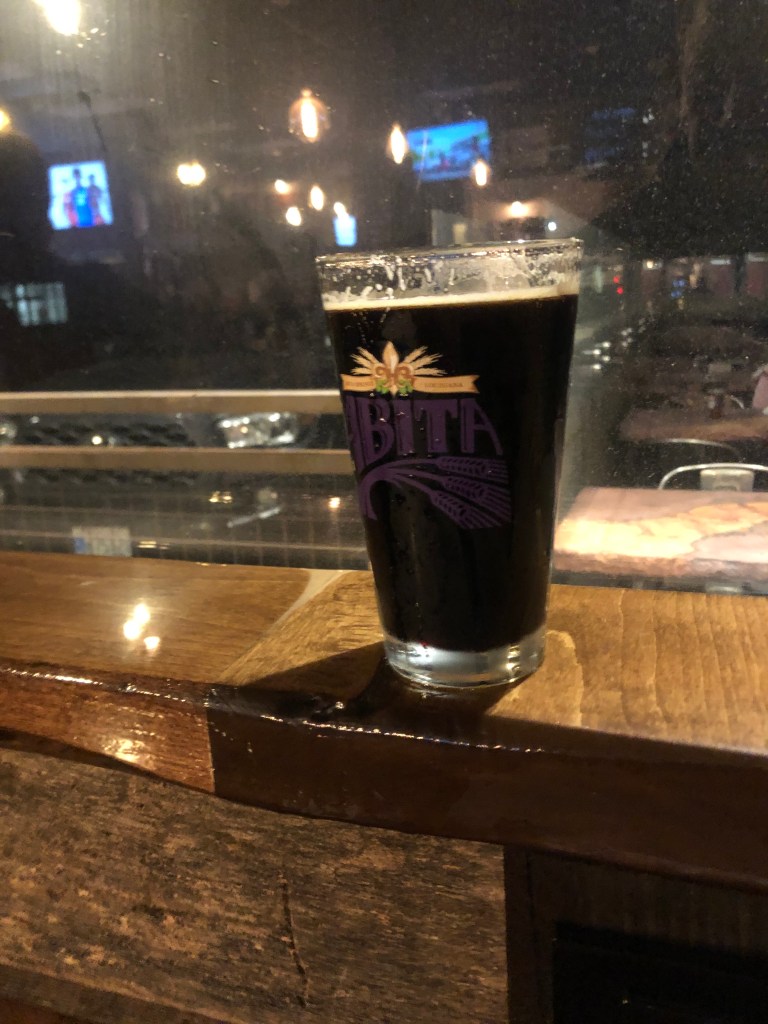
Conveniently located next to my hotel is TK’s Pizza and Taproom. I ordered a Stone Xocaveza Imperial Stout to go with my meat-lovers pizza. Now, I usually like my imperial stouts to have an ABV in the double-digits and the viscosity of Havoline. This pint didn’t deliver on either of those scores: it’s only 8.1% alcohol and its got the consistency of lowfat milk. But even though this brew departs from my stereotype of an imperial stout, its flavor is rich, delicious, and intoxicating. You immediately taste coffee up front, and then the various spices make themselves known: nutmeg, cinnamon, maybe a little vanilla. And definitely chocolate. This is a Mexican hot chocolate mixed with Starbucks. It’s a winter warmer to drink next to the fireplace while reading Conan Doyle. It’s a festive, copper-shot mahogany potation that’s sure to improve your outlook on life. Go out and get yourself one today!

 Chasing Phantoms
Steve, this was so much fun to read, and I’m so glad you headed East too to trail the storied past of the Espee. The loop is fascinating itself!
But I’m hoping there’s more to tell still and that you’ll be moved to head up north next, and regal us with some stories of SP’s influence on the shaping of coastal California. To that end, I’m mailing you a little article I copied and saved last year about bringing the train to, and through SLO, and the resulting passing of the stagecoach era. Remember I told you of Mrs Shoup, my 85 year old neighbor my student days of the early sixties, who told me of meeting her husband- to-be when he came to town on the stagecoach? Well there’s a picture of that too.
And hey, we’re always offering you that bed and a good supper too…
Linda
>
LikeLike
Yes, absolutely! SP’s move through SLO is definitely on my list. And so is dinner with you and Jim…
LikeLike
Great visit to Tehachapi! Looking forward to the rest of your journey.
LikeLike