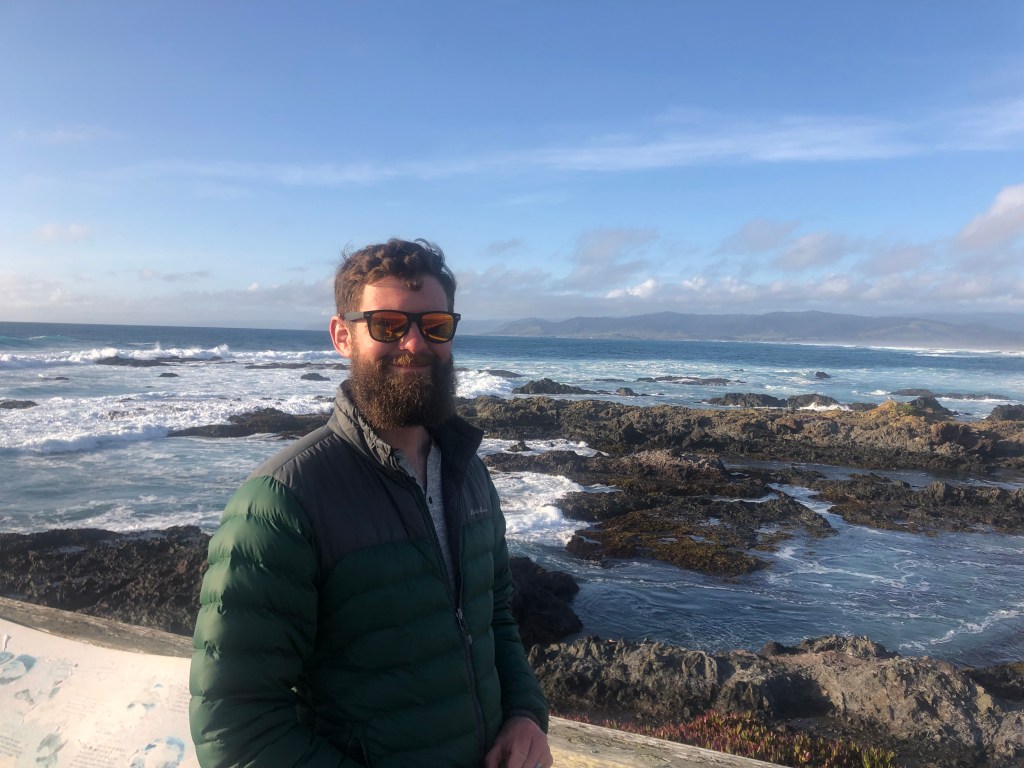
This past weekend my son (Ian) and I took a trip to Fort Bragg (pop: 7,000) for his belated 29th birthday celebration. We camped at Mackerricher State Park, which sits next to the beach just north of Fort Bragg.
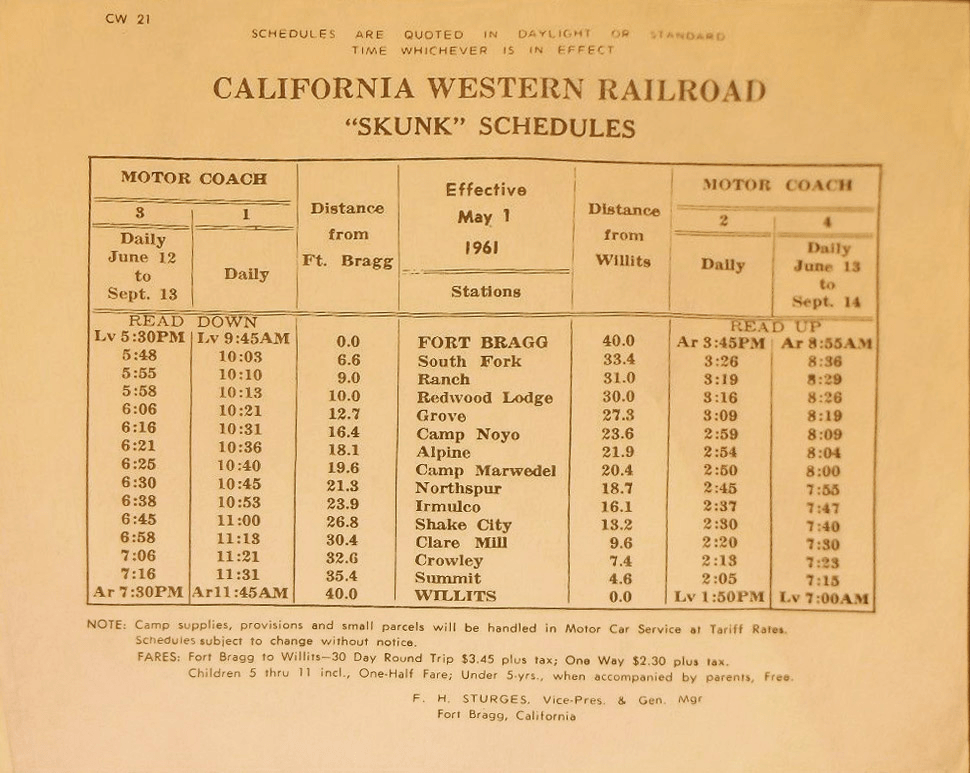
Now, of course, one of the main reasons for going to Fort Bragg is to ride the Skunk Train. For those of you who haven’t been enlightened, here’s a quick history:
In 1885 the Fort Bragg Redwood Company built a railroad to carry logs from the inland redwood forests to their lumber mill at the coast. When fully expanded in subsequent years, the railroad would extend about 40 miles eastward from Fort Bragg to Willits, generally following the Noyo River. The railroad passed through a 1,200-foot tunnel that was completed in 1893, and over numerous wooden trestles and bridges. The railroad (eventually named the California Western Railroad, or CWR) got involved with passenger service as well, serving the logging families scattered about the redwoods and, later, tourists.
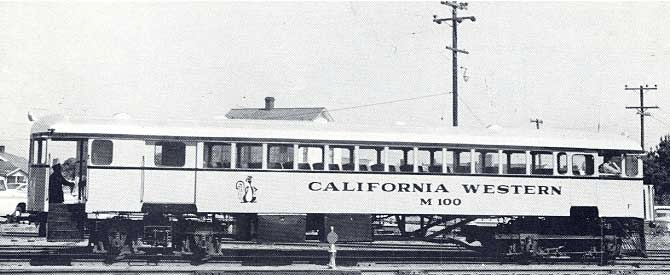
Especially popular were gasoline-powered motorcars, introduced in 1925. The smell of the gasoline fumes (as well as the heating oil used to warm the interior space) earned them the nickname “Skunks.” Most of the Skunk motorcars have since been retired, but the name has stuck, and virtually any rail conveyance operated by CWR to this day wears that epithet.
For some years now the CWR has exclusively operated excursion trains catering to tourists. Steam-powered locomotives would pull a sting of several passenger cars on a forty-mile journey from Fort Bragg to Willits.
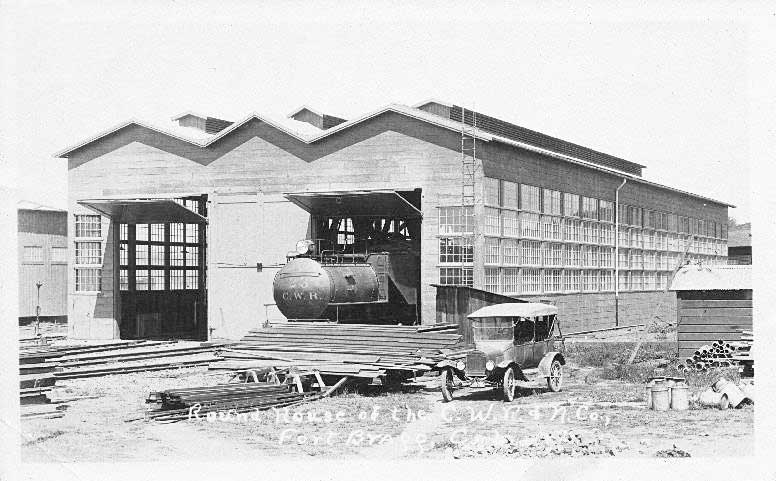
The terminus at Fort Bragg includes a depot and various other facilities, including this engine house that was constructed in the 1920s.
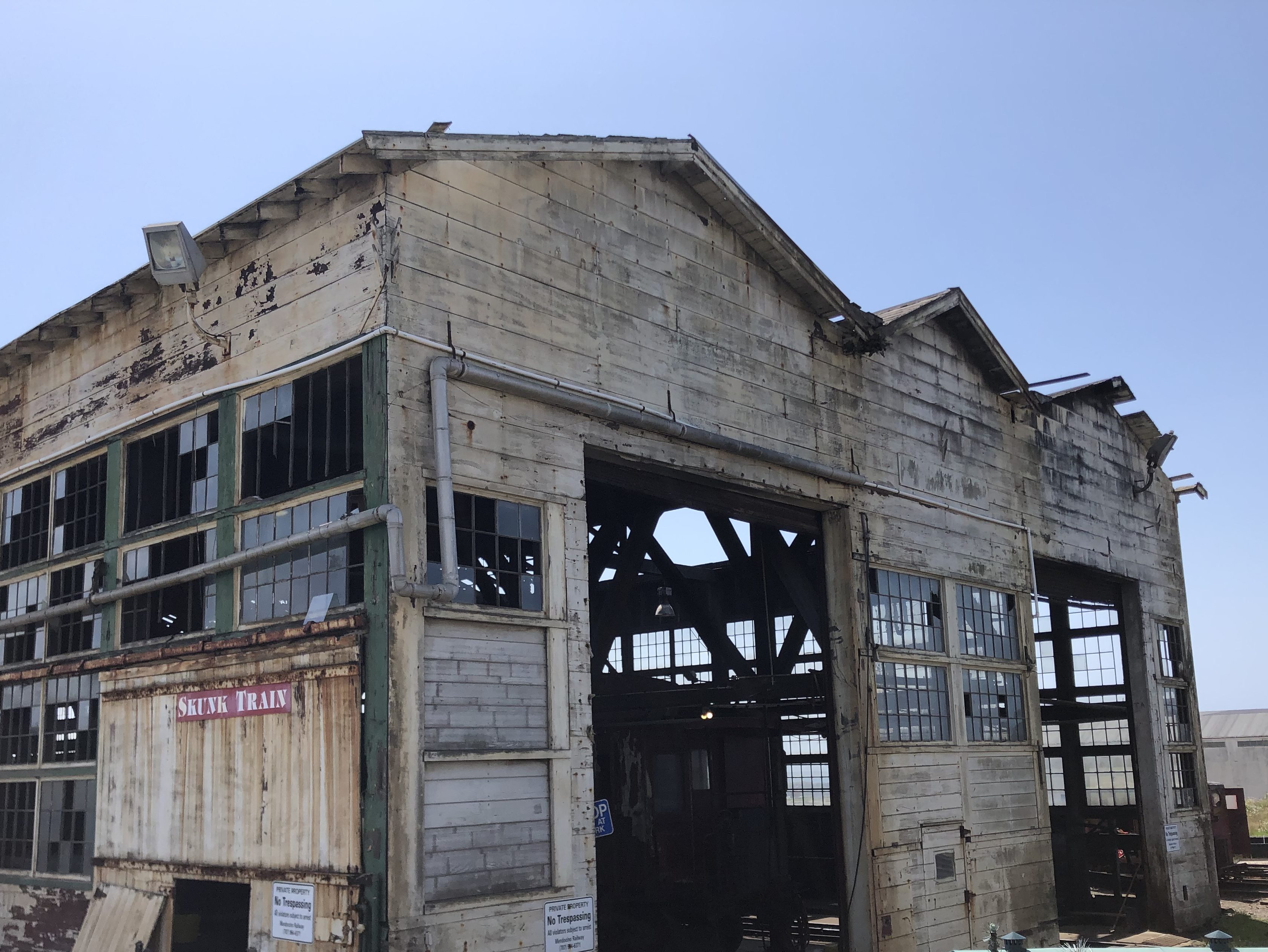
The railroad has changed ownership a few times, but today–some 137 years after its founding–it’s still alive and kicking, owned by a group of private, local investors. Of course, some of the operation is showing its age. Here’s the engine house when we visited it today:
Incidentally, my family visited the Skunk Trains in 1974, and Dad took this photo.
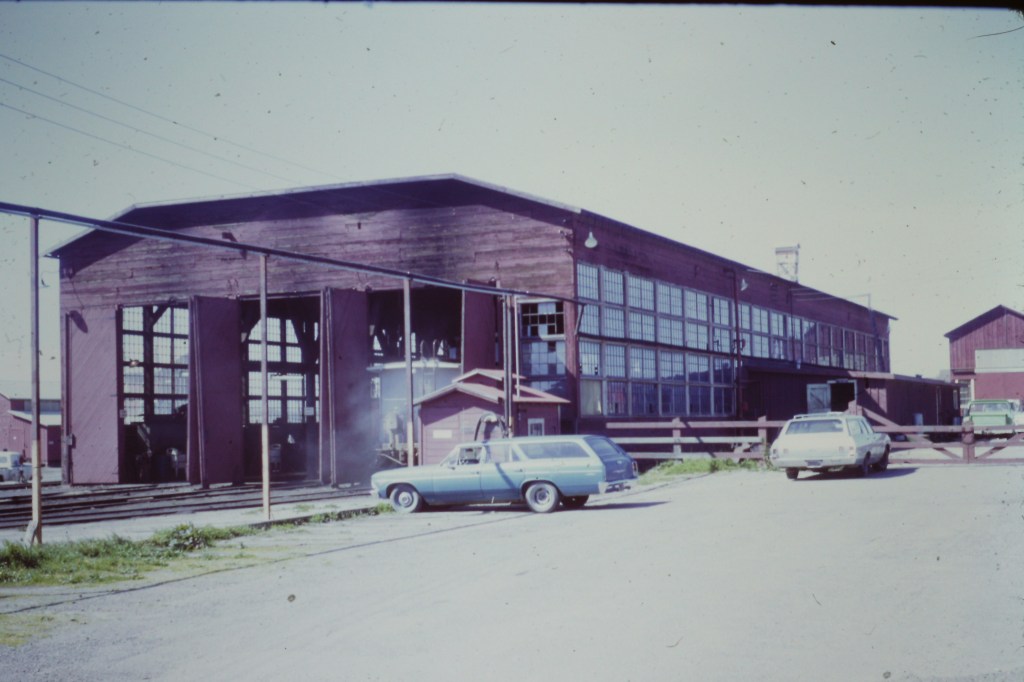
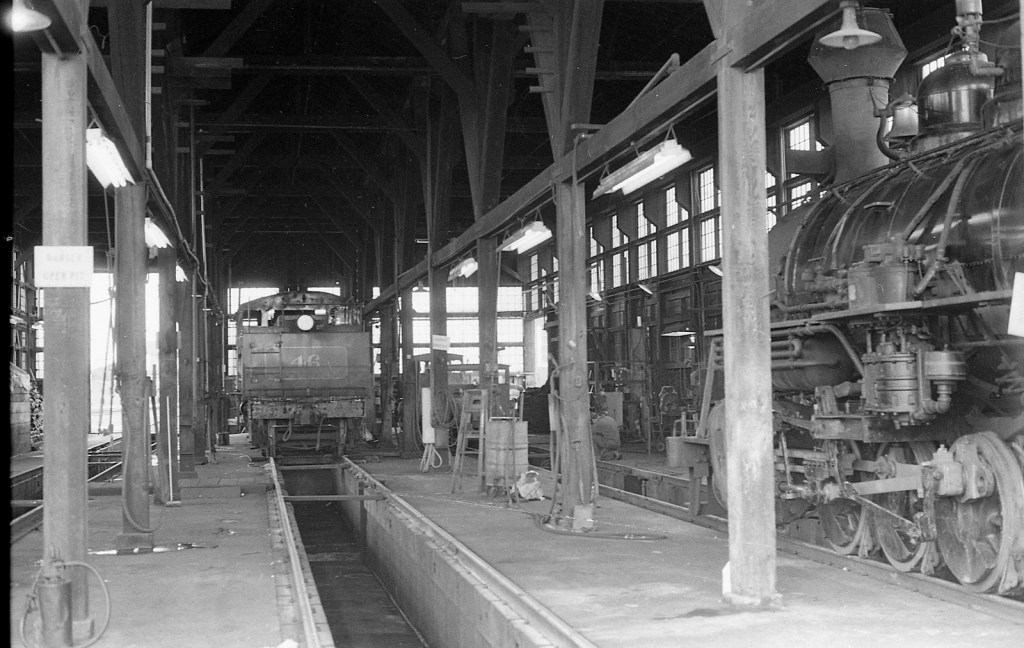
But even though the windows along the side look similar, surely this isn’t the same building. For starters, it’s got three engine bays rather than two. I consulted my Uncle Ed (who’s been cited in this blog before as a sage of railroad history, particularly in California), and he informed me that Dad’s picture is of the CWR’s long-gone engine shops. Uncle Ed had taken a picture of the interior of said shops in 1974, and sent along this picture to prove it.
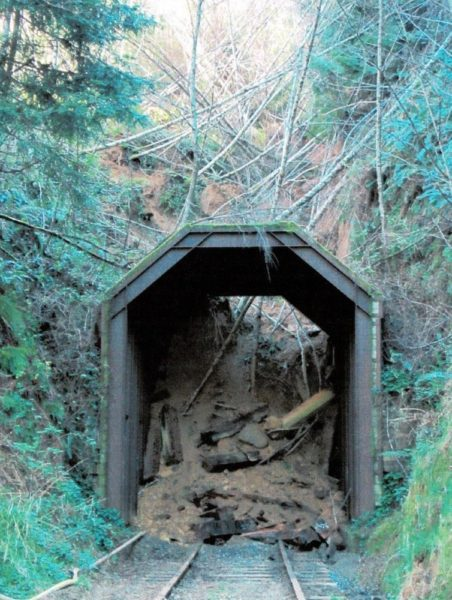
But let us return to last weekend: It was a beautiful spring day and Ian and I were looking forward to a rail journey. Now, as it turns out, that historic 19th-century tunnel had collapsed in the spring of 2013, when a “bus-sized boulder” dropped out of the ceiling. They’ve been working to secure funding to have the tunnel cleared, which might happen in the next year or two. Meanwhile, the CWR continues to run a short excursion trip up to the tunnel and back, which amounts to a 7-mile round trip.
We, however, opted for another type of rail journey which the CWR initiated a few years ago. For this ride, you begin on the far side of the collapsed tunnel, and make a 25-mile round trip along the eastern stretch of railroad. There’s only one catch: You have to power your own vehicle.
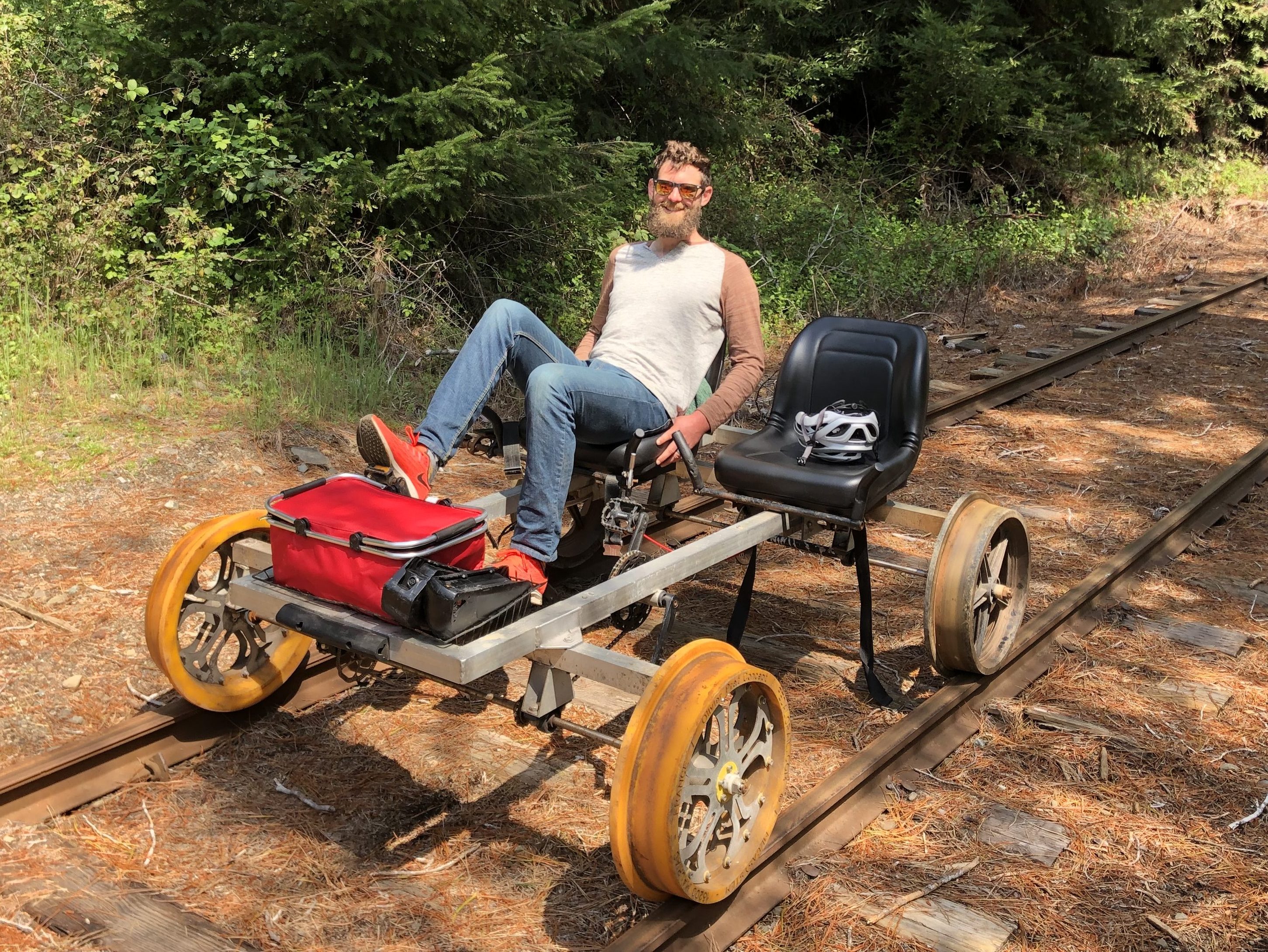
The good folks at CWR have manufactured a fleet of “railbikes” of their own design, and rent them out to tourists like us. Because there’s only a single set of rails, riders are restricted to specific time slots and a comfortable buffer of time separates the riders.
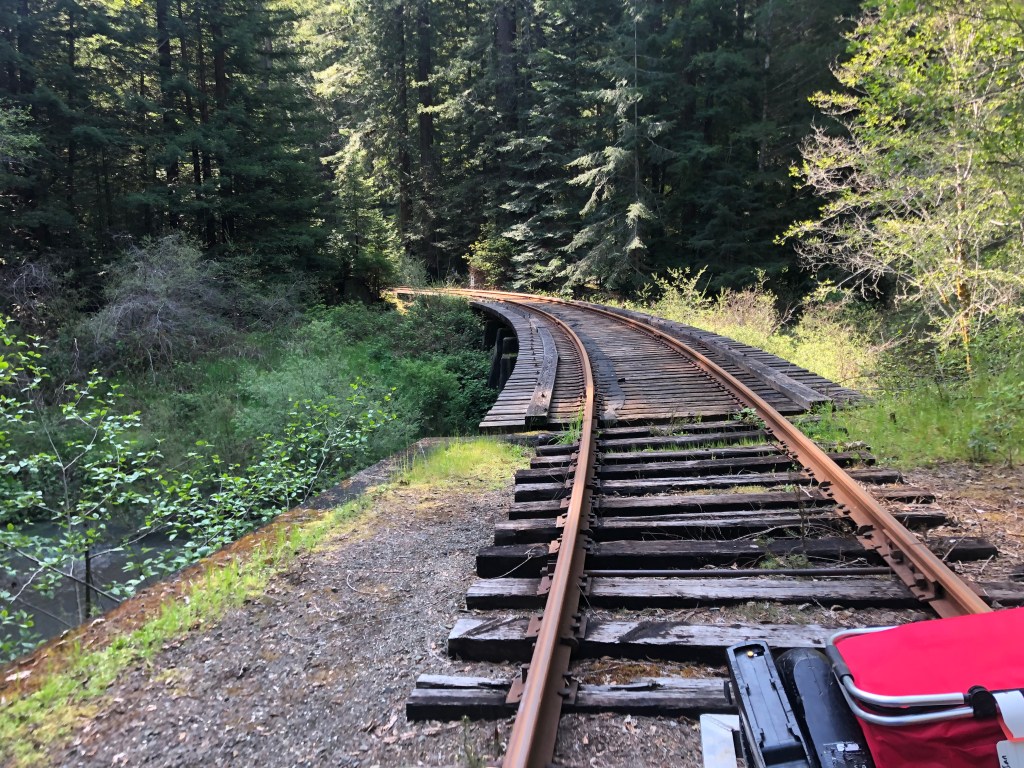
It’s a beautiful, pleasant journey, lazily rolling on the rails next to the slow-moving Noyo River, surrounded by mighty old-growth redwoods. The railroad crosses the river at multiple points over wooden bridges constructed years ago.
Here’s a short video I took which should give you a sense the railbike experience:
Although most of the scenery consisted of old-growth redwoods and the Noyo River, we did pass a couple of hermit’s cabins, which are reached by old logging roads.
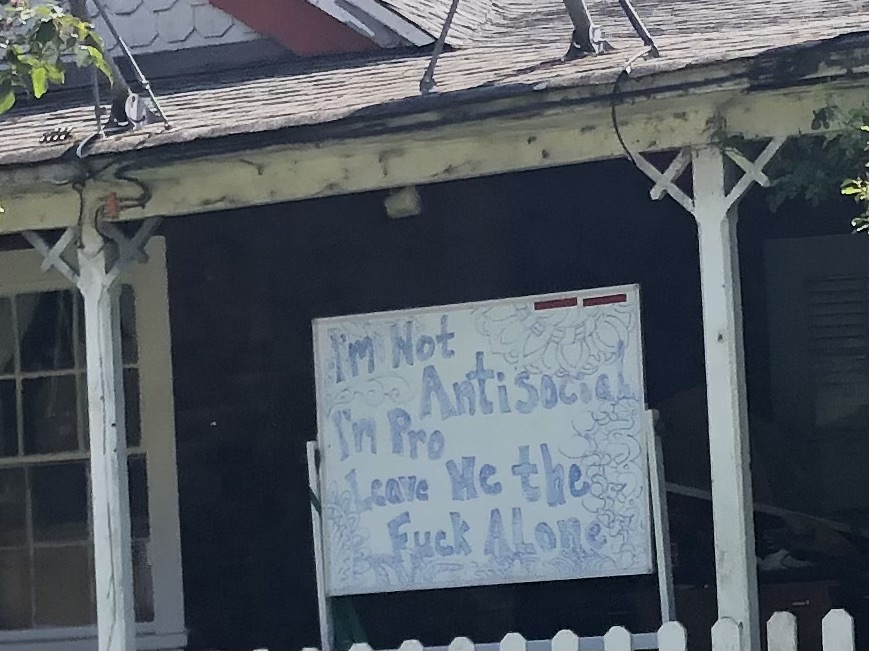
Twenty-five miles is a long distance for pedaling one of these beasts, so the railbikes include an electric motor to assist with the legwork. Naturally, Ian and I sought to discover just how fast we could go, so we cranked up the motor and pedaled with all our might. We topped out at 27 miles per hour, which might not sound that fast, but it was fast enough to derail us.
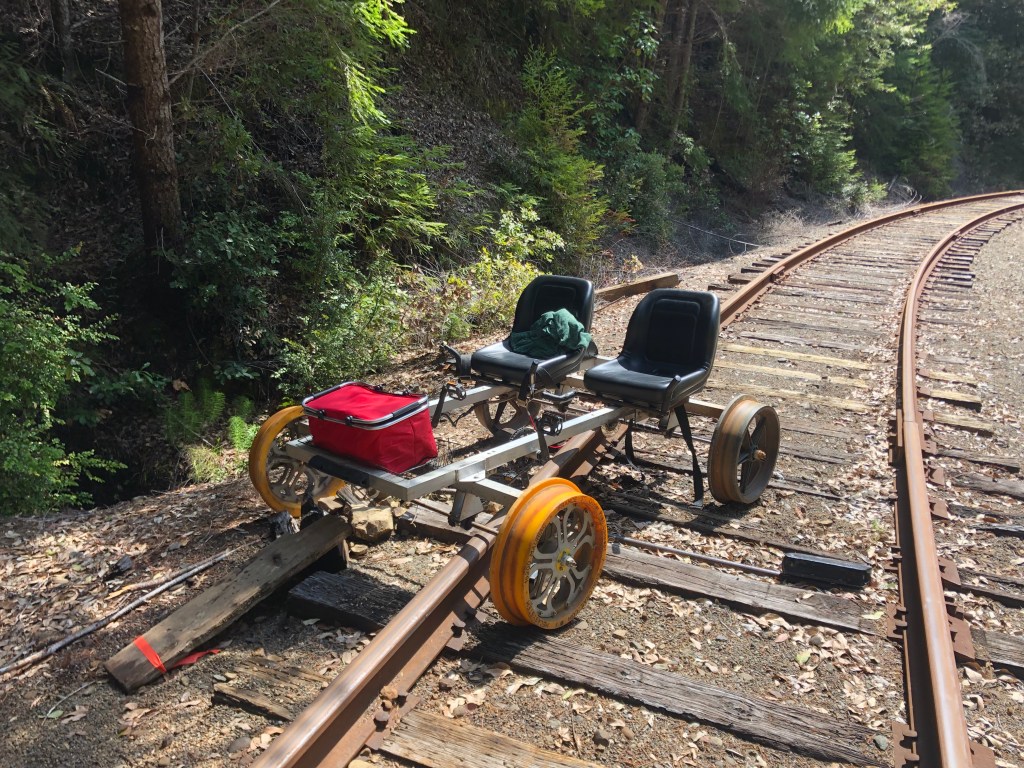
After about 13 miles we arrived at the turnaround point. (Note: The railbikes are turned around on a small turntable set in the track. I neglected to get a photo of it, though.) While the bikes were being turned around and having their batteries replaced, we enjoyed a hearty lunch next to the river. The folks at CWR supplied the lunch, complete with a few beers, and they even let us keep the red picnic cooler that you see in the basket on the front of our bike. Then it was back to pedaling. We finally got back to our starting point about 4 and a half hours after we started our journey.
I highly recommend this trip.
Oh, and Happy Belated Birthday, Ian!

 Chasing Phantoms
Great to see that you’re back-on-track again! No mention of visiting North Coast Brewing in Fort Bragg? I expected you to review their Old Rasputin. And at least a passing reference to Braxton Bragg and the ensuing 21st Century controversy over naming… Happy (belated) Birthday to Ian.
LikeLike
Sadly, an incident at the 2015 West Coast Beer Festival ended my ability to enjoy Old Rasputin ever again.
LikeLike
Great post..would love to try that railbike
SS
LikeLike
The folks at the Skunk would be happy to oblige. All you need is some extra dough.
LikeLike
Thanks, Steve. Brings back memories. Our dad took Eric and I to ride the Skunk in about 1961. We’ve still got an old picture hanging on our office wall with the two of us perched on the front of the engine. Hope to see you and Karen soon. Chris
LikeLike
1961?? You and Eric must have been, what? a few months old?
LikeLike
And of course your lovely wife was born at Fort Bragg
Jeff
LikeLike
She was?? I’m sure there’s a good story there…
LikeLike