The San Francisco Bay Area today is associated with high-tech start-ups, a tangle of crowded freeways, ubiquitous Teslas driven by tech bros on their way to Starbucks, and outsize McMansions squeezed onto tiny lots that once were once cherry and apple orchards. It’s a thoroughly modern region, where Lime Bikes are available on every street corner and Uber Eats is more popular than McDonalds.
And yet here and there you can still find remnants of a long-forgotten, early-industrial past, if you know where to look. Recall, for example, my hunt last year for a century-old, half-sunken railroad ferry in Antioch. I’ve been struggling to articulate just why I’m find the presence of these historic relics so reassuring. To me they’re a tangible link to an obstreperous past that feels more palpable than our virtual this and digital that. The steam-and-iron age had its negative points, to be sure, but it also showcased our civilization’s determination, boldness, and energy. And yet I think there’s more to my interest in this stuff than just their Romantic aspects. By seeing these artifacts in the wild, rather than behind a museum display case, they are at once more authentic and better contextualized. They connect us to our own past. I’m thinking of that scene in the original Logan’s Run, when Logan 5 and Jessica 6 encounter the old man (played by Peter Ustinov). Even though their modern society worships youth, they are drawn to this ancient, bearded feller with connections to a forgotten time.
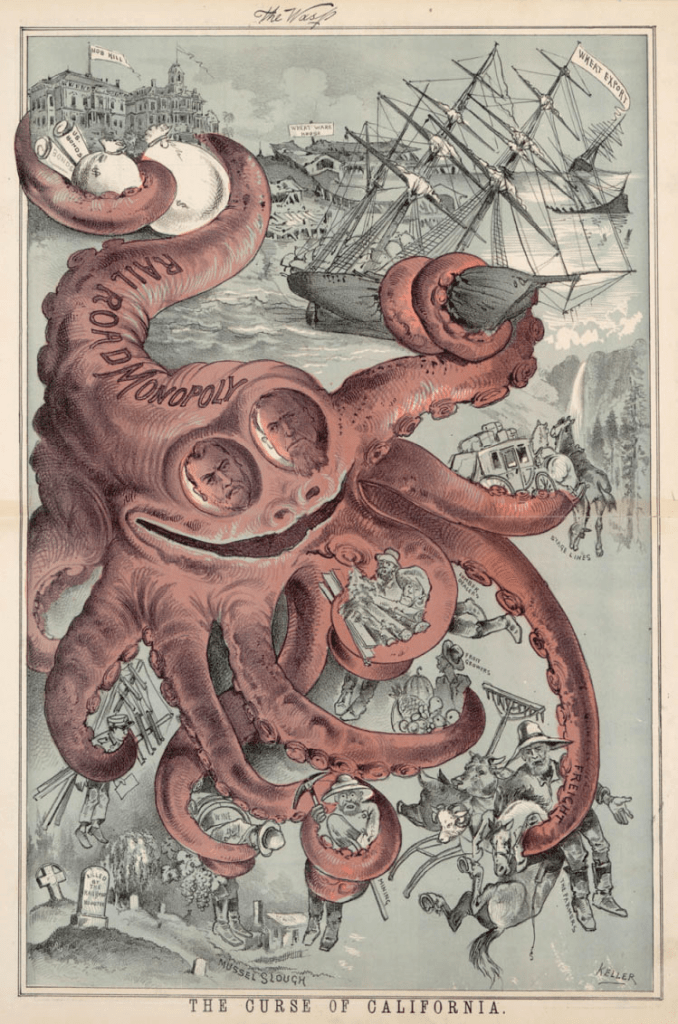
All this brings us to the South Pacific Coast (SPC) Railroad. It’s an audacious, independent Bay Area rail line that was established almost a century and a half ago. It was an earnest upstart that offered a cheaper alternative to the monopolistic Southern Pacific Railroad, which at the time held California in a “monopolistic death-grip.”
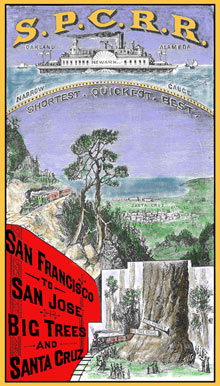
The SPC ran from Alameda down to Santa Cruz–a distance of about 77 miles. The stretch that crossed the Santa Cruz mountains, from Los Gatos to the coast, is especially impressive for a small, independent, narrow-gauge railroad. Trains traversing this section would snake their way through redwood forests, crossing gorges and creeks and passing through eight tunnels. And it was built in the 1880s! The line ended in the town of Santa Cruz.
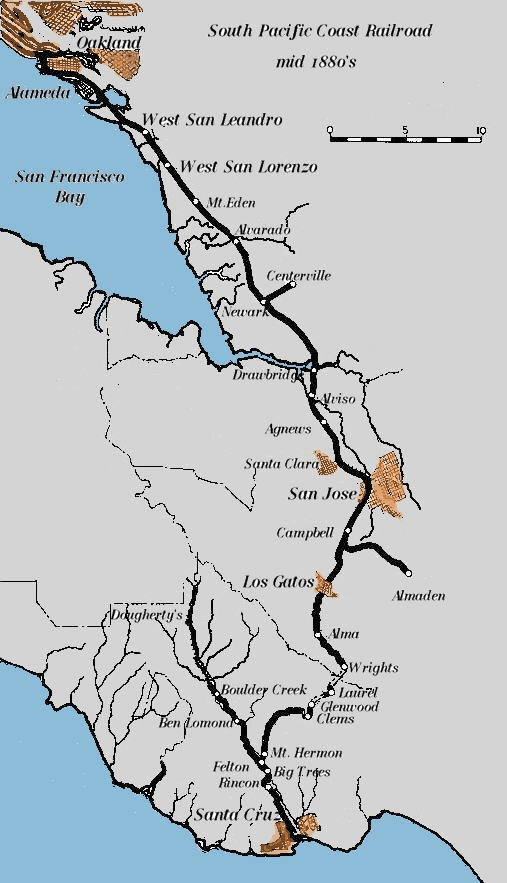
The Southern Pacific Octopus eventually absorbed the SPC line. Then the route became unprofitable with the opening of Highway 17 between San Jose and Santa Cruz in 1940. That same year a storm destroyed major portions of the old SPC line, and the Southern Pacific decided to abandon much of the line rather than repair it. Trains have not traveled over most of the original line for about 85 years.
So what happened to the SPC’s tracks and tunnels after the railroad was abandoned? My son Ian and I spent two days following the old route in order to find out.
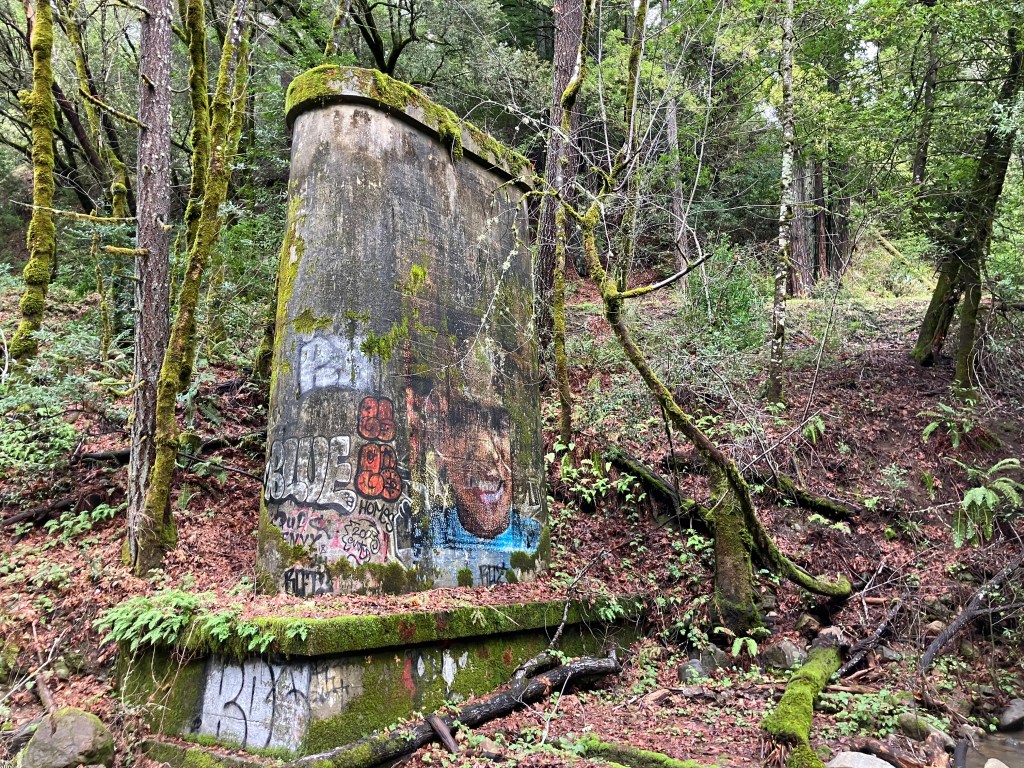
We focused primarily on those old tunnels. There were eight of them. Tunnel #1 was obliterated in 1903, and in the 1950s the area was inundated by the creation of Lexington Reservoir. So we moved on to Wrights Station, which is where Tunnel #2 was bored. And it’s still there! The trees and vines and moss of the Santa Cruz mountains are trying to reclaim the tunnel’s mouth, but a steady flow of water seems to be continuously scouring it.
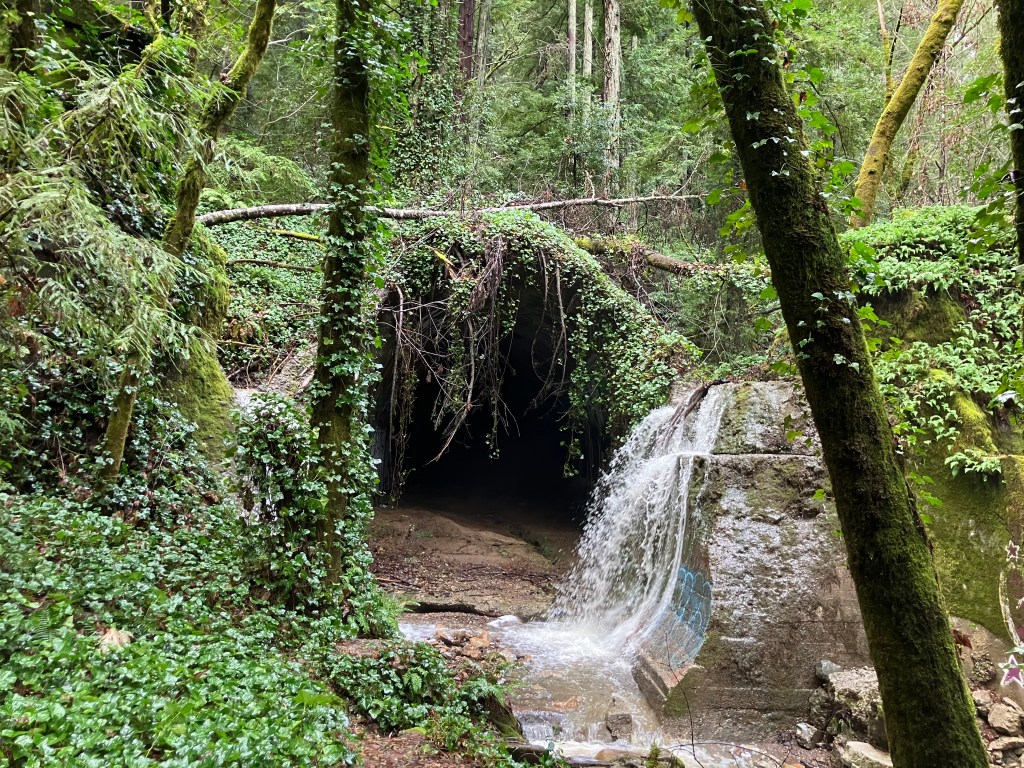
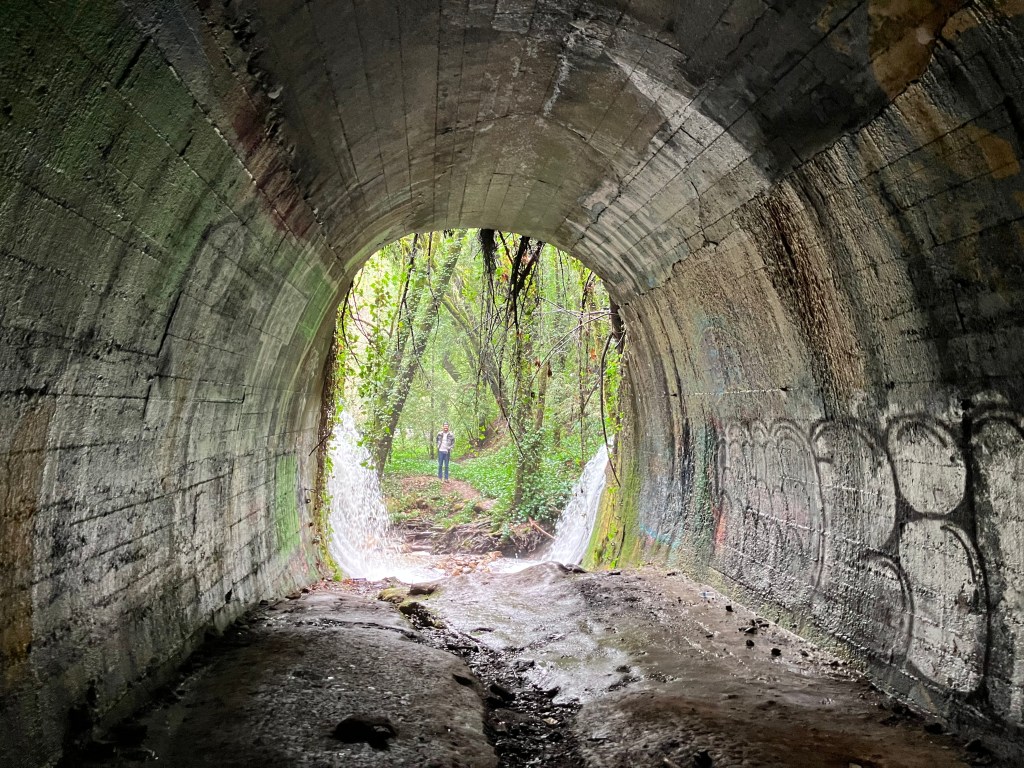
It’s somewhat eerie, these ruins from well over a century ago just silently sitting there in this remote forest. Graffiti reminded us we weren’t the only modern persons to discover these remnants of a past age, but it still felt as though we’d encountered something largely forgotten.
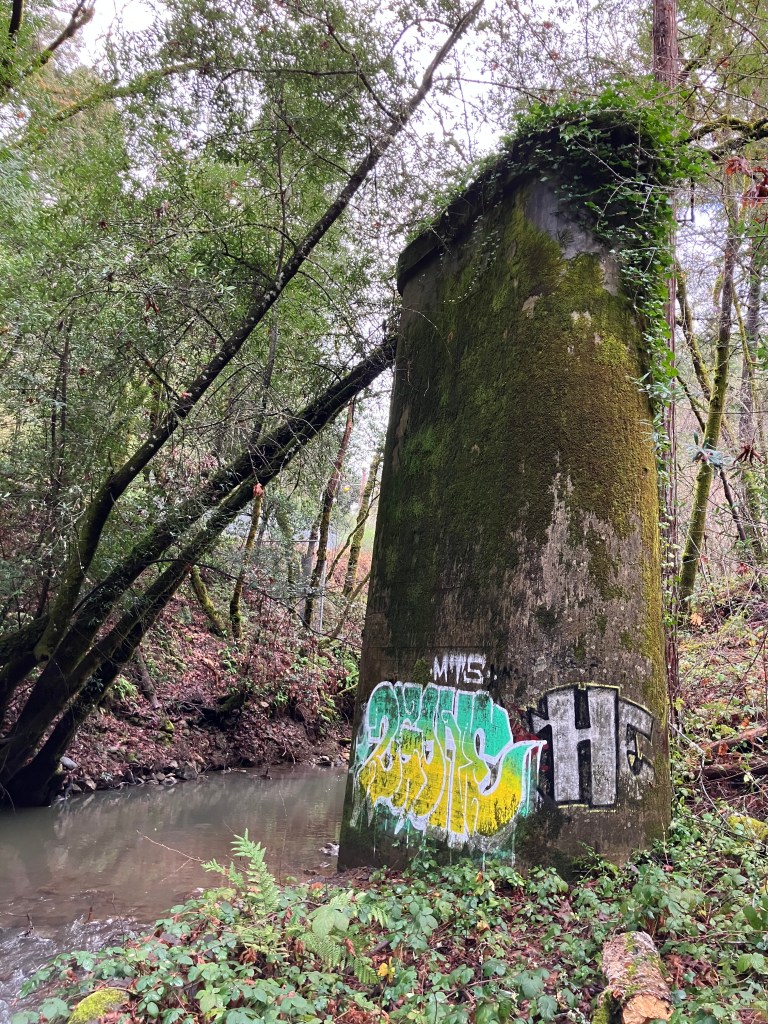
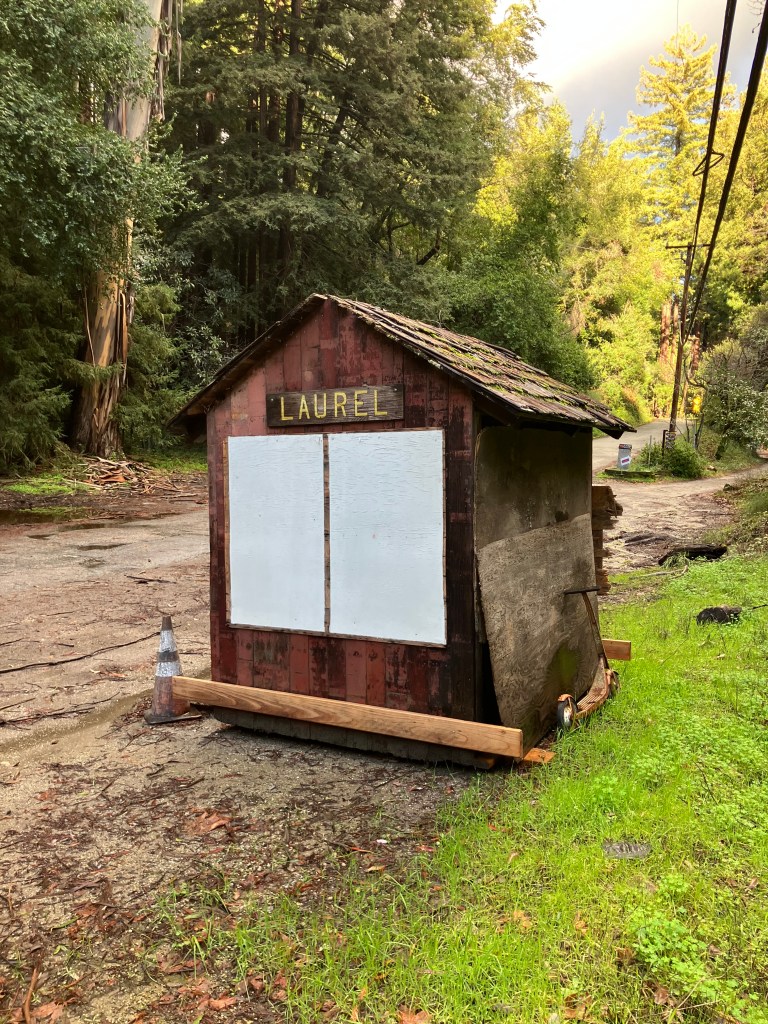
After Wrights we moved on to the town of Laurel (pop: one family). Laurel used to be a significant stop on the line, but today it seems to amount to just one house.
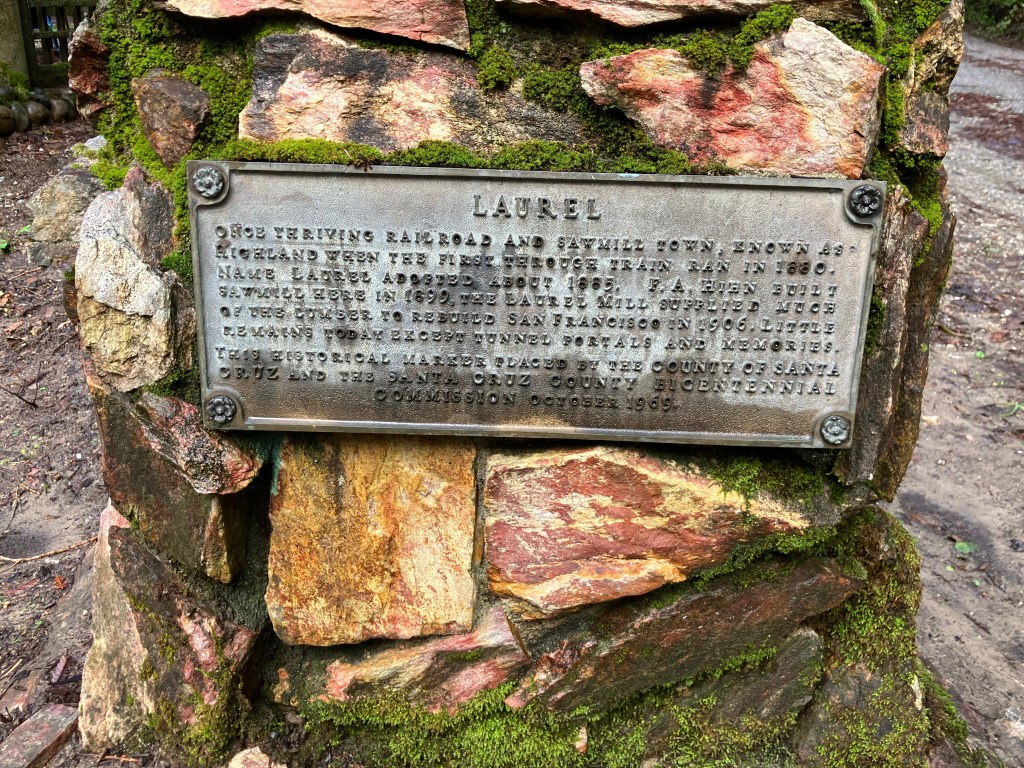
Apparently, that one home now owns the portal to Tunnel #3 in its backyard. And because the portal is on private property, there’s no graffiti. Once again, it strikes me as an eerie remnant of a long-abandoned railroad that looks very much like it did a century ago.
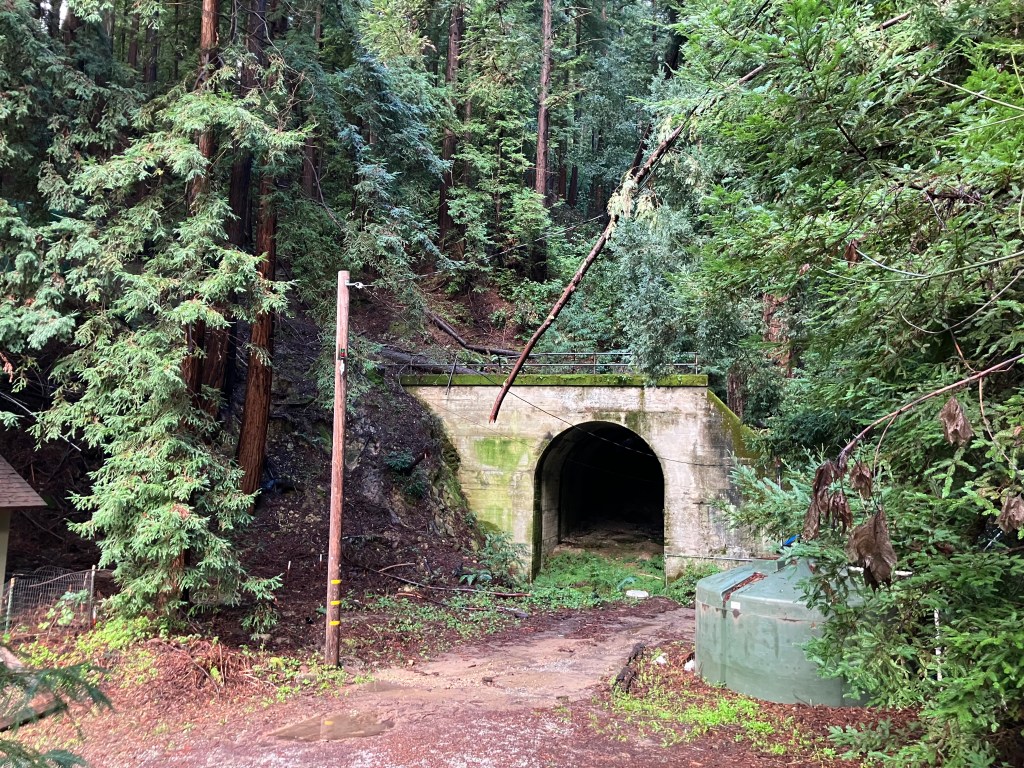
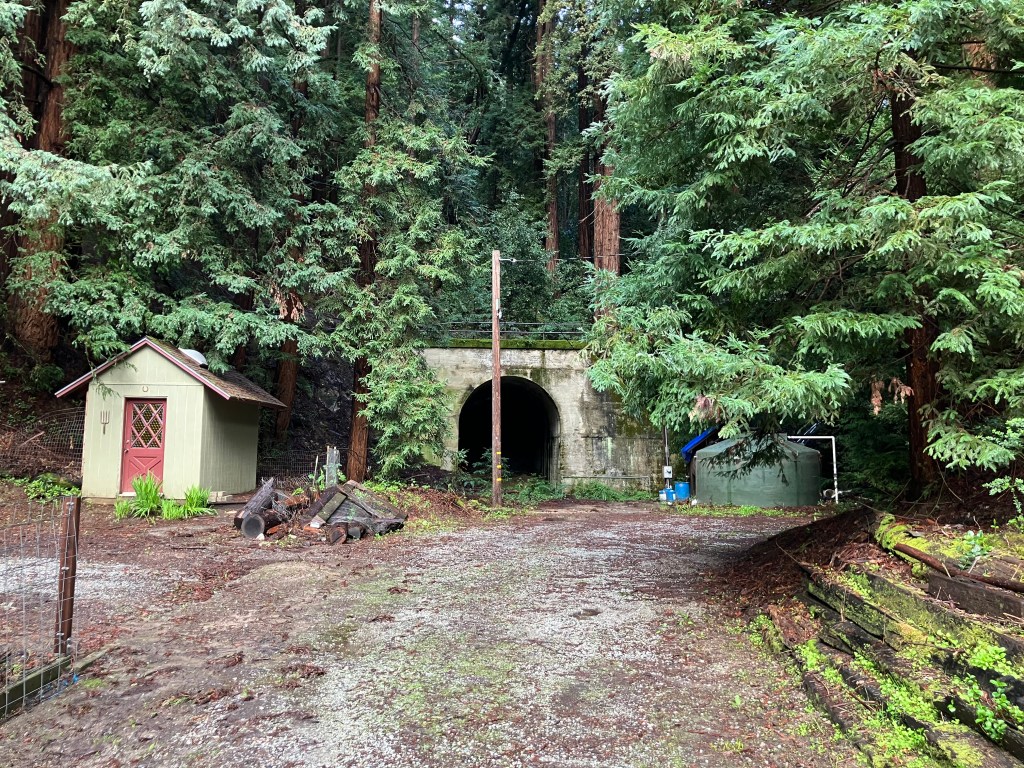
We found the south portal to this same tunnel emerging under a residential road in Glenwood, This end too appears to be part of someone’s back yard. I would have killed to have had a historic railroad tunnel in my back yard while growing up!
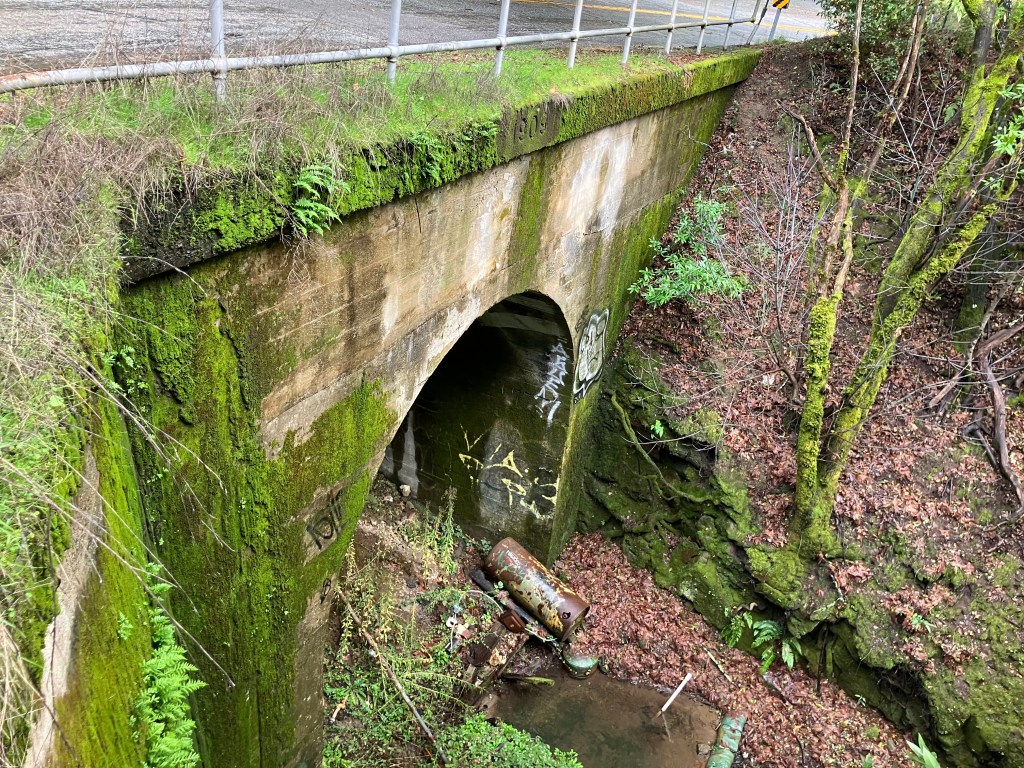
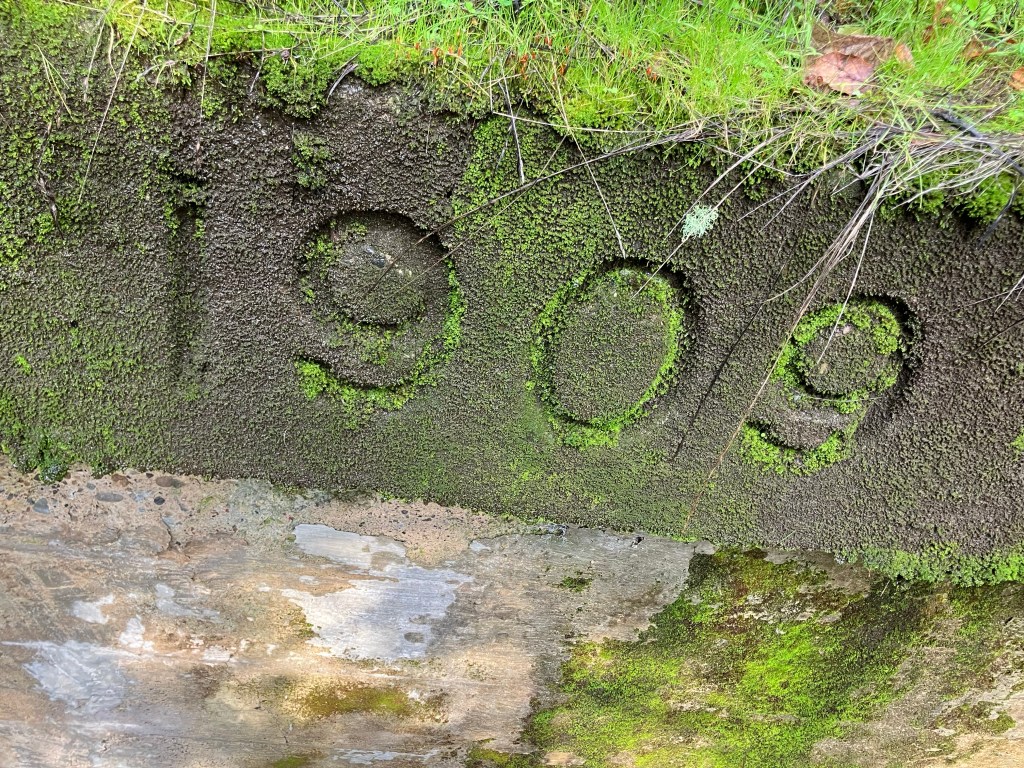
This tunnel, like several others on the SPC line, was re-constructed after the 1906 earthquake. (The SPC crosses the San Andreas fault.) While they were at it, they widened the tunnels to accommodate standard gauge (about 20 inches wider than narrow gauge.) This tunnel bears a 1909 marker, which presumably is when the tunnel was widened.
A little further along we were able to catch a glimpse of Tunnel #4, dubbed “Mountain Charlie.” It was a ways up a private hillside, and we couldn’t access the property. But, like the others, it had a visible concrete portal with lots of moss but unmarred by graffiti. What do these families do with these tunnels? (I should note that Southern Pacific dynamited about half of these tunnels in 1942, so you can only go into the mouth of the tunnel for a little bit before encountering a wall of rubble.)
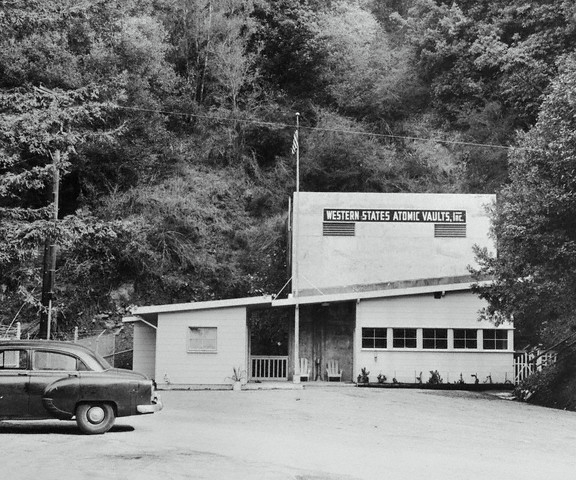
Next up was Tunnel #5: the Zayante tunnel. It’s only about 250 feet long, bored into granite. And this one was not dynamited. Still, it took us awhile to identify it. A little research revealed that a company called Western States Atomic Vaults, Inc sealed off both ends of the tunnel and turned it into a climate-controlled data storage facility at the height of the Cold War. I’m not making this up. Ownership has passed a couple of times, and today it’s owned by Iron Mountain. Reportedly it contains mainly microfiche and microfilm, as well as some original reels of Disney movies.
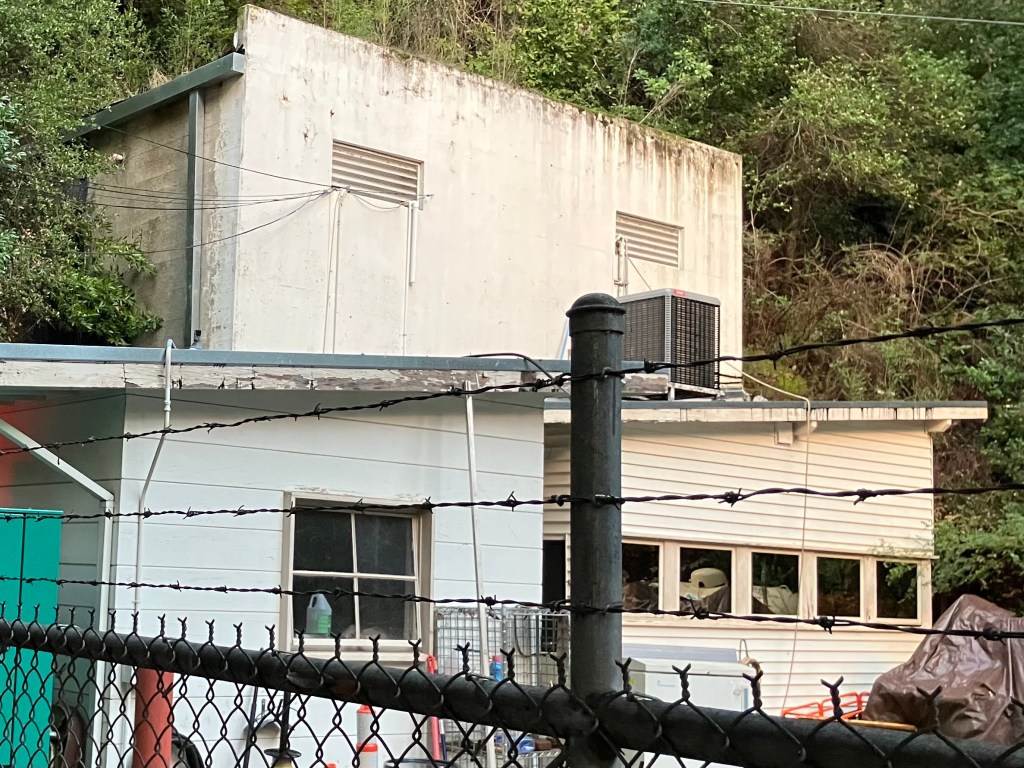
We were unable to get to Tunnel 6, which was down a steep gorge that was beyond our climbing skills.
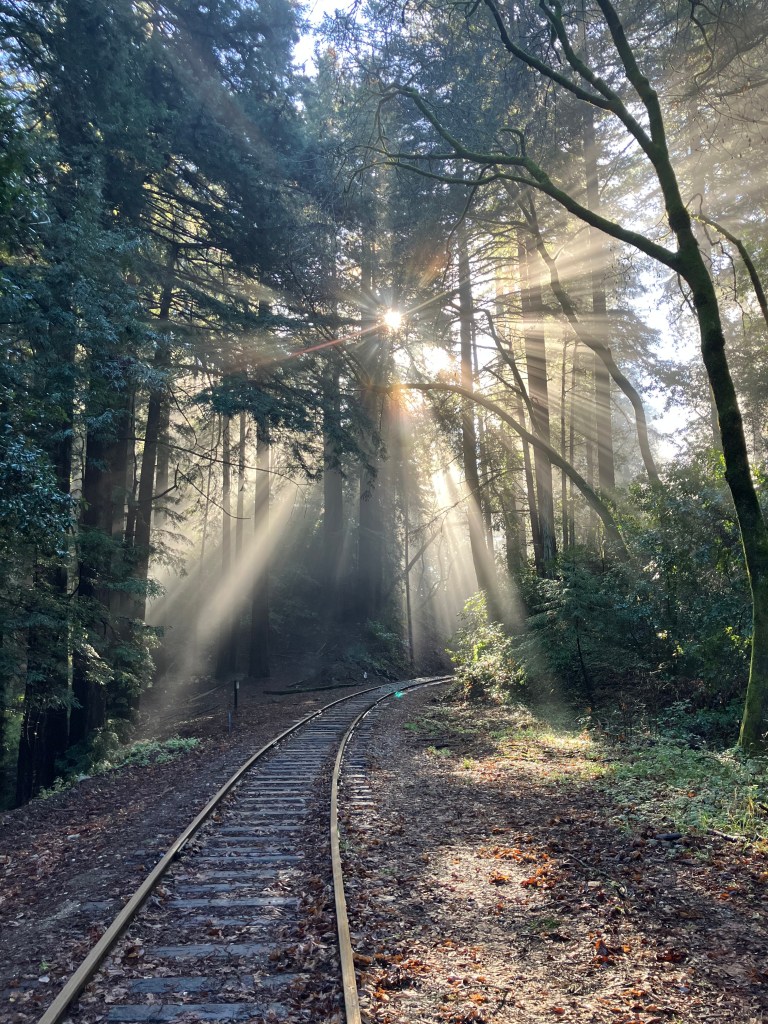
Tunnel 7 no longer exists; it was “daylighted” (I,e, the top was removed) some years ago. This stretch of the line, however, still carries rail traffic. The Santa Cruz, Big Trees and Pacific Railway runs an excursion train from Felton to the Santa Cruz Beach Boardwalk. Here’s a picture of the track near the location of the daylighted Tunnel #7.
Finally, we ended up in Santa Cruz, where the final tunnel is still in operation! It’s a short tunnel that passes under Mission Santa Cruz. The Santa Cruz, Big Trees and Pacific Railway still uses this tunnel for excursion trips from Felton.
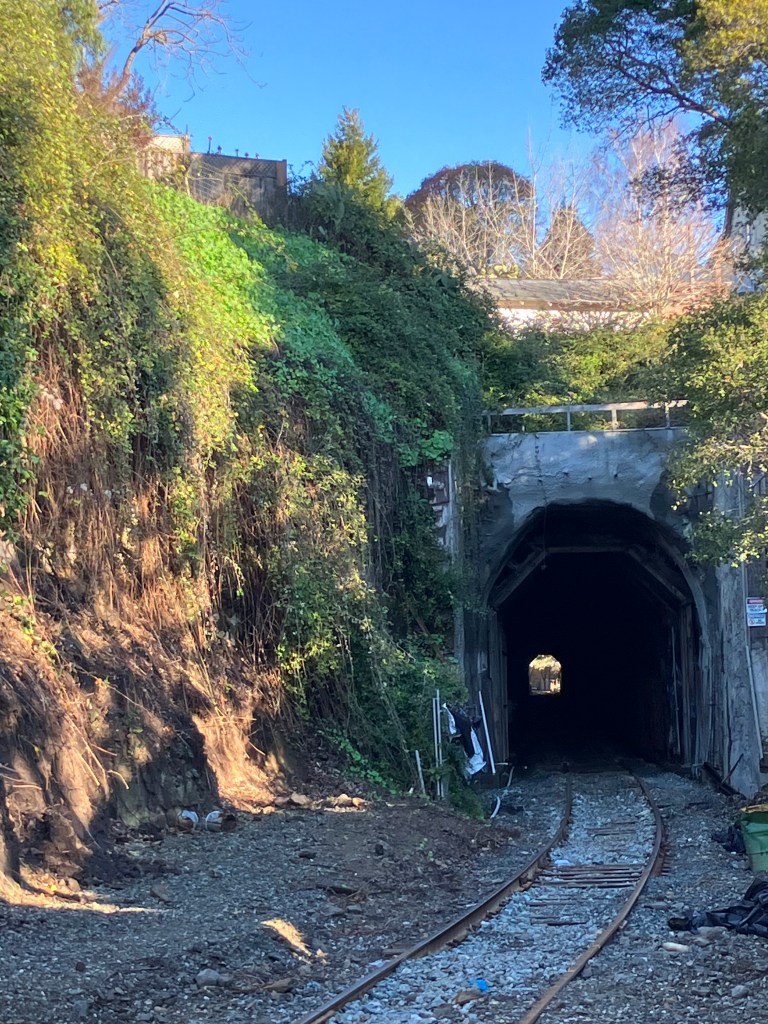
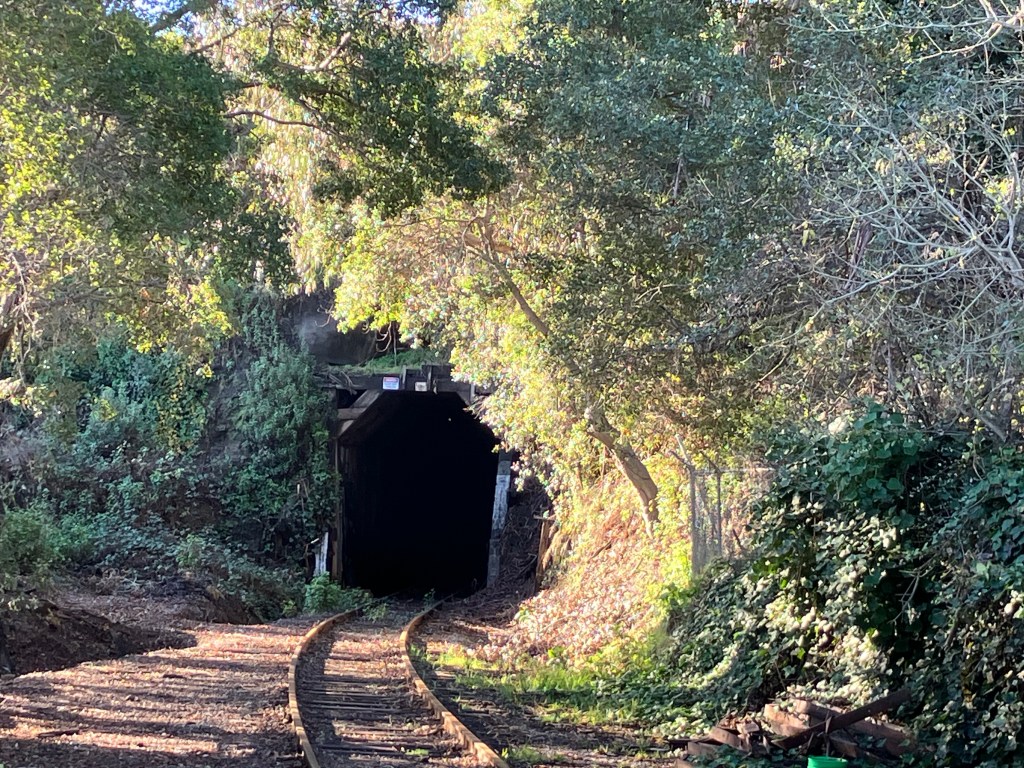
So that’s it for the tunnels. To reiterate, I’m surprised so much of the infrastructure is still around, even though most of it hasn’t seen a train in over 80 years. The fact that they’re mostly on private property or out of the way has contributed to their surviving this long.
Here are a couple of other photos of remnants of the old SPC:
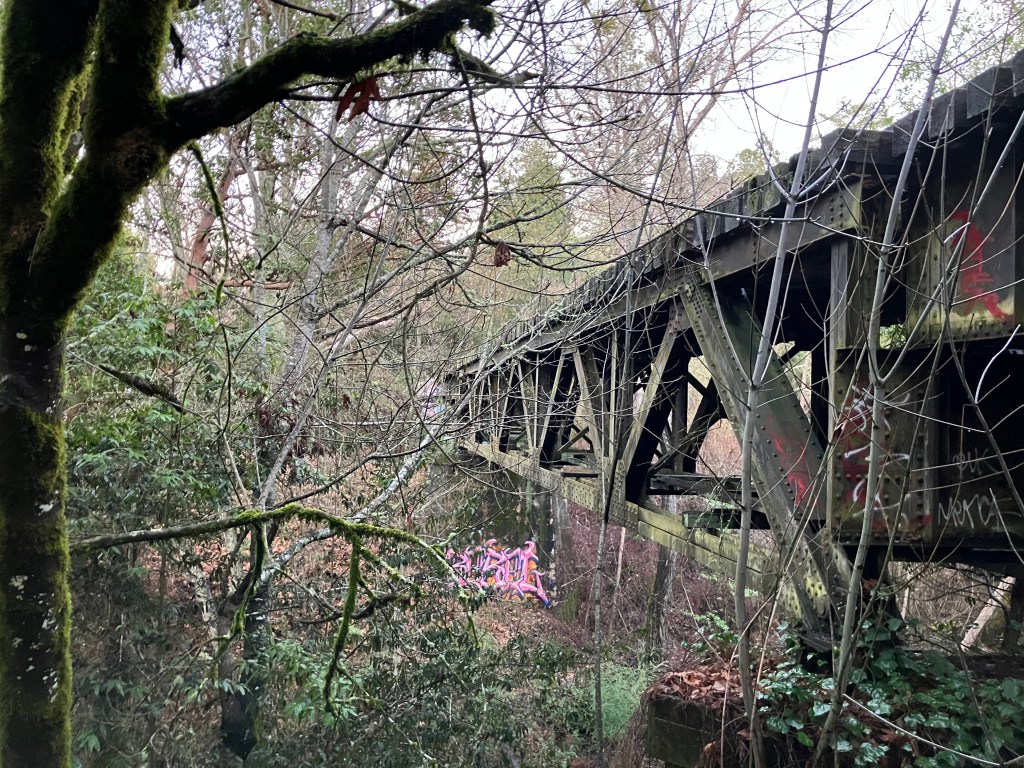
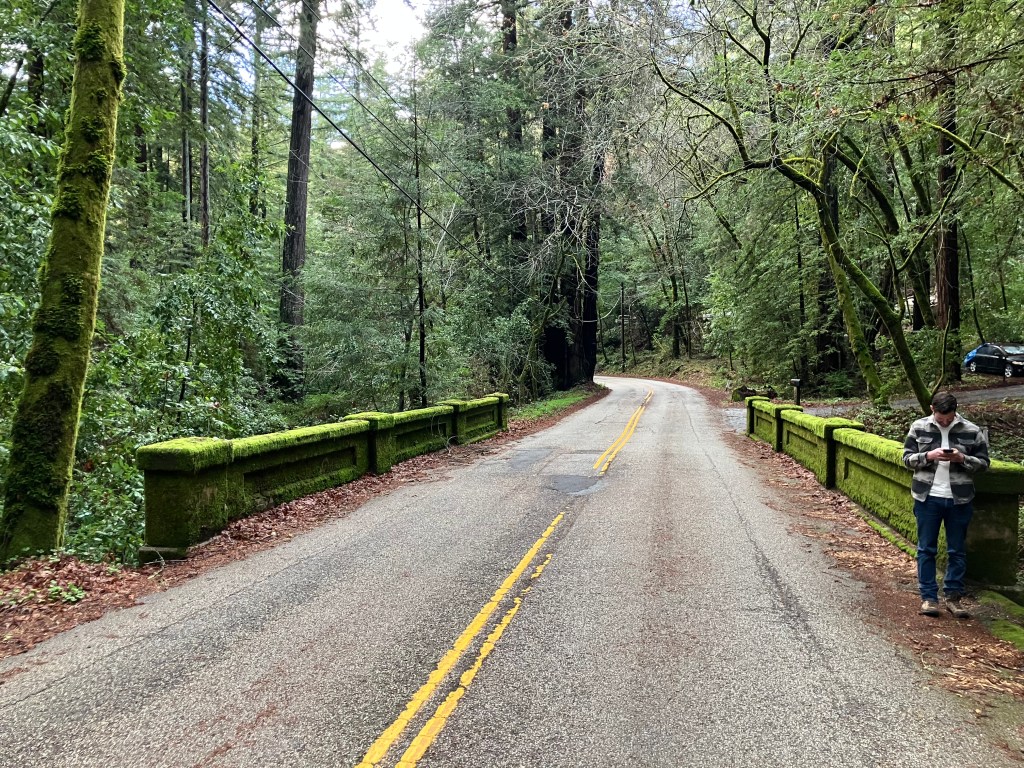
Only one station remains of the original stops on the SPC line. It’s the Agnew station in Santa Clara, and it was built in 1877. Passenger and freight service at the depot ended long ago, although trains still pass by the station on the active tracks next to it. The station is now owned by the California Central Model Railroad Club.
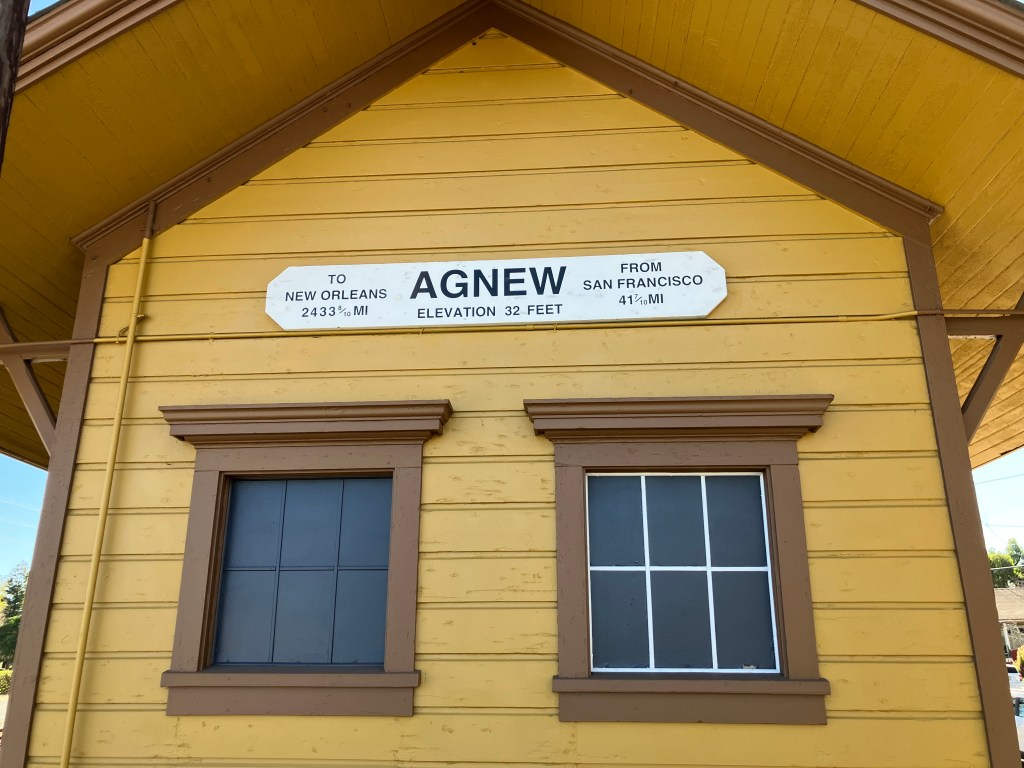
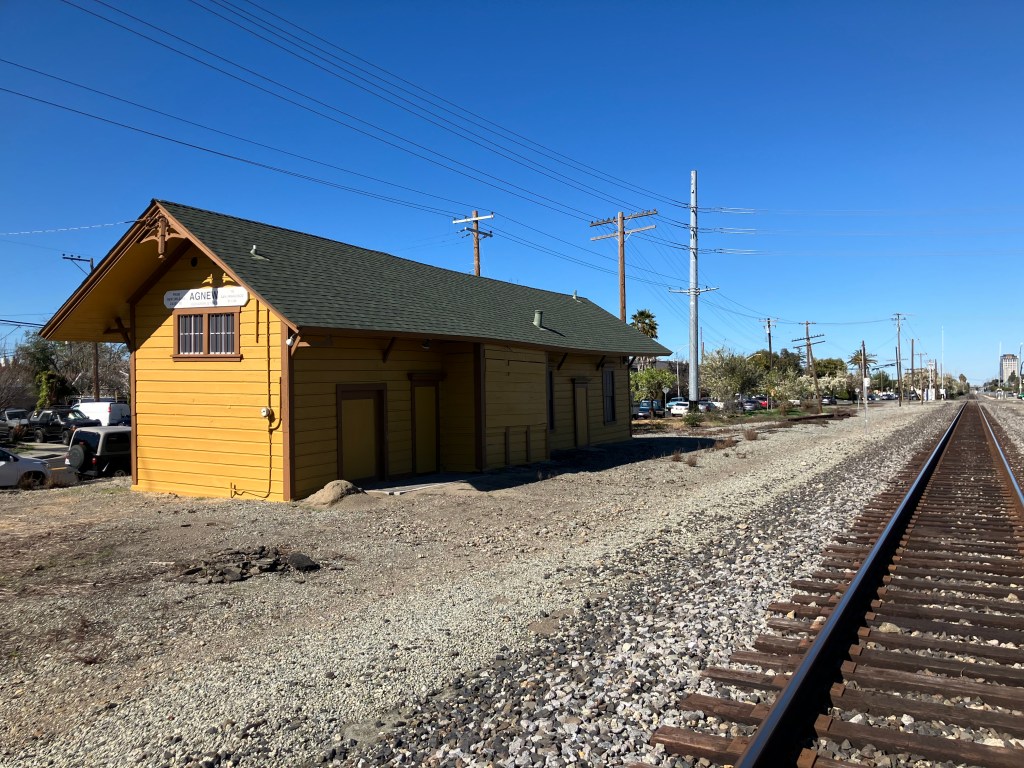
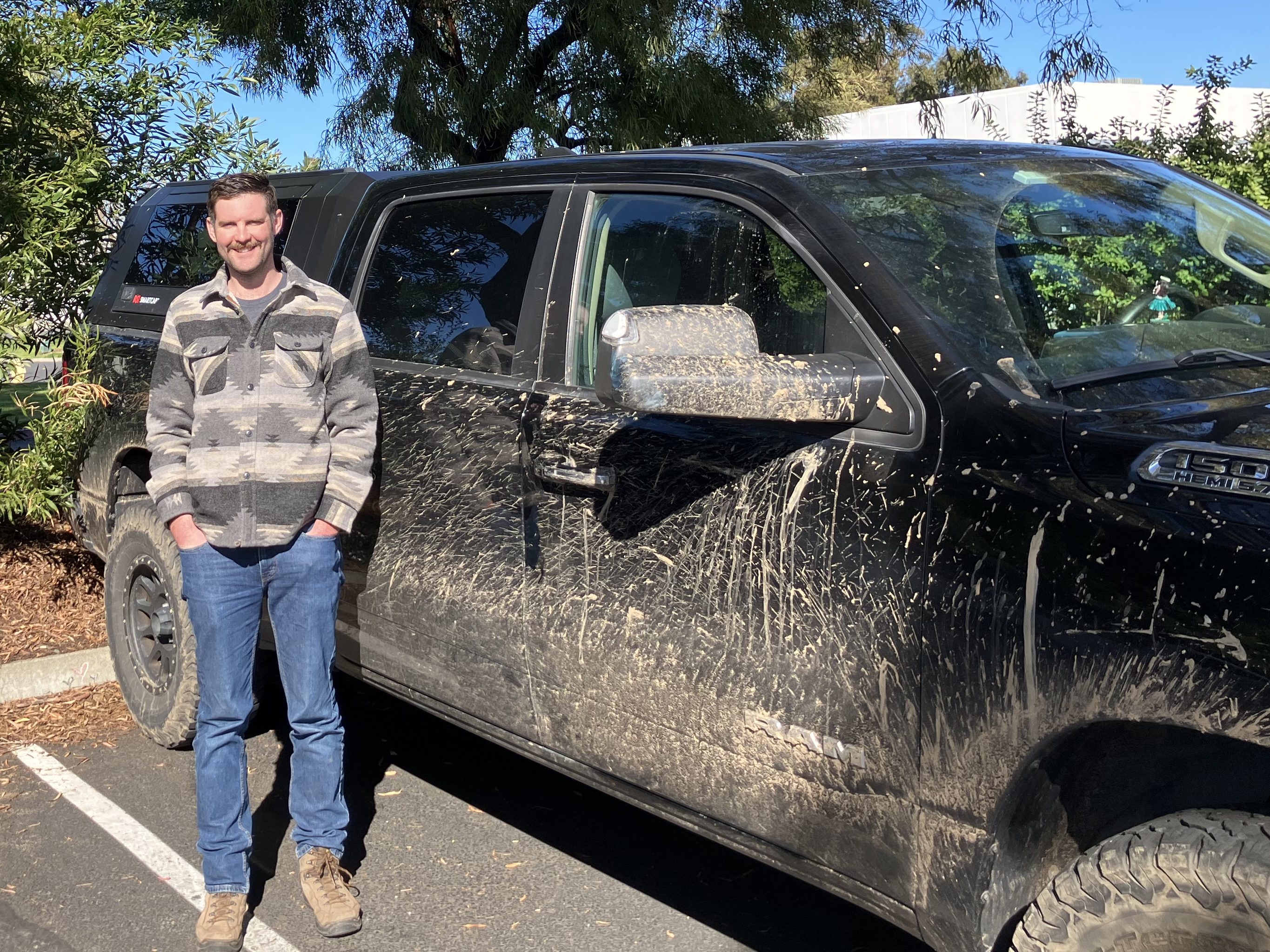
So ends our adventure. If you want to learn more about the SPC, there’s a wonderfully helpful and informative site called “Abandoned Rails” that has a lot of SPC’s back story, an interactive map, and other cool stuff. Thanks also to Uncle Edward and his Dome o’Foam for his helpful tips. Now all that’s left is to wash Ian’s truck!
TREAT (?) of the DAY
During our adventure we stopped at a remote market to replenish our snack supply. For reasons that I really can’t explain, I chose this bag of “Extra Dark Boldly Charred Splits.” It seemed like a good idea at a time.
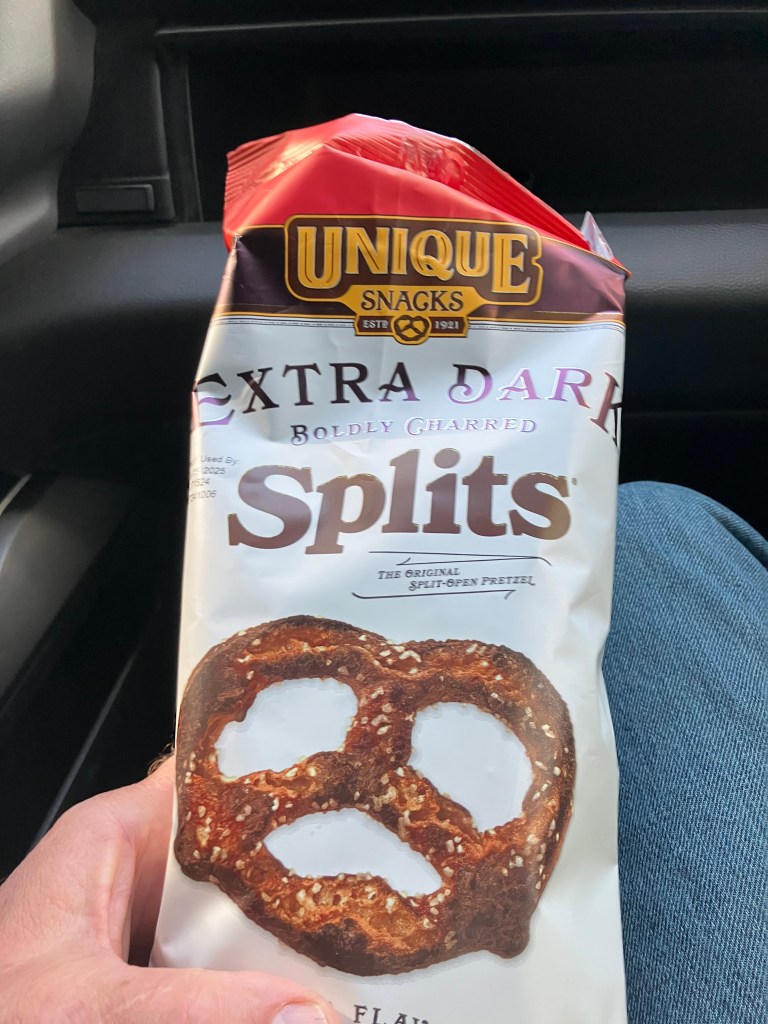
The “Unique Snacks” company lived up to their name, but not in a good way. These were essentially nothing more than burned pretzels.
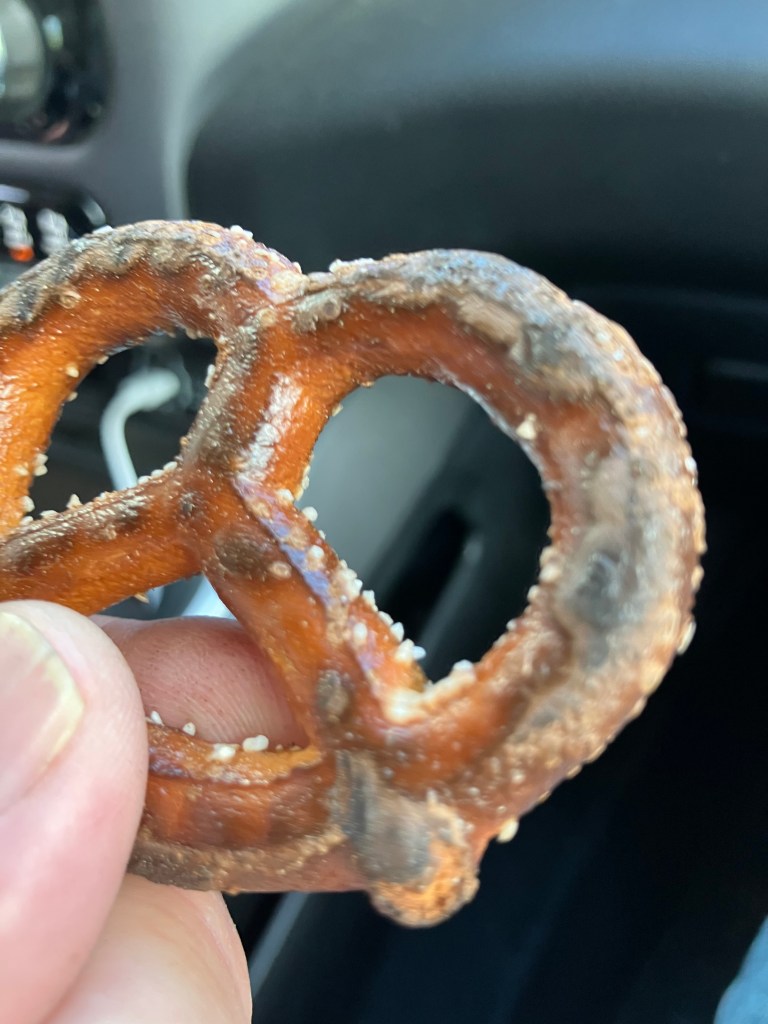
They are as dry as a discarded empty canteen in the Sahara, and they have the flavor profile of a Kingsford Briquette. I seriously suspect that something happened to the oven at the Unique Snacks Company, which resulted in a month’s pretzel production being irrevocably burned. But rather than throw away the torched snacks, some marketing genius said “let’s just change the package to say ‘boldly charred!'” Doesn’t an analogous story lie behind the popular “sour” beer style and the invention of buttermilk?

 Chasing Phantoms
Steve, I grew up in Los Gatos and had no idea that the SPCRR existed. Thanks for sharing! Chris
LikeLike
Very cool tunnel tour!
“Boldly charred, my ass!” 🤣
LikeLike
What an amazing story! Thanks for sharing the saga and the history!
LikeLike
Over-the-top story! Thanks for sharing the journey and the cool photos!
LikeLike