California history · trains

Skunk Works

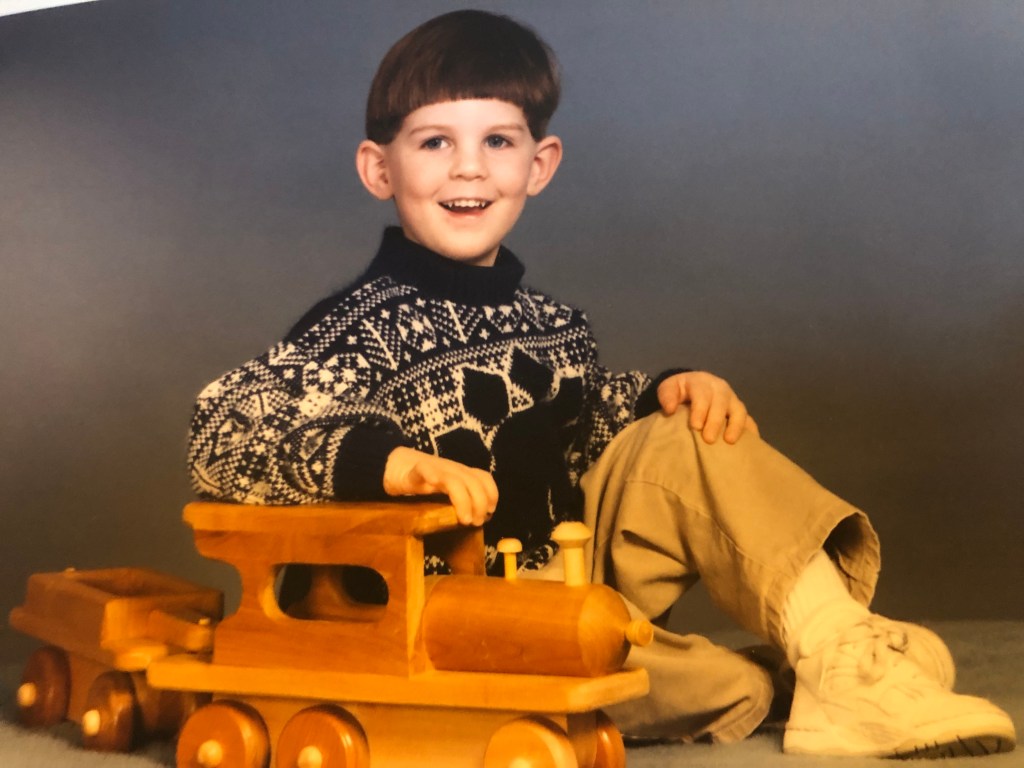
This past weekend my son (Ian) and I took a trip to Fort Bragg (pop: 7,000) for his belated 29th birthday celebration. We camped at Mackerricher State Park, which sits next to the beach just north of Fort Bragg.
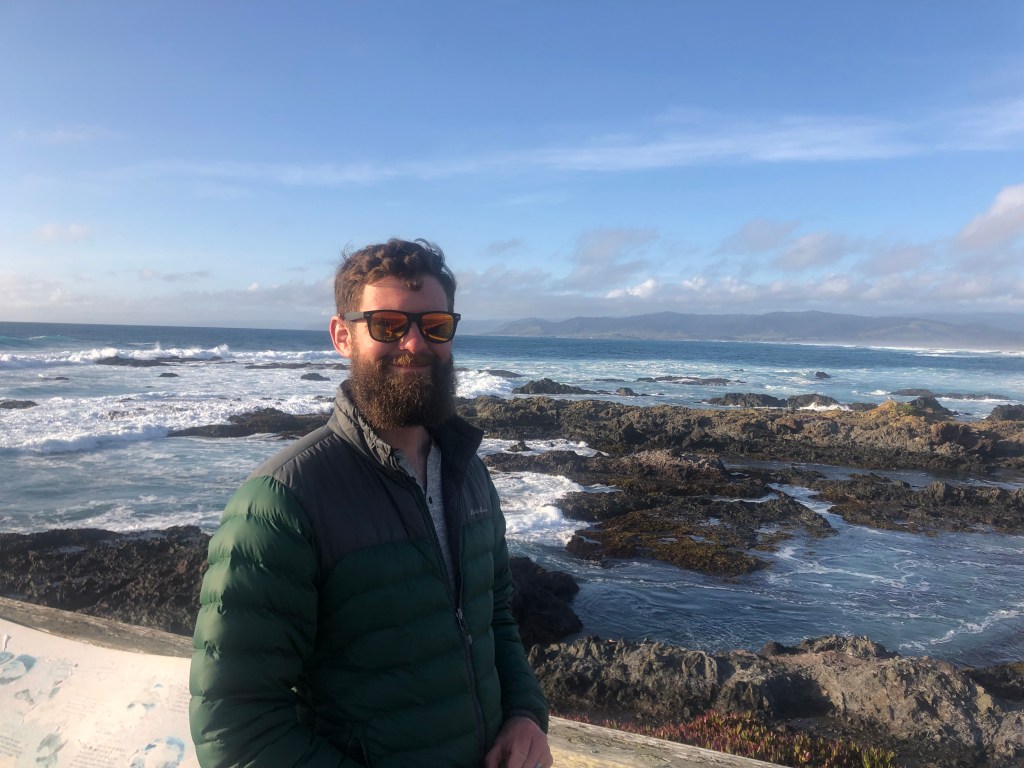
The birthday boy

Now, of course, one of the main reasons for going to Fort Bragg is to ride the Skunk Train. For those of you who haven’t been enlightened, here’s a quick history:

In 1885 the Fort Bragg Redwood Company built a railroad to carry logs from the inland redwood forests to their lumber mill at the coast. When fully expanded in subsequent years, the railroad would extend about 40 miles eastward from Fort Bragg to Willits, generally following the Noyo River. The railroad passed through a 1,200-foot tunnel that was completed in 1893, and over numerous wooden trestles and bridges. The railroad (eventually named the California Western Railroad, or CWR) got involved with passenger service as well, serving the logging families scattered about the redwoods and, later, tourists.

Especially popular were gasoline-powered motorcars, introduced in 1925. The smell of the gasoline fumes (as well as the heating oil used to warm the interior space) earned them the nickname “Skunks.” Most of the Skunk motorcars have since been retired, but the name has stuck, and virtually any rail conveyance operated by CWR to this day wears that epithet.
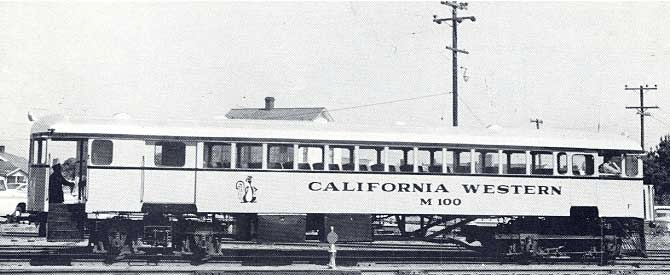
One of the malodorous motorcars.

For some years now the CWR has exclusively operated excursion trains catering to tourists. Steam-powered locomotives would pull a sting of several passenger cars on a forty-mile journey from Fort Bragg to Willits.
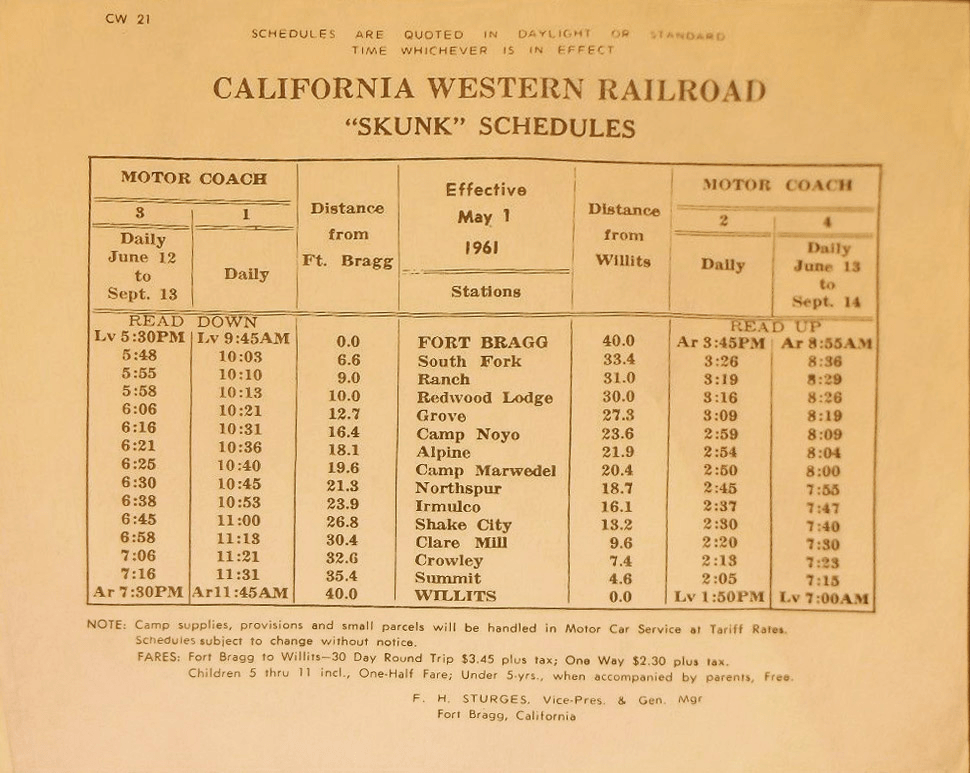
1961 “Skunk” timetable, borrowed from my Uncle Edward’s celebrated “Dome O’Foam” website.

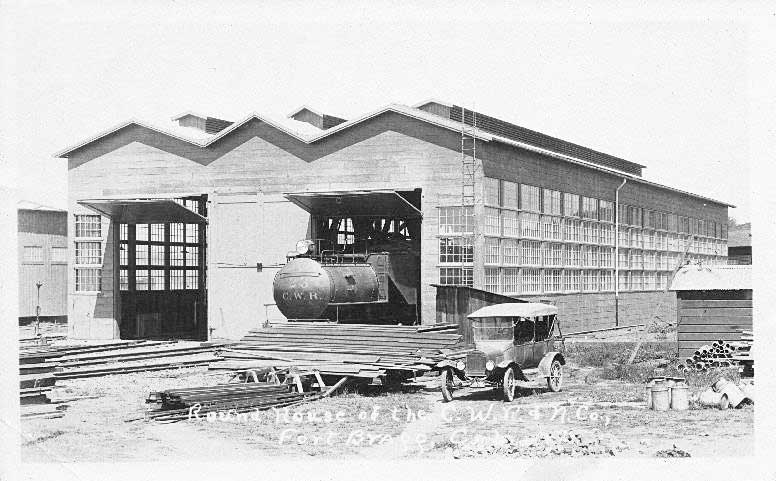
The terminus at Fort Bragg includes a depot and various other facilities, including this engine house that was constructed in the 1920s.
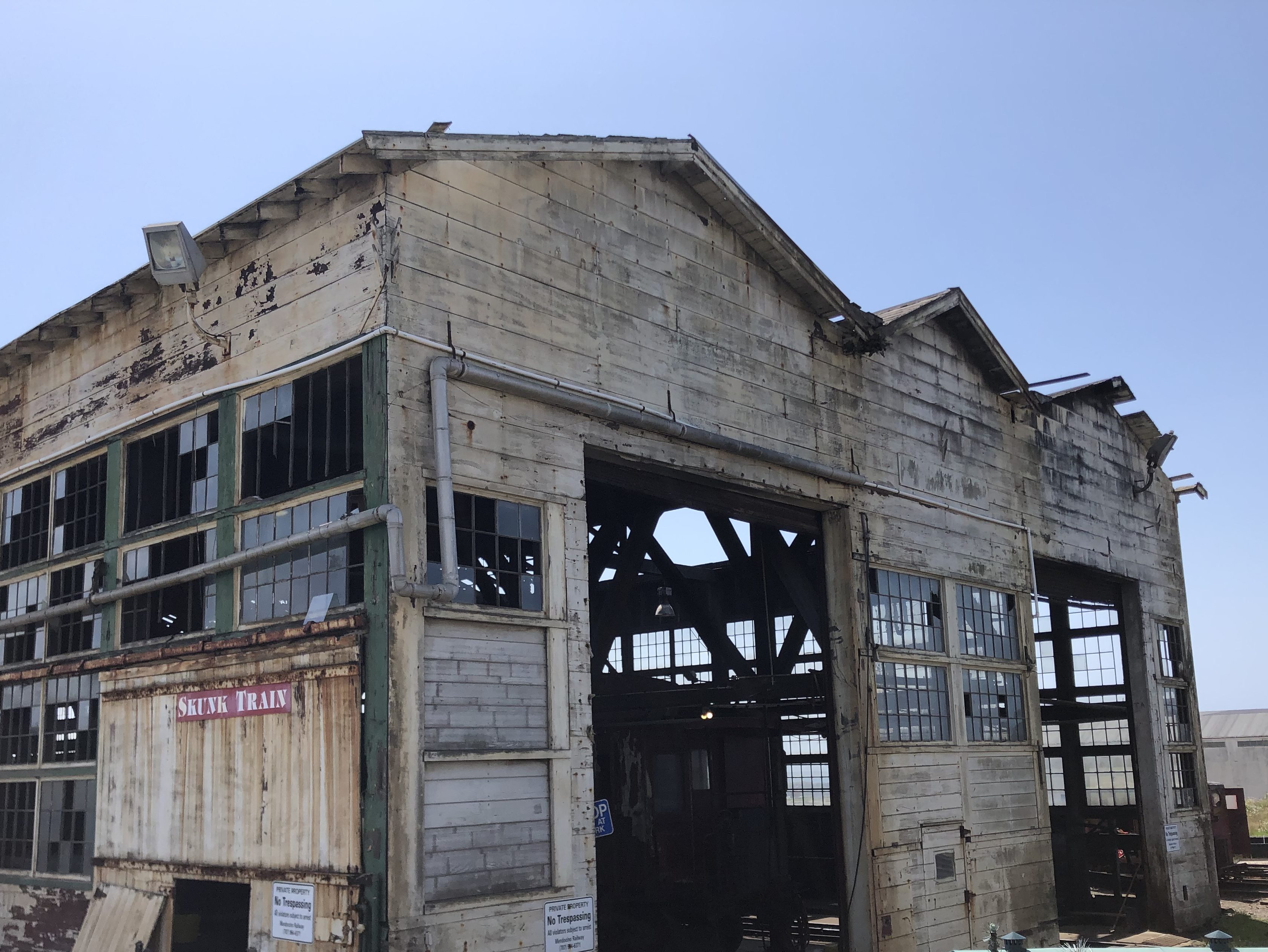
The railroad has changed ownership a few times, but today–some 137 years after its founding–it’s still alive and kicking, owned by a group of private, local investors. Of course, some of the operation is showing its age. Here’s the engine house when we visited it today:
Incidentally, my family visited the Skunk Trains in 1974, and Dad took this photo.
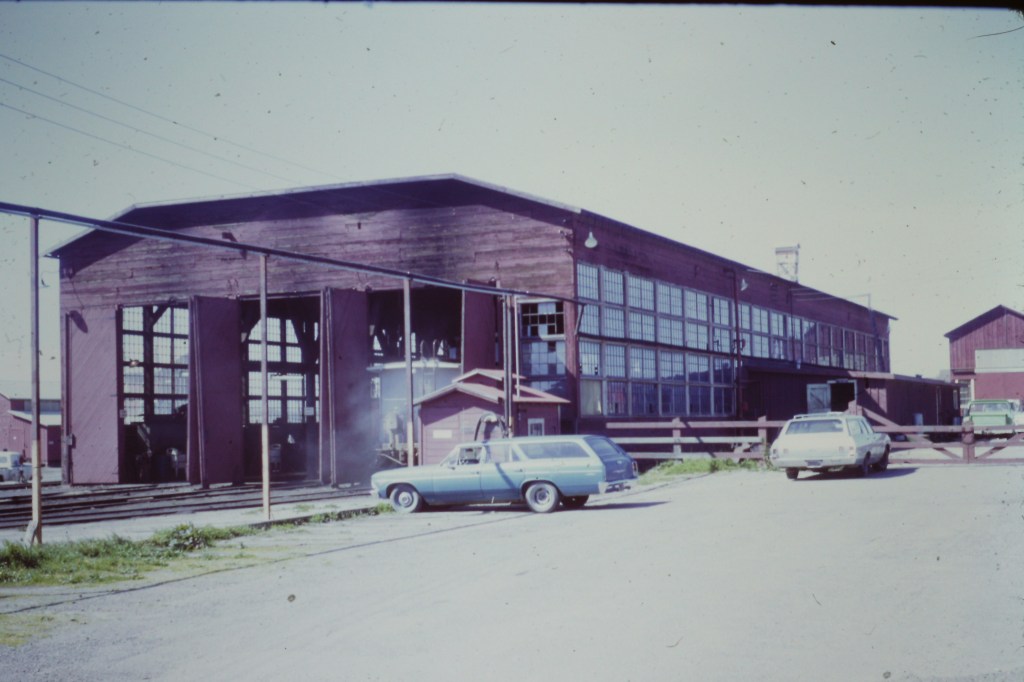
Photo courtesy Dennis Boilard (aka Dad)

But even though the windows along the side look similar, surely this isn’t the same building. For starters, it’s got three engine bays rather than two. I consulted my Uncle Ed (who’s been cited in this blog before as a sage of railroad history, particularly in California), and he informed me that Dad’s picture is of the CWR’s long-gone engine shops. Uncle Ed had taken a picture of the interior of said shops in 1974, and sent along this picture to prove it.
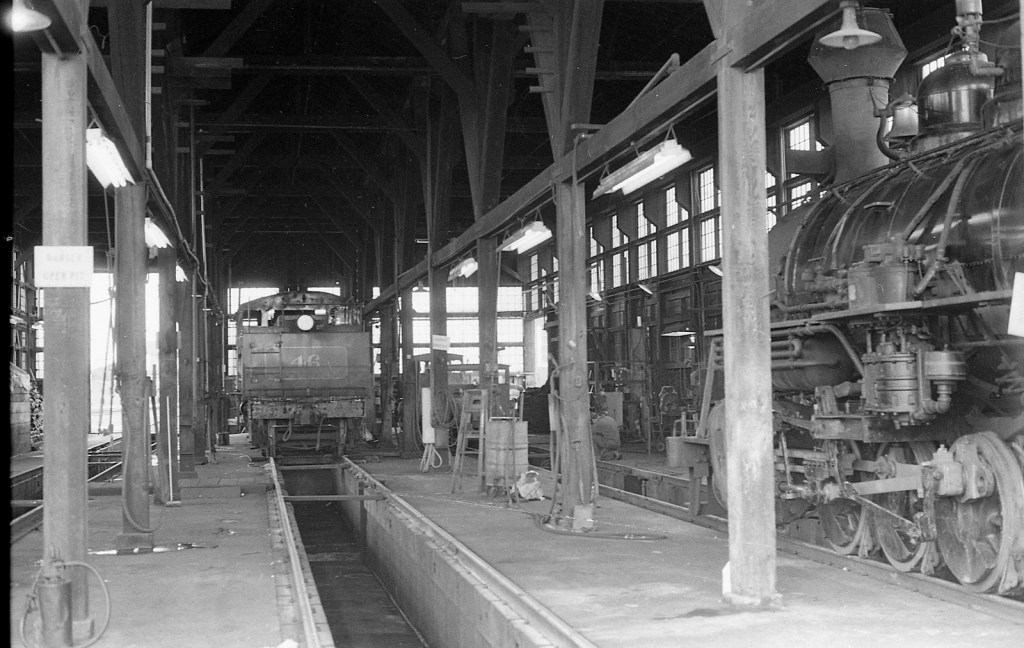
Courtesy of Uncle Ed

But let us return to last weekend: It was a beautiful spring day and Ian and I were looking forward to a rail journey. Now, as it turns out, that historic 19th-century tunnel had collapsed in the spring of 2013, when a “bus-sized boulder” dropped out of the ceiling. They’ve been working to secure funding to have the tunnel cleared, which might happen in the next year or two. Meanwhile, the CWR continues to run a short excursion trip up to the tunnel and back, which amounts to a 7-mile round trip.
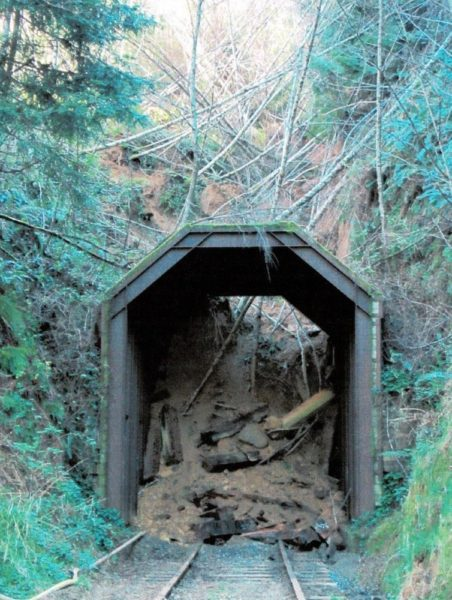
The collapsed tunnel. Photo courtesy of Lonnie Dixon.

We, however, opted for another type of rail journey which the CWR initiated a few years ago. For this ride, you begin on the far side of the collapsed tunnel, and make a 25-mile round trip along the eastern stretch of railroad. There’s only one catch: You have to power your own vehicle.
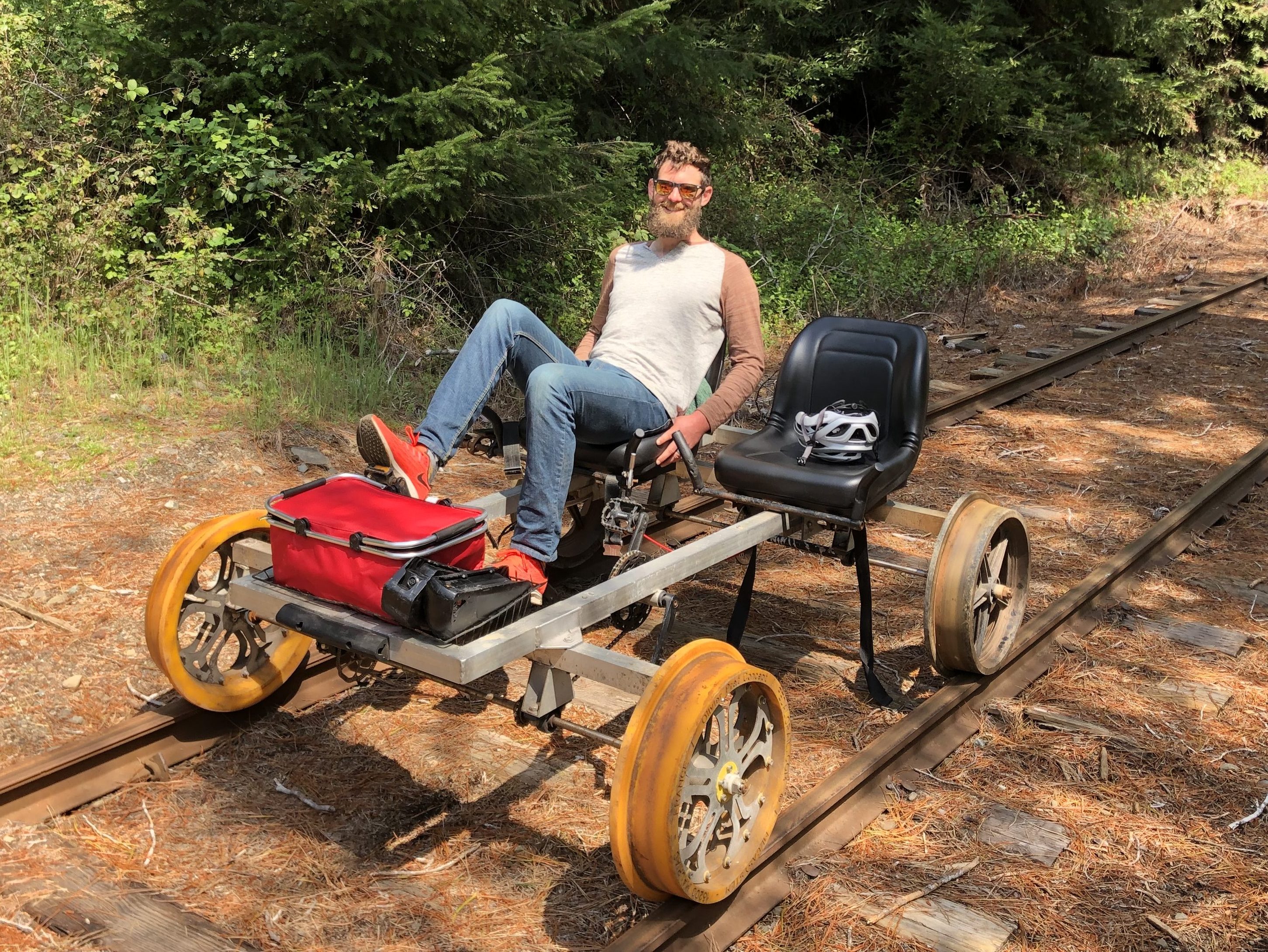
Ian-powered train

The good folks at CWR have manufactured a fleet of “railbikes” of their own design, and rent them out to tourists like us. Because there’s only a single set of rails, riders are restricted to specific time slots and a comfortable buffer of time separates the riders.
“Rail- on the bikes Noyo”?

It’s a beautiful, pleasant journey, lazily rolling on the rails next to the slow-moving Noyo River, surrounded by mighty old-growth redwoods. The railroad crosses the river at multiple points over wooden bridges constructed years ago.
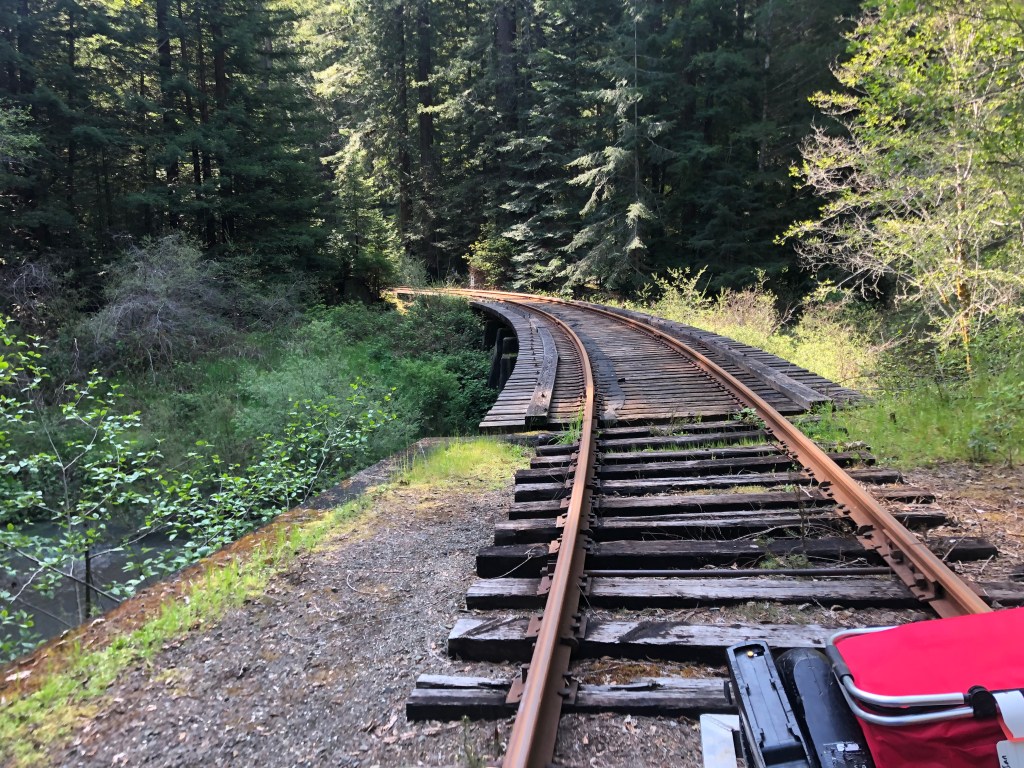
Here’s a short video I took which should give you a sense the railbike experience:

Although most of the scenery consisted of old-growth redwoods and the Noyo River, we did pass a couple of hermit’s cabins, which are reached by old logging roads.
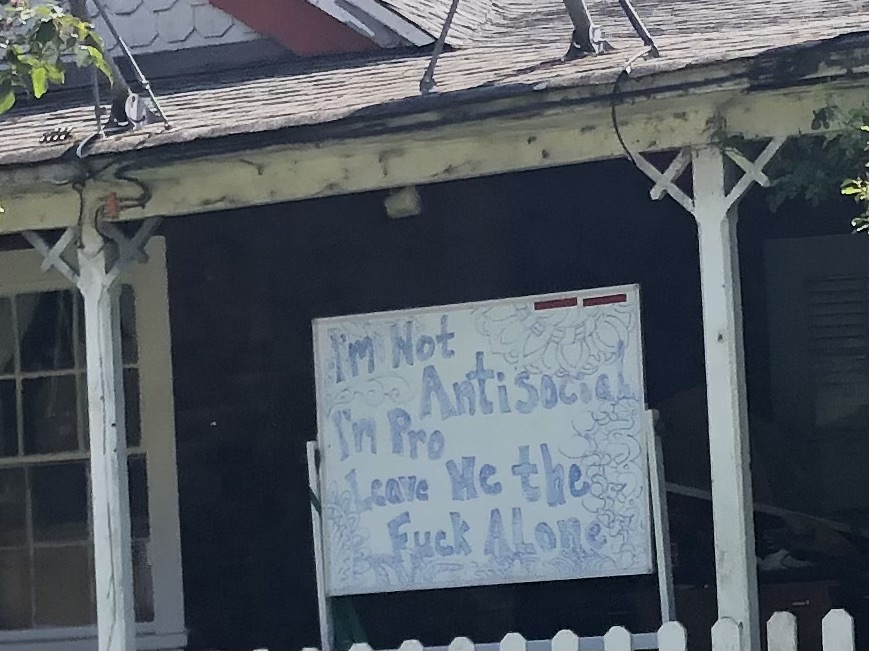
You’d have to be a brave Seventh Day Adventist to knock on this door.

Twenty-five miles is a long distance for pedaling one of these beasts, so the railbikes include an electric motor to assist with the legwork. Naturally, Ian and I sought to discover just how fast we could go, so we cranked up the motor and pedaled with all our might. We topped out at 27 miles per hour, which might not sound that fast, but it was fast enough to derail us.
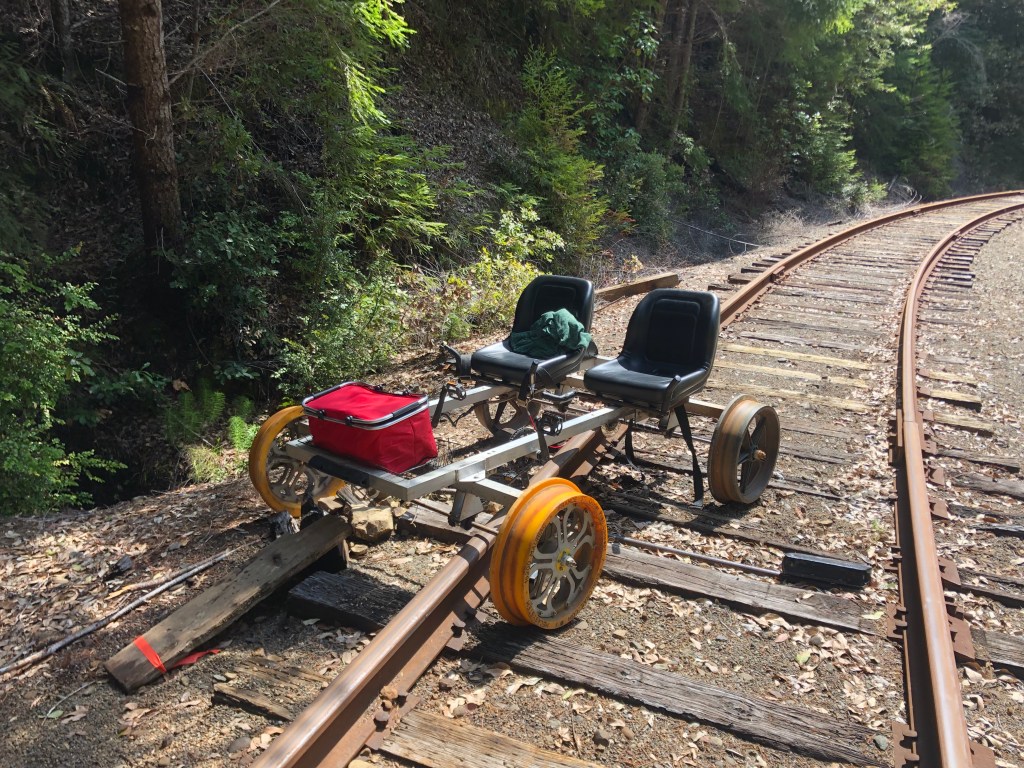
Don’t try this at home.

After about 13 miles we arrived at the turnaround point. (Note: The railbikes are turned around on a small turntable set in the track. I neglected to get a photo of it, though.) While the bikes were being turned around and having their batteries replaced, we enjoyed a hearty lunch next to the river. The folks at CWR supplied the lunch, complete with a few beers, and they even let us keep the red picnic cooler that you see in the basket on the front of our bike. Then it was back to pedaling. We finally got back to our starting point about 4 and a half hours after we started our journey.

I highly recommend this trip.

Oh, and Happy Belated Birthday, Ian!
California history · trains

Sierra Railway, Page 2

In my haste to post the story about my trip to Railtown 1897 yesterday, I neglected to check the one true and complete source of all things related to railroads: The Dome O’ Foam.

The Dome is developed, maintained, curated, etc. by my Uncle Edward–a retired railroad man and an amateur researcher/historian. He reminded me that he has a large collection of photos and other information related to Railtown. As an example, here’s Uncle Ed’s photo of the No. 34 (which I featured yesterday), which he took in 1971:

Back when she was still a runner.

The link to the Sierra Railroad section of The Dome is here. Be forewarned that once you go down that rabbit hole, you may never come back.

California history · Hydrology · Obelisks · trains

Spring Train-ing

Yesterday my good friend Bill mentioned that there was going to be some kind of celebration in Sierra Foothills this weekend to commemorate a new locomotive acquisition by California’s Department of State Parks. Given my long-standing interest in trains, as well as the fact that the spring weather has been glorious this year, it sounded like a worthy day trip. I consulted my calendar, which, given my state of retirement, is as empty as a bird’s nest in December. So it was that Bill and I met this morning in the historic township of Jamestown.

Jamestown (pop: 3,100) was founded just as the Gold Rush was beginning, in 1848. It remains a small, unincorporated town of Tuolumne County, about 100 miles southeast of Sacramento. The important thing about Jamestown, for our purposes today, is the railroad. The Sierra Railway Company was established in Jamestown in 1897, hauling ore from mining operations and timber from logging operations around the area.

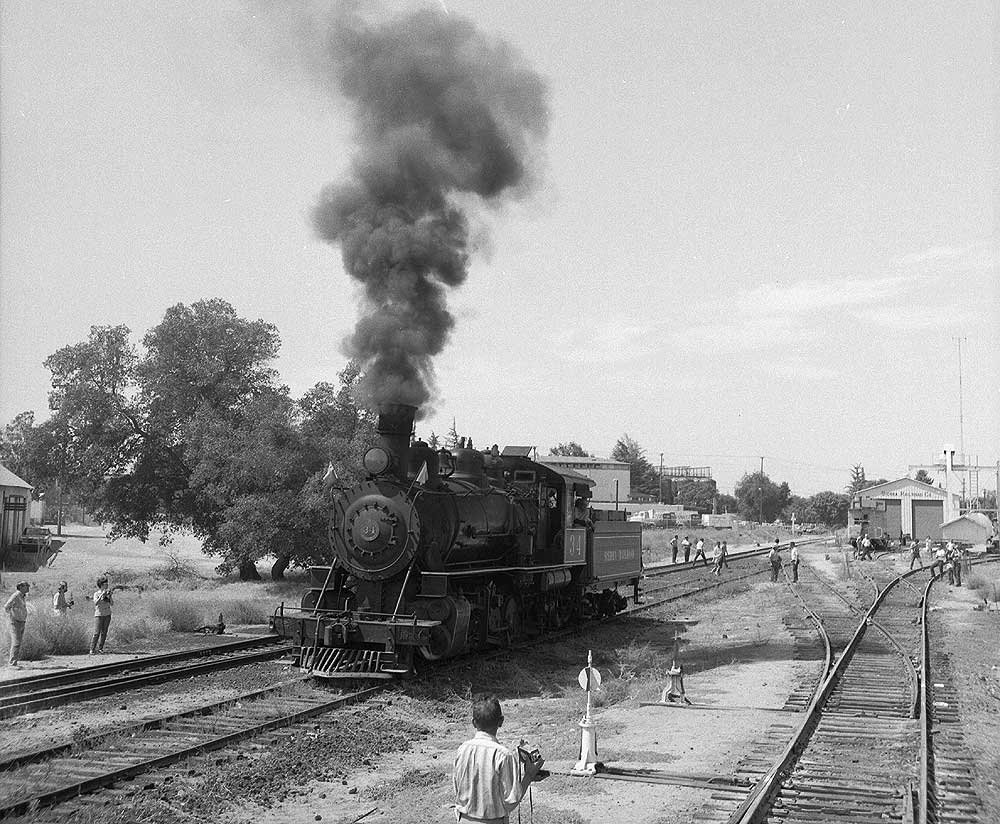
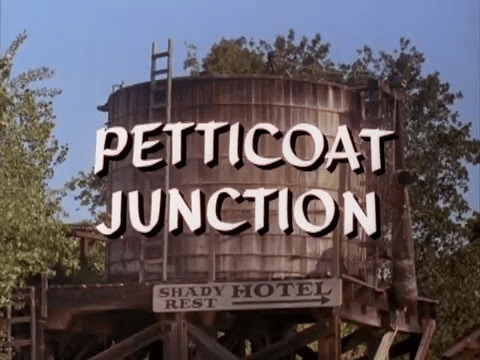
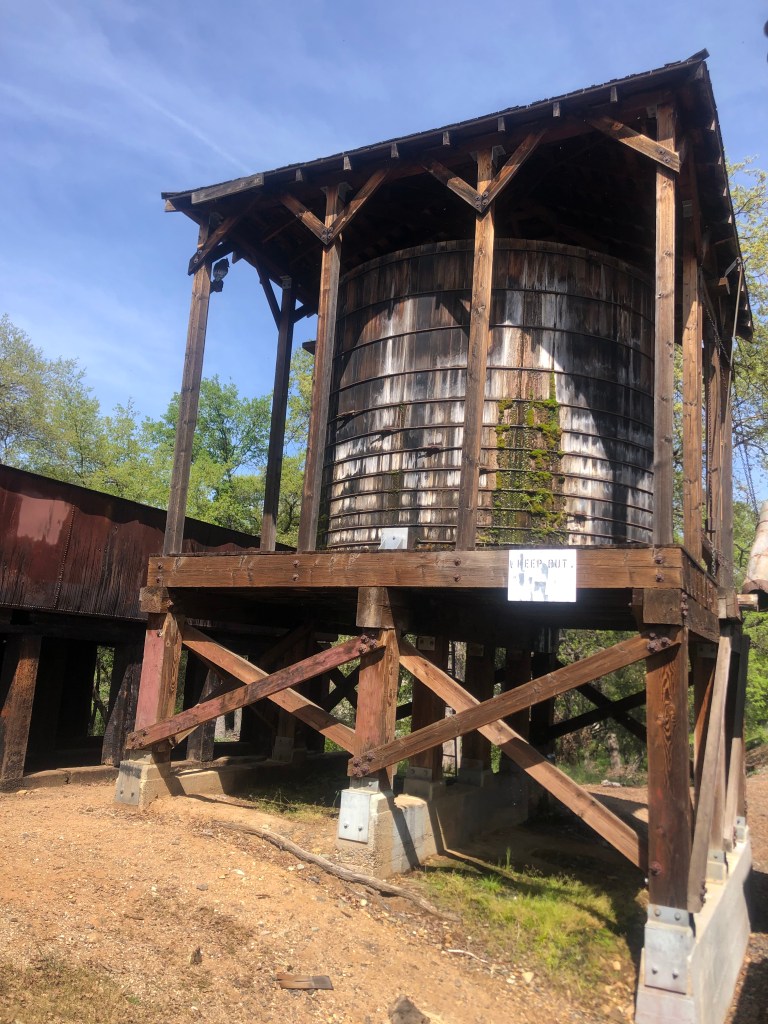
The narrow-gauge railroad operated into the 1960s. In addition to freight and passenger hauling, the Sierra Railway developed a niche as a “movie railroad,” whose trains and structures appeared in numerous Hollywood films (including High Noon (1952), 3:10 to Yuma (1957), and for you young ‘uns, Back To the Future Part III (1990). Oh, and it was featured in the opening credits of “Petticoat Junction” each week.

Then….
…and now.

In 1971, after most of the commercial transportation purposes of the railroad had dried up, the Sierra Railroad’s Jamestown facilities (including a station, roundhouse, and shops) were opened to the public as “Rail Town 1897.” A decade later (i.e., 50 years ago this year), the facilities, along with locomotives and cars, were purchased by the California Department of Parks and Recreation for $750,000. Railtown 1897 was designated a State Historic Park. It remains a popular tourist destination, offering tours of the shops and steam train rides pulled by the original engines on the original tracks.

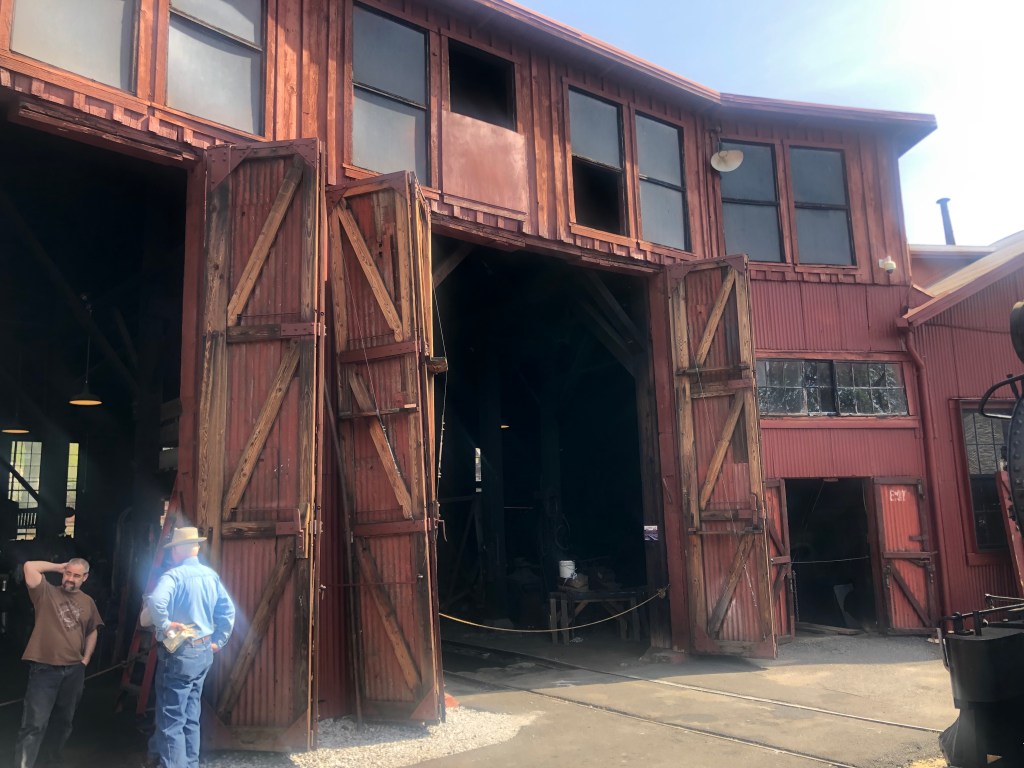
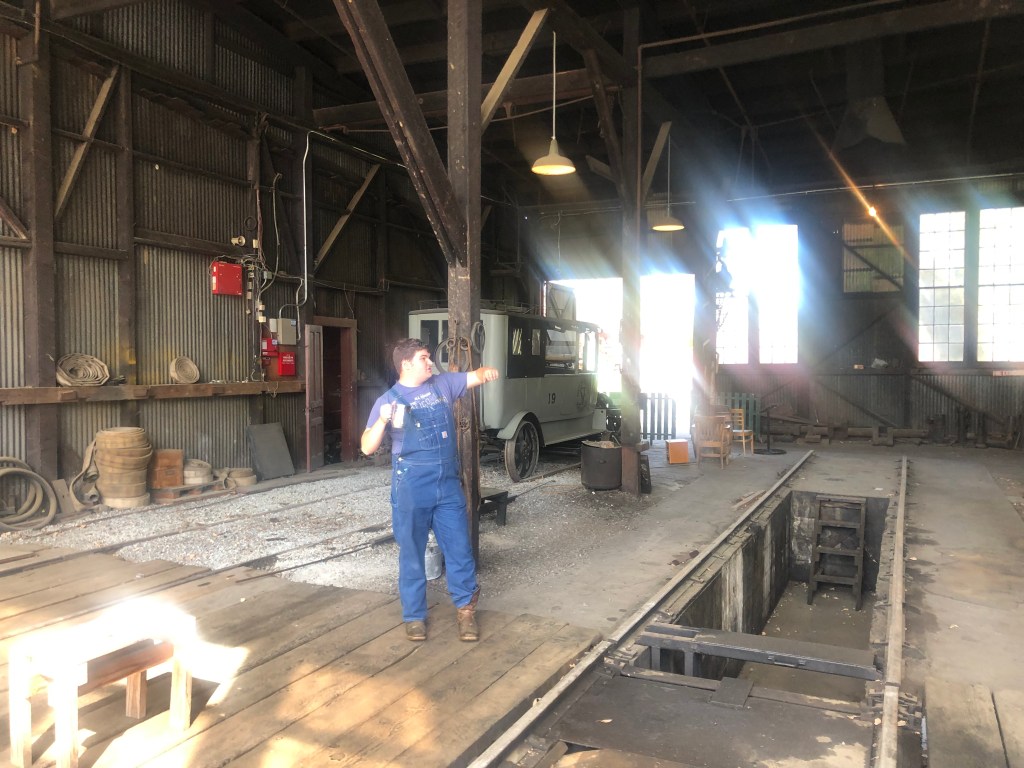
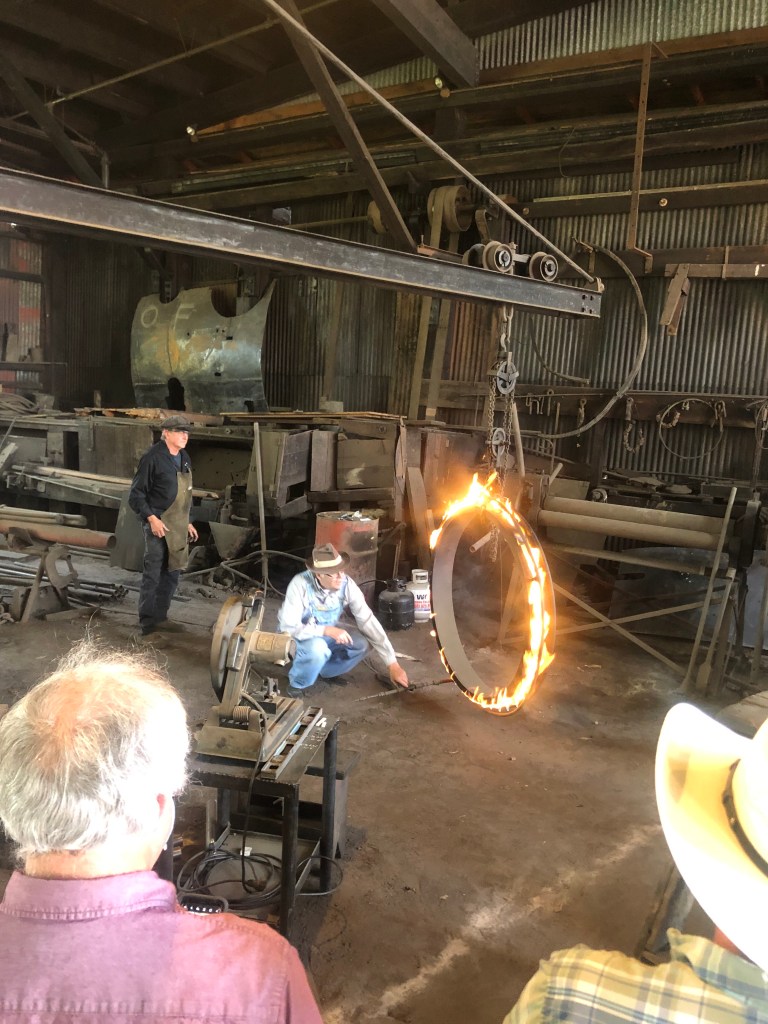
I can’t emphasize enough how unique and impressive this place is. The roundhouse is largely unchanged from how it looked over 100 years ago. Most of the same tools and equipment are still in place, and are used regularly to repair and restore locomotives and cars. They have vintage locomotives and rail cars that offer excursion rides every weekend. This place is an authentic time capsule.

The Roundhouse, over a century old and still in use
Inside the roundhouse
Don’t try this at home.

But let’s get back to the purpose of this trip. The whole reason we came was because Railtown 1897 had put out a press release that they had acquired a new locomotive. And by “new,” they meant “old.” The locomotive (Sierra Railway’s No. 34) was built almost a century ago. Sierra purchased it new in 1925 from the venerable Baldwin Locomotive Works and it remained on Sierra’s roster until the company closed in the late 1960s. The locomotive was eventually sold to a collector (someone who evidently didn’t think model trains were sufficiently authentic), but this collector never got around to moving the engine away from its stomping grounds. It just sat there in the roundhouse in Jamestown. Recently that owner/collector died, and the locomotive went up for sale. Money was provided by two generous donors–Chris Baldo and Marion Hatch–and Railtown was able to acquire the “pink slip” for the engine that’s been on their property for a century. Hence the big celebration today.

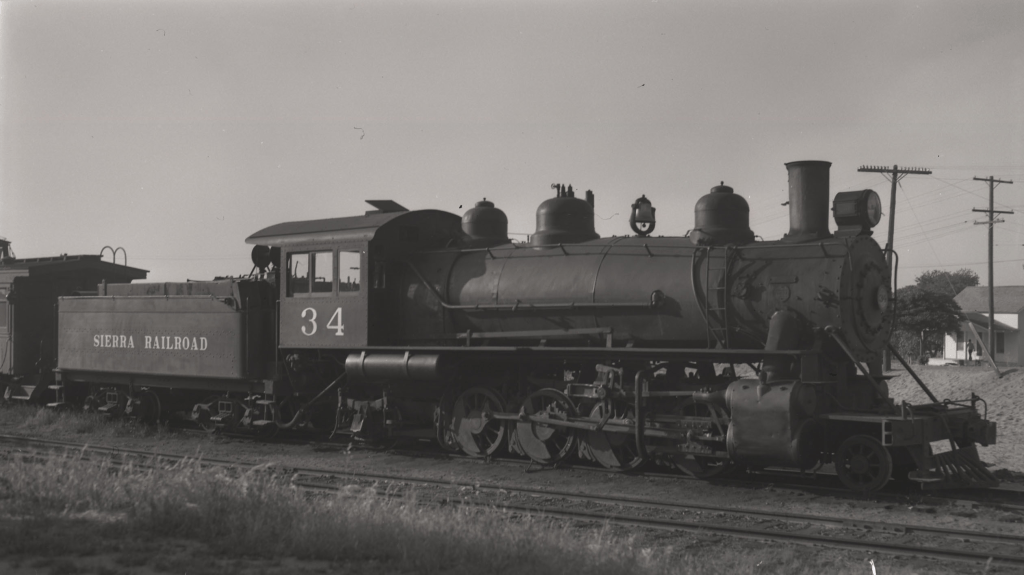
The engine in question is the Sierra Railway’s No. 34, seen here in its heyday:

Old Number 34
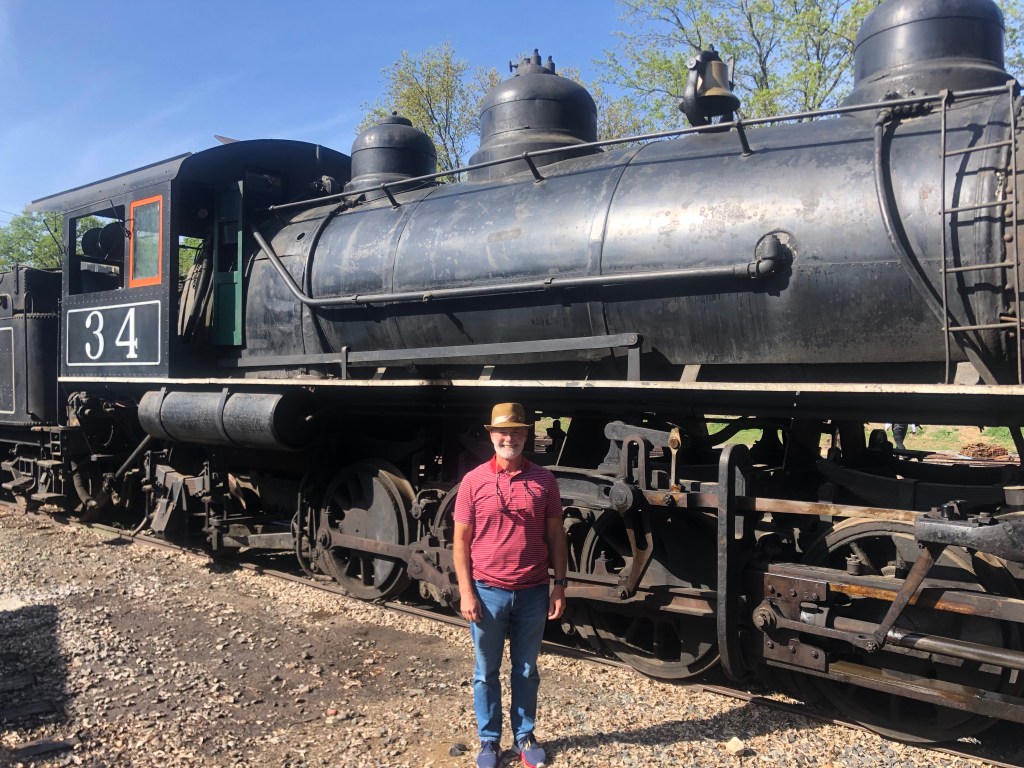
Friend Bill in front of Old(er) No. 34 today

The engine hasn’t run since 1980, but, using words familiar to everyone who’s purchased a classic automobile, “it was running when we last shut her down.” The plan is to restore the locomotive to operational condition.

Like Charlie Brown’s Christmas tree, it just needs a little TLC…

They plan to do the restoration work right here, in the venerable old shops at Railtown. Bill and I hope to provide a little volunteer muscle on that project.

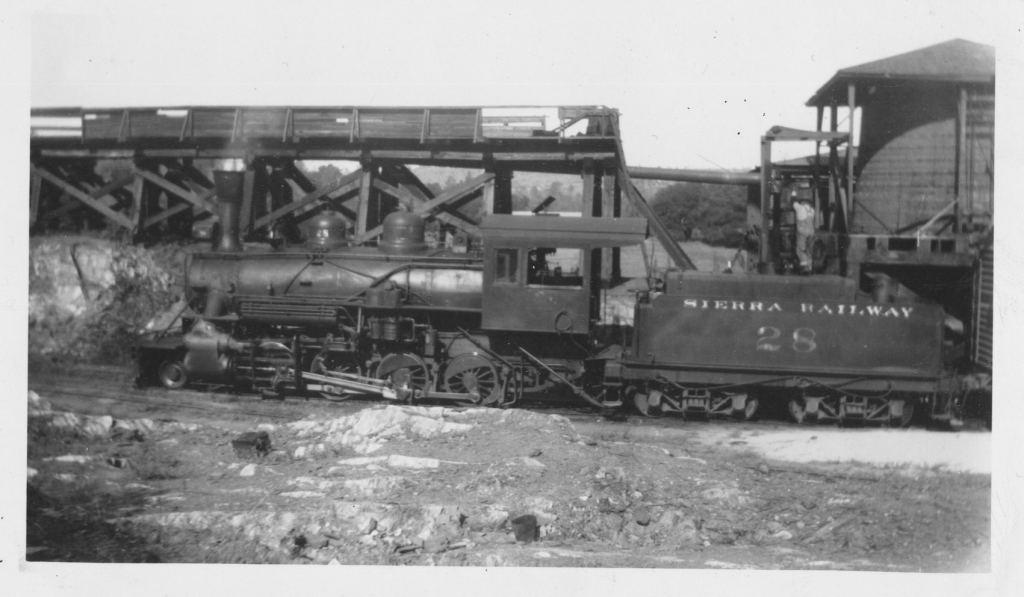
Meanwhile, Railtown does have other steam locomotives. These include the No. 28, which celebrates its 100th birthday this year. The engine hauled cement and rock for the construction of the O’Shaughnessy Dam at Hetch Hetchy in the 1920s, and then turned to regular freight and passenger service. It has appeared in various movies and television shows, including “Little House on the Prairie” and Bound for Glory.

Old No. 28, back in the day

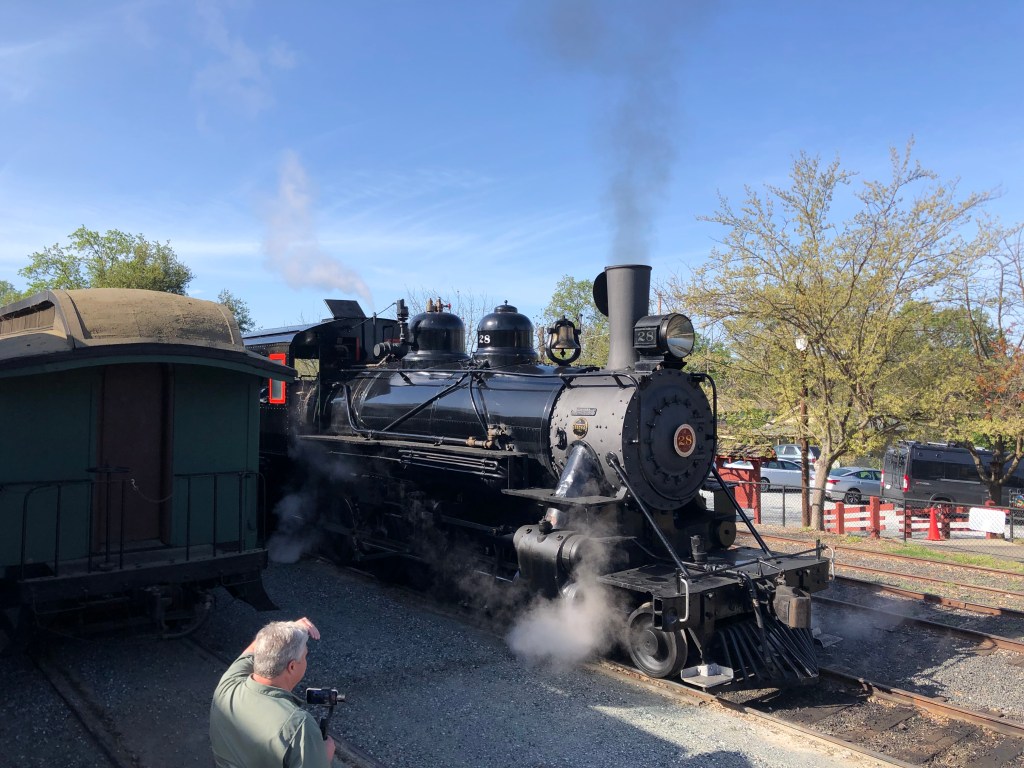
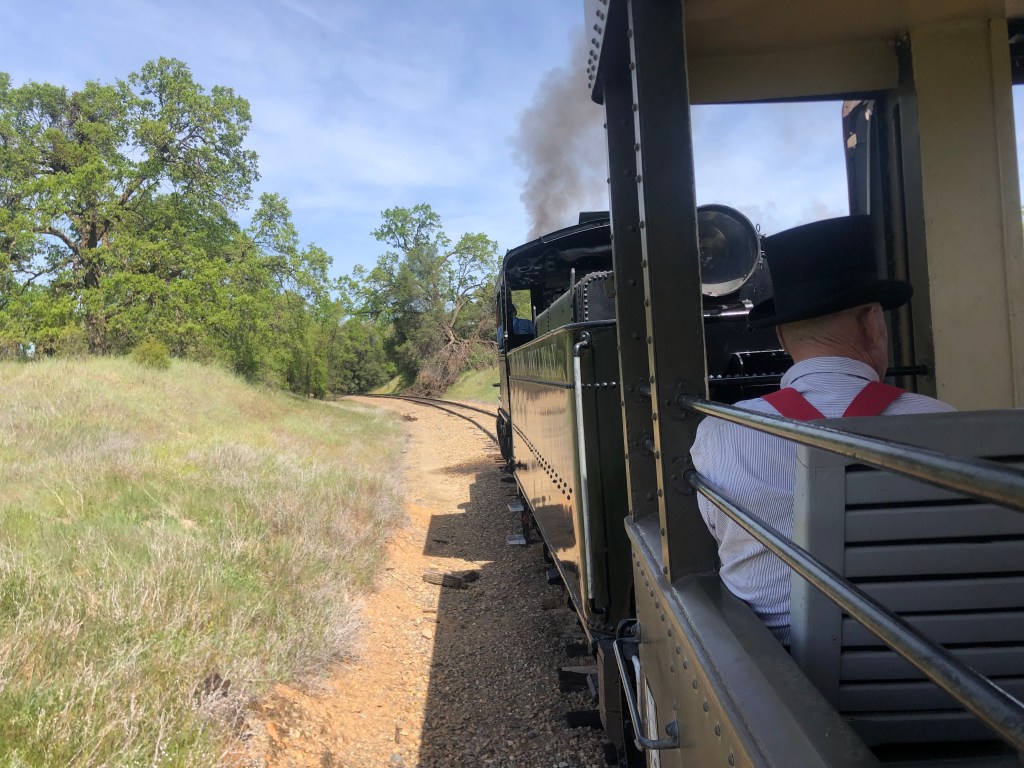
Today this same engine is still running strong. In fact, it pulled our excursion train this afternoon as we enjoyed an hour’s journey along the Sierra Railway’s old, historic tracks.

No. 28, under steam this morning
View of the Old 28 from our passenger car

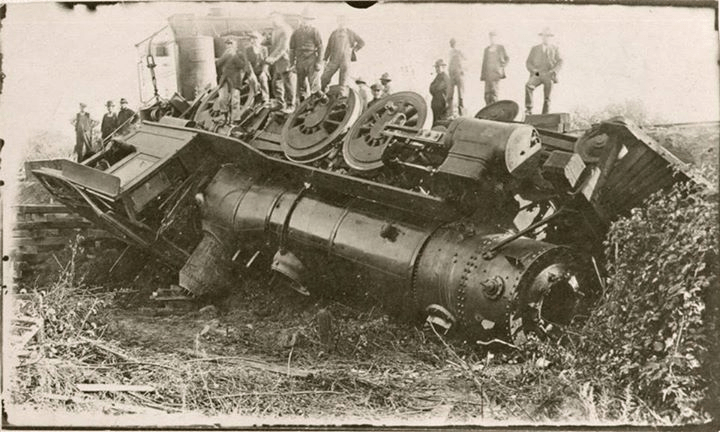
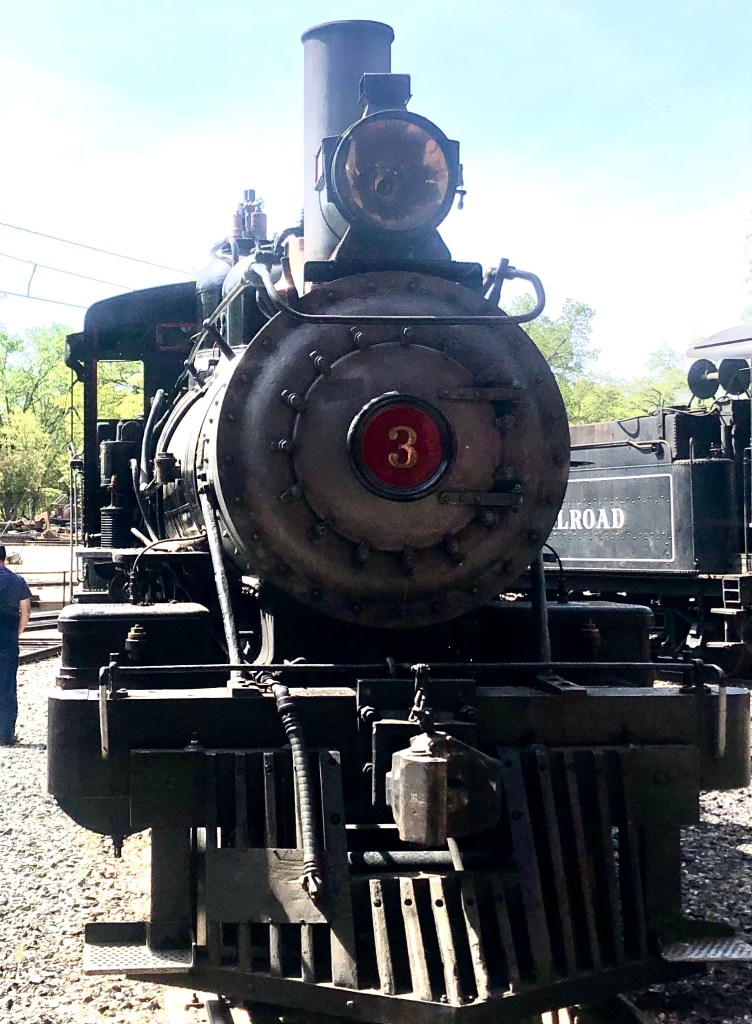
Railtown also has another operational steam engine–the No. 3, which was built in 1891(!). This locomotive has appeared in more movies than any other locomotive, and is regarded as an archetypal example of late 19th-century American trains. It’s been involved in a few mishaps over the years…

…like this one in 1918….

…but it’s been repaired each time, and remains in service to pull excursion trains.

Old No. 3 today

So, overall, the Sierra Railway’s facilities in Jamestown (i.e., “Railtown 1897”) is a remarkable, virtually unspoiled, authentic example of California’s railroading past. It’s well worth a trip. (Admission is $5. I’ll send you a fin if you’re strapped for cash.)

Postscript

Stick with me here; this is going to connect back to Railtown 1897.

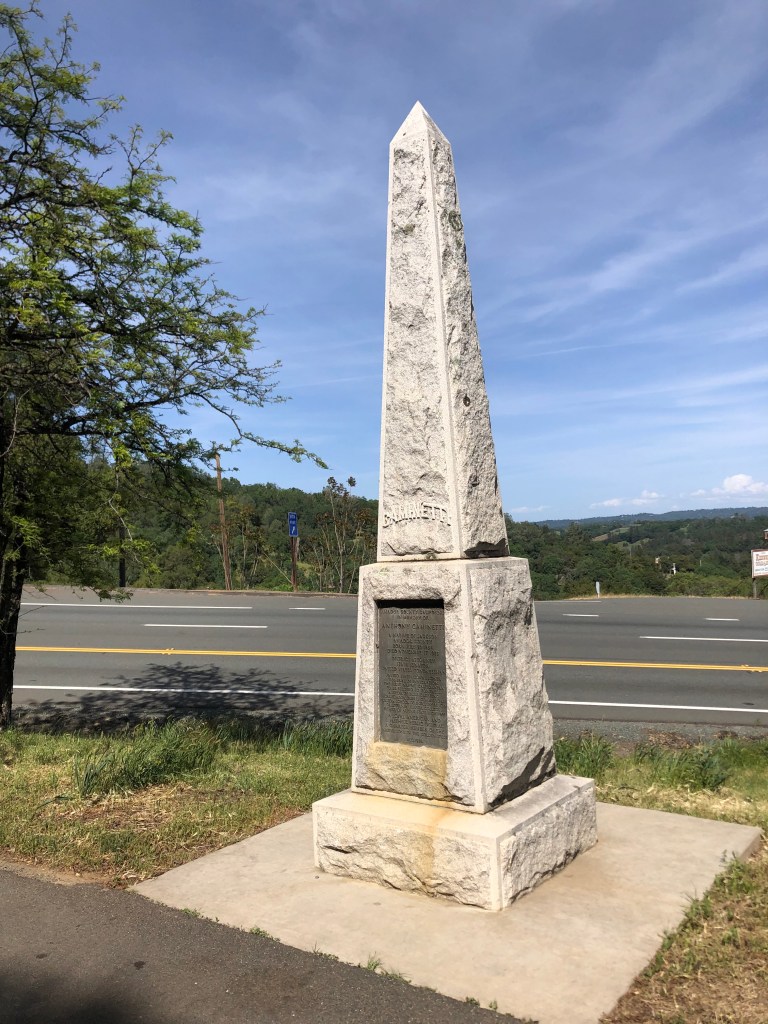
On the way home along Highway 49, I stopped in the town of Jackson (pop: 4,800) to check out this obelisk that I saw from the road:

Wouldn’t you have stopped for it?

The obelisk was erected in 1938 to honor favorite son Anthony Caminetti (1854-1923), who racked up an impressive resume. Allow me to quote the marker: “District Attorney, State Senator, United States Congressman, United States Commissioner, General of Immigration, the first native Californian to be elected to Congress, author of bills creating California Debris Commission, Preston School of Industry at Ione, California Junior Colleges, Father of Alpine State Highway, a loyal American and a faithful public official.”

Some of these posts sound impressive (Congressman, Senator…). Others are a bit less so. I mean, being one (of many) authors of certain pieces of legislation isn’t exactly herculean. It does, however, raise a critical question: What exactly is the “California Debris Commission,” anyway? Answer: it was an agency created in 1893 to clean up the damage that had been done to California’s waterways by the extensive use of hydraulic mining in the Sierras. The Commission was dismantled in 1986.

And here’s were we link back to Railtown 1897. For it turns out that the Clint Eastwood movie Pale Rider (1985) focuses on hydraulic mining and how it did extensive environmental damage to the rivers. And scenes from that movie were filmed at Railtown.

I do recommend the movie, by the way. Check it out here.

California history · cemeteries

Still Standing

In 1983 Elton John had a hit on the airwaves titled “I’m Still Standing.” It reached #12 on the Billboard Top 100. Today’s blog post looks at some structures that are, remarkably, still standing around the Placerville area. And with a tip of the hat to the season of Lent, those structures are churches.

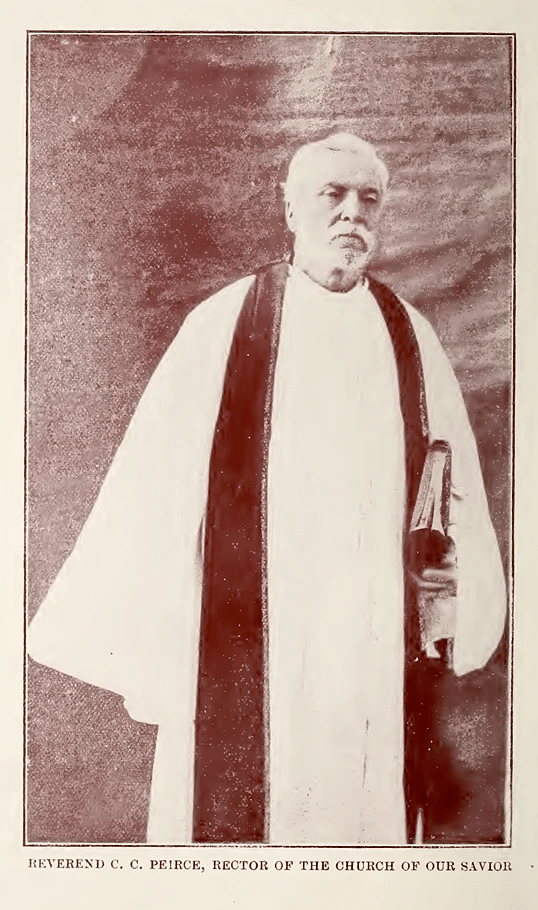
In 1825, Charles Caleb Peirce (yes, that spelling is correct) was born in the eastern United States (or, as it was called then, the central United States). Caleb (as he came to be called) was something of a precocious young man, with a strong literary streak and an industrious attitude. After graduating from college he earned his law degree– before he reached his 21st year. He clerked at the Ohio Supreme Court, but quickly became disillusioned about the “sordidness” of the practice of law. So, in a stunning career change, he entered the General Theological Seminary of New York and became ordained in the Episcopal Church in 1860.

From there, he crossed the continent to an upstart town in the far west called San Francisco (pop. at the time: 57,000)–a place that Peirce figured was in great need of ministry. He became rector of Grace Church (today’s Grace Cathedal), but once again he became disillusioned, this time by what he perceived as the corrupting influence of money in that church. (Notably, Grace Church’s evident difficulty in keeping a rector was satirized by Mark Twain in 1865.)

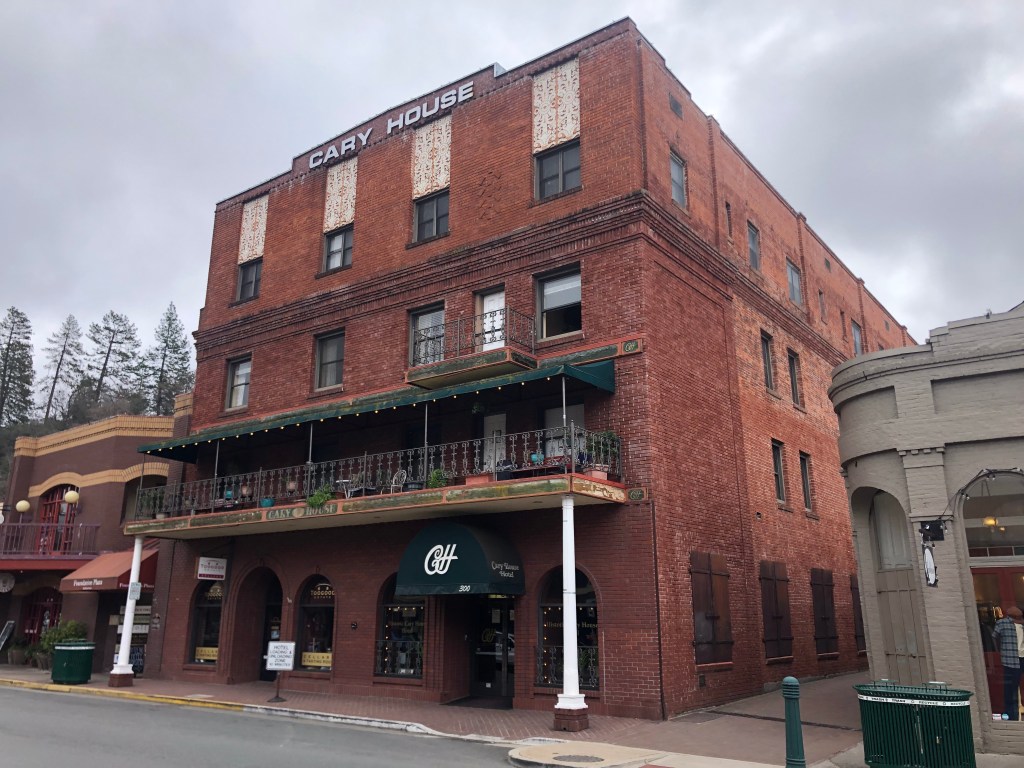
So Caleb Peirce uprooted himself again, this time to “a rough, sparsely settled, obscure corner of the United States” — which is of course Placerville, CA (pop. at the time: 2,500). He’s said to have alighted from his stagecoach in front of the Cary House hotel, which, incidentally, is still standing on Placerville’s Main Street today.

Cary-ing on since 1857.

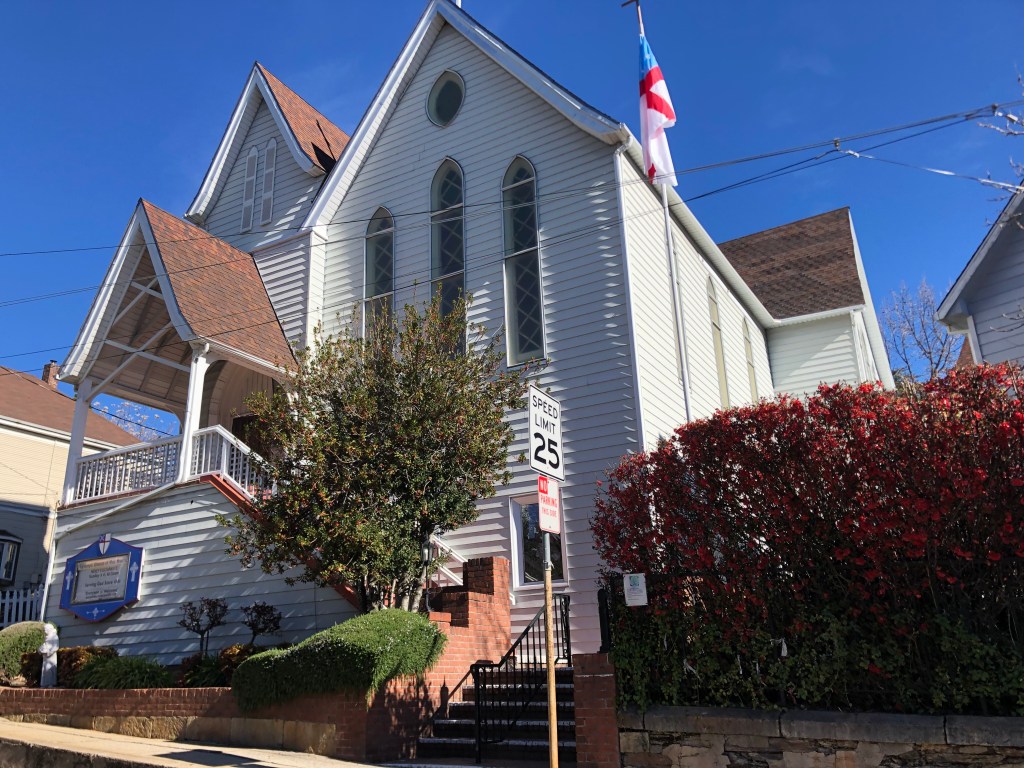
Peirce began organizing a church under the name “Church of Our Saviour.” Services were held in the county courthouse until a dedicated church building could be constructed. That church was completed in 1865, and it too is still standing today, just a few blocks from the Cary House.

Church of Our Saviour, still standing after 156 years.
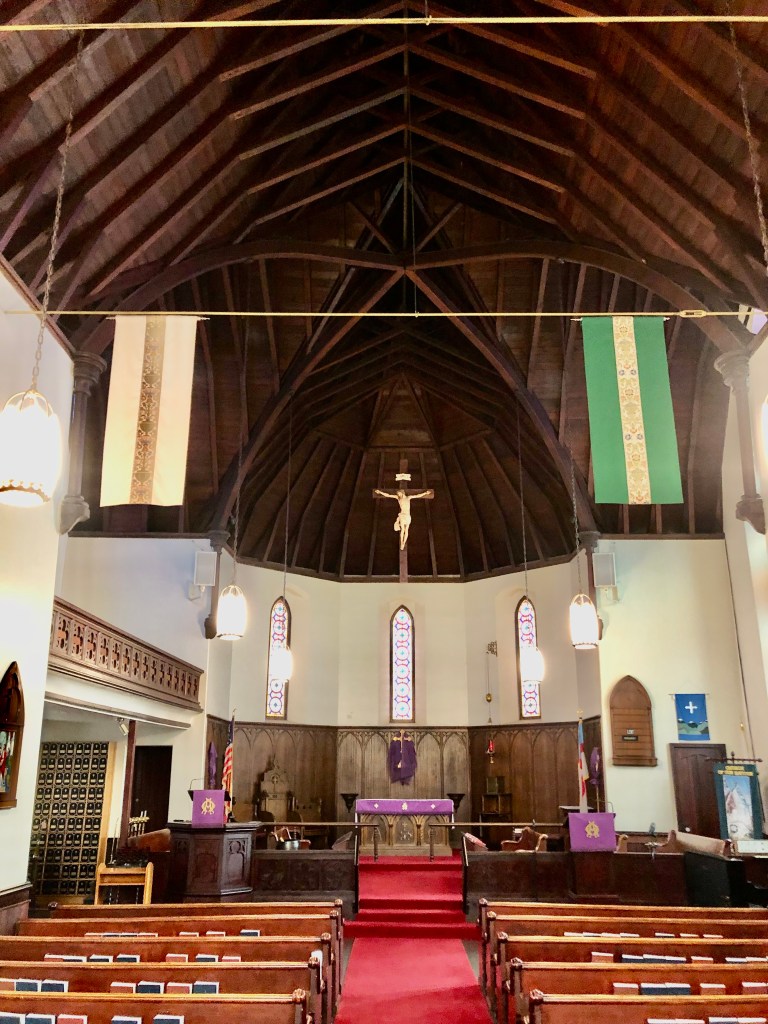
Our Saviour’s sanctuary.

Caleb Peirce would remain the minister at the Church of Our Saviour for the rest of his life. But he hadn’t quite settled down exactly. Although he preached at the Church of Our Saviour every Sunday, he traveled (on foot!) to towns throughout the county the rest of the week, preaching, officiating at weddings and funerals, baptizing children, and whatnot.

Peripatetic Preacher

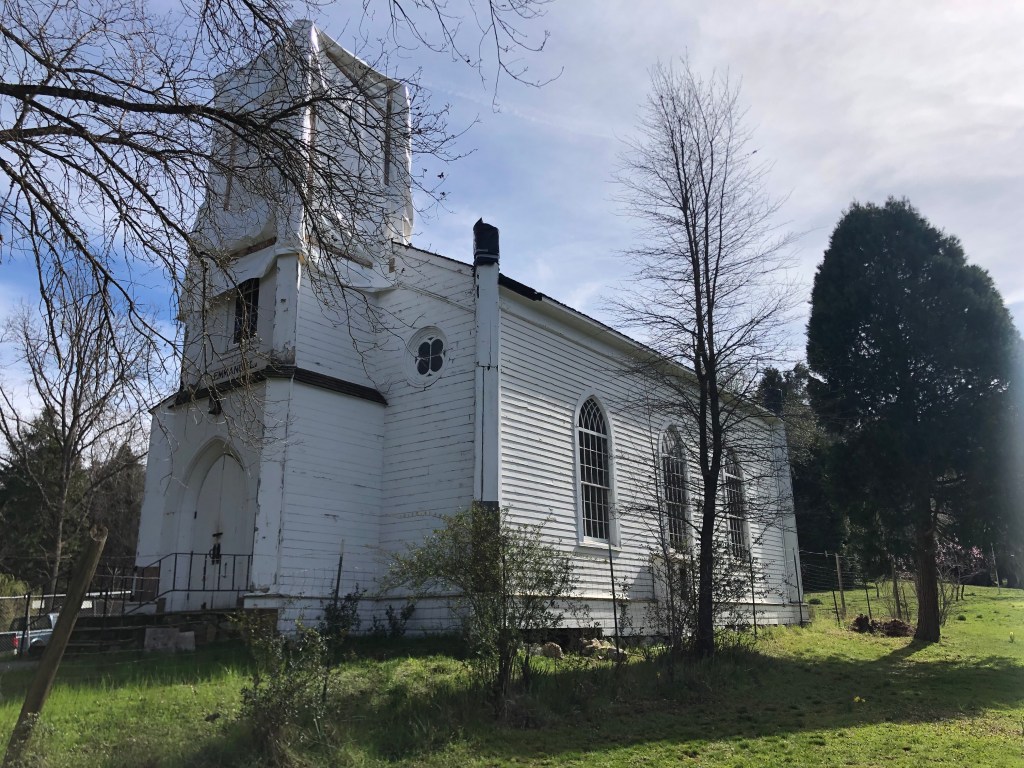
One of those nearby towns was Coloma (pop. at the time: 888). You’ll recall that this is the town where gold was first discovered at Sutter’s Mill. Peirce would preach frequently at Coloma’s Emmanuel Church. This was California’s first Episcopal church, constructed in 1855. And guess what? It too is still standing!

Emmanuel Church of Coloma.

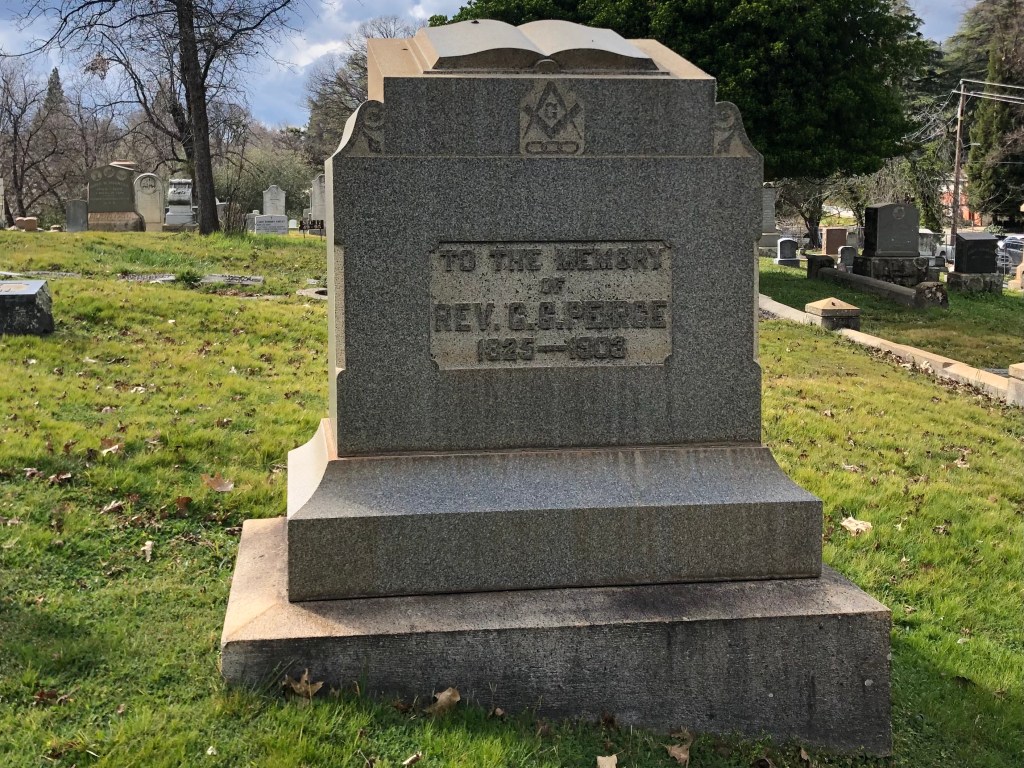
Caleb Peirce died of kidney disease on March 14, 1903. He was buried at Placerville’s Union Cemetery, just couple of blocks from the Church of Our Saviour. He is no longer standing, though perhaps in the eyes of God…

Note the symbols for the Free Masons and the Independent Order of Odd Fellows.

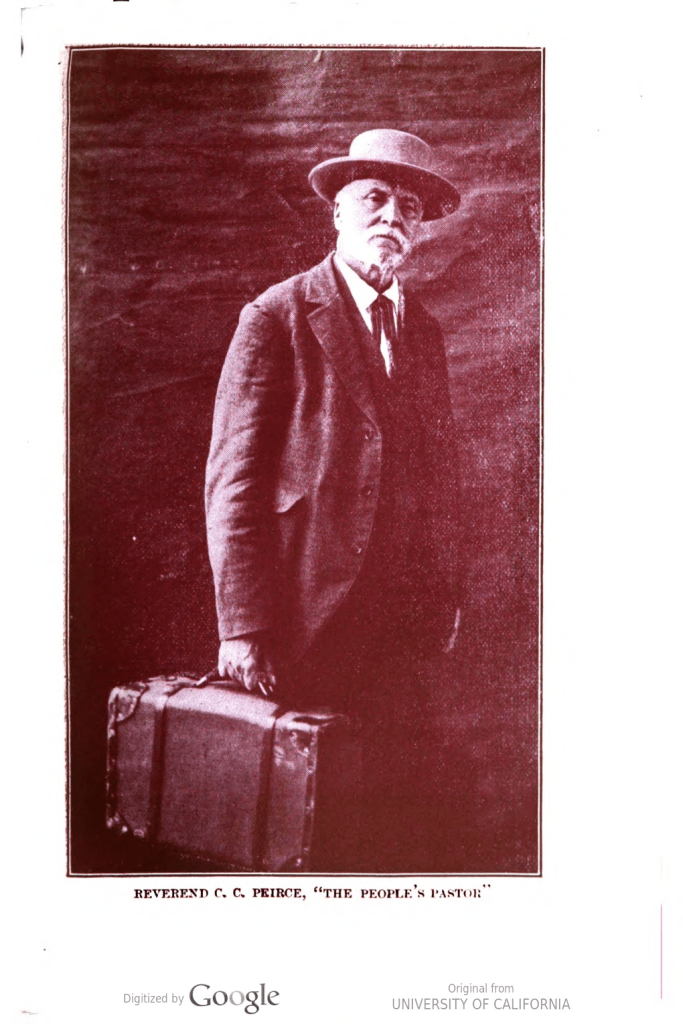
Peirce left few possessions, as most of his books and clothes had been destroyed in a hotel fire a few years earlier. But he did leave a suitcase…

Caleb and his Case.

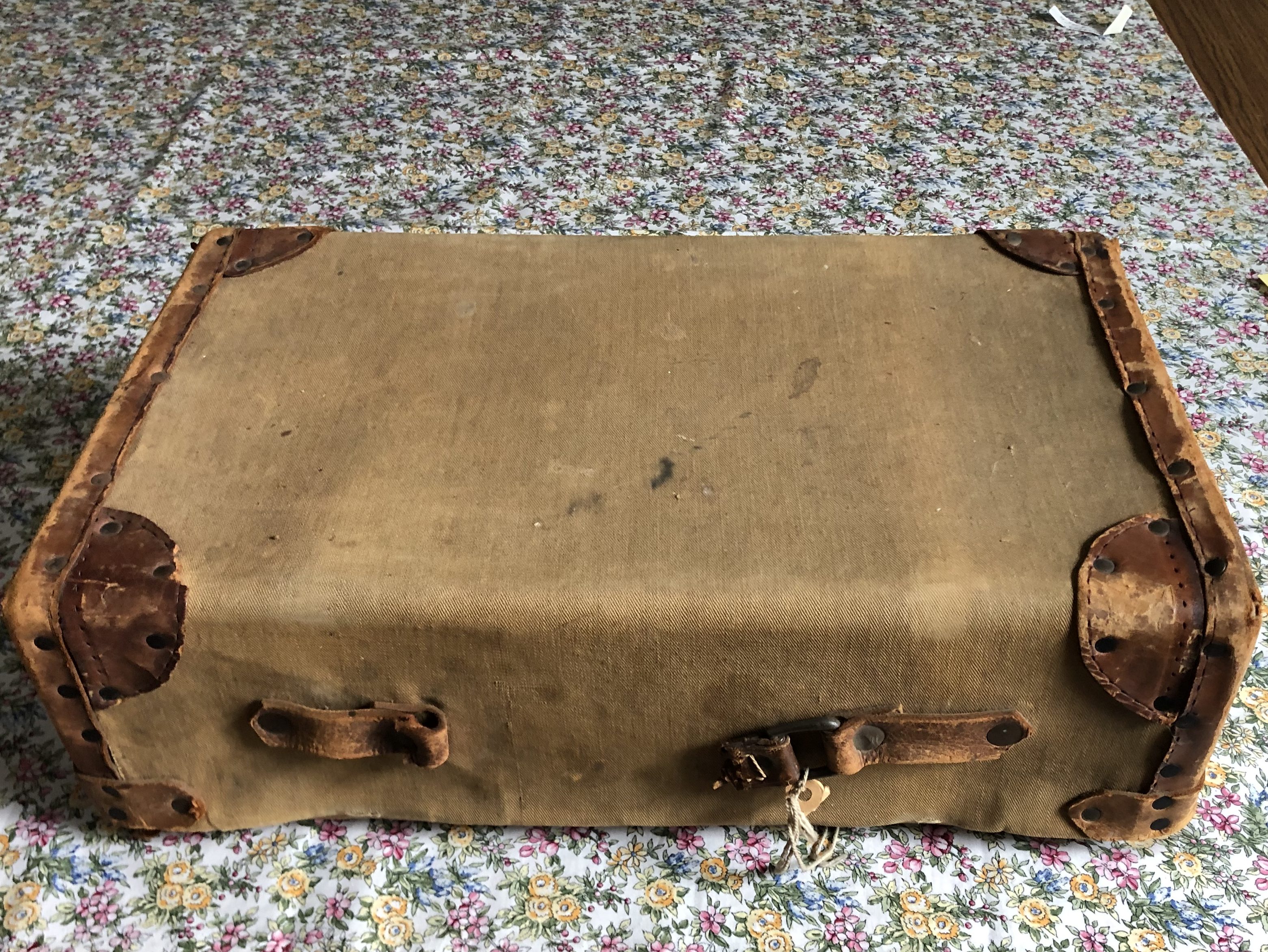
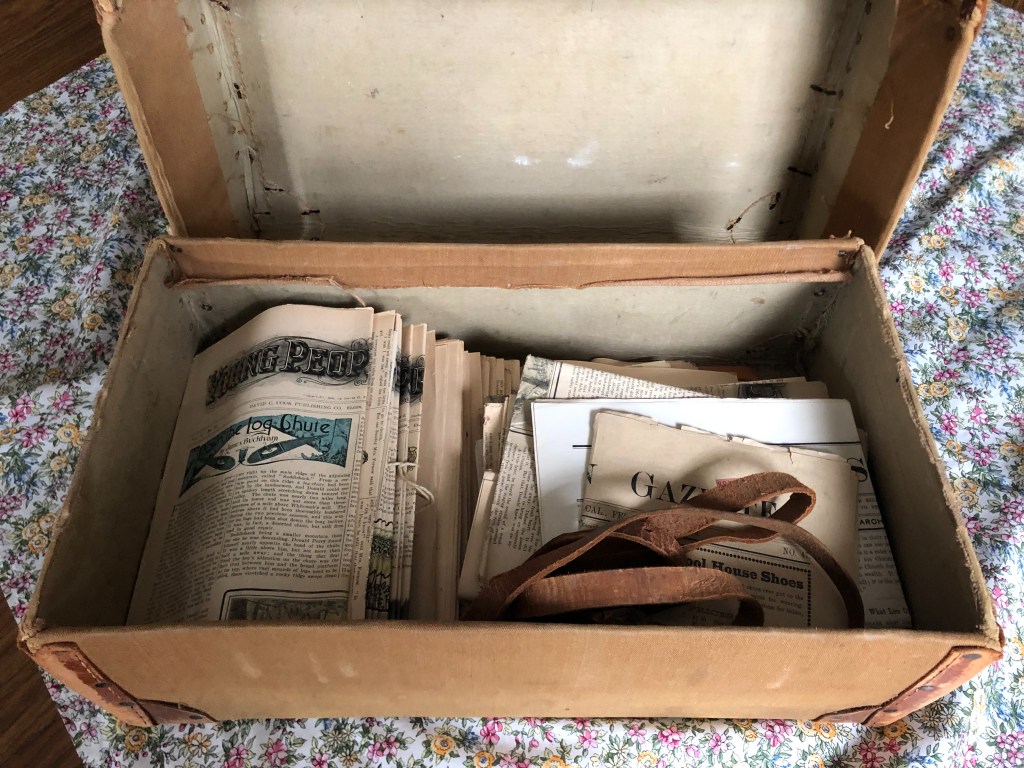
…and that suitcase still survives today. It’s in The Church of Our Saviour’s Parish Hall, as if waiting for its owner to return.

Today the Church of Our Saviour remains an active, little-engine-that-could church in the Placerville community. And what of the Emmanuel Church in Coloma? It still stands in the same place it’s stood for over 160 years, but its worn condition caused it to be shuttered in 2015, until extensive repairs can be made. That church, like much of Coloma, sits within the Marshall Gold Discovery State Historic Park, and as such it is under the control of the State Parks Department. However, I recently talked to someone who holds the deed to the church building, and this opens an interesting story of its own:

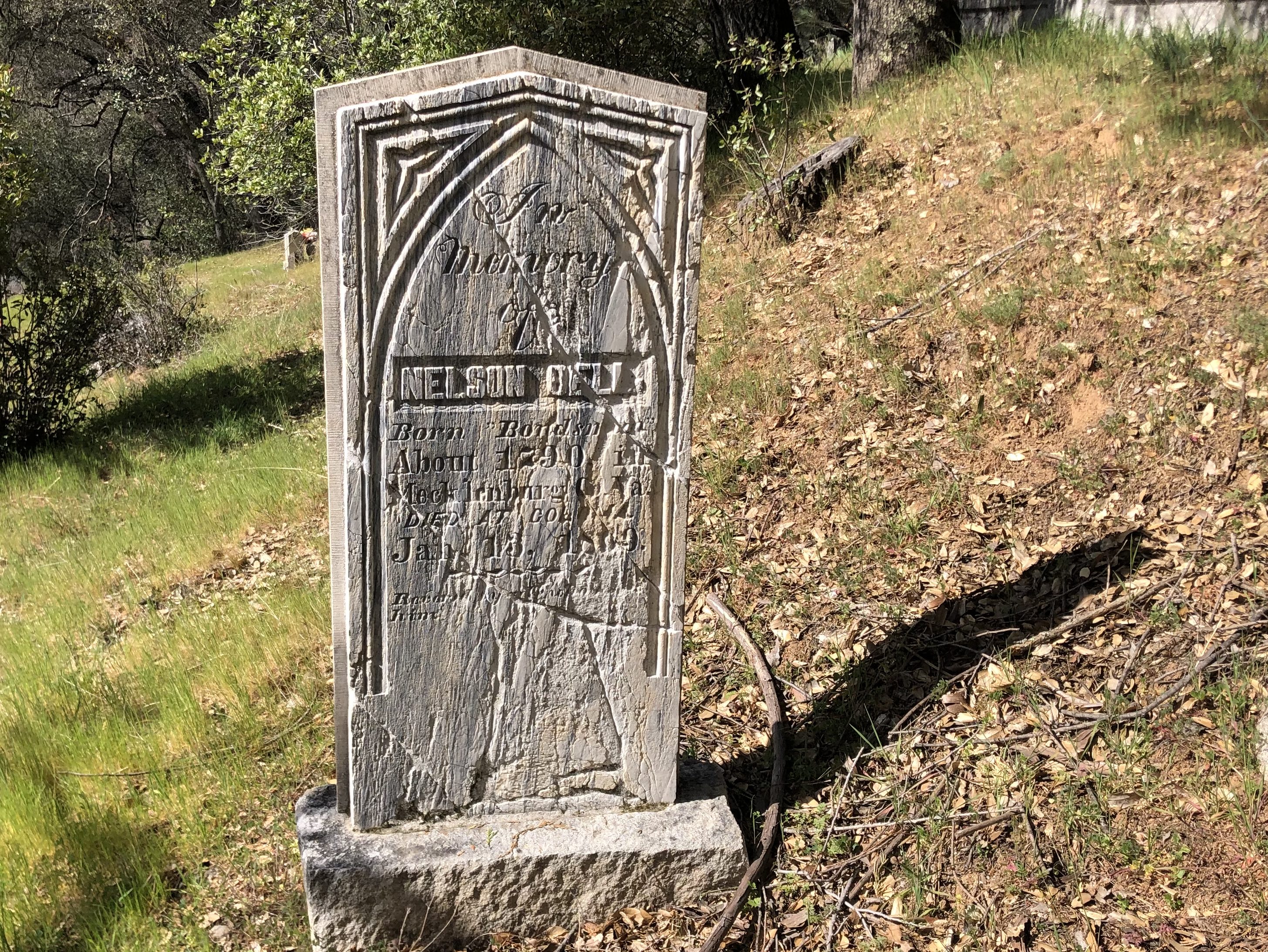
The story goes back to the Gold Rush, just a few years before Caleb Peirce arrived in Placerville. At that time, men from all over the country were pouring into the Sierra foothills in hopes of striking it rich in the goldfields. One of those men was a slave trader named Robert Bell, who brought with him an enslaved man he called Nellson Bell. (Evidently it was customary for slave traders to confer their own last names on the people they sold.) Nellson eventually made enough money mining that he was able to purchase his freedom. He died in 1869, and his headstone is still standing in the Coloma’s Pioneer cemetery.

The grave of Nelson [sic] Bell.

Now, Nellson had a son, named Rufus M. Burgess (no slaver’s surname for him!) He got married, took a job as a blacksmith, and eventually became a prominent, well-liked, and rather wealthy citizen of Coloma. Indeed, he died owning over 90 acres of Coloma land…including the Emmanuel Church building. (You wondered where this was going, didn’t you?)

The State Parks Dept claims the Burgess properties were given up to the state in probate after Rufus M. Burgess’s death. But Rufus’s great grandson, one John Burgess, argues that the land was taken illegally, which of course is plausible given the poor treatment of African Americans by the courts at the time. One wonders how one-time lawyer Jacob Peirce would have framed the legal issues.

As a coda: I met John Burgess (the great grandson) last weekend, and he’s got persuasive arguments as well as copy of his great-grandfather’s deed to his Coloma property. (He’s put out a book for young readers on the topic here.) If he wants to pursue legal action against the State Parks Department, I suppose the question is: Does he have standing?

Obelisks

More Obelisks

Now, I know that some of my loyal readership doesn’t get too excited about obelisks. So you’re excused if you want to pass over this particular post. But if you want a refresher on why these interest me, please check out this post from last year.

A surprising number of readers have sent in their own obelisk sightings after that post, proving that obelisks aren’t immune to the Baader Meinhof effect. Just do a search on “obelisk” on my blog’s main page, and you can see the wonderful variety of obelisks that have been spotted.

Today we add two more sightings:

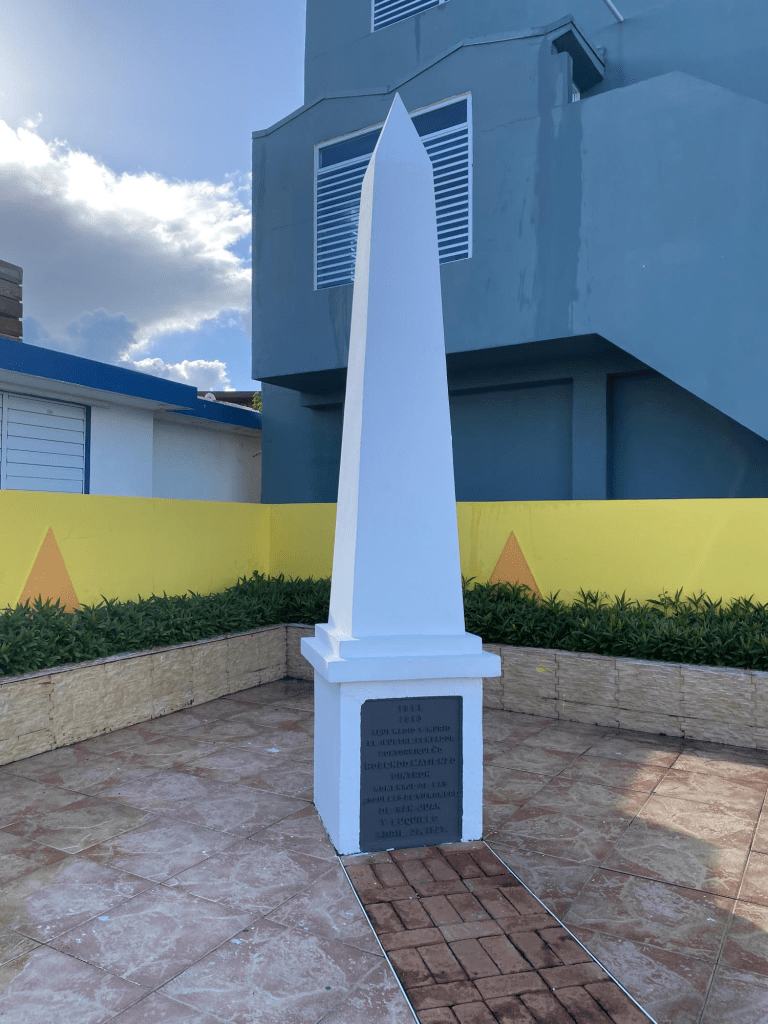
Friend Detlef K. was on vacation in Puerto Rico when he spied this simple obelisk in the town of Luquillo.

It’s a monument to Luquillo’s native son Rosendo Matienzo Cintrón (1855-1913). Cintrón was a lawyer who became something of a political firebrand. He seems to have held a broad range of political positions, many of which contradicted each other over time. He was imprisoned by the colonial government (Puerto Rico was under Spanish rule at the time) for being a Freemason, which evidently was illegal. After his release, he was elected to a local political office, and later helped establish the Puerto Rican Autonomist Party. Later, he welcomed the United States’ military intervention in the Spanish-American War, in which Spain ended up ceding Puerto Rico to the United States. In return, the US appointed Cintrón to important political positions over its new possession. Cintrón advocated for Puerto Rico to become a U.S. state, but later became a passionate proponent of Puerto Rican independence from the United States. Somewhere in all that, he earned himself an obelisk.

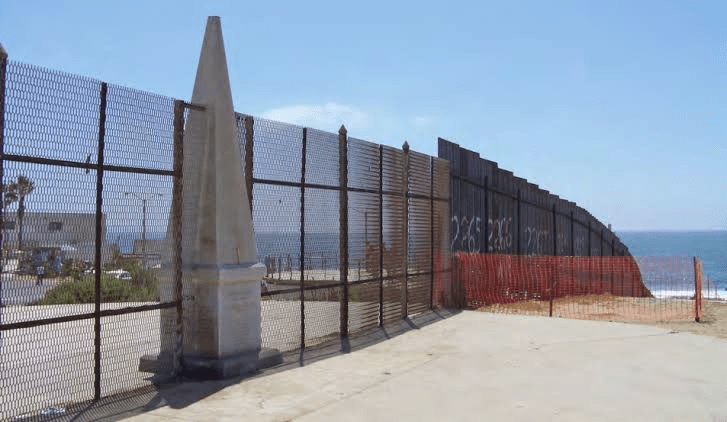
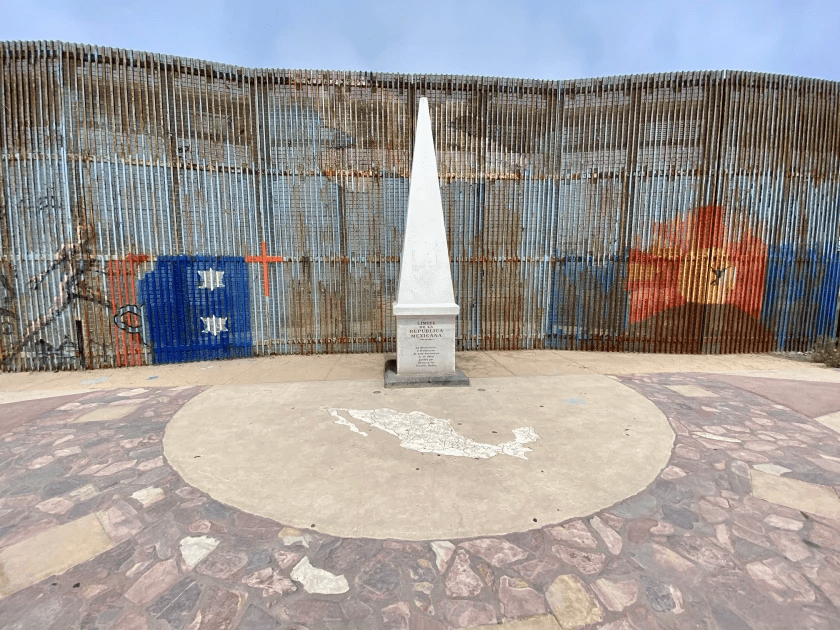
Meanwhile loyal reader Steve L. sent this picture of an obelisk in “Friendship Park,” which straddles the US-Mexican border near San Diego.

International Obelisk

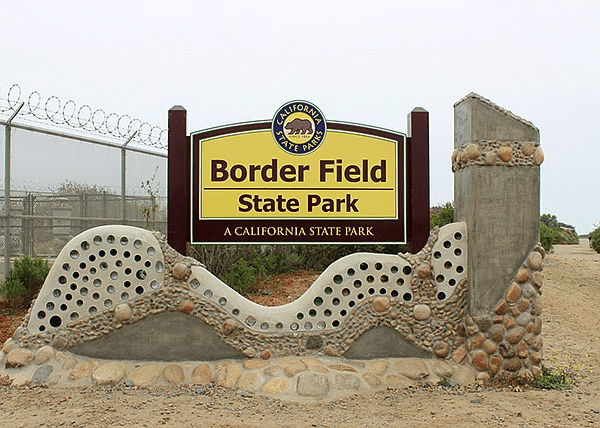
Friendship Park is part of a larger “Border Field State Park,” which makes every effort to look welcoming…notwithstanding various federal security measures that are in place.

The concertina wire is a nice touch.

Friendship Park was established in the 1971, and at the time the obelisk was not divided by a fence. (See historic photo, below.) The obelisk was originally erected in 1851 as a boundary marker after the Treaty of Guadalupe-Hidalgo.

But with rising concerns about illegal immigration in the 1990s, and then concerns about international terrorism after 9/11, security measures were put in place that changed the vibe of the park.