Road trips · Uncategorized

Father and Great-Great-Grandson

Today we made one more foray into Salem’s witch-infested past, this time at the Salem Witch Museum.The museum is housed in a Gothic Revival church originally constructed in the 1840s. The church closed in 1902, and after being used for a few other purposes (including an auto museum), it was transformed into the Witch Museum in 1972.
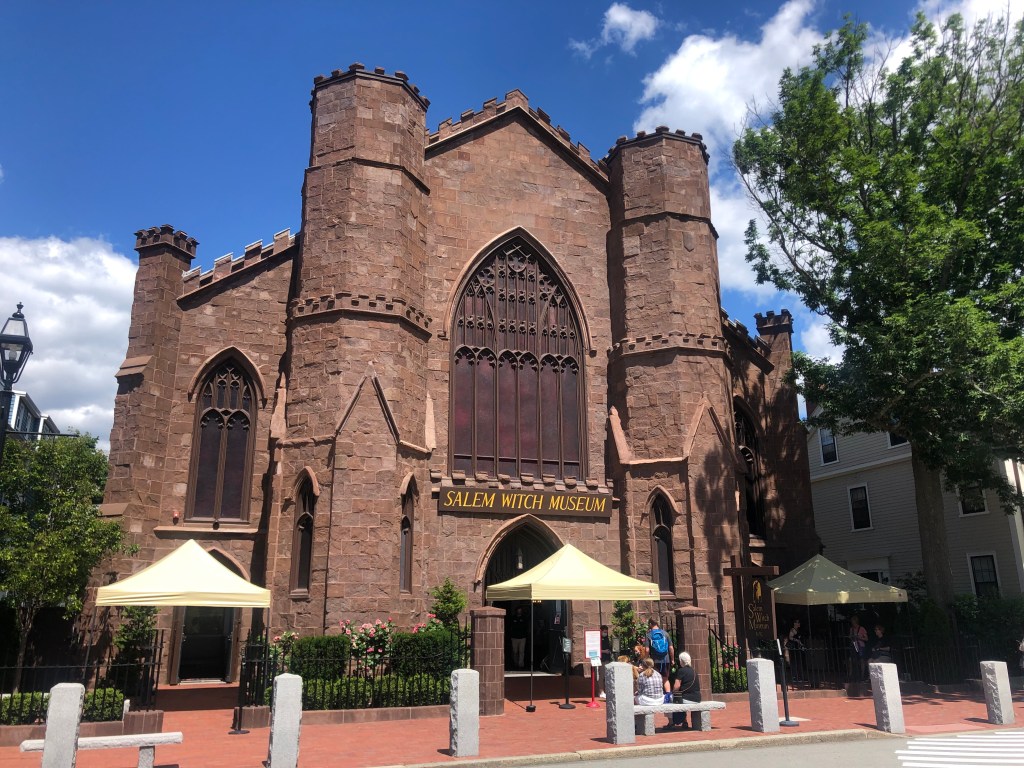
Paging Maleficent, party of one — Your table is ready

It’s an impressive structure, and the multimedia presentation of the Salem witch trials was entertaining. Still, Vic and I realized that by now we knew Salem’s witch story pretty well, so we didn’t learn much that was new. What’s more, the museum’s message is overly tendentious, hammering on the point, over and over, that our society still engages in forms of witch hunts. (I seem to remember a recent president making this claim…)

After the museum, we took the rental car on a leisurely trip along the Essex Coastal Scenic Byway. It was a breathtaking drive, with sweeping views of the Atlantic from Massachusetts’ north coast. The towns along the way are idyllic, and the homes are right out of the pages of Better Homes and Gardens. The weather was perfect, with temperatures in the mid-70s and a slight breeze.

STPH | Blog

Being a native Californian, I don’t know much at all about the eastern seaboard. I did, however, recognize the Gorton’s Seafood fisherman in Gloucester. Gorton’s was founded in Gloucester in 1849, but their iconic fisherman didn’t appear in advertising until 1975.
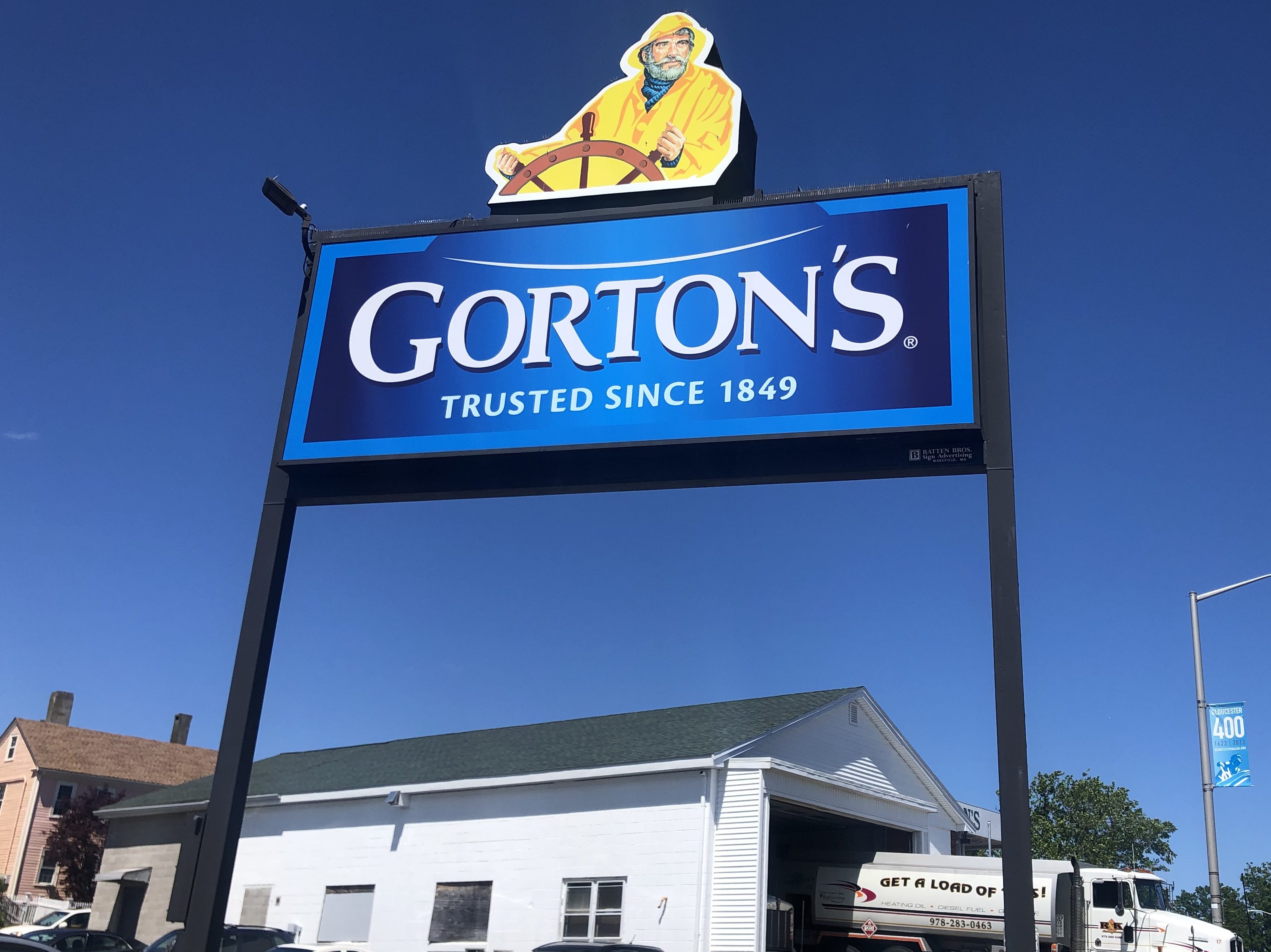
“Churning out soggy, breaded chunks of cod for over 150 years”

We also passed a bronze statue of a mariner at the wheel that looked suspiciously like the Gorton’s fisherman. The statue is part of a memorial to sailors lost at sea since 1716, with an array of plaques listing their names. The memorial statute was installed in 1925, so clearly it was Gorton’s (with their 1975 character) that copied the memorial, and not the other way around.
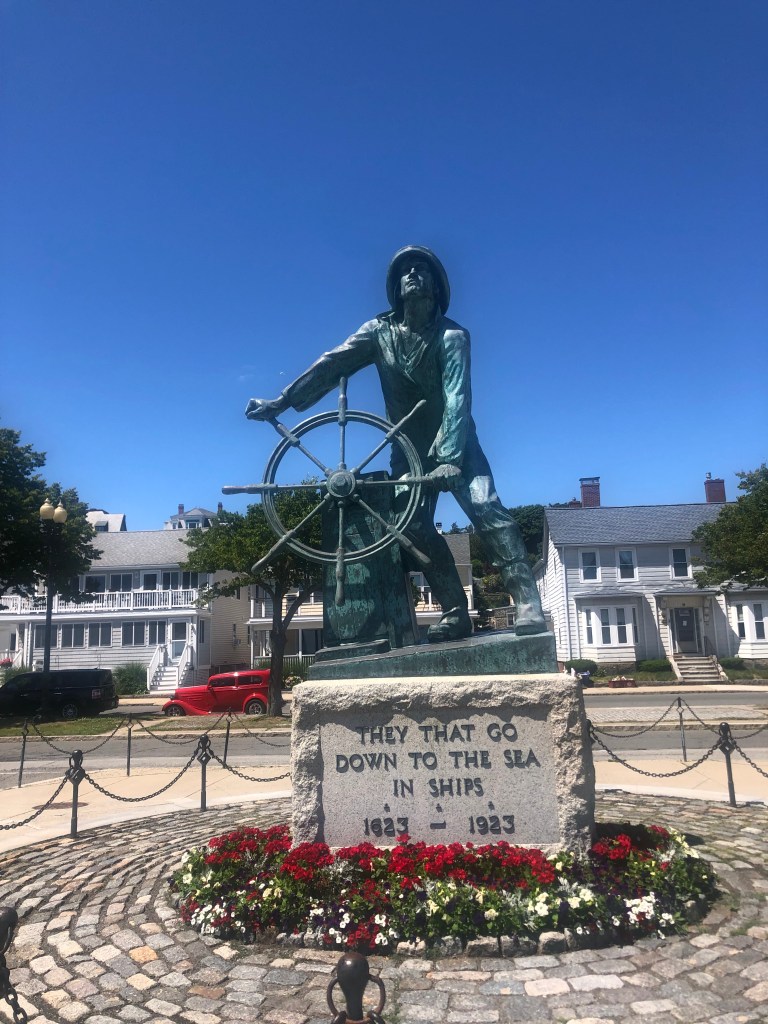
:… Then they cry unto the Lord in their trouble, and he bringeth them out of their distresses.”

Upon returning to Salem, we continued with our witch-free diversions with a visit to The House of the Seven Gables. This, of course, is the mansion that Nathaniel Hawthorne wrote of in his 1851 novel of the same name. The house was originally constructed in 1668, and by the time Hawthorne visited it in the mid-19th century, it had been remodeled so that it only had only three gables. Hawthorne thought the idea of a house of seven gables sounded more interesting than “the house of the three gables,” so he envisioned its original form when he wrote his book.
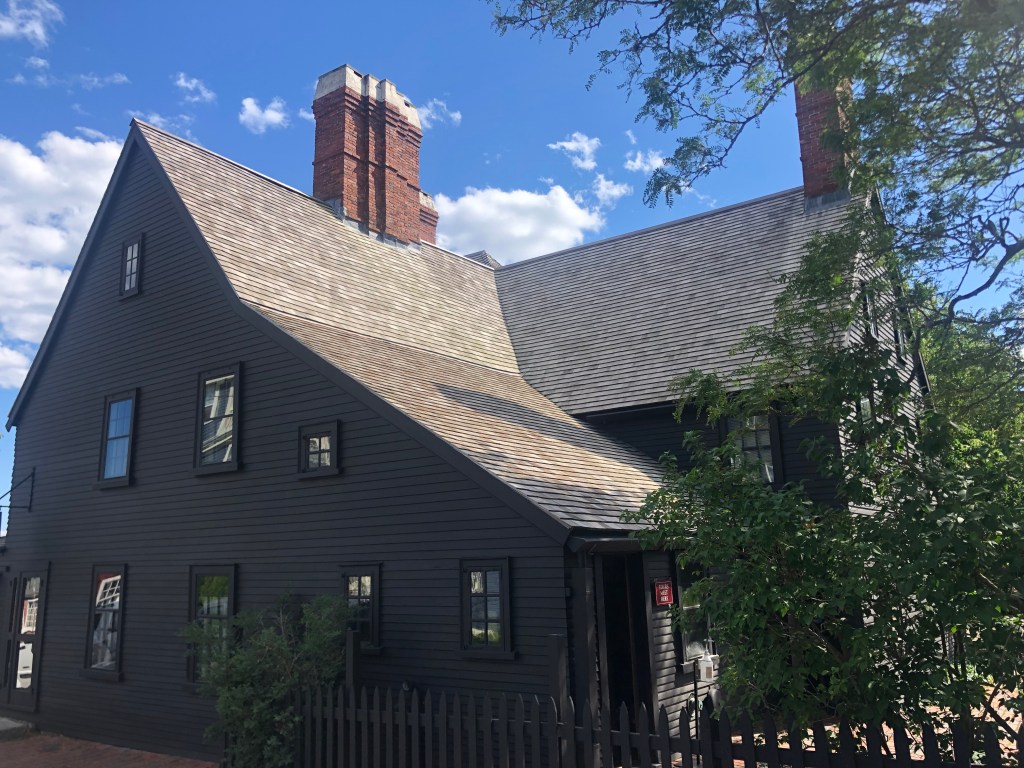
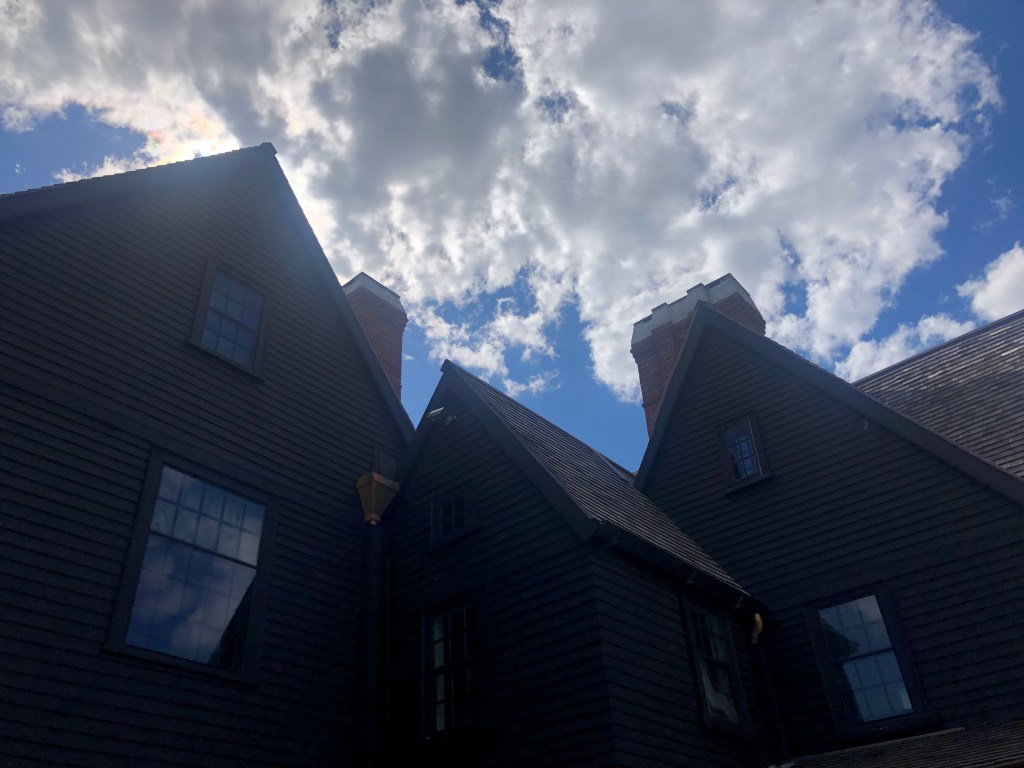
“Halfway down a by-street of one of our New England towns stands a rusty wooden house, with seven acutely peaked gables, facing towards various points of the compass, and a huge, clustered chimney in the midst.”
A man will commit almost any wrong … to build a great, gloomy, dark-chambered mansion, for himself to die in.

By the way, our Seven Gables diversion was not entirely witch-free. Nathaniel Hawthorne’s great-great-grandfather was John Hathorne (no “W”), who was a key, influential judges in the Salem witch trials. Nathaniel changed his last name from Hathorne to Hawthorne, in part to disassociate himself from his ancestor.

One final Hawthorne reference from today: The sight of this sign reminded me of Hawthorne’s The Scarlet Letter. Doesn’t it evoke a ledger of one’s offenses and wrongdoings?
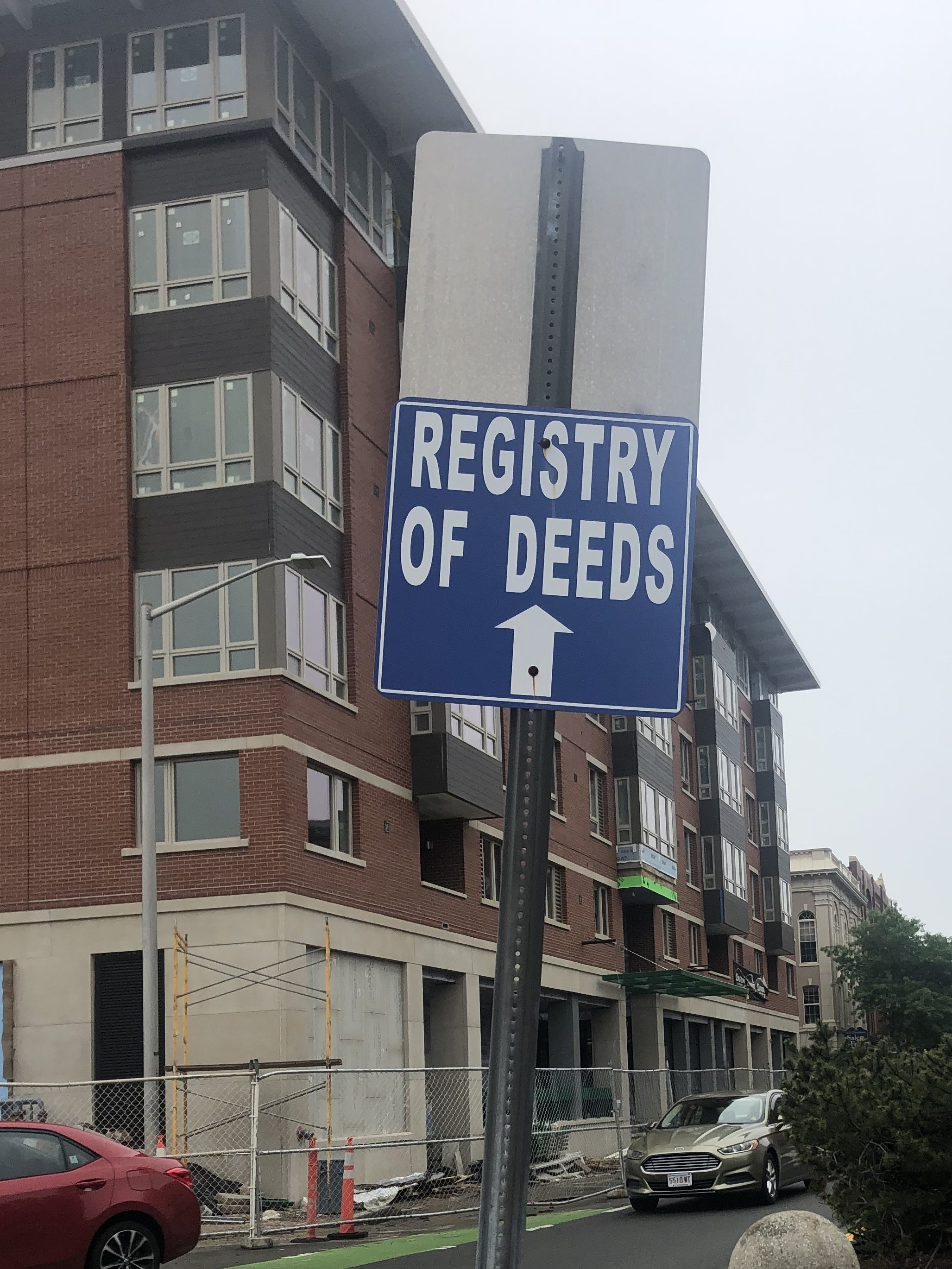
What have you got to say for yourself?

And finally, speaking of signs, this local liquor store certainly sports a colorful moniker.
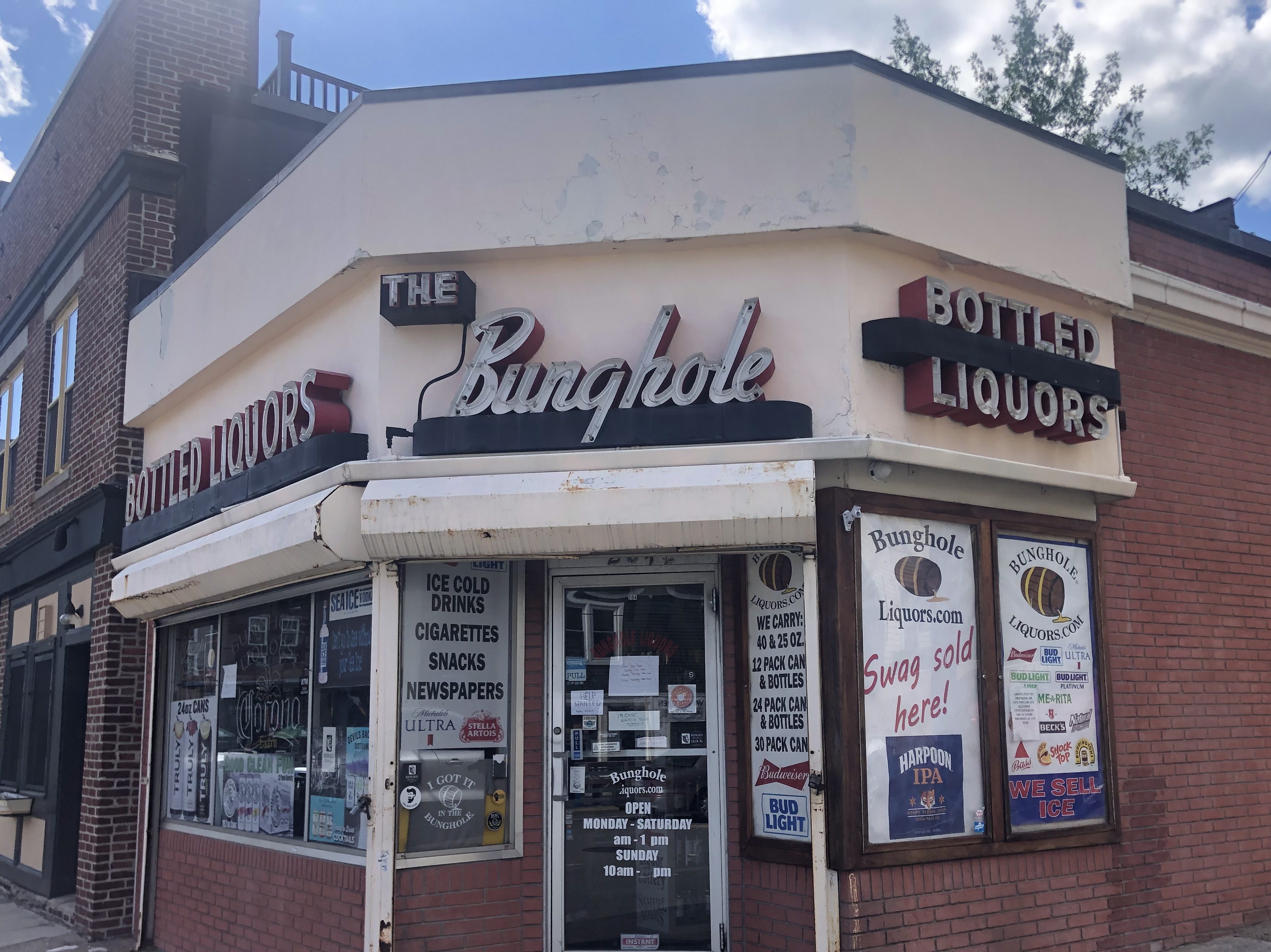
On second thought, I think I’ll pass.

The place was a funeral home in the early 20th century, and during Prohibition the owner surreptitiously served liquor out of the basement. Such establishments at that time were sometimes called “bungholes” (a term related to wine barrels). After the 21st amendment was passed in 1933, the owner converted the funeral parlor to a full-scale liquor store. The nickname became the official name, providing endless amusement for visitors. (There’s also a line of tasteless merch.)

And so ends our third day in Salem. Tomorrow morning we’re off to historic “Salem Village,” aka Danvers.

BREW OF THE DAY

We found a local brewpub called East Regiment Beer Company. Established in 2014, it resides in what used to be Salem’s first fire station.The name references colonial Massachusetts’ militia, which is claimed to be the origin of the National Guard. This is a small (three-barrel) brewery, with a handful of their own beers on tap at any given time. I selected the BAF Porter.
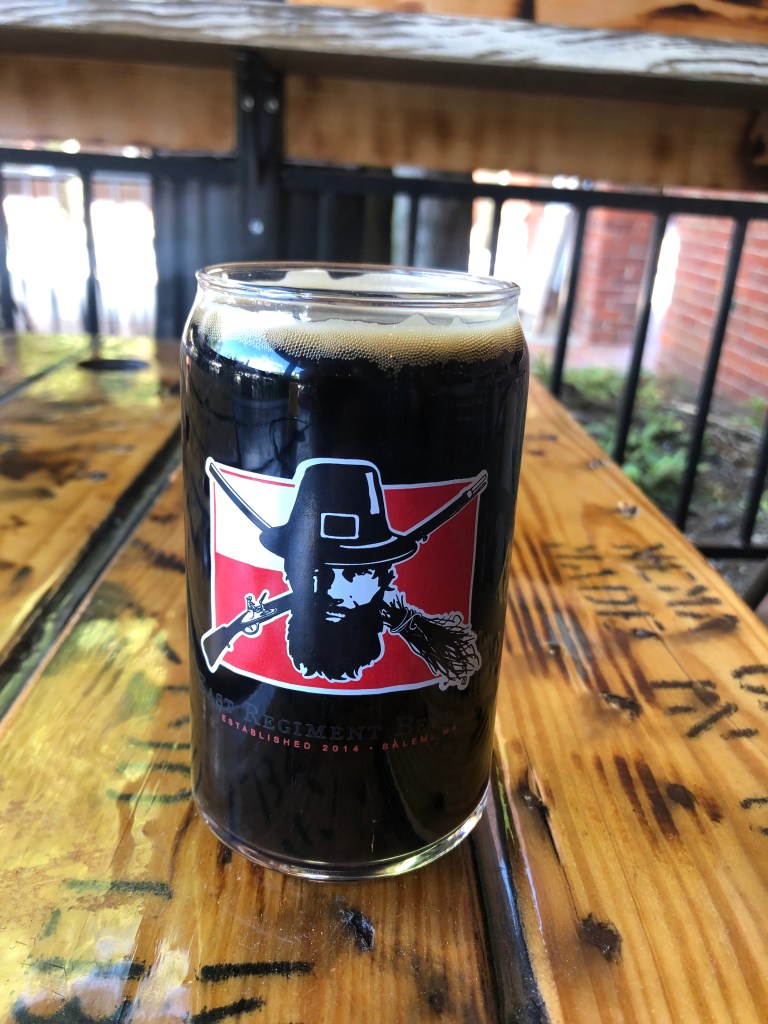
Puritans, witches and militias, all in one logo!

This is a mahogany-colored brew with just the slightest hint of lacy foam at the top. On the first sip, you’re greeted with roasty and nutty flavor that washes over your tongue. You notice a mild carbonation, which is just enough to keep things interesting. It’s not a thick or heavy beer — but it’s not watery either. It strikes that ideal viscosity that a porter should have.

The finish is slightly bitter, as you’d expect from a lightly hopped beer. Overall, I’d have to say the beer is balanced. But after a few sips, it becomes clear that this beer lacks complexity. There is no play of flavors, no grace notes. Just a big glass of roasty sameness, sip after sip after sip. By the time you’re drinking the second half, you’re tired of it. Let’s give it 3.5 stars.

PS: As I was settling our account, the barkeep (Mike) pointed out a beer on tap that shares my name. “Steve’s Quality Saison” is a paean to the local “Steve’s Quality Market,” and the tap handle even has the same neon script as the signage on the store (which happens to be across the street from our hotel.) I wish I’d been aware of it when I ordered my porter!
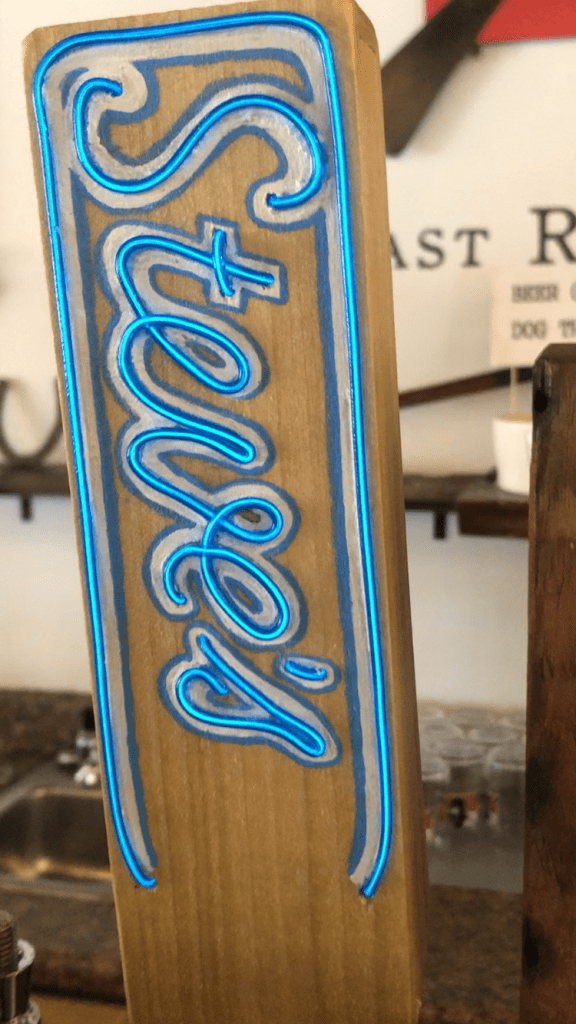
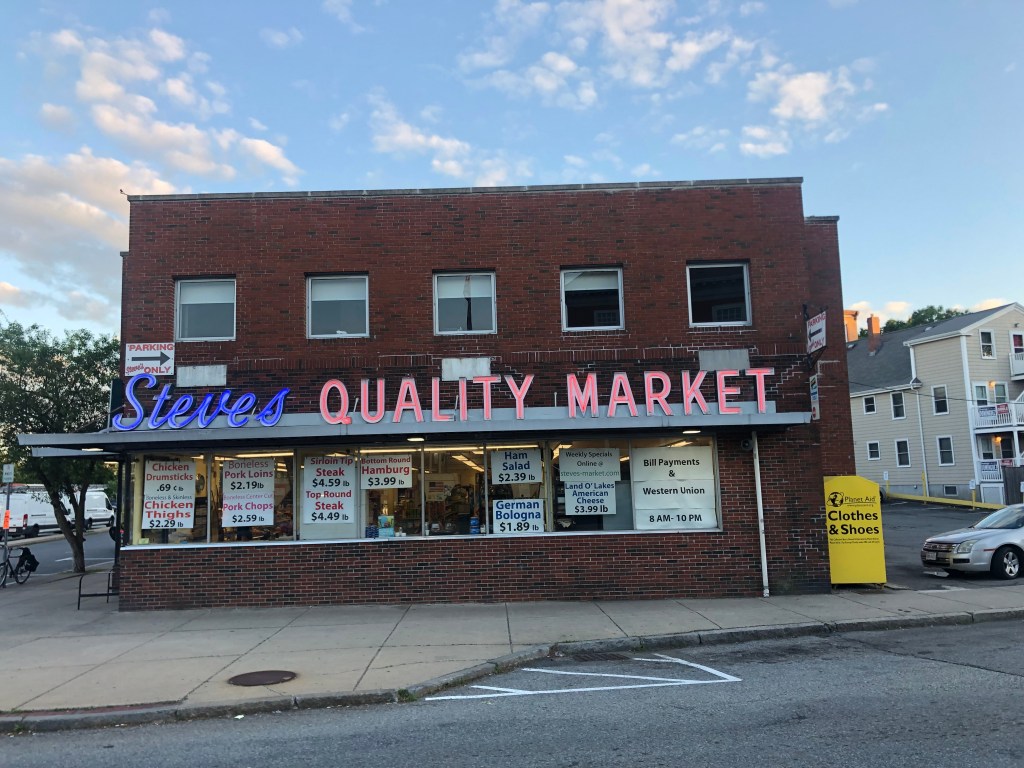
When was the last time you saw a neon-lighted tap handle?
Presumably beats Ralph’s Pretty Good Grocery in Lake Wobegon.
Road trips · Uncategorized

A Restless Spirit on an Endless Flight

Yesterday’s post, in which I anticipated what today held in store, was prescient, if I do say so myself. We were indeed beset on all sides by witch imagery, and our tour guide was in fact a local college student in a period costume with a flair for hystrionics. But let’s start at the beginning.

Boo.

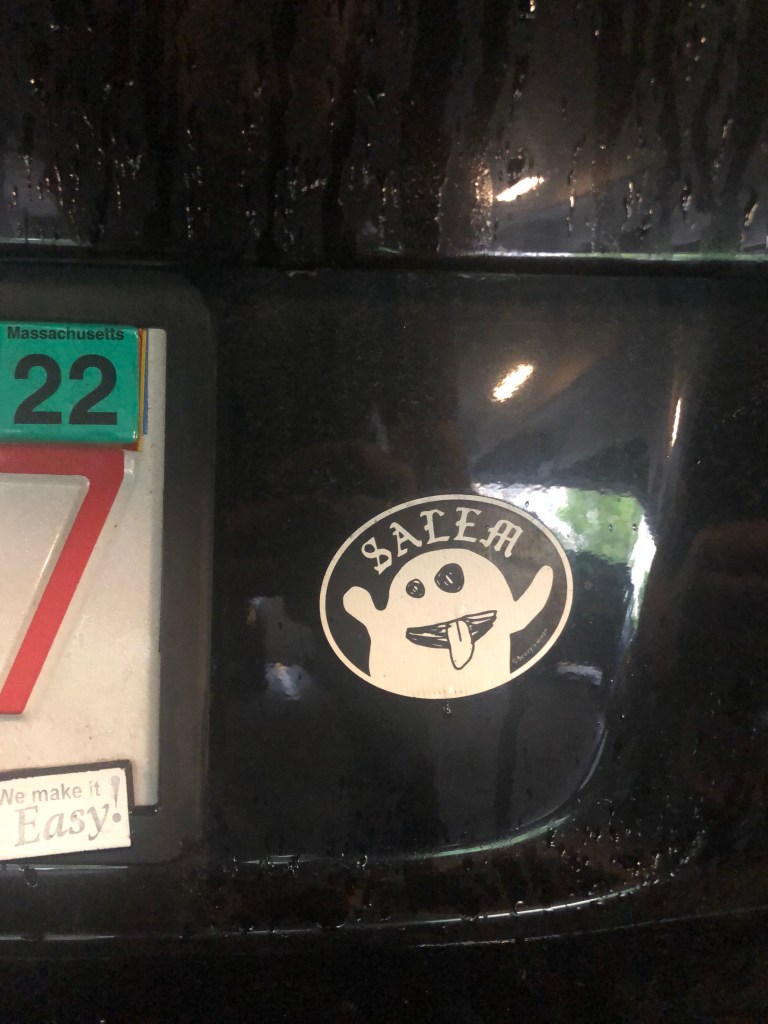
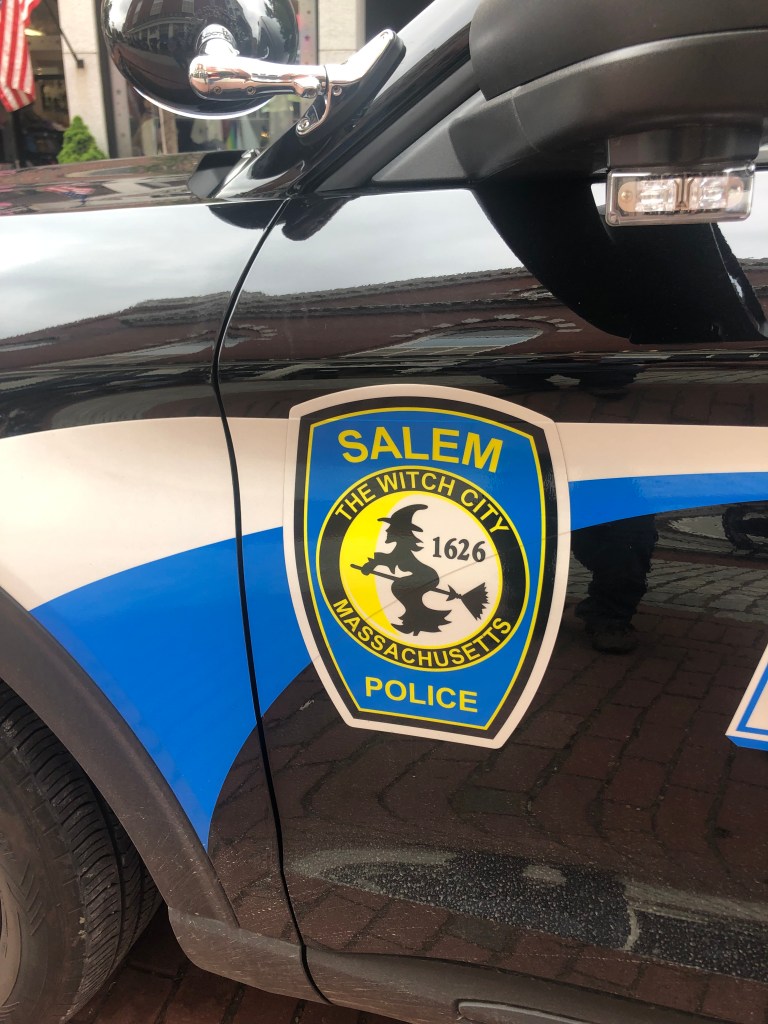
Salem seems to have a conflicted, love-hate relationship with its witch history. On the one hand, the witch trials are understandably seen as, well, witch trials. One wonders if 300 years ago an accused witch would have decried the whole thing as a “communist hunt.” On the other hand, and in saying this I mean no ill will, Salem doesn’t really have a lot else to attract tourists. And so it is that witch imagery is omnipresent. Even the local constabulary sports the silhouette of a flying crone.

“Sweeping the streets of crime since 1692”

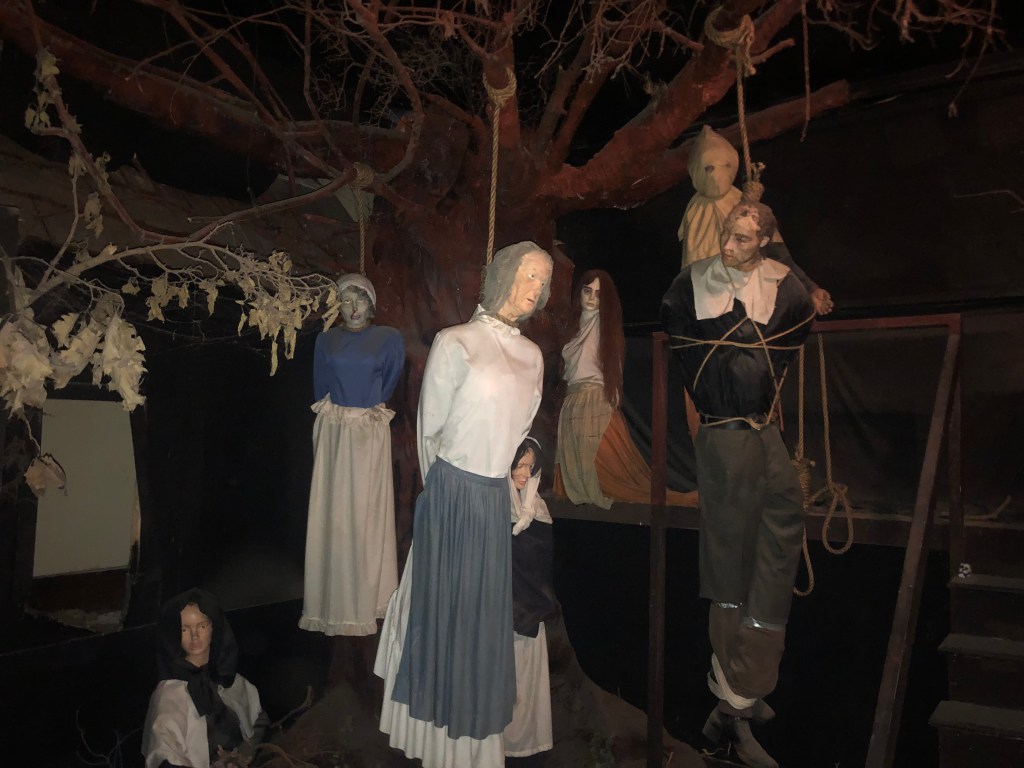
We started off at the Salem Witch Museum, which is as straightforward of a name as you’re going to find. We were the only two people on the tour (evidently June is their slow season). Our guide was the aforementioned young woman inclined to stagecraft who’s getting her master’s in Salem history. As she took us past barely-animated tableaux of witch trials and suchlike, she explained the sordid history, which I’ll summarize here:

In 1692, the two daughters of Salem’s new minister were found cavorting in the woods. This was frowned upon in Puritan society, so the girls offered an excuse which would become a pop culture phrase in the 1970s: “The Devil made me do it.” Indeed, they claimed that one (or sometimes a few) local witches had cast spells on them. To strengthen their case, the girls would occasionally fall into catatonic states or writhe uncontrollably. Now, in those days, witches were very much considered a thing, and the townsfolk set about the business of discovering who these witches were, and putting an end to them.

In the year and a half that followed, accusations and counter-accusations flew, and some 200 people were arrested as witches. Nineteen of them were hanged. The hysteria came to an end only when the Governor’s wife was accused of witchcraft, and the Governor decided it was time to grow up and enter the (then-dawning) 18th Century.

The hangry witches of Salem.

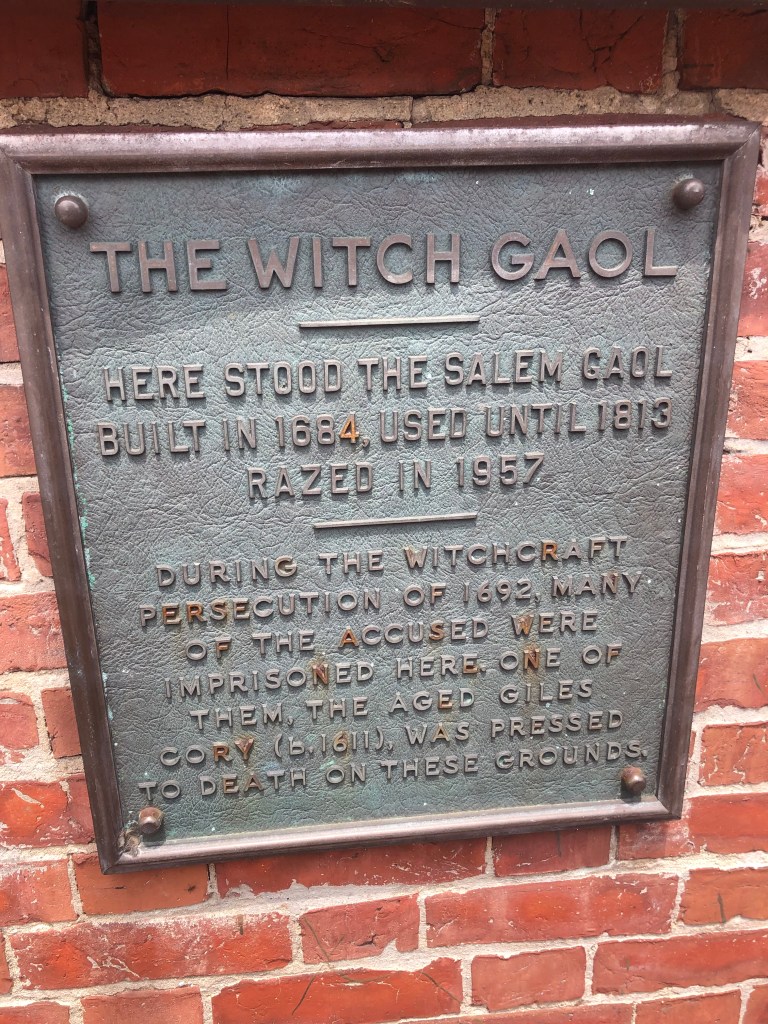
We then went to Salem’s Witch Dungeon Museum, which is a recreation of one of the jails (or, in the local vernacular, “gaols” where accused witches were held. They were not pleasant accommodations. And even if you were lucky enough to be acquitted, you then had to pay off your debt for the cost of food, shackles, and other provisions you had used before you could be released.

That Giles Cory was one “impressive” guy.

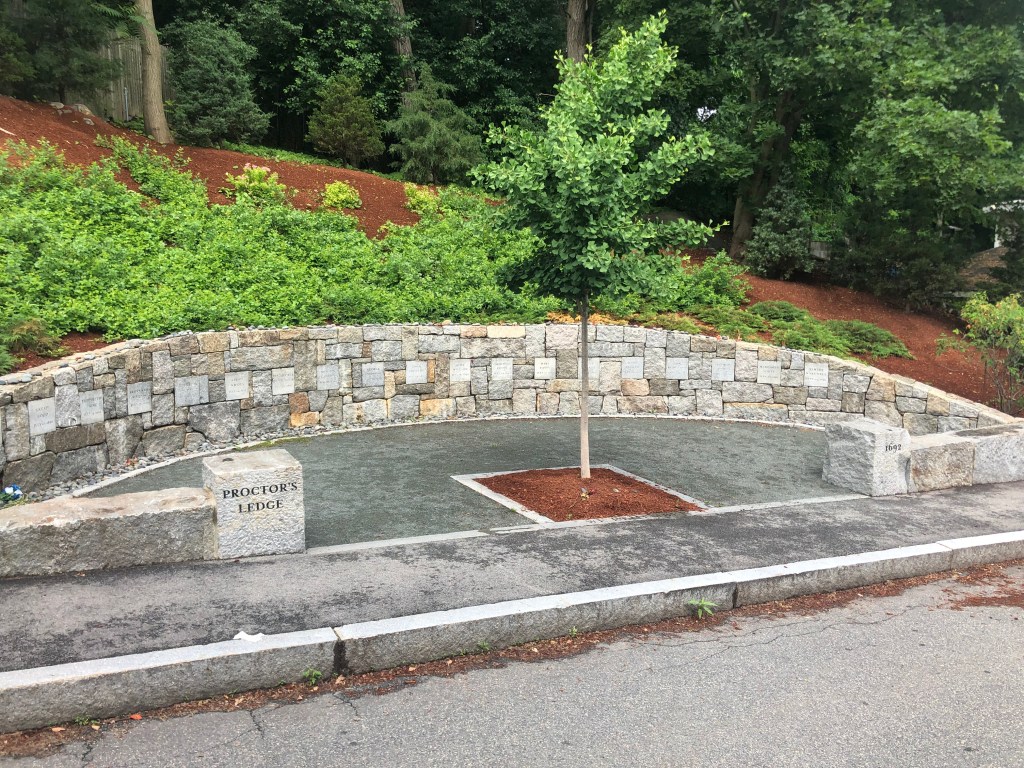
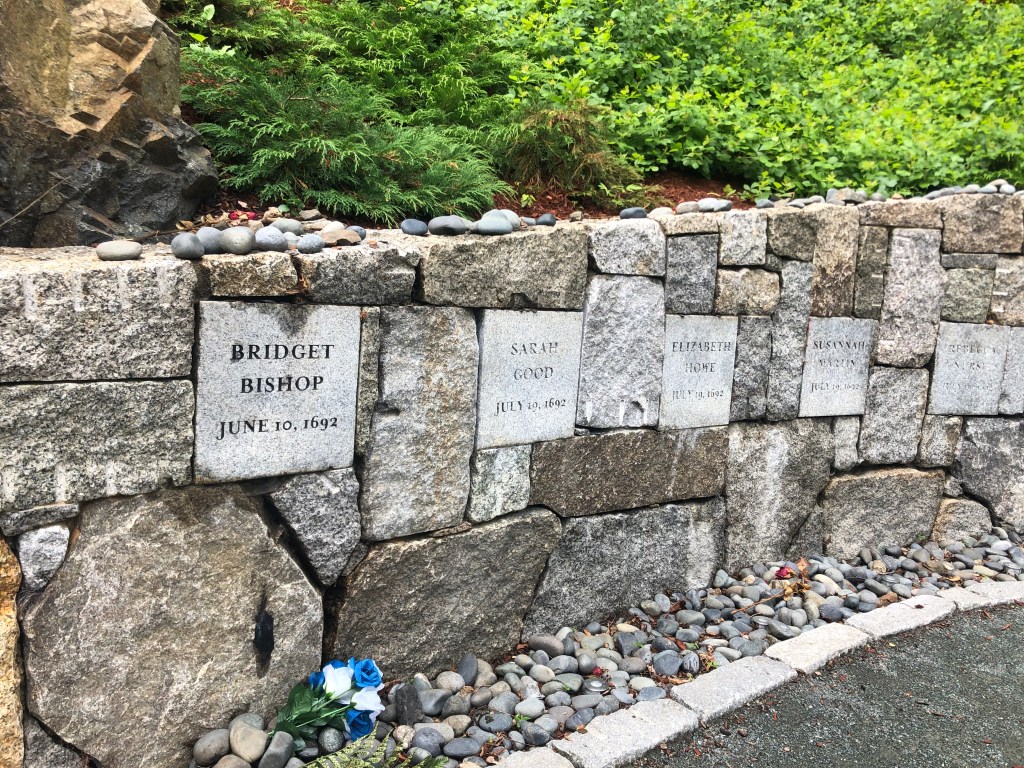
For a somewhat less lurid, even somber meditation on the events of 1692, we visited the (presumed) site of the hangings. For years no one was really sure where this storied “Gallows Hill” was located, but recent scholarship says it’s at a place known as Proctor’s Ledge, which sits behind the local Walgreens. A memorial was erected on the site in 2017, with the names of each of the 19 victims. (Excluded are the names of two dogs that also were hanged as witches.) (I am not making this up.)

Witch is to say…

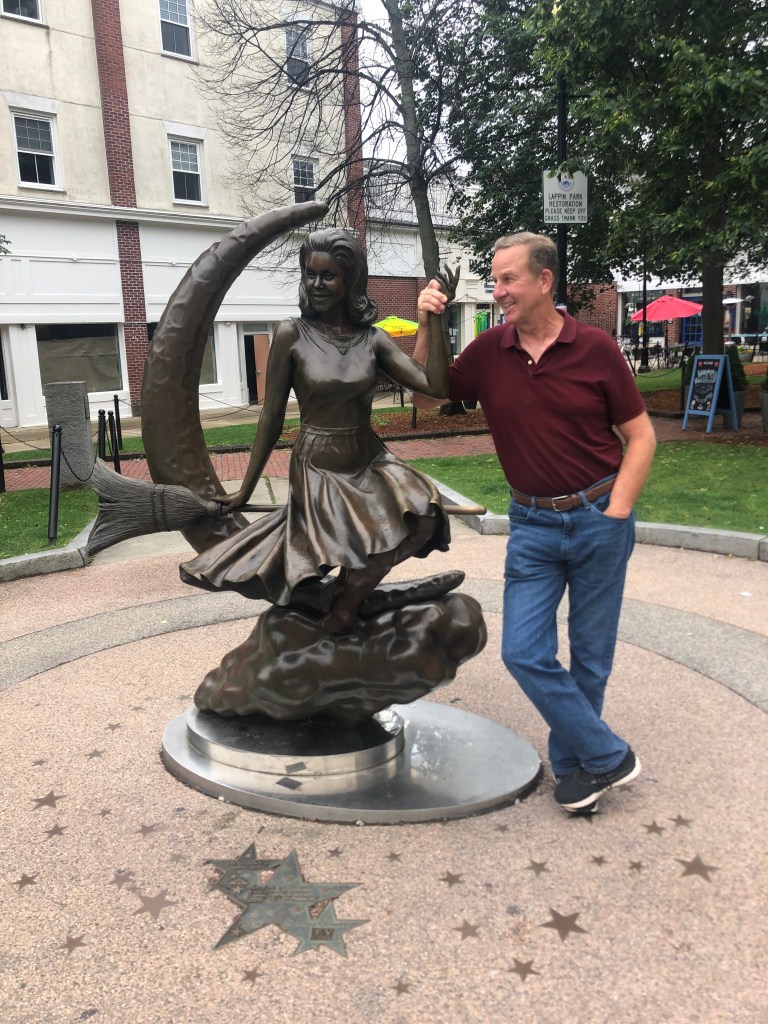
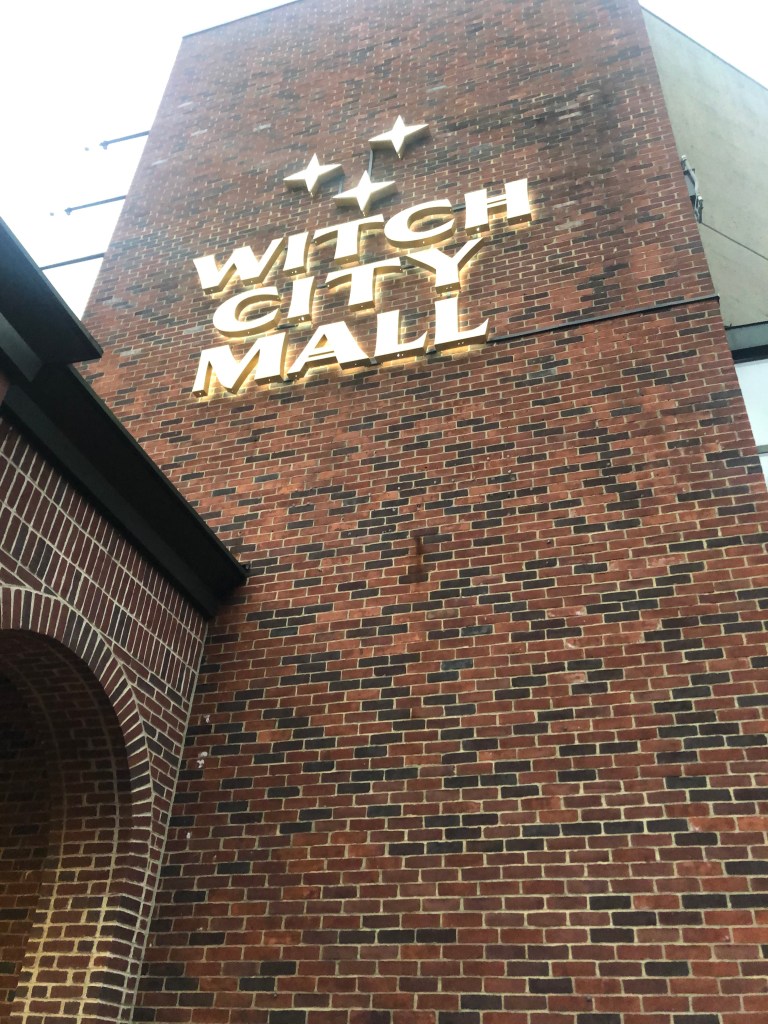
But not all of modern Salem’s witch infrastructure is quite so gloomy. There is, for example, this brass statue of Samantha Stephens from the 1960s sitcom, “Bewitched.”

RIP Elizabeth Montgomery

The statue was erected by TV Land in 2005, and it caused a bit of controversy. Some residents felt it showed an insensitivity towards witches…or at least toward those who were accused of being witches. “It’s a distortion of what went on,” harumphed one resident to NPR when the statue was unveiled. You think? A pretty blond witch living as a housewife in suburban 1960s America, with Paul Lynde as her wisecracking, campy uncle? Yeah, I guess that’s a distortion of what actually happened in a 17th-century Puritan community.

By the way, TV Land has erected statutes of other fictional characters in their hometowns, including Bob Hartley (Bob Newhart) in Chicago, Ralph Kramden (Jackie Gleason) at a New York bus station, Mary Richards (Mary Tyler Moore) at the same downtown Minneapolis corner where she throws her hat in the opening titles, and Andy and Opie Taylor (Andy Griffith and Ron Howard) in Raleigh, North Carolina. Sadly, Ron Howard is the only surviving member of this entire entourage.

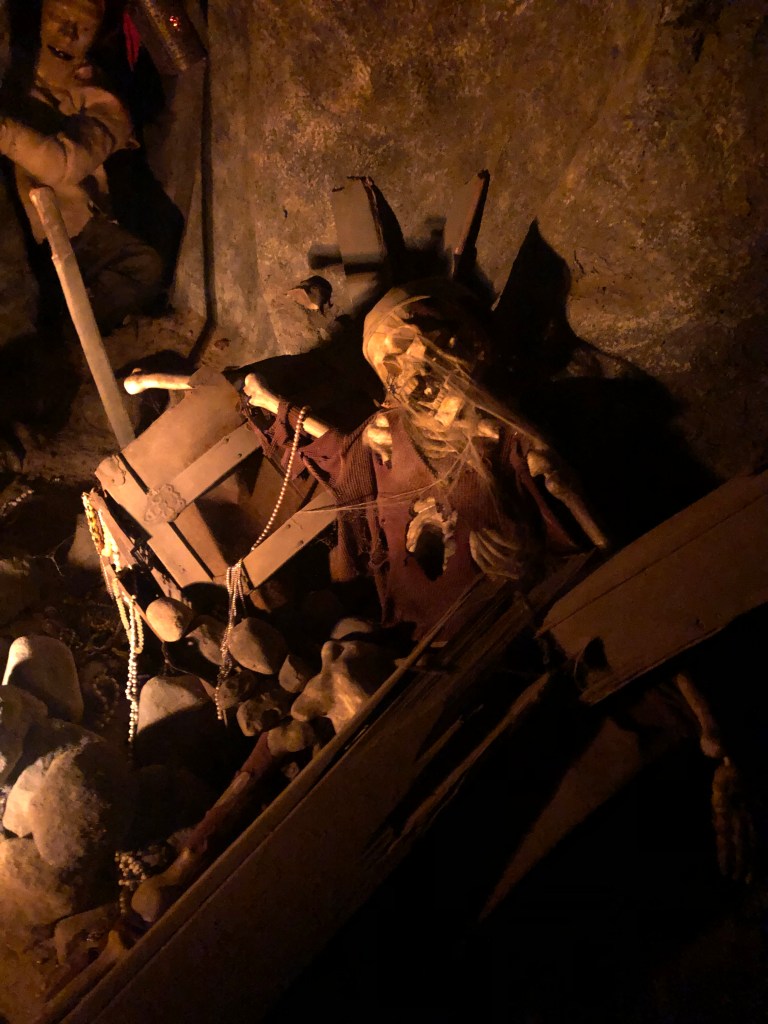
Finally, as we were getting a little saturated with witchy things, we decided to have a fresh, cleansing experience at Salem’s….wait for it….pirate museum! After a day of witch gaols and hangings and men being crushed to death, nothing restores your faith in humanity like a bunch of displays about bloodthirsty marauders on the high seas.

Yo-ho-ho indeed!

Brew of the Day

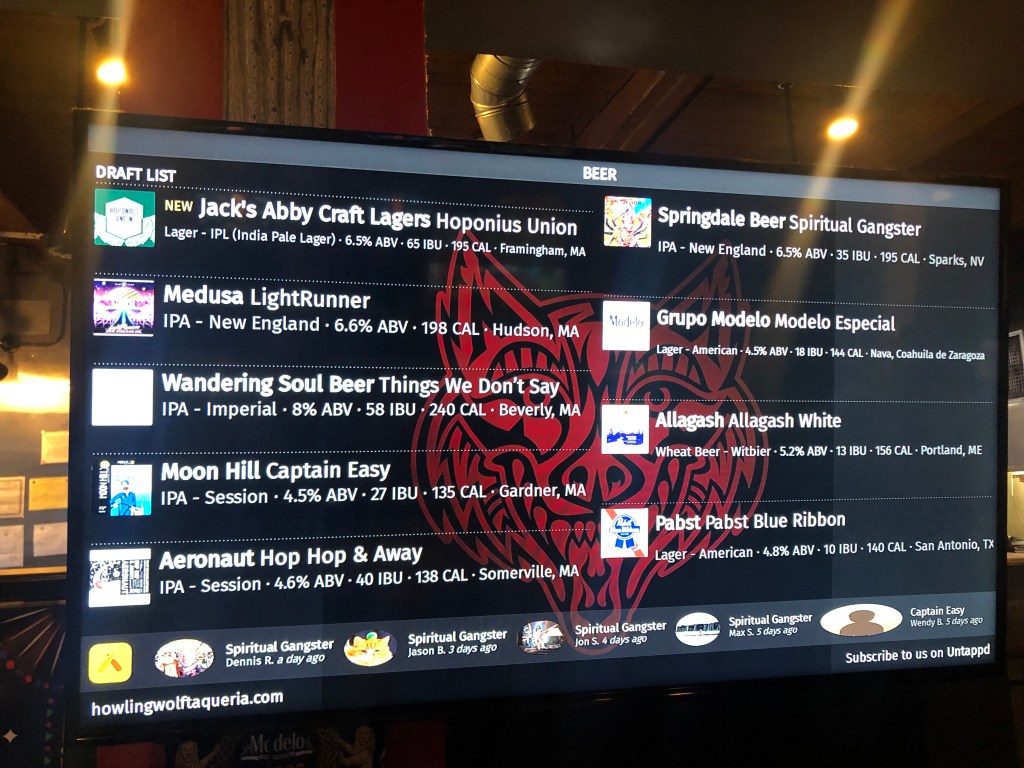
It turns out most of Salem’s brew pubs are closed on Tuesday. So we tried a restaurant that was supposed to have a good beer menu. Here is said menu:

Read it and weep.

You’ll note that it’s all IPAs and lagers. Not a manly beer to be had. And for some reason, every single place we’ve been to over the past two days has PBR.

I had a margarita.

The devil made me do it.

Road trips · Uncategorized

Witch and Famous

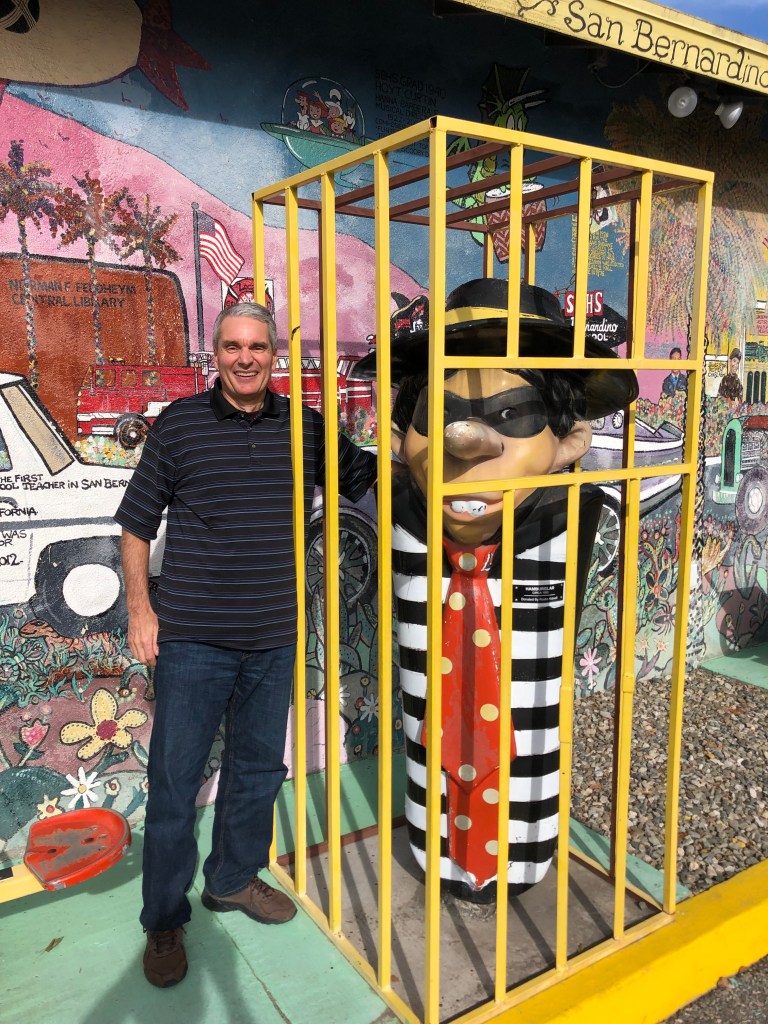
My good friend Vic and I have engaged in our share of aimless and/or pointless activities. Such as the time we had a hankering for a greasy meal from the Cracker Barrel restaurant, and we made the 550-mile drive from Sacramento to the nearest Cracker Barrel, which was in Boise, Idaho. After enjoying our meals we immediately got back in the car and returned home that same day. Vic and I have also visited the unofficial McDonald’s museum which resides inside the Juan Pollo Chicken headquarters in San Bernardino, and we flirted with the cowgirl waitress in a ten-gallon bra at the Big Texan Steak Ranch in Amarillo.

So when Vic recently observed that we were overdue for another “stupid trip,” I was all ears. (Those of you who have seen me in profile can attest to that fact.) Vic suggested that we make a pilgrimage (if you’ll pardon the expression) out to Salem, Massachusetts, home of the storied Salem Witch trials, to see what all the fuss was about. Admittedly, the fuss ended rather abruptly about 300 years ago, but growing up in California, our formal education studiously avoided any mention of events occurring before 1849. So we figured we’d correct for that oversight by listening to theater majors from North Shore Community College spin lurid, embellished tales about “The Troubles of 1692” while restlessly standing in reconstructed Colonial buildings next to a family of tourists from Minnesota wearing matching “WITCH WAY TO SALEM” shirts.

Which is why this morning we found ourselves at Sacramento Intergalactic Airport at Zero Dark Thirty. Vic and I took separate flights. This is not because we wanted to minimize the risk that the world might lose both of us in a plane crash, but because we each have frequent flier miles with different airlines.

After a day of flying, we were reunited at Boston Logan Airport (motto: “You Think Your Flight Was Long? Just Wait Til You Experience Our Rental Car Shuttles!”) just in time for a relaxing, pub-inspired dinner and a couple of brews at the Village Tavern.

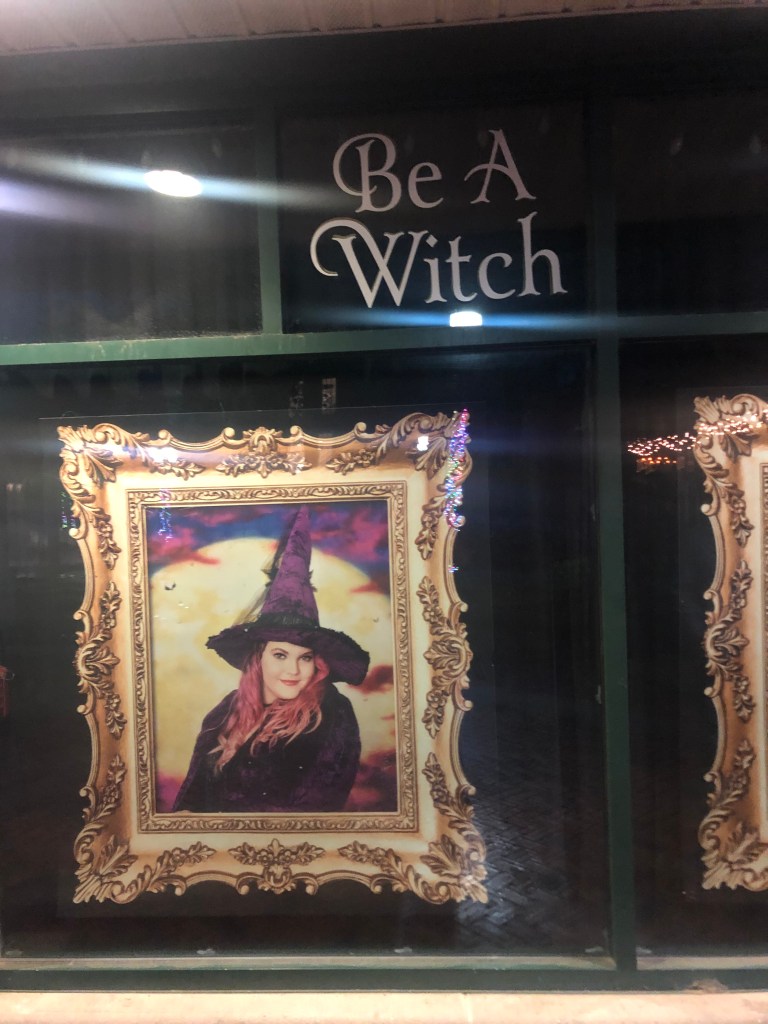
Now, the thing you should know about Salem is that, like most historic towns, they really try to capitalize on their cliches. Judging from the Chamber of Commerce literature, nothing significant has happened in Salem since the late 17th century. Most businesses proudly play up their historic link with sorcery and black magic.

Anyway, we arrived too late to explore much this evening. But tomorrow I’ll be able to report on Salem’s unholy history.

BREW OF THE DAY

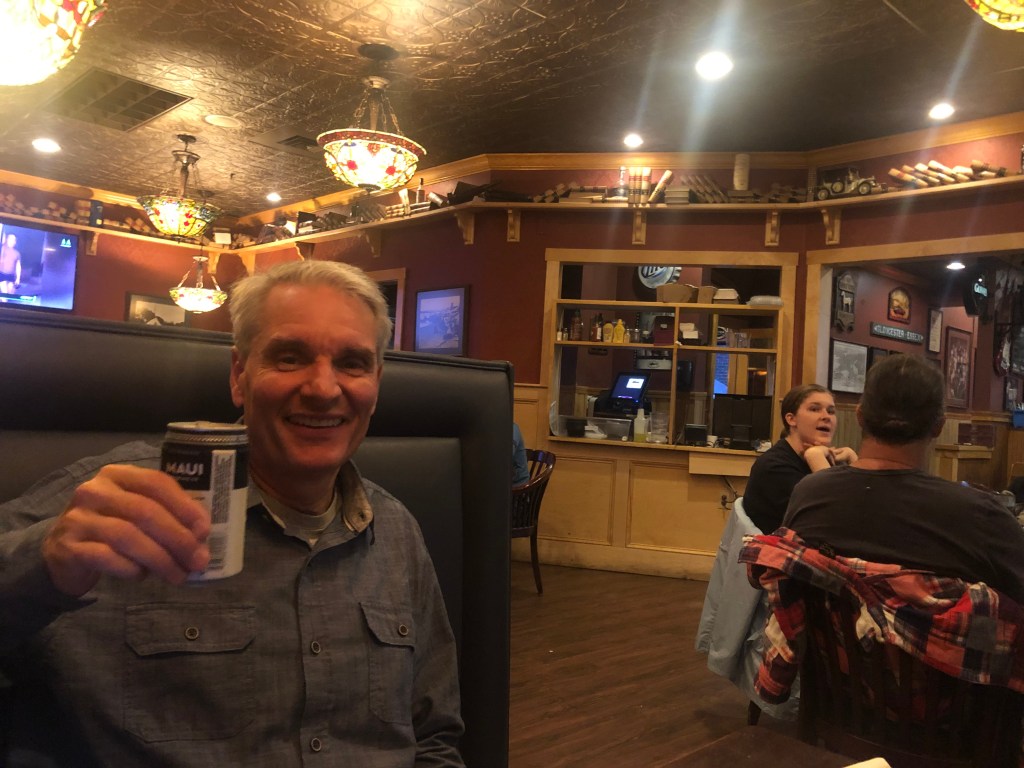
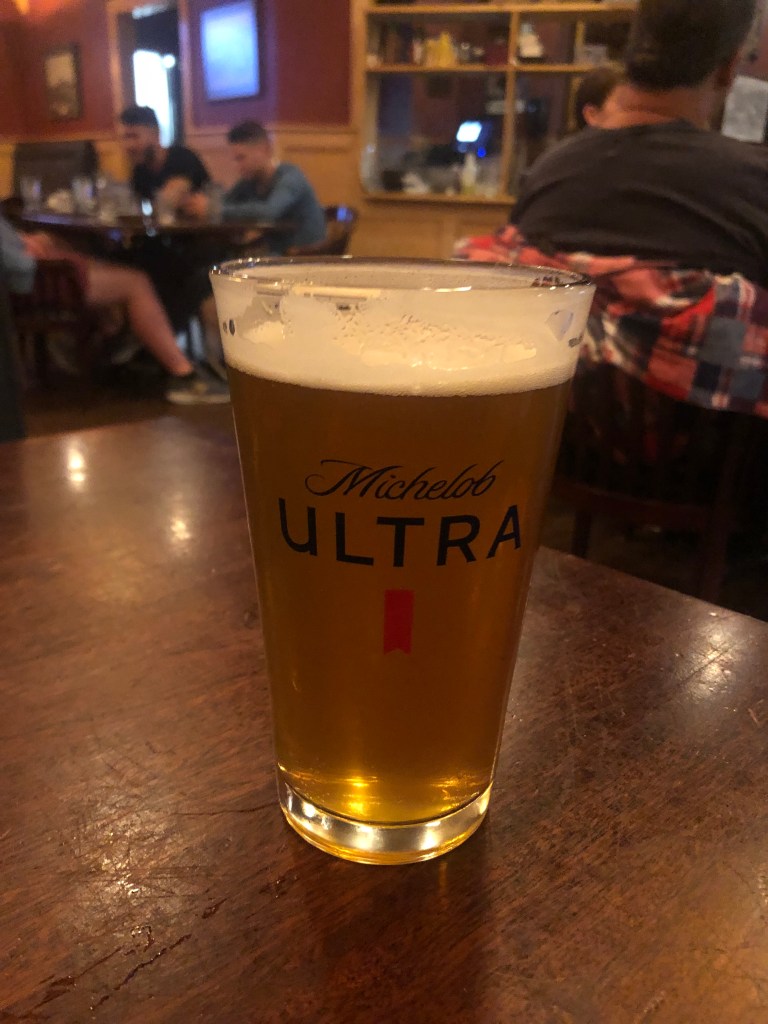
The Village Tavern has an extensive beer menu, but a significant portion is dedicated to the likes of Coors and PBR. However, I selected the intriguingly-named Lord Hobo Boom Sauce. (Disappointingly, it was served in a Michelob Ultra glass.)

My LHBS is a double IPA with an ABV of 7.8 percent. Lord Hobo Brewing was established in Woburn Massachusetts in 2015. It’s a decent brew, if you like IPAs. It’s piney and a little sweet, but it has almost no nose. (Those of you who have seen me in profile know that this does NOT apply to me.) It’s rather one-dimensional, uninteresting in color, and and has an aftertaste of straw. On the other hand, it has decent carbonation.

I give it 1 out of 5 stars.

California history · Cars · Golden Bear signs

Bear Sighting

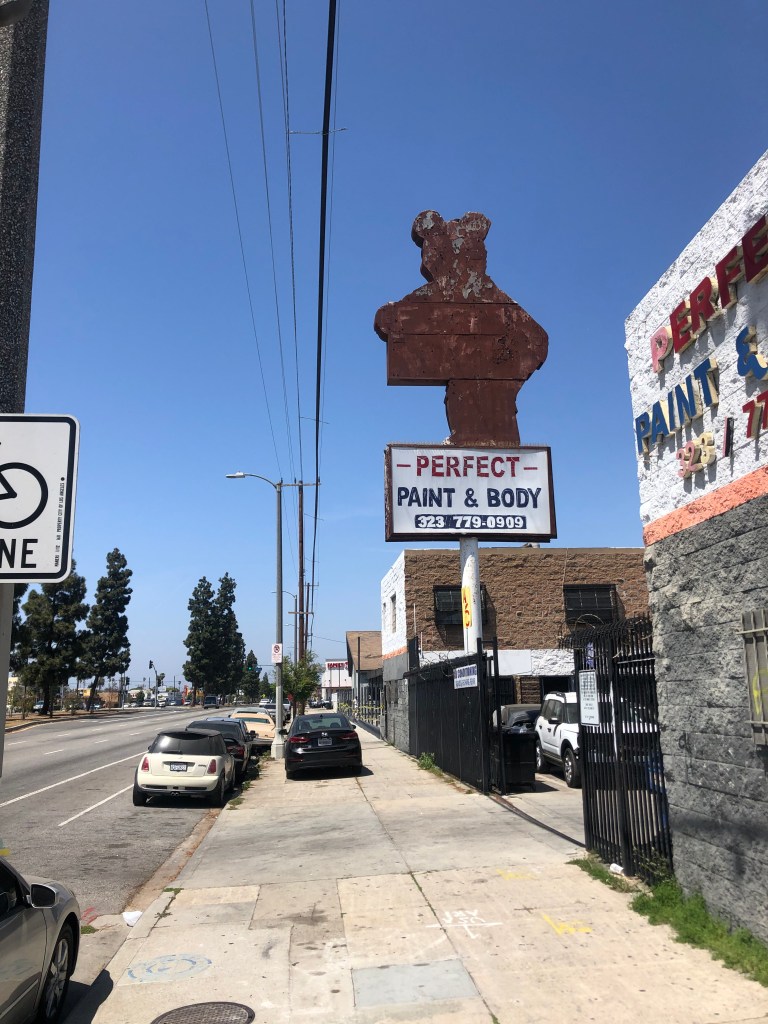
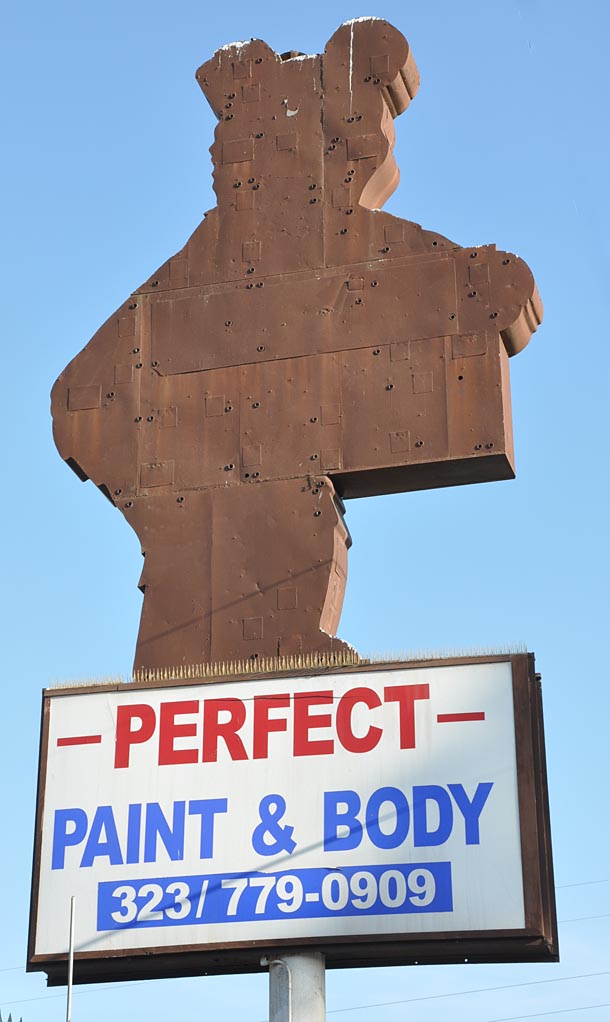
I was minding my own business, taking a leisurely drive down South Vermont in Los Angeles, when I encountered a sign for Perfect Paint & Body. Now, I’ve never felt a need for help in achieving a perfect body, but the sign nevertheless caught my attention. I think it was the brown-painted silhouette that (figuratively) jumped out at me:

“Perfect” you say?

Now, before I get to the shape of that silhouette, isn’t it a little odd that a place that calls itself “perfect paint” has a sign that looks like it was painted by a four-year-old with a bottle brush and some muddy poster paints? I mean, if there’s one thing you want to emphasize when you’re a paint business, wouldn’t it be paint?

But let’s leave that critique aside. Of greater interest is the shape of the silhouette. Am I imagining things, or is this one of the elusive “Laughing Bears” that I discussed in an earlier post? Indeed, it turns out that this was part of the Bear network back in the 1940s. According to my research, the bear was still a legit, laughing bear as recently as the late 1990s. At that time the establishment was called Modern Day Auto Center. It was sold to the four-year-old kid at Perfect Paint in 2001.

The Bear in (slightly) better times.

So, what do we learn from all this? That the Laughing Bears are slowly eroding away, and we should enjoy them while they’re still around! Please send me any photos, or even simply your tips as to locations. Without eternal vigilance, we may find ourselves in a world without laughing bears.

California history · Uncategorized

Hole Foods

I think you’ll agree that the 1950s were the heyday for Los Angeles. This is partly because Los Angeles is defined by its car culture and its movie industry, and the 1950s were arguably a golden age for both of those themes. What’s more, LA was still a somewhat functional metropolitan area in the 1950s, before gridlocked freeways, ubiquitous homeless encampments, and persistent air pollution threatened the region’s liveability.

The 1950s also brought some iconic architecture to Los Angeles: The Wayfarers Chapel (designed by Lloyd Wright, and located just a couple of miles from my house), CBS Television City, Norm’s Coffee House, the Capitol Records building — a number of uniquely LA buildings were constructed during this period. But sometimes forgotten are the whimsical and wonderful creations of Russell C. Wendell. It was he who opened a chain of 10 “Big Donut Drive-In” restaurants around the city in the 1950s.

Wendell oversaw his donut empire into the 1970s, when he finally decided to sell off the individual restaurants and instead focus on his “Pup ‘N’ Taco” chain. (Taco Bell bought up those restaurants in the 1980s.)

So, what happened to the ten “Big Donut Drive-In” restaurants? Five of them were razed (insert “raised donut” joke here), and one of them was unceremoniously converted into a bagel shop. But four of the original Big Donut Drive Ins remain, still serving donuts to a loyal clientele. My mission today was to visit those remaining restaurants, and sample their wares. (The things I do for my readership…)

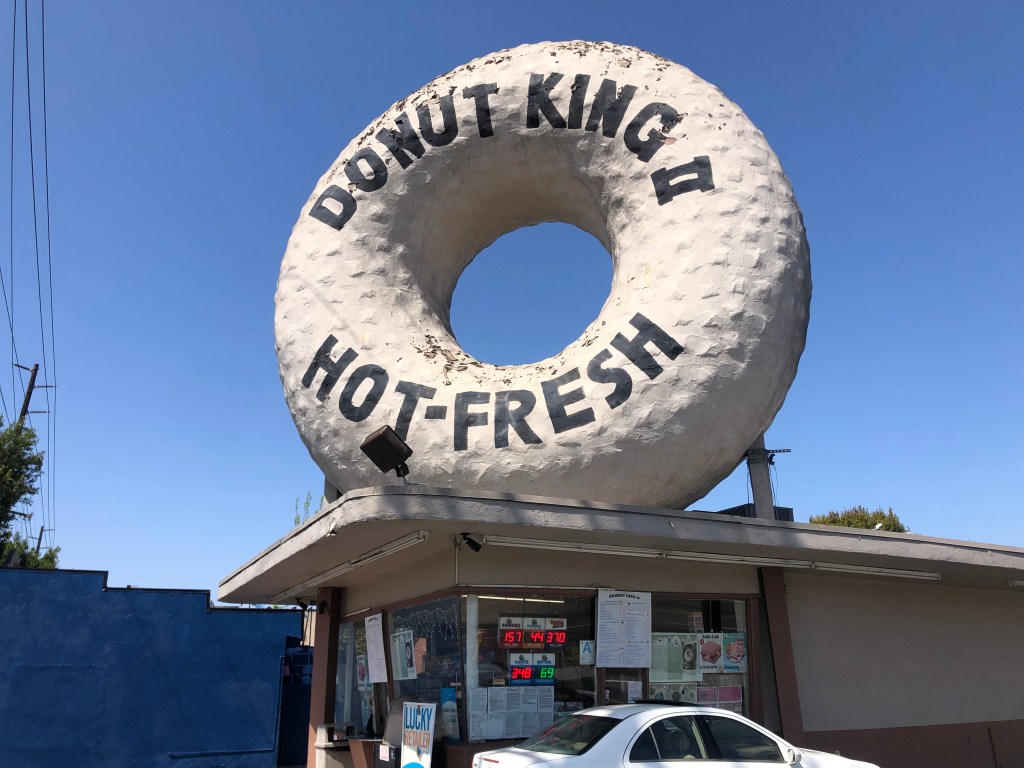
First up was “Donut King II,” in Gardena. This was the third of the original Big Donut Drive-Ins. It’s changed names and owners a few times, finally ending up with the rather humorless and unfriendly woman I met today.

Here’s a tip: “Donut” provoke the owner!

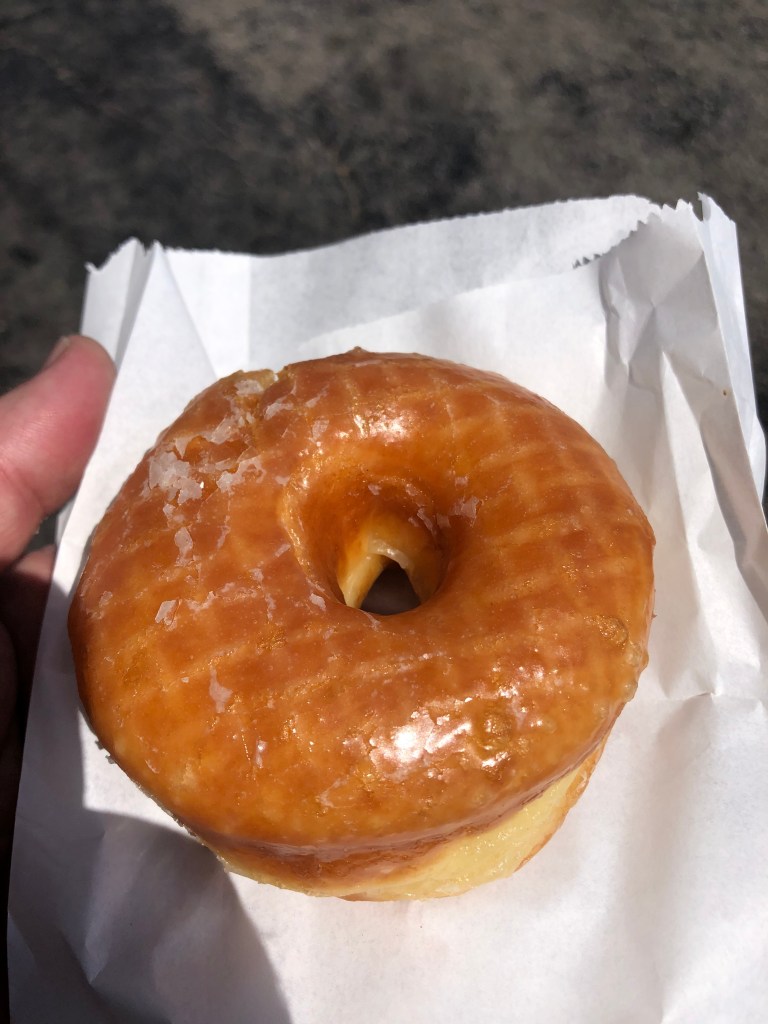
Now, I figured since I was visiting each of these donut shops, it would make sense to sample a donut from each one. But what kind of donut to purchase? I decided to let the owner (or manager) of each place make the choice. So I approached the scowling woman behind the window, who looked like she was tired of being interrupted by pesky customers. I asked her a simple question: Which is the best kind of donut that you sell? “We sell lots of different kinds of donuts. They’re all on the menu in front of you. Pick one.” I wasn’t going to be daunted that easily. “But which one is your favorite?,” I persisted, turning on the Boilard charm. “The glazed,” she immediately responded, most likely because she had a surfeit of them on the tray beside her. So glazed it was.

250 calories of fried goodness

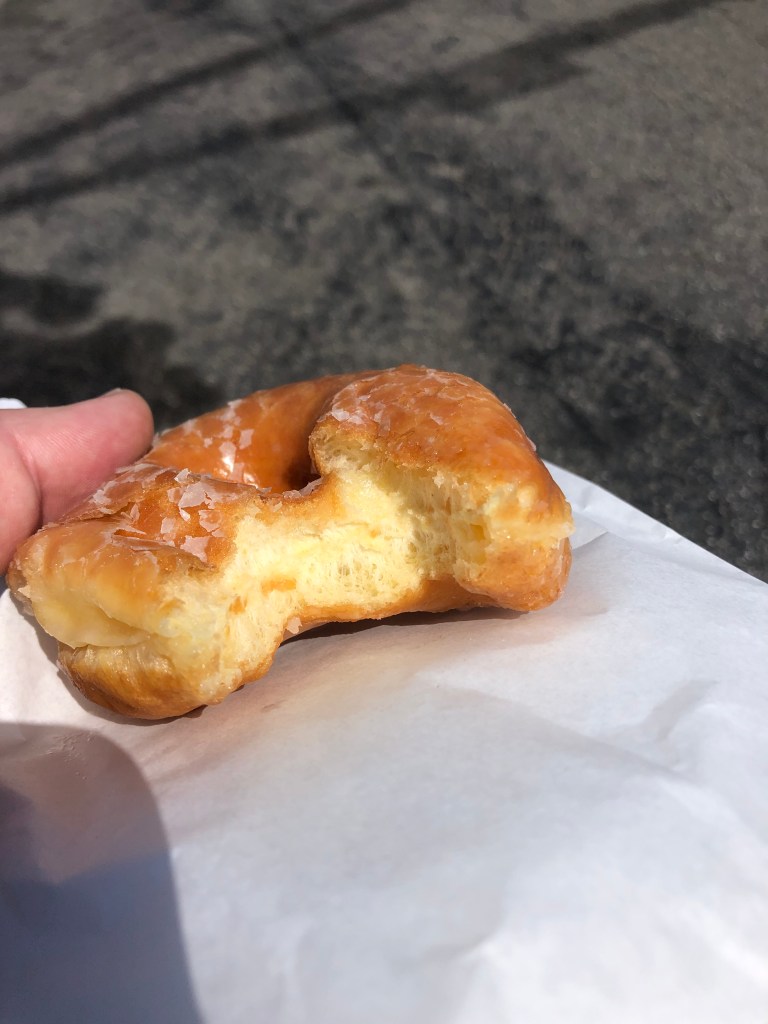
So let’s get down to brass tacks. This was a good donut. Not great, but good. The grid pattern (presumably from the cooling rack) gave the illusion of texture, and it was fried to a nice, golden brown. The glaze might have been a little thick, though, and the inside was slightly underdone. Overall, I give it a 7 out of 10.

A bit too gooey inside.

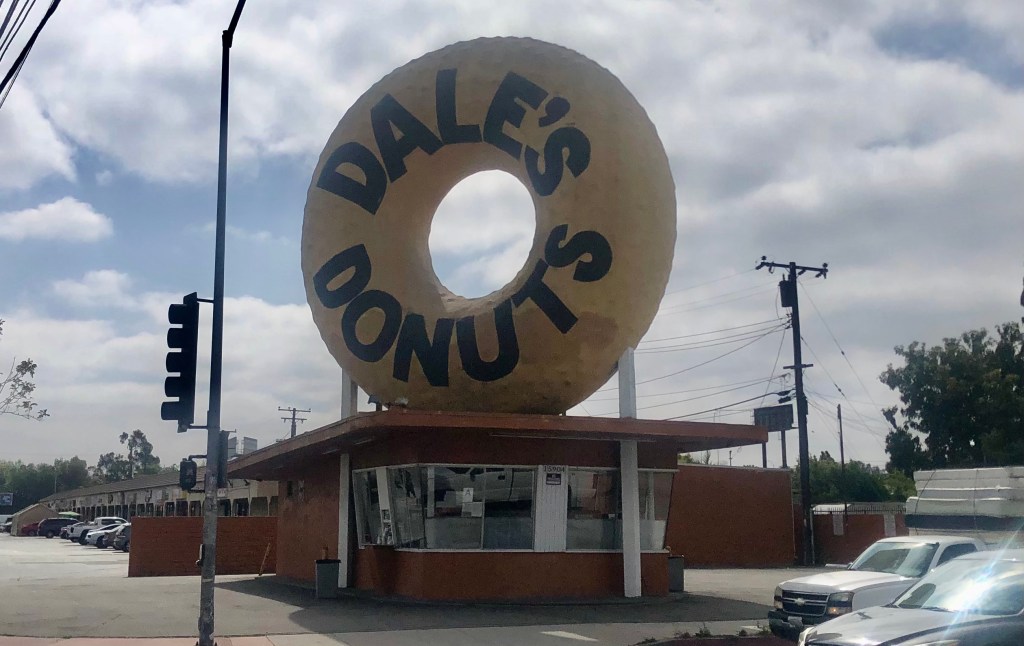
Having been fortified by fried, leavened dough, I moved on to Dale’s Donuts in Compton. There was that unmistakable, familiar, 32-foot-donut again, signalling that this was one of the original Big Donut Drive-Ins.

Donut mind if I do…

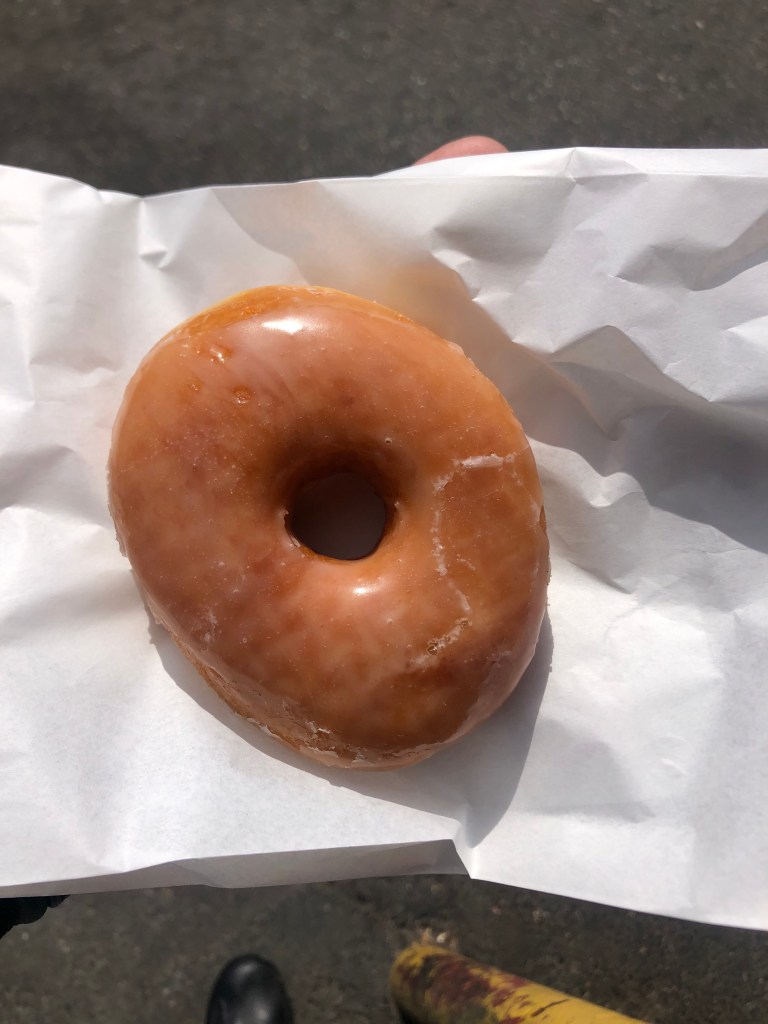
Here, the owner was a little more chatty, sharing that he bought the place 29 years ago. I asked if he bought it from Mr. Wendell himself. “No, just from my neighbors.” I asked him my usual question: Which is your best donut? He frowned, as though he’d never thought to reflect on the quality of his wares over the past 29 years. Finally, with a shrug, he said “Well, the glazed is pretty good.” So I acquired my second glazed donut of the morning.

Glazed and confused

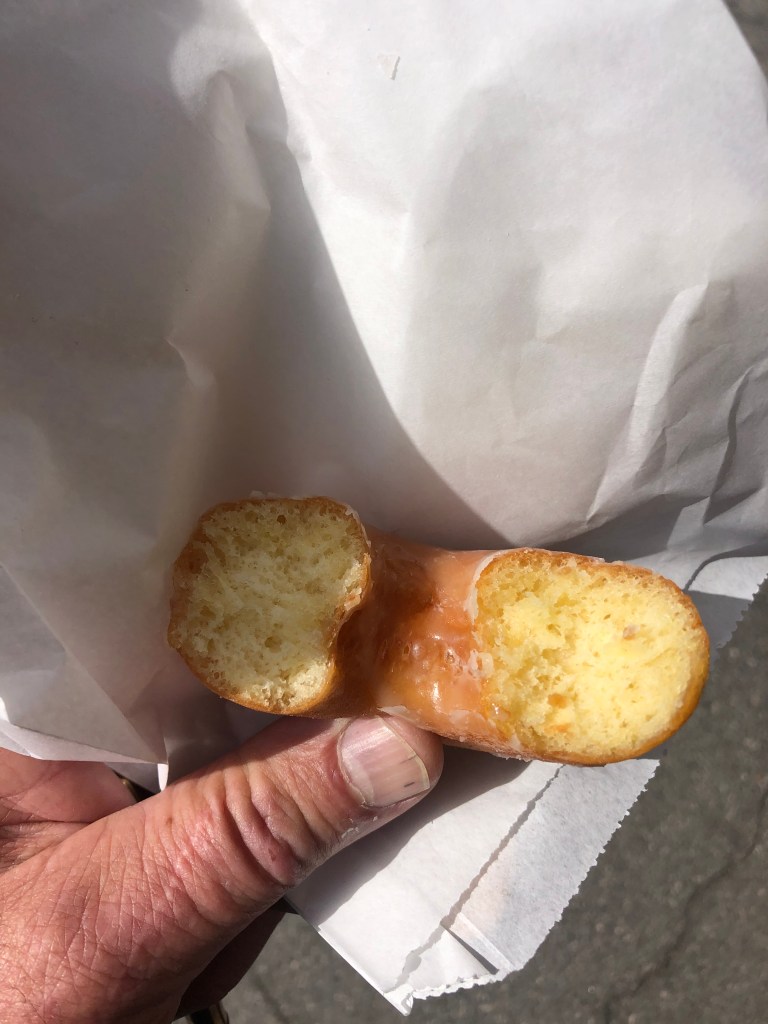
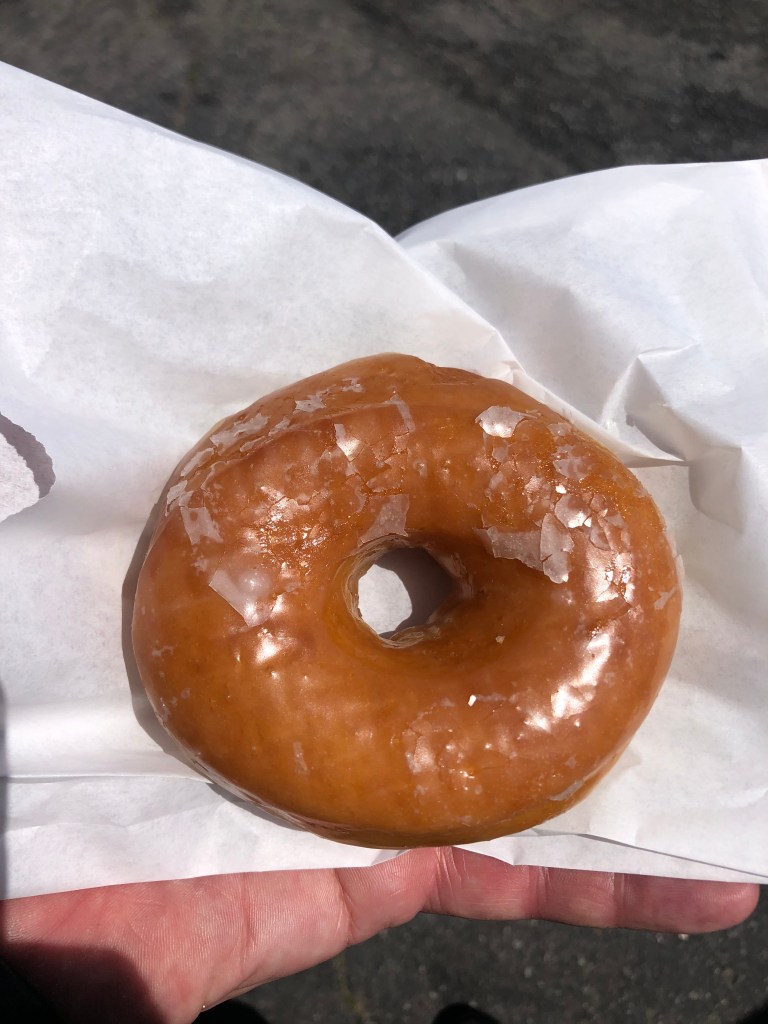
Now this glazed donut was clearly superior to the one from Donut King II. This donut had a much lighter glaze that was nicely bonded to the donut ring. The glaze was so delicate that I didn’t even get sticky fingers. The body of the donut was light, almost fluffy. I’d say it was fried perfectly. I give this a 9 out of 10.

Melts in your mouth, not in your hand

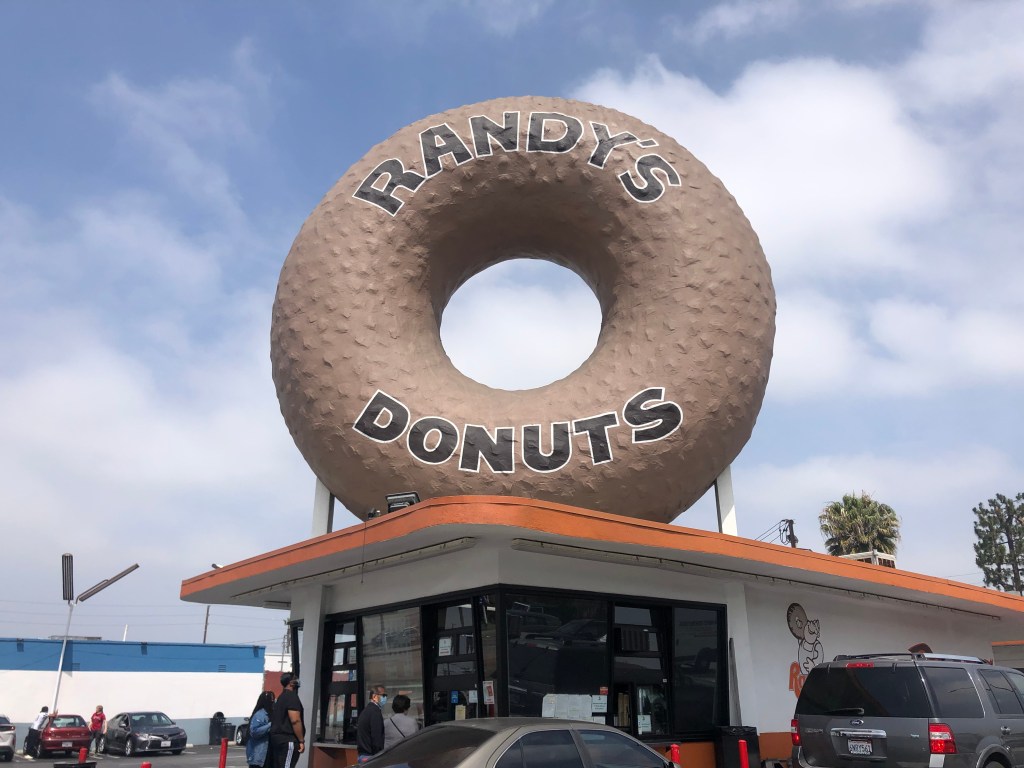
I was beginning to feel a sugar buzz, and raced up to Randy’s Donuts in Inglewood for my next fix.

Homer Simpson, eat your heart out

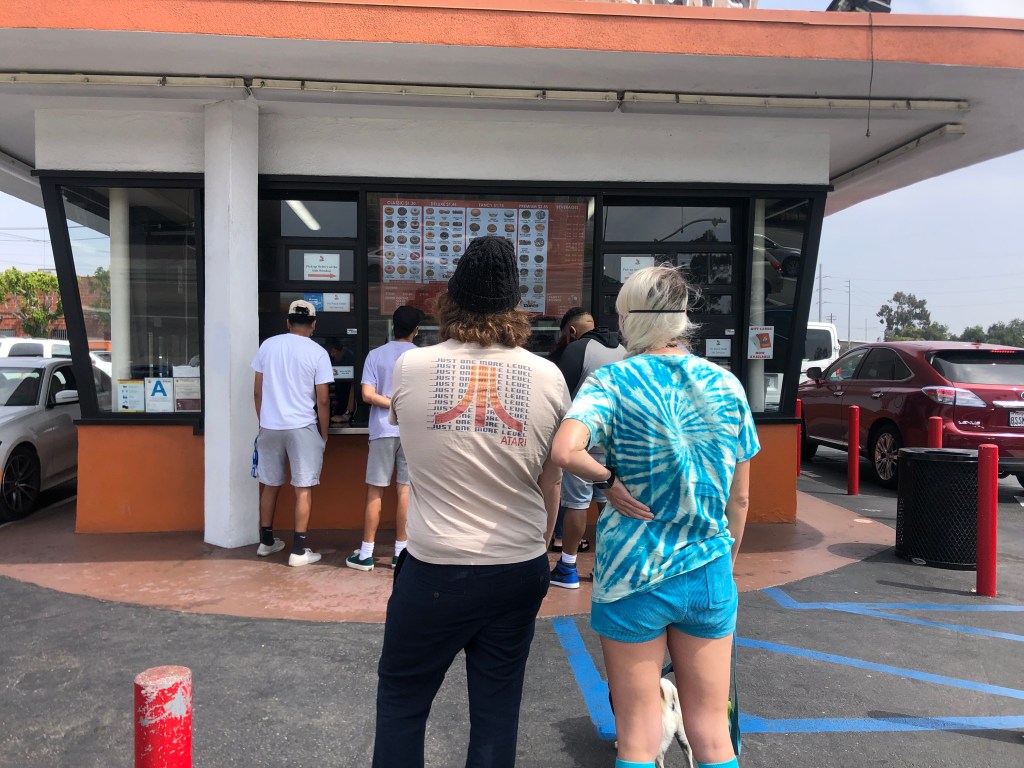
Constructed in 1953, this was the second of Wendell’s original buildings. And it’s the one that seems to get all the attention, due to its prime real estate. It’s located near LAX, and you probably saw it while gassing up your rental car. The place has been called Randy’s Donuts since Wendell sold it in 1976. The iconic sign has appeared in numerous movies, including Mars Attacks!, Earth Girls Are Easy, Coming To America, Crocodile Dundee in LA, and Iron Man 2. This place is clearly the Grand Dame of the Big Donut Drive-Ins. It is the best maintained, has the largest parking lot, and had a line of people standing six feet apart, waiting for their turn to get a ring of fried dough.

Aquamarine corduroy shorts and matching knee-high socks and tye-died shirt: Welcome to LA.

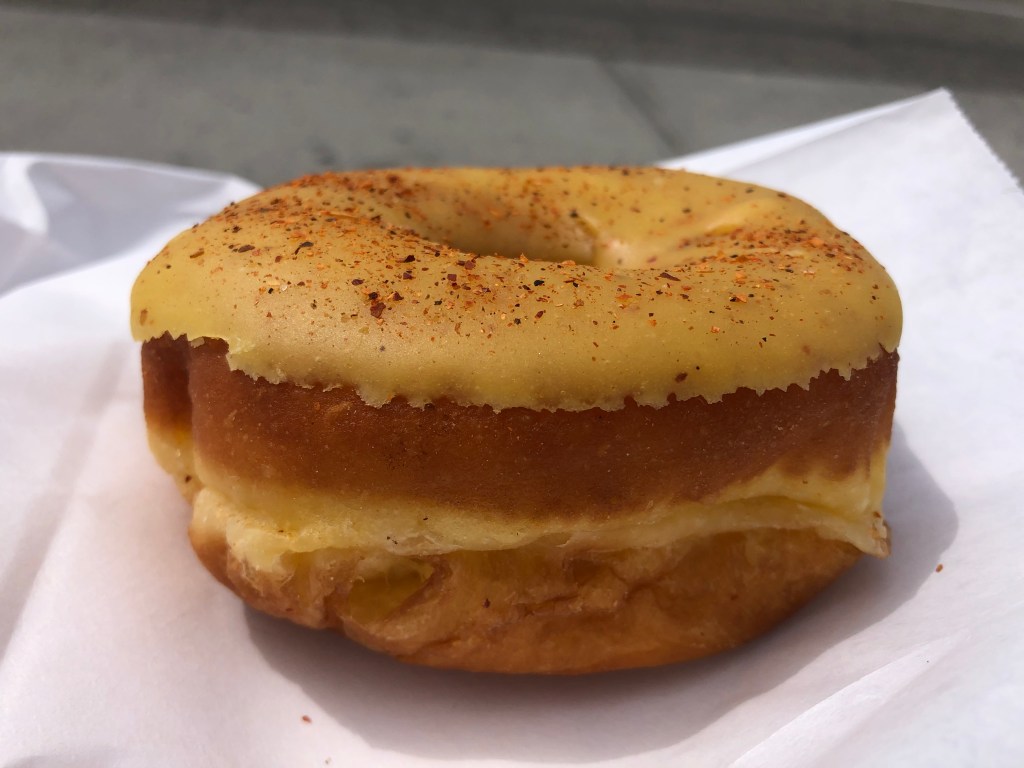
When I got to the front of the line, I asked the kid behind the counter which was their best donut. He smiled broadly: “That’s got to be the mango. We just invented it two days ago, and it’s our best seller!” Now this is the enthusiasm I was looking for. Hook me up, said I. And behold — this was no ordinary donut. In fact, it was more like a pastry (and with a $2.75 price to match).

Good enough to make a mango off his diet.

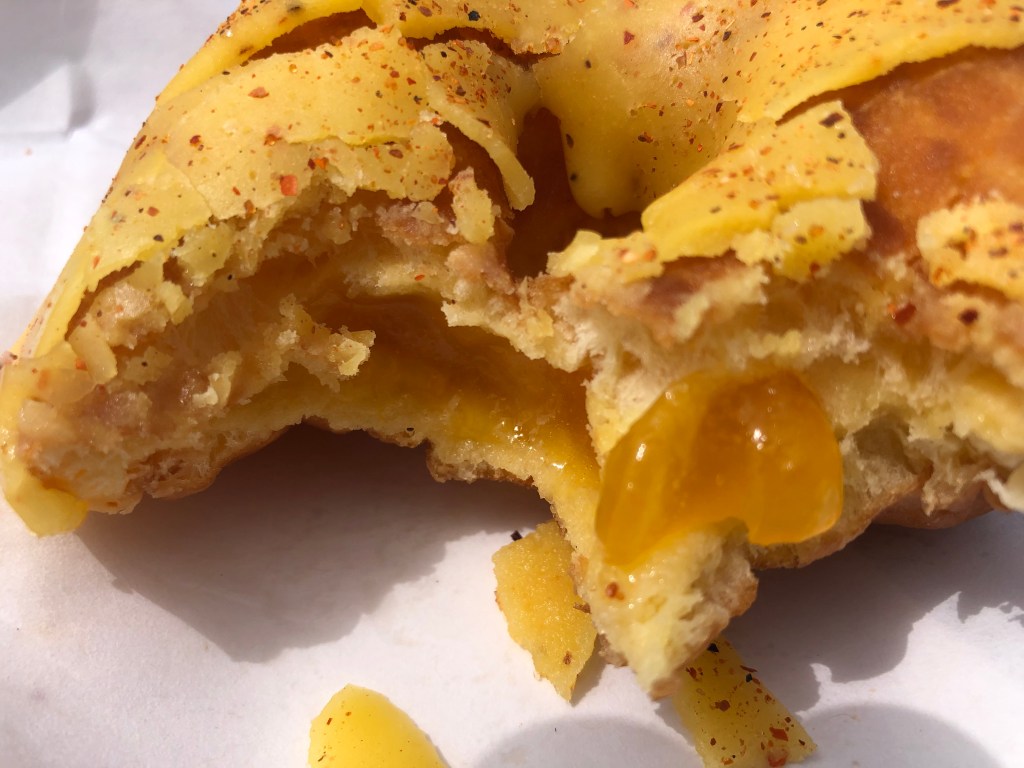
The first thing you notice biting into this “donut” is the heavy mango glaze. It cracked into pieces as I took the first bite, showering my lap with mango-icing shards. The next thing you notice is an overly-sweet, gooey mango filling, like the stuff they used to put in Hostess Pies when I was a lad. The third thing you notice is that the overall effect is rich and flavorful and robust; you’re overwhelmed with flavor and mouthfeel.

No mangoes were harmed in the making of this donut

Then, a moment later, you feel sick. I suppose I shouldn’t have eaten the whole thing, especially after already eating two glazed donuts just a short time earlier. But this thing is just too much. It’s too filling, and too gooey, and too sweet. And it’s two points (out of 10).

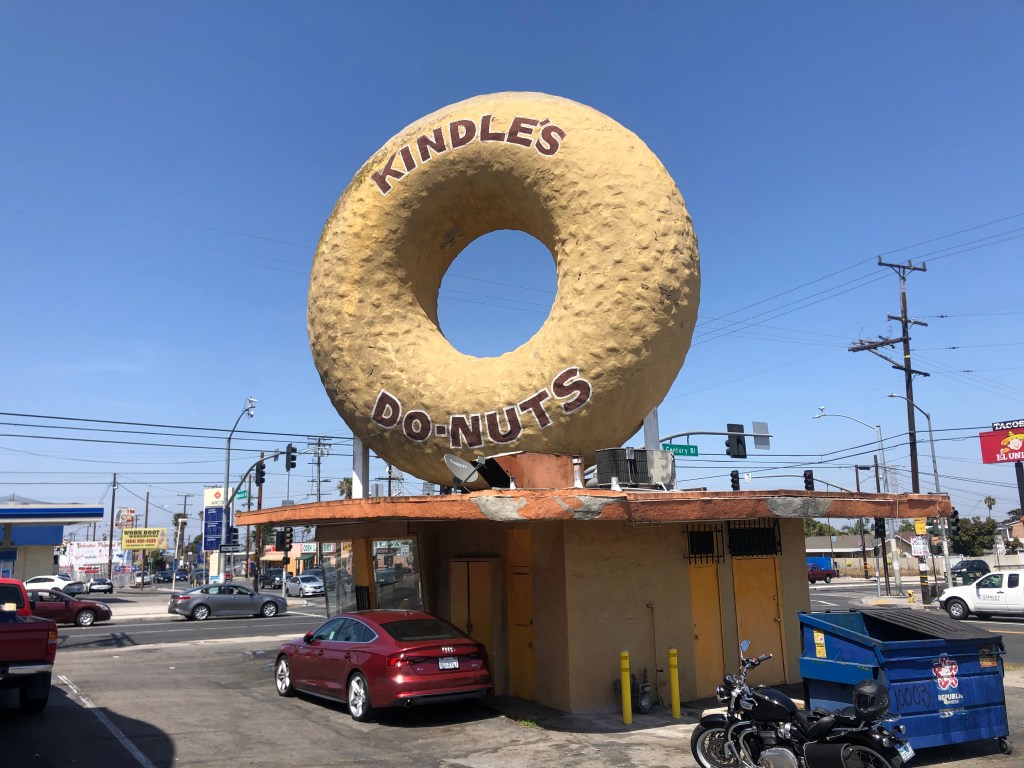
But I still had one more of the extant Big Donut Drive-Ins to visit: Kindle’s Do-nuts (note the hyphen) is the first of the 10 Big Donut Drive-Ins constructed by Wendell. It dates back to 1950, and, like most 71-year-olds, is showing some battle scars.

Before Amazon appropriated the Kindle name

At Kindle’s I was again served by the establishment’s owner, who told me he’s owned the place for 30 years. “And which donut is the best?”, I asked. “Glazed. Hands down.” Now, I’m starting to think that glazed must be the wagyu beef of donuts, like you’re a fool to pick anything else. “OK, give me a glazed, Mac,” I said, trying to sound like an in-the-know donut aficionado.

A Kindle’s on a paperwhite

With two other glazed donuts (literally) under my belt, I felt qualified to critique this specimen. It wasn’t stellar. The glaze was applied a little unevenly, and it was a little too sweet. The ring itself seemed a bit stale, though the flavor was solid. I’ll give it a 5. Actually, let’s make it six, because my donut fatigue might be unnaturally lowering the scores.

So, the winner is Dale’s Donuts, with a score of 9 out of ten for their glazed donut. But more importantly, I have to commend the owners of all four establishments for retaining those iconic, 32-foot donuts. They’re preserving a little slice of LA history, and even architecturally tying together some disparate corners of the region. I recommend you check one or all of them out next time you’re in the area!

BONUS MATERIAL

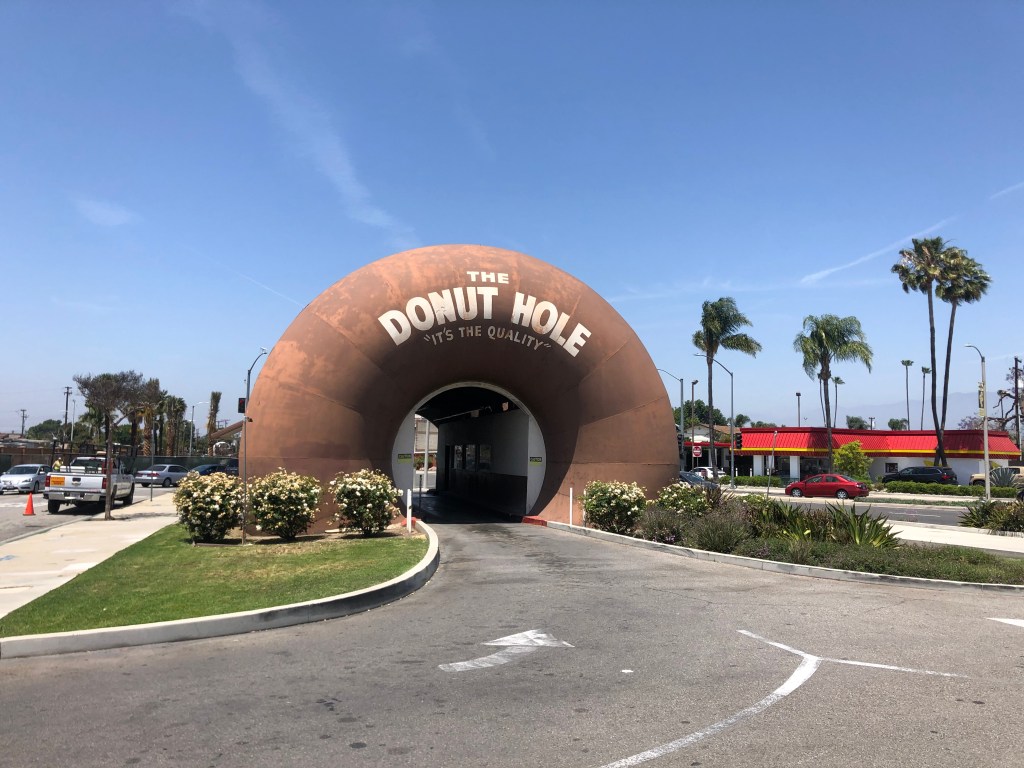
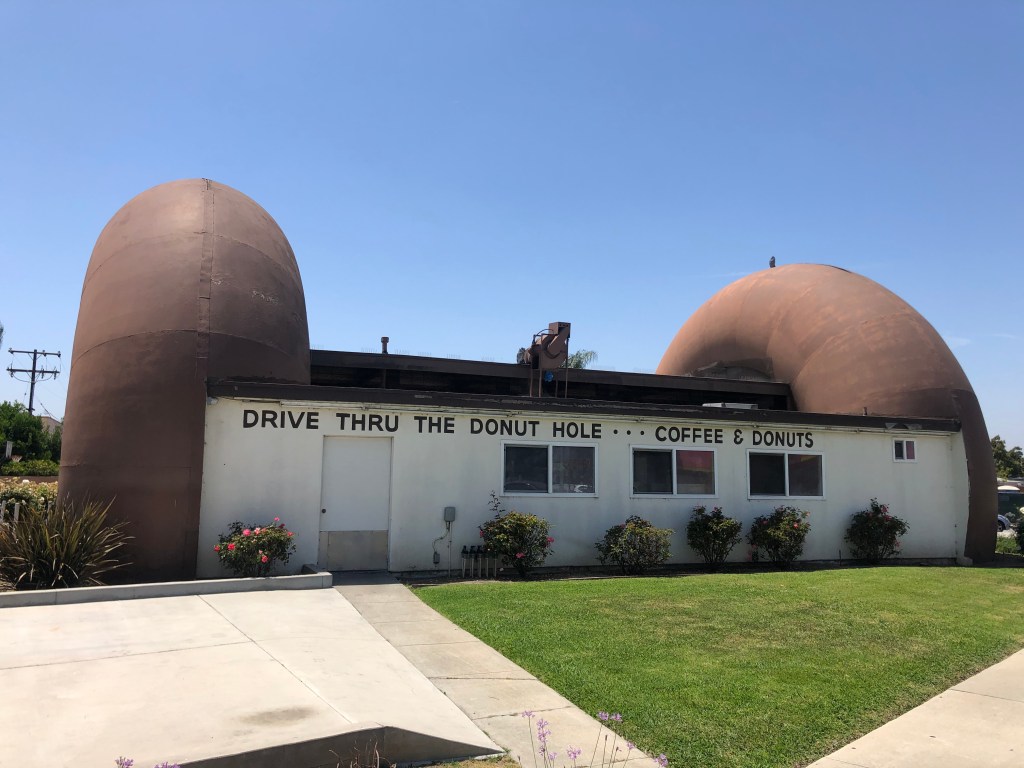
After I’d visited the four remaining Big Donut Drive Ins, there were still a few fat cells in my body that had not yet exploded from an infusion of donut calories. So to remedy this, I headed out to La Puente to visit a place called The Donut Hole. The Donut Hole is not one of Wendell’s original Big Donut Drive Ins, but it does have a giant donut incorporated into the architecture. In fact, it has two giant donuts. Behold:

Abandon hope all ye who enter here
Side view–donuts at the front and rear. If yo’u’ll pardon the expression.

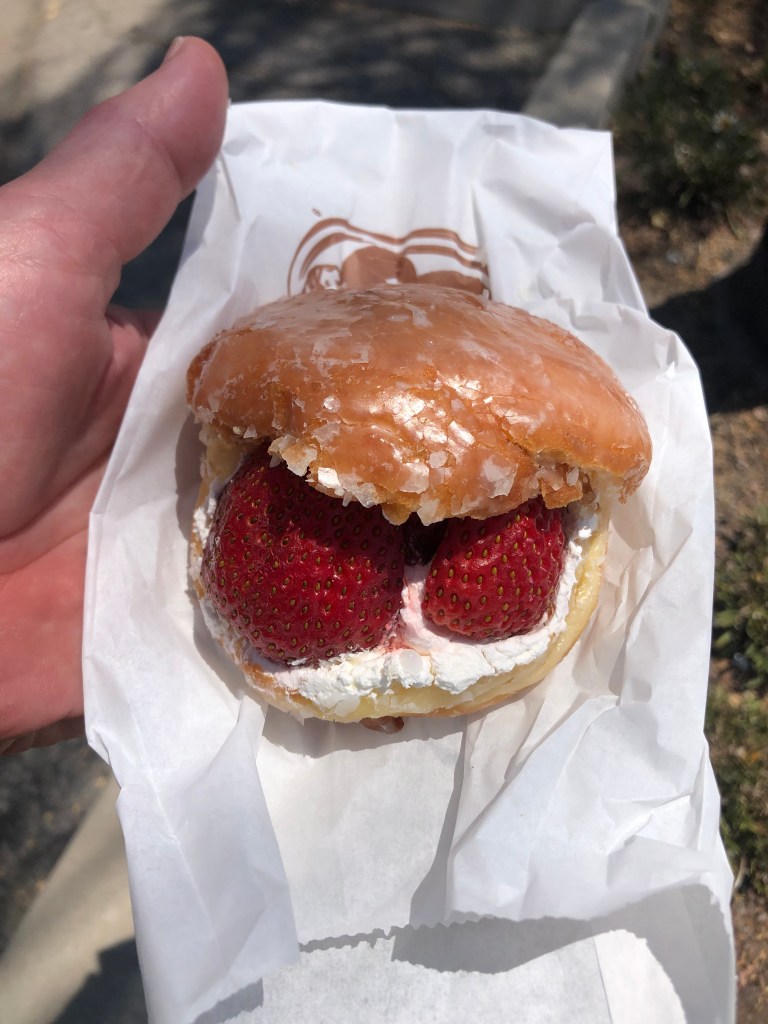
Unlike the Big Donut Drive Ins, this donut place doesn’t have a walk-up window. So I rode my motorcycle through one of the giant donuts. (Has that sentence ever been written before?) And I asked the young lady: Which is the best donut? “They’re all the best!” she said, cheerily. OK, which is your favorite?, I asked. “That would be the fresh strawberry donut. I love it!” Sold, said I.

Trigger warning.

Yikes. Now, on the plus said, it really does have whole, fresh strawberries. They’re nestled in fresh whipped cream. The overall effect is sort of like strawberry shortcake, but instead of shortcake, there’s a cloyingly sweet donut split like a hamburger bun. The first bite was wonderful. The sweetness of the donut and the whipped cream is balanced (a bit) with the (relative) tang of the strawberries. And the different textures worked together as well. The whole ensemble tasted fresh and flavorful.

And I learned my lesson after the mango disaster. I forced myself not to eat the whole thing. Just two bites — that’s all I had.

But next time, I’m going to The Donut Hole first, on an empty stomach.