bridges · California history · Puns · Road trips · trains · Yard art

All That Glitters

Get it?

When I was a kid, my family would go camping each summer in California’s gold country. We’d hike to open mineshafts, visit countless museums featuring Gold Rush artifacts, and clamber around decaying miner’s cabins and rusty hydraulic mining equipment that had been abandoned in the foothills. My dad would collect antique square nails (a practice that we later learned was unlawful) and occasionally we’d try our hands panning for gold. My mom would stay back at the campsite, cooking meals, sweeping the tent, and wishing we soon would return to suburbia.
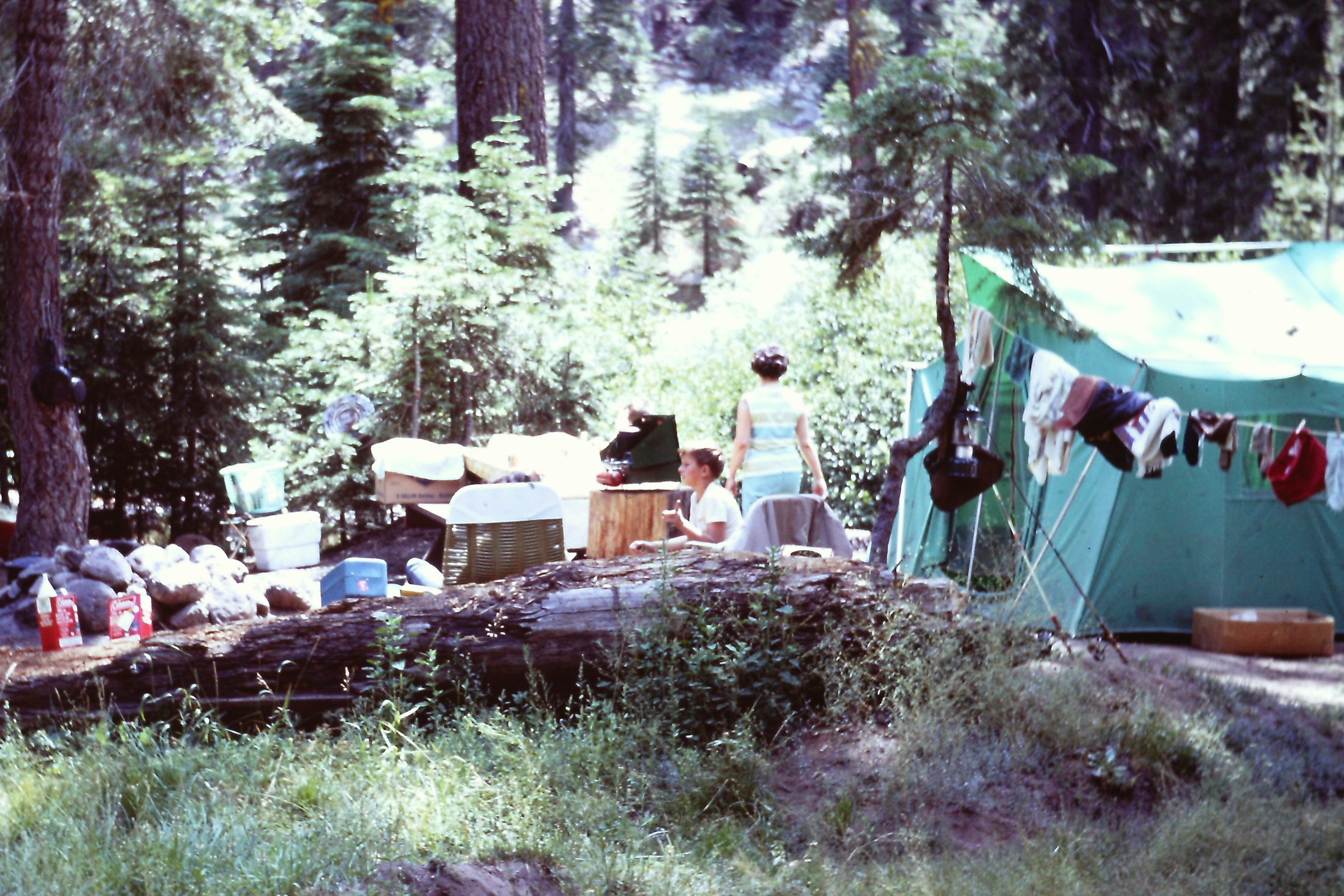
Not exactly glamping

Even as a kid I was impressed by how these relics of the Gold Rush could be seen and touched out in the wild, even after more than a century. To a kid like me in the 1960s, the Gold Rush seemed like ancient history. And now it’s been another half-century since I was a kid! It’s hard for me to explain, but today, as I examined old stone buildings from the 1850s and hillside scars created in the 1860s, I felt a connection with a longer arc of history. The State of California was in its infancy then, and they didn’t call it the Wild West for nothing. We’ve come a long way since we routinely dumped cyanide and mercury into waterways, since we carved into hillsides with powerful water canons, since thousands of miners daily breathed toxic fumes and hundreds of them died in fires and cave-ins. That’s not to say we have no problems today; far from it. But clearly there’s been progress.
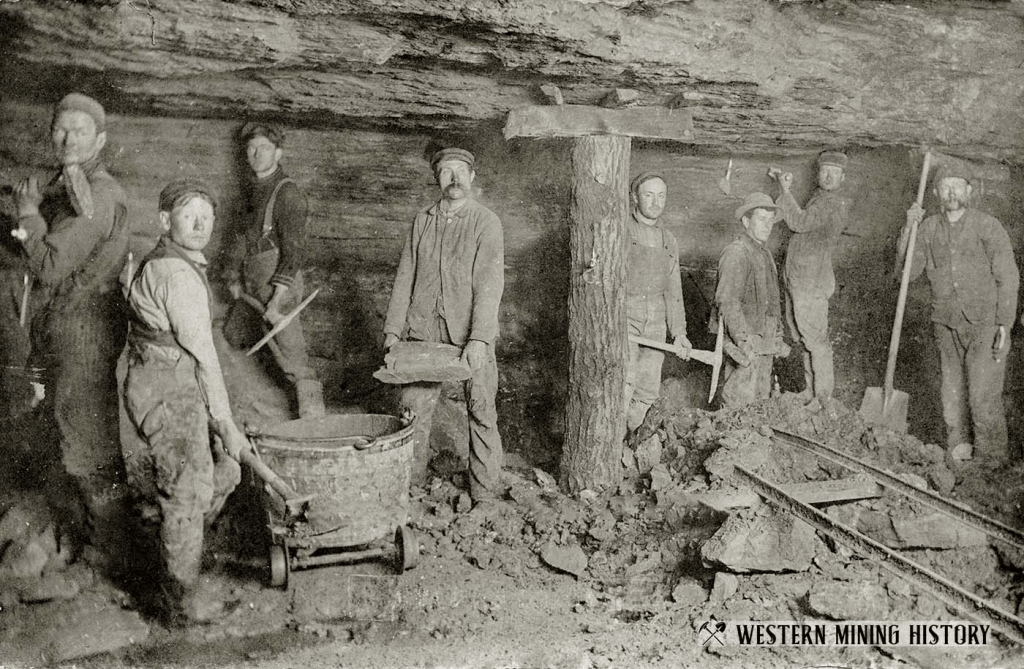
California’s Gold Country is a reminder both of how our civilization has changed, and how as humans we’re largely unchanged. There’s a persistent 49er spirit in those small towns that still dot the Mother Lode. You can sense the tenacity, patience, perseverance in your average Amadorian or Calaverasian. Take the owner of a coffee shop named Moke-A-Java in Mokelumne Hill. She told me she opened the place in 2019…just before Covid shut everything down. Somehow she managed to keep the business afloat with mail-order candy sales and catering. Today business is finally picking up, and she’s grateful. She’s a latter-day version of a patient prospector.

There’s also something very soul-soothing about the rolling, oak-covered hills in this part of the state. There’s plenty of space and natural beauty, and no one seems to be in a hurry. Take for example the owner of the B&B where I stayed in San Andreas. He sat in conversation with me through the three-course breakfast he’d cooked for me, then spent half an hour showing me his workshop and his Harley. It was as though nothing mattered more to him than visiting with his guests. You can be sure I’ll be back.

About 10 am I got back on Highway 49 and fired up the driving app I’d purchased specifically for this trip. The idea was to have a knowledgeable guide direct me through a handful of small towns from Angels Camp to Jamestown. While the concept of the guide was a good one, I found it to be a bit clunky and fussy. And not only was the app awkward to navigate (a process which is admittedly complicated on a motorcycle), but the interstitial diary readings by overly-enthusiastic community-theater actors were not my cup of tea. So the app was quickly bagged.

I did learn from the app that Calaveras County gets its name from the Spanish word for “skulls,” a quantity of which were discovered by early explorers along local riverbanks. And at almost the moment I learned that fact my eyes beheld this:
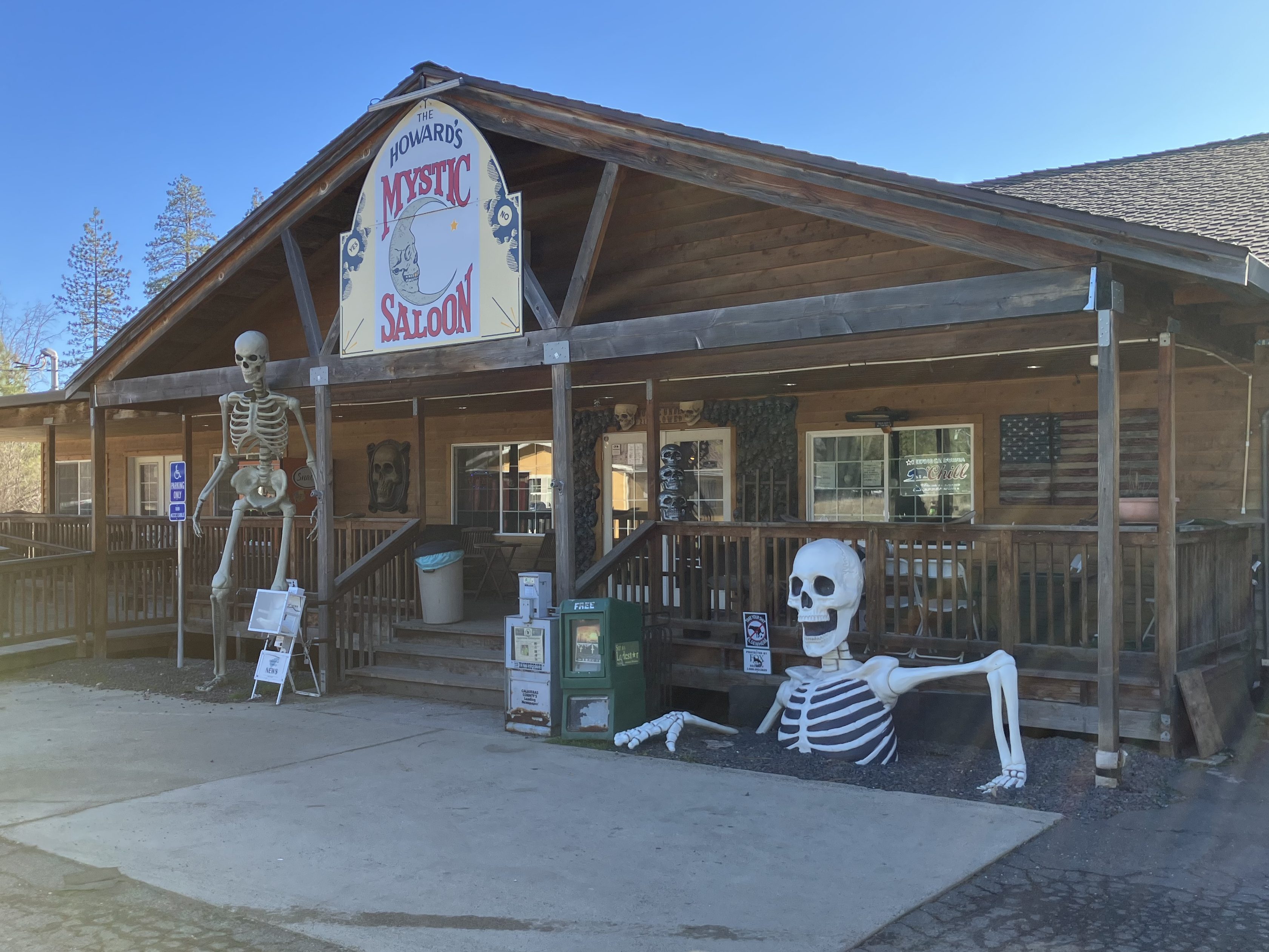
Walking into Howard’s Mystic Saloon is  like entering an ossuary. You’re greeted by a giant skeleton standing just inside the door, and as your eyes adjust to the darkness you notice that all the chandeliers are decorated with skulls and bones. More skeletons hang from the ceiling, and the entire wall behind the wall is covered with black skulls.
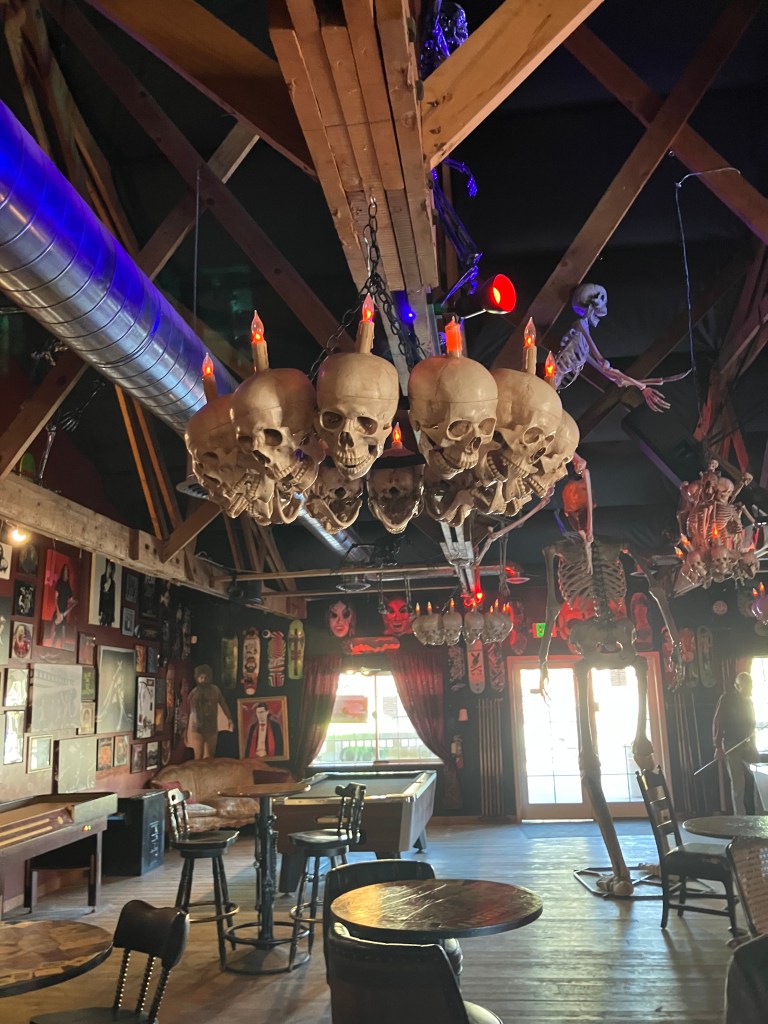
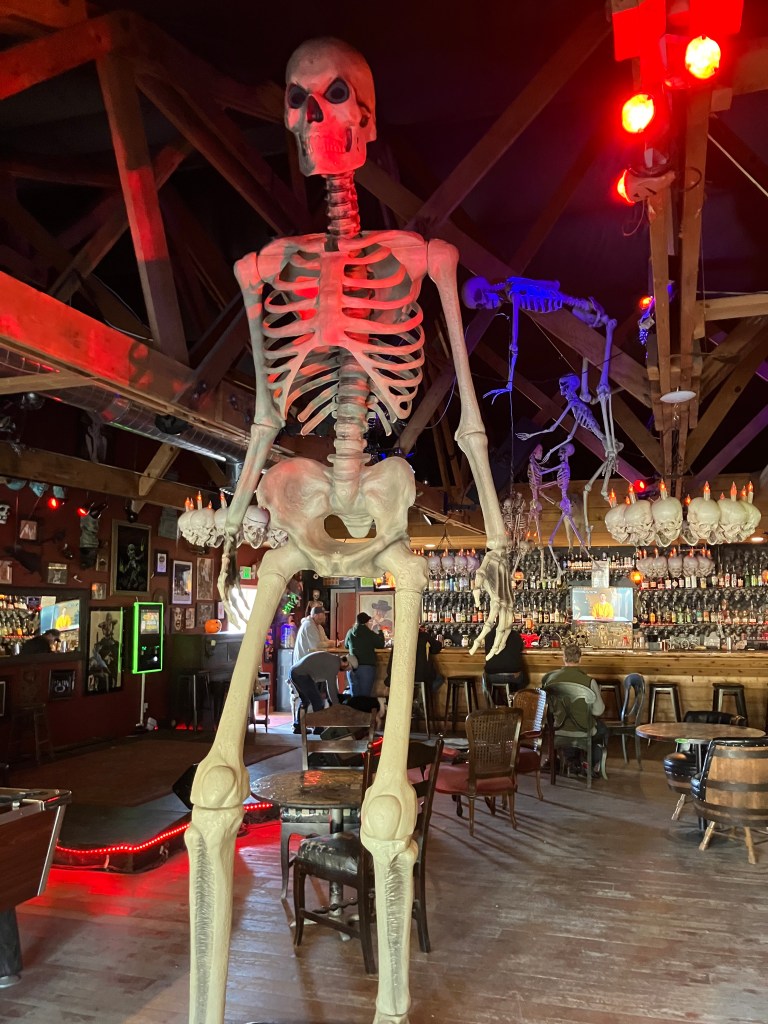
I asked the bartender, Ivory, for the story, and she told me the skulls are not meant as a reference to Calaveras County. In fact, the owners (Curtis and Tana Howard) own another skeleton-themed bar in Oakland. At this point a jovial man with a beard and a cowboy hat sitting at the end of the bar said “This place is tame compared to their Oakland place!”
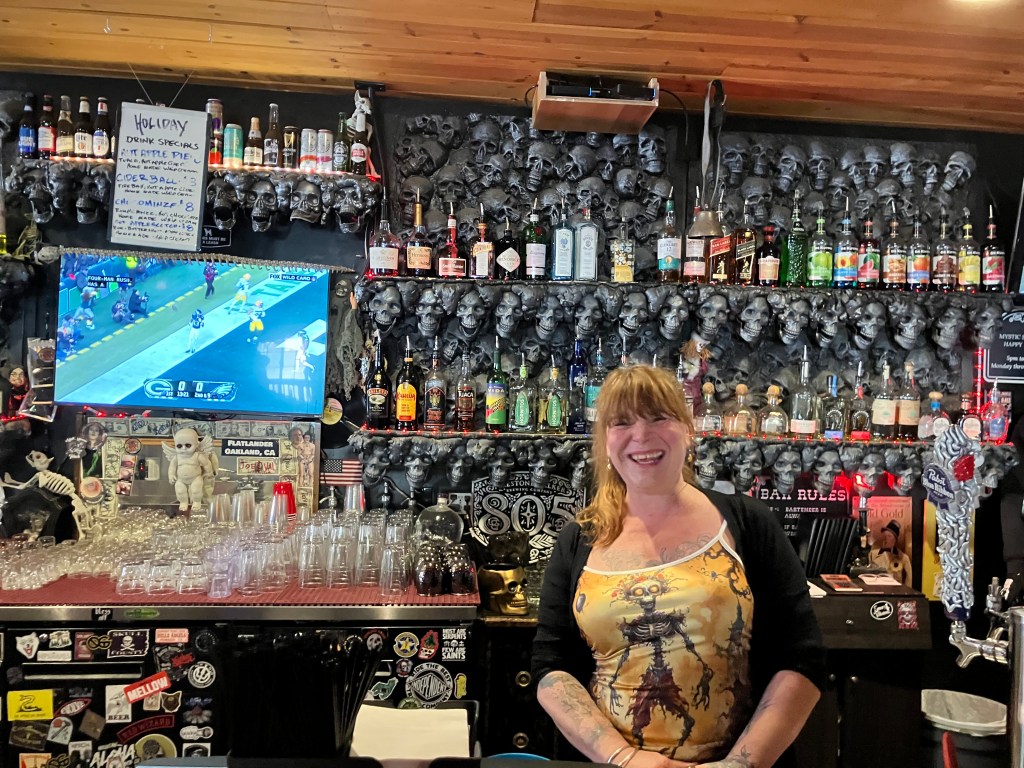
Ebony and Ivory

True to my theory about folks in the Gold Country, and despite being surrounded by skeletons, I found this to be one of the friendliest places I’ve been to in years. I chatted with the locals at the bar for the better part of an hour while nursing my hot apple cider. I had eschewed a higher-octane drink because I’d already had my beer of the day earlier in Murphys. 

We’ll get to the BOTD shortly, but Murphys (pop: 2,000) was the one stop that didn’t feel authentic to me. At some point they went all-in as a wine tasting destination. According to Wikipedia, Main Street has at least two dozen wine tasting establishments. In between are boutique-y places selling scented candles, panini presses, and other appurtenances that a miner would never recognize.
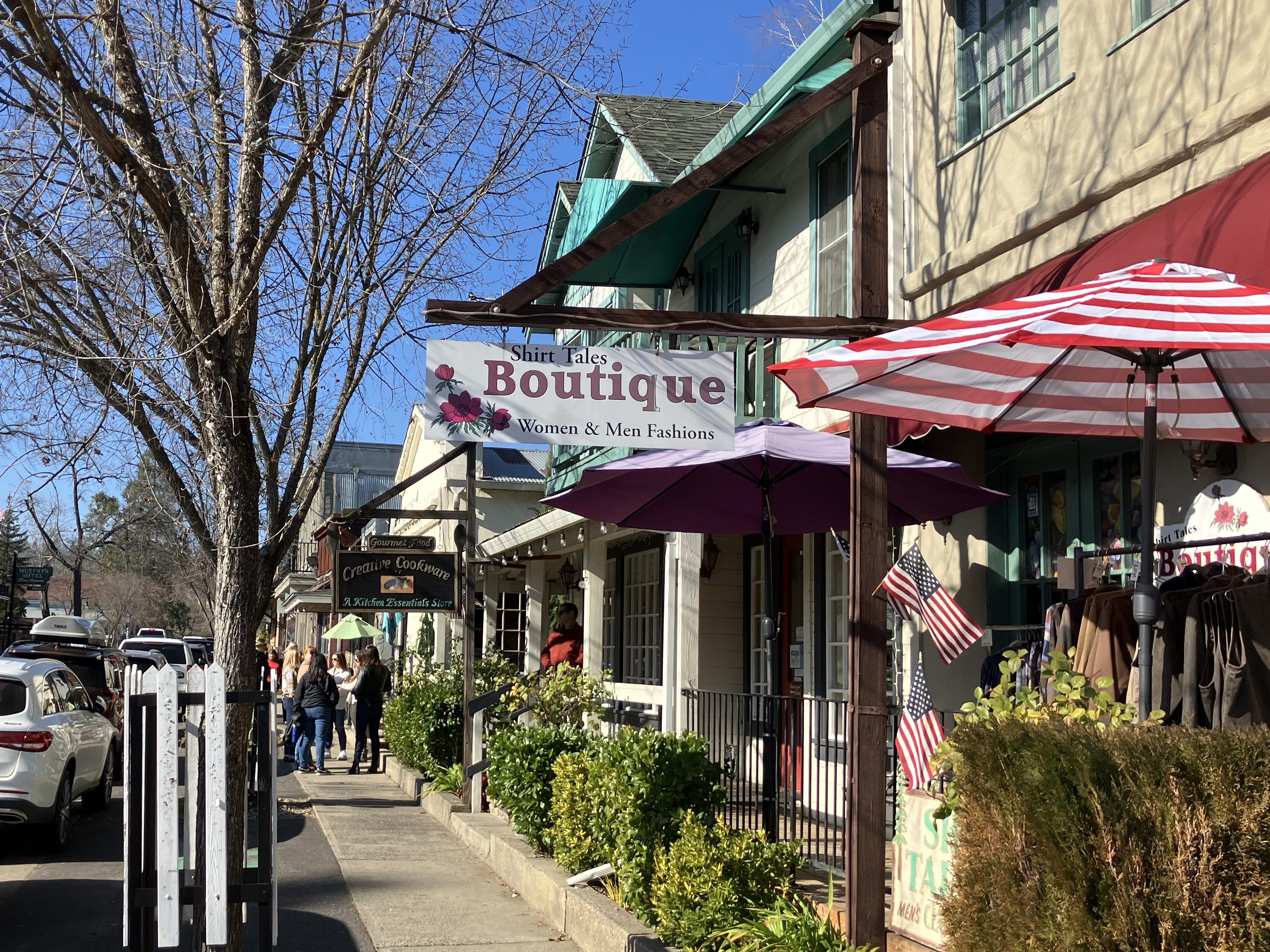
An example of Murphy’s Law

Murphys is evidently quite prosperous, and I don’t knock their business model. But this is not the Gold Country experience I was looking for.

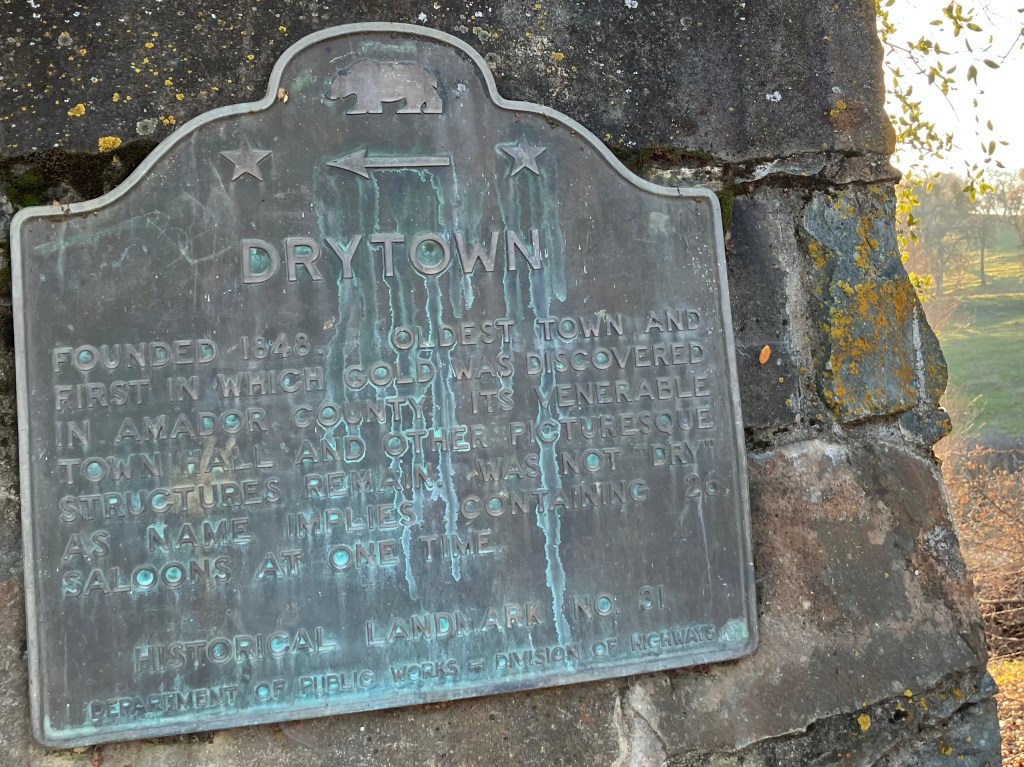
More authentic are places like Drytown (pop: 186).
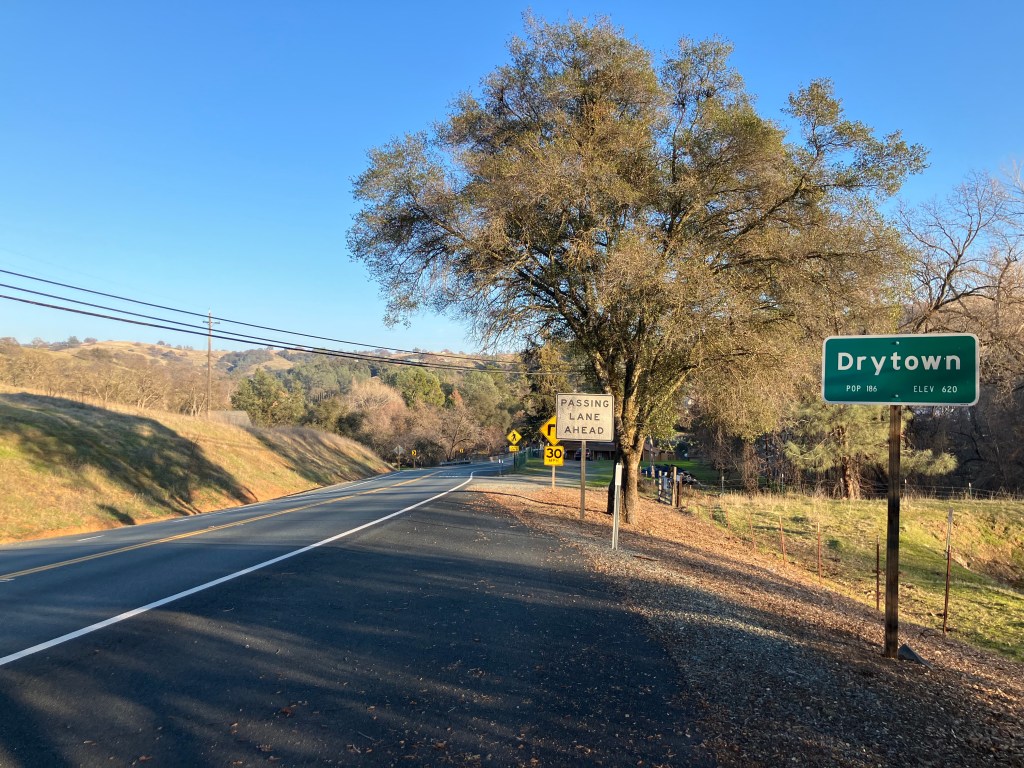
During the Gold Rush it was home to some 10,000 souls, and despite the name, it also had 26 saloons. (The name refers to a dry creek.) It burned down in 1857, and never really recovered. But there’s a roadside marker and occasional artifacts among the rolling hills and oak trees.
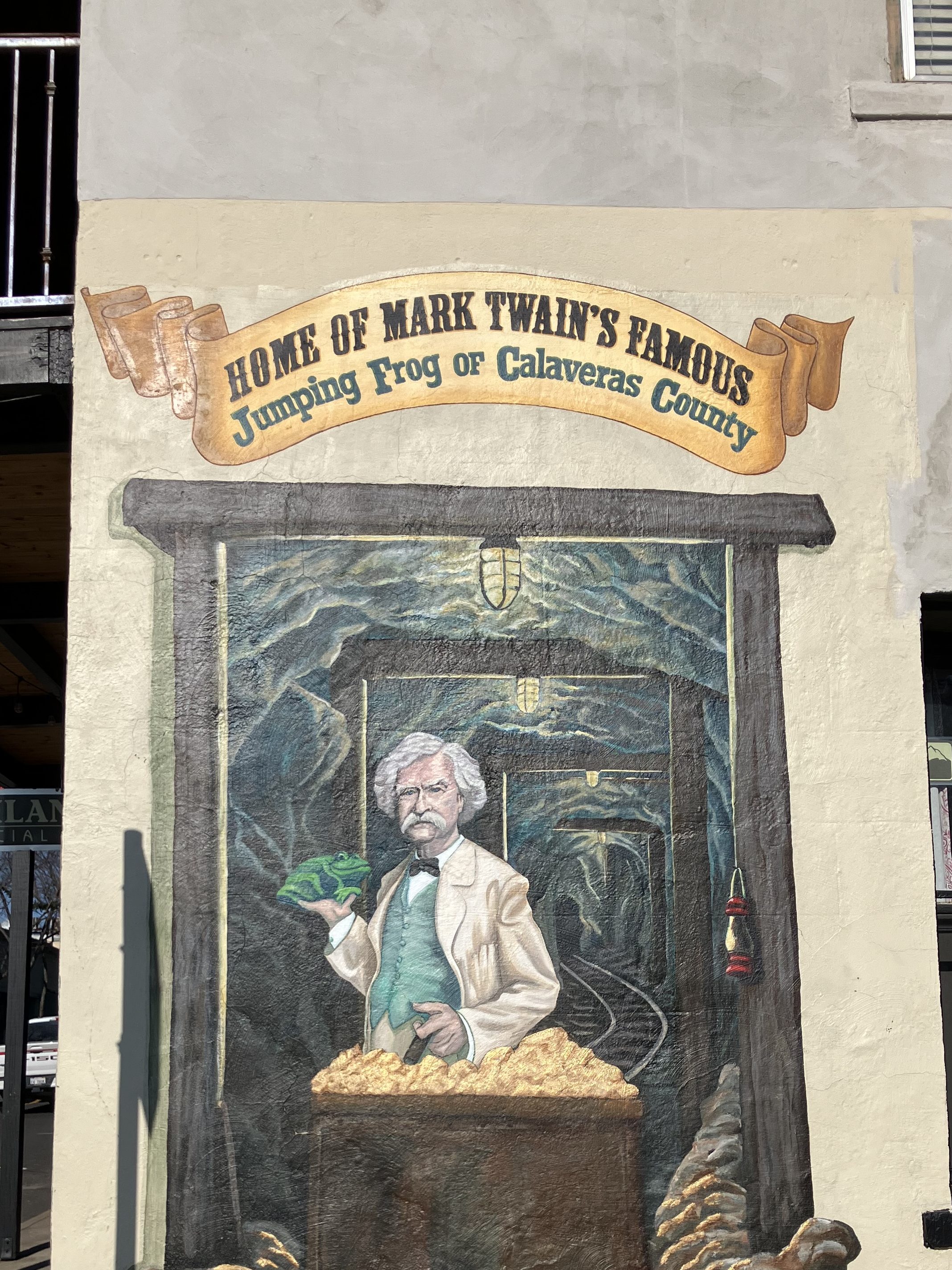
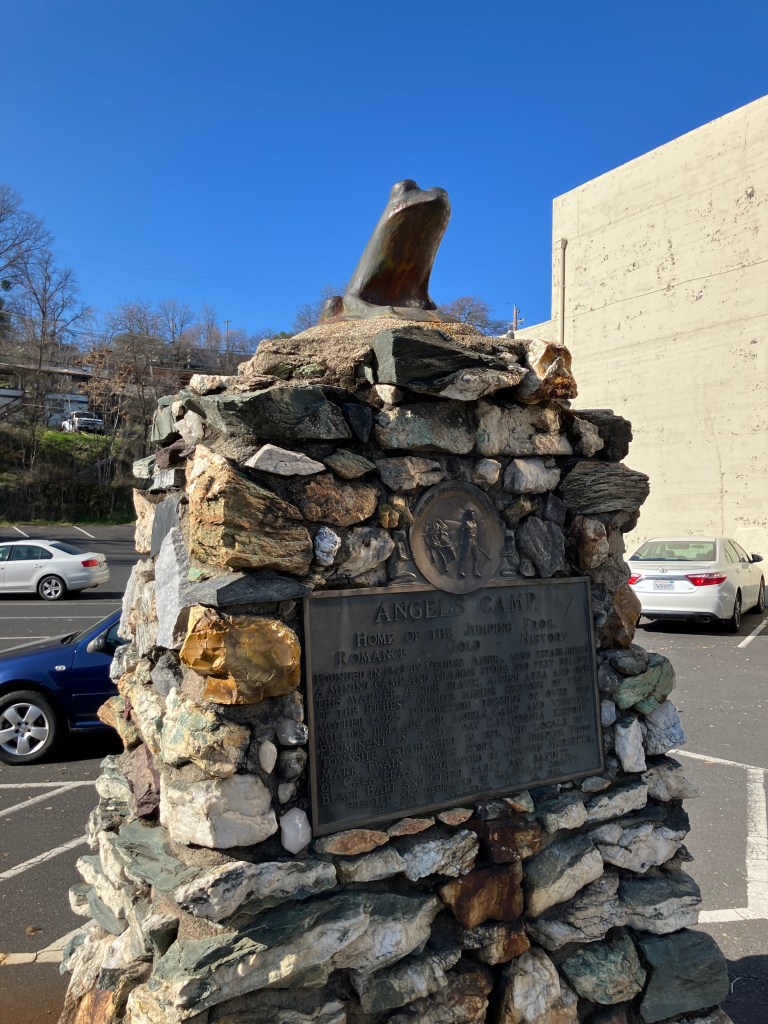
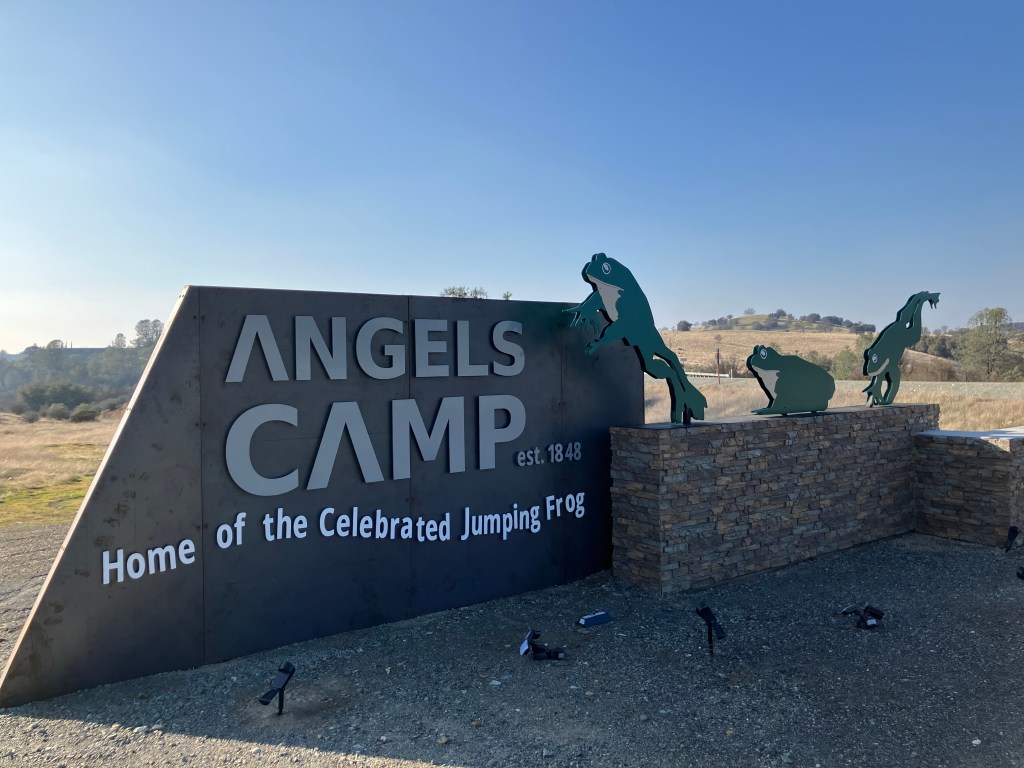
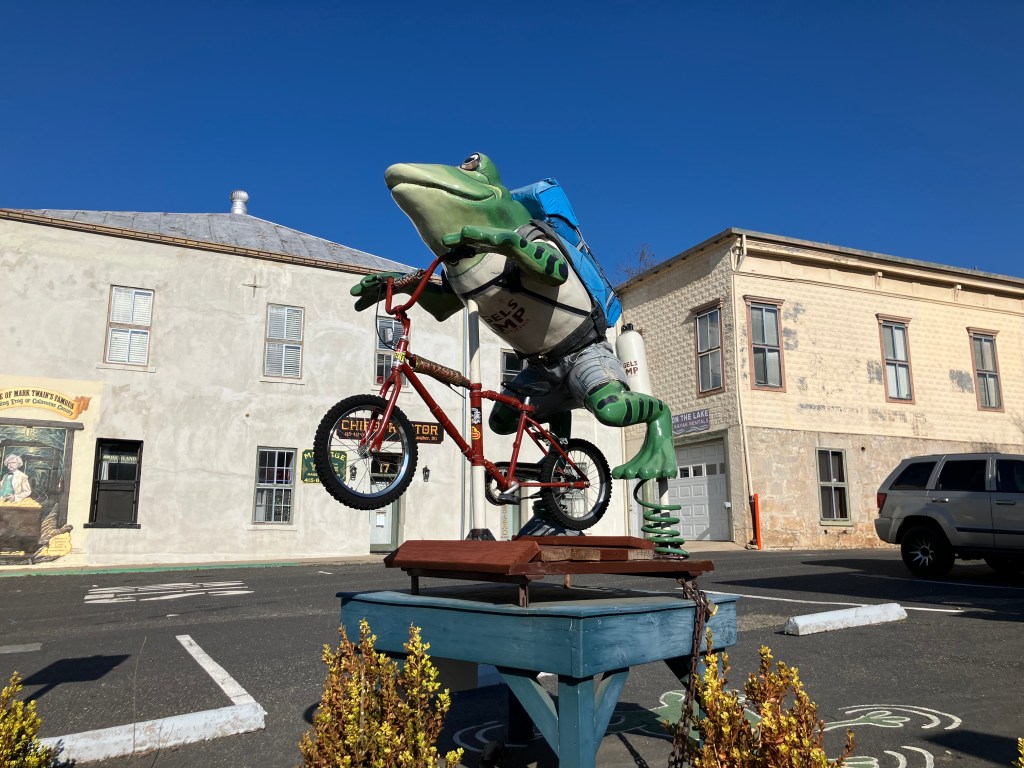
I also appreciate how Angels Camp (pop: 3,700 and the only incorporated city in Calaveras County) has leveraged its purported role in Mark Twain’s story “The Celebrated Jumping Frog of Calaveras County.” The little buggers are everywhere!
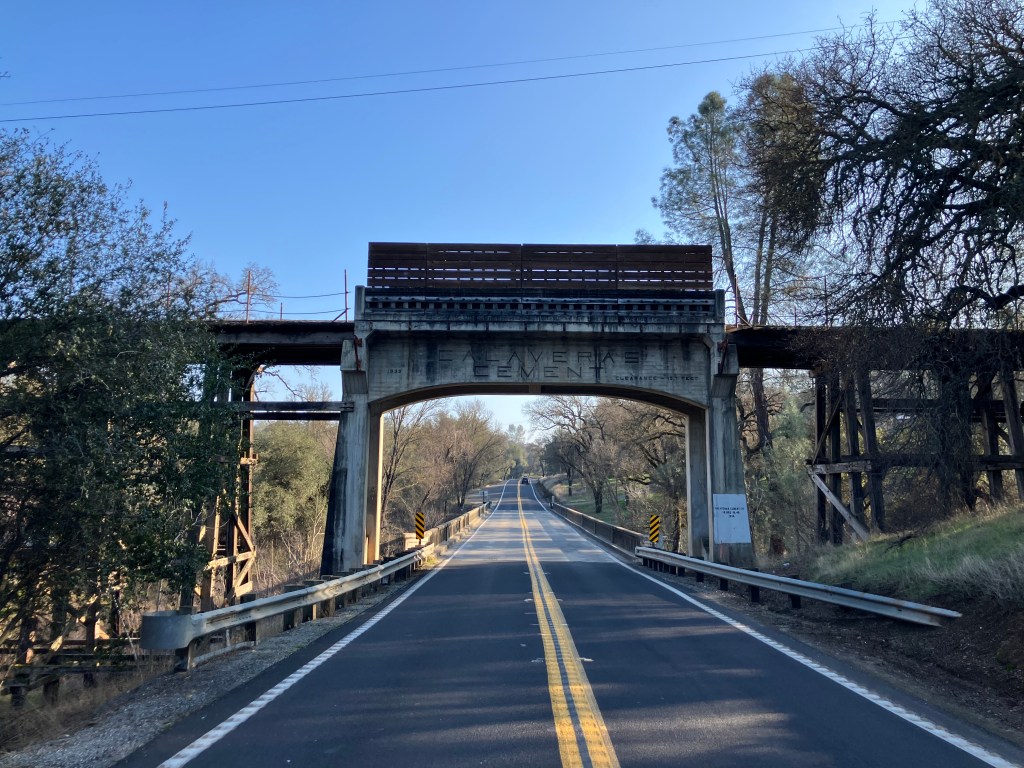
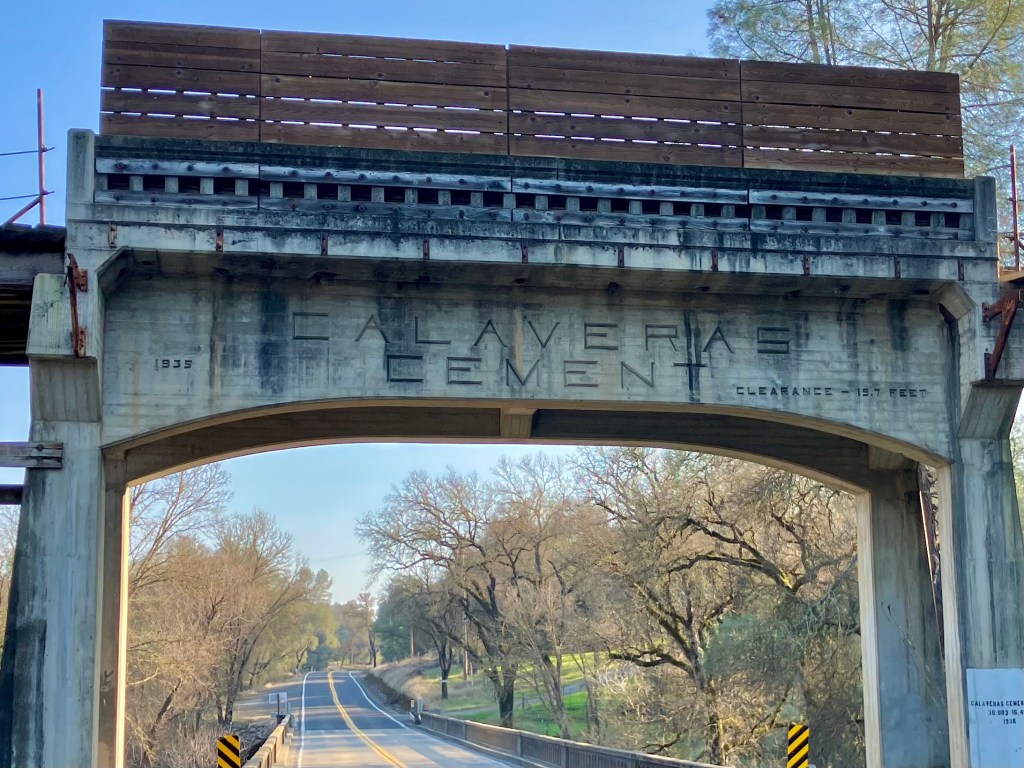
Now, if I had been in charge of that driving app I would have featured a Depression-era railroad bridge that crosses Highway 49 just south of San Andreas. It was part of a railroad short line that connected the Calaveras Cement plant to several local quarries. Calaveras Cement Co. produced material that built dams, freeways, and other infrastructure throughout northern California. The company shut down in 1983 as Chinese imports undercut domestic cement production. But the bridge remains as a proud (and shockingly graffiti-less) relic of a major local industry.
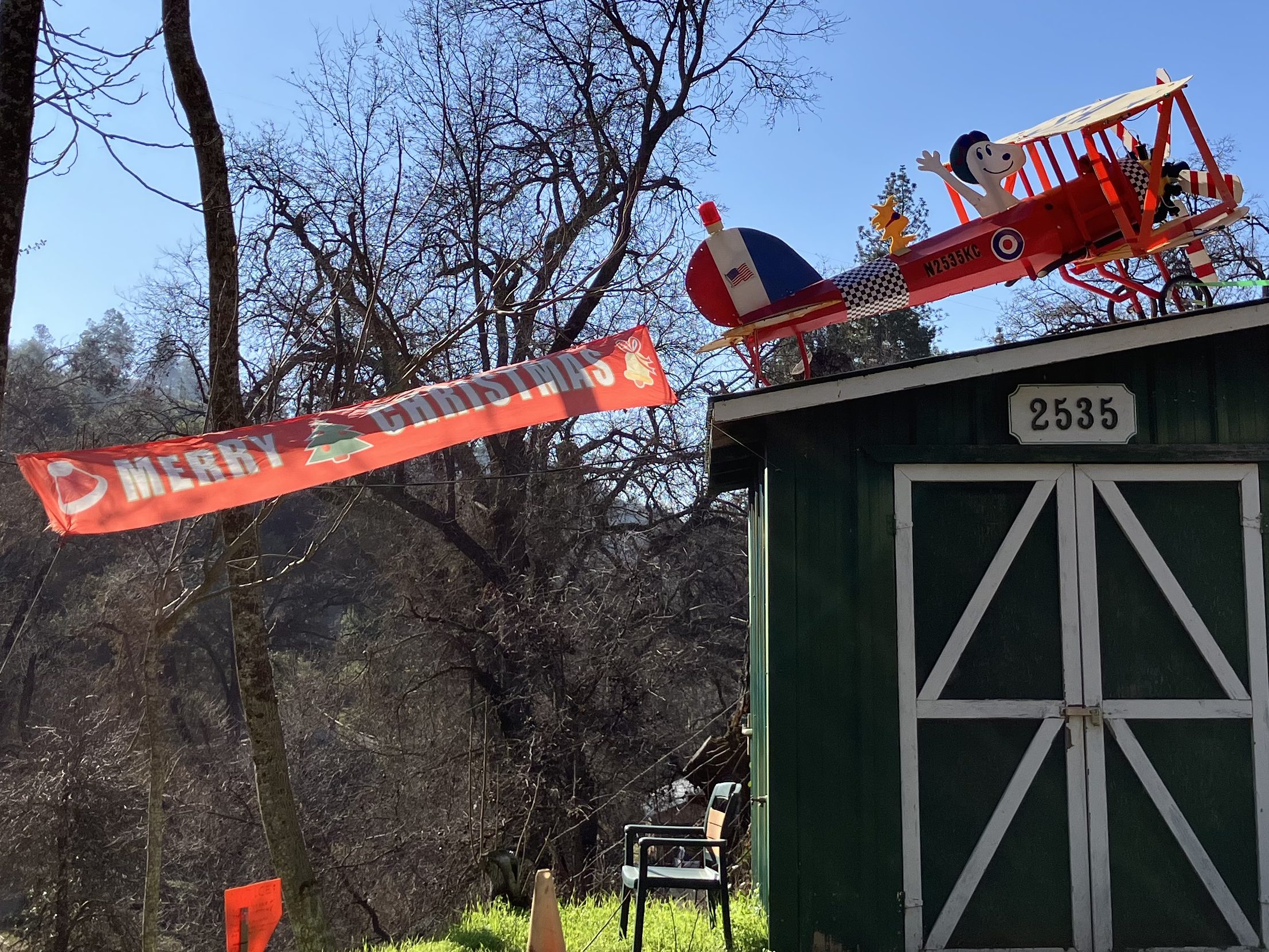
Before we get to the BOTD, let me leave you with a couple of photos of yard art I saw a long the way. These people are true artists.
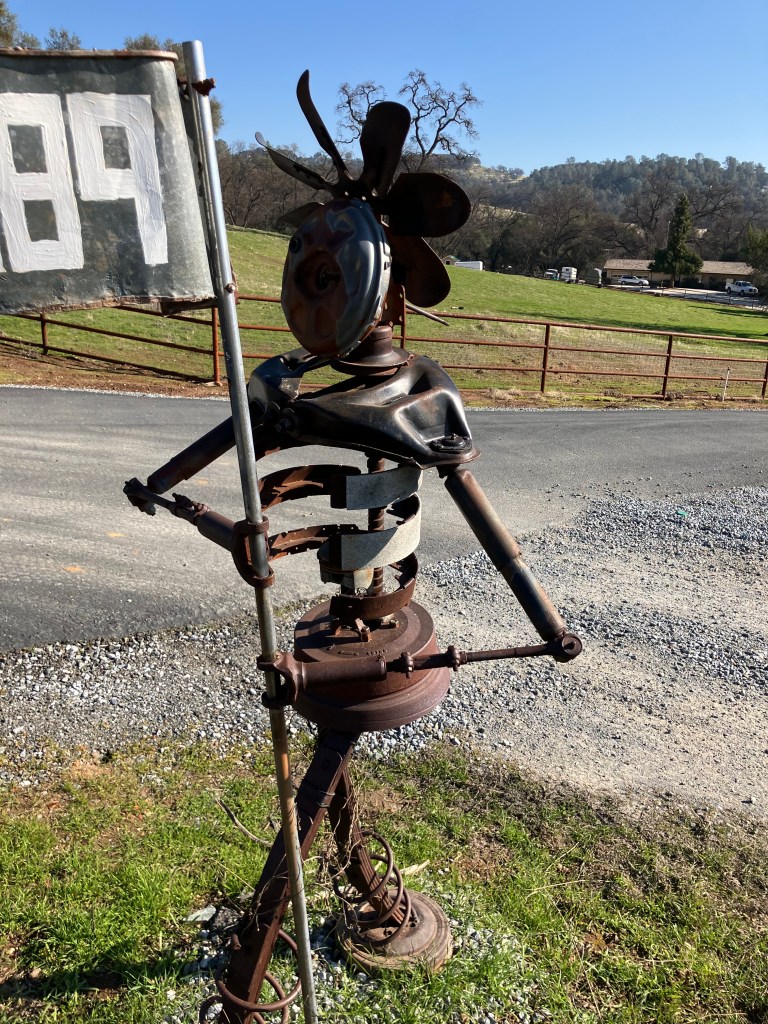
How many different car parts can you identify?
Please don’t tell the Charles Schultz estate about this one.

BEER OF THE DAY

Just because I’m a cranky contrarian, I walked right past all the wine shops in Murphys and snagged myself a brew at Murphy’s Pourhouse. It’s an open, friendly place with outdoor seating and 16 beers on tap. I chose the rare and coveted Anniversary XXVI Strong Ale from Firestone Walker.
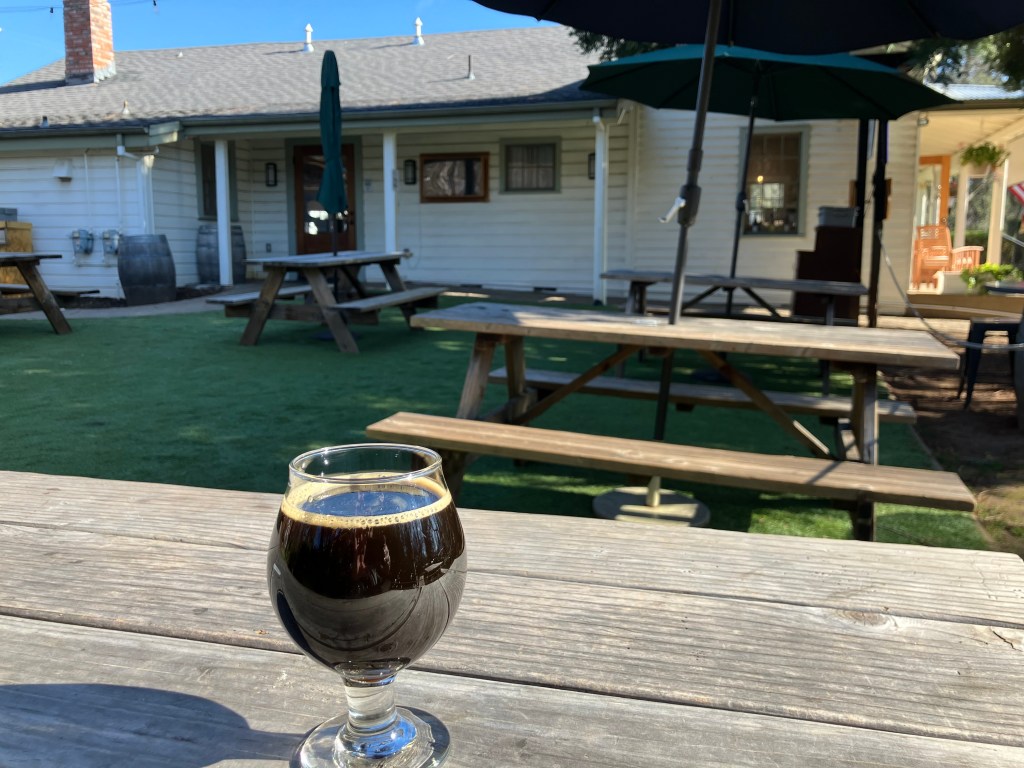
Even if you don’t like dark beer, you should try this. It’s aged in bourbon and brandy barrels, and if that doesn’t guarantee a symphony of flavors, it at least delivers a cacophony of flavors. We’re talking anise, black strap molasses, oak, Christmas fruitcake, semi-sweet chocolate, toasted pecans, vanilla extract, cherry sucrets, Worcestershire sauce, and those spent “grounds for your garden” you get at Starbucks. It’s on the sweet side, but there’s just enough hops to prevent it from becoming cloying. Well-carbonated but no head. 11 percent ABV, so if you are riding a motorcycle and find yourself at Howard’s Mystic Saloon shortly thereafter, have yourself a hot apple cider. I give this beer 5 points out of 5.

MAIL BAG

Faithful reader Peter D pointed out that I walked right past a pun opportunity  in my post about the tailing wheels at the Kennedy Mine. I had explained that, despite their shape, they’re not Ferris wheels. Peter’s response: Of course they aren’t Ferrous Wheels; they’re made of wood! Peter also helpfully includes this newspaper report on the bordellos of Jackson, CA.

Meanwhile, Victor R points out that the Frolic’s delivery of a disassembled courthouse building in 1849 proves that Americans had stuff delivered from China well before Amazon was even a glint in Jeff Bezos’ eye. 

Finally, Sherrill J informs me that the third book in her mystery series discusses mining for gold in southern California–a topic I confess to knowing almost nothing about!
bridges · California history · cemeteries · Road trips · trains

Big Wheel Keep On Turnin’

The weeks immediately following New Years often can be difficult. The Christmas lights have come down, leaving a murky winter gloom throughout the land. It’s a time of chilly weather, short days,and family budgets decimated by holiday spending. Christmas vacation is over and it’s time to get back to the regular routine, made somewhat less enjoyable by my foolish New Year’s resolutions, which this year involve an ill-considered reduction in whiskey consumption. January, to me, is the real Humbug season. Spring won’t be making its arrival for another 68 days, though who’s counting?

Lookin’ out my back door.

So I figured a trip to southern California might at least allow me to catch a little sunshine. What’s more, my nephew Graham recently informed me, over beers, that near his house in Altadena (pop: 43,000) sits just a stone’s throw from the remains of a historic mountain railroad that dates back to 1893. The Mount Lowe Railway (for that’s its name) was gutted by several fires in the last century, but some ruins remain and the view from the top of the right-of-way is said to be impressive. The whole thing frankly sounds right up my alley, so I dutifully purchased a book about the railway, conducted some research, and began to plan a trip for next week.

Mt. Lowe Railway, back in the day.

You probably see where this is going: Tragically, wildfires this week wiped out Altadena, including, I’m sad to say, my nephew’s house. Can you imagine? You’re minding your own business, and suddenly, just a couple of weeks after Christmas, a Sheriff’s deputy knocks on your door and tells you to evacuate. A few hours later virtually everything you own is gone. It sure puts my puny problems into perspective. 

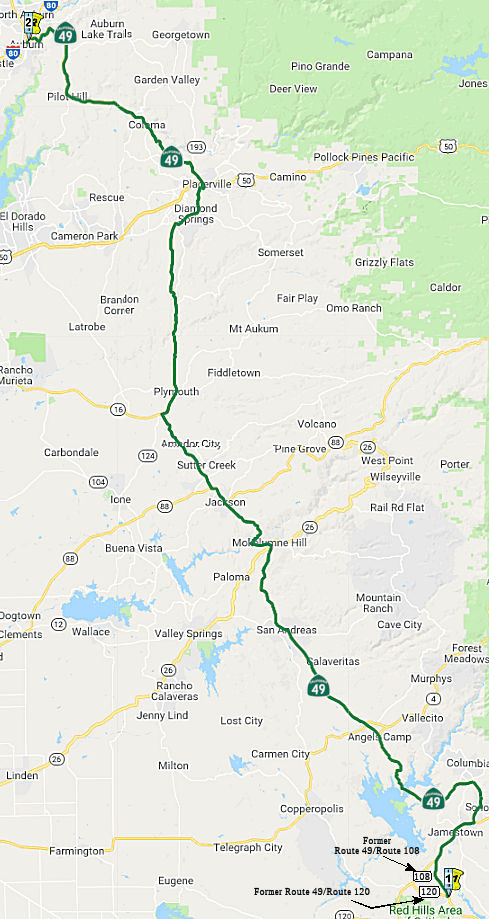
So, with a prayer for the thousands of people displaced (and an unknown number killed) by the southern California fires, I decided a trip to the Southland isn’t in the cards right now. Instead, I figured I’d stick closer to home. And so this morning I saddled up the Speedmaster and headed south on Highway 49, which is one of my favorite routes. It’s a scenic, two-lane road that endlessly twists through the oak-studded Sierra Nevada foothills. And it passes through innumerable old Gold Rush towns that still somehow evoke the 49er spirit of tenacity and patience.

During today’s ride I stopped for a few hours in the town of Jackson (pop: 5,100). All my prior trips to Jackson have strictly been to purchase huge quantities of maple bacon from Swingle’s Meat Market, which calls itself “The Carnivore’s Toy Store.” They really lean into their identity, with taxidermied heads of elk, bison, deer, and something that looks like a water buffalo. Anyway, today I decided to see what the rest of the town has to offer.

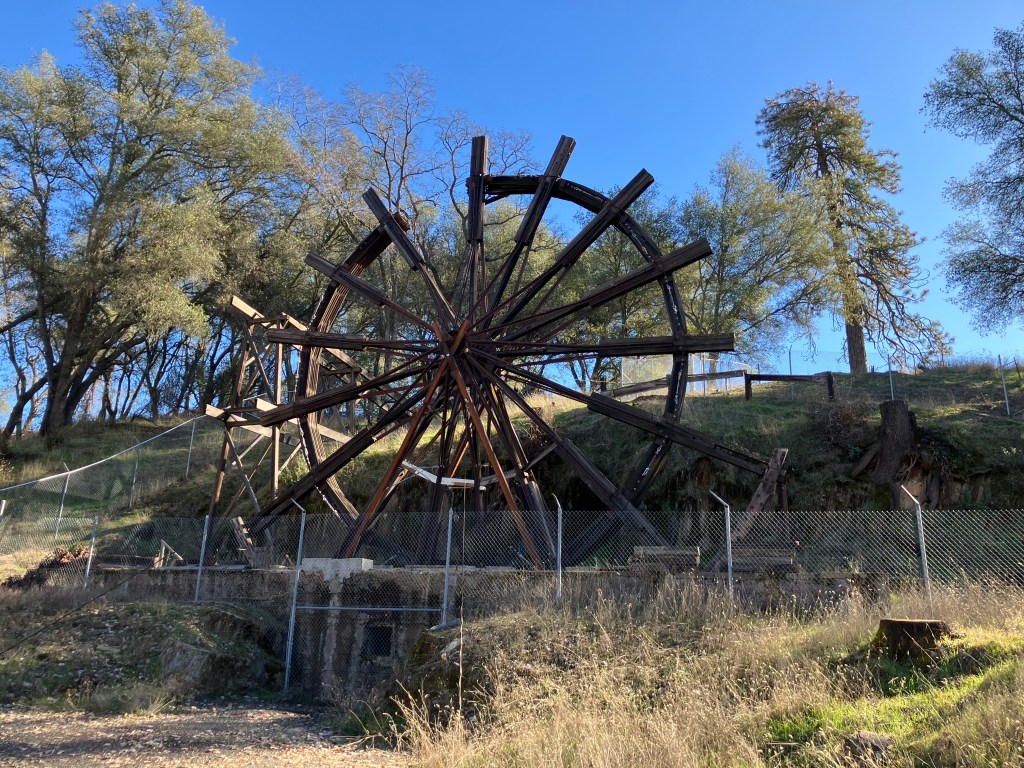
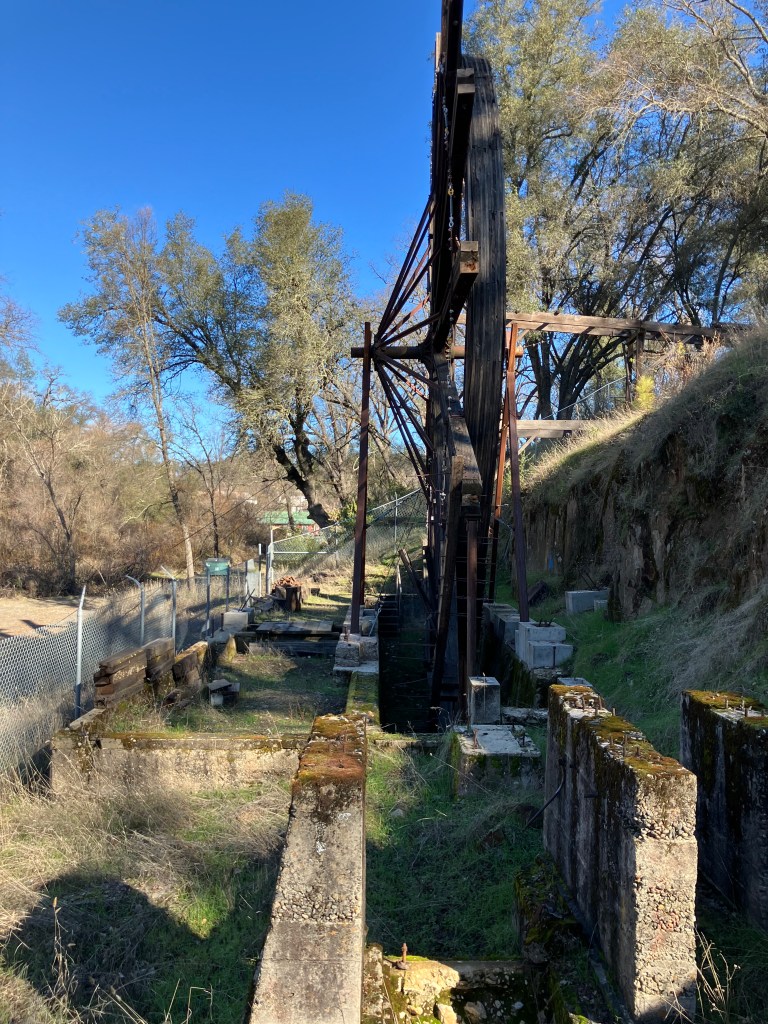
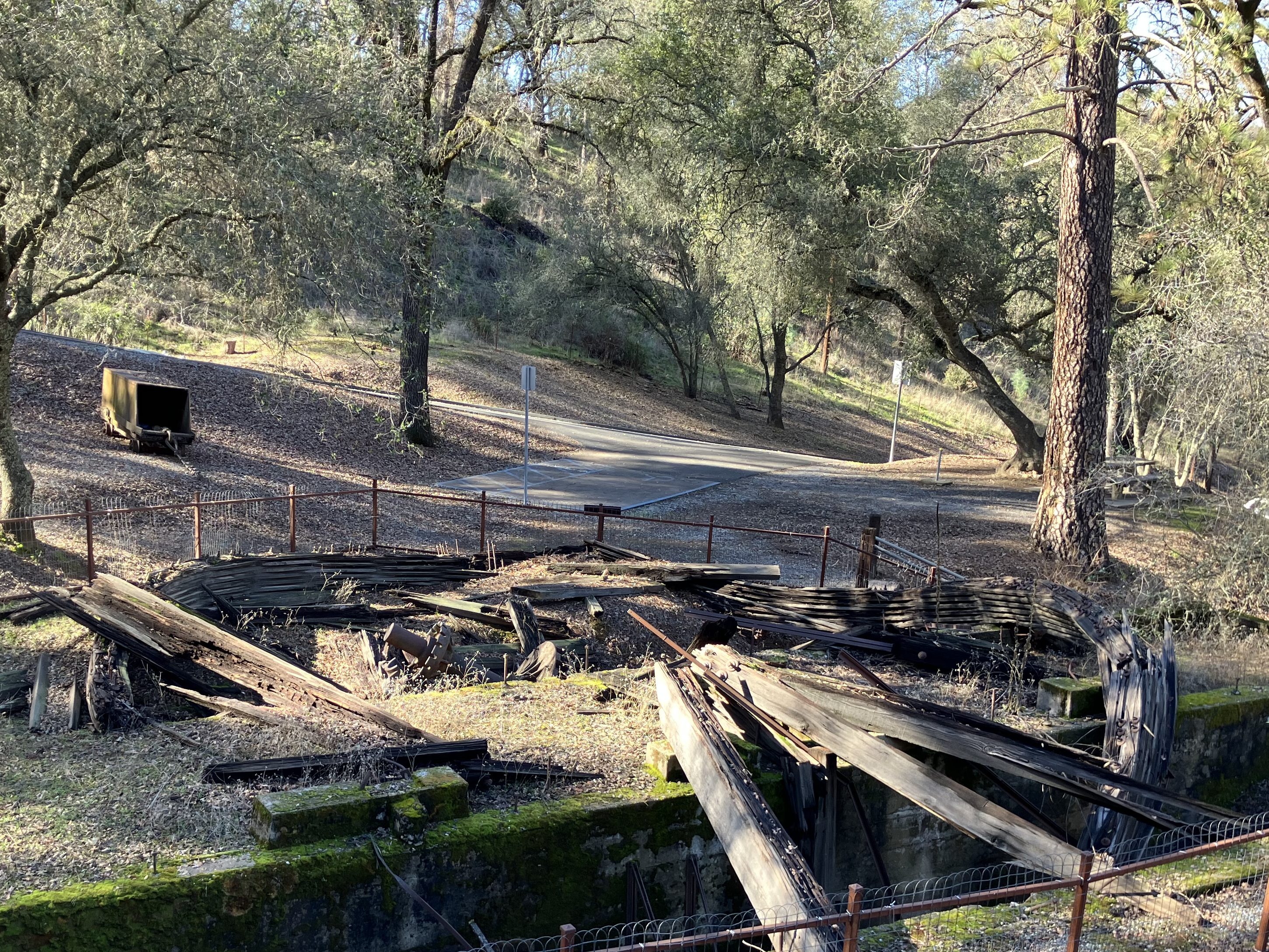
Like many towns along Highway 49, Jackson sprang up during the Gold Rush. It’s home to the Kennedy Mine, which was among the deepest and most productive mines in the country. It operated from 1860 until it was shut down during World War II. Many features of the mine are visible to this day. I was drawn to the four enormous, wooden tailing wheels that had been placed on the low hills to the south of the mine. Those wheels stood about seven stories tall. Here’s a few photos of them today.

No, that’s not a Ferris Wheel.
Not much left of this one.

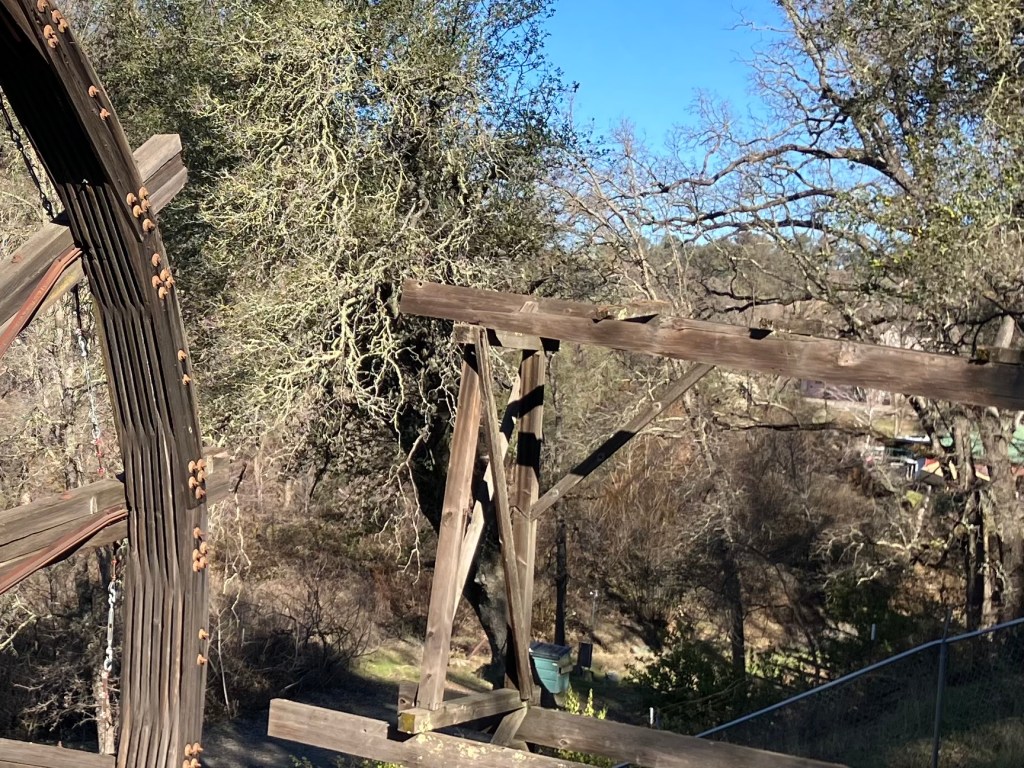
The story behind them is fascinating. Like most hard-rock mines, the Kennedy Mine extracted gold from rock by first pulverizing the rock into fine sand and then separating out the tiny grains of gold with a chemical process. This process left behind tons and tons of silty wastewater called “slickens” that over time fouled nearby streams and ruined local farms. Local farmers threatened lawsuits and eventually a settlement was reached: The Kennedy Mine would send its slickens to an impoundment basin a half-mine away. To get there, the slickens would have to get over a couple of hills, and that’s where those giant wooden wheels come in: They were each fitted with 178 buckets which lifted the slickens up to raised flumes and over the hills.

Remains of one of the flumes.
Undated historic photo. The Tailing Wheels are inside the four buildings.

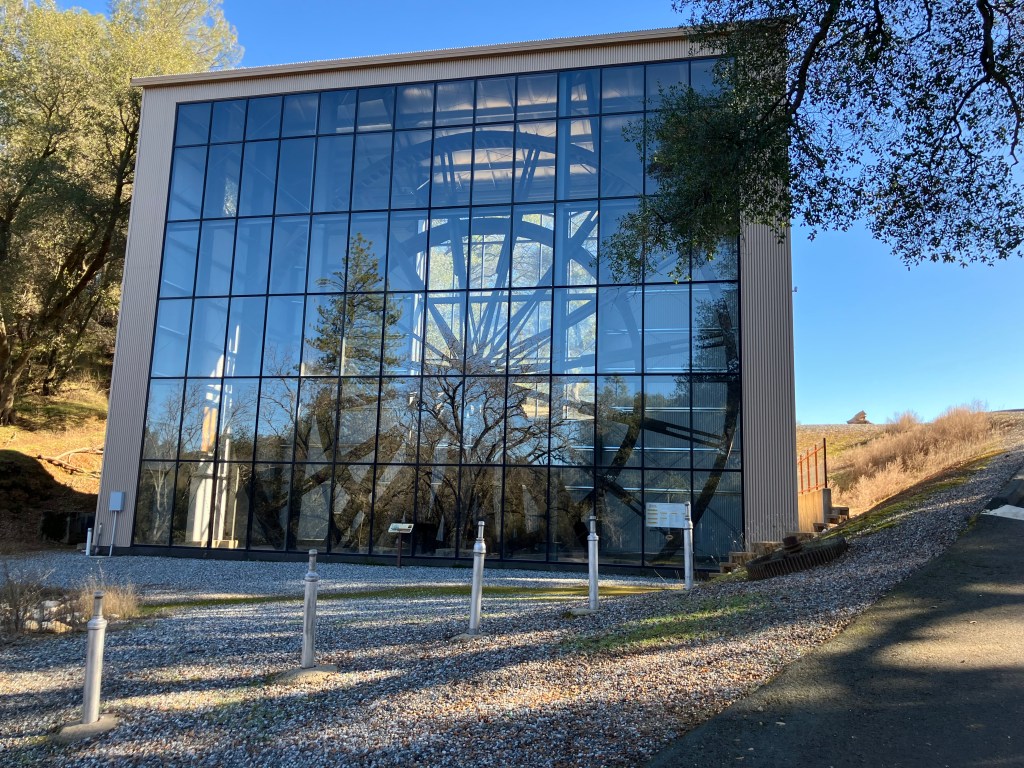
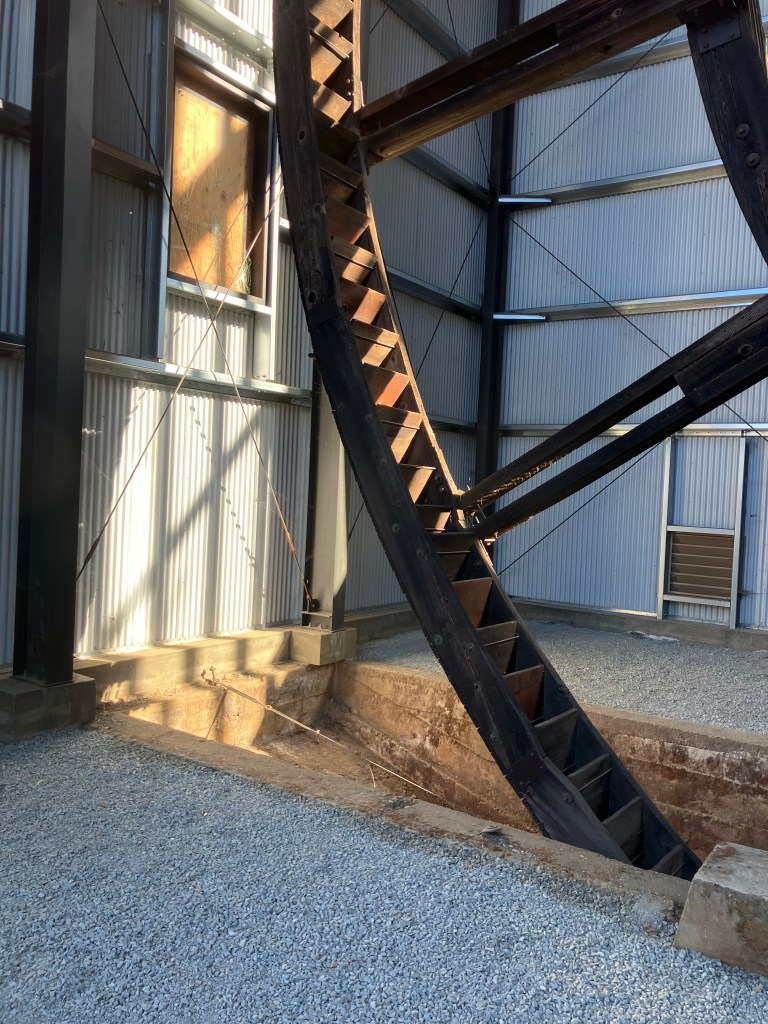
You’ll note in the photo above that the four tailing wheels were contained within corrugated-metal buildings. After the mine closed the metal was sold for scrap and the wheels were exposed to the elements–Hence their condition today. But one wheel has been restored and is enclosed within a modern structure.

A tailing wheel goes Hollywood.
Detail of the buckets.

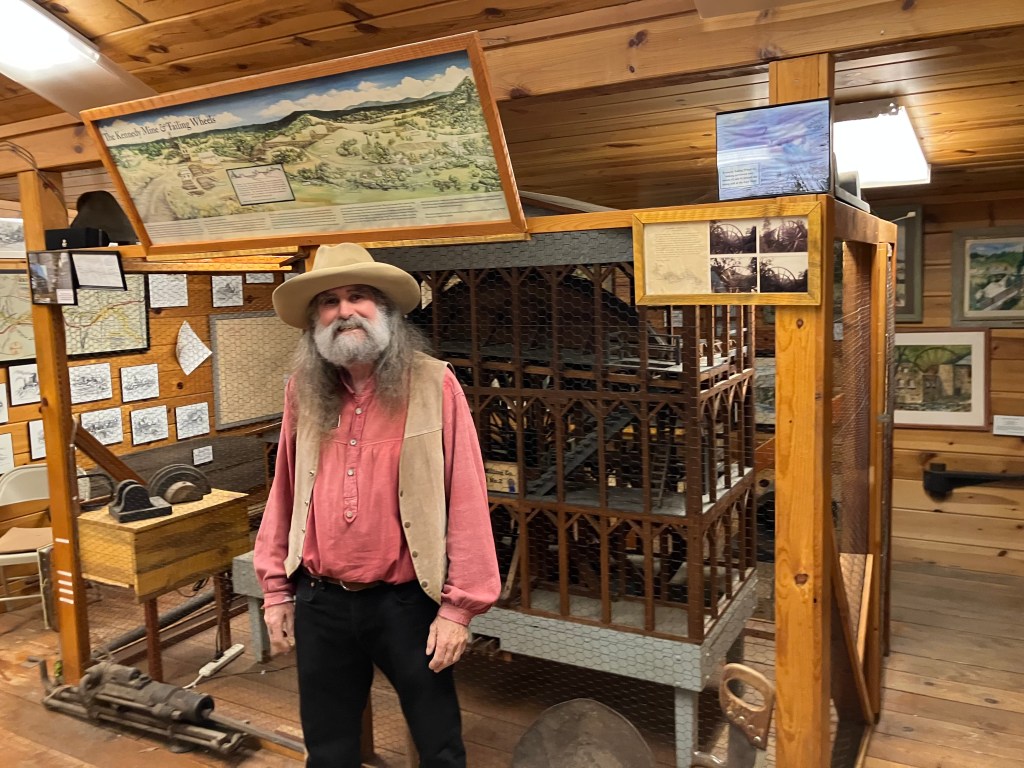
I really can’t explain why I became so fascinated by this primitive technology. But after spending a good hour hiking around the wheels, I went to the Amador Historical Society’s large scale model of the mine and tailing wheels. There I spent another hour chatting with Docent Gary about All Things Mining.

Docent Gary, dressing the part. Behind him is a 1/12 scale model of one of the tailing wheels.

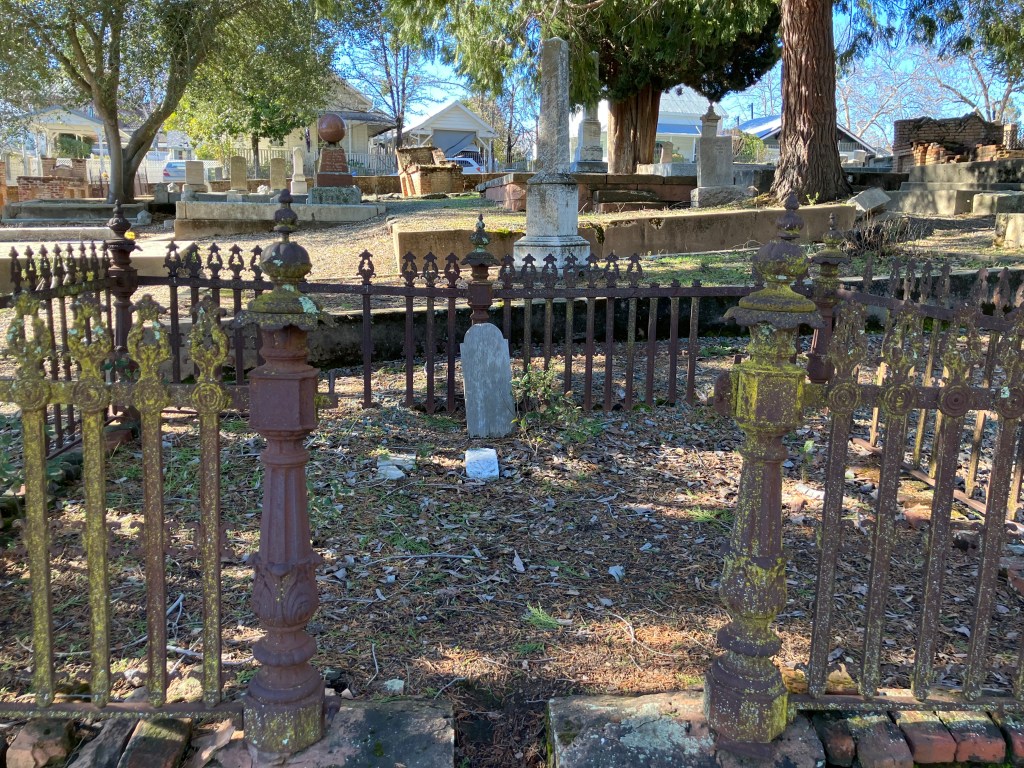
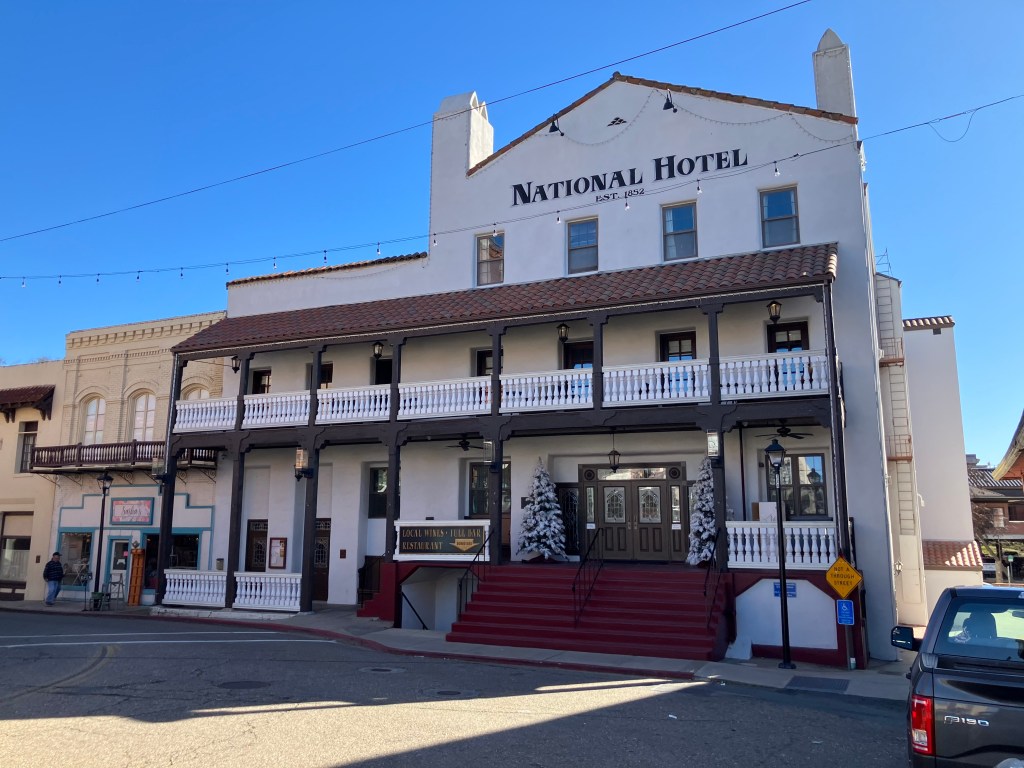
Of course, there are other things to see in Jackson. It’s actually a rather charming town, with a busting historic main street, several historic cemeteries, and a restored, large hotel from 1852.

Boo!

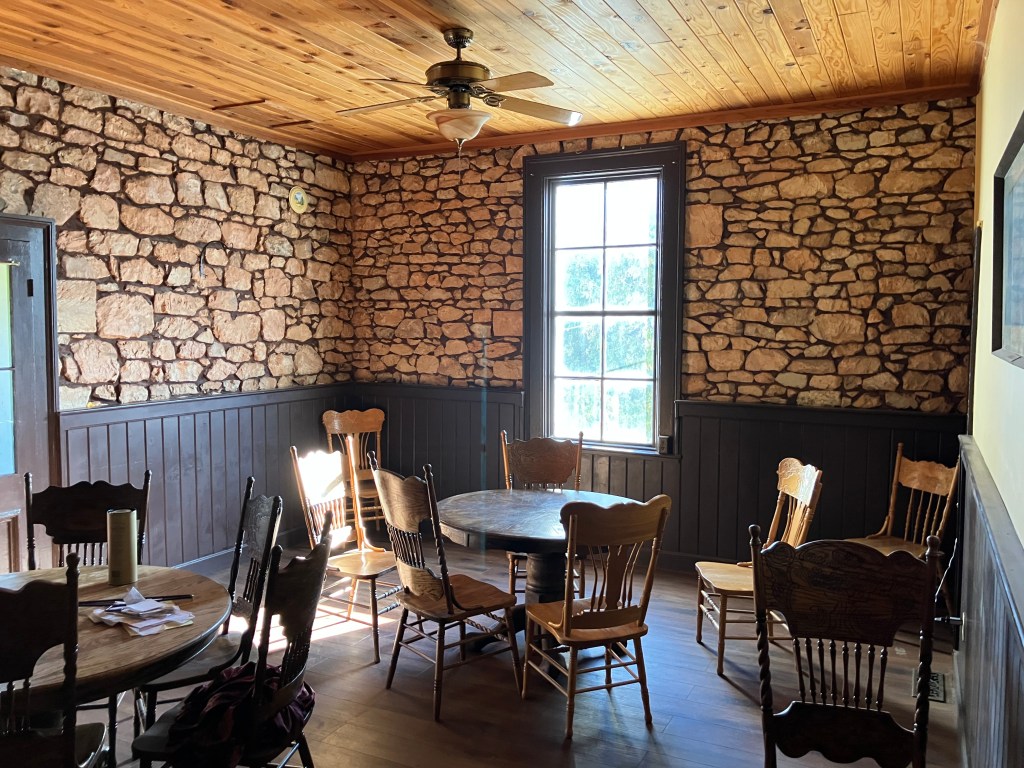
Speaking of historic hotels, I had lunch at the Hotel Leger in Mokelumne Hill (pop: 800). The Leger was rebuilt after several fires, most recently in 1875. My server told me the ghost of George Leger (1815-1879) still haunts the hotel. When I hinted at my skepticism, she told me she had “absolutely seen and heard things to make me a believer.” She also solemnly informed me that the hotel had been featured on Discovery’s Ghost Adventures in 2018. So that pretty much clinches it. 

Dining room of the Hotel Leger. The stone walls are original. Is that ectoplasm in the corner below the wainscoting?

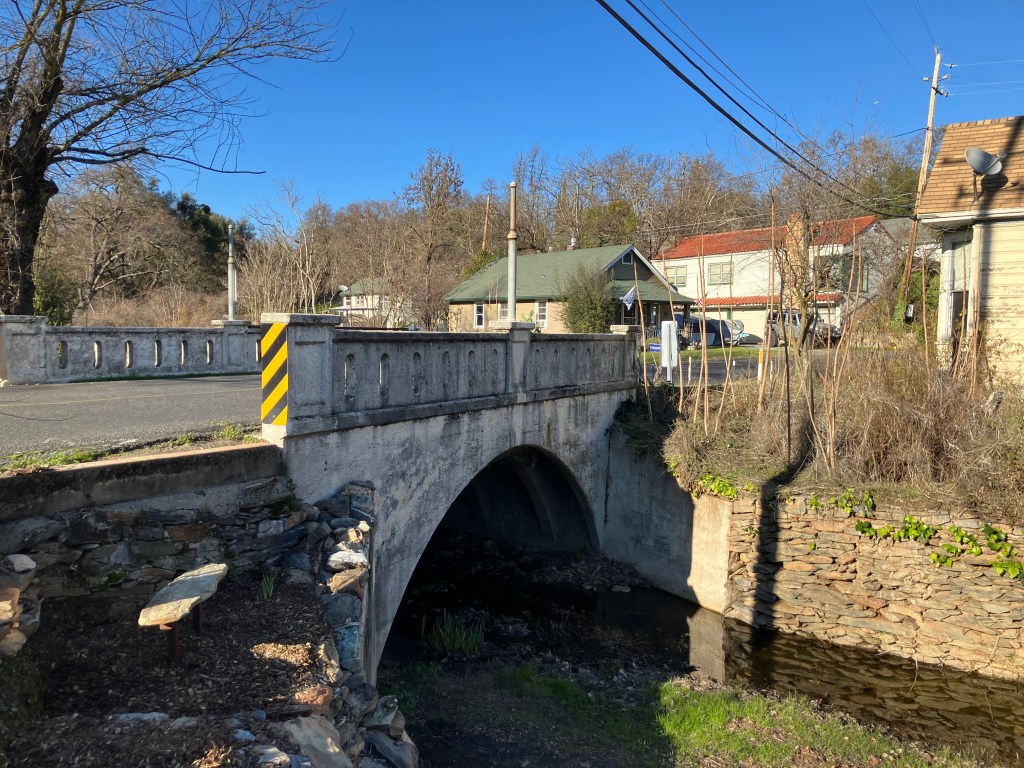
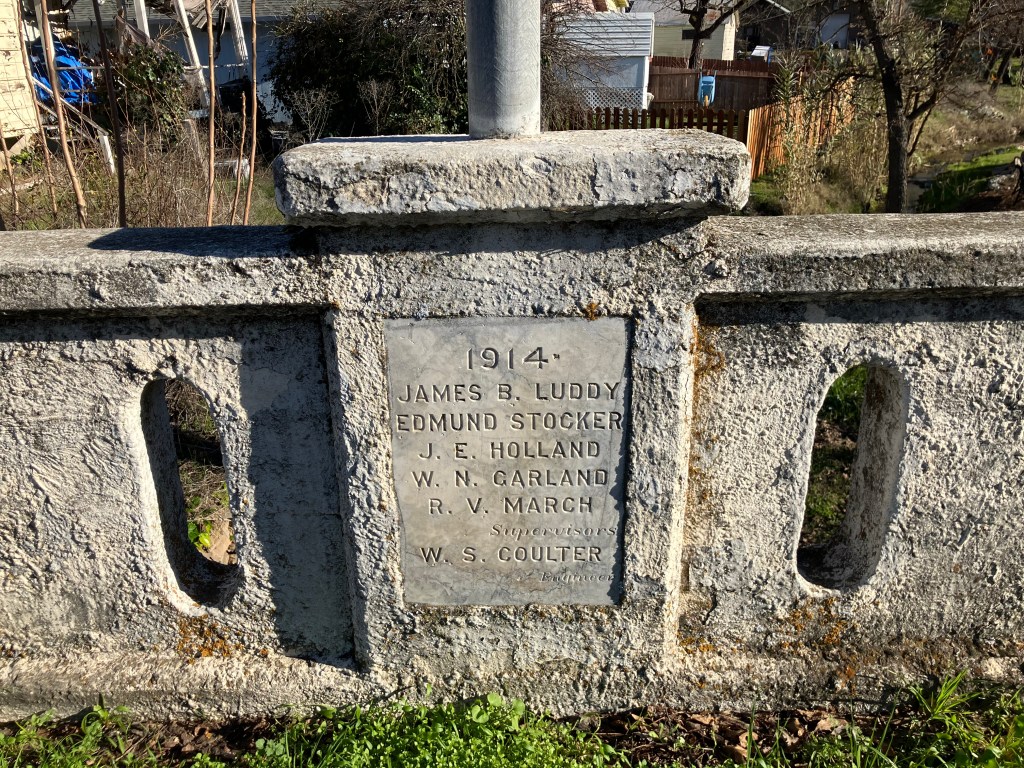
I ended today’s travel in San Andreas (pop: 3,000). There’s not a lot going on here beyond a short, historic Main Street and a small bridge that caught my eye for its age (over a century old) and graceful simplicity.

Thirty-foot long, closed-spandrel arch bridge over San Andreas Creek.
111 years old and still going strong!

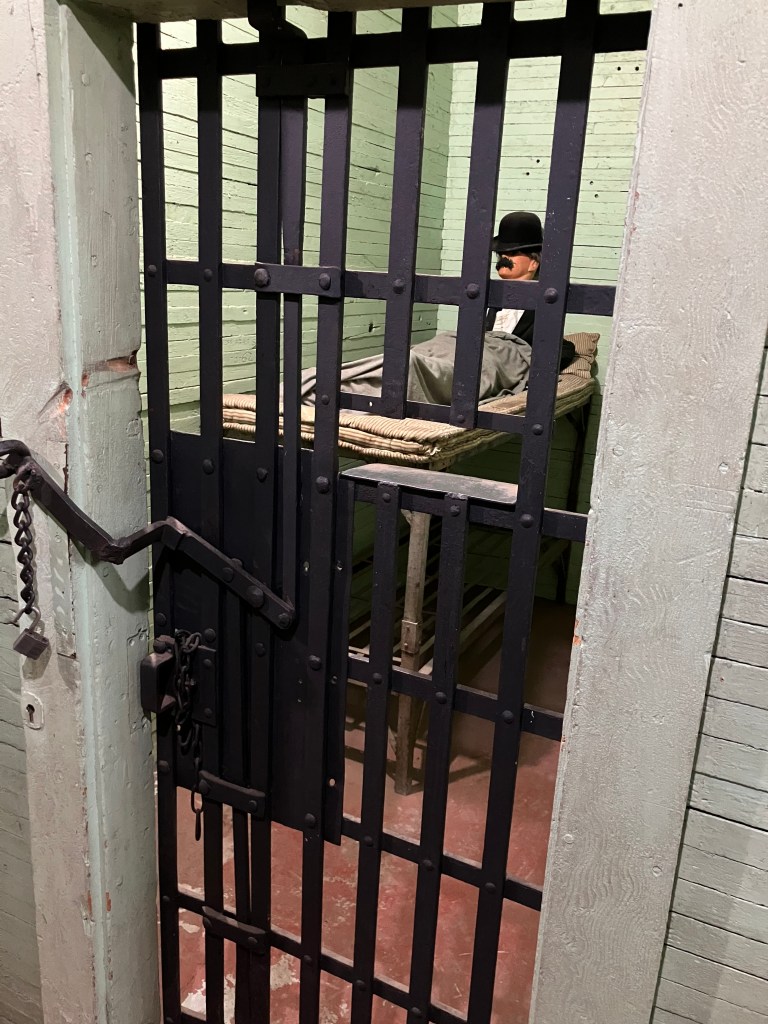
The Main Street does feature a worthy historical museum. Among its many artifacts, I will emphasize two: One is the jail cell where Black Bart had been imprisoned in 1883 for robbing a stagecoach.

Actual jail cell, fake Black Bart.

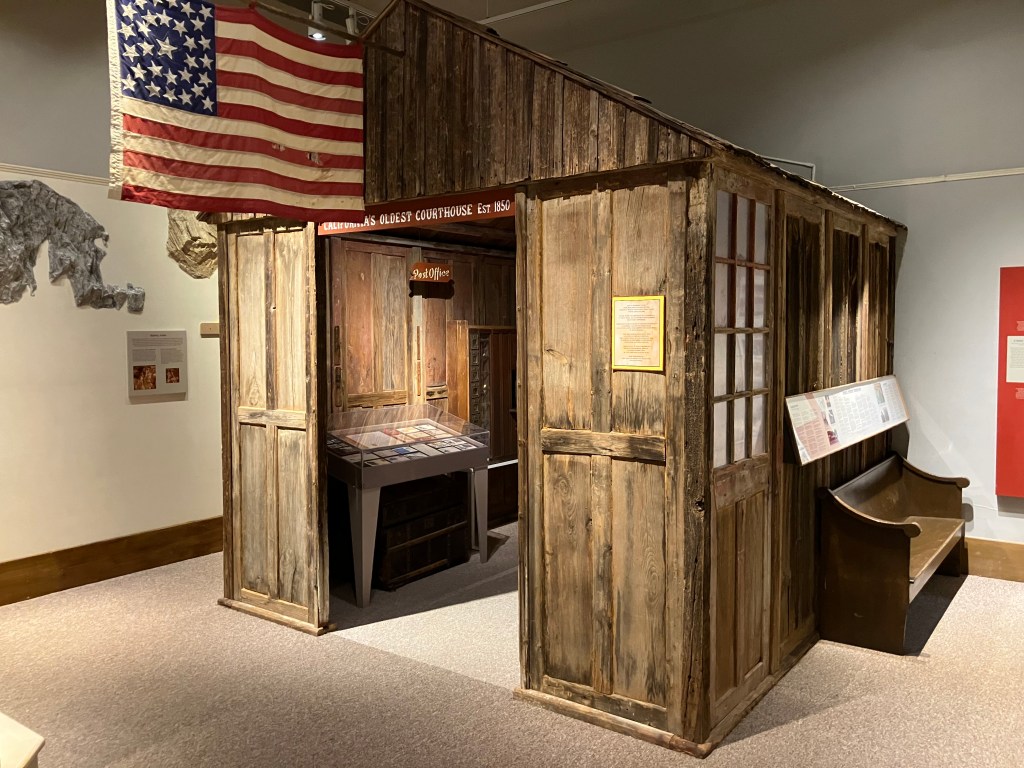
Also notable is California’s first courthouse..which sits entirely within the museum. 

Note the rare 31-star flag.

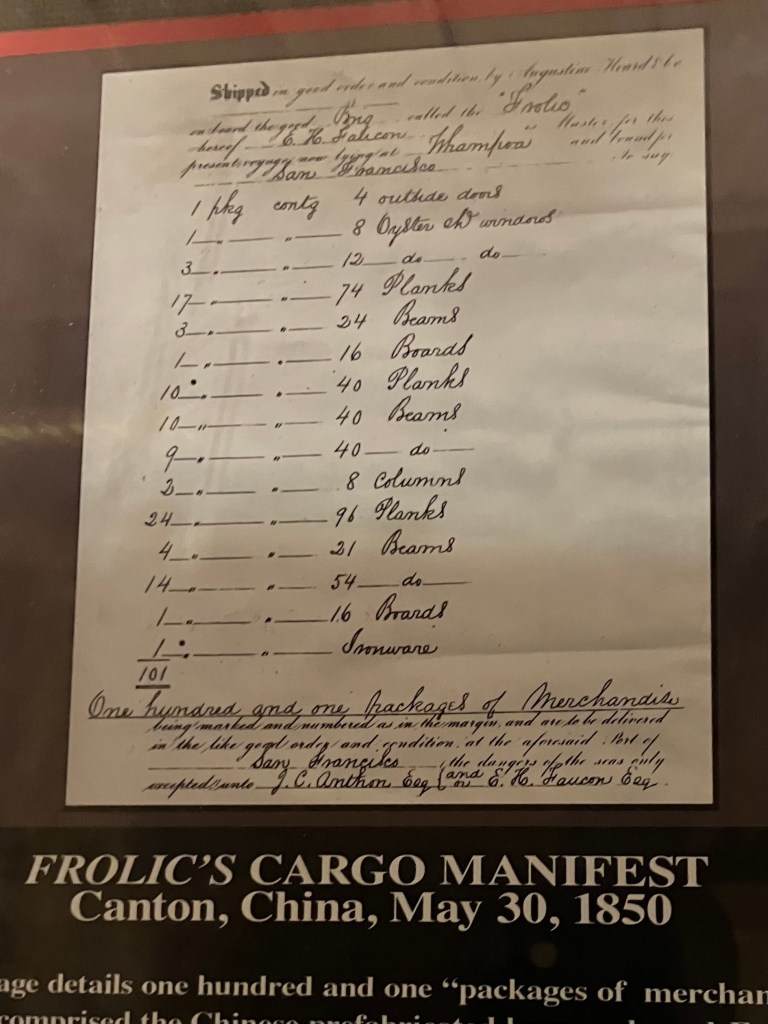
The story goes like this: There were no sawmills in California at the beginning of the Gold Rush, so all lumber had to be imported. This building was essentially a “build-it-yourself” kit of pre-cut camphor wood that had been shipped from China. It served as the Calaveras County courthouse in 1850, and later served as the post office. A placard assures me that it is not a reproduction, but the actual building (though it has been truncated to fit in the museum space).

There’s a footnote to this story as well: The building was shipped to California aboard the brig Frolic. I thought the name sounded familiar, and then I remembered that last year I visited the site near Point Cabrillo where the Frolic sank in the summer of 1850–just months after it delivered the courthouse building to Calaveras County. This time she was carrying porcelain and opium.

Just weeks before she sank off the coast of California.

Tomorrow I am going to try out a downloadable driving tour app for the stretch of Highway 49 between Angel’s Camp and Jamestown. I don’t normally use travel guides on my trips, as I like to remain open to whatever catches my interest along the way. But this particular driving app is only a two-hour commitment and it seems pretty authoritative.  So for twelve bucks I’m willing to take the risk. Full report tomorrow!

Cars · Movies · Road trips · trains

Runnin’ On Empty

Well, there goes yet another year. And that’s kind of sad, if you think of your lifetime as a gas gauge that is counting down to empty, and there’s no gas station anywhere on your planned route. In fact, there’s not even a gas filler pipe on the whole car. You just drive it til it’s empty and that’s it. Off to the crusher.

But surely that’s not the right way to think about these things; instead, we’re advised to roll down the window, turn down the radio, and pay attention to all the cool things we’re seeing and doing as we drive our car along the unsigned and mysterious Highway of Life. And if we’re lucky, there’s still enough gas in the tank for some more adventures. As they say, life is a journey.

And speaking of journeys, I’ve got some good ones planned for 2025, including a winter trip to Needles, CA (pop: 4,800) to see one of the last remaining Harvey Houses, and a visit to Blob Fest in Phoenixville, PA in July.

Adele seems to have fallen on hard times…

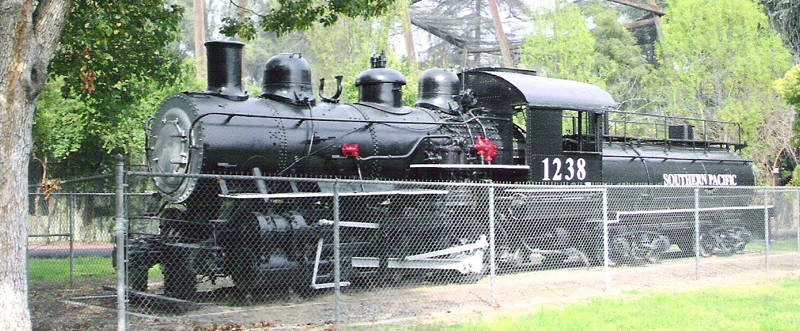
I’m also planning a return to the town of Kingsburg, CA to witness the delivery of a century-old, 82-ton steam locomotive. The delivery has been delayed several times, but the current best guess is January or February.

Old #1238 cools its heels in Fresno, waiting to be moved to its new home in Kingsburg.

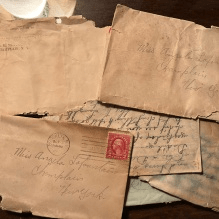
And speaking of a hundred years ago: alert readers will recall that I received a cache of love letters my grandfather wrote to his then-girlfriend in 1925 and 1926. I have transcribed all 17 of those letters and I’ve posted them here. Feel free to read them while you’re waiting for the ball to drop in NYC.

And with that I will wish a Happy New Year to all. We’ll see you in 2025! Your mileage may vary….

California history · churches · Road trips · trains

Royal Roadtrip

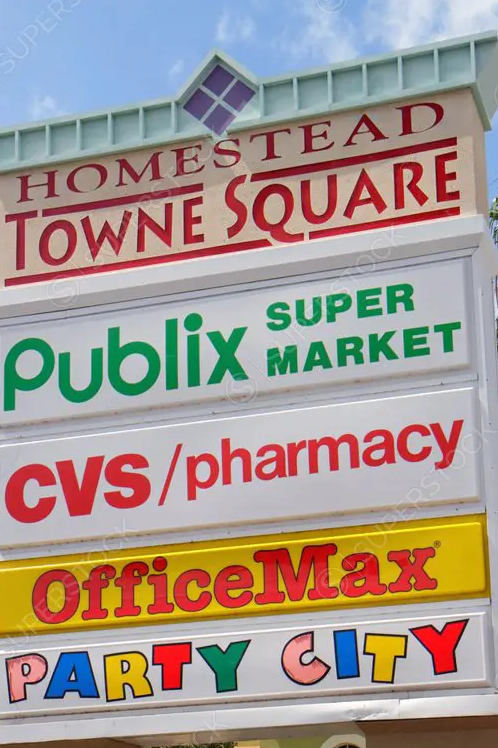
I’d always felt that there are two kinds of towns in California (and perhaps beyond). The first is the generic and undistinguished town, with the usual collection of faceless corporate businesses (Applebee’s, Chili’s, Home Depot, Target, etc) and the same tract home developments with names like “Willow Creek” or “Creek Willow,” where you literally would not be able to tell which specific town you were in without a sign to tell you.

Anywhere, USA

The second type is the town that has some distinctive character that makes it recognizable. This second category can be further subdivided into towns with an organic distinctiveness (due to their history or topography or whatever) and those that fabricate their character out of whole cloth.

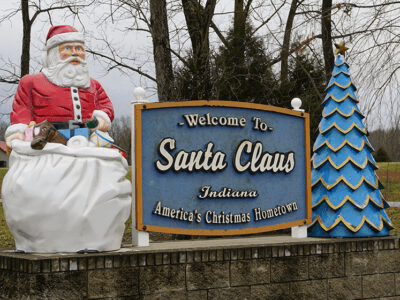
I was reminded of this distinction when I recently received an article from loyal reader Karen Y. The article lists six “themed towns” in the US that “lean into their own unique identities.” Some of these, like Tombstone, Ariz., have legitimate historic links that make them special. Others, like Santa Claus, Indiana, less so.

Predictably pointless 11 months out of the year.

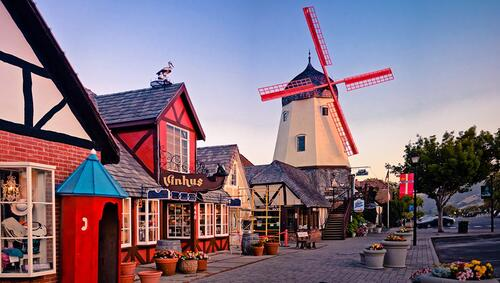
Two of the six “Themed Towns” are Leavenworth, Wash. (pop: 2,400) and Solvang, CA (pop: 6,000). Alert readers will recall my 2022 blog post about Leavenworth, which postures as a Bavarian village. As I noted in that post, the civic leaders in Leavenworth had visited the Danish-themed town of Solvang as part of their planning to go Full Saxon.

Faux-Danish Solvang (from The Discover Blog’s “Six Themed Towns” article).

Though not mentioned in the article, there’s a Swedish-themed town in California’s Central Valley that might warrant inclusion on the list. And, like Solvang, this town’s civic leaders also visited Leavenworth before they launched their Scandinavian make-over.

The “Swedish” town we’re talking about is Kingsburg (pop: 12,600), which is about 20 miles southeast of Fresno on CA-99. It is sited next to the Kings River. And it’s where I spent an enjoyable day this week.

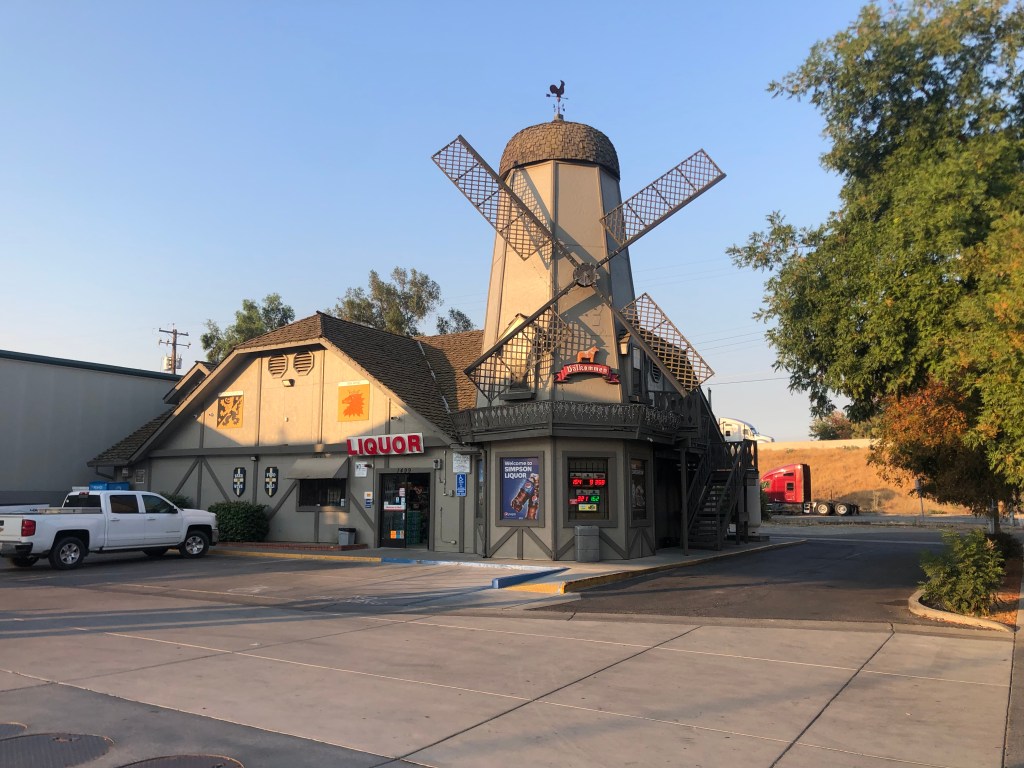
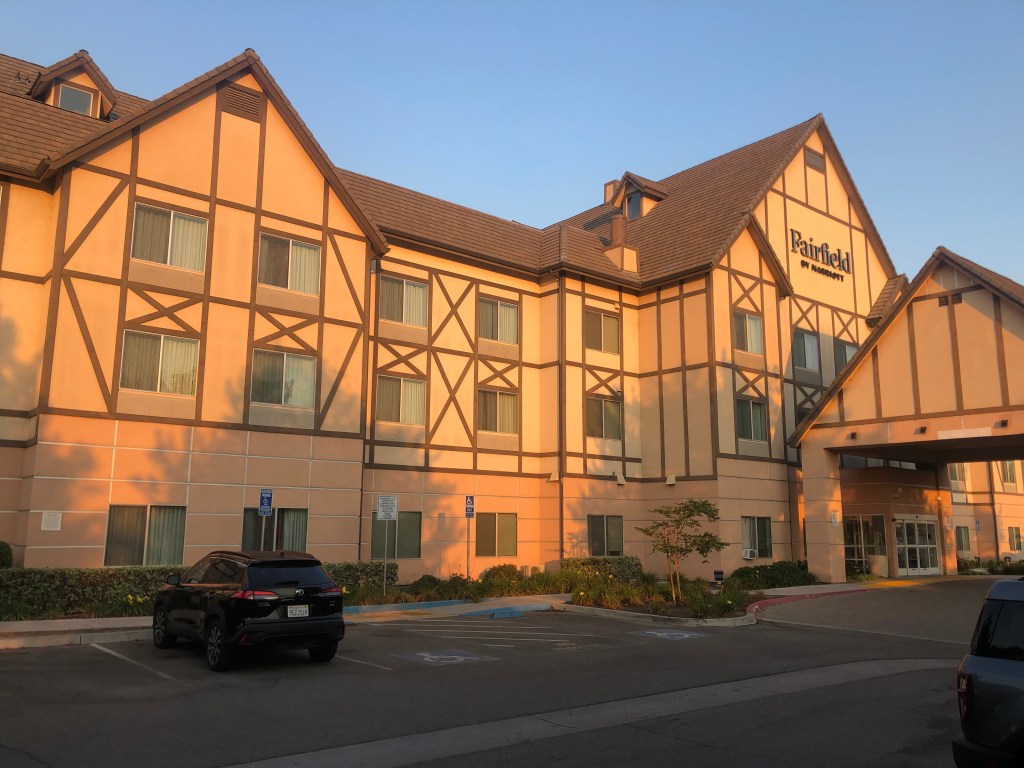
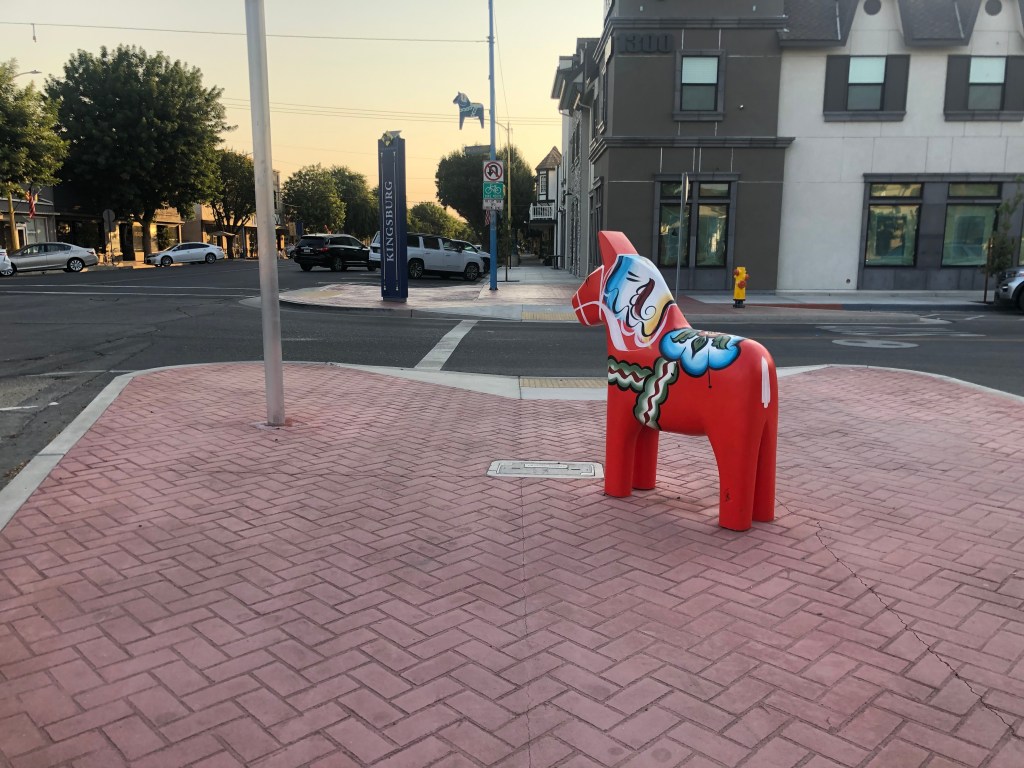
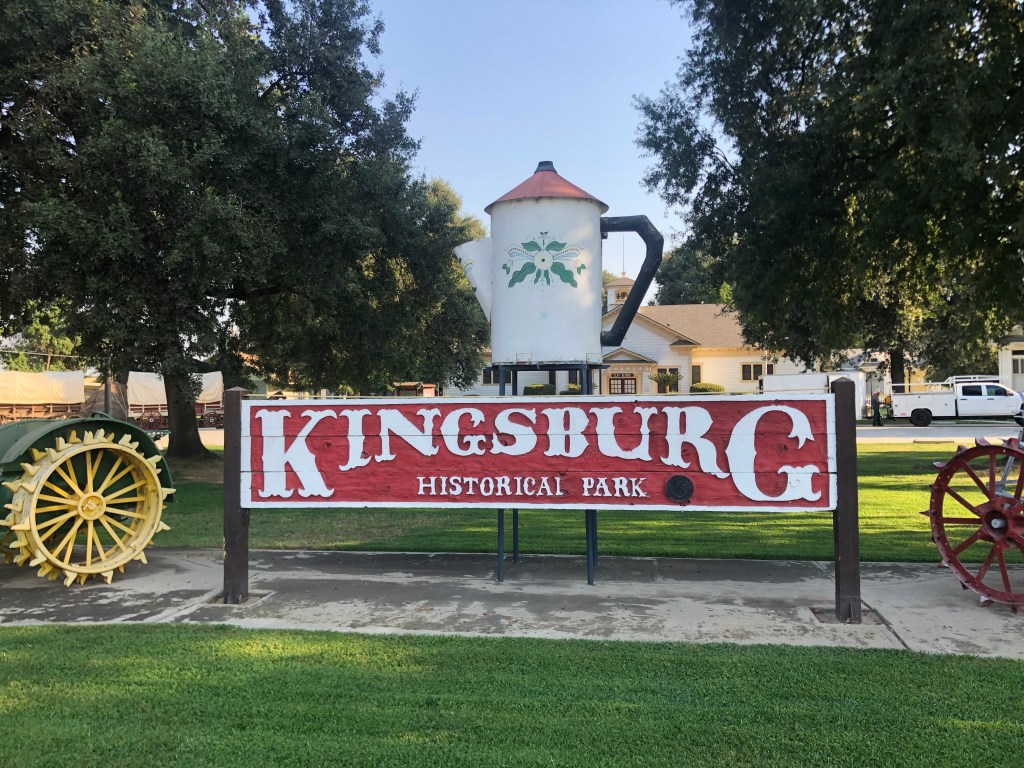
Kingsburg enthusiastically embraces the Swedish vibe. Everywhere (and especially on the main street that cuts through downtown) you see Swedish flags, dala horses, half-timbered facades, and even a gigantic Swedish coffee pot. Check it out:

And that’s just the liquor store!
The hotel where I stayed.
Traditional folkcraft “Dala Horses” are everywhere
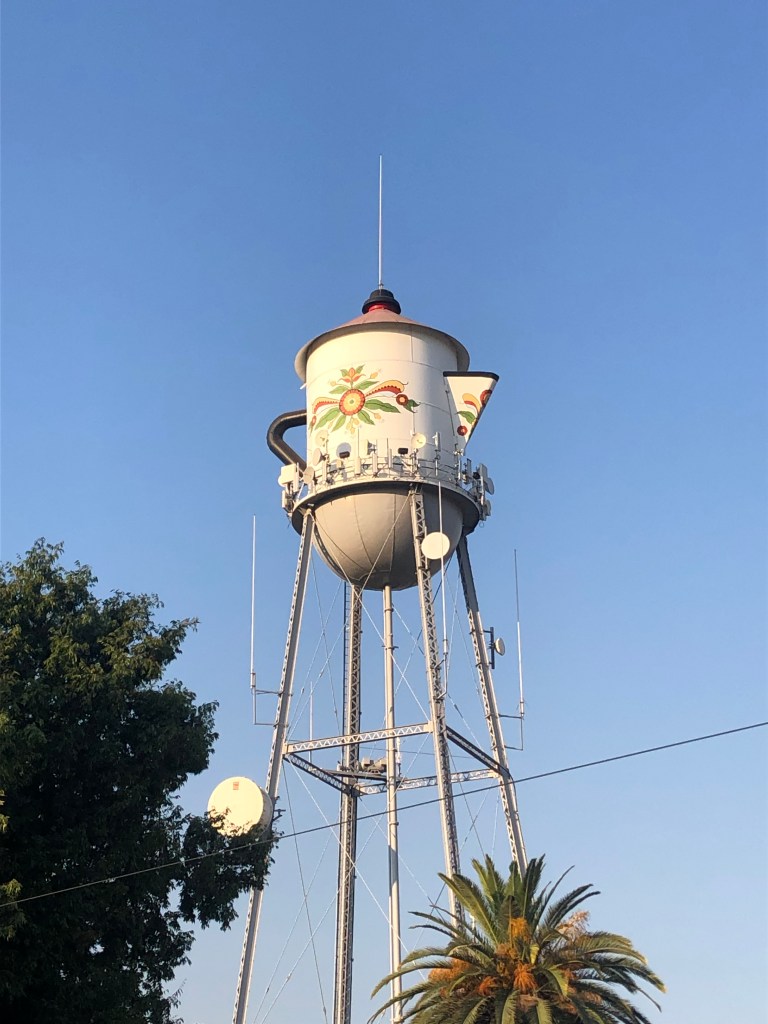
Even the town’s water tower fits the theme.
Miniature version
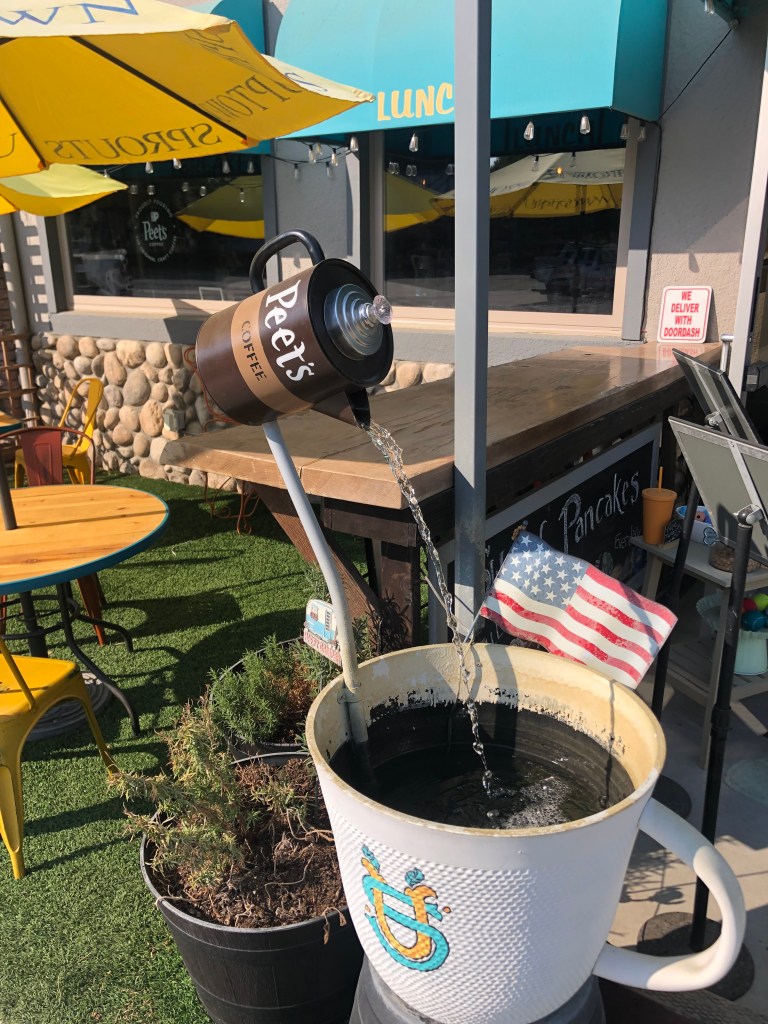
At Peet’s, its the cup rather than the pot that gets the Swedish treatment.
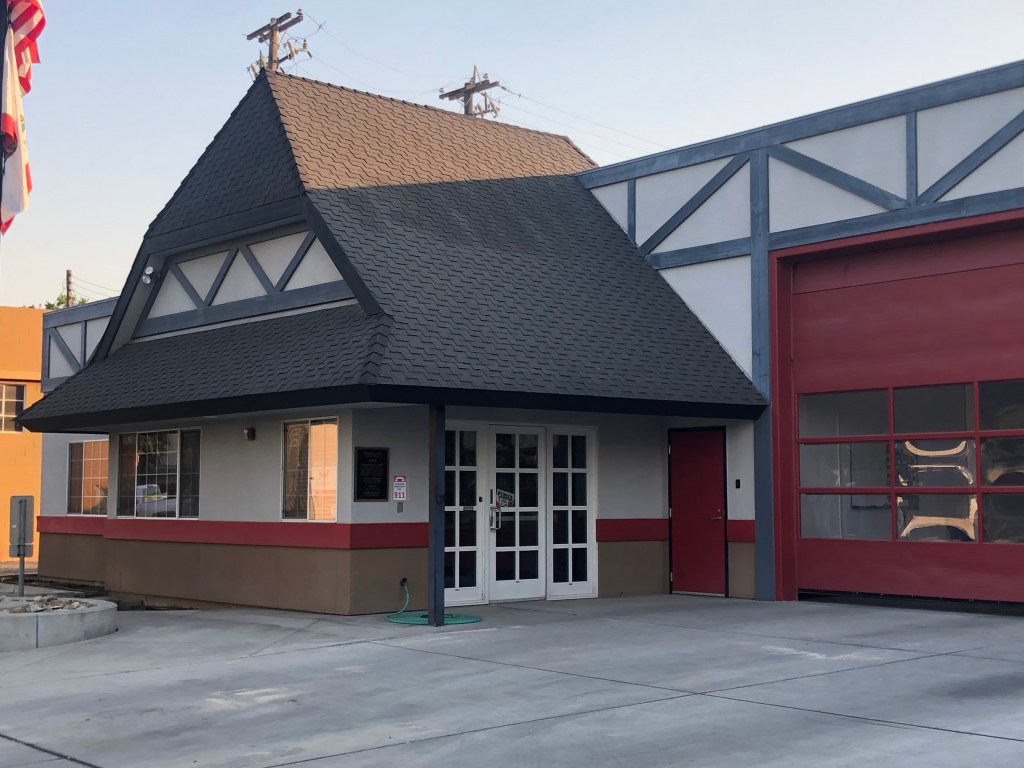
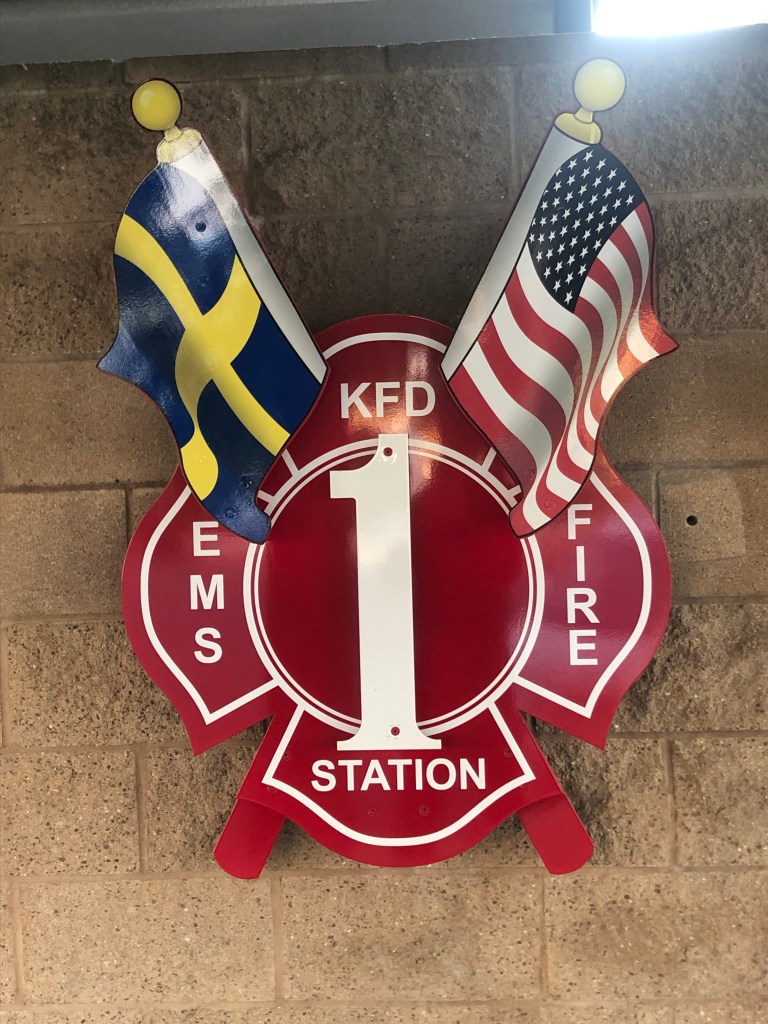
Kingsburg Fire Station.
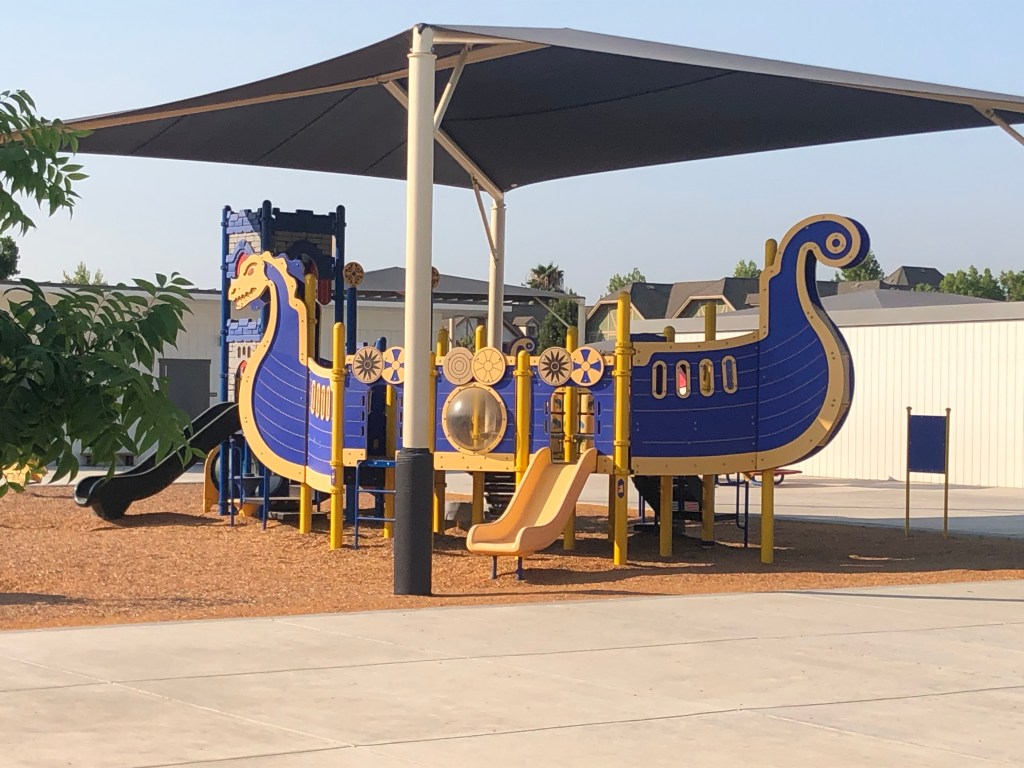
Playground at the local school
Caption contest!
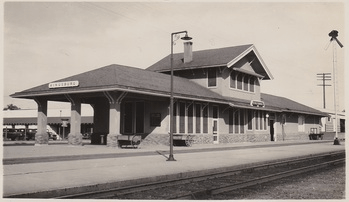
Like so many California settlements, Kingsburg owes its existence in part to the railroad. In 1873 the Central Pacific Railroad established “Kings River Switch” as a flag stop, where boat-borne freight was transferred to rail (and vice versa). The town’s name was changed a number of times, to Wheatville to Kingsbury to Kingsburgh and finally to Kingsburg.

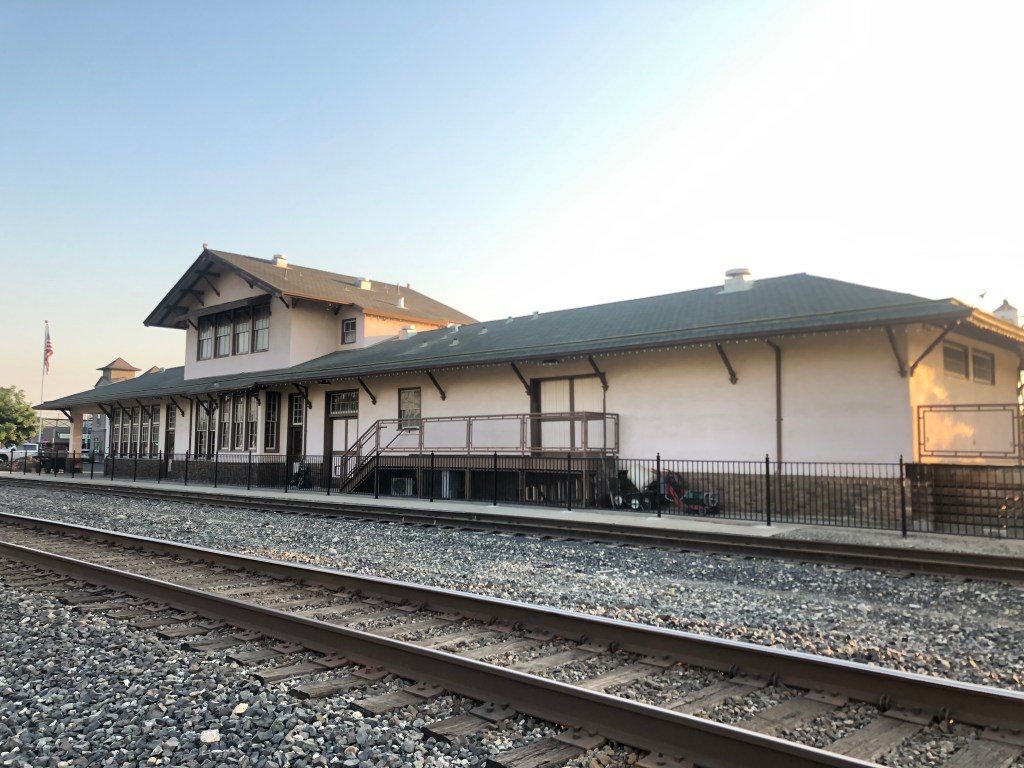
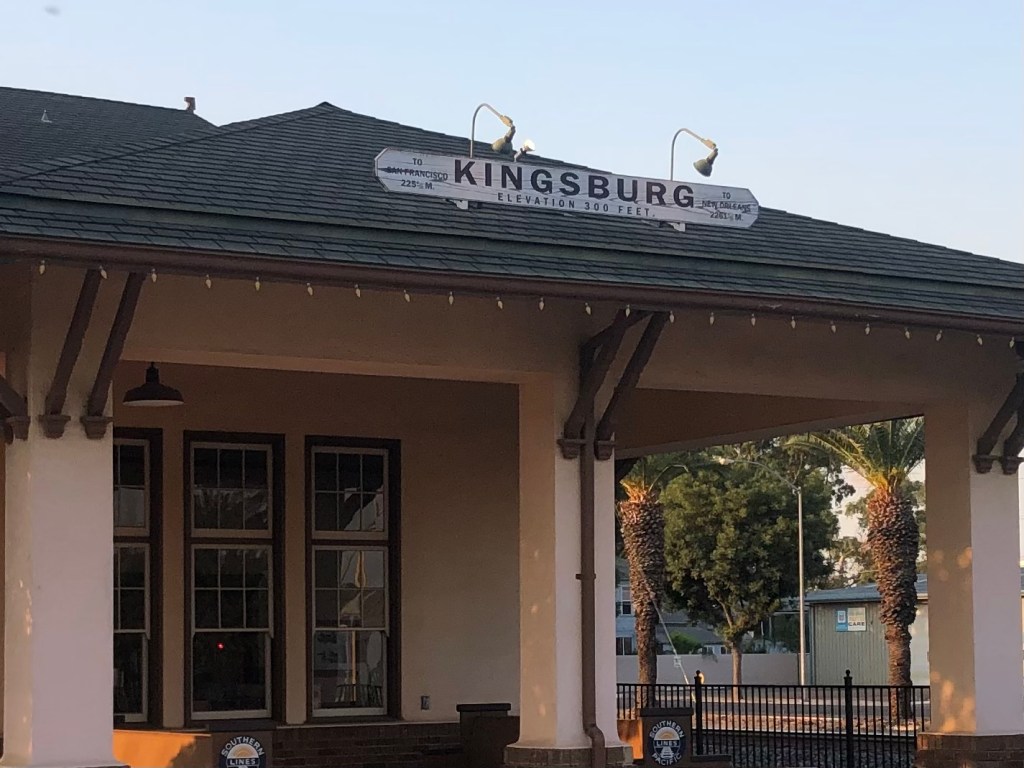
Notably, the railroad station still stands today. And fortuitously, I arrived on the one day of the week the station is open for tours. Docent Steve (no relation) showed me around. The current building was constructed in 1888, and was moved to Kingburg in 1902 to replace the original station that had burned down. Remarkably, both stations were constructed from the exact same plans (“Southern Pacific Common Standard No. 18”), so the replacement station was simply dropped directly onto the foundation of the station that had burned down.

That was then….
…and this is now.

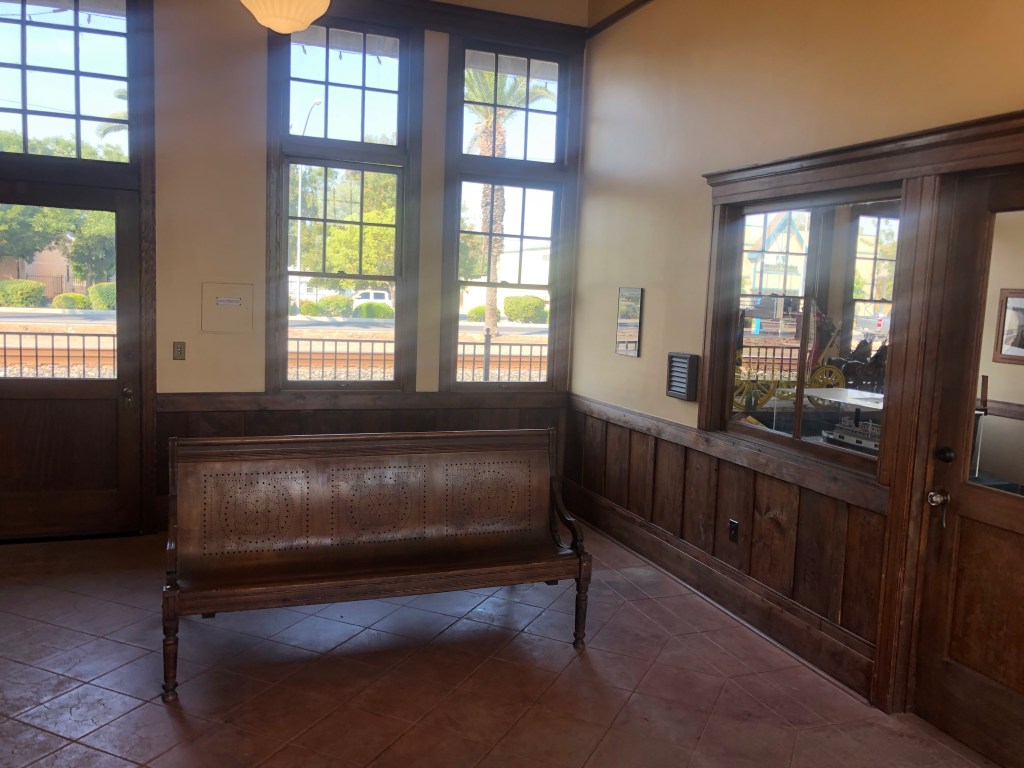
The station/museum is maintained by an amazingly dedicated crew of volunteers. It’s been restored to appear as it did in 1922, when it was modernized with electric lights, steam heat, and a stucco facade. The latest restoration took place 2007-2015, and it’s a well-executed, authentic restoration. The station is full of period-correct antiques, including many pieces (such as the telephone, freight scale, and some furniture) that are original to the depot.

The stucco walls are period-correct for the early 1920s.
Waiting room
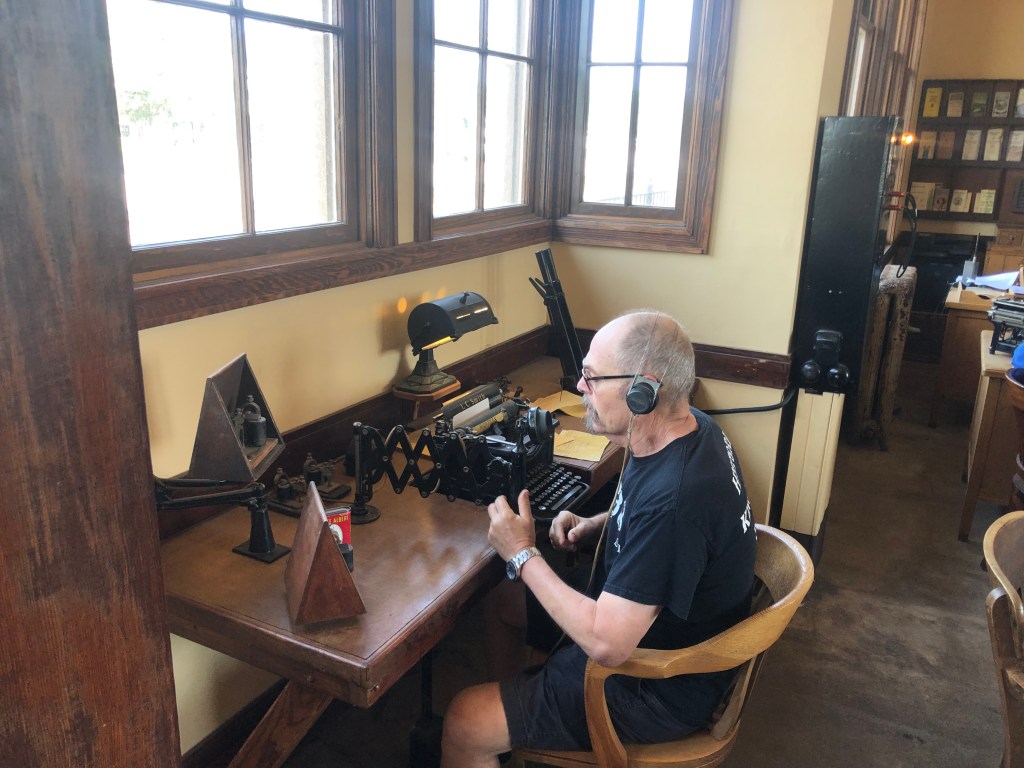
Docent Steve in the office, with original scissors phone and telegraph.

Docent Steve is a knowledgeable historian who’s eager to share his knowledge, but the one thing I couldn’t get him to shed much light on was: Where does Kingsburg’s Swedish connection come from?

This is a question I pursued at the local bakery. The woman behind the counter said she thought there used to be “a lot of Swedes living here,” but that “these days hardly anyone is Swedish.” She said she never really gives it much thought.

Next I asked at the coffee shop: “What’s the story behind the Swedish theme of this town?” asked I. The young woman seemed to be taken by surprise. “What Swedish theme?” To her it was all just decoration, I guess. “I commute from Fresno,” she added, as though that explains everything.

The clerk at my hotel darkly observed that “The Church controls everything in this town.” I wasn’t sure if she meant the Church of Sweden or a local parish or maybe some kind of Elmer Gantry figure. I thought it best not to ask her to elaborate.

Headquarters?

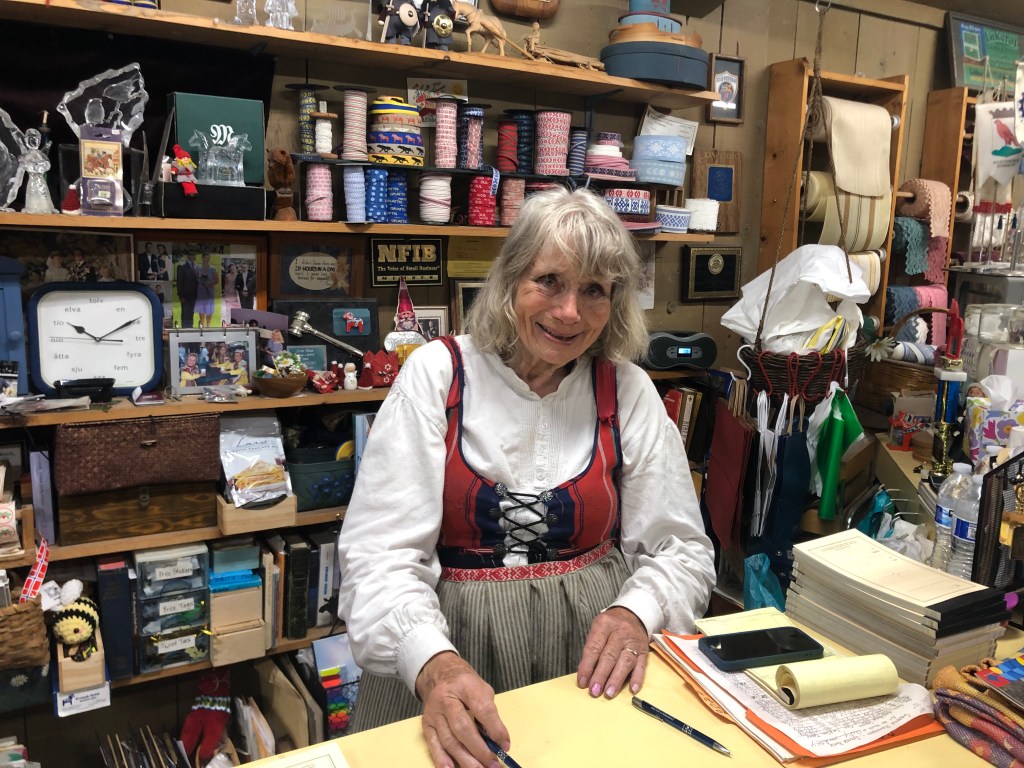
Finally, at a local cafe a friendly woman (who, alas, wouldn’t consent to being photographed for this blog) advised me to talk to the owner of the Svensk Butik gift shop. “She knows all the history of this town.”

And that wasn’t an exaggeration. June (for that’s her name) comes from honest Swedish stock, was born in Kingsburg, and opened her shop here 39 years ago. She’s been a major force behind the town’s Swedish theme. Dressed in traditional Swedish garb, she told me the story behind Kingsburg.

The Swedish Savant of Kingsburg.

Here’s the short version, and I apologize if I have garbled anything. Back in the 19th century, Swedish immigrants came to the Midwest to escape religious persecution and find employment. They took up mining, agriculture, and other trades. But over time some became restless and began to the west coast, where the weather was better, might be the ticket. A scouting expedition was dispatched, and through some fortuitous encounters that featured someone’s cousin, the scouting party determined Kingsburg would be a suitable place. Many Swedish-American families subsequently came out to settle in Kingsburg, and by the turn of the century virtually the entire town was ethnically Swedish.

Notably, those early settlers didn’t try to replicate the architecture and other trappings of the Old Country. They were just trying to sink roots and make an honest living. It was a fairly prosperous town, served by the railroad and the river.

In the 1960s the railroad ended its passenger service, and then CA-99 became multi-lane freeway that whisked travelers past the town without stopping. To make matters worse, many local residents made use of that same freeway to shop in Fresno and other towns. Kingsburg needed something to bring business back to its commercial center, and that something became the Swedish Plan. The aforementioned visit to Solvang followed. June tells me that the good folks of Solvang warned the Kingsburg delegation against becoming too much like Disneyland. Evidently there’s some regret among Solvang’s residents that the Danish village is built to serve tourists but not residents. June tells me that, in her opinion, Kingsburg found a good balance, where the Swedish theme is evident and attractive, but the underlying services remain practical and accessible to the town’s residents.

She also mentioned that Kingsburg holds an annual Swedish Festival every May, with native food, crafts, music, and the like. I may need to come back.

After hearing June’s story, I reconsidered my typology of organic vs. contrived theme towns. In some ways Kingsburg is promoting its very real Swedish history, although few of the current residents have any connection with the Old Country. But what struck me was the friendly vibe of the place. Every single person I spoke with was kind and welcoming and happy to be there. The public spaces were clean and attractive and welcoming..The main street even had Swedish music softly playing over speakers. Even if the Swedish heritage feels a bit forced, it doesn’t feel fake. This is just a nice, friendly, attractive town that I’d like to visit again.

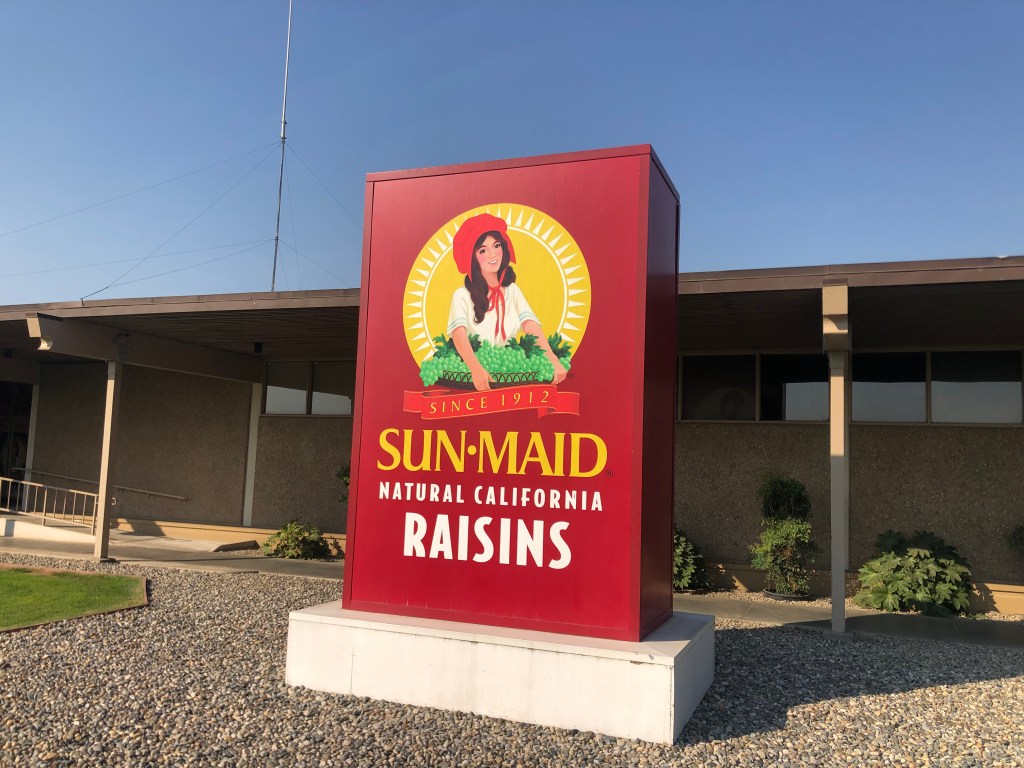
There is one dark postscript to this story–Kingsburg is the headquarters of Sun-Maid Raisins, which is nice so far as it goes.

Caption from the back of the box: “On July 1, 1992, this box was dedicated by Mrs. Gayle Wilson, the wife of California Governor Pete Wilson, as the World’s Biggest Raisin Box. The box was originally constructed and filled with 16,500 pounds of Sun-Maid raisins to establish a world record in The Guinness Book of World Records by business students from California State University, Fresno, as part of a class project.”

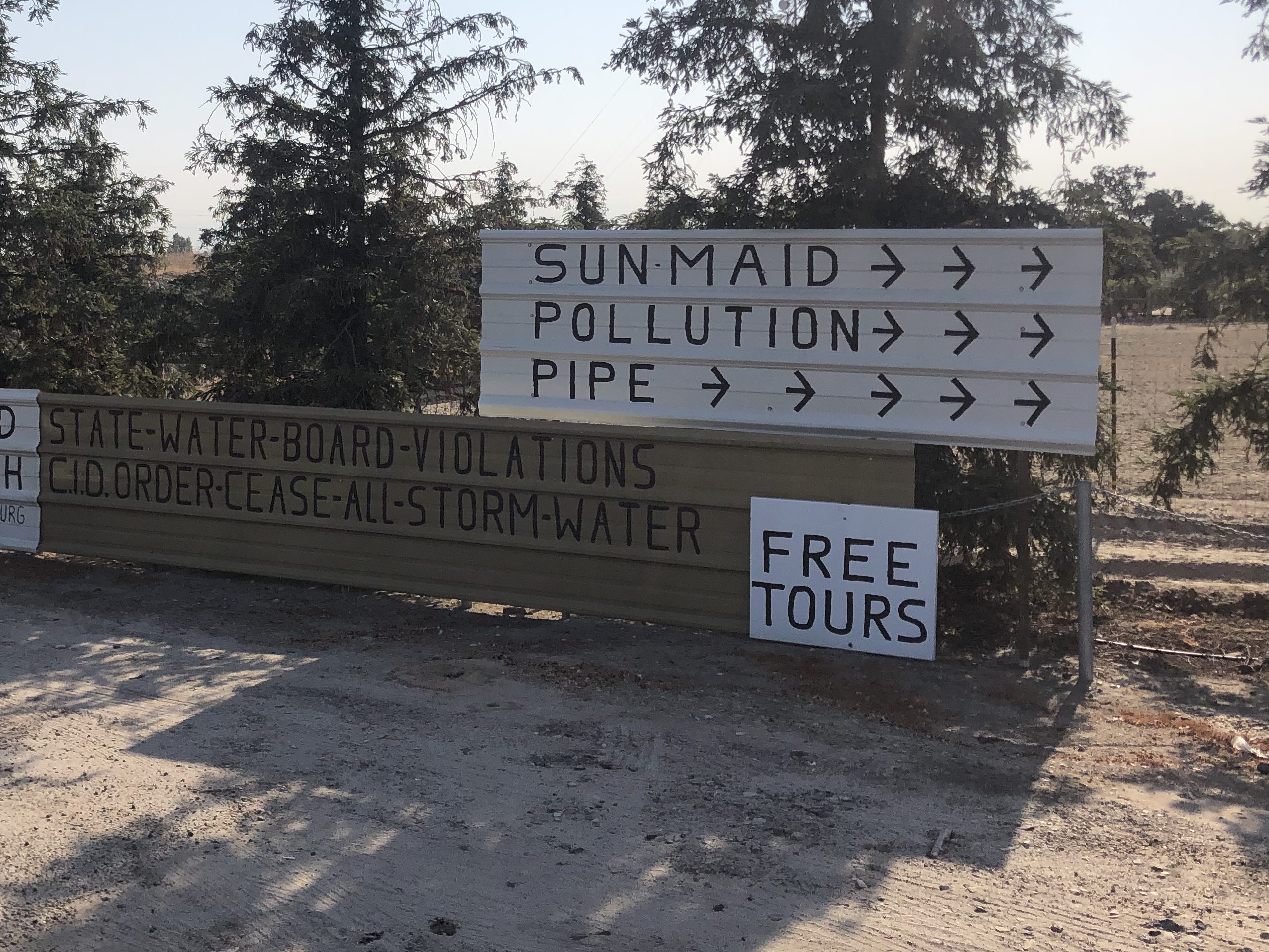
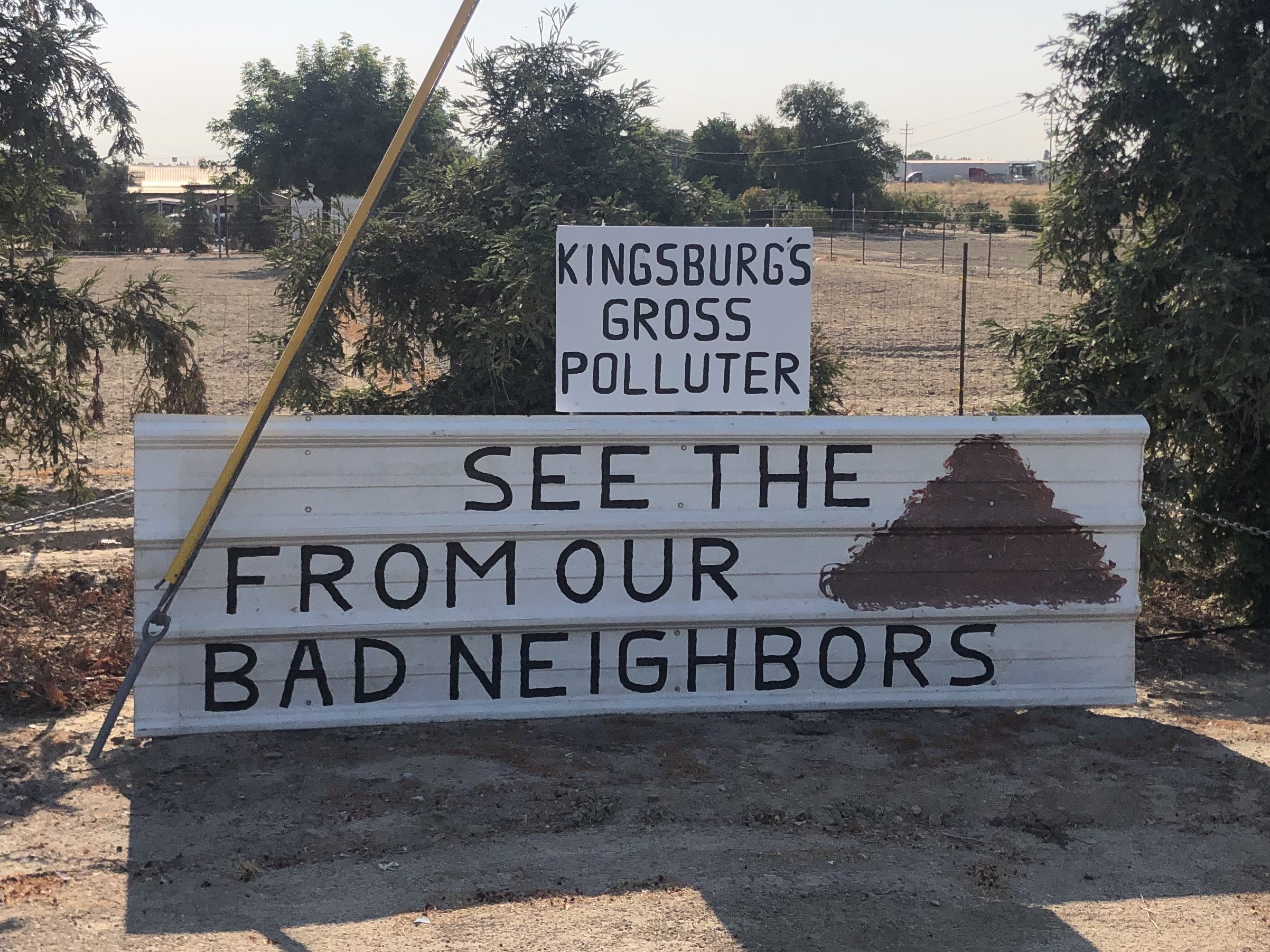
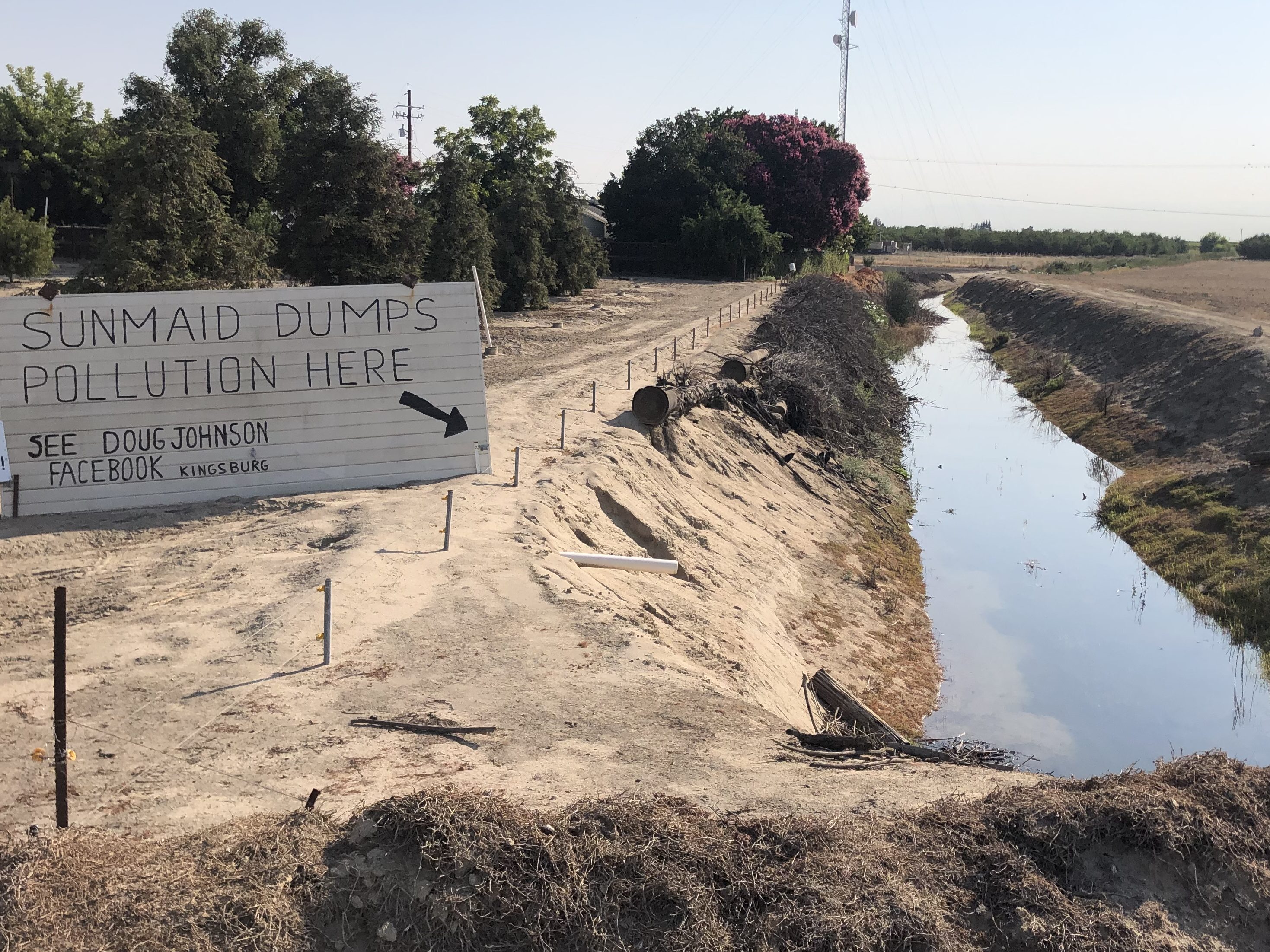
However, a neighbor to the Sun-Maid plant is evidently at war with the company, putting up combative signs, maintaining an expose-themed Facebook page, and offering passersby “free tours” of the environmental degradation supposedly caused by Big Raisin.

Free you say?
It doesn’t exactly look like the Cuyahoga River.

It seems the neighbor (Doug Johnson) is upset that some of Sun-Maid’s “raisin processing discharge” ends up in his ditch. I can’t offer any judgments about his claims, but I will say that this doesn’t appear to be a Silkwood situation. So let’s move on to the..

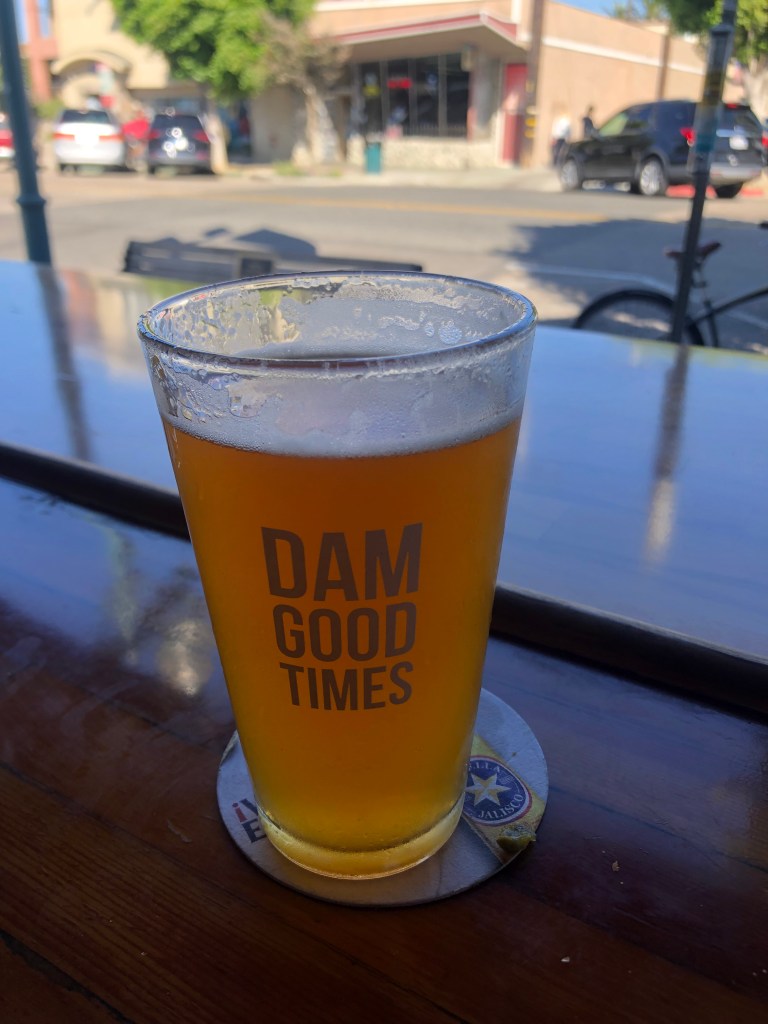
BREW OF THE DAY

For reasons that are too convoluted and uninteresting to get into here, I had my BOTD at the Seal Beach Grill in Seal Beach, CA. It was a warm day, so I decided an IPA would do the trick. The Seal Beach Grill does not brew its own beer, so I had an Elysian Space Dust IPA. Elysian Brewing is based in Seattle, and, like so many breweries, is owned by Anheuser-Busch. But let’s not hold that against them.

Space Dust is a bright, flavorful IPA. It’s got a fresh sweetness that’s nicely balanced with several different types of hops. It presents beautifully with a golden honey color, lively carbonation, and a decent surface of foam. At 8.2 percent ABV, this is a big beer that happens to go down easy. On a hot day it can be downright dangerous. Ask me how I know.

Four stars out of five.

Road trips

Back To Benjamin

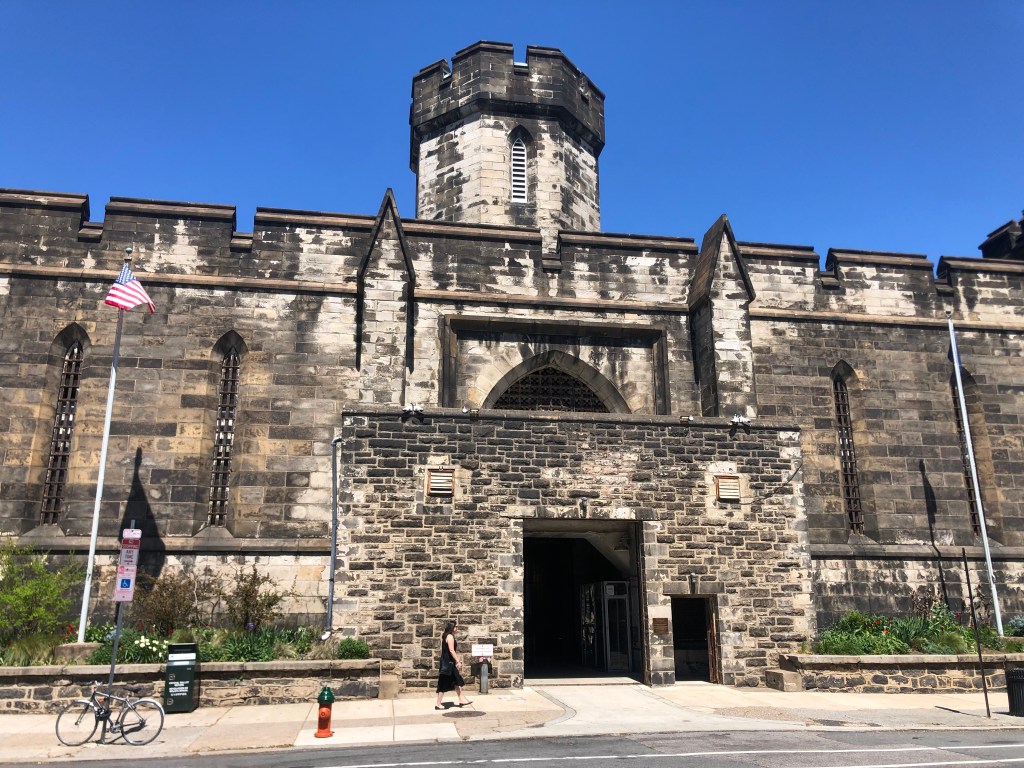
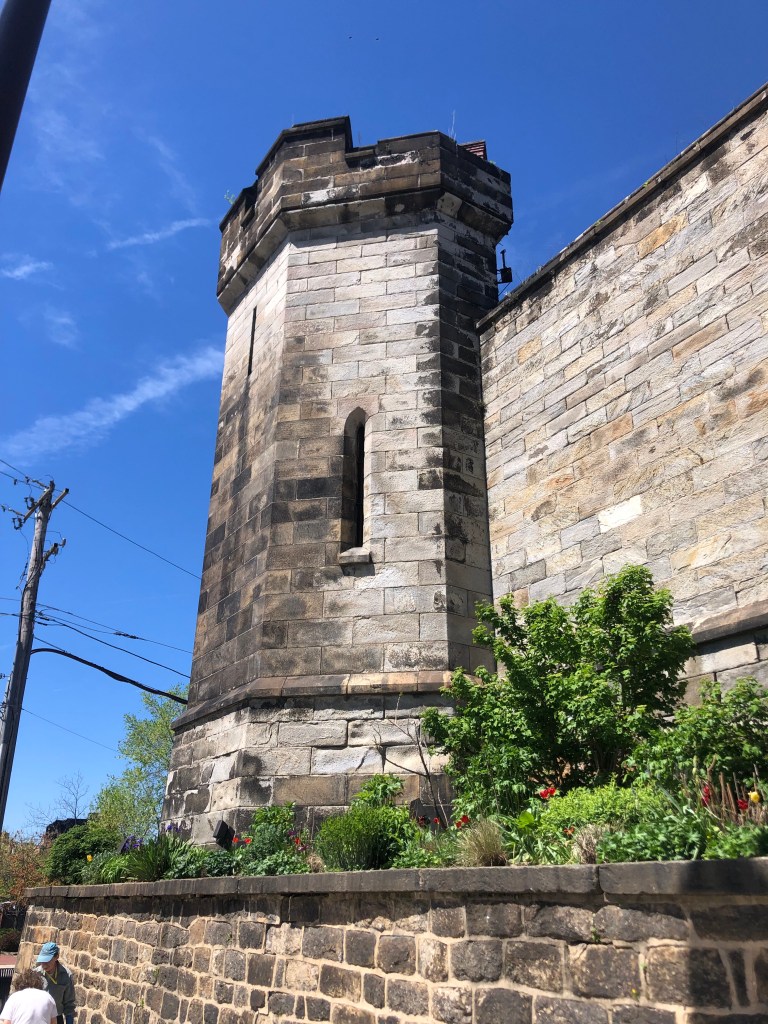
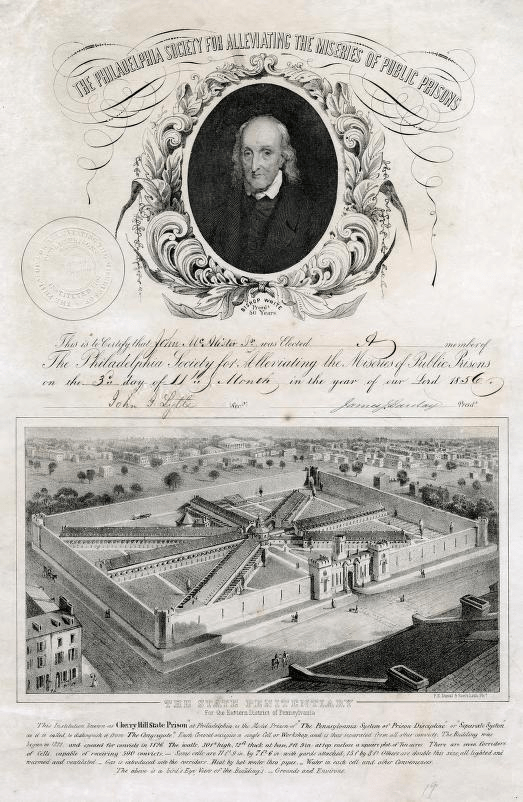
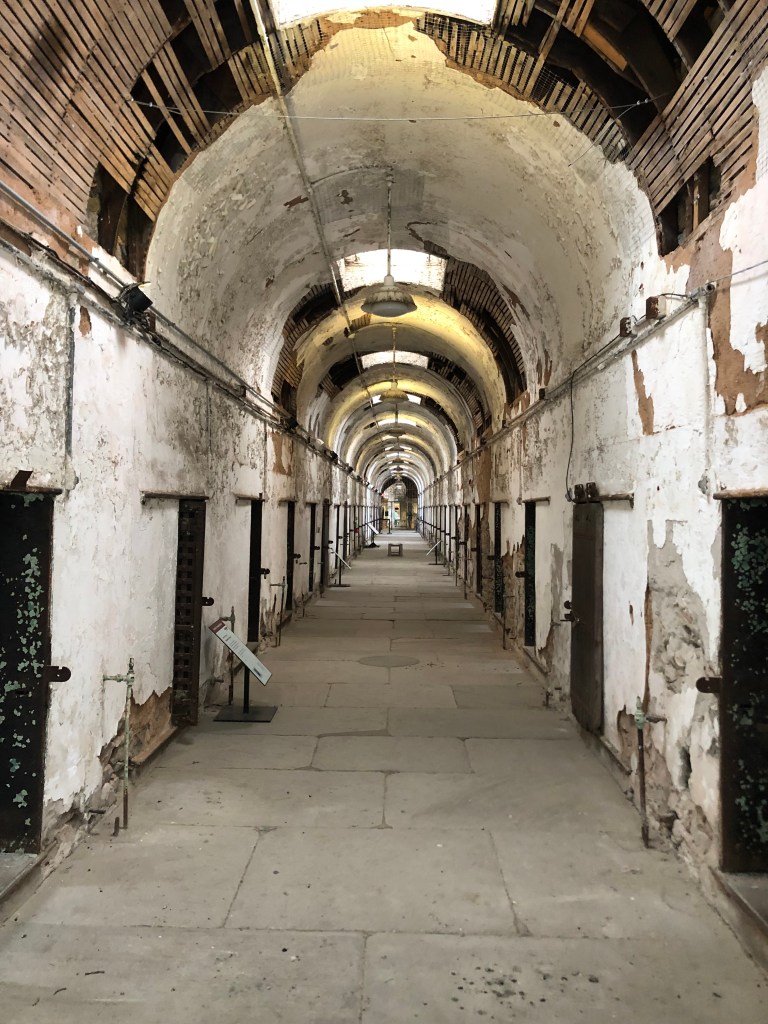
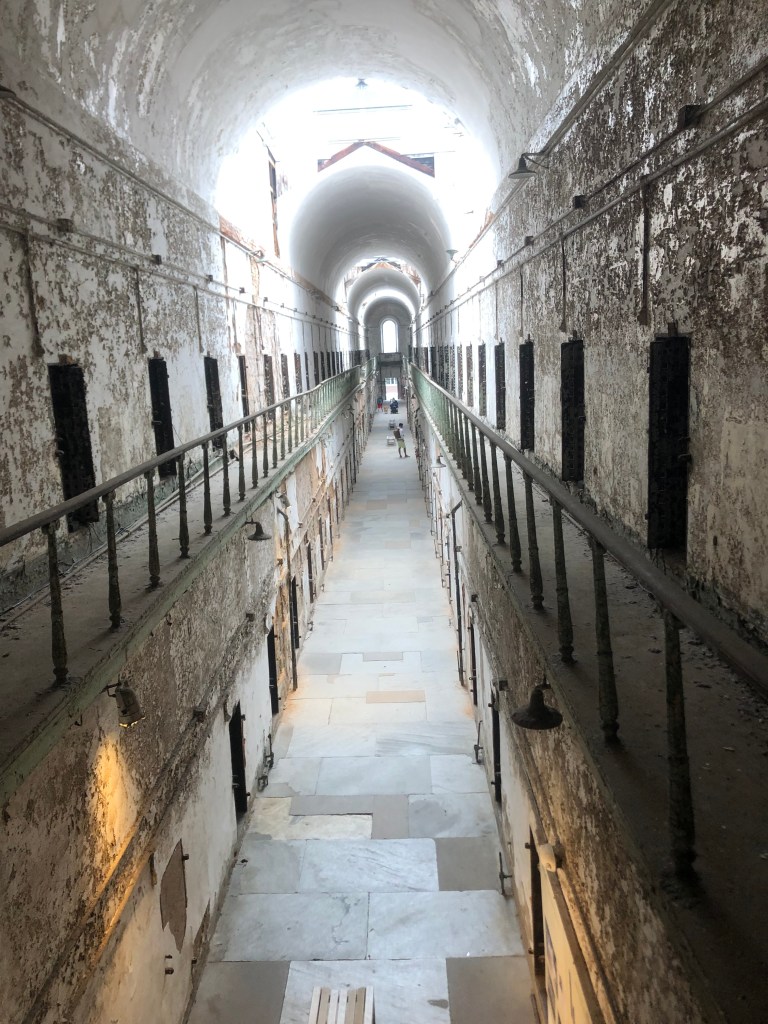
Today I returned to Philadelphia to finish up my Ben Franklin research. This took me to a couple of sites that you might not associate directly with Franklin. For example, I spend a couple of hours meandering about the labyrinthine Eastern State Penitentiary. Opened in 1829, it’s considered the world’s first true “penitentiary,” designed specifically to promote penitence among its inmates. Toward this end, prisoners at Eastern State were kept entirely isolated from one another, housed in (relatively large, by today’s standards) cells that resembled small chapels, prohibited from speaking, and given solitary jobs to perform. The idea was that isolation would impel prisoners to reflect on their crimes and on spiritual salvation.

“A Mighty Fortress is Our God…”
Reminds me a bit of my visit to the old Preston Castle reform school. The blog post is here.

What does this have to do with Ben Franklin, you ask? Eastern State Penitentiary was a direct (though delayed) outgrown of a meeting held at Ben Franklin’s house in 1787. Franklin and other notable Philadelphians formed “The Philadelphia Society for Alleviating the Miseries of Public Prisons,” and many of the points for which the Society advocated were adopted into the design of the new prison. It was truly a paradigm shift in the punishment of lawbreakers.

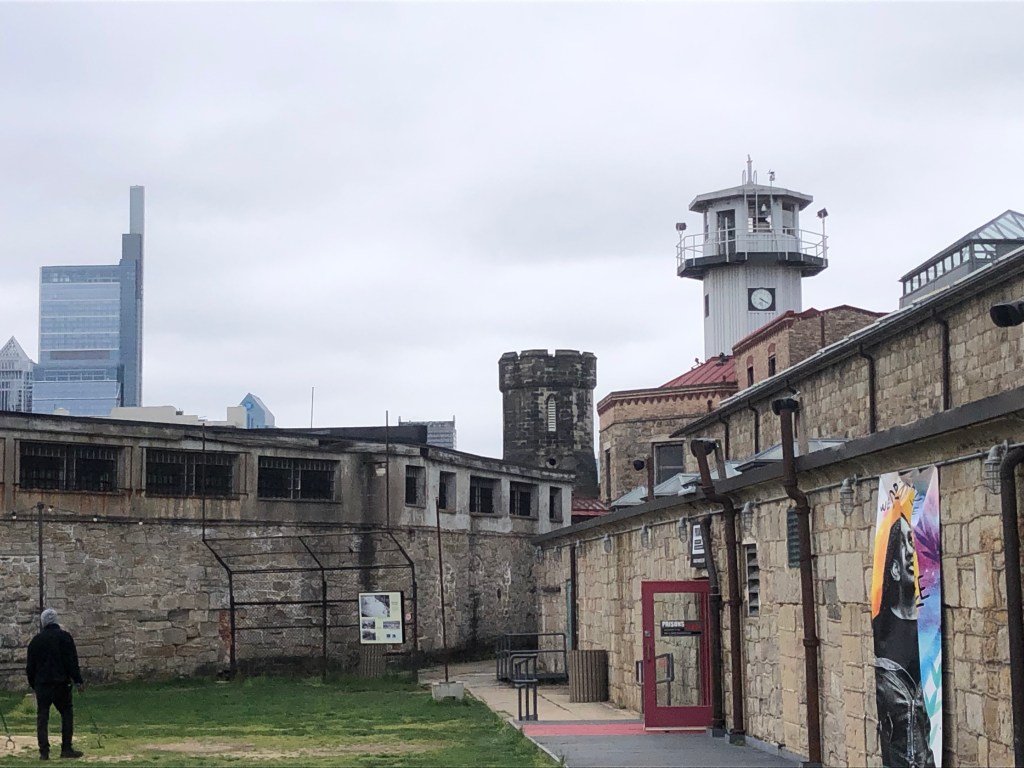
The model underlying Eastern State was adopted across the world, with many hundreds of prisons following the so-called “Pennsylvania System.” Over time, however, Eastern State’s approach proved too costly, and the principles of isolation and silence were officially abandoned at the prison in 1913. It closed due to obsolescence in 1970.

View from the exercise yard today. Original 1829 turret in the middle; 1950s guard tower to the right; modern Philadelphia skyline to the left.

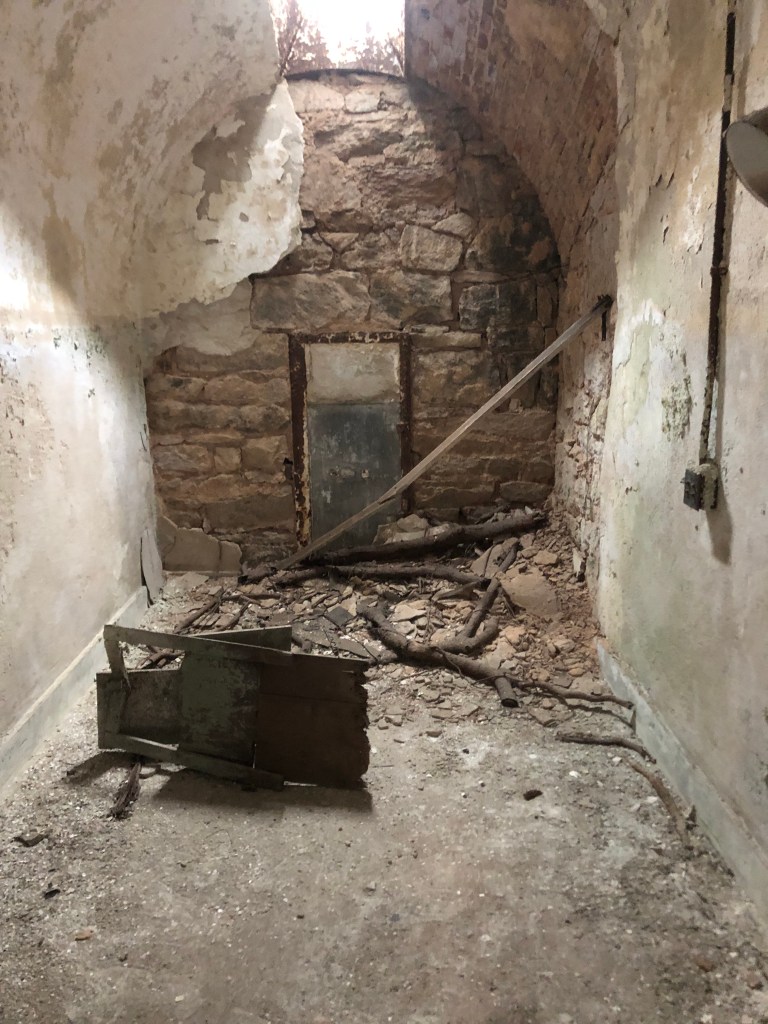
For decades the prison simply decayed in place and was eventually slated for demolition. But it was saved by preservationists at the last minute, and since the 1990s it has been maintained in a state of arrested decay, with tours offered most days of the week.

And if you think this looks a little spooky, they do a Halloween Haunted House event as a fundraiser each October.
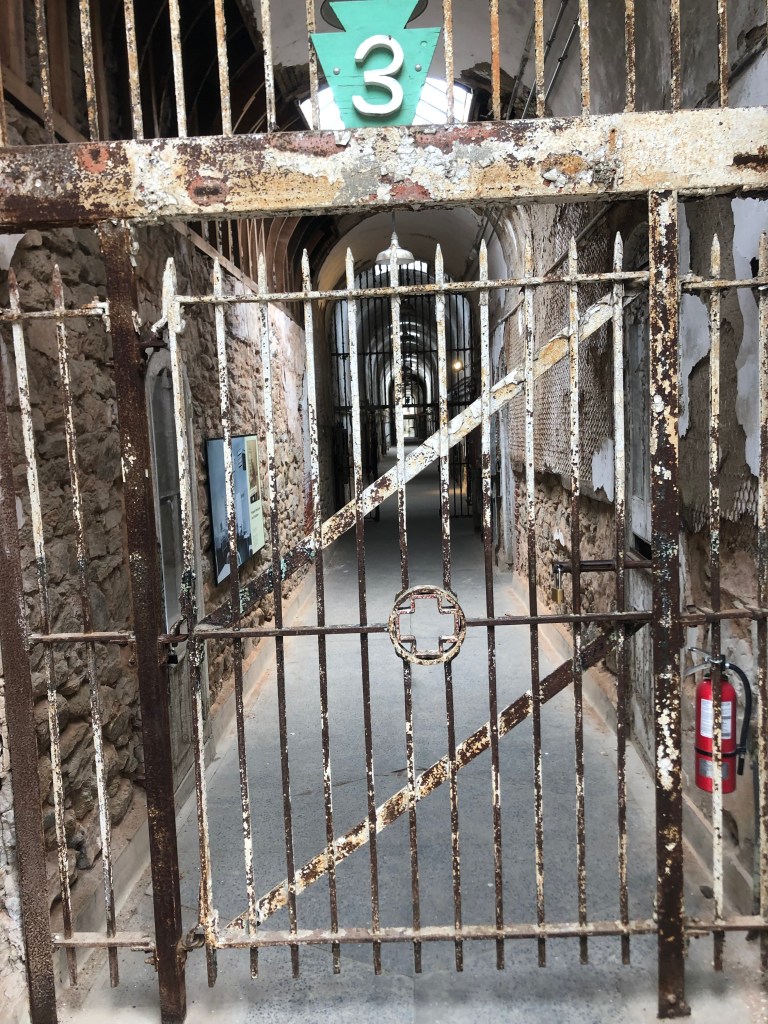
The Hospital Block (note the red cross symbol in the center). Al Capone had his tonsils out here in 1929. Seriously.
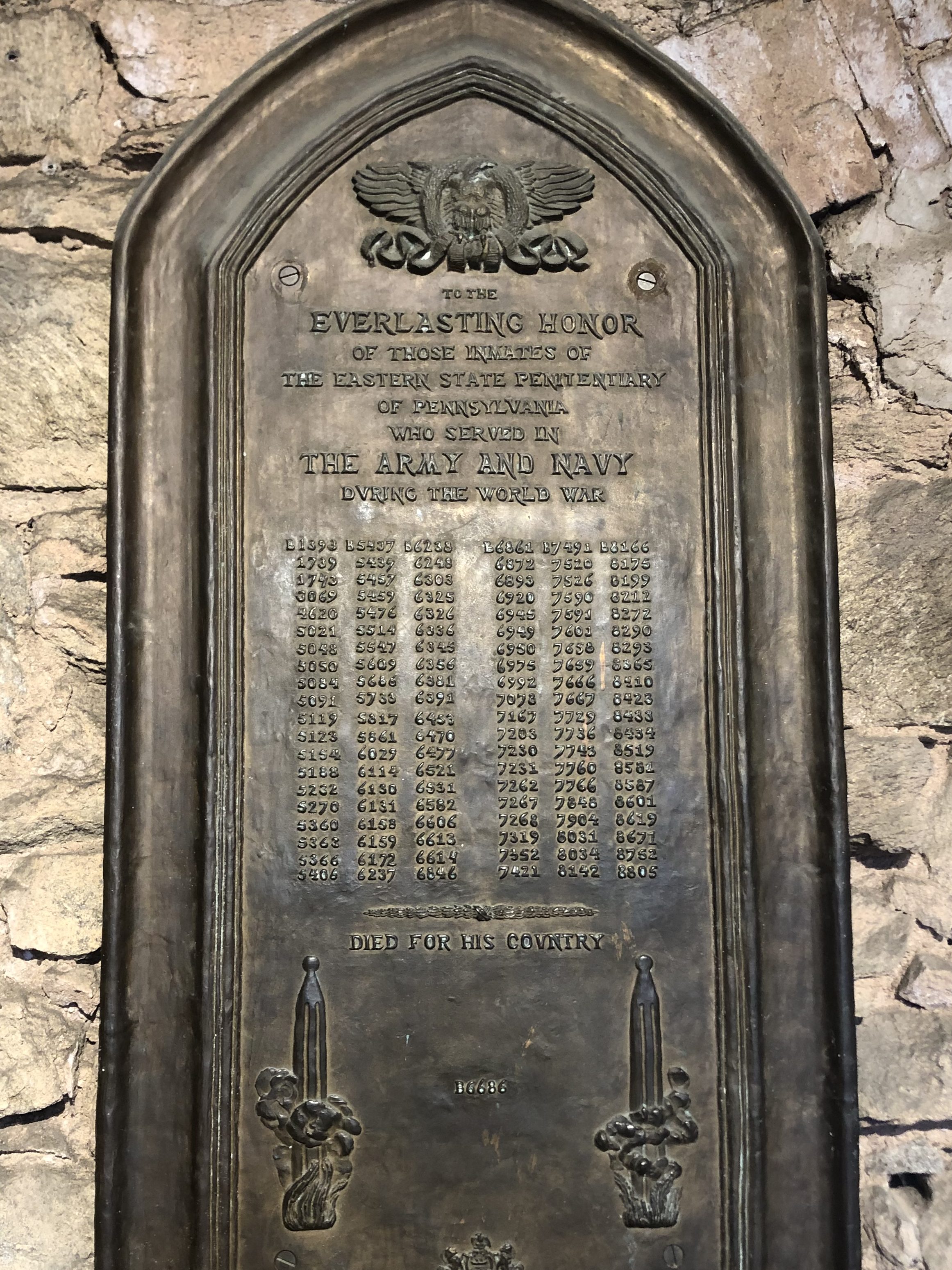
Plaque listing prisoners who died fighting the First World War. (Over 100 prisoners were paroled to fight in the war.) Note that they are identified here only by their inmate number.

It was a sobering visit. And while one can certainly find fault with the system of incarceration, we can thank Ben Franklin (among others) for helping to move the country away from the horrific practices of the 18th century.

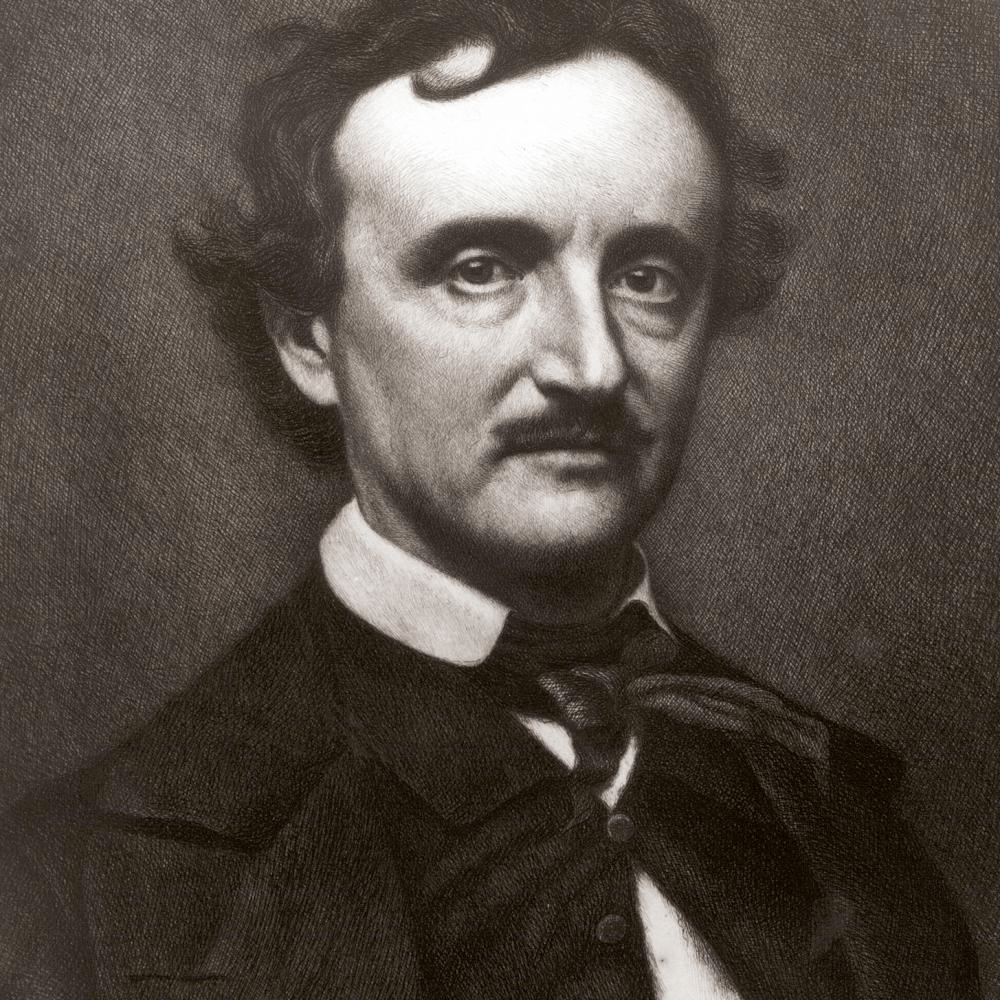
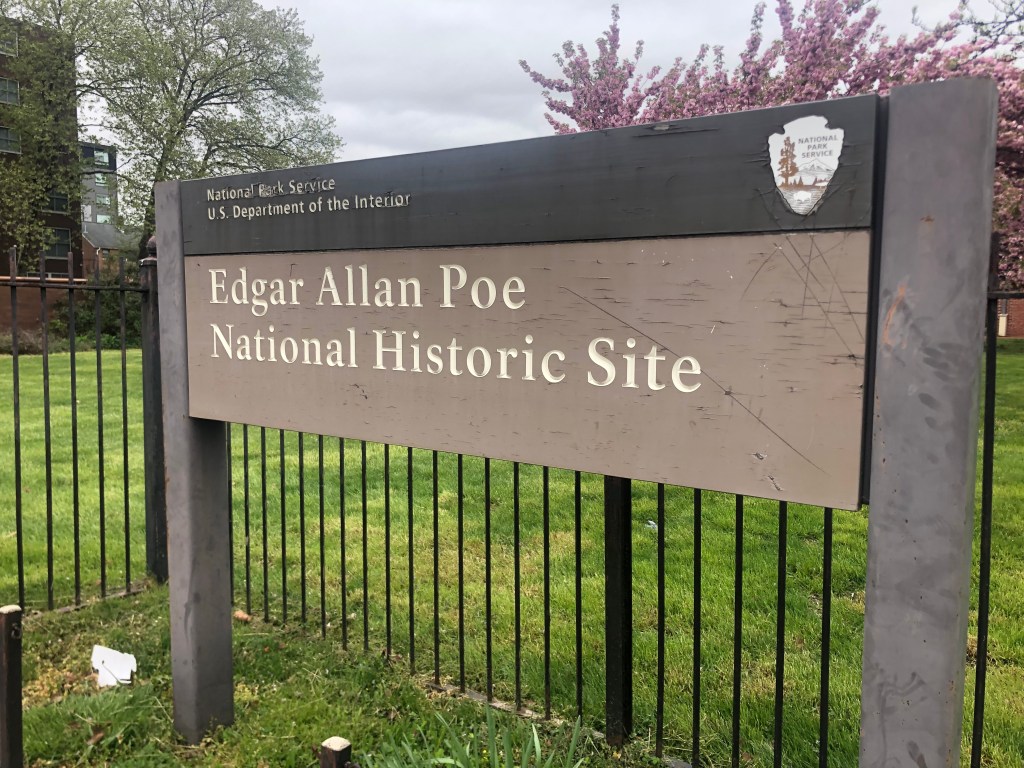
My next visit of the day is harder to connect with Ben Franklin: the Edgar Allan Poe house on N. 7th Street. But there is a connection. Poe wrote a short story titled “The Business Man” that, some scholars claim, is meant as a satire of Benjamin Franklin’s autobiography. (Poe actually wrote several satirical pieces that ridicule the concept of a “self-made man” and conceit more generally.)

Anyway, as we learned a couple of days ago at The Philadelphia Free Library, Edgar Allan Poe had called Philadelphia home for about six years, from 1838 to 1844. The last year of that time was spent at the house on N. 7th Street, which is now a US Parks Service site.

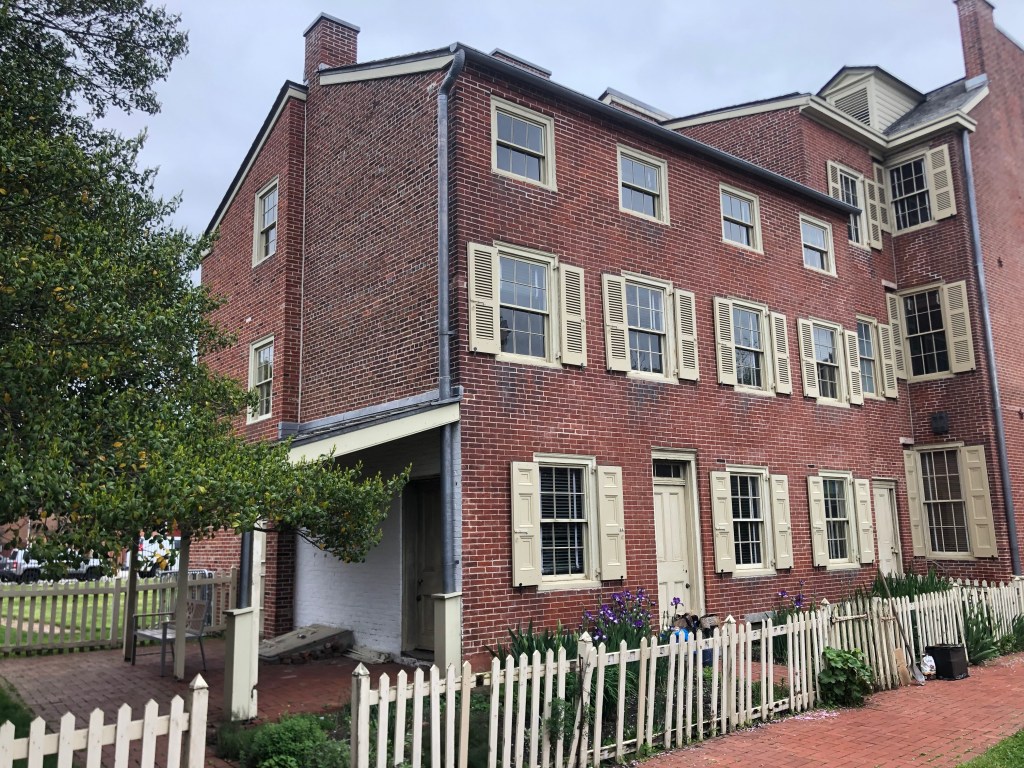
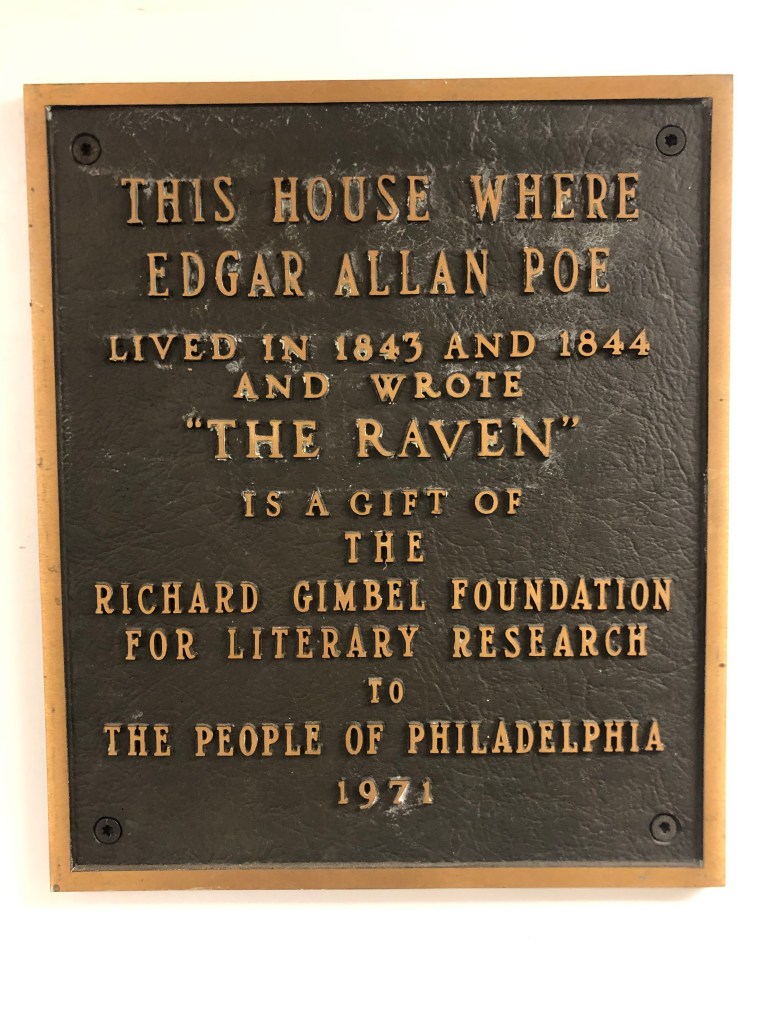
The house is a small, three-story brick structure that was built sometime between 1840 and 1842, so it was still quite new when Poe lived there. After Poe moved out the house changed hands dozens of times, with very little if any attention to its Poe connection. Finally it was purchased by Richard Gimbel (son of the department store magnate), who was a Poe fanboy. After his death in 1970, it eventually ended up with the National Park Service.

Poe’s house today.

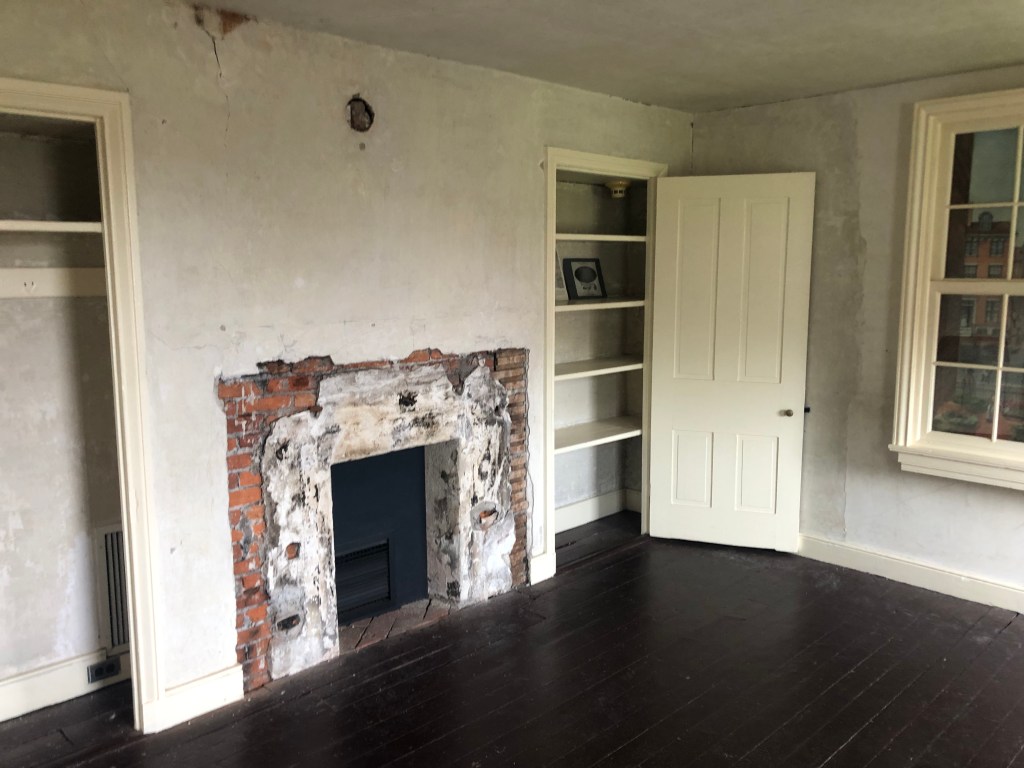
The house is mostly unfurnished, but the Park Rangers told me the floorplan and “bones” of the house are virtually unchanged from Poe’s day. In fact, I think this unfurnished space is more conducive to Poe’s spirit than one filled with period antiques and interactive displays and such. I found it quite easy to imagine Poe in this house, climbing these stairs, writing next to that window.

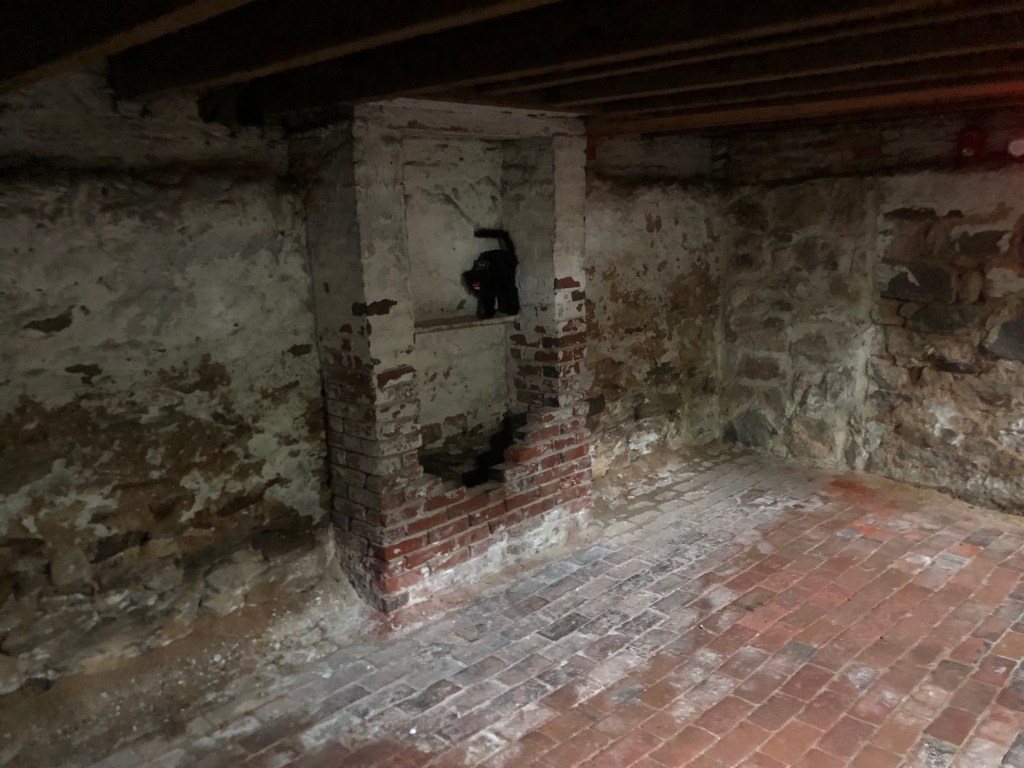
Poe wrote a number of his best-known stories while living in Philadelphia. It’s difficult to connect specific tales with each of his four Philadelphia homes. But the basement of this house is very, very suggestive of the basement in “The Black Cat.”

“In one of the [cellar] walls was a projection, caused by a false chimney, or fireplace…. I made no doubt that I could readily displace the bricks at this point, insert the corpse, and wall the whole up as before, so that no eye could detect any thing suspicious.”

Do yourself a favor and re-read the story.

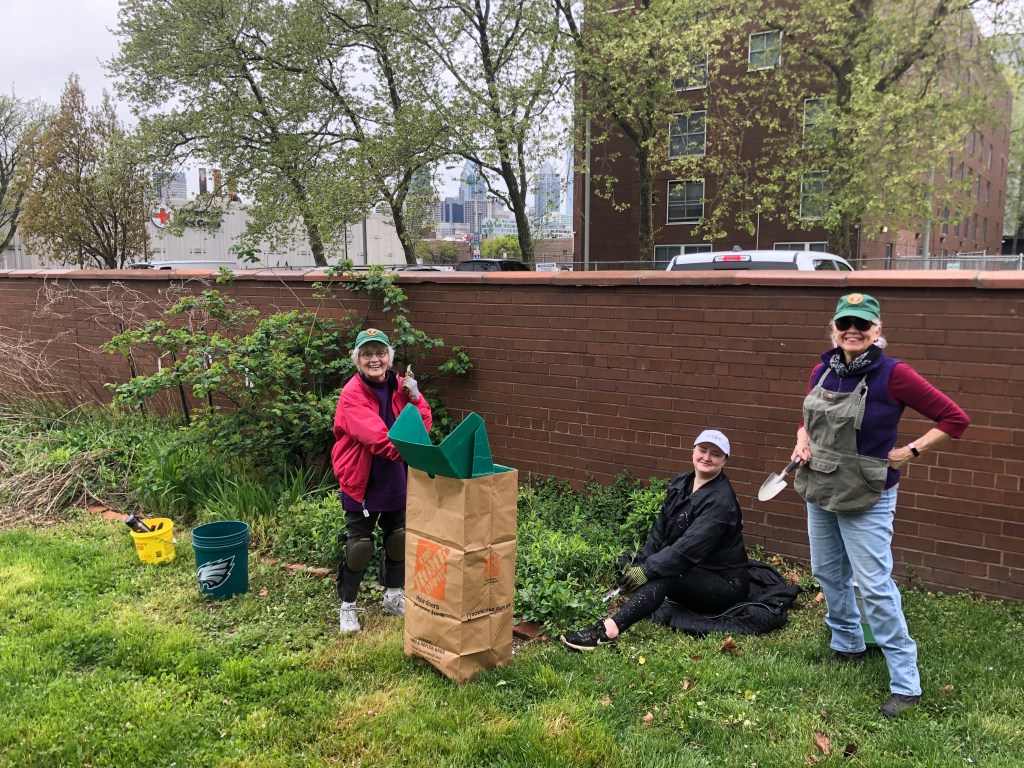
While visiting the yard surrounding the house I ran into a trio of women tending the planting beds. They are Daughters of the American Revolution and they care for the plants once a week. They are very enthusiastic, and explained in some detail the types of herbs and flowers that Mrs. Poe probably grew out here.

Let’s call them Ligeia, Morella, and Annabel Lee.

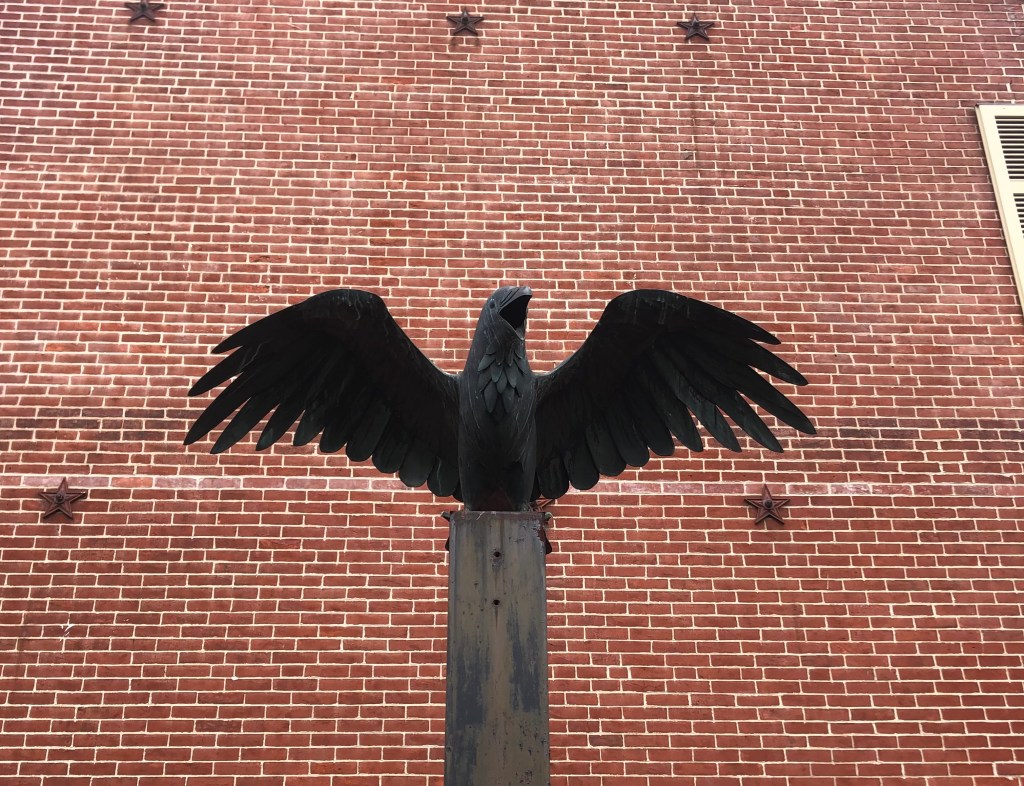
Also in the garden area was this sculpture of a raven. I’ve got to say, though: It looks a little, uh, Third Reich for my tastes. I thought Dickens’ stuffed raven (Grip) looked more like it belonged on a pallid bust of Pallas.

“Nevermore, mein Fuhrer!”

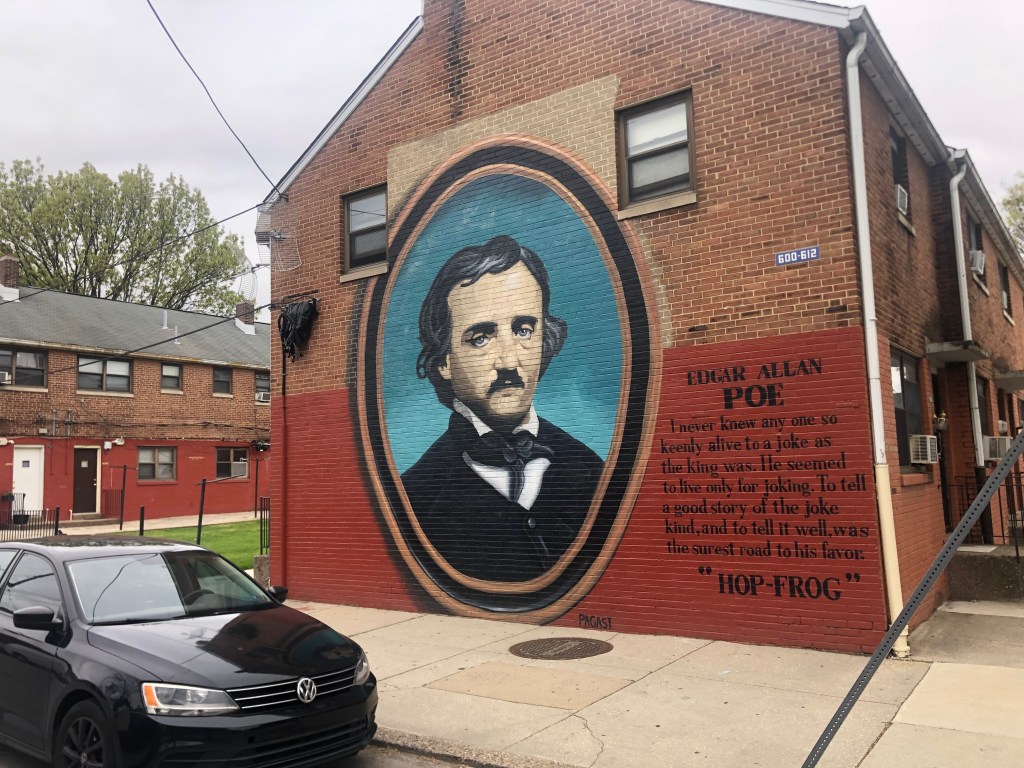
Finally, as I was leaving Poe’s house, I noticed a neighboring building with a Poe mural. It does seem that Philadelphia takes its Poe connections seriously.

The Park Rangers at the Poe house told me there are two other Poe homes in existence. The one in Baltimore (which I describe in this 2022 blog post, which also contains an Easter Egg related to The Thinker!) and one in The Bronx (which will have to be the subject of a later trip). I did impress the Rangers by pointing out that there’s a third extant Poe domicile in the form of his dorm room at UVA. (I describe it in this blog post.)

BREW OF THE DAY

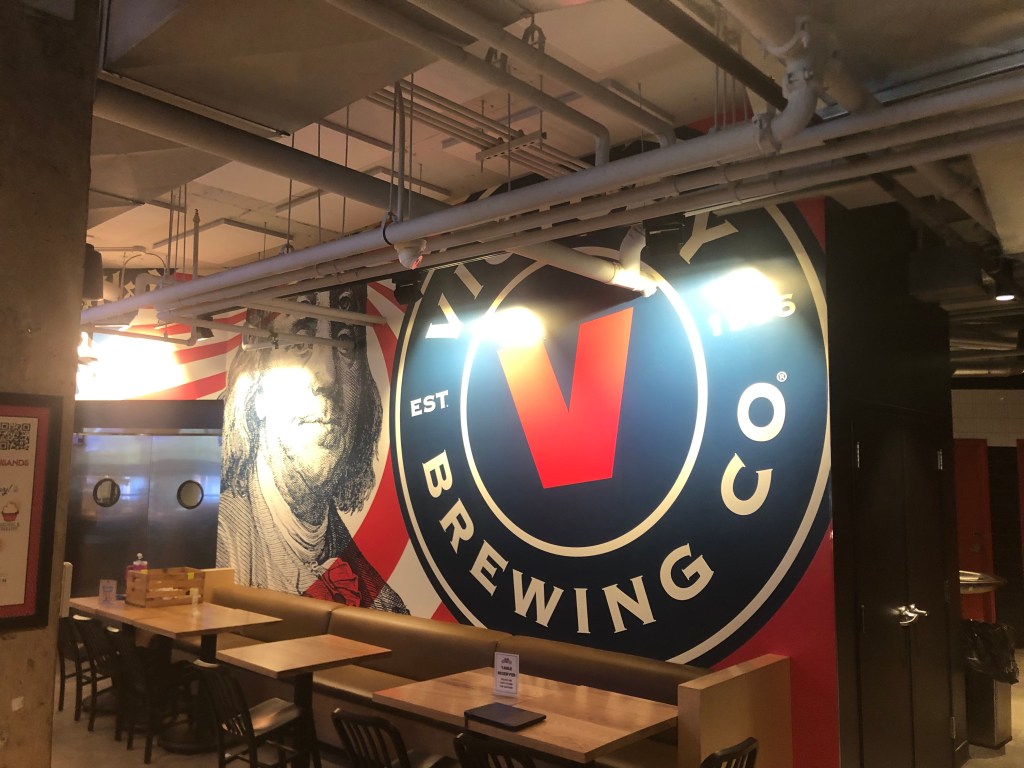
My final Ben Franklin experience today took place at Victory Brewing Company. The connection here is simply that it’s located at 1776 Benjamin Franklin Parkway.

Ben would approve.

In 1996 Victory Brewing was established in Downingtown, PA (which you will recall is home to the diner featured in The Blob). This Philadelphia location opened in 2021.

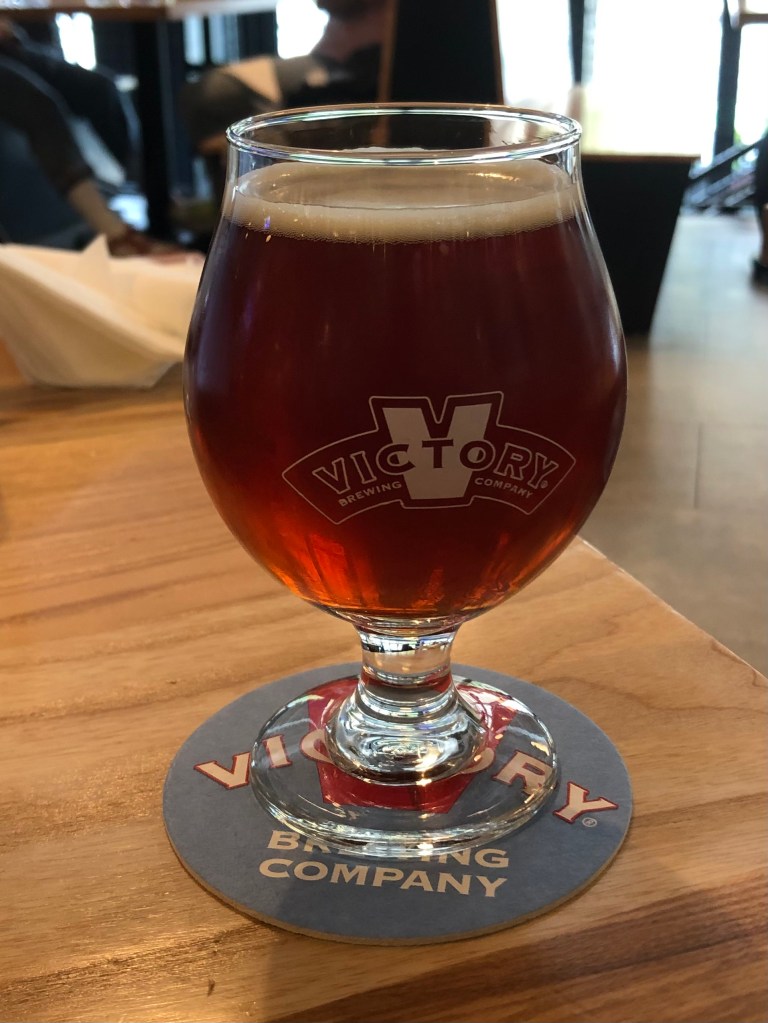
I ordered Victory’s Moonglow, which is a weizenbock. As you know, a weizenbock is a like a bock, but much of the barley is replaced with wheat. It’s a German style that you might find at the Munich Oktoberfest.

Victory’s version displays a medium copper color, almost no head, and high carbonation. At the front it’s quite sweet, and reminiscent of a classic saison. You can’t help but notice the distinct flavor of dried apricot and raisins. Then there’s a burst of spices mid-palate, including clove, cinnamon, and maybe anise. This morphs into the distinctive flavor of banana Runts, which I consumed by the handful in the 1990s. Finally there’s a little bit of menthol on the finish. Overall, it’s an interestingly complex beer. At 8.7 percent ABV, it’s a beer for sipping rather than quaffing. But I ordered a second one anyway. I’m compelled to give it 4.5 stars out of 5.