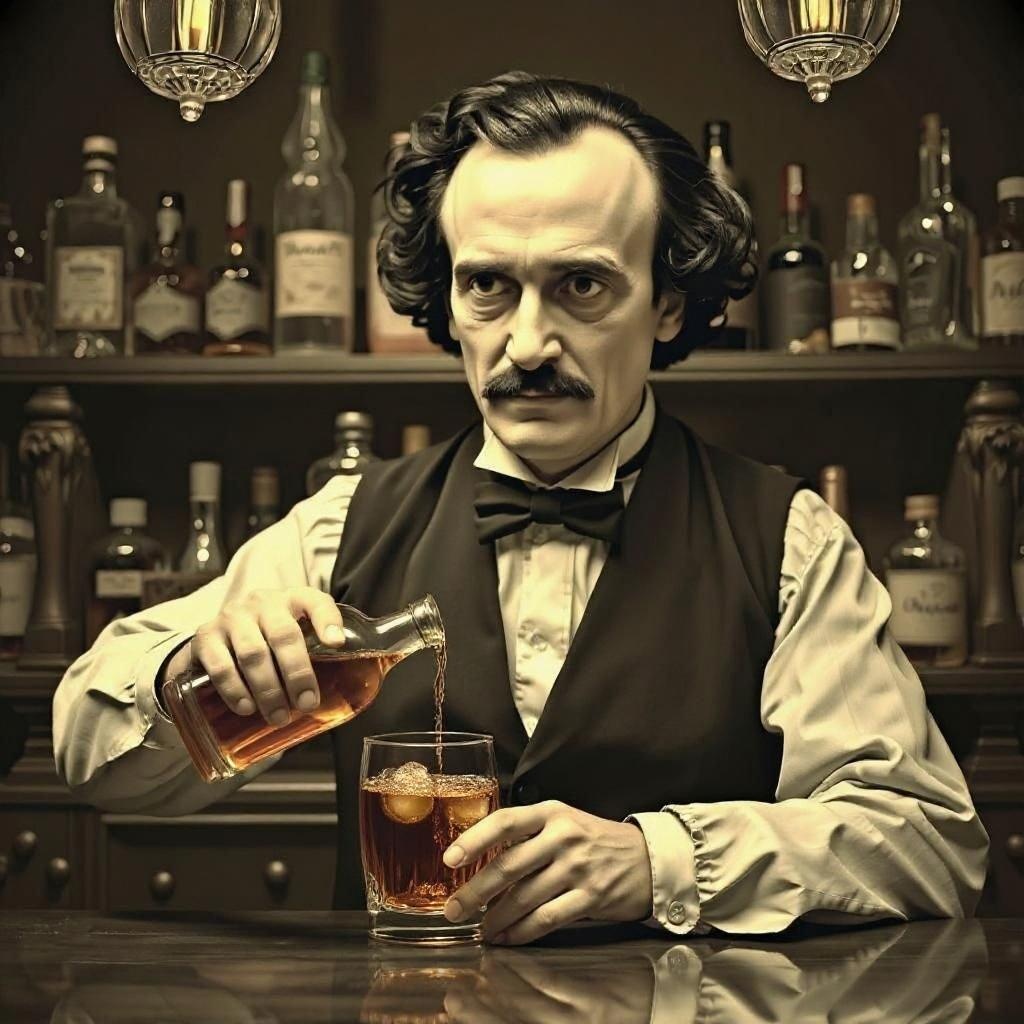
2025 Poe Cocktails

Cocktail 2: Never Bet the Devil Your Head

Punctually at the word “away,” my poor friend set off in a strong gallop. The stile was not very high, like Mr. Lord’s — nor yet very low, like that of Mr. Lord’s reviewers, but upon the whole I made sure that he would clear it. And then what if he did not? — ah, that was the question — what if he did not? “What right,” said I, “had the old gentleman to make any other gentleman jump? The little old dot-and-carry-one! who is he? If he asks me to jump, I won’t do it, that’s flat, and I don’t care who the devil he is.” The bridge, as I say, was arched and covered in, in a very ridiculous manner, and there was a most uncomfortable echo about it at all times — an echo which I never before so particularly observed as when I uttered the four last words of my remark.
The Tale

As obliquely insinuated at the end of the above passage, this is a story about the Devil. (I suppose, to be fair, it’s also explicitly stated in the title. But still.) And despite the fiendish subject matter, this is also one of Poe’s humorous tales. The plot is a simple one: The narrator’s friend, one Toby Dammit (haha!), has acquired the habit of punctuating his statements with offers to take a bet. And his favorite formulation of that oath was “I’ll bet the devil my head…” As can be imagined, such an arrogant pronouncement will not go unpunished in a Poe tale.

So we find the narrator and Toby Dammit approaching a covered bridge, and Toby “insisted upon leaping the stile, and said he could cut a pigeon-wing over it in the air.” In response to the narrator’s scoffing, Toby bets the devil his head that he can do it. At that moment the small, old gentleman mentioned in the above excerpt coughs from the shadows and, in so many words, accepts Toby’s bet. The old gentleman gives the signal and Toby runs and jumps…and is decapitated by a horizontal metal bar above the stile that had been hidden by the gloom. The old man runs away with Toby’s head.

The full story is available here.

The drink

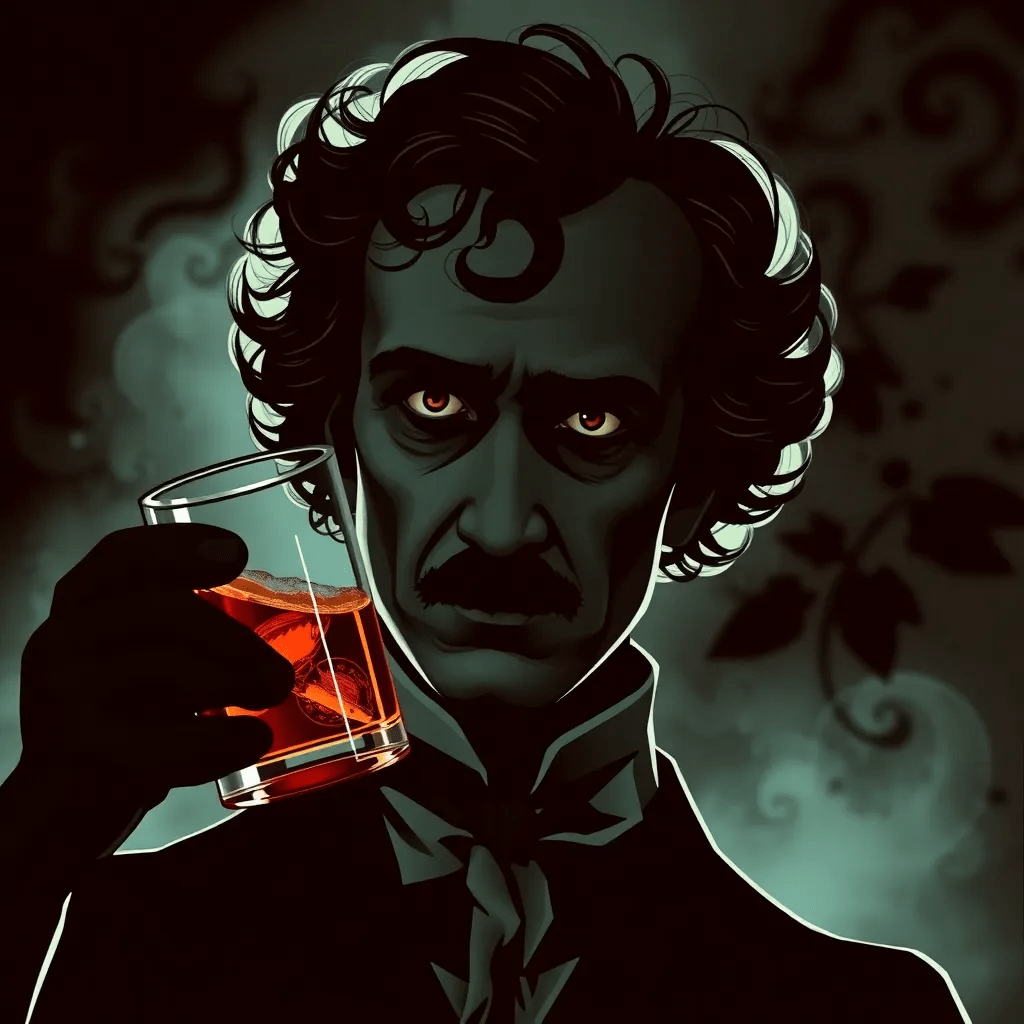
The star of this story, I think, is not so much Toby Dammit as it is the devil. Admittedly he doesn’t have much of a speaking role, but it is he who delivers the lesson contained in the story’s title. There’s also something very theatrical about how the narrator’s words (“…the devil he is”) echo uncomfortably through the covered bridge. For these reasons, our drink will focus on the infernal little gentleman.

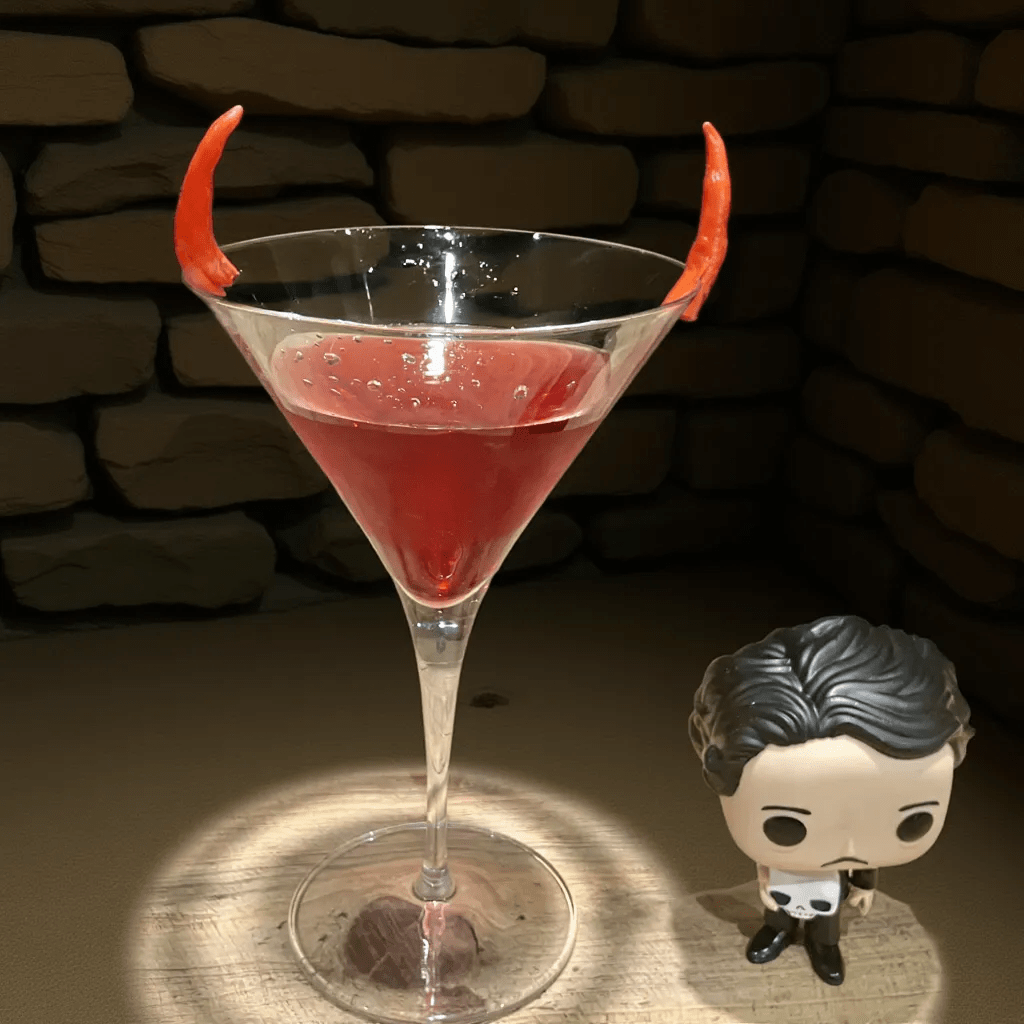
There are many drinks out there that take some variation of the name “demon blood” or “devil’s blood.” All of them are red, for obvious reasons. But the variant we present here has the signature touches of a devil-horn garnish and a fiery burn. 

Ingredients:

2 oz. carta blanca rum

2 oz unsweetened cranberry juice

1-1/2 tbs peppermint schnapps

Several dashes of tabasco (the more the better)

2 chili peppers (for garnish)

Cut slots into the bottom of the two chili peppers and affix them to the rim of a martini glass. Put all the liquid ingredients into your cocktail shaker with ice. Shake the hell out of it (Har!). Strain into the prepared martini glass. Damn, it’s good!

(Note: The tabasco is the key to this drink. Put in as much as you can stand–I did six healthy dashes. The tabasco adds dimensionality and balances the sweet and tart flavors.)
Poe-Script

It’s said that Poe may have gotten the idea for Toby’s mishap from Dickens’ The Posthumous Papers of the Pickwick Club. To wit:

“Heads, heads, take care of your heads,” cried the loquacious stranger, as they came out under the low archway, which, in those days, formed the entrance to the coach-yard. “Terrible place — dangerous work; other day, five children — mother — tall lady, eating sandwiches — forgot the arch — crash, knock — children look round, mother’s head off … head of a family off; shocking, shocking.”
Uncategorized

Cocktail 1: The Raven

“Be that word our sign of parting, bird or fiend!” I shrieked, upstarting—

“Get thee back into the tempest and the Night’s Plutonian shore!

 Leave no black plume as a token of that lie thy soul hath spoken!

 Leave my loneliness unbroken!—quit the bust above my door!

Take thy beak from out my heart, and take thy form from off my door!”

            Quoth the Raven “Nevermore.”

The Tale

“The Raven” is of course one of Poe’s most famous works. As we all know, it is an 18-stanza poem written in trochaic octameter. This poem has got it all: a tragic love story (“the lost Lenore”), references to Greek mythology (“bust of Pallas”), alliteration (“the silken, sad, uncertain rustling”), and a mystical talking raven (“Nevermore!”).  It’s hypnotizing, moody, mysterious, and yet lyrical. It is a masterpiece.

Therefore it’s not surprising that, after its publication in January 1845, Poe became famous throughout the land. And yet, he was only paid $9 by The American Review, which published the poem. Once upon a midnight dreary, indeed.

This poem is so well-known and euphonious that it has spurred innumerable parodies and burlesques. Lisa Simpson’s version on The Simpsons is especially worthy, and yet I will always remember when I was first introduced to “The Raven” in a Bullwinkle cartoon in the 1960s.

The full poem is available here.

The Drink

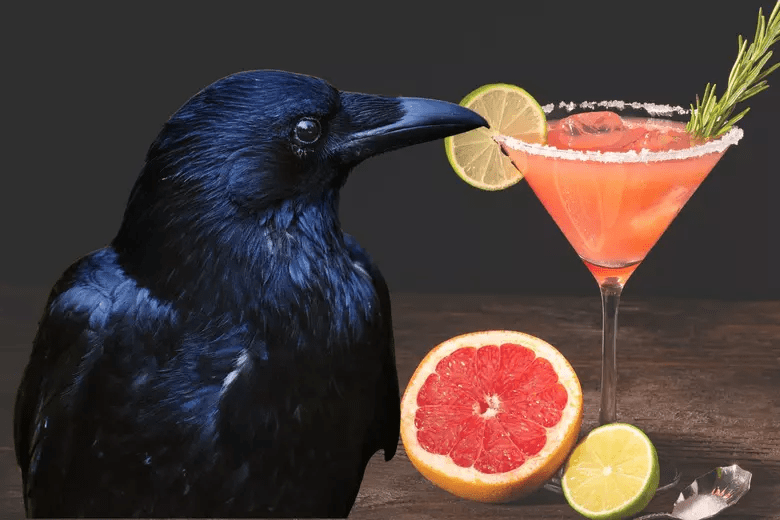
Probably all the “ravens” you and I think we’ve ever seen are actually crows. Ravens are bigger, with distinctive beaks and tails. But does it really matter? They’re both big, black birds. And that’s the look we’re going for with this drink.

So I got me some Van Gogh Double Espresso vodka. It’s a surprisingly tasty liquor on its own, particularly suited for those of us who like our depressants delivered with stimulants. This vodka has two things going for it: (1) it has a dark color, evocative of a raven (or a crow). To be honest, it’s not quite black; rather, it’s a dark brown. But we have a black cat (Vincent) who, as he’s aged, has taken on a somewhat brown cast. So maybe dark brown in the ballpark of black? (2) It’s said that Van Gogh was an avid and enthusiastic reader of Poe. It’s further said that his “intensive reading of Poe’s works helped him to process and internalize his thoughts and emotions, which then manifested in his art.” I take all this as confirmation that the Van Gogh vodka would make a great starting point for this drink. Let’s get to work!

Ingredients:

1-1/2 oz. Van Gogh Double Espresso vodka

½ oz. Kahlua

¼ oz. mezcal (the smokier the better)

1 shot espresso

A couple of pinches of edible black glitter

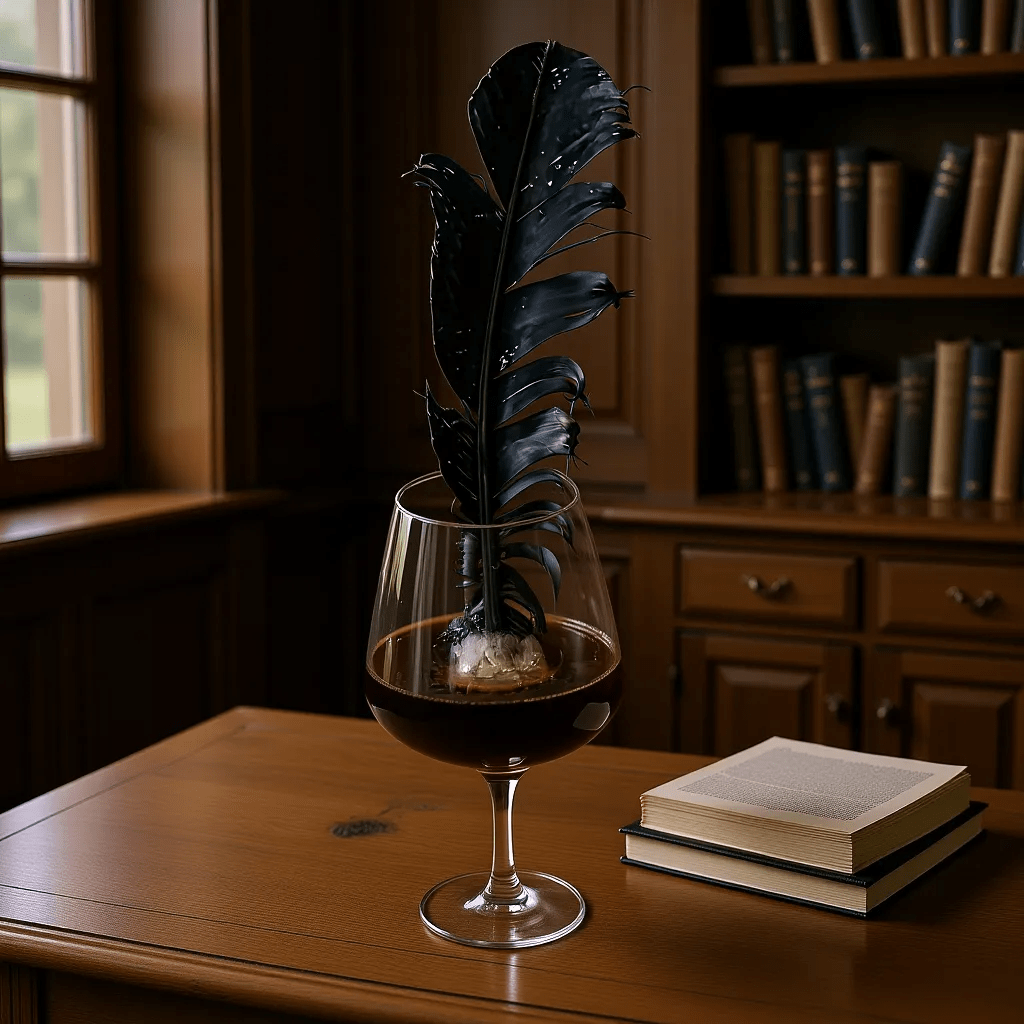
Black feather (for garnish)

The bottle of Van Gogh already has a syrupy sweetness to it, even though it’s marketed as a vodka. So, this will have to be counterbalanced with something to keep it out of the land of the cloying. For this, I added a shot of straight espresso for its bitterness and roastiness, and a little bit of mezcal for its earthy, smoky flavor. Truth be told, I found this formulation to be a bit too harsh, so I then added a little Kahlua to take the edge off. This seems to be the sweet spot.

So far, the drink presents a dark brown color. But to make it more raven-y, I added two pinches of edible black glitter. This gives it a deeper black color and that shimmery, sparkly gloss that ravens are so well known for. Not.

But as if that doesn’t drive home the point strongly enough, we’re going to add a black feather–a “black plume as a token of that lie thy soul has spoken.” Simply proceed thus:

  1. Remove a single black feather from a nearby raven (or, in a pinch, a crow will do). Alternatively, you can go to your nearest craft store. Place this feather point-down in a small glass with about an inch of water, and stick it in the freezer. You may need to use some tape to keep the feather upright. This is going to serve as your ice cube/garnish.
  2. Make yourself a shot of espresso, and put it in the fridge to cool for a few minutes.
  3. In a mixing glass, combine the vodka, Kahlua, mezcal, and espresso with ice. Stir, and strain into a bar glass of your choice.
  4. Add a few pinches of the black glitter, and stir.
  5. Finish it off by adding the ice cube/feather. (You may have to briefly warm it in the microwave to loosen the ice from the glass.)
  6. Will you ever go back to your old Dark N Stormy? Nevermore!

Poe-Script

It is said that Poe gained inspiration for this poem from Dickens’ Barnaby Rudge, which featured a talking raven. The non-Philistines among you who regularly read my blog (waytrips.travel.blog) know that Dickens himself had a pet raven named ‘Grip.” In fact, Grip became such a part of the public imagination in Dickens’ day that people would say “Get a Grip!” to convey that someone should ground themselves in reality, rather than stories.

(I totally fabricated that last assertion.)

2025 Poe Cocktails · Halloween · Halloween Cocktails

Poe-Tober is Upon Us

Cover image from my forthcoming Edgar Allan Poe cocktail book. I’m not making this up.

Well, here we are–on the cusp of another October with its promise of spooky decorations, pumpkin beer, and, ultimately, All Hallow’s Eve. And you know what that means: it’s the month that I turn over this blog to 31 days of Halloween-related content. In past years we’ve had reviews of Halloween snacks, Halloween candy, Frankenstein movies, my own serialized horror story, and other thematic content.

This is truly a magical season, as the weather (at least in my neck of the woods) changes from hot and dry to cool and misty. The days shorten, the sun hangs lower on the horizon, and wood smoke fills the air. The hub, not to mention the bub, of the so-called Winter Holidays is (barely) held in abeyance while we make this transition into fall. It’s my favorite time of year. And that’s why this blog celebrates the season through the whole month of October.

So, what’s on tap for this year’s October blog? I’m glad you asked. Beginning tomorrow, we’re going to present 31 Edgar Allan Poe tales, each paired with a bespoke cocktail related to the story. In each post I’ll give you a short excerpt from Poe’s original tale, a synopsis of the plot, a recipe for making the cocktail, and a “Poe-script” with some related trivia. I’ll even provide a link to the full text, just in case you’re such a Rube that you don’t already own a compendium of Poe’s works. This way, you can read the tale while sipping on your specialty cocktail.

Try one when you’re weak and weary…

One word of warning: I am not a trained mixologist. In fact, I’m pretty much groping in the dark with these recipes. All I can say is that I’ve created, tested, and refined each one until it is deemed drinkable…by me. (By way of full disclosure I should admit that most if not all of these drinks have earned a thumbs down by my wife. But she likes neither whiskey nor gin, so clearly her credibility in these matters is lacking.)

Try it–you’ll like it!

So, starting tomorrow, I invite you to spend the month enjoying my curated list of 31 Poe stories along with their associated, custom cocktails. As always, I welcome your thoughts, reactions, and hangover nostrums. If you’re not already subscribed to this blog, you can sign up below. And if you are already subscribed, spread the word! Make all your friends’ October Poe-tastic!

Uncategorized

Mike the Headless Chicken

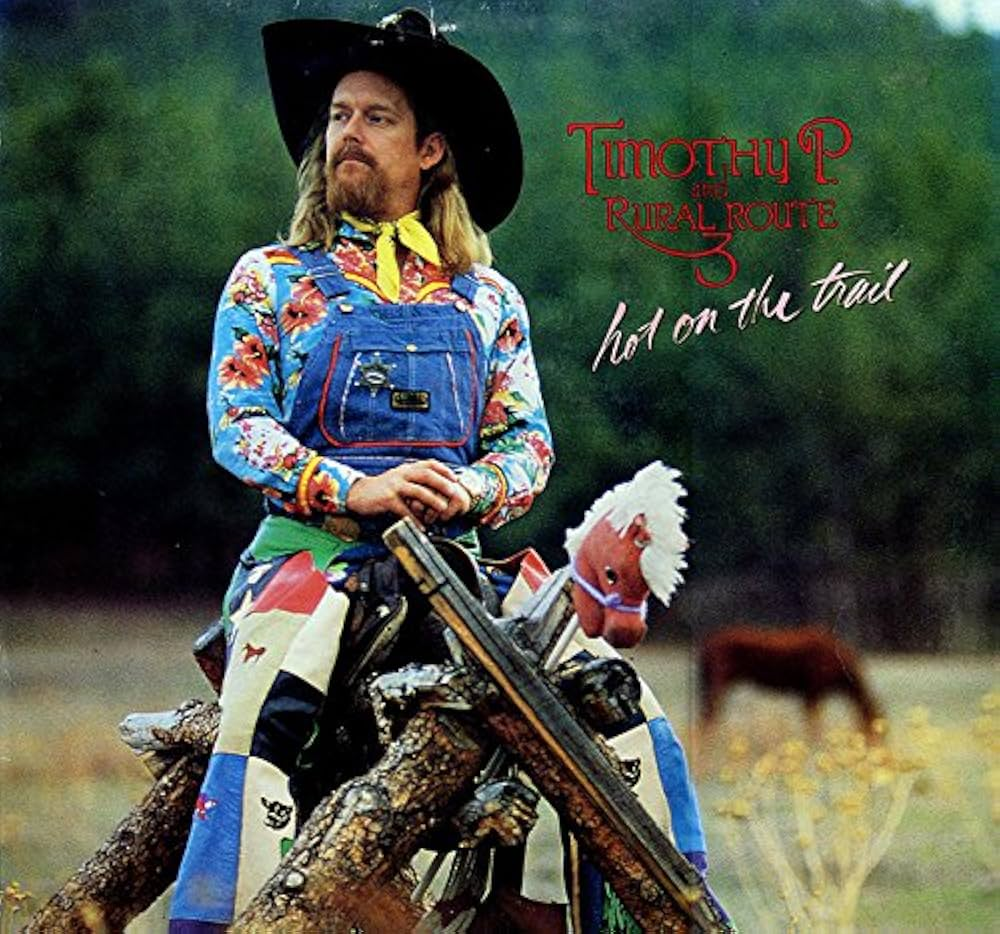
The other week I shared a blog post about the town of Fruita, Colorado–a town that is “famous” for, among other things, its Mike the Headless Chicken Festival. Faithful reader Brian W informed me that his brother-in-law Timothy has written and performed a song about Mike at the festival. (How come my relatives don’t have credits like that to their name?) In the 1980s Timothy made records as Timothy P and the Rural Route Three, whose music has been described as “a blend of country, honky-tonk, and hippie rock styles.” A Facebook page suggests he’s still in the business. Sadly, I haven’t been able to find an actual recording of his Headless Chicken song.

Photo supplied by Brian W.

This got me interested in discovering what kind of a song one could write about this Headless Chicken. And I discovered that it’s a somewhat popular subgenre on YouTube. Here are a few examples for your entertainment and/or edification:

Best visuals, but lousy music (IMO).

Best (i.e. only) live performance I could find.

Best lyrics and production values…but no video.

Feel free to write and record your own Mike the Headless Chicken song, and I’ll post it on this blog. Meanwhile, if you need inspiration, the following “children’s cartoon” about the story of Headless Mike is simultaneously informative and unsettling:

Breweries · bridges · California history · Cars · movie theaters · Road trips · Yard art

Been There, Done That, Got the T-Shirt

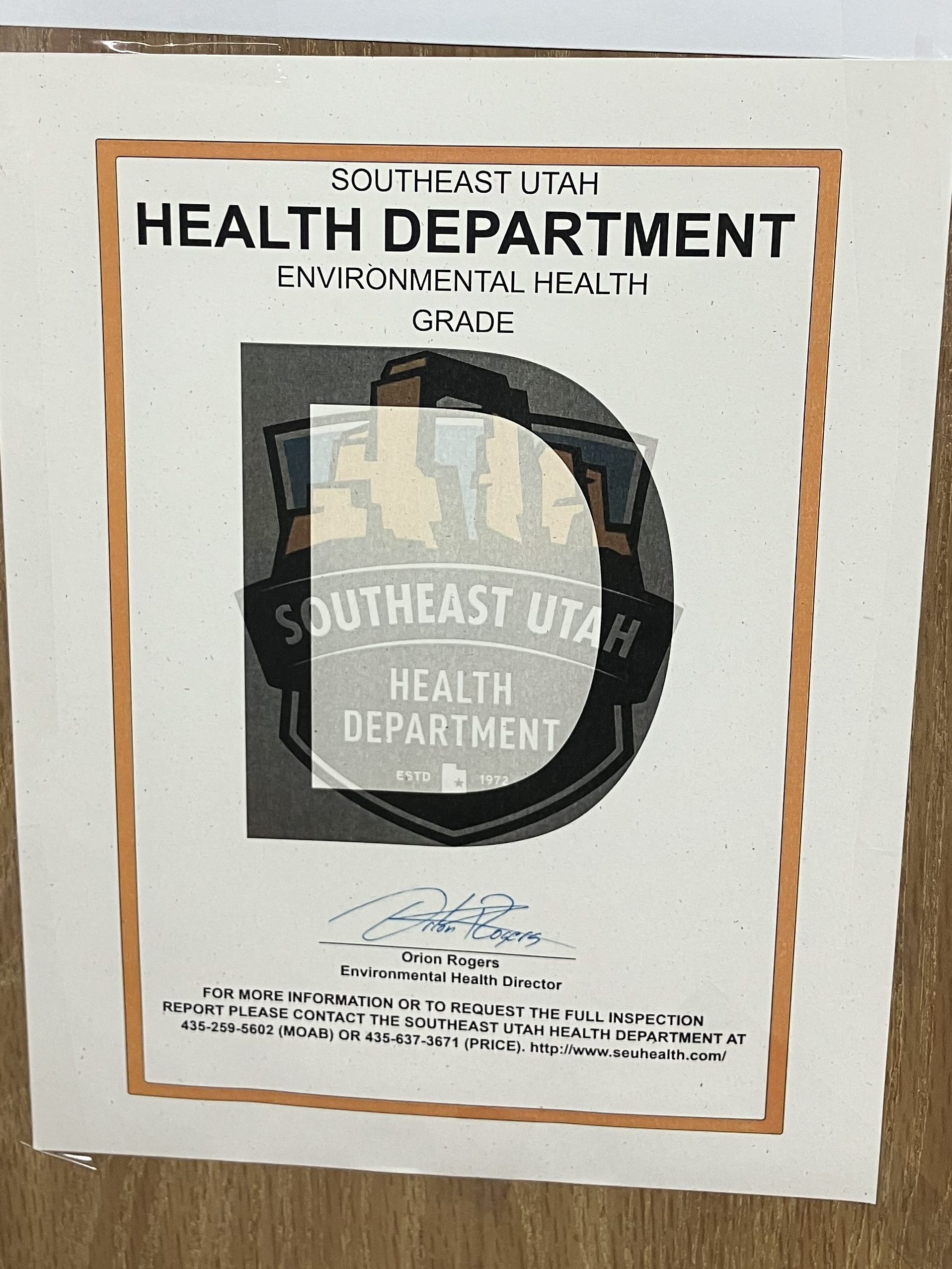
This morning I headed downstairs from my motel room to partake of the “free” breakfast. Then I spotted this sign in the breakfast room:

But a “D” is technically passing right? At least that’s what I used to tell my parents when I brought home my report card.

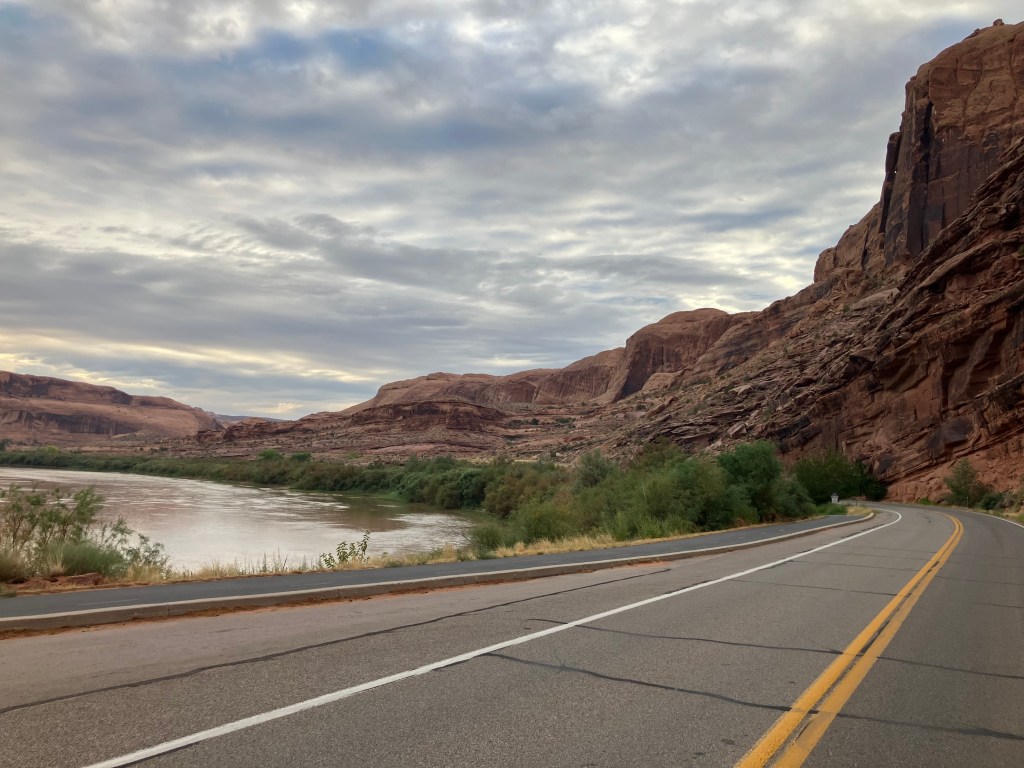
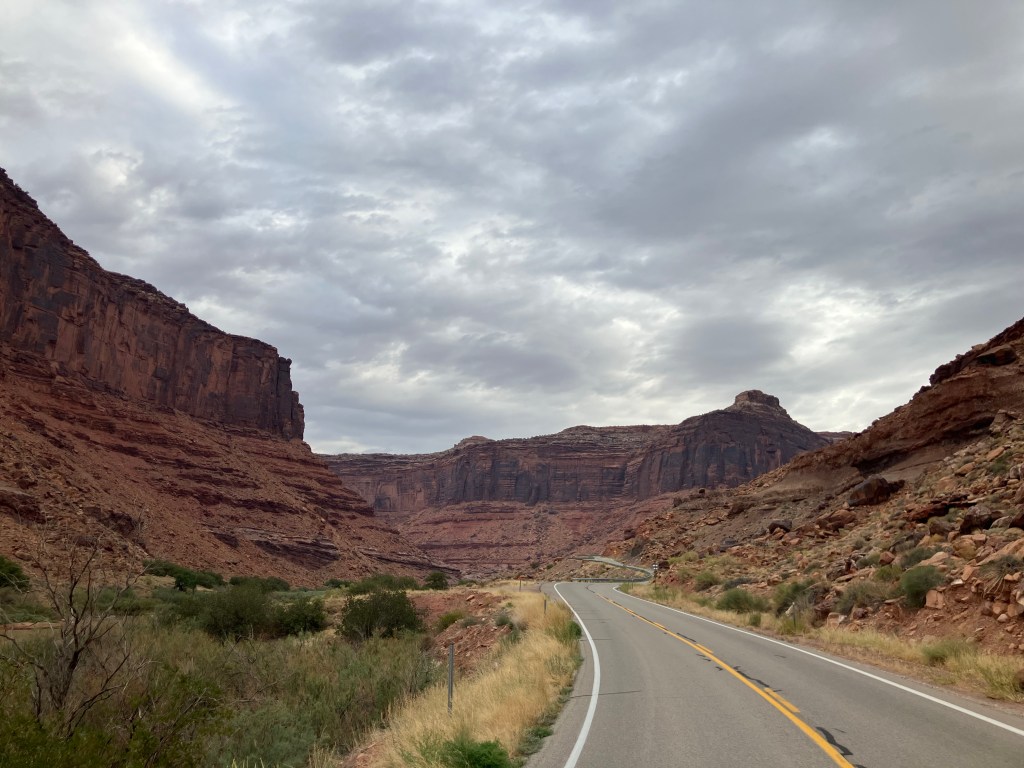
Instead of the motel breakfast, I got a gas-station coffee and donut. I then got onto the U-28 scenic byway, which carves its way through the Colorado River gorge towards Grand Junction. It was so spectacular it even made my donut taste good.

That’s the muddy Colorado River on the left.
A perfect setting for a Western…which it has been, many times.

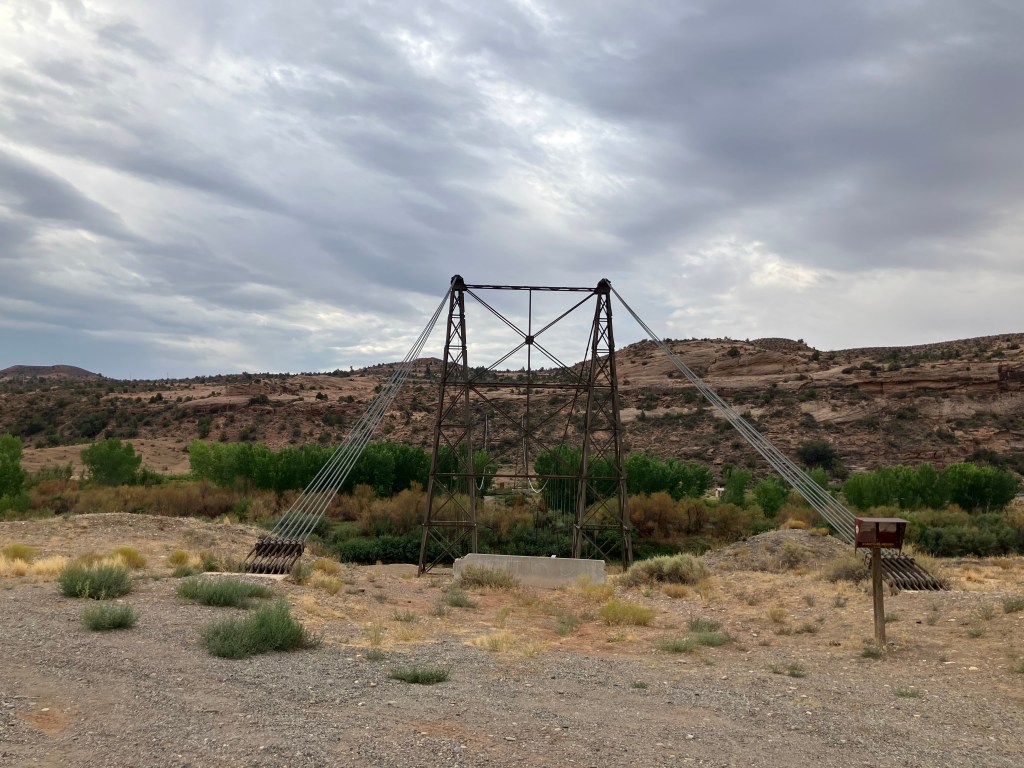
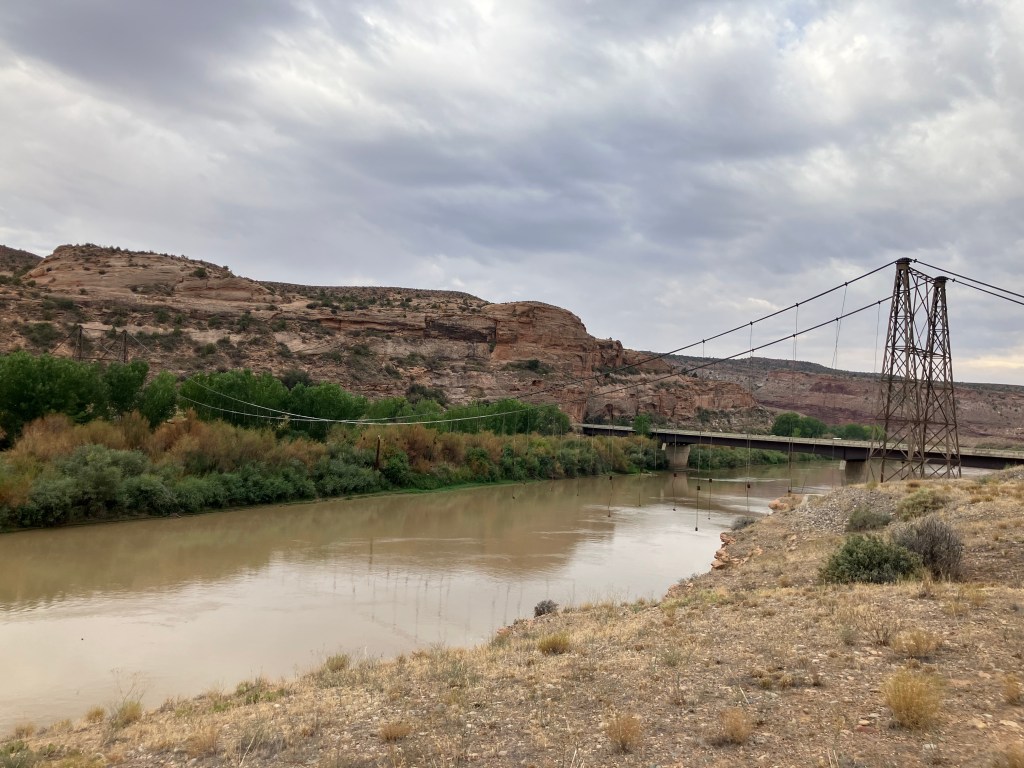
After maybe half an hour of driving I came across a pedestrian suspension bridge that crosses the Colorado River. Attentive readers will recall that I’m a sucker for these things, so I looked for a place to pull over and sway my way across the (not-so-) mighty Colorado.

So far so good…

So imagine my disappointment when I discovered that the bridge’s decking was entirely missing.

…but wait–what’s wrong with this picture?

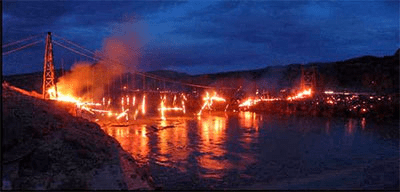
Turns out the Dewey Bridge (for that’s its name) was built in 1916 and is Utah’s longest suspension bridge. It was fully restored in 2000….and eight years later some kid was playing with matches and the whole thing went up in flames.

Kids, don’t play with matches! (2008 photo from Wikipedia Commons.)

A sad and ghostly air hangs about the skeleton of the Dewey Bridge. It set back my good mood a bit.

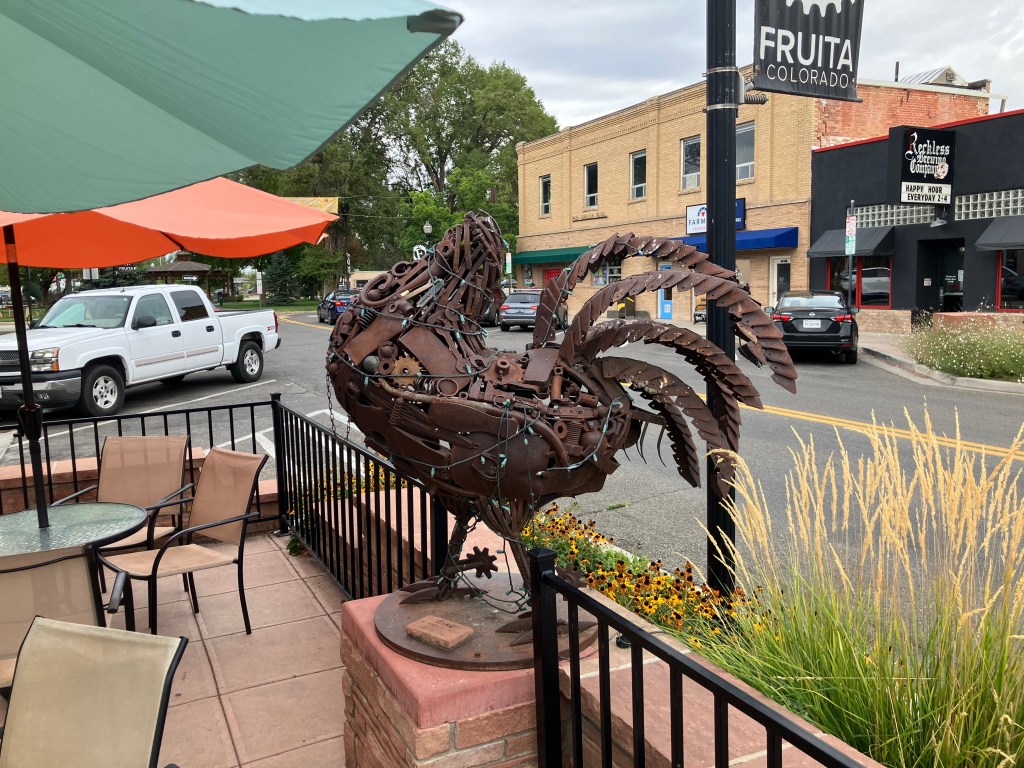
A little later I came to the town of Fruita, Colorado (pop: 13,400). I could live in this town. It’s one of those places that’s figured out how to preserve its history, cater to modern tastes, create a livable community, and attract tourists. The town is jammed with public art, and the main street has plenty of outdoor cafes and benches to relax, have a cup of coffee, and watch the world go by. It seems that most of the buildings along Main Street are historic and well-preserved or restored.

One public art installation that made me scratch my head was this rooster with no head:

A friendly fellow drinking coffee at an outdoor table noticed me photographing the sculpture and gave me the story of Mike the Headless Chicken. (Trigger warning for those sensitive about food preparation by carnivores.) It seems that in 1945, a local farmer by the name of Lloyd Olsen was attempting to behead one of his chickens for dinner. His aim was a little off, and most of the chicken’s brain stem remained with the body. The chicken survived his beheading, flapping his wings and running around headlessly. What was Lloyd to do? He spent the next year and a half carefully feeding Mike (for that was the chicken’s name) individual kernels of corn through the throat and addressing Mike’s thirst with milk and water from an eyedropper. Mike became a sideshow attraction and gained national fame. Indeed, I remember reading about Mike in a “Ripley’s Believe It Or Not” paperback in the 1960s. Fruita still remembers Mike with the sculpture, T-shirts and other souvenirs, and an annual “Mike the Headless Chicken Festival” each spring. I am not making this up.

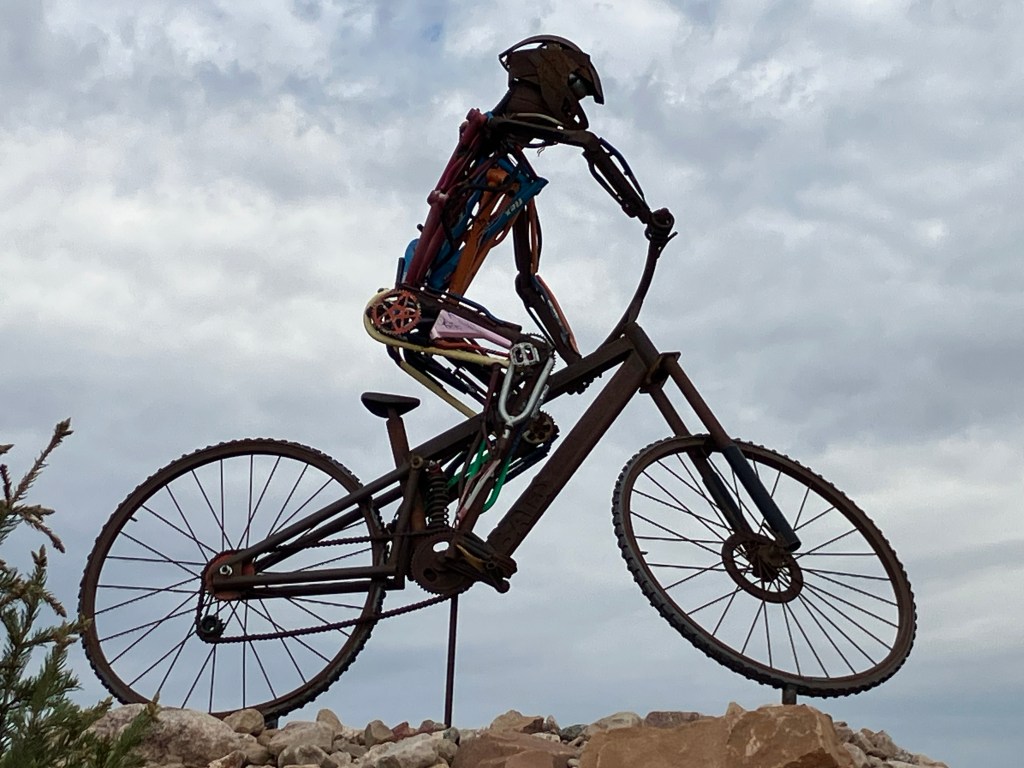
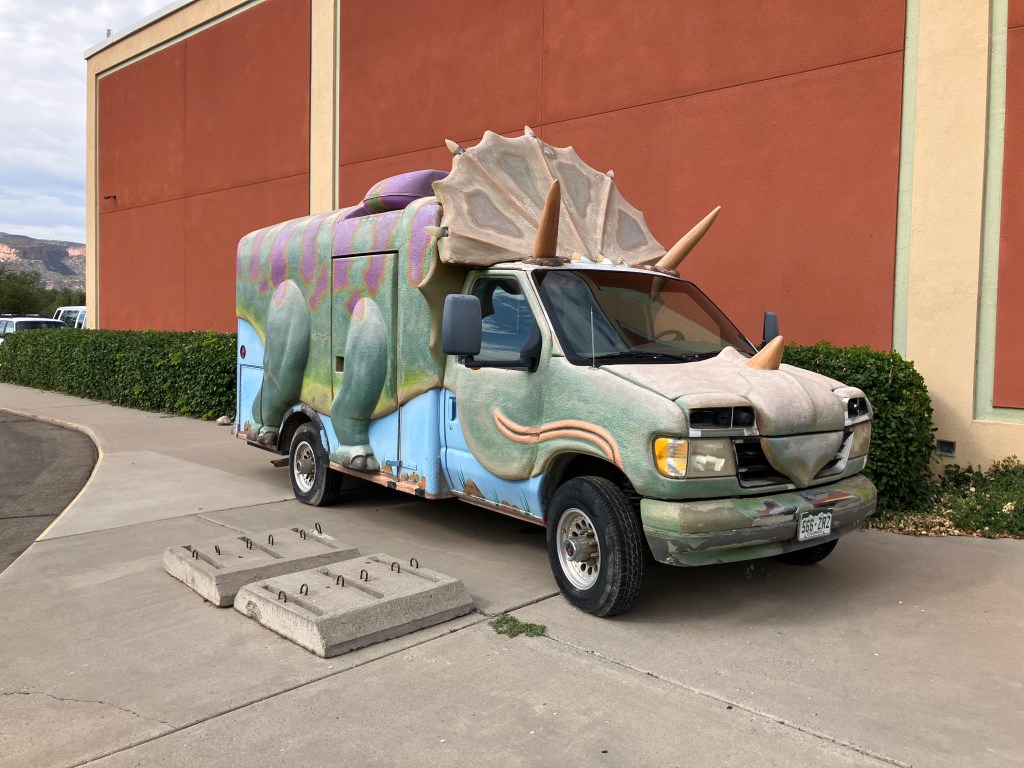
Fruita also has a lot of non-headless-chicken art around town. In fact, I noticed that many of the towns in eastern Utah and western Colorado feature interesting public art installations. Here is a sampling:

Bionic bicyclist in Fruita.
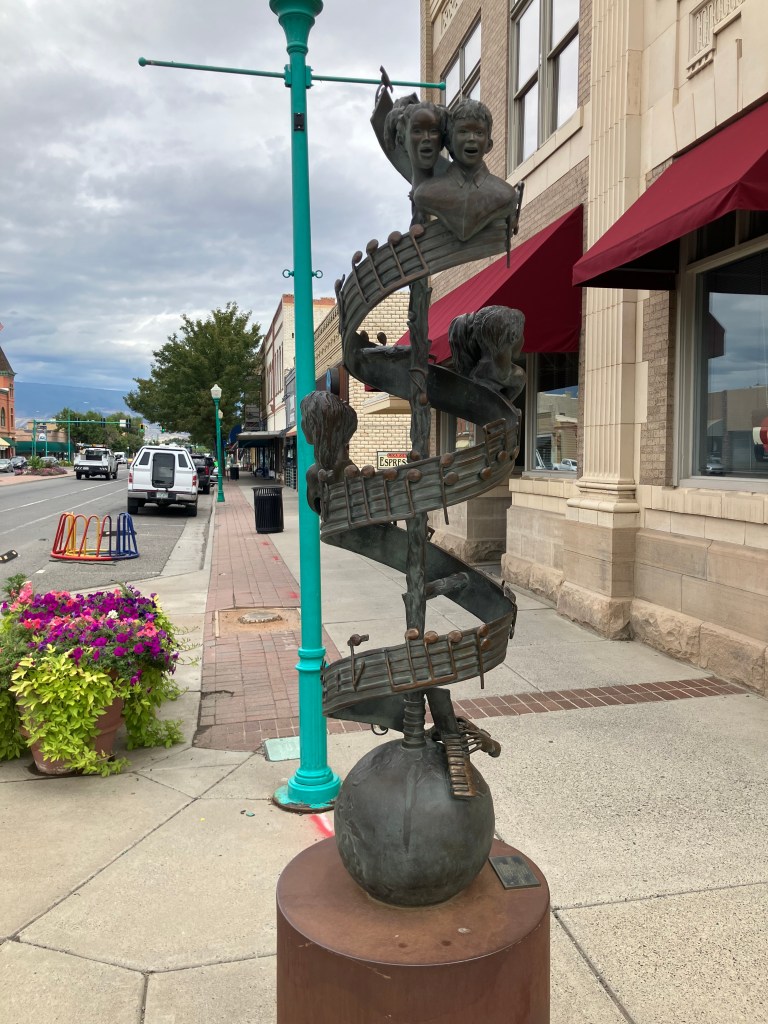
Sculpture honoring children’s music teacher David Carl Moore in Delta, Colorado.
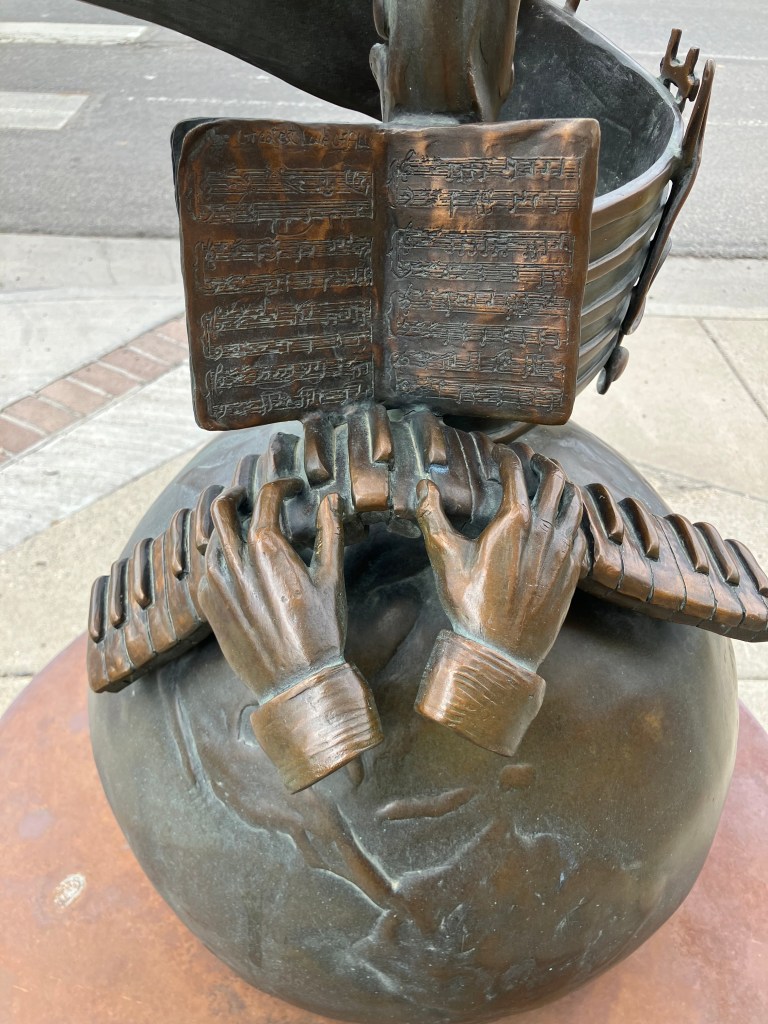
Detail of the Moore sculpture.
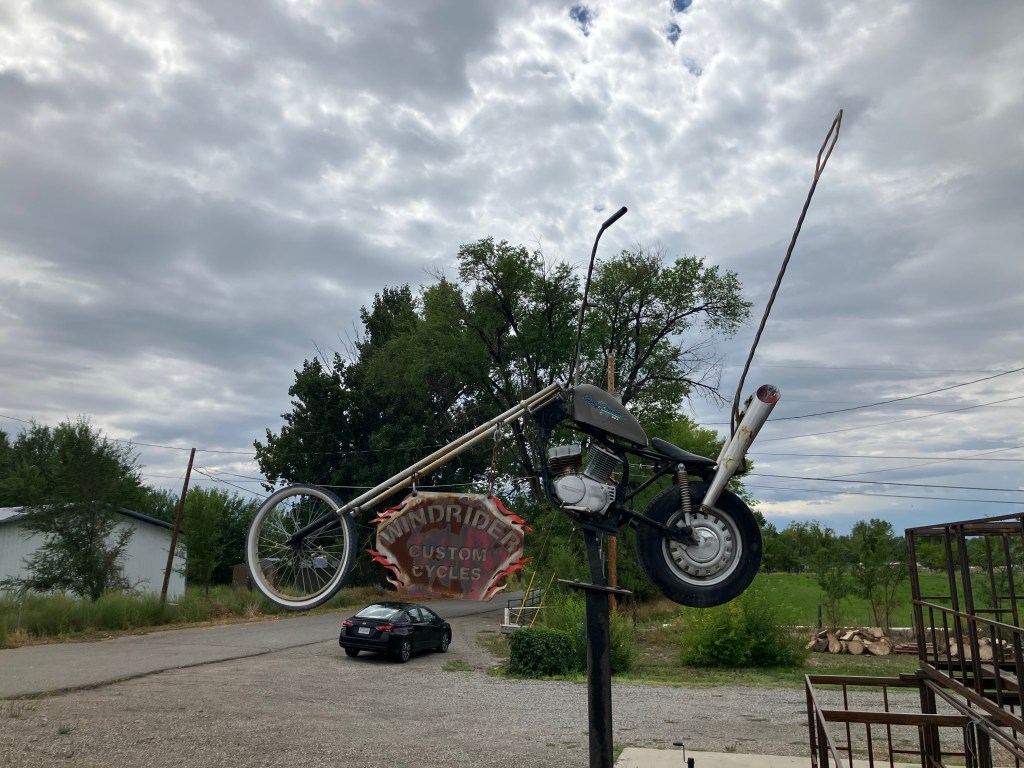
Windrider Custom Cycles sculpture in Delta.
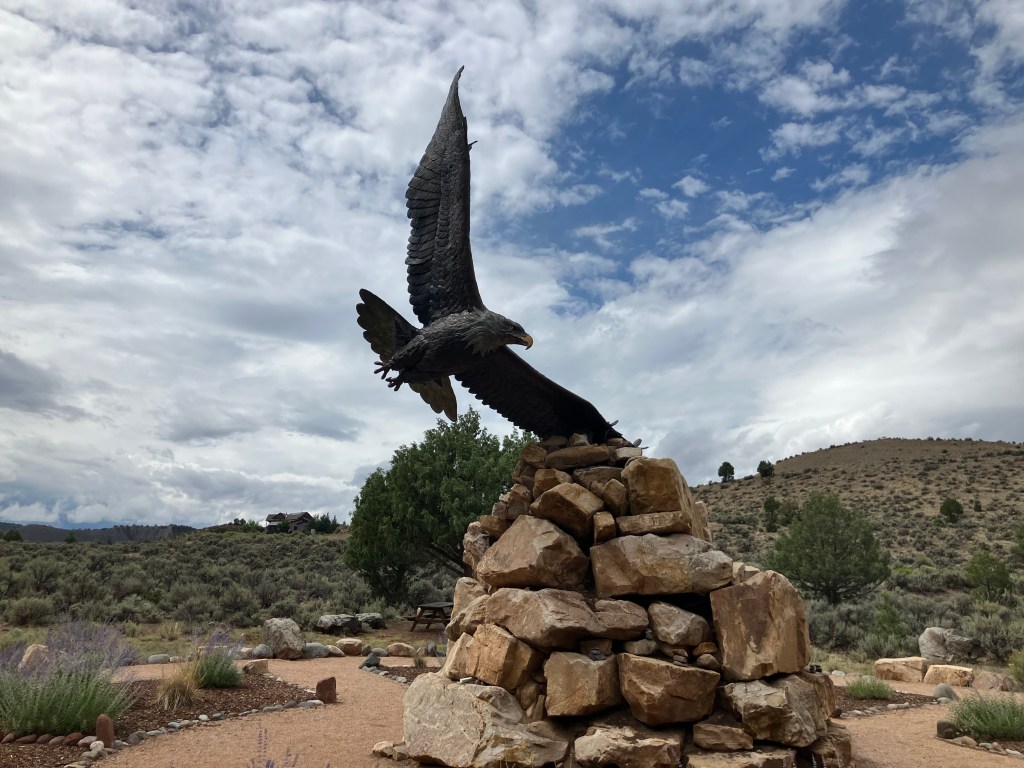
Sculpture at Dennis Weaver Memorial Park in Ridgway, Colorado. Dennis Weaver (I remember him as McCloud from the NBC television series) reportedly loved eagles and lived in Ridgway for many years.

I also randomly ran into these women playing the tubular bells (?) xylophones(?) that are installed at the park. Somehow I think Dennis Weaver would have appreciated it.

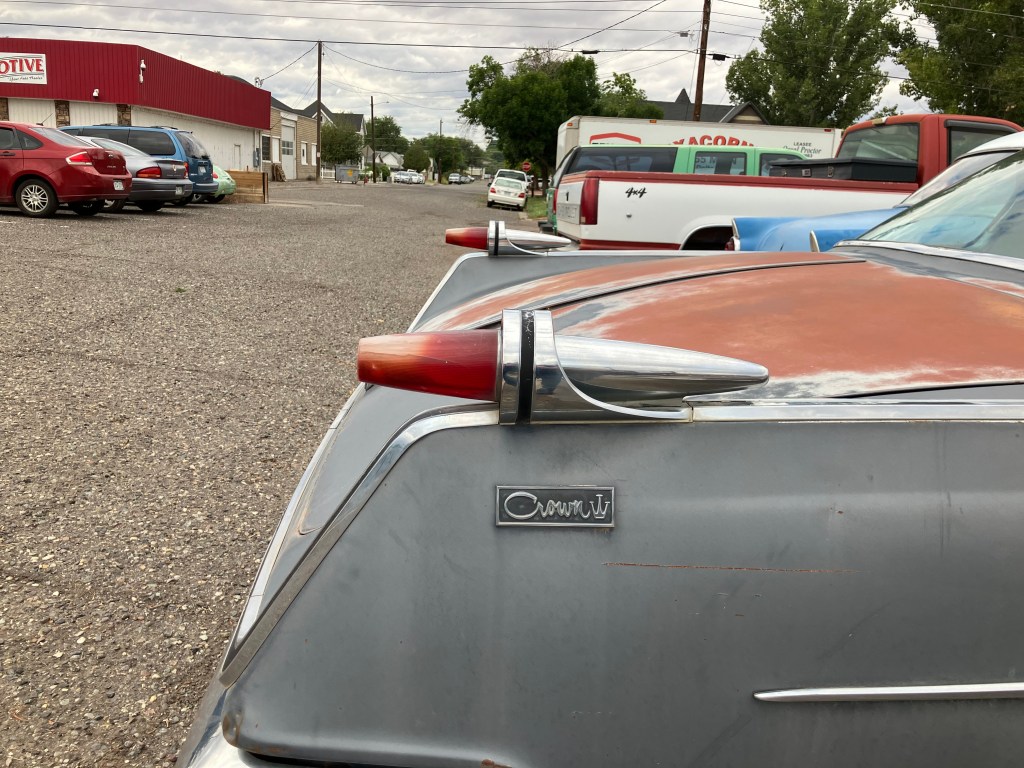
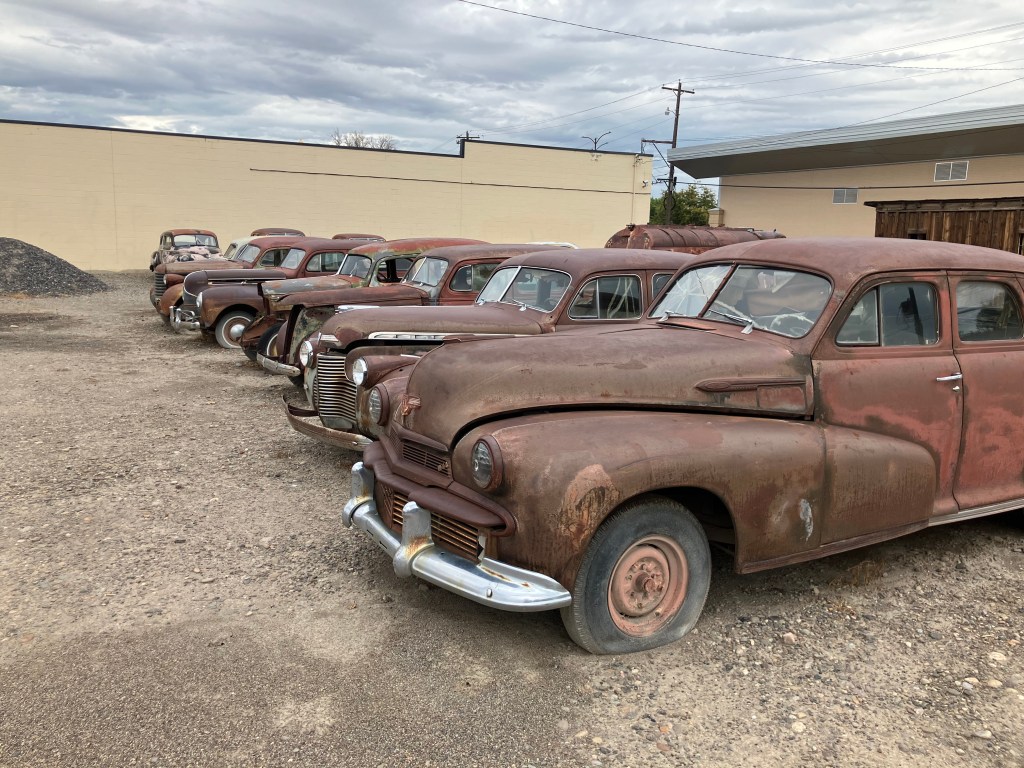
I’m not sure if it technically qualifies as art, but there is a large number of long-parked classic cars on both sides of the street in downtown Delta, Colorado.
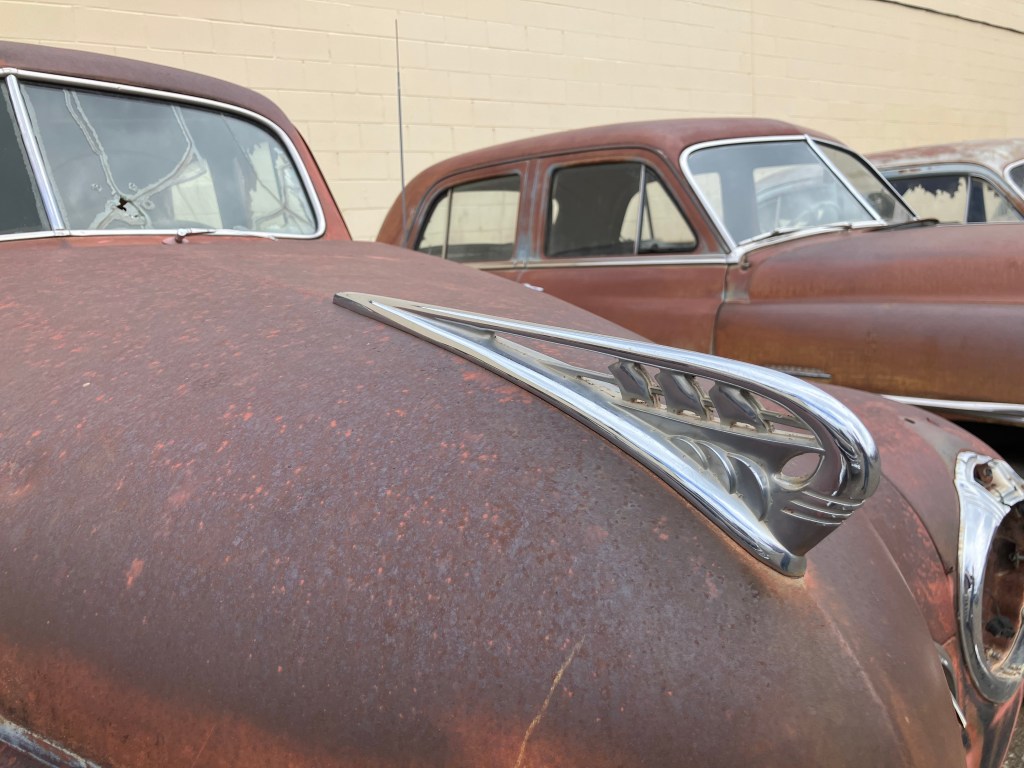
Artistic Chrysler hood ornament.
Used car lots, frozen in time.

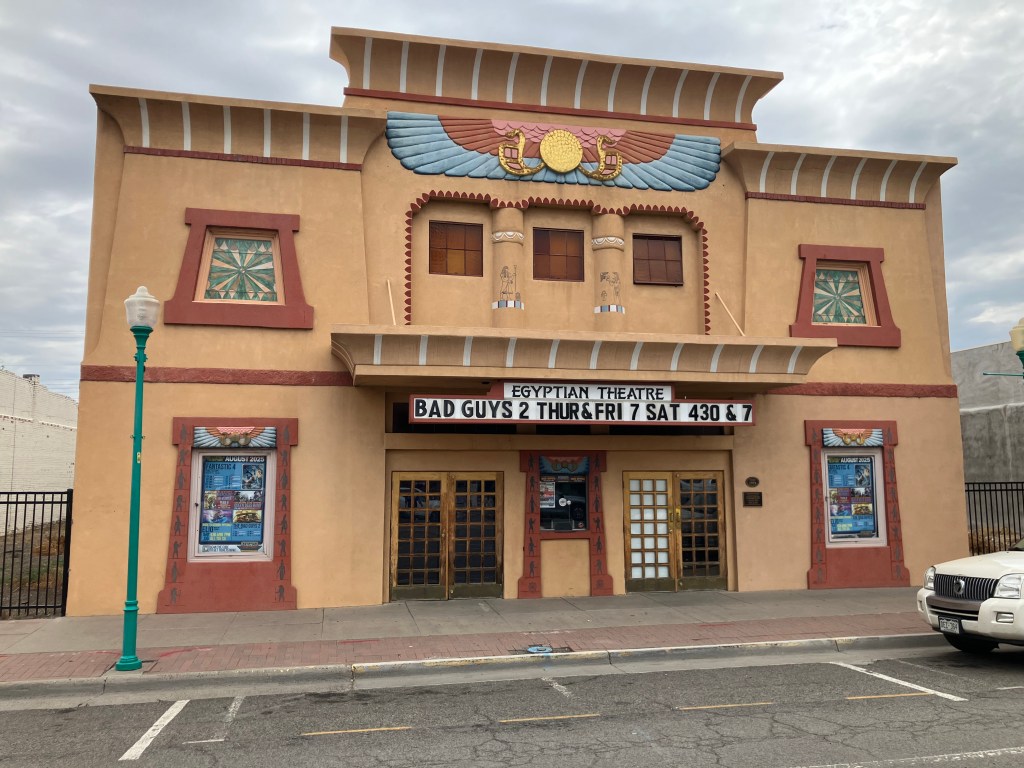
Also related to this theme of public art is the 1928 Egyptian Theater in Delta. It’s obviously been loving restored, and it regularly shows movies and hosts performances. It’s much smaller than the Egyptian Theater in Hollywood, but it similarly reflects the fascination with all things Egyptian in that era.

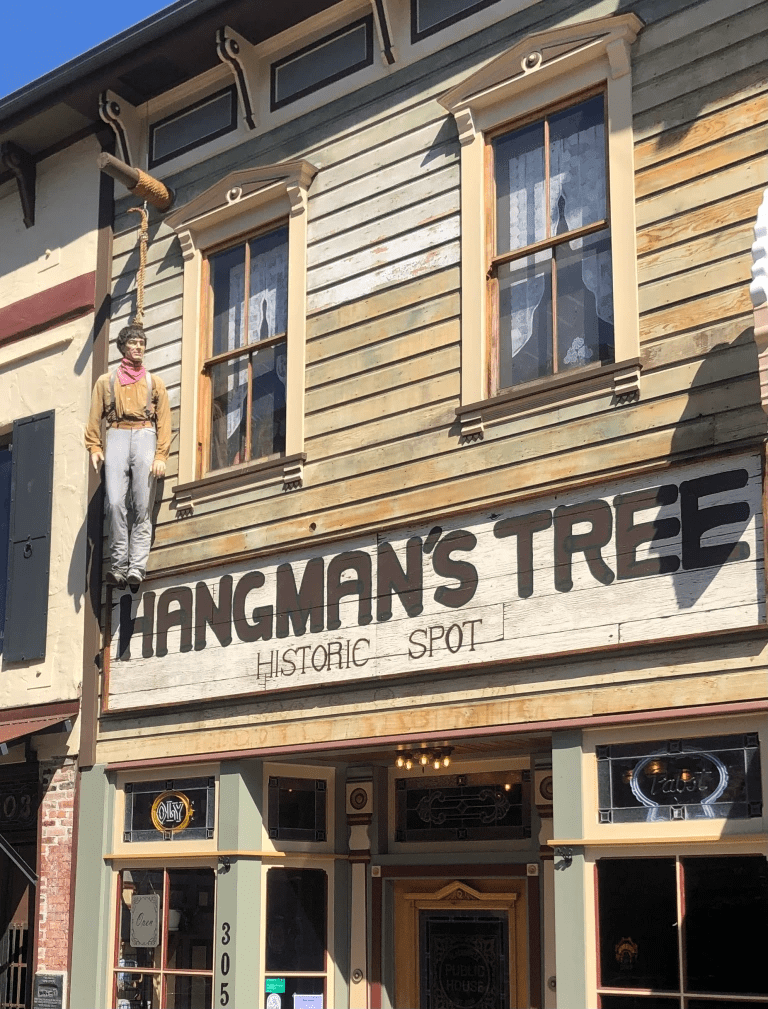
But let’s get back to the purpose of today, which was to complete my trek to Placerville, Colorado. You’ll recall that the California version of Placerville was originally called Hangtown, and the tree where those hangings took place (in 1849) stood on Main Street for many years. Even though it was cut down in 1853, the stump remains in the basement of an old Main Street building, where a dummy perpetually hangs from a noose.

Photo by the author, from my 2021 blog post about Placerville, CA.

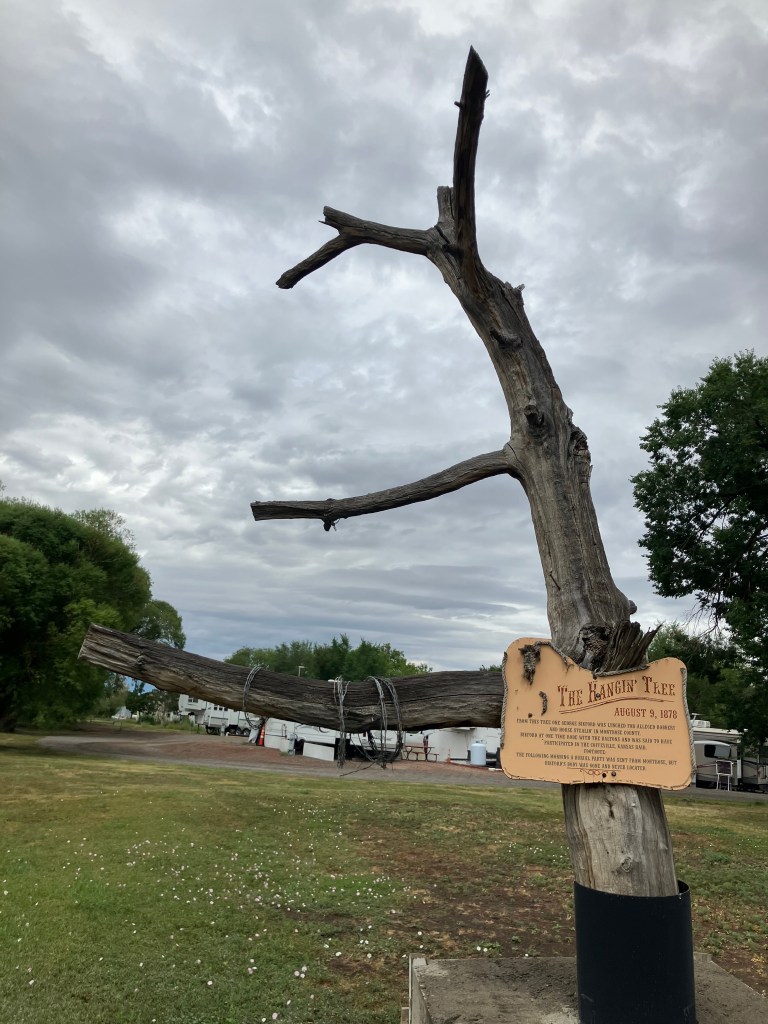
So it was auspicious that, just as I was getting close to Placerville, Colorado, I spotted this hangman’s tree in the town of Montrose:

According to the sign, George Bikford was hanged from this tree for robbery and “horse stealin'” in 1878.

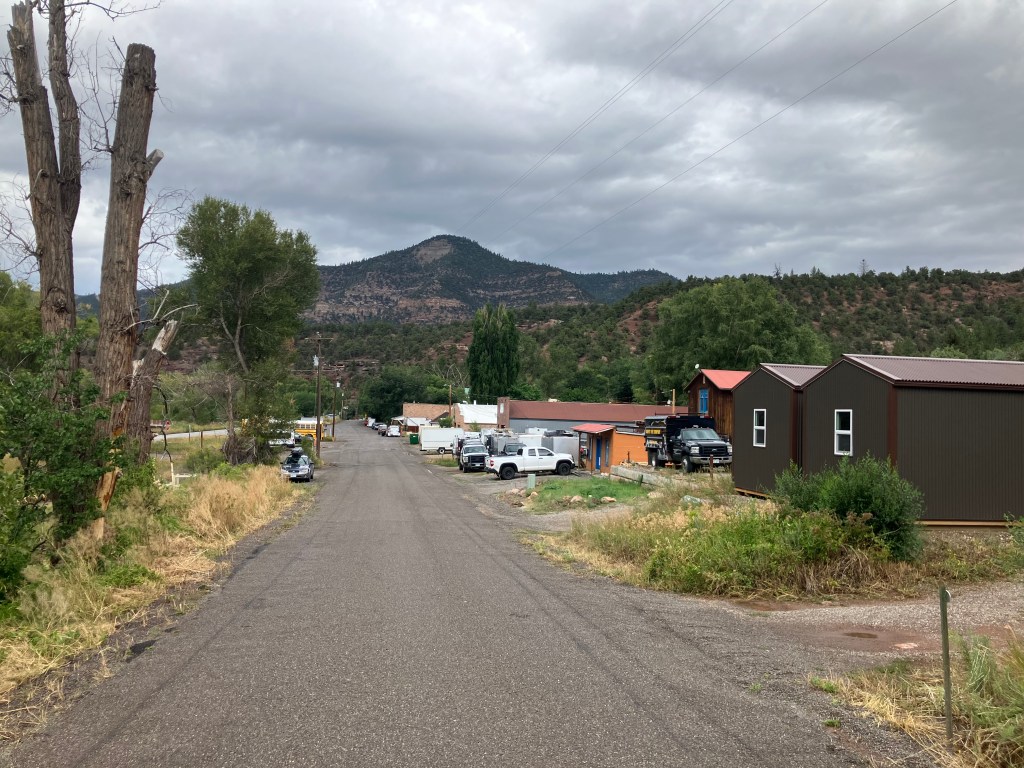
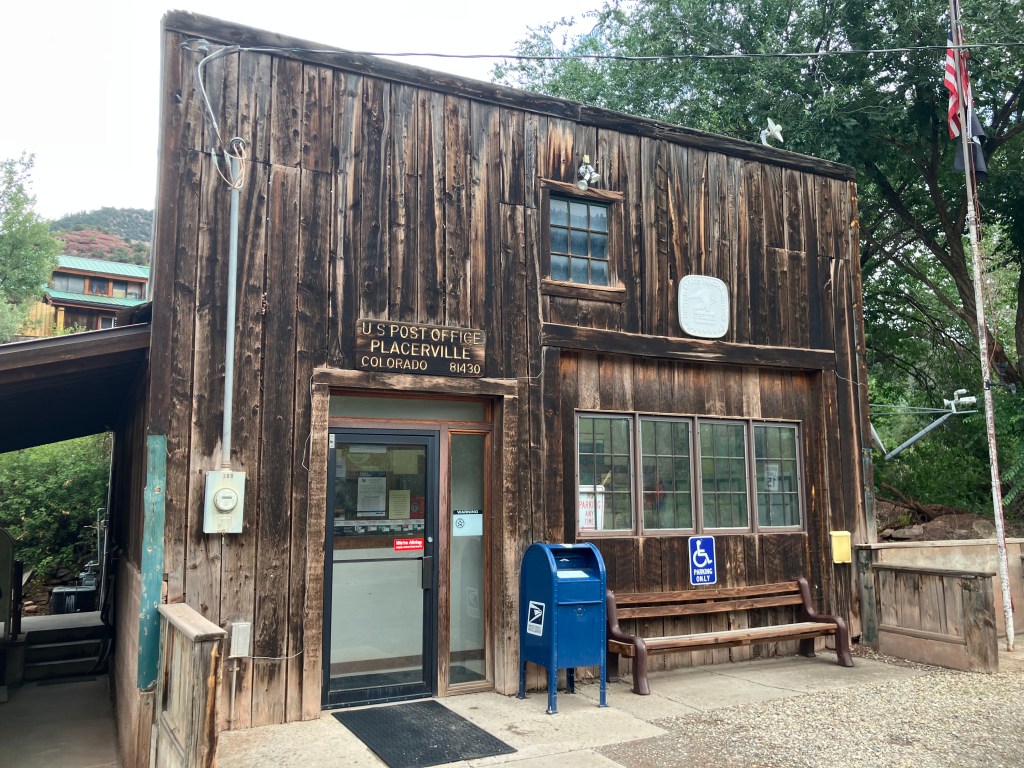
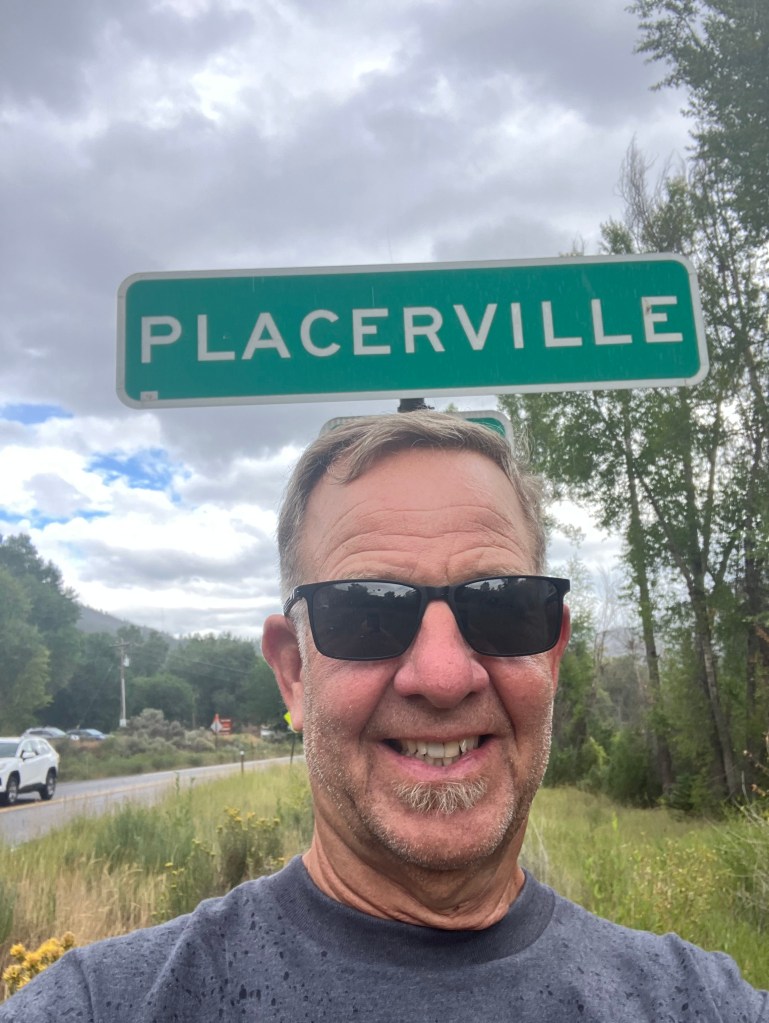
And so, with that preface, I finally came to the storied town of Placerville, Colorado. Let’s just say it wasn’t exactly El Dorado.

This is seriously about all there is to the town.

Pretty much all that makes up Placerville is a post office, a general store, a storage facility, and a few houses. In the 1800s it was a mining boom town, but as with many boom towns, the mines dried up and the population went elsewhere. Later, the failure of the local Trout Lake Dam in 1909 wiped out most of what remained.

But be that as it may, I think we can declare this mission a success.

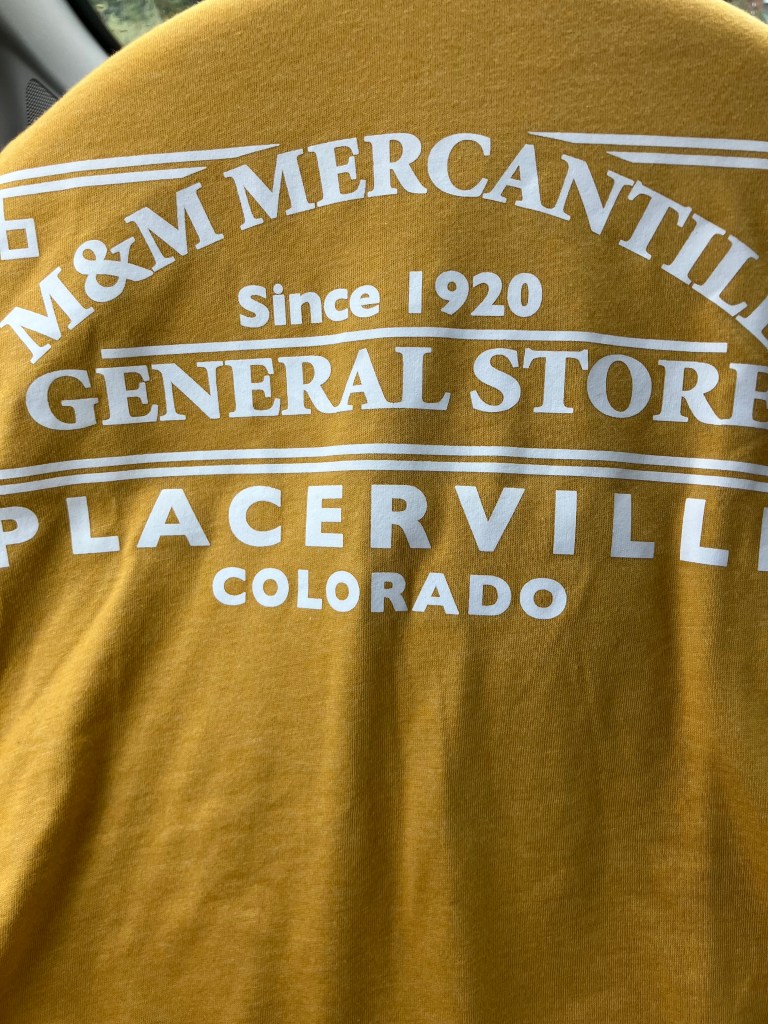
And (shockingly) I was even able to purchase Placerville merch at the general store!

I was hoping for “My husband drove from Placerville to Placerville and all I got was this stupid T-shirt.”

BREW OF THE DAY

We have a winner!

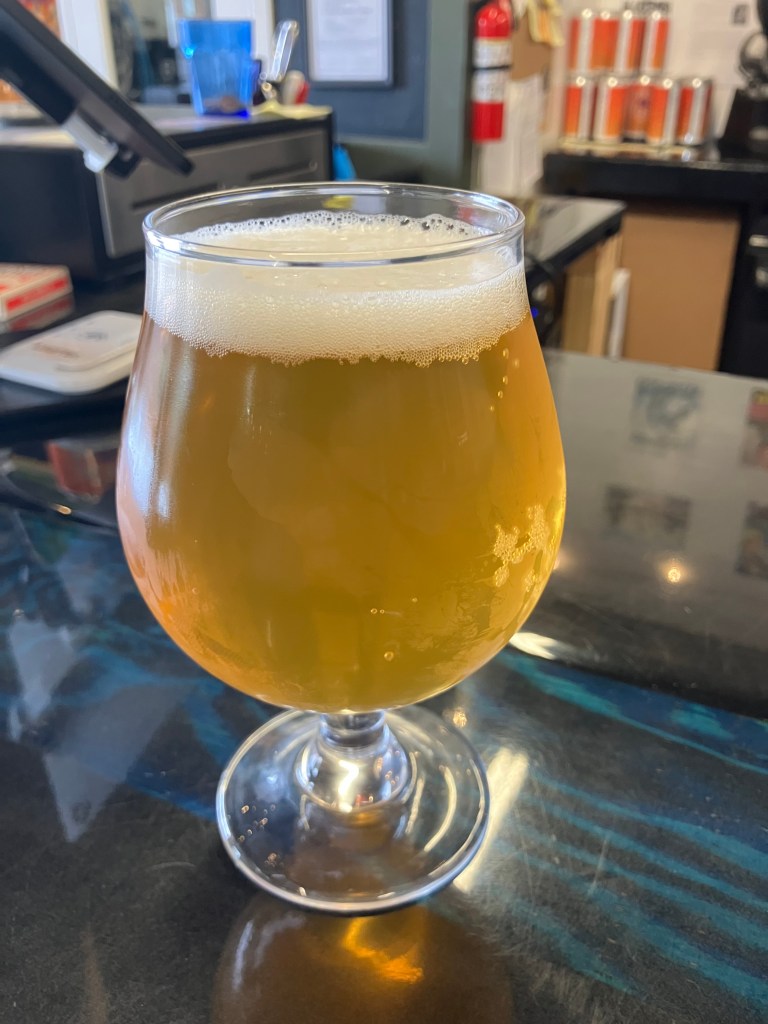
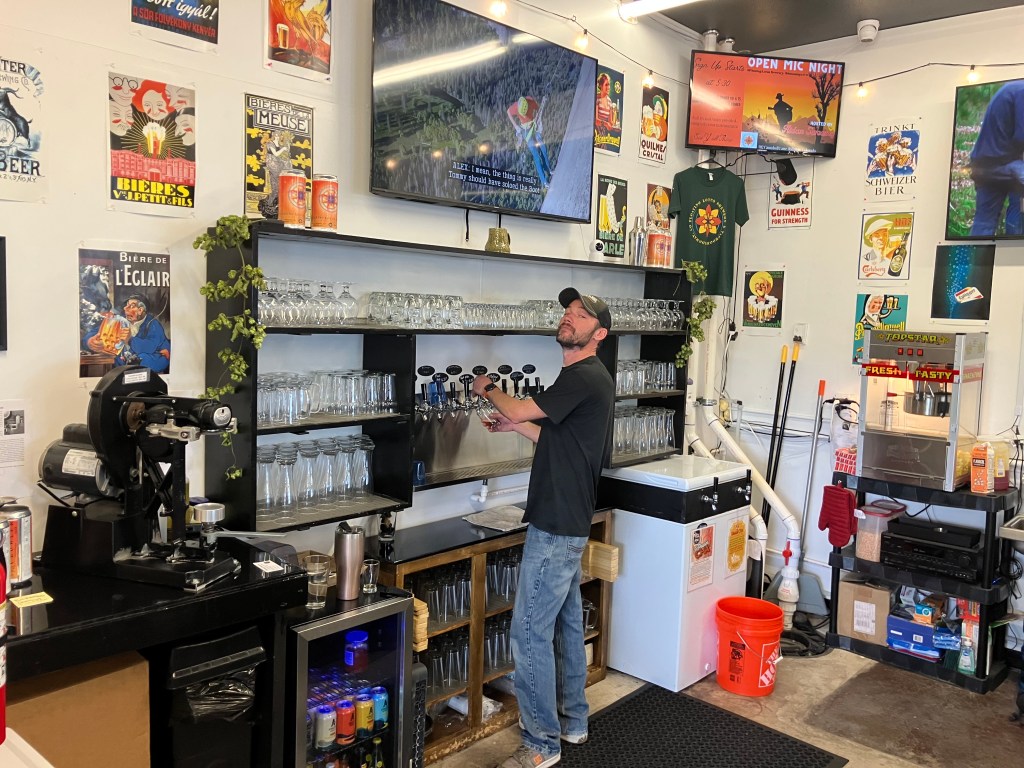
In the town of Ridgway, Colorado (pop: 1,300) I stopped in at the Floating Lotus Brewery. It’s a friendly, casual place with an airy atmosphere, two outdoor patios, a stage for live music, and a great view of the neighboring property where John Wayne filmed some scenes from True Grit. Owner/Brewmaster Kenny Conley hooked me up with his favorite beer: the Blastoplast IPA.

This was hands down the best beer I’ve had on this trip. Of course, that’s an admittedly low bar. But this is seriously a tasty brew. Unlike so many modern IPAs, this one is perfectly balanced. It’s not too hoppy, not to carbonated, not too pungent. At the same time, it’s flavorful and a bit “richer” than you’d expect from an IPA, without the astringent IPA afterburn you sometimes experience by the end of the glass. And at 6.3 percent ABV, I’d say the alcohol content is right where it should be. This is a five-star brew.

Kenny at his post. If you ever find yourself in Ridgway, or even in the vicinity of Telluride, pay him a visit!