Breweries · bridges · churches · Movies · Puns · Road trips

Searching For Something Knotty

Today I took US 20 from Northlake, IL to Iowa Falls, IA. Near the beginning of the day’s drive I noticed this huge sign on a barn in the town of Freeport, Illinois (pop: 24,000).
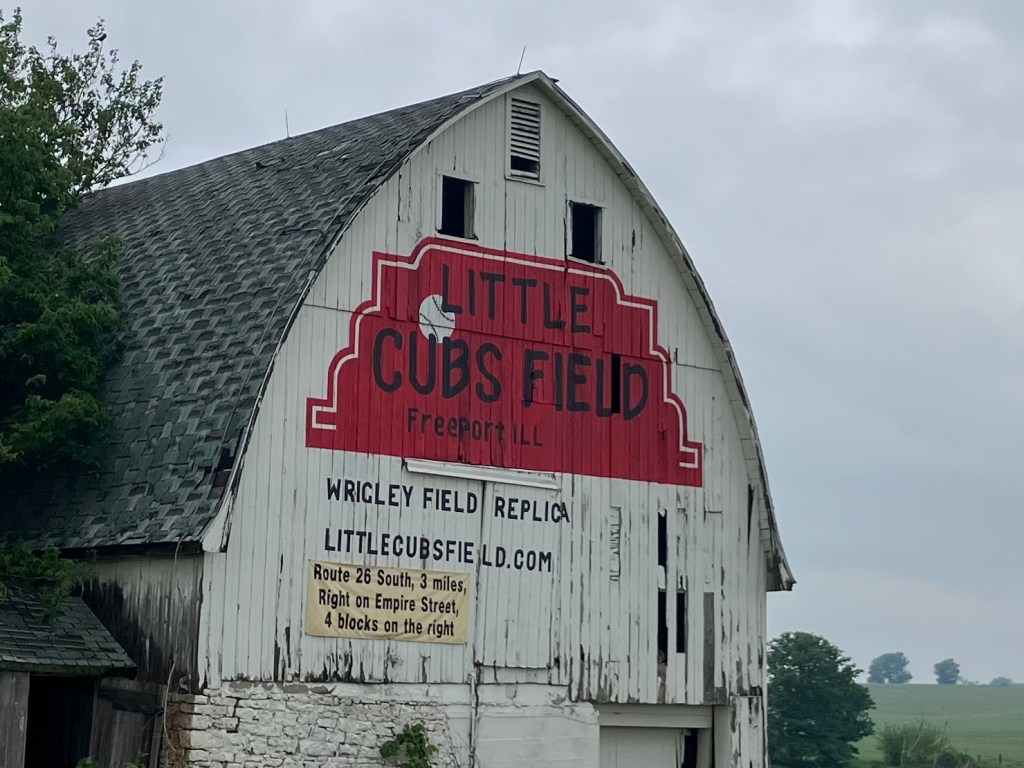
Why not? I followed the directions and was soon at this miniature version of Wrigley Field. It’s kind of cool–I’m sure a Little Leaguer would get a kick out of playing on that field.
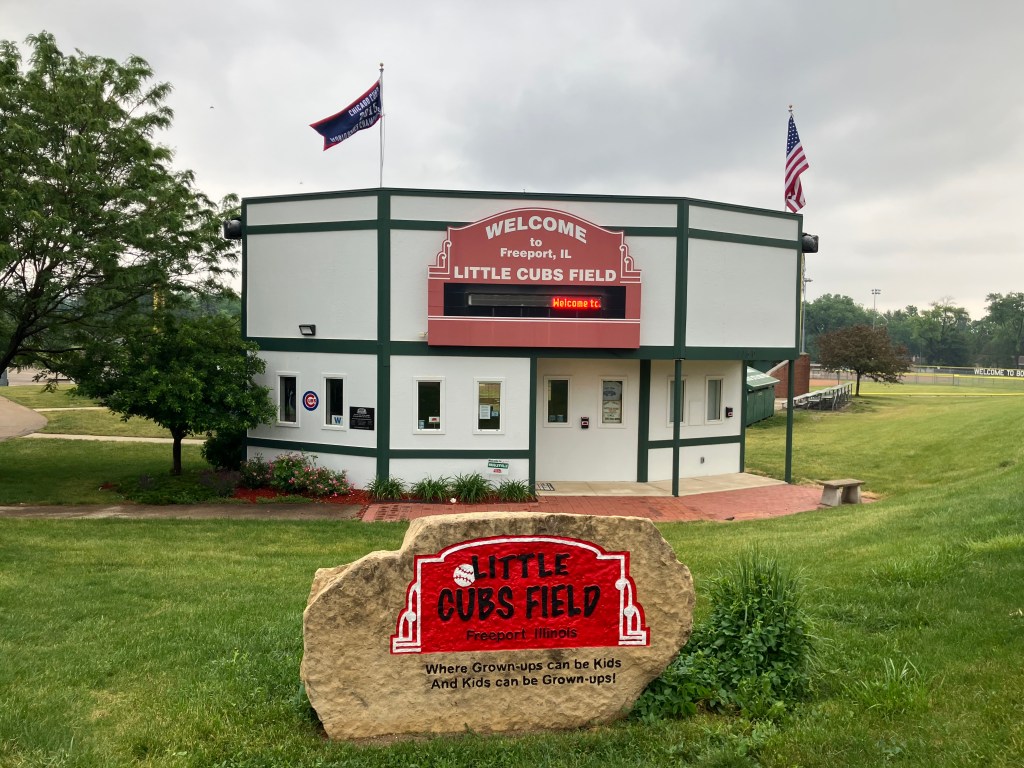
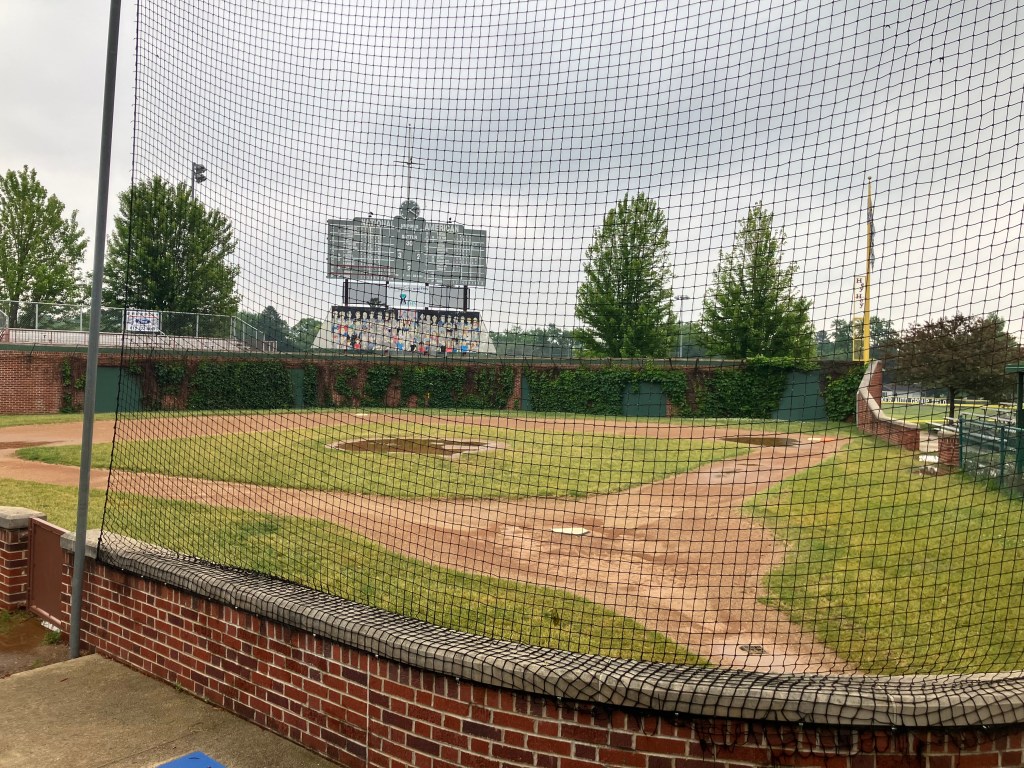
The Friendly Confines.

Now, while I was on Freeport’s surface streets I encountered this marker:
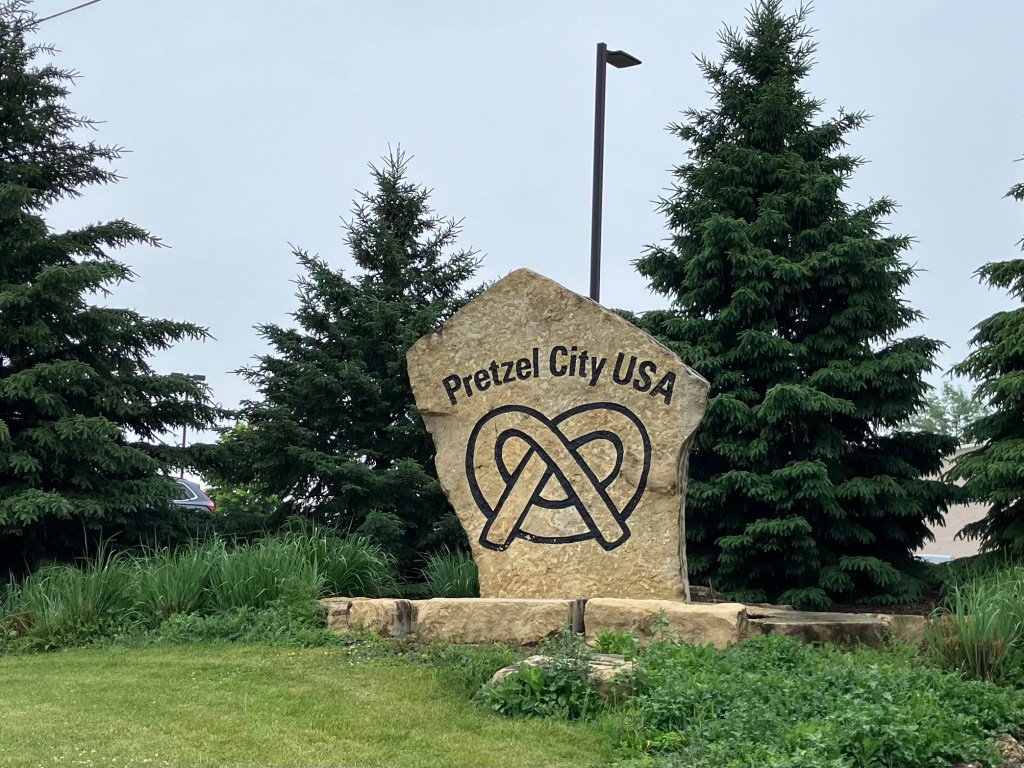
Knot your average city.

And do you know why Freeport calls itself “Pretzel City?” Is it because it produces more pretzels than anyone else? No. Is it because the roads twist and turn like a pretzel? No. Is it because the world’s pretzel production relies on Freeport’s proprietary yeast? No. In fact, it turns out that Freeport once had a German bakery that made pretzels. Like 150 years ago. That’s it.

And for that small and random fact, the local high school’s mascot is a pretzel. I’m not making this up.
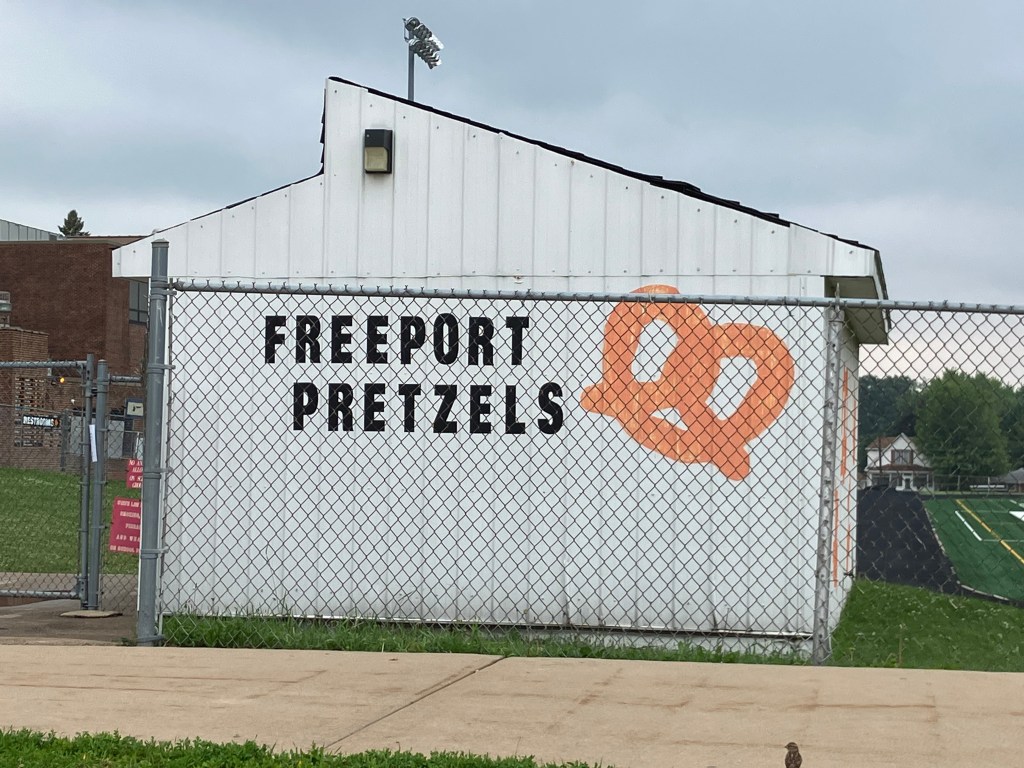
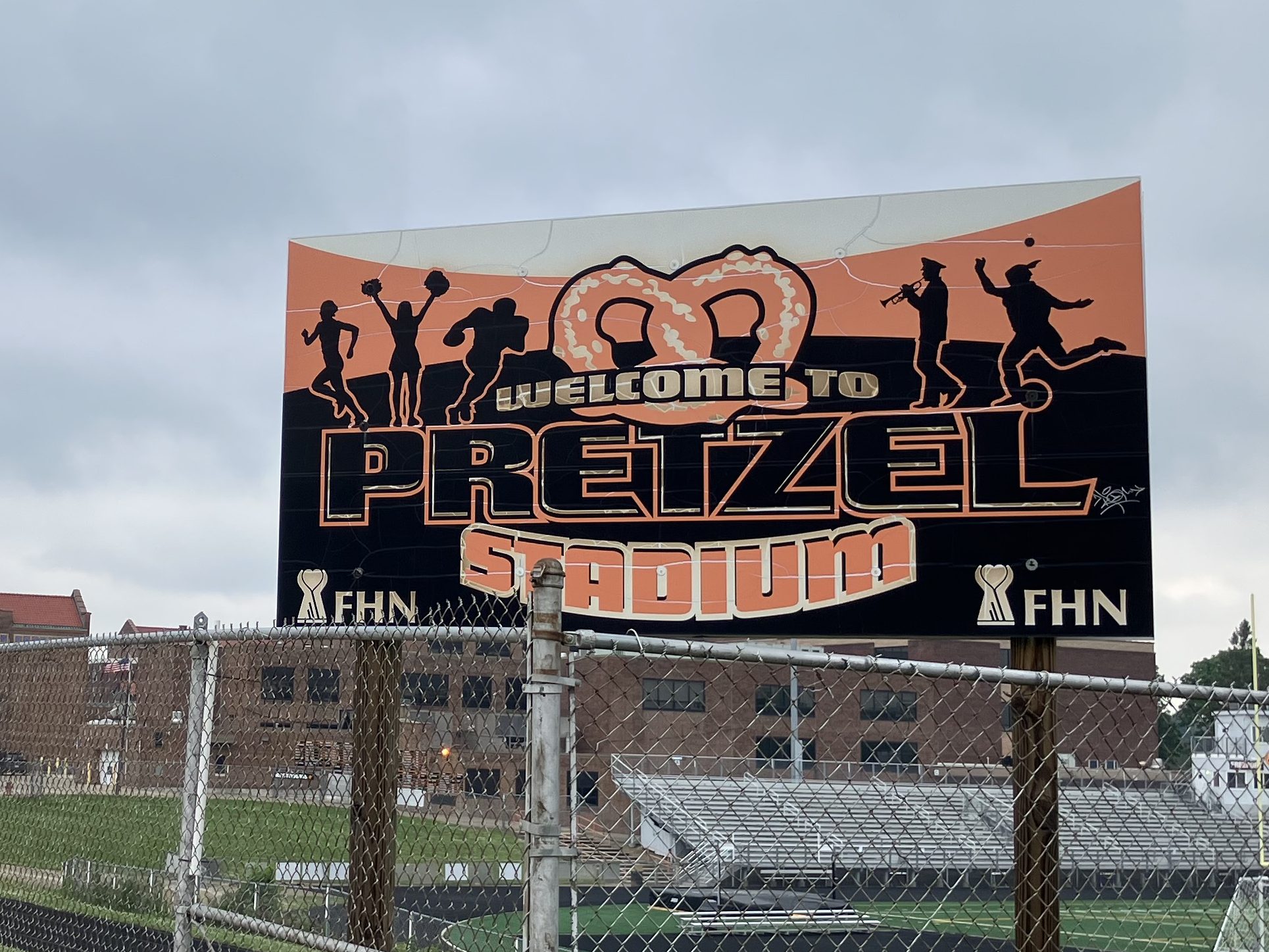
I wonder if they’re sponsored by Snyder’s of Hanover?

Now, you may think I’m mocking Pretzel City. And I am. But I happen to love pretzels, and all this ruminating on the snack brought on a hankering for a big, soft pub pretzel with beer cheese. Surely I could get one here in Pretzel City.

No. “Pretzel City” does not sell big pretzels. There isn’t even an Auntie Anne’s in town.

So I ended up scanning each town I passed through for either a German bakery (unlikely) or a brew pub (more likely). Around noon, when I was passing through the town of Elizabeth, Illinois (pop: 694), I hit the jackpot. Right next to the road was the Highway 20 Brewing Company.
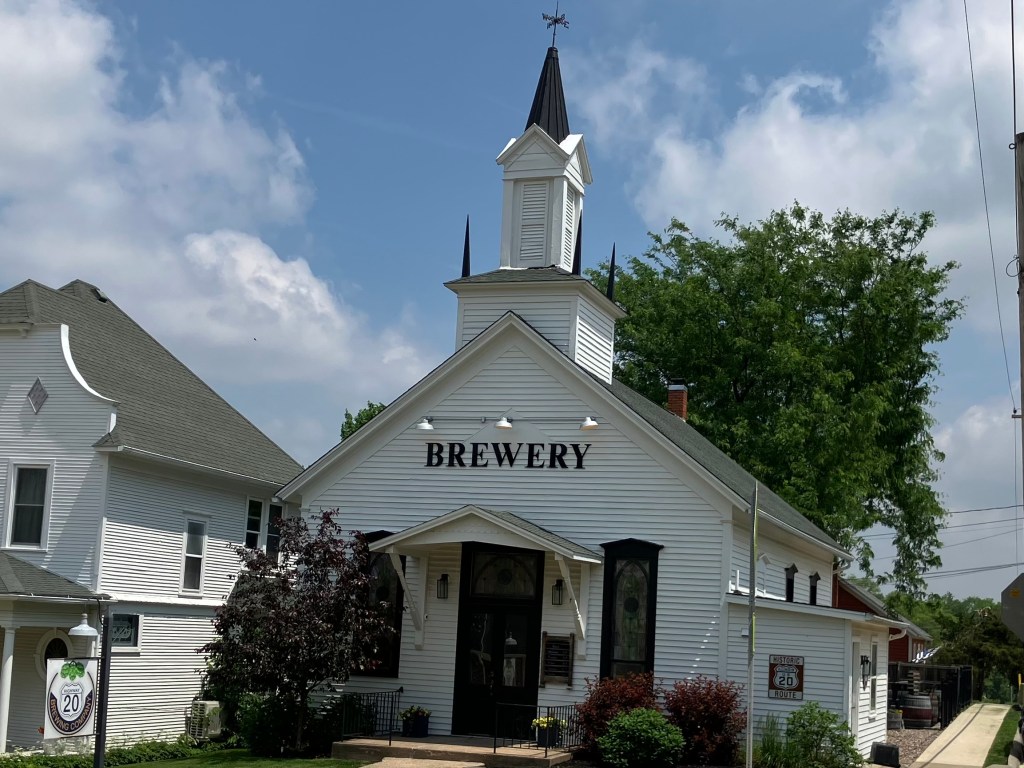
Let us brew.

The brewery is in an 1875 Presbyterian church with beautiful stained glass and a large outdoor seating area. What could be better? I parked the car and strode up to the Narthex. And there I was foiled: The place didn’t open until 3 pm. I seriously thought about killing a few hours until they opened, but it was such a tiny town I couldn’t think of much more to do than drink a beer and eat a pretzel in a church. Muttering words that shouldn’t be spoken on church grounds, I got back in the Perigrinator (as I’ve taken to calling the Altima) and continued along Route 20.

Shortly before I got to the Iowa state line, I entered the town of Galena, Illinois (pop: 3,300). Now Galena is an interesting place. Most of the town is recognized as a National Historic Site, and just passing along the street feels like you’ve gone a century or two back in time. Virtually all the buildings in the downtown are historic, and most of them seem to cater to tourists. Among other things, Galena plays up the fact that General US Grant retired here after the Civil War, and his home is a major tourist draw.

Of course, the main draw for me was a place called the Galena Brewing Company. It’s in an old building from 1849, that once housed a print shop. They make a good selection of interesting beers, and I’ll discuss my choice when we get to the BOTD. But my immediate goal was to get me a big pub pretzel. Voila!
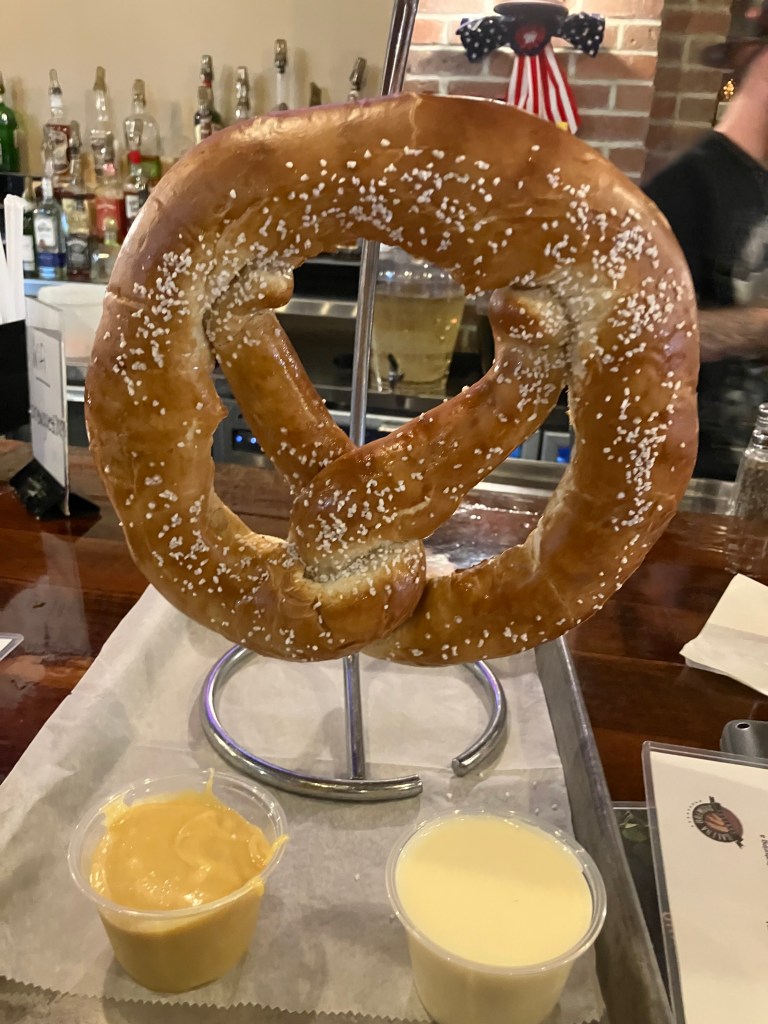
It’s a one-pound pretzel, which the brewery claims it is “famous” for. I don’t know about that, but I do know that it constituted my entire lunch. I was supremely happy.

While scarfing my pretzel I chatted with a few other people at the bar. We were all out-of-town visitors. Tom had just visited his sister nearby, and had a 300-mile drive home in front of him. Steve and Ann had come over from the greater Rockford area to spend a few days, and this was their third trip to Galena Brewing Company. There was also a woman from Denver visiting a relative in the area. Bailey the Bartender kept us all happy. It was a very enjoyable hour. And that’s not just the pretzel talking.
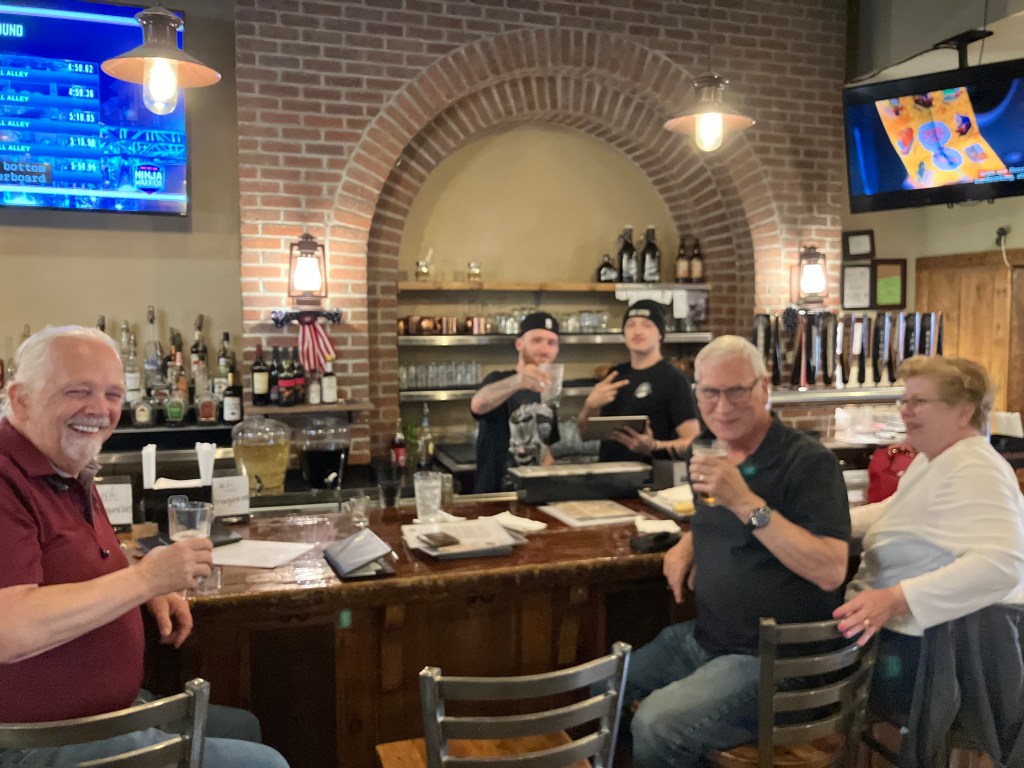
Left to right: Tom, Bartender Bailey, mystery bartender, Steve, and Ann.

OK, now that I’m done with that twisty tale of pretzels (har!), let’s go back to a couple of other sites of note along today’s drive.

In Marengo, Illinois (pop: 7,600), I spied this mysterious old tower right next to the road. It abuts a decaying, old stone wall–like ancient Italian ruins. Is it a watchtower of some kind?
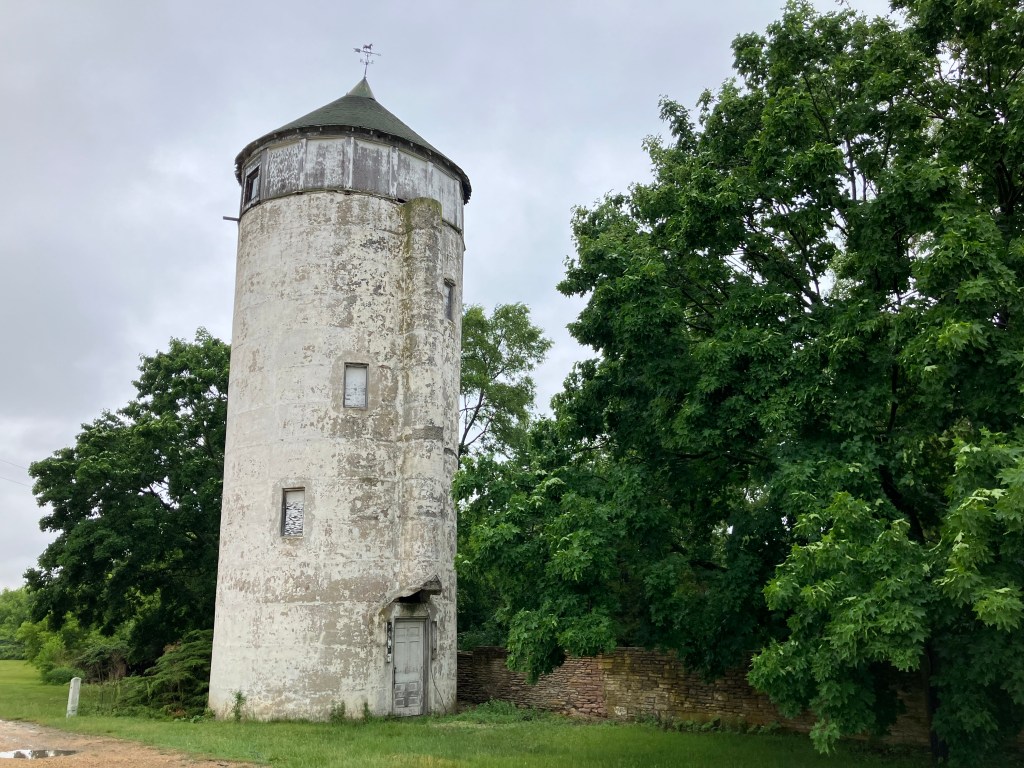
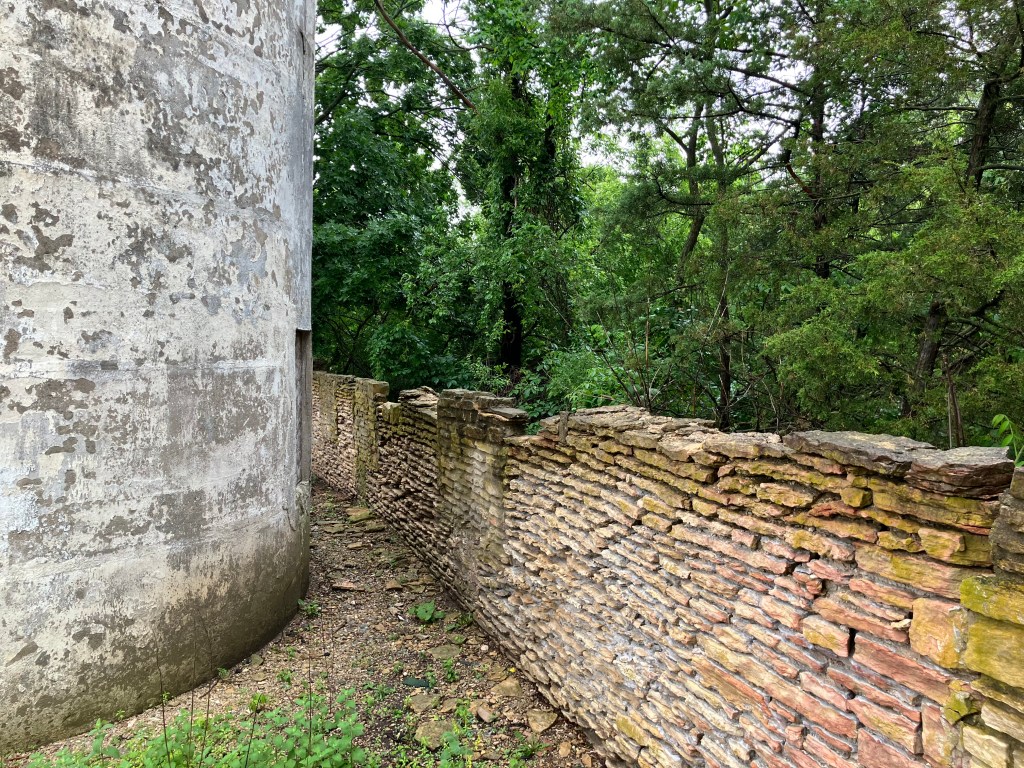
Mysterious Marengo Tower.
This wall behind the tower surrounds a plot of overgrown brush and random pieces of cast concrete.
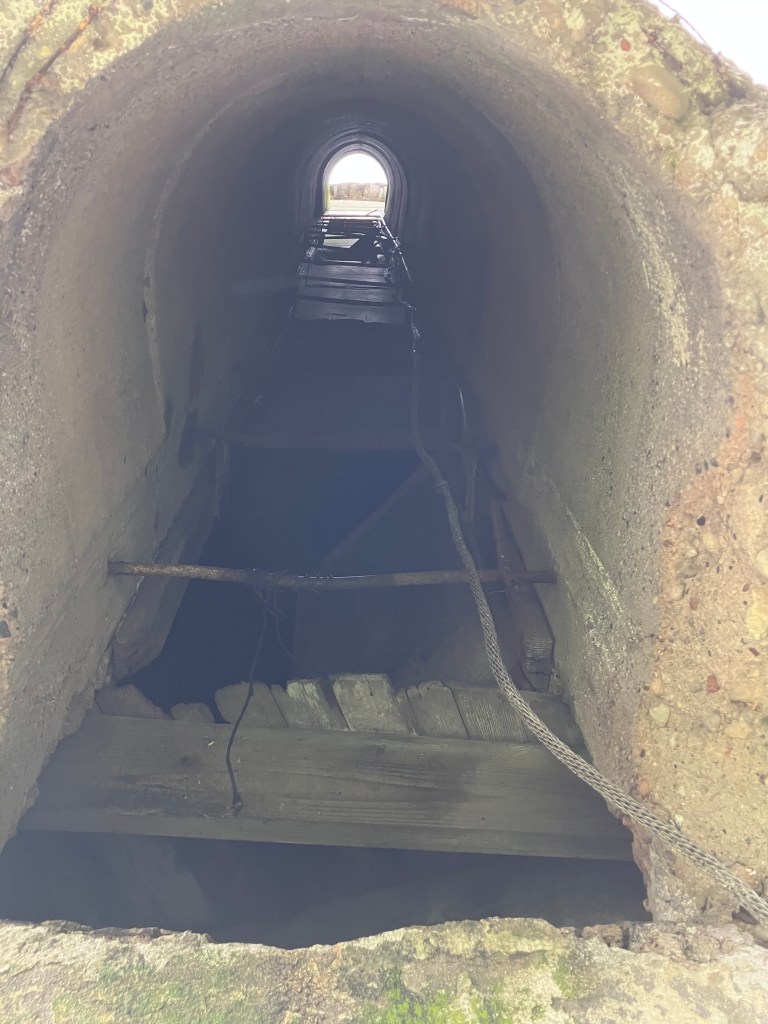
Looking upward along an enclosed ladder on the side of the tower. You can see the enclosure above the door in the first photo. I considered climbing the ladder, but chickened out.

My internet sleuthing didn’t turn up anything definitive to explain what the heck I was looking at. ChatGPT thinks it’s a fire watchtower, but it seems to be confusing the structure with a steel tower not far from there. Anyone know what we’re looking at here?

The most melancholy site of the day was Donley’s Wild West Town, also in Merango. This sign caught my attention:
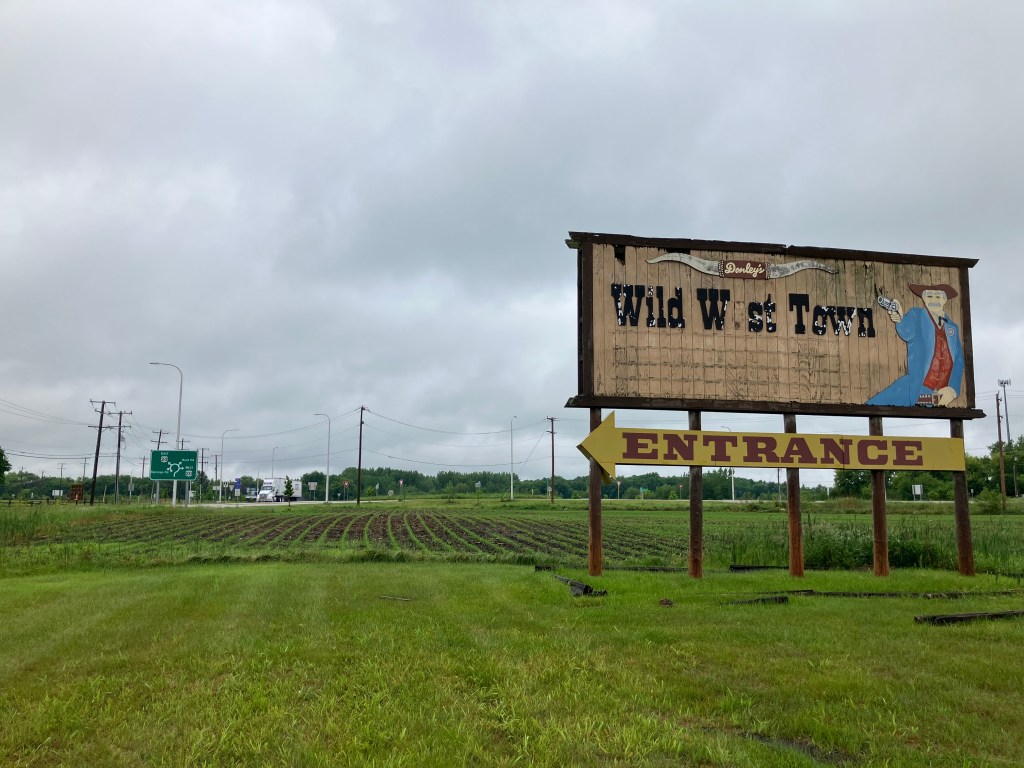
Following the sign, I encountered what appeared to be a giant Frederic Remington sculpture:
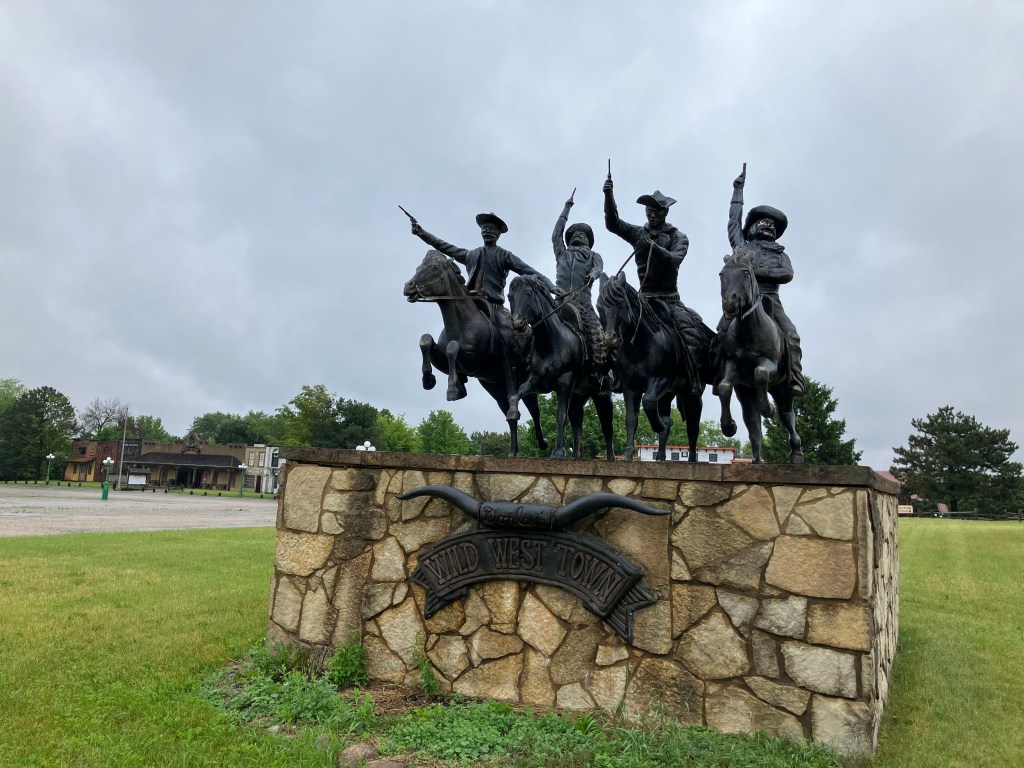
The Four Horsemen of the Apocalypse?

Judging from the iconography so far, I assumed this Wild West Town would be similar to a place near my childhood home, called Frontier Village. Frontier Village depicts a sanitized version of the Old West, with rodeos and bloodless shootouts and gold panning and alcohol-free saloons and pony rides and such. I remember it being great fun.

So, hoping to relive a few moments of my youth, I turned into the parking lot. The place was clearly closed for the day, and despite the presentable-looking front doors, the facade was looking a little long in the tooth.
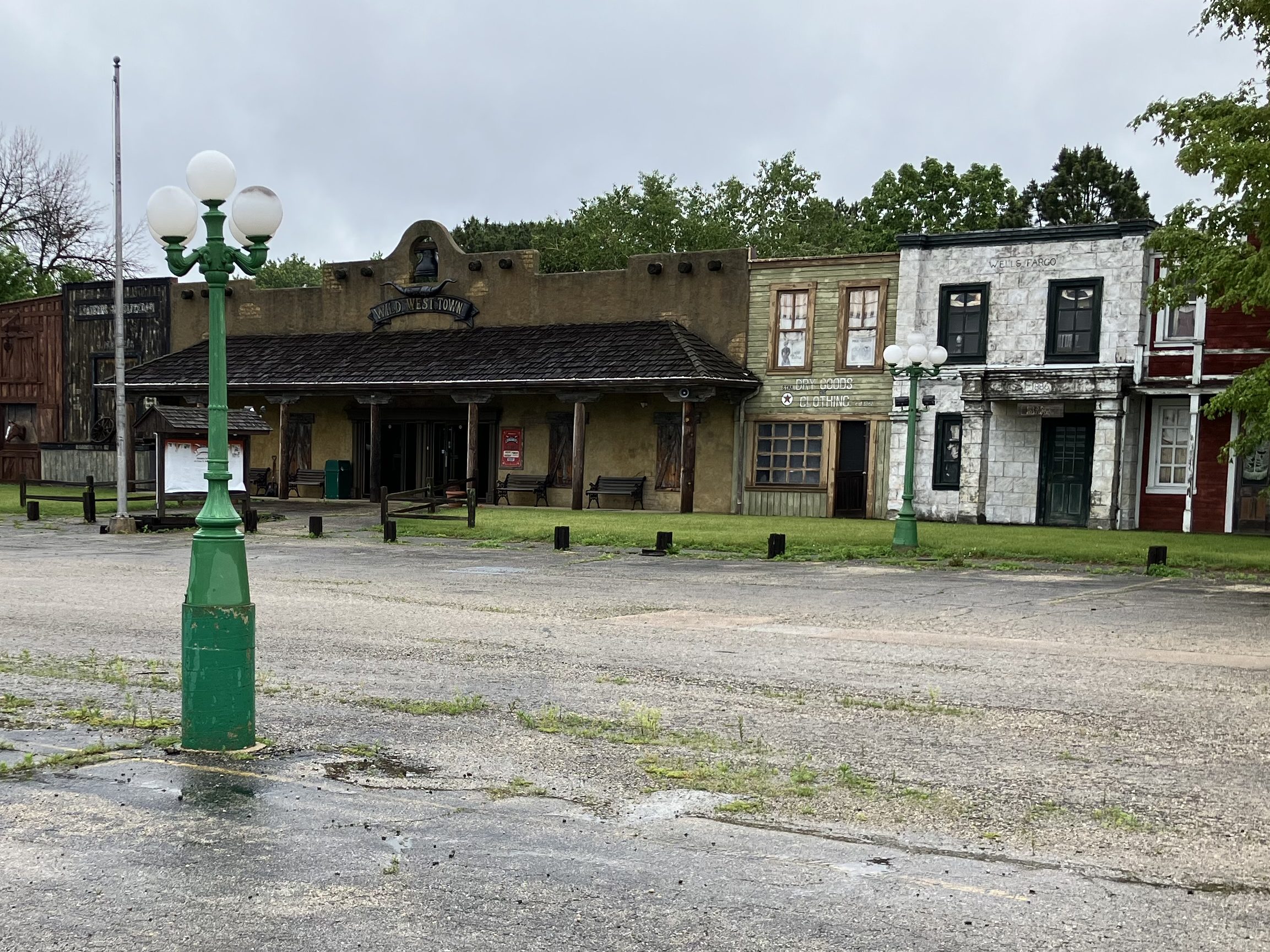
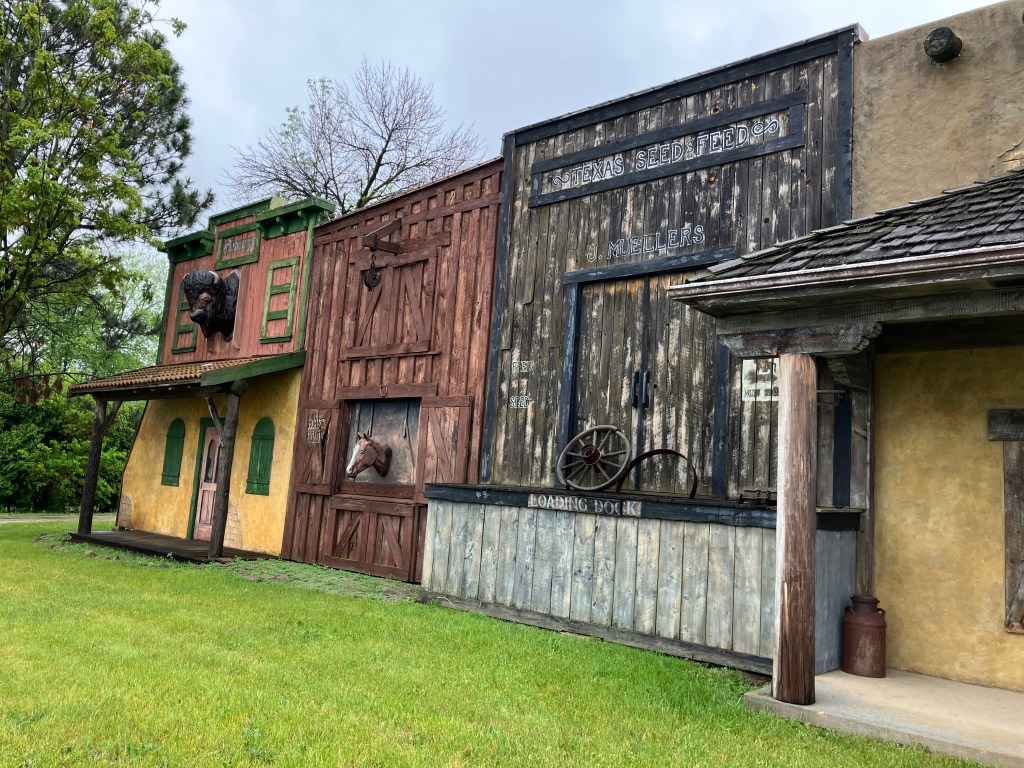
Cue the whistle from The Good, the Bad, and the Ugly.
Must have been a pretty fun place, back in the day.
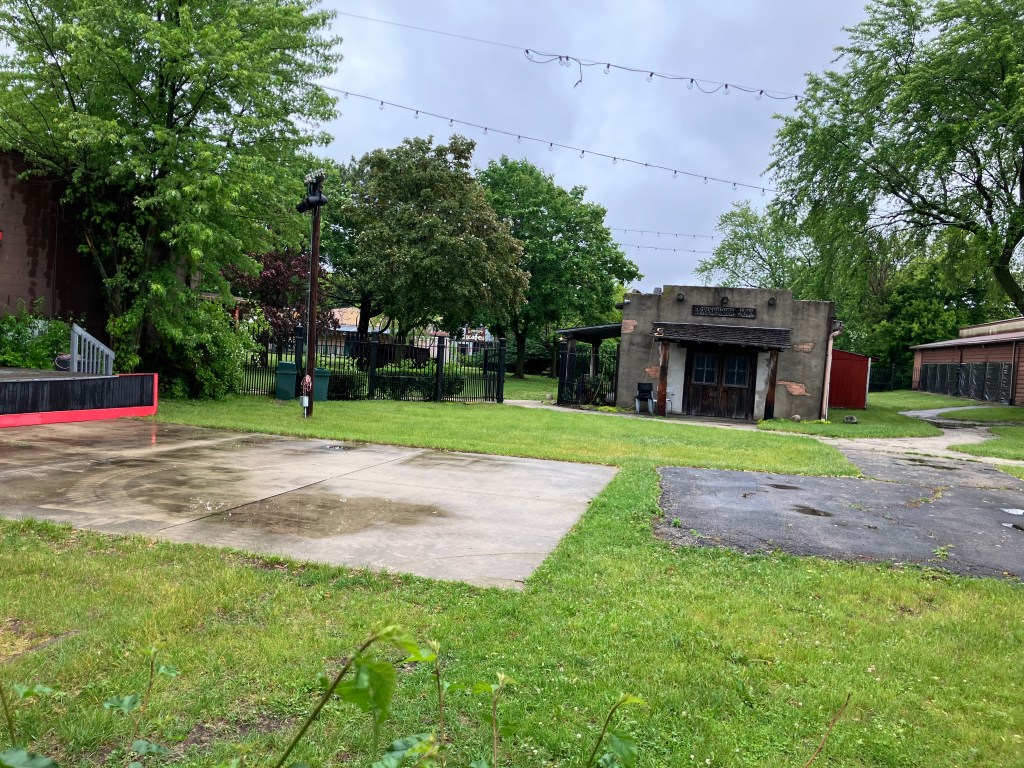
Peeking behind the fence.

A search of the internet confirmed that the place is permanently closed. This made me feel kind of melancholy, for two reasons. First, it’s always poignant when someone’s dream dies. From the little I know about Wild West Town, it seems like it was a family-owned, family-friendly place with a lot of heart. It reminds me of an abandoned place in Wisconsin that I discovered in 2022. You can read my post about it here. And if you do, make sure you scroll all the way down to the comments at the end, where the son of the park’s founder makes a surprise appearance.

Anyway, the second reason the demise of a park like this saddens me is because it reminds me of the passing of an era. It seems that these low-tech, sweetly-corny, flesh-and-blood places aren’t popular in the modern, digital world. I know that makes me sound like a Luddite, or at least an old man. Which I am. But still.

I encourage you to watch this 2016 video of highlights from the Wild West Town. You’ll see what I’m talking about.

But let me end on a somewhat more inspiring note: Near the end of the day I saw a sign along US 20 urging me to visit the “Field of Dreams.” Yes, that Field of Dreams. It turns out that after they made the 1989 Kevin Costner movie, the town of Dyersville, Iowa (pop: 4,000) preserved the baseball diamond that was created in a cornfield. It’s now a tourist attraction.
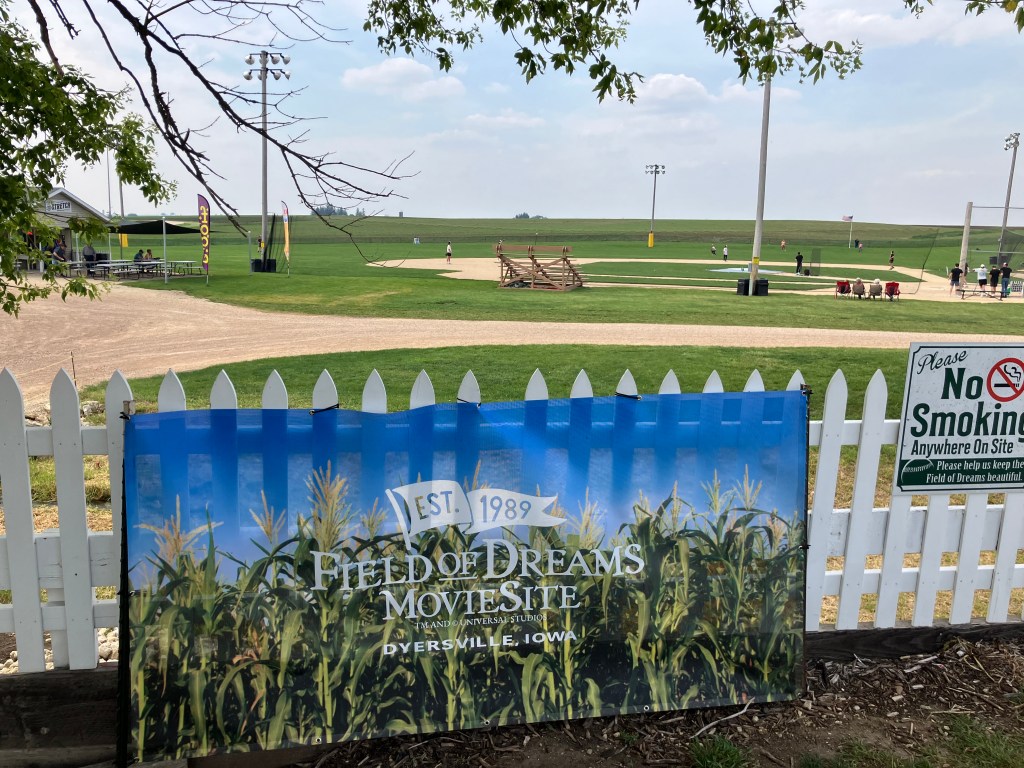
Sure, it’s a little corny (ha!), but it was heartwarming to see kids and families playing catch on the field. What a perfect bookend to a day that began at the Little League version of Wrigley Field.
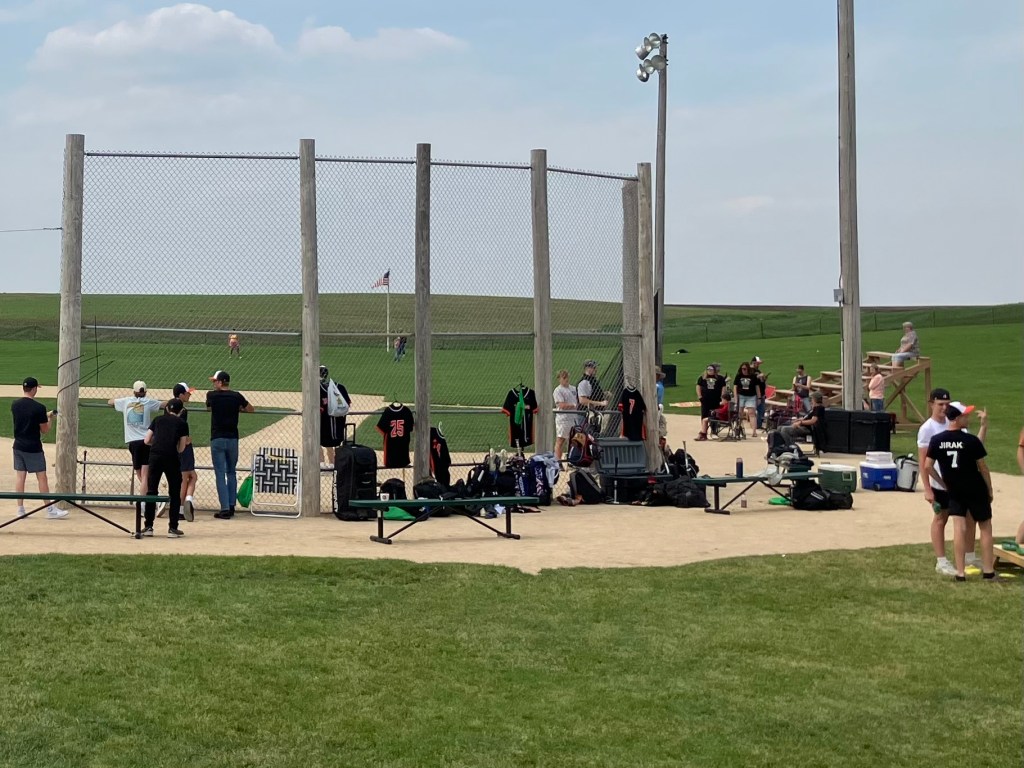
Build It and They Will Come indeed!

BRIDGE CORNER

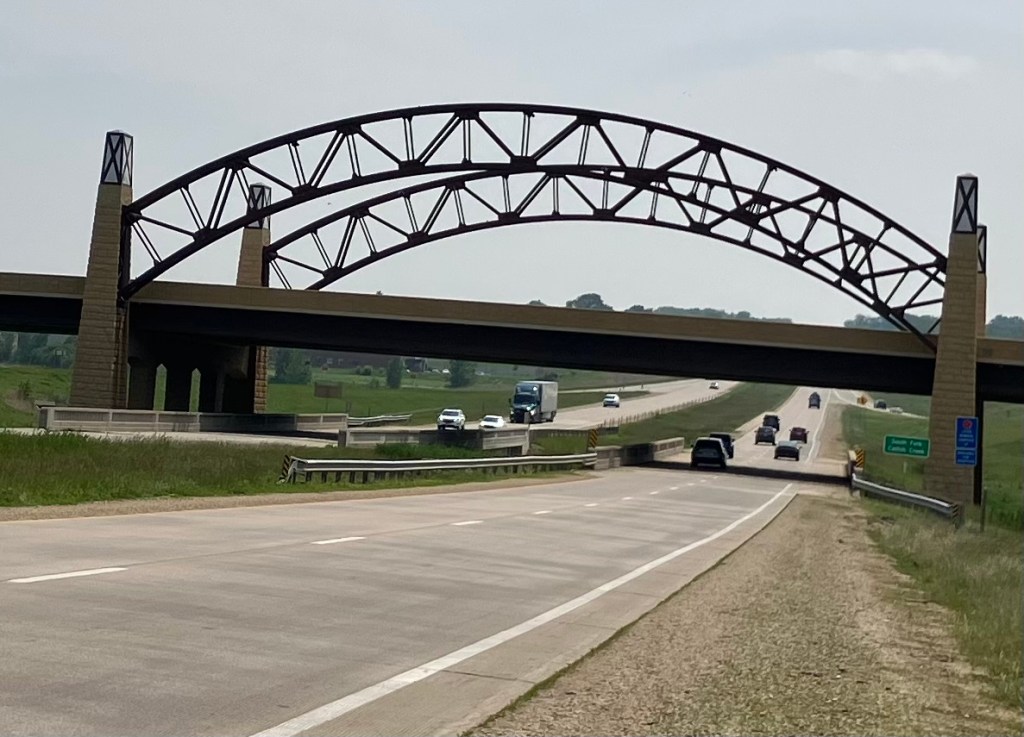
This overpass carries traffic from Seippel Street in Dubuque over US 20. To me it looks like a fairly new structure, and it seems to incorporate old steel arches from a prior bridge. I cannot confirm any of this with my research though. Our research team will keep working on it, but any tips would be appreciated!

BEER OF THE DAY

As noted early, the BOTD comes from Galena Brewing Company. I had the “All Day Reveille,” which is a black lager. It’s as dark as a stout, but with a much thinner body and less robust taste.
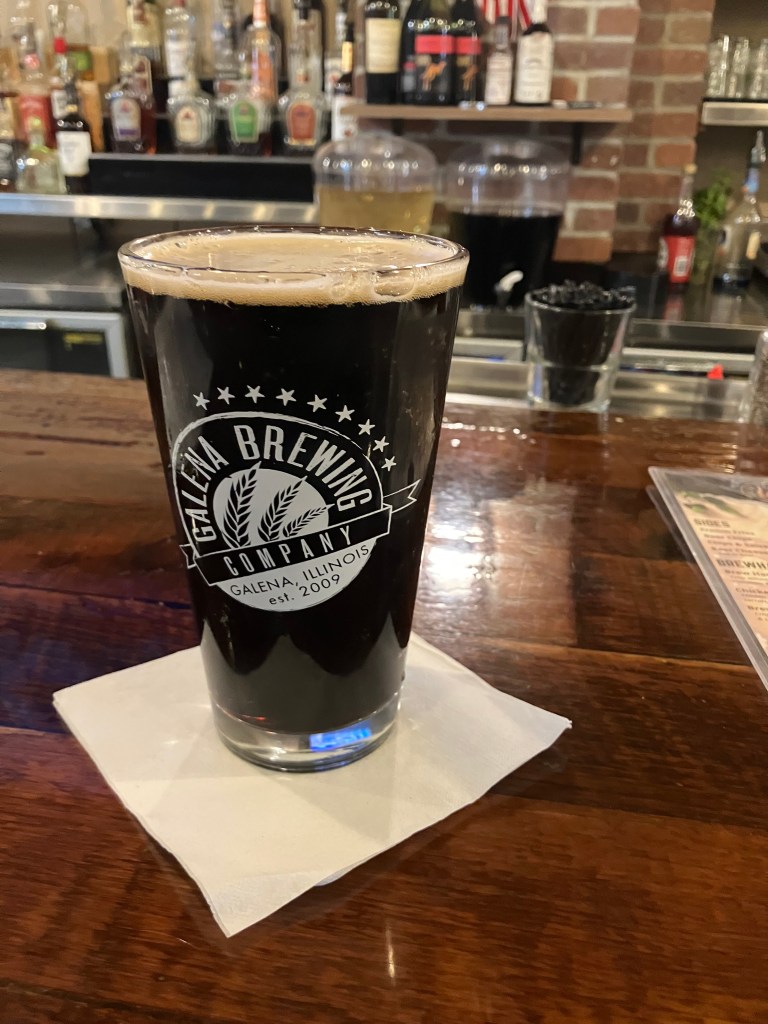
This beer is quite balanced, with a dark, malty base that’s countered with a moderate amount of hops. After fermentation, they add some cold-brewed espresso from a local coffee roaster. This gives the flavor a stronger backbone. Still, it’s not overpowering, and the flavor profile is fairly flat. The ABV is 5.7, which is about average. I’d call this a pseudo-stout for people who don’t like stouts. I’ll give it 3.5 stars, which means I wouldn’t go out of my way for one, but I’ll enjoy one if it’s in front of me. I give the accompanying pretzel a solid 5 stars.
bridges · California history · Road trips · trains

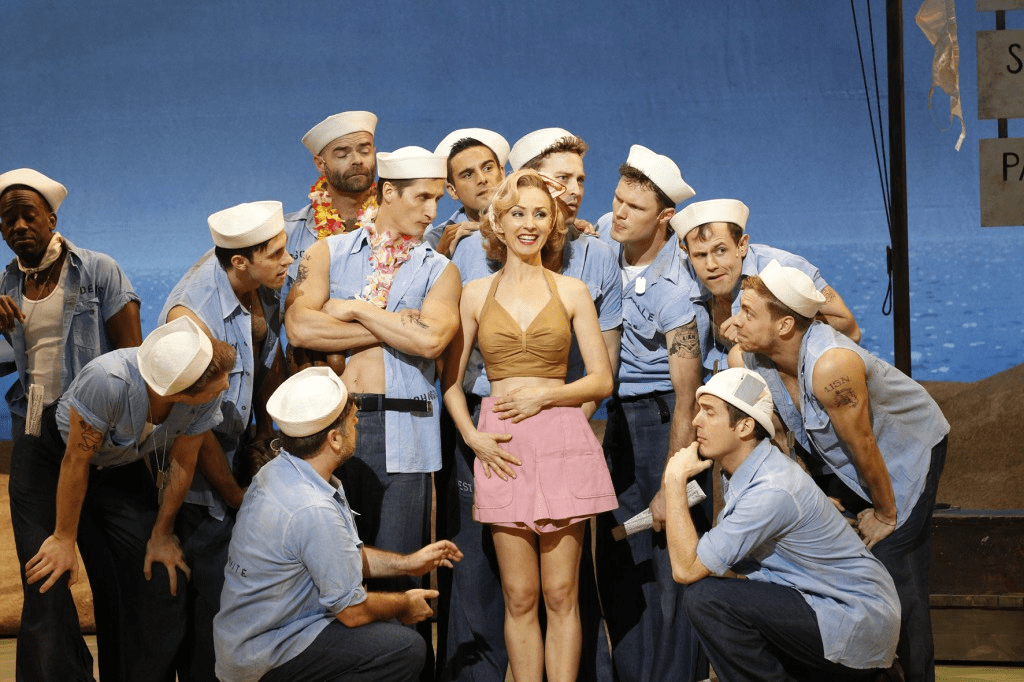
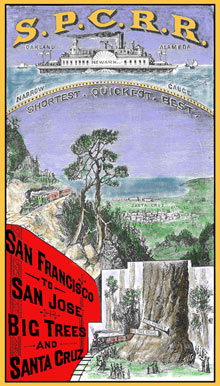
South Pacific

No, not that South Pacific…
this one.

The San Francisco Bay Area today is associated with high-tech start-ups, a tangle of crowded freeways, ubiquitous Teslas driven by tech bros on their way to Starbucks, and outsize McMansions squeezed onto tiny lots that once were once cherry and apple orchards. It’s a thoroughly modern region, where Lime Bikes are available on every street corner and Uber Eats is more popular than McDonalds.

And yet here and there you can still find remnants of a long-forgotten, early-industrial past, if you know where to look. Recall, for example, my hunt last year for a century-old, half-sunken railroad ferry in Antioch. I’ve been struggling to articulate just why I’m find the presence of these historic relics so reassuring. To me they’re a tangible link to an obstreperous past that feels more palpable than our virtual this and digital that. The steam-and-iron age had its negative points, to be sure, but it also showcased our civilization’s determination, boldness, and energy. And yet I think there’s more to my interest in this stuff than just their Romantic aspects. By seeing these artifacts in the wild, rather than behind a museum display case, they are at once more authentic and better contextualized. They connect us to our own past. I’m thinking of that scene in the original Logan’s Run, when Logan 5 and Jessica 6 encounter the old man (played by Peter Ustinov). Even though their modern society worships youth, they are drawn to this ancient, bearded feller with connections to a forgotten time.

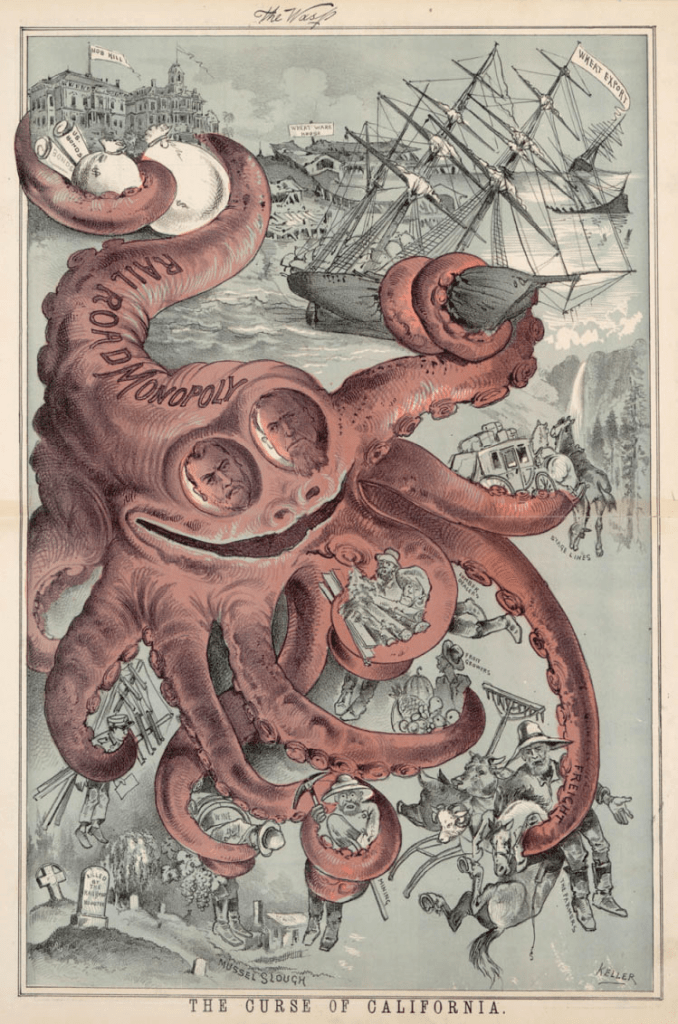
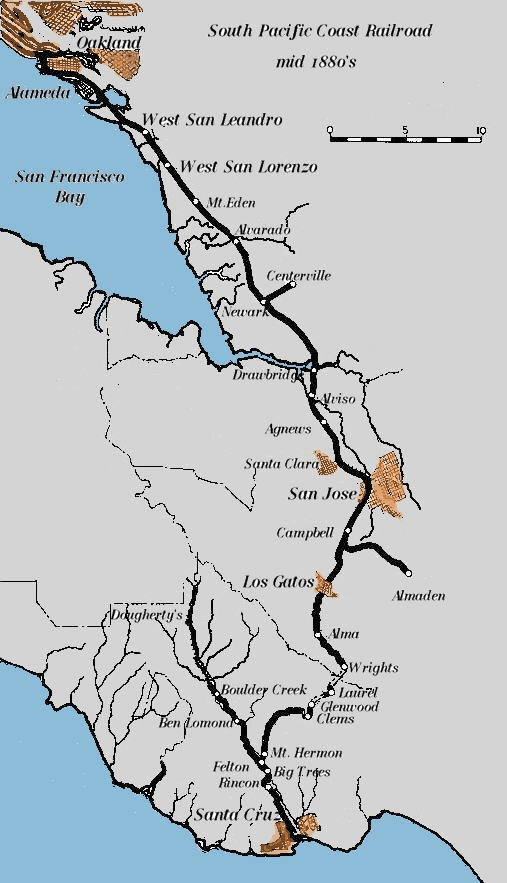
All this brings us to the South Pacific Coast (SPC) Railroad. It’s an audacious, independent Bay Area rail line that was established almost a century and a half ago. It was an earnest upstart that offered a cheaper alternative to the monopolistic Southern Pacific Railroad, which at the time held California in a “monopolistic death-grip.”

The SPC ran from Alameda down to Santa Cruz–a distance of about 77 miles. The stretch that crossed the Santa Cruz mountains, from Los Gatos to the coast, is especially impressive for a small, independent, narrow-gauge railroad. Trains traversing this section would snake their way through redwood forests, crossing gorges and creeks and passing through eight tunnels. And it was built in the 1880s! The line ended in the town of Santa Cruz.

The Southern Pacific Octopus eventually absorbed the SPC line. Then the route became unprofitable with the opening of Highway 17 between San Jose and Santa Cruz in 1940. That same year a storm destroyed major portions of the old SPC line, and the Southern Pacific decided to abandon much of the line rather than repair it. Trains have not traveled over most of the original line for about 85 years.

So what happened to the SPC’s tracks and tunnels after the railroad was abandoned? My son Ian and I spent two days following the old route in order to find out.

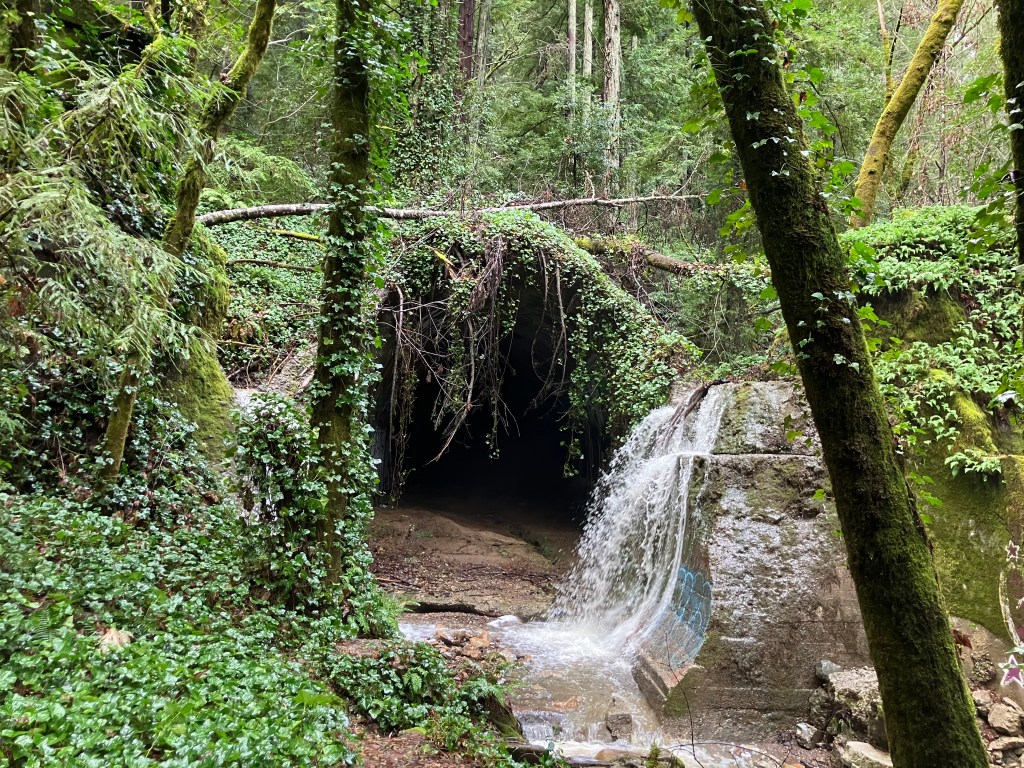
We focused primarily on those old tunnels. There were eight of them. Tunnel #1 was obliterated in 1903, and in the 1950s the area was inundated by the creation of Lexington Reservoir. So we moved on to Wrights Station, which is where Tunnel #2 was bored. And it’s still there! The trees and vines and moss of the Santa Cruz mountains are trying to reclaim the tunnel’s mouth, but a steady flow of water seems to be continuously scouring it.

South portal of Tunnel #2 at Wrights
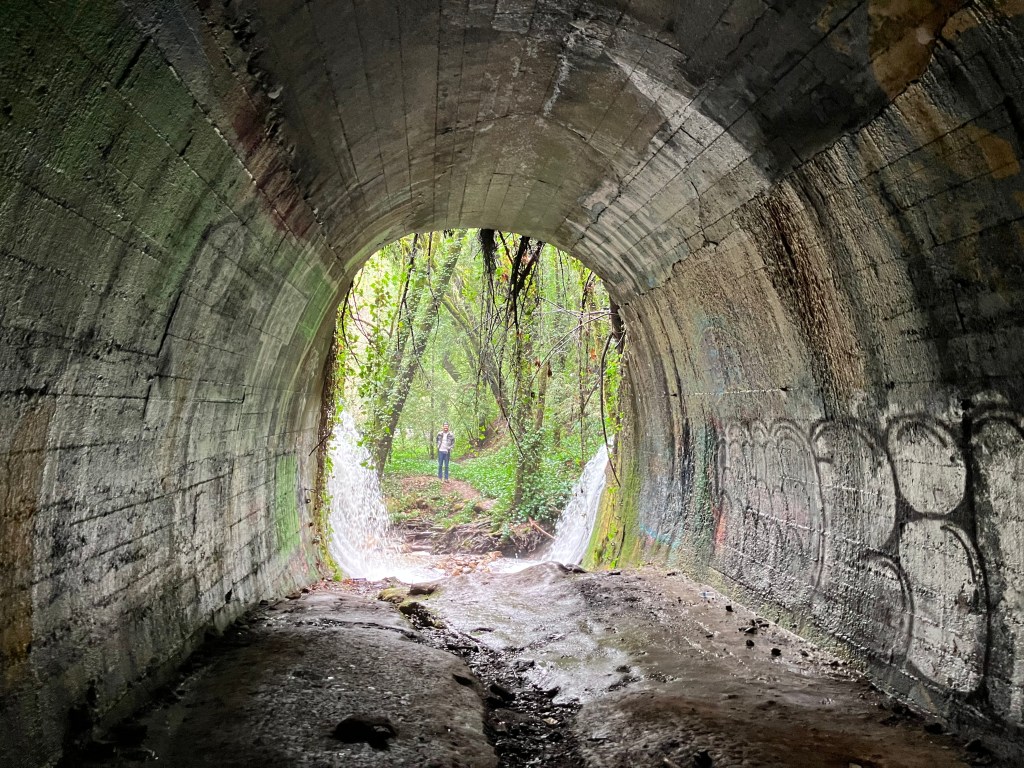
View from inside Tunnel #2. Son Ian is (wisely) standing outside.

It’s somewhat eerie, these ruins from well over a century ago just silently sitting there in this remote forest. Graffiti reminded us we weren’t the only modern persons to discover these remnants of a past age, but it still felt as though we’d encountered something largely forgotten.

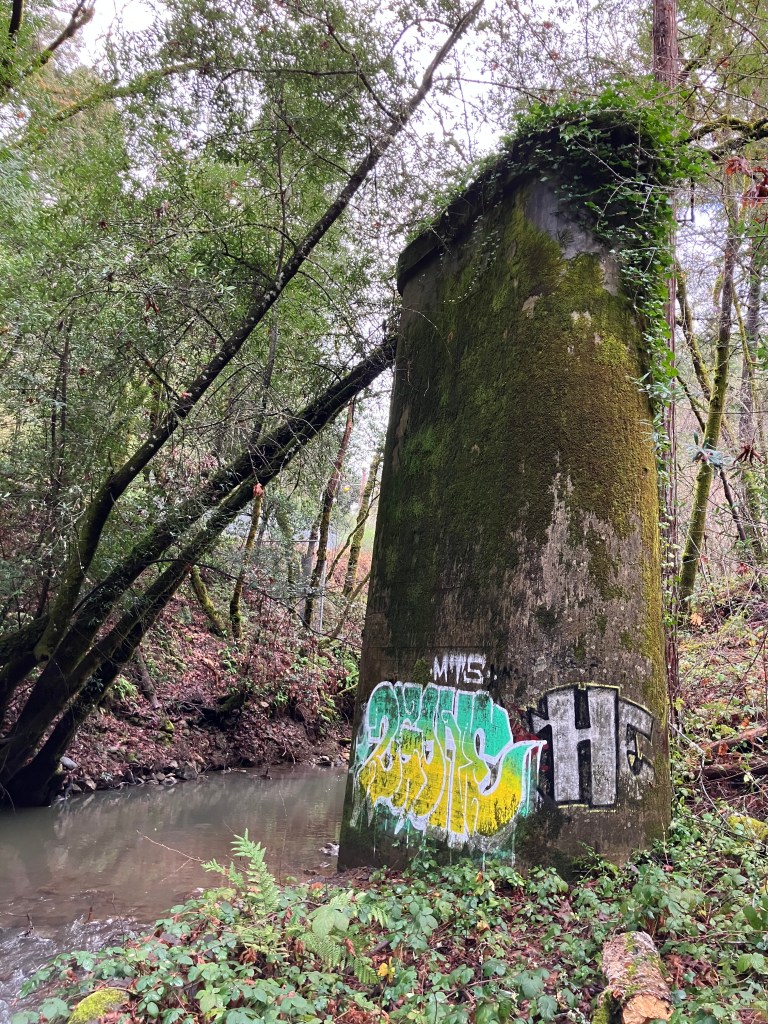
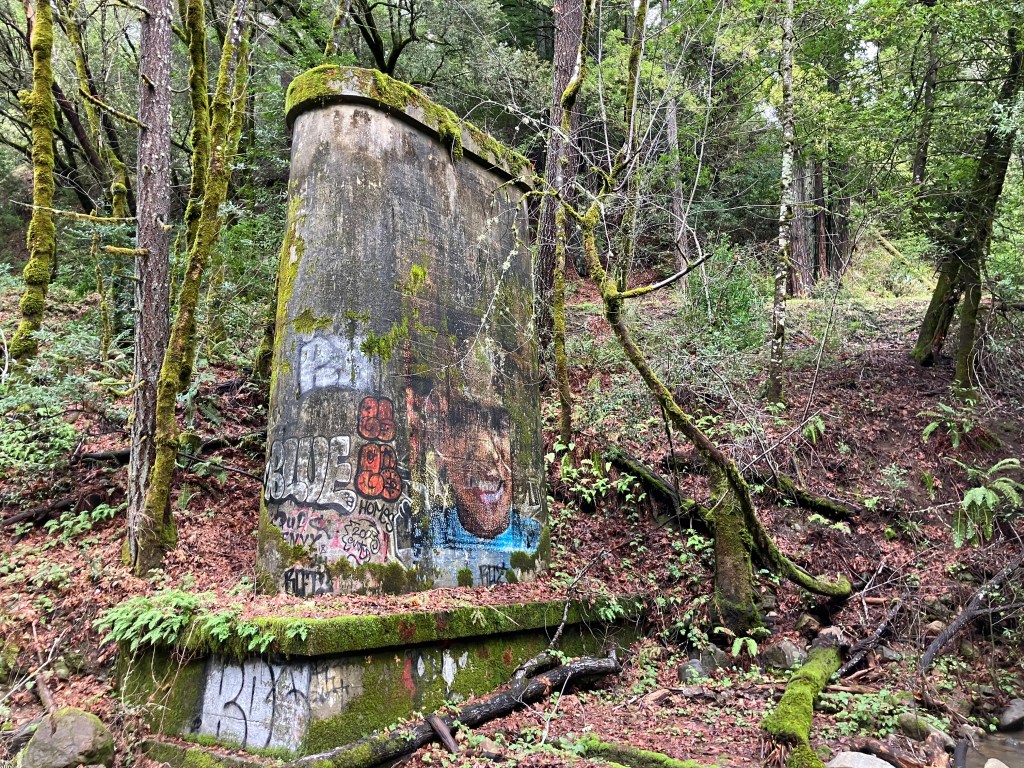
Railroad bridge pier near Wrights.
Another bridge pier, with impressive graffiti.

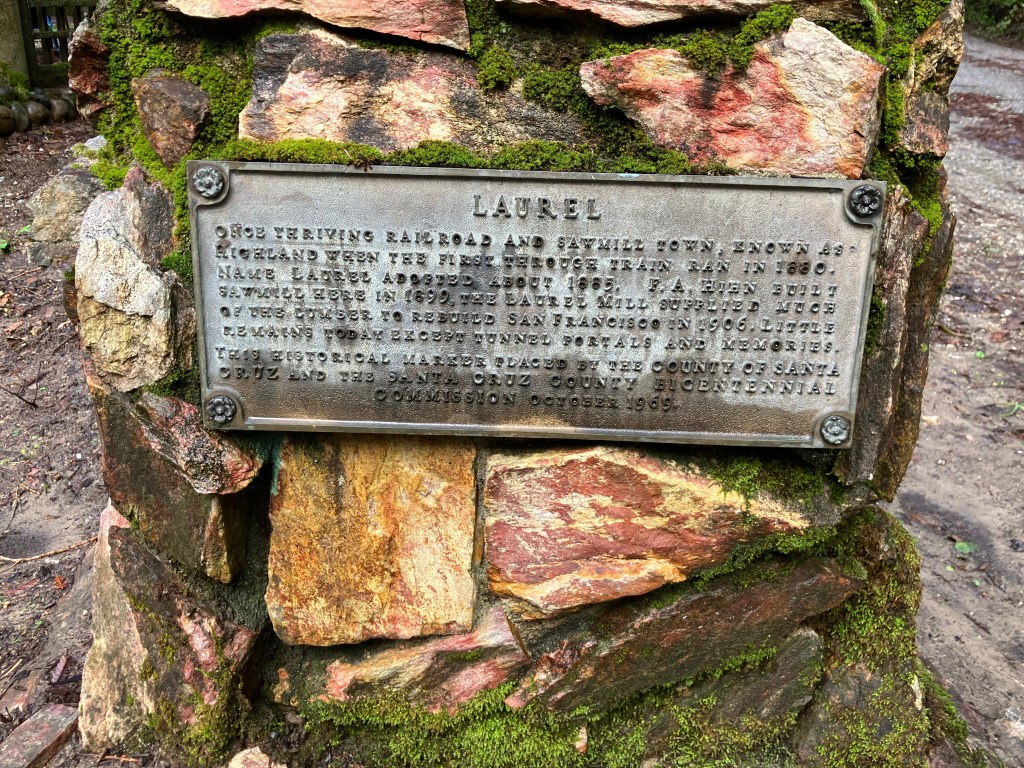
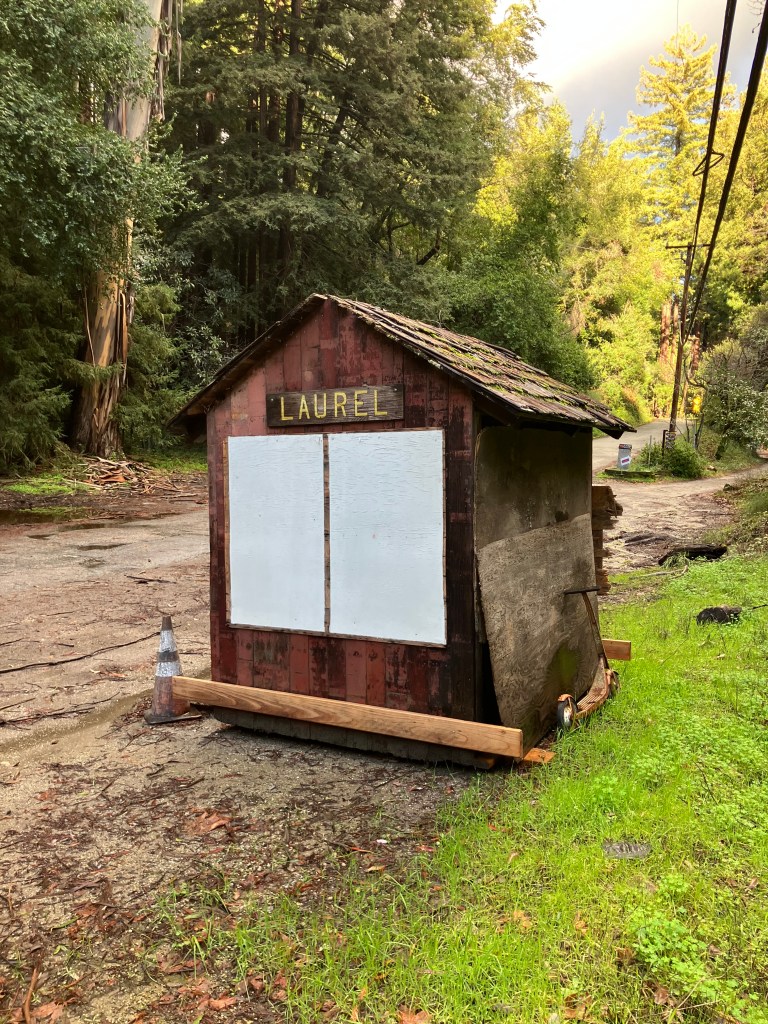
After Wrights we moved on to the town of Laurel (pop: one family). Laurel used to be a significant stop on the line, but today it seems to amount to just one house.

“Once thriving railroad and sawmill town, known as Highland when the first through train ran in 1880. Name Laurel adopted about 1885. F.A. Hihn built sawmill here in 1889. The Laurel Mill supplied much of the lumber to rebuilt San Francisco in 1906. Little remains today except tunnel portals and memories. This historical marker placed by the County of Santa Cruz and the Santa Cruz County Bicentennial Commission October 1969. “

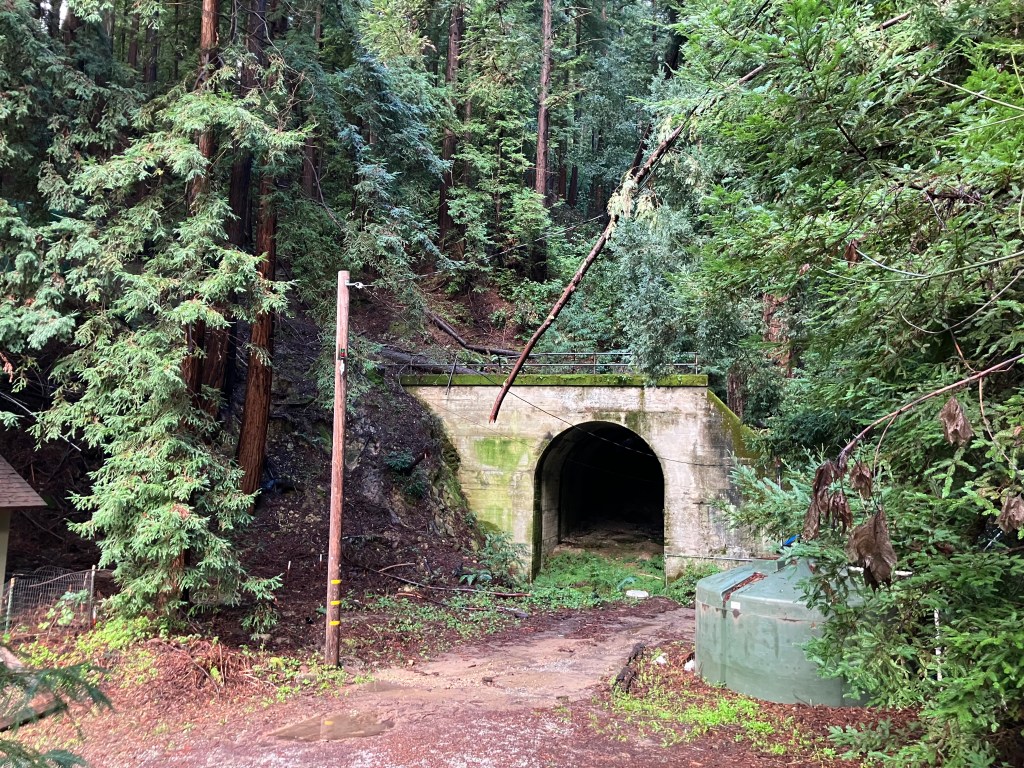
Apparently, that one home now owns the portal to Tunnel #3 in its backyard. And because the portal is on private property, there’s no graffiti. Once again, it strikes me as an eerie remnant of a long-abandoned railroad that looks very much like it did a century ago.

North portal to Tunnel #3.
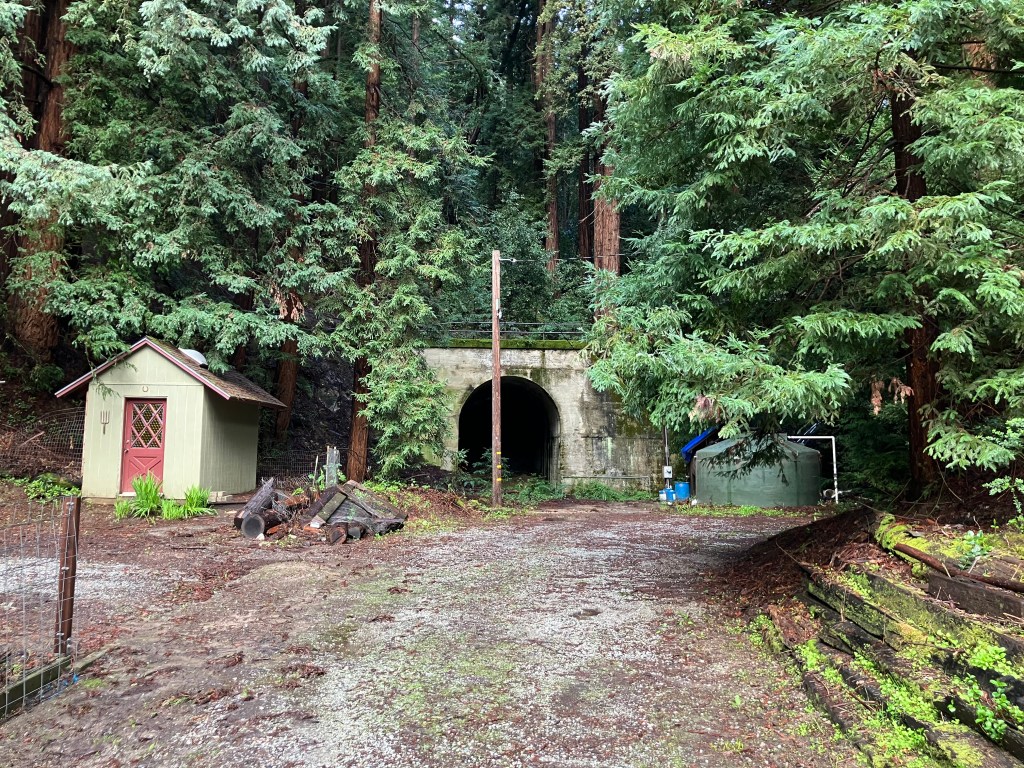
Another angle of Tunnel #3. Can you imagine having an old railroad tunnel in your back yard?
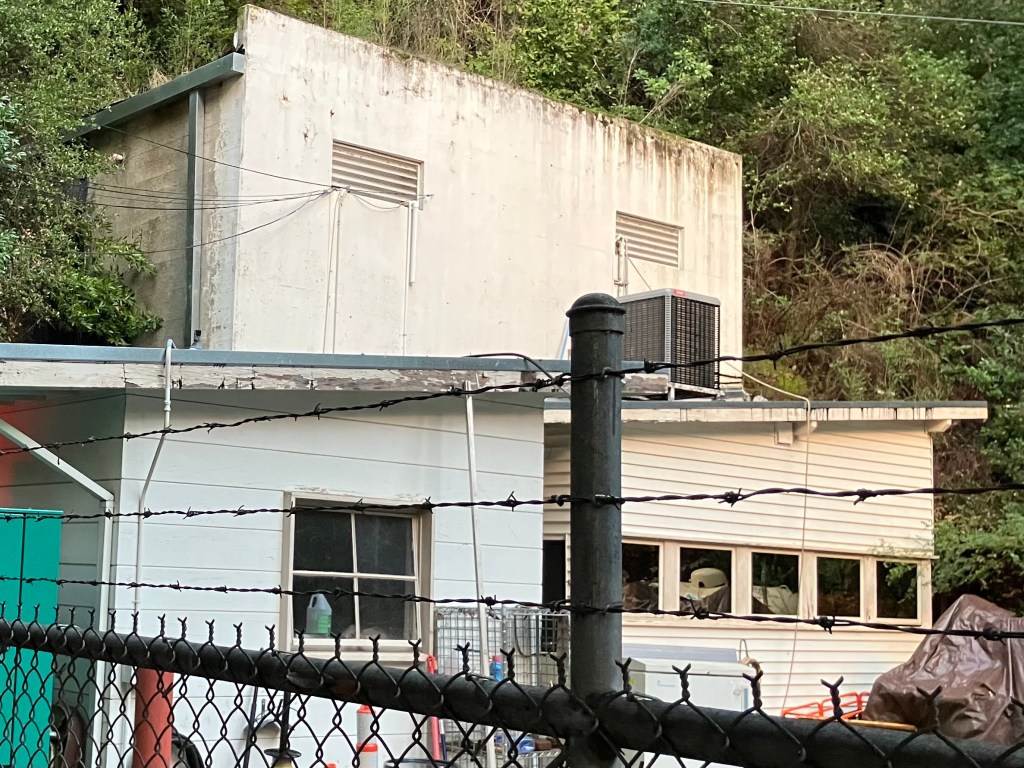
Little shed near the tunnel portal. I assume it dates back to the SPC?

We found the south portal to this same tunnel emerging under a residential road in Glenwood, This end too appears to be part of someone’s back yard. I would have killed to have had a historic railroad tunnel in my back yard while growing up!

South end of Tunnel #3.

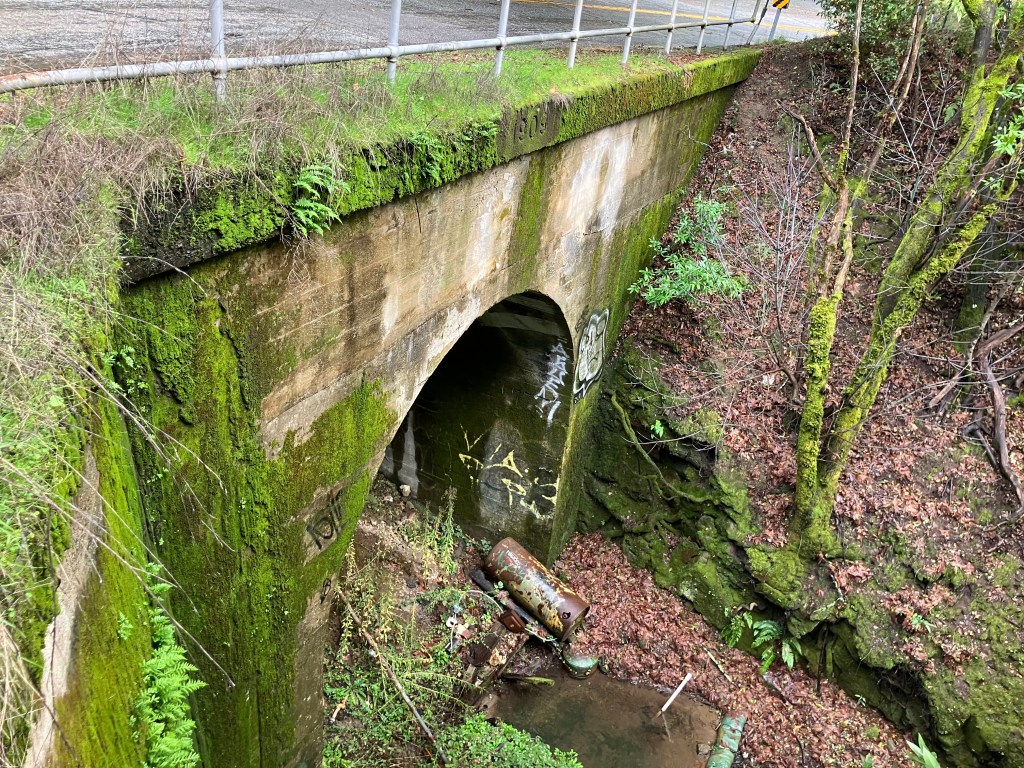
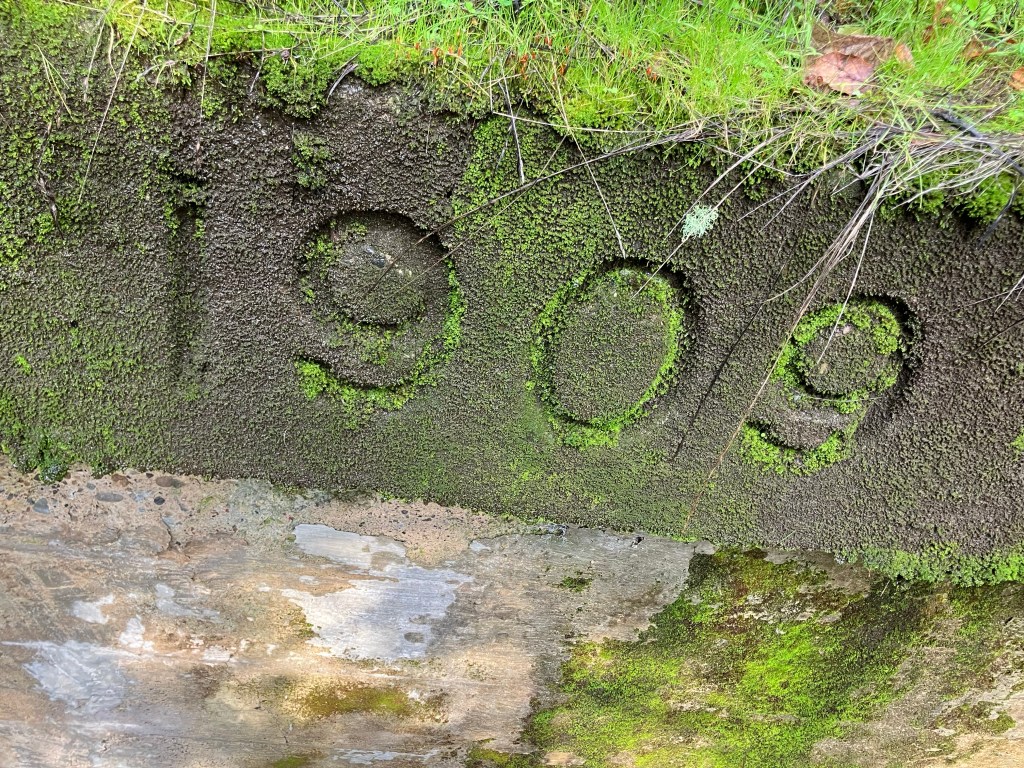
This tunnel, like several others on the SPC line, was re-constructed after the 1906 earthquake. (The SPC crosses the San Andreas fault.) While they were at it, they widened the tunnels to accommodate standard gauge (about 20 inches wider than narrow gauge.) This tunnel bears a 1909 marker, which presumably is when the tunnel was widened.

Detail from top of the tunnel.

A little further along we were able to catch a glimpse of Tunnel #4, dubbed “Mountain Charlie.” It was a ways up a private hillside, and we couldn’t access the property. But, like the others, it had a visible concrete portal with lots of moss but unmarred by graffiti. What do these families do with these tunnels? (I should note that Southern Pacific dynamited about half of these tunnels in 1942, so you can only go into the mouth of the tunnel for a little bit before encountering a wall of rubble.)

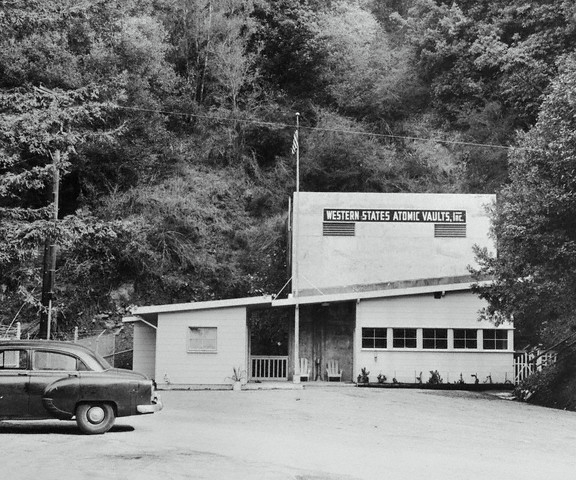
Next up was Tunnel #5: the Zayante tunnel. It’s only about 250 feet long, bored into granite. And this one was not dynamited. Still, it took us awhile to identify it. A little research revealed that a company called Western States Atomic Vaults, Inc sealed off both ends of the tunnel and turned it into a climate-controlled data storage facility at the height of the Cold War. I’m not making this up. Ownership has passed a couple of times, and today it’s owned by Iron Mountain. Reportedly it contains mainly microfiche and microfilm, as well as some original reels of Disney movies.

What used to be the south portal of Tunnel #5.
Same tunnel portal, today.

We were unable to get to Tunnel 6, which was down a steep gorge that was beyond our climbing skills.

Tunnel 7 no longer exists; it was “daylighted” (I,e, the top was removed) some years ago. This stretch of the line, however, still carries rail traffic. The Santa Cruz, Big Trees and Pacific Railway runs an excursion train from Felton to the Santa Cruz Beach Boardwalk. Here’s a picture of the track near the location of the daylighted Tunnel #7.

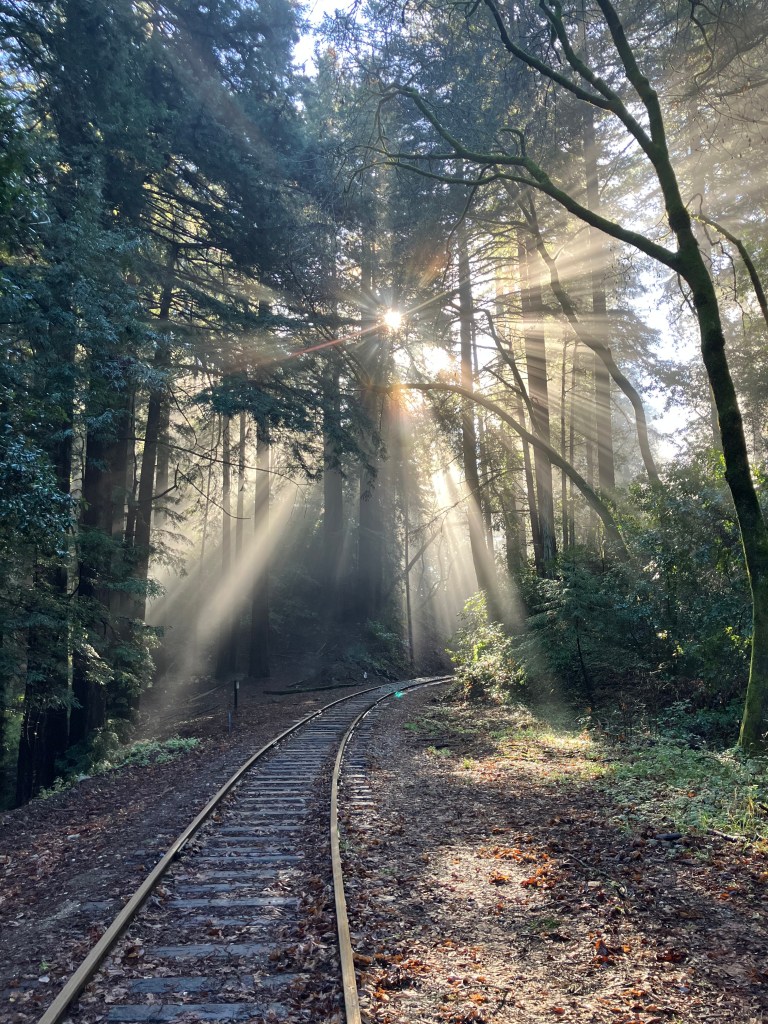
Stretch of the original trackbed, on which an excursion train now runs. I call the lighting in this photo “Voice of God.”

Finally, we ended up in Santa Cruz, where the final tunnel is still in operation! It’s a short tunnel that passes under Mission Santa Cruz. The Santa Cruz, Big Trees and Pacific Railway still uses this tunnel for excursion trips from Felton.

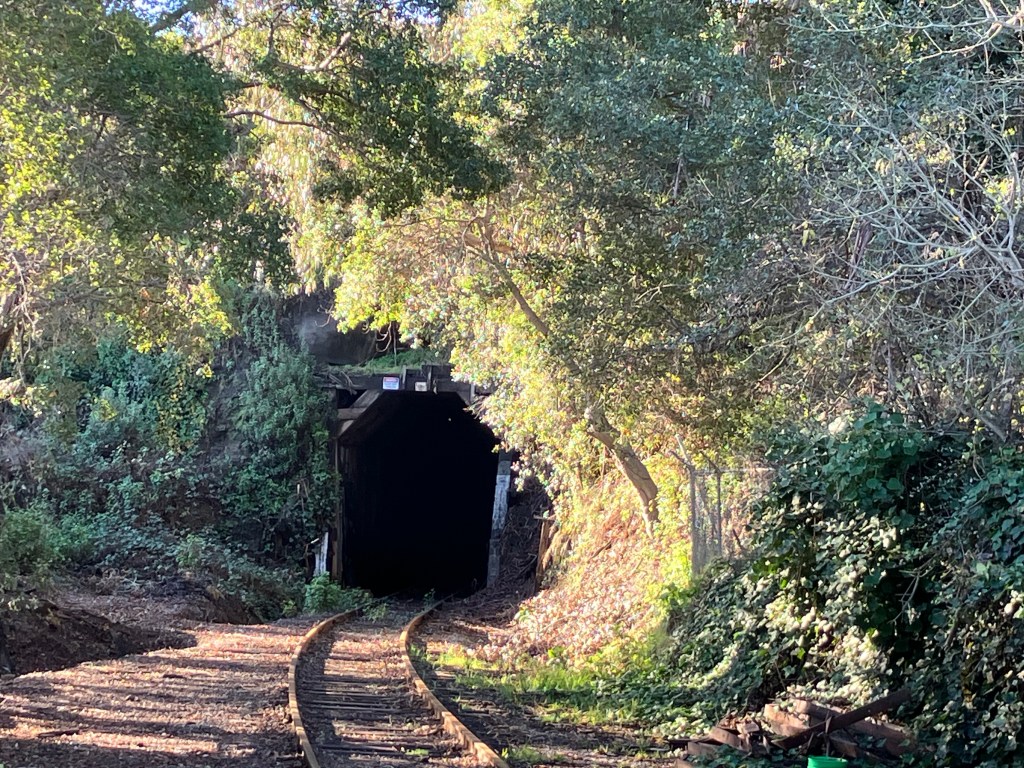
Tunnel #8, viewed from the south.
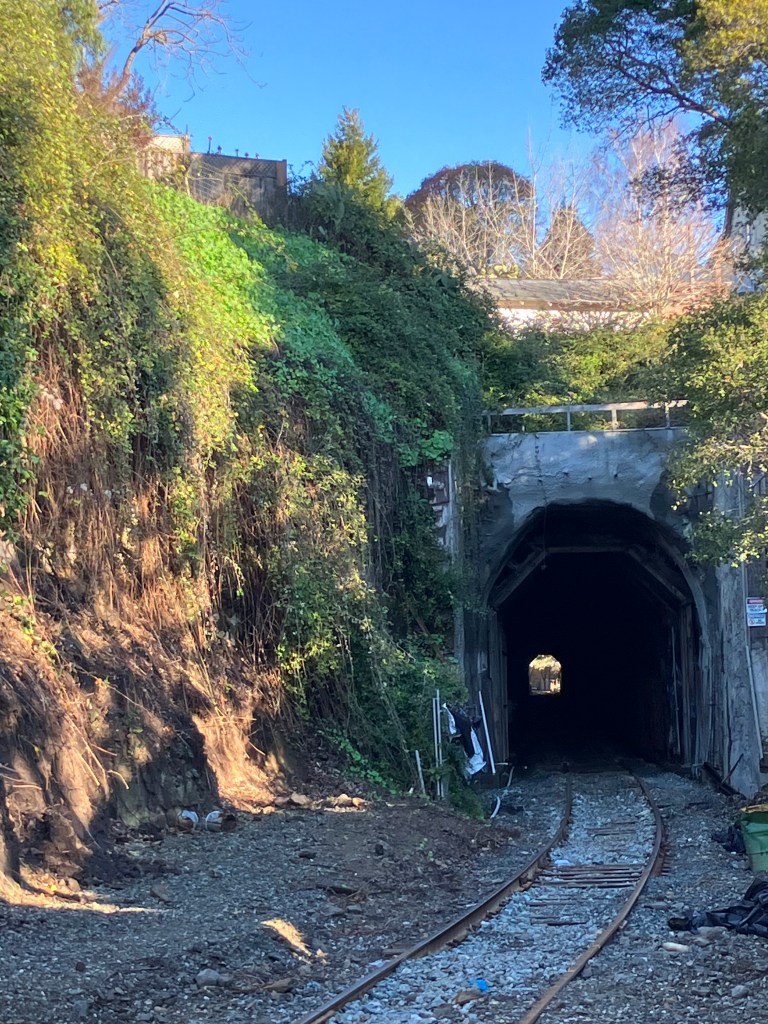
Tunnel #8, viewed from the north. It’s next to a lumber yard in the middle of Santa Cruz.

So that’s it for the tunnels. To reiterate, I’m surprised so much of the infrastructure is still around, even though most of it hasn’t seen a train in over 80 years. The fact that they’re mostly on private property or out of the way has contributed to their surviving this long.

Here are a couple of other photos of remnants of the old SPC:

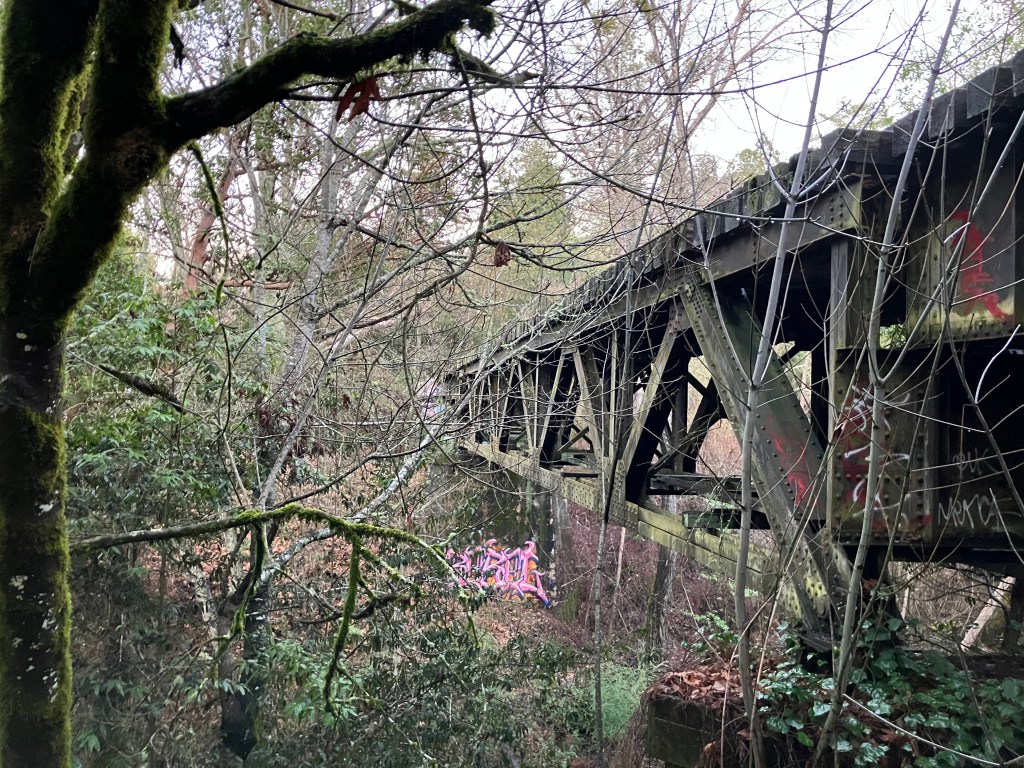
Girder bridge, slowly being reclaimed by nature.
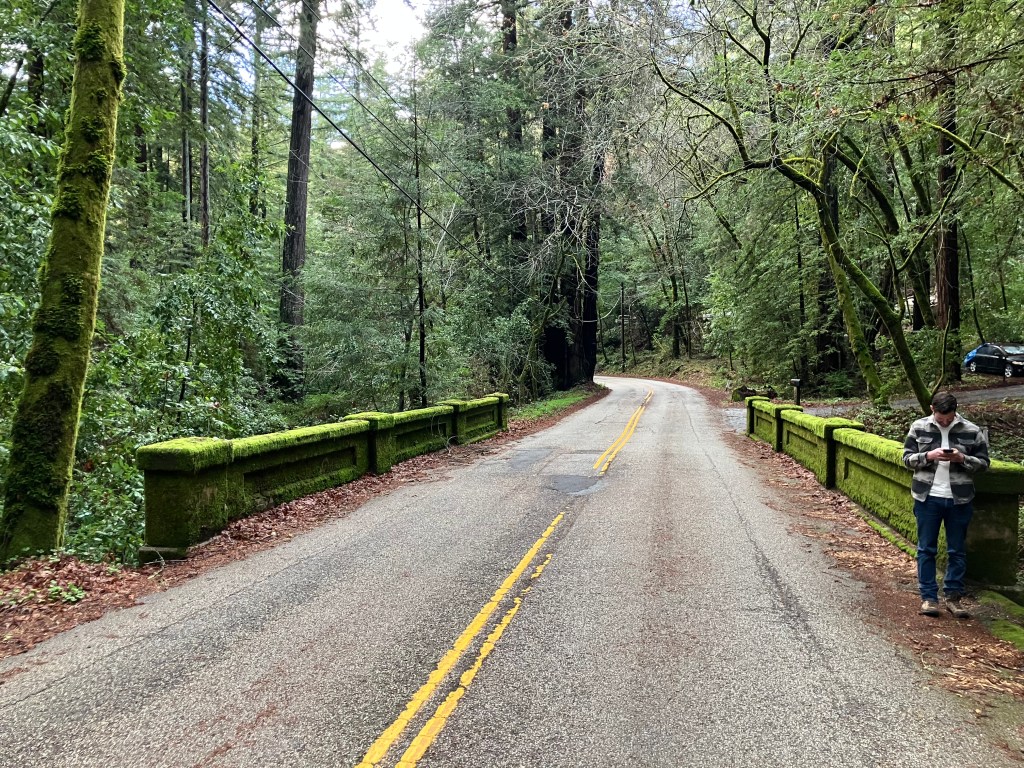
Random road near the railroad right-of-way. This road is still in use and not technically part of the SPC. But I thought it gives a good flavor of the remote, forested environment.

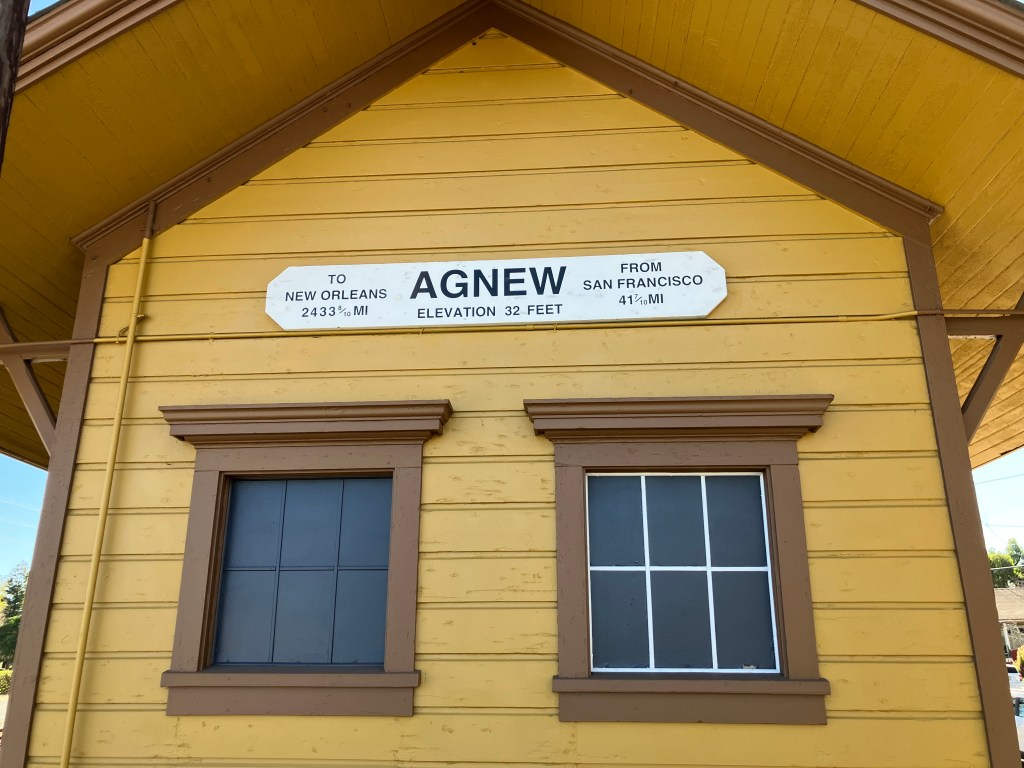
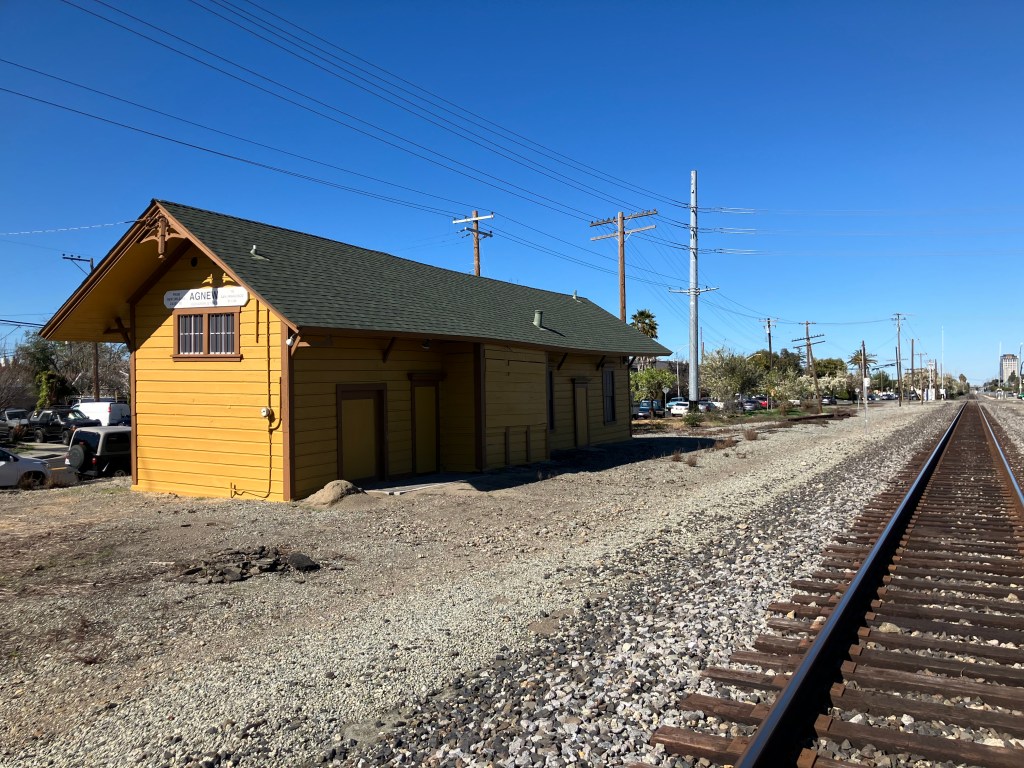
Only one station remains of the original stops on the SPC line. It’s the Agnew station in Santa Clara, and it was built in 1877. Passenger and freight service at the depot ended long ago, although trains still pass by the station on the active tracks next to it. The station is now owned by the California Central Model Railroad Club.

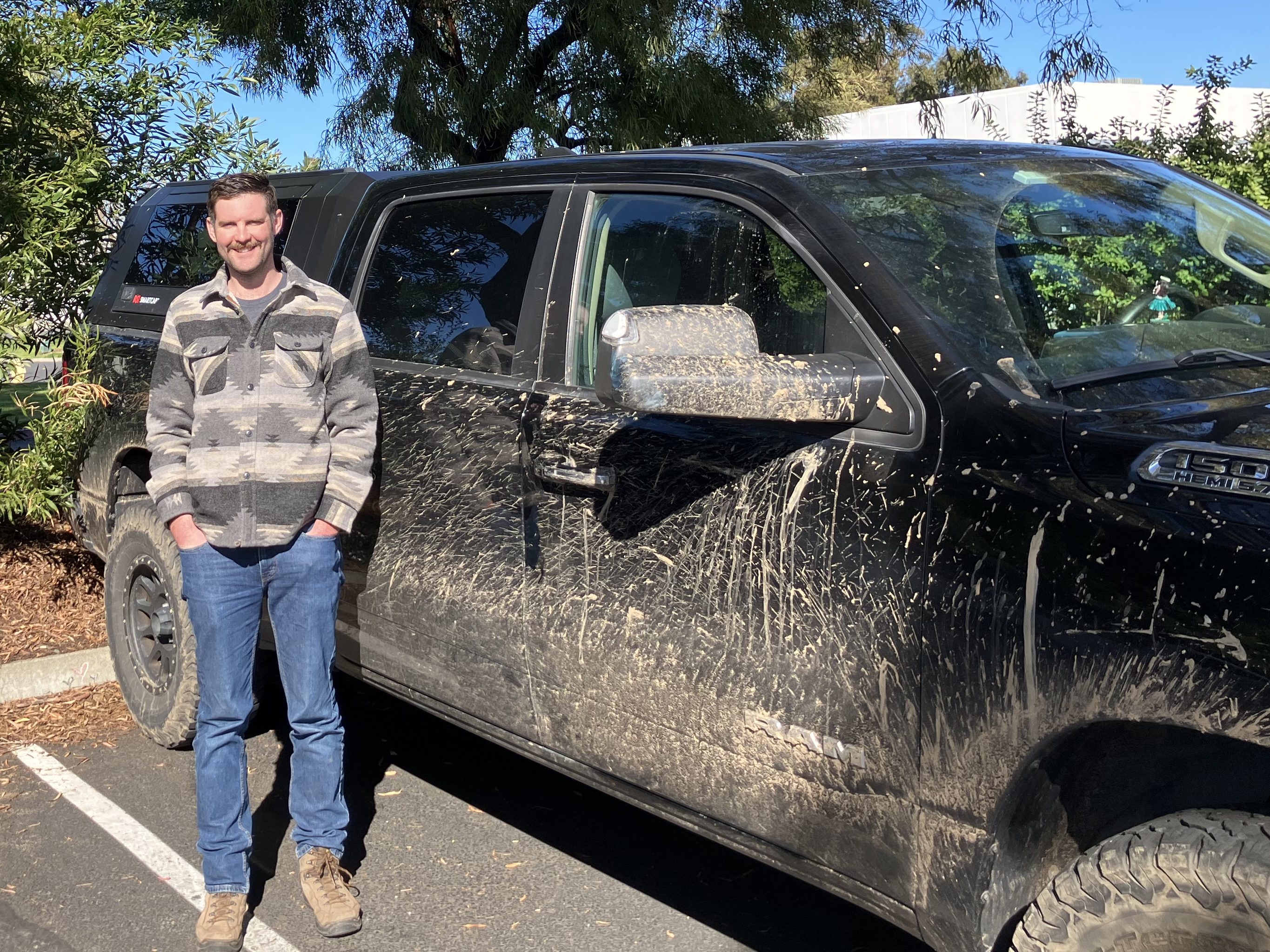
So ends our adventure. If you want to learn more about the SPC, there’s a wonderfully helpful and informative site called “Abandoned Rails” that has a lot of SPC’s back story, an interactive map, and other cool stuff. Thanks also to Uncle Edward and his Dome o’Foam for his helpful tips. Now all that’s left is to wash Ian’s truck!

TREAT (?) of the DAY

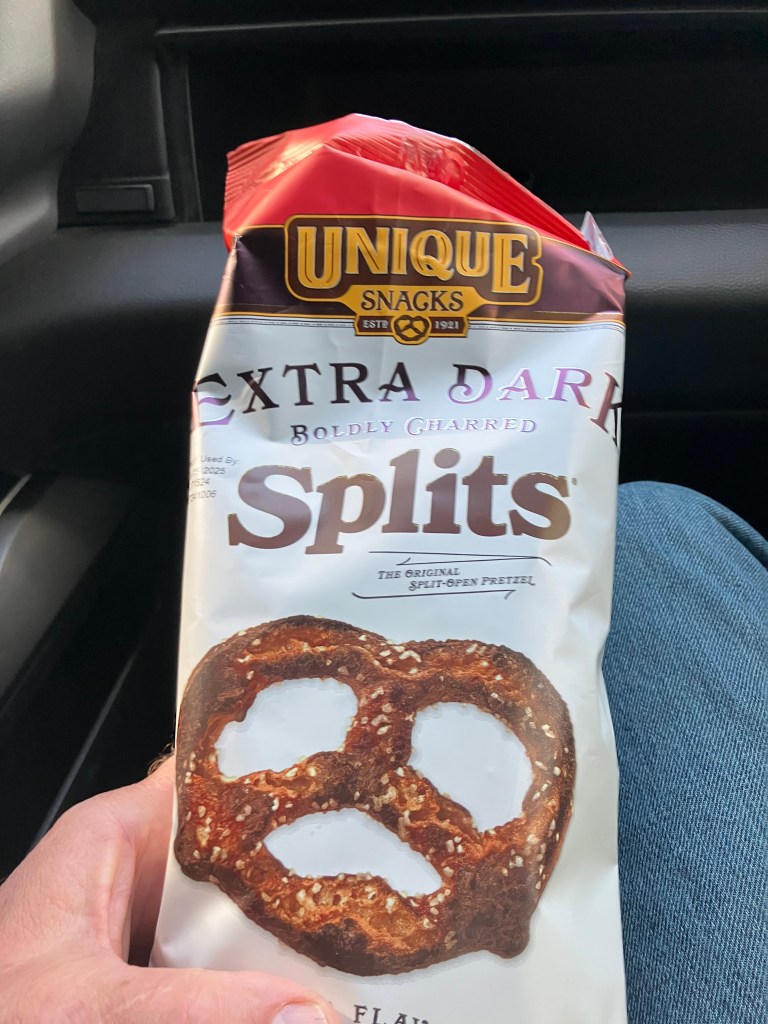
During our adventure we stopped at a remote market to replenish our snack supply. For reasons that I really can’t explain, I chose this bag of “Extra Dark Boldly Charred Splits.” It seemed like a good idea at a time.

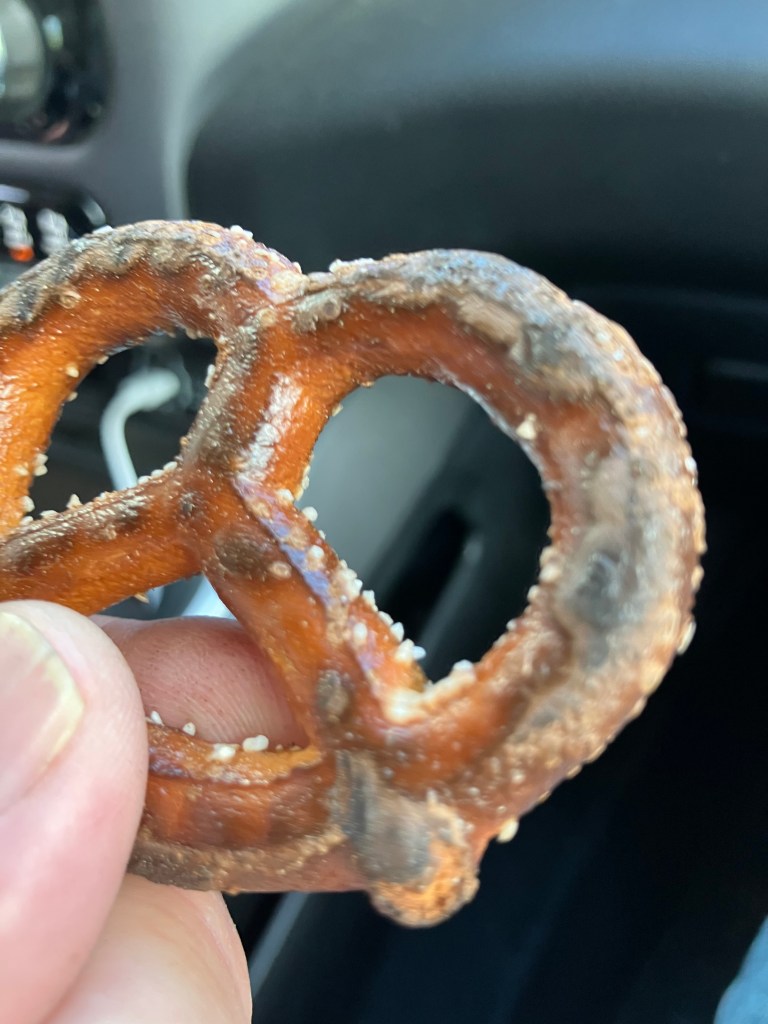
The “Unique Snacks” company lived up to their name, but not in a good way. These were essentially nothing more than burned pretzels.

“Boldly Charred” my ass!

They are as dry as a discarded empty canteen in the Sahara, and they have the flavor profile of a Kingsford Briquette. I seriously suspect that something happened to the oven at the Unique Snacks Company, which resulted in a month’s pretzel production being irrevocably burned. But rather than throw away the torched snacks, some marketing genius said “let’s just change the package to say ‘boldly charred!'” Doesn’t an analogous story lie behind the popular “sour” beer style and the invention of buttermilk?