Breweries · California history · Cars · Puns · Road trips

Life in the Slow Lane

With a level of complication that rivals the Normandy Invasion, my son (Ian) and I decided to rendezvous at a resort near Bend, Oregon, where we used to spend summer vacations once upon a time. Ian flew there from Vermont (which took two days, thanks to United Airlines), while I decided to drive up from Placerville along the east side of the Sierra Nevada range on US 395.
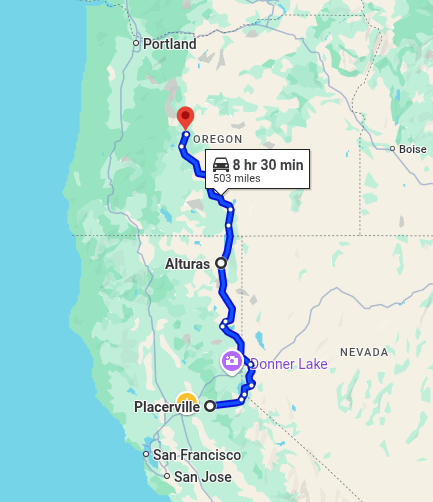
One of the more contemplative drives in California.

As alert readers will recall, I’ve driven various stretches of 395 at various times, most recently on my famous search for the remnants of the Nevada-California-Oregon narrow-gauge railroad. You can read about that trip here. Heading north on this stretch of US 395 is simultaneously one of the most contemplative and dramatic routes in California, with the craggy east slope of the Sierras on your left and lots of open range and the occasional lake on your right. Traffic is fairly sparse and the occasional towns are small and infrequent. My two favorite stops on the route–partly for their names and partly for their oasis-like qualities–are Hallelujah Junction (pop: 1) and Likely (pop: 99).

Hallelujah Junction’s sole resident.

While I didn’t cover new ground during this week’s trip up to Oregon, I did have a new rental car experience. I typically reserve the smallest, cheapest car on offer, knowing that the rental car companies will almost always “upgrade” me to an Altima because that’s pretty much the only car they actually keep on the lot. Ian correctly points out that the price difference between renting the bottom-of-the-line subcompact and just a normal sedan is only a few bucks a day. But it’s that kind of thinking that led to our current $36.2 billion national debt.

So I booked the cheap-o car. And this time they called my bluff. Meet the Mitsubishi Mirage–with three working cylinders and a total displacement (1.2 liters) that’s literally the same as my motorcycle.
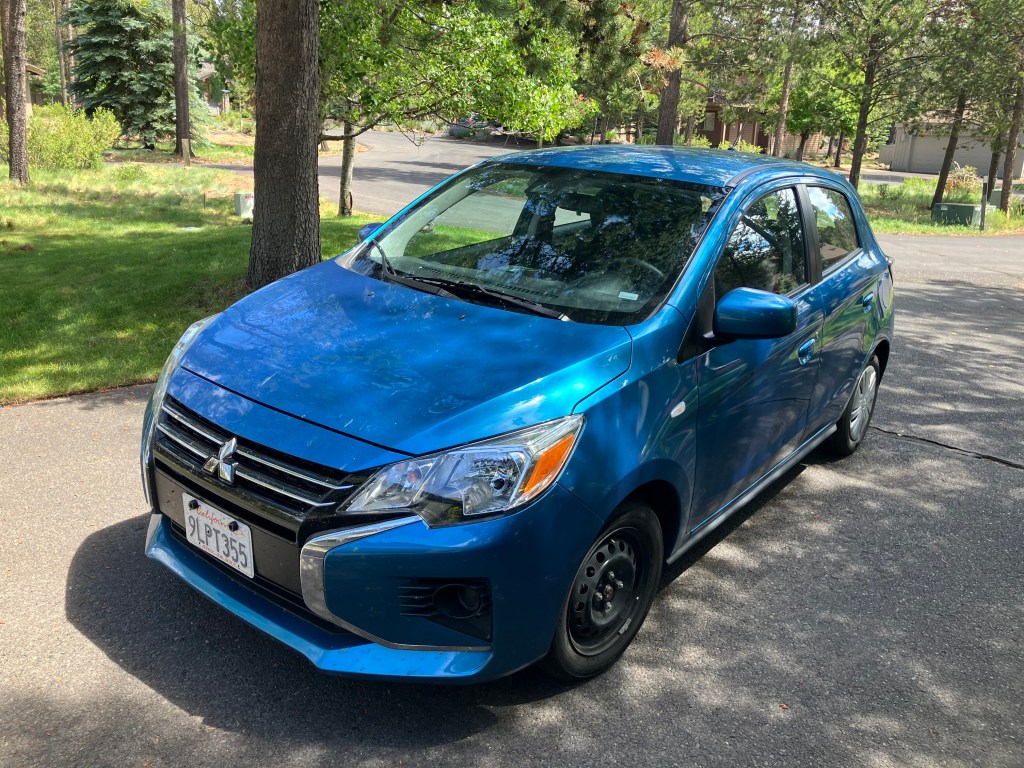
78 Horsepower baby.

A little research reveals that the Mirage was the lowest-priced car available when it was manufactured in 2023. In a zen-like way, those savings come at a cost. The interior is as bare-bones as it gets, with manual seats, basic AM-FM radio, hard-plastic door panels, and a no center console of any kind.
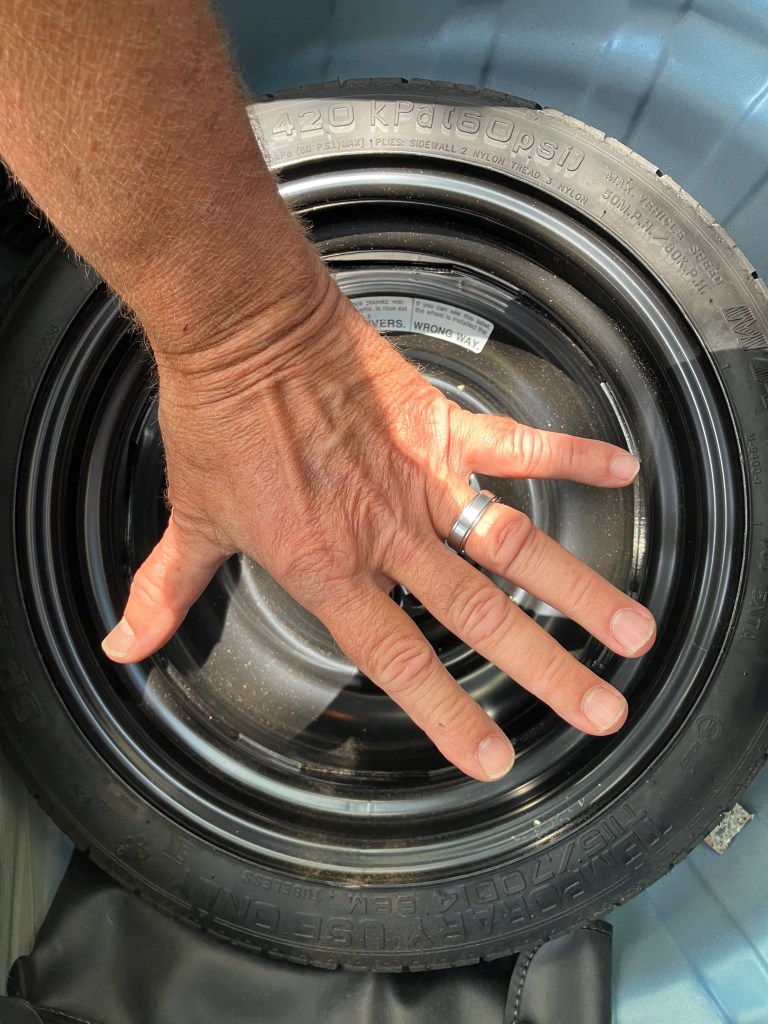
I’ve eaten pizzas with a larger diameter than the Mirage’s spare tire.

Plus, in a throwback to the Clinton era, this is one of the last production cars to still require an old-fashioned key to get its three cylinders firing.
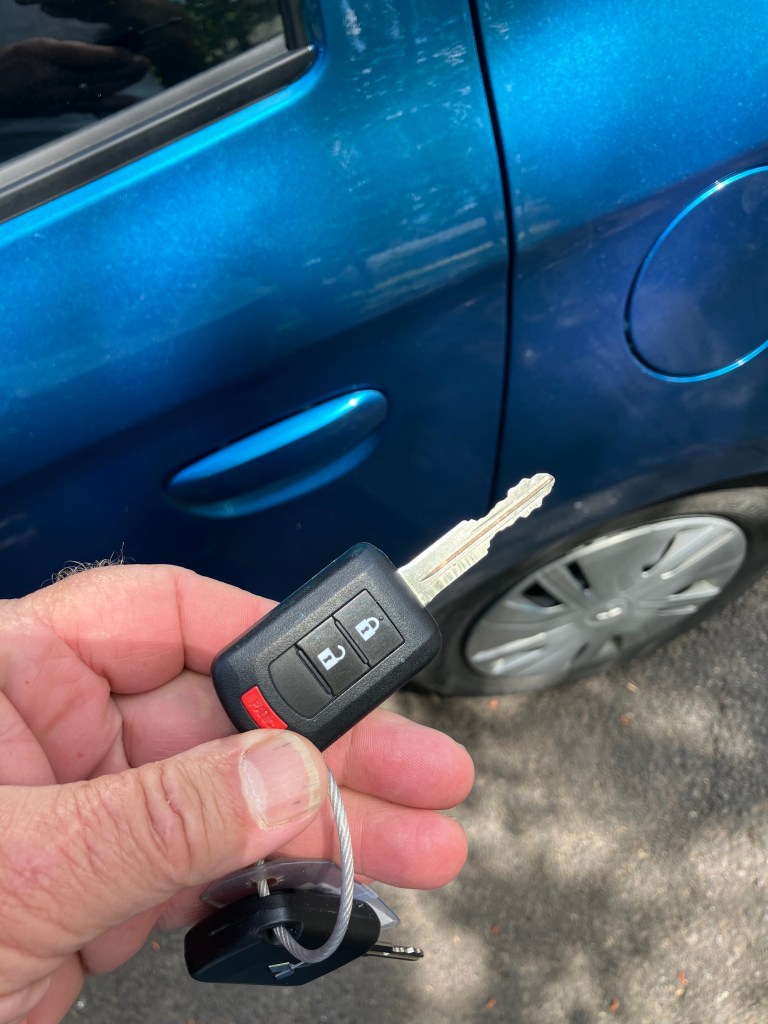
Remember these?

But the most remarkable thing about the Mirage is the (lack of) acceleration. This car notoriously has the slowest zero-to-sixty time of any production car. Ian did a Google search and found this review that Carbuzz did of the ten slowest cars. Here’s their take on the Mirage:

And finally, the number one slowest vehicle in America is the soon-to-be-dead Mitsubishi Mirage. It takes you an impressive 12.8 seconds to get from zero to 60 miles per hour in this sad excuse for a passenger vehicle, and it’s all thanks to the minuscule 1.2-liter three-cylinder engine that only produces 78 hp and 74 lb-ft of torque. It isn’t fast, it isn’t comfortable, it isn’t nice, and it’s pretty old. The Mirage won’t be missed.

Now, Ian’s an engineer, and he insisted that we subject this claim to empirical testing. So I stopped the Mirage on a flat stretch of road, Ian readied his stopwatch, and I stomped on the (aspirationally-named) accelerator. The analog speedometer began move, like Frankenstein’s monster on the slab. Five mph, ten mph….my fingernails and hair became noticeably longer….twenty mph…empires rose and fell….thirty, forty, fifty….North America drifted another few inches away from Europe…finally we achieved 60 mph.

The feat required 17 seconds–almost a third longer than even even CarBuzz’s incredulous estimate. On the positive side, the Mirage gets good gas mileage.

Anyway, we spent a few days near Bend simultaneously consuming water, hops, and barley. It was a relaxing break from my mile-a-minute retired life.
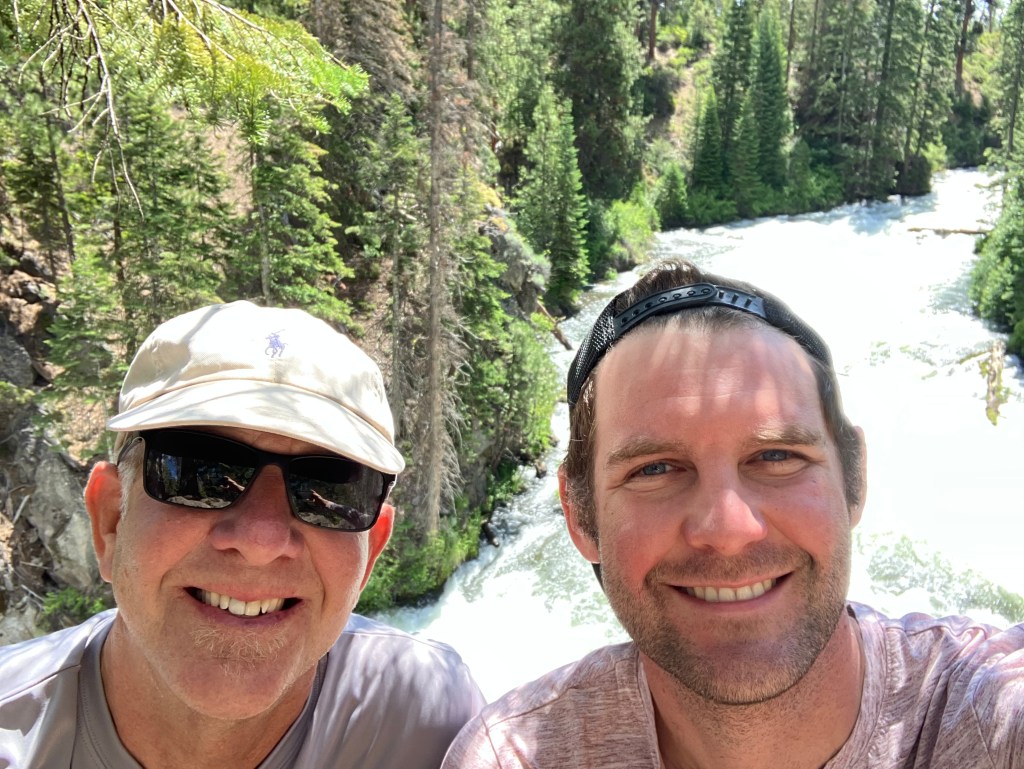
Then, just like that, it was time to head home. For the return trip we took US 97 from Bend to Weed, where we connected to Interstate 5 and continued south to Sacramento. A few notable items along the return trip include this decaying roadside relic in Chiloquin, OR (pop: 769).
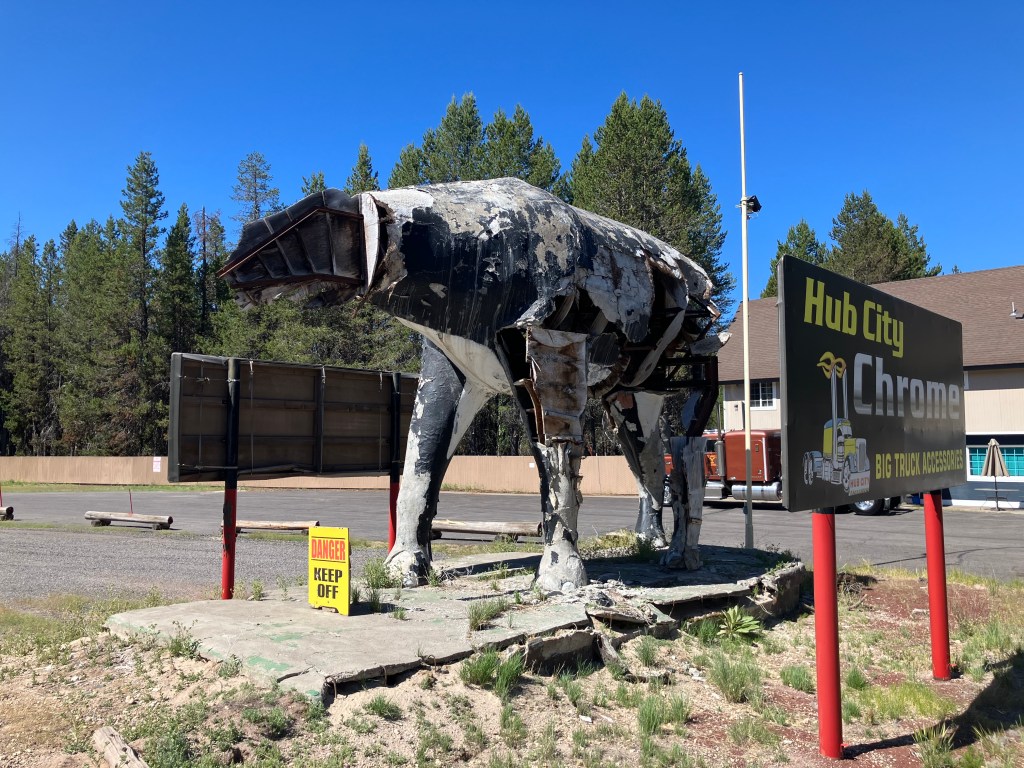
I found an online photo from some years back that helps to clarify what it’s supposed to look like:
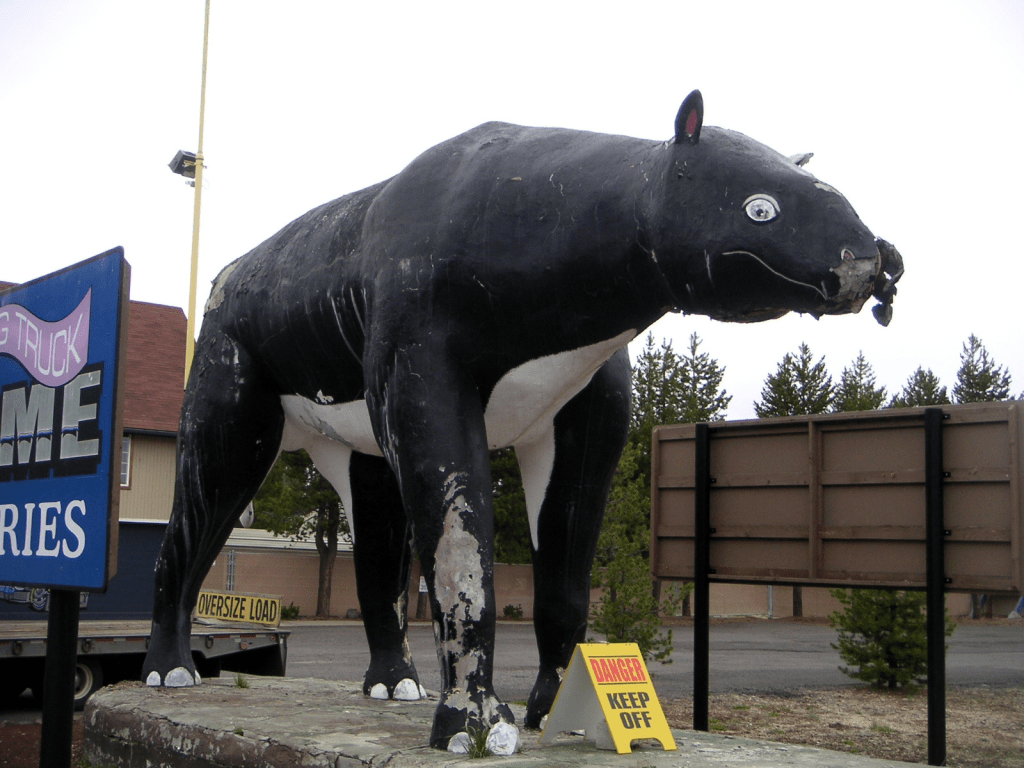
Is it a tapir? A cross between a horse and a cow? A dinosaur of some kind? There’s a lot of online debate about this. It’s sort of the Rorschach test of roadside kitch. Turns out it’s a remnant from a place called Thunderbeast Park that opened on this spot in the 1960s. There are some rumors on the internet that the remaining dinosaurs were relocated to a spot along highway 1 on the north coast. Ian claims we actually saw them on an earlier trip, but I think he may be hallucinating. Please let me know if you have any insights on the whereabouts of the Thunderbeasts.

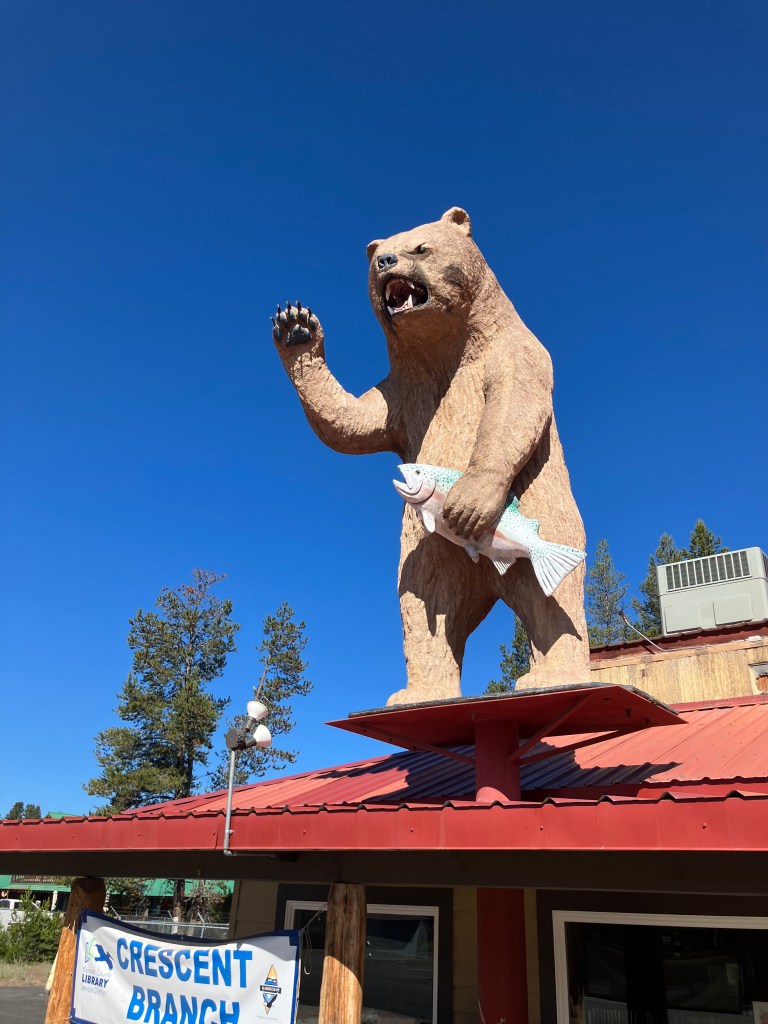
Meanwhile, the town of Crescent (pop: 400) has this unusual, but better-preserved, roadside art on top of the town library. I’m assuming the bear had some meaningful connection to an earlier use of the building?
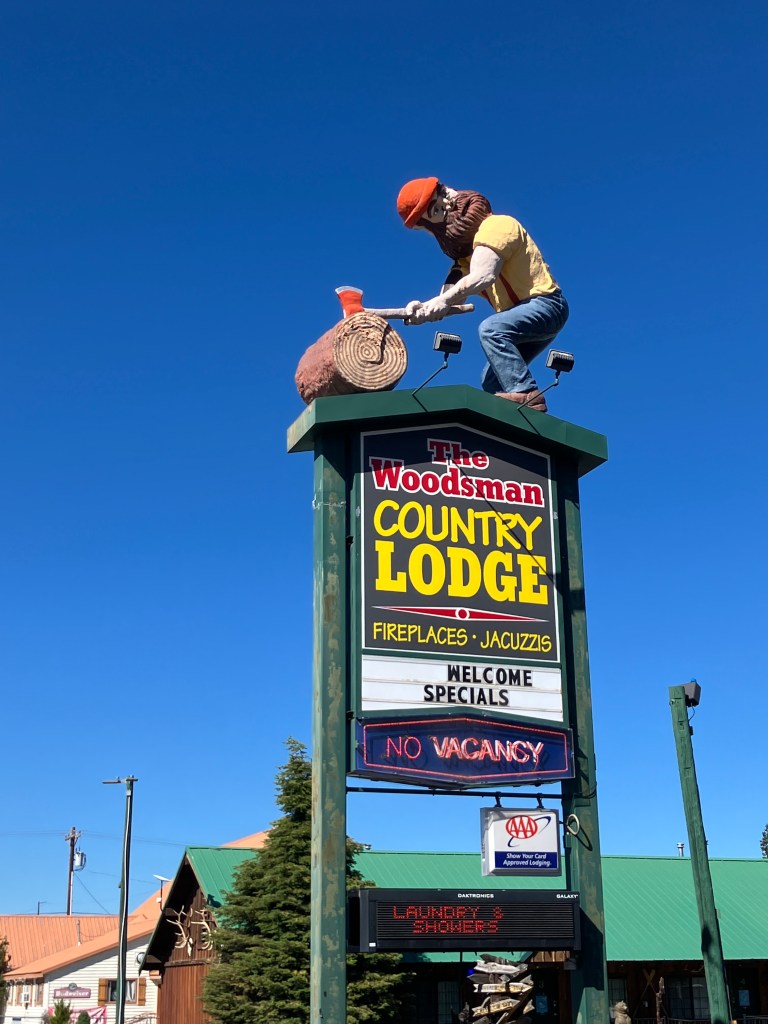
The town of Crescent also features this lumberjack, who appears to be suffering from a cervical fracture:
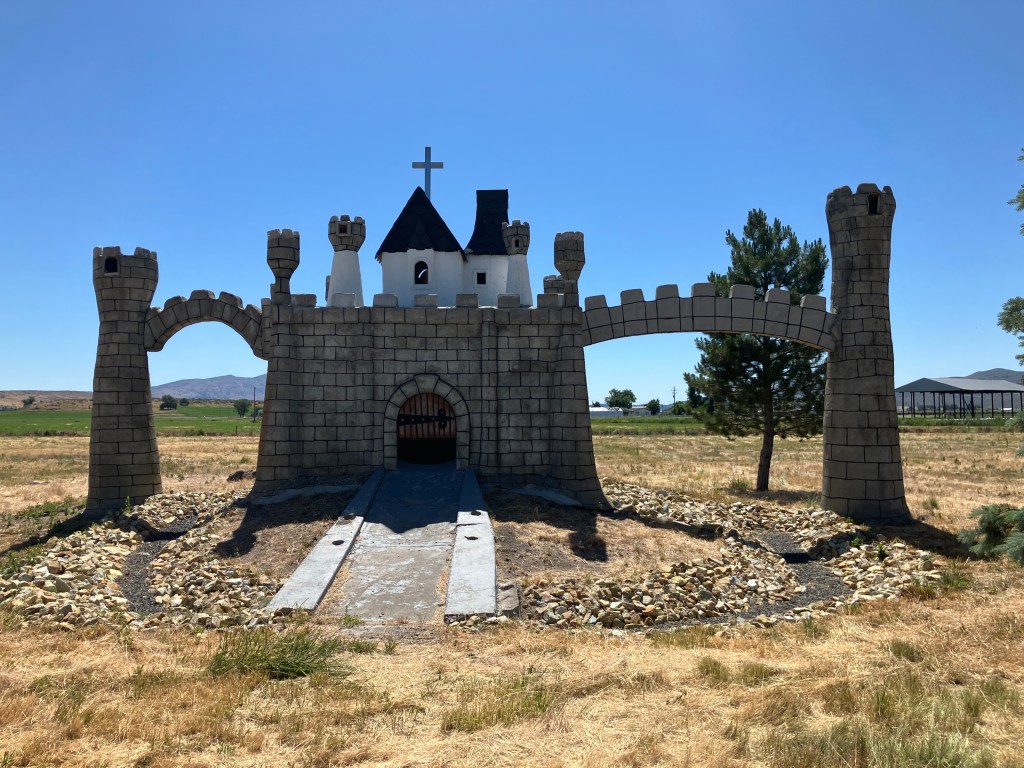
Near Klamath Falls we encountered this unexplained castle sitting in a field along US 97. To me it looks like a giant version of the kind of thing you’d see on a miniature golf course. Turns out it’s a trademark display from a bygone place called “Kastle Klamath,” which billed itself as a “Family Fun Land.” It had go-karts and a swimming pool and, yes, miniature golf. Like so many such places, it seems to be a victim of changing tastes in the Internet age.
Eventually we crossed back into California and came to the town of Doris (pop: 860), whose claim to fame is its 200-foot-tall flagpole. A plaque claims it is “America’s tallest flagpole.” (As of this writing, the tallest flagpole in America is actually in Wisconsin, and it stands at 400 feet. Meanwhile, the tallest flagpole in the world currently resides in Cairo, Egypt, at 662 feet.)
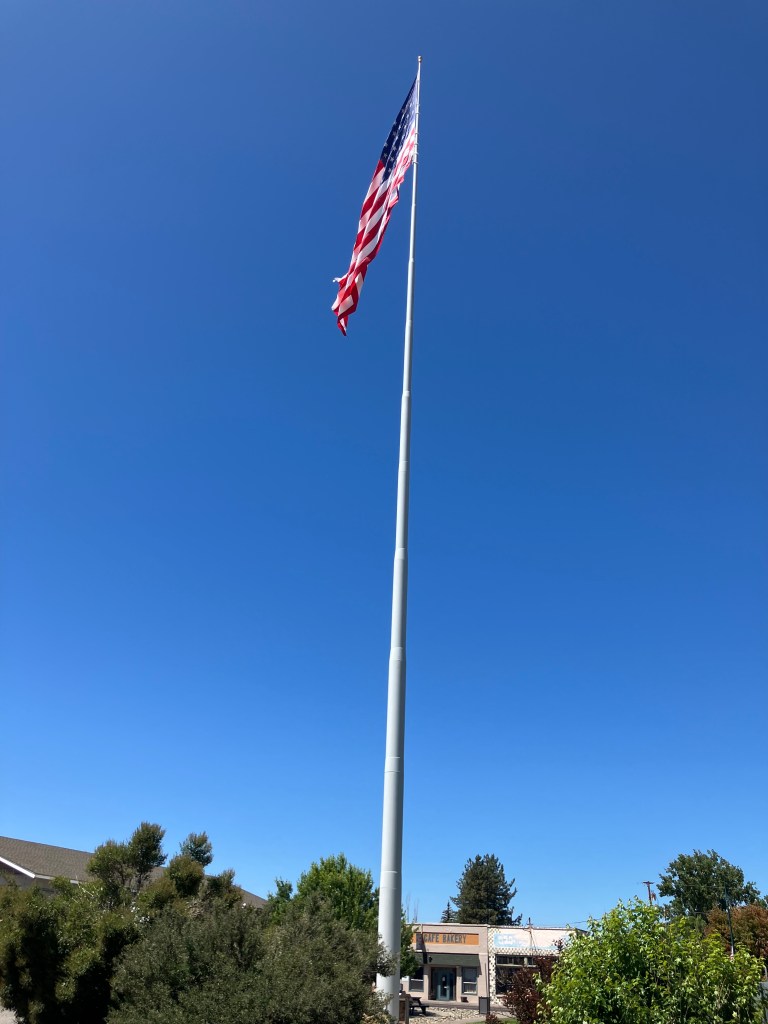
The southern end of US 97 terminates at Interstate 5 in the town of Weed (pop: 3,000). Located close to Mount Shasta, the town of Weed is named after Abner Weed, who founded the town when he built a lumber mill here in 1897. Today, the name provides endless opportunities for hilarious puns. For example, the town’s motto is “Weed like to welcome you.” And there are a half-dozen souvenir shops hawking T-shirts saying “I love Weed” and similar phrases that will make you the envy of Deadheads everywhere.
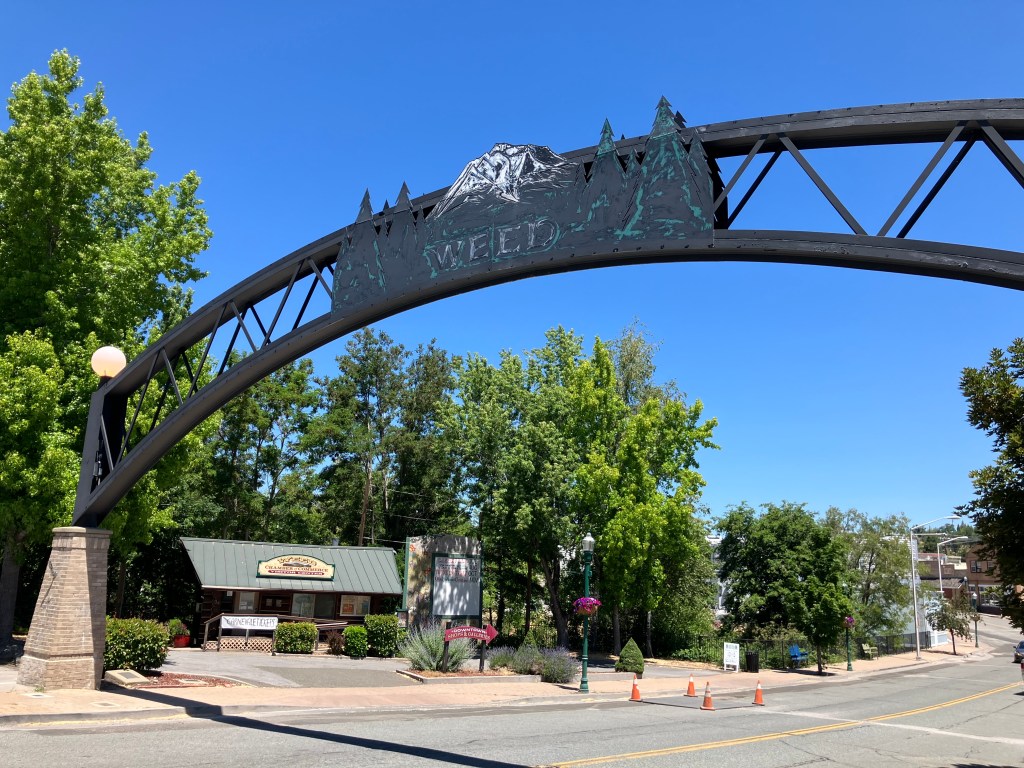
The historic archway to downtown Weed.

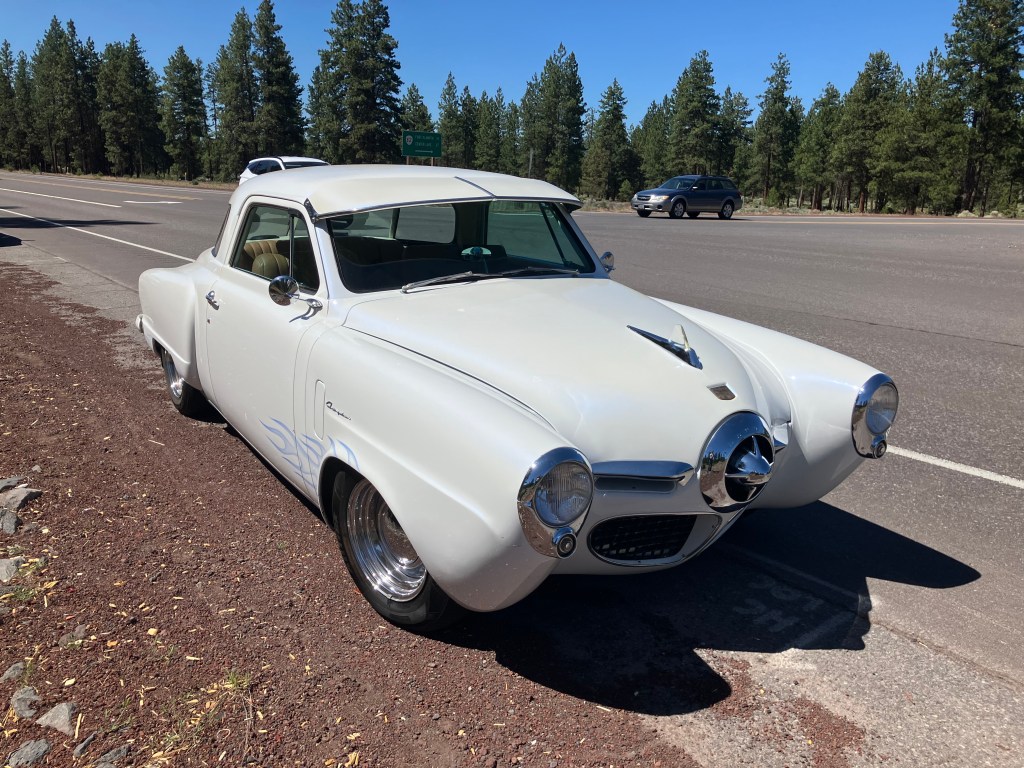
Finally, what is a road trip without a Studebaker sighting? We spotted this heavily-modified 1950 Starlight Coupe on the side of the road…where most Studebakers eventually spend a good portion of any outing.
And now, it’s time for the…

BEER OF THE DAY

The BOTD comes from McMenamins Old St. Francis School in Bend, Oregon. McMenamins is a privately-owned chain of historic structures that have been converted into pubs, restaurants, and hotels. This location had been a Catholic school which was built in 1936, and today the classrooms are hotel rooms. It also includes a full restaurant, a brewery, and movie theater, and a public pool.
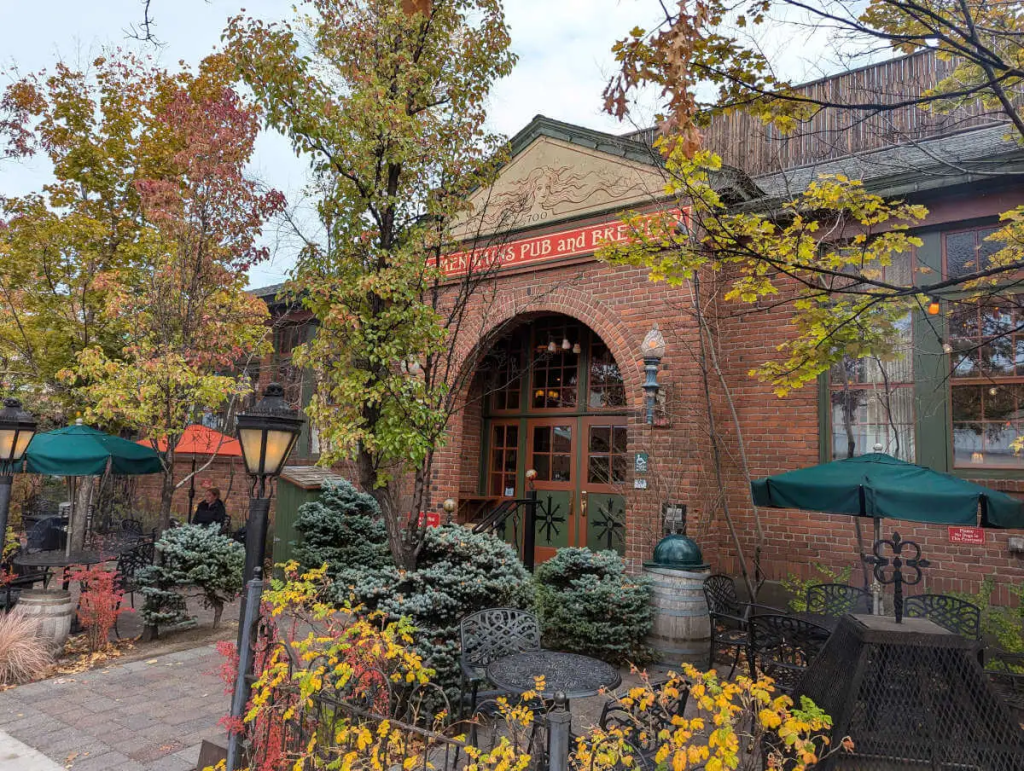
Photo from The Brew Site.

The offspring and I had lunch in the back patio, and for my beverage I selected the Bamberg Obsession. It’s a Munich Helles (a lightish German beer) to which they’ve added beechwood-smoked malt.
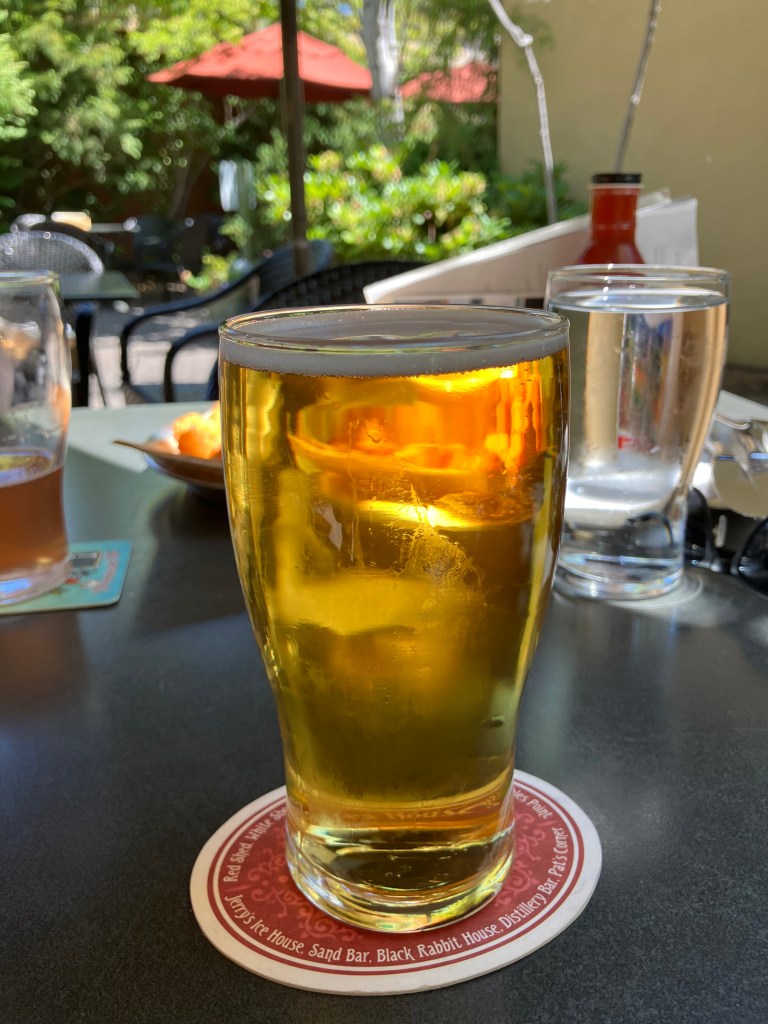
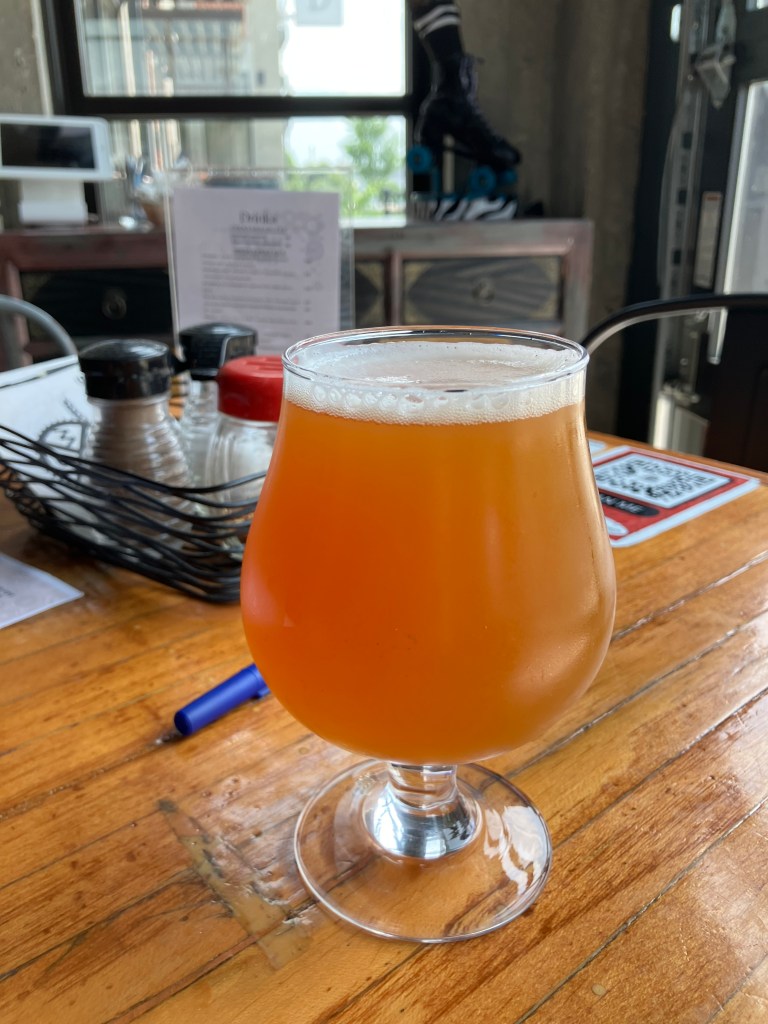
This looks promising.

It’s a beautiful, golden beer the color of light honey. I was mesmerized simply by the look of the thing, radiating sunshine and pot-at-the-end-of-the-rainbow good luck. The taste didn’t disappoint, either. This is a refreshing beer, as you’d expect from a Helles. But the addition of the smoked malt lends a subtle complexity that keeps things interesting. It’s not overwhelming, but rather gives just a hint of peat or a distant campfire. There’s not much bitterness to this drink, which again is consistent with the Helles style. A slight sweetness also comes through. The ABV clocks in just under 5 percent. This is the Arnold Palmer of beers. Highly recommended on a warm day. 4.5 out of 5 stars.
Breweries · Cars · movie theaters · Road trips

Wow! Great Lakes!

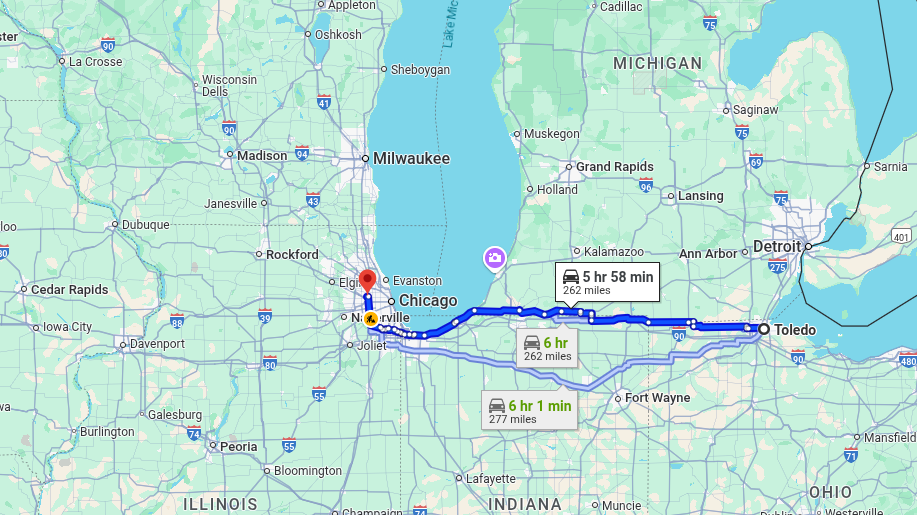
Today’s drive along highway 20 was reflective. The route took me from Toledo Ohio (at the west end of Lake Erie), around the bottom of Lake Michigan, and up to the town of North Lake, Illinois, which is just west of Chicago. Here’s a map:

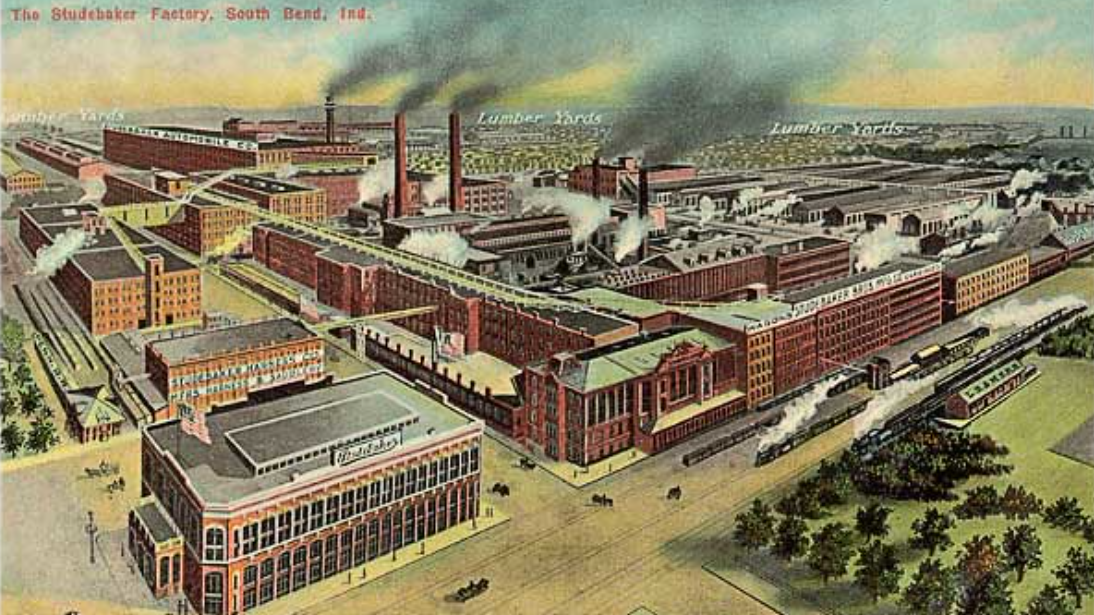
Though it doesn’t show up on this map, Route 20 passes through the city of South Bend, Indiana (pop: 103,400). Named after the southernmost bend of the St. Joseph River, South Bend has an interesting history. It’s been home to Notre Dame University since 1842 (Go Fighting Irish!), of course. But ten years later the Studebaker Brothers came to town and established a very successful wagon manufacturing plant that, around the turn of the century, switched to building automobiles. Studebaker was one of the larger “independent” auto manufacturers, and at its peak it employed 22,000 workers in South Bend. It would be stretching things to say that South Bend was a company town, but Studebaker certainly was a major contributor to the local economy.

Studebaker factory in South Bend, circa 1940.

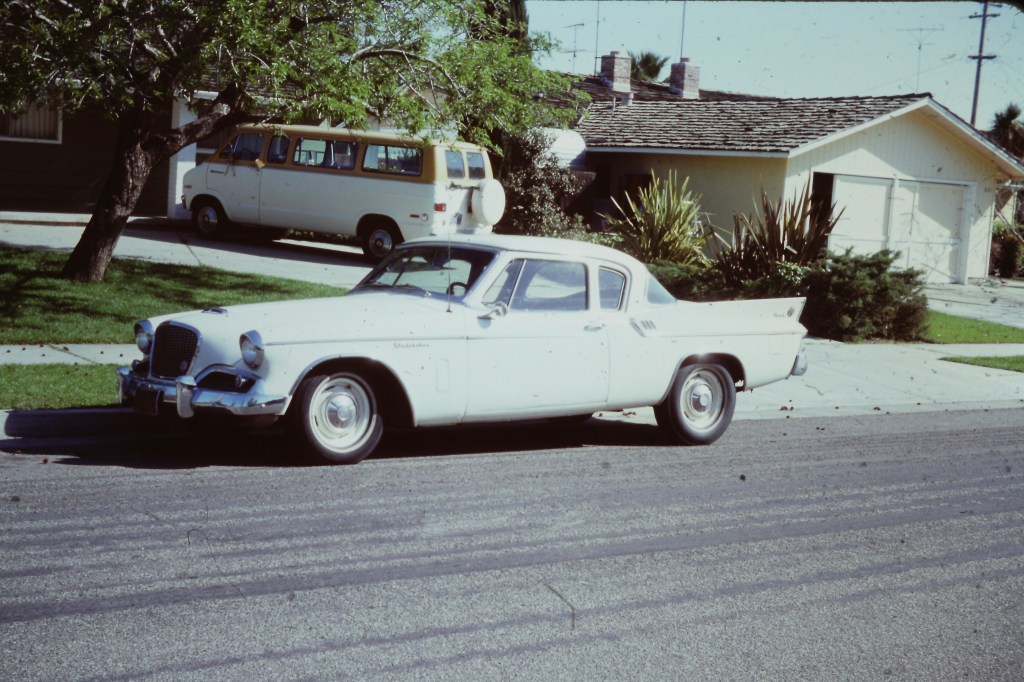
Some of you young ones might never have heard of Studebaker; it closed its doors in South Bend in 1963, and then shut its last remaining facility in Canada three years later. But I actually owned one. It was my first car, which I bought in 1978. Behold!

Parked at stately Boilard Manor around 1980.

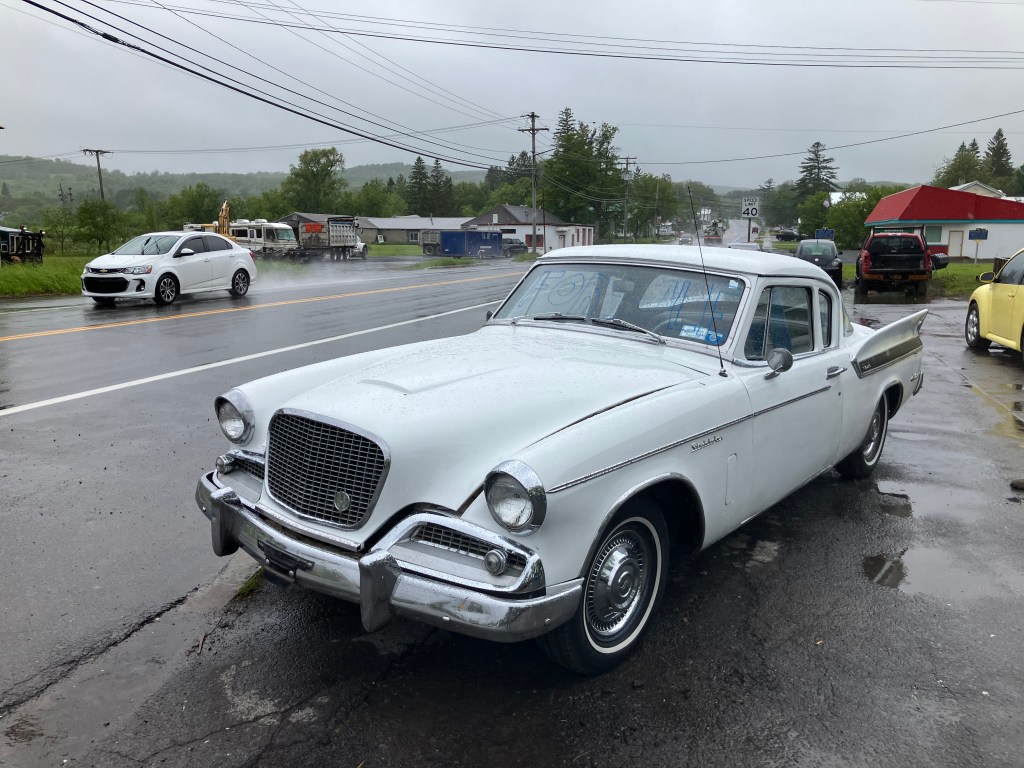
I owned that car for about 25 years, and then, in a rash act, I sold it. Recently I’ve been wondering if I should have kept it. I’ve even had dreams about it. And then, a couple of days ago, I spotted what at first glance appeared to be my old car on the side of US 20 in New York:

Back from the dead, like Christine?

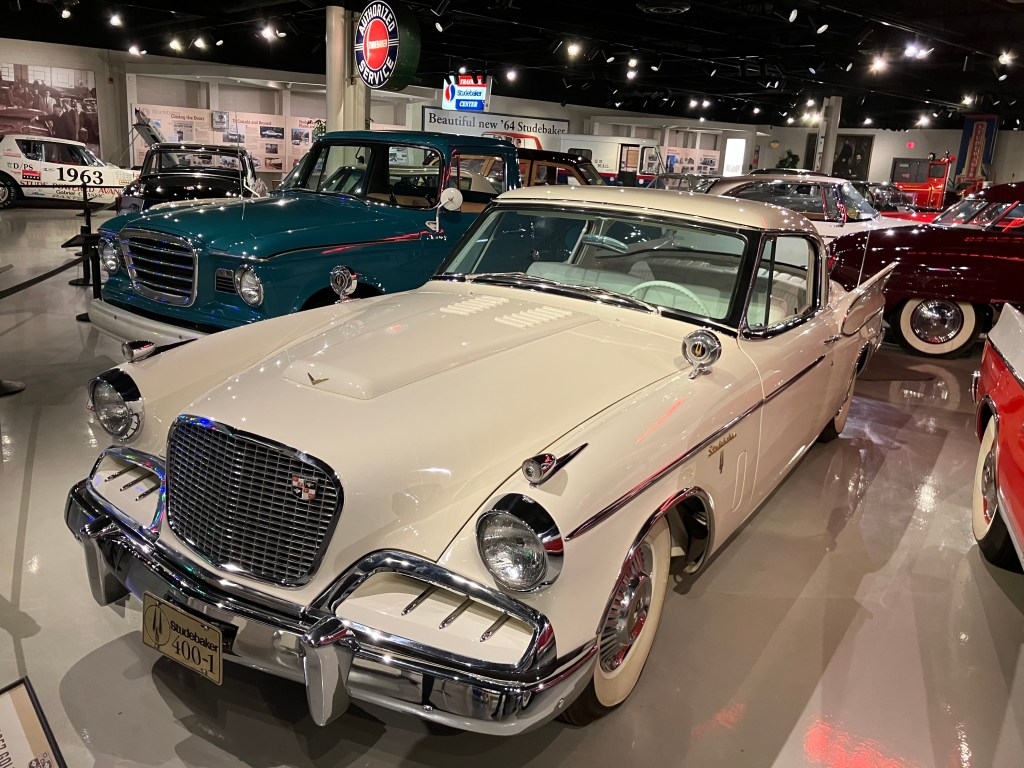
A couple of telltale signs convinced me this wasn’t the same car. But it was eerie nonetheless. And it was eerier still to see a version of the car again today, in the Studebaker National Museum in South Bend:

But I digress. My point was that Studebaker was a major contributor to South Bend’s economy. And so when it shut down in the 1960s, it had a major negative impact on unemployment. It’s estimated that, at the time of its closure, Studebaker employed two thirds of the city’s African-American labor force. To make matters worse, South Bend was already suffering from the general effects of deindustrialization that were besetting towns throughout the Rust Belt.

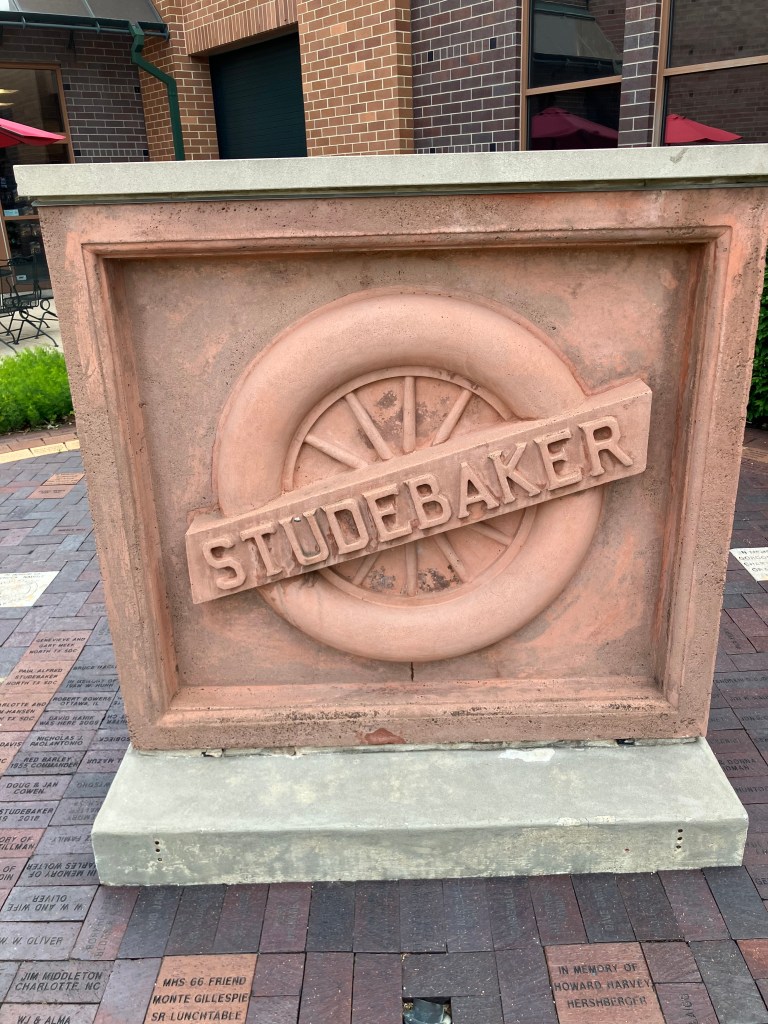
Terra Cotta logo that once graced the Studebaker factory.

South Bend gained national prominence with presidential candidate Pete Buttigieg as mayor from 2011-2018. He and others have worked to gain investment in the city’s businesses and infrastructure. But I can report from my visit today there’s still a long way to go. Block after block has vacant and dilapidated buildings. The area around the old Studebaker factory is especially rough. Most of the Studebaker buildings have been torn down, but a few, such as Studebaker’s main administration building, still stand, albeit to no good purpose.

Used to be the nerve center of the Studebaker empire.

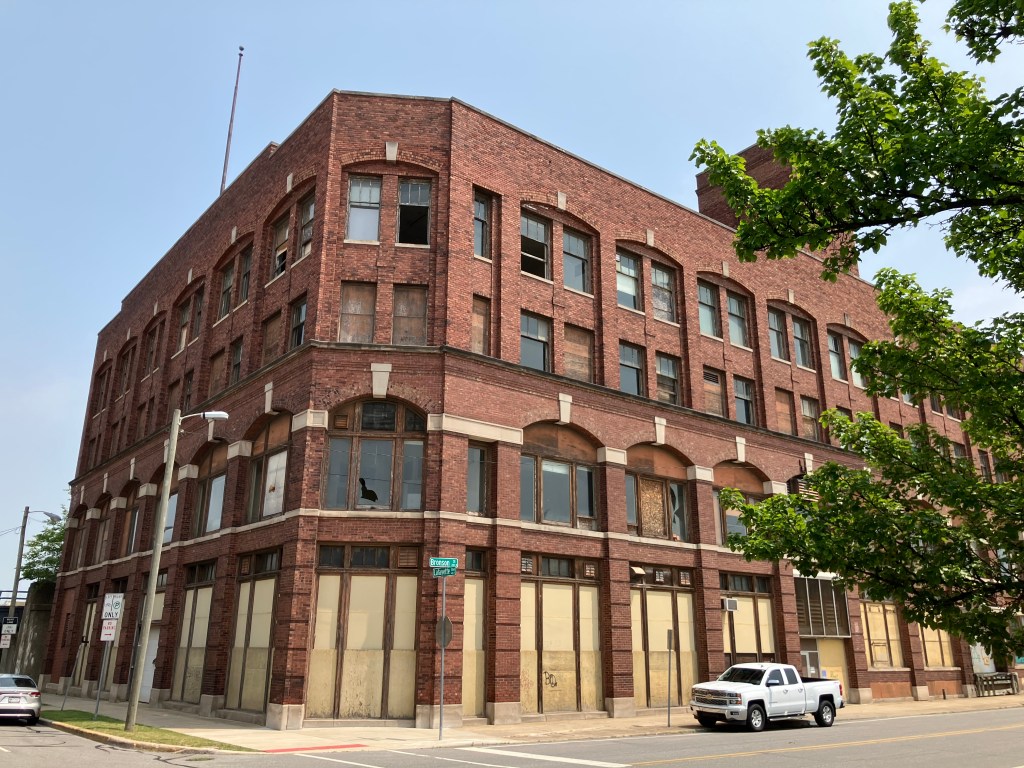
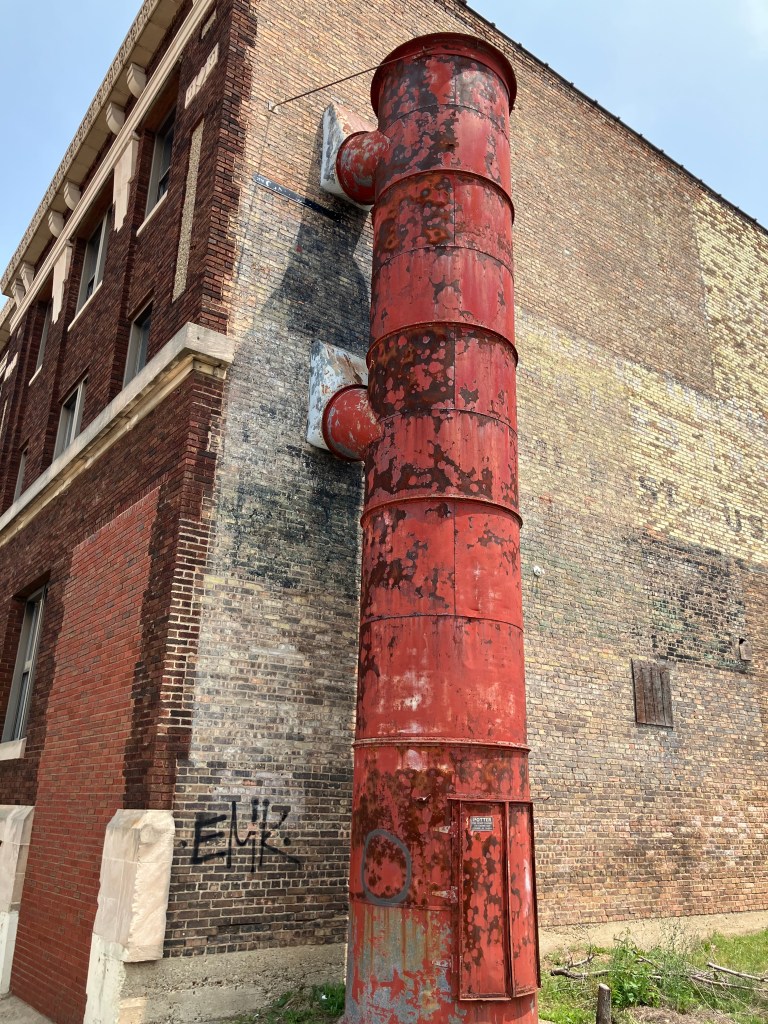
Here’s another random, old building on Michigan Street that appears to be serving no purpose. It caught my eye for two reasons: First, because of the tubular external fire escape.

I wonder if this is where the McDonald’s folks got the idea for their Playplace (TM)?
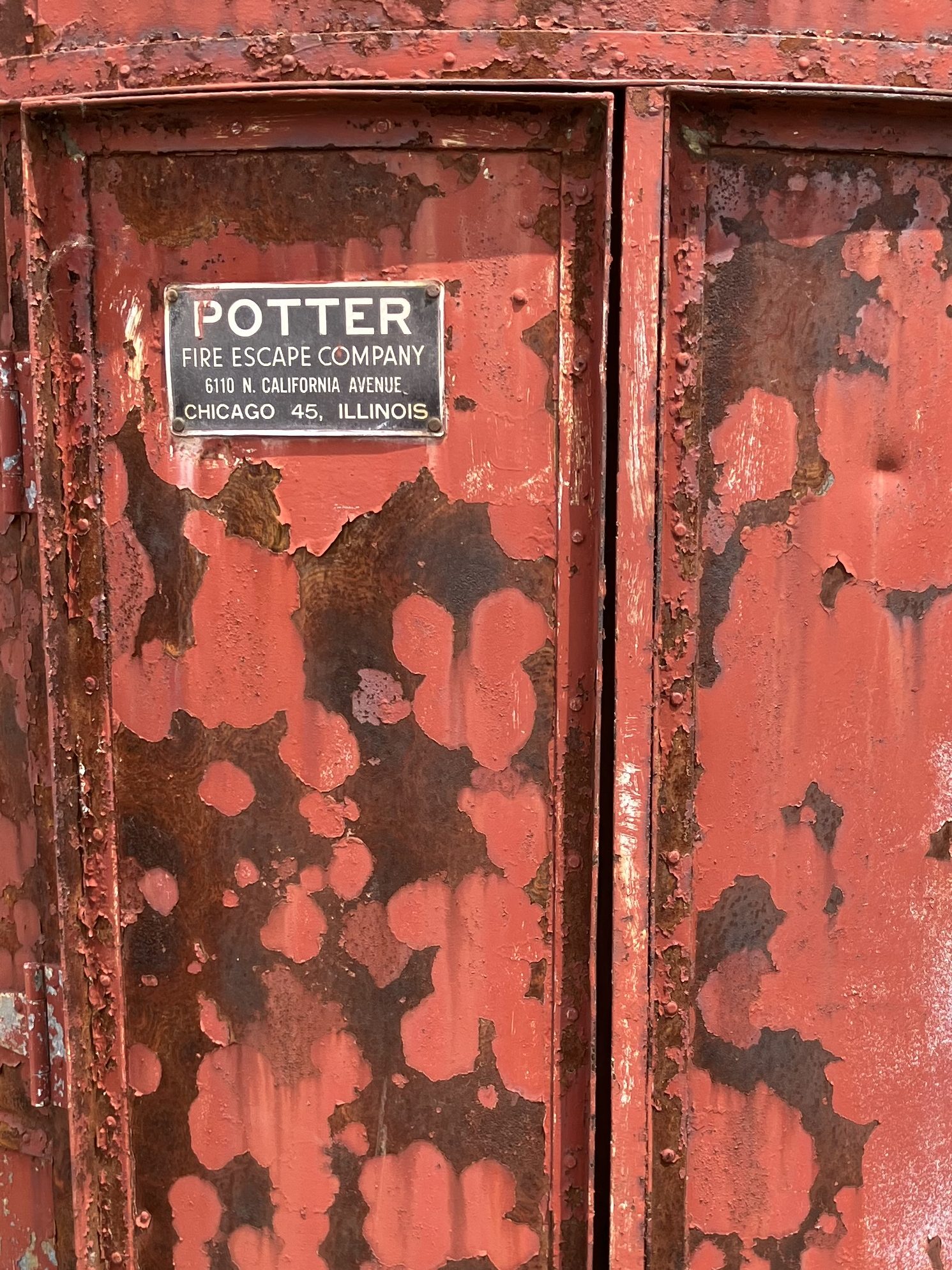
And Potter seems to still be in business today!

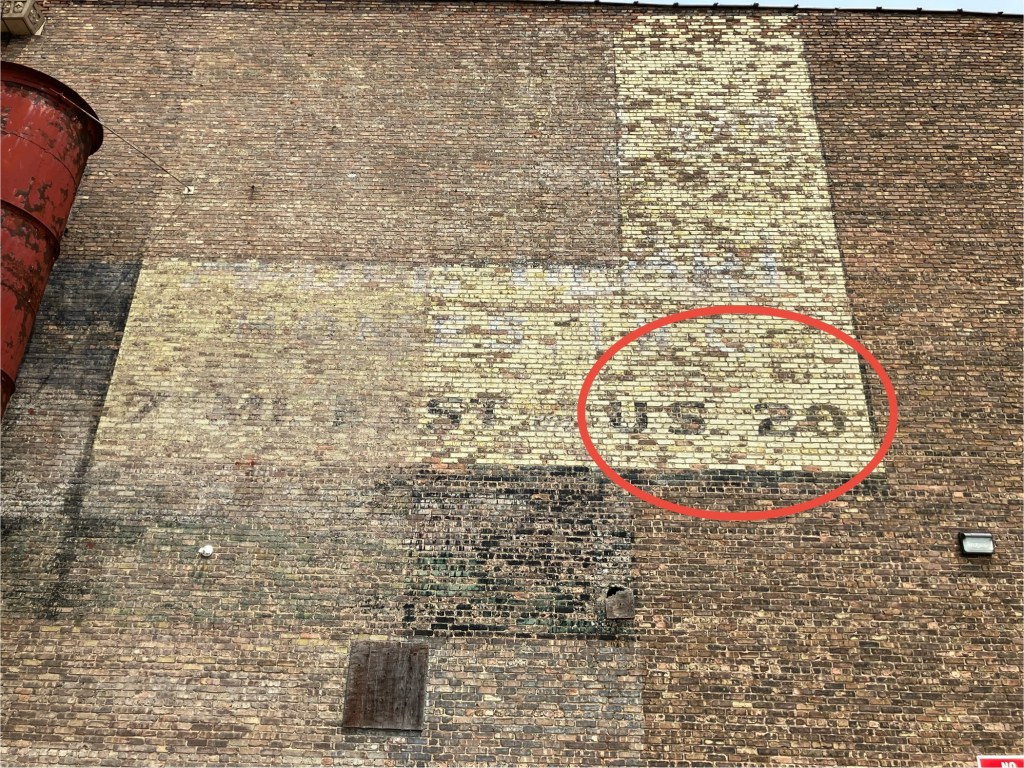
Second, and more importantly, the building caught my eye because of this barely-legible painted signage facing the road:

“US 20” is still clearly visible. (Less clearly, it seems to read “7 MICH ST.”) Funny thing, though, I had to turn off US 20 to drive down this road (on my way to a brew pub. More on that later). It turns out that US 20 used to be routed through here, before being re-routed around the downtown in the 1960s.

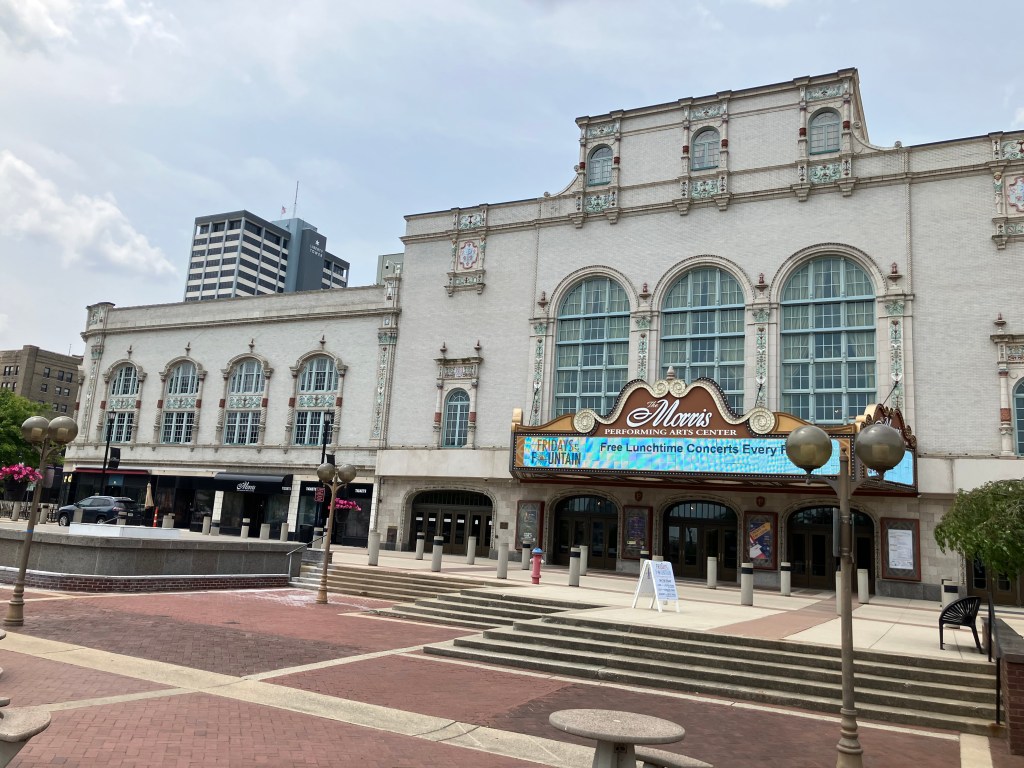
Now, some of you know my pet theory that you can tell a lot about the health of a town by its historic theaters. Almost all older towns have had a theater or two along the way. And almost all theaters declined with the advent of television and VCRs and such. But what did the towns do with their old theaters? Did they knock them down to make way for “progress”? Did they let them decay? Did they repurpose them? The answers to these questions tell a lot about the priority of the arts in the community, the extent of civic pride in the city’s history, the functionality of local government, and so forth. And I’m happy to report that South Bend has restored and preserved its beautiful, large, historic Morris Theater. The original theater opened in 1922 as a vaudeville house. It’s now a performing arts center that seats over 2,500. It’s home to the South Bend Symphony Orchestra, and it hosts broadway shows.

And the inside is even more beautiful than the outside!

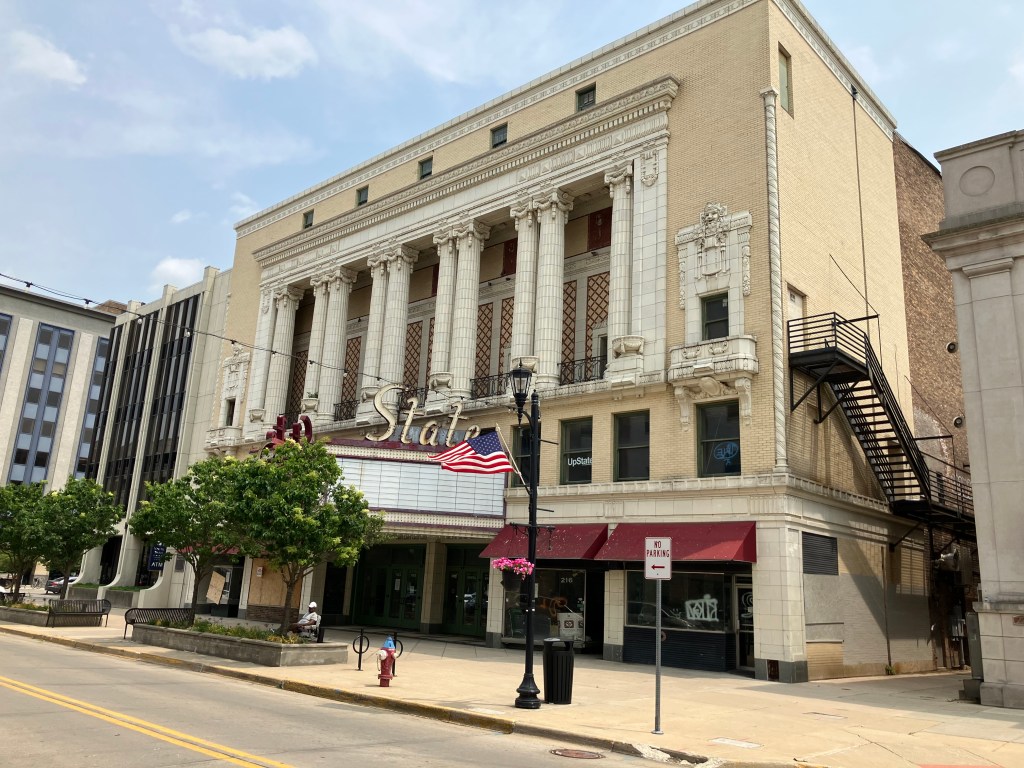
What’s more, South Bend has a second historic theater that it’s actively working to restore. The 1919 Blackstone-State theater was operating on and off up until 2016. As of a couple of months ago, the South Bend Redevelopment Commission approved the City’s purchase of the building for $800,000. Presumably, as a city-owned property, it will have more stability going forward.

Note the non-Potter fire escape.

So I judge South Bend to be on an upward trajectory, despite the significant challenges it still faces.

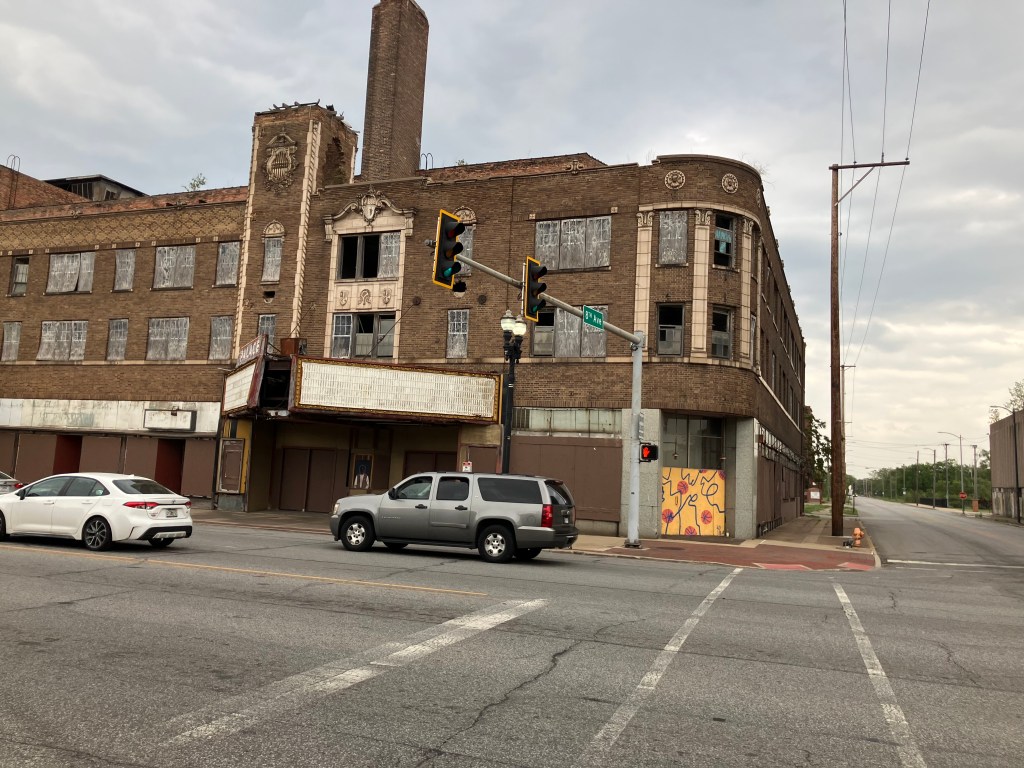
I’m less bullish on the next major town I drove through today: Gary, Indiana. I became quite depressed just passing through. Broadway was once a grand boulevard, but now it looked like it’d been bombed, with half-standing buildings, vacant lots, and rubble lining the street. People roamed the sidewalks in a fashion that seemed aimless and hopeless. And, most damningly, the historic theaters looked like they weren’t ever going to be saved.

Gary’s Palace Theater.
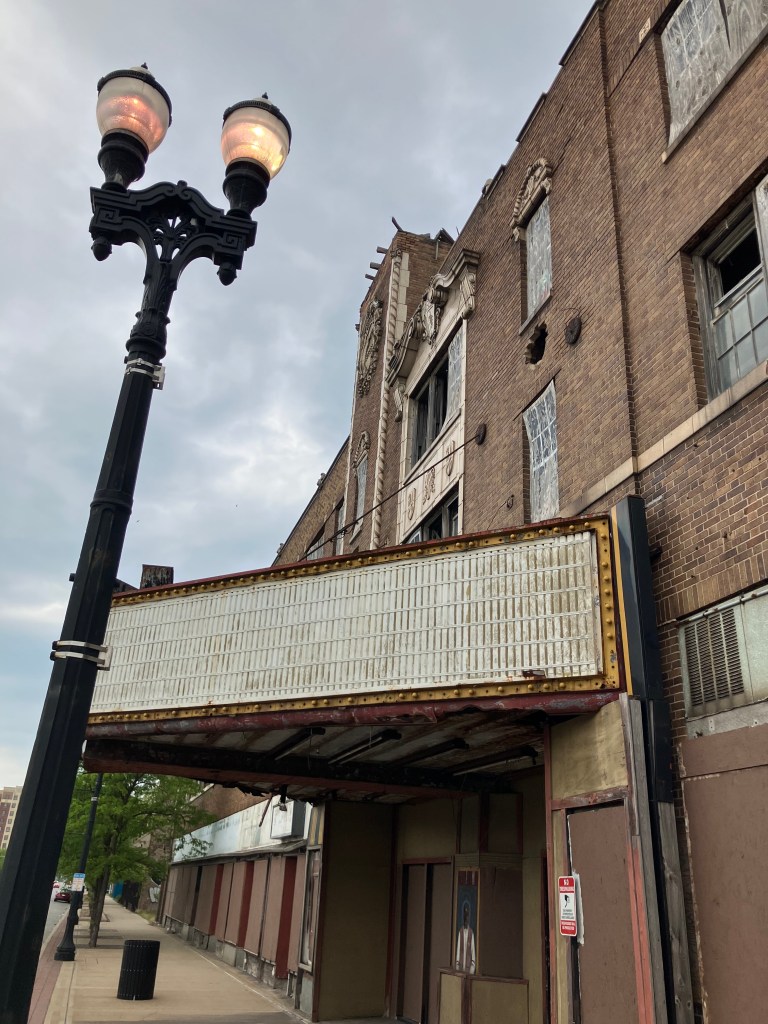
Detail of the marquee. That street lamp looks good, at least.

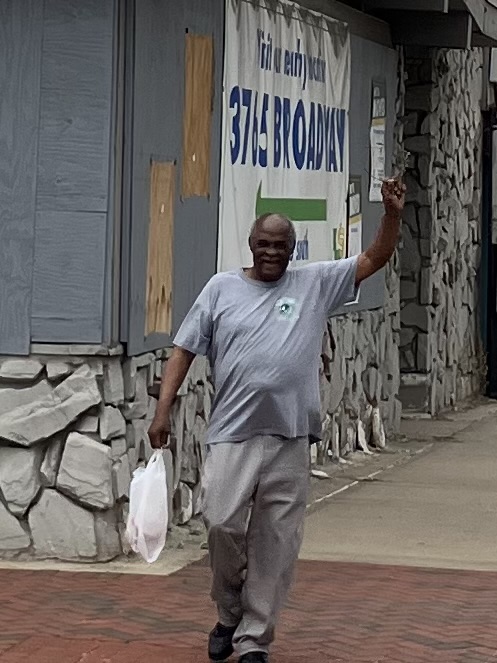
While I was taking a picture of the Palace theater (above) a man who was passing by stopped to tell me about how it used to be his favorite movie theater. “Apple” (as he called himself) used to sit up in the balcony and watch double features in the 1960s. He was sorry to see it go. Now, he says, he lives in an “old people’s home” and walks past the theater every day on his way to the corner store. He was a kind and sympathetic man, but he didn’t seem to have any spark in his eyes.

Apple, waving ciao.

Now, you probably know Gary Indiana for one of two things: the song from The Music Man (sung by a young Ron Howard), or the birthplace of Michael Jackson.

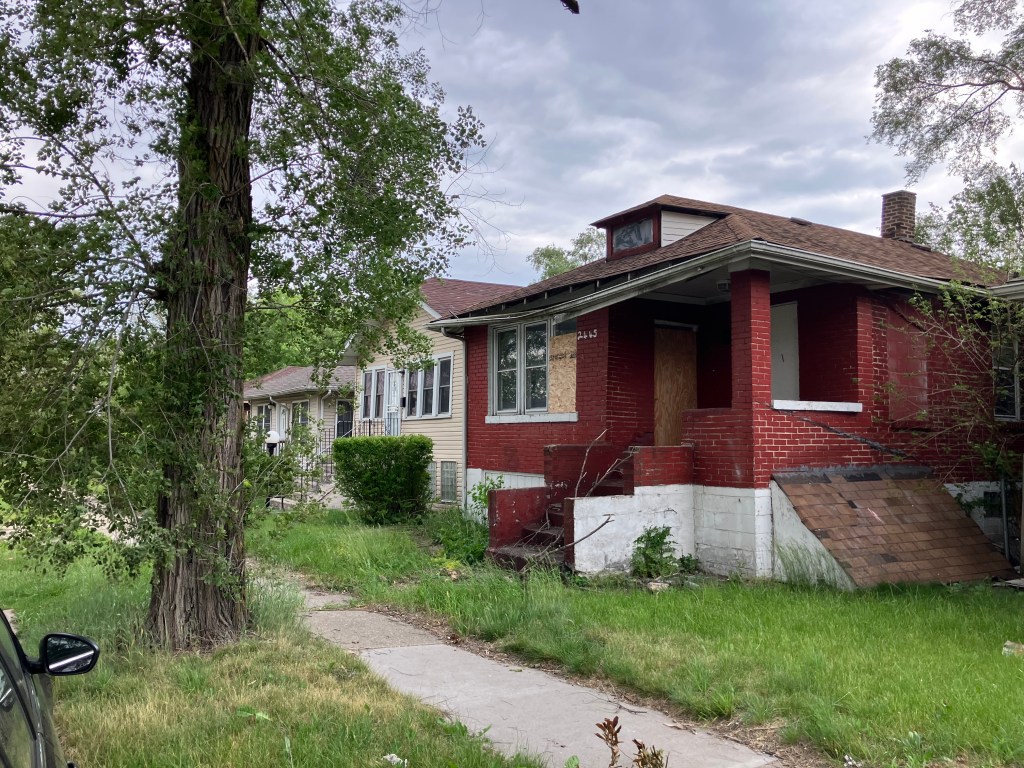
In fact, while driving through the town I passed a sign directing me to the Jackson House. I dutifully followed the sign and ended up on Jackson Street (whose name, I assume, was changed after the Jacksons became famous. Otherwise it would be too much of a coincidence!) The neighborhood is severely run down, and seems to be populated by people who haven’t had a break. There’s no obvious signs of graffiti or gangs or drugs or anything like that; just poverty and neglect. Many houses are boarded up and/or abandoned.

Sad state of affairs.

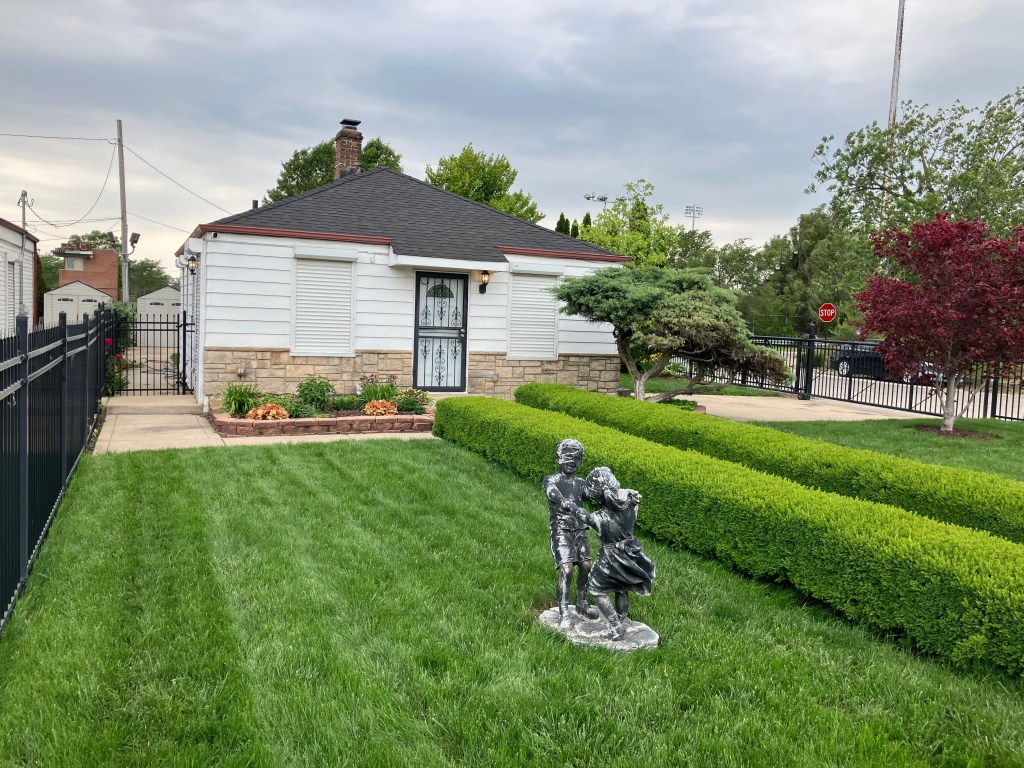
But then you come to the Jackson place. It’s a tidy and tiny (two-bedroom) bungalow, in which the eleven Jackson family members somehow lived. It makes me glad to know they hit the big time, but my heart goes out to the rest of the folks around here who didn’t.

Stately Jackson Manor.
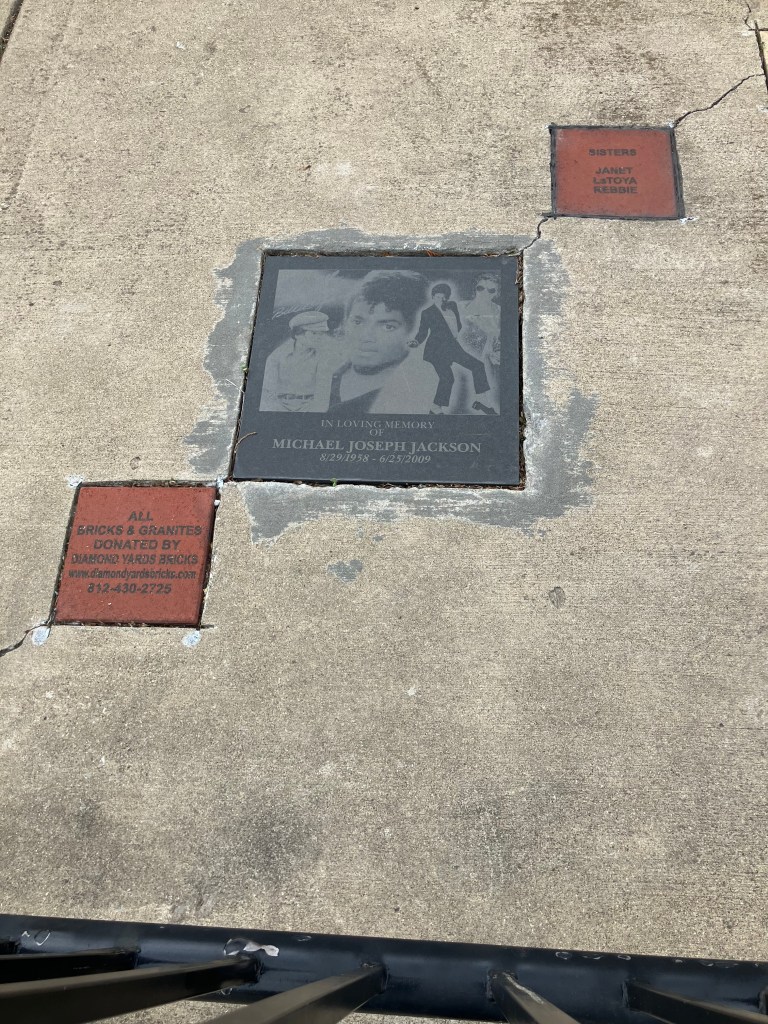
Memorials in the driveway. I don’t think I’d hire Diamond Yard Bricks to do any installation work.

Anyway, I left Gary feeling sad for a dead city and the people who still live in it.

After passing through Gary Indiana, Route 20 skirts around the edge of Chicago. I happen to love Chicago as a city, but visiting it is a commitment, and this is not that kind of road trip. So I stuck to Route 20, skirting around the outer edges of the city. I’ve parked myself in a nondescript town called North Lake, about 13 miles west of Chi-Town. Tomorrow I should finish crossing Indiana.

BEER OF THE DAY

I nabbed my BOTD at the South Bend Brew Werks. It’s another example of how South Bend is on the way up: It’s a nice, bright, new space with art on the walls and a big outdoor patio. They’re part of an energetic business district near the Morris Theater. They take their beer and their food seriously.

My server–Jason–was incredibly knowledgeable about beer, not just the stuff they brew but also the beers at breweries throughout the region. He’s also a rubber-stamp artist, and his work is currently hanging in this restaurant.

Jason, beer-savant.

On Jason’s recommendation, I had the “Disinhibited Ep. IV: A New Haze.” It’s a double hazy IPA.

It’s a highly drinkable beer, though it clocks in at 8 percent ABV. The appearance, as you would expect, is hazy. And as an IPA, it has the expected piney hoppiness and medium carbonation. But the flavor is more interesting than your average IPA. It has notes of grapefruit and dandelion, balanced by the aforementioned hops. There’s just a suggestion of sweetness. Overall, the flavor is more sunny than bright, and more juicy than refreshing. It’s a very solid effort and manages to stand out in a world dominated by endless IPAs. 4 stars.
COINCIDENCE CORNER:

Yesterday I posted a picture of the Christmas Story house in Cleveland. Today I saw this in the corner of the South Bend Brewing Company:

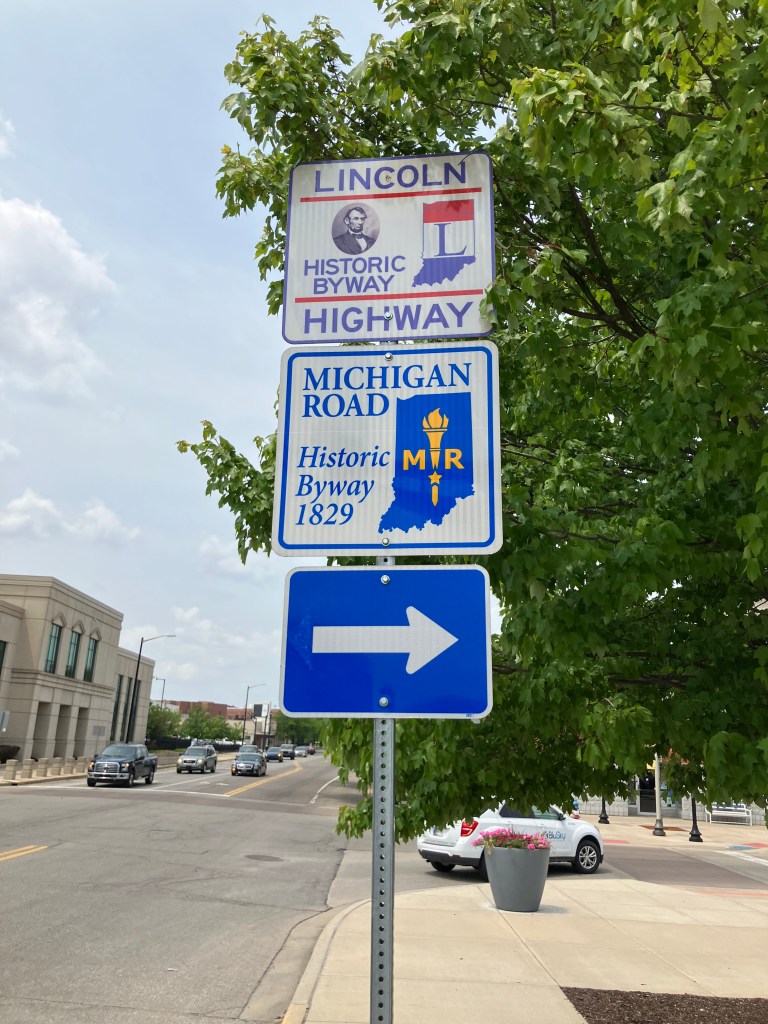
Also, in April I did a blog post about the stretch of the Lincoln Highway that runs near my home in El Dorado County, CA. Today I saw this on a street corner in downtown South Bend:

Cars · movie theaters · Road trips · trains

A Stew-pendous Day

This morning I awoke around 7:15, and looked out my window to see the world still cloaked in darkness. I figured it was still too early for the sun, since I was on the western edge of the eastern time zone. After my morning ablutions I returned to the window, but it was still dark outside. I looked up to see a blanket of black clouds covering the sky. The sun was entirely AWOL.

Undeterred, I got in my rental car and began to head out of Albany. But as I was passing through the historic downtown what do you think I saw? Yes, it was another Union Station. For those of you keeping score at home, I’m now up to four on this trip.

“Look for..the Union la-ble….”

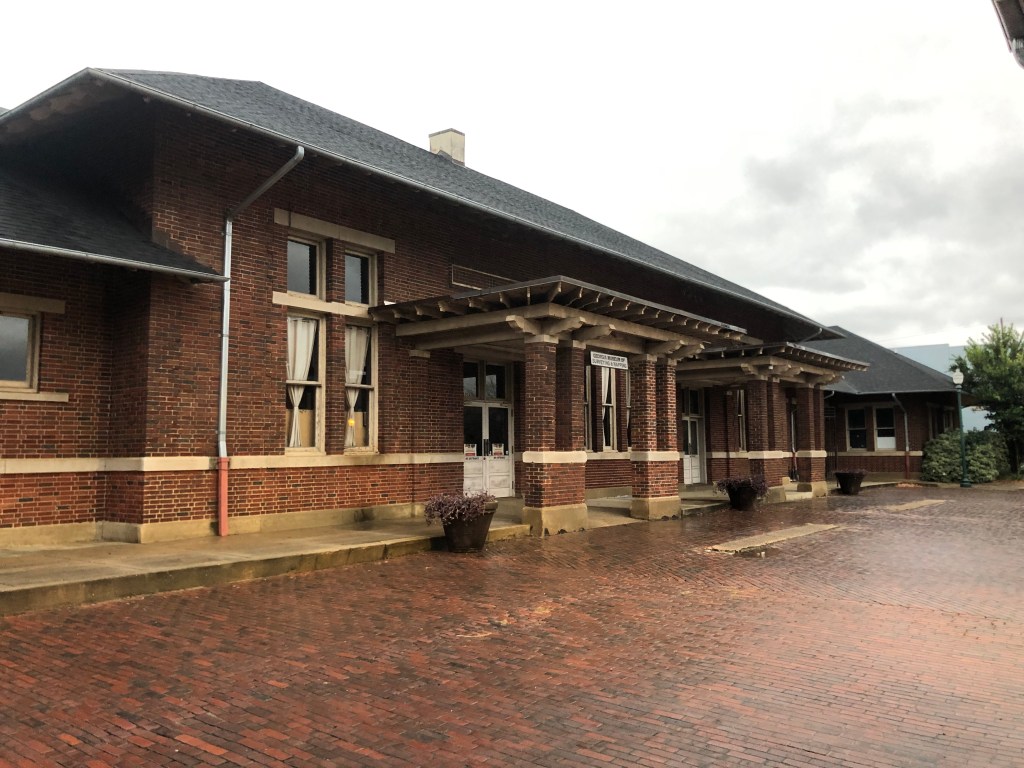
Albany’s Union Station was constructed in 1913. It replaced an earlier depot that had been built in 1857, but wasn’t able to accommodate the vast increase in rail traffic. Union Station continued to serve trains until 1971, after which it was slated to be razed. However, preservationists in the town mobilized to protect the building from the wrecking ball that was knocking down so many old buildings in the 1970s. Union Station was placed on the National Register of Historic Places in 1975.

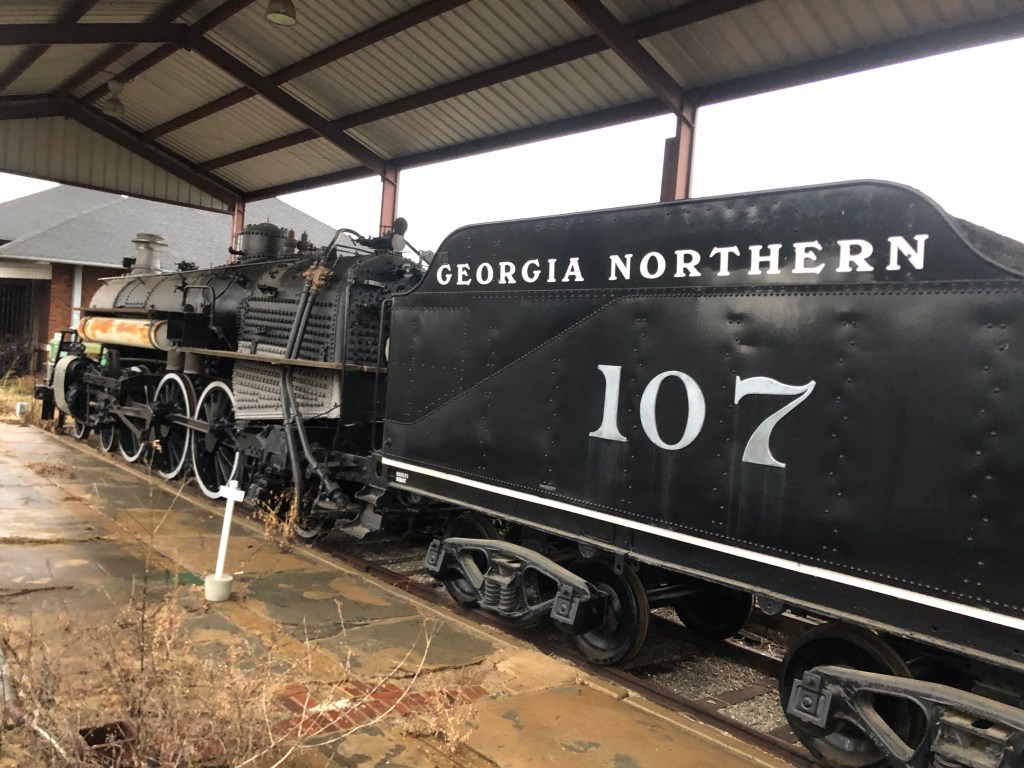
The station was renovated and became a museum. It was part of a larger “Heritage Plaza” project that includes several other historic buildings, including the old freight warehouse. There’s also a Georgia Northern steam locomotive and rail cars on the tracks behind the station.

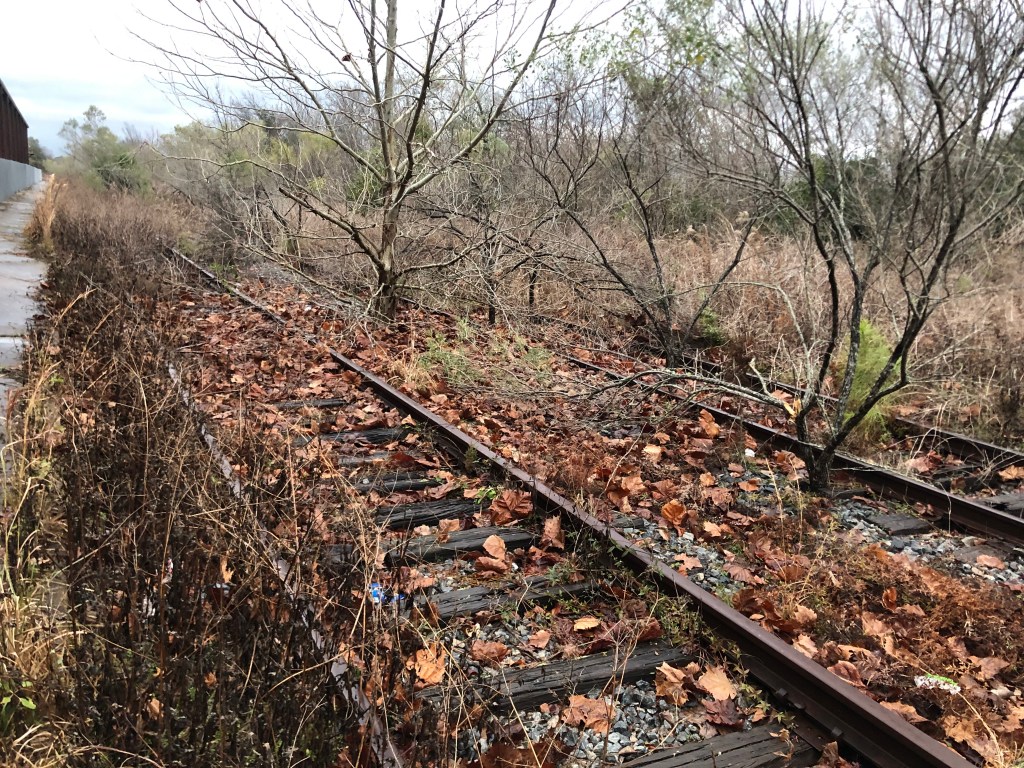
Looks like it’s been awhile since trains ran on Union Station’s tracks.

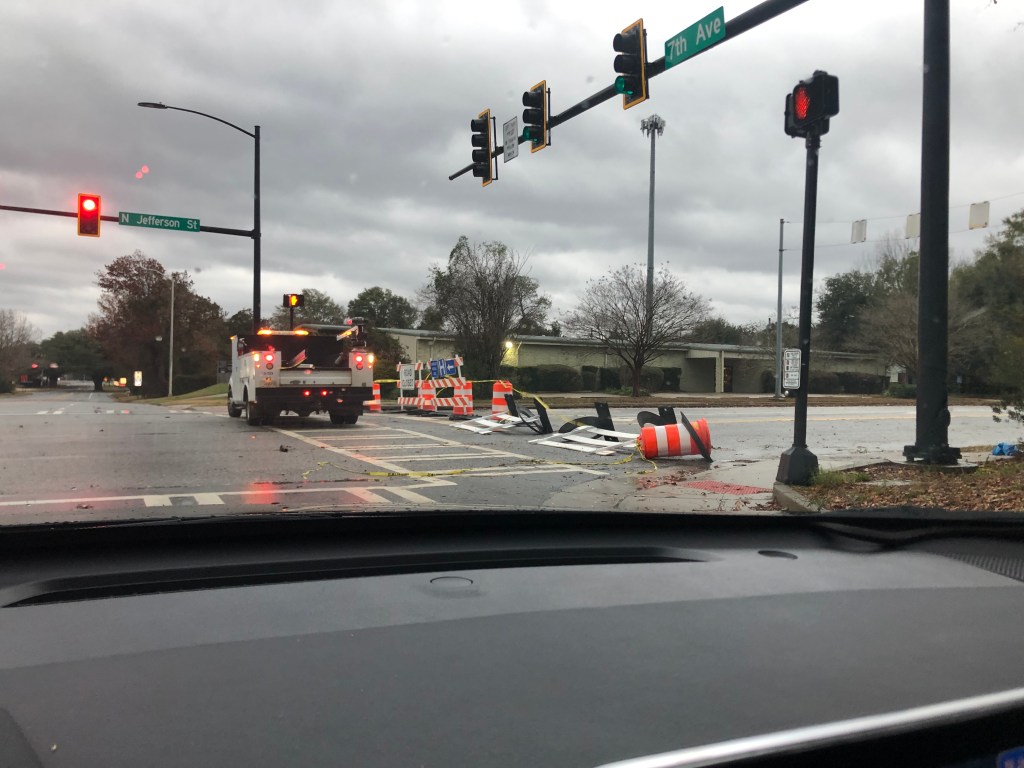
Having gotten my daily Union Station fix, I got back onto US 82 East. The wind had picked up and it was beginning to rain. As I drove out of town I saw public works crews blocking off streets and clearing drains.

Do they know something I don’t know?

Then, all of a sudden, the leaden skies fully opened up, and lightning started flashing like paparazzi from hell. This continued for the rest of the day. And in the mid-afternoon I started receiving tornado warnings on my iphone.

Thankfully, US 82 was not closed down by the storm, so I carefully made my way across Georgia with my wipers working overtime and only a few incidences of hydroplaning.

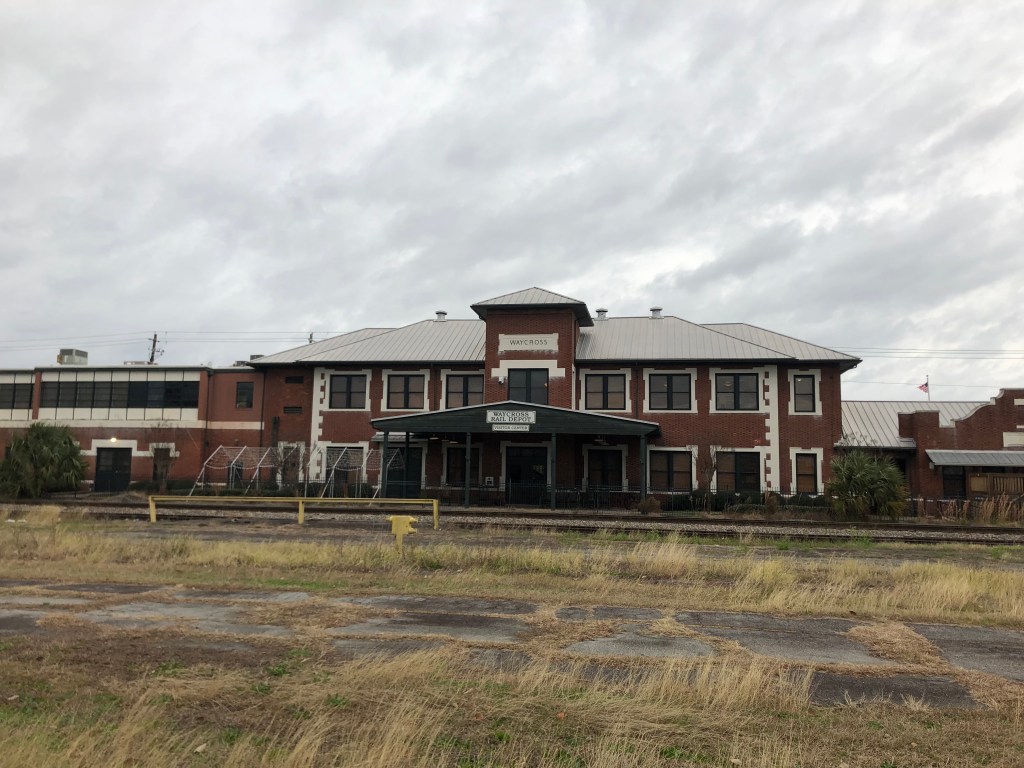
Because of the weather, I didn’t make many stops today. But I did break for lunch in the city of Waycross (pop: 14,000). Like so many of the places along Route 82, Waycross sprung up as a railroad town. In fact, its name references the town’s location at the intersection of six railroad lines. The town’s large, 1911 railroad station (can you guess its name??) was at the center of those rail lines, and it now houses the Chamber of Commerce and serves as a visitors center.

Union Station No. 5

The guy at the visitor center encouraged me to visit the nearby Okefenokee Swamp, since Waycross is “the closest city to the Swamp.” Be that as it may, it would still require a long drive along a narrow road through peat bogs during a major downpour. Maybe next time.

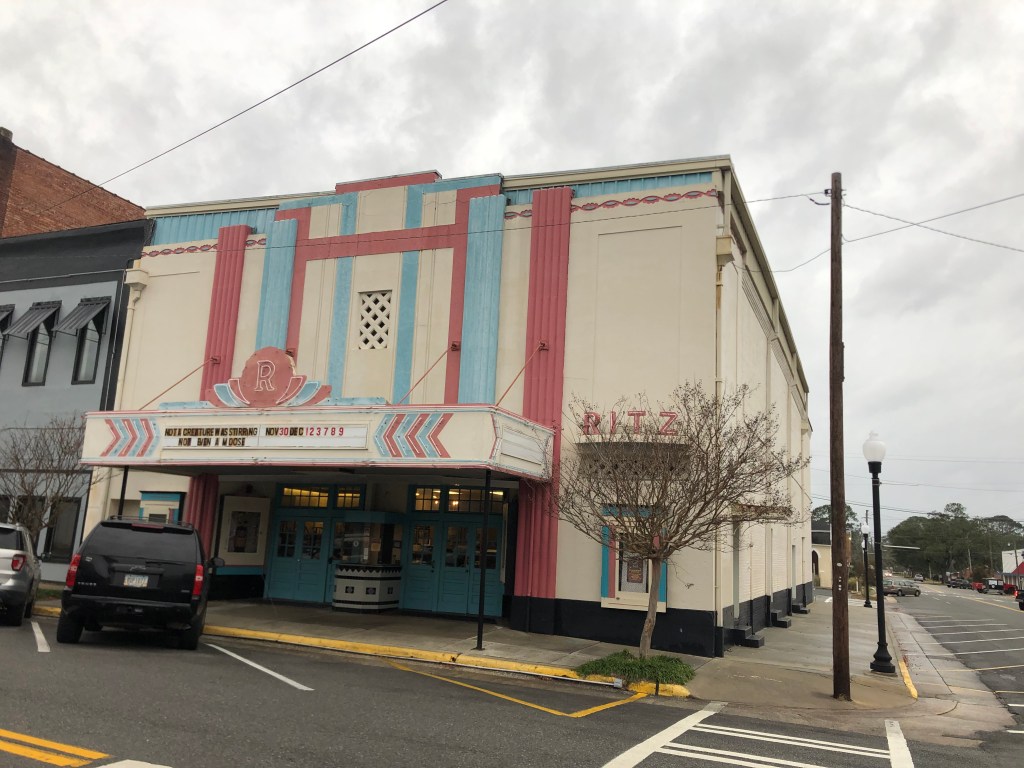
Instead, I took a leisurely drive around the town and encountered two historic theaters. The Ritz theater opened in 1913 as a vaudeville house called The Grand Theater. In the mid-1930s it was extensively remodeled into a movie theater and its name was changed to the Ritz. It closed in 1977. However in the mid-1980s a group of Preservationist citizens resurrected the theater as a live performance venue. Today it’s the city’s main stage for community theater.

Everything’s better on a Ritz.

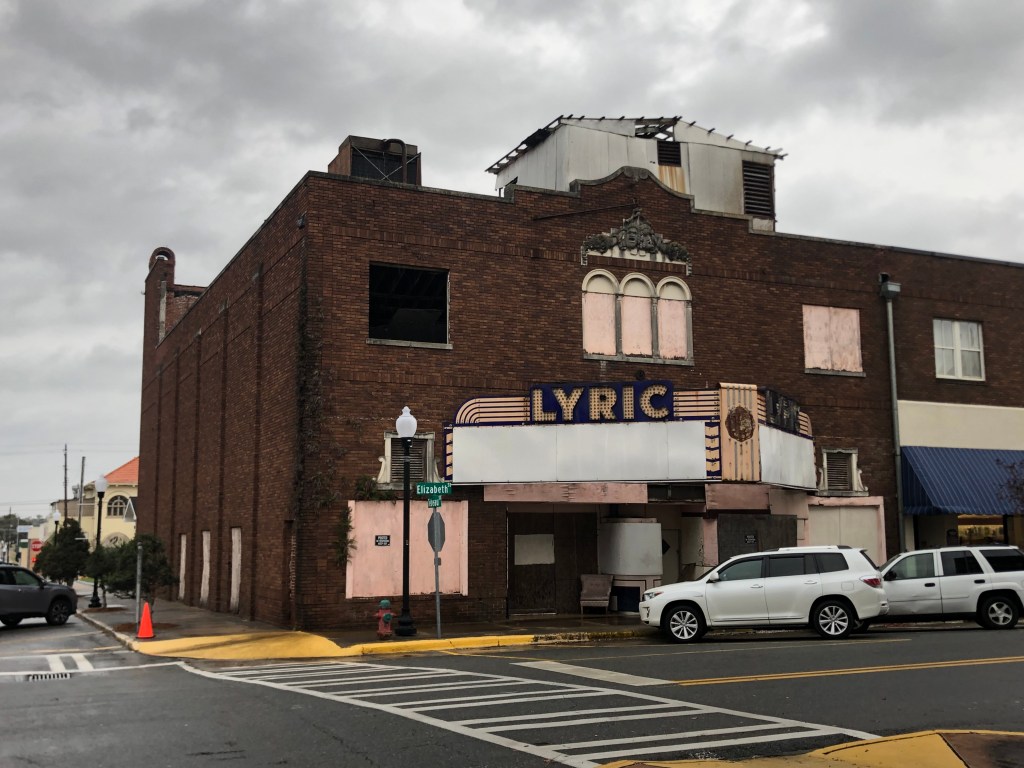
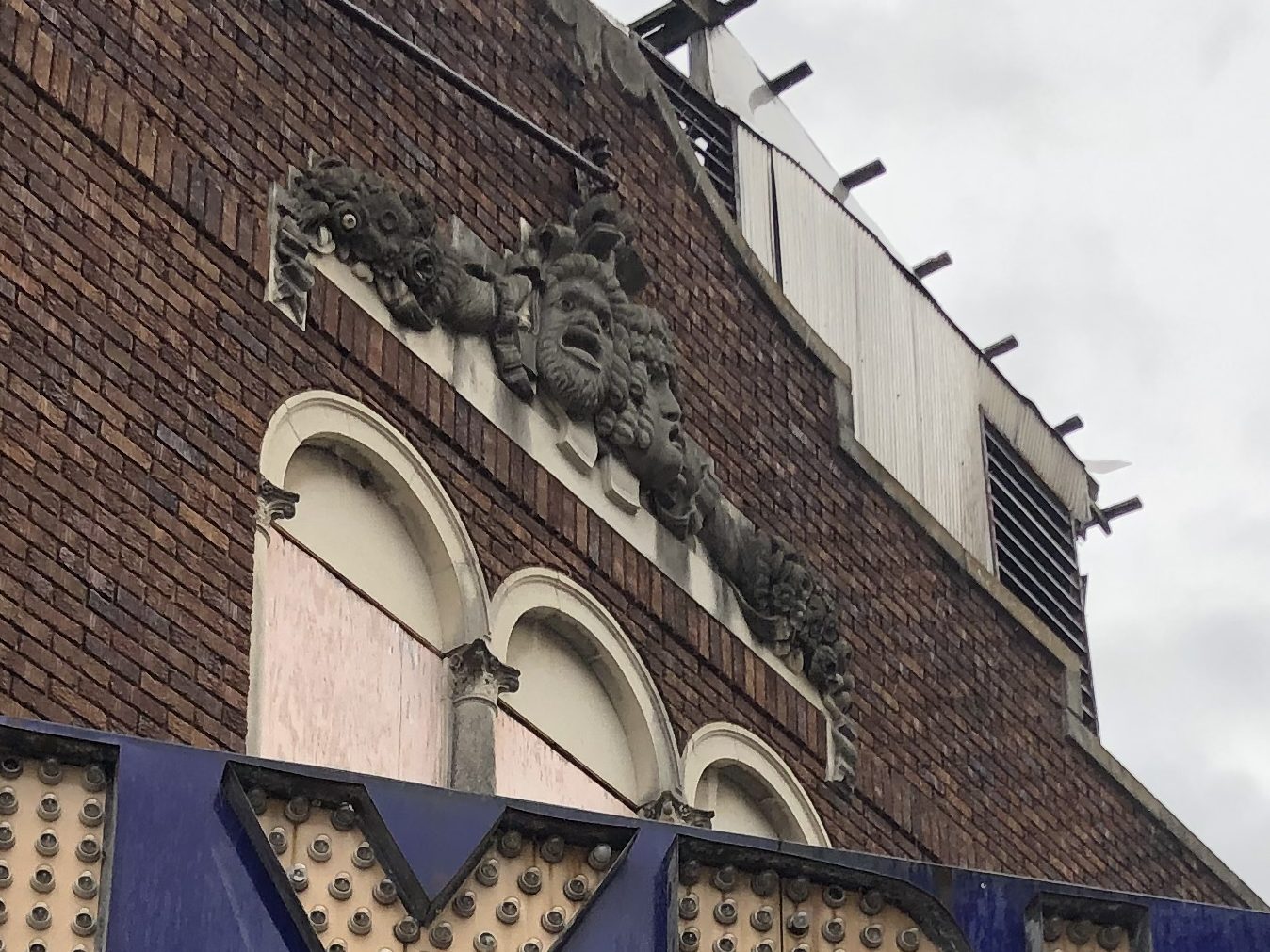
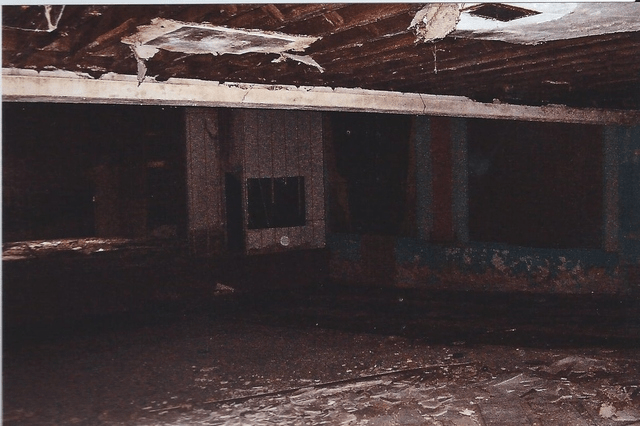
Waycross’s other theater has a less successful story. The Lyric Theater opened in 1923, and like the Ritz, it showed movies in the middle decades of the 20th century. I can’t find when it closed, but They Shoot Horses Don’t They? was playing there as late as 1970. For my money, the Lyric is far more interesting looking than the Ritz, but its interior is probably beyond salvation.

The Lyric Theater looks pretty solid, from a distance.
Note the detail in the original decoration of the facade.
2018 photo of the interior, from “Cinema Treasures” website.

The reason I came across those theaters is because I was looking for a Studebaker dealer. Let me explain:

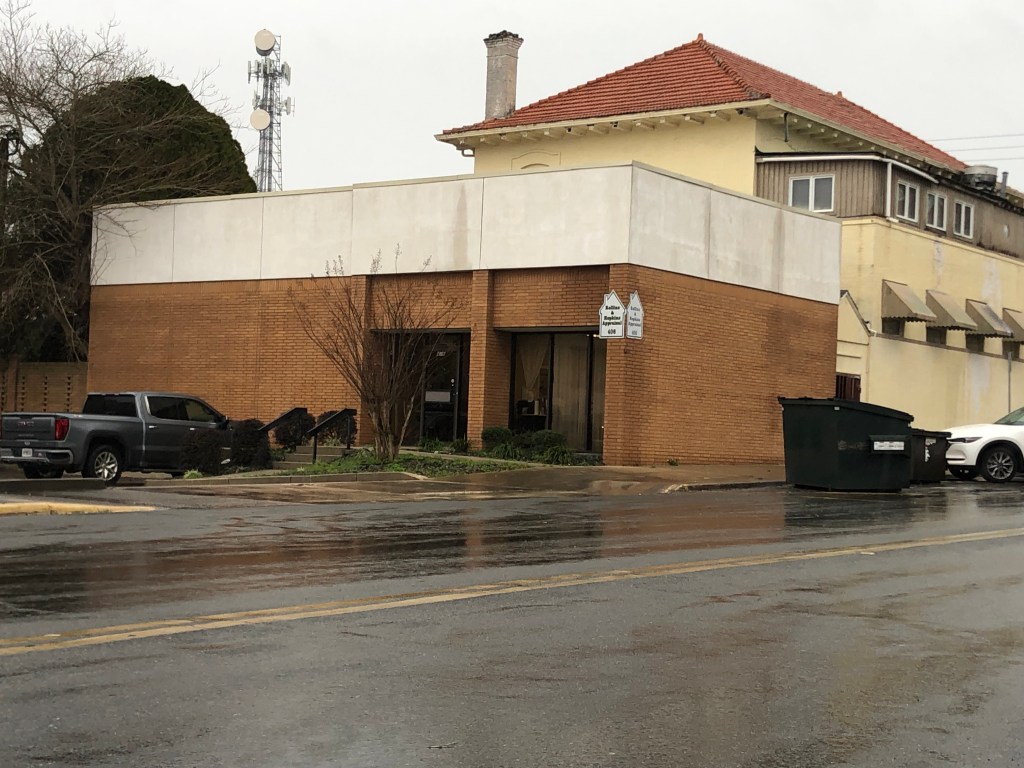
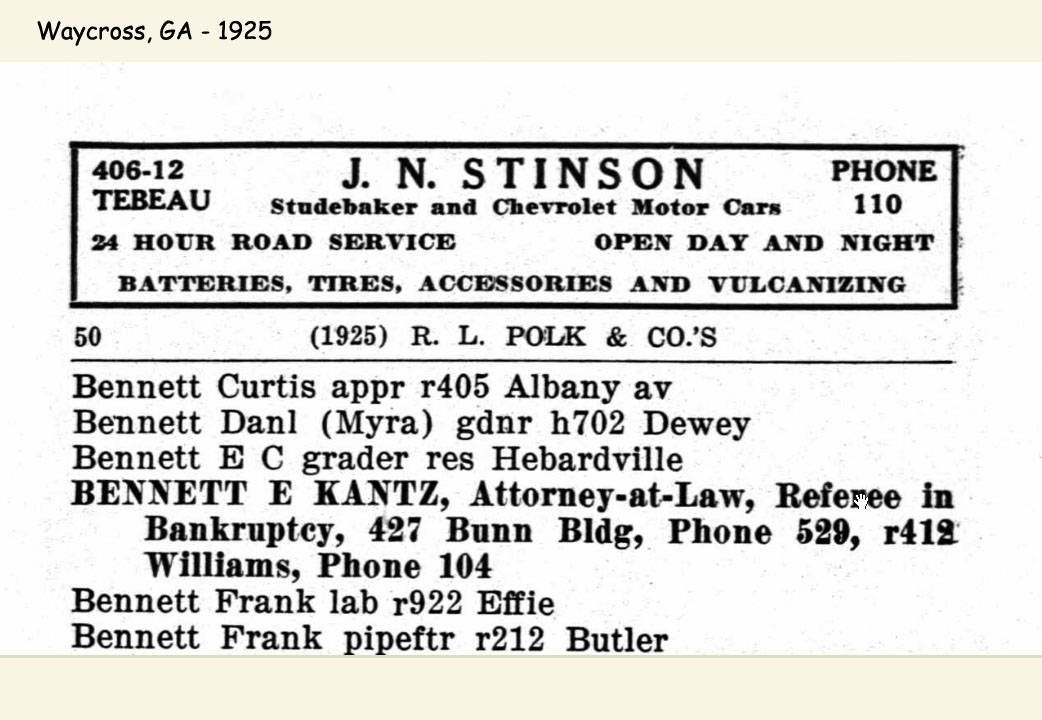
Loyal reader Victor R sent me a link to a database of Studebaker dealerships all across the country. The database lists two dealerships in Waycross: Johnson Motor Car Co. at 302 Albany Ave, and J.N. Stinson at 406 Tebeau St. The first address is now just a vacant lot, but there is a building at the Tebeau address. I think the current building is not the same as Stinson’s dealership, though, because according the database Stinson was in business in 1925. And what I saw today is clearly not a 1925 building.

Probably was not used as a Studebaker showroom.

Eventually I got back onto Route 82 to complete the final 60 miles of the trip. The weather was worsening again, but it was still driveable. A cup of coffee from a Waycross coffee bar kept me alert.

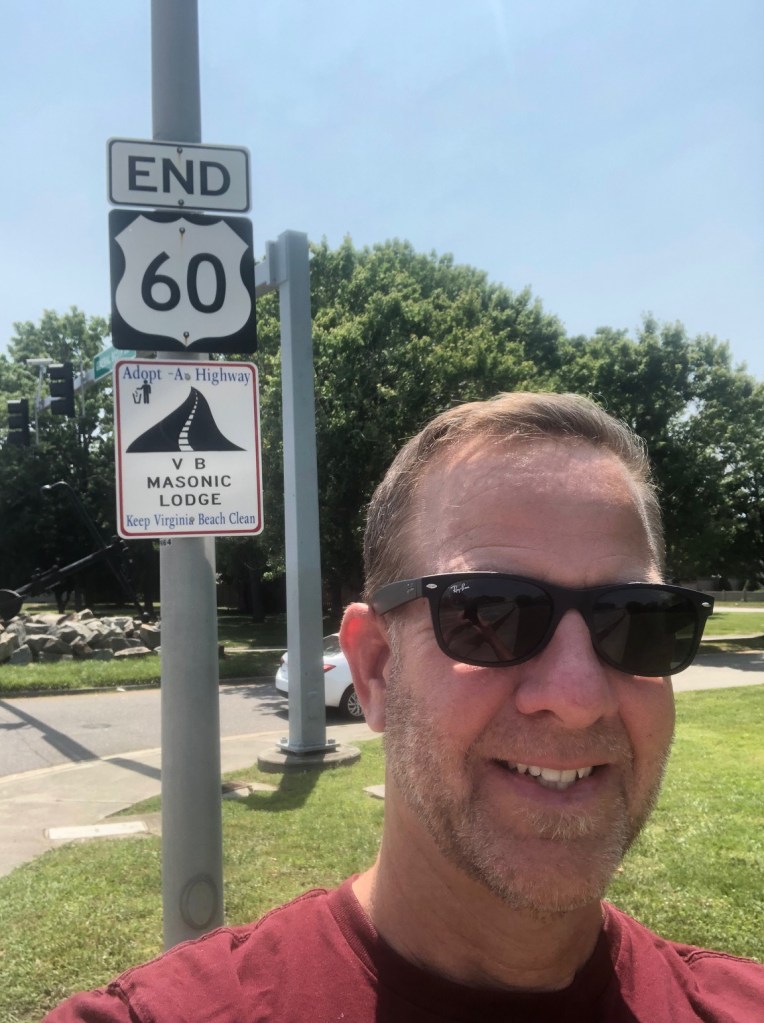
It seems that I’m always able to sense when I start to approach the Atlantic, and today was no exception. I don’t know if there’s a scent in the air, or if the landscape changes (definitely the density of trees thinned out), or if the development patterns change, or maybe the style of architecture is different. All I can say is that it felt like I was getting close to the end of the continent. I was anticipating the satisfaction, the closure, of arriving at that final Route 82 sign that says “END” on it. Like this one at the eastern end of Route 60:

The rain was getting heavier, but I just knew I was almost there. I fixed my eyes on each sign I passed, straining to see past the rain on the windshield and the rapidly-sweeping wipers, anticipating the dopamine hit I would surely receive when I caught side of the “END.” And then, suddenly…I’m on US 17 north! What happened to US 82??

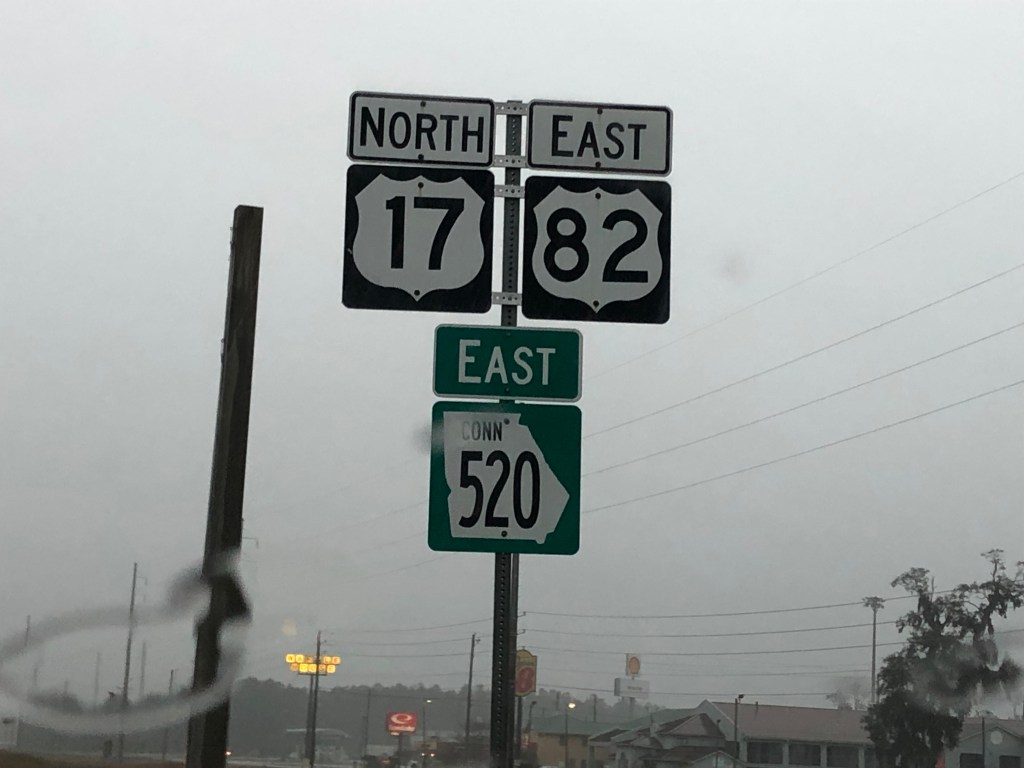
It took me some retracing of my steps to sort things out, but the bottom line is that there’s no END sign. Instead, there’s what I’ll call a “handoff” sign that marks both 82 East and 17 North simultaneously. This is the easternmost sign for US 82.

End of the line.

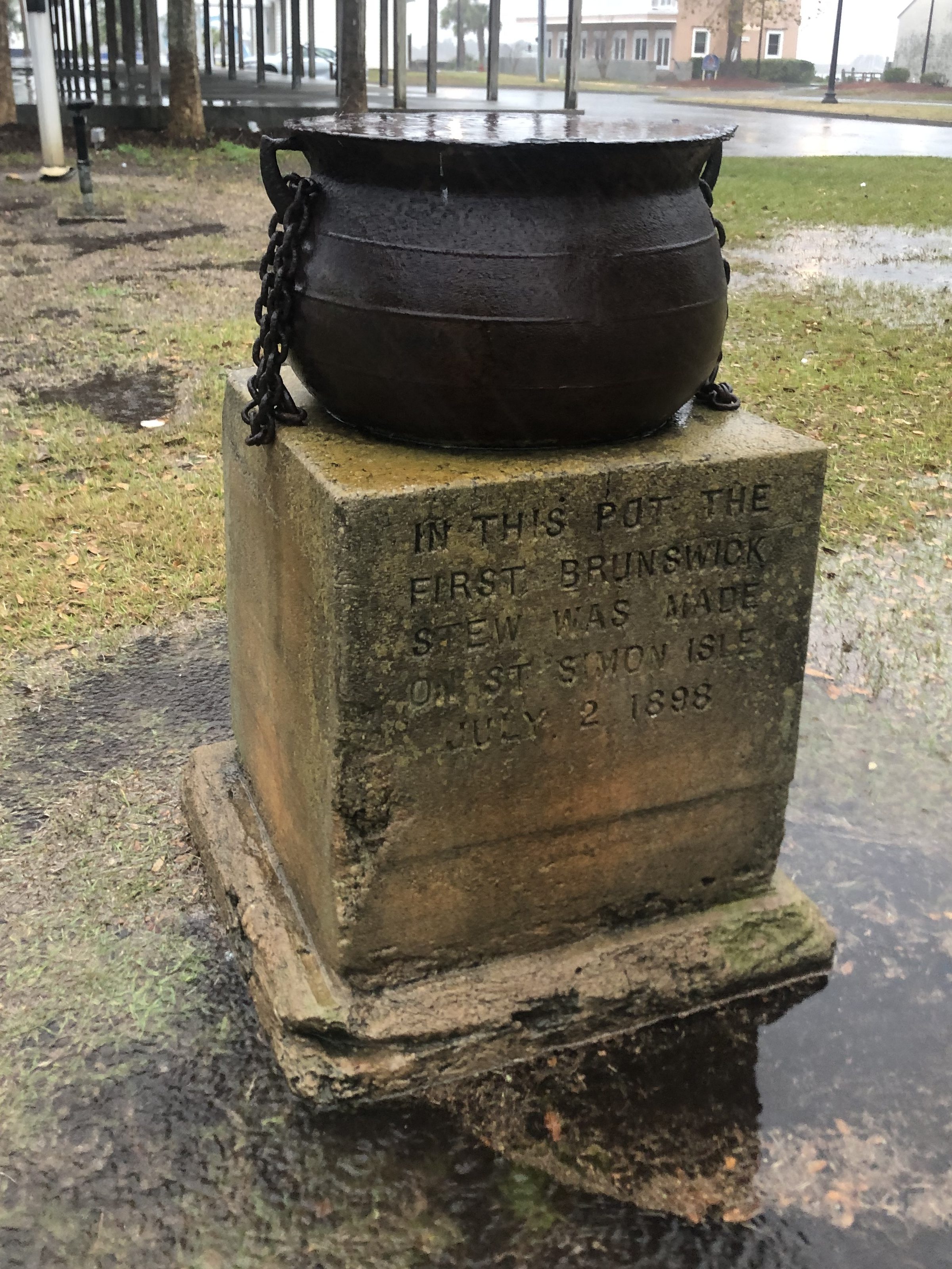
Well, that was anticlimactic. But no matter. I had safely made it to Brunswick, that’s what mattered. And to celebrate, I took a picture of the big stew pot that supposedly was used to make the first Brunswick Stew in 1898.

“In this pot the first Brunswick Stew was made on St. Simon Isle July 2 1898.”

There only remained two things left to do: First, I got my Brew of the Day (see below). And then, tomorrow, I will do a Mystery Travel Task that will complete an important collection for the Boilard Travel Archive. All will be made clear tomorrow. Now it’s on to the:

BREW OF THE DAY

Today’s BOTD came from Weber’s Growler Factory in Brunswick. It’s an interesting place, with forty beers on tap to fill your growler or to drink there by the glass. They also have a lot of bottled beers and an extensive selection of cigars. Sadly, they also have one of the most disinterested, unfriendly bartenders you’ll ever meet.
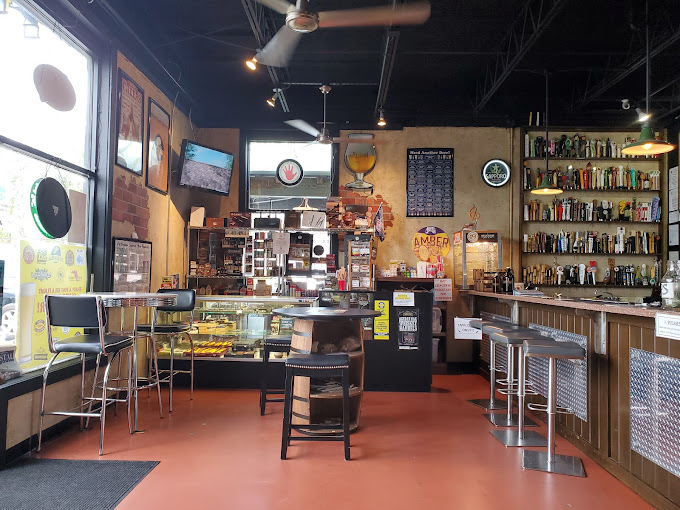
Eclectic taproom. (photo lifted from Yelp, since I didn’t want to tick off the bartender with my camera)

I was overwhelmed by the menu, so I asked for something local. Turns out the only beer from a Brunswick brewery is a Mexican lager. Lagers really aren’t my cup of tea, especially on a stormy winter day. So I asked if there was anything from elsewhere in Georgia. I ended up with a “De-stress Express” from Georgia Beer Company in Valdosta, GA.

All aboard the De-stress Express!

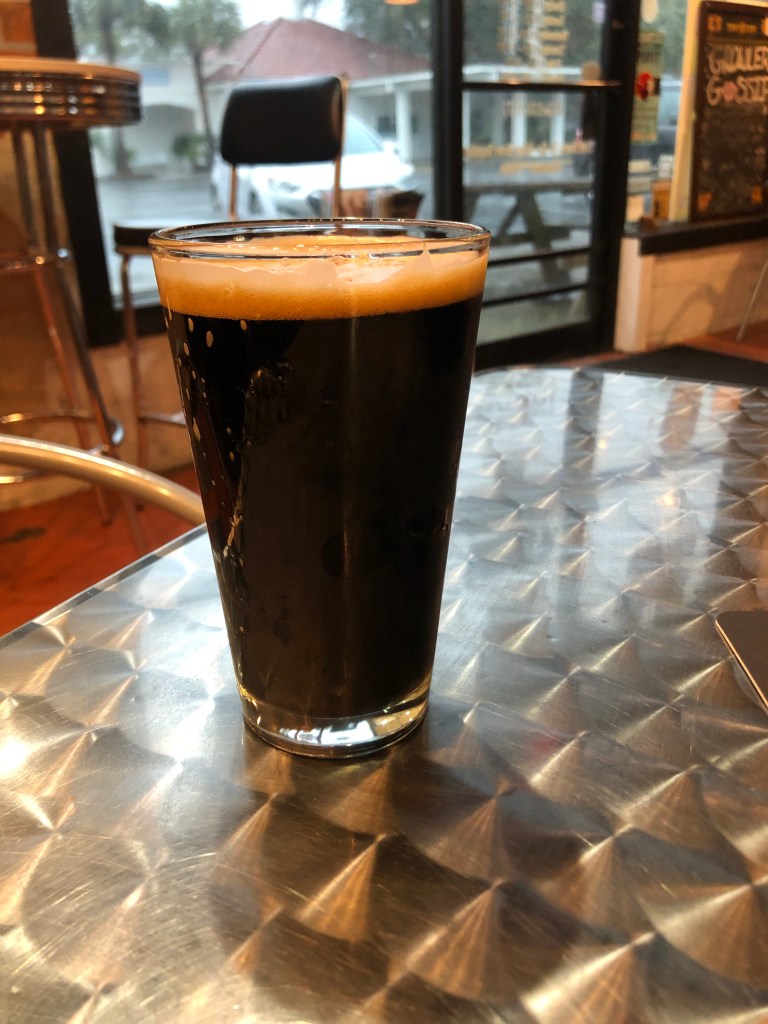
Interestingly, though I didn’t plan it, the De-stress Express is quite similar on paper to the Stone Xocaveza I drank last night. They are both stouts that are intended to evoke a mix of coffee and chocolate. But while Stone’s effort tasted flat and uninteresting and even a little off, today’s entry from Georgia was a winner.

De-Stress Express’s chocolate and coffee tastes don’t fight against each other; they complement each other. The coffee keeps the chocolate from being too cloying, and the chocolate keeps the coffee from being too bitter. Some light hoppiness is present, nicely balanced by the creamy, milky lactose. Today’s beer also had more carbonation than Stone’s, which helped to create a foamy head and to provide a nice tickle on the tongue. The beer comes across quite bright and fresh, which is a bit unusual for a stout. Perhaps that’s because it’s a local brew? Mouthfeel is very full-bodied and creamy. Definitely for sipping rather than quaffing. It took me almost half an hour to get through mine! ABV is a manageable 6.5 percent. I wish I could get it in California. Four stars out of five.

Cars · Halloween Cocktails

Superannuated

Old-Fashioned Pumpkin

Today we’re going to take a break from those vile green liqueurs and get back to basics. We’re going to try a version of an Old Fashioned, that bourbon-based drink with an adjectival name. But the recipe gets Halloweenified with some pumpkin and maple syrup.

Dating back to the 19th century, the Old Fashioned is indeed old fashioned. It’s said that the drink was originally called a “bittered sling,” which I actually prefer as a name. But as drinks became ever fussier as time went on (recall my ordeal with the Herman), purists would ask their bartender for something “old fashioned,” and the new name stuck.

The Recipe: Mix 2 oz bourbon, 1 Tbsp pumpkin puree, 1/2 Tbsp maple syrup, 1/4 tsp pumpkin pie spice, 1/4 tsp vanilla extract, and a dash of Angostura bitters in a shaker. Pour over fresh ice.

The Ratings:

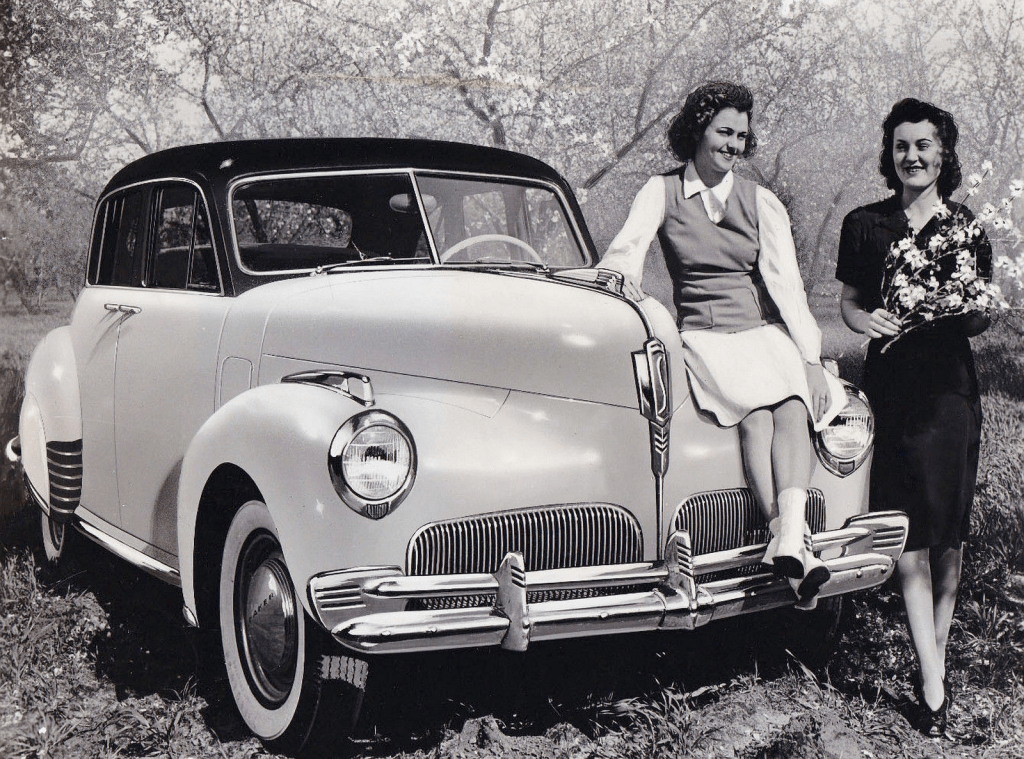
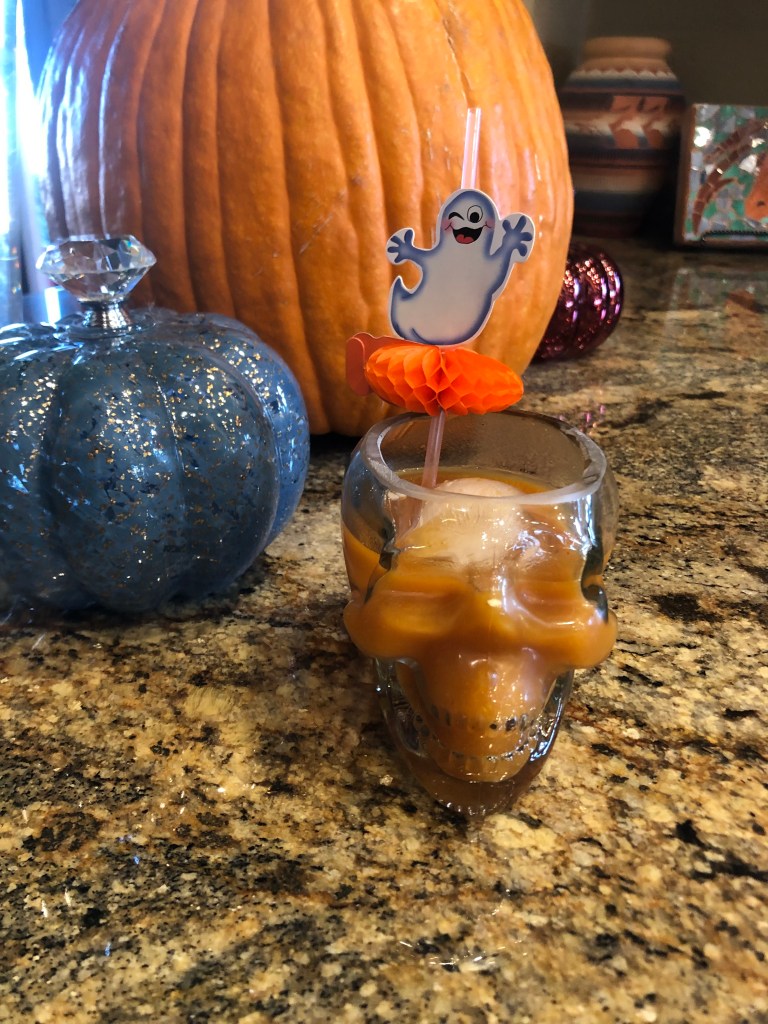
The appearance is somewhat off-putting. It’s not bright enough to be a frivolous, fun drink, and it’s not translucent enough to look like a proper Old Fashioned. The color looks like Bakelite plastic from the radio tuning knob of a 1940s Studebaker. It certainly doesn’t look like a Halloween drink. But it does have a vague pumpkin hue, so I’ll give it two points.

Old Fashioned indeed.

In terms of taste, the bourbon dominates, as it should. The bitters fight a bit against the maple syrup, and the pumpkin spices kind of get lost in all the infighting. But the pumpkin puree gives it a depth and heft not normally present in an Old Fashioned. I’ll give it 2.5 points.

I give the name one point. It would have been two points if they’d had the presence of mind to name it an Old Fashioned Pumpkin.

Grand Total: 5.5 points.


Dark N’ Stormy Corner

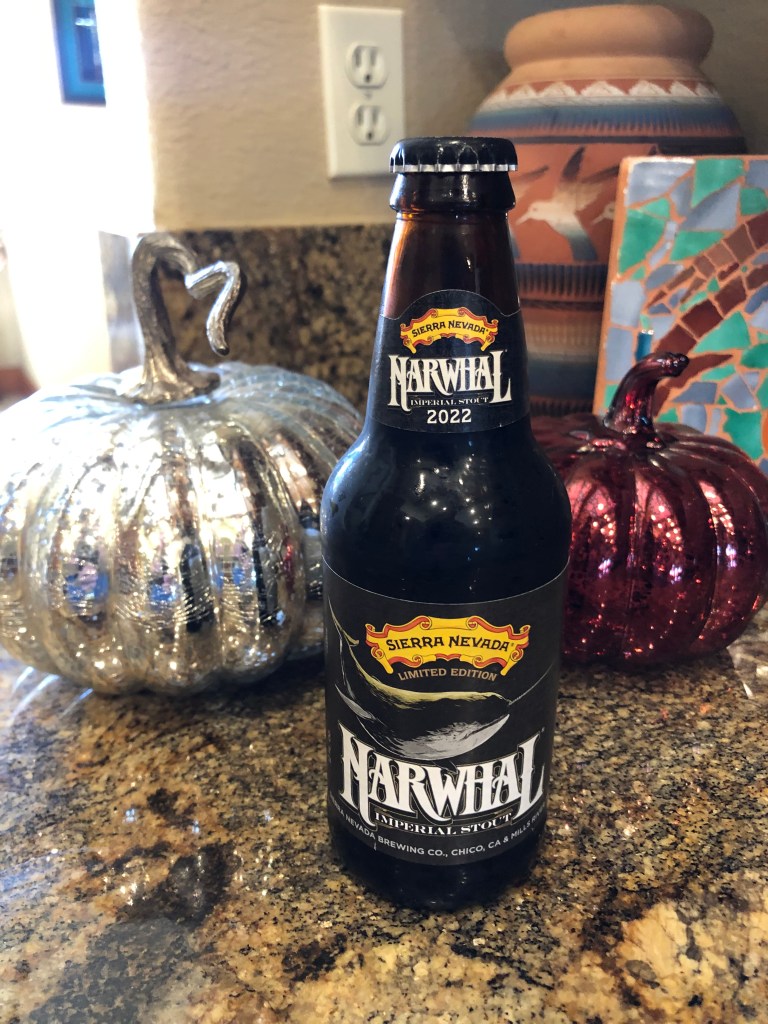
Recall that I’m trying to find a way to make this Dark N’ Stormy darker and stormier. This time I tried adding 2 oz of Sierra Nevada’s Narwhal to the drink. It did not improve on the taste. In the same way that filling your mattress with glass shards does not improve on its comfort. I find it surprising, because Narwhal (only available seasonally) is my favorite widely-available imperial stout. Best to just drink the beer on its own.

Do yourself a favor and grab a six pack before they’re gone til next year!

As for the Dark N’ Stormy, it’s back to the drawing board.

California history · Cars

The Postman Cometh

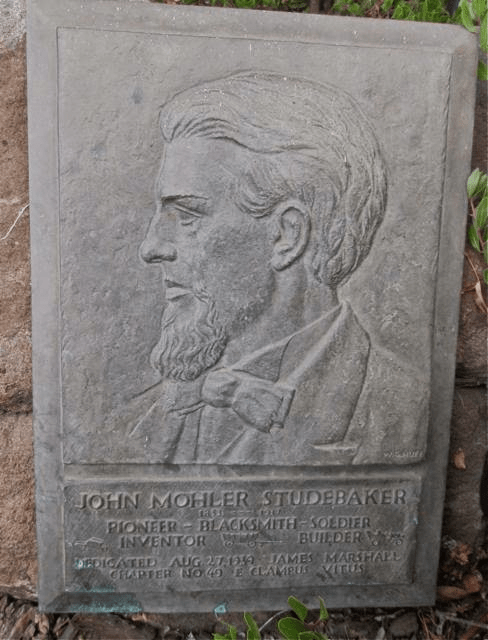
This morning a little after 6 am I took out the Speedmaster to downtown Placerville (pop: 11,000). There I got a cup of coffee and took a seat at the site of the old blacksmith shop where John M. Studebaker built wheelbarrows over a century ago. There’s a marker in the courtyard of the Bagel Works commemorating this fact.

John Studebaker was not the reason for my visit, but it’s worth recalling his connection to Placerville and the California Gold Rush. He was born in Pennsylvania and came out to California as a young man seeking his fortune in the gold fields. It didn’t take him long to realize the real path to riches lay not in mining for gold but in selling supplies to the gold miners. So he began building wheelbarrows right where I was drinking my coffee, and eventually amassed enough money to launch what would become one of the country’s largest, longest-lived, and most successful independent automobile manufacturers: The Studebaker Corporation. This is probably a good time for a brief clip of my friend Bill’s 1941 Studebaker Commander, which is still moving under its own power after 81 years. It’s a goal I hope to achieve myself in 20 years.
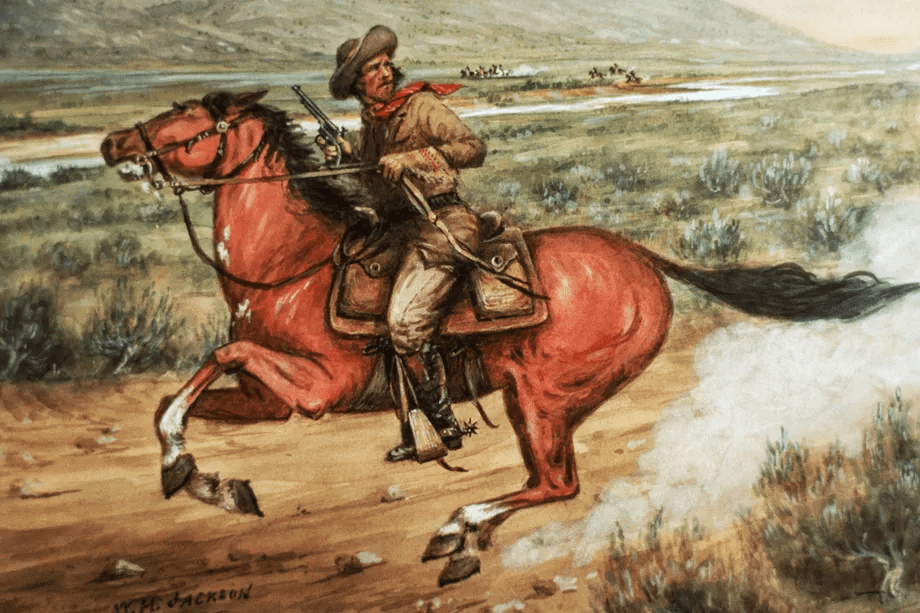
But back to this morning: I sat there with my coffee, waiting for the mail to be delivered. And this wasn’t just any mail delivery: This was a special delivery by the Pony Express. The Pony Express, you’ll remember, was created right about the same time that John Studebaker was building his wheelbarrows. The Pony Express carried US Mail from St. Joseph, MO to Sacramento on horseback, in only 10 days. It covered a route of 190 ten-mile segments, with fresh horses being supplied at each segment, and riders being changed about every 10 segments. (Some of the old Pony Express stations are still standing; I’ve been to a few of them in my travels, including the Pony Express Cafe in Eureka, Nevada, as I discussed briefly here.)

The Pony Express only lasted about a year and a half (from the spring of 1860 to the fall of 1861). It went bankrupt a month or two after the first transcontinental telegraph was established. But the Pony Express remains a romantic (or romanticized) part of the Old West.

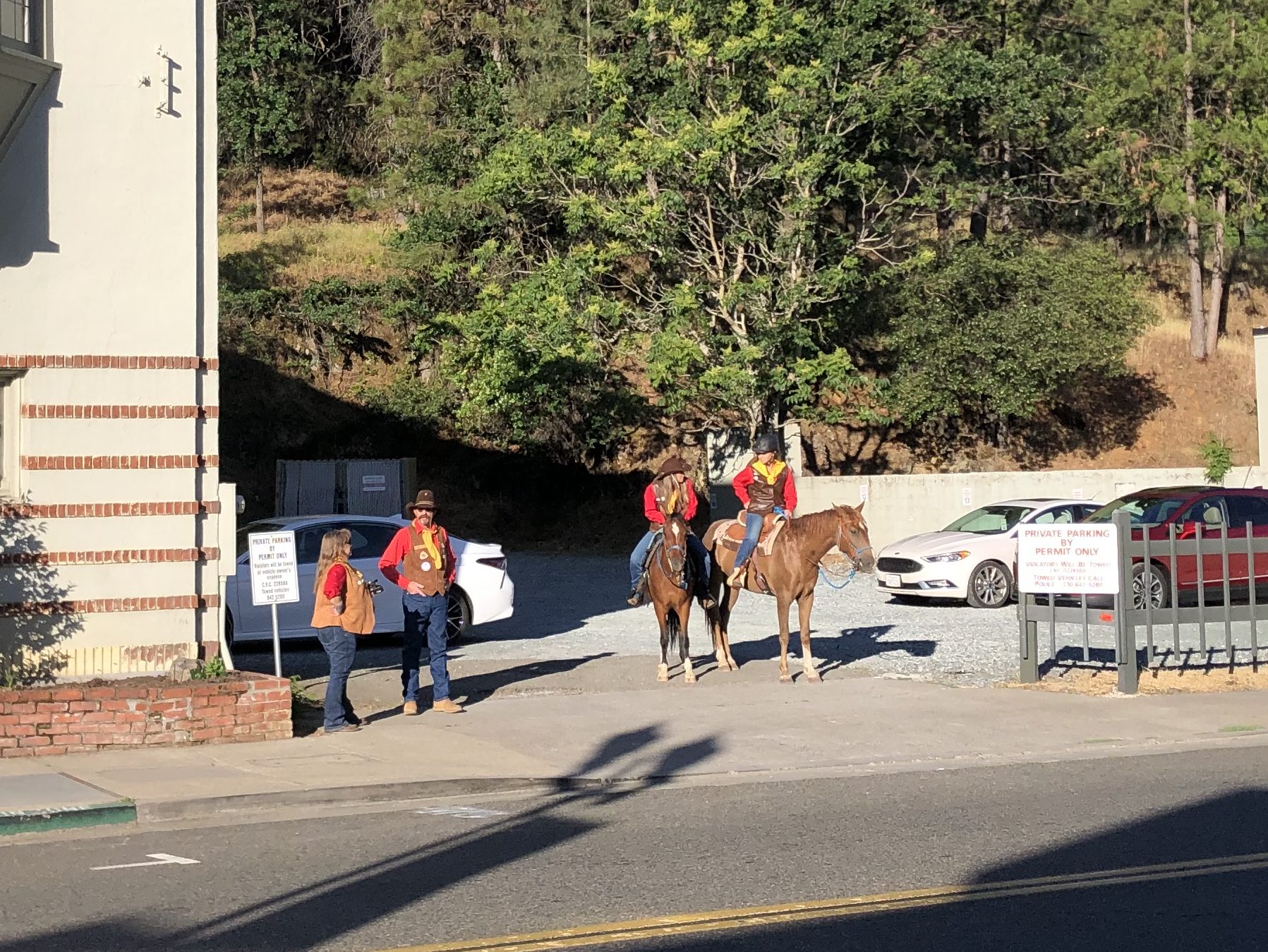
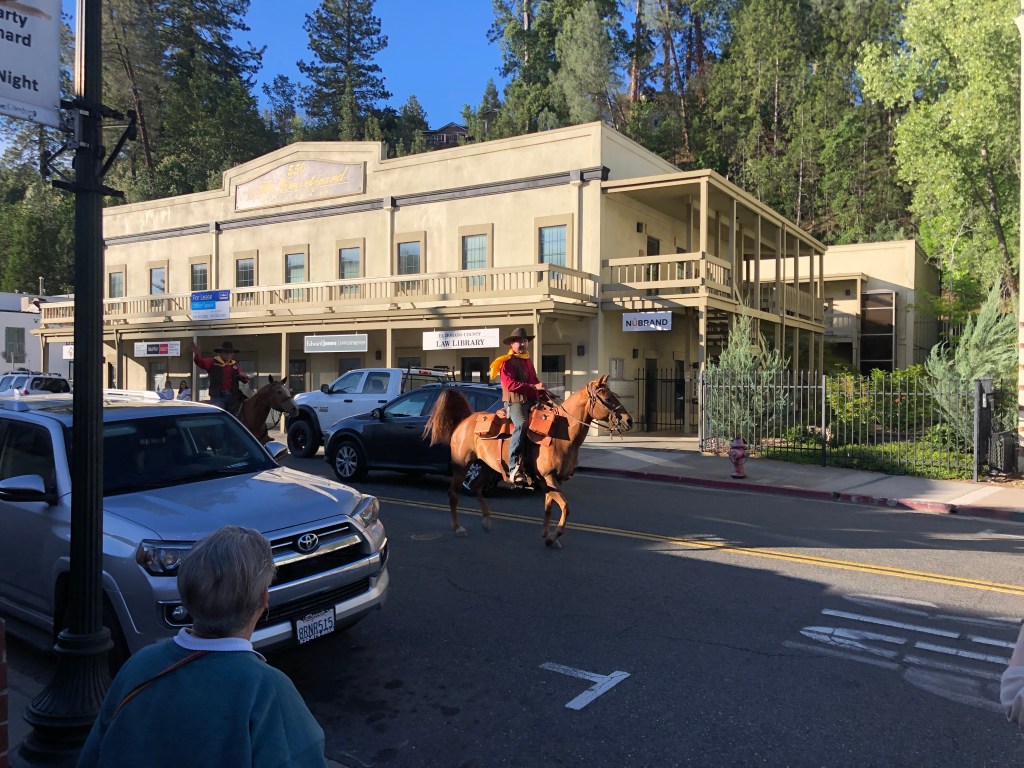
So what does any of this have to do with this morning? Well, it seems that the good folks at the National Pony Express Association annually re-create the Pony Express ride–24 hours per day for 10 days. This morning the rider was scheduled to be coming through downtown Placerville a little before 7 am. When I got there, a small number of people were milling about, as though they were waiting for the world’s smallest parade. Seriously, this was not a well-attended event, but perhaps that’s because anyone living in this general area would probably opt instead to be present for the final moments, when the rider comes into Old Sacramento this afternoon.

Waiting for the mail to arrive

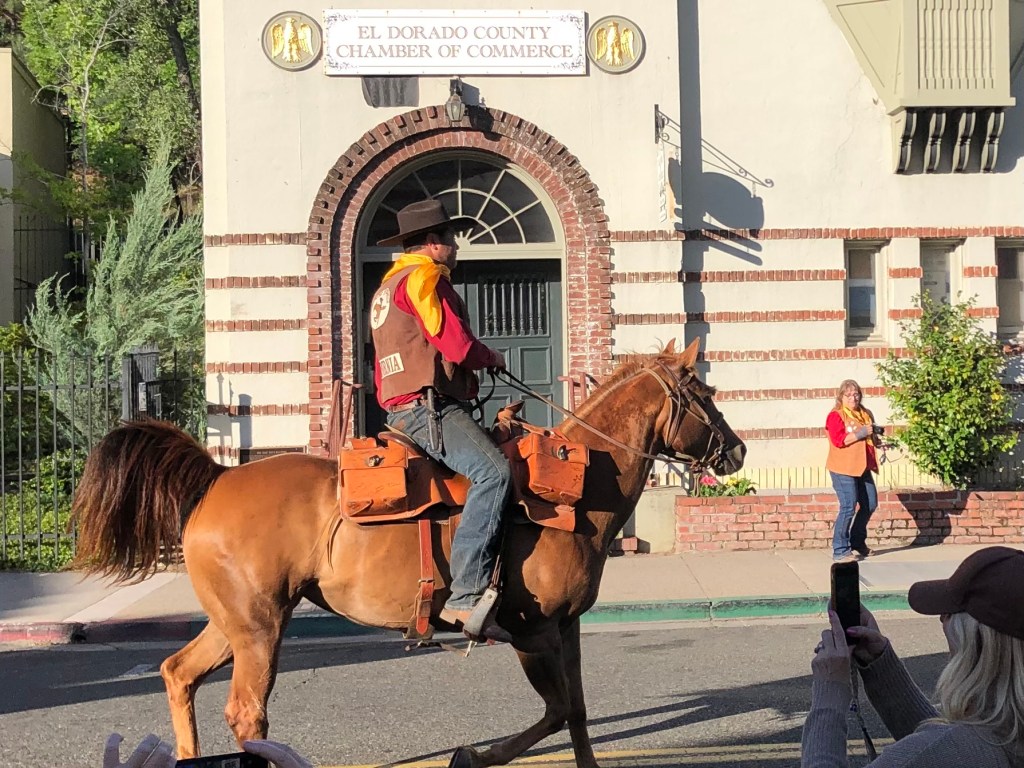
Most of the people were wearing distinctive red shirts and leather vests–the uniform of the National Pony Express Association. But I also spotted a few civilians such as myself. The mood wasn’t exactly raucous, but clearly these hardy souls shared an interest in history and/or horses. Adding to the mood was the backdrop of 19th-century buildings on Placerville’s Main Street.

And then suddenly, without warning, the mailman arrived.

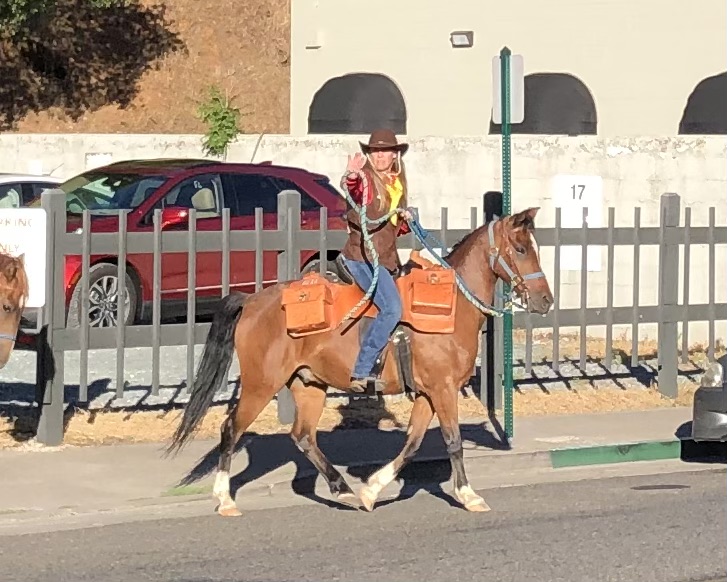
Then the mail bag (“mochila”) was transferred to a waiting rider, and the mail was back on its way. It was all over in less than a minute.

Neither sleet nor snow nor traffic laws….

There’s something compelling, in this age of texting, email, and on-demand media access, to see old-timey, flesh-and-blood communication mechanisms at work. I certainly would not argue that the Pony Express was superior to modern communications; heck, it wasn’t even superior to the telegraph. But it does represent a spirit and energy that seems to be in short supply these days. And that’s why this afternoon I’m going to be raising a pint to the young men who rode for the Pony Express.